

ELEVATE YOUR BENEFITS

Janelle Guthrie
Hannah Cassara
Greg Lane
Al Audette
VP
Janelle Guthrie
Bart Hansen
Stephen Hyer
Jenn Kavanaugh
VP - GENERAL COUNSEL
Ashli Penner
LEGISLATIVE DIRECTOR
Andrea Smiley
Lena Anderson For editorial inquiries, contact hannahc@biaw.com

IN THIS ISSUE
10 Safety pays off: Strong ROII refund results delivered
Each year, ROII participants prove that a strong focus on safety and claims management does more than protect workers. It delivers real financial results because safety has its rewards. VP
18 How they voted: BIAW legislative scorecard
BIAW’s Legislative Policy Committee selected 23 bills and 6 amendments that represent key issues affecting the residential construction industry. See how your legislators voted on them.
Building Insight magazine is published on behalf of the Building Industry Association of Washington by Print Northwest.
BIAW bids farewell to VP of External Affairs Jan Himebaugh
Report: How water utility hookup fees hit ADUs
BIAW members fight

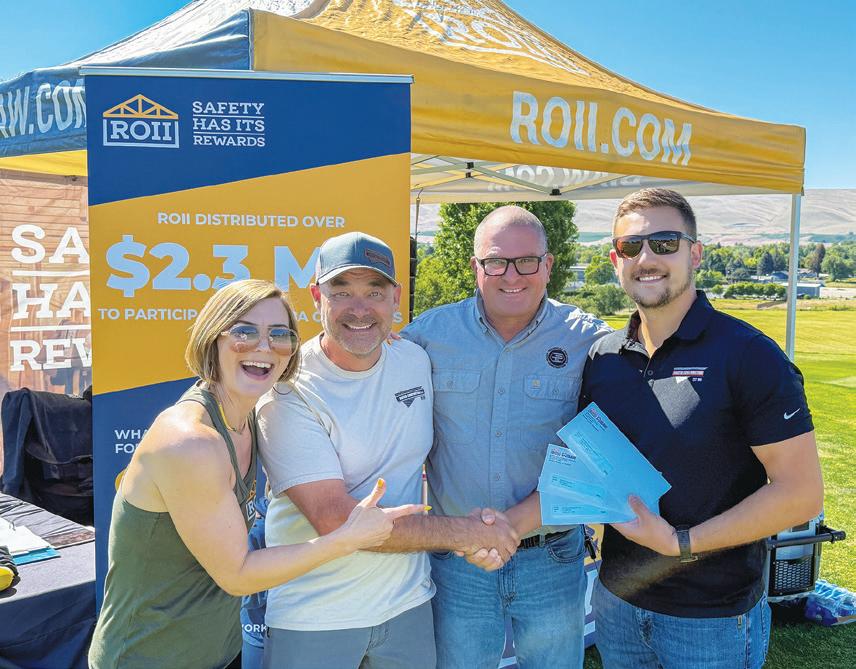
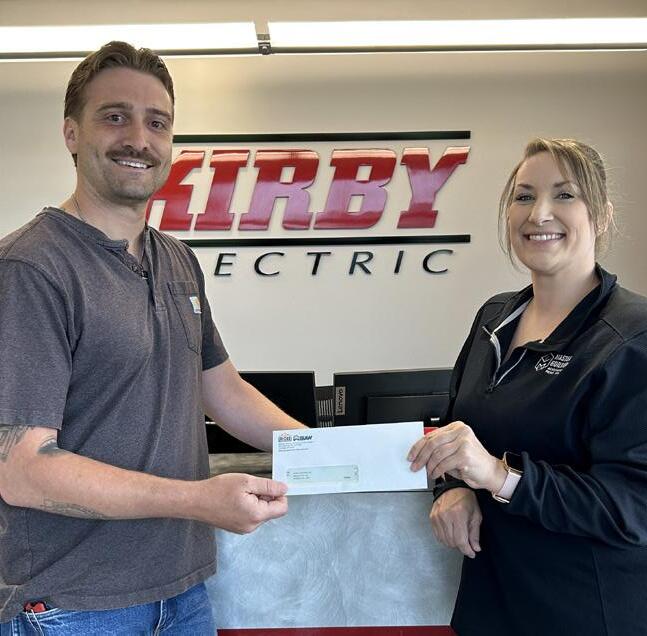
ROII delivers 2026 refund checks to Olympia Master Builders (OMB) members during the OMB ROII Check Event on May 29. These results reflect the consistent effort of ROII participants across Washington who prioritize safe jobsites, support injured workers, and actively manage claims. Read more on page 10. ON THE COVER
As always, we want to hear from you! We invite you to take a quick survey about your thoughts on Building Insight. Happy reading!


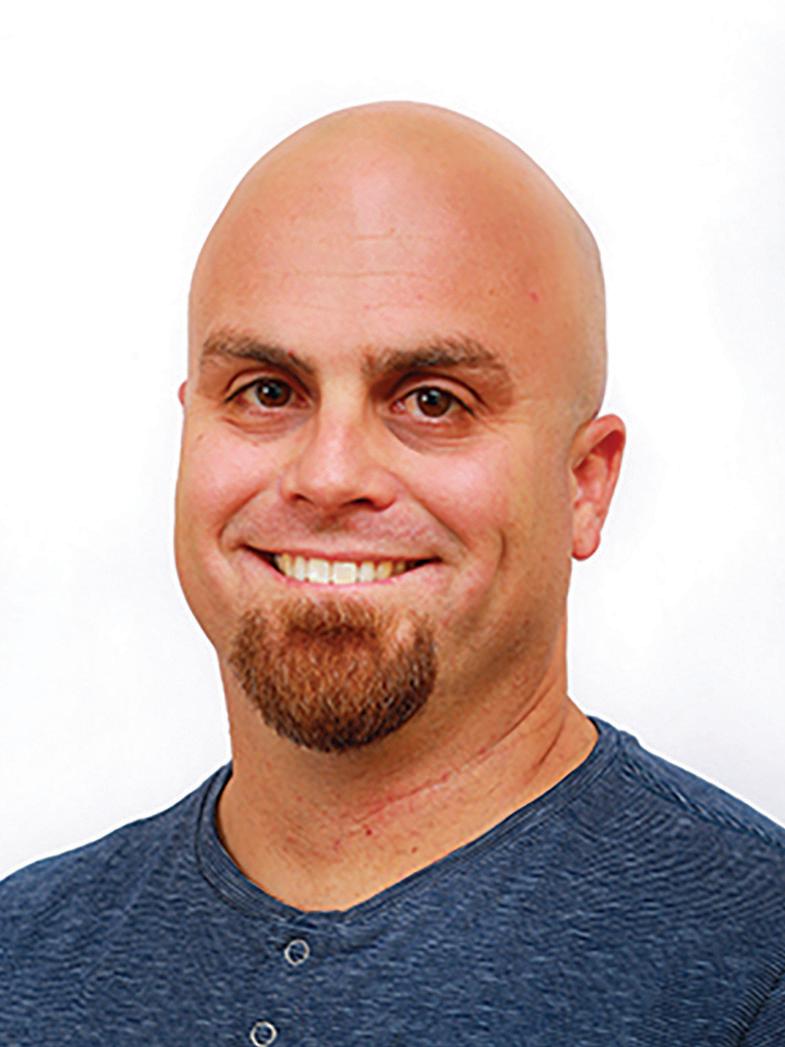
Aaron Marvin President
President’s message
With the summer construction season underway, many of us are busy on jobsites, building or remodeling homes for the people of Washington. It can be difficult to find time to think about everything it takes to run our successful businesses.
That’s why I’m grateful for my membership in the Building Industry Association of Clark County, which also provides me with benefits from BIAW and the National Association of Home Builders (NAHB).
Remarkable results for ROII participants
One of the most rewarding benefits for members is our Return On Industrial Insurance, or ROII, program. Eligible participants receive refunds on the workers’ compensation premiums they pay to the state Department of Labor and Industries (L&I) each year.
ROII has returned over $600 million in refunds to participants since 1982—and the program will distribute $24 million to participants this year alone, reinforcing the value of strong safety performance and effective claims management. ROII has been traveling around the state, presenting participants with refund checks, often in the tens of thousands of dollars!
We’re spotlighting ROII in this issue of the magazine so you can learn more. If you are not currently enrolled and want to see if your company qualifies, you can get started at www.roii.com/inquiry.
Holding lawmakers accountable, giving builders a voice
Members also benefit from expert advocacy at the state and national level with top-notch lobbyists working to shape public policy on our behalf.
Early this year, we shared the industry’s wins and losses at the state legislature. We’ve recently published our Legislative Scorecard so you can see how your legislators voted. Check it out in this issue and review it online at BIAW.com
The Washington Affordable Housing Council (WAHC) will review legislators and their records at the BIAW Summer Board Meeting and determine where we’ll be spending our political action committee (PAC) dollars—and thanks to our ROII returns, we have significant funds at our disposal.
It’s one of the most effective ways to support pro-housing legislators and put others on notice. We’ll share our endorsements before the mid-term primaries to help you use your vote to support home building in Washington.
Helping fight the income tax
Despite record opposition, majority lawmakers and the governor pushed through a new income tax this legislative session.
Voters have rejected an income tax the last 10 times it’s been on the ballot in Washington. Now we have a chance to reject it once again.
BIAW is approaching this in two ways. First, we’ve joined a lawsuit with former Attorney General Rob McKenna, a nationally recognized constitutional attorney, to challenge the constitutionality of the new income tax.
We’re also supporting the effort to qualify IP26-645 for the November ballot to give voters yet another opportunity to stop an income tax in Washington.
Visit www.letsgowashington.com to order signature sheets or find signing locations. We only have until July 2 to gather 400,000 signatures to bring the initiative to the ballot.
These are just three ways our membership helps our bottom line. While the demands of the summer building season keep us busy, our association remains hard at work providing the resources, advocacy and support that help our businesses succeed year-round. I’ll continue to share more benefits in future columns and videos.
UPCOMING CLASSES
Help Minimize Risk: Condition Your Workplace for Safety*
July 16 | Vancouver
staff member to help achieve
Aging Workforce: Protecting Your Legacy Workers*
July 21 | Bremerton
Certified Builder toolkit with professional marketing templates, logos, approved language and more that you can personalize and display digitally and in person
Certified Erosion & Sediment Control Lead (CESCL)
July 22 | Online
Public marketing campaign to give you and your company more exposure
CESCL Recertification
July 24 | Online
Website with interactive map so potential clients can find Certified Builders in their area
CAPS I - Marketing & Communication with Aging-In-Place Clients
August 5 | Vancouver
CAPS II - Design Concepts for Livable Homes and Aging-In-Place
BIAW’s Certified Builder designation bridges the communication gap and offers more transparency between builders and home buyers.
Becoming a Certified Builder shows your clients that you are completely vetted and creates a sense of trust.
First opportunity access to BIAW events and discounts on BIAW-partnered educational seminars and classes LEARN MORE AND APPLY TODAY! Biaw.com/certified-builder-program
August 6 | Vancouver
CAPS III - Details & Solutions for Livable Homes and Aging-In-Place
August 7 | Vancouver
Certified Erosion & Sediment Control Lead (CESCL)
August 12 | Online
CESCL Recertification
August 14 | Online
Project Management
September 16 | Bremerton CPR/AED Basic First Aid
September 23 | Vancouver
Using Contracts & Law to Protect Your Assets
September 30 | Bremerton Scan the QR code to learn more and register.
liability and reduce your financial risk.
Executive Vice President’s message

Greg Lane Executive Vice President
In my role here at BIAW, I am reminded every day that our association’s success is built on strong programs and strong advocacy – thanks to strong people.
ROII once again proves why it’s the best retro in WA
For more than four decades, the ROII program has proven that a commitment to workplace safety doesn’t just reduce injuries—it also delivers measurable financial rewards.
And this year is no exception. ROII is proud to report a 44% refund for the 2024 plan year first adjustment, a 44% refund for the 2023 plan year second adjustment and a 40% refund for the 2022 plan year final adjustment.
These results are a testament to the dedication of ROII participants across Washington who prioritize safe jobsites, support injured workers and actively manage claims.
These results are also a testament to the dedication and hard work of our outstanding ROII staff team. Every year, they go above and beyond, bringing significant returns to our members.
Thank you to the ROII staff and every ROII participant for helping make these results possible, and for demonstrating that safety truly has its rewards.
Help us put a stop to the new income tax
One of the most significant issues BIAW confronted during the 2026 legislative session was the approval of a new state income tax. Despite overwhelming public opposition, the state lawmakers moved forward with the unconstitutional new tax, contrary to Washington’s long-standing legal and voter-approved protections against income taxes.
Because of the far-reaching implications for Washington families, employers and small businesses, the BIAW Board of Directors voted at the Winter Board Meeting to join a Constitutional legal challenge to the tax. Defending taxpayers and protecting Washington’s
economic competitiveness has always been central to BIAW’s mission, and we believe this issue is too important to ignore.
BIAW is also supporting IP26-645, an initiative to voters, which would repeal the new income tax and prohibit state and local governments from imposing ANY tax on income in the future. In the months ahead, we will be working to educate voters and support efforts to place this measure on the ballot and pass it in November.
Thank you, Jan Himebaugh
Before I close, I want to recognize someone who has had an extraordinary impact on BIAW and our industry. After nearly 15 years with the association, Vice President of External Affairs Jan Himebaugh has accepted an opportunity to lead the Washington Retail Association. While we are excited for Jan as she takes this well-deserved next step in her career, her departure marks the end of an important chapter for BIAW.
Jan’s contributions to our organization and the housing industry cannot be overstated. She has helped secure major policy victories, protected housing affordability, defended energy choice and served as a tireless advocate for our members, our industry and homeowners across Washington. Jan has built a tremendous legacy at BIAW.
On behalf of BIAW’s members, staff and leadership, I want to thank Jan for her years of service, dedication and friendship. We wish her nothing but success in her new role and look forward to continuing to work together on behalf of Washington’s business community.
Kathleen Frazer of Reliable Storage and Debbi Boyd of Real Estate South Sound
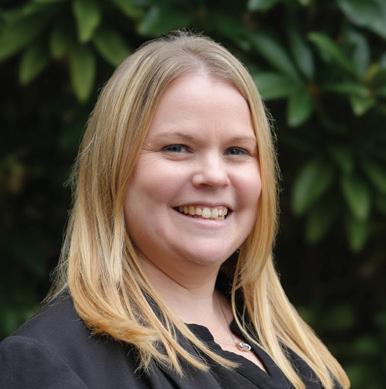
KATHLEEN FRAZER, RELIABLE STORAGE Kitsap Builders Association
As a member of KBA’s board of directors as well as a founder and current chair of KBA’s Professional Women in Building (PWB) Council, Kathleen Frazer has helped grow the council into one of the association’s most active and influential groups, focused on networking, leadership development, workforce outreach and member engagement.
Associate members are a vital part of our industry, making up 66% of the National Association of Home Builders (NAHB) membership. They include dedicated suppliers, service professionals and manufacturers, and they are fundamental to the strength of both our industry and our association.
BIAW’s Associate Advisory Council proudly hosts the annual Associate Star Awards each year at the BIAW Fall Board Meeting. Join us in honoring two 2025 recipients of these awards: Kathleen Frazer of the Kitsap Builders Association (KBA) and Debbi Boyd of the Olympia Master Builders (OMB)-both leaders in BIAW’s Professional Women in Building at the local and state level.
Kathleen is the District Manager for Reliable Storage, where she oversees operations, sales, marketing, customer experience and team development across multiple locations. A graduate of Seattle University, she has built a diverse career spanning operations management, human resources, sales, marketing, reconstruction, remodeling, and business development, giving her a unique perspective on leadership, customer experience, and organizational growth.
Before joining Reliable Storage, Kathleen worked extensively within the residential construction and remodeling industry. Outside of her professional and industry leadership roles, Kathleen is a Leadership Kitsap graduate, recipient of the 20 Under 40 Leadership Award, Girl Scout troop leader, youth sports coach, school volunteer, and community advocate. Reliable Storage has been serving the Kitsap area since 1981. Learn more about all they have to offer at www.reliablestorage.com
DEBBI BOYD, REAL ESTATE SOUTH SOUND Olympia Master Builders
A lifelong Thurston County resident, Debbi Boyd brings more than 23 years of real estate experience and a deep understanding of the South Sound market to Real Estate of South Sound. As a thirdgeneration real estate professional, Boyd combines decades of industry knowledge with a client-centered approach. Her commitment to clear communication, strategic marketing, and strong advocacy has earned her a reputation as a trusted resource throughout the region.
Boyd is also dedicated to serving her community through volunteer leadership and industry involvement. She has served on the boards of United Way of Thurston County and OMB, is a charter member of OMB’s Professional Women in Building Council, and serves as the current chair of the BIAW PWB Council. BIAW’s 2021 Associate of the Year, Boyd also represents Washington at NAHB as an Associate Delegate, helping advocate for the housing industry at the national level.
As an active member of the building industry and local community, Boyd is passionate about supporting housing opportunities, fostering professional growth, and strengthening the South Sound region. Her leadership, experience and commitment to service make her a valuable asset to both her clients and the organizations she serves.
Real Estate of South Sound is a locally owned real estate company serving buyers and sellers throughout Thurston County and the surrounding region. Learn more at www.realestateofthesouthsound.com
Builder members now have free access to BIAW Contracts Package
Ready-to-use contracts for every stage of your business
by Sydney Phillips Associate General Counsel
One of the newest member benefits for BIAW builders and remodelers is unlimited access to BIAW’s Contracts Package. Previously offered as a $399 yearly subscription, the BIAW Board of Directors recently approved making the contracts available to all builder members.
This new member benefit provides unlimited downloads of the contracts, allowing BIAW members to use these agreements on the go.
Written by Washington attorneys for Washington builders
The contracts are written and designed for use across Washington in a variety of scenarios. The agreements are regularly reviewed by Washington attorneys, and when major changes in the law occur, the contracts are updated to protect you and your business. The BIAW Contracts Package includes agreements for design-build projects, residential construction, residential remodels, staff, subcontractors, and suppliers.
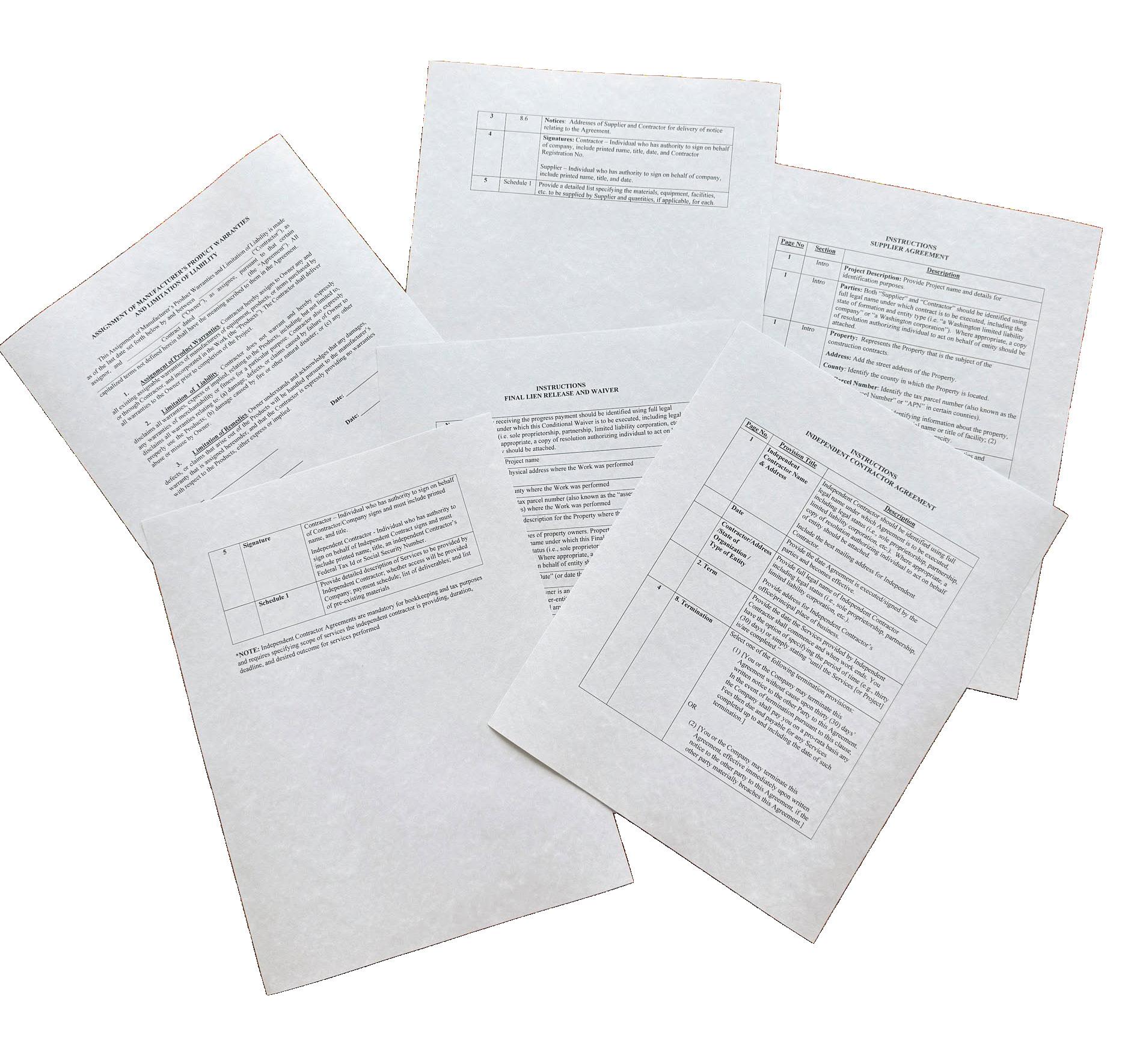
These contracts are a “plug-and-play” template model that lets you input the specific information for your project, whether you’re working with your client, your subcontractor or a new employee. Each contract clearly lays out where your project-specific information should go by highlighting the area and leaving an underlined blank. The agreements also include helpful “hints” for what should go in certain blank spaces, including suggestions in square brackets (e.g., [MONTH]), and explanations in italics (e.g., Keep this last sentence if applicable).
If you need further explanations for how to input information, the attorneys who drafted the Contracts Package also included instructions for each agreement.
Agreements included in the Contract Package
n Design-Build services agreement
n Residential design-build cost plus contract
n Residential design-build lump sum contract
n Subcontractor agreement
n Supplier agreement
n Employment agreement
n Independent contractor agreement
n Non-Disclosure Agreement
n Residential construction assignment of manufacturer’s product warranties
n Residential construction change order form
n Residential construction conditional lien release
n Residential construction cost plus contract
n Residential construction disclosure statement notice to customer
n Residential construction draw request form
n Residential construction express limited home warranty
n Residential construction final customer walk-through punchlist
n Residential construction final lien release
n Residential construction lump sum contract
n Residential construction special provisions addendum
n Residential remodel assignment of manufacturer’s product warranties
n Residential remodel change order form
n Residential remodel conditional lien release
n Residential remodel cost plus contract
n Residential remodel disclosure statement notice to customer
n Residential remodel draw request form
n Residential remodel express limited home warranty
n Residential remodel final customer walk-through punchlist
n Residential remodel final lien release
n Residential remodel lump sum contract
n Residential remodel RAD lead-based paint addendum
n Residential remodel special provisions addendum
n Speculative builder construction contract
n Bonus workplace & employment templates
As a bonus, BIAW has included workplace and employment policy templates, including an attendance policy, a doyour-work policy, a professionalism and standards of conduct policy and a safety disciplinary policy.
These policies are designed to keep your business running smoothly with clear expectations for you and your employees. Having clear expectations and policies ensures that you can focus on building and remodeling homes.
Running a business, hiring staff and working with subcontractors and suppliers is stressful enough without also having to figure out all the legal implications of your actions. Now included in your BIAW membership dues, the Contracts Package is designed to lower your yearly legal fees. The goal with these contracts is to protect you, your projects, your employees, and your reputation.
Get started today
It is always recommended that you seek legal advice if you have questions about specific legal implications, when an issue arises or if you need clarification on how to implement something from a contract. The agreements are designed to be used in conjunction with legal advice regarding your specific business, tax implications, and any location-specific regulations that may exist.
The agreements are available in both Microsoft Word and PDF formats, and all instructions are available on biaw.com. Log in to your member account and access the wealth of knowledge available to you and your business.
Frequently Asked Questions
How is the residential contract different from the remodeler contract?
The remodeler contracts are drafted with the scope of remodeling work in mind. The terms of the remodeler contract are unique to remodeling, addressing topics such as asbestos and lead paint, whereas residential contracts focus on ground-up construction. The basic contract terms are generally the same.
Do you have contract language for historic preservation or other local requirements?
The Contract Package does not address local requirements because the contracts are intended for statewide use. You may want to review local ordinances and requirements or consult with an attorney regarding the need for additional area or project-specific clauses.
Do you have a social media or nondisparagement clause?
The Contract Package does not include a clause regarding social media or nondisparagement because, in Washington, such clauses can be difficult to enforce in court. However, the contract templates are modifiable, and if you feel that such a clause is beneficial, you can certainly add one. We do, however, recommend contacting an attorney for guidance before drafting your own clauses.
How many times can I download the contracts?
There is no limit to how many times you can download the contracts.
Are there contract templates for associate members?
The BIAW Contract Package was built with builder members in mind. Some of the agreements (such as employment and Non-Disclosure Agreement - NDA) could be used by an associate member, with the understanding that they were written for home builders and remodelers.
As always, BIAW encourages you to seek legal assistance should you want to use any of these agreements for your business as an associate member.
SAFETY PAYS


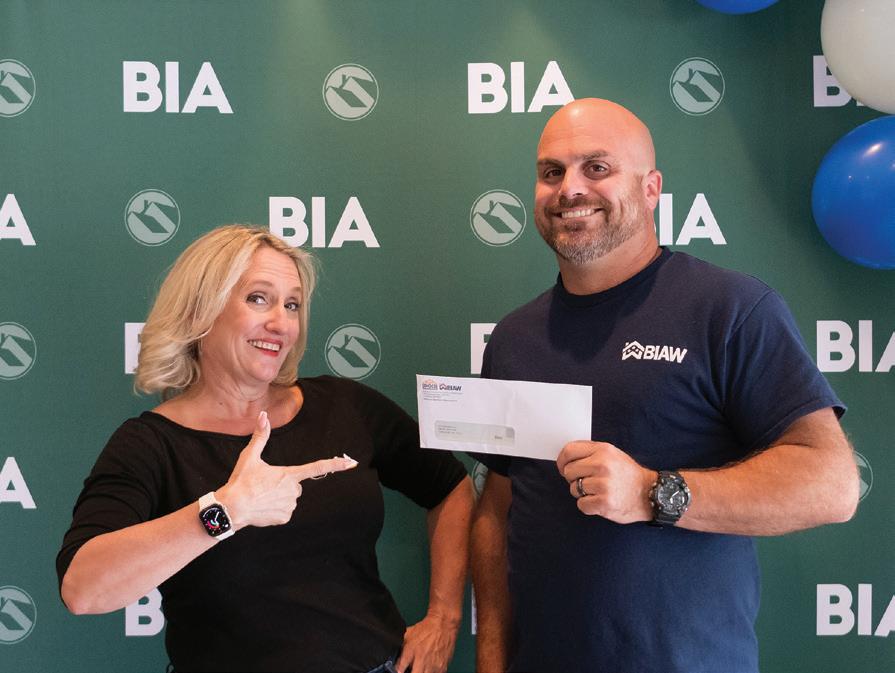
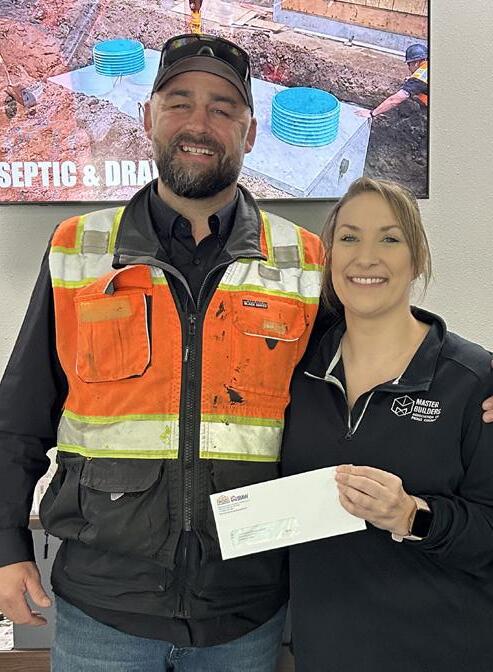
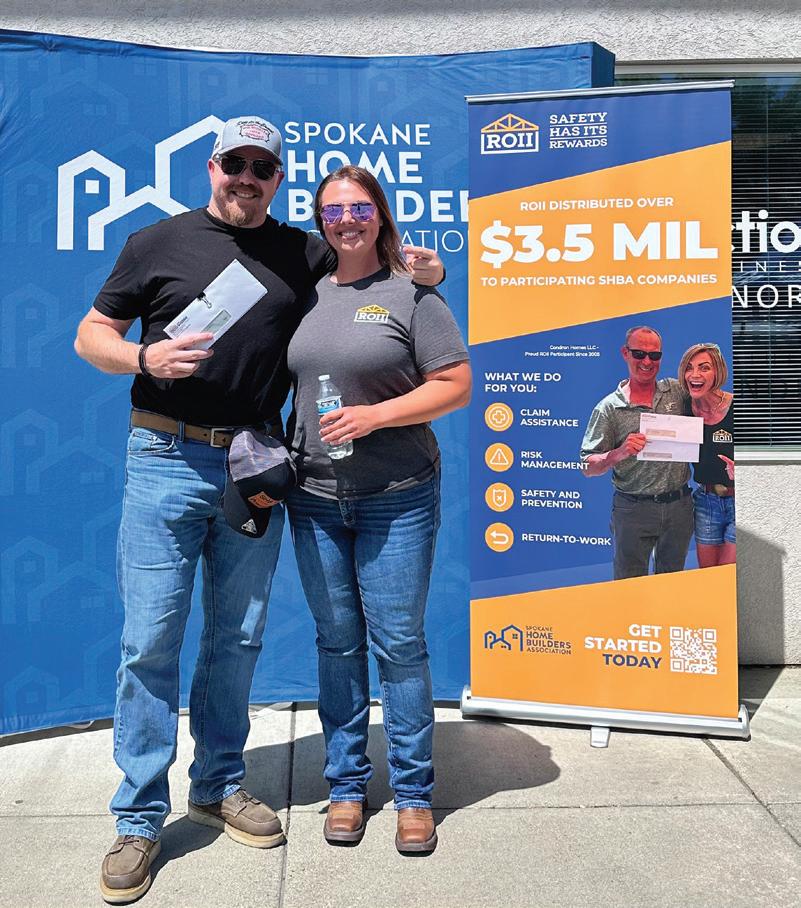
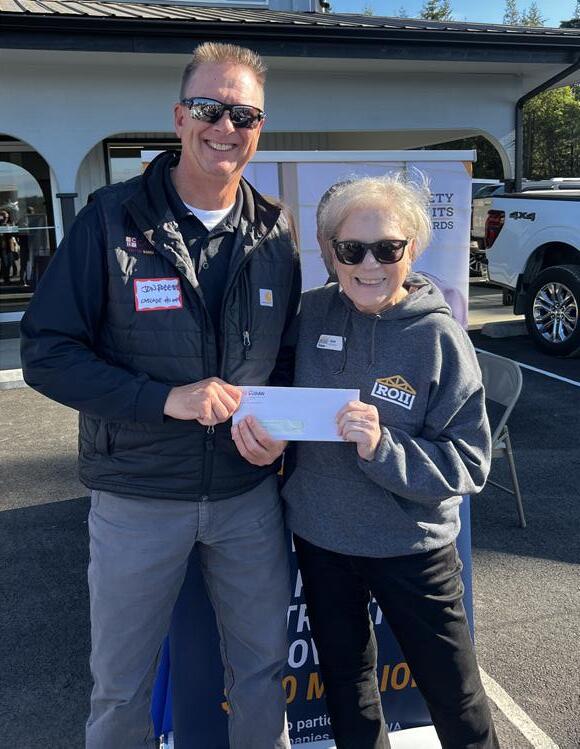




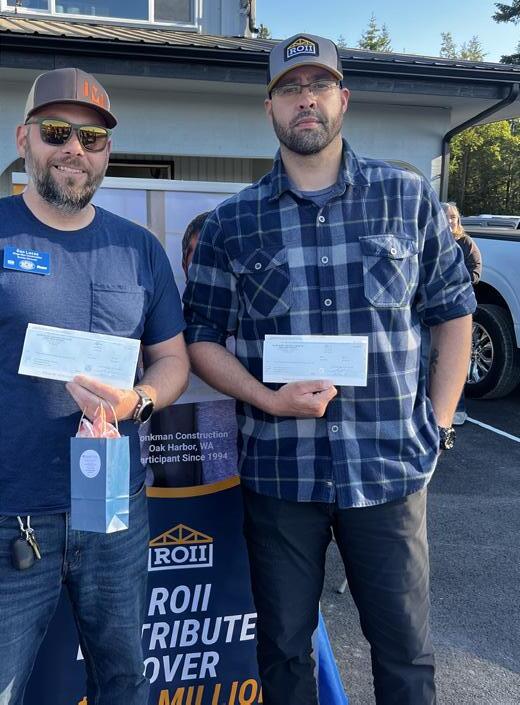
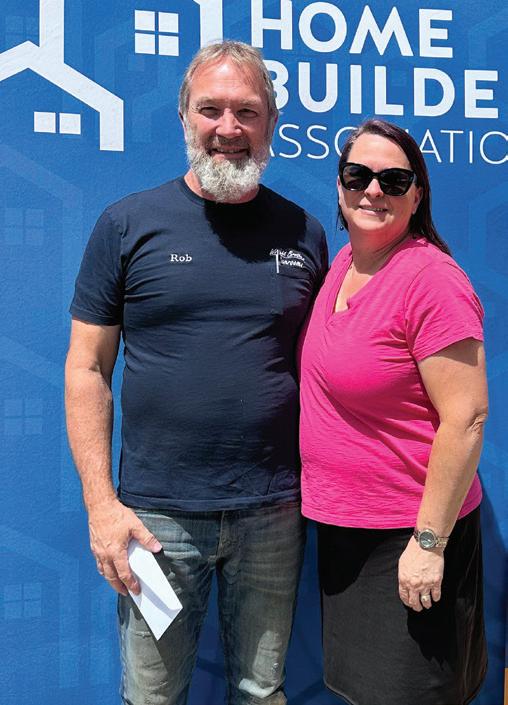
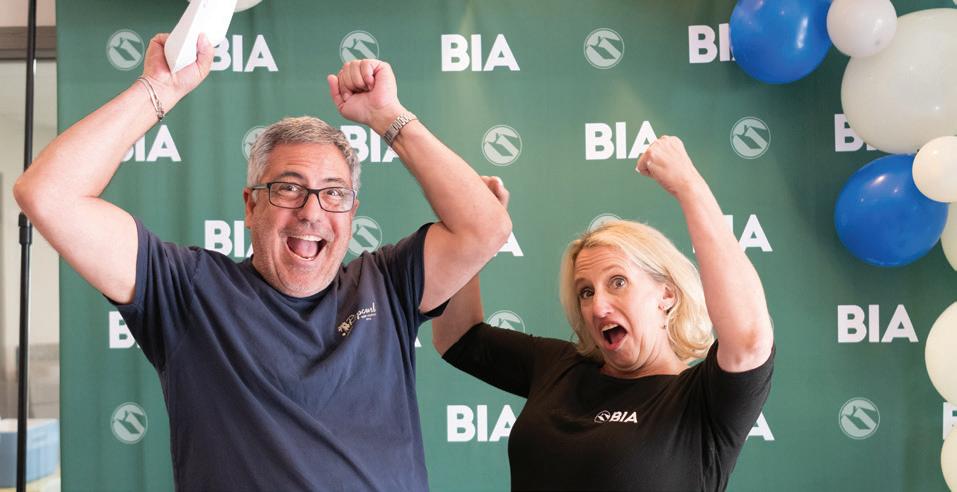
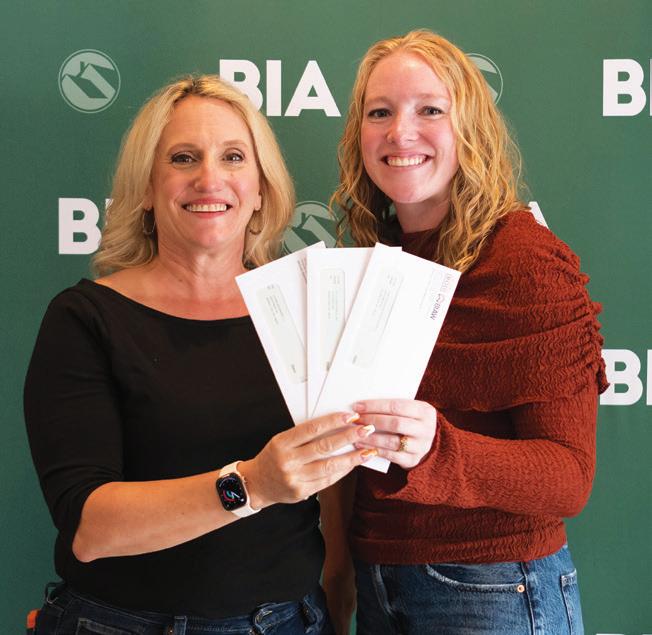
Strong ROII refund results delivered PAYS OFF
Each year, ROII participants prove that a strong focus on safety and claims management does more than protect workers. It delivers real financial results because safety has its rewards. This year is no exception.
We are proud to share the latest ROII refund results:
2024 plan year 1st adjustment: 44% refund
2023 plan year 2nd adjustment: 44% refund
2022 plan year final adjustment: 40% refund

These results reflect the consistent effort of ROII participants across Washington who prioritize safe jobsites, support injured workers, and actively manage claims. That commitment continues to pay off.
For many companies, these refunds represent a meaningful return on their L&I premiums. This is money that can be reinvested in their business, teams, and safety programs.
Built on your commitment
These outcomes are driven by the companies in this program. Every safety meeting, every corrected hazard, and
every well-managed claim contributes to stronger results for the entire group.
To the participants featured here and to all ROII participants, these refund results are a direct reflection of your work.
If you are not currently enrolled in ROII and want to see if your company may qualify, visit roii.com/inquiry to get started.

Where ROII refunds are won ( AND LOST )
by Jenn Kavanaugh ROII Director

When people ask how refunds in ROII’s retrospective rating program are earned, they’re often expecting a complicated answer.
It’s not.
Refunds are won or lost in the everyday decisions made on your jobsites, in your office, and in how your team responds when something goes wrong.
After working with construction companies across Washington for years, the pattern is clear. The companies that consistently see strong results aren’t lucky. They’re doing a few key things well, over and over again.
Here’s where it really happens.
Where refunds are won
1. Before the job even starts
Strong results begin long before anyone steps on a jobsite.

Companies that prioritize safety from the start through hiring, training and planning set themselves up for fewer claims.
That means:
n Hiring vetted workers who understand expectations
n Making safety part of onboarding, not an afterthought
n Planning jobs with hazards in mind, not reacting to them later
When safety is built into the process early, fewer things go wrong.
2. In the small, daily decisions on the jobsite
Refunds aren’t won in big moments. They’re won in the small ones.
It’s the foreman who takes five extra minutes to correct a hazard. It’s the worker who speaks up before something becomes an injury.
It’s the team that treats safety meetings as part of the job, not something to rush through.
These decisions don’t feel significant in the moment, but over time, they are the difference between a clean claim history and one that drives costs up.
3. How injuries are handled on day one
Even strong companies have injuries. What separates them is how they respond.
The first 24 to 48 hours matter more than most realize.
Companies that see better outcomes tend to:
n Report claims promptly
n Stay in communication with their injured worker and ROII Claim Representative
n Keep their worker connected to the company
n Utilize Kept on Salary, light duty, and Stay at Work options
n Stay engaged throughout the life of the claim
When companies stay involved early and consistently, claims often have
better outcomes for both the worker and the employer. Over time, that level of involvement can make a meaningful difference in overall performance and refund results.
Where refunds are lost
Just as consistently, we see where things start to go the other direction.
1. Letting small issues slide
The “it’ll be fine” mindset is one of the most expensive habits on a jobsite.
A loose ladder.
A shortcut taken to save time.
A hazard that gets ignored for one more day.
These are often the starting point of injuries that could have been prevented entirely.
2. Delayed or disconnected claim response
When there’s a delay in reporting or when communication breaks down, claim costs can grow.
Workers may feel unsupported.
Details get missed.
Return to work opportunities are lost.
All of this adds time and cost to the claim.
3. Treating safety as separate from production
Companies that struggle often view safety as something that slows the job down.
In reality, the opposite is true.
Strong safety practices can reduce disruptions, keep crews working, and prevent the kinds of incidents that create delays, rework, and higher costs.
What this means for your refund
Your refund isn’t determined by a single event or one decision.
It’s the result of hundreds of small actions over time:
n Every safety conversation
n Every hazard corrected
n Every claim handled with care and urgency
EXAMPLE: How performance can impact refunds
Hypothetical example for illustration purposes only.
Cascade Ridge Builders
n Standard Premium Paid: $86,417
n Strong safety performance
n No claims
n Final Refund: $38,024
n Approximate Return: 44%
Final thought
At the end of the day, safety has its rewards, but those rewards are earned.
Not once a year.
Not just when it’s convenient.
But in the day-to-day choices made across your company.
The good news: Those choices are within your control.
And those choices are where refunds are won.

Turn safety into savings with ROII
If you’re not a participant, you can find out how to get rewarded for safety by joining the state’s largest, longest-operating Retro (Retrospective Rating safety incentive program: ROII.
To get started and find out if ROII is a good fit for your company, visit roii.com/inquiry or contact us at (360) 352-7800 or enroll@roii.com.
The Hidden Cost of Claims
by Dawn Peterson ROII Claim Field Consultant
Most employers understand the direct costs of a workplace injury claim. These are the visible expenses that can impact workers’ compensation rates and premiums, including:
n Medical treatment
n Time-loss or wage replacement benefits
n Vocational rehabilitation or retraining
n Permanent impairment awards paid at claim closure
While these direct costs can significantly affect a company’s bottom line, they are often only part of the picture.
Many employers are surprised by the indirect costs that come with a claim. These expenses are harder to measure, but they can add up quickly and, in many cases, exceed the direct claim costs themselves.
These hidden costs are often not fully recognized until after a claim is underway. That is why preparation and prevention are so important.
Strong workplace safety programs remain one of the most effective ways to reduce injuries and control claim-related expenses before they occur.
When injuries do happen, having a strong return-to-work program is critical. Helping injured employees return to meaningful work as soon as medically appropriate can reduce downtime, improve outcomes, and lower both direct and indirect claim costs. It also benefits the employee by keeping them connected to the workplace and their routine.
Claims management is about more than handling paperwork after an injury occurs. It is about understanding the full impact a claim can have on a business and taking proactive steps to reduce that impact whenever possible.
At ROII, our team works closely with participants to help them better understand claims, improve outcomes, and control costs over the long term.
Some common indirect costs include:
Administrative time
Managing paperwork, coordinating return-to-work efforts, communicating with L&I, medical providers, and legal representatives all require time and resources.
Lost productivity
Injuries can delay projects, reduce efficiency, and impact deadlines and revenue.
Equipment repair or replacement
Some incidents involve damaged tools, equipment, vehicles, or materials that must be repaired or replaced.
Replacement labor and training
Employers may need to hire temporary workers, train replacements, or pay overtime to existing employees to keep projects moving.
Legal expenses or L&I fines
Disputes, appeals, or safety violations tied to an incident can create additional financial strain.
Employee morale and workplace culture
Serious injuries can impact morale, increase stress among crews, and contribute to turnover or reduced performance.
The Future of Respiratory Protection Gear I Wish We Had Years Ago
by Jesse Balbin ROII Field Representative
If you’ve worked in construction long enough, there’s usually one piece of gear you come across and immediately think, “Where was this years ago?”
For me, that’s the MicroClimate Air3, a NIOSH-approved powered air-purifying respirator (PAPR).
This one hit a little differently for me because it brought back a personal memory. About 20 years ago, my cousin earned a full-ride scholarship to an auto paint school back east. Right out of high school, he was already being recognized as one of the top young painters in the country. He had serious talent and a bright future ahead of him.
But shortly after starting school, he found out he was highly allergic to one of the chemicals used in automotive paint products. At the time, the filtering systems and respiratory protection available just weren’t enough for his situation. The exposure affected him so badly that he had to leave the program early.
I still think about how different his life might have been if technology like this had existed back then. Maybe he would have opened his own custom paint shop. Maybe he would have built a long career doing what he loved. Instead, the risks tied to airborne exposure changed the direction of his life completely.
That’s why products like this matter.
The MicroClimate Air3 recently received approval from the National Institute for Occupational Safety and Health (NIOSH). That approval opens the door for use
across a wide range of industries and trades where respiratory protection is needed. Whether you’re around dust, paint products, grinding particles, insulation, concrete dust, or other airborne hazards, having better respiratory protection options matters.
One of the biggest things that stands out to me is the usability.
Traditional respirators can be uncomfortable for long periods of time, especially during summer work or physically demanding jobs. Fit testing can also become a challenge, and facial hair creates another layer of difficulty for many workers. The Air3 helps solve some of those issues because it doesn’t require fit testing the same way tight-fitting respirators do, and workers can maintain facial hair while still using approved respiratory protection.

We’ve seen major improvements in fall protection, eye protection, hearing protection, and ergonomic equipment over the years. Respiratory protection is continuing to evolve, too, and I think that’s important as more attention is placed on long-term exposure risks in construction and related trades.
That may sound small, but on real jobsites, comfort and usability often determine whether safety equipment is actually worn consistently.
If gear is uncomfortable, restrictive, or frustrating to use, people naturally look for reasons not to wear it. But when equipment becomes more practical and user-friendly, compliance improves and protection improves with it.
Many workers don’t necessarily feel the effects of exposure right away. Sometimes the damage builds slowly over the years. That’s why prevention matters so much. Anytime new safety technology becomes more wearable, more comfortable, and easier for workers to adopt, it has the potential to make a real difference. And honestly, this is exactly the kind of product that makes me think: I wish we had this years ago.
Photo courtesy of MicroClimate
At first reluctant, construction workers see results by starting shifts with ergonomic workouts
by Larry LaRue
The News Tribune
A man who’s been an ironworker for a quarter of a century, Bret Miller worked high beams throughout the Northwest for employers who often couldn’t find the time for his coffee breaks.
Then, 2½ years ago, the Sellen Construction Company began encouraging its sub-contractors to begin each shift with a few minutes of … well … stretching.
“Were workers reluctant? Oh, yeah – me, included,” Miller said. “But I’ve seen the results. We get fewer strains and sprains. It minimizes injuries.”
For the past few months, Sellen has had crews working Tacoma General Hospital projects. And, each morning at precisely 7 a.m., patients and staff glancing out of the hospital in any of three directions have seen those crews – hard hats, boots and all – stretching and doing balancing exercises.
Mike Wisham, a former Marine and longtime ironworker and carpenter, leads one of those groups each morning.
“I’m a third-generation construction worker,” Wisham said. “The first time I saw this, I thought it was the silliest thing I’d ever seen.
“Now, I have to admit, I’m a believer. Do it right, it warms you up.”
Seattle-based Sellen is just one construction company that’s adopted a stretch-and-flex program for workers. The industry has good reason.
“One injury can demoralize the spirit of the job on any job site,” said John Hogan, the Sellen safety director. “More and more, owners are savvy with safety, evaluating contractor injury rates. If you cut down injuries, you do more business.”
Frank Mandell, a Sellen project safety manager, said the company hired a consultant, Seattle-based ErgoFit, to design the exercises.
“When we first decided to do this, we didn’t want a bunch of guys doing exercises that really didn’t help. So we brought in an expert, and she looked like you’d expect an aerobics instructor to look,” Mandell said. “She put together a quick set of exercises that were keyed to the work these guys do.”
The response from the workers?
“My dad worked construction his whole life and he’s 70 now,” Wisham said. “I told him about this and he said, ‘You’ve got to be kidding.’
“I tell him, at the end of the day, I still have aches and pains – that’s part of the job. Tylenol is still part of the toolbox, like it’s always been. But they’re minor aches and pains now, and they’re gone the next day.”
Each winter morning before the sun breaks the horizon, the exercises are completed. They have names –the airplane, the inverted airplane – that somehow get translated into construction-speak. No matter what
Wisham calls out while leading his group, someone is certain to respond aloud.
“Beer grab” and “Ape drag” probably aren’t the descriptions ErgoFit had in mind, but they get the job done.
Miller, whose outfit – The Erection Company, of Arlington – sub-contracts with Sellen, said the program is now part of the work.
“We’ve got young guys coming up who will never know another way, who’ll think it was always like this,” he said. “The older guys weren’t accepting until they saw and felt the results. When your back doesn’t hurt after carrying a 30-pound tool belt, you appreciate the stretching.
“If I’d suggested stretching back in the ’80s, when I started, I’d have been told to shut up and get to work. It’s a different world.”
Hogan said companies are seeing the difference it can have on safety. “Our injuries have been steadily decreasing. It can’t stop someone cutting their arm on sheet metal, but the non-traumatic injuries have dropped.”
The program may even change the image of men at work.
“Construction workers fit stereotypes,” Mandell said, “and you don’t usually think of them stretching before they go to work.”
Originally published by The News Tribune. Reprinted with permission.
FREE SAFETY TRAINING FOR ROII PARTICIPANTS
U p c o m i n g C l a s s e s
ROII participants have access to a variety of FREE safety classes designed to help reduce risk, meet state requirements and keep crews safe Take advantage of these upcoming courses that tackle liability, safety, inspections and heat stress
Sign up early to secure your spot!

July 16 | Vancouver
Help Minimize Risk: Condition Your Workforce for Safety
Join Bob White from ROII Safety Services for a 3-hour workshop that goes beyond the basics Learn how to build a safety-first culture, create lasting habits, improve hiring practices and address common injury risks before they happen
July 21 | Bremerton
Aging Workforce: Protecting Your Legacy Workers
Construction experience is earned over time and protecting that experience is key to a strong, sustainable workforce

July 22 | Tumwater
CPR, AED, and Basic First Aid Training
This first aid/CPR/AED course is taught based on the Health and Safety Institute guidelines for adults, children, and infants to meet or exceed occupational first aid certification
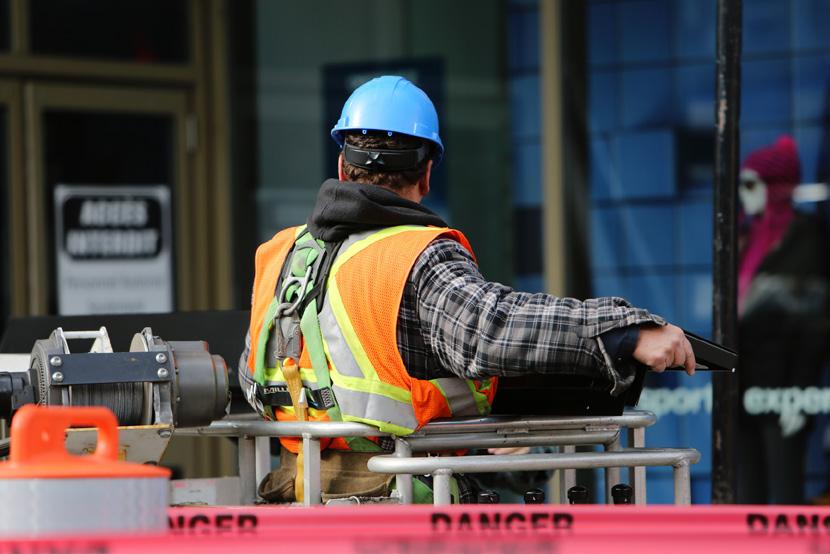
August 12 | Online
When You're on the Hook: Subcontractors, Safety, and Liability
When hiring subcontractors or managing employees, liability can arise unexpectedly. This class explains key risks shifting workers’ comp liability, responsibility for subcontractor safety violations, and employer liability for employee misconduct so you can better understand and reduce exposure
How they voted
BIAW’s Biennial Legislative Scorecard
B
Elections matter, but what matters even more is how elected officials vote once they take office. As the old adage goes, “actions speak louder than words,” and that’s exactly why we assess vote records: to reveal lawmakers’ true priorities and values.
BIAW’s Legislative Policy Committee selected 23 bills and 6 amendments that are representative of key issues impacting the residential construction industry. The votes included in this report offer insight into which policymakers supported practical, achievable housing solutions and who supported policies that continue to drive up costs, reduce housing choice, and make it harder for Washington families to achieve homeownership.
How to Read the Scorecard
n Review the key to familiarize yourself with the bills and amendments scored. You will notice each bill is associated with a letter, and amendments are identified with a number. We have included a brief description of the impacts of each bill and amendment.
n Find your elected officials by district and see how they voted. If you don’t know or can’t remember who represents you, please visit app.leg.wa.gov/districtfinder
n Check out the overall vote percentages for both 2025 and 2026, as well as combined percentages for the biennium.
n Read across the row to dig deeper into their pro-builder and ani-builder votes. Votes that match BIAW’s position have a filled-in box, while votes contrary to BIAW’s position are blank.
HB 1096 – Increasing housing options through lot splitting.
Allows property owners to divide and sell land, opening more buildable land for new home construction.
BIAW Position: YES
HB 1210 – Concerning targeted urban area tax preferences.
Provides tax incentives to large clean energy projects. Includes a project labor agreement provision that ensures that union contractors are selected for public projects.
BIAW Position: NO Passed: YES
C
2026 Senate Vote:
HB 1213 – Expanding protections for workers in the state paid family and medical leave program.
Small businesses with 8+ employees must comply with Paid Family and Medical Leave laws, including holding a job while an employee is on leave. Expands eligibility so employees can take leave earlier in employment.
BIAW Position: NO Passed: YES
D
2025 House Vote:
2025 Senate Vote:
HB 1217 – Amendment 312
Exempts rentals of single-family units from rent control provisions.
BIAW Position: YES Passed: YES
D1
2025 Senate Vote:
HB 1217 – Amendment 345
Increases rent cap from 7% to 10%+CPI.
BIAW Position: YES
2025 Senate Vote:
Passed: YES YES NO EXCUSED 25 24 0
D2
HB 1217 – Improving housing stability for tenants subject to the residential landlord-tenant act and the manufactured/mobile home landlordtenant act by limiting rent and fee increases, requiring notice of rent and fee increases, limiting fees and deposits, establishing a landlord resource center and associated services, authorizing tenant lease termination, creating parity between lease types, and providing for attorney general enforcement.
Establishes a statewide rent cap of up to 10%+CPI on lease renewals and exempts single-family. Allows rents to reset to market rate upon tenant turnover.
BIAW Position: NO Passed: YES
Senate Vote:
27 20 1
HB 1345 – Establishing limitations on detached accessory dwelling units outside of urban growth areas.
Allows one detached ADU per rural property. Establishes a retroactive permitting process for previously unpermitted units.
House Vote:
BIAW Position: YES
YES
HB 1403 – Simplifying condominium construction statutes.
Allows usage of express warranties for condos, reducing exposure to litigation under the state’s implied warranty statute.
BIAW Position: YES Passed: YES
House Vote:
HB 1644 – Concerning the safety and health of working minors.
Increases liability and enforcement on employers for youth labor violations, with higher fines and potential loss of the ability to hire minors.
BIAW Position: NO
Passed: YES
HB 2049 – Investing in the state’s paramount duty to fund K-12 education and build strong and safe communities.
Allows counties to increase property taxes to fund public schools with a vote of the people.
BIAW Position: NO Passed: YES
HB 2105 – Concerning immigrant worker protections.
Creates new employer notice requirements, limits how employers interact with federal immigration enforcement, and increases legal risk through penalties and potential lawsuits.
BIAW Position: NO
Passed: YES
HB 2107 – Concerning notice requirements of identified hazards at construction worksites.
Directs L&I to issue a notification within 10 working days if job site hazards are discovered during inspection.
HB 2304 – Increasing the supply of condominiums by expanding the types of condominium buildings that may be subject to an express warranty of quality and express warranty insurance coverage.
Expands express warranties for stacked flats, reducing exposure to litigation under the state’s implied warranty statute.
BIAW Position: YES
HB 2354 – Concerning common interest communities.
Reduces costs and red tape for builders by exempting small middle housing projects from most WUCIOA requirements. It also clarifies cost responsibility and lowers ongoing liability, making projects simpler and more predictable to deliver.
BIAW Position: YES Passed: YES
2026 Senate Vote:
HB 2418 – Concerning permit review processes.
Sets permit timelines for state agencies, utilities, and special-purpose districts.
2026 House Vote:
BIAW Position: YES
Passed: YES
SB 5496 – Preserving homeownership options by limiting excessive home buying by certain entities.
Would have capped businesses from purchasing more than 100 single-family homes in Washington state.
2025 House Vote:
BIAW Position: NO Passed: NO
SB 5729 – Encouraging construction of affordable housing by streamlining the permitting process.
Would have allowed a licensed design professional stamp to be deemed a complete permit application.
BIAW Position: YES Passed: NO YES NO EXCUSED 47 2 0 2025 Senate Vote:
SB 5041 – Concerning unemployment insurance benefits for striking or lockout workers.
Allows striking workers to receive unemployment benefits for up to six weeks. Strains the solvency of unemployment insurance fund.
BIAW Position: NO
Passed: YES
2026 Senate Vote: 2025 House Vote: 2025 Senate Vote:
SB 5360 – Concerning environmental crimes.
Adding criminal penalties to environmental crimes, exposing employees to fines and felonies.
BIAW Position: NO Passed: NO
NO EXCUSED 29 20 0 2025 Senate Vote:
SB 5360 – Concerning environmental crimes.
Adding criminal penalties to environmental crimes, exposing employees to fines and felonies.
BIAW Position: NO Passed: NO
SB 5729 – Encouraging construction of affordable housing by streamlining the permitting process.
Would have limited duplicative, costly reviews mandated by local governments.
2026 Senate Vote:
BIAW Position: YES
NO
SB 5847 – Concerning access to medical care in workers’ compensation.
Expands workers’ compensation medical network providers, which could increase workers’ compensation premiums.
BIAW Position: NO Passed: YES
SB 5981 – Concerning the 340B drug pricing program.
Updates the 340B drug program, likely to increase health insurance premiums.
BIAW
2026 Senate Vote:
NO
27 22 0
SB 6026 – Concerning residential development in commercial and mixed-use zones.
Allows residential construction in all commercial zones. Bans local governments from requiring ground-floor retail or mixed-use on more than 40% of commercial/mixed-use land.
BIAW Position: YES
Passed: YES
2026 House Vote:
YES NO EXCUSED 69 27 2
2026 Senate Vote:
YES NO EXCUSED 35 14 0
SB 6136 – Promoting transparency in certain industrial insurance rate increases.
Requires L&I to publish actuarial rates for each workers’ compensation risk classification class when proposing premium rate increases.
2026 House Vote:
BIAW Position: YES Passed: YES
SB 6346 – Amendment 2588
Exempts income earned through a pass-through entity from income tax.
BIAW Position: YES
2026 House Vote:
W2
SB 6346 – Amendment 2595
Allows the carrying forward and back of any unused tax credits.
BIAW Position: YES Passed: NO
NO
94 0 4
2026 Senate Vote:
NO
48 0 1
SB 6188 – Concerning the Department of Labor and Industries’ authority to enact rules related to regulating asbestos training.
Gives the state new authority to increase the stringency of asbestos certification requirements, above and beyond federal standards.
BIAW Position: NO
2026 Senate Vote:
Passed: YES YES NO EXCUSED 30 19 0
SB 6346 – Amendment 2555
Modifies the definition of “Washington taxable income” to be based on a five-year average of such income.
2026 House Vote:
BIAW Position: YES
Passed: NO
Passed: NO YES YES NO NO EXCUSED EXCUSED 47 43 49 51 2 4
SB 6346 – Amendment 2597
Allows the credit for pass-through entity tax payments to be carried forward to other taxable years. Allows any credit in excess of tax otherwise due to be either carried forward or refunded.
BIAW Position: YES Passed: NO
W3 W4
SB 6346 – Establishing a tax on millionaires.
Imposes a new income tax, starting with “millionaires” and small businesses. Companies structured as LLCs, S-Corps, and partnerships could owe income tax even if the income is reinvested in the company.
BIAW Position: NO Passed: YES YES
n o n n n n n n n n n n n n n n n n o n n n
n n n n n n n n o n n n n n n n n n n n n n n o n n n
(D) 60% 82% 71% n n o n n o n n o o o n n n n o o o o n n o o n n o n
Wilson (R) 93% 85% 89% n E n n n n o n o n n n n n
moved to Senate after
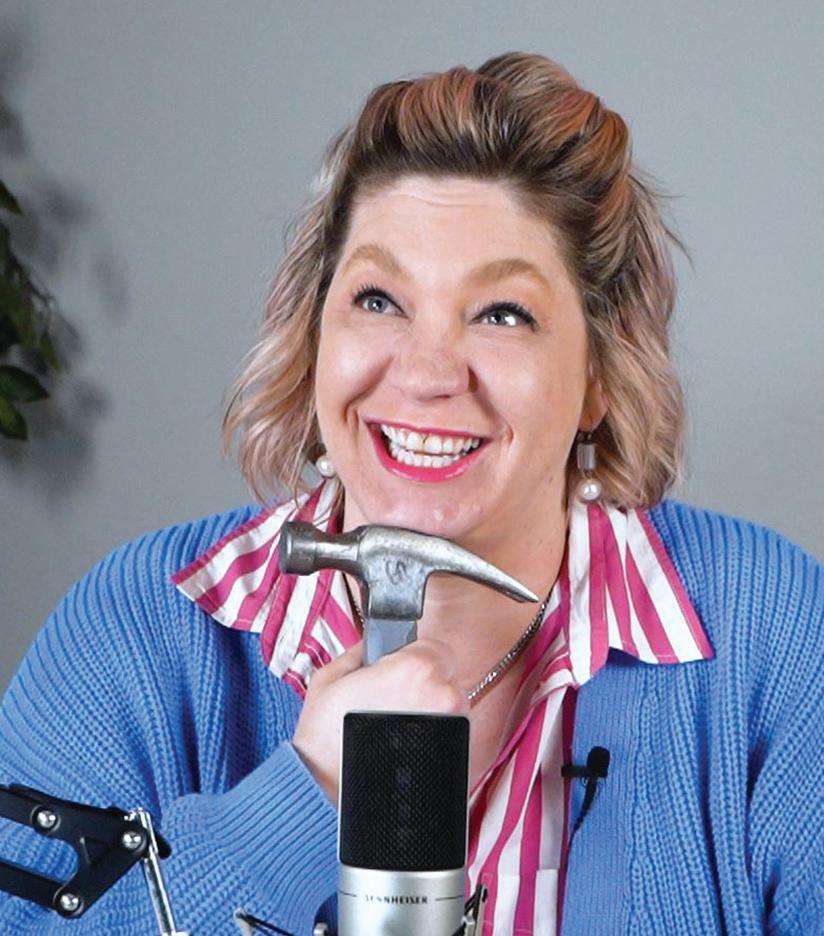
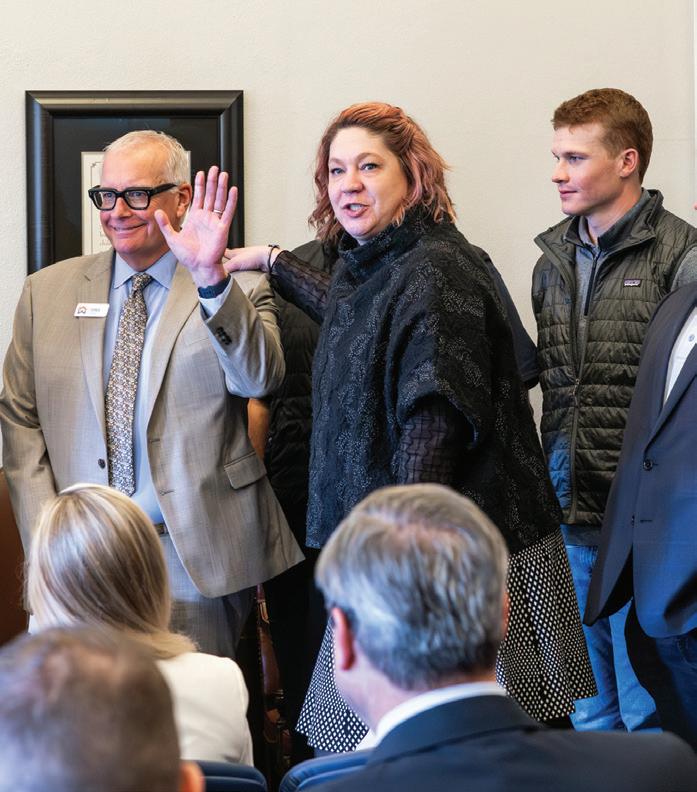
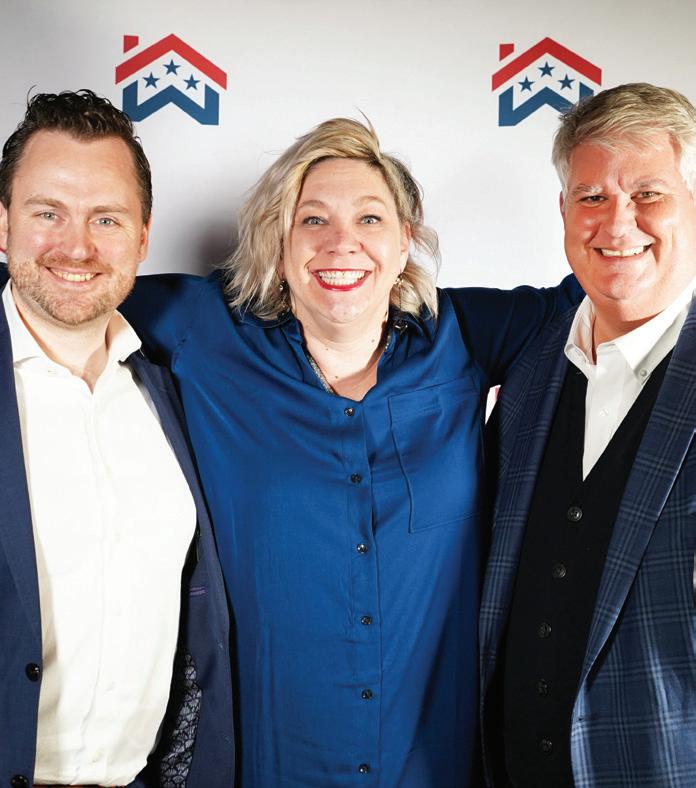
Himebaugh drops the hammer to lead Retail Association
BIAW’s Vice President of External Affairs Jan Himebaugh recently left the association to take a new role as President and Chief Executive Officer for the Washington Retail Association.
“Jan Himebaugh is a proven leader and tireless advocate for businesses of every size across Washington state and embodies the can-do spirit of private enterprises across our nation,” said Alesha Shemwell, WR interim president and CEO.
“She not only brings a wealth of experience but, most importantly, an unmatched level of expertise and enthusiasm for addressing the pressing issues facing retailers, such as organized theft, tax policy, and building bridges between state and local leaders from every political persuasion and our jobcreators in the retail sector.”
In the 15 years since Himebaugh joined BIAW, she’s helped pass dozens of prohousing bills, including the “Hirst fix,” which restored access to water for new construction in many rural areas. She also led efforts to protect natural gas as an energy choice by helping collect more than 540,000 signatures to put Initiative 2066 on the ballot, then representing BIAW in the media and
in public forums to persuade voters to approve the initiative.
“It’s hard to put into words just how much Jan Himebaugh has meant to, and accomplished for, BIAW during her nearly 15 years with this organization,” said BIAW Executive Vice President Greg Lane. “Our members, staff and the business community as a whole have benefited from her passionate, knowledgeable, strategic, dedicated and persistent advocacy.”
During the COVID-19 pandemic, Himebaugh was instrumental in working with BIAW leadership to reopen construction five weeks earlier than other industries. She and her team also established the Washington Center for Housing Studies to educate members of the public, policymakers and the media about issues affecting housing affordability and impacts on home building and home ownership.
“Jan is one of the most effective lobbyists in the Legislature and has created a tremendous legacy at BIAW, both with policy success as well as the many friendships she has built with members and all of us,” Lane said.
Former BIAW executive officer Art Castle recalls hiring her, “I immediately
recognized that while young, Jan Himebaugh had all the essential qualities to be an effective government affairs professional,” Castle said. “She worked well with our contract lobbyists, members, staff, as well as legislators, their staff and other business advocates and developed into one of the most influential and effective advocates for our industry.”
Himebaugh assumed her new role with the WR on June 1.
“This is bittersweet for me because I grew up at BIAW,” Himebaugh said. “But I’m excited to lead WR as we strengthen Washington’s business community, and I know BIAW will continue to be a partner and champion.”
Gems from Jan
It’s never about what it’s about.
That’s why we can’t have nice things. Everything’s fine.
I’m here with the beautiful people. We’re capable people doing capable things.
You can’t make housing more affordable by making it more expensive.


Paylocity’s unified platform simplifies your HR and payroll experience, providing what you need and freeing up time to invest back into what matters most
“
Annual authorized permits for ADUs in Seattle grew 325%, from 281 in 2019 to 914 by 2022.
Tapped Out
How water utility hook-up fees hit ADUs
by Patrick Hanks Codes & Policy Manager
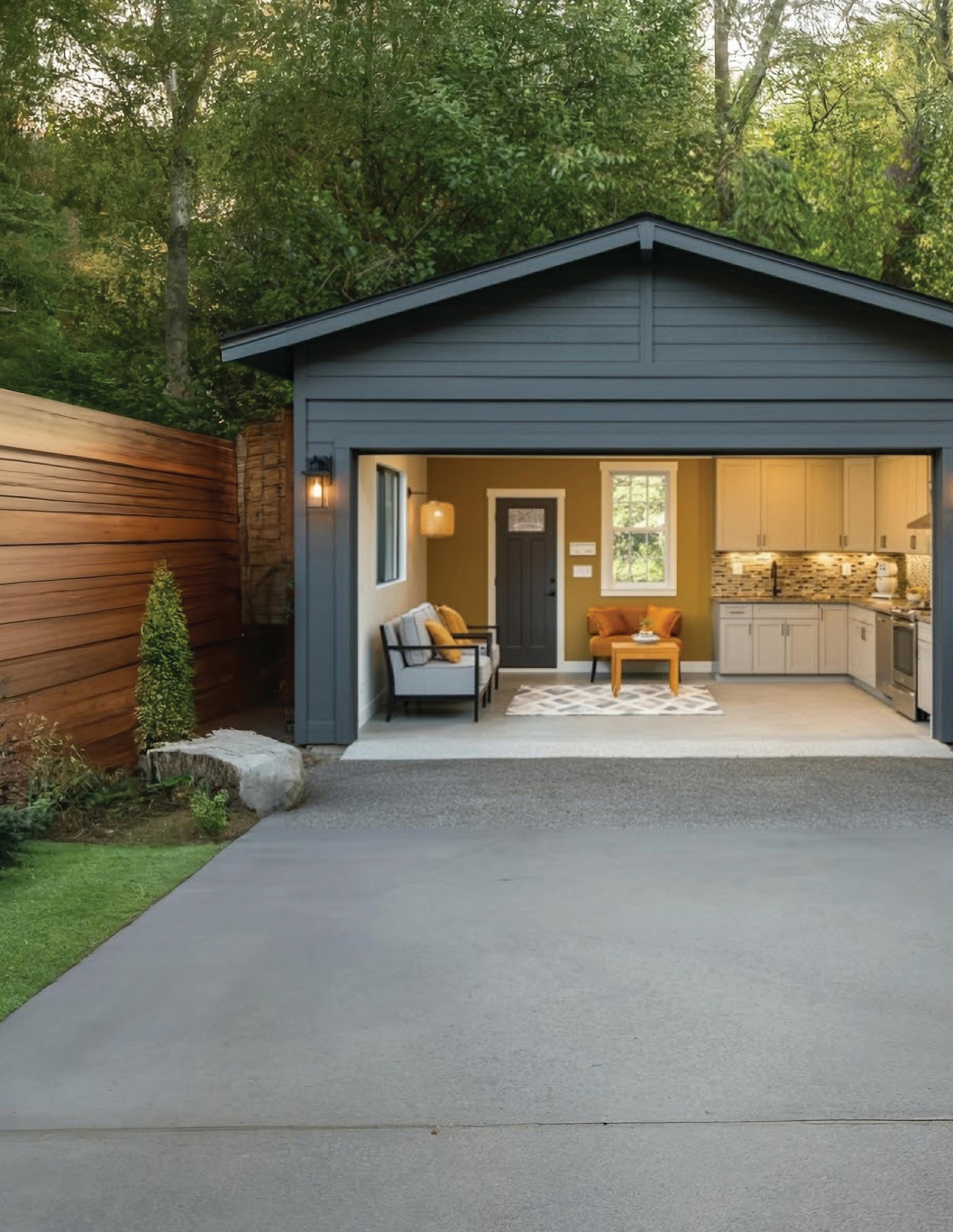
As the housing crisis in Washington state continues to ripple through the economy, one positive area of improvement has been the legal expansion of accessory dwelling units (ADUs).
In 2019, Seattle removed off-street parking requirements for ADUs. The market in Seattle responded eagerly. Annual authorized permits for ADUs in Seattle grew 325%, from 281 in 2019 to 914 by 2022.
The state legislature, inspired by this change, passed HB 1337 in 2023, requiring cities and counties to allow ADUs within urban growth areas and creating consistent standards for ADUs across the state.
HB 1337:
n Allows up to two ADUs per residential lot (they may be attached or detached to the primary unit)
n Prohibits local jurisdictions from requiring that ADUs be less than 1,000 square feet; and
n Requires local jurisdictions to charge less than 50% of the impact fees charged for the primary residential unit.
While permit data is not readily available statewide, the newfound popularity of ADUs in Seattle has remained steady, with an average of 913 annual permits authorized between 2023 and 2025. Industry participants have signaled that the development and use of ADUs continue to grow around the state.
It’s easy to understand the popularity of ADUs now that legal limitations on them have been lifted. They offer current homeowners the chance to repurpose
parts of their home or land and make money by renting or selling the ADU.
Likewise, ADUs can be an attractive option for renters or buyers seeking a smaller home or unit within a typical single-family residential community. However, development of ADUs is not without its challenges.
ADU pain point: Water utility fees
One area that has drawn the attention of builders and housing advocates as a pain point for the development of ADUs is water utility hook-up fees.
As we flow further into this topic, it can quickly become confusing as water hookup fees go by many different names and can refer to different types of charges issued by water, sewer and stormwater utilities.
The overall term for these fees is connection charges. Within connection charges, there are two types. The first type is paying for the actual physical
connection to connect a new building to the existing water system. The second type is system development charges (SDCs), which are intended for new development to pay for their share of existing and future system facilities.
Stormwater SDCs are calculated based on impervious surface area and sometimes per vehicle trip. Unlike impact fees (for schools, parks, or transportation), connection charges are not required to be lower for ADUs than for primary singlefamily residences. Connection charges do not necessarily include the costs associated with physically connecting to utility service, which may include material, equipment, and labor costs.
On the surface, hook-up fees may seem fair and reasonable, but a closer look can reveal a different picture. Sometimes utilities require developers to go beyond connection charges and SDCs.
The Urbanist recently reported that Seattle Public Utilities is requiring two ADU projects to pay for upgraded water valves, with costs ranging from $100,000 to $800,000. Those kinds of extraordinary examples may not be occurring statewide, but it did make us want to dive deeper into hook-up fees for ADUs around the state to see if they are facing disproportionate charges.
Most ADUs pay standard utility fees
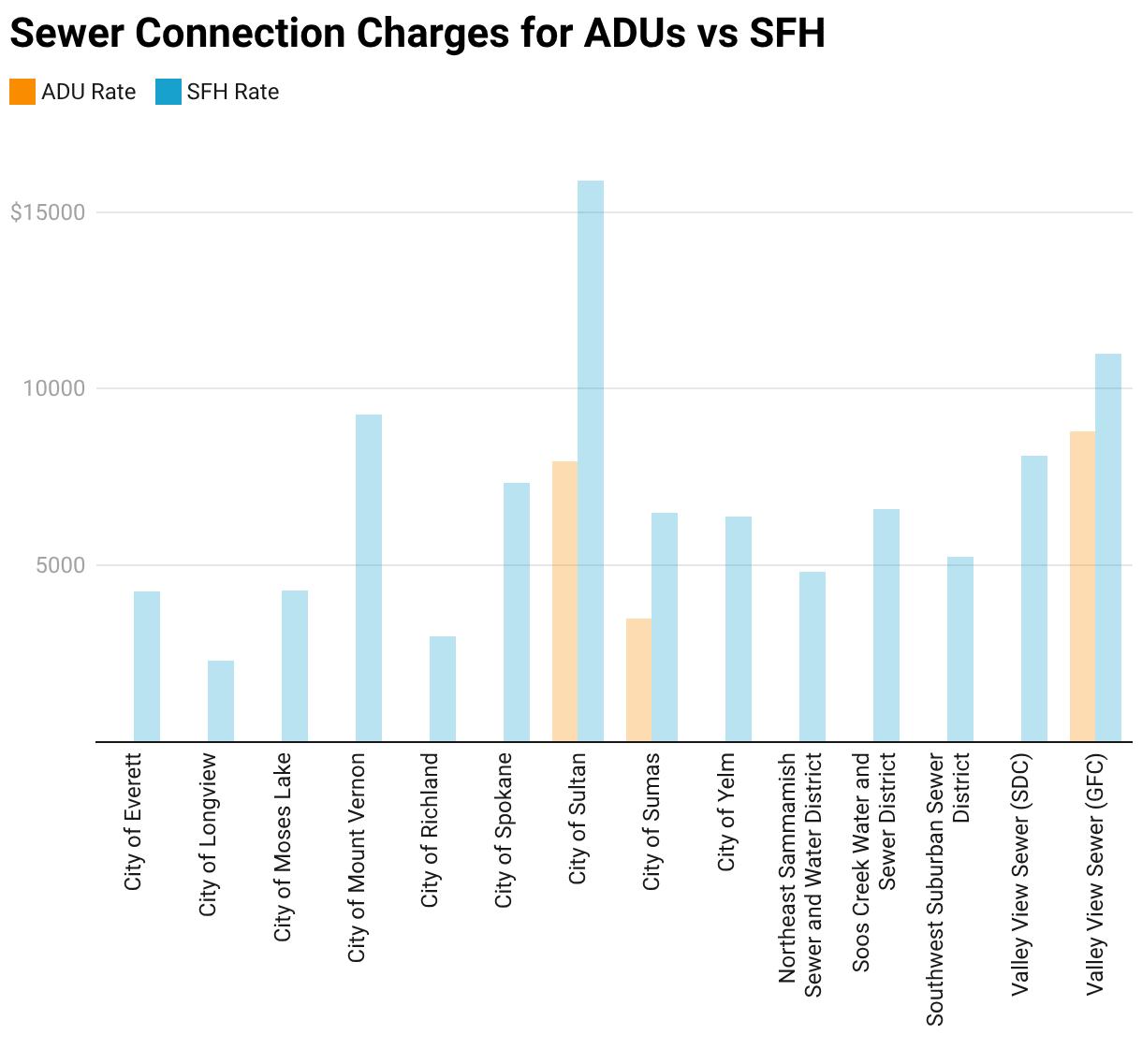
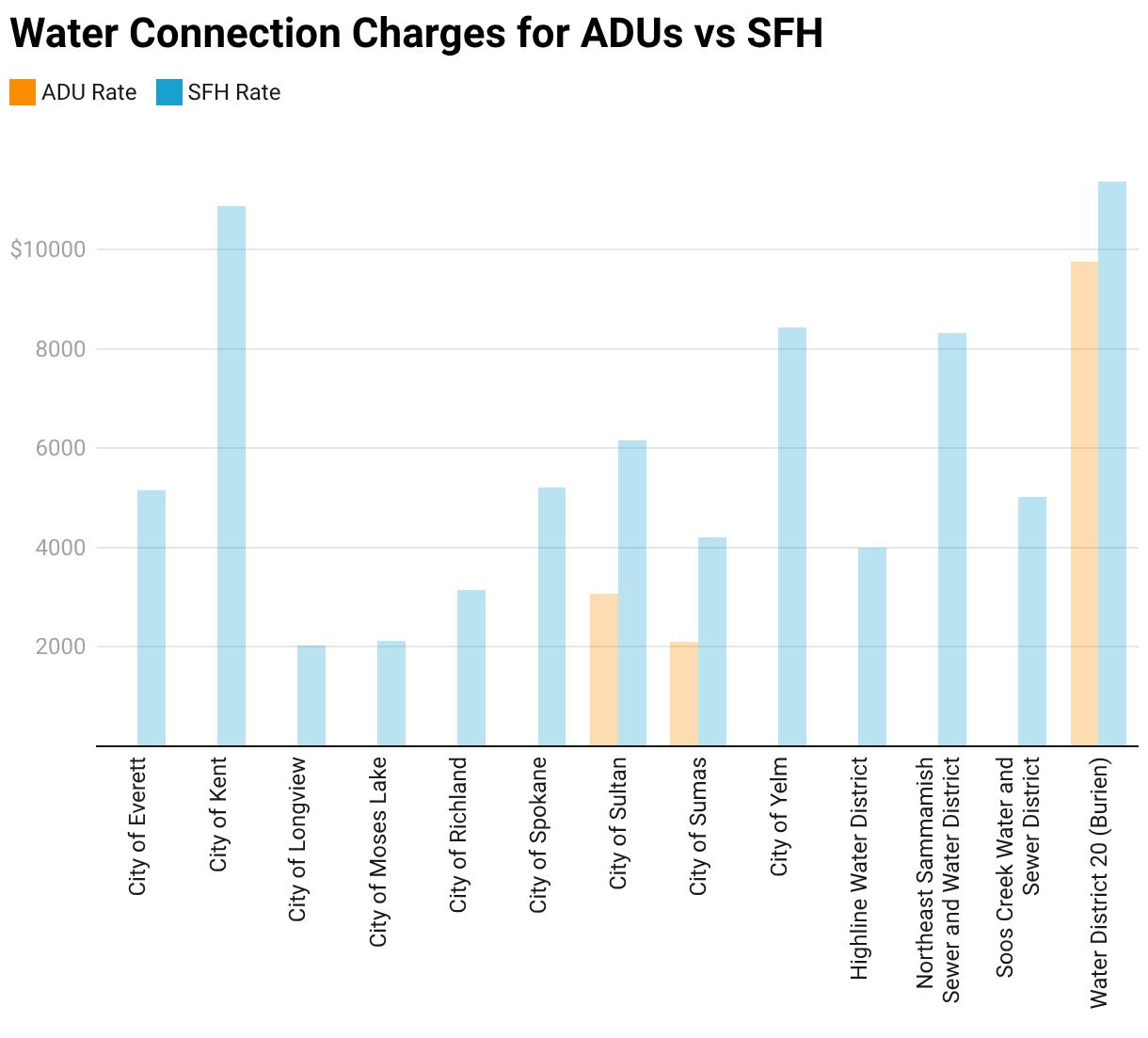
To test whether ADUs are being charged disproportionately for utility connection fees, we reviewed fee schedules for 13 sample municipalities and utilities of varying sizes across the state. We then compared the rates they charge ADUs compared to the rates they charge for standard single-family homes (SFH).
We found that only three of the 13 sample jurisdictions have a specific rate for ADUs compared to SFH (for both water and sewer charges). Thus, most jurisdictions charge ADUs and SFHs at the same rates. In jurisdictions with separate rates for ADUs, those rates are between 50% and 86% of the rates charged for SFHs.
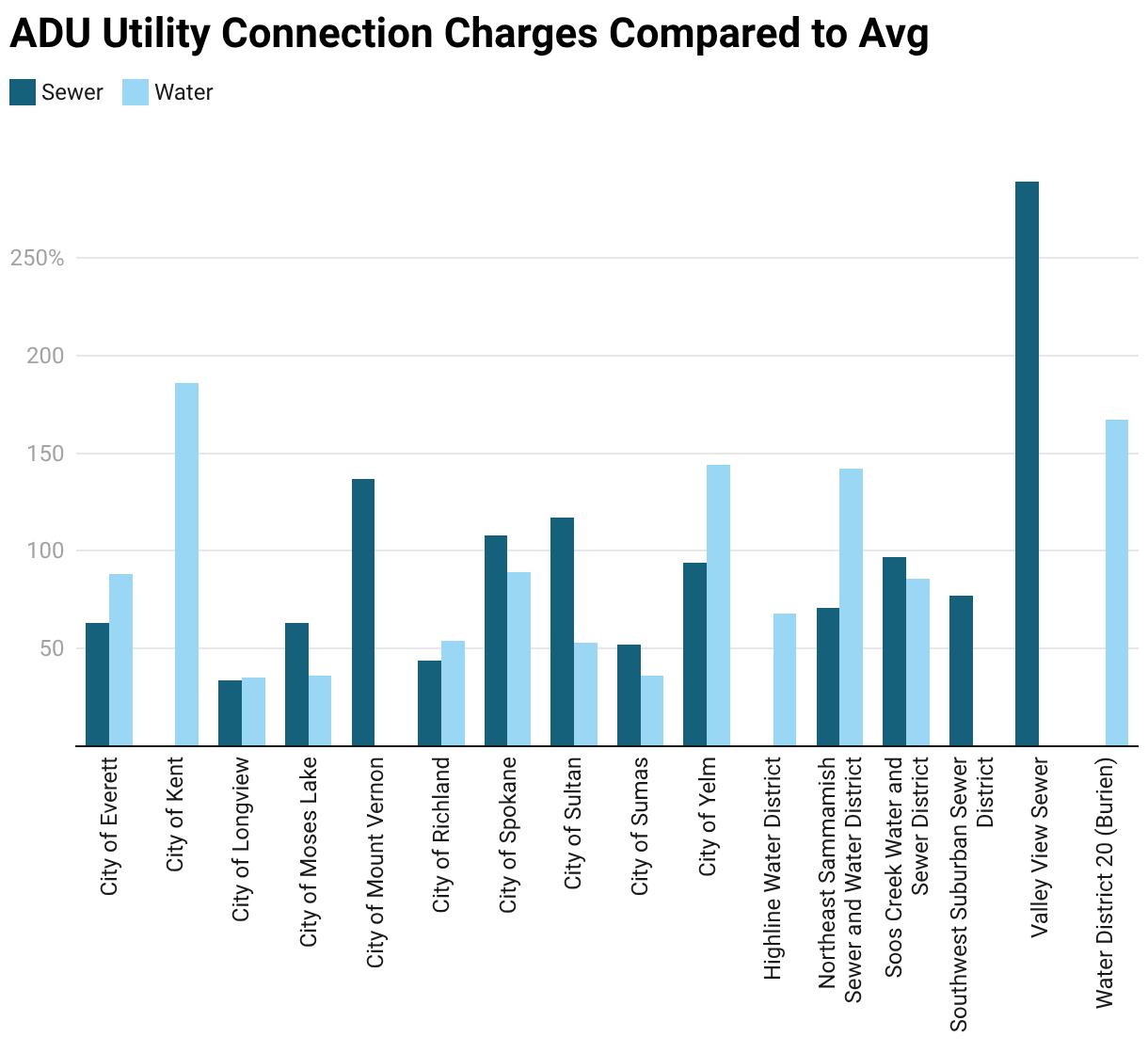
While this sample size is small and is not comprehensive of all jurisdictions, out of curiosity, we also compared the ADU connection charges individually to the average across all
sampled jurisdictions. The average connection charge for ADUs is $5,326.40 for water and $5,847.58 for sewer.
Eighteen of the individual charges are at or below the average rate, while nine are above it. This shows that, across these sample jurisdictions, over half of the fees are in line with or below what an ADU would be charged if it were built and connected in a different jurisdiction. However, there are a few instances where connection charges are more than 50% above average.
Leveling the playing field for ADUs Jurisdictions that currently charge ADUs the same rate as SFHs should reevaluate their fee schedules and calculate new rates based on ADUs’ proportional impact relative to the equivalent residential unit (ERU). If jurisdictions fail to rectify their disproportionate connection charges, the legislature should establish explicit requirements that ADUs be charged less than an ERU.
Read the full report at: housingstudies.biaw.com.
ABOUT THE WASHINGTON CENTER FOR HOUSING STUDIES
BIAW’s Washington Center for Housing Studies delivers in-depth research and data-driven policy analysis on the high costs of homebuilding in Washington state. Our mission is to spark actionable solutions—streamlining regulations, reforming impact fees, expanding financing for workforce housing, and improving planning frameworks—so more Washington families and workers can access quality housing at fair prices.
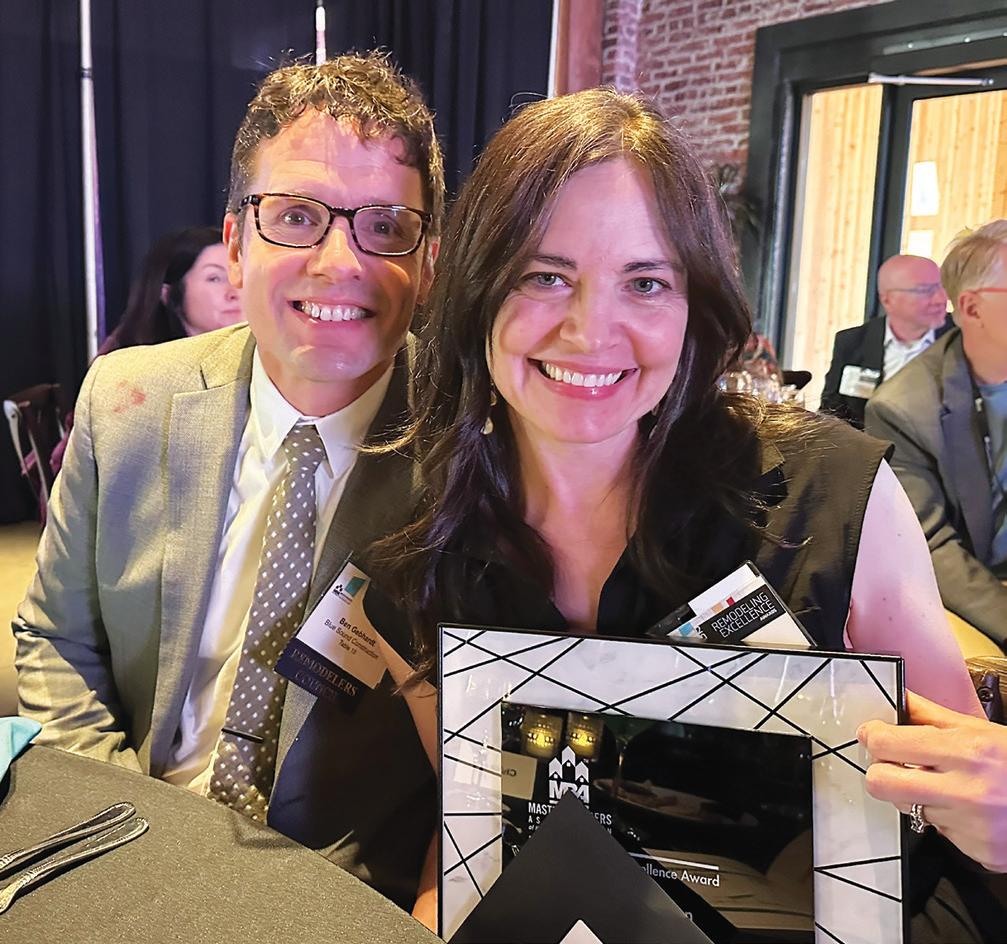


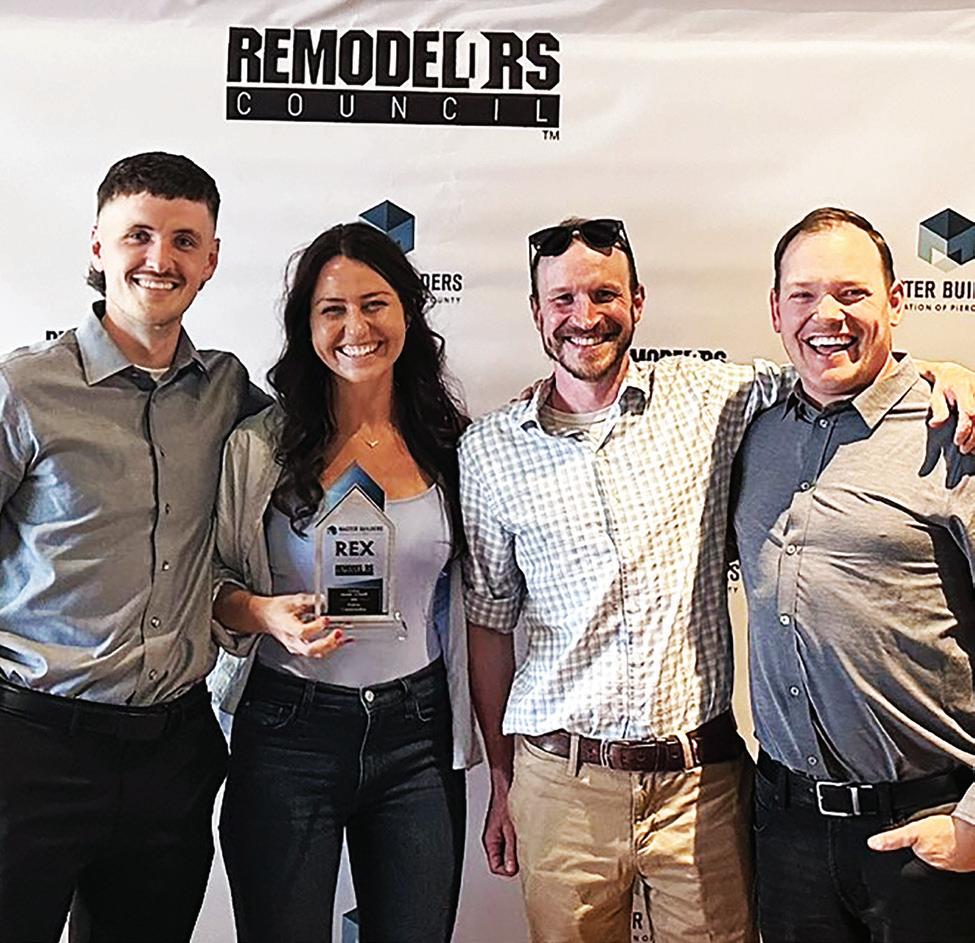
[1] The Master Builders Association of King & Snohomish Counties (MBAKS) held its annual Remodeling Excellence Awards (REX) at Victory Hall in Seattle on April 25. Congratulations to all the winners! [1a] Ben and Courtenay Gebhardt of Blue Sound Construction [1b] Tod and Kristin Sakai of Sockeye Homes
[2] The Building Industry Association of Clark County (BIACC) held its annual Green Tie Gala to raise funds for its Building Futures Foundation (BFF) on May 15 in Ridgefield. Drew and Juli Talbert of West Coast General Construction with their daughter, Tatum, who spoke at the gala.
(Photo credit: Elsa Temme, BIA of Clark County)
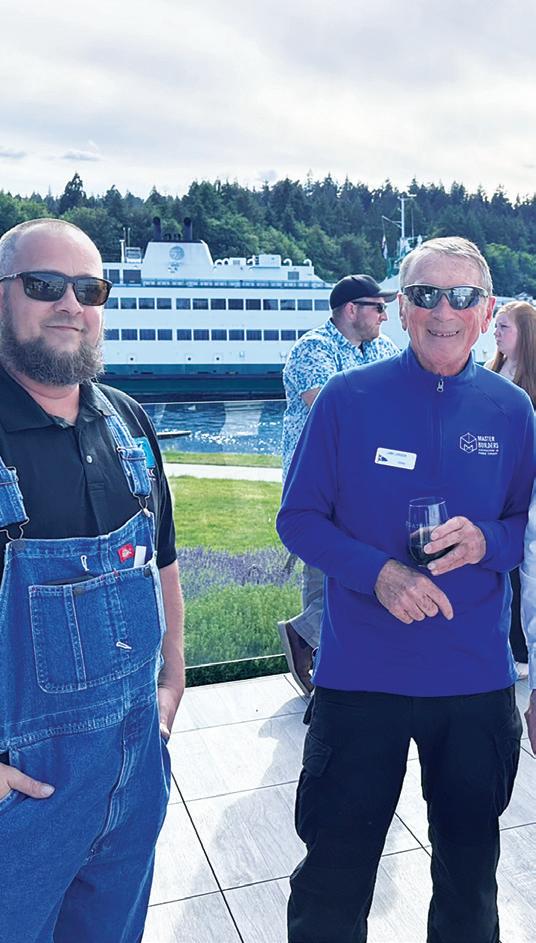
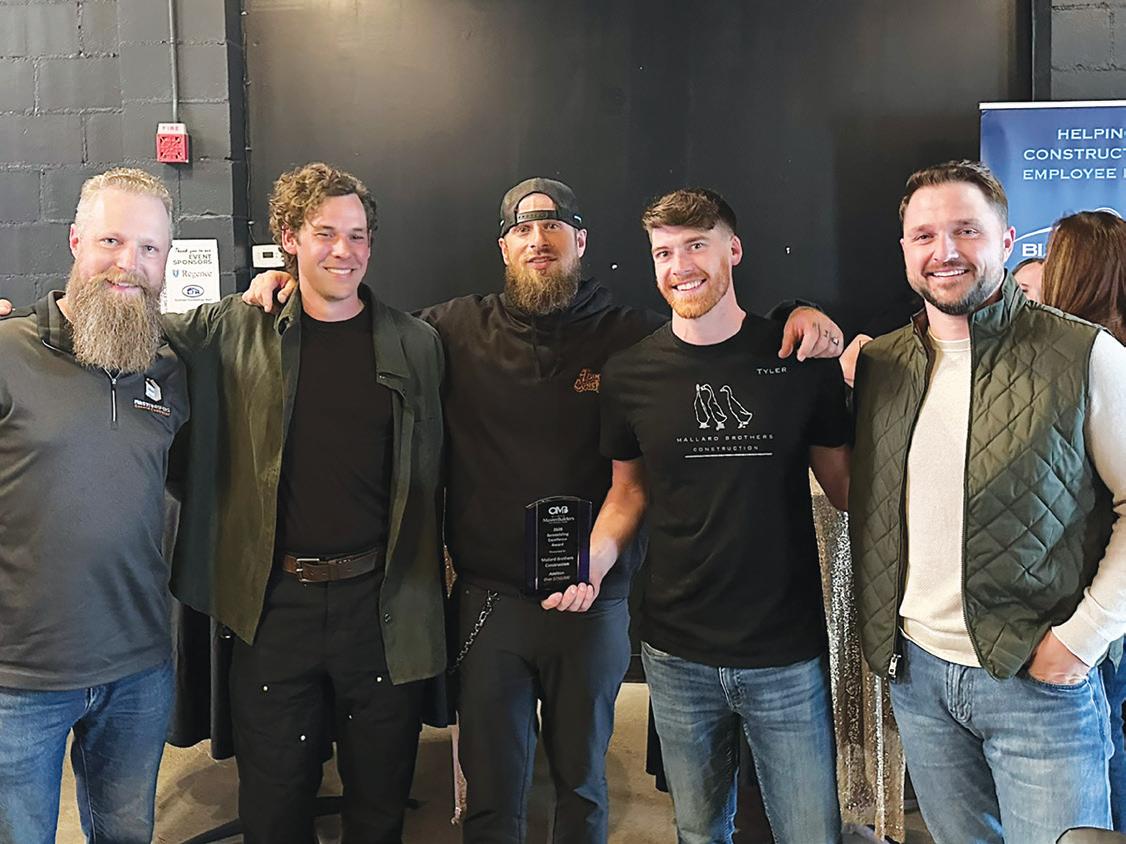
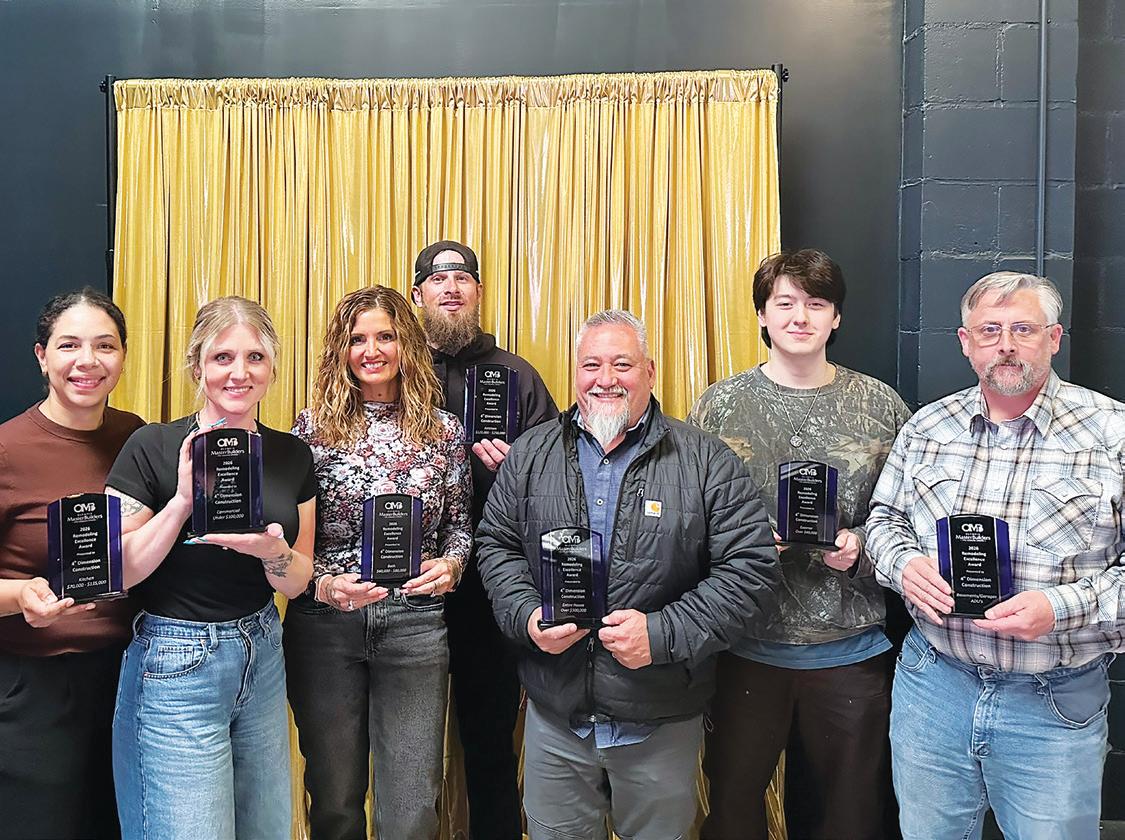
[3] The Olympia Master Builders celebrated its 2026 REX Awards at The Cove in Olympia on May 14. [3a] Kai Fyrst of First Finishers, Keenan Duke of Mallard Brothers Construction, Michael Robinson of 4th Dimension Construction, Tyler Alverson of Mallard Brothers Construction and Daniel Doyle of Doyle Construction. [3b] Michael Robinson of 4th Dimension Construction and his team.

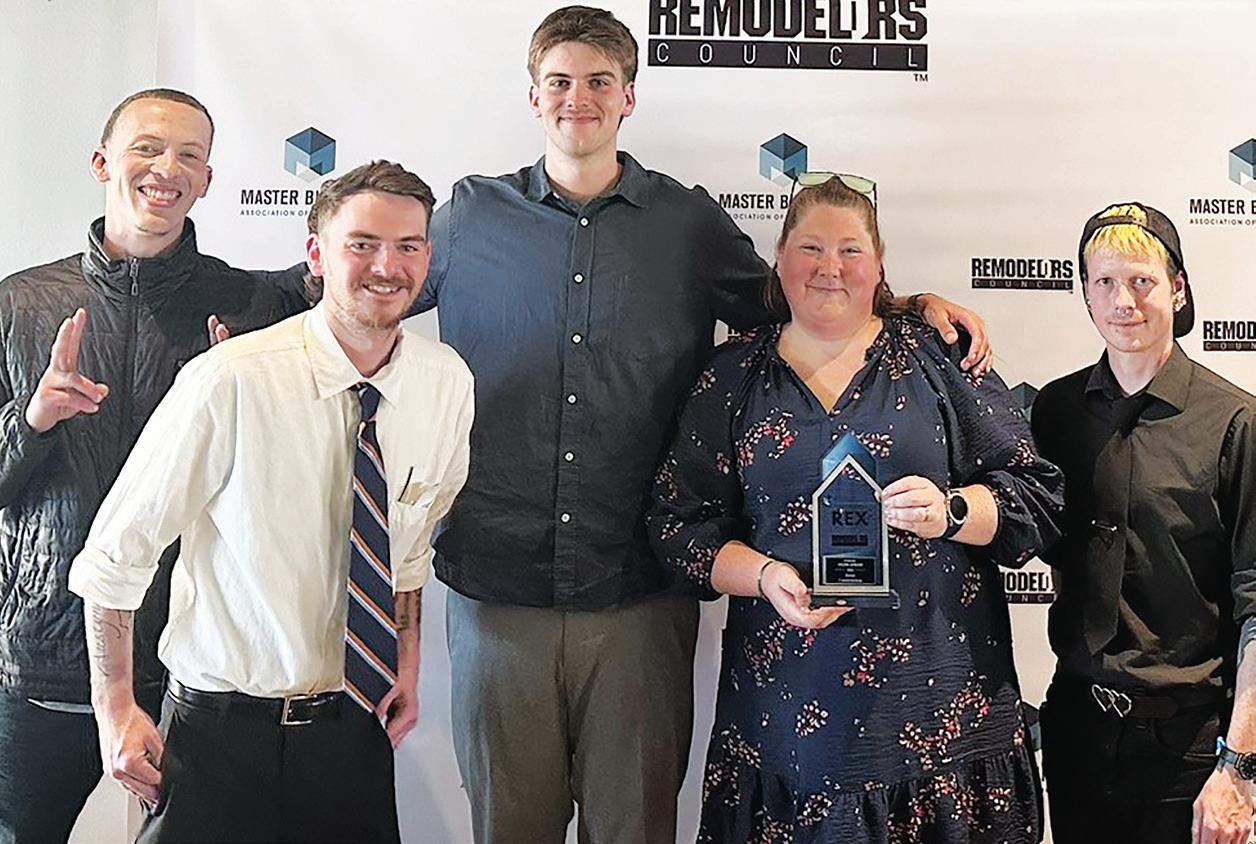
[4] The Master Builders of Pierce County held its REX Awards on June 5 at the Tacoma Yacht Club, thanks to sponsorship by longtime member, Linn Larsen of Larsen Commercial/Industrial Realtors. [4a] Linn Larsen with the York Enterprises team [4b] The Kairos Construction team [4c] Lucy Wilson with the Reier Construction team.
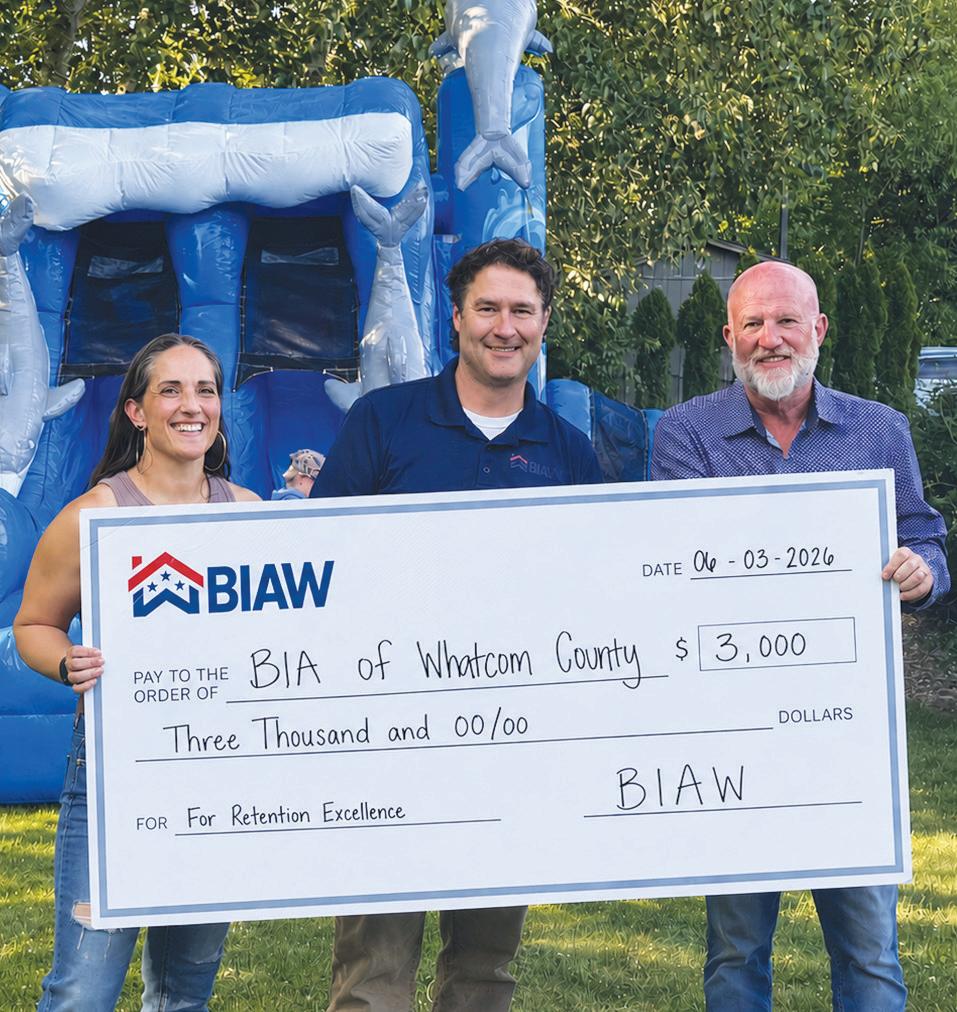
[5] VP of Business Development Bart Hansen visited the Building Industry Association of Whatcom County to deliver a $3,000 check to celebrate their association’s excellence in membership retention on June 3. (l to r) BIAWC Membership Angie Brionez, Bart Hansen and BIAWC Executive Officer Rob Lee.
BIAW members fight to block income tax
This new income tax will unfairly damage small businesses, especially builders, who have unpredictable highs and lows when it comes to income.
— Greg Lane, BIAW Executive Vice President
Throughout the 2026 legislative session, BIAW and its members fought efforts to impose an unconstitutional income tax on the people and businesses of Washington state.
Despite a record number of people opposing this unconstitutional new income tax, the legislative majority and Gov. Bob Ferguson approved it anyway. Washington voters have rejected an income tax 10 times in the last 90 years.
Taking it to the ballot
Let’s Go Washington is counting on voters once again to flex their power to reject it for an 11th time. BIAW has joined them in the fight
by supporting a new initiative (IP26-645) to repeal it.
IP26-645 not only repeals the new income tax, but it also prohibits state and local governments from imposing ANY tax on income. The initiative needs roughly 400,000 signatures before the beginning of July to get on the ballot.
Fund the fight
Help fund the fight to give Washington voters the chance to vote on whether they want an income tax.
Donate today at letsgowa.com/donate
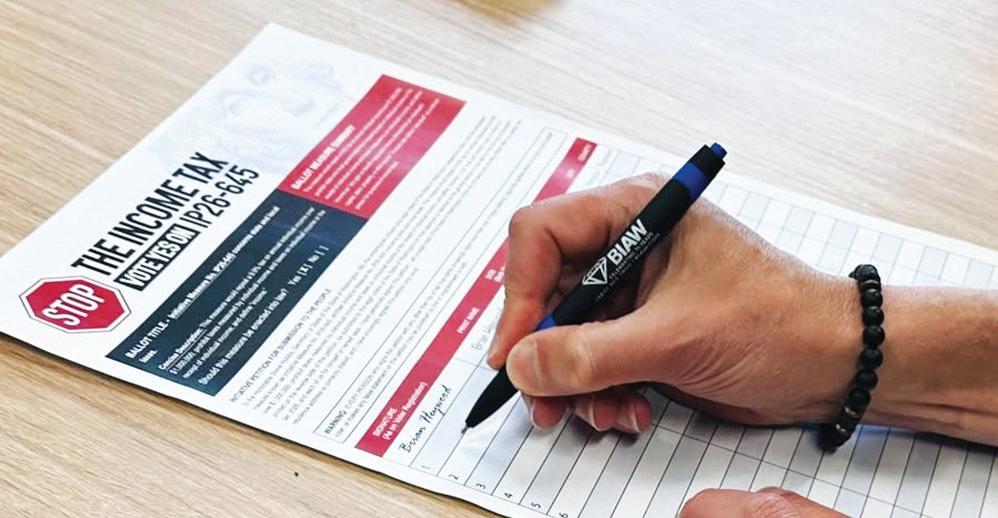
Help collect signatures
There’s still time to help gather signatures on IP26-645. Find signature locations, order sheets to be mailed to you or find a Super Signing event.
Sign petitions at data.letsgowashington. com/stop-the-income-tax-signinglocations.
Challenging constitutionality
The income tax is not only universally unpopular with voters, but it’s also been deemed unconstitutional by Washington courts in the past.
With this in mind, BIAW’s Board of Directors approved BIAW joining a lawsuit challenging the constitutionality of this new tax at its Winter Board Meeting in March.
BIAW joined a diverse group of plaintiffs in filing the lawsuit in April. The Citizen Action Defense Fund (CADF), former Washington Attorney General Rob McKenna and former State Supreme Court Justice Phil Talmadge are leading the legal challenge.
“This new income tax will unfairly damage small businesses, especially builders, who have unpredictable highs and lows when it comes to income,” said Greg Lane, BIAW Executive Vice President.
“The tax will apply to peak years, even when cash is already committed to land, labor and materials for the next project. Unfairness aside, the new tax is blatantly unconstitutional. We can’t stand by and let the majority ignore the Constitution for political gain.”
DESIGN BUILD INSTALLATIONS SINCE 1992
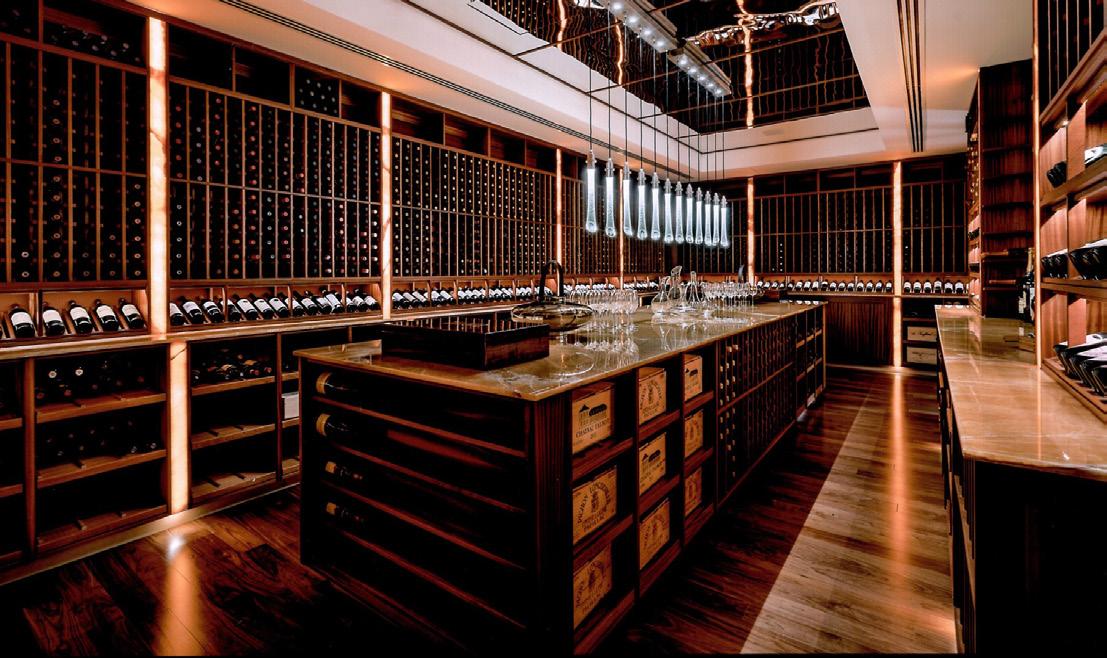
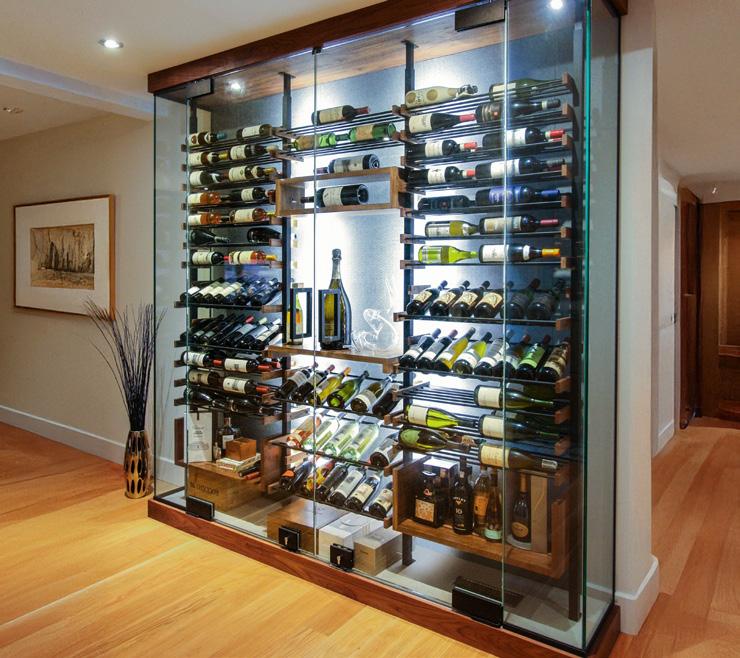
CUSTOM WINE CELLARS & COOLING SYSTEMS
• Traditional Wood Contemporary Metal Racking Systems
• Cabinetry/Tabletops/Lighting
• Climate Control Equipment
• Expert BTU Analysis for sizing eq.
• Cooling Installation & Service
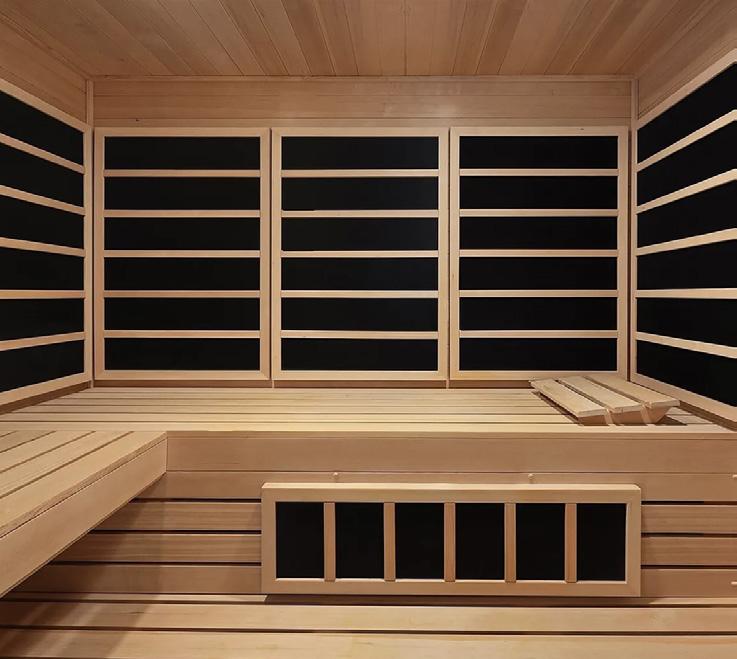

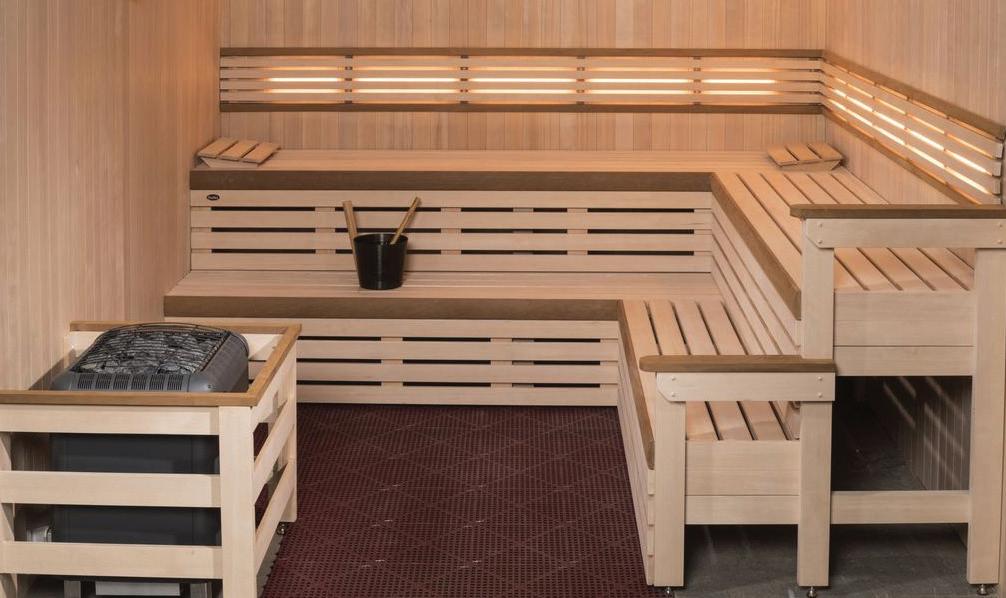
CUSTOM SAUNAS & COLD PLUNGE TUBS
• Traditional and infrared Saunas
• Modular Indoor or Outdoor Saunas
• Sauna Heaters/Doors/Accessories
• Locally Made for Quick Lead Times
• Cold Plunge Tubs
Building Industry Association of Washington
300 Deschutes Way SW, Ste. 300 | Tumwater, WA 98501
(360) 352-7800 | BIAW.com
Book your GETAWAY and GET up to 30% OFF with Pay Now*
Enjoy the open road with deals from your NAHB Avis and Budget Car Rental Savings Program. With the Pay Now feature members can save up to 30% off base rates on every rental, plus receive additional offers like dollars off, a complimentary upgrade or a free weekend day.
To make a reservation with Avis, visit: www.avis.com/nahb and use your AWD #G572900 when booking to save.
To book with Budget, visit: www.budget.com/nahb and use your BCD #Z536900 to apply savings. *Terms Apply.