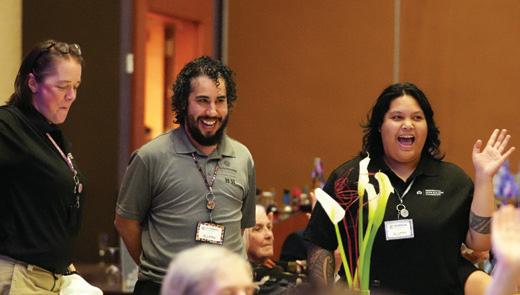
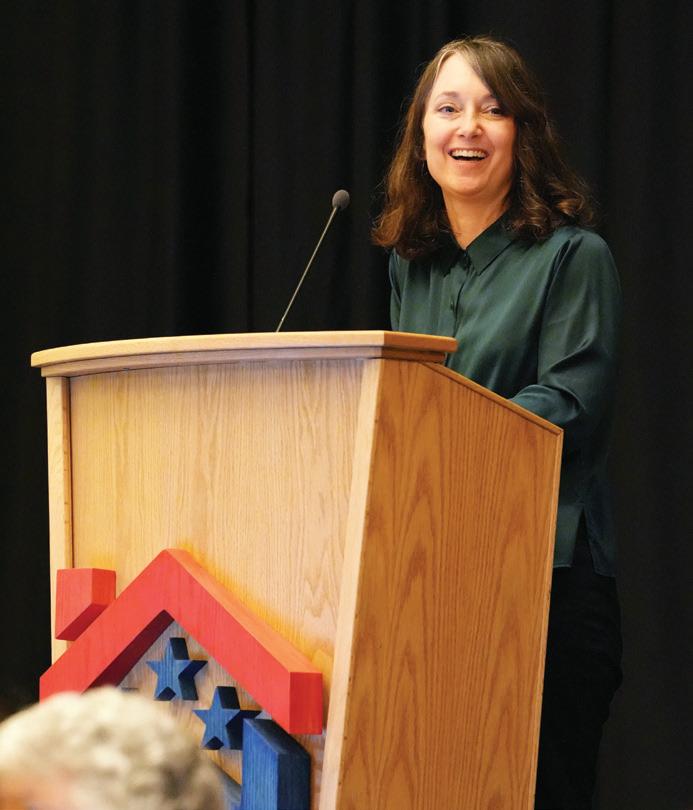
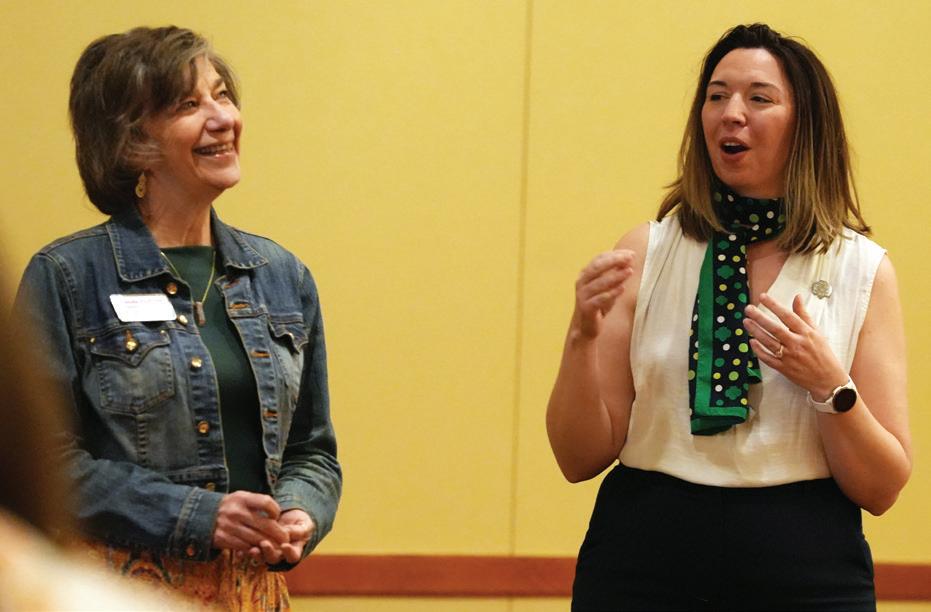
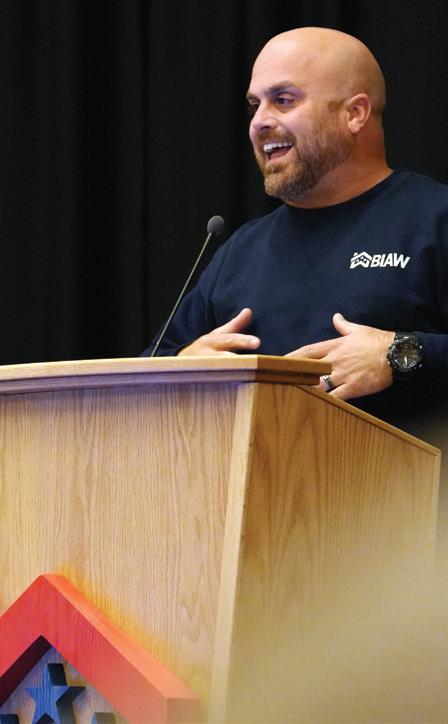
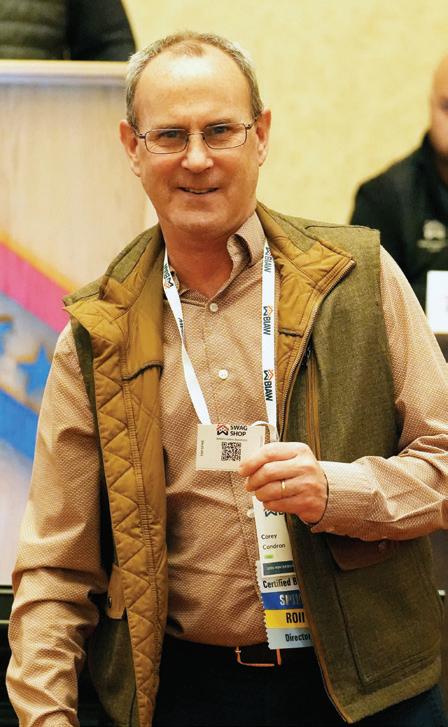
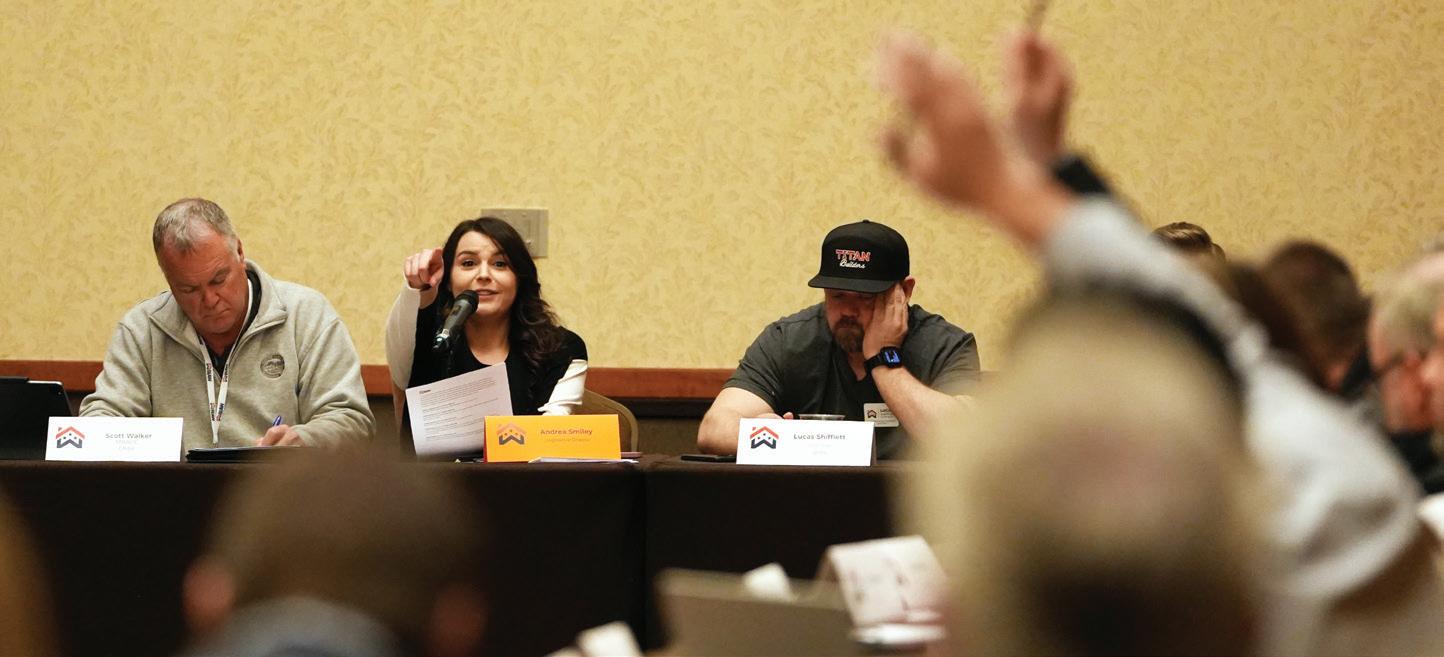
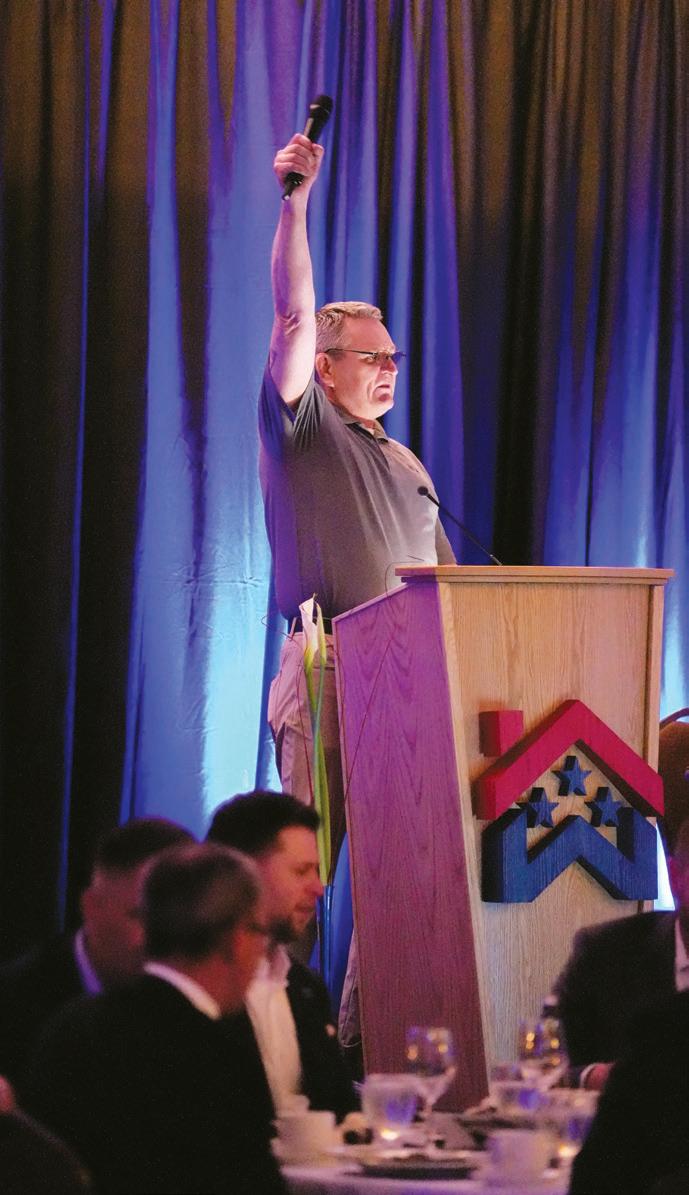
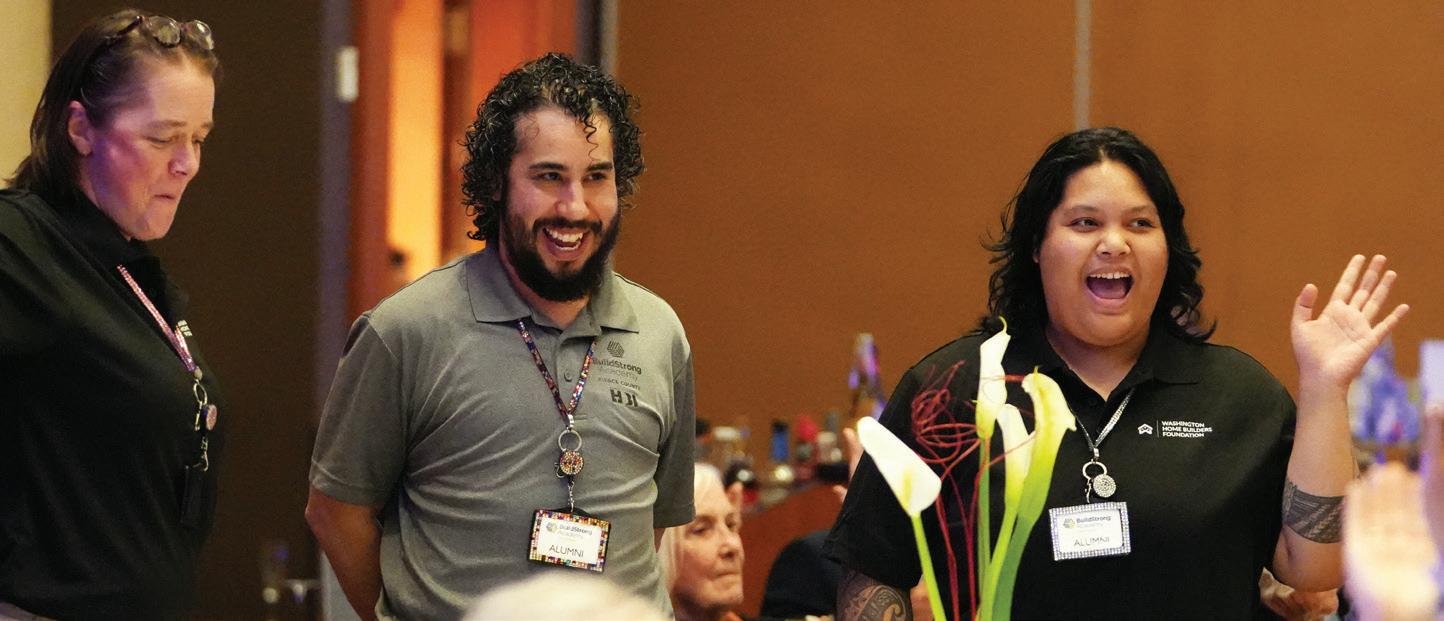
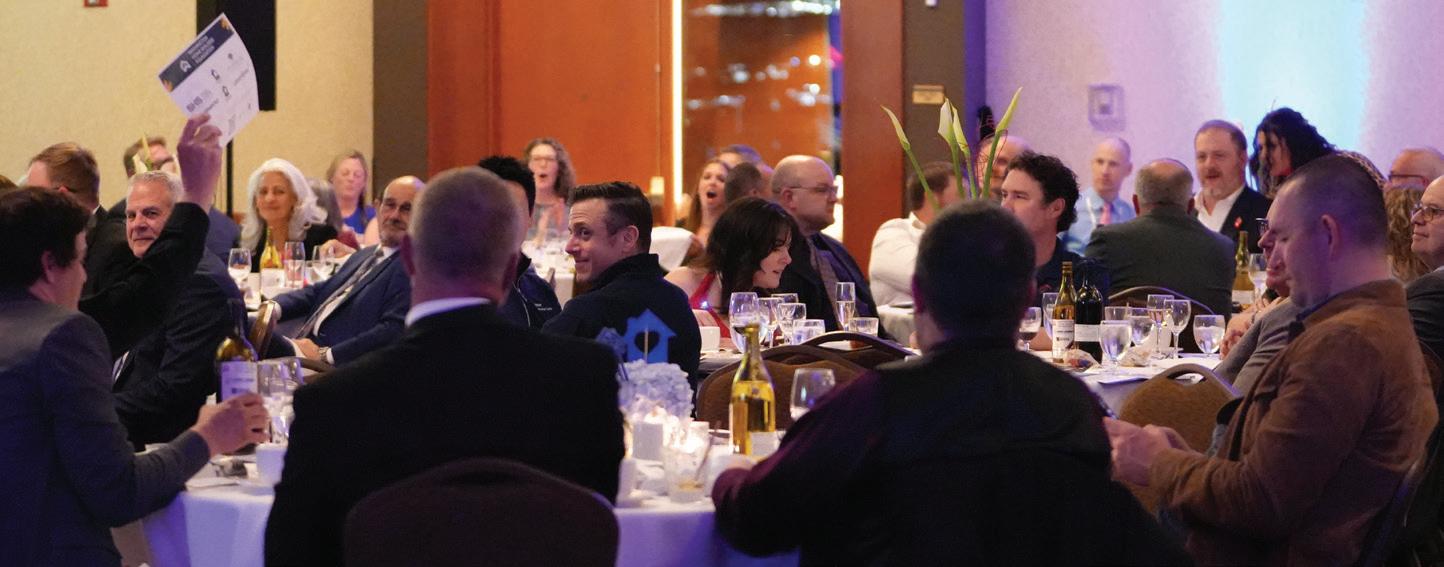
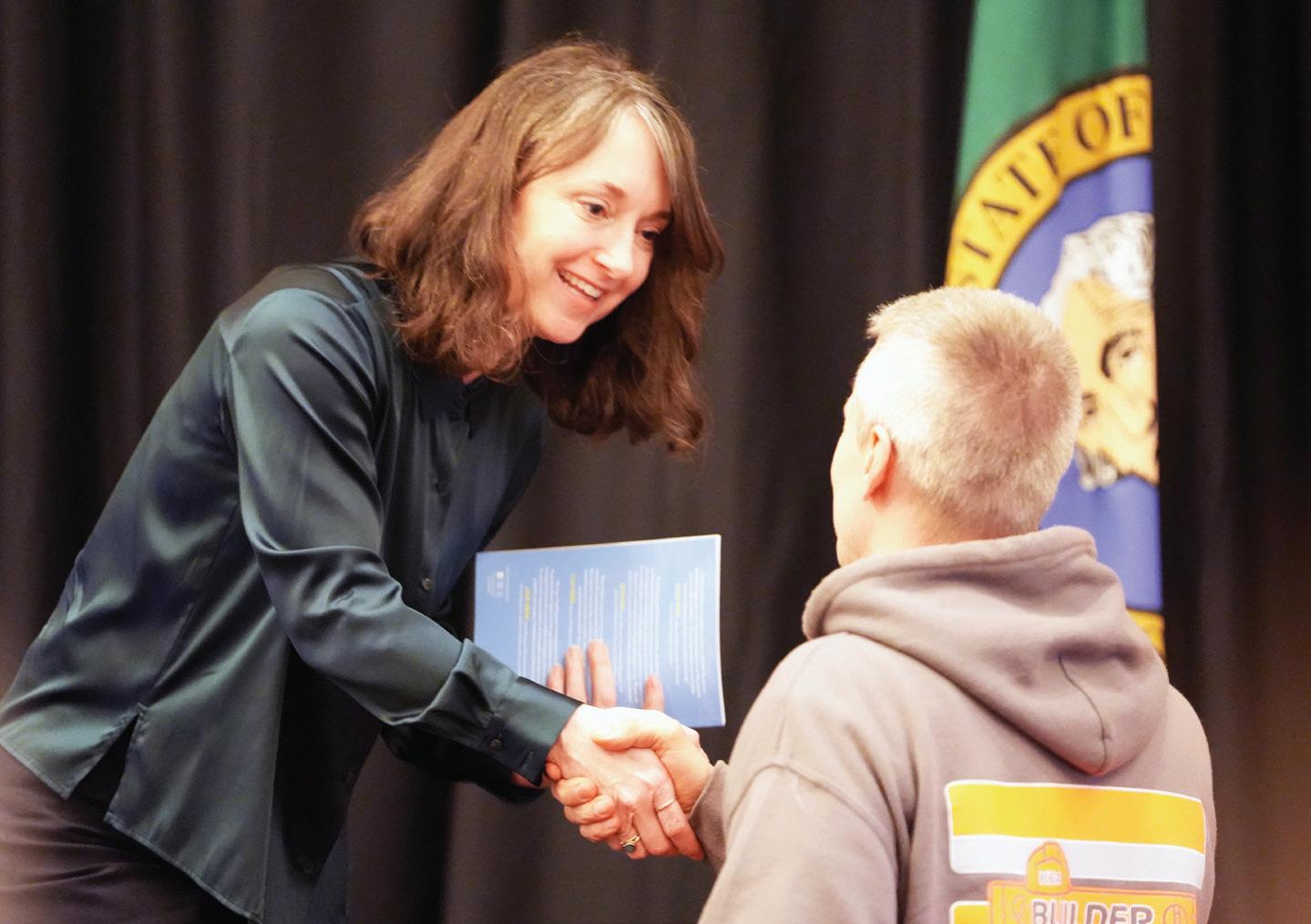
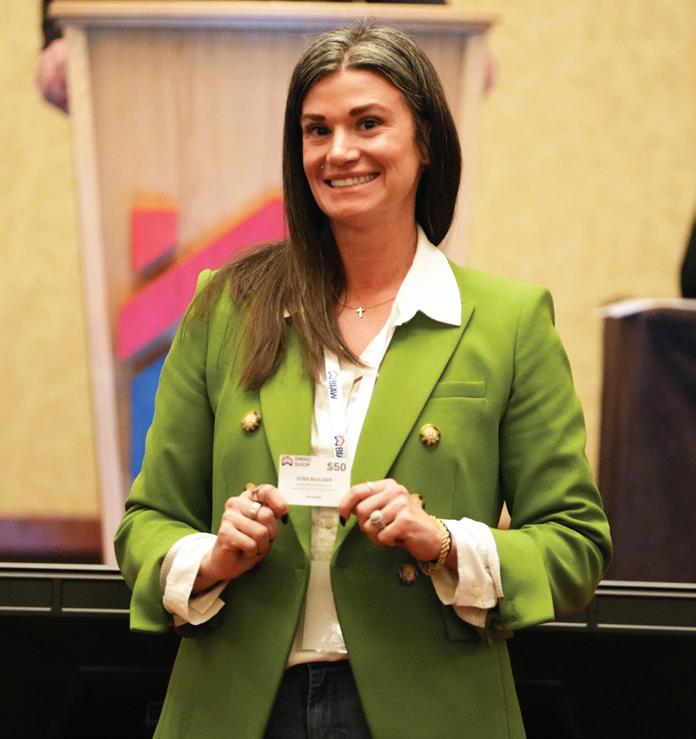
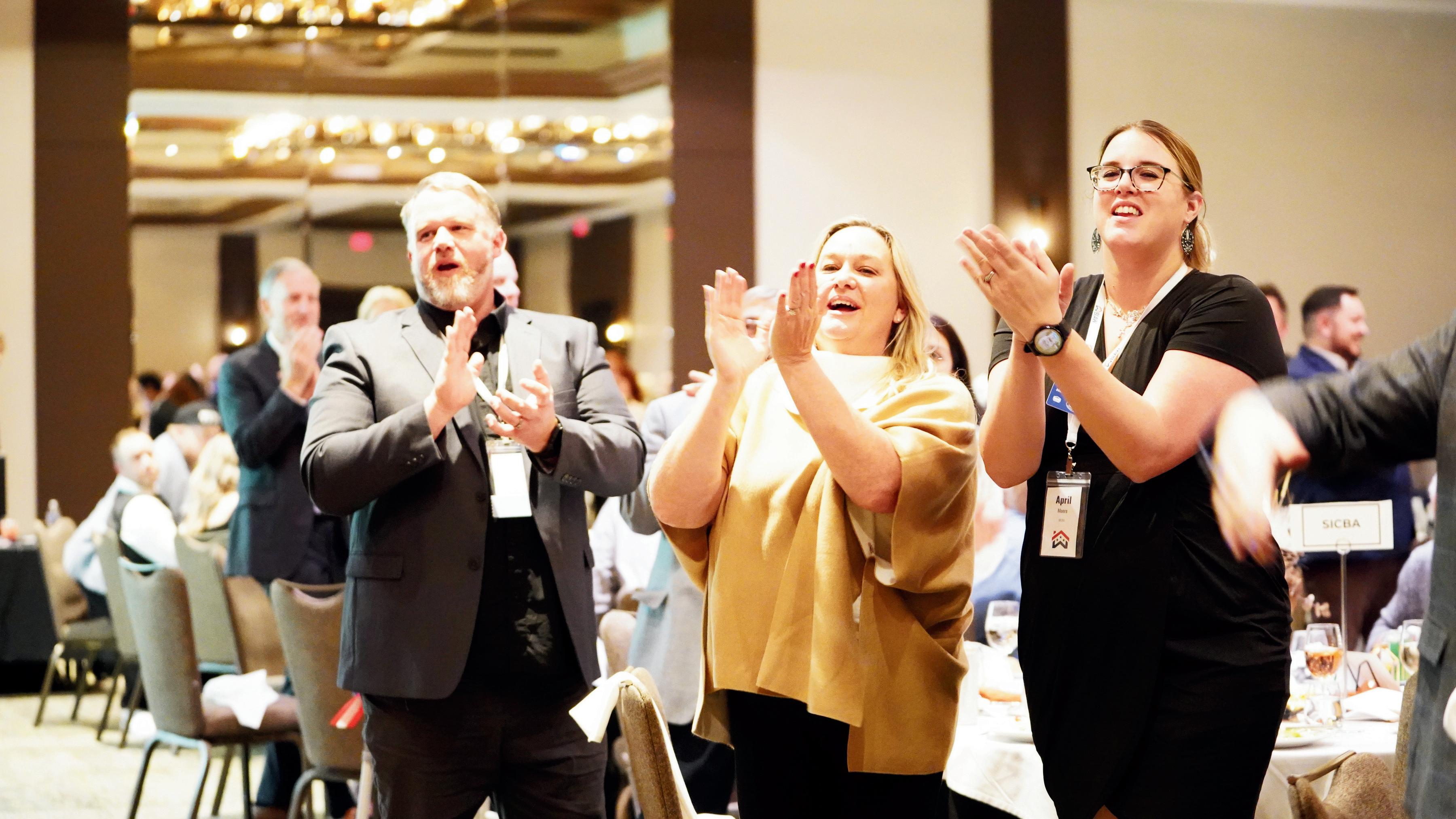
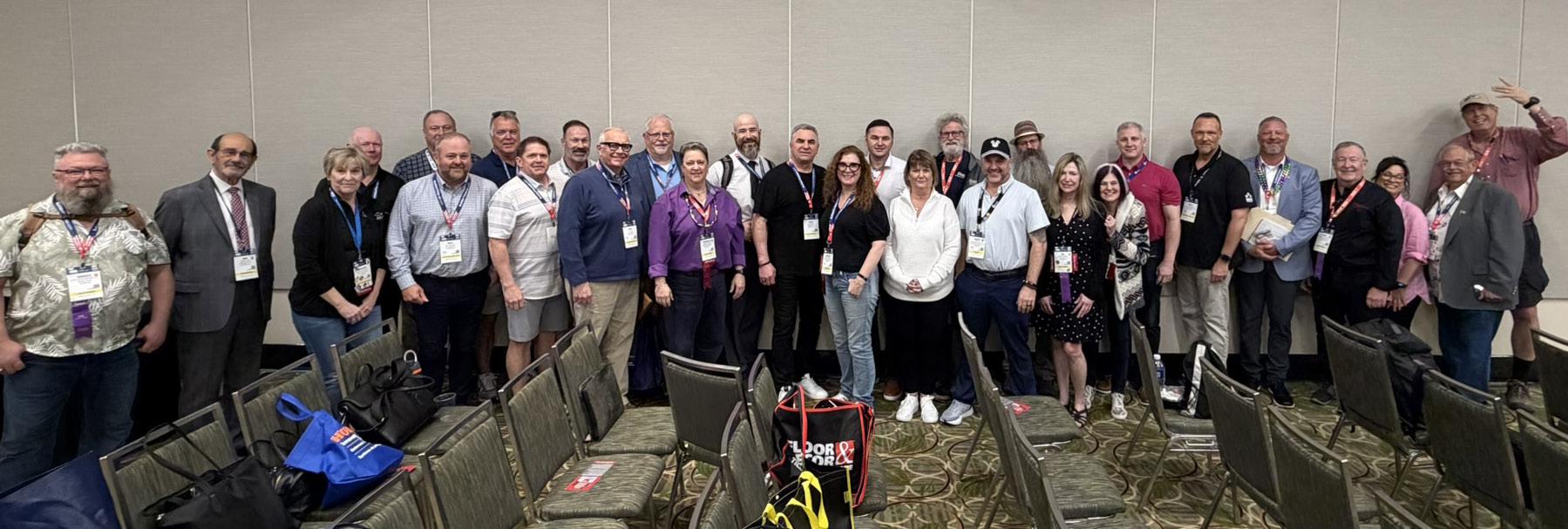
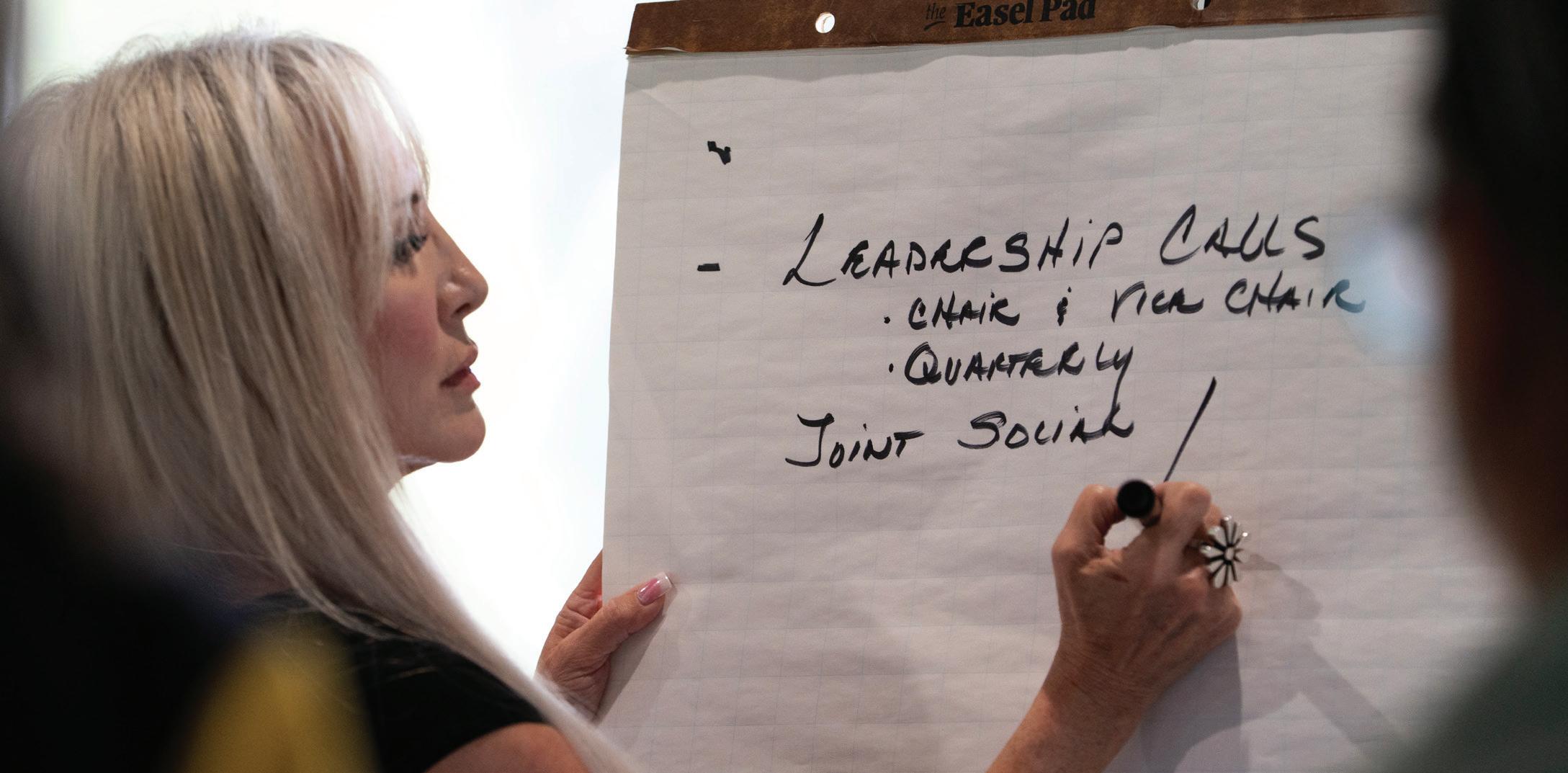
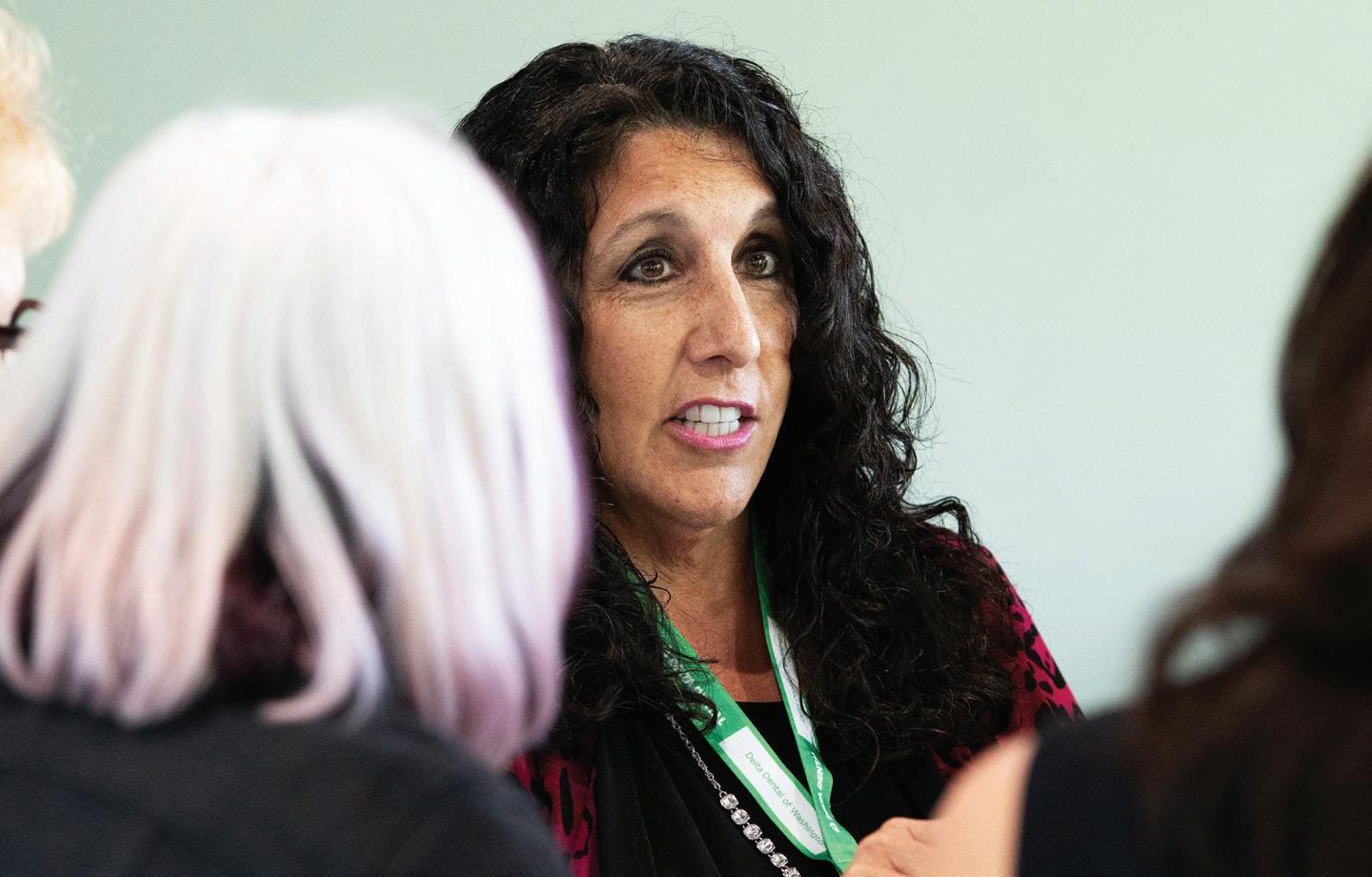
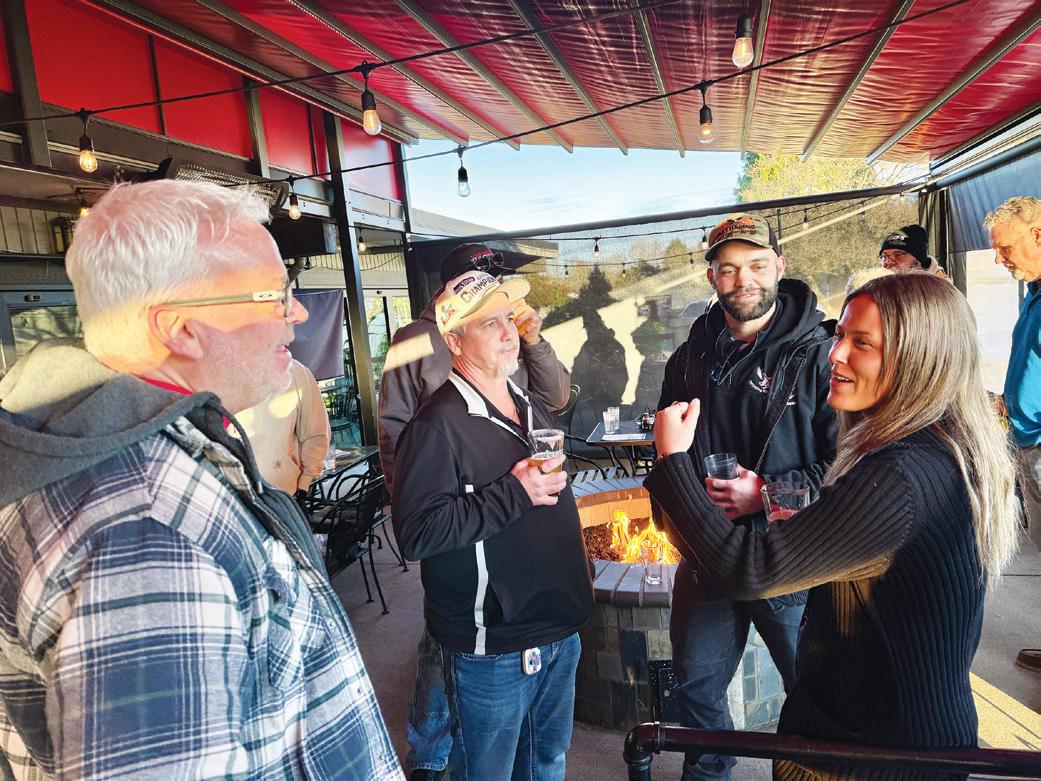
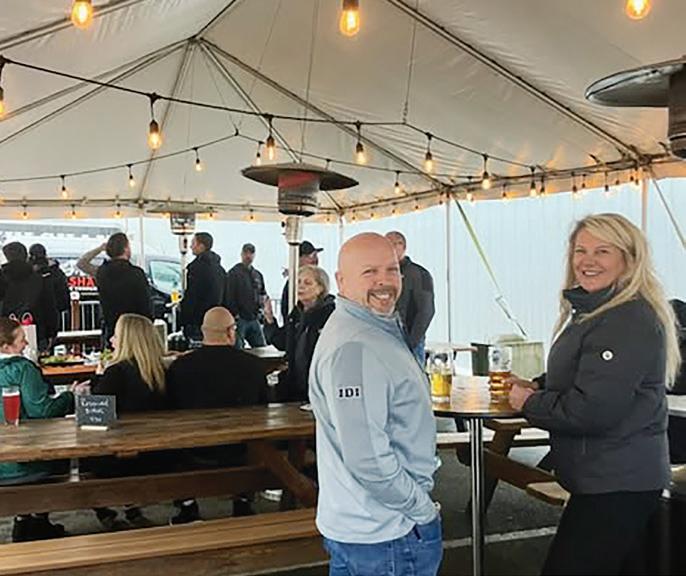
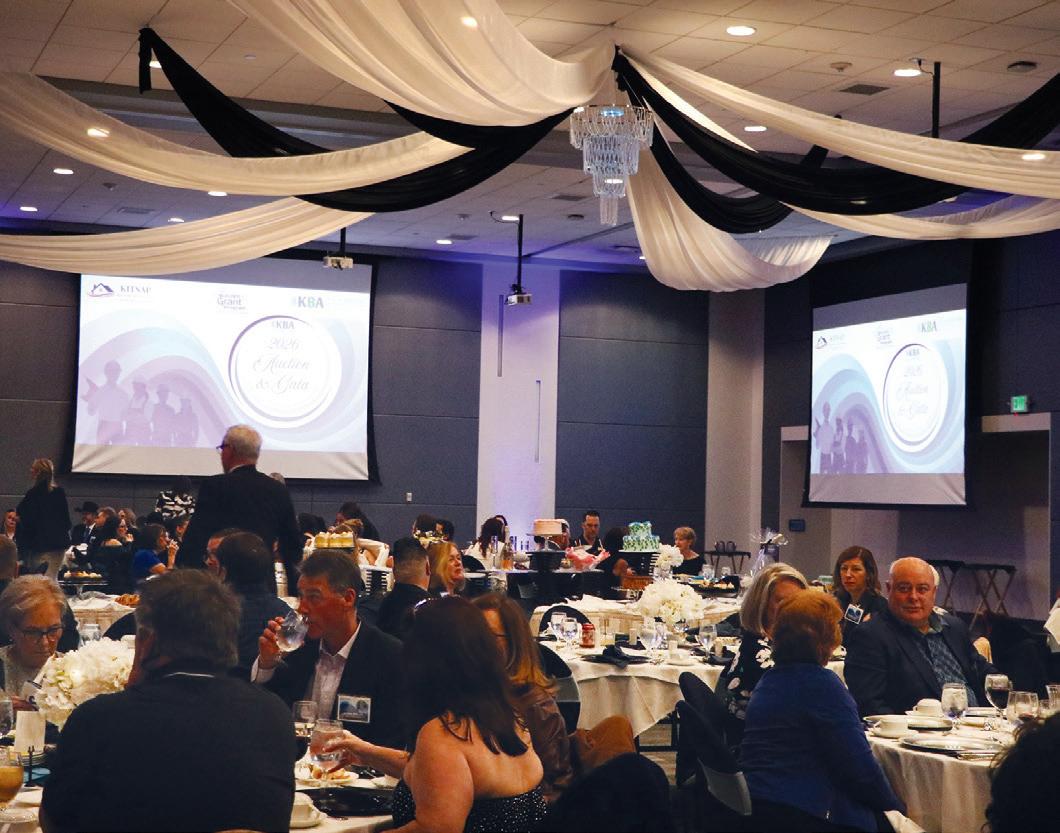
On March 24, the WHBF Premier Gala & Auction brought together BIAW members and trades education supporters to raise money and learn more about how the Foundation is helping create the next generation of skilled workers.
Greg
Al
Janelle
VP
Bart Hansen
Jan
Stephen
Jenn
IN THIS ISSUE
the family business
Family businesses shape the residential construction industry. From small two-person shops to companies with dozens of employees, they all share a legacy of service and deep commitment to their customers.
Andrea
BIAW hosted a new event in conjunction with the BIAW Winter Board Meeting this year, raising funds to support the Washington Home Builders Foundation (WHBF) and its programs. Between sponsorships, ticket sales, auction bids and the paddle raise, including a $50,000 match from the Spokane Homebuilders Foundation, the auction raised well over $165,000!
Read more on page 14.
As always, we want to hear from you! We invite you to take a quick survey about your thoughts on Building Insight. Happy reading!
Aaron Marvin President
President’s message
When I stood before the BIAW Board of Directors at the 2025 Fall Board Meeting Installation and Awards Gala and took the oath of office to become president, I shared that one of my top goals was making sure the next generation of home builders was prepared to lead and succeed.
Now roughly a quarter of the way through my service as your BIAW President, I’m excited to announce several ways this organization is helping new and existing leaders run better businesses and preparing future builders to succeed in our industry.
Supporting a strong start
The BIAW Washington Home Builders Foundation held its first-ever gala and auction on March 24, netting over $165,000 in funds raised, including a $50,000 match from the Spokane Home Builders Association’s Frame Your Future Foundation.
These funds not only provide scholarships and grants for trades programs and the people who are pursuing trades education, they also fund our BuildStrong Academy of Pierce County and lay the groundwork for a second Academy in Spokane.
With a shortage of skilled workers and a renewed interest in trades education, this support helps future builders get a strong start in our industry.
New benefits build better businesses
One of the hidden gems included in your local home building association and BIAW membership is our BIAW Contracts Package. This package includes more than two dozen of the most common contracts and addenda you need to run your home building business, as well as instructions on how to use them effectively. The best news? It’s free for builder members.
These templates, drafted by local attorneys well-versed in Washington law, will help protect your business and save you thousands of dollars.
To find them, sign in to the BIAW website, click on “Membership,” and then click on “BIAW Contracts Package.” It’s just another way BIAW is providing value to your business.
Another new benefit available soon is our liability and property insurance package. The Department of Labor and Industries requires every registered contractor in Washington to carry general liability insurance. BIAW is working with trusted insurance brokers experienced in the construction industry to provide this insurance and more, all in one package. When the insurance package is available, contractors will be able to make one stop to get an entire package of coverage in one place. Stay tuned for more news on that front soon!
We approved both of those new benefits for members at the BIAW Winter Board meeting in late March. You’ll find more news from the board meeting and other activities in this month’s magazine.
I encourage you all to stay active and engaged as we work together to build homes for the people of Washington.
UPCOMING CLASSES
Certified Lead Renovator - Initial
May 1 | Vancouver
Certified Lead Renovator - Refresher
May 1 | Vancouver
Fall Protection/Ladder Safety Awareness* May 1 | Online
CPR/AED Basic First Aid
May 12 | Yakima
CAPS I - Marketing & Communicating with Aging-In-Place Clients
May 13 | Yakima
Aging Workforce: Protecting Your Legacy Workers* May 14 & June 10 | Online
CAPS II - Design Concepts for Livable Homes and Aging-In-Place
May 14 | Yakima
CAPS III - Details & Solutions for Livable Homes and Aging-In-Place
May 15 | Yakima
DOSH Inspections: Don’t Be Caught Unprepared* May 19 | Tacoma
Certified Erosion & Sediment Control Lead (CESCL) May 20 & June 10 | Online
CESCL Recertification
May 22 & June 12 | Online Scan the QR code to learn more and register. biaw.com/members/classes *FREE FOR ROII PARTICIPANTS
BIAW CONTRACTS PACKAGE
Executive Vice President’s message
Greg Lane Executive Vice President
We welcomed the end of another grueling legislative session in early March, one in which business owners and taxpayers once again paid a heavy price. After last session’s terrifying $12 billion in new taxes, the legislature continued to feed their insatiable desire to grow government by adding another $3 billion in new taxes. They also created an income tax here in Washington state, despite 90 years of public opposition and legal precedent that an income tax is unconstitutional.
Speeding up permit timelines
Amongst all the bad news, BIAW did come away with a few small wins for the housing industry. One bill we worked to pass this session, HB 2418, speeds up permitting by enforcing clear review timelines, requiring accountability from agencies, and mandating partial fee refunds if deadlines are missed. It also creates a single point of contact for applicants and clarifies rules to prevent delays and early application denials.
Thank you for being involved
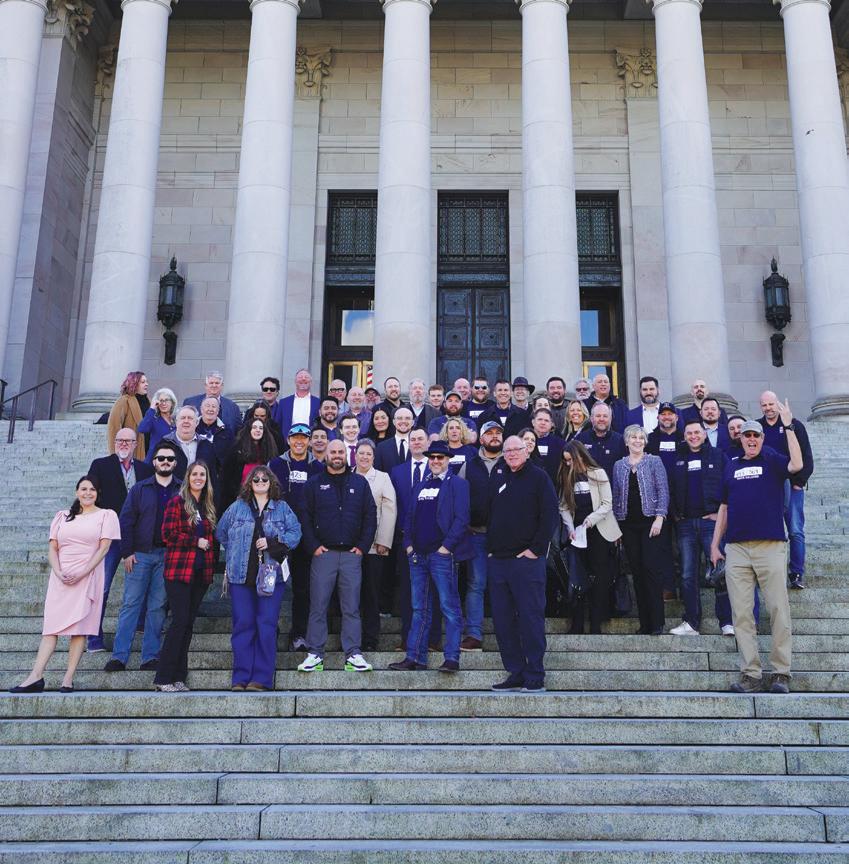
I want to personally thank the more than 100 BIAW members who showed up in Olympia for our 2026 Hill Day to represent our industry and push for real solutions to Washington’s homebuilding crisis.
I also want to extend gratitude to all members who were involved during this year’s session, whether by signing in “pro” or “con” on important legislation, tuning in to our weekly Legislative Briefing Zoom meetings, or testifying on legislation during public hearings. Your voice makes a difference in helping us increase housing affordability in Washington.
Strengthening our association
I would also like to thank all the members who attended the 2026 Winter Board Meeting in SeaTac. We do amazing things when we all come together. Thanks to the work we did during this meeting, a few new member benefits will soon be available to you:
n The BIAW Contract Subscription Service was voted to move from a paid benefit to a free BIAW Contract Package for all builder members. Effective immediately, all BIAW builder members can now access more than two dozen of the most common construction contracts for free, saving thousands in legal fees. Learn more at
www.biaw.com/contractsubscription-service
n The Board of Directors also approved a new insurance program to be offered by BIAW and sold by BIAW member insurance brokers. Stay tuned for more information as the program is approved by the State Insurance Commissioner.
n Lastly, the Board approved the launch of the BIAW Certified Safety Pilot Program. This service will offer our members a certification process focused on developing the knowledge and skills necessary for safe work practices, helping companies remain citation-free. We’re excited to roll out this new program.
An impactful evening supporting our future workforce
On Tuesday evening during the board meeting, BIAW members and trades education supporters came together for the first-ever Washington Home Builders Foundation Gala and Auction, raising over $165,000 to support the next generation of our workforce.
Thank you to everyone who attended and bid on items, donated auction packages and raffle items, volunteered during the event and leading up to it, and to the staff who made it all happen. You blew away our expectations, and we can’t thank you enough for the success of this event.
I look forward to seeing what we accomplish when we come together for our Summer Board Meeting at Skamania Lodge, June 22-24.
Associate Member Spotlight
Candice Cotterill of First Fed Bank and Carla Lee of Capstone Home Loans
Associate members are a vital part of our industry, making up 66% of the National Association of Home Builders (NAHB) membership. They include dedicated suppliers, service professionals and manufacturers, and they are fundamental to the strength of both our industry and our association.
BIAW’s Associate Advisory Council proudly hosts the annual Associate Star Awards each year at the BIAW Fall Board Meeting. Join us in honoring two 2025 recipients of these awards: Candice Cotterill of the Jefferson County Home Builders Association (JCHBA) and Carla Lee of the Building Industry Association of Whatcom County (BIAWC).
CANDICE COTTERILL, FIRST FED BANK
Jefferson County Home Builders Association
A lifelong Jefferson County resident and graduate of Port Townsend High School, Candice Cotterill has over 25 years of experience in community banking. She currently serves as Branch Manager of the First Fed Bank location in Port Townsend, where she’s known for building lasting relationships and supporting local growth.
Deeply committed to youth and community development, Cotterill is passionate about supporting local non-profits. She serves on six local boards as well as several committees, including President of the East Jefferson Little League, Treasurer of Chimacum Big Blue Boosters, and as a member of Quimper Mercantile’s board.
Currently serving on the 2026 JCHBA board, Cotterill’s involvement with the association and long-standing ties to the area reflect her passion for strengthening Jefferson County through service, leadership, and connection. She is actively involved with the JCHBA Home Show, educational classes and more, consistently lending her time, energy and expertise to support the organization’s mission and growth.
First Fed Bank is a local community bank serving customers and communities since 1923. Today, First Fed has 16 locations, including 12 full-service branches in Clallam, Jefferson, King, Kitsap, and Whatcom counties. Learn more at www.ourfirstfed.com
CARLA LEE, CAPSTONE HOME LOANS
Building Industry Association of Whatcom County
Having previously worked in various roles within the real estate industry, Carla Lee brings decades of experience to her Senior Mortgage Advisor role at Capstone Home Loans. Her extensive background provides a comprehensive understanding of the field and a dedication to delivering exceptional service.
Lee serves on the Associate Board for the BIAWC and has played an active role in the association’s annual Home and Lifestyle Show, in addition to many other association events. She is a highly involved member who always encourages and promotes membership.
As an avid supporter of homeownership, including the land trust model, Lee is passionate about teaching homeownership education. She also teaches continuing education courses for real estate agents, underscoring her commitment to ongoing professional development.
Based in Bellingham, Lee partnered with Capstone Home Loans for their game-changing loan programs, specialty products and award-winning tools. Learn more at www.carlaleemortgage.com.
Washington’s New Income Tax: What builders need to know now
Gov. Bob Ferguson signed a new state income tax (SB 6346) into law on March 31. Supporters call it a “Millionaire’s Tax,” designed to make Washington’s wealthy “pay their fair share” – but the impact is much broader, placing an unfair burden on smaller businesses like home builders.
BIAW and other small business advocates opposed the new tax, pointing to the marriage penalty, pass-through concerns and the volatile nature of the construction business—not to mention the fact that this tax will inevitably apply to everyone over time.
There’s a lot of misinformation out there. Page 9 has some common myths and the reasons why builders should pay attention.
What builders should do now
1 Talk with a CPA about entity structure and income timing.
2 Monitor legal challenges. The BIAW Board of Directors recently voted to participate in a lawsuit being presented by Attorney General Rob McKenna. That lawsuit was filed on April 9 in Klickitat County Superior Court.
3 Stay engaged on the political front. There’s discussion around a possible referendum, and BIAW is also preparing for mid-term elections.
Future 42 has developed a new website, IncomeTaxWashington.com, with more information and analysis. Be sure to check it out!
MYTHS vs. FACTS
MYTH #1
This only affects about 20,000 households in Washington, or less than 1% of the wealthiest households in Washington, so it won’t hurt builders.
FACT: Many builders could be exposed— especially those operating as LLCs or S-corps where business income flows to personal returns. A strong year—closing multiple homes or finishing a subdivision—could easily push income over $1 million, triggering the tax.
Then there’s the unfair treatment of married couples. According to the legislation, the $1 million threshold for the tax applies to individuals, couples and domestic partners. So, married couples making a combined total of over a million would be subject to the tax.
MYTH #2
This tax won’t apply to real estate activity.
FACT: While it’s true the sale of real estate is exempt, the tax can still hit builder income. While Washington excludes real estate from its capital gains tax, this new tax is based on total income (AGI). If project income flows through to the owner and exceeds the threshold, it may be taxed—regardless of how the underlying asset is classified.
MYTH #3
This is a tax on steady, high salaries.
FACT: It hits volatile, project-based income. Homebuilding income is not predictable. Builders often see big spikes in revenue and long gaps between projects.
This tax applies in peak years, even when cash is already committed to land, labor and materials.
MYTH #4
Builders can just plan around this.
FACT: Timing creates real risk. Builders may owe tax based on income reported on paper, but the cash may be tied up in projects, payments may be delayed and margins are already tight.
MYTH #5
This is a one-time, limited change.
FACT: Washington voters have rejected income tax proposals multiple times over the last century. Allowing this legislation to stand sets a precedent and establishes a new framework tied to income that will inevitably expand to lower thresholds and apply more broadly over time.
The Legislative Graveyard Builder victories, bad bills buried and the policy nightmares that survived
by Andrea Smiley
Legislative Director
The nailbiter of a 60-day session ended on March 12, bringing the 2025-26 biennium to a welcome end. After last session’s terrifying $9 billion in new taxes, the legislature continued to feed their insatiable desire to grow government by instituting an income tax for the first time in 90 years, spooking small businesses and professional athletes alike. Putting the tax fight aside, we are proud to have four priority bills survive this spooky session and pass into law.
BIAW PRIORITIES THAT SURVIVED THIS SPOOKY SESSION
HB 2107 – Safety Notices
To make a previous BIAW priority permanent (SB 5980, 2023–24 biennium), our team partnered with L&I to extend and expand the law’s application to more construction sites. The law dictates that if L&I identifies a hazard likely to cause an injury to a worker during an inspection, they must issue notification within 10 working days - because keeping employees safe shouldn’t have to wait.
In a follow-up to last session’s passage of HB 1403, this law expands the ability to use express warranties (like a 2-10 Home Buyers warranty) for newly constructed condos up to four stories high. This law allows builders to build stacked flats more affordably and lets you offer a better warranty than you can find in Washington’s implied warranty statute.
HB 1345 – Rural
ADUs
The new law allows one ADU to be constructed per property if adequate water supply is available and each dwelling unit is individually metered. The ADU must be located within 150 feet of the principal unit, share the same driveway, and not permitted on nonconforming lots smaller than one acre. The ADU must not be larger than the principal unit and is capped at a square footage of 1,296.
The law also establishes a process for retroactively permitting unpermitted ADUs. However, property owners seeking to bring an unpermitted ADU into compliance must pay double the standard permit fees. If an ADU remains unpermitted, code enforcement may issue a $1,000 fine and require removal
of the unit. Alternatively, the owner may bring the ADU into compliance, but doing so will require payment of triple the standard permitting fees. If a civil infraction is issued, the owner is prohibited from applying for an ADU permit for three years.
HB 2418 – Extending permit timelines to state agencies and utilities
It’s no secret that permit timelines are still problematic. Newly enacted legislation seeks to improve timelines for cities and counties currently being delayed by state agencies, utilities, and special purpose districts. If those entities charge a fee and they do not complete review within specified review timelines, they must refund up to 20 percent of the fee they charged.
n 45 business days = Routine infrastructure extensions or connections that do not require specialized engineering or external regulatory approval
n 105 business days = Complex infrastructure or projects requiring specialized engineering or regulatory approval must include written notice to applicant and cannot exceed a total of 120 calendar days.
The legislation also requires local governments to assign a “permit responsible official” for residential projects. These positions can take the form of a designated official, position, office or functional unit but they must coordinate with other departments and government entities with permit review responsibilities to ensure that a final decision on project permit applications is issued within the applicable timelines. It also means that permit applicants will have a single point of contact responsible for helping them through the process.
Lastly, the legislation cleared up a few gray areas related to permit applications:
n Allows the shot clock to be paused if a fee is not paid or posted by the date/ time outlined on the application.
n An applicant can waive review timelines at any point prior to denial or exhaustion of timeline for review. However, this does not mean local governments can force you to waive your rights at the onset of the permit application.
n Reiterates that within 28 calendar days, the local government must determine that the application is procedurally complete or incomplete. “Determination of procedural completeness is not a substantive review of the application and shall not be conditioned on the adequacy, accuracy, or sufficiency of the information submitted.” In essence, additional information or studies cannot be required at the procedural review stage. This should help with local governments who are currently gatekeeping or flat-out denying applications upon submission.
GHOSTING PROBLEMS BEFORE THEY HAUNT YOU
HB 2442 – Local government fund use: Our team helped get the Real Estate Excise Tax (REET) increase removed prior to the bill’s passage.
HB 2472 – Fire sprinkler contractor certification: Our team made sure to exempt residential contractors from this new requirement.
HB 1254 – Wildland Urban Interface Code: Although originally opposed to the legislation, our team was able to move to neutral after negotiating an amendment that limited the authority of the SBCC to fully implement the model WUI code. That amendment also included a delay in when the code could be adopted so it’s unfortunate the bill never made it to the House Floor for a vote.
BAD BILLS WE BURIED THIS SESSION
SB 5360 – Adding criminal penalties to environmental crimes, exposing employees to fines and felonies.
SB 5496 – Limiting home buying by businesses and investors.
SB 5609 – Categorical exemptions threated with stringent cultural resources regulations.
SB 5943 – Expanding use of school impact fees for energy retrofits and teacher salaries.
GRAVE WARNINGS AHEAD
Sadly, these policy nightmares live on.
HB 2105 – Requiring five days’ notice to immigrant workers when employers receive federal Notice of Inspection of Employment Eligibility Verification (Forms I-9). This places a scary burden on employes who could face frivolous lawsuits due to the private right of action included in the bill.
SB 5847 – Expands workers’ compensation medical network providers, which could increase workers’ compensation premiums.
SB 5981 – Updating the 340B drug program, likely to increase health insurance premiums.
SB 6188 – Giving the state new authority to increase stringency of asbestos certification requirements.
SB 6346 – Imposing a new income tax, starting with “millionaires” and small businesses.
BIAW’s 2026 Legislative Action Day bears fruit
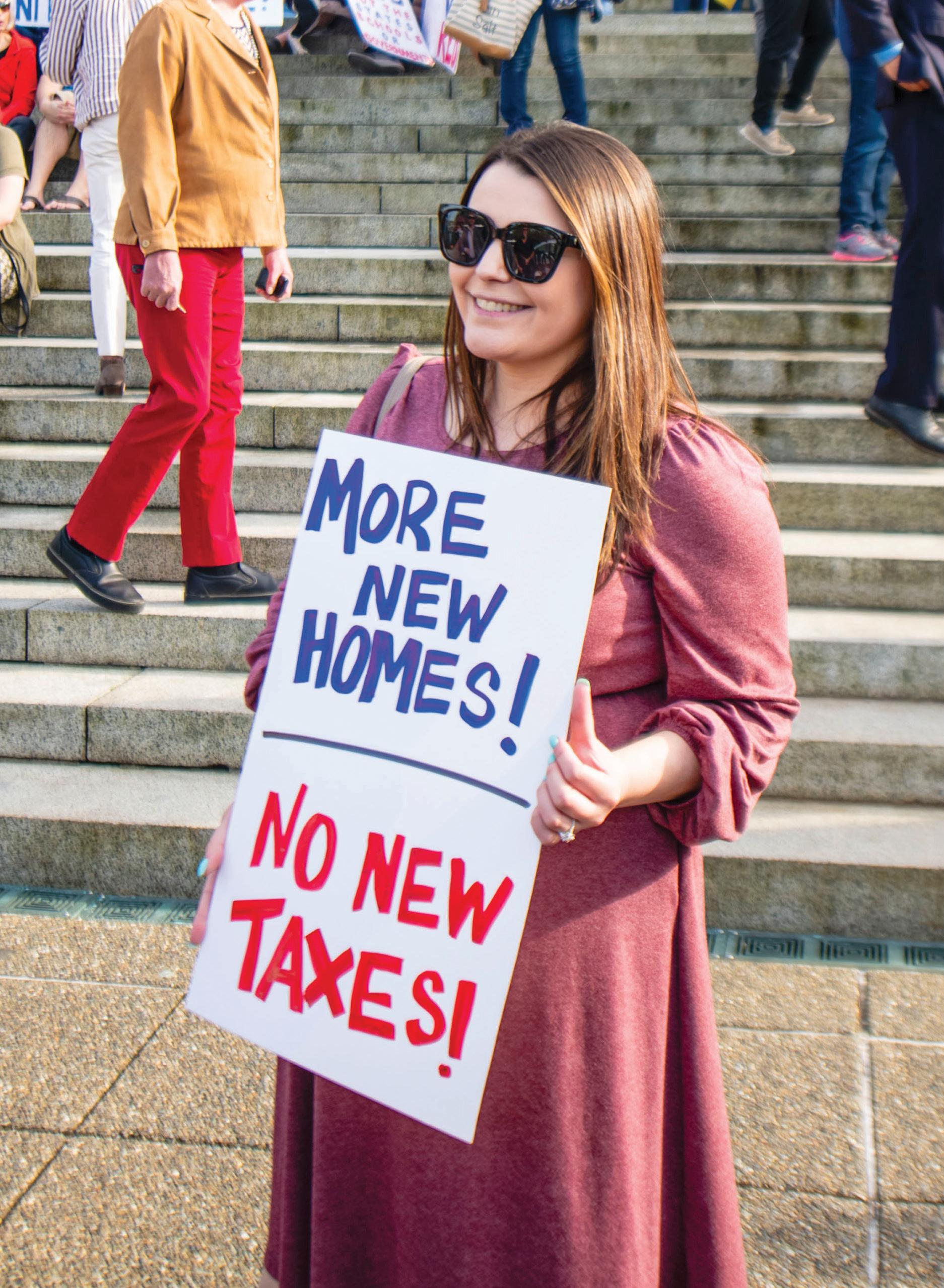
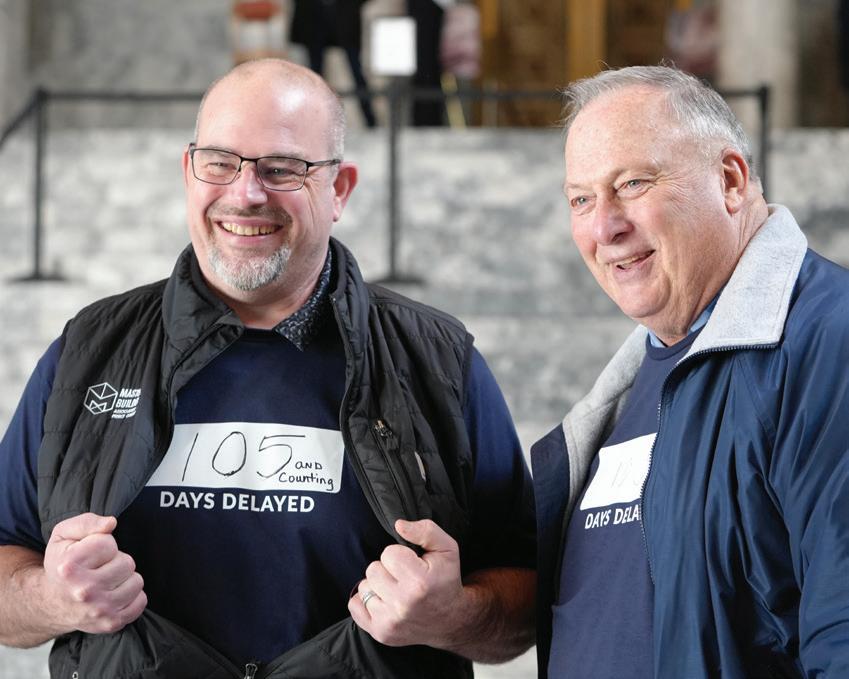
Roughly 100 BIAW members showed up in Olympia to represent the building industry and push for real solutions to Washington’s homebuilding crisis. Many wore shirts with the number of days they’ve been waiting for building permits for projects.
When the average building permit delay is 6.5 months, that is not just red tape. It is a $31,375 holding cost on every new home. And in a state that needs 1 million new homes in the next 20 years, permit delays only make the crisis worse.
In meetings with legislators across the state, BIAW made it clear: If we want affordability, we have to fix the permit process and support home building. BIAW extends its gratitude to all members who were involved during this year’s session, whether by signing in pro or con on important legislation, tuning in to our weekly Legislative Briefing Zoom meetings, or testifying on legislation during public hearings. Your voice makes a difference in accomplishing our association’s goals.
Senate Housing Chair speaks, new member benefits, successful gala
The BIAW Winter Board meeting brought nearly 200 members together for association business, education and fundraising March 23-25 at the Hilton Seattle Airport in SeaTac. Meetings kicked off Monday with Senior Officers meeting in the morning, followed by:
n Local home building association Executive Officers Council
n Professional Women in Building n Washington Home Builders Foundation
The Executive Officers Council celebrated the 20th work anniversary of Lower Columbia Contractors Association’s Jeanette Scibelli and the five-year anniversaries of:
n Randall King, Kitsap Building Association
n Amber Dewey, North Peninsula Building Association
They also heard updates from ROII, BIAW’s Retrospective Rating Safety Incentive program, and Capital Benefit Group, BIAW’s health insurance broker.
Finally, both the executive officers and their government affairs staff played Developer’s Trail, a new game developed by the Building Industry Association of Clark County.
The Professional Women in Building Council (PWB) learned about the Master Builders Association of Pierce County’s PWB partnership with the Girl Scouts of Western Washington (GSWW). Then, while enjoying delicious Girl Scout cookies, they discussed launching a new PWB patch program with GSWW.
BIAW staff and senior officers later hosted a New Director Orientation to help new directors learn more about the association and opportunities to make the most of their board meeting experience.
Housing chair speaks to membership Tuesday was jam-packed with committee meetings from 8 am through 5:45 pm. The membership luncheon featured keynote speaker Sen. Jessica Bateman (D-Olympia), Chair of the Senate Housing Committee, who shared her passion and perspectives on housing in Washington.
Since taking office as a state representative in 2021, Bateman has made increasing housing supply a top priority.
Home Builders Foundation Gala raises $165K+ to support trades training
Tuesday evening, BIAW members and trades education supporters enjoyed the first-ever Washington Home Builders Foundation Gala and Auction, where they learned more about how BIAW’s Foundation is helping to create the next generation of skilled workers.
The auction raised well over $165,000, between sponsorships, ticket sales, auction bids and the paddle raise— including a $50,000 match from the Spokane Homebuilders Foundation.
Master Builders Pierce PWB member Linda Jadwin and Elizabeth Rogers from Girl Scouts of Western Washington discuss a new Girl Scout badge for girls learning about the trades with PWB.
Sen. Jessica Bateman (D-Olympia), Chair of the Senate Housing Committee, spoke during Tuesday’s membership luncheon.
Board meeting celebrates top recruiters and builders + new member benefits
Board members saw lots of action at Wednesday’s board meeting, including:
n Votes on two policy changes affecting travel for leaders and the election of NAHB delegates
n Approval of the new Certified Safety Partner pilot project
n Recognition of the 2025 Top Spikes and Category Leaders
n Celebration of the Star Builder Awards presented by the Associates Advisory Committee
SPECIAL THANK YOU TO OUR SPONSORS!
The Board of Directors also approved shifting the BIAW Contract Subscription Service from a paid benefit to a free BIAW Contract Package for all builder members. Effective immediately, all BIAW builder members can access more than two dozen of the most common construction contracts for free, saving them thousands in legal fees.
Finally, the BIAW Board of Directors approved a new insurance program to be offered by BIAW and sold by BIAW member insurance brokers. Stay tuned for more information as the program is approved by the State Insurance Commissioner.
Legacy Sponsor Presenting Sponsor Capital Sponsor
Top: BIAW Legislative Director Andrea Smiley chairs the Legislative Policy Committee.
Bottom right: BIAW approves a new insurance product built by experts familiar with the industry.
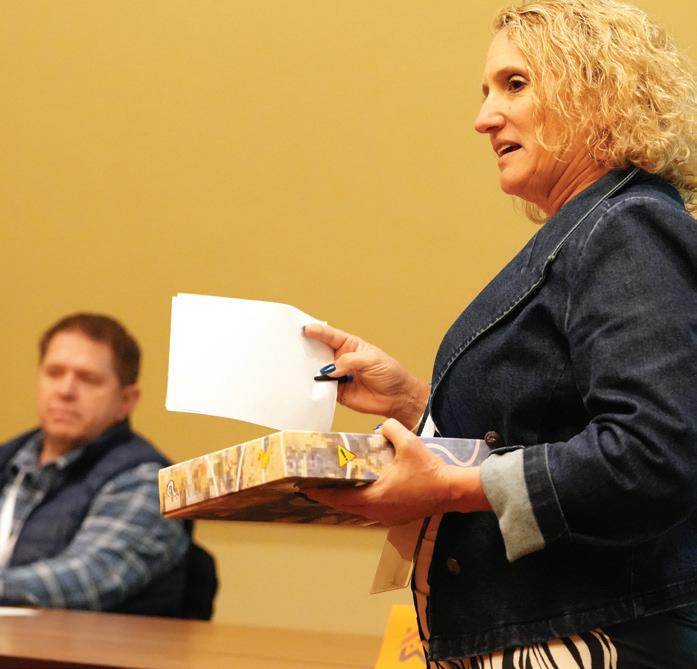
Bottom left: BIACC’s Executive Officer Noelle Lovern shares their new game Developers Trail at the EOC GA meeting.
BIAW President Aaron Marvin (L) celebrates 2026 Star Builders Award Winners (L-R) Tony Laer from Master Builders Pierce and Corey Condron of Spokane Home Builders Association.
An evening of impact Washington Home Builders Foundation Premier Gala & Auction raises over $165K to support trades training
BIAW hosted a new event in conjunction with the BIAW Winter Board Meeting this year, raising funds to support the Washington Home Builders Foundation (WHBF) and its programs. The WHBF Premier Gala & Auction kicked off on the evening of March 24, bringing BIAW members and trades education supporters together to learn more about how the Foundation is helping to create the next generation of skilled workers.
The first-ever gala was an unforgettable and moving evening celebrating the future of the residential construction workforce. The evening opened with
a cocktail hour and raffle, followed by dinner and networking, messages from the Foundation, a video highlighting the Foundation’s efforts, and the live auction.
Between sponsorships, ticket sales, auction bids and the paddle raise, including a $50,000 match from the Spokane Homebuilders Foundation, the auction raised well over $165,000!
“We can’t thank everyone enough for the success of this event. Thank you to everyone who attended and bid on items, donated auction packages and raffle items, volunteered during the event and leading up to it, and to the staff who made it all happen,” said WHBF Director Al Audette. “I can only tell you that you all blew me away with the amount of support we received.”
All of the proceeds from the evening will go towards supporting hands-on training and career pathways for the next generation of homebuilders in Washington.
Impact Stories: Jemal & Aaron
The gala featured the story of Kitsap Building Association and Foundation board of directors member Aaron Logue of Moss & Madder Builders. Logue shared how he helped his employee, Jemal, connect with the BuildStrong Academy of Pierce County—Powered by HBI and what a difference that made in Jemal’s life.
Jemal’s journey into the trades started with a strong interest and a clear goal— and with the right support, that path quickly became a reality.
Through the BuildStrong Academy of Pierce County, powered by HBI, Jemal was able to jumpstart his career, gaining foundational skills and handson experience to take the next step. He connected with Logue, a local construction business owner who recognized his potential and took him under his wing. Together, their story highlights the power of mentorship, hard work and opportunity.
As someone whose fourth language is English, Jemal’s determination and growth speak to what’s possible when people are given the chance to succeed— and when industry professionals step up to invest in the next generation.
Watch the video: https:// www.youtube.com/ watch?v=4gtIpBezY7Y
About the BuildStrong Academy of Pierce County, powered by the Home Builders Institute
The BuildStrong Academy of Pierce County provides tuition-free training programs, hands-on learning, and direct connections to employers. It’s the seventh academy in the Home Builders Institute’s (HBI) growing national network, which spans multiple states and continues to expand access to free, hands-on training programs that prepare students for successful construction careers. Learn more at www.biaw.com/constructiontrades-training-academy.
HBI is a national nonprofit organization that provides skilled trades training and education to support our country’s building industry. Learn more at hbi.org.
THANK YOU TO OUR DONORS & SPONSORS
Live Auction Donors
Bill Stauffacher & Jan Himebaugh
C2 3D Manufacturing
Cascade Cliffs Vineyard and Winery & the WHBF Board
Cascade Custom Homes & Sandy
Roberts
Condron Homes
Desert Canyon Resort, Canterwood Golf & Country Club, Suncadia Resort
Doriot Construction
Sponsors
Centerpiece Sponsor
Pacific Crest Custom Cabinetry
Paddle Raise Sponsors
Greater Portland Home Builders
Association & Foundation
Larson Gross
Spokane Hardware Supply
Stordahl Capital Management
Cocktail Sponsors
Dunn Lumber
Puget Sound Steel
Redline Services Group
Trotter & Morton
Ellensburg Rodeo, Suncadia
Resort, The Pearl Bar & Grill
Greg & Sarah Lane
I-F Farms & the Fiess Family
Kevin & Rebecca Patrick
Regence BlueShield
Stellar Cellars
Westharbor Homes
Yonkman Construction & Seattle
Mariners
Raffle Sponsor Intuit
MC Sponsor KMAS
Print Sponsor Print NW
Workforce Development Sponsor
Workforce Central
About the Washington Home Builders Foundation
The Washington Home Builders Foundation (WHBF) is dedicated to strengthening the future of the building industry by investing in people.
Through scholarships, grants, and workforce development programs like the BuildStrong Academy, WHBF helps students and individuals gain the skills, training, and opportunities needed to pursue meaningful careers in the trades.
Whether supporting education, advancing construction training, or opening doors to new career paths, WHBF is committed to building stronger communities across Washington—one opportunity at a time.
Learn more about the foundation and ways to give at www.biaw.com/donate
Senate Housing Chair joins Winter Board Meeting
A conversation with Jessica Bateman on housing supply, policy and progress
by Janelle Guthrie VP - Communications
For years now, legislators have bemoaned the state’s housing affordability crisis. Yet every legislative session, things only seem to get worse.
In her keynote at the BIAW Winter Board Meeting at the end of March, Sen. Jessica Bateman, chair of the Washington State Senate Housing Committee, said she thinks her fellow lawmakers may finally be coming around to understand what BIAW and its lobbyists have been trying to tell them. There simply aren’t enough homes for people to buy.
“Yet, year after year, permitting falls short. As the gap between supply and demand widens, housing affordability grows worse.
For Bateman and others, the problem hits close to home.
“People don’t see a path to ownership anymore,” said Bateman as she shared the story of her young sister’s dream of homeownership. “That lack of hope affects everything—from economic security to community stability.”
Shifting perspectives
Now there’s a universal understanding—we have to build more housing.
“We’re finally getting aligned,” Bateman said. “The root problem is not enough housing. Everything else—homelessness, affordability, instability—comes from that.”
An overwhelming problem Democrats and Republicans agree on the scope of the problem. A frequently cited report by the Washington Dept. of Commerce says Washington needs roughly 55,000 new homes each year to meet the state’s demand for 1.1 million new homes by 2040.
Bateman said when she took office in 2021, many Democrats were talking about the downstream effects of the state’s housing shortage, like homelessness or affordability, while missing the root cause.
“Democrats were talking about the symptoms,” she said. “Now there’s a universal understanding—we have to build more housing.”
During her time in the Legislature, Bateman has passed several BIAWbacked housing bills. She was the prime sponsor of House Bill 1110, the landmark “middle housing” legislation. She also helped pass HB 1337, which reduces barriers to building accessory dwelling units (ADUs).
This last session, she supported bills to ease commercial requirements in mixeduse zones and to reform condo liability to help revive the condo market.
“Condos should be a stepping stone,” Bateman said. “Right now, we’re barely building any.”
The cost equation
Bateman acknowledged that behind every home lies a complex stack of costs, including land, labor and materials, permits and impact fees and regulatory requirements.
She shared how she has pushed to educate lawmakers on the full picture, bringing in builders like Past President Jay Roberts, other BIAW members and commercial builders to share with her committee the hidden costs of building.
“There’s a perception builders could lower prices if they wanted,” she said. “The data shows otherwise.”
No silver bullet—But real progress
Bateman was clear that no single policy will solve the crisis. She also acknowledged that she won’t align with BIAW on every issue, taking tough questions from members during the question-and-answer session.
About Sen. Jessica Bateman
Sen. Jessica Bateman is a lifelong resident of the Pacific Northwest who grew up in a single-parent, workingclass household. She says watching her mom – a public service union member – work hard to provide for their family deeply shaped her worldview and motivated her career of advocacy for struggling families and those most vulnerable in our communities.
As a champion for affordable housing, currently serving as chair of the Senate Housing Committee, she has been nationally recognized for her leadership in passing some of the strongest housing affordability reforms of any state in the nation.
Despite ideological differences on some issues, including the Growth Management Act and the recently approved income tax, she committed to continuing to work with members to address Washington’s housing shortage.
“We’ve made meaningful progress,” she said. “Now we have to keep going.”
Sen. Bateman is a first-generation college student who paid her way through school, working in customer service and as a housekeeper. She earned her associate’s degree from Green River Community College, then earned her bachelor’s degree in environmental studies and a master’s degree in public administration from The Evergreen State College.
Outside of the Legislature, she works as a health care strategic advisor. She previously served as a member of the House of Representatives and on the Olympia City Council.
Sen. Jessica Bateman accepts the book, “Build, Baby, Build” from Kitsap Building Association Director Kane Fenner.
2026 BIAW Star Builder Awards
Each year, the Associate Advisory Council recognizes outstanding contributions by Builder members in their community and local associations, as nominated by those associations. Recipients of these awards received a $50 gift card to the exclusive Star Builder swag shop at the BIAW Winter Board Meeting. Join us in congratulating this year’s recipients!
Nikki Hinton-Duke
Hinton Development Corp.
Building Industry Association of Clark County
Sean Heins
Spruce Properties
Kitsap Builders Association
Dawna Bennett
D Bennett Construction LLC
Skagit/Island Counties Builders Association
Darin Peters
Perry Technical Institute
Central Washington Home Builders Association
Stephanie Nickasio
Hope Roofing
Jefferson County Home Builders Association
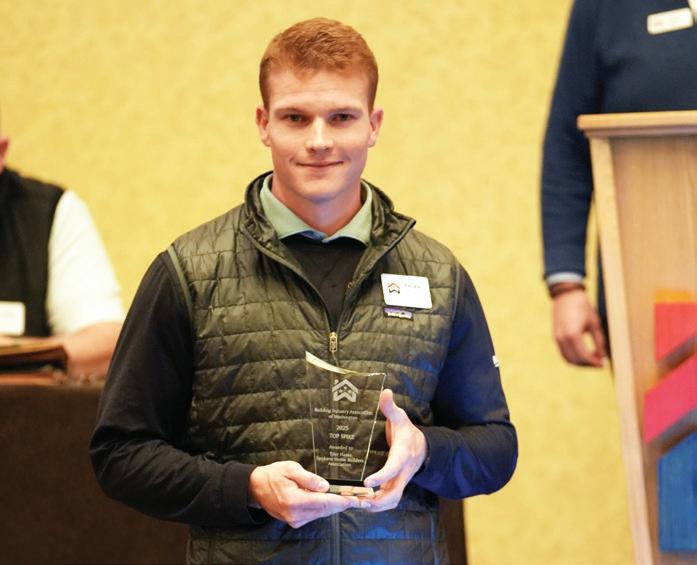
2025 BIAW Top Spikes
Each year, our members work incredibly hard to support our association and our efforts by strengthening our voice and impact through growing our membership base. We take great joy in recognizing and celebrating our builders of membership. Thanks to their efforts, our association gained 1,421 new members in 2025. We look forward to celebrating our Spikes at the 2026 Spike Party at Skamania Resort in June!
2025 TOP SPIKE
Tyler Haase
Haase Landscape Inc.
Spokane Home Builders Association
33 new members
2ND PLACE
Kathleen Frazer
Reliable Storage
Kitsap Building Association
30 new members
3RD PLACE
Jeff Kuster
Kuster Homes & Remodeling, LLC
Olympia Master Builders
16 new members
Amy King Pallet
Master Builders Association of King and Snohomish Counties
Tony Laer
Laer Enterprises
Master Builders Association of Pierce County
Corey Condron
Condron Homes
Spokane Home Builders Association
Sean Griffith
San Juan Island Builders
San Juan Home Builders Association
Denise Lones
The Lones Group
Building Industry Association of Whatcom County
4TH PLACE
Scot Savory
Builders FirstSource
Master Builders Association of Pierce County
12 new members
5TH PLACE (TIE)
Andrew Northrop
Spokane Hardware Supply, Inc.
Spokane Home Builders Association 11 new members
Scott Walker
Rush Residential, Inc.
Master Builders Association of Pierce County 11 new members
Washington state shines bright at the International Builders’ Show 2026
Hundreds of BIAW members joined nearly 75,000 builders, remodelers and associates in Orlando at the 2026 NAHB Winter Leadership Meetings and International Builders’ Show (IBS) in February.
Held this year at the Orange County Convention Center, IBS is the world’s largest annual light construction show. IBS comes together each year with the Kitchen and Bath Industry Show (KBIS) for Design and Construction Week, this year drawing close to 117,000 registrants.
Washington leaders stand out
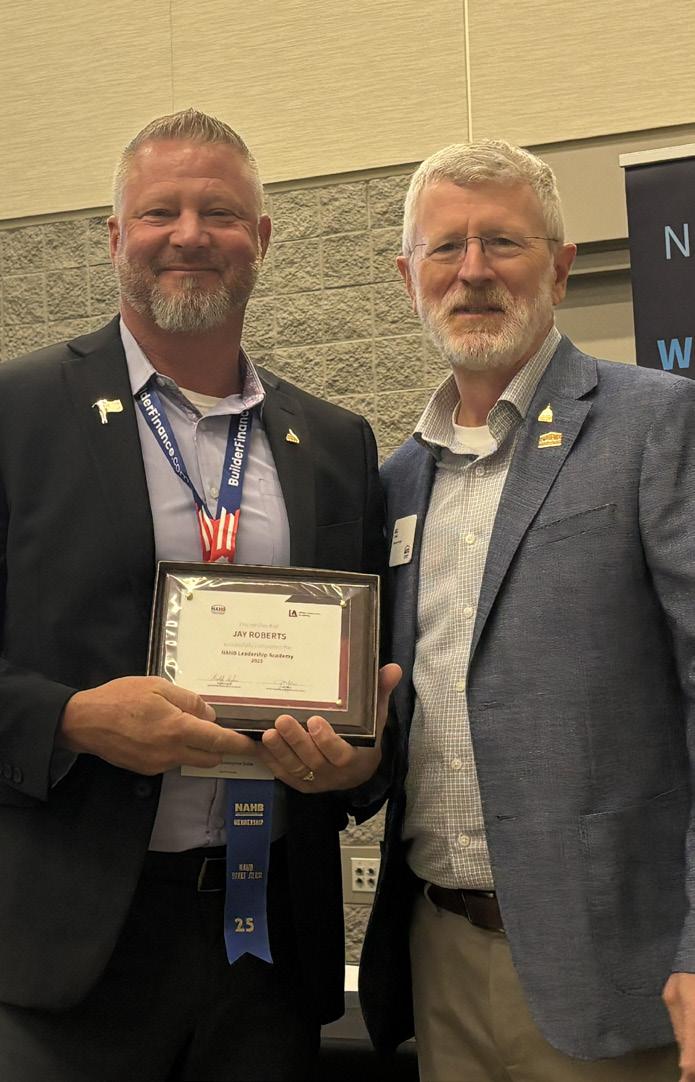
Two Washington leaders graduated from the NAHB 2025 Leadership Academy: Kimberley Martin of the Master Builders Association of King and Snohomish Counties (MBAKS) and Jay Roberts, BIAW past president and member of both the Central Washington Home Builders Association (CWHBA) and the Skagit/ Island Counties Builders Association (SICBA).
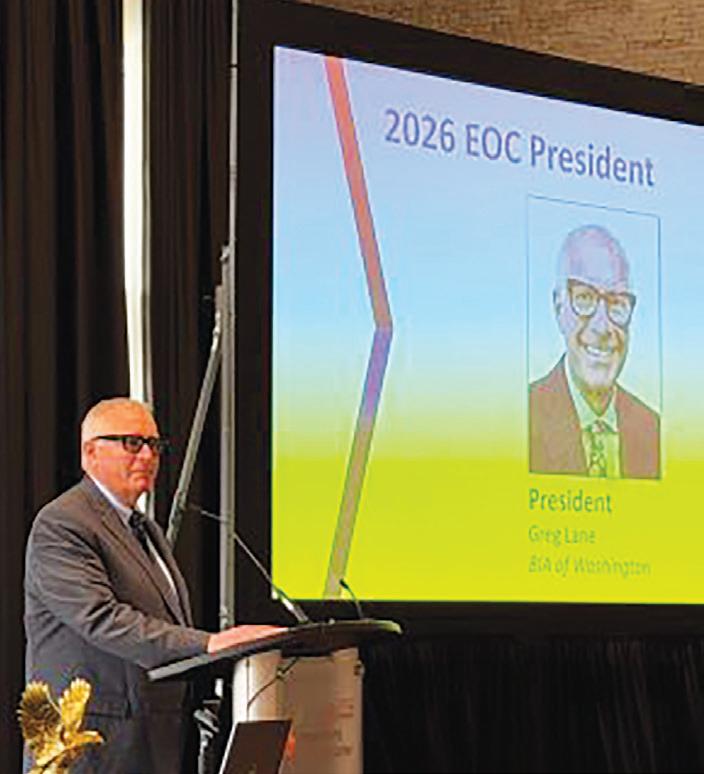
Greg Lane, BIAW executive vice president, was inducted as president of the NAHB
Executive Officers Council, placing Washington leadership at the helm of a nationwide network of executive officers. CWHBA Executive Officer Lindsay Brown and MBAKS Executive Officer Jerry Hall also serve in national Executive Officer Council leadership.
Longtime leaders and BIAW past presidents Bob Camp, from the Master Builders Association of Pierce County; Tracy Doriot from the Building Industry Association of Clark County (BIACC); and Daimon Doyle from the Olympia Master Builders (OMB) all continued in various leadership roles with Camp continuing as NAHB Special Voting Member, Doriot serving as State Representative for Washington, and Doyle reappointed to the Construction Codes and Standards Committee.
National recognition for leadership and expertise
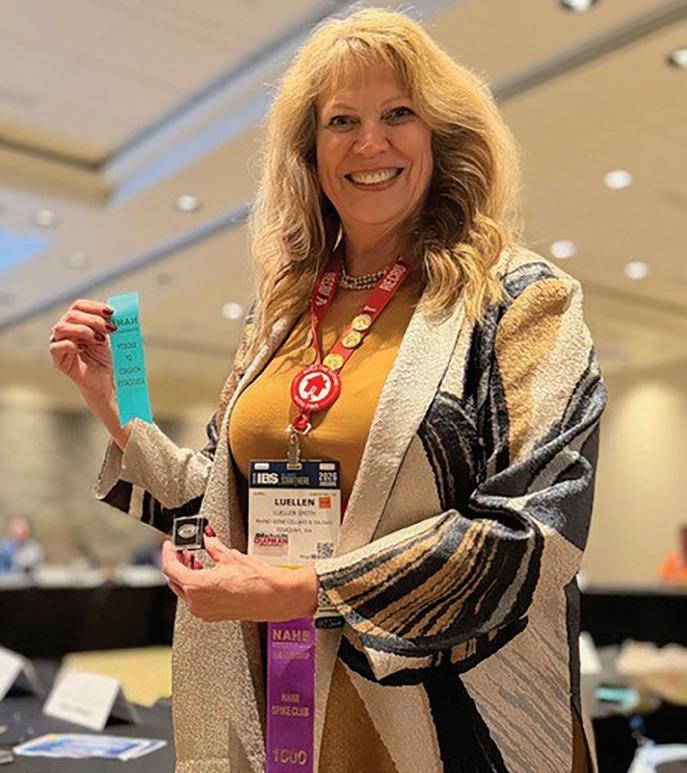
Luellen Smith, MBAKS member and BIAW past second vice president, earned a nomination for NAHB Associate of the Year and was inducted into the NAHB Society of Honored Associates.
Denise Lones, owner of The Lones Group, and member of the Building
Industry Association of Whatcom County (BIAWC), won two silver awards at the Nationals. Toll Brothers, DAHLIN Group Architecture Planning Interiors and DAHLIN Architecture | Planning | Interiors, all MBAKS members, won silver awards as well.
Aaron MacCoy, owner and CEO of MacCoy Home Solutions and member of MBAKS, was a finalist for the Region E Young Professionals Award.
Stephanie Prosser was a finalist for the Professional Women in Building (PWB) Member of the Year.
The Kitsap Building Association (KBA) also shined as a finalist for PWB Council of the Year, showcasing the strength of local PWB leadership across Washington.
Sharing wisdom and guidance Beyond the show floor, attendees tapped into more than 120 education sessions covering market trends, workforce
challenges, design and construction best practices.
Several BIAW members spoke at workshops throughout the week, including MBAKS past president Jennifer Tennyson of Tennyson Remodel, Master Builders Pierce PWB chair Lucy Wilson of Reier Construction, LLC, and Martin.
Northwest vibes connect in Orlando There’s always lots to do at IBS, but Washington and Oregon took time from the crazy week to team up for the 2nd Annual Oregon/Washington party—with special thanks to Spokane Hardware Supply for sponsoring the event!
Held at Blue Martini Lounge, the event drew hundreds of Northwesterners in town for the show.
Next up: IBS heads back to Las Vegas Feb. 2-4, 2027.
Build Homes, Build Revenue A smarter alternative to an income tax
by Riley Helean
External Affairs & Research Coordinator
As Washington lawmakers once again make sweeping changes to the state’s tax structure, a new analysis suggests there may be a more effective—and less economically disruptive—way to generate revenue: Build more homes.
A recent report from the Washington Center for Housing Studies explores a compelling alternative to the state’s new income tax. Its conclusion is straightforward: Expanding housing
supply doesn’t just address affordability, it also generates significant state revenue while supporting broader economic growth.
The tax debate meets a housing crisis
Washington is currently facing a multibillion-dollar budget shortfall, prompting majority party legislators to pass Washington’s new so-called “millionaires’ tax.” Starting in 2028, Washington will collect a 9.9% tax on income above $1 million.
While the proposal is framed as targeting high-income earners, the report highlights a critical nuance: Many smalland medium-sized businesses, including homebuilders, are structured as passthrough entities. That means business income is taxed as personal income, exposing these companies directly to the tax.
For industries such as construction, where income can fluctuate significantly from year to year, this creates added financial uncertainty. A single strong year, driven by a large project or sale, could trigger a substantial tax burden, even if prior years included losses.
This new tax will discourage investment, increase reliance on debt, and ultimately further slow housing production.
Housing as a revenue generator
Instead of relying solely on new taxes, the report evaluates what would happen if Washington simply built more homes.
It’s no secret the state is falling short of its housing needs. Policymakers estimate that roughly 50,000 new units are needed annually to keep pace with demand, yet recent permitting data suggests production is closer to 30,000 units, leaving a shortfall of about 20,000 homes each year.
Closing that gap would have a meaningful fiscal impact.
According to the report, building an additional 20,000 homes annually would generate approximately $603 million in state revenue through existing sources like sales tax and the real estate excise tax. That equates to nearly 24% of the projected first-year revenue from the proposed income tax.
In other words, simply meeting the state’s housing production goals could produce nearly one-quarter of the anticipated income tax revenue, without imposing a new tax at all.
A modest boost, a major impact
The report also examines what level of industry growth would be needed to achieve similar results.
It finds that a roughly 13% increase in overall construction activity would generate revenue equal to about 25% of the income tax’s projected revenue in its first year.
That level of growth is not unprecedented. In fact, housing production has fluctuated dramatically in recent years. Permits peaked at nearly 57,000 units in 2021 before dropping significantly in the following years.
This volatility underscores a key point: Policy decisions that either encourage or discourage construction can have outsized effects on both housing supply and state revenue.
The risk of slowing the industry
The report warns that new income taxes, particularly those without provisions like loss carryforwards, could dampen construction activity enough to offset their own revenue gains.
Construction is already a low-margin,
high-risk industry. Added tax burdens will be passed along to consumers in the form of higher home prices, further exacerbating our state’s affordability challenges.
Additionally, the report suggests that such policies could shift development patterns. Builders may favor rental housing, which offers more predictable income streams, over for-sale homes, reducing opportunities for homeownership.
There’s also a broader economic ripple effect to consider. Construction activity generates revenue not just through taxes, but through job creation, material purchases and related industries. Policies that slow building can therefore reduce multiple streams of economic activity at once.
Beyond revenue: Economic and community benefits
The benefits of homebuilding extend well beyond state coffers.
Previous research has shown that each new home contributes tens of thousands of dollars in public revenue while supporting jobs and local economic activity.
More importantly, increasing housing supply is widely recognized as one of the most effective ways to improve affordability. By reducing shortages, policymakers can help stabilize prices and expand access to homeownership.
In short, housing production is more than a construction issue—it’s a cornerstone of economic policy.
A policy choice with long-term consequences
Ultimately, the report frames the debate as a choice between two fundamentally different approaches to fiscal policy.
On one hand, the new income tax offers a direct but potentially disruptive path to raising revenue. On the other, policies that encourage homebuilding aim to grow the economic base itself, generating revenue organically while addressing the state’s housing shortage.
The findings suggest that even modest gains in housing production could deliver meaningful fiscal benefits. At the same time, policies that hinder construction risk undermining both revenue and affordability goals.
For lawmakers, the message is clear. How Washington chooses to balance its budget could shape not only the state’s finances, but also its housing market and economic trajectory for years to come.
Read the full report at www.housingstudies.biaw.com.
ABOUT THE WASHINGTON CENTER FOR HOUSING STUDIES
BIAW’s Washington Center for Housing Studies delivers in-depth research and data-driven policy analysis on the high costs of homebuilding in Washington state. The Center empowers policymakers, industry leaders, and the public with trusted insights—from impact fee analyses to affordability indexes— on what drives housing prices upward and how regulatory reforms can make homeownership more attainable.
Its mission is to spark actionable solutions—streamlining regulations, reforming impact fees, expanding financing for workforce housing, and improving planning frameworks— so more Washington families and workers can access quality housing at fair prices.
Professional Women in Building: A PLATFORM FOR LEADERSHIP
by Janelle Guthrie VP - Communications
Roughly 1.34 million women work in the construction industry. In fact, NAHB says women now represent 11.2% of the construction workforce–the highest share in the past 20 years.
As the number of women working in construction increases, so does interest in Professional Women in Building (PWB) Councils across Washington. In 2021, only two councils existed in Washington. Now in 2026, Washington has nine councils. BIAW chartered a state council in February 2025.
Washington’s PWB Councils are attracting new members from local homebuilding associations, training girls interested in construction, and providing members with business support and new opportunities.
Here’s a look at some of the women leading the way in Washington’s PWB Councils and why they’re involved in PWB.
BIAW PWB Chair Debbi Boyd of Real Estate of the South Sound says PWB councils strengthen their local associations by creating opportunities for involvement, mentorship and leadership.
“The connections you make through PWB are valuable, not just personally, but professionally,” she said. “PWB brings women together from all parts of the industry and creates opportunities to learn from each other and grow our businesses.”
A founding member of the second PWB Council chartered in Washington and longtime homebuilding association leader at the state, local and national level, Boyd says the secret to good leadership is “building relationships and supporting the people around you.”
Vice Chair Kimberley Martin of Cyneburg Services, Inc. has been active in the Master Builders Association of King & Snohomish Counties’ (MBAKS) PWB since 2006. As a builder, Martin says PWB provides her with a network of colleagues she can reach out to for advice about client issues as well as new ways to increase sales and improve her business.
PWB is a group of women (and men) who get things done, she says, making the association stronger and more attractive to new members looking for “their tribe.”
Candace Hanks of Pacific Crest
Building Supply began the work to help charter the PWB Council at the Building Industry Association of Clark County (BIACC) in September 2023 to encourage other women to find their place in the building industry.
Now chair of the BIAW PWB Awards Committee, her commitment to PWB has paid off both for Hanks and for her employer.
“PWB has helped me in my work by creating connections that have helped my employer save money and build our business,” she said. “It’s provided me with support and resources I would never have found otherwise.”
This engagement creates another reason for companies to maintain their local HBA memberships, she says.
A charter member of the BIACC PWB now serving as chair, Jennifer Lopez of Taylor Morrison says she was immediately interested in PWB for the mentorship opportunities.
“At the time, I had been in the industry for nearly 17 years,” she said. “I was fortunate to have strong female mentors throughout my career, but I knew that wasn’t the experience for every woman. I wanted to help change that.”
She joined to mentor others but enjoyed the unexpected gift of being mentored herself.
As a founding member of Kitsap Building Association’s (KBA) PWB Council,
from others, gain confidence, and feel genuinely supported,” she said. “That sense of community directly impacts my work, whether it’s collaborating with other professionals, sharing knowledge, or simply having a network I can lean on. It’s a group that truly invests in one another’s success.”
It’s the sense of community that brings value to MBAKS members overall, she says.
“ What I found was a high-caliber network of leaders who are deeply committed to both personal excellence and advancing the building industry as a whole.
Kathleen Frazer of Reliable Storage says helping to establish KBA’s council has provided her valuable opportunities for leadership, collaboration, and mentorship that directly support her work.
But the benefits extend beyond personal professional growth.
“PWB councils bring energy, engagement, and fresh perspectives to both local associations and BIAW,” she said.
Haley Mascaro of Elevate Design Build joined the MBAKS PWB Council three years ago to build connections within the industry, but it quickly became much more than that.
“It’s a space where I’ve been able to learn
Denise Lones, The Lones Group
“When members feel supported and engaged, they show up more fully, not just for themselves, but for the organization as a whole,” Mascaro said. “By creating opportunities for involvement, sharing diverse perspectives, and uplifting one another, PWBs help build stronger, more connected communities that drive the industry forward.”
Since joining PWB roughly three years ago, Denise Lones of The Lones Group says it has become one of the most impactful and strategically valuable organizations she engages with in the industry.
“I initially joined PWB to connect with other women in the building industry,” said Lones, who chairs both the Building Industry Association of Whatcom
County PWB Council and the BIAW PWB Workforce Development Committee.
“But what I found was a high-caliber network of leaders who are deeply committed to both personal excellence and advancing the building industry as a whole.”
PWB councils not only foster strong relationships across members, she says, but more importantly, they contribute to building the next generation of leaders.
“PWB is not just a network—it is a leadership platform,” Lones said. “It develops individuals who are not only successful in their own careers, but who are also committed to elevating the standards, performance, and future of the building industry. That broader impact is where the true value lies.”
Learn more about Washington’s PWB Councils at biaw.com/pwb.
Washington’s PWB Leadership
n Debbi Boyd
BIAW PWB Chair | OMB
n Kimberley Martin, Certified Builder
BIAW PWB Vice Chair | MBAKS
n Candace Hanks
BIAW PWB Awards Chair | BIACC
n Katie Getman
BIAW PWB Communications Chair/ SHBA PWB Chair
n Denise Lones
BIAW PWB Workforce Development Chair/ BIAWC PWB Chair
n Jennifer Lopez
BIACC PWB Chair
n Mikki Trombley
CWHBA Chair
n Kathleen Frazer
KBA PWB Chair
n Adrian Vincent
OMB PWB Chair
n Julie Janowicz
MBAKS PWB Co-Chair
n Hayley Mascaro
MBAKS PWB Co-Chair
n Lucy Wilson
MBAPC PWB Chair
n Allyson Rawlings
HBATC PWB Chair
All in the family
The promises and pitfalls of family businesses
by Janelle Guthrie VP - Communications
Across Washington, local homebuilding associations and specialties, family businesses shape the residential construction industry. From small twoperson shops to companies with dozens of employees, these businesses share something bigger than projects and profit. They share a legacy of service and deep commitment to their customers.
From deep history to recent developments
Some family businesses span nearly a century, launching well before the home building associations where they are now members came into existence.
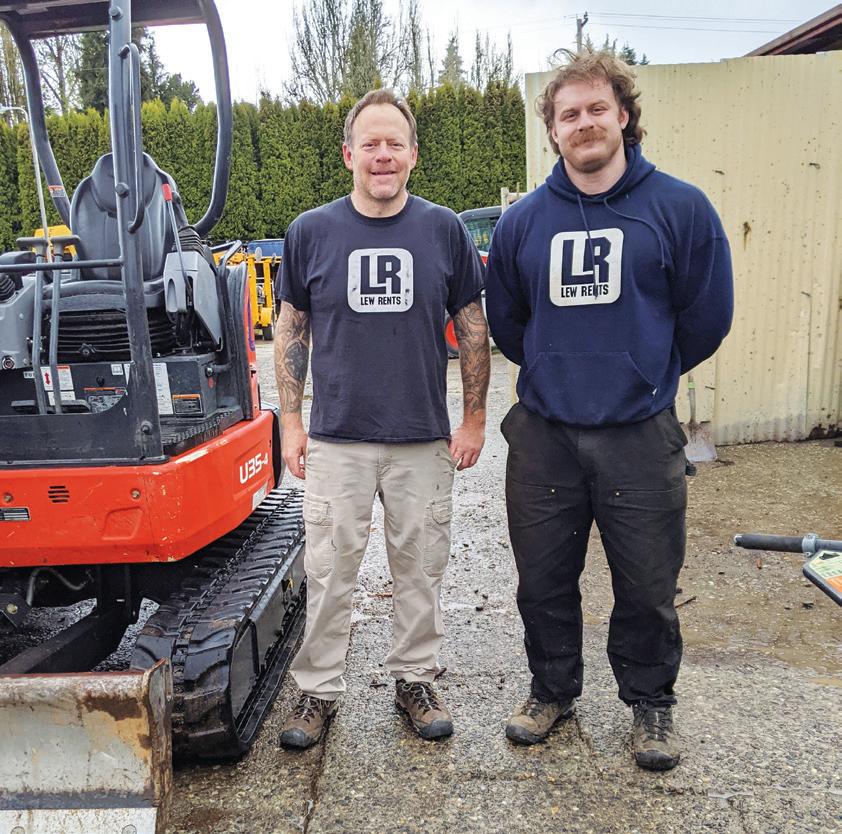
George Eklund purchased Olympia Hardware Co. in 1928. As he approached retirement, his son, Lew, took over the family business and expanded it from
a hardware store to Olympia’s first tool rental company. The idea was so successful that by 1961, Lew pivoted from the hardware store into Lew Rents, Inc.
Lew’s sons, Dean, Dale and Gary, all worked at the rental store over the years, and now Dean’s son, Jamie, runs the business with his son, Xander.
“After five generations, Lew Rents is a testament to strong family values, hard work and dedication to helping people find what they need to get their job or project accomplished,” Jamie said. “Take care of others and others will take care of you.”
Edward P. Miller came to Tacoma in 1940, beginning the Miller family’s longtime construction and development activities in the Tacoma area, said Ken Miller of Miller Building Enterprises, Inc.
“One of our major accomplishments has been the development of hundreds of acres of land in Tacoma, Pierce County and other locations over many decades,” he said. “Edward P. Miller was always
an active participant in the US housing industry and was one of the founding members of Tacoma-Pierce County Master Builders Association in 1945.”
Today, Ken and his wife, Barbara, and two other family members run the company.
Jack Woodman started Washington Alarm in 1943, selling fire extinguishers to homes and businesses. His son, John Woodman, joined him in 1962, and together they added fire alarms and security systems. Shannon Woodman worked for the company during summers and vacations.
“When I was in elementary school, I told my grandma I was going to run Washington Alarm,” Shannon recalls.
After initially resisting joining the company, Shannon returned to Washington Alarm full-time in 2000.
“In 2000, my dad asked me if I wanted to be part of his 10-year exit plan,” Shannon said. “I knew it was a huge opportunity and I said yes.”
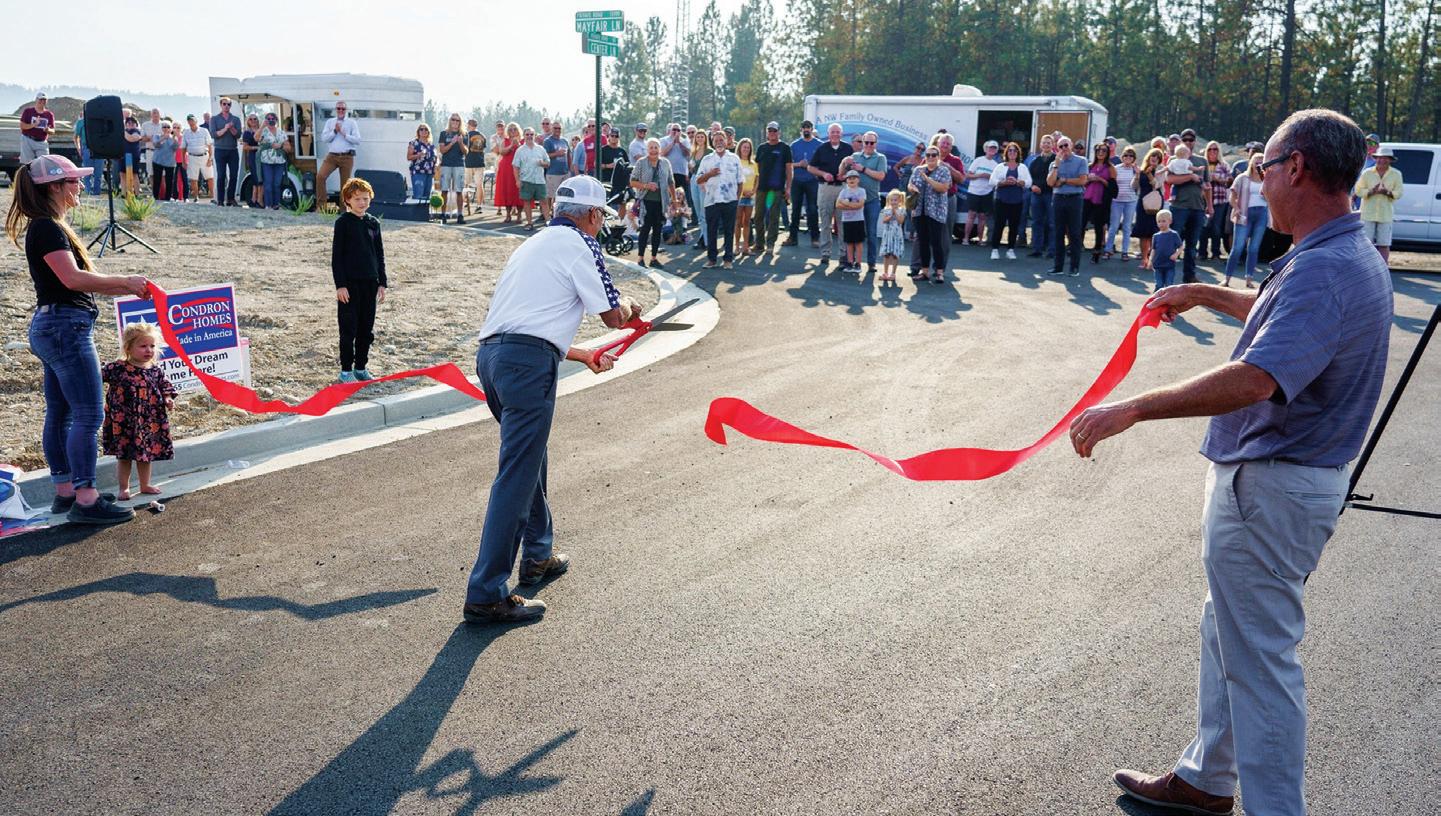
Craig and Corey Condron with Alexa Amatto at the last ribbon cutting for a Craig Condron development
Jamie and Xander Eklund now run Lew Rents
Darrel Condron started his homebuilding company in 1956. His son, Craig Condron, took over the business in 1976. From the time he was 14, Corey Condron worked on his dad’s jobsites in Spokane, stripping and tarring foundations, cleaning up and doing miscellaneous grunt work. He took over Condron Homes in 2008. His daughter, Alexa Amatto, works with him and his wife joins the company in May.
Tim Uhler founded Pioneer Builders in 1978, now operating in Port Orchard, after returning home from Vietnam. Raised in a farming family, he went to college for finance and accounting, but when he returned home from the war to work at a bank, the bank wasn’t hiring.
“But a general contractor was,” Tim’s son, Bryan recalls. “That’s where he learned building and cost accounting… He framed and did finish carpentry during the day and books and business at night.”
Other companies have more recent beginnings.
Ron Pelson started Traditional Designs in 1999 as a side hustle before leaving his job and officially opening the company.
“He spoke with the company he worked for about career advancement and the opportunity to buy in and become a partner in the future,” his daughter Madeleine shared. “They said it would never happen.”
Bob Shupe’s brother-in-law started a pressure-washing and window-cleaning business in 2002. Bob joined the business
with his father-in-law in 2013, and by 2017, he bought out his brother-in-law. Then, in 2019, another partner came in and bought out Bob’s father-in-law.
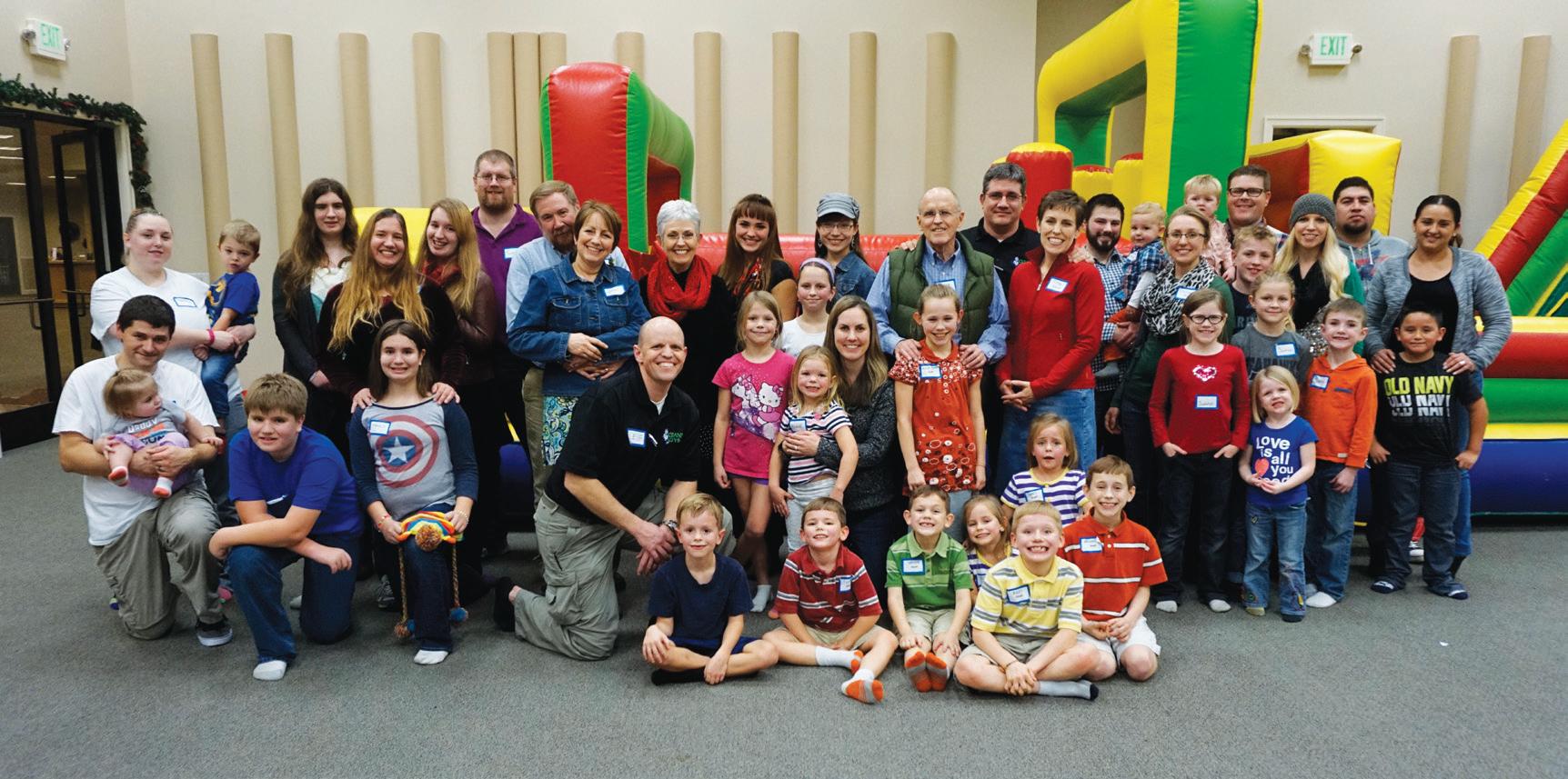
Now the Cleaner Guys, LLC, a member of the Skagit/Island Counties Builders Association, has 20 employees, operating out of Mount Vernon.
All roads lead back to home
Some family business owners found it natural to grow in the family business.
“I started at the age of 13, and I have never felt like I was working,” said Jamie Eklund of Lew Rents. “Every day brings something new to either fix or help, rain or shine.
Andrew Northrop of Spokane Hardware Supply knew he wanted to join the family business since he was a kid.
“I wanted to be in the business since I was in third grade,” Andrew said. “I think then I wanted it just to be closer to my dad… As we got further along in years working together, I could really see the potential for our company and wanted to build on the legacy we have as a family in the hardware world.”
His great-great-grandfather, Roland Northrop, founded the business in 1945 after a lifetime as a hardware buyer. He recruited family to invest and launched his own business at age 58.
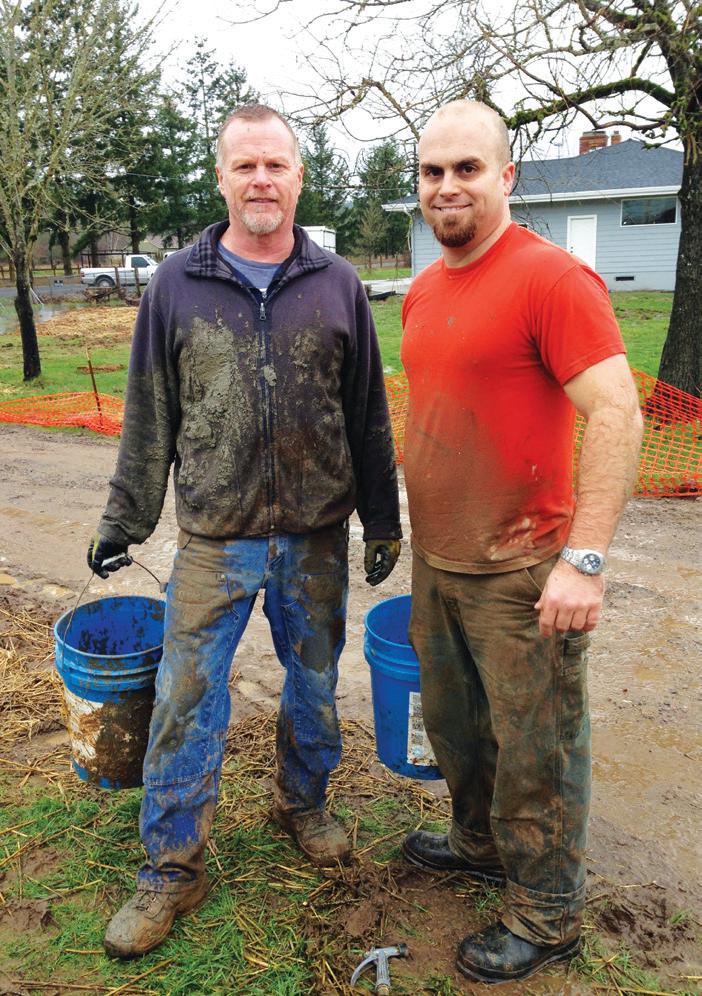
“I was always drawn to business,” said Aaron Marvin, BIAW’s 2026 President and co-owner of A.C.T. Builders, LLC in Vancouver. “I’m the type of person that no
matter what group I’m in, I eventually become the one who is running it. I’m not sure I would have picked construction if my dad wasn’t in it, but it has served my family and me well through the last two decades.”
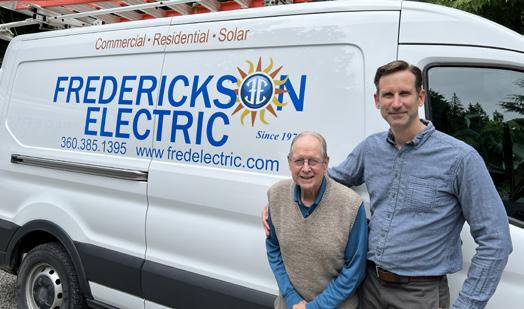
Others had a more divergent path. Erik Frederickson started Frederickson Electric as a one-man shop in 1974. His son, Hans, helped by sweeping floors in the warehouse and washing vans. By 15, he was helping in the field.
He left to pursue undergraduate and graduate degrees in electrical engineering and spent five years in software development before he and his wife had their first child. Then, the idea of moving back to Port Townsend to join the family business became appealing, he said.
Hans and his wife Mia purchased Frederickson Electric from his parents in 2012.
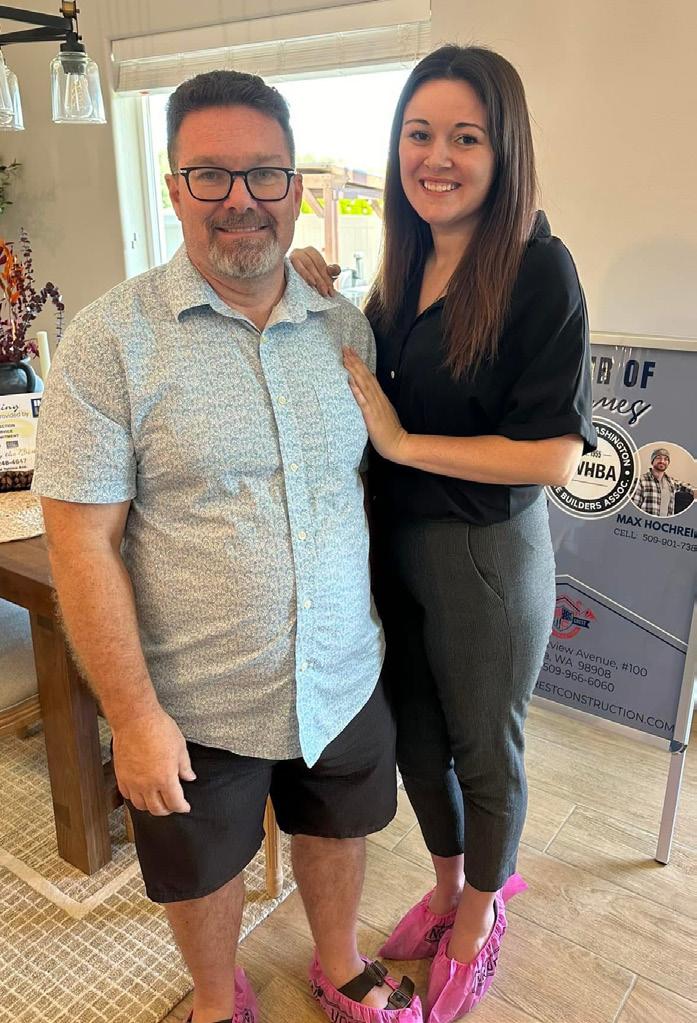
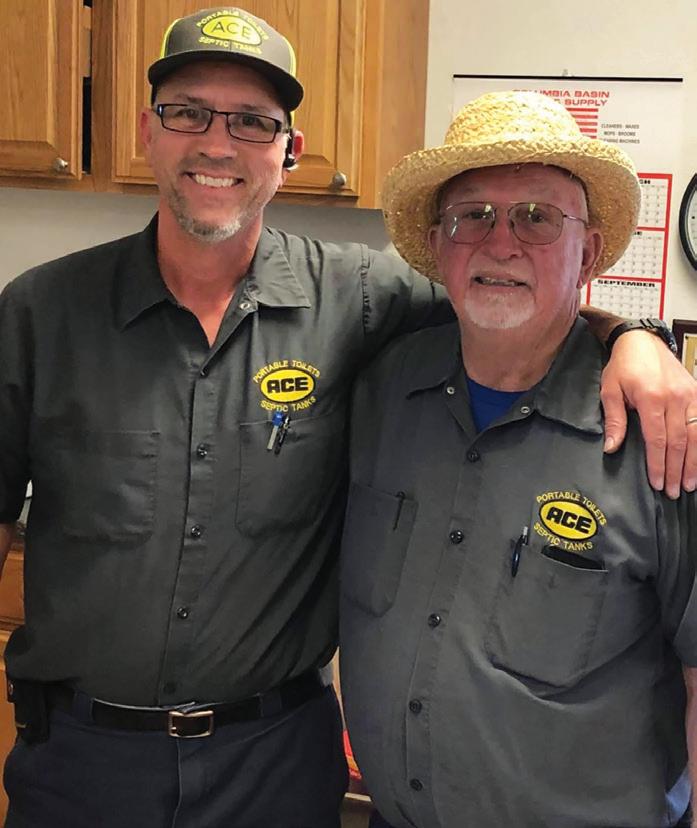
For Paul Liniger of Ace Portable Toilets and Septic Tank Pumping, growing up in the family business wasn’t always fun.
Aaron and Charlie Marvin get muddy on a jobsite
Cleaner Guys employees and their families at a company gathering
“The driving was fun,” he said. “But servicing porta-pots was not terrific. At about 19, I moved on to a different industry in another state for about 20 years. Starting in about 2000, my dad kept asking me to move back home and buy the business to help him retire.”
Finally, in 2005, Paul bought the business to help his dad retire, but his dad never really did.
“He showed up every day, ready for whatever was needed until he got sick in 2021 and passed in 2022,” Paul said. Myron was 82.
Madeleine Pelson recalls filling in the walls on blueprints with her dad as a small child. She later worked as a draftsperson at Traditional Designs, Inc. in high school but moved away from Yakima for 10 years. She returned to work remotely as a contract web developer.
“I’m a pretty social person, so I asked if I could work out of my dad’s office to get out of the house,” she said.
Soon she realized she could add value to her father’s business and now serves as Vice President of Operations.
“I really fell in love with the job, and it’s been the most enjoyable job I have ever had,” she said.
Madeleine’s younger brother Cameron recently joined her and her parents in the family business.
Tyler Haase of Haase Landscape, Inc. works for his parents in the company his
grandfather started in 1985. But until his junior year in college, he hadn’t planned to work in the family business.
“Something clicked,” he said. “Then I realized it was a fulfilling career that would give me a good path to have a meaningful impact in my community as well as providing some freedom as I started my career.”
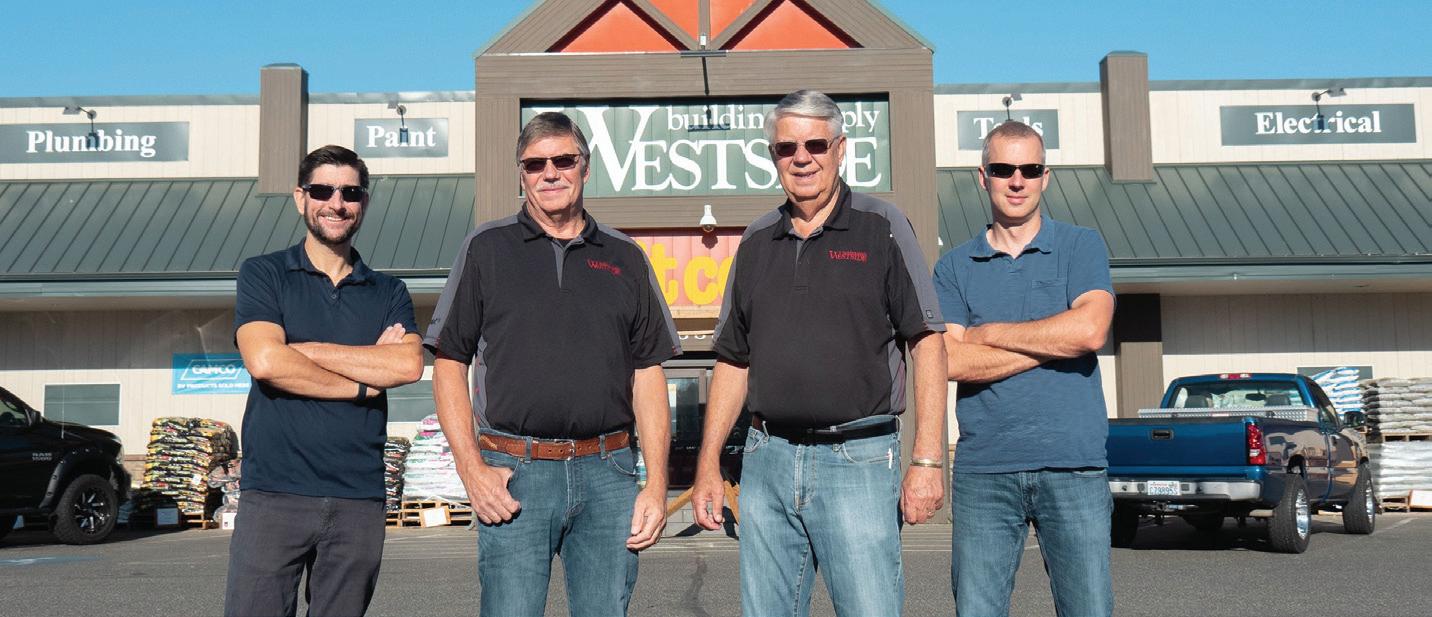
Andrew Bright’s grandfather-in-law, Jake Bovenkamp, started Westside Building Supply in 1959, but he didn’t come into the business until COVID put a damper on his career as a comedian.
“I was a full-time comedian for 20 years,” Bright said. “I began working part-time at Westside to help make ends meet, then fell in love with the work, the customers and other employees.”
Members of the Building Industry Association of Whatcom County, Bright and his brother-in-law, Paul Bovenkamp, now own Westside Building Supply.
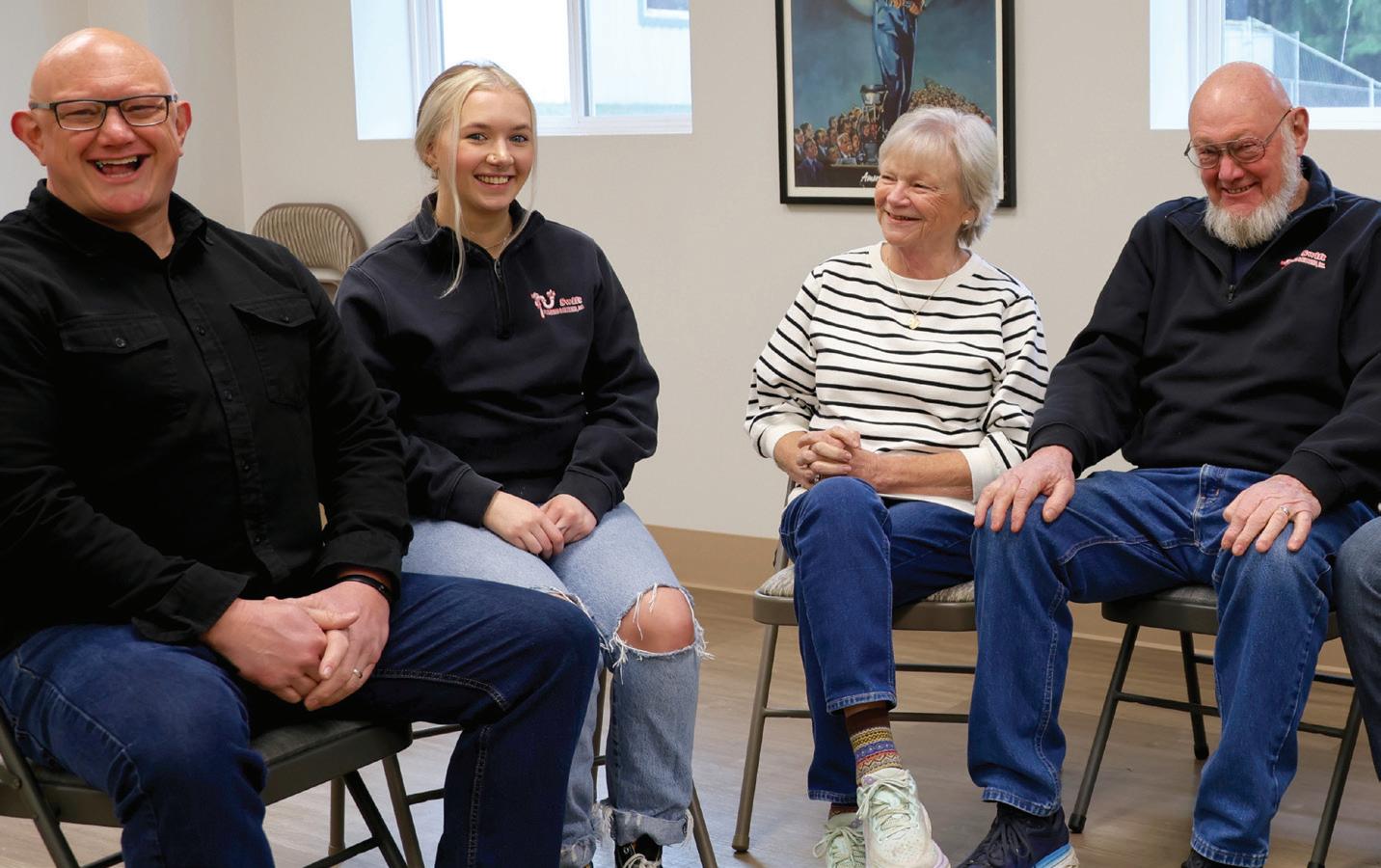
Ty Swift helped in the warehouse and worked as a laborer for Swift Plumbing during the summers.
“I swore I wouldn’t become a plumber,” he said. “But when I graduated from college, I realized it was a great profession and decided to join the family business.”
Ty’s parents started Swift Plumbing in 1986, and now it’s a true family business.
His nephew, CJ, is the warehouse manager, CJ’s wife is the bookkeeper, and Ty’s daughter, Alexa, is the billing assistant. His father, Cal, still teaches apprenticeship classes.
A commitment to the future
Looking ahead, business owners offer sage advice to the next generation.
Magen and Casey Hilburn’s daughter, Havana, is a fourth-generation employee of Silverbow, Inc., a family-owned construction firm that started as a small roofing company in 1987. Havana joined the company in 2023 at age 16.
“Watching her begin her journey where Casey and I started is a full-circle moment that reminds us how special a family business truly is,” Magen said.
Hans and Erik Frederickson in 2024
Paul and Myron Liniger at the office
Madeleine and Ron Pelson at Central Washington Home Builders Association Tour of Homes
If she could offer one piece of advice, it’s this: Protect the company’s reputation, take care of your people, and make decisions like the future depends on it, because it does.
Sarah Henry, second-generation owner of Gaspar’s Construction in Seattle, says, “Maintain the culture.”
Giving back to the community is an important part of her family business’s culture.
“We partner with organizations like Rebuilding Together, where we help lowincome people stay in their homes,” she said.
Continue to build and operate on the values the family has tried to abide by, advises Beth Garrett of RG Construction Services in Battle Ground.
“We take what we do seriously - and always want to do our best,” she said. “But have a good-natured and funny
team. Try to have some fun with it all, and it lightens the rough days!”
Brett Lott Homes started in 1991 when Brett and his wife, Sandra, sold their first house to build their first spec home. Now they work with their son, Tyler.
While he admits building that first spec home was a “leap of faith,” Brett is now transitioning his business to his son.
“Have the highest integrity,” Brett advises. “If you take care of your clients and those you work with, the money will come.”
Top five legal tips for successful family businesses
1. Have a written succession plan. Work with an attorney to document both ownership and leadership transition.
2. Use a buy-sell agreement to avoid family disputes. It should define who can buy shares, how the business is valued and how transitions happen.
3. Regularly review your entity structure. Your LLC or corporation should evolve with your business.
4. Plan ahead for estate and capital gains taxes. Early planning can help reduce tax burden, avoid forced sale of business assets and keep ownership within the family.
5. Use clear contracts for every project. Strong contracts should cover the scope of work, payment terms, change orders and dispute resolutions.
Ty Swift, Alexa Swift and parents
Brett Lott reviews blueprints with Tyler Lott
Former owners and new owners in front of Westside. L to R Andrew Bright, Jayson Bovenkamp, Bernie Bovenkamp, Paul Bovenkamp
[1] Members of the Olympia Master Builders (OMB) came together for a relaxed, welcoming get-together during its New Member Mixer on Feb. 19, at the Firecreek Ale House. (L-R) Chad Pearson, Ken Hassett, Zack Altona and Lindsay Grantham.
[2] The Pink Hard Hat Awards, the signature event of the Building Industry Association of Clark County’s Professional Women in Building (PWB), brought together industry professionals to celebrate the achievements and leadership of women in the building industry. The event took place March 6 at the Heathman Lodge in Vancouver, beginning with a social hour followed by dinner and the awards presentation, honoring this year’s winners.(L-R) Nikki Hinton-Duke and Samantha Zimmerman.
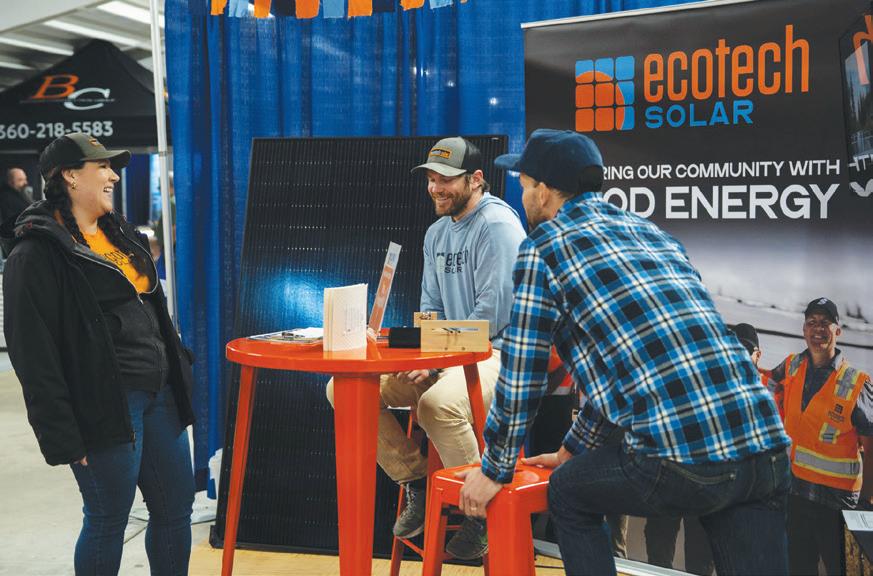
[3] The Skagit/Island Counties Builders Association (SICBA) kicked off its 44th Annual Home Show March 27-29 at the Skagit County Fairgrounds, connecting homeowners and future homeowners with top companies offering the solutions they need. (3A) (L-R) Cresha Muckala, Derrick Hirsh and Adrian Shulock at the Ecotech Solar booth. (3B) Famous Northwest Master Gardener Ciscoe Morris was in attendance, offering spring gardening tips to attendees.
[4] The Building Industry Association of Whatcom County (BIAWC) hosted a Hard Hat Happy Hour networking event at K2 Brewing in Bellingham on April 1. The event offered amazing raffle prizes, strong connections, and a great sense of community. (L-R) Jay Oliveraz and Julie Ranson.
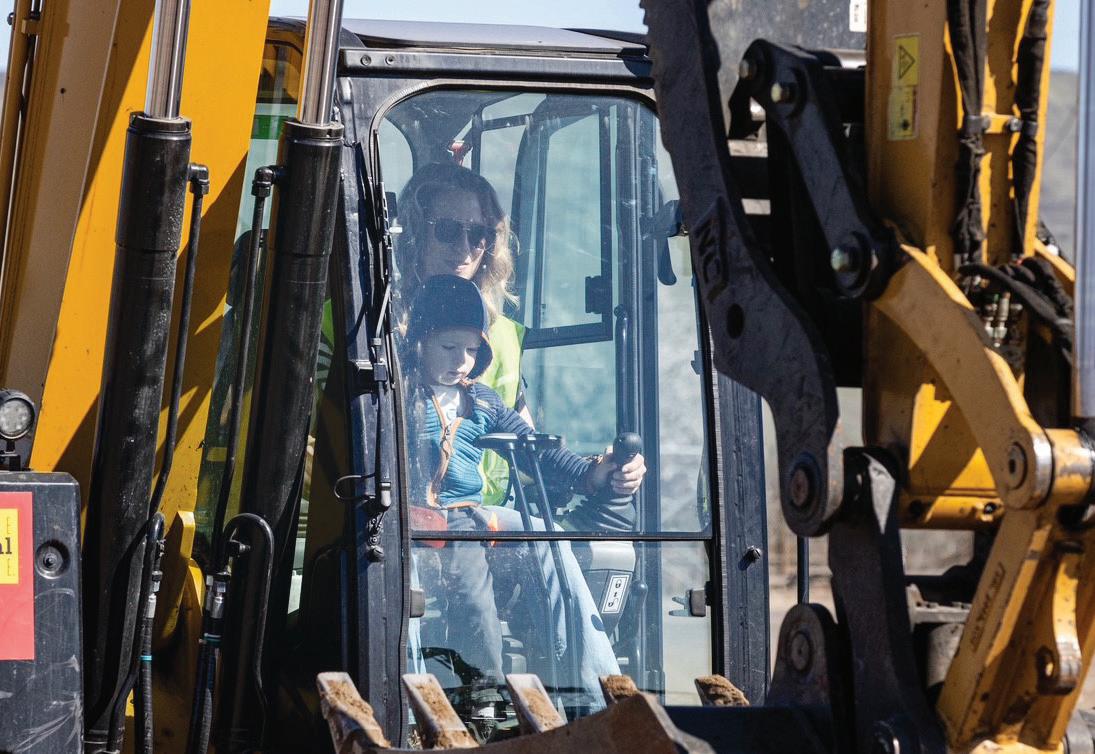
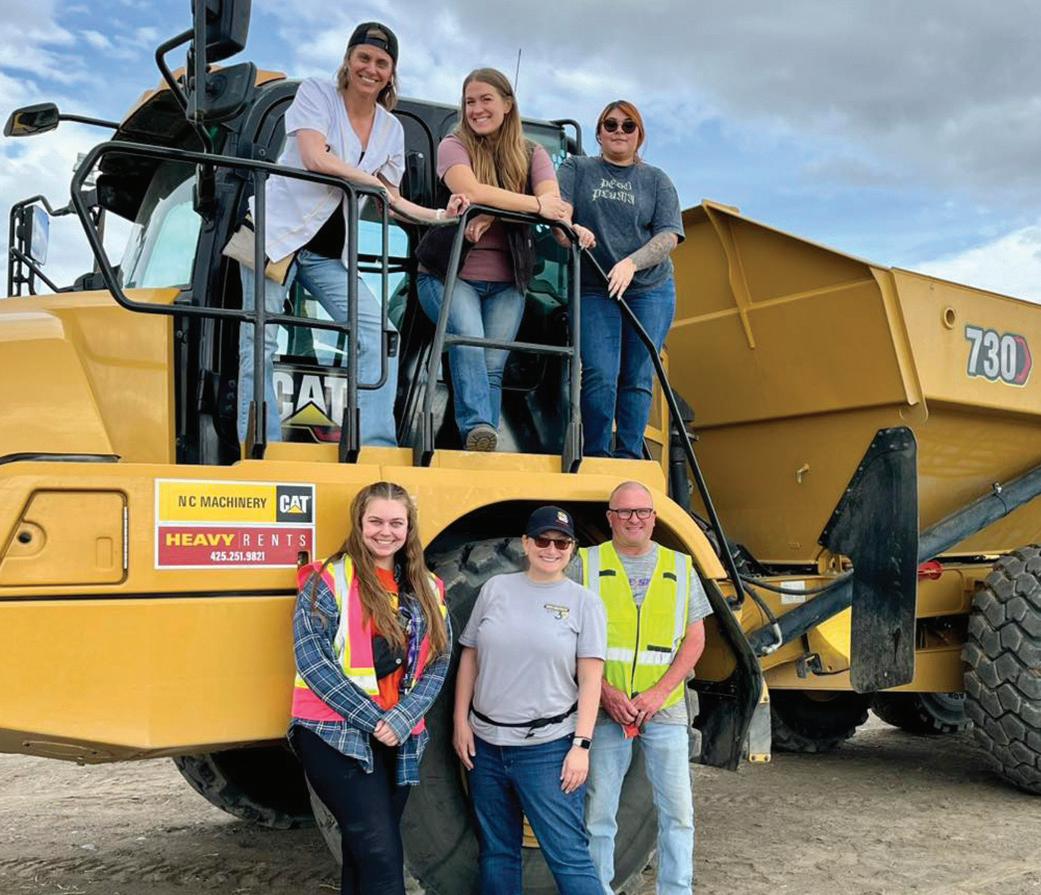
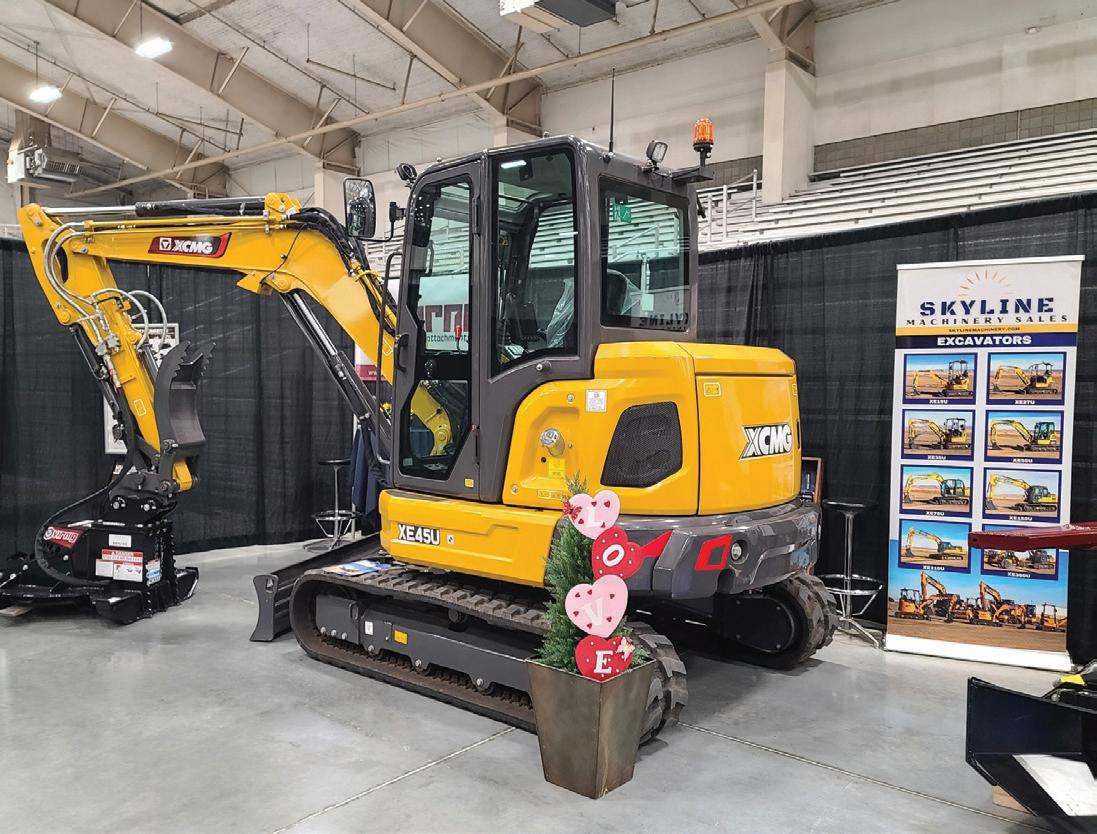
[5] Dozer Day Yakima, presented in partnership with the Central Washington Home Builders Association (CWHBA), kicked off March 21-22 at the Yakima Fairgrounds. The popular event offered local kids the opportunity to experience operating real heavy equipment, from bulldozers to cranes to emergency vehicles and more. CWHBA Board Member Melissa Brewer of MB Interior Designs, LLC, gave children a chance to operate heavy construction equipment with her. (5A) CWHBA staff and volunteers kept the event running smoothly (5B).
L-R: Executive Officer Lindsay Brown, Event Manager Nola Longacre, Engagement Director Kelsey McLeod, Gov. Affairs Director Andi Hochleutner, Board President Darin Peters of Perry Technical Institute and Operations & Service Coordinator Aylin Gonzalez.
[6] The Kitsap Building Association (KBA) held its 2026 Foundation Auction on Feb. 28, at the Kitsap Conference Center in Bremerton. The event brought the industry together for an evening that was both celebratory and impactful, raising support for the future of the trades. Attendees enjoyed a lively cocktailstyle atmosphere filled with auctions, raffles, games, and valuable networking opportunities. Proceeds from the event directly benefited the Builder Grant Program, helping provide hands-on training, mentorship, and real-world job experience for local young adults entering the trades.
[7] The Home Builders Association of Tri-Cities (HBATC) hosted its 2026 Regional Home & Garden Show Feb. 13-16, at the HAPO Center in Pasco. This year’s event filled two halls with more than 200 exhibitors and featured live music, speakers and lots of fun for the kids.
The 4:1 Rule: The most important step in extension ladder safety
by Leah Jaber ROII Marketing Manager
Every March is Ladder Safety Month—a timely reminder for construction crews to revisit the fundamentals that prevent serious injuries on the jobsite. While there are many components to ladder safety, one stands above the rest for extension ladders:
The 4:1 ratio
It’s simple, fast to apply, and one of the most effective ways to prevent ladderrelated falls. When used correctly, this rule significantly reduces the risk of two of the most common ladder failures: the base sliding out and the ladder tipping backward.
For example:
n 8 feet high → base is 2 feet out
n 12 feet high → base is 3 feet out
n 16 feet high → base is 4 feet out
n 20 feet high → base is 5 feet out
In simple terms:
Divide the working height by four. That number is your base distance.
This setup creates roughly a 75-degree angle—widely recognized as the most stable working position for an extension ladder.
Most ladder failures aren’t random. They’re setup mistakes.
The 4:1 rule is the simplest way to prevent them.
What is the 4:1 rule?
The 4:1 rule means that for every four feet of vertical height, the base of the ladder should be placed one foot away from the structure.
Why the 4:1 ratio works
Extension ladders are designed to perform safely within a specific angle range. When they are set outside of that range, failure becomes much more likely—and often predictable.
If the ladder is too steep:
n It can tip backward
n The top may lose secure contact with the structure
n Small shifts in body weight can cause instability
If the ladder is too shallow:
n The base can slide outward
n The rails may flex beyond their intended capacity
n The ladder becomes unstable under load
The 4:1 ratio creates the right balance between downward force and outward pressure. This balance keeps the ladder stable while climbing, descending and working.
How to measure it on the jobsite
One of the biggest advantages of the 4:1 rule is that it does not require tools or complicated calculations. Crews can quickly check the angle using simple methods.
Method 1: Quick math
Estimate the height where the ladder contacts the structure. Divide that number by four, and step the ladder base out accordingly.
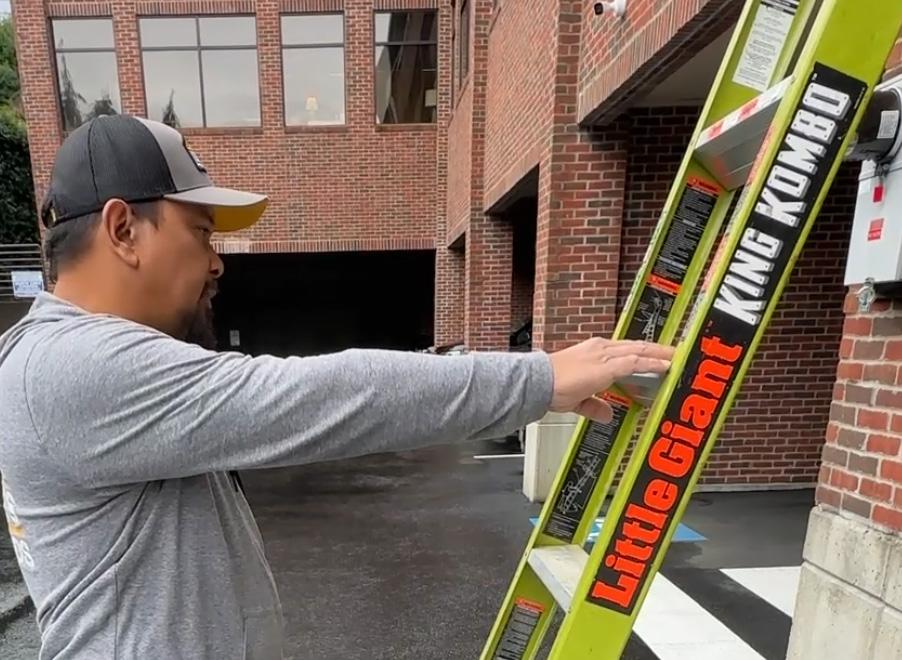
Method 2: Arm-length test
n Stand with your toes touching the ladder feet
n Extend your arms straight out
n If your palms rest on a rung at about shoulder height, the angle is correct
This is a fast, reliable field check— especially useful when time is limited.
Want a quicker way to check whether you’re using the 4:1 rule properly? Watch a demonstration of the 4:1 rule.
No tape measure needed.
If you can reach it, you can check it.
Common
mistakes to watch for
Even experienced workers can fall into habits that compromise ladder safety. Some of the most common mistakes include:
n Setting the ladder too steep to save space
n Eyeballing the angle instead of checking it
n Forgetting to re-check the angle after moving the ladder
n Adjusting ladder height without adjusting the base distance
A key point to reinforce with crews:
Any time the ladder height changes, the base distance must also change.
When the 4:1 rule matters most
While the 4:1 ratio should always be used, there are situations where it becomes especially critical:
n Working on smooth surfaces like concrete, decking, or metal
n Using the ladder near its maximum extension
n Wet, icy, or otherwise slick conditions
n Accessing elevated landings such as roofs
As ladder height increases, the margin for error decreases. Proper setup becomes even more important.
UPCOMING FREE SAFETY TRAINING
FOR ROII PARTICIPANTS
What the 4:1 rule does not replace
The 4:1 ratio is the foundation of safe ladder setup—but it is only one part of a complete safety approach.
It does not replace:
n Securing the ladder at the top
n Extending the ladder at least three feet above a landing surface
n Maintaining three points of contact
n Inspecting the ladder before each use
Angle alone cannot prevent every incident. However, without the correct angle, other safety practices are far less effective.
Make it automatic
Ladder Safety Month is a good opportunity to reinforce habits that protect crews every day—not just in March.
The 4:1 rule is one of the easiest safety
ROII participants have access to a variety of FREE safety classes designed to help reduce risk, meet state requirements, and keep crews safe. Take advantage of these upcoming courses that tackle liability, safety, inspections, and heat stress.
Sign up early to secure your spot!
practices to implement, yet it is often overlooked or rushed. Making it part of every setup can significantly reduce fall risk across jobsites.
Quick reminder:
Height ÷ 4 = base distance
Make it automatic.
Make it consistent.
Make it part of every ladder setup.
If you’re not a participant, you can find out how to get rewarded for safety by joining the state’s largest, longestoperating Retro (Retrospective Rating) safety incentive program: ROII.
To get started and find out if ROII is a good fit for your company, visit roii.com/inquiry or contact us at (360) 352-7800 or enroll@roii.com
A candid talk about safety glasses
Why the right eye protection matters more than you think
by Bob White ROII Safety Services Director
As ROII’s Safety Director, I review workplace injuries every day. Far too many cases I see involve eye injuries from debris entering the eye while grinding, drilling, milling, sawing, etc.
Ironically, many injury reports include statements like, “I was wearing safety glasses” or “my safety glasses didn’t do their job.”
When eye protection falls short
The reality is more complicated. Workers can still sustain eye injuries, sometimes requiring medical removal of debris, even while wearing safety glasses and, in some cases, a face shield as well.
Certain tasks naturally send wood, metal, or other materials flying at high speeds. These particles can bounce or ricochet off lenses, frames, cheeks, or foreheads, finding just the right angle to slip past standard safety glasses and into the eye.
A better line of defense
In many of these situations, gasketed safety glasses or sealed goggles could make the difference by preventing debris from getting around the lenses.
It’s easy to take our eyesight for granted. Speaking personally, as someone who has lived with only one good eye for 62 years, I can attest to just how valuable it is.
That’s why it’s worth taking a closer look at the tasks performed in your workplace and asking a simple question: Does this job require tighter-fitting eye protection?
Talking with employees about these risks and placing sealed eye protection near high-risk equipment like grinders and drills can go a long way toward preventing serious injury.
Many manufacturers now offer safety glasses with removable gaskets, and some
provide kits that convert standard glasses into tight-fitting, gasketed protection for added defense against flying debris. Below is one example from 3M Manufacturing.
If you are an ROII participant and would like to receive my regular safety updates, including ideas for safety topics, please contact me at (360) 352-7800 ext. 109 or bobw@biaw.com.
Not an ROII participant? Visit roii.com to learn more.
DESIGN BUILD INSTALLATIONS SINCE 1992
CUSTOM WINE CELLARS & COOLING SYSTEMS
• Traditional Wood Contemporary Metal Racking Systems