the
ISSUE 18 THE MUSE AUTUMN ~ 2017
MUSE
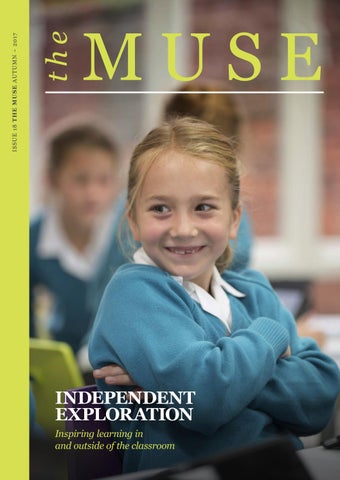
INDEPENDENT EXPLORATION Inspiring learning in and outside of the classroom
Visits & Voyages This list is by no means exhaustive, but offers a flavour of guests in and visits out during the Summer Term.
Visitors In Alumnae 2012 - 2016 Summer Drinks Reception
Open Morning for Polam School Parents
Arabian Nights, Drama Production, Years 7 - 9
Open Morning, Whole School
Art, Design, Food and Textiles Exhibition, Senior School
Orchestra and Choir Workshop, Years 3 - 5
Auf Dem Campingplatz German Play, Years 7 - 10 Australian Workshop, Year 3 Celebration Evening, Year 6 Charity Disco with Bedford School for Educate Girls, Year 9 Charity Film Night for Educate Girls, Year 9 Chemistry of Chocolate Workshop, Year 7 Drama Devising Workshop, Year 10 and Lower Sixth
Prize Giving Evening, Prize Winners and Parents Public Speaking Competition, Years 7 - 9 Queen’s Birthday Celebration Tea Party, Year 3 Sailing to Australia Workshop, Year 3 Senior School Curriculum Conversation, Revision: and Learning Support, Years 7 - Upper Sixth Senior School Curriculum Conversation, The Importance of an Education for Life PSHE, Years 7 - Upper Sixth Senior School New Parents’ Evening
Egyptian Exhibition, Year 3
Sports Awards Evening 2017
French Play, Years 8 - 10
STEM Careers Evening, Sixth Form
Greek Day, Year 5
Take Me Out Charity Event, Sixth Form
Junior School and Year 7 Induction Day
The Association Wine Tasting Event
Junior School New Parents’ Evening
Tudor Day, Year 4
Junior School Teatime Concert
Work the Room, Lower Sixth
Mathematics Relay Challenge, Year 8
Youth Theatre Production, The Little Mermaid Jr, Years 7 and 8
Music Technology Evening, Years 7 - Lower Sixth Open Morning for Pilgrims Prep School Parents
Zulu Warrior Nation Workshop, from Bedford Prep School, Year 6
Voyages Out Activity Morning at Bedford Prep School, Year 4 Bedford Regatta, Whole School Biology Trip to Flatford Mill, Lower Sixth Brancaster Residential Trip, Year 3 Challenge and Extend Trip, British Library, London, Years 7 - 9
Grafham Water Residential Trip, Year 4 IB Dinner, Bedford School International Women in Engineering, Cranfield University, Years 8 - Upper Sixth Jane Eyre Drama Trip, Aylesbury Theatre, Years 9 - Lower Sixth Kingswood Residential Trip, Year 6
Eco Challenge Day, Cople Fields, Year 6
Lego Activity Day, at Bedford Prep School, Year 3
Educate Girls Charity Presentation at Pilgrims Prep School, Year 9
Maths Road Show at Pilgrims School, Year 9 National Space Centre Trip, Leicester, Year 5
Exchange trip to Presbyterian Ladies College, Perth, Australia, Year 10
Othello, Wilton’s Music Hall, London, Sixth Form
Flex Friday Activities Day, Whole School
Painting the Night Shelter, King’s Arms Project, Lower Sixth
Geography Field Trip, Iceland, Year 11 and Lower Sixth
Residential Trip to Ypres, Belgium, Year 9
Geography Field Trip, Mid-Bedfordshire, Year 7
Romance and Rebellion Exhibition, Higgins, IB Art Students
Geography Field Trip, Sheringham, Norfolk, Year 10 Girls Lead the Field, Loughborough University, Year 9 Girls Leadership Group Outing, Cambridge, Lower and Upper Sixth
Rowing Camp, Gravelines, France, Years 10 - Upper Sixth Science Museum Trip, Year 8 STEM Challenge Trip, Haileybury School, Year 5 Wimbledon Tennis Trip, Lower Sixth
Editor’s Insight
B
y the time you receive the Muse in mid-September the School will be back into full swing with new and existing students alike settling down to the routine of school life after a long summer break. The corridors will be full of creative energy and classrooms busy with discussions and learning.
that the girls are developing through just one course of study. They are not just learning about food and nutrition, they are also refining planning and teamwork skills, showing their creativity and building confidence, all of which came together beautifully to deliver their Indian themed dinner. It is a lovely example of how to embed wider life skills in a classroom.
As a Head I have to always assess if we are moving in the right direction and how to judge our success. Yes, examination results are important, and this year we have had truly superb results, but for me a true indicator of our success is ensuring that our vision and ethos are being implemented in every aspect of school life. I want to ensure that our students are well balanced, inspired and enjoying their time at Bedford Girls’ School, that they are building an understanding of who they are, and of the difference they can make to the world around them.
We are all aware of the increase in mental health issues in young people and making sure that our students have the tools and strategies to deal with challenges is at the heart of what we do. If the girls are not happy and stable, they will not thrive. Our article PSHE A Curriculum for Life explains the importance we place on promoting pupils social and personal development, both through our specific PSHE programmes but also through their relationships with Form Tutors and subject teachers. It is vital that we make sure the girls have a safe and happy environment in which they are confident to express themselves, and are not afraid to ask for support and help if they need it.
We are committed to providing a forward thinking education, future proofing your daughters for the world they will move into; we develop the learner attributes they will need to succeed and be confident. To do this we must engage with them in the classroom, challenge them to be independent, to think and communicate with intelligence; to question and enquire, and to be open minded to taking risks. We must truly understand each pupil as an individual to ensure that they all flourish. Reviewing this issue of the Muse I think you can clearly see how we are delivering on our promises in all areas of the girls’ education, the publication is full of examples of how we educate. In our Junior School feature Exploring Science, Mrs Carolyn Howe, Head of the Junior School, explains how we have a structured cohesive STEM curriculum which runs through all of our Units of Enquiry, ensuring the girls are developing skills and making neurological links across the different disciplines and relating these back into their wider areas of study. This exposure to the endless possibilities of science from such an early age lays the foundation for a continued fascination with STEM for life.
Part of our ongoing commitment to the girls is to make sure we are always offering plenty of opportunities for them to explore and be inspired across the whole depth of the curriculum. Our Inspired by Iceland features illustrates how residential trips create greater passion for a subject, whilst our focus on the role that Sports camps play in training, showcases the opportunities offered to girls to push themselves out of their comfort zones and face new challenges.
“ We are committed to providing a
forward thinking education, future proofing your daughters for the world they will move into.
”
I hope you find all of the features in this edition insightful; they really are just a tip of the iceberg of what is going on daily basis. I look forward to another extremely successful year and to welcoming you all to the School. Best wishes
Jo MacKenzie Headmistress
I hope you enjoy reading the review of the Year 10 pop up restaurant project Pop Up Food. A student led initiative, it provided the perfect platform to show case a number of cross-functional skills
The Muse | 02
Inspired by
Iceland “Iceland is a living laboratory where nature’s land forming processes are so easy to see.”
B
ringing learning to life is
explore the country, providing the girls with
Circle Tour we visited Strokkur Geyser.
essential to ensure that students
the opportunity to put independent thinking
Seeing geothermal activity at close range
gain a deeper understanding
skills into practice and to challenge them
really brought classroom learning to life. Our
of the world around them, in
physically and mentally in stunning remote
last scenic stop on the Golden Circle tour
landscapes.
was Gullfoss, a two-tier, glacier fed waterfall
subjects such as Geography, the chance to see up close concepts that have been studied, crystallises learning and inspires a greater appreciation of the subject.
On arrival, the girls wasted no time and had the unique opportunity of walking between the continents. Visits to the Gunnuhver Hot
flowing into a rift valley, a spectacular and untouched natural beauty. We were accompanied by local experts who were able to answer the girls challenging questions and
Where better to experience the wonders
Springs and Krýsuvík Mud Puddles followed,
of physical geography than on a voyage of
where the girls put their knowledge into
discovery to Iceland. Truly unmatched in
action by investigating how the mud pools
There was no better way to relax after a busy
its natural splendour, Iceland is a haven of
and steam vent gases such as carbon dioxide
day than bathing in the geothermal waters of
unspoiled landscapes, extraordinary scenery
and hydrogen sulphide makes the water
the Secret Lagoon. The girls experienced the
and geographical gems – think boiling mud
acidic, which causes alteration of the fresh
cold fresh Icelandic air before swimming in
pools, erupting geysers, cascading waterfalls,
lava rock to clay.
the hot water, which is around 38-40 Celsius
ash and impressive lava flows – and that’s just the beginning.
Mrs McPhail, Geography Teacher, said:
helped broaden their understanding.”
all year round.
“It was fascinating for the girls to see the
Over the next couple of days, the group
Last Easter, Mrs Dorothy Whiteley, the Head
landforms they only learnt about in the
continued to be awe inspired, with visits to
of Geography accompanied by Mrs Sara
classroom environment, they were in awe of
a number of important sights including the
McPhail and Mrs Claire Hoar took a group
seeing the Mid-Atlantic ridge in the Þingvellir
base of Hekla, one of Iceland’s most active
of Year 11 and Lower Sixth Form students to
National Park. As part of the famous Golden
volcanoes.
03 | The Muse
Mrs McPhail added: “Hearing and reading
understand the immense size and scale of
was truly the trip of a lifetime and it was
about evidence of climate change is one thing
the county. The hike in Reykjadalur was a
an absolute privilege to share this with my
but to actually be able to witness the evidence
particular highlight for Lower Sixth pupil
fabulous colleagues and such enthusiastic
of glacial retreat is another. The girls walked
Bethany Cawood: “My most memorable
girls. As a Teacher of English, I managed to
up to the snout of the Sólheimajökull glacier,
moment of Iceland was the big 10km walk.
share a few daily Icelandic folktales, complete
with breath-taking views of ridges, rock
It was an amazing achievement to think that
with audience participation, helping the girls
formations, and deep crevasses, this provided
I had walked up the mountains, and been
see how subjects come together even on the
a perfect geography lesson about glacial
surrounded by breath-taking views. It was
edge of a volcano. Being in such inspiring
formation. The fact that Iceland’s volcanoes
such an enjoyable trip with everybody and I
landscapes brought creativity out in us all.”
are still so recently active makes it the perfect
will never forget it.”
place to explain the impact of volcanic activity
Year 11 pupil, Natasha Howard, added:
As part of the School’s learning ethos,
“Iceland is an absolutely beautiful place; I
building cross-curricular links is key and on
know everyone will agree that we had an
“A visit to the Eyjafjallajökull visitors centre
this trip, the presence of an English teacher
excellent time. It was an opportunity to
was fascinating as it is run by local farmers
was ideal to encourage the girls to think about
connect with everyone outside of a school
whose land was devastated by the 2010
Iceland’s cultural and literary heritage.
environment while experiencing the stunning
and climate change.
eruption, providing a first-hand view of what it is like to have volcano at your back door. The girls were able to reflect on how the eruption of 2010 has affected the family and
Mrs Hoar, English Teacher, thoroughly enjoyed her Icelandic experience: “I had always hoped to visit Iceland and when I
Icelandic landscapes. It really helped explain the theory from the classroom, and allowed me see the bigger picture.”
was offered the opportunity to support the
Mrs McPhail concluded: “It was exciting
Geography trip, I jumped at the chance. It is
to visit Iceland and to show the girls the
always wonderful to spend time with our girls
amazing sights it has to offer. To be able to see
in the wider school context, so to accompany
spectacular landforms in close proximity and
the Geographers, in addition to exploring
within easy reach of our base was special and
the country was absolutely fantastic! I learnt
unforgettable. Watching the students faces
about divergent tectonic plates, the difference
light up when confronted with a view that
between a composite and a shield volcano and
can only really be appreciated by being there
In addition, the girls were often stretched
why the geothermal area in the Haukadalur
is very special. These trips bring together all
physically with long walks across the
valley changed. We bathed in hot springs,
that they have previously learnt, and inspires
incredible landscapes, helping them to
climbed ridges and visited the glacier. This
them to see and understand more.”
surrounding community. This provided a case study for the students to use at GCSE and A Level/IB, it was an eye opening experience as the girls felt the volcano looming over their shoulders, and seeing it so close to hand will really enhance and personalise their understanding.”
The Muse | 04
A Curriculum for Life The World Health Organisation reports that 20% of adolescents may experience a mental health issue in any given year, at Bedford Girls’ School we believe it is key that we have a strong and relevant PSHE programme as part of our pastoral care provision in order to provide the support needed to inspire lifelong well-being.
B
edford Girls’ School ethos is to ensure that the school creates an environment where pupils feel safe to assert their
own opinions, have a high level of selfrespect and care for others. We encourage the girl to be assertive and resilient but to also have the confidence to ask for support. Ms Elaine Teale, Assitant Head, Pastoral Care, explained: “We want our students to be academically successful but we also want them to demonstrate the characteristics that will enable them to do well in life and in the workplace. It is vital that we have an articulated programme which runs
and stay safe in the world that they will grow up into.
“We do not believe in putting our heads in the sand and not addressing issues, if we want to empower our students to go out
and make a difference to the world we must
not be afraid of addressing sensitive issues, ensuring that they understand the world
around them and are able to articulate their views and concerns on these issues. Sadly PSHE is not a statutory subject on the UK
curriculum but we are deeply committed to it at BGS as we feel it underpins student well-being. It is vital to ensure that our students are balanced, confident and
throughout their school years to provide
supported in order for them to flourish.
them with the tools, information and network
“It is important that we have a specific time
to promote and protect their social and emotional well-being. This is at the heart of our provision. Young people today face pressures that were not an issue when many of us were growing up, we need to provide them with the skills to navigate, participate 05 | The Muse
in our curriculum for PSHE providing a
framework for the girls to develop strategies, language and skills to help them manage
situations which they may encounter and to support these with factual education on key issues.”
Together with Mrs Abi Lang, Head of PSHE, Ms Teale has developed a programme running from Years 3 to the Upper Sixth, which is entwined in many aspects of the girls’ curriculum, both through specific PSHE classes and Form Time. Framing the PSHE Curriculum are three major strands - the developments of a sense of self; how to build and maintain positive relationships and thirdly a commitment to care, both for themselves and for the wider community. Ms Teale elaborated: “Sense of Self allows students to explore their own identity and what influences it, they also consider how to maintain boundaries around their personal privacy in all aspects of their life, including their digital life. The Positive Relationships
strand delves into different relationships in
different contexts. Students discuss equality and diversity and they consider rights,
responsibilities and consent. A Commitment to Care is key to the BGS values; we want
girls to make a difference to the world around them. We believe that is important that students demonstrate citizenship, a sense of community ethos and develop a global viewpoint. Employability education is included within these strands for every year group. Within each strand specific subjects are addressed at an age appropriate level, with many of the topics being readdressed in more depth as the girls move through the School. For example when looking at the areas of Positive Relationships the focus in the Junior School would be on how to communicate their feelings to each other, how to recognise and respond appropriately to others feelings, whereas in Years 10 and 11 the emphasis will shift to learning about qualities and behaviours that we expect of the girls and which they should expect from others when developing positive relationships. Mrs Lang added: “Within each topic we approach the learning by firstly establishing what the girls already understand to provide a baseline, this is important as every class is different and levels of understanding will vary so we need to individualise the content. We then explore what they feel they need to know so we can see where the gaps in their strategies and experiences are. Helping the girls relate the learning to real life experiences makes the lessons more relevant and encourage positive outcomes. Research has shown that attempting to scare young people into making the right choices often backfires, so we need to engage them in the topic and guide them toward the appropriate conclusions.”
In this process the School employs a number of different educational methods to help reinforce healthy and appropriate behaviour. Visitors are often involved in delivery of the programme, both professionals from agencies and charities but also individuals whose stories and experiences can help the girls understand the issues with greater clarity and illustrate that these issues are real, not abstract concepts. In addition, these visitors provide important links to outside agencies, which on occasions may be needed by pupils. Ms Teale gave an example: “The links to the wider community are vital, we don’t want the girls to live in a bubble, they need to hear real examples and see how people have overcome mistakes and adversities. For example in the delivery of our Year 9 programme on Child Sexual Expoitation we invite a theatre group to perform a play called Chelsea’s Choice. It is quite hard hitting and is based on real life situations. At the end of the performance the girls are invited to engage with the actors and ask questions. We also host an evening performance of Chelsea’s Choice and invite BGS parents as well as parents and carers from the wider community to watch it. The girls need to realise there are plenty of places to get help, if they should ever need it and that they must not be afraid of contacting outside agencies or support networks.” The PSHE programme goes hand in hand with the wider pastoral care programme and, up to Year 10, the Form Teacher delivers much of the PSHE curriculum. Ms Teale believes this is important because it enables the girls to build trust with the Form Tutor and
for the Tutor to understand the concerns or experiences of their tutees and to be there
to support them. Tutors are able to provide advice, guidance and reassurance to their
pupil both on an individual basis but also as a group, by being a key point of delivery for the PSHE they can discuss, reflect and question what they have been exploring over a wider time frame and not be restricted by one or two lessons.
Ms Teale continued: ”The Form Tutor and the
Head of Year are central to the success of our pastoral care system. The Form Tutor’s role is
to know each student in their form holistically, to be the first line of mentorship and support for them both academically and pastorally.
The connection they have with their students is key and through delivering aspects of
the PSHE courses they are able to further understand and support their tutees.”
As the girls move into Year 10 and above PHSE moves towards looking at specific issues in more depth, at this point the
programme is delivered by a dedicated team of staff who establish ground rules and trust
with the group and provide an additional link
for the girls. Once in the Sixth Form the focus shifts towards preparing for the next step;
leaving school and entering the world of work or further education which inevitably means
greater independence from their parents and other support networks.
Ms Teale and Mrs Lang agreed that the
combination of dedicated PSHE lessons and Form Time as part of the pastoral provision
helps to develop socially confident pupils in a nurturing and supportive setting.
The Muse | 06
POP UP FOOD Bedford Girls’ School have joined the trend for pop-up restaurants with its very first Year 10 Indian themed evening. Designing the menu, practising the dishes, researching ingredients as well as cooking and serving the delicious meal to parents and friends gave the students a real insight into running a project from start to finish.
C
entral to BGS educational
breadth of experience. The Government
the skills to create healthy, tasty meals and
philosophy is ensuring that
have decided not to offer Food Technology
to be adventurous in their food choices.
the girls leave school with
as an A Level, which has brought into
All Senior School students currently
a wide skill set, which will
question the roll of the subject in the
study Food Technology in Years 7 and 8,
arm them with the ability to tackle the
curriculum, however at BGS we recognise
with an option of studying it in Year 9.
challenges and opportunities of the wider
that not everything has to be about
The School is currently teaching its last
world. The study of Food Technology
working towards a qualification, there are
cohort of students under the existing
provides the perfect backdrop to help
wider skills which should be embedded
GCSE programme, whilst developing a
build these attributes.
and Food Technology helps develop many
strategy for how Food Technology will
of these attributes.”
be integrated into the rest of the Senior
Mrs Gaynor Sayce, the outgoing Head
School years.
of Food Technology explained: “Many
“Fundamentally we want the girls to
aspects of the IB learner profile are
develop a love for food, to understand that
Mrs Sayce continued: “Creating food is
inherent in the study of Food Technology
eating well is a vital aspect of leading a
a holistic experience, it encourages the
and it provides students with an incredible
balanced lifestyle. We help them develop
girls to be creative, take risks and it builds
07 | The Muse
their confidence. They have to research
global food knowledge and develop new
and benefits of specific herbs and spices
and plan, both in terms of ingredients they
practical knowledge. Indian food is often
which are used in Indian cuisine. They
need but also in timing and preparation of
challenging to make as it can involve many
then produced beautiful factsheets
the dishes. All of these skills have a much
steps and different spices, tackling this
wider applications both across other areas
level of complexity helps the girls build
explaining the origins and health benefits
of study but also in everyday life.”
confidence with their ability.”
Our curriculum ensure that the students
“It took a great deal of team work to bring
study the varied aspects of food,
the event together, from sourcing recipes,
understanding the links to science as well
preparing dishes to decorating the room,
as historical and geographical aspects of
the girls had to work collectively to a tight
food origins, whilst also looking at the
deadline. One lovely element was how the
health benefits associated with dishes that
wider school community also got involved;
they are preparing. The Year 10 Pop-up
staff lent us Indian decorations and one
restaurant was a perfect example of how
member of our support team came in to
this all comes together.
teach the girls how to make her family’s
Mrs Sayce concluded: “I really hope to
samosa recipe. To see first-hand how
see more pop-up events at BGS, it allows
Mrs Sayce explained: “The Year 10 GCSE group were really keen to show parents their range of skills and to challenge themselves to prepare and serve a three course meal to a large group of foodies. We
food is passed down through generations was a great insight for the girls and also illustrated how a shared love of food can bring a community together.”
of these products which were put on the tables during the evening, demonstrating their research and writing skills. On the night the team worked extremely hard to meet their tight plans preparing and serving the food on time. The results were incredibly impressive and parents really understood the depth and range of learning that the girls were experiencing.
the girls to aim high and see what they can achieve when all of their skills come together. It demonstrates the role Food Technology plays in the curriculum, and
decided to cook Indian food as it allowed
In addition to preparing a wide range of
its importance in broadening experiences
us to explore a wider range of dishes, build
dishes the girls also studied the history
and building skills for life.”
The Muse | 08
Resources for Learning The Learning Resource Centre (LRC) is at the centre of the School and plays an important part in preparing students for the 21st century learning.
M
r Tom Hill, Deputy Head, explained: “Our aim is to prepare the girls for the next steps, both at university and in the work place. The ability to work independently and understand how to research effectively is vital, if we can help them develop that skill whilst still at school we are giving them a head start. We encourage the girls to have a love of reading, and our libraries offer a huge range of books, but we see the role of the LRC as much wider, we want our students to use the LRCs as places where they can reinforce and extend learning from the classroom.” Mr Hill continued: “We are very familiar with the term “fake news” and the connotations that it has for all that we read and view. Technology opens up incredible possibilities but having the intellect to distinguish fake from real news, good sources from unreliable sources is an attribute we need to hone in all of our students and the LRC plays a vital role in helping grow this skill set.” Both the Junior School library and the Senior School LRC are centrally located and open all day, emphasising the importance the School places on the role of inquiry, research and independent study. Mr Hill works closely with chief librarian, Mrs Kerry Lawrence, and her team to explore ways that the LRC can be utilized and integrated into learning at BGS. Mrs Lawrence commented: “I want the Senior School LRC to mirror a university library so students leave us fully prepared, our role is not just to provide a wide range of books but to provide access to extensive online material too, from academic periodicals to magazines and news channels. 09 | The Muse
I work closely with departments across the school to ensure our resources enhance the curriculum and that we remain current and up-to-date, but there is no point having a vast range of materials if the girls do not know how to utilise them correctly.” Ingraining these skill starts from day one in the Junior School, where the girls are taught how to choose books and learn how to check them out independently, starting to ensure that the girls develop a love of reading and enjoy being in the library space. Mrs Lawrence added: ”We want them to see the library as a fun space, where they can get excited about the books, to come and hangout reading and making the use of the wonderful resources.” The Library team are currently rolling out an app in Year 4, called Reading Cloud, where the girls can write online and share book reviews, the App will recommend similar books to the ones they have enjoyed, helping them to make the right choices and to start to see the importance of discussing views on books. In addition, throughout the Junior School students make use of the LRC space for a whole range of lessons, not just library times, so they become comfortable working in a multi-purpose space and using the library for independent or collaborative research to support the work in their Units of Enquiry. As part of the transition programme, students in Year 6 start to use the Senior School LRC, again getting comfortable with the space and exploring the range of resources available, learning how to use the
filing system and becoming familiar with the range of resources on offer. Once the girls are in the Senior School using the LRC becomes second nature, and both teachers and the library team work closely with the students to ensure they develop good habits understanding issues around plagiarism, learning how to write bibliographies, glossiaries and how to cite quotes. Mrs Lawrence expanded on this point: “This year we have worked specifically with Year 9 on their independent projects, helping them research their ideas, discussing what they know already, what they need to find out and then guiding them on how to employ the right search skills. As students become confident with using a wider range of resources and learning how to interpret the information, the quality of their understanding improves.” By the time students reach Sixth Form, Mrs Lawrence works with them to extend their research skills, introducing online databases for academic articles, detailed research data and Journals all of which can be used to strengthen their work. This helps them to be familiar with reliable sources which they can use in the next stage of their studies. Mr Hill concluded: “Long gone are the days when the library was seen as quiet place where you could hear a pin drop, yes it is important to maintain quiet study spaces, so the girls learn the discipline for working in a quiet zone, but we really want the LRC to be alive with inquiry and collaboration. If you come into the LRC at any point in the day you will see girls working in groups or alone, it really is a hub of activity and central to learning at BGS.”
IN TENSI V E TR A INING “It has been a long journey, but if you dream and have the ambition and want to work hard, then you can achieve.” Sir Mo Farah, CBE, Oly mpic, World and European Champion
W
hilst the School cannot claim to replicate Olympic level training it does support Sir Mo’s statement about the commitment to hard work and dedication as key to developing sporting skills, and it provides a plethora of opportunities both during school and outside of the school day, to give the students the opportunities to improve their skills to work towards their goals. As part of the extensive programme, the School runs both residential and day training camps across a number of disciplines.
from longer head race style training into the shorter regatta racing.
Mrs Jane Axford, Director of Sport, explained: “Our approach to sport is to develop outstanding talent but also to make participation enjoyable and competitive. We believe the knowledge and experience gained in training camps are important for an individual’s development and we try to provide these across different sports.”
Lower Sixth student, Katie McDonagh, who took part in the rowing camp added: “The training camp is an incredibly important part of the rowing season. Not only does the hard training physically and mentally prepare us for regatta season but it also is an invaluable opportunity for team building. Spending every waking hour with your team means close bonds are created, which helps us perform better as everyone is genuinely supportive of one another. Overall it is always a positive, enjoyable experience for all.”
The girls have the opportunities to take part in various training camps including rowing, swimming, netball and hockey. In addition through the schools network girls are encouraged to attend camps organised by professional bodies such as the SixBySix Lacrosse camps. Mrs Axford added: “It is not always possible to provide training camps for all sports but where we can we do think it does make the difference as it allows the girls to really focus on just the sport. By having all day to practise and coach you can work on developing high level skills, build motivation and establish a clear vision for both the teams and individuals. Being away from home with your peers teaches you many skills, this shared experience has a positive impact on performance.” For the past two years the rowing coaches have taken selected squads to Gravelines, France for a week-long training camp during Easter. Miss Emma Harris, Rowing Coach at BGS who has played a key part in the camps, explained: “The Rowing Head season is behind us and the girls’ aerobic and strength bases have already been reinforced. The camp is, therefore, largely focused on getting the newly set crews working together and transitioning
“The camp allows the department to focus on working with crews and developing the techniques needed to up performance levels. During term time, girls train between two and five times a week on the water, depending on age group. Whereas, on camp they train all day, divided into two sessions. There is also time to incorporate more focused discussions on topics such as nutrition and hydration, yoga, visualisation, goal-setting, self-reflection, and race planning.”
Close bonds are also created on the three-day residential Girls’ School Association (GSA) netball tournament based at Condover Hall in Shropshire. Selected Year 8 girls receive first hand training advice from current and exEngland players, improving as both a team and individuals, and then put their skills into action in a tournament. In addition, they participate in a range of activities including a high ropes course and abseiling which forces them out of their comfort zones and teaches them to support each other, important skills they can then apply to their team play.
insight into the world of elite sport. Mr Castro organises a swimming camp at the University of Bath, home of the UK Olympic team’s training base. He explained: “The girls experience the 50m legacy pool, where the UK team train, they are able to engage with leading sports experts about nutrition, recovery and setting goals, which help them learn about the science behind the sport and encourages them to focus on their goals. They really gain a taste of elite sport, which inspires them to reach the next level.” Pre-season day training camps are equally as important in helping building strength, preventing injury and setting goals. Prior to the start of the new school year all students are invited to take part in a two-day intense preseason hockey camp. Mr Martin MasonMcleod, Head of Hockey commented: “The preseason hockey allows our girls to meet new peers and to develop their skills and game play in hockey. Most importantly we encourage all girls from different abilities to take part and work with age specific coaches to ensure that all students build confidence for the season ahead. The sessions are a huge success with over 250 students attending each year.” Mrs Axford said: “My Department is committed to ensuring that all of our students have a wide range of opportunities to develop a love for their sports. Training camps will continue to be a key part of that mix so the girls can experience the intensity of training and working alongside likeminded peers to help improve their performances.”
Mr Edward Castro, Head of Swimming, believes training camps can provide an
The Muse | 10
EXPLORING SCIENCE
Developments in Science and Technology have changed the way we live our lives, it is now more important than ever that we work hard to not only develop scientists of the future but also to help our pupils have a growing understanding of the world in which they are growing up.
A
ccording to the Department for
Science is woven into all aspects of the
deeper understanding of the states of matter
Education ‘A high-quality
curriculum to ensure that pupils are able to
in relation to the ice block before they then set
science education provides
build strong neural pathways by making links
up their own enquiries into insulation to find
the foundations for
and connections with prior learning. Through
out why certain material keep us warmer than
understanding the world through the specific
our Enhanced Curriculum, pupils learn in a
others.”
disciplines of Biology, Chemistry and Physics.
way that is purposeful. STEM subjects are
Science has changed our lives and is vital to
included in each termly Unit of Enquiry and
the world’s future prosperity, and all pupils
are linked to the main theme, whilst still paying
should be taught essential aspects of the
careful attention to the specific skills for each
knowledge, methods, processes and uses of
of the separate disciplines of Science, Maths
science. Through building up a body of key
and Technology.”
foundational knowledge and concepts, pupils should be encouraged to recognise the power of rational explanation and develop a sense of excitement and curiosity about natural phenomena.” All girls study sciences at Bedford Girls’ School from Year 3 and through the study of these subjects not only do the girls acquire essential skills, processes and knowledge relating to these specific subjects but embed wider learner attributes as they learn to enquire, research, question and explore. Almost a third of our students leave to study a STEM related subject at university, and developing their interest starts in the Junior School where we lay the foundations.
Technology work was also woven into the project as girls then went on to design and make their own polar markers to stake their claim on the South Pole. Through this part of the project girls learnt how to generate and then refine ideas. They chose resources and
Illustrating the process Mrs Howe gave
then use their skills to assess the appropriate
an example of the Year 4 Journey into the
joining techniques when using wooden pieces.
Unknown: Unit of Enquiry looking into the exploration of Antarctica.
Mrs Howe works in conjunction with Mrs Charlotte Martin, the Junior School Science
“In this Unit, STEM work began on the first
Co-ordinator, in developing the curriculum
day when girls were presented with a block
and monitoring outcomes, Mrs Martin added:
of ice within which they saw a message
”The girls love the elements of exploration
frozen at the centre. The girls were sent off to
and discovery, they are naturally curious
investigate where the best place would be to
and engaged in the process. It is interesting
leave the block to help it melt more quickly.
when we asked the girls to draw a picture of
Immediately the girls used scientific skills
a scientist, many of them automatically drew
to predict and hypothesise based on what
a man with wild hair in a white coat, based on
they already know, they were challenged to
images they have seen in the media and in
order their ideas and develop a systematic
books. It is vitally important that from a young
way of recording their results and they were
age we challenge this perception and that we
using thermometers and degrees centigrade
give the girls the knowledge opportunities,
Mrs Carolyn Howe, Head of the Junior School,
to make accurate measurements. Episodes
skills and confidence to believe that all
explained: “In line with our educational model
were then built into future lessons to develop a
scientific pathways are open to them. Building
11 | The Muse
“ The girls benefit from a rich and colourful STEM curriculum which builds the foundation for a love of science. ”
a love of science is key. Teaching science as part of the Enhanced Curriculum with the links to their unit makes it fun, bringing it to life. Mrs Howe commented: “It is important to remember that in the working world jobs in the STEM field don’t just rely on the skills gained from just studying Maths, Technology or Science, they rely on competence across all of these subject areas. They are all interlinked and it is important that they understand how it all fits together and that they have the skills to bring it altogether.” The learner attributes in all subjects are transferable and providing continual opportunities for the girls to see this is vital. In a further example Mrs Howe smiled as she recounted how during the Tudor Unit of Enquiry the girls had to look at why Henry VIII got ill, this involved exploring his poor diet and digestive processes. The girls thought this was great fun, linking history with science and the learning being underpinned by putting
their Brave New World Unit which focused
on the impact of technology on the modern
world so the girls focused on looking at new
inventions and modern culture. When Year 5
visited the National Space Centre, they were joined by a parent who is a rocket scientist,
who gave them an incredibly insightful talk. A
team of four budding scientists took take part in the Haileybury STEM challenge day.
The highlight of the year for the girls is the dedicated STEM week during which the whole of the Junior School focused on
STEM related activities with an emphasis
Mrs Howe added: “We are always exploring ways to stretch and challenge the girls, this year in Year 6 Mathematics we ran ‘Fiver’ enterprise project where groups had to come up with a business idea. They had £5 to get their idea off the ground. They then had to develop the idea into a viable product to sell during Enterprise Week. This project makes particularly good links between technology and maths: use of software, designing and making products and then mathematical skills to work out prices, and hopefully profits.”
on practical work. The week included an
Once the girl reach Year 6, they have
drawn from the parent and alumnae
Senior School where they start to extend their
assembly comprising of women scientists community and showcased the diverse field
that STEM incorporates. The week ended on a high when the BBC’s scientist Fran Scots delivered her live science show which was truly explosive, with plenty of bangs and
flames, keeping all the pupils entertained. In addition, the Junior School collaborate
dedicated curriculum science lessons in the knowledge, this acts as a good transition to Senior School teaching and learning methods, and helps the girls embed specific scientific knowledge. Mrs Howe concluded: “The girls benefit from a rich and colourful STEM curriculum which builds the foundation for a love of science.
research and enquiry skills into practice.
with Bedford Prep School to run a series of
To further enhance STEM learning in the
helping all the students to gain important
they solve a technical problem or make a
Whilst back in school there are a number of
understanding growing as the make the
Junior School they have developed a programme of special activities to focus on these areas, including visitors in and trips out such as a Year 6 to Think Tank to tie in with
STEM related activity days across the year,
Observing the girls sense of satisfaction as
team working and communication skills.
discovery is wonderful, you can see their
lunchtime clubs with a STEM focus which are
connections, I know we have plenty of
popular with the girls.
fantastic scientists in the making.” The Muse | 12
Your School, My School Karen Ayms (nee Mossman) is a former
Karen Aym s
): On the right (nee Mossman
student of Dame Alice Harpur School. Karen has 17 years’ experience working as Building Services Design Engineer, Low Carbon Consultant and Energy Assessor with the Chartered Institute of Building Services Engineers. Karen is also a STEM ambassador and is passionate about getting more women involved in Science. Devon Ward is our current Head Girl and joined Bedford Girls’ School in Year 7, 2011. She is currently studying Biology, Chemistry, Mathematics and Psychology for A Level and has aspirations to study Medicine at university. Devon War
13 | The Muse
d: Middle
Do you remember your first day at
What/who inspired you to study the
How has school shaped your values
school?
Sciences?
and aspirations?
KA: I remember being worried about
KA: I don’t think I was inspired by anyone
KA: I now realise what a great opportunity
knowing where the toilets were. I was in
specifically, I really didn’t have a clue
and privilege it was to go to Dame Alice. It
the Preps with Miss Todman when the
what I wanted to do. I didn’t excel in any
took a few years to understand that I may
Prep building was on the main site, in the
particular area. My reports had a familiar
not have been in the top sets at school but
corner by the rose garden. I recall liking the
tone. I took Chemistry and Physics options
when released into the wider world, I was
bottles of milk at break as they were cold,
for O Level. I dropped Chemistry and
nearer to the top than I had appreciated.
and the iced buns for 10p.
concentrated on Physics for A Level, which
This gave me the confidence to speak to
I found more logical to learn and is now the
anyone at any level, to speak out and have a
basis of my career.
‘can do’ attitude.
grounds trying to find a particular building.
DW: I never really had anyone who
DW: It has helped me to value teamwork,
The Head Girl found me and showed me
inspired me to study the Sciences - both
with the many activities within school
around the School then helped me get to
of my parents and now my step mum all
having a theme of unity at the centre,
my classroom. It was a really interesting
have Science related careers. I found more
whether that be in lessons doing projects,
first experience of the school, because I was
inspiration within the subjects themselves,
or in co-curricular and being part of a
so nervous but it turned out that the first
each of them providing ample amounts of
sports team. However, the School has also
person I met was one of the nicest people
intrigue and challenge.
helped me to improve my independent
DW: Yes - I got lost! I was dropped off early and wandered aimlessly around the
ever! It made me so excited to start that year and it was a great first impression of the School. What was your favourite subject and why?
If you had your time at school again, what would you do differently? KA: I would worry less about what others thought of me and concentrate on my studies. Friendships are important but they
learning by shaping my imagination in a way that now contributes to and improves my approach to learning. In terms of aspirations, the key thing BGS has taught me is to never step aside and take second best if it’s easier. Continually work hard to get what you want, for the pure fact that you
KA: I didn’t have a favourite subject,
change over time and those you start off
I enjoyed all subjects at one point or
with in Year 1 may not be your best friends
another depending on the topic. Mrs Perry
in Sixth Form. Worry less, put things in
helped me find the joy of Mathematics, I
perspective and smile. Find hobbies- these
never thought at the time how much use
could help indicate where your passions lie
I would get out of Pythagoras theorem
and where your undiscovered talents are. I
and trigonometry as well as formula
believe that if you have a sight of what you
KA: If you asked my mum this she would
transpositions. I enjoyed Geography topics
want to do for a career, there is a target
say immediately “could try harder”. I’d
of weather and rivers, which are inherent in
and meaning to your studies. There is then
prefer; ‘Drifted without focus’.
my current line of work, because rivers are
a motivation and sense of achievement to
a graphic example of fluid dynamics, and
studying. I wish I’d spent more time looking
buildings function differently in different
into different careers to find my vocation
weather conditions.
and then I would have found a reason and
DW: When I joined, my favourite
motivation much earlier in my education.
subject was Chemistry. It offered a nice
DW: I would revise a lot earlier in the
balance between being interesting and
school year and use more songs - learning
challenging, it was an intriguing subject
history revision to the tune of Don’t you
to study. Chemistry has remained my
want me was one of the most useful bits of
favourite, although it’s still challenging
revision I’ve ever done!
know you enjoy it. If you could sum up your time at school in three words what would they be?
DW: ‘Making a difference’, not just an impact on the School, but the people and also myself. My time here has not only shaped the person I’ve turned out to be, but also the woman I want to be in the future.
and sometimes downright difficult, but somehow it has become more fun at the same time - Sciences are tricky that way.
The Muse | 14
Legend in their Lifetime
Helen Woolley Biology Teacher
RACHEL CARSON Marine Biologist, author and conservationist, 1907 - 1964
A
s a Biologist it is easy to be inspired by this particular Scientist, who I first came across whilst studying Ecology at University. Few have had such an impact on the planet as we know it today, a real unsung hero who’s work instigated a global paradigm shift. Rachel was born in Springdale Pennsylvania, she graduated from Pennsylvania College for Women and went onto gain a Masters in Zoology in 1932 from John Hopkins University. Outscoring all other candidates in the Civil Service examination she started work at the Bureau of Fisheries, where she was the second woman they had ever hired. During this time, she wrote a number of nature books and by the 1950’s was already a published, bestselling author. In 1962 she published a book called Silent Spring and it is for this that she is most well-known. The book highlighted the dangers of DDT and told the broader story of the disastrous consequences of insecticide overuse. DDT was the most powerful pesticide the world had known, exposing nature’s vulnerability. Unlike most pesticides, whose
use is limited to destroying one or two insect species, DDT was capable of killing hundreds of different types simultaneously. At the time few people expressed concerns about this new miracle compound, in fact its inventor had been awarded a Nobel Prize. Carson tried repeatedly to interest magazines in assigning her the story of its less desirable effects to no avail, indicating how controversial her views were. Unperturbed she decided to tackle the issue she felt so strongly about in a book.
Miss Rachel Carson’s reference to the selfishness of insecticide manufacturers probably reflects her Communist sympathies, like a lot of our writers these days. We can live without birds and animals, but, as the current market slump shows, we cannot live without business. As for insects, isn’t it just like a woman to be scared to death of a few little bugs! As long as we have the H-bomb everything will be O.K.
For the first time she made the public aware how DDT entered food chains, accumulated in the fatty tissues of animals, including humans, and caused cancer and genetic damage. How one application of a pesticide killed insects for months, not just those targeted but many others, having wide reaching consequences involving other organisms further along food chains. This is an extract from one of the most thought provoking chapters A Fable for Tomorrow:
Letter to the editor of the New Yorker (Cited in Smith 2001, 741)
“There was once a town in the heart of America where all life seemed to live in harmony with its surroundings … Then a strange blight crept over the area and everything began to change … There was a strange stillness … The few birds seen anywhere were moribund; they trembled violently and could not fly. It was a spring without voices. On the mornings that had once throbbed with the dawn chorus of scores of bird voices there was now no sound; only silence lay over the fields and woods and marsh.” Carson was incredibly astute, she anticipated the themes of this book would be met with denial and negativity by the chemical industry. In the four years it took her to write the book she meticulously collected notes and lists of experts who had read and approved the manuscript, many rising to her defence. Yet this did not prevent her reputation as Scientist from being called into question or more personal attacks on her sanity and suggestions she was just a hysterical woman. One reader of the New Yorker wrote of her:
Despite the negative press President John F. Kennedy ordered the President’s Science Advisory Committee to examine the issues raised in the book, its report vindicated both Silent Spring and its author. As a result, DDT came under closer government supervision and was eventually banned. For the first time society had an awareness of the negative environmental impacts caused by human activity and technological advances and understood that this may ultimately have a side effect on humans too. It was the start of the environment movement, initiating the setup of the Environmental Protection Agency (EPA) in the USA. An organisation responsible for protecting Human Health and the environment, by writing and enforcing regulations based on laws passed by congress. All of this resulted from Rachel Carson’s book, a book that told of a very real danger, changed opinions, challenged an industry, shattered complacency and altered government policy. A book that changed the world. Not bad work for a hysterical woman, scared to death of a few little bugs! Rachel Carson died in 1964, far too soon as I am sure she had so much more to offer the world. She will remain for me a constant reminder that you should stick to your principles, maintain a strong moral compass and continue with work that you truly believe in.