the
ISSUE 17 THE MUSE SPRING ~ 2017
MUSE
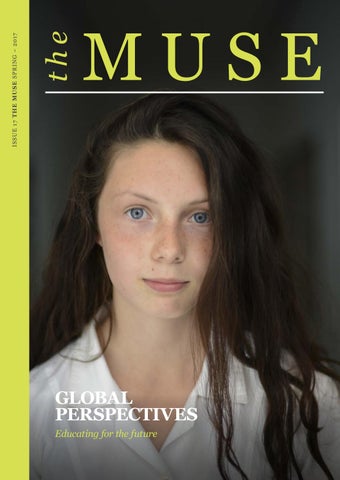
GLOBAL PERSPECTIVES Educating for the future
Visits & Voyages This list is by no means exhaustive, but offers a flavour of guests in and visits out during the Spring Term.
Visitors In Activity Morning with Bedford Prep School, Year 4
Junior School Curriculum Conversation, Teaching and Learning English
Apple Educators Visit, Whole School
Junior School Teatime Concert, Years 3-6
Careers Day, Year 9
Kindertransport Drama Production, Year 11 and Sixth Form
Celebration Assemblies, Junior School Curriculum Conversation, Modern Foreign Languages, Senior School Dance Workshop with Renhold Lower School, Year 4 Digital Parenting Workshop, Junior School Parents Egyptian Museum Exhibition, Year 3 Parents Energy Quest Day, Year 8 Evening of Dance, Whole School Evening of Speech and Drama, Whole School First Give, Lower Sixth French Students Visit, Year 9 French Theatre Workshop, Upper Sixth Google Virtual Reality Day, Years 3-6 Informal Lunchtime Concert, Senior School
Lion Dance Workshop, Year 6 Lunch Club Mathmagic Competition, Years 7 and 8 Open Morning PSHE Day, Positive Relationships, Year 9 Psychology Day, Year 9 Psychology and Dance Day, Lower Sixth Roman Morning, Year 7 Sigma Society Lecture, Sixth Form Spanish Culture Workshop, Years 5 and 6 Spanish Play, Years 8-10 Spring Chamber Concert The Association Burns Night The Association Quiz Night
Junior School Curriculum Conversation, Maths Calculation Methods
Voyages Out An Inspector Calls Theatre Trip, London Playhouse, Year 10 Bedfordshire Festival of Music, Speech and Drama
Mama Mia Theatre Trip, London, Senior School Maths Fest, Milton Keynes, Year 10
Big Bang Trip, Birmingham, Year 9
Red Shoes Theatre Trip, Milton Keynes, Years 10-Upper Sixth
Black Country Museum Trip, Dudley, Year 7
Science Live, Birmingham, Year 10
Bletchley Park Trip, Buckinghamshire, Year 7
Ski Trip, Italy, Years 7-Lower Sixth
British Museum Trip, London, Year 3
Charity Sleepout, Bedford, Lower Sixth
CCF Field Weekend, Norfolk
We Day Event, Wembley Arena, Year 10
CCF Royal Navy Trip, HMS Hindostan, Dartmouth Classics Trip, London, Upper Sixth French Roadshow, St Joseph’s Lower School, Year 11 Geography Field Trip, Bedfordshire, Lower Sixth Geography Trip, Iceland, Year 11 and Lower Sixth History, Art and French Trip, Paris, Years 9-11 Inter School Debate, Perse School, Cambridge, Sixth Form Linguistic and Cultural Trip, Paris, Sixth Form London Cultural Trip, Year 5
Editor’s Insight
I
always compare the role of a Head to being something of a futurologist. When I peel back the layers of running a school day to day and really focus on what the purpose of education is, I believe it comes down to one simple fact, we need to prepare students for a world we do not yet know, not the world of tomorrow but one of 30 to 40 years’ time. We need to make sure they move into the world with the skills and confidence to tackle the challenges ahead. The complication for us is trying to define what those challenges will be, where will technology and modern society take us in 40 years and how do we, sitting in the middle of Bedford, make sure that our girls are prepared to enter a global society with open minds and empathy. At Bedford Girls’ School we maintain this focus in all that we do, and believe that by providing a holistic, engaging and forward thinking education, we are setting the girls in good stead. As I reflect on the wealth of activities and learning that has taken place over the last term, it is clear to me that as a community we have been striving to achieve this aim. From the use of technology, to building creativity and independence we are providing our students with a relevant education. I want all of our girls to really understand and question the wider world, to consider their role in it and to have the confidence to challenge and change what they don’t see as fair and just. To this end it is important that we provide our students with a grounding in current affairs and politics. In this issue of the Muse, Mrs Lynda Sadler, Head of History and Politics, explains how we do this and the role that studying Politics plays in opening up interest in a wider society. It is equally important the girls learn about their ability to create real change. We encourage the girls to be involved in community and service activities throughout school, supporting organisations both home and overseas. One programme I feel passionately about is the opportunity opened to students in Year 10 and the Lower Sixth, called First Give. This unique programme offers students the chance
to work directly with local charities, to really start to understand the needs of the community in which we live and to pitch for funding to support the organisation of their choice. The learning opportunities throughout the process are incredible and the levels of commitment and professionalism the students show is truly impressive; in our feature Giving Forward we explore the advantages of participating in the programme. One element of the First Give programme is the chance to develop presentation skills. The ability to communicate clearly both orally and through the written word are key attributes which all of our girls need to master. Developing a love of English and the ability to use it well starts in Year 3 at the beginning of a BGS education and Mrs Howe, Head of the Junior School, describes how we achieve this in the feature entitled A Love of English. Creative Arts and Sport play a huge role in the delivery of our vision of a truly holistic education. Our first production under our new Director of Drama certainly inspired a group of our older students and we explore the challenges of staging Kindertransport on page 8. I also hope you have time to read our interview with Jane Axford, Director of Sport, as she outlines her department’s ethos and winning formula, which this year has resulted in our ranking as the third best girls’ school for sport in the UK.
“ At Bedford Girls’
School we maintain this focus in all that we do, and believe that by providing a holistic, engaging and forward
I do hope you enjoy these and the other articles in this edition of the Muse and it gives you once again a snapshot of life at BGS.
thinking education,
As I come back to the Summer Term my thoughts turn to the rigour of the external examinations in the Senior School. I wish all the girls in Year 11 and Upper Sixth the best of luck, and encourage them to be committed to their studies in the coming weeks – their hard work will pay off and they will achieve the results they deserve.
girls in good stead.
we are setting the
”
Jo MacKenzie Headmistress The Muse | 02
Inspired by
Paris Gone are the days when Paris was simply a short-haul destination for students to practise their language skills; the French capital is also a favourite place for schools to immerse their students in Art and History with a plethora of stunning art galleries and historical buildings.
P
aris was the destination of choice in the February half-term break for Years 9-11 Art and History students. Setting off on the last day of term, the girls had an action-packed three days ahead of them. Mrs Lugsden, Head of Art, explained: “Central to our teaching ethos is encouraging the girls to see how the world around them fits together; how art, history and culture are all intertwined. We don’t want them to think of art in isolation and in the same way, we want them to see how politics and society impact design and culture. Paris is such an iconic city and brings so many of these elements together. “To see world class paintings in real life, or to walk into historic palaces and imagine you were there when key world treaties were signed, is exciting and creates an emotional connection with their learning and inspires them to look at things in greater depth”. The trip has motivated Year 9 pupil Amelia Dwight to study Art and History for GCSE, after absorbing all Paris had to offer. 03 | The Muse
She commented: “I found the cultural experience very enriching, and I particularly enjoyed seeing the Mona Lisa. It is such a special piece of artwork.” Not only did the Mona Lisa leave a memorable impression on Amelia, but being able to share these experiences with fellow students made it extra special. She added: “Every day we visited more and more places and experienced new things. This is what I enjoyed most. I enjoyed meeting new people and making memories to last a lifetime. I made new friendships and had lots of fun and laughter. “This trip has made me want to pick both Art and History for GSCE and I am looking forward to future trips in both subjects.” The weekend started with a visit to the Palace of Versailles and Musée d’Orsay, which boasts masterpieces from Monet, Renoir and Van Gogh. Another inspirational day followed on the Sunday, as the world’s largest museum, the Louvre, was visited along with the famous Notre Dame Cathedral and Sacré-Coeur. A walk up Montmarte – a 130-metre-high hill – followed. Before heading home on the Monday, the girls toured the Musée de l’Orangerie – an art gallery dating back to 1852. The blend of museum and gallery visits, together with the architecture Paris offered, left a lasting impression on Maddie Mahoney (Year 10). She said: “Travelling to Paris to look at the history and art in the different museums and buildings throughout the city was inspirational. It was a great experience for everyone and we
made many amazing memories, such as taking the boat down the river to see the sights of Paris, including the Eiffel Tower lit up at night. “We also visited the Palace of Versailles and the Louvre to gain more of an understanding of some of the history and art we are studying. “It brought together elements of the Year 10 History curriculum such as Nazi Germany and the signing of the Treaty of Versailles, to life. We were also lucky enough to visit the Louvre where we saw one of the world’s most famous paintings, the Mona Lisa.“ Year 10 Art student Phoebe Williams agreed and found the trip particularly useful for her current studies, while also enjoying a long weekend of culture. Phoebe concluded: “Visiting several museums which were extremely useful to those taking GCSE Art, observing paintings and sculpture up close really helped me think about technique in my own work. “For me, walking up to the Sacré-Coeur was definitely another highlight of the trip – even though the walk to the top was long, it was worth it. Once inside the church we could have a better look at the stain glass windows, which was again giving us another perspective on art.” Mrs Cruse, Head of Year 9, concluded: “These trips help build key learning attributes, we want our students to look beyond the surface, to really appreciate a piece of art and to enjoy wandering around a historic building questioning what has gone on in the past. This process helps creates inquiring minds and ignites interests that will stay with them for life.”
OPENING DOORS A core element of Bedford Girls’ School’s ethos is to create an environment where the students develop a global perspective on the world, where they see themselves in relation to others and understand how they can have an impact on the wider world.
D
elivering this mission has always been intertwined into the curriculum and supported by the extensive trips and excursions the School offers, however, more recently the integration of iPad technology has opened up wider opportunities to welcome overseas visitors into the School, giving BGS the opportunities to build bridges with a wider global community. At the end of last year, BGS was awarded Apple Distinguished School (ADS) status, an honour only a handful of schools in the UK can lay claim to. The title is reserved for schools, who are invited by Apple to apply, that meet criteria for innovation, leadership and educational excellence, and demonstrate a clear vision of exemplary learning environments. An ADS is recognised for using five best practices that sustain technological implementation: Visionary Leadership, Innovative Learning and Teaching, Ongoing Professional Learning, Compelling Evidence of Success and Flexible Learning Environment. As part of the ADS, BGS has the opportunity to host international educator visits, where the School is able to share best practice around leading the way in education technology learning, and using Apple hardware, apps and content. Miss Jo MacKenzie, BGS Headmistress, explained: “The School’s decision to roll out iPad Minis to all students across the whole school in September 2014, underlines our commitment to preparing girls for the future in a globalised world. By sharing this vision, and our expertise, with educators from overseas, we are hopefully playing a small part in technology coming to the forefront of education worldwide.
“With the online learning market reportedly on track to reach $37.8bn internationally by 2020 - as a school we have to embrace the responsibility of adapting to an increasingly digitally-focused world. “Excitingly for BGS, it also allows our students and staff to meet and mix with overseas teachers. For the girls, it gives them a wonderful opportunity to build confidence, talking to international educators, whereas for teachers it is a great way to build global connections and future overseas collaboration. We also talk to the girls about how technology can bring a wider world to the classroom and these visits provide a significant link.” The first two-day event in January involved over 100 educators from Finland, Poland, Denmark and Greenland spending half a day in the School. The visits started with an introduction into our digital strategy from Miss MacKenzie, Mr James Potter, Director of Digital Strategy, and Ms Kit Davies, Digital Design Creator, with a focus on the School’s journey from the trialling of iPads to the full integration of them in to all aspects of the curriculum, highlighting how the devices enhances students’ IB Learner attributes. Following the presentations, educators went on learning walks, visiting a number of classes in the Junior and Senior Schools, where they examined how students are learning using the iPads, witnessing the plethora of ways that the devices can be integrated into the lessons. Mr Potter commented: “It was brilliant to be able to host so many educators from across Europe, and really open up their eyes to the influence iPads can have on learning. “Our visitors were really interested in how the teachers and girls were making use of the iPads
in the classroom, and were posing plenty of questions to both parties. “We visited a number of year groups in the Junior and Senior Schools and I was extremely impressed by how all of the girls interacted with our visitors so confidently. They made clear the multitude of benefits of learning with an iPad.” He added: “This first visit led to a separate political delegation from Denmark coming over in March, and recently enjoyed a FaceTime session with a group of teachers from Greenland. We are also partnering with Apple to host visits from UK schools in May. These are really exciting times for BGS.” Our European colleagues use iPads and other technology at their schools to varying degrees, and their visit to BGS, and other educational institutions in south east England, provided the teachers with plenty of food for thought. Mr Potter added: “As well as providing BGS with a platform to showcase the work we do with iPads, the two-day event allowed the visiting educators to learn how technology benefited our curriculum, and vice versa.” Miss MacKenzie concluded: “There are multiple benefits to the Apple Distinguished School status, with one of them being to collaborate with fellow educators. It adds a richer dimension to the school experience and one which I am sure all our students will benefit from. “I was extremely proud of how articulate and enthusiastic the girls were when meeting our international visitors, they were a credit to the School, demonstrating an intelligent understanding of the iPad’s uses.” The Muse | 04
A Love of English English is a unique discipline. On the one hand, the study of literature allows each individual to develop intellectually, emotionally, culturally and spiritually. While on the other, the acquisition of writing skills demands rigour, rules and procedure. The challenge for the Junior School is to find a balance between the two as they embed life-long English skills within their pupils.
M
rs Carolyn Howe, Head of the Junior School,
explained: “We have always placed great emphasis on
the girls’ English skills. English is a key skill
as it transcends every subject. It is essential that the girls receive excellent learning
opportunities to help them hone and perfect the three key areas of English: speaking and listening skills, reading and comprehension
and writing skills such as spelling, grammar and punctuation.
“The Junior School timetable allows for
one hour of English every day but in reality girls are refining their English skills all the time. The Enhanced Curriculum provides
wonderful contexts for the girls to explore
different genres of both reading and writing in great depth. We constantly review ways in which we can improve the girls learning
experience particularly by ensuring that we use quality texts as a stimulus, so that the girls are using the IB Learner attributes to
help them make sense of the material they read; attributes such as being reflective, open-minded and inquisitive all relate
05 | The Muse
particularly well to developing skills in reading and writing.”
She added: “It helps that we don’t have to work towards state school Key Stage Two Tests, which has forced the teaching of English to become very dry with pupils being drilled in specific terminology. We can teach these essential English skills through a curriculum based around developing a love of language, making links to the texts girls read and allowing them to investigate and apply their skills. We have the time to deliver the subject in-depth. This approach certainly works and every year we see over 80% of Year 6 girls exceeding national expectations in English.” This updated focus can be clearly demonstrated in the way in which the girls are now learning spelling, where the emphasis has been placed on pupils researching words and spelling patterns rather than blindly revising a set list they will soon forget after taking a weekly test. Mrs Howe said: “It has been extremely important for us to change our approach to spelling. Rather than being sent home
with lists to memorise, and then forget, next time they write a story, the girls now go and research and find other words that fit with a certain rule. That same week the girls will have a test on any words the teacher chooses, but are asked to apply that rule. “In the past the girls would memorise the words, do well in that week’s test, but then sometimes struggle to apply it to other words that had the same spelling pattern. We understand that girls and parents like to see 10/10 marks, but we feel that focusing purely on scoring well in a test isn’t as important as concentrating on the actual learning, and for the girls to identify where they’re improving. “We want to see the strength of our pupils spelling coming through in all their written work, not just in a weekly test.” At a time when iPads play such a central part in a Bedford Girls’ School education, and society in general, it could be presumed that handwriting skills wouldn’t be as highly valued, but that couldn’t be further from the truth in the Junior School, as the girls enjoy putting pen-to-paper just as much as they do using technology.
Mrs Howe explained: “The standards of
all subjects. Every piece of work, data or
higher than ever.
English. The girls are therefore applying their
handwriting within the Junior School are “Handwriting skills are practised
independently but are also honed in the
reflection on art work, features elements of
English skills in different contexts and we’ve seen writing standards really increase.”
Enhanced Curriculum books, where girls
In addition to their spelling and handwriting
Unit of Enquiry.”
improving at a rate of knots and this is in part
meticulously record their learning for each Mrs Pippa Woodhouse, English Co-ordinator
qualities, the girls’ grammar techniques are down to their Spanish lessons.
in the Junior School, commented: “With the
With much media coverage in recent years
constantly thinking about their presentation.
learning another language at an early age, Mrs
Enhanced Curriculum books, the girls are
They value and understand the importance of producing high quality work and they’re very proud of their books.
highlighting the psychological benefits of
Howe explained that part of the advantage of learning a modern foreign language is how it helps the girls with their English grammar.
“We talk to girls about presentation a lot.
She said: “In the last couple of years there
exclamation marks creeping into the girls’
improving the teaching and learning of
Last year in Year 6 we noticed some huge work, or an over-use of colour. We explained how this over-exuberant presentation
took away from the quality of their work. Handwriting and presentation have a
prominent place in the girls’ work and we
engage with the girls to get that balance of fluent handwriting along with high-quality content.
“Because of the depth of learning in the Units
of Enquiry we are finding great improvement in creative writing skills. The girls are completely immersed in a topic and therefore are able to extend their ideas with ease.”
has been a new emphasis, nationally, on grammar, and already girls know how to
spot different tenses. If they can pinpoint the
difference between a passive and active verb in English, they’ll be able to do the same in
another language. The learning of both English and Spanish in the Junior School really benefit one another.
“I was recently in a Year 6 Spanish class and the girls were learning passive and active
verbs, they were able to then articulate how
they would use the same principles in English; it is great that our teaching enables them to make those connections.”
Mrs Woodhouse added: “What has been really
Whilst traditional English qualities such as
books is that they encompass learning in
remain crucial to a girls’ education at BGS,
interesting about the Enhanced Curriculum
spelling, handwriting and grammar will always
technology is playing an important part in extending the educational experience, as it allows the students to study a whole range of media at their fingertips, and to explore more readily how the English language can be used in different ways. For example, Year 6 are currently examining content in different sections of the media, and needing to view video and newspapers online, making iPads essential Mrs Woodhouse concluded: “The iPads play a role in the girls’ learning. For instance, I downloaded an episode of Newsround onto the girls’ iPads, they were watching the programme and discussing how the news was portrayed, comparing to how news was reported in tabloid and broadsheet newspapers, as well as analysing the content and features. “The girls could view all of this material at their own pace because the iPads allowed them to go back, and watch the video and read a certain newspaper as many times as they wanted to in the lesson. The iPads have changed the whole dynamic of the lesson, moving this exercise from being a traditional memory task to a reflective discussion-led activity.” Whichever teaching tool the Junior School teachers employ, they are constantly striving to ensure that they are providing a rigorous and engaging English curriculum, building the roots of learning and nurturing the IB Learner attributes, so the girls move through into the
Senior School with strong English strategies.
The Muse | 06
MATHEMATICS IS EVERYWHERE At a time when women are still under-represented in many STEM related careers, the Mathematics Department concentrate on building confidence through a broad and engaging Senior School Curriculum, to equip students with the necessary skills to approach future careers.
M
r Adolph Palmer, Head of Mathematics, explained: “The whole idea of ‘Mathematics is in everything’ is something we try to instil. We want the girls to understand how Maths skills are a vital part of life, and as a result have the confidence and technical skills to tackle any challenge. “It’s partly down to getting the girls’ psyche to change. We want to change mindsets, and help them understand that the skills they master in the classroom can be utilised at different stages of their lives.” Mr Palmer continued: “For example, we recently earmarked 10 girls in Year 11 and investigated a series of careers with them, which at first glance didn’t appear anything to do with Mathematics. We asked the girls to come back to us and tell us where Mathematics applies in careers linked to Music and Literature - when they reported back they had found Maths was relevant. “I then asked a different group to look at the 10 highest earning professions and to see if there was Maths in those jobs. They found, apart from professional sport, that actual science is the highest paid profession in the world, followed by many maths-related careers. “Whether or not they choose a career with a direct link to Maths, the girls will find Maths plays a part in every career path. Mathematic skills are so important to master.” The Junior School embeds strong mathematical principles and as the girls move into the Senior School these are built upon by Mr Palmer’s team. Adopting the IGCSE curriculum, girls in Years
07 | The Muse
7-9 are taught topics including algebra, data handling and number work before undertaking coursework, oral, practical assessments and external examinations in Year 11. The Mathematics Department employ a number of different strategies to make sure they are reinforcing learning, and moving the girls forward at the right pace for each individual. Mr Palmer added: “The girls fill in feedback sheets during each module, where they can comment on how difficult tasks were and what aspects of learning and teaching they find useful. It means we can continually improve our teaching whilst the girls are having a say in their own learning. By understanding where each student is at, we are able to individualise their learning and build confidence. “In addition, we integrate fun problem-solving activities in the classroom, whether that is through a fast quiz on the iPads or a more detailed paper. These allow the class to share answers, and engage in discussions. We don’t want Maths to be seen as a solitary subject, being able to articulate what you know, or what you don’t understand, is a big step in building confidence and demonstrating that you are not the only one who may be struggling with a particular concept.” This approach continues into the Sixth Form where many girls choose to study Mathematics or Further Mathematics at A Level, or to follow one of three courses as part of their IB Diploma. “We provide reflection sheets for IB students, enabling teachers and girls to reflect what they’ve done well and where they can improve.
“As well as group-based activities in the IB, we’re trying to get both A Level and IB students to complete more independent work that develops their resilience. We’re finding that more and more girls are coming out of their shells, they’re more confident in sharing their ideas. ” He continued: “The girls are increasingly believing in themselves. They’re starting to see more and more alumnae entering the STEM industry and this is inspiring them.” Mr Palmer and his team have also found another way of improving the girls’ Maths skills and sparking their interest in the subject, through co-curricular activities. Maths sessions include weekly drop-in workshops, the Pythagoreans’ Society and Sigma Society, which gives girls access to workshops and lectures from leading mathematicians as well as careers sessions from alumnae. Mr Palmer added: “The biggest impact on our results last year was the ability to have extra sessions with the girls. “In these intervention sessions, girls who hadn’t necessarily pick up on certain things in lessons, found they’re learning more in this individualised setting, as it’s more open. Everything is a positive learning experience and the girls feel empowered as they have chosen to come to these sessions and are therefore taking ownership of their learning.” Mr Palmer concluded: “Our role as Mathematics teachers is to instil confidence, understanding and technical competency. The more individualised and engaging we can make this, the better our results will be, as the student will learn to love Maths. If we can achieve that our students will flourish in the wider world.”
TRANSPORTED THROUGH DRAMA
“ Ask a child if they would prefer to be sent away to safety if their family is in mortal danger,
and he or she will, in most cases, say that they’d rather stay and die with their parents. Ask a parent what they would do in the same situation and most would say that they’d send away their child to be safe. To be a parent is to live with this hidden contradiction.
”
Diane Samuels, 2008
I
n the Spring Term, Year 11 and Sixth Form Drama students produced an intense performance of Diane Samuels’ play Kindertransport, which explores the life of the Kinder escaping Nazi Germany on the trains to England, just before the outbreak of World War Two and with the promise that their families would join them soon. Sheltered from the harsh reality of war, which would result in most Kinder never being reunited with their families, over time many created new lives for themselves with their British foster families. Samuels’ play focuses on the impact of this tragic separation, as seen through the eyes of nine year-old Eva and the chilling figure of the Ratcatcher who is drawn from the legend of the Pied Piper of Hamelin. Past and present intertwine in the play moving back and forth through 1938, 1945 and the 1980s. It is only when Eva’s own daughter, Faith, is sorting out the attic and she stumbles across letters and photographs that her mother’s past identity comes to light. Mrs Catherine Howe, Director of Drama and Dance, explained why she chose this as her first Bedford Girls’ School production: “Kindertransport is a beautifully structured piece of drama which addresses universal issues in an incredibly moving and sophisticated manner. Importantly, although the cast is small, it has a wonderful range of strong female characters who provide real challenge for young actors.” The subject matter and the themes within the production meant that the performers spent time researching and investigating the history of the Holocaust and the stories of the children who came to Britain on the Kindertransports, in order to bring authenticity and depth to the performance. Time was spent studying photographic images and film from the period as well as reading testimonies. The cast were tasked with putting themselves firmly into the shoes of the characters, not only the experience of being a Jewish child in 1938, but also accessing their own understanding of the mother-daughter relationship which forms the basis of the play.
Mrs Howe added: “I was confident that my Senior School cast would have the intellect to cope with the content of the play, but they also had to develop resilience and discipline to deal with staging a production where all the action, which is continuous and spans three time zones and two countries, takes place in one room with most of the cast on stage for the entire length of the performance. The play also requires a high level of concentration to cope with the incredible number of props involved, which need to be in the right place at the right time and handled with assurance.” Equally as impressive was those girls who had to learn how to understand and deliver their lines in German. These actors collaborated with the German Department who recorded the lines so the cast could practise them independently as well as offering one on one sessions to help the actors improve their pronunciation and comprehension. Mrs Howe commented: “To perform in a new language, as some of the cast had not studied German before, was a really big ask but again cast members rose to the challenge and perfected the lines, delivering strong emotional performances.” A large part of the early rehearsal process was also dedicated to improvisation to explore the purpose and identity of the menacing Ratcatcher whose haunting presence is felt throughout the production. The cast were pushed to move out of traditional comfort zones and explore new forms of expression. She said: “It was incredibly interesting to watch the cast develop as performers. As expected, they grasped the content of the piece very quickly, relating it to their own awareness and understanding of the current humanitarian crisis, but found it harder to adapt to the abstract physicality of the play. Learning to let go and embrace the physical theatre took time but as the piece came together the girls gained confidence, developed new perspectives and took greater creative risks.”
Mrs Howe continued: “Kindertransport addresses deeply tragic themes in a Brechtian style of theatre. This requires young actors to understand that to create the greatest impact, they need to find light and humour in the darkness. This demand of the text helped the performers really grow their ability to analyse the dialogue and subtext of the script in order to draw out the nuances and also their acting by learning to deliver the lines and action with dynamism and careful timing.” She concluded: “I recognise that Diane Samuels’ play was rather a departure for a BGS school production but I am pleased that we took the leap of faith to undertake such an intense piece of drama. Great theatre should transport you to a different world and space, and I believe that Kindertransport did this. The audience response was fantastic, with many spectators reflecting on the committed and mature performances delivered by the actors, which powerfully communicated the themes of the play. This is just the start for BGS Drama and I can’t wait to see what we can achieve once the refurbishment of the Drama Department has been completed.” The Muse | 08
POLITICA L ENGAGEMEN T In a time of great political instability and change, Bedford Girls’ School believes that teaching Politics is even more relevant to ensure that our students understand and, more importantly, are engaged in major current affairs and global issues.
T
he debate about the inclusion of Politics has long been discussed in the education sector and the media, as the discussion around how do we encourage young people to take an interest in both local and global issues continues. Official voting rates for the Brexit referendum indicate that the lowest level of voting was at 64% from young people aged 18-24 (compared to over 90% in the 65+ age group), emphasising the importance of creating a society where young people actively participate in the political process. This was much higher than the average 36% voting pattern for 18-24 year olds in recent elections. Mrs Lynda Sadler, Head of History and Politics at BGS, explained: “It is vital that young people are educated to see the importance of being engaged in the political process. When they leave school they are of voting age and at the absolute minimum they need to have a good understanding of the basis of democracy and an understanding of the political system, both in the UK and those used by major world powers. “If we want our young people to have a view, we need to introduce them to the concepts without bias so that they are aware of global issues. We don’t want them growing up in a bubble, we want them to be questioning and inquiring about issues that are surrounding them and which will impact their future. It is the role of education to help spark this interest.” Throughout the Junior School and in Years 7 and 8 the girls are introduced to political concepts and current affairs through the broader curriculum, intertwined with many subjects through the Units of Enquiry in the Junior School and the DRIVEN curriculum in the Senior School. For example, in the Year 09 | The Muse
8 History curriculum, students study the struggles of British women to gain the vote, including the role of the suffragettes, and within this subject the girls will study the role of women in politics and the impact of women getting the vote.
Both Geography, and Philosophy and
Once the pupils enter Year 9, they all study Political Science as a stand-alone subject. The subject focuses on embedding an understanding of the political systems and the political parties in the UK and what each one stands for. The girls then compare the UK political system with other systems around the world.
Mrs Sadler added: “The cross-curriculum
Mrs Sadler continued: “Providing a grounding in Year 9 in political systems and processes is vital for the girls to start to engage in political discussions in a meaningful manner. We want them to have an unbiased view of the UK political landscape so that they can start to express their views.
political event we try to run our own voting
“We spend Year 9 looking at process and current affairs, enabling the girls to debate these issues in a safe non-judgemental environment where all views are listened to.
Religion raise many issues which are
impacted by both global and local political issues, and an understanding of European political issues helps the girls with the
studying of Modern Foreign Languages. nature of study at BGS really helps the girls understand how political decision making affects all aspects of life, from scientific
research to the rise of an artistic movement. “As a result of this broader understanding
we find that the level of political engagement in the School is impressive. For each major and polling process, not only encouraging
the girls to be engaged in the issues at hand, but also to experience in some way the
process of going out and voting, as we set up booths and keep the process as close to the real world as possible.
“Our turnout rates are exceptionally high, with some year groups recording as high as over
90%, although our recent results in both our mock EU Referendum and US Presidential Elections were not in line with the public’s
“ We don’t fear the future.
We shape it, embrace it - as one people, stronger together
”
than we are on our own. Barack Obama, 2017
“Not only does this teach them about current affairs but it also helps them to develop key learner attributes of critical thinking and
communication skills, giving them confidence to express their views in a number of different forums, not just in the classroom.”
Issues discussed in Politics classes are then reinforced across all subjects in the GCSE
curriculum. For example, in GCSE History, the study of the rise of Nazi Germany and Stalin helps to put modern politics into context,
as well as enabling the girls to understand
different political systems and how political
ideology can spread and develop so quickly, whilst also looking at how poor political
decision making can lead to catastrophic consequences.
decisions.”
As the students move through the Senior School and into Sixth Form, the opportunities to study Politics both in and outside of the curriculum increase, not only with the option of taking A Level Politics, but also through the Political Society, the Debating Club, competing in the European Youth Parliament and being part of the English Speaking Union discussion competitions, as well as both national and international trips to visit key political institutions. The School has an active programme of speakers who come in to discuss political issues, and maintains close working relationships with local MPs who often come to talk to the girls about current affairs. Furthermore, the students have the opportunity to apply to represent the school on the Bedfordshire Youth Parliament, which involves candidates writing manifestos and canvasing for votes. The use of iPads allows the girls to extend their knowledge of political affairs, with the access to capture information and views in real time. The History and Politics Twitter feed (@BGS_HistoryPol) is also a great tool to
help the girls become more aware of relevant articles, whilst the History and Politics Blog allows the girls to articulate their views to a wider audience.
in political debates throughout the IB
Mrs Sadler said: “The use of iPads and social media has really helped to create a deeper level of engagement and enabled us to deliver more interactive lessons, as we are able to research up to the minute information and analysis. In an age of “fake news” the girls are learning critical skills of how to determine good source material against potentially corrupted information. The collaborative approach to studying Politics is really enhanced by the iPads as students are able to research and share information in Google Drive, increasing the range of articles and viewpoints.”
BGS with the students who are looking to
that they have the ability to research, discuss
Level syllabus will include a study of political
A testament to the importance our students
In the Sixth Form the girls have the choice of studying A Level Politics or engaging
curriculum.
Mrs Sadler explained the different
“The different options appeal to different girls but both provide a wonderful grounding for those wishing to study related degrees at
approaches: “A Level Politics is popular at
university and those who wish to demonstrate
explore the topic more deeply. The new A
and analyse a point of view.”
ideology; an in-depth analysis of US versus
UK political systems and a study of political leaders.”
“Alternatively, with the IB, although it is not
taught as a separate subject, the IB History course focuses on 20th century History,
looking at different political leaderships and
place on Politics can be seen in the number of Upper Sixth students who choose to study the discipline at university. Last year for instance, 12 students went on to study Politics or International Relations, often combining it with a language or History.
how that impacts on international relations.
This is a trend the School sees year on year
Knowledge (ToK) ensures that all IB students
properly engaged in the world around them,
debates.”
make a difference.
Meanwhile, the study of the Theory of
as we ensure that our graduates leave school
become involved in ethical and political
and ready to use their voices and skills to
The Muse | 10
Giving Forward Central to the School’s ambitions is to create within each student a sense of social responsibility. We want our students to believe that they have the skills and the intellect to change the world around them, and as such we are committed to providing them with opportunities to use their voices for good throughout their school life.
I
n pursuit of this aim Bedford Girls’ School has partnered with a nonprofit organisation called First Give who share this vision. First Give run an innovative programme which provides the opportunity for students to create real change in their own communities whilst providing them with an understanding of the importance of philanthropic giving, by linking students with local charities and pitching for funding. 11 | The Muse
Miss Heather Dawson, Charities Co-ordinator, explained: “As a school our girls are involved in community activities and fundraising from Year 3. We are continually encouraging them to understand the importance of supporting the wider world and taking action to create positive change. As the girls progress through to the Senior School their level of involvement increases and we encourage the projects to be student–led so that they start to take more independent responsibility for the programmes. “We believe that working independently on community and charity programmes helps the girls build a stronger social conscience as they become involved with causes to which they have an emotional affinity.”
£1,000 to help fund a project for their chosen organisation. The students are tasked with researching an organisation and carrying out due diligence on it to ensure they work with reputable charities. They are then expected to make contact with the organisation and meet with representatives who run the projects. This link is vital as it enables the girls to develop a deeper level of understanding about problems the charity is trying to address, the role of the charity in providing a solution and to learn about specific projects which would benefit from the funding.
In Year 9 the girls work tirelessly to support Educate Girls India, gaining a vital insight into pressing global issues as well as teaching them independent organisational skills. The focus in Year 10 turns to supporting local communities and gaining an understanding that at “home” there are still important causes which need considerable support.
The groups then have to develop presentations and a pitch for the funding. This involves them working in their teams to structure their arguments, balancing their pitches to engage both the “hearts and the heads” of the potential funders in the hope of securing the £1,000. In addition, they need to include a 60-90 second video, helping the girls to push to new levels of creativity and demonstrating their iPad technology skills to the full.
Through the First Give initiative Year 10 and current Lower Sixth students work in groups to select local Bedfordshire charities for which they have the chance of “winning” up to
The project is run over a term and the students work independently both in form time and their own time. The girls are given advice on their presentation skills techniques,
how to fine tune objectives and the structure for their pitches but other than that they are left to manage the project. First round pitches take place over a series of lunchtimes and are judged internally from which a shortlist of teams are invited to take part in the Finals. A panel of judges, with representatives from the Harpur Trust, the local community, First Give, Miss MacKenzie and a GLG member, listen to the finalists, and at the end of the evening one group is awarded £1,000 whilst two runner-up groups gain £250 for their charities. Parents and representatives from the organisations are invited to watch. The night is very tense, all the presentations are carefully crafted, with beautiful video and visual work incorporated into their pitches. The girls are well rehearsed and guests are always impressed by the professionalism of the students and the support they show to their wider cohort on “opposing teams”. Miss Dawson added: “The initiative works brilliantly on many levels. Not only does this provide the girls with experience of working with charities, developing a deeper understanding of social issues and an insight into the complexity of running a non-profit organisation, but it also helps develop many learner attributes and transferable skills.
as CHUMS and Mind to small organisations tackling very specific needs within the Bedfordshire communities, including Bedford and District Cerebral Palsy Society as well as Autism Bedfordshire. Miss Dawson commented: “The range of charities is really interesting and reflects the diverse interests of our students. “We often find that the girls work with an organisation where they or their families have a connection. This demonstrates a level of reflection and maturity as they want to give back to organisations who have helped them and their families, and are willing to share their very personal stories.
“ It is incredibly satisfying to see that the girls are
connecting with the idea of philanthropy at such a young age, understanding that it is not about giving back when you are older but about giving forward and creating a better,
”
fairer society now.
“The whole process replicates many scenarios the girls will face in the working world, from working in teams towards tight deadlines, co-ordinating with partner organisations and developing persuasive presentations. The teams also use their knowledge of technology to create emotive videos, encouraging creativity and storytelling.”
“This passion and personal connection brings out a strong voice in some of our more introverted students, which is incredibly rewarding to see and does wonders for their self-confidence.
Over the past three years the range of organisations which the girls have chosen to support has been extremely wide ranging, from local branches of national charities such
“Often the girls are selecting organisations who have not traditionally had a connection to the School and we are able to build longer term links with some outstanding charities.
“For example, CHUMS has become this year’s student elected school charity and we have now built stronger links with The King’s Arms charity, supporting homeless women; which recently resulted in the Lower Sixth Sleep-out in support of homeless women. “Again, this illustrates to the students that they do have a voice in our community and that they can influence decisions in the School and drive change.” Miss Dawson also explained that it was through discussing the impact of the project with current Upper Sixth students, that the School made the decision to run the programme in Year 10 and phase it out in the Lower Sixth. The current Upper Sixth girls wished the First Give initiative to be introduced to students lower down the School, as they would be in a position to spend more time with those specific charities as well as gaining the confidence to support other causes and be bolder in expressing their views. Year 10 embraced the programme this year and it was hugely successful, proving the Upper Sixth’s instincts right. The Lower Sixth will continue to have the opportunity to take part next year and then a new programme will be introduced into the Sixth Form to build upon the First Give experience. Miss Dawson concluded: “It is incredibly satisfying to see that the girls are connecting with the idea of philanthropy at such a young age, understanding that it is not about giving back when you are older but about giving forward and creating a better, fairer society now. “When the girls get up to represent their charities, I feel such a sense of hope and pride. I know that many of the lessons they take from First Give will stay with them for life and that make it all worthwhile.”
The Muse | 12
SPORTING SUCCESS Bedford Girls’ School Sports Department continues to go from strength to strength, with the School Sport Magazine ranking BGS as the third best all girls’ independent school for sport in 2016. The list reflects competitive achievement in a range of disciplines throughout last year and honours those schools that take competitions especially seriously. The Muse sits down with BGS’ Director of Sport, Mrs Jane Axford, and find out about the secrets of her department’s success. BGS finished 11th on the list of all coeducational and single sex independent schools, having risen 11 places from 22nd in 2015. Only two all girls’ schools, Guildford High School and Wycombe Abbey School,
Key to BGS’ Sporting philosophy is an
average Autumn Term, for example, over 40
open-door policy to all students, whether
different teams will be competing in half a
that would be an elite-level athlete or a girl
dozen different sports each week, in addition
playing for the Netball D team, and this is
to offering 80 to 100 coaching sessions.
why Mrs Axford believes it necessary – no matter the logistical challenges it presents – for such an extensive programme. “It is wonderful that we have so many girls who are keen to play sport and to be part of teams, and our main challenge as a department is to ensure that we provide a huge range of opportunities,” said Mrs
“We offer a huge range of sports and our aim is to perform at an outstanding level in each discipline; this puts pressure on timetables and scheduling. As a school our students are encouraged to pursue a wide range of interests so working out schedules whilst also being mindful of music, theatre and community commitments is also a challenge, but it’s one that we are always trying to get right.”
finished above BGS in the list.
Axford.
This achievement should not be
“We take great pride in seeing so many girls
underestimated, however, as the Sports
wanting to play sports and we’re committed
Department caters for a range of teams
to offering a great depth of disciplines,
across a number of different sports.
meaning girls are able to find one they’re
Teams have qualified for regional or national
passionate about, and no one misses out.
finals in our major sports every year since the
A team of over 20 expert teaching and
As the Sports Department has grown in the last six and half years, success across the board has been constant.
School’s inception.
coaching staff, many of them international
“We need to offer a mixture of both
athletes themselves, deliver up to 500
challenging competitions but also
Noticeable achievements range from girls
coaching sessions a term and 1,500 fixtures
introductory level matches too so that all the
winning national rowing, lacrosse and
a year.
girls have the opportunity to take part. In an
hockey titles with England and Great
13 | The Muse
Britain age group sides, to the U13 BGS
students to try a wide range of sports, until
“We want our girls to leave school with the
team winning national lacrosse and hockey
they find the right fit, and then through
understanding that participation in sport
titles last season.
dedicated application and good teaching
and being active is central to a balanced
International talent includes alumnae
all of our students can thrive. Observing
Rebecca Murray running for the U23 Great
individual improvement and seeing a
Britain cross country team and Robyn
growth in self-confidence is fundamental to
Armstrong and Lottie Bruce representing
how I measure success.
Great Britain at rowing, while Kate Axford (Upper Sixth) currently plays hockey and lacrosse for England U18 Girls, with fellow Sixth Former Katie Parrish representing Wales U18s. Furthermore, Victoria Caldwell, who graduated in summer 2015, plied her trade for the Independent Schools Football Association U18 Girls team for two years. Whilst Mrs Axford is rightly proud of her team’s hard work relating into titles, she recognises the role of developing the girls holistically is just as important. BGS’ Director of Sport added: “It is always extremely rewarding to win championships
“An equally important measure of success is how the girls react when they don’t win, how they reflect on their performance, and the strength of character they show both in and out of the sporting arena when things don’t go their own way. Teaching the girls to be resilient, to get back up and to try again are key elements of what we aim to achieve.”
however success is much more about every
game at a highly competitive level or using our fitness suite.” When asked what her overall mission is as Director of Sport, Mrs Axford cites the importance of the International Baccalaureate attributes a BGS curriculum aims to give the girls. She concluded: “As a Sports Department we strive to provide an outstanding sporting ensure that each girl has the opportunity to
onwards, girls are able to thrive in a single
flourish.
sex environment, free from the pressures of worrying about their image in front of boys. In addition, all sports are treated equally, as come into play.
the girls in reaching these high aspirations,
engaged, whether that is playing a team
education for all our students and to
for sports. Every year we have girls selected
excellent teachers and coaches to support
the age of 14. It is vital we keep students
are becoming inactive from the age of 14
traditional male sports such as rugby don’t
inspiring, and we recognise it is vital to have
that two thirds of girls drop out of sport by
At a time when more and more children
and to be ranked in the top five girls’ schools for national squads, which is wonderfully
lifestyle, with national statistics showing
Mrs Axford commented: “A big advantage of an all-girls education is the fact that we can focus on developing girls through sport without having to compromise to fit in with
“A Bedford Girls’ School education is underpinned by the International Baccalaureate philosophy, with a focus on developing key learner attributes in all of our students. “Sport plays a vital role in helping achieve these, developing key skills such as risktaking and resilience; being open-minded, caring and principled as well as developing the ability to self-reflect. Our aim is not only
girl achieving not just the elite.
a boys sporting programme.
“I truly believe that there is no such thing
“In this supportive environment all girls can
these attributes in all of our students.”
truly develop and enjoy their sport, because
As the School looks to continually grow,
as an “non-sporty child”. For me, success is
to excel on the sports field but to embed
much more about connecting with each of
so many girls participate in sport we are
our students at an individual level. It is the
able to run teams of all abilities, enabling
right formula both on and off the pitch to
role of the Sports Department to enable our
each girl to improve.
help that happen.
Mrs Axford and her team appear to have the
The Muse | 14
Legend in their Lifetime
Philippa Hooley Business and Economics
MILLICENT FAWCETT 1847-1929 property in the same way as unmarried women. The law was further improved in 1883 and it was a highly significant landmark in the growing call for more rights for women.
B
ill Gates recalls once being invited to speak in Saudi Arabia and finding himself facing a segregated audience. Seated to his left, four-fifths of the listeners were men. The remaining one-fifth, seated on the right, were women, all covered in black cloaks and veils. A partition separated the two groups. Towards the end, in the questionand-answer session, a member of the audience noted that Saudi Arabia aimed to be one of the Top 10 countries in the world in technology by 2010 and asked if that was realistic. “Well, if you’re not fully utilizing half the talent in the country,” Gates said, referencing the women in the audience, “you’re not going to get too close to the Top 10.” (New York Times)
Millicent Fawcett was born into a society at a time when education for women was severely limited. Women very rarely ventured onto the public platform to speak out on politics or economics and in the eyes of the law, women and all their belongings were seen as a chattel, or property, of their husband once they married.
This is something that we, as modern women living in a westernised country, take for granted. The right to be heard, the right to speak out, to vote, to have our own jobs for which we are paid and to own our own property regardless of our marital status. We know we make a significant contribution towards the economic growth, prosperity and stability of our country. But it is also vital that we don’t take these opportunities for granted. In order for us not to take any of this for granted, we must recognise how considerably society has changed over time and remember those individuals who worked so hard to pursue that change. It will perhaps help us, through charities such as Educate Girls, to support women in countries such as India, Saudi Arabia, Afghanistan and Pakistan to develop their own voice in politics, economics and education.
for women in 1928.
“ She was able to see the fruition of her life’s work shortly before her death in 1929, when Parliament equalised votes
”
When Fawcett had her purse snatched by a boy in London, in court he was charged with stealing a purse “which was the property of Henry Fawcett” (Millicent Fawcett’s husband). Fawcett herself declared that with such language used, she felt it was she that had stolen the purse in the first place. Fawcett, along with other women, created ‘A Married Women’s Property Committee’, to campaign for a change in the law to allow women to retain their own property after marriage, thus protecting vulnerable women. In 1882, their campaign succeeded in changing the law so married women were recognised as being able to own their own
Fawcett was a feminist before the term was coined, she felt there should be no divide in the provision of education for women and was instrumental in founding Newnham College, Cambridge. She had a constitutional, rather than militant, approach to suffrage, encouraging a peaceful strategy compared to the more confrontational Pankhurst. She took leadership of the London National Societies for Women’s suffrage and spoke out publicly to support rights for women at a time when women were rarely heard on such issues. She continued to lobby the government to encourage votes for women, specifically writing about the importance of women’s roles in society and how women’s domestic interests directly impact on the country as a whole. She was able to see the fruition of her life’s work shortly before her death in 1929, when Parliament equalised votes for women in 1928. Fawcett is further set apart from her peers by her interests in women’s rights on an international scale and in particular, focused on countries where women had even fewer rights than they had in England. Her husband’s work brought her attention to the plight of women and girls in India. She campaigned to stop child marriage in the country, to combat child abuse and address issues of slavery. She was also particularly active in founding a relief fund in South Africa for women and children suffering as a result of the Boer War, and visited the country to report back on the conditions in which individuals were being held. Millicent Fawcett was an incredibly forward-thinking, compassionate and pro-active individual in a time when women were seen as property to be owned by their husbands, rather than people with voices in their own rights. For us, universal suffrage may feel historical, but it only occurred 89 years ago – not even a lifetime for many. If we can make such changes, with the help of individuals such as Millicent Fawcett, in such a short time, there is hope for countries who are still ignoring half of their population.