the
ISSUE 16 THE MUSE AUTUMN ~ 2016
MUSE
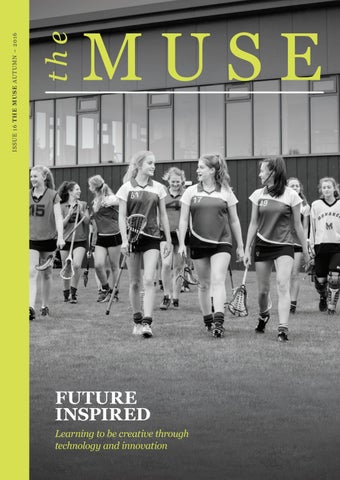
FUTURE INSPIRED Learning to be creative through technology and innovation
Visits & Voyages This list is by no means exhaustive, but offers a flavour of guests in and visits out during the Autumn Term.
Visitors In Art and Design Careers Evening, Years 10 - Upper Sixth The Association Christmas Fayre
Learn to Earn Careers Day, Year 8 Lunch Club
Senior School Lunchtime Informal Music Concert, Years 7 - Upper Sixth Sixth Form Open Evening, Year 11 and potential new students
The Association Jazz on the Lawn
MK Prep and Broughton Manor School Activity Morning, Year 5
BBC Children in Need Bake Sale, Years 3 - 6
Open Morning, Whole School
Sweeney Todd Production with Bedford School, The Quarry Theatre, Sixth Form
Christmas Pantomime, Staff and Sixth Form
Performance of Chelsea’s Choice, Year 9
World War II Tea Party, Year 5
Christmas Production Performance of What Christmas Means to Me, Year 3, staff and pupils from Caldecote Lower School and Polam School
Pilgrims Preparatory School Activity Afternoon Polam and Orchard Schools Activity Afternoon
DAHSA Reunion, Alumnae
Presbyterian Ladies College, Western Australia, Student Exchange, Year 10
Educate Girls Red Ribbon Day, Year 9
PSHE Careers Day, Year 9
English Forever Week, Years 7 - Upper Sixth
Puzzle Day, Bedford Prep School, Year 5
European Day of Languages, Years 7 - Upper Sixth
Richard Fuller MP Talk, Year 9 and Sixth Form
First Give Competition, Year 10
Rowing Picnic, Harpur Trust Boathouse, Year 7 - Upper Sixth
Holocaust Workshop, Years 10 and 11 House Drama Competition, Year 7 and Lower Sixth
RSC Top of the Bench Chemistry Competition, Bedford School, Years 9 - 11
House Glee Competition, Whole School
Senior Maths Challenge, Lower Sixth
Junior School Book Fair, Years 3 - 6
Senior School Christmas Concert, Years 7 - Upper Sixth
Junior School Christmas Concert, Years 3 - 6 Junior School Teatime Music Concert, Years 3 - 6
Voyages Out Advent Service, St Paul’s Church, Bedford, Senior School Bel Canto Choir Art Trip, Tate Modern Art Gallery, London, Year 11 Berlin Trip, Germany, Years 10 - Upper Sixth Bletchley Park Trip, Bletchley, Year 5 British Museum Trip, London, Years 9 - Upper Sixth Cadbury’s World Trip, Birmingham, Year 5 Carol Service, St Paul’s Church, Bedford, Years 3 - 6 Carol Service, St Paul’s Church, Bedford, Years 7 - Upper Sixth
Circus Workshop, Bedford Prep School, Year 6 Cranedale Geography Trip, Yorkshire, Lower Sixth Drama Theatre Trip, National Theatre, Year 11 and Lower Sixth The Duke of Edinburgh’s Award Bronze Expedition Training Day, Cople Fields, Bedfordshire, Years 9 and 10 Edale Trip, Derbyshire, Year 10 Educate Girls Sponsored Walk, Bedfordshire, Year 9 GCSE Ethics Trip, Oxford, Year 11
Computer Club Trip, London, Years 8 - Upper Sixth Love Through the Ages Conference, London, Sixth Form Maths Trip, Warwick University, Sixth Form Netball Tour, Condover Hall, Shropshire, Year 8 NLCS Hispanic Theatre Festival with Bedford School, London, Lower Sixth Opera Trip, Theatre MK, Senior School Recording Bedford Art Trip, Bedford, Year 10 Sri Lanka Trip, Year 11 - Upper Sixth
Georgia O’Keefe Exhibition, London, Years 10 - Upper Sixth
Thinktank Museum Trip, Birmingham, Year 6
CCF Adventure Training, Isle of Wight, Year 11
Christmas Market Trip, Cologne, Germany, Years 7 and 8
University of Buckingham Trip, Buckingham, Sixth Form
CCF CADSAAM, Beckingham, Year 11
Girls Go Gold Conference, Newcastle, Year 11
Valencia Trip, Spain, Year 9
CCF Junior Leadership Course, RAF Wittering, Year 11
Higgins Museum Trip, Bedford, Year 3
Winter Wonderland Trip, Hyde Park, London, Year 11 and Lower Sixth
Castleton Trip, Derbyshire, Year 9
CCF Mountain Challenge, Snowdonia, Year 11 and Upper Sixth Chemistry in Action Trip, UCL, London, Lower Sixth Christian Youth Theatre Trip, London, Years 9 - Upper Sixth
History Conference, Imperial College, London, Sixth Form House Swimathon, Whole School, Bedford School IB Art in Action Trip, Royal Academy of Arts, London, Sixth Form BBQ with Bedford School, Lower Sixth
Editor’s Insight
C
reativity is a skill which employers are constantly telling us they are looking for in graduates. The ability to think and act creatively, to find solutions to complex problems, is an attribute which we aim to nurture in every pupil. Creativity can be demonstrated in so many different ways. Through our experience of embedding iPad technology into our classroom, I have seen just how many avenues pupils have to express themselves, and how teaching can be transformed. I am extremely proud that Bedford Girls’ School has just been awarded the Apple Distinguished School accolade, for the way in which we lead the field in our use of Apple technology. As part of our role as an Apple Distinguished School, we will be welcoming leading educators from both the UK and overseas to come to Bedford Girls’ School to learn from our programmes, putting BGS firmly on the map as a forward thinking future inspired school. Please read more about the journey we have been through in our article Technologically Distinguished. As educators we often observe that as the girls go into adolescence they lose confidence in their creative risk-taking skills, they tend to become more introverted in the fog of puberty and are more self-conscious. We need to help them through this, remind them that failure is an important part of success, helping them to sustain a growth mindset, and to maintain their ability to be independent thinkers. We don’t want them to lose faith in their creative thinking skills, in fact we want to push them forward. To this end we have launched a new joint initiative in Year 9 with the Psychology Department asking each girl to work on an extended research project, where they are asked to identify an area of independent study, conduct the research and present the findings in any way they desire. The climax of the project will be an exhibition of ideas to parents and the BGS community, allowing the girls to demonstrate their learning. I am looking forward to some fascinating findings. Please read more about the background to the project in our Year 9 feature called Learning to be Independent. The ability to research is an often underrated skill. In traditional classrooms pupils are often spoon fed information and do not question or
inquire about the source and validity of what they are being taught. Here at BGS we see great value in ensuring the girls know how to research; it is a transferable skill that they will need to use in the working world and one which builds intellectual curiosity. A number of our Sixth Formers have seen for themselves how vital these attributes are when working with PhD students on STEM related work placements, and in our article Experimenting in the Working World, we look at the value that work experiences play in our students’ journey to help hone their skills. Research also underpins many of the decisions we make as a school, our staff study educational debate, latest academic papers and conferences and their findings inform the basis for all of our educational decisions. In this issue of the Muse we explain why we feel that the Junior School pupils will benefit from having Spanish as their primary modern foreign language. Finally, I am also thrilled to highlight our latest building renovations, which I am sure by now many of you have had a chance to enjoy. The newly renovated Junior School, with its stunning entrance reception and library, really has created great excitement, and our facilities at Cople Fields are already coming into their own both as a wonderful learning space and sports facility. Next on our agenda will be renovating the Performing Arts area under the direction of our new Director of Drama and Dance, Mrs Catherine Howe, who I am pleased to introduce you to in this edition of the Muse.
“ I start 2017 with a sense of huge
optimism; our girls are flourishing, the School is thriving and I am proud of what is being achieved both in and outside of the classroom.
”
I start 2017 with a sense of huge optimism; our girls are flourishing, the School is thriving and I am proud of what is being achieved both in and outside of the classroom. I wish you all a very Happy New Year.
Jo MacKenzie Headmistress
The Muse | 02
Inspired by
California “Travelling to the West coast of the United States to play hockey and lacrosse was a once in a lifetime experience from which, as a team of 39 girls and seven staff, we created so many fond memories.” Veronica Coladangelo (then Lower Sixth).
I
t’s safe to say Veronica, along with her team-mates and coaching staff, were inspired by 12 days in California back in the summer holidays, having benefited from top class lacrosse and hockey training. They took part in major competitions and found time to visit some world class attractions such as Universal Studios and a Major League Baseball fixture.
to try to ensure that all pupils in the Senior
“Not only were we privileged enough to
School potentially have the opportunity to
receive excellent training from inspirational
participate.
coaches, but we tried out many of our new
Mrs Jane Axford, Director of Sport at Bedford Girls’ School, explained the rationale for going on such a long distance tour: “Central to a Bedford Girls’ School education is the wider development of every girl, the School seeks to develop all the dimensions of students. By taking them on tour we are not only able to put in extensive training and playing time but we are also taking the girls out of their comfort zones, exploring different cultures and building bonds as a community. All of these experiences help the girls not only with their sports development, but also in the development of their character.”
America so the levels were high and the girls
The School aims to undertake a large international tour every two to three years 03 | The Muse
Mrs Axford added: “Playing in different environments against international teams offers such a wonderful experience for the girls, it ups their game as they realise just how big the global competitive field is. Lacrosse and hockey are really popular sports in were determined to rise to the challenge.” The tour started with the 39 strong group spending four days in San Francisco, where the focus was on lacrosse with intensive training by world renowned Stick with It! lacrosse coaches and a chance to pitch their skills against local teams. “Having trained with American coaches and players, we learnt an array of new game techniques and skills in both lacrosse and
skills in organised matches against local lacrosse and hockey sides.” She added: “To be able to spend time with American girls of our age, and having the opportunity to bond with girls in other year groups of the school, was a unique, extraordinary experience which, if given the chance, I would do again a hundred times.” The trip balanced sport with cultural excursions making sure that the girls got the most out of the American experience. For many it was the their first visit to the USA and the first time to be away from home for such a length of time. This helped create a real bond between the girls and new friendships developed as Victoria Sadler (then Year 10) explained: “America was great for the older
hockey, which we have brought back to the
girls in the Senior School to get to know each
UK and put into practice,” said Veronica, who
other better. I hope the School continue with
clearly learnt a lot about her game in both
tours like this as it really helped me develop
sports while in the USA.
my skills and make new friends.”
Moving on from San Francisco the group
“I also built friendships with the various
happy but exhausted group returned to the
arrived in San Diego, where they visited the
opposition we played. One night, when a
UK to enjoy the rest of the summer holidays.
famous zoo before getting their head down for
group of 11 of us were hosted by one girl and
some serious hockey training. The girls enjoyed a coaching clinic with Cathy Vandoornum, the Head Coach at the Huntington Beach Hockey Club, followed by team fixtures to put new skills to the test. A barbecue on the beach finished a perfect day. The remaining days in San Diego involved a host of hockey and lacrosse fixtures, with the highlight being the U16As and U19As both winning the California State Games at the US
her family, and we all sat together on our host’s sofas, just chatting, it genuinely felt like I had known them all for ever – any cultural differences were a source of conversation, not contest (although diverging uses of words such as ‘pants’ was often up for debate) – and it was amazing to be able to actually experience the American culture and make new friends.”
moment of the tour with particular fondness, as she recalls how the whole squad came together to support their team-mates and make new friends. She commented: “One particularly brilliant moment that stood out to me was during the California State Games, where two of our teams came away with the championship. Watching the final, every girl in our squad was cheering, and the sense of camaraderie and support that had grown over the last week and a half within
and tackle their way to being California State Field Hockey champions.
confidence, perseverance and team building skills flourished. Being part of the youngest year group on the trip, I didn’t know the older girls very well and we had never played together as a team. Quickly, we all gelled and felt comfortable alongside everyone else. “With lack of sleep, an eight-hour time teenage girls, this could have tested us. But
“
Not only were we privileged enough to receive excellent training from inspirational coaches, but we tried out many of our new skills in organised matches against local lacrosse and hockey sides.
”
being so far from home put everyone on an equal playing field and we all got on very well with every girl, being there for one another. I found the tour invaluable, not only to the development of my sports skills and friendships, but also me as a person. This truly was a once in a life time experience.” Mr Mason-McLeod, Head of Hockey and teacher in charge of the tour, concluded: “It was a rich and rewarding experience for the girls, opening their eyes to how through sport you can find common ground and build
the group was absolutely incredible. I genuinely felt so proud to watch the teams dribble, dodge
(then Year 10) said: “Throughout our trip my
difference, a busy schedule and a group of
Olympic Training Centre. Imi Marchant (then Year 11) looks back at this
Reflecting on the experience Emily Allen
The final leg of the tour took the girls to Los Angeles and Universal Studios, before a
friendships around the world. The girls were great ambassadors for the School and really put BGS on the map with their level of play.”
The Muse | 04
TECHNOLOGICALLY DISTINGUISHED According to the leading tech market intelligence platform, CB Insight, funding for education technology rose by 64% in 2015 to more than $3.1bn. It is safe to say the educational landscape is changing, and Bedford Girls’ School has embraced this emphasis on technology, as shown by the award of Apple Distinguished School (ADS) status.
W
ith the online learning market reportedly on
track to reach $37.8bn
internationally by 2020,
schools, colleges and universities have
realised the need to adapt in order to meet the demands of the increasingly digitallyfocused world.
BGS has always prided itself on being
innovative in the classroom, and its use of technology is instrumental in meeting this objective. The School continually strives
to ensure that students are digitally fluent,
adaptable and confident to use technology in
ways that enhance their learning and life skills. Following extensive trials, September 2014
saw the School embark on its most significant technology project to date, with the rolling out of iPad minis to all students across the whole School.
One of the few schools in the country to use
iPads so comprehensively in the curriculum,
05 | The Muse
the device has transformed the way students learn and the way teachers teach.
Mr James Potter, Director of Computer Science at BGS, said: “Not only do the
iPads support the traditional teaching and
learning methods, but they offer the girls the flexibility they need in a fast-paced learning environment, with all their work from each subject available on one device.
“Instead of using a plethora of textbooks and folders, girls can now research, edit
and submit work, in a more efficient way, which provides a greater interactive and
collaborative experience. From an early age
girls are making independent decisions about which learning tools, whether that is iPads or more traditional methods, are the most appropriate for the task in hand.”
and small groups. In addition, teachers can plan innovative lessons on iPads and share their feedback instantly on work submitted online.” The emphasis Bedford Girls’ School places on technology and innovation in the classroom, ranging from the use of iPads to preparing girls for possible future technology careers, has led to the award of ADS status. The ADS title is reserved for schools, who are invited by Apple to apply, that meet criteria for innovation, leadership and educational excellence, and demonstrate a clear vision of exemplary learning environments. An ADS is recognised for using five best practices that sustain a technology implementation: Visionary Leadership,
He added: “With students proactively looking
Innovative Learning and Teaching, Ongoing
with their peers, teachers are now able to
Evidence of Success and Flexible Learning
for solutions on their iPads and sharing ideas
Professional Learning, Compelling
spend more time working with individuals
Environment.
The ADS status lasts for two years and allows Bedford Girls’ School to host educator visits to showcase how we’re leading the way in
education technology learning, and our use of Apple hardware, apps and content.
Mr Potter continued: “The Apple Distinguished School title acknowledges the depth of integration of technology throughout the School, and our commitment to preparing girls for the future in a globalised world. “We’re always looking to improve the education we provide our girls, and it’s great to bounce ideas off fellow technology educators across the globe, as you’re always picking up new information. “ADS status also means we have greater access to Apple, meaning a better understanding of their technology and a closer link-up with their educational arm.” Another key factor in BGS being awarded ADS status is the School’s production of iBooks. A regular stream of free iBooks, covering a variety of subjects and topics, are available for the girls to use for their work, with some published on iTunes. A vast range of subjects are covered, ranging from Biology to Classics, with the iBooks containing revision text, quizzes and interactive videos, just to name a few features. The girls also produce their own iBooks to submit as part of curriculum and project work. The iPads have had a transformational impact on teaching and learning but equally importantly is the role that the use of technology in the classroom can play in helping the development of the BGS learner attributes, which the School aims to nurture within the girls.
The 10 Learner Profile attributes, ranging from knowledgeable to caring, are the cornerstone to creating confident, independent and successful young women, who are equipped with the skills and mindsets to meet the challenges of life in the 21st century, developed through a love of learning. In the Junior School the girls are developing attributes such as risk-taking and inquiring, as they use apps like Book Creator or Explain Everything as a way of presenting projects, enabling them to turn copy, images, sound and music into interactive material. Mrs Carolyn Howe, Head of the Junior School, commented: “This generation are natural adopters of technology and they really are able to use it to its most creative ends. We feel it is important that the girls also understand the technology behind the devices and in September we introduced app design into the curriculum. The girls really get to grips with thinking through needs and solutions, bringing together problem solving skills, creativity and technical competence in very exciting ways.” Senior School and Sixth Form students also use the iPads extensively, building Learner Profile characteristics including thinking and communicating. For example, in Modern Foreign Language classes, students are learning in a fun, interactive way, recording their pronunciation, or practising their receptive skills using apps such as Quizlet and Memrise, which utilise flashcards and games. It’s key that BGS develops digitally literate students during their journey through the School, as employers expect candidates to boast sound technology skills. According to the World Economic Forum, the demand for
technology skills will continue to grow by 20% before 2025, and new technologies will create more than two million jobs in just under five years’ time. The Computer Science Department is helping the girls prepare for a career in technology by running the GCSE Computer Science qualification, where they learn coding and robotics and create games. In the six years since BGS formed, a number of students have already ventured into the technology industry, studying Computer Science and Computer Science with Mathematics. Alexis Monks, who left BGS in 2014, is currently in her final year at the University of Bristol, where she’s undertaking a Computer Science Degree, and has already had interviews with the likes of Google. Mr Potter said: “For many years’ women have been under-represented in IT and associated sectors, but with the skills our girls are learning from an early age in the Junior School right through to GCSE Computer Science, they are ready to flourish in such industries. “For alumnae like Alexis to be studying at a top university for Computer Science and earning interviews with world-leading companies at such an early stage in their careers, proves that BGS is a proven path for women to work in technology.” Mr Potter concluded: “As education technology continues to expand at a fast rate of knots, the School realises how important it is to equip girls with the necessary skills. With technology woven into the BGS curriculum so deeply, students can’t help but be future-smart.”
The Muse | 06
SPACE FOR LEARNING We all respond differently to different spaces, and it is now recognised that in schools, spaces create new and inspiring environments for learning. The integration of technology into our lives mean that we are no longer confined to how or where we can learn.
A
central hallmark to the
to take place each summer, and always
that the learning environment is in-line
Bedford Girls’ School
provides an exciting start to a new
with our educational philosophy. The way
identity is the creation of
academic year, as the girls eagerly
we teach has moved forward significantly;
modern, light flexible
anticipate what Miss Jo MacKenzie and
learning spaces. Under the School’s
her team have been up to.
strategic plan, a rolling programme of
Miss MacKenzie, Bedford Girls’ School Headmistress, said: “We need to ensure
upgrades to the facilities is scheduled
07 | The Muse
pupils and teachers interact in very different ways and with the integration of iPad technology, teachers are no longer constrained to lecturing from the front.
“In our classrooms staff will work alongside the students, whether they are working collectively or individually on tasks. We want to provide engaging spaces for our students. We no longer need the uniformity of traditional classrooms, we are keen to explore different opportunities and as we refurbish parts of the School, we are always keen to see how the space can be used in multifaceted ways to provide interest and flexibility.
modern, flexible classrooms and a larger Junior School Library, whilst maintaining the charm of the original building. The result is a breath-taking glass walled library with relaxed learning zones integrated within the space. Classrooms are bright and light with new flexible furniture that can be quickly rearranged, to create different learning spaces for both individual and collaborative tasks.
Cople Fields, a dedicated lacrosse and
orchard, ponds and meadow land, which
“We also aim to create an environment which is calm and reflective, where the girls are respectful of the space and use it appropriately.”
Meanwhile, in Sixth Form House, students are trying out portable pod chairs, testing to see if they provide the space and flexibility for learning. Could it be that rows of desks become a thing of the past in some subjects?
Last summer the focus was the Junior School, where the ambition was to create
Furthermore, in September, the School unveiled its stunning new sports facility,
the newly refurbished Drama and Dance
rounders venue. The state-of-the-art location not only provides the School with six lacrosse pitches, but the modern clubhouse creates a new open planned space which can be used equally successfully for socialising during sports matches, or for collaborative projects and team assignments. The surrounding landscaped grounds include a community provide wonderful outdoor learning spaces, as well as prefect ground for practise DofE exercises. As the School eagerly awaits the next project, the girls are keen to see what wing will look like in September.
The Muse | 08
LEARNING TO BE INDEPENDENT Key elements of a Bedford Girls’ School education is helping the pupils build a growth mindset through developing resilience and independence. These skills are embedded into the curriculum at each stage, but as the girls reach Year 9 specific emphasis is put on these elements of the Learner Profile.
M
rs Kathy Cruse, Head of
potential issues so that they can be resolved
The range of answers were thoughtful and
Year 9, explained:
sensitively and responsibly.
varied, from girls who felt they had let sports
“Right from Year 3, the development of a growth
mindset and an understanding that failure is part of the learning is built into our curriculum, however we see Year 9 very much as a transitional year for the girls and ahead of the demands of the GCSE years, it is important that we help the girls embed learner attributes further. As they are going into the teenage years their brains are changing and this often makes maintaining a growth mindset more difficult, they need reminding how to get
In addition, the girls heard from the Head of Mathematics, Mr Adolph Palmer. He shared with the girls his story about growing up in Jamaica and how he didn’t initially succeed as a teenager, and that only through the death of his father did he learn to reflect and start to take responsibility for his future. His inspiring story had a great impact on the girls. As someone they greatly admire in the school community, his candour was well received and helped the girls understand that we all
through the fog.
a little out of control, but knowing deep down
during which all Year 9 pupils were taken off
that they have the tools to work through it will
timetable and explored what it really means
really help them as they progress through
to overcome failure and to show resilience, by
The girls also spent time with the Head of
can achieve.
they will have set backs and sometimes feel
developed a Year 9 PSHE Learner Profile Day,
explosive ways.
and persevering you can discover that you
strength to tackle future issues. Of course
tutors, and the PSHE Department, Mrs Cruse
teenagers sometime behave in irrational and
subject, they had learned that by taking part
really helps gives them the confidence and
Working in conjunction with Year 9 form
developing, it gave them an insight into why
despite not being strong in a particular
answers and I think this reflective process
further.”
helping them understand how their brains are
of challenges. Many girls reflected on how,
was really impressed by the honesty of their
and I feel we have scope to build on these
changes to their reactions and behaviour. By
disabled siblings achieve even the smallest
with disappointment or difficult situations. I
initiatives have been extremely well received
teenage brain is busy rewiring itself, causing
to be inspired to try harder through watching
already created internal strategies to deal
a sense of independence. Both of these
works, helping the girls understand that the
at a higher level and a student who had learnt
the girls started to understand that they had
homework opportunities to help foster
MacKenzie, explaining how the teenage brain
time, to girls recovering from injuries to dance
of overcoming perceived or real obstacles,
year charity project, and more project based
a session with Headmistress, Miss Jo
mistakes and work to perform better next
simple exercise of writing down examples
the Year 9 experience, including the whole
The girls started the day by attending
then had to pick themselves up, accept the
Mrs Cruse commented: “Through the
“Last year we introduced new elements into
maintaining a growth mindset.
teams down at crucial moments of play, who
make mistakes, that we can learn from them and move on to achieve greater things. Mrs Cruse added: “Mr Palmer really wanted the girls to understand that no one’s life is plain sailing, everyone makes mistakes, but that through self-reflection you can build the resilience to start again and move forward.” Mr Palmer’s talk provided the girls with a good platform to launch as a key task of the day. All the pupils were asked to reflect and then write about a situation where they had
the year, it acted as good starting point from which we can continue to work with the girls.” The day also helped the pupils further prepare for another key new project in Year 9, the undertaking of a fully independent research project, which the pupils will work on over the course of the year, both in form times and at home. Under the supervision of Mrs Paula Harrold, Head of Psychology, the girls have been asked to create an independent project. They have total freedom to choose any topic and have to
overcome a failure or disappointment, and to
demonstrate what they want to discover and
hormonal and brain changes can put pressure
explain how they felt they had learnt from that
how they intend to go about researching the
on friendships, exploring ways of handling any
experience.
information.
PSHE, Mrs Abigail Lang, talking about how
09 | The Muse
Mrs Harrold explained: “In-line with our
given the opportunity they are willing to go
ethos, we have asked the girls to undertake
that they recognise that learning is not only
International Baccalaureate educational
a mini-extended essay project. They have
total control over the area of research, they
format how they deliver their findings and how much time and effort they put into the project. This is a truly independent piece of work.
on a journey of discovery. They really show about listening and amassing information.
The project themes are as diverse as What is the link between fashion and psychology? How do the English and German education systems differ? Medications versus mind
Fundamental to its success is not the final
therapy? Is the universe finite or infinite?
We are teaching them to ask deep questions,
questions and this shows a level of intellectual
them to apply this to other aspects of their work in Year 9, but to see the value in the variety of extended essay projects available in the Sixth Form. Developing these skills at an early age will really help the girls when they transition into Sixth Form studies and university.” Mrs Cruse concluded: “The PSHE day was
outcome but how they go about the project.
Pupils are choosing to tackle fundamental
busy and rewarding, I know there was a lot
undertake independent inquiry skills and to
maturity in Year 9.”
was superb. They were full of enthusiasm and
work to their own timescales.
“I am really keen for the girls to explore
these issues and to demonstrate in their final submissions that they have got under the
skin of their chosen topic. These are key skills which will help them in the years to come.
There will be times over the year when they
find the project hard, or struggle to balance commitment to complete the work, but the
process of tackling a project in this manner
Mrs Harrold continued: “Another key aspect of the extended essay project is the end
of year exhibition; each pupil will display their findings and parents will be invited in to see the exhibition with the girls on
hand to explain their work. This element of
presentation will encourage the girls to really engage and understand their area of study
so that they will feel confident to share that
for the girls to consider, but their reaction really took to heart many of the discussions we had. “They appreciated time being spent helping them learn how their brains work and why they feel like they do. They came away with the sense that there was support around them. “We will continue to work throughout the year,
with the community. These projects will
both through the curriculum and co-curricular
individual sense of achievement not a
helping our girls be truly prepared for the
not be assessed, they are very much about
activities, to focus on these learner attributes,
pass mark.
years ahead.
impressed by the range of Project aims and
“I am hoping that undertaking this project in
“We want to ensure the girls come out as
our girls really are deep thinkers and that
of independent study and not only encourage
young women.”
will be very rewarding, helping them build the Learner Profile skills.”
Mrs Cruse added: “We have been really
research questions, it demonstrates that
Year 9 will help the girls see the importance
strong, confident, and compassionate
The Muse | 10
The Muse Interviews
CATHERINE HOWE Director of Drama and Dance
Bedford Girls’ School welcomes Catherine Howe to its community as Director of Drama and Dance, after joining in September 2016. Holding a particular passion for physical theatre, Catherine joins us from The Leys School, Cambridge, having previously studied and grown up across the world, before going to university and working in the UK.
Can you tell us a little bit about your
with young people and came to understand
training on the technical and design
background?
the value of drama in education through
aspects of the shows, with all productions
the workshops we ran alongside the
being crewed and run by pupils.
My father was a British diplomat so I spent my childhood travelling with him to locations like Libya, Mauritius, Canada and Belgium. As such, I changed schools every three years and became used to working with people of many different nationalities. Drama was taught in every school I attended and my involvement in the Arts allowed me to connect with people easily; a skill that has stayed with me. I studied the International Baccalaureate at the Toronto French School in
productions.
After five years of performing that role,
I also volunteered with a number of
which was extremely rewarding, I wanted
theatre companies who were exploring the
a new challenge. I was incredibly excited
explosion of ‘physical theatre’ in the 90s,
by the ambition of Bedford Girls’ School
and this fostered a life-long fascination
to take Drama to the next level, both
with the body on stage and the unique live
through the refurbishment of the Drama
experience theatre offers.
Department and the clear remit from the
Once my daughter, Rhiannon, came into my life, I wanted to spend more time with her and pursue a more secure career. So having
Senior Leadership Team, for me to develop a bold and exciting programme of academic and performance drama.
enjoyed the educational side of theatre, I
What attributes would you like to
decided to train as a teacher and undertook
develop further in Bedford Girls’
a PGCE in Drama at Goldsmiths College.
School pupils?
really lived in the United Kingdom for a
My first job in education was at Wycombe
I want the girls to be imaginative and
significant period, I was keen to study in
Abbey, Buckinghamshire, where I spent
fearless; using their own initiative to
England and so attended the University of
four years, before moving to The Leys
think outside of the box and to challenge
Hull and undertook a BA (Hons) Drama
School, Cambridge, who promoted me to
themselves to go beyond the easy response.
Degree.
Head of Performance Drama. This involved
This of course already fits in with the
taking charge of their new state-of-the-art
IB Learner Profile and the principle of a
theatre and creating a programme of work,
growth mindset, which are very much key
matching the School’s ambitions to produce
values that form a Bedford Girls’ School
excellent and varied theatre that pushed
education.
Canada, finishing the qualification at the International School of Brussels. Identifying as British, but having never
During university, I performed in a number of shows but it was the directing and producing that I loved and had an affinity for. Keen to develop these skills when I left university, I worked at The Polka Children’s Theatre in Wimbledon, experiencing every
the boundaries of what can be achieved in a school setting.
Furthermore, it’s about having a professional approach within an
production role from front of house/box
A key aim was developing the pupils’ all-
educational setting. I’m aware we’re not
office assistant to stage hand to assistant
round skillsets so that they would have
a West End theatre and that engagement
directing performances. It was at The Polka
a professional knowledge of the whole
and fun is crucial to anything you do, but
that I developed my passion for working
production process. This included detailed
I want the girls to fully understand what a
11 | The Muse
production process means: how you behave at a rehearsal, how to respond to direction, the responsibility you have as an actor to research and develop your character outside of rehearsal times, what it means to be a role model for Drama, learning about the technical and design capabilities of theatre, just to name a few areas. Was the School’s International Baccalaureate ethos a factor in you joining the School? Very much so. Having studied the IB Diploma Programme and being at schools that are A-Level-led, I knew I had an advantage, because I found the IB to be such a rich programme, as there’s an incredible investment in the individual, with no sense of limitation in terms of capability. The Theory of Knowledge, Creativity, Action and Service, the way you develop holistically – these are all great features of the IB. These aspects further enriched my understanding of Performing Arts and laid the foundation for my future practice as a drama practitioner. In addition, the IB places an emphasis on learning a language and continuing scientific study, which gave me choices
Do you have a mentor/role model? My first mentor was my university tutor
both personally and professionally. I think I’ve taken her model in the way I teach, so
at Hull – Dr Nike Imoru, an amazingly
certainly she was very influential at that
vibrant and dynamic teacher who got me
point of my life.
into Physical Theatre. Before joining the Drama Department at
Do have any particular interests/ hobbies?
when I went to university. Having lived all
Hull she had worked with Volcano Theatre
around the world and being part of multi-
Company, who are the same company that
national communities, I really support the
inspired Scott Graham and Steven Hoggett
global outlook that the IB promotes.
of Frantic Assembly.
I love that BGS is IB-focused and empowers
She introduced me to a whole new style
young women, whilst the School practices
pressured life in the Foreign Office and
and way of viewing theatre, which was
whenever he wanted to read, he wanted
based on the duality between the body
to escape daily life. So despite an incisive
what it preaches – offering a bespoke education that plays to the girls’ strengths, skills and capabilities. Having taught at A Level, I also think it’s great that the School offers the girls’ a choice of study routes in Sixth Form; with
and the mind. The predominant form of Western theatre at the time was so much about psychological connection with your character that actors were forgetting that they actually live in the body; a vital tool in
I sing and play the guitar and I’m also a keen reader. My guilty passion is sci-fi and fantasy titles passed down from my father. My father led a very hectic and high
mind, that could draft a political document in seconds flat, he really enjoyed reading fantasies. Though, never straying too far from his training, he loved to discuss the social and political structures of the often
pupils offered lots of guidance to choose
communicating meaning and emotion to an
the route that best supports their strengths,
audience.
incredibly detailed worlds he read about.
choose to take the IB Diploma route, the
It was a brilliant and liberating time – Dr
So I suppose I have always loved spectacle,
IB philosophy is embedded throughout the
Imoru was wonderful and a very inspiring
fantasy and wonder, which makes me well
School, and that’s a real positive.
woman who gave so much to her students
suited to being a drama practitioner!
interests and ambitions. If students don’t
The Muse | 12
Experimenting in the Working World Ensuring that students have a wider understanding of the opportunities and challenges awaiting them after school is central to a Bedford Girls’ School education, and offering work experience is a valuable part of this preparation.
W
ork experience helps pupils make more informed choices about careers options and importantly helps them to start to reflect on their particular strengths and skills, providing them with time to consider how they can build on these to achieve their career aspirations. Following GCSE examinations, all Year 11 students are encouraged to participate in a week’s work experience and the Careers Department help the girls to find a suitable match. Often this introduction to the working world opens doors to explore further opportunities and in the Sixth Form many students look for more specific opportunities to explore links to possible degree options and potential careers, with many looking at placements in STEM related industries. Mrs Laura Longstaff, Head of Careers, explained: “Careers advice is woven into the curriculum from Year 8 but work experience for Year 11 students is a great platform to consider life beyond school. Regardless of the nature of the placement they see the wider skillsets required in the working world and start to think about how they can work to hone these skills. In Sixth Form the girls recognise 13 | The Muse
that successful placements can really help boost their UCAS applications, as well as helping build industry contacts.” A number of students have been fortunate to secure placements in a number of high profile STEM related organisations, which have traditionally found it harder to recruit female graduates. The Careers Department has developed strong contacts with local STEM employers but they also encourage students to consider applying through schemes such as Nuffield and EDT (who facilitates Headstart, Inspire and the Year in Industry programmes). Elena Salmon (Upper Sixth) added: “After completing my GCSEs, I completed a week’s worth of work experience in the aerospace industry at a Rolls Royce factory in Derby. “I was able to see many different parts of the company during my time there. I especially enjoyed visiting the department specialising in identifying where and how components, which had been replaced, had gone faulty, and finding the limits of the components had they sustained more wear and tear. I also enjoyed using the 3D computer technology which is used to model parts for future engines. “My work experience was invaluable as it not only allowed me to see what it is like to work within such a large corporation, but also gave me a glimpse of just a few of the job options which will be open to me with my Physics, Maths and Computing knowledge.” Mrs Longstaff said: “There are a wealth of opportunities for the girls looking at the STEM field, from placements to short courses as well as utilising alumnae, family and friends contacts, but often the students are unaware of how to access these. The role of the Tutor and Careers is so vital, making sure the girls are encouraged to grasp all openings.”
Last summer Nilufa Yasmin (Upper Sixth) gained a prestigious Nuffield placement at Cranfield University, where she worked with a PhD student and undertook 70 hours of original study into the health of soils and the impact of mechanic breakdown of soils by machinery. This was a ground-breaking piece of research and her published report received critical acclaim. Nilufa reflected: “The placement gave me a great opportunity to have a small taste of what it would be like to work in research in a university environment. It made me realise what I really wanted to do in the future and set me on my career path in science.” Nilufa’s tutor and Head of Chemistry, Dr Helen Gates, added: “This experience will really set Nilufa apart from other science students, not only did she conduct and write up a piece of real research but she gained a Gold Crest Award from the British Science Association for her work. She has shown she is a true scientist, to have the opportunity to demonstrate these skills whilst still at school is fantastic and will give her the confidence to follow her ambitions.” Nilufa is not the only student to benefit from her work placement. Assunta Felice spent time at Lockheed Martin, where her attitude and work ethic was praised by her mentors and she impressed the PhD students with her knowledge and ability. Whilst other girls have been inspired by placements at Nissan Automotive, Axis Electronics, Unilever, AECOM, Aston Martin and the research laboratories at Charles Wells Breweries, to name just a few. An education at Bedford Girls’ School is far more than just gaining examination results, and the School is ensuring that students are truly prepared to move with confidence into the wider world.
S PA N I S H I N F L U E N C E The Muse sits down with the Head of the Junior School, Mrs Carolyn Howe, and Language teacher, Mrs Rosa Fudger Galvez, to understand the advantages of learning Spanish in the Junior School.
S
tudying Modern Foreign Languages (MFL) forms an integral part of a Bedford Girls’ School education, and it is woven into the curriculum from Year 3. From the start of this academic year (2016/17), the Junior School has decided to concentrate on Spanish as the language of choice. Mrs Carolyn Howe, Head of the Junior School, explained: “As part of reviewing the way we teach and learn, we looked, in conjunction with the MFL Department, at the delivery of languages in the Junior School. Whist the students have enjoyed learning both French and Spanish, we recognised that to ensure the girls are fully prepared for language specialism in the Senior School, it is better to focus on one. This allows the pupils to get under the skin of the language and to really understand how it works. This approach helps build confidence as well as language acquisition skills.” Spanish teacher Mrs Fudger Galvez agreed: “French, German and Spanish all have their advantages but we believe the latter is the one girls are most likely to use in everyday life. Spanish is spoken in 20 countries by over 300 million people. We want to teach languages for life, not just for passing exams. Learning the basics in the Junior School and then becoming fluent at GCSE, A Level or the IB Diploma programme, opens up a wealth of opportunities, from using it conversationally to studying a Spanish-related degree to working overseas.” Mrs Fudger Galvez added: “There is a lot of educational research which demonstrates the advantages of studying a language from an early age, with the benefits ranging from better multitasking skills to improved memory,
something which the School is keen to ensure that the students benefit from. “Learning Spanish, from a young age, enhances the girls’ confidence and teaches them not to be afraid of pronouncing words wrongly, and to fully understand what’s going on. This makes learning a lot easier and the hour girls spend on Spanish each week gives them a chance to learn the phonetics of the language, as well as basic grammar. It’s important to ingrain the basics of a language, then it becomes natural, and makes picking up further languages later on easier.”
In the Junior School MFL is studied in building blocks to really embed it. In Year 3 the focus is on learning the phonetics of the Spanish alphabet, and the girls practise words relating to everyday routines, school items, colours and animals. Gender – masculinity and femininity – and plural and singular are also taught to provide a baseline. As the girls move into Year 4 they start putting theory into practice, as they produce pieces of work, such as postcards through the Explain Everything app, which tests their vocabulary. Pupils then record themselves reading what they’ve written and then share with classmates to critique each other’s pronunciation. In Year 5, girls concentrate on the subject of food, which is a popular and fun route into
learning a variety of nouns and plurals. For example, they compile a food menu on Explain Everything, which involves designing their own menus and learning how to say what they like, hate and love. Mrs Fudger Galvez commented: “Making use of the iPads really captures the girls’ imaginations as it’s so fun and interactive. “Explain Everything is particularly popular with teachers and pupils alike because the girls are able to complete a whole project through the app, like Year 5 are doing with the food menus, where they’re learning to differentiate between nouns and plurals. Once finished, the girls can reflect step-by-step how they created the menu, reinforcing the learning process of how they used the correct noun or plural.” By Year 6 the girls are starting to learn more complex language and are expected to extend their Spanish writing skills. Within a theme which focuses on learning about the world, pupils expand their knowledge through writing and creating interactive maps on their iPads. In addition to the lessons, Years 3 and 4 girls can attend the Spanish Club every Tuesday lunchtime, which is run by Year 11 students, and involves tasks designed to test the Junior School Girls’ Spanish vocabulary. Mrs Fudger Galvez said: “As well as the Spanish Club developing the Junior School pupils’ vocabulary, it’s a brilliant opportunity for the Year 11 girls to lead the Club and guide their younger members.” In conclusion, Mrs Howe, said: “It is exciting to see the innovative methods being used to teach Spanish, the girls are loving the classes and it is rewarding to hear the chatting in Castellano coming from the classrooms.” The Muse | 14
Legend in their Lifetime
Charlotte Martin Head of Year 3
GLADYS AYLWARD Missionary Her visits to the village and Bible readings encouraged a following in Christianity and many looked forward to the days when she would attend to hear these strange stories. Aylward spoke fluent Chinese and had, among other responsibilities, the unenviable role of foot inspector in the village, for the children whose feet had been bound.
Photo courtesy of John Hoyte
C
hild Psychologists confirm that from an early age children are influenced most by their main carers; the people with whom they surround themselves with on a daily basis. My main influence and inspiration, therefore, was no different and came from the accomplishment, hard work and love of my parents. My mother modelled selflessly how integrity, compassion and determination were attributes needed to cultivate independence and self-sufficiency in 21st century women.
history. Previous to that moment, I had not considered a time where women and men had been unequal.
I started my early school career in a co-ed setting but moved to Bedford High School when I was eight years old. I grew up in an era where we had a female Prime Minister and I had no notions of inequality.
unreservedly that women and
I vividly remember the day where my sole inspiration moved from just being my parents’ influence. I was 11 years old, being taught by a male teacher (which I do recall as being different, as we rarely had male teachers in our school). Religious Studies, a subject I enjoyed, opened my mind to inquiry based learning, lessons where I didn’t feel compelled to know the answers, as was often the case in other classes. I was introduced to Gladys Aylward, an Evangelical Christian missionary; a strong, brave human irrespective of society’s expectations for her at that time. I recollect thinking it was strange that we were discreetly learning about women in
From an early age Aylward was determined to make a difference. She attended Young Life Services and reading about China birthed an unstoppable desire to go to visit there herself. After rejections to become a missionary (due to a minor health issue), she saved up all her earnings and bought a one-way ticket on the Trans-Siberian Railway.
“ Her heroism, coupled with
my parents’ inf luence and the ethos of my school, empowered a steely determination to prove that nothing was unachievable and to model
”
men were equal.
Arriving in China, she made her way to Yangcheng in search of Jeannie Lawson, who she had heard needed assistance. The inn, where she was put to work (and later took over), housed traveling merchants searching for a hot meal and Bible stories.
At the outbreak of the second SinoJapanese War, Gladys had taken in 50 children orphaned by escaping parents. Hearing that there were trucks in the next province taking children to safety, Aylward packed up supplies and discovered 50 more children needing her help. Along with a man, who had been released from a jail where she had stopped a fight, she led all 100 children along a perilous trail to safety. Aylward’s plight roused feelings that day that have stayed a lifetime and inspired me to want to make a difference too. Her heroism, coupled with my parents’ influence and the ethos of my school, empowered a steely determination to prove that nothing was unachievable and to model unreservedly that women and men were equal. In 2007, following the birth of my daughter, I took time to re-evaluate my career and how I wanted to make a ‘difference’ to the world. The story of Galdys Aylward had stayed with me and I decided to pursue my dream to teach. Encouraged by my husband and with an 18-month old child in tow, I packed my school bags and returned to the classroom. The way I was inspired by learning about Gladys Aylward that day in my Religious Studies lesson still resonates with me and what we are trying to achieve here at Bedford Girls’ School. The experiences that a child is exposed to, shapes who they become in the future, and enabling an environment where children are involved in their learning, fosters the pursuit of knowledge and independence. This will encourage our girls to go out and make a difference in their worlds.