We acknowledge the Traditional Custodians of the lands across Australia and New Zealand on which we work We pay our respects to Elders past and present
Editorial insights
Rebecca Harcourt, Editor 1
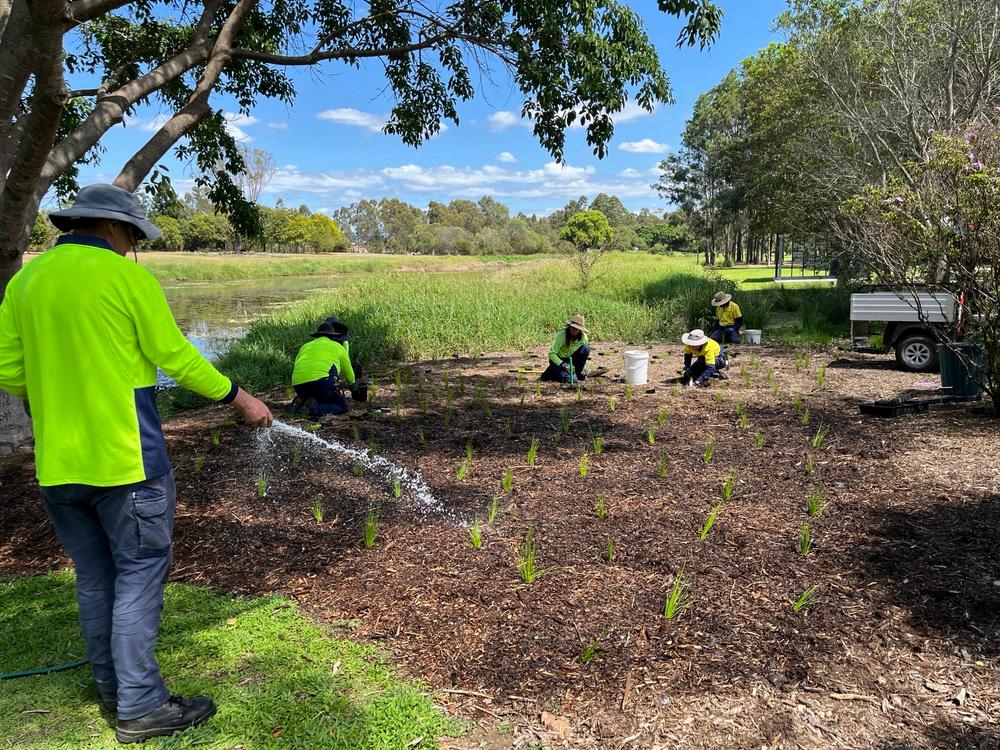
COVER IMAGE:
FeatureInterview
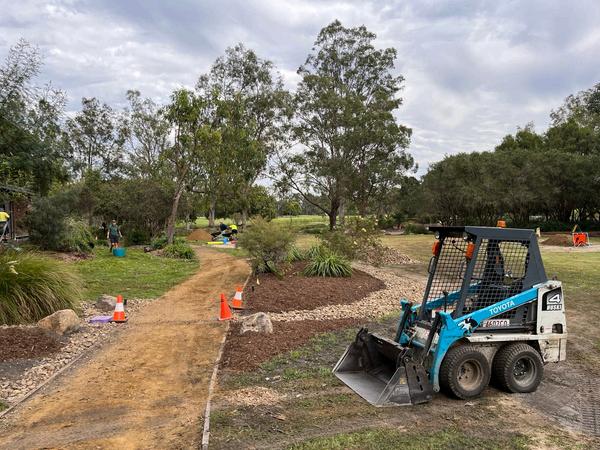
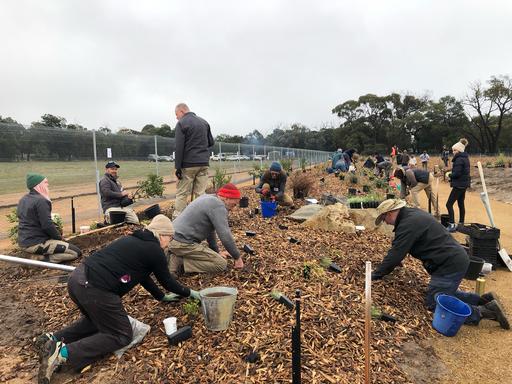
Replanting of collections by the Gold Coast Regional Botanic Gardens team in the aftermath of tropical cyclone Alfred. Image credit Stuart Elder
Resilient gardens – a conversation with Sue McDougall 3
Julia Watson interviews Sue McDougall, Chief Horticulturist, Botanic Gardens and Parks Authority, Western Australia
FeatureGarden
The Australian Drylands: From lawn to landscape – a story of climate resilience in action 11
Clare Hart, Director Horticulture, Royal Botanic Gardens Victoria Melbourne Gardens
FeatureArticles
Weathering Southland's big storm in Queens Park, Invercargill
Chris McAulay, Manager – Parks Operations, Invercargill City Council, New Zealand 16
Stuart Elder, Supervisor, Gold Coast Regional Botanic Gardens 21
From devastation to opportunity: How the Gold Coast Regional Botanic Gardens turned Tropical Cyclone Alfred into a catalyst for innovation and reinvigoration
One of Victoria’s newest botanic gardens – building resilience
Ben Mackley, Site and Operations Manager; Katrina Rast, Gardens and Grounds Coordinator; and Jill Burness, Director and landscape architect WAMA Foundation, Halls Gap, Victoria 26
Friends and funding vs flooding: Recovery and resilience in a rainforest garden
Hazel Bridgett, Vice-President and Projects Manager, Friends of Lismore Rainforest Botanic Gardens Inc 33
PollinatingGreatIdeas
Ensuring your botanic garden
Tessa Kum, Royal Botanic Gardens Victoria and Climate Change Alliance of Botanic Gardens
The visitor experience that drives conservation
Ash Filipovski, Curator Manager, Blue Mountains Botanic Garden Mount Tomah
Managing trees with a focus on resilience
Brittany Walker, Christchurch Botanic Gardens – Arborist Central City
Reviewed by M Nicholson
Cassandra
The theme of the next edition of The BOTANIC GARDENer is Walking together: how botanic gardens are listening to, learning from and collaborating with First Nations people and Tāngata Whenua. The deadline for contributions is 2 October 2026. Please contact Megan Porter (media@bganz org au) if you are intending to submit an article or have a contribution to other sections.
Editorialinsights
Rebecca Harcourt, Editor
Botanic gardens are adapting to a rapidly changing world –responding to challenges such as climate change, evolving expectations around conservation and visitation, and the need to strengthen the resilience of the wider landscapes and communities they support. This issue explores the innovative approaches taken by some of our members in responding and adapting to these challenges.
As discussed in the feature interview with Sue McDougall (Chief Horticulturist, Botanic Gardens and Parks Authority, Western Australia), gardens must be resilient to all the external pressures they face, not just the climate, and must take a holistic approach. These other pressures include biodiversity, biosecurity, labour, visitor expectations and funding (or its lack thereof).
We read how Queens Park (Invercargill) and the Gold Coast Regional Botanic Gardens (GCRBG) were struck by catastrophic storms last year After massive recovery efforts, they used the experience as an opportunity to learn, and plan for the future
The damage from tropical cyclone Alfred to the GCRBG allowed valuable insight into habitat connectivity and soil profiles
In Queens Park, many iconic and heritage trees were badly damaged, especially the exotic species. The park has used this information to update its tree plan to include more native tree species in future. I was also interested to read about their use of AI– another major change in our world that we must adapt to– to improve collection of tree data. Let’s hope the use of AI can also help us tackle climate change in other ways 1
In February 2022, Lismore Rainforest Botanic Gardens was hit by its highest flood in recorded history. I was amazed to read that even volunteers who had lost their homes helped in the recovery efforts while searching for alternative accommodation. What a great example of resilience!
We learn how the resilience of long-lived species like trees in Christchurch Botanic Gardens (one of which is 163-years old) is supported by ongoing, careful horticultural design and clever arboricultural management.
Rebecca Harcourt
Three articles describe newly created gardens or projects under development, all of which aim to integrate and balance conservation with visitation– a sometimes-difficult task.
One of these is from our feature garden, the Australian Drylands garden (Royal Botanic Gardens Victoria) It showcases native plants as plants for a future climate with a design that focuses on sustainability and environmental impacts
Another, from the Grampians/Gariwerd Endemic Botanic Garden (WAMA Foundation), discusses their valuable and unique collection of endemic species threatened by fire, climate change and disease
The third article is about the Temple of Nature project (Blue Mountains Botanic Garden) This project is designed to conserve key species in their natural habitats and showcase living collections that cannot be seen elsewhere, using ecotourism to enhance its conservation efforts.
Of course, an issue with the theme Resilient gardens– adapting to a changing world has to include an article from the Climate Change Alliance of Botanic Gardens (CCABG) The article is full of links to documents and websites that will help gardens and arboreta understand and prepare for a future climate.
Thank you to all the authors for sharing your insights and advice with other members of BGANZ Networks like BGANZ and the CCABG continue to be essential sources of the information and resources needed to respond to and build resilience towards such challenges
Rebecca
Resilientgardens-aconversation withSueMcDougall
Julia Watson interviews Sue McDougall, Chief Horticulturist, Botanic Gardens and Parks Authority, Western Australia
Sue McDougall OAM is a highly respected horticulturist and landscape architect with more than 40 years’ experience in conservation horticulture, public education and advocacy for
native flora in Western Australia. Formerly Director at Kings Park and Botanic Garden, she became a trusted public voice through decades in talkback radio, television and community outreach, inspiring greater appreciation for resilient landscapes and conservation.
You’ve worked with gardens and landscapes for decades. How has your definition of a resilient garden changed over time? What does resilience mean for a botanic garden in 2026?
This is actually a concept we have been grappling with for a long time. When we talk about climate resilience, it is resilience on all levels. So it is not just plant resilience, it is people resilience, it is teams, it is systems
We are managing a heritage landscape, and it is understanding what resilience is to It is all the external pressures – biodiversity, climate, people challenges, labour, visitor expectations, funding opportunities or lack of funding opportunities. And then how do we keep that botanic garden relevant in a contemporary world, and for the future?
When we think about it, we think about climate resilience, but that is only one small aspect of it
A resilient landscape is a holistic approach. It is not just biodiversity in isolation – it is how everything holds together. As soon as you start adding inputs – fertiliser, land clearing, people input, vermin, biosecurity issues – it starts to collapse if it is not managed properly
So resilience opens and closes It moves to where it is most needed You need to be reactive for the immediate, but you need to be proactive for the future. We are setting up now for 60 or 75 years' time. What do we need to be ready for? What is the worst-case scenario? These are questions we should all be asking ourselves.
Sue McDougall
It is almost like a sphere – it is whole. It is not just the plants. It is the research, the people, the systems. Have we got everything in place to make that resilient for the next six decades? That is the real question.
Western Australian Botanic Garden is probably very different to many other gardens It is one of the few botanic gardens that focuses on local flora and has responsibility for research through Kings Park Science, as well as the Western Australian Botanic Garden. Our collection is all Western Australian flora, so that comes with a particular responsibility.
Do you see botanic gardens as passive landscapes or active infrastructure for environmental and human health?
I think of it as active green infrastructure. We are driving that active green infrastructure so visitors can get the passive benefits. So we have to be proactive, and we have to really drive that health and wellbeing
But I do not think we do it well enough We tell people that it is good for them, but how do we do a better job of bringing people along on the journey?
People visit Kings Park, they enjoy the space, they feel good, but we do not tell the story of what they are enjoying The bacteria that are given out in the forest, what they are breathing in, all those little research gems – there are not enough touchpoints to remind people that the reason they are feeling good is because we are being proactive and investing in this We allow people to enjoy it as passive recreation, but we are not proactive enough in telling that story. That is where the opportunity is.
People often think it must be stress-free to work in a botanic garden, but we work very, very hard to make this experience amazing for everybody We are like a duck – really calm on the top and paddling upstream underneath.
There are some very clever ways we can remind people why they feel good in a botanic garden, and why they need to come to a botanic garden That is the ultimate goal
What feels most urgent or different now in how gardens are experiencing climate change?
Biosecurity is probably one of the most serious issues When landscapes are under pressure, there is a higher prevalence and chance of any pathogen causing broad-scale destruction The example for us is polyphagous shot-hole borer Recognising it early and understanding what is happening across botanic gardens is crucial. That is why networks and relationships between botanic gardens are so important.
But it is also water security and increased temperatures. Southwest Western Australia is one of the places where the change is happening fastest. We are seeing more days over 35 degrees, even over 40 degrees That puts pressure on collections Traditionally, from a management perspective, you would respond by putting more water on But water supply is limited, and quality of water is always an issue, so operations have to change completely
And it is not just plants – it is people. Increased temperatures reduce outputs. Altered work regimes are a real thing for the future
Visitor patterns are changing too In summer, we have more visitors from six o’clock at night until two o’clock in the morning than we do during the day. That creates another set of pressures on infrastructure and collections.
So climate change is not just one thing It is a holistic pressure
We also need to think about biosecurity as an opportunity How do we turn a disaster into an opportunity? That requires forward planning, having people ready on the ground, and being opportunistic when those moments come.
Can you share a specific climate event or season that changed how you approach planting or design?
A few summers ago, we had extreme heat – days over 40 degrees, even 45 degrees – and we started to see decline; forest decline and dead plants. It was a visual cue to say we cannot keep doing what we are doing. That triggered a program looking at landscape resilience and trialling species to ask: what plants might cope with our changing climate? It became a call to action
Planting of the resilient species trial bed at Kings Park These species have not been trialled at scale in a cultivated environment
FEATURE INTERVIEW
It also changed how we looked at collections Our Boronia collection, for example, had been in the same place for 20 years, but it got hot afternoon sun and needed hand-watering through summer to keep it looking good So we moved it, trialled it in a cooler, damper space, improved the soil and started evaluating what species were actually suitable for the future.
Collections are no longer static. There might be a collection that goes in for 20 years, not 60, and then it gets moved on as the scenario changes We have also started a stocktake of the whole botanic garden, using the BGANZ Living Collections Toolkit and resources to ask: is this the collection we need for the future? Do we need to duplicate it somewhere else off-site through partnerships and relationships?
We know we cannot grow every species successfully on an 18-hectare slope forever So where are the opportunities to build partnerships that support conservation, display and resilient urban landscapes for Western Australia?
It takes years to be ready for that. We have to be ahead of the game.
After extreme events, what does practical recovery look like in a garden?
It starts with a conversation.
When plants are lost through drought or storms, we do not just replace what was there. Our collections manager and team ask: what might work better? What species might be more resilient? What has performed well? Sometimes it means broadening the species base or trialling species that are harder to propagate but longerlived It is still an 18-month cycle before something gets planted back into the ground, so recovery is slow and considered.
After storms, there is immediate clean-up and safety work, but then it becomes an opportunity to reimagine. Instead of putting the same thing back, we ask: is this the right species? Is this the right place? Every replacement is a considered replacement for the future. We have lost many established trees in storms – trees you cannot replace in anyone’s lifetime
The use of recycled brick as a mulch in Western Australia is not common in public areas and was selected for its sustainability profile and longevity, and it replicates the plant’s natural growing conditions
So practical recovery is about making things safe, but also deciding what belongs there next, and whether that space should even hold a tree in the future.
Often the solution is preventative intervention rather than reactive intervention – larger mulch zones, protecting root systems, restricting access around stressed trees, and trying to reduce all the pressures before the next event comes
Is there pressure for living collections to evolve from display to conservation?
Yes, absolutely Display is still important because that is what brings people in That is the quick hit But then we need to shift that to understanding that this is part of a whole ecosystem, and why we need to conserve these plants.
That pressure is one we put on ourselves, because we believe that is what botanic gardens should be doing
How do you balance conservation priorities with visitor expectations?
That is a tricky one. I do not think we have got that right. There is biodiversity people do not see – what is happening in the soil, for example – but people expect the botanic garden to look amazing all the time
We expect a lot from our gardens. Plants need a rest. They cannot perform all year round. With West Australian natives, there is an on season and an off season. Deciduous trees go dormant in winter Our plants go dormant in summer
So it is about having broad enough collections so that some things are looking amazing while others are resting. That is difficult with limited labour, limited resources and increasing climatic pressures.
We have not cracked that balance yet
Sometimes it is about heroing a particular plant for its conservation value, rather than purely for display. But by our nature, people still want gardens to look good all year round.
Are you under pressure to become more commercially self-sustaining? What does that look like?
Yes, definitely. In real terms, budgets are going down while costs are rising. Fertiliser, potting mix, all those costs have increased dramatically. So it means leveraging relationships, partnerships, leases, sponsorships, and making everything work harder.
We earn nearly half of our budget ourselves That includes events, concerts, cafes, bookable spaces and partnerships that help support research Research by itself does not happen without a commercial partner.
We also need to think a little bit more commercially Not as a criticism, but because we have to ask: what gives us the best return on the money? One example is our Kings Park Favourites range – tried and tested Western Australian plants that we know will succeed in people’s gardens Through commercial partnerships, that messaging goes out into the broader community while still carrying the Kings Park story and branding. We have to have a good story to tell.
Do new models need to emerge for gardens to remain resilient?
Yes, I think so, but I do not know what the answer is yet.
The value of what we do is not easily monetised. There is no ticket price on clean air, cooling cities, biodiversity or healthy communities
So where do botanic gardens fit? I think it has to be a partnership and leveraging model – where one project supports another, and where research, conservation, restoration, education and application all connect.
Seed banking is a good example Seed gets collected, banked, researched, shared with commercial partners, duplicated into wider conservation projects, and eventually loops back into ex situ collections. That interconnected model is where the future is.
We also need to rethink where botanic gardens sit – are they health and wellbeing infrastructure? Conservation infrastructure? Restoration infrastructure? Probably all those things
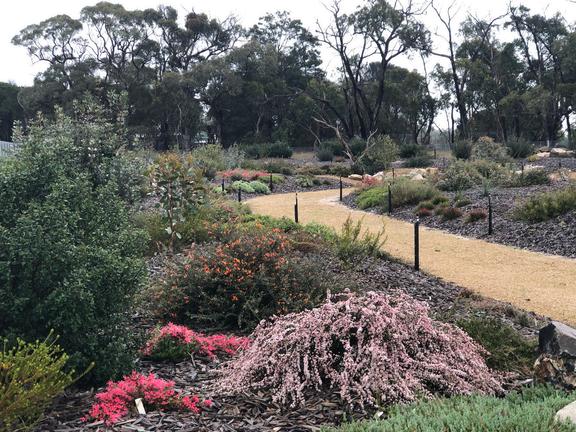
Plantings have established quickly 12 months after planting
What gives you hope? And what advice would you give the next generation of garden leaders?
What gives me hope is that we have this incredible resource in green infrastructure. We know it works. There is so much research showing it can help communities, urban spaces and environments recover from many of the challenges we are facing – urban heat mitigation, stormwater management, water-sensitive urban design and healthier cities overall
My advice is: do not think about now. Think about 20 or 30 years' time. Botanic gardens are conservative by nature, but we need to be a little bit braver. We need to say what is happening and stand by our decisions.
We know the climate is changing We know temperatures are rising So make the best decision now for the future, even if it is not perfect
We have the tools to make communities better places to live. We just need to get better at telling the story The next generation needs to position botanic gardens as solution-driven organisations We do not have all the answers, but we can bring people together to work towards them
What will a truly resilient garden look like in 10–20 years that might surprise people today?
It is not just the plants It is not just the soil or the materials used It is all those layers together It is the people managing it, the planning, the location, the systems, the climate modelling, the genetic diversity – all those considerations working together
Only about 10% of resilience is visible. All the real resilience is behind the scenes – the research, the thinking, the preparation, the planning and the systems that support it And that is okay
People do not need to understand all the technical detail They just need to trust it, feel good in it and know that those layers of resilience are there beneath the surface
Educational signage is an important part of the trials at Kings Park Botanic Garden All images credit Botanic Gardens and Parks Authority
Clare Hart, Director Horticulture, Royal Botanic Gardens Victoria, Melbourne Gardens
A new garden always begins with a good story, and this one starts on a Friday afternoon in a small, cramped office some five or so years ago when three of us turned our chairs towards each other
We began throwing around ideas of how to demonstrate what Landscape Succession looked like using the idea of ‘landscape sequencing’ to develop a garden where climate adaptation was not reactive but designed into the landscape from the outset It needed to challenge thinking and showcase the clever ways that plants have already adapted over millennia and highlight adaptation as a response to climate change. Importantly, this work needed to be collaborative and recognise that horticulture is a climate-adaptive practice.
We needed funding, and in stepped our philanthropy lead, who had already been talking with donors interested in emerging ideas and providing support to generate high impact, actionbased outcomes. We were able to secure initial seeding funds for a new experimental garden, and this is its story– how we went from a lawn to a dynamic, climate responsive landscape and the extensive collaboration that made it happen
The Royal Botanic Gardens Victoria (RBGV) Melbourne Gardens is a 38-ha site, often described as an urban oasis and biodiversity hot spot, in a city whose population continues to climb steadily. Established in 1846, RBGV is a colonial construct that has moved through various phases and public favour over the last 180 years. The land on which we work, and care for the landscape, is Wurundjeri Woi-wurrung and Bunurong Country The challenge of working within an established heritage landscape such as the RBGV involves the question of what part of this garden can accommodate new plantings without compromising the integrity of the existing living collections.
Clare Hart
Armed with our big idea of ‘landscape sequencing’, we looked at options great and small and were able to secure an underutilised area (approximately 3,200 m ) in the southeast corner of the gardens – the Eucalypt Lawn, which included the Australian Bed A heritage connection to native flora already existed, so we could retain its botanical lineage while refocusing on plants evolved to thrive in hot, dry climates. This area also connected with the Arid Garden and Guilfoyle’s Volcano, forming an overall arid precinct It made sense to call this new garden the Australian Drylands (AD)
The next part of the story is how this new garden came together through a strong process of collaboration and a genuine desire to realise the potential of our native flora as plants for a future climate. Working groups were established and horticulturists then tasked with researching, sourcing and collecting an expansive new planting palette This required horticultural experimentation, patience and a willingness to take calculated risks– an essential mindset in a changing climate. The site was reimagined and designed to incorporate the story of Australian plant adaptation, and more broadly to understand a climate future, with the opportunity for all to ‘lean’ into this immense change. Detailed design work created a sinuous flow in the path network for an immersive visitor experience and the opportunity to dwell in two planting nodes grounded in the vast possibilities of plants past, present and future. The node themes– Fire, and Palm & Cycad– tell the story of adaptation to fire, and the ancient plants of the Australian landscape This further provides a catalyst for storytelling through many voices, and a platform for teaching through action.
Entrance to the Australian Drylands at the Royal Botanic Gardens Victoria Melbourne Gardens
Australian Drylands interpretive signage.
Some of the fundamental design principles focus on sustainability and environmental impacts, including:
long-term water use efficiency: plant selection was carefully researched and considered, with a focus on arid plants that are adapted to thrive in areas of low annual rainfall reduction or elimination of fertiliser use: many of the selected plants evolved in an environment in which they do not require excessive fertiliser or soil amelioration use of recycled materials: for example, the seating around the Palm & Cycad Node was made from Eucalyptus camaldulensis wood sourced from fallen limbs within the gardens resource efficiency: for example, larger cycad specimens of Lepidozamia peroffskyana were translocated from elsewhere in the gardens, bringing immediate height and structure to the Palm & Cycad Node without the need for costly new plants reduction in transport needs and plastic waste: many of the plants were grown in our nursery from seed, reducing the need to purchase and transport larger plants in plastic pots.
The deliberate focus on arid plants contributes to the resilience of the landscape in terms of water usage.
The AD has much lower irrigation needs than other areas of the gardens, with water security being a significant current and long-term issue. With the garden being less than two years old and as plants continue to establish, we are monitoring and already reducing the water applied to some of the areas. The AD is also a hot spot for plant diversity with over 340 new accessions, including rare and threatened species, with some not previously grown in cultivation
During the construction of the AD, a curious RBGV donor who lives in an apartment overlooking this area liked what she saw and was keen to be involved This interest, and a further donation, were the impetus for the meadows project, where three experimental, native wildflower meadow-style planting zones were established. Horticulturists worked with the University of Melbourne on site preparation and plant selection with the objective of increasing diversity and pollinator activity This resulted in the creation of a stunning spring/summer display under mature trees on the Eucalypt Lawn. This striking addition to the AD not only makes a seasonal statement but also highlights the critical importance of biodiversity in cultivated urban landscapes
Trachymene coerulea and pollinators in the meadows, Eucalypt Lawn, Australian Drylands precinct
FEATURE GARDEN
A garden like this has a dynamic and experimental quality to it The horticultural curators who care for the space recognise this and respond to opportunities to learn and develop their skills. They do this by, for example, researching and identifying new plants, planning collecting trips and collaborating with other botanic gardens Importantly, they also capitalise on changes made at a local level. Over the last few months, a power upgrade project has been under way at the RBGV; a tricky infrastructure upgrade that resulted in an unplanned urgent request to remove vegetation including a semi-mature Livistona fulva. Using the Climate Assessment Tool the L fulva was identified as a perfect climate match for Melbourne’s predicted hotter, drier climate Working with the arboriculture team, the L.fulva was removed and transplanted as a gateway specimen to the Palm and Cycad Node in the AD. This was done within a few hours, with staff responding and adapting to this immediate challenge with impressive results
The success of the AD project is an act of radical reimagining.
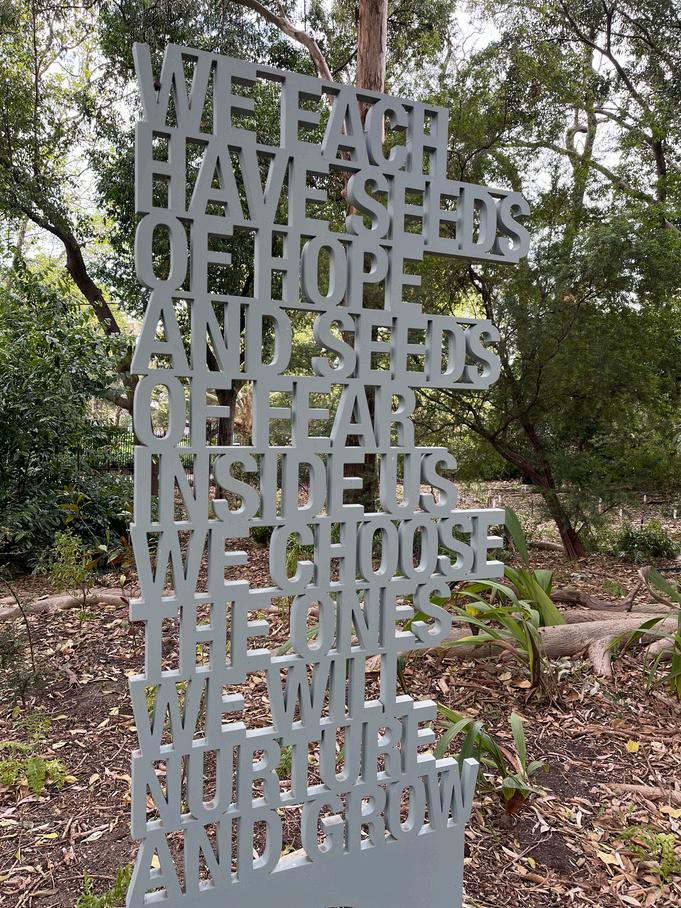
Multiple layers of interpretation present a wraparound experience from etched stone imagery to First Nations poetry, to vibrant, visually engaging interpretative signs, which offer ideas and encouragement to visitors to replicate climate adaptation and resilient landscape design in their home gardens.
What adds to an intangible quality are the reimagined voices, conversations and moments of all who have gone before us in this space and place; we always need to remember the Country on which we find ourselves. The sound project, Sonica Botanica, help us to do this. It is an evocative and inspiring aural soundscape that includes the stories and voices of staff, visitors, and two Wiradjuri collaborators, Dr Jeanine Leane, writer, poet, critic and academic, and writer of the Seeds of Hope poem for the AD, and Professor Michael-Shawn Fletcher, biogeographer, University of Melbourne
Horticulturists successfully translocating Livistona fulva to the Palm and Cycad Node, Australian Drylands
The AD is tracking as it should– the new plantings are growing, we are planning the third seasonal seeding of the meadows, there is a marked increase in visitors, and a new Learning Hub is due for completion later this year. All these are measures of the AD’s immediate success. It is a visible statement of intent: that botanic gardens can lead by example, demonstrating how beauty, biodiversity and resilience can coexist. This project also reiterates the role of horticulturists as futurists: practitioners who design not only for today’s visitors, but for the climates, ecosystems and communities of decades to come Science tells us that the climate future will be difficult but not impossible if we act now.
Climate resilience is not a single project, but a practice. And every resilient landscape begins the same way: with a story that dares to imagine a different future.
Editor’s note: The Australian Drylands garden was the winner of the BGANZ 2025 Environmental Sustainability Award
First Nations sculptural poetry installation in the Australian Drylands, by Wiradjuri woman Dr Jeanine Leane All images credit Clare Hart
Chris McAulay, Manager – Parks Operations, Invercargill City Council, New Zealand
Introduction
Walking down tree-lined Coronation Avenue in Queens Park’s today, you’d be forgiven for forgetting the sheer scale of devastation suffered by the park only six months ago. Invercargill’s award-winning public gardens felt the full force of Southland’s big storm on 23 October 2025, with wind gusts exceeding 130 km/h battered the city in a dramatic reversal of the calm spring conditions earlier that day
Although the most extreme winds lasted less than an hour, damage across the city was widespread. Thousands of people were left without access to critical infrastructure, including electricity and telecommunications, and a state of emergency was declared throughout Southland
Queens Park, containing some of Invercargill’s oldest and largest public trees, was hit particularly hard when the winds barrelled in. Many trees were uprooted, and then toppled, throughout the 81-hectare park, while many of those left standing suffered significant structural damage. By the time the state of emergency was lifted on 7November, more than two weeks after the storm, hundreds of trees had fallen and green spaces across Invercargill remained off limits to the public due to the risk of falling trees, branches and debris
For possibly the first time in its 170-year history, Queens Park was closed.
Ourresponse
The initial response to the storm focused on damage to essential infrastructure and immediate public safety risks, such as broken traffic lights, dangerous structures and trees blocking roads. While this immediate response was relatively swift, early assessments of parks and reserves suggested it would take at least five or six months to repair damage to the tree canopy and make these public spaces safe again
Chris McAulay
It was clear from the scale of the damage that a significant portion of the remedial work would exceed our in-house capability. Trees needed to be checked for broken and damaged limbs, typically by climbing and inspecting each individual tree. This required specialist arboricultural skills and equipment
In Queens Park, we focused on retaining heritage canopy cover and saving trees wherever possible In particular, retention of the century-old English beech trees lining Coronation Avenue, with their obvious community and amenity value, was seen as essential to preserving the character of the park. Some of these trees were pollarded and others had metal braces installed to ensure their continued structural integrity. Although these measures have a significant visual impact in the short term, they have allowed the trees to be retained, giving them a chance to regenerate, and maintaining key canopy cover in the park
Queens Park remained closed for approximately a month following the storm, with a staged reopening from mid-November, balancing public safety with the sheer volume of work required. Much of the space opened at the beginning of 2026, with only isolated sections of trees needing remediation remaining
The total cost of cleaning up fallen trees and other damage across Council’s 150-odd parks and reserves– including Queens Park– exceeded NZD900,000. More than 630 trees were climbed and pruned by arborists and nearly 800 trees were removed across the city, creating approximately 1,200tonnes of excess wood and saleable logs, and mountains of mulched woodchips
A large Pinus radiata snapped like a matchstick in the October wind event
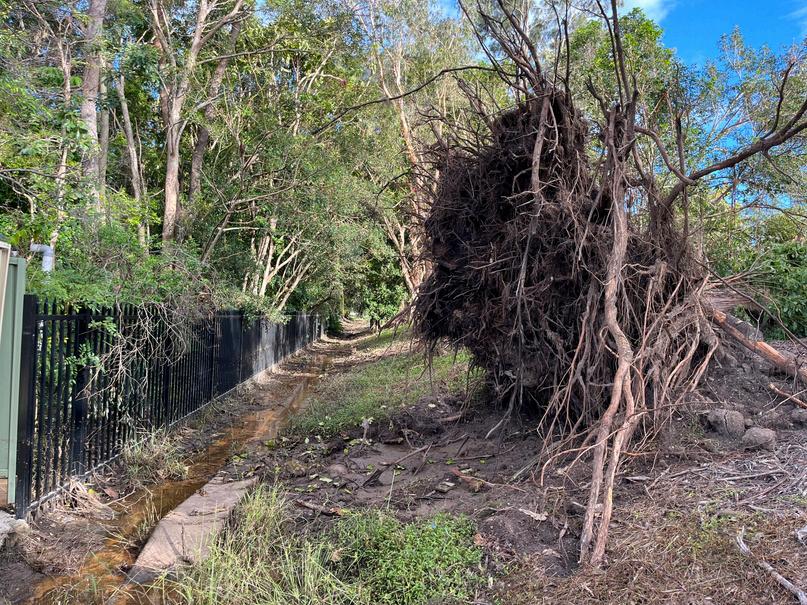
A staff member stands beside the root ball of a Pinus radiata that succumbed to the wind event This was a common sight throughout Queens Park
Lessonslearned
The importance of maintaining a healthy tree network across our city was brought sharply into focus following the storm
We already knew that stable and well-established trees could suffer damage during extreme weather. However, the scale of damage caused by the high winds experienced in October’s storm was a particularly harsh reminder of what nature could do to our public spaces and the risk this damage could pose to the community It was not the only setback weathered by Queens Park that year Strong winds earlier in June saw a mature pine tree fall, while seven trees toppled in adverse weather in September, including a large oak believed to be about 80years old.
Saturated ground due to heavy rainfall may have contributed to the number of trees falling There was some speculation in the community that trees in Queens Park were problematically shallow-rooted due to historic planting methods, namely using biscuit tins to raise saplings Invercargill’s soils are categorised primarily as peat and waterlogged gley soil, which naturally limits potential root depth. We did not find any evidence, however, that shallow rooting caused trees to fall, including trees planted many decades ago. Regardless, the storm events were a clear example of what could occur as a changing climate drives increasingly unpredictable weather patterns in our region Although the damaged and fallen trees had been assessed as safe under normal conditions, the extreme weather exposed vulnerabilities in their ability to withstand such severe events. 1
This suggests there may be a need to reconsider how tree risk is assessed, including if current methods adequately account for increasingly extreme weather conditions.
More storms and summer droughts will only add to the pressures on our tree network, which could lead to greater losses and greater danger to the public in the future
Many trees toppled in October 2025 in Queens Park, which contains some of Invercargill’s oldest and largest trees.
Lookingforwardwithaplan
Having a good understanding of the existing tree network is a key part of ensuring that trees in our public spaces remain safe and maintenance is prioritised where it is needed
Trees clearly provide a range of benefits, such as shade and aesthetic value, but the damage sustained last year showed some of the real hazards that they can present when put under extreme stress. By managing the urban forest appropriately, we can build resilience in our canopy and ensure we have the right tree in the right place for the right purpose
Since 2020, following the development of our first tree plan, we have captured data on approximately 15,000 high-risk trees across the city, using human-based methods to capture basic information.
Over the past couple of years, we have improved data collection in specific parks, including Queens Park, using a specialised technology platform, greehill, in partnership with Treetech The greehill platform captures highly accurate 3D data of tree structure and canopy using Light Detection and Ranging (LiDAR), and AI processes this data to automatically identify, measure and assess trees. This technology enables efficient, large-scale tree management and monitoring and will give us a better understanding of the heights, ages and species of trees in the urban forest network, as well as their carbon sequestration capabilities These data are invaluable for the safety of the public and to protect and nurture the living assets in our parks.
We are currently in the process of refreshing our tree plan, which will help further guide our approach to managing trees in Queens Park and the city One of the goals in the new plan is a preference for at least 30% native species when planting on reserve land
As large, fast-growing trees, most of the city’s shelter plantings are made up of exotic eucalyptus, Monterey Cypress Hesperocyparis macrocarpa and pine species. In October’s storm, and the weather events earlier in 2025, these three tree types were the most affected, with only a small number of New Zealand natives impacted
Although natives have not been used as widely as specimen trees or shelter in our parks historically, and there are fewer mature native trees that could be damaged, it is clear that they perform better in our environment in some situations and can potentially have a longer life in the right location
Having a clear tree plan, which incorporates a native species goal, ensures that we consider the best trees for a given area, even if they are not the exotic species traditionally used in our urban parks. As we expand the data we have on our trees, we can increasingly use a robust evidence-based approach to determine what species we plant where
October’s storm showed us how vulnerable our city can be to extreme weather and how important it is to plan for uncertainty in the future While trees can present risks during severe weather events, their benefits far outweigh those challenges when they are well-planned and managed
While trees can present risks during severe weather events, their benefits far outweigh those challenges when they are well-planned and managed.
We don’t know what the future will bring, or what storms Queens Park will have to weather in a changing climate. Learning from how our trees respond in an event like Southland’s big storm is the first step towards a diverse and resilient tree network that enhances our urban environment and can be a legacy for the future.
Arial view post-storm, 27 November 2025. Image credit 2025 Airbus, Google Earth
Arial view pre-storm, 8 April 2023. Image credit 2023 Airbus, Google Earth
Coronation Avenue, the main drive through Queens Park, unpassable due to the wind event. All images credit Invercargill City Council unless otherwise indicated
A fallen pine tree, Pinus radiata, snapped like a match stick, yet leaving others unscathed around it
On the morning of 6 March 2025, the Gold Coast Regional Botanic Gardens appeared much as it had for more than two decades: calm, green and quietly thriving The lakes were still, the eucalypts upright and shimmering, and the pathways lined
with plants shaped by years of horticultural care. Over the days that followed, tropical cyclone Alfred gradually intensified, bringing one of the most significant environmental challenges in the gardens’ history
Alfred formed in the Gulf of Carpentaria before tracking erratically down the east coast of Australia Unlike fast-moving systems, Alfred stalled repeatedly, intensifying as it drew in warm tropical moisture. By the time it reached the Gold Coast, it had unleashed more than 500 mm of rain over four days, followed by a further 140 mm soon after. Floodwaters rose 300–600 mm above boardwalk levels, saturating soils, eroding paths and inundating garden beds Sustained winds, exceeding 100 km per hour, swept across Lake Rosser, carving a destructive corridor through the Coastal Headland Garden, Banksia Woodland and Gum Tree Corridor For gardens designed around both display and conservation, the scale of the impact was unprecedented.
Stuart Elder, Supervisor, Gold Coast Regional Botanic Gardens
Stuart Elder
Devastation of Gum Tree Corridor, Flowering Gums and Special Forms collections (L), and Eucalyptus rootball (R)
The City of Gold Coast (City) led clean-up and recovery efforts to restore its botanic gardens in the months that followed, as the narrative of Alfred shifted
What began as devastation evolved into a story of leadership, learning and innovation.
The event prompted the Gold Coast Regional Botanic Gardens to re-examine its resilience, strengthen scientific partnerships and refine its approach to climate-informed landscape design
The Gold Coast Regional Botanic Gardens occupies 33 ha, including 10 ha of maintained gardens, 13 ha of water bodies and hard surfaces, and more than 4 km of walking tracks The living collection contains more than 6,000 recorded plants, representing 51 listed threatened species and 33 species on the City’s priority species list. Rosser House, built in 1923 and now listed on the Gold Coast Local Heritage Register, sits as a historical anchor within the landscape. A small but experienced team of horticultural staff manage the site, supported by the Friends of the Gold Coast Regional Botanic Gardens, who provide essential volunteer support, guided walks, education programs and community nursery operations
When the cyclone passed, more than 150 mature trees (many exceeding 15 m in height) had been lost. Some held cultural or commemorative significance, while others represented accessioned threatened species Notable botanical losses were Brisbane Mallee Eucalyptus curtisii, Bancroft’s Gum Eucalyptus bancroftii and Narrow-leaved Scribbly Gum Eucalyptus racemosa, species planted more than two decades ago and valued for both conservation and interpretation. The Casuarina Grove suffered extensive structural damage; its snapped branches illustrating the intensity of wind pressure Understorey plantings in several precincts were crushed beneath fallen timber, while prolonged inundation drowned species not adapted to such sustained saturation.
Wind direction in blue and plotted lost living collections in red.
Flooding of Sensory Garden
The cultural and community losses were equally poignant. The Benowa Tree (Pink Bloodwood Corymbia intermedia), planted by the late Gene Rosser, a pioneer of the gardens’ history and a major donor, was destroyed Trees were also lost from the Defence Force Grove, planted to honour Australian service personnel In Friendship Force Avenue, trees planted with international visitors and former mayors were uprooted. Commemorative trees in the Callitris Grove, planted with Turkish artists to commemorate 110 years since the landing of Gallipoli, suffered severe damage Each loss represented an important part of the gardens’ shared story
Wildlife was also significantly affected Decades-old hollows collapsed with the trees that held them, displacing birds, mammals and reptiles. Yet, with the gardens closed to visitors, wildlife began expanding into new areas. Waterfowl moved into previously busy spaces, and small
Flooding of boardwalk system and feature lake (top); Curator Paul Cockbain surveying damage of Gum Tree Corridor and adjacent flooding from an overflowing Nerang River (bottom left); blocked access road and flooding of causeway (bottom right)
mammals appeared in places where they had been rarely observed This period of natural redistribution provided valuable insight into habitat connectivity. In response, new artificial hollows were installed to encourage recolonisation and improve long-term habitat diversity.
The clean-up effort was immense Over 1,000 labour hours were required from staff, arborists, contractors and Disaster Relief Australia volunteers More than 500 m of fallen timber and debris were processed into mulch and reused throughout the gardens. City teams restored
damaged drainage networks, repaired pump systems, tested electrical infrastructure and assessed road and path stability. Arborist inspections were conducted in two phases: an initial safety sweep followed by detailed visual assessments of each tree This careful approach ensured that the gardens could safely reopen to visitors on 16 April 2025, just before the Easter long weekend.
Recovery costs exceeded $550,000, including operational clean-up, tree removal, chipping, stump grinding and arboricultural assessments. Yet the ecological and cultural cost, measured in lost canopy, lost habitat and lost stories, cannot be captured in monetary terms.
Professional arborists and heavy equipment were required to remove two tall Eucalyptus trees that had blocked the ring road opposite the sensory garden
One of the most valuable opportunities emerged through science. Griffith University researchers approached the gardens to conduct a fallen-tree and root-zone study, analysing soil profiles, historic fill layers and structural failure patterns The findings will help guide future species selection, planting placement and soil remediation strategies Internally, herbarium volunteers undertook the painstaking task of verifying every accession within the gardens’ database, ensuring an accurate record of the living collection’s post-cyclone composition.
Several major strategic projects are now being scoped to support long-term resilience A proposed Biodiversity Centre would provide a hub for conservation science, interpretation and education Future lake and lagoon rehabilitation works aim to stabilise banks, enhance flows and restore aquatic habitat, helping to improve the management of water quality. Heritage
Clean-up, repair and drainage works post-TC Alfred
assessments of Rosser House will guide future conservation and restoration where required, while proposed visitor entrance upgrades will enhance accessibility and presentation. A planned recycled water pipeline upgrade will provide long-term irrigation security
A new disaster operational plan has been formalised. The plan outlines clear communication pathways with the City’s Disaster and Emergency Management Unit, establishes rapid assessment procedures and strengthens cross-departmental coordination It also embeds long-term ecological monitoring, acknowledging that trees often show delayed symptoms of stress, sometimes seven to 10 years after a major weather event.
Design work is now focused on resilient landscapes The Wallum Garden and tree planting plans are being revised to prioritise species capable of withstanding wind exposure, episodic flooding and altered hydrology
Emergency assistance from Disaster Relief Australia volunteers who provided initial assistance clearing blocked roads for access All images credit Stuart Elder
The corridor most affected will be redesigned with climate-adapted species, improved soil profiles and structural planting aimed at reducing future vulnerability.
My previous experience as curator of Rockhampton Botanic Gardens reinforced the importance of long-term vigilance. A major branch failure in 2023, traced back to canopy damage from cyclone Marcia eight years earlier, demonstrated the hidden risks that can persist long after a storm has passed This knowledge shapes our approach: regular assessments, aerial inspections where needed and clear recognition that recovery is not a single event but an ongoing commitment
Alfred reshaped the Gold Coast Regional Botanic Gardens, but it also catalysed new leadership. It strengthened partnerships with universities, deepened community engagement, sharpened organisational preparedness and expanded our understanding of resilient plant design The event reminded us that gardens are dynamic systems, living and adaptive, shaped by both care and disturbance.
As Friends of the Gardens founding member and volunteer Kate Heffernan expressed, ‘the Gold Coast Regional Botanic Gardens is a lifelong journey It is a place to learn the mysteries of nature, sometimes a place to acknowledge the past, and always a place to forge the future.’ In the aftermath of Alfred, that future is already taking root
Ben Mackley, Site and Operations Manager; Katrina Rast, Gardens and Grounds Coordinator; and Jill Burness, Foundation Director and landscape architect. WAMA Foundation, Halls Gap, Victoria
The Grampians/Gariwerd Endemic Botanic Garden is not yet four years old but has already become an important advocate for the resilience of Victoria’s native flora. Created by the WAMA Foundation in 2022, the garden reflects a growing commitment to protecting and celebrating the region’s unique plant life. Set beside the foothills of the Grampians, WAMA is Australia’s first precinct devoted to bringing art, science and the natural environment together in one place. 1
The Grampians region is located to the west of Melbourne and is renowned for its scenic landscape features, botanical diversity and Aboriginal heritage values.
It is one of Victoria’s biodiversity hotspots, containing over 30% of the state’s native flora.
This amounts to some 1,200 species that grow in an uplifted and heavily eroded landscape, culminating at the 1,167m summit of Mount William Rising sharply from western Victoria’s volcanic plains, the range is formed from late Silurian to early Devonian sandstone, comprising ancient sediments that were uplifted and tilted over millions of years As these sandstone layers fractured and eroded, they created a landscape of sheer cliffs, sheltered gullies and deeply carved valleys. This rugged terrain, combined with the region’s long isolation from other mountain systems, has produced a mosaic of microclimates and ecological niches that support an exceptional diversity of plant life The environment varies from dry conditions in the north (450mm/annum) to seasonally wet valley floors (1,250mm/annum) in the south
Ben Mackley
Katrina Rast
Jill Burness
Long before the Grampians (Gariwerd) National Park (the National Park) was proclaimed in 1984, areas within the region were set aside for special purposes including recreation, forestry and water supply. Over time, the focus has shifted towards conservation, recreation and protection of European and Aboriginal heritage, with more than 200cultural sites scattered in and around the ranges. The National Park’s 1,672m (167,000ha) is managed by Parks Victoria, with tourism becoming a major source of income for local communities and businesses
Over many years, the National Park has been subjected to increasing environmental pressures that significantly impact the stability and survival of the native flora and fauna. In 2006, a major bush fire burned over half the National Park. Severe flooding in 2011 caused accelerated erosion down steep slopes with significant damage, and more recently the Grampians region experienced two major bushfires, both in 2024 Although fire plays an important part in the regeneration of many plants and plant communities, too much fire may cause some species to be lost. Phytophthora Root Rot Phytophthora cinnamomi has impacted some areas, affecting woodland colonies of large native Grass Trees Xanthorrhoea australis. Clearly there is a role for local communities and organisations to ameliorate the environmental impact of these accelerating global pressures It is a role that easily fits the vision for WAMA
The development of WAMA began 10–14 years ago. The 16-ha property, comprised of degraded tobacco farm and grazing land, was gifted to the WAMA Foundation by the Lewin family who championed the idea of an art and garden precinct to celebrate the Australian environment. Local artists and environmentalists were quick to add their support in recognition of the significance of the Grampians region These passionate and loyal volunteers continue to assist in work parties to remove exotic trees from the property and restore the remnant vegetation They also continue to champion the propagation of plants for WAMA.
The Grampians from Mt Cassell. Image credit Jill Burness
FEATURE ARTICLES
In 2019, an animal-proof fence was constructed to enclose the bulk of the land, thus safeguarding the biodiversity values from grazing animals such as kangaroos, wallabies, deer and rabbits. In subsequent years, a rabbit eradication program has removed most of the rabbits from the property with a significant increase in the growth of native grasses, forbs and small shrubs The site has flourished under two Trust for Nature covenants, one safeguarding the ephemeral wetland and another protecting the three woodland communities
WAMA today has three key features. The first is a $9 million art gallery (the National Gallery for Environmental Art), which opened in July 2025 and is dedicated to the deep interconnection between art, science and the Australian natural environment The climate-controlled gallery has facilities for in situ and digital exhibitions, with a cafe, retail shop and a large multi-purpose room for workshops and other gatherings Four curated exhibitions will be held annually, featuring renowned environmental artworks from the top Australian and international galleries and collections. Visit the WAMA website to see the amazing quality of the exhibitions that have been curated to date Already, these exhibitions have drawn attention to a diverse range of environmental issues including the global impact of environmental warming, the beauty and role of fungi, and the art of botanical illustration
The second feature is the Jallukar Native Grasslands established in 2019– a restoration project supported by a major community effort to collect seed from more than 60 grassland species The plants were propagated at a local volunteer nursery to build the 40kg of seed stock needed to establish approximately 2ha of native grassland. Once stretching across vast plains, Victoria’s native grasslands were among the most biodiverse ecosystems in Australia Before European settlement, they covered around one-third of the state, supporting hundreds of plant and animal species. Today, less than 5% remains, and only 1% survives in near-natural condition These grasslands are critical refuges for endangered wildlife species whose survival depends on the protection of these last fragments of native habitat.
The National Centre for Environmental Art opened July 2025. Image credit Katrina Rast
Jallukar Native Grasslands, Dec 2025 Image credit Jill Burness
Volunteer propagators at the Pomonal Community Nursery Image credit Jill Burness
The Jallukar Native Grasslands at WAMA is a repository for future seed collection and a gorgeous place for a summer walk between tall grasses, along mown pathways.
The third drawcard of WAMA is the Grampians/Gariwerd Endemic Botanic Garden– a living sanctuary of plants found only in the Grampians/Gariwerd region
The botanical magic of the Grampians region is that it nurtures 40–50 endemic species that are not found growing anywhere else.
The high number of endemic species (and forms) is largely a consequence of the ‘island’ nature of the geology and the concentration of a diverse range of environments. Many of the plants occur high on remote mountainsides or in sheltered gullies, forming tiny colonies that are endangered or critically endangered; vulnerable to fire, disease and the accelerating pressures of climate change The goal is to showcase as many of them as possible, with the collection expanding every year.
Following consultation with the Royal Botanic Gardens Victoria (RBGV), WAMA became a member of BGANZ in 2020, and began working with the RBGV Cranbourne Gardens on the preparation of a Living Collections Management Plan for the garden This was a major step It consolidated the primary objectives for the collection development, which are:
geographic: there is a direct association with the Greater Grampians region conservation: by default, the botanic garden will be an ex situ collection that can target threatened species for recovery and reintroduction, where applicable ecological: there is a close association between the flora and fauna of the Grampians region, highlighting sustainability and resilience
cultural/social: WAMA’s vision is to celebrate Australia’s environmental art, and the opportunity to become a centre for learning and enjoyment of our unique natural environment.
Shiny Tea-tree Leptospermum turbinatum (L) and Grampians Bossia Bossiaea rosmarinifolia (R) Image credit Katrina Rast
Orange Bell-climber Marianthus bignoniaceus Image credit Katrina Rast
In 2020, soil scientist and horticulturalist Declan McDonald was engaged to prepare a soil report for the WAMA site This was a necessary process that identified the need to control storm water and improve the soil structure, which had been damaged by the former land uses. The report highlighted the presence of a thin topsoil layer and sub-soils subject to poor drainage. This knowledge was crucial in identifying the constraints for future development
The next step was the completion of the Landscape Masterplan for the garden in 2021 by Ochre Landscape’s Evan Gaulke and Clare Colson. The 2-ha garden was designed to include most of the endemic flora species found in the National Park. A plant schedule was prepared and the plants sorted into six habitat zones, instead of the numerous Ecological Vegetation Classes (EVCs) associated with the national park It allowed plants with similar growing conditions to be planted together
At this point, WAMA becomes a refuge not only for plants, but a place for visitors to learn about the special nature of the endemic collection and the role of botanic gardens in conservation. Collaboration with the RBGV Cranbourne Gardens allowed WAMA volunteers to join forces with professional botanists and horticulturalists To source these plants, the RBGV obtained official collecting permits from Parks Victoria and organised field trips to collect wild provenance material from the National Park. These plants were propagated at both RBGV Cranbourne Gardens and by the volunteer propagators at the Pomonal Community Nursery. When there was excess stock, WAMA shared the wild-sourced plants with the Halls Gap Botanic Garden.
These three botanic gardens are establishing a duplicate set (or meta-collection) of Grampians endemic plants that is a refuge of living plant material. Among them is a collection of rare and endangered flora, safeguarding precious genetic diversity and acting as a plant bank for the future.
The entrance to the garden and its official title Image credit Katrina Rast
Stage 1 (0 75 ha) of the garden’s construction began in February 2022 with funding assistance from the state government’s Growing Victoria’s Botanic Gardens grants program This funding program was initiated by BGANZ with amazing consequences for many small botanic gardens across the state. Local companies were engaged for the landscape construction, as well as the design and installation of a broad-acre irrigation system that uses bore water harvested on the WAMA site. Using a stockpile of onsite topsoil, the garden beds were raised 400–500mm above the natural ground level, and a rabbit-proof fence was installed Gravel paths provide an invitation to explore a remarkable plant collection featuring signs with plant names and stories to promote nature-based learning and an appreciation of Australia’s native flora These signs were fabricated with a grant from the Australian Plants Society (APS) Grampians– another partner and supporter in the WAMA story. The skyline to the west of the site is dominated by the ridgeline of the Grampians and forms a perfect borrowed landscape
In July 2022, a community planting day installed the first batch of plants into the garden Most of the plants were supplied by the volunteer propagators and augmented by a welcome contribution from the nursery at RBGV Cranbourne Gardens. Due to the careful site preparation, the robust growth of the garden has been amazing. Many of the endemic plants can now be seen in the garden with the collection ever growing 2
Yet the landscape’s fragility was brought into sharp focus in 2024, when lightning-sparked bushfires destroyed 40% of Pomonal and obliterated the community nursery, including the next generation of WAMA’s plants.
A second wildfire in December burned 176,00ha across the Grampians, with the fate of some endemic species and plant communities now unknown in the wild As fire-damaged areas are assessed by Parks Victoria and the RBGV, WAMA can provide wild-sourced plants for reintroduction into the park.
First day of planting, Sub-Alpine Garden, July 2022. Image credit Jill Burness
Two years old, Sub-Alpine Garden, September 2024. Image credit Jill Burness
FEATURE ARTICLES
The garden at WAMA has secured some special plants. One of those plants is the Gariwerd Grevillea Grevillea gariwerdensis, which tells a fragile story of survival in the Grampians Officially named in 2003, it has always existed in small numbers, and two of its three known populations are now presumed extinct due to a drying climate Listed as endangered, the Gariwerd Grevillea survives today in a single known population on the edge of Halls Gap, where its delicate white to mauve-pink flowers thrive, even in frosty conditions. Its discovery by RBGV and WAMA volunteers was so significant that it has been recorded on Victorian Country Fire Authority maps to reduce the risk from fuel-reduction burns Beyond the wild location, WAMA’s covenanted woodland now supports a population of this species, along with the botanic garden. 3
Although less than four years old, the Grampians/Gariwerd Endemic Botanic Garden harbours a valuable collection of plant species threatened by fire, climate change and disease, while also honouring the cultural heritage of the Djab Wurrung and Jardwadjali people, who have long drawn food, medicine and ceremony from these plants It is a conservation initiative that can inform casual visitors, educate school groups and bring joy to people who wander through the garden to admire the beauty of these special plants.
The success of the garden is due to a network of partners that includes the RBGV, the Victorian Department of Energy, Environment and Climate Action (i e the former state government Department of Environment, Land, Water and Planning), the Halls Gap Botanic Garden, APS Grampians, private donors, and a loyal team of local volunteers who manage the community nursery in Pomonal. The garden stands as a testament to resilience; a place where science, culture and art converge in celebration of Victoria’s unique botanic inheritance
Grampians Grevillea Grevillea gariwerdensis was on the brink of collapse, but now secure Image credit Katrina Rast
Hazel Bridgett, Vice-President and Projects Manager, Friends of Lismore Rainforest Botanic Gardens Inc
On the 28 February 2022 the city of Lismore in the Northern Rivers region of New South Wales experienced a 14.4 metre flood – the worst in recorded history – that submerged the CBD and surrounding residential areas on the floodplain There were no functioning businesses after the flood, including supermarkets, service stations and banks.
Emergency services, police facilities, council facilities and the airport were all flood-affected. The Lismore Base Hospital, fortunately located above the flood plain, maintained services on the day and those that followed. Patients, many in a distressed state, were transferred from rescue boats to waiting ambulances The flood washed away infrastructure including access roads and caused landslips and the erosion of bridges and causeways
The Lismore Rainforest Botanic Gardens (LRBG), located on Bundjalung land of the Widjabul/Wia-bal people 3km from the Lismore CBD, suffered damage to all its gravel roads, paths and bridges as well as a landslip in its sensory garden This caused the loss, among other plants, of a flourishing Limeberry Micromelum minutum, a species presumed extinct in NSW, as one of the raised garden beds washed downhill
The LRBG is managed, maintained and developed by the Friends of the LRBG, a team of volunteers, with the help of a council worker five days a fortnight. It was several days before our volunteers could access the gardens
Three of our volunteers lost their homes in the flood but continued to come to work in the gardens in the mornings while planning alternative accommodation.
Our first task was to temporarily repair the roads and paths with the help of our earthmoving contractors and many loads of road base We received advice from engineers that drainage of stormwater from the neighbouring farmland was a problem that could result in a recurrence of the rain damage. After much discussion between the committee members, the engineer and road builders, it was agreed that the gravel road between our two carparks would have to be replaced with concrete and the drainage improved This was an expensive solution as the road, also a fire access route, had to be strong enough to carry trucks With the help of a Storm and
Hazel Bridgett
Flood Disaster Recovery Grant of almost $50,000 from Service NSW, the new road was built, and repairs were made to the sensory garden using landscaping contractors Eroded bridge supports were sandbagged and a new bridge was planned to replace the causeway that had washed away.
As the new concrete road is in full sun we decided to backfill the sensory garden side with Kraznozem (Ferrosol) soil prior to planting mostly Kangaroo Grass Themeda triandra as well as some colourful plants from our nursery The other side of the road is a deep drain filled with gabion rocks in which Scented-top Grass Capillipedium spicigerum is flourishing, thanks to the hours of effort by one of our volunteers in controlling weed species and seeding with native grass species The destroyed raised bed was replaced with a rockery using large boulders, which were also used to control the flow of water from the concrete road into the storm water gully
The LRBG has three storm water gullies that drain water from the neighbouring farmland. This land has an escarpment with waterfalls so the flow of water into the gullies and down to Gundurimba Creek is substantial during rain events. Over the years the volunteers have successfully implemented strategies to slow the flow of water and reduce erosion These strategies include structural solutions and plantings At one of the steepest points we used star pickets to hold brush and logs in place, as suggested by Costa Georgiadis on one of his visits These were later replaced by bags of sand and cement. The resulting ponding has created an area in which plants have been successfully established. In some areas the sides of the gullies have been stabilised using star pickets and recycled hardwood posts to create walls that are
The causeway that was washed away in the lowest part of the gardens was replaced with a bridge built by the team and led by a volunteer, Will Evans, a retired builder. This bridge was opened in December 2025. The bridge affords a view of a Giant Fern Angiopteris evecta, Lomandra and Stream Lily Helmholtzia glaberrima, all of which survived and flourished after the inundation of flood waters
In the garden, the six rainforest rooms, the uncommon plants garden, the Wilsons Park species garden, the useful plants garden and the hoop pine forest all survived the rain event, and the damaged gravel paths within them have been repaired The recently planted Myrtaceae species gardens are flourishing, albeit requiring a strict regime of fungicide spraying to prevent Myrtle Rust (Austropuccinia psidii) Thanks to a generous donation from Vicki Brooke, we are installing new plant labels with QR codes, which access Plantnet, and our teams have successfully installed 10 arches for native vine displays.
1
The rainforest rooms have been aerated, fertilised and mulched by the volunteers over many months in an effort to improve soil health following the results of soil sampling A paper about this by our secretary, Florence Trevorrow, is in the February 2026 edition of our newsletter, the Gardens Gazette, available on our website.
As any botanic garden which has experienced a catastrophic event knows, there are multiple players in the recovery and restoration effort and the LRBG is no exception Planning for future events is also a consideration in how repairs and restoration of damage are planned We are fortunate to have a building and construction team of retired tradies who slowly effected repairs to ensure the safety of visitors and volunteers. All these endeavours require working with contractors and Lismore council staff. We have been very fortunate in the quality of their work and their willingness to see this community asset thrive and develop Thank you to BGANZ for this opportunity to feature our work
POLLINATING GREAT IDEAS
Tessa Kum, Royal Botanic Gardens Victoria and Climate Change Alliance of Botanic Gardens
The Paris Agreement 2030 deadline for the reduction of global emissions is fast approaching, and many reports indicate significant action is required to limit global warming at only 1.5°C. While this is technically achievable, recent analysis suggests that the rate of global warming has accelerated in the past decade and that extreme events are still probable in moderate warming scenarios (Bevacqua et al , 2026) Even if we were to stop global emissions worldwide immediately, there is sufficient ‘momentum’ within the global climate system to ensure effects continue for at least another century (Forster et al., 2025).
This is, to put it simply, a bit of a bummer Botanic gardens, arboreta and living landscapes are uniquely positioned, however, to address global warming through mitigation (by reducing its impacts) and adaptation (by adjusting to climate change caused by it, now and in the future). By simply existing, living landscapes mitigate warming in our local surroundings (e.g. Kumar et al., 2024). Adaptation can take many forms, such as the development of the Landscape Succession Strategy– Melbourne Gardens 2016–2036, and actions like this create hope for the future
Adapting to something like climate change that is occurring on a global scale is daunting, especially when we do not know what – or when – the end will be. Because of this, adaptation needs to be an ongoing process rather than a single, defined project. A garden is not static, and neither is the process of adaptation.
The good news is that you, as botanic gardens and horticulturists, are already adapting. Horticultural practice is not altered by climate change; only intention shifts in focus, and an active acknowledgement of the long timescales we work in A tree lives for centuries, and even in climate change, with deliberate care our gardens may live longer Older gardens can be burdened by the weight of legacy, and newer gardens may still be discovering their identity and idiosyncrasies. There is no ‘one size fits all’ solution, but there is plenty of inspiration to be found.
A rigorous assessment of a botanic garden’s vision, purpose and living collections is necessary to identify the why, what and how of the garden, and thus prioritise resources BGANZ’s own Living Collections Toolkit is a great framework to undertake this, as demonstrated by Burrendong Botanic Garden and Arboretum’s recently published Living Collections Plan 2026+. Codifying climate adaptation into policy ensures a continuity of practice beyond the tenure of any individual staff member, which is vital when considering the longevity of our spaces The Climate Change Alliance of Botanic Gardens’ Landscape Succession Toolkit is a similarly useful tool for how to think about climate adaptation and structure your own strategy
Tessa Kum
Botanic gardens and arboreta are not only the landscapes, but the infrastructure that supports them The Climate Toolkit has many resources and case studies to aid in making all aspects of your botanic garden sustainable and environmentally friendly, ranging from building materials to passive temperature control, water efficiency and much more
For practical action, A Menu of Adaptation Action for Botanic Gardens & Arboreta is exactly what it says it is; a menu of ideas and projects on climate adaptation and landscape succession, which can be scaled depending on your needs This is great for breaking down the concept of climate change into easy-to-manage chunks, and I especially recommend checking out the accompanying case studies, which range from soil health to rainwater, and from harvesting to conservation in the community. While heavy reading, the 2021 Botanic Gardens Conservation International Technical Review, The susceptibility of botanic gardens, and their responses, to natural and man-made disasters, also includes excellent case studies (with some from Australia and New Zealand) on preparation for and recovery from many different types of climate disasters such as drought, fire, storm and flood
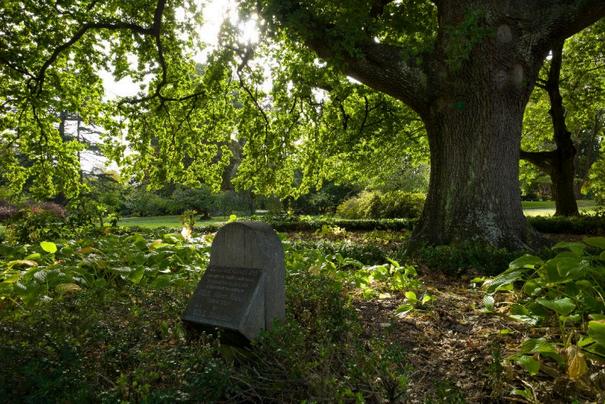
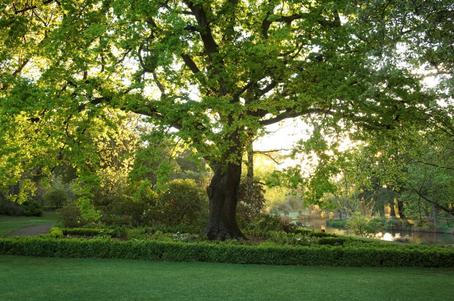
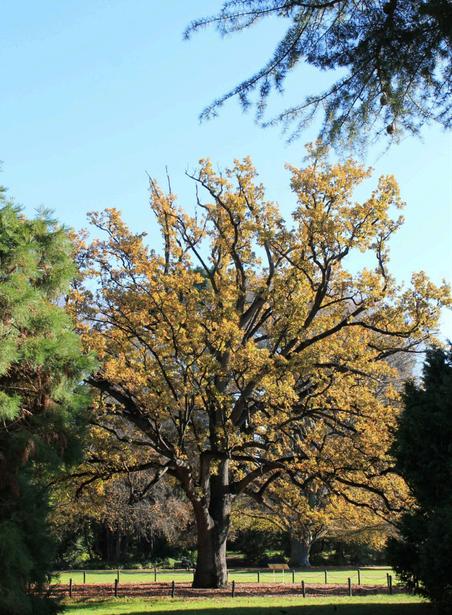
These all look like discrete projects, and many are. What about ongoing adaptation? Consider the White Oak Quercus alba, which stood before the National Herbarium of Victoria in the RBGV Melbourne Gardens for well over a century. It died, as all living things do, in late 2019. It could have been replaced with another White Oak, but assessing the species using the Climate Assessment Tool indicated that Melbourne’s climate was already at the edge of its known tolerance, and its success would likely require considerable resources. Maintaining the heritage of the oak lawn and its open and shaded character was achieved by planting not one but three new oak species, which the Climate Assessment Tool indicated were suitable now and into the future. Q.nigra, Q.lobata and Q.rhysophylla – two of which were entirely new to Melbourne Gardens –are now growing around the trunk of the old White Oak, robust and vigorous, and will continue to do so in the future predicted climate. Climate adaptation can be as simple as factoring in climate suitability when selecting a species for planting.
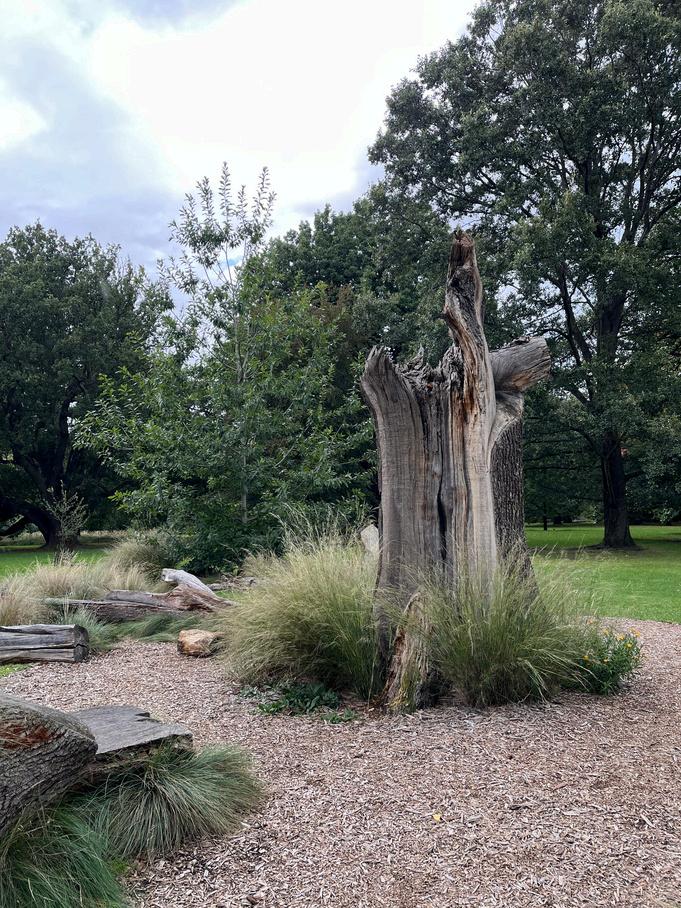
The remains of the White Oak at RBGV Melbourne Gardens, with Quercus rysophylla growing healthily behind it, April 2026 Image credit RBGV
Climate anxiety is more easily mitigated than climate change itself, through direct action and community Look to your peers to see what they are doing, as there is so much incredible and 1,2
impactful work being done Our community emulates the living systems we care for; our diversity gives us a wealth of experience which, when shared, strengthens our resilience into the future.
Although the future is increasingly uncertain, the future of our botanic gardens and arboreta is not By acting now, we can safeguard our living collections and botanical landscapes and ensure that they not only survive in the future, but thrive.
Bevacqua, E, Fischer, E, and Sillmann, J, et al (2026) Moderate global warming does not rule out extreme global climate outcomes. Nature 651, 946–953. doi.org/10.1038/s41586-02610237-9
Forster, PM, Smith, C, and Walsh, T, et al (2025) Indicators of Global Climate Change 2024: annual update of key indicators of the state of the climate system and human influence Earth Syst Sci Data, 17, 2641–2680 doi org/10 5194/essd-17-2641-2025
Kumar, P, Debele, S, and Khalili, S, et al. (2024). Urban heat mitigation by green and blue infrastructure: Drivers, effectiveness, and future needs The Innovation, 5(2) doi org/10 1016/j xinn 2024 100588
Ash Filipovski, Curator Manager, Blue Mountains Botanic Garden Mount Tomah
POLLINATING GREAT IDEAS
Looking at a bird closely reveals the keenness in its eyes, the way it behaves and even the remarkable detail in each feather. But it is not until a bird takes flight that it can be truly understood and appreciated Observing plant stock in an artificial environment is a similar experience The uniqueness of each specimen’s leaves, seeds and fruits highlights the incredible diversity in the plant world, but it is not a complete picture Seeing these plants in their natural habitat offers a deeper understanding– a context vital to conveying the significance of each plant within a living collection. It is also in this context that accelerated biodiversity loss can be effectively addressed in an era of growing ecotourism
By redefining how conservation and visitor experiences work together, the Blue Mountains Botanic Garden (BMBG) has created a new vision that fosters unforgettable encounters and champions urgent conservation action.
This vision is called the Temple of Nature project, with stage 1 of the project due to start in the second half of 2026
Ourwhy
To understand the project, it is important to first appreciate the uniqueness of the BMBG and its location on Darug Country With a basalt peak at 1,000 m above sea level, the BMBG includes 28 ha of curated gardens in a cool mountain climate, featuring predominantly southern hemisphere plants. The BMBG also comprises 234 ha of wilderness, which sits inside the Greater Blue Mountains World Heritage Area – an area that receives up to 8 million domestic and international tourists per year This breathtaking region is visible from almost every vista in the BMBG
For horticulturalists, however, it is a bittersweet view – an extraordinary ecosystem in all its magnificence yet bereft of many of its precious treasures. These treasures, rare and threatened native species, are increasingly accessible only in botanical displays and nurseries – an ecological grief Naturally, there is a yearning to see things as they were, or things as they should be And that is how the Temple of Nature project was born – the organic passion and purpose of our botanic gardens, NSW National Parks and Wildlife Service (NPWS), the philanthropic community and many horticulture partnerships culminating into one desire: to return these plants to their rightful home
Ash Filipovski
Theproject
Building on this foundation, the project is designed to conserve key species in their natural habitats and showcase living collections that cannot be seen anywhere else in the world. Its main goals are to protect threatened plants, enhance public understanding and integrate ecotourism with conservation. The project consists of a 1.6 km hiking trail that will extend through steep, undulating terrain common to the BMBG wilderness As visitors follow the track, they will walk through sclerophyll forests and riparian zones, and cross waterways At the end of the track, travellers will emerge from the ferns and eucalypts to a cool natural cavern featuring cascading water, soft, tranquil light and many significant plants.
Significanthorticulture
Throughout the Temple of Nature project, many of Australia’s rarest and most threatened plant species will be showcased in meta-collections, maximising genetic and ecological diversity One such example is the Dwarf Mountain Pine Pherosphaera fitzgeraldii, a critically endangered Blue Mountains conifer. The Dwarf Mountain Pine is found only in south-facing waterfalls in Leura, Katoomba and Wentworth Falls. With their weeping, glaucous needles and dark, flaky trunks, they appear as ancient bonsais growing on the face of escarpment waterfalls The largest survey of the species found only 755 individuals, of which 25% perished in the last three years Their population is declining rapidly due to anthropogenic impacts Working alongside the Department of Climate Change, Energy, the Environment and Water Saving our Species program, the NPWS, and the Botanic Gardens of Sydney Research Centre for Ecosystem Resilience team, we have examined the genetics of all known individuals From this research, the remaining 25 individual specimens were collected, and 95% of the genetic diversity of this species has now been gathered into one collection Since wild collecting began two years ago, the BMBG’s nursery has propagated the largest genetically diverse collection of P. fitzgeraldii. With the wild population of this species now considered an Asset of Intergenerational Significance, public access is being increasingly restricted. As the Temple of Nature project progresses, further protection of these sites and species will be achieved by diverting foot traffic away from endangered and over-
BMBG Wet Sclerophyll Rainforest Walk Sassafras groves found throughout the BMBG rainforests.
POLLINATING GREAT IDEAS
exposed sites and introducing the species into new, pristine areas of the Blue Mountains to counteract its steady decline. Other iconic specimens that will also be featured include the legendary Wollemi Pine Wollemia nobilis, the Southern Beech Nothofagus moorei, and the critically endangered Fletcher’s Drumsticks Isopogon fletcheri
Preparingandplanning
Such ambitions require immense care and planning to ensure a sustainable, integrated and accessible wilderness pathway Preliminary work has therefore been extensive, including thorough geotechnical surveys to determine optimal track direction, safety and long-term viability. Comprehensive reviews of environmental factors have informed all construction decisions, including stringent phytosanitary measures. The NPWS has been an integral partner in this phase; their broad expertise and collaboration ensuring the project's success
The track will be constructed of natural materials that harmonise with the surrounding environment. In sections with steep terrain, carved sandstone will form stairs and access ways, while gravel will provide a low-impact path that can be maintained with a minimal environmental footprint Cut step stones will be used to traverse wet areas– such as creek crossings, waterfalls, cascades and bogs– with guidance from NPWS experts and First Nations Elders Signage will interpret the various forests, waterways, conservation sites and collections along the trail, enriching the visitor experience and supporting project objectives.
Anewworld
The Temple of Nature project offers a transformative experience as visitors embark on a botanical safari, discovering groves, waterfalls and unique species that define the Blue Mountains It also defines the way forward, turning threats into opportunities by using growing ecotourism to enhance botanic gardens and their conservation efforts
Translocation site of BMBG Wollemi Pines All images credit BMBG
Brittany Walker, Christchurch Botanic Gardens –
Arborist Central City
Resilience in a botanic garden is expressed over decades, even centuries, especially in long-lived species like trees It is not only determined by what species of tree we plant, but by how we care for them throughout all life stages– establishment, maturity and senescence At Christchurch Botanic Gardens this long-view approach is guided by the Christchurch Botanic Gardens Management Plan alongside the Christchurch City Council Tree Policy and Urban Forest Plan. Together, these frameworks support a balanced, forward-looking response to environmental and cultural change, while respecting the 163-year legacy of the gardens
A key focus of our current work, championed by Wolfgang Bopp, Director of Botanic Gardens and Garden Parks, is improving the growing environment around established trees through targeted, practical interventions. One of the most visible and effective of these is the introduction of mulch rings The addition of organic mulch improves moisture retention, moderates soil temperature fluctuations, enhances soil structure and supports biological activity within the soil profile This approach reflects an urban forest perspective, where soil health is recognised as critical infrastructure. Mulch rings also reduce maintenance requirements and visually define tree space, helping to communicate to visitors that trees are actively managed assets within the landscape.
Within high-use areas such as the Archery Lawn, these principles become particularly important The introduction of mulch rings around individual trees in this open setting reduces the pressures associated with foot traffic and popular events. Over time, this improves root function and overall tree vitality while extending longevity in a landscape that must balance recreation
Examples of trees with mulch rings on the Archery Lawn L; Ginkgo biloba R; Acer platanoides 'Goldsworth Purple' Purple Norway Maple
Brittany Walker
with conservation. This subtle intervention also influences how visitors use the space, creating gentle curves that encourage respect for tree root zones without the need for hard barriers.
Above-ground interventions play an equally important role, particularly during the formative years of a tree’s life Structural pruning in juvenile and semi-mature trees is essential in developing strong architecture and reducing future defects. Early guiding of branch structure and load distribution means that trees are better able to withstand environmental pressures such as wind and storm events and reduces the likelihood of failure later in life
At the other end of the age spectrum, many of the gardens’ oldest specimens are entering veteran phases. In these trees, structural change and canopy die back (or retrenchment) are natural and expected processes. Through targeted tree care practices– such as canopy reduction, deadwood retention and the creation of habitat features– we support both the ecological function and structural stability of aging trees These interventions allow veteran trees to continue contributing to biodiversity while being safely retained within a public setting
The historically significant Albert Edward Oak, the first tree to be planted in the gardens in 1863, has been underplanted with low, shade-tolerant species Combined with the installation of a formal Buxus border, this creates a subtle but effective living barrier. These interventions help guide visitor movement away from sensitive root areas, reducing compaction and disturbance without detracting from the visual character of the site. For a veteran tree, where root health is critical and recovery from damage is limited, these small design responses play a significant role in prolonging vitality. They also demonstrate how horticultural design and arboricultural management can be integrated to achieve both functional and aesthetic outcomes
Another oak, planted in 1869 by Prince Alfred, Queen Victoria’s second son, is also an example of this philosophy in practice As the tree has matured, it has begun to retrench, with decline in the upper canopy accompanied by the formation of a lower crown. This natural progression creates valuable
Underplanting surrounding the Albert Edward Oak Quercus robur, planted in 1863 to commemorate the marriage of Queen Victoria’s eldest son Its planting marked the foundation of the gardens.
ecological habitat, supporting insects, fungi and birdlife Our role is to manage this transition carefully, allowing the tree to age with dignity while managing risk, and communicating its significance to visitors.
Part of our mulching practice involves reusing mulch generated from the removal or maintenance of a particular species and applying it back around trees of the same type where appropriate This application of mulch around trees with mulch of the same species provides the potential to support soil microbial communities and nutrient cycling processes that are more closely associated with those trees, reflecting a broader shift towards more ecologically nuanced management practices It reinforces the idea that tree care extends beyond individual specimens to the soil systems and biological networks that sustain them
Resilience in botanic gardens depends not on individual interventions, but on diversity and continuity across the landscape.
Within Christchurch Botanic Gardens, age diversity ensures that new generations of trees are constantly establishing, while older specimens are retained for as long as practicable. Species diversity reduces vulnerability to pests, diseases and climate variability. This diversity is guided by the expertise of the botanic gardens team, whose work in selecting and establishing a broad palette of species underpins the long-term adaptability of the gardens
Replacement and succession planting are undertaken incrementally, maintaining the existing landscape character while introducing new layers of species and age classes. This is not about wholesale change, but about continuity– ensuring that the structure and identity of the gardens evolve without being lost Each new planting contributes to the resilience of the landscape, while each retained veteran adds depth, habitat and historical context
Resilience is not a fixed outcome, but an ongoing process. It requires us to work with natural systems, respond to change, and intervene thoughtfully at the right time and scale. In doing so, we ensure that the landscape can endure, adapt and continue to inspire future generations
Veteran oak supported by mulch, edging and interpretation to protect roots, and communicate its significance It was planted in 1869 by Prince Alfred, the first member of the British royal family to visit New Zealand All images credit Christchurch Botanic Gardens
Reviewed by M Nicholson
I recently revisited one of my favourite books of the last few years, The Wardian Case – How a Simple Box Moved Plants and Changed the World Luke Keogh’s book charts the long history and complex logistics behind three centuries of adventure in plant gathering and transportation It is a fascinating read that starts with an accidental invention by Nathaniel Bagshaw Ward
Ward lived in East London near the surgery where he practiced medicine. By all accounts his garden was quite something, containing several glasshouses and lean-tos. In these, he grew all manner of tropical plants, like ferns, hitherto unknown in London society.
An amateur naturalist, Ward buried a moth chrysalis in soil in a sealed bottle in1829, hoping it would hatch. Instead, he observed plants sprouting from the soil, and these survived for years without watering
Ward then perfected this ‘enclosed system’, a sealed glass and wood miniature greenhouse, in which plants could survive for extended periods using the moisture produced by transpiration. When Ward presented his glazed cases to the world via letters to learned societies and scientific journals, they were read by none other than the celebrated scientist and experimenter Michael Faraday In 1838 Faraday delivered a lecture to the Royal Institution of Great Britain ‘on the altered atmosphere’ (p. 20) generated by Ward’s glazed cases.
Keogh examines early experiments in transportation of plants in boxes, which, in the days before the invention of Ward’s sealed glazed case was ‘difficult and costly’ (p 3)
Ever the experimenter, and with the help of his forward-thinking nurseryman friend George Loddiges, Ward sent plants in one of his cases to Sydney, the longest known sea journey in those days, in 1833. On arrival in Hobart, the southernmost port before sailing north to Sydney on this voyage, the ship’s captain reported that the plants were alive and the experiment had succeeded The plants were then taken to Sydney Botanic Gardens and the case replanted with Australian species The experiment was successfully concluded with the arrival of healthy plants back in London. Ward then sent another case of plants to Ibrahim, the Pasha of Egypt, while Loddiges used the Wardian cases to transport plants all around the world to and from his famous Hackney Botanic Nursery Garden.
When I read about the success of Ward’s case, I was reminded of Victor Hugo’s quote in his book Historie d’un crime (1877) concerning the power of an idea ‘whose time has come.’1
As with the nursery and horticulture industry today, it was through connections and networks of botanists that enabled the Wardian case to play its vital part in the dissemination of live plants throughout the world In some cases, it contributed to international relations, for example, Robert Fortune’s utilisation of Wardian cases in the 1840s in the aftermath of the first Opium War. In transporting tea plants in this fashion from China to India, Fortune broke the Chinese monopoly on the tea trade and reshaped the global economy 2
Botanists often travelled with consular or quasi-official backing Hence, during the Seven Years War (1756–1763) if ‘the French captured the ships and saw (Botanical packages) addressed to… noted men of science…then possibly the collections would make it through’ (p.35). This point serves to highlight the import commanded by scientific and botanical advances in Enlightenment thinking
Leogh gives a historical account of the Wardian case throughout the British Empire at the height of the Victorian Age, replete with valuable photographs of the cases being used and carried in places as far afield as the Dutch East Indies, Berlin, Algeria and Madagascar. This photographic record provides subsequent historians and scholars of the environmental humanities with much valuable visual material, from which can be extrapolated measurements, construction details, scale and portability, and other technical details From the photographs scholars can also deduce environmental and geographic context, and, in the case of colonial studies, human presence and labour.
Keogh includes a section on colonialism Any historical investigation of the British Empire in the nineteenth century would be incomplete without a foray into slavery– Wardian cases were used to stock plantations with crops such as tea, quinine and rubber (p.61). Botany played an important role in ‘the profitability of colonies’ (p.161), and the British, who set up botanic gardens in these new colonies, ‘looked to Kew as inspiration’ (p.163) for their new ventures.
In the 1920s scientists had become more aware of biosecurity issues In a 1924 circular to the US Department of Agriculture, Beverley Galloway, the chief of the Bureau of Plant Industry, noted, ‘The Wardian case, a sort of small portable greenhouse, has probably been the means of scattering more dangerous insects, nematodes, and other pests over the earth than almost any other form of carrier; hence its use is not advised except under special instructions ’ In 1945, the USDA advised that plants not be shipped in soil due to the risk of the unintentional introduction of pests and soil borne diseases (p 217) Use of the Wardian case thus began to wane before the technology was discontinued in the 1960s. Leogh’s work also concludes, ending with an elaboration on the costs to the international economy of the weed species introduced by Wardian cases into environments without natural predators of those species.
3
The eye-watering costs to the global economy – in dollar and environmental value – serve as poignant reminders of the price of scientific advances and experimentation, and of Empire and colonisation.
The Wardian Case – How a Simple Box Moved Plants and Changed the World is published by University of Chicago Press and Kew Publishing, 2020 Visit https://www lukekeogh com/thewardiancase for more details
Editor’s note: readers might be interested in a review of a children’s book on this subject, The Amazing Case of Dr Ward, by Jackie Kerin and Tull Suwannakit, in issue 58 of THE BOTANIC GARDENer.
A Wardian case in the Chelsea Physic Garden. Image credit Daderot, CC0, via Wikimedia Commons
WhereYourHealthGrows
Cassandra Nichols, CEO BGANZ Ltd
Long before inboxes, traffic lights and constant noise, humans were reading landscapes. We listened for water, observed the wind moving the leaves, noticed birdsong. We evolved in conversation with nature Our biological and neurological systems are evolutionarily adapted to understand and respond to environmental cues and, whether we realise it or not, they are still listening
This is why green landscapes trigger measurable physiological changes. A walk through a garden is not just pleasant, it can significantly decrease salivary cortisol, the body's chronic stress marker, slow our heart rate, and ease the breath Emerging research even shows measurable increases in gut microbiome diversity and natural killer cells that strengthen the body's immune response 1 2
In other words, our bodies know what our minds sometimes forget. Nature is not a luxury. It is not a decoration It is core to the way we recover, regulate and return to ourselves
This understanding sat at the heart of Botanic Gardens Week 2026 and our campaign theme, Where Your Health Grows. We celebrated a message that is now widely recognised across global research: nature is medicine, and botanic gardens are among the most accessible, evidence based wellbeing resources available to the public.
Botanic Gardens Week was established by BGANZ to celebrate and promote the extraordinary value of botanic gardens and arboreta across Australia and New Zealand. While our sector has long understood the importance of plants for conservation, education and research, Botanic Gardens Week provides an opportunity to advocate our broader impact with communities, decision-makers and governments
The 2026 campaign focused on three simple but powerful messages Botanic gardens support:
1.Mental health: a simple walk in a botanic garden can have measurable psychological benefits.
2.Physical health: gardens provide a safe, accessible and enjoyable space for movement.
3.Social health: botanic gardens strengthen social connection – a major predictor of wellbeing Nature combined with social connection is one of the most powerful wellbeing interventions available
These messages resonated strongly across the network
This year, 66 organisations participated in the campaign, including 55 BGANZ member organisations, and 11 wellbeing and BGANZ partners Together they delivered a truly national and trans-Tasman campaign Through coordinated social media activity alone, participating organisations generated a combined audience reach of more than 2.7 million.
A key reason for the campaign's success is the willingness of members to embrace and adapt the resources provided. Each year, participating organisations receive a comprehensive campaign toolkit containing key messaging, media releases, social media graphics, templates, event ideas and promotional materials The toolkit is designed to make participation easy, regardless of the size, budget or capacity of the organisation.
Geographical spread of participating members
This year we also introduced a new initiative: the Grow Your Health Challenge
The challenge was designed with two objectives in mind. First, to encourage repeat visitation throughout the month of May rather than a single visit during Botanic Gardens Week itself Second, to provide members with a simple activity that required virtually no additional resources to deliver. Whether a garden hosted a full program of events or had no capacity to run activities at all, every garden could participate
The Australian National Botanic Gardens utilising templates to promote the Grow Your Health Challenge
Visitors were invited to complete six simple wellbeing ‘prescriptions’ during their garden visits; The 20 Minute Reset, the Mindful Moment, Move Your Way, Connect and Belong, The Colour Hunt and Volunteer Connect These activities pursuaded participants to slow down, move, connect with others, engage their senses and experience the restorative benefits of nature.
To encourage participation, 13 prizes were generously donated by our campaign partners. These included two Weleda Favourites Hampers valued at $250 each, five Frank Green Essentials Gift Sets featuring their signature reusable cup and bottle, five $100 Backyard Botanist gift vouchers, and a special donated Wild Earth prize pack We are deeply grateful for their support of the campaign
Entries came from an impressive spread of locations across 24 different gardens and our winners came from nine of these – the Australian National Botanic Gardens, Kings Park, Christchurch Botanic Gardens, Hervey Bay Botanic Gardens, Geelong Botanic Gardens, St Kilda Botanical Gardens, Wollongong Botanic Garden, Auckland Botanic Gardens and Shoalhaven Heads Native Botanic Garden The diversity of locations reinforced a simple truth: wellbeing can be found wherever plants and people come together.
Advocacy
The advocacy dimension of the campaign was strengthened through the Grow Well Series. Across the month of May BGANZ led four conversations with experts in health, landscape design, horticulture, volunteering and youth work The series explored a deceptively simple question: what role do botanic gardens play in our health?
The webinars present a comprehensive case for transitioning the perception of botanic gardens from ‘pretty places’ to validated critical health infrastructure. Using real examples from clinical research, sensory design and community programs, the series highlights a number of key themes:
Botanic gardens are fundamentally different from other green spaces They are intentionally designed landscapes layered with biodiversity, scent, texture, sound, considered sightlines and seasonal change. This provides a unique and powerful support for wellbeing.
Botanic gardens change lives across all demographics Speakers highlighted examples of gardens supporting youth experiencing anxiety and disconnection, volunteers seeking purpose, retirees maintaining social connections, workplaces addressing employee wellbeing and individuals recovering from trauma or with complex needs.
The Grow Your Health Challenge prizes supported by Weleda, Backyard Botanist and Frank Green
Botanic gardens are partners in health delivery Several speakers described gardens as ‘co-therapists’ – places that can transform a simple walk, volunteer shift or sensory experience into a meaningful therapeutic intervention By supporting prevention rather than simply treatment, botanic gardens have the potential to reduce pressure on clinical health services in ways that are costeffective, accessible and deeply human.
The series also highlighted the growing global interest in social prescribing, where doctors and health professionals prescribe connection with nature to support people experiencing isolation, depression, anxiety and chronic stress. Botanic gardens are uniquely positioned to support this movement, providing safe, welcoming and evidence-based environments where people can reconnect with both nature and community Watch the full series here
Ourcollectivevoice
More than 2.7 million people saw our collective message. Thousands participated in Botanic Gardens Week events and activities throughout May Sixty-six organisations worked together to champion a shared vision of the role botanic gardens play in our communities Every event, every conversation, every social media post and every visitor experience helped strengthen a collective message: that botanic gardens contribute far more than beauty to our communities
Together, these efforts are helping to change the conversation. Thank you to everyone who participated!
As our understanding of the relationship between people, plants and place continues to grow, so too does the opportunity for botanic gardens to play a more deliberate role in supporting healthier communities. The challenge before us is not whether botanic gardens contribute to health and wellbeing. The evidence is increasingly clear that they do.
The challenge is ensuring that governments, health providers, funders and communities recognise them for what they truly are. They are not simply places for recreation. They are not only cultural assets, tourism destinations or beautiful civic spaces
They are part of community health infrastructure; essential places where health grows
Botanicnewsfromhomeand abroad
Cassandra Nichols, CEO BGANZ Ltd
Welcometoournewestmembers
The BGANZ network continued to grow throughout FY2026, and we are delighted to welcome nine new Individual Members. We also warmly welcome four new Institutional Members: Mossman Botanic Garden and Sutherland Shire Council, and returning members Eastwoodhill Arboretum and Wombat Hill Botanic Gardens
Every new and returning member strengthens our network - bringing new knowledge, experience, perspectives and opportunities for collaboration. We are pleased to have you as part of our community and look forward to connecting, sharing and working together to support botanic gardens across Australia and New Zealand
Networkgroups
Our Regional and Professional Groups provide some of the best opportunities for members to connect with and learn from one another.
Established by members, for members, these groups are communities of practice that bring together people with shared interests, expertise or geographic connections They provide a place to ask questions, exchange ideas, solve common challenges, share resources and work together to create and promote best practice across the sector.
We are delighted to welcome two newly established Regional Groups: BGANZ Tasmania, chaired by David Reid, and the combined BGANZ South Australia, Western Australia and Northern Territory, chaired by Amanda Shade, Botanic Gardens and Parks Authority They join our longstanding Regional Groups:
BGANZ NSW/ACT – Chair: Felicity Skoberne
BGANZ Victoria – Chair: Tex Moon
BGANZ New Zealand – Chair: Clare Shearman
BGANZ Queensland is also in the process of establishing a new committee under BGANZ’s updated Regional Group Terms of Reference. Queensland members – stay tuned and be ready to get involved!
Regional Groups create opportunities for gardens and members to build local relationships, share knowledge and collaborate on activities relevant to their part of Australia or New Zealand
Cassandra Nichols
BGANZ’s Professional Groups bring together members working in particular areas of botanic garden practice:
BARB – BGANZ Arboriculture group, Acting Chair Chelsea Payne
BGEN – Botanic Gardens Engagement Network, chaired by Emma Simpkins
BCARM – BGANZ Collections and Records Management group, chaired by Sheree Parker.
These groups regularly deliver forums, webinars and other professional development opportunities for the network They also provide valuable spaces to ask questions, share experiences and work collectively through the challenges facing our gardens.
Make sure you are signed up to the groups relevant to your work so you do not miss their upcoming events, discussions and opportunities to contribute Visit https://www bganz org au/professional-opportunities/ for more details and to sign up
Digitaleventscalendarandresourcehub
Planning your professional development is now easier with BGANZ’s digital annual calendar, available through the News and Events page of the website. The calendar brings together upcoming BGANZ, Regional Group and Professional Group activities, helping members see what is planned across the year
Members should also remember to explore the BGANZ Resource Hub This dedicated platform provides centralised access to practical resources, sector updates and professional development tools supporting work across plant conservation, horticulture, education, collections and garden management
The Hub also includes the Member Directory, making it easier to identify and connect with colleagues and experts throughout Australia and New Zealand. It is a practical way to find knowledge within our network, foster collaboration and build stronger professional relationships.
These groups and resources belong to the network Explore them, utilise them, contribute to them and, most importantly, take advantage of this wealth of expertise!
On 12 June 2026 BGCI launched the very first International Day of Botanic Garden Education This day serves as a global call for solidarity in addressing the climate and biodiversity crises, and as a symbol of our shared commitment to overcoming these urgent challenges. Through voluntary participation, the aim of the day is to raise global awareness of the vital role that botanic garden education plays in promoting environmental consciousness and sustainability worldwide We hope your education teams can get behind this in 2027