THE BOTANIC GARDENer The magazine for botanic garden professionals
Theme: Advancing our reach Innovation and leadership in botanic gardens ISSN 1446-2044 | www.bganz.org.au
ISSUE
65 SUMMER 2025
CONTENTS
Editorial Committee REBECCA HARCOURT Editor, SuperScript Writing and Editing JANET O’HEHIR Secretary and Honorary Curator, Camperdown Botanic Gardens and Arboretum Trust Inc. JULIA WATSON Marketing Manager, BGANZ CASSANDRA NICHOLS Chief Executive Officer, BGANZ
DISCLAIMER: Please note the views expressed in articles are not necessarily the views of BGANZ Ltd. We aim to encourage a broad range of articles. Feedback and comments on the magazine and articles are welcome. Please email: secretariat@bganz.org.au
ACKNOWLEDGMENT OF COUNTRY: BGANZ acknowledges the traditional owners of Country throughout Australia, and their continuing connection to land, sea and community. We pay our respects to them and their cultures, and to Elders past and present.
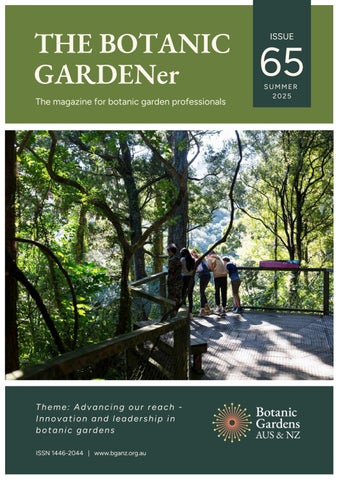
COVER IMAGE: Ōtari-Wilton’s Bush, Wellington, Aotearoa New Zealand. Credit: Wellington City Council
1
Editorial insights Rebecca Harcourt, Editor
Feature Interview 3 Paul Smith. The ecology of leadership: innovation and cultural change in today’s botanic gardens Julia Watson interviews Paul Smith, Secretary General at Botanic Gardens Conservation International (BGCI)
Feature Garden 9 Leading with nature: 100 years of Ōtari and the future of native plant conservation Amalia McLaren-Brown, Visitor Engagement Coordinator; Tim Park, Team Manager Ōtari; Raydeen Cuffe, Team Manager Visitor Experience; Megan Ireland, Team Lead Ōtari and Karin Van Der Walt, Conservation and Science Adviser. Wellington City Council
Feature Articles 17 Greener on the outside: how the Botanic Gardens of Sydney is re-cultivating culture and community Peter Dawe, Lead, Youth Community Greening, Botanic Gardens of Sydney
23 Move the bench: using risk assessment frameworks to inform tree protection Chelsea Payne, Curator, Arboriculture, Botanic Gardens and Parks Authority (BGPA), Perth
29 Safeguarding Australia’s botanic gardens: biosecurity in a changing world John Siemona, Damian Wrigleya, David Smithb, Peter Scottb, Brett Summerella, Matthew Laurencea and Sarah Dunstana, Botanic Gardens of Sydneya and ArborCarbonb
Pollinating Great Ideas 34 Promoting nature-based solutions: botanic gardens as shop windows for the public and professionals Emma Simpkins, Education and Partnership Specialist, Auckland Botanic Gardens
36 iNaturalist – seeing botanic gardens through new eyes Patricia Kaye, Honorary Curator Wallace Herbarium, Eurobodalla Regional Botanic Garden
38 Connecting to Country: inspiring awe and wonder through outdoor learning Tracy Saunders, First Nations Learning Lead, Botanic Gardens of Sydney
BGANZ Industry Awards 41 Industry Award Winners, 2025
What’s New? 44 Botanic news: from home and abroad Cassandra Nichols, CEO, BGANZ Ltd
The theme of the next edition of The BOTANIC GARDENer is Resilient gardens adapting to a changing world. The deadline for contributions is 4 April 2026. Please contact Megan Porter (media@bganz.org.au) if you are intending to submit an article or have a contribution to other sections.
Editorial insights Rebecca Harcourt, Editor
This issue’s theme, ‘Advancing our reach: innovation and leadership in botanic gardens’, mirrors that of the recent BGANZ Congress, and includes several thought-provoking and inspiring articles based on Congress presentations.
Rebecca Harcourt
In ‘Greener on the outside: how the Botanic Gardens of Sydney is re-cultivating culture and community’, Peter Dawe outlines the gardens’ innovative Greener on the Outside program, taught by the dedicated and thoughtful Youth Community Greening team. There is powerful evidence that this program has a profound impact on every aspect of the lives of the at-risk Aboriginal and Torres Strait Islander high school students who participate, from self-esteem to community engagement. This is a real example of how lives can be transformed by connecting to nature, culture and community. Tracy Saunders’ article, ‘Connecting to Country: inspiring awe and wonder through outdoor learning’, describes another exciting outdoor education program, a living classroom on Country at the Australian Botanic Gardens Mount Annan. In this pilot program, students and teachers learn about the environment through a First Nations lens. I hope, as Tracy does, that this will create a connection to Country that positively changes the way people interact with the environment. In ‘Using local native species in verge gardens and public spaces’, Felicity Skoberne from Wollongong Botanic Garden encourages us to plant Indigenous species on verges to create living corridors in our cities. I grew up calling these strips of land between the footpath and the road ‘nature strips’ – a much more descriptive and appropriate name, in my opinion. Whatever the name, it’s a practical and visible way to green our cities and promote biodiversity. The article ‘Safeguarding Australia’s botanic gardens: biosecurity in a changing world’, a collaboration between Botanic Gardens of Sydney and ArborCarbon, outlines the ongoing development of a Biosecurity Strategy and Operational Plan for all three Botanic Gardens of Sydney gardens and The Domain Sydney. This timely plan emphasises early detection and rapid response and will be shared with BGANZ members once finalised. This is an excellent example of leadership and collaboration in the sector. How can botanic gardens influence the successful implementation of nature-based solutions, like living roofs, swales and rain gardens, into cities like Auckland? Emma Simpkins offers three very different, innovative suggestions in her article, ‘Promoting nature-based solutions: botanic gardens as shop windows for the public and professionals’, and wants to know if you have any others.
1 THE BOTANIC GARDENer | ISS 65 SUMMER 2025
These authors, and the people in their teams, show dedication, creativity, leadership and vision: qualities shared by Paul Smith, outgoing Secretary General of Botanic Gardens Conservation International, and the subject of our feature interview. I believe, as Paul states in the interview, that qualities such as these ‘will define the next chapter of botanic gardens.’ I look forward to reading about this in future issues. Thank you to all the authors, including those not mentioned above, for making this a very engaging issue. Rebecca I live and work on the land of the Garigal Clan of the Wannanginni Guringai people, who are the ancestral custodians of Bulbararing, Allagai and Tdjudibaring, and pay my respects to their Elders past and present. P.S. Please send feedback on this issue or suggestions for future themes to secretariat@bganz.org.au.
BGANZ Congress 2025, Old Parliament House
THE BOTANIC GARDENer | ISS 65 SUMMER 2025 2
FEATURE INTERVIEW
Paul Smith: The ecology of leadership innovation and cultural change in today’s botanic gardens Julia Watson interviews Paul Smith, Secretary General at Botanic Gardens Conservation International (BGCI).
Paul grew up with a deep curiosity for the natural world and carried that fascination into a 25-year career in conservation. He went on Paul Smith to lead major global efforts to protect plant diversity, including his 10 years heading Kew’s Millennium Seed Bank, where seeds from more than 25,000 species were secured for the future. I spoke with him in his current role as Secretary General of BGCI, a position he has held since 2015. The recent Nature Ecology & Evolution study (Cano et al., 2025) suggests botanic gardens have struggled to meet the extinction crisis – why do you think progress has been slower than hoped, and what needs to change? There are several contributing factors. Some are external – for example, aspects of the Convention on Biological Diversity have had a chilling effect on conservation activity. At the domestic level, access to material for conservation work is often hindered by complex bureaucracy. There are also challenges with the international exchange of material. A well-known case is Erica verticillata in South Africa, where material is being repatriated two centuries after it was first collected. Multilateral agreements inevitably reflect the lowest common denominator, which can slow action. The solution lies in building ‘coalitions of the willing and able.’ These coalitions can help overcome cultural and institutional barriers that have led us to underappreciate our collections. If you get a group where the cultural impediments are overcome and things work well you can create a community of practice that snowballs. Leadership is key to making this happen. From your experience at Kew’s Millennium Seed Bank and now BGCI, what have you learned about what it really takes to drive change within large, traditional institutions? The Millennium Seed Bank was the passion of a few individuals who were utterly committed to
3 THE BOTANIC GARDENer | ISS 65 SUMMER 2025
their cause. They had a good idea, they stuck with it, and they made it work. Timing and support – both financial and leadership – were essential. Change is usually driven by individuals rather than institutions. Top-down transformation is rare, partly because leadership turnover disrupts continuity. For example, when Kew had an Australian director some 15– 20 years ago, there was a strong push towards ecological restoration. But that momentum waned with subsequent leadership changes. Sustainable change comes when committed individuals at all levels are empowered and supported by partners – as was the case with the Millennium Seed Bank. If you have people committed at lower levels and can find support from partners, you can get a movement that catches on. Civil society movements are also powerful drivers.
Roger Smith and Simon Linington, founders of the Millennium Seed Bank
Policy can shift from one year to the next, but if civil society is on board and you have a critical mass, the effort goes on. This is increasingly evident in botanic gardens. The Nature Ecology & Evolution paper offers a snapshot of a few gardens with very long-term data, but it largely examines horticultural and living collections. Conservation challenges, however, often lie with scientists rather than horticulturists. Horticulturists are tasked with engaging visitors, often through ornamental displays – an objective that doesn’t always sit well with scientists and conservationists. Practice and partnership needs to be scaled up across both domains.
Sustainable change comes when committed individuals at all levels are empowered and supported by partners.
Gemma Hoyle and Tom North outside Australian National Botanic Gardens Seedbank
Global Biodiversity Standard team assessing a mangrove site in Kenya
THE BOTANIC GARDENer | ISS 65 SUMMER 2025 4
Leadership culture is equally critical. Confident organisations and confident leaders create space for innovation, whereas micromanagement stifles it. Managers manage risk, leaders take risk. Even if leaders don’t share every new idea, they must create room for ideas to emerge. Finding like-minded collaborators is invaluable. Tenacity also matters. The Millennium Seed Bank’s enduring success is not only in its collections but in the legacy of training and capacity-building it inspired worldwide, and the fact that leadership gave them the space to take it further with many people now trained at the Millenium Seed Bank. The legacy is the collections and the people, but massively amplified ensuring sustainability. At BGCI, we have applied similar principles to create communities of practice by providing a centre of gravity around them, such as the Global Conservation Consortia (GCC), inspired by the Royal Botanic Garden Edinburgh’s International Conifer Conservation program. Following discussions with colleagues at Te Papa in Wellington, the GCC model was launched and now includes more than a dozen consortia working both in situ and ex situ. The Ecological Restoration Alliance has likewise evolved into the Global Biodiversity Standard. These initiatives demonstrate the power of gathering like-minded professionals and building momentum from within. Importantly, the GCCs bring horticulturists into conservation by focusing on plant groups central to their day-to-day work. It is the horticulturists who drive this movement. Innovation is central to the BGANZ 2025 theme. In your view, what does true innovation in plant conservation look like – beyond new technologies or scientific advances? And how can botanic gardens also innovate in the way they engage the public, inspire behaviour change and empower people to care about plants? One important innovation is recognising that biodiversity loss and climate adaptation cannot be addressed by the professional community alone. The GCCs are an example of working across gardens and with societies that focus on particular groups – even where that raises difficult questions about historical plant collection practices because some material was not acquired in the best way. These groups hold expertise and can engage the public directly, unlike traditional top-down institutions.
Millenium Seedbank staff with Sir David Attenborough
5 THE BOTANIC GARDENer | ISS 65 SUMMER 2025
FEATURE INTERVIEW
Innovation is about finding allies, not always the traditional ones, and finding common ground with partners who may have very different worldviews. It requires openness and humility and a willingness to take risk. At the Millennium Seed Bank, for example, we established the UK Seed Hub to look at seed available on the open market for restoration. There is a restrictive pallet of native species due to constraints like complex dormancy mechanisms, processing and storage. Engaging with native seed companies proved challenging, especially when we tested the seed mixes – at one meeting, a scientist bluntly pointed out that ‘some seed was dead’, which nearly derailed the partnership. We learned that humility and diplomacy are essential to sustaining collaboration. Whatever it takes to inspire people – through art, gardening or any other way – we should do it. In the UK, there’s a huge gardening community, often older, but very influential. Many of them write to their MPs and care deeply about the natural world.
Global Conservation Consortium for Oaks fieldwork in Mexico
In gardens, we can sometimes simplify messages too much. Working with children is essential, but we know from experience that teenagers are harder to reach – they’re focused on careers, relationships and finding their place in the world. We shouldn’t expect them to be influential right away, and we shouldn’t put all our energy into that one group. We need to talk to everyone within our sphere of influence. Too often, we assume people aren’t interested and dumb things down. There’s also a reluctance to address political topics like climate change – for example, in Australia, I once had someone publicly berate me for bringing it up, saying it was ‘too political.’ We tend to shy away from those conversations, but we should treat people like responsible adults.
Australian National Botanic Gardens Red Centre. All images credit Paul Smith
THE BOTANIC GARDENer | ISS 65 SUMMER 2025 6
Even small actions matter. Think about the biodiversity impact of planting a single acorn. Empowerment should feel practical – something people can do together. Most feedback we get is that people feel helpless and surrounded by negativity. But when we share positive stories – like successful species recovery programs – people feel uplifted. These small successes really do make a difference. As head of a global network of over 950 gardens, what distinguishes the institutions that are truly leading in conservation and change-making? Confidence to take risks combined with imperatives is essential. In some places – for example, through the Ecological Restoration Alliance in Uganda, Brazil and Mexico – this work is not a nice-to-have. For many, it’s part of the development agenda, and they are expected to play a role. This expectation builds confidence. Also, finance follows.
Most feedback we get is that people feel helpless and surrounded by negativity. But when we share positive stories – like successful species recovery programs – people feel uplifted. These small successes really do make a difference.
In Europe, it’s different. The European Consortium includes around 700 gardens, 80–90% of which are associated with university departments. They tend to be peripheral to the main curriculums. Many were set up for taxonomy and are still a long way down the pecking order. It’s much harder for them to interact with society outside the faculty. Pressure to publish drives their collections, and it’s difficult to break out. It takes extraordinary individuals for that to happen, and sometimes a few serendipitous occurrences. It takes courage – not a common commodity. I’ve seen the best and worst in botanic gardens. Some people have been pushed out – especially if they’ve been seen as disruptive talent. We need to channel that energy, but also let them use their talent. Leadership, tenacity and courage from individuals make things happen. Looking forward, the authors in the Nature Evolution & Ecology paper are the change-makers. Because of their work and their passion, we will see change in the management of collections for conservation. Patience – and even stubbornness – can make change happen. People in our community are also gentle and collaborative, not cut-throat like in academia or in some areas of animal conservation. For the BGANZ community – working across Australia, New Zealand and the Pacific – what unique opportunities or responsibilities do you see for this region in advancing global plant conservation? The region faces extraordinary challenges, from Australia’s drylands to the fragile island ecosystems of the Pacific. Yet it is also leading in several areas. Australia, for instance, is at the forefront of plant translocation and plant disease management. The Climate Assessment Tool
7 THE BOTANIC GARDENer | ISS 65 SUMMER 2025
FEATURE INTERVIEW
and Climate Change Alliance represent pioneering spatial models for predicting tree resilience, now being developed globally to include extreme weather factors. New Zealand and the Pacific are also global leaders in ecological restoration and invasive species management. The region’s experience with Indigenous partnership and co-management adds vital perspectives to global conservation practice – though globally, definitions of ‘Indigenous’ vary and must be approached with sensitivity. A persistent challenge in conservation is our tendency towards self-interest. Outcomes are too often hijacked by political or institutional agendas. We need to refocus on our shared purpose: to speak for the organisms that cannot speak for themselves. Science and traditional knowledge share much in common – both are built on observation, trial and transmission of learning. We should seek common ground rather than emphasise difference. Nature-based solutions must not subordinate biodiversity to human utility. As a community that cultivates one-third of all known plant species, botanic gardens have both the means and the moral obligation to lead in conserving and managing diversity within landscapes. Looking ahead, what gives you hope that botanic gardens can deliver the kind of transformation needed to meet the biodiversity and climate crisis – and what advice would you give the next generation of leaders? Progress depends on taking risks, challenging convention and refusing complacency. Innovation has not always come naturally to our sector, but that must change. The next generation – those who have grown up amid global environmental crises – is already driving this shift. We must do more to attract and support young professionals. I am encouraged by the creativity and commitment I see among them. What’s needed now is not incremental improvement but a step change – perhaps even a revolution within our community. Momentum will come from both internal drive and external pressure: new policies, urgent global frameworks and the growing visibility of species conservation within the broader biodiversity agenda. The issues confronting us are intensifying, but so too is the determination to address them. Leadership, courage and vision will define the next chapter of botanic gardens – and the people who inspire others will be at its heart.
As a community that cultivates one-third of all known plant species, botanic gardens have both the means and the moral obligation to lead in conserving and managing diversity within landscapes.
Further reading: Cano, A, Powell, J, and Aiello, AS, et al. (2025). Insights from a century of data reveal global trends in ex situ living plant collections. Nature Ecology & Evolution, 9:214–224. doi.org/10.1038/s41559-024-02633-z
THE BOTANIC GARDENer | ISS 65 SUMMER 2025 8
FEATURE GARDEN
Leading with nature: 100 years of Ōtari and the future of native plant conservation 2 Amalia McLaren-Brown, Visitor Engagement Coordinator; Tim Park, Team Manager Ōtari; Raydeen Cuffe, Team Manager Visitor Experience; Megan Ireland, Team Lead Ōtari and Karin Van Der Walt, Conservation and Science Adviser. Wellington City Council
A century of care Ōtari-Wilton’s Bush (Ōtari) is a haven for native flora as Aotearoa New Zealand’s only botanic garden dedicated solely to native plants. It features the 5-hectare Ōtari Native Botanic Garden, with around 1,200 native species, hybrids and cultivars, alongside Wilton’s Bush Reserve, 100 hectares of ancient and regenerating native forest. Designated as a six-star Garden of International Significance by the New Zealand Gardens Trust of the Royal New Zealand Institute of Horticulture, Ōtari is a hub for research, education, conservation and recreation. Ōtari celebrates a significant milestone in October 2026, its 100th anniversary. Since 1926, Ōtari has stood as a living collection of the diverse plants of Aotearoa. Generations of visitors have walked its paths and learned about the taonga (treasures) that make our natural heritage unique. The centenary presents an opportunity to reflect on its remarkable history and its ongoing role as a research hub, educational space and native plant collection. It is also a chance to look forwards, ensuring that visitors can enjoy, understand and connect with nature over the next century. Before European settlers came to Wellington, the area was known as Ōtarikākā, ‘the place of snares to trap kākā’ (the local native parrot). It was a mahinga kai, an area valued for food gathering, by successive iwi of Te Whanganui-a-Tara. Today, Taranaki Whānui ki Te Upoko o Te Ika, Te Āti Awa and Ngāti Toa Rangatira (the Indigenous peoples) hold mana whenua (historic and territorial rights) over the area, with one neighbouring tract still owned by Ngāti Tama shareholders. In 1860, farmer Job Wilton preserved seven hectares of untouched native forest, fencing it off as Wilton’s Bush. Over time, the adjoining land was protected, becoming the Ōtari Scenic Reserve in 1906. By 1918, Wellington City Council was managing the reserve for recreation and the protection of native flora, with Wilton’s Bush formally included in 1925. Botanist Dr Leonard Cockayne arrived in the 1920s with a vision to create an ‘open-air plant museum’ where native species could be cultivated, studied and preserved. Cockayne and the
9 THE BOTANIC GARDENer | ISS 65 SUMMER 2025
Director of Parks J G McKenzie established the Ōtari Open-Air Native Plant Museum in 1926 with a four-point vision: to establish a collection of plants from all over New Zealand to cultivate these native plants at Ōtari to teach people about native plants and advocate their use in gardens to restore the native forest of Ōtari. The first collection, the Alpine Garden, was completed in 1930. It contained plants sourced from New Zealand's Southern Alps by enthusiastic botanists, including Leonard Cockayne, with later additions by curator Walter Brockie.
The Viewing Platform just past the Ponga Frondage (Tree Fern Collection). Credit: Wellington City Council
Over time, the number of collections grew to the current total of 27. Our plants represent ecosystems and landscapes from the entire length of New Zealand – from subtropical to subantarctic offshore islands, to coastal sand dunes and alpine meadows.
Leading with living collections Plant collections are at the heart of every botanic garden, and Ōtari is no exception. Over the past few years, we’ve been working to strengthen and expand our collections to better reflect the extraordinary diversity of Aotearoa’s flora. Our aim is simple: to tell the story of Aotearoa through its plants. Each plant at Ōtari has a story, with most plants collected from the wild and propagated in our nursery. Every collection is carefully created in partnership with local kaitiaki (custodians) and conservation agencies to ensure our work supports both cultural and ecological values. Today, Ōtari is home to around 1,200 native vascular plant species, hybrids and cultivars – the largest living collection of New Zealand plants in the world. Since many of the plants grown in our nursery are from wild sources, they are incredibly valuable for conservation. They act as a living safety net for threatened species and can help restore wild populations if disaster strikes in their natural habitats.
Linda Lee (Ngāti Raukawa, Ngāti Huia, Ngāti Kurī, Te Rarawa, Ngāi Tākoto, Te Aupōuri), harvesting Harakeke from the Ōtari pā for the raranga classes she runs. Credit: Kathy Ombler
THE BOTANIC GARDENer | ISS 65 SUMMER 2025 10
Roughly a third of the plants in the Ōtari collection are classified as At risk or Threatened by the New Zealand Threat Classification System. Our Offshore Islands Garden brings together species found beyond New Zealand’s North, South and Stewart Islands, showcasing the adaptations that have evolved in isolation. Next to it, the Rēkohu (Chatham Islands) Garden celebrates the unique flora of these remote islands, 800 kilometres east of mainland New Zealand. Separated from the rest of the country for more than 80 million years, Rēkohu has developed its own distinctive plant life, with 47 species found nowhere else on Earth. You can see some of these unique plants in the Rēkohu Garden, including the striking Kahakaha Astelia chathamica and the beautiful coastal megaherb, Kopakopa Myosotidium hortensia. Together, these gardens remind visitors that even within one country, nature takes many forms. One of our most meaningful collections is Te Pā Harakeke o Te Whare Pora o Ōtari. This is a pā harakeke, or a planting of selected Harakeke (New Zealand Flax Phormium spp.). Unlike our other collections, this one is not curated by habitat or region, but by purpose. Each variety is chosen for the unique qualities of its leaves and fibres, prized for raranga (weaving) and muka (fibre work). Much like a classic garden, the pā harakeke is carefully designed and tended. We choose varieties suited to the site and climate, plant them with space to thrive, and keep the area well-maintained for easy harvesting and healthy growth. Experienced weavers harvest from our pā harakeke, including a group that runs regular raranga classes at Ōtari.
Kopakopa (Chatham Island Forget-MeNot Myosotidium hortensia). Credit: Chris Coad
To honour traditional naming and use, the plants are labelled in te reo Māori rather than Latin, reflecting how they are known and recognised by weavers. These plants are living taonga, descended from a collection developed by weaver and grower René Orchiston in Gisborne, who gathered prized varieties from around Aotearoa and gifted them to Manaaki Whenua (Landcare Research). Together, they form Te Kohinga Harakeke o Aotearoa – the National New Zealand Flax Collection. Some of the plants in Orchiston’s collection were sourced from Wellington Botanic Garden, forming a nice connection between our gardens.
11 THE BOTANIC GARDENer | ISS 65 SUMMER 2025
The Alpine Garden at Ōtari-Wilton’s Bush. Credit. Credit: Wellington City Council
FEATURE GARDEN
Wellington Botanic Garden’s first manager, James Hector, collected these Harakeke from the Taranaki and Whanganui regions during the flax-milling era due to their value and potential in the global economy, before the use of sisal and plastic. While many of our collections celebrate diversity and cultural connection, others focus on survival. Our Threatened Species Garden is a place where plants on the brink of extinction are given a second chance. Each species has its own story, where some cling to life on a single rocky outcrop, and others survive only through propagation efforts in gardens like ours. Working closely with the Department of Conservation, regional councils, mana whenua organisations and other conservation partners, we are helping to protect these plants from extinction. But our role does not stop at cultivation; the living collections at Ōtari also provide vital material for research, restoration and seed banking.
Science in the garden Behind the peaceful forest walks and lush collections, there’s a lot of unseen science happening in our on-site Lions Ōtari Plant Conservation Laboratory. A recent focus has been on orchids – some of the most specialised and elusive members of our flora. Our native orchids rely on specific fungi to germinate their seed and survive, making them notoriously difficult to grow outside their natural habitats. To help change that, we have been working alongside researchers to study the role of orchid mycorrhizal fungi (fungi associated with plant roots) and trialling propagation methods to better understand how these plants can be protected or restored in the wild. Another of our research projects is focused on the seed conservation of Kauri Agathis spp. There are 17 Agathis species globally,1 and 15 of these are classified as Endangered, Vulnerable or Near Threatened on the IUCN Red List of Threatened Species™. The New Zealand Kauri A. australis has lost more than 99% of its habitat due to logging for timber and resin harvesting, and with additional impacts from diseases such as kauri dieback, this species is in dire need of conservation. While Kauri forests are iconic in the northern parts of New Zealand, the living collection of approximately 200 specimens at Ōtari offers a valuable opportunity to study their reproduction,
Ōtari researcher, Jennifer Alderton-Moss, in the Lions Ōtari Plant Conservation Laboratory. Credit: Wellington City Council
1. powo.science.kew.org/results?f=species_f&cursor=*&p=0&q=Agathis
THE BOTANIC GARDENer | ISS 65 SUMMER 2025 12
collect seed and establish effective seed storage methods without impacting the remaining wild population. The results can then be applied to the conservation of other Agathis species globally. The conservation and science team at the Lions Ōtari Plant Conservation Laboratory also leads research into the long-term storage of seed through conventional seed storage (at −20 °C) and cryopreservation (at −196 °C). This increases our knowledge of how to care for and preserve New Zealand’s flora in a changing world.
Wellington Gardens staff on a Tongariro National Park plant-collecting trip. These plants will contribute to a future North Island Alpine Collection. Credit: Wellington City Council
Enhancing visitor experience It’s not just about plants – it’s about the people, too. We had a fresh look at how our visitors move through the gardens and forest with the simple goal of making exploring easier, more enjoyable and more meaningful. Our refreshed wayfinding brings together practical improvements and more in-depth storytelling. Visitors will now find new colour-coded signs and bollards with distance markers to make navigation clearer, along with updated map boards at main entrances and key points around the garden. To accompany this change, we have released new brochures for both our forest walks and the native botanic garden, which are available in both Māori and English. We have also updated and relaunched our popular self-guided experience, Te Ara Koukouoro Nature Trail, designed for all ages. This trail invites visitors to take their time, listen to the forest and learn about key aspects of the local ecosystem. As part of this work, our main tracks now carry new names gifted by mana whenua, Taranaki Whānui ki Te Upoko o Te Ika. These names reflect the land and its cultural heritage, reconnecting each walk with the stories of place and inviting visitors to explore with a deeper sense of connection to the forest and its history.
13 THE BOTANIC GARDENer | ISS 65 SUMMER 2025
FEATURE GARDEN
These changes honour the past while shaping the future, ensuring that everyone, from first-time visitors to long-time locals, can find their way and have a great experience among the native plants and wildlife of Aotearoa. Ōtari-Wilton’s Bush is not just a self-guided experience; we also run education sessions with school groups and have an amazing team of volunteers hosting and leading guided walks. Our Education Team runs different sessions including one that explores how Māori in the area relied on plants as an essential resource. They also look at the mauri, or life force, of some very old trees on site, like Moko, the 800-year-old Rimu Dacrydium cupressinum. When it comes to volunteering, we are lucky enough to be supported by Ōtari-Wilton’s Bush Trust, a public charitable trust made up of people who care deeply about Ōtari. Many local members volunteer their time in the gardens, nursery and forest. They organise public tours from fungi to ferns, and history to restoration. They also have visitor hosts: friendly volunteers who answer questions, share highlights and help people make the most of their visit.
One of the new bollards installed at Ōtari as part of the new wayfinding project. Credit: Wellington City Council
One of the Education Team teaching a visiting school group about Harakeke. Credit: Wellington City Council
Looking forwards What’s next for Ōtari? – plants and partnerships! We will continue to deliver on Cockayne's vision of curating and cultivating native plant collections, restoring the native forest and educating people about native plants. We will be looking at new ways to do this, and how we can better represent Indigenous knowledge so that both Western science and Mātauranga Māori influence our work. One of the ways we are continuing Cockayne’s vision is by making the entire Native Botanic Garden solely native plants – even the lawn. Leonard Cockayne's vision for this was shared in a magazine from 1953, which states, ‘He hoped that no exotic plant would be allowed in the
THE BOTANIC GARDENer | ISS 65 SUMMER 2025 14
reserve even to the grass on the lawn.’ So, this spring and summer, we are renewing the Cockayne Lawn and trialling a native grass turf. We have sown Stewart’s Slender Poa, a new commercial variety bred from the native grass Poa imbecilla. Most lawns in New Zealand are dominated by introduced grasses like browntop, fescue and ryegrass, while our own native grasses have declined in the wild. This project lets us test how a native lawn performs, and then share what we learn. We will also be completing a living collections review to reflect on what we have, what might be missing and how we can improve Ōtari. One of the future collections we are planning is a North Island Alpine collection, as the alpine collection mentioned earlier is focused on South Island species. We have already collected some of the plants during a recent collecting trip to Tongariro National Park, where we were supported by Ngāti Rangi, the mana whenua of the area. With (mostly) clear winter skies and some spectacular views of Koro Ruapehu, a lucky few from our team were able to collect seeds and cuttings from a range of alpine species for which we had collection permits. These included Halocarpus biformis, Brachyglottis bidwillii and Phyllocladus toatoa – plants that have adapted to survive in the extreme conditions of New Zealand’s alpine zones. The trip marks the start of a new relationship with Ngāti Rangi, and we are so grateful for the manaaki (hospitality) they extended to our team. These taonga will help shape this new collection at Ōtari in the future, offering a chance for more people to connect with the unique beauty and stories of North Island alpine plants. Whatever the future holds for Ōtari, we will continue to have plants and people at the heart of what we do, and ensure generations to come can experience the incredible plants of Aotearoa New Zealand.
Ōtari gardener Lucy Williams in the Ōtari nursery propagating plants brought back from a collecting trip. Credit: Wellington City Council
15 THE BOTANIC GARDENer | ISS 65 SUMMER 2025
FEATURE ARTICLE
Greener on the outside: how the Botanic Gardens of Sydney is re-cultivating culture and community 2 Peter Dawe, Lead, Youth Community Greening, Botanic Gardens of Sydney
Introduction The Botanic Gardens of Sydney’s Youth Community Greening (YCG) program is a diverse environmental education outreach initiative tailored for young people aged
Peter Dawe
two to 25 throughout New South Wales. Focused on working with less privileged youth, YCG collaborates with early learning centres, schools, migrant support networks, youth centres, youth justice centres and similar organisations. The program empowers its participants by transforming underutilised spaces into thriving school and community gardens and green spaces while delivering hands-on, curriculum-based environmental education sessions and outdoor activities. In recent years, YCG has endeavoured to deepen the often-overlooked ties that Aboriginal youth have with their schools, communities and Country. Supported by the Federal Safer Communities Fund, the Greener on the Outside program strives to reveal that life beyond troubled pathways can flourish in unexpected and healthy ways.
Redefining ‘disengagement’ The conversation around disengagement often paints young people as lazy or indifferent. The YCG project challenges this stereotype. The term ‘disengaged’ can mask a profound disconnect between an outdated education system and the cultural realities of First Nations youth. Many Aboriginal students, feeling alienated by a rigid, boxed-in classroom environment, may turn to behaviours that are labelled as antisocial. Rather than blaming the students, the program asks
17 THE BOTANIC GARDENer | ISS 65 SUMMER 2025
a deeper question: Might the system itself be failing to inspire and connect, and are there more effective alternatives? By fostering genuine trust and respect, the Greener on the Outside program aims to bridge that gap. A mere token connection to culture is not enough. True engagement requires an environment where young people are seen, heard and empowered to lead. This renewed sense of belonging not only honours cultural heritage but also becomes a pathway out of potential criminal trajectories and social isolation.
Students from Wingham High School talking culture in their yarning circle, surrounded by bush tucker
Cultivating connection through nature At the heart of the program is its hands-on, garden-based approach. At-risk Aboriginal and Torres Strait Islander high school students are trained not just to garden, but to care for Country. Across 16 high schools and youth centres along the NSW coast, from Bega to Coffs Harbour, students have embarked on the exciting journey of designing, creating and celebrating their own cultural spaces. These outdoor projects have taken shape in myriad forms, from cultural trails marked by interpretative signage and yarning circles to bush tucker plant nurseries that connect tradition with sustainability. The initiative is not merely a garden program; it is an immersive experience that transforms spaces into living legacies of heritage and creativity, and positively transforms the students in the process. A critical element of the program’s success lies in its deep involvement with the school communities and Elders. Working together, school staff, community mentors and the YCG team carefully select and support students who may otherwise be slipping away. As Neal Reed, Principal of Albion Park High School, proudly notes, ‘When the team from the botanic gardens are present and delivering the program, we have 100% attendance from the students involved.’ This remarkable statistic underscores the magnetic power of tangible, outdoors learning experiences.
THE BOTANIC GARDENer | ISS 65 SUMMER 2025 18
Harvesting the benefits The results speak for themselves. Over an 18-month period, students actively engaged with the process, transforming barren ideas into blossoming cultural spaces. An evaluation by the Ngarruwan Ngadju First People’s Health and Wellbeing Research Centre at the University of Wollongong confirmed the program’s profound impact.1
Students not only demonstrated increased school attendance, but also experienced enhanced physical activity, creativity and social skills. The initiative integrated literacy and numeracy with practical tasks in mathematics and science, providing a calming and inspiring environment that supported wellbeing and encouraged aspirations towards vocational training and employment. What emerges is a model of education that transcends the conventional classroom – a model where learning is lived and culture is a vibrant, participatory subject. This YCG project shows that when youth are given the chance to own their spaces and their stories, the ripple effects touch every aspect of their lives, from self-esteem and resilience to community engagement.
A legacy of growth The Botanic Gardens of Sydney’s YCG program offers more than just environmental education or a fresh coat of paint on public spaces. It is a living testament to the power of culturally attuned, hands-on learning that redefines what it means to be ‘engaged.’ By connecting young Aboriginal people with their heritage through nature, art and community involvement, the program plants seeds that can grow into long-term social, emotional and educational success. As the gardens continue to flourish, so too does the hope that every young person can find a place where they belong – a place that nurtures their identity and illuminates the path forward. In these spaces, cultivated by community care and cultural wisdom, every plant, every pathway and every yarning circle is a step towards healing, connection and a greener future for all. Looking ahead, similar models of community engagement and experiential learning are being explored in urban and rural settings. How might such programs evolve to better integrate modern education with cultural heritage? Could these green spaces become hubs of innovation that redefine the future of education? Each question is an invitation to imagine a world where every young person is offered the opportunity to thrive both in learning and in life.
1. Clapham, KM, Willis, D, and Wu, D, et al. (2024). Youth community Greening - Greener on the Outside: Program Evaluation. Wollongong, Ngarruwan Ngadju First Peoples Health & Wellbeing Research Centre, University of Wollongong.
19 THE BOTANIC GARDENer | ISS 65 SUMMER 2025
FEATURE ARTICLES
A comprehensive look at the research findings
The Youth Community Greening team working with students at Bega High School to redesign the school entrance
1. Enhanced school engagement. The evaluation revealed that students who participated in the program demonstrated a significant increase in school attendance. For many of these students, prior engagement with the classroom was minimal, often due to the students feeling disconnected from a system that did not reflect their cultural experiences. By involving them in the hands-on, culturally relevant activities of the YCG program, the research documented that these young people now see school as a place where their voices are valued and their talents recognised. This revitalised connection is a powerful counter to the ‘disengaged’ label often hastily applied to Aboriginal youth. 2. Increased physical activity and wellbeing. Another key finding was the boost in physical activity achieved through participation in garden-based tasks. The act of designing, planting and maintaining garden spaces required regular physical movement, and this practical involvement naturally encouraged a healthier, more active lifestyle. Coupled with the stress-reducing effects of being in a natural environment, this element of the program contributed not only to physical fitness but also to better mental and emotional health. 3. Bridging the gap in learning styles and environments. Many young people found new meaning in an outdoor, experiential learning framework. The research documented that the integration of practical tasks, such as calculating garden dimensions or planning the layout of cultural spaces, provided real-world applications of literacy, numeracy and scientific concepts. This method allowed abstract subjects to come alive, making learning more engaging and accessible. For students who struggled with the static nature of conventional teaching, this dynamic alternative provided a welcome contrast.
THE BOTANIC GARDENer | ISS 65 SUMMER 2025 20
Mick from the Youth Community Greening team working with a student at Taree High School
Proud students from Macquarie Fields High School showing off their new student-designed shirts in their yarning circle
4. Fostering creativity, pride and social skills. Perhaps one of the most profound impacts noted in the evaluation was the boost in self-esteem and confidence among the participants. As the young people took ownership of projects that honoured their cultural narratives, they experienced a renewed sense of pride and identity. The process of collaboratively designing and creating something tangible not only nurtured their creative abilities but also improved their social interactions. Working alongside peers, school staff and community Elders helped build a strong network of support, essential for personal and academic growth. 5. Creation of calming and culturally significant environments. The physical space itself was a calming presence; a sanctuary where students could escape the pressures of daily life. These gardens and cultural spaces served as a living embodiment of the connection between nature, culture and wellbeing. The tranquil, natural settings provided an environment where students could reflect, relax and draw upon cultural practices and knowledge. 6. New pathways for future opportunities. Importantly, the evaluation highlighted an emerging trend where participation in the program influences future aspirations. Some students are pursuing training and employment opportunities in fields related to horticulture, environmental management and sustainable practices.
The acquisition of hands-on skills, combined with increased confidence and cultural pride, is equipping these young people with the practical tools they need to transform their lives.
21 THE BOTANIC GARDENer | ISS 65 SUMMER 2025
FEATURE ARTICLES
The broader implications The comprehensive evaluation by the Ngarruwan Ngadju Centre does not just quantify attendance or physical activity; it tells a story of transformation. It illustrates that when education is tailored to include culturally affirming practices and practical, engaging methods, students are more likely to flourish academically, socially and emotionally. The success of the YCG program is a vivid reminder that education and community wellbeing are deeply intertwined. When young people are given the space to express their cultural identity and engage with learning in a way that resonates with them, they are not only more engaged, they are also more hopeful about their futures. The research provides powerful evidence that education, when reimagined with cultural sensitivity and practical engagement, can rewrite the narrative for students who might otherwise be labelled as disengaged. It is a call for educators, policymakers and community leaders to look beyond traditional metrics and to truly value the comprehensive wellbeing of every student. The following links highlight the diversity and success of the program at Bega, Taree and Albion Park High Schools: https://vimeo.com/888949271/3366222d91 , https://vimeo.com/891233417/27f26a287e and https://vimeo.com/912175387/9ad90c58cd
The Youth Community Greening team chatting to students at Albion Park High School around their midconstruction yarning circle. All images credit Botanic Gardens of Sydney
THE BOTANIC GARDENer | ISS 65 SUMMER 2025 22
FEATURE ARTICLE
Move the bench: using risk assessment frameworks to inform tree protection Chelsea Payne, Curator, Arboriculture, Botanic Gardens and Parks Authority (BGPA), Perth
2
Chelsea Payne
Within botanic gardens, trees are often the oldest, most culturally significant – and increasingly irreplaceable – plants within our collections. Despite this, greater visitor numbers, land use changes and ageing can lead to the removal or costly overmanagement of trees if modern risk assessment frameworks are not implemented. By understanding the principles of evidence-based tree risk assessment, gardens of any size can make informed decisions on how to protect their trees and reduce the likelihood of harm from them to staff and visitors. Alongside their critical work in ex situ conservation and plant protection, botanic gardens are revered globally for their significant cultural, amenity and natural landscapes. These landscapes are dominated by awe-inspiring trees, which hold immeasurable value to our communities and embody some of the deepest and most connected stories in our gardens. Despite this, however, trees can easily become part of the furniture within public spaces, with interventions to them seen as an easy management option. This is because they exist on different time scales to many of the plants in our collections and are generally resilient to changes around them.
Public engagement plays a critical role in advocacy and plant protection. Credit: Botanic Gardens and Parks Authority
As trusted experts in the plant protection and care, botanic gardens are in a unique position to advocate for proportionate and informed best-practice management of living landscapes – but are we managing our landscapes in the most informed and appropriate ways? How can we respond to increasing visitors, ageing tree collections and our responsibilities for risk management?
23 THE BOTANIC GARDENer | ISS 65 SUMMER 2025
Modern risk assessment frameworks Tree risk is a topic that looms large in the mind of land managers. Many gardens, however, may be using outdated or generalised tree assessments that rely on the subjective observations of the assessor, with a vague understanding of risk tolerance. Most importantly within botanic gardens, these assessments may not consider the benefits which trees confer, or the practicability of mitigating risk.
By adopting a modern risk assessment framework based on the International Organization for Standardization’s ISO 31000:2018 Risk management – Guidelines, gardens can ensure a proportionate response to risk that also considers the benefits that trees provide. Assessment frameworks such as Tree Risk Assessment Qualification (TRAQ) qualify inspectors to systematically assess trees, with Quantified Tree Risk Assessment (QTRA) and VALID’s Tree Risk-Benefit Management & Assessment System quantifying the risk and providing information on the proportionality of cost of mitigation.
Establishing the context One of the critical elements in assessing risk under ISO 31000:2018 is to establish the context in which the risk exists. While this may seem obvious to a staff member standing in a garden they love and care for, it is often not reflected in the way risk is documented, considered and managed within our gardens. Once it is established that there is a risk to consider and that our trees are, yes, actually plants and important parts of our botanical collections, we can reframe risk management actions away from the knee-jerk reaction of changing trees first, to one which manages occupancy and the factors which may increase the probability of failure. This is not avoiding risk management; it is maximising the benefits from trees while taking risk seriously and doing it in a cost-effective way.
No risk, no benefit The objective of risk management is to reduce risk to As Low As Reasonably Practicable (ALARP), rather than to eliminate it completely. It is not reasonable to remove all risk from public spaces in which trees occur, as it also would remove the benefits trees provide, and it is also not financially feasible. Under a modern risk assessment framework, a systematic approach to risk assessment does not first consider the features of a tree, or the likelihood of failure, but considers the ‘target’. The target can be a built asset, infrastructure or vehicle or more often in a botanic garden, the human occupancy of an area.
THE BOTANIC GARDENer | ISS 65 SUMMER 2025 24
While some targets, or occupancy, are unable to be significantly modified, such as carparks, public roads or the garden cafe, many of our most significant trees are in areas where landscape changes can be implemented to either passively or actively modify how people use these areas. Replacement of turf with mulch passively changes occupancy under veteran trees without having to formally exclude areas. Credit: Chelsea Payne
Moving the bench The most elegant example? Moving a park bench. Let us consider the example of a veteran eucalypt in one of our gardens. At the Western Australian Botanic Garden, we are lucky enough to have a beautiful pre-colonisation Tuart Eucalyptus gomphocephala. At another garden it may be a tree planted to memorialise an important event, or a significant specimen of a threatened species. Its broad shady canopy has several hollows occupied by hollow-nesting fauna. Like all large veteran trees, it is accumulating dead wood and bears the scars of old storm damage. At some time in the past, a park bench was placed at its base to take advantage of the shade its large canopy provides. Sound familiar? Without considering the value of this tree, a risk assessment may identify its hazardous ‘defects’ such as cavities or dead wood, although these features are essential to biodiversity, and prescribe stem removal or heavy reductions to make the tree ‘safe’. With a bench underneath, we are inviting people to dwell under the canopy.
Retaining veteran trees in botanic gardens is critical for biodiversity. Credit: Daniel Sutherland
25 THE BOTANIC GARDENer | ISS 65 SUMMER 2025
FEATURE ARTICLES
It would only be sensible to remove the risk. Who would argue with that? Would this be the most reasonable way, however, to balance risk and benefit? Significant interventions often reduce benefits such as habitat values, or wound a tree through pruning cuts, and are expensive undertakings, especially where a report is unlikely to identify only one tree in a garden that needs remedial work. The cost of hiring an arborist to undertake the work may not be financially proportionate to the actual reduction of risk. The solution? Reduce occupancy by simply moving the bench. Seek informed advice and then recommend a new location for infrastructure such as a bench, or use shade modelling to ensure that visitors can continue to enjoy shady spots in our gardens. This will avoid scenarios where costly and unnecessary interventions to trees must take place to reduce risk. Other landscape treatments can more passively discourage dwell time under trees, such as moving signage, leaving grass long or replacing it with mulch. These approaches will modify behaviour without excluding areas.
Loved to death? Events and the impact on our gardens Botanic gardens are increasingly seen as highly desirable venues for public events, with economic pressures requiring activation of our lands to generate income. Some of our most iconic and cherished garden landscapes are at risk of being loved to death. How can we create sustainable event spaces and protect the trees that often make these landscapes so desirable? While small events such as weddings are unlikely to significantly alter a risk calculation, a big new public event that increases the occupancy of an area by 200,000 people annually can shift the needle. In these cases, large veteran trees with features that may increase the likelihood of failure can mean the move from an acceptable or tolerable risk to one which passes a threshold for management when occupancy significantly increases.
Early engagement between gardens teams establishes trust and fosters a culture where staff can present a united front to stakeholders, providing consistent, documented and evidence-based advice on event planning. By establishing the primacy of tree protection early and acknowledging it goes beyond the physical protection of trees, event routes can direct people away from trees with elevated risk, or areas can be excluded from event spaces early in planning, reducing conflict and costly changes to event plans.
Strategy in action Risk literacy empowers organisations to make evidence-based long-term management decisions. Training of arborists as well as strategic staff in risk assessment frameworks is a powerful tool for long-term land management.
THE BOTANIC GARDENer | ISS 65 SUMMER 2025 26
Kings Park and the Western Australian Botanic Garden are known for their iconic memorial avenues. These avenues are culturally significant living memorials to Western Australians killed or missing in foreign conflicts and dominate internal roads. Perth is a city of cars and visitors have long enjoyed the convenience of parking on these avenue verges. With a boom in events and patronage, however, these informal parking spaces are under increasing pressure. While convenient for visitors, repeated parking of heavy vehicles damages roots, compacts soils and presents a biosecurity threat from soil-borne pathogens. Compacted soils have higher runoff of topsoil and mulch, and lower infiltration of rainfall. Mechanical damage to roots further reduces the ability for trees to uptake water and nutrients, and dysfunctional tissue from wounding presents an entry point for wood-decay organisms. Compounding this, soil-borne pathogens such as Phytophthora are moved around the park, further impacting plant health. How does this relate directly to risk? Stressed, unhealthy tree canopies retract, are unable to respond to decay pathogens, accumulate more dead wood, and are less able to compartmentalise decay, or develop adaptive growth – an essential mechanism for structural integrity of stems. Declining or dead trees and increasing occupancy can result in extensive pruning or tree removal as the only decisions available to land managers to mitigate risk. How do we arrest this spiral and demonstrate good risk management?
Botanic gardens are world leaders in horticulture, however, we routinely allow our trees to be treated in ways we would not allow for any other plant within our collections. Gardens abound in fences, rope and eyelets, and polite yet firm signage such as ‘Please do not step on the plants’. By reminding ourselves that trees are plants too, and by applying risk
Replacement of turf with mulch passively changes occupancy under veteran trees without having to formally exclude areas. Credit: Chelsea Payne
27 THE BOTANIC GARDENer | ISS 65 SUMMER 2025
FEATURE ARTICLES
management principles, BGPA has made the strategic decision to phase out parking on the internal verges for large events. Every team across BGPA has collaborated during the phase-out process to advocate for the protection of our plants and visitors, commencing with the 2023 Lightscape season, and expanding with the upcoming 2025 summer concert series. A risk-literate corporate executive has ensured contacts for events clearly outline the changes. An informed events team communicates the changes to stakeholders and demands alternative transport options for large events. Early and proactive media from the communications team produce authentic and transparent communication with the public. Overall, communication has been positively received, with social media posts attracting support from tree canopy advocacy groups and other stakeholders. This continues to position BGPA not only as a leader in ex situ conservation but also demonstrates the real time commitment it has to the protection of plants on our lands.
Living landscapes are changing landscapes Botanic gardens staff are experienced in managing landscapes as they change over time and we have a unique ability to be responsive and dynamic in meeting challenges. To protect some of our most valuable assets, changing occupancy either passively or actively can greatly reduce risk to patrons while proportionately managing constrained resources. Demonstrating evidence-based, proportionate and informed management of our living assets is a powerful tool to continue to educate stakeholders and communicate to the public the value of the lands and collections we care for. For more information on risk management, best practice tree care and advocacy, contact the BGANZ Arboriculture group (BARB).
Trees are irreplaceable parts of the living collection and the cultural and environmental fabric of botanic gardens Credit: Chelsea Payne
THE BOTANIC GARDENer | ISS 65 SUMMER 2025 28
FEATURE ARTICLE
Safeguarding Australia’s botanic gardens: biosecurity in a changing world 2 John Siemona, Damian Wrigleya, David Smithb, Peter Scottb, Brett Summerella, Matthew Laurencea and Sarah Dunstana, Botanic Gardens of Sydneya and ArborCarbonb
Australia’s botanic gardens are more than tranquil retreats and essential hubs for conservation – they are frontline sentinels in the battle against invasive species, plant pathogens and the growing threats posed by global change. As biosecurity risks John Siemon escalate, Botanic Gardens of Sydney (BGS) is stepping up with innovative strategies, collaborative action and a renewed sense of custodianship for both endemic and exotic plant biodiversity.
The rising tide of biosecurity risks Botanic gardens and, in fact, many public green spaces and natural landscapes face a complex web of biosecurity challenges. Invasive pests, soil-borne and airborne pathogens and the operational realities of managing living collections all contribute to a landscape of risk. Recent years have seen the emergence of new threats, such as the Polyphagous Shot Hole Borer Euwallacea fornicatus (Summerell, 2025) and the spread of Phytophthora species (Summerell & Liew, 2020), which can devastate urban trees and ecological systems. Their impacts extend beyond environmental and economic losses, influencing cultural heritage and the wellbeing of First Nations communities. As recently as the end of November 2025, we received an alert from NSW biosecurity teams about a cruise boat arriving in Sydney Harbour that was found to harbour a small but active cluster of the invasive exotic European bumblebee Bombus terrestris. While there are countless pathways through which new pest threats can reach our shores, this example highlights the ease with which new incursions can occur and underscores the need for more rigorous strategies for their early detection and eradication.
We stand a chance of early identification and eradication of a pest species before it becomes a permanent fixture in the Australian landscape by establishing plant-sentinel processes, such as increased collaboration with biosecurity agencies, developing dedicated monitoring programs, using pheromone traps or through e-DNA sampling. 29 THE BOTANIC GARDENer | ISS 65 SUMMER 2025
A key threat to botanic gardens is the introduction of new plants (included those donated), organic products and water, which may be contaminated, as well as propagating from infected stock, and the movement of visitors and staff. Few botanic gardens can produce 100% of their plant or organic plant product needs (including potting media and mulch). The greenlife industry is instrumental to the success of the broader industry and is far from an insignificant contributor to the Australian and New Zealand economies. In Australia in 2023–2024, production nurseries supplied an estimated 2.2–2.3 billion plants, generating AUD2.65 billion in sales.1 In New Zealand in 2019, the native nursery industry generated revenue exceeding NZD500 million per year and produced almost 40 million plants.2 Despite the scale of the production and the implementation of industry production standards, such as the Nursery Industry Accreditation Scheme, Australia (NIASA) Best Management Practice Guidelines for Nursery Production Growing Media and Greenlife Market (9th Edition, 2023) or the Australian Standard for Tree Stock for Landscape Use (AS2303:2018), the industry is failing to consistently produce disease-free nursery stock. In a project undertaken by the BGS’s PlantClinic, sampling from 1,437 potted tree stock across six nurseries (both commercial and community) resulted in 24% of plants testing positive for 13 described species of Phytophthora, including two new reports for Australia, highlighting the biosecurity pathway (Laurence et al., 2024). This is consistent with a United Kingdom study, which tested 4,000 plants from 118 nurseries. The percentage of Phytophthora-positive samples ranged from 20 to 70% with an average close to 50% (Green et al., 2021). Similar rates have been observed in Europe, the USA and in Western Australia (Matthew Laurence, pers comm).
Apparently healthy but infected nursery stock quickly succumb to Phytophthora when planted in a stressful street tree environment
Recognising the urgency, BGS engaged ArborCarbon in 2024 to develop a comprehensive Biosecurity Strategy and Operational Plan for all three BGS gardens and The Domain Sydney. This initiative, overseen by a dedicated project working group, involved a thorough review of horticulture, science, 1. greenlifeindustry.org.au/uploads/general/Comms-project-outputs/Nurserypapers/DC_108258_Nursery-Facts-at-a-Glance-2025_01-1.pdf 2. nzppi.co.nz/Pages/SYSTEM/Utility/Download.aspx?id=24909ae1-4c79-44d787d2-a2307e6af551&newtab=1
A new street tree planting succumbing to a Phytophthora infection
THE BOTANIC GARDENer | ISS 65 SUMMER 2025 30
education, assets, events and visitor services. Site visits, workshops and extensive stakeholder engagement ensured the plan will be grounded in practical realities and organisational objectives. The strategy will emphasise early detection and rapid response. Timely identification of invasive species is critical to prevent their spread and protect both living collections and natural areas. Predefined roles, clear protocols and collaboration with external agencies are central to effective containment and elimination of biosecurity threats. Innovation is at the heart of the BGS approach. Tools like PhytoGuard™, developed in collaboration with EcoPath Solutions, enable batch sampling and testing of plants and soils, providing rapid diagnostics for pathogens such as Phytophthora. Our Stop the Rot project, which aims to reduce the spread of Phytophthora by the live plant trade to urban forests, natural ecosystems, street trees, public green spaces and residential areas, will be further expanded and we hope to be able to use this information to improve horticultural practices with industry. Equally, PhytoGuard™ can be deployed in any botanic garden, enhancing working knowledge of the prevalence of Phytophthora species in both native and exotic stock or in-ground situations. These efforts underscore the importance of science-based management and the need for ongoing surveillance.
Botanic Gardens of Sydney’s innovative new PhytoguardTM system
PhytoGuardTM in action
The PhtyoGuardTM system is specially designed to concentrate the pathogen from organic sources or plant pots, enabling its detection
31 THE BOTANIC GARDENer | ISS 65 SUMMER 2025
FEATURE ARTICLES
Biosecurity is not a solitary pursuit. BGS is committed to building capacity across the national and international network of botanic gardens. Once finalised, the Biosecurity Strategy and Operational Plan will be shared with BGANZ members, fostering a proactive and coordinated response to threats such as myrtle rust and pest incursions. Upcoming surveys and committee discussions will further identify operational needs and best practices, ensuring that even the smallest gardens can contribute valuable data and insights. The stakes are high. The nursery industry alone employs over 26,000 people in Australia and New Zealand and is valued at well over AUD3 billion. Rising costs and biosecurity concerns, however, threaten both economic and ecological stability. Botanic gardens must not only protect their own collections but also ensure they are not sources of new incursions – whether through untested donations, external contractors, selling contaminated nursery stock or spreading disease through the movements of well-meaning visitors.
As the temporary custodians of a 209-year-old collection we cannot leave this issue unaddressed, and the message is clear: biosecurity is everyone’s responsibility. Through vigilance, innovation and collaboration, Australia’s botanic gardens are poised to remain guardians of the green for generations to come. A new species of Phytophthora, P. plurivora, detected in a rhododendron at the Blue Mountains Botanic Garden. All image credits Botanic Gardens of Sydney
Further Reading Green, S, Cooke, D, and Dunn, M, et al. (2021). PHYTO-THREATS: addressing threats to UK forests and woodlands from Phytophthora; identifying risks of spread in trade and methods for mitigation. Forests, 12:1617. doi.org/10.3390/f12121617 Laurence, M, Mertin, A, and Scarlett, K, et al. (2024). Phytophthora in urban tree planting stock: Are we managing the risk to the urban forest and natural ecosystems? Plant Pathology, 73:2030–2042. doi.org/10.1111/ppa.13960 Summerell, BA and Liew, ECY (2020). Phytophthora root rot: its impact in botanic gardens and on threatened species conservation. Sibbaldia, 18:89–104. doi.org/10.24823/Sibbaldia.2020.290 Summerell, BA (2025). Polyphagous Shot-Hole Borer – an imminent threat to plant conservation? Australasian Plant Conservation, 34, 11–12.
THE BOTANIC GARDENer | ISS 65 SUMMER 2025 32
POLLINATING GREAT IDEAS
Promoting nature-based solutions: botanic gardens as shop windows for the public and professionals Emma Simpkins, Education and Partnership Specialist, Auckland Botanic Gardens and BGEN Convenor Emma Simpkins
Just like a forest that intercepts and filters rainfall through the layers of canopy down to the soil, the way we communicate nature-based solutions must be layered, intentional and grounded in resilience. Auckland Botanic Gardens has acted like that forest, layering knowledge, visibility and education for 14 years. We have become more than just a beautiful place – we are a living lab, a classroom and a testing ground for nature-based solutions. Over the last 14 years, we have achieved many public- and professional-related outcomes including: publication of plant-based research for living roofs and rain gardens (Simpkins et al., 20231; Bodley et al., 20222) contributions to technical guidance documents for councils offering of public, self-guided trails that showcase functioning devices including living roofs, swales and rain gardens participation in field trips for green infrastructure conferences delivery of education programs that teach children how plants help solve environmental problems support for regional research into plant selection for green infrastructure.
Staff teaching about water and the role plants play using the curriculumbased education program. Credit Emma Simpkins
The reality is, however, that that we do not often see these nature-based solutions implemented successfully across Auckland. Poor implementation and maintenance of green infrastructure devices persist in the world outside the garden. We still see rain gardens planted with inappropriate species, or no plants at all, and living roofs no longer maintained. Devices fail, not because the science behind them is flawed or non-existent, but because people do not understand them properly. How do we truly influence planners, land managers and industry to take the next step in best practice and successful plant selection? 1. Simpkins, E, Simcock, R, and Stanley, R, et al. (2023). Water sensitive design features: their function and effectiveness over ten years in a botanic garden. Sibbaldia [Preprint], 22. doi:10.24823/Sibbaldia.2022.2004 2. Bodley, E, Simcock, R, and Stanley, R (2022). Plant evaluations for living roofs in Auckland, New Zealand. Sibbaldia, 21: 57–74. doi:10.24823/Sibbaldia.2022.377
33 THE BOTANIC GARDENer | ISS 65 SUMMER 2025
Here are three key innovations or strategies that can help botanic gardens create real impact beyond the garden gates: 1. Co-design green infrastructure devices with council and developers: invite industry into the design process early – do not simply wait for them to apply your research. Use your site as a sandbox and offer live demonstrations of what works. Industry needs to be part of our process, not just the end user of our research. 2. Use clever storytelling and emotional engagement: data alone do not engage people – stories do. 3. Scale up education through schools and industry: we teach a ‘spongy schools, spongy cities’ program to primary school-aged children and we are currently developing one for secondary schools. This is a curriculum-based education program on how to make our schools and cities more flood-resilient by using plants. However, there are no relevant tertiary level courses or industry level qualifications available. This means we see professionals working in this field who lack a good multidisciplinary understanding of these nature-based solutions. Botanic gardens could fill the gap in understanding and knowledge and offer annual, formalised training in this area. These are just a few ideas, but I am keen to hear thoughts and feedback from similar situations that we could apply in this context: email me at Emma.Simpkins@aucklandcouncil.govt.nz. A single tree intercepts rain. But it is the forest – the layers and the connections – that build resilience. Botanic gardens can be like a forest in our cities – filtering knowledge, sparking change and rooting nature-based solutions into the heart of urban design.
Interpretative panels connect a self-guided trail for visitors to learn more about green infrastructure. Credit Bec Stanley
Staff-led tours for professional and conference field trips. Credit Robyn Simcock
A healthy, flourishing rain garden in the Auckland Botanic Gardens carpark containing only native New Zealand plants. Credit Emma Simpkins
THE BOTANIC GARDENer | ISS 65 SUMMER 2025 34
iNaturalist – seeing botanic gardens through new eyes Patricia Kaye, Honorary Curator Wallace Herbarium, Eurobodalla Regional Botanic Garden
iNaturalist is a social network where people share observations of the natural world. Think of it as a kind of Facebook for biodiversity, complete with an in-built taxonomy covering all forms of life, powerful AI identification tools and a community of expert identifiers. With more than 280 million observations worldwide, it is free to use and supported by a robust desktop interface for deeper exploration. Developed in the United States through a partnership between the California Academy of Sciences and National Geographic, the platform is also supported in Australia through CSIRO. Data collected through iNaturalist feeds directly into the Atlas of Living Australia and the Global Biodiversity Information Facility, making it available to researchers across the globe.
Connecting people, plants and science in botanic gardens More than 740 botanic gardens worldwide have already established iNaturalist projects, including major institutions such as Royal Botanic Gardens Kew, New York Botanical Garden and Botanischer Garten Berlin. Currently, 11 gardens across south-eastern Australia and New New Zealand are represented. For botanic gardens, iNaturalist offers an exceptionally simple way to boost digital engagement among staff, volunteers and visitors. While many gardens already monitor their plant collections and, in some cases, vertebrate fauna, few have a comprehensive picture of the other important life forms within their boundaries, including invertebrates, fungi and slime moulds. By establishing an iNaturalist project, gardens can rapidly build this knowledge by tapping into an existing community of keen observers. The result is an extraordinary living photographic record of not only what types of life form are present in the garden, but also when and where they are present.
35 THE BOTANIC GARDENer | ISS 65 SUMMER 2025
iNaturalist can be used to identify and record observations of nature on a smartphone. Credit: Patricia Kaye
POLLINATING GREAT IDEAS This photographic diary provides an excellent source of catalogued images that can be used for education, promotions and interpretation. Over time, it can also reveal patterns in flowering, fruiting, pollination, fungal activity, wildlife use and even fire recovery. Ultimately this enriched knowledge base will deepen our understanding of seasonal change, climatic influences and ecological interactions across all life forms.
An opportunity to showcase botanic gardens With hundreds of gardens already participating worldwide, there is ample scope for more gardens across Australia and New Zealand to join the growing iNaturalist community.
iNaturalist observations tracked the recovery of the stunning Green Carpenter Bee Xylocopa aerata in Eurobodalla Regional Botanic Garden after the 2019–20 bushfires. Credit: Phil Warburton
The benefits are significant – enhancing community participation, strengthening biodiversity records across gardens and highlighting the essential role botanic gardens play in supporting a rich diversity of life – with minimal costs. To see current iNaturalist projects in botanic gardens across Australia and New Zealand, visit https://inaturalist.ala.org.au/projects/botanicgardens-of-australia-new-zealand or scan the QR code on the right.
QR code for Australian and New Zealand botanic garden projects in iNaturalist
Recording observations. Credit: iNaturalist
THE BOTANIC GARDENer | ISS 65 SUMMER 2025 36
Connecting to Country: inspiring awe and wonder through outdoor learning Tracy Saunders, First Nations Learning Lead, Botanic Gardens of Sydney Tracy Saunders
Tracy Saunders is a proud Worimi woman from the mid-north coast of New South Wales who has dedicated her career to the education and empowerment of students in Australia. She began her academic journey at the Australian Catholic University in Strathfield, where she earned a Bachelor of Education (Primary) with a focus on Indigenous Education. Tracy also holds a Graduate Certificate in Education and a Certificate I in Aboriginal Languages (Gathang) from TAFE New South Wales. In her current role as First Nations Learning Lead at Botanic Gardens of Sydney, Tracy develops and delivers quality outdoor education programs that highlight the incredible work of the garden’s botanical science and horticulture staff and the amazing plants contained within the living collections, and shares this with students, teachers and the wider community. In this way, she aims to build a better understanding of plant conservation and sustainability by weaving western and First Nations knowledges into a rich learning tapestry. In the heart of the Australian Botanic Gardens (ABG) at Mount Annan, we find a profound connection to Country. The ABG is on the traditional lands of the Dharawal people, and the site was an important meeting place for First Peoples from many Nations. This is a place where the history of its First Peoples was forever changed, becoming irrevocably linked to the history of the new people and the attempts to colonise a space yet unknown. This is where ways of knowing, doing and being were thrust onto a land that fought against all attempts to be bent to a new will.
Curran Public School excursion to the Australian Botanic Gardens at Mount Annan
37 THE BOTANIC GARDENer | ISS 65 SUMMER 2025
POLLINATING GREAT IDEAS
It has slowly adapted and been shaped into a place where science, sustainability and education intertwine to create a new way of knowing, being and doing. This place now serves, among other 1 purposes, as a living classroom, inspiring awe and wonder for present and future scientists, conservationists, leaders and decision-makers. It encourages us and those who will come after us to have a global awareness of sustainability and respect for the natural environment. My childhood experiences included the scent of damp leaf litter at Cedar Party Creek, crisp, sharp air filling my lungs in the Barrington Tops, and the warmth of a campfire under the Milky Way by the Manning River. Fuelled by my father’s love of nature and science and his tenacious desire to understand the environment and to unravel its secrets, I formed an early understanding of my connection to the environment. Every weekend trip into the bush was a lesson in the natural world, where each footstep was accompanied by a ‘why does’ or ‘I wonder’ moment.
Curran Public School excursion to the Australian Botanic Gardens at Mount Annan
The development of First Nations education programs at any Botanic Gardens of Sydney site begins first and foremost with understanding the history of the site. At the ABG, this includes talking with and engaging Dharawal Elders and community to ensure that Dharawal knowledges are front and centre of the content that we deliver. Linking these knowledges with the current trends and projects of the science and conservation teams creates a well-rounded, holistic learning experience for students across all stages of learning.
Curran Public School excursion to the Australian Botanic Gardens at Mount Annan
THE BOTANIC GARDENer | ISS 65 SUMMER 2025 38
POLLINATING GREAT IDEAS
While we focus closely on the history of each site, we are always mindful of delivering these experiences through a First Nations lens. This involves sharing our way of viewing the environment, the plants, animals, lands and skies and the stories of how these interact in an ongoing cycle. What better way to learn than within these very environments? Our pilot programs at the ABG, conducted with local schools that are located on Dharawal lands, have provided valuable insights. Feedback from teachers and students has been crucial in shaping our inquiry-based learning models, which highlight the interconnected web of relationships and interactions in nature. Our small, ever-growing team of First Nations educators bring unique perspectives and diverse skills. Non-First Nations educators also play a vital role by delivering syllabus-aligned content alongside First Nations content. This is important for two reasons: first, it builds the cultural capability of staff to work respectfully and confidently together and secondly, it models content delivery for teachers to foster greater confidence to deliver First Nations themes within the classroom. This inclusive approach promotes critical inquiry skills and a deeper appreciation of the natural world for both teachers and students alike. Looking ahead, we are committed to expanding our programs and creating sustainable, engaging spaces for learning. Our plans include: Cumberland Plain Woodland and STEM initiatives homeschool education programs teacher professional learning tertiary student learning sessions secondary programs linked to critical current research in conservation and sustainability incorporation of additional First Nations content in the very successful Sydney Science Trail program. Botanic gardens are more than just collections of plants; they are a testament to the rich history and diverse ways of knowing that shape our understanding of the natural world. By fostering a connection to Country, inspiring awe and wonder and promoting sustainability, we can change the way visitors interact with our environment, one small step at a time. This includes acknowledging other world views and ways of knowing, being and doing. We invite visitors to join us in this journey of discovery and learning. Visit our gardens, participate in our programs and experience the wonder of nature through a First Nations lens. Together, we can create a more sustainable, connected and harmonious world.
Curran Public School excursion to the Australian Botanic Gardens at Mount Annan. All images credit Botanic Gardens of Sydney
39 THE BOTANIC GARDENer | ISS 65 SUMMER 2025
BGANZ INDUSTRY AWARDS
Industry Award Winners 2025 We’re proud to announce the recipients of the 2025 BGANZ Professional Awards – recognising outstanding leadership, innovation and dedication across botanic gardens in Australia and New Zealand. Partnership Award: Grampians/Gariwerd Endemic Botanic Garden – WAMA Foundation. The Grampians, a biodiversity hotspot in Victoria, is home to over 30% of the State’s native flora. The Grampians/Gariwerd Endemic Botanic Garden, showcasing 70+ endemic species, aims to protect rare and endangered plants threatened by climate change and wildfires. Located on the east side of the Grampians/Gariwerd National Park, the project is a partnership between the WAMA Foundation, Royal Botanic Gardens Victoria and the Department of Environment. With $48,000 in funding from the Growing Victoria’s Regional Botanic Gardens Program, Stage 1 (0.75 hectare) began in 2022 and was completed in 2023. The project involved local plant collection, research and securing permits from Parks Victoria. Education and Public Engagement Award Raising Rarity School Outreach Program – Royal Botanic Gardens Victoria. Raising Rarity is a conservation initiative that involves schools and communities in protecting rare and threatened native plants. Participants engage in plant cultivation, monitoring and seed harvesting, contributing to the Victorian Conservation Seedbank for long-term preservation. Aligned with STEAM (Science, Technology, Engineering, Art and Mathematics) education, the program offers hands-on learning experiences that build scientific and horticultural skills while fostering environmental literacy. Expanding each year into new bioregional hubs, Raising Rarity strengthens partnerships between schools, botanic gardens, and local communities, promoting grassroots action and developing future environmental leaders.
41 THE BOTANIC GARDENer | ISS 65 SUMMER 2025
Grampians/Gariwerd Endemic Botanic Garden – WAMA Foundation
Raising Rarity School Outreach Program – Royal Botanic Gardens Victoria
Environmental Sustainability Award: Australian Drylands – Royal Botanic Gardens Victoria. The Australian Drylands is a groundbreaking project at Royal Botanic Gardens Victoria, rejuvenating a 3,200sqm area to showcase a sustainable landscape for the future. It redefines the former Australian Bed by focusing on native plants adapted to hot, dry climates through cross-state collaboration and the introduction of new species to Melbourne Gardens. The redesign features new pathways, educational nodes and expanded planting, blending scientific research and Indigenous knowledge to create a climate-resilient landscape that boldly addresses climate change.
Australian Drylands – Royal Botanic Gardens Victoria.
Horticulture and Landscape Award: Dry River Bed – Royal Botanic Gardens Victoria (Cranbourne). The Dry River Bed precinct, a sunken area between the Red Sand Garden and Eucalypt Walk in the Australian Garden, faced severe decline due to Armillaria spp. colonisation. The original woody shrub hedgerows suffered widespread dieback. Instead of full soil removal, a new approach replaced the shrubs with herbaceous perennials, grasses and native flowering monocots. This innovative, all-native plant design transformed the Dry River Bed into a resilient, visually striking border. The project not only revitalised the space but also introduced new planting typologies that support research into sustainable landscape management, enhancing both ecological value and visitor experience.
Dry River Bed – Royal Botanic Gardens Victoria (Cranbourne)
Living Collection Curation Award: Creating a Future With a Living Collection. Thanks to a grant from Horizon Bank, Curator Rob Stewart spent 2023 adding plants to the Hortis database, giving visitors, researchers and nature enthusiasts easy access to information on the garden’s rich collection of native Australian plants, including threatened species. As a volunteer-run group, it is essential to have an easily accessed system instead of relying on one person’s memory or paperwork in the filing cabinet at home. Visitors can now use a QR code or webpage link to learn about plants, aiding in native gardening at home. This digital tool also supports propagation efforts and helps ensure consistent gardening practices.
A volunteer working on the Hortis database at Shoalhaven Heads Native Botanic Garden
THE BOTANIC GARDENer | ISS 65 SUMMER 2025 42
We gratefully acknowledge our Diamond Sponsors for their leadership and investment in the future of botanic gardens across Australia and New Zealand
WHAT’S NEW
Botanic news from home and abroad Cassandra Nichols, CEO BGANZ Ltd
Advancing our reach: reflections from the CEO As I reflect on the 2025 BGANZ Congress, I am reminded of both the depth of expertise in the room and the genuine sense of connection across our network. Bringing together 212 delegates from across Australia and Aotearoa New Zealand, with representation from every Australian state and territory, the Congress was a clear demonstration of the collective strength of our sector. We were particularly encouraged by the strong representation of regional members, who made up 33% of delegates. Regional gardens play a critical role in conservation, community engagement and place-based leadership, and their voices add enormous value to Congress discussions. Also, there is so much to be gained from attending Congress – professionally, strategically and personally – and we would love to see even more regional colleagues join us in future years. Grants were offered to assist regional and early-career professionals to attend, and I strongly encourage eligible members to take advantage of these grants in future Congresses. Feedback has been extremely positive, particularly around the program content and speakers. The topics demonstrated the breadth of work undertaken by gardens – spanning conservation, leadership, innovation, visitor engagement and partnerships. What stood out most for me was not just the quality of the presentations, but the generosity with which knowledge, experience and lessons learned were shared. Additionally, I know a highlight for many were the plenaries. Each keynote speaker brought something personal to their presentation, sharing their own experiences alongside their expertise, adding a depth and authenticity that really resonated with the audience. For those that could not make it to Congress, or for the sessions you missed, the Congress presentations will be made available through the BGANZ resource hub, so you can continue to learn from this event. If you don’t yet have access to our site, please contact us and we will assist. We will also be sharing contact details of attendees who have provided permission, to support ongoing connection and collaboration and I’ll take this opportunity to remind you of the value in uploading your profile to the BGANZ Member Directory. Finally, a powerful and recurring theme throughout the Congress was working with and learning from Indigenous knowledge systems. The conversations were meaningful and, at times, challenging in the best possible way. While it was encouraging to see this work being shared, we recognise there is more to do. We are committed to supporting greater participation from Indigenous partners and Indigenous-led gardens in future Congresses.
THE BOTANIC GARDENer | ISS 65 SUMMER 2025 44
As I mentioned at Congress, botanic gardens have the knowledge, the experts, the plants and the locations to play a significant role in shaping our world’s future and maintaining the wellbeing of society. By continuing to collaborate and work together to advance the sector, we can lead in plant conservation and education. Thank you to everyone who presented, to the organising committee and to all delegates for making it such an inspirational event.
Celebrating excellence: inaugural BGANZ Industry Awards The Congress also marked an important milestone with the presentation of the inaugural BGANZ Industry Awards. These awards were established to recognise outstanding projects, leadership and innovation across our network – and, importantly, to ensure these achievements are shared and celebrated by the sector as a whole. The quality of nominations was exceptional and reflected the creativity, commitment and impact of work happening in botanic gardens across Australia and New Zealand. By recognising excellence and sharing these stories, we collectively uplift the sector, inspire new ideas and reinforce the vital role botanic gardens play in conservation, community wellbeing and sustainability. We look forward to seeing the Industry Awards continue to grow, and to celebrating more outstanding contributions in the years ahead.
Felicity Skoberne, Chair BGANZ NSW & ACT Group, presenting Rob Stewart, from Shoalhaven Heads Native Botanic Garden, with the Living Collection Curation Award
Industry Award Winners 2025
45 THE BOTANIC GARDENer | ISS 65 SUMMER 2025
WHAT’S NEW
Honour Roll inductees: celebrating John Arnott and David Sole It was a privilege to induct John Arnott and David Sole into the BGANZ Honour Roll – an acknowledgment reserved for individuals whose contributions have had a lasting and profound impact on the network. Induction into the Honour Roll is not just recognition of past achievement; it is an expression of deep respect and gratitude from the entire network. John and David are widely regarded as inspirational leaders – generous with their knowledge, committed to collaboration and unwavering in their dedication to botanic gardens and the people who work within them. Their influence extends well beyond individual institutions. Through mentorship, leadership and a shared belief in the power of botanic gardens, they have helped shape the network we are part of today. Their induction serves as both a celebration of their legacy and an inspiration to current and future generations. You can view the thank you speeches from both John and Dave here.
Honour roll inductees 2025
John Arnott David Sole
THE BOTANIC GARDENer | ISS 65 SUMMER 2025 46
BGANZ thanks all our 2025 Congress Sponsors
Gold Sponsor
Session Sponsor
Bronze Sponsor
Delegate Sponsor
Friends of the Auckland Botanic Gardens, Friends of the Dunedin Botanic Garden, Friends of the Eurobodalla Regional Botanic Garden, Friends of Lismore Rainforest Botanic Gardens, Friends of the Melton Botanic Garden, Ōtari-Wilton's Bush Trust, Friends of the Wellington Botanic Garden, Friends of Wollongong Botanic Garden.
48 THE BOTANIC GARDENer | ISS 65 SUMMER 2025
Contact Us Botanic Gardens Australia and New Zealand Ltd c/- Australian National Botanic Gardens PO Box 1777, Canberra ACT 2601 www.bganz.org.au secretariat@bganz.org.au All donations over $2 are tax deductible