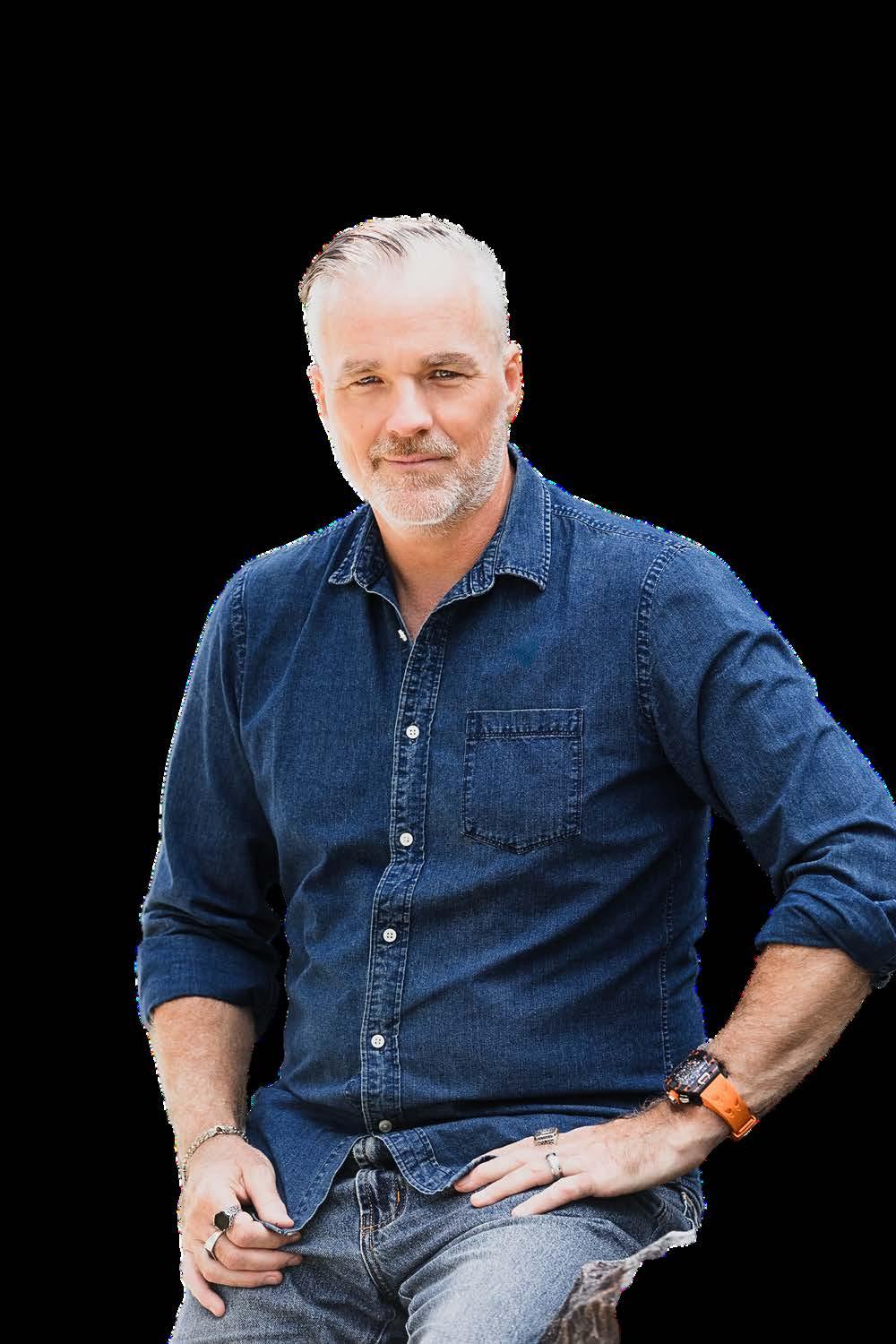
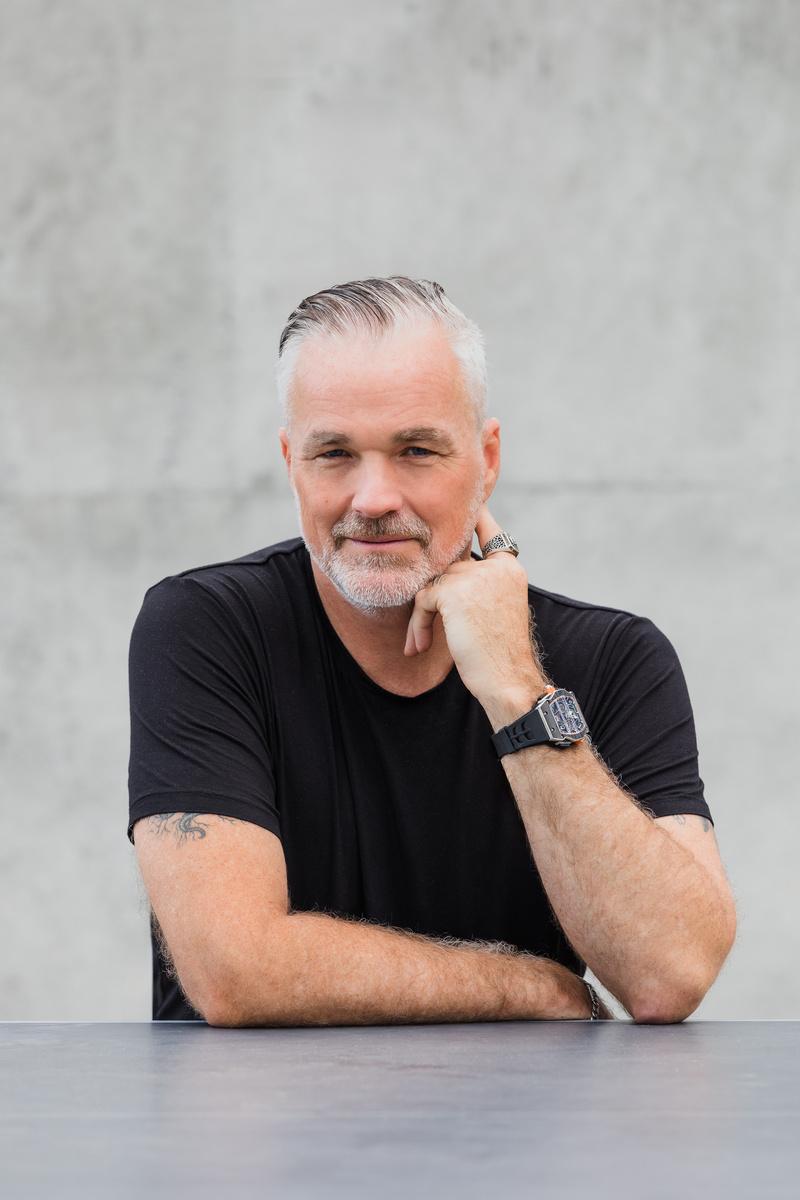
Beautiful readers, this issue we invite our amazing and inspiring men to step into the uncomfortable arena by exposing their vulnerable side, their strengths, their journey from struggle to strength and also their views on current world events and what they feel could be done.
It is the topic burning on everyone’s lips right now, as the world seems to be very rapidly slipping into unmanageable chaos. We cannot look anywhere without seeing child victims, violence on our streets escalating and we are all feeling more than a little bit unsafe.
Here is the problem. When a human feels unsafe, it is our basic instinct to go into survival mode, triggering our reptilian brain for flight/flight/freeze/fawn. That worked well for the caveman on the run from dinosaurs, however in modern day life, it spells Situational PTSD.
We are witnessing hate on unseen levels, with unprovoked attacks at the forefront. We are witnessing unprecedented evils on our children, our dear innocent children.
What is the solution?
For me and all of the team at Beyond the Veil, and our inspiring men inside these pages, that the resounding answer can only be love. If people can hate for no reason, I can love for no reason. Love for my family, love for my fellow man, my neighbours, even strangers on the street. Gerard and I hit the streets last week putting up posters (yes, we do the hard work), and we chatted to so many people. The love exchange in ways of kindness, brief conversations in passing and warm smiles was really uplifting and inspiring. We came home at the end of the day feeling exhausted from putting up posters in the rain, (with a toddler in tow) yet quite recharged and buzzing emotionally.
My cup was full! Normally, I would be in and out and on my way home. However, on this particular day, I decided I would let love lead the way. I complimented women who looked down, and the instant shift in them was heartwarming. I said hello to people who looked like they needed it and I shone my light for everyone to see. Kindness costs us absolutely nothing, free, zip, nada. So why are we not all using these powerful resources, love and kindness? Evil feeds off fear, but love is their repellant! Here’s the thing: Some people have trauma up to their wazoo and cannot see past surviving today (C-PTSD). Some may have had disappointment after disappointment (depression). Some may never have been shown a kind word or gesture in their entire lives, therefore do not know how to activate this mysterious asset. As a Trauma Therapist for 38 years, I get it. I get the survival brain, I really do. They may not be kind people, but they need kindness and love the most. So let’s all be a little kinder, a little more forgiving and love for no reason. Love is the answer.
Kaz Field Anderson
Editor-at-Large
A Conscious Global Wellness Movement BEYOND THE VEIL
SUBSCRIBE TO BEYOND THE VEIL
For less than the price of a cup of coffee, just $5 per month and you can subscribe to BTV and start receiving discounts now! Get your subscription outlay back by saving 10% on Heal Flux Frequency Generator, 20% on Calminity Frequency Generator, Free Giveaways, 20% of Life of Colour (colour in kits for adults), Free Courses, up to 20% discount on therapy sessions, 20% off Authentic Alchemy Retreats and lots more. Of course, this is cumulative and will just keep growing as we do. Beyond the Veil is a global community dedicated to healing, personal growth and deeper selfunderstanding. This is more than a magazine. It is a space where truth is honoured, voices are heard and meaningful change begins. By subscribing, you gain access to high quality content while supporting a platform that elevates practitioners, shared lived experiences and creates impact in the wellness and therapy space whilst remaining FREE to the public. Stay informed, feel empowered and remain connected with every issue.
WEBSITE: SUBSCRIBE & JOIN OUR COMMUNITY
Continue the Beyond The Veil journey at: www.beyondtheveilmagazine.com.au
Visit our website to explore even more beyond the pages and access a hub of wellness, therapy and personal development resources. Discover our “VIP Members” Lounge, popular articles on anxiety, depression and exclusive content designed to support your personal and professional growth. Our website is a dynamic space where community, education and opportunity come together, connecting readers, therapists and advertisers in a powerful and meaningful way. Whether you are looking for support or seeking aligned opportunities, this is where connection, visibility and expansion begin. Step Beyond The Veil and discover everything waiting for you online.
SUBSCRIBE
Table of Contents
FROMTHE EDITORS DESK
How Can We Help Our World?
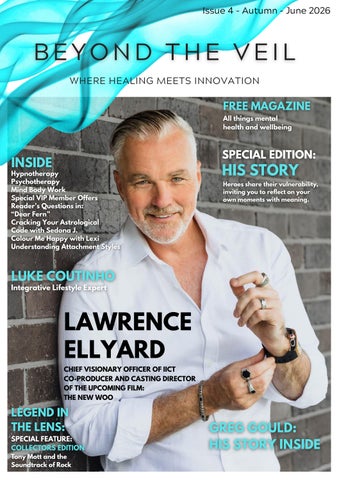
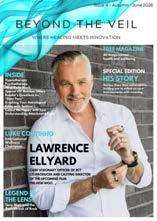
COVER STORY LAWRENCE ELLYARD
His Upcoming Film Project: The New Woo
BTV’S NEWMUSIC SEGMENT
COLLECTORS EDITION: LEGEND BEHIND THE LENS ~ Tony Mott
Greg Gould Shares His Love, His Traumas, His Powerful Song: NO MORE
EAST MEETS
WEST
~ NEW INTERNATIONAL SEGMENT
Our Friends from Neighbouring Countries Join our Conversations
LUKE COUTINHO
Luke Shares Grounded Insights On Healing, Awareness and Empowerment
YASHAGARWAL
Olympic Medalist and Renowned Fitness Expert 66 HIS STORY
Our Readers Send in Their Tough Issues for Guidance from Dear Fern
COLOUR ME HAPPY
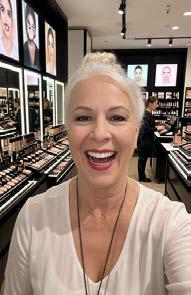
Lexi Guides Our Gorgeous Men On How To Shine at Work, Home and Play
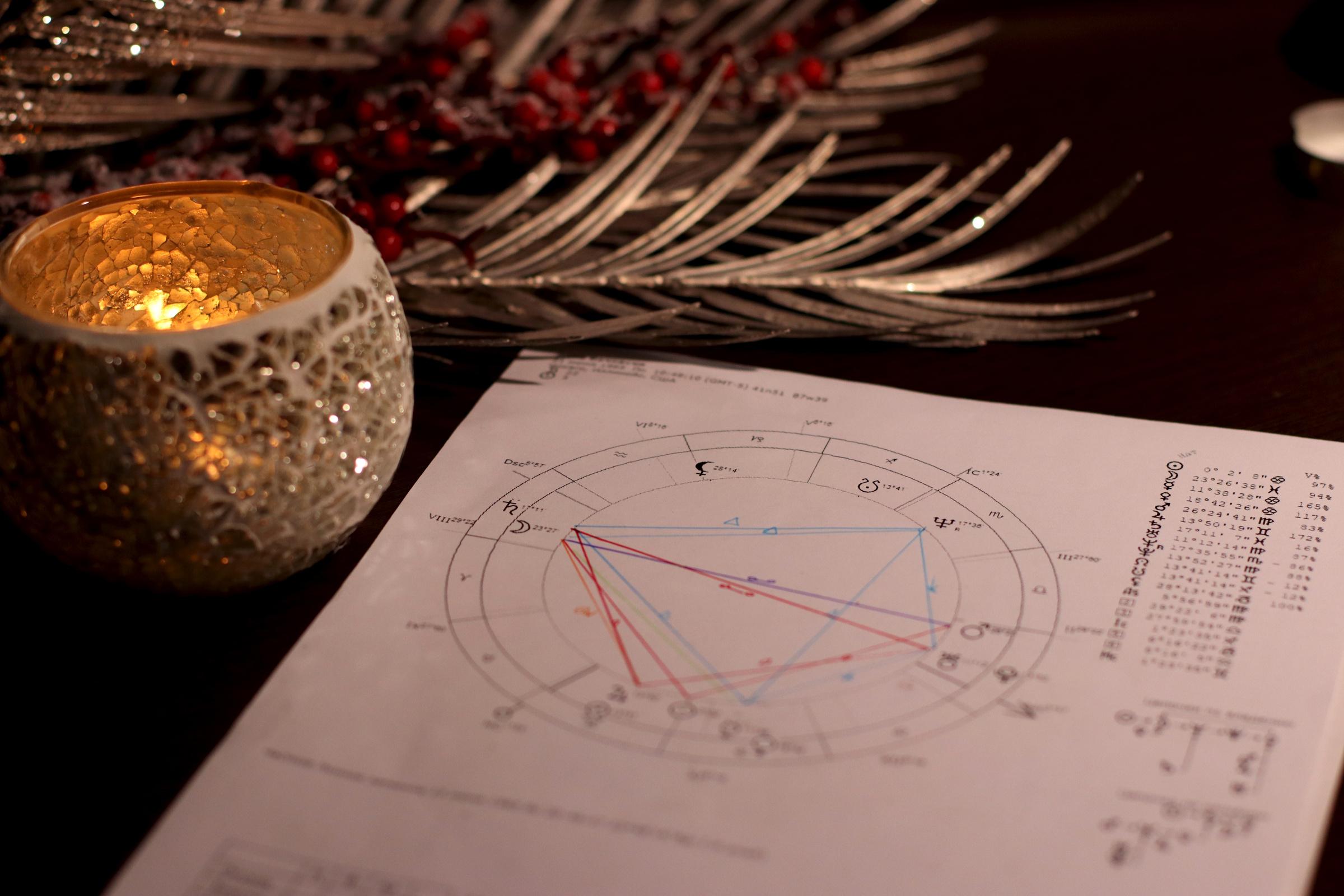
CRACKINGTHE CODETOYOUR ASTROLOGICAL MAP
Sedona J Guides Through Understanding Your Own Chart
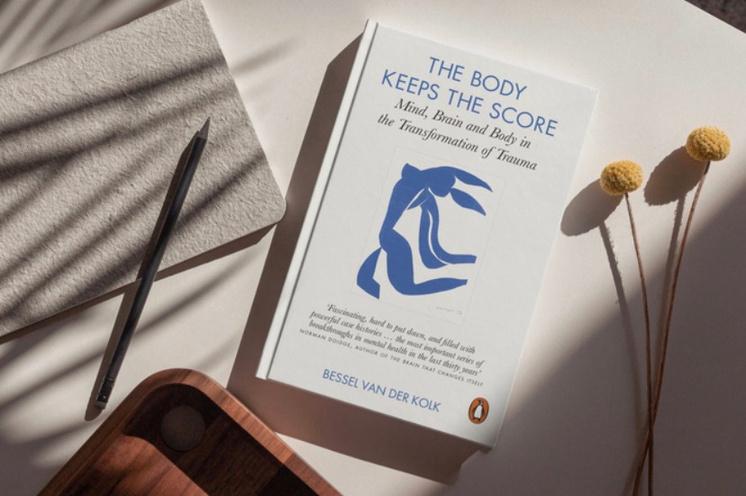
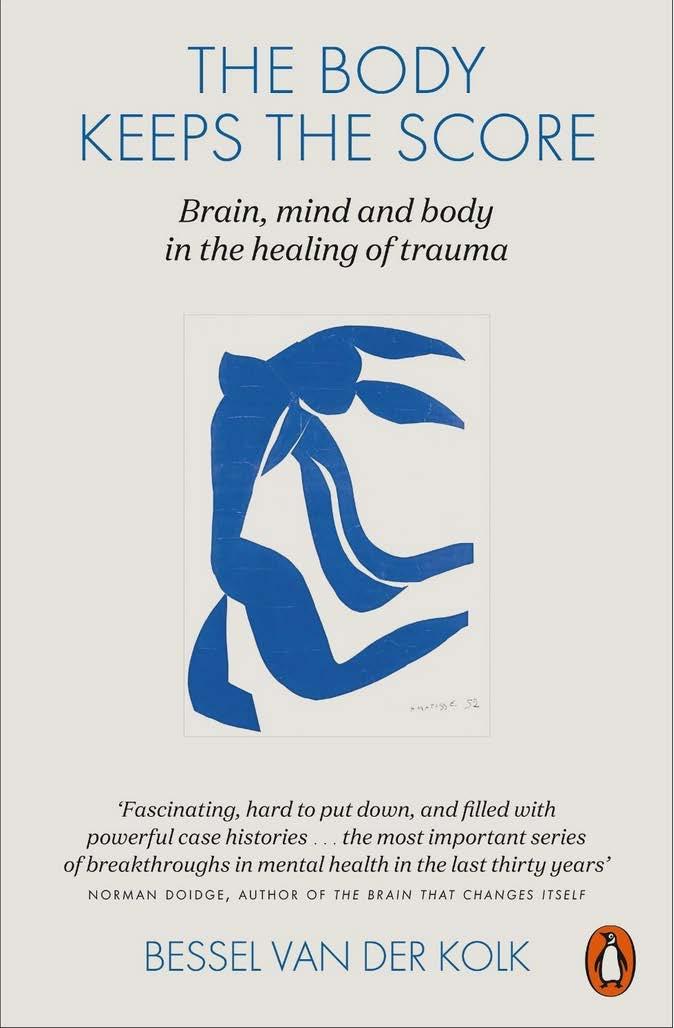
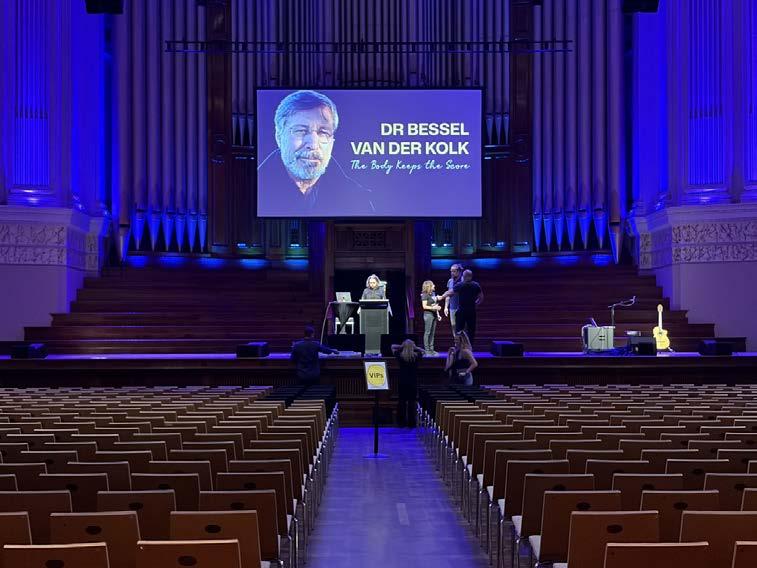
BOOKREVIEW~ BESSELVAN DER KOLK
The Body Keeps the Score is a BookThat Revolutionised Trauma Work
Body Keeps the Score Event by Claudine Capel
UNDERSTANDINGATTACHMENTSTYLES
Fern Helps Us Understand Our Attachment Styles
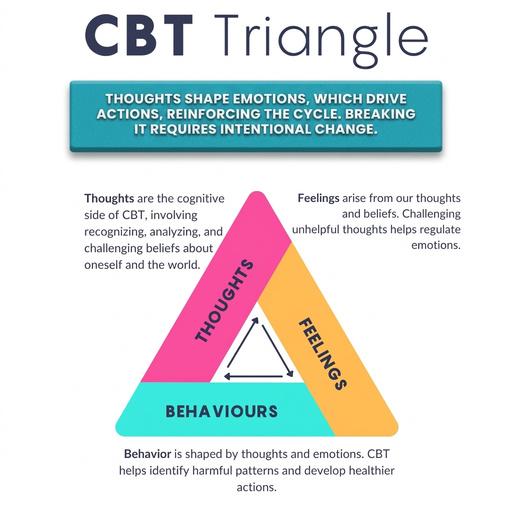
THE CBTTRIANGLE
133
How to Change Unwanted Behaviour by Changing Our Thoughts by Following a Formula
134 PRODUCTREVIEW
This issue we Road Test Calminity Frequency Generator
HIS STORY
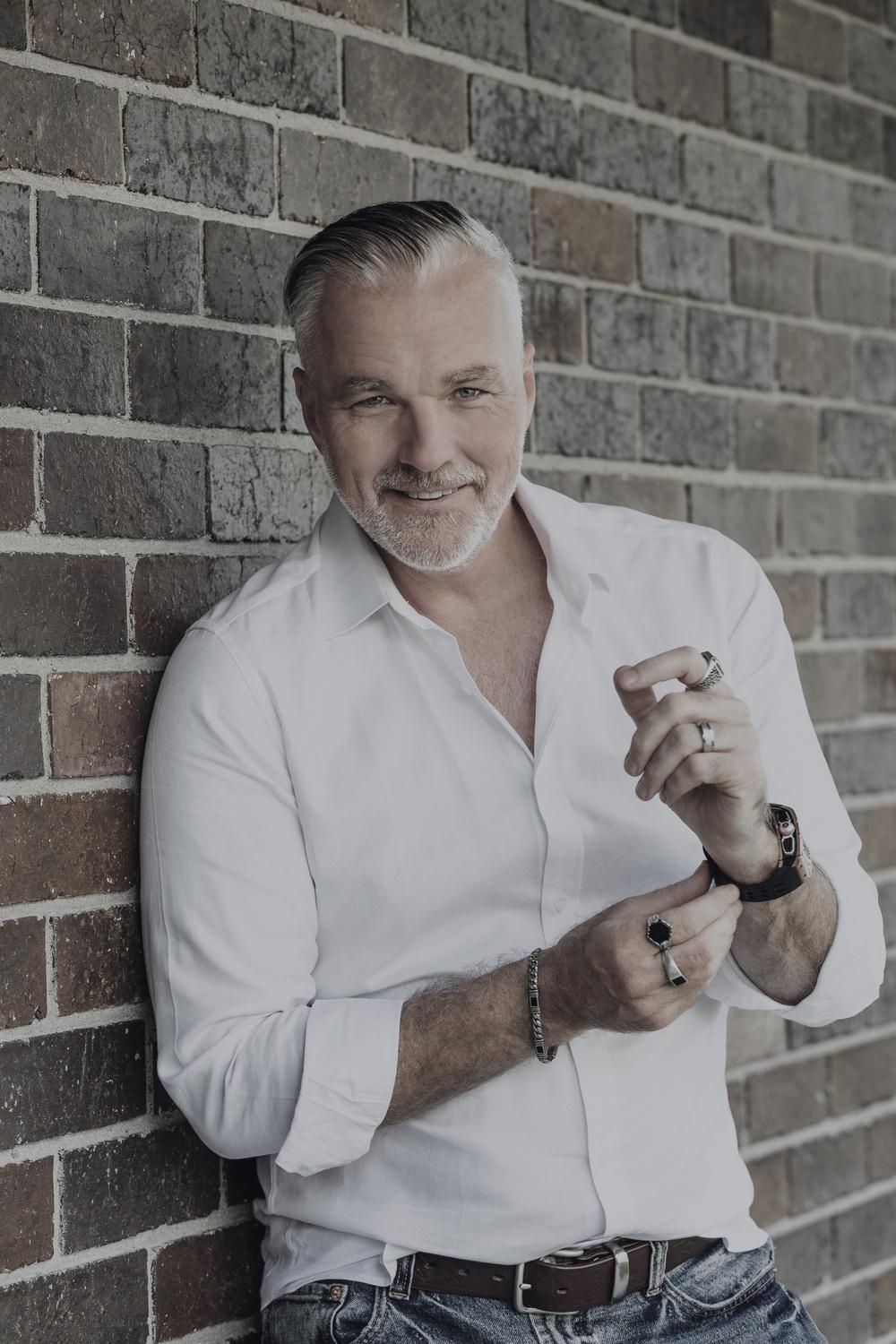
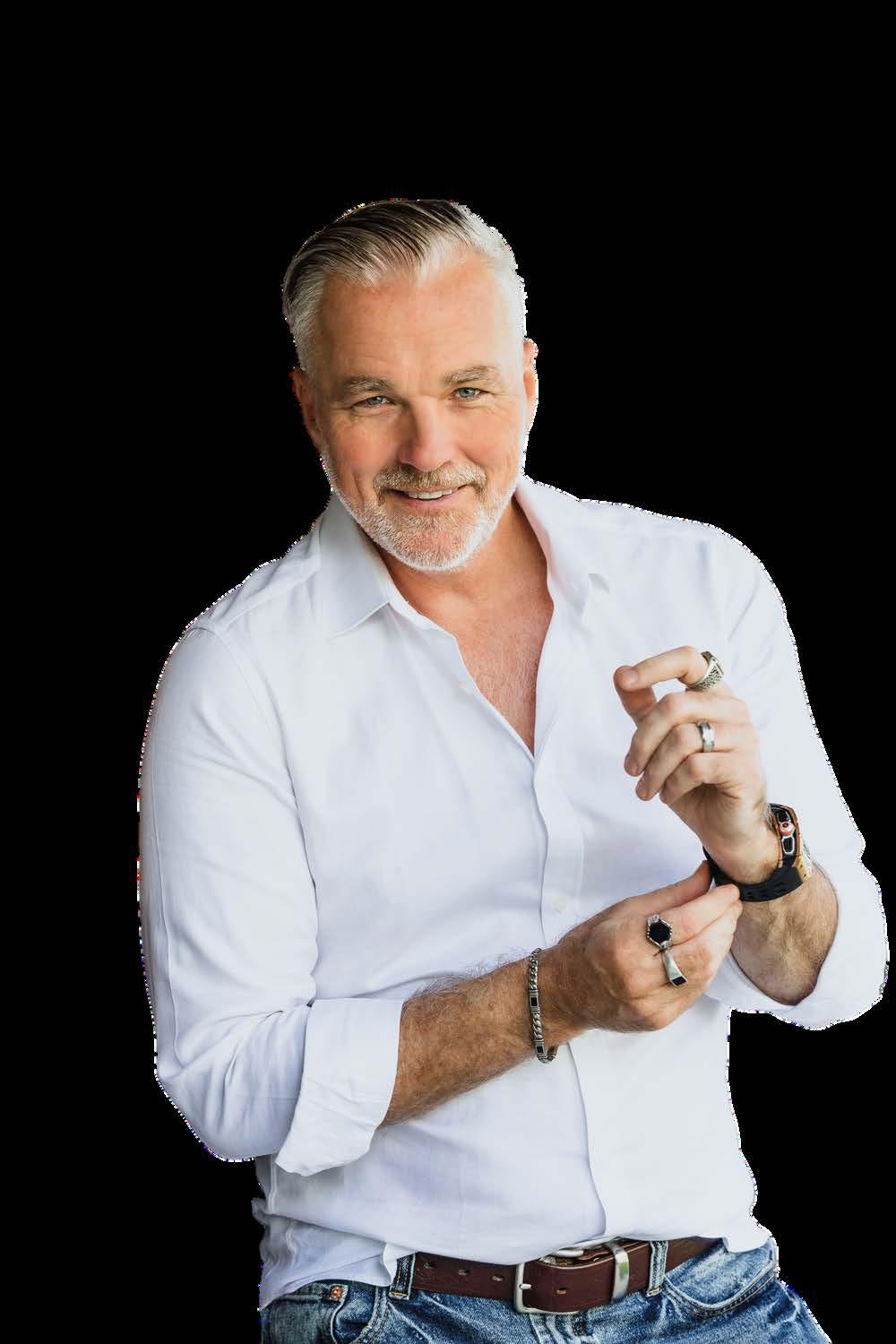
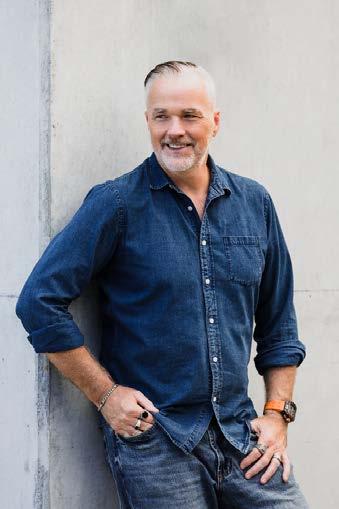
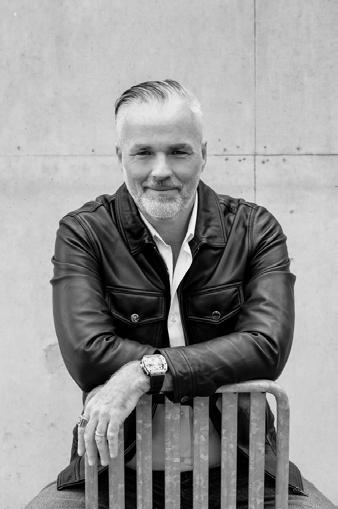
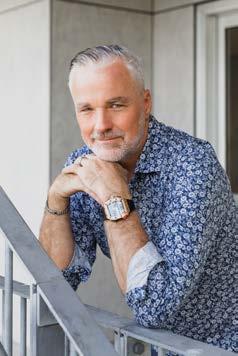
Lawrence Ellyard
Lawrence Ellyard
Lawrence Ellyard is a pioneering force within the global complementary health and wellness industry.
In 2002, he founded the International Institute for Complementary Therapists (IICT), which has since grown into one of the world’s most expansive professional bodies for complementary health practitioners, recognising more than 1,400 modalities across the wellness spectrum - what Lawrence describes as the largest list of recognised complementary therapy modalities in the world.
With more than 40,000 people active within IICT’s digital ecosystem, representation across 35+ countries and expansion plans extending into 195+ countries, IICT is rapidly evolving into a truly global accreditation body.
As Chief Visionary Officer, Lawrence leads the organisation’s strategic vision, growth and conscious evolution within the wellness community. Central to his leadership style is the human dimension - connecting people, fostering relationships and supporting the growth of a more conscious global wellness movement.
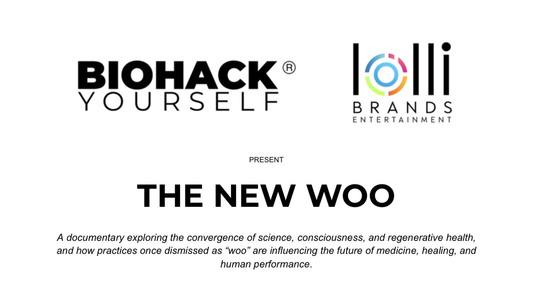
Beyond IICT, Lawrence is an established author of nine published books, with further works currently in development. He is also the co-producer and casting director of the forthcoming documentary The New Woo, which explores the practices once dismissed as ‘woo’ but now drawing serious attention in science and clinical settings. From meditation and breathwork to psychedelic-assisted therapy and quantum biology, rather than championing a single approach, the documentary highlights credible perspectives, lived experiences and thoughtful, evidenceaware conversations across disciplines.
An ordained minister with a Master’s degree in Transpersonal Counselling and Psychology, Lawrence weaves together mind, body, spirit and systems thinking in both his life and work. What distinguishes his approach is that it is not purely conceptual. With more than four decades immersed in martial arts training and teaching, including Aikido, his inspiring leadership is grounded in discipline, presence, balance and embodied awareness.
Because many of our readers are on their own healing journeys, what was happening in your life that first drew you into healing work?
I decided to make a pivotal change from my ordinary existence into something quite extraordinary - as a result of getting a parking ticket.
At the time, I was nineteen years old and was on my way to a spiritual talk. I was running late and parked my car on the wrong side of the road and facing the wrong direction, because I was in such a mad rush to get there and was really keen to go to this talk. I rushed in and realised when I went to pay to attend the talk, that I had left my wallet in the car, so I ran back to the car and discovered that I had a huge parking fine. Back then that was a lot of money for me at that time, so I got the ticket and then stormed into this spiritual talk.
There was a Q&A section and I had a chance to speak with the teacher and in front of everybody, he asked, “What’s going on? You look really agitated.” and I said, “Yeah, I’m really upset. I was in a hurry to get here and I got this huge parking ticket.” He asked me why I got the ticket and I said, “Because I parked on the wrong side of the road and my car was facing the wrong direction.” and he said, “That’s a metaphor for your life. You are facing the wrong direction.”
“That’s a metaphor for your life. You are facing the wrong direction.”
“It hit me like a rock between the eyes. I had this ‘Oh’ moment.”
It hit me like a rock between the eyes. I had this ‘Oh’ moment. At the time, I was pursuing a career in graphic design and art direction at a very prominent advertising agency in Perth, Western Australia and I realised, “Yeah, I really am facing the wrong direction”. Something in my heart was calling me somewhere else. I was doing that career largely because my parents were strongly advising that I get a ‘real’ job.
So in my fairly rebellious style, the next day I quit my job. I moved out of where I was living, I met a Buddhist monk the next day and he said, “Come and stay with us.”
That turned out to be a Buddhist monastery and I lived there for three years. I went from zero to 100 - from ordinary existence to living a semi monastic life with meditation. I also met a shaman I studied under in Native American tradition.
I met incredible mentors and teachers - and from the moment I committed to that path, the universe met me with opportunity and it all flowed from there. So the pivotal moment was a parking ticket. It’s true - and it was courageous, I was going against my family, against everyone saying, “You’ve got this amazing career, you’re throwing it away.” and I was like, “Yep. Because something in my heart has always been calling me this way.” I think that calling was there since I was a child - and I had to follow it.
“When you were starting out, before IICT existed, what problem in the wellness industry felt most urgent or broken to you that you felt needed addressing?”
At the time I was running the International Institute for Reiki Training and teaching Reiki courses all over the world. I was a real advocate for bringing more rigor and credibility to that modality. There was a lot of what I used to call “flaky Reiki”. There were people doing courses in a day or watering it down and it merged with the New Age movement, rather than honouring the traditional roots of the practice.
So I was very focused on the traditional approach and seeking out robust teachers who were doing what I saw as the ‘real deal’ - and there were plenty of people claiming credibility without actually having depth. It was a highly unregulated industry. People could say they were this or that without accountability.
A lot of practitioners around me were asking, “How do I get accredited? How do I get recognised across multiple modalities?” At the time there were isolated associations - massage, hypnotherapy, maybe a handful of others - but no unified body.
Practitioners kept saying, “Wouldn’t it be great if there was one organisation that covered the whole industry?” and that’s when I had that moment again - “Maybe I’m the someone who needs to do this”. So I decided to create a governing body from scratch. Set the standards. Create a code of ethics. Decide what values we stand for and how we support practitioners.
We started with 50 modalities because that’s what the insurance provider could support at the time and from there it has grown to over 1,400 occupations.
It’s been quite the journey. I’ve always wanted to elevate the wellness industry without overregulating it. It really was the Wild West and while regulation has a role - credibility matters more. Wellness is becoming mainstream and off the back of that, The New Woo film helps take these practices to a broader audience. We are not just preaching to the converted.
“This isn’t an either‑or conversation. Health isn’t just pharmaceuticals.”
We want to show the best of both worlds - modern medicine and ancient wisdom. This isn’t an either-or conversation. Health isn’t just pharmaceuticals. It’s mental wellbeing, emotional regulation, sleep, nutrition, purpose, connection. The mind and body are intrinsically linked. The ancients knew this. If you look back to older models of healing, like in Japan, physicians were paid to keep people well. When people got sick, they stopped paying. It’s the opposite of our current system. What if medicine worked that way today? What if wellness was a birthright, instead of something we only addressed once we were broken?
Stress, disconnection, poor nutrition - these are the roots of so many issues. Community and connection are part of the antidote and with AI on the rise, people are craving authentic human connection more than ever. That’s where the opportunity lies. We are being hurtled towards robotics and automation. So we have to ask – ‘Where’s the human? What’s our relationship to our humanity?” These are the questions leaders face now. We all face them.
“…and that’s when I had that moment againMaybe I’m the someone who needs to do this”.
Looking back now, how would you describe your personal evolution alongside the work you have created?
I would always say that I am more of a program than a person. It sounds really weird to say, but the idea is that I don’t - by default, see myself as being so important, because I’m one and the others are many. So my prayer to the universe has always been, “May I be a useful tool to elevate and support others. Use me as a vehicle, almost like a machine, to do the work that needs to be done to support and elevate humanitywhatever form that takes.”
I feel like that evolution is always in progress. There is never a destination. It’s not like, “One day when I get to this point, then I’ll be happy,” or “When I reach this goal, then I can retire.” I mean, how boring to just sit on the beach. I could do that for a day and then I’d be completely bored out of my brain. My pillars are: contribution, connection and community.
If we work from an isolated perspective, we can only reach so much, but if we work together, we can have a far broader impact - I’m not a boat. I’m part of the tide that raises all boats.
We see silos in the wellness industry - individual empires, individual leaders. But how do we bring them together?
Film is a great medium for that. It’s like the “Avengers of Wellness”. You don’t just have Iron Man on his own. You bring everyone together, each with their own skill set and suddenly the impact is much broader. I’m really interested in what The New Woo conversation looks like - bringing the best thought leaders together to get optimal results for the greatest number of people.
The accreditation shows that someone has been vetted, that they meet a standard. It gives clients an unconscious sense of trust. Otherwise it’s like someone saying, “I watched a YouTube video on heart surgery - let me operate on you.” Standards matter - but so does balance.
We don’t want to over-police people or force endless continuing education where it isn’t relevant. Passionate practitioners will keep learning anyway. We removed mandatory CPD (Continuing Professional Development) because it often becomes a financial racket, rather than meaningful growth. We want a community where practitioners are celebrated, visible and supportednot restricted. A lot of healers are incredible practitioners, but terrible business people.
There’s this false belief that you can’t be spiritual and prosperous, but abundance is actually intrinsic to spirituality. It’s your birthright.
Fair exchange matters. Undercharging creates imbalance. Reciprocity creates harmony. Prosperity is like the ocean. Some people take an egg cup. Others bring a bucket. The ocean doesn’t run out. There will always be people who need help.
How do you see the next chapter of IICT evolving and how does it connect to The New Woo?
I just see IICT as the global force in this space. We already represent the largest number of modalities and we can support the founders and thought leaders of these healing traditions by giving them credibility, recognition and accreditation.
It’s about raising standards globally, without making it rigid or inaccessible.
What was once considered “woo woo” is now entering the mainstream, but people still want official recognition. It’s like seeing a certificate on a doctor’s wall. You wouldn’t trust your health to someone unqualified. The same discernment should apply in wellness and spirituality.
At it’s core, what is the message that The New Woo documentary is really trying to say to the world?
That your health, longevity, prosperity and happiness are of your own making. That you can steer the ship. It’s about being self-empowered and accessing tools that elevate your life and through embodiment, helping others. It’s not one size fits all. We are unique.
The film offers different modalities so people can find what fits them. It’s like a salad bar. You try things. You find what resonates. Then you go back for seconds. That’s how wellness and spirituality work. You try. You feel. You go deeper and when something helps you, you naturally want to share it. Humans are wired for sharing. In tribal times, if you didn’t share, you were out. So benevolence and community are natural to us.
Why did this film need to be made now, at this moment in history?
Humanity is ready. We are ready for a shift. AI is here. We don’t fight it - we integrate with it. In a world of distraction and disconnection, we are asking: what connects us? What creates meaning?
The film brings credible voices together to share wisdom. We’ve done what doesn’t work. Now it’s time for what does. This can be a tipping point. I love that - and having credible voices makes people listen. One must have a big vision and one must be quite audacious and one must bring a lot of courage to it, because there is this idea in Australia, the tall poppy syndrome - don’t shine too bright, don’t be too out there, don’t be so visible - and I’m like, to hell with that.
Be as visible and bright as you can possibly be, because I don’t believe there’s just one life, but I have just this one life now, right? So I’m gonna go all in and go all out, I’d love to die empty. I don’t want to leave anything in the tank. Why not? Often, if we’re not so evolved in ourselves, we kind of walk around like we know it all and like we are the top of the pile and then we get spiritual and we just superimpose that across our spirituality being “better than” and all of that. So this is where exclusive pride is operating and the idea is, if I’m exclusively proud, I’m actually incredibly lonely, because I’m always in bad company. No one is as good as me, right? So I’m constantly in a state of comparison. Therefore, there’s no sense of community.
The antidote is flipping that script to inclusive pride. Going from me to we. Look at how great we are together. Look at what we can collectively achieve. That’s the pride we feel when our children do well or when a friend succeeds.
The bigger question is always: What is my contribution to the world?
When people watch The New Woo, what do you hope shifts inside them, even subtly, after the credits roll?
That something lands that motivates them to take action. Whether that’s reaching out to someone, exploring a modality or simply saying, “I’m going to do something differently.” Films like The Secret did that. They shifted people from “life happens to me” to “I’m a co-creator.”
The New Woo film is about sparking curiosity, possibility and momentum.
Once possibility enters our consciousness, we have more choices.
That’s the key.
Who do you feel this film, The New Woo is calling in, both as viewers and potential contributors?
People who are ready to wake up. That’s the short answer. We are also building a digital ecosystem around the film - community, directories, platforms where practitioners and contributors can connect globally. It’s a movement, not just a film.
What ripple effects do you hope The New Woo creates over time, culturally?
The ripple effect is lived transformation. One person changes and that change ripples outward. You don’t know how far it goes. It’s like tossing a stone into still water. If I help one person and they help thousands, that matters.
If I model values, kindness, curiosity, then those thoughts pass on. Leadership is a choice in every moment. Kindness is free. Someone cuts you off in traffic - you can assume the worst or wish them well. That choice matters.
A question I often ask myself when things are challenging is, “What if this is a gift?”
Because when something doesn’t go the way we wanted, hindsight usually shows there was a gift there. It wasn’t comfortable at the time, but it shaped us.
Even just orienting the mind toward that possibility can give us the insight we need for the next step. So it comes back to responsibility - taking responsibility for our inner world and how we respond. Not from a place of blame, but ownership.
And remembering we are not alone. We walk in systems, family structures, histories. We stand on the shoulders of many people who carried us to where we are.
The wisdom I’m sharing isn’t mine. I’m riding the backs of giants - teachers, elders, mentors who gave me these perspectives.
That lineage matters. Devotion to teachers matters. Gratitude matters. They got it from their teachers and so on.
It’s about stepping beyond self-limiting viewpointsbeyond what the masses say is possible and asking, “What is my relationship to life?”
When challenge shows up, then we’ve got something to work with and you can alchemise pain. Trauma. Difficulty. You don’t have to stay in situations that are unhealthy, but you can still wish well and move on. That’s very different from victimhood.
A question I often ask myself when things are challenging is, “What if this is a gift?”
How do you see the future of wellness evolving as consciousness, science and medicine converge? And what becomes possible for humanity when healing is understood in a more integrated way?
It really is about the best of both worlds. Not choosing between science or spiritualitybut integrating technology, AI, modern medicine, ancient wisdom and emerging modalities. Seeing the human being as whole - physical, mental, emotional, spiritual, transpersonal.
When we work integratively, we unlock far more possibilities than reductionist thinking ever could.
If you could leave our readers with insights about healing or living well in this era, what would it be?
Three things - curiosity, possibility and contribution. If I am curious, I am assuming I don’t know yet, therefore I am not fixed in my mindset - which lends itself to possibility, which means I have options. Curiosity prevents fixed thinking. Possibility expands options.
Contribution comes from a place of surplus from asking, “What can I give?” Even if it is small. A kind word. Time. Effort. Resources. That ripples far beyond us. Contribution shifts focus from self to service - and contribution doesn’t need to be grand. Sometimes it’s a kind word. Time. Presence. That’s good medicine.
us and sometimes even help us see ourselves differently.
THE HEALING POWER OF EXPRESSION
Because creativity isn't just about what we make. It's about how we experience the world and how we share that experience with others. Love, Fern xx
THE LEGEND IN THE LENS TONYMOTT
The Man, the Legend - Tony Mott
by Kaz Field Anderson
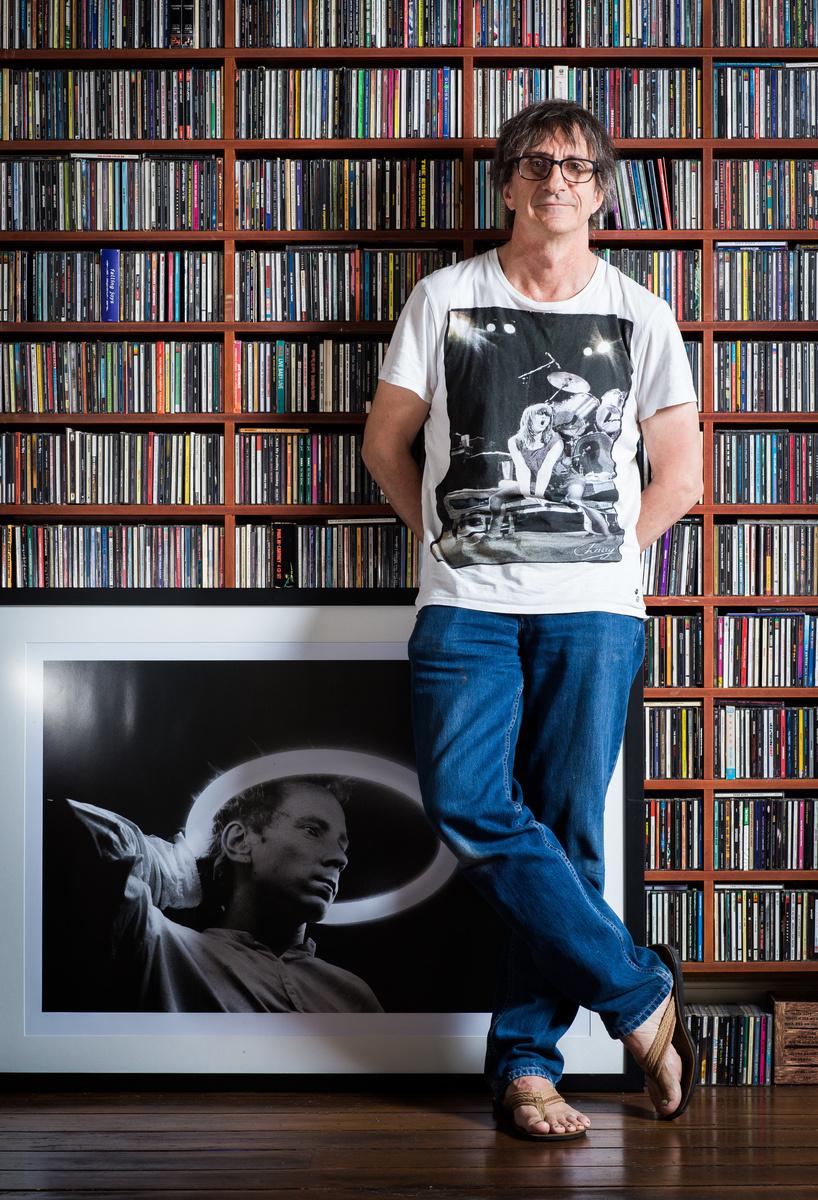
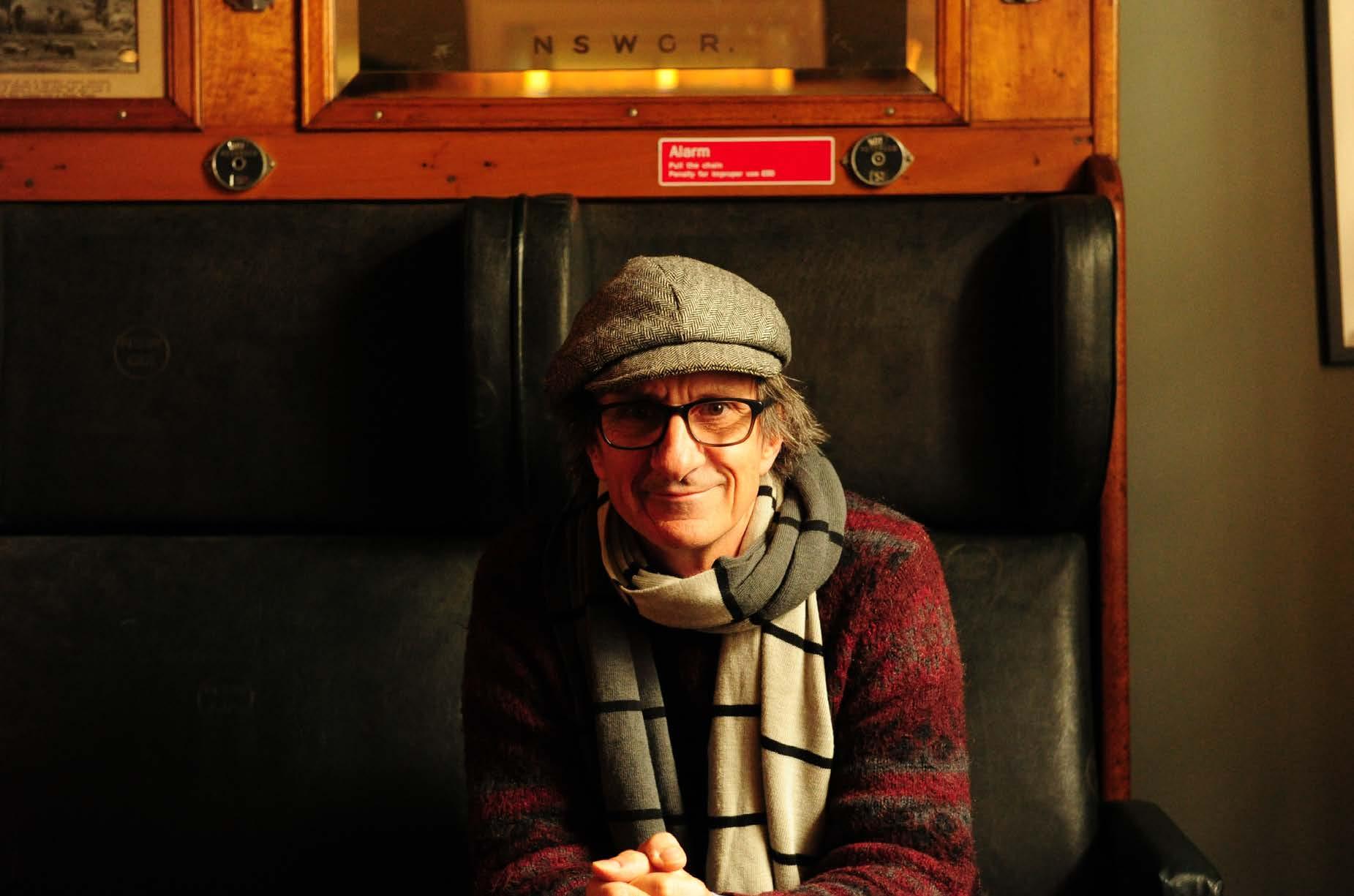
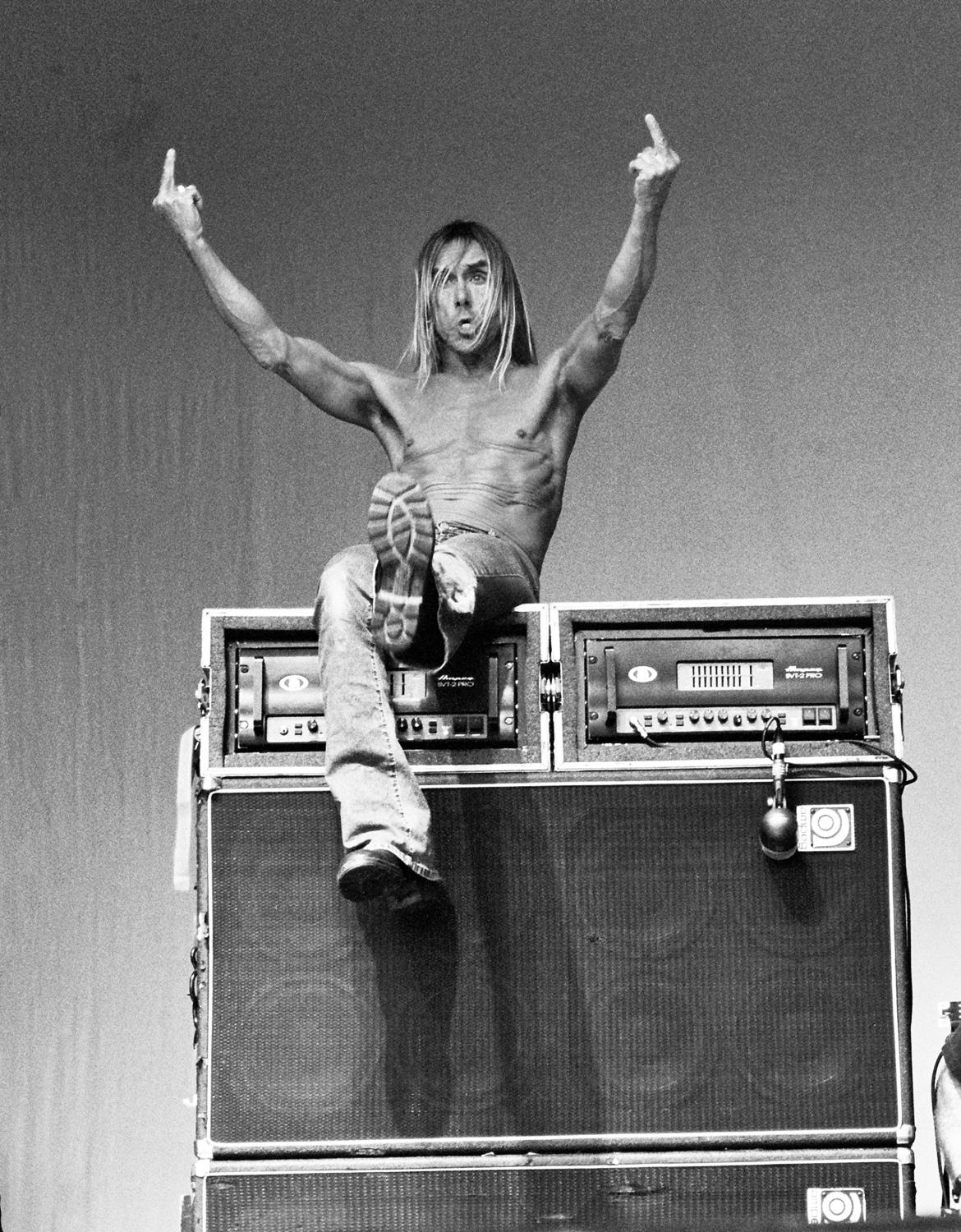
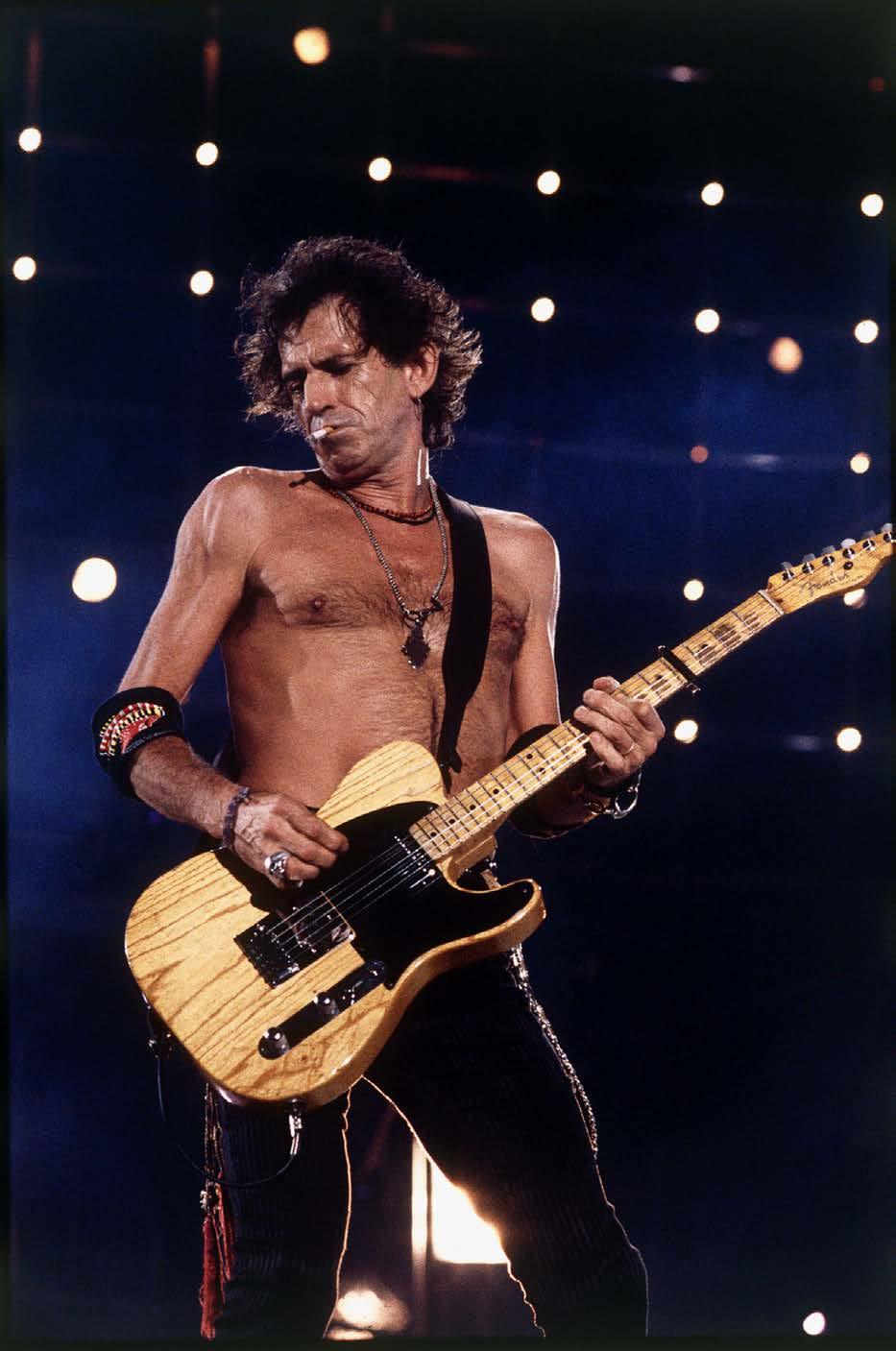
I had the absolute honour of interviewing Rock’s Legendary Photographer, Tony Mott. His list of bands and artists that he has photographed is unequalled in our time. His entire life is a story, his heart is big, his work is captivating and he is as authentic as the morning sun. We began by talking about his time, photos and love of Nepal and of a Sherpa with a story:
Tony: “Tenzing Norgay was the Sherpa who took Edmund Hillary up to Mount Everest, the great mythif it is a myth - is: Who climbed Mount Everest first??? Almost for certain, it was Tensing, that he was Edmund Hillary’s Sherper and he's a legend in Nepal and Darjeeling. They've made a film of it.”
Kaz: “I so love your photos of Nepal Tony”.
Tony: “Thank you. A huge influence on me was that I had a dream in the 70’s. I always wanted to go to Kathmandu, the other one was Timbuktu. The two places were Kathmandu and Timbuktu. I've now been to both and Kathmandu didn't let me down in the 70’s or early 80’s, when I went and spent some time there.
It was just the most fantastic place I have ever been to. I went back recently - or when I say recently - about 8 years ago and it's changed - and not for the better, but that's me just being a bit selfish wanting it to be like it was.
Kaz: “Personally Tony, I don’t think it is selfish, just a little me-ish. After everything you have done, you are allowed to be a little bit me-ish.
Tony: “Yeah! Timbuktu’s a bit of a dump, but an interesting dump.”
Kaz: “But at least you can say you’ve been there Tony!”
Tony: “That’s absolutely it. I've been everywhere man. “
Kaz: “Tony your work spans over 4 decades and countless rock icons. You are the most respected rock'n'roll photographer of all time. How would you describe your defining philosophy as a rock photographer?”
Tony: “Oh well, I don't know that I can answer that completely, but I think the reason I am a rock photographer is well, I was a French Chef by trade - and I absolutely loved music. I also love photography.
My interest in photography came from a girl I met in Armidale, I lived in Armidale, New South Wales in the mid 70’s and she had just come back from Nepal. She brought back these beautiful black and white portraits of mainly children and I got infatuated with photography. An art student friend back in Sheffield England, taught me basic black and white, ugly as it was, processing your film in a dark room, using an enlarger and printing them. That was for travel, because I just love India and Nepal.
Tony Mott
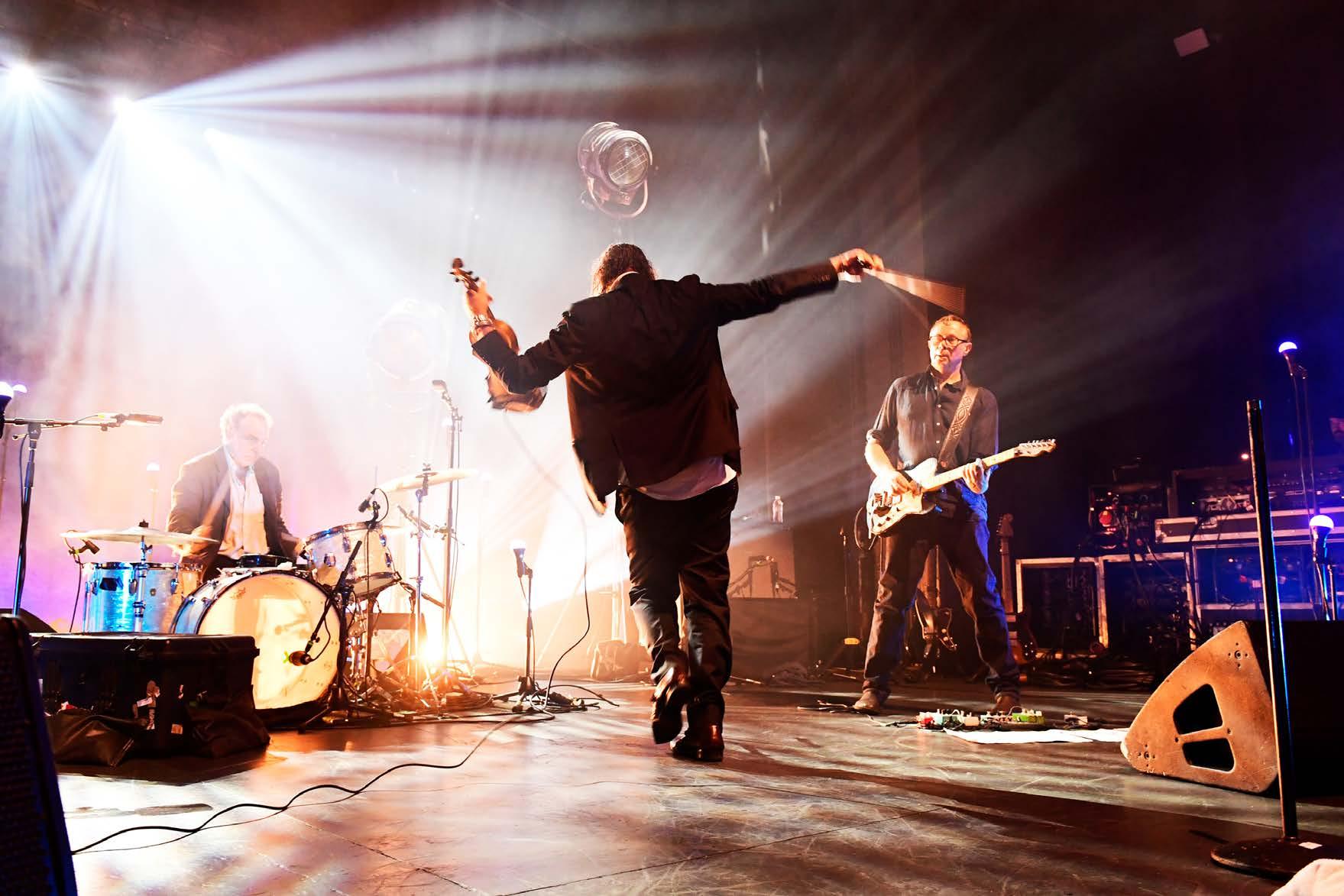
Dirty Three
In the early 80’s, I was working as a French Chef at the Gazebo Hotel in Kings Cross and the Opera House. So consequently, I would finish work about 10.00pm at night and then that was my leisure time. Australia in the 70’s and 80’s and into the beginning of the 90’s, had the greatest live music scene in the world. I am qualified to say that because I have lived in London, America and here.
I was obsessed with music! So, I started wandering around watching bands...regularly! In those days a lot of bands had what they call residencies. Such as the Piccadilly Hotel in Kings Cross. They would have the same bands on Monday, Tuesday, Wednesday and Thursday for 3 - 4 months at a time and I happened upon The Divinyls, before they were signed. I remember watching Chrissie Amphlett on stage. I loved the band and I thought “That can't be easy to photograph, she's moving around, the lights are going on and off.”
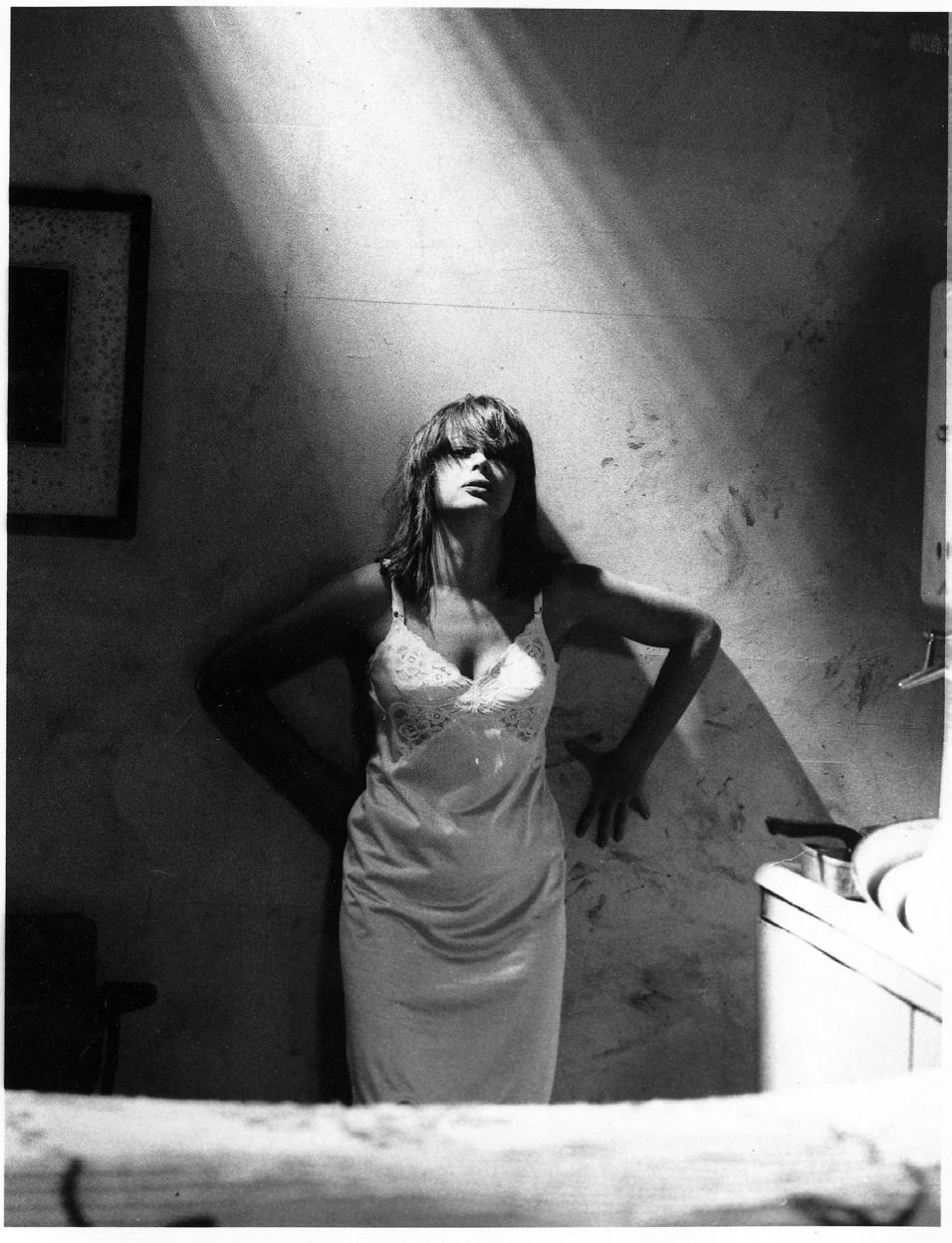
So, I practised for about 3 or 4 months on Chrissy Amphlett from The Divinyls at the Piccadilly. At the end of that residency, the manager approached me and asked to look at the photos. I actually ignored it, because I was embarrassed, but he pestered me and they bought a photo. Can you see that poster over there (pointing to a beautiful huge poster of Chrissie Amphlett on his wall...jealous much?) and I wasn't attempting to make it a career. I just love what I do.
Oh yes that's the photo, I will always remember that one, that's the first photo I ever sold. I think they paid me 20 bucks or something, but that started my career in microphotography and it was a passion, it wasn't a career and I wasn't attempting to make it a career. I just love what I do.
It was luckily the timing. Australia had a unique thing and that was Music Press, Street Press and of course the old, trusty Drum Media. Yes, Sydney was on the street and there were freebies, a gig guide, it had the lot. So, the group and I went into those press sites and offered my services for free. I would go out six nights a week shooting for them. Money was never a motivation, it was just pure pleasure. I suppose I just became obsessed! I just shot every single band. It grew and grew then. Because of Street Press, I had access to international concerts, and I just shoot live. I would be probably shooting live 6 nights a week mainly on the street.
Chrissie Amphlett - The Divinyls
In the middle of all that, there are a few things that happened: my first break was that I scored the Mick Jagger solo tour, on the strength of basically, my On the Street Magazine work, and from that, I built up a relationship with a guy called Tony King, who managed Mick Jagger. At the end of that tour his famous words were, “Would you be interested in touring with Mick Jagger?” I'm not quite sure how many answers there are to that question... but YEAH is the bloody obvious!
My career just snowballed and around mid-tour, I realised I had been doing this for roughly 4 - 5 years...and oving it.
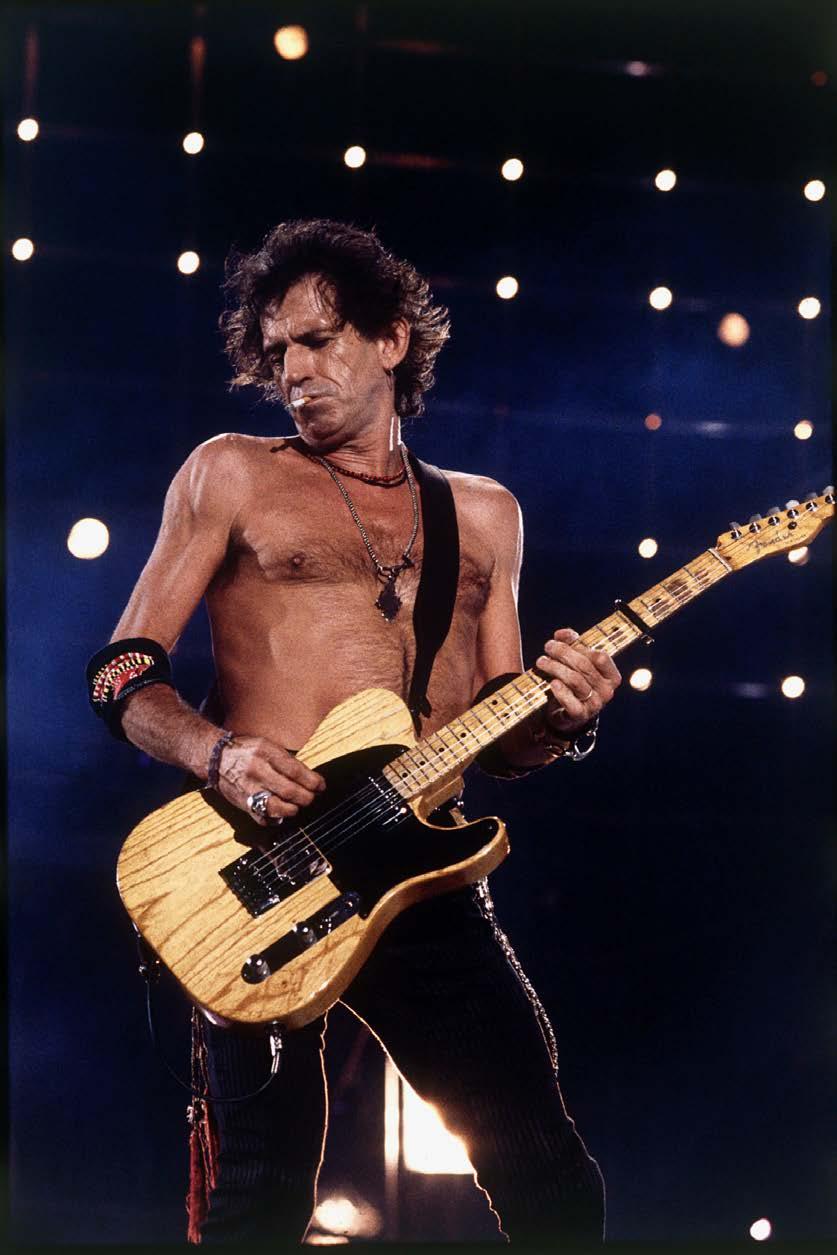
Then the other big change was: I split rock'n'roll photography into two categories: the Ying and the Yang. Now there's live on the session and the live advantage is, the musician is in their natural element. I’ve got no control over the lights, no control over circumstances, like people moshing on my head... but that's what you have to capture.
As time went on, On The Street sent me to do a photo session. I had never done one before. I am at the moment doing a theatre tour, where I do these talks and my photo of The Triffids is up there as an example, because it's a really ordinary photo. What happened was, I was so in awe of musicians. I turned up and they just hung about and I took photographs of them just hanging about. Then the editor kind of said, “These are awful! What happened?” and I said, “Well, they just hung about”. He said, “Think about it, you gotta direct them!”
I learned something. That was a whole new process. Now you know that Ying Yang thing, about live in the session? Now you've taken a musician out of their natural environment, but you've got control over the location and the lighting. So that's the good bit, the bad bit is; contrary to popular belief, a lot of musicians are not comfortable in front of the camera.
My advice to any band just starting out: hypothetically, I'm shooting Lucinda Williams tomorrow and the record company has given me an hour. So, I spend the first 15 minutes talking over a glass of wine or a cup of coffee whatever, usually about music or something and just go for it. Then there is some sort of rapport between her and me and it's not a complete stranger sticking a lens in her face.
The other advice would be, when a magazine/paper rings up about an artist/band, I usually only get a couple of weeks’ notice, is find out who the bloody hell they are, as in research the music, and see what they are about.
Even to this day shooting a new band, if a band rings tomorrow, let’s say they’re called Jimmy Riddle and the Pisspots. I would literally be saying to them “Can you send me a sample of your music over” and listening to get a rough idea of where they’re at. That is the reason I think I've been successful in rock'n'roll photography is, I'm not the best photographer in Sydney by a proverbial mile, there's loads of great photographers.
But I work with musicians. I know how to get on with musicians! A lot of...I won't name a name, but this one particular guy was very ambitious in the music world and he was a much better photographer, like he's a really good photographer, but he had no idea how to deal with musicians. I always felt that he came from the fashion world and the advertising world, where you hire a model and you are perfectly entitled to tell a model exactly what to do and they must do it. When it’s a musician, you collaborate.
When I meet a musician...well I always demand a meeting. I am currently just photographing a young girl called Tia Brittany. Tia called me and I made her and her mother come around to my house and we had a chat about what her music was about and encourage that rapport. Then I give her about half a dozen ideas and she can knock them back and I try and encourage her to knock back what she thinks is a bit daggy. I need to be on the same wavelength. You collaborate.
Whereas a fashion photographer is so used to telling someone what to do. You don’t tell a musician what to do, take Chrissie Amphlett. You don’t tell Chrissie Amphlett what to do. I like Chrissie Amphlett and clearly you don't tell Chrissie what to do! She’ll say yay or nay. Consequently, when you meet these people, you must walk into a room with half a dozen ideas, so they could knock back two or three and they feel a semblance of control and it is a collaboration.
Nick Cave
Johnette - Concrete Blonde
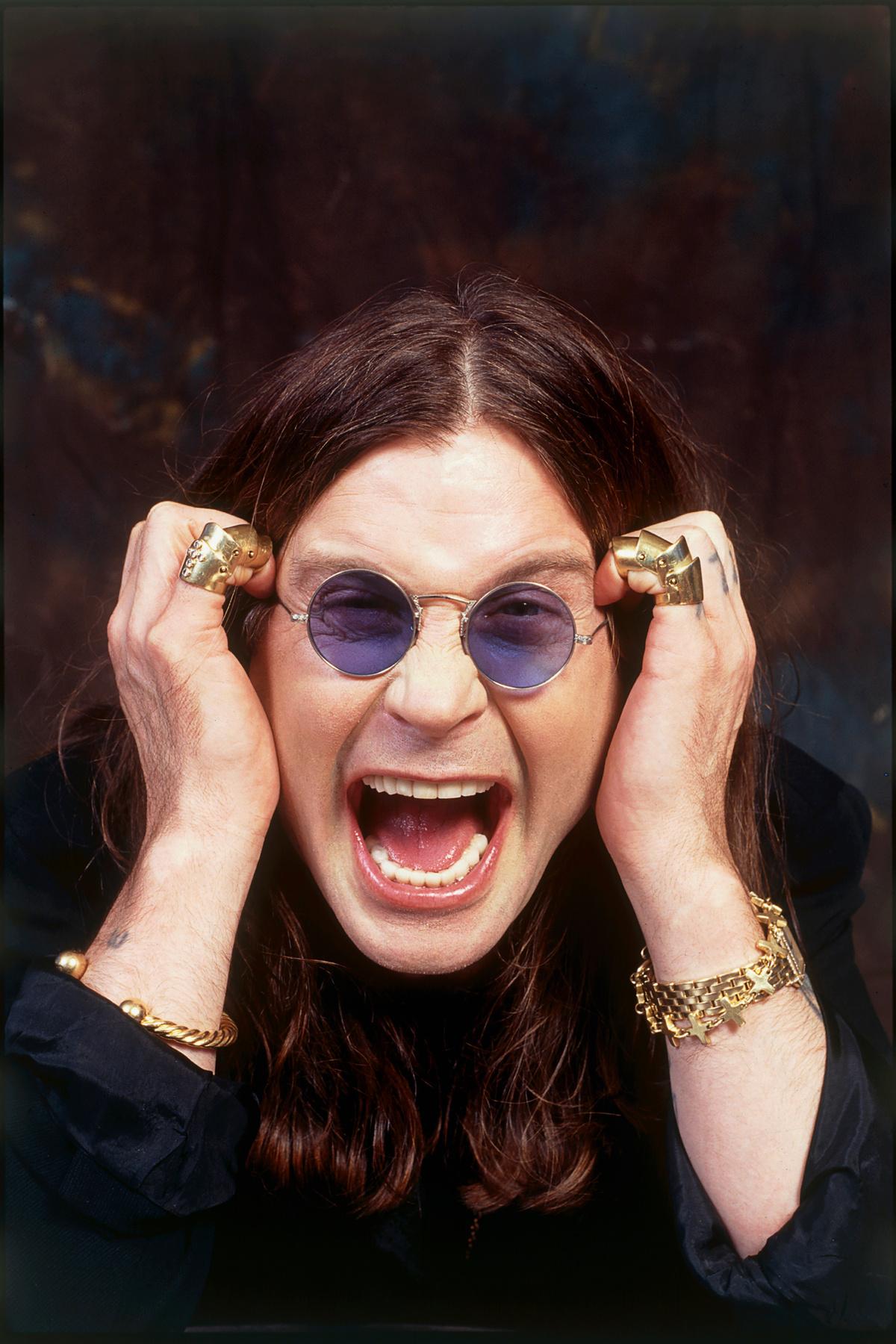
That is probably why I've been successful. Because I do listen and when someone says “Oh I really hate...da da da da”, you take that on board. Take for instance the Telegraph - Ruperts press. They will send in a photographer to photograph someone, take Ozzy Osborne, he would be a good example: Ozzy Osbourne is great for the camera. I would imagine if someone was to ask him: “Can you give me the horns up?”, and if they told him to do that, he would just say F *** O**!! He would have done it anyway if only they didn’t ask, it’s his signature, but ask and you won’t get it. You have to do it so that it’s just suggested. You have to understand musicians.
My point being, I collaborate with them.
Do you know that one of the big questions I always get is: Who's the biggest a**hole you've ever met? I probably photographed about 30005000 bands and artists now, and I've met three a**holes. If I worked in the local bank, I would meet three a**holes within the month, so musicians are generally not a**holes. They're not necessarily reliable, so one of the main things for me is I have to be patient. So, when the band says we're meeting at 2:00, there's a five-piece band and you can bet your bottom dollar there will be one that turned up at 1.50, 3 at 2pm and there was always someone who arrived at 3:00. I am helping nobody. I've gotta get them all on board, so those sorts of things can be annoying, but if that annoys you, you're in the wrong business.
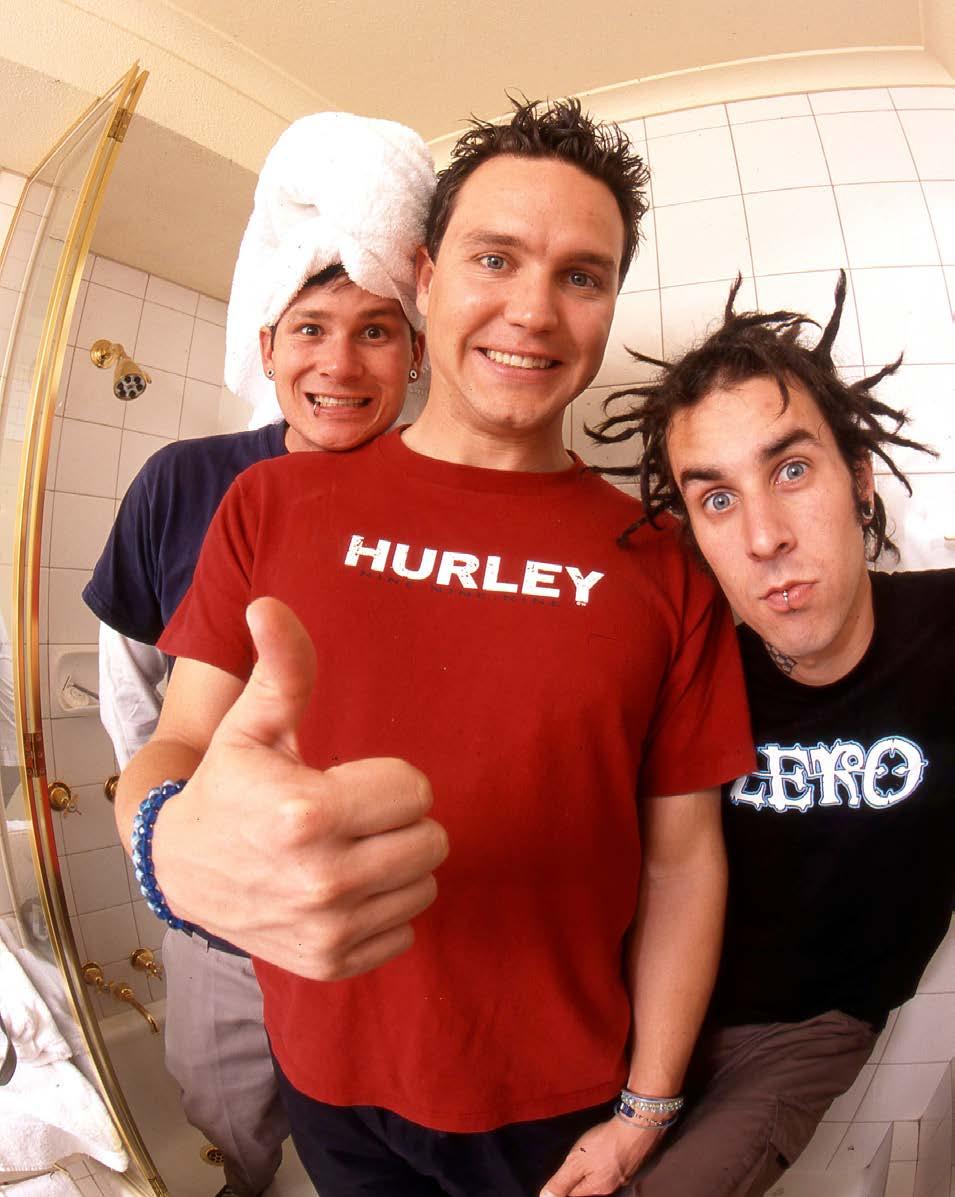
Hungover? Some bands turn up hungover. There's a classic case of my blink 182 shoot. I shot them for the front cover of Rolling Stone. They were on the road with the Big Day Out and they were so hungover that the drummer couldn't get out of room. I shot them in the bathtub, in their hotel bathrobes and everyone started complimenting me about what a great photo it was, what a great idea it was! It was literally shot on the run, as in I've got these locations lined up, but they’re so hungover and refuse to go to it, so you don't get upset, you just go okay, this is what we're going to do and I shot that. It was quite funny that I got compliments with that shot and I was like; yeah, it wasn't my idea.
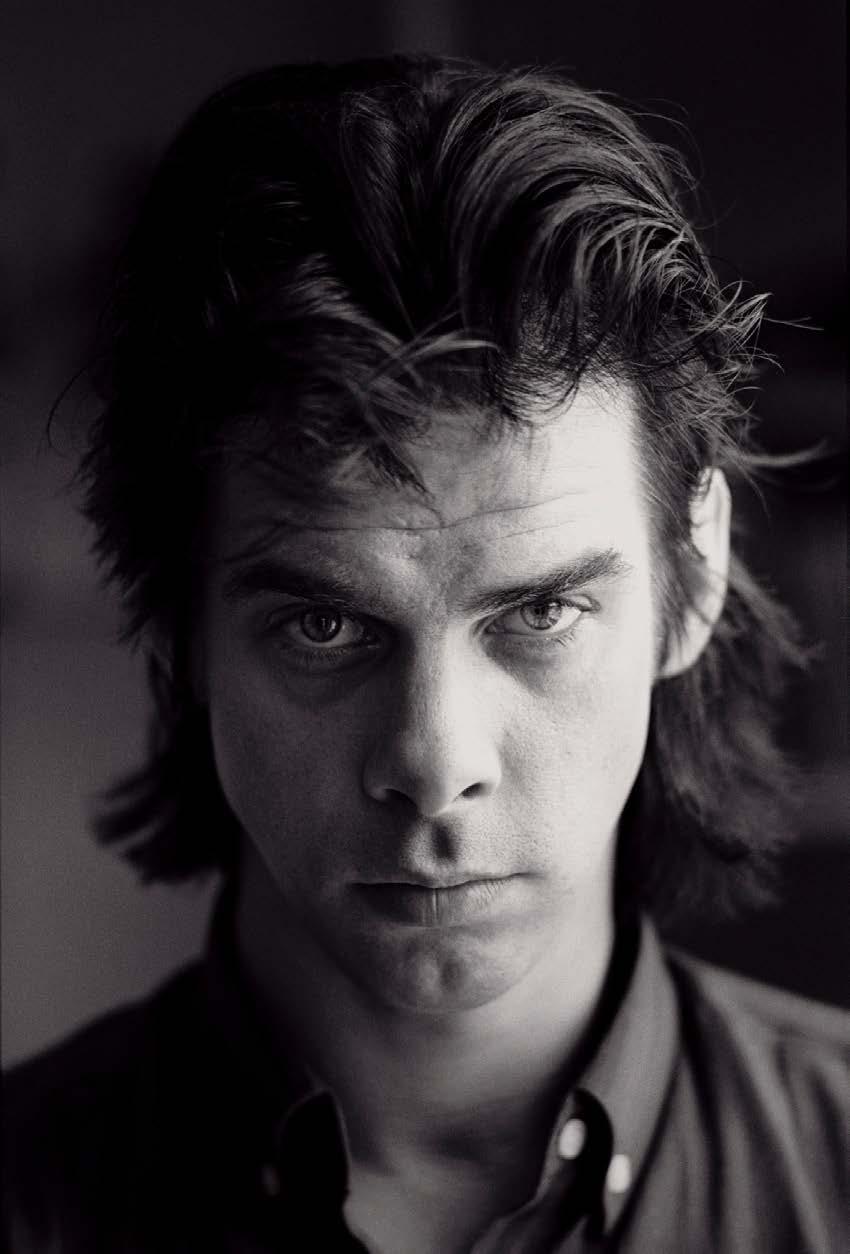
There is a Nick Cave photo that I shot in his Kensington flat in the early 90’s. I had met him a couple of times, but I didn't really know him. I turned up at his door 11 in the morning, I had already scouted the area, and I found a nice café, an alleyway that had nice lighting. When he opened the door, he sort of was quite silent and I said, “Tony Mott here to take your photos” “Yeah, I know who you are, but why are you here?” I said “ I’m booked to photograph you at 11:00” he said “I don't know anything about it, because I'm not leaving the flat!” So, he invited me in and he made me a cup of tea in his Jim Jams (pyjamas). He put a shirt on, chain smoked and from that, my favourite all time photo is from that shoot of Nick Cave, with a diffused light streaming in through the window, we got the shot.
Again, all my ideas went out the window. I can't stand there and argue with Nick Cave and say “it’s organised!” Within a month, I found out that when I delivered the film to the record company, the girl at the record company loved them, but I said “he (Nick) didn't know anything about it”, “No we didn't tell him, he would just say no, so we knew you knew him and we knew this is the only way to get a photography session in!” So, I guess they used me.
Kaz: “With that in mind, your greatest skill is really a listening skill apart from photography, correct?”
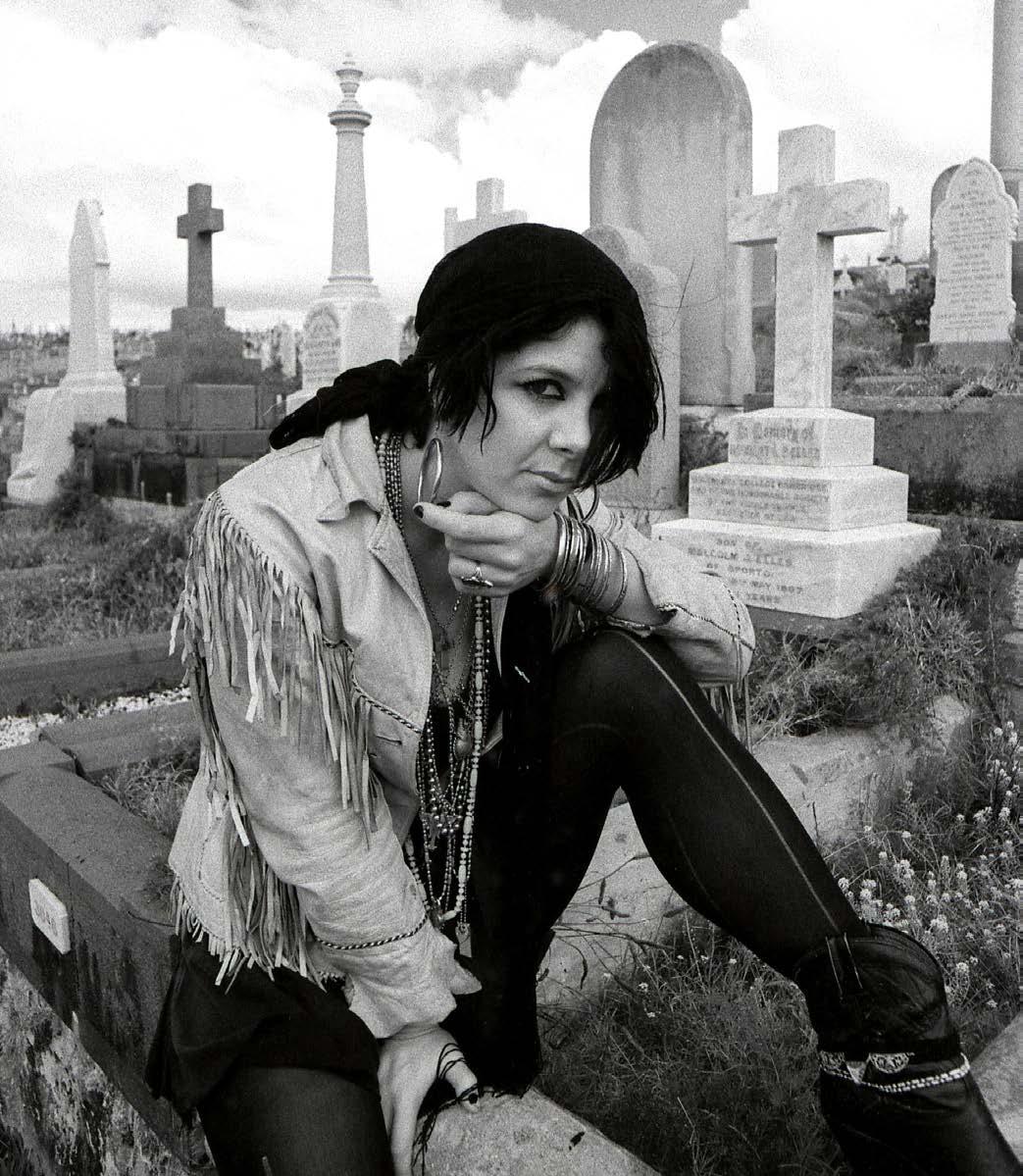
Tony: “Yeah, yeah, yeah. The actual photography is a percentage of the work ethic. You definitely have got to be a good listener. I was very close to Johnette from Concrete Blondes. I did lots of photos for her over the years. She didn't have a good working relationship with her record company. The image they wanted for her was very different to the image she wanted. I listened to her, not the record company, but I got hired by IRS that's the LA record company.
This is how old this story is...there's a fax machine! The fax came through from IRS Record Company about the Concrete Blonde photoshoot and it said:
“For F*** Sake, don't let her wear black!”
Johnette read it and went out and bought everything black, including black lipstick .....and we’re in the graveyard.
They made her do the opposite of what she probably wanted. She wouldn't have worn black had it not been for the fact they told her not to wear black. That's an example of the record company attempting to manipulate her in whatever way. My favourite photo of Johnette is in the Coogee graveyard with a bottle of red. There's a poet's corner, where Banjo Paterson is buried and that's what Jeanette and I were looking for.
I took Morrissey up there as well. I was going to photograph Morrissey in Banjo Paterson's grave, having him lying down in it, but it never worked out quite like that.
Kaz: “When you first started shooting in the 80s, what tools and techniques did you rely on and how have your methods evolved with technology, as there is a big difference now?”
Tony: “In the 70’s, all the way through the 80’s and into the 90’s, I didn't go to digital until about 2005 - 2006. I was dragged kicking and screaming. Days are filled. When you went to a concert and let’s say you shot 3 rolls of film, you’re really only expecting 10 great shots out of it, which is really low.
Now the digital age, it's almost the opposite. You'll only lose 10% and of course digital age you can shoot so much more, so the technique was, I always shot manually and to freeze an artist someone in a live concert, I shot 125 /second at around four. th
You were totally reliant on on the lighting, the techniques for sessions, I don't think that's checked so much, you're always looking for good light. I mean ultimately light is everything. Over the years you will learn lighting, how certain buildings bounce light, to the human eye it looks dull, but the camera picks up the beautiful lighting. Digital is much more susceptible with light.
I've got 15-year-old twins & they have now picked up a camera. They are keen & getting into my emphasis now: you should control the camera, not the camera control you. In the modern digital camera, it takes over and starts telling that you're doing something wrong. But sometimes you are doing it ‘just cause I want do it that way’. The crime of digital probably is the lack of depth of field. Everything’s in bloody focus, but depth of field is fantastic, where only the eye of the artist is in focus, everything else is blurred out and that can look so dramatic and fantastic.
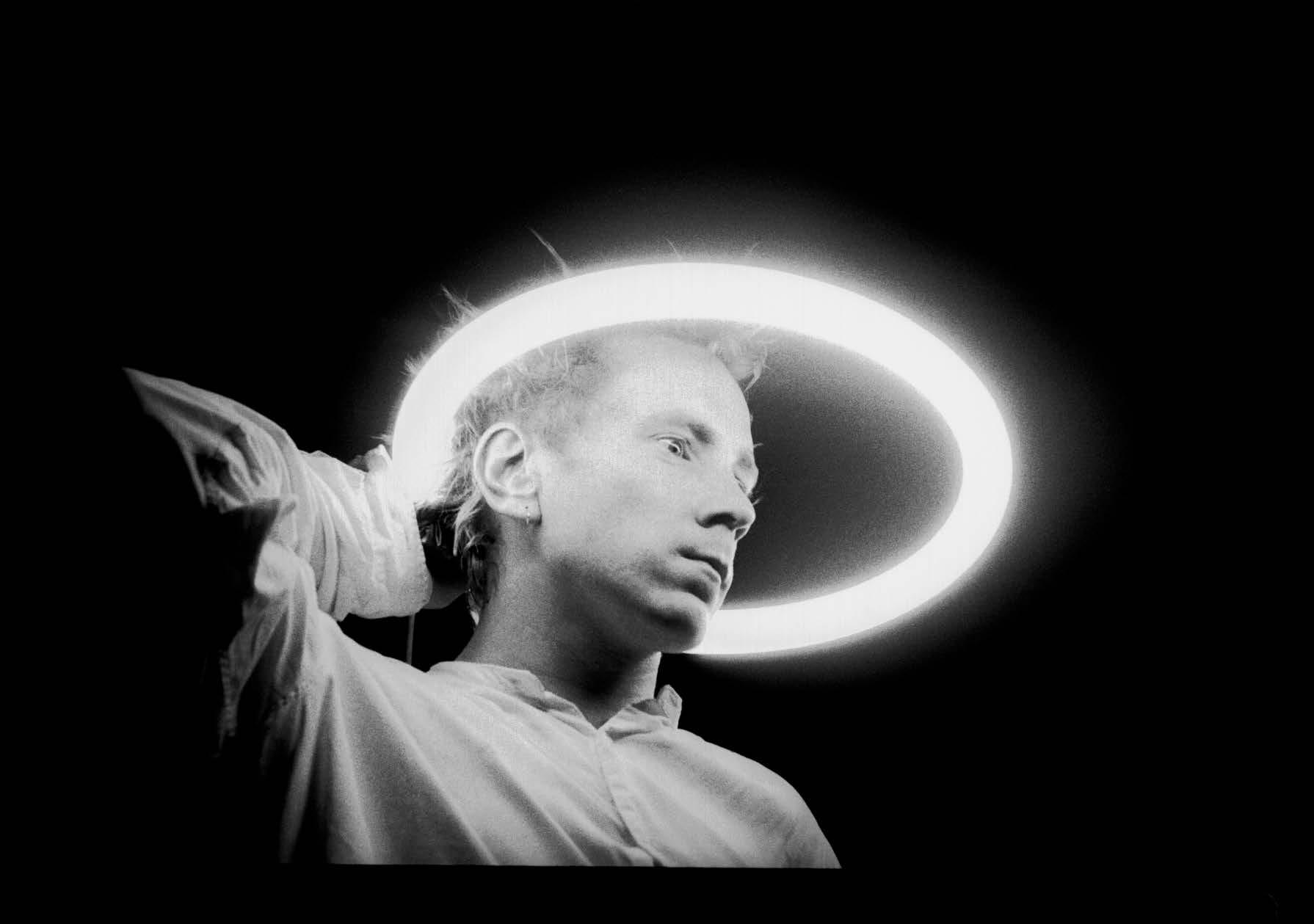
The one thing that the kids - and I don’t mean that in a patronising way, the young and victorious, if they've never shot on film, that thrill! There is a shot of Johnny Rotten, it took me 3 nights to get this. He used a big Halo, and he had a fluoro light and getting the lighting right, as there was much light coming of it, but the biggest thrill is on the night. You went home, you process the film, you hang them up to dry and you look at where it was good you still going to potential but then when you're on the enlarger and you put that plain bit of white paper into a tray of chemicals and the image comes up, that's a massive thrill. A massive thrill! I think you are being cheated as a photographer if you have never experienced the thrill of shooting on film.
Kaz: “Tony, can you walk us through a day in the life of a high-profile photo shoot with a major Rockstar, from initial contact to the final shot?”
Tony: “Well, I'll tell you a funny story about that. Let's take Ozzy Osbourne as an example. I shot Ozzy in around 94/95. He wasn't yet famous for MTV, he was famous for being the lead singer in Black Sabbath. I am shooting it for Karam and Hot Metal for potential covers. He was staying in the Park-Hyde Hotel.
I went down there a good hour in advance to approach Sharon Osbourne, who is manager but not famous yet, again just managing him... although she was the Tour Manager for Don Arden, so she was already a legend in the music industry.
She turned up in the lobby and said he just doesn’t want to leave his room. Okay then. I had a blank piece of canvas and I had some lights and set up a studio in his room. He couldn't be more pleasant, he did everything I wanted to do and I got the shot within 25 minutes. As a final shot, I asked Ozzy if I could open the curtains and get one last shot with the soft light streaming in. He was very gracious and accommodating.
I should emphasise at this point, he had been in this room for 3 days on Sydney Harbour, and he hadn’t come out of his room at all, he was on a Promo Tour for Sony.
I opened the curtains to let the dappled light stream through the window, and Ozzy screamed out “F****n H**l SHARON!! look at the view Sharon, look at the view, the Opera House, the Bridge.
Ozzy had been in that hotel room for 3 days and not stepped outside, not opened the curtains, not ventured anywhere. He had no idea what a spectacular view he had.
and
Then Ozzy and Sharon went sightseeing, thanks to Tony for opening those curtains!
It had been building for years - unresolved pain shaped by sexual abuse, identity struggles, bullying, abandonment and mounting pressure, compounded by a growing reliance on substances that numbed the pain while deepening his disconnection from himself.
“To give some context, when I was at my worst, I was completely out of touch with reality,” he says. “At the height of my drug use, my best friend, Mel, came looking for me on my birthday.”
She went to the house where he had been staying - or where he was meant to be. His belongings were still there.
“My stuff was there,” he says. “But I wasn’t. I was off doing drugs with someone.”
Mel couldn’t find him. Sensing something was wrong, she called his sister. “I’m worried about your brother.” His sister said, ‘I know… I’m worried about him too.’
“So my sister called me and said, ‘Happy birthday.’” He laughs softly, even now.
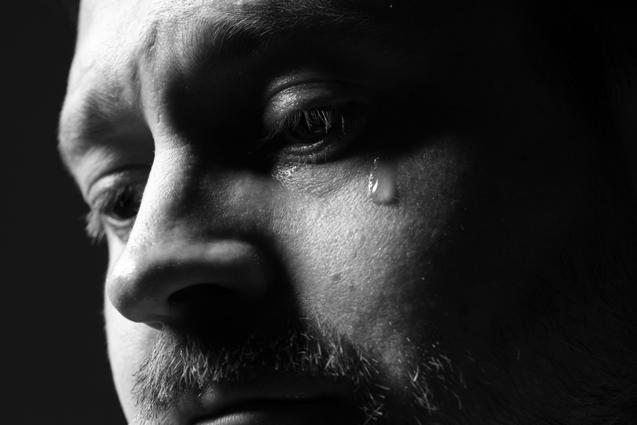
“I laughed…I didn’t know it was my birthday.”
“…and in a huge way that saved my life”
The father reaches into his bag of shopping, pulls out a four pack of drumstick ice creams, hands one to his daughter and says gently “What do we do when someone is sad?”
“Then this little girl walks up to me and I would have looked a mess with tears everywhere and she just looked me dead in the eyes - this perfect, little stranger - and she said: “It’s okay” and hands me an ice cream.”
“And I remember just looking up at this father with tears in my eyes…and in a huge way - that saved my life,” Greg says.
That moment cracked something open.
“It gave me real faith in other people,” he says. “It was a turning point - the start of my way back.”
“I didn’t feel like I was chemically dependent or addicted to something,” he says. “It felt like I just didn’t want to wake up from that escapism –I wanted to stay numb.”
There is no shame in the way he reflects on that time now - only self-compassion. “I always knew I was a good person…but I carried a lot…and something shifted. There was awareness - I couldn’t ignore it anymore.”
Not long after, he found himself standing in front of a mirror, asking a question he could no longer avoid: “What are you doing? Do you know who you are? Do you know the gifts you have been given in this life? Do you know the people who love you? What are you doing?”
Reflecting on that moment of awakening in the mirror, he says, “It wasn’t about shame, it was about remembering who I was underneath everything.”
From that point came a decision - not loud or dramatic, but deliberate - to stop running.
“To feel what I’d been numbing. To face what I’d been trying to escape. After that, I went cold turkey and stopped drugs and everything in that moment…and now I have been sober for 7 years.”
Another turning point for Greg, was quieter, but no less significant. “In that small couple of month period where I was finding the light, I went to dinner with some friends of mine and I remember looking around the room and seeing everyone laughing and feeling myself laughing, genuinely laughing… and enjoying people’s company - and going, ‘Ha! This is it. That’s the natural high of life. That natural high of being present with people you love - and laughter. That’s the real dopamine…’, I had forgotten what human connection is - and that it is way more powerful than any sort of drug can give you.”
It was simple. Ordinary. But it rewired something fundamental. What he had been chasing through escape…was already there. That understanding became something bigger than healing - it became purpose. It’s why his music feels the way it does. It’s why people feel seen when they hear him. Because he has been there - in the darkness, in the disconnection, in the silence - and he came back not hardened, but open.
Now, the difference is clear, “I don’t wear a brave face anymore. I am brave. I am strong. I’m wiser… and I know I can handle anything.”
Telling my story was taking back my power, when you are honest about your truth, there’s a freedom in that. It’s all part of my journey. Everything I’ve been through has shaped who I am.”
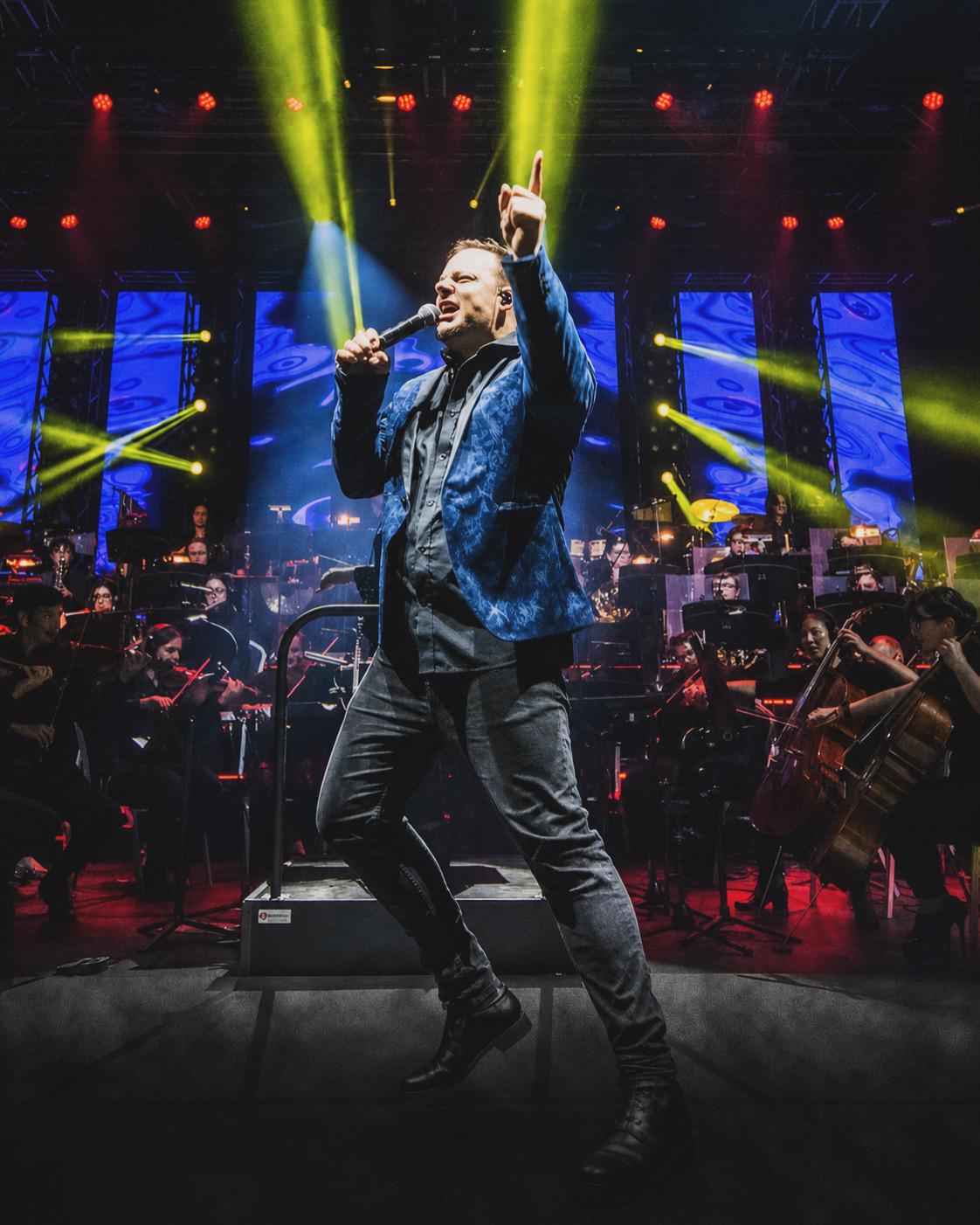
That radical openness became the foundation of his artistry. His album Strings Attached is, in his words, “30 - 35 years of my life in an album”, a body of work that resonates because it is unfiltered and deeply human.
Still, sharing those truths wasn’t easy at first. He recalls performing one of his most personal songs, Who Gave You Permission, which explores his experience of sexual abuse, “I just bawled… I sang through the tears. I was terrified.”
But what happened next changed everything.
After the performance, three people - a woman, a trans person and a non-binary personapproached him, each from completely different walks of life - and thanked him. They told him they wished they’d had that song during their own experiences.
“That’s when I decided to release it. I wasn’t going to share that part of me. But in that moment, I realised - this isn’t just mine anymore. From there, everything opened up. Now I’m like - open up my closet. Go in there, have a look, try things on,” he laughs. “It might not be for everyone, but for me… it was huge. It was so healing.”
“I realised that
if
I told my storyif I was honest and open about ittwo things could happen…“
That healing has reshaped not only his music, but his relationship with himself. Today, Greg speaks with a grounded certainty about who he is - and what he no longer needs.
“You could put drugs in front of me and pay me to take them and I wouldn’t. I’m just not interested anymore. The reason for taking it doesn’t exist. I’m actually healed from that. I’m okay. I’m good.”
He is quick to acknowledge that healing isn’t perfection and an ongoing process - there are still challenges - but now he faces them with support, self-awareness and strength.
“I have people I can lean on. People I can talk to. My partner…I can tell him anything. No judgement. I get to be myself.” And perhaps that is the greatest shift of all: from hiding to being fully seen. “I am the freest I’ve ever been in my life and if I can help anyone else feel that freedom - through my music, through sharing my story - then that’s everything.”
In the end, his mission is simple: to be the example he once needed, “Be the example that perhaps you would have liked to have seen.”
authenticity resonate so deeply with audiences today?
“I think vulnerability and authenticity resonate because people are looking for what is real. There’s so much out there now that’s filtered or made for views - AI, TikToks, all of that - and people are craving something honest. People are crying out for something real, because the world can feel so… false sometimes.
For me, if it doesn’t connect, it’s just noise. You can have all the range, all the runs, hit every note perfectly - but if I don’t feel anything, it doesn’t mean anything. It’s not about being the most technically perfect. Even in my own work, yes, I want my voice to sound good - of course I dobut I also want to hear the human in it. I want to hear the cracks, the breath, the emotion. If I’m sad, I want you to hear that. If I’m angry, I want you to feel that. If I’m joyful, I want that to come through. That’s what makes it real. Some of the songs that connect the most, aren’t the biggest or the most technically impressive - they are the honest ones. The ones where people can go, ‘Oh… that’s how I feel.’ At the end of the day, it’s about making people feel something. It’s about connection. If someone walks away feeling seen, understood or a little less alone - that’s what matters.”
So many people silently struggle with identity, self-worth and belonging, what would you say to someone who feels misunderstood, emotionally alone or afraid to fully be themselves?
“I have just written a song about this. I have always felt a little misunderstood. I have walked into rooms and felt like people had already decided who I was before they had even taken the time to know me. And for a long time, that really affected me, I’d think, “That’s not fair’, but the truth is - life is not always fair and if someone wants to prejudge you…they are missing out.
What I would say to someone who feels alone or afraid to be themselves is this, while it is wonderful to have supportand I am so grateful for the people who lifted me up - you have all of the power inside you. You really do. You have the power to change your life.
You don’t actually need anybody else to start that. It’s okay to ask for helpplease do - but you are stronger than you think.
If you don’t believe that, look at me. I have talked about how dark things got…and now I am living a life that’s authentic, strong, happy and full of love.
You could choose to go back to that darkness, but you don’t. That’s your power. Even on the smallest level, if you are just having a bad day, you have the power to turn that around. Go for a walk.
Do something that brings you joy and if you don’t know what that is yet, there’s a whole world out there waiting for you to find it.”
“I think for me, it’s about constantly reminding myself what’s real. When I have free time, I invest it back into the people that mean the most to me. That’s what keeps me grounded. I remember in my twenties thinking I didn’t need anyone - but we all need people. We all need love and connection - and something to lean on. That’s what keeps me centred and reminds me what’s actually important. I’ve also learned to stop and check myself.
If I’m feeling overwhelmed or anxious, I’ll ask - Is this actually important? Is this going to matter tomorrow? And most of the time, it’s not. That shift has been huge for me. And I’m really honest - with myself and with the people around me.
If I’m not feeling great, I say it. I don’t just push it down, speaking it out loud with someone you trust makes all the difference. Also allowing it. Life isn’t always rosy and it’s okay to not be okay sometimes. You are not always going to feel great - and that’s part of being human. At the end of the day, I protect my energy by putting it into the things and the people that make me happy. That’s what keeps me balanced.”
If someone reading this interview is struggling or feeling lost in life, what would you want them to know about resilience, healing and hope?
“If you are reading this and you feel lost, I want you to know that there is nothing broken about you. Sometimes life just gets heavy and we carry things we were never meant to carry alone. Resilience isn’t about being strong all the time - it’s about choosing to stay, to feel, to keep going - even when you don’t have all the answers. Healing doesn’t happen overnight. It’s messy, it’s non-linear and some days it will feel like you are back at the beginning. But you are not. Every small step, every moment you choose yourself, matters more than you think. And hope…hope isn’t always loud or obvious. Sometimes it’s just a quiet voice that says, ‘Try again tomorrow.’ Hold onto that. You are allowed to take your time. You are allowed to rest. And you are absolutely worthy of a life that feels whole, safe and meaningful. You are not alone in this - even when it feels like you are.”
“If I’m not feeling great, I say
it.
I don’t
push it down, speaking it out loud with someone you trust makes all the difference.”
Music reaches people in ways words often can’t. What do you hope people feel, heal or remember after experiencing your work?
“When people come to a Greg Gould concert, I want them to feel like they have met me. I want it to feel fun, I want them to be able to escape - even just for a moment and feel something real. It doesn’t matter what they feel - joy, sadness, whatever it is - I just want them to feel something. If I have connected with you, if you walk away feeling something, then I have done my job.
That’s what I want people to take from my music or my live shows…connection. That’s my ‘why’.”
“I always wanted my music to be a warm hug for people. Because I am you - I have been there. I have been dark, I have been light, I have been all of those things. So if someone can listen and feel seen or feel understood or feel a little less alone… that means everything. If we can just hold people, even metaphorically - give them something that makes them feel understood or seenand maybe help them see a different path, then we can change lives. Even in a small way.”
Has success changed your understanding of happiness, fulfilment or what truly matters?
“Success is lovely. When you work really hard on something and it connects, it is really affirming - and it is beautiful. But it can also feel quite short-lived. So the things that stay… are the relationships. The art. The things that actually matter. That’s what I try to focus on. I think I have had to redefine what success even means to me. And something really important I have learned, is to actually stay present in it.
We are so quick to move on to what is next, but sometimes it’s like - Hang on, can we just sit in this for a second? Can we actually talk about and celebrate the thing I have just poured my heart and soul into?
I have realised how important it is to stay present. You can dream big - and I always willbut you have also got to be here, appreciating what’s right in front of you.
People sometimes look at success as fame or numbers or being at a certain level - but that’s not actually the goal. That is not what defines whether I am happy or fulfiled. For me, success can look very different. It can be doing what you love, connecting with people, creating something meaningful and being proud of that.
I know artists who are completely happy just doing acoustic gigs in a pub, because that is their joy. And if that’s what lights them up, then that is success. It doesn’t have to look like anything else.
So I think the biggest shift for me has been understanding that success comes and goesbut connection, purpose and the people in your life… that is the real stuff. That’s what lasts. And also learning to take stock of what I have already achieved.
To be present in it.
To be proud of it.
Because it’s very easy to always be chasing the next thing - but that is not where fulfilment lives.”
You continue to evolve personally and creatively, what chapter are you stepping into now?
“I feel like I’m stepping into a chapter of joy, to be honest. The last few years have been a lot about healing, about telling my story, about really stepping into who I am and being okay with that. And now I just want to create from a place that feels lighter. I still care deeply about connection and meaning - that will never go away - but I also want to have fun with it. I want to make music with people I love, create experiences that feel good and just do things on my terms. I think the biggest shift for me is that I’m not trying to be anything anymore. I’m not trying to fit into what people think I should be. I trust myself now. And when you trust yourself, everything just feels a lot more aligned.”
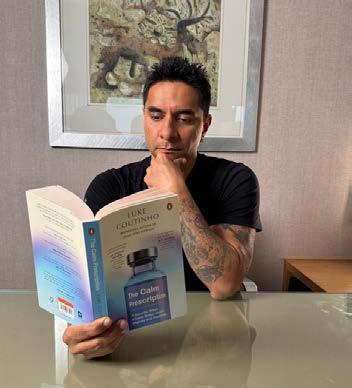
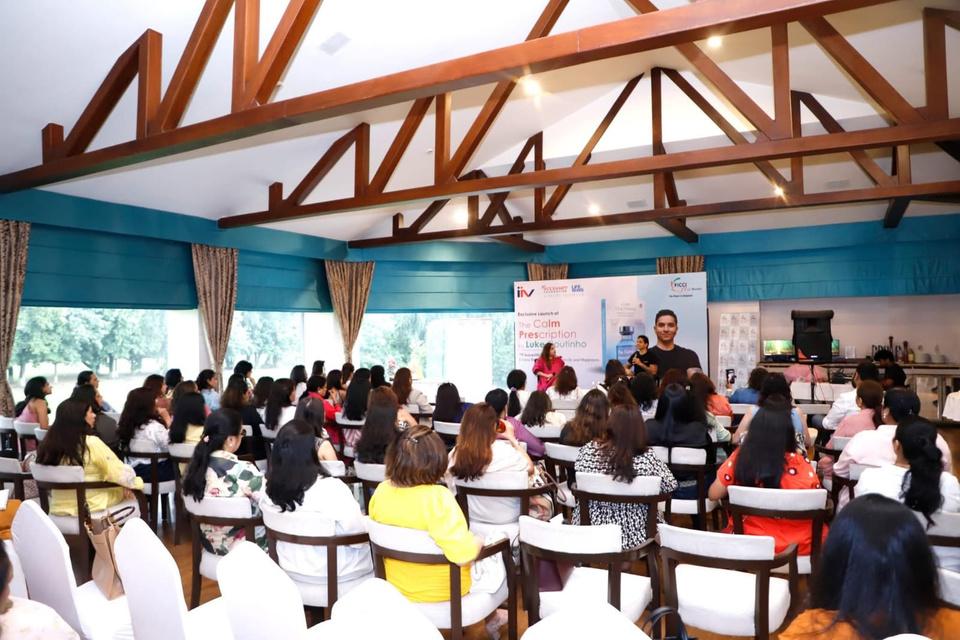
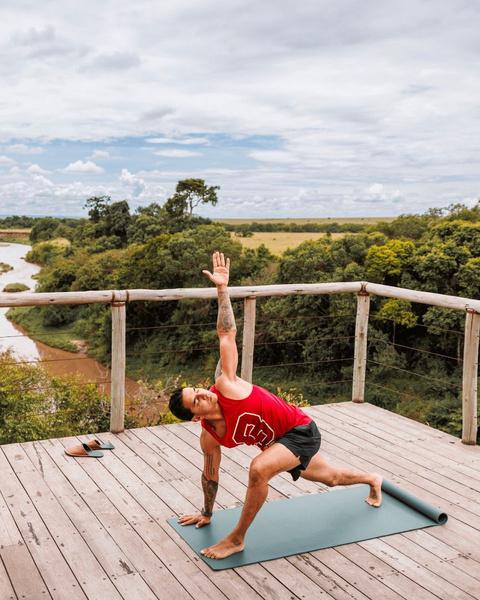
We had the honour of connecting with Luke Coutinho for a deeply thought-provoking conversation exploring the future of wellness, global consciousness, emotional wellbeing and humanity’s growing disconnection from the body, self and nature. In this powerful and insightful conversation with Beyond The Veil, Luke shares grounded insights on healing, awareness, modern health culture and the importance of returning to the foundations of what it truly means to be well.
Beyond The Veil stands for looking deeper than surface narratives. In health and healing, what do you believe people are most afraid to confront beneath the “weight-loss” conversation?
Are they preserving muscle?
Are they sleeping better?
Is their blood sugar more stable?
Have they understood emotional eating?
Are they nourishing themselves or simply eating less?
That is the difference between an outcome and awareness. Medicine may create an opening. But what we build inside that opening determines whether the transformation becomes sustainable.
I understand why people use the term weight loss, but in our work, the deeper conversation is fat loss, body composition and metabolic health.
The weight is visible, so it becomes the focus. But beneath it, we often see poor sleep, chronic stress, insulin resistance, visceral fat, low muscle mass, inflammation, emotional eating, unresolved grief, loneliness, hormonal imbalance, gut issues and years of ignoring the body’s signals.
Many people are not only dealing with body fat or metabolic imbalance. They are also carrying fatigue, shame, self-criticism, pressure, survival patterns and a lifestyle that has pushed the body into imbalance.
What people are often afraid to confront is this: the body is not the enemy. The body is responding. It is responding to how we eat, sleep, move, think, feel, suppress, cope and live.
Fat loss is not just a cosmetic goal. It is a metabolic conversation and until we look beneath the number, we miss the real story.
“Fat loss is not just a cosmetic goal. It is a metabolic conversation and until we look beneath the number, we miss the real story.”
There is a growing culture of wanting fast results physically, emotionally, even spiritually. How can individuals learn to value consistency and inner regulation in a world addicted to instant gratification?
We have to stop confusing intensity with transformation.
Intensity can create short-term change. Consistency creates identity.
The body does not transform through punishment.
It responds to rhythm, safety, nourishment, movement, sleep and repetition.
In our consults, we often see people who have tried extreme plans. They are not lazy. Many are exhausted from starting over again and again. What they need is not more shame.
We use caffeine to push through exhaustion, food to soothe discomfort, screens to avoid stillness and ambition to justify burnout. Over time, the body keeps whispering and when we do not listen, it starts speaking louder. In diabetes consults, for example, blood sugar is the measurable marker, but underneath, we may see insulin resistance, visceral fat, poor sleep, low muscle mass, erratic food timing, chronic stress, inflammation and emotional patterns around food.
This is why I speak about a foundations-first approach. Foundational Medicine asks: what is the body communicating and which foundation needs support? Food, movement, sleep, emotional wellness, nature, breath, stress regulation and spiritual connection are not separate from health. They are the environment in which health is built. The body is always communicating. We have simply become too distracted to listen early.
They need a rhythm they can return to. Start with small promises. Eat one balanced meal. Walk after a meal. Sleep thirty minutes earlier. Strength train twice a week. Pause before reacting. Breathe before eating. Come back after an off day, instead of calling it failure.
Inner regulation is built through these small returns. It is the ability to steady yourself without needing life to become perfect first. Real transformation is not rushed. It is repeated.
“The body is always communicating. We have simply become too distracted to listen early.”
Many successful professionals today appear outwardly healthy, yet privately struggle with stress, inflammation, burnout, loneliness or emotional eating. How important is emotional wellness in metabolic health and why is it still so underestimated?
Emotional wellness is central to metabolic health. It is underestimated because many people still want metabolism to be only about calories, workouts, macros or medication. But the body does not work in compartments.
In consults with high-performing professionals, we often see a familiar pattern. They look successful from the outside, but internally they are running on poor sleep, caffeine, late meals, stress, suppressed emotions, loneliness and very little recovery.
Stress is not just a feeling. It changes physiology. It can influence sleep, cravings, food choices, digestion, inflammation, blood sugar regulation, hormones and recovery.
Emotional eating is rarely only about willpower. Sometimes the body is searching for comfort, safety, relief or regulation.
You cannot separate metabolism from the emotional state of the person living inside that body. If we want better metabolic health, we have to look at the nervous system, emotional patterns and the life that surrounds the plate.
Before asking what is trending, ask what is missing.
Is the person sleeping well? Eating enough protein? Building muscle?
Managing stress? Moving daily?
Getting sunlight? Regulating emotions?
Eating with awareness? Feeling supported?
At Team Luke, this is also why we created the GLP-1 Drug Lifestyle and Support Program for individuals already prescribed these medications by their doctor. We do not prescribe, supply, adjust or discontinue medication. We work alongside medical care to support nutrition adequacy, gut health, muscle preservation, sleep, stress regulation, emotional eating and sustainable habits. Genuine wellness gives power back to the person.
They are signals of safety to the body.
In diabetes and metabolic health consults, we often see how powerful simple rituals can be. A post-meal walk can support blood sugar response. Strength training supports muscle and skeletal muscle is one of the body’s most important sites for glucose storage and metabolic health.
Sleep changes cravings, energy, decisionmaking and recovery. Breathwork can help shift the body from reactivity to regulation. Resilience is not built in one dramatic moment.
It is built when the body repeatedly receives the message: I am nourished, supported, safe and capable.
“Never let the tool become more important than the human being.”
If you could leave readers with one message about the future of wellness, especially in an era dominated by technology, pharmaceuticals and biohacking, what would you want humanity to never forget?
Never let the tool become more important than the human being.
Technology can help. Medicine can save lives. Pharmaceuticals have their place. Biohacking can offer useful insights. Lab reports, glucose monitors, apps and wearables can guide us.
But they cannot replace awareness, intuition, emotional safety, relationships, sleep, nourishment, movement, breath, nature and purpose.
The future of wellness should not be anti-medicine or anti-technology. That would be incomplete. It should be more conscious. We should know when to use science, when to use medicine, when to use ancient wisdom and when to return to the basics.
A medication may support appetite or blood sugar. A wearable may show recovery. A lab report may reveal markers. But none of them can teach a person how to live with self-respect, consistency, emotional honesty and connection.
That is still human work.
Love, Emotional Safety and Human Connection
“Amore conscious world begins with more conscious human beings.”
You often speak about the connection between emotions, stress and physical health. In your experience, how deeply do love, emotional safety, relationships and human connection influence healing and do you believe modern lifestyles are creating a silent emotional starvation beneath the surface of “wellness”?
Love, emotional safety and human connection can deeply influence how a person participates in healing and recovery. They do not replace medical care, nutrition, treatment or lifestyle change, but they shape the internal environment in which healing happens.
A person who feels supported, heard, respected and emotionally safe often relates differently to their health journey. They are more likely to ask for help, stay consistent, sleep better and believe that change is possible.
We need workplaces that do not glorify burnout. We need leaders who operate with conscience. We need to reduce unconscious consumption and live with more responsibility toward the planet. And we need service. When people move from only “What can I get?” to “How can I contribute?” something changes inside them.
A more conscious world begins with more conscious human beings. That may sound simple, but it is one of the hardest and most necessary shifts of our time.
In consults, we also see the opposite. People may have access to good food, supplements, tests, therapies and programs, but they feel emotionally alone. They are digitally connected but relationally disconnected. Productive, but unseen. Surrounded by people, but not emotionally safe.
These emotional states may influence sleep, cravings, eating behaviour, stress hormones, gut health, blood sugar regulation and recovery.
So yes, I do believe many people are emotionally undernourished beneath the surface of wellness. Emotional safety is not a luxury. It is part of the healing environment.
In a world obsessed with optimisation and external validation, how can people reconnect with stillness, self-awareness and inner purpose, the parts of wellness that cannot be measured by a scale, app or lab report?
First, we must remember that not everything valuable can be measured.
A scale can show body weight, but not selfrespect. An app can track sleep, but not peace. A lab report can show markers, but not purpose. A wearable can show heart rate variability, but not whether your relationships feel safe or whether your life feels meaningful.
These tools have value. I use science, data and diagnostics in our work. But data should guide awareness, not replace it.
Stillness begins when we create space from noise. Sit without the phone. Walk in nature. Breathe consciously. Pray if that is part of your life. Journal honestly. Ask deeper questions: What am I avoiding? What is my body asking for? Where am I living out of alignment? Who am I becoming? What am I serving?
Purpose is not always found in a dramatic revelation.
Sometimes it is found in the quiet decision to live with more truth, discipline, compassion, service and awareness. That, too, is wellness.
By Abiraa Mitra
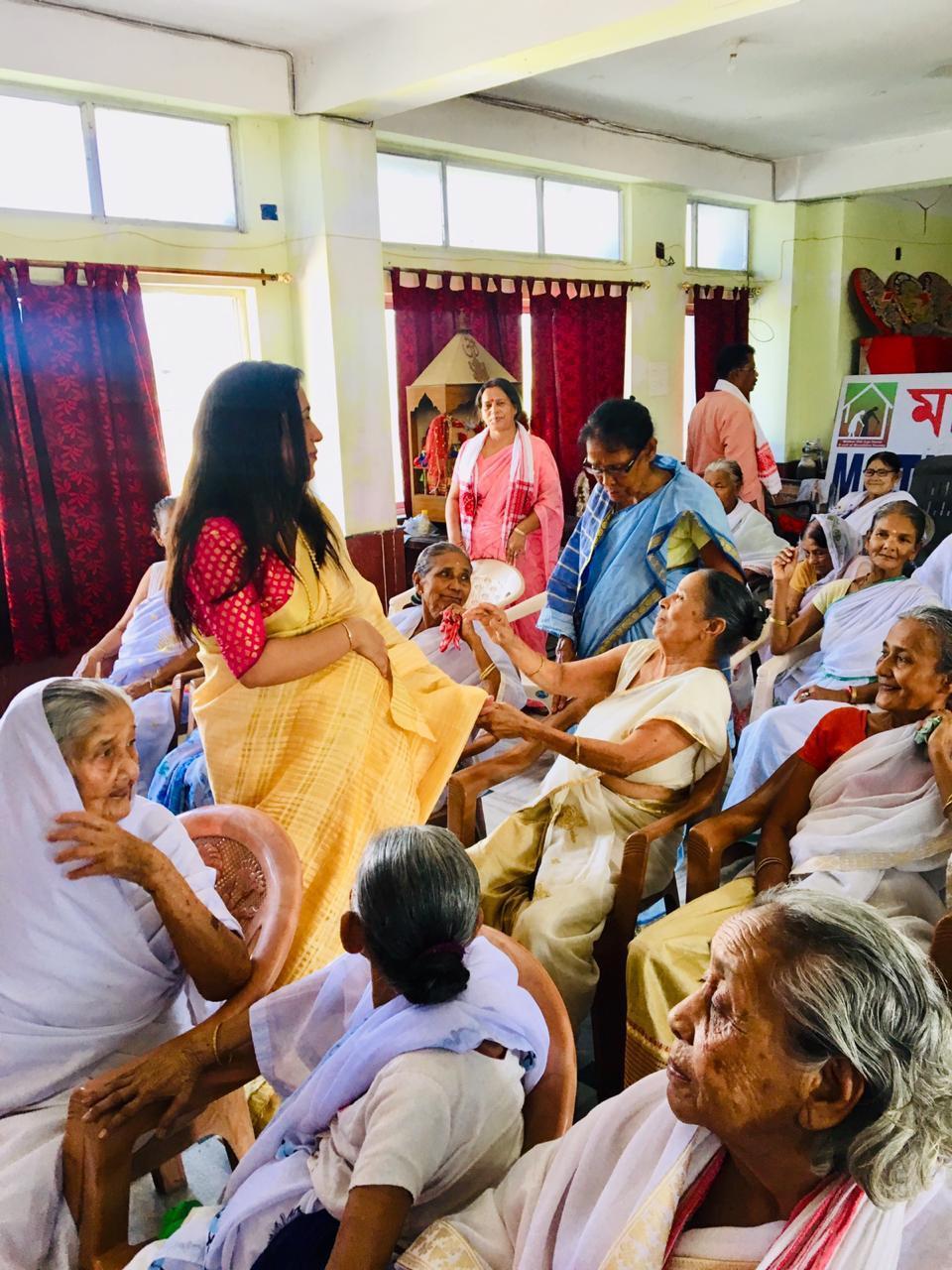
In a world moving at relentless speed, being alone and disconnected has become one of the greatest threats to our wellbeing. These women reminded me that being seen, heard, valued and loved is essential nourishment for the human spirit. That day was not the end of a celebration, it was the beginning of a relationship. Since then, I have continued to visit, support and serve these mothers in whatever ways I can. What started as a baby shower became a lifelong commitment.
As I read the inspiring work of wellness pioneers like Lawrence Ellyard and Luke Coutinho in this issue, I am reminded that true wellness extends beyond the individual. It is found in compassion, community, purpose and service. Sometimes, the healthiest thing we can do is not look inward, but reach outward. For me, wellness is not merely about adding years to life, it is about adding love and kindness to the lives around us.
PAUSE BREAT HE RESET
TAKE A MOMENT…
SIT OR NOTICE YOUR BODY
FEEL YOUR FEET ON THE FLOOR NOTICE YOUR BACK FEELING SUPPORTED
OBSERVE YOUR HANDS RESTING LIGHTLY
BREATHE:
INHALE FOR 4 HOLD FOR 1
EXHALE FOR 6
REPEAT 2–3 TIMES NOTICING YOUR CHEST OR BELLY RISE AND FALL
OBSERVE: THOUGHTS, FEELINGS AND SENSATIONS COME AND GO LIKE CLOUDS — NO NEED TO CHANGE THEM.
AFFIRM:
I AM ALLOWED TO PAUSE AND RESET
I CAN OBSERVE MY THOUGHTS WITHOUT JUDGEMENT I AM PRESENT IN THIS MOMENT AND SAFE I AM CAPABLE OF RETURNING TO CALM WHENEVER I CHOOSE
TRIGGER WARNING:
BEFORETHEYCOULDGUIDEOTHERSTHROUGH HEALING,THEYHADTOWALKITTHEMSELVES BEYOND THE VEIL
Yash Agarwal Founder and CEO of Yash Fitness
He holds professional credentials from the K11 School of Fitness Sciences, REPs India and the FSSA Council, along with a specialised Trauma Response certification from the Australian Lifesaving Academy (NSW).
His expertise spans performance training, rehabilitation-focused fitness, posture correction and holistic health optimisation.
A highly sought-after celebrity fitness consultant, Yash is also the host of a widely followed performance and wellness podcast, where he has interviewed notable personalities including Olympic medalist and former World No.1 badminton player Saina Nehwal.
His work and insights have been featured across leading Indian media platforms such as CNBC Awaaz, Zee Business, The Economic Times, Times of India, The Telegraph, ABP News, Hindustan Times, Dainik Jagran and Dainik Bhaskar.
Beyond coaching clients, Yash is a respected fitness educator and mentor, having trained and groomed 100+ certified personal trainers across India after their professional qualifications.
His coaching philosophy focuses on long-term lifestyle transformation through individualised programming, science-backed training and strategic nutrition.
Yash strongly believes that true fitness goes far beyond aesthetics.
He emphasizes mobility, posture, balance, flexibility, agility, speed, recovery and mental focus as essential pillars for improving overall performance and quality of life.
Yash Fitness
Founded with the vision of making professional, sciencedriven fitness accessible and personalised, the company provides highly customised training programs delivered by a team of qualified personal trainers, nutritionists and wellness specialists.
The organisation offers at-home personal training services across Kolkata and round-the-clock online coaching worldwide, ensuring clients receive expert guidance, accountability and measurable results anytime and anywhere.
Your trials, traumas and challenges?
My journey into fitness and healing did not begin from a place of strength, it began from pain.
During my childhood and early years, I faced several health challenges that deeply affected me physically and emotionally.
His Story
Yash Agarwal Founder and CEO of Yash Fitness
Behind the strength, discipline and transformation was once a young boy quietly fighting battles within hospital walls. His greatest pain became the foundation of his purpose. +919330878213
Spending time in hospitals, depending on medications and feeling physically weak at an age when most people are energetic, created a sense of frustration and helplessness inside me. But those difficult moments also taught me empathy. They made me understand what it feels like when someone silently struggles behind a smile.
Over time, I realised that true healing is not only about the body it is also about mindset, emotional resilience, discipline and hope.
Those experiences shaped my purpose.
What led to your healing journey, was it a single incident or did it unfold?
Healing was a gradual journey, not a single moment.
Over time, through fitness, nutrition and self-discipline, I realised that growth happens step by step.
There were setbacks and lessons along the way, but every experience shaped my purpose and strengthened my passion for helping others.
What steps you took on your journey, as in which modalities worked for you, as we are all different?
The biggest transformation came through balance and consistency.
Strength training, mindful nutrition, recovery, and mental discipline changed my life.
I learned that wellness is deeply personal, and true transformation happens when you focus on long-term health instead of temporary results.
What is 1 solid piece of advice that you would give to the brotherhood just starting out on their journey?
The first step toward healing is being honest with yourself.
Many people silently carry stress, burnout and emotional pain.
My advice is to start small improve one habit, ask for help and give yourself patience.
Healing doesn’t happen overnight, but small consistent steps create big change.
With our world in peril in this unprecedented moment in history, what in your personal opinion, do we need to do?
Humanity needs more compassion, awareness and connection.
Today people are emotionally disconnected, despite being digitally connected.
I believe we need to prioritise mental wellness, preventive health, kindness and balance in life.
True healing begins when we reconnect with ourselves, nature and each other.
Useaperson'snamerightaway.
This has an added benefit of making the person like you more! People like to hear their name. It makes us feel important. If you are really forgetful, (like me) associate the name with something you know,
Tell us about your trials, traumas and challenges.
Born and raised in India, I was only five years old when my world first broke apart.
His Story
Gerard Fynn
BTV Deputy Publisher | Trauma Therapist
After a lifetime of loss, sacrifice and silent suffering, one man discovers that survival itself can become the beginning of healing.
I worked as a waiter for many years after that and worked my way to the front desk as a receptionist.
My parents separated and from that moment, life became something very different from what childhood should have been. My mother was given custody of me, my brother and my sister and while she did what she could, life was never easy.
We were sent to boarding school from the third grade through to the eighth, not because we wanted to go, but because survival often meant sacrifice. Then my mother became ill and when she could no longer afford the fees, childhood ended for me altogether.
At just twelve years old, I left school with my brother and stepped into the world of work, not as a choice, but as a necessity. While other children were discovering who they were, I was cleaning toilets and priests’ rooms at St Vincent’s Parish, then washing cars late into the evening just to help keep my family afloat.
My hands learned hardship before they ever knew freedom. Exhaustion became normal. Responsibility became my identity.
My brother Geoffrey and I ironically worked together at the same places up to 1990, when he had to leave for the gulf where we both got a job. However, I was only seventeen and a half then, and could not travel with him as I was underage.
That was the only time I was separated from him, which broke my heart immensely, because he was my everything.
The only person that knew and understood me.
But nothing could have prepared me for the pain that came when I was eighteen.
My brother Geoff, my protector, my best friend, the person I loved most in this world died. When he died, a part of me died with him. I lost not only my brother, but my purpose, my light and the one person who made life’s burdens feel bearable.
Grief swallowed me whole. Depression became a silent prison I lived in for years. Yet, even in my pain, I could not stop. My family still needed me. So I kept going, carrying heartbreak in one hand and responsibility in the other.
I worked whatever jobs I could find to support my mother, father and sister. Then in 1998, my father died of a heart attack. Another devastating loss. Another piece of my foundation gone.
Still, I kept moving forward because there was no other option. In 2005, I took on loans and financial burdens to ensure my sister could marry and have a future, even against my mother’s wishes. I did it because I believed someone had to break the cycle; someone had to choose love over control.
For decades, my life was not my own. I devoted myself entirely to caring for my mother, despite the pain, despite never truly feeling good enough. I sacrificed my own dreams, my own chance at love, even the possibility of marriage. Because of her fears and insecurities,
I was never given the freedom to build a life for myself. I remained by her side as a loyal son, carrying duty over desire, until the day she passed in 2018, followed by my best friend Francis Veigas of 25 years. Losing both my mother and my best friend, shattered what little remained of me.
The weight of grief became unbearable. I no longer wanted to live.
“I believed someone had to break the cycle… someone had to choose love over control. “ What led you to your healing journey? Was there a single incident or did it unfold?
In 2021, I suffered a stroke and nearly died, truthfully, part of me wished I had.
I had another mild stroke in 2022 but somehow, I survived that too. My sister Lucille Fonseca her husband Frank and her son Francille were my main support. I love them to my core for being there for me at a time i was down and out.
And in that survival, something shifted. For the first time, life felt as though perhaps all the suffering, all the loss, all the heartbreak had to mean something more.
That was when I found hypnotherapy. Or perhaps, it found me.
I began studying healing the mind, trauma and transformation. In 2024, my life changed forever when I enrolled in Hypnotherapy Training Australia.
There, I met Kaz Field Anderson, a woman whose kindness, generosity and belief in me became one of the greatest blessings of my life. My Mentor, My Guide.
She gave me not only a full scholarship, but something even more valuable: Hope! She helped me come to Australia to continue my studies, to rebuild and to believe that my life was not over.
Today, I have completed Levels 1 and 2 in Advanced Clinical Hypnotherapy and I am now pursuing my Master’s while also training as an Editor, Journalist and Publisher for Beyond the Veil Magazine. Kaz became more than a mentor, she became a guiding light.
Her husband Geoff has been a profound moral support, like the older brother I lost so many years ago. Even the coincidence of his name feels deeply personal, as though life, in its mysterious way, gave me something back. Their daughter Sedona and her beautiful child Aurora have also brought warmth, kindness and a sense of family I never expected to feel again.
After a lifetime of loss, sacrifice, survival and rebuilding, I am finally standing at the threshold of something I have rarely known. Stability. Purpose. Hope.
“For the first time, someone saw potential in me beyond my pain.”
Many men are taught to suffer in silence, to keep going no matter how much they are hurting, to believe that asking for help is weakness. But true strength is not found in pretending you are unbreakable. It is found in hanging on when everything inside you wants to give up.
You may feel like you are walking through ashes right now with grief, trauma, loss, depression. Tha is survival mode, but ashes do not mean the end. Sometimes, they are where rebuilding begins. Hold on.
What is one solid piece of advice that you would give to the brotherhood just starting out on their journey.
Your story is not over!
No matter how devastating the pain, how heavy the uncertainty or how many times life has brought you to your knees, there is still hope.
There is still a purpose. There is still a future worth fighting for.
“There is still hope.
There is still a purpose.
There is still a future worth fighting for.”
Even when life feels uncertain, even when the road ahead seems impossible, keep moving forward. Growth can come from pain.
Purpose can rise from suffering.
And one day, the struggles that nearly broke you, may become the very foundation that rebuilds you. You are not here simply to survive.
You are here to learn, heal, to grow, to rebuild and to become.
So, to every man silently fighting battles no one sees hang in there. Keep going.
Your darkest chapter does not define your whole story. There is hope. There is strength.
And there is still time for your life to become something meaningful, powerful and real. For most of my life, I lived for others. Now, I include myself.
A prayer I was taught when I was a child that became my daily guidance:
“Others Lord, yes others, let this my motto be help me to live for others that I may live like thee. Help me to live from day to day in such a self-forgetful way, that even when I knee to pray, my prayers may be for others. Help me in all the work I do to ever be sincere and true and know that all I do for you must need be done for others. Others Lord, yes others, let this my motto be help me to live for others that I may live like thee.”
With our world in peril in this unprecedented moment in history, what in your personal opinion, do we need to do?
“An opportunity to awaken. To rebuild. To choose better.”
Personally, I believe real change begins within the individual. We cannot expect peace in the world while chaos rules our own minds. Healing trauma, raising emotionally strong children, supporting men and women equally, protecting the vulnerable and rebuilding genuine communities may be some of the most powerful actions we can take.
In my personal opinion, in this unprecedented moment in history, the world does not simply need more technology, more power or more division, it needs humanity to remember its humanity.
We are living in a time where fear, conflict, greed, mental exhaustion and disconnection are pulling people further away from themselves and from each other.
So before we can heal the world, we must first heal the way we think, the way we treat one another and the way we live.
We need to slow down enough to remember that behind politics, religion, race, status and ideology we are human beings first.
We need more compassion over condemnation.
More truth over manipulation. More healing over hatred. More listening over shouting.
We must also stop normalising a world where profit is often valued above people, where mental health is ignored and where kindness is treated as weakness. Strength should not be measured by dominance, but by integrity, wisdom and the courage to do what is right even when it is difficult.
This moment in history may indeed be perilous, but it is also an opportunity.
An opportunity to awaken. To rebuild. To choose better.
If enough people begin choosing truth, responsibility, compassion and healing in their everyday lives, then even in uncertain times, humanity has a chance not only to survive, but to evolve.
The world may not change overnight. But people can.
And when enough people change for the better, history changes with them.
Do Those Special Things That You Did In The First Year of Your Relationship
His body shut down so his soul could awaken. Forced to surrender everything… and in doing so, he discovered the true power of healing.
QTell us about your trials, traumas and challenges.
To my absolute surprise, my trajectory accelerated quickly.
www.equator-hypnotherapymelbourne.com
equatortherapies@gmail.com
519/370 St.Kilda Road, Melbourne.
I was operating a successful private practice as a clinical hypnotherapist, doing the work I loved. Then, as if the universe were rewarding my alignment, I was invited to become a lecturer at the Academy of Hypnotic Science in Melbourne. I was tasked with facilitating all the counselling components for both the Certificate IV and Diploma courses. It was an absolute dream. I felt I was entirely following my true purpose, submerged in the joy of teaching and guiding others.
I was soon promoted to student manager at the school. This effectively doubled my workload, yet I didn’t utter a single complaint.
I refused to see the mounting pressure as an issue, even when my schedule ballooned into working a relentless seven-day week.
Have you ever found yourself so entirely swallowed by your work, that you completely lose track of your physical existence? Have you pushed your body past its reasonable limits, sacrificing rest, skipping proper meals and surviving on minimal sleep, all while believing you are perfectly fine? It is a dangerous state of being, because the profound tiredness is entirely masked by pleasure, validation and professional joy.
This was my reality. Work was amazing and because my mind was thrilled, I completely failed to notice that my body was quietly crying out for my attention.
Subtle Warnings and the Flight to Paradise:
The body, however, does not keep quiet forever. It began whispering its protests through subtle warnings that I effortlessly rationalised away. First, it was a persistent twitching in my eye. Then, my vision became slightly blurred. A few weeks later, a strange weakness crept into my left arm, eventually followed by a heavy, uncooperative sensation in my legs, making it increasingly difficult to lift them just to walk.
Coincidentally, I was on the cusp of departing for a well-deserved holiday to Singapore. I masterfully convinced myself that the moment I touched down in the tropical warmth, the malaise would simply vanish. Looking back at that version of myself from a vantage point of deep clinical and spiritual awareness, I am utterly astounded by how profoundly detached I was from my own physical form.
The moment of transition was deceptively luxurious. Seated comfortably in business class, a flight attendant offered me a glass of champagne as the aircraft taxied onto the Melbourne runway. I drank the cocktail, closed my eyes and instantly fell into a heavy, dead sleep for a solid seven hours, waking only just before landing.
I remember thinking, “Wow, I really needed that!”
I had no idea that hell was about to run riot.
The Reality Check in Singapore: Stepping out into the foreign, humid climate of Singapore, reality struck with terrifying speed. I was incredibly fortunate to be travelling with my close friend, Andrew, because the moment we arrived, the physical deterioration became undeniable.
"I think my legs are asleep," I told him, trying to brush off the dead weight. "They are completely numb.”
We exited the airport and made our way to Marina Bay for what was supposed to be a luxurious stay at a six-star hotel. Instead, that room became the staging ground for a medical emergency.
Within twenty-four hours, the illusion of the holiday shattered entirely; I went from a luxury hotel suite to being prepared for an emergency evacuation back to Melbourne. It happened with a surreal, head-spinning intensity.
Over the next six days, I lost five kilograms. My nervous system was rapidly shutting down and my ability to walk vanished completely. Whenever I attempted to stand, my legs would buckle like jelly and I would hit the ground. Bizarrely, my initial psychological defence mechanism was to just laugh it off.
I was in a state of profound shock and lack of awareness about the gravity of my situation. However, as the days ticked closer to a luxury cruise we had booked to sail across various Asian destinations, the truth crystallised: I couldn't even stand up, let alone board a ship.
I was in deep, dangerous trouble.
QWhat led you to your healing journey? Was there a single incident or did it unfold?
In a moment of vulnerability, I decided to share what was happening to me on Facebook. The response was immediate. A flood of support, advice and stark truth came rushing in from my community.
It was a mirror I could no longer ignore. I had to face the reality that my immune system was severely compromised.
What I had proudly labelled as "passion and purpose" was, in truth, an intensive state of chronic stress and prolonged abuse of my own nervous system. I was a textbook high achiever and being suddenly, violently forced to slow down scared me to death.
Being the Case Study at St Vincent's: Upon my return to Melbourne, I was admitted to St Vincent’s Hospital, transitioning instantly from a clinician to an enigmatic patient. My case baffled the medical staff. I found myself poked, prodded and reviewed by over fifty top leaders in neurology, quickly becoming the hospital's living case study.
The clinical presentation made no sense to them. The paralysis and profound weakness affected only the left side of my body, yet scans confirmed I hadn't suffered a stroke.
I completely lacked the ability to walk, yet I didn't test positive for Multiple Sclerosis.
To this day, the only formal diagnosis ever attached to my file was vasculitis; an inflammation of the blood vessels but in all reality, the medical establishment simply did not know what had actually gone wrong.
As the days blended into weeks and the weeks stretched into a full month, a strange psychological stagnation set in.
I was incredibly bored, but because this entire ordeal was occurring during the exact window I was originally scheduled to be away on holiday, the true, permanent impact of my situation had not yet hit me. I was still treating it like a temporary detour.
That detachment ended abruptly one afternoon. My neurologist walked into my room, stood by my bedside and delivered the cold, clinical prognosis. He told me straight out that I might never regain the ability to walk again. He urged me to face the harsh truth: the intensive rehabilitation, the gruelling blood transfusions, the heavy doses of steroids, none of it was working. I looked him dead in the eye, the full force of my spirit rising up in defiance and screamed, "HELL NO!“
QWhat steps did you take on your journey, as in which modalities worked for you, as we are all different?
Surrender to the Flow
From that exact moment of absolute refusal to accept a broken destiny, the universe began to align. While lying in that hospital bed, an email appeared in my inbox that would alter the course of my life. It was a random invitation to participate in an online spiritual course called "Engage in the Flow”, facilitated by an American spiritual healer named Saryon. The course cost a mere single dollar. With absolutely nothing left to lose, I signed up.
Saryon changed my entire existence on the very first day. His methodology combined deep hypnosis, profound sound healing and a radical exploration of the true art of surrender. As a trained hypnotherapist, I foolishly thought I already understood what surrender meant. I quickly realised I didn't have a clue.
“…imagine standing at the very precipice of a high mountain peak. He whispered, "We are going to jump, Joe. We can't see the bottom, so we don't know what is down there. But that is okay; we are going to accept whatever we encounter, and we will be okay.”
During our sessions, Saryon would gently guide me to let go of my rigidity and my intense frustration would flare up, "I can't do it!" I would protest, clinging to my need for control.
To illustrate what I was doing, Saryon gave me a metaphor. He asked me to imagine standing at the very precipice of a high mountain peak. He whispered, "We are going to jump, Joe. We can't see the bottom, so we don't know what is down there. But that is okay; we are going to accept whatever we encounter and we will be okay.”
My immediate instinct was to make every logical excuse under the sun to avoid jumping into that dark abyss. I desperately wanted to know what was at the bottom before I committed. Saryon patiently explained that true surrender means we stop obsessing over the landing or trying to predict the terrain. Within that space of absolute trust, we learn to organically deal with whatever life throws at us in the present moment.
He taught me that in the grand economy of the universe, there is no good or bad. There are no rigidi deals. Every single moment is entirely ideal, exactly as it presents itself. Being able to work at the peak of your career is no different from lying in a hospital bed unable to walk; both are states of being to be experienced without judgement. To surrender is to trust yourself completely via your inner being, letting go of human judgement and willingly engaging in the flow of life.
The Breakthrough: Walking into Destiny
This radical paradigm shift was incredibly difficult for my high-achieving mind to grasp at first. Yet, day after day, I committed to the process. I immersed myself in daily hypnosis, listening intently to specific healing frequencies and expanding binaural beats, allowing the raw sound vibrations to echo deeply into my compromised body. To understand how sound frequencies can positively impact the central nervous system (CNS) and support the body's natural healing responses, we must look beyond traditional medicine and enter the realm of psychophysiology and neuroscience. The human body is not merely a collection of organs; it is an interconnected bio-electrical system. Every nerve impulse, heartbeat and brainwave operates on specific electrical frequencies. When the CNS becomes severely compromised through chronic stress, trauma or illness,this internal electrical harmony is disrupted, throwing the body into a prolonged state of fight-or-flight. Sound frequency therapy acts as an external tuning fork, helping to recalibrate these misfiring neural pathways.
“To
surrender is to trust yourself completely via your inner being, letting go of human judgement and willingly engaging in the flow of life.”
The primary mechanism behind this phenomenon is a neurological process known as brainwave entrainment. The human brain naturally synchronises its internal electrical activity to strong, periodic rhythmic stimuli from the external environment. When we introduce specific sound frequencies - such as alpha (8–12 Hz) or theta (4–8 Hz) waves - the brain begins to mimic these frequencies. This shift effectively coaxes the CNS out of a hyperaroused, sympathetic state (stress) and guides it into the parasympathetic state (rest, repair and digest). It is within this parasympathetic dominance that the immune system stabilises, inflammation decreases and the body can begin the profound work of cellular and neural repair. Furthermore, specialised auditory tools like binaural beats offer a unique way to stimulate the brain's neuroplasticity. Binaural beats occur when two slightly different frequencies are played into each ear simultaneously; for example, playing 300 Hz in the left ear and 310 Hz in the right. The brain perceives the difference between the two and organically creates a third internal frequency of 10 Hz. Processing this phantom sound requires both hemispheres of the brain to communicate and work in unison. This hemispheric synchronisation encourages the creation of new neural pathways, helping the mind bypass damaged or stressed networks.
I reached the point of total, unadulterated surrender. I felt an overwhelming urge to cry, but the tears never fell.
Instead, a profound shift in consciousness occurred.
I suddenly experienced a moment of vivid transcendence, as if I were floating above my own body, looking down at myself in that hospital bed.
In that quiet space, an absolute trust washed over me. I knew, with every fibre of my soul, that this exact moment of paralysis was precisely whereI was meant to be.
It was the ultimate "AHA" moment. In that beautiful, quiet space of surrender, I fully realised the miraculous power of the human mind. I understood firsthand the staggering strength that hypnosis and sound therapy exert over the human body, mind and soul. The proof was undeniable. The very next day after achieving true surrender, my nerve pathways awakened. I began to walk again.
My body had finally decided that I was the one in control - not a diagnosis, not a doctor and not a hospital ward. I looked at the limitations imposed upon me, decided my own destiny and chose to simultaneously surrender to the flow and fight for my life.
QWhat is one solid piece of advice that you would give to the brotherhood just starting out on their journey.
Initially, the journey isn't about immediate transformation; it's about developing the mindfulness to notice triggers, utilising breathwork to stay grounded when they arise and having the willingness to explore one's "inner child's" wounds driving these reactions.
Before you can change a behaviour, you must first be willing to sit with the discomfort of why it exists. Leaning into the brotherhood for accountability, but remember that the ultimate goal is to connect with integration, not perfection.
QWith our world in peril in this unprecedented moment in history, what in your personal opinion, do we need to do?
When looking at the global scale of uncertainty, division and anxiety, the macrocosm can feel completely overwhelming. From a perspective rooted in deep psychological and emotional awareness, the path forward requires us to pivot from external panic to internal grounding. We cannot control global economics, geopolitics or the rapid pace of change, but we can control our response to them. Practising acceptance doesn't mean giving up, it means acknowledging reality as it is right now, so we can respond with clarity, rather than reacting from panic or fear.
In an ultra-connected digital world, we have become deeply disconnected from humanity. We need to anchor ourselves back into real, raw, face-toface communities, like the brotherhood. Strengthening the micro-connections around us creates a ripple effect of stability. The world changes when the people within it change. In an unprecedented moment of history, the most revolutionary thing you can do is become a grounded, self-aware and emotionally intelligent anchor for those around you.
Just surrender.
Great Advice Joe! ~ ED
Skye Angelicstar
Raised in a world where men were taught to suppress, survive and stay silent, one man’s collapse into addiction became the beginning of profound self-awareness and healing.
Your trials, traumas and challenges?
I had become so uncomfortable in my own skin, totally unrecognisable to my own spirit and soul, that I was desperate and deeply troubled.
I gravitated to more coping mechanisms and medication that at that stage of life, presented themselves in the form of drugs being speed, marijuana and ecstasy. At that moment in time, I would have been perceived as another no hoper, in other words, a drug addict with no real future.
“I had to find my way - and that way was anything other than the way I was headed.”
What led you to your healing journey? Was there a single incident or did it unfold?
Lucky for me, a relationship break up, a third drink driving charge that nearly had me jailed for two months, numerous boils festering on my skin from a diet of drugs and feeling empty beneath my skin caused a change for the better.
I had to find my way and that way was anything other than the way I was headed.
I went on to try on many weird and wonderful ways us humans heal and grow.
Thanks to my mother’s love and the school of life and the many loving, caring, wise people that came into my life along the way, I can truly say I transformed my wounds into gifts that keep giving.
Yoga, Neurolinguistic Programming, and Hypnosis stand out as my elevators out of limited self-protection, awareness, habits, beliefs and behaviours.
Back then, my self-medication was speed; it helped me express myself, pot helped calm my mind and body and ecstasy gave me a feeling of love and intimacy.
Obviously, not a long-term strategy I would advise for anyone. I see my father was doing the best with his level of awareness at that time. Smoking and drinking were his stress management tool kit and being at the pub, footy, etc., was his need for belonging/connection and sense of being part of a tribe.
I feel proud to say I expanded and raised the quality of that tool kit to self-love, care, yoga and hypnotherapy. Yoga takes care of my mind, body and soul and hypnotherapy helps me to understand the workings of the mind, human beliefs, habits and behaviours. I have become a man, yes, a human. Self-aware, self-realised, emotionally intelligent, caring, compassionate and loving.
Planet Earth, my home - tick. Loving kindness, my religion - tick. Playful curiosity and creativity, my outlet, tick.
Serving humanity, my saving grace - tick Yoga instructor and hypnotherapist of twenty years, tick
As my father would often say, this is not a dress rehearsal and if you put a smile on someone’s face, you have had a good day.
What is one solid piece of advice that you would give to the brotherhood just starting out on their journey?
My no one piece of advice to our brothers beginning their journey would be to open up to and be curious in researching about life on an energetic level, being made up of Yin energy (female qualities) and Yang energy (male qualities) and realising all humans also embody yin and yang energy.
So, you can enjoy the journey of rebalancing the masculine and feminine energies that are already in you. It is a matter of becoming familiar with both energies and how powerful and beautiful it is to feel yourself as a human being having the energies harmonised and available to feel and express when needed.
With our world in peril in this unprecedented moment in history, what in your personal opinion, do we need to do?
Hypnotherapy Training Australia:
Hypnotherapy Training Australia believes your story deserves to be heard, honoured and supported For many of our students, learning hypnotherapy is not just about gaining a qualification, it becomes a deeply personal journey, one where healing, growth and purpose begin to align. HTA has always been a strong advocate for men stepping into their gentleness, their wisdom and their capacity to help others heal.
Inside our community you will find: A safe and supportive learning environment. A heart-centred approach to trauma-informed hypnotherapy. The exclusive DeTrauma Technique™ . Ongoing mentorship and guidance And something rare in education today, lifetime membership and community support Because transformation doesn’t end when the training finishes. It continues through connection, courage and the willingness to share our stories
Our resident clinical hypnotherapist Fern Warren answers reader questions on healing, mindset and emotional wellbeing.
QA
How do I stop bottling up anger or frustration and express it healthily? Andrew, 52.
Naming your emotions activates your brain’s ability to calm the body and choose your response.
AQHow can I open up about my feelings without feeling weak or judged? Martin, 36
Start small, share slowly and trust that feeling heard is possible.
I feel like I’m just going through the motions, but I don’t know what I really want or where I’m going. How do I figure out what direction to take without feeling lost? Jay, 26
AAligning your choices with your values gives you a compass, even when the path isn’t clear.
I’m in my mid-fifties and keep dating, but every relationship seems to end around the threemonth mark. I haven’t found “the one,” and I’m starting to wonder if I ever will. How do I break the cycle and find something lasting? Ian, 57
AClarifying what you truly want helps guide you toward connections that last.
In Person Sessions in Clinic. Fern Warren: Clinical Hypnotherapist. Online Sessions over Zoom.
Free, No Obligation Discovery Calls. Fern Warren: Clinical Hypnotherapist. Therapy from the Comfort of Home.
Let your shoulders soften, your breath deepen and your nervous system remember what safety feels like.
Position your brand in front of over 16 million reach from Her Story
Premium brand placement across multiple issues
Dedicated advertorial feature
Social media promotion included
Custom partnership packages available
In this issue, we focus on colour for our gorgeous men! What to wear to empower you at work, home and play
Colour Me Happy WITH
LEXI
THE POWER OF COLOUR: MOOD, MEANING AND EVERYDAY WELLBEING
Colour Psychology The Three Undertones:
Colour psychology isn’t a fancy theory that sits on a shelf. It’s a practical lens you can use to show up differently in work, in relationships and in everyday life.
For men who want to feel more confident, grounded and connected, the right colours offer signals you can control with intention. They can shape your mood, influence how others perceive you and – on balance, steer you toward actions that align with your goals. It isn’t about chasing trends. It’s about choosing tones that fit who you are and how you want to move through the day. Colour is far more than a visual experience, it is a powerful psychological tool that can shape our emotions, behaviours and overall sense of wellbeing. From the calming effect of soft blues to the energising vibrancy of reds and yellows, the colours we surround ourselves with play a subtle, yet significant role in how we feel each day. Colour psychology explores how different hues impact human emotion and perception. While individual responses can vary based on personal experiences and cultural background, certain patterns are widely recognised. Understanding colour is one thing, but to truly make it work for you, it helps to consider your skin undertone. Your undertone subtly affects how colours look on you and can guide choices in suits, shirts and jewellery.
Picking tones that complement your natural colouring can elevate your style, enhance your confidence, and help you feel more “in tune” with your overall presence. Knowing whether your undertone is cool, neutral or warm provides a simple framework to choose colours intentionally, rather than guessing what works.
Cool Undertones:
Colours for Play and Fun
Colour Affects Mood.
Dress for Success:
Colours influence the brain through visual stimulation, triggering emotional and physiological responses. For example, cool tones such as blues and greens tend to slow down the nervous system, promoting relaxation. In contrast, warm tones like red and orange can increase energy levels and stimulate conversation.
Lighting and saturation also matter. Soft, muted colours tend to soothe, while bold, highly saturated colours can excite or even agitate if overused. The key lies in balance and intentional use.
So the working week is done and dusted, you’ve worked hard, smashed goals and now it’s time to hit the town. If your personality allows for spectacular colour, then we’ve got you too!
A man in a purple suit who can pull it off, is an absolute head turner (pictured lower right) or if you are super confident, a yellow suit will make sure you do not go unnoticed (picture below).
You will dazzle like a star, however, make sure you are home before daylight or you might just take someone’s eyes out with that bright colour in the morning light.
Incorporating colour thoughtfully into your environment can support mental and emotional wellbeing in several ways:
Creating Calm Spaces:
Using gentle blues, greens or soft neutrals in bedrooms or quiet areas can help reduce anxiety and improve sleep quality.
Boosting Energy and Motivation:
Adding pops of bright colour - like yellow or orange - into workspaces or exercise areas can increase motivation and creativity.
Supporting Emotional Balance:
A balanced colour palette that combines warm and cool tones can help create a sense of stability and comfort.
Personal Expression:
Choosing colours that resonate with you personally, can enhance your sense of identity and emotional connection to your space.
Navy Blue: Serenity Trust
Confidence
Sincerity
Wisdom
Light Blue:
Calm Clarity Trust
Openness
Light Blue is often associated with calmness, clarity and openness. It can help soothe the mind and create a sense of freshness, making it a popular choice for workspaces and areas where creativity or reflection is encouraged.
Light blue signals approachability and trust, so if you are heading into a collaborative meeting or brainstorming session, a pale blue shirt or soft blue blazer can set the right tone. There is something gently inviting about it.
Soft blues convey friendliness and calm energy without being overpowering. They encourage conversation and make others feel at ease, helping you appear open and receptive.
In your wardrobe, light blue can act as a versatile base, pairing easily with darker tones or brighter accessories to shift focus subtly. A well-chosen light blue piece can communicate clarity, calm and approachability in any professional or social setting.
Clarity
Intellect
Innovation
Happiness
Yellow evokes warmth, optimism and happiness. In moderation, it can boost mood and creativity, though excessive brightness may feel overwhelming.
Yellow and orange bring a lighter energy.
Colour Psychology isn’t a gimmick, it’s a practical lens you can use to show up more fully at work, in your relationships and in everyday life. Red: Vitality
Determination
Yellow is an energising and uplifting colour, linked to optimism, clarity, intellect and innovation.
It can stimulate mental clarity and boost positivity, making it ideal for environments where new ideas or enthusiasm are encouraged. Yellow is where intellect meets vibrancy.
It is not a colour to overuse if you want to maintain subtlety, but when applied thoughtfully, it can draw attention and radiate warmth and confidence.
It can increase heart rate and alertness, making it suitable for spaces where activity is encouraged.
Red is where attention meets momentum. It’s not a colour to wear every day if you’re trying to avoid appearing aggressive, but used with care it can fire up confidence and signal readiness to act.
A red tie or a red pocket square can punctuate a professional look without overwhelming it.
A yellow tie, pocket square or even a patterned shirt can punctuate a professional outfit, signalling approachability and innovation without overwhelming the look. In presentations or networking events, a touch of yellow can make you appear more confident and engaging.
For social settings, softer shades of yellow evoke friendliness and cheer, creating an inviting impression.
The key is moderation. Too much yellow can feel overwhelming or overly bold; a small, wellplaced hint is often enough to spark energy and positivity.
In moments when you need to assert your stance or energise a presentation, a touch of red at the right moment can create a surge of perceived authority.
In relationships, red can be a nod to warmth and passion when used sparingly.
The key is balance.
Too much red can read as pushy; a small cue is often enough to shift the dynamic.
Green represents nature, growth and balance. It is known to be restful for the eyes and can promote a feeling of harmony and renewal. Green brings a sense of balance, growth and approachability. It’s a colour that sits near the heart of the spectrum in psychic terms, suggesting health and stability. In work settings, green signals you’re steady and constructive, someone who cares about the team’s wellbeing as well as the end result.
If your job involves problem solving or collaboration, you might lean into greens in your casual wear or in a subtle green accessories to remind yourself to stay grounded. In personal life, green fosters a sense of renewal. A soft green shirt or a timeworn jacket with a green hue can become a cue that you’re open to listening and learning, not just telling.
Purple isn’t about loud showmanship or pretending you’re someone you are not. It’s a colour that can speak to creativity, confidence and a touch of individuality. For men who want to empower themselves at work, in relationships and in life, purple offers a flexible signal.
In the workplace, it can hint at leadership with a creative edge without shouting authority too aggressively. A purple shirt or a blazer with a subtle purple undertone can set you apart in a sea of blues and greys, while still feeling grounded and professional. When you need to convey open-minded thinking or a willingness to explore new ideas, purple can help you appear approachable, yet decisive.
In relationships, purple carries warmth and sensitivity without being soft. It can signal depth, imagination and a readiness to nurture connection.
A muted purple knit or scarf can become a small cue that you’re thoughtful and supportive, while not trying to overpower the moment.
In daily life, purple invites a sense of balance between strength and gentleness, helping you navigate tension with a bit more grace. The key with purple is to lean into it as a accents choice rather than a full commitment. Hint: used deliberately can shift the mood of a room or a conversation in subtle, meaningful ways.
Gold: Prestige Excellence Mastery Legacy
Sophistication
Gold is a luxury colour. Gold isn’t about flashing status signs or chasing glamour. It’s a colour that carries warmth, optimism and a quiet sense of confidence. For men aiming to empower themselves at work, in relationships and in daily life, gold offers a subtle signal you can tune with intention. It can lift mood, draw people in and anchor a more expansivesense of self without shouting. However guys, please ditch those gold lame’ tights, nobody needs to see that. In the workplace gold works as a beacon of credibility and goodwill. A touch of gold in accessories, a tie pin with a soft metallic gleam or a finely fitted blazer with a gold undertone can suggest success and a willingness to invest in outcomes. The key is restraint. Too much shine can feel loud, but a carefully chosen gold highlight acts like a highlight reel for your softer strengths: generosity, optimism and steadiness under pressure. Gold pairs well with navy, charcoal or black, letting it glow without competing with your message. It invites attention at just the right moment when you want to project warmth and authority in equal measure. In relationships, gold signals openness and generosity. It’s a colour that can soften the room while remaining grounded. A gold scarf, a muted gold watch strap or a subtle gold accent on a shirt can convey warmth, generosity and a readiness to connect. The right touch can spark warmth in conversation and make your presence feel both inviting and confident. The trick is subtlety. Let the gold act as a quiet glow rather than a constant blaze, so your words and listening come forward rather than the ornament.
You DoYou!
A colour that feels calming to one person may feel dull and washed out to another. The best approach is to observe how different colours make you feel and adjust your surroundings accordingly.
Pick up a few colour swatches from your local Spotlight and hold them up to your face in the mirror. Which ones give your face more of a healthy glowing look? Which ones make you feel like you look older or sickish?
Your personal style is also crucial, you may hate suits, smart casual or very casual may be more your style. Don’t ever feel pushed into a style or colour that doesn’t feel like you, because when your colours pop, you feel confident and when you feel confident, winning follows. So put on that smart casual outfit and let your true self shine!
Colour is a quiet yet powerful force in our daily lives. By understanding its psychological effects and using it intentionally, we can create environments that not only look appealing but also support emotional wellbeing, reduce stress, and enhance overall quality of life. Small changes like adding a new cushion, repainting a wall or choosing a different outfit, can make a meaningful difference in how we feel. In a world that often feels overwhelming, colour offers a simple and accessible way to bring balance, energy and calm into our lives.
Colour in Everyday Life:
Beyond interior design, colour influences wellbeing in clothing, branding and even food choices. Wearing colours that align with your mood or desired emotional state, can subtly shift how you feel and how others perceive you. For instance, darker tones may convey professionalism, while brighter colours can express openness and positivity.
Success isn’t just one thing, it is a symphony of the right chords played at the right time, on the right instrument and to the right audience. How you look affects how you feel. How you feel affects your thinking. How you think, effects your outcome.
People say they feel intimidated just walking past and when someone is living in a park, there is truth in what you are seeing.
Because there are no walls.
No door to close.
No way to hide a bad day.
Every struggle is public.
Acceptance starts with understanding this - those same struggles exist in homes all across our communities.
Arguments behind closed doors.
Addiction kept quiet.
Mental health battles no one talks about.
The difference is not the behaviour.
The difference is visibility.
One is hidden.
One is exposed.
Now consider how quickly life can change.
A workplace injury.
A relationship breakdown.
A rent increase that pushes things too far.
What starts as pressure becomes crisis.
Savings run out.
Support runs thin.
If there is no family to fall back on and no car to sleep in, the next step is a tent.
From there, everything becomes harder....
Keeping clean. Sleeping properly. Getting to work.
When it rains, everything gets wet.
When it’s hot, there is no relief.
When it’s cold, there is no warmth.
Over time, exhaustion builds.
Employment becomes difficult to maintain. Income disappears and without income, the pathway back becomes even harder.
Very few people choose this.
At the same time, access to support is limited.
Emergency accommodation is often full.
Housing waitlists stretch for years.
Referrals do not always translate into immediate outcomes.
So people move closer to services. Public spaces become the only option. This is where tensions can rise.
Different people, different struggles, all in the same place.
Some are managing mental health conditions.
Some are dealing with addiction. Some are managing physical illness. Many are simply trying to secure stable housing again.
Very few people choose this. Most would take a roof, a shower, electricity, warmth and a real bed immediately if it were available.
Instead, they face exposure, instability and constant judgement.
Over time, perception shifts. People who were once neighbours, become viewed as a problem.
Individuals become grouped together and labelled.
Survival in a public space becomes defined as anti-social behaviour…and this is the part we need to be honest about.
Homelessness at this scale is not an accident.
It is the result of systems that have not kept up.
Years of underinvestment in social and affordable housing.
Support services stretched beyond capacity.
Mental health and addiction services that people cannot access when they need them.
Policies that respond after the fact, rather than preventing people from falling into homelessness in the first place.
This is not about blame for the sake of it. It is about recognising that homelessness is, in large part, a product of government systems that are failing to meet demand.
This is where acceptance matters. Acceptance does not mean ignoring issues. It means recognising the full picture. It means understanding that homelessness is not a single story and not a single cause.
It means recognising that many people experiencing homelessness today are there for the first time in their lives. Women.
Men.
Families.
Elderly.
On the ground, the gap between need and response is clear. Nourish Street Inc. is often a first responder to people facing homelessness for the first time. We meet them at the start, not the end.
How CanYou Help Nourish Street Inc?
Nourish Street are always on the hunt for donations to care for the homelesss, here’s how you can help by donating any or all of the following:
600ml Bottled Water
In-date Non-Perishable Foods
Shoes: Ladies, Men and Kids
Small Fire-Extinguishers
First Aid Kits
Sleeping Bags
Warm Socks
Toiletries
Blankets
Tents
Want to Volunteer?
HOW TO CONTACT NOURISH STREET INC:
Need assistance or want to get in touch with us?
Assistance and General Enquiries: 0412 336 628
(10am - 3pm, Monday to Saturday only.)
In Kind Donations/Assistance: Unit 9 / 37 Kremzow Road
Brendale QLD 4500
(10am - 3pm, Monday to Saturday only.)
Quality Op Shop Donations: Unit 8 / 37 Kremzow Road
Community Engagement, Collaboration and Fundraising Enquiries: Peter@nourishstreetinc.org
Media, Radio, TV, Personal Presentation and Podcast Enquiries: Beau@nourishstreetinc.org
Nourish Street Inc Bank Details: BSB: 084034
Account Number: 315547019
Card Donations Via Our Website Nourishstreetinc.org
Thank you to everyone who continues to support our work on the ground helping those doing it tough across our community.
Nourish Street Inc Family led, Community fed.
Supporting over 450 homeless individuals, 4 days a week in the Moreton Bay, Pine Rivers, West End and Brisbane CBD.
We provide food, water, basic essentials, connection and referrals. But the reality is this.
We are a band-aid over a bullet hole that is growing. When there is a flood or a fire, communities mobilise fast.
Emergency accommodation is set up in days. Resources are coordinated.
Support systems are activated. We have the ability to respond quickly when there is urgency.
Homelessness needs that same urgency.
Where to from here
Acceptance must lead to action. Real solutions are known.
We need significant investment in social and affordable housing.
Without supply, there is no pathway out. We need properly funded wrap around support services.
Mental health care, addiction support, healthcare and case management that people can access when they need it.
We need accessible and timely emergency accommodation that actually meets demand.
We need to support frontline organisations who are carrying the load right now.
Homelessness is not just what you see in a park.
It is the outcome of pressure, gaps and systems that are not keeping up.
Acceptance is the first step.
Because once we understand what we are looking at, it becomes much harder to look away.
Introducing the 25-year-old astrologer whose wisdom outpaces her years and whose heart runs deeper than the roots of her farm. As a fourth-generation healer, she threads science and spirit with the grace of someone who has long learned to listen to the whispering maps of the sky. A devoted mum, partner and daughter, Sedona moves through life with a sense of wonder that fuels both her clinical clarity and her adventurous spirit.
For those of you who’re reading my article for the first time, welcome to Cracking Your Astrological Code with Sedona J. For those of you who’re following on from my previous article, and are curious and eager to continue learning about Astrology through me, welcome back! I’m glad you’re all here.
In my first article, I dove straight into three of the most important personal planets in the natal chart: the Sun, the Moon, and the Rising/Ascendant (also known as our “big 3”). In this next article, I’ll be diving even deeper into the personal planets and adding on the next 3 of the foundational pieces in the chart: Mercury, Venus and Mars. In addition to dissecting the last of the personal planets and teaching you exactly what they mean, I’ll give you some bonus information and tell you all about the four essential dignities of the planets, and why it’s important knowledge to have under your belt.
Without any further ado, let’s get started!
The Essential Dignity of a planet describes the planet's “condition”. It tells us how easily, predictably, directly and naturally a planet expresses itself. It’s the idea that some planets are more comfortable and are easily expressed, while others experience discomfort and turmoil in certain signs. The four Essential Dignities are Domicile, Detriment, Fall and Exaltation. The dignities tell us why planets in a specific sign are the way they are.
Domicile - Planets in domicile are in the zodiac sign it rules, making it "at home," powerful, and able to express its energy effortlessly. This is the strongest of the four essential dignities, often called "rulership". Domicile planets can indicate areas of life where you’re highly self-aware, sometimes to the point of being "burned out" by the constant demand of being yourself, or operating on autopilot.
Exaltation - An exalted planet is in its most elevated, powerful, and productive state, operating at its highest potential to receive positive results. An exalted planet has all the resources it needs to thrive, succeed, and live its best life.
Detriment - A planet in detriment is in the zodiac sign directly opposite the one it rules (domicile), causing it to act in an unfamiliar, uncomfortable, or unconventional way. It indicates areas where we must put in extra effort to express the planet’s energy, potentially resulting in unique, creative, or in some cases, overcompensated outcomes.
Fall - a planet in its fall is in the zodiac sign directly opposite its sign of exaltation. It indicates a position where it struggles to express its energy naturally. Fallen planets often represent areas that require extra effort, resilience, and conscious development, acting as "hard-won lessons" rather than signs of weakness or failure.
Mercury is ruled by Gemini and Virgo and it’s associated with the 3rd (house of communication) and the 6th house (house of service and health).
It takes 88 days to complete its cycle around the sun and it spends roughly 3 weeks in 1 sign.
Mercury is domiciled in Gemini and Virgo, falls in Pisces, detriment in both Sagittarius and Pisces and is exalted in Virgo.
Currently, Mercury is stationed in Taurus. Mercury is the messenger in Astrology. It’s the planet of day-to-day expression and communication. Not only does it rule over communication, it also represents our coordination. It’s our ideas, thought processes and information from both our conscious and unconscious.
Mercury analyses and makes sense of things. How do we handle our nervous energy? How do we express and convey our thoughts? How do we converse with others and convey our thoughts and emotions?
What is our approach to information in order to learn and exchange ideas with others?
In our chart, Mercury reveals how we get our point across, our studying style and how we process information. The sign your Mercury is placed in shows your individual communication style. Mercury’s house placement shows what area of life we seek to have a voice in, as well as where we’re inclined to intellectualise and give a lot of thought to.
When we are “acting out” our Mercury, we can be inquisitive, curious, communicative and versatile - and we tend to connect with others a little more naturally. On the downside, we can be nervous or anxious, indecisive, have a messy mind and we may struggle to communicate with and connect with others.
Venus is ruled by Taurus and Libra, and it’s associated with the 2nd (house of value) and 7th house (house of partnerships). It takes 225 days to complete a full cycle and spends roughly 5 weeks in 1 sign. Venus is domiciled in Taurus and Libra, it falls in Virgo, is detriment in both Aries and Scorpio and is exalted in Pisces. Currently, Venus is stationed in Gemini.
To briefly summarise everything I’ve written about Mercury, Venus, Mars and the Essential Dignities, the concepts of essential dignity and planetary placements provide insight into how the different energies operate within astrology. Mercury, Venus and Mars each represent distinct aspects of human behaviour: communication, relationships and action. Their placement in signs and houses helps explain both strengths and challenges in our personality and life experiences.
Let’s examine Princess Diana’s chart and I’ll give you a rundown of her 7th house Cancer Mercury, 5th house Taurus Venus and her 8th house Virgo Mars on the following page.
A Taurus Venus in the 5th house is a highly expressive and pleasure-oriented placement that blends Venus’ love of beauty, comfort and connection with the 5th house themes of romance, creativity, joy and self-expression. Venus is domiciled in Taurus, making this a strong and harmonious placement that enhances sensuality, artistic appreciation and emotional warmth.
Diana most likely had a deep appreciation for beauty, art, music, romance and the pleasures of life. She was naturally affectionate and tended to express love in consistent, grounded and physically comforting ways. In relationships, it’s likely she valued loyalty, stability and genuine emotional and physical connection. Romance is often approached slowly and intentionally, with a preference for longlasting bonds over fleeting excitement.
The 5th house adds a playful, creative and expressive quality to Venus. Diana was likely to enjoy hobbies or creative outlets that engage the senses, such as music, fashion, cooking, dance, design or visual arts. She may have had a natural talent for creating beauty or bringing comfort and enjoyment to others. Pleasure, leisure and experiences that feel luxurious or emotionally fulfilling are especially important to her.
A 5th House Taurus Venus can also indicate an individual expressing affection openly and generously. Diana likely had a charming and magnetic presence and may have attracted others through her calm confidence, warmth and reliability. In love, she’s devoted and romantic, enjoyed physical affection, quality time and shared experiences.
Mercury:
Mercury in the 7th house in the sign of Cancer creates a communication style that is emotionally aware, nurturing and strongly focused on relationships. Mercury represents thought processes, communication and learning, while Cancer adds sensitivity, intuition and emotional depth. The 7th house governs partnerships, close relationships, cooperation and one-on-one connections. Together, this placement suggests Princess Diana was someone who thought and communicated through emotion and valued meaningful, supportive interactions with others. The 7th house emphasis means relationships strongly influenced her thinking and decision-making. She may’ve processed her ideas best through discussion with a partner or trusted companion and often sought balance and reassurance from close relationships. Partnerships most likely played a major role in shaping her beliefs, perspectives and communication habits.
Virgo Mars in the 8th house combines analytical precision with intense emotional depth and determination. Mars represents drive, action, anger and desire, while Virgo brings practicality, attention to detail and a need for control or improvement.
The 8th house is associated with transformation, intimacy, shared resources, psychology and hidden matters.
This placement suggests Diana was likely to approach emotional and intimate situations carefully and strategically, rather than impulsively.
She may have had a strong desire to understand what lies beneath the surface, making her insightful, investigative and highly observant.
Her energy is often directed toward self-improvement, healing or uncovering truths, and she could be very resilient during periods of personal transformation. In relationships, she may express passion through acts of service, loyalty and problem-solving, rather than dramatic displays of emotion. However, she can also become overly critical, guarded or anxious about vulnerability and control. There may be a tendency to over analyse emotions, trust or intimacy.
Mars:
Mercury spilled the tea.
Venus set the mood.
Mars kicked the door down.
Astrology isn’t just about predicting your future or blaming Mercury retrograde for every unread text and argument you had with somebody; it’s about understanding the unique cosmic blueprint that makes you, you. The more you learn about your chart, the more the planets stop feeling like distant objects in the sky and start feeling like old friends (or at least very dramatic roommates).
Until next time, keep looking to the stars! Love, Sedona J.
BOOK REVIEW
The Body Keeps The Score.
By Bessel van der Kolk.
BOOK REVIEW BY FERN WARREN
The Body Keeps the Score: Unlocking the Path to Healing Trauma
In The Body Keeps the Score, Dr. Bessel van der Kolk delivers a groundbreaking examination of trauma’s far-reaching effects on the mind and body. Drawing on decades of clinical expertise and compelling case studies, he unveils the shocking truth that trauma is not only an emotional wound, but something deeply ingrained within our very physiology. Trauma, he explains, is stored in the body and continues to shape our emotional and physical responses long after the event itself has passed. Van der Kolk’s research reveals that trauma profoundly alters brain function, disrupting emotional regulation and rewiring the nervous system. Victims of trauma often experience a range of symptoms, including dissociation, depression and hyperarousal, as the body carries the weight of unresolved emotions. This physiological imprint can leave individuals trapped in cycles of anxiety, chronic pain and PTSD, often without realising the extent of their bodily responses.
But The Body Keeps the Score is not just about uncovering the damage trauma causes - it is about healing. Dr. van der Kolk introduces a range of innovative treatments, including yoga, EMDR (Eye Movement Desensitization and Reprocessing) and neurofeedback, that go beyond traditional talk therapy. These therapies engage both the brain and body, providing a more holistic path to recovery. By reconnecting individuals with their bodies and rewiring the brain’s response to trauma, they empower survivors to regain control of both mind and body. What makes these therapies so effective, is that they address trauma’s physical imprint. Yoga, for example, helps trauma survivors reconnect with their bodies through movement and mindfulness, enabling them to release tension and regulate the nervous system. EMDR, meanwhile, uses bilateral stimulation to process and reframe traumatic memories, allowing the brain to integrate them in a healthier way.
Neurofeedback works by training the brain to manage stress and emotional regulation, particularly in survivors who have experienced chronic anxiety or hyperarousal.
The key insight of van der Kolk’s work is that trauma does not just reside in the mind - it is held in the body. Healing, therefore, requires not only mental processing, but also physical reconnection. Techniques like mindfulness and yoga help survivors calm the nervous system, allowing for the deep healing that comes when both mind and body are engaged in the process.
Final thoughts:
Having read this book multiple times over the years, it continues to be a life-changing resource - especially as a therapist. Van der Kolk’s exploration of the mind-body connection stays with you long after the last page. Whether you are a clinician, a trauma survivor or someone simply trying to understand the human experience, this book belongs on your shelf. It doesn’t just inform; it transforms. Five stars - without hesitation.
THAT CHANGED HOW WE THINK ABOUT HEALTH: THE BODY
KEEPS THE SCORE
BY DR BESSEL VAN DER KOLK
BY CLAUDINE CAPEL
Some wellbeing books add to a conversation and others turn the whole discussion on its head. The Body Keeps the Score by psychiatrist Dr Bessel van der Kolk was one that transformed the field of trauma research and is still making an impact today, 12 years on…
THE BODY KEEPS THE SCORE:
BRAIN, MIND AND BODY IN THE HEALING OF TRAUMA IN TURBULENT TIMES WORKSHOP
BY CLAUDINE CAPEL
Van der Kolk spoke at length on his groundbreaking 2014 book The Body Keeps the Score, detailing the real-life stories and processes he went through during his research and explaining how he came to his conclusions.
The excitement was effervescent in King George Square Brisbane on 16 April 2026, as teams of therapists, yoga fans, mind body enthusiasts - and their friends - piled into Brisbane City Hall for the second of five workshop events by renowned Psychiatrist and author Dr Bessel Van der Kolk.
Across four cities (Sydney, Brisbane, Adelaide, Melbourne), 6,000 people attended this insightful and practical workshop hosted in partnership with Mind Medicine Australia (MMA) - the advocacy group responsible for the recent Australian world first legalisation of MDMA and Psychedelic medicines.
Some of the information was naturally confronting as Van der Kolk has spent much of his life working with extreme trauma cases, but this work has been invaluable to sufferers globally and the audience was spellbound.
Van der Kolk has been one of the most prominent voices pointing out the link between trauma and the nervous system and shifting the perspectives of medical professionals from looking solely at the mind, to also, working with the body to heal people.
Useful therapies that have proved their worth in this body-based approach are yoga, breathwork, theatre, martial arts and somatic awareness.
MMA advocates for controlled use of psychedelic substances, alongside specific therapeutic techniques and guidance administered by practitioners that have been through its Certificate in Psychedelic-Assisted Therapies (CPAT™) course.
It firmly believes that neither the medicines, nor therapy alone create the life-changing impact of the two combined; but that the use of both together is going to transform the mental health space in Australia, increasing remission rates for PTSD and long term depression many times over.
“For decades we treated trauma as a disorder of the mind, but trauma lives in the body. It reshapes our perceptions, our capacity for joy and our sense of safety,” says Van der Kolk.
“Recovery begins when we learn to feel safe inside our own skin again… While drugs can help manage symptoms, they cannot ‘cure’ trauma… What heals is restoring connection with ourselves, our bodies and with others.”
She demonstrated how practitioners can take responsibility for, and attune to their own internal states, to better support clients.
“We cannot guide others into calm, presence and regulation if we cannot enter those states ourselves,” she says.
Tania de Jong AM, Co-Founder and Executive Director of Mind Medicine Australia - and a renowned opera singer - opening the nigh singing Somewhere from West Side Story and spread joy among attendees; while musician Benny Holloway played music and added healing resonance to support participants in connecting to their creativity and breath.
The practical, educational and experiential aspects of the event, really highlighted how the field of trauma research and treatment is moving forward. With the workshop, in very tangible ways, showing that the minds and bodies of humans are one connected system (and should always be treated as such) - even through the delivery of the information.
The audience gained an experience like no other, and a chance to engage with one of the legends in the field.
o find out more about Mind Medicine Australia visit:
Learn from international experts, including Dr Bessel van der Kolk, Dr Gabor Maté and Professor David Nutt.
The next intake is July 2026, starting on 19 July.
Apply now for 2026 with the special code APPLY to reduce your CPAT™ application fee from $250 to only $50.
Book a free discovery call with the CPAT™ team here:
Understanding Attachment Styles:
By Fern Warren
A Comprehensive Guide to Building Healthier Relationships
Attachment theory, first developed by British psychologist John Bowlby, offers valuable insights into the emotional bonds we form with others, starting in childhood and continuing throughout our lives. These attachment patterns influence how we experience intimacy, communication and conflict in relationships.
Understanding your attachment style can help you gain deeper insights into your relational tendencies, allowing you to foster healthier, more fulfilling connections.
The way we relate to others often begins with the way we were treated and nurtured as children. Our primary caregivers shape our beliefs and behaviours about love, trust and security. By identifying and understanding your attachment style, you can improve your emotional connections, manage conflicts better and develop more secure relationships.
What Are Attachment Styles?
Attachment styles reflect the patterns of behaviour and emotional responses we exhibit when forming relationships. These styles are shaped by our early experiences with caregivers, but they can also evolve as we encounter new life experiences, relationships and personal growth. Understanding your attachment style can provide clarity about your relational needs, behaviours and patterns, allowing you to better understand why you react the way you do in relationships and how to create healthier bonds.
There are four primary adult attachment styles: Secure, Anxious/Preoccupied, Avoidant/Dismissive and FearfulAvoidant/Disorganised.
Each of these styles has unique characteristics, which influence how you connect with others, deal with conflict and maintain emotional intimacy.
THE FOUR ATTACHMENT STYLES
Understanding How You Connect
Secure Attachment
Enjoys closeness and independence
Trusts others and trustworthy
Emotionally stable and responsive
Positive view of self and others
Anxious/Preoccupied Attachment
Craves closeness and reassurance
Fears abandonment and rejection
Sensitive to moods, clingy and needy
Negative self-view, idealises others
Avoidant/Dismissive Attachment
Fearful-Avoidant/ Disorganised Attachment
Values independence over closeness
Suppresses emotional needs
Discomfort with vulnerability
Positive self-view, others negative
Wants closeness, but fears it
Push-pull and rejection sensitivity
Trust issues and emotional confusion
Negative view of self and others
The Four Attachment Styles
Secure Attachment Style:
People with a secure attachment style are generally comfortable with emotional closeness and intimacy. They have healthy relationships built on mutual trust, respect and open communication. Secure individuals are emotionally balanced, can manage conflict effectively and feel confident in their ability to connect with others.
Key Traits:
Anxious/Preoccupied Attachment Style:
People with an anxious attachment style crave emotional closeness and intimacy, but often experience significant anxiety about being abandoned or not receiving enough love and attention. This style is marked by a heightened need for reassurance, emotional intensity and insecurity in relationships.
Key Traits:
Craves intimacy and approval: Has an intense need for closeness and often seeks constant validation. Fear of rejection: Frequently worries about their partner leaving them or not loving them enough. Emotional highs and lows: Tends to become emotionally overwhelmed during conflicts or moments of perceived neglect. Overthinking relationships: May dwell on small signs of conflict or neglect, often blowing them out of proportion.
Challenges:
Individuals with an anxious attachment style can become overly dependent on their partner, which may cause tension. They might struggle to set boundaries, leading to feelings of suffocation or insecurity. Learning self-soothing techniques and building emotional resilience can help alleviate these challenges.
Avoidant/Dismissive Attachment Style
Those with an avoidant attachment style often prioritise independence and self-sufficiency over emotional intimacy. They may distance themselves from others when emotions become overwhelming or when faced with the vulnerability required for closeness. Avoidant individuals tend to suppress their emotions and avoid discussing deeper emotional issues.
Key Traits:
Values independence: Enjoys emotional autonomy and self-reliance, often avoiding situations that require deep emotional connection.
Discomfort with emotional closeness: Finds it hard to be vulnerable or emotionally dependent on others.
Suppresses emotions: Prefers to keep feelings to themselves and avoids confronting emotional issues.
Self-sufficient: Prefers to handle problems alone and may struggle with asking for help or support.
Challenges:
People with an avoidant attachment style may distance themselves emotionally when relationships start to feel too close or intense. This can result in isolation, difficulty expressing feelings and challenges in maintaining long-term, emotionally fulfilling relationships. Developing emotional awareness and allowing oneself to be vulnerable can help break down these walls.
Fearful-Avoidant/Disorganised Attachment Style
The disorganised attachment style often arises from past trauma, inconsistent caregiving or abuse. This style is characterised by a combination of anxious and avoidant behaviours. Individuals with a disorganised attachment style long for intimacy, but simultaneously fear it, leading to unpredictable and contradictory behaviours in relationships.
Key Traits:
Conflicting behaviours: Alternates between seeking closeness and pushing others away. Unpredictable emotional responses: Emotions may seem intense, erratic or uncontrollable, especially during conflicts.
History of trauma or inconsistent caregiving: Often linked to unresolved emotional wounds from childhood, such as neglect or abuse.
Fear of vulnerability: Has difficulty trusting others or being emotionally open.
Challenges:
People with a disorganised attachment style often struggle to regulate their emotions and form stable, trusting relationships. Their conflicting behavior can be confusing for both themselves and their partners. Healing from past trauma and seeking therapy can help individuals work through these challenges and develop healthier attachment patterns.
Take the Attachment Style Quiz
To foster deeper self-awareness around your possible attachment style, answer the following questions honestly.
This quiz is intended to be a self-reflection tool to help you recognise your emotional patterns. Please note, it is not a diagnostic tool. If you identify with a certain attachment style and it presents challenges in your relationships, seeking professional guidance from a therapist or counsellor may be beneficial.
When you are in a relationship, how do you feel about intimacy?
A) I feel comfortable with closeness and enjoy emotional connection.
B) I crave closeness but often worry my partner will leave me.
C) I value my independence and feel overwhelmed by emotional closeness.
D) I feel torn between wanting closeness and being afraid of getting hurt.
How do you handle conflict in a relationship?
A) I calmly discuss issues and try to understand my partner’s perspective.
B) I often feel anxious during conflict and seek reassurance.
C) I withdraw and avoid addressing the issue.
D) My reactions are unpredictable; I both want to resolve the conflict and distance myself.
How do you feel about meeting your partner’s emotional needs?
A) I feel comfortable meeting their emotional needs and supporting them.
B) I worry that I won’t be able to meet their needs and often feel insecure.
C) I prefer to maintain emotional distance and value my independence.
D) I struggle to balance my desire for closeness with my fear of vulnerability.
In your past relationships, how often did you feel untrusting or worried about abandonment?
A) Rarely or never; I generally trust my partner and feel secure.
B) Frequently; I often feared my partner might leave me.
C) Occasionally; I tend to distance myself when things get too close.
D) Frequently; I have mixed feelings about my partner - wanting closeness, but fearing rejection.
How do you handle emotional vulnerability?
A) I am comfortable with vulnerability and expressing my feelings openly.
B) I struggle with vulnerability and often need reassurance.
C) I avoid vulnerability and prefer to keep my emotions private.
D) I feel confused about vulnerability - sometimes I seek closeness, other times I pull away.
Check the Insights:
Mostly A's: Secure Attachment Style
You display signs of a secure attachment style. You are comfortable with emotional closeness, trust and open communication in relationships. You balance your need for intimacy with a sense of independence, allowing for healthy, supportive connections. Keep nurturing your patterns by checking in with your feelings and practicing mindful listening in your relationships.
Mostly B's: Anxious/Preoccupied Attachment Style:
You may lean toward an anxious attachment style, where a strong desire for intimacy is often coupled with fear of abandonment. Working on building self-confidence and emotional regulation can help you feel more secure in relationships and reduce anxiety during conflicts. Focus on selfsoothing, journaling your thoughts and calmly expressing your needs to reduce anxiety in relationships.
Mostly C's: Avoidant/Dismissive Attachment Style:
You may have an avoidant attachment style. You prioritise independence and may find emotional intimacy uncomfortable or overwhelming. Exploring ways to embrace vulnerability and practicing open communication may help you foster deeper connections with others. Try sharing small feelings with trusted people and allow yourself to receive support gradually.
Your responses suggest traits of a disorganised attachment style, often rooted in past trauma or inconsistent caregiving. You may experience conflicting emotions about intimacy and trust. Therapy and self-reflection can help you address emotional wounds and work toward healthier, more stable relationships. Begin with gentle self-reflection or therapy, practice grounding techniques and take small steps toward building trust.
Conclusion:
Understanding your attachment style is a powerful first step in transforming your relationships. Recognising your behavioural patterns and emotional responses allows you to engage in more conscious communication, set healthy boundaries and build deeper emotional connections. However, this quiz is intended as a guideline for selfreflection, not a diagnosis. If any attachment style presents challenges in your relationships, we strongly recommend seeking professional guidance to explore your relational patterns and improve your emotional well-being.
Silent Loneliness
From the fields of the 70's to the screens of todaywhy so many men feel empty in a connected world.
ByGerardFynn
There is a loneliness that no one talks about.
Not the obvious loneliness of someone sitting alone in a room, but a deeper kind, a quiet emptiness that can exist even when life appears full.
It is a feeling experienced by people in relationships, by successful professionals,by parents, caregivers and even therapists and healers who dedicate their lives to helping others. It is what many now call silent loneliness.
Yet this feeling did not always seem so widespread.
For those who grew up in the 1970s and 1980s, the Gen X Generation, life felt different. There were no smartphones, no endless notifications and certainly no social media timelines competing for our attention.
Connection happened in the simplest ways. Children rode bicycles until the sun went down. Many of us spent hours outdoors playing in fields, climbing trees, helping around farms or simply sitting with friends talking about nothing and everything at the same time.
The entertainment was simple. 3 television channels.
A cassette player.
A cricket bat.
A bicycle.
But what we had perhaps without realising. it was, presence.
People looked at each other when they spoke. Friendships were built through time spent together, rather than messages sent through a screen.
Fast
ForwardtoToday.
We live in the most technologically connected era in human history, yet many people feel more emotionally disconnected than ever before.
Walk into any café, train or waiting room and you will notice something striking.
People sit together, but their attention is somewhere else.
Heads down.
Eyes on phones.
Even when loneliness strikes, the instinct is often to reach for a device, scrolling endlessly, hoping perhaps that somewhere in the digital world there will be a moment of connection. Sometimes there is.
But often the screen simply reminds us of what feels missing.
TheRiseofSilentLoneliness.
Silent loneliness does not discriminate. It appears in places many people would never expect. It can be found in:
People in relationships who feel emotionally unseen.
Successful professionals whose careers are thriving, but whose personal lives feel empty.
Parents who have given everything to their children, but feel lost once the house grows quiet.
Caregivers who spend their lives supporting others, but rarely receive the same care in return.
Even therapists, healers and wellness practitioners who hold space for others, while carrying their own unspoken struggles.
Outwardly, life may look stable, productive or even successful. But internally, many people describe the same quiet question: "Why do I feel so alone?"
Why do I feel so alone?
Another shift that has quietly taken place over the past few decades is the growing number of people choosing to remain single.
There are many reasons for this.
Some people have been deeply hurt in past relationships and choose independence rather than vulnerability. Others focus on careers, personal development or raising children. Many women today have found strength and self-sufficiency that previous generations were rarely allowed.
There is also a rapidly growing number who are isolating more and more. Why is this you ask? The answer is complex and multi-layered yet incredibly simple.
Screens are shortening people’s attention span, by consistently interrupting everything, retraining the brain for shorter attention spans Then we have the keyboard warriors on socials who target the vulnerable and leave them feeling bullied and unsafe and that is then projected out into the real world.
Algorithms are designed to create drama on socials, and the more drama you see, the more drama they push your way, dragging you in. Then there are the narcissistic influencers that make you feel you can’t do life without them and you will never be up to their standard.
All of these components are running scripts in your brain simultaneously, that you simply are not worthy of being seen or heard in public, not good enough, not pretty/handsome enough (compared to these fully filtered and airbrushed influencers), we then implode, even making an effort to put yourself out there, is just not in the equation. So many are scared of this so called ‘cancel culture’. I say LET THEM! How does all of this leave us feeling?
TwoWords: EmotionalandSpiritualBurnout.
At the same time, modern relationships have become more complicated. Expectations are higher. Trust can be fragile. And in a world of endless digital options, meaningful connection sometimes becomes harder rather than easier.
For some, being single is empowering. For others, it can feel like a quiet space where connections
FindingConnectioninaDisconnected World
The good news is that silent loneliness, while pervasive, is not permanent. It can be noticed, acknowledged and gently shifted. Connection does not need to come only from screens, social media, or “perfect” relationships. Sometimes, the most meaningful connections are the simplest ones.
Startsmall. Be present with yourself first. Notice how you feel without judgement. Journaling, mindful breathing or even a short walk outside can anchor you in the moment and help you reconnect with your own needs and emotions.
Reachoutintentionally. Call an old friend, write a thoughtful note or make space for a conversation that isn’t rushed or distracted by notifications. Shared presence being truly seen and heard is the antidote to silent loneliness.
Engagewithyourcommunity. Volunteer, join a club, take a class - whatever sparks your interest. The act of contributing to others or learning alongside others naturally builds connection and meaning.
Cultivatespacesofauthenticity. Surround yourself with people and environments that allow you to show up as you are, without masks or filters. When you allow yourself to be fully seen, you invite others to do the same, and that is where true, lasting connection begins.
Silent loneliness may be common, but it is not inevitable. With intention, small daily practices and a willingness to seek and create authentic presence, it can be transformed into a quiet strength a deeper awareness of yourself and a richer connection to the people and world around you.
CROSSWORD
BTV Emotional Intelligence Series
2.Understanding others emotions
4.Emotions you experience
8.Being present and aware
9.A state of inner peace
11. Truly hear what someone says
12. Elegance in handling difficulty
16. A negative feeling or reaction
17. Writing to process thoughts
18. Think deeply about your actions
20. To push your emotions down
1.Conscious and alert
3.Core beliefs that guide you
5.Personal development over time
6.Belief in someones reliability
7.A limit you set for yourself
8.Truthful and sincere
10.Being gentle and caring
13.Staying calm when things take time
14.Deep concern for others suffering
15.Inhale and exhale mindfully
19. Your own identity
CBTtoChange Behaviour
In Cognitive Behavioural Therapy (CBT), the relationship between thoughts, emotions and behaviors is fundamental to understanding mental health.
Thoughts are how we interpret and make sense of our experiences, shaping our emotions and guiding our actions. Negative thoughts can create maladaptive emotions and behaviours, forming a cycle that can sustain mental health issues. By recognising and challenging these thought and behaviour cycles, we can improve our emotional responses and actions, leading to better mental health outcomes. This interconnectedness of thoughts, emotions and behaviours is a core principle of CBT, helping people develop healthier patterns of thinking and behaviour.
If you have a behaviour that you need to address:
Challenge the thought e.g. How true is this? Am I really as unworthy as that?
You see we can run ‘thought scripts’ in our head and just blindly believe them. This is an opportunity for a little emotional house-cleaning to be able to throw those old beliefs in the trash.
For example: If as a 6 year old child, you were left at school on just one occasion, in which you felt abandoned, scared and uncared for. As an adult, you may have thoughts after an argument that you will be left, abandoned and uncared for, which may make you react defensively, having to justify or just giving up.
We can stop that thought right there before it does any damage. However, we first need to acknowledge the original feeling, allow yourself to sit with that feeling for just 5 minutes and see that sweet child, and say “I see you, I’ve got you, we are safe”.
Repeat that sentence every time that thought comes up and watch how that situation changes.
Listen to your thoughts, really listen, then you can challenge them.
Once we challenge the thoughts and create a new healthy supportive thought, that changes the emotions, which in turn changes the behaviour.
BEYOND THE VEIL
Are they all what they say they are?
On the next pages, we road test the Calminity frequency generator, so you don’t have to. We take the guesswork out by trying it first.
CALMINITY
GENERATOR PRODUCT REVIEW
FREQUENCY
Easy-to-press copper buttons
The Bio-Healing Frequency Generator is an analog electromagnetic frequency device designed to deliver therapeutic frequencies across a wide range from 1 Hz to 100,000 Hz, covering virtually every frequency commonly used in sound healing, Rife therapy and PEMF protocols. Unlike YouTube recordings or smartphone apps that play digitally compressed approximations of these frequencies, the Calminity device produces true analog waves — the same authentic frequency generation method used in traditional tuning forks and singing bowls — but with the precision of a calibrated electronic instrument and a far broader range of accessible frequencies.
he device operates in two distinct modes. Audio mode allows the user to listen to the frequency through air tube anti-radiation earphones (included with the bundle) or through the optional Premium Vibration Speaker, where the frequency becomes a physical sensation transmitted through contact with surfaces or directly on the body. Silent PEMF mode activates automatically when no audio device is connected, generating a pulsed electromagnetic field within a 50 cm to 1.5 metre radius around the device. PEMF mode requires no auditory engagement at all and is particularly popular for overnight use, work sessions or extended therapy without time restrictions.
PRODUCT REVIEW
PEMF WAVES:
PEMF energy doesn’t act through force, but through information and resonance, influencing the body’s energetic field, aura and consciousness at a foundational level.
By interacting with this deeper quantum field, scalar waves are believed to support alignment, harmony and balance across mind, body and spirit.
Many see scalar waves as a bridge between quantum science and spiritual awareness - a way of working with the same unified field that connects energy, intention and consciousness.
PEMF Waves are perfect for deep sleep.
Optional add-ons include the Premium Vibration Speaker and 128 Hz / 528 Hz precision tuning forks for users who want to expand their frequency therapy toolkit.
PRODUCT REVIEW
BTV Road Test
Day 1. I woke up in a funk I couldn’t shake. So, I break out the Calminity Frequency Device, press the easy press buttons to 528 (great feature!) and proceeded to do a hypnosis on myself to bring myself back into balance, whilst listening to my chosen frequency of 528.
I was awoken an hour later by my husband’s heavy work boots checking on me.
** You are only supposed to use them for 20 minutes at a time, unless on PEMF (silent frequencies) in which case there are no limits.**
However, I felt an absolute bliss when I came out of it.
Day 2. I put on 174 on PEMF for deep sleep and turned off the backlight. I found I slept deeper and there was a calm that was beautiful.
Day 3. 174 on PEMF at night. I had a peaceful sleep, until the device started strobing at around 3am, which woke both my self and my husband up. I unplugged the device. This could possibly be an issue for those with epilepsy.
Day 4. Tesla Frequencies. There are 3 different Tesla frequencies with sub- menus in each: Tesla’s 3-6-9 Frequency Pattern. I started on 333 - connected to equilibrium and wholeness and that was very nice. Also good for easing pain.
Day 5. 528 on PEMF mode. I had a peaceful sleep and woke up at 4.44am fresh as a daisy (not a common occurence).
Effectiveness
What sets the Calminity device apart in a saturated wellness-tech market, is its commitment to authentic analog frequency delivery.
While many competitor devices rely on digital signal processing that approximates, rather than truly generates frequencies, Calminity uses a true copperoscillator analog approach that produces continuous, precise waves without the digital artefacts that compromise signal integrity.
The device is portable, requires only USB-C power (no internal battery by design, for shipping compliance), and includes a complete digital library of frequency protocols, meditation guides and instructional materials.
Throughout this magazine, we have taken you, our beautiful reader, on an emotional journey, we hoped you laughed, you cried, you found yourself in these pages. Now, we shake it off, heal with laughter and reset our energy.
Love, Kaz, Gerard, Fern and Abiraa
FUNNY THERAPEUTIC JOKES
Laughter is the Best Medicine
Family:
Therapist: "What brought you here today?"
Client: "My family."
Therapist: "Did they suggest therapy?"
Client: "No. They created the need for it."
The Healing Journey
Therapist: "How's your healing journey going?"
Client: "It's a lot like assembling IKEA furniture."
Therapist: "How so?"
Client: "I've cried twice, lost the instructions, and somehow have extra trauma left over."
Self-Love
Therapist: "Have you been practicing self-love?"
Client: "Absolutely."
Therapist: "What does that look like?"
Client: "I stopped arguing with strangers in my head."
Boundaries
Therapist: "How are your boundaries?"
Client: "Fantastic."
Therapist: "Really?"
Client: "No. My boundaries are like free Wi-Fi. Everyone has access."
The Inner Child
Therapist: "What does your inner child need?"
Client: "An adult."
Stress Management
Therapist: "What do you do when you're stressed?"
Client: "I eat."
Therapist: "And when you're not stressed?"
Client: "I celebrate."
Emotional Intelligence
Therapist: "Have you identified your triggers?"
Client: "Yes."
Therapist: "What are they?"
Client: "People."
CPD Workshops for:
Clinical Hypnotherapists
Counsellors
Psychotherapists
Supervision
Approved Associations
Approved Schools
A little about GoAH and the past:
This was the first time in over 60 years that the profession had come together in unity.
Since 2007, the hypnotherapy profession has been working toward self-regulation, which has been a federal government requirement for non-regulated health modalities. In the spirit of cooperation and unity, existing schools and associations agreed to form a peak body as required by government and this was achieved in 2010, with the formation of the Hypnotherapy Council of Australia (HCA), whose membership comprised teaching organisations and associations.
Associations were represented in New South Wales, Victoria, Tasmania, South Australia, Queensland and Western Australia, while the Northern Territory and the Australian Capital Territory did not have sufficient membership to establish their own associations.
In 2020, the association that was based in Queensland closed, which left the state without a seat at the Hypnotherapy Council of Australia (HCA) table and no effective local representation for Queensland hypnotherapists - in what is a large and diverse state.
Firstly, our defining document is our Statement of Values.
The Guild of Australian Hypnotherapists (GoAH).
Queensland hypnotherapists, some with decades of experience on the board of other large associations, including past presidents, vice-presidents and a past president of the HCA, together with many other experienced hypnotherapists, were convinced that Queensland hypnotherapists could be better served by being a part of HCA. This could be achieved by establishing a new, different and transparent member-focused association based in Queensland, but serving the whole of Australia - and so GoAH was born.
Within a short period of time, the GoAH has welcomed members from every state and territory in Australia. It seemed that times had changed and a new way of organising a professional association was needed, while still being under the auspices of HCA, the National Peak Body.
How we act and interact with each other, the values we hold as important, will always be the defining characteristic of the Guild of Australian Hypnotherapists.
If we must take our constitution out to settle problems, it simply means we haven’t learned to effectively communicate and this doesn’t augur well for professionals whose work is communication. We will probably have differences of opinion and we will settle these through our values and compromise.
Secondly, we are focused on the future and not the past. As we tell our clients, the past is set in concrete, it can’t be changed. However, the future is a blank slate on which we can build a unified community of hypnotherapists that has real and lasting influence in Australia. We can raise the level of discourse and of our profession.
Brett Cameron Presents: Creating Effective Metaphors for Hypnotherapy 17th June 2026
Who Can Register: Members Only. Topic:
Start Date:
17 June 2026
End Date: 17 June 2026
Start Time: 7.00pm AEST
End Time: 8.30pm AEST
Venue:
Zoom. Link will be sent the day before the event.
Contact: GoAH admin.
Phone: 0412 066 852
Email: admin@goah.com.au
Kylie Gallaher Presents: Reflective Risk Awareness Model (RRAM) 28th June 2026
Zoom. Link will be sent the day before the event. Topic:
Start Date: 28 June 2026
End Date: 28 June 2026
Start Time: 2.00pm AEST
End Time: 5.00pm AEST
Venue:
Contact: GoAH admin.
Phone: 0412 066 852
Email: admin@goah.com.au
Who Can Register: Members Only.
Start Date: 15 July 2026
End Date: 15 July 2026
Start Time: 7.00pm AEST
End Time: 8.30pm AEST Venue:
Zoom. Link will be sent the day before the event.
Contact: GoAH admin.
Phone: 0412 066 852
Email: admin@goah.com.au
Who Can Register: Members Only.
GoAH Annual AGM
Start Date: 15 July 2026
End Date: 15 July 2026
Start Time: 5.30pm AEST End Time: 6.30pm AEST Venue:
Zoom. Link will be sent the day before the event.
Contact: GoAH admin.
Phone: 0412 066 852
Email: admin@goah.com.au
Who Can Register: Members Only.
SUBSCRIBE TO BEYOND THE VEIL
For less than the price of a cup of coffee, just $5 per month and you can subscribe to BTV and start receiving discounts now! Get your subscription outlay back by saving 10% on Heal Flux Frequency Generator, 20% on Calminity Frequency Generator, Free Giveaways, 20% of Life of Colour (colour in kits for adults), Free Courses, up to 20% discount on therapy sessions, 20% off Authentic Alchemy Retreats and lots more. Of course, this is cumulative and will just keep growing as we do. Beyond the Veil is a global community dedicated to healing, personal growth and deeper selfunderstanding. This is more than a magazine. It is a space where truth is honoured, voices are heard and meaningful change begins. By subscribing, you gain access to high quality content while supporting a platform that elevates practitioners, shared lived experiences and creates impact in the wellness and therapy space whilst remaining FREE to the public. Stay informed, feel empowered and remain connected with every issue.
WEBSITE: SUBSCRIBE & JOIN OUR COMMUNITY
Continue the Beyond The Veil journey at: www.beyondtheveilmagazine.com.au
Visit our website to explore even more beyond the pages and access a hub of wellness, therapy and personal development resources. Discover our “VIP Members” Lounge, popular articles on anxiety, depression and exclusive content designed to support your personal and professional growth. Our website is a dynamic space where community, education and opportunity come together, connecting readers, therapists and advertisers in a powerful and meaningful way. Whether you are looking for support or seeking aligned opportunities, this is where connection, visibility and expansion begin. Step Beyond The Veil and discover everything waiting for you online.
SUBSCRIBE
BTV Emotional Intelligence Series
ACROSS
2.Understanding others emotions
4.Emotions you experience
8.Being present and aware
9 A state of inner peace
11. Truly hear what someone says
12. Elegance in handling difficulty
16. A negative feeling or reaction
17. Writing to process thoughts
18. Think deeply about your actions
20. To push your emotions down
Answers from Crossword Page 132
DOWN
1.Conscious and alert
3.Core beliefs that guide you
5 Personal development over time
6.Belief in someones reliability
7.A limit you set for yourself
8.Truthful and sincere
10.Being gentle and caring
13 Staying calm when things take time
14.Deep concern for others suffering
15.Inhale and exhale mindfully
19. Your own identity
Special Edition: The Unprecedented Rise of ADHD and Autism SPECIAL FEATURES