UNFI Climate Action Partnership Case Study
Organic Valley’s Insetting Program Rewards Farmers for Climate Smart Practices
History and Vision
Organic Valley, the largest organic farmer-owned cooperative, is on a mission to save, serve, and safeguard small organic family farms. The brand’s products are ethically sourced: They are raised on organic farms where families manage the daily care of the animals and the earth. These farms adhere to the USDA National Organic Program and the cooperative’s high standards, which are designed to promote the principles of organic agriculture. These principles include respect for the dignity and interdependence of human, animal, plant, soil, and global life. Founded in 1988, the cooperative is now owned by over 1,600 organic family farms.
Organic Valley has a long history of implementing initiatives that further its sustainability goals. The organization’s Sustainability Team, in place since 2008, began with a focus on energy projects for the business and its member-owner and on employee engagement. Between 2008 and 2019, significant progress was made in reducing the cooperative’s greenhouse gas (GHG) emissions from its facilities and vehicle fleet, or Scope 1 and 2 emissions. In 2019, Organic Valley achieved its 100% renewable electricity target and thereby reduced Scope 2 emissions to zero. Having reached a plateau in reducing Scope 1 emissions due to the limitations of renewable thermal options for its facilities as well as electrification of heavy vehicles, attention shifted to Scope 3 and reducing the on-farm emissions of its member-owner.
After calculating these emissions – including a life cycle assessment of the on-farm organic milk supply – and developing a comprehensive Climate Action Plan, Organic Valley set a goal in 2021 to be carbon neutral from farm to retail dock by 2050. In 2022, a pilot Carbon Insetting Program was launched, focusing on a handful of on-farm projects and laying the foundation for a full program. The Carbon Insetting Program is the cooperative’s primary strategy to reduce the on-farm portion of their emissions, which account for nearly 90% of their 2019 baseline emissions, making this category of emissions the biggest opportunity to reduce their total GHG footprint.
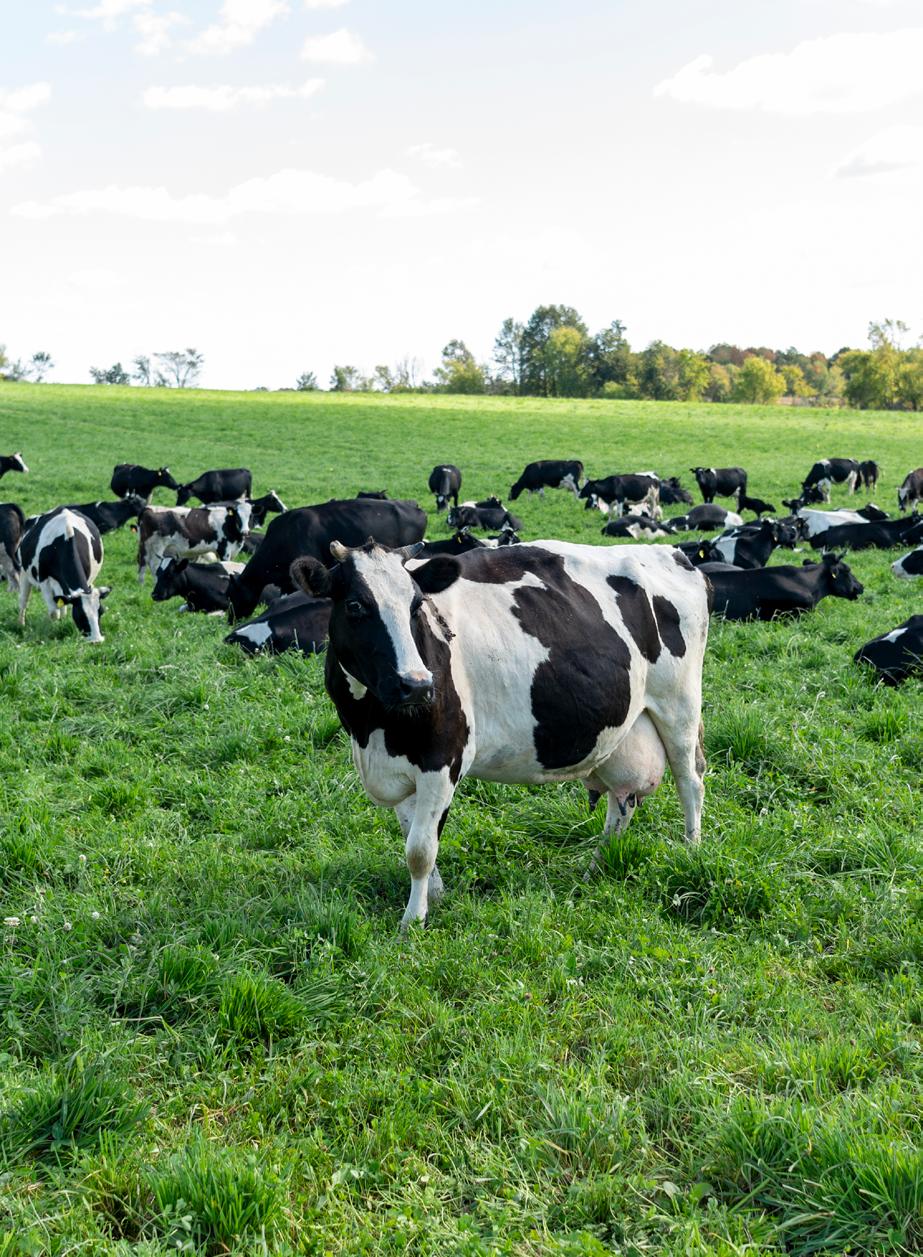
Photo courtesy of Organic Valley
What Is Insetting?
Insetting is a sustainability strategy where a company invests in projects within their own supply chain to reduce carbon emissions (e.g., the company’s indirect Scope 3 emissions).
Unlike carbon offsetting, which typically involves compensating for emissions by investing in projects unrelated to a company’s operations (such as reforestation or renewable energy projects elsewhere), insetting focuses on making improvements within a company’s supply chain. Examples of insetting include implementing sustainable farming techniques to increase carbon sequestration in soil and reduce GHG emissions, as well as supporting reforestation projects where the company operates or sources its raw materials. Insetting aims to create a more direct and localized impact by fostering collaboration between suppliers and stakeholders.
Organic Valley’s Insetting Program
The main goal of the Organic Valley Carbon Insetting Program (OVCIP) is to help memberowners of Organic Valley implement new climate-smart farming practices that either reduce GHG emissions or sequester carbon. These practices are measured and monitored to generate carbon impact units, which are measured in metric tons of carbon dioxide equivalents (MTCO2e) that contribute to Organic Valley’s carbon neutral by 2050 goal. By investing in carbon insetting, Organic Valley enhances the long-term resilience of the farms that own the cooperative as well as the cooperative itself.
Organic Valley’s Sustainability Team, in collaboration with the Farmer Communications Team within Cooperative Stewardship, regularly shares information about the insetting program and eligible practices with member-owners. Interested members can reach out via the Cooperative’s Farmer Hotline to connect with the Sustainability Team. Each interested member-owner is paired with a technical service provider (TSP) who helps design the project based on the member’s farm and management needs. TSPs are typically external to the organization, but in-house expertise is also available when necessary. The Sustainability Team uses direct measurement and carbon modeling to calculate the emissions reduced or removed (sequestered) over the project’s life and provides an estimated annual carbon payment.
Photo courtesy of Organic Valley
Step-by-Step Enrollment Process
1
2
Member-owner calls the Farmer Hotline to discuss project ideas with a Sustainability Team member.
The Sustainability Team helps the member gather necessary documentation from the USDA Farm Service Agency to establish eligibility (for USDA grant funding - see below) and connects the member with a TSP to develop a project plan. Members may also explore cost-share and grant opportunities to further offset implementation costs.
3
4
The farmer signs a Carbon Inset Agreement, allowing Organic Valley to claim the carbon benefits derived from the practice and confirming the payment rate and amount.
Organic Valley staff or the TSP visits the farm to confirm the practice has been implemented according to the plan. The farmer is then fully enrolled in the program and begins receiving payments for the carbon reduced or removed by the practice.
Eligible climate-smart farming practices that either reduce emissions or sequester carbon are listed below. These practices are currently undergoing third-party validation by SustainCERT.
• Solar energy (grid-connected and off-grid)
• Manure management (solid-liquid manure separators and composting)
• Agroforestry (silvopasture, riparian buffers, windbreaks, and alley cropping)
• Enteric feed supplements
Select cropland and grazing practices will be added in fall 2024. These practices are not currently planned for third-party review, as the Organic Valley team has decided to wait until the GHG Protocol Land Sector Removal Guidance and SBTi FLAG guidance are finalized. Once these two key pieces of industry guidance are finalized, the team plans to revisit internal protocols for these practices and determine if third-party review is appropriate. All practices align with USDA Natural Resource Conservation Service (NRCS) conservation practices and are chosen for their proven climate
Photo courtesy of Organic Valley
benefits, approved carbon protocols, and appropriateness for small organic farms.
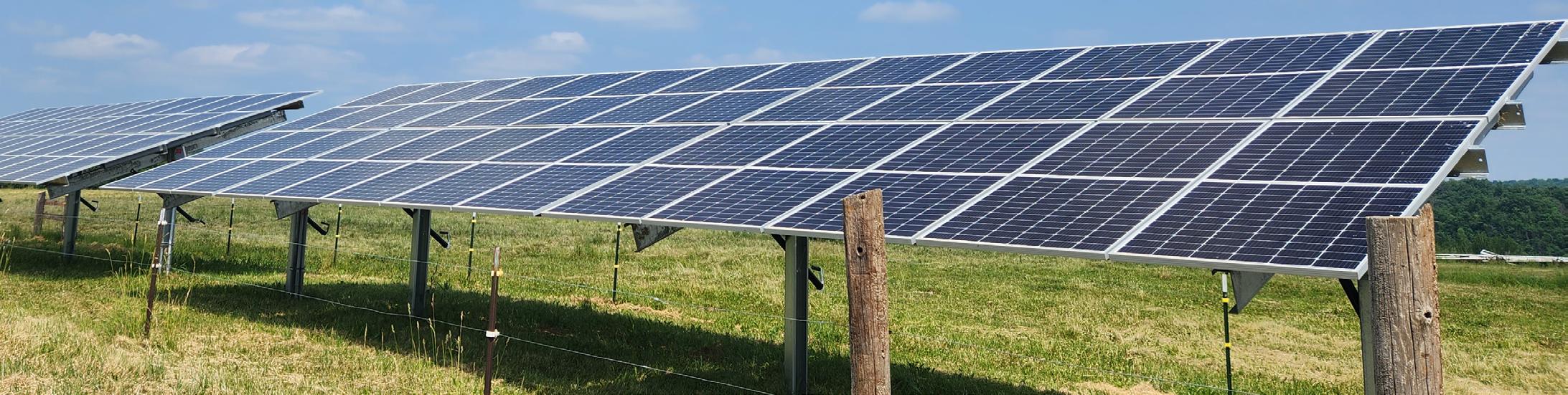
Solar energy is an in-demand practice that has steady farmer interest. Farmers are installing grid-connected solar energy systems, typically around 40 kW, covering most of the farm’s electrical needs. To be eligible for the program, farmers need to confirm that no other entity is claiming the renewable energy certificate (RECs) for the solar project. Farmers receive a one-time USDA Practice Payment (provided by Organic Valley’s Partnerships for Climate Smart Commodities Grant) and an annual carbon payment from Organic Valley based on actual kWh solar production for the year as reflected in the annual monitoring report.
Carbon removal practices are also included in the program, often considered regenerative agriculture practices, which are measured and monitored to determine their sequestration
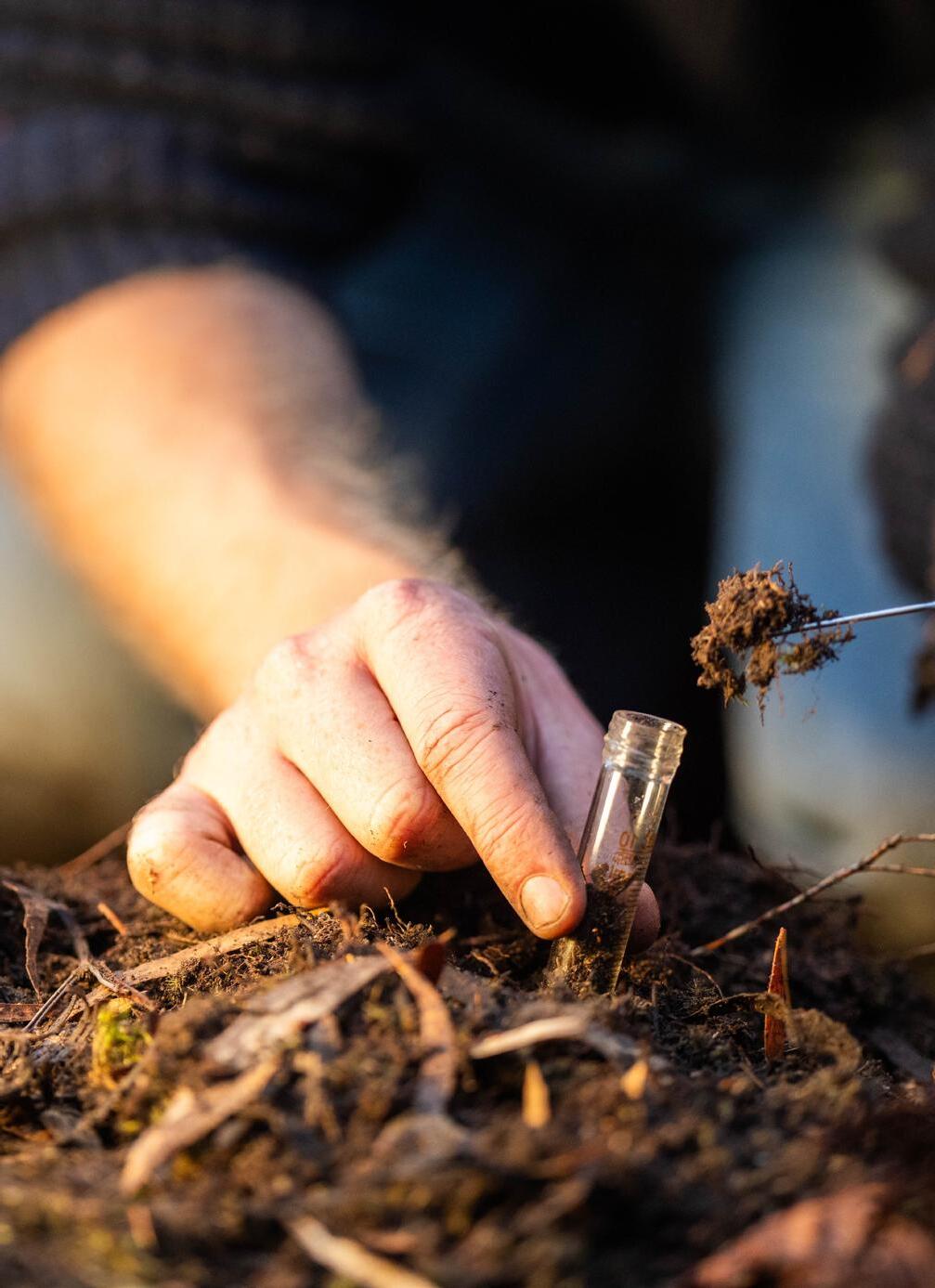
value in metric tons. Soil carbon is measured via comprehensive soil testing for cropland and grazing practices, and above-ground carbon is measured for agroforestry practices.
Impact & Measurement: Environmental Impact
The impact of OVCIP is measured in MTCO2e. All greenhouse gases reduced or sequestered are converted to this common unit. Each climate-smart farming practice follows a methodology adapted from approved carbon offset protocols. For example, agroforestry practices follow VM 0047, VCS Methodology for Afforestation, Reforestation, and Revegetation. Practice categories combined make up a program of interventions that has achieved third-party validation by SustainCERT.
Once Organic Valley is validated, individual intervention activity monitoring data will be verified to generate verified impact units (VIUs), which select supply chain partners that co-invest in the program will be able to purchase. Each VIU equals 1 MTCO2e.
Understanding carbon methodologies has been a significant challenge for Organic Valley, necessitating the development of new skills within the internal team. Additionally, finding external partners with the requisite skills and knowledge took considerable time and effort. The lack of industry consensus and guidance on carbon insetting and program development further complicated matters, requiring Organic Valley to start from scratch. While Organic Valley follows carbon offset methodologies, which have predefined ways to quantify, measure and monitor carbon impacts, methodologies and GHG accounting for insetting programs are still in development. Therefore, a company in a position like Organic Valley must determine if and how carbon offset methods can be modified for a carbon insetting approach.
Approaches to Funding the Insetting Program
The OVCIP currently receives funding from Organic Valley’s annual budget and a USDA Partnerships for Climate Smart Commodities grant (PCSC Grant). Organic Valley’s annual budget provides an annual carbon payment to each enrolled farm based on the metric tonnes of carbon reduced or removed as well as some of the cost for program administration and marketing. The USDA PCSC grant provides funding for farmer technical assistance and practice payments, as well as some of the costs for monitoring, measuring, reporting, verification (MMRV), and program administration.


The Organic Valley carbon payment compensates farmers for carbon reductions and removals associated with a specific practice and is competitive with carbon offsetting programs available to farmers across the U.S. Most Organic Valley farmers are not eligible to participate in the larger carbon offset market due to farm size and scale limitations, so the OVCIP offers access to a similar payment structure with practices designed for their farms. The USDA Practice Payment helps offset a large percentage of practice installation costs, removing barriers to implementation. Farmers may combine this federal funding source with state or local funding sources.
The farm funding specialist on the Organic Valley Sustainability Team assists OVCIP participants in applying for additional funding, such as grants and cost-share programs, to support practice implementation. These financial incentives enable farmers to prioritize sustainable practices over other potential farm infrastructure and management improvements.
The Win-Win of the Insetting
Program
Organic Valley sees the insetting program as an opportunity to reward and support farmers while also bringing greater value to their customers. The OVCIP offers member-owners a pathway to implement sustainability practices they were interested in pursuing but may have lacked the financial support for. For example, several members were compensated for applying compost to fields, installing solid-liquid separators for manure management, or planting trees in pastures to provide
shade for livestock, which helps maintain production levels despite rising temperatures. The program has enabled member-owners to prioritize such practices and overcome financial barriers, while management efficiencies and infrastructure improvements provide as much value as the sustainability objectives.

At retail, conscientious consumers seek brands that focus on caring for the earth. Organic Valley caters to conscious consumers by offering products that are beneficial to their health and produced with a deep respect for the environment. These consumers are drawn to the brand’s authentic grass-fed dairy offerings, merchandise that reflects a commitment to organic farming, and healthier food options that do not compromise on taste. Organic Valley’s proactive approach to sustainability, including its carbon insetting program and carbon neutrality ambitions, resonates with consumers’ desire to support eco-friendly practices. Moreover, the brand’s dedication to using premium organic ingredients ensures that consumers do not have to choose between quality and ethical consumption.
Retailers working on their carbon emissions will find that dairy and beef products significantly contribute to their stores’ carbon footprint. Organic Valley anticipates that as retailers continue to work to reduce their emissions, they will prioritize brands that are taking proactive steps that are meaningful and measurable.
With that in mind, to increase transparency and ensure carbon reductions and removals are achieved with the highest level of integrity, Organic Valley has pursued and achieved third-party validation for the program. Individual intervention activities at the farm level will undergo further verification according to the MMRV plan. This process allows the company to share associated carbon claims with select participating supply chain partners such as ingredient customers and retailers. Co-investment from these business partners is essential for the program’s longterm economic viability. Participating supply chain partners will be able to make progress or performance claims against their own climate targets.
Supply chain partners that co-invest in the program will purchase validated and verified VIUs, offering the highest level of assurance. SustainCERT’s impact registry tracks the VIUs to enable co-claiming, or multiple layers in the supply chain claiming the same carbon reduction.
According to Organic Valley, determining the level of validation and verification needed for an insetting program is a key strategic decision.
A third-party verified program is the most rigorous and difficult to develop, but it results in robust carbon claims that can be confidently shared with supply chain partners, some of which may require third-party validation while others may not. As entities become more educated about
Scope 3 emissions, reduction methods, and accounting, conversations with supply chain partners will become increasingly possible.
Looking to the Future
Organic Valley’s deep commitment to the land, their farmers, and a thriving agricultural system inspires their interest in helping other companies understand and navigate opportunities related to insetting. Through their work, they have learned to start small: focus on one practice, one protocol, and one commodity. It has taken over two years to develop the program and go through the third-party validation process, involving many hours of both internal staff time and partner time. This step-by-step approach has allowed for the development of the program format (protocol, MMRV approach, claims validation, and other practices) in a way that is creating a foundation for the future — for Organic Valley and for others in the food industry.
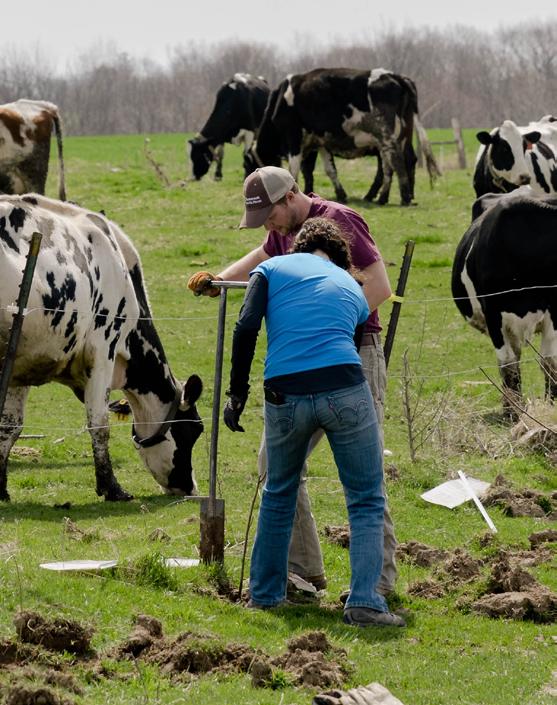
Organic Valley anticipates that by late 2024, the insetting program will be available to egg members and grower members (those that produce organic grain and hay) in addition to dairy members. This expansion reflects the cooperative’s ongoing commitment to extend the benefits of insetting across their farmer community. Through these efforts, Organic Valley is demonstrating that their “respect for the dignity and interdependence of human, animal, plant, soil, and global life” is so much more than a North Star principle; it is a tangible commitment reflected in their actions, with the intention of driving real-world impacts while supporting their mission of preserving family farms.
Our Deep Thanks
The Climate Collaborative and UNFI wish to extend our deep appreciation to the Organic Valley team for their incredible climate leadership and for their willingness to share their insights in support of our food community.
Recommended Resources
• Value Change Initiative
• Building the case for value chain interventions: enabling credible co-claiming of impact and investments. (Value Change, May 2024)
• GHG Protocol Land Sector and Removal Guidance
• SBTi FLAG Guidance
• CROPP Organic Dairy Intervention Program
Photo courtesy of Organic Valley