The Role of Climate Data in Informing Emissions Reduction Strategies
UNFI Climate Action Partnership Case Study
The Role of Climate Data in Informing Emissions Reduction Strategies: How Alter Eco, Oatly, and Yerba Madre Are Using Data to Accelerate Climate Action
We are at a critical moment in climate action as food manufacturers work to reconcile their own climate and sustainability priorities with those of other stakeholders across the value chain. From distributors to retailers and consumers, climate data and climate claims are increasingly scrutinized to understand company values, impact, and risk. For most companies selling into grocery, the question is no longer whether to address emissions, but how to prioritize reduction efforts when resources are limited and supply chains are complex and how to ensure that the data collected supports both internal decision-making and external expectations.
In response, many companies are turning to product-level climate data, such as product carbon footprints (PCFs) and life cycle assessments (LCAs), to identify major emissions sources and focus effort where it is most likely to matter. Without this climate data, companies risk misallocating resources or advancing claims they cannot substantiate. At the same time, product footprinting is not straightforward. Data availability varies by ingredient and geography, methodologies continue to evolve, and teams increasingly feel pressure to direct limited capacity toward emissions reduction and mitigation rather than measurement and reporting.
This case study explores how three companies, Alter Eco, Oatly, and Yerba Madre, are using product-level climate data as a strategic input to inform sourcing and operational decisions. Each company has taken a distinct approach to working with climate data in ways that reflect its business model, values, and priorities. The examples that follow offer practical insight into how product-level climate data can support more focused decision-making and help ensure that climate actions taken align with the values companies aim to uphold.
Understanding PCFs and LCAs
Product Carbon Footprint (PCF)
A Product Carbon Footprint quantifies the total greenhouse gas emissions associated with a product across its life cycle, typically expressed as carbon dioxide equivalents (CO₂e) per functional unit. PCFs are commonly calculated in alignment with International Organization for Standardization ISO 14067, which provides requirements and guidelines for consistent and transparent carbon foot-printing of products.
Life Cycle Assessment (LCA)
Life Cycle Assessment is a standardized methodology used to evaluate the environmental impacts of a product, process, or system across its entire life cycle, from raw material extraction through production, use, and end-of-life. Life Cycle Assessments can report climate impacts in CO₂e, but a full LCA typically includes multiple environmental impact categories, each expressed in different units. LCA methodologies are defined by ISO 14040 and ISO 14044 standards.
How They Relate
A Product Carbon Footprint is a specific application of Life Cycle Assessment that focuses exclusively on climate impacts, while a full LCA can assess a broader range of environmental indicators.
Getting Started: Key Questions to Guide Your Use of Climate Data
What specific decisions will this data inform?
Which products, ingredients, or markets matter most to start?
Who will use the data internally and for what purpose?
What level of precision is necessary to take action?
How might your efforts be designed to serve multiple purposes?
Who is responsible for interpreting the data and deciding when it is sufficient to act? 1 2 3 4 5 6
Using Product Carbon Footprints to Prioritize Action
Across a Small, Values-Driven Business
Alter Eco is a mission-driven food company guided by three core principles: restoring ecosystems, improving livelihoods, and reducing waste. Data plays a critical role in ensuring that these principles shape decisions across all parts of the organization. As the company explains, “We do not make decisions without first understanding their environmental and social impact, so collecting accurate data is essential to making the best possible business choices.”
Alter Eco began calculating its carbon footprint in 2020 through The Climate Label Certification and now uses product carbon footprints (PCFs) to inform annual sustainability planning. The company treats product-level climate data as a decisionsupport tool rather than a reporting exercise. This approach reflects the company’s size and resource constraints. “As a small company backed by a modest private equity group, our resources are limited,” the company notes. “This reality has pushed us to be creative and to rely heavily on our partners’ expertise, data, and support.”
Applying PCFs with a Focus on Action
courtesy of Alter Eco
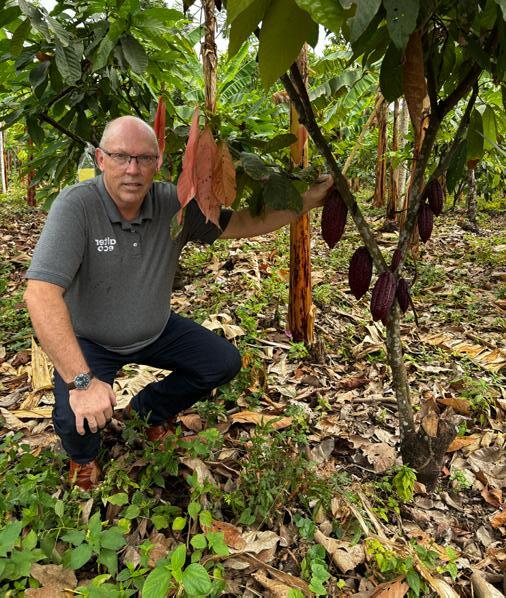
Rather than seeking perfect precision, Alter Eco applies conservative assumptions in its PCFs and prioritizes acting on available data. For example, the company uses standard carbon data for organic, fair-trade cocoa even though its cocoa is grown in agroforestry systems that are understood to have lower emissions. Instead of investing in more granular modeling, Alter Eco has chosen to direct resources toward expanding agroforestry acreage, reflecting a preference to prioritize on-the-ground impact at this time.
“If a company truly wants to reduce its impact, product-level carbon data is essential for directing the most effective decisions,” Alter Eco states.
PCF analysis confirmed that agricultural production, particularly cocoa cultivation, represents Alter Eco’s largest emissions hotspot. This insight reinforced the company’s focus on regenerative sourcing and supplier collaboration. Alter Eco has helped fund agroforestry expansion projects,
Photo
including a 13-hectare (32-acre) expansion in the Dominican Republic in 2025, and its manufacturing partner has committed to making its cocoa supply deforestationfree by the end of 2025. According to the United Nations Environment Programme, deforestation and forest degradation together account for about 11 percent of global greenhouse gas emissions, highlighting the climate importance of deforestation-free sourcing.
Product-level climate data has also informed decisions beyond agriculture. Alter Eco relocated its warehouse from the West Coast to the Midwest, reducing upstream and downstream transportation emissions by more than 50 percent while also lowering costs.
Translating Insights into Product and Supplier Decisions
PCFs have played a role in guiding product development as sourcing options have evolved. When Alter Eco first launched its granola line, regenerative oats were difficult to source at scale, and early formulations could incorporate only about 10 percent without compromising product performance. After partnering with a mill producing regenerative oats at larger scale, the company successfully tested formulations using 50 percent and even 100 percent regenerative oats without affecting taste or quality. Alter Eco is now working toward sourcing 100 percent regenerativelygrown oats for its granola line in the coming years.
Supplier engagement has been similarly shaped by product-level climate insights. New vendors are evaluated based on carbon-reduction practices, sustainability commitments, and willingness to partner on continuous improvement. By embedding these considerations into new vendor selection
from the outset, Alter Eco is able to streamline alignment with its climate goals and make more efficient use of climate data as the business grows. A recent shift to a family-owned packaging supplier in Colorado reflects this approach, aligning supplier selection more closely with the company’s regenerative and low-impact goals.
Embedding Climate Data and Building Trust
Carbon footprint performance is treated as a key internal indicator at Alter Eco. No major sourcing, operational, or packaging decision is made without considering its climate implications. For example, in developing its first advent calendar, Alter Eco rejected plastic trays in favor of a fully paper-based design. After initial shipping tests failed, the company worked with its supplier to redesign the internal structure, ultimately achieving a functional, plastic-free solution.
Photo courtesy of Alter Eco
Transparency is central to Alter Eco’s external engagement. The company publishes an annual sustainability report, maintains third-party certifications, including B Corp and Fair for Life/Fair Trade, and has participated in UNFI’s voluntary climate data-sharing program through HowGood as part of its Climate Action Partnership program. Alter Eco previously calculated and disclosed product-level emissions through the Climate Neutral Certified program, which has since evolved into The Climate Label. The company views data sharing as a way to support broader industry learning and alignment.
As the company puts it, “We firmly believe it is possible to pay fair wages, support regenerative agriculture, and still run a profitable business. That said, there is a tremendous need for education in this space, and we hope retailers and consumers increasingly prioritize brands offering real climate solutions.”
While Alter Eco reports outperforming category growth, the company is careful not to overattribute its business performance to climate data alone. It also acknowledges that climatepositive decisions often come with higher costs, and that greater retailer and consumer education is still needed to drive broader adoption. Alter Eco has seen that when retailers are informed about climate considerations in merchandising and actively support climate-focused brands through placement and promotion, consumers gain a clearer understanding of why their purchasing choices matter. As the company puts it, “We firmly believe it is possible to pay fair wages, support regenerative agriculture, and still run a profitable business. That said, there is a tremendous need for education in this space, and we hope retailers and consumers increasingly prioritize brands offering real climate solutions.”
Using Life Cycle Assessments to Inform Strategy, Product Design, and Transparency
Oatly is the world’s original and largest oatmilk company focused on making it easier for people to eat better and live healthier lives without recklessly taxing the planet’s resources. Central to this mission are oats, which Oatly describes as “a workhorse of a crop that delivers nutrition, can be grown all over the world with little to no irrigation, and has a fraction of the climate impact of animal-based products.”
For more than a decade, Oatly has used life cycle assessments (LCAs) to compare the environmental performance of its products to cow’s dairy in specific markets and to identify opportunities to reduce its climate impact. These comparative LCAs serve as a foundational input to the company’s strategy. As Oatly explains, “It is our LCA results that support the backbone of our mission to convert people from dairy to oat-based products.”Oatly’s assessments indicate that its products in major markets have approximately half or lower climate impact than comparable
dairy products. For example, Oatly Barista has been found to have a 44 to 76 percent lower climate impact than comparable dairy products, with variation reflecting geographic differences.
Integrating LCAs into Climate Strategy
Oatly’s climate strategy focuses not only on reducing the company’s own emissions but also on growing what it refers to as its “handprint,” the avoided emissions that result when consumers switch from dairy to oat-based products. This framing positions LCAs as a tool for understanding both company-level emissions and broader system-level change.
LCAs also inform Oatly’s regenerative oat agriculture program, Future Agriculture Renovation Movement (FARM), which is designed to reduce greenhouse gas emissions, improve ecosystem health, and support farm viability and resilience. To strengthen upstream accounting, Oatly has developed and applied supply shed–specific emissions factors for oats sourced in Canada and Sweden, the two primary sourcing regions for the European and North American markets. Over time, this more granular approach is intended to better reflect the impacts of regenerative practices and help identify and avoid higher-emissions supply sheds.
Understanding Emissions and Informing Decisions
Oatly’s assessments show that its largest sources of climate impact are ingredients (primarily oats and rapeseed oil), energy used in manufacturing, and the transportation of ingredients and finished products. In the United States, transportation represents an outsized share of product-level emissions due to the
country’s geographic scale and limited options available beyond diesel trucking. Still, Oatly is using rail to transport ingredients and finished goods where practicable, with electric trucks shuttles for low mileage trips.
LCAs enable Oatly to compare their products sold in the United States with the comparable cow’s dairy Oatly displaces. This analysis also enables sensitivity analysis and scenario comparisons evaluating the environmental impacts of alternative packaging options, changes in ingredient sourcing regions, and shifts in production locations. In the case of transportation, LCAs have been used to evaluate the climate implications of producing products closer to key markets, adjusting warehouse locations and optimizing production mix for key products, helping reduce transportation distances while lowering both costs and climate impact.
Companies looking to measure product climate footprints should choose tools that allow calculations to be conducted accurately, efficiently, and affordably at scale.
Insights Born from Experience
Oatly emphasizes that measuring and reducing product-level emissions through LCAs is a long-term effort rather than a one-time exercise. As the company puts it, the work is “a marathon, not a sprint,” and it requires coordination across teams. One of the earliest lessons was the importance of selecting the right software partners. Companies looking to measure product climate footprints should choose tools that allow calculations to be conducted accurately, efficiently, and affordably at scale.
Over time, Oatly found that most of the effort involved in product footprinting is not the modeling itself, but data collection. Aligning closely with internal stakeholders and drawing data from existing business systems proved critical to keeping the process manageable and repeatable. The company also noted that organizing this data created value beyond climate accounting, as other teams were able to use it to answer questions unrelated to climate impact. To streamline this work, Oatly implemented automation through product life cycle data management systems, reducing manual effort and improving consistency.
Oatly’s experience highlights the importance of being intentional about scope and sequencing. While the company has estimated the product climate footprint for the majority of the products it sells in major markets, it has taken a more targeted approach when conducting resourceintensive, ISO-conformant comparative LCAs. These externally reviewed studies are reserved for key strategic products where direct comparison to cow’s dairy provides the greatest value.
Because data collection represents most of the work, Oatly advises prioritizing products where existing data is already available. The company also recommends structuring LCA work in modular ways. For example, modeling a product’s formulation separately from packaging and transportation allows that work to be reused for similar products that differ only in packaging format or distribution. Finally, Oatly underscores the importance of version control. Since climate impact estimation is inherently iterative, ensuring that teams are working from the most current data is essential to maintaining credibility and consistency over time.
Leading with Transparency and Advocacy
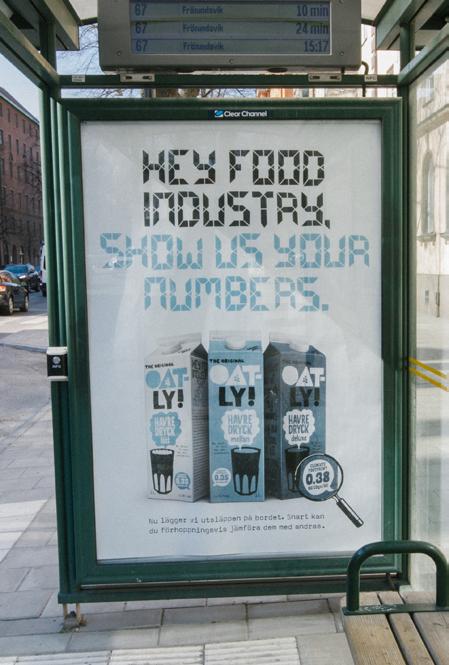
Transparency is a defining feature of Oatly’s approach to climate data. The company has committed to placing product climate footprint labels on all products sold and reports that nearly 8 in 10 products currently carry such labels. Oatly has also publicly advocated for broader climate disclosure through campaigns including “Hey, Food Industry, Show Us Your Numbers” and the “Dairy Climate Footprint Challenge.”
“At Oatly, we’ve been calling for transparency in climate labeling for many years,” says Chris Edmonds, Director of Sustainability for North America. “It’s essential to us that consumers know the environmental impact of the food choices they make.” At the same time, Oatly emphasizes that a single number alone is not sufficient and continues to advocate for common methodologies and clearer consumer guidance to support informed decisionmaking. Consumers need context for comparison, and while transparency is a great first step, there’s
Photo courtesy of Oatly
much more work to be done so that consumers not only know the figure, but can comprehend its significance. Oatly’s efforts to bring product climate footprints to packaging were recognized when the company was named to Fast Company’s Most Innovative Companies list in 2024.
Developing Custom Emissions Factors to Reflect Regenerative Production Systems
Yerba Madre, formerly Guayakí Yerba Mate, is the 30-year pioneer of regenerative yerba mate [yer-bah ma-tay] and the category leader in ready-to-drink mate beverages across North America. As the company explains, “We invested in product climate footprints to move from values-led commitments to data-driven climate decision-making. As a beverage company, we are conscious that the way we source and grow our ingredients defines the impact we create on the planet.” Developing a system to analyze the climate impact of both ingredients and finished products was therefore a necessary step toward more informed sourcing, innovation, and partner engagement. toward more informed sourcing, innovation, and partner engagement.
For most ingredients, Yerba Madre relied on available databases within the HowGood sustainability platform, working in partnership with the HowGood team to ensure the most accurate data possible. For shade-grown yerba mate, the company’s key ingredient and the cornerstone of its business model, standard emissions factors did not reflect the climate benefits of shade-grown and regenerative production systems, highlighting an opportunity to advance data for the category.
Addressing a Material Data Gap in Regenerative Systems
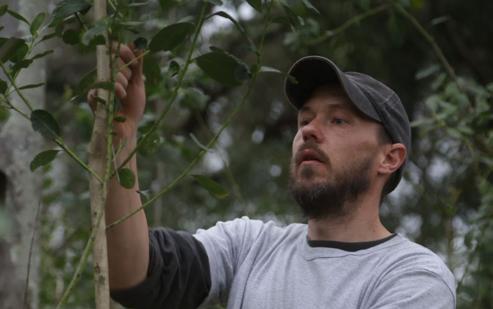
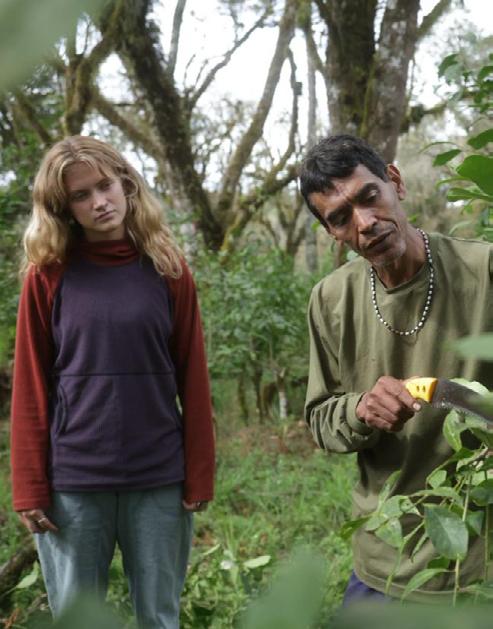
As a brand built on shade-grown and regenerative practices, Yerba Madre saw the need to develop a customized emissions factor that more accurately represents agroforestry, biodiversity, and soil-regenerative outcomes that are not captured in global datasets. To address this gap, the company partnered with the National Institute of Industrial Technology (INTI), a local government agency in Argentina that had previously developed PCFs for conventional yerba mate. Working alongside INTI and its grower partners, Yerba Madre collected detailed data on shade-grown and regenerative practices across its supply chain, facilitating the development of emissions factors that better reflect its production systems rather than averages derived from conventional systems.
Photo courtesy of Yerba Madre
This work revealed that shade-grown, regenerative systems perform significantly better than conventional models and that important differences exist across the agroforestry systems within Yerba Madre’s supply chain. The company classifies shadegrown yerba mate into three production systems: cultivated systems, which are typically transitioning from monoculture into agroforestry; managed forests; and wild harvest. Because agricultural practices differ significantly across these systems, Yerba Madre developed a separate emissions factor for each management category, including representative data across Argentina, Brazil, and Paraguay.
“Understanding the climate impact across different shade-grown yerba mate production systems has allowed us to more strategically balance sourcing decisions, ensuring we meet required volumes and quality while maximizing ecological impact.”
Using PCFs to Guide Sourcing and Climate Strategy
PCFs are used as a foundational tool within Yerba Madre’s climate strategy, informing baseline setting, hotspot identification, and reduction planning. Rather than focusing on downstream-only interventions, PCF insights have helped the company identify where the greatest mitigation opportunities lie upstream, particularly through sourcing decisions, supplier engagement, and the scaling of regenerative practices.
The analysis conducted by INTI showed that the largest climate and ecosystem benefits occur in farms at early and intermediate stages of transition to agroforestry. As a result, Yerba Madre increasingly prioritizes supporting these producers, where improvements in biodiversity, soil health, and carbon sequestration rates are most significant. As the company explains, “Understanding the climate impact across different shade-grown yerba mate production systems has allowed us to more strategically balance sourcing decisions, ensuring we meet required volumes and quality while maximizing ecological impact.”
These insights now guide sourcing mix decisions, strengthen supplier partnerships focused on transition and regeneration, and inform portfolio-level climate targets that reward continuous improvement rather than static compliance. Farming practices represent both the largest share of emissions and the greatest opportunity for impact across the value chain.
Integrating Climate Data into Everyday Decisions
PCFs are used across functions at Yerba Madre, from product innovation and formulation to supplier selection. Having accurate, ingredientlevel data enables teams to consider climate impact alongside cost, quality, and availability when developing new products or evaluating sourcing partners.
At this stage, PCF insights are communicated primarily internally. Yerba Madre organizes educational sessions across teams to build a shared understanding of how regenerative and shade-grown practices influence sourcing strategy, impact climate performance, and advance agroforestry commitments. These conversations emphasize that decisions
are grounded not only in values, but in measurement, outcomes, and evidence. Making quantified results accessible helps teams align around sourcing principles and apply them consistently.
Partnerships Enabling Better Climate Accounting
Yerba Madre’s work at the intersection of climate data and climate action has been driven by strong technical and on-the-ground partnerships. INTI supported the scientific rigor of the emissions factor development, while platforms such as HowGood and Persefoni allowed customized emissions factors to be integrated into broader sustainability and climate accounting systems. Farmers and Indigenous communities, working alongside Yerba Madre’s technical team, provided primary data on agricultural practices and regenerative interventions, ensuring climate data accurately reflects their production systems.
Continuing to Increase Transparency and Sharing Lessons
The company believes consumers, partners, and retailers deserve credible data behind sustainability claims, particularly for regenerative sourcing. Sharing PCF insights will help demonstrate that choosing Yerba
Madre products contributes to landscape restoration, climate mitigation, and improved farmer livelihoods.
From Yerba Madre’s perspective, PCFs are most powerful when used as decision-making tools rather than reporting metrics. Since existing datasets often fail to capture regenerative or agroforestry systems, investing in improved data becomes essential. The company emphasizes early prioritization of upstream data quality, cross-sector collaboration, and engagement with local researchers who bring deep regional expertise.
For Yerba Madre, innovation in climate accounting is inseparable from climate action itself. Building better measurement systems is a form of leadership that enables more meaningful, credible, and scalable progress towards company goals.
Photo courtesy of Yerba Madre
Photo courtesy of Yerba Madre
Using Product-Level Climate Data to Prioritize What Matters Most
Together, these case studies reflect how product-level climate data can support more grounded, strategic climate action across the food system. Rather than treating product carbon footprints or life cycle assessments as stand-alone reporting exercises, Alter Eco, Oatly, and Yerba Madre each use climate data to clarify priorities, test assumptions, and translate values into concrete business decisions.
While their approaches differ in scale and method, all three companies demonstrate a common discipline: They are explicit about what questions the data needs to answer. In practice, this means focusing measurement where it can inform sourcing choices, supplier engagement, product design, or investment decisions, rather than attempting to measure everything at once. This clarity allows teams to act with confidence, even as methodologies and datasets continue to evolve.
These examples also highlight the importance of pairing measurement with learning. None of the companies waited for perfect data before moving forward. Instead, they used available information to guide action, improved data quality over time, and invested in better datasets when existing ones failed to reflect regenerative or differentiated production systems. In doing so, climate data became part of an ongoing process of refinement rather than a static benchmark.
For UNFI and the Climate Collaborative community, these stories reinforce a central insight: Product-level climate data is most valuable when it strengthens alignment across the value chain. When shared thoughtfully and used consistently, it can support clearer conversations between brands, suppliers, and retailers, reduce friction around climate expectations, and help ensure that climate claims are grounded in measurable outcomes.
As expectations around climate transparency continue to grow, the opportunity is not simply to measure more, but to measure with purpose. Used well, product-level climate data can help companies focus effort where it matters most, build trust with partners and customers, and advance meaningful emissions reductions across the food system.
Our Deep Thanks
UNFI and the Climate Collaborative wish to extend our deep appreciation to Alter Eco, Oatly, and Yerba Madre for their climate leadership and for their willingness to share their insights in support of our food and grocery community.