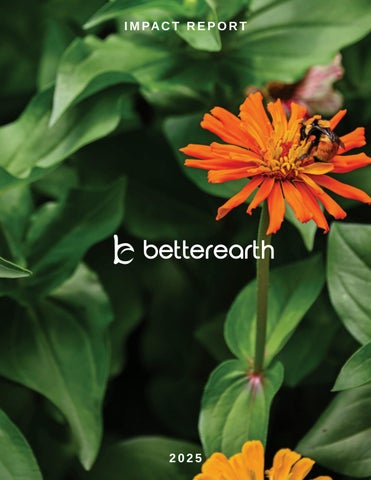
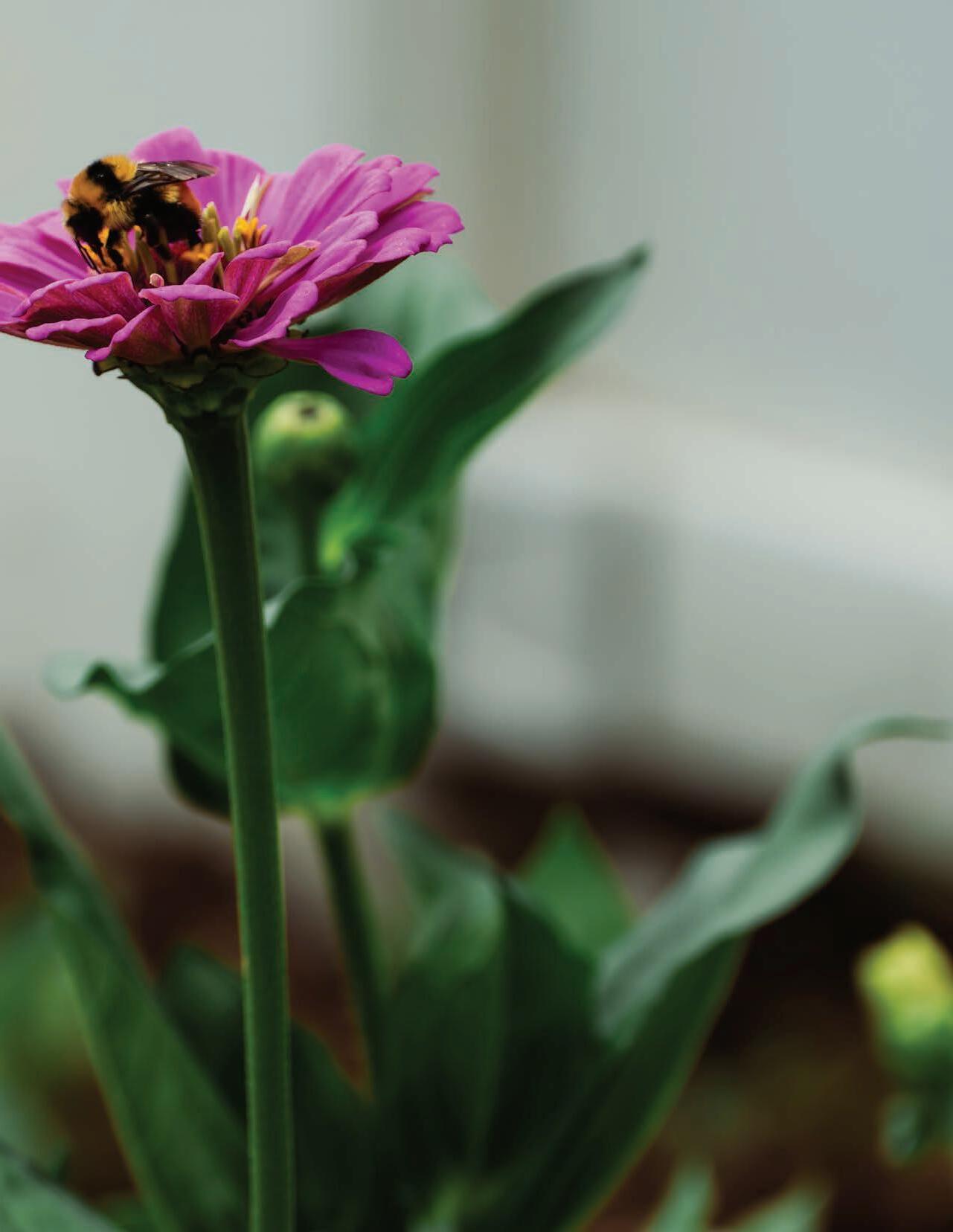
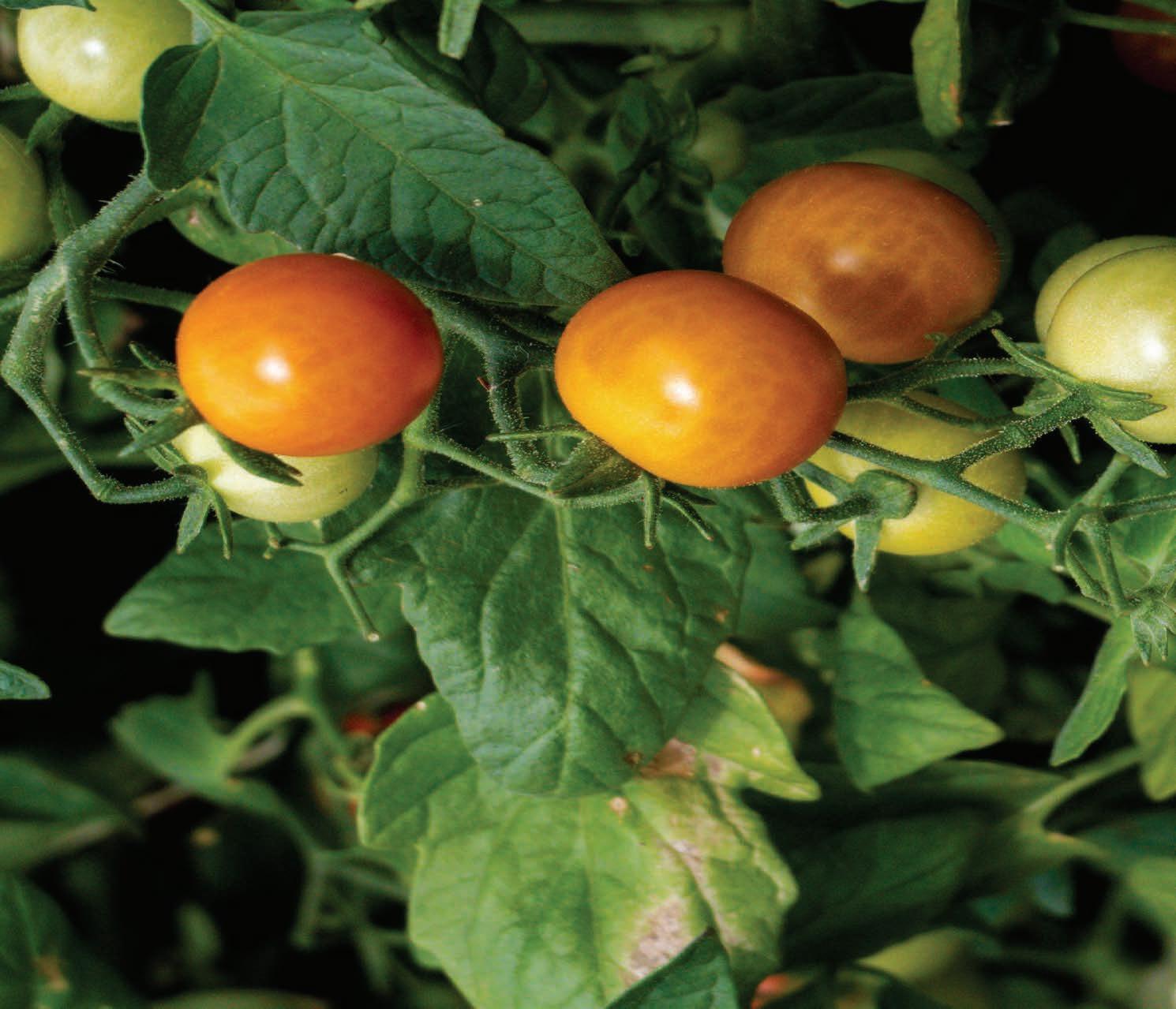
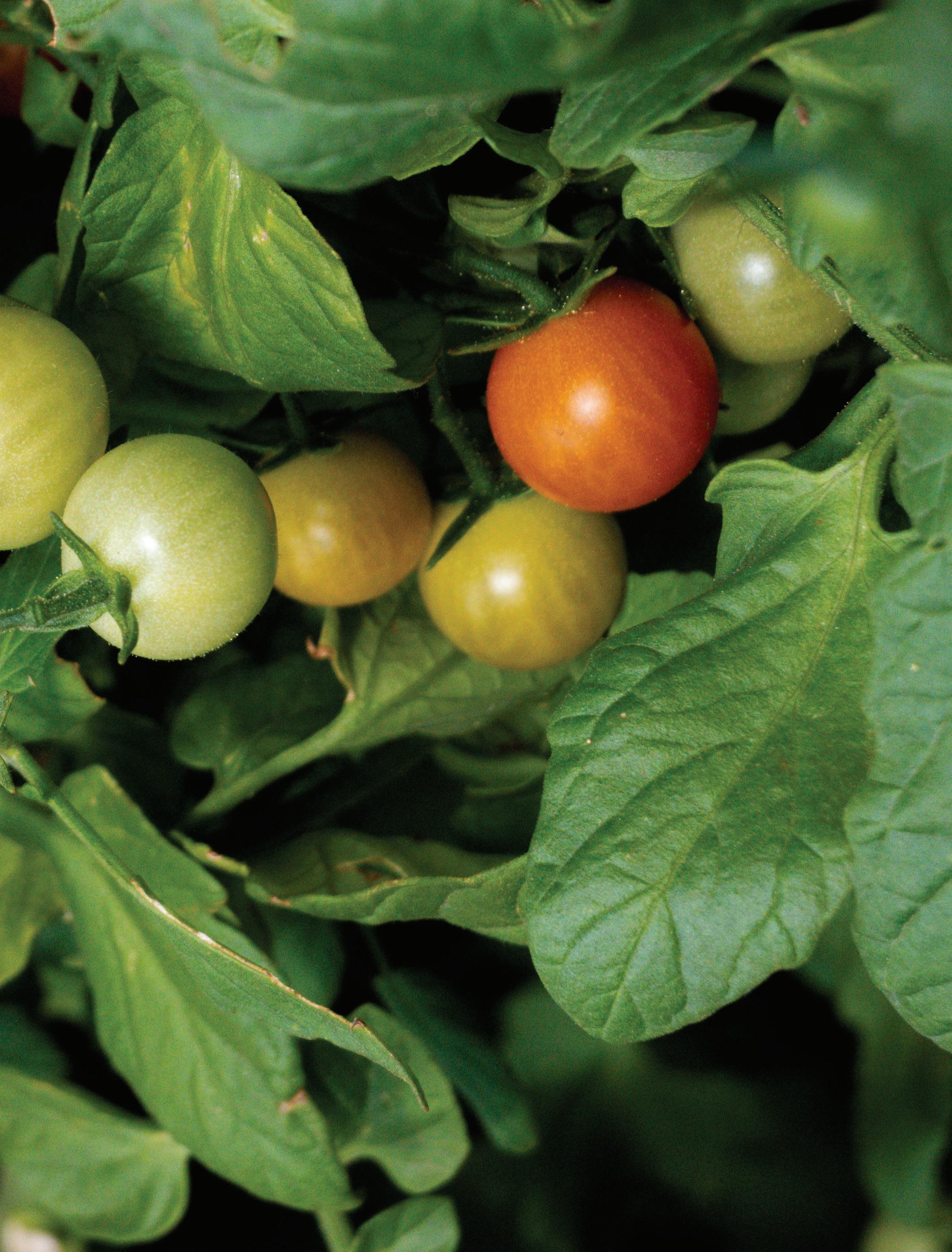
Cover Image: Bumblebee pollinating Better Earth customer, God Save the Cream’s garden.
Table of Contents
1 3 7
21 A Note to Our Community
Leading the Industry
35
Better Built for This Moment Products
Compostable Packaging as a Catalyst Backing Our Standards Certifications
Contributing New Solutions Becoming Climate Smart™ Partners & Progress
Turning Vision into Outcomes
Accelerating Data-Driven Circularity
Advancing the Industry
Closing the Loop through Partnership
Closing the Loop with our Customers
Closing the Loop in our Community
People
Empowering People, Expanding Impact
Strengthening Our Foundation
Growing Our Roots
Engaging Our Community Meeting the Need
45
51
Planet
Conserving Resources
Evolving Our Operations
Appendix
Accountability Matrix
SDG Matrix
Bringing Circularity to the Stage
“
Our story relies on the soil under our feet.”
From trade and policy shifts to extreme weather, 2025 brought disruption to our industry, our communities, and the planet. Yet through these challenges, we anchored in what we’ve been building from the start: a reimagined, regenerative system built from the ground up—where disruption is the norm and resilience is the response— guided by our mission, rooted in our partnerships, and driven by industry-wide innovation. This year proved ours is a better system, built to meet the moment.
And when we say “from the ground up,” we mean it, because our story relies on the soil under our feet. The lifecycle of our products starts on farms and depends on healthy, resilient ecosystems.
In 2025, we deepened our partnership with Zero Foodprint to help advance regenerative agriculture in the United States, donating 1% of gross sales from our Better Earth Farmer’s Fiber Retail Collection. We continued to work with our raw material suppliers to strengthen soil stewardship through initiatives, such as compost application. Where we do not have direct influence, we ensured our products are sourced and produced sustainably and responsibly, as reflected in our certifications, such as the Forest Stewardship Council.
We also applied a systems-based approach to closing the loop on our packaging by connecting customers and consumers with composters. From 2023 to 2025, we reviewed the state of US composting infrastructure and presented our findings at the 2025 BPI Summit (page 13), which informed updates to our Compost Drop-Off Database. We launched new products aligned with composting preferences, including our Pressed Bamboo Fiber Cutlery (page 40), and acquired Betterbin, a consumer-facing app that provides hyper-localized waste education (page 10).
Year after year, at the heart of what we do are the people who amplify our impact—our team, our customers, and our community.
Better Earth logged 119 employee volunteer hours this year, supporting local farms and food banks, and contributed more than $16,660 to circularity and sustainability initiatives nationwide.
This report shares the full story of our work in 2025, and how, together, we’re continuing to build a more regenerative future—built for the moment.
Thank you for building a Better Earth with us.
~ Savannah Seydel VP of Sustainability
LEADING THE INDUSTRY
Image Left: Genera Mill Silos Venore, TN
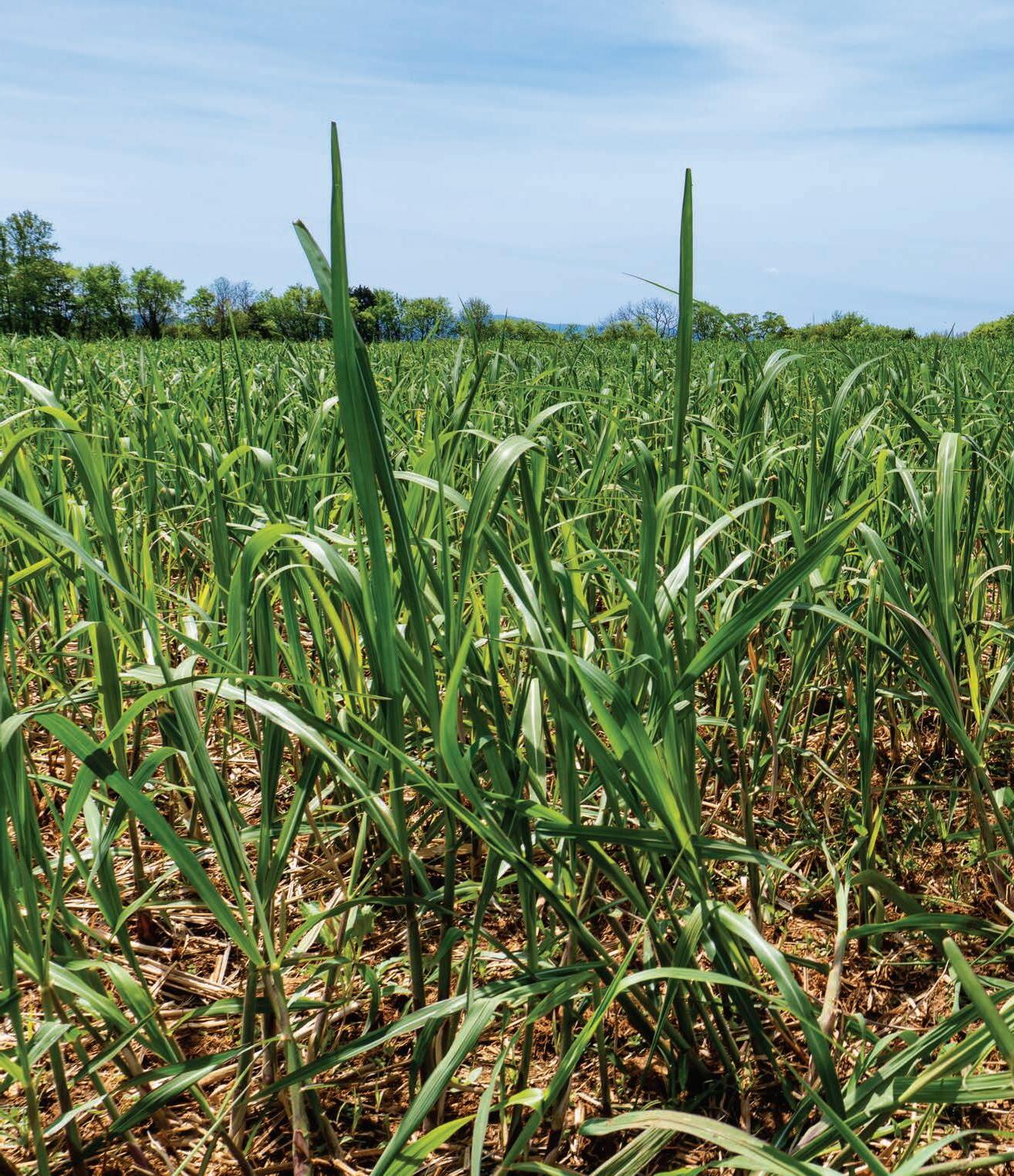
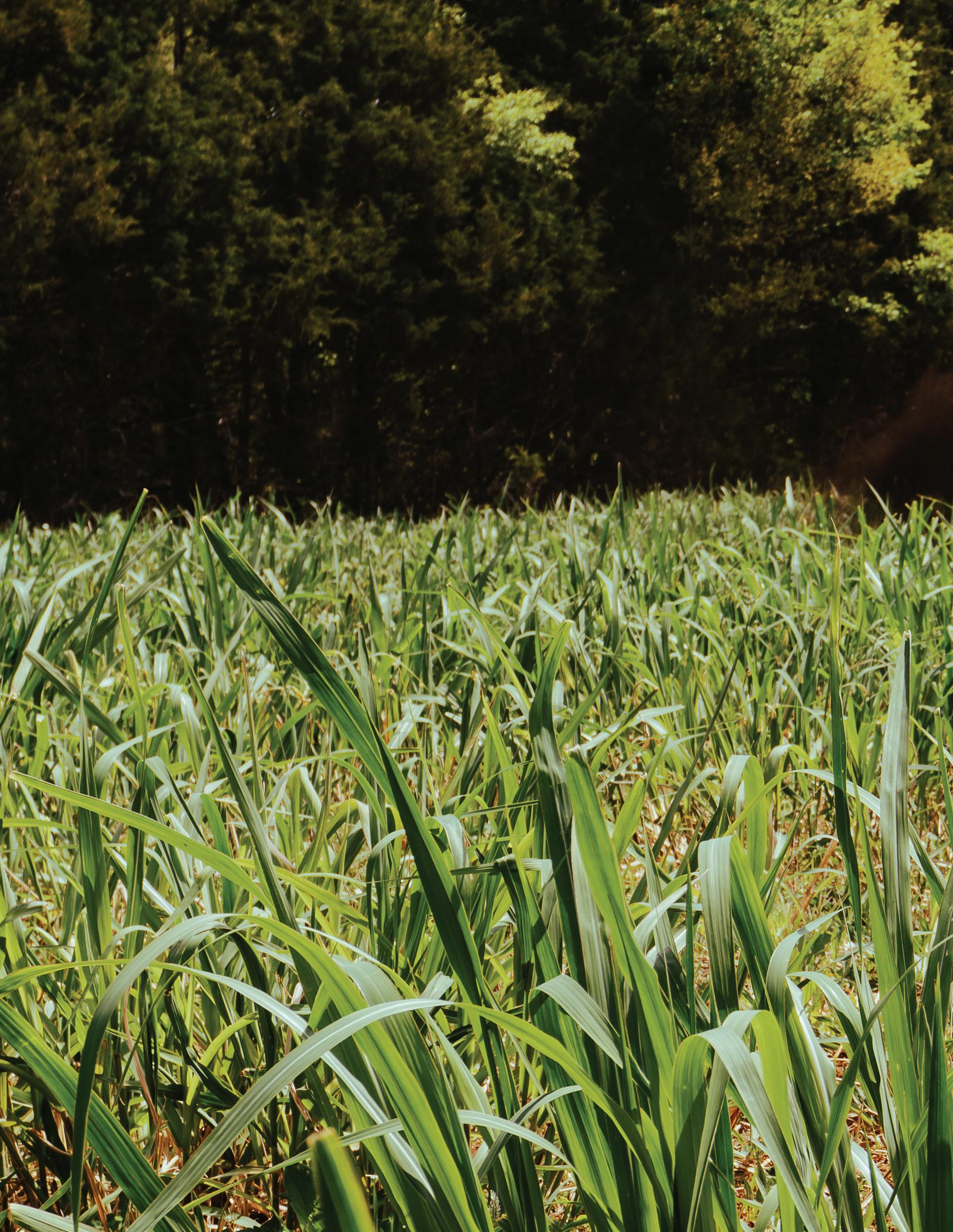
Image Above: Better Earth partner farmland.
Previous Spread Image: Bumblebee pollinating Better Earth customer, God Save the Cream’s garden.
Better Built for This Moment
Better Earth is on a mission to make sustainability accessible and regenerative circularity achievable across the foodservice industry.
Amid an unprecedented year, we grounded our approach in resilience, informed decision-making, and close collaboration with our stakeholders—from manufacturers to customers, employees to communities—to strengthen our systems, address industry complexities, and expand our impact, reinforcing that, together, we are Better Built for This Moment.
• B uilding a Resilient, Responsible Supply Chain: When global conditions shifted, we turned our focus toward home. By diversifying our domestic fiber sourcing, we increased production 247% year over year.
• B uilding Data-Driven Clarity for Action: With extended producer responsibility (EPR) expanding—seven states now have active laws and eight more under consideration—we are developing tools, such as our Legislative Tracker, that accelerate confident decisionmaking and help customers stay ahead of evolving state and local requirements.
• B uilding Impact Through People: Our impact is a reflection of our people. In 2025, we continued investing in a workplace and c ulture that navigates complexity and moves quickly, increasing our capacity to serve customers, support partners, and give back to our communities.
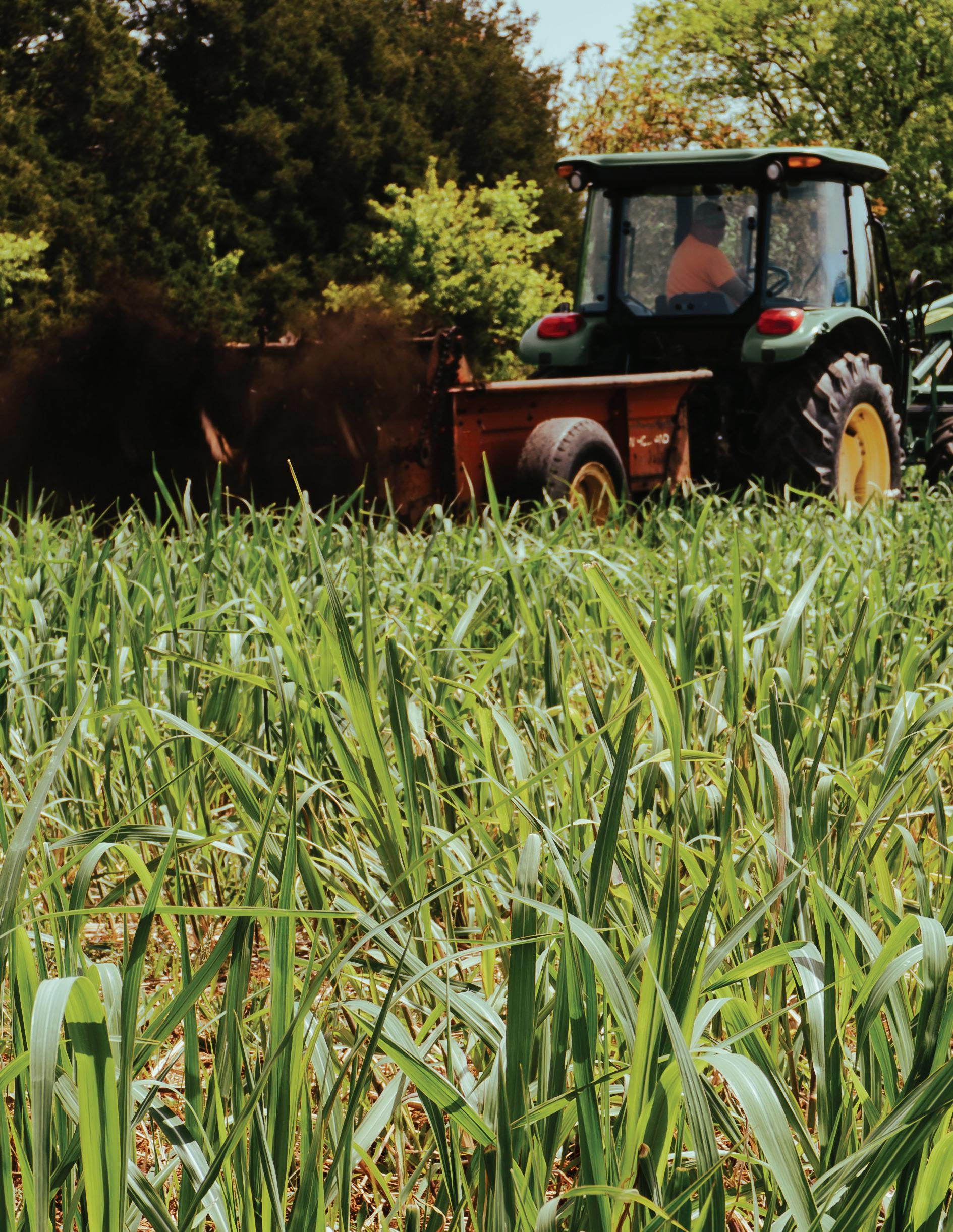
Previous Spread Image: Better Earth partner farmer applies compost to his field.
Image Left: Genera Mill Silos Venore, TN
Turning Vision into Outcomes
If regenerative circularity were a shape, we like to think of it as a spider web—a structure built through persistence, ingenuity, and creativity, relying on a kaleidoscope of strong, interconnected threads.
This section highlights how Better Earth is weaving partnerships across the industry and beyond to advance our mission through data-driven solutions, innovation, funding pathways, and direct collaboration. Together, these efforts are turning a zero-waste vision into measurable outcomes.
CERT #10528603
Accelerating Data-Driven Circularity
At Better Earth, we believe better outcomes start with better information.
Across packaging, policy, and disposal systems, rules and practices vary by location, and closing the loop is rarely straightforward. That is why we invest in data-driven solutions that turn complexity into actionable insights.
Betterbin: Localizing Waste Education
In 2025, Better Earth acquired Betterbin, a consumer-facing app that makes recycling, composting, reuse, and food waste education more relevant, convenient, and accessible.
Using data and machine learning, Betterbin delivers localized disposal guidance, helping municipalities, counties, composters, and other organizations guide residents on what goes where.
Legislative Tracker: Translating Policy into Insight
As packaging legislation accelerates, customers need clear answers and reliable compliance—not guesswork.
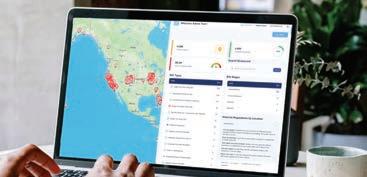
In 2025, Better Earth formalized the Legislative Tracker, a continuously maintained database that guides customers through evolving packaging requirements. The tool translates municipal, state, and national regulations into practical insights for brands operating in multiple jurisdictions.
Compost Infrastructure Review: Guiding Solutions
Over the past two years, Better Earth conducted a comprehensive national review of composting infrastructure and composter acceptance, building a robust evidence base that identified where systems succeed, where gaps remain, and what is needed to improve composting infrastructure at scale. See page 13 for full findings.
Image:
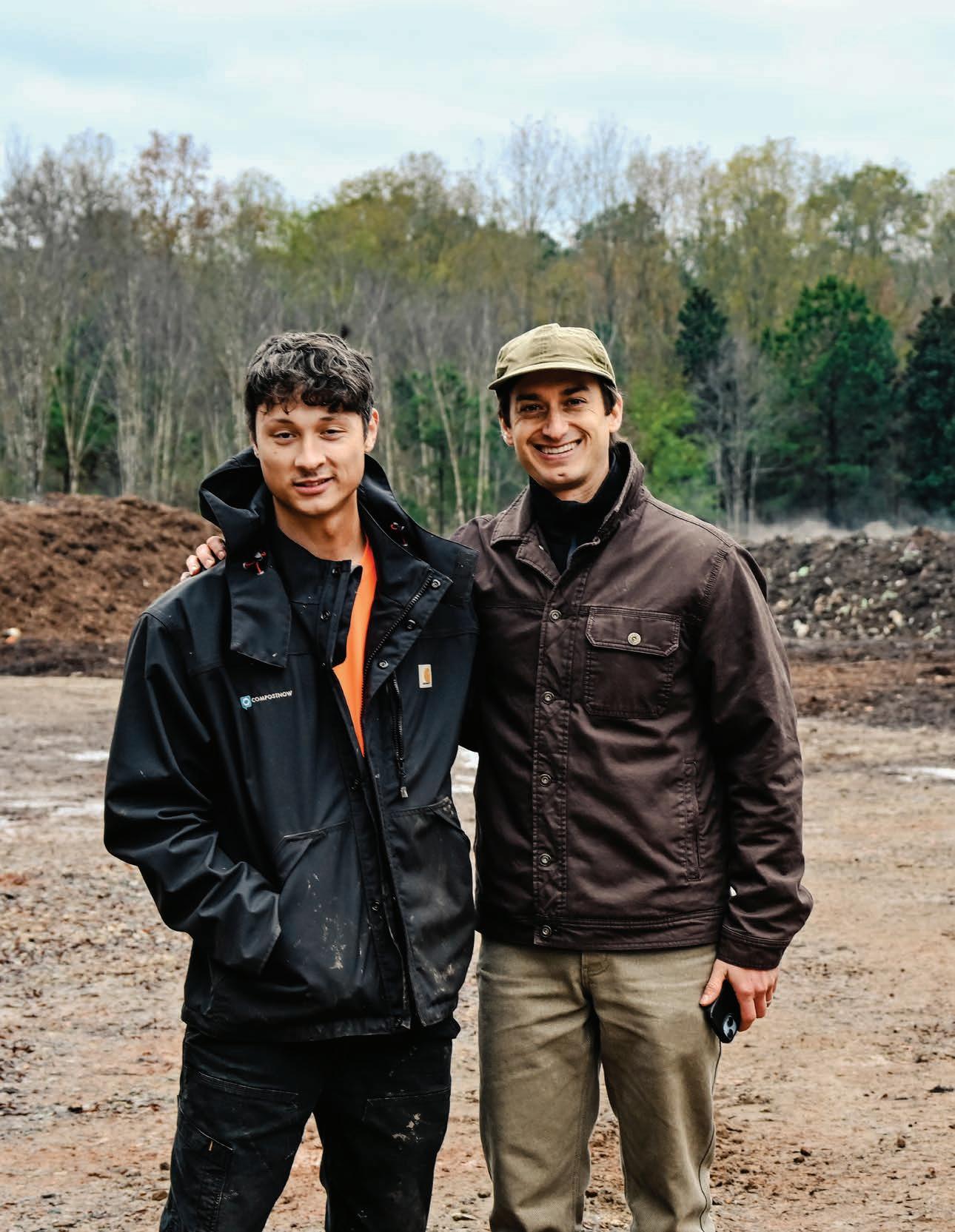
CompostNow Chief Impact Officer, David Paull with Compost Facility Operator Taylor Voraphongphibul.
Advancing the Industry
Our national composting research shifted the conversation at the 2025 BPI Summit.
The 2025 BPI Summit brought together more than 250 composters, haulers, policy makers, and compostable packaging companies from around the world, united by one urgent question: how do we make it easier for compostable packaging to actually get composted, consistently and with low contamination?
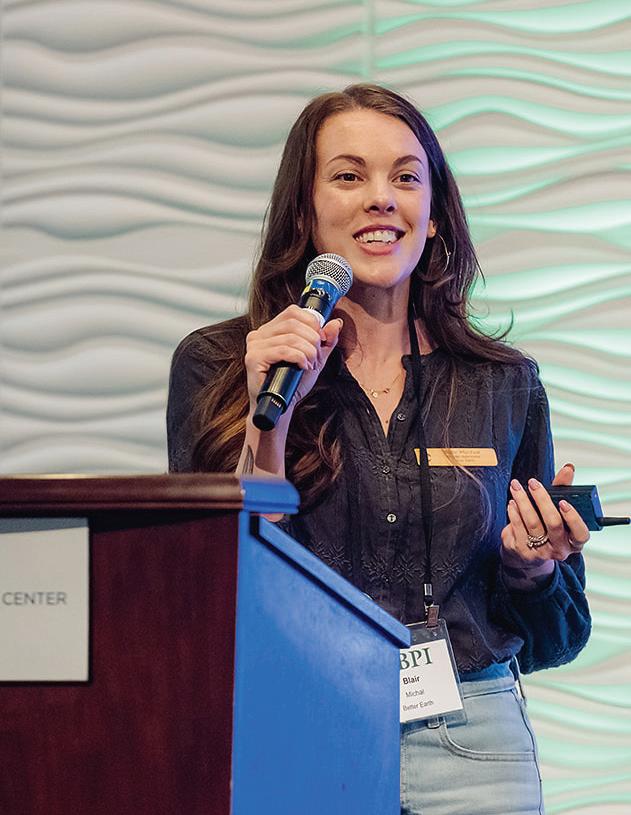
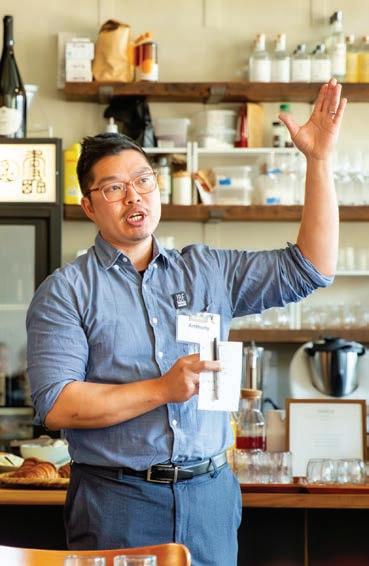
To help address this question, Better Earth’s Circularity Coordinator, Blair Michal, presented insights from nearly two years of research on composting infrastructure in the United States. The audit identified more than 2,500 composters, haulers, and drop-off locations nationwide, with at least one public access point available in all 50 states.
What emerged from this work is both encouraging and complex. Composting services exist in more places than many realize.
However, access is highly local, information can be fragmented, and accepted materials, including compostable packaging, vary significantly by facility.
B lair highlighted patterns in the data, including where acceptance is strongest, where contamination is most prevalent, and how design, labeling, and education can better align with real-world composting operations— helping shift the conversation across the industry from seeking answers to building solutions.
The Summit reinforced Better Earth’s view that progress requires both infrastructure and education to drive access and behavior change, and credible data is a powerful lever to advance both.
For more insights, watch Blair’s full presentation from the 2025 BPI Summit, From Data to Dirt:
youtube.com/@becompostable
Image: Blair Michal, Better Earth’s 2025 Circularity Coordinator presents at the 2025 BPI Summit.
Closing the Loop through Partnership
Partnerships are scaling regenerative agriculture and restoring the land that supports our food systems.
At Better Earth, we believe compostable packaging is about more than reducing waste—it is about regenerating the land that sustains us. This comes to life through our partnership with Zero Foodprint, which helps close the loop between soil, food, and waste.
Guided by the understanding that healthy soil is essential to reversing the climate crisis, Zero Foodprint is a nonprofit driving systems-level change through regenerative agriculture, one acre at a time.
The organization connects funding from food and beverage businesses, philanthropy, and government with farmers implementing regenerative practices across the United States, turning financial support into on-the-ground impact. This model helps build a regenerative economy that delivers benefits for all, including farmers, businesses, communities, and the land itself.
Th rough this partnership, Better Earth contributes 1% of gross sales from our retail tableware collection, Better Earth Farmer’s Fiber, along with annual contributions, to support Zero Foodprint’s mission and strengthen agricultural communities.
To further amplify our impact, in 2025, we established The Better Earth Fund, a 501(c)(3) nonprofit extension of Better Earth. The Fund
serves as an engine for our giving, helping to scale regenerative agriculture and expand composting infrastructure nationwide by investing in partners like Zero Foodprint and a broader network of organizations working to build circular systems, reduce emissions, and regenerate soil. Together, these efforts deepen collaboration and unlock new opportunities to restore the planet.
Closing the Loop with our Customers
Compostable packaging is supporting Electrolux’s goal of near-zero landfill waste across its operations.
Imagine heading to the office breakroom for an afternoon coffee, pouring a cup, and taking a sip, knowing the cup you’re holding is certified compostable and part of a system designed to keep waste out of the landfill.
That is the experience Electrolux is creating for its employees. The global home appliance company is advancing its Better 2030 mission with a clear focus on circularity, including a goal for each location to achieve less than 1% landfill waste and no more than 3% sent to Wasteto-Energy facilities.
In 2025, they took a big step toward this goal in their cafeteria, which serves 1,500 on-site employees, by switching to Better Earth compostable packaging.
As their composting program ramps up, Electrolux expects to divert an estimated 4 tons per month from landfill—those late-afternoon coffee cups now included.
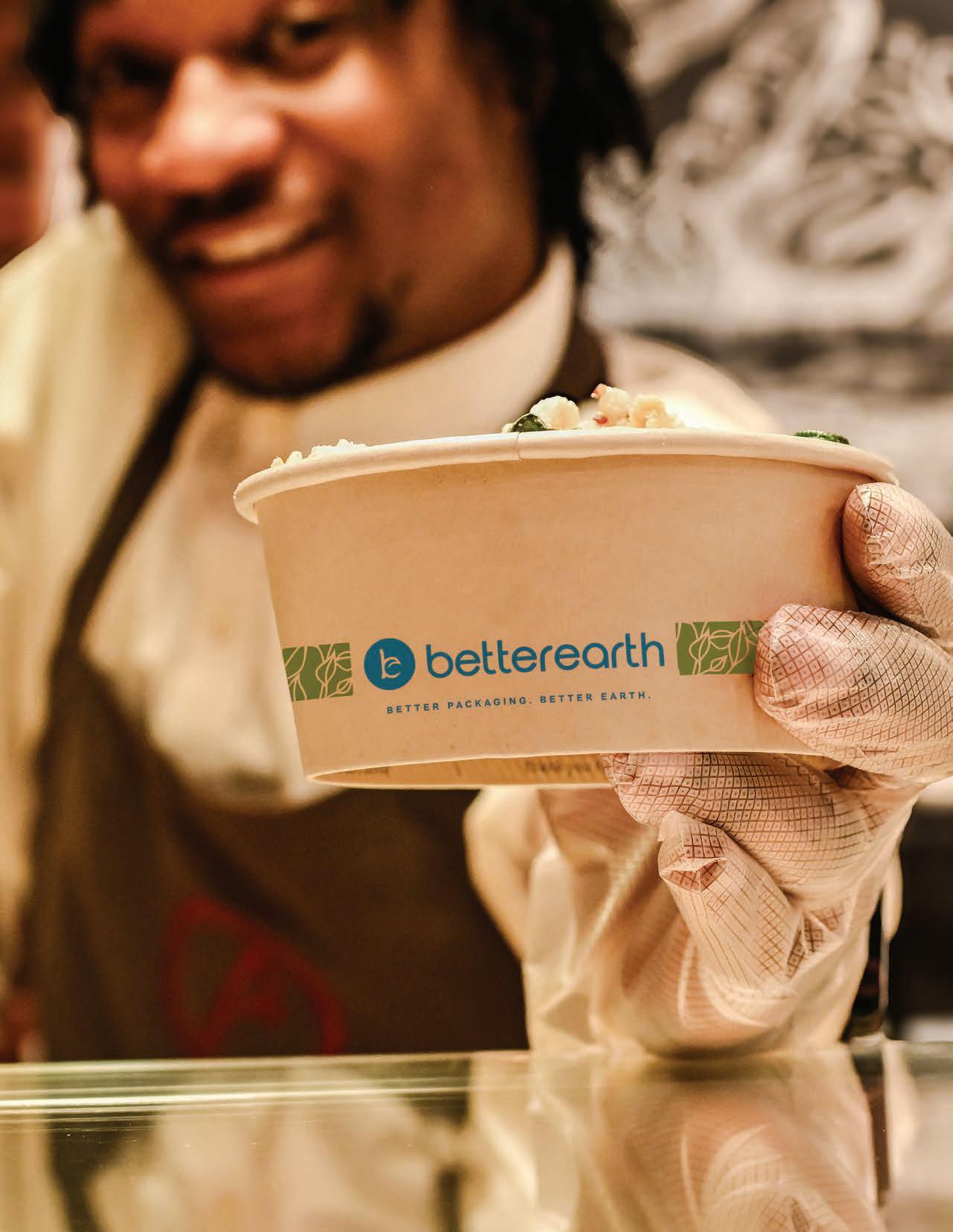
Image Left: Better Earth’s 8 oz, Squat Hot & Cold Food Container served with a smile.
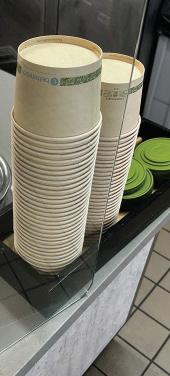
Image Right: Better Earth Hot & Cold Food Containers waiting to be served to Electrolux
Closing the Loop in Our Community
Community Farmers Markets (CFM) is a nonprofit strengthening Atlanta’s local food system by connecting farmers, producers, chefs, and neighbors through access, education, and sustainable distribution.
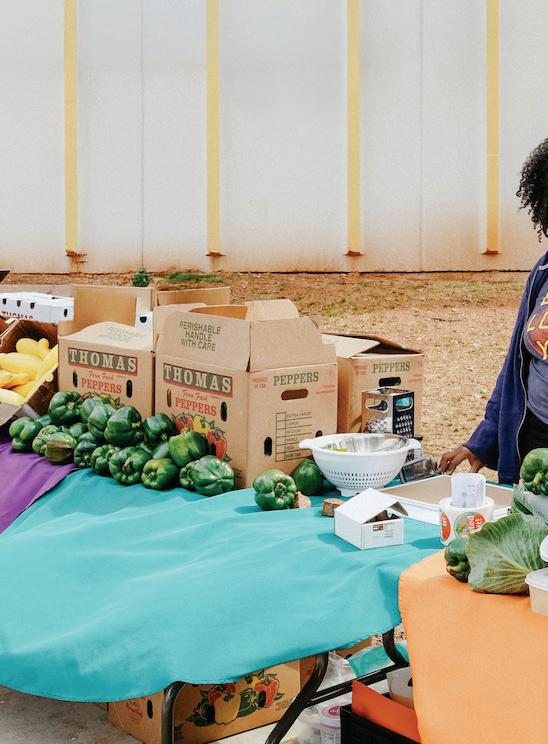
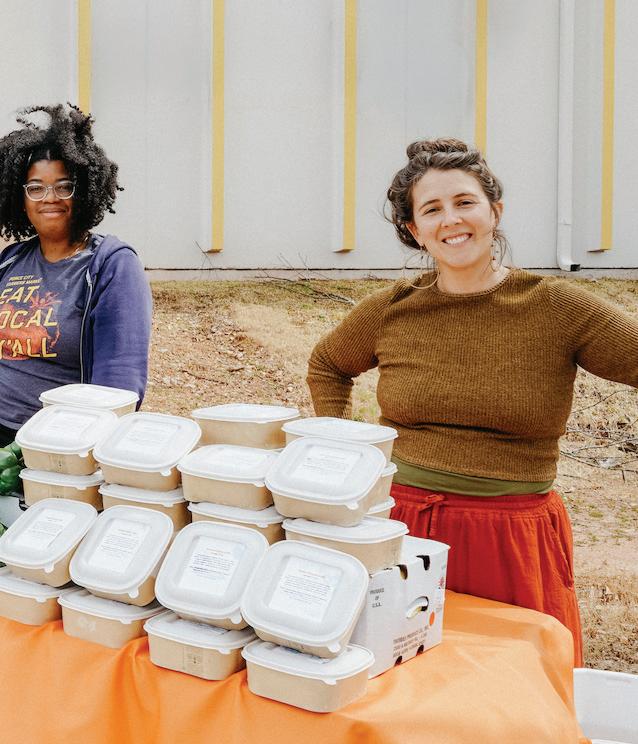
In 2025, Better Earth supported CFM with a packaging donation that supported their programming and community gatherings throughout the city. Our products were used at two fundraising events, a free meal program serving Title I Atlanta Public Schools, and seven meal distribution markets, reaching more than 1,400 families.
Through these efforts, our compostable packaging supported CFM’s mission to build a more interconnected food ecosystem—connecting what is grown, shared, and returned to the community.
“ Better Earth’s packaging is not only in alignment with our values, but wellcrafted. Whether it’s a container for our locally sourced, free meals that we freeze and give away or serving ware at fundraising events, Better Earth has just the right product for every need.”
~ Casey Hood Director of Operations & Vendor Support Community Farmers Markets
Image Left: Genera Mill Silos Venore, TN
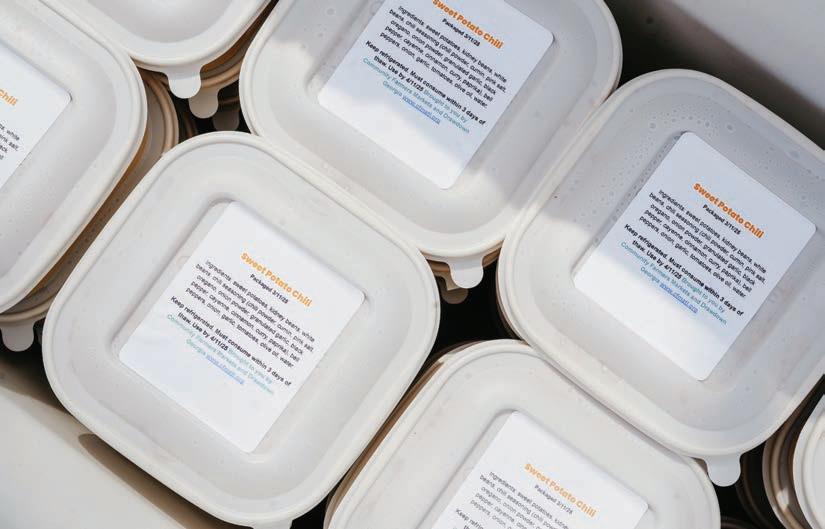
Image: Better Earth Better Bowls and lids staged for grab & go sweet potato chili at a Community Farmers Markets event.
PEOPLE
Image Left: Genera Mill Silos Venore, TN
Image: Better Earth employees getting a lay of the land at a compost facility.
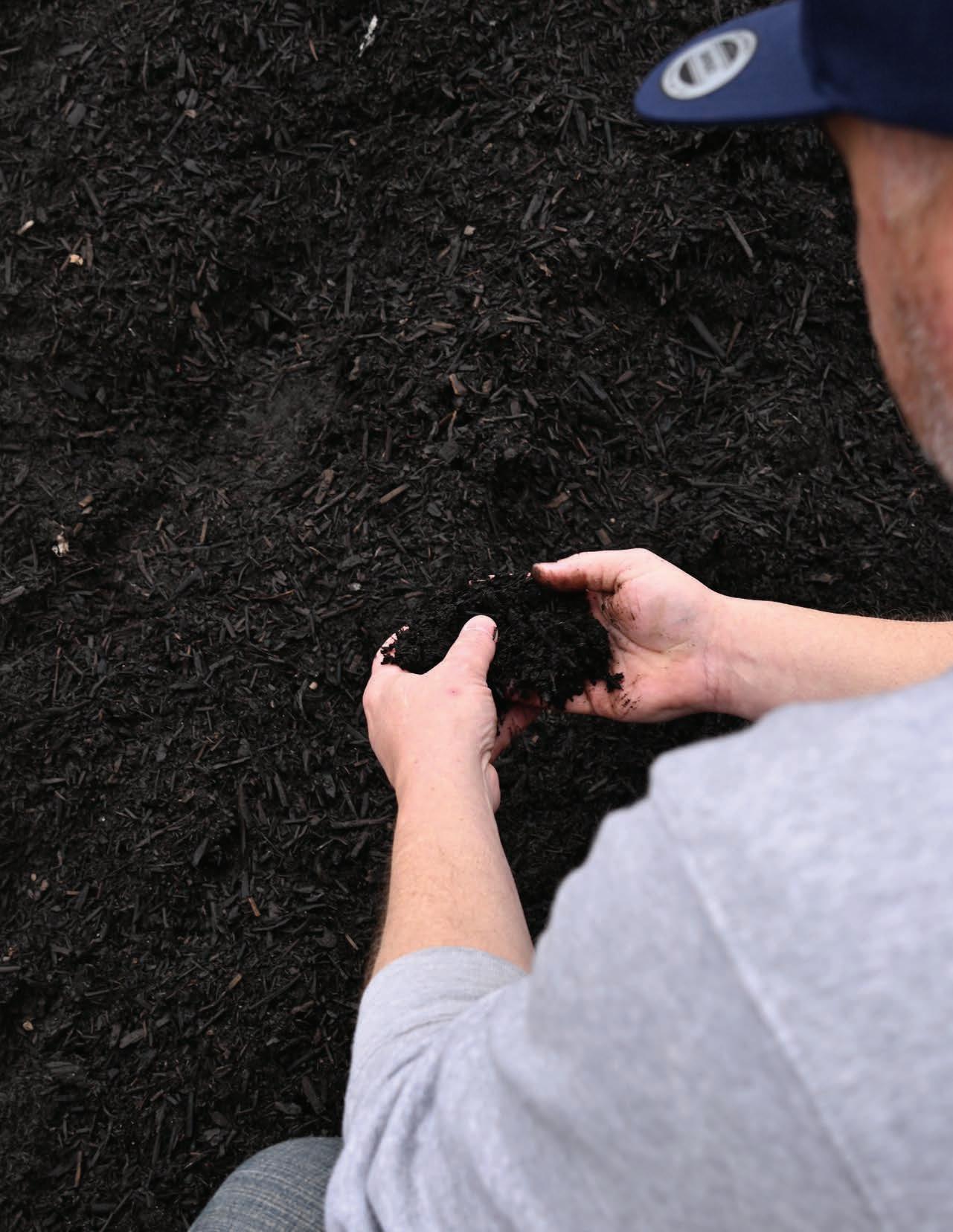
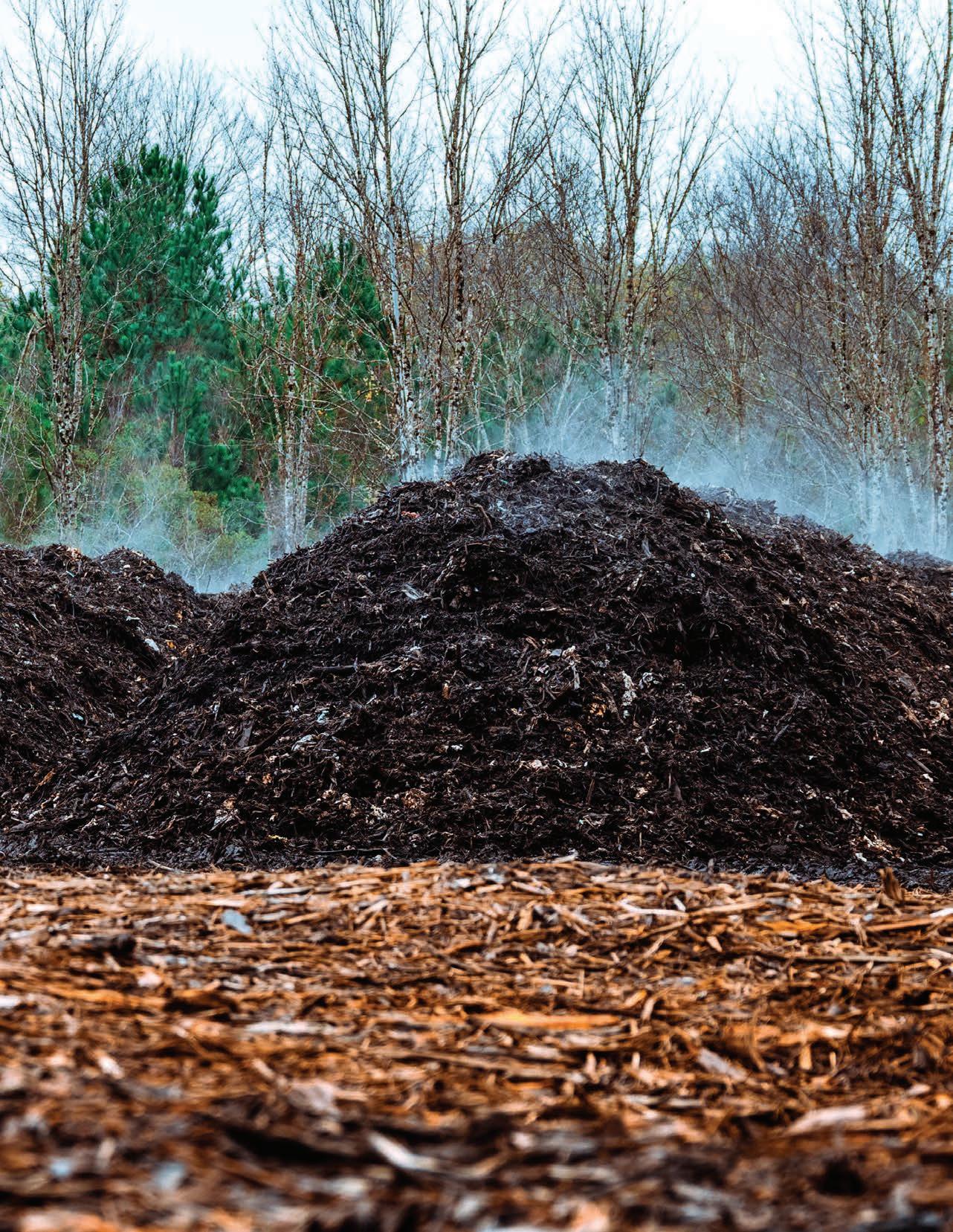
Previous Image: Finished compost pile at Better Earth partner CompostNow.
Empowering People, Expanding Impact
From our team to our supply partners, customers, and communities, we know meaningful impact is built through relationships rooted in equity, care, and shared purpose.
In 2025, Better Earth continued to cultivate an inclusive workplace and support our communities through volunteering, engagement, and disaster relief—building a people-centered culture that extends beyond our company.
Strengthening Our Foundation
In 2025, we evolved our organizational structure to respond to emerging needs and focus resources for the greatest impact, while maintaining our commitment to diversity and representation.
Better Earth proudly calls Clarkston, GA, just outside metro Atlanta, home—a community renowned as the most diverse square mile in the United States. This spirit of inclusivity permeates every aspect of our organization.
Our commitment to diversity and inclusivity is not just words to us. We believe that a mix of minds, perspectives, and cultures fuels innovation and success in our business.
37 full-time team members held by women or individuals from various racial or ethnic groups 55% leadership roles* identify as members of underrepresented communities 57% full-time employees
across our offices in Clarkston, Chicago, throughout the US, and globally
Growing Our Roots
At Better Earth, we believe meaningful impact is rooted in both community engagement and hands-on connection to the systems that sustain us.
Volunteering in Our Community
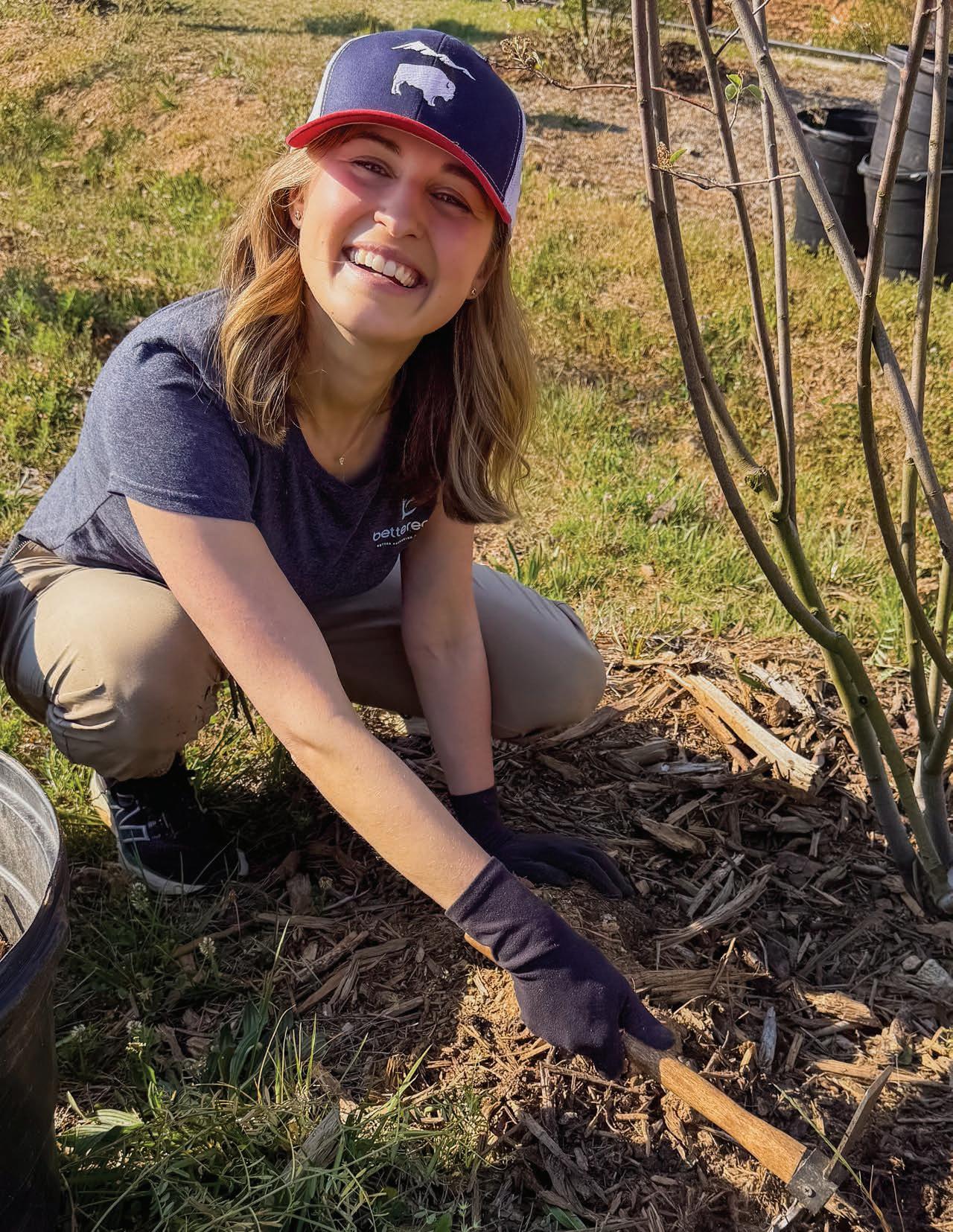
In 2025, our employees contributed volunteer hours in communities around the country and near our headquarters in Clarkston, Georgia, through company service days.
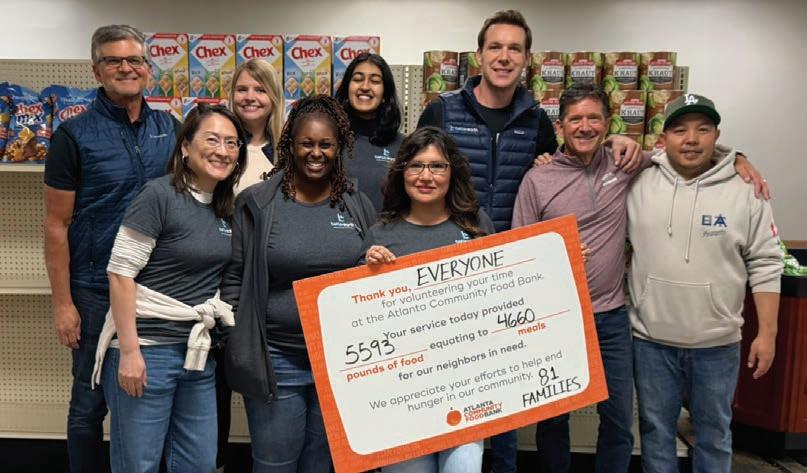
Together, we tended a regenerative garden at the Chattahoochee Nature Center, which provides habitats for native species and grows produce donated locally. We also supported the Atlanta Community Food Bank, bagging groceries, restocking shelves, and helping families access fresh, healthy food in our hometown.
Cultivating Local Food
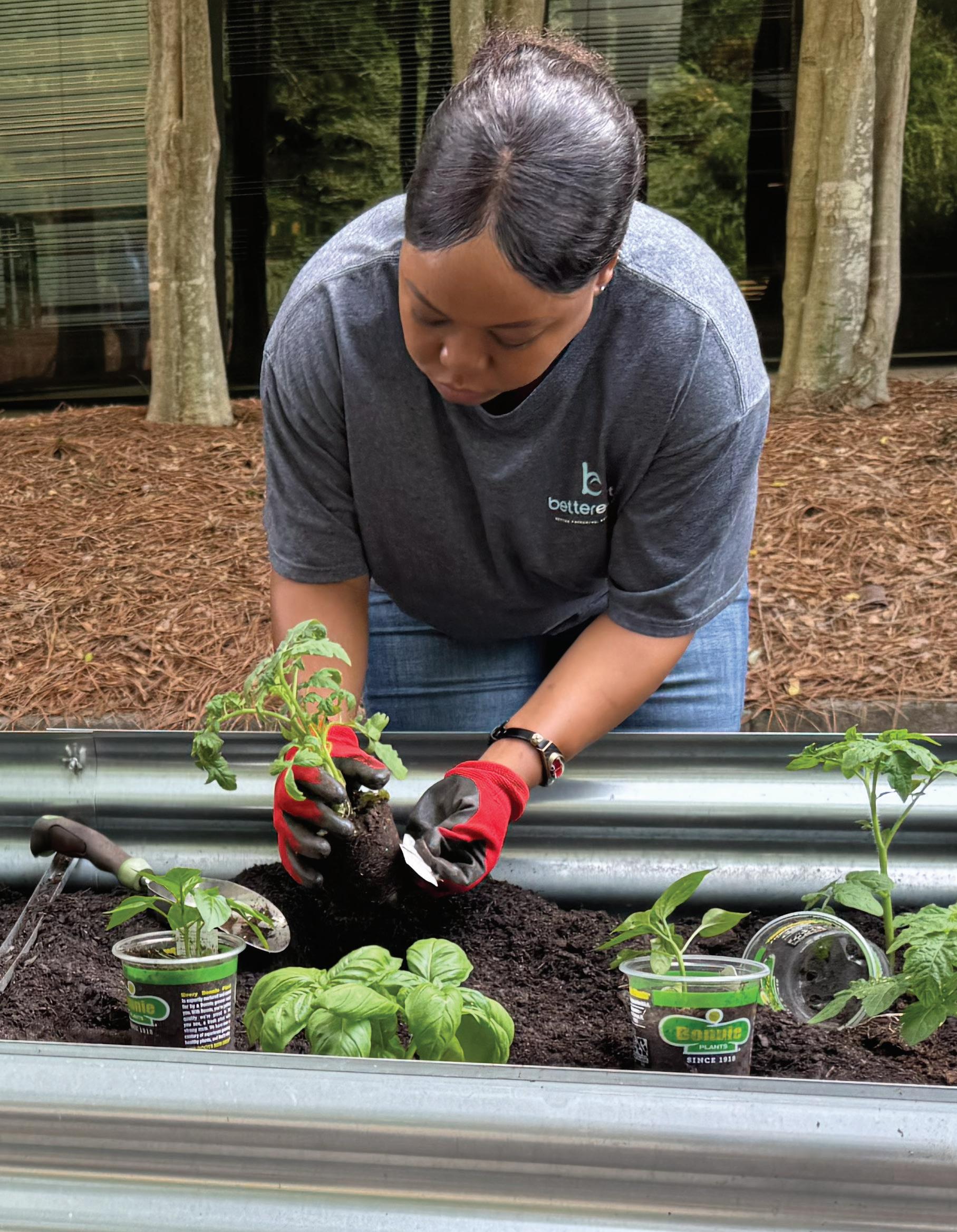
The garden at our Clarkston headquarters thrived in its second summer, complementing our weekly Fresh Harvest subscription to stock the office kitchen with local, organic snacks. Harvests from the garden inspired team lunches and were shared with friends and family, bringing fresh, locally grown ingredients to meals both at work and at home.
119 volunteer hours
enabled through our Volunteer Time Off benefit, providing employees one quarterly business day to give back
Image:
Better Earth team member working in the Clarkston office community garden.
Engaging Our Community
At Better Earth, our impact extends beyond our products. Through donations, education, and direct community engagement, we bring circularity to life in the places where people gather, reinforcing our commitment to a more sustainable future.
21 zero-waste community events
$16,660 donated contributions supported through Better Earth product donations
provided through in-kind product donations, supply chain carbon reduction efforts, and direct giving
32,955 community members
engaged in circularity through events with compostable packaging and, where available, on-site composting
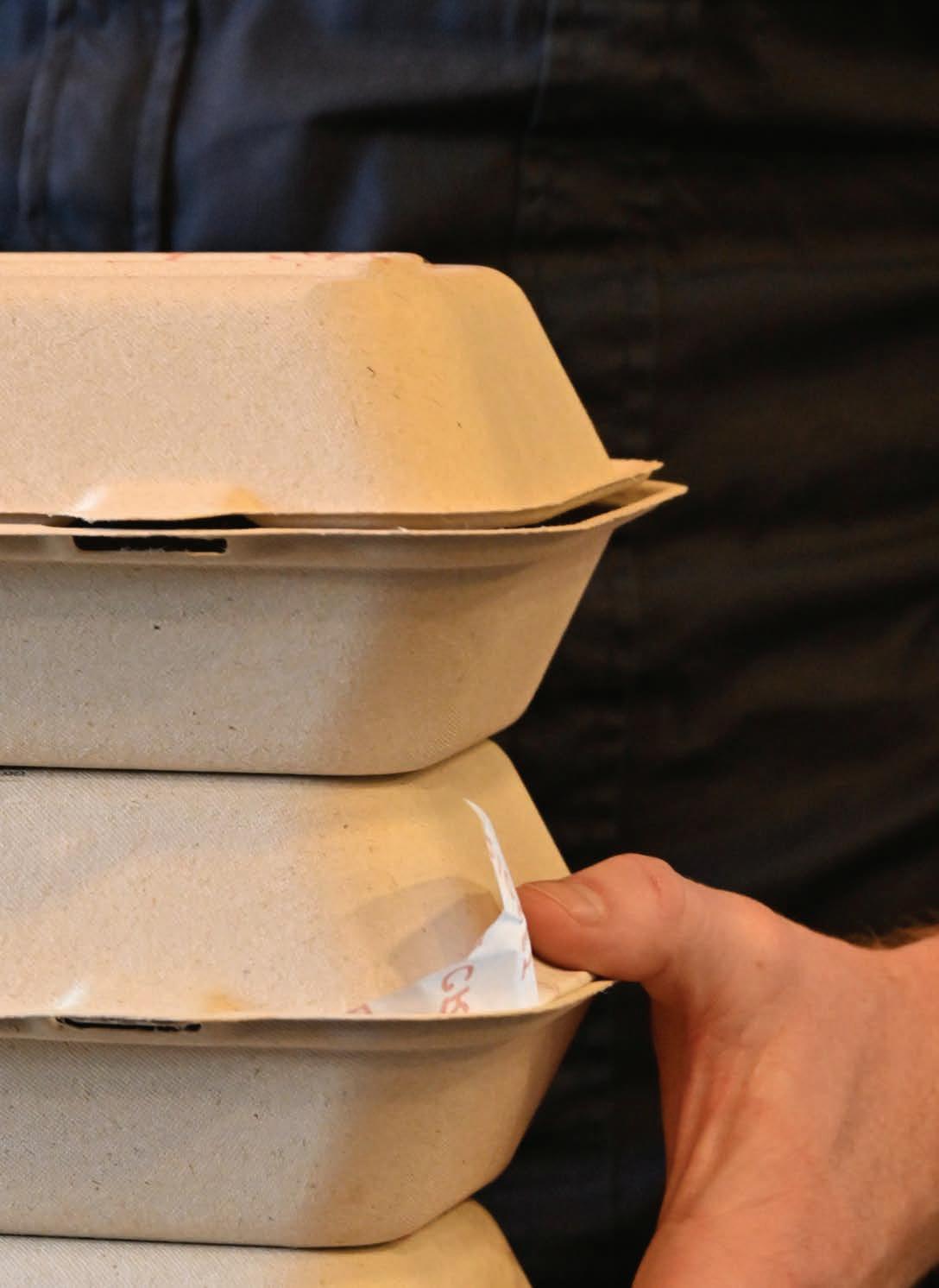
Image: Better Earth molded fiber clamshells.
Donation Spotlight: Meeting the Need
In January 2025, as wildfires displaced families and stretched emergency resources across Los Angeles, Better Earth partnered with S upport+Feed to help.
Support+Feed, a nonprofit focused on addressing climate change and food insecurity through plantbased meals and one that Better Earth has supported through an ongoing partnership, was among the organizations responding to the fires in LA.
serve thousands of meals to those affected, including first responders on the front lines.
Disaster response often requires rapid coordination and resource mobilization, and sustainability is not always prioritized.
This effort reflects a broader commitment that care for people and care for the planet can go hand in hand—even in times of crisis.
Recognizing the urgency of the moment, we quickly coordinated a donation of 70 cases of compostable molded fiber clamshells to help
“ Better Earth understood our mission and how important both sustainability and getting plant-based meals to folks affected and displaced by the fires were to us. The packaging they provided was critical in helping us serve meals to those who needed them most throughout Los Angeles. Huge thank you, Better Earth!”
~ Jessica Kinzler Director of Programs
Support+Feed
Event Spotlight: Bringing Circularity to the Stage
In April 2025, Better Earth supported the iconic SweetWater 420 Fest, a long-running music festival in Atlanta that brings together more than 20,000 attendees each year to celebrate the Earth.
We provided a mix of donated and subsidized compostable products, allowing concertgoers to participate seamlessly in on-site composting without detracting from the festivities.
This helped reduce contamination in collected materials and supported the transformation of organic waste into nutrient-rich compost, not long after the music faded.
PRODUCT
Image Left: Genera Mill Silos Venore, TN
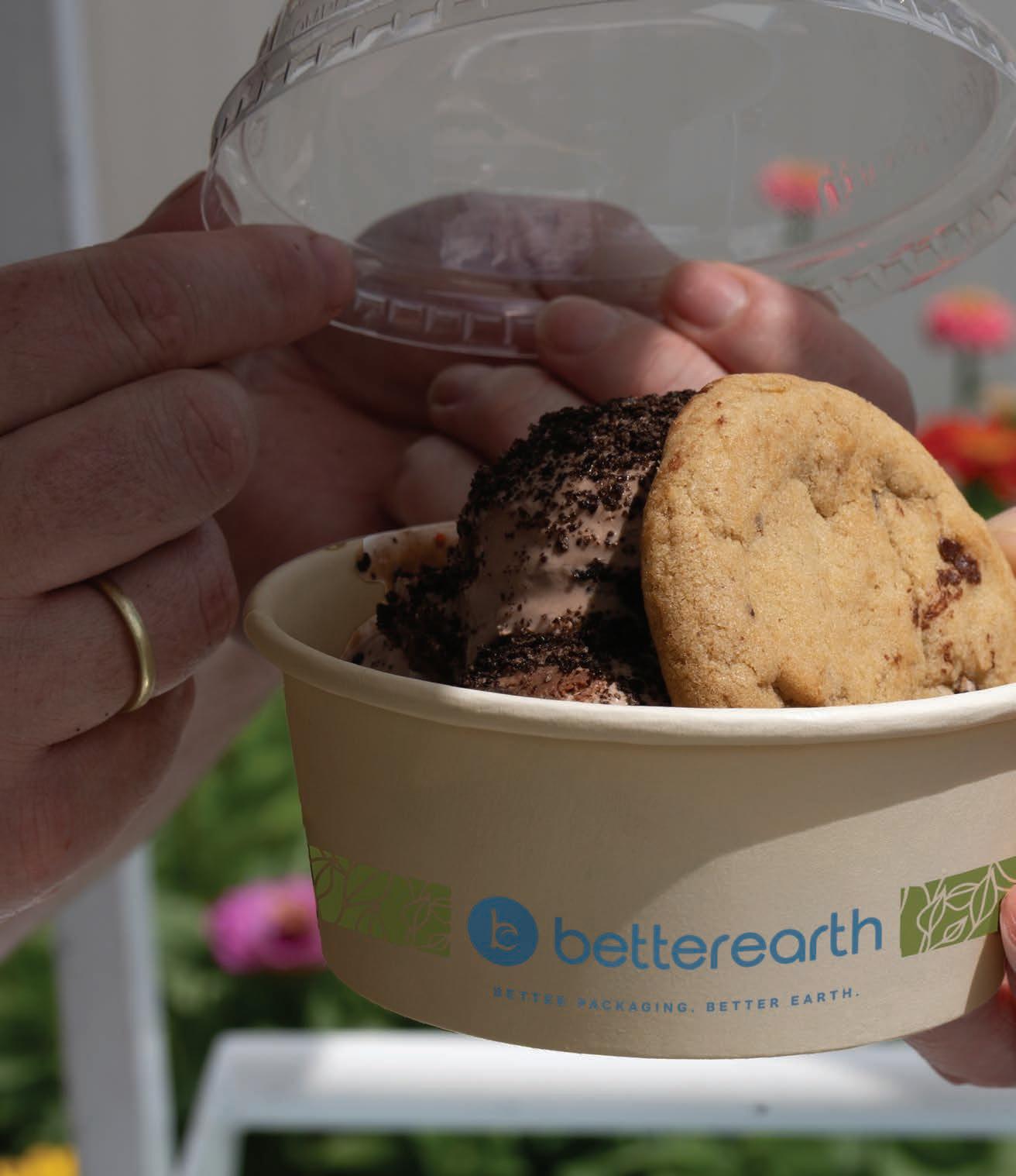
Image: Better Earth 5 oz Hot & Cold Food Container serving up a delicious ice cream dessert.
Previous Image: Aerated Static Piles of compost at a Better Earth partner compost facility.
Compostable Packaging as a Catalyst
Better Earth compostable packaging serves as a catalyst for circularity—diverting food and packaging waste from landfills and returning it to the soil as nutrient-rich compost.
Designed to disappear, our products are made from rapidly renewable materials, including perennial grasses and upcycled agricultural byproducts, and engineered for performance and end-of-life compostability.
In 2025, we advanced this approach in three key ways: strengthening material
traceability through FSC ® chain of custody certification, introducing innovations that reduce waste at the source, and transitioning existing products into our Climate Smart Packaging program, which reflects our highest sustainability standards (see page 42).
Backing Our Standards with Certifications
Third-party certifications play a crucial role in distinguishing compostable products from unsustainable alternatives.
By reducing confusion and contamination, meeting increasing regulatory requirements, and providing independent verification of our claims, these certifications help Better Earth build trust among our customers, partners, and team.
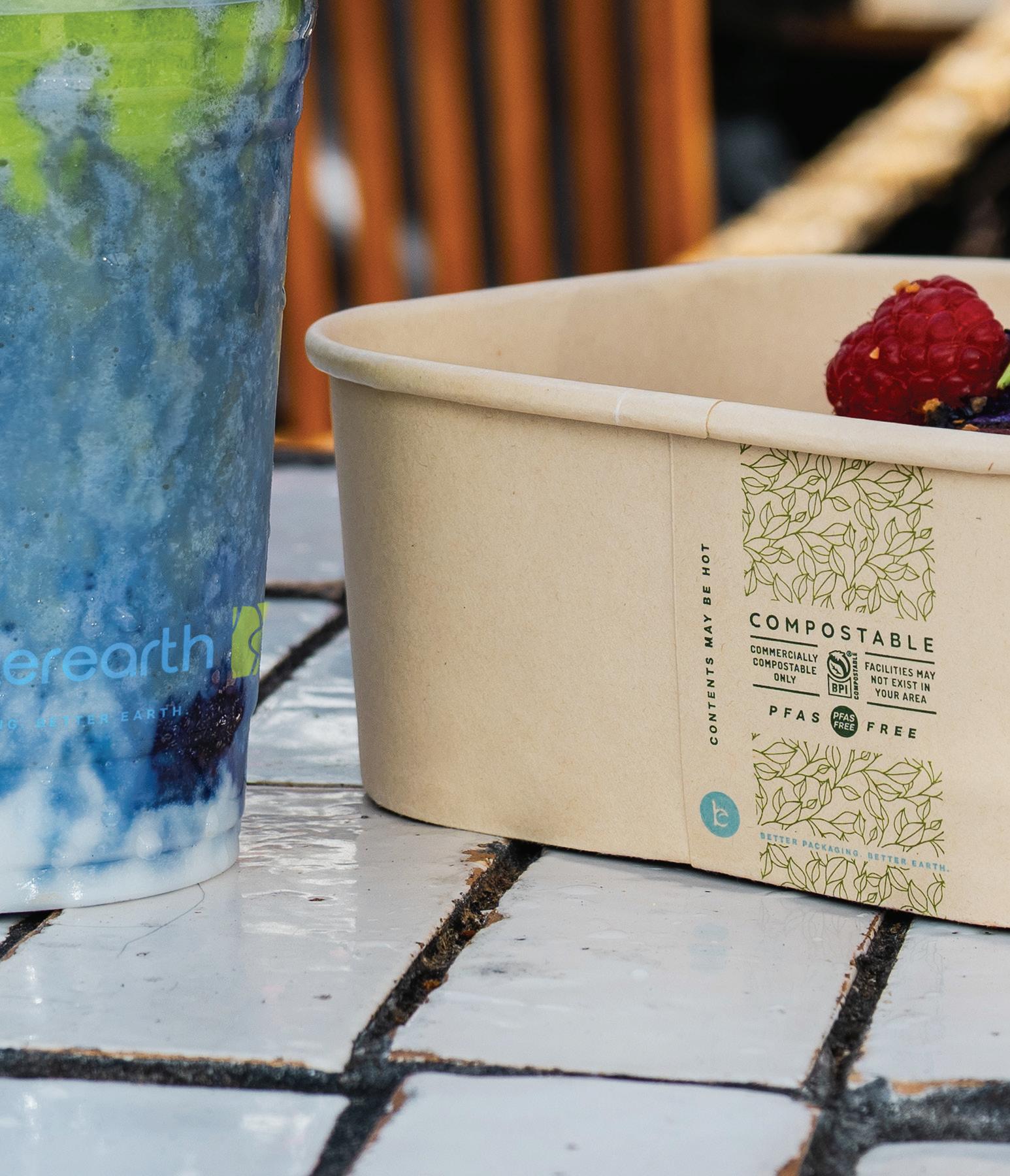
Administered by the International Biodegradable Products Institute, BPI-certified products undergo rigorous third-party testing to verify compliance with ASTM D6400 and/or ASTM D6868 standards. Certification ensures that products will compost safely in commercial composting facilities without contributing to contamination or harmful residues. All BPI-certified products are PFAS-free.
Find the latest list of Better Earth BPI product certifications by visiting becompostable.com/bpi
The Forest Stewardship Council ® is a not-forprofit organization that sets rigorous standards for responsible forest management. FSC ® certification verifies materials are responsibly sourced and ensures a transparent, audited chain of custody from forest to product, protecting ecosystems, upholding Indigenous and worker rights, and reducing greenwashing.
Contact your local Better Earth sales representative for the latest FSC ® certified products.
B Corp Certification evaluates a company’s impact across governance, workers, community, environment, and customers—from employee benefits and charitable giving to supply chain practices and material sourcing. Awarded in 2024, Better Earth’s certification reflects our commitment to high standards of social and environmental performance, accountability, and transparency, verified through independent, thirdparty assessment.
Contributing New Solutions
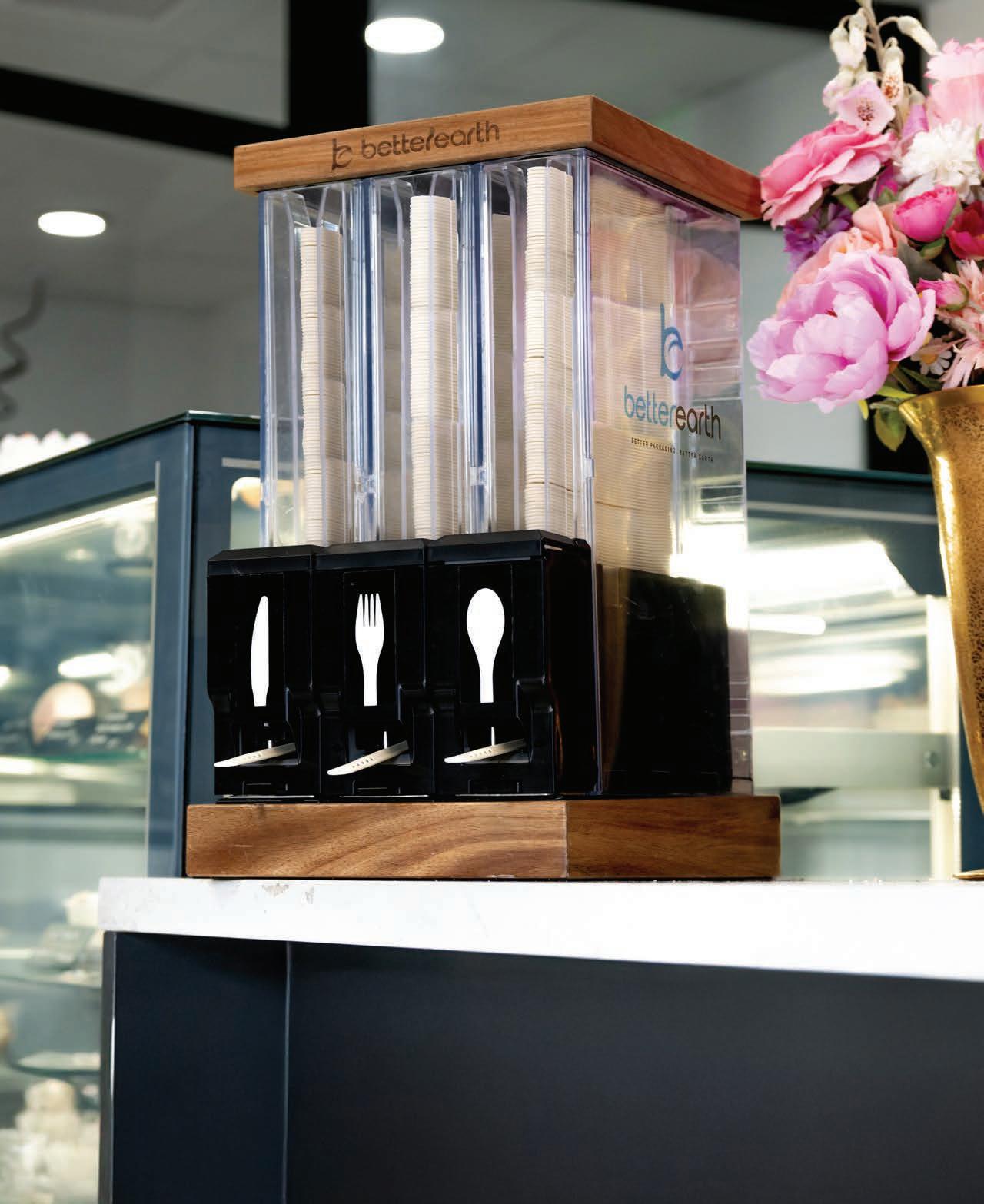
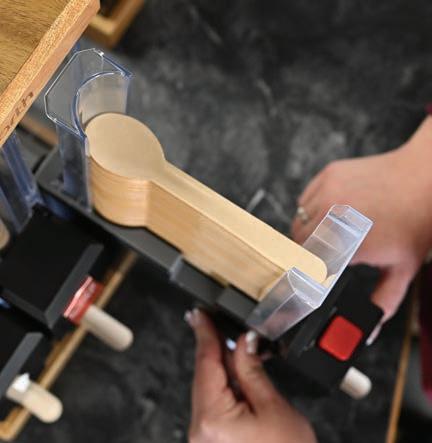
We introduced the Better Earth Touch-Free Cutlery Dispensers to address a common trade-off between hygiene and packaging waste.
Designed to hold bulk quantities of our BPIcertified compostable Pressed Bamboo Fiber and PHA Cutlery, these solutions enable operators to serve compostable cutlery in a way that supports the health of their customers and the planet, eliminating unnecessary waste from the source.
System Challenge
Individually wrapped cutlery is often used to meet hygiene expectations and reassure customers, but it generates significant, avoidable material waste.
Product Solution
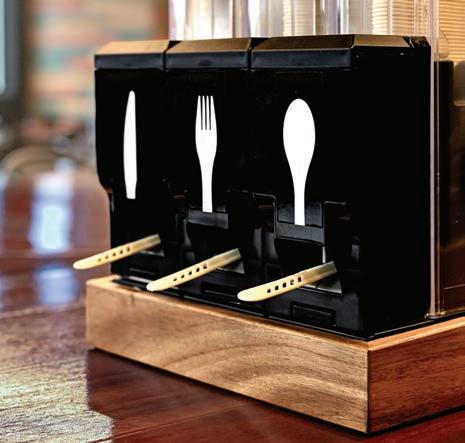
These dispensers use a touch-free refill system and handle-first dispensing to eliminate the need for individual wrappers while maintaining safe, consistent service in high-traffic, highvolume environments.
Operational Outcomes
These dispensers encourage guests to take only what they need, reducing surplus use and associated operational costs.
Material Breakdown
Our Touch-Free Cutlery Dispensers are designed exclusively for our Pressed Bamboo Fiber and PHA Cutlery, both of which are BPI-certified compostable, designed to break down in commercial composting facilities in as few as 90 days.
900 cutlery wrappers eliminated
For a more thorough breakdown of our materials, visit: becompostable.com/glossary through a single dispenser
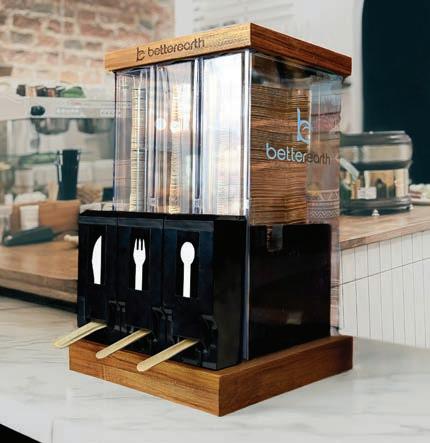
Images: Better Earth PHA and Pressed Bamboo Fiber Cutlery Dispensers.
Becoming Climate Smart
We evolved the Better Earth Unbleached Bamboo Kraft Paperboard collections to meet our Climate Smart Packaging program standards, advancing lifecycle impact reduction.
Our Climate Smart Packaging program represents a comprehensive strategy to mitigate the carbon footprint throughout the packaging life cycle.
We follow a three-part methodology to understand and reduce the environmental i mpact of our products:
1. M easure: Conduct an independent Life Cycle Assessment of the product’s environmental footprint.
2. Reduce & Invest: Implement strategies to lower our carbon footprint and support industrywide solutions.
3. I mprove: Commit to continuously reduce emissions through innovation and decarbonization.
Better Earth’s unbleached bamboo kraft paperboard collections, spanning our Double and Single Wall Hot Cups and Hot & Cold Food Containers, are a core product category, uniquely positioned to advance both sustainability and product innovation.
Aligned with the goals of Climate Smart, we evolved this collection to improve material impact without compromising performance, durability, or quality. This transformation led to four core outcomes:
Substrate Shift
Transitioning from tree-based p aperboard to bamboo kraft paperboard reduces reliance on wood fiber, saving an estimated 1,372 trees in 2025 alone.
B leached to Unbleached
Eliminating bleaching reduces en ergy and water use, avoids chlorine-based chemicals, and preserves the material’s natural brown color, signaling compostability to consumers.
FSC ® Certification
This certification ensures t he bamboo used for these products is sourced from responsibly managed systems that meet rigorous environmental and social standards.
Carbon Impact
These shifts improve carbon seq uestration throughout the product lifecycle, with bamboo absorbing up to 60 metric tons of CO₂ per hectare annually during growth, continuing to store carbon when our packaging is composted.
While a lifecycle assessment for these products are underway, early indicators point to meaningful improvements. We remain committed to sharing insights as they become available and to continuously improving the impact of our products.
Impact Report 2025
Image Left: Genera Mill Silos Venore, TN
Image: Horsetooth Reservoir Colorado in September 2025.
Previous Image: Horsetooth Resivior Colorado
Conserving Resources
Reducing our environmental impact is essential to our mission.
In 2024, we launched a comprehensive Environmental Management Program to track energy, water, and waste across operations and set ambitious reduction goals. This year, we continued taking steps to improve efficiency and reduce our overall environmental footprint.
Evolving Our Operations
Better Earth continued embedding sustainability directly into daily operations across our facilities.
Building Systems for Accountability
To reinforce best practices and advance waste reduction goals, we conducted biannual waste audits, held regular team lunch-and-learns, and improved our office waste bin system to make sorting more intuitive and reduce contamination. We also integrated the Betterbin app (see page 10) to guide employees and visitors on local disposal rules. These efforts were complemented by expanded operational programs, including piloting shrink wrap recycling in Clarkston, s caling it to Chicago, and continuing our policy to recycle, compost, or donate unsellable products.
Increasing Domestic Sourcing
We continue expanding domestic fiber sourcing as a key lever for building a more resilient, lower-impact supply chain. In 2025, we increased our domestic molded fiber production by 247%, representing 48% of all Better Earth molded fiber p roducts sold.
This shift avoided an estimated 1,450 metric tons of CO₂e from overseas transportation—equivalent to removing 338 gas-powered cars from the road or planting 23,976 trees.
M oving Forward
To strengthen transparency and improve environmental tracking, we implemented EcoLytics, a platform that helps us calculate our organizational carbon footprint and capture key operational indicators across energy, waste, and water. These insights will support continued progress and more informed decision-making over time.
11,800lbs diverted from landfill across Better Earth offices in 2025, including 7,922 lbs of organic materials—an 87% increase in total waste diversion from 2024.
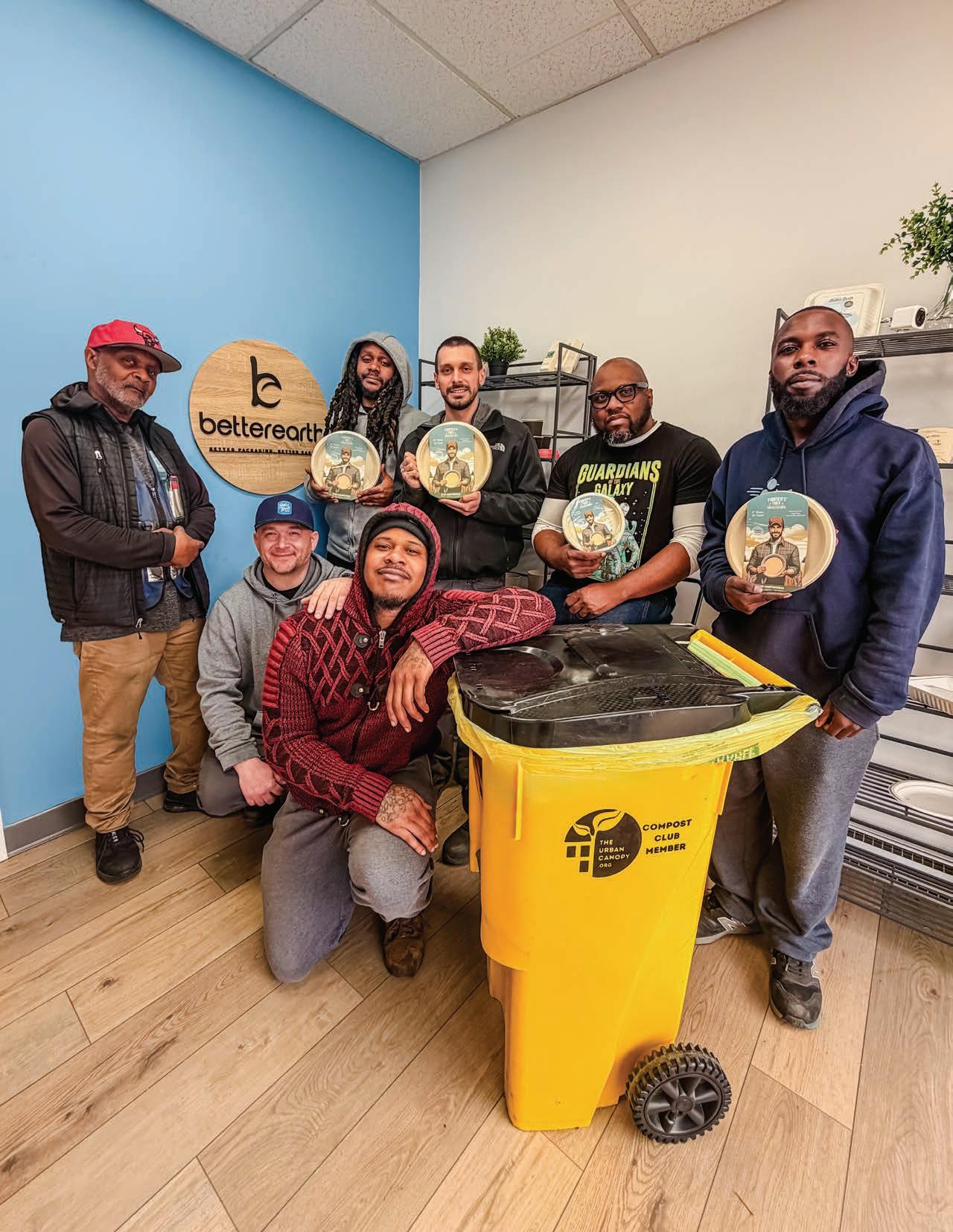
Image: Better Earth Chicago Operations Team proudly shows off their use of The Urban Canopy composting bins.
ACCOUNTABILITY MATRIX
Accountability is core to Better Earth’s impact journey. Below is a snapshot of how we performed against the public goals we set for 2025, highlighting both our wins and the areas where we’re continuing to build and improve. These updates will guide our priorities and ambitions in 2026.
Category 2025 Goal
People: Regenerative Workplace
Accrue 150 employee volunteer hours
2025 Report-Back
Almost! We accrued 119 Volunteer Hours and look forward to achieving the 150-hour goal in 2026.
Progress: Partnerships
Deepen partnerships that advance regenerative agriculture, composting infrastructure, and zero-waste education.
Product: Accelerate Innovation
Complete a three-year audit of composting infrastructure data to better understand access, gaps, and opportunities across the US.
In progress. We made quarterly contributions to Zero Foodprint and expanded our collaboration through marketing and education efforts that connect the foodservice industry to partners and viable solutions that advance soil health, regenerative agriculture, and climate action.
Planet: Waste Diversion
Recycle or compost 95% of standard recyclables and organics across operations and host a competition to name our Zero Waste Champion.
Completed. We identified 2,500+ composters, haulers, and dropoff locations across the country and presented our findings at the BPI Summit, helping translate infrastructure data into actionable insights for customers, partners, and the broader compostables industry.
Completed. We expanded our composting program and launched shrink wrap recycling at both our Chicago and Clarkston distribution centers and offices. To track our impact, we conducted initial and midyear waste audits with employees, strengthening our commitment to continuous improvement.
UN Global Compact
2023
Hired an HR Manager, tasked with implementing a variety of benefits and policies that align with Better Earth’s Regenerative Workplace philosophy.
Expanded our employee benefits and community engagement opportunities to include our health and wellness programming and our implementation of Volunteer Time Off.
Logged 119 volunteer hours at local farms and food banks and provided $16,660 in product donations and direct support to sustainability and circularity initiatives.
Women make up 38% of the Better Earth team and 35% of leadership.
Women make up 37% of the Better Earth team and 22% of leadership.
Women make up 43% of the Better Earth team and 27% of leadership.
Further institutionalized our commitment to sustainable business practices through initiating our Climate Smart Packaging program, completing the Life Cycle Assessment for our Farmer’s Fiber Collection and initiating one for EcoBamboo, and formalizing our Environment Management Plan signed by the entire executive team.
Doubled down on our commitment to regenerative circularity through our Compost Application Program with our manufacturing and raw material partners (page 45) and by formalizing our partnership with the non-profit Zero Foodprint.
Operationally, we expanded our commitment to responsible production through the exhibited growth in our waste diversion metrics.
Advanced “data-driven circularity” by acquiring Betterbin (hyperlocalized waste education powered by machine learning) and formalizing our Legislative Tracker to translate policy complexity into customer-ready compliance guidance.
Strengthened public access to information by publishing our Compost Drop-Off Database and sharing national insights at the 2025 BPI Summit.
Strengthened responsible operations through major gains in waste diversion: 11,800 lbs diverted and 7,922 lbs composted across Clarkston and Chicago: up approx. 5,000 lbs vs. 2024.
Continued expansion of domestic manufacturing, which is now doubling capacity. Launch of our Climate Smart Packaging program, which represents a comprehensive strategy aimed at mitigating the carbon footprint throughout the packaging life cycle, encompassing sourcing, production, utilization, and disposal
Continued sustainable product innovation by expanding the Climate Smart Packaging program to include our Better Earth Fiber Line, at the conclusion of its peerreviewed Life Cycle Assessment.
Expanded our product-level ecoprofiles to include Better Earth’s unbleached paperboard collection.