WHAT ARE THE TYPES OF URINARY INCONTINENCE?

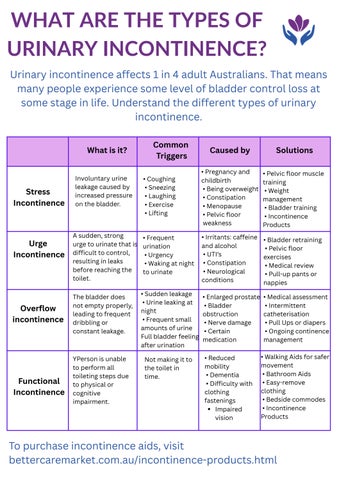
Urinary incontinence affects 1 in 4 adult Australians. That means many people experience some level of bladder control loss at some stage in life. Understand the different types of urinary incontinence.
What is it?
Stress
Incontinence
Urge
Incontinence
Involuntary urine leakage caused by increased pressure on the bladder.
Common Triggers Caused by Solutions
• Coughing
• Sneezing
• Laughing
• Exercise
• Lifting
A sudden, strong urge to urinate that is difficult to control, resulting in leaks before reaching the toilet.
Overflow incontinence
Functional
Incontinence
The bladder does not empty properly, leading to frequent dribbling or constant leakage.
YPerson is unable to perform all toileting steps due to physical or cognitive impairment
• Frequent urination
• Urgency
• Waking at night to urinate
• Sudden leakage
• Urine leaking at night
• Frequent small amounts of urine
Full bladder feeling after urination
Not making it to the toilet in time.
• Pregnancy and childbirth
• Being overweight
• Constipation
• Menopause
• Pelvic floor weakness
• Irritants: caffeine and alcohol
• UTI’s
• Constipation
• Neurological conditions
• Enlarged prostate
• Bladder obstruction
• Nerve damage
• Certain medication
• Reduced mobility
• Dementia
• Difficulty with clothing fastenings Impaired vision
• Pelvic floor muscle training
• Weight management
• Bladder training
• Incontinence Products
• Bladder retraining
• Pelvic floor exercises
• Medical review
• Pull-up pants or nappies
• Medical assessment
• Intermittent catheterisation
• Pull Ups or diapers
• Ongoing continence management
• Walking Aids for safer movement
• Bathroom Aids
• Easy-remove clothing
• Bedside commodes
• Incontinence Products
To purchase incontinence aids, visit bettercaremarket.com.au/incontinence-products.html