
2025 FALL REPORT TO THE COMMUNITY
2025 FALL REPORT TO THE COMMUNITY
As I sit looking out the window admiring the glorious fall foliage, I am fi lled with awe and gratitude for the season and for all that has led up to this moment. I am honored and humbled to be writing this letter as the new Head of School, following in the footsteps of so many amazing leaders and dedicated, innovative educators.
This summer, The Bay School celebrated its 45th anniversary with an evening fi lled with great music, delicious food, and the reunion of friends and colleagues. We were able to dedicate three new spaces in honor of individuals who impacted the school and the community with their commitment and devotion. We now have The Katahdin Classroom, in honor of Bags Brokaw; The LookeOut, in honor of Lisa Looke; and The Holland House, in honor of Chuck and Annie Holland and their family. What a joy it was to begin my tenure with the recognition of those who have come before me.
Fall brings so much activity and energy! We’re welcoming several amazing new faculty members, as we bid farewell to beloved faculty and staff who are moving on to other adventures. The Bay School is also in the midst of our 10-year reaccreditation process. We are accredited through the New England Association of Schools and Colleges (NEASC) and the Association of Waldorf Schools of North America (AWSNA). A full faculty self-study with two site visits is required every ten years. The faculty and staff have been working on the self-study since last year and we are preparing to welcome our first set of visitors next week. The first visit focuses on the narratives and documents we submitted around the health and safety of the school, our students and families, our finances, and the work of the school administration and the Board of Directors. The spring visit (and the work leading up to it) focuses on the school’s mission and vision, curriculum and pedagogical study, and faculty development. This challenging and engaging work has asked us to reflect and articulate where we are on our journey and where we hope to grow.
I am incredibly grateful to all of the friends and supporters who make it possible to continue to support the faculty and offer financial assistance for families. As you read through this year’s Annual Report, I hope you recognize the importance of each and every one of you. Your support, dedication, and commitment to The Bay School make it possible for us to continue to do what we love. With your support, we are able to offer educational programming that fosters creativity, academic engagement, and respect for the natural world and each other.
With gratitude and appreciation,
Tara Nemeth, HEAD OF SCHOOL
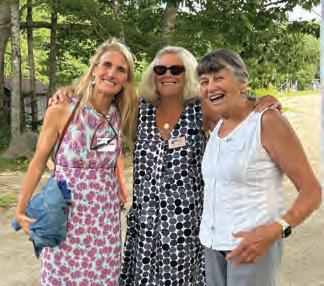
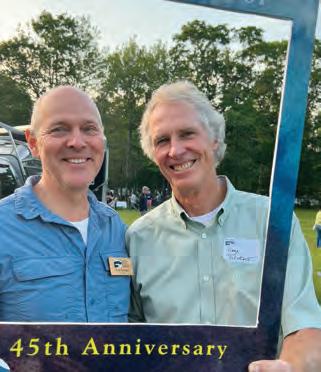
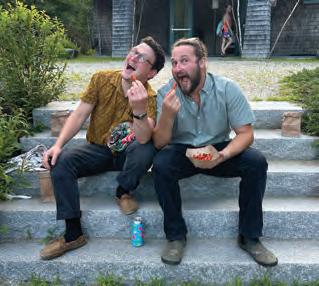
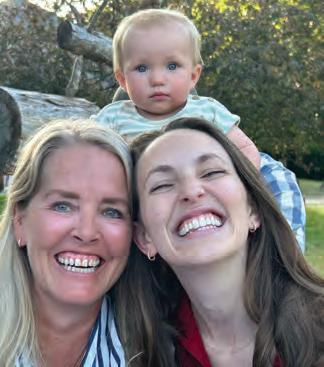
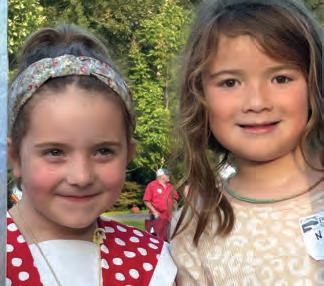
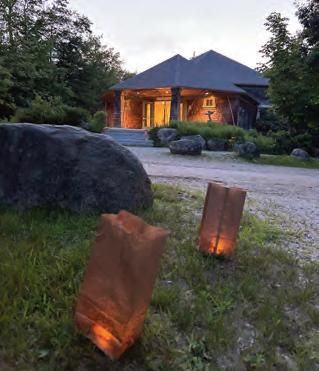
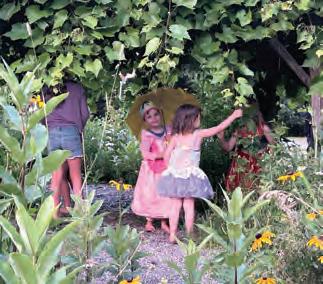
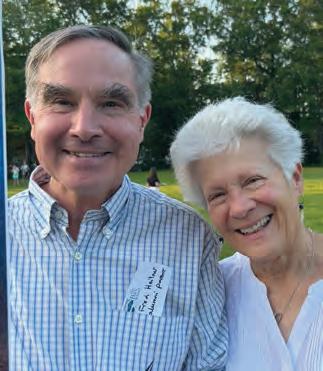
OH WHAT A PARTY IT WAS! More than325 friends came to campus to help celebrate The Bay School’s 45th anniversary on Tuesday, July 22. Past and current staff and faculty, alumni, current and former parents, board members, supporters and community members danced to The Soul Benders, enjoyed wonderful food and craft cocktails, and took part in the Pugnuts Ice Cream Social.
A highlight of the evening was the dedication of three new spaces on campus, located in the woods behind Rousseau where the yurt once stood. The Katahdin Classroom was named in honor of Bags and Kerry Brokaw. During his introduction, Scott Springer told warm and funny stories of Bags’s leadership and work ethic during his tenure as head of school. True to fashion, Bags invited all past faculty and staff up to help cut the blue ribbon draped on the classroom door. Miss Runge (Paula Runge Dick) did the honors.
Board member Megann Holland described how her family, led by her father, Chuck Holland, decided to make a donation in honor of her mother, Annie, and dedicate the Holland House classroom to her memory. Megann related how each of her three children flourished thanks to their teachers, Ian Chittenden, Catherine Razi, and Scott Springer. She said volunteering as a board member is a way to give back to the school that has given her family so much: generations of
friendships, a supportive community, and a lifelong love of learning.
The ceremony was held on the newly dedicated outdoor classroom space named The LookeOut, in honor of former staff member and alumni parent Lisa Looke, who passed away in 2023. Lynn Boulger described how Lisa tirelessly worked for the school whether it be putting together new IKEA furniture the day before a new academic year started, creating the first-ever Bay School store, or creating sets and costumes for class plays. “She could do anything,” Lynn said, “and the things she said she couldn’t do, she figured it out and got them done.” Lisa’s husband, Loriman, and son, Garrison, together cut the ribbon of The LookeOut.
for the school whether it be putting together new IKEA furniture the day before a new academic year started, creating reminiscing, mingling, and
The celebration continued with music, food trucks, reminiscing, mingling, and dancing. As the sun set, Sierra Wait handed out glowstick bracelets and children of all ages lit up the games field. The ice cream supply held out until the end!








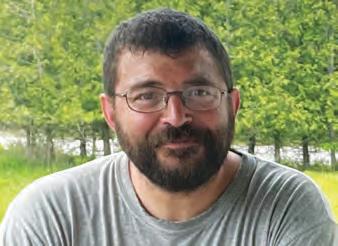
TIM LAFLAM and his wife, Suzanne Norgang, are currently the longest continuous parents at the Bay School, their oldest son having started Pre-K 16 years ago. But we’re welcoming Tim to a new role at the school, as Facilities Manager! Tim received a degree in biology from the University of New Hampshire and has worked as an independent contractor/carpenter for the past five years. Before that, he was head of maintenance for the Blue Hill Public Library. With two children who have graduated from the school and two more working their way through the grades, Tim is excited to step into this new position.
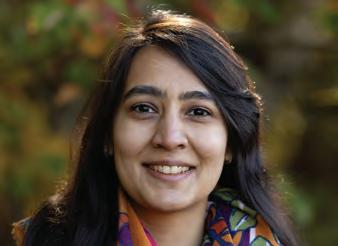
NIKITA PESSWANI is our new 6/7 class teacher. For more than a decade, she has been an educator, trainer, and coach, leading education initiatives across South Asia and supporting nonprofit organizations in their growth. She received her Bachelor’s degree from Savitribai Phule Pune University in Pune, India, and her Master’s in Education from Harvard University. Passionate about igniting curiosity and creativity in young minds, she brings a love for storytelling, singing, and theater to her classroom. Originally from India, she draws on her cultural roots and diverse experiences to bring warmth, connection, and inspiration to her students and colleagues.
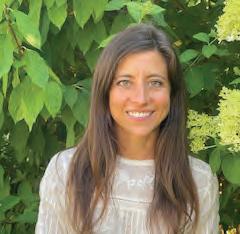
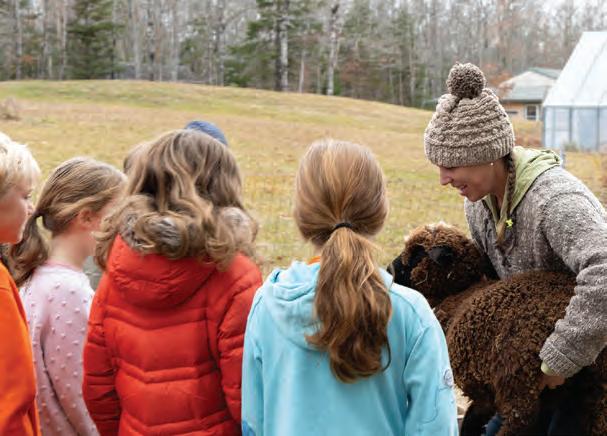
LINDSEY CANINO has joined the staff as the Handworks assistant. She also tends to her family’s small farm in Sedgwick and three children in Sedgwick, two of whom are at The Bay School; - Emma is 11 and Rosa, 9. Oliver, 4, will be at the Bay School next year! On Milkweed Farm, her family grows fruits and vegetables and raises chickens and Icelandic sheep. Two of their lambs—Mittens and Blossoms— are at school this year– Mittens and Blossoms. Lindsey is deeply inspired by the principles of Waldorf education and the importance of handwork in a child’s development.
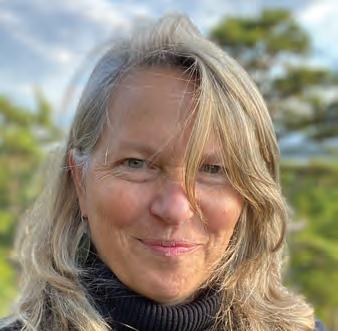
LYNN BOULGER is the parent of a 2009 alumna, Morgan Lavoie. She served on The Bay School board for four years before joining the school’s administrative staff as Interim Development Associate for the 202526 school year. She has spent her career as a nonprofit professional, including as Executive Director of the Authors Guild Foundation, more than over 13 years as Dean of Advancement for College of the Atlantic, and five years as Director of Development in the Northern Light system’s Blue Hill and Bangor hospitals. She has raised hundreds of millions of dollars for causes she cares about, and The Bay School is at the top of that list.
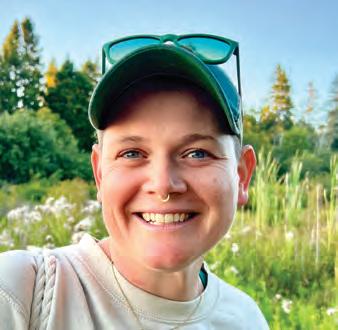
ITZEL-MARINE
GOURMELON joined the Bay School in mid-Spring 2025 as the head of the Extended Day program. During the school day, they assist the 2nd & 3rd grades with reading and support the Early Childhood teachers in the North Cottage classroom. Itzel is a FrenchMexican-American tri-national from an adventurous globetrotting family. They hold a B.A. in Anthropology from the University of Colorado, Denver. After more than a dozen years as a documentary filmmaker, Itzel now leads summer trips as a Registered Maine Sea Kayak Guide out of Stonington. Itzel is making a home with their partner and cat in Stonington.
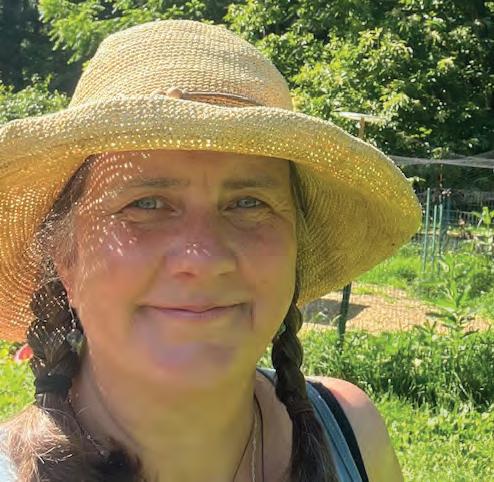
this Fall as
studied Environmental Education at Sterling College, Waldorf Education at Antioch New England University, and Curative Education at the Mulberry Center for Curative Education. After many years as a kindergarten teacher at the Hartsbrook School in Western Massachusetts, she founded their Forest Kindergarten in 2015. She went on to found Tree of Life Forest School, a home-based outdoor program serving children ages 4.5 – 9 years old, in 2021. Rachel, her husband Dan, and Newfoundland dog Merlin are thrilled to be exploring this lovely new community by land, sea, song, and spirit. They have two young-adult children, who are Waldorf alums, currently residing in the Northeast Kingdom of Vermont.
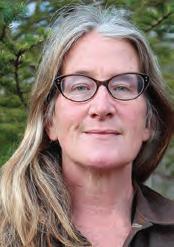
RUTH FISKE came out of retirement last year to help support the Handworks and Early Childhood programs. She had been The Bay School’s Handworks teacher for decades before retiring in 2022. We appreciate her loving assistance last year.
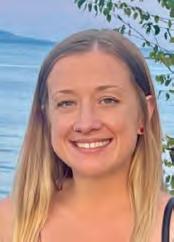
ERIN CROWLEY was the Early Childhood Classroom assistant and ran the extended day program of After School Activities. She leaves The Bay School to continue, and expand, her professional-gardening work. Thank you, Erin!
KATAMA MURRAY is a 2011 Bay School alumna who served for one year as our Handworks Teacher. She is dedicating more time to her business, Teach Peace Prints, and teaches classes and workshops on natural dyes and printmaking near and far. We will miss the passion and knowledge she brought to her work with the children.
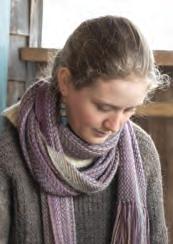
Alumna ZEYA LORIO ’14 served as our Agriculture Arts teacher for grades 1-8. She delighted students with field trips to King Hill Farm, making prints with apples, and teaching children how to plant and grow vegetables in the school garden. She is back at King Hill Farm in Penobscot where she was a longterm employee before joining the Bay School teaching staff. We will miss her warm presence on campus.
BILL GRAY worked for thirteen years as our facilities manager. He was one of the longest serving facilities managers we have ever had and a beloved staff member. At graduation, he got a standing ovation when his retirement was announced. Tara Nemeth said, “He was loved. Just loved. Bill was always here, always lending a hand. His work is embedded in every inch of the campus.” He has started his own handyman business now called Reliable Repair Handyman, LLC. We miss you, Bill!
JONATHAN ALEXANDER was the afternoon custodian and helped maintain the beauty of the campus. He is moving on to other opportunities. We appreciate his dedication and service to our community. Best wishes to you, Jonathan!
WHEN THE BAY SCHOOL’s longtime Head of School, Marcia Diamond, announced she would be retiring, the search began for a new administrator who could lead our close-knit community. How lucky we were to find the right person already on campus!
“With her deep knowledge of the unique ways that each student learns, and a fine toolbox from which to select a useful approach, Tara brings to school leadership a flexibility of mind, a generosity of heart, and willingness to ask that important question: ‘What do you need?’,” says Scott Springer, who served on the search committee that hired her.
“She comes into this position with a desire to lead and serve the families and staff, and also a desire to grow her own capacities, to expand her own edges, and to model, for all of us, what it means to deepen our work,” he continued. “And for her, the relationship with, and for, the students is the cornerstone of education; all else builds on that.”
Tara joined The Bay School community in 2018 as Educational Support Coordinator with years of experience in the field. She served as a special-ed teacher, team facilitator, and a school liaison in the River Forest School District in Illinois for seventeen years. Though she worked in the public school system, Tara had a long commitment to Waldorf education before joining The Bay School staff. Both of her daughters attended Waldorf schools in the Chicago area where they lived before moving to Maine.
“I learned a lot about Waldorf education through parent meetings, taking classes, and consulting with my daughters’ school on several projects. I believe in the power of Waldorf education to cultivate empathy, deep engagement, and social responsibility.”
With excellent collaboration and communication skills, Tara has worked with The Bay School’s board of directors, administrators, colleagues, families, and staff. She has been a member of the Equity and Access Committee, Strategic Planning Committee, and the Re-accreditation Steering Committee. She also served for many years as the Board Faculty Liaison.
“Tara is the right next leader for The Bay School. She has been a classroom teacher, worked with students with unique learning needs, guided the work of other educators, and is a parent; she has experienced the educational system from all angles,” said Board President Holly Arends Murphy. “Her expertise, rooted in her own education and training and honed over decades both in the classroom and leading educational teams, is an enormous asset for us.”
FOR THE 2024-25 SCHOOL YEAR , Ian Chittenden’95 asked to take a step back from teaching after serving as a class teacher for over twenty years. He requested a year’s leave, but he didn’t leave us completely; he continued to serve as Athletic Director, overseeing all aspects of the Bay School’s sports programs– scheduling games, attending meetings, finding coaches, and providing updates as the seasons progressed. We had hoped he would return to the classroom this year, but he decided to continue working at his family’s building company. We miss him every day. Ian is a rare human being, a wonderful colleague, and an excellent teacher.






Tara holds a Bachelor’s in Psychology from DePaul University, a Master’s in Education from the University of Illinois, and a Master’s in Educational Leadership from Concordia University. She has earned her Administrator of Special Education certificate and Professional Educator Licence to teach students with disabilities. She has training and practical experience with conflict resolution, budgeting, and human resources management.

“As a teacher, Ian offered his students a solid sense of self by asking them to rise up each day—to think, to create, to wonder, and to work together,” said Kristy Cunnane. “He listened to his students with great care and held each person with deep regard. He brought humor, heart, and a great sense of inquiry to his work every day.”

experience with conflict resolution, budgeting,

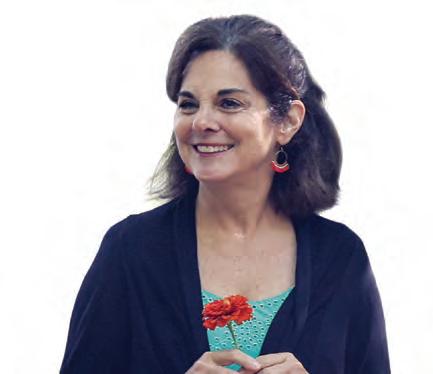
“I am honored to contribute my passion for Waldorf education and my experience in leadership to the continued success and growth of The Bay School,” Tara said.

Ian has been a part of The Bay School community for three decades. He grew up at the school, as his mother, Judith, was a faculty member. He graduated from The Bay School in 1995, then went on to high school at George Stevens Academy, earned his bachelor’s degree at UMaine in 2003, and in the fall of that same year was back at The Bay School as a core faculty member.
“I had the great good fortune to work and teach alongside Ian for many years. We were also teachers to each other’s children,” Kristy said. “When I think of him, I think of his incredible dedication to his students, to the school, and to his colleagues. His willingness to work above and beyond in so many
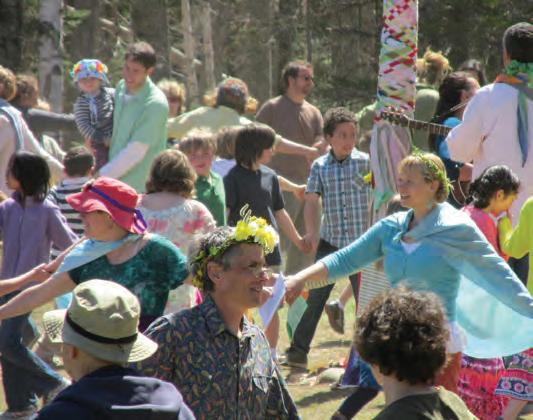
situations helped to guide and carry the work of the school in important ways. I’m so grateful for that.”
Over his tenure, he served as Faculty Chair, coordinating the pedagogical work of the teachers and working closely with the Head of School. He has been Board Faculty Liaison, bringing updates, ideas, and priorities from the core and specialty teachers to the board.He has represented The Bay School at numerous national conferences and workshops on the efficacy of the combined grades model.
Said Scott Springer, “The school benefited for twenty years from Ian’s capacity for warm inspiration, deep questioning, delight in life, and his freedom to just play. He is one of those teachers who leans in with joy when a student asks a question. He is like an experienced trail guide who leads safely and confidently while allowing each traveler (each student) their own sense of venturing into the unknown.”
Kristy agreed. “Ian’s integrity, curiosity, and great sense of play have inspired interest and joy in all of us. I have cherished the many rich conversations I shared with Ian as he delved into subjects he was teaching, lessons that had intrigued him, or when we just talked about life.”
We wish Ian all the best and hold much appreciation for the many gifts he brought to our community for so many years. Thank you, Ian.
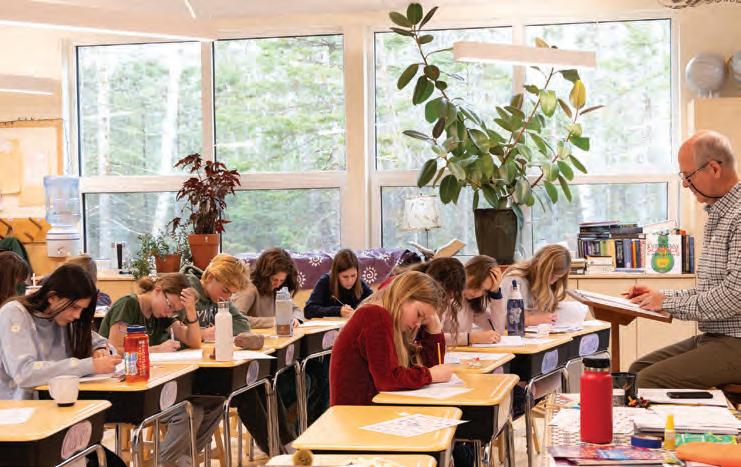
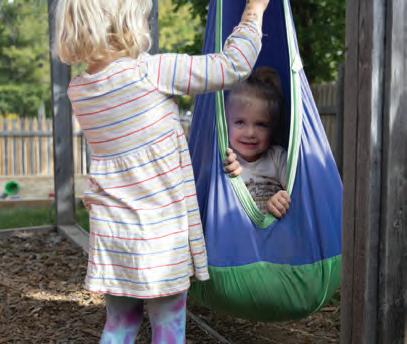
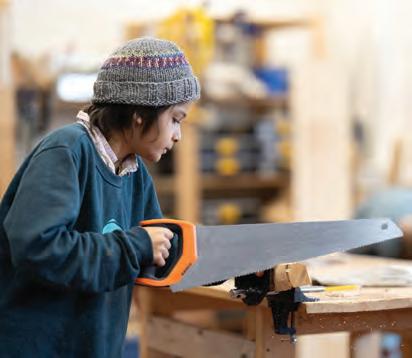

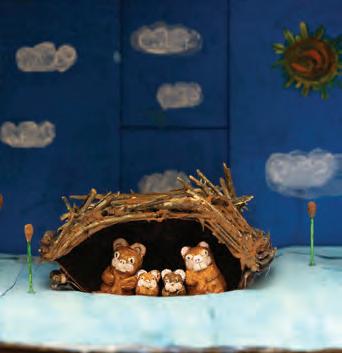
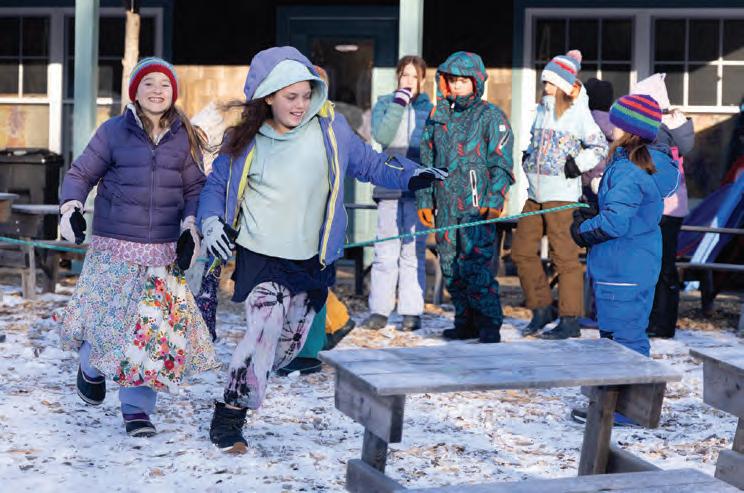
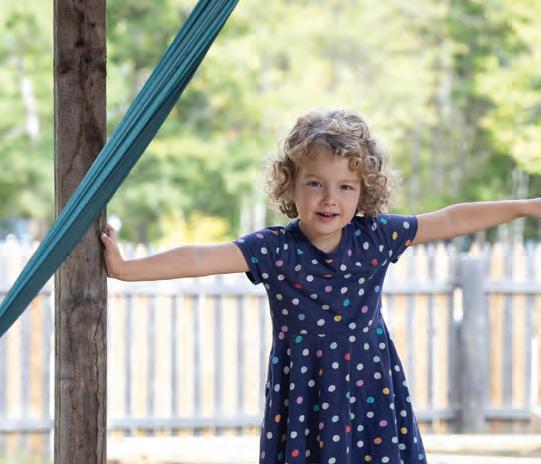
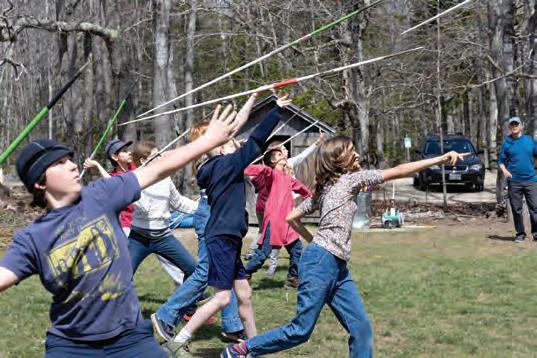
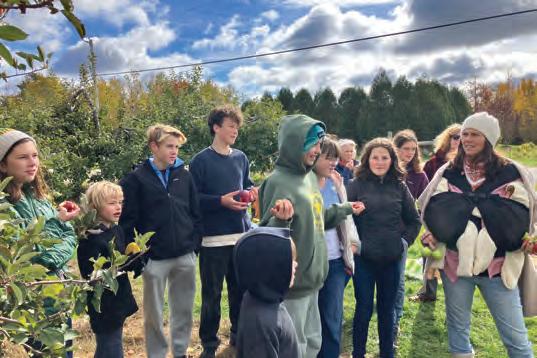
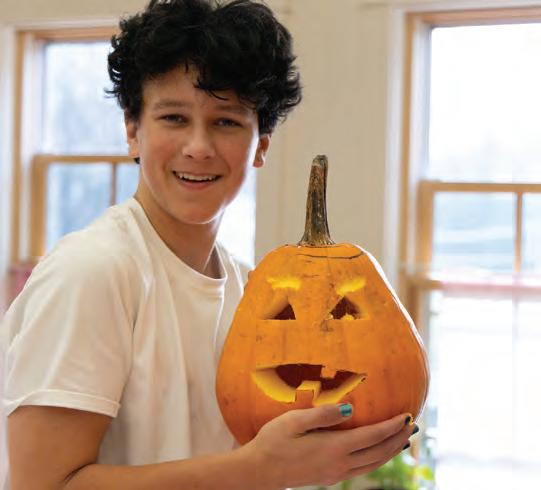
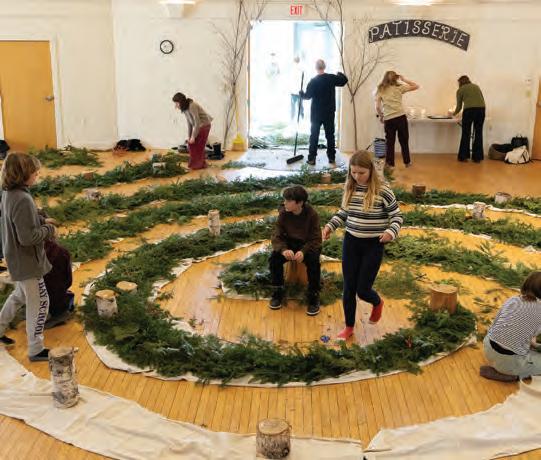
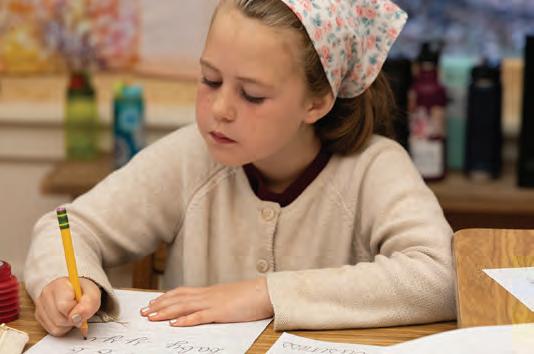
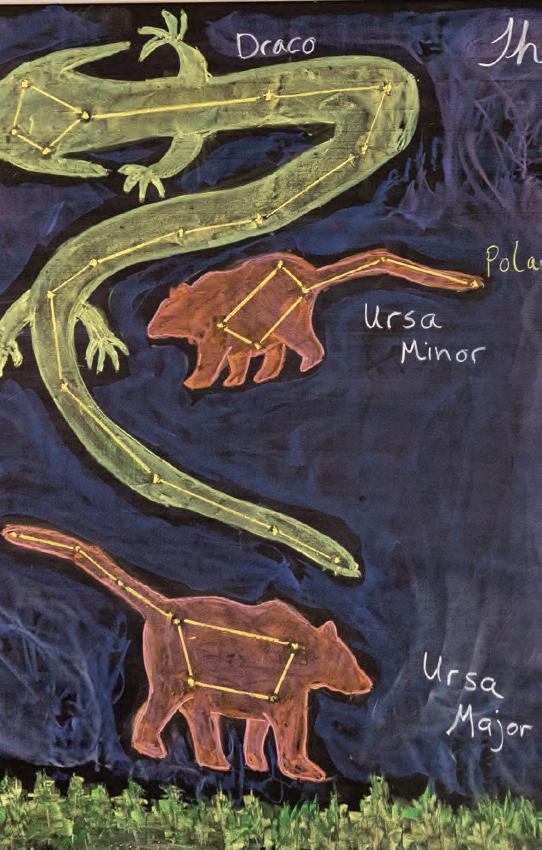
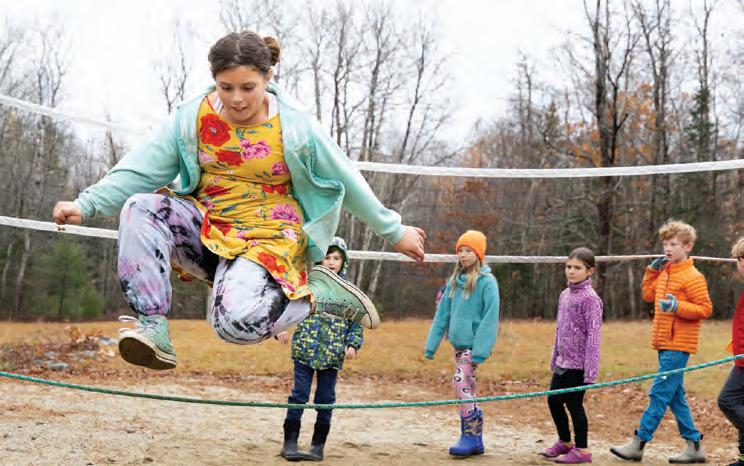
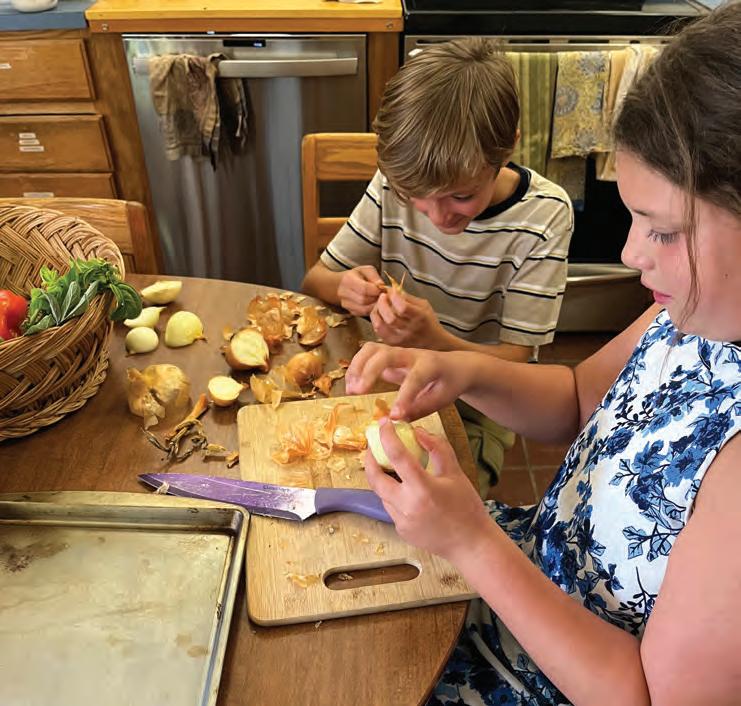
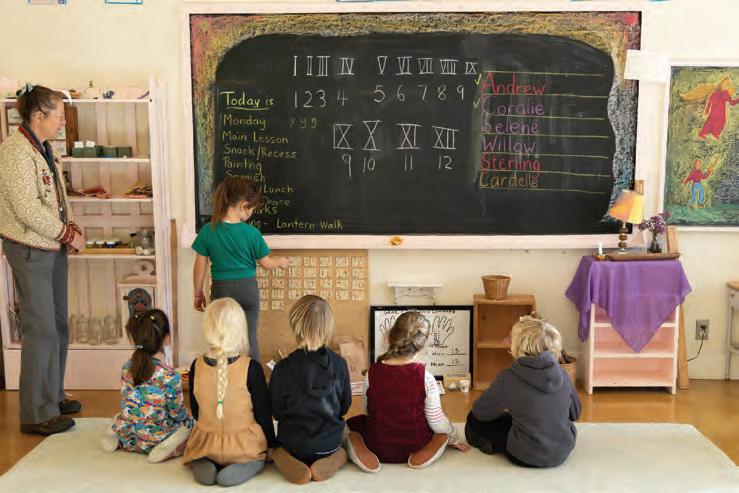
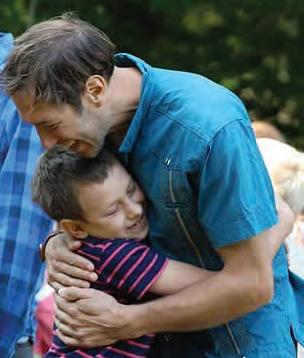
AT EVERY GRADUATION CEREMONY, all the grades sing—to wet eyes throughout Emlen Hall— The Circle Game: “We can’t return; we can only look behind from where we came...” But the parents on these pages DID return. Once students, now their children are students at The Bay School. Throughout the school’s history, no fewer than fourteen students have become parent families - and several more entering Morning Garden and early childhood education. Isaac Robbins, class of ’86, was the first. Charlotte Clews, Hannah Emlen, and Zoe Robbins Tenney followed suit. Here are a few of their stories.
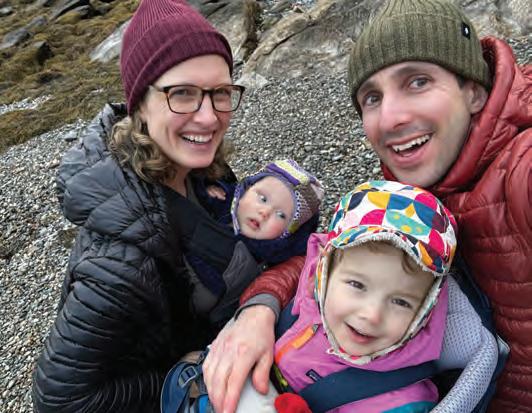
When we made the decision to move to the Blue Hill Peninsula, The Bay School community, alumni, and current and former teachers whom I knew as a student gave our family an immediate sense of belonging. As an alum, I have so many warm memories —of teachers who truly saw me, learning that felt joyful, and a community that felt like family. It’s incredibly meaningful to return as a parent now and see my daughter experience the same sense of belonging. This is her second year in the early childhood program, spending her days in Hemlock House. At just four years old, she’s already brimming with the joy of her time at school—becoming more curious, confident, and so happy to be part of the space.
The Bay School nurtures children not only academically, but emotionally and socially, as well. In Hemlock House, Olive is surrounded by educators who understand early childhood and meet her with kindness, patience, and respect. She’s learning how to ask questions, express herself, and care for the world around her, all while being part of a warm and intentional community. It’s a gift to see her growing in the very place that helped shape me, and I couldn’t imagine a better beginning for her educational journey.
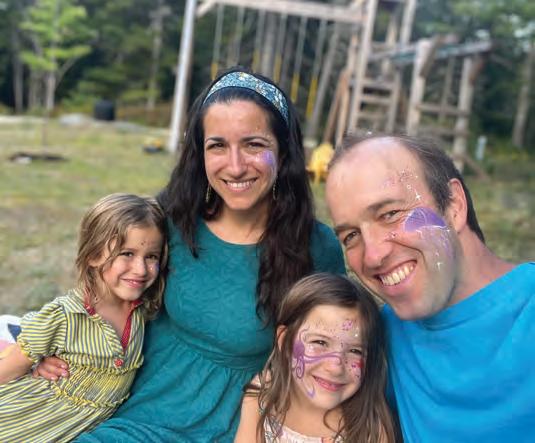
The Bay School has been a huge part of my life, and I am so excited to share it with my children, Annabelle and Leila. The School has blossomed over the years I have known it and the qualities that it provides children are too many to count.
A quality that stands out for me personally is the love of learning that the school nurtures in the children. There is a warmth that embraces the students that holds them and helps develop excitement within them to learn, study, be curious, and engage in life. I have fond memories of engaging in schoolwork and this excitement has carried over into my life. I think cultivating the love of work is very important. I believe when you love something then you can be disciplined with it and thus explore that activity as fully as possible.
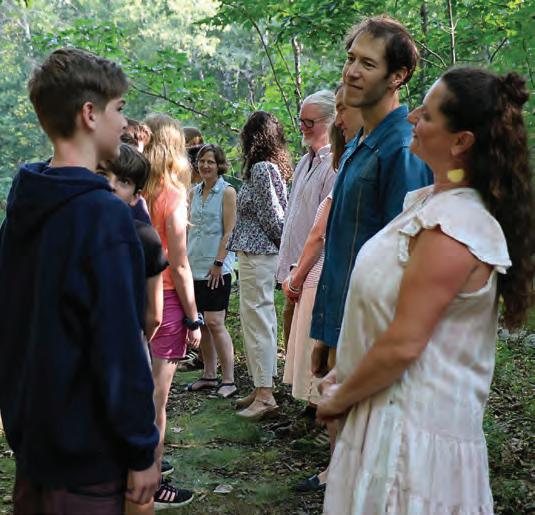
The last Friday of September, I woke early to drive my daughter, Juniper, to the Hannaford parking lot to catch her high school bus. We got there at 6:30, and after her bus left, I decided I had enough time to drive down to The Nub, a small tidal beach in Blue Hill, to catch the sunrise before going to school myself.
I parked and walked out to the rocks. The tide was going out, and the water was absolutely still. The sun was just peeking over the evergreens in the distance. The quiet was resounding. The beauty of the morning was quintessential of this place. It was fill-you-up beautiful.
At one point, I heard the faint honk of a horn. I looked over and saw my friend Ian Chittenden put out his hand and wave as he drove by. Ian and I met more than 25 years ago as Bay School middle schoolers in Mr. Voigt’s 7th/8th class. Three years ago, when I moved back to the area with my family, Ian and I became colleagues, both teachers at The Bay School. Our children became friends, too. The weaving of our lives and our children’s lives has been such a blessing. It is one of those golden Bay School threads that so many of us hold dear.
A short time after Ian drove by, I got in my car and headed to my classroom here at The Bay School. It was Michaelmas, a beloved fall festival. On that day, the children went on a “dragon hunt” in the back field. They feasted together and they hiked Blue Hill Mountain. It was a day steeped in imagination, play, community, and connection—those foundational elements of The Bay School experience that have connected so many, over so many years, to this place and each other. It is such a blessing that my own two children are now a part of this tapestry.
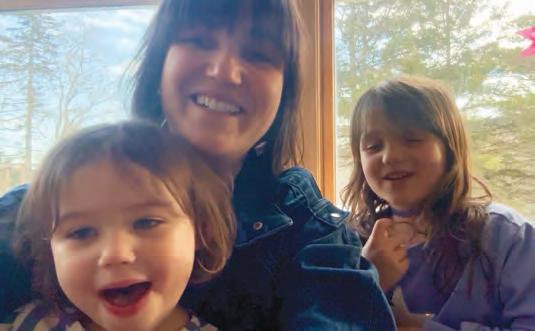
My journey at The Bay School began in 1989 as a kindergartener in Mrs. Rousseau’s living room. Some of my strongest memories are of beeswax in my hands, chalkboard drawings, and songs that still come to me with every changing season. The Bay School was never just a school; it was a place of community, wonder, art, music, and reverence for the earth. Those years gave me lifelong friendships, devoted teachers to whom I will always be grateful, and a foundation of security and joy that has carried me through every chapter of my life. Because The Bay School shaped me so profoundly, I knew I wanted my children to grow up in this same community.
Now, as a parent, it is the greatest privilege to see my daughters step into the same experience. Selene, in second grade, comes home singing, drawing, and immersed in the natural world, just as I once did. Her sister, Faye, will join her next year. From the time they were born, I have sung The Circle Game to them at bedtime, and it feels deeply moving to know that their own Bay School years will be accompanied by those same songs and traditions. When Charlie and I thought about what we wanted most for our girls, the choice was clear. Giving them The Bay School is one of the proudest choices I’ve ever made as a parent, and I am profoundly grateful that they will grow up with the same foundation of love, connection, and joy that has shaped my life.
32 alumni
$31,763 total raised 6 ways to give
Thank you to all who participated in our third annual 24-hour challenge held March 12, 2024! Here’s a rundown of the numbers. Save the date! Next year’s 24-Hour Challenge will be Tuesday, March 24! 163 donors
THE FOLLOWING SNAPSHOT of our expenses and revenues reflects fiscal year 2025 which ran from July 1, 2024 through June 30, 2025. Thanks to a strong annual fund appeal - including current family donations to the True Cost Tuition initiative - we finished the year in the black.
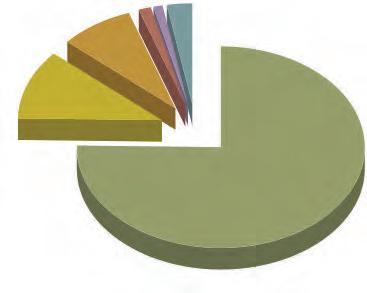

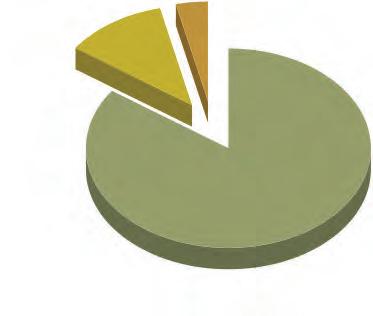
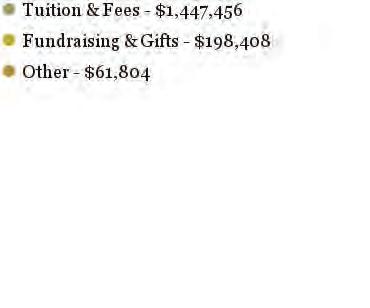
Fiscal Year 2025: July 1, 2024–June 30, 2025
THANKS FROM THE BOTTOM OF OUR HEARTS to the supporters who care for this unique community of learning. The lists below reflect donations that were received between July 1, 2024 through June 30, 2025. We strive for perfection with this information. If you find we have made an error, sorry! It happens! Please do let us know. We can correct the on-line version, which is a forever-document. Thank you!
$100,000+
Mr. Charles O. Holland
ROUSSEAU
CIRCLE
$25,000–50,000
Lawrence Family Foundation
Ms. Linzee Weld and Mr. Peter Milliken
Mr. and Mrs. Stephen Milliken
BENEFACTORS
CIRCLE
$10,000–24,999
Mitchell Baum
Lynn Boulger and Tim Garrity
Ms. Micki Colquhoun
Mr. and Mrs. Grif Lesher
Catherine and Michael Noparstak
Jen and Casey Rosenthal
Rudolf J Torello Foundation
Shannon Corliss and Greg Wiener
Virginia Berman and Michael Reinhardt
Ms. Elizabeth Winings/ Caroline D. Bloomer
Charitable Trust
Kate and Patrick Connor
Mr. and Mrs. John Cook
Mrs. J. Noyes Crary
Ms. Nancy Crowe
Marcia and John Diamond
Mr. Rob Shea/ EL Shea, Inc
Mr. and
Mrs. William Entwisle
Andy Odeen/ Freshwater Stone
CIRCLE
$5,000–9,999
Anonymous
Joe and Hilly Crary
Ms. Margaret Crary
Aubrae Filipiak and Joel Ramey
Ashley and Mert Hanscom
Shellie and David Hughes
Mr. James Markos
Heather McCargo and Brian McNiff
Anne and Larry Piazza
Meghan and Brent Walter
FOUNDERS CIRCLE
$2,500–4,999
Teo and Lindsey Canino
Jan and George Emlen
Robin and Burr O’Connor
Rev. Mark Robinson
DIRECTORS CIRCLE
$1,000–2,499
Anonymous (2)
Dana and Michael Aker
Holly Arends Murphy and Matt Murphy
St. Francis by the Sea
Mary Sullivan
Sal Tomkins
Manonli Bontaas, Yanni’s Pizza
$250–499
Megan Adams and Joseph Stratton
Caroline Altman and Sam Krantz
Joan Banks and Steven Cox
Bar Harbor Bank and Trust
Margaret Holland and Christopher Haley
Sebastian and Laura Kent
Eleanor Davenport and Chris Owen
Jonathan Springer
TREEKEEPERS LLC
Mr. David Flanagan, Viking, Inc.
Sara Willis and Ted Swain
$500–999
Donna & Andrew Birdsall
Blue Hill Accounting
Mr. and Mrs. Bayard Brokaw
Judith and Howard Chittenden
Steven Dawson
Paula and Fred Dick
Alice Sullivan Dillon
Douglas N. Johnson and Nancy Caudle-Johnson
Ms. Kim Klopstock
Ms. Christine Leith
Maine Community Foundation
Mainescape Garden Center
Rob Clapp, The Merle Grindle Agency
Alison and Jesse Paquin
Kip and Paul Perkinson
Martin and Margaret Reick
Scott Blanchard and Françoise Gervais
Mary and Marc Boëchat
Elise Brokaw
Tim Brokaw and Ms. Jennifer Canfield
Laura and Aaron Bryant
Mary Pat Champeau and George Russell
Juni Charlton
Kate Tomkins, Chickadee Compost
Jim Church
Linda Corliss
Kelly Cutler
John and Mary Jo Davies
Justin Bennett
Mr. and Mrs. Edward Brokaw
Christopher Real Estate Group
Ms. Alice Dillon
Andrew and Kathryn Dillon
Mr. and Mrs. Jack Frost
Ms. Morgan Lavoie and Mr. Jack Feldman
Ms. Kim Lopes
Al and Sue Marquis
Mr. and Mrs. William Mor
Tara and Chris Nemeth
Thom and Lynn Norgang
Ron and Margie Ramsay
Carsten and Joanne Steenberg
Shona Terrill and Nicholas Fisichelli
Kate Tomkins and Fred Viennot
Christiaan van Heerden
Ms. Sherry Streeter and Mr. Jon Wilson
Ms. Goody-B Wiseman and Mr. Jasper Denniston
$100–249
Lily Altman
Charlie and Martha Baldwin
Lorenzo Mitchell/Loring
Wolcott & Coolidge
Charitable Trust
Lily Lyons
Cerridwen and Josh McQueen
Lee McWilliams
Catherine Moore
Richard and Mimi Nangle
Suzanne Norgang and Timothy Laflam
Dennis O’Brien
Paul Kelly and Kate O’Dell
Carrie and Adam Parker
Nancy Plouffe
Doug and Liz Porter
Berit Dawson
David Dillon and Cynthia Winings
Abby Dunham
Merrie and Donald Eley
Philip Elkin and Sandy Phoenix
Mr. and Mrs. Samuel S. Emerson
Linda Faneuf and Lori McCassie
Mr. and Mrs. William Faneuf
Mr. and Mrs. James Foley
Candy and Jeff Gammelin
Donna Gold and Bill Carpenter
Lucy “Holly” Grande
Jennifer Muscato and Soren Hansen
Samantha Haskell and Rob Cushman
Prudy and Fred Heilner
Katie Herklotz and Edwin Van Bibber-Orr
Mr. and Mrs. James Jaffray
JKZ Services
Charmaine Jones
Molly Kovaka
Kathy and Tom LaFlam
Andrew Laslie
Betsy and Stephen Lieser
Loriman Looke
Tricia Rouleau and Bill Trotter
Alexander Rower
John Ruger and Dee Knisley
Jennifer Lapham and Paul Sacaridiz
Jane Sargent
Larry Moffet and Lisa Schoonmaker
Maria Matthews and Michael Scott
Sean Crowe and Linda Peng/Daffy Charitable Fund
Mary Shope Wiles and John Wiles
Janet Simpson
Catherine and Scott Springer
Erlynne Kitagawa and Bruce Stahnke
Zan Stark
Brian and Sarah Stevens
Paul and Jennifer Trowbridge
Amy Tunney
Eliza VandenBerg
Wait Psychological Services, LLC
Brenna Cohen and Andy Wanning
Sandy Weatherall
Sarah Whalen
Carousel givers are those who give monthly to the Bay School. We cannot thank the following enough for their steadfast support. To become a member, please go to bayschool.org/donate
Michael and Dana Aker
Holly Arends Murphy and Matt Murphy
Lynn Boulger and Tim Garrity
Nancy Crowe
Sean Crowe and Linda Peng
Vesta Davis
Yana Nicole Davis
Marcia and John Diamond
Aubrae Filipiak and Joel Ramey
Bill and Jennifer Gray
Kasha Haggarty
Ashley and Merton Hanscom
Betsy and Steve Lieser
Tara and Chris Nemeth
Robin and Burr O’Connor
Zoë and Keith Tenney
Michele Turner
Nancy White and John Burns
Elise Whalen and Charlie Furer
Nancy White and John Burns
Deborah Wiggs and Phil Norris
Willard Stinson Electrical
Missy Greene and Eric Ziner GNOME CIRCLE
Eileen Ahern
Chris and Mariah Baker
Margret Baldwin
John and Michelle Bannister
Patty and David Bergstrom
and Ben Motley
Isaac Chittenden and Stephanie Aquilina
Darron and Karen Collins
Ms. Kristy Cunnane
Nicole Davis
Yana N Davis
Vesta Davis
Henry Davis and Tracy Spencer
Nancy Dewey
Michelle and Michael DeWolf
Gregory and Pat
Henry Elliott and Wendy Ritger
Melissa and Brian Estes
Ruth Fiske and Nicolas Lindholm
Diane and John Fitzgerald
Nina and Bob Fleming
Katharine Fodnaess
Karen Frangoulis
Trisha and James Friend
Kathy Gilchrist
Julia Gilmore
Bill and Jennifer Gray
Julie Griggs
Kasha Haggarty
Nancy Hathaway
Warren and Nancy Berkowitz
Birch Moon Midwifery & Lactation Care
Amara Birdsall
Christine and Dana Black
Bank of America
Charitable Foundation
Amy Bramblett
Sergei Breus
Jenny Brillhart Page and Christopher Page
Rosalind Brokaw
Will Brokaw
Blas and Elizabeth Bruno
Jack and Kathie Burnett
Sylvia Burns
Frances Chase
Jasmine McCracken and Janet Johnson
Jon McMillan and Kathryn Rensenbrink
Brook Minner
Tom and Marion Morris
Bebe Moulton
Katama Murray
Kathy Murray
Laura Nelson
Peter Nelson and Sierra Wait
Virginia Nelson
Coral Iris O’Brian
Meg O’Dell
Clare Payne
Colleen Prentiss
Jessie Ray and Aaron Dority
Mr. and Mrs. Peter Robbins
Mr. and Mrs. Alan Rosenfeld
Dindy Royster
Clara and Nathan Rutenbeck
WendiLou and Tristan Salman
Oliver Scott
Barbara Simmonds
Alexander Heilner
Madeline Heilner Grindle
Keith Herklotz
Heather Dawn Jones
Justin Kaley
Isabel Karl
Lori Kogut
Deb Kunhardt
Mr. Tom Lange
Kathleen Lauricella
Mr. and Mrs. Albert Lindholm
Garrison Looke
Loriman B. Looke
Mr. and Mrs. David Loring
Zeya Lorio
Pat Lown
Erlynne Kitagawa and Bruce Stahnke
Nicholas Steenberg
Zoë and Keith Tenney
Plum Razi/The Nadejda Razi Robertson Trust
Jody Wolford-Tucker and Mr. Steve Tucker
Sonia Turanski
Michele Turner
Erin and Paul Valentine
Marianne and David Vandiver
Josh and Melanie Wehrwein
Steve and Arlene Witham
WoodenBoat Publications
Bethany-Ray Woods and Clay Miller
Edwina Shea Millington
Mr. and Mrs. Edward Brokaw
Lisa Looke
Virginia Berman and Michael Reinhardt
Mr. and Mrs. William Entwisle
Margaret Holland and Christopher Haley Loriman Looke
Kim Lopes
Heather McCargo and Brian McNiff
Carsten and Joanne Steenberg
Sarah Clifton
Rick Traub and Mary Whiting
Margot Willis Crary
Warren and Nancy Berkowitz
Joe and Hilly Crary
Ms. Mary Whiting and Mr. Rick Traub
Mrs. J. Noyes Crary*
Ms. Margaret Crary
Samantha Haskell and Rob Cushman
Elise Whalen and Charlie Furer
Sara Willis and Ted Swain
McKenna Lee Unobskey
Ms. Lori Kogut
Amara and her sister
Virginia Nelson
Avery and Harper Issadore
Mary Sullivan
Bags and Kerry Brokaw
Lynn Boulger and Tim Garrity
Mr. Tim Brokaw and Ms. Jennifer Canfield
Ms. Elise Brokaw
Paula and Fred Dick
Mark Robinson
Mr. James Markos
Ms. Linzee Weld and Mr. Peter Milliken
Anne and Larry Piazza
Mr. and Mrs. Edward Brokaw
Eleanor Davenport and Chris Owen
Sandy Weatherall
Catherine Palmer
Ron and Margie Ramsay
Chickie Murray
Ms. Kathy Murray
Elohi Faneuf
Linda Faneuf and Lori McCassie
Hattie and Beckett Slayton
Jane Sargent
Ian Chittenden
Mary and Marc Boëchat
Ms. Cerridwen and Mr. Josh McQueen
Mr. and Mrs. Peter Robbins
Jan Emlen
Marcia and John Diamond
Lawrence Challenge
Bar Harbor Bank and Trust
Birch Moon Midwifery
Mr. and Mrs. Howard Chittenden
Ms. Rona Gandy
Mr. Rob Shea
Mr. and Mrs. Donald Eley
Donna Gold and Bill Carpenter
JKZ Services
Mr. Andrew Laslie
Chuck and Belinda Lawrence
Ms. Christine Leith
Plum Razi
Outreach Committee
Mr. David Flanagan
Dr. Sierra Wait
Willard Stinson Electrical
Mr. Matt Murphy, WoodenBoat
Manonli Bontaas, Yanni’s Pizza
Joan Banks and Steven Cox
Blue Hill Accounting
Don and Althea Paine
Clare Payne
Mr. and Mrs. James Jaffray
Lisa Looke
Andrew and Kathryn Dillon
Ms. Mary Whiting and Mr. Rick Traub
Lynn Boulger
Mr. and Mrs. Grif Lesher
Marcia Diamond
Lynn Boulger and Tim Garrity
Mr. and Mrs. Peter Robbins
Margot Entwisle
Mr. and Mrs. Jack Frost
Ms. Nancy Hathaway
Molly Kovaka
Jack and Kathie Burnett
Morgan Lavoie
Lynn Boulger and Tim Garrity
Ms. Julie Griggs
Scott Springer
Lynn Boulger and Tim Garrity
Scott, Elias, and Morgan Springer
Jonathan Springer
Songweaver
Ms. Kathleen Lauricella
The Class of 2007
Ms. Coral Iris O’Brian
The Crowe Family
Mary Shope Wiles and John Wiles
ALL 8TH GRADERS work on a project of their own choosing, starting well in advance of graduation, and presenting their final projects in May of their graduating year. The essays below are excerpts from their presentation speeches. They have been edited for clarity and length.
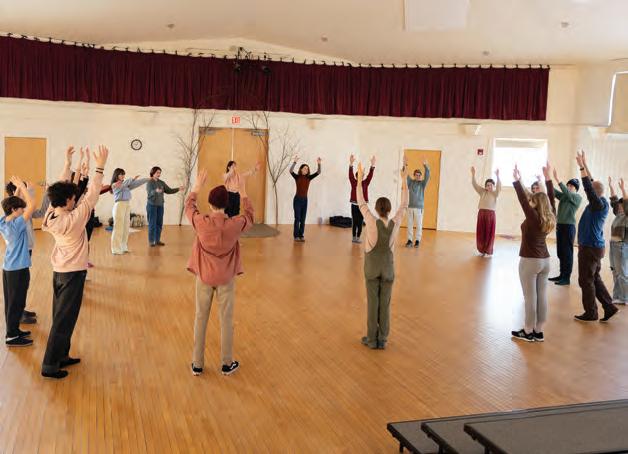
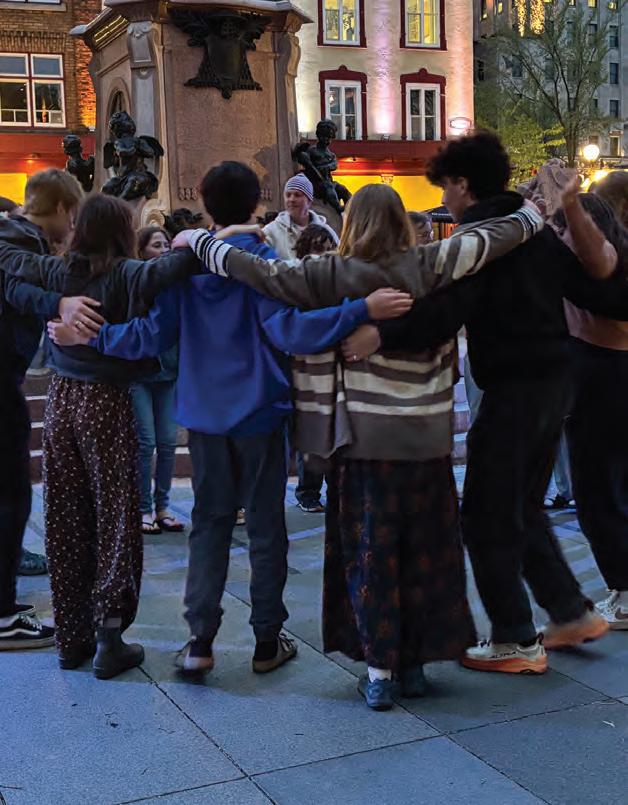
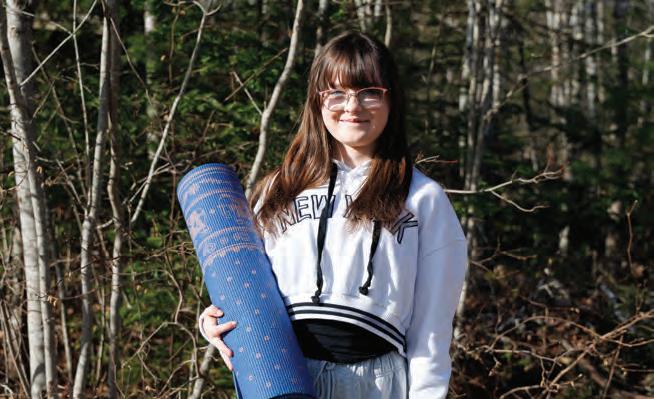
For my 8th-grade project I chose to study yoga and mindfulness. My mentor for this project was Rebecca Rose Tousignant, a certified yoga teacher in Blue Hill. We met in her yoga studio and sat on mats across from each other. Between us was a candle and a deck of cards. Rebecca opened by saying, “I like to start each practice with an arrival ritual. I light a candle and pick a card from this special deck. The card will give us a mantra that we will hold and meditate on until our next session.” The card I picked showed a beautiful, thoughtful owl, with the words Owl of Awareness underneath. That image and the idea of awareness, stayed with me through the week.
Our sessions always included a mix of physical practice, meditation, and discussion of the tenets of yoga. I have practiced the physical and mental exercises that are part of this training and also learned about the philosophy and history behind this ancient discipline.
Yoga originated in India over 5,000 years ago. It is integral to Hinduism but is now practiced around the world by millions of non-Hindus as well. Different cultures and teachers have adapted it, focusing more on one aspect than another. For example, in our culture, we often associate yoga with the physical postures while in other cultures the meditative aspect is predominant.
An Asana practice is a sequence of movements that is a collection of different postures. Sometimes you are in each posture for just one breath before changing position. Other times you hold the posture for 20-30 breaths. Breath is a very important part of the physical practice. During my time with Rebecca Rose I learned that there are many different kinds of breathing. For example, some breathing techniques are for cleansing, some are for energizing, and there are many more!
At first when I worked on my postures, I could only focus on getting the actual sequence correct. Recently I have been able to pay more attention to my breathing and as I learn to control it better I feel my mind becoming more still. I see why people practice yoga their whole lives.
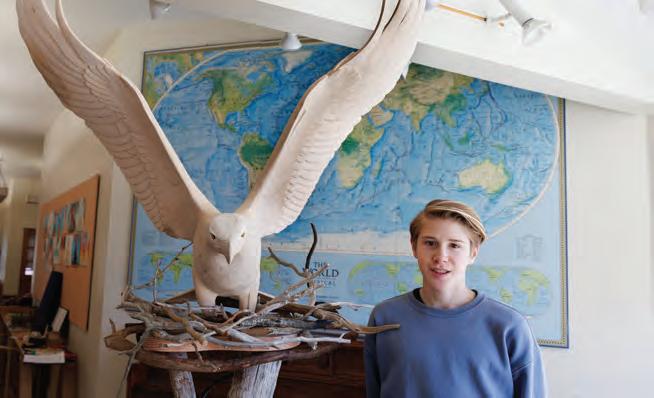
I’ve always loved birds. Their beauty and grace never cease to amaze and inspire me, and I have always loved trying to capture them in my art. For my 8th-Grade Project, I chose to explore the art of bird carving. I worked with multiple mentors on this project: Rebekah Raye, Jim Velenski, Steve Valleau, the world-famous bird carver Floyd Scholz, and the only slightly-less-famous Ian Chittenden, my dad.
I began by experimenting with carving small birds, like ducks and puffins, but because of the strong connection I’ve always felt to eagles, I knew right away that I wanted the centerpiece of my project to be carving this majestic bird. Basswood is the preferred wood among bird carvers because it has no pitch and is relatively soft but also sturdy. The next step was selecting a pattern, then enlarging and printing it, which turned out to be quite a process in and of itself. Though the pattern conveys crucial information, I soon learned there are MANY things I had to figure out for myself. April was fast approaching and I had to make the call to transition from carving to sanding. I gave each piece a vigorous sanding using higher and higher grits. I had the good fortune of having a brief video call with Floyd Scholz, a world-famous master bird carver. He kindly offered to send me some of his own special wood putty to help with one of the most intimidating aspects of the project: setting the glass eyes in place.
It was so satisfying to see the eagle gradually emerging out of the blocks of wood, and I had the feeling that I could keep working on it indefinitely. I also learned so much about wood carving and the tools involved in the process. The project challenged me to be conscious of how I allocated my hours and to face hard choices about what to call good enough.
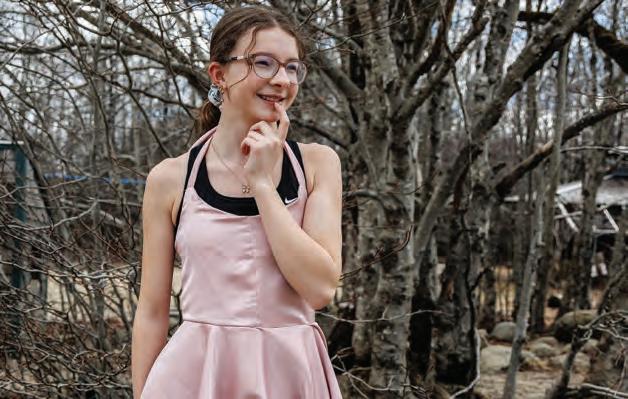
I had long been interested in sewing and dreamed of being able to make unique clothes with ease whenever I wanted. So, for my 8th-grade project I chose to pursue the art of sewing and creating patterns.
My mentor was Alison Rudel, a talented seamstress and mother to several students.
The first thing I sewed was an alteration to a shirt I already owned. I had seen a video of a girl tailoring one of her shirts to fit her better. I grabbed a red shirt from my dresser and threw it on the floor. Using a marker, I traced the outline of a smaller shirt and then pinned it in place. I sewed up the sides and cut the sleeves and hemmed them to make the shirt short-sleeved. I flipped my shirt right side out and Voila! It fit perfectly.
For the majority of my project, I used pre-made patterns: I would lay the cut pattern onto the fabric of my choice, pin it, and either trace the pattern or just cut it out. After cutting the fabric, the process of using pre-made patterns simply required following instructions. But my favorite part of sewing was when I did not follow instructions and drafted my own patterns. Creating your patterns can be difficult, because you have little to nothing to go off of. When I did, it was usually with very simple shapes, like a rectangle the length of my measurements. My patterns were never perfect and often very simple, but I enjoyed making them the most out of anything.
The final piece I sewed was a pink satin dress. I created it entirely alone and without a pre-made pattern, using the knowledge I had gained over the past few months, whether from my mentor, videos, or books. The best part about the dress was that it was completely unexpected.
My project taught me that things don’t always have to be set in stone. I learned that I don’t always have to follow the instructions or rules. I often free-styled when things didn’t go my way, and I’m glad I was brave enough to do that. It’s a good lesson in life to be able to change and adapt when things don’t go my way or look how I want them to.
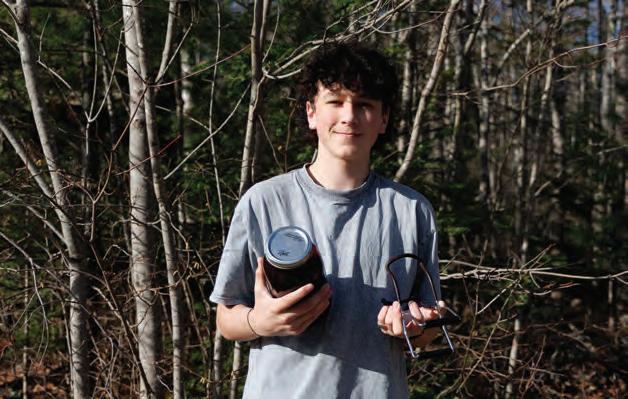
For my eighth grade project, I chose to study the art of food preservation. My mentor, WendiLou Salman and I used many different techniques for preserving: fermenting, dehydrating, freezing, and salt preservation, but what we did the most was canning.
For canning, you need jars, lids, boiling water for sterilizing jars, pots, and most important, ingredients. For the canning process, you place the jars in a pot of water, bring them to a boil and leave them there for 15 minutes. The reason you do this is to make sure the jars don’t have any gunk in or on the outside of them. While the water starts to boil and sterilize your jars, you put together and heat what you are canning, such as apple sauce, tomato sauce, jam, jelly, and other things.
For my first meeting with my mentor, we made apple sauce. It was very tasty, but canning it scared me at first. There were three pots of boiling water and a pot of boiling hot apples. I was sweating, and I kept grabbing the jars from the boiling water, scorching my finger tips which hurt, but then I learned about canning tongs.
My favorite thing we made was blueberry preserves. It tasted like the filling of a delicious blueberry pie. Another thing I wanted to preserve was soup. But the jars of a complete soup would make the vegetables and chicken all mushy, so I preserved all the different ingredients to make a soup, like kale, broth, bullion and tomato sauce for soup base. When I’m ready to make soup, I will have these ingredients already made.
WendiLou taught me so much, and has been an amazing teacher. We had many fun times in the kitchen together. Like when my eyes were burning from hot peppers, or my nostrils on fire from the horseradish, or getting my hands stained from beet juice and blueberries.
I think what will stay with me the most is all the time I spent on rainy days inside, reading about food and the best ways to keep them edible for a long time.
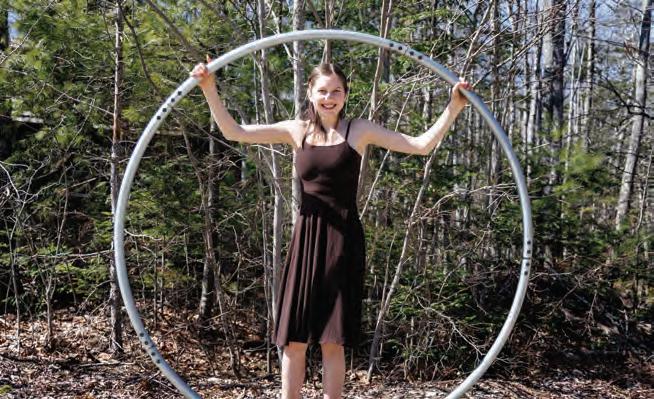
For my eighth grade project, I chose to learn how to perform and dance with the Cyr Wheel, a large metal ring used to perform circus tricks. My mentor was Molly Gawler, and I couldn’t have asked for a more amazing person to guide me through this project!
I started my journey with the Cyr Wheel with a trip to the New England Center for Circus Arts, in Brattleboro, Vermont, with Molly. At NECCA, I was able to meet and watch a couple of professionals do their circus apparatuses, some of which include the Chinese pole, the Aerial rope, and Hair hanging.
Molly started getting me used to the motion of the wheel by playing around with the movement on some little colorful hoops. This movement is called the gyroscopic movement. From November to January we would work on accumulating skills; from January to March we would work on choreographing and memorizing the dance; and from March to April, we would work on polishing the dance. The moves that Molly taught me are a bit hard to describe [but are called]: Waltz, Early Monkey Bars-waltz, Walk Waltz, Manipulation, Cartwheel, Coin, Early willow back coin. The Waltz was by far the most challenging skill that I set out to learn over the course of my project.
Once I had the dance fully choreographed (which took about three meetings with Molly), I started memorizing and practicing it over and over again. With all the pieces in place– the skills, the song, the choreography, and the costume– all that was left was to practice and polish and perform!
There were two main qualities that I had to find within myself over the course of this project. The first one was perseverance. Another quality I had to work on was courage. It turns out that it takes a lot of guts to start spinning the wheel at the speed that it needs to be whilst you are on it.
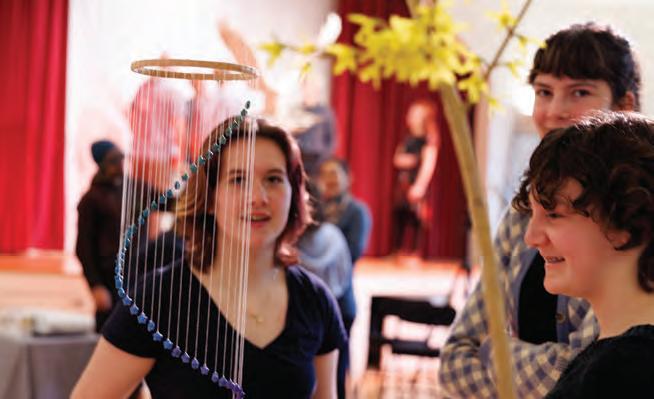
Origami is the Japanese art of paper folding, transforming a flat sheet of paper into a 3-dimensional sculpture through folds and creases. Origami has roots in China, where paper was first invented. But it originated in Japan around the 6th century, where it was initially used for ceremonial or religious purposes. For my eighth grade project, I created an Origami Star Mobile, for my sibling Oona.
My mentor for this project was Mia Kanazawa. She has really helped me, showing me how to read origami books, how to fold certain shapes, to understand the folds and what they are called.
First I cut out 70 lines of paper, then I took my favorite pens and wrote out 70 small notes of things I love and appreciate about my sibling. After that I folded them all into origami stars.
And took Oona’s favorite colors (green, blue, purple,) and mixed the gradients of all of them, until I had six of each color. Once the stars had dried, I covered them in mod podge to prevent the paint from chipping and to make them shiny. I cut a strand of white sewing thread for each star and hung them from the inside of the embroidery hoop to create a spiral mobile.
The folding of each star took much longer than I had expected. I thought it would only take a couple hours but it ended up taking 9 hours to fold and 11 additional hours to write all the notes inside.
In this process I learned that I am most productive when I work for a long period of time instead of doing a little bit everyday, because I usually take a bit of time to really focus on something and then when I do it’s kind of hard to stop, so it’s really just easier if I do a lot, all at once.
My biggest motivation for this project was my sibling, because they are currently at a boarding school in New Mexico and with the time difference and our busy schedules we do not talk as much as we want to. So I really wanted to make them something they could bring back to their dorm and remind them that they are cared about and appreciated.
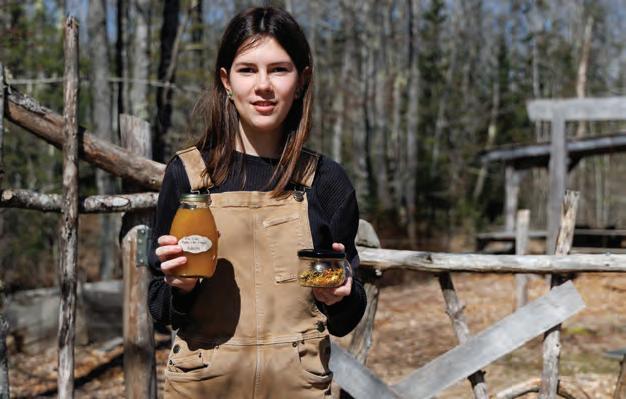
Over the years, I have had many ideas for what my 8thgrade project would be, but when the time came, I chose herbalism as a way to learn to heal myself and those around me.
My mentor for this project was Melanie Wehrwein. In the fall, we went out to her garden to harvest herbs that we could use all through the winter. Melanie taught me what parts of the plants you can use and how to bundle and dry them.
We traveled to the Common Ground Fair to attend two talks about herbalism. At one of these talks I learned that calendula, an herb that is commonly known for helping with skin, and would also help with some health conditions that I have struggled with over the past few years. Because of this, calendula became, in many ways, the focus of my project.
The first thing that Melanie and I made was a calendula infusion, which is another term for an herbal tea. Neither Melanie nor myself had ever tasted plain calendula. When we tried it, the taste was shocking. It was so bitter, and no amount of mint tea we added would make the taste go away!
After that first calendula incident, everything went pretty smoothly. For most infusions you chop or crush the herb to give more surface area, place it in the liquid, and wait, sometimes for an hour, and sometimes for weeks. That is how we made calendula tincture, fire cider, lavender honey, and many cups of tea. We also made elderberry syrup, fire cider, and yarrow powder, each with their own unique challenges, but everything we made was fun and interesting to create.
This project taught me to enjoy the process of waiting and observing the slow changes that happen if you take the time to watch. I have gained a new respect and love for the plants that are around us all the time, and all the ways that they can help us heal. It has been amazing to be a part of this practice that has existed for so long.
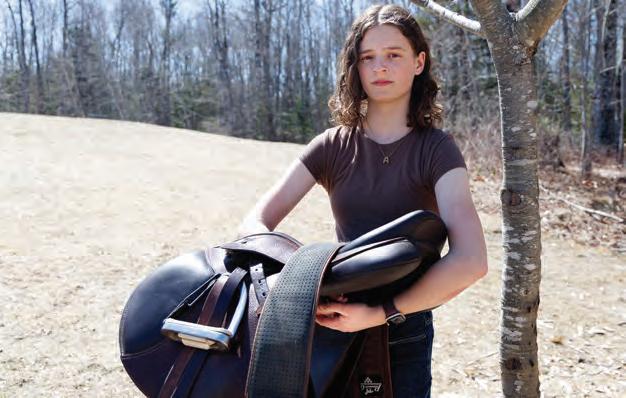
I’ve been working with horses for around six years, taking lessons, and helping with chores at a barn near my house. For my eighth-grade project, I decided to try being a riding instructor. I started working with Libby Lyman last summer when I got my horse, Granite. I began working on my riding skills with Meg Black during the fall. I was also given the opportunity to observe her lessons with students. When I first got Granite, he was a very challenging horse to handle. He wouldn’t respect your space. He would barge right through you. He would get distracted easily, and he spooks at things that shouldn’t be scary, and gets very worried.
Teaching someone who hasn’t really been around horses. and seeing them understand it and have fun, is really rewarding. Having my own experiences working with Granite helped me figure out how to explain something to others, and also gave me an understanding of how others may feel in certain situations.
One of the best parts of having a horse, and working on this project, is I’ve gotten to know Granite better. And, as he trusts me more it has allowed us to do more things like riding bareback and bridleless, and also jumping. Your horse relies on you for food, water, cleanliness, exercise, and companionship. I have noticed that horses feel our emotions. If I’m scared then Granite might get nervous. If I’m sad, Granite will calm down a bit. If I’m really energetic and happy, Granite is too and might give a little buck, or get a little speedy while I’m riding him. I can tell how Granite feels as well.
For this project, I definitely needed patience. It took a long time for Granite to learn the groundwork. And I needed to learn self-confidence so I would be able to teach someone else how to ride. This was important to me because I might want to pursue it in the future.
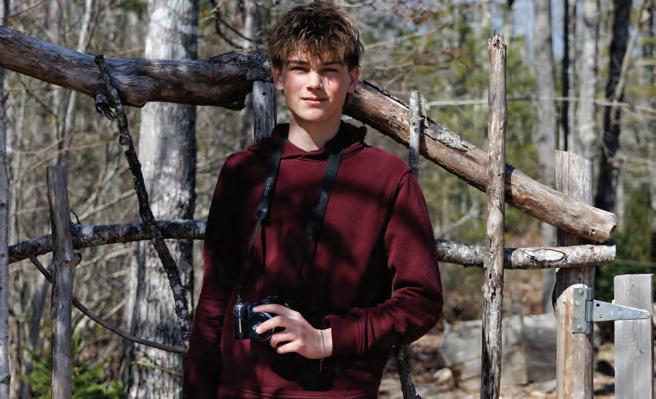
For my 8th-grade project, I chose to explore the art of digital photography. My mentor for this project was Vickie Mayer, a photographer and a great teacher. Vickie taught me how to use the camera and photo-editing software, and encouraged me to be adventurous with different kinds of photography, such as portraiture, landscape, and urban life. She also helped me create structure for my project, and inspired me to try new things and be creative. I was inspired to do photography as a way of branching out my artistic side. To make this journey possible I first needed a camera, a new lens, a case for the camera, and an extra battery. After I had begun to grasp the workings of my camera, Vickie encouraged me to experiment with the settings, so I could get familiar with how to use the camera. It took time to get comfortable with the settings on my camera. In those beginning weeks, it was a challenge. I got frustrated with feeling like I wasn’t getting consistent, well-composed and well-lit photos. But eventually I began to find a rhythm. As I built some great momentum, I began taking photos that were well-lit, well-framed and interesting to me.
Vickie also introduced me to many other famous photographers’ work. Some of my favorites were Sebastiao Salgado and Richard Avedon. These photographers helped give me new ideas for pictures of my own, including how to set up a photo, known as composition, and giving me perspective on different people’s reasons for how and why they take their photos.
I’m very glad I chose this project because photography can be so expressive and powerful if you can capture the right moment or feeling in a picture. I have learned a lot more about photography, patience, and perseverance than I ever thought I would.
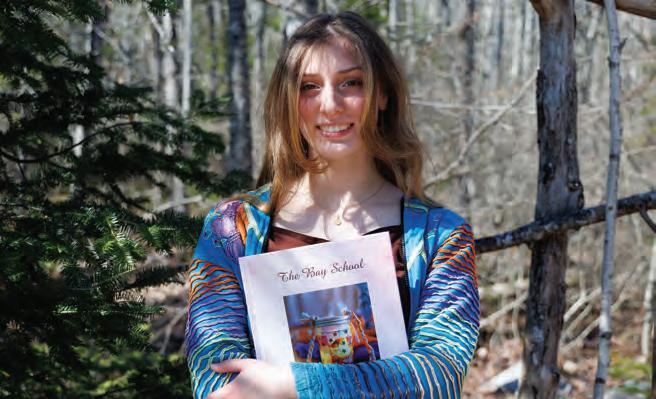
I got the idea for making a yearbook from talking with one of my classmates about how to commemorate 8th grade. In the past, I had taken a camera on class trips. Posing for photos, as well as candid shots, became very popular with some of my classmates—a perfect way to capture the real energy of the moment. I knew I would also love to include my whole class, and the whole school, in some way, and to have the outcome of my project be something I could share. A yearbook was a great way to sculpt that into a project.
My mentors were Robin O’Connor, the official photographer of the Bay School, and Betsy Lieser, who used to be the Administrative Assistant. I began by meeting with Robin and in our first session; my mom and I asked for suggestions about what camera to buy that would be best for a beginner.
I then planned two [photo-shoot] sessions so I could practice with my new camera. One shoot was with Audrey and her horse, Granite. We took them outside on a snowy day, and Granite, being a gray horse, blended wonderfully with the backdrop. Audrey also put Granite in a deep red ear bonnet and saddle pad which matched her riding jacket and made for beautiful contrasting colors.
I began to collect more candid photos, either by going into classes myself, or from Robin’s large assortment of photos she had taken throughout the year. I began to imagine how I would want each page in the yearbook to look, and what stories I wanted to tell. This is where my other mentor, Betsy, came in. She gave me tips on how to make a page look full of storytelling, how it can capture the flow of an event.
Each 8th grader also has a page dedicated to them with portraits of each student. As I deeply love my classmates, I knew they should pick their own portrait that would be on their page, instead of me.
During this project I’ve learned many technical tricks and how to achieve beautiful lighting in a photo. I learned I do not work well under pressure but seeing my classmates smile over something I’ve created makes me extremely proud and happy.
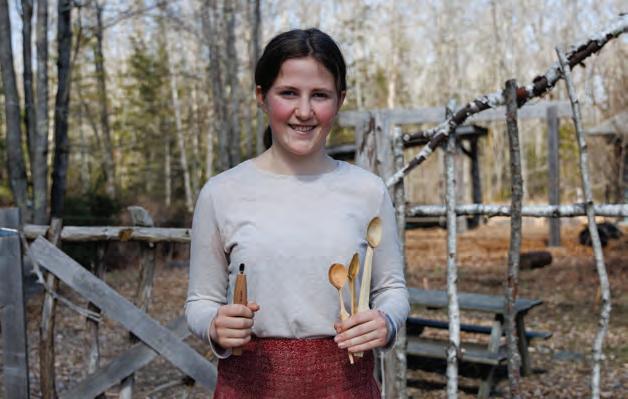
One thing I think is important with an 8th-grade project is that you really do it for yourself, and make it what you want it to do. I chose woodworking because of how much fun I had on the different woodworking projects with Paul Valentine, the Bay School woodworking teacher. Thanks to Paul and my father, I came into this project with basic knife handling skills, a small amount of exposure to carving, and an appreciation for the beauty in wood.
My mentor for this project was Josh Wehrwein. We pretty quickly dove into carving and after the first few weeks just worked on technique and knife grip, making up to two spoons per week. Some of the tools I used were a drawknife, a straight-edged knife, a double-edged curved knife, a hand plane, and a hatchet.
Most of these tools have been around for anywhere from 1,000-6,000 years in various forms. The oldest of these is the Hatchet, originally used around 75,000 years ago, mainly in England. Another tool I used was a burnisher, which, instead of being used to make a spoon, is used to finish it.
Carving is dangerous. For the most part there are ways to carve so you can’t cut yourself, but some spots you just can’t get easily. Over the course of the year I have given myself numerous cuts, but most of them have been when I was just moving too quickly.
This has been one of the best experiences for me. It has given me a better sense of my abilities, and not only provided me with the experience, but also the confidence to create things worth creating. This project has been so right for me because it has really mirrored my artistic sense and my love of natural life.
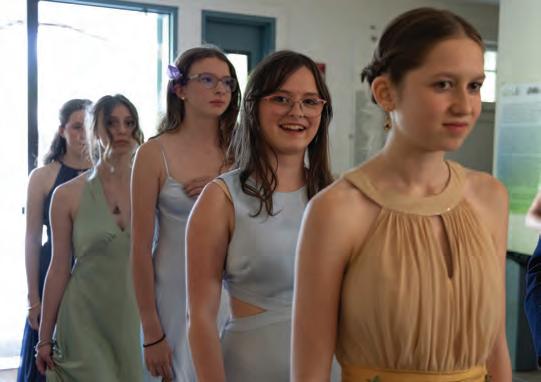
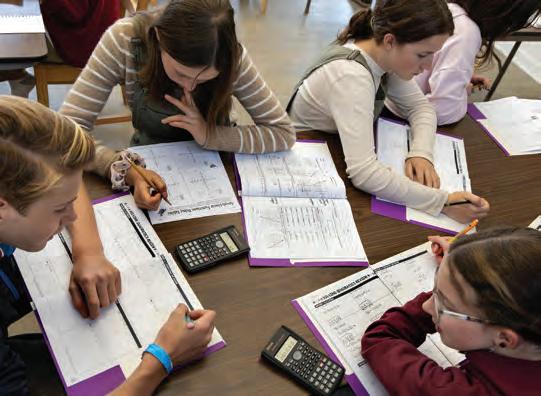
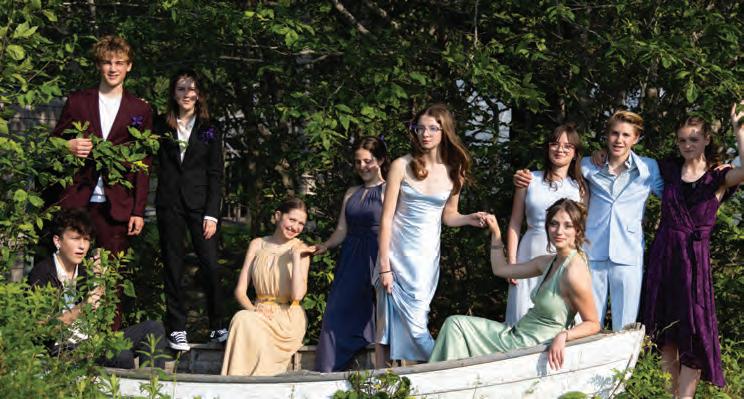
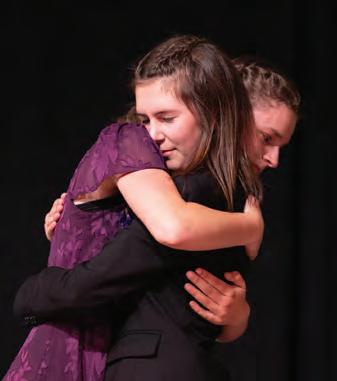
Congratulations, graduates!


PO Box 950
Blue Hill, Maine
Winter Faire Save The Date!
Saturday, December 6th
10am–3pm
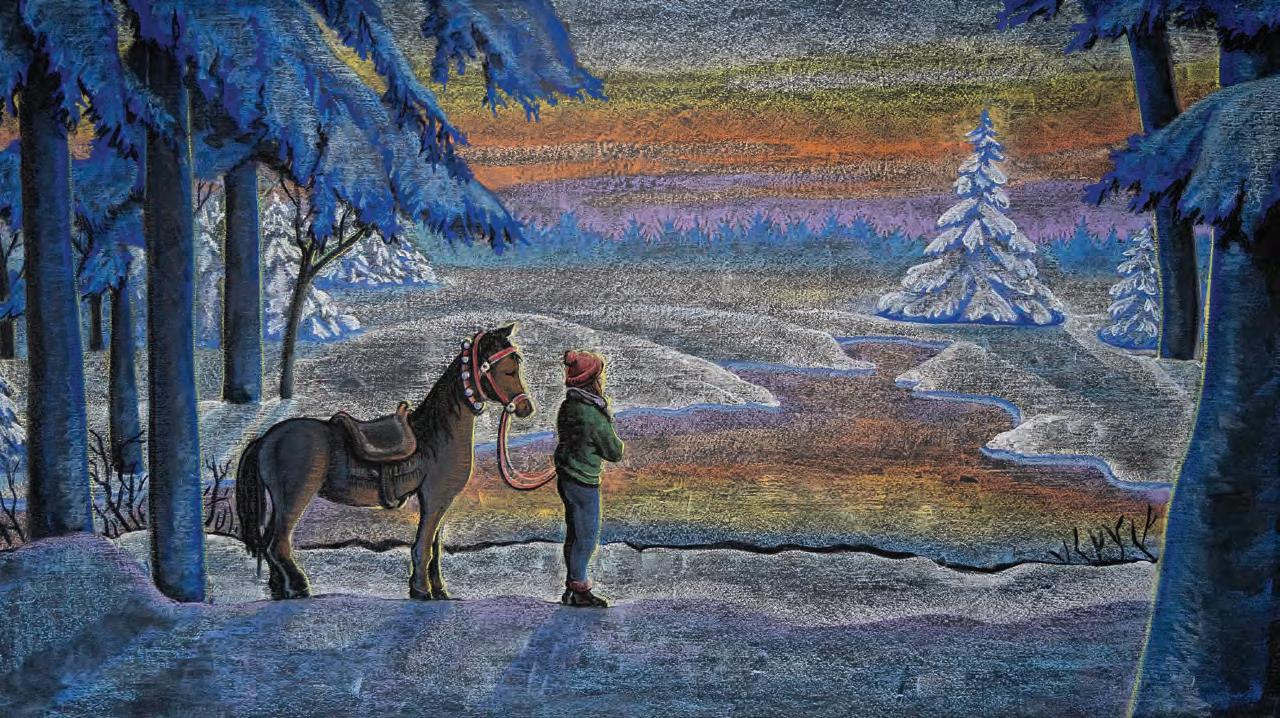
A BAY SCHOOL HOLIDAY TRADITION, Winter Faire is a family-fun event combining artisanal craft work, delicious food, and fine entertainment. Musicians perform throughout the day. Local businesses, artists, and service providers contribute items for our very popular silent auction. Bidding is open until December 10th.