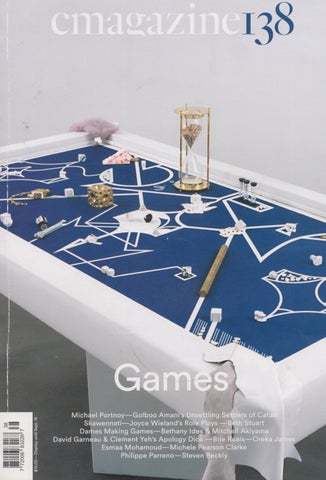
Advice for Players “Nothing new happens, only this permanent weaving between the world and the subject. Which supposes that the subject sees the whole, that he is the clairvoyant seeing of everything, with nothing left over-neither of the world nor of himself. If all of language already resides in the silence of the subject and of the world, like their ontological tissue, then I can turn the world back on itself and return to myself after having passed to the other side. Am I playing at hoops with the world (of) language? What do I add? Or what do I take away? It is always the same. I revolve around the "center," the point of anchorage, without getting closer. I keep on repeating a gesture which perhaps digs me in, deepens me? Digs in and deepens the world? Unites us?”
Zendo The Game of Inductive Logic “The classic puzzle game of inductive logic is back, purer and clearer than ever! Beautiful crystalline pieces in three shapes and three colors are used to build structures marked by the Moderator according to a secret rule selected from a versatile deck of options. The more structures are built, the more information players have to work with, and the closer they get to guessing the rule. Easy to adapt for cooperative play, it's also a remarkably good model of the scientific method!”
Why I stopped working on the Bongard Problems
Things not allowed in Bongard Problems
As I explained earlier, it’s not just the automation of Bongard problems that’s involved. It’s about the automation of cognition. Anyone who works toward making machines intelligent, and especially wanting machines to “come alive”, must understand the grave ethical issues involved in such an endeavor. Consider the following email message sent by a student at Indiana University (IU, the academic institution where I did my Ph.D.) in 2008 (my emphasis):
Bongard problems are traditionally based on the geometry of the given patterns, i.e., just the pixels and their relations. For example, an invalid BP, not based on geometry, would be one presenting a spoon, a fork, a knife, a glass, a dish, and a pan on the left side, stating that "all boxes on the left depict utensils". I find that adhering to geometry and excluding human-specific knowledge is esthetically more pleasing, in the sense that if an alien were to visit Earth and be presented with geometry-specific BP's, this hypothetical alien would be given an equal (and fair) basis for intellectual comparison with humans (and other BP-solving devices!). Would it not be unfair to require that aliens (and other "artificial intelligences") be familiar with our anthropocentric view of the world before their intelligence can be compared to ours?
1. a backward bending, especially of the body of the uterus toward the cervix. 2. the act of turning the tip of the tongue upwards and backwards towards the hard palate in the articulation of a vowel or a consonant 3. the act or condition of bending or being bent backwards Peristaltic movement comprises relaxation of circular smooth muscles, then their contraction behind the chewed material to keep it from moving backward, then longitudinal contraction to push it forward. “Interoception, defined here as the sense of the physiological condition of the body, is a ubiquitous information channel used to represent one's body from within.”
“What is perceived would be not so much the color and the thing but the difference between things and colors. Sensation would have neither an object nor a moment, but it would take place only in the intervals between, through difference, succession. A sort of silent scale?”
Because Zendo is an inductive logic game rather than a deductive one, there is no formula for thinking of possible secret rules. The rule options provided by the cards are vast, and if Moderators start creating rules of their own, the possibilities become truly endless. This is what makes Zendo both fun and challenging. So how should a player go about figuring out the one and only correct secret rule from possibilities too numerous to name? We have found that the most successful players are those who are able to constantly be seeking patterns on a global level while simultaneously creating very focused experiments on individual structures that help lead them in the right direction. In other words, they are constantly thinking of all the possible rules that could fit the structures on the table, while also thinking about how to create very specific new structures that will narrow down that list of possible rules.
Hello everyone, The IU Robotics Club is having its first meeting this Thursday, January 17th. We are a group of undergraduates and graduates hailing from many fields with a common interest in all robotics, automata, synthetic life and artificial intelligence. We encourage people to make stuff come alive, whatever they decide that means.
the actual application or use of an idea, belief, or method as opposed to theories about such application or use 1.an object or feature that imitates the design of a similar artifact made from another material. 2.an element of a graphical user interface that mimics a physical object. a Hindu spiritual and ascetic discipline, a part of which, including breath control, simple meditation, and the adoption of specific bodily postures, is widely practiced for health and relaxation. a member of the clergy engaged as assistant to a vicar, rector, or parish priest. (archaic) a minister with pastoral responsibility. The meiofauna consists of interstitial animals that will pass through a 1.0 mm sieve. They tend to be slender and worm-shaped, a necessary adaptation for gliding or wriggling between the grains.
The Gestalt resistance between the stages of mobilization and action in the needs satisfaction cycle is retroflection. This occurs when a person turns his stored up, mobilized energy back upon himself instead of out into the environment.
German for practice
Swallowing whole creates an "as if" personality and rigid character. Introjected values and behavior are imposed on self. As in all contact boundary disturbances, swallowing whole can be healthy or pathological, depending on the circumstances and degree of awareness.
to yoke, to connect, to join
Interoceptive exposure is a cognitive behavioral therapy technique used in the treatment of panic disorder. It refers to carrying out exercises that bring about the physical sensations of a panic attack, such as hyperventilation and high muscle tension, and in the process removing the patient's conditioned response that the physical sensations will cause an attack to happen.
"the pottery box with a square lid is a skeuomorph of a twilled basketry container", "note-taking apps offer skeuomorphs of yellow legal pads, squared paper, ring binders, etc."
“Molesworth, then, was sending a very clear message to the kind of collectors who love to bask in the reflected glory of their Ruschas and Rauschenbergs and Murakamis: Your kind of artists aren’t going to get big solo shows at MOCA any more. Not in shows I curate myself, and not in shows which are organized underneath me, in my role as curator-in-chief. If you want to donate such works to the museum, that’s great, but we’re not going to lionize them as being canonical giants in the way you might want us to. Very few boards of trustees would be happy putting their support behind such a message; MOCA’s clearly weren’t.” Sarlac, “Return of the Jedi“, Graboid, ‘”Tremors”, Unknown name, “Beetlejuice”, Shai-Hulud, “Dune”