
Nov/Dec 2025
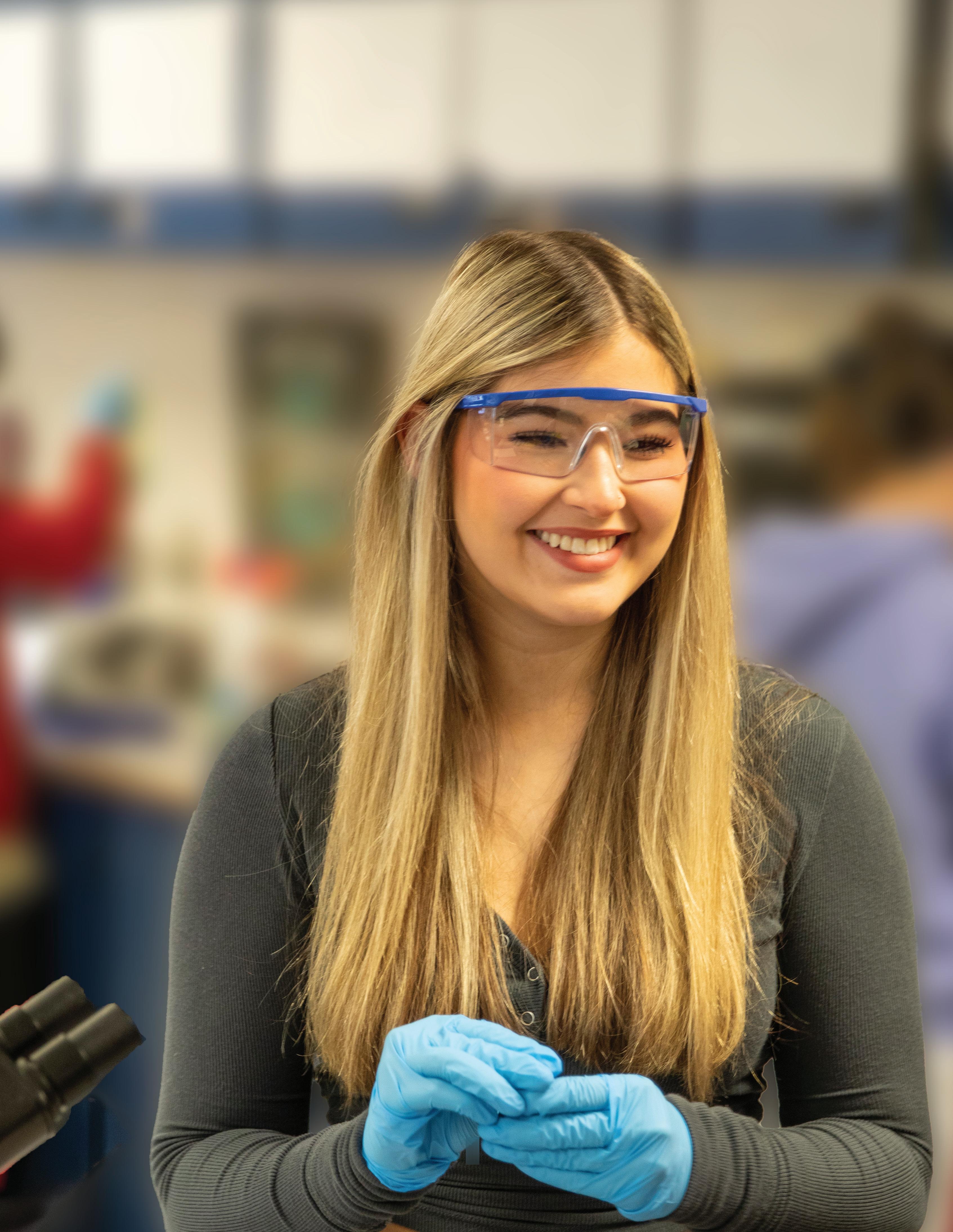
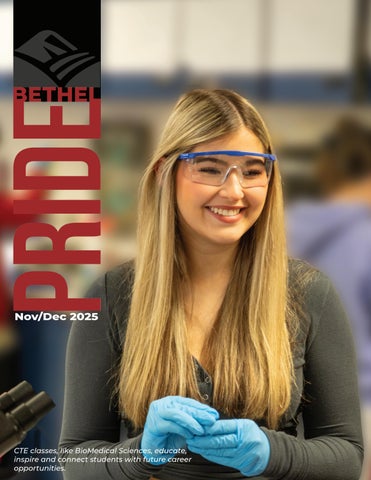
CTE classes, like BioMedical Sciences, educate, inspire and connect students with future career opportunities.

Nov/Dec 2025
CTE classes, like BioMedical Sciences, educate, inspire and connect students with future career opportunities.
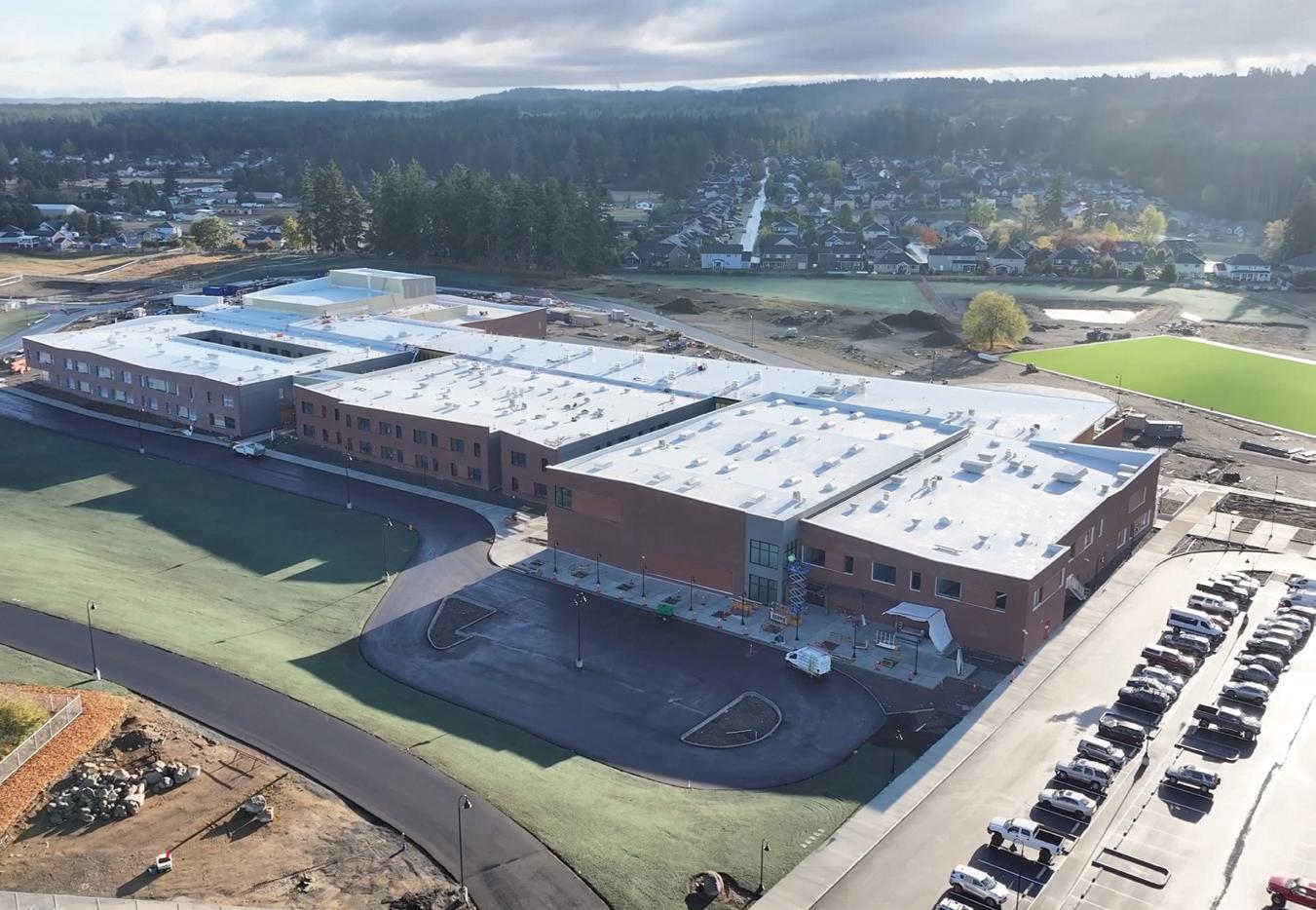
Construction on the New Bethel High School broke ground in 2024 and is scheduled to be completed in 2026. At almost 300,000 square feet, the New Bethel High School is a massive project. Assistant Director of Construction Jamie Glenisky said the new school is now nearly two-thirds complete.
“If you drive past along 224th you’ll see that we’re roughly 80% complete on paving and sidewalks. We’ve got brick masonry going up. They’re working on the north elevation with the brick mural. We also have both turf fields, the football field and the practice field, completed,” he said.
Originally planned as a modernization and expansion under the 2019 Bond, careful planning and additional state funding will now allow for a full rebuild of Cedarcrest Middle School.
The new three-story building will be nearly 123,000 square feet, featuring 39 classrooms and capacity for 850 students, up from the current 700.
Construction is set to begin in summer 2026, coinciding with Bethel High School students moving into their new building. Cedarcrest students will temporarily relocate to the old BHS for two years.
The new Cedarcrest is scheduled to open in the fall of 2028.
Completed projects funded by the 2019 School Construction Bond
• Challenger High School Phase II Expansion
• Evergreen Elementary Remodel & Expansion
• Expedition Elementary
• Graham-Kapowsin High School Expansion
• Katherine G. Johnson Elementary
• New Naches Trail Elementary
• Turf fields at Graham-Kapowsin and Spanaway Lake high schools
• Security camera upgrades across the district

In 2006, voters approved a bond that built Liberty Middle, Frederickson Elementary, and Nelson Elementary; rebuilt Spanaway Elementary, Clover Creek Elementary, and Shining Mountain Elementary; expanded Spanaway Middle School; modernized Spanaway Lake High School; built our Central Kitchen and Transportation Center; as well as improvements around the district to technology, safety and security, HVAC, roofing, fields, grounds, parking lots, bus loops, septic systems, cafeterias, and more.
In 2001, voters approved a bond that built GrahamKapowsin High School and Cougar Mountain Middle School, rebuilt Kapowsin Elementary, modernized Thompson Elementary and Spanaway Middle School, acquired sites for future schools, as well as heating/ ventilation, safety, roofing and other projects across the district.
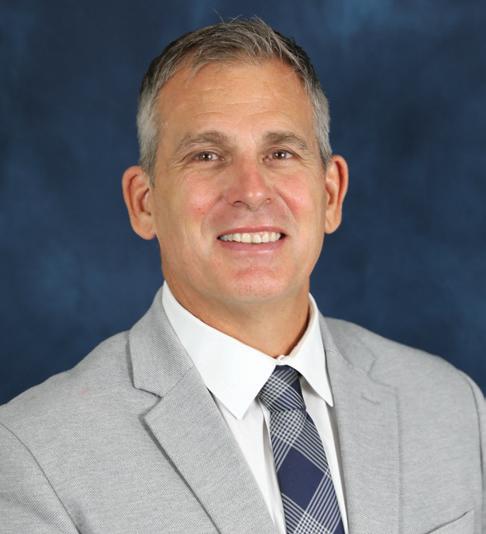
As we enter the holiday season, I want to thank you for your continued support of our schools. Whether you work here, volunteer, have a student in school, or are one of our many community members, you play a huge role in the lives of our students. I especially want to thank all the taxpayers in the district for their support of our Educational Programs and Operations (EP&O) Levy over the years. That levy funds 15% of our district’s budget and is up for renewal in 2026, along with our Technology Capital Levy.
The EP&O Levy supports essential programs and staff that the state either underfunds or doesn’t fund at all, including school safety and security. Thanks to levy support, we’re able to partner with the Pierce County Sheriff’s Office to have School Resource Officers (SROs) at our schools. Being in a large (202 square mile) unincorporated area, these deputies are a critical resource, not only for emergency response, but for building relationships with students. This is a true team effort, and the connections made with SROs, bus drivers, counselors, teachers, and other staff are all essential. When students feel safe and trust the adults around them, they’re more likely to speak up when they see something that concerns them.
Speaking of building relationships, it’s been a pleasure connecting with so many of you at our Coffee with the Superintendent events this fall. I’ll be holding two more events in January and February, this time in the evening. Be sure to bring your levy-related questions, as we’re looking at a levy renewal election in February, pending School Board approval.
Wishing you and your family a joyful and restful holiday season.
Brian Lowney, Ph.D. Superintendent
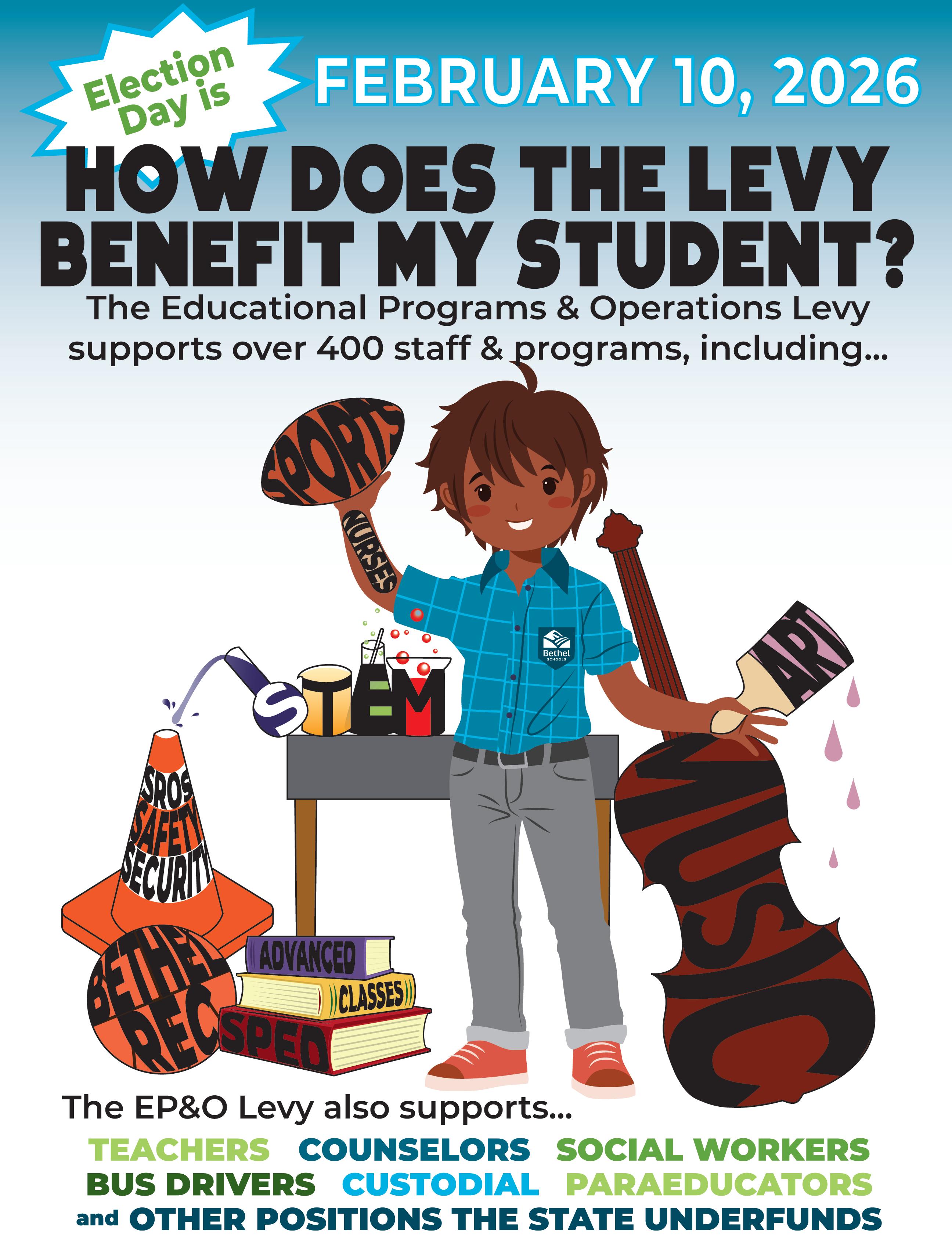
In 2026, our district will have renewals of both our Educational Programs and Operations (EP&O) Levy and our Technology Capital Levy on the ballot, pending School Board approval.
• These are renewals, not new taxes.
• The levies are on a four-year cycle.
• Together, they support more than 400 staff across the district.
By law, Bethel is permitted to collect more than we do for the EP&O levy. Though we’re one of the top 15 largest school districts in Washington, there are 100 districts that actually collect more than we do for their EP&O levies! The Technology Capital Levy is a separate levy that supports classroom technology, infrastructure, and internet access.
These funds support a wide range of staffing and programs that are not fully funded by the state, including:
• Teachers, paraeducators,
counselors, social workers and nurses
• School Resource Officers, campus safety officers, custodians, and bus drivers
• Arts, music, and athletic programs including coaches and teachers
• Special education, multilingual, and early learning staff
• JROTC, Highly Capable programs
• Community resources
• Bethel Rec, which serves more than 6,000 students every year
• After-school activity buses
Preparing students for the future
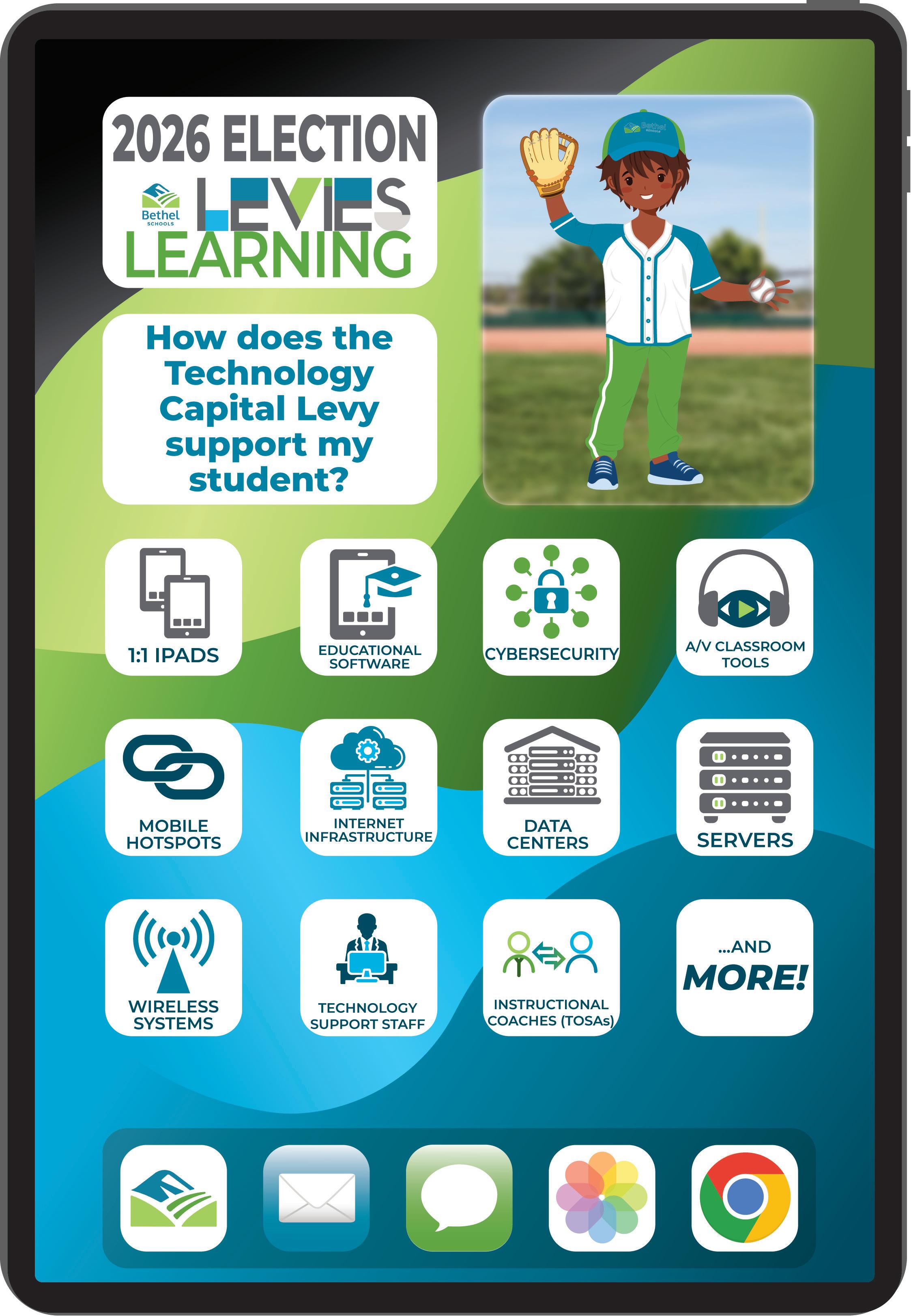
The Technology Capital Levy helps ensure every student in Bethel has access to up-to-date learning tools. It supports:
• 1-to-1 student iPad access (iPads are replaced every 3–4 years)
• Internet infrastructure, cybersecurity, and wireless systems
• Mobile hotspots for students without home internet access
Levy funding is a normal part of school district budgets across Washington state. In fact, over 100 districts will have EP&O levies on the ballot next year. Local levies help fill in funding gaps for staff and programs that the state underfunds or does not fund at all.
• Educational software, data centers, servers, and AV classroom tools
• Technology support staff and instructional coaches (TOSAs)
To learn more about the EP&O Levy and our Technology Capital Levy, visit: bethelsd.org/levy
This year we’ve seen a lot of news stories about school districts who are struggling to pay the bills. Neighboring districts saw budget cuts, layoffs, and state intervention in one case. But here at home, Bethel seems to be staying the course financially. How is that?
School finances in uncertain times
Thanks to forward-thinking and conservative budgeting, our district has been able to weather these uncertain times, even as inflation and rising costs strained budgets across the state.
“What truly sets Bethel apart is how we’ve managed these challenges,” said Chief Financial Officer Christine Donnelly. “While other districts have faced serious setbacks, we’ve avoided those pitfalls by planning ahead and making responsible choices. Thanks to our careful budgeting and the hard work of our staff and leaders, we’ve been able to stay focused on what matters most – supporting our students, staff, and schools.”
Where our money comes from
The bulk of the district’s revenue comes from three primary sources:
• State apportionment
• Local, state and federal support
• Local Educational Programs and Operations (EP&O) levy that has been renewed by voters every four years for decades. Thank you, voters!
Our EP&O levy isn’t unique to Bethel. Levies are a normal form of school funding in Washington state. In fact, over 100 districts will have EP&O levies on the ballot for renewal next year. Bethel will have renewals of both our EP&O Levy and our Technology Capital Projects Levy on the ballot in 2026, pending School Board approval.
By law, Bethel is permitted to collect more than we do for the EP&O levy. Though we’re one of the top 15 largest school districts in Washington, there are 100 districts that actually collect more than we do for their EP&O levies!
For us, levies are not just helpful, they're essential funding.
“Because the state doesn’t fully fund education, renewing these two levies is critical for Bethel,” said Donnelly. “Together, they provide about 15% of our budget, helping us fund classroom teachers, support staff, and programs that give students the opportunities and support they need to succeed. Levy dollars also help keep our schools safe, well-maintained, and ready for learning.”
They also give us the ability to adapt.
“Most importantly, levies give us the flexibility to respond to rising costs and changing needs, ensuring that our students continue to get the best education possible,” Donnelly said. “Thank you to our community for supporting Bethel’s levies over the years, you’ve made a huge difference
for our students.”
Bethel isn’t immune to the broader issues affecting public education.
“Across the state, school districts are all facing similar challenges, said Donnelly. “The cost of running schools has gone up significantly with inflation, but state funding hasn’t kept pace. At the same time, schools are competing for great teachers and staff, which pushes salaries higher than what the state provides funding for.”
Bethel has fared better than some districts because its student enrollment has stayed steady, but that doesn’t mean we’re coasting. Financial pressures are very real.
“Many districts have also seen student enrollment decline since COVID, which means less funding for them. Here in Bethel, our enrollment has stayed steady, which has helped—but we’re still navigating the same financial pressures that all districts are working through.”
The future isn’t without challenges, but our leadership remains committed to transparency, responsibility accountability, and long-term planning.
“We know there are still financial pressures ahead,” said Donnelly. “But we’re confident that by working together and staying proactive, we can continue to keep Bethel strong.”
Recently, our School Board held a Study Session to discuss student safety with a panel of staff members, including one of our School Resource Officers. The conversation centered around how we protect the physical and the emotional safety of our students.
Physical safety includes the measures we have in place in our schools to keep students safe. It also includes systems and staff whose job it is to protect, patrol and prevent incidents from happening.
Executive Director of Operations Paul Marquardt said our campus safety staff and School Resource Officers (SROs) work hard to build relationships with students, so that when they see something concerning, they’ll say something to a trusted adult.
“Our kids are some of the people that really make sure that we’re keeping each other safe in our buildings,” he said. “Oftentimes they're the ones that are reporting, making sure that we know about things, or their families are. And so those relationships we have with those families and those kids are so critical.”
When it comes to physical security measures, there’s a lot of technology at work, including our camera entry systems and other security cameras across the district. SROs and campus safety staff are able to monitor situations using more than 1,000
cameras around the district. Thanks to our voters, money from the 2019 bond was used to update our camera systems a few years ago. Board Vice President Marcus Young said that’s something that needs to be continually upgraded to keep up with new advances in technology.
“We can’t stop everything before it happens,” he said. “I do want to make sure that we are putting money into things that will expedite responses – put our SROs in the best situation when they’re coming into a situation blind.”
Security cameras are good tools, but Director of Security Bryan Streleski said it all comes back to building those relationships with students.
“It’s about our relationships with our kids, with our staff, with our community to make sure we stay safe,” he said. “We can put cameras in place, but it comes down to, are people willing to come talk to us?”
School Resource Officers are one piece of the safety and security puzzle that is funded by our Educational Programs and Operations Levy. As Pierce County Deputies, they help with law enforcement and crime prevention, but also play a critical role in safety education. They train with our staff and students during lockdown drills, and they debrief with administrators after incidents happen, so we can continue to get better as a team.
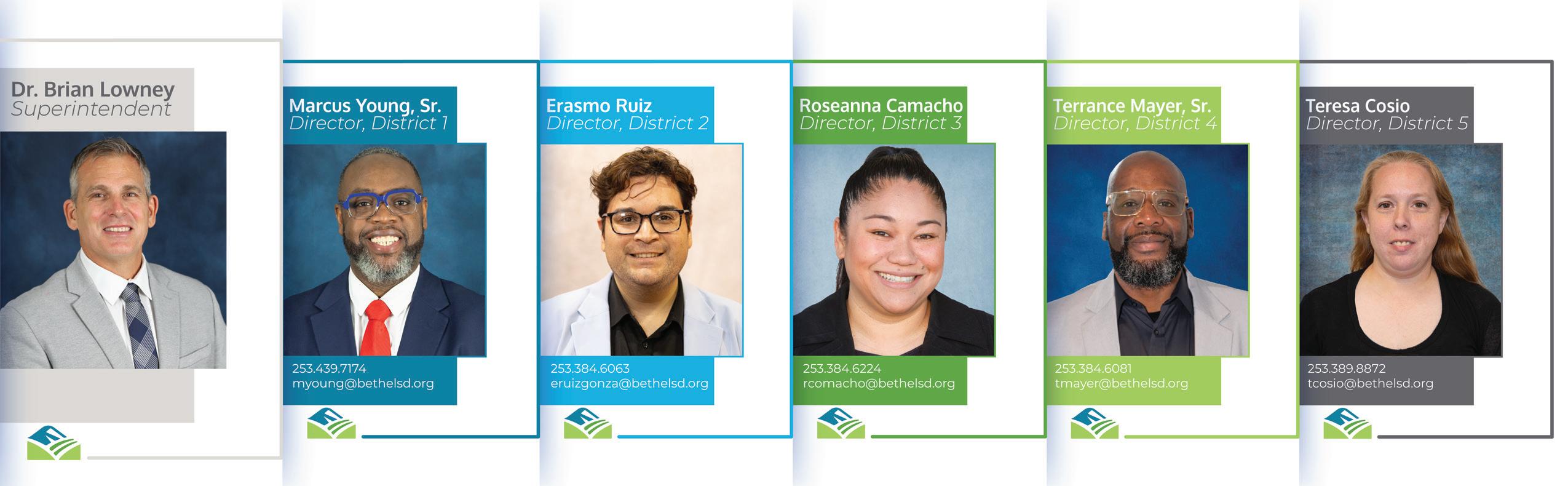
By staying connected and staying vigilant, we can work together to ensure our students have the safest schools possible. Board President Terrance Mayers Sr. summed that idea up best saying, “I speak to teachers, I speak to community, and I know the heart of the people that are sitting across from me and next to me and I know they're doing their absolute best to make sure that our kids have a safe place.”


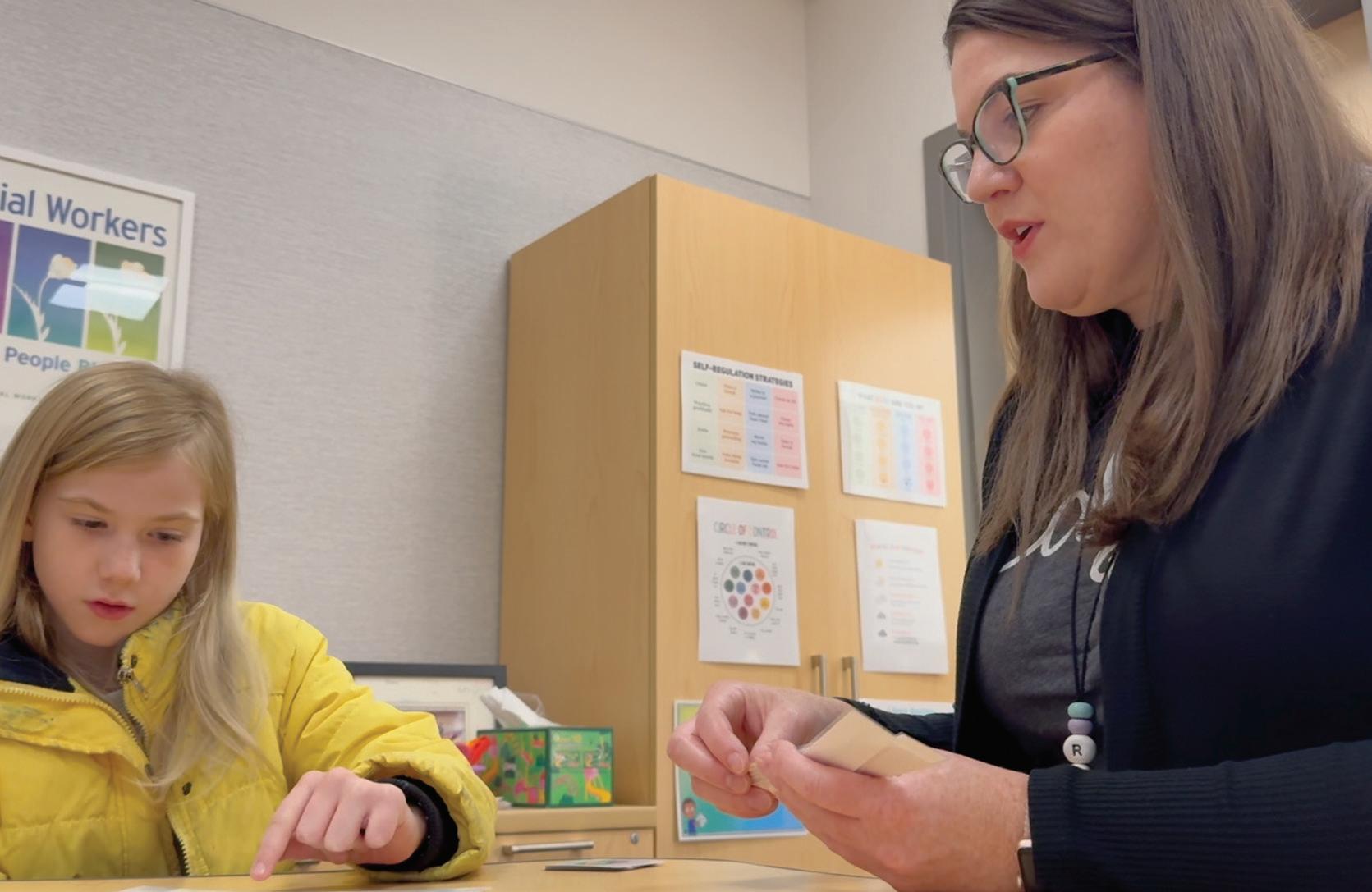
When it comes to emotional safety, staff are always working to build relationships with students to help support them, and to remove barriers to their education. This is a job for all staff, including our counselors and social workers.
Counselors and social workers help students in a variety of ways, from referrals for anxiety, depression, and mental health issues, as well as anything that gets in the way of a student's education, including family and friend dynamics, and connecting students and families with community resources.
Catherine Kimball is a social worker from Graham-Kapowsin High School. She told the Board that those are all things many students need, which is why we have counselors and social workers in every school in the district.
“We had social workers prior to the pandemic, which was really good and very proactive,” she said. “And we found from the pandemic how important social workers in our schools were.” Because the state doesn’t fully fund enough counselors and social workers for the number of students we have, our Educational Programs and Operations Levy helps support these vital positions. And even then, it’s still not enough.
Kimball is the only social
worker at GKHS, which has a student population of over 2,100. There are six counselors at the school but Kimball said while their jobs have some overlap, they are different. School Board Vice President Marcus Young voiced his concerns about that.
“If a kid is struggling mentally, how do we expect them to sit in a classroom and really be able to retain and take in what's being taught?” he said. “And we have one person for 2,100 students trying to passionately give everything they have for every student.”
Assistant Director of Behavioral Health Jodi Greyeyes said that’s why it’s so important for staff to build those relationships with students and help foster a sense of belonging. So when students see something that concerns them, they’ll have a trusted adult to
talk to.
“That feeling of connection helps,” she said. “It just helps students thrive. We know it lights up parts of our brains neurologically and so we need that connection with others. That's really been a focus area.”
That sense of belonging is key, and Greyeyes said there is a lot of other work being done as well to foster that, including instructional materials for staff and curriculum for students.
Additionally, Kimball said last year all of our 9th graders were trained in Teen Mental Health First Aid. “What that does is it teaches students how to help themselves and how to help others. How to identify signs and symptoms of mental health crises or the onset of a mental health issue or struggle that might be going on,” she said.
For Bethel’s Native students, the Title VI program is a bridge between culture and classroom and a space to feel seen and supported. It’s a bridge Grace Leatham once crossed herself, and one she’s now helping others navigate.
Bethel’s Title VI Native American Education Program serves hundreds of students from more than 100 tribal nations across the country. Covering 202 square miles of land once shared by the Puyallup, Steilacoom, and Nisqually tribes, the district remains committed to honoring Indigenous heritage and creating spaces of belonging for every student.
The program helps Indigenous students learn and grow in an environment where they feel proud of who they are and confident in what they can achieve. Students build a stronger connection to their culture and community while getting the academic and personal support they need to succeed in school and beyond. Whether it’s helping younger students stay engaged in class or guiding older ones as they prepare for college and future careers, the Title VI program adapts to each stage so every student feels supported, motivated, and ready
to reach their goals.
Support looks different at each level. In elementary schools, Title VI provides classroom visits and small-group sessions. Middle school students participate in cultural field trips and assemblies, while high school students meet weekly with staff for academic, attendance, and college and career support.
This year, the program welcomed Leatham as its new Teacher on Special Assignment, or TOSA. Leatham is a first-generation college graduate who knows firsthand the impact Title VI can have.
“Title VI was a great support for me to be with other Native students and find that community. It got me involved with pow wow dancing,” she said. “It was a great way to connect and have support within the school.”
Leatham grew up in Enumclaw, where she was part of a Native dance troupe that strengthened her connection to culture and community. Her love for teaching began early.
“I’ve always been interested in teaching, always loved working with
kids,” she said.
Now, she’s using that passion to give back to a new generation of Native students, many of whom face the same challenges she once did. About 60 percent of Native college students are first-generation, a statistic that underscores the importance of mentorship and belonging.
November is Native American Heritage Month, and Leatham said it is an empowering time of year for her.
“Growing up, it felt like a time when we were truly seen. So I’m really excited that Bethel’s so supportive of, in that month especially, making sure there’s a dedicated time for students to be visible within their schools.”
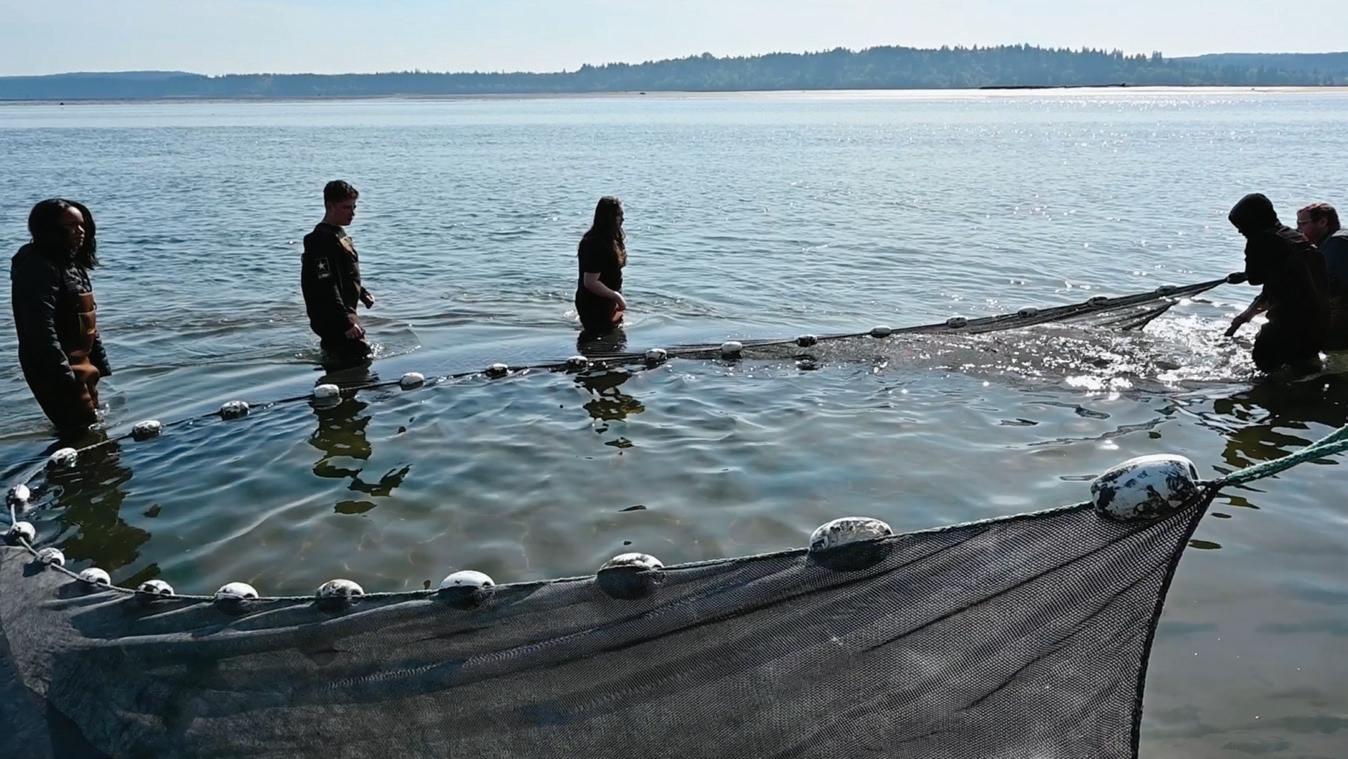
Native students get incredible opportunities for hands-on learning through the program, including field trips that explore local ecosystems and cultural connections. During recent trips to Muck Creek and the Nisqually Hatchery, students learned how land, water, and culture are interconnected. Working alongside Tribal members, students also gained insight into traditional stewardship practices.
To help fund trips like those, Bethel’s program received a $10,000 grant from the Puyallup Tribe, which will also help fund cultural events and classroom resources. It’s an investment that supports both education and identity.
With new energy and familiar purpose, Leatham and the Title VI team are working to ensure that every Native student in Bethel feels seen, supported, and celebrated. Not just in November, but all year long.
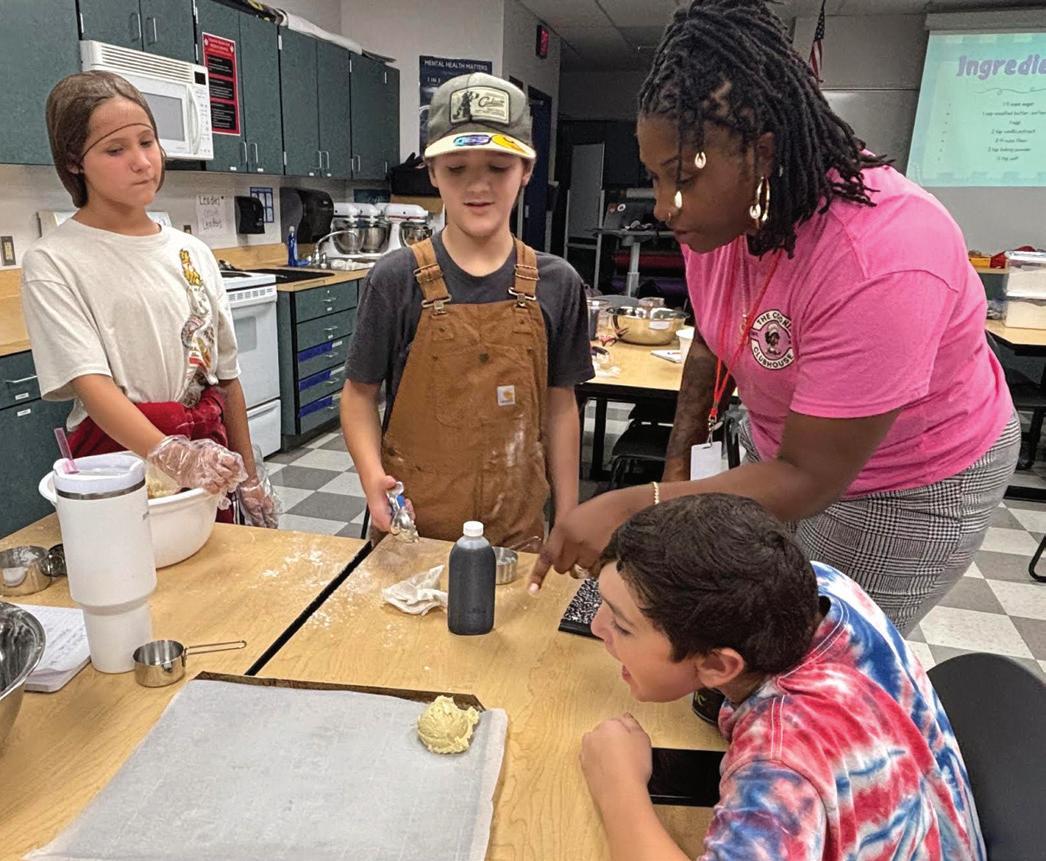
When students at Cougar Mountain Middle School said they wanted more art and culinary opportunities, it could have been just another item on a holiday wish list. Instead, it became the spark for something bigger. Now the school is home to a junior bakers club that gives kids hands-on learning after school, complete with activity bus rides home.
Part of that transformation was because of Christney Kpodo, one of our district’s Equity Specialists. Her job is to identify and remove barriers to students’ education, and to also find ways to creatively grant access to the things students need to be successful. To bring the baking club from dream to reality, she brought school staff and a community partner together to give students an amazing opportunity.
In her second year in the job, Kpodo
Black Student Union at Bethel High School. She also has countless one-on-one interactions with students who need someone in their corner.
That’s incredibly important in a district that spans more than 200 square miles, with no city center, and limited public transportation. "We don't have a huge community center out here, so we really have to be creative about how we bring these opportunities to our students," Kpodo said.
"That was the first time I even left Spanaway," one teen told her after the trip.
But where others see obstacles, Kpodo sees opportunity. When she planned to take 10 students to Washington
“Honestly I feel like Santa Claus, except instead of presents, it's meeting needs and granting access.”
-Christney Kpodo, Equity Specialist
serves 11 schools. She said no two days ever look the same. "That's reflective of what equity work is,” she said. “It has to be flexible to meet the needs of each individual student. And also each building has individual needs.”
The work ranges from facilitating student voice circles at schools, which is how the junior baking club got started, to serving as advisor for the
State University for the Vibes conference, the cost was prohibitive for some families. "Socioeconomic status is one of the barriers our students face," she said.
Knowing this was an event that could expand students’ horizons about college possibilities, she found a community partner to help cover the cost. The impact was profound.
Kpodo said getting students experiences like that helps them "see more so they can aspire to more." The results speak for themselves: Bethel brought the largest group of students to the Vibes conference, and four students were recognized there for their achievements.
Kpodo said she gets a lot of joy from her work. “Every morning I wake up and I know I'm getting ready to do something good,” she said. "Honestly I feel like Santa Claus, except instead of presents, it's meeting needs and granting access.”
The work our equity specialists do is all about ensuring that every student has a genuine opportunity to succeed, regardless of the circumstances they were born into. And here in Bethel, that work is happening one student, one barrier, and one opportunity at a time.
Our Technology Capital Levy is a huge factor in the ongoing success of the Bethel Virtual Academy. Thank you, voters!
The skills students build at Bethel Virtual Academy go far beyond academics. Students are learning lessons that will last a lifetime, like how to manage their time, advocate
with any of our secondary schools,” said math teacher Megan Buchanan.
Buchanan describes BVA as a place built for students who don’t necessarily fit a more traditional school model.
“We are not a one-size-fits-all education anymore, so BVA brings
make you challenge yourself as a teacher. And that’s kind of what BVA was built for.”
BVA students benefit from a range of supports and opportunities, including an advisory program that starts in sixth grade and continues through graduation. The school also offers a Technology Bootcamp for
“We are not a one-size-fits-all education anymore, so BVA brings those opportunities in for students to be able to have the ability to adapt their education to their learning.”
-Megan Buchanan, BVA Teacher
for themselves, and take ownership of their education.
BVA is Bethel's very own K-12 online program, offering a unique path for students who thrive in independent learning environments. Taught entirely by Bethel teachers, BVA is tuition-free and open to all families.
School schedules are adaptable, allowing students to balance their education with sports, jobs, travel, or health needs. Some attend BVA full time, while others split their days between online and in-person classes at their neighborhood schools.
“We have kids who are part time with us and kids who are full time with us, and it really sets them up for success
those opportunities in for students to be able to have the ability to adapt their education to their learning,” she said.
BVA works to build strong relationships with students and families. Staff members work alongside them to foster self-directed learning, create individualized learning plans, and help students advocate for themselves. That commitment to personal connection and flexibility defines the school’s culture and helps students discover how they learn best.
Buchanan said some of her favorite students are the ones who challenge her most.
“I love the tough kids,” she said. They
new students and courses in Digital Wellness, designed to help students manage screen time and maintain balance in their lives.
Despite being virtual, community is a big part of the BVA experience. Students can join clubs, participate in sports and music programs, and stay connected to their peers across the district.
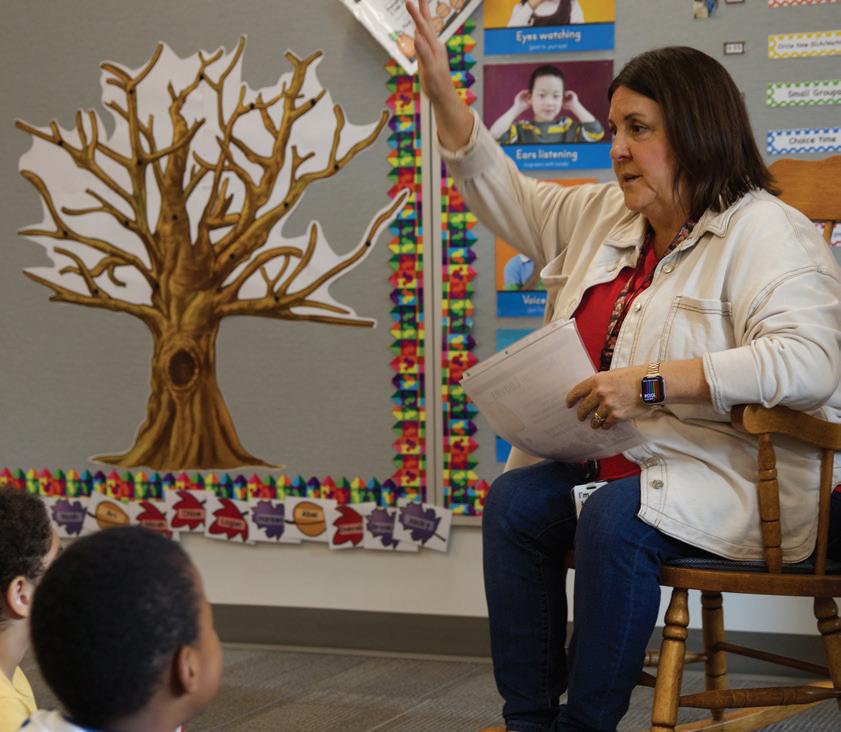
Sometimes the best careers grow out of simply caring about kids and wanting to help. Angie Cochenour is a mom who turned her love of helping kids into a career as a special education teacher. Today she teaches preschool at Naches Trail Elementary.
More than a decade ago, Cochenour volunteered regularly at her kids’ schools, helping out wherever she could. Eventually, someone asked her a question that changed everything, "Are you getting paid yet?"
That simple question got her thinking. "I subbed as a para for a while," she remembered. What she found there amazed her. "They [paraeducators] are the most amazing people in this district." Inspired, she went back to school and earned her master's degree, teaching certification, and special education endorsement.
Cochenour works with some of our youngest students. "Our special education students, on their third birthday, that IEP starts and they're here. So essentially for some of these students we have them for half their life before they leave us," she said.
That's a lot of time to make a real difference in a child's life.
Any parent knows that little kids are special, but Cochenour sees something even deeper in her young students. "They're just fun, they're ready to learn," she said. But there's serious science behind her passion too.
"The most important timeframe in their life is that brain development between one and five years old,” Cochenour said. “They're sponges. And there's so much we can do to shape and help them grow and work on those developmental things that maybe they're a little delayed in or identify some things that may be there that parents are working on but don't know how to go about getting help with.”
Cochenour works with all kinds of kids, some who don't talk yet, others working on social skills, and many just learning the basics like following directions and solving problems. She knows the importance school plays in students’ development, but she also knows how important a role families
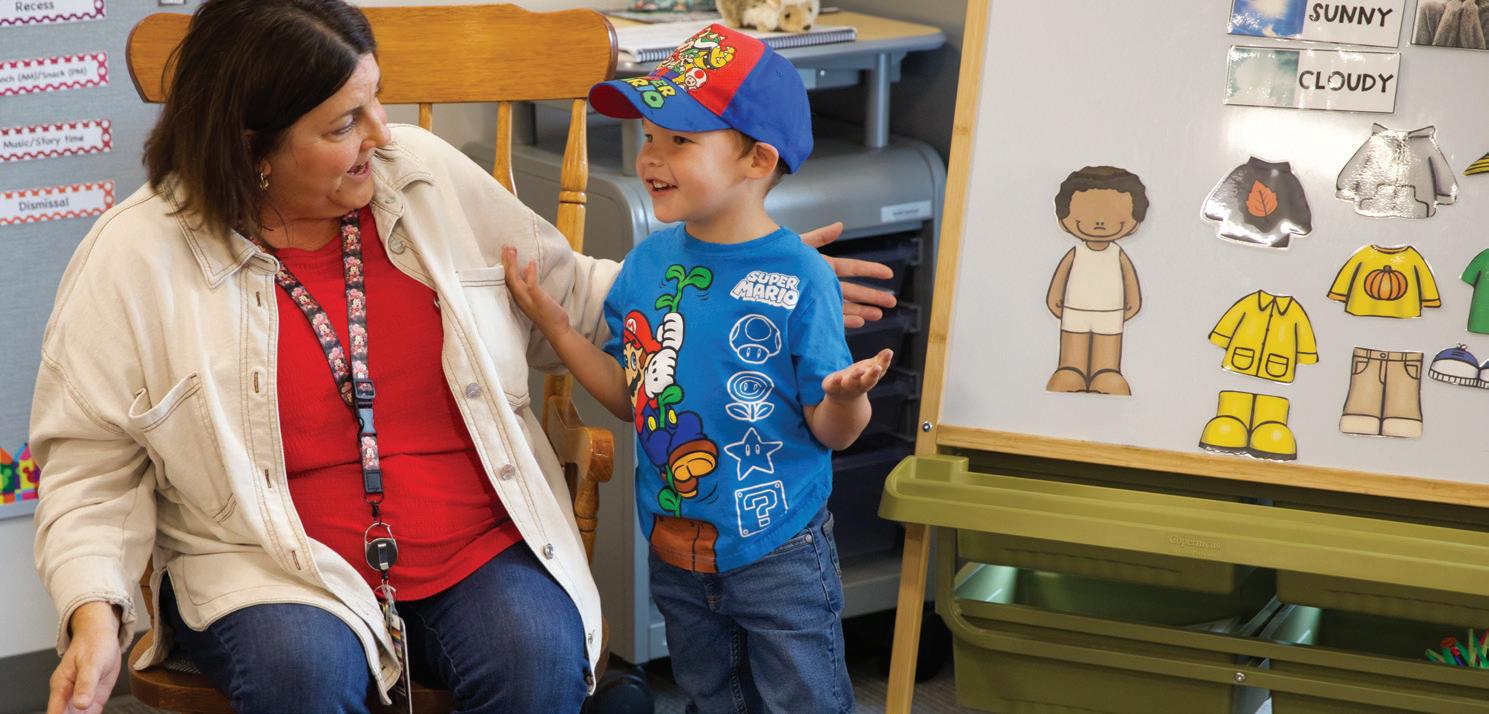
play in their growth. And she works to help them as much as she can.
"Special education is a special place. I try really hard to make sure they understand what their rights are, how to advocate for themselves and their student," she said.
After 14 years of teaching, Cochenour has something most of us can only dream of. She gets to see the longterm impact of her work. Parents still send her first day of school photos years after their students have left preschool. Cochenour recently got graduation photos from a former parent, and she lit up talking about it. "I've seen her boys learn to drive, I still remember them from the early days … going to prom and all the things."
That's the kind of relationship every parent hopes their child will have with at least one special teacher, someone who remembers them, celebrates their victories, and helped set them up for success from the very beginning.
In today's digital world, information travels faster than a kindergartener running to recess. Unfortunately, not all of the information you find online is accurate. Social media can be great for sharing photos, but it's not the best place to get accurate information.
So when you need reliable, up-to-date information about the Bethel School District or any of our schools, there's one golden rule: go straight to the source.
Our official district website at bethelsd.org is your home base for everything you need to know. Think of it as your educational headquarters, where all the important stuff lives, from school calendars and lunch menus to board meeting minutes and construction updates.
Also on the district website are links to each of our official school websites where you can find your school's bell schedule, newsletters, and more.
While we may not be posting TikToks of dancing chihuahuas, we do have a few social media accounts you can follow.
• facebook.com/BethelSD
• youtube.com/BethelSchools
• linkedin.com/company/bethelschool-district/
Some of our schools also maintain Facebook accounts, which you can find linked on their websites.
Just remember, we won’t post critical information on social media and hope you find it. If we need to contact you, we will reach out directly via email, text or robocall. Sometimes you’ll get all three! We don’t want you to have
to search for information when we can send it directly to you. And that makes this a good point to remind you to keep your contact info updated in ParentVUE!

in depth about the important things going on in our district. Check it out at bethelsd.org/podcast or search for it wherever you listen to podcasts.
Got a quick question about your child's school? Check in with the school office. The friendly folks behind the desk are information wizards who can help you with everything from attendance questions to volunteer opportunities. If you want to send an email to your student’s teachers or staff at the school, ParentVUE is the way to go. You can find that link, along with some other great points of contact at bethelsd.org/contact
We can't forget about the Bethel Pride magazine, which is delivered straight to your mailbox six times every year. We recently celebrated five decades of the Bethel Pride, and you’ll find lots of great information in here, including bond project updates, staff and student features, and much more!
We also have The Bethel School District Presents podcast, a weekly show that’s been on the air for four years now. On each episode you’ll get to spend time with teachers, students, staff, and community members to get
And finally, you can subscribe to Peachjar, which will get you access to digital fliers from our district, schools, community organizations and more. That link is on your school's website.
The beauty of having so many “official” options is that you can choose how you want to stay connected. The key is picking the methods that work for your lifestyle and then actually using them. Information is only helpful if it reaches you!
Remember, if it's not coming from one of our official channels, it might be worth double-checking before you share it with others. Together, we can keep our community well-informed and rumor-free!
And if you come across something online that makes you scratch your head and wonder, "Is this really true?" don't let it keep you up at night. Drop us a line at communications@ bethelsd.org and we'll help you separate fact from fiction. We're happy to be your mythbusters!
Bethel Pride is produced by the Bethel School District’s Communications Department.
Bethel Schools
516 176th Street East, Spanaway, WA 98387
Phone: 253.800.2000
Email: communications@bethelsd.org Website: bethelsd.org
TheBethelPrideisintendedtoinformthecommunityatlargeaboutgoingsoninthedistrict.Because weusebulkmailing,individualaddressescannotberemovedfromthemailinglist.

the Boy Scouts and other designated youth groups. The following employees have been designated to handle questions and complaints of alleged discrimination: Civil Rights Compliance / Gender-Inclusive Schools Coordinator, Debbie Carlman, dcarlman@bethelsd.org, 253.800.2019; Title IX Coordinator, Mel Boyd, mboyd@bethelsd.org, 253.800.2029; and 504 Coordinator, Melissa Munson-Merritt, mmunsonmer@bethelsd. org, 253.800.2301. All individuals may be reached at this address: 516 176th Street East, Spanaway, WA 98387. Title IX inquiries may also be directed toward the U.S. Department of Education, Office for Civil Rights (OCR). Information about the nondiscrimination and sex-based discrimination policies and grievance procedures, and how to report a concern or complaint: bethelsd.org.
El Distrito Escolar de Bethel no discrimina en sus programas ni actividades por motivos de sexo, raza, etnia, color, religión, credo, nacionalidad, orientación sexual, expresión o identidad de género, falta de hogar, estatus migratorio o de ciudadanía, discapacidad, neurodiversidad, uso de perro guía entrenado o animal de servicio, edad, condición de veterano o militar con baja honorable. Asimismo, ofrece igualdad de acceso a los Boy Scouts y a otros grupos juveniles especificados. Los siguientes empleados han sido designados para atender consultas y quejas de supuesta discriminación: Cumplimiento de los Derechos Civiles/ Coordinadora Escolar de Inclusión de Género, Debbie Carlman, dcarlman@bethelsd.org, 253.800.2019; Coordinador del Título IX, Mel Boyd, mboyd@bethelsd.org, 253.800.2029; y Coordinadora 504, Melissa Munson-Merritt, mmunsonmer@bethelsd.org, 253.800.2301. Todas las personas pueden ser localizadas en esta dirección 516 176th Street East, Spanaway, WA 98387. Las consultas sobre el Título IX también pueden dirigirse a la Oficina de Derechos Civiles (OCR) del Departamento de Educación de los Estados Unidos. Para más información sobre las políticas de no discriminación y discriminación por razón de sexo, los procedimientos de reclamación, y sobre cómo comunicar una preocupación o queja visite: www.bethelsd.org