Newtown Square Friends & Neighbors magazine, July 2026
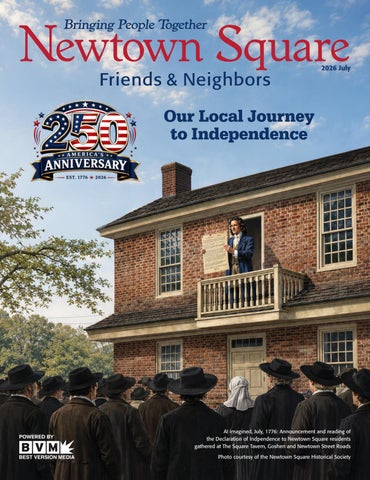
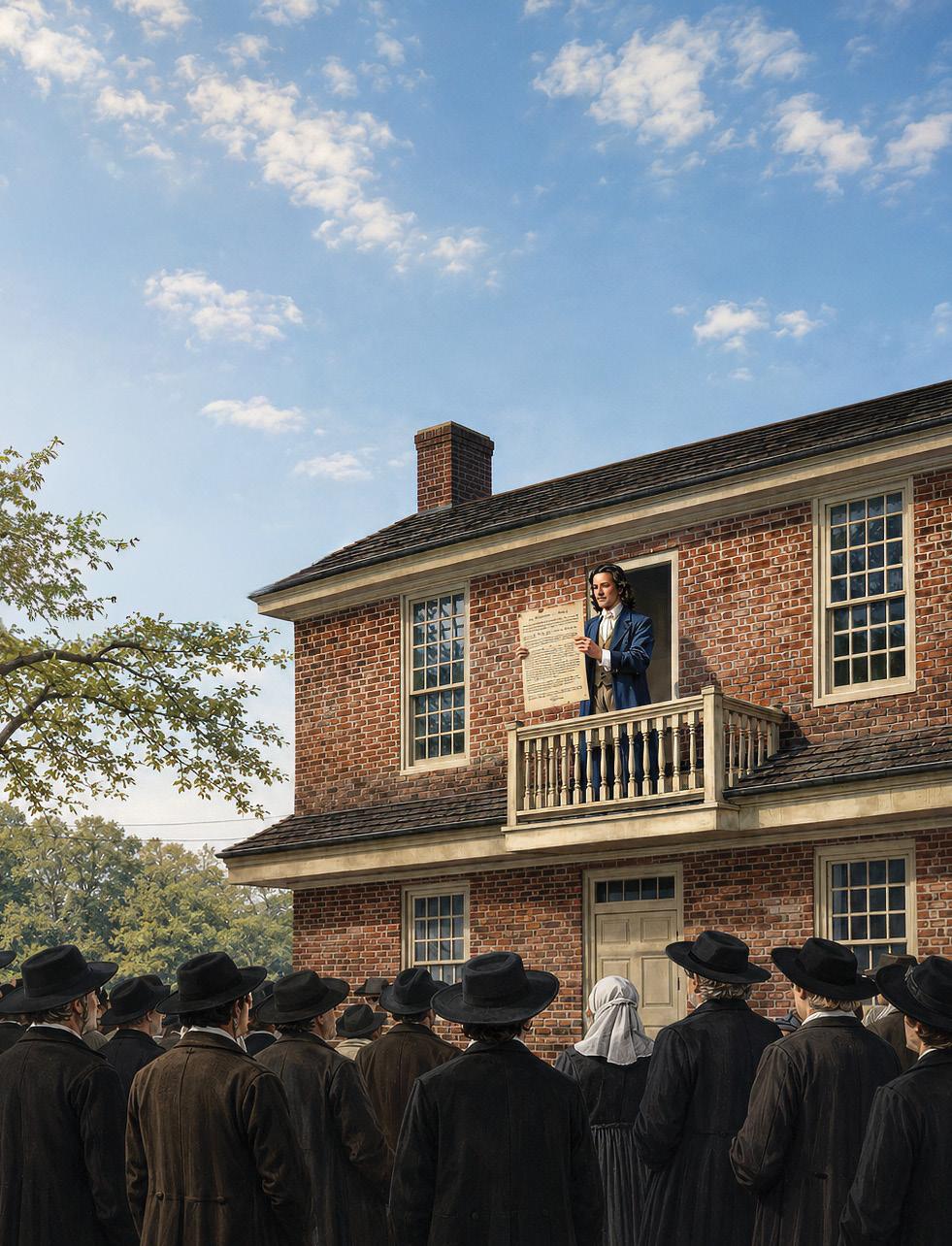
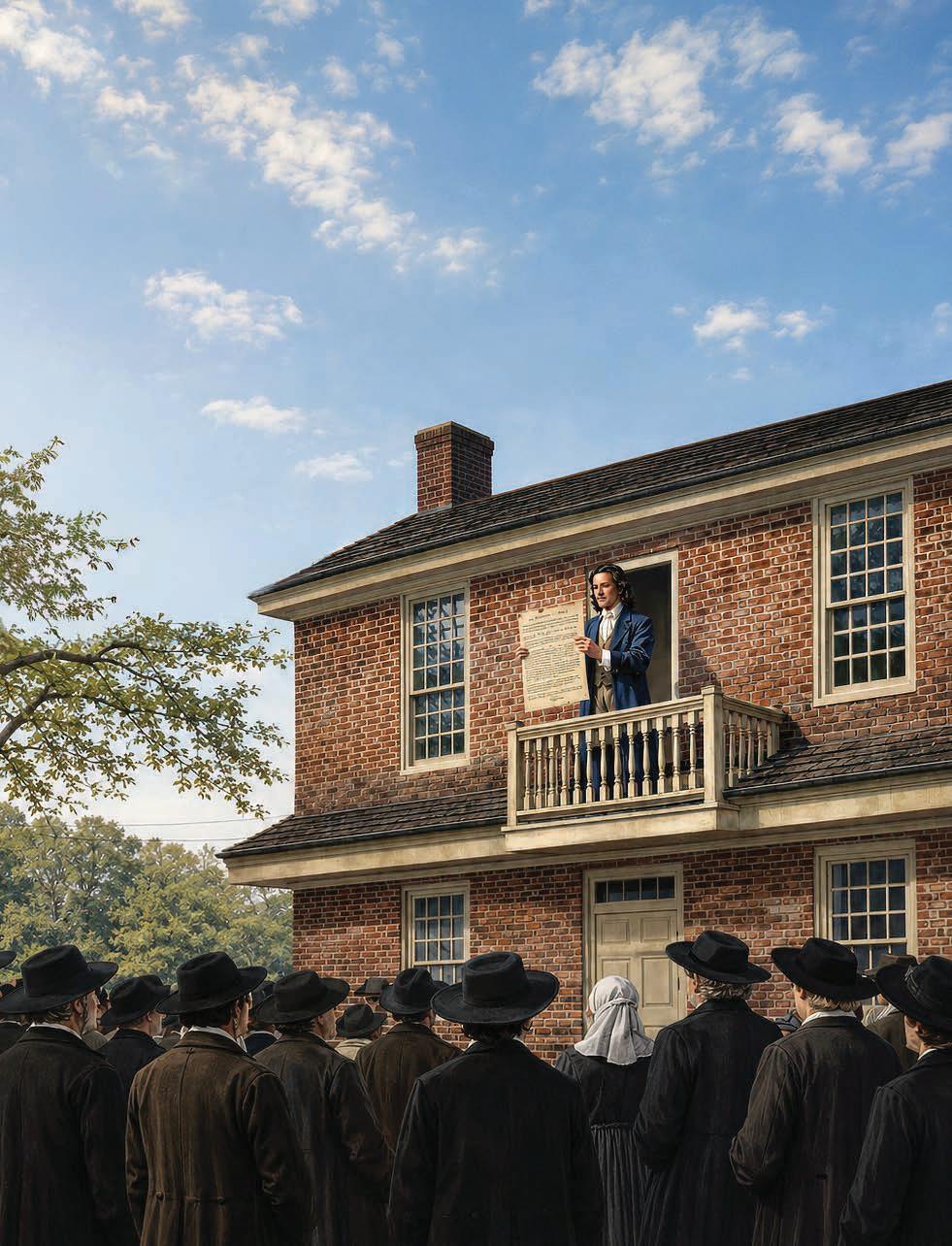
AI imagined, July, 1776: Announcement and reading of the Declaration of Indpendence to Newtown Square residents gathered at The Square Tavern, Goshen and Newtown Street Roads
Photo courtesy of the Newtown Square Historical Society
PUBLICATION TEAM
PUBLISHER: Bob Blaisse
EXECUTIVE ASSISTANT TO THE PUBLISHER: Lisa Jeffries
Veronica Brown Photography VeronicaBrownPhotography.com
CONTRIBUTING WRITERS: Bob Blaisse, Sheila TurnerHilliard, Holly Stupak, Lisa Jeffries, Doug Humes, Kaitlin Battiste, Scott Magness, Lou Matteo, Rick Bondurant, Jose Colmenares
ADVERTISING
Contact Publisher: Bob Blaisse, 610-453-5536 Email: BBlaisse@BestVersionMedia.com
COMMUNITY SUBMISSIONS
Have feedback or questions about how to submit events, updates, ideas for articles, high resolution photos, etc.? We will do our best to include as much community information as space permits. Please contact our Content Coordinator Sheila Turner-Hilliard at STurnerHilliard@BestVersionMedia.com.
Digital Reenactment of the reading of the Declaration of Independence at The Square Tavern in Newtown Square
Dear Friends & Neighbors,
It’s time to say ‘HI’ to July! And that means we’re halfway through 2026! That realization hits loud notes on the heels of summer’s arrival. Another summer milestone is always July 4th, when many feet run or walk to West Chester Pike to enjoy Marple Newtown’s largest gathering of the year, the 5K Firecracker Run/Walk and the Marple Newtown 4th of July parade, this year celebrating the milestone 250th birthday of our nation!
I’m always there, in my favorite chair, near the St. Anastasia Church sign, bringing a strong voice of encouragement to the Broomall Rotary’s 5K Firecracker Runners and Walkers before turning my cheers towards veterans, first responders, musicians, children and contenders for parade float honors passing by in our 4th of July Parade.
Once again this year, our Sponsors’ support of our community has made our parade possible, and also this new issue of your hometown magazine, in print and also online. Tell your friends, especially friends and family who once lived in Newtown Square but have moved away, that they can keep up on local happenings by reading our hometown magazine online at NewtownSquareMag.com, thanks to our Sponsoring advertisers who really value Newtown Square.
Enjoy this special history-celebrating issue of Newtown Square Friends & Neighbors filled with patriotic cheer as a short staycation right here. Where? In beautiful, historic, Newtown Square.
Bob Blaisse Publisher
Dear Residents,
We’re celebrating our freedom in so many ways this month! From honoring our nation’s 250th birthday, to parades, fireworks, barbecues, outdoor concerts in the park and beach days down the shore, July has us feeling FREE!
Our Local Journey to Independence
This month’s issue is packed with history, and we’re kicking it off with a fascinating feature by our History Spotlight Author, Doug Humes, that explores a side of the American Revolution that is often overlooked. We then turn our attention to a local artist whose works serve as visual time capsules, preserving the places and stories that connect generations. Our Business Profile highlights Mighty Bites Pediatric Dentistry. Dr. Rich Clark has combined his lifelong passion for working with children with years of specialized training to create a practice designed specifically for young patients.
We are always looking for more Newtown Square families, individuals and organizations to feature in our magazine. If you’d like to nominate someone, please email me at STurnerHilliard@BestVersionMedia.com.
John Blosinski J & K Trash Removal, Inc. Gradyville, PA 610-497-3800 • CustomerService@JandKTrash.com JandKTrash.com Expert Contributors needed! Dental, Education, Home Health Care, Jewelry, Medical, Pet Services, Physical Therapy, Vacations, etc. Contact: Bob Blaisse: 610-453-5536, or BBlaisse@BestVersionMedia.com If you connect me with a new Sponsor of our community, I’ll ask you to suggest a Newtown Square resident or family to be featured in an upcoming issue as our Resident Feature cover story. Text or call me with your Expert Contributor nominations. Bob Blaisse, Publisher – 610-453-5536
EXPERTS WANTED EXPERTS WANTED
by Scott & Ray Magness Scott’s Fireplace Products
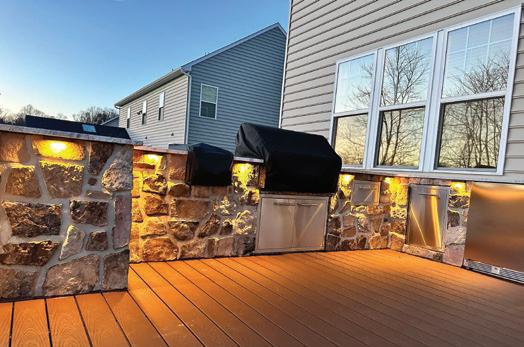
The Perfect Summer Night Outdoors
As July arrives and summer settles in, thoughts naturally turn to baseball games, Fourth of July celebrations, summer camps, family vacations and relaxing evenings spent outdoors. It’s the perfect time of year to gather friends and family together for backyard barbecues, outdoor dinners and cozy nights around a fire pit. And when it comes to creating the ultimate summer gathering space, gas grills and gas fire pits make outdoor entertaining easier and more enjoyable than ever.
Gas grills continue to grow in popularity because of their convenience, efficiency and ease of use. Unlike charcoal grills, there’s no need to spend time arranging coals, waiting for them to heat up or dealing with messy ashes afterward. With the simple push of a button, a gas grill ignites quickly and is ready to cook in minutes. Another major advantage of gas grills is temperature control. Charcoal grills often require constant monitoring and adjustment
to maintain the right cooking temperature. Gas grills, however, allow for precise control with the turn of a knob. Whether you’re searing steaks over high heat or slowly cooking vegetables and seafood over a lower flame, it’s easy to create separate cooking zones for different foods at the same time.
Cleanup is another reason homeowners appreciate gas grills. Once the cooking is finished, there’s no waiting for hot coals to cool down or worrying about disposing of ashes. Simply turn off the grill and enjoy the rest of your evening.
After dinner, many families and guests naturally gather around a fire pit to relax and unwind. Gas fire pits offer the same simplicity and convenience as gas grills while creating a warm and inviting atmosphere. With just the push of a button, flames appear instantly—without the hassle of chopping wood, gathering kindling or dealing with smoke blowing in your face.
Gas fire pits also provide adjustable flame control, allowing you to easily increase or decrease the heat depending on the evening temperature. Because they burn cleanly, there’s no smoke, ash or lingering odor on clothing and furniture. Many modern gas fire pits also feature decorative glass stones or fire rocks that add style and elegance while creating a beautiful display of dancing flames.
Best of all, cleanup is virtually nonexistent. When the evening comes to an end, simply turn the knob off and enjoy the memories of another perfect summer night spent outdoors. N S
Excellent Educator
by Lisa Jeffries
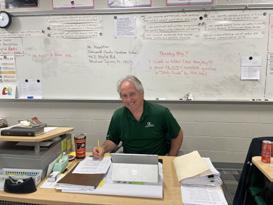
Excellent Educator of The Month Thom Houghton
Throughout his remarkable 41-year teaching career, Thom has earned numerous accolades, including being recognized by the Franklin Mint Federal Credit Union as an Excellence in Education recipient in 2012.
Thom has also achieved tremendous success as an advisor for the Delaware County Hi-Q competition teams at DCCS, including championships in both 2020 and 2024. One of his proudest accomplishments came in 2024, when he guided the DCCS team to become National Hi-Q Champions.
Outside the classroom, Thom is an active member of Faith Reformed Baptist Church in Media, where his faith continues to play an important role in his life.
Thom chose education as his career because he believed teaching provided a meaningful way to live out and express his faith while positively influencing young people. Reflecting on his experiences with students over the years, Thom shared, “I am reminded that learning, like teaching, is richly rewarding, but both require active, intentional engagement.” N S
We gratefully thank Substitute Teacher Service, Inc., for sponsoring our Excellent Educator of The Month.
Congratulations Thom!
School: Delaware County Christian School (DCCS), 8th-grade English and MS/HS Journalism (1995-current), Lynchburg Christian Academy, Lynchburg, VA (1987 to 1995)
Education: BA, English (Marshall University); MS, English (Radford University)
Years Teaching: 41 years
Who inspired you to become an educator? It wasn’t so much a person as it was my involvement in Boy Scouts as a Senior Patrol Leader in high school.
Favorite book and movie? To Kill a Mockingbird
If not teaching, what career would you choose? I think that I would have enjoyed a career as a sportscaster or sportswriter.
Something that may surprise people? I’ve never studied a world language other than ancient Greek.
by Doug Humes
A House Divided, A Nation Born
If you’ve been reading Newtown Square Friends & Neighbors for a while, you know that I usually write our feature cover stories. But with our nation celebrating its 250th birthday, I wanted to turn to someone whose passion for history is matched only by his ability to bring it to life. Local historian Doug Humes, a member of the Newtown Square Historical Society and the writer behind our History Spotlight articles, graciously agreed to take the reins for this month’s feature. In the pages that follow, Doug explores a side of the American Revolution that is often overlooked and reminds us that even in times of deep division, remarkable things can emerge.
A House Divided
~ Sheila Turner-Hilliard
On July 4, 2026, we will celebrate the 250th anniversary of the Declaration of Independence. It is a fitting moment to ask exactly what we are celebrating and why. When most Americans hear the phrase “civil war,” they think of the conflict between North and South from 1861 to 1865. Yet the American Revolution was, in many respects, the nation's first civil war. It divided colonies, communities, churches, military units and even families. Through the soft glow of history, we often picture the Revolution as a struggle between united American patriots and an invading British army. The reality was far more complicated. Americans found themselves scattered across a spectrum of loyalties: Patriots seeking independence, Loyalists remaining faithful to the Crown, many seeking neutrality and others simply trying to survive while avoiding the dangers of choosing sides. The colonies were not united states, but disunited at every layer of society. And yet, from those divisions emerged a nation. The men who signed the Declaration of Independence did not speak for a united people; they spoke for a people deeply divided about the course ahead and uncertain of the outcome. Over the next eight years, Americans fought not only British soldiers but also one another. The fights spilled out from the halls of government to local taverns and congregations and family dinner tables. The remarkable story of the American Revolution is not that Americans agreed with one another, but that they ultimately built a nation capable of surviving disagreement. Two hundred and fifty years later, we remain divided in many ways. By examining how our ancestors confronted the conflicts of their time, we may find lessons worth carrying forward into
our own lives and passing on to the generations who will inherit the next 250 years of the American experiment.
THE SEEDS OF WAR
The Revolution did not start on July 4, 1776. The causes of the war, many of which were listed in the Declaration, were seeds planted in the aftermath of what we refer to as the French and Indian War, from 1754-1763. Britain sent troops to America to defend colonists against both the French and the Indians who allied with them against the English settlers. Maintaining an army costs money, and so after that war the British Parliament adopted what they thought was a very reasonable tax on all legal documents and printed material such as newspapers, pamphlets, deeds, wills and other assorted documents. The Stamp Act of 1765 was the first tax levied directly on the American Colonists, and they did not like it one bit. They threatened violence on the tax collectors, and the following year the tax was repealed. The Townsend Acts of 1767 imposed tariffs on imported goods such as glass, paper, paint, lead and tea. The British sent troops to Boston to help enforce that law, and on March 5, 1770, the Boston Massacre shed the first blood of the conflict. The British repealed all the acts except the tea tax. This was not enough for the angry mobs in Boston, who proceeded to dump the untaxed tea into Boston Harbor in 1773. The British responded by closing Boston Harbor until the tea was paid for. The First Continental Congress met at Carpenters Hall in Philadelphia to try to present a united front in dealing with Britain, while urging the colonies to begin forming and training militias. Once again in Boston, the disputes boiled over – the British had marched out in April of 1775 to seize Rebel supplies in Lexington and Concord and were greeted by armed farmers who gave battle and chased the British back to Boston with heavy losses. In June, the same forces met again and battled on Bunker Hill, with heavy casualties on both sides. The Second Continental Congress met in June of 1775 and authorized the formation of the Continental Army, with George Washington appointed commander. All of these actions preceded the events of July 4, 1776.
SECOND CONTINENTAL CONGRESS
The Second Continental Congress began meeting in Philadelphia in May of 1775. The Colony of Georgia did not send any delegates to the first Congress, as the Loyalists were still in control,
We would like to thank FINLEY CATERING for sponsoring this month’s Resident Feature.
Photos courtesy of Newtown Square Historical Society
but when word spread about the various conflicts in Boston, the Loyalists were purged from power. Georgia selected delegates for the Second Congress, but they refused to go, as they disagreed on the actions that should be taken. One Georgian, Lyman Hall, came as a non-voting delegate. Virginia had fewer qualms about conflict and instructed its delegation to present a motion to declare independence. John Adams and the Massachusetts delegation, who had borne the brunt of the conflict for the first 5 years, were also pushing for that type of declaration. The Congress authorized a committee to draft a declaration, and Thomas Jefferson poured his heart into the effort in his rooming house on Market Street. There was less support in the middle states of New York, Pennsylvania, New Jersey, Maryland and Delaware. Their delegates were not initially authorized to vote for independence. Beginning in June, several states received their marching orders to approve the resolution. Other states changed their positions by force – in New Jersey, the Royal Governor, William Franklin, son of Pennsylvania delegate Benjamin Franklin, was arrested and imprisoned; and New Jersey then selected new delegates and sent them off to support independence.
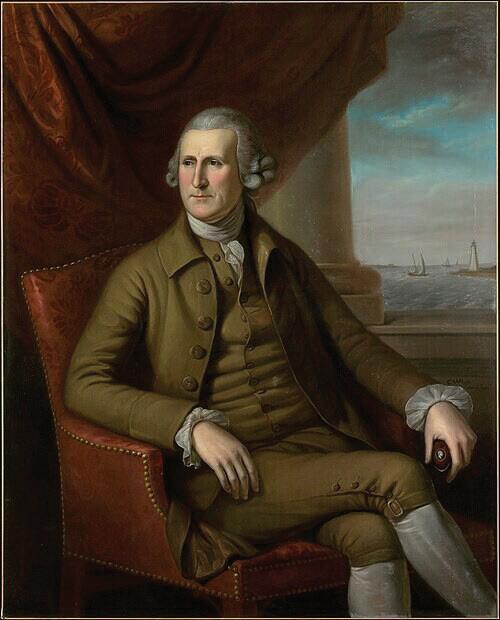
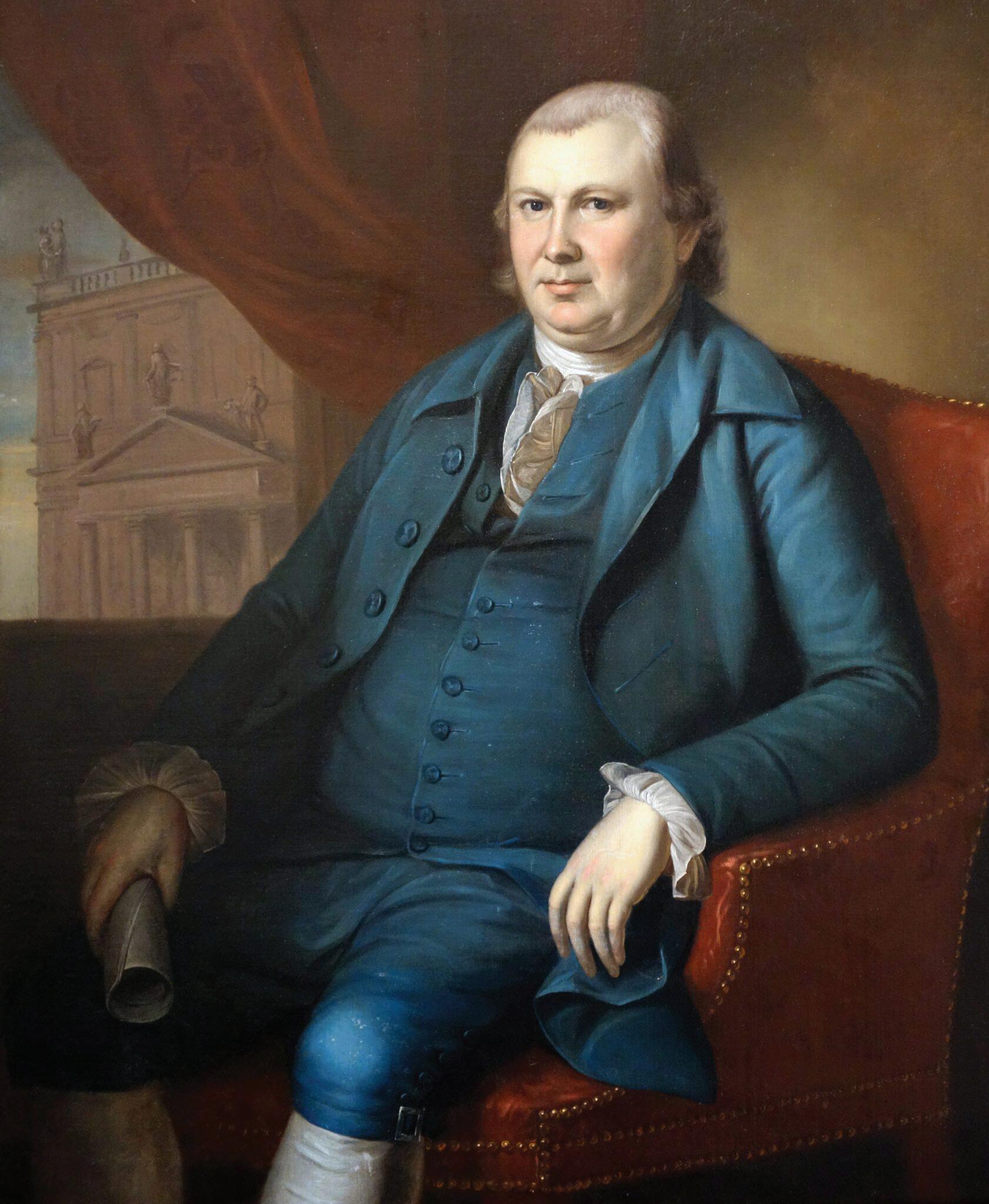
Pennsylvania was divided. Thomas Willing and Robert Morris, two of the richest men in Pennsylvania, were both delegates to the Congress. Willing, with his hands on all of the levers of power, urged caution. John Adams noted that elite merchants in the Colonies, whom he deemed to be
“governed by Willings” held significant sway. When the first vote was held on July 1, 1776, Pennsylvania voted against the Declaration, as instructed by the Pennsylvania Assembly. Willing, John Dickinson, Charles Humphreys and Robert Morris voted no, while Benjamin Franklin, John Morton and James Wilson voted yes.
A second vote was held the next day. Robert Morris and John Dickinson absented themselves from the vote. Willing and Humprheys again voted against the final declaration, but with Morris and Dickinson absent, Franklin, Wilson and Morton voted for the declaration, and Pennsylvania joined the other states to declare independence. Willing explained his vote, saying, “I voted
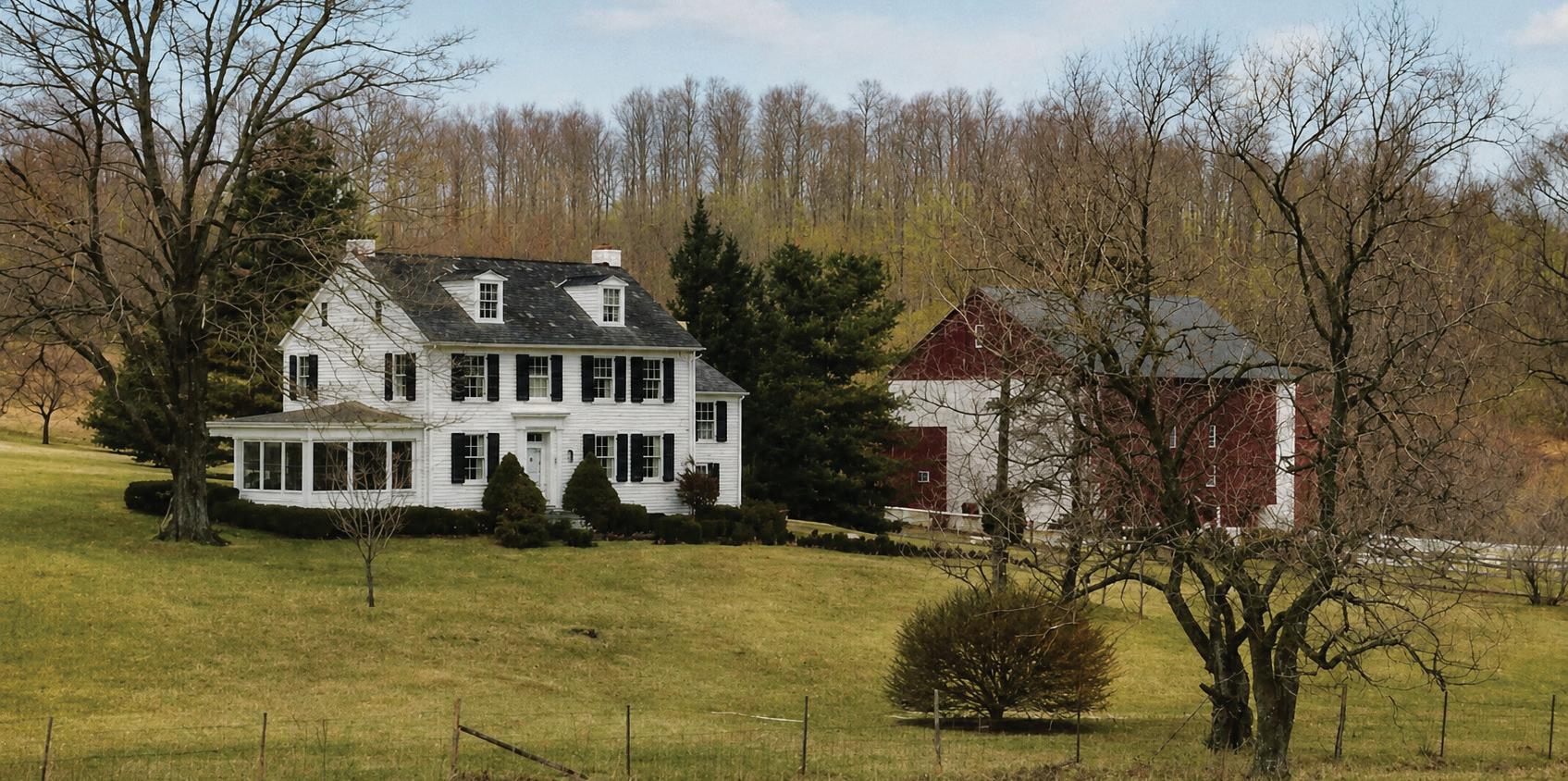
Castle Rock Farm, the farmhouse where Captain Fitz was captured Newtown, Edgmont and
against this Declaration in Congress, not only because I thought America at that time unequal to such a conflict as must ensue (having neither Arms, Ammunition or Military Experience), but chiefly because the delegates of Pennsylvania were not authorized by their instructions from the Assembly, or the voice of the People at large to join in such a vote.”
His business partner, Robert Morris, concurred. And yet Morris signed the Declaration of Independence, saying, “I am not one of those politicians that run testy when my own plans are not adopted. I think it is the duty of a good citizen to follow when he cannot lead.”
• Stucco Remediation
• Roofing Repairs
• Hail Damage Claims
• Asphalt Shingles
• Cedar Shake Roofs
• EPDM/TPO Flat Roofs
• James Hardie Siding
• Insulated Composite Siding
• Vinyl & Cedar Siding
• AZEK Trim Boards
Willing, the reluctant revolutionary, did not sign the document. But he was not a Tory, and throughout the war, he and Morris used their wealth and connections to raise the money to keep alive the American cause.
WAR COMES TO PENNSYLVANIA
Once the Declaration was adopted, it was not long before the war came to Pennsylvania. The British sailed up the Chesapeake Bay in September of 1777, landed at Head of the Elk near today’s Elkton, Maryland, and began marching north towards Philadelphia. There were a series of battles during this Philadelphia Campaign –at Brandywine, the Battle of the Clouds in Great Valley, the Paoli Massacre, a face-off at Fort Washington and at Germantown. The British occupied the American capital city of Philadelphia, and the Second Continental Congress fled. It is reported that when British General Howe entered the City, local Loyalists lined the streets to cheer the British troops. But the British found themselves to some degree in a jail of their own making. They needed supplies – food and fuel for themselves and their livestock. The urban city had been the marketplace for the farmers in the countryside, but American troops choked off any supplies headed for the city. The British responded by sending raiding parties out into the countryside.
General Cornwallis made a three-day raid into Chester County in December 1777, and some of the British soldiers entered Newtown and Marple, “Robbing and plundering every person they came across.” Gen. James Potter indignantly records, “My pen can’t describe their barbarity and cruelty, nor can you conceive the waste and Destruction that attended their footsteps everywhere they go.” Losses by Chester County residents during these raids are understated in the list of claims recorded by local residents after the War. Marple, Newtown and Edgmont were largely Quaker, and the Quakers generally made no claims for their losses.
Yet local residents found little relief when the British departed. Just miles away, Washington’s army struggled through the winter at Valley Forge, consuming enormous quantities of livestock, grain, hay, timber and horses. Washington repeatedly issued orders against unauthorized plundering, but hungry soldiers often took what they needed. For many Chester County farmers, especially Quakers who sought neutrality, the distinction between friend and foe could become blurred. Both armies required supplies, and if those supplies were not purchased, they would nevertheless be taken. A soldier’s stomach has no loyalty to any political cause.
QUAKERS DIVIDED
Marple and Newtown were settled by Welsh Quakers beginning in the late 1600’s, attracted by cheap and plentiful farmland and William Penn’s promise of tolerance for all religions. By 1776, these original settlers were into the 3rd and 4th generations living on the original farms granted by Penn. They farmed, took their goods to markets, raised their families, and worshiped and socialized with each other on Sundays at their “Meeting House”. Quakers were pacifists, committed to “bear testimony against war,” and many refused to take oaths of allegiance or serve in the military. But principles are easier kept when war is not on your doorstep. When the British marched through the countryside, looting farms and barns, many young Quaker men ran off to join the militia, while their elders counseled peace and patience.
A Lower Merion Quaker, miller John Roberts III, was caught in the same crossfire in occupied Pennsylvania. He did business with both American and British troops, but when the British left Philadelphia, Roberts and another elderly Quaker, Abraham Carlisle, were tried for “waging cruel war against this Commonwealth.” Despite pleas from more than a thousand residents urging mercy, the two men were hanged in public in 1778, as an example to others. Many other Loyalists who had cheered the British entry now fled the city, and their properties were confiscated. Though the war continued in other Colonies, the war had ended in Pennsylvania and the “winners” exacted partisan justice against those who had chosen the wrong side to support.
NOTORIOUS FITZ
James Fitzpatrick, a Chester County blacksmith, joined the American Army and served during the Battle of Long Island. However, like so many colonial farm boys, he had no real concept of what army discipline required. When he was severely whipped for a small infraction, he had his fill of army life and
left – deserted, said some – and returned to Chester County to resume his life there. The Army came looking for him – and from that point on, he became a bitter enemy of the American cause. When the British occupied Philadelphia and authority across Chester County weakened, Fitzpatrick reinvented himself—not as a soldier, but as an outlaw. Calling himself Captain Fitz, he launched a campaign of bold robberies across the region. His preferred ground was the Lancaster Road—the main artery between Philadelphia and the interior, but was reported at both the Square Tavern and the Fox Chase Inn in Newtown.
Captain Fitz not only robbed, but had a sadistic streak - in one well-known incident, he tied a militia officer to a tree, cut off his carefully maintained queue, and flogged him. But the same boldness that built his reputation also led to his downfall. On August 23, 1778, Fitzpatrick entered the home of Captain Robert McAfee in Edgmont, intending another routine robbery. Held at gunpoint, McAfee and a servant girl seized an opportunity during a brief distraction and overpowered the outlaw after a violent struggle. Fitzpatrick was captured, tried and executed a month later, his career ending as abruptly as it had begun.
Only afterward did myth begin to overtake reality. In the 19th and 20th centuries, writers recast Fitzpatrick as “Sandy Flash,” a romantic highwayman in the mold of Robin Hood. But the historical record tells a different story: not a noble outlaw, but a daring, and often ruthless opportunist, turned against his countrymen by violent treatment at the hands of his army, who exploited the disorder of war.
Captain Fitz was the inspiration for Sandy Flash, the Highwayman of Castle Rock
MARPLE NEWTOWN’S FLOOR COVERING EXPERTS
A FAMILY DIVIDED
The family of Benjamin Franklin fractured along partisan lines, with father Benjamin serving in the Second Continental Congress and voting for independence, while his son William served as Royal Governor until he was arrested and held captive, and later released in a prisoner exchange. He later fled to England, and father and son never reconciled. Closer to home, a similar story played out. Rev. William Currie had been the rector of Old St. David’s church since 1737. During the Revolutionary period, the congregation began to fracture. One faction was led by vestryman Anthony Wayne, later a general in the American Army. Rev. Currie remained loyal to the Crown. The Anglican Church liturgy included prayers for the King. In ordinary times, that was routine. In revolutionary times, it became a flashpoint. Within St. David’s, the question arose: Could one continue to pray for King George III each Sunday while neighbors were taking up arms against him? Some said yes—out of duty, tradition or conviction. Others refused.
The result was a schism within the congregation. Parishioners who could not in good conscience pray for the King withdrew or resisted. Rev. Currie was pledged to these prayers by his ordination vows. But his sons were not bound by the same vows or loyalties, and three of them enlisted in the American cause. Imagine the dinner table conversations in the Currie household during these contentious times. The strain forced Rev. Currie’s hand, and he resigned his position in the spring of 1776, his principles intact. The church remained without a pastor for the duration of the war. In his resignation letter, he did not further inflame the passions of his congregation, but closed with “Let the devotion Chamber be your Sanctuary till these troublesome times be overpassed, flee for refuge to the horns of the altar-the throne of grace-there offer up the Incense of your prayers, and let the lifting up of your hands be as the evening Sacrifice.”
THE LESSONS OF THE REVOLUTION
What lessons can we draw from the Revolution as we celebrate the 250th anniversary of the Declaration of Independence?
The first is that division is nothing new. Americans did not suddenly become divided in the twenty-first century. They were divided
before the Declaration was signed, during the war itself and long after the fighting ended. They disagreed about taxes, government, religion, military service, loyalty and the very question of whether independence should be declared at all. Those disagreements reached into Congress, churches, neighborhoods and families.
The second lesson is that a free society depends on people’s willingness to accept the outcomes of lawful decisions, even when they disagree with them. Thomas Willing opposed independence because he believed the colonies were unprepared for war. Robert Morris shared many of those concerns. Rev. William Currie remained loyal to the Crown and ultimately resigned rather than violate his conscience. None abandoned their principles. Yet neither did they continue fighting after the question had been decided. Morris devoted his fortune to sustaining the new nation. Currie departed peacefully rather than inflame the passions of his divided congregation. They demonstrated that it is possible to oppose a course of action without becoming an enemy of the community that chooses it.
The Revolution teaches that democracy requires both conviction and restraint. Citizens should speak freely, vote honestly and advocate vigorously for what they believe. But when the people have spoken, the losing side has a responsibility as well: not to abandon its principles, but to remain loyal to the constitutional system that allows disagreements to be settled without violence.
The true miracle of the American experiment is not that we have avoided division. It is that, for 250 years, generation after generation has found ways to survive it. As we celebrate this anniversary, perhaps the greatest tribute we can pay to those who came before us is to preserve that tradition for those who will come after us.
In the words of Robert Morris, “ … it is the duty of a good citizen to follow when he cannot lead.” N S
Publisher’s Note: This issue closes our 8th year publishing Newtown Square Friends & Neighbors. After 96 issues, which all included a monthly “History Spotlight” penned by our Hometown Historian, Doug Humes, I know Sheila Turner-Hilliard and I made the right decision to hand our cover feature byline to Doug for this special issue celebrating America’s 250th Birthday. What a great read. Thank you, Doug. We’ve loved every “History Spotlight” of yours, but this month you’ve given us a History Floodlight. Keep it lit, and get us ready to celebrate Newtown Township’s 350th Anniversary coming in 2031.
Know a Newtown Square family, individual or group who should be better known by everyone in our community?
Make your nominations for upcoming feature articles by emailing your ideas to Sheila Turner-Hilliard at STurnerHilliard@BestVersionMedia.com.
by Lou Matteo Edgemont Automotive
Don’t Sweat It: Maintain Your Vehicle’s A/C System
Summer is the perfect time to enjoy the outdoors, whether you’re heading to the beach, taking a family road trip or simply driving around town with the windows up and the air conditioning running. During the hottest days of the year, having a reliable vehicle air conditioning system can make all the difference between a comfortable ride and a miserable one.
Anyone who has worked outside in the summer heat knows how quickly high temperatures can drain your energy. You begin to sweat, your pace slows down and eventually you need a cold drink and a break to cool off. Your vehicle reacts much the same way. Fortunately, keeping your car cool and comfortable throughout the summer doesn’t have to be difficult.
One of the most important things you can do is have your vehicle’s fluid levels and overall system condition checked regularly, especially the coolant. Many drivers don’t realize that the engine cooling system and the air conditioning system work together. If the engine is overheating or the coolant system is not operating correctly, the A/C system will struggle to keep the cabin cool.
Air filters are another important component of summer vehicle maintenance. Your engine air filter and cabin air filter should both be inspected and replaced when necessary. The air conditioning system works by blowing air across a cold evaporator core and into the passenger compartment. Dirty or clogged filters can restrict airflow and circulate dust, pollen and debris throughout the vehicle, making rides uncomfortable and potentially affecting air quality for passengers.
It’s also a good idea to check that air is flowing properly through all interior vents, including dashboard vents, floor vents and defrosters. Blocked or malfunctioning vents can reduce cooling efficiency and make it harder for the system to maintain a comfortable temperature throughout the cabin.
When operating correctly, most vehicle air conditioning systems can cool the interior air by approximately 25 to 30 degrees below outside temperatures. If your A/C seems to be performing within that range, the system may be functioning normally.
And don’t forget your tires. Proper tire pressure is important yearround, but especially during the summer months. Underinflated
tires create additional heat and rolling resistance, which can place added strain on your vehicle and its cooling systems.
While some basic checks can be done at home, it’s always wise to consult a qualified automotive professional if your air conditioning system is blowing warm air, making unusual noises or not cooling properly. A simple inspection today can help prevent uncomfortable breakdowns tomorrow and keep you cool all summer long.
• Engine Diagnostics
• Body Control Systems
• Electrical systems
• Heating & A/C
• Tires & Brakes
• Suspension
• Scheduled Maintenance • PA
Emission Testing
BRINGING PEOPLE TOGETHER
by Bob Blaisse, Founding Publisher of Newtown Square Friends & Neighbors
Let Freedom Ring With Support For Our Newtown Square Sponsors
This month begins with festive salutes to American Freedom through 4th of July celebrations, recalling the 250th anniversary of the birth of our nation. We, living in the Land of the Free, have much to be grateful for.
This July also brings to an end our eighth year of publishing Newtown Square Friends & Neighbors in print and online at NewtownSquareMag.com. It is hard for me to believe you’re holding our 96th issue in your hands! Can you recall the first time Newtown Square’s hometown magazine arrived in your mail? Did you wonder how it could come to you for free? Over the past eight years, have you come to look forward to each new issue? Most importantly, have you come to understand our magazine’s motto: Bringing People Together?
While preparing for our first issue in August 2018, I never imagined how far our magazine would come in our continued effort of Bringing People Together. I am often thanked for our publication’s feel-good features, which circulate what we have in common: our hometown pride of living in Newtown Square. That’s how we bring people together, through this social-media-in-print, which is our hometown magazine made possible by our advertising Sponsors of Newtown Square.
Regular readers know I always give all the credit for the success of our magazine to the advertising Sponsors seen on these pages. But I’ve never shared that sentiment with this freedom:
Hear Ye, Good Citizens of Newtown
If you value living in Newtown Square, If you value our hometown magazine and Look forward to every new issue, Let freedom ring! Call and do business first
With our advertising Sponsors of Newtown Square Friends & Neigbbors Who make your hometown magazine possible.
Our Newtown Square Sponsors had the freedom to say no. They had the freedom to advertise their business in many other ways. But they chose to support us, the residents of Newtown Square, by choosing to use a portion of their limited marketing budget to sponsor our community. And in doing so, your free monthly hometown magazine is made possible in print and online.
Our Sponsors had the freedom to say no but they said yes. And we also have the freedom to say yes. Let’s say yes to the businesses that clearly demonstrate how important Newtown Square residents are to their success. Let’s use our freedom to buy local, and whenever possible, to choose with strong intention to do business first with the businesses advertising in our hometown magazine. That freedom is what makes Bringing People Together possible for us. N S
Bob Blaisse Publisher, Newtown Square Friends & Neighbors
Expert Contributor
Oby Kaitlin Battiste
Finding the Right Summer Movement for You
ne of the biggest misconceptions about wellness is that movement has to be intense to “count.” In reality, the most beneficial movement is often the kind you genuinely enjoy and want to return to. Creativity, emotional release, social connection and self-expression can be just as valuable as physical fitness.
This is where intrinsic motivation matters. Extrinsic motivation is driven by outside factors like calories burned, appearance goals or pressure to be productive. Intrinsic motivation comes from within–you move because it feels good. Over time, this creates a more sustainable and positive relationship with movement.
This summer, instead of asking, “What workout should I force myself to do?” try asking:
What kind of movement makes me feel most alive?
Do I want to feel energized, grounded, expressive, connected or challenged?
What environment or atmosphere excites me?
Wellness often begins with finding movement that fits your personality and needs. Here are a few styles to explore this season:
If You Crave Calm and Grounding: Try Yoga
Yoga emphasizes breath, mindfulness and nervous system regulation. It can reduce stress, improve body awareness and create steadiness during busy seasons.
If You Prefer Structure and Elegance: Try Ballet or Barre
Ballet and barre combine precision, posture and discipline with artistry and strength. These styles can build confidence, focus and body awareness while encouraging grace and control.
If You Want Confidence and Energy: Try Hip-Hop
Hip-hop is expressive, bold and energizing. It encourages individuality, musicality and self-expression while helping release stress and build confidence through movement and community.
If You’re Social: Try Ballroom Dance
Styles like salsa, swing, tango and waltz foster connection and communication. Ballroom dancing can reduce loneliness, build social confidence and create a strong sense of community.
If You Want Joy and Nostalgia: Try Tap
Tap dance combines rhythm, coordination and playfulness. Creating music through movement can feel deeply satisfying and often shifts the focus away from appearance and toward creativity and fun.
If You’re Expressive: Try Contemporary Dance
Contemporary dance blends athleticism with emotional storytelling. It encourages authenticity, vulnerability and creative expression while offering emotional release through movement.
If You Want Fun Without Pressure: Try Jazz Dance Jazz is upbeat, theatrical and versatile. It can boost mood and energy while reconnecting you with playfulness and performance.
There is no single “right” way to move your body; only the way that feels most supportive for you. When movement comes from curiosity rather than pressure, it becomes more enjoyable and sustainable. This summer, give yourself permission to explore something new, revisit something nostalgic or simply notice what feels good in your body. The best movement practice is the one you can return to again and again because it feels like you. N S
by Sheila Turner-Hilliard
Making Every Kid’s Visit Fun, Easy and Stress-Free
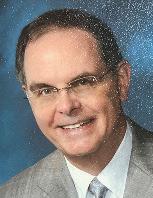
For many families, finding the right pediatric dentist is about more than clean teeth and routine checkups. Parents want a provider who understands their children, eases their fears, builds their confidence and creates an experience that leaves kids smiling long after they leave the office. That philosophy is at the heart of Mighty Bites Pediatric Dentistry, where Dr. Rich Clark has combined his lifelong passion for working with children with years of specialized training to create a practice designed specifically for young patients.
For Dr. Rich, the journey to pediatric dentistry began close to home. He grew up in Broomall and graduated from The Episcopal Academy, giving him a deep appreciation for the community he now serves. Long before he ever stepped into a dental office as a professional, he discovered his love for helping children
while coaching competitive swimming. “During high school and college, I coached swimmers ranging in age from 5 to 18,” Dr. Rich said. “I spent countless hours on the pool deck encouraging young athletes, helping them overcome challenges and celebrating their successes.” Those experiences taught him how meaningful it can be to help children build confidence and conquer fears. “Coaching taught me that every child is different,” Dr. Rich explained. “Some kids need encouragement, some need patience and some just need someone who believes in them. The same is true in pediatric dentistry.”
While his early academic path pointed in a different direction, Dr. Rich eventually realized that his greatest fulfillment came from working directly with children and families. A graduate of Bucknell University, where he earned a degree in electrical engineering and graduated summa cum laude, he ultimately chose to pursue pediatric dentistry, combining his love of science and problem-solving with his passion for helping kids. After completing dental school at the University of Pennsylvania, he went on to complete a twoyear pediatric dentistry residency at St. Christopher’s Hospital for Children, where he has served in leadership and teaching roles since 2018, mentoring future pediatric dentists and helping guide the program through important transitions.
Those experiences provided extensive clinical expertise, but they also reinforced his belief that pediatric dentistry is fundamentally about relationships. Children who feel comfortable and supported are more likely to develop healthy habits and positive attitudes toward dental care that last a lifetime.
Photos courtesy of Dr. Rich Clark
Dr. Rich with Haweh Kwaidah, Dental Assistant and Meghan Allen, Front Desk Coordinator
That belief became the foundation for Mighty Bites Pediatric Dentistry. Rather than creating a traditional dental office, Dr. Rich envisioned a space where children would actually enjoy visiting. “Our office is bright, welcoming and ocean-themed throughout to help kids feel relaxed from the moment they walk through the door,” Dr. Rich said. “And our friendly, supportive staff contribute to an environment that feels more like an adventure than a dental appointment.”
and empowered throughout the process. His open and welcoming approach allows families to feel like partners in their child’s oral health journey rather than spectators.
Mighty Bites provides comprehensive pediatric dental care for infants, children, teenagers and patients with special healthcare needs. Services include preventive care, minimally invasive treatments, behavior-guided visits and education focused on establishing lifelong healthy habits. Dr. Rich and his team emphasize prevention whenever possible, helping families understand how nutrition, oral hygiene and early intervention can support long-term dental health.
Parents quickly notice another difference as well. At Mighty Bites, appointments are intentionally designed to be personalized and not rushed. Dr. Rich takes time to connect with both children and parents, explaining procedures in an age-appropriate way and answering questions thoroughly. Families are encouraged to be active participants in their child’s dental care, helping create a collaborative experience that reduces anxiety and builds trust.
As a father to four young kids himself, Dr. Rich understands the concerns many parents have before a child’s dental appointment. Questions about fear, cooperation, timing and treatment decisions are common, and he believes parents should feel informed
For Dr. Rich, opening Mighty Bites Pediatric Dentistry in Newtown Square represented more than a professional milestone. It was an opportunity to return to the community he knows so well and provide a service that supports local families. His roots in Broomall, years spent coaching local children and commitment to pediatric healthcare all come together in a practice built on trust, compassion and connection.
Mighty Bites Pediatric Dentistry is located in the Shops at Springton Pointe, 222 S Newtown Street Rd in Newtown Square. For more information, visit MightyBitesPediatricDentistry.com or call them at 610-801-1502. N S
Expert Contributor
by Rick Bondurant
R.F. Bondurant Plumbing
Summer Storm Season Is Here, Be Prepared!
As summer thunderstorms and fall storm systems become more frequent, now is the ideal time to inspect your home’s sump pump system before heavy rains put it to the test. A properly functioning sump pump is one of the most important defenses against basement flooding and costly water damage, yet many homeowners don’t think about it until there’s already a problem.
Start by inspecting the sump pit or basin. If your home has an existing crock in the basement floor, make sure the pit is free of dirt, gravel and other debris. Accumulated debris can interfere with the pump’s float switch, preventing the pump from activating properly when water levels rise. It can also clog the impeller, restricting the pump’s ability to move water efficiently.
It’s equally important to verify that the discharge line includes a functioning check valve. This valve prevents water from flowing back into the pit after it has been pumped out. Without a properly operating check valve, the system may cycle excessively, causing unnecessary wear on the pump and reducing its lifespan.
Whenever a sump pump is replaced, homeowners should also inspect the exterior discharge line to ensure water can flow freely away from the home. Landscaping changes, mulch beds or shifting soil can sometimes obstruct the outlet without homeowners realizing it. If the discharge line becomes blocked during a storm, the pump may continue running without effectively removing water from the foundation area.
Power supply is another critical component often overlooked. Sump pumps frequently operate on basement outlets protected by
Ground Fault Circuit Interrupters (GFCIs), which can trip unexpectedly. Testing the outlet monthly helps ensure the pump will receive power when it’s needed most.
For additional protection, many professionals strongly recommend installing a backup sump pump system. Backup systems provide a secondary layer of defense if the primary pump fails due to mechanical issues or power outages during severe weather events.
There are two primary types of backup systems available. Batterypowered backups use a 12-volt marine battery paired with a charging system to provide emergency operation during outages. Depending on conditions and pump demand, homeowners can typically expect several hours of protection.
Water-powered backup systems have also become increasingly popular. These systems use municipal water pressure to operate and require no electricity. Because they are not dependent on battery capacity, they can often function much longer during extended outages. However, water-powered systems are only suitable for homes connected to municipal water supplies and are not compatible with private well systems.
According to the U.S. Department of Housing and Urban Development, the average sump pump lifespan is approximately 10 years, though longevity varies depending on usage and operating conditions. Many homeowners choose to replace aging pumps proactively for added peace of mind before storm season arrives. N S
Student of the Month
by Lisa Jeffries
TSloane Smith
JULY STUDENT OF THE MONTH
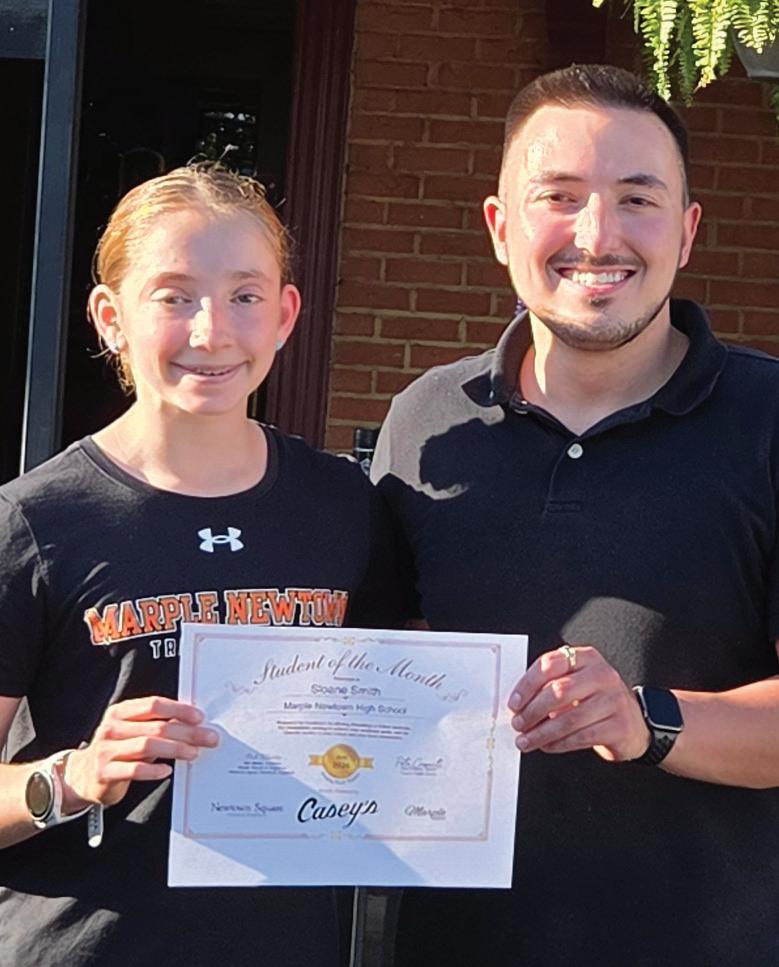
his month, we proudly shine the spotlight on Sloane Smith, a rising Junior at Marple Newtown High School, as our July Casey’s Student of the Month! Sloane is an outstanding example of a well-rounded student whose dedication to academics, athletics and community service truly sets her apart.
Recently inducted into the National Honor Society, Sloane is excited about the opportunity to further demonstrate both her academic commitment and her involvement within the community.
Celebrate
Sloane is actively involved in the Best Buddies program and also serves as Vice President of Marple Civic Youth. Through this organization, she helps coordinate and participate in a variety of community-focused projects, including the 8th-grade dance, rose garden ceremonies honoring loved ones, providing childcare during Worrall PTO meetings and participating in teen cook nights that prepare meals for those in need.
Athletics are another major part of Sloane’s life. She competes in cross country, winter track and spring track, and has already achieved remarkable success. After just one season of summer and fall training, Sloane placed 4th at the PIAA Cross Country State Championship, an incredible accomplishment that highlights both her natural talent and dedication. During indoor track season, she also earned an 8th-place finish in the 3K State Championship held at Penn State University.
Looking ahead, Sloane hopes to attend an East Coast college where she can continue running while majoring in neuroscience. Among the schools she is considering are the University of Pittsburgh, Drexel University, Ithaca College and Boston College.
Sloane, your hard work, kindness and determination make you a wonderful role model for your peers. We look forward to seeing all the incredible things you accomplish in the future. N S
YOU
GET
TO CHOOSE!
Who is our next Student of the Month?
You’ve seen them featured in our magazine— now it’s your chance to decide who’s next!
We’re looking for students in grades 7–12 who make a difference in their schools, communities, among friends or through local organizations. Nominees must live in Marple, Newtown Square or Edgmont, no matter which school they attend—or if they’re homeschooled. Email Lisa at LJeffries@BestVersionMedia.com. We’re celebrating character, not just credentials, so academic or athletic accomplishments are not required.
Sloane with Casey’s Manager, Bobby Guerrieri
Photo courtesy of Betsey Smith
History Spotlight
by Sheila Turner-Hilliard Photos courtesy of the Newtown Square Historical Society
Preserving the History of the Township for Future Generations
For communities with deep roots, history is not something confined to textbooks or museum shelves. It lives in the buildings we pass every day, the stories handed down through generations and the people committed to preserving those memories. As America celebrates its 250th birthday this year, the Newtown Square Historical Society stands as a reminder that our nation’s story is built one community at a time. For more than four decades, the organization has worked to ensure that the history of Newtown Square remains alive and accessible for future generations.
OPEN DAILY 7 am - 5
While the nation reflects on the ideals and events that shaped the United States 250 years ago, Newtown Square residents have an opportunity to celebrate a local history that stretches back even further. William Penn planned Newtown Township in 1681, and many of the area’s historic structures were already standing when the Declaration of Independence was signed.
The Newtown Square Historical Society traces its own beginnings to a celebration. In 1981, residents organized festivities to commemorate the township’s 300th anniversary. The enthusiasm generated by that milestone led to the society’s formal creation in 1984. Since then, its mission has remained clear: to protect, preserve and promote the historic resources of Newtown Township while sharing the stories that make the community unique. Today, the organization is entirely volunteer-run and supported through memberships, donations, grants and fundraising efforts.
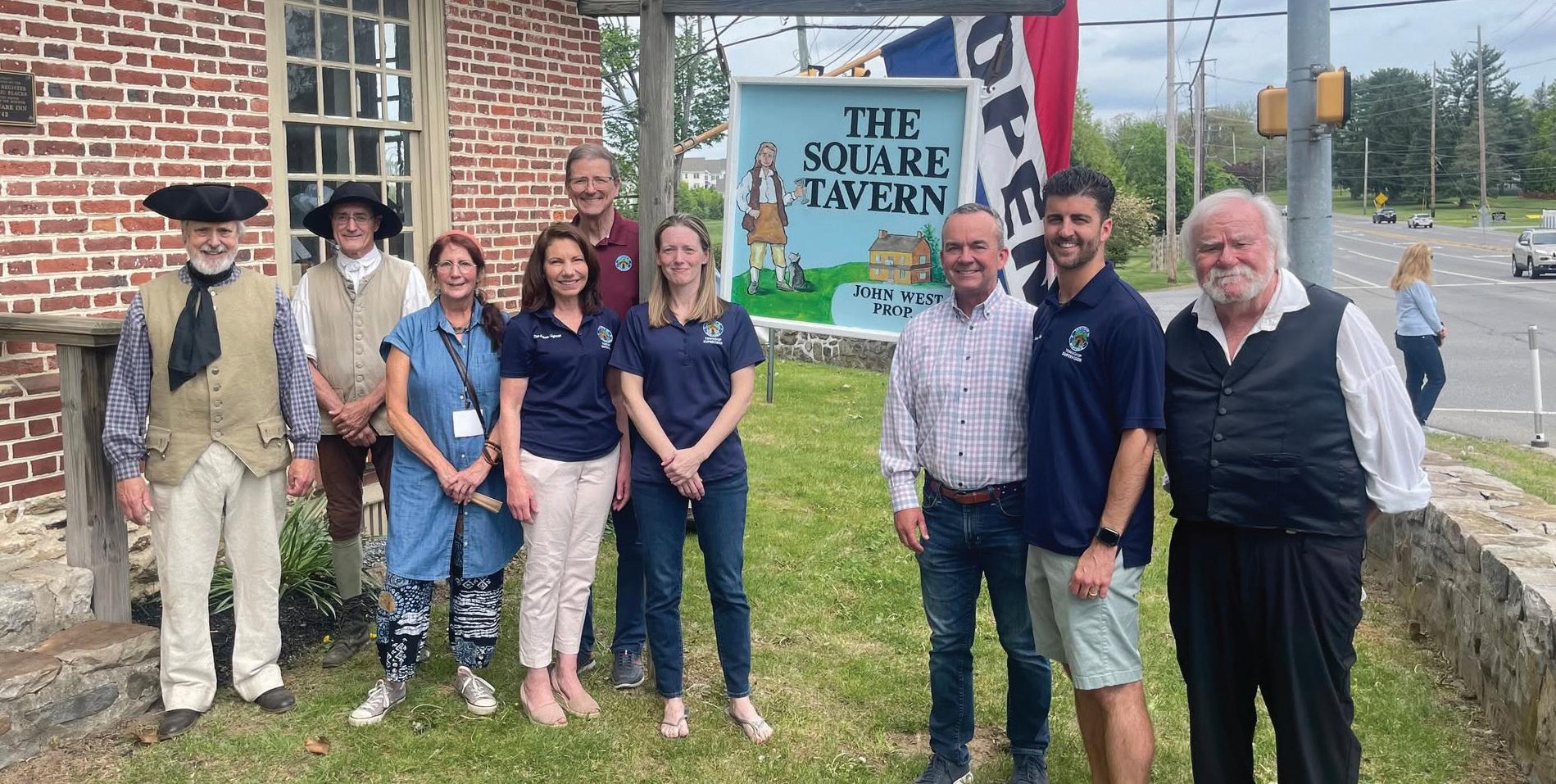
Over the years, the society has become a steward of some of the area’s most treasured landmarks. The Square Tavern, built in 1742, occupies a special place in local history. Once home to the family of the renowned artist Benjamin West, the tavern has been restored and preserved as a museum offering visitors a glimpse into eighteenth-century life. Another jewel in the society’s care is the Paper Mill House, where educational programs, workshops and community events bring history to life for residents of all ages. The society’s work extends far beyond preserving buildings. Through lectures, exhibits, archives, photographs and special events, it helps residents understand how Newtown Square evolved from a Welsh Quaker settlement into the thriving community it is
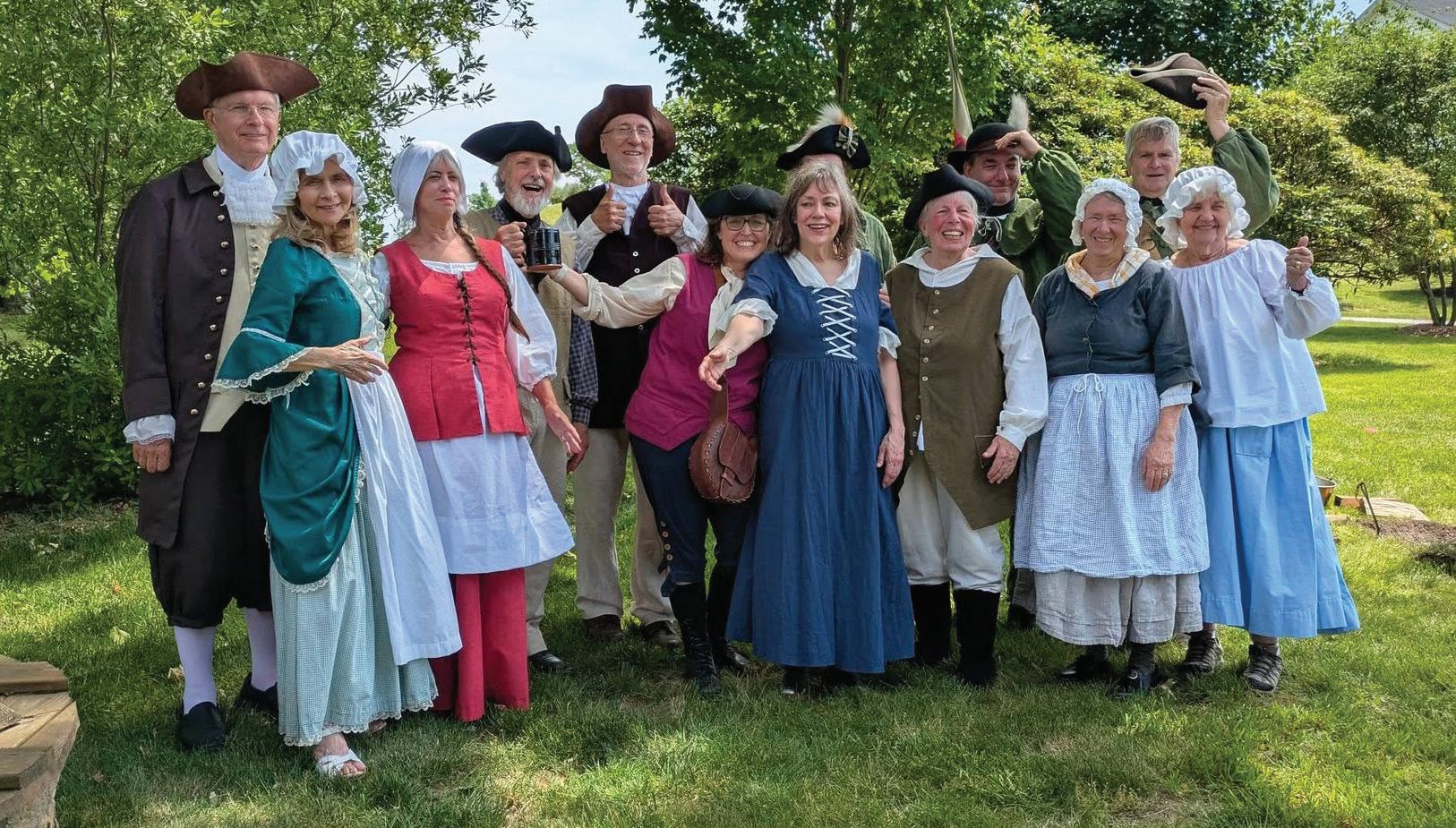
Historical reenactors at Marple Newtown Historic Day
That mission feels especially important during the nation’s semiquincentennial celebration. America’s 250th birthday offers more than an opportunity for fireworks and parades. It provides a chance to reflect on the sacrifices, innovations and everyday lives of those who came before us. Local historical societies serve as guardians of those stories, preserving the details that national narratives often overlook.
In many ways, Newtown Square itself serves as a witness to American history. Generations of farmers, merchants, teachers, soldiers and families have lived and worked here through the Revolutionary War, the Industrial Revolution, two world wars and countless other chapters of the American experience. The structures and artifacts preserved by the Historical Society help make those stories tangible.
The Newtown Square Historical Society is always looking for new volunteers, members and supporters who share a passion for preserving the past. Those interested in becoming involved or learning more about upcoming events can visit the Newtown Square Historical Society website, NSHistory.org, or contact the organization at Info@NSHistory.org. After all, preserving history is not simply about honoring yesterday. It is about giving future generations a stronger connection to the people, places and stories that shaped the community they will inherit.
The organization’s calendar continues to offer opportunities for residents to engage with history through programs, classes and special events. Whether attending a workshop, visiting one of the historic sites or simply browsing the society's remarkable collection of photographs online, residents can deepen their appreciation for the place they call home.
As communities across Pennsylvania commemorate America’s 250th birthday, Newtown Square can take pride in the dedicated volunteers who have spent decades safeguarding its heritage. Their efforts ensure that future generations will be able to understand not only the larger story of our nation, but also the local stories that give that history meaning.
FACT
The historic 1742 Square Tavern was officially turned over to Newtown Township last year
People In Places
by Sheila Turner-Hilliard
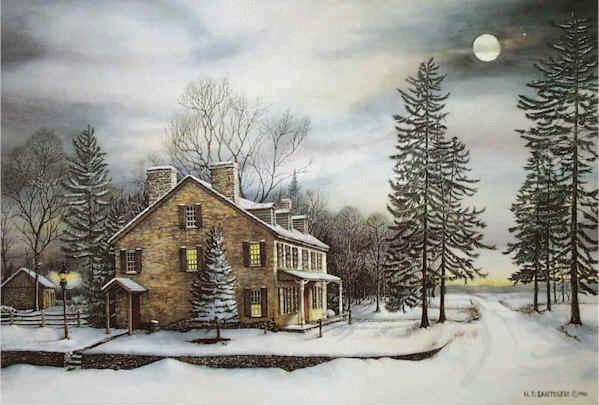
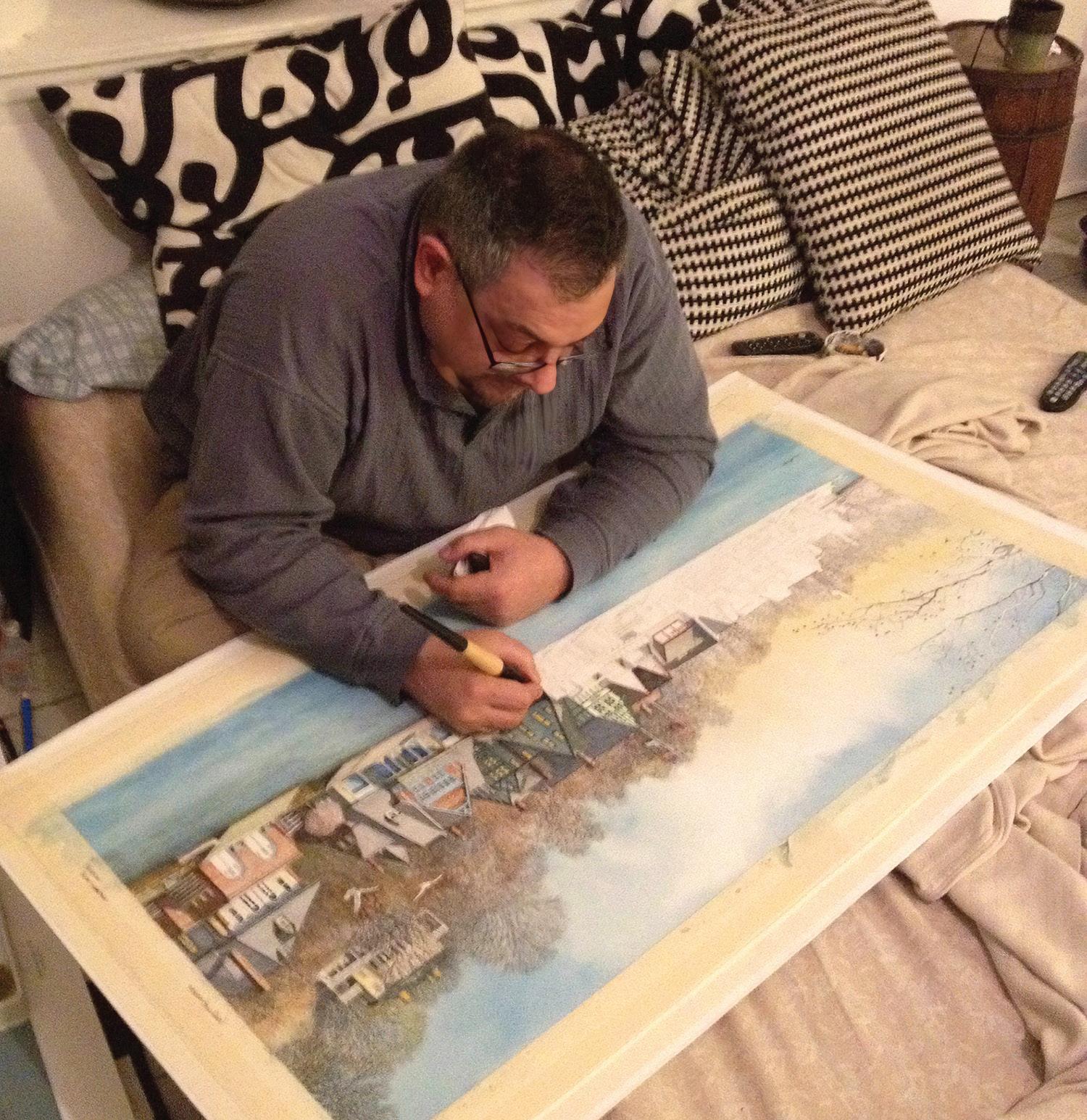
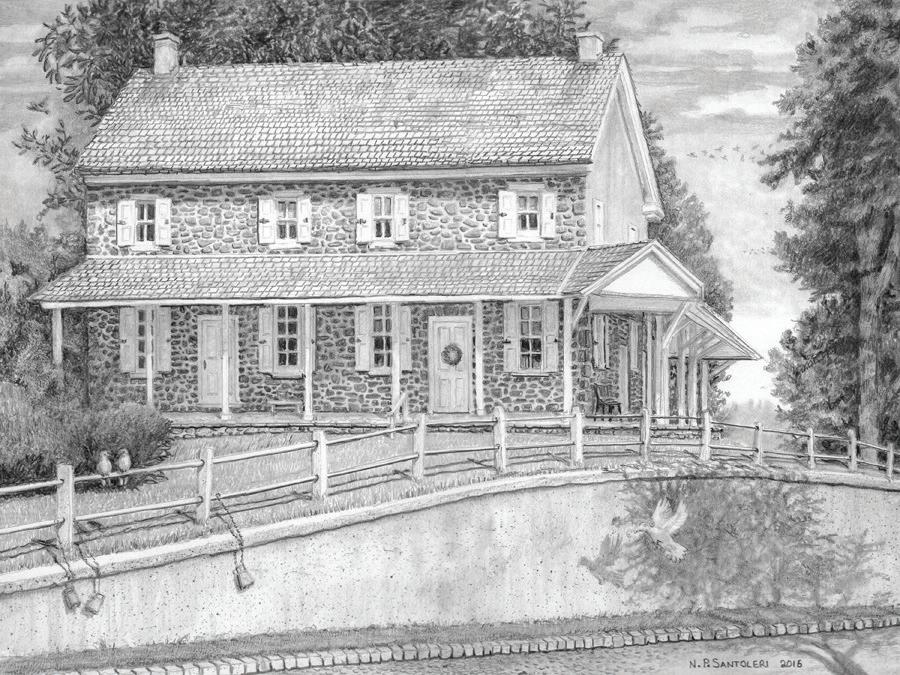
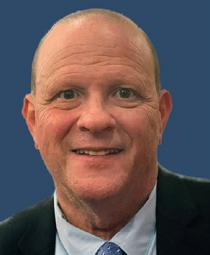
Local Artist Nick Santoleri
As communities across the nation celebrate America’s 250th birthday, many are reflecting on the people, places and stories that have shaped our country’s identity. For award-winning artist Nick Santoleri, preserving history has been a lifelong passion. Through paint and pencil, he has spent more than three decades capturing the architecture, landscapes and landmarks that connect generations and remind viewers that the past is never truly gone.
Raised in rural Chester County, Nick developed an early appreciation for the beauty of old buildings and the character they brought to the landscape. Long before he became an internationally recognized artist, he was simply a child fascinated by the stone farmhouses, country roads and colonial architecture that surrounded him. Those scenes left a lasting impression and would later become the foundation of his artistic career. As a youngster, he frequently traveled Goshen Road and formed memories of the streams, bridges and countryside that would one day become recurring subjects in his work.
Today, Nick’s paintings can be found in homes, businesses, universities and public collections throughout the country. Yet despite the national reach of his art, many of his most meaningful pieces remain close to home. For residents in our community, his paintings often evoke more than admiration. They spark memories. His work has immortalized familiar places that generations have passed on their daily travels, transforming ordinary landmarks into treasured pieces of local history.
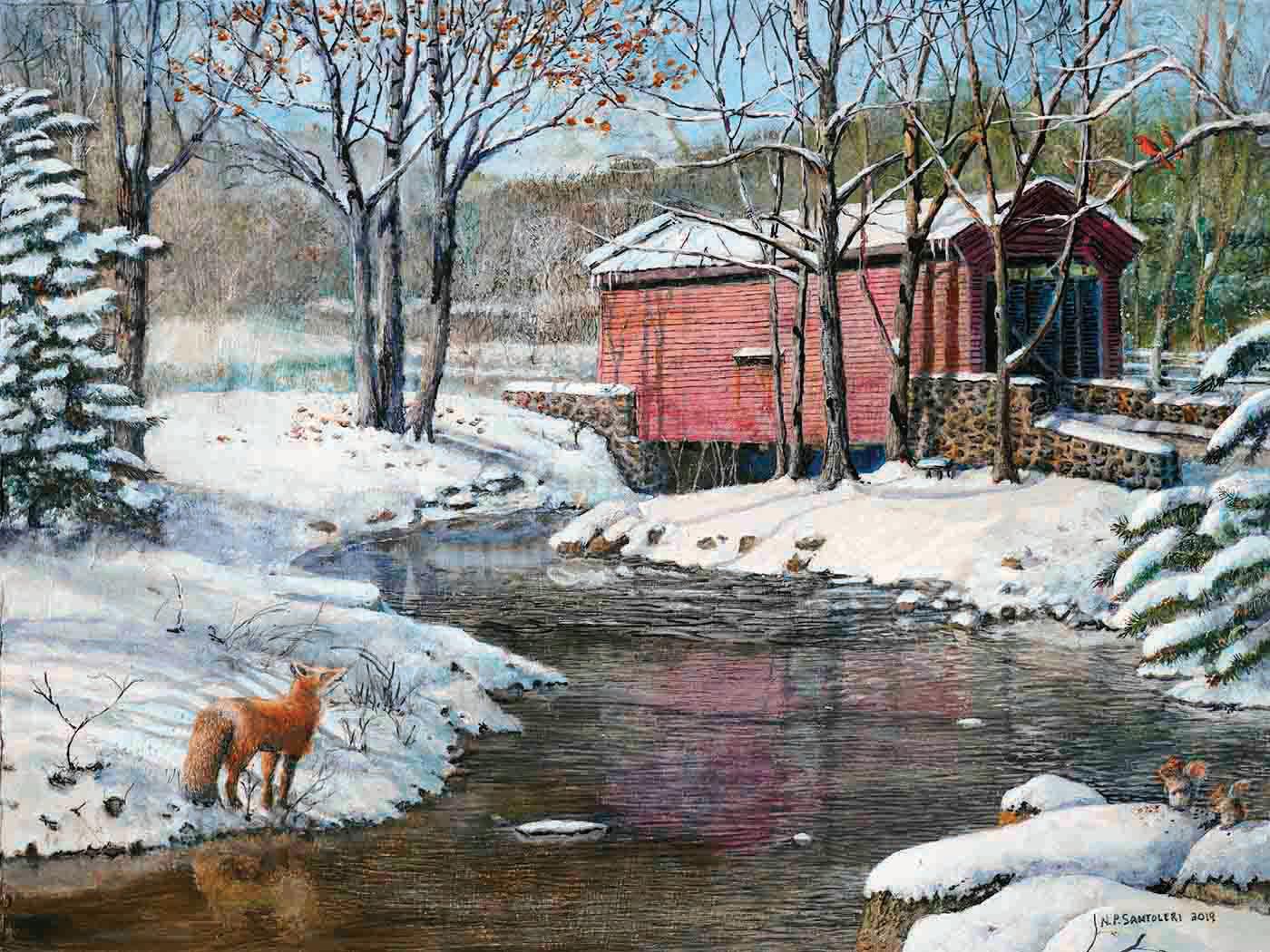
Among his best-known local subjects are the Newtown Square Friends Meeting House and the historic Bartram Covered Bridge. The Meeting House, dating back to 1711, represents the area’s Quaker roots and remains the oldest place of worship in the
community. The Bartram Covered Bridge, completed in 1860, is the last covered bridge in Delaware County and stands as a reminder of a simpler era. Through his paintings, Nick has preserved these landmarks in all seasons, allowing viewers to experience them not simply as structures, but as enduring pieces of the community’s story.
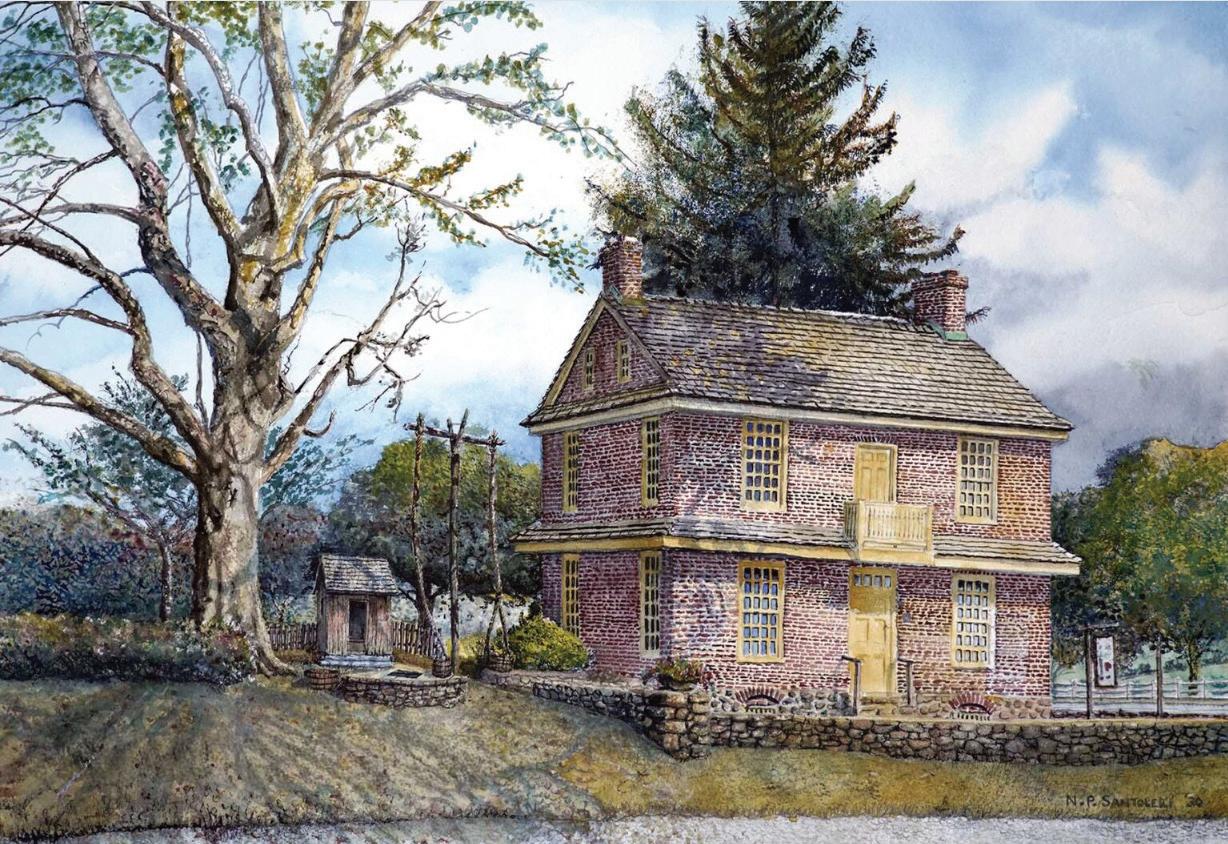
Another historic site that has captured his imagination is the Square Tavern, also known as the John West House. Built in 1742, the structure is notable for serving as the boyhood home of Benjamin West, one of America’s first internationally acclaimed painters. The connection between two artists separated by centuries is particularly meaningful. Like West, Nick has dedicated his life to recording the world around him and preserving its stories through art.
Goshen Road, one of the township’s oldest thoroughfares, has been especially influential in Nick’s work. Established during the colonial era, the road connected early Quaker settlers and became part of the larger story of southeastern Pennsylvania. During the Revolutionary War, soldiers from both the British and Continental
Photos courtesy of Nick Santoleri
Local Artist Nick Santoleri
The Square Tavern II
Evening At Edgemont
armies moved through the surrounding region, making the landscape itself a witness to the birth of a nation.
Years after his childhood travels along Goshen Road, Nick returned to those memories through his paintings. One piece, Pond’s Edge, was inspired by a powerful recollection of a place he had not seen in decades. Upon revisiting the location after completing the painting, he became fascinated by the relationship between memory and reality. “It was fascinating to me how what we remember changes and grows, and how it was similar and different in so many ways,” Nick said.
That ability to preserve memories has become one of the defining characteristics of his work. Rather than simply documenting what exists before him, he captures the emotions and experiences attached to a place. His paintings remind viewers that history is not merely dates and events, but the memories people carry with them throughout their lives.
His appreciation for history extends far beyond Delaware County. Philadelphia’s landmarks have occupied a prominent place in his portfolio for decades. He has painted scenes of Independence Hall, Elfreth’s Alley, Boathouse Row and the Philadelphia Museum of Art, returning repeatedly to the sites that helped shape the nation. During this anniversary year, those paintings serve as reminders of Philadelphia’s unique role in American history and the enduring beauty of the places where the country’s founding ideals took root.
Throughout his career, Nick’s artwork has been distributed through galleries across North America and abroad. His paintings and drawings have found homes in universities, hospitals, corporations and private collections. Yet awards and recognition have never overshadowed the personal meaning that art holds for him.
“Painting puts me in my own world. It has always been able to calm me down when I’m stressed or nervous,” he said.
Art has long provided Nick with a sense of peace and reflection. He often compares the creative process to the formation of a pearl. “It’s similar to oysters and pearls,” Nick explained. “An oyster
makes a pearl when an irritant, like a grain of sand or rock, gets into it. There is a natural process that makes the irritant smooth and soothes the oyster shell, eventually creating a pearl.”
That philosophy has helped sustain him through life’s challenges and enabled him to create works that resonate deeply with others. Through his long association with the Walden Woods Project, founded by musician Don Henley, Nick’s artwork helped raise more than $100,000 toward preserving the land surrounding Walden Pond, the historic landscape made famous by Henry David Thoreau. His talents have also benefited organizations such as the Salvation Army and Ronald McDonald House, demonstrating that preservation and service often go hand in hand.
Despite decades of success, Nick continues to pursue his craft with the same passion that first inspired him as a child. Through watercolor, oil, pencil and pen and ink, he continues to capture landscapes, architecture and scenes that speak to the passage of time and the beauty of everyday life.
As America marks 250 years of independence, Nick Santoleri’s paintings offer more than beautiful images. They serve as visual time capsules, preserving the places and stories that define communities and connect generations. While historians preserve the past through books and museums, artists preserve it through emotion and imagery.
Continued on page 24
Trust in us, we Will do good Deeds!
Specializing in Wills, Living Trusts, Deed and Real Estate Title Search
✓ We’ll help select the right documents for your needs.
✓ Personalized solutions for your situation and goals.
✓ Tailored estate planning for you and your family.
✓ Providing clarity, compassion and peace of mind.
Newtown Square Friends Meeting House
People In Places
“Through these acts of personal meditation, I have been able to create works of art and share them with the people of Newtown Square and beyond,” Nick said.
In many ways, that is the true gift of his work. Whether depicting a colonial meeting house, a covered bridge or a quiet country road remembered from childhood, Nick Santoleri reminds us that history is not confined to famous battlefields and monuments. It lives in the places we pass every day and in the memories we carry with us. Through every brushstroke, he ensures that those stories will continue to inspire generations to come.
For more information about Nick Santoleri, please visit his website at Santoleri.com or call 610-529-4648. N S
The Bartram Bridge II
by Sheila Turner-Hilliard
Saving a Piece of History: Restoring Bartram’s Covered Bridge
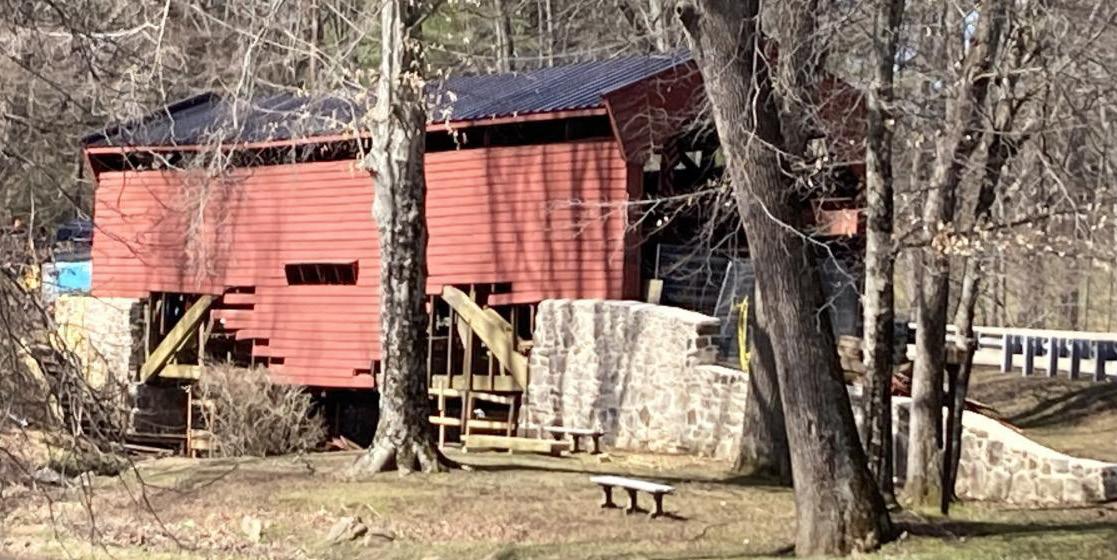
Bartram’s Covered Bridge has stood quietly over Crum Creek for more than 165 years, connecting Delaware and Chester Counties while serving as a reminder of our community’s rich past. Built in 1860 and named for nearby landowner Mordecai Bartram, the bridge was constructed by Ferdinand Wood using the Burr truss design, a style commonly found in Pennsylvania covered bridges. Today, it holds a distinction that makes it especially treasured. It is the last remaining covered bridge in Delaware County, where more than 30 once existed. Its unusual slanted plank portals, designed to be “high and wide as a load of hay,” are unique in Pennsylvania.
Located at the intersection of Boot and Goshen Roads, the bridge has long been a symbol of cooperation and has served as a beautiful background to countless family photo shoots. Delaware and Chester Counties jointly funded its original construction, and generations of residents have worked to preserve it. Although the bridge has been closed to traffic since 1941, several restoration efforts over the decades have ensured that this local landmark continues to stand.
The latest chapter in the bridge’s story began in 2019 when Newtown and Willistown Townships launched plans for a major restoration project. After years of planning and funding approvals, the two townships each committed $375,000, while the Commonwealth of Pennsylvania contributed an additional $100,000. The extensive work included rebuilding the stone foundations and raising the bridge so a new timber floor and decking could be installed. Both arches were repaired or replaced, and additional structural components were restored.
While the recently completed foundation and flooring work has returned the bridge’s structure to excellent condition, one important
task remains - replacing the bridge’s aging wood siding, which was not included in the original township-funded project. With available public funds exhausted, the Newtown Square Historical Society has made the siding restoration its newest and most ambitious undertaking. The organization has committed to raising the funds needed to purchase the wood materials, ensuring that the bridge’s appearance matches the quality of its restored framework.
Helping make the project possible is Ed Johnston, chairman of the Bartram Bridge Commission and owner of Ed Johnston Builders. A longtime supporter of the bridge, Ed has generously volunteered to perform all of the labor at no cost, allowing every donated dollar to go directly toward the materials needed for the project.
As America celebrates its 250th birthday, preserving places like Bartram’s Covered Bridge offers a tangible connection to the craftsmanship, ingenuity and community spirit that have shaped our nation. Thanks to the dedication of local volunteers and supporters, this beloved landmark will continue to span Crum Creek and connect generations for years to come.
Those interested in contributing to the bridge siding restoration project can learn more by visiting the Newtown Square Historical Society’s Bartram’s Covered Bridge page at NSHistory.org/bcb. N S
Photos courtesy of Newtown Square Historical Society
Historic Bartram’s Covered Bridge
Our Community
by Sheila Turner-Hilliard
America’s 250th birthday offers an opportunity to reflect on the places that stood at the dawn of our nation. In Newtown Square, 29 of the township’s oldest homes quite literally witnessed the birth of the United States. Today, we take a closer look at the history behind two of our surviving “witness” homes.
The John Hunter House
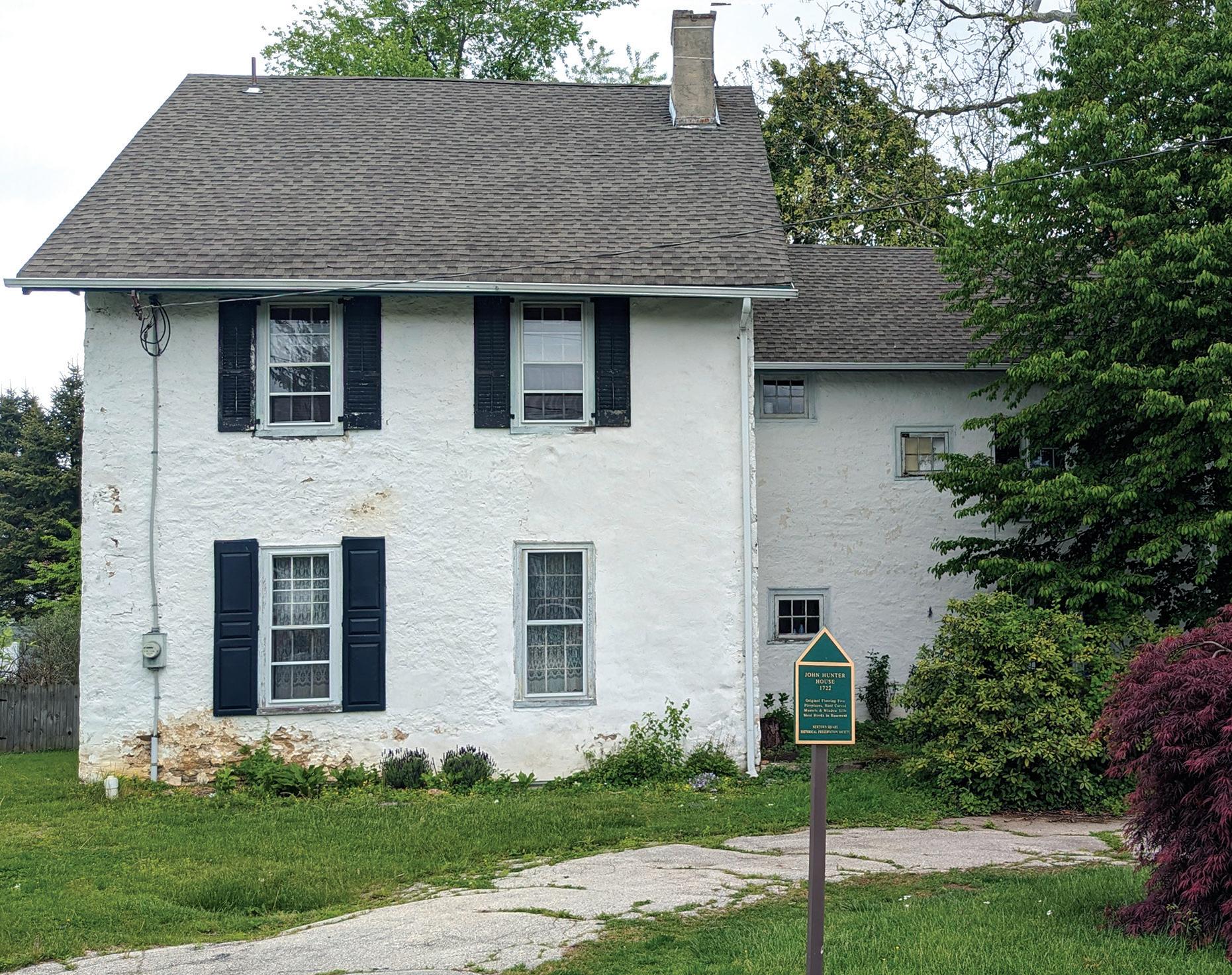
The John Hunter House at 405 College Avenue predates 1776 and stands today as a silent reminder of the generations who lived through the struggle for independence and helped shape the early history of the area.
Built in 1722, the stone home was constructed by John Hunter, an immigrant who arrived in Newtown Township that same year alongside the grandfather of General Anthony Wayne. Remarkably, Hunter was already 55 years old when he settled in the area. Although he spent only the final dozen years of his life here, he made a lasting impact on the growing community. He acquired land, established a farm and helped erect St. David’s Episcopal Church, where he was later buried after his death at age 67.
His story serves as a reminder that opportunity and purpose are not limited by age. During those twelve years, Hunter laid the foundation for a family legacy that would continue in Newtown Square for generations. His descendants became deeply woven into the fabric of the community, including Reese Hunter Jr., who began operating a feed outlet in 1917. That business eventually evolved into Newtown Square Home Supply, a familiar name to many longtime residents.
The land that once formed John Hunter’s original farm remained in family hands for years. One of his descendants, Warren Hunter, lived on property that had once been part of the early homestead,
maintaining a connection to the family’s roots nearly two centuries after the house was built.
Although the home has undergone alterations over the years, many of its original features survive. Behind its stucco exterior are substantial 18-inch stone walls that have stood for more than three centuries. Original flooring remains in several rooms, and the house contains five fireplaces, hand-carved mantels and original window sills. These details offer a glimpse into the craftsmanship and building techniques of colonial Pennsylvania.
The John Hunter House is recognized as one of Newtown Square's historic resources and is included in inventories compiled by the Newtown Square Historical Society and Newtown Township. It joins a remarkable collection of early structures that tell the story
Photos courtesy of Newtown Square Historical Society
The John Hunter House on College Avenue
of the township’s development from a small colonial settlement into the thriving community it is today.
As America commemorates 250 years of independence, historic houses such as the John Hunter House take on added significance. Buildings constructed before 1776 are often referred to as “witness houses” because they were standing when the Declaration of Independence was signed. Long before the arrival of automobiles, electric lights and modern conveniences, the walls of the John Hunter House sheltered families who experienced the uncertainty and excitement of a young nation taking shape.
More than 300 years after its construction, the John Hunter House remains one of Newtown Square’s oldest surviving landmarks. It is not merely an old building, but a tangible link to the people who settled the area and to the extraordinary events that transformed the thirteen colonies into the United States of America. As the nation celebrates its semiquincentennial, this enduring home reminds us that history is not found only in textbooks. Sometimes, it stands quietly on a neighborhood street, having witnessed it all.
The Samuel Caley House
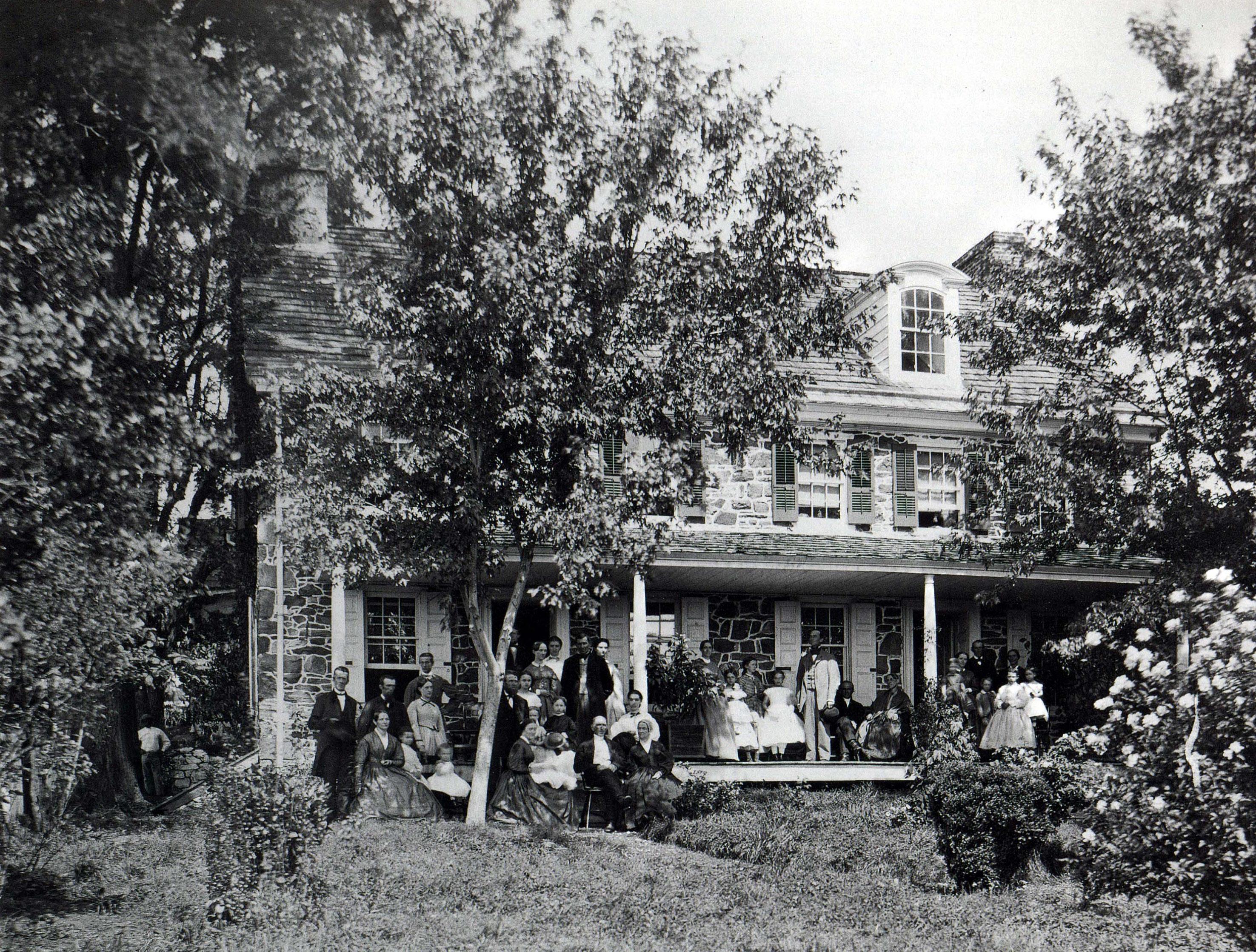
Long before the United States declared its independence, Samuel Caley was establishing roots in Newtown Township. By 1737, the Caley family had settled in the area, and around 1768 Samuel Caley built the handsome stone residence that still stands today along Caley Road. More than two and a half centuries later, the Samuel Caley House remains one of Newtown Square's treasured historic landmarks and a living witness to the events that shaped our nation. Built in the Dutch Colonial style, the house began as the centerpiece of an 80-acre farm that supported generations of the Caley family. Although additions and alterations have been made over the years, the home retains much of the character that connected it to colonial Pennsylvania. Some of the original wood flooring and woodwork survive, along with large first-floor fireplaces and smaller ones upstairs, reminders of a time when heat and family life revolved around the hearth.
Like many homes in southeastern Pennsylvania, the Caley House found itself caught up in the turmoil of the American Revolution. During the British occupation of Philadelphia, military raiding parties ventured into the countryside in search of food, livestock, and supplies. On September 19, 1777, the Queen’s Light Dragoons arrived at the Caley farm and confiscated property valued at an astonishing £3,100. The loss represented a substantial financial blow to the family and illustrates the hardships endured by ordinary residents living in the path of war.
The Caley family continued to farm the property throughout the eighteenth and nineteenth centuries. Around 1800, additions and major changes expanded the house to meet the needs of a growing family. Between 1830 and 1850, the distinctive gambrel roof and third floor were added, giving the structure much of its present appearance. The original dining room was later enlarged with a stone addition to accommodate a very different chapter in the property’s history.
From 1886 until 1946, the estate belonged to Pennsylvania Hospital. During those years, the property was adapted for institutional use and served as a facility for patients suffering from mental illness. Men and women stayed there for relatively short periods before being transferred or replaced by others. The house thus became part of the long and evolving history of mental health care in the Philadelphia region.
Evidence of the property’s agricultural past can still be found outside. On the rear patio stands the remains of a summer kitchen, where traces of original hardware survive in the massive fireplace. Behind the house sits an old shed believed to have served as a blacksmith shop, a reminder of the practical trades that supported farm life in early Newtown Township.
Today, the Samuel Caley House at 3523 Caley Road is recognized as one of the more than 100 historic sites identified by the Newtown Square Historical Society. Stewart and Mare Spahr have owned the residence since 1977. “We were looking for old homes with character and a nice yard,” Stewart said. “Our home had exactly what we were looking for and a rich history that we both appreciate.” While traffic and neighborhoods have replaced much of the surrounding farmland, the old stone residence endures. Its walls have witnessed colonial settlement, revolution, agricultural prosperity, changing approaches to health care and the growth of Newtown Square itself.
In a community rich with history, the Samuel Caley House and the John Hunter House stand as a remarkable connection to the generations who came before and a reminder that America’s story can often be found not only in famous battlefields and monuments, but also in the homes that have quietly stood watch over centuries of change. N S
The Caley Family at their home in 1868
July 1 to August 28
Marple Library’s Summer Bingo for Adults
@Marple Public Library
2599 Sproul Rd, Broomall
Adults, join Marple Library for their Summer Bingo. Complete two or more rows and be entered into the Grand Prize Raffle. Thanks to Volunteer and Sponsor Matthew Illich, Realtor, the grand prize is an America 250 Gift Bag. Cards are located at the library. Deadline to submit cards is 5pm August 28.
Cost: FREE MarpleLibrary.org
Saturdays in July
Art at The Square Tavern
@Goshen & Newtown Street Roads
A variety of rotating art displays by local artists, exhibitions and activities.
Time: 11am–5pm
Cost: FREE (donations accepted!) NSHistory.org
Saturdays in July
Paper Mill House & Museum
@3 Paper Mill Rd, Newtown Square
Visit this museum of local history, a place filled with the ghosts and footprints of the millworkers who once lived there.
Time: 12–4 pm
Cost: FREE (donations accepted!) NSHistory.org
Celebrating America’s 250th
Saturdays in July
Newtown Railroad Museum
@Drexel Lodge
4140 West Chester Pike, Newtown Square
Full-size train engines, rolling stock and a museum full of artifacts from the trains and trolleys that once served Newtown Square. Great for children!
Time: 1–4pm
Cost: FREE (donations accepted!)
NewtownSquareRailroadMuseum.org
Tuesdays in July
Marple Library’s Lego Club
@Marple Public Library
2599 Sproul Rd, Broomall
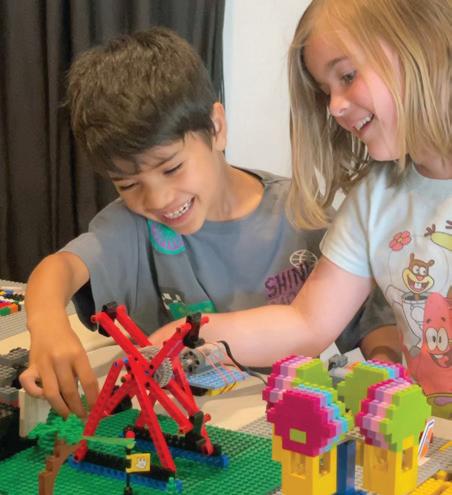
Families with children ages 5+ can drop in 4:30pm to 5:30pm for Lego Club. No commitment to future sessions, simply stop by and be creative with all their Legos. It is first come, first serve in the meeting room that has a room limit of 100.
Time: 4:30- 5:30pm
Cost: FREE MarpleLibrary.org
Sat. July 4
@St. Albans Ave, Newtown Square
Marple Newtown 4th of July Parade
Celebrate our great country’s 250th birthday with the residents of Marple Newtown and surrounding areas. The parade starts at St. Albans Ave and travels eastbound on West Chester Pike to the Broomall Fire Company on Malin Rd.
Time: 10am
Cost: FREE
MarpleNewtownParade.com
Weds–Sun evenings through mid-August
Delaware County Summer Festival Concerts
@Rose Tree Park
1671 N Providence Rd, Media
Free concerts in Rose Tree Park's scenic outdoo amphitheater resume this June! The series provides many opportunities to enjoy top-notch entertainment of all kinds. Bring blankets and chairs for seating. Light concessions will be for sale and picnics are welcome. No alcoholic beverages. Pets and smoking must remain outside the amphitheater. No rain date for any evening concert.
Time: 7:30pm
Cost: Free admission and free parking 610-891-4663 (or 610-891-4455 for updates) DelcoPA.gov/departments/parks/summerfestival.html
Anniversary!
Weds. July through September
Dining Under the Stars
@State St, Media
Every Wednesday, the Media Borough closes State Street to vehicular traffic from 5 -11pm. This allows Media’s great restaurants and shops to set up outside (right across the trolley tracks!) for the biggest, most fun, alfresco shopping and dining event around.
Fri. July 10 and Fri. July 24
Newtown Square Food and Makers Market
@Garrett Williamson
395 Bishop Hollow Rd, Newtown Square Newtown Square Food and Makers Market will feature local growers, producers and artisans. Fresh produce will be for sale as well as artisan breads, coffee, pickles, flowers, plants, candles and much more!
Time: 4–7pm
Sat. July 11 (raindate Sun. July 12)
Linvilla Orchards Annual Blueberry Festival
@Linvilla Orchards
137 W Knowlton Rd, Media
Blueberries are back and ready for picking! Bring your friends and family to celebrate our annual Blueberry Festival. Come hungry for delicious blueberries and a fun blueberry pie-eating contest. The winners of each age bracket will earn the Champion title and receive a prize! Hosted by the one and only Silly Joe, who will entertain the crowd.
Time: 8am–6pm
Cost: $11 online; $13 in person for blueberry picking 610-876-7116 Linvilla.com
Tues. July 15
Outside Fun with Marple Library
@Veterans Memorial Park on Lawrence Rd, Broomall
Families can join Marple Library at Veterans Memorial Park on Lawrence Rd for Outside Fun. Stop by and join our Teen Volunteers for games and giant bubbles.
Time: 10am
Cost: FREE MarpleLibrary.org
Sun. August 9
6th Annual Car, Truck, Tractor, Big Rig & Motorcycle Show
@Arasapha Farms
1835 Middletown Rd, Glen Mills
A fun-filled day with fun family activities, food trucks, vendors, music, flea market and lots of cars, trucks, tractors, big rigs and motorcycles! Prizes awarded and a 50/50 raffle.
Time: 10am–3pm
Cost: FREE for spectators ArasaphaFarm.com
Expert Contributor
by Jose Colmenares and Israel Dona Nicecars Detail LLC
Benefits of Ceramic Coating
Ceramic coating offers numerous benefits for vehicle protection and maintenance. It’s a liquid polymer that bonds with a vehicle’s paint, creating a long-lasting protective layer. Here are the key benefits of applying ceramic coating to a car:
1. Enhanced Paint Protection
Hydrophobic Properties: Ceramic coatings are highly water-repellent, causing water, mud and grime to slide off the surface. This makes it easier to keep the car clean.
Protection Against Contaminants: It shields the paint from environmental contaminants like bird droppings, tree sap, bug splatter, brake dust and road salt, which can damage or stain the paint.
2. UV Protection
Prevents Fading and Oxidation: Ceramic coatings offer excellent UV protection, preventing the sun’s rays from oxidizing and fading the paint over time, which helps maintain a vibrant color.
3. Durability
Long-Lasting Protection: Ceramic coatings are highly durable and can last for several years, depending on the quality of the coating and maintenance. This long-term protection is much more durable than traditional waxes and sealants.
4. High-Gloss Finish
Enhances Shine: The coating provides a deep, glossy finish that enhances the car’s appearance, making the paint look richer and more vibrant. The reflective properties of the coating also give the car a more premium look.
5. Chemical Resistance
Protection from Corrosion and Chemicals: Ceramic coatings are resistant to various chemicals, including harsh cleaning agents and road salts, which can damage or corrode the paint.
6. Ease of Cleaning
Self-Cleaning Effect: Due to its hydrophobic properties, dirt and water are less likely to adhere to the coated surface. This makes washing the car easier and reduces the frequency of car washes.
Anti-Stain Protection: Contaminants are less likely to bond to the paint, meaning things like tar, grease and other road debris are easier to remove without leaving stains.
7. Scratch Resistance
Minor Scratch Protection: While ceramic coating does not make your car scratch-proof, it does offer a level of resistance to minor scratches and swirl marks caused by washing or light abrasions.
8. Cost-Effective Over Time
Reduces the Need for Polishing and Waxing: Since ceramic coatings last several years, they eliminate the need for regular waxing, saving time and money on frequent detailing.
9. Improved Aesthetic Appeal
Enhanced Depth and Color: Ceramic coatings enhance the depth and richness of your car’s color, making the paint appear more striking and polished.
10. Environmental Protection
Repels Water and Debris: Its hydrophobic properties make it easier to protect the vehicle from environmental factors like acid rain, bird droppings, tree sap and industrial fallout.
11. Resale Value
Maintains Vehicle Condition: By protecting the exterior, ceramic coating helps maintain the vehicle’s condition over time, potentially increasing its resale value.
12. Resistance to Water Spots
Prevents Mineral Deposits: Ceramic coatings reduce the risk of water spots by preventing mineral deposits from bonding to the car’s surface after water evaporates. N S
Recent Newtown Township Home Sales
Best Version Media does not guarantee the accuracy of the statistical data on this page. The data does not represent the listings of any one agent or agency but represents the activity of the real estate community in the area. Any real estate agent’s ad appearing in the magazine is separate from the statistical data provided which is in no way a part of their advertisement.
See you on the 4th for the 2026 Marple Newtown 4th of July Parade!
Join us along West Chester Pike starting at 9:30am on Saturday, July 4th to cheer on the 5K Runners and Walkers. Then Celebrate America’s 250th Birthday at Delco's Best Parade which kicks off at 10am!
THANK YOU to the Volunteers of the Broomall Rotary and Marple Newtown 4th of July Parade Committee. Your cheerful service makes it possible for all of us to celebrate in America’s 250th in patriotic style.
MEMORIAL HOMES AND CREMATORY
Proudly Offering:
• Flower Selection
• Candlelight Ceremony
• Butterfly/Dove Release
• Memory Tables
DANJOLELL Memorial Home of Broomall 2811 West Chester Pike Broomall, PA 610-356-4200
Robert L. D’Anjolell, Jr. F.D.
• Picture Boards
• Remembrance Jewelry
• Online Remembrance
• And more…
DANJOLELL Stigale Memorial Home & Cremation Services, Inc. of Aston 3260 Concord Road Aston, PA 610-497-5505
James Stigale, Supervisor
DANJOLELL Memorial Home & Crematory of Malvern-Frazer 392 Lancaster Avenue Frazer, PA 610-296-9555
John Burdsall, Supervisor
DANJOLELL Barone Memorial Home of Wallingford 908 S. Providence Road Wallingford, PA 610-874-7700