
Throughout the past 38 years in covering stories for the business journal, we’ve approached the publication format in two ways when it comes to the monthly edition. One way involves a central theme or compilation of like-minded stories; such as a focus on one particular industry segment. The other way disregards that approach and presents stories from multiple industry segments. We’ve discovered the second approach is better—even if a special focus issue often generates more advertising revenue. Why? Two beneficial reasons. First, a true “magazine” approach with variety and diversity attracts more readers. It doesn’t isolate those who do or do not have an interest in one area. In fact, even those in a particular profession don’t always enjoy a publication completely devoted to their profession. They’re already “in the know” and live that life every day! Second, it’s better for our patrons and advertisers to share their messages on their own terms, not a given month when everyone in that sector climbs aboard. You’ve told us you like the FRONT with stories from all fronts.
Just like this edition you’re reading now. Pretty diverse, wouldn’t you say? Enjoy!
Tom Field
Gene Marrano Publisher Editor

By Gene Marrano

P.O. Box 1041
Salem, VA 24153 (540) 389-9945 www.vbFRONT.com
Publisher / Tom Field
Creative Director tfield@vbFRONT.com (540) 389-9945
Editor Gene Marrano news@vbFRONT.com
Advertising Dan Dowdy (540) 797-7943 ddowdy@vbFRONT.com
ads@vbFRONT.com (540) 389-9945
Graphic Design Nicholas Vaassen
Office Administration Emily Field info@vbFRONT.com
Production Berryfield, Inc. PO Box 1041 Salem, VA 24153 (540) 389-9945
Advertising ads@vbFRONT.com
Subscriptions info@vbFRONT.com
News / Releases news@vbFRONT.com Admin / Ops info@vbFRONT.com (540) 389-9945 vbFRONT.com morefront.blogspot.com
© Copyright 2026; Valley Business FRONT, LLC. All rights reserved. Reproduction or use of this publication in whole or in part without written permission is prohibited. Information within Valley Business FRONT is obtained from sources considered reliable, but cannot be guaranteed. Opinions expressed are not necessarily those of the ownership. Valley Business FRONT is primarily distributed to subscribers by mail, digitally and select locations throughout the Roanoke Valley, New River Valley, and western Virginia.

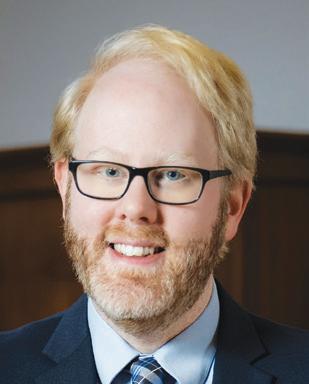
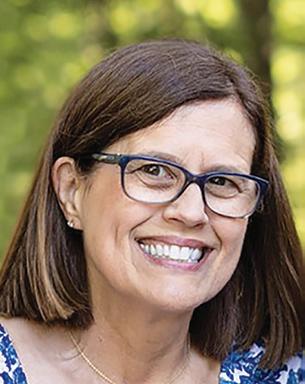

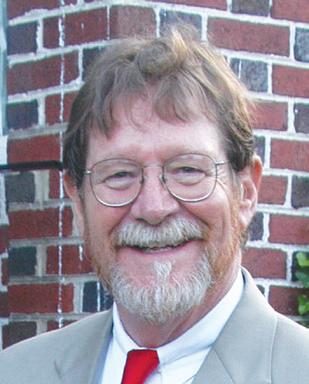

Valley Business FRONT has organized an Advisory Board comprised of a selective group of diverse business professionals who support our mission and have an interest in how our business journal best serves our local communities and region. As a sounding board throughout their term, board members have been given the task of helping FRONT understand the issues and develop coverage. You will note that the Board is comprised of experts in many different business / industry “fronts.” This is intentional, as we are reporting on all the areas that affect our regional economy and are important to you. Although the members are encouraged to keep FRONT updated on their own industries and the key players, they aren’t limited to their area of specialty, as all commercial enterprises ultimately collaborate to impact our quality of life here in this part of Virginia. An additional contribution by the Advisory Board involves direct input on the various FRONTLists we present throughout the year. In keeping with our policy of being “the voice of business in the valleys” we ask each reader to join us as an editorial partner by contacting us with your ideas. You know more than we know about your business—or you certainly should—and that inside knowledge shared with our readers will make us all better at what we do.



Individuals and companies are left behind to pick up the pieces... no apology, no compensation... no financial liability...
Page 32
Biographies and contact information on
contributor are provided on Page 46.

and
definitely a much-needed service,” says
from
By Gene Marrano
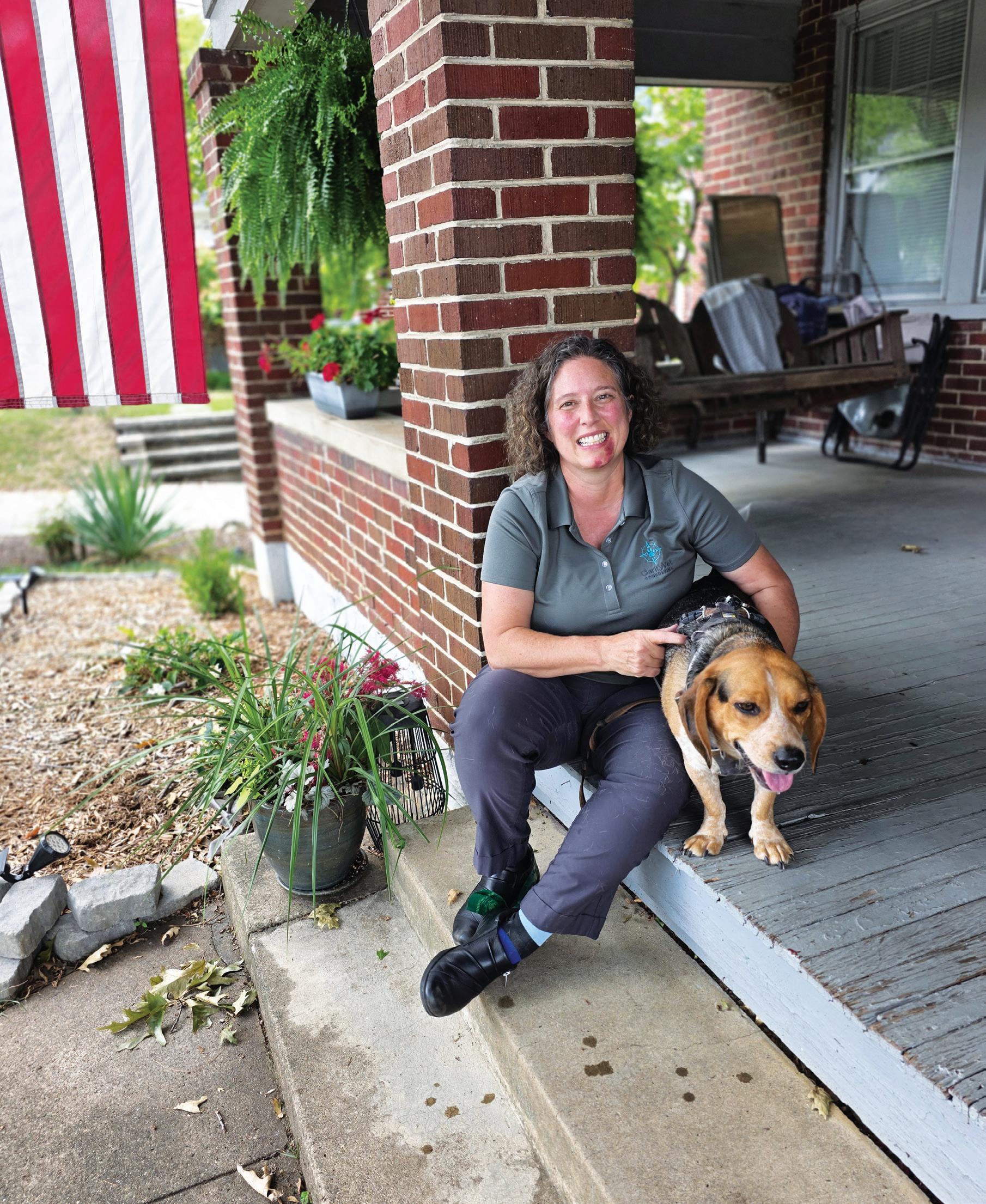
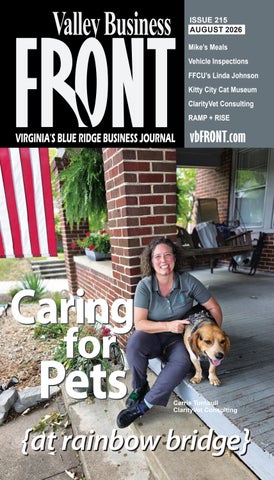
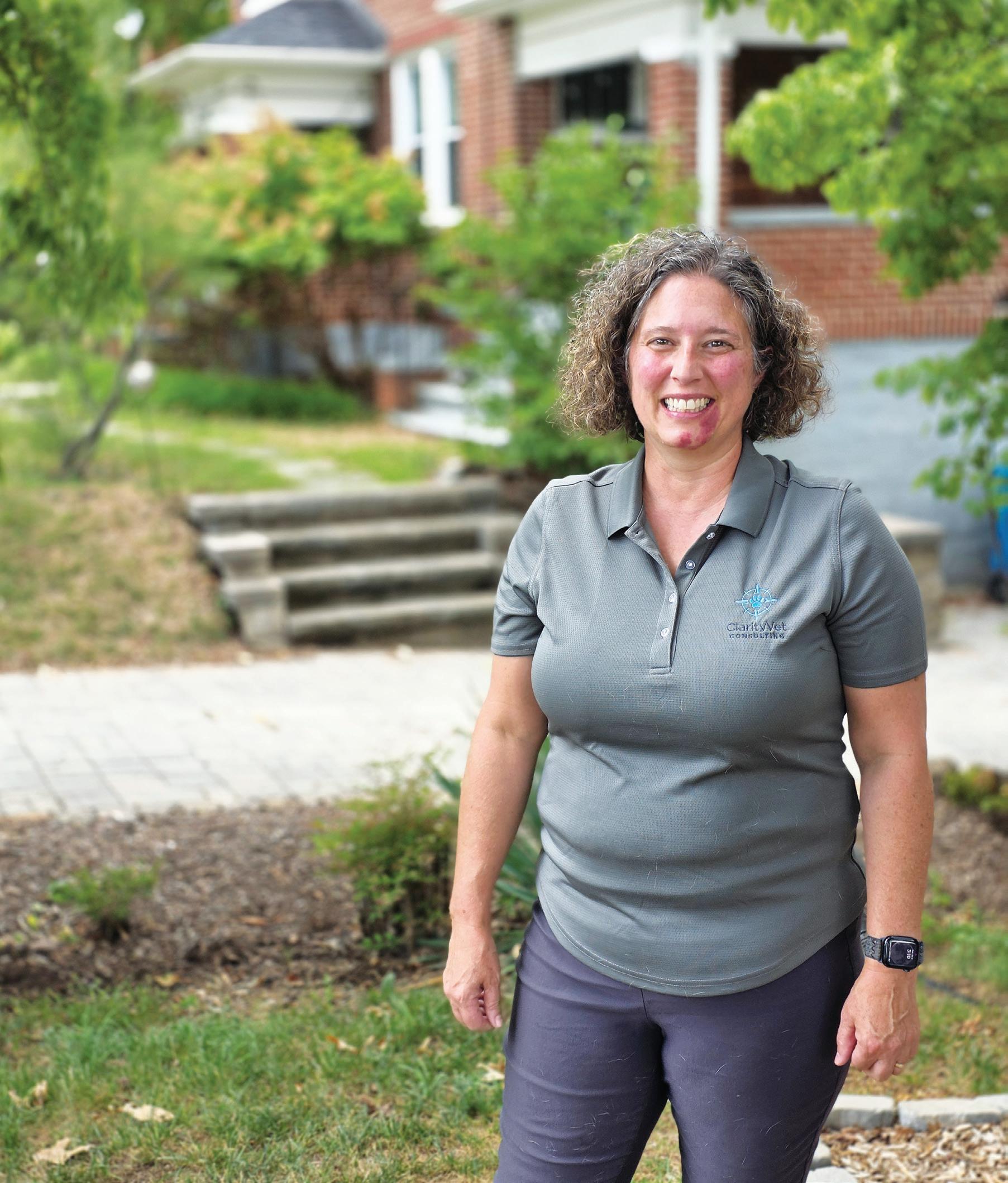
A longtime Roanoke veterinarian isn't getting out of the pet care business—instead she's launching the region's first practice dedicated to pets—and their families—as the end of life draws near.
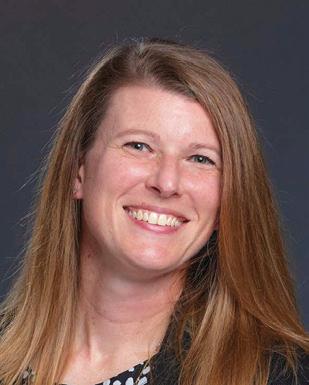
Dr. Carrie Turnbull launched Clarity Vet Consulting several months ago, a mobile service where she meets with ailing pets and families in their home. It often involves counseling, as Turnbull talks to them about palliative care that may extend a pet's life, hospice care—and then euthanasia.
She says palliative and hospice care for pets is a recent trend that’s been gaining some momentum, but it’s not as well-known and a lot of people don’t even know that it’s an option for their pets.” That entails quality of life assessments, pain management—and compassionate final goodbyes, in a less hectic and more friendly environment at home, says Turnbull, the motivation behind Clarity Vet Consulting. Helping clients deal with end-of-life care as their pets head towards crossing over the “rainbow bridge,” was much of the motivation for her work as a veterinarian in the first place.
As a private practice veterinarian, Turnbull cared for dogs, cats, and even pigs. She worked for other vets and owned her own practice over the past two decades; Turnbull went through a certification process to become a hospice and palliative care vet as she prepared for this next chapter in her professional life.
“” A lot of people don’t even know that [palliative and hospice care] is an option for their pets.”
“Awww… she’s such a good dog.” Lucy, from Bedford, is one of Carrie Turnbull’s patients.


Images from ClarityVetConsulting.com website—a site that also includes pet memorials, a blog with helpful advice, and services that include: quality of life consultation; in-home euthanasia; aftercare services; and grief support resources.
“” There’s a different vibe… in the home… a more comfortable, intimate, familiar setting.
Palliative care involves relieving pain and discomfort that can extend a pet’s life, even for a short while, before the next step – hospice care, as the end draws near (“a life limiting disease process,”) although sometimes she notes palliative can be successful at moving pets off the critical list longer term. When a pet must be put down, in-home euthanasia is often more comforting for a pet owner as opposed to a less personal in-clinic vet’s office. “The speed of the day at a traditional clinic does not really allow for extended time for owners [to spend with a pet before they are put down].”
Turnbull says much of her work now with Clarity Vet Consulting involves taking people through the final stages of a beloved pet’s life, offering counseling, envisioning “what would be a good death for their pet, do they want more time, and all of those aspects at end of life. Helping them reach those goals.” A quality-of-life assessment can help bring those future plans into sharper focus, once Turnbull, wearing her veterinarian hat, examines the pet and makes that determination.
There’s a “different vibe,” when speaking with pet parents – and their ailing pet – in the home, a more comfortable, intimate, familiar setting for all parties involved, notes Turnbull. They get more of her time as well; hours maybe as opposed to the typical twentyminute appointments she recalls from her days working as a vet clinic staffer or owner.
As she gave notice late last year from the vet clinic she previously owned and still worked for, a period of self-reflection – what would she do with the rest of her professional life? – led to a new business plan and eventually to Clarity Vet Consulting. She jokes that

some of her friends had never seen this softer side before, a higher level perhaps of compassionate bedside manner.
“It’s really difficult to answer all the questions in that [short] time.” The certification process she went through also helped Turnbull realize what questions she should be asking as clients make crucial decisions about their pets. That’s helped lead to better decisions for pets “and their families,” allowing them to feel more comfortable about making those tough choices based on conversations with Turnbull.
Knowing that there are other options on the table, for palliative care for example, avoiding aggressive chemotherapy for example, “to help their pet be comfortable and live a little longer. Sometimes people just need that [extra] time. To come to terms with the loss of a pet. It’s definitely a much-needed service. When they find out it is an option they’re like, that’s really cool.” Others hear about it and wish they had been able to have a little more time with their pets before putting them down.
Improving the quality of life for a pet, even as the end draws near, is optimal, Turnbull says, instead of going straight to suggesting euthanasia or a treatment not likely to be successful. She sees the type of services she now offers with Clarity Vet Consulting as something that could become a trend. “At some point,” she says, “I’m not sure it’s quite there yet.” Turnbull gets some referrals from local veterinarian clinics now but is still working on getting the word out.
“” In-home euthanasia is often more comforting for a pet owner as opposed to a less personal in-clinic vet’s office.

See ClarityVetConsulting.com for more on the endof-life pet services Dr. Carrie Turnbull now offers.
By Aila Boyd
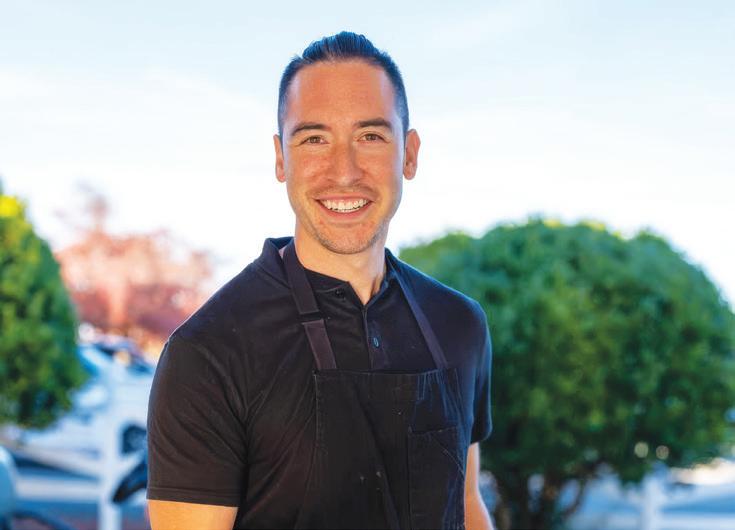
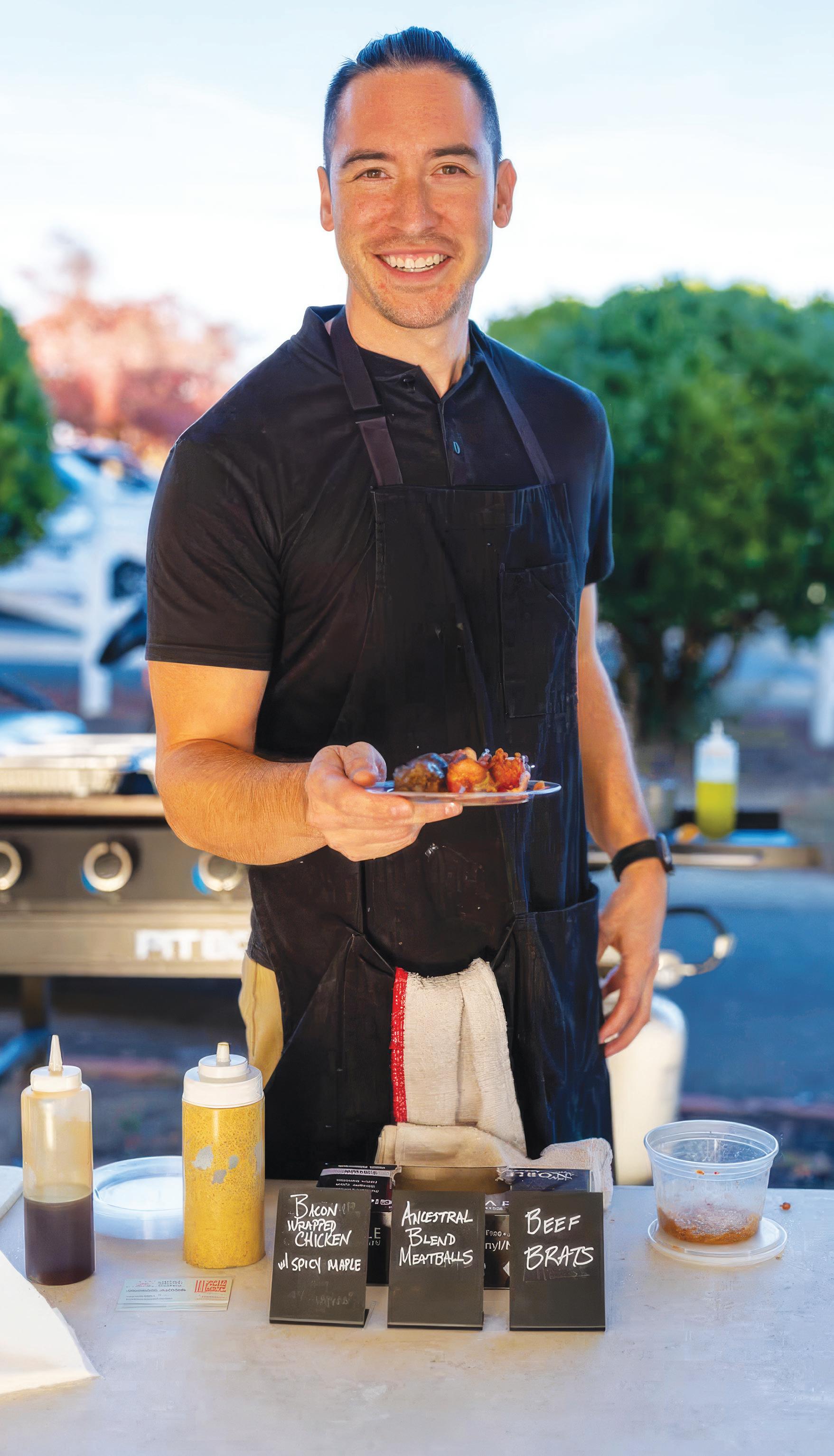
When the COVID-19 pandemic forced the permanent closure of Blue 5 Restaurant in 2020, chef Mike Austin found himself considering his next move. Rather than leave the culinary industry behind, he turned an unexpected challenge into an opportunity by establishing a meal prep service.
Today, Mike’s Meals prepares fresh, macro-friendly meals each week from its Glenvar kitchen, delivering directly to customers throughout the Roanoke Valley. Meals start at $12, require no subscription and emphasize fresh ingredients, balanced nutrition and convenience.
Mike Austin's culinary career began after earning his culinary arts degree from Virginia Western Community College. He spent about a decade, on and off, as kitchen manager at Blue 5 and was also part of the opening kitchen crew at Ballast Point in Daleville. Although he briefly stepped away from the restaurant industry to study health and exercise sciences at Roanoke College, he eventually returned to Blue 5 before the pandemic reshaped his career path.
"Mike's Meals was born out of the 2020 COVID shutdowns," Austin said. "I still wanted to cook for people but knew I didn't want to be in a restaurant setting."
The concept began simply. Austin suggested the idea of preparing ready-to-eat meals to a friend, who immediately embraced the convenience. As more friends began placing orders, demand steadily increased, allowing him to lease a commercial kitchen in Glenvar. Since then, he has continued expanding the business while also adding catering services.
For Austin, remaining locally owned is central to the company's identity.
"I take a lot of pride in how people view Mike's Meals," he said. "When you support my business, you're supporting a passion of mine."
That philosophy extends beyond the food itself. Austin encourages customer feedback, keeps prices as accessible as possible and believes supporting local businesses strengthens the surrounding community.


"When customers support local, they give life to the community they live in," he said.
That commitment has earned Mike's Meals a strong reputation among fellow business leaders. Amanda Livingston, president of the Salem-Roanoke County Chamber of Commerce, said the business has become a trusted catering partner for chamber events.
"Mike's Meals is our go-to for early morning breakfast meetings and leadHERship lunch catering," Livingston said. "Mike serves healthy, delicious food, and he delivers. Mike Austin is reliable, dedicated, and a true asset to the Salem-Roanoke County Chamber."
Although Mike's Meals markets itself as macro-friendly, Austin says flavor remains his highest priority.
"Taste always comes first," he said. "You're not going to get very far if people don't enjoy your food."
Most meals emphasize high-protein portions, whole foods and fresh ingredients while avoiding seed oils whenever possible. Austin also chooses compostable paper containers instead of plastic packaging and often opts for organic ingredients even when they reduce his profit margin.
His goal, he said, is to make healthy eating practical without sacrificing satisfaction.
"Portion control and protein are what's lacking in most diets, and my meals make it easy to achieve," he said.
Another feature that distinguishes Mike's Meals from many competitors is its flexible ordering model. Unlike many national meal delivery companies, customers are not required to purchase a subscription.
Austin intentionally avoided recurring memberships because he wanted customers to order only when they needed meals.
"I never wanted to implement a subscription model that locks you into a plan," he said. "Food should be enjoyed, not a means to an end."
As meal delivery services have become increasingly popular, Austin believes local ownership provides a competitive advantage over national brands.
"When you can put a face and personality to a product or brand and tie it to your community, it provides a sense of trust and familiarity," he said.
Austin also sources local ingredients whenever possible and personally handles customer communication. Whether someone sends a message through social media, emails a question or calls the business directly, they are communicating with him.
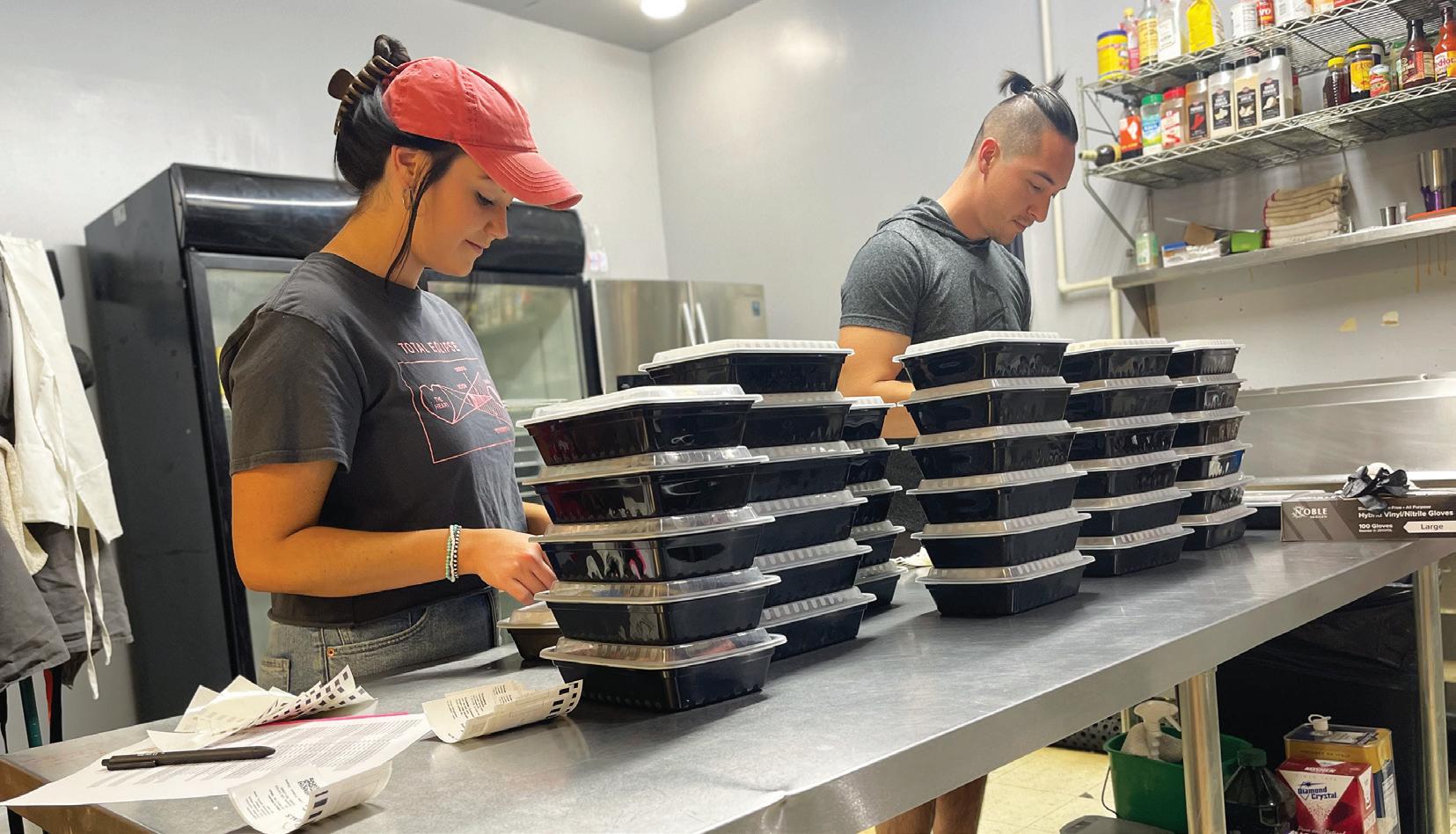
"Larger companies are disconnected from their customers," he said. "I love seeing and hearing from customers."
Customer preferences continue to evolve as well. Austin has seen growing demand for gluten-free options and says many customers initially seek meal prep for weight loss. However, he emphasizes moderation and consistency over restrictive dieting, carefully weighing every ingredient to provide accurate nutritional information.
Like many small business owners, Austin has also faced challenges. Building out a commercial kitchen from the ground up required significant investment, and finding
reliable staff remains one of the company's biggest hurdles. Much of the business is still supported by his wife, who helps on her days off, along with several part-time assistants who pitch in during busy periods.
Austin hopes to make Mike's Meals even more accessible in the future. Plans include establishing pickup locations around the Roanoke Valley for customers outside the current delivery area and introducing freeze-dried meals designed for hikers and outdoor enthusiasts.
"I'm slowly building an inventory of freeze-dried meals," he said. "Look out for those in the future."

By Carrie Cousins, LeadPoint Digital
Executive Summary:
Instagram and Facebook pages are filled with flyers for events, services, and all manner of things right now. And they all pretty much suck.
Yes, you saved a ton of time creating a flyer with AI, but there’s a glaring problem. You are getting zero response from them. Your information is getting lost in a sea of sameness.
Flyers with almost cartoon style images, a big headline, and multiple blocks of small copy – way too much copy –that are just too small to read without clicking and zooming. So, if I even looked at your flyer and considered it, I immediately moved on because important and relevant information was too hard to find.
I’m also never going to click and zoom an image on social media to learn more. That’s way too much work! Chances are your behavior is exactly the same, so why would you expect something different from people visiting your business page?
This is a fixable problem.
I’m not even going to tell you not to use AI for generating flyers.
But please use it smarter.
A good flyer on social media only needs a couple of things:
• Interesting and relevant image (something real or authentic is preferred)
• Event or service name
• Time, date, and place (if applicable)
• Business logo
The problem with most of the AI flyers floating around right now is they contain too much information, rendering it useless. Red flags:
• Large, sometimes cartoon-style image that has nothing to do with the brand or business (features generic people or locations)
• Oversized header followed by multiple text boxes of information, ranging from three to 10!

• Brand elements and logos that aren’t quite right
• Shape and size that’s not quite right for social media
The core issue is that all these flyers look the same. None of them disrupt your scroll or call attention to a brand you might be interested in getting information from. There are no people or places you recognize, meaning you don’t stop to look.
Here’s how you fix it:
• As you write the prompt, include some of your brand images for reference
• Keep the text short and simple; don’t over-feed during the prompt
• Revise; don’t just take the first version you are given
• Put additional details or information in the description text of the social post itself, not in the image
Another consideration: Hire a local graphic designer to help you create a few custom templates to use for promotion on your social media channels. They’ll feel more authentic, connect better with audiences, and generate more interest!
“” Don't over-feed during the prompt.


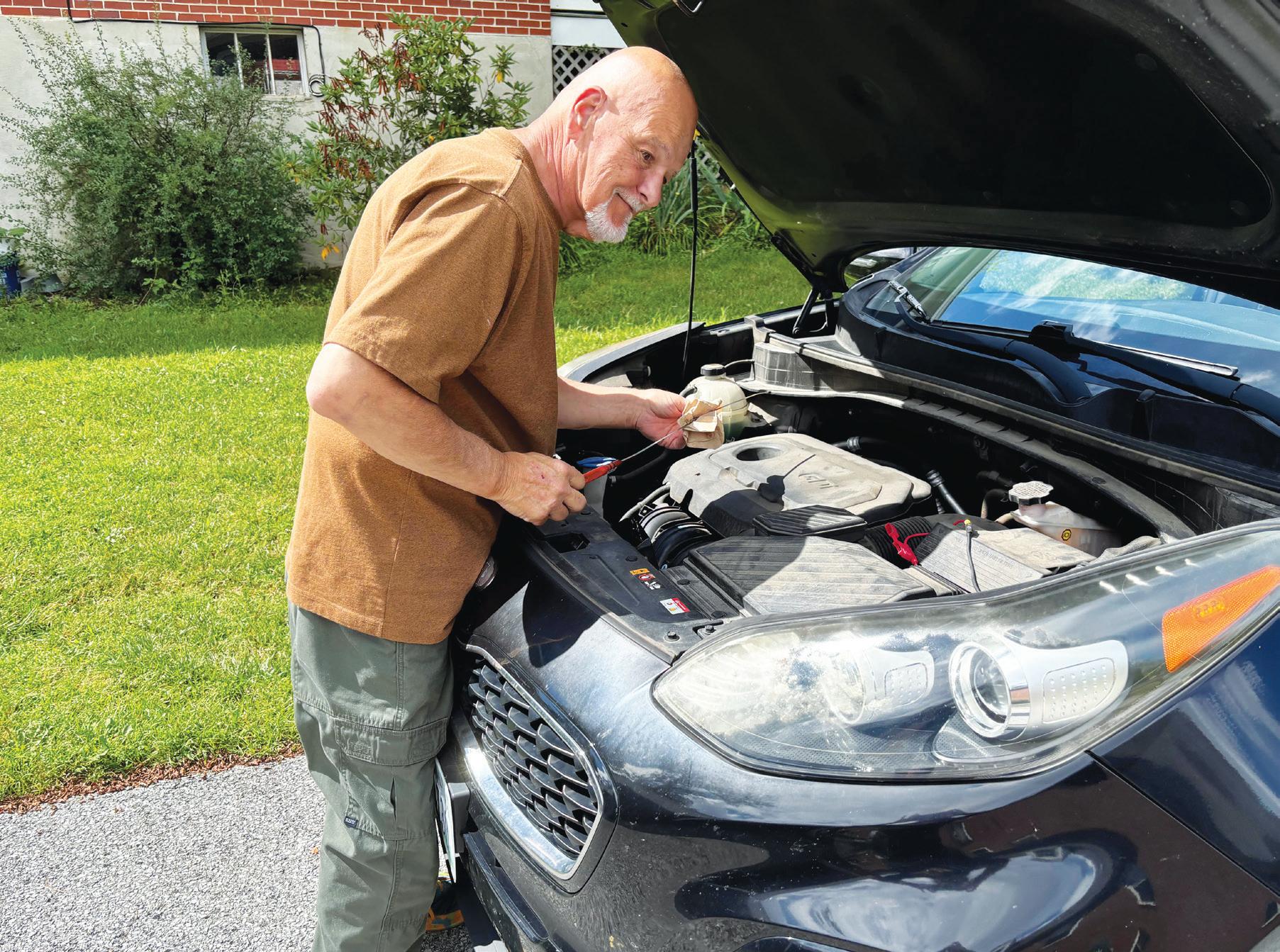
Although the staff was polite and apologetic, a FRONTstaffer was denied a state vehicle inspection five times in two weeks at this local shop. That includes waiting in line before the shop opened in the morning—because this business (like many) doesn’t take appointments for inspections and it’s first-come, first-served. “We’re already full for the day.” This experience is becoming increasingly common; and some shops are dropping state inspections altogether, saying “it’s not worth it.”
By Dan Smith
Getting a state inspection for your car or truck is not as easy as it once was.
Virginia has required auto safety inspections since 1932, the oldest such program in the country. Nearly 50 years ago 31 states and D.C. mandated the inspections, but today, Virginia is one of but 13 with such a law, the stated purpose of which is to promote highway safety.
Problem is that less than two percent of highway accidents can be related to mechanical failure, according to government studies.
The program is wildly unpopular among the public, which points a straight finger at often extreme inconvenience. It is not unusual for an owner to leave a car or truck at a garage for 5-7 days to get an inspection, which actually takes about 30 minutes to complete. Among the most important reasons for the delays is the often heard, “We only have one technician working today,” or “We are down to two technicians and one of them is sick.”
So, we are left with either leaving the car at the garage, or taking a chance on getting cited and paying a fine. Let’s note that police in Virginia cannot pull over a driver solely on the basis of having no inspection sticker, which intensifies the choices.
It appears from a FRONT survey that independent garages, especially small ones, have the most difficulty in actually completing inspections at a promised time and dealers, which generally have more technicians, are most likely to be on time with their promise.
Nancy Archer of Roanoke remembers the old days of wait times in the 45-minute range. “Once you could waltz in, sit down and be out of there within a reasonable time period,” she says. “Now you’re greeted with signs on the door that the number of appointments for inspections for the day have been filled.”
Her solution? “Make an appointment where I bought my car, and I am forced to drive to Christiansburg to have it done. But I’m greeted with a smile and it’s done quickly. Thank you, Shelor Toyota.”
Travis Jensen of Haley Toyota, a large dealer, says, “We do an easy 40 state inspections a day at Haley Toyota of Roanoke.”
Tim Tickle, a retired IT manager whose father ran a garage, grew up working on cars and suggests the General Assembly, “Repeal the requirement for annual vehicle inspections, as most states have done …Virginia’s garage

• If a sticker is expired and you can’t get an appointment, Virginia law says there are no legal extensions for expired stickers, but police can’t pull you over solely for an expired sticker until the first day of the fourth month following the expiration.
• If your vehicle fails inspection, you have 15 days to get it repaired (at the shop of your choice). You will return to the same inspector for re-inspection and won’t have to pay the cost of $20 again.
• Virginia employs “aggressive, face-adhesive rejection stickers." That means they stick.
owners lobby hard to keep it in place because it’s a big money-maker for them. Studies show it does nothing to promote or ensure safety. I lived in South Carolina, which had no safety inspections, for 10 years and never had or saw an issue.”

Sam Fischer of the Firestone store on Hershberger Road, runs a mid-sized garage, and is solidly in favor regular inspections. “It is inconvenient,” she says, “but it produces a safe vehicle. The purpose is to catch unsafe situations.”
But she has to listen to a lot of complaints. The complaints “are frustrating Fischer says, and they intensify the stress of an alreadydifficult job. Still, “we don’t do appointments, but we suggest those needing inspections “call us and see how busy we are or come by and leave your car. It generally takes two or three days to get to it.”
One of the recurring difficulties for garages, regardless of size, according to two different inspectors, is that technicians, who are an independent group, often change jobs in the blink of an eye. That leaves the garage short, or in good shape if they hire the wandering mechanic.
Tim Tickle points to the “very strong lobby” that garages have. He insists that “the only reason we keep [the law] is that it’s a
moneymaker for the garages.” He points out that once a car fails inspection, the owner can go anywhere to have the repairs made, but that same owner must return the car to the initial garage to have the new sticker put on and remove the rejection sticker. That’s two trips for one inspection.
Roanoker Rebecca Frederickson, who once owned a trucking company, points out that inspections “tie up a bay, a lift and one of the best mechanics for which the station gets $38.60. The fee doesn't even cover the mechanic’s wage, much less the garage’s overhead.
“For all that, he gets paid $19.30 by the state for 30 minutes labor when his standard billing is $100 an hour. In short, he loses money for every inspection. So why does he do it? It's a service for his customers.”
Leaving a business’ cars and trucks for long periods of time can mean loss of business and money for some businesses. For some garages, says Frederickson, “Just doing inspections means stopping everything else.”
Our Facebook survey brought quite a few responses. Here are some:
Sherry Butler Payne: At Smith Mountain Lake, We can usually get appointments within a couple days and it just takes 2 or 3 hours to get stickers on both our vehicles. We've tried four different garages, all with the same speedy service.
Cindy Pinkston: I’ve been four times in person and was told that the full lot of drop-offs were ahead of me. I can’t leave my only vehicle for days.
Debbie Ewers: Who doesn't have a bad memory? I started early one month and the garage said it didn't even have the stickers yet.
Samantha Austin: The people who do inspections have to actually go take a class that they pay for. They know what they are doing.
Maureen Eiger: I have gotten my inspections at a Subaru dealership with an appointment with no problems. Also, the Jiffy Lube places are doing inspections.
Brenda Anderson: Dealership is the way to go. Learned my lesson this year. Priority Honda gives great service.
Neil Phillips: Our garage said that the authorities are monitoring cycle time, rejection rates, and other procedures. It all adds to more time per inspection, and when one does not pass, the timetable shifts.
Parker Pearson: Growing up in New Jersey, we had inspection stations you drive through. Always a line, but manageable on a lunch hour. It was literally a building you drove through with checks run at stations. Pass/fail. Done.
Autumn Lane: Affordable car care on Williamson Road takes cars on a first come, first served basis Monday through Friday, 9 a.m. to 5 p.m.
Samantha Austin: Time to buy a horse.
Phil Allison: This is basically a revenue grab by the state (read tax) that I adhered to for 40 something years before I retired and moved to Georgia, which has no safety inspection requirement.”
Brenda Anderson Isaacs: We go to Mr. Tire on Orange Avenue and have never had this much trouble with inspections.
Emily Field: You can’t blame the employees; it’s not their fault. But I bring my car here all the time. They can do the oil change and tire rotations, but can’t work in an inspection.
Bryan Thornhill: One-twelfth of Virginia [cars inspected] each month.
Scott Lawrence: Actually, it’s Virginia's fault. Each inspection takes 30 minutes and if the shop is open eight hours, that’s a maximum of 16 inspections per day [in each bay]. Inspection enforcement is at an all-time high and any shop that does more inspections in a day than it can will get fined heavily and possibly lose their inspection and business license.
Angel Lee Vitrano: I called a month ahead to make sure what days to bring in [my car], and was told the days [that worked], then told, “but we need to keep your car a few days.” It doesn’t need anything; it’s a newer car but to inspect it, “we are short staffed and it might take three to four days.” I have never had that happen before.
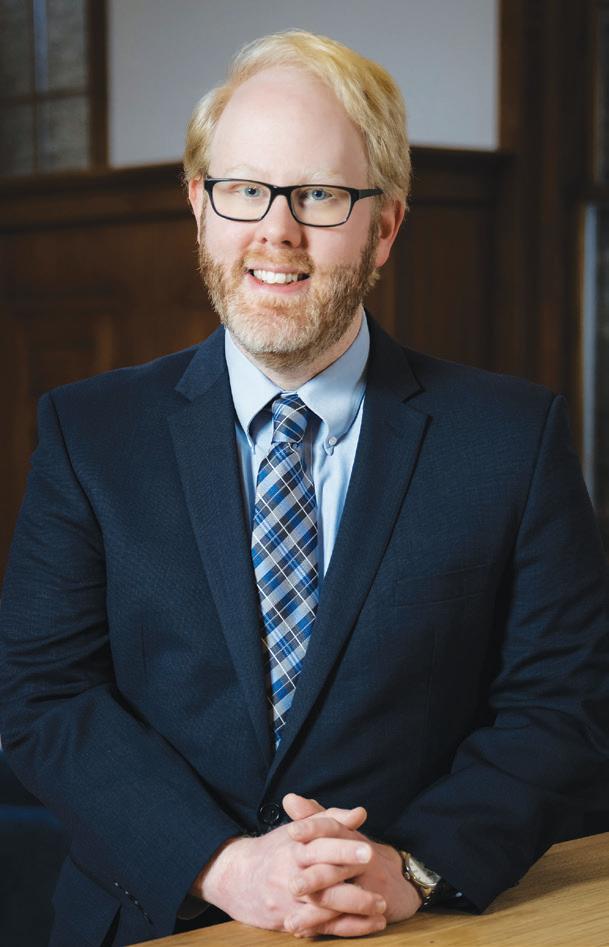
By Zachary A. Collier
Executive Summary:
To be competitive, improving your productivity is paramount.
One of the most important assumptions in economics is that resources are scarce. There just isn’t enough “stuff” for everyone to have an infinite amount of everything that they want all the time. As a result of this fact, businesses and individuals try to squeeze the most benefit they can from the resources that they have available.
A clear example of this is in a production setting. To make a finished product, the manufacturer takes various inputs, such as materials, labor, capital, and energy, and transforms those into a finished item. Any input that is wasted along the way causes there to be less output on the other end of the process, translating into higher costs and lower revenues.
This is essentially the whole idea behind the concept of productivity, which boils down to a ratio of what you get out of a process compared to what you put in, or more simply, outputs over inputs.
Measuring and improving your productivity is important from the perspective of competition. Given two companies that make the same product, with the same quantity of inputs, the company that can produce more outputs than the other has a clear advantage.
How can a company improve its productivity? If productivity is about measuring outputs over inputs, then there are two levers: increase output (holding input steady), or decrease input (holding output steady).
To improve productivity, any non-productive use of resources should be identified and eliminated. Innovating and optimizing production processes, and reducing sources of waste, such as defective outputs and machine downtime, are ways that companies can increase their productivity. In certain cases, waste materials or scraps from production can be recycled and reused as process inputs, effectively decreasing the input needed for the process.

This applies not only to manufacturing, but also to service settings. Are your employees just standing around with nothing to do? Underutilized staff is a source of waste that can drag down your productivity.
Note that increasing productivity is not the same as cutting corners or overworking your employees. Productivity should not be pursued at the cost of product quality, workplace safety, or customer satisfaction. Any gain that you achieve will end up being lost due to unhappy customers and burnt-out employees.
The pursuit of productivity, on the other hand, involves an attentive eye to potential inefficiencies and sources of waste within processes. It means looking at how things are done and creatively imagining how things could be done better. What if we try a different material? Can process X and Y be done concurrently instead of one after the other? Could a different machine be used to achieve the same results in a shorter time? Questions like these can help you to uncover ways to make the most of your limited resources, streamline your operations, and be more competitive in the market.
Zachary A. Collier is Assistant Professor of Management and Director of the Center for Applied Analytics at Radford University.


By Rachel Nicole Edwards
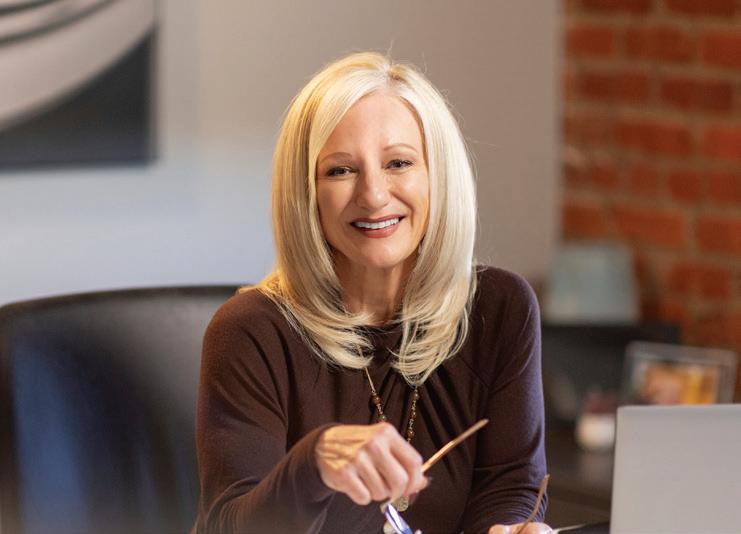
Freedom First Credit Union serves more than 60,000 members across the Roanoke Valley, New River Valley, and Lynchburg region. When Linda Johnson joined the company in 2008, she was immediately drawn to its mission. “We are currently over $1.2 billion in assets, but what I’m most proud of isn’t our size, it’s our impact,” Johnson says. “I’ve always believed that financial institutions can assist in making a difference in people’s lives, and Freedom First gave me the opportunity to combine business with purpose.” With nearly twenty
years of experience under her belt, Johnson was named Freedom First’s new President and CEO at the start of this year.
Born and raised in Albuquerque, New Mexico, Johnson moved to the Roanoke Valley in 2006. With a bachelor’s degree in business administration and management and a master’s degree in finance, she began her career in public accounting before transitioning into banking. “I joined Freedom First and have had the opportunity to grow alongside the organization, serving in
several leadership roles before becoming CEO,” Johnson expresses. “What’s kept me here is the people. I’ve been very fortunate to work alongside employees that genuinely care about our members and communities. Watching the organization grow while staying true to our values has been incredibly rewarding.”
Johnson places Freedom First’s values, mission, and community impact at the forefront of what makes the organization stand out. Because Freedom First is a Community Development Financial Institution (CDFI), they are committed to expanding access to financial opportunities for the people they serve. Johnson proudly explains, “we’re different because we are a local, community credit union. We don’t answer to shareholders; we answer to our members. Our model is different. When a member makes a deposit at Freedom First, those dollars don’t leave the community. Our members’ dollars are put to work to right here, helping their neighbors buy homes, start businesses, and achieve financial goals; creating a cycle of prosperity that strengthens our entire region. That’s one of the things I love most about Freedom First and the credit union movement.”
Freedom First’s community-centered reach means its members have access to a trusted financial partner equipped to lead them toward every milestone. “Our job is to meet people where they are, understand their goals, and provide the tools, guidance, and support they need to achieve financial
success,” Johnson says. She is also passionate about sustaining and recognizing the people who work within Freedom First. “We have an incredible team and a strong mission driven culture, and I want to ensure our employees continue to feel valued, supported, and empowered to grow. When we invest in our people, the benefit extends to our members and the communities we serve in so many ways.”
Now that she is CEO, Johnson faces the challenge of navigating Freedom First through an ever-changing financial services industry. Emerging technology means new, easier ways to do business and serve clients. “At the same time, it’s important that we never lose sight of our commitment to people, relationships, and community impact,” Johnson recognizes. Putting people and relationships first is just as important to her personal life as it is to her business leadership. She and her husband have four grown children across the country and three grandchildren to keep them busy, plus their dog Roman. “When I’m not working, you can find me spending time with family, bowling, golfing, and trying to improve my pickleball game,” she shares.
She carries the same energy and determination into work as she leads Freedom First into a new chapter. As the organization moves forward, she shares that her biggest aspiration as CEO “is to build on the strong foundation that’s already in place while ensuring Freedom First remains relevant and impactful for generations to come.”


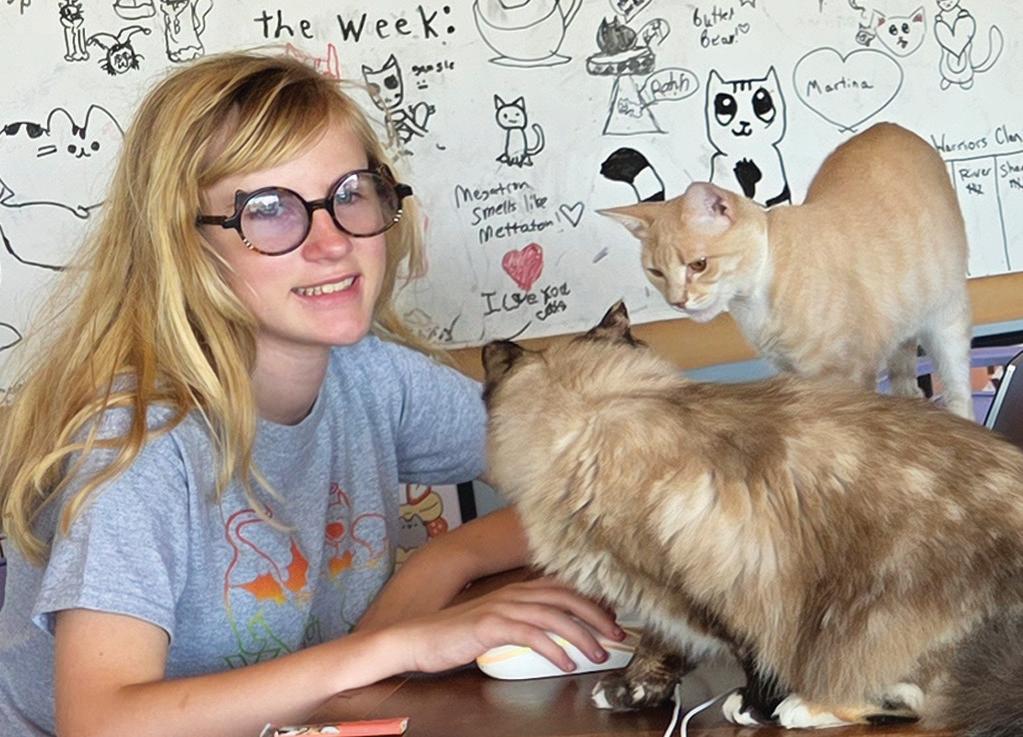
The phrase “herding cats” generally refers to hard work or impossible tasks. But here, at Kitty City Cat Museum on Salem Avenue in downtown Roanoke, it’s part of the workspace scene. And mission. Co-owner Ellie Ackerman says the task is to “help find homes for cats in need.” In addition to adoption, one of the Museum’s

services is “crisis respite,” where cats can stay here temporarily during bad situations until they can be reunited with their owners. Lillie (Ackerman’s daughter, shown here) works at the Museum (free admission, by the way) which includes this space as well as a boutique with items that are… you guessed it… all about kitty cats. The venue also houses Blue Ridge Indie Market—a local art collective and vendor marketplace.

By Gene Marrano
Executive Summary: The City of Roanoke wants your input on the next decade and how the arts might impact residents and neighborhoods.
Roanoke’s first arts and culture plan crafted by the cityfunded Roanoke Arts Commission was approved in 2011. The next update should have come in 2021, ten years later, but as it did with many other initiatives the pandemic pushed back any tweaking and public input, so they settled on 2026 and a 15 year timetable this time around.
Its called Plan 26 and via a survey that can be found on roanokearts.org through the end of August, the commission wants input on where residents think the next arts and culture plan should be headed. There’s a long and short version of the survey, which can also be accessed via a QR code. What about public art, which is visible all over the city now, even on the greenway? Arts and culture in local neighborhoods – is that important? The award-winning Arts Connect Neighbors program that links local artists with groups that invite them to lead a group event, with a stipend paid to the artists by the commission, is one way that is already taking place.
John Cornthwait, vice chair of the Roanoke Arts Commission, says early on in the survey period they noticed some patterns: the biggest barrier isn’t money, it is schedules and not knowing what’s happening around town. Respondents say arts and culture seems to be a part of how people see Roanoke – and maybe why some of them came/stay here. Neighborhoods want the arts to come to them, and many say culture is woven through daily life in the city. “One of our values for this [updated] plan is to make space for everyone.

Somebody’s trying to tell me something.
If this past month had to be labeled for one overarching theme, it would certainly be this one: caregiving.
Although we publish a lot of material here at BERRYFIELD (parent company of Valley Business FRONT), I am now convinced we could do a regular publication simply on the ‘front sector’ of caregiving.
Yes, caregivers are all around us. They always have been. But today, there are so many… how do I say it?... dimensions of it. I dare say you don’t pass six strangers in a day, where at least one of them is giving care in a significant way.
Here’s just a partial list of the caregiving I’ve bumped into in just the past three weeks. (Serendipitously or providential, depending on your world view or proclivities.)
Daily devotional
My mother-in-law has this tradition of passing over her monthly Christian devotional publication after they’ve expired. One brief story per day; and yes, I read them. Apparently, the theme for the previous month was all about caregivers—and my readings were both inspirational and devastating. I almost couldn’t continue. The tremendous weight and burden and sacrifice so many people make to care for a loved one with serious needs just breaks my heart. The individuals (and nonprofit organizations we cover so frequently in FRONT) deserve a salute and gratitude at a measure we can never hit. They should be rewarded more.
This year, I get the blessing and arrival of three additional grandchildren. My wife, Emily, has helped with the caring of our young grandchildren; and it never ceases to amaze me how much it really takes to care for children in any respectable way—not to mention going above and beyond the necessary responsibilities. What a happy and encouraging thing to see, when someone cares for a baby or toddler or young child with pure joy and a level of attention that isn’t even attained by many of the good businesses we cover here in FRONT.
It’s so tough. I bumped into two individuals who had Alzheimer’s intrude into their world. One lost her longtime soulmate last year; another is entering the toughest season. It’s all I can do to mention this disease, much less write about it. What a terrible journey it is to lose someone most dear to you in a gradual way. And yet, my caregiver acquaintances press on and serve with great diligence as their spirit is torn piece by piece.
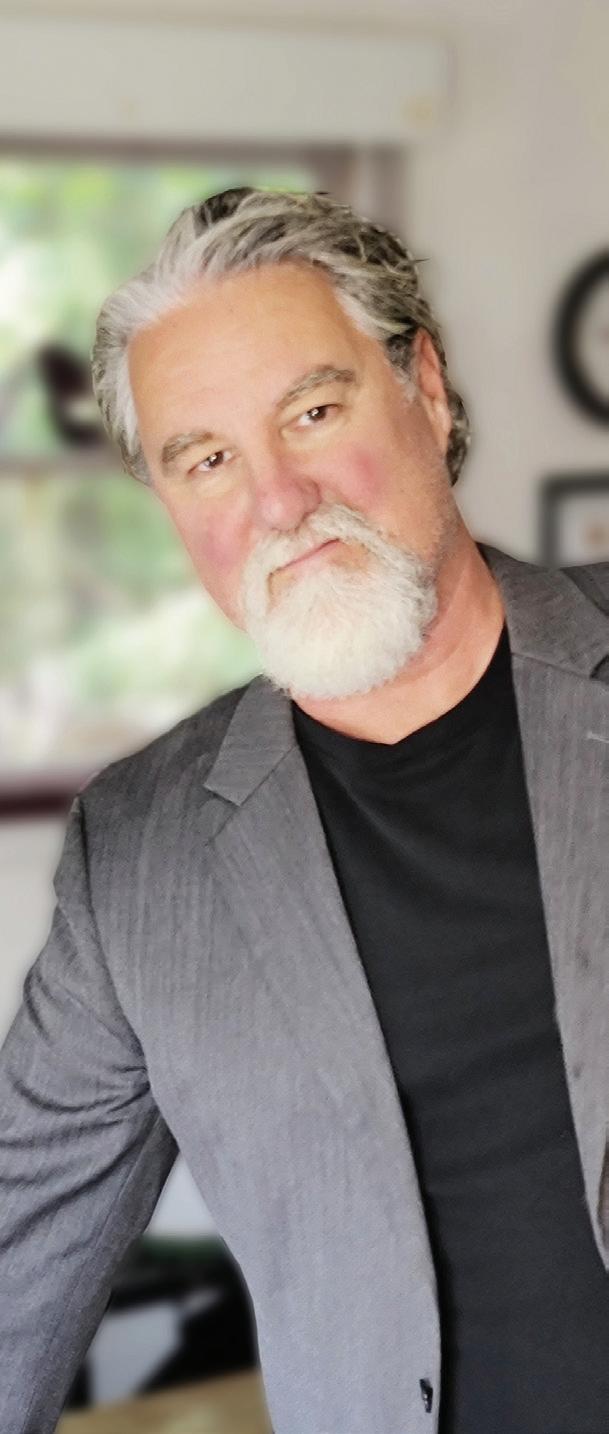
By Tom Field
Executive Summary: Caregiving may be the most important business sector we have.
from Page 29
And then, we have this month’s FRONT feature about helping folks who are losing their pets.
There is sadness in the caregiving community. Great sadness. Unbearable pain.
We ask how. And why. All the time.
But of all the FRONT sectors we cover, caregivers get the gold award. The highest honor.
from Page 28
If you live or visit here you have a stake [in Plan 26],” says Cornthwait, who is President and CEO of the creative firm Firefli at his day job.
The idea is to sift through the survey results after the public comment period ends this month and then finalize an update arts and culture plan that would be submitted to the Roanoke City Planning Commission and then City Council for approval this Fall. “I would love if there’s a silver bullet at the end of this process,” says Cornthwait, “that solves all of the problems. I hope we’re at least able to figure it out, what are the things that folks are interested in – and how are they finding out information about those things. So, we can meet them where they are already at, rather than trying to lure them somewhere new.” Be a part of the arts and culture plan update by taking the Plan 26 survey.


With all the recent press coverage surrounding the Google data center in Botetourt County and its impact on the region’s energy and water usage, rest assured the controversy does not end there. For those individuals and businesses that deal with the government, whether in D.C. or in Richmond, big data, AI, and machine learning are likely to play an increasingly important role in daily business life. We know this because a host of federal agency and law enforcement, primarily the Department of Justice (DOJ) have recently announced that big data is here to stay and, at least in DOJ’s case, the agency is actively soliciting data miners to find irregularities and flag them for further investigation.
In just the past few months, DOJ has received a marked increase in data-driven tips, resulting in a significant increase in open investigations across the country. This expanded role of data and data mining centers on regulators and law enforcement casting a wide net to compare data points about corporate and individual behavior to identify outliers. The term “outlier” in government parlance instructs investigators t0 “take a very close look because something fishy is afoot.” That “look” often involves conducting an audit, issuing subpoenas, or worse yet, surviving search warrants. And that can cost business and individuals time, money, reputation, and debilitating stress, even if nothing is truly amiss.
To be sure, data is not a new thing. But today’s data can be collected, interpreted, and analyzed at an alarming rate. When yours truly served as an Assistant United States Attorney until early 2024, federal and state agencies had already been using data analytics for years. Despite having some useful metrics to analyze, it was the odd case that a pure data pull/analysis initiated an investigation by federal or state agencies. Instead, investigations usually started with an insider tip or a series of complaints by individuals about a particular problem. In certain industries (think healthcare, construction, defense contracting), federal and state agencies could pull available data and analyze it to try and determine whether the allegations flagged by a human matched the data. For example, if Hospital A billed critical care at a rate of X times the regional or national average and there was no clear reason why, there might be something improper going on at Hospital A. While some investigations will share a similar genesis, however, the new norm may be that data, not people, provide tips to law enforcement.
This shift has real potential to cast too wide a net and ensnare the law-abiding into the realm of a subject (or, gasp, a target) of a federal or state investigation. Take a real case example from some years ago. Investigators issued a subpoena to a

By Justin Lugar
Executive Summary: Data miners get a lot of attention... much of it, negative.
“” The new norm may be that data, not people, provide tips to law enforcement.
doctor who was suspected of prescribing certain drugs that were far outside the doctor’s normal practice. There was no tip from an insider, no PA or RN raising concerns that the physician was prescribing contrary to best practices or running a “pill mill.” Instead, and unknown to the physician, was that investigators were tipped off by data which showed the physician was prescribing certain drugs far outside the norm as compared to other similar physicians. It took several months, and upwards of six figures in legal bills to figure out why the data showed something the doctor knew was not correct.
At bottom, the “digital tip” provided by the data was based on fundamentally flawed data. In reality, the pharmacy that filled many of the prescriptions had mistakenly associated the prescriptions with the wrong physician—the pharmacy simply clicked through the auto-populate feature in its computer software which incorrectly assigned the suspected prescriptions to the wrong physician. That incorrect data, in turn, auto-transmitted to government regulators, triggering the investigation.
This was a very costly mistake, not just in dollars and cents (though the cost of an unanticipated and unwarranted investigation was paralyzing for the practice), but created significant stress for the physician, the practice and its staff, and the community at large. Why the community at large you might ask… Unsatisfied with the records produced by the practice (primarily because the doctor’s records did not match the prescription records) investigators obtained a search warrant and executed it during business hours, marring the reputation of the practice and the physician. Months later, after fulsome investigation by counsel for the doctor which revealed the pharmacy errors, it took even more time and resources to convince the government of its own errors.
But while the government just moves on to the next outlier, individuals and companies are left behind to pick up the pieces and try to repair the damage. No apology, no compensation for the extra unnecessary costs incurred, and no financial liability for the unintentional errors of the pharmacy. Just the cost of doing business in a regulated industry.
But this one story captures the threat posed by the sort of broad sweeps announced by DOJ and others in recent months: sweeps based purely on data, data that tells only one part of a much more complicated story. This broad sweep has real potential to bring within the government’s reach law-abiding companies and individuals like the doctor and practice discussed above. The risk is exacerbated by the fact that DOJ’s ranks have decreased by upwards of 40% in the last year. Less available trained investigators mean a lower chance that a human being will visit the pharmacy, talk to the pharmacy tech, or even look at how the data is entered. Any one of those investigative techniques may have revealed the flawed data in the doctor’s case.
To be clear, the overwhelming majority of companies and individuals operate squarely within the bounds of the law and never even approach the margins, much like the doctor in our story. But junk data in means junk data out, so the peace of mind of operating right in the middle seems far less peaceful in this new age of data, AI, and broad sweeps.
But it’s not all doom and gloom. The very same technology that creates the potential problem can be used to help prevent mistakes such as those that effectively persecuted (but thankfully not prosecuted) the physician. And there are at least two things you or your company can be doing now to make big data work for you, not against you:
Know what the government sees before it knocks. If your business bills a government payor, holds a government contract (or subcontract), or reports data to a state or federal agency, your organization should periodically pull and review that same data the way an outside auditor or investigator would. Look for the kind of anomalies a broad data sweep might identify. Chances are if your numbers look strange to you or are not what you expect, they’ll look strange to regulators and DOJ to0. Better you find that out first.
Don’t assume data equals proof, and don’t let anyone else assume it either. If your business receives a subpoena or a records request from any government agency, whether or not it appears to be tied to an analytics-driven investigation, engage counsel immediately. Early involvement of counsel with experience identifying data-driven investigations can save significant money, time, and the stress of wandering blindly into the dangers of a government investigation.
Knowing how regulators and law enforcement are using big data, educating oneself about how data works in practice, and implementing proactive measures to collect and analyze your own data are great ways to get ahead. Companies and individuals that take early ownership of data and the stories it can tell may find it easier and more cost effective to invest in data and data analytics now. That way if the government comes knocking, the correct defensive data is ready to work for you, not against you.
“”
Knowing how regulators are using big data... and implementing proactive measures... are great ways to get ahead.
“” The very same technology that creates the problem can be used to help prevent mistakes.
Readers and patrons of the business journal are invited to submit reviews (along with an optional photo) to news@vbFRONT. com. We’ve expanded our reviews to include books, music, art, performances, culinary—with a preference for local productions. Reviews must be original, include the author’s name and location, and should be brief, under 350 words.
Let’s see, now, how can I review Steven Rowley’s Take Me with You (Putnum; 2026) without a spoiler. The plot is singular and simple, after all. I can’t. It’s the title of the book and revealed all over the jacket. What I can say is, the supposed alien abduction of a perplexed man’s husband builds a story that would be the same as an unextraordinary separation. And if that’s the metaphor here, that’s about the only literary device; because what you’ll read is straightforward. Underlying notions and musings are sprinkled in, but our story is lightweight. Still, you’re likely to be drawn in and ‘step into the light,’ as it were. Would make a good TV script—maybe better than a novel.
—Tom Field
We’ve already seen Cameron Crowe’s early life as a teenaged music critic and contributor to magazines like Rolling Stone on the big screen in Almost Famous, which he admits is pretty much his early life, meeting backstage, in hotel rooms and even in the front lobby of bars he wasn’t allowed into, to conduct those interviews in the golden era for rock music of the early 70’s.
Bob Dylan, Elton John, Fleetwood Mac, Joni Mitchell, Neil Young, the Eagles, the Who etc.

all sat down with Crowe, who would politely turn down offers to do drugs with these demiGods of rock while turning on his tape recorder. Crowe went on to write (always his first passion) and/or directed movies like Almost Famous, Fast Times at Ridgemont High, Say Anything, Jerry McGuire, and wrote a book on famed director Billy Wilder. Now he turns his pen on himself in a new book, The Uncool: A Memoir (Avid Press, 2025), a rollicking, readable tale that will transport many of us back a few decades or more. Crowe is currently working on a film about Joni Mitchell, whom he also interviewed at the height of her notoriety in the 70’s. A great trip down memory lane – and a rock music primer for those that weren’t around then.
—Gene Marrano
I worked in a supermarket when I was in college. I made about $7 an hour in the late 90's and early 2000's. I worked for a good company, but certainly the pay was pretty minimal for the amount of work required. I started as a cashier and eventually worked my way into the customer service department and "cash office" (i.e. "bankers" in the book's parlance). I mostly enjoyed the work and my colleagues.
I read Cleanup On Aisle Five (Atria/One Signal; 2026) by Ann Larson with great interest because I had worked in a supermarket.

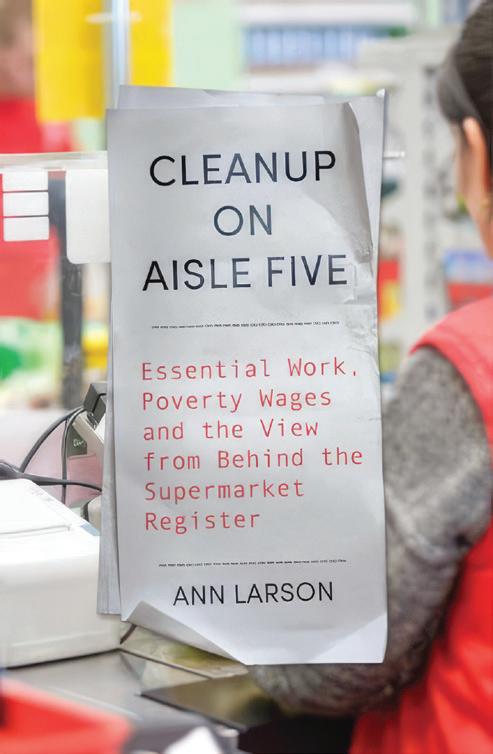
I knew what the work was like. Yes, my feet hurt (a lot) at the end of the day, even though we had "fatigue pads" underneath us. I don't recall back or arm pain from scanning, but I was quite young at the time. My dad also worked in grocery stores for most of his life, supplementing his wage as a small-church pastor. At one time, nearly my entire family worked in grocery stores. My brother once chopped part of his finger off on a saw in the meat room.
Customers could be friendly or extremely rude. However, I think it was a lot less likely at the time to be rude since we still had a relatively civil society at the time.
All of that to say, this book reveals the inside scoop on what it's like to work in a supermarket. People (customers) don't always think about the toll on the body, the toll on the mind/ emotions, and other issues (like the "sweep alert she describes in the book") supermarket employees deal with. Thankfully, I worked in an era before self-checkout. I have no idea how one clerk manages all the problems at multiple checkouts like that.
It's a great book if you're interested in learning more about how the low-income workforce survives (or doesn't) in this society. We take advantage of these people every day. The corporations get richer and richer while the average worker gets poorer and poorer. Minimum wage jobs were once intended for high schoolers and maybe college kids who needed some extra cash. Unfortunately,

corporations are more interested in shareholders than they are in humanity. I'm grateful that I worked for a local supermarket who took care of its employees pretty well.
—Jon Stanton
Most leaders work to build resilient organizations. What makes Antifragile (Random House; 2014) interesting is that Nicholas Taleb pushes the conversation a step further. He explores how some individuals, organizations, and systems actually become stronger through stress, uncertainty, and disruption.
As CEOs, we face constant change. Markets shift, industries evolve, and unexpected challenges emerge. This book offers a different way of thinking about risk and growth, encouraging leaders to build organizations that can learn, adapt, and improve through adversity.
Key takeaway: Build an organization that can learn and grow through uncertainty.
—Scot McRoberts
The reviewers: Tom Field is a creative director, writer, and publisher; Gene Marrano is a news reporter and FRONT editor; Scot McRoberts is executive director of Virginia CEOs; Jon Stanton is a Goodreads online reviewer.
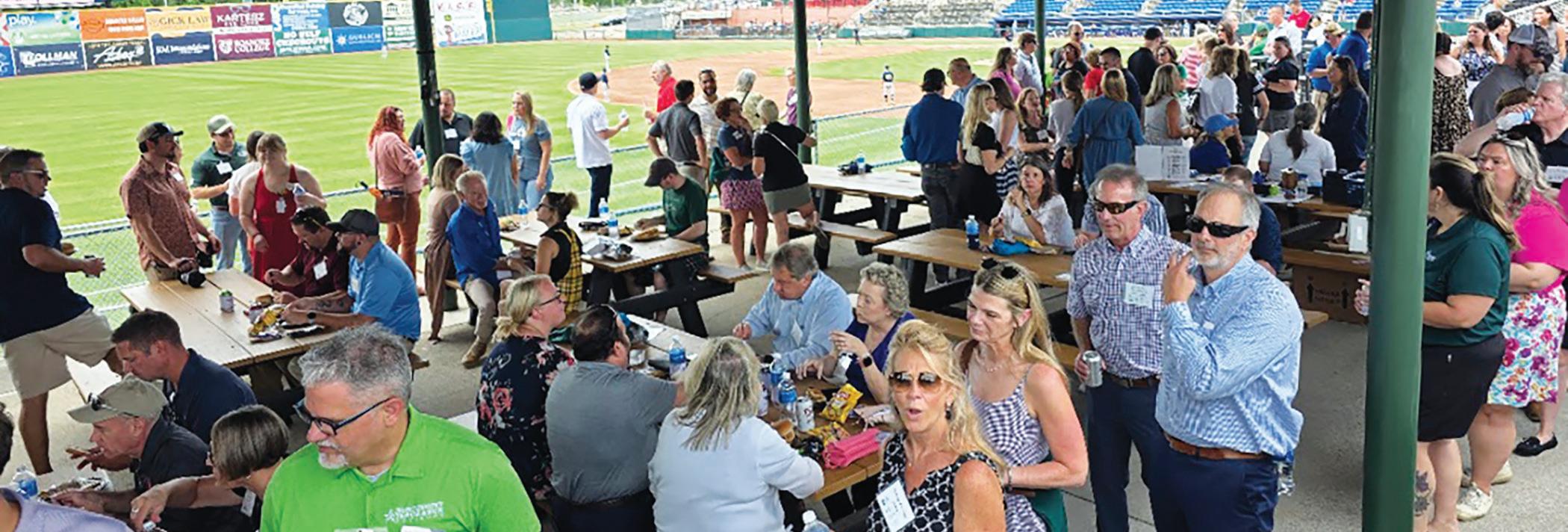
Simply and directly titled “2026 Regional Networking Event,” seven area “chambers” hosted a networking affair at the Salem RidgeYaks mid-day game on June 23. Slightly overcast skies didn’t deter the large turnout from members and associates of: Roanoke Regional Chamber of Commerce, Smith Mountain Lake Regional Chamber of Commerce, Salem-Roanoke County Chamber of Commerce, Botetourt County Chamber of Commerce, Vinton Area Chamber of Commerce, and Roanoke Valley Association of Realtors and Greater Williamson Road Area Business Association.
The 2026 Kiwanis Pancake Breakfast annual, traditional, popular fundraiser of Roanoke Kiwanis Club included a baseball themed campaign (Salem Ridge Yaks was one of the sponsors, along with ServPro, Haley Toyota, Fox Radio, Carilion). $62,718.55 was raised for scholarships assisting children, seniors, and the environment. Almost $50,000 in tickets were sold. Sales teams included The SWAT, Sausage Swatters, Cleanup Batters, Pancake Pirates, Hotcake Hall of Famers, and Maple Miracles, League of their Own, Sluggers, and Designated Hitters.
Submitted Submitted

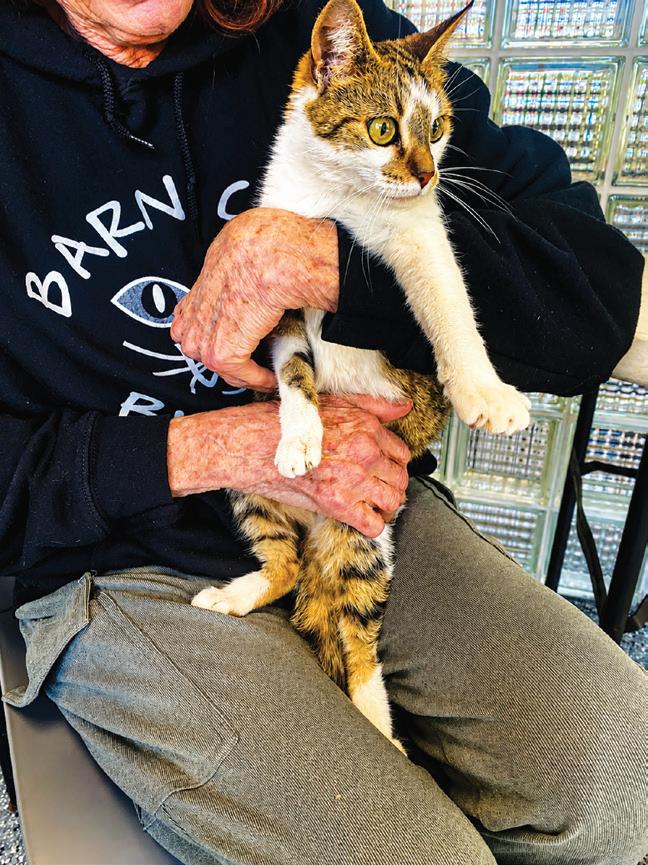
Barn Cat Buddies has been extra busy this season. The local, independent, nonprofit organization and its Feline Friends program is all about cats— created to “save feral or skittish cats from a life of hunger on the streets or being destroyed in local shelters.” BCB is not a shelter/kennel but helps relocate cats as “rodent control technicians” at barns and stables or helps to get them adopted by loving families, all after ensuring the cats are sterilized and vaccinated. Director Toni Levine encourages the community to support the mission. THIS JUST IN: Barn Cat Buddies is “transitioning its assets and core efforts to Star City Cat Rescue” to continue the trap-neuterreturn work and care of foster-based rescue, adoption, medical care, and community support.

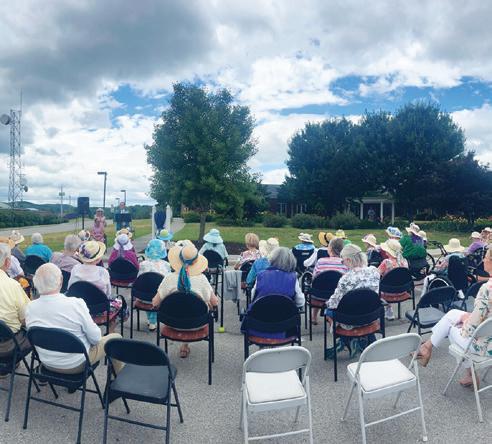
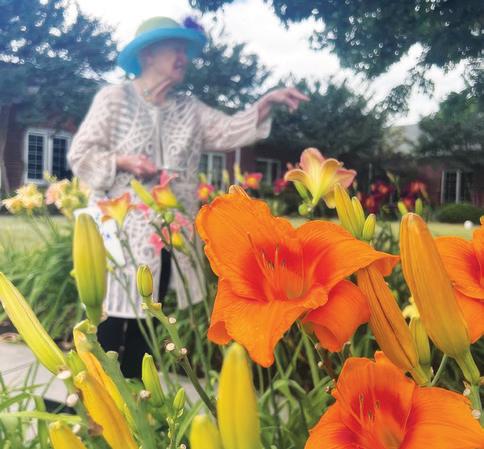
Friendship retirement community has dedicated the Jane Morgan Harris Daylily Garden at its Salem Richfield campus, honoring the pioneering nurse and founder of Richfield Living whose vision helped shape healthcare in the Roanoke Valley. Richfield Living’s story began in 1934, when Harris assisted a mother giving birth in an abandoned gas station. Moved by the lack of accessible healthcare for women and families of limited means, she established a care facility in a farmhouse on what would become the Richfield campus. Over time, that small healthcare ministry evolved into Richfield Living, serving generations of older adults throughout the region. Kim Bratić, Executive Director of Advancement, says Harris “established care in a farmhouse, which later would become our Richfield campus. We [wanted] a way to honor her legacy, which is truly being a pioneer in healthcare in this region.”
The Roanoke Region has become known as a mountain biking destination, so much so that USA Cycling announced the organizations endurance mountain biking national championships will be back in 2027 for a third straight year. The championship events were held at Carvins Cove, Explore Park and Elmwood Park last month. In 2025 the USA Endurance Mountain Bike National Championships had a $2.6 million impact on the region.
Kathryn Lucas, Director of Public Relations for Visit Virginias Blue Ridge says having a high-profile event such as this for multiple years allows organizers to improve from year to year (like new course features on an expanded Roanoke River Greenway segment at Explore Park), which attracts more athletes and spectators to the event. “Word of mouth from the riders when all these racers come into town and have a fantastic experience; they feel welcomed in our area. The courses are really exciting to them – they’re going to tell the rest of the cycling community – and that’s going to generate even more buzz for [next] year.”
The Championships also raise money for the upkeep of local trails. Each athlete pays a $10 fee as a part of their registration which last year amounted to $22,000 for trail maintenance, split between Roanoke City and Roanoke County.


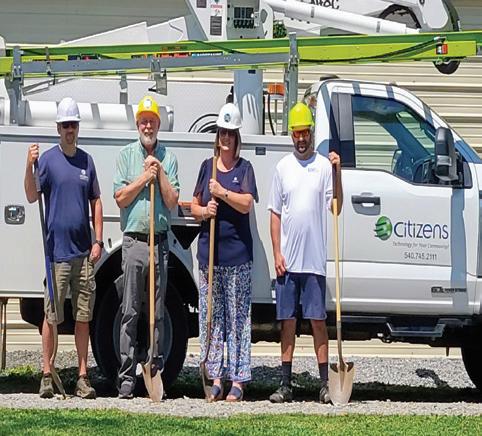
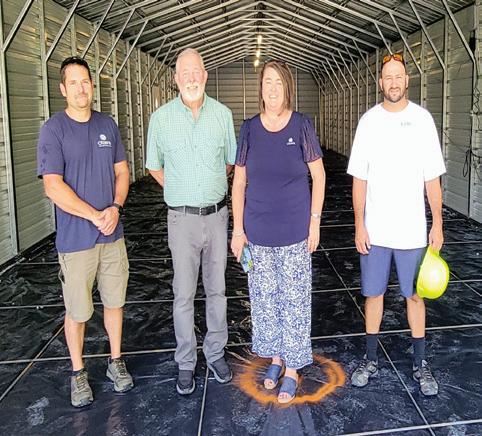
Jubilee Park Community Center on a 14.5-acre site bounded by the New River and New River Trail is under development, thanks to a partnership with Citizens Telephone Cooperative. Citizens provides internet connectivity to the park, which has the county line between Wythe and Carroll counties within the park. Working together the Civic League and Citizens Cooperative successfully applied for a Community Connect grant from the United States Department of Agriculture Rural Utilities Service. Following the devastation inflicted on this community park during the 2024 flooding created by Hurricane Helene, the park sought help to bring the nearly 40-year-old park back to life. The $150,000 grant will not only accomplish this connectivity, but it will provide space for community programs that can positively help the community. The building will provide about 1,800 square feet of space that will include restrooms, a kitchen and program space that can accommodate up to 200 theater style, 100 classroom style, 115 seated dining and up to 200 for standing room events. The interior will be fully insulated and have commercial grade flooring, pine tongue and groove walls, drop ceiling and split unit heating and air. EZR Construction was selected to be the General Contractor on the project, which is expected to be completed before Labor Day weekend.
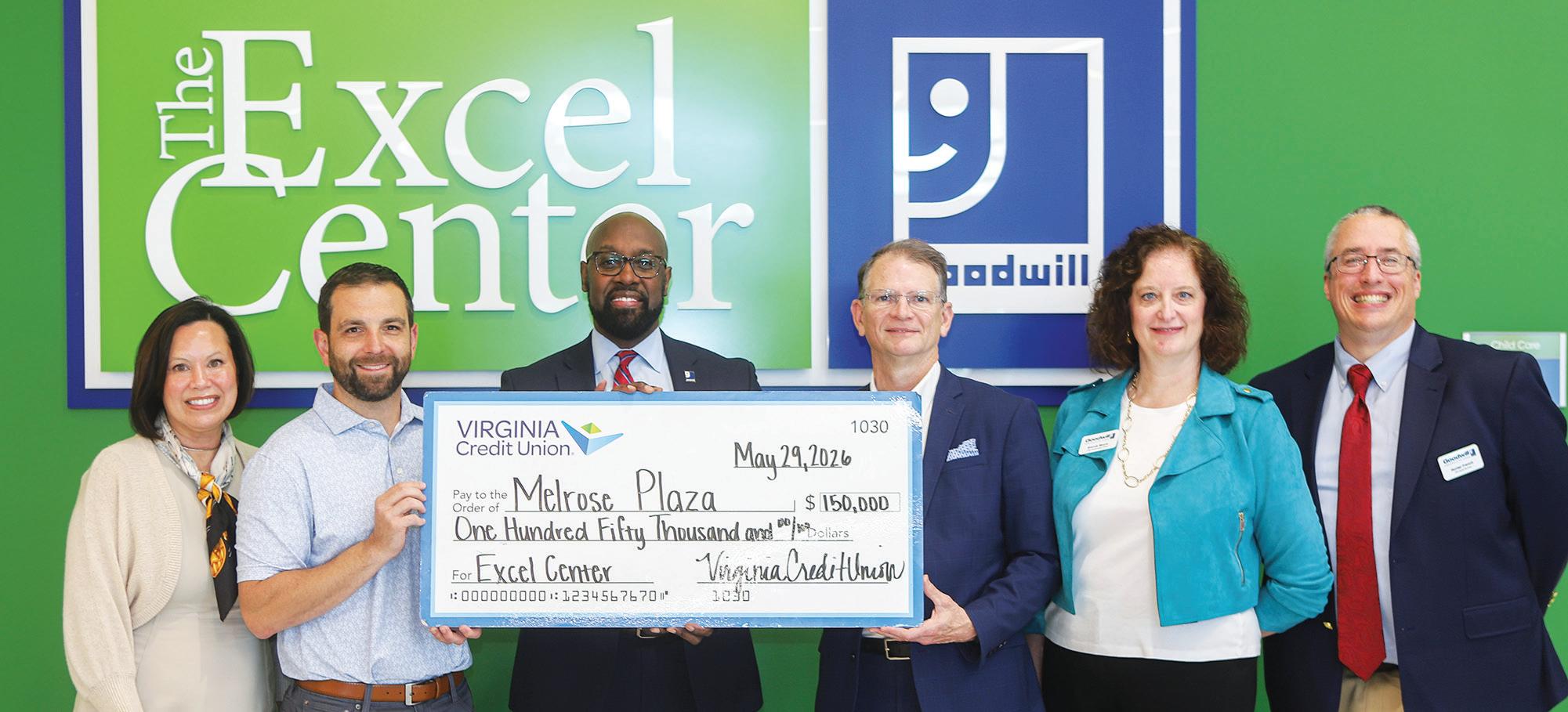
Virginia Credit Union is continuing its multiyear, $150,000 commitment to Goodwill Industries of the Valleys in support of The Excel Center, the Commonwealth's first adult high school, with its 2026 installment of $30,000. VACU's cumulative contribution to the program now totals $90,000 since 2023. Support of The Excel Center began in 2023 with a $10,000 gift from Member One Federal Credit Union — which has since merged with Virginia Credit Union — to help launch the school during its planning and development phase. The Excel Center, located at Goodwill's Melrose Plaza in Roanoke, opened to its first students in August 2025, joining a national network of more than 40 Excel Centers operated by Goodwill organizations. "For us, an investment in education is an investment in everything else that matters — stronger families, more resilient communities, and a more prepared workforce," said VACU President/CEO Chris Shockley.
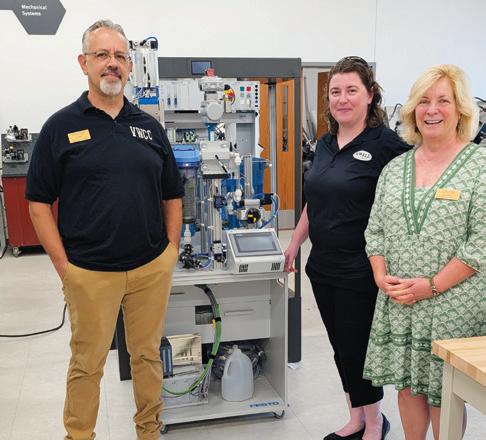
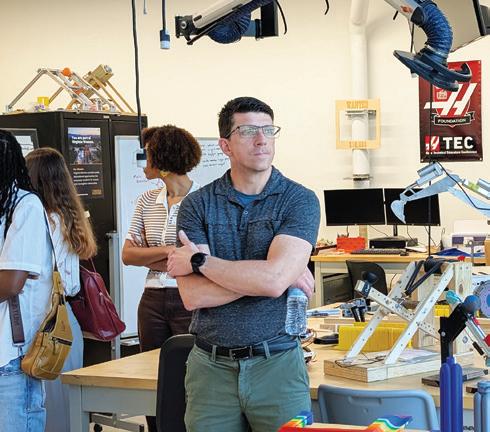
Virginia Western Community College will now be able to offer what it calls "enhanced credentialing opportunities" that are recognized nationally and are transferable among many industries. The National Coalition of Certification Centers has awarded Virginia Western the NC-3 Leadership School designation. Amy White is the Dean of Stem at the school: “our program will be elevated at a national level to be a leader in technical education. Our CTE programs have been through this process and [will] really support business and industry in this region.”
"Mechatronics" is a blend of mechanical and electronic disciplines. With the NC-3 Leadership School designation, Virginia Western will offer three certificate courses with national skill standards, covering topics like fluid power, applied mechanical systems and smart sensors. David Berry is program head for mechatronics: “we really offer the skill sets that these certs encompass in our academic classes; this provides a pathway or route for adult learners already employed, in order to get academic credit for a 15 week class.”
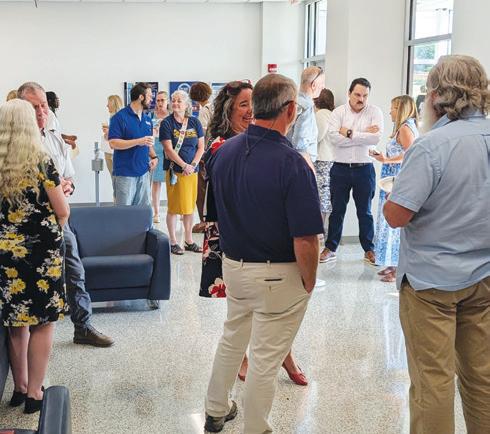
The school says it works closely with local employers to help create certificate programs that can place students in good jobs. Local and state economic development officials gathered last month, along with regional employers that can benefit from those cert programs, at the Virginia Western Colonial Avenue campus to hear more about the new applied mechatronics NC-3 certificate courses that will be offered, using Western's hands-on STEM lab as the program anchor.

Held at The Stone Pony in Asbury Park, New Jersey (of Bruce Springsteen fame and with Springsteen soundtrack), a “Born To Run the Local News” event was presented for 140 local news professionals on July 1. The conference applauded the local news industry—especially community newspapers—and was hosted by the energetic Kenny Katzgrau of Red Bank Green newspaper (Red Bank, NJ) and Broadstreet ad app. Key takeaways included a need to support and continue local journalism and that local news serves as an authority as well as an icon that will stand for community.
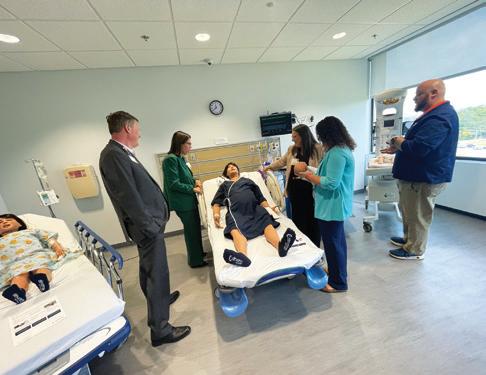
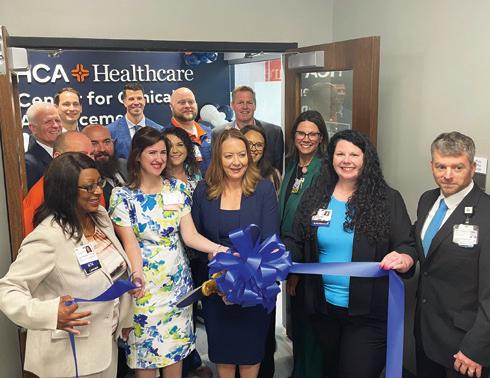
Carilion Clinic has one near Dr. Pepper Park and now so does LewisGale - The HCA Healthcare Center for Clinical Advancement has opened in the former Allstate Building on Electric Road in Roanoke County that also houses the Galen College of Nursing - it’s a simulation center. LewisGale Regional Health System nurses and residents can train at the new Center for Clinical Advancement on the latest medical techniques, with the help of some high-tech mannequins. The new Healthcare Center for Clinical Advancement cost $2.4 million to build and now fills out the last 6000 square feet of empty space at the former Allstate Building on Electric Road in Roanoke County - now known as Metis Plaza.
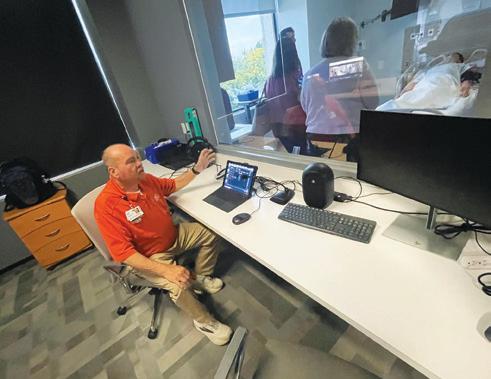
Danyelle Stutz is Vice President of Clinical Education for HCA Healthcare's Capital Division: “this is our 20th simulation center across all of HCA Healthcare; we have two now here in Virginia. My experience with our simulation center in Richmond is that it gives students an opportunity to learn in a safe location, to provide lots of different learning modalities – to really meet the learners where they are. Everyone learns a little bit differently.” The new HCA Healthcare Center for Clinical Advancement includes simulation labs, skills bays and debriefing rooms - from a control room new "wrinkles" can be introduced, helping to sharpen critical assessment skills.
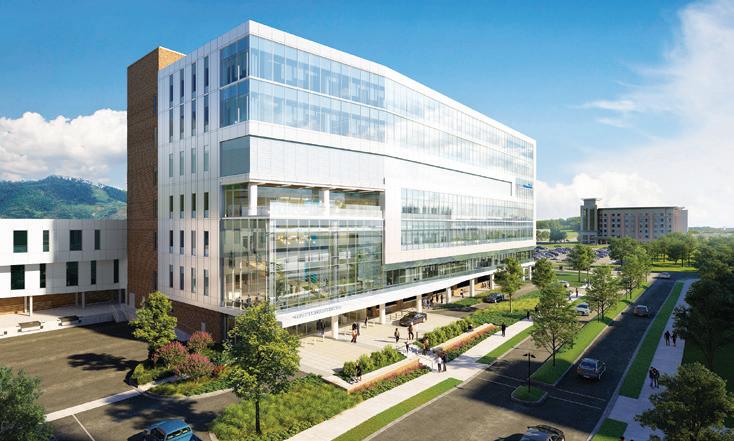

Patients with brain and urologic cancers will soon have access to a broader array of the latest treatment options here, thanks to new clinical trials at Carilion Clinic for targeted radiopharmaceutical therapies. Radiopharmaceuticals, also known as “theranostics,” is a form of precision medicine that uses radioactive isotopes for both imaging and therapy, and has been shown to be effective in treating a wide range of tumors. At an all-day workshop last month at the Fralin Biomedical Research Institute, which attracted participants from as far away as Japan (virtually in that case).
Carilion imaging manager James Crowley says after injecting a radioactive isotope targeted towards an area suspected to contain cancer, “we can see where it goes … and be able to determine treatment based on that [enhanced imaging].” That’s opposed to chemotherapy, which targets a much wider area of the body, including where the cancer is not located. Increasing the number of theranostics-related clinical trials is part of Carilion’s rapidly growing research enterprise, which has prioritized these novel therapies as the health system prepares to open the Carilion Taubman Cancer Center in 2028.
Submitted
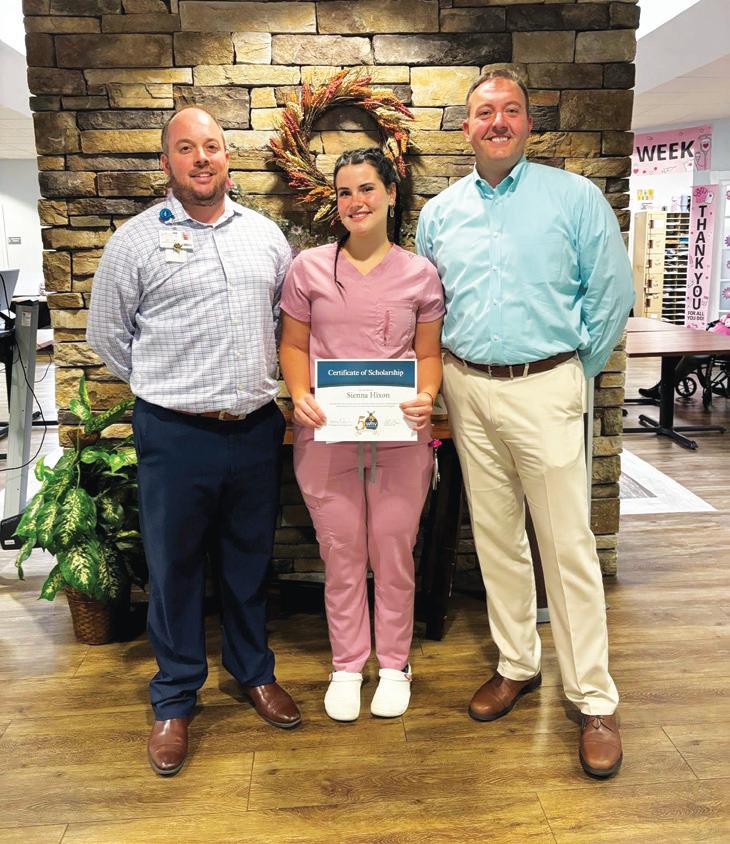
The Warm Hearth Foundation in Blacksburg has awarded $25,000 in scholarships to 17 Warm Hearth Village employees who are pursuing educational opportunities and career advancement, marking another milestone in the Foundation's ongoing investment in employee growth and development. Since the program's inception, the Foundation has awarded a total of $115,000 in scholarships to Warm Hearth Village employees. Now in its sixth year, the scholarship program supports employees across a variety of disciplines as they pursue job-related education, certifications, and professional development opportunities. The Warm Hearth Foundation Board of Trustees Scholarship Committee reviewed a record number of applications this year before announcing award recipients in June. Photo: Scholarship recipient Sienna Hixon, CNA with Andy Jones, Kroontje Health Care Center Administrator, and President & CEO William Lester
Brittany Mills tried multiple times to earn her high school diploma after a car accident in 2007 led to her not finishing the credits she needed to graduate. She attempted a credit recovery program and also looked into getting her GED, but it wasn’t until The Excel Center opened at Melrose Plaza that she was able to finish her coursework.
Nineteen years later, Mills is now a high school graduate, the first from The Excel Center. She has earned her diploma alongside a dental assistant certification and is continuing her education to pursue a career in dental hygiene. “Everyone at The Excel Center wants to help; they look into your future and see what you want to do with your life,” said Mills. “The on-site childcare helped make it possible. My little boy got to come to school with me, and if I didn’t have that, it would have been a challenge.”
Submitted
Said Richmond Vincent, president and CEO of Goodwill Industries of the Valleys, “she is the first of many adults whose lives will be changed through education at The Excel Center. We are proud of her dedication to finishing the classes to earn her diploma.” There are around 50 students currently enrolled at the Excel Center and more should graduate by the end of the year. Vincent says the Excel Center, a Goodwill Industries program that has adult high schools elsewhere, could handle as many as 300 students at the Melrose Plaza campus – but that would require more funding for the non-profit agency.

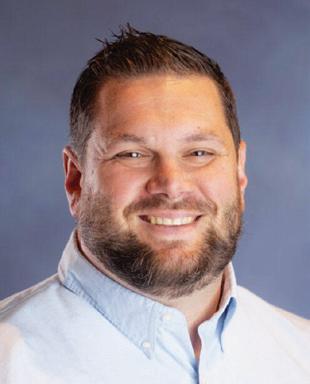
Kyle Rapinchuk, Ph.D., has been appointed Head of School at Faith Christian School in Roanoke. He is the fifth head, selected after a year-long search. He brings more than fourteen years of experience in Christian classical education, most recently as Head of School at Sager Classical Academy in Siloam Springs, Arkansas. Prior to that, he spent twelve years a School of the Ozarks in Point Lookout, Missouri, where he served as Associate Professor of Christian Worldview, Upper School Curriculum Director, and Lead Teacher. Rapinchuk is the founder of The Classical Thistle, a ministry that provides
conferences and online resources promoting classical Christian education for the twenty-first century.

Brian White has been appointed vice president and director of athletics at Virginia Tech. He brings over two decades of high-level collegiate athletics experience, following an eight-year stint as vice president and director of athletics at Florida Atlantic. Previously, White was the deputy athletics director at Missouri, the associate athletics director and chief development officer at Army West Point, oversaw athletic fundraising at Tulsa, and was the associate athletic director at Louisiana Tech University. He will oversee Virginia Tech’s 22-sport athletics
department and lead the university’s efforts to compete in a rapidly evolving collegiate athletics environment.
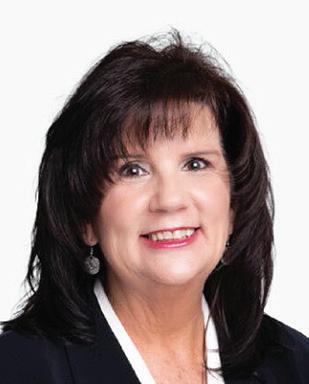
Kimberly English has been appointed branch manager at Rocky Mount of the Bank of Botetourt. She will oversee daily operations, mentor and develop staff, strengthen customer relationships, and further the Bank’s longstanding commitment to community-focused banking. As a lifelong resident of Franklin County with more than 30 years of banking experience, she brings a wealth of industry knowledge and a deep understanding of the
evolving financial needs of individuals, families, businesses, and communities throughout Franklin County and the surrounding region.
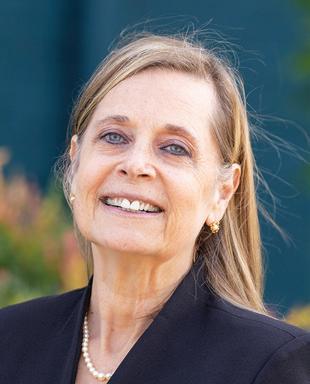
Laurel Craghead has been appointed Vice President - Private & Business Banking at Freedom First Credit Union. Craghead arrives with 23 years of financial industry knowledge, with experience in business and retail banking. She will primarily serve the Smith Mountain Lake, Roanoke, and New River Valley areas.
Ada Cuadrado-Medina has joined the Roanoke Blacksburg Innovation Alliance as Director of

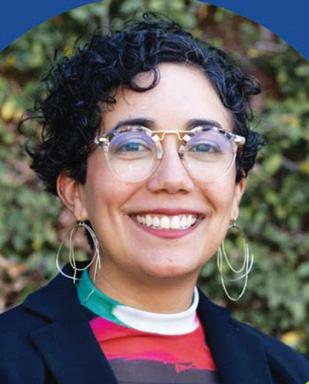
Communications and Engagement—a newly created position. She will help brand the region’s innovation ecosystem and has over 15 years of experience as a narrative strategist and communicator in nonprofit, consumer goods, food systems, and global finance.
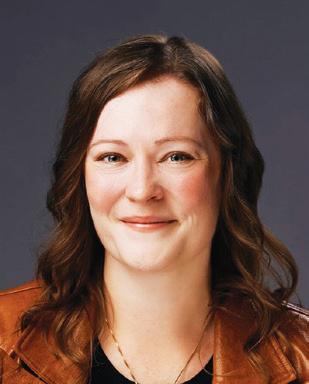
Liz Long has joined Visit Virginia’s Blue Ridge as Director of Community Relations.
Have a career announcement?
Send announcements to news@vbFRONT.com Photos should be color, 300dpi. A contact / source must be provided. Inclusions are not guaranteed and all submissions are subject to editing.
She was previously editor of The Roanoker magazine for the past nine years.
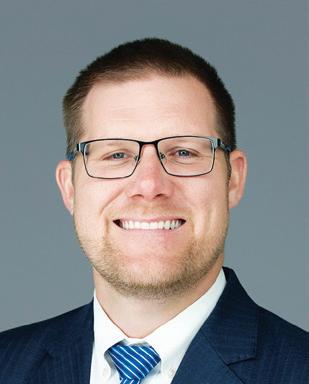
Eric Sichau, IOM, President & CEO of the Roanoke Regional Chamber of Commerce, has graduated from the Institute for Organization Management (IOM) after completing the four-year program.
Kayla Masters, Vice
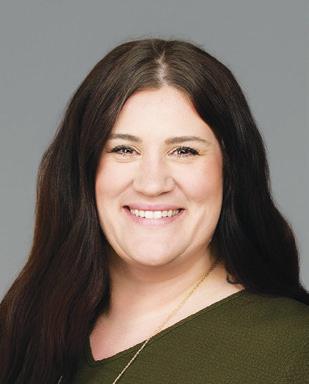
President of Marketing & Programs at the Roanoke Regional Chamber of Commerce, has completed Year 2 of the four-year Institute for Organization Management (IOM) program.
Ashley Webb has been appointed by Governor Abigail Spanberger to a board seat on the Virginia Commission for the
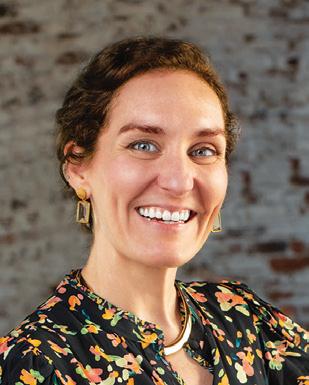
Arts, representing Region 6 (which includes nine counties to the north and south of Roanoke City). Webb is the Executive Director of the Historical Society of Western Virginia and the O. Winston Link Museum and serves as an at large Director of the Board of the Virginia Association of Museums. She has a BA in History and Anthropology from Longwood University and a MA in Museum studies from Bournemouth


University in Dorset, England.
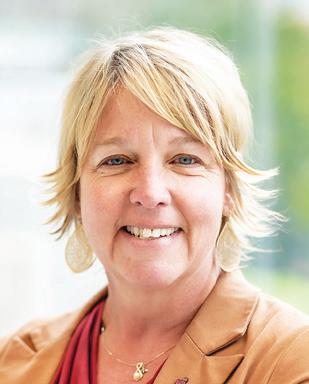
Dustin Eshelman has joined the Roanoke Cultural Endowment as the newest Cityappointed member of the Board of Directors. Eshelman serves as the Health Sciences and Technology
Coordinator of Experiential Learning and Student Development at the Fralin Biomedical Research Institute at VTC.
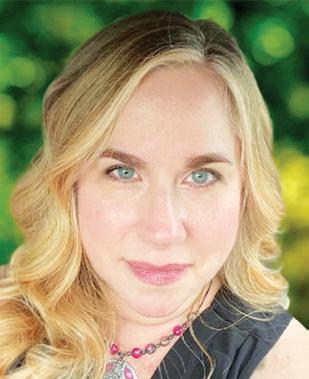
Heather Mitchell is the new Administrative Assistant & Box Office Manager for Opera
Roanoke. She has spent more than 25 years teaching, conducting, and generally keeping this community singing. A Roanoke Valley native, Mitchell graduated magna cum laude from Hollins with a degree in music and a concentration in voice.
Margo Boone, former intern, has been promoted to Marketing Coordinator at 5 Points Creative.

In her new role, Boone will support and execute marketing and communication initiatives for the firm and multiple client accounts.
Compiled by Gene Marrano and Tom Field.
Virginia is one of but 13 with a [state vehicle inspection] law. Page 18 “”
“”
Remaining locally owned is central to the company's identity.

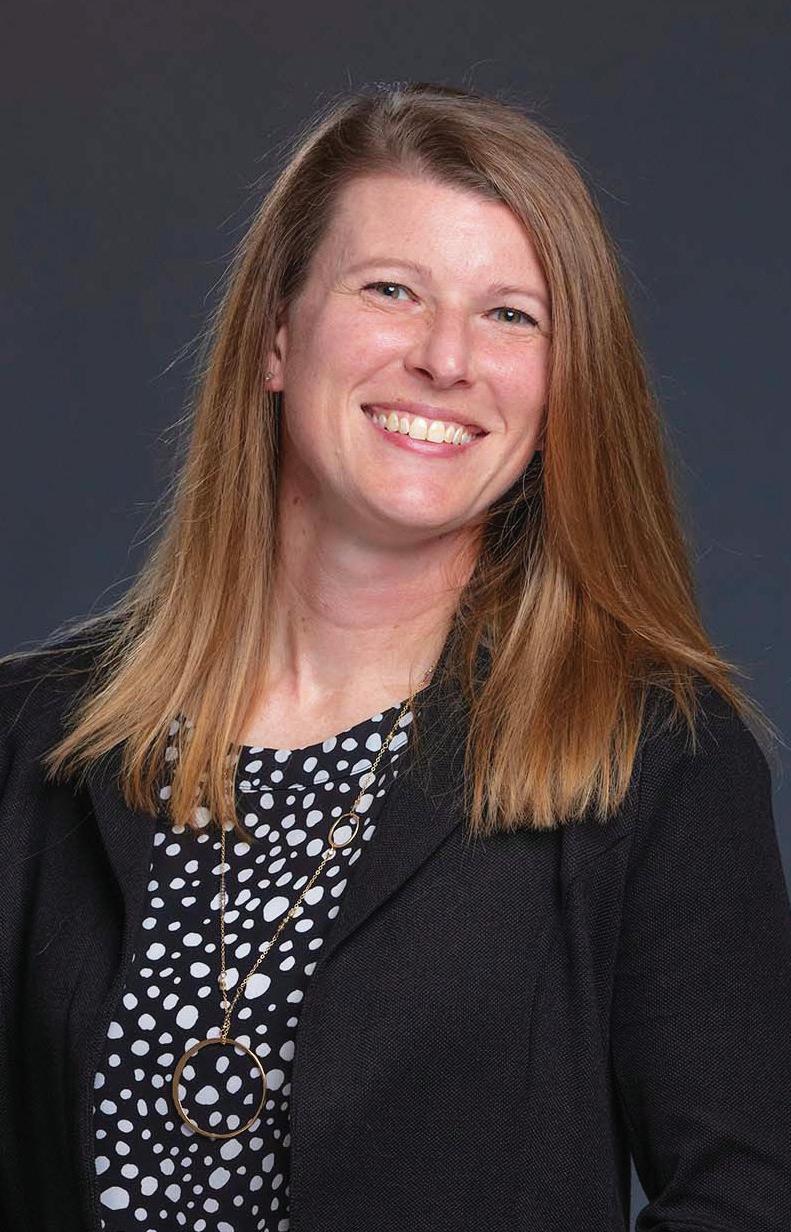
Jason Boone is Vice President & Business Banking for Freedom First Credit Union. He is a lifelong resident of the Roanoke area, graduated from Cave Spring High School and earned a degree in business from Liberty University. He has over 20 years of experience in banking, more than half of that at Freedom First. He enjoys spending time with his family and friends, hiking, playing volleyball with RVVA, and following Penn State football. [ jboone@freedomfirst.com ]
Aila Boyd serves as the editor of “The Fincastle Herald” and “The Vinton Messenger” and coordinates social media for the Botetourt County Chamber of Commerce. She holds an MFA in writing from Lindenwood University.
Zachary Collier, Ph.D. is Assistant Professor of Management at the Davis College of Business and Economics at Radford University. [ zcollier@ radford.edu ]
Carrie Cousins is the Director of Digital Marketing at LeadPoint Digital in Roanoke. For 15+ years, she has helped businesses tell their stories and get better results online with practical digital marketing strategies. She also an active leader in AAF, serving on the local and district boards, and is an adjunct professor at Virginia Tech.
Dan Dowdy is the business development
director for Valley Business FRONT and owner of The Proofing Prof proofreading services (proofingprof.net). His background includes service in the U.S. Air Force and an extensive career in education, including teaching college-level writing competency and business courses, and working for a Fortune 100 company. [ddowdy@vbFRONT.com]
Rachel Nicole Edwards is an award-winning author and soon-to-be Hollins University graduate. Rooted in her home of Botetourt, she has enjoyed writing about her community for the FRONT, Botetourt County Historical Society, and in her own Giollachríst novel series. [ morningstarnovels@ gmail.com ]
Emily Field is the office administrator for Berryfield, Inc. (publisher of FRONT and a media / marketing firm). She lives in Salem with her husband, Tom, and is the mother of three and grandmother of three. [ efield@berryfield.com ]
Tom Field is a creative director, marketing executive and owner of Berryfield, Inc. in Salem, and owner of Valley Business FRONT magazine. He has written and produced programs and materials for local and international organizations for 40 years. [tfield@berryfield.com]
Micah Fraim is a topreferred Certified Public
Accountant and business finance strategist who is well-connected in the regional business community and nationally recognized. Publisher of The Little Big Small Business Book, he also publishes a blog at www.fraim.cpa/blog and is frequently interviewed as a business financial expert in national media channels. [ micahfraim@fraimcpa.com ]
Lindsey Hull writes about a little bit of everything. As a poet, she authored "the mountains rumble" in 2024. Reach her at lindsey. [ smith.hull@gmail.com ]
Gene Marrano is FRONT editor and an award-winning anchor and reporter for WFIR Newstalk radio. "Best one on one interview" award from Associated Press of the Virginias for his interview with former Roanoke County Chief of Police Howard Hall. [gmarrano@cox.net]
Mary Ann L. Miller is vice president of business banking and community relations at Bank of Botetourt. A graduate of Bridgewater College, she has been in the banking industry for more than fifteen years and currently serves on the board and executive committee as past-president with the Botetourt County Chamber of Commerce, a board member with the Daleville Institute, and is vice chair of the board of with the Botetourt Family YMCA.
A native of Botetourt County, she resides in Daleville with her husband and two children.
Alicia Smith is vice president of F&S Building Innovations in Roanoke. She grew up in the construction business and has served in multiple capacities, currently managing all sales, design, production and marketing of the residential division. She's also the president of Build Smart Institute and serves on several boards, community and church organizations. Alicia enjoys lake-life living and fun times with her family (husband and two daughters) and friends.
Dan Smith is a veteran journalist and member of the Virginia Communications Hall of Fame, a winner of numerous press association awards, the Small Business Journalist of the Year, two Perry F. Kendig Awards and the Arts Council of the Blue Ridge’s Literary Award. He is author of eight books, including the recent novels “NEWS!” and “CLOG.” [ pampadansmith@ gmail.com ]
Nicholas Vaassen is a graphic design specialist with over a million years of experience. His design projects include logos, magazines, web design, signs, newsletters, postcards, business cards, and any other marketing materials you can think of. [ nicholas vaassen@gmail.com ]





We’re number three
Virginia is #3 in CNBC’s annual “America’s Top States for Business” rankings, rising one spot from last year. CNBC’s annual “America’s Top States for Business” rankings measure all 50 states on 138 different metrics in 10 key categories of competitiveness, to determine which states are delivering most effectively on the things that mean the most to business.
Workforce training recognized
Virginia is ranked number one in the United States for customized workforce training in the 22nd annual Business Facilities Rankings Report for the fourth consecutive year. Business Facilities, a national publication for economic development professionals, recognized the Virginia Talent Accelerator Program for its impact in delivering workforce training to new and expanding companies. Virginia is also ranked among the country’s top five states for business climate. Last month, Business Facilities recognized InternshipsVA — a statewide initiative launched to connect students with paid internships in Virginia — with its 2026 Economic Development Organization (EDO) award.
Governor’s board appointments
Roanoke Higher Education: Christen Brooke Miles of Roanoke, Vice President,
HR and Community Engagement, RGC Resources, Inc., Shaenita Leann Horton of Roanoke, District Senior Manager, Wells Fargo Bank. Virginia Commission for the Arts: Ashley Webb of Roanoke, Executive Director & Curator, Historical Society of Western Virginia. Treasury Board: G. Robert Vaughan of Salem, Senior Vice President, Finance & Treasurer, Carilion Clinic. Aquaculture Advisory Board: Bradley Walker of New Castle, Owner, Smoke In Chimneys. Cattle Industry Board: Carl N. McNeil, Jr. of Montgomery County, Owner, McNeil Farm. Secure and Resilient Commonwealth Panel: Marci L. Stone of Bedford, Deputy Chief, Roanoke Fire-Emergency Medical Services
Crumbs at Old Country
Crumbl construction is well underway at Old Country Plaza in Roanoke County Tanglewood area. Known for their pink boxes and unique desserts, it’s Crumbl’s first location in the Roanoke Valley.
Chris goes to school
Chris's Coffee & Custard construction is nearing completion in the historic Starkey School building on Merriman Road, near Penn Forest Elementary School. This new location – following a move from the 9th Street Southeast Industrial Park in Roanoke Citywill provide opportunities for gainful employment for individuals from all
walks of life, focusing on the special needs community.
Tech airport upgrades get funding
$5,819,548 in federal grant funding to revitalize infrastructure, improve air travel safety, and support the longterm viability of nine local and regional airports across Virginia has been issued by the Federal Aviation Administration’s (FAA) Airport Improvement Program (AIP) for Fiscal Year 2026. The grant awards include $2,927,304 for the Virginia Tech/ Montgomery Regional Airport Authority, to rehabilitate taxiway and apron pavement at Virginia Tech/ Montgomery Executive Airport, extending the life of critical infrastructure and enhancing the safety and reliability of operations.
Foodshed Network grants
The Roanoke Foodshed Network (RFN) has announced the recipients of the 2026–2027 Healthy Community Action Team (HCAT) Mini-Grants, funded through the Virginia Foundation for Healthy Youth. This funding cycle, the Roanoke Foodshed Network awarded $19,375 to 12 organizations advancing community health and food access across the Roanoke region, including: Cave Spring Elementary School, East Salem Elementary School, The Harvest Collective The Humble
Hustle Company, Inc., LEAP, One Valley, Inc., Roanoke Refugee Partnership, Salem Area Ministries, Star City Strong Foundation, Virginia Cooperative Extension, West End Center for Youth and The Wild Way. "These grants represent an investment in the people and organizations who are building an abundant, and more connected regional food system," said Maureen McGonagle, Director of the Roanoke Foodshed Network.
Giles County brownfields grant
The U.S. Environmental Protection Agency (EPA) announced federal funding for U.S. communities through the Brownfields Multipurpose, Assessment and Cleanup grant program. The EPA awarded Giles County a $3,693,800 cleanup grant to support cleanup activities at local brownfield sites owned by the former Leas & McVitty/New River Tannery. The Brownfields Program has delivered millions of dollars to Southwest Virginia communities to help with potential economic development projects.
Orvis on the move
Orvis, the outdoor retailer that has maintained operations in Roanoke for nearly 40 years, is relocating its Roanoke operations to approximately 100,000 square feet within the former Westport Axle building at 802 Kyle Ave. Supported by a $50,000 grant from the City of Roanoke Economic Development
Authority, the move retains approximately 60 positions within the city limits. The relocation marks a new chapter for an operation embedded in Roanoke's economic fabric since 1986, when Orvis established its Blue Hills distribution and fulfillment center here. For nearly 39 years, that facility served as a regional hub for the distribution of fly-fishing gear, sporting apparel and dog products. Since 1987, the company has also maintained a retail storefront at 19 Campbell Ave. SE in downtown Roanoke's historic Market District. That location remains fully operational.
VT ranked among top 15 percent worldwide
Virginia Tech is tied for No. 285 among more than 2,250 universities from over 100 countries in U.S. News & World Report’s 2026-27 Best Global Universities rankings. U.S. News & World Report calculated the overall ranking for each university using a complex formula that involved 13 indicators that combined to measure global research performance. Virginia Tech ranked highly in a number of areas, including Electrical engineering: No. 81 globally, No. 5 among U.S. universities, Civil engineering: No. 146 globally, No. 8 among U.S. universities, and Mechanical engineering: No. 165 globally, No. 10 among U.S. universities.
announced its 2026-2027 Performance Season, marking 25 years since Shaftman Performance Hall first opened its doors. To celebrate a quarter century of culture, the organization says it has assembled one of its most diverse and ambitious lineups to date - 25 performances spanning world music, jazz, bluegrass, folk, soul, comedy, and theater. Season highlights include comedian and performer Reggie Watts; neo-soul powerhouse Leela James; country-rock pioneer Jim Messina; Grammy-nominated bluegrass duo Dailey & Vincent; vocal innovators Naturally 7; and the celebrated return of Dan Tyminski Band. The Jazz Club Series returns with five intimate Fostek Hall performances. Theatrical programming includes two Barter Players productions - the holiday family show "Frosty" in December and the inspiring true story "Grandma Gatewood Took a Walk" in March.
Vinton economic development news
Send announcements to news@vbFRONT. com. A contact / source must be provided. Inclusions are not guaranteed and all submissions are subject to editing.
in the future. Long John Silver’s recently reopened after a complete rebuild, and public records continue to show activity surrounding a potential future Wawa along Hardy Road. A new 94-room Extended Stay America Premier Suites hotel is taking shape downtown, a Wingstop is being added to Lake Drive Plaza, and the Town has also acquired the fire-damaged downtown block from the 2022 fire as officials explore long-term redevelopment opportunities for that key gateway into downtown.
All America again
City staff shared stories of collaboration, resilience, and local impact. The awardwinning presentation highlighted three initiatives: Grant Ready Roanoke, Arts Connect Roanoke and the City's collaborative, people-first approach to addressing homelessness.
New wine region— a mile apart
Jeff Center season #25 announced
Jefferson Center in downtown Roanoke has
The former Dollar General at River Park Shopping Center has recently been renovated into the new home for Floyd Ward School of Dance, while Defy Gravity Gymnastics is preparing to relocate into a renovated 12,000-square-foot building at 7 Walnut Street in Downtown Vinton. Nearby, the historic 121 West Lee building, formally home to McCarty Hardware, has undergone significant renovation and is expected to welcome a new tenant
The City of Roanoke has earned the 2026 All-America City Award, bringing home the national honor for the ninth time. The All-America City Award, presented annually by the National Civic League, recognizes communities that bring people together to address local challenges. The 2026 competition between 20 finalist teams from cities across the U.S., took place in late June, in Denver Colorado. “Earning our ninth All-America City title reflects the power of working together to empower residents and build a stronger Roanoke,” said City Manager Valmarie Turner. Roanoke’s delegation of community leaders, nonprofit partners, and
Wine Gourmet has moved from the Promenade Park strip mall off Electric Rd in Roanoke County to Old Country Plaza, 4357 Starkey Road, a mile and a quarter down the road. Flowers replanted
George’s Flowers of Roanoke has moved to 2750 Ogden Road in Roanoke and plans to expand.
VMT gets grants for historic 611 steam locomotive
The Virginia Museum of Transportation, Inc. has announced two donations of $5,000 each from the Norfolk & Western Historical Society and the Roanoke Chapter, National Railway Historical Society to support the Norfolk & Western Class J No. 611 steam program. The combined $10,000
contribution will be used toward the acquisition of specialized tools necessary for the continued maintenance, preservation, and operation of the legendary steam locomotive, ensuring that No. 611 remains in peak operating condition and continues to serve as a living ambassador of railroad history. The Norfolk & Western Class J No. 611 (still used for special excursions) is recognized as a National Historic Landmark, a National Historic Mechanical Engineering Landmark, and the Official Steam Locomotive of the Commonwealth of Virginia.
Freedom First gives back
Every three months Freedom First Credit Union rolls out the "Freedom to Give," campaign in support of a local non-profit and their mission. This time it was a food donation drive last month to support Feeding Southwest Virginia, as the food bank tackles food insecurity in the region. Feeding Southwest Virginia is based in Salem, with another food warehouse satellite in far southwest Virginia, serving hundreds of food pantries. Recent Medicaid and SNAP cuts, and summer - when schoolchildren aren't receiving at least the one nutritious meal, they were sure of having every day - make this an especially challenging time for the food insecure. Linda Johnson is a long time employee and now the CEO for Freedom First Credit Union, a role she assumed from long time CEO Paul Phillips
about seven months ago. (See Executive Profile in this edition of FRONT.) “We really try to help our non-profit organizations get what they need, so they can continue to make a difference in our region,” Johnson says. “Last quarter it was Boys & Girls Clubs of Southwest Virginia; where we were taking donations for their summer programs for their kids.”
BoCo’s ag history on exhibit
Botetourt County, especially in its southern portion, is changing, becoming a manufacturing hub, but it began as an agricultural center. Farming is in the DNA of Botetourt County residents. They have been tending the land even before the county was founded in 1770. A new exhibit tells the story, from hand plowing to using animals for farmwork, horse-drawn and then on to mechanized farming. Home Grown: Botetourt’s Agricultural History, documents the county’s story with objects from the Society’s collection as well as loans from local families, including farm tools, dairy artifacts, creamery bottles, 4-H and FFA memorabilia. Botetourt County Historical Society Executive Director Lynsey Crantz Allie says the county has 13 Century Farms, “in continuous use for 100 years or more,” and they are in the process of collecting oral histories from the owners. The exhibit will remain on display until the end of 2026. Crantz Allie says additional programs and special events will be announced throughout
the exhibit’s run. The museum is open seven days a week. It’s located on East Main Street near the construction of the new courthouse.
The 2-year state budget finally approved by the General Assembly in late June will impose a first of its kind consumption tax on data centers in the Commonwealth that lawmakers say will generate $1.2 billion dollars over the course of the biennium. While crafting the budget, lawmakers clashed over the question of whether or not to eliminate tax breaks for data centers that were due to sunset by 2035. Governor Abigail Spanberger says tackling the data center issue can be tricky, when some Virginia localities now get 50 percent of their local revenue from data center sales and property taxes; with schools, the libraries, and fire stations principally being funded because of the types of investments that are coming to that community – also keeping property taxes lower. Spanberger says she wants the Commonwealth to lead conversations about data centers (like the one planned in Botetourt County) and do right by localities that benefit from them.
And Beford makes nine Bedford County exited the Lynchburg Regional Business Alliance and has joined the Roanoke Regional Partnership economic development organization. RRP now
includes Bedford County, Roanoke City, Roanoke County, City of Salem, Town of Vinton, Botetourt County, Franklin County, Alleghany County, and the City of Covington.
Need we say more
Needle in the Noke a boutique shop specializing in needlepoint supplies, classes, and finishing services—has opened at the West Village complex in the Cave Spring area of Roanoke County.
Chatham cable cut
Coaxial and telecom equipment provider Times Fiber Communications has announced it is closing its plant in Pittsylvania County (Chatham) resulting in around 80 job losses.
Moon over New York
Luna Innovations the Blacksburg tech company that’s been in recent headlines over a $7.3 million lawsuit— is reportedly being acquired by a private equity firm based in New York.
King Henry
Rural King—the farm and home goods “super store” retailer—is investing $40 million in Henry County to establish a distribution facility that could create 150 jobs.
Radford-VWCC partner on AI tracks
Virginia Western Community College and Radford
University are teaming up to offer a degree that uses Artificial Intelligence as a tool, not a replacement for humans. When entry-level computer programming positions started to disappear because of AI, Dr. Diane Wolff, Professor of Computer Science/ Information Technology at Virginia Western Community College,
saw an opportunity. She says creating a course of study that pairs programming with data analytics offers students a pathway to a long-lasting career: “You’re not going to geta job in AI, you’re going to get a job in AI applied to something else. One of the biggest fields we have right now in information technology is data analytics – how
to analyze data.”
Traditionally the Associate of Applied Science degree does not create a pathway to a four-year degree; it is a 2-year program which leads to employment. Working with Radford, Wolff helped create a true “two-plus-two” program. The new Data Analytics and Programming Solutions degree enables students to transfer to
Radford and earn a Bachelor of Science in Information Science and Systems in four total years. Additionally, Radford’s program has an opportunity to continue with a one-year option for a Master of Business Administration, which is offered online.
Compiled by Gene Marrano and Tom Field.
Check out additional FRONT Notes from Valley Business FRONT on our Facebook site or social media links at www.vbFRONT.com
17


By Lindsey Hull
The Roanoke Accelerator and Mentoring Program, best known as RAMP, and Southern Virginia’s similar organization, RISE (Regional Investment in Startups and Entrepreneurs), announced on July 9 that they will be joining forces to offer RAMP Up, a business accelerator program for agriculture-focused business owners starting on September 21.
"Southern Virginia has a long history of innovation rooted in agriculture, forestry, manufacturing, and rural enterprise," said Lauren Mathena, Director of Economic Development and Community Engagement for the SOVA Innovation Hub and Program Director for RISE. "Through this partnership with RAMP, we are creating new opportunities for innovators to connect with experts, test ideas, and explore pathways to bring new products and solutions to market. We want to help great ideas become businesses, jobs, and economic opportunities for our region."
“This gives us an opportunity to expand our reach and serve more startups, more founders,” said Erin Burcham, president of the Roanoke Blacksburg Innovation Alliance, which is RAMP’s parent organization.
Over an eight week period, program participants will meet with experienced entrepreneurs, mentors and industry experts to acquire a commercialization roadmap for their businesses. Program sessions will be held at the SOVA Innovation Hub in South Boston, Virginia.
Startups, existing businesses, researchers, and innovators working in agriculture, forestry, food systems, animal sciences, natural resources, advanced manufacturing, automation, sustainability, rural technology, and related industries are invited to apply. The deadline is September 3.
Participants must live or plan to do business in one of 8 Virginia cities and 29 counties. This is more stringent than RAMP’s typical application requirements, which only
require participants to live or plan to do business in Virginia.
“Innovation is just solving problems for other people, for society,” said Chip Bobbert, RBIA Director of Innovation.
“Taking that, addressing the market, [and then] generating dollars and business from that is the next step in the process. That's entrepreneurship for me,” he said.
As with RAMP’s prior cohorts, applicants’ ideas must be scalable and defensible, whether that involves the technology or the business model. Founders/owners have to have conviction.
RAMP Up is for participants who are at “the sweet spot,” where they have an idea to solve a problem, but they might not have a patent yet, said Ada Cuadrado-Medina, Director of Communications and Engagement for RBIA. Or maybe they’ve started playing with a prototype, but they don’t have a business plan, or they don’t know where to go next. They’re trying to figure out how to commercialize.
"Many innovations never reach the marketplace because innovators lack access tocommercialization support," said Bobbert. "RAMP Up is designed to bridge that gap by helping innovators understand customers, markets, partnerships, and commercialization pathways before they enter a full accelerator program."
Each participant team that successfully completes the RAMP Up program will be eligible for non-dilutive grants — grants that do not require the company to give up any ownership in exchange for funding — up to $10,000, funded by the Tobacco Region Revitalization Commission. The Virginia Innovation Partnership Corporation is also providing funding for the RAMP Up initiative.
As with RAMP’s other programs, graduates will be connected to additional entrepreneurship and accelerator opportunities through RAMP, RISE, and other regional partners based on their stage of growth.
With this new programming, RAMP is expanding its program capacity. Bobbert anticipates working with up to 10 teams
RAMP Up participants must live in or pledge to do business in one of the following localities:
• Cities: Covington, Danville, Emporia, Lynchburg, Martinsville, Radford, Roanoke, and Salem
• Counties: Alleghany, Amelia, Amherst, Appomattox, Bedford, Botetourt, Brunswick, Buckingham, Campbell, Charlotte, Craig, Cumberland, Dinwiddie, Floyd, Franklin, Giles, Greensville, Halifax, Henry, Lunenburg, Mecklenburg, Montgomery, Nottoway, Patrick, Pittsylvania, Prince Edward, Pulaski, Roanoke, and Sussex
Businesses located within incorporated towns in these eligible counties are also welcome to apply.
in RAMP’s typical fall programming (between On RAMP, Exit RAMP, and Pitch and Polish ), as well as the founder teams that RAMP and RISE admit to RAMP Up.
As far as RAMP’s decision to enter the ag-tech vertical? “I think we are right on time with that,” Bobbert said.
Agriculture is changing. Bobbert is inspired by companies like Halter, which started with a cow and a collar on a New Zealand farm.
The founders had a problem: moving their cows in for milking. They came up with a solution: geofencing. They found an investor: Peter Beck.
Now, they produce ergonomic, AI-equipped collars that provide audio and sensory cues to move and contain farmers’ cattle using satellites. The company has a $2 billion valuation.
It’s a fairy tale ending. Is it a RAMP/RISE story? No. But it could be.
“What are the other things inside of the space? Investors are willing to invest inside of this,” Bobbert says. “Do we have other companies in this region that are working in that agriculture space?”