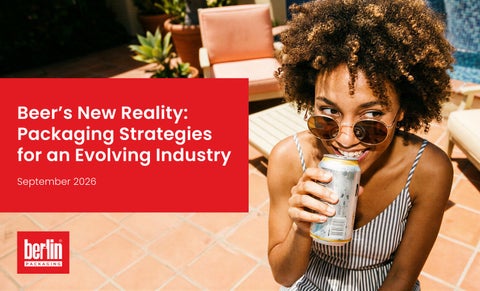
Beer’s New Reality: Packaging Strategies for an Evolving Industry September 2026
Berlin Packaging
1
Introduction The global beer industry continues to face headwinds. According to IWSR, global beer volumes declined 2% in 2025, while U.S. volumes fell 5%. A combination of moderation, economic uncertainty, changing consumer demographics, cannabis legalization, GLP1 medications, and increased competition from ready-to-drink (RTD) beverages are reshaping the category and challenging traditional beer occasions. Despite these pressures, beer is far from stagnant. Consumer preferences are evolving— not disappearing—and breweries that adapt to shifting drinking occasions, emerging demographics, and changing expectations can still uncover meaningful growth opportunities. Packaging has become a powerful competitive tool for brands to reach consumers, communicating flavor, quality, authenticity, and brand personality while helping breweries connect with entirely new consumer segments. Here are four packaging strategies shaping beer’s next chapter.
*The brands mentioned in this report are trademarks of their respective owners. Inclusion of these brands in this report is not meant to imply an association with or endorsement from the respective trademark owners. Berlin Packaging
2
Appeal to the Next Generation of Beer Drinkers Gen Z is becoming an increasingly important audience for breweries as more of them reach legal drinking age. Unlike previous generations, however, Gen Z approaches alcohol with a greater emphasis on balance and choice, moving fluidly between full-strength, low-ABV, and non-alcoholic options. Unlike older generations who often drink for personal enjoyment, Gen Z drinks to socialize and connect. Influenced by health and wellness priorities, many seek greater control over their drinking and want to enjoy social occasions without sacrificing how they feel the next day. As digital natives, Gen Z consumers are also highly influenced by social media platforms like TikTok and Instagram. This has transformed packaging into content, with visually distinctive cans, bottles, and labels becoming sharable elements of the consumer experience. NielsenIQ notes that eye-catching aesthetics can significantly increase appeal among younger drinkers, while viral moments—such as Guinness’ “Split the G” challenge— demonstrate how packaging and product presentation can fuel online engagement. Interactive packaging offers another opportunity to stand out. Spanish beer brand Ciento y La Madre introduced rotating puzzle-style labels that invite consumers to interact with the package before taking their first sip, turning the bottle into an experience rather than simply a container. For breweries targeting younger consumers, successful packaging should create a strong in-store and online presence with bold, distinctive graphics, and encourage social sharing through unique structural or interactive elements.
“Eye-catching aesthetics can boost appeal to them [Gen Z], whether on tap handles, bottles or cans.” (NielsenIQ) Berlin Packaging
3
Borrow Inspiration from the RTD Boom Ready-to-drink (RTD) beverages remain one of alcohol’s fastest-growing segments, attracting consumers with convenience, flavor variety, and innovation. As the lines between beer, cocktails, and flavored beverages blur, breweries are expanding beyond traditional lagers into fruit beers, radlers, cocktail-inspired brews, and canned cocktails. Several breweries have partnered with Tip Top Proper Cocktails to reimagine cocktails through the lens of craft beer, including Holy City’s CosmoAle. These hybrid products show how breweries can expand into new occasions while appealing to consumers already exploring the broader RTD category. As breweries explore new flavors and formats, packaging becomes the first signal that consumers should expect something different. Bright colors, playful graphics, and expressive illustrations can communicate flavor creativity and distinguish these products from traditional beer offerings. Borrowing visual cues from canned cocktails can also make flavored beers more approachable to consumers already comfortable exploring RTDs. Seasonal releases further reinforce flavor innovation while creating opportunities to generate excitement, encourage trial, and drive repeat purchases. Limited-time graphics, seasonal imagery, and collectible formats can make each release feel new and worth seeking out. For breweries looking to capture RTD momentum, thinking beyond traditional beer packaging can help signal innovation and attract consumers eager to try what’s next.
“Flavor will drive beer and cider innovation in 2026. Expect more fruit beers and radlers, appealing to consumers seeking longer serves, good value, and sweeter profiles.” (NielsenIQ) Berlin Packaging
4
Deliver Premium Quality & Experiences Although overall beer volumes are declining, consumers continue to spend on products that deliver higher quality and better experiences. Premiumization remains one of the industry’s strongest opportunities. According to ISWR, the super-premium beer segment is growing +4% in the U.S., while premium-and-above beer declined -1% between January and August 2025. Rather than purchasing more beverages, many consumers are choosing fewer—but better—drinks. Packaging plays an essential role in communicating premium value before the first sip. Custom bottle shapes, distinctive structural features, embossing, debossing, metallic embellishments, textured labels, and premium decoration all contribute to perceptions of craftsmanship and quality. Limited-edition packaging can further elevate the experience, creating a sense of exclusivity and giving consumers another reason to engage with the brand. Authentic storytelling is equally important to premium positioning. Packaging can communicate a brand’s heritage, brewing expertise, or cultural identity while building a deeper connection with consumers. SFor example, Studio One Eleven® created a custom bottle for Veza Sur that reflects the brand’s unique story while differentiating it from conventional cans and bottles.The short, stout amber bottle evokes Miami’s blend of Cuban, Caribbean, and South American influences.
“With a set amount of money, far more people would choose to buy one or two high quality drinks than four or five cheaper ones.” (NielsenIQ) Berlin Packaging
5
Support the Moderation Movement Health-conscious drinking has evolved from a temporary trend into a long-term consumer behavior. What began with Dry January and Sober October has become an enduring lifestyle shift for many consumers, especially younger generations. More than half of drinking-age adults in the United States report actively moderating their alcohol consumption, fueling significant growth in no- and low-alcohol beer. IWSR reports that noalcohol beer volumes have risen +8% vs a -1% decline for the beer category. Packaging must help these products compete alongside traditional beer while clearly communicating their distinct benefits. Clean, sophisticated visual treatments and premium materials can reinforce quality and credibility, while clear communication of attributes such as lower calories, reduced alcohol content, or functional ingredients can help consumers make informed choices. Just as importantly, no- and low-alcohol packaging should avoid suggesting that consumers are settling for less. Packaging that feels premium, contemporary, and brandforward can help these products earn a place alongside traditional beers in consumers’ refrigerators and on retail shelves. The most successful brands are positioning alcohol-free beer not as a substitute for traditional beer, but as a complete drinking experience—one centered on taste, quality, and social enjoyment.
“Moderation is no longer about abstinence—it’s about balance.” (NielsenIQ)
Berlin Packaging
6
Looking Ahead Beer may be experiencing one of its most challenging periods in recent history, but the category continues to evolve alongside changing consumer expectations. Opportunities are emerging among younger drinkers, premium experiences, RTD-inspired innovation, and the growing moderation movement. In each case, packaging plays an increasingly important role. For breweries and beer manufacturers, packaging is becoming a strategic business asset rather than simply a production requirement. The right combination of structure, materials, decoration, graphics, and storytelling can strengthen shelf appeal, communicate product benefits, create more engaging experiences, and help brands differentiate in a crowded marketplace. At Berlin Packaging, we help brands turn emerging consumer trends into packaging solutions as innovative as the products they protect. By combining package engineering, material expertise, decoration capabilities, and supply chain solutions, we partner with customers to create packaging that captures attention, enhances the consumer experience, and positions brands for long-term growth in the evolving beer market.
Berlin Packaging
7
®
Anything Is Possible
With over 100 years in the packaging industry, more than 2,000 packaging professionals, and a global network of suppliers and warehouses, we offer 50,000+ SKUs of plastic, glass, and metal containers, closures, and dispensing systems across all markets for customers just like you. Our Business Model Berlin Packaging combines the best elements of manufacturing, distribution and logistics, and value-added service providers to deliver cost-effective packaging solutions to our customers. Our mission is to improve our customers’ net income through packaging products and services. We are the world’s largest Hybrid Packaging Supplier®.
Best Elements of a Manufacturer
Distribution & Logistics
Value-Added Specialty Services
Value-Added Specialty Services Our compelling suite of solutions addresses your needs and unlocks profit.
Berlin Packaging
• Custom Design & Innovation
• Inventory Management Services
• Quality Service Management
• Sustainable Packaging Solutions
• Global Sourcing & Services
• Customer Portal Efficiency
8