World
James Gop

2 0 % OFF MIDWEEK STAYS FOR LOCALS * BL ACKOUT D ATES APPLY

2 0 % OFF MIDWEEK STAYS FOR LOCALS * BL ACKOUT D ATES APPLY

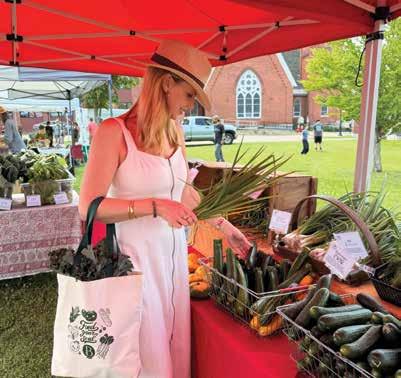
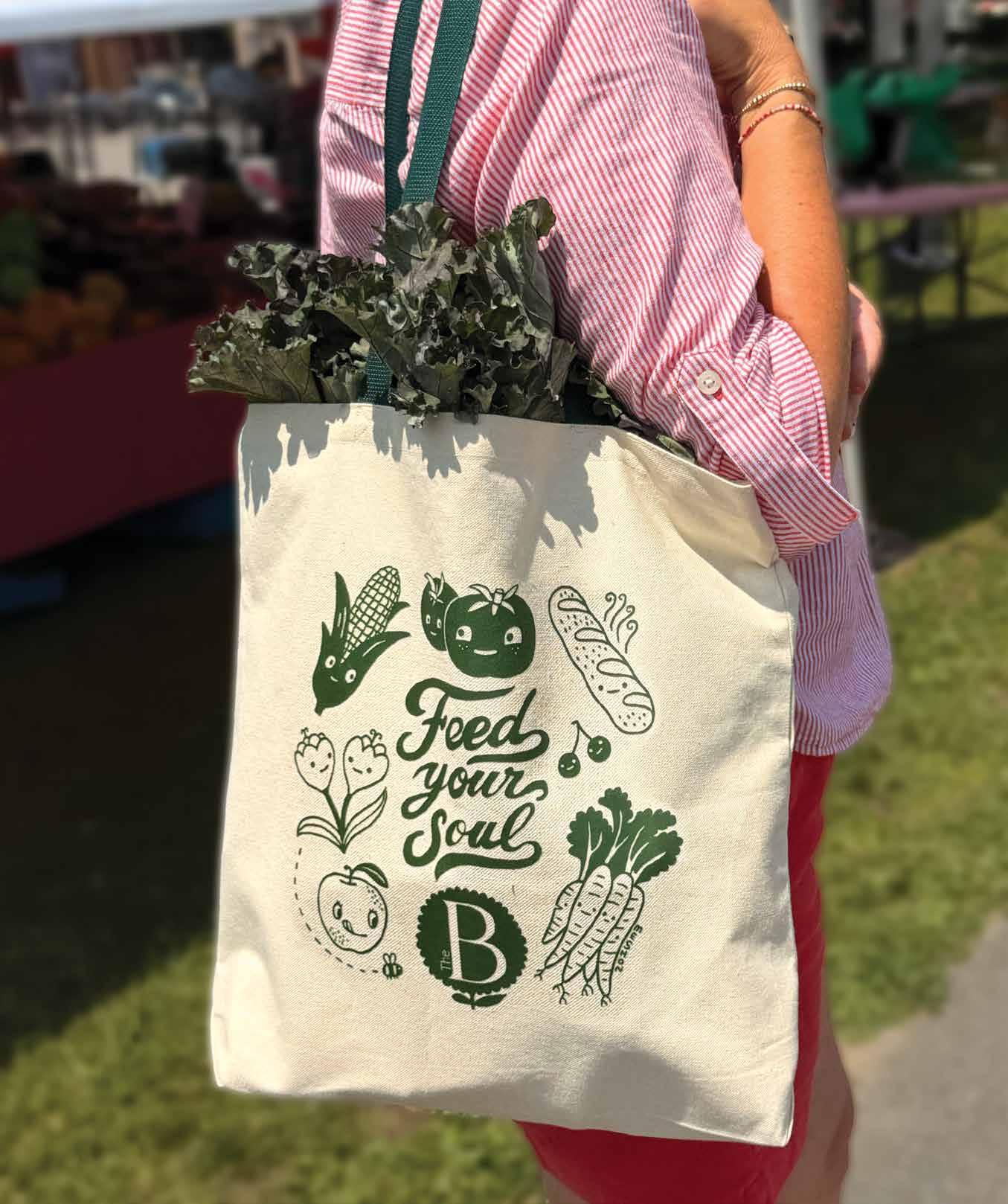
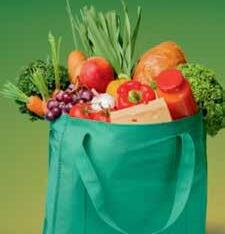
THE B’S HIGH SUMMER FOOD ISSUE required a visit to the Pittsfield Farmers Market, where Design Director Julie Hammill and I put our new tote bag to the test. Featuring an original illustration by local artist Aaron Meshon, the tote quickly filled with market finds—and reminded us why this weekly gathering remains one of the Berkshires’ most vibrant celebrations of local food and community.
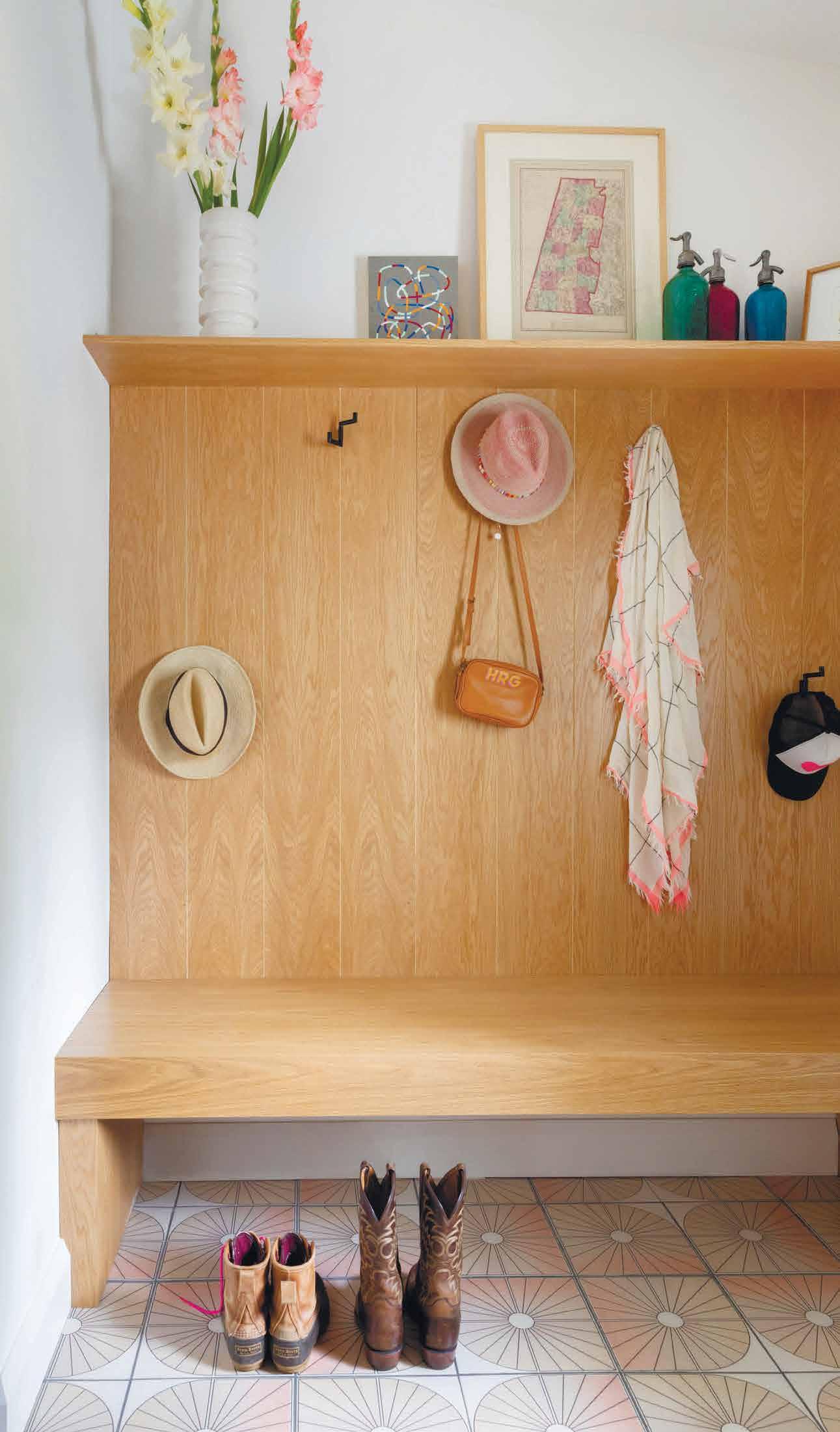
In these pages, you’ll meet farmers, restaurateurs, chefs, servers, bakers and organizations working to ensure everyone has access to good food. If you devour what you read, consider subscribing to The B and receiving the tote bag as a gift with purchase (see page 13 for a closer look) while supplies last. Even better, The B will make a donation from each subscription to support the Berkshire Food Project and its work addressing food insecurity in the county.
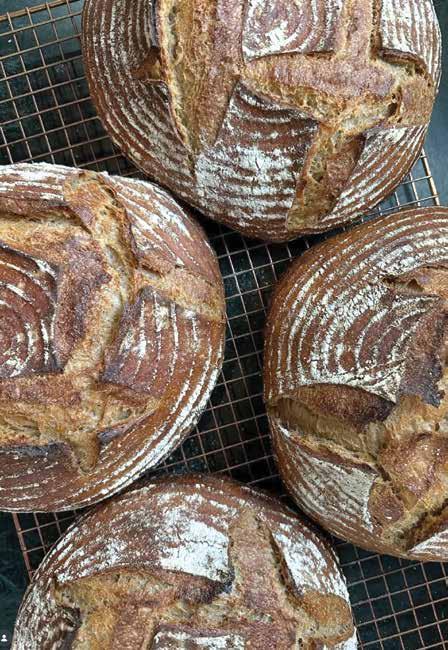
If you’re heading to the Pittsfield Farmers Market, here’s one tip: arrive early if you have your heart set on a warm loaf from Breadnik. Their breads disappear quickly—and after reading writer Ann Volkwein’s story on page 94, you’ll understand exactly why.

MICHELLE THORPE PETRICCA Founder and Publisher

SUBSCRIBE TO THE B! berkshireeagle.com/theb or scan the QR code.



from the editor
I KNOW WE DON’T YET KNOW EACH OTHER THAT WELL, but I have a confession: I love food.
I know, I know, everybody loves food, but not like me. My appetite knows no bounds. While I’m eating lunch, I’m already thinking about dinner.
On the gastronomic spectrum, I’m somewhere between a foodie and a glutton, leaning more heavily, at least according to my bathroom scale, toward the latter. I like to joke that I still eat like a 13-year-old boy. I like hot dogs more than steak, chocolate chip cookies more than chocolate soufflés, and pizza more than anything. If there’s a new potato chip on the market, I’ve at least heard about it.
So I don’t have what you (or anyone else) would call a “sophisticated palate,” and I’m not a particularly adventurous eater, unless you consider slathering Irish butter onto fresh-out-of-the-oven Berkshire Mountain Bakery sourdough bread adventuresome (I certainly do!). My Death Row last meal request? You guessed it—hot dogs and pizza, followed by chocolate chip cookies and a heaping bowl of pistachio ice cream. (Editor’s Note: That’s also what I ate last Thursday.)
When I’m not imagining myself as a gluttonous teenager or prisoner, I also love to go out to eat with my wife, Janie, who has decidedly more refined taste—code for she’s the one who willingly orders vegetables with her meals. Dining out is one of our favorite pastimes, and we’ve had a number of delicious meals this summer (shout-outs to The Mill in South Egremont, Via Cassia in Hudson, Yummy Kitchen at the Berry Farm Cidery in Chatham, No Comply in Great Barrington, and Bistro Zinc in Lenox).
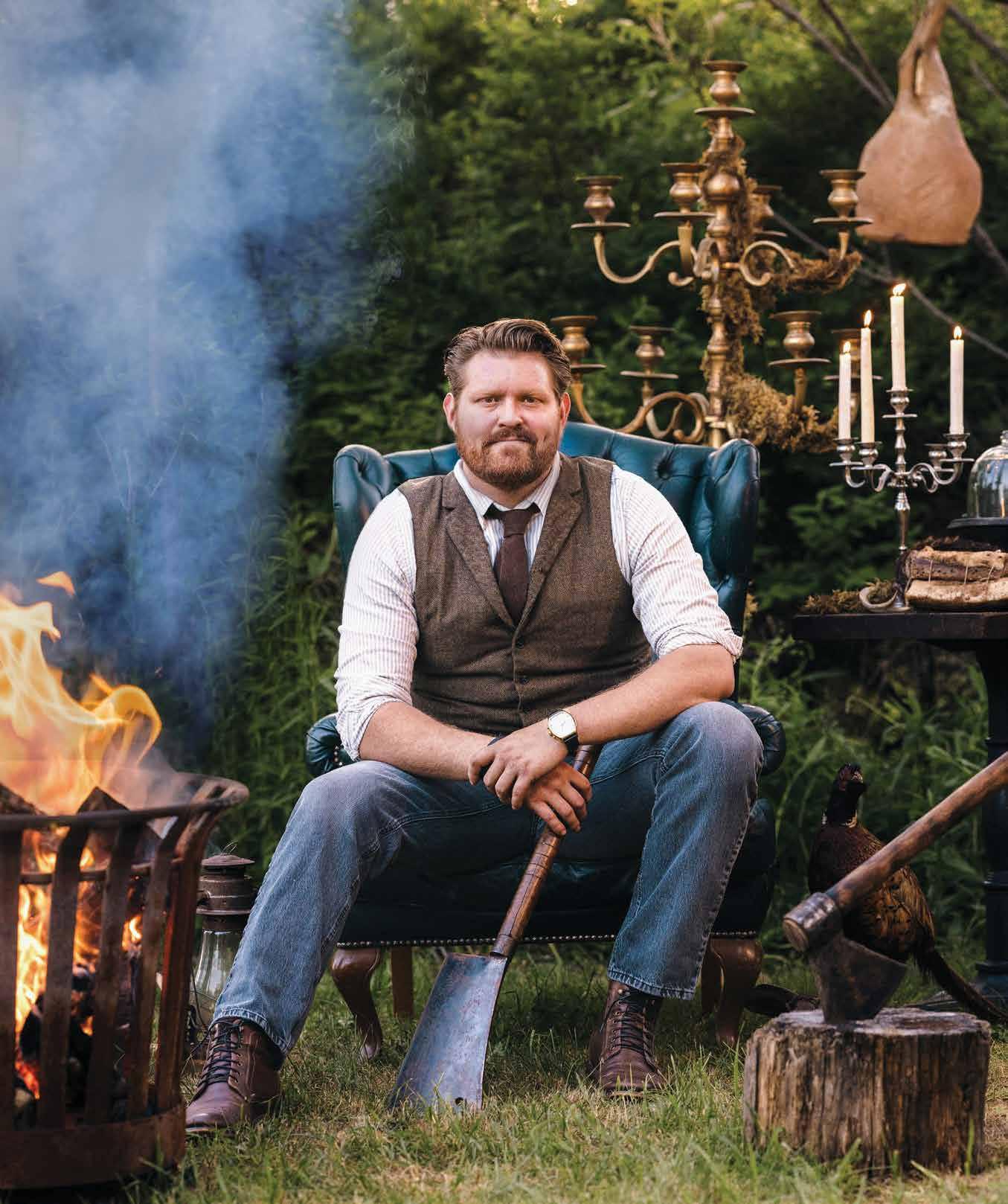
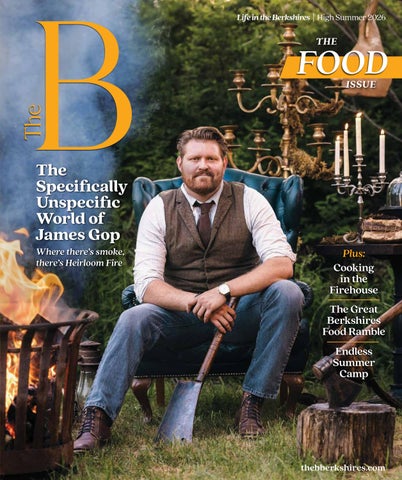
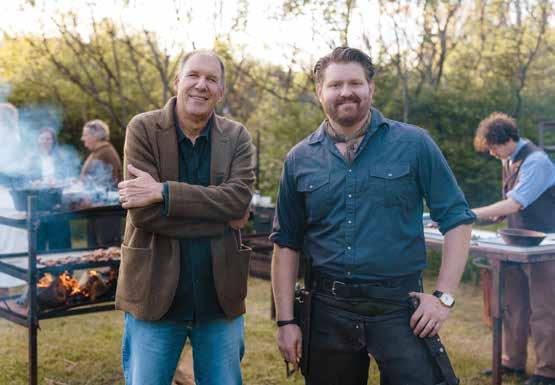
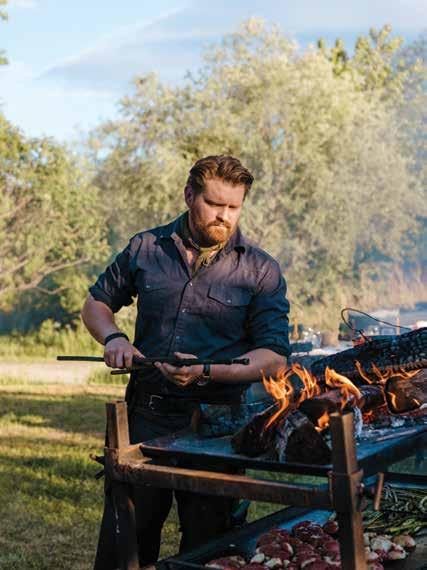
All of this is the fusilli-twisted way of introducing our annual Food Issue, and the man on the cover, James Gop, chef and mastermind of Heirloom Fire.
James recently hosted a dinner for us and a dozen of The B’s friends at his outpost in Richmond, and the meal was unlike anything I’ve ever experienced. It was as if we had time-traveled to a medieval feast, filled with so much smoke and fire that I wondered if James had a dragon (it turned out to be his dog, Arthur). You can read more about him and Heirloom Fire on page 50.
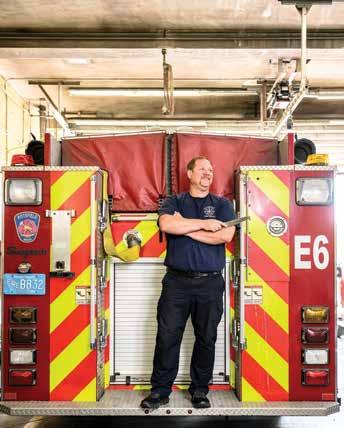
Other main courses on our Food Issue’s tasting menu include what’s cooking at the firehouse (page 59), restaurateurs who have stood the test of time (page 73), superb servers with a smile (page 66), and a young forager extraordinaire (page 70).
And if you’re not fully stuffed, we have yummy Berkshire Summer Camp memories (page 78), a scrumptious profile of the frontperson of indie group Habibi (page 88), and a sweet goodbye with Carrie Holland of Hancock Shaker Village (page 84).
We also recommend leaving a little extra room for dessert on page 14.
Bon appétit! Or, as I like to say to Janie, “Are you gonna finish that?”
LARRY CARLAT Editor-in-Chief









MICHAEL BOLOGNINO (“The Swim of Things”) is a “human” coach who helps people get unstuck, get clear, and take action toward making their ideal lives, careers, and relationships real. He’s also a member of the Pacemakers Masters Swim Team. michaelbolognino.com
GREGORY CHERIN (“What’s Cooking at the Firehouse”) is a well-traveled freelance commercial photographer living in the Berkshires. His awardwinning work has appeared in many national magazines books, and national network television. gregorycherin.com
MARISA COHEN (“How the Camp Lady Changed Our Lives”) is a magazine editor and writer who has covered everything from theater and cabaret to women’s health, fitness, and aging. She and her family split their time between New York City and the Berkshires.
PERRY GARFINKEL (“Ode to the Fribble”) is a longtime New York Times contributor and author of the bestselling “Buddha or Bust” and other books. He will lead a spiritual travel writing weekend retreat at Kripalu on August 21-23. kripalu.org/experiences/spiritual-travel-writing
GUS HEAGERTY (“My Fantasy of Being a Farm-to-Table Gardener”) is a New York–based actor, comedian, writer, and director. He appears in NBC’s “Stumble” and creates viral characterdriven satire videos online (@gus.heagerty). As a comedian, he performs regularly around New York and beyond.
JULIANE HIAM (“Foraging with the King of Truffles”) is a writer and filmmaker living in the Berkshires. For the past 15 years, she has collaborated with her partner, artist Gregory Crewdson, contributing writing and creative support to his large-scale photographic productions.
ANNDEE HOCHMAN (“What’s Cooking at the Firehouse” & “Endless Summer Camp”) is a journalist, educator, and storyteller whose work has appeared in WebMD, Poets & Writers, The Philadelphia Inquirer and many other venues.
Big thanks to our interns
Williams students SOREN ANDERSON-FLYNN and MACKENZIE LEACH contributed to this issue.







ERIC KORENMAN (“Ms. Holland’s Opus” & “Toast of the Berkshires”) balances two professional lives in imaging. When not in front of a radiology workstation, Eric is a professional portrait photographer and has a studio in Pittsfield. korenman.com
BETSY KORONA (“Into the Weeds”) is an Emmywinning journalist and media executive with more than 20 years in network, cable, and streaming news. She recently traded Brooklyn for the Berkshires, where she now lives with her partner and his college-age kids.
JOYCE MAKDISI (“Service with a Smile”) is a Berkshire-based photographer specializing in portrait and sports photography. She is an undergraduate student at the University of Massachusetts Amherst studying biology and working as a creative intern for their athletics department.
ALEXANDRA MARVAR (“The Specifically Unspecific World of James Gop”) is a freelance journalist whose longform features have appeared in The New York Times, National Geographic, The Believer, WSJ Magazine, and elsewhere.
POPS PETERSON (“Great Tastes I Have Known”) is the owner of SEVEN salon.spa in Stockbridge and an award-winning artist, with artworks featured at the Norman Rockwell Museum, Henry Ford Museum, and numerous other museums and galleries.
LARA TUPPER (“We Scream for It”) is the awardwinning author of four books, including “At the Center” (forthcoming in 2027). She offers writing workshops and book coaching via Swift Ink Stories and eats as much ice cream as possible. @swiftinkstories
NEIL TURITZ (“Service with a Smile” & “The OG Table”) moved to the Berkshires from New York City, along with his wife. They have since welcomed a son. Turitz is a screenwriter, author, filmmaker, journalist, and creator of “6 Word Reviews.” @6wordreviews
ANN VOLKWEIN (“Informed, Not Influenced” & “The Great Berkshire Food Ramble”) is a bestselling cookbook author and recipe developer based in Stockbridge. She is the author of the “Arthur Avenue Cookbook” and “Chinatown New York.”


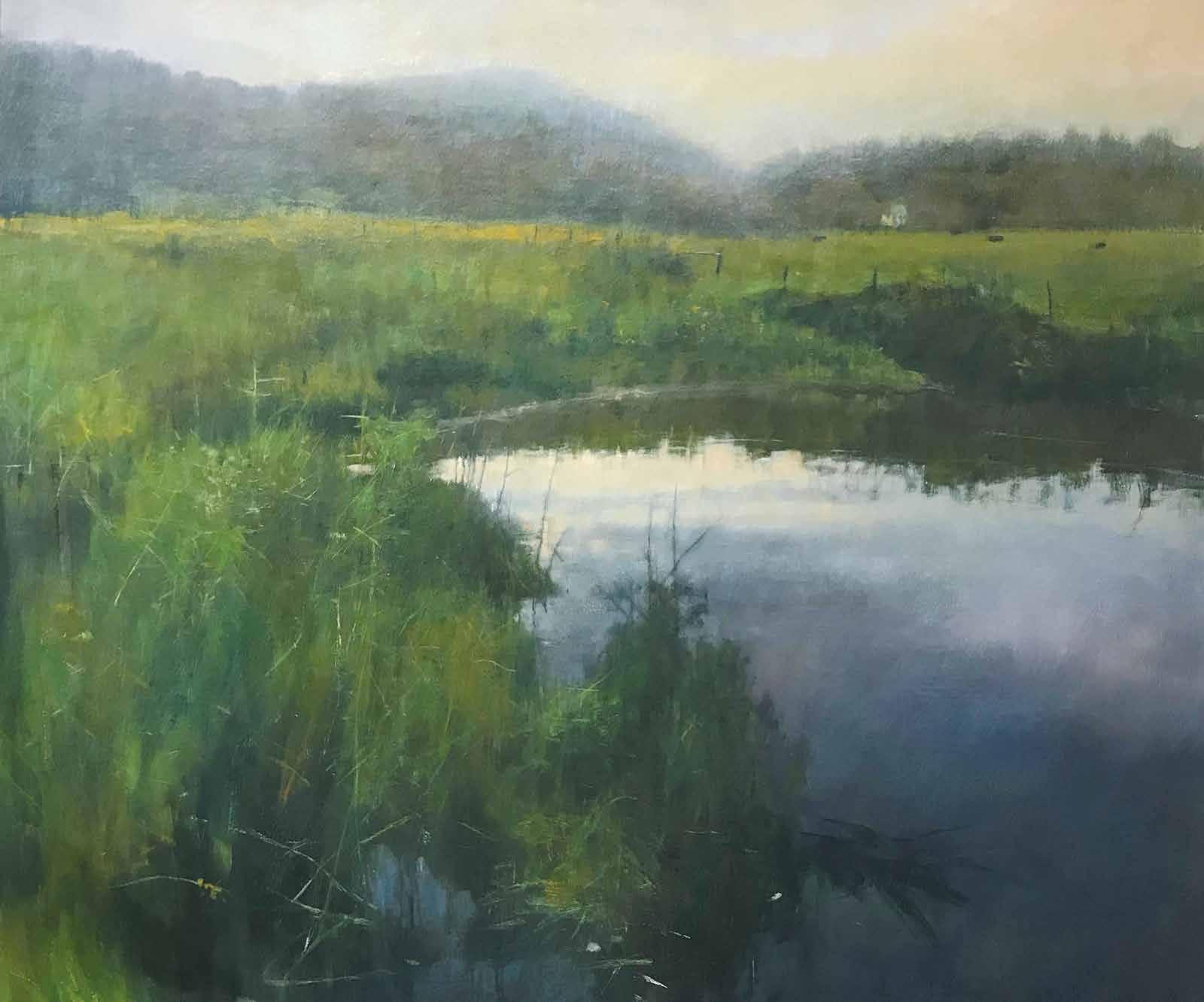
Curt Hanson, End of Summer, oil on panel, 36” x 40”
High Summer 2026 | Issue 18
FOUNDER AND PUBLISHER
Michelle Thorpe Petricca mpetricca@berkshireeagle.com
EXECUTIVE EDITOR
Lauren Mechling lmechling@berkshireeagle.com
DESIGN DIRECTOR
Julie Hammill julie@hammilldesign.com
COPY EDITOR
Amy Krzanik
PRESIDENT
Fredric D. Rutberg frutberg@berkshireeagle.com
PUBLISHER
Gary Lavariere glavariere@berkshireeagle.com
EXECUTIVE EDITOR
Kevin Moran kmoran@berkshireeagle.com
CREATIVE DIRECTOR
John Supple jsupple@berkshireeagle.com
OPERATIONS MANAGER
Chuck Danforth cdanforth@berkshireeagle.com
DIRECTOR OF ADVERTISING SALES, BERKSHIRE EAGLE, THE B, SHOPPER’S GUIDE
Cheryl Gajewski cmcclusky@berkshireeagle.com
EDITOR IN CHIEF
Larry Carlat lcarlat@berkshireeagle.com
EDITOR-AT-LARGE
William Li
CONTRIBUTING PHOTOGRAPHERS
Gillian Jones-Heck
Stephanie Zollshan
DIGITAL PARTNERS
Hadley Clover hadleyclover.com
The B is a publication of Berkshire Eagle Media
ADVERTISING MANAGER
Amy Filiault afiliault@berkshireeagle.com
SALES COORDINATOR
Aly Dvorak advorak@berkshireeagle.com
CONTENT MARKETING SPECIALIST
Anthony Duval aduval@talonmediaagency.com
MULTIMEDIA ADVERTISING CONSULTANTS
Shannon Chapman schapman@shoppersguideinc.com
Eileen Marran emarran@berkshireeagle.com
Tristany Saldo tsaldo@berkshireeagle.com
Troy Schweitzer tschweitzer@berkshireeagle.com
For subscription issues, call 800-245-0254


Pittsfield
Farmers Market
Pittsfield Common
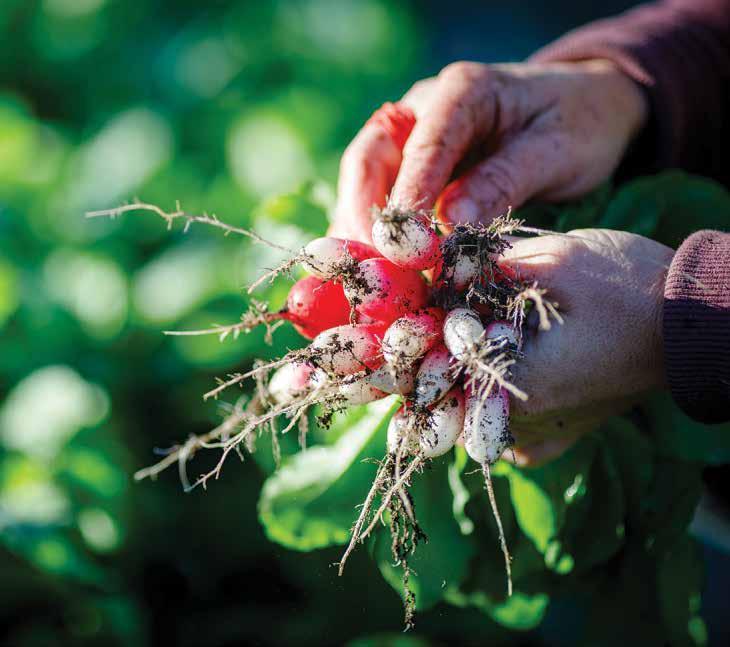
Fill your bag and feed your soul at one of the farm stands on page 17.

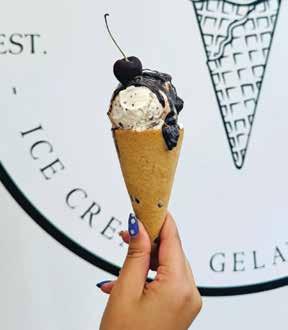


At18, I became an official shareholder in Ben & Jerry’s—just one share, a $30 investment. This meant I could attend the shareholders’ meeting in Vermont, a folk festival with unlimited ice cream. I felt right at home.
My ice cream obsession started at grade school birthday parties, where I fixated on the red and white Dixie Cup. How I loved the perfect division of vanilla and chocolate, and the satisfaction of dipping back and forth with the wooden “spoon.”
Ice cream became the reward my mom gave me after dentist appointments. (Job security for the dentist.) At Baskin-Robbins, I chose Rocky Road. (Cue Ani DiFranco’s “32 Flavors.”) At Friendly’s, I liked the peanut butter sundae. For special occasions,
we went to the Ice Cream Factory in my Maine hometown. There I tackled the Make Your Own Sundae bar, more thrilling than the Dixie Cup.
It’s cruel to find, in middle age, that I’m lactose intolerant. But I’m willing to suffer for my art. Here are the results, in no particular order, of my ice cream/soft serve/gelato crawl through the Berkshires. It could have continued all summer, but there’s only so much Lactaid I can handle.
Modern Milk Bar, Sheffield
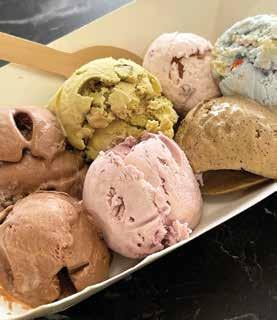
Raven and Lee Krueger skip the artificial dyes and keep the sugar levels in check. Even the sprinkles at their ice cream parlor are made from scratch. “Are you a chocolate or fruit person?” Raven
asks. (Best question ever.) She prepares an informal flight from over 20 options: raspberry, coffee raspberry, chocolate peanut butter, Aztec chocolate, vegan strawberry, cherry pistachio, and confetti cake. The latter is a startling shade of blue; I assume it will be too sweet, but it’s divine, my favorite. @themodernmilkbar
SoCo Creamery, Great Barrington
The atmosphere at this Railroad Street icon is sweet and joyful (checkerboard floor and coloring pages for kids). Reese, my generous scooper, serves me dirty chocolate and chocolate peanut butter ripple. Both are deliciously chewy. My favorite: almond joy, even better than the candy bar. Owner Caitlin Scott recommends the house-made
hot fudge and caramel and the fresh waffle cones. On busy summer days, SoCo sells up to 1,600 cones. That’s a lot of happy customers. @sococreamery
Cravins Soft Serve and Frozen Yogurt, Pittsfield
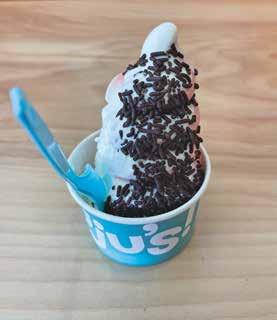
In 2022, entrepreneur Ludwig Jean-Louis opened an ice cream stand to support his four younger siblings. The space is large and features a festive purple mural by Albany-based artist Mercedes Soriano. There’s a warm, nostalgic vibe. The soft serve is rich and creamy; the portions are generous. I recommend the classic vanilla and chocolate twist with chocolate sprinkles, which sends me straight back to 1983. Oni, scooper extraordinaire, says blu goo (cotton candy/vanilla flavors) is a customer favorite. @cravinsicecream
Ayelada Frozen Yogurt, Pittsfield
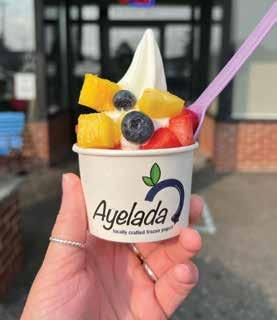
“The best frozen yogurt starts with the cow,” says Ayelada’s website. (Ayelada is Greek for cow.) I sample coconut hazelnut (just lovely) and the vegan cookies and cream (made from coconut milk). Fro-yo flavors change daily, as do the gelato and hard ice cream flavors (one of each). I tried strawberry Nesquik ice cream (exactly like the drink of my youth). The bright, roomy space is filled with families at tables. Many are regulars; I plan to become one, too. @ayelada
High Lawn Farm, Lee
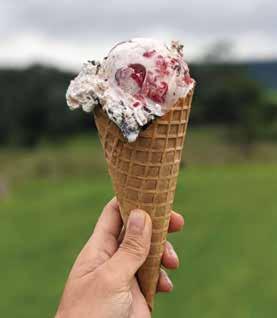
High Lawn Farm, owned by the Wilde family since 1934, is the most scenic ice cream stop, nestled among rolling hills, with bovines grazing within reach. I enjoy dulce de leche (rich and extra creamy, with the perfect amount of caramel) before walking around the farm. (The barns are open daily, 10 a.m.-4 p.m.; the ice cream stand stays open later.) I must have dribbled leche on my phone while taking notes because one friendly cow licked my screen. Seasonal flavors include lemon poppy and rhubarb ginger. High Lawn is an “outing”; the animals and vistas make it extra special. @highlawnfarm
Juju’s, Lee and Great Barrington Juju’s specializes in artisan soft serve and savory food options (fried chicken, pizza, salads). At the Lee location, I try a strawberry and sweet cream twist with chocolate sprinkles, which is light and vibrant with a strong berry taste. The Great Barrington store, just outside the Triplex, has four choices (vanilla, milk chocolate, strawberry, and vegan mango, at the time of writing). Flavors change weekly and founder Josh Irwin invites customers to make requests. “We’re here to keep spreading that good juju,” he says. It’s working. @keepitjujus
Lickety Split, North Adams (inside MASS MoCA) and Williamstown Lickety Split in Williamstown features Herrell’s ice cream from Northampton, which is made “one 3-gallon tub at a time,” according to Herrell’s website. The café in North Adams serves, among other snacks, house-made ice cream to MASS MoCA’s visitors. Per the website, it’s “Where Ice Cream Dreams and Museum Adventures Meet!” This is true of both locations. I stop by the Williamstown shop after visiting the Clark Art. Scooper Jayne suggests mudpie (coffee, caramel, and crushed Oreos) and the coffee flavor is wonderfully strong. I’ll be ordering this again. A perk: sprinkles are always free.
@licketysplitatmm
@licketysplit.icecream
Berkshire Cone, Lenox
This upscale ice cream truck isn’t limited by its size. There are six varieties of both gelato and sorbet, two non-dairy/vegan options, a dozen ice cream flavors, seven sauces, 12 toppings, and six cone choices (such as lavender, dark chocolate, and pink vanilla). Julian recommends green tea matcha gelato (a gorgeous shade of emerald), mango sorbet (strong and lush), and ginger crème brûlée ice cream with chunks of real ginger (outstanding). @berkshirecone
—Lara Tupper







Exper t builders transforming the way people learn, do business , and live.
Keiter is a family- owned construction ser vices company working with clients on residential, commercial, industrial, and institutional projects L E A R N M O R E AT K E I T E R . C O M
Overwhelmed by the season’s bumper crop of farm stands? This nifty guide will help you alleviate any anxiety.
Comehigh season, it’s hard to drive anywhere without passing multiple farm stands and stores. They’re brimming with zucchini and tomatoes and pies made of the sweetest stone fruits. It’s all here, and it’s all exactly what we want to eat right now.

To the point where it can be overwhelming. We all could use a friend in the car, the passenger who really knows. They can tell you where to head for the sweetest corn or bounciest, freshest sourdough. I have that person in my life, but sometimes they are busy. I’ve found that Berkshire Grown’s Guide to Local Food & Farms is a pretty close second.
Berkshire Grown is a local nonprofit that supports local farms with resources and publicity efforts like the annual Guide. It’s a helpful resource, and not only for superior greens.
“It’s to help people build real connections with the farmers and food producers who sustain our community,” says Katie Rubright, who serves as the group’s communications manager.
If you’re looking for local food, the Guide will lead you in the right direction, whether to a farm store, stand, market, or CSA. Listings also include information on SNAP (Supplemental Nutrition Assistance Program) and HIP (Healthy Incentives Program) access. “We hope through using the Guide people discover the abundance of local food all around them,” Rubright says.
—Alana Chernila
berkshiregrown.org

A handful of hot spots
1
Cricket Creek
1255 Oblong Rd., Williamstown
This regenerative dairy farm sells raw milk, pastured beef and pork, ethically raised rose veal, and some of the most delicious artisan cheese in the region. The farm store is open seven days a week from 7 a.m.-7 p.m. cricketcreekfarm.com
2
Red Shirt Farm
60 Williamstown Rd., Lanesborough
This no-till regenerative family farm grows vegetables, herbs, and flowers. The farm store also sells meat, bread, maple syrup, honey, and sensational tomatoes. Open Tuesday-Saturday from 10 a.m.6 p.m., Sundays from 10 a.m.-4 p.m. redshirtfarm.com
3
Bartlett’s Orchard
575 Swamp Rd., Richmond
This pick-your-own orchard is a local icon. Stop by for apples, sweet corn, and some of the best cider donuts around. Open Monday-Saturday from 7 a.m.-5 p.m., Sunday from 8 a.m.-5 p.m. bartlettsorchard.com
4
North Plain Farm
342 North Plain Rd., Great Barrington
You’ll find grass-fed beef, pastured organic pork, non-GMO chicken and eggs, and seasonal veggies at this self-serve farm store. Open seven days a week from sunrise to sunset. northplainfarm.com
5
MX Morningstar Farm
5956 NY-9H, Hudson, NY
You can do your full week’s shop here at the farm store packed with organic produce, meat, dairy, dry goods, and seasonal items. Open seven days a week from 10 a.m-6 p.m. mxmorningstarfarm.com
Inside Meadow House, a new design clubhouse— where everything’s for sale
When the longtime Great Barrington home store Hammertown announced in March it would be shuttering, many locals felt the loss immediately. For decades, the store had functioned as more than a place to buy furniture: it was a community hub where locals hung out and picked up design inspo or dinner-party gifts.
Carly Shafiroff had another reaction to the news: sheer panic.
“As soon as I heard the rumor that the lease was ending,” she said, “I knew if I didn’t slide in as quickly as possible, someone else was going to.”
At 28, the interior designer has already arranged more than 50 homes. For a feverish two months this spring, the Berkshire native figured out how to create a new kind of environment. Her first retail space will reflect her own taste but also the aesthetic of the area at large.
“Modern heritage” is how Shafiroff describes her aesthetic, which is marked by clean lines and timeless furnishings, with a deep sense of warmth and unfussiness baked in. She doesn’t go for anything that feels too trendy or “pick-me” when she is finalizing commissions for her clients, and it’s the same way at the shop: “There’s nothing that you’d look at in 10 years and say, ‘Wow, I can’t believe I bought that.’”
Shafiroff signed the lease on March 31 and, less than two months later, she opened Meadow House, with the help of three former Hammertown employees who came on full-time to work as her fast-track tutors on the ins and outs of retail. “Without them, I would have gone up in flames,” she

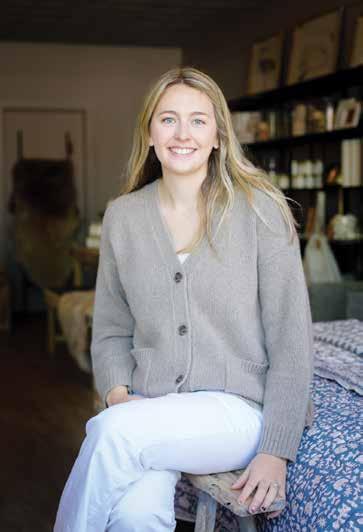
said. The 2,700-square-foot furniture and lifestyle store occupies the former Hammertown space at 15 Bridge Street. Her design firm’s office is now located in the back of the store, but that’s where the coziness between her two businesses stops. “I am more interested in providing a service to the other local designers than promoting my own,” said Shafiroff, whose mother, Linda, co-owns an all-female design-build company called Creative Building Solutions in Great Barrington. The younger Shafiroff wants Meadow House to function as a resource for the area’s broader design community. Her store
Shafiroff’s greatest muse— the Berkshires
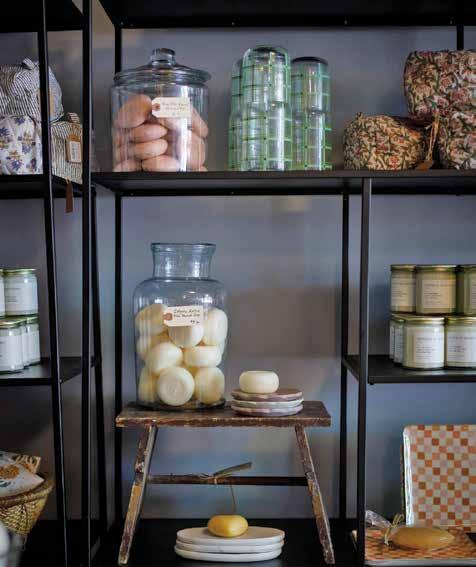
offers trade discounts, private shopping hours, and educational events where designers can gather.
“That’s why I chose to call it Meadow House instead of using my own name,” she said.
The Venn diagram of Shafiroff’s selections for private clients and the store has little overlap. When she orders a custom sofa for a client, it already has a destination and a purpose, which emboldens her to make a selection that is specific to her client’s tastes. Retail requires a little more guesswork.
“This is kind of like buying a bunch of stuff that has no home,” Shafiroff said on the eve of the store’s pre-party for members of the trade. “You have to curate it in a way that people feel inclined to purchase.”
So she looked to her greatest muse: the Berkshires. “The aesthetic of the region is relaxed and sophisticated, which can seem like a contradiction but absolutely isn’t,” she said. “We have beautiful homes here, but we’re not precious about them. We want them to feel lived in.”
At the store, Shafiroff sells a selection of furniture and antiques, as well as colorful dishes from the Japanese tableware brand Miya, Turkish rugs from a Vermont textile dealer, and plenty of embroidery kits and decorative doodads from local makers. “The fun thing about going shopping at an actual store versus scouring the internet for the sofa that you absolutely need to find, is even if you don’t end up buying a sofa, it’s okay,” she said. “You still get the pleasure of leaving with something that makes you happy.” —Lauren Mechling @meadowhouseshop

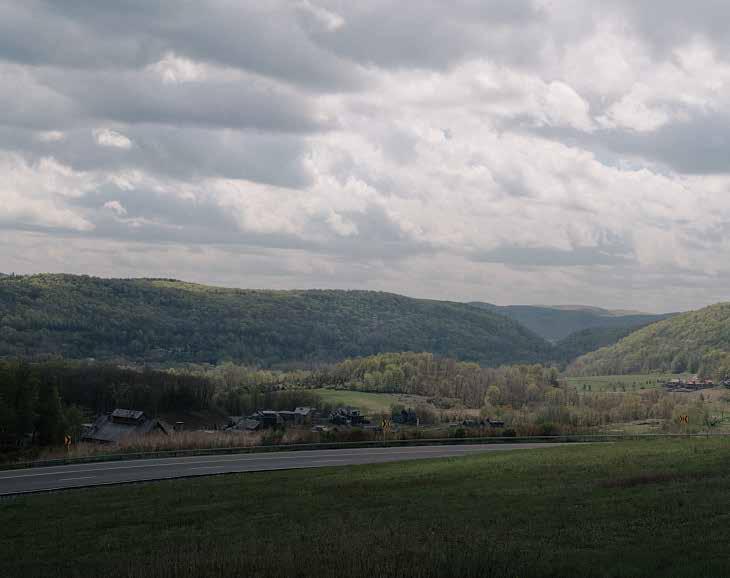

A husband and wife transform a 220-acre sheep farm into a whiskey wonderland
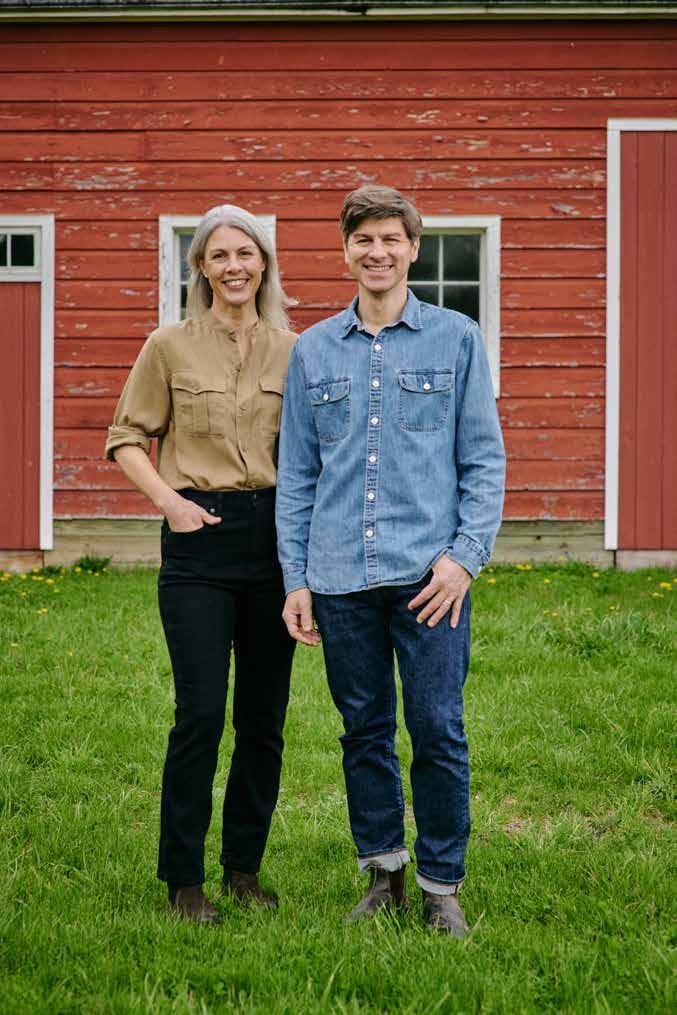
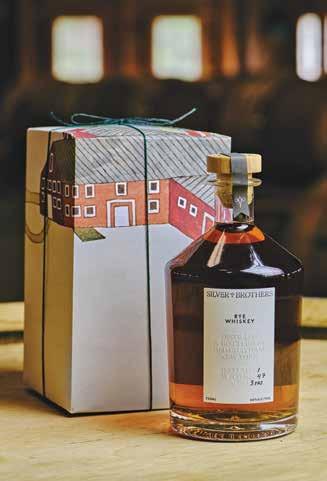
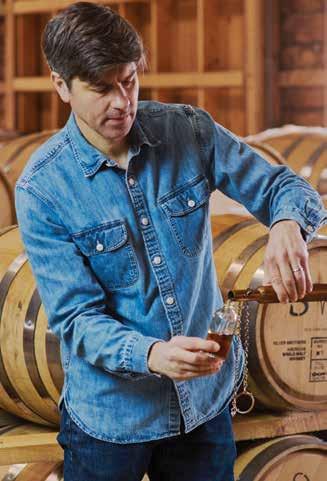
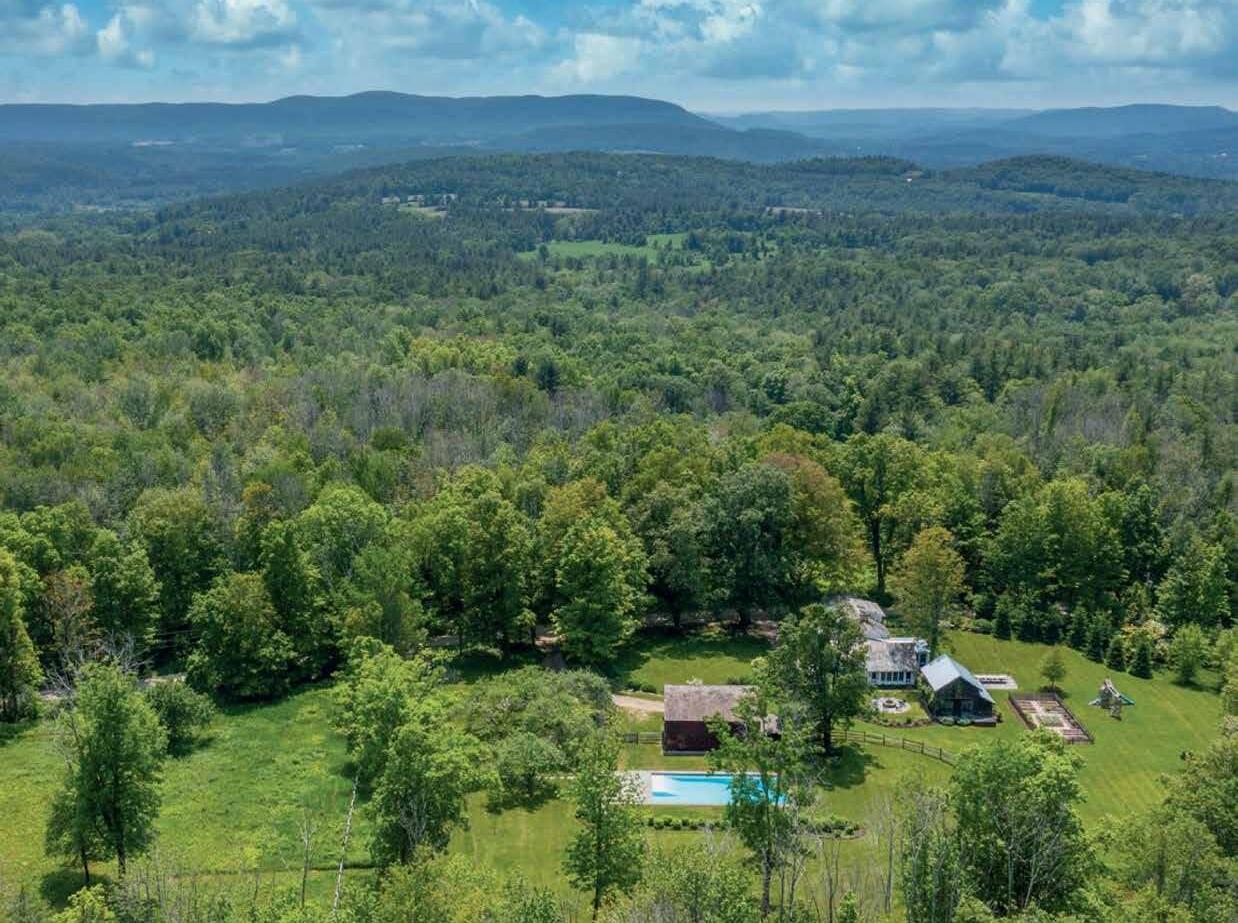
Silver Brothers Distillery is not named for Smokey and Gilly, the gorgeous distillery cats who are brothers and share the same smokecolored coat. Owners Matt Greitzer and Kimberly Driessen Greitzer named their nose-to-tumbler startup after their sons, whose initials are A and G, the elemental symbol for silver.
“We were just sort of using it as a working name when we started, and then it stuck around,” says Kimberly, looking like a heroine in a Wyeth painting, the wind whipping her hair as she gazes out at a field that’s almost ready for harvest. The family bought the 220-acre Chatham, New York, farm in 2020 and have been working on making whiskey ever since. At last, they’re open for visitors who’d like to see how an old sheep farm has become home to barrels, cauldrons, and casks, and silos brimming with golden grains that will transform into Empire Rye Whiskey or their newly released American Single Malt Whiskey.
Matt grew up in nearby Spencertown, and the college sweethearts always wanted to build something rooted locally. “We wanted to find a product that could grow really well here without a lot of intervention,” Kim says. “We realized the answer was grain, rye in particular.”
Matt runs an advertising technology firm and lives for data. Kim is a graphic designer, and saw to it that the tasting room would be destinationworthy. Interior designers Whitley Esteban and Ernesto Gloria oversaw the area’s Shaker-toned, hunting-lodge feel (the Old Chatham Hunt Club uses the space as a pre-fox hunting and beagling meet-up point). Bow Glassworks designed amethyst tumblers, and artist Millie von Platen’s rendering of the farm adorns the paper lining of the bottle boxes. Don’t peer inside the box if you don’t want to buy a bottle—once you see the illustration, game over. —Lauren Mechling
silverbrothers.com


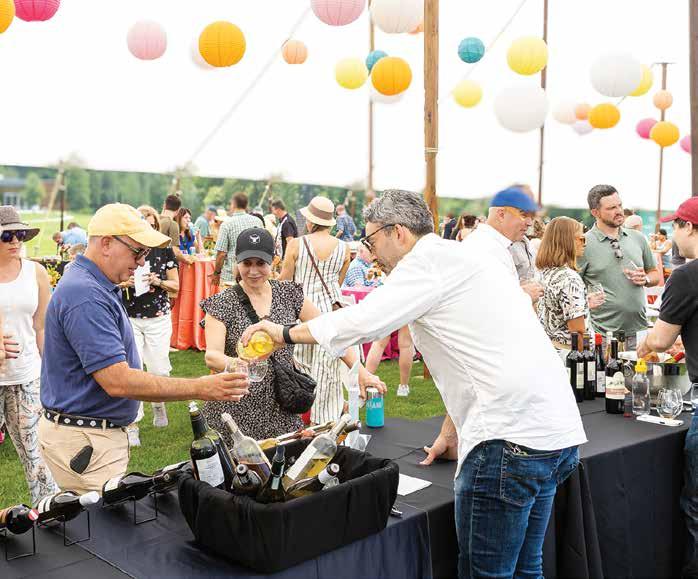
Tanglewood’s Wine and Food Festival returns for round two

Written by Thomas Kee
Written by Jennifer Maisel
The first time John Stanton came to Tanglewood, 16 years ago, he was a newly hired Boston Symphony Orchestra stagehand who spent his off-time snacking his way through the Berkshires. Now it’s part of his job. In his current role as food and beverage director, Stanton is behind the Food and Wine Festival taking place on the Tanglewood grounds, back for a second summer after a years-long hiatus.
“It made total sense to bring it back,” he said. “This has forever been a place for people to come and hang out and enjoy things in nature.”
Some of his favorite makers and bakers from the region will be setting up an enormous smorgasbord for ticketholders’ afternoon delight. “It’s a pretty free-flowing event,” he said. Stanton has been working to modernize the wine lists at the restaurants he oversees at Symphony Hall and in Lenox, and festival-goers will likely take note of his modern palate.
“We’ll be highlighting wines that are from Black winemakers, gay winemakers, and women-owned wineries,” Stanton said. This year, the August 15 festival shares its date with Film Night, so patrons can enjoy a leisurely afternoon sipping and snacking, and perhaps a postprandial nap under a tree before darkness falls and it’s time to watch John Williams clips set to a live orchestra. Lauren Mechling tanglewood.org
From a breakfast sandwich spot to a roadside pizza joint, seven of the most delicious humble heroes
The term “hole in the wall” traces its origins to the nooks and corners that prisoners used to stealthily exchange money and scraps of food. Today, it’s a humble restaurant or café, and even the best ones can get overlooked or taken for granted. Nobody ever got terribly rich off a hole in the wall, which is sort of the point: nobody will go broke patronizing one. The men and women behind this list of standbys aren’t chasing after Michelin stars or Instagram likes. They’re modest in pretty much everything—except their ambition to keep luring us back.
Jack’s Hot Dog Stand | North Adams
This unadorned stalwart is the real deal. Opened in 1917, Jack’s grills up good oldfashioned hot dogs, as well as cheese fries and chili dogs that are as decadent as they are unphotogenic. The burgers aren’t too shabby, either. Go for lunch, have salad for dinner, and call it a day. jackshotdogstand.com
Chris and MJs | Sheffield
The set-up is simple, but the made-fromscratch food is masterful at husband and wife Chris and Mary Jo Gore’s Filipino-inflected spot. Both alums of The Old Mill restaurant, the couple designs a new menu every day. The offerings might include mains like Filipino braised beef, chicken curry, or tofu and asparagus. The sides are fresh and the prices are friendly. If the ube cake is on offer, double up. chrisandmjs.com
Tommy B’s | Craryville, NY
It’s takeout only at the beloved pizzeria that Aaron Butkus and Erin Dougherty opened without much fanfare in 2022. What the place lacks in curb appeal it makes up for in seriously good pie. This is New York-style pizza very much worth planning a picnic around. A few tips: Sometimes they sell out by dinnertime, but you can call hours ahead and reserve your order. tommybspizza.com
Smokey Divas | Pittsfield
Lorraine Jones’ grandmother, Dorothy Turner Everett, oversaw a popular chain of BBQ restaurants in California. Jones brought the family tradition east. Her take-out-only spot makes ribs and brisket that are bonkers good, and there are also collard greens to help you feel healthier about your life choices. smokeydivasma.com
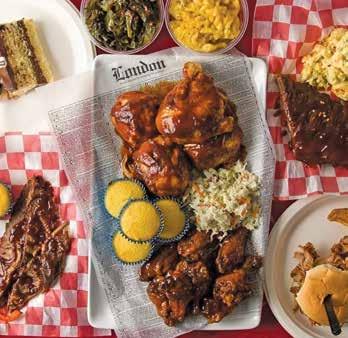
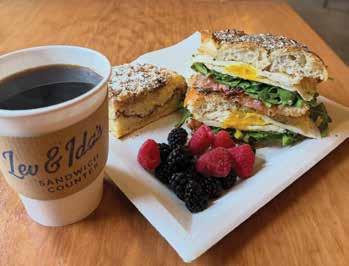
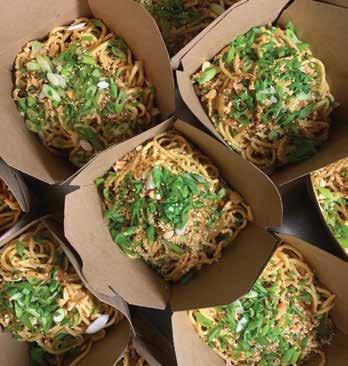
Ben Gable Savories | Chatham, NY
“Good morning, Chatham!” So open the cheering emails that Ben Gable and Michael Gray send to their fans on Tuesdays. The catering operation Ben Gable Savories whips up portable picnic parties of all sizes, turning out sandwiches and salads that are more delicious than the try-thisat-home variety. Customers place orders via old-fashioned telephone any time through Thursday (unless you want to order their famous roast chicken, whose deadline is Wednesday) for Saturday pickup. They also carry the mouth-puckering jams of Chatham resident Mimi Beaven. bengablesavories.com
Lev & Ida’s | Hudson, NY
Growing up in the 1980s and ’90s in the Brooklyn neighborhood of Bensonhurst, Frederick Pikovsky honed his palate at family-run pizzerias and delis. In the spirit of neighborhood spots that offer up flavorful nosh, his newly opened lunch counter serves up matzoh ball soup, pastrami sandwiches, and black and white cookies. The original Lev and Ida—his grandparents— are kvelling somewhere. levandidas.com
On the Run | Lakeville, CT
On the Run is the platonic ideal of a small-town café. Helmed by an unfailingly energetic staff, it opens early and serves up fresh coffee, fluffy donuts, and a sense of community that accrues when an excellent spot that opened in 1983 keeps going. There’s clam chowder and all manner of sandwiches for the lunch crowd, but we’re never not ordering the Runwich, the enormous breakfast sandwich. ontheruncoffeeshop.com
—Lauren Mechling
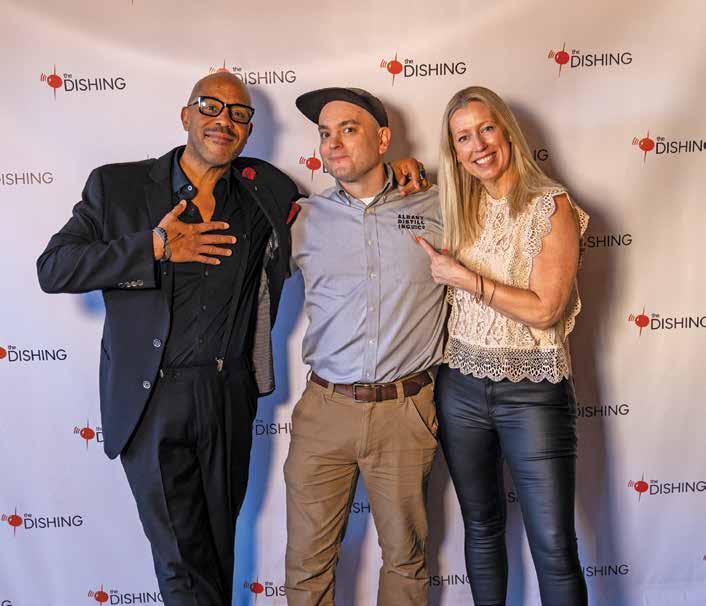
Susie Davidson Powell just celebrated one year of The Dishing—part dining guide, part industry lifeline helping to shape how the Hudson Valley region eats, gathers, and takes care of its own
AskSusie Davidson Powell where to eat, say, Mexican food, and she can easily give you the rundown on a dozen spots in Albany, the Hudson Valley, and the Berkshires. What sets her knowledge apart is that she might steer you toward Oaxaquéna Triqui for chapulines or menuda, and sopes that are hand-pressed and cooked on a comal. It’s a spot she first discovered when they were just a counter at the back of an Albany bodega with no sign to speak of. That’s the distinction she’s built a business on. Not where you can eat. Where you should.
For nearly 11 years, she was the Times Union’s restaurant critic responsible for restaurant lists and wine columns. She’d scrubbed her own image off the internet for the job, but when the pandemic hit, she
quickly pivoted and met the owners and operators face-to-face, reporting on their struggles as well as the takeout and meal kits that kept many restaurants afloat.
By the time she launched The Dishing, a year ago, the industry knew exactly who she was. It reads as a dining guide, but the real subject is people, telling the stories behind the chefs, beverage directors, and bartenders. “When I tell the backstories and talk about the food, people want to go,” she says. “It takes away the apprehension of ‘well, I don’t know what to order in a Peruvian restaurant.’” Her range is the point, from a James Beard-nominated masa program to the fried chicken served on a slice of white bread at Allie B’s Cozy Kitchen in Arbor Hill. Her focus is on connecting the dots,
the people and places, and her rule is firm: “We’re informed. We’re not influenced. We’re not influencers.” Never pay-for-play.
The Dishing’s events run on small, lowstakes gatherings called Snacky Hours or theme- and speaker-based Tiny Talks, small bites and cocktails. All built to fill restaurants or bars on a dead Wednesday. “We’re healing these broken linkages,” she says, meaning the after-work drink and shared plate we quietly stopped making time for. It’s caught on. Her anniversary party drew 149 people, a who’s who from Rhinebeck to Glens Falls.
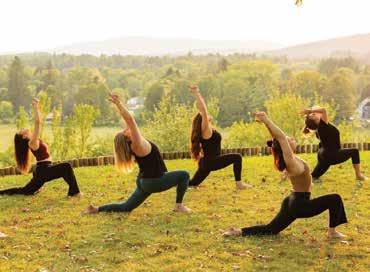
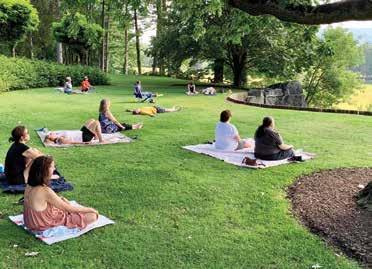
The part of The Dishing that she’s proudest of is harder to see. She created Raise the Bar as a resource to serve the people behind the pass, addressing the burnout, the late nights, and the drinksand-drugs coping the hard-driving industry is known for. Davidson Powell partnered with the Southern Smoke Foundation, whose “Behind You” program offers free mental-health telehealth to hospitality workers. And, on her first anniversary, she launched an industry group connecting staff to counselors and wellness services. She’s organized free summer yoga for industry workers at Yaddo Gardens and June Farms, and a late summer half-day staff wellness event is in the works, featuring a sound bath, chiropractic adjustments, and a DJ spinning a healing frequency.
She knows the stakes in the industry. One in 10 restaurants, she notes, is at immediate risk of closing, and she takes the desperate calls herself. This led her to start building a new, free registry for chefs, bartenders, and owners that connects them for mutual and sponsored support, networking, and listings of available industry positions.
In a single year of The Dishing, Davidson Powell filed 70 tastemaker and guest-chef features, 120 restaurant write-ups, and ran 30 events, most of it solo. This summer she brings it to the Berkshires, with a collaborative DJ + patio party at Casita outside MASS MoCA on Sunday, Aug. 23. Expect what she does best: real food, the people who make it, and a room where the only thing you need to know is that she already knows where to go. —Ann Volkwein
Find events, reviews, and registries at: thedishing.com and @thedishing
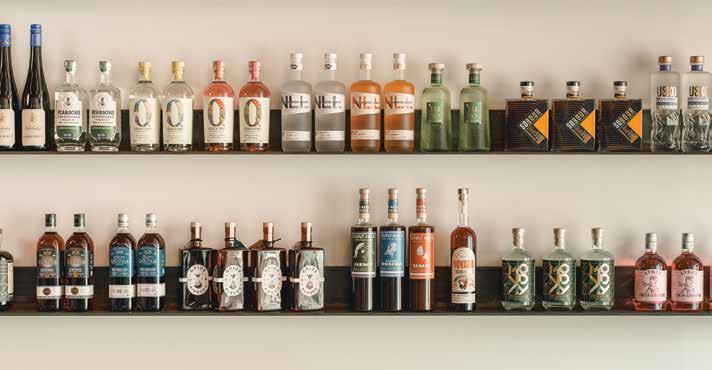
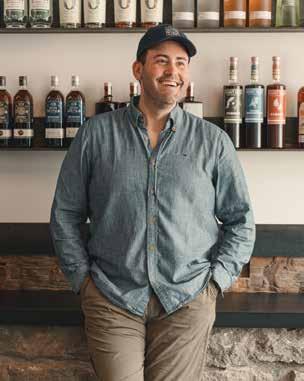
Ryan Curran used to run restaurants. Now he’s selling everything you’d drink at one, minus the alcohol.

Good food Good values
Community ‑ Owned
Community Focused
Drinking is the new smoking, and the pressure’s on to up your nonalcoholic game. You’ll find plenty of N/A inspiration at Hudson Dry, Ryan Curran’s charming new Warren Street boutique. Curran, who used to run the restaurant floor at Eleven Madison Park before quitting drinking himself, isn’t interested in mocktails as a consolation prize. “You don’t feel like you’re having to settle for something,” he says.
The selection runs deep at Hudson Dry, where Curran stocked up on a dozen tonic waters sourced from Spain and the UK, plus other “countries known for their tonic water.” (File under: who knew!?) Shirley Temple fans will want to get their hands on the gourmet cocktail cherries, small-batch grenadine, and habanero-infused ginger beer.
A fastidious researcher, Curran spent years planning his non-alcoholic emporium, which is located inside a tin-ceilinged former shoe repair shop. Some of the items are available at other shops, but only one has the man himself. Try talking to Curran for 10 minutes without wanting to throw a virgin drinks party.
As with electric cars, Europe has been ahead of the de-alcoholizing curve for some time. Curran is a fan of German wine producer Leitz, whose special centrifuge process removes alcohol while keeping the drinks’ flavor and aroma intact. Then there’s a zero-proof gin from British stalwart Tanqueray, not yet distributed in the U.S. Curran tracked down an unclaimed batch. “I bought a pallet of it and shipped it over from Spain, by way of Italy.” It’s now right in our backyard: 40 cases of it.—Lauren Mechling hudsondry.com

Organic, sustainable
Non GMO groceries
Local specialties
Curated beer & wine
Fresh meals to enjoy here or take it to go





413-458-8060
BOOK ONLINE:








wildoats.coop wildoats.coop

BareHairRemova lGB.com or ca l l to schedule (413) 329 4518
321 Main Street, Ste 203, Great Barring ton, MA (2nd Fl oor, Berkshire Bl ock)
Sarah Reynolds North’s bread club has spawned an army of card-carrying bread heads
If you’re reading this on a Thursday, then it’s safe to say I am in a good mood. Also known as bread day in my household, Thursday has become my favorite day of the week. It’s go-time for Sarah Reynolds North and her bakery, Found Bread. She’s been up since the early hours of the morning baking loaves for the 80 or so members of her bread club before packing them up to distribute to various pickup locations.
Here’s how it works: each month, members get an invitation to opt in for the weeks ahead. They can sign up and pay upfront for a four- or eight-week run. There are also bread choices—all sourdough (with one hearty, wheat-free loaf), made with regionally grown, fresh-milled flour and high-quality organic ingredients—made with food sourced as close to home as possible. There is a “family loaf” share if you’re dreaming of that classic sourdough boule, or the “baker’s choice,” which is where I always fall. Will it be the Pepperell with its rich Gruyère and black pepper? The golden raisin and cinnamon-flecked Sultana? Or the seed-packed Sedgewick? Whichever it is, I know at least half will be gone by bedtime, slathered in the good butter I buy special for the occasion, dipped in whatever soup or salad I have
“This bread thing I loved all along felt like it could be the thing that I do.”
planned to give us a reason to call the better part of a loaf of bread “dinner.”
I pick up my bread share at Bon Dimanche in Great Barrington, one of several local pickup options in the area. If I get there on the early side, my loaf is often still warm, tucked in its hand-stamped paper bag with my name on it. I inevitably see friends there, and we share that smile that says it all—we are part of something so good, and so delicious.
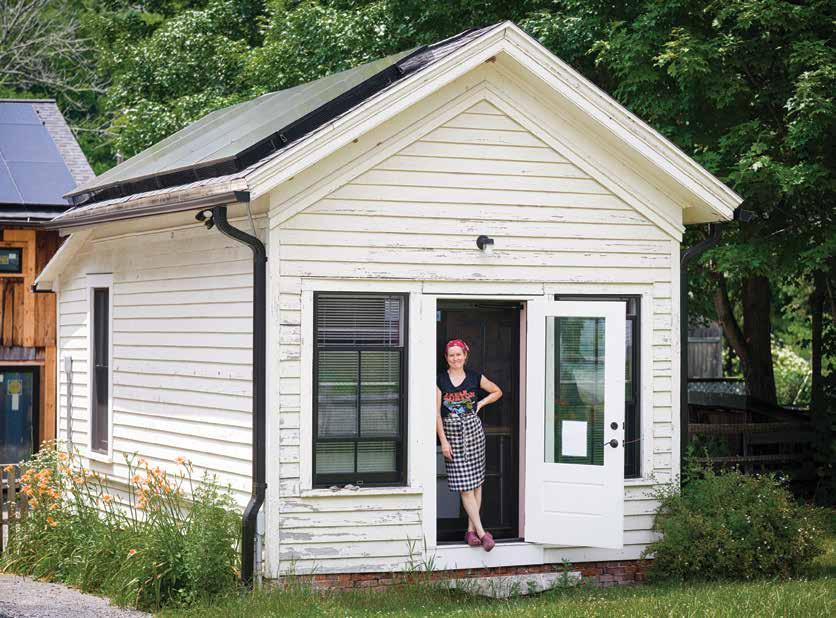
North and her partner, Hollis, moved from Boston to Mill River with their three children in 2022. Their house came with a tiny, one-room building rumored to have once been the town post office. Now the walls of the small, bright space are a cheery pale pink, with a commercial oven, big refrigerator, and wide baking table. The bakery is just a few feet from the front door of the family home, and this means that their three young kids can come and go as they please.
North grew up baking with her mother, and baking bread became a ritual she took with her into adulthood. After three years in the Peace Corps in Guatemala, she worked with immigrant communities in the South with the Southern Poverty Law Center, and later moved into public radio journalism, all the while baking bread. When her partner, who worked in tech, got a six-month assignment in San Francisco,
“People like to feel like they’re part of something. And the opportunity to make something delicious that brings people around a table, that builds community, is so satisfying to me.”
North took advantage and signed up for an artisan sourdough class at the San Francisco Baking Institute.
“That changed everything,” she says. “This bread thing I loved all along felt like it could be the thing that I do.” The couple returned to the East Coast and Found Bread was born—“found” as in the discovery of an old way of making with time and fermentation, finding what you love. They imagined they’d have a bakery one day, full of things that were “found.” It would be years before they’d move to the Berkshires, but North dug in and worked at bakeries everywhere they lived over the next several years—London, Cape Cod, Vermont, Boston—and ran bread clubs.
The structure of the bread club is similar to the Community Supported Agriculture (CSA) model, where people buy a farm share ahead of time and then reap the rewards throughout the season. “That supports the farm,” North tells me, “and, in turn, your community. You’re paying forward for delicious, happily grown food. And you know who made it.” These models also help farmers plan their seasons efficiently and with minimal waste. Working on the same premise, North can purchase her ingredients and bake loaves in the exact quantity she knows she’ll need each month. The bakery is too small for customers to mill about, but North plans to turn it into a take-away spot. Even with the dream of a Found Bread space that is more open to the public, the bread club isn’t going anywhere. “The bread club is the heart of our bakery,” North assures me, as she rolls a shaped ball of dough into a bowl of black sesame seeds. “People like to feel like they’re part of something. And the opportunity to make something delicious that brings people around a table, that builds community, is so satisfying to me.”—Alana Chernila foundbread.com @foundbread


Open 7 Days, Free Tastings Every Weekend! nejaimeswine.com
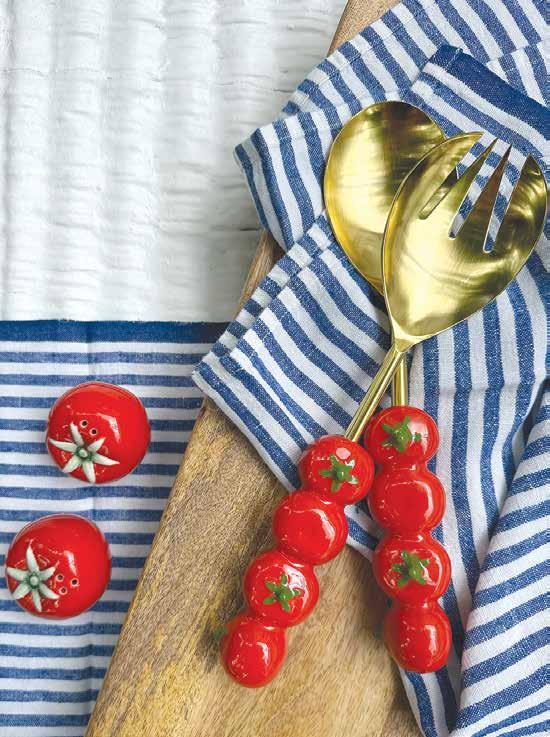
Home i Lifestyle Elevated Gifts at The Red Lion Inn Open 7 Days A Week
@theshop.aroundthecorner 413.298.1623
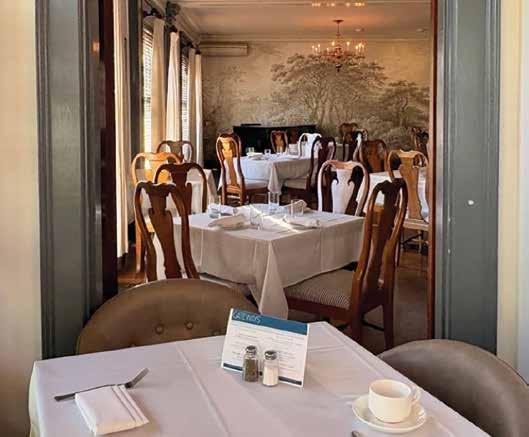
51 Walker Street, Lenox • gatewaysinn.com
Gateways Inn is located in downtown Lenox, where seasonal cuisine, handcrafted cocktails, and warm hospitality come together in the heart of the Berkshires. Whether you’re gathering with friends or enjoying a romantic evening, savor unforgettable flavors in an elegant, welcoming setting that invites you to linger.
Grand Oyster Bar & Piano Lounge
156 North Street, Pittsfield • thegrandonnorth.com
Opening August 5, The Grand brings elevated coastal cuisine to downtown Pittsfield. Enjoy fresh oysters, handcrafted cocktails, live piano music, Sunday brunch, and exceptional hospitality in an elegant setting inspired by the timeless charm of the American supper club.
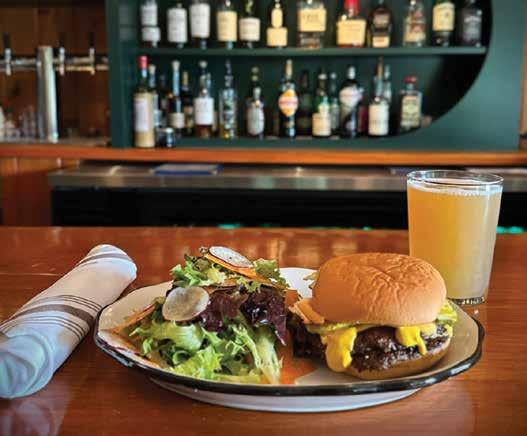
137 Brodie Mountain Road, Hanock • @eatatbluebird
Originally created to serve its signature Okie Burger, Bluebird & Co. has become a Berkshires favorite for seasonal entrées, salads, craft cocktails, and easygoing fun. With lawn games and outdoor dining, Bluebird is the perfect place to gather after a day in the mountains.
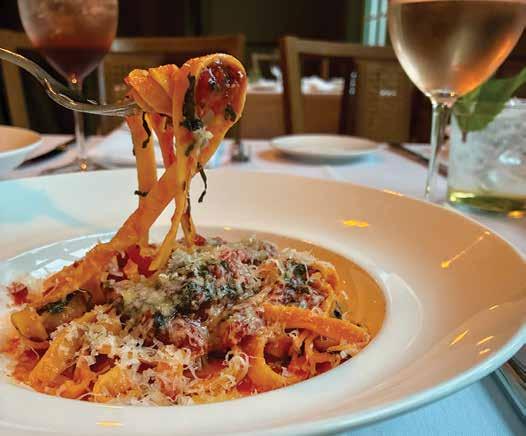
777 Cold Spring Road, Williamstown • mezzerestaurant.com
A Berkshire dining destination since 1996, Mezze brings together Mediterranean-inspired seasonal cuisine, an award-winning wine list, and warm hospitality. Beyond the bistro, discover private dining, the Mezze Guesthouse, and full-service catering and event production.
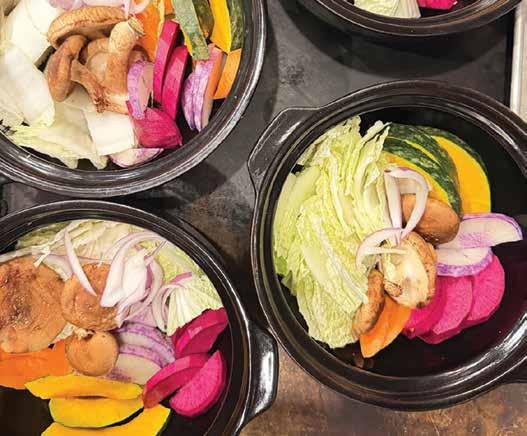
508 State Rd., North Adams (Greylock WORKS) • statefoodndrink.com
A love letter to their West Coast roots inside Greylock WORKS, this collaboration between farmer and chef Tu Le, chef Aaron Willis, and artist Matt Bertles is a place for storytelling where food is the focus. Enjoy soul food on Blue Mondays and Vietnamese on Tuesdays.
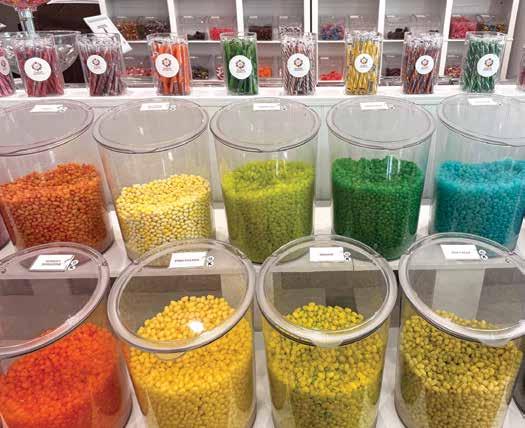
Sugar Magnolia
51 Church Street, Lenox • sugarmagnoliacandy.com
Discover the country’s third largest bin candy store, with hundreds of gummies, chocolates, sour treats and Swedish candy. Create your custom mix and find new favorites in a colorful, one-of-a-kind adventure. Free arcade, resident goldendoodle, and family photo ops.
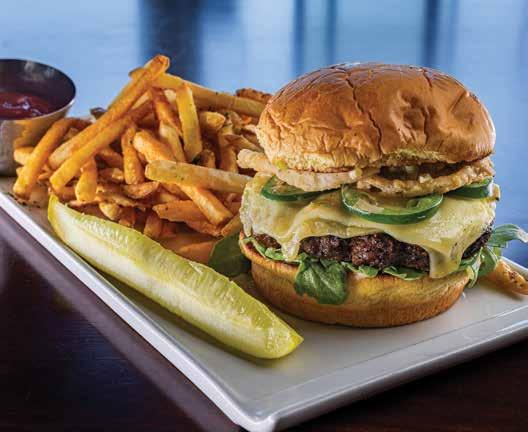
55 Lee Road, Lenox • wyndhurstgolfandclub.com/sloanes-tavern
Open seasonally in spring, summer, and fall, Sloane’s Tavern offers fresh local fare, casual dining, and a curated selection of imported and domestic beers. Unwind after a round of golf or outdoor adventure with live music, refreshing drinks, and a welcoming atmosphere.
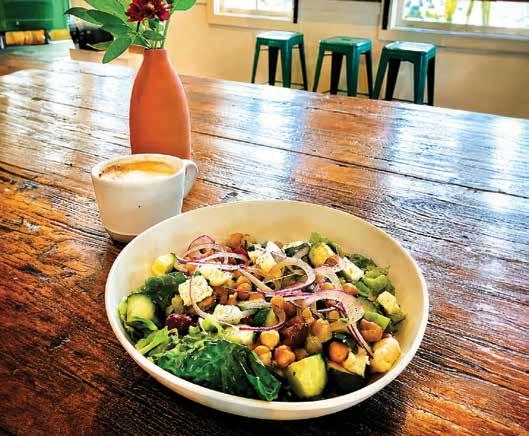
4 New Ashford Road, Williamstown • storeatfivecorners.com
Rooted in Williamstown’s history since 1767, The Store at Five Corners is where tradition meets fresh flavors. Enjoy handcrafted breakfast and lunch, specialty coffee, baked goods, ice cream, and local products in one of the Berkshires’ most beloved gathering places.
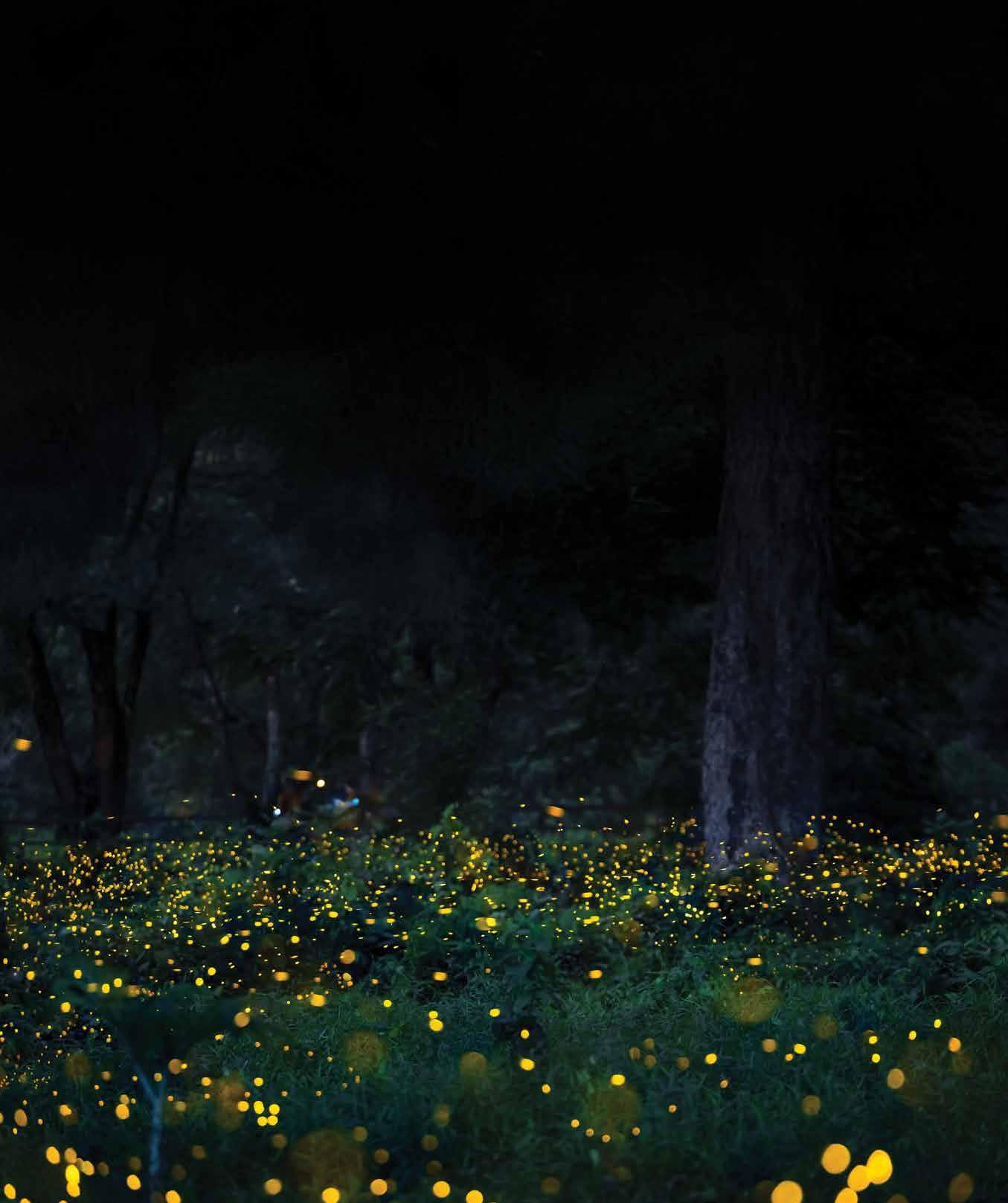
Fireflies are not actually flies. They are a family of beetles, and they put on the best show in the Berkshires.
A living, breathing blanket of fireflies is setting alight the meadows of Hancock Shaker Village. Of the more than 2,000 known species of firefly, just a few are here tonight. Those present are showing off: flickering in patterns from sporadic flurries to Nike-swoosh-like arcs and colors from fiery orange to lemon-lime green.
The Massachusetts Audubon Society led firefly enthusiasts on an evening’s walk through the village’s grounds, one of the many firefly-focused events taking place in the Berkshires this summer. During the light show, overeager watchers interrupted the performance to fumble for their phones. The flash of cameras only obscured the fireflies. The scientist in charge of the tour, used to this routine, made an observation. “Fireflies are one of the few phenomena you can’t photograph or video. You have to be there to see it,” she said.
Eleven miles from Pittsfield, lightning
bugs also took center stage at Shakespeare & Company in Lenox. The theater company is performing “Fireflies,” a play about a woman tapping into youthful joy and finding love at an older age. Though there are no anthropomorphic fireflies in the show (sorry to disappoint) the fake switchgrass and evening-blue hue of the show’s set gives the impression that lightning bugs are bound to show up any minute.
Why the name “Fireflies”? Though she didn’t name the play, director Daniela Varon has a theory. “Fireflies have a one- or two-year lifespan underground, and then they transform and have this great finale. This play is about how you can still shine your brightest later in the game,” she said.
“Fireflies” is a romance, and the bioluminescent show that descends upon the Berkshires every summer is really an elaborate mating dance. Male fireflies zip around the air, flashing in patterns and colors distinct to their species. Females remain perched close to the ground and only flash back when they see the light of a
“Fireflies are one of the few phenomena you can’t photograph or video. You have to be there to see it.”
desirable, compatible mate. Not too different from human romance—is it?
Although scheduled firefly events across the Berkshires have concluded for the season, you can watch fireflies dance on your own through the end of July.
First, find a field or patch of forest near you. Then, wait until dusk and show up with a blanket, popcorn, and your strongest can of bug spray—curse those damn mosquitoes. Nets are optional (but recommended) for both actual children and your inner child.
Firefly season in New England is a summertime event. Though, if you miss it, I hear Mother Nature is offering a re-run next year. Go. It’s one of the few phenomena you can’t see on video. —Soren Anderson-Flynn
The ‘DIY and iterative’ restaurant Paige’s Place turns out food that’s better than good
Do you hear the silence? That’s the dinner bell. The one that stopped ringing long ago. These days, it’s all about lunch. Take Mokonuts, the tiny lunch-only spot in Paris where it’s impossible to book a table. London is all abuzz about The Yellow Bittern, the 18-seater where midday meals are meant to be three hours long. Closer to home, Paige’s Place is another popular restaurant where it’s lights out after lunch.
“Our capacity is fixed by shared parenting,” says Eric Danforth, who opened the cozy spot he characterizes as “very DIY and iterative” in Otis in January 2024 with his wife, Megan McClure. The couple met at a Maine wilderness lodge where they were both
working before moving to Monterey, close to Danforth’s childhood home.
In the evenings, McClure works as a residential advisor at Gould Farm, a therapeutic residential community in Monterey. Danforth cooks dinner for their two children, ages 4 and 7.
Located in a ranch-style former diner, Paige’s serves the bacon, eggs, and potato plates you’d expect from a blue-plate special kind of spot. But how many other restaurants host Sunday night “Players Circle” where locals make music together?
“As long as you can play in time and play in tune, you’re good,” says Danforth. The food is better than good. Toasted slabs of
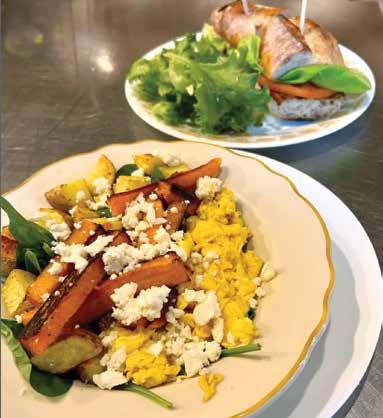
locally baked sourdough come topped with fresh ricotta and local ramps, morels, or herbs snipped from the restaurant garden.
Depending on when you visit, the breakfast parfait could feature berries, stone fruit, or the rhubarb that Danforth’s father grows in his home garden.
Another summer special: a wait for a table. “Starting Memorial Day, it’s nonstop between 7 and 2,” says Danforth. “It’s safe to say I’m not going to be taking a lunch break.” —Lauren Mechling @paiges.place.fcc










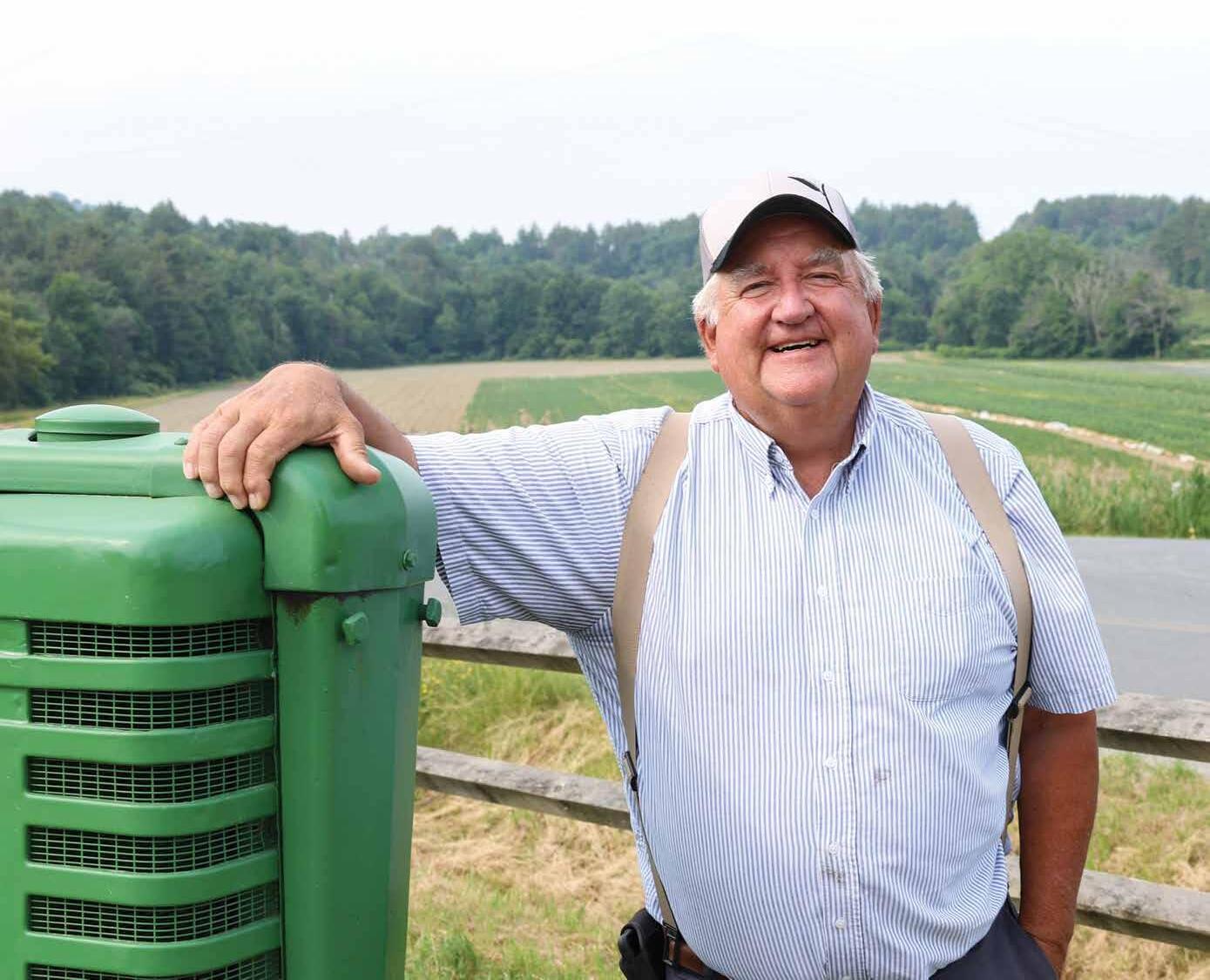
South Egremont mourned when The Old Mill closed its doors in 2024, as it lost its most venerable restaurant. The upscale crowd at The Old Mill was one of the toniest and the bar was a comfortable haven for locals. What hurt the most, however, was the prospect of never having their calf’s liver again! Then, like a phoenix rising from the ashes, The Old Mill re-opened. Terry Moore has trimmed its name down to The Mill, reduced the menu, and revamped the décor. One thing he didn’t change—thank goodness—was my beloved calf’s liver, which is as luscious as ever.
My father cooked the tastiest calf’s liver when we were kids, which explains my devotion to the dish. Caramelized onions and smoked bacon pieces on top, with sides of mashed potatoes and arugula, finish off one of my favorite plates of food.
Another tasty blast from the past was the duck cassoulet at Rouge Restaurant in West Stockbridge. I’ll never forget the tenderness of the duck legs and the dark, mushiness of the black beans. The menu was enormous, yet I always ordered the same irresistible meal. Sadly, after more than 20 years, Rouge closed its doors in 2022.
These days, my favorite mouthful of duck is served at Pittsfield’s Sibarita’s. It’s
their Half Roasted Duck—the bottom and more succulent half. Served with mashed pecorino garbanzo beans and roasted balsamic broccolini, and topped with shallot cranberry honey soy sauce, it’s an entrée I love, to say nothing of its massive size and how easy it is to make two meals out of it.
The Barn Kitchen & Bar at The Williams Inn has another XL dish I adore. I’m talking about their incredible Grilled Pork Chop. So tender and thick, this plate comes with crisp grilled broccolini, chorizo, and a soothing white bean ragout. If Williamstown is too
far north, then I highly recommend the pork chop at Fern in Lakeville, Connecticut, which is equally amazing.
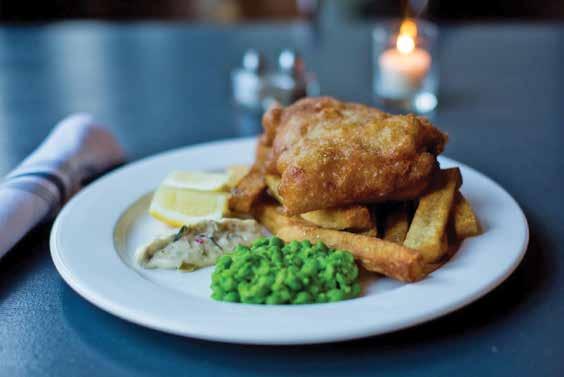
While in Connecticut, you may want to check out the fish and chips at The White Hart Inn in Salisbury. The lighter-than-air fried fish is unlike any I’ve ever tasted. It’s perfectly balanced with extra-thick, hand-cut potato slices, mushy green peas, and bespoke tartar sauce. The moment you taste it, you’ll want to come back and order it again.
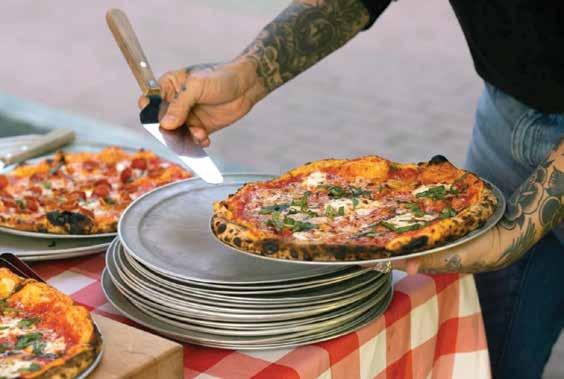
When a restaurateur names a dish after himself, you know it’s his pride and joy. And Robby Robles has every right to be proud of his signature pizza, The Roberto, at Robbie’s Community Market in Great Barrington. The crackle of the thin crust, the gooeyness of the mozzarella, the chewiness of the mildly spicy soppressata mixed with the sweetness of the honey drizzle—it’s a world-class artisanal pizza I can never get enough of.
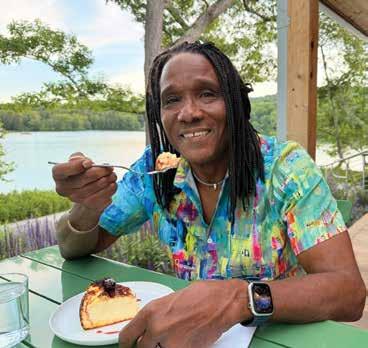
And, to top it off, is there anything more magical than the Basque Cheesecake at The Cliff House in Egremont? Lusciously creamy throughout and “burnt” at the top, I dare you to find a better cheesecake anywhere on the planet. Lucky for us, The Cliff House and all of these fine restaurants are right in our own backyard.—Pops Peterson
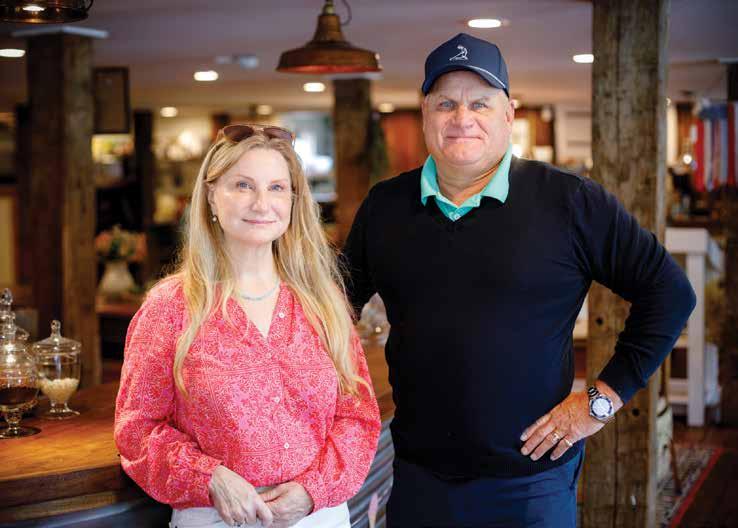
Few people have shaped the Northern Berkshires’ restaurant scene over the past three decades quite like Colleen and Sean Taylor.
Sinceopening the Freight Yard Pub in 1992, brother and sister Sean and Colleen Taylor have steadily built Baystate Hospitality Group into one of the region’s defining hospitality companies. Their restaurants have become go-to destinations in their own right, from the longtime neighborhood favorite Freight Yard Pub to Trail House Kitchen & Bar, Craft Food Barn and Berkshire Catering Company. Later this summer, they’ll add another chapter with Main & Mill, a new modern American restaurant in downtown North Adams.
However, one of their more recent undertakings boasts a significantly longer history.
This spring, the Taylors acquired the Store at Five Corners in Williamstown, which has greeted travelers for nearly two and a half centuries. Long before Route 7 became the main passageway through the Berkshires, this site served as a vital stop for stagecoaches. Soldiers gathered here before marching to the Battle of Bennington. On Aug. 30, 1790, President George Washington even stopped for breakfast while traveling on horseback through western Massachusetts during his tour of the young nation. Through the centuries, the building has served as an inn, grocery store, post office and gathering place, becoming as much a part of the local community as the roads that meet at its front door.
“When the opportunity came, we didn’t see it as a blank slate — we saw a history worth honoring,” Colleen says. “The Store has been a gathering point at that intersection for generations, and there’s a responsibility that comes with stewarding a place like that.”
That same sense of responsibility has guided every decision the Taylors’ have made. Before they even write a menu or hang a sign, they take the
time to understand the community they’re joining.
“A
good meal, a warm room, a staff member who remembers your name—that’s real.”
“We start with the place and the community around it, not a formula,” Colleen says. “We ask what a location genuinely wants to be, who it’s going to serve and what would make people come back.”
Spend a day visiting the Taylors’ businesses and you’ll begin to see a pattern. Freight Yard embodies the true spirit of a neighborhood pub; Trail House prioritizes regional farms and seasonal ingredients; Craft Food Barn reimagines a vintage Dairy Queen as a fast-casual takeout destination; and Berkshire Catering delivers that same welcoming standard outside restaurant walls. No two businesses feel alike, and that’s precisely the point.
“For us, it was never really about the restaurants themselves,” Colleen says. “It
was about the people. A good meal, a warm room, a staff member who remembers your name—that’s real.”
It isn’t just the restaurants that work that way. After 34 years, Colleen and Sean have figured out each other’s strengths just as well as they’ve figured out the restaurant business.
“We’re always rowing in the same direction,” she says.
That direction now points toward Main & Mill. On paper, it couldn’t be more different from The Store at Five Corners. One asked the Taylors to preserve nearly three centuries of history. The other offers a blank canvas. 34 years in, Colleen and Sean still aren’t interested in opening the same restaurant twice.
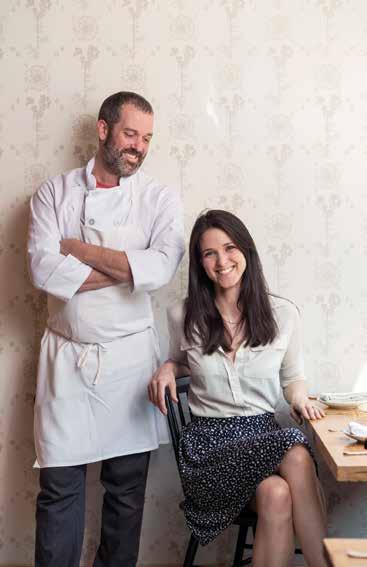
The Cliff House has two new residents: Chef Polo Dobkin and drinks guru Stephanie Lempert. The pair behind Brooklyn’s cozy Meadowsweet and proprietors of a farm in Hawley are rewriting the restaurant’s menu, adding dishes like Spanish octopus and handmade cavatelli with morel ragu. They also oversee snacks and sandwiches (pro tip: the chicken curry delivers) at The Pool House, open Thursday through Sunday throughout the summer. cliffhouseberkshires.com
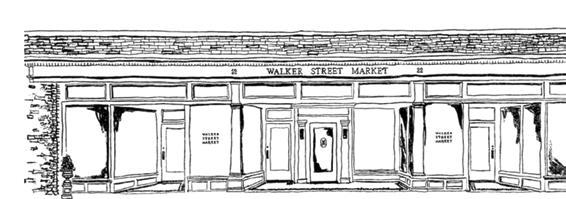
Walker Street Market is not your regular design shop. Former fashion designer Matthew Ames and a team of local artisans’ restoration of a landmarked former general store is a master class in retail world building. The multi-room design hub features works by over 70 visual heavyweights, including Clam Lab, Underwater Weaving, and Presley Oldham. The Berkshires were already on the design map, but Ames has cranked the dial to an 11. walkerstreetmarket.com
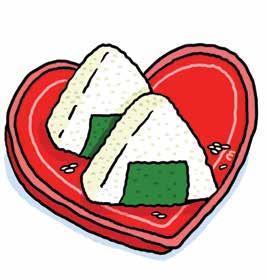
It’s only been a year since Ayakito’s Japanese Kitchen joined the roster at Great Barrington Farmers Market, and it’s already the Berkshires’ premier destination for Japanese rice balls (onigiri). Owner Ayako Otoshi personally prepares the hand-rolled onigiri with fillings like salmon yuzu pepper, vegan red shiso flakes, and ginger pork. ayakitojapanesekitchen.com 3
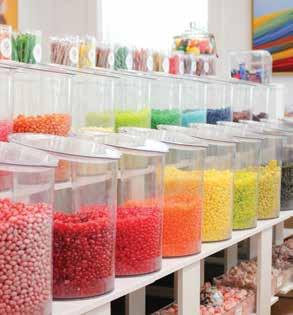
Lenox’s new candy shop Sugar Magnolia has more than 320 bins of bulk candy by the pound, from classic favorites to harder-to-find sweets. The selection of Swedish gummies alone is worth the trip, and the arcade games sweeten the deal. sugarmagnoliacandy.com
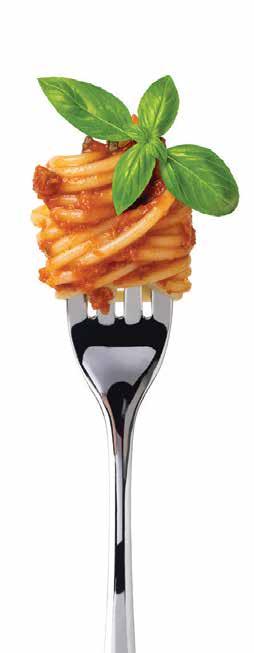
Zio Roberto has arrived in North Adams with the kind of old-school Italian energy that makes dinner feel like an event. The Marshall Street restaurant is making pasta in-house, from tagliatelle to gnocchi and ravioli. There’s also a taverna side for aperitivo-style drinks and small plates. zioroberto.com
—Soren Anderson-Flynn and Mackenzie Leach
Our Friends and Neighbors Have Something to Tell You
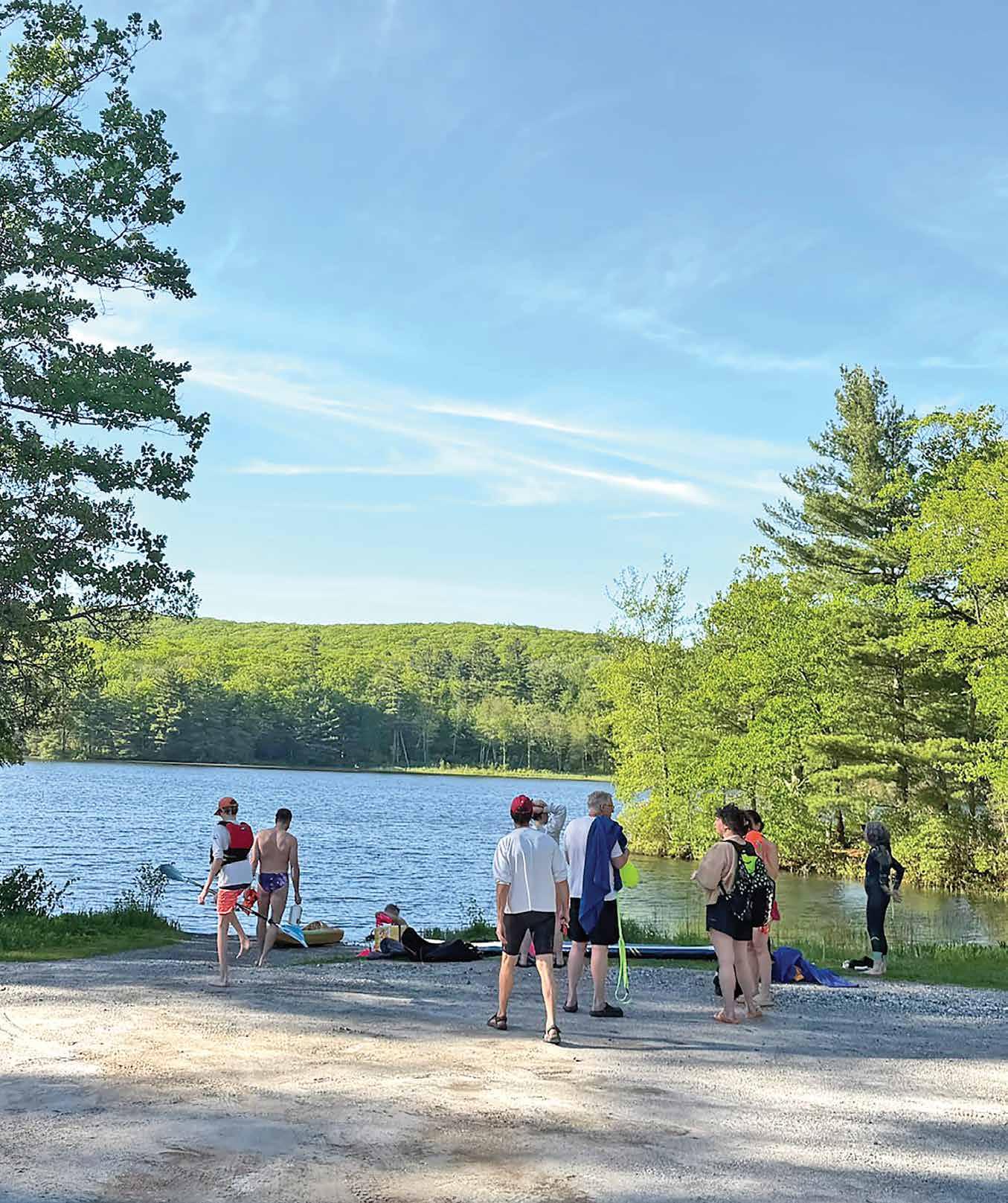
Benedict Pond Monterey
A return to the pool led to unexpected friendships, personal growth, and a newfound love for swimming the Berkshires’ beautiful lakes. Read more on page 46.
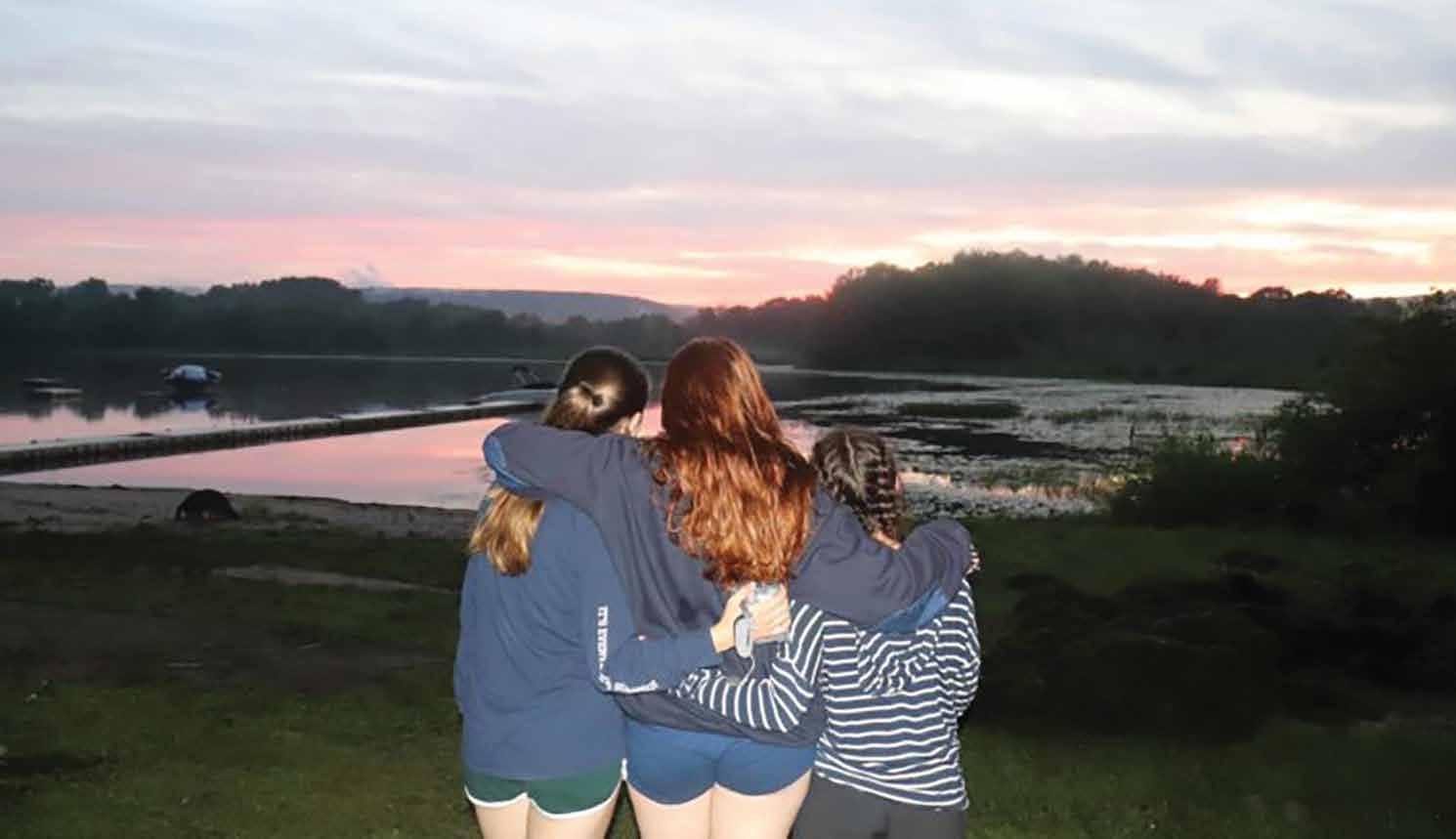
If it wasn’t for her, our family would’ve never put down stakes here and our daughter would’ve never experienced the strongest sense of community she had ever felt
By Marisa Cohen
There are moments when I’m sitting on the lawn at Balderdash, sipping a glass of riesling and watching the sunset over Richmond Pond, and think, “Thank you, Camp Lady, wherever you are, for making this happen.” Without the Camp Lady (who I’m sure had an actual name that is lost in my memory), would my family ever have put down stakes in the most peaceful, beautiful, culturally vibrant corner of the East Coast?
This story goes back to the summer of 2009, when my older daughter, Bellamy,
turned eight and asked if she could go to sleepaway camp the following year. Bellamy is a city kid, who grew up riding MTA buses and subways and attending both elementary school and day camp on the Lower East Side. She loved her scrappy little summer program, where the kids played Four Square on concrete and learned how to swim in a public pool built by the WPA during the Depression. But she was craving overnights in the woods, the rituals of Color War, and a bunk full of friends she could trade clothes and Silly
Bandz with: all the classic sleepaway camp tropes that she had learned from watching “Meatballs” and “The Parent Trap.” I wanted to find the perfect sleepaway camp for my friendly, creative, not particularly sporty little girl, but how to choose? There were roughly 10 million camps on the East Coast, and everyone I spoke to swore that the one they had gone to (or their kids, or their entire family) was the BEST. The 4-H camp I had gone to as a kid involved walking down 200 rickety wooden steps to swim in the freezing,
jellyfish-infested Long Island Sound, so that one was a hard pass; and the thought of spending every weekend of the current summer checking out other camps was exhausting. That’s when a friend told me about the Camp Lady: “You just tell her what you’re looking for, and she finds it for you, and it doesn’t cost anything— the camp pays her commission!” Wait, someone was going to solve this problem for me for free? Sign me up!
So I called the Camp Lady, on the telephone. (Remember, this was 17 years ago, when chatbots who give advice were still fictional villains in sci-fi movies.) She took notes about Bellamy’s interests, our time frame and budget, and a week later we received a package with brochures and DVDs from eight camps that fit the bill. We eliminated a few immediately (too much water-pistol violence in one video, a camp director with a creepy mustache in another…). And then we were left with camps in the Poconos, the Berkshires, and rural New Jersey. My husband and I decided that if we were going to schlep to the camp for drop-offs, pickups, and Visiting Day, we might as well pick a spot we liked. No offense, Poconos and Jersey, but we had rented a house in Great Barrington for a week one summer when the kids were little and had great memories of outdoor concerts, delicious food, and hidden waterfalls.
So on a very wet weekend during a particularly rain-soaked summer, we drove through the gates of Crane Lake Camp in West Stockbridge. As we toured the lake, the bunks, and the rec hall, we saw kids splattered in mud from head to toe. But underneath the mud, they were laughing and smiling, clearly having a fantastic time, despite the dreary weather.
As my younger daughter Molly pet one of the shelter dogs the camp kept over the summer (and then sent home with besotted campers at the end of the season), Bellamy looked at us and said, “This is my place.”
For the next 10 years, Bellamy’s entire year revolved around how many months/weeks/days were left until she could “go home” to camp. This is not an exaggeration—when the cars pulled into
the grassy fields to drop the kids off on the first day of every session, the camp director would greet them with “Welcome home, Crane Lake Campers!” Over those years, she met her closest friends—one became her post-college roommate—discovered her passion for songwriting and, as she tells me, experienced the strongest sense of community she had ever felt. (And based on the photos I scoured every afternoon on the camp website, she met a lot of cute boys.)
We developed our own summer rituals: Visiting Day lunch on the patio at Xico in Great Barrington followed by a candy run to Robin’s, which was packed with every camper from every camp in the Berkshires on their own visiting days. There always seemed to be an emergency visit to the outlets in Lee to pick up extra underwear, socks, or scrunchies. We stayed at different motels, hotels, and rentals up and down the county. I have a particularly vivid memory of my husband taking Molly paddle-boating on the lake behind the Black Swan Inn in Lee, then dropping me off at Edith Wharton’s home, The Mount, to indulge my former-Englishmajor’s lust for literary homes and gardens.
“It gave me a place to truly be myself, to try new things without fear of failure, and to learn all the life lessons they don’t teach in school.”
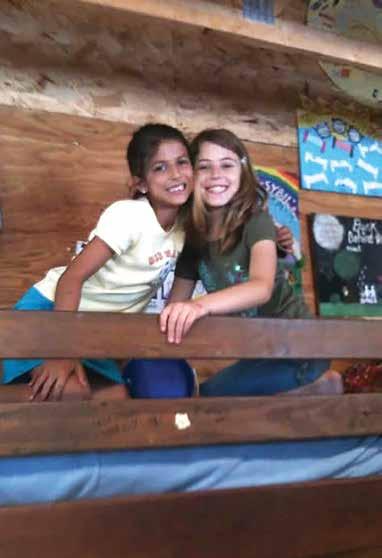
I asked Bellamy how going to Crane Lake—and spending every summer in the Berkshires from childhood through college—affected her life. “It gave me a place to truly be myself, to try new things without fear of failure, and to learn all the life lessons they don’t teach in school, like how to be a good friend and stand up for myself,” she says. “It also taught me a whole lot of Joni Mitchell and James Taylor songs.” Bellamy eventually became a counselor at Crane Lake, and there would have been an 11th year, until…that damn pandemic. But our family’s love affair with the Berkshires only grew stronger. Partly inspired by her summers at Crane Lake,
Bellamy applied early decision to Williams College, and our drop-off, pick-up, and Visiting Day rituals just moved a little further up Route 22. When she was getting closer to graduation, my husband and I panicked: What would happen to our Berkshires visits? Our multiple mandated-by-calendar visits would suddenly come to an end. Could we…? Was it possible…?
Just months before Bellamy’s graduation, we closed on a house in a charming little neighborhood 10 minutes from Crane Lake. Every time we drive to Six Depot for coffee and banana-nutella muffins, scour the shelves at Shaker Mill Books (never walking out with less than an armload of fiction) or bring our dog to the new West Stockbridge dog run, I say a silent thank you to the nameless Camp Lady from all those years ago. B
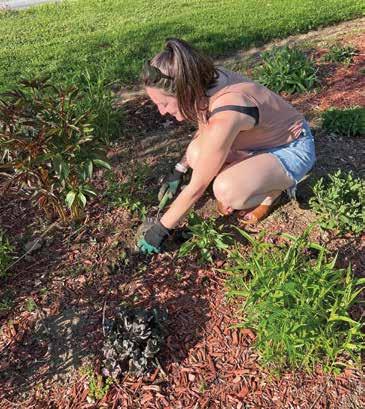
Removing the invasive plants is dirty, sweaty, and absolutely maddening, but also incredibly soul-satisfying
By Betsy Korona
Have you ever wrestled with a dandelion root? Stubborn son-ofa-gun. Long before the formation of bright yellow flowers or the fluffy seed balls wishes are made of, those roots wedge down deep. A single taproot winds 6 to 18 inches down. Green toothed leaves—“lion’s tooth”—taunt upward: “Come on, try me!” But the plant has the advantage. Leave even a smidge of that root and it’ll be right back. Taraxacum officinale—“Dan-dee-lye-on” to you—has a potential lifespan of 13 years, spreads thousands of seeds annually, and is, of course, only one of many Western Massachusetts garden foes. I’ve learned there’s also plenty of creeping wood sorrel, knotweed, and broadleaf plantain to contend with. Keeping them in check is an unglamorous summer requirement.
I talk smack to my weeds. “Oh yeah, oh yeah dandelion, think you’re so pretty?” “What you got, spurge?” “Get off my lawn, goutweed.” As we trade barbs and blows, injuries are inevitable. And, unsurprisingly, the weeds often win. An overgrown mugwort swings back and hits me in the forehead. The glow from my hour-long bout with goutweed invading our blue rug juniper turns out to be a stinging rash that slowly spreads up my hand and lower arm. To feel compelled to fight these battles no matter the outcome, to be unable to
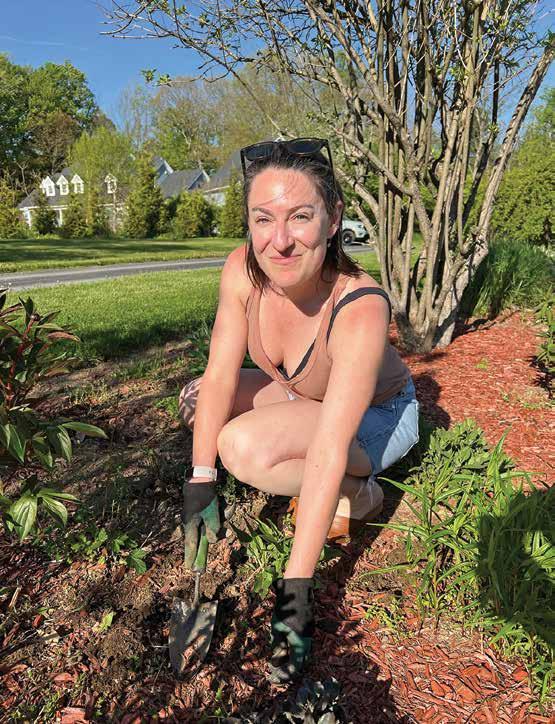
walk by without dropping everything and glovelessly take them on is a particular form of obsession—one I’ve developed only recently.
I first weeded when I was pushing 40—the result of an adult life spent in places with more pavement than peonies. As a little girl in Alexandria, I remember trailing my grandmother in her community garden, chewing mint leaves, picking string beans and snap peas, watering our rows and treating ourselves to sun-ripened raspberries on the way out. Having fun at grandma’s side, I never even noticed a weed.
Bouncing between cities as an adult, my mastery of horticulture extended only to two 8-foot-tall cherry tomato plants that somehow managed to thrive in an especially sunny Brooklyn one-bedroom.
The first time I properly weeded was at my best friend’s house in 2020. I’d moved in with her, her husband, and three young kids during COVID. As a pod, we balanced executive-level careers with making sure everyone was fed, watered, and tended to. I’d tried, in those days, to show my gratitude for their companionship by helping where I could, and one day I saw my friend plucking at some unwanted green things popping through pavers in the front yard.
This would become my new conference call ritual. When not required to be on camera or presenting at meetings that didn’t require intense concentration or note-taking, I’d put in my AirPods, head out front, and hunt for weeds. Little did I know that what I hoped was a helpful gesture would evolve into an unexpected pleasure. Weeding is maddening. But, call me crazy, it’s also incredibly soul-satisfying. Your hands will get dirty no matter the gloves. The earth finds a way to get under your skin. You will sweat. You will struggle with shoots dug in deep. Some you’ll snap. And some you’ll defeat and dislodge root to tip in a single satisfying swipe.
Weeding requires time and it’s easy to lose yourself in music, find inspiration in an audiobook or simply think. As I grip and pull, a knotted career challenge loosens in my mind. The running grocery list and unanswered emails fade out of focus. Florence + The Machine flows from my ears to my fingers, powering me on. My brain gives me a break and stops talking to me— drowned out by these compulsive moments. And I can’t stop. Once seen, I can’t unsee them. I spend hours unlocking whole swaths of garden dirt, excavating layer by layer, and meticulously sifting out spaghetti-
“The repetition becomes meditation. Obsession dissolves into peace, a soothing rhythm. The final weed pile is ultimately as much of a prize as the newly spruced-up space.”
like tendrils. Consumed by an urgent need to keep going. Getting every last one. The repetition becomes meditation. Obsession dissolves into peace, a soothing rhythm. The final weed pile is ultimately as much of a prize as the newly spruced-up space.
Taking a break from big media and the big city these days, I find myself putzing around the yard often. To say I’m a gardening novice is an understatement. One thing I can do, however—if given proper direction on what to avoid (sorry, echinacea)—is weed.
In this moment of transition, when I’m not totally sure of my next steps, I can stand in one place. Focus on one simple task. The weed vs. me. Strategize, commit, go. The immediate outcome: an accomplishment or perhaps a frenemy to revisit another day. And in that simplicity, I find clarity. The weeds offer both constancy and resilience. They will keep growing. And so will I. B


Let’s just say that growing my own food was harder than I thought
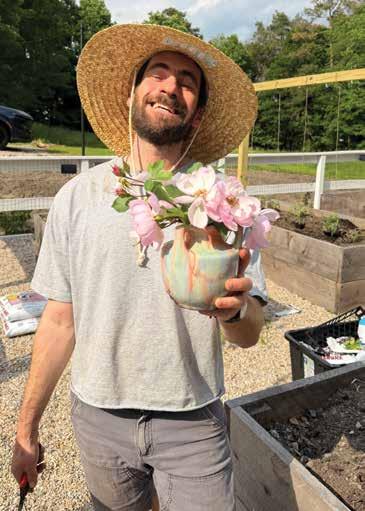
By Gus Heagerty
Imay have gotten in over my head last weekend. After a few FaceTime garden consults with my dad on the West Coast and some pep talks with my boyfriend, it became clear that I needed to rent a rototiller and till the 270 square feet of soil that make up our garden.
Like any well-meaning gays that have wedged their way into the Hudson Valley from New York City, my boyfriend and I are determined to have a lush garden full of flowers and vegetables. Think: Cottage garden-meets-Ina’s Hamptons abode. Think: The most effortless homesteaders suddenly growing abundant zucchini and tomatoes that they share with their neighbors. One problem: We have only ever really potted a few annuals here and there in the makeshift yards of our Brooklyn apartments. The chasm between our lived experience and our aspirational upstate-landscaping-selves remains large.
I dressed appropriately for renting the tiller: a beat up vintage T-shirt, Carhartt pants that I had cut into shorts, and my Blundstones—the great signifier of Oh me? I’m always outside. The look evoked a sort of disheveled, I didn’t even look at what I was putting on energy that I had long admired in local contractors over the years. It would pair gorgeously with my neighbor’s Toyota Tacoma that I would borrow to fully embody the upstate garden drag I had constructed on my vision board.
I set out for Great Barrington, having placed a hold on a rental for a rototiller that I was assured would do the job. When I arrived at the unmarked barn that Google
Maps directed me to, I started to sense that my shimmering costume and carefully constructed mask I had put on for the weekend chore would start to crack. The two men who worked there were smoking cigarettes outside and didn’t assume I would need to be greeted, so they drifted out of sight as I parked the truck. I sort of chased one of them up the stairs to a large barn and told him my intentions to rent a tiller for the day.
His cigarette was collecting a long ash, still hanging from his lips, as he described the differences between two very large lawn mower-like machines.
“This Barreto is a little larger than what you were going to rent,” he said, “but it’s easier to handle.”
He stood looking at me, waiting for me to decide which machine I’d like to rent. Both machines looked like they came from my grandfather’s garage in the 1970s. Neither of them looked anything like the machine I had seen on the YouTube video I had diligently studied the night before. The guy on the YouTube video had an encouraging, paternal demeanor as he explained how to use the tiller. The gentleman in front of me seemed to assume a level of expertise and experience that I did not possess.
I couldn’t bear to reveal my incompetence, so I chose the bigger of the two. I casually asked him to walk me through the “throttle” he had mentioned… and that other word he had said as he ran his hands around the machine, was it “catch”? I asked in a way that made it seem like I knew my way around these machines, just not this particular model
It wasn’t until he loaded the rototiller into the bed of my borrowed Tacoma that I registered the weight of the machine. The bed of the truck sank down a bit, cradling the 450-pound tiller. *
“Panic set in. The chasm between my lived experience and the task at hand was wider than it had ever been.”
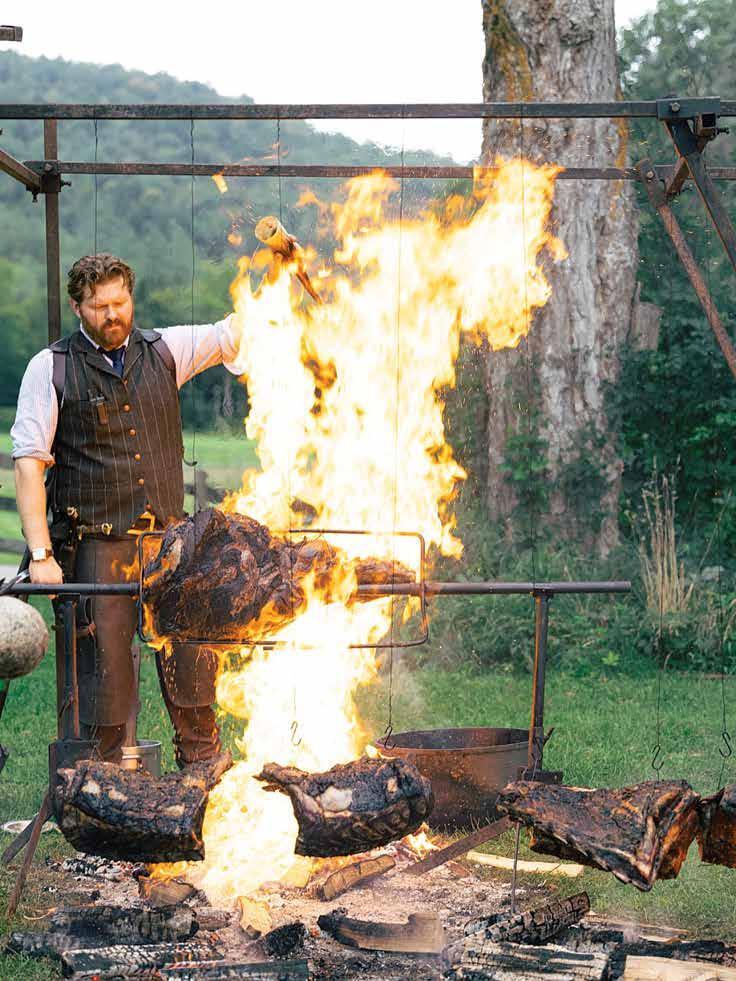
Th e Pat r iot ’ s Table
A n i mmersive open-f i re d in ing e x per ience w it h Chef Ja mes Gop
a nd Hei rloom Fi re , inspi red by Lincol n ’ s Inaug u ra l Ba nquet
Aug 28 & 29 at 6 pm
Tickets at c hester wood.org
With the cigarette still burning, he handed off two long plywood planks that he muttered were the “ramps” to get the machine out of the truck. Panic set in. The chasm between my lived experience and the task at hand was wider than it had ever been. What was I thinking that I could show up to this rental place, intended for tradesmen to pick up their rentals and get to work, and assume I’d be able to handle it?
As I was driving slowly home on 23, terrified the machine would plunge through the truck window, I began to whimper like a little kid hoping someone would come save me. Was my dad going to instruct me on how to get this machine out of the truck over FaceTime? We don’t even have WiFi out in the yard. I resolved to get home and tell my boyfriend that it’s a bust, and I would need to drive right back and return it.
“We needed these veggies in the ground if they were going to be the centerpiece of our grilling when we hosted everyone for a barbecue!”
We had plans to plant six varieties of tomatoes, zucchini, eggplant, and peppers. Working back from the Fourth of July, we needed these veggies in the ground if they were going to be the centerpiece of our grilling when we hosted everyone for a barbecue! And the lettuce! How would we get the lettuce to its mature size so that we could traipse out in the evening to cut leaves for an impromptu salad? The fantasy was meeting reality and I was devastated.
But when I got home, there was our lawn guy, Brian. He had dropped by to check on something and must have seen my stricken face because he jumped right in and offered to help unload the tiller and show me how to use it. Thank you for rescuing me, Brian!
Now, the tomatoes are climbing steadily and the squash is making a run up the metal trellis we put in place. Food harvested from our garden will soon be hitting the table and wowing our dinner guests. My fantasy of being a Berkshires farm-to-table gardener was fully restored. B
By Perry Garfinkel
Ilost my Fribble virginity at a Friendly’s in Great Barrington in the summer of 1965. The Fribble had undergone its own coming-of-age moment, having had a name change from the awfully descriptive moniker “Awful Awful,” a few months earlier. One would have thought the renaming was due to the disparaging nomenclature—anyone who screams for ice cream shakes knows the name came from a man who tasted the ridiculously thick milkshake and uttered, “It’s awful big and awful good”—but it was changed due to a licensing dispute.
The company conducted a naming contest to rebrand it, and the three people who suggested “Fribble” each won $100. Enough today for about a dozen Fribbles at the only Friendly’s in Pittsfield, on Dalton Ave.
The roots of the word are much more interesting and revealing. Etymologists suggest it’s an adaptation of frivol, an obsolete adjective that gave way to frivolous, Latin root frīvolus, meaning “silly, worthless, or of little value,” or, as a noun, a foolish or trifling person, according to the Oxford English Dictionary. Another theory: it may derive from the Middle English word fribben (meaning to waste time).
My first sip made nomenclature irrelevant. This was the Holy Grail of shakes, so thick that straws were useless unless you had enough patience to draw on that straw as if your life depended on it. But even straws could not withstand the challenge, which is why servers always provided a spoon. Sometimes I felt like a knife was also necessary.
The original recipe was quite simple when I was first seduced by it: ice milk and syrup, with very few flavor choices. The ice milk, a lower-fat dairy base, gave it its distinctly thick texture. Decades later, Friendly’s switched to soft-serve ice cream and, eventually, to hard ice cream in many flavors.
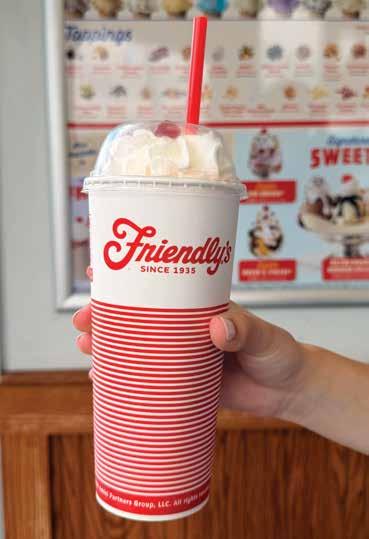
Mind you, I was not entirely naïve to the wonders of what can be done with frozen milk. My credentials for commenting on the Fribble are formidable: I grew up in New Jersey, where it often felt like there was a Dairy Queen or Carvel in every town. These soft ice creams are the crème de la crème of all contenders in this culinary category.
So when I say this Friendly’s drink was like nothing I had ever tasted, it comes with a certain gravitas. Naturally, boys being boys, we turned downing a Fribble into a competitive event.
“I bet you can’t down the whole thing in one sitting.” “I bet you can’t drink two in a row. I bet you will throw up if you do.”
We trained for this event. We didn’t eat lunch beforehand. I don’t remember eating the food there—the standard fare of burgers, grilled cheese, fries, turkey clubs. It would have robbed us of precious room
“When I say this Friendly’s drink was like nothing I had ever tasted, it comes with a certain gravitas. Naturally, boys being boys, we turned downing a Fribble into a competitive event.”
in our bellies. We worked out earlier in the day to burn more calories and increase our hunger.
I can still picture five or six of us squeezed into red-and-black booths designed for four people, max. Our Fribbles would be lined up, straws in hand as though they were harpoons about to attack a deadly shark. Anticipatory fear in our eyes, the unimaginable “finished” line seemingly light years ahead. No one wanted to lose. Yet none of us really wanted to win either, upset stomachs being part of the victor’s booty.
In my sepia-toned memory, the soundtrack to these scenarios—and almost all my memories about my years in Massachusetts—is the Bee Gees’ 1968 hit “Massachusetts.” “Feel I’m goin’ back to Massachusetts, something’s telling me I must go home.”
I lost a few dollars on those bets. My family always told me my eyes were bigger than my stomach. The Fribble proved them right. Yet, I always came back to this drink, like the jilted lover who can’t let go.
Unfortunately, now I live in California, a geographic market Friendly’s has not penetrated. So it’s with the excitement of that teenager in me that I will be in the Berkshires in August. My stomach is already growling. B
By Michael Bolognino
WhenI first walked into the Kilpatrick Athletic Center at Simon’s Rock, I immediately knew from the sweet, bleachy scent that they had a pool. I loved the idea of supplementing cardio and lifting with some casual swimming, so I bought a cap, a new set of goggles, and signed up for my first gym membership since moving to the Berkshires. I ended up going to the pool about six times in two years. I found myself avoiding the water and making up excuses. I said things like “I don’t have time to shower” or “It’s so hard to reserve a lane,” so I opted for gym workouts instead.
The last time I went swimming solo was when I met Bill Meier, the center’s longtime aquatics director. He had flagged me down right before a flip turn, complimented me on my stroke, and enthusiastically invited me to attend one of his team’s practices.
I politely declined. Partly because I felt so out of shape, partly because I wasn’t sure I could carve out time to come to practice regularly, and partly because I was a little intimidated about meeting and joining a new community of strangers.
Months went by and Bill continued to gently remind me that I was always welcome at any practice and I always gently said, “No thanks.”
Shortly after, I noticed that I was feeling pretty disconnected from myself. I was physically out of shape and getting winded walking up the stairs. I was feeling tired, agitated, and pretty unhappy. Something was definitely off and needed to change.
I was talking to a friend and fellow life coach about it, and he asked me about times in my life when I felt most alive and balanced. “Swimming!” I answered instantaneously.
You can guess the rest. I was at the pool the very next day when Coach Bill greeted me with a high-five. “You made it!” he said,

and invited me to jump into Lane 7. Thirty years later, I was back on a swim team.
It wasn’t just the Speedo and chlorine I returned to. With each practice, I started to reconnect with something that had been asleep in me for decades. The discipline, the total silence underwater, the feeling of being spent, but completely satisfied on the car ride home all came rushing back.
My body felt stronger. My shoulders pulled back a little. I was clearer and more sturdy in my work and relationships. I hadn’t realized how much I’d missed it—or how much more I would get out of it.
Which is not to say things didn’t get choppy. At the start of the year, I walked past the pool bulletin board and noticed that, in my age group, the record for the 100 Butterfly was 1:02.43—about 4 seconds off my 2025 time. I became obsessed. I wrote 1:02.43 on pink Post-its and plastered them on my bathroom mirror, in my car, and on my desk. By February, I was in the best shape and swimming the fastest of my adult life.
And then, four weeks before my race, I got sick. I took a few days off, but desperate not to lose ground, I did two hard workouts before I had fully recovered. And then I got even sicker. My asthma flared up and I was put on prednisone and antibiotics.
In the end, I still got up on the block and finished the race. I missed the record by a couple of seconds, but here’s what I learned: It’s not about being on the leaderboard. It’s about coming back to ourselves and recognizing what we’ve gained along the way. What I’ve gained in my life are people like Bruce—who we celebrated this year with a bagel party when he turned 90—and cheered for him when he broke two breaststroke records at the New England Masters Local Swimming Championships at Harvard.
Other examples include hanging a 100foot banner to honor Bill when he was named the U.S. Masters Swimming Coach of the Year. Getting tickets when a teammate has a theater performance. Swimming together, regardless of politics, the day after the 2024 election. Celebrating a teammate’s remission from cancer.
Most importantly, it’s about encouraging each other when we hesitate. After almost 50 years of staring at the comforting, crisp blue line at the bottom of pools, I had a hard time getting excited about the idea of swimming in the wild. But this year, after more gentle reassurance and some light peer pressure, I drove to Monterey, changed into my Speedo, and joined my teammates in a loop around Benedict Pond, neon open water buoys bobbing behind us.
And now I’m hooked. There might not be a better way to experience this magnificent place we live in than submerged with a silent, chilled rush of water going by, the sun shining on your body, and a view of the trees and mountains each time you take a breath. B




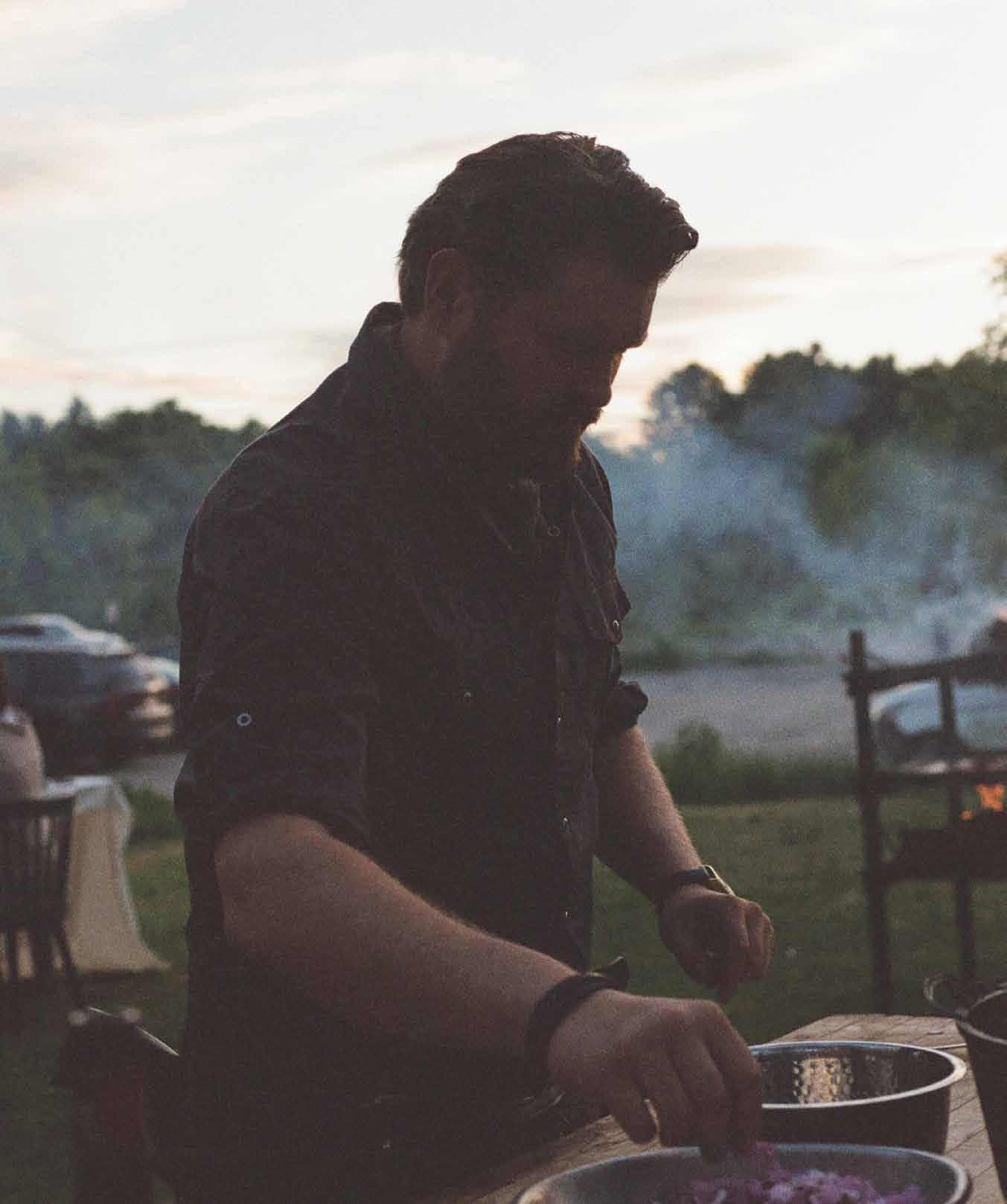
Inside the theatrical, waste-free world of the Heirloom Fire chef
Written by Alexandra Marvar
by Abigail Fenton

Anondescript building along Berkshire County’s Route 41 houses the Richmond post office on the right and, on the left, a mysterious door that tends to pique the interest of passers-by. It reads: Heirloom Fire. By appointment.
Inside is the tasting room and prep kitchen of Chef James Gop. The interior looks like something between Nikola Tesla’s laboratory and the prop department of a Hollywood film studio: lining walls and weathered wood tables are copper stills and mid-century Italian espresso makers. A steampunk-esque coffee system—which brews pour-over into a glass orb and through a maze of bent copper pipes—stands some five feet tall. In the back of the room, a rustic, aquarium-like meat locker of aging beef sides and hams, hanging like beehives, could as soon be a MASS MoCA installation as a curing room. A massive antique apple press. A retro, manual meat slicer. Along one wall, shelves of books and natural oddities: a milk snake in formaldehyde, the dauntingly sizable skull of a 38-pound striped bass.
Gop is a chef, cooking under the banner of Heirloom Fire, caterer and purveyor of special dining events serving “new American” cuisine, which he describes as seasonally driven and “specifically unspecific.” But why put him in a box? He’s a tinkerer. A craftsman. A blacksmith: The knife on his hip is one he forged himself, from railroad-tie nails he collected along the tracks at the back edge of the property, heated in a propane forge, and shaped into a blade. Its handle is carved from a resinstabilized beef bone plucked from a scrap pile after one of his open-fire feasts. He’s not one to let things go to waste.
His meals also sprawl far beyond the concerns of a chef: Each is a multisensory event defined by theatricality and experimentation. He settles into a wing chair in the front of the tasting room. “I really believe we’re eating with our eyes first,” he says. *
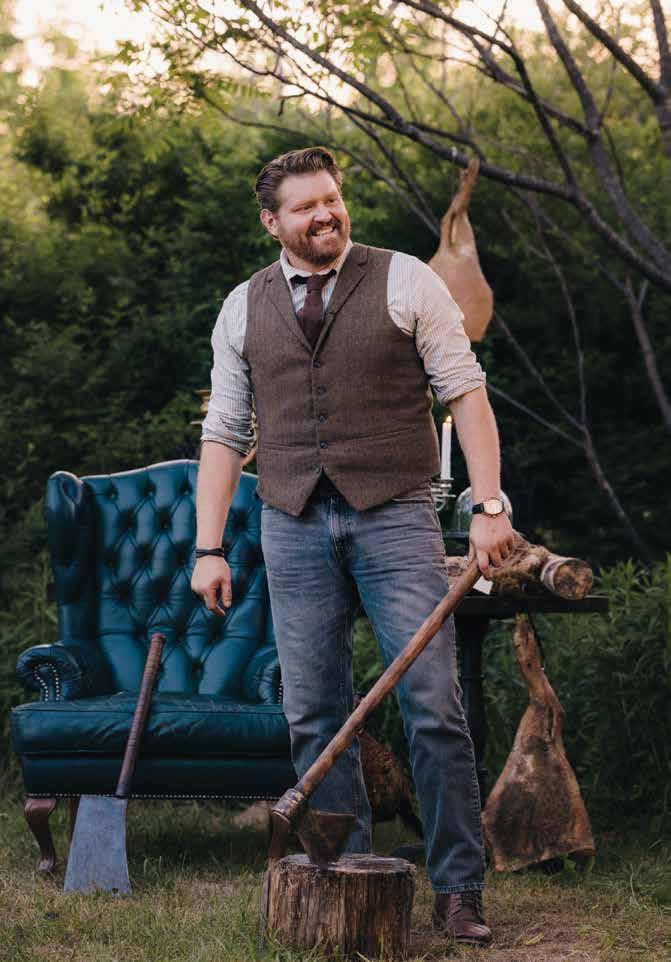
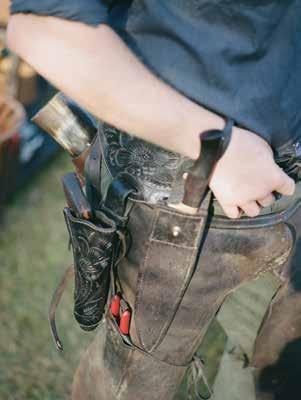
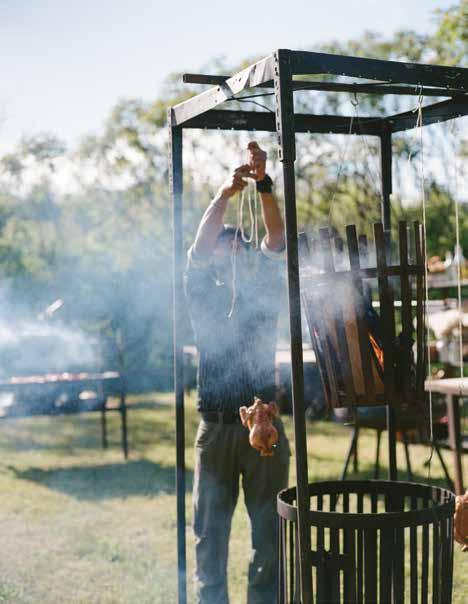
Take this year’s Valentine’s dinner, where he sought to embody love in its various phases, like attraction and afterglow. Desire was illustrated by a single perfect bite of duck breast—”just enough to make you want more.” The surreptitious removal of guests’ water glasses before serving them a veritable saltbomb of anchovies and caper butter on a Saltine would leave them parched and craving—until they were presented with a near-frozen glass of water, flavored with mint and cucumber peel, orchestrated to be “the best glass of water you ever had.” Other courses involved strategically aromatic toasted seeds and smoke-filled pillowcases.
Today, Gop lives in Stephentown, New York, with 17 chickens (who are each “like family” to him) and his dog, Arthur. As for neighbors, in the creek on his property reside some trout, an estimated 200 tadpoles, and some vagabond herons. From his cheese cave to his mushroom growing space, his home life—like his work life— revolves around food.
From his cheese cave to his mushroom growing space, his home life— like his work life— revolves around food.
But Gop didn’t grow up dreaming of becoming a chef. As a kid in the Berkshires, he loved Halloween, and he loved the transformation of getting into costume. His fascination with theater began with a foam latex mask he ordered online. Could he make a better one on his own? As is his way, he dove down the rabbit hole. He asked friends if he could cast their faces and, before long, was sourcing obscure mask-making supplies from specialty shops across the country. By age 17 he had built a portfolio and convinced his parents to drive him to Los Angeles, where he would knock on studio doors and pitch his services in hopes of finding a job in the film industry.
His youthful ambitions of a career in special makeup effects didn’t pan out. And, over the years that followed, an interest in food gradually made its way into Gop’s *
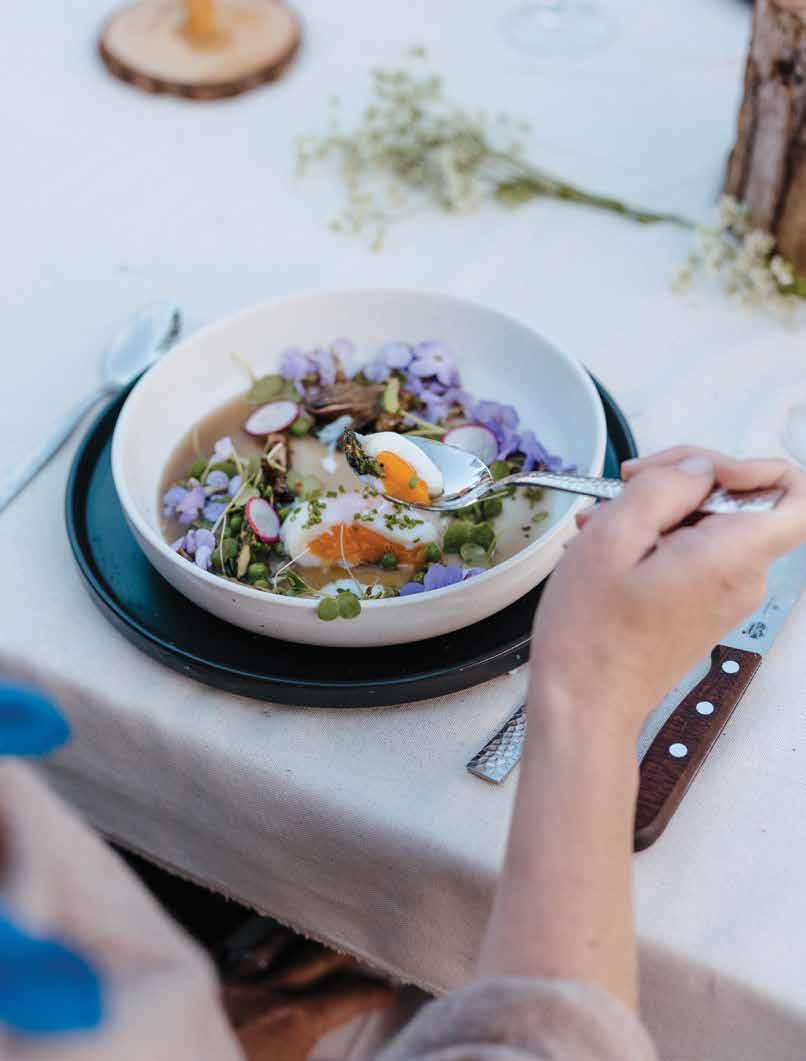
Gop’s meals sprawl far beyond the concerns of a chef: Each is a multisensory event defined by theatricality and experimentation.
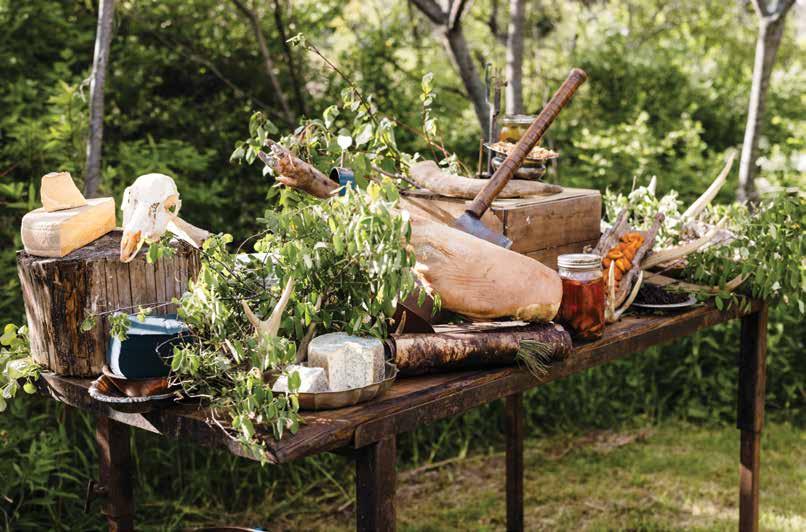
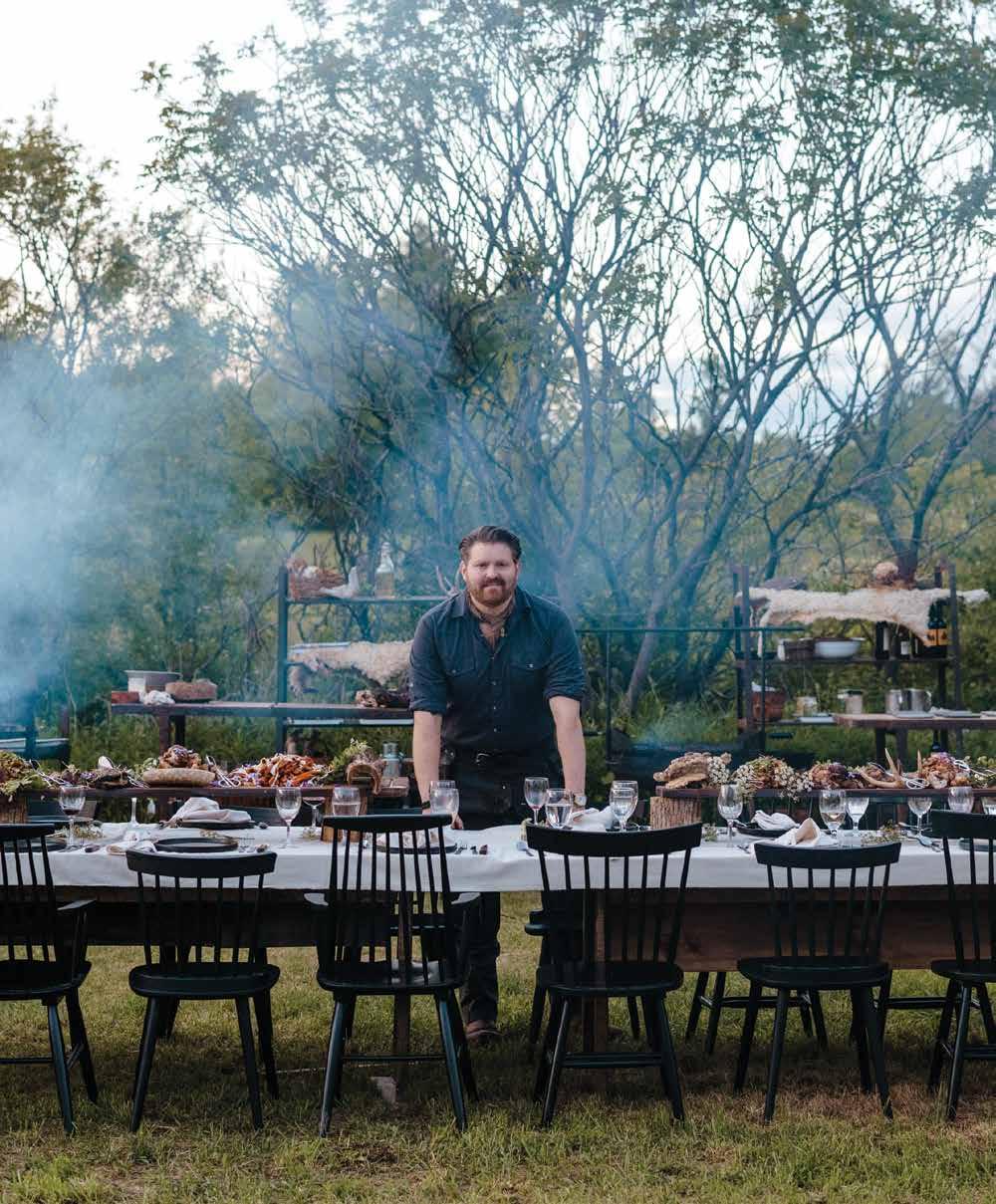



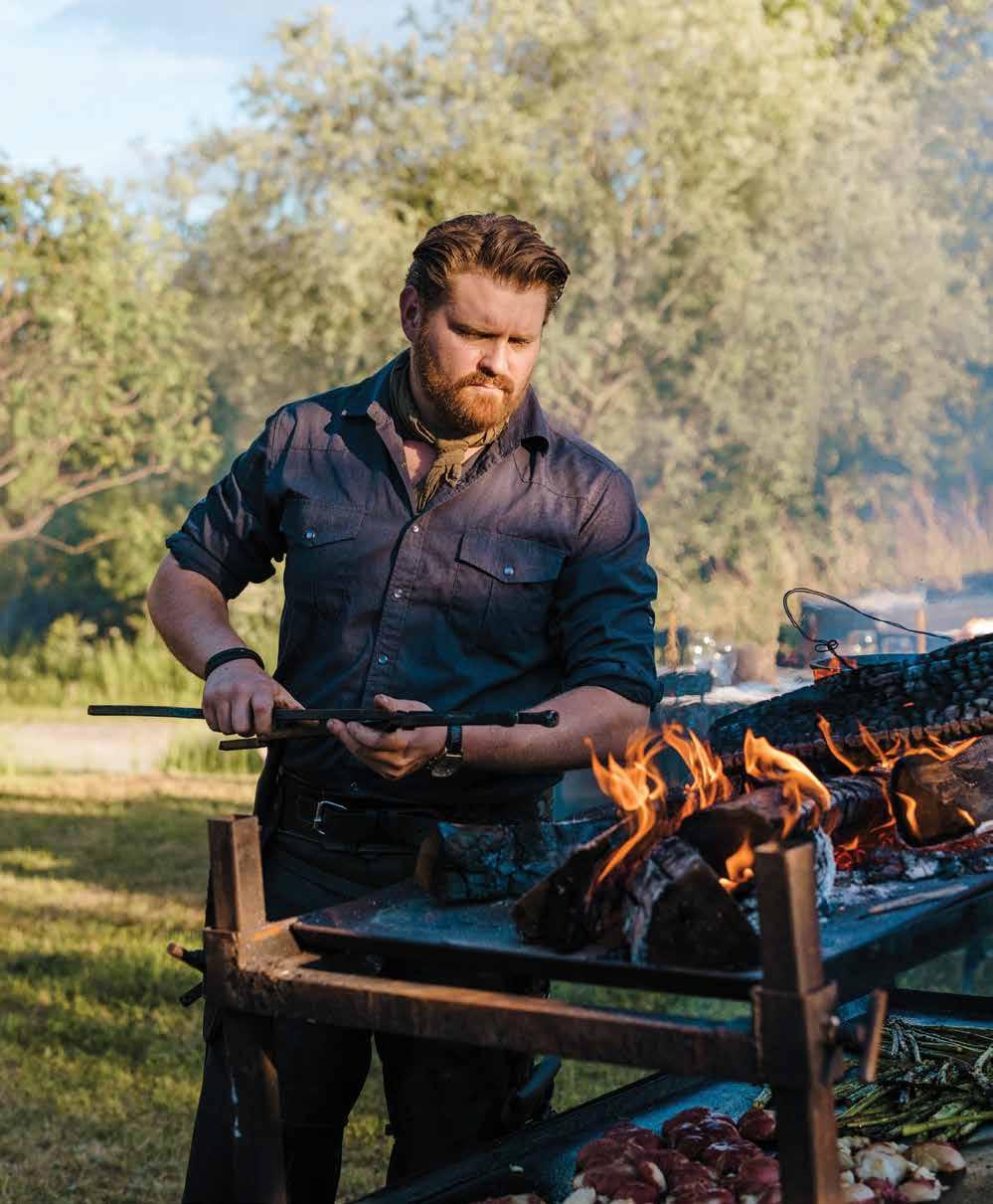

life. He’d later take a job back home, at Guido’s Fresh Marketplace. This is where he began to tune in to the magic of fresh, local produce. January peaches began to taste, to him, like wet sand. December tomatoes, he realized, were as lackluster as crispy water. A friend encouraged him to consider culinary school.
By 24, he was in the grind of the chef’s life. And, not quite 15 years ago, his “next thing” presented itself: An acquaintance asked him to help out at a pig roast at the Norman Rockwell Museum. Cooking outdoors over fire, he fell for the process itself and stayed on through the season with a mentor who specialized in nose-to-tail, open-fire cooking, and bringing the festivity of a multitiered grill to culinary events.
He moved on from that gig, too, but was changed by it. “You become an amalgamation of every chef you work for,” Gop says. A few years later, he got a call from a contact who happened to be looking for someone with a very particular set of skills: “Know anyone who cooks over an open fire and wears chaps?” she asked. Her boss, the hotelier André Balazs, was looking for a catering company for a party on Saturday—six days away. Gop said he might know someone—that someone was him. (Chaps, as it turns out, are a great way to protect one’s legs when cooking a whole animal over a roaring fire.)
I never wanted my own business. It just kind of happened.
The only potential catch: He didn’t actually have a catering company, nor any gear. What he did have was six days, a cousin with access to a machinists’ workshop, a wedding planner friend who could stage a room, and the moxie to say yes, dive in, and pull it off. “I never wanted my own business,” Gop says. “It just kind of happened.” Inside a week, this became Heirloom Fire’s first event: throwing an open-fire dinner for Uma Thurman’s birthday.
This was the spark that launched the outfit as it is today: catering for weddings and events, intimate and bespoke pop-up dinners, and an array of courses out of the Richmond HQ— pickling, preserving, foraging, and the like. There’s also The Forager’s Pantry, with its retail line of small-batch pantry pick-me-ups: housemade staghorn sumac vinegar, smoked strawberry jam, conservas of wildforaged oyster mushrooms or Japanese knotweed. *
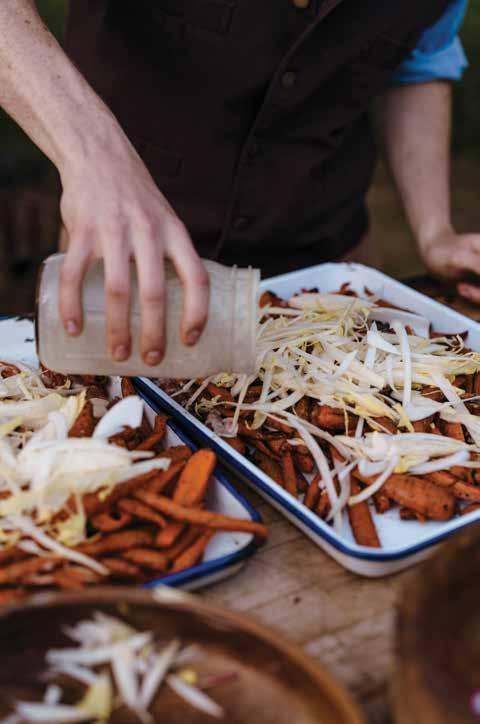
Gop is a chef, caterer, and purveyor of special dining events serving “new American” cuisine, which he describes as seasonally driven and “specifically unspecific.”
There’s also The Forager’s Pantry, Gop’s retail line of small-batch pantry items.
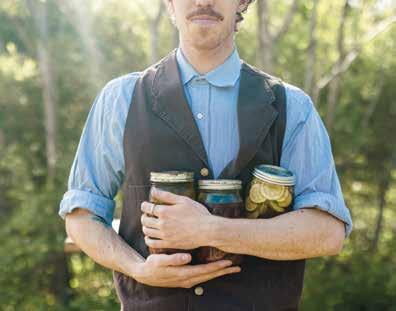
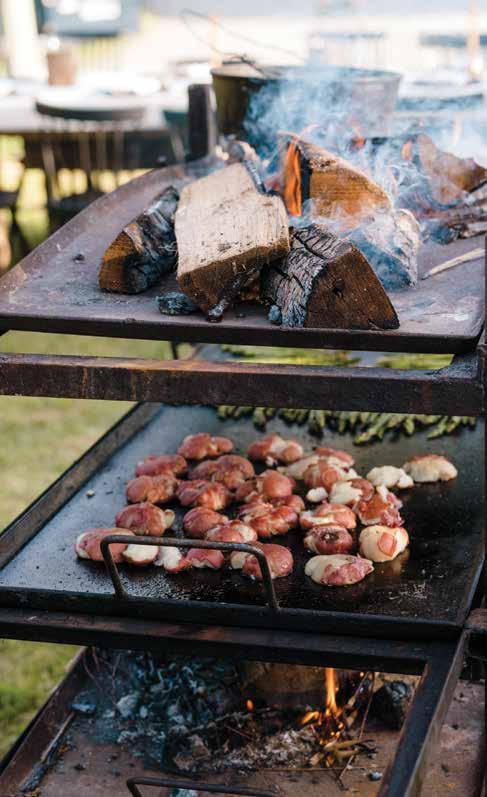
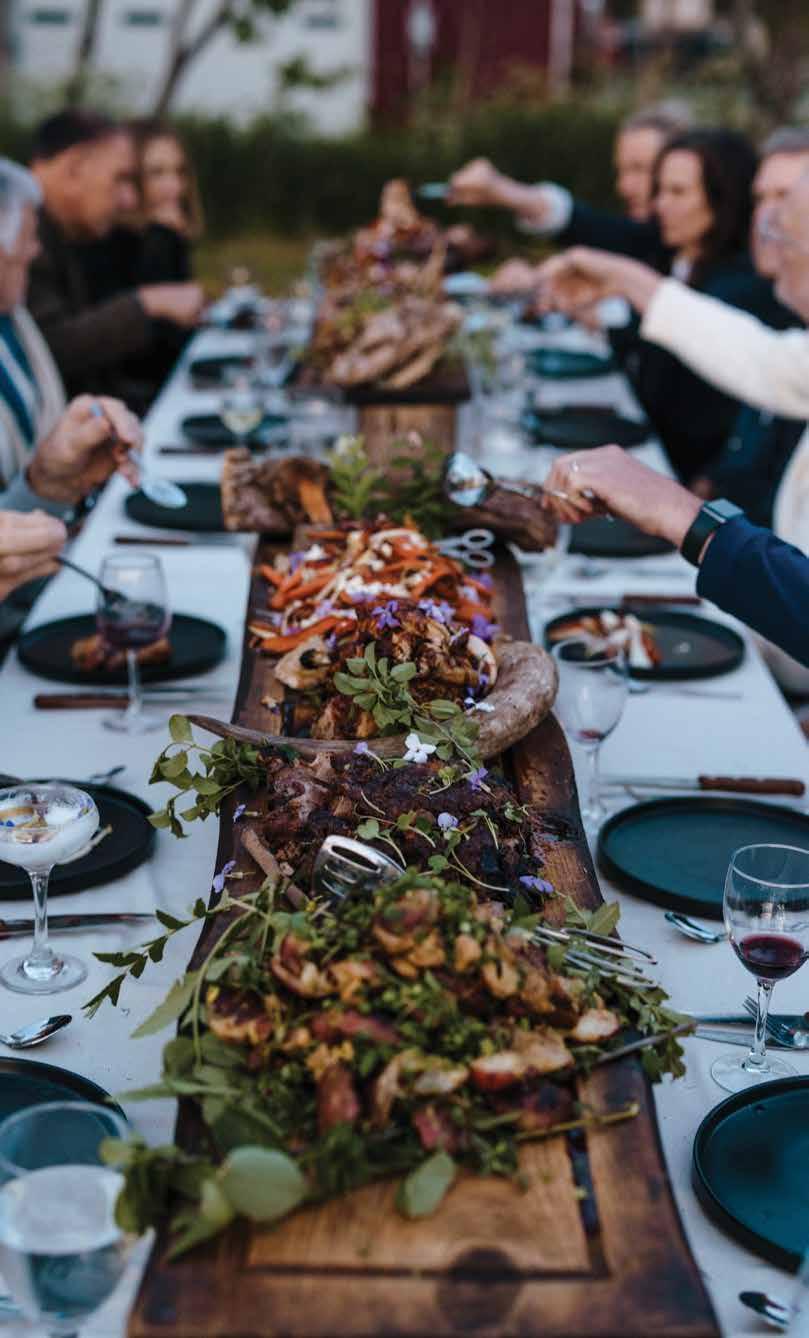
“A recipe is good,” Gop says, “but a story is what makes everything.”
Gop relishes finding ways to use knotweed—a nearly impossible-toeradicate invasive plant—on the table, from jams to gin cocktails.
Knotweed—a nearly impossible-toeradicate invasive plant—spreads, in dense stands, along roadsides and waterways across the U.S. from Acadia National Park to the Pacific Northwest, and Gop relishes finding ways to use this sustainable resource on the table, from jams to gin cocktails, even using its gnarly root rhizomes to carve centerpieces for his tablescapes.
“The idea of working with the invasives is like a purpose for me,” he says. And it’s one of myriad examples of taking his nowaste commitment to extremes, whether that’s making leftover vegetable skins into powdered seasonings, or putting empty cans through a heavy-duty shredder, melting down the scraps in a countertop crucible, and sandcasting the resulting metal into flatware for a future feast.
Each of these details—in the table settings, the ingredient lists, and the plating—plays into an Heirloom Fire diner’s experience the way lines in a script or details on a set give a great film or play its plot, and its twists.
“A recipe is good,” Gop says, “but a story is what makes everything.” B heirloomfire.com

Introducing the Aso O. Tavitian Collection
June 13, 2026–February 21, 2027
Also on view
Giorgio Griffa: Paths in the Forest June 13–October 12, 2026
Ground/work 2025 Through October 12, 2026



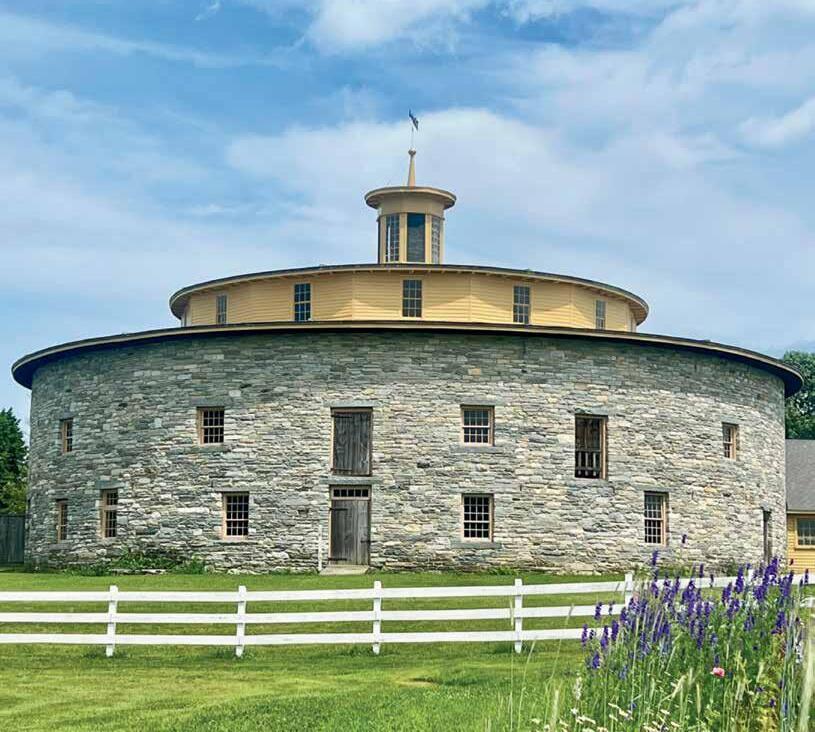

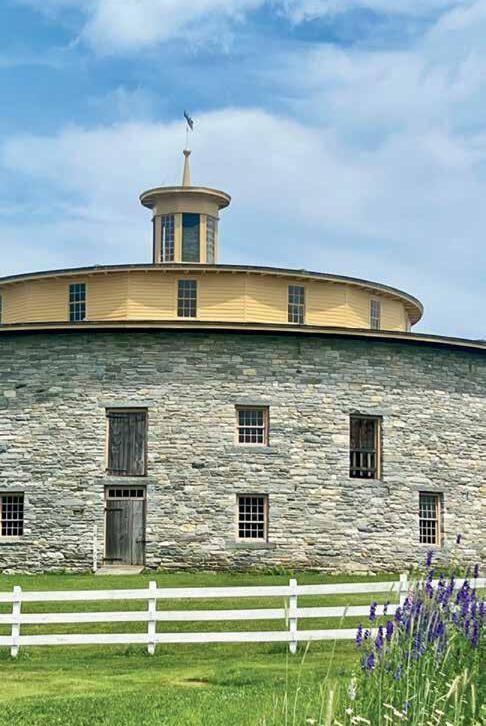












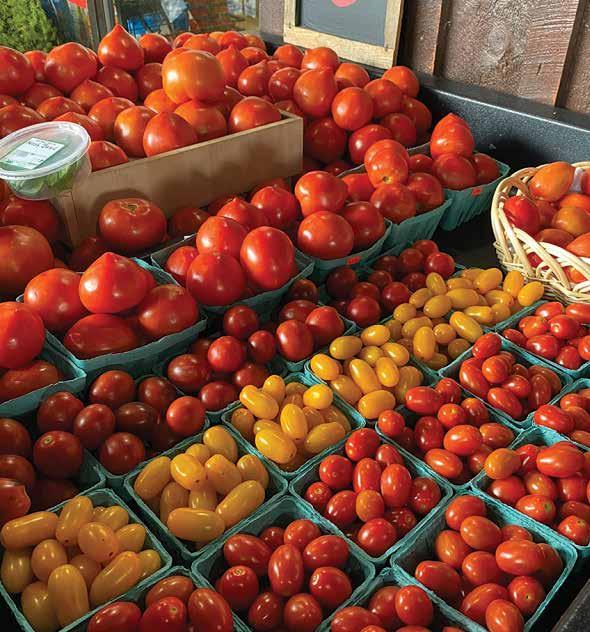



For Berkshire firefighters, the kitchen— where venison tacos and chicken parm are on the menu— is where the crew becomes a family

By Anndee
Amidlife career change took David Shea from the frying pan into the fire.
For most of his adult life—ever since he talked his way into a cooking job on the Lower East Side in 1993—Shea built his career in restaurants. He and his wife, Laura, owned Applewood, a farm-totable bistro in Brooklyn, from 2004 to 2016. When the couple decamped to East Chatham, they ran a casual bar-and-grill, East Chatham Food Company, until COVID quashed that project.
Shea began volunteering as a firefighter and loved the work; now, at 56, he’s a career firefighter in Albany. But he hasn’t given up cooking. During any 24-hour shift, he can be found at the firehouse’s six-burner gas stove, stirring the red sauce for chicken parm or sautéing a pan of house-made meatballs.
There’s a conventional image—calcified in movies and fast-paced television dramas—of firefighters glugging bad coffee, opening cans of chili or wolfing Subway sandwiches on their way out the firehouse door.
But today’s firefighters do it differently, Shea says. There’s more consciousness of cardiovascular health, the kind of stamina needed to scale a ladder or beat back a wall of flames. There’s more attunement to eating locally sourced food. And there’s increased emphasis on the firehouse kitchen as a nexus of community.
“The kitchen, and the kitchen table, is the focus of the firehouse; it’s where everybody meets and sits and shares stories, and talks about the day,” Shea says.
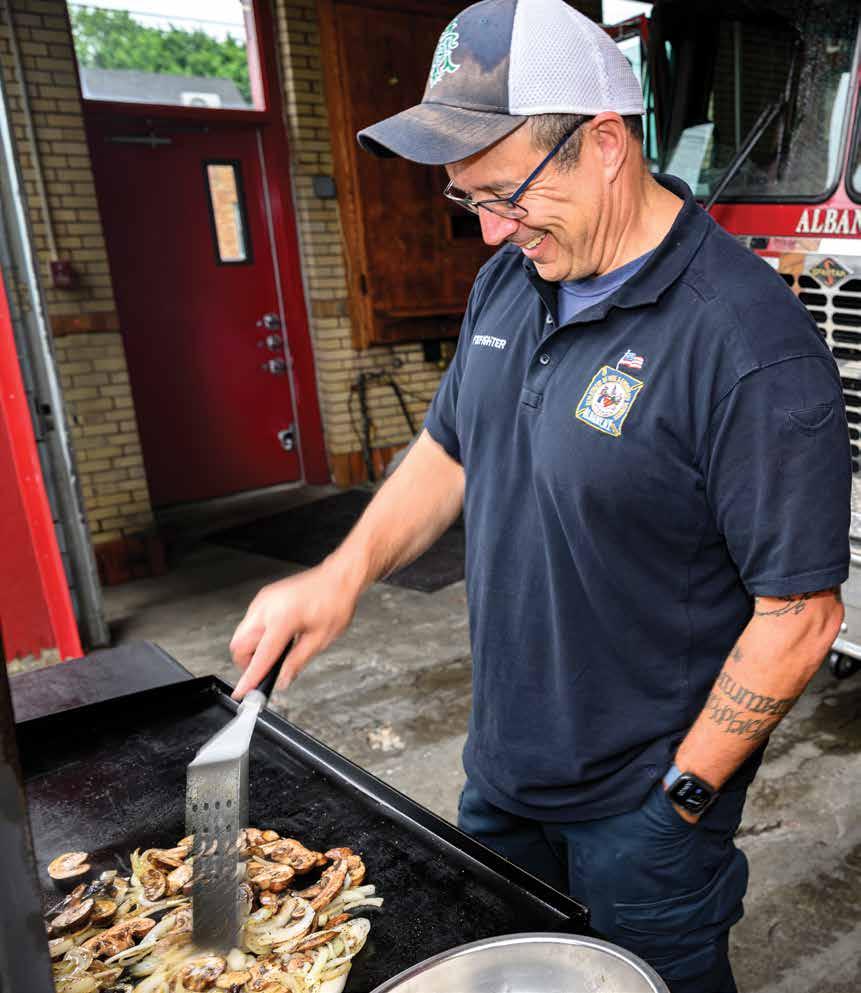
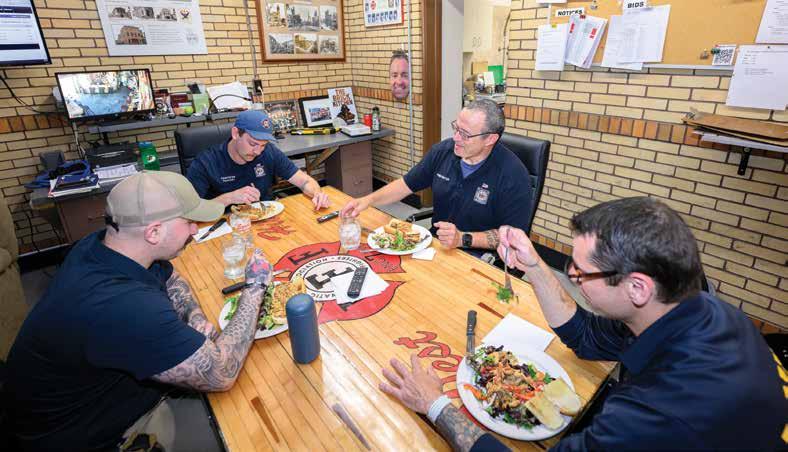
There’s more consciousness of cardiovascular healTh, The kind of sTamina needed To scale a ladder or beaT back a wall of flames. There’s more aTTunemenT To eaTing locally sourced food. and There’s increased emphasis on The firehouse kiTchen as a nexus of communiT y.

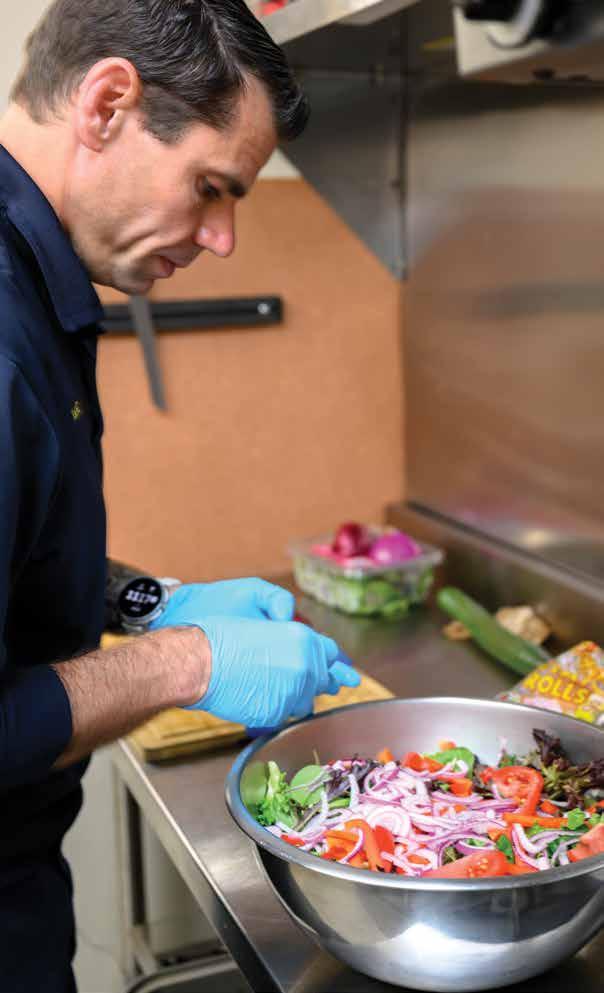
make david shea’s grilled Tri-Tip sTeak wiTh feTacucumber salad see page 65
First, crew members need to decide what they’re going to eat. That typically happens over a casual breakfast—coffee, yes, and whatever the guys have brought from home—when they look at the onsale fliers from local grocery stores and discuss menu possibilities.
Then they head to Price Chopper to fill the cart, wearing their regulation blue pants and polos, and driving the rig in case their radios crackle with a call. Each firefighter ponies up $20 or $25 per day to pay for groceries; if they go under budget, the crew saves the extra cash to splurge on lobster or steak for a holiday meal.
As one of the older students at the recruit academy for Albany’s fire
department—Shea turned 52 while he was there, and his youngest classmate was 22—his reputation as a chef preceded him. “I was warned to keep it simple,” he says, “and not try to be fancy.” Meals like chicken parmesan, meatballs, and mac and cheese are reliable staples. Favorite lunches include a big salad with cucumbers, artichokes, olives, red onion, feta, and a protein such as grilled tri-tip steak.
Other firefighters sometimes defer to his expertise. But Shea says firehouse culture—whether the call is a fouralarm blaze or a shout that dinner’s ready—demands collaboration and mutual attention to detail. “If you’re
lazy and don’t put stuff away properly,” he explains, “or don’t take care of the equipment or pick up after yourself, somebody else has to do that work.”
And while a firefighter’s day may be punctuated by enormous stress, Shea says his time at the stove, cooking for and with his colleagues, is a cakewalk compared to the demands of a busy restaurant and the scrutiny of critics.
“Restaurant work is hard and taxing and all-consuming,” he says. “But to sit with friends or family or people you care about and have them genuinely enjoy the food, that’s a super-gratifying thing. It brings the group together.” *
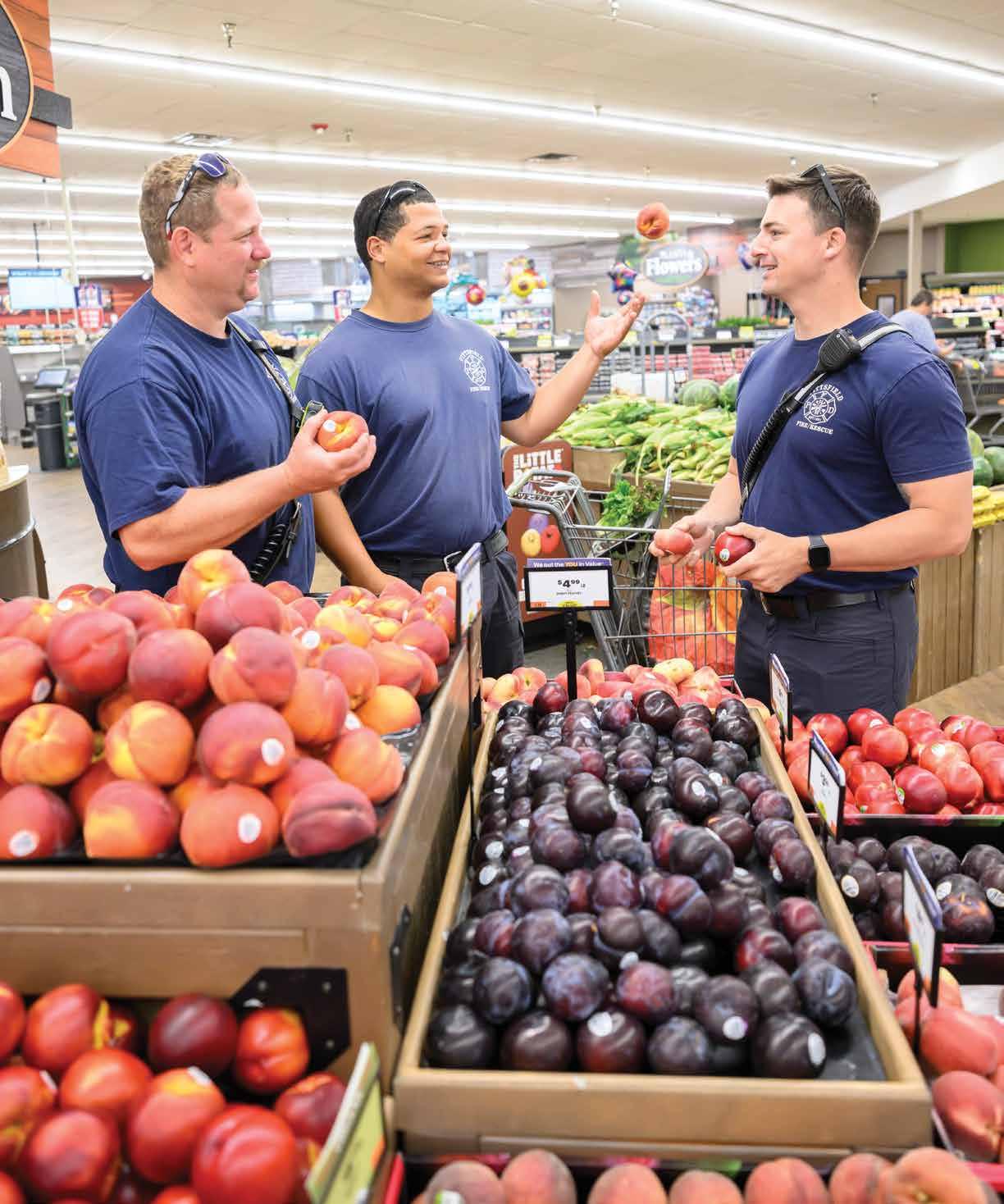
cooking and eaTing Toge Ther doesn’ T only forge bonds among The firefighTers, iT ’s also be TTer for Their healTh and Their walle Ts.
osh Healy learned to cook by watching his mother: spaghetti and meatballs, lasagna from his grandmother’s recipe, garlic by the fistful, and nary a measuring spoon in sight.
In college, he worked in a pizza shop; as a fireman in the Air Force, he often cooked for his crew. And as a 19-year veteran of the Pittsfield Fire Department, he takes his turn in the newly renovated firehouse kitchen— their equipment includes a gas grill and a Blackstone smoker—to whip up venison tacos or ginger-inflected Mongolian beef.
For the three-person crew of Engine 6, cooking and eating together is part of the day’s work. “Everyone’s here at 6:45 a.m.,” Healy says, “and we start talking: what would you like, what’s on sale; we try to figure it out together as a group. Sometimes that’s the hardest thing, just like at home.”
After a jaunt to Big Y market—provided there’s no alarm that means jumping back on the rig to rush to a fire—the crew launches into collaboration. For a recent weekday lunch of sausage with peppers and onions, one man grilled up the brats and vegetables, Healy chopped salad ingredients, and the third guy handled clean-up.
The crew tries to navigate dietary quirks. “We have one person in the department who’s allergic to peppers or anything spicy,” Healy says. “We have fish allergies. I personally don’t eat mushrooms,” an aversion that led to a notorious cooking disaster, years ago, when they attempted beef stroganoff with ranch dressing in lieu of mushroom soup. “It came out awful, and we ended up ordering pizza.”
But, for the most part, the kitchen choreography works. Their menus blend familiar favorites with contemporary twists: venison/beef smashed tacos, cooked on the flat-top grill for a recent “taco Tuesday,” bundled in flour tortillas and drizzled with a jalapeno, cilantro, and lime crema.
In summertime, Healy’s home garden yields enough chives, garlic, and tomatoes
to share with his crew. Some people hunt and bring in fresh venison. And as in other firehouses, the firefighters pay for the rest of their groceries—about $25 per person for lunch and dinner on weekdays or brunch and dinner on weekends.
Last year, thanks to the advocacy of their department’s chief and the support of Pittsfield’s City Council, the firehouse kitchen got a glow-up: new stainless steel counters, cabinets, and flooring;
oven with a built-in air fryer; and a fridge, dishwasher, and microwave. The firefighters pooled money to spring for the gas grill and smoker.
“We have a table right in the middle,” Healy says. “After we cook, we sit down together and eat. We share stories. You kind of bond with everyone over food, just like a family at home.”
Flexibility is key: they might toss pasta into boiling water, then rush from the *
Josh healy’s mongolian beef
2-lb flank steak, cut into thin strips
1 tsp sugar
4 tbsp cornstarch
1 tbsp soy sauce
1 tsp rice wine vinegar
½ tsp baking soda
Dan-O’s original seasoning (green top) Avocado or olive oil
For marinade: Combine sugar, cornstarch, soy sauce, rice wine vinegar, and baking soda. Toss steak strips in marinade and lightly coat. Refrigerate overnight or at least 4 hours, stirring occasionally. Remove from fridge and allow steak to warm to room temperature, approx 30-45 minutes.
To cook: Remove steak strips from marinade and lightly coat with Dan-O’s seasoning. Sprinkle cornstarch over steak strips to coat completely. Heat ¼ inch of avocado or olive oil in a pan until a small piece of steak sizzles when you put it in. Place steak strips in pan and cook 4-6 minutes; turn to cook on other side (remember that the meat will continue to cook in the sauce). Remove cooked steak from pan and place on wire rack to drain; repeat if you still have uncooked steak strips.
Sauce ingredients:
4 tsp sesame oil
1 cup soy sauce
1 cup water
1 2/3 cup dark brown sugar
1½ tbsp Cornstarch
4 cloves garlic, finely chopped
3-inch piece of fresh ginger, peeled and finely grated
Optional: 6-8 scallions; seasoned sesame seeds
Combine sesame oil, soy sauce, 1 cup water, and brown sugar in saucepan; whisk on medium heat until sugar is dissolved. Add water to cornstarch to make a slurry. Add to sauce to get the consistency you like (you can add more cornstarch if you like a thicker sauce). Add chopped garlic and grated ginger; cook for 5 minutes as sauce thickens. Add cooked steak to the sauce for a few minutes, then turn off heat. Let steak sit in the sauce to finish cooking. Optional: sprinkle 6-8 chopped scallions and/or seasoned sesame seeds over top; stir to mix in. Serve over rice, mashed potatoes or mashed cauliflower.
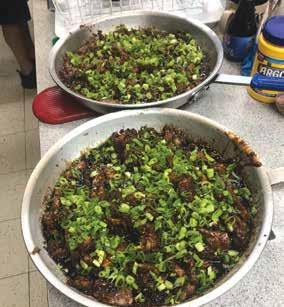
firehouse on a call and return to find the noodles have turned to mush or the chicken left roasting in the oven has dried to shoeleather consistency.
Healy doesn’t measure or use cookbooks. He does hoard spices—each group at the station has a locker to store condiments and snacks—including his current favorites, Dan-O’s seasoning, especially the original (green top) blend with rosemary, garlic, onion, and citrus peel.
Cooking and eating together doesn’t only forge bonds among the firefighters, Healy says; it’s also better for their health and their wallets. “We’re able to put forward a better meal versus grabbing a can of chili. And it comes out cheaper.”
At times, Healy and his colleagues joke that they eat better than they would at home. “Our wives will be home, with children or not, having a peanut butter and jelly sandwich,” he says, “and we’re having these elegant meals.”
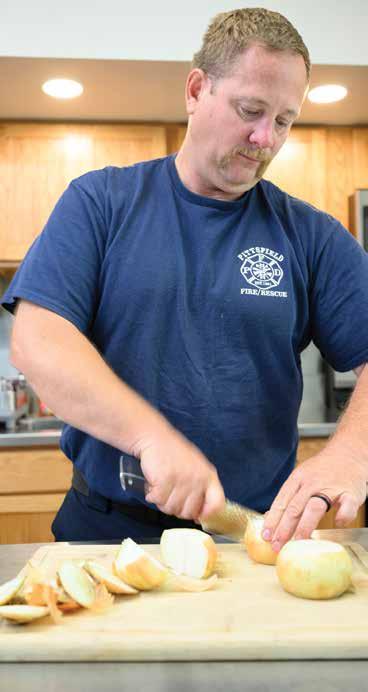
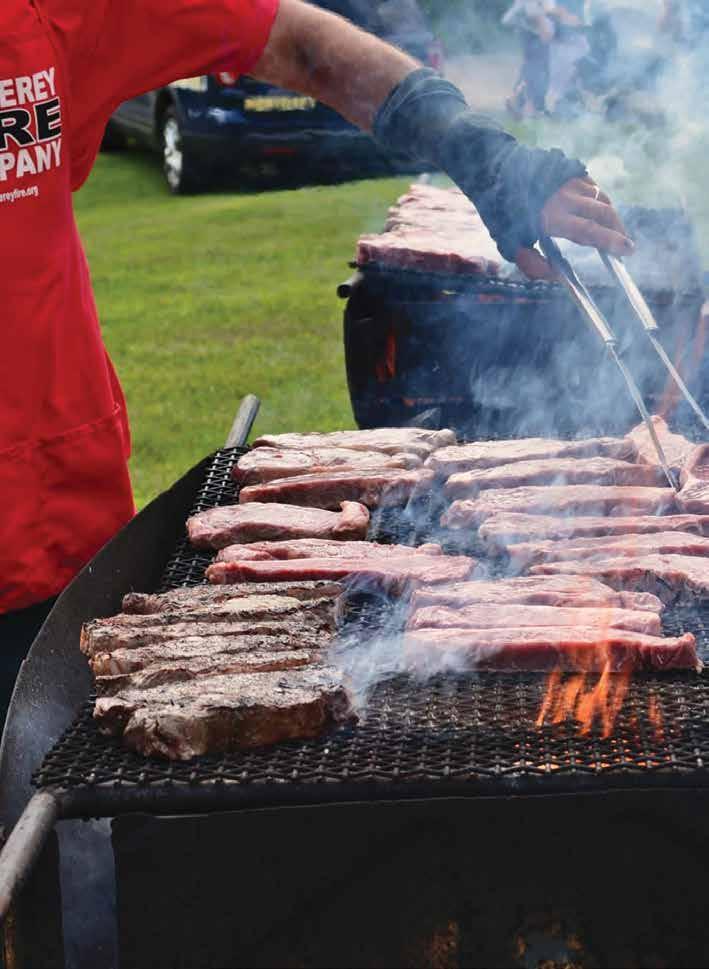
For most meals at the Monterey Fire Company, even on overnight shifts, Felix Carroll is the king of microwaving leftovers. He’s quick to point out that, unlike one member of the company, he’s not a professional chef.
But once a summer, for the annual fundraising steak roast held on the last Saturday of July and now in its 49th year, Carroll, a firefighter with the company, summons his skills as a former line cook and his equipoise under stress to join his colleagues in cooking and serving a full-tilt feast that brings out half the town.
The meal, Carroll says, is no bottom-shelf banquet. Firefighters cook steaks and marinated shrimp on grills made from steel barrels sliced in half. They also grill green peppers, red peppers, and onions. There’s Harpoon beer, brewed in Boston, an indulgence only for the steak roast; the rest of the year, the firehouse is a no-alcohol venue. The meat comes from Wohrle’s in Pittsfield; fresh corn and salad ingredients are locally sourced.
The firefighters set up picnic tables behind the firehouse, along with a small bandstand; this year, the music will be from Peter Poirier, a New Englandbased blues guitarist, and his band.
They split the labor: one guy in charge of beer taps; six men on the grills, with loads of friends and family helping out by their side. By 4 p.m., when the firewood has smoldered down to coals and the line of eager eaters snakes around the corner, Carroll says, there’s a moment of anxious reckoning. “The heart flutters a bit: holy shit. It’s fast and furious for two or three hours. Line-cook-level, air-traffic-controllevel stress. And then it’s over.”
Working as a line cook in high school at Scituate fish-fry joints taught Carroll to “keep calm in the face of absurd adversity.” And the spirit of the steak roast makes the effort worthwhile.
working as a line cook in high school aT sciTuaTe fish-fry JoinTs
TaughT carroll
To “keep calm in The face of absurd adversiT y.”
“It’s the one time in the year when the town of Monterey actually gets together,” he says. “By the time it’s over and people are just hanging out for several hours, music’s playing, and we’re done with the cooking and can enjoy a beer and a steak ourselves, it’s pretty good.” B
felix carroll’s marinaTed shrimp for a crowd
Shrimp, shelled and deveined Honey Garlic, minced Olive oil
“We marinate the shrimp for 30-45 minutes. The secret recipe is honey, minced garlic, and olive oil. What’s the ratio? Honestly, we just wing it.” Put shrimp directly on grill fired by oak with some apple wood. “Somehow it all works out and the diners are happy. We toss it all together until it seems right and then we cook everything for a few hours, have a few beers, clean up, and resume our regularly scheduled lives.”
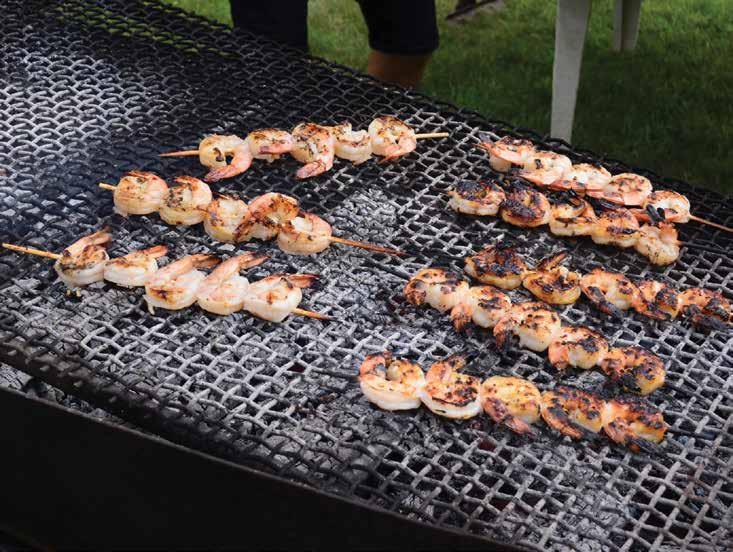
david shea’s grilled Tri-Tip sTeak wiTh feTacucumber salad
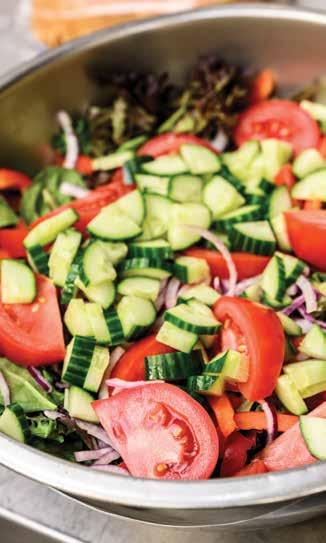
Tri-tip steaks
Olive oil
Garlic powder
Onion powder
Red chili flakes
Smoked paprika
Salt and pepper
Whisk spices (amounts to your taste) into olive oil and marinate steaks at room temperature, covered, for at least 1 hour. Grill steaks to desired doneness; let rest at least 10 minutes before slicing.
Salad ingredients:
6 Persian cucumbers, medium dice
½ small red onion, sliced thinly
4-6 ounces feta cheese, crumbled
One bunch curly parsley, chopped
Capers
Spicy pickled hot peppers, sliced
Olive oil
Red wine vinegar
Fresh lemon juice
Combine all salad ingredients; add salt and pepper to taste. Slice steaks and place meat on top of salad.
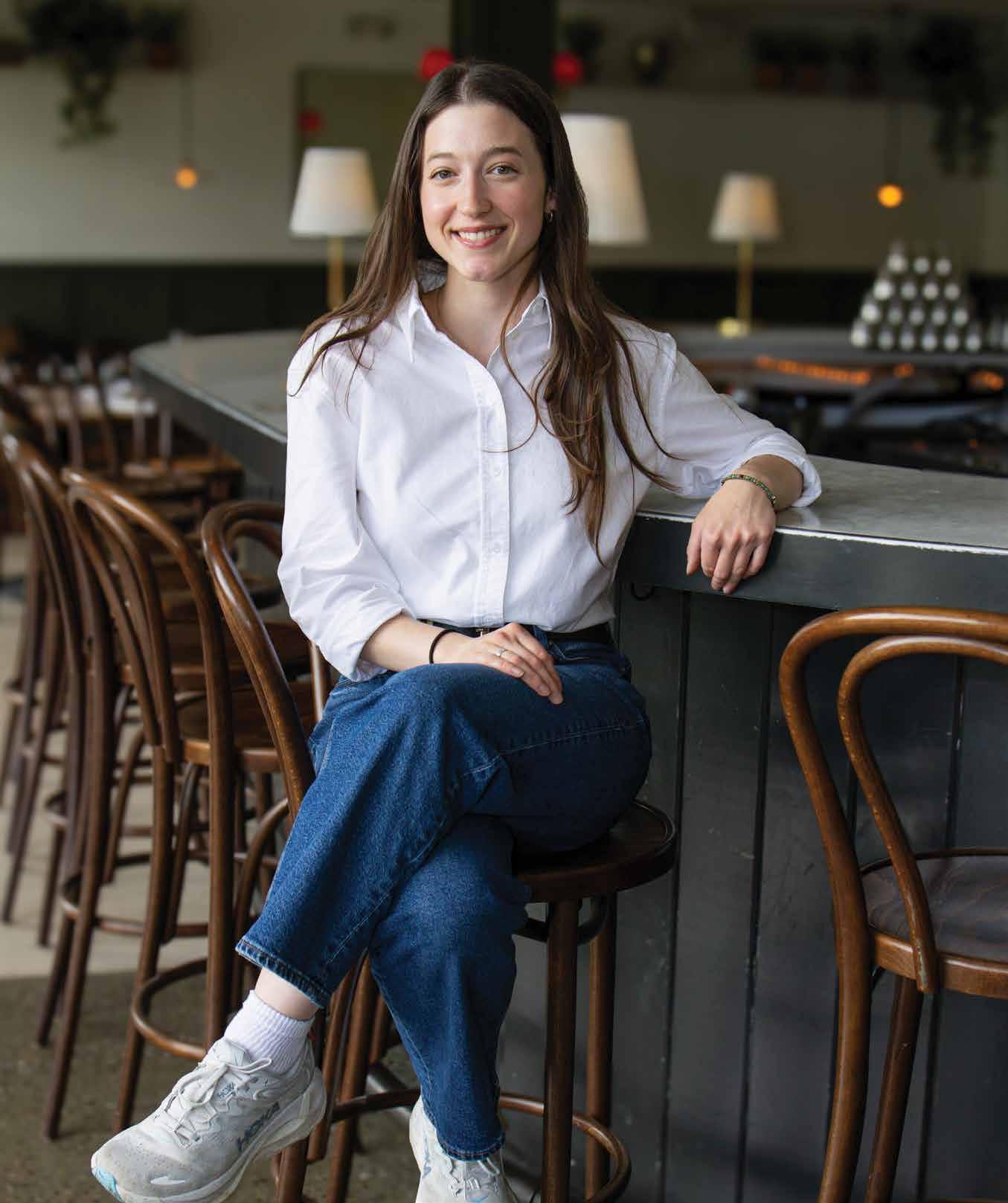
BY NEIL TURITZ PHOTOGRAPHS BY JOYCE MAKDISI
There’s an art to making it look easy—meet the servers who never spill, forget, or stop caring
When
we go out to dinner,
we think about the food, the location, the ambience, but how often do we stop to consider the service before we pick a place to eat? The truth is, a server can make or break your dining experience, which is why it’s so important to recognize good service when you see it. // We’ve seen it and we want you to see it, too, which explains why we’re featuring five of the best servers in the region. They come from different places and have different backgrounds, but share two things in common: they care deeply about you and your experience at their restaurant, and they are extremely good at their job. May you be so lucky as to have one of them take care of you some evening. And for God’s sake: remember to tip generously!
It’s somehow appropriate that a server as skilled as Nikki Kowalski is also an artist, specializing in greeting cards (@artbynicolek). Greeting cards celebrate special moments, convey a hopeful message, or even give you something you didn’t know you needed, just when you needed it. Kind of like a special meal out with the right server to guide you through it.
“I’ll be honest, restaurant work isn’t what I want to do with the rest of my life,” she says, “but no customer knows that when they come in here. I honestly care about the customer, I care about the service they get, I care about their experience. They’re coming here to enjoy themselves, so I should do everything in my power to make that happen for them, even if I’m having a bad day.”
Kowalski gives some of the credit for that attitude to the restaurant itself and her co-workers at Fern. This was, after all, the first place she worked that had a culture of success, with specific training for the right way to do things—from the steps of service down to how water is poured at the table. It not only fosters a good working atmosphere, it also means a certain kind of person is going to work there.
“They really make you feel like you matter,” she says. “[Restaurant managers] Barbara [McCarthy] and Ash [Walston] care about you as people, and that really makes an impact on performance. I get excited to go there to work, and that definitely makes it easier for me to bring a happy energy to the people who come in.
“I think being in tune with emotional awareness and having empathy helps with this type of job, for both the clientele and the people I work with,” she continues. “If you put good out, you’re going to get good back.”
fernlakeville.com
Sam Bourassa has hospitality in her blood. When your dad is a chef and your mom works in a bakery, it makes a lot of sense that you’d somehow follow in their footsteps. A Berkshire native, Bourassa grew up in Hancock and has worked all over the county, in places like Zucchini’s in Pittsfield, and Frankie’s and Pizzeria Boema in Lenox, before landing at Public in North Adams two years ago.
It also helps if you’re an extrovert who enjoys interacting with people on a nightly basis, both the kind she might never see again and those who become valued regulars. Throw in the fact that she loves networking and socializing, and the work fits her like a glove.
“It’s opened up avenues for me, thanks to the people I’ve met and the connections I’ve made,” she says. “For instance, I know most of the department heads at Williams College and MCLA, people I would not normally have met.”
It’s sort of ideal for someone who plans to open an Airbnb in the next few years, taking everything she’s learned and putting it into action, running her own operation on the acre-sized patch of land in Hancock where she grew up.
“I’m going to get my sommelier license, and have a little mini homestead at my house,” she says of her grand plan. “I want it to be this inclusive experience, where I have animals and a garden where you can go out and pick your own food. I’m really interested in permaculture, fruits and vegetables that will grow seasonally without any need for human interaction.”
It’s the perfect direction for someone whose whole life has been about hospitality and taking care of others, even if only for one night at a time. * publiceatanddrink.com
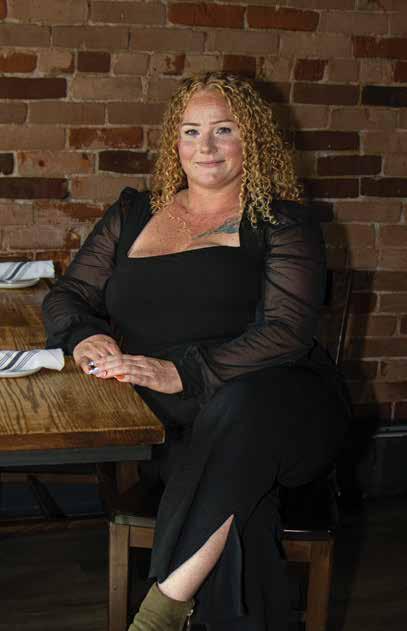
Al Pacino’s classic Michael Corleone line, “Every time I think I’m out, they pull me back in,” perfectly describes Sara Esko’s life as a server. Not that she’s complaining.
“I love it,” she exclaims. “I’m addicted to it. If the hours were a little better, I think I’d do it forever. I just took my son to New York City for the weekend, we had two amazing servers who were just out of this world, and that’s what he left talking about. I just thought to myself, that’s why I do this.”
Esko started as a 14-year-old at Elizabeth’s in Pittsfield. After a decade there, she went to college and got herself a normal, regular day job.
“I said, ‘Ah, this is it, I’m never going back to waitressing again,’” she recalls. “Then I used to go to Ye Olde Forge a lot, and they were hiring one night a week. I thought I’d do that, and that one night was more money than my Monday through Friday!”
In other words, so much for her day job. She stayed at the Forge for a dozen years, quitting when she became pregnant with her third child. Once again, she was done with being a waitress. Then she saw Sibarita’s was hiring, a new restaurant in Elizabeth’s old spot (it has since moved to the Central Block in downtown Pittsfield), and the rest is history.
“I love being in the hustle and bustle, and love talking to people,” she says. “I’ve made so many lifelong friends in the business. I met my husband of 15 years doing this work.”
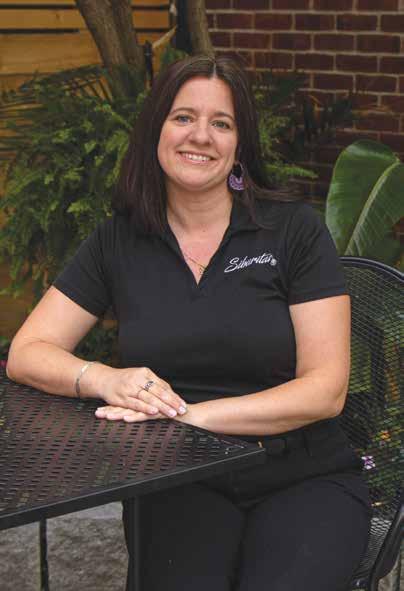
Even so, another change is in store: she’s one year away from a Master’s Degree in Education, and soon she’ll have her teaching license. Being away from her kids so much is enough to break even the most hardcore serving habit. That said, it’s not like she’ll stay away forever.
“I’ll have summers off!” she says, “I’m not just gonna sit around!”
sibaritascafe.com
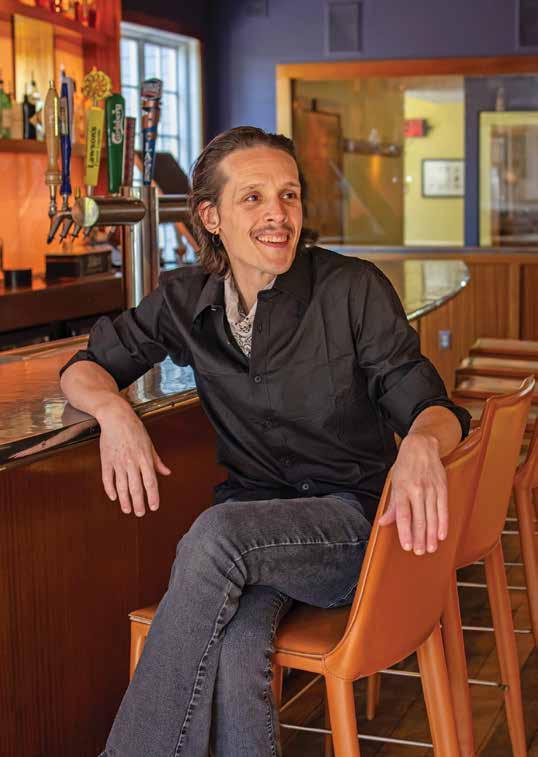
Alex Miller has lived his life with a certain “wing it” philosophy, working under the assumption that, when he needs to figure something out, he will.
“I have a history of accidentally getting things right after doing some serious tumbling around,” he says. “I think of it like, when something comes up, particularly a situation that’s new, I’ll work my way through it. Like, can I bartend? Well, when I get there, I’ll probably have it figured out before anything goes haywire.”
This worldview has served him well, leading him through a rough adolescence in Cape Cod to the Berkshires, where he’s lived for the last 20 years, over a dozen of them working as a server, bartender, and manager at Bistro Zinc in Lenox. That’s a long time to stay at the same restaurant, but for Miller, it’s become a second home.
“We’re committed to consistency, and that’s something that I bring to my work,” he says. “Set up your station
“I’ve made so many lifelong friends in the business. I met my husband of 15 years doing this work.”
like you’re going to serve 1,000 people, and no matter what happens, you’re still going to be prepared. I also like working at a place that provides quality food and service, instead of trying to tweezer plate your way through hipster trends.”
He seamlessly carries those culinary qualities into other interests. Through the years, he’s found time to make a series of short films and, come the fall, will be pursuing a Master’s degree in Cinematic Studies at NYU.
The master’s is the first step in what he hopes will be a longer journey to a Ph.D. and a teaching position at the university level. And even as he plans to commute to and from New York City starting in late August, he also recognizes that it will be awfully difficult to leave the place he calls home.
“I joke around that if I won the lottery, I’d probably still keep a shift or two,” he says. “The truth is, the people I work with, some of them are family to me, we’re all very close, and there are also regulars who have become real friends. That’s one of the things I love about this job. It keeps me tied to this place on a deep level.” bistrozinc.com
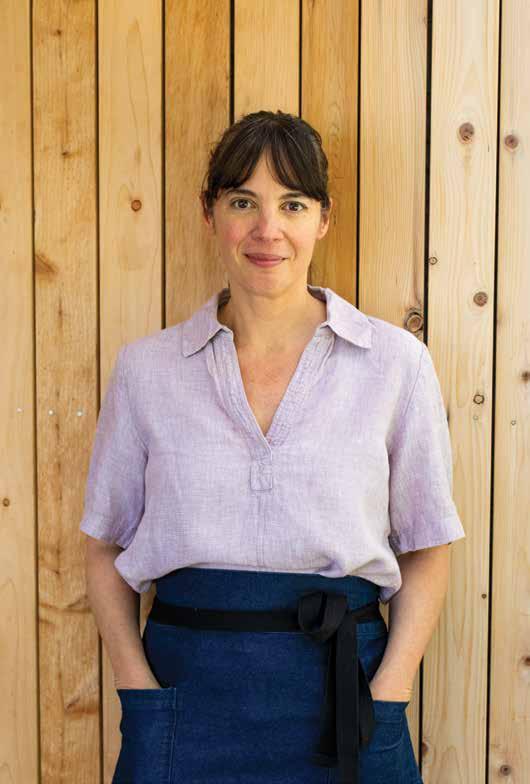
“It’s about giving them the things they want, anticipating their needs—all the great things a server does.”
Jen Burry lived in New York City for 20 years and, on her first date with her husband, Matt Hopkins, found herself talking about living somewhere else. “I’m from the Finger Lakes and he’s from Vermont,” she says, “and we just talked about how we would eventually love to leave.”
Both are actors, and with the pandemic came a change in how they auditioned. Suddenly, being in the room with a casting director wasn’t possible, which meant people were self-taping their auditions and sending them in. This didn’t just revolutionize the casting game, it also opened the world to actors, who no longer needed to live in New York or Los Angeles to get work. That led Burry and Hopkins to the town of Otis.
“We picked the spot as a getaway,” she recalls. “We bought a piece of land and thought we were just going to camp on it, to get out of the city. Then, once the pandemic hit, we said, ‘Oh, we could actually leave the city and build a little cabin.’ Then we drove into Great Barrington and I said, ‘Oh my gosh, there are such cute towns here. Thank God I’ll be able to find a job in a restaurant!’”
She quickly did, first at Mezze in Williamstown, then Café Adam in Great Barrington, and now, for the past couple years, The Cliff House in Egremont. Only the highest class spots for Burry, who says, “I like to work at places where I would love to go to dinner, for a night off, or a special occasion.”
It’s that attitude that guides her work, as she recognizes that often, the people at her tables are there for more than just a night out, and that’s where her training as a performer comes in handy.
“Being an actor, I’m really good at reading the room—seeing when customers are checking out the place, interested in every detail,” she says. “I want to make sure I give them all the answers to their questions, as opposed to a couple who’s talking, haven’t even looked at the menu, they’ve kissed four times, they’re holding hands. In each case, it’s about giving them the things they want, anticipating their needs—all the great things a server does. I think I’m really good at that.” B cliffhouseberkshires.com
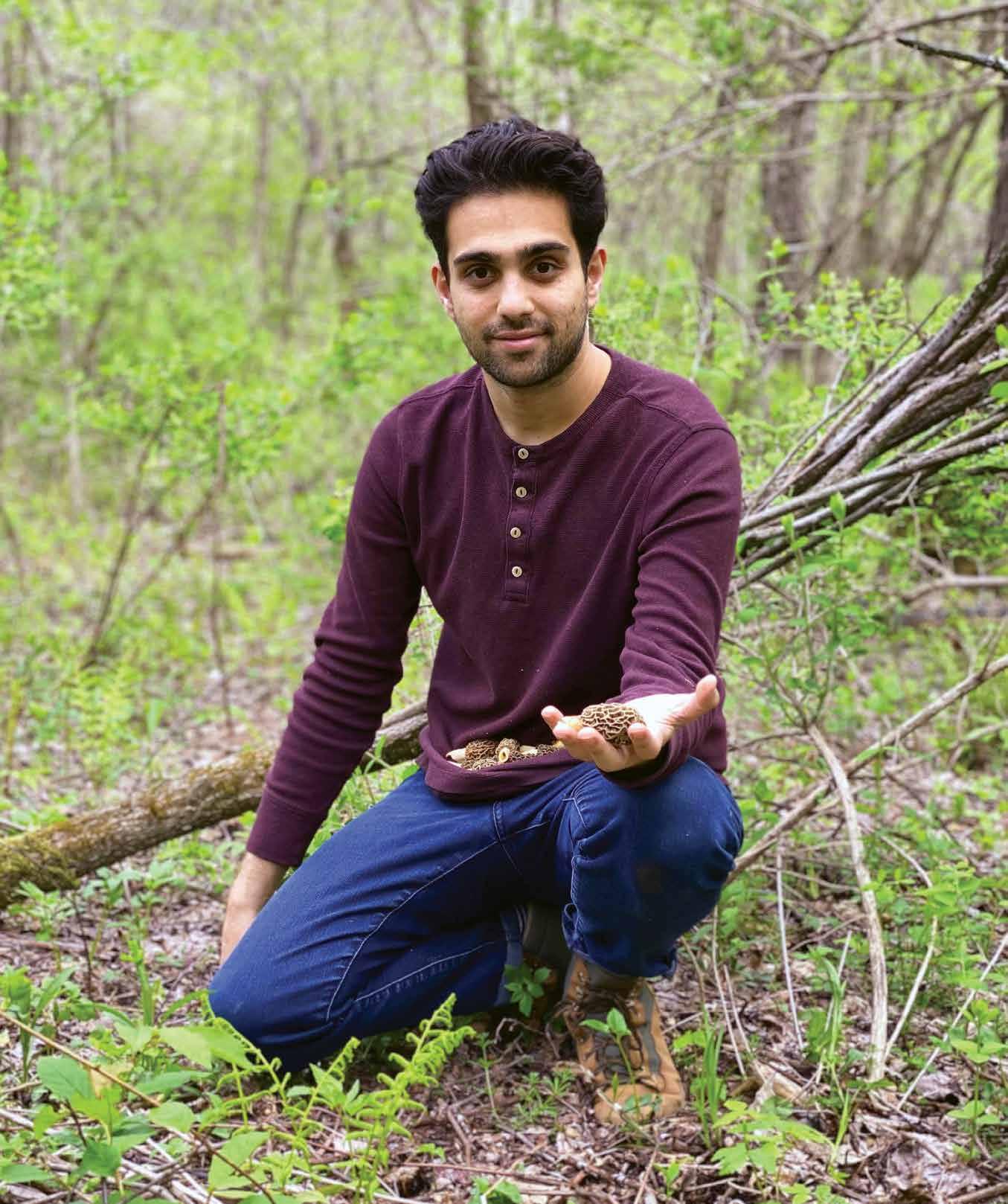
Ian Purkayastha shares his knowledge of the world around us—the amazing things it has to offer if only you pay attention and know what to look for
BY JULIANE HIAM
was one of those perfect summer days in the Berkshires: rays of sunshine slanting through a crisp, fragrant breeze, aromas of young blossoms and new foliage growth, with undertones of earthy-musky fertility—the warmth of the sun like that of a light blanket, comforting but not oppressively hot. I was on the back of an ATV, having fun but nonetheless holding on for dear life, snaking up and down the narrow rows of a slightly unkempt orchard, ducking and bobbing to avoid branches and leaves.
My guide—Ian Purkayastha. He and his wife, Jane Lowe, are friends of mine, as well as fellow Berkshires residents. Ian also happens to be a truffle and wild mushroom expert. The company he founded in 2012, when he was just 19 years old, Regalis Foods, is one of the foremost purveyors of specialty ingredients in the U.S. He also authored a memoir at age 23, “Truffle Boy.” On this particular day, though, he was generously fulfilling a request of mine.
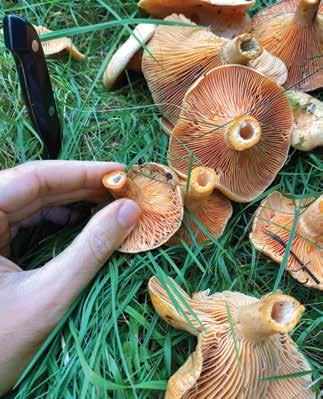
As a frequent hiker and woods meanderer, I’d been thinking about foraging—the whole primal human instinct of it—for some time, and had been hinting to Ian that I’d love to tag along someday when he went. I knew it would be an illuminating experience. My partner and I hold Ian in almost mythic status, but it’s well-deserved: Where most of us see forest simply as stands of trees, Ian sees habitats, ecosystems, tree species and soil conditions, fungal ecologies, and edible treasures. There’s
a childlike awe and sense of wonder that surrounds him that’s infectious. His interest in luxury foods has never struck me as being about status or exclusivity, but rather about deep connection with nature, uninhibited curiosity, and knowledge of the world around us—the amazing things it has to offer if only you pay attention, and know what to look for. His wife, Jane, happens to be someone who makes, builds, creates, manifests, and is Ian’s partner in everything, so they bring this exuberance out in each other exponentially.
For our foraging adventure, Ian and I met up at a recently acquired piece of property not far from his home—sprawling acreage of orchards in need of love and tending. The vision for it still seems to be coming into focus, but there’s no shortage of enthusiasm. Ian talks as if he’s willing ideas into existence as he shows me around, telling me about harvesting methods in Japan he’s researching one moment, cider presses the next. He sees possibility everywhere. He starts the ATV—which he refers to as “a beast”—and tells me to hop on. We traverse hillsides overlooking lakes and fields, gazing out at Mount Greylock in the distance.
Over the sound of the revving engine, he points out burgeoning apples and pears, plums, currants, berries, peaches—all by the names of their varietals—as they whip past. He slows down intermittently to show me another view, then plucks a cherry that’s already ripe and tells me to taste it before we enter thick forest at the edge of the orchards. *
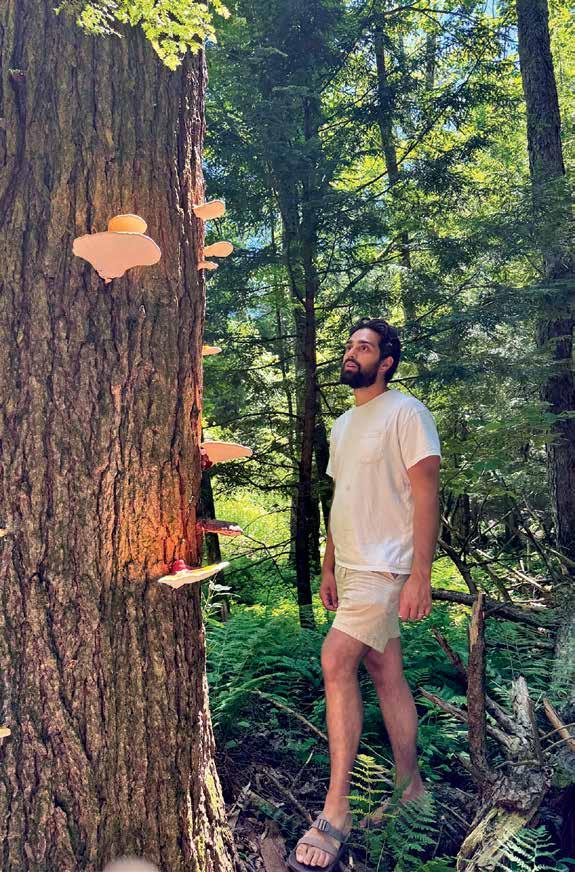
Over the course of the ride he shows me some of his favorite places to hunt morels in the spring, educating me about the perfect kind of ash tree with moss at its base that speaks to the exact relationship between host tree, terrain, dampness, and light that creates harmony for the mushroom to propagate. “My favorite tree yields like 50 morels every year.” It wasn’t the right time of year for morels, though. He speeds on, wistfully noting that we’ve also missed ramp season.
Ian describes fungi, colors of bark, and aromas, explaining the seasons, what’s edible, what’s medicinal, what thrives and why. He has encyclopedic knowledge, but, more than that, complete engagement with the terrain. Nothing around him seems incidental to his survey of where we’re going. Every mud puddle and fallen log carries information. He points out a natural spring he discovers in real time. “Oh look!” While I’m admiring the scenery, Ian appears to be reading it.
Long before he became known among Michelinstarred chefs, Ian was learning about foraging in the Ozarks of Arkansas with his uncle, an archaeologist who mentored him not only in mushrooms and truffles, but also in minerals and gemstones. It was Ian’s grandfather, an artist, who introduced him to food as an art form and an elevated human experience.
In “Truffle Boy,” Ian explains that he gravitated toward fine food because it was ultimately not about pretension or social status, but about the natural world, which made perfect sense after spending time with him in the woods. All of his interests in one way or another seem connected to the landscape. It’s remarkable, and perhaps rare, for someone to build his professional life around the things that fascinated him as a child rather than growing out of them.
For my part, I grew up spending time alone in the woods with few restrictions, but was always admonished never to touch, let alone eat, wild mushrooms. Even now they make me nervous. I hunted for all kinds of other edible things as a kid, though: wild blueberries, crab apples, choke cherries, dandelion greens, wild watercress, fiddleheads, blackberries, elderberries. We ate all of these at the dinner table, and I loved the feeling of eating something I’d gathered myself, providing something at the table for free. It was so much more satisfying than buying food at a store, or even cultivating it in a garden, which we also did. When asking Ian to take me foraging, I think I wanted to somehow find that gatherer instinct again, and maybe learn something about the forbidden kingdom of wild mushrooms in the process.
Our foraging jaunt was not yielding anything until, after almost a full
hour of traversing mud, rocks, tree roots, and uneven terrain, Ian came to a screeching halt. Something had suddenly caught his eye.
I had been straining to keep an eye out for the color neon orange, which he had instructed me to do, as it would indicate chicken of the woods. I had been focusing on this task intensely, but to no avail. Meanwhile, Ian was pointing excitedly at something else.
I climbed off the ATV and followed him deeper into the woods, still not seeing anything, until we came upon a hemlock tree. Emerging in all directions were shiny amber and reddish-brown sculptural mushrooms that almost resembled polished gems. What was so striking, though, wasn’t the mushrooms. It was the look on his face. He looked up with amazement and genuine delight. He explained that this mushroom— reishi—is valuable and has medicinal properties, and is used to make tea. I was amazed by the mushrooms, but also by how I had not even seen them, and how this abundant treasure trove could easily have been overlooked.
At the end of the ride, he gave me the reishi and instructions for how to use it. When I got home, I kept thinking about how much is around us that we can be completely disconnected from, and blind to. I held the mushrooms up to my nose and inhaled the earthy smells, placed them in the sun to dry, then immediately took another walk in the woods near my own house—a hike I’ve done hundreds of times. I ran my fingers across moss and bark, then, whereas I normally stay on the trail, I veered off toward a wetland and a stream, remembering what Ian had said about moisture habitats and host trees needing dampness.
I squished through the wet, mushy forest floor, finding nothing, then stepped up to dry land, meandered a bit, and skirted around a large tree. There before me: neon orange. I had found chicken of the woods. The day of foraging wasn’t over after all, and now I was the one looking in awe, beaming. B
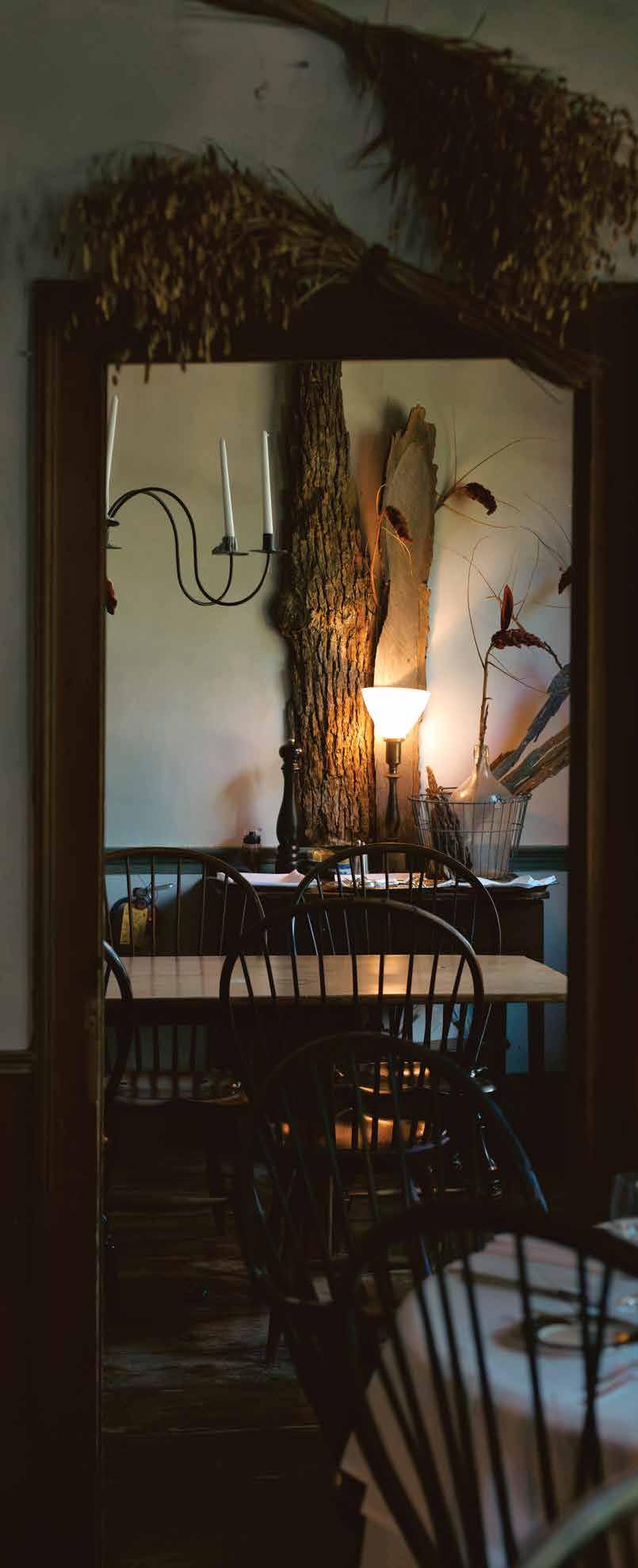
These five Berkshire restaurateurs have stood the test of time. You’ve probably been to one (or more) of their places, and you’ll likely be going back again. Here, they tell us why.
By Neil Turitz
It’s hard to imagine, but there was a time when this part of the world was a culinary wasteland. Sure, we had diners and pizzerias, and farm shops up the wazoo, but dinner spots worth booking ahead? Restaurants that qualified as “dining destinations”? Hilarious. Today the area is one of the greatest culinary hubs in the U.S.—and every line cook dreams of heading for our hills to open that storybook farm-to-table, locally sourced restaurant. The growing number of chefs who have achieved that very same dream owe a debt of gratitude to their foodie forefathers (and mothers).
From a converted stagecoach shop where dinner is served by candlelight to a father-daughter-run red-sauce Italian joint, these five OGs win our unofficial longevity award for laying the foundation for today’s culinary cornucopia. Each and every one of them deserves a chef’s kiss! *
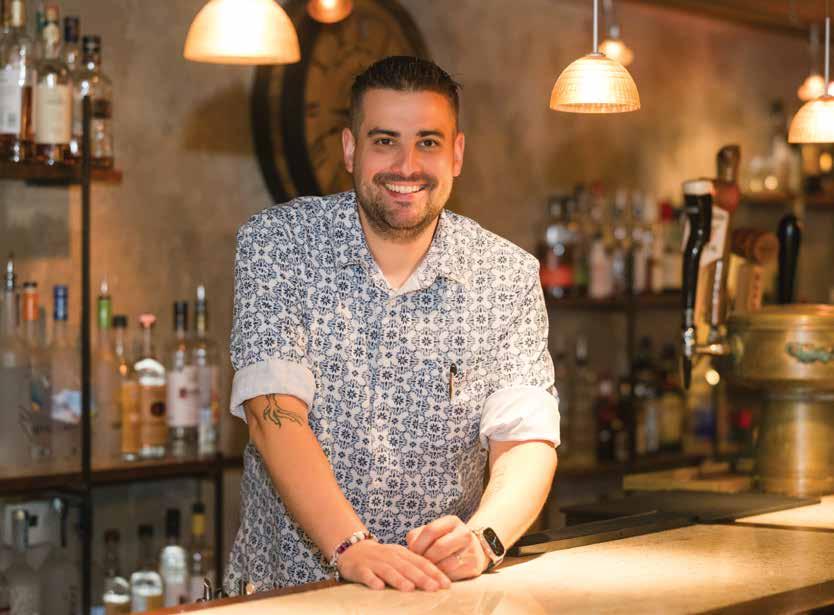
Like a lot of immigrants, Aurelien Telle came to America for a job, and stayed here for love. The native of France arrived in Western Massachusetts 22 years ago to work in the kitchen at the gone, but never forgotten, Wheatleigh in Lenox.
“The restaurant manager there had gone to the same school as me in France,” Telle recalls, “and I wanted to improve my English, so I took an 18-month contract, and 15 months into it, I met the love of my life, so I stayed for her.”
The two just celebrated their 19th anniversary at the start of the summer, and have three children together. They also have Alta, which Telle opened on Church Street in Lenox in 2008, and which he did not name after the ski resort in Utah, though Telle is an avid skier himself.
“I wanted a short name, starting with an A to be on top of the listings,” he says. “My initials are in there, and ‘alta’ means high in Spanish. For wine to be called ‘alta,’ it has to be aged for quite some time, so it’s a sense of reserve, of quality, that I’ve been trying to achieve for nearly 20 years.”
Alta specializes in Mediterranean fare, but unlike most places that say they’re Mediterranean but only focus on one
part of the region, Telle’s philosophy is more encompassing: “When I say we’re a Mediterranean restaurant, we are a restaurant that uses flavor from all the countries around the Mediterranean area. Every single country that borders the Mediterranean Sea.”
The mix of European, African, and Middle Eastern flavors is unlike anything else in the Berkshires, and is a big reason why Telle’s vision has been so popular for so long. That, and the team that Telle has put together to bring that vision to life.
“A restaurant is not a one-man show, and I’m extremely lucky to have such an incredible team with me. A resume is great, but if you’re not a good person at heart, if you’re not committed, motivated, kind, respectful, I’m not interested in working with you,” he explains. “We can always train people how to serve, to bartend, to cook. That’s fairly easy, but I cannot train who you are as a person. People come here and they feel that, and I think that’s part of why they keep coming back.”
Signature Dish: Roasted duck with salty caramel sauce altawinebar.com
‘Alta’ means high in Spanish. For wine to be called ‘alta,’ it has to be aged for quite some time, so it’s a sense of reserve, of quality, that I’ve been trying to achieve for nearly 20 years.”
Aurelien Telle
For Tony Mazzeo, the secret to his success comes down to one simple thing: family. He started his eponymous restaurant in 1988 with his parents, Pasquale and Maria Gabriella, works alongside his “utility player” wife Melissa, and his daughter, Mia, is a key part of the team who helps make the growing operation go. And then there’s his executive chef, Lee Silverman, who is not technically family, but as he’s been with the restaurant since 1989, he might as well be.
The name of the restaurant is “Mazzeo’s,” but it could just as easily be “Mazzeos,” without the apostrophe.
“Gabriella was always in the kitchen, talking about the right way to do things, and Lee listened,” Melissa says. “Tony’s mom and dad knew what was good—what made this so good and that so good—and that’s what people really see every time they eat here.”
Indeed, the Mazzeos bring something inescapingly authentic to the dining
experience. “Customers say, ‘Oh my god, you could have had this in Italy.’ It’s what keeps people coming back,” says Melissa. “It might take another minute, it might cost a few cents more, but we’ve been to Italy to visit with Tony’s family, and everything revolves around food and family. They just put love into every single thing they make, and you can taste it.” It helps that everything is made in house, from the eight different kinds of pasta to the marinara and assorted other sauces. Additionally, the restaurant’s selection of meats and seafood is so high quality, it’s also the in-house butcher and fishmonger for Guido’s, 100 yards up South Street.
Mazzeo’s, which has been in the same spot on South Street since 2010, is more than a name. It’s become a brand, with
jars of its marinara sauce for sale at local groceries, and a new market and sandwich shop just down the road in Lenox, managed by Mia, who is clearly preparing to take over the family business when Tony hangs up his apron.
“I’ve been very lucky, very fortunate. I work very hard, I’ve done literally everything in the business,” Tony says, “and I’m there at the restaurant pretty much every night. I love being there and seeing my customers, a lot of whom are like family.
“But,” he adds, “everybody’s getting old, so it’s another generation of people coming up.” Signature Dish: Eggplant parmesan mazzeosristorante.com
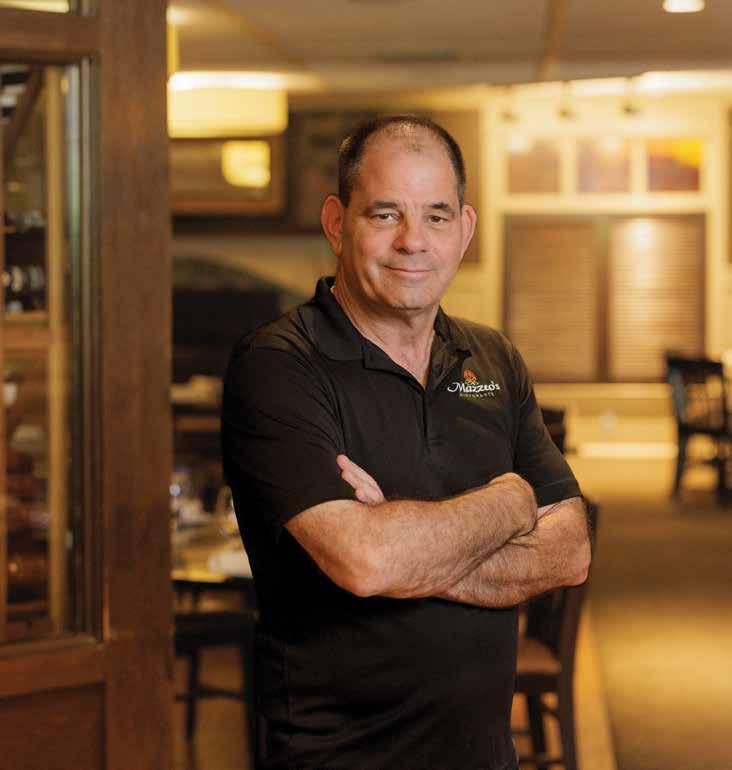
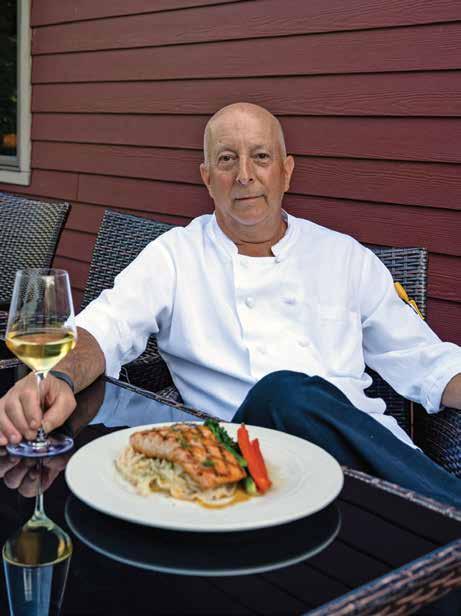
You cannot talk about Mario’s in New Lebanon, New York, without talking about the Soldato family as a whole. Michael Soldato was two years old when his parents, Mario and Julia, opened the place in 1964. He has spent his entire life there, joined by his wife and two daughters, all of whom are involved in the business.
But as important as his family has been, the key to success for the man who owns three of the biggest and most popular restaurants in the region comes down to an innate competitiveness and a love of the grind.
“Everything I’ve done, I’ve taught myself,” says Soldato. “I have no formal training. I’m just a very motivated, competitive individual, with a lot of passion, a lot of respect for the business and the craft.”
It’s that passion and drive that have led him to open Zucchini’s and Roasted Garlic in Pittsfield, while continuing to do the little things at the flagship restaurant that keep people coming back. “We do a lot of things that most people probably don’t know about,” he says. “For example, we grow all of our own herbs behind Mario’s. I just finished planting them this week.” *
The restaurant’s classic Italian menu goes beyond pasta, though that, of course, is a major part of the cuisine. The gnocchi, lasagna, cavatelli, rigatoni, and mafaldine are all made in house, which fits with a place that grows its own herbs.
Since the restaurant business is in his blood, it makes sense that his two daughters have followed in his footsteps. Sage manages Mario’s, while Madison runs Roasted Garlic, and both have been instilled with the integrity and work ethic of their dad. Considering he’s still in the kitchen five to six days a week and clocks about seven miles a day while he’s in there, Michael Soldato walks it like he talks it.
“Failure is not an option to me. It took me a long time to get where I’m at. Patience, perseverance, hard work, and grinding it out every day. There’s no quick fix,” he explains. “It’s a million simple things that are going to translate into something bigger. Stay focused, stay determined. I know I’ve had a level of success, but to me it’s not like I’ve reached a pinnacle and can relax. I constantly strive to be better each and every day, just a little bit.”
Signature Dish: Tournedos of beef; mushroom beignets mariosrestaurantnewlebanon.com
There aren’t many restaurants that hand out books of matches anymore, but The Mill in South Egremont is an old-fashioned place that believes in having a good time. In fact, that’s exactly what it says on the backs of those matchbooks: “Never miss an opportunity to have a good time.”
“That’s what restaurants should be,” says Terry Moore, who first opened The Mill in 1978. “You won’t walk into my restaurant and see plaques on the wall with reviews or stars or anything like that. It’s just about making you feel good. I might not have the best food in the Berkshires, I might not have the best wine list, but nobody can beat me in hospitality.”
Moore’s whole life has been about that very thing, making people smile, and giving them a place to call home. A native of England, he first came to the U.S. in the early 1960s, landing in New York City. He worked in and ran bars there for more than a decade before finding his way to Western Massachusetts in 1977.
“I grew tired of life in the city in the ’70s. So I went to a realtor, and said, listen, I don’t have a lot of money, but I’d like to open a restaurant. He said, ‘I’ve got a place in the Berkshires.’ I said, ‘Where are
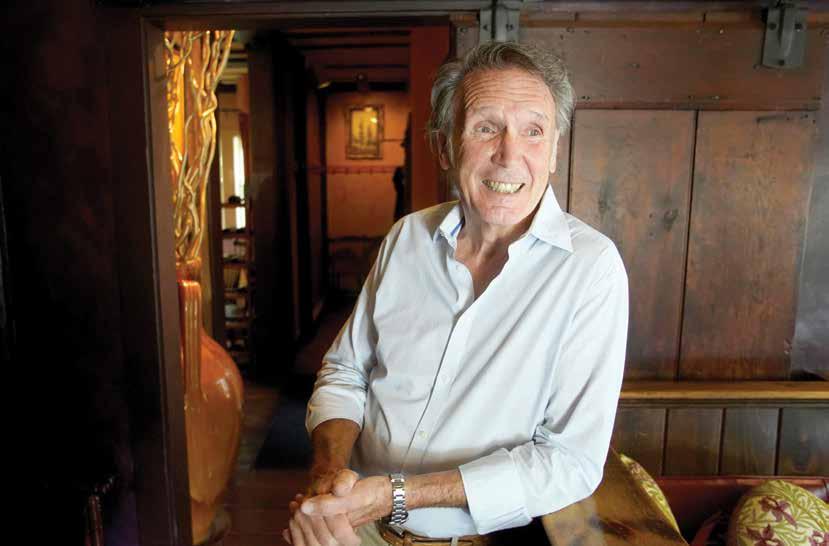
the Berkshires?’” he recalls. “That was my introduction to this place, in 1977, and I loved it. It had a lot of potential, because there was nothing up here.”
A year later, he opened The Mill, though at the time, and for decades afterward, it was known as The Old Mill. That changed in June 2024, after most of Moore’s key players wanted to retire, and his chef wanted to open his own place—Chris and MJ’s in Sheffield. Moore thought it was time to retool.
“I decided to close and completely change the concept,” he recalls. “I was a little tired of operating what was known as a ‘fine dining’ establishment. Visiting my son in NYC, he would take me to some wonderful lounges and clubs. So I changed the whole interior and made it more of a lounge.”
With that came a name change. Out with the “old,” as it were. “To be honest,” he admits, “I was never really comfortable with The Old Mill, as there are many Old Mills around the country.”
A year later, he reopened The Mill, and he’s been at it ever since. While the food is still excellent, the menu has loosened up a bit, with a vegetable curry and The Mill burger now mixed in with the steak frites, pan roasted chicken breast, and sautéed calves liver. Though he’s no longer able to work the line and cook every night, he’s still the face of the place, and does everything he can to give his customers that sense of comfort that he knows they crave.
“It’s basic hospitality. Once you step over my threshold, you come into this environment, I want to make you happy. So often today, you go out and there’s a coldness to a restaurant,” he says. “I want to embrace you as soon as you walk in, and that’s what’s given me this longevity, being able to recognize people, know their names, know their birthdays, and they come back.”
Signature Dish: The Cioppino (The San Francisco version of Bouillabaisse) oldmillberkshires.com
We try to have things on the menu that we enjoy ourselves, that we think are of value, and that are upscale in a way you won’t find at other restaurants.”
Peter Platt
Peter Platt and his wife, Meredith, wanted a change. Peter was working as a sous chef at the Parker House in Boston, but city living was wearing on them, and a job at the Wheatleigh brought them to the Berkshires. Around 2002, he started working at The Old Inn on the Green and, two years later, he found himself in a unique situation.
“The owner at the time needed to sell the property, so we were in the right place at the right time,” he recalls. The restaurant is also a hotel, which gives it an added dimension, as does the building’s history, which Platt acknowledges is part of the property’s charm.
“It was built as a stagecoach stop, so it’s not just any old restaurant. There’s a whole aura, a mystique about the property and the building,” he says. “We try to honor and respect that, so when people come here, they’re clearly at a different place.”
They also might feel like they’re walking into a time machine. The dining room is
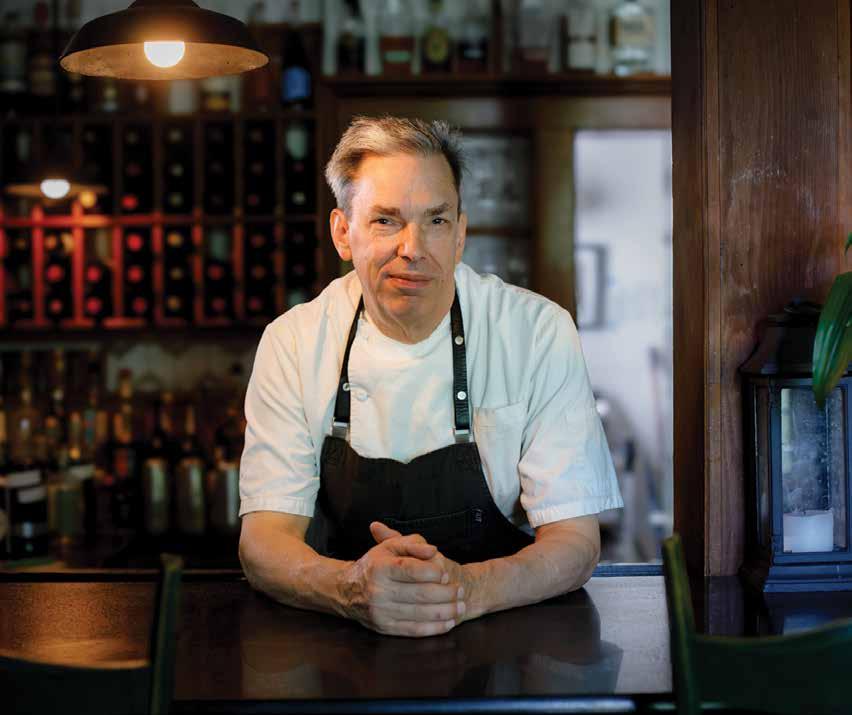
entirely candlelit and, if that doesn’t offer enough ambience, the roaring fireplace during the winter adds even more.
Unlike a lot of restaurateurs in the region, who started out in the kitchen and have since branched out to the front of the house, Platt is still in the back of the house every night, working the line with his sous chefs, leaving Meredith as the face of the operation.
“She does a great job,” he says. “She reminds me of people’s names and where they’re from, and how often they come in.”
But it’s the cooking part of the job that gives Platt the most joy, creating a seasonal menu that works with local farms to use native ingredients. While other chefs connect with their customers face to face, Platt does it through his food.
The three course prix-fixe menu features classics like Caesar salad and baby
iceberg lettuce wedge alongside grilled asparagus and burrata, a lobster pasta, and a soup with three different kinds of mushrooms (cremini, hen of the woods, and porcini). There’s also pan-roasted filet of halibut, herb-roasted chicken breast, and a parsley-crusted rack of lamb, all of which tend to earn some fairly spectacular reviews on TripAdvisor.
“It’s always been a fine dining destination, so we try to have things on the menu that we enjoy ourselves, that we think are of value, and that are upscale in a way you won’t find at other restaurants,” he says. “When people love their experience here, that’s what it’s all about.” B
Signature Dish: Roasted beet tarte tatin, with herbed chevre oldinn.com
They came as kids, fell in love with the Berkshires, and realized they’d found the place they were always looking for
BY ANNDEE HOCHMAN



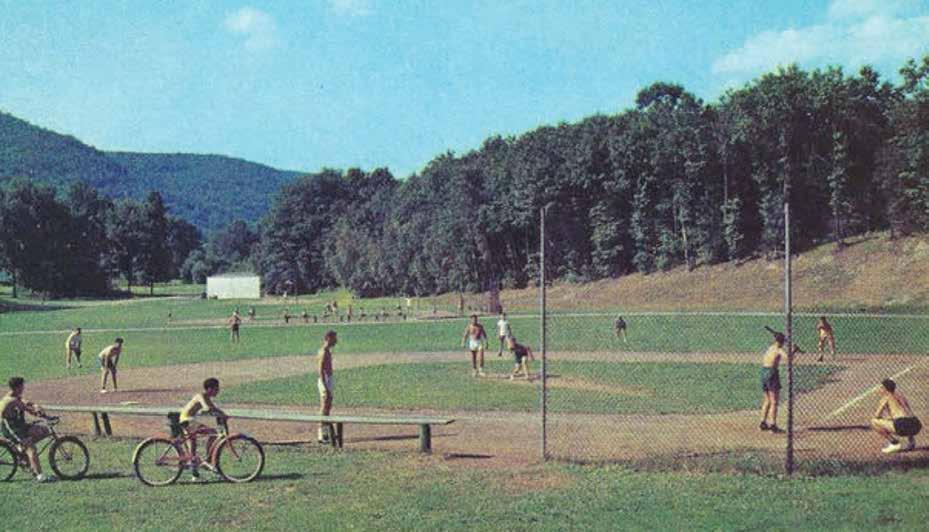
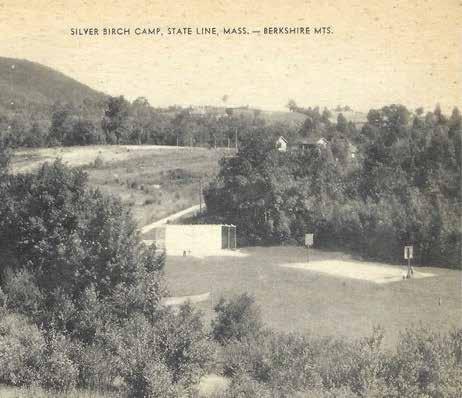



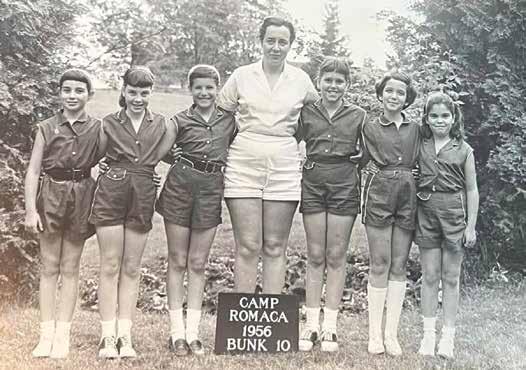
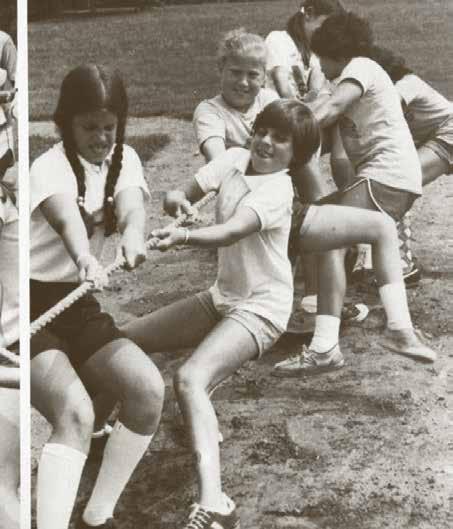

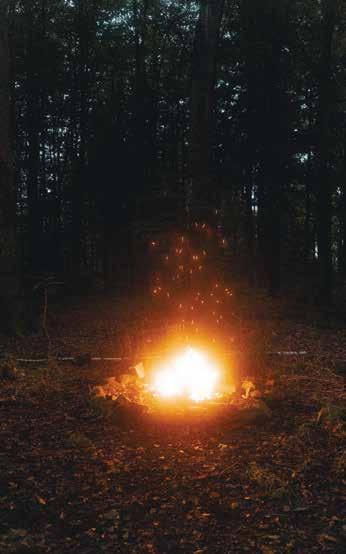
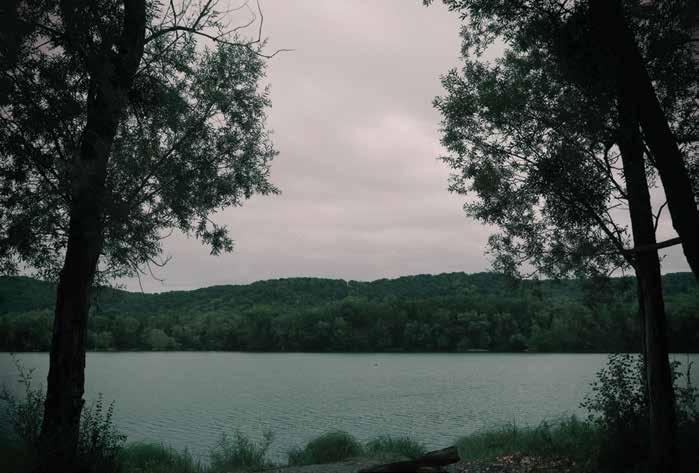

In Joey Berlin’s first week at Berkshire Hills Camp—he was 14, the oldest kid in his bunk—he sent home a missive so replete with misery that his mother called it the “Camp Granada” letter, after the 1963 Allan Sherman song “Hello Muddah, Hello Fadduh!”: “Camp is very entertaining/and they say we’ll have some fun if it stops raining…”
By the time the letter reached his parents on the north shore of Long Island, Berlin had changed his tune.
He was deft at tennis, softball, and basketball; other campers were starting to appreciate his prowess. There were the girls’ cabins, just a softball-field’s-length away. And there was a girl— though he wouldn’t really take note of her for another dozen years—a star tennis player and all-around athlete whose older brother occupied the bunk under his and would routinely kick him from below.
“It took me several days to fall in love with camp,” Berlin recalls. “But I’ve been in love with it ever since.”
He returned the next summer as a counselor in training, the following year as a waiter. At a camp reunion 12 years later, he reconnected with that tennis-playing girl, one in a cadre of female campers who were so intrepid on the courts and playing fields that the boys admiringly called them “The Mooses.”
Ivy Tombak was 25 then, and Berlin was 28. She showed up at his apartment on 56th Street with a box of Entenmann’s doughnuts for the ride to camp. Their first date, after the reunion, was a picnic in Central Park. They married in 1985, with a handful of camp friends among their guests.
And, for the last few years, though the couple officially lives in Los Angeles and New York, they’ve rented a place on the old Berkshire Hills Camp grounds— The Lodge, where the girls’ bunks used to be—and spent the autumn there.
“I always like to say that we have a house in Sodom, an apartment in Gomorrah, and this rental here in Eden,” Berlin says. “It’s a magical spot.”
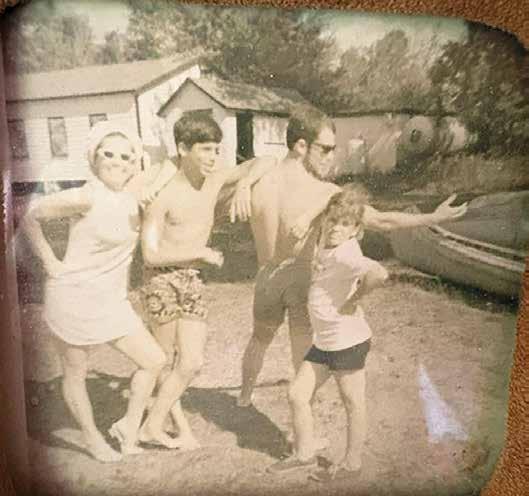

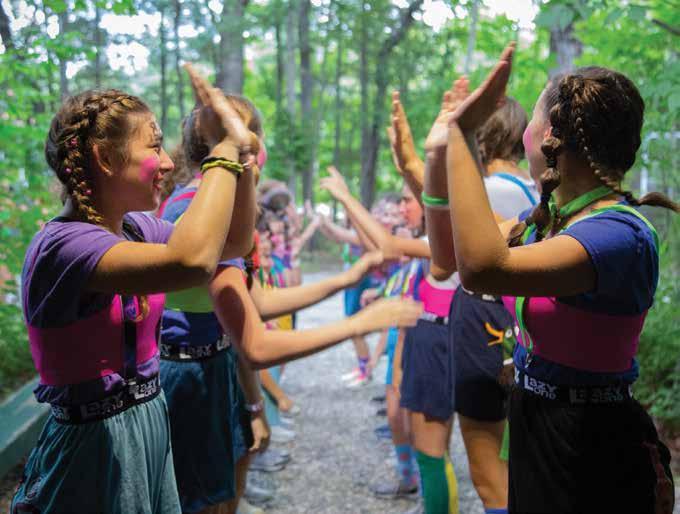

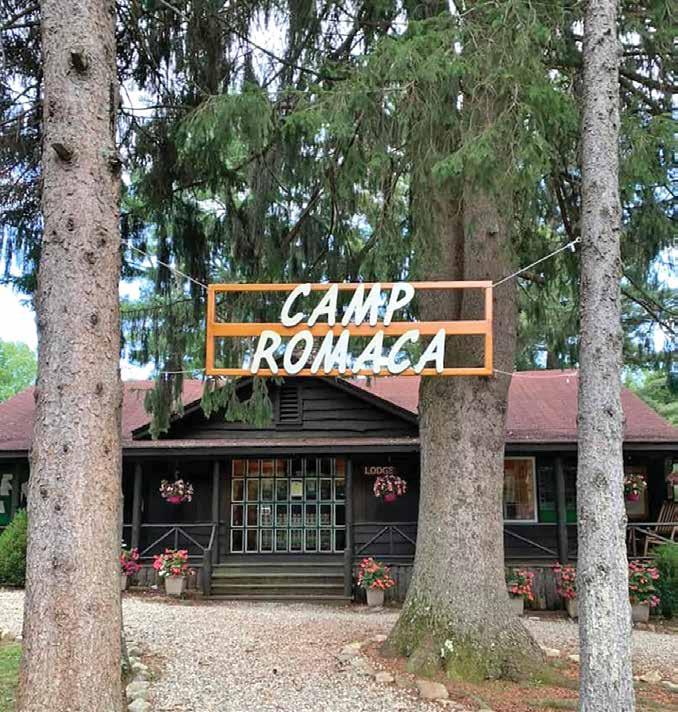
For adults who grew up going to camp in the Berkshires—and especially for those who found themselves magnetically drawn back to the area for full-time or vacation homes—that’s a common refrain.
They talk about the lakes. The sunsets. The womblike serenity of western Massachusetts, especially in the tumultuous years of the late 1960s and early ’70s.
But they also remember camp as a site of personal metamorphosis, the place where they won their first trophy or risked their first kiss, the place where a brainiac could trot out her mischievous alter-ego or a self-conscious boy could learn that humility, not bravado, draws friends to your side.
MOTSOB N U NIVERSITY T ANGLEWOOD I N ETUTITS
indy Tucker grew up on Long Island and spent four formative years at Camp Romaca in Hinsdale, starting when she was 12. At school, she was an academic superstar; at camp, no one knew her rep. So she plunged into every activity: sports, drama, Color War. One night, she and some other girls streaked across the campus. When workers re-surfaced the tennis courts in a shade of ocean blue, Tucker and her pals painted sharks on them. They sneaked into the camp’s kitchen for late-night snacks.
Romaca was a girls’ camp, and the single-sex environment felt liberating. No one wore make-up; no one fretted over their clothing. Instead, there were campfires and sing-alongs and goofy games: “Bring me a girl with 10 ponytails…Come up with 10 songs that have the word ‘yellow’ in them.”
“WE USED TO CRY FOR DAYS WHEN WE CAME HOME FROM CAMP. I THINK WE ALL KNEW HOW SPECIAL AND INCREDIBLE IT WAS.”
The girls bonded fiercely, relationships forged in the crucible of adolescence without parents nearby to scold or comfort. “It’s a very intense relationship; when you have a bad day, you can’t go to your mother, so you go to your camp friends,” Tucker says. She’s still in touch with seven of her campmates, and they’ve held reunions.
“We used to cry for days when we came home from camp,” she says. “I think we all knew how special and incredible it was.”
While Tucker raised her own daughters in Westchester, they also went to Romaca, and the family has a vacation home half an hour from camp. It all floods back: the mountains, the hiking trails, the lake swims. “For a child, it was a very idyllic place to spend the summer,” she says. *
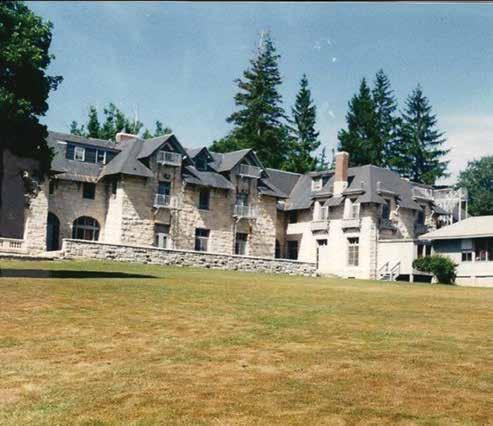
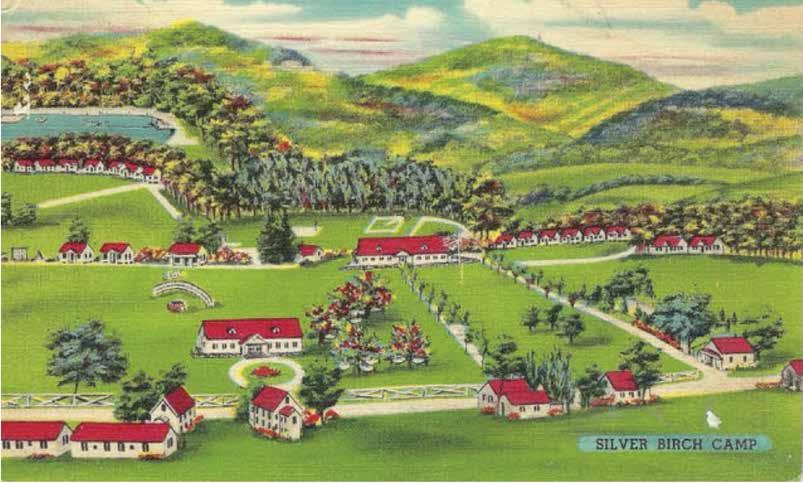
Perry Garfinkel’s summer memories come in shades of sepia tone: formative, indelible, irretrievable snapshots, especially from the years he spent as a waiter and counselor at Silver Birch Camp in West Stockbridge.
Michelle Young remembers playing cello in a chicken coop. She recalls perching on a balustrade on the terrace at Boston University Tanglewood Institute (BUTI), the summer after her sophomore year in high school, reading a handwritten letter from a friend. She remembers the in-joke, how campers would say, “Get your BUTI (booty) on the floor… Get your BUTI on the chair.”
HINSDALE
Young was a serious musician, raised on Long Island, who spent school-year weekends studying classical cello at Juilliard and hours practicing both cello and piano. By high school, she felt adrift from the kids she’d grown up with. “But at music camp, it was all these other people just like me. You almost instantly connected.”
What she didn’t fully cherish—not until years later, when she’d begun to study art history and urban planning—was that BUTI occupied a former Gilded Age estate, a massive stone mansion with sprawling gardens and the Berkshires as a backdrop. “As a teenager, you don’t really appreciate all this beauty and history.”
She does now. Young, a professor of architecture and writer of narrative nonfiction, lives in Mount Washington with her family. “Going to camp here inspired me to want to live here. The rolling, green hills instantly put me into a place of relaxation.”
He was 15 that first summer, a New Jersey kid eager to get out of West Orange. Some friends told him Silver Birch was hiring waiters, and though the staff sleeping quarters were literal shacks—one room, bunk beds, a single window—and Garfinkel had no idea how to schlep trays of food from the kitchen to a table of ravenous, rowdy campers, he thought it was paradise.
There was a ping-pong room, populated mostly by guys who were too insecure to mingle with the girls. There was the shed where younger campers took a mid-morning break for milk and cookies. There was the day his pal Steve quickly devised camp-specific lyrics to the tune of the Beatles’ “Here, There and Everywhere.”
SALISBURY, CT
It was at Silver Birch that Garfinkel smoked his first cigarette—he became sweaty and dizzy and had to lie down for half the night—and, on a staff day off, drank his first beer. And it’s where he made out with Iris, his first legit girlfriend, the one he would later marry (and, still later, divorce).
The camp was on a dirt road; silver birches flanked the archway. There was a lake, the spot where Garfinkel and a pal, for reasons he cannot fathom, decided to run backwards all the way to the milk shed on the final day of camp.
In some ways, Silver Birch meant kinship. “At every meal we said the b’rucha (blessing) over bread. On Fridays, you had to wear white to dinner. There weren’t Bible classes, but there were bookends to remind us: Oh, you’re Jewish.”
At the same time, Garfinkel was etching his own identity. A lot of the male campers from New York struck him as edgy—smoking cigarettes, talking loud and fast. “I decided I was going to be the soft-spoken guy…Summer camp in the Berkshires is like living in a little cocoon. Like a test tube, where you see who you can be or who you don’t want to be.”
Garfinkel became a journalist, teacher, and percussionist who now writes books, mostly on spiritual topics. Young is also an author. Tucker works in real estate. Berlin produces awards shows. But each fall, he returns to the site of BHC, the camp where he sang the role of Lt. Cable in “South Pacific” and learned that lox actually tastes good.
He and Ivy, now 72 and 69, kayak on the lake, play tennis on the same courts where they lobbed balls as teens, drive around the area to farm stands and markets. They watch the leaves drizzle down. “You get older, you get slower, you lose your hair, you can’t run as fast or hit the ball as hard,” Berlin says. “But this place is the same.”
CT
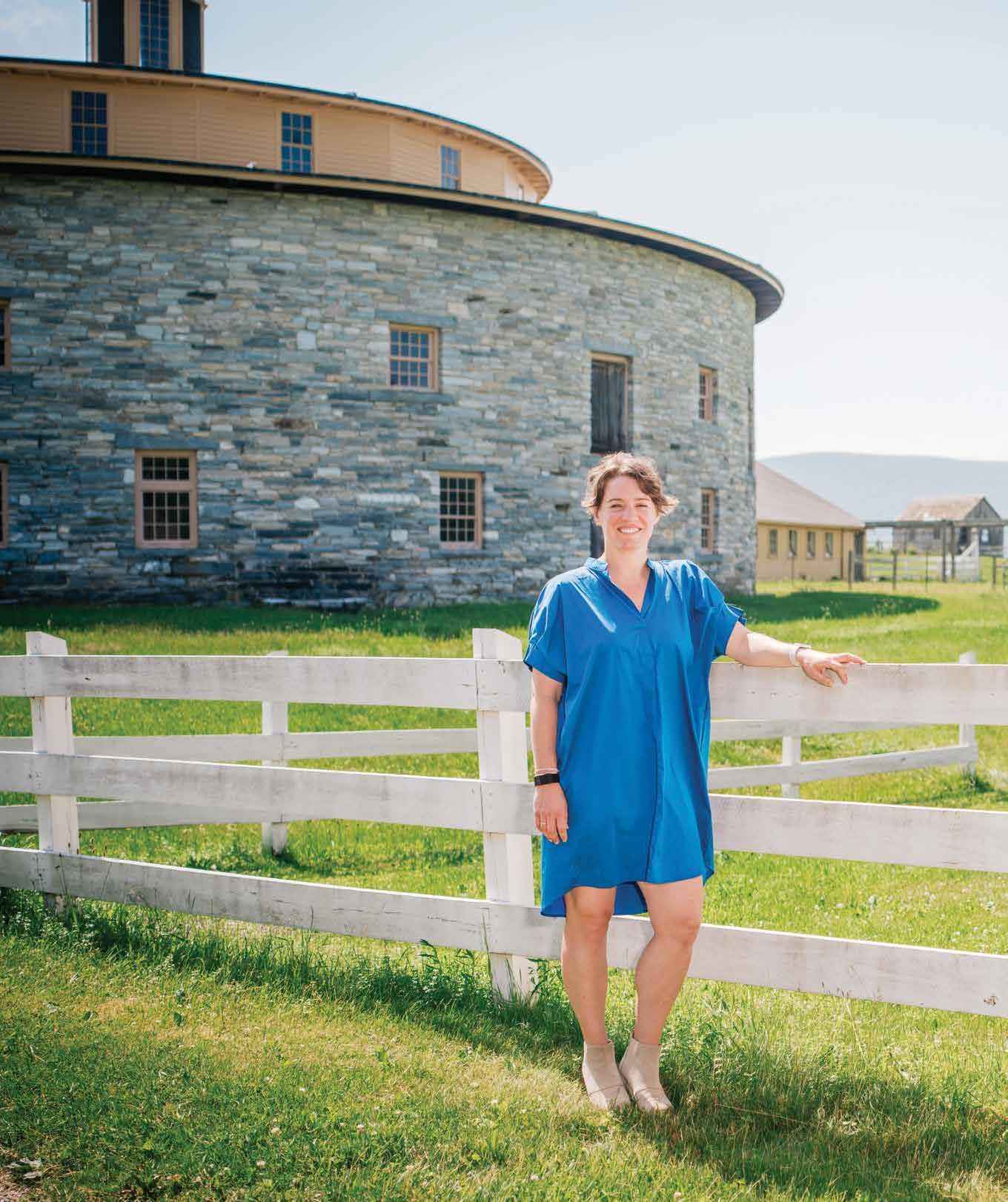
Hancock Shaker Village’s outgoing director, Carrie Holland, isn’t leaving quietly
By Lauren Mechling • Photographs by Eric Korenman
kay, it’s a bit like a Hallmark movie,” Carrie Holland concedes with a big-hearted laugh. We’ve been strolling around the grounds of Hancock Shaker Village, the idyllic little world that she has had the very good fortune of calling her office for the past three years and change.
It’s a sweet-smelling June afternoon, and the Pittsfield campus is so charming it’s almost disorienting. We find a spot of shade under a majestic apple tree and watch the crouched figures across the field tending to tidy rows of vegetables. We amble on, past a patch of lavender and a studio where a friendly blacksmith named Bob is working on a Shaker-style spoon, and into the Round Stone Barn, the village’s 200-year-old crown jewel. The Shakers who founded the settlement, the third Shaker community in the country, arranged their animals in giant feeding circles inside. Today it is quiet, save for the occasional cluck coming from the direction of the barn’s chicken coop.
Holland reaches into the cage and tickles a few chickens on the head, then brings me into the adjoining barn to meet Luna and her two kids, Lentil and Lettuce. “They were born in April, so I guess that makes them teenagers now,” Holland says of the young goats. Luna stretches out her forelegs and bleats.
An offshoot branch of Quaker Christianity, the Shakers built self-sufficient villages across the Northeast during the late 18th and early 19th centuries. Shaker women were seen as spiritual and political equals to men, and the community owned all
property collectively. Living apart from regular society, the Shakers became great artisans and inventors, and are perhaps best remembered for their sleek, minimalist furniture.
Holland, who has served as the village’s director and CEO since 2023, has announced she will step down at the end of the 2026 season. In her relatively short tenure, she learned the lay of the land and established herself as a master of the arts of both fundraising and barn-raising. In addition to doubling the cultural institution’s endowment, she collaborated closely with the cast and crew of “The Testament of Ann Lee,” which filmed at the village, and launched a Shaker dinner series featuring A-list chefs. In September, David Israelow of Four Corners will oversee the menu. Guests will gather at long tables outside the Round Stone Barn, dressed in limited-edition table linens created exclusively for Hancock Shaker Village, by design-world darlings Hopie and Lily Stockman, the Los Angeles sisters behind Block Shop Textiles. But Holland’s presence here is perhaps most obvious in the way people light up around her. Everybody’s in—docents, gift shop cashiers, farmhands, and even a visitor who drifts over to tell Holland how good her breakfast was the other day (no more context is given, but Holland seems to know exactly what this woman is talking about).
Our loop around the campus terminates at a building wrapped in Tyvek. One by one, construction workers drift outside to get a moment with Holland, who is not like other CEOs. Before she came to Hancock Shaker Village, Holland was not from the world of museums and development, so she knows how to simultaneously tease and talk turkey with a construction crew. She ribs herself for having “soft computer hands.” The contractor, Keith, laughs and chats a little longer. The exchange feels less like boss and employee than two lifelong neighbors catching up over a fence.
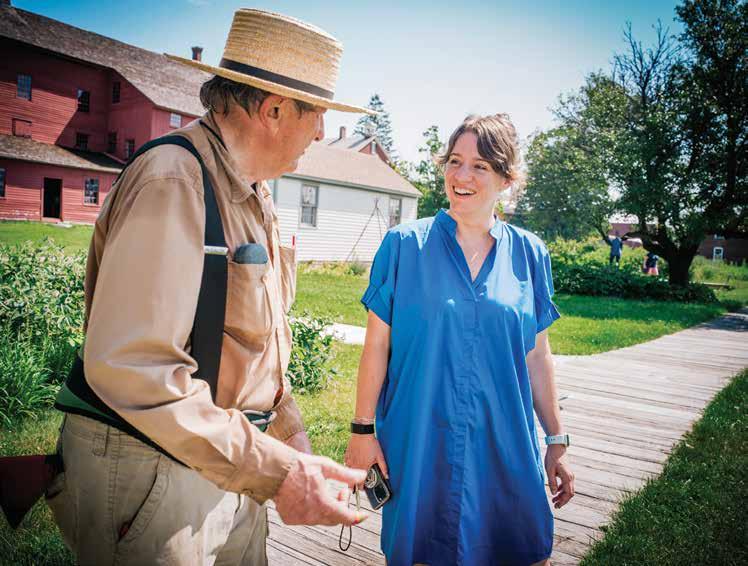
There’s no way the new Visitors Center & Center for Shaker Studies won’t be ready in time. The building is Holland’s swan song—and nobody involved wants to be the one who lets her down.
You could call the new structure at Hancock Shaker Village a “visitors center,” but you could also call Versailles a “house.” Located in the building that previously served as the main portal on and off the campus, the new iteration of

The community room’s simple design lets the spectacular view do the talking. A suite of galleries will host temporary exhibitions. A sky-high custom cabinet of curiosities was designed around a selection of permanent objects on view.
the multi-purpose hub will brim with sunlight, a Shakercoded muted color palette, and historical curiosities. The elegantly plain design includes a two-story atrium, Shakerstyle angled window casings, and cabinetry-style display cases that sweep to the ceilings. There are multiple gallery rooms, some set up with little more than tables, chairs, and extraordinary views of the Round Stone Barn.
This summer also sees the 200th anniversary of the Round Stone Barn. At the celebratory events planned around the milestone, members of the Boston Symphony Orchestra will perform throughout the grounds and indiefolk musician Ida Mae will give a concert in the round. The barn’s circular design allowed ox-drawn wagons to enter, unload hay, and exit without needing to back up. “There’s a reason every design student studies them. The Shakers were obsessed with figuring out the most efficient way of doing everything,” Holland says. “They had such a precise vision.”
During her tenure, Holland oversaw historic restoration projects on the Meetinghouse, Garden Tool Shed, Sisters’ Dairy, and Ministry Wash House. She saved the trickiest for last: delivering the visitor center of visitors’ centers. “It just couldn’t get traction,” she says of the long-discussed plan to give the village’s communal area the refresh it deserves. “A lot of the pieces were coming together, but it needed that little push,” Holland says.
The original $10 million budget accordion-folded to $8 million, which didn’t faze Yugon Kim, the Boston-based architect behind the rebuild. A former furnituremaker with a lifelong devotion to Shaker design, Kim speaks of the project not as a work assignment but a logic puzzle and valentine in one. “I was a furnituremaker when I was younger, so I always carried the Shaker tradition with me,” he says. “We always say, what would the Shakers do? That was especially true here, where budgetary constraints kept arising.”
When a tight budget forced the team to leave an existing pipe in place rather than relocating it as they’d planned,
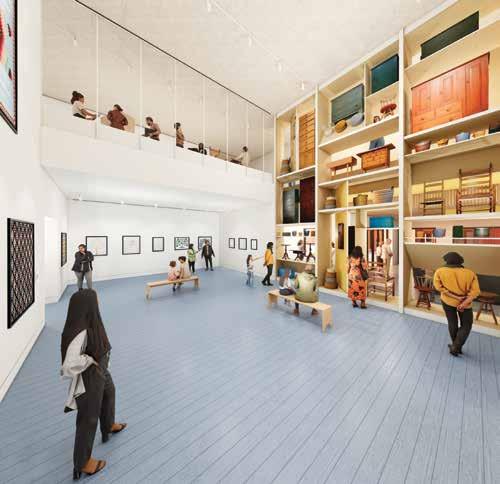
Kim took it in stride. “If you walk through one of those Shaker dwellings, you’ll see all these mirrored pipes for stoves everywhere,” he says. “So it made it actually more Shaker by leaving it.”
Kim had already worked with two other executive directors when Holland came on board. She prioritized the wants and needs of the local community, and added spaces intended for gathering and lingering. “Carrie has such a talent for bringing people together and holding community at the front of her mind,” says Michael Crotty, who works alongside Holland as the village’s director of marketing and communications. A former CMO with stints at Neiman Marcus and Hudson Bay Company, Crotty adds, “In some ways, both of us came uniquely unqualified for these jobs.”
If anything, Holland has proven that unique and unexpected are forces for good when paired with a genuine passion for the community you are serving. She loves the Berkshires so much that she’s leaving behind a bounty of parting gifts: a new center for the community, healthier coffers for the institution, and the opportunity to live the Hallmark Shaker fantasy for one lucky job applicant. Godspeed to all. B
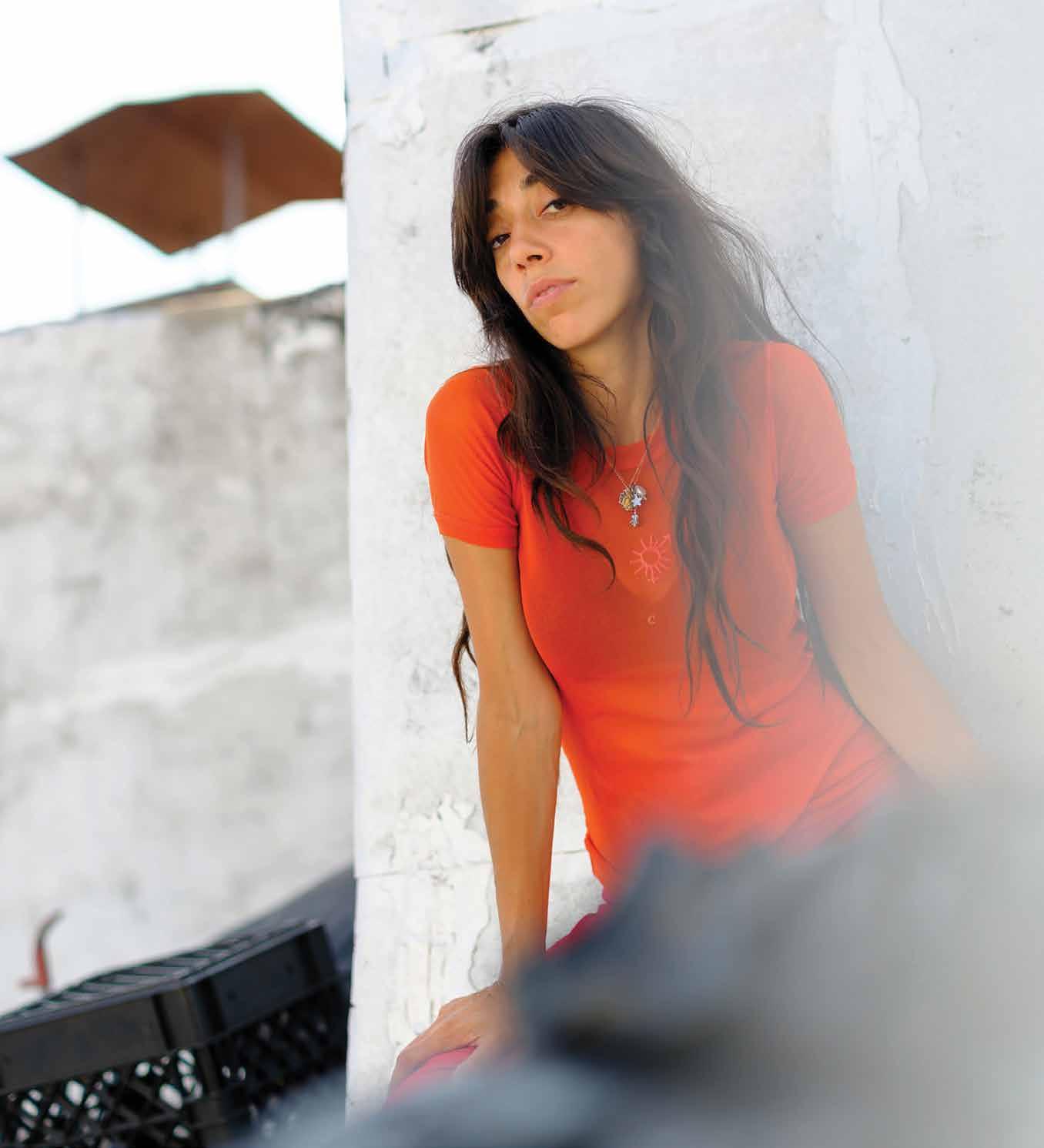
Frontwoman of indie group Habibi, fixture of the DJ booth, solo recording artist, and die-hard soccer fanatic, the unstoppable Rahill Jamalifard is doing summer right
It’s been a mega summer for Rahill Jamalifard. The musician has been DJing at dance parties up and down the Hudson Valley; touring with Habibi, the psychedelic girl group she co-founded in 2011; and recording her second solo album.
And, on Tuesday nights, you can find her playing soccer at a school field in Chatham, New York, with “the guys,” a ragtag crew of men she just about killed herself rounding up.
“A good game is at least 6 vs. 6, so you need 12 people,” she says. It took serious wrangling to secure what she calls a “selective crew of the best”—players from England, Scotland, Ireland, and Argentina. “It wasn’t easy to get them to commit, but I begged and begged,” she says.” So you can see why I’m feeling triumphant.”
“I’m a die-hard jock,” the 41-year-old former high school soccer star says from her home in New Lebanon. “My flow state happens in soccer more than anywhere else.”
It’s a little past noon on a Wednesday, and she’s seated at the breakfast nook in the kitchen she shares with her partner, Justus Kempthorne, a carpenter and artist. She claims to have a bruise from her Monday night game, but we’re on Zoom, so I can’t verify this. I can see that she is petite, and when she is thinking, she gathers her long dark hair and her necklace becomes visible. It’s the same coin-shaped pendant that her grandmother gave her as a baby and that appears on the cover of her debut solo album, “Flowers at Your Feet ” *

BY LAUREN MECHLING

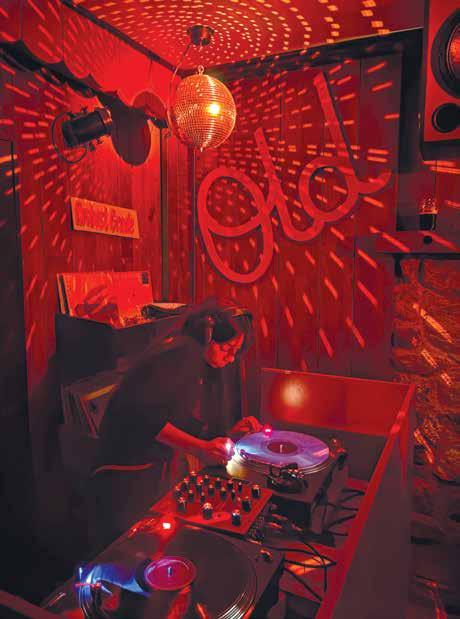
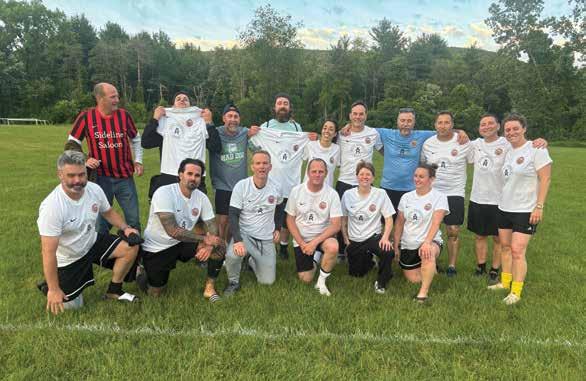
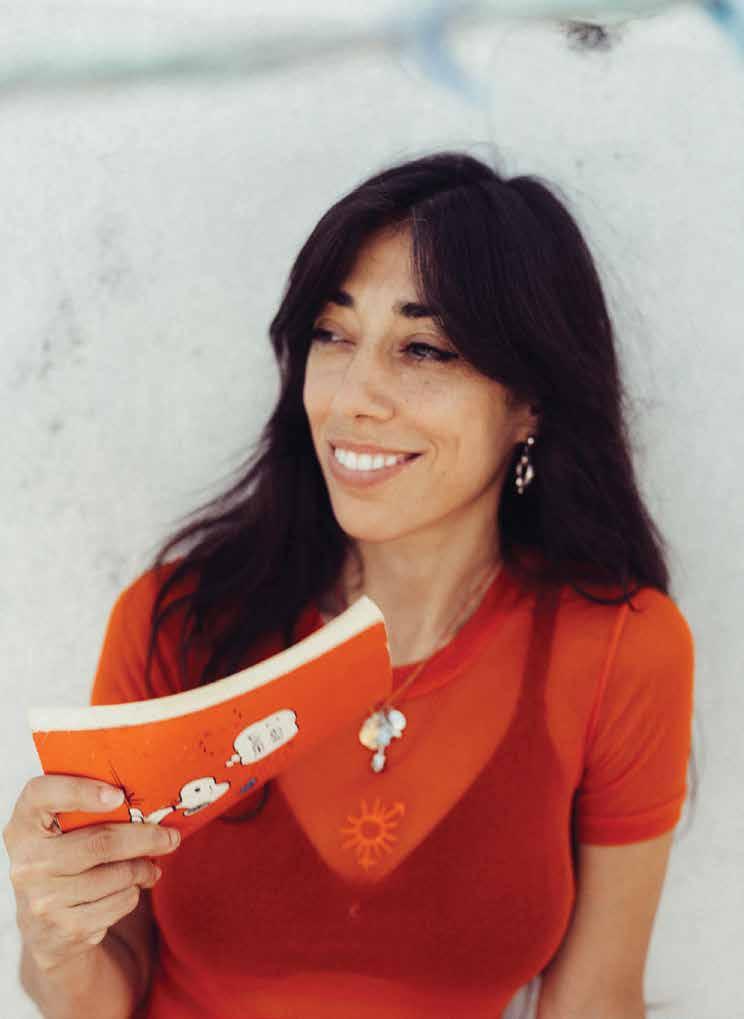
Jamalifard grew up in Lansing, Michigan, the daughter of firstgeneration Iranian Muslim immigrants. She wanted to study art at Cooper Union, but knew her parents wouldn’t be thrilled with that. So she ended up at Michigan State, not making art but studying art history. After college, she accepted a ride with a friend driving to New York City. “Something was just pulling me there,” she says. “As a child we used to travel to Iran, but I didn’t even see the ocean for the first time until I was, like, 16.”
The plan, such as it was, was to get settled and enroll in social work school at Hunter College. “But New York felt good,” she says, with a shrug that contains a whole life. So she found other ways to stay busy—waitressing, making music, learning the city.
It was in New York where she started Habibi, along with her childhood friend Lenny Lynch, whom Jamalifard calls “a white girl who is a secret Arab” and who now lives in Red Hook. “The rest of the band were Jewish New York girls,” she says. “Sometimes I wonder if we’re
going to get in major trouble, since none of us is Arab—but Iranians call each other ‘habibi’ all the time.”
Habibi the band, which takes its name from the Arabic term of endearment, is known for its catchy, sunny take on surf rock, drawing from the same pentatonic scale as Arabic music. Dick Dale, the inventor of surf rock, was of Lebanese descent.
In song, Jamalifard vacillates from coolly lackadaisical to genuinely bewitching. The solo work she has been focusing on is more intimate and strange than Habibi’s bops.
There’s an aspect of the sonic Pinterest board to it, layered with “field recordings” she captures throughout her daily life.
She saves snippets of text in a notebook or on her phone. “I’m always writing down ideas and new recommendations,” she says. Her inspiration ranges from Leonora Carrington’s surrealist novella “The Hearing Trumpet” to British murder mysteries, from obscure music tracks to Addison Rae and Justin Bieber.
“Note to Self,” a stunning and sad composition on her solo album, places
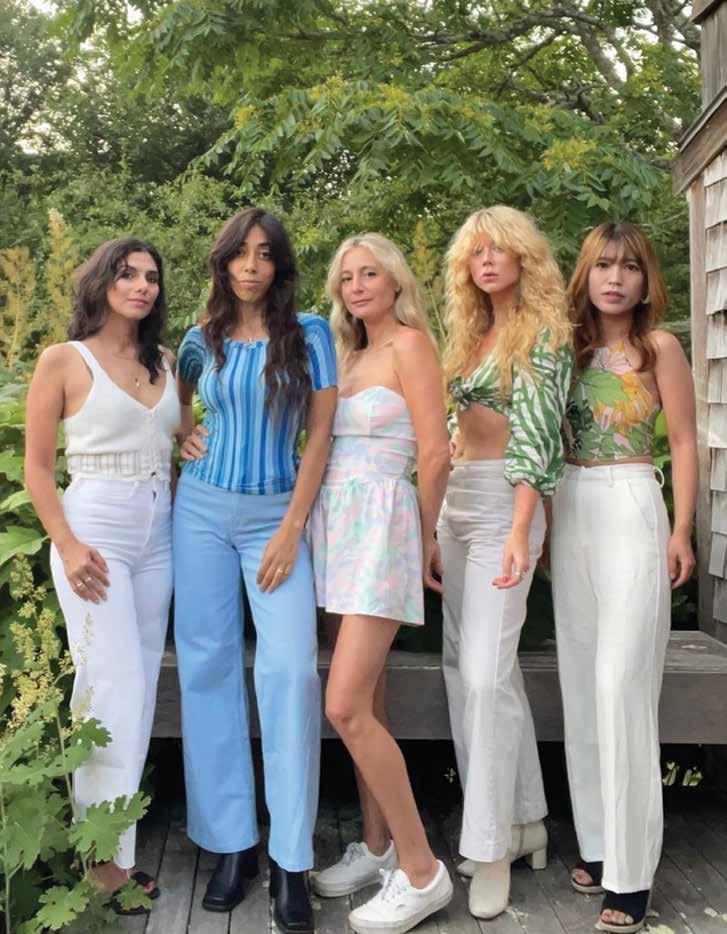
the lyrics “I give advice so just take it / If you’re gonna make something make it / Don’t hesitate it / Not complicated / I’ve seen lights fall from sight / So many faded” against a peppy-tempoed chorus: “Put it in a note to self / Could’ve been a note to self / Must have been a note to self / Found it in a note to self.”
Two other standouts are “Futbol”—a lush spiritual tribute to the sport—”Fear comes rushing in now / And if you fall there’ll be angels to catch you / Hands from above nobody can match”—and “Fables,” which features backing vocals by Beck. It’s a perfect little bop.
She recently learned about another artist from two teenage girls she spotted in a parking lot by a thrift store. Jamalifard noticed them in a car, windows down, music loud—waiting for the song to end before they got out.
“There was something about the song,” she says. She made a quick recording on her phone, drove home, and ran the forensics: the song was “Behind the Sun” by electronica duo Odesza. The sample loop, she discovered, was lifted from a recording by Simin Ghanem, a classical Iranian singer from the 1960s and ’70s that Jamalifard grew up listening to. “I never thought of myself as an electronica fan,” she says, “but everything evolves.” B @radiorahill
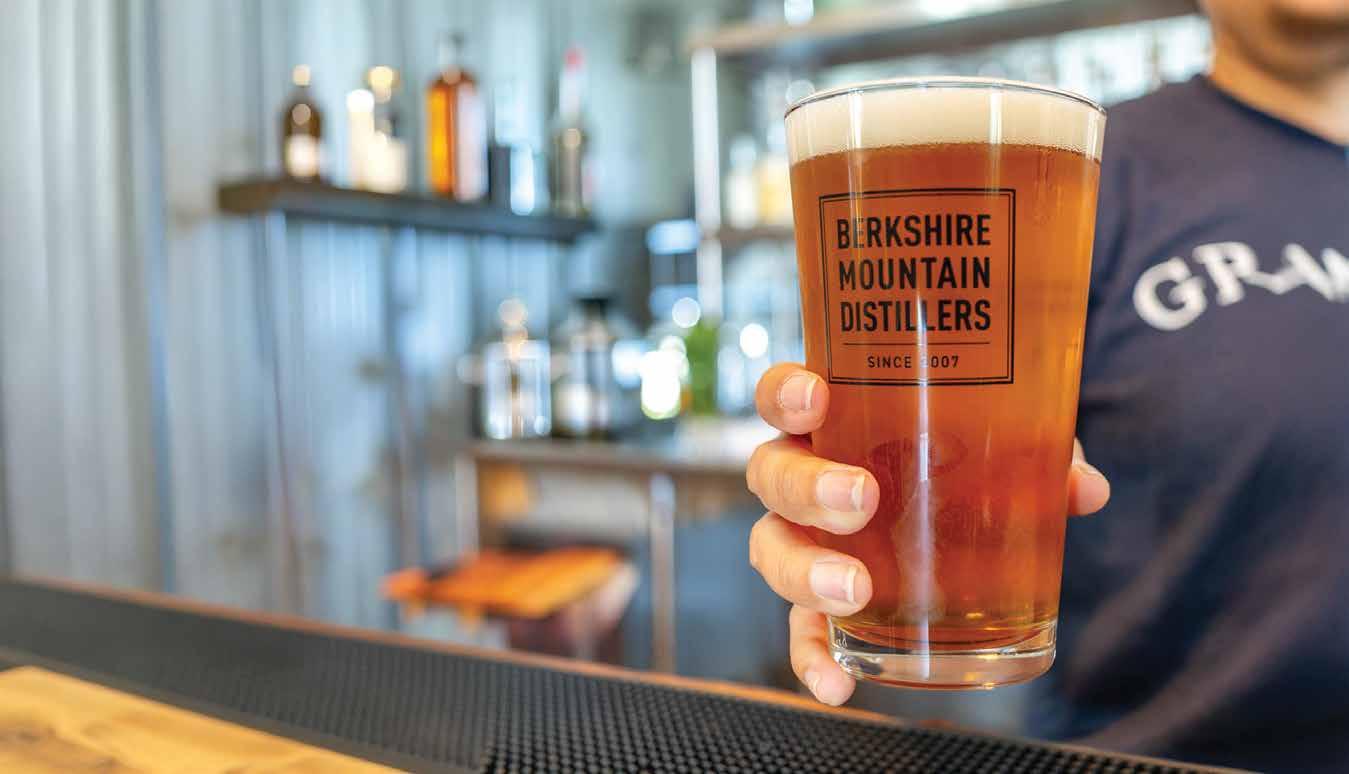

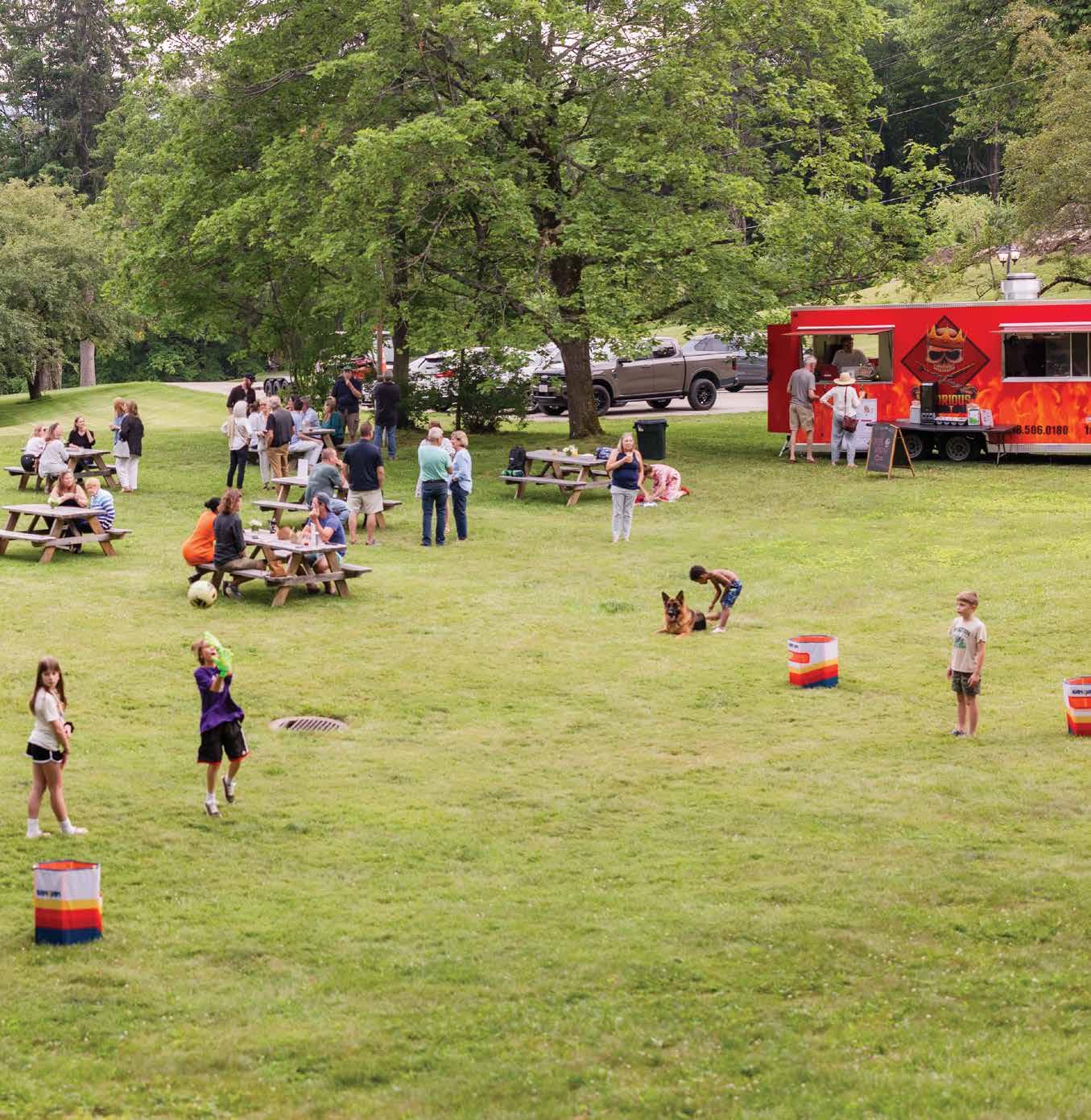
For your dining pleasure, a tasting menu of new restaurants, pop-ups, food trucks, and more— impeccably curated by one of our favorite food writers
By Ann Volkwein
Afew months ago, The B Editor-in-Chief Larry Carlat and I were talking about the Food Issue, and I went off on a bit of a ramble, which he enthusiastically encouraged. So here it is: my compilation of some things I think you should know about, and a few things I’m craving.
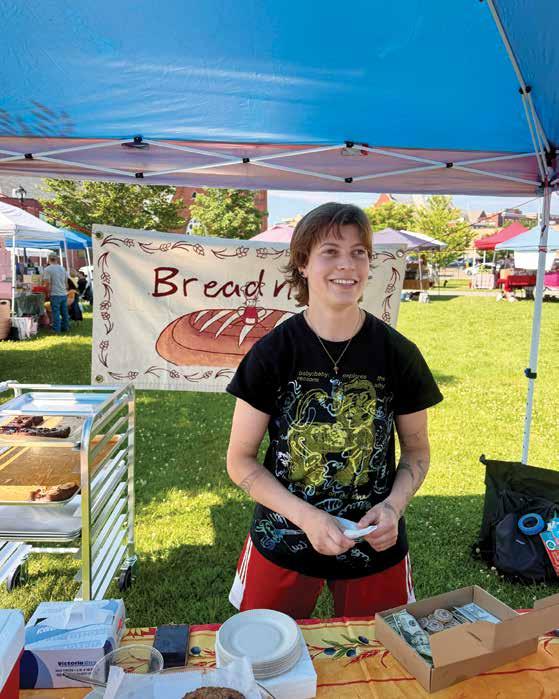
Chef Rachel Broder and I first bonded over our shared anthropology backgrounds, and her approach to food holds a reverence for the past, pulling from generational roots. She’s taken her baking and cooking skills from the

traditional Ukrainian Jewish cuisine through a lively and ever-changing lens.”
On offer at her stand: bread, baked goods, borscht, and an assortment of Eastern European treats you won’t find anywhere else. She chose the Pittsfield Farmers Market for the community, including farmer friends who live in Pittsfield and vend alongside her. “It’s run by a lot of very vibrant young people,” says Broder, “and definitely wants to be a place that’s accessible to everybody.”
The market itself is run by Roots Rising, with a mission to empower youth, and it has grown into the first teen-run farmers markets in the region, staffed by graduates of Roots Rising’s Farm Crews.
@notbarefoot_contessa @pittsfieldfarmersmarket
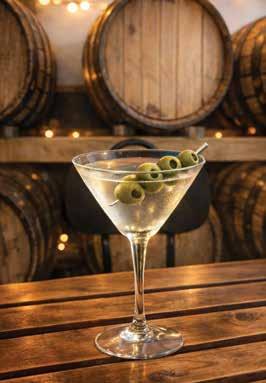
Queens International Night Market, where she first shared her family’s Ukrainian recipes, to dinner pop-ups in New York and Becket’s The Neon Newt. Her latest endeavor, BREADNIK, is a new stand at the Pittsfield Farmers Market.
She’s using a blend of excess flours collected from Ground Up stone mill in Holyoke, where she now works. The flour is what’s left over when the sustainably focused mill switches between grains. Broder says her “core values are embedded in resourcefulness and finding ways to see
Speaking of farmers markets and Ground Up…Patrick Lang and Nick Rigger of HEXAGON BAGELS in North Adams made the move from market to brickand-mortar in November—and they also use Ground Up’s exceptional flours for their sourdough bagels. If you haven’t had them, try one of their bagel sandwiches. They’re killing it and creating a really warm sense of community in their space.
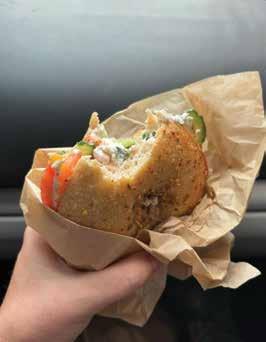
Also on my list in North Adams: the award-winning FORAGER DISTILLERY at Greylock Works. I’m all for an intrinsically whimsical gins. This time of year, try the Summer Forager, a botanical gin they infuse with locally foraged elderflowers and violets among other petals, or the Ocean Forager, a London style gin distilled with fresh, wild Massachusetts oysters, seaweed, and cucumber—a mineral forward blend that quenches my Maine-soaked soul. Pure alchemy for cocktails.
@hexagonbagels
@foragerdistillery
Chef David Israelow is making us wait a little longer—mid2027—for his FOUR CORNERS restaurant in Chatham, New York. Such is the work involved in the restoration of an older building. In the meantime, he’s popping up all over the region, including Dassai Brewery in Hyde Park (7/26), Kinderhook Farmers Market (8/1), and Hancock Shaker Village (9/12). Israelow’s food is art, and through his design dinners and new “market” events he’s extending that to everything you touch. You may be sitting
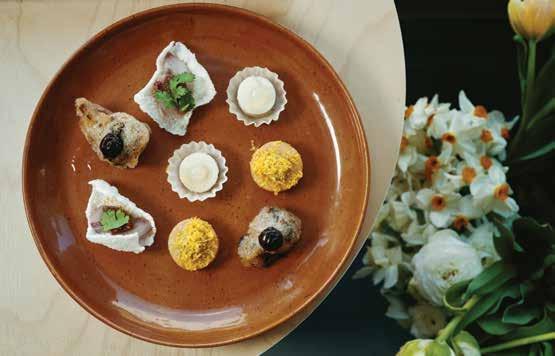
next to the artist while using a steak knife from @jldknives, a vase by @ericarecto.art, a bowl by @davisstudio or @_chadcates_ while sipping from @bowglassworks. He was inspired by restaurants in Japan where people would come for the artisanal ceramics as much as the food. Harbinger of things to come our way.
@fourcornerschatham
Heading over to Hudson, New York, you’ve probably noticed there’s a lot going on there: YUMMY KITCHEN, with their insanely addicting bright, punchy, crunchy, umami-bomb banh mi, has set up shop at the Cannonball Factory—while also maintaining expanded summer hours at THE GREENHOUSE CIDERY in Chatham.
Hand-pulled delicacies showcasing seasonal fruit
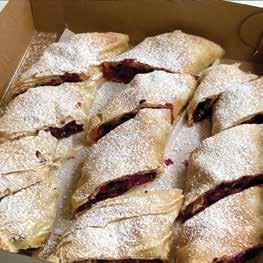
adorn the window at STRUDEL HOUSE—so pretty they actually stopped me in my tracks.
Efrén Hernández’s briny, bejeweled razor clams and seafood towers are positioned as poolside “coastal Mexican” at the newly opened PEZ at the Rivertown Lodge.
And if you’re one of the (many) fans of Café Mutton, you won’t hesitate when I direct you to the head-cheese baguette at their wine bar sidekick, MERKIN HUDSON
Mine had a heavenly layer of celeriac remoulade between the crackling, crusty bread, but the more recent pimentón aioli, piparras, and olives will most definitely do the job.
@yummykitchenny
@strudelhousehudsonny
@pezhudsonny
@merkinhudson
A few notes from South County: The DREAM AWAY LODGE in Becket scored a serious coup luring Chef Caroline Fidanza to their woods. Fidanza’s career began at Savoy in SoHo, then on to opening chef at Diner in Williamsburg before launching her acclaimed sandwich shop, Saltie. Throughout, she’s *





key step in the restoration and reopening of the historic landmark Victory Theatre Holyoke, MA .
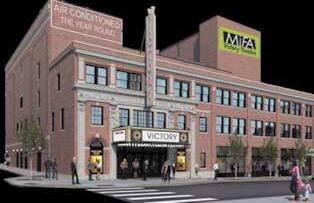

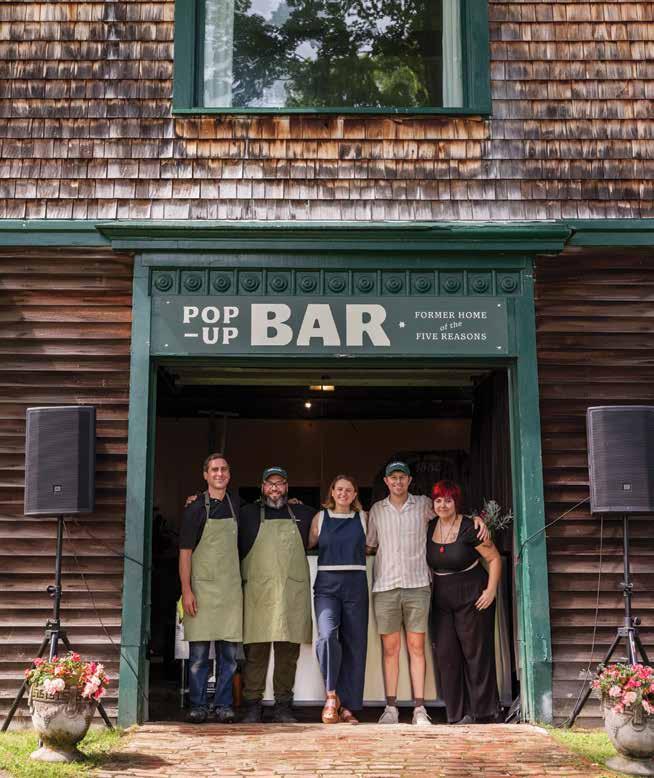
honored regional agriculture on the plate, defining American cuisine with respect and honesty. From her new perch at the edge of October Mountain State Forest, she’s excited to “reconnect with seasonal cooking, to work with the rich agricultural heritage of the Berkshires.”
Don’t miss out, and if you’re a longtime fan of the Lodge, you’ll appreciate the gentle refurbishment of this institution, as led by one of the new owners, Dan Giddings.
Inn-owner Claire Collery has returned the Apple Tree Inn in Lenox to its former, more lyrical name, AVALOCH. And while the Ostrich Room is dark and the main house is being renovated, she’s given us all access to her panoramic views with a summer pop-up. There’s a rotating selection of food trucks: The Notorious BITE, Just Kickin’ It Bar-B-Que, Chicken Man’s Chicken Shack, Cousins Maine
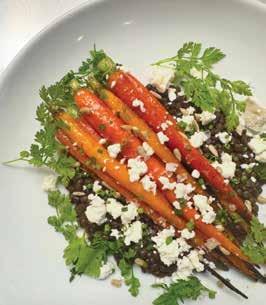
Lobster. Cocktails are served at their pop-up, Five Reasons Bar, and the kids can run wild and free—there are lawn games, firepits, and music. Pool passes are for sale at the Lodge. Check Avaloch’s socials for hours. Also in Lenox, CELLO owners Ryan and Kim Boya completed a refresh of their space this spring. Grab a seat at the chef’s counter to fully experience Chef Ryan’s classically grounded, beautifully crafted food and Kim’s expert hospitality.
And speaking of food trucks: Great Barrington’s favorite crepe-slinging, open-earliest, hardest-working CAFÉ HOLLI has a brand-new catering truck for your parties. It’s a pretty pink confection you can spot parked behind their shop, next to the LOS LOPEZ TACO TRUCK. Those guys are serious about authentic Oaxacan street food, and it’s run family style by a group of cousins who wanted to bring good food at reasonable prices to their community.

On the other side of downtown, ILSE COFFEE of Canaan, Connecticut, opened a second café, taking over the former Marjoram + Roux space at the top of Railroad Street. The sunny, Scandi-style vibe and supreme coffees of the world pour-over experience is best served alongside their perfect (I am not exaggerating) cheddar scallion biscuit, egg, and leek aioli breakfast sandwich.
@thedreamawaylodge
@avaloch.inn
@cellolenox
@cafeholli
@loslopeztacotruckllc2024
@ilsecoffee_cafes
As you approach the Berkshires, stop by CHRIS AND MJS in Sheffield for takeout or grab a picnic table. They’re still going
strong, serving up Filipinoinspired homemade hot lunches, cafeteria style, with your choice of protein and a half dozen sides. Their gratitude to the loyal locals is palpable in the care they take with every plate.
@chrisandmjs
Still Worth the Drive:
Horticulturalist and scientific illustrator Viola White Delafield reimagined what a farmstand could be at the Dutchess County Fair in 1935, presenting her harvest with glorious care and style. Even Eleanor Roosevelt wrote about it. Ever since, MONTGOMERY PLACE ORCHARDS FARM MARKET in Red Hook, New York, has upheld their heritage with hand-painted signs, helpful descriptions of heirloom fruit and vegetable varieties, and a selection of product from the best makers in the area. This little farmstand still sets the bar. In the fall, which is PIE SEASON, their crop of 70 varieties of “antique,” traditional, and modern apples is an education unto itself.
@mpo_crew
And, when headed to points east this summer, stop in Easthampton and drop into a seat at LITTLE TRUC for a Southeast Asian spread. It meets the considerable hype and raises it. Their curry pastes are now sold in shops throughout the country. @little.truc
That’s it for now—otherwise, I’ll be seeing you at No Comply. B



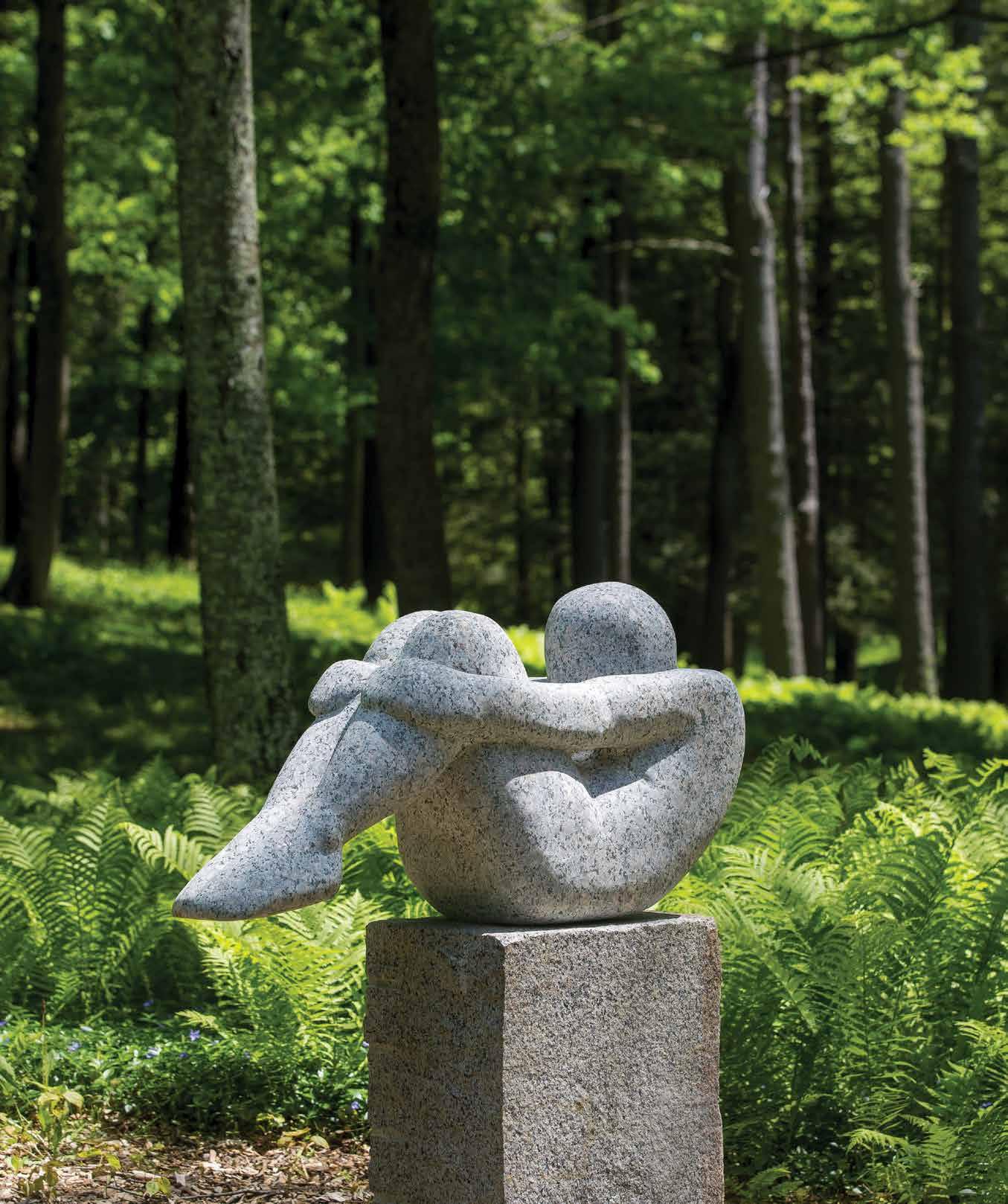
Through October 24, contemporary outdoor sculptures are displayed throughout the gardens, woods, and grounds of Edith Wharton’s historic estate. For more summer happenings, turn the page.







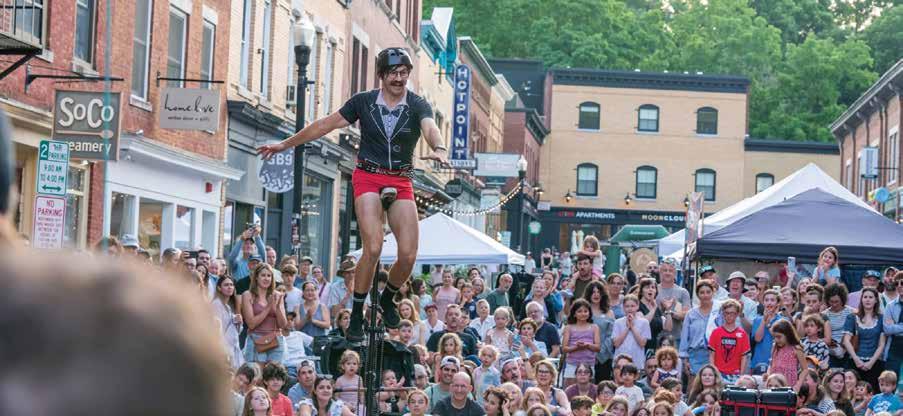
Berkshire Busk!
Through September 5
Downtown Great Barrington comes alive with free sidewalk performances by singers, dancers, magicians, acrobats, fire dancers, balloon artists, face painters, and more on Friday and Saturday nights. berkshirebusk.com
Ice Cream Train Rides
Through September 6
Hop aboard the Hoosac Valley Train and take a delightful journey from Adams to North Adams and back while learning about local history and enjoying a sweet treat. Trips begin and end at Adams Station in Adams. berkshiretrains.org
Bang on a Can LOUD Weekend
July 30-August 1
Innovative composers and performers take over MASS MoCA in North Adams for three days of collaborative experimentations in jazz, classical, rock, and more. massmoca.org
Berkshire Museum Reopening Events
August 7-8
Raise a glass to the long-awaited reopening of this Pittsfield museum on August 7 at the Sip, See, Celebrate reception, followed by a free Community Celebration Day on August 8. berkshiremuseum.org
8th Annual Art of Brewing Festival
August 15
Sample some of the best craft brews in the region, plus wine, cider, and more. Bring a blanket or lawn chair and enjoy food from local eateries, lawn games, and the incredible art found on your beverage labels, at the Norman Rockwell Museum in Stockbridge. nrm.org
6th Annual Cider Maker’s Celebration
August 20
Berkshire Cider Project celebrates the annual release of a special cider, crafted from local and foraged apples, in the orchard of Pittsfield’s Hancock Shaker Village. hancockshakervillage.org
Berkshire Opera Festival
August 22-28
Set amid the foggy moors and ancient castles of Scotland, Donizetti’s masterpiece, “Lucia di Lammermoor,” tells the tragic story of Lucia, whose forbidden love for her family’s sworn enemy drives her to the brink of madness, at The Mahaiwe in Great Barrington. berkshireoperafestival.org








































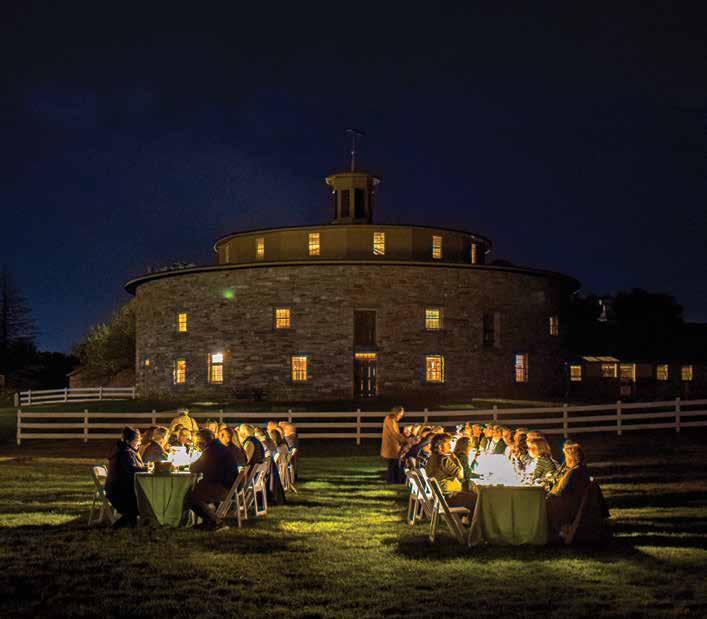
Craft Beer & BBQ Dinner
August 29
Farm-to-Table Dinner at Hancock Shaker Village
September 12





The brewers from Bright Ideas in North Adams pair their beers with a BBQ dinner prepared by Woodlife Kitchen of New Lebanon, New York, at Hancock Shaker Village in Pittsfield. hancockshakervillage.org
Spencertown Academy Festival of Books
September 4-7
Shop thousands of affordably priced books and media, including rare finds and a children’s collection, and enjoy talks by authors, in Spencertown, New York. spencertownacademy.org
Housatonic Heritage Walks
September 5-October 4
Free, guided walks mix history with natural beauty and sites include waterfalls, railroads, historic buildings, and even a fish hatchery. housatonicheritage.org
Berkshire Botanical Garden Grow Show
August 9-10
Michelin-starred chef David Israelow, known for his elevated farm-to-table approach, creates a memorable dining experience set in the heirloom gardens in front of the Round Stone Barn. Co-hosted by The B! hancockshakervillage.org
Festival Latino
September 26
Held during National Hispanic Heritage Month, this free, familyfriendly event celebrates Latin art, crafts, music, and food, with a special emphasis on traditional Latin folk dancing, at the Town Hall at Green Park and Saint James Place in Great Barrington. festivallatino.org
Lenox Apple Squeeze
September 26


Floral designers and backyard gardeners compete in this upbeat event on display in the BBG’s Exhibition Hall in Stockbridge. berkshirebotanical.org
Celebrate fall with free admission to this popular downtown Lenox festival featuring more than 70 vendors offering food and artisan crafts, plus musical performances throughout downtown, and a carnival for kids. lenox.org
Art Omi, Ghent, NY
This 120-acre sculpture and architecture park features more than 60 large-scale outdoor installations, plus rotating exhibits in its indoor Newmark Gallery. artomi.org
Berkshire Botanical Garden, Stockbridge
The Leonhardt Galleries will feature paintings by Adam Van Doren in its Leonhardt Galleries through August 23, and collages by Marian McEvoy from August 29-October 30. berkshirebotanical.org
Berkshire Museum, Pittsfield
Be one of the first to experience the renovated space, including the expanded aquarium and the exhibits “Mediterranea: American Art from the Graham D. Williford Collection” and “Voices of Rebellion: Berkshire’s Revolutionary Legacy,” both on view through September 1. berkshiremuseum.org
Chesterwood, Stockbridge
The home of sculptor Daniel Chester French features an exhibit based around his Minute Man statue, the 49th Annual Contemporary Outdoor Sculpture Show, and works from the Berkshire Potters Collective. chesterwood.org
Clark Art, Williamstown
In addition to its permanent collection, the museum features six short-term exhibits, including an outdoor sculpture show in the fields and forest. clarkart.edu
MASS MoCA, North Adams
Daniela Rivera’s “Hacia Cuando (To When)” and Amanda Lovelee’s outdoor exhibit “Homecoming” join shows by Michael E. Smith, Jimena Sarno, and Zora J. Murff, plus long-term works by well-known artists. massmoca.org
The Mount, Lenox “Sculpture at The Mount,” through October 24, features large-scale works of contemporary outdoor art against the grounds of author Edith Wharton’s historic home. edithwharton.org
Norman Rockwell Museum, Stockbridge Beloved Rockwell illustrations share space this summer with “American Stories,” celebrating the nations 250th birthday through art. nrm.org

For more of What’s Goin’ On, subscribe to The B’uzz!


































May 22 | Linde Center at Tanglewood, Lenox
The B’s Passport to Summer brought the Berkshires’ vibrant cultural community together at Tanglewood’s Linde Center, where host Robert Hartwell welcomed guests for an inspiring evening of discovery. Leading arts organizations previewed their summer seasons, helping attendees plan months filled with theater, dance, music, literature, exhibitions, and unforgettable cultural experiences.
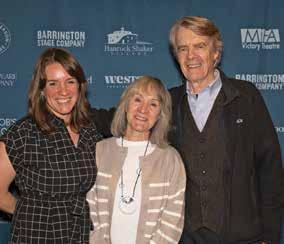
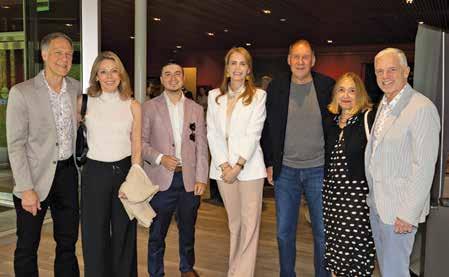
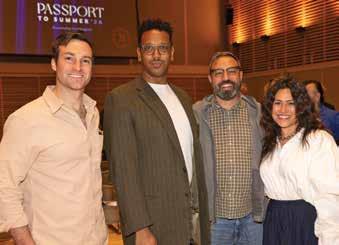

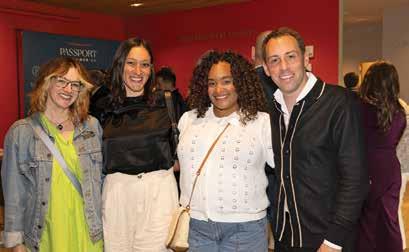
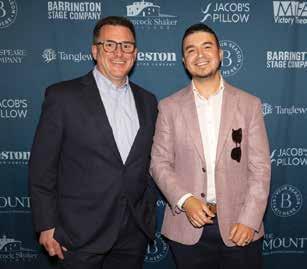

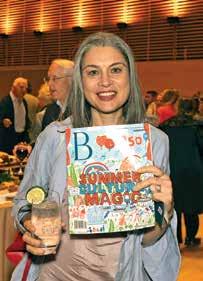
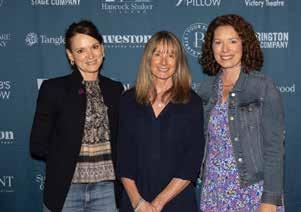
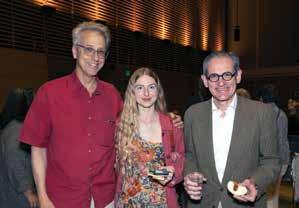
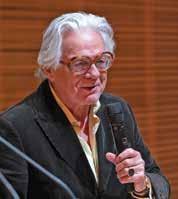

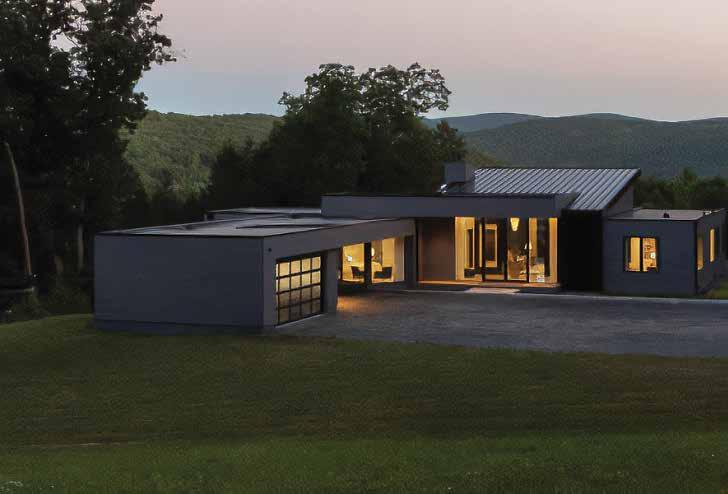

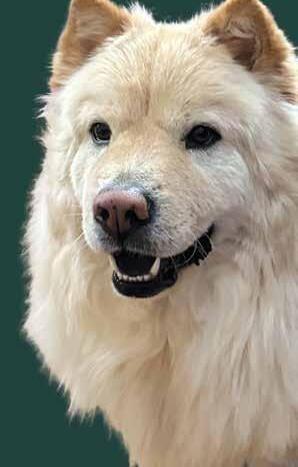
May 14 | Barrington Hall, Great Barrington
Elizabeth Freeman Center celebrated its 50th anniversary with a proclamation from the Statehouse delivered by Sen. Paul Mark and Rep. Leigh Davis, and an inspirational story of empowerment from a domestic violence survivor. The event raised more than $200K to support life-saving services for survivors of domestic and sexual violence in Berkshire County.
Executive
Board member Susan Gordon and auctioneer Andy Kelly
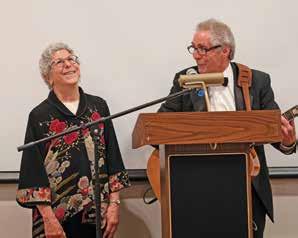
June 28 | Gedney Farm, New Marlborough
Berkshire Opera Festival’s annual gala brought together supporters for an evening of music, community, and a special performance by bass-baritone Stefan Egerstrom. The event raised vital support for BOF’s 2026 season, including the inaugural Resident Artist Program, mainstage production of “Lucia di Lammermoor,” and community engagement initiatives throughout the Berkshires.
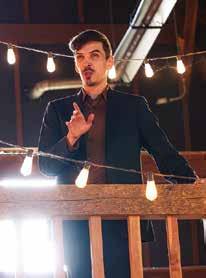
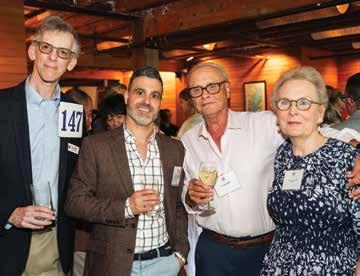
This year’s gala honored 2026 Art Futures Awardees artist Laurie Anderson and global philanthropist Charlotte Cramer Wagner. Guests enjoyed performances by Sören Smedvig and Richard Stanmeyer, and dinner by Mezze Catering. Following the benefit, the outdoor Art Futures After Party featured DJs Cooper Gangemi and Sören Smedvig, along with large-scale projections by artist Pamela Hersch. The event raised $670,000 to support the museum’s mission, programs, exhibitions, performances, and residencies.
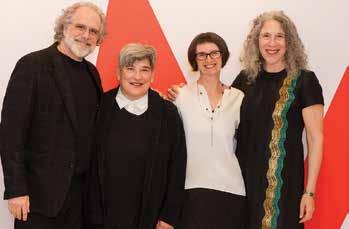


From our kitchen to your table— handmade every day with locally sourced ingredients, passion and traditional Italian soul.


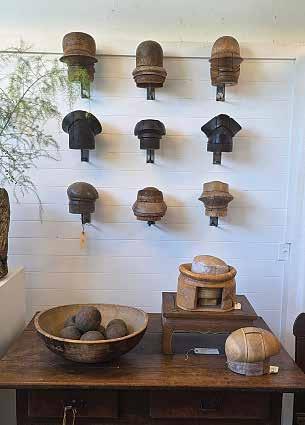




















June 13 | Belvedere, Lenox













The Association celebrated connection and conversation with live music, an open bar featuring a signature cocktail, a dance party, and food inspired by special guest, New York Times Cooking contributor and best-selling cookbook author Dan Pelosi.
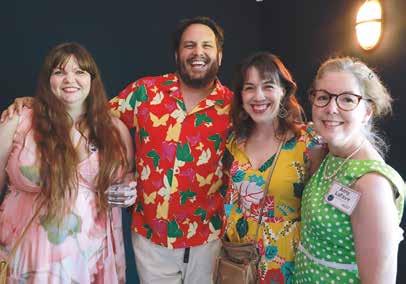
Left: Youth Librarian
Vanessa Justice, Dan Pelosi, Library Director Katie O’Neil, and Local History
Librarian Amy Lafave
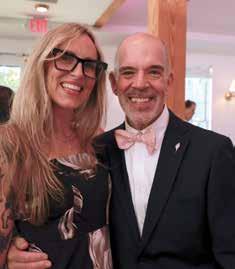

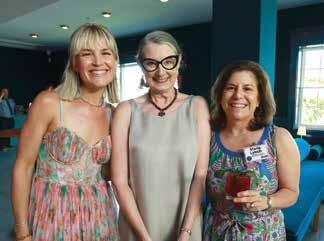
Above: Trustee Mary Daire, Lenox Library Association President Christine Conklin, and Development Director Maria Lynch Below: Kelly Binder, McCaela Donovan, Lauren Fritscher, and David McDaniel

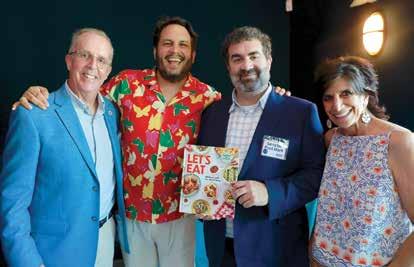
More than 600 supporters attended the Pillow’s Season Opening Gala on Saturday, June 20. The evening raised critical operating support for the organization’s artistic, educational, and preservation programs, and featured the presentation of the 2026 Jacob’s Pillow Dance Award to Tiler Peck, presented by acclaimed director and choreographer Susan Stroman. Guests enjoyed a performance featuring Tiler Peck, Martha Graham Dance Company, BODYTRAFFIC, Chicago’s M.A.D.D Rhythms, and The School at Jacob’s Pillow Contemporary Ballet Performance Ensemble. The 94th Festival season includes 10 weeks of performances, premieres, and cultural events through August 30.

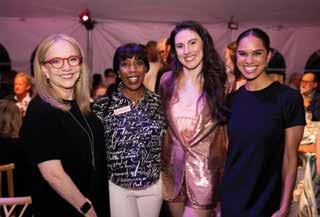
Dave Mixer
Below: Sue Lipson, Chris Jones, Deb McAlister, Dan Lipson, and Louise Barzilay


Left: Jacob’s Pillow Trustee
Sandra Burton (second from left) and guests Below: The Quilombo Experience performs

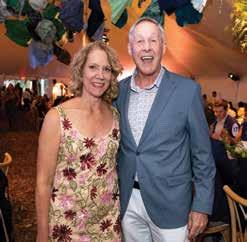


Celebrating the work of ar tis t s with disabilities
PRESENTED BY Cl ark Ar t Ins titut e June 1 3 - Oc t ober 12
Licht ens t ein Cent er for the Ar t s July 8 - Augus t 28


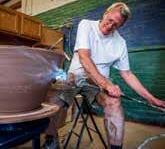

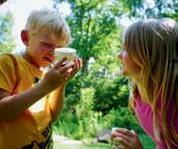
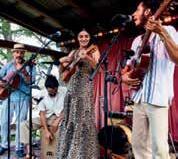
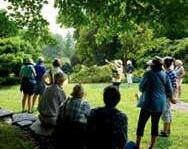








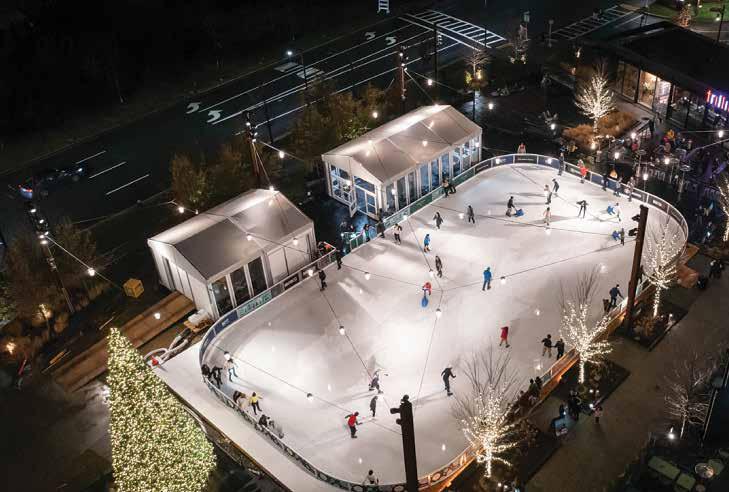


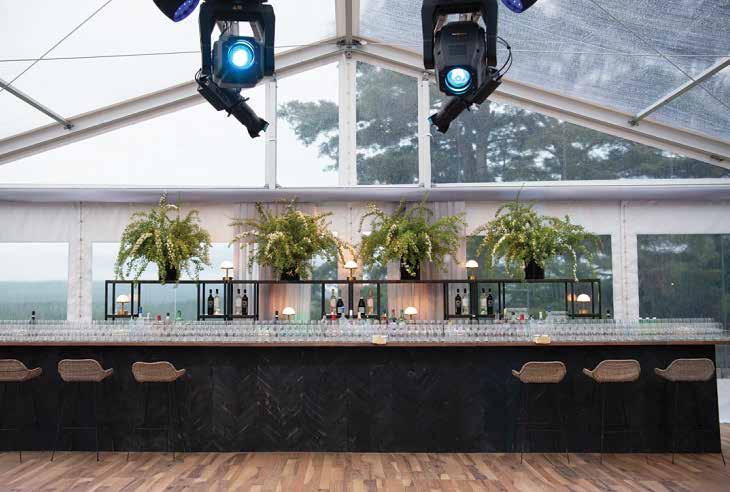
The Mount celebrated Edith Wharton’s masterful observation of human behavior with cocktails in the Italian Garden, followed by dinner in the mansion’s forecourt, where guests were treated to a conversation with André Bernard and Roz Chast.
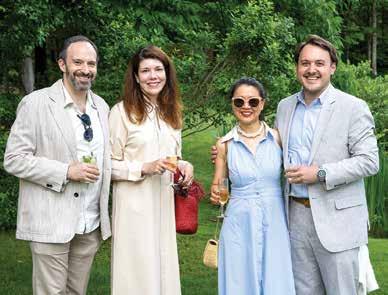
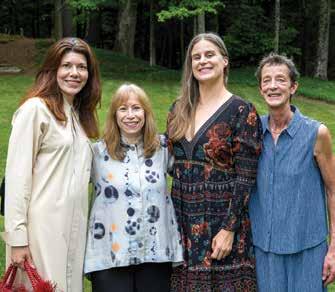
Vice Chair Sheila Parekh Blum, Chair Barbara Cooperman, trustee and author Lauren Groff, and Executive Director Susan Wissler Right: Cartoonist Roz Chast and trustee André Bernard, curator of the In Conversation series Below: Trustee Natalie Johnsonius Neubert and David Neubert
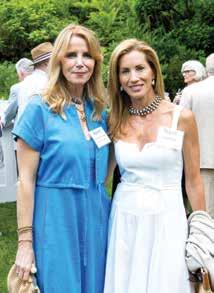
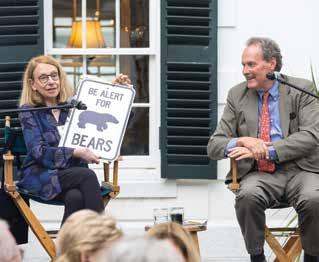
June 26 | Shakespeare & Company, Lenox
Inspired by “Hamlet” and “Twelfth Night,” Shakespeare & Company’s gala explored the space between clarity and chaos, reason and emotion, truth and illusion. Guests enjoyed cocktails followed by a special performance tribute in the Tina Packer Playhouse, dinner by Peter Platt of The Old Inn on the Green, and dancing beneath the stars. Proceeds benefit the organization‘s Center for Actor Training, Education Program, and Performance Seasons.








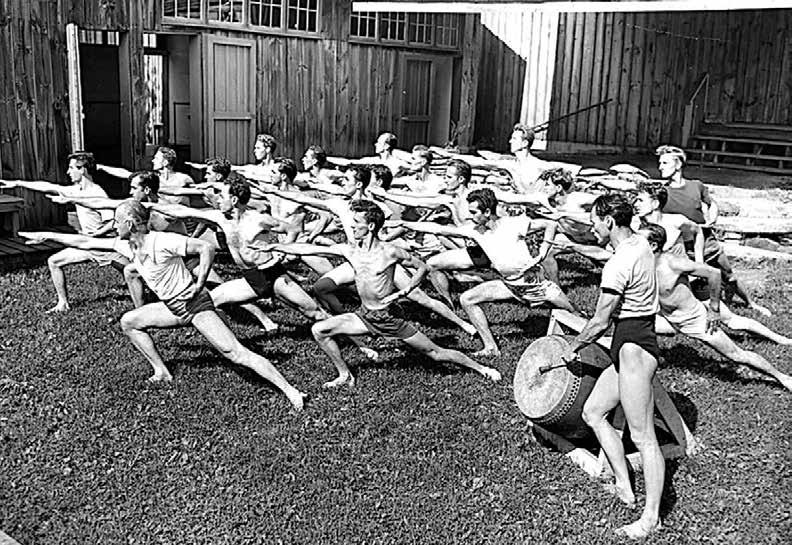



At first glance, we had no idea what was going on in this photo. Was this the first flash mob? Some primitive form of a high-intensity cardio class? A warm-up for a synchronized swimming team before jumping into the pool? Then we saw the drummer in the lower right corner and it all made sense. These guys are dancing! And they’re not just any guys—they’re war veterans under the GI Bill taking a class at Jacob’s Pillow University of the Dance. This photo ran in The Berkshire Eagle more than 80 years ago and it’s unlikely any of these guys are still with us, but there’s no doubt that their spirit lives on at the Pillow.
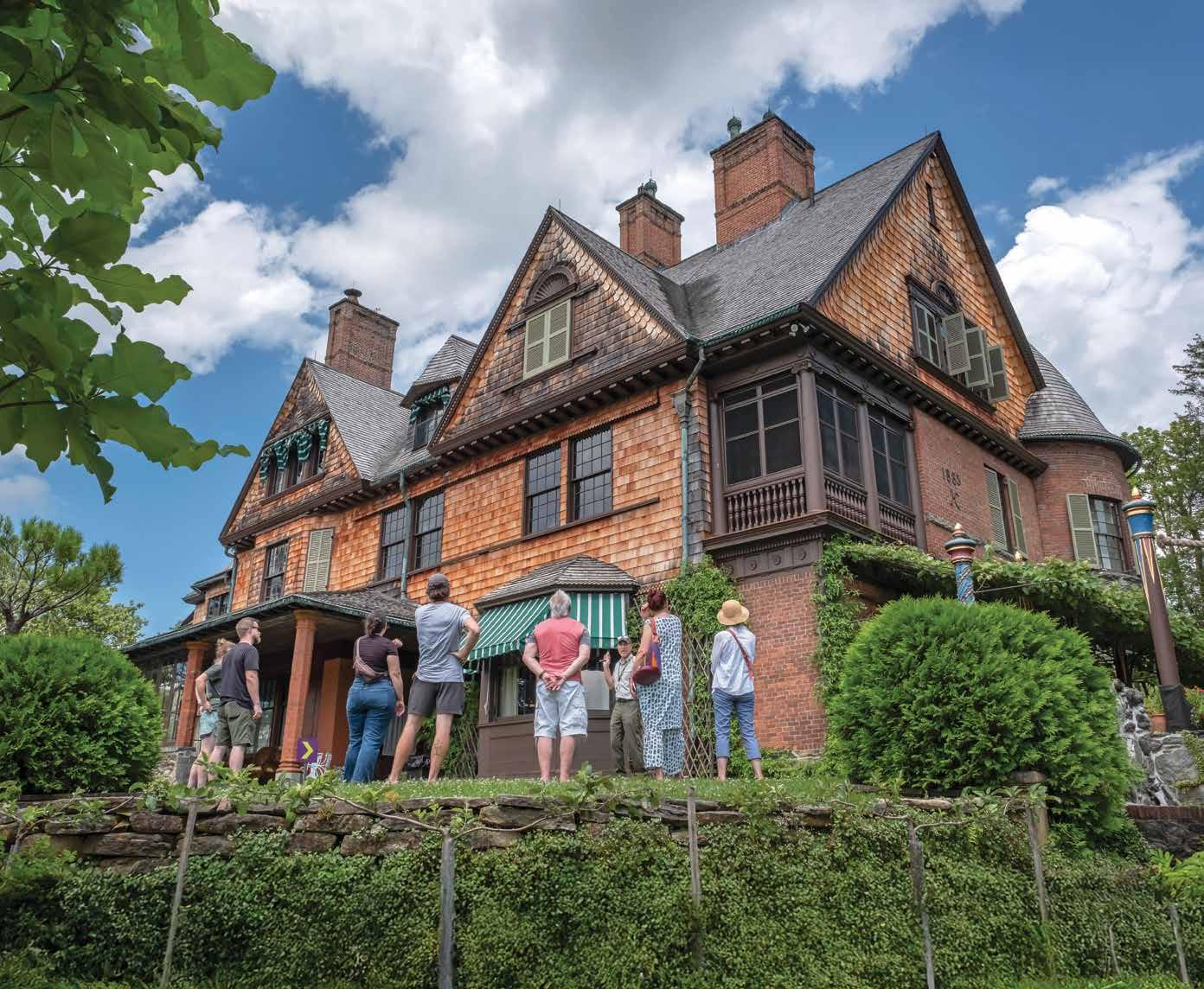
Pre-register for these opportunities:
House Tours & Backstairs Tours Offered Wed-Sun
Sunset Yoga Thursdays 7-8pm (6:30pm in Aug & Sept)
Mindful Meditation Select Fridays 4-5pm
Guided Garden Tours included with admission

Open Thurs-Sun, 10am-3pm
Stockbridge, Massachusetts thetrustees.org/naumkeag