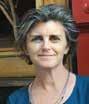
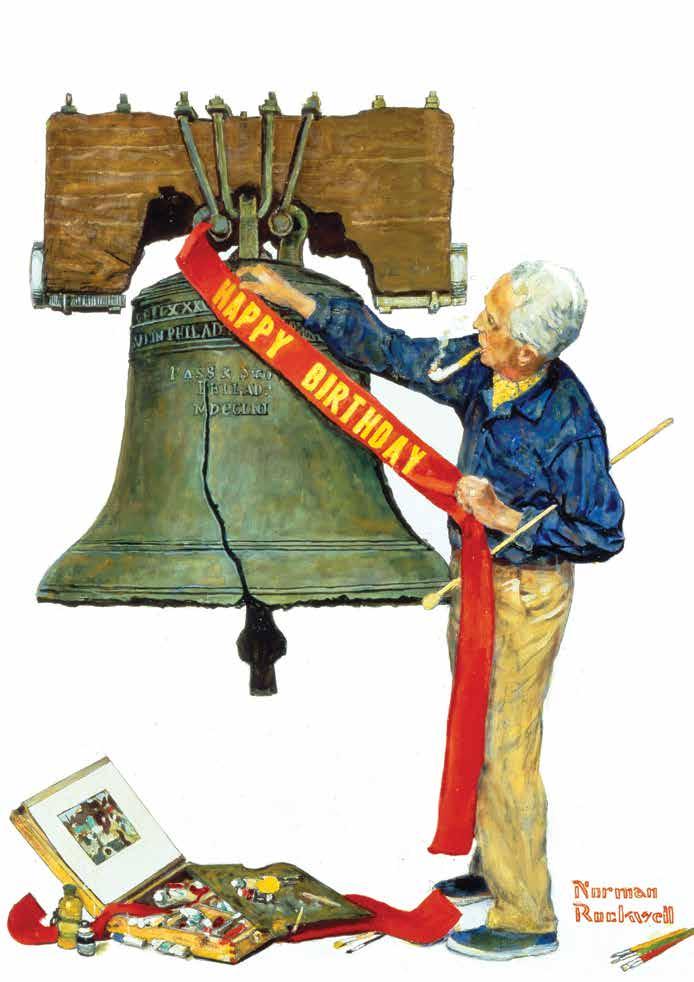
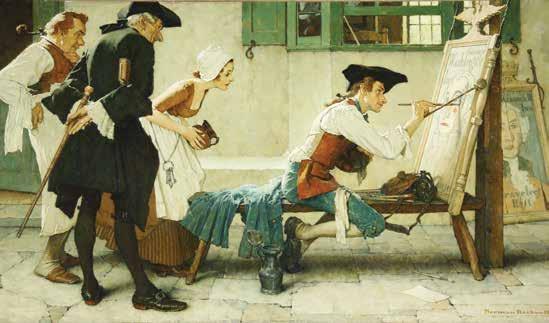
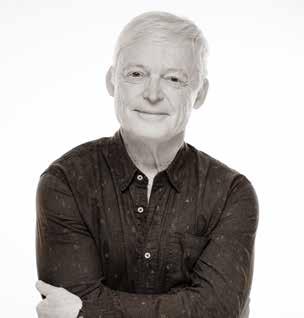
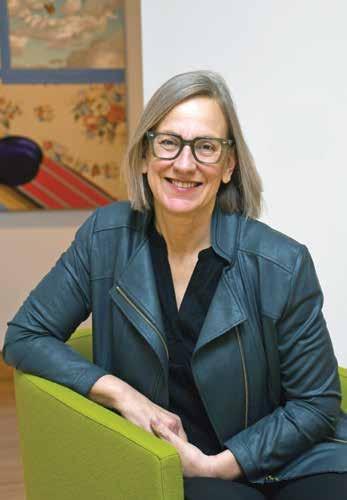
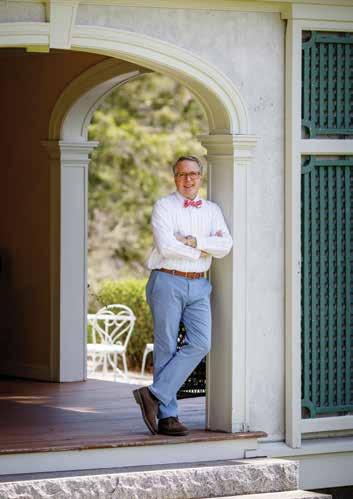
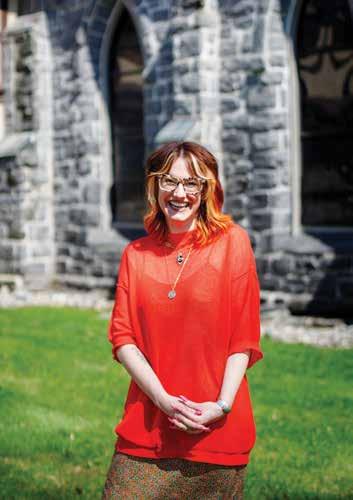
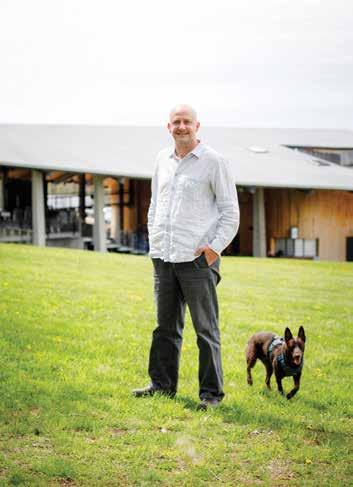
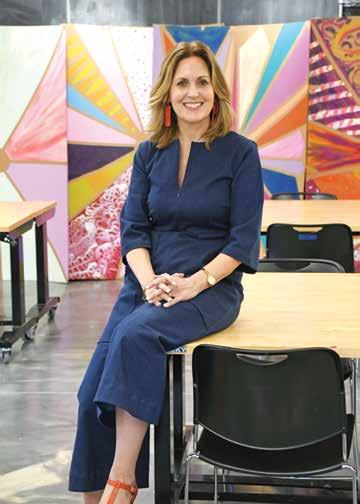
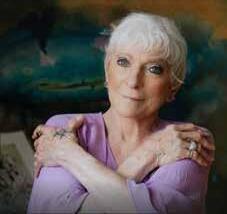
WHEN SOMEONE HAS JUST announced their retirement, the last place you’d expect to find them is the Logan Airport lounge at 7 a.m.—headed to a work event in California. But this is Laurie Norton Moffatt, Director/CEO of the Norman Rockwell Museum. For nearly 50 years, she has devoted herself to the museum and to championing American illustration. I ask, half-joking, if she’s off to see Rockwell devotees like Steven Spielberg or George Lucas. She just laughs, pulls me in for a hug, and smiles. Her commitment is emblematic of a certain kind of cultural leadership in the Berkshires— a visionary and rarely off the clock.
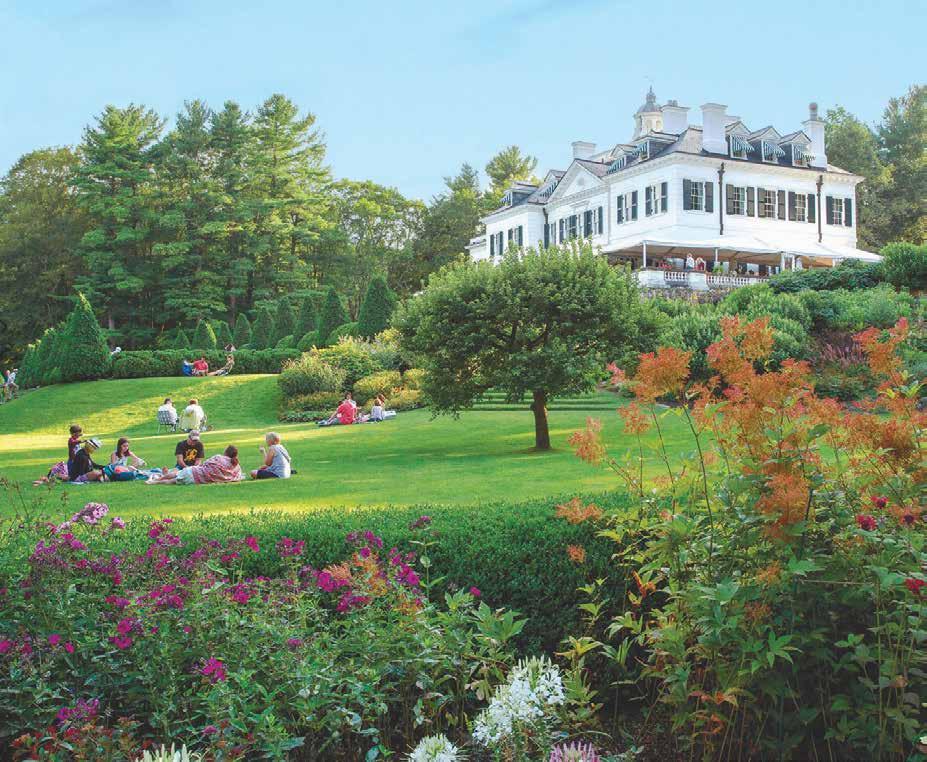
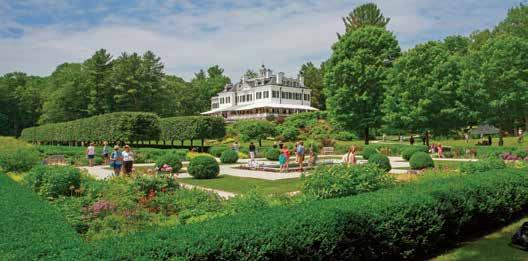
There are people like Laurie behind every performance, exhibition, and event in this region. Call them directors, curators, producers, caretakers— and even groundskeepers (is that Susan Wissler on a tractor at The Mount?). In practice, they do it all— balancing legacy, supporting new voices, and believing in what comes next.
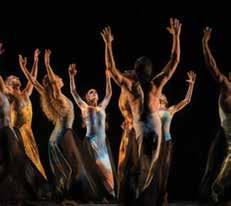
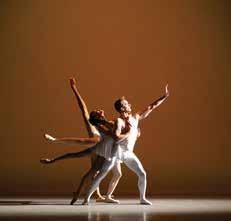
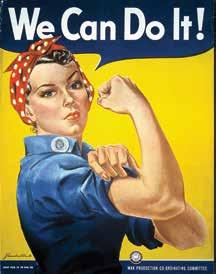
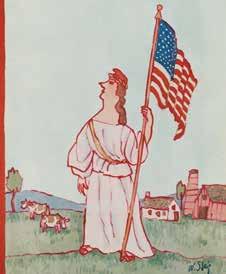
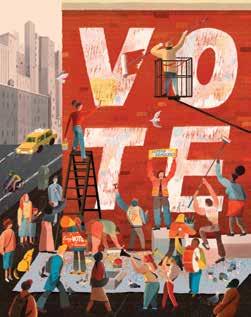
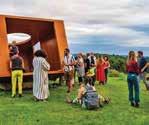
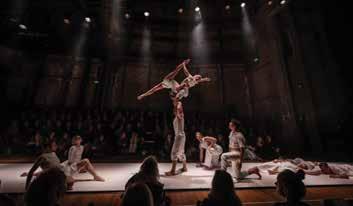
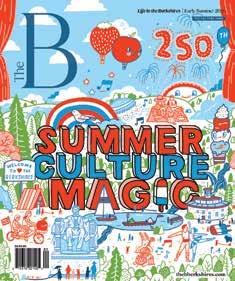
We are the beneficiaries of those efforts. On any given day this summer, you can move from worldclass dance to experimental theater to contemporary art without leaving the region. This issue of The B is devoted to that ecosystem—and to the people who sustain it. In The B’s List (page 78), eight cultural leaders speak candidly about the challenges they face and the opportunities they see ahead.
On May 22, several of these leaders will gather at the Linde Center at Tanglewood for The B’s 2nd Annual Passport to Summer, offering a sneak peek of the summer season. Join us!
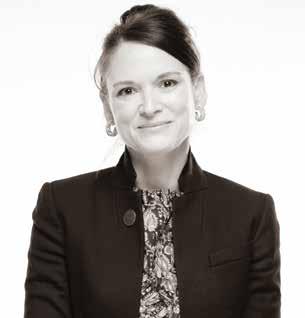
MICHELLE THORPE PETRICCA Founder and Publisher
The Colonial Theatre
111 South Street
Pittsfield, MA The Unicorn Theatre
6 East Street
Stockbridge, MA
at The Unicorn Theatre
The Larry Vaber Stage
music by Andrew Lippa lyrics by Tom Greenwald book by Tom Greenwald & Andrew Lippa directed by Gregg Edelman music direction by Nicolas Perez
The Unicorn Theatre
The Larry Vaber Stage
by Chess Jakobs directed by Gerry McIntyre
at The Colonial Theatre
America’s Prize Winning Musical music and lyrics by Sherman Edwards book by Peter Stone
directed by David Adkins
music direction by Erin White choreography by Kathy Jo Grover
The Unicorn Theatre
Larry Vaber Stage by Abi Morgan directed by David Auburn
from the editor
I’VE ALWAYS BELIEVED IN MAGIC. As a little boy, I was mesmerized by coin and card tricks and read countless magic books for beginners. I was obsessed with figuring out how a trick was pulled off until I got a little older and came to understand that knowing the secret actually ruined it. I love magic because it’s not real but feels like it is—like anything in the world is possible—even if it’s just for a ta-da moment. I love the giddy feeling of awe and amazement, to say nothing of the excitement at being fooled. It makes me feel like a kid again.
Which, at this late date, is perhaps the greatest trick of all.
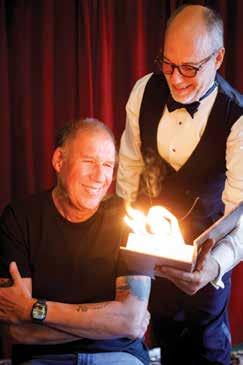
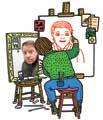
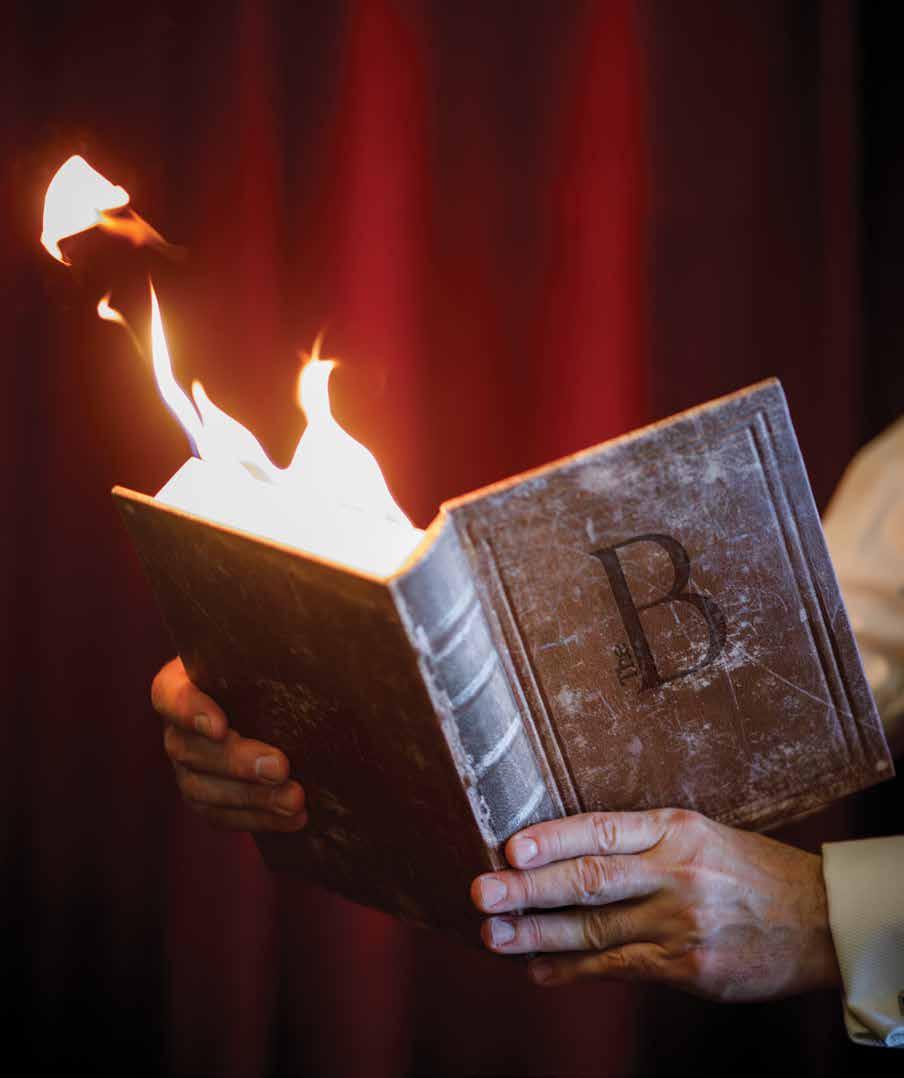
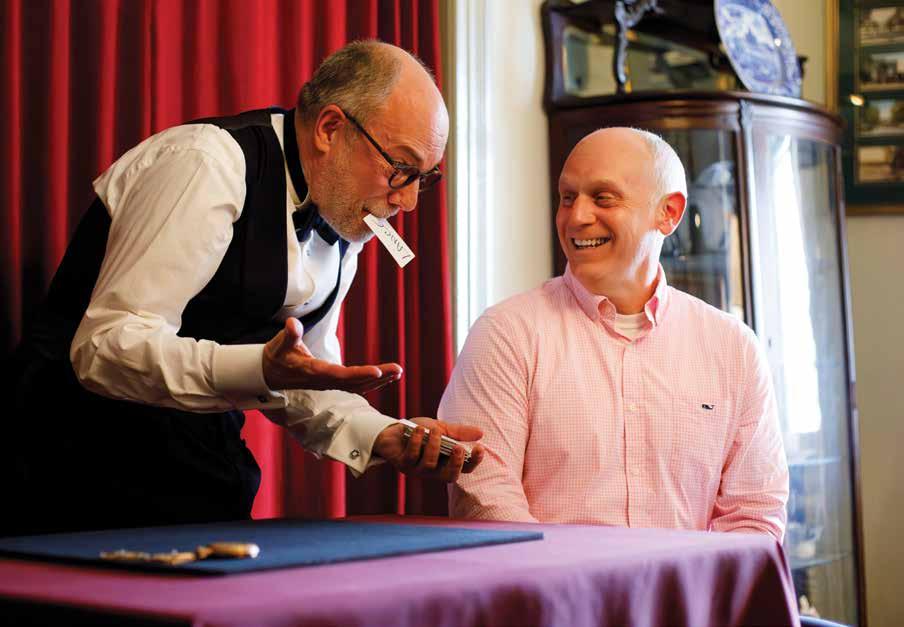
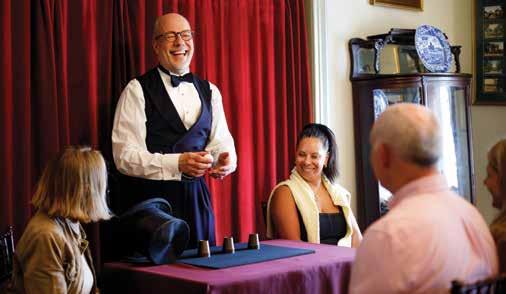
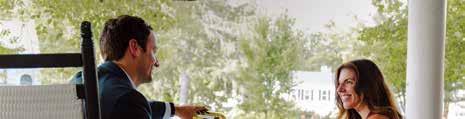
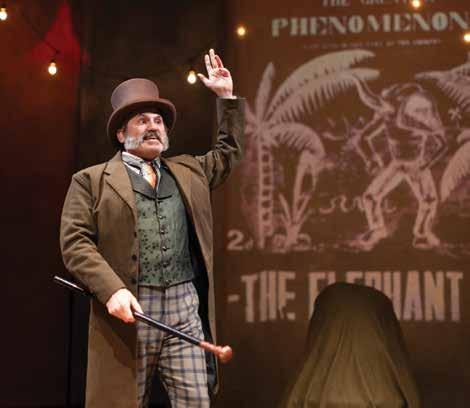
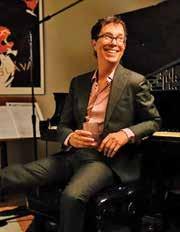
That’s exactly the way I felt when I attended a sneak preview of magician extraordinaire Benjamin Levy’s Parlor Magic Show, taking place on Thursday nights throughout the summer at the Red Lion Inn (for more on him, turn to page 18). Levy is a master sleight-of-hand artist, a self-described performer of miracles and mind-reading. I enjoyed every moment of his act, with the exception of him almost burning off what’s left of my hair (see photo above).
As most of you know, the Berkshires is truly a magical place—literally, figuratively and, especially at this time of year, culturally. I don’t think there’s another corner of the world with a higher concentration of diverse cultural activities in the summertime than where we live.
For this newbie to the neighborhood, it’s sort of mind-blowing and also makes me feel like a little kid again, excited and curious to enter this magical bubble as the days get longer and, thankfully, warmer.
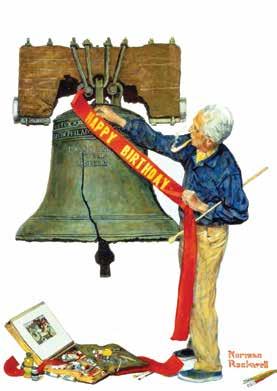
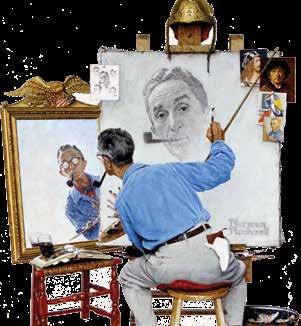
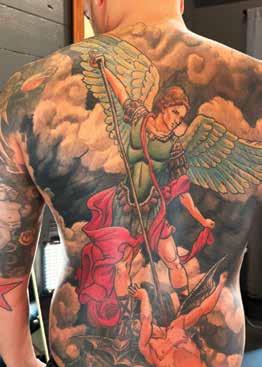
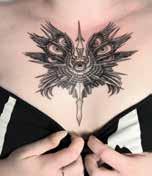
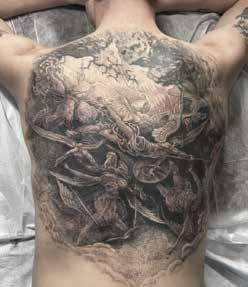
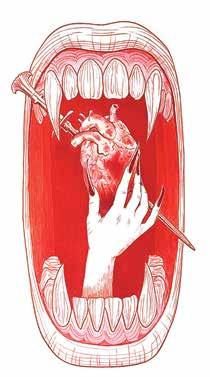
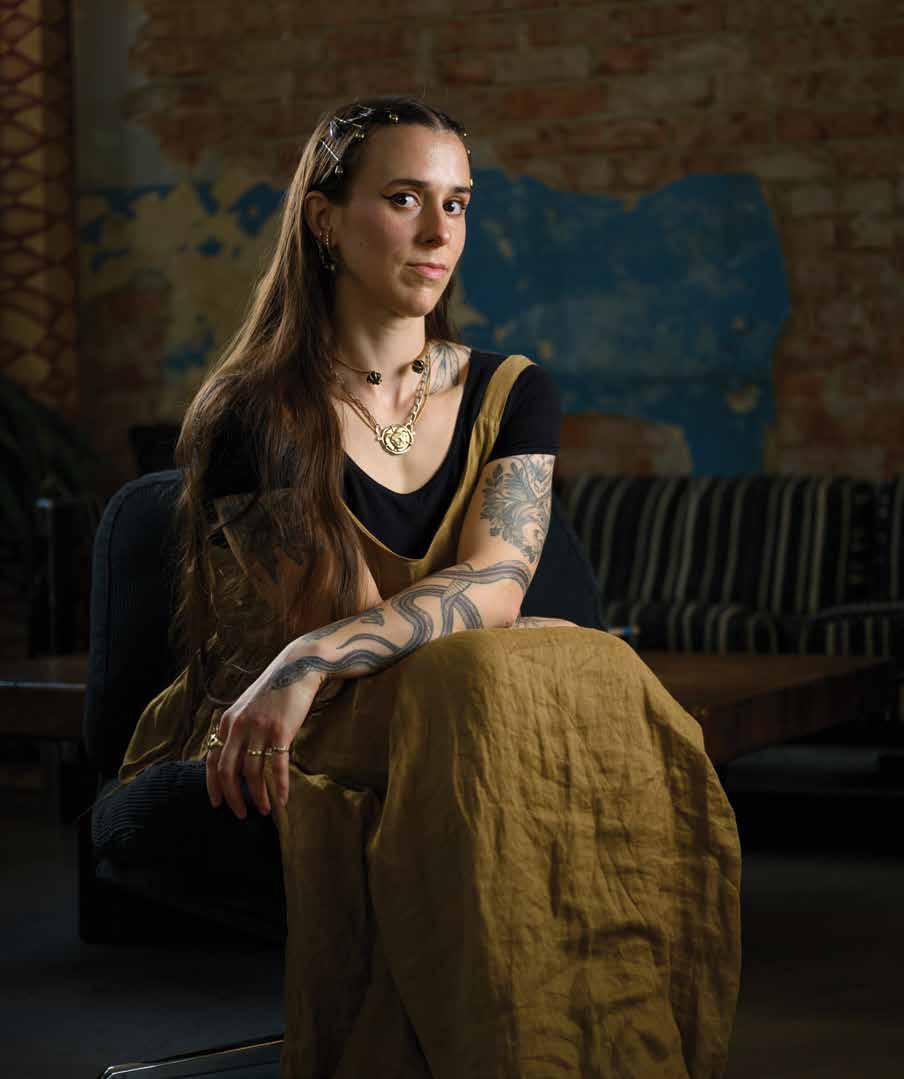
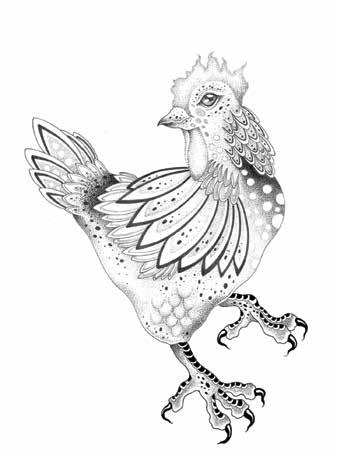
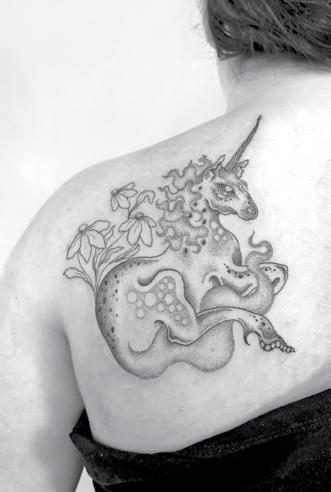
Whether you live here all year round or just visiting on the weekends, this issue is your VIP ticket to Summer Culture Magic. We’ve got you covered from A to Z (see page 57), with everything from Norman Rockwell’s America (page 68), to an oral history of the Berkshire International Film Festival (page 73), to the B’s List Culture Roundtable (page 78), as well as profiles of local tattoo artists (page 87) who—in the best possible way—get under your skin.
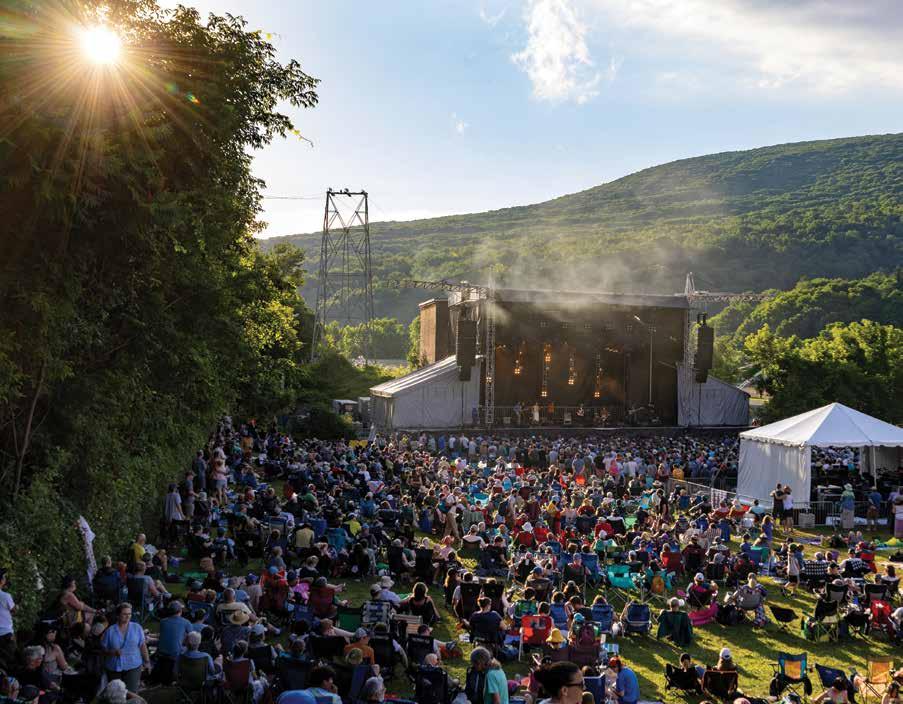
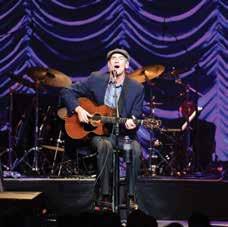
Believing in hocus pocus has always paid off for me in strange and wondrous ways. Now it’s time for the Berkshire universe to work her magic and somehow get me good seats for James Taylor and Paul Simon at the Shed.
LARRY CARLAT Editor-in-Chief
SUBSCRIBE TO THE B! berkshireeagle.com/theb or scan the QR code.
VISIT
City of Peace
Where Design, History, Inno vation, Art , Food, Ide a s and Farming come to lif e .
PITT SFIELD , MA | Hanc ockShak erVill a g e . or g
It’s all here—the people, places, and things—from A to Z and everywhere in between.
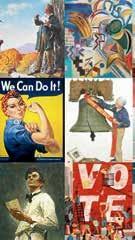
Norman Rockwell Museum’s expansive summer exhibition.
An oral history of the Berkshires’ beloved film festival.
Join us for our annual roundtable featuring eight of the region’s cultural masterminds.
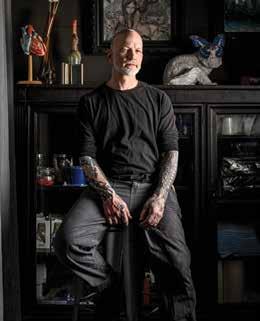
The art of tattooing in the Berkshires and Hudson Valley.
Our insider’s guide to summer fun— local leaders share their favorite haunts and jaunts.
contributors:
The B’s Hivemind
LINDA CAMPOS (“There’s No Place Like Bea’s House”) is a Boston and Berkshires based food and lifestyle photographer. Her work has been featured by The New York Times, Bon Appetit, Boston Magazine, and Edible Boston. When not behind the camera, you will often find her tending the dahlias and veggies in her West Stockbridge garden or cruising the GB Farmers Market. lindarcampos.com
GREGORY CHERIN (“Skin Deep”) is a welltraveled freelance commercial photographer. He lived and worked in New York City for about ten years before becoming a year-round Berkshires resident. Gregory’s award-winning work has appeared in many national magazines, newspapers, advertisements, billboards, websites, annual reports, brochures, books, catalogs and national network television. gregorycherin.com
MARISA COHEN (“The ABCs of an Extraordinary Summer”) is a magazine editor and writer who has covered everything from theater and cabaret to women’s health, fitness, and aging. She and her family split their time between New York City and the Berkshires, where she loves sitting on her porch with a good cup of coffee, a challenging crossword puzzle, and her snoozing dog.
AMY CONWAY (“Now You See Him”) was the founding editor of The B, overseeing the publication from 2023 to early 2026. Previously, she was the editor of Health and Martha Stewart Weddings. Amy is currently the editor-in-chief of Westchester Home, and divides her time between Great Barrington and Westchester County.
GUS HEAGERTY (“Why I’m Going the Speed Limit”) is a New York–based actor, comedian, writer, and director. He appears in NBC’s Stumble and creates viral character-driven satire videos online (@gus.heagerty). Founder of the performance collective i am a slow tide, his theater directing has been praised by The New Yorker and The New York Times for its precision and cerebral intensity. As a comedian, he performs regularly around New York and beyond.
ERIC KORENMAN (“The B’s List”) balances two professional lives in imaging. When not in front of a radiology workstation, Eric is a professional portrait photographer and has a studio in Pittsfield. korenman.com
CHRISTOPHER MARCISZ (“Documenting America’s Past”) is a writer who has lived (mostly) in the Berkshires for the past 20 years. As a staff writer for The Eagle he covered North County, and now writes about the arts here and abroad. He is passionate about traveling, cooking, and pickup ice hockey.
AARON MESHON ’s illustrations can be seen in magazines, children’s books and on products all around the world. When not drawing, you can find Aaron teaching at the School of Visual Arts in NYC or working at Railroad Street Collective in Great Barrington. Aaron lives in The Berkshires with his wife, son and dog Tamago. aaronmeshon.com
ELLEN MORRISSEY (“There’s No Place Like Bea’s House”) is an editor and writer specializing in a range of lifestyle topics—cooking and entertaining, interior design, gardening, health and wellness, holidays, and more. In her time at Martha Stewart Living and Gourmet, and on her own, she has collaborated on more than 60 books and dozens of magazine pieces. She lives in Queens, New York.
SETH ROGOVOY (“Best in Shows”) has been writing about the music scene in the greater Berkshire region since the mid-1980s. He is the author of “Within You Without You: Listening to George Harrison” (Oxford, 2024) and “Bob Dylan: Prophet Mystic Poet” (Scribner, 2009), and the editor and publisher of The Rogovoy Report and Everything Is Broken on Substack. sethrogovoy.com
NEIL TURITZ (“BIFF at 20,” “America Illustrated”) moved to the Berkshires from New York City, along with his wife. They have since welcomed a son. Turitz is a screenwriter, author, filmmaker, journalist, and creator of “6 Word Reviews.” @6wordreviews
ANN VOLKWEIN (“Skin Deep”) is a bestselling cookbook author and recipe developer based in Stockbridge. She is the author of the “Arthur Avenue Cookbook” and “Chinatown New York.” Her most recent collaborations include “Tasting History” with Max Miller and “My Mexican Mesa” with Jenny Martinez.
STEPHANIE ZOLLSHAN (“Now You See Him,” Candy Crush,” Off Duty”) is an awardwinning photojournalist whose work has been featured around the world. Stephanie is a Boston University graduate and has been with The Berkshire Eagle since 2011.
DIRECTOR OF ADVERTISING SALES, BERKSHIRE EAGLE, THE B, SHOPPER’S GUIDE
Cheryl Gajewski cmcclusky@berkshireeagle.com
EDITOR IN CHIEF
Larry Carlat lcarlat@berkshireeagle.com
EDITOR-AT-LARGE
William Li
CONTRIBUTING PHOTOGRAPHERS
Gillian Jones-Heck
Stephanie Zollshan
DIGITAL PARTNERS
Hadley Clover hadleyclover.com
The B is a publication of Berkshire Eagle Media
ADVERTISING MANAGER
Amy Filiault afiliault@berkshireeagle.com
SALES COORDINATOR
Aly Dvorak advorak@berkshireeagle.co
CONTENT MARKETING SPECIALIST
Anthony Duval aduval@talonmediaagency.com
MULTIMEDIA ADVERTISING CONSULTANTS
Shannon Chapman schapman@shoppersguideinc.com
Eileen Marran emarran@berkshireeagle.com
Tristany Saldo tsaldo@berkshireeagle.com
Troy Schweitzer tschweitzer@berkshireeagle.com
For subscription issues, call 800-245-0254
Outdoor Living
barlow tyrie | brown jordan | ec woods | jensen outdoor lloyd flanders | treasure garden | woodard
Abracadabra: Summer is Berkshire magic time. Read more on page 18.
The Local Life
The Best in the Berkshires
Benjamin Levy’s
Parlor Magic
Stockbridge
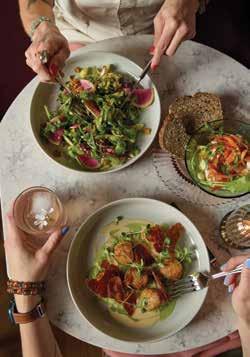
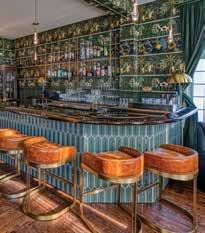
There’s No Place Like Bea’s House
Restaurateur Molly Lyon-Joseph brings new life to a beloved Lenox landmark in a space that feels like home
By Ellen Morrissey • Photographs by Linda Campos
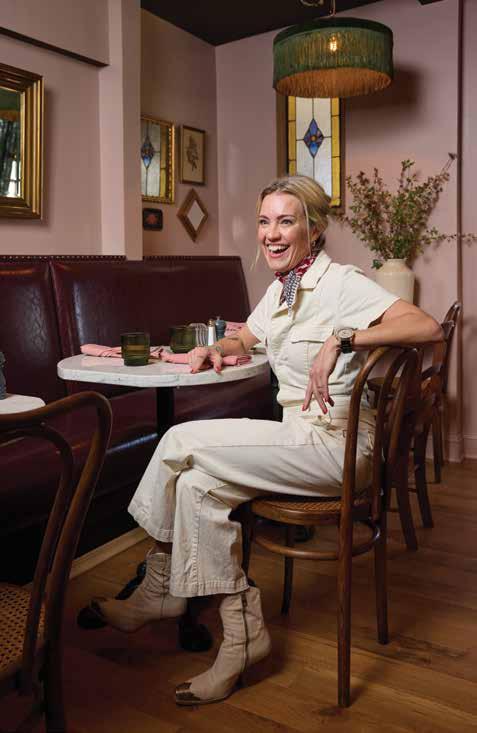
Molly Lyon-Joseph felt a palpable energy the first time she entered the building on Church Street in Lenox, home to her latest restaurant, Bea’s House. “As soon as I got into the space, I felt the magic behind it,” says the proprietor of local favorites Frankie’s and Pizzeria Boema. “There was so much love there.”
She credits those warm feelings to the legacy of Café Lucia, the beloved Berkshires institution owned and operated for decades by Jim Lucie and Nadine Atalla. Several years ago, after talking shop in a pottery class they took together, Molly and Nadine grew close. “When Nadine sold the business in 2021 after losing Jim,” Molly explains, “there was a lot of sadness. It was hard for her to let it go.” Suffice it to say, Nadine left the space in good hands. Once Molly decided to open a new restaurant there, she did a deep dive into the bones of the 1853 building, studying its past in order to inform its future. “As we’re remaking it, I’m thinking of the Victorian time period and being thoughtful with trim pieces and other details.”
She’s also keeping much of the redesign work within her own family—in more ways than one. Molly’s father and brother, aka William Lyon Carpentry and Son, are handling the structural and finish
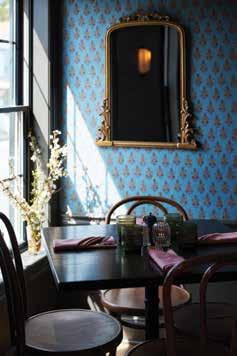
“Bea’s is more intimate and sexy, a little romantic, with darker finishes and warmer tones. Definitely a datenight vibe.”
carpentry. Wine dinners and other events are being planned with her sister, Mary Daire, of Daire Bottleshop & Provisions, right up the street in Lenox. For the interiors, Molly is incorporating family heirlooms from her grandparents’ house in Pittsfield, where her mother and aunts grew up. And, as always, her husband, David Joseph, serves as her “biggest support system” in countless decisions big and small at Bea’s Place.
Her longtime collaborator Zack Sosne of bramble! interior design studio consulted on several of the finishing touches. “She’s
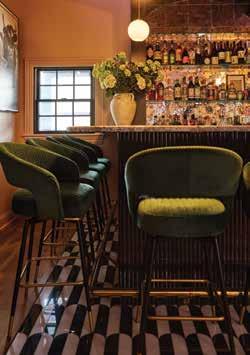
got a great eye, and just needed someone to bounce ideas off of,” he says, including things like paint colors, bathroom wallpaper, tile, and fabric on the bar seating. The result is a bit of a departure from their other projects. “Boema is playful and the space is very open,” Zack says, “but Bea’s is more intimate and sexy, a little romantic, with darker finishes and warmer tones. Definitely a date-night vibe.”
Warm touches abound throughout Bea’s House, from the vintage glassware to the Persian rugs to the layered lighting cast
It’s the Bea’s knees
from a mix of table and floor lamps, and sconces. “When you walk in, you feel like you’re entering someone’s home,” Molly says. “I want people to feel like they can take a break from this crazy world, to feel comfortable and taken care of.”
Chef Jorge Rivadeneyra is at the helm in the kitchen, with a menu that features timeless dishes inspired by the seasons and built as much as possible on the bounty of the Berkshires.
Molly’s personal approach to hospitality starts with the Bea’s staff. Her team includes several people who have worked with her for many years. That family feeling extends to the greater community as well, down to the high school level. Molly is determined to bring local teens on board and offer them positive work experiences, just like the one she had in her first restaurant gig at 14 years old.
Chef Jorge Rivadeneyra is at the helm in the kitchen, with a menu that features timeless dishes inspired by the seasons and built as much as possible on the bounty of the Berkshires. The cuisine is described as New American, featuring a range of global influences and flavors rather than a single culinary direction.
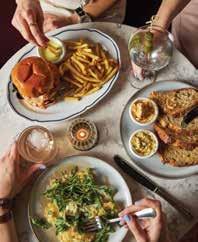
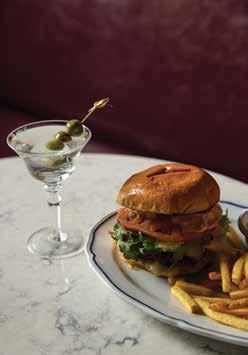
Diners can expect homemade pastas and breads, roast chicken with thyme jus in the dining room, and smash burgers
with house-made aioli and frites at the Parisian-inspired bar. Molly has tapped Jane Burns, “a local hero in the bar world” and beverage director at Pizzeria Boema, to take the mixology up a notch at Bea’s.
The hardest part of this new venture may have been coming up with the name, which took more than a year. [Editor’s note: We love the name!] They finally settled on a simple one. Bea’s House combines Molly’s middle name with the notion of a familiar place to gather and retreat. The goal is to seamlessly offer the same warm hospitality and generous spirit that inhabited the space for decades, but with a new cast of characters, a modern classic menu, some special house cocktails, and a bountiful garden filled with flowers and food.
“That’s my purpose and my passion,” says Molly. “I love creating spaces for the community.” B
Sunny Delights
From Walton Goggins’ favorite pizza to the salsa that keeps a Hillsdale farm humming along when it’s hot outside, friends of The B shared their favorite bites of the Berkshires
1 Jack Luber, restaurateur, owner of (the recently shuttered) Hy’s Fried
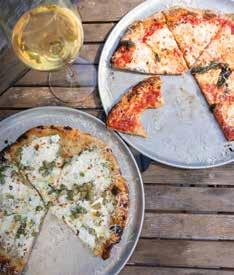
My family and I have a summer tradition of getting Tommy B’s pizza and taking it down to the lake and getting on the boat until sunset. We love us a true New York pie. tommybspizza.com
2
Walton Goggins, actor Dinner at Hilltown! hilltownhotpies.com
3
Damon Clift and Diane Creed, owners of Hawk Dance Farm
Salsa made with heirloom tomatoes, hot peppers, onions, and cilantro from our farm. We put a lot of love into what we grow and you can taste it. hawkdancefarm.com
4
Frank Muytjens, co-owner of The Inn at Kenmore Hall
My favorite summer bite has to be the Pan Bagna from Bizalion’s. It’s made with the freshest of ingredients: tapenade, tuna, hard-boiled egg, anchovies, and greens on a fresh crispy baguette. If I close my eyes I can picture myself sitting on the cay of a small unspoiled fishing village in the South of France, basking in the sun and watching the boats come in. bizalions.com
5 Dana Veraldi, chef and doula
Anything topped with micro cilantro from Vibrant Farm in Bantam. vibrant.farm
6 William Li, contributing editor to The B
The soft serve (twist) in a wafer cone at Modern Milk Bar. modernmilkbar.com
7
Gayle Kabaker, multiple-time New Yorker cover artist
I love to eat a salad from my garden in the summer. Greens plus tomatoes is one of my favorite things. And I love picking vegetables!
8
Kate Maguire, artistic director, CEO of Berkshire Theatre Group
My favorite summer bite is my daughter Isadora’s spanakopita, shared on her front lawn with my grandchildren as the late afternoon light settles in. With the music of Tanglewood drifting across the street and a gentle Berkshire breeze in the air, it feels like pure magic—and a perfect summer moment.
9
Marley Freeman, painter
I mean, it’s obviously Bistro Box, even though the line is crazy. But it’s just fun to stand there and have a burger once a summer. thebistrobox.rocks
10
Andrea Westerlind of Westerlind boutiques
Local corn, when it’s in season and you don’t even have to cook it. And snap peas—the ritual of picking them off the vine, stringing them, and that sweet crunch!
Hilltown
Modern Milk Bar
Bistro Box
Now You See Him
Elegant and intimate, Benjamin Levy’s Parlor Magic at The Red Lion Inn channels decades of craft into a dazzling performance
By Amy Conway • Photographs by Stephanie Zollshan
You might say that Benjamin Levy’s Parlor Magic show at The Red Lion Inn is decades in the making. Not just because he’s been learning and perfecting sleight of hand tricks since he was ten years old, but because when he was a teenager, he wrote to Jack Fitzpatrick, the then-owner of the iconic Stockbridge hotel, asking, “Would you like a magician to perform in the lobby, or in the dining room, going table to table?”
As Levy recalls, he got “a perfectly nice letter back saying, ‘No, we would not like anything like that.’ And so I didn’t approach The Red Lion again until a year and a half ago,” he says.
It was worth the wait. Levy has had a full career, performing magic at corporate events for many years, astounding executives by sneaking the watches off their wrists, reading their minds, and printing $100 bills before their eyes. As word traveled of his
mind-boggling talents, he was booked to perform for celebrities, socialites, and even President Obama.
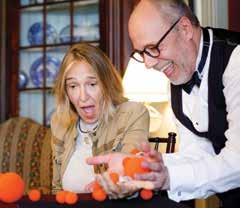
Levy is a master of sleight of hand, the skillful, precise manipulation of objects— often commonplace ones like cards, rings, or balls—to create impossible illusions. This is often called “close up magic” because the feats need to be performed right before the audience. So close in fact, that you feel sure you can catch the trick as it happens (but you never do).
Levy grew up in Brooklyn, spending summers and long weekends in the Berkshires after his parents bought a log cabin near the Stockbridge Bowl; his mom was a pianist and his dad ran an advertising agency. (“I got her hands and his business brain,” he says.) He taught himself magic as a kid after trying out coin collecting, stamp collecting, and
puppet shows. “Magic was special,” he says, and he loved to entertain.
He learned from books, figuring out tricks from black-and-white photos, line drawings, or even just written descriptions. Unlike the videos aspiring magicians watch today, the bare-bones instructions didn’t come with a script or sense of timing. As
he practiced and got better and better, Levy developed his style along with his skills.
After studying theater at Vassar, Levy worked on Broadway for a few years before going into magic full time, placing classified ads in New York magazine to offer his services. He wasn’t the only magician trying to book gigs for birthday parties and corporate events; his father’s influence kicked in and Levy asked himself: What’s my unique selling proposition? The answer: “It was to go elegant, expensive. Everyone else was trying to go cheaper, I went the other way.”
His strategy worked, and he was hired for dinner parties by the New York social set and for business events, where he impressed by recalling everyone’s first and last names after hearing them just once. This led to coaching sessions with VIPs—including Michael Bloomberg—who were eager to learn his memory techniques. President Obama’s fiftieth birthday party was a career highlight.
Eventually, Levy craved work more rewarding than performing for “rapacious business executives,” work that would make a different use of his brain. He got a master’s degree and became an English teacher in Westchester County. “It was a riot,” he says. “I’m doing a show for Barbara Walters at night in her apartment, and then the next morning, I’m teaching ‘Lord of the Flies.’” His talents as a presenter, entertainer, and explainer were a perfect fit for teaching.
Another transition—retirement—brought him to the Berkshires five years ago. Levy
“I’m doing a show for Barbara Walters at night in her apartment, and then the next morning, I’m teaching ‘Lord of the Flies.’”
and his partner, Jennifer Patton, who just happens to be the director of education at Berkshire Botanical Garden, now live in Great Barrington across from a sheep farm. They have five kids between them, ages 19 to 29, and two dogs; Levy’s mother, 94, lives in South Egremont.
The Berkshires, it seems, are nudging him back out of retirement. Parlor Magic, at The Red Lion Inn, sold out every performance when it debuted last summer. It’s an intimate show with just 21 seats, all only a few feet from Levy and his magic hands.
It’s also a very personal show. “I can do the secret moves that I’ve mastered but never got the chance to use,” he says. “At this point in my life, this is the show I want to do.” B
Benjamin Levy’s Parlor Magic The Red Lion Inn, Stockbridge 12 Thursdays, 12 Shows, from June 25 to Sept 10 parlormagicshow.com
Zarna Garg
Story Time
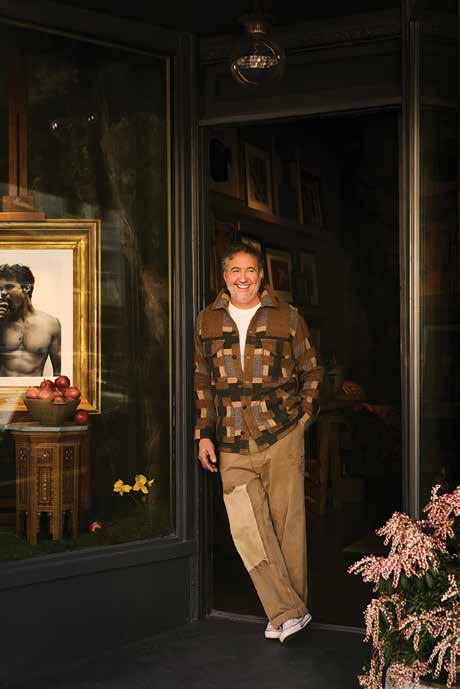
For Alfredo Paredes, every room is a narrative. His new Hudson studio is his most personal chapter yet.
Alfredo Paredes has spent 30 years building other people’s worlds. Now, on Warren Street, he’s built his own.
The former chief creative officer of Ralph Lauren—the man who shaped the brand’s flagship stores, conjured its legendary mansion presentations, and brought The Polo Bar to life—has opened Alfredo Paredes Studio in Hudson, New York. It is, unmistakably, a first act that feels like a culmination.
I had a front-row seat to his genius. When I served as president of Ralph Lauren Home, I watched Paredes do what few designers can: make rooms feel like memories. He doesn’t decorate. He narrates. Spaces unfold under his hand the way great films do—layered, emotional, alive. Since leaving Ralph Lauren, Paredes has led his own design firm, taking on residential and hospitality commissions across the globe. Hudson is where that practice finds its permanent home base: a studio, a shop, and a statement of intent.
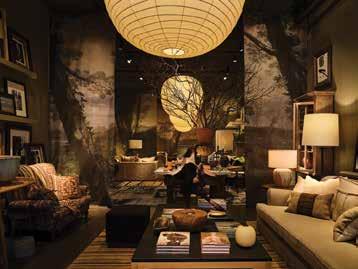
The space announces that sensibility the moment you cross the threshold. Paredes’ own furniture line anchors the rooms: generous in scale, grounded in natural materials, built to age beautifully. His fabrics and rugs extend
“Spaces unfold under his hand the way great films do—layered, emotional, alive.”
friends.
that vocabulary—pattern and texture that feel collected rather than designed. Vintage pieces, art, linens, and found objects move through the space like old friends.
“I wanted somewhere the furniture could live alongside great art and found objects,” he says, “the way things come together in a well-lived-in home.” It feels less like shopping than like being let inside somewhere private.
There’s function here, too—Farrow & Ball paints and Fine & Dandy wallcoverings make the studio a working resource for the designers and renovators who flock to this stretch of the Hudson Valley. But the soul of the place is something rarer: a point of view, fully formed and fiercely felt.
Hudson, with its collector’s eye and reverence for provenance, was always the destination. “There’s a real community here,” Paredes says, “that understands craft— and the idea that a space should tell a story.”
He would know. He’s been telling them for decades.
—William Li
Vintage pieces and found objects move through the space like old
From Traveling Kitchen to Dining Destination
No more schlepping around for Haema’s Hannah Wong and Sarah McLaughlin
The couple, who met and fell in love while working at The Aviary in Kinderhook, are now about to become first-time restaurant owners—together.
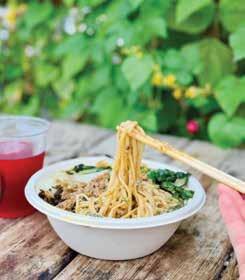
When the pair left The Aviary in 2024, they turned their talents to Haema, their traveling kitchen that specialized in Asian street food by way of the Hudson Valley. Haema is a homonym for the Icelandic term meaning “at home.” After more than a year with no fixed address and “a lot of schlepping,” as Wong put it, the traveling restaurant has found a home, in the former Bar Bene space on Hudson’s Warren Street. If everything goes according to plan, doors will open shortly after Memorial Day.
“This restaurant is the concept that has been in my mind for a while, and Sarah was the missing piece,” Wong said of her partner’s excellent skills as a general manager. “I admired how she held herself with the guests; it was the kind of hospitality and warmth I’d always envisioned.”
Fans of the traveling Haema stand will find the same bright, fresh flavors, now with more elevated options. Wong is particularly excited about putting a noodle section on the menu. “Hand-pulling noodles on the spot in the middle of a farmers market doesn’t really work—trust me,” she said.
What will make the noodles even more delicious, McLaughlin said, are the sauces made out of ingredients they’ll ferment in the basement larder.
“We’ve developed strong relationships with farmers and, as a small locally owned Hudson business, it’s important to be supportive of the local economy,” said Wong. “And if we can do that with local mushrooms and pork, why not?”
“And if we can put in a slushy machine while we’re at it,” added McLaughlin, “even better.” —Lauren Mechling
Tanglewood’s Best Kept Secret Revealed
Outrageously talented high school classical musicians take center stage this summer
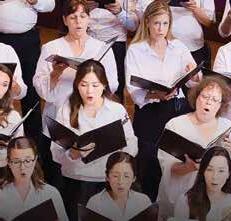
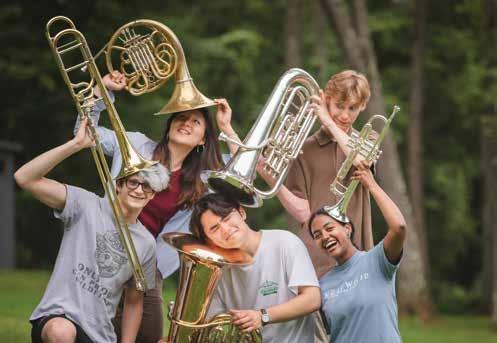
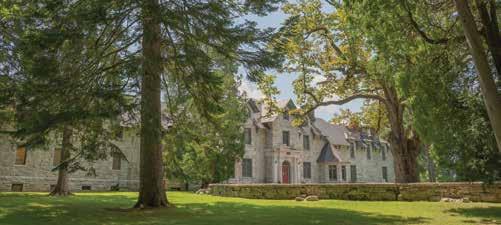
About a mile up the street from the Tanglewood Campus, a grand stone mansion emerges surrounded by over 60 acres of pastoral landscape. This Gilded Age setting is home to the Boston University Tanglewood Institute and come June, it’s anything but tranquil. Four hundred or so outrageously talented high school musicians will descend, hand-picked from 40 states and 15 countries. The campus becomes electric as they arrive for what could be the most rigorous, exciting, and inspiring musical experience of their young lives.
“The high school students who are coming to BUTI truly are Olympic level, elite athletes of classical music,“ said executive director Nicole Wendl.
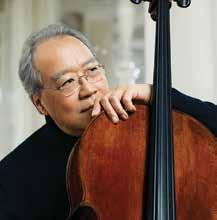
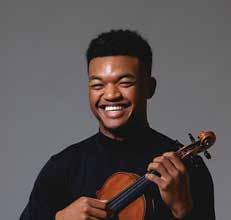
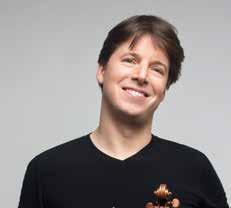
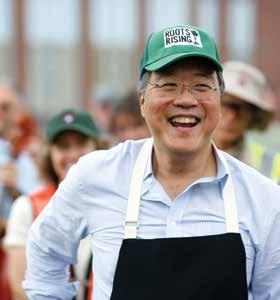
This year marks the 60th anniversary of the BUTI program, commemorated with performances, events, and concerts throughout the summer. Highlights include alumni from across the decades performing side by side with this year’s students, and events featuring world-renowned artists YoYo Ma, Joshua Bell, and John Luther Adams.
This year marks the 60th anniversary of the BUTI program, commemorated with events and concerts.
the Boston Symphony that you get to listen to every week—that was going from 0 to 100 in the best way possible,” said Baker. “I realized, okay, maybe I have to play more scales!”
Madeline Cagle, a French horn player studying music performance at LSU, also came to BUTI from a small town, in Alabama. “BUTI is intense. You break out of your shell,” she said. “You meet people, and realize, wow—this might be a possibility for me.”
For the public coming to hear Tanglewood concerts, the BUTI performances might be the summer’s best kept secret. Tickets are low priced and, in some cases, free, and the experience can be exhilarating.
“The students are just so excited. They let go and take more risks,” said BUTI alum and clarinetist Jose Aguilar, now at Northwestern studying music and international relations. “That’s a really cool thing to experience in music.”
At BUTI, the students take the spotlight. “You’re immersed,” recalled Josh Baker, associate principal bassoonist of the Boston Symphony Orchestra and BUTI alumnus.
Originally from Idaho, where few people had his passion and dedication to classical music, attending BUTI was the first time he realized music could be his profession.
“The students inspired me, the workshops, the Tanglewood Music Center,
The clarinetist noted that sometimes the beauty and joy in a piece of music can be overlooked in pursuit of technical perfection.
“In orchestra jobs, you play the same thing over and over again, and it doesn’t always bring you the same amount of joy and fulfillment as it does those first times,” he said. “A BUTI performance is exactly that first time, and it’s so special to be able to hear that.” —Heather Keller
SIMPLY AMAZING!
BECAUSE WE GE T HH I T DO NE TH E RIGH T WA Y.
APRIL 2026
H
H H H H
They are truly masters of their craft!
Want ing a full kitchen renovat ion, we did not know where to star t . Morrison’s came to our home, listened to our exact hopes and designed t he kitchen of our dreams .They suggested ideas and brought exper t ise, creat ing a breathtaking kitchen t hat t ruly leaves an impression!
Their exper t craf tsmanship paired wit h high-qualit y products and custom design created bet ter flow, funct ionalit y and increased space for movement . They were so creative and knowledgeable in developing a custom design to make t he most of t he space and meet our needs and wants .
Their honest open communicat ion and const ant commit ment to exceed our expect at ions developed last ing t rust in t he team and process . The final product is astonishing! The kitchen is stunning, we absolutely love it ! They are t ruly masters of t heir craf t and are just as t hey say, “Simply Ama zing! ”
We are beyond grateful for our new kitchen and highly recommend Morrison’s!
With much gratitude, The Borsellino’s
Documenting America’s Past
Celebrating the Fourth at Chapin takes you back to where democracy began
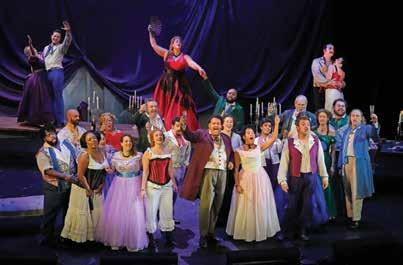
Williamstown’s own unique celebration of the Fourth of July started back in 1987, when the Chapin Rare Books Library at Williams College teamed up with actors in town for the Williamstown Theatre Festival. The idea was to celebrate and remind people that Williamstown was one of a few places where you could find originals of each American founding document.
The first reader was Harry Groener, an actor in town for the little-known historical drama “Campion,” who read a selection from the Declaration of Independence for about 100 curious onlookers.
“It was very moving, I just wanted to burst into tears at times,” Groener told a reporter for the North Adams Transcript. “It hits right at the heart.”
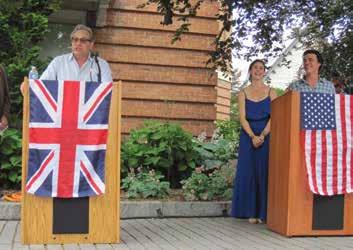
After Groener’s declaration came English actor Richard Kneeland, who was in “The Crucible” that summer. In his plummiest accent, he read the lesser-known response from British authorities, a copy of which the library also has. In patronizing tones they urge the rebels to abandon “the unjust and precarious Cause in which they are engaged.”
To be sure, the event has changed and evolved through the years, but the purpose remains the same—to focus on the founding principles in their most immediate form.
“The program gives our audience a chance to consider texts that are new to them and ones they might not have encountered since high school,” said Chapin Librarian Anne Peale. “Even though I’ve been at Williams for almost a decade, I hear something new in the readings each year.”
The Chapin was founded in 1923 from the collection of alumnus Alfred Clark Chapin, a New York politician and collector who was the last mayor of independent Brooklyn. That formed the heart of the collection that continued to grow into its space on the second floor of Stetson Hall on campus.
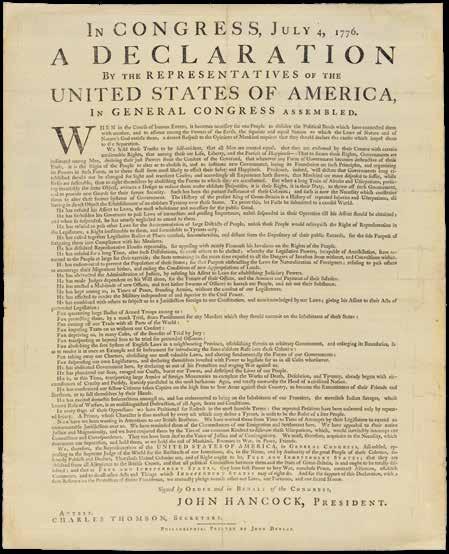
In April 1983, the library’s then head Robert Volz pulled off a coup when he lined up funding from alumni and friends of the college to buy at auction an original copy of the Declaration of Independence for $412,500 (about $1.3 million in 2026 dollars).
It was a Dunlap Broadside, one of about 200 produced by Philadelphia printer John Dunlap on
“It was very moving, I just wanted to burst into tears at times. It hits right at the heart.”
the night of July 4, 1776. Only about 26 are known to still exist. It completed a set that included a copy of the Articles of Confederation, the Bill of Rights, and a draft version of the Constitution once belonging to George Mason that included his detailed notes and objections written on the back.
In 1987, the library was looking for ways to highlight its holdings as part of the Constitution’s Bicentennial. For years the reading was held in the Chapin reading room itself, with performers orating
from the upper level. Festival regulars who participated include actors Kate Burton, James Naughton, Roger Rees, Tom Tammi, and Jessica Hecht.
The Chapin hosts over 80 class sessions throughout the year, but the Fourth readings are a chance to meet an audience that might not realize what they’re in for.
“More visitors come to Special Collections on the Fourth than any other day of the year,” Peale said. “It’s an opportunity for us to share our collections with community members who might not ordinarily visit the library.”
Recent variations of the event have expanded to highlight the library’s other holdings, like Frederick Douglass’ essay “What to the Slave is the Fourth of July?” Last year, they added Stockbridge-Munsee leader John Quinney’s 1854 speech pointing out the hypocrisy and violence of American expansion. This year will include a speech from 1876 by future president James Garfield, who attended Williams.
In 2023, after consulting with independent conservators, the documents were removed from permanent public view to reduce exposure to light, but are brought out for the midsummer celebration. The event also moved to nearby Chapin Hall, a space with better acoustics and room for larger groups.
The Theatre Festival has also reimagined itself, moving to a biannual model with “pop-up performances, exclusive events, readings, and more.” Peale said there are talks to find a way to include them in the event this year.
Meanwhile, the Library will use its exhibition space to open a new gallery featuring objects from the Revolutionary era. “My job is to connect people with stuff,” Peale said. “The greatest joy I have is when I can help find a book or manuscript that shapes the course of someone’s research or changes the way they think about the world.” —Christopher Marcisz
Readers of the Declaration of Independence can’t keep a straight face as comedian Lewis Black interprets the British Reply.
PHOTO: JENN SMITH
THE PARENT TRAP
Local artist residencies are making their programs accessible to moms and dads— and their crafty kids
Artist residencies are notoriously competitive. With hordes of applicants jockeying for limited slots, hiding one’s parental status from residency selection committees is not uncommon. Get in first, then figure out the rest later, is how the thinking goes.
But, finally, residency programs are starting to welcome not just artists but the children and elderly loved ones they care for. With some creative scheduling and a commitment to working artists who happen to be parents, these innovative programs in the region are worth watching. —Emily Goligoski
1
Collar Works, Granville, NY: A 77-acre farm provides the backdrop for the Elizabeth Murray Artist Residency (EMAR), created in 2017 to offer support, respite, and productive time for emerging, established, and underrepresented artists. (For the non-artists among us, the namesake painter’s work is on view at MoMA this spring.)
Elizabeth Dubben, director of Collar Works, said that during the EMAR Parent Residency, “artists have dedicated time and space in the studios to focus on their work and to build connections with fellow artists, while their children participate in a parallel residency in the form of a week-long art and nature program.” Artists, their family members, and staff eat a communal dinner together each evening. collarworks.org/emar
2Wassaic Project: Wassaic, NY:
Started in 2015 following the urging of past residents who expressed a wish to bring their dependents, the Wassaic Project’s Family Residency program welcomes children and elderly parents. Once it was able to secure a private house where family artists-in-residence could stay, the artist-founded Wassaic Project was keen to oblige the request.
Co-founder and artist Eve Biddle said, “We recognize that artists who have caregiving relationships, as providers or recipients, often opt out of peer community building for practical reasons, and we aim to provide family accommodations which increase access to our residency program.” While some residencies consolidate
family visits, Wassaic Project mixes individuals and families throughout the year, encouraging networking with people who aren’t caregivers to further the practices of all participating artists.
“Sometimes what you miss as an artist parent is those longer stretches of time to hang out and chat with other artists and be in community— residencies allow families to attend.”
“Sometimes what you miss as an artist parent is those longer stretches of time to hang out and chat with other artists and be in community, especially as art openings are around kids’ bedtimes and few—although it’s starting to change—residencies allow families to attend,” said Hannah Rowan, an artist who took part in a Wassaic Project residency 10 years ago and returned with her family last summer. “The folks running Wassaic are really perceptive to those needs and in tune to what makes a fun residency.” wassaicproject.org/residency 3
MASS MoCA, North Adams: When asked why she believes that hosting visiting artists’ family members is important, Senior Manager of The Studios at MASS MoCA Carolina Porras Monroy put it simply: “Attending artist residencies is a privilege many cannot afford!” She went on, “Many residencies do not have the infrastructure to support artists to bring their families with them, which means that parents are pulled away from their children when they have artistic opportunities.” Porras Monroy is an expert on the topic: She catalogs artist residency programs across the U.S. as co-publisher of Piney Wood Atlas guides.
Artists selected for the Family Residency program receive a fully supported twoweek residency that comes with a $600 stipend, 24/7 access to an assigned studio on MASS MoCA’s campus, and a private apartment near the museum. Applicants can submit in September and October for residencies the following August, with timing aligned to Camp MASS MoCA. Children of artists-in-residence gain access to the museum’s day camp, with sessions this summer set to include weeks for Cardboard Everything! and Skateparks, Arts, and Advocacy. massmoca.org/studios
Berlin Reed brought a special studio assistant during his 2023 residency at Wassaic Project.
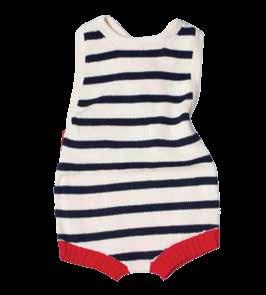
Knit Sleeveless Baby Romper The Shop Around the Corner, Stockbridge; $78 @theshop.aroundthecorner
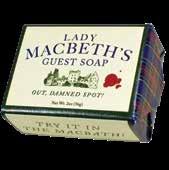
Lady Macbeth’s Guest Soap Shakespeare & Company, Lenox; $5 shakespeare.org
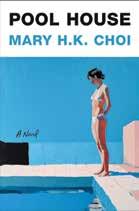
Pool House by Mary H. K. Choi Chatham Bookstore, Chatham; $30 chathambookstore.indielite.org
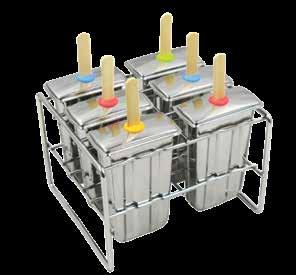
Metal Popsicle Mold Set One Mercantile, Great Barrington; $48 sett.onemercantile.com
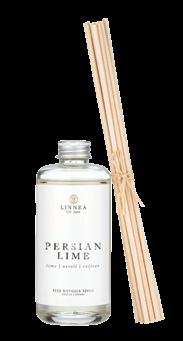
Linnea Persian Lime Diffuser Scout, Great Barrington;
Organic
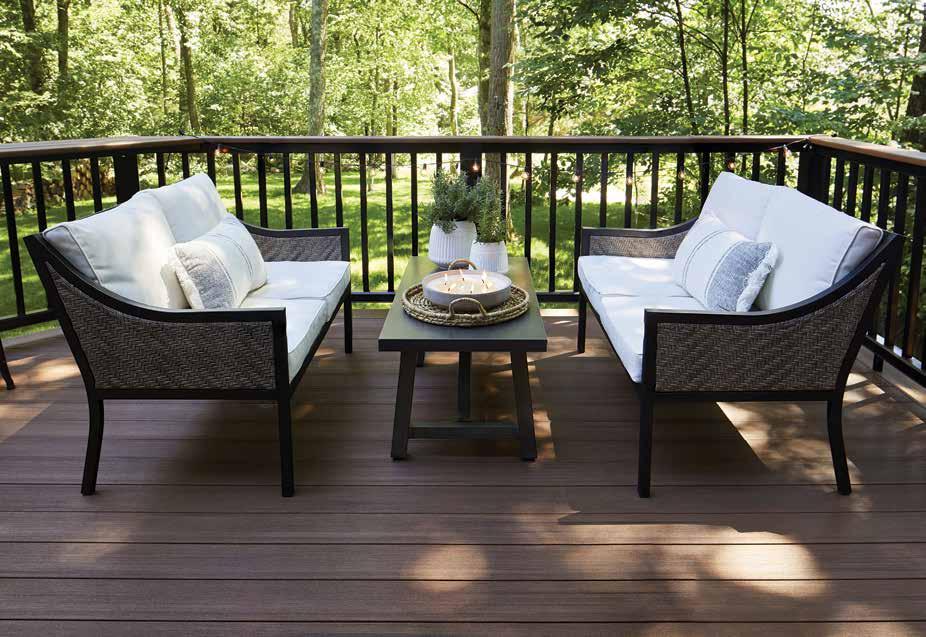
TimberTech Decking blends the warmth and beauty of natural wood with splinterfree comfort, low-maintenance ease, and long-lasting durability—including toprated fire resistance in select collections. Crafted with proprietary technology and a majority of recycled materials, it offers a more sustainable choice than wood so you can create a beautiful, resilient outdoor space that lasts for decades.
Maum’s the Word
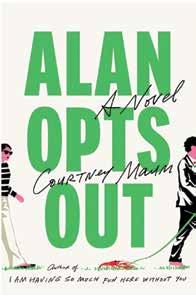
Litchfield County author Courtney Maum conjures midlife meltdowns and Real Housewives of Litchfield County in her witty new novel
Courtney Maum remembers the exact moment. It was months into the pandemic, and she’d simply had it. Newly transplanted from the Berkshires to Norfolk, Connecticut, she was juggling work Zooms and panicked group texts and helping her then-6-year-old daughter learn how to read. One afternoon, Maum stepped into her backyard, lay down on the ground, and thought: I’m done. Really and truly. She wasn’t the only one. Her across-thestreet neighbor had also had enough. Unlike Maum, he wasn’t afraid to show it. He stopped wearing shoes. He started wearing ponchos. He didn’t answer texts, but he was always easy to find—in the treehouse where he’d taken to spending all his waking hours. “There was some nude bathing, too,” Maum
says, sounding faintly delighted at the memory. “Watching him externalize what I was feeling was somewhat satisfying, and it was definitely the seed of my book.”
She’s talking about “Alan Opts Out,” her warmhearted and astutely observed Connecticut comedy about a couple who get their aspirational wires crossed. Alan, the prosperous ad man, suddenly questions the values he’s selling to the rest of the world. Morals aren’t much of a concern for his wife, Vivian, who wants nothing more than to fit in with the Joneses—a pursuit that will be easier once she acquires the perfect at-home red-light skincare contraption, a spot in the queen bees’ social circle, and a new pool out back.
From the ladies who titter over mocktail hour to the neighbors on the town chatboard banging on about other people’s garbage cans and lawn permits, Maum’s book might feel familiar to anybody who has taken note of other people’s Amazon deliveries or ducked a nosy neighbor at the grocery store. The author says the book’s setting is based on Greenwich, Connecticut, but many of the details feel too vibrant not to have been plucked straight from her own local Facebook groups. Born in Connecticut, Maum has spent nearly two decades in the Berkshires and northwestern Connecticut, first in Sandisfield, then in Norfolk, after a search for daycare nudged her family across state lines.
An early job as a reporter for The Berkshire Eagle offered Maum an excellent window into the theater of small-town living. “You go to enough town halls and you start to think about how your grass height affects your neighbor,” she says over FaceTime from her vintage Mercedes-Benz station wagon. “It has an eight-CD player,” she offers from the parking lot of a local library. (She was driving to a dentist appointment, and stopped along the way for Wi-Fi.)
Maum’s fascination with the quirks and customs of a community fueled the columns she used to contribute to the B, and is a key driver of “Alan Opts Out,” which was optioned for television by the producers of “Ted Lasso.” While Alan refuses to go to his office anymore, taking meetings from his treehouse, Vivian wants to perform the *
Maum’s book might feel familiar to anybody who has taken note of other people’s Amazon deliveries or ducked a nosy neighbor at the grocery store.
local life: Book Club
perfect life, and is ready to master all the dark arts that come with it. She learns to host elaborate themed parties, with wowie-zowie tablescapes and flower arrangements to die for.
“Flower arranging is definitely a thing that a lot of women I know are doing these days,” says Maum, who once worked as a trend forecaster in Paris. “I could definitely see enormous floral arrangements becoming the next new thing,” she says. Maum recalls another “thing”—this one a thing of the past. When she first moved to the Berkshires, her cohort was obsessed with having potlucks. “I was like, goddamn it. Can someone just invite us for a proper meal, because now I’m bringing my own food and my own wine, and I’ll just stay home,” she says with a smile.
When she entertains, she likes to keep it simple. “It’s really about the people, isn’t it?” she asks. A day spent tidying and shopping and cooking is not her idea of a good time. Friends gathering around a baked potato bar? That’s more her speed. “I don’t have time for a multi-course meal,” she says. “I just want to be with the people I like enough to have over, and who like me enough to leave home for.”
That casually bountiful spirit comes through in Maum’s writing. Her books have been about everything from her love of horses to the interior life of Peggy Guggenheim. She also pens Before and After the Book Deal, a wildly popular Substack about the business of writing, named after her bestselling book on the same subject. With a number of titles under her belt, Maum is approaching promotion differently than she used to. In a recent Substack post, she swore off writing personal essays as a means to selling more copies of her book. “If I want to write about something, of course I will, but I can also say no to things that don’t feel right,” she explains.
This sense of equanimity comes through when discussing the launch of her novel, to be held June 2 at the Norfolk Public Library. “Some of my friends and neighbors are going to be there, and it’s at my wonderful local library,” she says. “If you bring the right people together at the right time and place, it’s guaranteed to be fun.” B —Lauren Mechling
G R O . L A V I T S E F A F I M . W W W
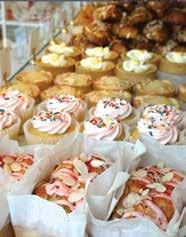
Candy Crush
First she helped Martha Stewart build her brand. Then she focused on her own rebrand, and morphed from hotshot marketing executive to Great Barrington candy slinger.
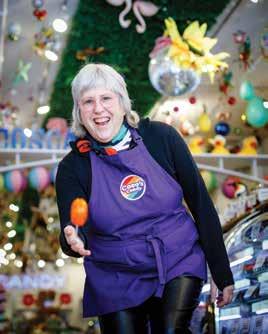
Acouple of years ago, Elise Contarsy couldn’t have told you the difference between a Strawberry Pencil Bite and an Elderberry Pig. She had certainly never sampled a Sour Flush. That all changed last summer, when she became the new owner of a venerable candy shop on Great Barrington’s Main Street. “I love the happiness candy brings to children of all ages,” says Contarsy. “And I also like that it’s high-margin and non-perishable.”
Becoming a small business owner was an unexpected move for the former merchandising executive, who once helped brands like Martha Stewart build mass-market retail businesses. During the pandemic, Contarsy and her family relocated from Westchester, New York, to a Greek Revival home in Ashley Falls. They had long come to the Berkshires for summer camp and winter skiing. After they moved, she served as CEO of a startup with a remote workforce, but eventually resigned. “I wanted to be near people again,” she says.
And then she learned that Robin’s Candy Shop, a picturesque Great Barrington institution that has appeared in American Express ads and a “Barefoot Contessa” episode, was for sale. The store, which had moved from Millerton, New York, in 2008, was a natural fit for an extrovert with business chops. Once her offer was accepted, she renamed the shop Coco’s Candy in honor of her standard poodle, Uncle Coconut, a regular fixture on the premises. The nostalgia-core holiday ornaments hanging from the ceiling, and stuffed penguins in the window remain. But the retail guru has made some sugarcoated tweaks, including a giant gumball machine visible from the street, and bungee dish chairs that welcome guests out front.
Now, what kind of candy do people
want? It’s been an education. “Kids today don’t buy a Charleston Chew,” she has discovered, “but they do buy a Nik-L-Nip.” She carries both, of course, along with the Sour Flush, a runaway hit with children ages 2-7. “It’s like Fun Dip, but the candy is inside a plastic toilet. It’s one of the highest restocked items I have.”
She also sells ginormous chocolate-andcaramel turtles (“We call them tortoises”), summer staples like fudge and saltwater taffy, and imported treats like Coffee Crisps. But the licorice case—stocking what she boasts is the largest assortment in the Northeast—is her pride and joy. “We’ve got over 30 varieties, from Dutch cats to school chalk,” she says.
At Coco’s, life is sweet—and every sale comes with a free toothbrush. “I joke that I liked the licorice so much that I bought the entire store.” —Ingrid Abramovitch
Elise Contarsy makes the world taste good.
A Lakeside Lineup
Mohonk Mountain House keeps the music playing all summer long
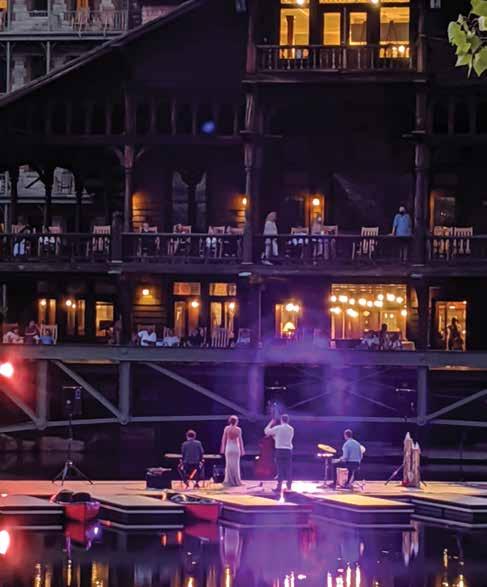
After 157 years, Mohonk Mountain House has never sounded so alive. Birdsong mingles with Queen hits, Mozart floats down forest trails, and a Broadway diva’s voice skips across Lake Mohonk. It’s the rare spot where quiet contemplation and vibrant celebration happily coexist, offering a resort experience as entertaining as it is relaxing.
Mohonk’s summer soundtrack
Mohonk Mountain House hosts over 100 events each year, so there’s always something special going on.
The Summer Showcase series (Wednesdays, July 1-September 2) is a summer-long string of celebrations. Lakeside Lawn Parties consist of outdoor concerts on the dock, magicians and acrobats. They alternate with Mohonky Tonks, featuring live country music and line dancing. A Full Moon Party under the stars on July 29 rounds out the schedule. All Summer Showcases are accompanied by pop-up markets with local vendors.
s’mores around the campfire, outdoor movies, crafts, archery, music and more.
Moving into fall, Music on the Mountain (September 7-13) brings together an eclectic range of musicians including singersongwriter Natalie Merchant, American Idol alum Drew Angus, and Broadway star Julie Benko accompanied by pianist and composer Jason Yeager.
A place to recharge
Amidst all the festivities, Mohonk offers plenty of opportunity to tap into the mountain’s quiet energy, just as its founders intended.
“Birdsong mingles with Queen hits, Mozart floats down forest trails, and a Broadway diva’s voice skips across Lake Mohonk.”
Garden Holiday, a tradition going back over 90 years, is scheduled for August 30 through September 4. This year’s event will feature hands-on workshops, behind the scenes tours, history talks and tea pairings, local wine tastings, and a close-up with Mohonk’s bees.
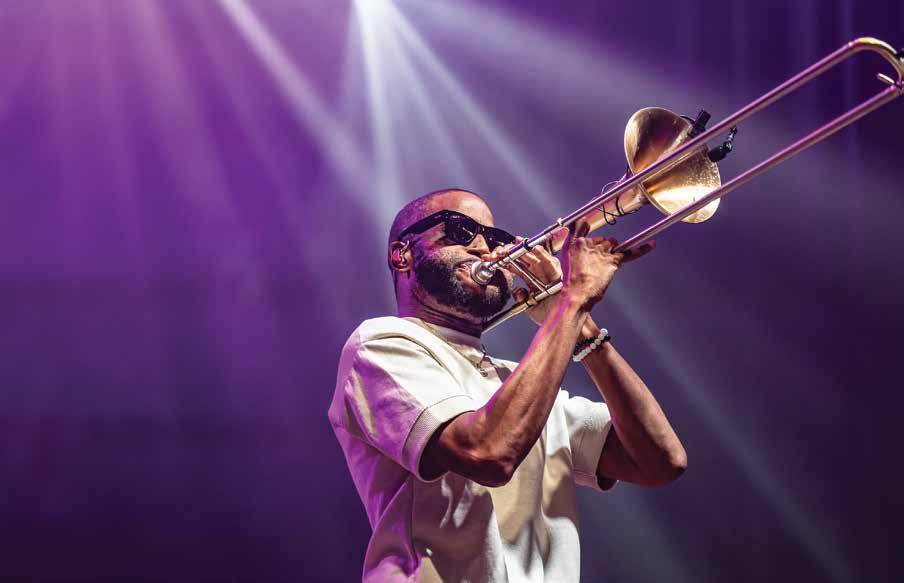
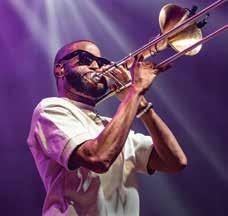
The Festival of the Arts (July 5-August 14), brings six weeks of back-to-back genre-spanning entertainment inspired by Mohonk’s unique landscape, including: Wayne Tucker and the Bad Mothas, with a tribute to Miles Davis’ 100th birthday; The Pete Malinverni Quartet and jazz vocalist Gabrielle Stravelli marking America’s 250th with music from Italian-American composers; classical works from French Romantic and early 20th century composers performed by the Trio Raconteur; Grammywinning jazz singer-songwriter Nicole Zuraitis; and string players from the prestigious TŌN (The Orchestra Now) at Bard College in an evening of classical quartets from masters like Mozart and Rachmaninoff.
Labor Day Weekend sends off the summer season with classic outdoor activities like
When Albert Smiley purchased Lake Mohonk in 1869, his vision reflected his Quaker belief that clarity came from time outdoors. What he and his family built would be more than a resort—it would be a place where people could learn from and, more importantly, connect with the nature around them.
Five generations later, that vision holds true. The resort’s mission, then and now, is to share Mohonk’s serene beauty with guests, offering opportunities for recreation and for renewal of the body, mind, and spirit.
To that end, a stay at Mohonk Mountain House is all-inclusive, so you can skip the logistics and focus on enjoying your stay. Along with your room, your reservation covers three gourmet meals a day, plus weekend brunch and afternoon tea. Guests also have access to meditation, yoga and fitness classes, and an indoor heated pool.
Explore the picturesque outdoors in a myriad of included activities, from hiking and pickleball, to kayaking, paddle boarding and swimming in Lake Mohonk, to nine holes on one of the nation’s oldest golf courses.
For all the excitement in its busy calendar, Mohonk’s driving philosophy is still one of rest and rejuvenation. In a rapidly-changing world, it’s a place to come back to as a family, where memories are made and traditions endure. The resort exists just beyond the reach of time, still a place to slow down, breathe deep, and reconnect with yourself, your family, and the natural world.
Voices of the Berkshires
Our Friends and Neighbors Have Something to Tell You
A Storied Past
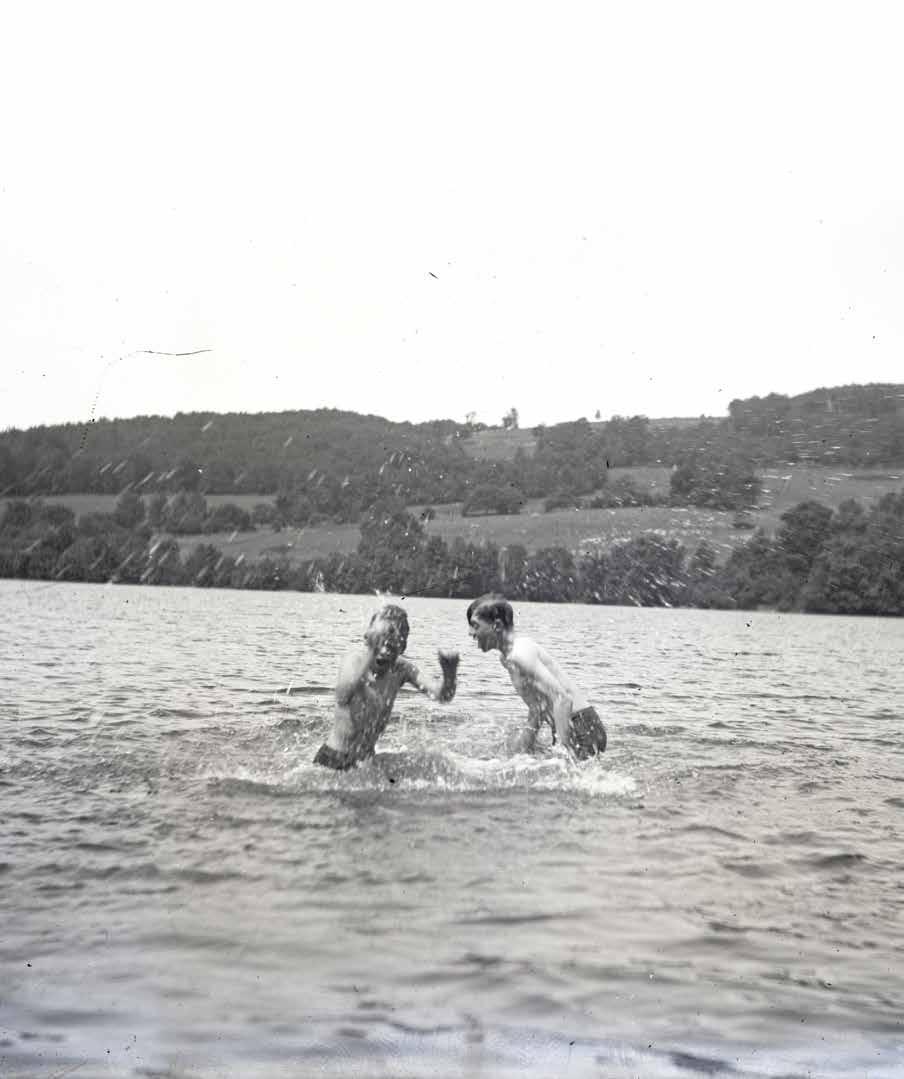
We all know the famous figures who once lived here, but there are also those we don’t know, who nonetheless felt the sun on their faces, and waded into natural bodies of water like these boys. Read more on page 41.
voices of the berkshires: Photo Op
When Negatives are Positives
What looked like broken pieces of glass revealed a Berkshire summertime, one and a quarter centuries ago
By Juliane Hiam
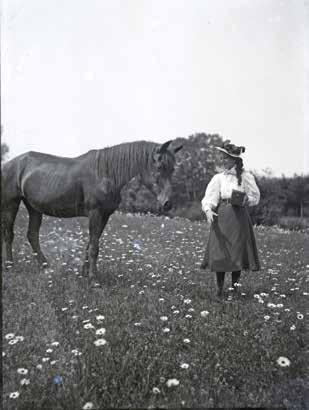
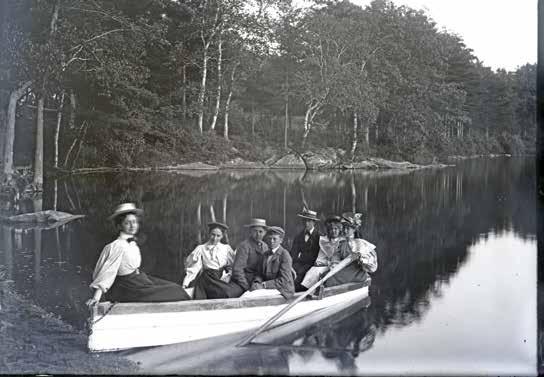
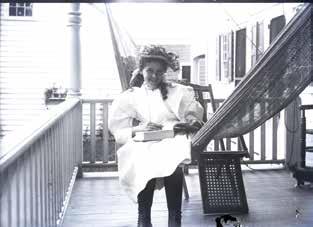
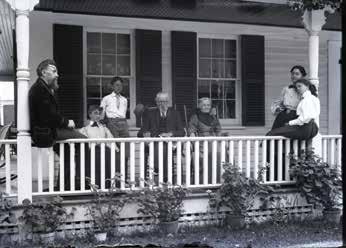
When the images emerged on my computer screen, scanned from the delicate, sharp-edged 19th-century glass plate negatives, I got chills. I saw smiles, shy expressions, people posed on a porch, and on indoor chairs positioned in a yard outside. I saw a Berkshire summertime, one and a quarter centuries ago, in all the expressions we still enjoy today: sunshine and daisies, lace organdie and fine linens, horseback riding, boating on a lake. It was as if I had conjured these people and they were standing in the room with me. But who were they?
These glass plate negatives had been discarded at our local transfer station in North Egremont a couple of years earlier. Bill Wood, the understated renaissance man who was manager of the station at the time, texted me one day and told me about them. There were around 20, thrown into a disheveled paper shopping bag— someone perhaps having thought they were simply broken pieces of glass they wanted to get out of an attic or basement.
I love this kind of thing. I remember realizing at a young age that the stone walls I followed deep into the woods had long ago been the boundaries between open pastures. There was a cellar hole, once a tannery, at the corner of our property that I’d hop down into and use as a playhouse. Even the home I grew up in, a central chimney Cape, felt haunted by the people who once lived there, and I would think of them while I warmed myself at the same fireplace.
The Berkshires have a storied past, and we all know about the famous figures who once lived here: Herman Melville, Nathaniel Hawthorne, Edith Wharton, and so on. But there are also the rest of the people whose names we might not know, who nonetheless worked the land, felt the sun on their faces, waded into natural bodies of water, and adorned their dresses with posies picked in the surrounding fields.
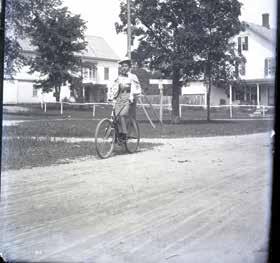
As I studied the photos, I noticed a few details. In one, a girl is holding a camera. It seems to be an early Kodak from the late 1880s. So there were at least two cameras in play when these were taken. There are a couple photographs that feature a bicycle. In the background of those photos, beyond horse droppings scattered in the road, there are some signs: “Van Deusenville” and “Green River.”
This is where I briefly took a wrong turn. I mistook the signs as street signs. They’re beside a building architecturally similar enough that I became convinced this was what is now the Michelin Key hotel Granville House Inn on Division Street in Housatonic, situated beside the corner of Van Deusenville Road and less than a half mile from the Green River. I paid a visit to innkeepers Terry and Terri Coughlan and even made them a set of 8 x 10 prints as a gift. *
The author’s salvaged film revealed images of people who spent their Berkshire summer weekends taking photographs in the meadows and biking in the sun, much as we do today.
They were delighted by my arrival on their doorstep, but dubious when they looked through the photos. I was reminiscing about this funny but slightly awkward moment with Terry recently. Terry, the husband of the couple, had very nicely said he didn’t think it was their property in the photos.
“My heart immediately sank as I studied each picture trying to find some architectural touch point that connected the photos to our property. I wanted so badly for this to be our house,” he said, “not just to have a historical keepsake, but even more so to fully receive this incredible act of kindness.”
I then turned to Elisabeth Wood and Gary Leveille, both members of the historical society, and showed them the photos. They had the same experience I had when first seeing them—that same exuberance in studying all the details captured in the 100+ year old emulsion—except that their expertise steered me back on course.
The signs in the background were not street signs, Gary explained; they were directional signs pointing toward the village of Van Deusenville and the Green River. The corner is what is now Route 71 and Prospect Lake Road. Elisabeth dated the photos to be c. 1895–1901 and identified the people in the photos as Seymour Bouton Dewey, his wife Caroline, their daughter and grandchildren, and Elmer L. Corthell, one of the most notable civil engineers of his time who was very close with the Deweys.
Elisabeth Wood confirmed, “E. L. Corthell had a very long association with the Dewey
family, and often spent the summer with them. Not only did he house his extensive engineering library in their store [now the North Egremont General Store], but he also purchased their property in North Egremont after Seymour Dewey’s death, which he held until his own death. His son afterward owned the property.”
Leveille, author of “Eye of Shawenon,” a book about North Egremont, Prospect Lake, and the surrounding areas, was the perfect person to confirm that the house in the photos sits right in the village of North Egremont, and that the lake in the photos is Prospect Lake. He recognized the boat launch photo as being right at the spot where The Cliff House restaurant resides at Prospect Berkshires, the mountain lake resort that opened last year.
I was then excited to show the photos to Jade Snow-Carroll, one of the owners of Prospect Berkshires. “The property that
Prospect Berkshires inhabits was originally opened as a picnic ground in the late 1870s,” she said. “The land is steeped in the energy of good times, past and present. Seeing these old photographs reinforces that this energy has been here for a very long time and hopefully will continue onward for many years to come.
In the end, the photographs reveal a sunny summer weekend in the Berkshires not so different from now: long days, bike rides, friends and family, a love of nature. It feels as much a representation of today as of then. Who were they? They are us, and we are them. B
The scans and prints referenced here were made with the assistance of Christian Badach. They were gifted back to the Town of Egremont’s Historical Commission.
Clockwise from top left: A boat launch at the North Egremont spot where you’ll now find The Cliff House restaurant; a literary lion of yesteryear; a gathering at what is believed to now be the North Egremont General Store.
June 13, 2026–February 21, 2027
Giorgio Griffa: Paths in the Forest
June 13–October 12, 2026
Ground/work 2025 Through October 12, 2026
Why I’m Going the Speed Limit
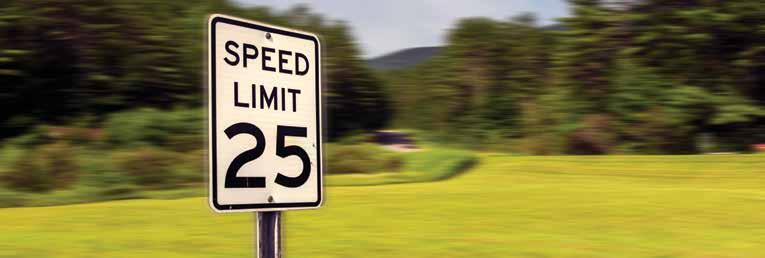
Want to know something quirky? There are at least 10 different speed limits between Craryville and Great Barrington. And it’s only 11 miles between them.
By Gus Heagerty
I’m going to take you to Guido’s first, they have this great hot bar. We can get lunch there and then shop for anything else you might need while you’re staying with us. They have this amazing wellness aisle—gut health, lotions…everything.
Oh, you can turn the seat warmer on if you’re cold.
It takes about 20 minutes to get there from here. Want to know something quirky? There are 10 different speed limits between Craryville and Great Barrington. And it’s only 11 miles between them. It used to drive me crazy, but now I’ve come to love it.
There’s a lot of unnecessary anxiety that comes with breaking the speed limit. You’re sort of always monitoring the shoulder of the road to see if there’s a state trooper. But when you go the limit, it lets you relax and see things
you wouldn’t usually notice on the drive. This first part of the drive is 55 mph because it’s just open roads. There’s a farm, but it’s mostly just trees, so it’s okay to just go a little fast.
Oh, you can turn on a podcast if you want, I usually listen to a podcast. You should choose it now because we’re going to lose service again soon.
Oh, I don’t care, just put anything on. I usually try to listen to yesterday’s Democracy, Now! to try to catch up…but whatever you want.
“When you go the limit, it lets you relax and see things you wouldn’t usually notice on the drive.”
And see this? This is downtown Hillsdale. It’s just this one street, really. And the speed limit here is 30 mph, which makes sense. Because when you go 30 through downtown you get to see all the little things. The buds coming in on the dogwood, the little library next to the grocery store, bloated with books. Foodtown? Freshtown? I always forget what it’s called.
And then up here, that’s the General Store. Matthew dresses the window with a different scene pretty regularly. See, there’s the latest window. Oh, Matthew owns the general store, he’s a friend, so he’s just Matthew to us.
And then up here? It opens up to 40 mph as we sort of exit town. So that’s three different speed zones so far, and we’re only six minutes from our house. See that? This little stretch there isn’t much.
Oh, yeah, Four Brothers Pizza…that’s, well, actually we’ve never tried it. I don’t know, I think it might be a front for something. You’ll see them all over here. And look, now it’s opening up to 55 mph again, and we’re almost to the Massachusetts state line! Bet you haven’t driven to another state just to get lunch in a while…
Huh—oh gosh. Oh no, here we go…No, no, it’s fine…it’s just—this guy is on my tail. No it’s fine—he just wants to go faster than 55. It’s an F-150. He’s probably a local contractor. He’s got a job site to get to *
and I’m slowing him down. Oh, he’s really not letting up. And we’re about to drop back down to a 30 zone, he’s not going to love that.
What? Pull over? Is that what you’d do? Yeah, I should probably let him pass me…
You know what?
No. No.
This is the speed limit and it’s this limit for a reason! To keep us all safe. So, no. He can do what he needs to do, but I’m not going anywhere. You know… this is what my therapist is talking about when she says I need to take up more space.
He’s probably looking at my personalized license plate and thinks I’m some femmy gay who just moved here. Well, I’m not. I’m full time. And you know what? No. I am taking up my space.
Oh, gosh, can you look? Does he look angry or frustrated?
Well, he’s too hopped up on coffee. I bet the floor of the truck is littered with empty Stewart’s cups.
Okay, at least we’re up to 35 now. And that’s Hy’s Fried, the chicken place I told you about? Yeah, it just closed, which is so sad.
Oh god, he’s really staying on me…well go around if you’re that upset, sir!
Oh, sorry for yelling. You probably can’t even hear what’s going on in the podcast. Sorry…you can rewind it if you want. Listening to podcasts is so frustrating. I can barely get through one episode and I have so many more to catch up on. I just want to finish this one, but it’s like what’s the point if I can’t even comprehend it and I need to be able to know what’s happening in the world at the dinner party tomorrow, but—
He’s turning?
Oh, of course! Taking 41 to Lakebury. Or is it Lakeville?
Ugh, I wish I knew these roads better. I want to get one of those paper maps for the area, remember those? Before Google maps? I wish I wasn’t so dependent on Google…
And see now, we drop back down to 20 mph because this is downtown Egremont, and we’re going extra slow here so you can see the charming little storefronts. That’s Mom’s Cafe. So cute. We’ll do breakfast there while you’re staying with us. Oh, and that’s Kenver there. It’s closed now, but it used to be this great sports and outdoor store.
Stores are always opening and then closing around here, that’s something I’ve noticed. So that’s six different speed limits so far. At least four more until we get to where we’re going. B
FROM DESIGN TO FINISH WE’ VE GOT YOU C OVERED
Homestead Renovations and Design
20+ years of experience in the construction industr y.
We prioritize customer satisfaction and value honest y and integrit y.
We do renovations as well as new builds.
Homestead Renovations and Design has teamed up with Har vest Homes to offer a unique home building solution that will save you time and money. Contac t us to learn more.
Home s teadma com
Foland, Owner / Operator
Rules of Attraction
Inspired by a mother who mastered the art of hunting down hidden treasures, the author has cultivated her own antiquing habit
By Megan Orringer
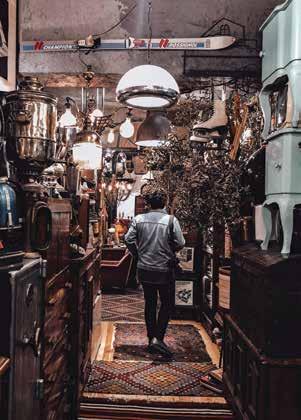
My favorite antique store sits in a good town, you probably know it: with a bookshop and a tea shop and an okay place to get pizza, another spot to get pancakes. In the summer, there’s a nice walking path and better than decent ice cream. The location of this shop, close to all the other perks, is critical to our going there as a family. There was exactly one time when our children were persuaded that antiquing for the sake of antiquing might be a good activity for them, and then never, ever again. So it’s the one near the pancake house or bust.
A visit to the antique store can cause a person to think a lot about luck. It can feel
like luck if our schedule allows the visit, if the traffic on the way up is merciful and, of course, there is luck in the shop’s inventory. The store lacks a robust online presence, so I never know what will be there, which makes me want to go all the more. I would go every weekend, if only to increase my chances of finding.
The shop is right-sized, and not too dusty or cluttered. I won’t tell you its name; I’m too polite and fear maligning the neighbors, though I’m sure they already know. My favorite antique shop is bookended by similar stores. The signage isn’t great. On your first visit, it is likely you would, like me, inadvertently go into the wrong store first. You’ll wander all the way through a much larger, less-well-edited shop and think, can this really be the place I was trying to go?
There is a real high in realizing you are wrong, that the better one is still to come. I still go to the two wrong places on every visit. I’ve found it does no good to look for a specific item that you believe you need; you have to just lean in to what is there. You might be on the lookout for art or furniture or flatware, but you don’t get to choose! You put yourself out there and let the lucky item choose you.
Closer to our home, an auction house runs a pick-up site for their estate sales. The kids don’t have to be persuaded to join. I do all of the heavy lifting alone online. The kids will come along willingly to pick-up because they know that something will actually happen, that we have already won.
“You might be on the lookout for art or furniture or flatware, but you don’t get to choose! You put yourself out there and let the lucky item choose you.”
Like at the antique shop, I have so far exclusively purchased things we could certainly live without: a vintage croquet set, a low dresser. The last time I went for a pick-up, it was just me and my son. We had won three used suitcases for practically nothing while really trying to win a painting.
I’d lost bidding for the painting. Our mood was low. Unlucky. Did I even want these suitcases? We joined the line of winners that snaked through the site. The painting I’d lost was set up at the front and it seemed larger and more vivid in person. My heart sank. The suitcases that were now my suitcases looked dusty. As I loaded them into the back of our SUV, I noticed the pockets. Surely they had been emptied. I unzipped just one. In it, I found a silk floral Ferragamo scarf, waiting just for me.
My mother was very good at buying antiques. We had next to no money, but she was able to pull the most beautiful chests and tables and set them up in our home. Antiques were important to our identity as a family, like politeness and doing well in school. I can still hear the sharp intake of breath before my mother agreed to the price of a mirrored sideboard. It was sport and an art and a meditation, her way of antiquing. I am still trying to recreate that. B
The Art of Leaving
When my father was succumbing to dementia, we found glimmers of solace on the walls of The Clark
By Lydia Littlefield
After retiring from his careers as English professor, scholar of Shakespeare, and art and architecture critic for the Albany Times Union, my father, Tom Littlefield, spent years reading by the woodstove. When his knees could no longer navigate the three flights of stairs in his downtown Albany house, he moved to Kimball Farms in Lenox, closer to us.
My family lived in North Egremont then, and my father and I could visit each other often. He was a great help to me, and we all enjoyed each other immensely.
He was an erudite and sometimes very funny gentleman, an excellent maker of applesauce and spinner of tales, and a willing washer of windows. He would happily read to our sons all day long.
My father was 82 in 2002, when he moved to Kimball Farms. It was there, during Friday morning art classes and countless hours on his own in the studio at Kimball Farms, that he became a prolific pastel and collage abstract artist.
In 2007, he had a stroke, which left him with no peripheral vision on his left side. No
more driving. That was the beginning of the shift of responsibility to me. His benevolent absent-minded professor persona imperceptibly morphed into something else over the next few years. On the day in 2011 when I told him the shocking news of his sister’s death by suicide, my father abruptly shifted into true dementia.
Dad had always taken long pauses in the middle of sentences. But now he would lose the thought altogether, and drift away into the ethers. And then he’d say something surprising. “I woke up in Paris this morning,” was one. Another came after a long, rapturous gaze toward the heavens (the ceiling): “When was it that you and I fell in love?”
We invented a fun game. We would break out the colored pencils and start with a fresh page in Dad’s large sketchbook. One of us would start a doodle. Then the other would take the sketchbook and continue the doodle. Back and forth we’d go until the page was a riot of connected doodles.
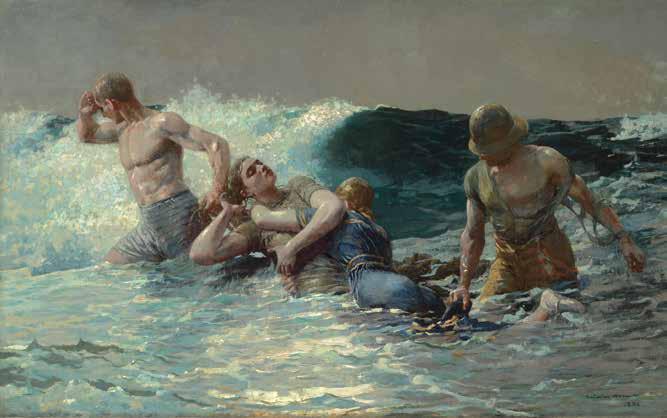
Winslow Homer, “Undertow,” 1886
Chatting, humming, and whistling started and petered out, but the doodling continued.
On a bright day in mid-June, 2013, my father and I joined about a dozen others on a bus trip from his memory care wing up to the Clark Art Institute. We were attending the pilot program for visitors with dementia and their caregivers.
During the 40-minute drive, Dad mused on the billowing clouds, the blueness of the sky, and the many greens of the passing spring scenery. We spoke about silk scarves and Onota Lake and Mount Greylock with the smartly dressed, bird-like older woman and her younger companion seated behind us. Sharon Lazerson, programming director for the Learning Enrichment Program at Kimball Farms, was our kind and adventurous leader.
Soon after our arrival, we all found ourselves comfortably seated in front of Remington’s “Friends or Foes (The Scout).”
You probably know the painting: on a wintry, moonlit, Western night, a lone Native American man seated on a thin black horse leans forward, looking across a snowy plain toward distant village lights. The horse and man leave a strong shadow in the bright moonlight. Remington uses the horse to let us know that it is windy: the animal’s tail is blowing from behind, and the visible breath coming from the horse tells us it is very cold. The man’s posture and his gaze show us he is yearning, tired, uncertain. He is wondering: Am I safe? Which way should I go?
The painting itself is quiet; it invites the
onlooker into that emblematic deep winter silent cold. Ronna Tulgan Ostheimer, director of education at The Clark, deftly led us in discussion, allowing time for silent reflection.
During the discussion, my father pointed out how bright a blue, how unlikely a blue, Remington used to paint the night sky. The lighting designer in me noticed the stars, and how bright they must be to be seen in the presence of such a bright moon. Others spoke of the magnetic pull of the distant lights, the starkness of shadow, the loneliness.
I began to see the many metaphors within the painting that pertain to the experiences of dementia for both patient and caregiver: the isolation; the wondering about physical and emotional distances between people, places, and planets; and the intense longing for safety, comfort, and certainty in the face of you-know-not-what.
Our next stop was Winslow Homer’s “Undertow,” a depiction of a dramatic seashore rescue. A pair of heroic men are pulling two women tangled in their heavy, wet clothing through crashing waves to safety. Ronna again helped us to notice details about the painting: the pummeling action of the ocean, evoking its sounds, its smells, its cold wetness. We noted the physical strength of all four of the figures. We were beholding humans just beyond a near-death experience.
My father was rapt, eyes wide open, a tear making its way down his cheek. I was processing the many parallels between the painting and my own experiences with
my father: the efforts of the rescuers; the struggle, the relinquishing, and relief of the rescued; the mighty movement of the sea.
The bus trip back to Kimball Farms was quieter than the trip north. Dad was contentedly whistling his tuneless, breathy whistle while looking out the window. I was tired, as I often was then, split between caring for my own family and for my father, and thankful that, for once, I wasn’t the one doing the driving. I so badly wanted to just rest my head on Dad’s shoulder, something I hadn’t done since I was a child.
I realized that I could simply relinquish myself to this rare moment, and I did. I rested my head on Dad’s shoulder for just a few minutes. Years of caretaking and concern melted, a soothing salve into parched skin.
Looking at art with my father at The Clark helped me see dementia, my father, and myself from a new perspective. Metaphor, color, and light wove themselves into our numbered days together.
Dad died three weeks later.
I kept returning, even without my father. Ronna noticed this and invited me to become a docent.
Almost 13 years later, I still enjoy facilitating conversations with patients and caregivers at The Clark. I emphasize that the program is for caregivers as much as for the dementia patient. I was a caregiver, and this program changed my life. Being a docent is a privilege, an opportunity to steward and witness how experiencing art together illuminates our shared humanity. Docentry keeps opening the door to beauty.
“Looking at art with my father at The Clark helped me see dementia, my father, and myself from a new perspective.”
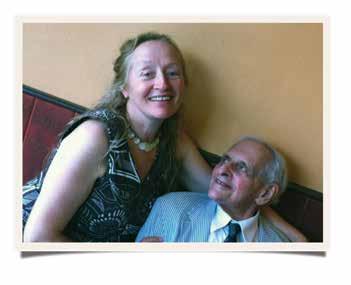
The author and her father, who knew a good thing when he saw it.
One of the hardest things to do as a docent is allow time for quiet observation and thought. Discussion is important, but the silences allow the mind to bloom. In those rare moments, if we are very quiet and open and willing, there is an outside chance that actual rapture will occur.
One of the hardest things to do as a loved one of a person with dementia is to allow the passage of time, to feel the slow-motion loss, the lapping waves of grief, the deep exhaustion. And yet, still, we continue to love, eyes wide open. B
Family Drama
Growing up with an aunt named Wendy Wasserstein and a more-than-passing familiarity with the Berkshires theater scene, it was only natural that the author would carry the theatrical torch
By Tajlei Levis
“Meinen damen und herren,” I bellowed from the stage of our family home. “Mesdames et messieurs…”
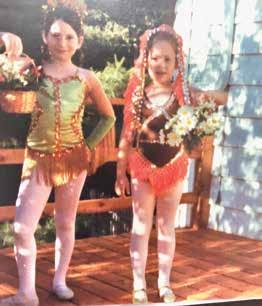
I was dressed in a repurposed dance recital costume, introducing my 6-year-old sister, Missy, and her best friend, Lisa, both of whom would sing solos. Neighborhood kids filled out the chorus. I had cobbled together a cabaret of our favorite Broadway songs, taught everyone the choreography, and sold tickets to our parents. I was not yet 8 years old, and already a producer.
Theatricality, and a fondness for showtunes, ran in the family. Our grandmother, Lola Wasserstein, took Broadway jazz dance classes and encouraged her progeny with the intensity of Mama Rose. Our mother was one of three smart, funny, theater-loving sisters. And, for a few years in the mid 1970s, all three lived in Connecticut.
“We relished summer productions at Williamstown Theatre Festival and the Weston Playhouse, countless classic plays and latenight cabarets.”
Aunt Sandy was at that time a pioneering marketing executive at General Foods, and bubbly Aunt Wendy was enrolled at Yale Drama School. Our mother, Georgette, nicknamed “Gorgeous,” had been a modern dancer in college, and was even invited to join the June Taylor Dance Company. Instead, she married our father, an intellectual Greek psychiatrist, and moved to our leafy New Haven suburb where she built us a proper stage on the ground floor of our home.
We sought out all the theaters within driving distance. Goodspeed, Westport Playhouse, Shakespeare in Stratford, to name a few. At the Long Wharf, we watched serious plays and argued about them all the way home. We relished summer productions at Williamstown Theatre Festival and the Weston Playhouse, countless classic plays and late-night cabarets. At one memorable Williamstown production of “The Greeks,” starring Christopher Reeve as Achilles, we met the director Nikos Psacharopoulos, and invited him to our living room musical production of “The Odyssey.” (Alas, he did not come.)
In those years, Aunt Wendy was writing her thesis play, “Uncommon Women and Others.” We got to know her talented friends at Yale: playwright Christopher Durang; costume designer William Ivey Long; Ed Kleban, who had just written the lyrics to “A Chorus Line.” We were invited to all sorts of shows, including the Eugene O’Neill Theatre production of “Uncommon Women” that sent Aunt Wendy on her path to success. The mature language and
Top to bottom: The author (left) and her sister Melissa (right) as young performers; The Wasserstein sisters: (left-right) Wendy, Georgette, and Sandy; the author (front right) with her sister, parents and grandparents
feminist ideas sailed over my 10-year-old head, but lodged in our hearts. “When we’re 11,” I whispered to my sister, misquoting the play, “we’ll be pretty fucking amazing.”
Given Lola’s expectations for her offspring and the next generation, we had no choice.
My family moved to Vermont, where we discovered new stages. I was cast as a lost boy in the Dorset Theatre Festival’s production of “Peter Pan.” Every night, my heart caught in my throat as Peter returns too late and finds that Wendy has, in fact, grown up. We all do.
Later, our father’s impulsive purchase of The Wilburton Inn, a grand historic estate where we’d dined for his 50th birthday, launched our mother into a career as an innkeeper. She was unexpectedly good at running a hotel and restaurant, delighting guests with her wit and funny stories. The historic mansion came with a grand piano. My sister and I resurrected our cabaret act, feather boas and all, in the enormous living room.
When Wendy’s play, “The Sisters Rosensweig” opened on Broadway in 1993, my mother responded, as one does, with a parody murder mystery. “The Brothers Rosenblood” was staged in the inn’s living room. The show was fast-paced, goofy, and a sold-out hit. Murder-mystery events became a new family tradition.
Wendy’s play was a valentine to brilliant Aunt Sandy, but the character of Dr. Gorgeous, fun but practical, was inspired by the real Gorgeous, our mom. When
Madeline Kahn won the Tony award for her portrayal of Gorgeous, my mother was as thrilled as if she’d won it herself. Through the play, the wise and witty voices of the sisters Wasserstein live on, immortal.
My sister and I continued putting on shows, which turned into careers in musical theater. My jazz-age Edith Wharton musical, “Glimpses of the Moon,” began at the Algonquin Hotel in New York and played at regional theaters around the country. My sister became a cabaret chanteuse, created songs for children, and now writes songs of mid-life empowerment. Showtunes did not appeal to our brothers, Oliver and Max, though they both became musicians and songwriters in their own style. Oliver now produces global music concerts with hundreds of people dancing on the lawn of our Vermont home, which is now Earth Sky Time Farm.
Fifteen years ago, my mother asked me to take over the writing of the Wilburton murder mysteries. I agreed, but transformed them into immersive musical comedies based on Vermont history. Twice a year, the living room is filled with guests in vintage costumes, and a cast singing old songs with new choreography. My siblings are sometimes in the show, along with professional actors. My mother and her sisters, represented in a floor-to-ceiling poster of “The Sisters Rosensweig” in the inn’s living room, watch over every performance. B
A jolly troupe of performers at one of the Willburton Inn’s famous murder mystery parties.
Fire up the flavor.
B
A s C
THE OF AN
EXTRAORDINARY SUMMER
It’s embarrassing, really: The sheer amount of world-class culture spread across the hills, lawns, barns, and mansions of the Berkshires. You really should have to fly across an ocean, or deal with the chaos of a big city to see the masterful musicians, global dance companies, Pulitzer-winning writers, architectural wonders, and glorious theater we have in abundance in our bucolic little neck of the woods. We have it all here—(the people, places, and things) from A to Z and everywhere in between.
BY MARISA COHEN • ILLUSTRATIONS BY AARON MESHON
AThe Adams Theater
Housed in a revamped 1937 movie theater, this ambitious venue is one of the newest in the Berkshires—opened in 2021, it now has a full roster of performances through October, including classical music, contemporary dance, storytelling, and comedy. “We are proud to be a ‘living room’ for the community, where high-caliber art feels accessible and unpretentious,” says artistic director Yina Moore, who adds that the theater was created as a cultural anchor to breathe new life into downtown Adams. Highlights of the 2026 season include Grammy-winning composer and pianist Gustavo Casenave, Pulitzer-winning author and Adams native Stacy Schiff talking about her new book on patriot (and town namesake) Samuel Adams, and “Different Ships, Same Boat,” featuring Massachusetts Poet Laureate Regie Gibson and musician Guy Mendilow. adamstheater.org
BBarrington Stage Company
“I fall more in love with ‘A Chorus Line’ the longer I am in the theater, because it is the quintessential show about what theater means to many of us.”
Alan Paul, BSC Artistic Director
“A five, six, seven, eight…” If those words immediately launch the entire soundtrack to “A Chorus Line” running through your head, you’ll be thrilled to know that Barrington Stage—home to Broadway-caliber theater in downtown Pittsfield—is reviving the groundbreaking musical July 15-August 8. “I am exhilarated for the opportunity to direct ‘A Chorus Line,’” says BSC artistic director Alan Paul. “I fall more in love with this musical the longer I am in the theater, because it is the quintessential show about what theater means to many of us.” The season also includes the classic farce “Noises Off,” “Driving Miss Daisy” starring Debra Jo Rupp, and several other revivals and new works, including the sure-to-be debated topical play “The Zionists: A Family Storm.” Don’t miss the summer cabaret, which has lined up two superstar Broadway divas: Megan Hilty on July 20 and the incomparable Patti Lupone on August 3. barringtonstageco.org
Berkshire Museum
Your kids know it as the museum with a stegosaurus on the front lawn. After being closed for renovations for the past year and a half, this Pittsfield museum that combines art, science, and history is having its grand reopening later this summer. “Every decision in this renovation was made with our community in mind,” says executive director Kimberley Bush Tomio. “The spaces people loved most were given the room they deserve.” The much-loved aquarium, formerly tucked away in the basement, has been moved up to the first floor, nearly doubling its size and welcoming new creatures, including moon jellyfish and an octopus. Look for an expanded space for the collection of important innovations, and the new exhibit “Voices of Rebellion: Berkshire’s Revolutionary Legacy.” berkshiremuseum.org
Berkshire Theatre Group
In 2010, Stockbridge’s legendary Berkshire Theatre Festival merged with Pittsfield’s historic Colonial Theatre to create Berkshire Theatre Group, which now presents plays, musicals, concerts, and children’s theater on three stages in two locations. (They even kept the magic alive in summer of 2020, presenting the first Equity-approved musical of the pandemic, a socially distanced “Godspell” in a tent.) “Our mission is to present a wide range of work, and this summer’s season really reflects that,” says BTG artistic director Kate Maguire, who points out that each show on the lineup—from the classic musical “1776” to the plays “Summer, 1976” and “The American Five”—reflects on our nation’s growth as it turns 250. berkshiretheatregroup.org
E. Gray Simons III in BTG’s production of “The
Elephant Man,” 2025
CThe Clark Located in the purple mountains of Williamstown, the Clark Art Museum gives you access to masterpieces worthy of the Met or the Louvre in a setting as bucolic as a Monet landscape. “You can spend time with incredible paintings, then wander outside for a walk on the trails, or enjoy a picnic on the terrace as the sun sets—art and nature come together naturally, and everything unfolds at your own pace,” says deputy director (and future executive director) Esther Bell. You might linger over a painting by the great American artists Winslow Homer and John Singer Sargent, then turn a corner and run into one of Degas’ dancers or a portrait by Renoir. This June marks the opening of “An Exquisite Eye: Introducing the Aso O. Tavitian Collection,” a selection of works by artists such as Jan van Eyck, Peter Paul Rubens, and Gian Lorenzo Bernini, in what Bell says is “arguably the most significant private collection of European art assembled in North America in the 21st century.” clarkart.edu
DDaniel Chester French
Known for his majestic and moving sculpture of Abraham Lincoln at the Lincoln Memorial, Daniel Chester French was a master of the American Renaissance. Chesterwood, his Stockbridge summer estate, is one of the most beautiful spots in the Berkshires. In addition to touring his home and studio (check out the railroad tracks that helped him bring his larger-thanlife artworks out into the sun), plan to spend the day wandering the grounds exploring the contemporary artworks on display. “Creativity is everywhere at Chesterwood, and not just limited to the field of sculpture,” says executive director Miguel Rodriguez. Special events include a panel on Patriotism in Practice featuring Governor Deval Patrick, jazz concerts, dance performances, and sculpture classes for kids. An exhibit centered around French’s iconic statue of the “Minute Man” will explore notions of liberty, victory, and fighting for one’s country as depicted in portraits, monuments, and memorials by French and his colleagues. chesterwood.org
Little
EEdith Wharton
She was known for her razor-sharp portrayals of New York’s upper-crust Gilded Age society in novels such as “The Age of Innocence,” but when Edith Wharton wanted to kick back, she came to Lenox, where she designed The Mount as her summer writing retreat. “The Mount is as much about atmosphere and enjoyment as it is about ideas,” says Jenne Young, director of marketing and communications. Visitors can tour the mansion and gardens, then “relax on the lawn and enjoy free outdoor jazz, take in a dramatic reading on the terrace with a glass of wine, or encounter a dance performance unfolding in the gardens.” Notable events this summer include the New York Stories series featuring expert talks on Gilded Age fashion, dining, New York Society, and the curious history of Fredericka Mandelbaum, who rose from Jewish immigrant to 19th century organized crime boss. edithwharton.org
The
Dancer by Degas has her own room in the Clark Art Institute.
FFrelinghuysen Morris
Home & Studio
Lenox attracted some of the most creative minds of the 20th century, including the American abstract artists George L.K. Morris and Suzy Frelinghuysen. Their home and workplace, with stucco and glass block walls to let in the summer light, are considered among the first modern buildings in New England. Admire their original furnishings, as well as works by the artists and their contemporaries, including Picasso, Braque, and Leger. Picnics are encouraged on their 46-acre grounds. Come on a Friday morning to see artists at work, or try your own hand at creating something beautiful during art “happy hours” on Sundays. frelinghuysen.org
HHancock Shaker Village
GGardens
Berkshire Botanical Garden—the most iconic! Stockbridge’s oasis of natural beauty has more going on than just acres of breathtaking blooms: “We put the ‘culture’ in horticulture,” says executive director Michael Beck. The Garden boasts rotating art exhibits outdoors (including Stephen Procter’s otherworldly terracotta urns and planters placed throughout the flowerbeds and other natural areas) as well as exhibits in its art gallery, housed in one of the oldest buildings in the Berkshires. Families can check out Music Monday outdoor concerts and Family Friday programs that take place in the woodland amphitheater. Classes for adults and kids in everything from flower arranging to cooking are also on the agenda. berkshirebotanical.org
This living history museum and farm in Pittsfield— beloved by Berkshire residents for its Baby Animals Festival and displays of Shaker crafts—had a bit of Hollywood fairy dust sprinkled over it last year, when several scenes from the award-winning film “The Testament of Ann Lee” were filmed in its buildings, including the iconic round stone barn, which is celebrating its 200th birthday this year. “This is a very exciting year for us, including the first major construction in 25 years,” says director and CEO Carrie Holland. “Our main museum building is having its grand opening with three new galleries, and an awesome lineup of exhibits and artist talks.” The summer gala, the community celebration, and the grand opening of the museum will all take place in August but, before then, visitors can enjoy a new tour highlighting locations where the film was shot, take goat yoga, dine at the popular farm-to-table Shaker Suppers, and check out a new exhibit on the creation of the film and the story of Mother Ann. “It’s a really uniquely calm and inspiring place, the depth of history is very unique, and our site lines are so quintessential Berkshires,” says Holland. hancockshakervillage.org
Hudson Hall
Originally opened in 1855 as the Hudson Opera House, the Warren Street landmark hosted rousing political assemblies and raucous dance parties before, like so many cultural institutions, transitioning into office space—with hard-earned character baked in. Now back in theatrical business for the past nine years, the well-preserved building remains the oldest surviving theater in New York state, and is set to roll out a lively slate of summer programming. hudsonhall.org
IImages Cinema
Democratic politician Hiram Walden had the bright idea to convert a former Williams College fraternity house into a movie theater in 1916. Images has been holding screenings ever since, and was one of the nation’s last remaining single-screen movie theaters. When the Williamstown movie house reopens this summer after months of renovation, a new smaller screen will be part of the picture. imagescinema.org
JJacob’s Pillow
Founded by the legendary dancer and choreographer Ted Shawn, Jacob’s Pillow, tucked into the woods of Becket, is the longest-running international dance festival in the country. “It’s not just about coming to see a dance performance, it’s an opportunity to witness the field of dance evolve in real time,” says executive and artistic director Pamela Tatge. After a shortened season last year, the dance mecca is back with a 10-week summer lineup featuring Urban Bush Women, Paul Taylor Dance Company, Martha Graham Dance Company, the San Francisco Ballet—returning to the Pillow for the first time in 70 years—and much more, including Future Figures, a symposium on the intersection of dance, AI, motion capture, and other emerging technologies. Pillow Pride weekend, July 11-12, includes a joyous dance party, and for one of the glitziest events in our corner of the woods, don’t miss the Opening Gala on June 20, when New York City Ballet Principal Dancer Tiler Peck will be honored. jacobspillow.org
KKripalu
We yogis at The B do cartwheels for Kripalu, the world-class wellness destination in sweet old Stockbridge. This summer, we’re eyeing the three-day Circus Yoga camp, open to those ages seven and up, held July 22-24. If “Heated Rivalry” star Connor Storrie started out at clown school, it’s good enough for us. The Kripalu offering is a mishmash of yoga classes, clowning workshops, and circus trick training. Attendees also get a chance to pick up juggling, spinning plates, and devil sticks—all the better to land a part in the next blockbuster hockey romance. kripalu.org
LLincoln
The 16th President inspired this summer’s hot ticket: the world debut of composer Philip Glass’ 15th symphony. “Lincoln” was originally set to open at the Kennedy Center in Washington, D.C., as part of a “250 Years of Us” series. The 89-year-old composer joined the swelling ranks of artists who decided to withdraw their works from the cultural institution when President Trump tried to put his own name on it. “Symphony No. 15 is a portrait of Abraham Lincoln, and the values of the Kennedy Center today are in direct conflict with the message of the Symphony,” Glass wrote in a statement. “Therefore, I feel an obligation to withdraw this symphony premiere from the Kennedy Center under its current leadership.” Funny how quickly things can move when you’re one of the greatest living composers. The Boston Symphony Orchestra jumped to the rescue and the piece, scheduled for July 5, is now one of the tentpoles of Tanglewood’s summer season. Written in 2026, the work features a baritone part with lyrics pulled from various writings by the president, including the 1838 Lyceum Address, his rousing meditation on democracy and rule of law. If 40 minutes of Glass don’t sate you, five pianists will perform the composer’s “Complete Etudes for Piano” at Tanglewood on July 22. bso.org/tanglewood
MMahaiwe
Turn the corner of Great Barrington’s bustling Main Street, and you’ll find this lovingly restored historical theater, built by the townspeople in 1905. It’s an intimate, small-town venue where you can take the kids for a magic show by day and see big-name stars such as Broadway bandleader Michael Feinstein, jazz legend Branford Marsalis, the trio of banjoist Béla Fleck, Edmar Castañeda, and Antonio Sánchez. Superstar countertenor Anthony Roth Costanzo will be featured at the annual gala on August 2, and there’s also a full slate of comedians, classic movies, and opera, which is part of Mahaiwe’s values of “mixing genres, taking established forms and making them newly relevant, and making art accessible,” says executive director Janis Martinson, who points out that, last year, one in five audience members attended the Mahaiwe either for free or with a steeply discounted ticket. mahaiwe.org
MASS MoCA
Spread across the sprawling campus of a 19th-century textile mill in North Adams, MASS MoCA is one of the largest and most vibrant centers for contemporary art and culture in the U.S. Special exhibits this summer include newly installed works by Laurie Anderson and a participatory commission by Chilean artist Daniela Rivera, where visitors are invited to walk on a fresco-inspired floor. Wilco’s Solid Sound festival (for more, see the letter S) is June 26-28, Bang on a Can LOUD Weekend runs July 30-August 1, and Emmy nominated comedian Robby Hoffman does her thing July 24. massmoca.org
Visitors experience Martin Puryear: Big Bling on the MASS MoCA campus
OOpera
For its 10th season (mazel tov!), the Berkshire Opera Festival isn’t holding back on the full-throated dramarama. First comes André Grétry’s rousing operatic rendition of the classic fairytale “The Beauty and the Beast,” to be put on July 31 and August 2 by participants in the organization’s Resident Artist Program, a highly competitive eight-week residency. Later this summer comes Gaetano Donizetti’s “Lucia di Lammermoor.”
The opera premiered in 1838, when moody tales about vulnerable girls in 17th century Scottish castles were all the rage in Italian opera houses. The musical work, inspired by Walter Scott’s historical novel “The Bride of Lammermoor,” comes to the Mahaiwe Performing Arts Center in late August. berkshireoperafestival.org
NNaumkeag
Another Gilded Age beauty, Naumkeag is a 44room Stockbridge “cottage,” designed by McKim, Mead & White in 1884. “We are thrilled to offer a full house tour this year—it’s been a few years since we’ve done that,” says Mary Dettloff, director of public relations for The Trustees of Reservations, the nonprofit that oversees Naumkeag and many other Massachusetts historic sites. Also of note: a series of outdoor “Spill the Tea” talks blending Gilded Age stories, history, and afternoon tea in Naumkeag’s iconic gardens, and the Berkshire Pride Tea Dance on June 21. thetrustees.org
PPS 21
Founded 20 years ago in the middle of a converted apple orchard, PS21 presents contemporary, edgy dance, music, theater, circus acts, and more on two stages—a black-box theater and open-air pavilion in Chatham, New York. “Judy Grunberg founded PS21 to create artistic experience for the community she loved in Chatham,” says artistic and executive director Vallejo Gantner. “We have taken that DNA and evolved with it.” Highlights include Geoff Sobelle’s world premiere “Clown Show” July 3-5, and “Ground Tone,” June 18-21, which Gantner describes as “a series of unexpected collaborations and adjacent contrasts between ensembles and composers that denies national and cultural boundaries as limits.” ps21chatham.org
QQueer Culture
Fire Island, eat your heart out. The queer scene in the Berkshires is in full flower, with underground parties that we’re not cool enough to hear of until after the fact, and a few happenings that we have managed to get word of in time to pick out our outfits. First, there’s the super fun DJ dance party (oh so daintily called Berkshire Pride Tea Dance) at Naumkeag, and then oodles of local artists will be showing at the Becket Arts Center’s Berkshire LGBT+ Pride Art Exhibit, with a panel discussion on June 21 at 2 pm. thetrustees.org, becketartscenter.org/pride
SShakespeare & Company
The season kicks off with a celebration of Tina Packer, the extraordinary visionary who founded the theater company in 1978 and guided it to greatness. Shakespeare & Company in Lenox has four theaters and an amphitheater, explains the abundance of performances to choose from this summer. Big ticket shows include “Hamlet” and “Twelfth Night,” as well as contemporary playwright Matthew Barber’s “Fireflies.” shakespeare.org
Solid Sound Festival
The ’90s are back, baby! If you’ve fallen hard for the “Love Story” soundtrack like the rest of the internet, then you’re a prime contender for Wilco’s Solid Sound Festival. Held biennially since 2010, the three-day jamboree takes place at MASS MoCA June 26-28. This year’s musical lineup features college-rock legends The Breeders, Gang of Four, Billy Bragg, and many more. Friday night will have Wilco and Bragg back together on stage, performing songs from the iconic duet album “Mermaid Avenue” (whose lyrics are by Woody Guthrie). solidsoundfestival.com
RRockwell
Artist Norman Rockwell didn’t just capture the spirit of America; his paintings and illustrations that appeared on magazine covers helped shaped the nation’s aesthetic. Though biographers have uncovered an anxious and lonely workaholic, the scenes Rockwell put out were known for their spirit of pure happiness. A new exhibition at the Norman Rockwell Museum, “American Stories: From Revolution to Rockwell” examines the role of patriotism in his life’s work (Read more about it on page 68). nrm.org
Norman Rockwell, Triple Self-Portrait, 1960
Solid Sound Festival at MASS MoCA in North Adams
TTanglewood
There is perhaps no experience that epitomizes “summer in the Berkshires” more than relaxing on the lawn with a bottle of wine and a gourmet meal you picked up at Guido’s, and listening to the blissful music of James Taylor or the Boston Symphony Orchestra. “Music is nature’s echo, and it is carried through all of us,” says Amy Aldrich, the BSO’s senior director of patron experience. “Being able to be present at Tanglewood is one of life’s greatest gifts.” (For more concert info, check out our Summer Music Guide on page 104.) bso.org/tanglewood
Turn Park
Upstreet Arts District
There are worse places to spend your Friday evenings than downtown Pittsfield, though you’ll want to make sure it’s the right Friday. The city will host an outdoor block party on the first Friday of every month through September, with shops, cafes, and performance spaces keeping their doors open past regular hours. lovepittsfield.com
UThe 16-acre West Stockbridge marble quarry turned contemporary arts center TurnPark Art Space kicks off its 10th season with an intriguingly high-concept theme: Mythographies (read more in our Family Fun guide, on page 115.) The annual Summer Festival, a fantasia taking place on June 13, will be a flurry of dance performances, wearable sculptures, and immersive installations. Later in the season, the quarry becomes a stage itself for “The Magnificent Ms. Pham,” Tommy Nguyen and Doug Fitch’s magnificentsounding “water puppet musical” about a Vietnamese refugee in the U.S., running July 31 to August 2. turnpark.com
VVentfort Hall
Continue to get your Gilded Age groove on at this grand home in Lenox, built for J.P. Morgan’s sister Sarah in 1893. As you tour both the renovated and unrestored sections of the mansion, you might run into some special guests: “We don’t hide our ghosts, we invite them, and you, to enjoy Ventfort Hall together!” says Chelsea Gaia, director of programming and events. In addition to Ghost Tours, there will be a Tea & Talk Series on Tuesday afternoons in July and August, covering topics such as Gardens of the Gilded Age and Behind Closed Doors of the Berkshire Cottages, which includes a full English afternoon tea service. gildedage.org
“We don’t hide our ghosts, we invite them, and you, to enjoy Ventfort Hall together!”
Chelsea Gaia, Ventfort Hall Director of Programming and Events
Fire dancer Opal Raven performs for a crowd at Pittsfield’s First Fridays.
WWAM Theatre
Founded in 2010 with the mission of creating compelling theater while advancing gender equity in the arts, WAM is a small but powerful company, based in Lenox, that produces works highlighting the stories of women and girls, says managing director Molly Merrihew. This summer’s lineup includes “Rooted,” about a plant-loving loner living in a treehouse who inadvertently inspires an internet cult. Later in the fall, “Camp Siegfried,” by Tony-nominated playwright Bess Wohl, offers a thought-provoking look at a littleknown chapter of American history, when 1930s teens of German descent attended a summer camp that included a touch of fascism along with the campfires and cookouts. wamtheatre.com
Williams College Museum of Art
Williamstown is a little quieter than usual this summer, as its theater festival takes a break and the WCMA continues construction of its $175 million new building, set to open in fall 2027. But it’s still worth stopping by the original location, open in a limited footprint. The museum is unique in the region, as “the only one to display ancient art and historic art from Asia and Africa, from 3600 BC to the present day, as well as the only institution to permanently collect contemporary art,” says director Pamela Franks. Through summer and fall, you can see selections from the collection and appreciate the experimental, cross disciplinary approach on view in the Object Lab. artmuseum.williams.edu
Marks the Spot…
where we’d like to sit at any number of concerts at The Shed this summer.
YYo-Yo Ma…
whom we originally wanted for the cover. The worldrenowned cellist will perform at Tanglewood on August 7th... without the accompaniment of the tiny rabbit cellist pictured here and at the bottom of our cover.
Ziggy’s Stardust
Which brings us to Ziggy Marley, who’s performing at Tanglewood on July 14, and is probably used to being called on last.
SEASON 2026
Free Event
COMMUNITY DAY
SATURDAY, MAY 23 FIREFLIES by Matthew Barber
JUNE 19–JULY 19
Elayne P Ber nstein Theatre
TWELFTH NIGHT by William Shakespeare
JULY 4–26
Outdoors at the Arthur S. Waldstein Amphitheatre CIRCUS & THE BARD: THE NEXT CHAPTER
Co-created by Allyn Burrows, Robin Eldridge & Pedro Reis
JULY 16–26
Tina Packer Playhouse PLAYS IN PROCESS AN INTRODUCTION TO NEW WORKS
JULY 28–30
Outdoors at the Rose Footprint Theatre FRANKIE AND JOHNNY IN THE CLAIR DE LUNE by Terrence McNally
JULY 30–AUGUST 23
Elayne P Ber nstein Theatre
SHAKE IT UP: THE REMIX
Co-created by Allyn Burrows & Jacob Ming-Trent
JULY 31–AUGUST 3
Tina Packer Playhouse HAMLET by William Shakespeare
AUGUST 13–30
Tina Packer Playhouse MIDSUMMER DREAMERS
Created & Performed by Nick Nudler & Kirsten Peacock
SEPTEMBER 1–3
Tina Packer Playhouse THE NOR WEGIANS by C. Denby Swanson
SEPTEMBER 4–OCTOBER 4
Elayne P. Ber nstein Theatre CELEBRATING JEWISH PLAYS
OCTOBER 9–11
Tina Packer Playhouse & Elayne P Ber nstein Theatre A Lively, Costumed Reading PRIDE AND PREJUDICE
DECEMBER 18–20
Elayne P Ber nstein Theatre
Justin Durham, Circus & The Bard, 2025. Photo by Nile Scott Studios
TEvery piece in an expansive exhibition of American artists and illustrators has one thing in common: an unmistakable connection to Norman Rockwell’s America
By Neil Turitz
he list of great American artists is long and esteemed, but the artist most closely associated with “Americana” is undoubtedly Norman Rockwell. So it makes sense that the artist’s museum in Stockbridge—containing not only the world’s largest collection of his work, but also its greatest collection of illustrations—has big plans for the country’s 250th birthday this summer.
“We always plan at least two or three years in advance, sometimes more if we can manage it,” says the museum’s chief curator, Stephanie Plunkett. “But, obviously, there was a lot of discussion about this anniversary for the country. The way we think about illustration is that it is, in many ways, the people’s art, so we recognize that illustration had a tremendous role in shaping the American identity and American aspirations.”
With that in mind, the museum’s curatorial team put together an enormous exhibit that will take up every one of the facility’s galleries, focusing on numerous works by a myriad of American artists and illustrators. The exhibit, “American Stories: From
Revolution to Rockwell,” will be on view from June 6 through October 26, 2026. Chief of Curatorial Affairs Russell Lord acknowledges it is “one of the biggest shows we’ve done in quite some time.” The common thread throughout the exhibition is that it all relates to Rockwell and his work.
“We wanted to think about how each chapter of the exhibition upholds Rockwell’s place within the history of illustration and within the history of American truth telling, or American myth making,” Lord says. “We did take a look at a lot of Rockwell’s works in the collection and think, ‘Okay, well, what story does this give us the chance to tell?’ So that led us to define the chapters in certain ways.”
The eight chapters of “American Stories” show how imagery created over hundreds of years helped reflect what it means to be American. Chapter titles include “Representing Origins, ” “A Sense of Place,” “Coming to America,” “Service and Sacrifice,” “American Made,” “Social Justice and Equal Rights,” “Down to Earth,” and “American Myths.”
“Rockwell is actually present in every one of the sections that we will
America Illustrated
Norman Rockwell, “Liberty Bell,” 1976
be mounting,” Plunkett says, pointing out that the painter and illustrator anchors each chapter, while also serving as a jumping off point for other artists’ work. In fact, it was the process of thinking about pivotal pieces of Rockwell’s oeuvre that led to some of the choices for the exhibit.
“Looking at specific paintings of his, we realized we should think about how that topic has been addressed by other artists over the years,” Lord explains. “Also, we are an institution that is devoted to an artist who is both local and national. Rockwell meant so much for this community, living in Stockbridge for so long, so we wanted this show to reflect that.”
James Van Der Zee, who is best known as the chronicler of the Harlem Renaissance but was born in Lenox and took his first photographs there, is a perfect example. Another is Rebecca Burr, a Mohican artist and descendant of the tribe that originally occupied Stockbridge, one of several indigenous artists featured in the exhibition. Her painting “Paradise Lost” depicts the New York skyline as seen through the oral histories of her ancestors.
“The really fun part of curatorial work is thinking about how you take a set of images
“The intention is not to be overtly political in one way or another, but to reflect upon the way that artists engage with history.”
and present them physically in space, in a way that can also convey meaning,” Lord says, “because those decisions matter. Putting things right next to each other, they can talk to each other in important ways.”
Case in point: the inclusion of the most famous representation of the signing of the Declaration of Independence, by John Trumbull, as well as spoofs of the iconic portrait, like the one from artist Jonathan Crow, which blacks out all the slave owners. Suddenly, only nine founding fathers remain.
“It’s a really powerful representation of having one meaning for somebody, but another very different one for somebody else,” Lord says. “It’s a great way to think about how these icons become representations of our country. For better or worse.”
“The things that people see on a daily basis—we ask ourselves, is what we’re seeing true?” Plunkett adds. “Not just in this exhibition, but anywhere, and we’re dealing with this more and more every day. What
Norman Rockwell, “The New Tavern Sign” (Colonial Sign Painter) detail, 1936
J. Howard Miller, “We Can Do It!,” 1942 William Steig, “Untitled” (Lady Liberty), 1978
does it mean and how do we decipher it? So we think a lot about visual literacy, and asking people to look closely and think about what they see, because we can’t take for granted that what we are seeing is factual.”
One of the chapters detailing the evolution of American symbols features several different representations of the Statue of Liberty. “Which, of course, reflects upon democracy and freedom,” Plunkett says. “But there are all kinds of reflections by illustrators on the statue. The intention is not to be overtly political in one way or another, but to reflect upon the way that artists engage with history.”
In other words, a major goal of the exhibition is to ask the visitor to think about their idea of America, rather than trying to instill any patriotic feelings about what they’re looking at.
“Obviously, we want everybody to come to the museum,” Lord says. “But I think the one twist I would put on that is that we also want to present facts. We want to provide evidence for potential education, for people to learn. The beauty of illustration is that it does give you a lot of opportunity for people to think and to find their own place to stand. We sometimes have the reaction, ‘oh, it’s never been this bad before.’ But I think history shows us that a lot of these things are cyclical, and here’s the pictures to prove it.”
Opening the Rockwell Vault
If you were not aware that the Norman Rockwell Museum was home to a “vault” housing approximately 25,000 original illustrations other than Rockwell, you’re not alone. Most people aren’t, and that’s a bit disconcerting to Russell Lord and Stephanie Plunkett.
“That tells us a few things,” Lord says with a laugh. “We clearly need to yell a little bit louder about it, and we need to find new channels to share the information.”
When the museum first opened, the collection was basically made up of work by just Rockwell and some of the artists he himself collected. Over time, that collection has grown extensively. The museum also houses Rockwell’s business correspondence, pictures from photographers he hired, letters from President Eisenhower and other luminaries, plus support material, multiple copies of the Saturday Evening Post and other things he illustrated such as Boy Scout handbooks, his Presidential Medal of Freedom, and even his bifocals and three of his bicycles.
Roughly 25 years ago, however, the curators had a realization.
“We recognized and made the decision to begin collecting the work of other artists, because Rockwell did not exist in a vacuum,” Plunkett says. “His profession had essentially gone on centuries before him, and it continues today. So the concept of placing him within the context of his field became very important.”
The team is constantly considering what the vault is missing, adding things like editorial artwork for magazines; illustrations for book jackets, romance novels, and children’s books; and political cartoons. One of the new targets for addition is graphic novels.
“These illustrations are both a reflection of their times, but also commentary by one particular artist who was working within a system,” Plunkett says. “So what we have tried to do is represent the field broadly. Very fortunately, we have been recognized as the institution that collects this work, preserves it, and shares it.”
And all that is right here in our proverbial backyard. B
Rockwelll’s studio walked through Stockbridge to its new home at the Norman Rockwell Museum in 1986.
Lisk Feng, “Vote,” 2024
Celebrating 10 yea rs!
Representing artists; Trac y Ba ker W hite, Peter Batchelder, Stanley Bielen, Susan Read Cronin, Mar y Sipp Green, Curt Hanson, Jo Har rison, Trac y Helgeson, Hale Johnson, John MacDonald, Teri Malo, Leslie Peck, Stan Taft , and Kate Tortland.
John MacDonald, Summer Winds, oil on linen, 9” x 1 2” 7 1 S pring Str eet , Wi l li amst o w n, M A 0 1 26 7
BIFF AT 20
AN ORAL HISTORY OF THE BERKSHIRES’ BELOVED FILM FESTIVAL, TOLD BY THE PEOPLE WHO WROTE, DIRECTED, AND PRODUCED IT INTO EXISTENCE
PRODUCER, FORMER PRESIDENT OF THE MOTION PICTURE ACADEMY, LONGTIME BIFF PARTNER
MIKE HALEY
NICHOLAS MA
SID GANIS
JOURNALIST, FILMMAKER*, JUROR
KENT JONES
*KENT JONES’ NEW FILM, “LATE FAME,” WILL SHOW AT THE 2026 FEST
The Berkshire International Film Festival started because a newly single mom needed a job. That’s the story behind an event that Moviemaker Magazine has referred to as one of the 25 coolest festivals in the world. Now in its 20th year, the BIFF has become one of the region’s cultural touchstones, which is saying something when you consider the company it keeps.
With the 2026 festival set for May 28-31, The B talked to many of those instrumental in the BIFF’s creation, development, and continued success. Twenty years on, they look back on how it began—and why it has lasted.
FADE IN: The first festival took place in spring of 2006. It was years in the making.
KENT JONES: A long time ago, when my parents were still alive, I’d had this idea that the Berkshires needed a film festival, but it was just a vague kind of thing.
KELLEY VICKERY: My joke is that it started because I needed a job. My background is special events and PR, and it dawned on me that it was odd that we didn’t celebrate film here when we celebrate music, dance, art, and theater.
KENT: It’s a lot of energy to get a film festival going, and when I met Kelley, I thought, well, here’s somebody who has that kind of energy. She asked if I wanted to be a part of it, and suddenly I found myself as a permanent jury member for the next 20 years.
KELLEY: Some of my friends are in film distribution companies. They threw me some films, and then I talked to Richard Stanley and John Valente of The Triplex, and they said, ‘Yeah, we’ll give you a home here.’ Lillian Lennox helped me start the program, and we cobbled together 40 films.
LILLIAN LENNOX: I had contacts in the UK, Australia, and New Zealand. I knew a lot of filmmakers. I went to university in Sydney and had a very interesting life in the arts there.
KELLEY: About halfway through building this, I met Lauren Ferin. She needed a job, too. I said I couldn’t really pay anything, but she came on anyway.
LAUREN FERIN: I was studying film at Montana State, and came back to the Berkshires with a 4-year-old in tow. Some mutual friends introduced us. Neither of us had any experience in starting a festival, but Kelley said it’s going to be a learnas-you-go kind of situation.
KELLEY: I took out two credit cards, and we opened on a Friday night and ran the 40 films through Sunday afternoon. It was so much fun, and people had such a great time. It just instantly took hold in the community.
Vickery also got help from Anne McLaughlin, who worked at Canyon Ranch and wanted to volunteer.
ANNE MCLAUGHLIN: Canyon Ranch sponsored the first three years of BIFF. I was in charge of communications and marketing. I was basically a consultant doing the event planning and management until I joined the festival full time in 2023.
Above: Kelley Vickery with Lauren Ferin; Below: BIFF fills the Mahaiwe Theater
CUT TO: The first festival needed an honoree, and Pittsfield native Mike Haley was chosen. A first assistant director and producer, Haley had worked for years with legendary director Mike Nichols.
MIKE HALEY: When the phone rings and they say, ‘We’re starting a new film festival and you’re from here and you’ve had a spectacular career, would you be willing to come up and let us honor you?’ The answer was simple.
KELLEY: We held it at the Norman Rockwell Museum because there was no place to hold a sit-down dinner for 120 people. Leonard Nimoy was at the dinner because he was a friend of Sid and Nancy Ganis. Harold Ramis did a hilarious video, giving a very earnest and heartfelt speech, and in the background were pole dancers. The extraordinary thing was Mike Nichols came. He extemporaneously talked for 20 minutes about Mike.
MIKE: It was in a tent. It was windy. It was rainy. But it was great. It was like going to McDonald’s before it became a chain.
CUT TO: The success of the first year led to an even bigger second year.
KELLEY: After the second year, I retired the debt on my credit card, we added a few more board members and got more sponsors, and it just took off from there.
From the start, Vickery had help from some big Hollywood names.
KAREN ALLEN: I got involved the second year because Arthur Penn was a great friend of mine. He had a place in Stockbridge and I suggested that he would be a great person to honor. I think the third year Kelley asked me to join the board, and I’ve been on it for 17 years.
NANCY GANIS: Friends of ours from Los Angeles, Tom and Suky Werman, had moved to the Berkshires, and they called and wondered if we could help. So we had a little movie that had just come out, “Akeelah and the Bee.” They decided to show that movie at that first festival. And then we came back almost every year.
SCOTT COHEN: We moved up here and had a certain kind of celebrity, so we were invited to the parties at first, then got involved with the festival itself. Any independent movie I do now, I try to get it in here.
SID GANIS: We were an outside source of verification, information, opinions. It’s always been a back pocket thing for me. Somebody would say Sundance, and I would always flip out, ‘Hey, there’s also this wonderful little Berkshire film festival that’s an absolute gem.’ It takes hold if you say it enough times.
CUT TO: The festival grew naturally, then exponentially—with Vickery and Lennox focused on programming and Ferin and McLaughlin handling event planning—and by year five, it was well established.
KELLEY: Year five, we added the Jury Prize Award and the Next Great Filmmaker award. The sixth year we added the Filmmaker Summit.
KAREN: The programming was always great, but the events that have been created, like the Filmmaker Summit, have been such an incredible experience for the filmmakers. Certain things like that have turned into Berkshire traditions now.
Above: Daniel Mathieu, Kelley Vickery, Jaqueline Togut, Annie Selke, Diane Patrick, Kate Morris, and Deval Patrick
Special guests have included (top to bottom) Rachel Weisz, Lauren Ambrose, Chris Noth, and Martin Scorsese
LAUREN: I love the fact that, as long as we’ve been doing this, there’s always new elements that keep us fresh and unique and keep people engaged. The Real Friends Film Society has definitely exploded in the last eight or nine years, and helps us stay relevant throughout the year and not just be this one-weekend festival and then forgotten about.
LILLIAN: Kelley and I started the Environmental Film Focus eight years ago. We wanted to enrich the community and bring support and connection through screening about four environmental-focused films a year under that title.
SID: I think for Nancy and me, especially now in our lives and careers, mentoring is part of the game for us. We love being with young people and they like talking to us. We get a sense of these young filmmakers who like talking to the old guys.
CUT TO: One such filmmaker is Nicholas Ma, whose father, the cellist YoYo Ma, has a residency at Tanglewood every summer, and whose first film, the Fred Rogers documentary “Won’t You Be My Neighbor?,” premiered at the BIFF in 2018 as the closing-night film.
NICHOLAS MA: Kelley was literally the first stop when I had the courage to say it out loud that I wanted to be a filmmaker. She was immediately supportive and it was actually thanks to Kent Jones seeing “Won’t You Be My Neighbor?” at BIFF that it went on to play at the New York Film Festival.
Over two decades, hundreds of films have screened, with some very special guest stars and honorees.
KELLEY: People still talk about year three, when we opened with “Man On Wire,” and Philippe Petit was here. When he got up on stage after that film, it took everyone’s breath away. He was so charming.
We honored Kevin Bacon that year, and he and his brother Michael spent the whole weekend with us. Same with Patricia Clarkson when we honored her in 2010.
Darlene Love sang on stage after a screening of “20 Feet From Stardom” in 2013, the same year Greta Gerwig and Noah Baumbach were here with “Frances Ha” as the closing-night film.
In 2015, we opened with the climbing documentary “Meru,” and its subject, Conrad Anker, was here. When he got up on stage, the audience got to their feet and Conrad started crying. He just couldn’t believe the warmth.
Then, in 2017, honoree Christopher Plummer said, ‘People say I’m naughty,’ and he pulled me off stage. He made me blush, and I’m blushing now, just talking about it.
DISSOLVE TO: By many accounts, one of the festival’s greatest nights was a conversation at the 2019 festival between Kent Jones and his friend, legendary director Martin Scorsese.
KENT: When Marty and I did our thing, for some reason, it wasn’t filmed. I don’t know why. His wife grew up in Alford, and he has a very funny attitude about that. ‘My wife grew up on an estate in Alford. I myself grew up on an estate in an apartment building on the Lower East Side in a tenement.’ He wanted me to set him up for that remark.
CUT TO:Vickery thought the festival would grow even more the following year, but then the pandemic happened, which almost killed the BIFF altogether.
KELLEY: COVID, I’ll just be very honest. I was at my dining room table, in tears, saying, ‘BIFF is over. How do we survive this?’
LILLIAN: It was frightening, and also understanding we were in a similar place as many arts organizations, that we were now fighting for our life.
The team knew they would have to get creative to survive, which meant outdoor screenings for people in their cars in 2020, and putting the festival online in 2021.
LILLIAN: When it went online the next year, there was a silver lining. It birthed the hybrid component for us. Now the BIFF continues to be a hybrid festival and, in a way, has helped the BIFF grow. A blessing in disguise.
Even though the festival had scraped by in 2020 and 2021, 2022 was a make or break year. Honorees over the years included Douglas Trumbull, Rachel Weisz, Bruce Dern, Barbara Kopple, and, in 2022, Alfre Woodard came to Great Barrington.
KELLEY: She was going to be our honoree in ’21 so we built around her, and people came back. People loved the hybrid. They were going online and watching some films. They were coming into the theater. It galvanized our community to be even more loyal, if that’s even possible.
That sense of community is one of many things the festival has going for it and, sure enough, the 2025 festival had similar attendance numbers to the 2019 festival, which had been the high-water mark.
ANNE: We’ve elevated the festival in terms of what the industry is seeing. Until 2024, we typically had 30 to 40 filmmakers in attendance. Last year, we shot up to 70. This year we’re going to meet that again, if not push it a little higher.
CUT TO: For the founder and driving creative force behind the BIFF, there’s nowhere to go but up.
KELLEY: I’m really proud of what we built at 20, but we can do better. We can do more throughout the year, and continue to make inroads into the next generation. That’s really important to me, that we are building a network with the next generation.
END
Left: 2022 honoree Alfre Woodard
Actor and BIFF board member Karen Allen
THE B’s LIST
Culture Club
When it comes to the arts, the Berkshires punch way above their weight. Meet eight of the masterminds keeping the region’s creative scene in a league of its own.
How does a place become one of the most thrilling breeding grounds of American culture? How do you honor your heritage without getting stuck in it? If Herman Melville had never come to Pittsfield to chase his own white whale and write Moby-Dick, or if Edith Wharton hadn’t soured on Newport and built her refuge in Lenox, what other counterfactuals might have taken root here and left us to be perfectly fine if not a world-class capital of inspiration?
We’re not a boastful bunch—and that may be part of the secret behind the Berkshires’ enduring place on the cultural map. No disrespect to the creative movers and shakers who’ve settled elsewhere, but if you’re looking for a place where looking, marveling, and imagining rank alongside eating and breathing— where plays and poems and paintings and film festivals aren’t just attractions but community actors—then welcome home.
For this issue, The B gathered some of the region’s cultural stewards and asked them to open up about the nitty-gritty of sustaining such an improbably bountiful landscape of man-made delights. They spoke with us about everything from building first-rate programming and cultivating the next generation of patrons to decent parking. Read on to get a lay of the land.
Alan Paul Artistic Director, Barrington Stage Company barringtonstageco.org
Susanna Gellert
Executive Artistic Director, Weston Theater Group westontheater.org
Carrie Holland Director and CEO, Hancock Shaker Village hancockshakervillage.org
Kristy Edmunds Director, MASS MoCA massmoca.org
Allyn Burrows Artistic Director, Shakespeare & Company shakespeare.org
Sarah Margolis-Pineo Program Director, The Mount edithwharton.org
Pamela Tatge Executive and Artistic Director, Jacob's Pillow jacobspillow.org
It’s all about new plays, and this summer we are doing four world premieres by a diverse array of playwrights. I want audiences to walk into new worlds every time they enter the theater.”
Alan Paul
Barrington Stage Company
What was your first experience with a piece of art in these parts that knocked your socks off?
Carrie Holland: I had the benefit of growing up in the Berkshires, and on a middle school field trip to The Clark, we were assigned with exploring the galleries, identifying a piece that spoke to you, and writing a response to the work. I quickly locked in on the famous sculpture by Degas, “Little Dancer Aged Fourteen.” It was perhaps the first time that I recognized myself in a piece of art and marveled at how an artist could capture a character that seemed so familiar, yet was over one hundred years old. There was also a whimsical element that I found almost like a secret invitation shared between myself and the subject that I’m still reminded of to this day.
Don Sanders: I was in high school (circa 1959) and my girlfriend, who was studying piano, brought me to a lawn concert at Tanglewood with her family, complete with a formal candlelight dinner…and mosquitoes.
Pamela Tatge: I have a strong memory of being blown away by Robert Wilson’s “14 Stations” at MASS MoCA. To appreciate what an artist can create at scale; the magnitude of entering into that world. I just loved it.
Sarah Margolis-Pineo: In college, I was always looking to break up the long drive between the Hudson Valley and Portland, Maine, and on one of these trips, I stopped at a newly opened museum in the Berkshires: Mass MoCA. The exhibition on view was Ann Hamilton’s “Corpus” and, until that time, I had no idea that art could be anything but an object on a wall or pedestal. The experience of wandering through the cavernous exhibition–experiencing the filtered light, voices chanting in unison, and onionskin paper cascading from the rafters was absolutely transformative.
Allyn Burrows: My first piece of art in the area that was a sock knocker would have been the miniature Lincoln Memorial statues at Chesterwood.
What challenge has your institution faced for the first time in your career, and how have you been working to overcome it?
Susanna Gellhert: Like so many arts leaders over the past five years, I have learned a great deal about crisis management— first because of the pandemic and then because of the catastrophic flooding that hit southern Vermont in 2023. The pandemic pushed everyone at Weston Theater Company to focus with laser-like precision on our relationships with our communities—our audiences, our artists, and all the people who care about our work be they near or far. Just a few short years after the quieting of the pandemic, the 2023 floods rendered our Playhouse stage uninhabitable. Weston was fortunate to have a second stage, and we quickly pivoted to make that space our artistic home.
Tatge: In November of 2020 at Jacob’s Pillow, the original Doris Duke Theatre, which served as a key venue for our annual international dance festival since the ’90s, burned down in a tragic fire. We were in the midst of adjusting our organization to the realities of the COVID-19 pandemic, and then we had to weather this tragedy. It felt like the physical manifestation of all of the loss we were experiencing during the pandemic. I gathered with staff, artists, architects, and consultants around the globe, and led the development of a 5-year plan to create a brand-new “reimagined” Doris Duke Theater. As many know, this 22,000 square foot state-of-the art theatre opened and came to life last summer. Sanders: Really, it’s always money—it’s always getting people to come to see things. Perfecting the message, the articulation of the mission, and keeping personal connections can help.
Barrington Stage Company’s “fuzzy: a new musical” was a fan favorite last summer
Let’s talk programming.
Edmunds: MASS MoCA is focusing on more creative residencies and more rehearsals, essentially making more space and time for makers to fuel our collective cultural realm well into the future. In addition to our vast galleries and performance stages, we are also creating more intimate opportunities for people to gather, experience, talk about and support art.
Margolis-Pineo: When organizing our annual calendar, my intent is to create inclusive and engaging programs that touch on the full breadth of what The Mount has to offer—from mindful immersions in the natural world to author talks and writing workshops. Ultimately, Edith Wharton is our muse. It is her living legacy that is at the center of everything we do, and our programs honor the fields she touched— architecture, design, fiction, journalism, humanitarian work, and the arts. In t he past two seasons, we have increased attendance among young audiences ten-fold—a real step in cultivating the next generation to steward this important property.
Sanders: More of creating residencies for artists to develop and showcase works generated. My history is creating new works of theater and music theater. I’m always trying to have more resources to do more of that.
Tatge: We’re continuing to serve as a world stage to both renowned and underrepresented dance artists from across the globe, and to operate as a year-round institution with programs on campus and in the community partnering with many organizations who care about the quality of life in Berkshire County as much as we do. We are expanding programming by adding performances in the new Duke in the fall and spring, as well as expanding our education programs. Our online programming is also expanding, giving access to audiences around the world,
many of whom will never be able to make their way to Becket.
Paul: It’s all about new plays, and this summer we are doing four world premieres by a diverse array of playwrights. I want audiences to walk into new worlds every time they enter the theater. I want them to experience each writer’s sense of theater and language. I want to do plays that experiment with form.
Burrows: More fun stuff for the sake of fun stuff, fewer reminders of how upside down the world can prove to be. Folks know that already. And more programming about the simple power of humanity.
Can you walk us through the decisionmaking process for a particular exhibition? How do curators pitch ideas? And how do you decide what to spend money on?
Edmunds: We are a non-collecting museum (we do not own artworks) with an in-house visual arts team including curators, art fabricators, installers, etc. that work with contemporary, living artists on developing new work, typically at a scale the artists have yet experienced. Curators are the early backbone of the process, and develop relationships over the course of years with artists around the world to assess
if MASS MoCA is the right place and/ or right time to develop artists’ ideas further. Everything costs money—labor, materials, time, shipping, artist housing, turning the lights and air conditioning on, buffing the floors, etc.—and once decided, developing a new exhibition can take 3-5 years to manifest.
Holland: To help us prioritize our exhibit focus, we try to structure the work around a theme for each season. Having established a theme, we then shape an exhibition schedule around three major categories: Shaker Design, which explores the Shakers’ iconic craftwork, “Deep Shaker” which explores a specific theme unique to Shaker life and principles, and Shaker-inspired contemporary artists who are creating new works inspired by some element of Shaker history.
Paul: At BSC, we have a team of people who read plays. If anyone reads something that really scratches at them, we ask another team member to do a “second read,” and sometimes a third person will do a “third read.” Those truly engaging plays naturally bubble up to the top of our list. Planning a season usually begins with a Jackson Pollocklike throwing of paint at a wall, but, similar to Pollock, it magically comes *
The Comedy of Errors, Shakespeare & Company, 2024
together as a unified season that features a variety of offerings—from major productions and well-loved classics to intimate shows by new voices
Tatge: Decisions are made by our curatorial team and exhibitions are often driven by artists or themes in Festival programming. We also are known for exhibiting the works of major dance photographers. Now, with the Doris Duke Theatre, we have a new gallery space which will focus on exhibits that demonstrate the possibilities of dance and technology.
Margolis-Pineo: In general, we strive to create a schedule that is balanced, diverse, inclusive, and in some way taps into the most compelling and urgent questions of our time. We highlight author talks by historians and biographers as a way to bring the past forward, and reframe the present–learning from history as a way to illuminate where we are now, and how we want to point ourselves towards the future. Year to year, these conversations and ideas are a moving target—always in flux. This year, I was struck by voices that have reshaped the public imagination— figures who challenged dominant narratives and used art, ideas, and activism to offer new ways of seeing the world.
Burrows: Some material’s resonance is undeniable in today’s environment, and those pieces get first dibs. Of course, they have to be good, to the degree that it will tightly hold one’s attention, and we collectively agree on that as a team. And we never spend money, not a dime. Haha. No, the key is being able to forecast what is worthy of throwing creative energy into and hoping that others find it worthy to come see!
If you woke up and learned that an anonymous fan died and bequeathed your institution with $50 million, what are three things you would do with it?
Tatge: Where do I begin? After I jumped for joy, I would invest in dance artists: providing them with commissions, multi-year residencies and presentation opportunities with a focus on U.S. dance makers. To uplift the artform in the U.S., I would have Pillow satellite sites where we could host School programs and presentations and identify artists whose work should be uplifted at the Pillow. Oh, and I would invest in new bathrooms for the Ted Shawn Theatre!
Paul: That’s easy. I would invest in the incredible staff who work at Barrington Stage—that’s something our Managing Director Greg Reiner and I talk about with the board all the time. Then I would create the most robust New Works program in the country to fund the creation of new plays and musicals by the most exhilarating artists— established and emerging—working in the theater today. And can you imagine what an asset it would be to re-create an old Berkshire camp as an incredible lakeside artists village?
Gellhert: I’d make all of our tickets paywhat-you-will. I’d build a robust, free, and far-reaching education program that brings theater and theater education to students of all ages throughout our region. I’d make an even more significant investment in our artists—particularly our writers and creators—expanding our new works program to include more people, more projects, and more room for exploration.
Holland: First, pinch myself to ensure I wasn’t still dreaming! Second, convey the most sincere gratitude for what would be an organizational-altering gift! Third, gather our team together and take care of all of the “wishlist” investment ideas—both big and small—that we all dream of to make our day-to-day work more efficient and effective. I’d then
This year, I was struck by voices that have reshaped the public imagination— figures who challenged dominant narratives and used art, ideas, and activism to offer new ways of seeing the world.”
Sarah Margolis-Pineo
Pictured above: singer-songwriter and author, Judy Collins, in conversation with André Bernard at The Mount
allocate the remaining tens of millions into our museum’s endowment.
Burrows: Well, we’d want to find out if the donor had to remain anonymous, because we’d want to name an endowment after that angel! Then we would put renewed energy into beautifying our artistic home and sending our re-energized and freshly supported programming out into the world!
How does the landscape inform the culture scene here?
Tatge: The natural beauty of this region, its stunning landscape and spaciousness makes this a fertile place for experimentation, for stillness and for deeper imagination. There’s a generative energy that comes from all that is growing around you. You simply cannot achieve this in most urban environments.
Holland: The landscape is a part of the cultural heritage. The farm, forest, trails, streams, quarries, animals, and seasons are so enmeshed in what we focus on at the Village, it is conceivable to think of one without the other. The Shaker history we tell is very tightly tied to the land, and the visitor experience on our property now as we operate as a museum, is one of natural tactiles—the smell, touch, feel, sound, and sights are all steeped in the natural world of our 750 acres.
Edmunds: All four seasons are beautiful and people want to be here to connect with nature and have space to dream— there is a generous spirit in the Berkshires towards each other and a respect for nature which fuels creative ideas.
What would you say makes the arts scene in our region different from any other?
Gellhert: The people! Whether fulltime residents, second homeowners, or first-time visitors, I have found that our audiences are deeply curious, engaged, and open to new experiences.Prior to
landing in southern Vermont, I worked primarily in cities—New York, Baltimore, Chicago. I loved the theaters where I worked, but I’ve often said that if one of those organizations were to disappear overnight, a passerby might ask, “Didn’t there used to be a theater here? Which one was it?” In our community, our cultural organizations are integral, an essential part of the social fabric. As we learned during the pandemic: we miss them when they are gone.
Paul: The density of inspiring theater, music, and visual arts has made the Berkshires the most exhilarating place for artists and arts lovers to spend the summer for decades. The weeks between Memorial Day and Labor Day are a magical time. And the fact that James Taylor has immortalized the region in song and chooses to live here makes the region even more, well, dreamlike.
Holland: There are very few regions in the world that can boast the saturation and proximity of recognized world-class organizations in such a relatively small geographic area, and across so many disciplines. I think that depth not only transforms the economy of arts and culture here in the Berkshires, but more importantly, it creates a community of inspiration where we as arts operators can take in so much stimulation, creativity, collaboration, and imbued richness from our peers.
Sanders: A long history of enculturation via a sophisticated seasonal resort population. “The Berkshires” is synonymous with a spa atmosphere. It goes back to the classic origins of Greek festivals; the concept of pilgrimage, i.e. travel, leading to reexperience, leading to reaffirmation. Edmunds: It punches above its economic weight.
Do you feel competitive with other Berkshires cultural institutions?
Tell the truth!
Gellhert: Of course! But that competition is incredibly healthy—it pushes us all to strive and work harder. And sometimes, that competition draws us into collaboration with one another. It’s all for the good.
Holland: I feel a deep spirit of both competition and complement with my peers in the Berkshires cultural institutions. In a competitive sense, sometimes I might feel the sting of losing out on an idea that another organization is executing on, or of a peer organization gaining stronger foot traffic on a particular night of programming, etc. However, I love competition. As a lifetime athlete, I welcome competition as I truly believe it is the only way to make yourself better, and reach outcomes you never knew you had in you!
Sanders: Not competitive, but naturally inspired by them. It makes one want to provide something on the level of the best past and present achievements of the Berkshires.
Paul: Not at all. I actually feel a strong sense of camaraderie with the other theater and cultural leaders. We all do our own thing and can’t often see each other in the summer because we are so busy— but we feel each other’s support. *
Hancock Shaker Village
How are today’s arts patrons’ priorities and concerns changing?
Tatge: We’ve noticed that since the pandemic, a good number of our patrons don’t want to drive home from the Pillow at night, so we moved one of our evening performances to a matinee, and shifted our performance times earlier by a half hour. In terms of our offerings, our existing patrons will always love the companies for whom we have been an artistic home—the companies that they know. However, there are also a group of patrons eager to learn, to understand new forms, to take risks as evidenced by how many are choosing to experience techforward, trailblazing work that they’ve never seen before or imagined would have an impact on them in the new Duke.
Gellhert: Certainly, there’s the question of affordability. We want to make sure we are reaching everyone in our community and, as costs rise, that puts pressure on ticket prices. We think about that constantly. I also believe that arts patrons today—and the younger patrons of tomorrow— are thinking more about how culture can bring people together and create shared space. We all know there are numerous forces pushing us ever deeper into isolation, atomization, and loneliness. Arts patrons today are looking to our organizations to help overcome that.
Paul: I don’t think they are. If there is a great piece of theater, audiences will flock to it. They can easily recognize quality. Easy parking is the eternal priority that everyone in Pittsfield covets. Edmunds: Patrons are people, and ergo priorities and concerns are centered on an awareness of the pressure our shared communities, institutions and cultural assets are under to sustain and continue to create impact for the future. It’s hard to ascertain in the constant whiplash that we are all experiencing now—but in the Berkshires, we rise to meet the moment and it’s the people who help shape our optimism.
Margolis-Pineo: Today’s arts patrons are increasingly curious, open, and eager to engage with voices, perspectives, and histories that differ from their own lived experiences. At The Mount, we are actively embracing this shift by expanding the breadth and diversity of the stories we present—across disciplines, cultures, and points of view—creating a richer and more inclusive cultural landscape. At the same time, audiences are seeking more than passive observation. They are less interested in simply consuming art and more invested in exploring ideas— engaging intellectually, creatively, and even spiritually with art, literature, and the natural world.
Burrows: The 65-inch television represents a challenge for theater companies, because it brings streaming performances right into the home like never before. So we need to impress on our audiences that being in community in a live theater space is unique, vibrant, and resonant in a way that a flat screen TV cannot equal.
In your book, what was the golden era of arts patronage?
Gellhert: I think we’re about to enter one. Recent years have reminded us all how important the arts are, and how much time, effort, and resources are needed to sustain them. I believe that in the coming years, we are going to see more and more support for the work that we do from throughout our communities.
Sanders: Unquestionably, the establishment of Tanglewood, and Massachusetts state support for MASS MoCA.
Edmunds: It has not happened yet. We are creating the golden era right now. If you want to be part of it, call me.
What’s one kind of cultural institution that doesn’t exist yet that you’d love to see somebody bring to the Berkshires?
Holland: I would love to see more acrobatic and circus-type performances ala Cirque du Soliel in the Berkshires! As a child, I was completely enamored with the physicality paired with the quality of story-telling and production value in a Cirque du Soleil performance my parents brought me to. My other wish list item would be the recreation of the 9:30 Club, the famed music space in Washington D.C. It’s a small music venue, and I got to see some really amazing performers come through that space. It would add some real energy to our longer winter evenings up here!
Tatge: I’d love to see a high school for the performing arts in Berkshire County where all of the cultural institutions could partner to nurture the next generation of artists, designers and technicians who could end up staying in the area and becoming a part of our work.
Paul: To be honest, it’s food! Lunch can be tough here, especially in downtown Pittsfield.
Edmunds: A James Beard Foundationesque headquarters for the arts. A global, international arts and cultural foundation headquartered in rural Western Mass would be a very significant way for institutional philanthropy to experience and glean the larger American story of what culture and democracy is through the arts. It’s important to be part of the rural fabric.
Margolis-Pineo: A children’s museum or science and nature center—something for our youngest cultural patrons!
Burrows: Rollerball. B
skin DEEP
The art of tattooing has become a house specialty of the Hudson Valley and the Berkshires. It’s probably going to stay that way. Permanently.
Every art form has the power to move us emotionally. Music shifts our moods, rewiring a room in the time it takes to cross it. In the culinary arts, a chef’s creation is taken in by all senses, a full-bodied experience lasting the length of a meal. But tattooing is more demanding. The ink is permanent—til death do us part. It’s a pact, not a product. Tattooing has quietly become a vital art scene between the Hudson Valley and the Berkshires. Three artists, working within an hour of each other, tell us exactly how tattooing gets under your skin.
By Ann Volkwein • portraits by gregory cherin
nALLa sMITH
Sticks & Stones, Hillsdale, NY @nallasmith
Nalla Smith grew up in the gritty, vibrant New York of the ’70s and ’80s. Tattooing was legally banned until 1997, but the underground artists who first turned his head as a student at the High School of Art and Design advertised themselves in zines he found at smoke shops. The work was crude and brilliant, refusing to read like the sailor or jailhouse work that had long defined the trade. “They were starting to look like no one told them there were boundaries,” Smith says.
The watershed moment was Ed Hardy’s “Tattoo Time” periodical, proving, as Smith puts it, that “anything you could think of could be a tattoo.”
Hardy says he was the first art-school artist to make the scene. “It was like the Beatles,” Smith says, “mixing and matching, pushing the old formulas.”
Smith pierced at San Francisco’s Body Manipulations and then apprenticed at Erno’s Tattoo, before finding his way to a job at Ed Hardy’s studio. From there, he owned East Side Ink on the Lower East Side, then Goose Tattoo in Williamsburg, and landed at Hudson River Tattoo before opening Sticks & Stones last November.
His style evolved from broad strokes and tribal through the early ’90s, and shifted to the small, thin work no one else wanted to do when he opened Goose in 2010. Every shop in the country was doing bold traditional, so refined work came to him by referral. Soon after, Instagram introduced Korean tattooers; their super fine work, he says, “became a lighthouse in the fog.” Thirty years in, he’s not as precious about it. “No matter how good you are at it, it’s a pretty lo-fi art form,” he says. “It won’t look good forever, and neither will we—but it’ll look cool because it’s a part of you.”
sAM LAIZ
Happy Place, Hudson, NY @sad_tatter
Sam Laiz calls his style “illustrative, ignorant, and fine line.” That’s ignorant in tattoo-world parlance: crude, childish on purpose, playful by design. He draws from out-of-print children’s books from the 1940s, turning those images into designs.
“Tattooing was kind of a gatekept group for a long time,” says Laiz. “Social media blew the doors wide open—not just the Sailor Jerry, traditional stuff. So, it’s become this big community.”
A self-taught tattoo artist, Laiz grew up in Egremont, bartended through his twenties in New York, and pivoted to tattooing during COVID. In Los Angeles, he papered the city with flyers offering free tattoos to build his hand and was booked within days. Four years later, he’s inking full-time out of his private Hudson studio, at pop-ups across the region, and quarterly in L.A. Around 60% of his local clients find him through a single flyer on the board at Mel’s Bakery.
At the pop-ups, many of his clients are first timers. “It’s really personal,” he says. “You want the experience to be as comfortable as possible. Half the time, I feel like I’m a therapist.”
Desi shaw
Shy Bird Tattoo, Great Barrington @shybirdtattoo
Desi Shah’s work is entirely black and gray, heavy on dot-work and stipple shading, pulled from folklore, fairy tales, and what she calls “magical little made-up animals”—imagery that she started building in her imagination as a child in the mountains of Vermont.
In fact, Shah drew all the time while growing up—no surprise since her mother was an illustrator. After a stint as a vet tech, she arrived at tattooing.
“I was drawn to it as a way to make art that lives on people’s bodies,” she says. She apprenticed at Brooklyn’s Fleur Noire, then was part of the Bushwick collective Chimera before heading north a year ago with her partner and their 3-year-old son, Ember. “The quiet and lack of overstimulation,” she says, “has given my brain more space to be creative in new ways.”
Her by-appointment studio sits above GB Eats. Freehand tattoos, sketched directly onto the skin with markers, are a specialty. “Tattoos are a moment in time embedded in your skin,” she says. “It’s storytelling. It’s ritual. It’s really sacred.” B
Special thanks to Half Rats in Great Barrington for hosting our photo shoot of Sam and Desi.
Building Cha nge
Exper t builders transforming the way people learn, do business , and live.
Keiter is a family- owned construction ser vices company working with clients on residential, commercial, industrial, and institutional projects .
Off Duty
Summer is the loveliest— and also hands-down busiest—season, especially for those whose jobs are in the culture sector. We rounded up six of the people behind our world-class museums and festivals, and asked them to share a few of their favorite local jaunts and haunts. After all, these folks have all made a career out of their excellent taste.
Your summer of fun starts here!
Serena Johnson, executive director, Great Barrington Public Theater, counts down to the end of the week
Off Duty
Pam Franks
Director, Williams College Museum of Art
My job involves constantly changing gears, especially now with the construction of a new state-of-the-art museum underway. The WCMA team is small but mighty, and while we’re busy planning for the new museum opening in fall 2027, we’re also staying connected now through community and campus partnerships.
1
Yoga in the Woods North Adams
Outdoor yoga is a whole different experience. Here in the northern Berkshires we’ve got an ideal convergence of an amazing spot and amazing teacher: a path in back of Tourists leads to a platform nestled in the woods, where starting Memorial Day weekend Devin Raber teaches a great class on Sunday mornings at 8:30. It’s open to community members as well as hotel guests—just sign up.
2 Swimming at North Pond Savoy
Nothing beats a swim in cool (okay cold) North Pond on a hot summer day. I especially love it there in the early evening when the water’s surface reflects the trees and the setting sun. The color and light are beautiful and the water feels great!
3
4th of July Parade Williamstown
Quintessential small town parade! One group after another—you really see the folks who make Williamstown the community it is— with lots of WCMA summer interns, staff and families in the mix. And afterwards you can head over to Sawyer Library at Williams for the annual July 4 reading of historical documents.
4 Downtown Williamstown
My sidekick shih tzu, Shaq, is always up for a walk. It’s impressive how far his little legs can take us. One of our favorite early morning treks is around the grounds of the Clark, and after supper we often loop around town, look in all the cool stuff in the shop windows along Water Street, and make our way to Spring Street where we inevitably run into friends on an ice cream outing to Lickety.
5 Images Cinema Williamstown
Images Cinema opens with its two new state-of-the-art theaters in late May. I’m looking forward to testing my theory that it is actually even more enjoyable to go to the movies in the summertime. See you there often!
Don’t Miss: This summer in Williamstown we’ll get to watch excellent architecture coming into being with the continued construction of the new Williams College Museum of Art designed by Solid Objectives. I’m especially looking forward to WCMA’s Community Forum at the Williams Inn on June 29 at 6 pm. We’ve been doing these forums regularly and they are always full of the latest updates, but this one is also going to include a fun way to be part of the process.
Off Duty
Carli Scolforo
Managing Director, Berkshire Busk
Most of my responsibilities have to do with making our flagship festival, Berkshire Busk!, happen. The festival founder, Eugene Carr, and I spend all fall and winter fundraising and planning programming for the summer ahead. When spring comes, we focus on artist outreach and developing our marketing plan, and then the festival itself happens all summer long. I was born and raised here, and sometimes I forget about all the best parts of life in the area.
Don’t Miss: At sundown on the first three Saturday nights of July, we’re co-hosting free outdoor movie nights at Giggle Park. Additionally, our first pop-up festival in the village of Housatonic will happen on the afternoon of July 18.
1 Cozying up at Wander Pittsfield
I work from home a lot, so it feels like a nice break to plop down at a coffee shop for a change of pace. What I love about Wander is that you don’t feel like you’re overstaying your welcome. You can tell it was made to be a place where community lingers and connects. Their decor just screams “come as you are, and stay a while.” I usually order their kombucha on tap when I stop by.
2 Cocktails at Doctor Sax House Lenox
My friends and I have busy schedules, so if we meet for a cocktail, we want to make it count. Doctor Sax House never disappoints. Their staff is amazing and the vibes are hard to beat. And when so many bars and restaurants shut down by 9 or 10 o’clock, having an option I love that’s still open when I clock out for the evening in Great Barrington makes a huge difference.
3 Affogato at SoCo Creamery
Great Barrington
Is it really summer without SoCo? I work long hours on Railroad Street in the summer months, and SoCo is my secret spot to grab a coffee late in the evening (shoutout Six Depot!). Combining that espresso with their amazing flavors—best of both worlds.
4 Outdoor Yoga with Berkshire Yoga Dance & Fitness Pittsfield
Since summer is my “busy season,” I don’t always leave as much time to enjoy the sun as I would prefer. I take classes with BYDF in Pittsfield all the time, and their outdoor offerings during the warmer months are a lot of fun. My favorite is their Sunday morning class on Onota Lake.
5 Dinner at The Berry Farm Chatham, NY
It’s become a tradition to celebrate the beginning and end of summer with a trip to Yummy Kitchen’s popup at The Berry Farm in Chatham. Sitting in the Greenhouse or outside among the sunflowers offers an unbeatable view. Our group will basically buy every item on Yummy Kitchen’s menu to pass around and share. Then, you can visit the farm store for something sweet to bring home. An unbeatable night out!
1
Golf in the Berkshires Stockbridge
I’m a terrible golfer, but love the game and look forward to it every season. Whether walking the beautiful Stockbridge Golf Club, playing the challenging Wyndhurst course, or visiting any of the other courses in the region, you will love the sport.
2 Berkshire Opera Festival Great Barrington
I’m a huge fan of bel canto opera, so I’m looking forward to their upcoming production of Lucia de Lammermoor with the beautiful soprano Christine Lyons!
3 Shaker Mill Books West Stockbridge
One of my go-tos anytime I’m in the neighborhood. Just past its unassuming façade is a whole world of books waiting to be rediscovered. And the prices are so reasonable!
4 Flowers from Township Four Stockbridge
My favorite florist in the region. I’m always blown away by their exquisite taste level and gorgeous presentation. They always know exactly what you need.
5 The Lost Lamb Stockbridge
The best patisserie in the region! I stop by almost daily for one of their freshly made croissants or their decadent key lime tarts on my way to work.
Off Duty
Miguel Rodriguez
Executive
Director, Chesterwood
I started my career as an opera singer, and after ten years on the road, I returned to Boston to build a career in arts administration. Since joining Chesterwood in 2024, my focus has been on engaging more visitors each season, and that work has paid off. Last summer we experienced a 60% increase! This season, as we celebrate the 250th birthday of the nation, we are examining the theme of patriotism throughout our exhibitions, programs and events.
Don’t Miss: “Patriotism in Practice: History, Media, and Civic Life”: A conversation with Governor Deval Patrick, journalist Martin Baron, historian Kendra Field and more on July 8 at 5 PM. I can’t think of a better time than today, as we celebrate the 250th birthday of our country, to reflect and examine how the value of patriotism has or has not evolved through time.
Berkshire Opera Festival
Off Duty
Serena Johnson
Executive Director, Great Barrington Public Theater
I have loved art for as long as I can remember. Becoming the Managing Director of a theater company whose mission is to develop and produce new work is, quite frankly, the dream. At Great Barrington Public Theater we prioritize hiring locally whenever we can. We want our artists to be able to not only work here, but live here. We also believe in developing local playwrights through our program, Berkshire Voices. It is a risk for a theater company to produce new work year-round—and that is what makes the company special.
1
Lazy Days at Queechy Lake Canaan, NY
I love my home and I love resting. On my days off, you can find me grilling carne asada, sipping on a margarita, floating in the lake, reading a book at Adams Point Beach, or taking a nice long nap on my porch. If I don’t feel like grilling, I am getting takeout from Brisket and Birdie, the best BBQ and pizza spot in town.
2 Berkshire Concert Choir Lenox
Every Thursday night in the fall and spring I spend my time singing my heart out with 100 of my closest friends. Our conductor, Ryan LaBoy has truly created a space where anyone can experience the magic of singing with others. If you are choircurious, please join us!
3 Tanglewood Lenox
Do you know about the Berkshire Pass at Tanglewood? For $150 you can have lawn access to all the classical concerts. My schedule is crazy during the summer so to be able to grab a bottle of wine and pop over to see a world class orchestra almost any day of the week—a girl couldn’t ask for anything else.
4
Crandell Theater Chatham, NY
You gotta have a favorite local cinema and the Crandell Theater is mine. My favorite date night is dinner at Chatham Brewery or Bimi’s Canteen followed by whatever indie movie is on that evening’s schedule.
5
Half Rats
Great Barrington
Did you know that “half rats” is Victorian slang for “getting tipsy”? I absolutely love this cozy natural wine bar across the street from Great Barrington Public Theater’s offices. The vibes are tops and the owner Abby Pendergist is so kind.
Don’t Miss: Our upcoming world premieres! We have three brand new works this season covering topics like the AIDS crisis, AI, and being a new mom during COVID. These are all intimate stories with global implications. We open our season on June 20th with Fragments, written by Jim Petosa—a Berkshire resident!
Off Duty
Vallejo Gantner
Artistic and Executive Director, PS21
I have the greatest gig I can imagine—scouring the country and planet for artists and ideas we think should be seen by audiences in our region, while placing bets on whether an idea or experience will catch fire. There’s no science to it—it’s just a constant search for the new. PS21 is not and will never be content with yesterday’s ideas.
Don’t Miss: Coming up in June, we have Australian dance/circus legends Circa with a work that has only ever been performed in an Australian cathedral. They are virtuosic, mind blowing movers, with a work set to the ethereal music of Arvo Pärt, June 11-13.
1 Stonykill Coffee and Records Chatham, NY
Australians are notorious coffee snobs and being from Melbourne makes me even worse. Anthony makes the best coffee in the county, and I am always leaving with records under my arm as well. Be warned, he does get a little grouchy (so I hear, never with me obviously) if you forget to bus your own cup.
2 Exploring the Wilderness
I’m planning on trying to get a lot more miles under my boots. The Catskills are an incredible resource, but I’ve also loved hiking Olivia’s Overlook and other parks on the other side of the state line. I’m determined to get out on and in the waterways that surround us. Time to paddle and sail the Hudson.
3 Hudson Chatham Winery Ghent, NY
It’s a real discovery, right on Route 66. In the last couple of years, their orange wines and whites especially have been a nightly feature on our table, delighting and surprising us all.
4 Upstate Art Weekend
Hudson Valley, Catskills
It keeps growing and building. There are simply not enough hours in the weekend (June 25-29) to get around to all 160 participants including PS21. Perhaps the most comprehensive survey of all the cultural offerings in the region.
5 The Aviary Kinderhook, NY
The Aviary is my go-to when I need to impress visiting friends and family with classy culinary offerings up here. And, when we need something just as delicious but casual and fun, our teenagers clamor to be brought to Yummy Kitchen at The Berry Farm in Chatham.
Off Duty
Margaret Keller
Executive Director, Community Access to the Arts
Community Access to the Arts (CATA) nurtures the creativity of people with developmental and intellectual disabilities through powerful, year-round workshops in a dozen different art forms–and then shares their talents with the community through art exhibits, performances, readings, and more. For the past 12 years, I’ve had the privilege of leading the organization through a period of dramatic growth. CATA is in many ways a uniquely Berkshires story: We’ve been able to thrive in the Berkshires because this is a community that embraces creativity, that values inclusion, and that understands that the best things happen when people work together.
1 Theater and More Theater Pittsfield, Stockbridge, Lenox I’m ready for Alan Paul’s “A Chorus Line” at Barrington Stage, “Lovesong” at Berkshire Theater Group (with icon Karen Allen!), and “Twelfth Night” outside under the stars at Shakespeare & Company.
2 Local Hikes Mount Washington
I’ll be heading out to Kennedy Park and Pleasant Valley Wildlife Sanctuary on the regular, and am excited to return to Bash Bish Falls in Mount Washington. Find a local and let them guide you to the Kennedy Cliffs off Reservoir Road for a fantastic, off-the-beaten-path view!
3
Live Music at MASS MoCA
North Adams
MASS MoCA’s line-up this summer is amazing– Big Thief, Wilco, Lucy Dacus, and more, plus local musicians every Thursday at the ultra-hip beer garden/ art installation The Chalet.
4 An Exquisite Eye at The Clark Williamstown
I’m looking forward to getting a first look at the Aso O. Tavitian Collection at the Clark this summer—a major new collection of European art, with a new wing slated to open in summer 2028.
5
Bistro Box Great Barrington
It’s not summer until my family is crowded around a picnic table, licking bacon jam off our fingers while enjoying unbeatable burgers from Bistro Box in GB. Say yes to the truffle fries.
Don’t Miss: CATA’s Annual Art Show “I’m A Part of Art,” featuring stunning works created by our artists with disabilities, with exhibitions at The Clark Art Institute and the Lichtenstein Center for the Arts.
Arthur S. Waldstein Amphitheatre at Shakespeare & Company
Big Thief
The kids plan to attend college You’re soon-to-be empty nesters. You might be selling or buying a
or home. It helps to work with financial advisors you trust and have your best interests in mind. It’s why we’re here. We’re here for you
Brandi Carlile Tanglewood, Lenox
Brandi returns to the Koussevitzky Music Shed on August 18 as part of the Tanglewood Popular Artist Series. For the best shows of the summer, visit our Summer Music Guide on page 104.
Happenings
Music Previews, Gala Guide, and More Goings-on This Summer
happenings: Summer Sounds
Best in Shows
There’s music in the air and lots to love everywhere
By Seth Rogovoy
Ben Folds
Mahaiwe, Great Barrington Friday, June 5
Piano-playing pop-rock singersongwriter Ben Folds first broke through in the mid-’90s with his group Ben Folds Five. While grungy guitars ruled the airwaves, Folds harked back to the likes of Elton John, Billy Joel, and Paul McCartney with his embrace of sophisticated melody, literate storytelling, and sociocultural critiques, as heard especially on his album “Rockin’ the Suburbs.” mahaiwe.org
Itay Dayan
The Foundry, West Stockbridge Thursday, June 11
Israeli-born, Boston-based clarinetist Itay Dayan brings his band and his highly stylized approach to klezmer—the celebratory music of Eastern European, Yiddish-speaking
Jewry—to The Foundry. Dayan’s distinctive aesthetic blends traditional sounds with contemporary influences, including Middle Eastern pop, jazz, and electro-psychedelic touches. Dayan is equally skilled at exploring klezmer’s more poignant, reflective aspects as he is playing dance music
rooted in Old World weddings and 20th-century swing. He also integrates his comedic sense into his performance, as can be seen in the video from his recent single, “Moomia.” thefoundryws.com
The Bad Plus
The Egg, Albany, NY Tuesday, June 23
After 27 years, The Bad Plus is saying farewell with this year’s tour. The group became famous for blurring the lines between avant-garde jazz, indie rock, and pop. They are perhaps best known for their “deconstructionist” approach to rock covers—taking songs by artists like Nirvana, Blondie, Radiohead, and Aphex Twin and reimagining them with complex rhythms and startlingly original improvisational structures. While rooted in jazz, they draw heavily from 20thcentury classical music, prog-
rock, and folk. Their sound is often described as “loud” or “heavy” jazz, characterized by Dave King’s powerful, rockinfluenced drumming. theegg.org
BEATrio: Béla Fleck, Edmar Castañeda & Antonio Sánchez Mahaiwe, Great Barrington, Saturday, June 27
In BEATrio, multiple Grammy Award-winning banjo virtuoso Béla Fleck joins forces with an unlikely instrumental lineup featuring Columbian harpist Edmar Castañeda and percussionist Antonio Sánchez to perform a genre-defying blend of jazz, bluegrass, Latin rhythms, and global folk traditions. Even those who do not usually favor banjo or harp cannot remain immune to the allure of the trio’s innovative textures and styles— and its healthy sense of humor and playfulness. mahaiwe.org
Ben Folds
Trombone Shorty
Cécile McLorin Salvant
Saratoga Jazz Festival, SPAC, Saratoga Springs, NY
Saturday, June 27
Cécile McLorin Salvant, the hottest jazz singer on the contemporary scene, with three Grammy Awards for Best Jazz Vocal Album to her credit—as well as a MacArthur “Genius” Grant and a victory in the Thelonious Monk International Jazz Competition—may not even be a jazz singer. Salvant’s work is “a deliberate tapestry of baroque, vaudeville, blues, and French folk traditions.” Her performances are already legendary, noted for their dramatic weight—she often embodies characters within her songs, making each piece feel like a miniature play. And she’s even recorded songs by Kate Bush and Sting. spac.org
The Klezmatics
Yidstock: The Festival of New Yiddish Music, Yiddish Book Center, Amherst
Thursday-Sunday, July 9-12
This year’s Yidstock Festival culminates on Sunday night with a special 40th anniversary concert by the Klezmatics, who almost singlehandedly dragged klezmer kicking and screaming into the modern era. The group takes the fundamentals of Old World music and combines it with elements of rock, jazz, funk, reggae, folk, and world music, making it speak the particular language and accent of its time. The four-day festival also includes performances by Eleanor Reissa, Frank London’s Klezmer Brass
Allstars, rising star Riki Rose, and legendary Yiddish singer Ethel Raim in a new and unique program featuring the Socalled Band. yiddishbookcenter.org
Richard Thompson
Levon Helm Studios, Woodstock, NY
Friday-Saturday, July 10-11
A brilliant songwriter, deft guitarist, and consummate entertainer, the iconic British folkrock legend Richard Thompson is a must-see. Combining intensity and humor, Thompson is that rare performer who can deliver songs you’ve never heard before and make them instant favorites. levonhelm.com
Ziggy Marley and Trombone Shorty
Tanglewood, Lenox
Tuesday, July 14
Nine-time Grammy Award winner and humanitarian activist Ziggy Marley extends his father’s reggae legacy to new frontiers, fusing its traditional sound with other genres, modern sounds, and new recording techniques. Marley’s latest album, “Brightside,” features “Many Mourn for Bob,” the first time Ziggy has written an original song specifically dedicated to his father’s legacy, featuring a collaboration with his brother Stephen Marley and including archival recordings of Bob Marley’s voice. A Grammy Award-winning NOLA icon, Trombone Shorty is often credited with bringing the brass band tradition of New Orleans into the mainstream. He has developed a signature style he calls “Supafunkrock”—a highenergy fusion of jazz, funk, soul, and rock. bso.org/tanglewood
Lucy Dacus
MASS MoCA, North Adams
Thursday, July 23
For the last decade, indie-rock singer-songwriter Lucy Dacus has been winning fans with her hypnotic, moody sounds and her
Cécile McLorin Salvant
Experience Opera in the Berkshires
happenings: Summer Sounds
Scan above to buy tickets and explore the whole summer season.
Donizetti’s Lucia di Lammermoor Aug 22, 25 & 28
Grétry’s Zémire et Azor July 31 & Aug 2
deep, rich alto vocals. Recently, Dacus has favored a chamberpop approach, integrating violins, cellos, and harps into her sonic mix. Dacus is also known as one-third of the Grammy Award-winning indie supergroup boygenius, alongside Julien Baker and Phoebe Bridgers. massmoca.org
Branford Marsalis Quartet
Mahaiwe, Great Barrington
Friday, July 24
Saxophonist Branford Marsalis is one of the most influential, revered, and wide-ranging figures in contemporary music, such that he has three separate bios on his website: one each for his work in jazz, classical, and as a composer. The NEA Jazz Master, Grammy Award winner, and Tony and Emmy Award nominee is equally at home performing concertos with symphony orchestras and sitting in with members of the Grateful Dead, but the core of his musical universe remains the Branford Marsalis Quartet, founded in 1986. After more than three decades of existence with minimal personnel changes, this celebrated ensemble is revered for its uncompromising interpretation of a kaleidoscopic range of both original compositions and jazz and popular classics. mahaiwe.org
Vance Gilbert
Falcon Ridge Folk Festival, Goshen, CT
Friday, July 24-Sunday, July 26
Vance Gilbert, the multitalented, virtuoso new-folk singersongwriter who is funny enough to be a standup comedian, brings his brilliant songcraft, poignant portraits, political commentary, and wit to the Falcon Ridge Folk Festival. Other performers at this year’s festival include The Slambovian Circus of Dreams, Susan Werner, Eileen Ivers, Nerissa & Katryna Nields, Pamela Means, and Terrance Simien & The Zydeco Experience, among others. falconridgefolk.com
Jason Isbell and the 400 Unit
Tanglewood, Lenox
Tuesday, July 28
Americana singer-songwriter
Jason Isbell makes his Tanglewood debut with his band, the 400 Unit. Since his stint with Drive-By Truckers, the six-time Grammy Award winner has been hailed for his literary approach to Americana that blends the grit of country-rock with the precision of a short-story writer. The Grammy Award-winning opening act Patty Griffin is known for her extraordinary vocal range and a lyrical style that creates vivid emotional portraits. Her work is so respected that it has been covered by an incredible roster of artists, including Emmylou Harris, Joan Baez, the Chicks, Linda Ronstadt, and soul legend Solomon Burke. bso.org/ tanglewood
Bang on a Can LOUD Weekend
MASS MoCA, North Adams Thursday-Saturday, July 30-August 1
Just as Tanglewood features the music of minimalist godfather Philip Glass this summer, so too does Bang on a Can in its three-day LOUD Weekend festival. The Bang on a Can AllStars will perform a brand-new arrangement of the iconic Philip Glass album “Glassworks” in its entirety. (Expect Glass to be the subject of even more concerts next year, when he turns 90.)
Eliza Bagg and Mantra Percussion premiere Annie Gosfield’s oneact chamber opera “Emma”— exploring the radical vision, ideals, and enduring legacy of Emma Goldman, one of the most legendary and influential social activists in U.S. history. Other composers being celebrated include Martin Bresnick, Raven Chacon, David Lang, Ken Thomson, Shelley Washington, Julia Wolfe, and Michael Gordon. massmoca.org
Laurie Anderson
Ozawa Hall, Tanglewood, Lenox
“Amelia,” Thursday, Aug. 13; “The Republic of Love” with Sexmob, Sunday, Aug. 16
Over the course of two days in mid-August, Tanglewood presents a mini-Laurie Anderson festival, featuring works composed and performed by the artist whose name is synonymous with performance art. “Amelia,” featuring text from Amelia Earhart’s pilot’s log from her last trip around the world, sees Anderson on vocals, violin, and electronics backed by members of the Boston Symphony Orchestra plus guest violinist Martha Mooke. “The Republic of Love,” an evening of music and storytelling, reflects on America’s and Anderson’s past and present. Reexamining Anderson works such as “Big Science” and “Language Is a Virus,” and weaving in the words of Bob Dylan, Lou Reed, John Cage, Gertrude Stein, and others, Anderson—joined by the genre-defying ensemble
Sexmob and other special guests—creates a concert that is provocative, intimate, and ultimately a celebration of artistic freedom. Anderson also curates Lou Reed Drone, a drone-based sonic experience utilizing guitars from her late husband Lou Reed’s collection, on Sunday, Aug. 16. bso.org/tanglewood
Lucy Kaplansky Guthrie Center, Great Barrington Saturday, Aug. 22
Lucy Kaplansky is a cornerstone of the contemporary folk scene, known for her crystalline voice, impeccable harmony work, and a career path that is as unique as her confessional songwriting. After becoming a fixture in the 1980’s Greenwich Village folk scene—performing alongside peers like Shawn Colvin and Suzanne Vega—she walked away from a burgeoning music career to pursue academics. She earned
a Ph.D. in clinical psychology from Yeshiva University and established a private practice in New York City. It wasn’t until the early 1990s that Colvin finally convinced her to return to the studio. She produced Kaplansky’s debut album, “The Tide” (1994), which prompted her to close her practice and return to music full-time. Her music blends folk, country, and pop, often characterized by intimacy, emotional intelligence, and a knack for making the personal feel universal. guthriecenter.org
Judy Collins
Tanglewood, Lenox
Sunday, Aug. 30
Judy Collins has performed at Tanglewood 11 times since her first concert at the venue in 1968, and this summer’s Sweet Judy Blue Eyes: Farewell Tour offers a final chance to experience her timeless voice and storytelling live. From Joni Mitchell’s “Both Sides Now” to Stephen Sondheim’s “Send in the Clowns,” Collins has created some of the most iconic recordings by the best songwriters since the 1960s, when she helped bring the talents of Randy Newman, Leonard Cohen, and Bob Dylan to the masses. Joining the folkpop-art singer are co-stars Mary Chapin Carpenter and Rosanne Cash, joined by special guest Amanda Shires, winner of the 2017 Emerging Artist of the Year prize from the Americana Music Association. bso.org/tanglewood
SUPERIOR EDUCATION. UNLIMITED OPPORTUNITIES
Graduate with a nationally ranked degree - at the state’s lowest public college price.
Lucy Kaplansky
MASSACHUSETTS COLLEGE OF LIBERAL ARTS
happenings: RSVP
There's no time like party time in the Berkshires
JUNE
4
BFAIR in Bloom Proprietor’s Lodge, Pittsfield
This garden party-themed evening will feature beer, wine, and spirits from local vendors, thoughtfully selected food, music, and more to provide opportunities for people with disabilities. bfair.org
5-7
BerkChique Ventfort Hall, Lenox
Explore a treasure trove of curated fashions and unique finds at this pop-up boutique supporting local nonprofits. Friday night’s First Dibs Party gets you priority access and complimentary refreshments. berkchique.org
6
Norman Rockwell Museum Gala
Norman Rockwell Museum, Stockbridge
The museum celebrates the opening of the exhibit “American Stories: From Revolution to Rockwell,” and honors the Museum’s long-serving director, Laurie Norton Moffatt, upon her retirement. nrm.org
13 A Novel Night Out Belvedere, Lenox
The Lenox Library Association gala, celebrating the power and joy of community, invites you to eat, drink, and be literary with NY Times best-selling author and food personality Dan Pelosi. lenoxlib.org
20 Jacob’s Pillow Season Opening Gala
Jacob’s Pillow, Becket
The Pillow’s season opens with one-night-only performances and the presentation of the 2026 Jacob’s Pillow Dance Award, followed by dinner and dancing. jacobspillow.org
23 18 Degrees’ Kids 4 Harmony Gala
Seiji Ozawa Hall, Tanglewood, Lenox
Internationally acclaimed pianist and composer Ted Rosenthal, winner of the prestigious Thelonious Monk International Jazz Piano Competition, will return as the gala’s 2026 Guest Artist. 18degreesma.org
25 The Mount Gala: Observation Inspiring Art
The Mount, Lenox
Celebrate Edith Wharton’s masterful observation of human behavior with cocktails in the Italian Garden, followed by dinner in the mansion’s forecourt, where guests will be treated to a conversation with André Bernard and Roz Chast. edithwharton.org
26 Shakespeare & Company Gala
Shakespeare & Company, Lenox
Enjoy cocktails and hors d’oeuvres under the Tina Packer Playhouse tents, followed by a performance inside. A seated dinner from Peter Platt of The Old Inn on the Green and dancing round out the evening. shakespeare.org
28 Berkshire Opera Festival: Arias & Aperitifs
Gedney Farm, New Marlborough
Wine and dine while enjoying pop-up performances from Maestro Brian Garman and guest artist Stephan Egerstrom as BOF raises funds for its 2026 mainstage production of Donizetti’s “Lucia di Lammermoor.” berkshireoperafestival.org
JULY
10
BSO Summer Celebration
Tanglewood, Lenox
Celebrate the Boston Symphony Orchestra in its summer home with cocktails, dinner, and a performance of excerpts from “Swan Lake” led by Andris Nelsons and featuring pianist Seong-Jin Cho and the Boston Ballet. bso.org/support/galas-and-flagship-events
11
Fête De Fleurs: Garden Disco
Berkshire Botanical Garden, Stockbridge
Berkshire Botanical Garden invites you to don your fanciest hat to enjoy groovy music and scrumptious food in the shimmering evening gardens. berkshirebotanical.org/fete
11
PS21 Gala
PS21, Chatham, NY
PS21 honors Lael Locke with the 2026 PS21 Polestar Award in an evening that includes cocktails in the meadow, a farm-to-table dinner in the Pavilion Theater, performances from guest artists, and more. ps21chatham.org
18 Chesterwood Garden Tea Party
Saturday, July 18
Enjoy tea, cocktails, live entertainment, and delicacies to taste on the former property of famed sculptor Daniel Chester French. chesterwood.org
business assistance | | resources
grow and thrive. Together, we’re supporting a stronger, more resilient food system. Who is Berkshire Agricultural Ventures?
berkshireagventures.org
22 Fairview Hospital Garden Gala
Gedney Farm, New Marlborough
This year’s event honors Carrie Herrington for her service to Fairview and the greater community. berkshirehealthsystems.org
25
The Trustees’ Garden Party
Naumkeag, Stockbridge
Experience the magic of Naumkeag’s gardens while enjoying seasonal cocktails, hors d’oeuvres, and live entertainment in support of the stewardship and programming at all Berkshire region Trustees properties. thetrustees.org
26 BSC Gala 2026: A Singular Sensation
The Stationery Factory, Dalton
Barrington Stage Company honors actress Debra Jo Rupp and celebrates the memory of supporter Reba Evenchik while raising funds for its education programs. barringtonstageco.org
27 Dreamers & Magic Makers Summer Soirée
Doctor Sax House, Lenox
WAM Theatre’s chic, brunch-style gathering celebrates women who inspire and create change. Enjoy seasonal bites, signature cocktails, music, and performances. wamtheatre.com
AUGUST
1
Hancock Village Summer Gala
Hancock Shaker Village, Pittsfield
Enjoy a magical evening where rolling hills meet a stunning sunset, and cocktails and music in the garden are followed by dinner and a night full of stars. hancockshakervillage.org
1
Olga Dunn Dance Company 50th Anniversary
Saint James Place, Great Barrington
Enjoy a very special performance celebrating the South County company’s 50th anniversary year. olgadunndance.org
2
Mahaiwe Performing Arts Center Gala
Mahaiwe, Great Barrington
The Mahaiwe honors its former board chair, Margaret Deutsch, with a reception and dinner, followed by a performance from Grammywinning countertenor Anthony Roth Costanzo. mahaiwe.org
8
Bidwell House Museum Gala
Private home, Richmond
A stunning view, live classical music, and bites from Handcrafted Catering play into this year’s party theme: “the Berkshire Hills are alive with the sound of music.” bidwellhousemuseum.org
Keep an eye on these organizations’ websites for more information on these late summer and fall events.
Berkshire International Film Festival Gala Sunday, Sept. 6 | biffma.org
Berkshire Bounty 10th Anniversary
Thursday, Sept. 10 | berkshirebounty.org
Pittsfield Community Food Pantry Gala Saturday, Sept. 19 | southcommunityfoodpantry.org
Berkshire Grown Gala Thursday, Oct. 1 | berkshiregrown.org
Young people ages 8 and older are invited to stop by for free artmaking and snacks throughout the summer thanks to support from The Clark, MASS MoCA, and the Northern Berkshire Community Coalition. nbccoalition.org
Family Day @AMP
Second Saturdays, June-August
American Mural Project, Winstead, CT
Enjoy free admission and handson activities for kids of all ages, including a teen art studio, at American Mural Project, the largest indoor collaborative artwork in the world. americanmuralproject.org
Concerts in the Courtyard
Summer Fridays
Bennington Museum, Bennington, VT
The Museum stays open late, with live music outdoors, along with free children’s activities, and food and beverages for sale. benningtonmuseum.org
Summer Saturdays
June 6-August 29
Norman Rockwell Museum, Stockbridge
Join museum educators for artmaking activities inspired by the “American Stories: From Revolution to Rockwell” exhibition. Free with admission; no reservation required. nrm.org
Free Family Sundays & Workshops
Sundays, June-August
The Mount, Lenox
Free family programs offered each week include arts and crafts, music movement, and storytelling. New this year are two series designed for ages 8-12. One features STEAM-themed engineering, graphic novel writing, monsters illustration, and poetry writing. The second is focused on art including watercolor, clay, and charcoal drawing. edithwharton.org
“The Addams Family Musical” June 11-21
Mac-Haydn Theatre, Chatham, NY
The weird and wonderful family comes to life in this magnificently macabre musical featuring everyone’s favorite creepy, kooky characters. machaydntheatre.org
Family Day American Mural Project
Community Day at MASS MoCA
Saturday, June 13
MASS MoCA, North Adams
Enjoy free admission, themed tours, art-making in Kidspace and outdoors, family storytime, and more. massmoca.org
TurnPark Summer Festival: Myth
Saturday, June 13
TurnPark Art Space, West Stockbridge
This day-long event filled with music, dance, performance art, immersive installations, wearable sculpture, and meditative rituals, is set alongside a former marble quarry turned outdoor museum. turnpark.com
Berkshire Mountains Faerie Festival
Saturday, June 20
Bowe Field, Adams
The annual festival celebrates winged beings, playfulness, and natural wonders—including a village made of moss, natural elements, and whimsy. @berkshiremtnsfaeriefestival
Lightning Bug Show
Tuesday, June 30
Hancock Shaker Village, Pittsfield
Visit the Village after dark for a magical summer light show. An expert from Mass Audubon will lead an evening walk to explore the fascinating lives of fireflies. hancockshakervillage.org
Family Fridays
Beginning June 26
Berkshire Botanical Garden, Stockbridge
This year’s series includes a family-friendly version of “As You Like It,” a visit from singer and puppeteer Tom Knight, a snake and reptile “hissing booth,” and more. berkshirebotanical.org
Happenstance Theater
Sunday, June 21
The Foundry, West Stockbridge
Happenstance Theater presents “Death and the Fool: A Medieval Folly,” a Tarot-inspired mystery play full of slapstick comedy, music from the middle ages, puppetry, and whimsy. thefoundryws.com
Outdoor Stage at
Jacob’s Pillow
Wednesdays–Sundays, June 25–August 20
Jacob’s Pillow, Becket
Nationally and internationally known artists perform in a friendly and casual space. Later in the season, enjoy family music and dance classes on Sundays, and a free community day on August 14. jacobspillow.org
Audubon Nature Programs
Beginning June 27
Pleasant Valley Wildlife Sanctuary, Lenox
Mass Audubon hosts outdoor adventures throughout the year, with summer events including lightning bug shows, stream and pond explorations, twilight bat watches, and more. massaudubon.org
“Pooh’s Paradise”
Saturday, June 27
Sharon Playhouse, Sharon, CT
It’s Parade Day in the Hundred Acre Wood, and everyone has a special part to play—except Pooh Bear, who isn’t quite sure where he fits in. sharonplayhouse.org
Drop-in Artmaking at The Clark
Thursdays, July 2-August 20
Clark Art Museum, Williamstown Get inspired by the sculpted portraits in the exhibition “An Exquisite Eye: Introducing the Aso O. Tavitian Collection” and create your own small-scale relief portrait outside by the reflecting pool. clarkart.edu
HOME HEALTH HOME Car Care e
Our dedicated caregivers prov ide both medical care and everyday assistance to help our clients live safely and independently where they feel most at ease
Peace of Mind
Personalized Care
Flexible Scheduling
Comprehensive Services OUR SERVICES
CONTACT US
857-423-6733
info@angelichealthaid com www.angelichealthaid.com
Splash into Summer?
happenings: Fun Zone
Fourth of July Parade: America 250 Saturday, July 4
Pittsfield
North Street will be filled with the music of marching bands, the antics of performers, and the smiles of friendly faces as the city celebrates the generations! A road race along the parade route will be held at 8:30 a.m., before the parade kicks off at 10 a.m. pittsfieldparade.com
Circus & The Bard: The Next Chapter
July 16-26
Shakespeare & Company, Lenox
This playful mash-up of jaw-dropping circus acts paired with Shakespeare’s beloved characters returns by popular demand. Book tickets for July 22-23 for a relaxed, sensory-friendly experience. shakespeare.org
Tanglewood Family Events
July 5-August 9
Tanglewood, Lenox
The Tanglewood Learning Institute presents storyteller, beatboxer, and rapper Baba Israel, instrumentalist Sean Nowell, and dancers
Audrey Thao Berger and B-Boy Spidey July 5; the Family Concert returns July 19; Passamaquoddy educator and singer Chris Newell joins Vermont fiddler Ida Mae Specker for an interactive concert August 2; Tanglewood on Parade (and fireworks) return August 4; and BSO musicians join Rebecca Sheir of Circle Round for “A Whale of a Tale” August 9. bso.org/tanglewood
“The Secret Garden”
July 9-19
Mac-Haydn Theatre, Chatham, NY
A young girl unlocks the door to forgiveness, love, and new beginnings in this enchanting classic of children’s literature reimagined in brilliant musical style. machaydntheatre.org
Tanglewood on Parade
PHOTO: GILLIAN HECK
happenings: Fun Zone
“Matilda Jr.”
Friday-Saturday, July 10-11
Sharon Playhouse, Sharon, CT
Defying her tricky family and the fearsome Miss Trunchbull, Matilda discovers the incredible power within herself to stand up, speak out, and transform her world. sharonplayhouse.org
Ice Cream Train
July 11-September 6
Adams
Ride the rails from Adams to North Adams and back, and enjoy a cool treat at the end of your trip. berkshiretrains.org
Community Day at The Clark
Sunday, July 12
Clark Art Museum, Williamstown
Enjoy free admission, hands-on activities, live performances, special food vendors, and more to be announced. clarkart.org
Community Day at The Clark
“Big Bad”
Saturday, July 18
Sharon Playhouse, Sharon, CT
The notorious Big Bad Wolf finds himself on trial, and all your beloved fairy tale characters step into the spotlight to share their sides of the story. sharonplayhouse.org
Nutshell Playhouse
Sunday, July 19
The Foundry, West Stockbridge Nutshell Playhouse presents “Spyjinks,” featuring puppets, masks, mime, and live music to tell the tale of three intrepid spies and a parrot named Taco. thefoundryws.com
“Newsies”
July 23-August 9
Mac-Haydn Theatre, Chatham, NY
Set in turn-of-the century New York City, this Disney film turned Tony-winning Broadway hit inspires everyone to fight for what’s right and seize the day. machaydntheatre.org
Round Stone Barn Birthday
Sunday, Aug. 2
Hancock Shaker Village, Pittsfield
Celebrate the 200th birthday of the Round Stone Barn with live performances, food and beverages, tours, scavenger hunts and other kid-friendly activities, and a special birthday cake. hancockshakervillage.org
“A Whale of a Tale”
Monday, Aug. 10
Clark Art Museum, Williamstown
After a performance at Tanglewood the day before, Boston Symphony Orchestra musicians and Rebecca Sheir of Circle Round stop by the Manton Center at The Clark. clarkart.edu
“Shrek the Musical, Kids”
Saturday, Aug. 15
Sharon Playhouse, Sharon, CT
Join Shrek, Fiona, Donkey, and all your favorite characters in a hilarious and heartwarming adventure that celebrates friendship, self-acceptance, and the beauty of being yourself. sharonplayhouse.org
“Zombie Prom”
Friday-Sunday, Aug. 21-23
Sharon Playhouse, Sharon, CT
Set in the vibrant 1950s, this musical is brimming with laughs, love, and a dash of undead chaos. sharonplayhouse.org
Mystery Photo
Love Must Stand
There’s no real mystery this time around—we just love this photo (judging from the cars, it looks to be at least 70 years old) of workers hanging a large American flag from the windows of the former England Brothers Building in Pittsfield. It got us thinking about July 4 and the 250th anniversary of our country and that led to one of our favorite songs by one of our favorite artists—perhaps you’ve heard of him—James Taylor. “On the 4th of July” is ostensibly a love song, but the sentiment of the chorus reminds us of where we live and how lucky we are:
And the smell of the smoke and the lay of the land
And the feeling of finding one’s heart in one’s hand
And the tiny tin voice of the radio band singing “love must stand,”