May we initially extend our sympathy and condolences to you at this sad time.
The staff at Northampton General Hospital recognise that following a bereavement, you may be faced with a number of practical matters that need to be dealt with, these can be overwhelming and stressful.
The information in this booklet is designed to guide you through some of the practical arrangements that need to be made. At the back of the booklet is a contact list and checklist to help you organise arrangements.
If you have any feedback relating to this booklet that will help to support families in the future then please make the Bereavement Service aware.
Northampton General Hospital would like to thank the sponsors and advertisers whose contributions have made this booklet possible. However, please note that inclusion of any business or service does not imply endorsement or recommendation by Northampton General Hospital, and we cannot accept responsibility for the services or products they provide.
The Bereavement Service
Northampton General Hospital NHS Trust
PRACTICAL ADVICE
What needs to be done first
Following the death, you will be contacted by the Medical Examiner Office at Northampton General Hospital who will explain the process and obtain any relevant details from you. The Medical Examiner Office will confirm the details of the preferred main contact, which Funeral Director you plan to use and whether the funeral is to be followed by a burial or cremation.
Once the Medical Examiner has reviewed the notes they will make contact with you, to discuss what they believe to be the cause of death and any concerns you may have. If the concerns are not directly related to clinical care, the team may refer you to the Bereavement Service who will be able support further. If a concern is related to the clinical care, the medical examiner will advise if they are going to raise this with the clinical team.
PLEASE NOTE: if the Coroner is involved with issuing the death certificate, arrangements can differ. Please see page 5 for more details.
Since April 2020, Northampton General Hospital, along with other health organisations, started reviewing all adult in-patient deaths prior to releasing the Medical Certificate of Cause of Death. These reviews are carried out by independent Consultant – grade Doctors who scrutinise the medical notes prior to liaising with the ward staff and agreeing upon a cause of death. The aim is to review the quality of inpatient care to identify any areas for improvement. If any learning is highlighted, the Medical Examiner Office ensure this is shared with the relevant ward, team or individual.
The Medical Examiner is looking to receive feedback about your loved one’s care. This can be done towards the end of your call with the office. We collect and share all feedback received with the relevant ward, team or individual.
To contact the Medical Examiner Office please telephone: 01604 544518 Monday – Friday 9.00am – 4.00pm Excluding bank holidays
HOW TO REGISTER THE DEATH
You will not need to attend Northampton General Hospital to collect the Death Certificate. This will be sent directly to the Registration Office. You will receive a call from the Medical Examiner team once this has been completed. You will then be able to start the registration process.
If a Coroner Post-mortem has been undertaken, please advise the registration Office when you ring to make an appointment.
To complete the registration
You must first arrange an appointment with West Northamptonshire Registrars. Appointments can be made by phone or online:
www.westnorthants.gov.uk/deaths/register-death
0300 126 7000
Monday – Friday 9.00am – 4.00pm
Excluding bank holidays Appointments usually last about 30 minutes.
Information you will need to tell the Registrar
• Person’s full name at the time of death
• Any names previously used, e.g., maiden name
• Date and place of birth
• Current address
• Occupation or whether they were retired
• Full name, date of birth, occupation of surviving or late spouse or civil partner
• Whether they were receiving state pensions or other benefits
• Your full name, address and your relationship
What the Registrar will do next
Once you have completed your registration appointment, the Registrar will do the following:
• A green certificate for notification of burial or cremation will be sent direct to the Funeral Director
• A Death Certificate – the Registrar will supply you with the number of Death certificates that you require (there is a charge of £12.50 per certificate)
Registering a death but you don’t live locally
If you cannot attend an appointment in West Northamptonshire, you can give the details to any Registrar in England and Wales. This is called Registration by Declaration. After the appointment the details will be sent to West Northamptonshire Registration Service, who will then register the death. Once completed you can order a certificate.
WHEN THE CORONER IS INVOLVED
In some circumstances it will not be possible for the hospital doctor to issue a Medical Certificate of Cause of Death (MCCD). There are many reasons why this cannot be done. The Medical Examiners Office will discuss the reasons for the referral to the Coroner.
In these circumstances the Medical Examiner’s Office will send a referral to the Coroner’s Office with details of the death, and you will be able to discuss this matter with a Coroner Officer. The Coroner will decide if they can issue relevant documents to allow the doctor to issue the MCCD. If the cause of death is not known the Coroner will request that a Postmortem examination is carried out. In some cases, there will need to be an inquest. A Coroner Officer will contact you to discuss the outcome of their review and next steps.
Northamptonshire Coroner’s Office is contactable on 01604 526100 Coronersoffice.ncc@westnorthants.gov.uk
VIEWING ARRANGEMENTS
Northampton County Mortuary
If you would like to see your loved one again, it is advisable to arrange this through your chosen Funeral Director. Additionally, you can request a viewing at the Northamptonshire County Mortuary, please reach out to them directly – details on making arrangements to do this are provided below.
The Northamptonshire County Mortuary has been purpose-built to offer a respectful, safe, and supportive setting for families during difficult times. Private viewing rooms provide a quiet, comfortable space to say goodbye with dignity and peace. Trained staff are on hand throughout each visit to offer guidance and support.
Viewing arrangements can be booked in advance through the mortuary staff or your chosen funeral director. Appointments are 30 minutes, though this can be adjusted if needed by speaking with the mortuary team at the time of booking.
Northamptonshire County Mortuary
Booth Meadow House, Museum Way, Northampton, NN3 9HW
Monday to Friday 8:00am - 4:00pm (Closed weekends & public holidays)
Booth Meadow House, Museum Way, Northampton NN3 9HW
For safety and space reasons, there may be limits on the number of attendees, and staff can advise. Children are welcome, but please consider any support they may need. All viewings follow required Health & Safety and medico-legal procedures.
Northamptonshire County Mortuary
Booth Meadow House, Museum Way, Northampton, NN3 9HW
Monday to Friday 8:00am - 4:00pm (Closed weekends & public holidays)
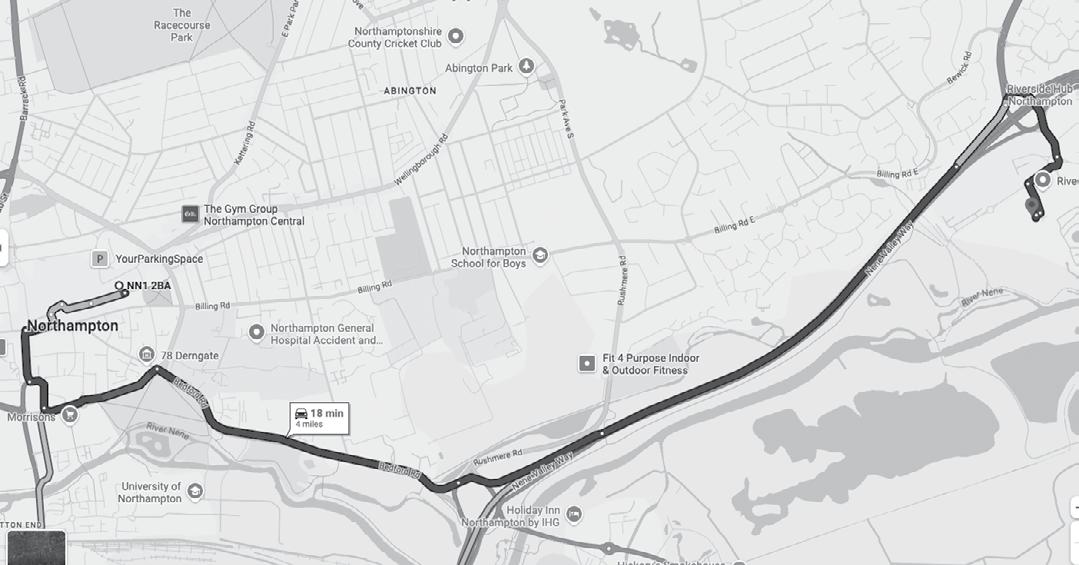
• The mortuary is located on Riverside Business Park in Northampton.
• From the A45, take the exit for Riverside Retail Park and follow signs towards Riverside Business Park.
• Museum Way is signposted once you enter the business park.
• There is on-site parking for families.
By Public Transport
The nearest bus routes currently serving the Riverside area include:
• Service 1 (Weston Favell –Town Centre)
• Service 5 (Weston Favell –Rectory Farm – Town Centre)
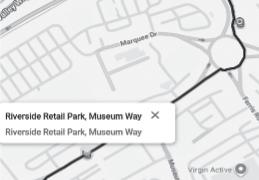
The closest bus stop is Riverside Retail Park
Religious and cultural washing / preparation
If religious or cultural washing has not already taken place in the hospital, the mortuary can arrange this for your loved one. Please speak with the mortuary staff to agree on a suitable time and to ensure that all procedures follow the necessary health, safety, and medico-legal requirements. These arrangements will always be carried out with care and with full respect for your beliefs and customs.
CONTACTING THE FUNERAL DIRECTOR
If you have not already done so, the most important thing to do, as soon as possible, is to contact a Funeral Director.
The Funeral Director will take full responsibility for arranging the funeral on your behalf, and can guide you through the various practical concerns you may have.
If you are not sure which Funeral Director to choose, you can visit the website yell.com to see a list of your local Funeral Directors or check out the Funeral Directors featured at the back of this booklet.
PAYING FOR A FUNERAL
The cost of a funeral can vary, which can feel overwhelming. Before making any arrangements you should check how the funeral will be paid for. The deceased may have contributed to a scheme or policy. They may have savings, a prepaid funeral plan or life insurance policies.
It is a good idea to contact more than one Funeral Director to get an idea of the cost of a funeral. Do not be afraid to discuss ways of reducing costs with the Funeral Director.
You might be able to seek financial help if you are receiving benefits such as Income Support, Family Credit, Housing Benefit or Council Tax Benefit.
Please contact the Department for Work and Pensions, Bereavement Telephone Service on 0800 151 2012 for advice.
GRANT OF PROBATE
If your loved one passed away without a Will, you may need to apply for what’s called a ‘grant of letters of administration’ or ‘Grant of Probate’. This is a legal document that gives one or more people the authority to deal with the person’s estate – their money, property, and possessions.
In some cases, you may not need to apply at all – for example, if the estate is small or everything was owned jointly. Full details and how to apply can be found on the UK Government website: www.gov.uk/apply-for-probate
REPATRIATION
If you wish to repatriate the body (move the body to another country), it is vital that you discuss this with the Registrar at the Registration Office and your chosen Funeral Director, as various additional papers have to be issued. A “Free from Infection” (FFI) document must be issued by the hospital and an “Out of England” order must be applied for by the Funeral Director and issued by the Coroner.
TISSUE DONATION
Tissue donation is supported by Northampton General Hospital and always considered during end of life care in appropriate circumstances. Many people who die can donate some kind of tissues for transplant. Families often find the donation of tissue, such as corneas, skin, bone, tendons, cartilage, and heart valves a source of comfort; as something positive resulting from something sad. Tissues are used to enhance the lives of people with debilitating conditions.
If you feel your loved one would have liked to have helped others in this special way a Specialist Nurse will contact you to discuss this possibility. Tissue donation will not delay any funeral arrangements.
Contrary to common belief, the Law does not provide health professionals with any absolute authority to retrieve tissues and organs without establishing patient’s prior wishes in consultation with their family.
You can also find further information on www.organdonation.nhs.uk and www.legislation.gov.uk
TELL US ONCE
Northamptonshire County Council, in partnership with the Department of Work and Pensions, is offering access to “Tell Us Once”. Tell Us Once is a free service that lets you report a death to most Government organisations at one time. During the Registration appointment the Registrar will provide you with a reference number and the telephone number to access this service.
STOPPING JUNK MAIL TO THE RECENTLY DECEASED
If someone you know has died, the amount of unwanted marketing post being sent to them can be greatly reduced which helps to stop painful daily reminders.
By registering with the free service www.stopmail.co.uk the names and addresses of the deceased are removed from mailing lists, stopping most advertising mail within as little as six weeks. If you cannot access the internet you can call 0333 006 8114, where you will be asked for very simple information that will take only a few minutes to complete. Alternatively, ask the bereavement team for a leaflet that can be returned in the post.
This free of charge service provided by the Bereavement Support Network will not only actively reduce unwanted marketing mail but also can help reduce the likelihood of identity theft following the death of someone close. The information is not used for any other purpose and you only have to complete this once. Additionally to Stop Mail a comparable service can also be accessed from the Bereavement Register or Deceased Preference Service if you would prefer to use them.
WHO TO INFORM ABOUT THE DEATH
There are various people who need to be informed of the death and it may be useful to use these checklists to guide you. Other organisations may be notified through the Local Authority if they offer the ‘Tell Us Once’ service – see the L symbol throughout this table:
Organisation
People to inform:
Adult social services
(including day care/home care) (L)
Bank 1
Bank 2
Bank 3
Child Support Agency/ Children’s services (L)
Council Housing office/ Landlord
Council tax support (L)
Council tax (L)
Credit/store card
Dentist/Podiatrist/GP
DVLA (L)
DWP: including state pension, other benefits/ allowances (L)
Electricity provider
Employer or private
pensions provider
Gas provider
Internet service provider
Spoke to or posted info
Mortgage Provider
Other money, e.g.
national savings/ premium bonds/loans/hire purchase agreement
Prison/Probation/Court Service
Private care
School or college
Tax office
Telephone line provider
Trade union professional association
Universal Credit (L)
Things to cancel if no longer needed:
Buildings Insurance
Car Insurance
Club memberships
Deliveries if the deceased’s house is vacant:
Facebook, X
Home and Contents
Insurance
Library (L)
Magazine subscriptions
Mobile Phone
Travel Insurance
Items to return:
Blue badge/concessionary travel pass (L)
Identity Cards/Passport (L)
MEDICAL EQUIPMENT AT HOME
Any NHS equipment must be returned to the provider. This could be the hospital, GP or other NHS provider. Accompanying paperwork or stickers on the equipment should indicate the service you need to contact.
If you have rented equipment through a private company, you will need to contact them directly to ascertain their return procedure.
If the companies do not require these items back, you may wish to consider donating these to charitable centres. Details of local charities are available online.
A FEW WORDS OF ADVICE
It is not possible to say exactly what everyone will experience in their grief and sense of loss. Each of us will experience our grief in a unique way, and no two people are entirely alike. Individuals from different cultures will have different ways of mourning and of supporting each other. However, on the other hand, there are several experiences in grief, which are common to everybody.
Emotional feelings such as shock, a sense of disbelief, anxiety, depression, guilt, anger, and an overall feeling of numbness may all be common. Often these are accompanied by physical symptoms of grief such as breathlessness, disturbed sleep patterns, difficulty in swallowing; if these symptoms persist do contact your local doctor who will be glad to help.
SOME DO’S AND DON’TS OF GRIEF
Do express your feelings as much as possible.
Do talk through what has happened and what you are feeling with someone you can trust (e.g., a close member of family, a friend or support group).
Do keep in contact with friends and family. Remember that most people will be happy to be asked to help. However, often people may feel awkward and embarrassed about offering help.
Do choose a Funeral Director that you like and trust.
Do contact any of the voluntary and support organisations listed in this booklet if you need someone to talk to.
Don’t hide your feelings; try to bring out into the open what you may be feeling.
Don’t rush into having the funeral right away unless it is the practice or culture or religious tradition.
Don’t make any major life changes whilst you are still grieving. Give yourself time and space to think about any such changes, and discuss them with others.
Don’t neglect yourself! Try to eat well and get plenty of rest.
Don’t let others rush you into anything before you are ready. But remember that sometimes you may not know when you are ready for something unless you give it a try.
It can take months, even years, to fully grieve the loss of a loved one; and remember our grief is an experience through which we will begin to live life anew.
HELPING CHILDREN AND TEENAGERS THROUGH BEREAVEMENT
We naturally try to protect our children from the pain of death by telling them little or nothing about what has happened to a loved one. No matter how old they are. However, children often sense when something is wrong from the behaviour of others around them.
On their own, children may not be able to understand the reality of dealing with, and the feelings that they are experiencing.
Child Bereavement UK have suggestions for books and films for children up to the age of 18, to help understand their feelings and thoughts. Some of the organisations listed in section 4 are specifically geared to helping children and teenagers come to terms with loss and bereavement.
It may be helpful to inform their school or social groups of their loss. This can allow them to create a tailored support plan to continue supporting them through their grief or provide space for them to acknowledge their feelings.
The Bereavement Service can provide advice about the next steps and practical arrangements that follow a death in hospital. There is a dedicated Bereavement Team who is available if you experience any difficulties or would like to provide any feedback about services provided by Northampton General Hospital. Telephone: 01604 523489
Email: ngh-tr.adultbereavementservice@nhs.net
Please be aware that our phonelines can be exceptionally busy on Mondays (or Tuesdays during bank holiday weekends). Therefore please leave a voicemail if you are unable to get through and the team will contact you at the earliest opportunity.
Child and Adolescent Bereavement Service (CABS)
Children and adolescents experience the death of someone close in much the same way as adults. However children do experience the passage of time differently and may seem to overcome grief quickly. It is important that the grief of a child or adolescent is not overlooked. Wherever possible they should be included in the funeral arrangements. The Child and Adolescent Bereavement Service is able to offer help to families/children and adolescents (up to the age of 18 years), and can offer one-to-one counselling. The service can be contacted on 01604 545131.
HOSPITAL CHAPLAINS
The Spiritual and Pastoral Care Service is part of Northampton General Hospital NGH Foundation Trust. It is made up of staff and volunteers who are based in the hospital and who work in all areas across the Trust and are available to everyone, irrespective of faith, belief, culture or nationality. The Chaplains are trained to provide spiritual, pastoral and religious care to all patients, visitors and staff.
The Chaplains can be contacted during office hours by telephoning 01604 545773, or at other times through the hospital switchboard on 01604 634700. You can also email on kgh-tr.chaplaincy@nhs.net.
The Multi Faith chapel is situated near the Main Entrance and is always open.
The Chapel is provided for anyone to use as a quiet place in the midst of a busy hospital.
USEFUL LOCAL AND NATIONAL CONTACTS
Adult Social Care Team
Northampton
For all enquiries regarding adult social care.
Age UK (encompassing
Age Concern and Help the Aged)
Providing practical and emotional support for the elderly and advice following bereavement.
Bereavement Support Network
Providing practical advice on all aspects of what to do when someone dies.
Bereavement Telephone Service (Dept for Work and Pensions)
Providing advice on benefit entitlement and assistance.
Citizens Advice Bureau
Volunteer run and Government funded bureau offering advice and guidance on a whole variety of issues including bereavement.
County Mortuary
CRUSE (Bereavement Care)
For people bereaved in any way, whatever their age, nationality or beliefs.
Northamptonshire County Council
Phone: 0300 126 7000 (option 2)
Age UK Northamptonshire
Monday - Friday 8.00am - 5.00pm
Phone: 01604 611200
Age UK National: 0800 678 1602 www.ageuk.org.uk
Phone: 0333 240 0360 www.bereavementsupport.co.uk
Phone: 0800 151 2012 www.gov.uk
Northamptonshire/Countrywide Advice line: 0800 144 8848 Websites for Northamptonshire: www.cencab.org.uk
National Tel: 0808 808 1677 Northamptonshire: 07772 428532 www.cruse.org.uk
Email: helpline@cruse.org.uk
Jewish Bereavement
Counselling Service
Counselling and support for people from the Jewish Community.
Switchboard LGBT + helpline
Supporting the Lesbian, gay, bisexual and transgender (LGBT) Community.
Macmillan Cancer Support
For practical support and advice.
Marie Curie Cancer Care
For practical support and advice.
MIND
National leading mental health charity supporting individuals in times of bereavement.
The Samaritans
Support and help for those in despair whatever reason.
The Silver Line
Helpline for older people offering free, confidential information, friendship and advice.
WAY Widowed and Young
Self-help social and support network for people widowed under the age of 50.
Phone: 0208 951 3881 www.jbcs.org.uk
LGBT Bereavement Support
Phone: 0800 0119 100
10.00am - 10.00pm every day switchboard.lgbt
Macmillan Support Line
Phone: 0808 808 00 00 www.macmillan.org.uk
Contact Supporter Services
Phone: 0800 090 2309
www.mariecurie.org.uk
National Tel: 0300 123 3393
Northampton 01604 634 310
Wellingborough 01933 223 591 www.mind.org.uk
Phone: 0330 094 5717
Free from any phone: 116 123 www.samaritans.org
National Tel: 0800 470 8090
Open 24 hours www.thesilverline.org.uk
www.widowedandyoung.org.uk
USEFUL WEBSITES
Direct Gov www.gov.uk
Government site offering help and support with the practical and emotional aspects of death and bereavement.
British Association for Counselling
www.bacp.co.uk
Provides information about local counselling organisations and individual counsellors who are accredited members.
NHS Blood and Transplant www.organdonation.nhs.uk
For families interested in organ and tissue donation.
Counselling Directory
www.counselling-directory.org.uk
A comprehensive database of UK counsellors, with information of their training and experience. A free confidential service.
Inquest
www.inquest.org.uk
Charitable service providing advice to bereaved families regarding inquests.
Stop Junk Mail
www.stopmail.co.uk
Help in removing the names and addresses of people who have died from databases/mailing lists and reduce the likelihood of identity theft.
The Natural Death Centre
www.naturaldeath.org.uk
Providing support and information on ‘green’ funerals and burials.
Victim Support
www.victimsupport.org.uk
For the relatives of the victims of homicide, road accidents, sudden or unnatural deaths, or for people who are the victims of crime.
Way Up
www.way-up.co.uk
Self-help group and support network for people widowed in their 50s and 60s.
If you require this booklet in a different language or format please contact the UHN Translations Services by email: ngh-tr.interpreters@nhs.net or by telephone: 01604 523121
Reference: Northampton General Hospital NHS Trust Bereavement Book
Review Date: April 2028
Publication Date: April 2026
The Hospital would like to thank RNS Publications for publishing this information and the following pages contain some features from services o ering their help at this time.
Whilst the Hospital is grateful of their support it does not endorse or recommend any of the services that they provide.
Please note, whilst information is correct at the time of publication, this may be subject to future change.
STOPPING JUNK MAIL
This publication has been jointly developed between ourselves and the Trust. We hope that it has been or will be of help at this time and we welcome any comments or suggestions that you may have.
Please contact us either by phone, email or by post.
Do you need help with Probate?
You may need help, support or advice on what to do when someone dies in relation to probate. It may not always appear obvious if it will be required.
We offer free guidance on the legal and financial aspects of bereavement including your responsibilities and whether probate is required.
You may need to establish whether a property is held in joint names or tenants in common, we can perform a simple check at no cost to establish the title deeds.