This guide was prepared for the purpose of providing you with important information about your child’s kindergarten experience in Berea City Schools. We hope it will answer many questions for you as well as serve as a source of information.
It is the sincere desire of our District to make your child’s year in kindergarten a joyful and meaningful learning experience. We realize that students and parents sometimes have a great deal of anxiety if this is their first contact with the school, and this guide is full of information to answer questions and hopefully alleviate some of that anxiety.
The kindergarten teachers and the school administrative team urge you to contact us if you have any questions that apply to your child that are not answered in this guide.
Sincerely,
The Administrative and Kindergarten Staff
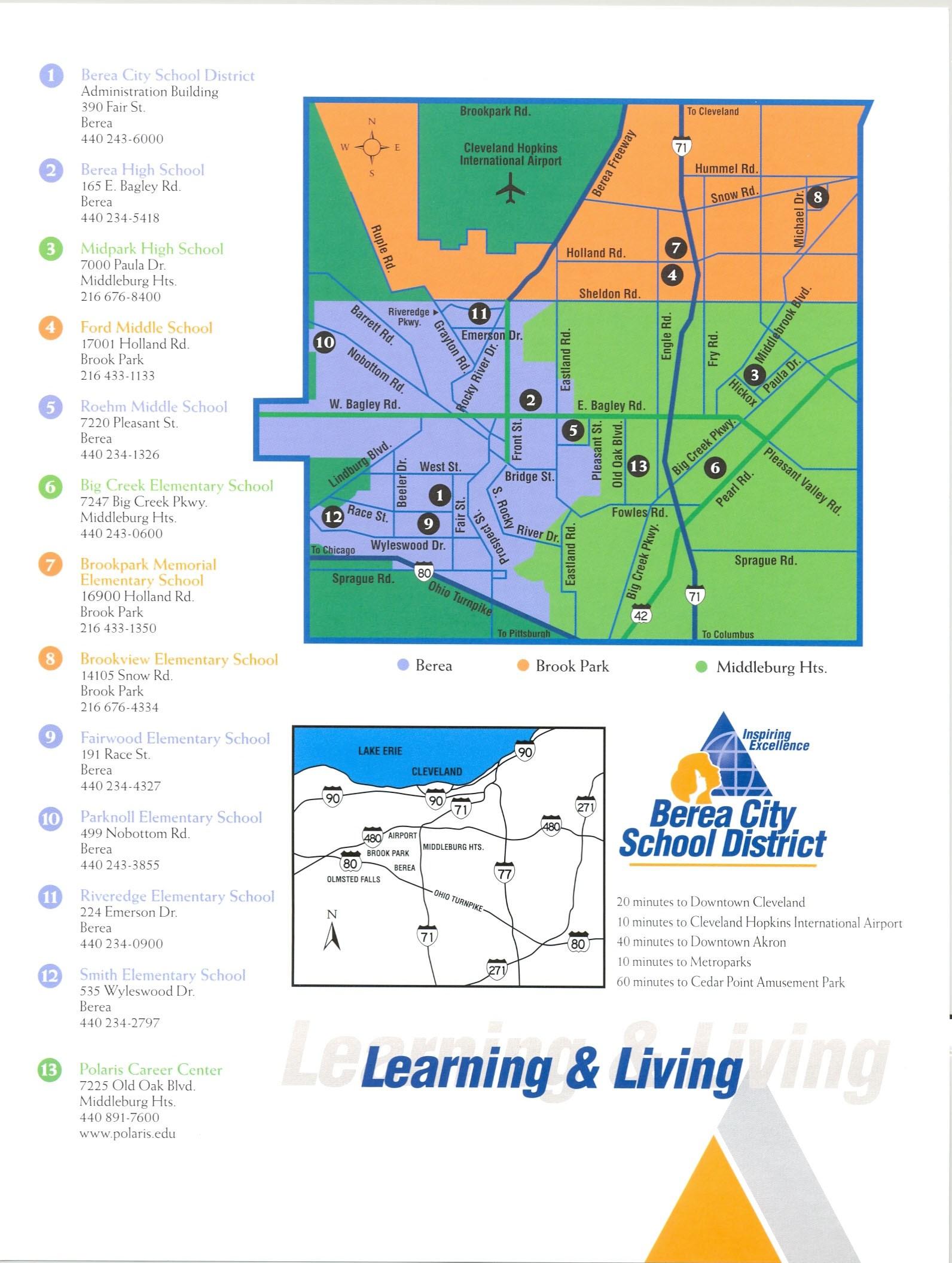
Department of Academic Affairs 390 Fair Street, Berea 216-898-8300
Big Creek Elementary School 7427 Big Creek Parkway, Middleburg Heights 216-898-8303
Brook Park Elementary School 17001 Holland Road, Brook Park 216-898-8307
Grindstone Elementary School 191 Race Street, Berea 216-898-8305
Our all-day kindergarten program provides a rich and engaging developmentally appropriate experience for our kindergartners.
} Physical Well-Being and Motor Development
} Personal and Social Development
} Language and Literacy
} Mathematical Thinking
} Scientific Thinking
} Social Studies
} The Arts
Kindergarten Readiness Checklist
To do well in school, children need to be supported and nurtured in all areas of development. It is also important that your child is physically, socially, and emotionally ready for school.
This checklist can serve as your guide. But please remember, young children change so fast! If they cannot do something this week, you may see them do it a couple of weeks later.
Is your child ready for Kindergarten?
Ask yourself these questions...
Physical Skills
Does your child...
} enjoy outdoor play such as running, jumping, and climbing;
} draw and trace basic shapes;
} cut with scissors;
} bounce a ball; or
} ride a tricycle?
Tips
} Materials that will help your child develop the motor skills needed to learn to write include crayons, markers, pencils, glue, scissors, paper and paint, puzzles, legos, and blocks.
} Activities that will help your child’s coordination include climbing, jumping, skipping, playing ball, using playground equipment, and riding a tricycle.
Health and Safety Skills
Has your child...
} received required immunizations;
} had a dental exam;
} had a vision exam;
} learned their own first and last name;
} learned first and last name of parent;
} learned to watch for cars when crossing the street;
} learned to not talk to strangers;
} developed a set routine for going to bed;
} follow rules for safety?
Tips
} Help your child learn their full name, address and telephone number.
} Help your child to look both ways when crossing the street.
} Talk with your child about strangers and who to go to for help.
} Use bedtime as the opportunity to read to and talk with your child.
Personal Needs
Without your help, can your child...
} use the bathroom;
} wash hands;
} brush teeth;
} use tissue to blow nose;
} button and zip up shirts and pants;
} put on and take off coat;
} tie and/or velcro shoes?
Social and Emotional Skills
Does your child...
} play well with other children;
} separate from a parent without being upset;
} share with other children;
} care about the feelings of others;
Tips
} Create morning and bedtime bathing and tooth-brushing routines.
} Allow your child to dress themselves.
} Practice putting shoes on.
} Help your child learn to use their words to tell other grown-ups when they are feeling sick or hurt.
Tips
} Give your child small chores to learn responsibility.
} Help your child learn to follow directions by giving simple steps.
} Encourage your child to share.
} Praise your child when he or she does something well.
}
Who Can Register?
Children who will be five years old on or before the first day of instruction are eligible to attend kindergarten.
Please visit our website to view registration deadlines and options.
Please note:
Registration Checklist
ü Birth Certificate
ü Immunization Records
ü Photo Identification of Parent
ü Proof of Residency
ü Proof of Custody
Documents needed for proof of residency:
• Proof of home ownership (required if applicable)
• Bank statement, voter registration card, municipal income tax bill, or utility bill with current date
• Valid signed lease or owner’s affidavit (required if applicable)
• Notarized residency/custody affidavit - ALWAYS REQUIRED from person registering the student
• Custodial parent must be the parent who registers the child. In case of parental divorce, parent with legal custody must present a certified copy of the court order awarding legal custody.
• If custody change is pending, the non-custodial parent may present a dated, time-stamped copy of the court filing, showing the motion for change of custody. The non-custodial parent is then given 60 days to present a final copy of the certified decree.
• If there was never a marriage between the parents, the mother must register the child, unless the father has the legal custody papers.
The School Day
School begins each day according to each building’s schedule. Staff members supervise morning arrival, and students should report to their assigned door when entering the building. Students should not arrive before the designated time unless they are coming for breakfast.
Breakfast
Breakfast is served each morning according to the building’s breakfast schedule. Students should be in their classrooms and ready to begin the day when the tardy bell rings.
Instruction
Instruction begins shortly after our student led morning announcements.
Lunch
Students each have a 30 minute lunch period and a 30 minute recess period supervised by staff members.
End of Day
The school day ends according to each building’s schedule. Our dismissal is supervised by staff members.
Absence
If your child is going to be absent, you are required to call your child’s school office.
Safety and Security
Students are supervised by staff members during lunch and recess periods whether inside or outside. Staff members also supervise morning arrival and dismissal.
For the safety and security of all students and staff members, ALL doors to the building remain locked during the school day. All parents, visitors, and guests are required to use the main entrance, report to the school office once they are admitted to the building, and wear a visitor ID badge. Students are never permitted to open the doors to allow anyone to enter the building, so please do not ask them to — NO EXCEPTIONS.
The safety of our students is our top priority. In order to ensure that our students are safely supervised, the Berea City School District has developed a policy that requires a background check of volunteers or chaperones who will be supervising children while out of sight of a District employee. For more information, please go to our District website and click on Volunteer Fingerprinting under Students & Parents.
The Lunch and Breakfast Program
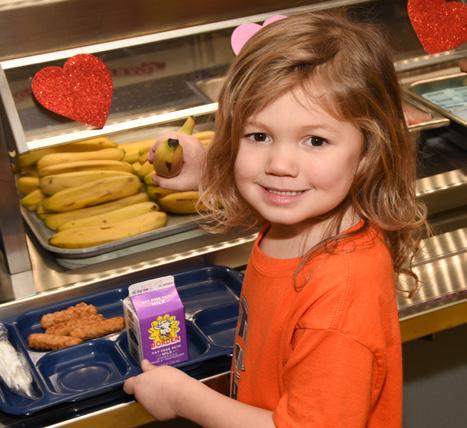
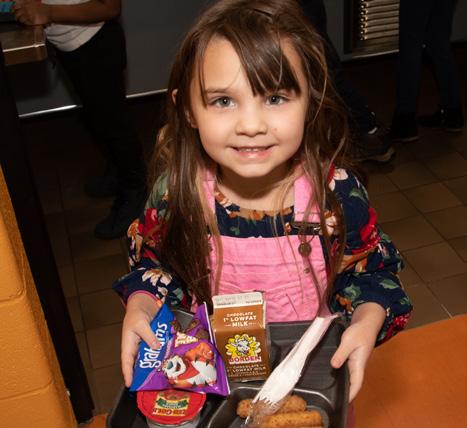
Each school offers breakfast and lunch
} The lunch menu is posted on the school website and in our newsletter. Children can buy or bring their lunch. If packing, consider child-friendly packing so your child can open and access their meal as independently as possible.
} All of our schools use Infinite Campus Food Service. Parents may put money on account for their students at any time during the school year. Please make checks payable to the school cafeteria. Funds may be dropped off in the school cafeteria prior to the beginning of the school day.
} Students access their Food Service account by use of a PIN number. The cashier will see the student’s picture and account balance on the register screen and the amount will be automatically deducted from his or her account.
} Some families qualify for free/reduced priced meals. There is a link for Free and Reduced Lunch Application on our District’s website under Nutrition Services. This application must be completed online. Contact Nutrition Services at 216-8988300 if you need help.
Student Bus Behavior and Responsibilities
It is important to note that riding the school bus is a privilege. The bus is viewed as an extension of the classroom and conduct should be similar.
} Arrive at the bus stop ten minutes before the bus is scheduled to arrive. Wait in a location clear of traffic and away from the road. Form a line and wait in an orderly manner.
} Board the bus and go directly to an available or assigned seat. Students are not to push, shove, fight, or take part in any unacceptable behavior.
} Students need to keep their head, hands, and arms inside the windows of the vehicle. Students are not permitted to throw objects out of the vehicle or inside the vehicle.
} Students should sit facing forward, keeping their feet on the floor; not placing them in the aisle or on the seats.
} Bus riders can lookup their route information on the district website within two weeks prior to the first day of school.
For additional information about:
} Safety tips for parents
} Forms to/from child care centers
} Forms for special requests
} Rider’s handbook
Please go to our District website and click on Transportation under Departments & Services.
School Health Information
Each building within our District is staffed by a School Health Specialist who is either a Registered Nurse, a Licensed Practical Nurse, or a Health Aide.
} To meet your child’s School Health Specialist, feel free to stop by the school clinic during clinic hours the next time you are at your child’s school.
} Information regarding health screenings and required forms, including medication administration, can be found on our District’s website and click on Health Services under Departments & Services.
Supportive Services
} Children who do not have the appropriate vaccinations to enter kindergarten will be excluded. Immunization requirements can be found on our website or via an internet search for “Ohio Department of Health Immunizations for School Attendance.”
The Berea City School District supports all students in a variety of ways:
Providing a high quality education, implementing Multi-tiered System of Supports, identifying and providing services to children who are eligible for special education, 504 Plans, Health Care Plans, and English Language Learner Services using a variety of specialized personnel including:
} School Health Associates
} School Counselors
} Intervention Specialists
} Occupational Therapists
} Interpreters
} Speech and Language Pathologists
} School Psychologists
} Multi Language Learners
} Physical Therapists
} Others
Right At School Enrichment Program
} Right At School, a nationally-recognized organization that provides high-quality enrichment programs is offered at each of our elementary schools.
} This partnership with Right At School offers students the opportunity to enjoy expanded before and after school enrichment and ensures families will continue to have access to the highest-quality programs.
} Right At School provides an engaging and fun enrichment curriculum to encourage students to learn, play and grow. Students will have a healthy snack, engage in dynamic fitness activities, student-driven projects, team building, leadership development, and have the opportunity to complete homework.
} All program sites open at 7:00 a.m. and close at 6:00 p.m.
Site phone numbers:
Big Creek Elementary: 440-789-3188
Brook Park Elementary: 440-789-3282
Grindstone Elementary: 440-789-3370
Technology
Technology is integrated and used intentionally in every class
} Kindergartners and teachers use it regularly; including Chromebooks, Smartboard, and ELMOs.
} Children are taught to use it appropriately, as a tool to use to learn, and as a way to assess what they know.
} In accordance with Berea City School District policy, each student must sign and acknowledge an Acceptable Use Policy form (AUP) each year. Parents sign AUP to allow use of student names or pictures on the website.
} For a brief (10 minute) YouTube video regarding how technology effects brain development in young children, google “Brain Power: From Neurons to Networks.”
} For these forms and more information about technology in our District, please go to our District website and click on Technology under Departments & Services.
Student Success Series: KINDERGARTEN
ACADEMICS
Language Arts Mathematics
• Naming upper-and lower-case letters, matching those letters with their sounds, and printing them
• Comparing the adventures and experiences of characters in familiar stories, such as fairy tales and folktales
• Retelling familiar stories and talking about stories read to them using details from the text
• Using a combination of drawing, dictating, and writing to describe an event, including his or her reaction to what happened
• Stating an opinion or preference about a topic or book in writing (e.g., My favorite book is . . .)
• Taking part in classroom conversations and following rules for discussions (e.g., learning to listen to others and taking turns when speaking)
• Speaking clearly to express thoughts, feelings, and ideas, including descriptions of familiar people, places, things, and events
• Asking and answering questions about key details in stories or other information read aloud
• Understanding and using question words (e.g., who, what, where, when, why, how) in discussions
• Learning to recognize, spell, and properly use those little grammatical words that hold the language together (e.g., a, the, to, of, from, I, is, are)
ASSESSMENT
KRA
Ohio’s Kindergarten Readiness Assessment helps teachers understand your child’s strengths and areas for growth at the start of kindergarten, allowing them to tailor instruction to best support your child’s success. It’s not a pass or fail test, but a tool to set your child up for a thriving kindergarten year.
Dyslexia Screening
• Counting objects to tell how many there are
• Comparing two groups of objects to tell which group, if either, has more; comparing two written numbers to tell which is greater
• Acting out addition and subtraction word problems and drawing diagrams to represent them
• Adding with a sum of 10 or less; subtracting from a number 10 or less; and solving addition and subtraction word problems
• Adding and subtracting very small numbers quickly and accurately (e.g., 3 + 1)
• Correctly naming shapes regardless of orientation or size (e.g., a square oriented as a “diamond” is still a square)
In Ohio, schools use the MAP Reading Fluency test to assess foundational reading skills and identify students who may have characteristics of dyslexia. This is not a final diagnosis, but a helpful tool for early intervention and support.
Reading Diagnostics
In Ohio’s Third Grade Reading Guarantee, the MAP Reading Fluency test helps identify students who may need extra reading support. It measures how well your child reads aloud and decodes words, to see if they’re on track for reading success by the end of third grade.
FAMILY ENGAGEMENT & SUPPORT
Try to create a quiet place for your child to study, and carve out time every day when your child can concentrate. You should also try to sit down with your child at least once a week for 15 to 30 minutes while he or she works on homework. This will keep you informed about what your child is working on, and it will help you be the first to know if your child needs help with specific topics. Additionally, here are some activities you can do with your child to support learning at home:
English Language Arts & Literacy Mathematics
• Read with your child every day. Ask your child to explain his or her favorite parts of the story. Share your own ideas.
• Encourage your child to tell you about his or her day at school
• Have your child describe the picture to you
• Ask your child questions that require counting as many as 20 things. For example, ask, “Do many children have more than 20 books about wild animals?”
• Ask your child questions that require comparing numbers. “Who is wearing more bracelets, you or your sister?” (Your child might use matching or counting to find the answer)
Portrait of a
At Berea City Schools, we want every student to grow into a Titan who is ready for the future. The Portrait of a Titan describes the important skills and qualities we encourage students to develop during their time in our schools.
From the very first day of kindergarten, students begin building these habits through learning, teamwork, creativity, and kindness. The Portrait of a Titan helps guide how we teach and support students so they can grow into confident learners and positive members of their community.
• Demonstrates environmental responsibility through ethical and empathetic behaviors that consider relationships to the natural world and future generations.
• Demonstrates agility in thoughts and actions while acclimating to various roles and situations.
INNOVATIVE
• Understands, negotiates, and balances diverse views and beliefs to reach workable solutions.
A Titan…
COMMUNICATOR
• Values and embraces their responsibility behaviors that make the world a
• Shows respect to other people and demonstrating an awareness and feelings, opinions, and experiences.
• Demonstrates environmental responsibility ethical and empathetic behaviors relationships to the natural world generations.
• Pursues imaginative and creative solutions to problems.
A Titan…
• Solves local and global issues and concerns.
• Develops a responsible digital footprint.
• Listens actively.
• Knows their audience and intentionally speaks and writes with a purpose.
INNOVATIVE
A Titan…
• Takes risks and knows how to develop, organize, and manage new initiatives and/or ventures.
CRITICAL THINKER
A Titan…
LEADER
A Titan…
• Understands the “bigger picture” and proposes solutions that are mindful of the impact they may have on other parts of a system and the environment.
• Pursues imaginative and creative problems.
• Solves local and global issues and
• Takes risks and knows how to develop, manage new initiatives and/or ventures.
LEADER
A Titan…
• Exhibits confidence in one’s ability to reach a goal and takes responsibility for outcomes.
• Skillfully observes, analyzes, assesses, and reconstructs information to create alternative solutions.
• Exhibits confidence in one’s ability takes responsibility for outcomes.
• Inspires and includes others by taking initiative, delegating, and being a visionary.
• Engages in thinking that is clear, rational, open-minded, and informed by evidence.
• Inspires and includes others by taking delegating, and being a visionary.
• Cultivates a culture of empowerment, compassion.
• Cultivates a culture of empowerment, trust, and compassion.
Stay in the Game Attendance Initiative
} Berea City Schools is proud to participate in the Stay in the Game Attendance Initiative, a program that encourages students to attend school regularly and build strong habits from the very beginning.
} In kindergarten, every day is an opportunity to learn, grow, and connect with classmates and teachers. When students attend school consistently, they build important skills, develop friendships, and become more confident learners.
} Through the Stay in the Game initiative, our schools work with families to emphasize the importance of showing up every day. We celebrate good attendance, encourage positive routines at home, and support families when challenges arise.
} Our goal is simple. Help every student build the habit of coming to school each day so they can make the most of their kindergarten experience.
Portrait of a Titan
Be Respectful
Titans Pride Matrix
Arrival/Dismissal Hallway
• Use inside voice
• Walk quietly
• Keep hands, feet, and objects to self
• Use quiet voices
• Use school language
• Maintain personal space
Classroom
• Talk with permission
• Use kind words
• Be honest
• Follow same expectations with substitute teachers
Restroom
• Give privacy others
• Throw paper in trash
• Use facilities
Be Responsible
• Leave when dismissed by staff
• Walk quietly
• Follow directions
• Follow directions
• Go directly to destination
• Be on time
• Be aware of your surroundings
• Use hall pass
• Keep hallway area clean
Be Safe
• Go straight to your destination
• Keep hands, feet, objects to self
• Walk safely
• Use stairs safely
• Face forward
• Keep the flow of traffic
• Be prepared for learning
• Follow directions
• Accept constructive feedback
• Be efficient
• Return to class promptly
• Wash hands
• Keep area clean and clear
• Keep hands, feet, objects to self
• Use materials appropriately
• Use facilities
• Keep hands, objects to
• Inform adult problems
Matrix of Expectations
Restroom Cafeteria Playground Bus Parking Lot
privacy to paper towels
facilities properly
• Use manners
• Use inside voice
• Follow adult directions
efficient class
hands with soap
• Follow directions/ expectations
• Clean up area
• Accept constructive feedback
• Use kind words and actions
• Cooperate and include others
• Listen to adults on playground
• Take turns and share
• Use kind words and actions
• Follow drivers’ instructions
• Use quiet voice
• Park in assigned parking spot
• Keep the area clean
facilities properly
hands, feet, self
adult of any
• Keep hands, feet, objects to self
• Only eat your food
• Carefully dispose of trash
• Line up when signaled
• Agree on and follow game rules
• Sit and remain in seat
• Face forward, feet on floor
• Follow directions and expectations
• Park in assigned parking spot
• Only go in vehicle when arriving or departing
• Use equipment properly
• Keep hands, feet, objects to self
• Stay within boundaries
• Keep hands, feet, objects to self
• Keep aisle clear
• Be aware of location
• Enter and exit cautiously
• Follow driving laws
• Observe speed limit
• Watch for pedestrians
• Walk safely
The Berea City School District is a diverse community dedicated to inspiring lives of