7 minute read
menus, branding, advertisments, etc.

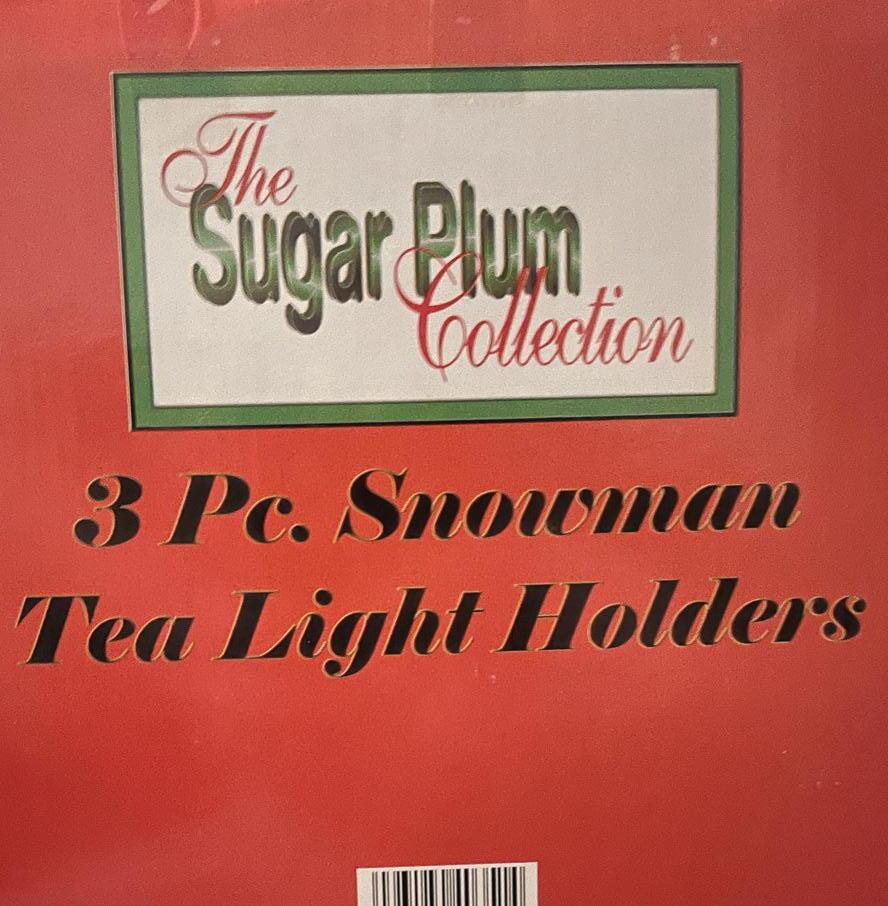
This is a box of tea lights that was found in a closet at home and a bad example of typography.
My first reaction to this was a rather compulsive “Ew,” so I imagine there was something to be analyzed here. These are Christmas-themed tea lights, one indication being the word “Snowman.” Due to this Christmas theme, this informs the rest of the color choices found in the rest of the letterforms and the backgrounds they lay upon.
Advertisement
To start at the top, there doesn’t seem to be any concern for any leading, the four words of “The Sugar Plum Collection” are colliding with each other a bit. While we can say it’s still legible, it does end up being a bit visually distracting. The other thing of note to come back to is the color choice. We have red and green choice of colors in these letterforms resembling Christmas, but “Sugar Plum” is green with a gradient. This gradient creates a visually inconsistent viewing experience but also introduces black and white as colors. Black and white aren’t usually the main colors of Christmas (probably more auxiliary at most), so adding this in combination to green specifically adds a sickly feel to the product. Also since it’s on the words “Sugar Plum,” a combination of green, white, and black on a food item gives the sense that it’s moldy, which doesn’t help convey the message of Christmas or Sugar Plums well either.
The last thing to note is the phrase under “The Sugar Plum Collection.” While the phrase is contrasted, the choice of black letters on a red background is two dominant colors next to each other, which combined with this particular typeface, could end up a harsh reading experience on the eyes.
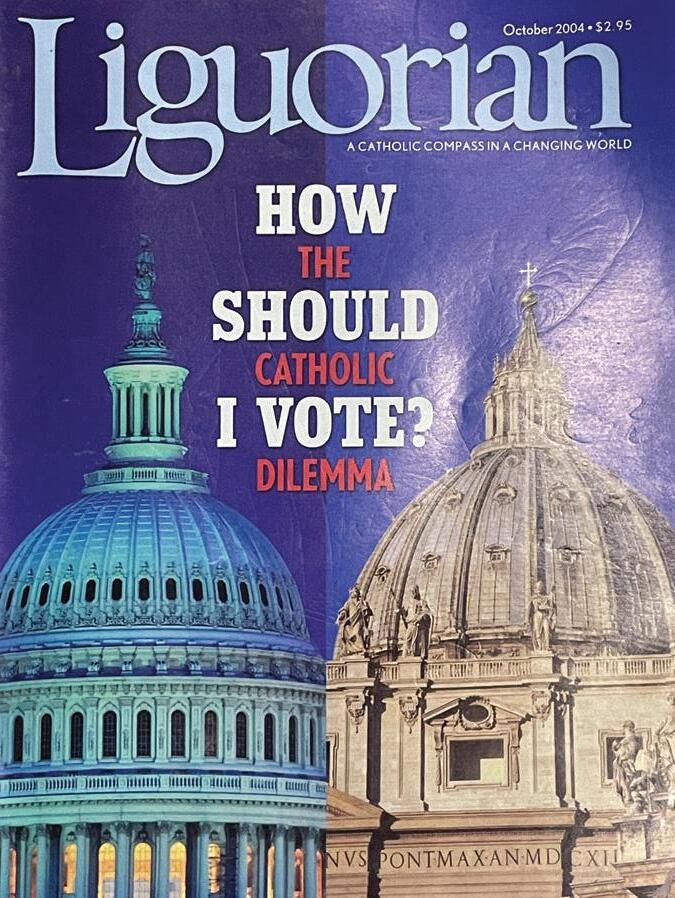
This magazine was found around the house amongst another array of magazines. Throughout all the magazines it was actually a bit difficult to definitively find something that struck me as bad, however after looking at this for a moment, I realized that it committed a classic readability mistake of splitting and combining two different phrases together. Though I think some credit can be attributed to keeping the two different phrases of “How Should I Vote?” and “The Catholic Dilemma” distinct with different typefaces, sizes, and colors. Anecdotally, I asked my mom how she read this and she read each phrase separately as “How Should I Vote - The Catholic Dilemma,” which would probably be the intended way to read it. However, like any similar example, it’s also just as easy to read it as it is from top to bottom as “How The Should Catholic I Vote? Dilemma.” They attempt to keep the text center aligned in respect to the buildings beside it, which is a good consideration. However, the issue lies in their decision to split the phrases in the first place. If there’s enough space to have them separated, then there should also be enough space to keep them together. They’d be able to save the readability that way. The only reason I can see to have them separated is to add visual interest as alternating the text that way can create a visual rhythm, but I think it’s too risky to be attempting that over readability.
This is Chicken Broth that you can find at Sam’s Club. This is the example I chose for good typography because it has a quite unique choice of typeface for advertising the main product.
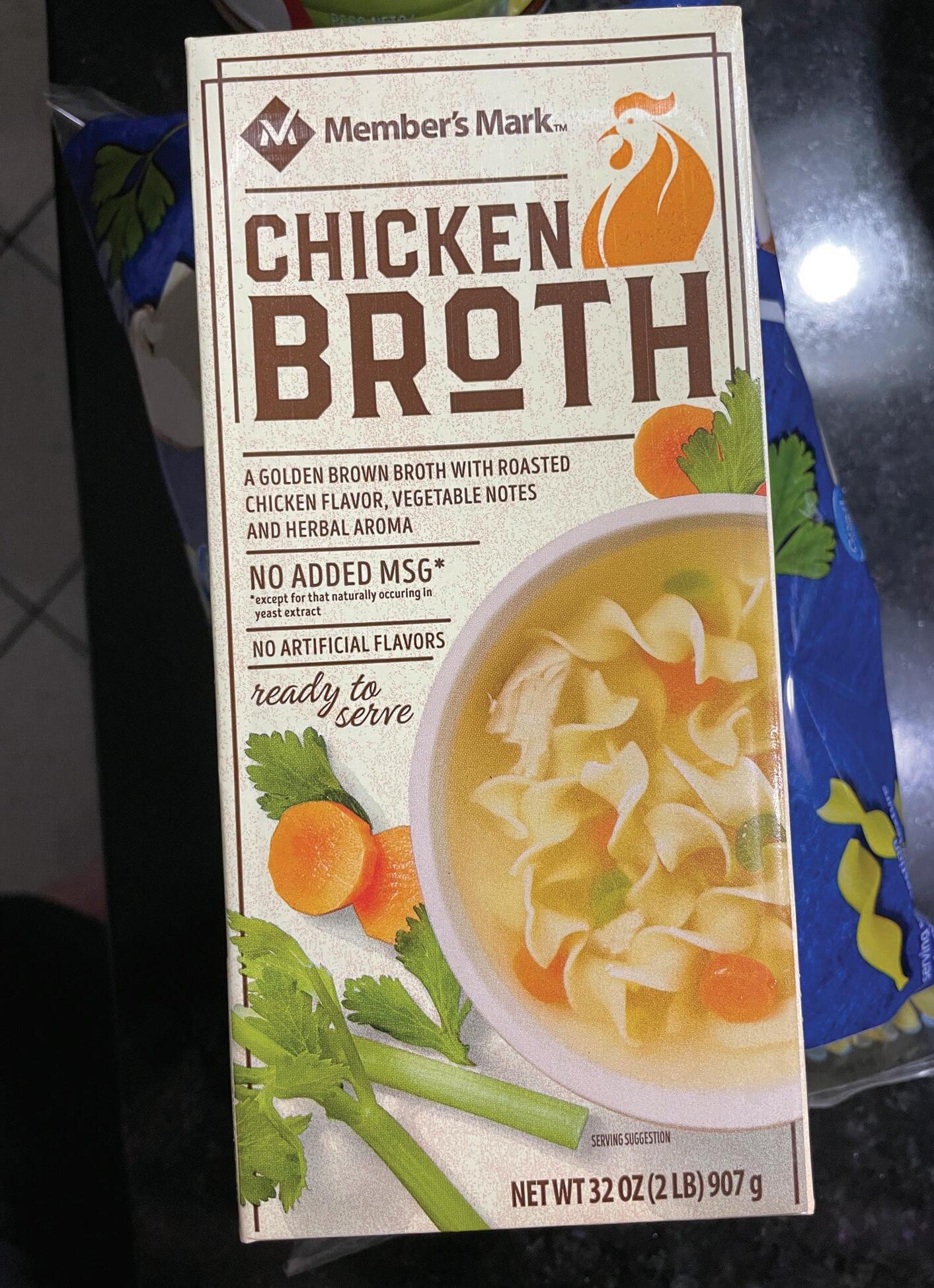
To begin, there does exist sans serif typefaces on this product, with the choice for this typeface is to relay descriptions and perhaps some promotional information such as “No Added MSG’’ and “No Artificial Flavors.” Interestingly enough, the choice for emphasis for the promotional information isn’t using a bold font (even though it looks as it would) but instead just using a larger point size. There’s only two phrases that aren’t capitalized, the phrase with an asterisk starting with “except” and the phrase “ready to serve.” In some ways, these two phrases help emphasize the promotional phrases, maybe not by much (especially “ready to serve” since its point size is rather big and can stand alone as its own emphasized promotional phrase) but it helps a little bit.
The main typographic attraction to me is the main indicator of the product, “Chicken Broth.” These two words are the largest sized words on the entire product so the viewer can tell what it is. Interestingly, they aren’t the same size. Broth is almost 50% bigger to really indicate that it’s not just any chicken product, it’s chicken BROTH.
The typeface they used is very interesting as well, it’s a very blocky typeface. Where there would normally be a curve on the word, it is instead an edge, which makes this more visually interesting. The terminals of practically every letter also protrudes out a little bit to almost to give them a sense that they’re serifs but they aren’t really in the end (at least I think). Of course, one of the last things that stands out is the choice of making the “O” smaller and raised to include an underline looking thing under it. I’m not quite sure if it’s supposed to represent something. If I had to spitball, maybe it represents a bowl and a utensil, but if it doesn’t represent anything, it still makes this product more visually interesting.
These menu cards I found at a local bar/pool (the stick and ball game) place here in Panama City. It was quite coincidental to find these because I was wondering how to make vertical text look “good” recently. This is, however, my bad example.
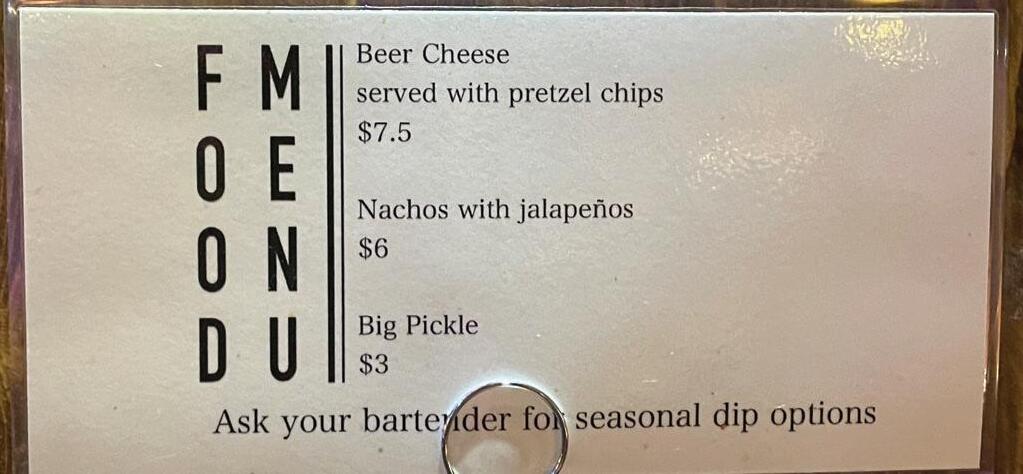
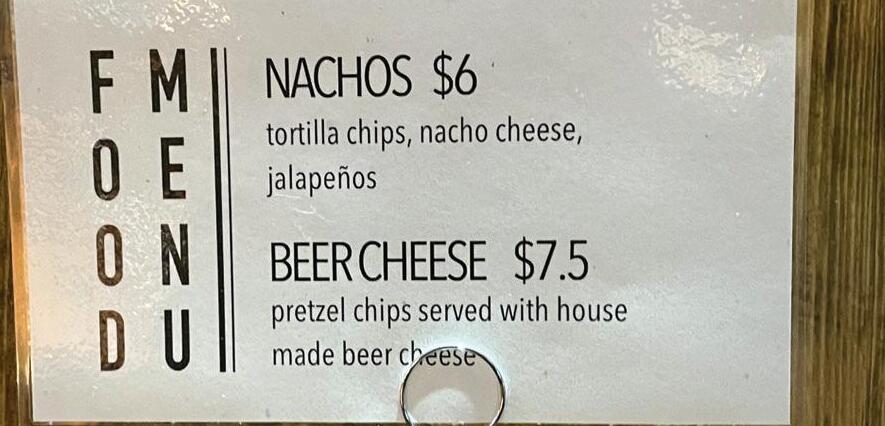
The first example I saw was the card on the left, where initially I wasn’t sure what the vertical words on the left were, as I had read them from left to right literally as “FM, OE, ON, DU.” But on second glance I realized that it was a “Food Menu,” but vertical. While legible, the readability isn’t good. While readability could be improved by having it be horizontal, let’s entertain the idea that it can only be vertical.
One solution I’d think would work would have them separate, Food on the left side of the card, Menu on the right side. In some ways, this might make it take longer to read by having both words separated like that and it might introduce another form of disruption in the visual hierarchy, but I think that given they’d stay the same type style and that one word would imply the other in this scenario (Food implies food in the middle of the card, menu implies food in the first place), I think it’d be one way to solve this readability problem.
Another thing I’m not sure why it was made a choice, but aside from the two cards having the same typeface for Food Menu, they use a serif font on the left one and a sans serif font on the right one for the rest of the information. I would say the right one is a bit better because it boasts all caps for the food item for emphasis and ingredients in lower case, but since both cards aren’t the same typeface for the food or ingredients, there becomes a lack of unity and consistency for the food menu card.
menus, branding, advertisments, etc.
To start off this next section are these menu cards I found at a local bar/pool (the stick and ball game) place here in Panama City.
The first example I saw was the card on the top, where initially I wasn’t sure what the vertical words on the left were, as I had read them from left to right literally as “FM, OE, ON, DU.” But on second glance I realized that it was a “Food Menu,” but vertical. While legible, the readability isn’t good. While readability could be improved by having it be horizontal, let’s entertain the idea that it can only be vertical.
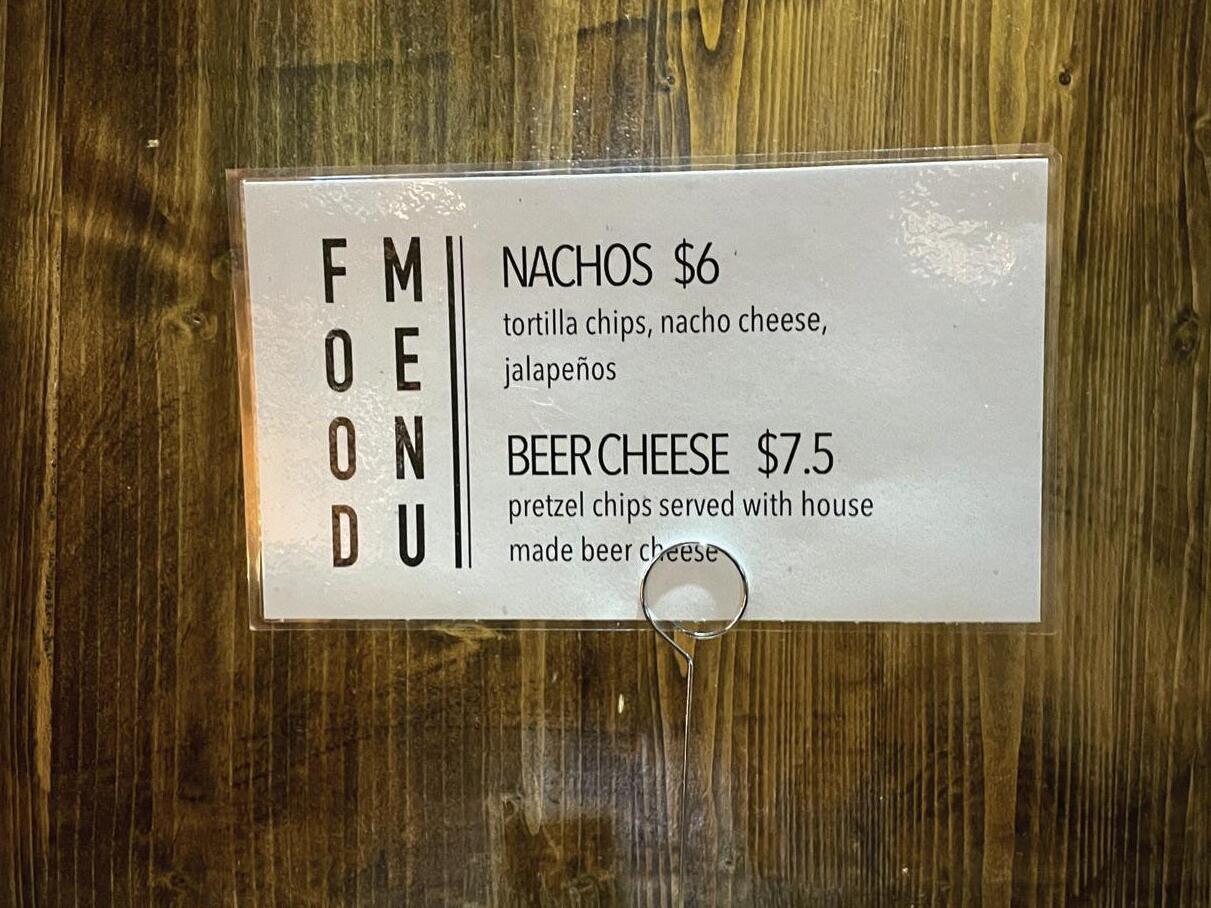
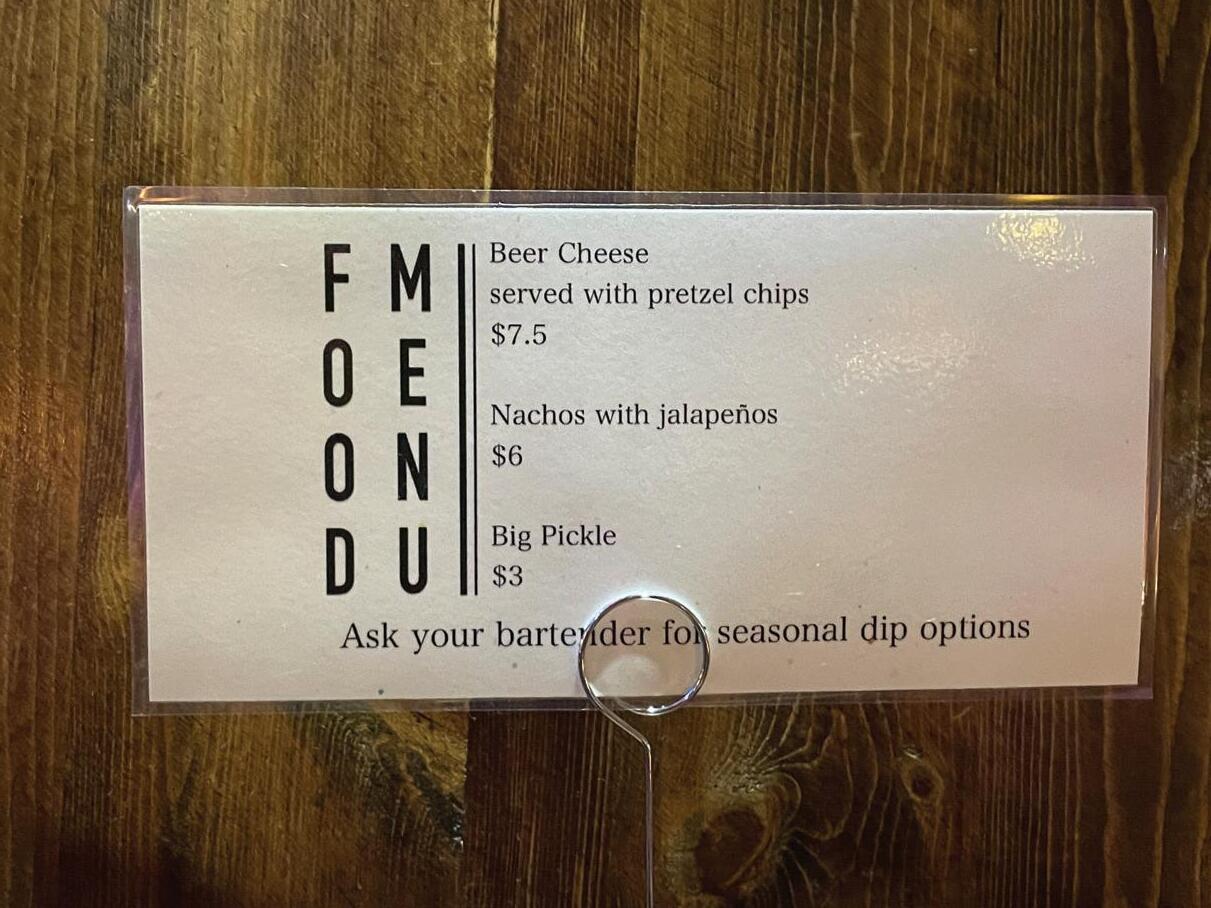
One solution I’d think would work would have them separate, Food on the left side of the card, Menu on the right side. In some ways, this might make it take longer to read by having both words separated like that and it might introduce another form of disruption in the visual hierarchy, but I think that given they’d stay the same type style and that one word would imply the other in this scenario (Food implies food in the middle of the card, menu implies food in the first place), I think it’d be one way to solve this readability problem.
Another thing I’m not sure why it was made a choice, but aside from the two cards having the same typeface for Food Menu, they use a serif font on the top one and a sans serif font on the bottom one for the rest of the information. I would say the right one is a bit better because it boasts all caps for the food item for emphasis and ingredients in lower case, but since both cards aren’t the same typeface for the food or ingredients, there becomes a lack of unity and consistency for the food menu card.
This is the front of a menu from a local Chinese American restaurant in Panama City, Florida. Food’s good, but this would be an example of bad typography. There’s at least 5 different typefaces that I can count off in this one brochure of a menu. While each typeface present here is relatively legible and contrasted clearly from its bright background, the presence of the 5 different typefaces adds visual clutter and discord to not only the overall design of the menu, but also contaminates the possible message this menu portrays. Chinese Restaurant New York Style? New York Style King House?
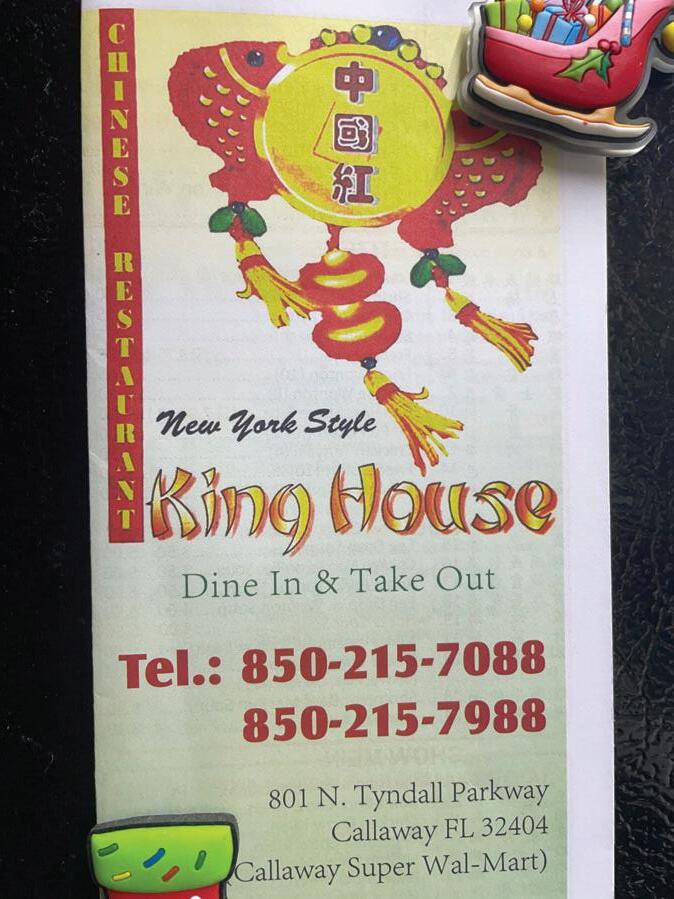
To start, the completely vertical text of “Chinese Restaurant,” the main strokes, stems, and spines of each letter is absurdly thick. Due to this, there isn’t any room left to make the other aspects of the letters stand out and make those letters what they are. To illustrate, the stems of the “H” are so thick that the corresponding bar is also absurdly thin. From afar, this “H” would look like two uppercase “i’s,” much like the upper case “i” below it.
Similar sentiments can be said about the R’s and A’s. Other things to note is that key information such as the telephone number and location are in different typefaces. I think instead of having the telephone number as a different thick typeface for emphasis, they could’ve had it as the same typeface as the one above and below it and perhaps had it in a bold font to accomplish the same goal but visually harmonize it better.
The kerning and tracking of the whole menu seems fine for the most part, maybe the kerning is a bit too tight between the “y” and “n” in Tyndall and maybe too loose between the “W” and “a” in Wal-mart, but overall the use of too many typefaces is what makes this a bad case of typography.
