Robert Altice, Chair
Robert Altice, Chair
Morgan Snyder, Vice Chair
Jeremy Davis, Treasurer
Erin Dorsey, Secretary
Latoya Botteron, At Large
Donna Oklak, Past Chair
Milan Ball
Teresa Bennett
Robert Biggs
Lisa Boncosky
Christina Hale
Ellis Hall
Carrie K. Houston
Kenneth M. Jastrow, II
Will Lonnemann
Konye Ori
Lucille Pittard
Blake Roebuck
Rod Taylor
EX-OFFICIO
John Teskey, Volunteer Association President
PRESIDENT & CEO
Charles A. Hyde
HONORARY DIRECTORS
Robert H. Everitt
Thomas P. Ewbank
George Geib
Brian Hewitt
Eric J. Holcomb
Stan C. Hurt
Jamia Jasper Jacobsen
Thomas King
John Krauss
Kimball Harrison Morsman
Andrea Neal
Susanne S. Ridlen
David G. Sease
Michael Wells
Carolyn Anker
Susan Brooks
William A. Browne, Jr.
Lloyd Crowe
Rosemary Dorsa
Whitney Ebmeyer
Daniel F. Evans
Howard “HJ” Lacy IV
Elizabeth Mann
Jenry Morsman
Peter Rusthoven
Ed Simcox
James Wallis
Robin Winston


Special thanks to the more than 150 volunteers who make our work possible!
“Do not be ashamed to love the flag or confess your love of it. Make much of it; tell its history; sing of it.”
Our America250 moment is upon us, and with it brings cause for both celebration and reflection. It takes little imagination or embellishment to understand the full audacity of July 4, 1776. It set the future United States of America on a trajectory that few could have foreseen. Even the founders in their wisdom knew their efforts were something altogether new to the world, and the chances of success against the leading global military power were slim.
There were severe consequences for the 56 signers - some were captured by the British, lost family members, or had their homes and possessions destroyed leading to financial ruin for their commitment to independence. Our new exhibit, “There at the Founding,” delves more deeply into the fortunes of one of those signers, Benjamin Harrison V, and the consequences for his descendants.
America250 begins with the articulation of founding principles in 1776, but further calls for us to explore how those ideals have been understood and applied in the subsequent 249 years. It’s about meeting the promise of the Declaration, its embodiment into law through the Constitution, and the subsequent amendments that have been relentlessly tested and applied through many generations to make this country “a more perfect union.”
So what does this have to do with us and the 23rd president?
"Not a trust fund, but the public trust: this was Benjamin Harrison's inheritance and ours."
Not a trust fund, but the public trust: this was Benjamin Harrison’s inheritance and ours. This great-grandson of a signer of the Declaration of Independence and grandson of the 9th president understood that his civic legacy was carrying forward - and living up to - the aspirations of the founding. His Civil War military service helped to abolish slavery, as a lawyer he sought to achieve justice through law, and as President he was an outspoken advocate for civil rights.
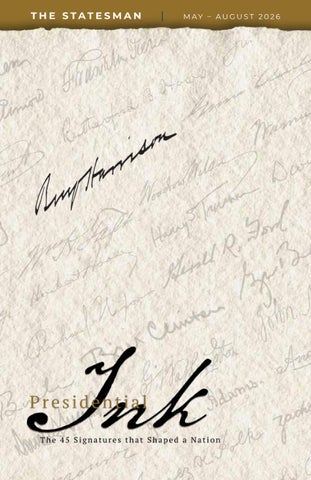
Benjamin Harrison was but one of 45 presidents in 47 administrations who endeavored to lead the country forward since our nation’s founding. Get a glimpse of these stories - traced out in ink by every President’s own hand - for yourself in the new 3rd floor special exhibit, “Presidential Ink”, and across our nearly 30 public programs and events scheduled for the coming year.
America250 at its best will be a retelling and sharing of the diverse array of stories, year by year, that make up our national heritage two and a half centuries in the making - truly e pluribus unum!
Very sincerely yours,

Charles A. Hyde, President & CEO

* Reservations required.
MAY 2026
COFFEE WITH THE CURATOR
FRIDAY, MAY 1 · 8:30AM–9:00AM
OFF THE RECORD: THE PRESS AND THE PRESIDENCY
WEDNESDAY, MAY 6 · 9:00AM–11:00AM*
VICTORIAN FLORIOGRAPHY WORKSHOP
THURSDAY, MAY 14 · 5:30PM-7:00PM*
JUNE 2026
COFFEE WITH THE CURATOR
FRIDAY, JUNE 5 · 8:30AM–9:00AM
JUNETEENTH FOODWAYS FESTIVAL
FRIDAY, JUNE 12 · 3:30PM-8:00PM
PRESIDENTIAL ROAD TRIPS WITH BILL CLEVLEN
THURSDAY, JUNE 25 · 5:30PM–7:30PM*
JULY 2026
NATURALIZATION CEREMONY
THURSDAY, JULY 2 · 10:00AM–11:00AM
COFFEE WITH THE CURATOR
FRIDAY, JULY 3 · 8:30AM–9:00AM
INDEPENDENCE DAY SOCIAL
SATURDAY, JULY 4 11:00AM–2:00PM
AUGUST 2026
COFFEE WITH THE CURATOR
FRIDAY, AUGUST 7 · 8:30AM–9:00AM
WICKET WORLD OF CROQUET
SATURDAY, AUGUST 8 · 10:00AM - 3:00PM*
HARRISON WREATH LAYING CEREMONY, CROWN HILL CEMETERY
THURSDAY, AUGUST 20 · 9:00AM
LIVE! PRESIDENT HARRISON'S BIRTHDAY
THURSDAY, AUGUST 20 · 10:00AM-3:00PM*
OFFICIAL PARTNERS:

FIRST FRIDAY OF EACH MONTH
8:30AM – 9AM (VIEW ON FACEBOOK LIVE AT 8:45AM) Free for members & guests | $6 general admission
Join us for a stimulating 30 minutes at our monthly First Friday event! While you enjoy coffee and pastries, you will get a chance to explore some of the most interesting, amazing and unexpected Presidential Site collection items. We promise to satisfy your curiosity and have you on your way to the office by 9AM sharp! Upcoming themes include:
May 1
June 5
July 3
August 7
Benjamin Harrison + Conservation (onsite event & simulcast on Facebook Live)
William Henry Harrison + Indiana Territory (onsite event & simulcast on Facebook Live)
Benjamin Harrison V + The Signing (onsite event & simulcast on Facebook Live)
Benjamin Harrison + the Bill of Rights (onsite event & simulcast on Facebook Live)
Space is limited so reservations are recommended. Find out more by calling 317.631.1888 or visiting PresidentBenjaminHarrison.org.
decades-long collecting journey fuels new presidential signatures
Casey Smith, Indiana Capital Chronicle
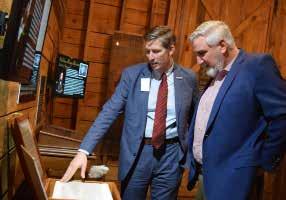
In a glass case tucked on the top floor of the Benjamin Harrison Presidential Site, a small, centuries-old document bears the hurried script of a young military aide authorizing rations for spies.
The aide would later become the ninth president of the United States.
For former Indiana Gov. Eric Holcomb, that fragment of history — signed by William Henry Harrison while serving as an aide-de-camp under Revolutionary War Gen. Anthony Wayne — is more than ink on paper. “It’s a story” — and one he chased for years before finally adding it to a collection that took more than two decades to complete.
Now, that piece — alongside dozens of others spanning every U.S. presidency — is on public display as part of “Presidential Ink,” a new exhibit that opened last week at the presidential site in Indianapolis.
Drawing from Holcomb’s private holdings, the collection of longtime attorney Tom Charles Huston and the presidential site’s own archives, the exhibit brings together 45 presidential signatures to trace the sweep of American history through handwritten words.
“It’s been an interesting journey — decades, plural in length,” Holcomb said of his collecting. “For me, more than even acquiring a piece, it’s the hunt. It’s the learning of the history behind the document.”
Read the full article at IndianaCapitalChronicle.com
"In 1889, a jubilant nation came together in New York for a gala celebration of the 100th anniversary of George Washington's inauguration."
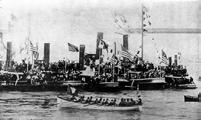
"The guest of honor for New York's three-day celebration was the new President of the United States, Benjamin Harrison, who had taken the oath of office less than two months earlier. On the evening of April 28, 1889, President Harrison left Washington D.C. by train, accompanied by Vice President Levi P. Morton and other senior government officials. In a scene reminiscent of George Washington's triumphant journey to New York a century earlier, the presidential party was greeted by throngs of supporters and a 21-gun salute upon their arrival the following morning in Elizabeth, NJ. In the first of many processions to come, the President was escorted to Elizabethport in a cavalcade of 60 horse-drawn carriages, where he boarded a barge to take him to the U.S. Steamer Dispatch."
Read the full article at mountvernon.org.
“Every Bill which shall have passed the House of Representatives and the Senate, shall, before it become a Law, be presented to the President of the United States; If he approves he shall sign it, but if not he shall return it…”
- U.S. Constitution, Article 1, Section 7
"Presidential Ink" delves into the enduring public fascination with the power of the commander-in-chief’s pen. This exhibit draws from the Presidential Site’s own collection, along with significant private holdings from the Holcomb Collection and the Huston Collection.
Presidential signatures tell part of the American story - the history of the United States. They often are signatures on unique historical documents but can also be letters, photographs, or autographs and souvenirs. Their signatures give special insight into who these men were and how they saw themselves in the world. Some have a calligrapher's flair, while others seem hurried and routine. Whether thin and spidery or bold and brash, they all carry equal weight under the law - and hold special relevance to shaping the past, present, and future of the United Satates.

The tradition of giving away pens used to sign special documents started earlier, but President Lyndon B. Johnson famously used over 75 pens to sign the 1964 Civil Rights Act. The practice serves as a way to share the moment with those instrumental in a bill's passage. Bills, executive orders, proclamations, memoranda, and notices are different types of official documents.
A few of the official documents included in the exhibit are treasured Harrison family papers: William Henry Harrison’s appointment signed by President John Quincy Adams (see From the Collection on page 13), a Thanksgiving Day Proclamation from 1892, and four naval commissions for John Parker (Benjamin Harrison’s brother-in-law) signed by presidents Grant, Hayes, Cleveland, and McKinley.
Presidential correspondence can be personal or official. Letters, notes, and cards provide a direct look into the lives of presidents and their administration. The Office of Presidential Correspondence was founded in 1897. Initially, the office handled 100 letters a day. When Theodore Roosevelt became president, his popularity increased the volume of mail “like an avalanche” according to his head clerk, Ira R. T. Smith, causing the office to fall behind and hire additional clerks. Today the office handles thousands of phone calls, faxes, emails, and letters per day - processing millions of items annually.
Autographs have long been sought, but collecting gained popularity in the 19th century. During the Civil War, President Abraham Lincoln and members of his Cabinet frequently donated their autographs and signed documents to be sold or auctioned at events held by the United States Sanitary Commission (a private relief agency created by federal legislation on June 18, 1861, to support sick and wounded Union soldiers). For the 1864 Great Central Fair in Philadelphia, Lincoln signed 48 copies of a special Authorized Edition of the Emancipation Proclamation - selling at the fair for $10 each - of which only 27 copies are known to exist today.
In "This Country of Ours," Benjamin Harrison wrote, “The requests for autographs are scarcely numerable. A card, with an engraving of the Executive Mansion upon it, is provided for that use, and a pile of these cards upon his desk, and another of autograph albums, make their mute appeal to the President every morning." Some of these very autograph cards are displayed along with a signature quilt containing the signatures of Benjamin Harrison, Caroline Scott Harrison, some of his cabinet members, and squares for the states in the Union with the corresponding governor’s signature.
Another interesting item on display is an autopen machine on loan from Pen Point Technologies. It is programmed to write Benjamin Harrison V, William Henry Harrison, and President Benjamin Harrison’s signatures on a souvenir card that visitors may take as a memento. The modern autopen machines were developed in the 1940s. President Harry Truman is the first president to use the device for signing letters, photographs, and autographs.
Over the years the writing instrument of choice may have changed, but the power behind the pen remains. The stories of all 45 presidents - and their 47 administrations - are written in ink.
For more information and to reserve your spot or purchase tickets, please visit PresidentBenjaminHarrison.org.
BY JENNIFER CAPPS Vice President of Curatorship & Exhibition
JULY 4, 1888
Nominated for the Presidency on June 25, 1888, Benjamin Harrison received the official notification on July 4, 1888. In a gracious speech of acceptance, he referred to Independence Day itself:
“The day you have chosen for this visit suggests no thoughts that are not in harmony with the occasion…Washington and Lincoln, Yorktown and Appomattox, the Declaration of Independence and the Proclamation of Emancipation are naturally and worthily associated in our thoughts to-day.”
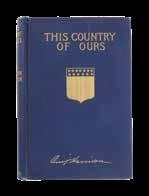
President Benjamin Harrison published “This Country of Ours” in 1897. It explains the history and workings of the American government, from the Constitution to the presidency, with the goal of promoting civic understanding. It covers the formation of the government, the roles of the executive departments, and the daily life of the presidency, serving as a guide to American civics and history.
In it he writes, “The requests for autographs are scarcely numerable. A card, with an engraving of the Executive Mansion upon it, is provided for that use, and a pile of these cards upon his desk, and another of autograph albums, make their mute appeal to the President every morning. Patches for autograph bed-quilts and lunchcloths add to the burden.”
One of these bed-quilts of signatures is displayed in our “Presidential Ink” exhibit, generously donated in 2025 by Mr. and Mrs. Lawrence Gumberg. DID YOU Know?
With the stroke of a pen, history changes course. While not included in the exhibit, these artifacts represent moments when presidential decisions moved from words to action— each one a quiet turning point in the American story:
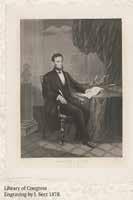
Abraham Lincoln, 1878
This painting by E.W. Winner in 1878 depicts President Abraham Lincoln signing the Emancipation Proclamation.
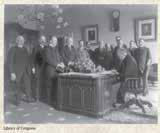
William McKinley, 1899
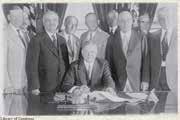
President William McKinley signing
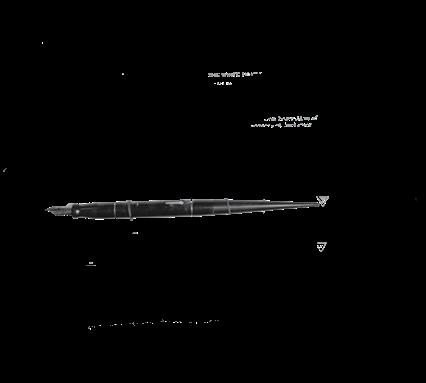
This pen was used by President Franklin D.
Lyndon Baines Johnson, 1968
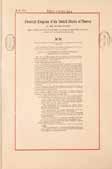
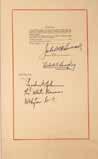
President Lyndon Baines Johnson signed the Civil Rights Act on April 11, 1968.
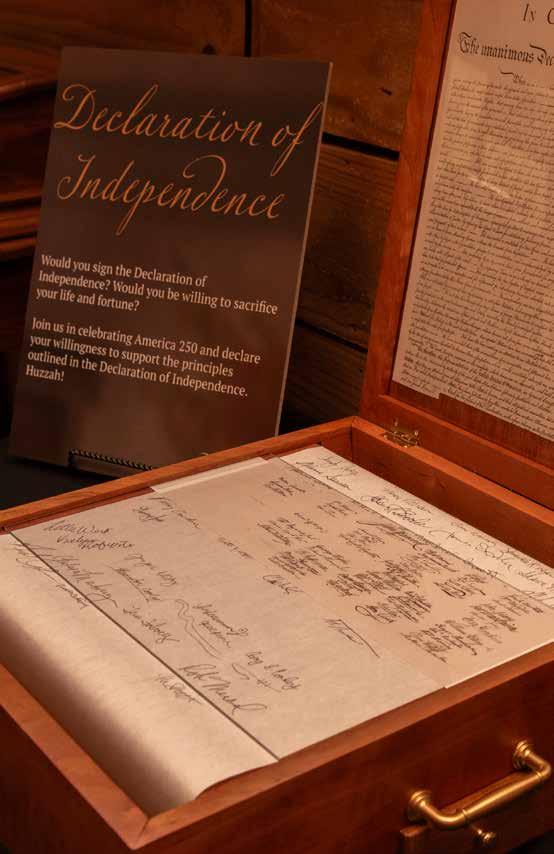
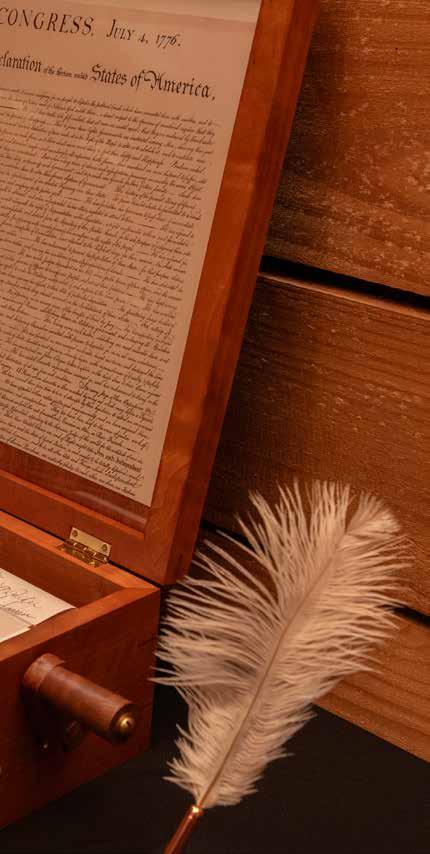
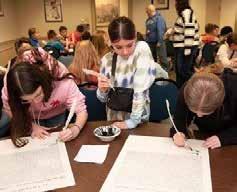
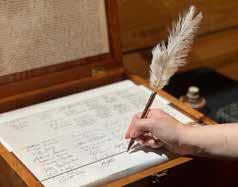
As America approaches its 250th anniversary, guests are invited to reflect on the courage of 1776 and recommit to the enduring principles of the Declaration of Independence in our "There at the Founding" exhibit in the Welcome Center, through November 1, 2026.
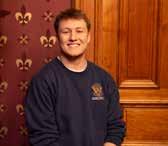
ASHTON GIANAKOS Education Ambassador
Benjamin Harrison Presidential Site
In this regular feature, we highlight some of the people, schools, and partners that make our educational outreach to thousands of students each year possible.
"Hello! I am Ashton Gianakos, the Education Ambassador at the Benjamin Harrison Presidential Site. I have been part of the organization since January 2025, when I began as an intern, studying education and museum studies as part of my undergraduate program at Butler University. Upon graduation, furthering my interest in government and public history, it was only fitting that I remained, currently working full-time, alongside the education team on-site.
I first became involved with the Benjamin Harrison Presidential Site when I attended a course on teaching social studies and science in a K-12 setting. During a field trip to the Presidential Site, I met Roger Hardig and was introduced to the museum’s operations, and after watching one session of “Coming to America,” I was hooked. I knew I needed an internship in my final semester, and I was drawn to the tight-knit, yet intellectually vibrant ambiance of the museum and the distinction of working at the only presidential site in Indiana. I was initially intended to be an intern for a couple of months, which later evolved into a summer position, then a temporary role, and ultimately a full-time opportunity that I could not be prouder to be a part of. Teaching students outside a traditional classroom has provided me with invaluable insight into educational dynamics and has prepared me to instruct learners ranging from three years old to college-age students.
My primary responsibilities here have included assisting with the Future Presidents of America program, one that has not only been a privilege to participate in, but also to observe and learn from. Roger Hardig and Jennifer Hodge lead one of the most exceptional summer programs, which is both deeply reflective and highly professional. Through the students I have worked with thus far, it is evident that the program is not solely for them; it is for teachers, too. The legacy of the Benjamin Harrison Presidential Site is always moving, through its artifacts, dedicated individuals, and remarkable opportunities.
I look forward to my second year of working with the Education team and the Future Presidents of America and am eager for the productive civic discussions that we will be having this summer!"

Spanning centuries of American history, Presidential Ink draws on three major collections to present the signatures that defined a nation - and a few of Vice President of Curatorship and Exhibition Jennifer Capps' favorites are featured below:
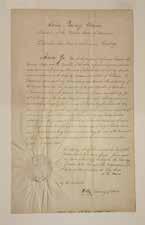
This official appointment, signed by President John Quincy Adams and Secretary of State Henry Clay on October 1, 1828, commissions William Henry Harrison as U.S. Envoy Extraordinary and Minister Plenipotentiary to Gran Colombia. The embossed Seal of the United States anchors the document—an early example of how presidential authority was quite literally pressed into paper.
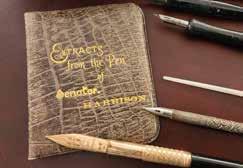
The gold-lettered booklet reads “Extracts from the Pen of Senator Harrison” and contains four suede pages used for wiping excess ink. The pens themselves tell a more personal story: one engraved “Gen. Harrison”, and another “C.S.H.” for Caroline Scott Harrison - reminders that the work of the president’s pen often began long before the presidency, and was shared within the family circle.
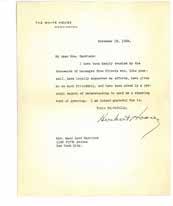
Not every remarkable item could fit in the exhibit. This signed letter from Herbert Hoover to Benjamin Harrison’s widow, Mary Lord Harrison, was written after Hoover’s defeat for reelection in 1932. Personal, reflective, and gracious, it reminds us that the president’s pen recorded not only the business of government, but the private moments of history as well.
BY CHRIS STENFTENAGEL Volunteer and Relationship Manager
The first quarter of 2026 is already in the books and so far our Presidential Site volunteers contributed more than 1,300 hours and counting! Preparations are currently underway for our annual spring and summer events including the Garden Party in May, Juneteenth Foodways Festival in June, Independence Day Social in July, and the Wicket World of Croquet in August. All of these events, along with our daily activities, are only possible through the generosity of our volunteer tour docents, welcome center ambassadors, theater actors, master gardeners, enactors, and special events assistants! These volunteers and their efforts are why the museum is rated by TripAdvisor as the #1 Historic Site in the entire state of Indiana!
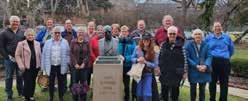
Every April many organizations celebrate their volunteers during National Volunteer Week. Here at the Presidential Site, we celebrate our volunteers throughout the year and recognize an outstanding volunteer each month with our Volunteer of the Month award. Since the last edition of The Statesman, four more volunteers have received this honor: Nancy Johnson (Welcome Center Ambassador), John Teskey (Tour Docent), Charles Braun (President Harrison Enactor), and Ellis Hall (Tour Docent and Candlelight Theater actor). Many thanks to these volunteers for their outstanding service to the museum.
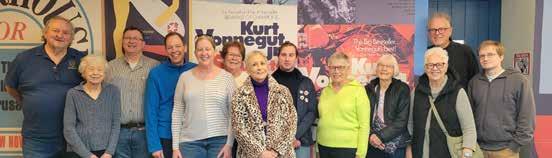
One of my favorite volunteer appreciation activities is organizing group outings at local historic sites. Our most recent outings have focused on places dedicated to famous Hoosier writers. In February, the volunteers took a guided director’s tour of the James Whitcomb Riley Museum Home in Lockerbie Square. The home was completed in 1872, and Riley lived there from 1893 until his death in 1916. Like the Harrison's home, the Riley home is full of many original artifacts and furnishings. For March, the volunteers visited the Kurt Vonnegut Museum and Library located on Indiana Avenue in downtown Indianapolis. The museum’s curator led the volunteers through the 3-story museum and shared his extensive knowledge of Vonnegut’s life and artistic works. The literary theme of our group tours continued in April with a road trip to Crawfordsville, Indiana to visit the General Lew Wallace Study and Museum. Born in Brookville, Indiana in 1827, Lew Wallace is the famous Indiana author and Civil War General who wrote the novel Ben Hur and also the 1888 election year biography of Benjamin Harrison.
Looking to get involved at one of the top presidential centers in the country? Contact me at cstenftenagel@bhpsite.org to learn how you can become a volunteer at Indiana’s #1 historic site!
DONOR SPOTLIGHT: HOWARD J. LACY IV (HJ)
Why do you support the Presidential Site?

“Learning about, and participating in my community, has many benefits and much value. President Benjamin Harrison also believed this while living in Indianapolis and said so in many speeches as a citizen of "No Mean City." Supporting Harrison’s legacy enables us all to learn more and participate in our own communities.”

We want to recognize you now! Our 1888 Society provides lifetime recognition to donors, like HJ, who have included the Presidential Site in their estate plan. All you need to do is tell the Presidential Site that your plan is in place and that you have no objection to being publicly listed in the 1888 Society honor roll. Learn more at 1888society.org

This fun and innovative camp for youth builds individual confidence, civic literacy, and good citizenship. Limited to 20 young leaders (ages 13-16), this camp focuses on the qualities that make great presidents - yesterday, today, and tomorrow!
PLEASE NOTE: the 2026 cohort of Future Presidents of America is now at capacity! Applications for 2027 will open in October.



High school classes in Marion County, IN: Enjoy complimentary LIVESTREAMED tours of the Benjamin Harrison Presidential Site through Civics Squared!
Seeing objects from history in person can be transformative for bridging a connection to the people of the past. But if students are unable to visit the museum in person, schools can still get up close and personal with the collections of the Benjamin Harrison Presidential Site and the stories they contain – from anywhere in the world.
Civics Squared is a digital history offering for high school that utilizes state of the art Matterport technology to bring the tour of the 23rd President’s home to the classroom via livestream. Each Civics Squared experience connects the dots between some of the 11,000 objects in the museum collection and the biggest legacy points of Benjamin Harrison’s presidency from 1889-1893.
This program and all offerings from the Education department are designed to be engaging and academically pertinent – with tour material tying back to curricular standards in the state of Indiana and beyond.
Contact VP of Education Roger Hardig at rhardig@bhpsite.org to learn more and plan your virtual field trip experience!
From the founding to the present: The Harrison family’s legacy reveals itself at some of the most significant moments in American History. From a signer of the Declaration of Independence, Benjamin Harrison V, to the Indiana territorial governor and later 9th President, William Henry Harrison, to America’s Hoosier President, #23 Benjamin Harrison – students will travel through the timeline of American History to embark on The Harrison Way. This new field trip will focus on civics and social studies topics from the examples of the Harrison family members as they relate to Indiana and U.S. History.
Registration for this opportunity is open now! Contact Roger Hardig at rhardig@bhpsite.org or Molly Beausir at mbeausir@bhpsite.org for more information.
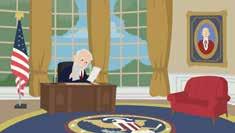
What does a 19thcentury president have to say about today’s world?
CAST YOUR VOTE AT THE HOME OF AN
The Benjamin Harrison Presidential Site proudly serves as a Voting Center for Marion County residents.
#23rd in the 21st explores Benjamin Harrison’s ideas on voting rights, conservation, and civic responsibility, inviting audiences to engage with history as a lens for modern challenges. Discover programs, resources, and opportunities to learn more about the 23rd President at 23in21.org
This Primary Day (May 5, 2026) or General Election Day (November 3, 2026), join us to cast your ballot and take part in one of our nation’s most important civic traditions.
Check your registration status at IndianaVoters.in.gov.
JUNETEENTH FOODWAYS FESTIVAL: MADE POSSIBLE THROUGH THE GENEROSITY OF ELI LILLY AND COMPANY FOUNDATION
FRIDAY, JUNE 12 | 3:30-4:30 PM EARLY ACCESS PASS | 4:30-8:00 PM FREE GENERAL ADMISSION
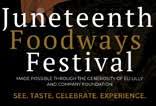
Come see, taste, celebrate and experience for yourself how Black cuisine adds flavor to America’s favorite foods.
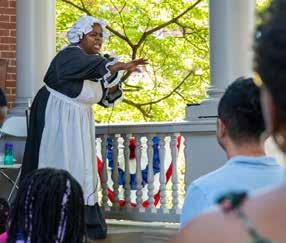
Help celebrate the many ways in which Black culinary traditions have influenced American culture by exploring the story of White House chef Dolly Johnson and promoting local Black-owned businesses. The public is invited to join us at the Benjamin Harrison Presidential Site for this FREE event where they can purchase delectable offerings from our food partners, browse with our retail partners, and learn about Dolly Johnson, the White House Chef hired by President Benjamin Harrison. Dolly Johnson is brought to life through a reenactment in partnership with Freetown Village.
With a wide array of some of Indianapolis’ most diverse food offerings, this event will incorporate Black restaurants and entrepreneurship through cuisine and program partnerships with historically Black non-profit partners.
Want to get ahead of the crowd? Get your “Early Access Pass” for only $20 and join us from 3:30-4:30 PM!
Registration is required. Reserve your space or purchase your Early Access Pass at PresidentBenjaminHarrison.org
If you have questions about this event, please contact Tiffany Spears, Special Events & Social Media Coordinator at tspears@bhpsite.org or 317-631-1888.



INDEPENDENCE DAY SOCIAL:
AMERICA250 EDITION
FRIDAY, JULY 4
11:00AM–2:00PM
What better way to celebrate America’s 250th anniversary than at the home of Indiana's only president?
Join us this July 4 for a free, family-friendly celebration honoring the traditions, history, and ideals that have shaped our nation for 250 years.
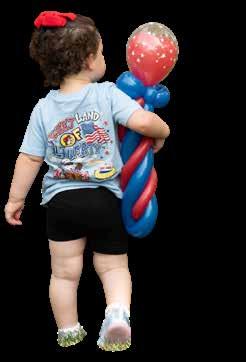
Enjoy patriotic music, ice cream, and first-floor tours of the historic residence. Chat with a Benjamin Harrison enactor and explore hands-on activities for all ages, including our “Passport to History” scavenger hunt for children.
Reserve your FREE ticket today at PresidentBenjaminHarrison.org.
PRESENTED BY THE LACY FOUNDATION
SATURDAY, AUGUST 8 | 10:00 AM - 5:00 PM
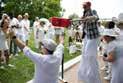
For over 30 years, Wicket World of Croquet has turned the Benjamin Harrison Presidential Site into the most stylish lawn party in town. While teams compete for the Virginia Z. Willkie Cup, spectators can sip a cold drink, enjoy live art, and soak in the sights, from bold plays on the croquet court to impeccably dressed guests in crisp summer whites.
Whether you're here to cheer on the players, try a round of croquet for yourself, or simply enjoy a beautiful day on the historic South Lawn, this event is all about great company, classic style, and a touch of friendly competition.
Get your tickets today at PresidentBenjaminHarrison.org and join us for a day of croquet and camaraderie!
Dress whites are encouraged! Advance registration required and the event takes place rain or shine. If you have questions about this event, please contact Lindsey Beckley, Director of Special Events & Marketing at events@bhpsite.org or 317-631-1888.