

Advocacy at IBANZ
Harnessing
New Zealand's professional association representing the interests of insurance brokers, risk managers and consumers.
IBANZ gives strength and support to members, enabling them to better meet their challenges and opportunities.
We achieve this through staying involved with government activity and legislative reform impacting the insurance industry, and more specifically, fire and general brokers and their clients.
We focus on providing high-quality presenters who speak on a variety of fire, general and business topics under our Continuing Professional Development (CPD) offering to support members deepen their knowledge and broaden their skills.
The IBANZ Code of Professional Conduct provides the public with assurance that members act in a professional and ethical manner. It includes a disciplinary and complaints committee to review concerns that may arise.

Ph: 09 306 1732
www.ibanz.co.nz

Welcome to CoverNote

or the second edition of 2026, in on advocacy, connection, and strengthening the voice of the insurance broking profession.
At IBANZ, one of our key priorities is ensuring the interests of brokers are well represented as regulation, consumer expectations, and market conditions continue to evolve. Over recent months, we have continued engaging with government, regulators, and industry stakeholders to advocate for practical outcomes that support both brokers and the clients they serve. Harnessing our collective voice for the good of the sector remains central to the work we do every day.
This issue begins by exploring how IBANZ is strengthening and formalising a focused advocacy programme to better support and represent our members. We also take a look at new consumer research from NIBA highlighting the positive impact brokers have on client outcomes, alongside insights from IBANZ President Neil Cousins on navigating insurance market cycles and what they mean for the industry moving forward.
On another note, our team is growing. We are pleased to welcome Nick Raven as our Communications and Content Manager to the team, strengthening our ability to better connect with members, share industry insights, and elevate the profile of the profession across multiple channels.
As always, CoverNote brings together the issues, people, and conversations shaping our industry today and into the future.
Enjoy the latest edition.
Katherine Wilson.
Katherine Wilson














31.
Editorial/Content
Aidan Bennett, Benefitz Mob 021 500 997
Email aidan@benefitz.co.nz





CoverNote is the official publication of IBANZ and is distributed FREE on a quarterly basis (March, June, September, December) to members throughout New Zealand and associated companies. Additional copies are available at a cost of $7.50 per copy, or 12 month (4 issues) subscriptions at $30.00, inclusive of postage and packaging. The articles or opinions featured within this magazine are not necessarily the opinions of the publishers or IBANZ, and they do not accept responsibility for the content of articles featured within the publication. No part of this publication may be reproduced without the written permission of the publisher. The publishers do not accept responsibility for loss or damage to unsolicited photographs or manuscripts.
IBANZ enquiries should be made to: Katherine Wilson, Chief Executive, IBANZ. Email: katherine@ibanz.co.nz
IBANZ National Office located at: The Crate, 28 Constellation Drive, Rosedale, Auckland 0632 PO Box 302196,
Advertising/Content
Liz Cannon, Benefitz Mob 021 204 3395
Email liz@benefitz.co.nz
Produced for IBANZ by Benefitz 5-11 Parkway Drive, Mairangi Bay, Auckland 0632. PO Box 33-1630 Takapuna. Telephone 09 477 4700
More storms, more claims, more reasons to have a broker
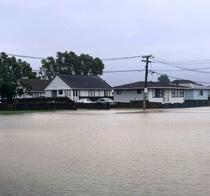
As a small island nation New Zealand has always lived with weather risk, but industry tracking shows storm-related claims were up more than 250% in the 12 months to February 2026. Storms struck somewhere in New Zealand roughly once every eight days, compared with a long-run average closer to once every 19 days.
The first quarter of 2026 alone saw weatherrelated states of emergency were declared across five North Island districts in February. Northland was hit again in March, and in early April Cyclone Vaianu made landfall followed by flooding across Greater Wellington towards the end of the month.
For our industry these events are moments of truth; golden opportunities for brokers to demonstrate one of the key benefits of our service. Each time IBANZ acted quickly to provide the media with a clear message about professional insurance brokers being available, expert and ready to help.
Chief Executive Katherine Wilson put the case to media for broker value clearly and repeatedlythe broking industry is here to help clients in their toughest moments meaning New Zealanders who work with a broker are ahead of the game when disaster strikes because they have instant access to expert advice and advocacy.

By the time Cyclone Vaianu rolled around, IBANZ was also able to alert the media to potential problems facing clients who had unresolved losses from previous weather events, pointing out that a new event can introduce complexity around damage attribution, documentation and settlement sequencing. This is where broker expertise really earns its value and Wilson was able to deliver this message to media at the very moment it was most relevant.
The perceived value of brokers at claims time is backed up by research from our colleagues across the Tasman at the National Insurance Brokers Association of Australia (which is explored in more detail elsewhere in this edition of CoverNote) where 95% of client respondents viewed brokers as critical to claims resolution. As a profession we know that having an expert on your side advocating for a fair outcome at claims time makes all the difference and it’s an important benefit to communicate on behalf of our industry.
IBANZ's role is to ensure that the public understands the broker advantage, that policymakers and regulators recognise the profession's contribution, and that the sector is represented credibly when events demand a response.

IBANZ welcomes Nick Raven to the team
IBANZ recently welcomed Nick Raven to our small Auckland-based team in the newly created role of Communications and Content Manager.
Nick takes over responsibility for member engagement and communication across all channels including the IBANZ News newsletter, website, and social media. He’ll be tracking our member engagement metrics to make sure we deliver for our members according to our Business Plan, and leading planned sector research projects to increase awareness of IBANZ and support members with actionable industry insights.
Nick has a background in the sales and marketing aspects of the insurance sector, most recently as Marketing Manager at Marsh New Zealand and Marketing and Communications Manager at AA Money. In his early career he was a sales representative at AA Insurance. He holds a Bachelor of Business from AUT, with a double major in Design Thinking and Sustainable Enterprise.
This new role represents a significant step forward for membership communications at IBANZ as we position ourselves to deliver on our goal of creating even stronger membership engagement.
Nick Raven, Katherine Wilson and Karen Scard







Advocacy at IBANZ Harnessing the voice of our industry for good
IBANZ is formalising its advocacy work into a focused programme with defined priorities and more accountability. For members, that means better visibility of how the profession’s voice is being represented and more opportunity to contribute front line examples and experiences. From a practical sense, all IBANZ advocacy positions will be available in one document: the IBANZ Briefing Paper. The Briefing Paper will be launched via IBANZ News in mid-2026.
Advocacy has long been part of IBANZ’s work on behalf of members. The programme is currently being refreshed with the IBANZ board recently approving an updated advocacy programme with clearer priorities and greater accountability. For members, it will mean a better line of sight between the issues affecting brokers every day and the work IBANZ is doing with Government, regulators and other decision-makers to positively influence policy, legislation and regulation.
We all know that the environment brokers operate in is becoming more demanding: Natural hazard risk,

legislative and regulatory change, insurance affordability, and accessibility concerns and rapid technology changes all mean we’re in an environment where advocacy cannot sit still, according to IBANZ Chief Executive Katherine Wilson. “Now, more than ever, we need to make sure we are focusing on the right things and are disciplined about raising our key issues with the right audiences in order to achieve the right outcomes.”
Wilson believes advocacy is an important way that IBANZ delivers value for members. “By putting more structure around this work, we are making our priorities clearer and giving members a better view of where we are focusing our efforts and why.”
Three priorities, one advocacy programme
The IBANZ advocacy programme is built around three priorities: improving readiness for natural hazards, supporting accessibility and affordability of insurance through fairer regulation and tax settings, and protecting the quality of insurance advice. Those priorities reflect

both the pressures on the profession and the areas where IBANZ believes it can make the most constructive contribution.
Natural hazard readiness
Brokers are increasingly working in an environment where hazard information is fragmented across multiple sources, including council data, public agencies and insurer systems. IBANZ is advocating for a centralised data platform that consolidates natural hazard information such as flooding, seismic risks, and coastal erosion to enable greater transparency and comparability. On the issue of Section 72 notices, IBANZ believes there should also be a centralised register of affected properties to increase awareness of these notices and the impact they can have on insurance cover.
Accessibility and affordability
Consumers need access to insurance that remains both available and understandable. Brokers need systems that are workable and proportionate. Government policy, levy settings and legislative design can have significant downstream effects on both. IBANZ’s advocacy in this area is focused on fairer settings that support a competitive and functioning market, while recognising the pressures facing households and businesses. This includes advocating for an alternative collection method than the FENZ Levy that disconnects it from insurance, and exploring alternative financial models for the NHI Levy.
Quality of insurance advice
Insurance advice sits within a regulated framework and depends on trust, competence and practical judgement. IBANZ’s advocacy is focused on making sure that framework remains workable and supports high standards in practice. That includes engaging on the implementation of legislative change, the practical operation of conduct regulation and the risks created when consumers rely on unregulated sources of financial or insurance guidance. Good consumer outcomes depend on access to sound advice from qualified professionals operating in a system that is clear and fit for purpose.
Making advocacy more visible
Wilson says the programme refresh will make advocacy more visible to members. “A lot of advocacy work happens behind the scenes through submissions, engagement and discussions with policymakers and regulators. Members should be able to see more clearly
how that work connects back to the issues affecting the work they do and the profession as a whole.”
Advocacy can be easy to overlook when it is done properly as it’s often cumulative rather than dramatic. Wilson says the work of advocacy often sits in the fine print. “It’s policy design, legislative detail, and implementation settings. Members don’t see every meeting or every submission, but they experience the practical fixes that make regulation more workable or the consequences when professional expertise is absent from decision-making.”
We want members to see advocacy as something they have a stake in and can help shape. Their experience on the ground is what gives our advocacy its practical value and credibility.
IBANZ Katherine Wilson
Advocacy is a core IBANZ membership benefit. Alongside professional development and representation for the sector, IBANZ works to influence the broader environment in which brokers operate. “The more clearly IBANZ can articulate its priorities, the more effectively it can engage with Government, regulators and industry stakeholders.”
Wilson is also signaling an opportunity for more member input into the advocacy programme.
“We want members to see advocacy as something they have a stake in and can help shape. Their experience on the ground is what gives our advocacy its practical value and credibility. We’ll be asking members to be more actively involved in this work by contributing practical evidence and case studies.”
Strong advocacy depends on member input - so watch this space for your opportunity to get involved.
Complexity to Clarity
What NIBA's new consumer research means for New Zealand brokers
The National Insurance Brokers Association (NIBA) in Australia has released the second in its series of sector insights, and this one deliberately views the industry through a client lens. Where Ready or Reacting? Shaping the Future of the Broking Profession examined brokers' own sense of preparedness for the decade ahead, the new report, Complexity to Clarity: The Broker Advantage, focuses on understanding what drives clients to use the services of brokers.
Produced in partnership with Insurance Advisernet (whose network covers both Australia and New Zealand) and drawing on independent research by CoreData, the report surveyed 409 Australian SME decision-makers who
currently use or have recently used a general insurance broker. It is the first time the broking profession has had a systematic, client-led account of where and how brokers add value, and where trust is built or lost.
The findings are equally relevant for New Zealand brokers. The risk environment here increasingly resembles Australia's: cyber exposure, climate-related claims, economic pressure, and a continually evolving regulatory framework. The data gives the profession a useful mirror.
NIBA CEO Richard Klipin describes the research as providing clarity about why clients choose brokers, what drives trust, and where the value is most tangible.
SIX DIMENSIONS AND WHAT THEY MEAN FOR NEW ZEALAND BROKERS
The report structures its findings around six areas where brokers demonstrably affect client outcomes.
Strategic advice saves time.
Australian clients working with a broker reported saving an average of 20 hours across the insurance process. The largest saving was at claims time (7.2 hours), followed by finding and comparing policies (4.8 hours). At renewal, 83% of broker-assisted clients saved three hours or more. These are not trivial figures for an SME owner managing their own time. For New Zealand brokers the time argument is real, quantifiable, and is likely to resonate with business clients in a way that abstract talk about expertise may not. The research also notes that broker-assisted renewals are not simply faster; they result in more considered decisions, rather than policies rolling over unchanged.
Enhancing risk management.
94% of respondents said working with their broker led to changes in their risk management approach, whether through additional cover or other adjustments. 89% described the experience of having additional risks identified as helpful rather than unwelcome. The proportion who felt concerned it might increase costs was just 3%. For New Zealand brokers, this is relevant in a market where underinsurance has been a recurring theme, particularly following significant weather events. Clients can be more open to these conversations than brokers sometimes assume.
Building trust and confidence.
84% of current broker clients trust their broker to act in their best interests, and 88% feel confident their cover is right for their business. Perhaps more telling is what happens after the relationship ends: former broker clients retained high trust levels, suggesting the impressions brokers leave are durable.
What the research suggests for New Zealand practice
A few themes emerge from the findings that are worth New Zealand brokers reflecting on.
The first is visibility of value. Much of what brokers do well (identifying risks, navigating claims, managing paperwork, liaising with insurers) is invisible to clients unless it is made explicit. The research provides credible, third-party evidence of outcomes that can inform client conversations and build trust.
The second is the claims relationship. The data on perceptions of claims outcomes is consistent and compelling. Clients believe that broker involvement gets faster results and a better outcome. The research found that over nine in ten businesses (91%) believe their broker’s involvement helped achieve a better outcome for their claim. It’s clear that claims time is a key moment in the client lifecycle to build trust. A key opportunity for New Zealand broking firms is to ensure their claims processes are designed around communication and advocacy, not just administration.
The third is the long-term relationship dynamic. The research shows that broker relationships deepen over time, with multi-year partnerships producing better risk management outcomes and greater time savings at renewal. Retention deserves the same strategic attention as growth. A client who has been with a broker for a decade is not simply less likely to leave; they are likely being better served. Stickier clients aren’t apathetic, they’re savvy.
The fourth is proactive risk conversations. Clients respond well to brokers who identify risks they had not considered - only 3% found it unwelcome. New Zealand
Driving fast, frictionless claims.
The claims findings are among the most striking in the report. 95% of respondents see brokers as critical to claims resolution; 98% had their claims successfully resolved; and among those whose claim was handled with broker involvement, 91% believed that involvement produced a better outcome. Four in five claims were resolved within a month. For New Zealand brokers operating in areas affected by recent weather events, none of this will come as a surprise. Claims advocacy is often where the value of a broker relationship is most directly felt. Being able to point to locally sourced data of this nature could be a valuable opportunity for the profession.
Delivering client satisfaction.
87% of current broker clients rate their overall satisfaction at 8 out of 10 or higher, and the same figure applies to satisfaction with broker support during claims specifically. Former broker clients also scored their experience positively, with more than 70% rating it in the top band. The consistent thread in client comments is that brokers handle complexity on their behalf, lifting the administrative and navigational burden of insurance.
Improving client outcomes.
67% of respondents said they originally engaged a broker because their business was growing and their insurance needs had become more complex. A further 43% pointed to a claims experience or dispute as the trigger. Both findings carry implications for how New Zealand brokers think about the timing of client acquisition. Complexity and adverse experience are the two most common conversion points, which suggests the profession's best opportunities lie in being present at those moments, not just at renewal.
brokers operating in a market with real and evolving exposures (climate, cyber, regulatory) have both the opportunity and the professional obligation to lead those conversations rather than wait to be asked.
Looking ahead
The NIBA report also asks Australian clients about their expectations through to 2035. 83% anticipate greater use of technology and automation in insurance; 82% expect emerging risks to affect their business; and 79% believe they will need more strategic advice from brokers in the years ahead. The proportion who feel prepared for these shifts (82%) is higher than broker self-assessments in the first report (65%), where preparedness trailed expectations by a wider margin.
That gap is worth noting. It seems clients are more confident in the broking profession's future relevance than brokers themselves are. Whether that reflects genuine client trust or an incomplete appreciation of the changes ahead is an open question, but it reinforces the case for brokers continuing to invest in capability, not just relationships.
Complexity to Clarity: The Broker Advantage provides solid, client-sourced evidence that the work brokers do creates real outcomes: time saved, risks identified, claims resolved and confidence built. In the ongoing quest to make the case for the value of insurance advice, the findings are worth careful consideration in the New Zealand context.
Our thanks to NIBA for sharing the content of its Complexity to Clarity: The Broker Advantage report. The full report is available at niba.com.au/complexity-to-clarity.

Market Cycles and Capital
What New Zealand insurance brokers need to know
By Neil Cousins, IBANZ President.
Insurance market cycles are familiar to brokers, but they are far less visible to clients. For businesses and property owners, insurance pricing can feel unpredictable or hard to justify, particularly when premiums rise despite no change in their own claim history. Understanding the forces behind market cycles can help brokers explain why insurer appetites move the way they do.
Central to these movements is capital: where it comes from, how it is deployed and how quickly it can retreat when risk or returns change. Insurance capital represents the financial resources of insurers and reinsurers to underwrite risk and pay claims. Regulators require insurers to hold capital relative to the risks they carry, which means capital availability directly affects the amount of insurance capacity that can be deployed into any market.
For brokers, this matters because capital flows directly influence underwriting appetite. When insurers are well capitalised and risk-adjusted returns are attractive, capacity expands and competition increases. When losses mount, returns deteriorate or uncertainty rises, capital becomes constrained, underwriting tightens, and insurers become more selective about the risks they are prepared to take on and at what price.

This helps brokers explain why a client may be facing a premium increase despite not making a claim. The answer is that insurance pricing is shaped by the client’s risk profile and wider market forces. Major weather events, claims inflation, reinsurance costs, regulatory pressure and global capital flows all influence insurer behaviour. A client may be well managed and claims-free but still exposed to a market where the cost and availability of capital have changed.
Reinsurers spread risk internationally, absorbing large or volatile exposures that individual insurers cannot retain alone. This helps insurers manage volatility and continue supporting clients through challenging periods. Over the past two decades, alternative capital, including catastrophe bonds, collateralised reinsurance and sidecars, has added further depth to global capacity, particularly following large loss events.
These capital dynamics underpin the insurance market cycle. Hard markets typically follow periods of capital depletion, when losses and uncertainty drive price increases and tighter terms. Those improved returns then attract new capital, increasing competition and capacity. Over time, softer conditions emerge, before declining returns or new losses trigger the cycle once again.
We are currently seeing evidence of this cycle playing out in New Zealand. Following the significant weather events of 2023, insurers rebuilt capital through premium increases, disciplined underwriting. Reinsurance costs stabilised and there was a more benign claims environment. As a result, insurer confidence has improved, and new capacity has entered the market increasing competition across several major classes.
For brokers, the current environment creates both opportunity and responsibility. Softer conditions should not be treated only as a chance to achieve lower premiums. They also provide an opportunity to revisit coverage quality, challenge restrictions introduced during harder market conditions, and strengthen clients’ long-term risk positions.
While conditions are currently easing, New Zealand remains exposed to volatility. One major catastrophe event could quickly change insurer confidence and push the market back towards tighter conditions.
For clients, that means insurance decisions made in a softer market should not assume today’s conditions will last. For brokers, it reinforces the need to use current market conditions to improve cover where possible and help clients understand why insurance availability is shaped by forces well beyond their own claim history.
Insights for brokers from new FMA research on access to advice

The Financial Markets Authority published two companion reports in March 2026 covering access to financial advice in New Zealand. One draws on a nationally representative survey of 1,000 consumers conducted in September 2025. The other reflects 80 interviews and questionnaire responses from across the financial advice sector.
Together these reports establish a detailed baseline on consumer behaviour, barriers to advice and where the sector is falling short. This is one of the most detailed pictures yet of how New Zealanders understand and use financial advice –including useful insights for insurance brokers. Consumers don’t understand what brokers do
The consumer research asked respondents what they believed financial advisers could help them with. Only 31% of consumers thought a financial adviser could help them get life insurance. For health insurance, the figure was 25%.
Home and contents insurance and motor vehicle insurance rated so low they barely registered as advice categories in consumers’ minds. Only 8% of respondents had ever received advice on home and contents insurance, and 9% on motor vehicle insurance.
The research reveals a comprehension problem - a substantial portion of the New Zealand public does not know that getting insurance through a broker constitutes regulated financial advice, or that the adviser relationship carries specific obligations around suitability and disclosure. That’s a significant gap for our industry to close.
Consumers prefer a commission model, as long as it’s clearly disclosed
There is much sector debate about whether commission structures undermine the advice relationship and the FMA's expectations around managing conflicts of interest have not changed. However, when respondents were asked how they would prefer to pay for financial advice, 34% chose the commission model – with the potential conflict of interest disclosed.
Commission was the single largest preference category, ahead of fee-based comprehensive advice at 20% and lower-cost limited-scope advice at 18%.
The data indicates that when given an honest description of the model, consumers made an informed choice in favour of the accessibility that commission models enable.
For brokers who tend to be defensive about commission, this finding supports a straightforward explanation of how the model works and why many clients choose it.
The real competition is… family
Asked who they had consulted about their financial situation in the past 12 months, 49% of respondents cited a partner or family member. 26% used a general internet search. 23% spoke to friends. Only 16% spoke to a financial adviser, with mortgage brokers counted separately at 8%.
Informal sources are not just widely used, they’re influential. Around 60% of consumers who relied on family, friends or general online

sources said the guidance made a meaningful difference to their financial decisions. Younger consumers, those experiencing financial stress and Māori respondents were all more likely to rely on social media and informal networks. Demographic differences
Women were less likely to have used a financial adviser in the past year: 24% compared with 33% of men. They were also more likely to cite cost as a barrier (37% versus 24%) and more likely to say they didn’t know where to start (31% versus 21%). Confidence in understanding what a financial adviser does was consistently lower among women across every income and education band in the survey.
The income impact is equally clear. Only 13% of respondents earning under $20,000 annually had used a financial adviser in the past year. That figure rises to 48% for those earning $150,000 and above. Lower-income consumers were significantly more likely to report having received no advice at all across any product category.
The FMA also highlighted limited adviser familiarity with collectively owned assets, the legal structures governing hapū and iwi entities, and approaches to collective decision-making as substantive gaps in current adviser capability. The baseline is clear
What this research provides is a clearly documented starting point. Consumer understanding of what brokers do is measurably low, signalling that there is much work for our profession to do in building awareness and understanding of the role of brokers.
The FMA has committed to further engagement with the sector on several of these findings. By engaging with the underlying data, IBANZ and the broking community will be better positioned for those conversations.
The reports can be accessed here: https://www.fma.govt.nz/assets/Reports/Access-to-advice-Consumer-research-findings.pdf https://www.fma.govt.nz/assets/Reports/Access-to-advice-Financial-advice-sector-challenges-and-opportunities.pdf
Rothbury introduces flexible partnership programme for independent broker-owners
A different way to think about partnership
Independent insurance brokers are under more pressure than ever. Compliance requirements keep growing, underwriters want more data and reporting, clients expect faster service, and staff recruitment, training and retention is a challenge.
Independent broker-owners wear many hats - adviser, business manager, compliance officer, IT support and succession planner - often without the systems and support larger brokerages like Rothbury take for granted.
Rothbury’s partnership programme has been designed to respond to these increasing pressures, offering independent brokers a way to retain their identity and client relationships while gaining access to the scale, systems and operational backing necessary to compete in a more complex market.
Rather than pushing broker-owners towards a straight
sale, the Rothbury programme is flexible - giving brokerowners partnership options to suit where they are in their business journey.
“Partnership conversations in our market have traditionally started with a transaction,” said Rothbury Managing Director Roger Abel. “We’re approaching it differently - starting with understanding and fit.”
“What’s changed is the need for flexibility,” he said. “Many owners want to understand their options before making any decision, rather than be pushed toward a single path from the outset.”
“Life events happen – marriage, death, retirement – and those life events can cause people to think about selling their broking business. Or the trigger may be the loss of a key staff member or client, or the more prescriptive regulatory environment they’d rather not have to face alone.”
There is always uncertainty when entering into the unknown, but once we came into the Rothbury family, we’ve been really impressed with the integration and support services provided, and the genuine connection we’ve made with the wider Rothbury team.
Blair Dyer
Former Professional Liability Manager, Austinsure Senior Financial Lines Broker, Rothbury
Rothbury’s partnership programme has been designed to reduce that uncertaintygiving broker-owners clarity and support as they move into partnership.

Roger Abel
Rothbury’s programme offers five partnership pathways ranging from minority investment and shared ownership through to tailored hybrid arrangements and full succession planning.
“These are designed to reflect the different stages broker-owners are at - whether that’s preserving what they’ve built, growing within a larger structure, sharing responsibility, or planning for succession over time.”
A range of partnership pathways designed to flex over time Partnership built around choice
“We want and like local shareholding,” Abel says. “We have local shareholders in most of our branches, which reflects our commitment to having people on the ground with an equity stake.”
“There are people out there in their 20s, 30s and 40s who are keen to be business owners, and we can help finance people to do that.”
Behind each partnership pathway sits the scale and capability required to support it – helping to reduce the operational burden many broker-owners carry.
That includes access to established systems and operational support, allowing broker-owners to spend more time on advice, client relationships and growth.
“There’s a lot more complexity in running a brokerage today than there was even five years ago,” Abel said. “Many smaller firms carry that burden themselves. What we provide is the backing that helps ease that pressure.”
Rothbury’s broking platform, SWIFT, has been developed by brokers for brokers and continues to be modernised to support a rapidly evolving market.
“One of the biggest concerns for brokers is the challenge of moving their businesses on to another broking system. We have a lot of experience in managing that transition successfully.”
While the programme represents a new way of bringing Rothbury’s approach together, it builds on many years of successful partnerships and acquisitions with independent brokers.
Rothbury, which marked its 75th last year, now has more than 500 staff across 23 locations nationwide and services over 53,000 clients. The business is part of Steadfast Group, Australasia’s largest general insurance broker network.
Abel said scale is becoming increasingly important in insurer relationships - helping to reduce the day-to-day pressure and support more consistent outcomes for clients. He said the partnership model reflects the reality that many broker-owners are not looking for a single, immediate exit.
“These aren’t one-off decisions,” he said. “They are pathways that can evolve over time as circumstances and priorities change.”
For some broker-owners, this may take the form of a staged succession and ownership transition, allowing them to gradually step back while maintaining continuity for staff and clients.
Others may look to share financial and operational responsibility while remaining actively involved in the business.
“My situation doesn’t fit one box - I need flexibility without pressure,” is one of the common concerns Rothbury hears from brokers exploring partnership discussions.
Abel said reducing disruption was a major focus. “One of the
What appealed to me was the ability to keep building the business while having the backing and scale of a larger organisation. It’s allowed us to grow while still staying connected to our clients and how we operate.
Conrad Shanly Head of Enterprise Risk & Insurance Solutions, Rothbury (formerly business owner following Rothbury partnership)

biggest concerns is what happens after day one.”
“For me, a real measure of success is that someone who’s sold their business can still walk down the road, speak to a long-term client and know they’re being just as well looked after.”
Rothbury also believes its New Zealand decision-making structure differentiates it from some larger offshore-backed consolidators.
“We’re a New Zealand-founded business with local decisionmaking, which means partnership discussions and decisions are made here, in context,” Abel said.
The programme also supports internal succession and staff ownership, helping brokerages to retain key people and preserve long-standing client relationships.
Abel said the approach also reflects a longer-term view of the industry, creating opportunities for the next generation of broker-owners to build equity and ownership over timebenefiting both individuals and the broader strength of the business.
“This is about helping broker-owners understand their options and decide what’s right for them, in their own time,” he said.
“There’s no obligation to proceed and no expectation to move quickly – just a structured way to explore what partnership could look like.”
“We’re always focused on how we support and nurture people within Rothbury,” he said.
That focus - on people, clients and continuity - sits at the heart of how Rothbury approaches partnership in practice.
Explore the partnership pathways at Rothbury’s Partner Hub: evolve.rothbury.co.nz
AMI urges households to take lithium-ion battery safety seriously

Ferris, AMI Executive General Manager Claims
AMI is urging New Zealand households to stay vigilant, as new data shows most lithium-ion battery incidents stem from unsafe charging.
AMI Executive General Manager Claims, Steph Ferris says the data shows just how quickly things can go wrong when batteries are not treated with care.
“Over one third (37%) of battery-related insurance claims occurred during charging, and these incidents carried an average cost of around $33,000. Beyond the financial impact, fires caused by lithium-ion batteries can also put lives at risk and cause irreversible damage to treasured personal items. That’s a significant concern, especially when so many of these incidents are preventable.”
Research commissioned by AMI found 65% of people have left devices charging overnight, and 64% have left devices charging unattended. Younger generations are particularly at risk, with half of Gen Z respondents having charged devices on a bed or sofa, compared with 28% of all respondents.
Steph adds, “We know New Zealanders rely heavily on lithium powered devices, but many don’t realise how common unsafe charging habits have become.”
Fire and Emergency New Zealand’s Community Education Manager Tom Ronaldson says while there is nothing inherently dangerous about lithium-ion batteries, they can be a fire hazard if they are damaged, mishandled, or improperly disposed of.
“When lithium-ion battery fires do occur, they can happen very quickly. Therefore, it is important that if your battery is emitting vapour or unusual sounds, you evacuate immediately and call 111.
“To keep lithium-ion batteries safe while charging, always use the correct charger for your device. If the battery is damaged or feels hot to the touch during charging, stop using it immediately and replace it with one from the manufacturer.
“Always avoid charging devices on soft surfaces or leaving them plugged in for extended periods.
“Batteries cannot be placed into household rubbish or recycling, make sure you dispose of them correctly at a battery collection point or recycling centre.”
Disposal habits reveal safety blind spots
Following on from continued reports of lithium-ion batteryrelated fires that have started inside waste collection trucks, AMI's research also highlights concerning gaps in public understanding of how to safely dispose of these batteries.
“We really want to emphasise that lithium-ion batteries should never go in household rubbish,” adds Steph. “We’re still seeing fires in rubbish trucks and transfer stations because of incorrect disposal, and nearly a third of people who threw them away simply didn’t realise it was the wrong thing to do. Proper recycling isn’t just recommended - it prevents fires and saves lives.”
According to AMI’s research, while 69% of people say

they have never disposed of a battery in general household waste, nearly a third of New Zealanders have, or aren’t sure if they have.
Lithium-ion batteries widespread in Kiwi homes
Lithium-ion batteries are now inside nearly every portable electronic device, from mobile phones and laptops to power tools, e bikes, e scooters, toys, wearables and more.
AMI’s research found that unsurprisingly, the most common lithium powered items in New Zealand homes are mobile phones (86%) and laptops (78%), followed by power tools (56%) and power banks (52%).
When asked to estimate how many lithium-ion batteries they had in their home, 41% of people said they had between one and five, 22% had between six and ten, and 21% aren’t sure how many they have at all.
“When you add up phones, laptops, earbuds, vacuum cleaners, power tools, toys and e-mobility devices, the number of lithium-ion batteries in a single home can easily reach into the dozens. The more batteries we have around us, the more important it is to handle them safely,” says Steph.
Seasonal shifts increase fire risk
Although battery-related fire claims tend to peak in January, AMI claims data shows that incidents also surge during the change in season when households naturally change routines - adjusting heating and cooling, altering charging behaviours, or bringing stored devices back into use - all of which affects how batteries are handled.
Temperature swings during these periods also contribute to battery stress, making devices more vulnerable to overheating or failure.
“Batteries don’t cope well with rapid changes in temperature,” Steph explains. Spring, autumn and the weeks on either side of summer and winter are when we see people shift routines and those small changes can increase the risk of a battery malfunctioning.”





Steph








Big benefits now extend to light commercial fleets.

NZI Safe Driving Rewards is a unique New Zealand insurance programme that uses telematics data to reward safe driving with the financial benefit of an excess waiver.*
The programme, run in partnership with EROAD for over 10 years, has now expanded to include light commercial fleets.
It’s easy to understand and implement. With eligible EROAD hardware installed and an active EROAD service plan, your NZI-insured clients can get started immediately — no joining fee and no need to wait until renewal.
Safety plus savings. Don’t let your clients miss this win-win opportunity.
To find out if your clients can benefit from NZI Safe Driving Rewards, contact an NZI Fleet Risk Manager at frm@nzi.co.nz or visit safedrivingrewards.co.nz



*T&C’s apply. Visit safedrivingrewards.co.nz. EROAD hardware and service subscription costs are charged separately to this programme.


Where a policy is subject to a Burning Cost or Profit Share adjustment, obtaining an excess waiver under the Excess Waiver programme may result in a higher premium for that policy. This is because the premium adjustment at the end of the insurance period is calculated based on the total claims cost for the period, including claims that would otherwise have been subject to an excess. Brokers should discuss potential client impacts with their NZI representative.



















The value of partnership during a volatile market
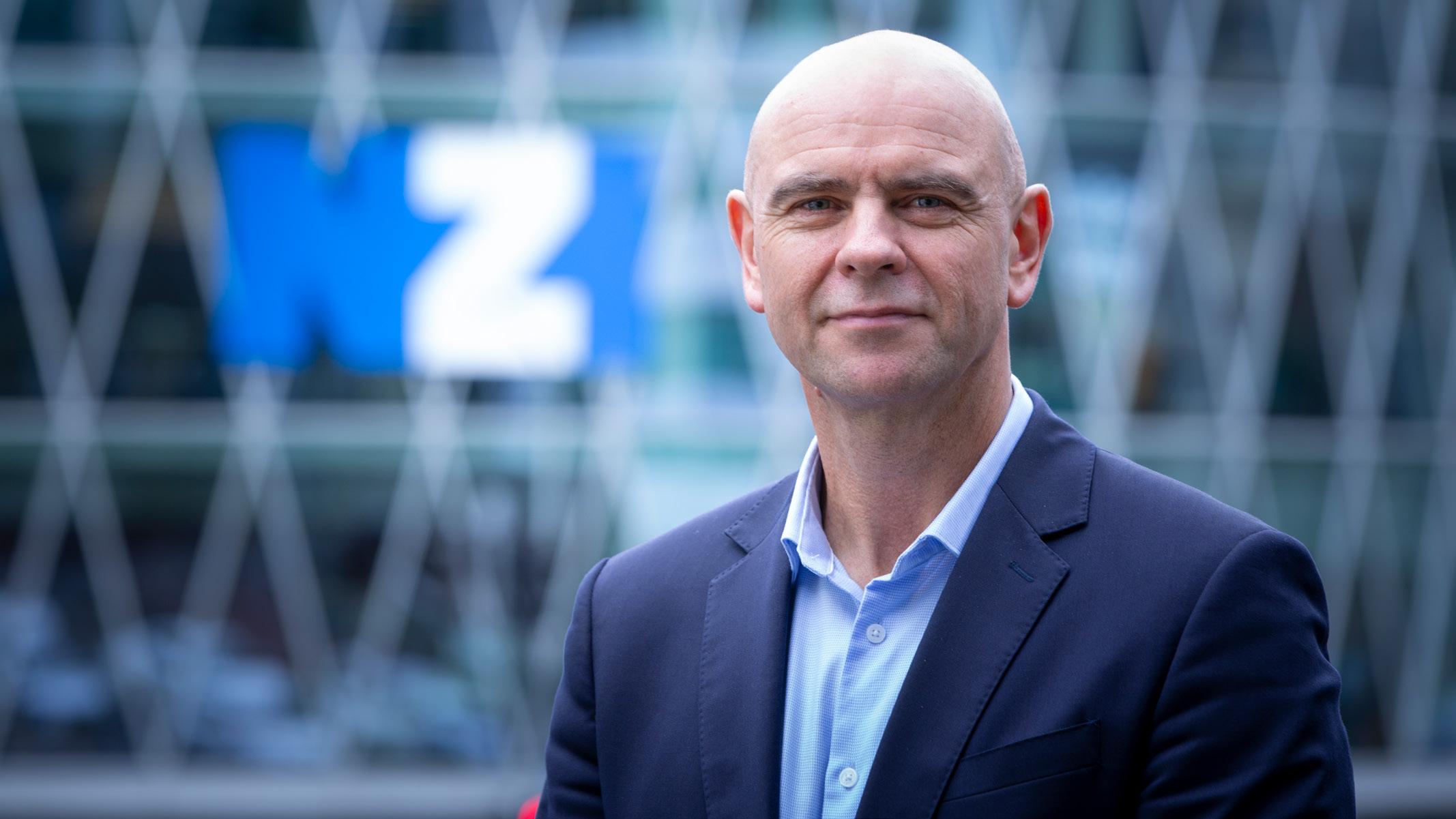
Garry Taylor, Executive General Manager, NZI shares his perspective on the current market, shaped by more than three decades in the industry.
AtNZI, our focus is simple – giving brokers the expertise, insight and support they need to deliver the right outcomes for their customers. That’s the advice model in action – brokers guiding customers with confidence, backed by the right insurer expertise.
It means showing up where it counts. From paying more than $2.4 million in claims every business day to getting assessors on site quickly, working alongside brokers to reduce risk before a loss occurs – NZI is focused on giving businesses real peace of mind. When a major event hits, our teams are on the ground as soon as practical – and where it’s needed, we’re making emergency payments within 24 hours so businesses can get back on their feet straight away.
Over the past year, we’ve delivered more than 500 Fleet Fit campaigns, completed around 900 electrical safety reviews identifying over 3,000 serious defects, and carried out more than 1,000 property risk surveys. These aren’t just numbers – they’re practical actions that help brokers advocate for solutions, reduce exposure, and strengthen outcomes for their customers.
Growing up in Taupō, I saw first-hand the role brokers play in their communities. My father ran a fire and general brokerage, and for him it was never just about the policy – it was about looking after people and doing right by his customers. That principle still shapes how I think about insurance today.
When a major event hits, our teams are on the ground as soon as practical – and where it’s needed, we’re making emergency payments within 24 hours so businesses can get back on their feet straight away.
That’s reflected in how we support customers – both before a loss occurs and in how we help them recover.
Through programmes like NZI Property Protect – our electrical inspectors target one of the leading causes of commercial loss – identifying issues early and giving customers clear, practical steps to address them.
Garry Taylor's
Garry Taylor
It’s not the last renewal saving that matters –it’s having an insurer who shows up, stands behind their cover, and delivers at claims time.
That’s what NZI is known for.
We’re also taking a more holistic approach to recovery. Through our partnership with Habit Health, drivers involved in fatalities can access early psychological support, recognising that recovery isn’t just physical and helping businesses return to a more stable footing.
A more complex risk environment
New Zealand businesses are facing a broader range of risks – from weather events to evolving liability, cyber threats and rising costs.
In this environment, early decisions matter more. How risk is understood, structured and priced has a direct impact on long-term outcomes.
At NZI, we focus on making those early decisions count –working closely with brokers to structure cover that stands up. That’s where partnership makes the difference – brokers and insurers working together, sharing insight and expertise to deliver more sustainable outcomes for customers.
And when something does go wrong, the value of that relationship becomes clear.
It’s not the last renewal saving that matters – it’s having an insurer who shows up, stands behind their cover, and delivers at claims time. That’s what NZI is known for.
Where broker advice makes the difference
At NZI, we specialise in Liability, Cyber, Transport and Commercial Property – lines where deep technical expertise and experience directly shape outcomes.
Risks in these areas are more complex, evolving, and often longer-tailed. Liability exposures, for example, can emerge years after an event. Getting the structure, terms and pricing right upfront is critical to ensuring cover stands up over time.
That’s where broker advice matters most. Brokers bring a deep, practical understanding of their customers’ businesses and help them navigate risk and make informed, long-term decisions.
Well-structured cover delivers value beyond price – not just protection on paper, but better outcomes in practice – supporting smoother claims experiences and greater certainty when it matters.
At NZI, we back and invest in that advice model. Through initiatives like NZI Broker Advance – our expert-led education programme, we’re building capability in complex areas and equipping brokers with practical tools and insights to support their customer conversations.
That’s the value of true partnership – brokers guiding with confidence, backed by an insurer with the scale, expertise and commitment to stand behind them.
Discipline in a changing market
Claims trends reinforce why discipline matters. We’re seeing higher repair and replacement costs, supply chain pressure and more severe weather events.
Our latest data shows storm-related claims up 256% on the previous year1 highlighting how quickly the risk environment is changing – and where early action can make a difference.
Sustainable pricing plays a central role. It ensures premiums reflect the true cost of risk and supports insurer strength, future insurability, and greater stability for customers.
As a long-term insurer, we’re committed to disciplined decisions that stand up – not just short-term outcomes.
Working this way with brokers and customers leads to better outcomes, smoother cycles, and fewer surprises.
That’s the value of true partnership – brokers guiding with confidence, backed by an insurer with the scale, expertise and commitment to stand behind them.
Keeping it simple
For all the complexity in the market, the fundamentals remain the same.
Customers want confidence that their broker and insurer understand both the risk on paper and the realities of running a business in New Zealand. They want to know that decisions are made carefully, that advice is aligned, and that support will be there when it matters.
Periods of softer market conditions create an opportunity – and at NZI, we’re working with brokers to strengthen cover, revisit terms and set customers up for more stable, predictable outcomes.
That’s where insight, experience and strong alignment give brokers the backing to deliver the right outcomes – supported by an insurer they can rely on when it matters.
Vero is accelerating to back brokers in a changing world
A look into Vero’s countrywide Broker Roadshow by Jane Brewer, Executive General Manager - Consumer, Vero New Zealand.

Jane Brewer, Executive General Manager - Consumer, Vero New Zealand
Insurance has always been an industry shaped by change. But right now, that change feels like it’s accelerating in every direction at once. A 219% increase in weatherrelated claims volumes year-on-year1. Nearly $9 billion in natural disaster losses across New Zealand in just three years2 Reinsurance costs up 136% since FY233. Customers are more price-sensitive than ever, all while AI, digital disruption and new competitors rapidly reshape the insurance landscape.
For brokers, that creates a more demanding environment than ever before. Customers need more guidance, context and advocacy. And they increasingly need help navigating difficult conversations around affordability, resilience and risk.
That was the backdrop to Vero’s 2026 Broker Roadshows. Held across Wellington, Auckland, Christchurch and Hamilton, the roadshows brought our leadership team back face-to-face with brokers from around the country for the first time in several years. We were back to reconnect, listen, and have honest conversations about where insurance is heading and how Vero is responding.

This year’s theme was Accelerate: Backing brokers in a changing world. That word “accelerate” was very deliberate. Acceleration, for us, reflects the reality that the environment around brokers is changing faster than ever before. Risk is accelerating. Customer expectations are accelerating. Technology adoption is accelerating. And the insurance industry itself is having to evolve quickly alongside it. For us, acceleration means reducing friction, being consistent, and giving brokers the confidence and tools they need to operate in a more complex market.
Across the roadshows, three key themes consistently came through: Understanding Risk, Advocacy and Partnership. Those priorities underpin where we’re investing, where we’re leading, and how we believe we can continue backing brokers for the long term. The environment is changing faster than ever
Jimmy Higgins opened the roadshows by grounding the discussion in the realities brokers are navigating every day. While parts of the market are beginning to bottom out after years of steep premium increases, brokers are now balancing affordability concerns, rising customer expectations, increasing competition, and rapidly evolving risk - all at once. And while technology is accelerating change across the industry, Jimmy reinforced something we feel strongly about at Vero: the role of brokers is becoming more important.
In uncertain environments, customers need trusted

advice and advocacy. That’s why one of the strongest messages throughout the roadshows was our commitment to the intermediary channel. That commitment shapes how we invest, how we structure our business, and where we’re heading next.
A global industry under pressure
To help brokers zoom out from the day-to-day and look at the bigger forces shaping insurance globally, we brought in leading economist Shamubeel Eaqub and Frederik Mayeres, Managing Director and Partner at Boston Consulting Group (BCG).
There are significant structural changes reshaping insurance globally: climate volatility, economic uncertainty, the rise of AI, increasing competition from MGAs, and rapidly evolving customer expectations. But one of the clearest takeaways was that while technology is transforming insurance, it is also increasing the value of advice. As customers become more self-directed and digital experiences become the norm, brokers are increasingly being pushed further up the value chain - away from transactional interactions and towards deeper strategic guidance, risk advice and advocacy.
That rang true with Shamubeel’s expertise on the New Zealand economy. He spoke about the pace of technological change, rising financial pressure, geopolitical instability and what he described as a broader erosion of trust across society. In an environment increasingly defined by uncertainty, he argued that relationships and judgement become more valuable.
One of the strongest observations from Shamubeel was that brokers cannot afford to become “vending machines” for policies. Instead, the brokers who thrive will be those who become genuine partners to their customers - helping them understand risk, navigate uncertainty, make smarter decisions and build resilience over time.
Importantly, neither speaker framed technology or AI as the enemy of brokers. If anything, the opposite. The consistent message was that while digital tools will continue to automate simple transactions, they will also make human expertise, advocacy and trusted relationships even more important in complex moments. And in a world accelerating this quickly, that human element may become one of the broker channel’s biggest competitive advantages.
Understanding risk in New Zealand
Sacha Cowlrick then brought those macro trends into sharp focus locally. One of the clearest themes from her sessions was that risk in New Zealand is increasingly visible, measurable and concentrated.
Vero’s modelling indicates average weather-related annual losses could increase by between 19% and 26% by 2050. But weather risk is highly concentrated. Less than 1.5% of coastal properties are projected to account for all coastal inundation losses, while fewer than 2% of inland properties are linked to 30% of all flood losses.
For us, this is exactly why understanding risk more deeply matters. We’re investing heavily into data, modelling and property-level insights, and tapping into our expertise as part of Suncorp Group, so we can price more accurately and provide greater consistency, so we are protecting all Kiwis across New Zealand.
Advocacy beyond individual policies
Advocacy has been a significant priority for us at Vero. Many of the challenges facing insurance today are bigger than any one insurer or policy. Questions around resilience, infrastructure, land use, climate adaptation and affordability affect the long-term sustainability of insurance across New Zealand.
That’s why Vero and Suncorp New Zealand are actively engaging with government and global reinsurers. This work matters because it directly affects long-term capacity, pricing and accessibility for customers - and ultimately brokers’ ability to continue placing business confidently into the future.
Partnership through action
Our partnership with brokers underpins Vero entirely as a business. That’s why a major focus over the last few years has been investing in the areas that matter most to brokers day-to-day: improving service, simplifying processes, strengthening connectivity and making it easier to work with us in an increasingly complex market.
Throughout the roadshows, we spoke about the significant transformation happening across Vero’s systems, platforms and operating model, all designed to create a more connected experience for brokers and customers alike.
That includes end-to-end Consumer and Business teams designed to improve accountability and reduce handoffs, investment into CRM capability to create a more connected customer view, and the continued rollout of VeroVantage to give brokers greater visibility and control across their workflows.
We also shared how we’re continuing to invest in claims capability, digital lodgement and automation to remove friction and create faster, more seamless experiences for brokers and customers. That includes work underway on a live claims tracker to provide brokers with greater visibility across the claims journey, alongside faster processing for simpler motor claims.
But importantly, one of the strongest themes throughout the roadshows was that trust and consistency matter enormously. Again and again, our leadership team spoke about the importance of showing up consistently for brokers, particularly when market conditions become more difficult or uncertain. That means maintaining a broad appetite, continuing to invest for the long term, and being a stable, predictable partner brokers can rely on through both hard and soft market cycles.
Because while the industry around us is changing rapidly, Vero’s commitment to the broker channel hasn’t changed at all.
1Vero claims data 2https://www.icnz.org.nz/industry/cost-of-natural-disasters/
From recovery to resilience - our evolving roles


By Jonathan Groves, CEO and Managing Director, QBE Insurance Pacific
Historically, insurance has enabled recovery after an event. That role remains critical. But as QBE Pacific CEO and Managing Director, Jonathan Groves has consistently said, the most valuable dollar in the system is not the one spent on recovery, but the one invested ahead of the event. That thinking is reshaping how insurers like QBE approach their role.
While paying claims is at the heart of what we do, it’s also about supporting individuals, businesses and governments to better understand risk and make decisions that strengthen resilience before the next event hits. In practical terms, that means helping customers reduce loss, not simply recover from it.
This applies at every level - from households making practical changes to reduce vulnerability, to organisations embedding resilience into planning and investment decisions. It also requires collaboration with councils and the public sector, recognising that many risks sit within shared systems no single organisation can address alone.
In New Zealand, QBE’s Rebuild Resilient cover is a practical example of this shift. Rather than automatically reinstating a property on a like for like basis after certain weather events, it supports targeted upgrades as part of recovery - such as improved drainage, raised floor levels or more flood resilient materials - based on claims experience and hazard data.
The impact is twofold: customers recover stronger, and future loss could be less frequent or severe. Over time, this may help break the cycle of repeat damage improving outcomes for customers and communities, while contributing to a more stable insurance system.
This is about changing risk. Recovery becomes a moment to reduce vulnerability supporting long term affordability and availability, while delivering real value for customers.
Rebuild Resilient is grounded in clear insight from QBE’s global research and claims experience: resilience is cumulative. Modest actions, layered across properties, communities and regions, materially improve outcomes over time.
This same logic applies to natural infrastructure. Wetlands, forests, floodplains and coastal systems already act as shock absorbers - slowing water, stabilising land and reducing the severity of events. When these systems are degraded, events
unfold faster, with greater intensity, and increasing damage.
For insurers, natural infrastructure directly affects exposure, vulnerability and therefore risk. Where it is intact or restored, losses tend to be less severe making it not just environmentally important, but economically relevant.
Investing capital in strengthening natural systems is more effective than repeatedly funding recovery after avoidable loss, particularly as these systems can improve over time rather than degrade.
This matters for the long term affordability and availability of insurance. More stable risk outcomes support stronger economic resilience and growth. But natural infrastructure cannot be funded by one group alone - it requires partnership across public and private sectors, alongside communities and iwi, working from shared evidence and incentives.
This is also influencing how insurers think about the role they have. Through the QBE Foundation, we are providing support and mitigation options for communities to become more resilient and prepared for climate impacts, helping to enable a more resilient future.
New Zealand provides a powerful environment to test what works in reducing risk. Climate risk, land use decisions and infrastructure pressure are already shaping outcomes on the ground, creating a strong case for approaches that actively reduce risk over time. By using recovery to inform better rebuilding, investing in natural infrastructure, and directing capital toward prevention, Aotearoa can help show how risk can be lowered benefiting communities, the economy and the insurance system alike.
Insurance will always be central to recovery. However, resilience is where the system must now move, and insurers have a clear role to play in making that shift real.
Jonathan recently joined a panel conversation at the launch of a Natural Infrastructure Plan, led by The Aotearoa Circle (of which QBE NZ is a partner). The Plan encourages the insurance sector to take a lead on raising awareness of the benefits of natural infrastructure to demonstrate how insurance can remain accessible. It also recommends continued work on innovative models and finance mechanisms that can fund natural infrastructure at scale, alongside bolstering sector capability.

At the heart of building back better.
Rebuild ResilientTM – A property policy extension.
Cover that builds a more resilient future
At QBE, people are at the heart of everything we do. It’s about providing the confidence for our partners, customers and communities to grow, change, and thrive. And we’re on this journey with our customers every step of the way, doing things better tomorrow than we did today.
What is Rebuild Resilient™?
Extreme weather events are becoming more frequent and severe across Aotearoa, and many Kiwi businesses are experiencing repeated damage from similar incidents. At QBE New Zealand, we want to give our customers more choice in how they recover – supporting smarter, more resilient solutions.
We know that some customers are looking to proactively mitigate the impact of weather-related events on their businesses and properties. That’s why we’ve developed an innovative way to build resilience into the recovery process.
We’re proud to introduce Rebuild Resilient™ - an optional extension to our property insurance offering. Designed with the challenges of a changing environment in mind, it empowers you to rebuild stronger, smarter, and with resilience at the core. It’s about helping to reduce future risk, not just recover from it.
What weather-related natural events are included?
Floods (both fluvial and pluvial), named cyclones, named ex-tropical cyclones and sea surges are included.
Real impact, real protection
New Zealand is experiencing more frequent and severe weather events. In the past decade:
• 8 of the 10 warmest years on record occurred*
• Weather-related insurance claims more than doubled*
• The 2023 Auckland Anniversary floods and Cyclone Gabrielle led to around 120,000 claims, totalling around $3.8 billion in value.*
Rebuild Resilient™ is our proactive response to a growing challengeempowering Kiwi businesses to implement mitigation solutions that may help safeguard their properties against the impacts of our changing environment.
How it works
Rebuild Resilient™ is an optional extension to your property policy. It provides additional coverage of 10% of the reinstatement cost up to an agreed maximum value** to fund resilience upgrades after a covered natural catastrophe.
This isn’t just about rebuilding – it’s about rebuilding smarter. For example, after a weather event, you may look to make your property more resilient by:
• Moving or lifting foundations
• Making improvements to drainage on the property
• Lifting electrical work
• Building retaining walls
• Adding flood doors and barriers or gutter guards
• Seeking professional guidance for resilient designs;
• And more.
Reach out to your regular QBE contact or go to our website for further information www.qbe.com/nz
ACC turnaround on track: Long-term claims growth hits decade low

Scott Simpson, Minister for ACC

Accident insurer's report shows the long-term claims pool grew just 0.3% and 92% of clients on weekly compensation returned to work within a year.
New Zealand’s Accident Compensation Corporation (ACC) has released its March Monthly Turnaround Plan Report, showing a lower growth rate in the long-term claims pool and one-year return-towork outcomes at target levels as at 31 March 2026. The March report, published on 30 April, 2026 is part of ACC’s Turnaround Plan, which was launched in January 2026 following an independent external review and updated expectations from the government.
Turnaround plan focuses on core operations and rehabilitation
ACC’s Turnaround Plan sets out three stated priorities:
1. Putting clients first with care that leads to lasting recovery.
2. Getting New Zealanders back to work and independence.
3. Resetting ACC and getting the organisation back to basics.
The plan responds to an independent review of ACC’s claims management and rehabilitation performance and to an updated Letter of Expectation from Minister for ACC, Scott Simpson. It also incorporates recommendations from a board commissioned review into organisational culture and a Treasury commissioned review of ACC’s investment function. In conjunction with the Turnaround Plan, ACC has adopted a new strategy, Statement of Intent, and Service Agreement intended to guide the organisation over the next four years in rehabilitation performance, operational settings, and scheme funding.
Long-term claims pool growth at lowest rate in a decade
The March data show the growth rate of ACC’s longterm claims pool was 0.3% at the end of March, which ACC describes as the lowest rate recorded in the past 10 years. The long-term claims pool covers clients who have been receiving weekly compensation for more than one year. The total number of long-term claims continued to rise slightly in March, but ACC says it expects reductions in the coming months and remains focused on achieving its year-end target for this metric. ACC Chief Executive Megan Main said that limiting extended reliance on support, particularly for non serious injuries, is a priority under the plan. She said ACC changed how some long-duration claims are managed in mid-2024 to give these clients more structured, interdisciplinary support aimed at moving them back toward independence.
Return-to-work outcomes at one-year target
Return-to-work outcomes remain a central indicator for ACC and levy payers. The corporation measures the proportion of clients on weekly compensation who return to work or independence at several time points – 28 days, 10 weeks, nine months, and one year – as a gauge of rehabilitation performance. For March, ACC reported that 92% of clients receiving weekly compensation had returned to work or independence within one year, matching the corporation’s year-end target for this measure. “There is strong evidence that getting back to, or staying engaged in work has a positive impact on the person’s mental and physical health. Making sure clients get the right support at the right time also helps ensure sustainability of the ACC scheme into the future,” Main said.
Main said ACC’s statutory role is to support recovery and a return to work and independence but noted that outcomes also depend on decisions made outside the organisation. “Our role is to support people to recover from their injuries and get back to work and independence. But we cannot do this alone. I’m asking all New Zealanders to play their part by keeping themselves and their communities safe and by playing an active role in their recovery. We know a well-supported return to work and staying active and socially connected while recovering help people recover faster. I want to acknowledge the employers who are supporting their staff to recover at work and the providers working with ACC’s clients to deliver better rehabilitation outcomes. Keeping ACC sustainable and meeting these targets is a collective effort from us all,” Main said.
Independent review highlighted operational and culture issues
The Turnaround Plan is a direct response to an external performance review commissioned by the Minister for ACC after levy decisions announced in December 2024. The government engaged Finity Consulting Ltd to assess ACC’s approach to addressing declining rehabilitation performance and to identify gaps and improvement options. The review found that ACC had experienced a loss of operational focus over time, with inefficient claims management andreduced
There is strong evidence that getting back to, or staying engaged in, work has a positive impact on the person’s mental and physical health.
Megan Main ACC Chief Executive
effectiveness of rehabilitation support. It said this had contributed to some injured people taking longer than necessary to recover and to claim costs exceeding funding levels.
The reviewers also reported that a previous case management change had not delivered its intended benefits and that concerns about that model were not addressed. They described a weak performance culture, citing limited incentives for clients to exit long-term support, unclear accountability across the system, and insufficient emphasis on core performance measures and monitoring. Key recommendations included simplifying and refocusing strategic priorities on claims management and rehabilitation; accelerating claim decisions through clearer guidance and more autonomy for frontline staff; expanding frontline capability with additional staff, training, clearer career pathways, and use of private providers; strengthening claims triage to match resources to client needs; and improving performance monitoring and analysis. ACC has incorporated these recommendations into the structure of the Turnaround Plan and its regular reporting framework.
Monitoring claims volumes, social rehabilitation, and surgery costs
To track the turnaround programme, ACC has identified eight key measures that are reported on a monthly basis. These include total new claim registrations – more than two million injury claims each year – as well as short and long term return to work rates and the size and growth rate of the long-term claims pool. The corporation is also tracking what it describes as social rehabilitation savings. Social rehabilitation covers aids and equipment, attendant care, childcare, education support, home help, home modifications, training, and transport and can extend to 24 hour care in the community or at home for clients who cannot live independently. ACC has reported that social rehabilitation costs reached $1.5 billion in 2025, and it is monitoring savings generated by aligning support more closely with assessed injury needs.
Elective surgery spending is another focus. ACC has recorded a 35% increase in elective surgery costs over the past two years, along with a higher proportion of those surgery patients going on to receive weekly compensation. ACC uses this measure to assess how surgery approvals and subsequent rehabilitation are being managed. Turnaround Plan progress reports are published on ACC’s resources page on the last business day of each month, providing regular updates on rehabilitation, claims management, and scheme cost trends for stakeholders across the insurance and wider risk-transfer sector.

Privacy Act changes: Guidance for brokers
On1 May 2026, changes to the Privacy Act came into force. These changes directly impact how and when you share personal information with third party providers (such as insurers, underwriting agencies, loss adjusters, claim repairers, and other service providers).
Under the new Information Privacy Principle (IPP3A), any agency collecting personal information indirectly must notify individuals that their information has been collected. However, IPP3A(3) allows an exception if the individual has already been clearly informed of the following:
• The fact that the information has been collected
• The purpose of the collection
• The intended recipients of the information
• The name and address of the agency that is collecting the information, and the agency that holds the information
• If the collection is authorised or required by law, which particular law
• Their right to access and correct their information.
These are mandatory disclosures, and failing to meet them may result in non-compliance.
To help brokers, IBANZ has developed a dedicated webpage linking to privacy policy statements from general and fire insurance providers and underwriters, making it easier for you to meet notification requirements. You can refer clients to the insurer/underwriter privacy statements listed on our site in order to satisfy your IPP3A(3) requirements.
If you work with insurers or underwriters not included on our webpage, you are responsible for providing clients with the appropriate privacy policy information before personal client information is shared. Alternatively, get in touch with IBANZ and we can update our privacy statements list.
Our privacy statements list is one practical way that IBANZ seeks to help our members comply with the 1 May 2026 Privacy Act changes. You can find out more by viewing our Privacy Statements List on our website here: https://ibanz.co.nz/Privacy-Statements/10642/
AMI is celebrating a young New Zealander who’s leading by example behind the wheel
For the first time, AMI has announced a Supporting Excellence Student Award winner through the Ryda programme, recognising high school student Zane Lott for his leadership, responsibility and standout road safety mindset as a young driver. Delivered through AMI’s partnership with Road Safety Education Limited (RSE), the award acknowledges students who show excellence in their communities. After completing RSE’s Ryda programme, Zane earned strong commendations from teaching staff for his maturity, sound judgement, and willingness to speak up.
“One of the biggest takeaways for me was that being a safe driver also means speaking up when something isn’t right –whether that’s driving too fast, not leaving enough following distance, a vehicle issue, or someone you know breaking their licence conditions,” says Zane.
Zane’s award nomination also highlighted his confidence to share ideas and encourage peers to act responsibly both on and off the road.
Steph Ferris, AMI Executive General Manager Claims says, “We’re proud to celebrate young people who not only form safe driving habits early on but demonstrate excellence by positively influencing those around them.”

Last year, AMI recorded more than 235,000 collision related claims – an average of around 645 claims every day.
“Our data is a reminder that road safety can’t be something we think about only occasionally.”
Steph’s advice is clear: remember the power of a positive and courteous attitude when you’re driving. Being kind and considerate on the road really does make a difference.
Steph Ferris, AMI Executive General Manager Claims
Zane Lott
CEO says AI strategy only half the equation


Theinsurance industry is in the grip of a familiar tension.
Carriers are pouring capital into AI-driven automation, promising faster underwriting, smarter claims handling and leaner operations. And yet, as Aon's Chief Executive Greg Case argued at a recent Semafor conference, the sector risks building a powerful engine with no one qualified to drive it.
"It is inconceivable that a winner in the application of AI isn't going to lead with a world-class people strategy," Case told conference attendees. "Inconceivable."
The warning lands with particular force in an industry navigating a talent crisis that predates the current AI surge - and that AI may be making worse. The context is stark. A Jacobson Group and Aon study found that job openings in finance and insurance fell to their lowest monthly level in a decade by December 2025, dropping from an annual average of 281,000 openings to roughly 138,000 in a single month. At the same time, approximately half of the US insurance workforce
is expected to retire by 2038, opening the door to more than 400,000 vacancies in roles that depend on deep institutional knowledge.
The collision of those two forces - a thinning talent pipeline and the automation of entry-level roles - is precisely what Case is pushing the industry to confront.
"This isn't about including talent," he said in his closing remarks at the conference. "This is people-led. Talent leads this story. You can't win here without a world-class talent strategy."
The underwriting problem
Nowhere is this tension sharper than in underwriting. AXA XL's Chief Operating Officer has noted that AI is rapidly absorbing the administrative tasks - submission data entry, loss run ingestion, MVR summaries - that have historically served as the training ground for entry-level underwriters. "Historically, administrative work was how entry-level underwriters learned the fundamentals," the COO said. "Now we have to rethink how we develop talent."
Case made the same point in broader terms. Cutting back on early-career hiring in response to AI-driven efficiency gains, he argued, is exactly backward. "The idea that you would pull
Greg Case, Aon's Chief Executive
back on early careers - I'm dumbfounded by it," he said. "There should be opportunity here for everyone, as opposed to 'my gosh, we need to pull back.' It's exactly the opposite."
That view puts Case at odds with some of the industry's biggest operators. Chubb has announced plans to cut up to 20% of its global workforce over the next three to four years as part of a sweeping digital transformation, targeting underwriting administration, claims and operational support. Allianz, meanwhile, has signalled cuts of 1,500 to 1,800 positions within its travel insurance operations as AI reshapes customer and claims processes.
Case's counterargument is not that efficiency is wrong, but that leaders who stop there are leaving the bigger prize on the table. "If you're about pure efficiency, stand by," he said. "The winners are going to drive benefits from that standpoint, but they're going to drive growth, they're going to drive capability building."
A skills gap inside the AI gap
The industry's AI ambitions are running directly into a shortage of the people needed to execute them. As Insurance Business has reported, many carriers still run on older core systems and have strong actuarial and risk functions but lack the deep AI engineering and data science expertise needed to scale pilot programmes into production. "Running a proof-of-concept is one thing," one AI integration specialist told Insurance Business, "but scaling to production requires specialised skills in areas like MLOps, data engineering, and compliance - and those roles are hard to find."
A 2024 survey by Davies found that 63% of senior managers in the insurance industry believe a lack of digital skills is an issue in their workforce, with 30% describing it as "a very serious issue."
Case is familiar with this dynamic from the inside. Aon, which employs approximately 60,000 people worldwide, placed its first Nvidia chip into a business application in 2009 and had committed roughly $1.3 billion to AI-related programmes by 2023 - what he describes as the largest investment in the professional services industry's history. The lesson from that journey, he said, is that technology spend without parallel investment in people fails to compound.
"How do we take specific steps to actually train, retrain, retool our colleagues so they can be effective in this environment?" he asked. "That's going to be the unlock - an enabled capability we've never seen before, an enabled capability by people."
His formula for Aon is instructive: rather than using AI to shrink headcount, the firm is aiming to make its existing 60,000 employees dramatically more effective. "We don't want 30,000 - we want 60,000 more effective," he said.
Skills-based hiring as the new standard
For the insurance industry specifically, Case's call for a skillsbased approach to hiring and development carries practical urgency. As Insurance Business has documented, more than one-quarter of insurance professionals today are over the age of 55, while less than 25% of the industry is under 35. The pipeline of experienced talent is narrowing just as the skill requirements of the remaining roles are expanding.
"We need to do more and better in our industry to attract talent that can be part of all these new things we see coming around technology, including AI," Westfield Specialty's Chief Claims Officer told Insurance Business. "The future belongs to those willing to take strategic risks and invest in the next generation."
Case argues that the answer lies in replacing credentialdriven hiring with a continuous, skills-based model - one that
This isn't about including talent. This is people-led. Talent leads this story. You can't win here without a world-class talent strategy.
Greg Case Aon's Chief Executive
identifies what capabilities the business needs today and eighteen months from now, then builds towards those targets through targeted training, apprenticeships and redeployment. Critically, he sees this as an expansion of the talent pool, not a contraction of it.
"We have to evolve ourselves as we think about how we bring in, identify talent, bring in talent, train talent, retain talent," he said. "What a better investment would we make to be successful in an AI world if we can enable it through a better talent strategy?"
The hyperscalers, he observed, already understand this. The fiercest competition in AI is not being fought over data centres and compute - it is being fought over people. "Who's fighting over talent? Who's fighting every day? Who's the headlines on talent? It's the hyperscalers." For insurers that have historically struggled to compete on compensation with big tech, the implication is that non-financial factors - career development, skills investment, meaningful work - become the differentiating lever.
The pipeline risk no one is pricing
Perhaps the most pointed implication of Case's argument for the insurance industry concerns the talent pipeline itself. Insurance Business has highlighted that many of the roles most exposed to AI automation have historically served as entry points into the industry - the first jobs that gave younger workers exposure to claims, underwriting and customer service before they moved up. As those roles contract, the pipeline of future experienced professionals risks hollowing out. That is a strategic risk as much as an operational one.
The new generation of roles that remains demands a different profile. AXA XL's COO has articulated the challenge directly, "Underwriters and underwriting assistants will need to understand the rules behind the AI tools they use. They need to be able to interpret outputs from agentic AI, explain results, and make judgment calls that the technology cannot."
That is, in essence, what Case is calling for at the enterprise level: an industry that treats talent development not as a cost to be managed alongside AI investment, but as the strategic condition for AI investment paying off at all.
"Every transformation brings with it the seeds of disruption and the seeds of opportunity," he said. "We are working to drive the opportunity faster than the disruption."
For an industry that has spent the better part of three years debating how much AI will change the work, Case is making the case that the more important question is who will be equipped to do it.
Compliance or Competitive Advantage?
CoIA is an opportunity for both - if you act now
To adapt to the upcoming Contracts of Insurance Act (CoIA), will your organisation be adding layers to cope, or will you re-design work to perform?
How much will your approach really cost your business?
Will you increase or reduce friction in your customer experience?

By Warren Mara, Managing Director, Sysdoc New Zealand
Sysdoc’s advice to insurers draws on 40 years of helping organisations adapt to regulatory and technology change: how you respond to CoIA will directly shape the cost, risk, and long-term value you create, making this an opportunity not to be wasted.
This article looks at the Contracts of Insurance Act 2024 through an operating model lens (process, systems, data, and people) focusing on what “reasonable” and “fair” mean in practice, not in law.
Imagine your organisation in 2027: CoIA done well means your front line operates with clarity and confidence, decisions are consistent across channels, communications are timely and clear, and information is captured with discipline. You have a clean, reliable operating model, one that not only meets CoIA expectations but gives you the clarity to adapt quickly to the next regulatory change, technology shift, AI innovation, or competitive move.
CoIA done poorly, and the opposite emerges. Inconsistent outcomes create risk, cost and rework. Teams experience change fatigue, processes fragment, and customer experience suffers. Front-line heroics become the safety net, holding things together through workarounds and escalations. It’s a familiar and expensive pattern and it doesn’t prepare you for the future.
The runway is shorter than it looks
The Act will come into force by November 2027
That sounds distant, until you map out what must change across customer journeys, underwriting decisioning, product design, technology changes, data requirements, claims pathways, training, controls, and evidence.
In organisational change terms, 2027 is soon. Especially if you want to avoid band-aid xes and end-of-runway panic.
“Delaying preparation increases the risk of compressed timeframes, incomplete implementation, and avoidable compliance and conduct risks.”
- FMA letter to Insurers 18 May 2026
What the Act is changing in practice
We believe the impact of CoIA will be deeper and more foundational to operations than the CoFI regulation that has preceded it. We see this concentrating pressure in three areas:
1. Consumer disclosure requires new and more process, people and data discipline.
Consumers must take “reasonable care” not to make a misrepresentation, but the Act makes insurer behaviour relevant: how clear the questions were, what happened when answers were incomplete, and how disclosure is assessed.
How much friction are you willing to introduce into the customer experience to ensure you have sufficient information to accurately assess and underwrite the risk?
2. Information management and communication becomes a process, systems and data governance problem.
This Act elevates the criticality of disciplined data capture, assessment and traceability. If that record is patchy, your compliance risk increases, and your ability to react weakens.
How costly is it for you today to identify, retrieve, analyse and present data to customers, partners and to the regulator? And what level of confidence do you have in the integrity of that data?
3. Claim payment timeliness becomes a process, people, data and systems obligation.
The Act requires that insurers must pay sums due within a “reasonable time.” If cycle times drift or updates are inconsistent then costs climb with more repeat contacts, escalations and complaints.
Fairness risk is now shaped by how customer journeys perform, not only by what policy wording says.
Two paths to compliance: add layers, or remove friction
One approach adds layers—more scripts, disclaimers, QA checks, documentation, and manual controls on already fragmented processes.
This will ease short-term compliance pressure, but it quickly leads to more handoffs, slower resolution, increased workarounds, and reduced clarity.
This is often where organisations reach for technology as a shortcut. But automating poor processes only increases the scale of the problem - driving more rework, escalations, complaints, and cost.

In our view, approaching CoIA implementation as a narrow legal or technical exercise increases the risk of poor implementation outcomes and inconsistent treatment of policyholders.
– FMA, 18 May 2026
A simpler, smarter way: reduce friction and increase clarity
Organisations who treat regulatory change as an opportunity to simplify and improve their operating model gain a clear competitive advantage. They re-design how work gets done, remove inefficiencies, and build stronger, more adaptable foundations for future change.
In practice, this means:
• Treat this as a work re-design opportunity, not a compliance exercise
• Manage change and training holistically to avoid overload, duplication, and fragmentation
• Work back from November 2027-align process, technology, data and people early
• Bring in focused, independent expertise to accelerate progress and challenge thinking
• Identify and deliver high-impact simplification and efficiency gains across end-to-end journeys
• Use this clarity to enable re-platforming and confidently leverage AI
This approach reduces cost and risk while building a simpler, smarter business ready for what comes next.
Conclusion
November 2027 is closer than it seems. Act now to avoid last minute cost and risk, and turn CoIA into a competitive advantage.
Talk to us about a simpler, smarter approach. We’ll help you prepare your people, streamline your operating model, and identify what’s ready to automate today.
Choose the Simpler, Smarter Path.
For over 40 years, Sysdoc has helped organisations navigate complex change by simplifying how work gets done.
Our teams work alongside yours to re-design work to perform, not just comply.
We are offering a focused discovery session to help you:
+ See what a simpler, smarter way for CoIA looks like for your organisation
+ Begin undertaking gap and impact assessments for your business
+ Define a clear, prioritised project plan for simpler, smarter CoIA by Nov 2027
+ Explore where automation and AI can deliver immediate value.
Avoid the end-of-runway scramble.
Book your discovery session with Sysdoc: enquiries@sysdoc.co.nz
Allianz transfers global commercial cyber portfolio to Coalition


Joshua Motta, CEO and co-founder of Coalition
Allianz Commercial plans to transfer its standalone commercial cyber insurance portfolio to Coalition under a multi-year global arrangement that will make Coalition its exclusive partner for commercial cyber business. The transaction, announced 6 May, will shift primary responsibility for Allianz’s standalone commercial cyber book to Coalition.
The managing general agent will oversee underwriting, product design, risk controls, and claims handling for that portfolio. Allianz will continue to support multinational and large corporate risks, provide capacity, and maintain access to its commercial distribution network. The partnership has an initial term of at least 10 years and is structured to support further expansion of the parties’ cyber insurance activities.
Coalition to manage core cyber functions
Following completion, Coalition is expected to manage most day-to-day functions for Allianz’s standalone commercial cyber portfolio, using its Active Insurance platform as the operating framework. Coalition will lead pricing and product development, ongoing cyber risk monitoring and mitigation services, and the full claims process for the book. Allianz will concentrate on underwriting and servicing responsibilities for larger and multinational accounts and on delivering capacity and support in those segments.
Under the joint model, insureds will access cyber risk
assessment tools, threat mitigation services, incident response capabilities, and insurance coverage through a single structure, with attention to ransomware, AI-related cyber incidents, and other forms of digital risk. Allianz will provide long-term cyber capacity to back the business written by Coalition. It will also make its commercial distribution channels available to Coalition across multiple territories where the two firms operate.
Financial terms include equity and performance-based components
The financial arrangements include an increase in Allianz’s equity stake in Coalition and a set of performance-related features tied to the cyber portfolio. Allianz will receive additional equity in Coalition as part of the consideration, along with the right to nominate a director to Coalition’s board. Oliver Bäte, Chief Executive Officer of Allianz SE and currently an independent member of Coalition’s board, is expected to move into the nominated seat once the deal closes.
Beyond the initial equity component, Allianz will receive performance-based elements linked to the growth and profitability of the cyber business and has agreed to make further equity investments in Coalition over time. The structure links part of Allianz’s return to the results of the cyber portfolio, alongside its role as a capacity provider and distribution partner. According to the companies, the arrangement brings together Allianz’s position as a global carrier and its broker and customer relationships with Coalition’s cyber underwriting, monitoring, and incident response services.
Phased rollout in established cyber markets
The expanded partnership will be introduced in stages,

This milestone agreement underscores our shared vision with Allianz to safeguard organizations against cyber perils.
Joshua Motta CEO and co-founder of Coalition
starting in several markets where both firms already have cyber operations. Initial implementation is planned in the US, the UK, Australia, Germany, Denmark and Sweden, with additional countries to be added later. In these markets, Allianz commercial clients and intermediaries will be able to place cyber risks through Coalition’s platform backed by Allianz capacity. The companies say the structure is expected to change how cyber risks are placed and serviced for insureds that operate across multiple jurisdictions.
Chris Townsend, member of the board of management of Allianz SE, said the agreement responds to changing client demand and the characteristics of cyber risk. “The global cyber insurance market is growing and evolving at pace and is a core coverage that is in high demand from our clients. Cyber threats differ fundamentally from traditional risks, demanding a dynamic, tech-forward approach to protect our clients effectively. Together, we’re building a best-inclass global cyber offering that combines Allianz’s brand, market reach, and financial strength with Coalition’s unique
data-driven platform for underwriting and risk management, underpinning our growth strategy in this important segment,” Townsend said.
Coalition targets wider global cyber presence
Coalition is positioning the transaction as part of its broader international expansion, bringing a major carrier’s cyber book into its platform and extending its reach in commercial cyber. “This milestone agreement underscores our shared vision with Allianz to safeguard organisations against cyber perils. By integrating Allianz’s cyber portfolio into our Active Insurance ecosystem and expanding our global alliance, we’re delivering a superior, consistent solution for enterprises of all scales. Over time, we expect this transaction will position Coalition to become the largest writer of cyber insurance globally,” said Joshua Motta, CEO and co-founder of Coalition.
Coalition’s model combines cybersecurity tools, continuous scanning of insureds’ digital infrastructure, and incident response services with traditional cyber policy coverage. Coupled with Allianz’s multi-national client base, broker relationships, and local operations in numerous countries, the partners plan to offer a coordinated cyber insurance product for businesses across different segments. The agreement builds on a relationship established in 2022, when Allianz X, Allianz Group’s strategic investment arm, invested in Coalition and supported cyber capacity arrangements and Coalition’s expansion beyond North America. Over time, some Allianz Global Corporate and Specialty SE cyber specialists who work on larger corporate risks are expected to transfer to Coalition, subject to local labour law requirements. The transaction is subject to regulatory and other customary approvals in relevant jurisdictions.

Swiss Re CEO bets on AI for productivity gains 'not seen in decades'.

Andreas Berger, Swiss Re CEO
Swiss Re CEO Andreas Berger says AI will overhaul how the reinsurance group operates, predicting productivity gains "such as we have not seen in decades," while defending a business partnership that has drawn accusations of enabling government surveillance.
Speaking to a Swiss newspaper, Berger said the company is "rethinking our company's core processes from the ground up" with the help of AI.
The most concrete example he offered involved construction insurance pricing. A workflow previously requiring 25 steps, 14 applications, and up to three weeks has been reduced to fewer than five applications, with pricing achievable within a single data productivity gain of up to 80%.
The technology Berger describes goes beyond conventional tools like chatbots. AI agents, as IBM defines them, are autonomous systems capable of executing multi-step tasks, making decisions, and interacting with external software with minimal human supervision.
Berger dismissed the assumption that efficiency gains translate to job cuts. "The time freed up for our employees can be used for their real work: handling more claims, closing new business and helping customers increase their resilience," he said.
The remarks come as Swiss Re operates from a position of unusual strength. The group posted a record net income of $4.8 billion in 2025, a 47% increase year-on-year per its annual report, with operations spanning roughly 70 offices worldwide.
The broader reinsurance industry, however, is moving slower. A February 2026 report from insurance services
provider Patra found only 30% of AI initiatives across the sector advance beyond proof-of-concept, with research suggesting as many as 95% of firms have yet to see measurable returns. Firms that do scale AI outperform peers by three to five times on productivity metrics, Patra added.
Berger attributed much of the industry gap to data quality. "Without reliable data, AI mainly creates additional complexity, costs and frustration," he warned, pointing to fragmented IT systems as the underlying obstacle.
On cyber risk, he argued that AI-driven damages in worstcase scenarios are "so great that a single company cannot sustain them," adding that Swiss Re is in active discussions with the public sector on potential coverage expansions.
The Palantir question
The sharpest exchange in the interview came when Berger addressed the company's partnership with US data analytics firm Palantir.
The Hill has reported the firm's software as central to immigration enforcement operations and efforts to build what critics describe as a searchable citizen database. Former employees, in an open letter covered by NPR, accused Palantir of abandoning its founding commitments to democratic values.
The controversy carries specific weight in Switzerland. The Swiss army previously declined to adopt Palantir's technology, citing concerns that sensitive data could reach US intelligence services – a pointed backdrop for a Zurich-based executive defending the relationship to a Swiss readership.
Berger said Swiss Re has "strict governance processes" governing its partner choices and that its Palantir use case is "guaranteed by clear rules." He then acknowledged the practical reality.
"If you find another supplier with comparable capabilities, let me know," he said.
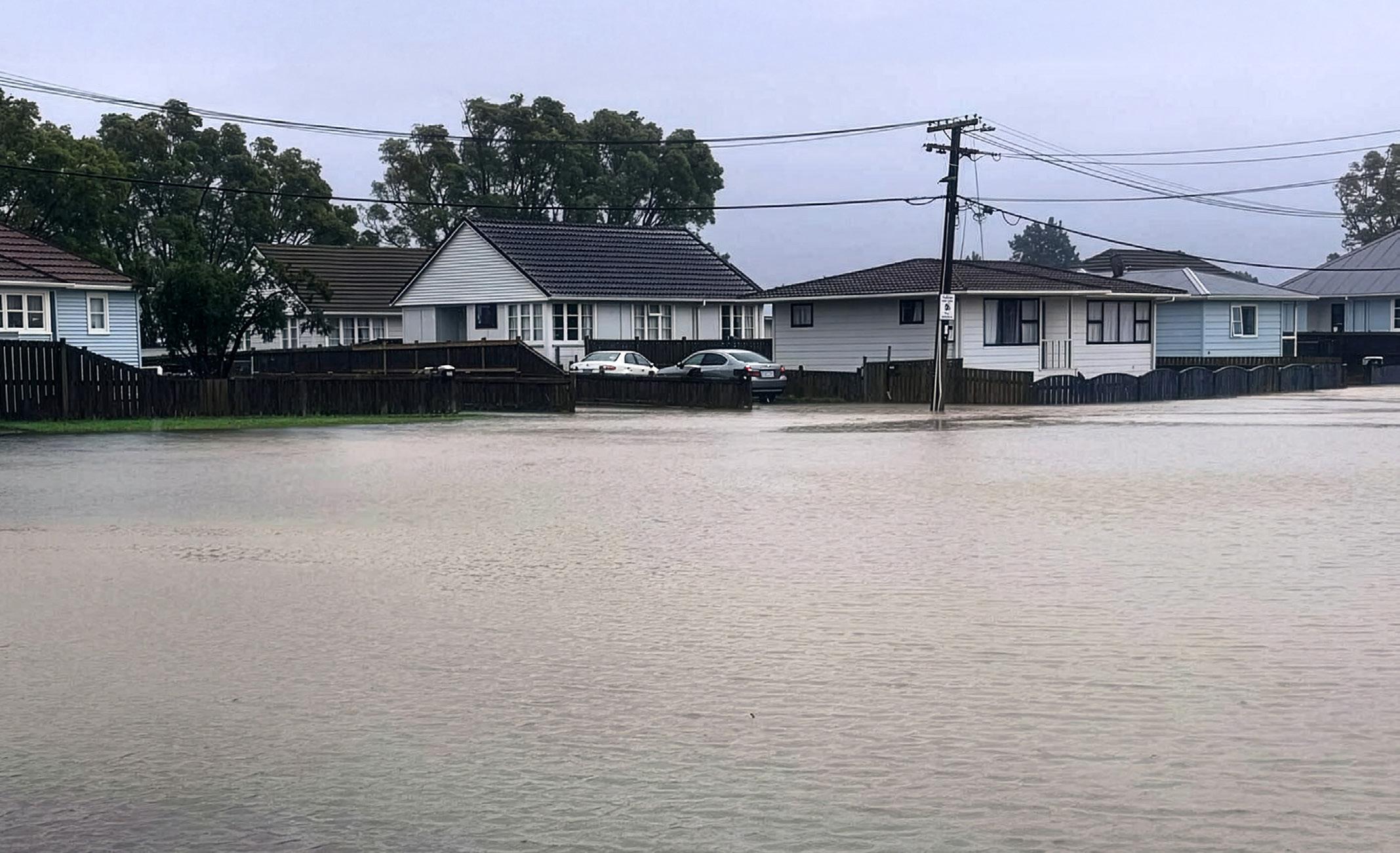
A storm every eight days: Weather claims spike 256%
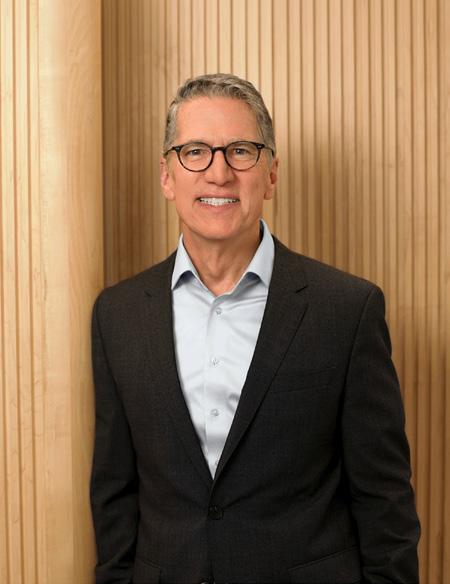
New data released recently reveals a record 46 storms over the past 12 months, driving a sharp rise in claims.
Phil Gibson, AMI, State and NZI CEO, says: “Between autumn 2025 and summer 2026, our claims teams supported customers through 46 storms, resulting in 33,174 claims.
“This reflects an astounding 256% increase in storm-related claims compared with the year prior, where we recorded 9,324 claims from 29 storms.
“Simply put, our data indicates that storms are arriving more often and with greater intensity.
“Over a 15-year timeline, a storm typically affected parts of the country once every 19 days. In the last 12 months, that frequency has more than doubled to once every eight days, making storms a near weekly occurrence.
“Recently, Cyclone Vaianu has been another stark reminder of how vulnerable New Zealand is to wild weather.
“While thankfully not as severe as originally projected, Cyclone Vaianu has to date, resulted in more than 890 claims across home, contents, commercial, motor and boat policies,” adds Phil.
The majority of claims are due to roof leaks, fallen trees, and damage to windows and glass, with the east of the North Island particularly impacted.
Stormy summers
“As severe weather events become more frequent, we’re also seeing a shift in seasonal storm patterns.
“In this tracked period, 61% of storms occurred in spring and summer, rather than in the cooler months where we’ve previously seen more storm claims,” says Phil.
“This shift highlights the volatile nature of New Zealand’s weather and the need for year round preparedness.”
Growing preparedness amid growing impacts
In the fifth nationwide survey commissioned for the Tracker, more New Zealanders are taking measures to protect their homes against natural hazards, with 80% reporting mitigating steps taken, compared with 40% prior to Cyclone Gabrielle.
Three in five New Zealanders say they’ve been impacted by natural hazards - affecting work routines, cooking and eating, travel and commuting, caregiving responsibilities and recreation.
“It’s not just the number of claims that defines the scale of an event, but how deeply it impacts the daily lives and wellbeing of people and communities,” adds Phil.
When asked which hazards New Zealanders had experienced the most anxiety over, respondents ranked storms, earthquakes and floods the highest. Storm-related anxiety showed the largest increase, up 10%, with nearly 60% expressing concern.
New Zealanders want risk reduction
“Conversations around climate risk are maturing and there is widespread public support for risk reduction. New Zealanders know this is a worsening problem and want action,” says Phil.
In a recent Climate Change Poll, 90% of New Zealanders expect more frequent and extreme storms and more than 75% want investment in risk reduction, mitigation and resilience.
“If we want to keep people protected, councils, government and insurers must work together to address the underlying risks. We can do it. It simply requires making risk reduction a priority and collective, timely and coordinated action from all of us.
“Ultimately, reducing natural hazard risk is the fairest and most durable way to keep insurance affordable and available to as many New Zealanders as possible.”
Phil Gibson, AMI, State and NZI Chief Executive
In an election year, New Zealanders have the chance to
ask
their politicians some hard questions
Faafoi is Chief Executive of

Kris Faafoi, ICNZ Chief Executive
New Zealand has started 2026 with a reminder about the reality of extreme weather.
In January, communities across the upper North Island and East Cape experienced torrential rain, flooding and landslips that damaged homes, cut power and roads, isolated towns, and tragically cost lives.
For many families, this was not a once in a generation event.
In mid-February, the pattern repeated. Severe storms swept through Waikato and parts of the central and lower North Island, flooding homes, damaging roads and cutting off communities.
The same system later hit Banks Peninsula, where heavy rain and slips again closed roads and isolated residents.
Then in March, Northland bore the brunt of another round of extreme weather.
In Ōakura in Northland, the local store owner Nena Rogers told media it’s been like Groundhog Day, with some homes hit hard in January being hit once again in March.
These events were separate but share the same underlying drivers and the same consequences for people, property and infrastructure.
What makes this pattern even more concerning is how often New Zealand is now declaring states of emergency.
National Emergency Management Agency data shows
the number of days spent under declared emergencies has increased sharply in recent years, driven largely by severe weather.
In just the first three months of 2026, there were at least 100 days when parts of the country were under a local state of emergency.
Northland alone declared three emergencies in that time.
Over the past five years, New Zealand has averaged over two months each year under some form of declared emergency.
From an insurance perspective, these events are no longer exceptional.
They reflect a clear shift toward more frequent and widespread weather-related disruption, particularly affecting smaller and rural communities that are often already exposed.
Insurance plays a critical role in recovery.
It helps families repair, communities recover and regions regain stability after disaster strikes.
However, New Zealand collectively has an opportunity to think and act differently to reduce the impact of natural disasters.
To keep people safe, protect communities and ensure Kiwis can keep accessing insurance in the future, we have the chance right now to act decisively on risk reduction.
Every destructive weather event reinforces the same lesson. Cleaning up after disasters costs far more than reducing risk upfront.
A Climate Change Commission case study shows the
Kris
the Insurance Council of New Zealand | Te Kāhui Inihui o Aotearoa (ICNZ)

Awanui Flood Protection Scheme in Kaitāia, built for $15 million, has already avoided an estimated $50 million in damage.
And benefits continue every time floods occur.
Northland Regional Council estimates March’s deluge pushed almost twice the volume of water through the Awanui River compared with the catastrophic 1958 flood, with the Scheme saving lives and preventing millions of dollars in damage.
Elsewhere, the evidence is just as clear.
In Hawke’s Bay, the $4 million Taradale stop bank improvements, completed before Cyclone Gabrielle, were assessed as preventing billions of dollars in damage to around 10,000 properties.
In Gisborne, the $14 million Waipoua Flood Protection Scheme, partially completed before Gabrielle, protected much of the city from flooding and loss.
Clear land use rules, flood protection schemes, resilient transport corridors and stronger stormwater systems are practical measures that save lives, reduce disruption and protect livelihoods.
These actions also matter beyond our borders.
New Zealand relies heavily on international reinsurance markets to spread the cost of large natural hazard events.
Global reinsurers closely watch how countries manage their exposure to risk.
Strong, coordinated action like clear planning rules and sustained investment in resilience send a powerful signal that risk is being taken seriously.
New Zealand is getting there in terms of having a plan.
But what’s needed now is urgency and certainty.
Whoever forms the next government will need to grasp the scale of this challenge.
They will also need the support of whoever forms the next opposition.
If New Zealand is to take the opportunity to effectively reduce risk in vulnerable communities, these communities need to know that planned actions will endure political cycles.
What people in high-risk areas need is clear policy, clear investment intentions, clear communication and a clear plan.
The good news is that New Zealand is not starting from scratch.
We have high levels of insurance coverage by international standards and strong public support for acting early to reduce risk, even when that involves difficult conversations about land use and change.
What is needed now is leadership and momentum.
The Government has taken an important step by setting out a National Adaptation Framework to guide how New Zealand reduces and manages climate related risks.
However, frameworks alone will not keep communities safe.
In an election year, New Zealanders have the chance to ask their politicians some hard questions.
The most important one may be this: What are your plans to keep communities safe from extreme weather and how urgent an issue will this be for your government?
The tests will be clarity and commitment.
FENZ levy changes from 1 July 2026

From 1 July 2026, the way the Fire and Emergency New Zealand (FENZ) levy is calculated will change for many insurance policies. This is a government set levy that helps fund Fire and Emergency New Zealand’s services. It is separate from the insurance premium and is collected through insurance policies on FENZ’s behalf. This is a summary of the changes.
When do the changes apply?
The new levy rules apply to policies that start (are entered into) or renew on or after 1 July 2026. Policies already in place before this date continue under current levy rules until renewal.
This information outlines the main levy changes affecting households and businesses. Actual levy amounts depend on the policies held. All levy amounts and rates shown are exclusive of GST.
What’s changing for households
MOTOR VEHICLES UNDER 3.5T - Current levy is $9.53 per vehicle per year. New Levy from 1 July $25.00. Applies to all insured motor vehicles, including trailers specified on your policy and vehicles insured for third party only cover.
HOME (RESIDENTIAL BUILDING) - Current levy maximum of $119.50 per year. New Levy from July 1st Maximum of $107.40 per year.
CONTENTS (HOUSEHOLD PROPERTY)Current levy maximum of $23.90 per year. New Levy from 1 July Maximum of $21.48 per year.
What’s changing for businesses
MOTOR VEHICLES - Levy moves to a flat $25.00 per insured motor vehicle per year. (Including trailers specified on your policy and vehicles insured for third party only cover). This may increase costs for light vehicles and reduce costs for heavier fleets.
COMMERCIAL/NON RESIDENTIAL PROPERTY
- Levy is now calculated using the sum insured shown on the policy, rather than indemnity or depreciated values. Impact will vary, costs can increase or decrease depending on insured values.
CONTRACT WORKS - Levy is now calculated using the sum insured shown on the policy with a lower levy rate applicable. Levy will vary dependent on the project stage and policy structure.
AIRCRAFT - Levy now applies to insured aircraft used domestically that are not scheduled for international routes. This is a new cost.
FORESTS AND LIVESTOCK - Levy now applies to insured forests and livestock. This is a new cost.
How the levy is calculated for business insurance
MOTOR VEHICLES - Currently vehicles under 3.5t have a flat rate of $9.53 applied per vehicle with heavy vehicles over 3.5t levied at a rate of $11.95c per $100 applied to the sum insured.
From 1 July 2026 all vehicles have a flat rate of $25 applied per vehicle.
This will result in the levy cost on light vehicles increasing and a significant reduction in the levy charged on heavy fleet vehicles.
COMMERCIAL PROPERTY - Currently 11.95c per $100 of indemnity value (no maximum). The levy changes from being calculated on the indemnity value (the depreciated replacement value) of a property to being calculated on the sum insured shown on the policy schedule.
To support this rule change FENZ have reduced the applicable rate down to 7.76c per $100 sum insured which is 65% of the previous rate.
CONTRACT WORKS - Currently the levy is charged on the build up of the sum insured required under the contract, after deductions relating to any allowable exemptions at a rate of 11.95c per $100 sum insured (no maximum).
The levy rate reduces to 3.88c per $100 sum insured and will be charged on the sum insured where it represents the completed value of works. The actual levy charged will be dependent on how the policy is structured, any exemptions that may apply and the duration of the contract works.
RESIDENTIAL CONTRACT WORKS - If a home is being built and insured under a contract works policy, the levy is applied under the contract works levy rules, rather than standard home insurance rules, regardless of whether the completed building will be residential.
AIRCRAFT - New levy of 7.76c per $100 of sum insured (maximum of $77.60 applies per aircraft on domestic routes).
FORESTS AND LIVESTOCK - 1.94c per $100 of sum insured (no maximum). The actual outcomes depend on policy structure, and insured values.
Other business situations to be aware of
This scenario is affected by the levy changes and depends on how a property is classified, rather than applying a standard rate.
INSURANCE TYPE: Mixed use buildings (residential and commercial).
WHAT TO KNOW: The levy is based on how the building is mainly used (residential or commercial), determined by the majority of the occupied floor area.
If 50% or more of the building is residential, the residential levy rate of 10.74c for every $100 sum insured and per dwelling cap of $107.40 will apply.
If less than 50% is residential, the full commercial levy rate of 7.76c for every $100 sum insured applies with no cap.
Owners can now provide a registered valuation to accurately split residential and commercial sums insured, supporting a split calculation to reduce the impact of the levy.
Rebuilding a flood damaged home
Aftersevere flooding, the Chan* family’s house was badly damaged and needed to be rebuilt. Their insurer accepted the claim and agreed to cover the cost of rebuilding the home.
However, a dispute arose about how high the rebuilt house needed to be raised above ground level.
The Chans believed the new house should be rebuilt at a higher finished floor level to reduce future flood risk. They were concerned that if the floor level was not raised enough, the council might place a notice on the property title warning about flood risk. They also worried this could affect future insurance or a mortgage.
The insurer agreed to rebuild the house but said it only needed to raise the floor level to the minimum required to obtain building consent. The insurer said there was no clear evidence that a higher floor level was required by the council at the time.
Our decision
We looked at:
• The terms of the house insurance policy
• Whether raising the floor level further was required to get council consent
• Expert reports and council information provided by both sides.
Under the policy, the insurer only has to pay for costs that are “reasonably required” to rebuild the home and meet legal or council requirements.

The evidence showed that a higher floor level was recommended to improve flood resilience, but it was not clearly required in order to obtain building consent at that stage.
The insurer offered to cover the cost of applying for building consent, and said if the council refused consent without the higher floor level, they would then include this in the rebuild. However, the Chans declined this offer, and said the cost for the higher floor level should be included regardless of building consent, based on expert evidence.
Because there was no firm council decision saying the higher floor level was mandatory, we found that the extra cost did not have to be included.
The insurer was not required to pay for raising the floor level beyond what was clearly required for building consent.
While we understood that having a higher floor level would be preferable to reduce future flood risk, and that having a notice on the property title warning about flood risk would have significant financial implications, including affecting the Chan’s future insurance or ability to get a mortgage, we could only consider whether the insurer had correctly applied the terms and conditions of the policy to the claim. We have no power to require an insurer to make payments outside the terms of the policy, on a goodwill basis.
The complaint was not upheld.

Why am I paying Body Corporate insurance, if it doesn’t cover me?
and his business owned several units at a property. The Body Corporate for Franklin’s property held various insurance policies with an insurer, including a statutory liability policy, which included cover for defence (legal) costs.
For a period prior to 2019, Franklin rented out his units out as a boarding house. Franklin’s local council later charged him for unlawful use, and Franklin spent about five years in legal proceedings defending the use of his property.
In 2024, Franklin found out that the Body Corporate held a statutory liability policy and he made a claim for the $300,000 in legal costs that he had incurred. The insurer declined Franklin’s claim.
Franklin complained to FSCL.
What were the parties’ views?
The insurer’s view was that the statutory liability policy did not respond to Franklin’s claim for legal costs. This was because the policy was designed to cover actions of the Body Corporate, or the Body Corporate’s committee or elected officials, not costs incurred in relation to a unit owner’s individual use of their land.
Franklin explained that he did not understand why his claim was being declined when he was the person who was paying for the policy via his Body Corporate levies, so he should have the cover. Franklin referred to various sections of the Unit Titles Act 2010, explaining that the Act supported his view that he was an ‘insured’ person under the Body Corporate’s policy.
What was FSCL’s view?
After reviewing the policy, we agreed with the insurer’s interpretation.
The policy stated that:
“The insurer will pay on behalf of the insured in accordance with the terms and conditions of this policy any…. defence costs”.
‘Insured’ was then defined as the Body Corporate and ‘insured persons’ was defined to include individuals who were acting for or on behalf of the Body Corporate.
Because Franklin’s legal costs had been incurred personally, due to his decision to use his property as a boarding house, which was unrelated to the Body Corporate, we agreed that Franklin did not fall within the definition of an insured or insured person under the policy. The sections of the Unit Titles Act that Franklin referred to did not change our view. This meant that Franklin did not have cover under the policy, and the insurer was correct to decline his claim.
What was the outcome of FSCL’s investigation?
We issued a decision explaining our view to Franklin, and we closed our file.
INSIGHTS FOR CONSUMERS
If you are paying for insurance through your Body Corporate and you are not sure what that insurance covers, or how or when that cover applies, you should discuss this with your Body Corporate.
Although the policy Franklin was claiming under did cover legal costs, it only covered legal costs incurred in certain circumstances – when they were incurred by the Body Corporate itself, or by an elected official or committee member in carrying out actions on behalf of the Body Corporate. The scope of the cover was limited to what was set out in the policy, and it could not be extended to include Franklin’s personal legal costs just because Franklin had been paying Body Corporate levies.
Our case studies are brief summaries of our more detailed case notes from our investigations. For more information on this case, contact communications@fscl.org.nz.
FORUM


Wrong Range Rover cancelled
Commercial Fleet/Vehicle
QUESTION
We have a client with a number of vehicles insured with the same insurer. He had two Range Rovers, both insured, sold one and instructed us to cancel cover on it. He advised the wrong rego. so the Range rover he sold, was still insured, and the Range Rover he owned, was no longer insured.
The error was picked up when he had a cracked windscreen and we advised it was the Range Rover cancelled a few months earlier.
The incorrectly insured (actually sold) range rover was insured for more and had higher premiums than the one that was cancelled.
We approached the insurer, advised them of the innocent mistake our client had made, and confirmed they'd actually collected more premium from the error than they otherwise would have. We requested the
cancelled cover be reinstated and the incorrectly covered vehicle be cancelled. i.e. correct the error.
Insurers have said no, as the client had put the incorrect instruction to cancel in writing, it was his error and they would not consider helping out. Regardless of the intent of the client, or the fact they insure all their vehicles with them, and the fact they'd collected more premium than they should have from the error.
We believe intent should be taken into consideration and the circumstances but NZI absolutely refuse to consider (the windscreen was $6,000 to replace).
Client's business with them worth $21,000 co premium over last three years, with this being first claim.
Under contract law does the client,s actual intention come into consideration, or do they not have a leg to stand on?
EXPERT ANSWER: Crossley Gates - Glaister Keegan
The issue here is not so much what the parties intended, but a mistake made by one of the parties.
The instruction given to the broker, and passed on to the insurer, was incorrect.
Contractually, the insurer has every right to rely on
the instruction, and the effect it had on the insurance contract. It has chosen to do so.
Of course, whether that is good business may be another matter.
Your questions answered


Defective work – trades endorsement and resultant damage
( NZI Broadform )
Liability/Cyber/Product Recall/Crime/Fidelity
QUESTION
I’d welcome expert views on interpreting NZI’s Defective Work –Trades Endorsement, particularly around resultant damage.
Scenario: A trade contractor installs flashing incorrectly (workmanship, not design). The flashing later allows water ingress, damaging other parts of the building (e.g. linings, framing). The contractor is legally liable.
POLICY - NZI BROADFORM WITH DEFECTIVE WORK – TRADES ENDORSEMENT
Key wording points:
The endorsement (posted below):
• covers defective work (cost to remediate or replace faulty work), subject to a $100,000 sub limit; states that Exclusion 5.3(c) – Building Defects does not apply to the Extension; and
• notes that “this sub-limit does not apply to any liability for resultant damage to other property.”
The wording does not say the extension stops applying to resultant damage — only that the sub limit does not. Given the policy elsewhere clearly distinguishes between whether cover applies and whether a limit applies, this appears intentional.
Read together, this suggests the endorsement is designed to: cap exposure for fixing the insured’s own defective work, while allowing resulting physical damage to other property to respond outside that cap, with Exclusion 5.3(c) switched off for claims within the extension.
That also seems consistent with the broader liability structure, where faulty workmanship itself is excluded but resultant damage is preserved.
However, I’ve been advised the insurer’s claims position is that resultant water damage remains excluded under the Building Defects exclusion.
Question:
On policy interpretation alone, is the stronger view that:
1. once the Defective Work – Trades Endorsement applies, Exclusion 5.3(c) is not applied for both defective work and resultant damage; or
2. the endorsement only reinstates the cost of correcting defective work, with resultant moisture damage still excluded?

Interested in how others would read this EXPERT ANSWER: Crossley Gates - Glaister Keegan
I suspect the underwriting intention here is to write back cover for faulty workmanship to the insured’s product, sub-limited to $100,000.
Usually this requires the removal of the products’ exclusion (as what the insured works on is a product) and the building defects’ exclusion where buildings are concerned (to the extent of the cover provided by the extension only).
This means any liability for resultant damage beyond the faulty workmanship remains excluded where a building is concerned.
The third bullet point is inconsistent with this and I believe it is probably a drafting error. As it must be interpreted objectively, it certainly opens the door to arguing that the extension does provide cover for liability for resultant damage.
FORUM


Claim excess
Commercial Fleet/Vehicle
QUESTION
The insured makes a motor claim which is accepted by the insurer. Given the type of claim, the claim falls under a section 1 automatic policy benefit which is sub-limited to $5,000 in the policy wording. This again is accepted by both the insurer and insured. The insured's loss was greater than $5,000.
My question is whether the policy excess of $500 should be deducted from the insured's loss or from the sub-limit benefit amount. This would determine whether the payout would be $5,000 (as the insured's loss less their policy excess was greater than $5,000) or $4,500 (being the most the insurer will be pay less the insured's excess).
The wording of the benefit under which the claim is due to be paid reads as follows:
"The most we will pay under this policy extension is $5,000 per event unless a different amount is payable in accordance with the type of cover selected or as otherwise shown in the schedule, and after applying the standard policy excess."
The definition provided for an excess is:
"The amount that you must contribute as the initial payment towards the cost of any claim under this policy. The amount of the excess is shown in either the schedule or in this policy wording."

EXPERT ANSWER:
Crossley Gates - Glaister Keegan
This issue is primarily determined by the definition of 'excess': Is it deducted from the loss or from the claim? Here the definition says it is deducted from 'the cost of any claim'. As a claim under the policy cannot exceed $5,000, and the loss exceeds that figure, the excess is deducted from the $5,000 maximum payable.
Your questions answered




Residential vs commercial
NHI/FENZ
QUESTION
An insured builds a self-contained home. The building is intended to be lived in by the insured (owner-occupied). It is 100% residential use. It is a freestanding home that is not attached to any other building. It has its own access to mains water and everyday household amenities.
The insured owns (under the same name) the legal title upon which the home is constructed. On the same legal title the insured also owns commercial buildings which are leased to tenants. The property is built in a surrounding area that is predominantly commercial in nature.
My question is, does the insured's home still meet the definition of
EXPERT ANSWER:
Lynne Robinson - Natural Hazards Commission
For NHCover to apply, there must be a valid policy that includes fire insurance over the residential building (this means a 'fire insurance contract' under the NHI Act) at the time of loss. The timing to determine whether the building or part of the building meets the definition of a ‘residential building’ is every time a private insurer makes or renews a policy that includes fire insurance.
To come within the definition of a residential building in the NHI Act, a building (or part of a building, or other structure) must contain one or more dwellings.
‘Dwelling’ is defined in section 6 of the NHI Act. Section 6(1) states that to be a dwelling (the ‘dwelling test’), the premises must be: self-contained with the facilities necessary for day-to -day living on an indefinite basis (including somewhere
a dwelling (under NHI) and can it therefore be insured under a residential home policy, or does the fact the title is shared with other buildings that are commercial in nature prevent the property from being insured under a home policy?
The prospective residential insurer is saying that it needs to be insured commercially as the property is in a "commercial area and is surrounded by commercial properties." However, in my view this isn't relevant as most residential insurers will allow you to arrange a residential home policy if the property is 100% residential in use and meets the definition of a dwelling under NHI.
to cook, sleep, live, wash and use a toilet), and used as the home or holiday home of at least one person or it is capable of being, and is intended by its owner to be, the home or holiday home of at least one person.
Based on the information you have provided, the building meets the dwelling criteria under section 6 of the NHI Act and should have NHCover (subject to all other requirements of the NHI Act being met).
For clarity, a premises that is a ‘residential building’ as defined by the NHI Act has NHCover and that cover is not affected by the fact that there is any other building or structure (e.g. non-residential or uninsured building) owned by the insured person on the same record of title.
Calendar of events
June 10 th
Topic: Future-proofing the insurance industry - Part 1
Presenter: Migel Estoque-Wilson | Climate Wise
Join us for two concise webinars designed to help you have conversations with your SME clients about mitigating the risks of climate impacts, and why early action directly improves their resilience, insurability, and your portfolio performance.
June 11 th
Topic: How is insurance responding to rural weather extremes?
Presenters: John Moss & Steve Clarke | Vero
Four seasons in one day. How about four or more weather events in one financial year? What does a “bad” weather year look like now? Were your rural customers able to trade successfully over the last financial year? Do we need to rethink how we discuss and present insurance and self- insurance options to rural customers?
June 16 th
Topic: What’s in a name? - motor vehicle payout disputes
Presenter: Claire Benjamin | IFSO
(Time: 10.30am-11am)
When cars are written off, the IFSO Scheme often sees disputes about the amount paid out by the insurer. In this webinar Claire Benjamin, IFSO Scheme Legal Counsel, explains the IFSO Scheme’s approach to settling these disputes and the principles employed to ensure fair and reasonable outcomes.
June 17 th
Topic: Future-proofing the insurance industry - Part 2
Presenter: Migel Estoque-Wilson | Climate Wise
Join us for two concise webinars designed to help you have conversations with your SME clients about mitigating the risks of climate impacts, and why early action directly improves their resilience, insurability, and your portfolio performance.
June 18 th
Topic: Product recall & commercial legal expenses
Presenters: Sharna Garbett & Ron Curin | Delta In this session we will identify key product recall exposures for businesses and suitable insurance solutions.
June 23 th
Topic: Health & Safety statutory liability claims, including real-world claims examples
Presenter: Olivia Lund | Duncan Cotterill Update on recent developments in Health and Safety matters including case law review.
June 24 th
Topic: Employment practices liability
Presenters: Leilani Isidro & James Heard | AIG
Sarah Townsend | Duncan Cotterill
Join Leilani Isidro, James Heard of AIG and Sarah Townsend of Duncan Cotterill to learn about claims trends on Employment Practice Liability Insurance. This webinar features industry trends, case studies and opportunities for questions at the end of the session.
July 7th
Topic: Construction cost consultants overview
Presenters: Tash Heslop-McIntosh & Danielle Martini | Cost Consultants
In this webinar, we will walk you through the robust methodology behind our valuations — including how we conduct full site inspections, comprehensive measurement, and precise itemisation of every construction component. We’ll also cover how we assess other important cost factors including preliminary and general costs, builders margin, professional fees, demolition, and inflation provisions, which are very important in the current climate.
July 8 th
Topic: How to assist a client with an MD/BI claim (with claims examples)
Presenter: Emma Gabor | Gabor Law
This presentation will explore real claims involving material damage and business interruption losses, along with key insights from recent case law.
July 15 th
Topic: Jewellery insurance and claims: A valuers perspective
Presenter: Paul Nilson | Gemlab
Accurate valuations sit at the heart of effective jewellery insurance. In this session, independent jewellery valuer Paul Nilsson of Gemlab unpacks common valuation pitfalls, key claims challenges, and the critical issues brokers should watch for to better protect clients and reduce friction when losses occur.
July 21 st
Topic: Information Technology
Presenter: Presentation by Dual More details to come*
July 22 nd
Topic: Relationship building and managing differing views - Part 2
Presenter: Trevor Slater
Following on from Part 1 of this webinar where skills to connect with your customer were discussed, we now 'turn the tables' so to speak and look into what effect you have on the client relationship. This webinar looks at all of the skills and processes that will help to address these challenges and to result in a positive outcome.
July 29 th
Topic: Business Interruption – Claim example – and how well would your client’s cover have performed?
Presenter: Mark Anderson | Commercial Loss Management
We will work through a Business Interruption calculation of loss as a worked example..
August 4 th
Topic: The good, bad, and interesting - recent cases in general insurance
Presenters: Finn Pethers-Boak & Isabel Sheat | IFSO (Time: 10.30am-11am)
Sometimes the IFSO Scheme gets cases that appear straightforward but on investigation the complexities of the dispute are revealed. The IFSO will review some of the cases they have seen over the past year that they think are interesting.
August 12
Topic: embracing discomfort
Presenter:
This presentation will provide detail on the common issues faced whilst handling Body Corporate claims, the importance of clear communication channels and issues encountered whilst maintaining regulatory compliance.

August 13 th
Topic: General liability - back to basics
Presenter: Ian Thompson | Vero Liability
This Back to Basics: Public Liability Webinar will provide a comprehensive breakdown of Public Liability insurance.
August 18 th
Topic: Commercial motor
Presenter: Michael Hookham | Delta Autonomous Driving, Geopolitical & Supply Chain Risks the Impact on Motor Insurance. This Webinar will touch on the emerging trend of Autonomous vehicles and the impact on Insurance along with Geopolitical & Supply Chain Risks The Impact on the market.
August 19 th
Topic: BI - Policy items/clauses/memoranda/conditions not often considered - Part 1
Presenter: Mark Anderson | Commercial Loss Management
In these two parts we will delve into areas of the business interruption policy that are often overlooked. Part 2 is 9 September.
IBANZ offers a range of CPD from quality presenters who specialise in providing a variety of fire and general presentations, as well as a selection on soft skills, ranging from time management to client care.
All webinars: 10.30 - 11.30am unless otherwise stated.
Brad Olsen | Fee Langstone
As economic conditions remain challenging the number of disputes being litigated is increasing. As a result the number of claims involving litigation is on the rise. This seminar will focus at a high level on the essential steps involved in a High Court civil proceeding, discuss common issues that arise during such a matter, identify the key time periods and address common terms that your clients will encounter during such proceedings.
August
25 th
Topic: Insurance law
Presenter: Cecilia Milne | Duncan Cotterill
Update on recent insurance law developments, including cases of interest and legislative change relevant to the industry.
August 26 th
Topic: FAP monitoring insights webinar
Presenters: Andy Crow & Lucy Relf | FMA
Join us as we reflect on 2025/26 regulatory priorities and share key insights from FMA’s monitorings. We will also look ahead to 2026/27 regulatory priorities and what the FMA will be focusing on going forward. This session is an opportunity to connect with the regulator, discuss their regulatory priorities and insights, and ask questions.
Others will be added as topics and presenters are confirmed. Please note, the programme is not guaranteed and changes may occur due to unforeseen circumstances. We do endeavour to reschedule should this happen.

Roger Abel
Rothbury Group Limited
PO Box 1596
Shortland Street
Auckland 1140
Mob: 021 952 230 roger.abel@rothbury.co.nz
Neil Cousins
President
Broker Services Manager
Steadfast NZ Ltd PO Box 180
Shortland Street
Auckland 1140
Tel: 09 309 7942
Mob: 021 377 942 neilc@steadfastnz.nz
Samuel Kerr
Vice President Insurance Broker
SHARE
PO Box 305415
Triton Plaza
Auckland 0757
Tel: 09 476 1670
Mob: 021 980 435 sam.kerr@sharenz.com
Katherine Wilson
Chief Executive
DDI: 09 306 1734
Mob: 027 8708 150 katherine@ibanz.co.nz
Tony Bridgman
Immediate Past President
Executive Director
Marsh Ltd PO Box 2221
Auckland 1140
Tel: 09 928 3015
Mob: 021 873 399 tony.j.bridgman@marsh.com
Jill Comley-Forbes
Chief Executive Officer
Willis New Zealand Ltd PO Box 2220
Christchurch 8140
Tel: 03 366 5715
Mob: 027 451 8098 jill.comley-forbes@wtwco.com
Angus McCullough Vice President
General Manager Marketing & Chief Officer
Aon New Zealand PO Box 1184
Shortland Street, Auckland 1140
Tel: 09 362 9059 angus.mccullough@aon.com
Dave Penfold Director – New Zealand Penfold Insurance Partners Ltd 34 Natzka Road
Waiheke Island
Mob: 021 409 400 dave@penfoldip.co.nz
John Chandler
Chief Commercial and Client Officer
PIC Insurance Brokers Ltd PO Box 58842
Botany
Auckland 2163
Tel: 09 281 6870
Mob: 029 969 3878 john.chandler@pic.co.nz
Duane Duggan
Head of Insurance Legal
Arthur J. Gallagher & Co (NZ) Limited PO Box 68910
Wellesley Street, Auckland 1141
Tel: 09 357 4805
Mob: 021 833 286 duane.duggan@ajg.co.nz
Maureen Pua
Client Director – Pacific Territories Lockton Companies NZ Ltd Partnerships Level 8, 1 Albert Street
Auckland 1010
Tel: 09 300 2135
Mob: 027 289 5157
maureen.pua@lockton.com
Nick Raven Communications & Content Manager
DDI: 09 306 1733
Mob: 021 159 9462 nick@ibanz.co.nz
Karen Scard Administration & Accounts Manager
DDI: 09 306 1738 karen@ibanz.co.nz
Physical address: The Crate, 28 Constellation Drive, Rosedale, Auckland 0632
Mailing address: PO Box 302196, North Harbour, Auckland 0751

Abbott Group
Abraham & Associates Ltd
Adams Trimmer Insurance 1992 Ltd
Advance Insurance Services Ltd
Affiliated Insurance Brokers Ltd
AIB Group Insurance Ltd
Albany Insurance Canterbury Ltd
Albany Insurance Services Ltd
Allied Financial Advisors Limited
Amicus Brokers Ltd
Aon New Zealand
Arthur J. Gallagher & Co (NZ) Limited
Baileys Insurance Limited
Bay Insurance Brokers Ltd
BMS Risk Solutions Limited
Builtin Insurance Brokers Limited
Cambridge Insurance Brokers Ltd
Capital Risk Solutions Limited
Capricorn Risk Services Pty Ltd
Cartwrights Ltd
Community Broker Network NZ Limited
Coast Insurance
Commercial & Rural Insurance Brokers Ltd
Creme Northcrest Insurance Ltd
Christchurch
Christchurch
Whangarei
Paeroa
Wellington
Lower Hutt
Christchurch
Auckland
Christchurch
Christchurch
Auckland
Auckland
Auckland
Tauranga
Christchurch
Tauranga
Cambridge
Wellington
Christchurch
Ashburton
Auckland
Whangaparaoa
Alexandra
Auckland
Dawson Insurance Brokers (Rotorua) Ltd Rotorua
Eclipse Insurance Brokers Limited
Emerre & Hathaway Insurances Limited
FG Insurance Services
First Lane Insurance Ltd
Frank Risk Management
FundAGroup Insurance Brokers Limited
Futurisk General Insurance Ltd
Grayson & Associates Ltd
Greenlight Insurance Brokers Ltd
Gregan & Company Ltd
GSI Insurance Brokers
GSI South
GYB Insurance Brokers Ltd
Hazlett Insurance Brokers Ltd
Hood Insurance Brokers NZ Ltd
Howden Commercial & Affinity Ltd
Howden Corporate Limited
Howden Waikato Limited
Hurford Parker Insurance Brokers Ltd
Hutchison Rodway Ltd
ICIB BrokerWeb
Auckland
Gisborne
Gisborne
Blenheim
Hamilton
Auckland
Palmerston
North
Auckland
Rotorua
Papakura
Auckland
Christchurch
Lower Hutt
Christchurch
Auckland
Auckland
Auckland
Hamilton
Hastings
Auckland
Auckland
Ingerson Insurances Ltd Wellington
Insurance Advisernet NZ Ltd Auckland
Insurance Brokers Alliance Ltd Invercargill
Insurance Design Limited Warkworth
Insurance Partners Group Tauranga
Insurance People (Fire & General) Limited Auckland
Insurance Resources Limited Auckland
JenBro Insurance Taupo
JRI Limited New Plymouth
Lockton Companies NZ Limited Partnership Auckland
Malcolm Flowers Insurances Ltd Taupo
Marsh Ltd Auckland
McDonald Everest Insurance Brokers Ltd New Plymouth
Medical Assurance Society
New Zealand Limited Wellington
MW Insurance Auckland
Nelson Marlborough Insurance Brokers Ltd (NIB) Nelson
Neville Newcomb Insurance Brokers Ltd Auckland
Northco Insurance Brokers Ltd Masterton
O'Connor Warren Insurance Brokers Tauranga
OFS Insurance Brokers Ltd Dunedin
Omni Fire & General Ltd Auckland
Partridge Advisory Limited Auckland
Penberthy Insurance Ltd Auckland
Penfold Insurance Partners Ltd Auckland
PIC Insurance Brokers Ltd Manukau
Prestige Insurance Broker Services Ltd Auckland
Primesure Brokers Ltd Auckland
Property and Commercial Insurance Brokers Feilding
Provincial Insurance Brokers Limited Masterton
PSC Insurance Brokers NZ Limited Auckland
Rothbury Group Ltd Auckland
Runacres Insurance Ltd Christchurch
SHARE Auckland
Sherpa Limited Christchurch
Sit & Blake Limited Auckland
South Pacific Insurance Brokers Ltd Auckland
Straightline Advisory Limited Auckland
Thames Valley Insurance Ltd Thames
The Advisers for insurance New Plymouth
Thorner General Insurances Ltd Upper Hutt
Towes Insurance Brokers Ltd Te Aroha
Vercoe Insurance Brokers Ltd Morrinsville
Vision Insurance (S.I.) Ltd Ashburton
Wanganui Insurance Brokers Ltd Wanganui
Wealthpoint General Limited Auckland
Willis Towers Watson Auckland
New Zealand's professional association representing the interests of insurance brokers, risk managers and consumers.

FIND A BROKER
IBANZ members provide independent professional advice focused on client needs.
CPD FOR MEMBERS WHY JOIN IBANZ?
We set a professional standard through our Code of Professional Conduct and Constitution to ensure members reach an appropriate standard.
IBANZ gives strength and support to members enabling them to better meet their challenges and opportunities.