


I am entering my sixth Advent season here at Belmont, and each one has arrived in the midst of new and exciting developments at Belmont. Last year we were delighted with the presidential debate on campus, and this year we are excited about our new Health Sciences building and residence hall, our new College of Law, and another freshman class larger and more qualified than the last. God continues to bless this university. Now, more than ever, let us be attentive to God’s presence among us.
Advent is that season of waiting that carefully and purposefully helps us to realign our priorities and to glimpse anew our place before God. We are excited that we are now making this guide available online so more people and more churches may have access to it, and we hope this guide helps prepare each of us for Christmas.
Advent reminds us of the once and future visit of our Lord Jesus Christ. May the Christ come to all of us this Christmas! May these devotionals help prepare our hearts for the coming of Jesus.
This guide has instructions for daily devotions during this season. You are encouraged to read scripture, the brief devotion, and pray each day as you prepare your heart for Christmas.
I am grateful to the students, staff, and faculty who have contributed to the guide. I offer my gratitude to Marcia McDonald, the Provost of Belmont University, for her support of this project. I also especially thank Debbie Jacobs, Assistant to the Dean for the School of Religion. Her careful attention to detail brought this project to its successful completion. We could not have done it without her.
May each day reflecting upon God’s Word and upon the words of these writers lead each of us through Advent and to the coming of Christ!
Blessings,
Dr. Darrell Gwaltney Dean, School of Religion
Comfort, comfort your people, O God!
Speak peace to your people.
Comfort those who sit in darkness and mourn,
Forgive us our sins and end the conflict in our lives.
Reflect quietly before God asking for forgiveness for all those things done and left undone that are unpleasing to God. Remember, “If we confess our sins, he is faithful and just to forgive us our sins and cleanse us from all unrighteousness.”
1 John 1.9
Read the Psalms for the day.
Read the Old Testament passage for the day.
Read the Gospel passage for the day.
Read the Epistle passage for the day.
The following is a suggested guide for prayer during Advent.
Pray for all Christians around the world and especially for those who endure persecution for their faith.
Pray for our nation and all those in authority.
Pray that Christ’s peace may cover the world. Pray for the end of conflict and war and the triumph of truth and justice.
Pray for all those who engage in the educational ministry of the Church and especially for Belmont University.
Pray for those who suffer and grieve.
As a closing prayer, read the words to Comfort, Comfort Ye My People appointed for the week.
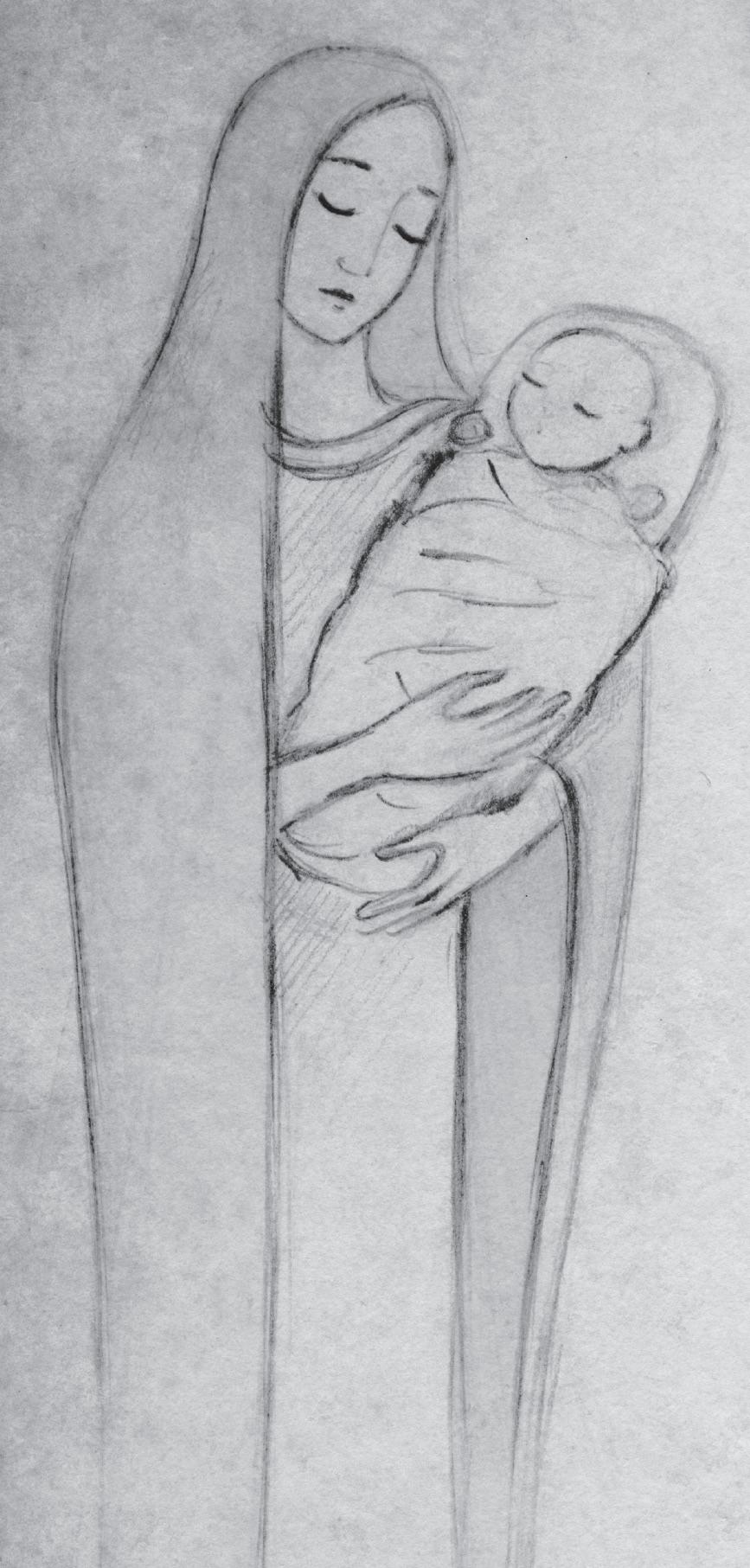

Comfort, comfort ye my people, Speak ye peace, thus saith our God; Comfort those who sit in darkness, Mourning ‘neath their sorrows’ load. Speak ye to Jerusalem Of the peace that waits for them; Tell her that her sins I cover, And her warfare now is over.
Psalms 111, 112, 113, 146, 147
Amos 1.1-5, 13-2.8
1 Thessalonians 5.1-11
Luke 21.5-19
Parents of small children know better than anyone else that Advent is a time of waiting. My youngest daughter has been asking “How many days until Christmas?” since (I believe) sometime in mid-March. Parents spend a good bit of time encouraging their children to wait, and not just with regard to Christmas: “Don’t eat that now—we’re going to have dessert after dinner.” “No, we’re not going to buy that today; your birthday is just next month.” “Please don’t snatch that away; you can have a turn when your brother is finished.” Parents must give these sorts of explanations over and over again, because “waiting” is more complicated than either “yes” or “no.” In fact, “wait” includes both “yes” and “no.” It means: yes, you will have what you need, but no, not on that timetable; yes you will have what you need, but no, not on your terms; yes, you will have what you need, but no, not by those means.
When we think about this time of waiting—the advent of our Lord— we usually focus on the “yes:” the arrival, the answer, the fulfillment of ancient hopes. It is right that we should do so. Nevertheless, we should not pass too quickly over the “no” included in this time of waiting. Psalm 146 tells us: “Do not put your trust in princes, in mortals, who cannot save.” Among those who waited over long centuries for the fulfillment of God’s promises, there were some who believed those promises could be realized through meticulous obedience to the law. Others placed their hope in political connections and strategic alliances. Still others advocated the way of violent revolution. For all these hopes and all this waiting, Jesus’ arrival included both a “yes” and a “no.” Yes, God’s kingdom will come, but no, not by those means; yes God will fulfill God’s promises, but no, not on your terms; yes, there is hope and salvation, but no, not the hope and salvation offered by the kingdoms of this world.
For those of us who celebrate the coming of King Jesus, and who look forward to his return, advent is a time to celebrate God’s “yes” to us in Jesus Christ. But equally, it can be a time for reflection, and for saying “no” to other loves, other strategies, other ambitions in which we have placed our hope.
Steve Guthrie Associate Professor, School of Religion
Monday, November 30
Psalms 1, 2, 3, 4, 7
Amos 2.6-16
2 Peter 1.1-11
Matthew 21.1-11
Over the past year, while stumbling through several difficult transitions, I was blessed to have friends and family walk with me every step of the way. Throughout those transitions, I was rude, disengaged, selfish and often put my own sorrows above those of anyone else. Thankfully, my friends and family continually offered me the priceless gift of grace without asking for anything in return.
As we prepare for the coming of Christ, I am reminded that the abundant grace we receive has come in the form of a little baby. The Psalms sing praises of a God who delivers us from enemies, condemns the wicked and brings happiness to those who find comfort in him. Matthew writes that our Lord came to his people “humble, and mounted on a donkey.” Our God put aside his wisdom and strength to enter the world in the humbling form of a helpless child. Even when all of Jerusalem knew of his divinity, he still chose to embrace humility. The same God who destroys those who speak lies and protects the righteous chose to lie on hay in a manger and travel the region by donkey.
While navigating my last few months at Belmont, I have been asked to reflect upon the three years that brought me to this place. I see an array of relationships that taught me to appreciate who I am becoming, that taught me to love more fully, and that taught me to trust in this present moment. Most importantly, however, I see a line of relationships that have taught me grace: professors who willingly extended a deadline, friends who offered forgiveness, and family who never stopped loving me. I have been forever humbled by their graciousness.
In every instance, I did not deserve this grace, but therein lies its beauty. Grace is “a virtue coming from God,” for that is the only place we can find the origin of such raw beauty. As humans, we have been given the task of creating, with God, a community full of grace. In recent weeks I have felt a strong calling to do one simple thing— offer grace in return. Our Lord humbled himself and offered grace to all of humanity. I too then, can humble myself and offer grace to those in my immediate community. It is quite a simple request; after all, it first came in the form of a little child born into a manger.
Meghan Gwaltney Senior, Religion and the Arts and German Major
Psalms 5, 6, 10, 11
Amos 3.1-11
2 Peter 1.12-21
Matthew 21.12-22
“For we did not follow cleverly devised myths when we made known to you the power and the coming of our Lord Jesus Christ … For he received honor and glory from God the Father when that voice was conveyed to him by the Majestic Glory, saying, ‘This is my Son, my Beloved, in whom I am well pleased’” (2 Peter 1.16-7).
In a clever but troubling parable Soren Kierkegaard tells the story about a fire that broke out backstage at a theater. The clown ran out to inform the public of the fire. The audience thought it was a jest and applauded. No one took the clown seriously.
Our Advent reading for today speaks about the coming of Jesus and the experience of the Apostles who were eyewitnesses of his majesty. They saw in him something that compelled them. They heard in his words something that transformed them. Unlike the people in Kierkegaard’s parable, the Apostles took seriously the One they saw.
I think one of the subtle dangers of our cultural celebration of Christmas is that we might not take Christ seriously during this season of the year. We see the trappings of Christmas with happy faces, wonderful food, and stirring music. It is easy to find cheer in all of this, much like the audience in the parable found cheer in the clown. And in the process of finding cheer we run the risk of trivializing the coming of Christ.
Our Advent reading certainly does not tell us not to be cheerful at Christmas, but rather it reminds us of the majesty and glory of Christ. The text is an encouragement to take seriously the voice from God that says, “This is my Son in whom I am well pleased.”
Perhaps in our reflection today we can ponder what Karl Barth once described as that powerful Word that has seized our hearts and will not let us go.
Steve Simpler Professor, School of Religion
Psalms 12, 13, 14, 119.1-24
Amos 3.12-4.5
2 Peter 3.1-10
Matthew 21.23-32
Jesus did not make God love us more by coming into the world. In the best-known New Testament passage, we hear that “God so loved the world that he sent his only begotten Son . . . .” The coming of Christ was a result of God’s love, not a cause of it. Neither did Jesus bring a radically new morality into the world. He sharpened and refined teachings on greed, sexual immorality and injustice, but this was a deepening of existing truths, not the creation of new ones.
What is it that the advent of Christ has given us that we did not have before? The coming of Jesus makes it possible for us to love God in a way that was both unthinkable and literally impossible before “the Word became flesh and lived among us.” The old Monty Python sketch captures the old dispensation in irreverent, liturgical fashion: “O Lord . . . You are so big . . . So absolutely huge. Gosh, we’re all really impressed down here, I can tell You.” But with Christ’s advent, now and only now can the Magi kneel before him, Mary sit at his feet, the woman caught in adultery hear forgiveness from his lips, and Thomas see the wounds in his hands, feet and side and fall before him saying, “My Lord and my God!”
Of course, God’s people have been called all along to love the Lord our God with all our heart, soul, and strength, even before Christ. But the advent of Jesus literally brought God down to size. As Charles Wesley put it, “Our God contracted to a span/ Incomprehensibly made Man.” It is this change that allows us to see God not as above all human suffering, but as a fellow sufferer. God no longer forgives by fiat, but became so utterly approachable that he is mockingly called, “the friend of sinners.” Jesus himself said, “Truly I tell you, the tax collectors and the prostitutes are entering the kingdom of God ahead of you” (Matthew 21.31). The requirement was simple and all-encompassing: “repent and believe.” Since no one knows the pain of sin like a sinner, they repented. Since no one is hungrier for the good news of forgiveness than someone who knows they are dead wrong in the way they are living, they believed.
This Advent, we can fall in love with Jesus again—just like the prostitutes and tax collectors—if only we will admit we need him as much as they do.
Todd Lake Vice President, Spiritual Development
Psalms 18.1-20, 18.21-50
Amos 4.6-13
2 Peter 3.11-18
Matthew 21.33-46
Along with the joy of the Advent season is the anticipation of a new year. It is not a mere happenstance that the coming of the birth of Jesus correlates with the coming of new calendar time. One coming undergirds the other coming. The presentation of Jesus into the world helps to put into perspective and order what will be our presence in the world. While this time of year calls us to reflect on why Jesus came to dwell among us, this season also compels us to reconsider how we are to live with and among each other.
2 Peter 3.13-14 tells us that “we wait for new heavens and a new earth . . . while . . . waiting for these things, strive to be found by him at peace, without spot or blemish . . . .” Whereas the text itself alludes to the parousia or the second coming of Jesus Christ, the concept of anticipation of the new and next is nonetheless appropriate. The text declares that we wait for that which is novel, for that which is not yet. Thus the writer informs us of the object of our waiting. We do not cast our lots on the past, the former or that which is already. Instead we look forward to what is to happen, for that which is on the horizon.
The text in 2 Peter not only highlights what to wait for, but it compels us to examine how we wait. It challenges the reader not only to wait, but to strive or work while waiting. Waiting is not passive inactivity but active engagement. Working joins with waiting in that working reminds us that we have our part to do, while the waiting reminds us of God’s promise to humankind.
Yet the author pushes us even further in that in our active waiting, we work so that peace prevails. We work so that we do not dishonor or discredit ourselves. During this time of year people work overtime to get more money to buy more gifts, or we work more to have more to pay on our credit cards or towards other bills. However, this passage challenges us to work for something that is not tangible or material.
This season of Christ’s coming can sometimes get smothered by all of our “comings and goings.” May we take a few moments to strive for inward peace. May we take a few minutes to work for world peace so that when Christ returns, we may “be found by him at peace.”
Stephanie Buckhanon Crowder, Assistant Professor, School of Religion
Psalm 16, 17, 22
Amos 5.1-17
Jude 1-16
Matthew 22.1-14
Hurt and pain surrounds us at all times. This world is consumed with pain. There are those who are homeless, those who have incurable diseases, and those who have lost loved ones. We look around at this home we call Earth and see that it, too, is hurting. Animals and plants are dying off, the climate is slowly heating up, our natural resources are being depleted, and it is evident that we are suffering. In this hour of pain we cry, “Why have you forsaken me?”
Why must I struggle? Why must I see pain? Why must this world cry out in anguish, an anguish, more often than not, we have helped cause. What do we do when we look at society and the world around us and see that many of the problems that we have caused we don’t have the power to fix? What happens when we have made our society our god, and the things that it produces our sacrifice? At a time when corruption seems to be increasing, God calls us back to him. “Come back to me and live,” He tells us. At a time when we feel God is becoming further and further away, God invites us to a wedding feast to be close to him.
Advent helps us remember Christ’s coming, and with his coming came hope. This hope holds in his hand the power of love. The hope that came into the world is still here because his spirit lives inside each and every one of his children. When we look at the pain and hurt that surrounds us, we should not look at it with hopelessness because the hope that came into the world still lives inside of us and has given us the power of love: a power that can begin to comfort the hurting.
When we look at the destruction that often times we have had our hand in, we should not look at it in hopelessness because the Hope that came into the world still lives inside of us and has given us the power of love: a power that can reconcile and reconstruct. Although judgment is coming, Hope gives us a chance to come back to our first love, and to one day receive peace from our suffering.
Terrell Crudup Senior, Religion and the Arts Major
Psalms 20, 21.1-7, 110.1-7, 116, 117
Amos 5.18-27
Jude 17-25
Matthew 22.15-22
Have you ever been caught doing something you shouldn’t, thinking it was necessary for some reason? In the process of getting out of the scrape, did you twist appearances? Did you flatter the one who caught you? Did you turn your guilt back on to them? I remember the time in sixth grade that I thought I had to cheat and I got caught. Before I received my punishment, I reminded my mother of how much she loves me, and then told her that I was forced to cheat to please her. I think my goal was to get her to say something she’d regret. The regret was mine.
We find the same kind of posturing in today’s gospel reading from Matthew 22.
In the story commonly titled “The Question about Paying Taxes,” the Jewish leaders—the Herodians—and some of the Pharisees’ disciples try to twist Jesus into a trap, and they begin with, you’ve got it, flattery. They ask him about paying taxes to the Roman Emperor, which they’ve unhappily done for generations, hoping he would answer with a simple ‘yes’ or ‘no.’ Either way, he’d be finished, for a ‘yes’ would be treason against God and a ‘no’ would be treason against Caesar.
One of the first things we notice in this story is that it is the Herodians doing the trapping. This is no small thing, since Herod Antipas was Jewish and a ruthless puppet ruler of Rome. The Herodians strategically divided their loyalties for political security, and the Jews got the worst of it. It seems that the Jewish leaders flatter Jesus because they are aware of this tension.
Second, we notice that Jesus does not carry the coin, but it emerges from the pockets of the Jewish leaders. Stanley Hauerwas points out that “Jesus’s answer that the things of God are to be given to God and not to the emperor is a reminder to those who produced the coin that the very possession of the coin makes them idolaters.”
That’s a pretty harsh word, idolaters. Yet, could it be that at Advent we are to remember, or reenact, Christ’s coming so that we too can be “caught in the act” of idolatry? Come, Jesus, and once again remind your church that living with the demands of what we believe to be “political necessity” is, at times, neither easy nor necessary. Let there be peace on Earth!
Andy Watts Assistant Professor, School of Religion

Psalms 114, 115, 148, 149, 150
Amos 6.1-14
2 Thessalonians 1.5-12
Luke 1.57-68
For many of us, the excitement of this season is dulled by everlooming term paper deadlines and final exams. Many of us likely consider the month of December a dreaded time of year, longing only to make it out unscathed. We devote so much of our time and attention to activities, people, and school, and many of us find that we continue to become busier and busier. In the midst of these pressures, we may find that we have been robbed of joy. What a disheartening realization!
In reading Psalms 148, 149, and 150, I am reminded of something much bigger than myself and my studies. I am reminded that life does, in fact, exist outside of final exam preparations and giftbuying. I am, we are, a part of a glorious, majestic world that is longing to commune with us in this elating time of year.
Read the enthusiasm and the unstoppable passion of the Psalmist. He exclaims his exaltations; he is not held back or reserved: “Let everything that breathes praise the Lord!” (Psalm 150.6) Oh, how lovely it would be to drop our books and join in the praise of God’s creation. There is such rejuvenation and vivification in interacting with the endless beauty of the world in which we live.
The pressures of school can become numbing, but Christ offers us release. The season of Advent is a season of celebration in the coming of Christ, in which we are offered freedom from those things that tie us down. But we must make an effort to focus our attentions on the sacredness of Christ’s coming. In the bustle of everyday life, we must commit ourselves to partaking in the hope and joy of the Lord.
Do not let this Advent season pass by without excitement filling your heart. Enjoy the beauty of the world God has given us. Find a quiet place to breathe and think, away from the fast pace of our technological world. Put aside your stresses and burdens and let the hope of Christ fill your mind and your heart in this season. Look through Psalm 148 and find one of God’s creations with whom to worship: perhaps the sun and moon from verse 3, or the mountains and hills from verse 9. Do not allow the busyness of December to take away from the joy of Advent. Let us all join together to “Praise him according to his surpassing greatness!” Blessings to you all!
Becca Stone Junior, Christian Ethics Major
Psalms 9, 15, 25
Amos 7.1-9
Revelation 1.1-8
Matthew 22.23-33
As I prepare to enter the Advent season, I find myself, like the Psalmist, aware of the need, maybe even more so the desire, to remember. Advent then is a time to look forward and look back, to both expect and to remember. When someone asks me, or asks you, to think about Christmas, what is the first thing that comes to mind? For me it is most often associated with a memory, some deeply fulfilling and some difficult.
In Psalm 25, the writer is asking with a great sense of confidence and expectation that God be guide and teacher, Savior and hope, mercy and love—all aspects of living toward—expecting what is coming. And yet, in nearly the same breath he is asking God to remember, “Remember, O LORD, your great mercy and love, for they are from old” (v. 6). What I hear the Psalmist saying, in hope and expectation, is that God will remain, and continue as he remembers Him, steadfast and true, reliable, merciful and loving.
In light of the theme of this year’s Advent Devotions, Comfort, Comfort Ye My People, the Psalmist, like myself, is looking for God to remember not those things which mark his path to this point, the “sins of my youth and my rebellious ways” (v. 7). In the words of the old hymn from which this year’s theme is derived, I desire God to “comfort those who sit in darkness, Mourning ‘neath their sorrows’ load,” because, I believe, this includes me, too!
I know deep down, in the memory of who I am, and of who I know God to be, there is a sense of trust that carries me even as I bear the “sorrows’ load” that, “those who know your name will trust in you, for you, LORD, have never forsaken those who seek you” (Ps. 9.10). This is what I want to remember! This is what I long for and hope for—what I expect—in the coming: the Advent of Christ! The One who remembers, has not, and will not, forsake those like me who seek Him, and in His mercy He will “guide me . . . and teach me, for you are God my Savior, and my hope is in you all day long.”
Come long expected One!
Dane Anthony Adjunct Professor, School of Religion
Psalms 26, 28, 36, 39
Amos 7.10-17
Revelation 1.9-16
Matthew 22.34-46
When one thinks on Jesus Christ and his coming, no words can better describe than the Bible, the Word of God. Many sermons, teachings, and books have come and gone, but “the word liveth and abideth forever” (1 Peter 1.23b). None of my words can adorn or embellish the greatness of this reality, but they merely point to and show its radiant beauty. It has been the topic of conversation, books, and thought for centuries and millennia.
The biblical record speaks of this man who came from Galilee named Jesus Christ. It may have seemed in the world’s eyes that he was a man quite common. Yet, he was one of the most influential individuals in the history of humanity! The Scriptures say that he spoke with authority (Matthew 7.29) and yet he was not part of some of the top denominations of his day.
“But when the Pharisees heard that he muzzled the Sadducees, they were gathered together. Then one of them, a lawyer, asked him a question, tempting him, and saying, ‘Master, which is the great commandment in the law? Jesus said unto him, you shall love the Lord your God with all your heart, and with all your soul, and with all your mind. This is the first and great commandment. And the second is like unto it, you shall love your neighbor as yourself. On these two commandments hang all the law and the prophets’” (Matthew 22:34-40).
His words must have been like lighting and shook the Pharisees right down to their very core! Here was Jesus Christ being put on the spot by top scholars of his time. These men would have known the Old Testament like the back of their hands.
At this season, let us not forget everything that has been done for us. With thankfulness and great joy let us give and receive. We need not have any worry or anxiety, expecting what may come. For Jesus Christ said, “Be of good courage; I have conquered the world” (John 16.33).
Nicholas Prien Senior, Biblical Languages Major
Psalms 38, 119.25-48
Amos 8.1-14
Revelation 1.17-2.7
Matthew 23.1-12
Her younger sister told me that when she was a girl, she would ride her horse bareback and full speed into the barn, her braids flying behind her in the air. Her sister said this was always a thrilling and frightening sight for her to behold. My grandmother, the young girl on the horse, showed no fear. At that young age, she simply took joy in being alive. She was born before women were granted the right to vote and has now lived almost a century. She has been on my mind a great deal these past weeks because I do not know if she will live to see this Advent season.
The most tragic thing that ever happened to my grandmother occurred when my grandfather was killed in a tractor accident; he was a healthy, middle-aged man. She met him when she was just seven years of age, and they literally spent their lives together. His death made her crazy with grief for awhile, but she never gave up on the joy that is part of life. When I speak with her now, I often think of the image of her as the little girl full of life, riding her horse. That life is ebbing away and yet she still has joy. It is no longer the joy of simply being alive, for I think life has become more of a burden to her. Her joy is found in the notion that she has lived a life, filled with both joy and tragedy.
Each of us lives this kind of life. We experience moments of sheer joy simply because we have been given a life, but chaos lurks about the edges of our existence and sometimes it crashes in upon us. The Psalmist wrote, “Let thy steadfast love come to me, O Lord, thy salvation according to thy promise” (Psalm 119.41). This sustains us through tragedies, and this makes us grateful during moments of bliss. So it has been with my grandmother. At Advent, we reflect on the promise of our salvation that is realized in the Incarnation, when Word became flesh. The Psalmist calls us to take comfort in the promise of salvation, and for Christians, this promise is fulfilled through Jesus the Christ. Take comfort, no matter your circumstances; Immanuel has come and God is with us. That is the promise; God is with us and will always be with us.
Sally Holt, Associate Professor, School of Religion
Psalms 37.1-18, 37.19-42
Amos 9.1-10
Revelation 2.8-17
Matthew 23.13-26
With two weeks until Christmas we find ourselves right in the middle of our trek to seek after our long awaited ‘comfort.’ This word ‘comfort’ is such a loaded word because there are so many things in life that carry the potential to comfort me: good food, eggnog, loving family, expensive gifts, shopping done early, and of course, watching SportsCenter announcers talk about the Tennessee Titans.
But do you ever wonder why we seek comfort? I guess it is because we don’t have it.
Our passage today invites us to start thinking about how to cope with such feelings of uneasiness. It says “to not fret . . . trust in the LORD . . . take delight in him . . . commit your ways to him . . . and he will act” (Psalm 37.1-5). In other words, God is the source of our comfort!
The psalmist is pleading to God to bring justice to bear on the wicked. The Israelites are trapped in a war in which they are desperately calling on God to act on their behalf, but the biblical story shows that Jerusalem eventually gets sacked, and the psalmist and his people are thrown out of Judah.
There is no doubt the Israelites are asking, “What is God doing for us?”
If we are honest with ourselves, then we would admit to being a lot like this psalmist. What we seek is not comfort from within but comfort from what we see in the lives of other people. This comfort comes in the form of retribution.
What inspires me, however, is that in the midst of chaos the psalmist finds the inner peace to work through these feelings of retribution. He finds a better way to think about how to live. He says to refrain from anger, fret, and wickedness for righteousness comes to the meek and prosperity comes to those who find delight.
True comfort is not found in retribution but rather in an inner peace, for “The LORD knows the days of the blameless, and their heritage will abide forever” (Psalm 37.18). My prayer is this: whenever we find ourselves in the midst of chaos, we trust that in Christ we will abide forever. This hopeful prayer is why we celebrate advent. It is why we anticipate the coming of our King.
Barrett Owen Alumnus, School of Religion
Psalms 31, 35
Haggai 1.1-15
Revelation 2.18-29
Matthew 23.27-39
In an early prophecy, Jeremiah proclaimed to the Jews that their exile would last 70 years. Today’s reading is from another prophet, Haggai, who says, “Guess What?! Now is the time to rebuild the temple in Jerusalem!” Understandably confused and dismayed by these conflicting prophecies, the Jews respond, “Not now, we’re busy with fixing up our own houses!” much the way we might say, “We’re busy untangling the Christmas tree lights!” These Jews, the righteous remnant, were all that was left of Israel’s people who returned to their homeland; others had fled to foreign lands and remained there, establishing new dwellings and livelihoods.
The returning exiles were not exactly moving quickly to rebuild God’s temple. Who could blame a people who believed that their faithfulness to God had only brought suffering and driven them from their birthplace? And since coming home, their crops had failed, food and drink no longer satisfied, attempts to go about their lives did not produce results—all because Yahweh was displeased with their lack of attention to the ruined temple. It did not seem to occur to the Jews that by restoring God’s house first, their own houses would fall into order and their labor would become fruitful again. Haggai’s urgent words to stir up the Jews fell, at least initially, on deaf ears. When the prophecy was truly heard by the high priest and leaders, the people sprang to action, and they received reassurance through Haggai: The Lord is with you.
Is this not an illustration of how we often approach Advent? Decorating and cleaning up our own homes for family and guests, buying gifts, and preparing food seem to be our priorities, with the requisite pre-Christmas cramming before December 24 bringing anticipation and anxiety into our lives. Maybe the little let-down many of us experience after the presents are opened and our bellies filled with rich food is a result of neglecting the temple of the Most High God: our hearts. Just like the Jews, when we refocus and prepare the way for our Lord’s arrival—any day of the year—we will find the peace of knowing that God is with us, too.
Bonnie Mixon McCrickard Senior, Ministry Major
Psalms 32, 42, 43
Haggai 2.1-9
Revelation 3.1-6
Matthew 24.1-14
“Jesus left the Temple he said ‘In truth I tell you, not a single stone here will be left on another’ the disciples asked him ‘what sign will there be of your coming and the end of the world?’” (Matt. 24:1-3)
Open it. Go ahead, it won’t bite. Well maybe a little.
More a nip, like. A tingle. It’s pleasurable, really.
You see, it keeps on opening. You may fall in.
It’s not like the end of the world
Just the world as you think you know it.
Rita Dove
Jesus is walking away from the Temple, once his spiritual home. Jesus has come to see the Temple as too nationalistic and narrow, no longer big enough to contain his universal vision of God in all people and all people in God.
Jesus speaks of the Temple coming to an end “everything will be pulled down.” His disciples cannot imagine a world without the Temple and their minds race ahead to the end of all things “when is this going to happen . . . and of the end of the world.”
All of us construct a world, including a religious world: church, denomination, doctrine, and spiritual practices. Our worlds are airtight, giving us a sense of permanence and security. Matthew uses another word, parousia, meaning “arrival” or “presence” in relation to Jesus and the future. Usually applied to the Second Coming, parousia can also point to anytime the Risen Christ is arriving to be present to us.
Here is the irony: when the Risen Christ shows up, He usually crashes into our air-tight worlds, bringing something to an end that no longer fits or carries meaning or enlivens us. “Not a single stone will be left on another.” This shaking of our foundations often throws us upon God in a naked trust because our old world is no longer there: health, job, relationships, and certitudes.
It is like the “arrival” or “presence” of the Christ Child—so small, vulnerable, and unconvincing. It takes a huge leap of faith for us to see that is exactly the shape of God’s gracious interventions in our lives so small, vulnerable, and unconvincing.
Yet that graciousness holds us for a lifetime.
Ben Curtis Professor, School of Religion
Yea, her sins our God will pardon, Blotting out each dark misdeed; All that well deserved His anger He will no more see nor heed. She has suffered many a day, Now her griefs have passed away, God will change her pining sadness Into ever springing gladness.
Psalms 63.1-8, 98, 103
Amos 9.11-15
2 Thessalonians 2.1-3, 13-17
John 5.30-47
How many times are we asked, “Are you ready for Christmas?” What people are really asking is, “Is your shopping done? Are your presents wrapped? Is your tree decorated?” Does anyone ever ask us, “Are you ready for Christ’s coming?” And if someone would ask, how would we answer? What are we doing during this season to get ready?
In Psalm 98, we are exhorted to “Make a joyful noise to the Lord . . . let the hills sing together for joy at the presence of the Lord, for he is coming to judge the earth . . . .” One of the best parts of the Advent and Christmas seasons, for me, is the music. I grew up in a family for whom music is an essential part of every special event or occasion. As I grew into adulthood, and my relationship with Jesus Christ deepened, the music of the church became increasingly important to me, and I learned to worship through it. Now, I cannot imagine celebrating Christ’s birth, His presence with us, or His return to us without music.
One of my family’s holiday traditions is a get-together with longtime friends for a sing-along of traditional Christmas music. Granted, we sing some of the popular secular songs, and have great fun as my brother Tom regales us with a dramatic rendition of “The Little Boy That Santa Claus Forgot,” but we always begin with the hymnal, and it is the Advent and Christmas hymns that speak to my heart. Wouldn’t it be nice if, in the hustle and bustle of Christmas preparations that seem to begin earlier each year, we were reminded by the music blaring at us from every direction to prepare our hearts?
Some of us, of a certain age, may remember a song from our childhood Sunday School days
Into my heart, into my heart, Come into my heart, Lord Jesus. Come in today, come in to stay, Come into my heart, Lord Jesus.
While this is not a traditional Christmas or Advent carol, it expresses the hope of the Advent season, and the hope for Christ’s presence in each of our lives. Why not let this be our Advent anthem of preparation, this year and every year?
Judy Williams Reference Librarian
Psalms 41, 44, 52
Zechariah 1.7-17
Revelation 3.7-13
Matthew 24.15-31
During the turbulent times in our lives, we can often feel as though peace has left us. The circumstances of life seem to intrude to the point that we feel pulled in a hundred different directions. For me, the most appealing solution at those times is to back away, pulling myself out of those situations as best I can, even when I am needed. Basically, I tend to ignore my problems and hope they go away.
Surely this was a tempting prospect for the ancient Israelites as well. The golden age of Israel, in the days of David and Solomon, was long past. The citizens of Israel came under the rule of a succession of vast empires, and the meaning of God’s covenant with Israel seemed difficult to discern in such circumstances. Yet, though some surely fell away, deciding that God’s love for Israel could no longer be reconciled with the tragic state of the world, others continued to seek the elusive peace of God’s covenant.
Psalms provided a way for troubled spiritual seekers to speak to God, but the psalmists choose the way of peace. Psalm 41.4 states, “As for me, I said, ‘O LORD, be gracious to me; heal me, for I have sinned against you.’” The psalmist finds peace by trusting God, hoping for God’s healing. This healing is a healing for the psalmist’s own sins, rather than simply a request to solve all the psalmist’s difficulties in the external world. The psalm shows that the source of peace is trust in God, not the absence of difficulties.
We can remember this as we reflect upon the coming of Jesus. In Jesus, God did not solve all the problems of the world, but God did give us the opportunity to find healing. The plea of Psalm 41 was answered, and our sins were forgiven. We can find peace within ourselves through trust in God, even as we hope and act for peace in the world. We must continue to depend upon God, even when God’s help seems far off, echoing the words of Psalm 44.26, “Rise up, come to our help. Redeem us for the sake of your steadfast love.”
Eric Bean Senior, Religious Studies Major
Psalms 45, 47, 48
Zechariah 2.1-13
Revelation 3.14-22
Matthew 24.32-44
Excitement. Anticipation. Expectancy. Gifts, purchased, wrapped, given, received. Bright lights, favorite foods, families gathering. Hearts opened, generosity cultivated.
Classical music soaring, favored carols singing. Floods, kidnapping, home invasions . . . halt the holiday soundtrack.
When I think of Christmas, many favorite things come to mind and anticipation settles in on me. When I think of Advent, however, there is as much unsettling as there is expectancy. Our study of texts gathered to move us toward preparedness for Jesus has become an important turning point in the year’s work of spiritual rhythms and practices. Each year, the texts which greet us as we read scripture toward Christmas prod us to look again, think again, let go again.
Advent is the season of anticipating the coming of the Lord. This is more than the celebration of Jesus’ birth. This is the acknowledgement that God has been coming to the whole world and that God’s coming always surprises and rearranges. At Christmas we remember something that happened thousands of years ago. In Advent we prepare for the God who comes to us, and we might miss it if we concentrate only on trying to decipher first and second comings.
Today’s verses are good examples of this unsettling effect of Advent. None of them is easy, and none of them brings comfort, certainly not at first glance. But look a second time at Matthew 24.32-44. There is a lesson to be learned from pondering the fig tree. Tender branches become a signal of the growing season. As there are signs of the seasons changing, there are signs for when God comes to us. So being the good students we are, we get our pencils ready to take notes on what those signs are and then Matthew tells us that only God knows the when and the where. He gives us some word pictures. Remember the flood? In Noah’s time people were living their lives knowing nothing about what was coming. Remember the surprise of people being suddenly taken from us? And the home invasion? Verse 43 says if the homeowner had known when the thief was coming, he would have stayed awake and not let the robbery happen.
Pencils down. Eyes up for astonishment.
The passage gives us two certainties: the details of the Lord’s advent are uncertain, and those who are faithful live their lives with expectancy, anticipation, with an eye to the tender branches of hope.
Judy Skeen Professor, School of Religion
Psalms 49, 119.49-72
Zechariah 3.1-10
Revelation 4.1-8
Matthew 24.45-51
Peace. A word that speaks of hope, contentment, joy, fullness, resolution, redemption, and grace. Peace is something we all desireinternally, as much as in the world around us. Peace, too often, is one of those things we don’t think about until we find ourselves so very far away from it
My summer lacked peace in a lot of ways. For ten weeks my family and I were “homeless.” No, we were never without a place to stay at night, but we were without a place of our own. We had sold our home, but the home we were supposed to purchase fell through at the last minute. It was nothing we could have seen coming or been prepared to deal with fully. For ten weeks we lived out of suitcases, in the homes of friends and family, and experienced the gift of hospitality through the kindness of all who opened their homes and lives to us. In the midst of chaos, we experienced the gift of peace through the generosity of others.
This time served as a good reminder to me that there are some things that only God can do! I too often forget that. I too often believe that if I just try hard enough, or work long enough, or think smart enough, that I’ll be able to “crack the code” and life will suddenly become easy . . . (mostly) without issue . . . and (almost) always go my way.
The Psalmist knows better though:
Really! There’s no such thing as self-rescue, pulling yourself up by your bootstraps. The cost of rescue is beyond our means, And even then it doesn’t guarantee Life forever, or insurance against the Black Hole (Psalm 49.7-9, The Message).
This summer I experienced the loving provision of Jehovah Jireh–God our Provider.
In the midst of feeling adrift in a sea of chaos there was a strange peace that was unlike anything I could have humanly manufactured. There, in the midst of my/our pain and struggle, God provided a safe, peace-filled place for us to be us as we waited for the storm around us to be still.
I’m so thankful this season for God’s desire to provide us the peace we so desperately crave in the gift of knowing Jesus as our Savior, Provider and Lord!
Peace to you as you seek Him and know Him this advent season!
Guy Chmieleski University Minister
Psalms 33, 50
Zechariah 4.1-14
Revelation 4.9-5.5
Matthew 25.1-13
The very mysterious (to me) book of Revelation became a revelation to me when I had the opportunity to view the remarkable set of medieval tapestries that hang in the castle in Angers, France. In the late 14th century, the weavers of this beautiful Loire valley town designed and wove an exceptional set of tapestries depicting the images, characters, symbols, and events of the Book of Revelation. Striking red, blue, and gold wings spread from an angel; a Jezebel looks in a mirror, details of her face etched by the wool threads; seven-headed beasts rise from a swirling sea; the “new Jerusalem” floats as an elegant castle on deep blue; the writer, St. John, appears on the side of each scene, recording his vision.
This set of tapestries is one of the few surviving sets focused on a single theme. And survive they did—hidden by the citizens of Angers during the French Revolution when the revolutionaries swept through village churches destroying images and artworks; they were bedspreads and curtains during the 19th century. Slowly, the tapestries were collected and restored to tell their story in the castle in Angers. They are beautiful realizations of St. John’s vision of the Apocalypse.
But what a tough vision to decipher! Who are the twentyfour elders? What is the scroll with seven seals? Why so many monstrous living creatures?
When we read the Christmas story, it seems so plain and simple by comparison: Joseph and Mary seeking a place for the night, Mary giving birth in a stable, shepherds coming to see the newborn child. We know that it is not simple, but deeply mysterious—a virgin begetting a child, a glistening star, worshipping wise men, a world changed forever. Often, we want a world of clarity, of straightforward rules and meaning, with a path laid out for us to walk. We may find comfort in the parable of the wise and foolish maidens: just remember the oil for our lamps and all will be well. But we know so often we face mysteries in ourselves, and mysteries in our world that we cannot fully understand. We know we are seeing through a glass darkly.
When life seems indecipherable, when no path seems clear, may we accept the need to wait for revelation, to wait for the light.
“Let thy steadfast love, O Lord, be upon us, even as we hope in thee” (Psalm 33.22).
Marcia McDonald Provost
Psalms 40, 51, 54
Zechariah 7.8-8.8
Revelation 5.6-14
Matthew 25.14-30
Matthew ends his account of the ministry and teaching of Jesus with a series of parables and warnings that call believers to active waiting as they prepare for the coming of the Son of Man. Each element of the sequence is a challenge to believers for a vigorous engagement in anticipation of God’s future. Today’s makes that truth vivid.
The parable of the talents, like all the parables, is easy to misunderstand. The English word “talent” actually is based on a Greek word that originally designated a weight and came to refer to an extravagant amount of money. Some have estimated the value of a talent as the pay for an ordinary worker over the course of fifteen years. Hence, five talents could amount to a working person’s wages over the course of a lifetime. Our ordinary use of this word to refer to the gifts, skills or abilities a person exercises fails to catch the extraordinary dimension of what was given the three slaves by their master.
The focus in this parable falls on the slave who received one talent and his failure to make appropriate use of the gift he had received. There is a sense in which he represents what believers should not do as they await the return of their master. One of the first things noted about his response was fear. With words reminiscent of the Genesis creation account, he explains failure to act with the words, “I was afraid and went and hid your talent . . . .” (25.25). The tragedy deepens as it becomes clear that his fear is based on his absolute misunderstanding of the character of his master.
His description of his master is not supported by the words or actions of the other two servants. Their words do not express any sense of fear of their master because he is unfair or mean. In addition, the actions of the master suggest generosity, trust, and opportunity as hallmarks of his character.
As we struggle with the experience of waiting during this advent season, we can permit this servant to teach us about some attitudes to be avoided. As believers, we need not experience this season with a sense of fear. While we may have questions and uncertainties, if we wait with confidence and trust, he will come to us in the ways that will call us forward and meet our needs in these days and for all time.
Bob Byrd Professor, School of Religion
Psalms 55, 138, 139.1-17
Zechariah 8.9-17
Revelation 6.1-17
Matthew 25.31-46
Bill isn’t one for organized religion, but he is all about trying to do what’s right. So, one year after his annual holiday trip to the superstore to fill his cart with toys, clothes, and a winter coat for his Angel Tree adoptee, he decided to stop by to see his elderly mother, Jayne. Jayne’s house was filled with holiday decorations—trees, figurines, and greenery. When Bill entered the house, his mom asked him what brought him to the neighborhood on this Sunday afternoon.
After Bill explained that he had sponsored a child for the holidays, his mother’s response was full of scorn and a bit of confusion: “Why would you want to spend a bunch of money on somebody you don’t even know?” she asked.
Bill thought for a moment and asked, “How was church this morning, Mom?” The irony was lost on his mother, as she began to tell him about the morning service.
I’m afraid a lot of us are like Bill’s mother. Even though we might not come right out and say, “Why spend a bunch of money on a stranger?” our actions reflect that belief. The bright lights of the holidays bring joy, but they can also blind us to the darkness that exists in our world.
Although we also hear charitable messages this time of year, today’s Gospel message is difficult to hear through the sounds of cash registers and holiday Muzak. Today’s Gospel reading is one of the toughest for me, not because it’s hard to understand, but because it is not hard at all. My usual attempts to discount the “tough” parts of the Bible by discussing metaphor or literary approaches are caught short by the simple call to do “for the least of these.”
The challenge this time of year is to see the face of Jesus not just in the figurines of the Nativity set or the holiday cards, but also in the faces of the “least of these” in our own community. To see his face in the recent refugees from Somalia or the Sudan, to see his face in the homeless population that numbers in the thousands in our community, to see his countenance shining not only in our own children’s faces but in all children.
We are called to recreate our holiday to-do list in a way that reflects his message, not society’s message: to feed, to clothe, to visit and to welcome.
We are called to fill our carts for strangers, and to see that in doing so, we serve the one we call our Savior.
Kristine LaLonde Assistant Professor, Honors Program
Make ye straight what long was crooked, Make the rougher places plain; Let your hearts be true and humble, As befits his holy reign. For the glory of the Lord Now o’er earth is shed abroad; And all flesh shall see the token That His word is never broken. Amen.
Psalms 66, 67, 116, 117
1 Samuel 2.1b-10
Titus 2.1-10
Luke 1.26-38
Winter is last in the cycle of seasons. It is the season where nature displays the necessary end of a period before there can be a rebirth. Nature in winter often serves as a metaphorical reminder of death. The leaves have lost their hold on the trees and twirled to the ground in a colorful collage. Flowers have twisted up and flaked away into oblivion. There is a sense of stagnancy, a time of waiting and inaction in nature. The life that once gleefully waved in appreciation towards the heavens lies dormant somewhere in the make-up of a naked tree that shivers in the cold until springtime.
While nature can serve as a reminder of our own physical mortality, we see the need for life in our spirits as well. How fitting that in this time we celebrate the birth of Christ and the introduction of life in the most unlikely of places (a manger in Bethlehem) and from the most unlikely of people (a young virgin). How beautiful that in the midst of humanity’s spiritual winter, God loved the world enough to act on its behalf.
We celebrate God’s great love toward us in giving us life, the most abundant life of all which comes through the Word-made-flesh, Jesus. God gives life and gives it with incredible love. In Luke 1.2638 the angel tells Mary that she will be involved in God’s plan to bring life to the world. Because of God’s love we are encouraged to participate in showing life to others. This is evidenced through God choosing to take Mary into a kind of confidence for the plan to redeem the world. Rather than doing it alone, God chose to involve people in writing the story.
This Christmas season, take time to thank God for the incredible gift of life through Jesus. Allow that light to shine so that, in the spirit of the season, you may be a life-giver. Be a blessing and gift to others while echoing the words of the Psalmist in Psalm 66.5 saying, “Come and see what God has done, how awesome his works in man’s behalf!”
Emily Justice Senior, Christian Leadership Major
Monday, December 21
Psalms 72, 111, 113
2 Samuel 7.1-17
Titus 2.11-3.8a
Luke 1.39-48a (48b-56)
The story of David’s interaction with Nathan and, thus, with God in 2 Samuel 2.7-17 can, and perhaps should, be read in two ways. The more obvious way is to read it as a great divine promise to the king about his descendents who will follow him on the throne:
Your house and your kingdom shall endure to eternity before you, Your throne shall be established to eternity (7.16).
The other side of this interaction becomes apparent when we realize how good the deal is for David. It solidifies his position on the throne in Israel, keeps the monarchy in his family after he dies, and excuses him for not building the temple while he builds a palace for himself. There is no way to prove that this story is royal propaganda, but if David did employ propagandists, they could hardly have written anything more self-serving.
Lest the reader become too resentful of David’s power, we have been carefully reminded of his humble beginnings in v. 8:
Now, thus you have said to my servant, to David, “Thus says the LORD of Hosts, ‘I took you from the pasture, from following after the sheep, to be a ruler over my people, over Israel.’”
Rises and falls are the subject of the Song of Mary in Luke 1.46-55:
He has brought down rulers from their thrones He has raised up the humble
Advent calls us to think about great rises and falls, about a reversal of society as we know it. This may not be good news for those of us who are in positions of power, authority, or status. I never cease to be amazed at the things people in power do. Do they think they will not get caught? Do they think people will not care? Does some part of them want to get caught? The regularity with which people who hold great power for long periods of time become corrupt is more than sufficient cause for a regular reshuffling of order in our society.
Might we live into the spirit of advent when we resist the temptations of power and authority, when we give up their benefits, when we lay down our power and authority and refuse to pick them back up? If so, can we also resist the accompanying temptation to make self-serving statements about our behavior?
Mark McEntire Professor, School of Religion
Psalms 80, 146, 147
2 Samuel 7.18-29
Galatians 3.1-14
Luke 1.57-66
We Americans are not communitarian in our worldview. There are many good reasons to guard the dignity, worth, and autonomy of each individual. St. Paul pointedly remarks in Romans 14.5b, “Each one should be fully convinced in his own mind” (NIV). The collective can easily take on a self-justifying life of its own and persons as individuals disappear into a homogenized mass of undifferentiated, de-personalized abstract populations. The language in Scripture is curious in this regard: individuals are indeed blessed as Abraham’s children but it is nations specifically identified as that which will be blessed in Abraham. More specifically, it is All Nations which will be blessed in Abraham. What can the blessing of All Nations mean to us Westerners? Is the blessing of All Nations more than an idiomatic Hebrew hyperbole?
The promise of blessing to All Nations in Abraham is the “gospel in advance,” a foretelling of the entrance of Gentiles into the household of God while remaining distinctively Gentiles. They did not have to become cultural Jews to enjoy “the promise of the Spirit” through Christ Jesus (Galatians 3.14). Those first Gentiles who became Abraham’s children by exercising the same faith he had in the power of God to redeem them were the beginning of the fulfillment of the All Nations promise to Abraham.
My husband, father and I are spending this year in Uganda. It is in the worship of Jesus Christ each Sunday morning with Ugandan believers that the All Nations promise to Abraham is most clearly reinforced to me. We share the Apostles’ or Nicene Creeds. We share many of the hymns. We share the Bible and its teaching. It is without question one faith, one Lord, one baptism, one holy Eucharist Table, one God and Father of us all. We anticipate our Messiah’s first and second advents, we bow together in speechless reverence before that manger cradling the incarnated Lamb of God. But the vastness of what we share in no way obscures the fact that it is Ugandans as Ugandans—distinctive in language, culture, dress, and worship styles—who have joined that roster of All Nations. They have become Abraham’s children and heirs without losing the glory that they are also Uganda’s children and heirs. Those cultural practices which can be redeemed most joyously are adorning the All Nations of God’s family through the ancient blessing of Abraham, father of the faithful.
Ruby Dunlap Associate Professor, School of Nursing Fulbright Scholar, Uganda Christian University, Mukono, Uganda
Psalms 93, 96, 148, 150
Isaiah 61.1-11
Galatians 3.15-22
Luke 1.67-80 or Matthew 1.1-17
The first person in the story line of the Gospel of Luke is a priest named Zechariah. Who? Zechariah. We expect in the Christmas story to hear about Mary, Joseph, the baby Jesus, some shepherds and some wise men (wise men, by the way, only enter into the Gospel of Matthew’s account). Some of us may scratch our heads— “I don’t remember a guy named Zechariah in the story. Oh, wait— that’s the old man in the temple when Jesus was dedicated, right? Yeah, yeah, that is who Zechariah was.” Wrong. That was Simeon. “So who was Zechariah? A priest, you say.” Yes, he was a priest, and he was the father of John the Baptist. All four gospels agree in placing the ministry of Jesus in the context of the ministry of John the Baptist, who, despite what my West Tennessee upbringing insisted, was not the original Primitive or Missionary Baptist. Oh, yes, I heard the Primitive versus Missionary argument about John.
I find it very interesting that Luke begins his “orderly account of the events that have been fulfilled among us” with Zechariah. Zechariah and his wife, Elizabeth, are described as blameless and upright people. I take that to mean that they were God-fearing, salt-of-theearth types that others in the community deeply respected. Yet, they carried great sorrow because they had no children. Yes, the unrelenting biblical theme of infertility finds a place in the nativity story of Luke’s gospel.
Our Gospel reading for today is the Benedictus—Zechariah’s Song. It follows the Magnificat—Mary’s Song. Although Zechariah and Mary were of different gender and they were celebrating the birth of their respective sons, the similarities are greater than the differences. Two human beings were shocked by angelic news that rocked their respective worlds. Their two sons would share a bond in divine calling that was greater than their literal kinship.
Zechariah was literally struck speechless before the birth of his son. Perhaps that’s fitting, because what can words really do to communicate the overflow of the heart. And yet words are all we have. As we express the wonder of this season we throw our fiery darts at the sun, and they come tumbling back to earth. Still, that is something and we continue to sing our songs.
Marty G. Bell Professor, School of Religion
Psalms 45, 46
Isaiah 59.15b-21
Galatians 3.23-4.7
Matthew 1.18- 25
We picture it every year in so many ways. We set up our nativity scenes on coffee tables and mantels; we drive through church parking lots and marvel at actual, live camels and donkeys. We dress our children up and chuckle and smile as they gather in front of our congregations. We image it in the songs we sing. This night, the night that Jesus comes into the world, occupies a specific place in our imaginations - full of the cosmic calm of a still, quiet night, shepherds in awe, a baby in a small manger, in a tiny town, calmed by his mother and cooing with the oxen.
Picture the downtown of a busy city on Christmas Eve. In many ways, we would say, it is the opposite of the real Christmas Eve— people hustling from one place to the next, hurrying home, making last minute preparations. It is the polar opposite of the way we are so used to picturing God’s entry into the world.
Certainly we know to attend to the stillness of God’s presence, to be still and know that God is LORD. We have candlelit services, we hush on this night. We do our best to leave the busyness of our lives behind for one night and attend to the calm beauty of a baby being born on a winter’s night.
The Scriptures, however, remind us that the incarnation, that which we celebrate today and tonight, is not just about the soothing countryside pictured in our nativity sets. “God is in the midst of the city . . . ,” declares the Psalmist, conjuring up the opposite of what we are so used to picturing on this day.
We do well to “be still and remember that God is LORD” on this night. We also do well to remember that tonight we celebrate that moment when God radically breaks into our cities and everything that conjures up for us: our hustle and bustle, our busyness, even our poverty. It is all different, now, and as the Redeemer comes to Zion we will find God’s saving presence all over the place, in the main squares and intersections as well as the back alleys and side streets.
This is not, of course, a call to busyness, or even to the city itself. Rather, it is a reminder as we approach the manger tonight with an astonishment at the wild calm of it all that the incarnation is God’s emergence into the chaos of our lives, and as the prophet says, the Lord comes to Zion to redeem it.
Micah Weedman Director of Outreach, University Ministries
Micah 4.1-5, 5.2-4
1 John 4.7-16
John 3.31-36
The heart and soul of Belmont University left us this fall. When Dr. Herbert C. Gabhart went home to his heavenly reward in September at the age of 95, he had served Belmont as president for more than 23 years and then as chancellor for 26 years. He had an office just down the hall from me and up until a couple of years ago, he would come into his office almost every day to do some work. Whenever we would sit down to talk, he would always ask about my involvement preaching in churches, about the School of Religion, and about the students. The conversations would eventually focus on his love for Belmont and its students.
Dr. Gabhart’s influence upon Belmont is incalculable. He came to a small college of 360 students and over the years laid the foundation upon which the university of 5,400 students today now rests. His enduring legacy extends beyond the buildings he built, the budget he multiplied, and all the new programs he started. He embodied a deep and abiding hope in the future of this university to make the impossible possible through vision, courage, and faith. He challenged us, by his life, to believe that God has a future for this university. This abiding hope lives on among us.
The prophet Micah reminds us of a future God plans when “every man will sit under his own vine and under his own fig tree, and no one will make them afraid” (Micah 4.4). Micah speaks of a time when we no longer train for war and when we have no use for our weapons other than to beat them into plows. It is an imagined time when “we will walk in the name of the LORD our God forever and ever” (v. 5).
Every Advent season reminds us of the steps God took to bring us this future and speaks to God’s desire to be peace to the world and to our lives. It is a time to remind us to live larger lives than we would live on our own. It is a time to be reminded that God has a future in mind for all of humanity and we each play a role in announcing and celebrating that future.
This Christmas Day we know that “He whom God has sent speaks the words of God, for he gives the Spirit without measure” (John 3.34). Our future and the future of this university rests in the hands of the one who holds all time in hand. Christmas represents God’s single declarative statement and promise that God has a future in mind for each of us. May we remember on this Christmas Day that who we are should be defined less by what we do and more by what God has planned to do for all of us in Jesus Christ.
Merry Christmas!
Darrell Gwaltney Dean, School of Religion
Belmont is a student-centered Christian community providing an academically challenging education that empowers men and women of diverse backgrounds to engage and transform the world with disciplined intelligence, compassion, courage and faith.
More than seventy-five undergraduate programs of study
Eight Colleges and Schools include College of Arts and Sciences, College of Business Administration, Gordon E. Inman College of Health Sciences & Nursing, College of Visual & Performing Arts, the Mike Curb College of Entertainment & Music Business, University College, College of Law and School of Religion
Adult degree programs through University College include Liberal Studies Program, Accounting, Business, RN/BSN Nursing Program, Ministry and Public Relations Management
Master’s degree programs in Accounting, Business Administration, Education, Music Education, Sport Administration, English, Music, Nursing and Occupational Therapy
Doctoral programs in Law, Physical Therapy, Occupational Therapy and Pharmacy
Named seventh in the south in its category in the U.S. News & World Report magazine’s annual ranking of America’s Best Colleges and Universities
Member and host site of the Cooperative Center for Study Abroad which allows students to study in England, Ireland, Scotland, Kenya, Ghana and Australia, among others. Exchange programs also exist with Mexico, Italy, Costa Rica, China, Spain, Germany, Russia and France
Belmont University is accredited by the Commission on Colleges of the Southern Association of Colleges and Schools (1866 Southern Lane, Decatur, Georgia 30033-4097; 404-679-4501) to award bachelor’s, master’s, and doctoral degrees. Persons wishing to review documents relating to Belmont’s accreditation may contact the Office of the Provost 615-460-6400.
The School of Religion seeks to be a premier academic community that nurtures a living faith in God, reflects critically on its discipline, develops skills for Christian ministry, and distinguishes itself through its emphases on contemplative spirituality and social justice.
The purpose of the School of Religion is to provide studentcentered, academically challenging religion classes to the diverse student body of Belmont University and to provide a foundation of religious studies for students preparing for congregational ministry and advanced theological studies.
1. To provide all Belmont students with a solid foundation in biblical and theological studies.
2. To teach courses for religion majors and minors in the following areas: biblical languages, biblical studies, religion and society, theological and historical studies, practical studies, seminars and special studies. To offer professional education courses in practical ministry.
3. To offer continuing education opportunities to ministers and laity.
4. To integrate contemplative spirituality and social justice into the curricular and co-curricular program.
Dr. Marty Bell, Church History
Dr. Robert Byrd, Greek & New Testament
Dr. Stephanie Crowder, New Testament
Dr. Ben Curtis, Pastoral Care & Spiritual Formation
Dr. Darrell Gwaltney, Dean
Dr. Steve Guthrie, Theology
Dr. Sally Holt, Christian Ethics
Ms. Debbie Jacobs, Assistant to the Dean
Dr. Mark McEntire, Hebrew & Old Testament
Dr. Steven Simpler, Theology
Dr. Judy Skeen, Biblical Studies & Spiritual Formation
Dr. Andy Watts, Christian Ethics