The Light of the World
March 12th, 2026
May 6th, 2026
Olga M. & Carlos A. Saladrigas Art Gallery
Ignatian Center for the Arts
Belen Jesuit Preparatory School

March 12th, 2026
May 6th, 2026
March 12th, 2026 - May 6th, 2026
Olga M. & Carlos A. Saladrigas Art Gallery
Ignatian Center for the Arts
Belen Jesuit Preparatory School
Front Cover Image:
Vik Muniz (b. Brazil)
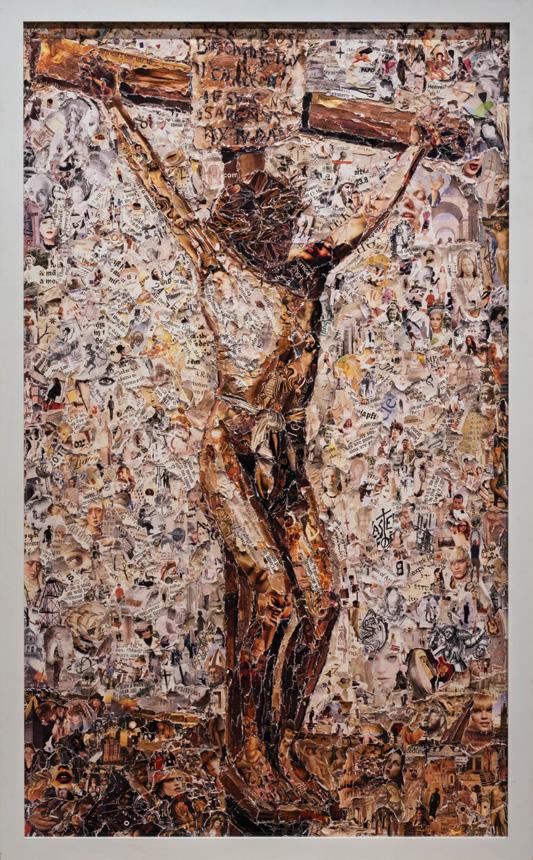
The Crucifixion, after Thomas Eakins (Pictures of Magazines 2), 2011 Digital C-Print, Edition 4/6
Private Collection
Back Cover Image:
Vero Murphy (b. Argentina, 1973)
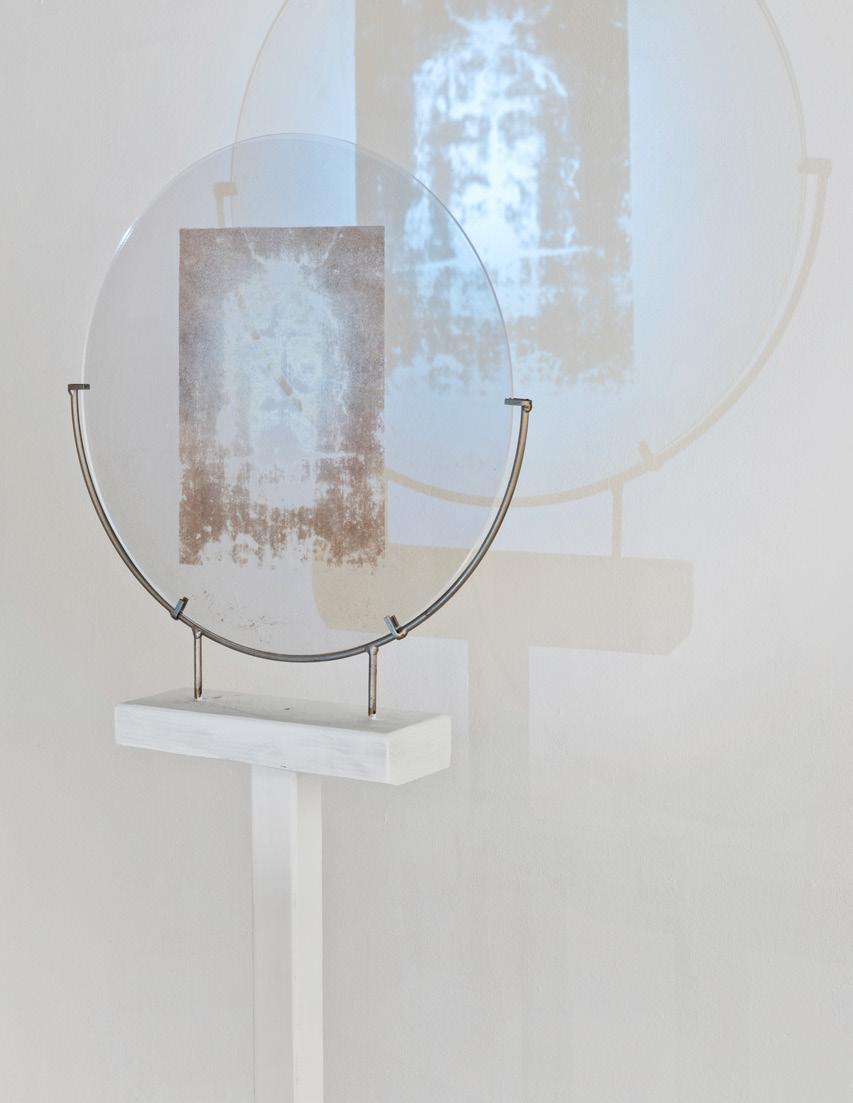
After the Holy Shroud, 2026
Screen printing with yerba tea, plexiglass, metal and wood support, Diameter: 15 in (38.1 cm)
Courtesy of the artist
Belen Jesuit Preparatory School President: Father Guillermo M. García-Tuñón, S.J. ‘87
Belen Jesuit Preparatory School Administration: Jose E. Roca ‘84, Olivia Zarraluqui, Patricia Bustamante
Olga M. & Carlos A. Saladrigas Gallery Director: Ignacio “Iggy” Font
Ignatian Center for the Arts Administrative Assistant: Roberto Gonzalez
Exhibition Curators: Dr. Carol Damian and Dr. Adriana Herrera
Exhibition Preparators: Leandro Vazquez, Phillip Karp
Catalogue Writers: Dr, Carol Damian, Dr. Adriana Herrera , Ignacio “Iggy” Font
Catalogue Editor: Ignacio “Iggy” Font
Photography: Phillip Karp (artwork photography)
Communications: Teresa Martinez, Carlos CJ Cristobal ‘16
Finance: Idanet Gonzalez, Damarys Martinez, Daniela Peña Oduardo
Facilities: Ricardo Echevarria, Carmen Callejas, Orlando Garcia, Ariel Nuñez, Maria Victoria Ruiz, and the Belen Facilities Team
Catering: Richard Moncada, Betty Fuentes, and the Sage Dining Team
Music at the Opening Reception: Rey Gabriel Guerra
Catalogue Design: Charlie Calderin '90
Publication: Robert Ley
DIRECTOR’S STATEMENT BY IGNACIO “IGGY” FONT, MFA
As with everything in life, our experiences are shaped by perspective - by how we see things, how we take them in, and how we process them. One of my favorite examples is this: if you and I are at the same event, and something happens, and later we’re asked to describe it- separately, without comparing notes - our accounts will likely be different. Even though we shared the same moment, our vision of what happened, our understanding of it, and our perception of it will be shaped by the trajectory we carried into that moment and the trajectory we continue with afterward.
In many ways, The Light of the World brings that truth to life.
Spanning works from the 15th century to the present day, this exhibition invites us to consider how different cultures have looked at Christ, how different time periods have looked at Christ, and how individual artists have looked at Christ - then translated that encounter into works of art. What emerges is not a single visual answer, but a living conversation across centuries and cultures: a shared subject seen through many lenses.
That range is visible in the geography of the works as much as in their imagery. The exhibition brings together pieces connected to Argentina, Brazil, Cuba, Colombia, Guatemala, Peru, the United States, Venezuela, and alongside works rooted in Italy and Russia. Taken together, these places are more than points on a map - they represent distinct histories, visual traditions, and lived experiences that shape how the sacred is pictured and understood.
The exhibition also expands our sense of what “religious art” can be through media, materials, and forms. Visitors will encounter icons - historic and contemporary - alongside paintings, drawings, photographs, fabric works, collage, and mixed-media pieces that compile different materials into a single visual language. Sculptural works appear in bronze and latex, as well as transformed found objects - materials drawn from the everyday and re-formed into something contemplative. Some works echo long-held devotional touchstones, including references to the Shroud of Turin, the Stations of the Cross, the Visitation, and images of Christ as a child. Others speak in a distinctly contemporary vocabulary, including digital works and pieces made with unexpected materials such as yerba mate and myrrh.
It is with reverence and joy that I share this exhibition, and I invite you to find the works that speak to you - your own questions, your own beliefs, your own way of seeing. As you move through the galleries, I also offer a simple challenge: imagine what your vision of Christ might look like if you took on the task of making a work of art of your own - whatever form it may take - shaped by the trajectory of your life and the lens through which you see.
I am grateful for an amazing year at the Gallery so far, and for the constant support that makes exhibitions like this possible: the Belen community, Father Willie, the administration, our teachers, students, and parents, and all those who visit simply to spend time with the art.
My deepest thanks to Dr. Carol Damian and Dr. Adriana Herrera, whose three-year dedication brought this exhibition to life, and whose trust in us at the Saladrigas Gallery made it possible to share it here. I am also grateful to the artists and collectors whose generosity made these loans possible, and to everyone involved in bringing this exhibition and this catalog into the world.
Exhibition proposals for the Carlos and Olga Saladrigas Gallery should be emailed to exhibitions@belenjesuit.org and contain the following material in PDF:
• Artist(s) Curriculum Vitae
• Artist(s) Statement
• Artist(s) website, including work samples
• Proposal Summary, including concept or theme, checklist (including titles, media, dimensions), exhibition layout, prospective timeline, prospective lenders and stakeholders, and a rationale explaining how the proposal aligns with the mission and audience of the Ignatian Center for Arts
• Proposals are reviewed periodically by the Ignatian Center for the Arts Programming Committee.
• Incomplete proposals will not be considered
BY CAROL DAMIAN, PH.D. CO-CURATOR
Curating a religious art exhibition focused on Jesus Christ was both spiritually meaningful and personally rewarding. In this troubled secular time, it is a relief to forget the world around us and look back in time when art had meaning beyond the commercial. Throughout Art History, religious imagery has been the most dominant subject – whether about rituals centered on ancient pantheistic beliefs, the cults of shamans and sages, informal ceremonies led by druids and healers, or advanced formal religions dominated by the major traditions of Islam, Hinduism, Buddhism, Judaism, Sikhism, Catholicism, and Protestantism and their many denominations. These faiths provide the context for understanding life’s meaning, often focusing on a God or enlightenment. Catholicism and Protestantism are the two largest branches of Christianity, sharing core beliefs in Jesus Christ.
The life and teachings of Jesus Christ, and the narratives that describe them, were central to Christian art. Two of the most popular motifs for depicting Jesus Christ were as an infant or child, and as the Crucified Jesus on the cross. Christian art operated primarily on a symbolic level. The most common symbols for Jesus Christ were the lamb, the fish, Orpheus, the Good Shepherd, the Teacher, and the sacred monograms. A wealth of meanings surrounded these images, lending them theological or devotional significance. Flowers, animals, fruits, nails, crowns, etc., accompanied his visage. He was also depicted as a man with flowing hair and a beard in preaching scenes. Depictions of the Risen Christ featured a young man who displayed his “wounds.” In this guise, he was a man younger than God the Father, but seated at his right “hand,” as the judge of the living and the dead.
The major events of the life and work of Jesus Christ are depicted in Christian art as narrative cycles, ranging from the most realistic, painful, and beautiful to modern abstract interpretations. Christian art and its iconography are visual demonstrations and clarifications of Jesus Christ’s humanity and divinity. The Life of Christ continues to inspire artists, and the exhibition THE LIGHT OF THE WORLD pays tribute to the long history of his imagery and iconography, from Byzantine icons produced in Russia and the Orthodox churches of the 14th to 16th centuries, to the gold stenciled paintings from the Cuzco School of Peru from the 17th century, to 19th century academic interpretations, to art produced in the 20th and 21st centuries, into the present.
The oldest works in this exhibition are Byzantine icons depicting the face of Christ by artists of the Orthodox Church. The Orthodox Church (or Eastern Orthodox Church) identifies as the original church founded by Christ and the Apostles, having preserved its faith and structure for over twenty centuries. (The Great Schism of 1054 split the Eastern Orthodox from
the Latin West in Rome.) The church features a patriarchal decentralized structure of self-governing local churches (e.g., Greek, Russian) with no single leader like a pope, but by a synod of bishops.1 Their focus is on liturgy, sacraments, and the veneration of icons. From the Greek for “image,” an icon is a religious picture of Jesus Christ, Mary, or a saint, with limited subject matter and restricted form. Icons were understood as windows into the meaning of the person or event depicted, rather than as realistic depictions. The icons in this exhibition focus on a singular appearance of Christ in a highly stylized, symbolic art form designed to depict spiritual rather than physical reality. Using materials such as egg tempera on wood with gold leaf, they feature elongated figures, reversed perspective, and strict adherence to canonical rules, evoking a prayerful, timeless atmosphere in churches. In Byzantine theology, the contemplation of icons allowed the viewer to communicate directly with the sacred figure(s) represented, and, through icons, an individual’s prayers were addressed directly to the saint or holy figure. The most recognizable portrayal of Christ, seen in the icons in this exhibition, is Christ Pantocrator, one of the earliest images of Christ developed in the Early Christian Church and a central icon of the Eastern Orthodox Church. In the half-length image, Christ holds the New Testament in his left hand and gestures with his right hand in a teaching or blessing gesture.2
The significance of icons continues to the present day, and in this exhibition, there are examples of works created in the Byzantine style by contemporary artists. Mercedes Durrieu (Argentina) works with traditional materials such as gold leaf, gesso, glue, and natural pigments to honor ancient techniques. These materials hold memory and time, allowing the past to remain present through the act of creating. They are integral to the physical gesture of creation and are part of a lineage that feels both intimate and timeless. Christ appears human, luminous, and compassionate. His inward gaze invites contemplation rather than drama.
As the central figure of the Christian faith, around whom all Christian art and iconography evolved, Jesus Christ has been depicted in the Roman Catholic tradition from the Early Christian period to the present. As the prime example of the production of Christian art, the Renaissance witnessed a rebirth of interest in human dignity, potential, intellect, and the body. Combined with the widespread interest in scholastic theology, the Renaissance looked to the human as a model for the divine.3 These cultural and theological factors influenced the development of a new iconography of the humanity of Jesus Christ, which has been seen as the inspiration for his appearance for hundreds of years throughout the Christian world.
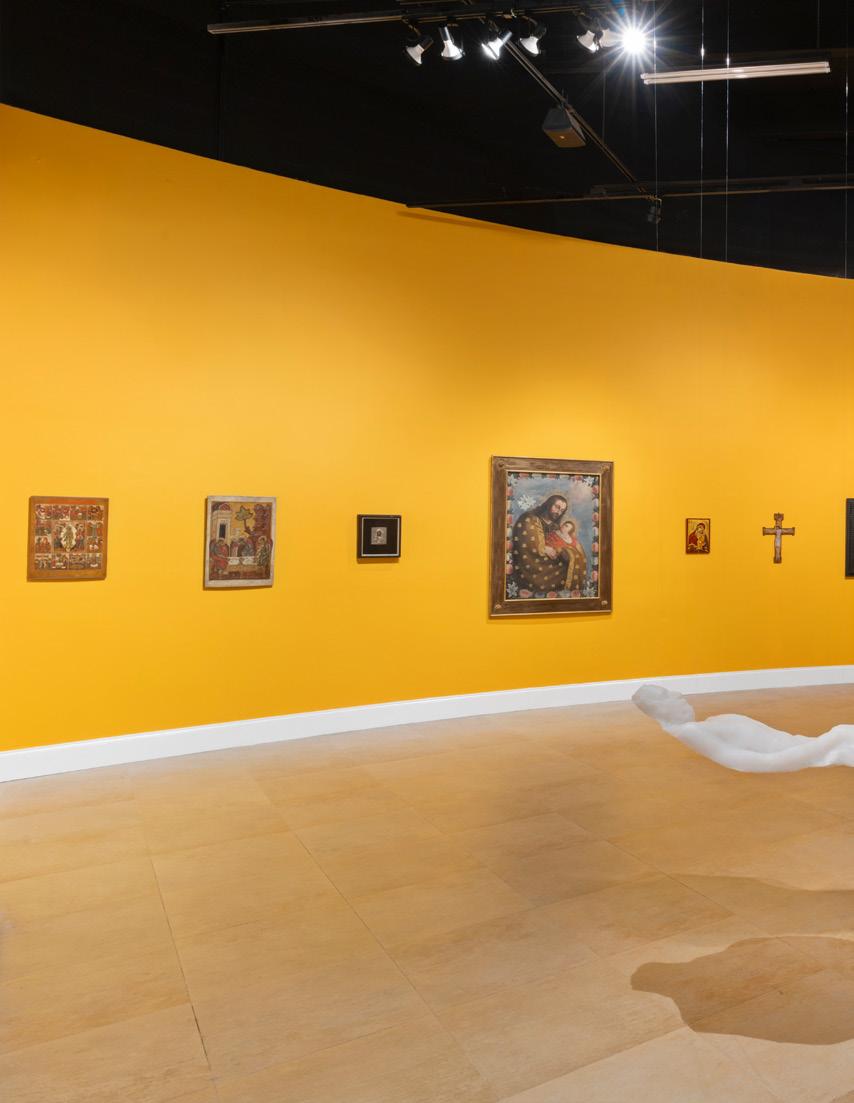
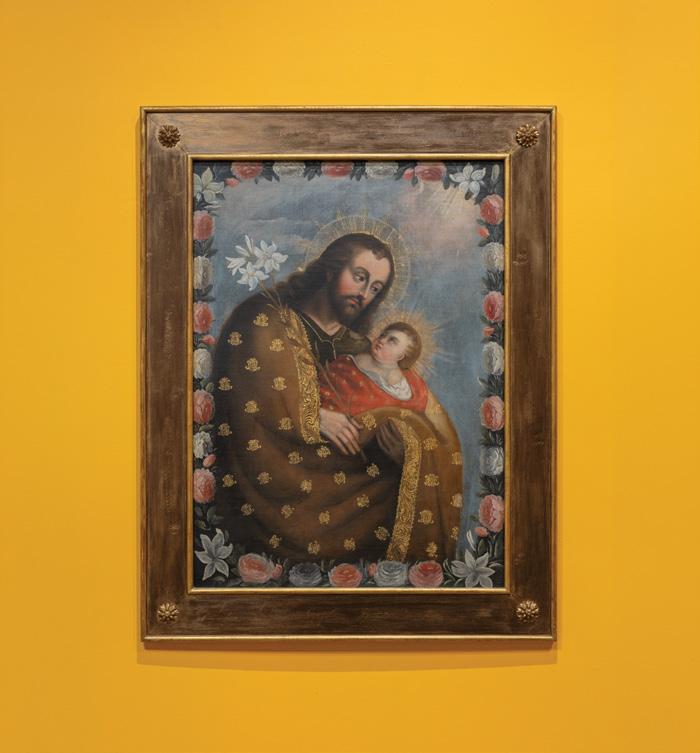
This exhibition features a beautiful painting of Saint Joseph and the Christ Child from the Cuzco School of Peru in the 17th century. The Cuzco School of Painting is considered the first indigenous art organization in the New World. It began with the independence of an indigenous guild of artists in 1688 and flourished until around 1800. Cuzco artists, originally influenced by their Spanish patrons and missionaries, went on to develop characteristic elements that merged Italian Renaissance, Mannerist, Flemish, and Spanish Baroque traditions with indigenous styles. Cuzco painting is known for its lavish gold ornamentation, intricate patterns tooled on gold leaf, and elegant details.4 The Cuzco artist took an independent and often unique approach to describing Christian subjects, which were foreign to their ancient sensibilities. In the painting of Saint Joseph and the Christ Child, the figure of Joseph, who is traditionally represented as an old carpenter, is depicted as an adult version of Jesus Christ himself – like father, like son. It would make sense to the new converts to Christianity, who were unfamiliar with Joseph as an old carpenter, for them to regard father and son as looking alike.
In the academic world of the 19th century, Ricardo Acevedo Bernal (1867, Colombia – 1930, Rome) was one of Colombia’s most influential artists of the late 19th – early 20th centuries. His work in the Tunja Chapel in the Metropolitan Basilica Cathedral in Tunja was devoted to the veneration of the Sacred Heart of Jesus, an important subject at the time.
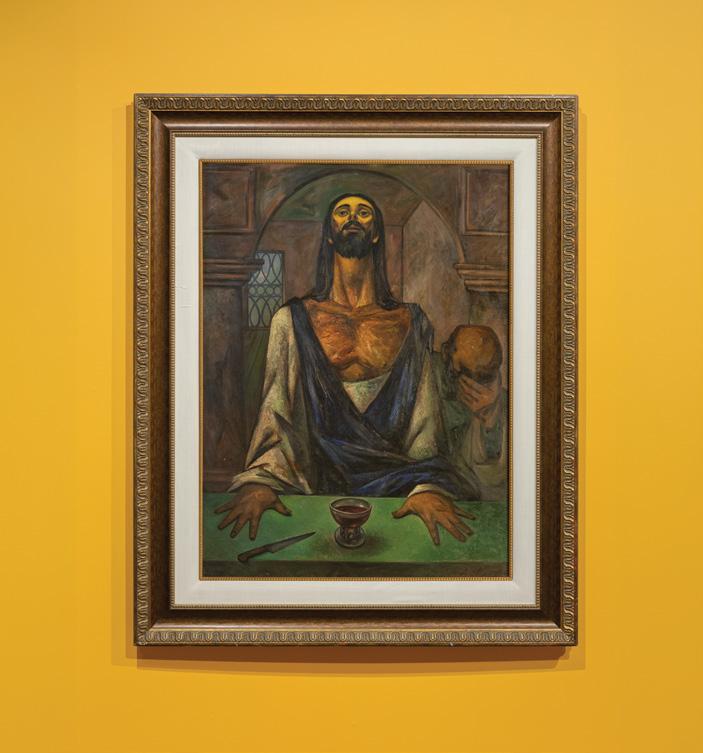
As the exhibition proceeds chronologically, a diverse group of artists from throughout the Americas express their special devotion to Jesus in a modern, technically and stylistically sophisticated manner. Antonio Gattorno (Cuba) was one of the first artists to introduce French modernism into Cuban painting. His stylistically abstract rendering of Christ in This is My Blood (1954) is a highly personal interpretation of the Crucifixion, executed with broad, painterly strokes of vivid color, bringing the traditional representation into the modern world.
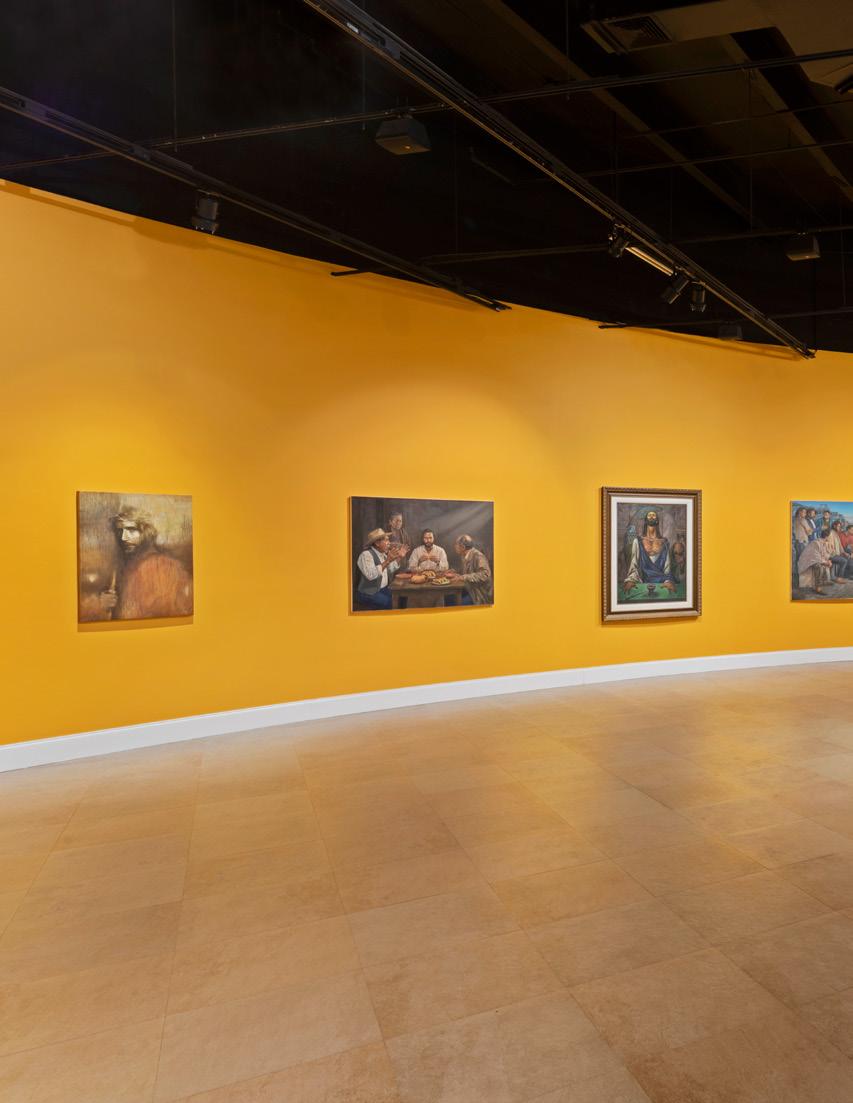
The work of Dario Ortiz (Colombia) pays tribute to a classic painting style rooted in Renaissance realism. His Last Supper (2026) and Cena de Emmaus (2026) could have been painted in the 17th century, but he seeks to modify traditional religious iconography through a contemporary vision. The apostles inhabit a world devastated by war, where refugees of multiple origins wander. The Cena de Emmaus is an episode from the Gospel of Saint Luke in which Jesus is unrecognized by his apostles. This version is set in a contemporary rural Mexican setting, with a table laden with Mexican food, as if the events had just taken place. The scene at Emmaus can be repeated in any home, where the presence of the Master remains alive whenever bread is broken.
This exhibition aspires to bring the world of Christ and the Bible into contemporary reality by having artists apply their own spiritual and stylistic interpretations to traditional subjects. Ranging from the realistic to the abstract, the exhibit features a diversity of media from the present day. There is a poignant face of Christ done by a young artist of Mayan descent, Jesús Tax (Guatemala). Titled Sustained Investigation (2022), the work is created using a traditional Maya stitch technique with string, colored threads, nails, and acrylic paint on a plywood board.
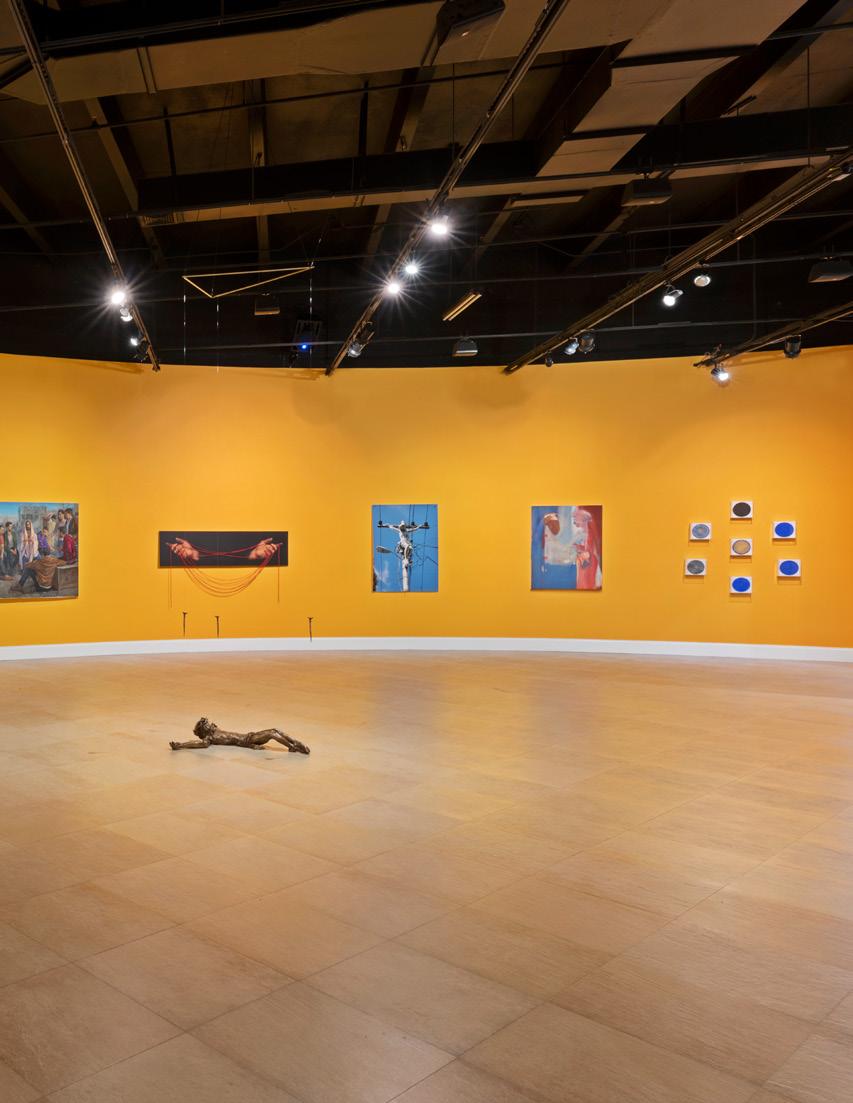
Another remarkable fiber work by renowned Colombian artist Stella Bernal de Parra, Mi Cristiano (1973), is described as a three-dimensional tapestry made of processed and virgin wool, shaped like the Cross. The Cross is the inspiration for many artists in the exhibition. Two life-size works by Natalie Plascencia (Cuba), a bronze sculpture, Crucifixion I (2026), and The Resurrection (After the Shroud of Turin) (2026), made of latex, resin, and silicone, invite the viewer to a moment of deep contemplative prayer and into the stillness of tragedy. Three highly polished bronze nails hover one inch above Crucifixion I, a prone statue that lies on the floor. They symbolize divine awareness and suggest that only through suffering with Christ, through contemplative prayer, and by accepting our cross can we enter heaven.
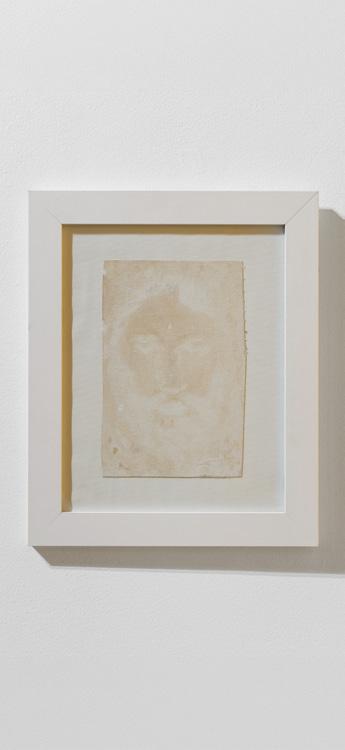
The Shroud of Turin has fascinated the world for many years and, not surprisingly, has been a popular subject for artists exploring religious imagery. A “relic” preserved since 1578 in Turin Cathedral is said to be the linen cloth in which the body of Jesus was wrapped after the Crucifixion. It bears the faint imprint of a man’s features, thought to be the face of Christ. Vero Murphy (Argentina) creates a screen print on plexiglass, The Holy Shroud (2026), made with yerba tea and myrrh, a substance traditionally used in burial practices, to represent Christ’s suffering and death, foreshadowing His sacrificial Passion and burial. In tribute to the genius of Leonardo da Vinci and his respect for the work of Roman architect Vitruvius’s observation on the ideal proportions of the human body, Willy Castellanos (Cuba) has created a multimedia installation with layers of translucent images that evoke the burial imprint on the Shroud of Turin for Christ of the Vitruvius (2026).
In one of the most beautiful conceptual paintings, Héctor Fuenmayor (Venezuela) illuminates the biblical story of Martha and Mary of Bethany, who entertained Jesus in their home. Marear a Martha para martillar a María. Serie (Luke 10:38-42) after Jesus at the House of Martha and Mary by Gustave Doré (c. 1880) (2022) comments on the relationship between action and contemplation in a serene work of an almost vanishing image of the scene. Dominated by the color yellow for spiritual meditation, three personalities barely emerge into the divine light. Every artist tells a story, as the Life of Christ inspires works that both respect sacred traditions and challenge them for modern interpretations. Meditating on the Life of Christ through prayer, biblical passages, and spiritual imagery, artists are inspired to transform their visions by uniquely creative processes as they express their reverence for The Light of the World.
1 https://www.stanneorthodoxchurch.com/orthodox-church-history. Accessed March 2026.
2 For further descriptions of Christ Pantocrator, see https://www.thebyzantinelegacy.com/catherine-pantocrator. Accessed March 2026.
3 Diane Apostolos-Cappadona, Dictionary of Christian Art (New York: Continuum, 1995), 182.
4 Carol Damian, The Virgin of the Andes: Art and Ritual in Colonial Cuzco (Miami Beach: Grassfield Press, 1995), 9.
BY ADRIANA HERRERA, PH.D. CO-CURATOR
“Todas las cosas visibles son imágenes de las cosas visibles e intangibles, sobre las cuales arrojan una tenue luz.” - (San Juan Damasceno)
En el aparentemente desolado contexto del arte cristiano contemporáneo, y en un tiempo en el que suele pensarse que su existencia se ha desvanecido, la exhibición titulada La luz del mundo, en la Galería Saladrigas del Belen Jesuit Preparatory School, de Miami, abre un espacio de visión y reflexión sobre la innegable continuidad del arte sacro en pleno siglo XXI, y acerca ejes temporales diversos creando un diálogo inédito entre obras religiosas de múltiples culturas y épocas demostrando que las imágenes de Cristo persisten y su universalidad atraviesa espacios y tiempos distantes.
Uno de los aportes relevantes de este acercamiento a ejemplos del arte cristiano de los últimos seis siglos, consiste en situar en un mismo marco curatorial el arte bizantino, junto con obras religiosas del Renacimiento –como un estudio de la última cena derivado de la pintura de El Veronés–,1 e íconos rusos creados entre los siglos XVII y XXI, en diálogo directo con el arte colonial latinoamericano, así como con pinturas tanto de la época de la consolidación estatal de las Repúblicas en Latinoamérica, como de la modernidad caribeña. Este diálogo se extiende a obras en múltiples medios del arte contemporáneo del siglo XXI, creadas por artistas nacidos en diversos países del continente de América, desde Argentina hasta los Estados Unidos, e incorpora el sorpresivo descubrimiento de íconos hechos por creadores que hoy continúan usando técnicas medievales para su arte sacro, mientras se ejercitan en la práctica atemporal de la oración. De este modo, la exhibición desafía la idea hoy extendida de que quienes hacen este tipo de creaciones, son solo artesanos.
La curaduría sitúa así, de modo contiguo en el espacio, ejemplos de la influyente cultura bizantina – como el Christ Pantocrator, (c. 1400) –, junto con los íconos de la actual Rusia, que precisamente se había convertido al cristianismo estrechando vínculos con ese mundo. Después del bautismo colectivo del año 998 en el río Dniéper de Kiev, y del establecimiento de los artistas bizantinos en esta ciudad y en Nóvgorod, se desarrolla una tradición pictórica con rasgos propios en la entonces Rus de Kiev. La Trinidad es una versión anónima del siglo XVII, de la obra del más grandioso creador de la iconografía ortodoxa, Andei Rublev (c. 1360–c. 1430), que reproduce el modo en que él resolvió genialmente el dilema de la representación antropomorfa del Dios recurriendo al relato de la hospitalidad de Abraham y pintando tres ángeles casi idénticos, pero diferenciados por los colores de sus ropas y gestos. Ambas obras, junto con otro
ícono ruso del siglo XIX que narra en escenas de recuadros la resurrección de Cristo, dialogan con una bella pintura anónima del periodo colonial andino: San José con Cristo niño, del tardío siglo XVII.
Esta obra notable de la Escuela cuzqueña permite constatar el influjo bizantino que, por la vía del Renacimiento europeo marca la iconografía en América. Si bien en la pintura se conservan elementos como la decoración dorada, pero, más allá del borde floral pintado, típico del Barroco virreinal, la postura frontal se rompe y la posición del santo y del pequeño Jesús nos permiten contemplar el entrecruzamiento de las tiernas miradas entre ambos. El arte religioso, no hay duda, ganó mayor afectividad y libertad en Latinoamérica y al Niño Dios, aún más sonriente en este continente, llegó a vestirsele con ropajes, incluyendo los de la realeza incaica.2 Comprender esta transición es también abrir otras puertas de visión de la historia del arte. Este diálogo directo del influjo bizantino al ortodoxo ruso y al renacimiento que la exhibición incluye, junto con una versión en el mundo colonial latinoamericano constituye una singular vertiente exploratoria de la relación entre estas diversas tradiciones visuales, que conservan una noción de la imagen que, más allá de la representación, es un espacio que la devoción de artistas casi siempre anónimos inunda de una presencia espiritual y provoca modos de recogimiento y contemplación. Sus escenas suspenden el tiempo y activan una experiencia de lo sagrado.
La curaduría demuestra la sorprendente continuidad que dan a estas tradiciones las obras de quienes en pleno siglo XXI retornan a la estética medieval iconográfica como ocurre con el trabajo de la cubana María Luisa Santamarina. Mientras su Cruz (2013) revive el aura espiritual de la clásica representación ortodoxa rusa, reproducida con notable cualidad y belleza, pero sin elementos de invención; su obra Mary: Co-Redemptrix, Advocate, and Mediatrix of All Graces, 2026, recurre a esa estética para crear una interpretación propia del sobre el papel de la Virgen según fue revelado a una vidente de mediados del siglo XX. Por otra parte, en la obra Crucifijo (ca. 1990) de la argentina Mercedes Durrieu, inspirada en el proto-renacimiento italiano de los siglos XIII y XIV –como se advierte por el fondo dorado que remite al oro teológico de los iconos bizantinos, y por la abreviatura griega del nombre de Jesucristo, IC XC–, no prima la noción del sacrificio, sino la de infinita ternura. Aún en la cruz, la mirada en su rostro refleja una compasión que sólo puede provenir de lo divino.
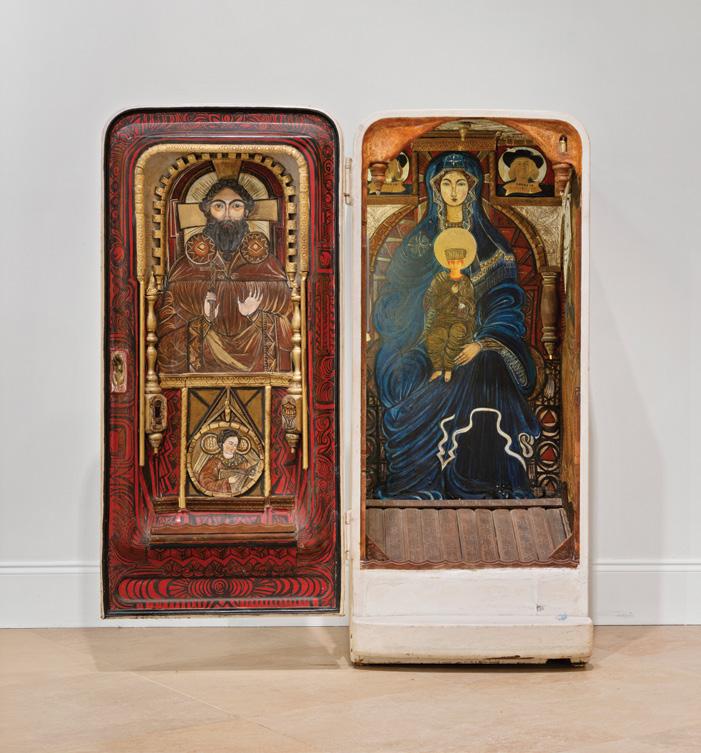
La apropiación del lenguaje de los íconos que Pablo Cano realiza en una nevera encontrada en la calle en Westinghouse Basilica (1979) es extraordinaria por la cualidad pictórica con la cual experimenta: aproxima el estilo del arte bizantino, a retratos de la iconografía mediática como el hombre de la avena Quaker, y da al Niño Dios, el rostro de un niño conocido. De
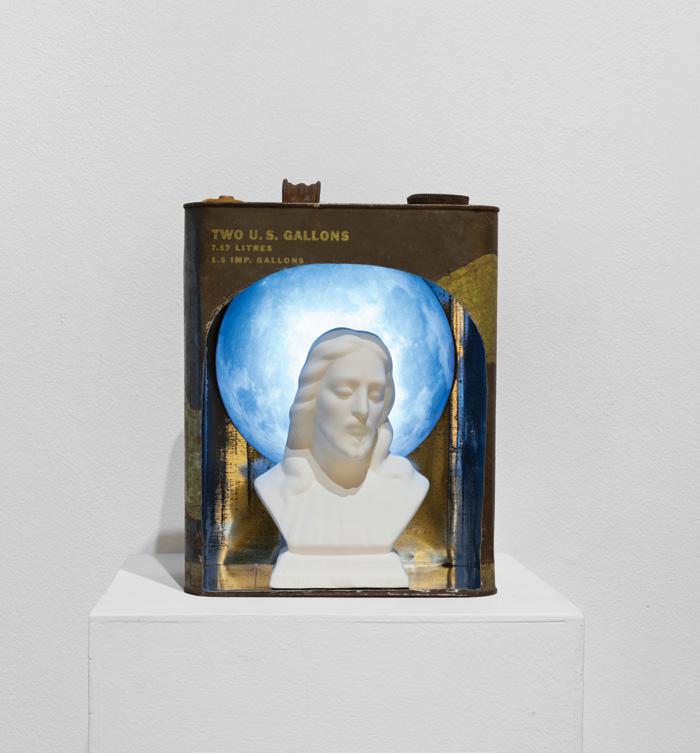
este modo unifica, con el humor del gesto dadaísta, como es legendario en él, lo que pertenece al mundo ordinario, lo profano, lo que está fuera del templo, con lo sagrado y con la fe que, a diferencia de los vanguardistas, no deja de profesar. Su Gasoline Can Assemblage with Jesus and Full Moon, 2025, transfigura un objeto inútil y descartado en un escenario de contemplación, donde predomina la clásica relación entre verdad y belleza, sostenida desde la indómita imaginación.
La luz de Cristo reúne obras contemporáneas que no sólo narran capítulos de la vida en la Tierra del Hijo de Dios, sino su existencia atemporal. La argentina Marcela Marcuzzi presenta la obra abstracta La creación (2019) con círculos alusivos al universo mismo. Sus formas geométricas sagrada y el uso de polvo mineral con acentos dorados remiten a la idea de que su presencia es anterior al inicio del tiempo. El azul que Kandinsky asociaba con lo espiritual, y el rosado vital, son claves, junto con elementos compositivos y geometrías sugeridas en el lenguaje expresionista con que la artista brasileña Fernanda Frangetto escenifica en The visitation (2020), el diálogo entre Cristo y San Juan, desde el vientre de María y su prima Isabel. Flor Godward, argentina de nacimiento, representa sobre madera cruda una escena tomada de los Evangelios apócrifos: el niño Jesús está modelando unos pájaros en barro, y cuando es reprimido por hacerlo, para evitar que sean destruidos, les da vida. Mientras horneaba sus propios gorriones de cerámica, en 2023, investigadores identificaron esta historia en un fragmento de un papiro de la Biblioteca de Hamburgo. Godward pinta al niño sin aura, enfatizando su humanidad compartida con nosotros.
Héctor Fuenmayor, pionero del conceptualismo venezolano, ha vivido períodos donde alternó entre la intensa actividad artística –como la que siguió a su gesto radical de usar como única obra en la Sala de Mendoza de Caracas la pintura amarilla de pared “Citrus 6906”3– y tiempos de retiro contemplativo en monasterios zen. En la pintura exhibida, de la serie Marear a Martha para martillar a María (Lucas 10:38-42), (2022), emplea óleos de color amarillo, un color autorreferencial sobre su propia historia artística y biográfica, para recrear de modo monocromático y semi abstracto la ilustración de Gustav Doré Jesus at the House of Martha and Mary (c. 1880), sobre la escena evangélica en la casa de las hermanas, donde Jesús afirma que, al quedarse a sus pies, escuchándolo, María eligió “la mejor parte” y no le será quitada. Resuelve así pictóricamente la inmemorial tensión entre acción y contemplación.
El rostro de Jesús adulto es retratado no con pinceles, sino con acrílico en los dedos en las dos versiones del también venezolano de origen Andrés Michelena en su serie Flux, cuyo título contiene una alusión a George Maciunas y a su cuestionamiento del objeto artístico. El medio que elige remite a la vez a su propia práctica budista y a antiguas tradiciones orientales que advierten sobre la necesidad de comprender que el dedo que apunta a la luna no es esta misma. Al romper la identificación con lo representado se mantiene en una frontera vigilante sobre las aproximaciones humanas a lo divino que no puede ser contenido en palabras ni en imágenes. Pero si esa conciencia nos remite también a la
metáfora agustiniana de la imposibilidad de verter el mar en un pequeño agujero en la arena, es innegable que muchas representaciones de Cristo provocan una aprensión de lo sagrado y abren una vía de conocimiento espiritual.
Representaciones de la Pasión del temprano Siglo XX al presente
El tema de la pasión aparece en la exhibición en un recorrido histórico que empieza con pintores nacidos en el siglo XIX y abarca iconografías de los misterios dolorosos, en múltiples medios no convencionales, incluyendo apropiaciones de la historia del arte magistralmente realizadas por varios artistas. Esta iconografía es particularmente cercana a las tensiones de cada época que, a menudo, suponen juegos de fuerzas políticas y religiosas.
Santiago Páramo Ortiz, S.J. realiza su obra Jesús y los cuatro santos (c.a. 1902) de tal modo que en el cuerpo de Jesús crucificado destaca su sagrado corazón, puesto no en la verdadera posición anatómica, sino en el centro del pecho. Y esto sin duda respondía al eco de la consagración del mundo al Sagrado Corazón de Jesús, realizada por el Papa León XIII, en 1899, el mismo año en el que estalla la Guerra de los Mil Días en Colombia. Al terminar, en 1902, los conservadores retuvieron el poder y esto aseguraba la permanencia de los jesuitas en el país. El mismo artista había tenido que salir de Colombia años atrás, a raíz de las expulsiones dictaminadas por el liberalismo de corte anticlerical. De este modo, la obra reafianza una devoción mística que había sido especialmente promulgada por los jesuitas, quienes de hecho habían encargado y custodiado la imagen que Pompeo Batoni pintó en 1760 siguiendo las visiones de Santa Margarita. Los dos estudios de inicios del siglo XX de Ricardo Acevedo Bernal –uno de los cuales es el modelo del mural definitivo del techo en la Catedral de Tunja, Colombia, con una imagen de la Resurrección de Cristo, en la que destaca también su Sagrado Corazón– son paralelamente una invocación de paz, tras el fin de la guerra, y la reafirmación de una victoria política y espiritual.
El Cristo de Esta es mi sangre, 1954, la obra del destacado pionero del modernismo caribeño, el cubano Antonio Gattorno, es una representación poderosa y poco común. Tratándose de una escena de la última cena, habitualmente representada con los doce apóstoles, se centra en la figura monumental de un Cristo desafiante en una atmósfera que puede evocar el Novecento italiano, la metafísica de De Chirico y el surrealismo, pero que ante todo transfiere una profunda carga existencial. El cuchillo sobre la mesa es un elemento perturbador, que responde a una tensión interna; la copa, corriente, no semejan un cáliz sagrado; y el tono verde intenso del mantel intensifican la oposición no resuelta entre Koinós, lo ordinario o mundano, y Hágion, lo sagrado. Es posible que en este Cristo que pronto será abandonado por todos, y el propio artista haya una identificación existencial: el artista, marginado desde una década atrás, cuando pese a haber sido uno de los grandes modernistas de la primera generación, y un creador de una iconografía de la identidad cubana, es excluido de la exhibición Modern Cuban Painters en el Museo de Arte Moderno de Nueva York –donde vivía desde 1940–por antipatías personales que lo marginarán en una escena que además está dominada por otros lenguajes artísticos. La misma
realización de la pintura –que marca una transición hacia lo autorreferencial– es un gesto similar a la mirada desafiante de su Cristo. Y sin duda una afirmación de una visión propia, cargada de tensión existencial, sobre aquél que fijó su mirada en los últimos de la Tierra.
En la obra fotográfica de Vik Muniz The Crucifixion, after Thomas Eakins (1880) (Pictures of Magazines 2), 2011, el artista brasileño se apropia de la obra realista que Eakins realizó en 1880. Para rehacerla, hace un collage con recortes de imágenes tomadas de revistas mundanas, epítome de la cultura contemporánea y de lo profano, sin destituir la fuerza espiritual de esa escena, más allá de la índole del material impreso que usa. La tensión entre lo sacro y la vida ordinaria aparece también en la obra del artista local cubano Pavel Acosta Después de la Crucifixión de Bartolomé Esteban Murillo (1675), creada en 2014, como parte de la serie Stolen from the Met. Habiendo vivido la doble experiencia de formarse como artista en La Habana, Cuba, donde se vio abocado a “robar” la pintura de muros descascarados para poder pintar, y de encarar como inmigrante en los Estados Unidos la necesidad de trabajar inicialmente como obrero en la construcción, decide usar como soporte de sus obras las mismas paredes de paneles de yeso. Raspando su superficie reconstruye imágenes icónicas de la historia del arte con un medio propio de la construcción. En el caso de esta obra religiosa, la tensión entre el motivo sagrado y el medio desmitificador, es una operación conceptual también dirigida a la propia práctica artística. Como en el mismo caso de Muniz que ha empleado una miríada de medios para operaciones paralelas, el resultado es tan bien logrado que el aura de las obras originales recreadas no se destituye, sino se transfiere a una compleja recreación de las tensiones socioculturales contemporáneas.
Hay otras obras en La luz del mundo que trabajan con transposiciones entre la imagen sacra y el tiempo presente. El colombiano radicado en México Darío Ortiz, ha creado desde hace décadas versiones de las escenas de los evangelios con un estilo realista y escenografías contemporáneas. Su pintura –realizada con el reconocido dominio de su oficio– parece construirse desde la pregunta implícita “¿qué haría el maestro hoy?”. Al representar a Cristo en el presente convierte la pintura de tema religioso en un espacio actual de reflexión ética y existencial. Los apóstoles que rodean a Jesús en The Last Supper, 2026, no están sentados en el escenario de un comedor, sino agrupados en torno suyo a cielo abierto, mientras en el trasfondo, la atmósfera evoca las ciudades reducidas a polvo en medio de la guerra actual desatada en el medio oriente. En su lenguaje pictórica es inevitable la referencia de Caravaggio y a su utilización de modelos encontrados entre la gente sencilla y, en el caso de esta obra, los apóstoles pescadores de Galilea son ahora, a juzgar por sus rasgos, inmigrantes de poblaciones latinas, y/o encarnan los rostros de la multitud errante de desplazados en los múltiples escenarios del mundo. Cada uno parece interpelarnos recordándonos el Sermón de la montaña de Jesús y su invitación universal al ejercicio de la compasión. También su obra La cena de Emaus (2026) sucede en un lugar popular de México, y la revelación que ocurre cuando Jesús parte el pan, se transfiere a los espectadores, invitados a encontrarlo en los más vulnerables.
Por su parte, el venezolano Karim Borjas realiza en su Ecce Hommo
(o el hilo rojo del destino), (2006) un gesto paradigmático. No se apropia aquí de las composiciones históricas sobre el tema del instante en que Pilatos presenta a Jesús apresado y con las manos atadas ante la multitud, sino que, usando el mismo título del Ecce Hommo de Caravaggio de inicios del S.XVII, tanto como el de la última obra que Nieztche escribió antes de sumirse en la locura, recurre al medio fotográfico para crear un clarooscuro fotográfico. Sólo son visibles las manos abiertas de Cristo, que él ha desatado y que retrata sosteniendo hilos rojos, como el que usa Caravaggio para su manto, o como la sangre que para los cristianos transforma el destino de los vivos, y de los que ya han muerto. Siendo agnóstico, Borjas asume la carga simbólica de estos hilos y, al pintarle a ese Cristo los dedos manchados de pintura, la obra toma un carácter autorreflexivo. Las manos de Jesús se acercan a las del artista, y sugieren un modo de liberación, una apertura vital.
Erik Ravelo es un artista nacido en Cuba, que, en el pasado creó series de violenta denuncia, y ha vivido un proceso de profunda conversión que lo lleva a invocar la redención de Cristo tanto para sí como para la humanidad. Señor dame la luz (2009), es un registro fotográfico que documenta la instalación que hizo al usar como cruz un poste de luz en su país de origen, atándole una escultura encontrada de Jesucristo; una obra que se reactualiza cada vez con mayor urgencia por la creciente crisis de servicios públicos en la isla. Funciona como metonimia que remarca la oscuridad en que sumió a la isla el poder dictatorial que, durante más de dos décadas, suprimió oficialmente la celebración de la Navidad, y es una plegaria iconográfica que invoca la luz que emana del crucificado. Al instalar la fotografía en el salón de exhibición con clavos visibles, Ravelo completó su pieza con una gota de su propia sangre que simbólicamente se unía a la de los pies del crucificado.
En la fotografía Christ in the Garden (2014) de Silvia Lizama, también nacida en Cuba, la documentación de una estatua del Sagrado Corazón con querubines en las manos y situada en el exterior de una casa en Miami en el que ondea la bandera americana, está cargada de tensiones simbólicas. La estética refiere a la ritualidad de la diáspora hispana, posiblemente cubana, y al modo en que las prácticas católicas de los inmigrantes son una extensión de sus raíces culturales que ahora abrazan las de una nueva tierra. En la quietud de la escena se revelan los procesos de adaptación y negociación cultural asociados al exilio, así como el hecho de que, parafraseando el poema del griego Constantino Cavafis (1833-1933) La ciudad4, a donde quiera que vayan los creyentes llevan consigo su fe.
En el caso del cubano Gonzalo “Gonzo” González, quien reside en la isla, la documentación fotográfica, caracterizada por el alto contraste en blanco y negro y por la tradición del momento decisivo, la escena captura el instante en que, en medio de una celebración religiosa de uno de los peregrinajes en honor a la Virgen de las Mercedes en La Habana, una religiosa da la comunión a un niño, a través de una reja. El acrílico de la argentina Mariana Cernadas, Vision of the Host, 2024 refiere también a la Eucaristía y en las pequeñas dimensiones de la obra, no mucho mayores que las hostias reales, la geometría triangular de los rayos que emanan porta el misterio del Pan de Vida emanando su luz en nuestro interior.
Hay una singular vulnerabilidad, marcada por la corona de espinas, pero no menos una fuerza presencial y un aura de cercanía en la pintura en medio múltiple El salvador (2011), del guatemalteco Víctor Hugo Rivas, cuya cualidad es casi fotográfica, e invita a ese modo de oración que sólo consiste en mirar y ser mirado por Él. La vida interior, con todos sus vaivenes, se expresa en los múltiples rayones que cubren la superficie, sin afectar la mirada del hombre-Dios que el artista capta en un momento de máxima vulnerabilidad, agobiado no sólo por la cruz sino por el peso de la humanidad sumida en la oscuridad.
La artista nacida en Cuba Natalie Plasencia pinta el rostro de Jesús en su Passion of Christ (2023), con café y arcilla, materiales cotidianos que intensifican la sensación de cercanía ante su rostro inclinado. El sufrimiento que tensiona el cuerpo del Cristo que esculpió en bronce, Crucifixion I (2026) es aún mayor al de los tormentos físicos que anteceden la muerte en la cruz: es el desamparo más extremo, el cáliz de experimentar en sí mismo no sólo la vulnerabilidad de haberse hecho un hombre destinado a la muerte, sino de comprender la profundidad de la miseria a la que podemos descender en nuestra condición humana. Al colocarlo sobre el suelo, su cuerpo sacrificial conmueve hasta el extremo, y los inmensos clavos que talló y que penden sobre sus manos y pies, forman un triángulo alusivo a la presencia de la Trinidad, y sombras extendidas que punzan a quienes creen en el Cordero de Dios. Los clavos son dorados para exaltar el alto precio del sacrificio de quien “muriendo derrotó a nuestra muerte y resucitando restauró la vida”.5
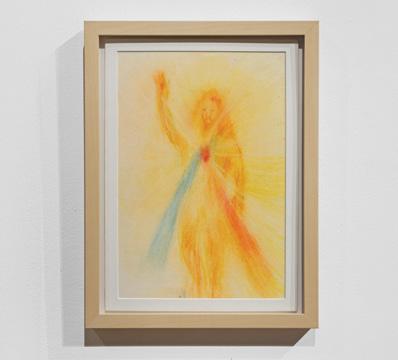
También en las escenas que la brasileña Fernanda Frangetto pinta en pequeñas dimensiones sobre papel recreando con íntima devoción y lenguaje expresionista las Estaciones de la cruz e inspirando a meditar en cada una de ellas, hay una tensión entre la humanidad encarnizada y Cristo. Pero los rayos de luz que emanan de The Risen Jesus (2009), en una imagen reminiscente de la devoción de la Divina Misericordia, que abrazaron fervientemente sus antepasados polacos, reafirman la esperanza en aquél de quien se dice que “será todo en todos” (1 Corintios: 15-28)
Hay también una serie de retratos de Cristo en textil de diversas épocas que abordan el tema de la Pasión. La obra Mi cristiano (1972), de una de las grandes pioneras de este arte textil en Colombia, Stella Bernal de Parra, contiene en su extraordinaria concepción, una representación semiabstracta de la muerte de Cristo, con la cabeza inclinada y los brazos abiertos en cruz. Pero, al tiempo, este crucifijo tejido de grandes dimensiones que hizo para –y en un taller con mujeres campesinas–, no sólo extiende sus manos hacia adelante en un gesto de acogida, sino que se inviste una serie de hilos extendidos, un elemento tomado de la ruana, una prenda textil para abrigarse en los Andes. Así se convierte en una suerte de Cristo campesino él mismo.
Por su parte, Raimundo Travieso, nacido en Cuba, llevó al Jacquard industrial su contundente concepción de El descenso de la Cruz (2014): al convertir la escena del descendimiento del cuerpo del Cristo muerto en nada más que una silueta negra, sin rasgo alguno, sin dorados, sin perspectiva ni volumen, sin acentos expresivos, sin ningún otro recurso que la forma plana, pero esencial, totalizadora, esta alcanza una intensidad aún mayor. A su vez, en el maravilloso rostro de Cristo con la corona de
espinas, de la serie Sustained Investigation (2022), del artista guatemalteco de origen maya, Jesús Tax, él usa una técnica de retrato textil que aprendió con sus mayores. En Totonicapán, el pueblo donde nació, las tejedoras forman figuras antropomorfas, zoomorfas y botánicas utilizando varios hilos a modo de guía, que se amarran y tensan usualmente en urdimbres textiles. Tax traslada la técnica a un soporte de madera y de un modo sorprendente logra tensar los hilos con clavos hasta crear un retrato de Cristo de rasgos poderosos y una expresión en la mirada que siendo en principio impensable para el medio, alcanza la máxima expresividad: este Jesús que en sí mismo contiene la fusión ancestral maya con la herencia católica mira a la humanidad con innegable tristeza, pero nos hace experimentar el contacto iluminador de la bondad sin límite.
Obras contemporáneas inspiradas en la Sábana de Turín
La estadounidense Pamela Palmieri Bettner, quien se identifica como “iconógrafa” trabaja con técnicas medioevales, pero, partiendo de los estudios fotográficos que permitieron ver por primera vez imágenes en positivo del rostro del crucificado que cubrió la Sábana de Turín, crea una versión expresionista del rostro que, para muchos creyentes, es el del Cristo vencedor de la muerte. Es interesante evocar que una de las más antiguas representaciones de Cristo es la de los pequeños Maskell Passion Ivories (ca. 420–430), que incluyen una de las primeras representaciones de la crucifixión, y que, según la académica Felicity Harley-McGowan (2011), demuestran cómo, en esas primeras escenas de la muerte de Cristo, “la muerte es absorbida por la victoria”.6
La imagen de esta sábana ha generado más debates que ninguna otra imagen, pues varios investigadores de diversas disciplinas han dedicado sus vidas a la Sindonología (del griego sindon, sábana), y si bien sólo los creyentes la consideran no creada por mano humana, lo cierto es que no existe una tecnología conocida que pueda reproducirla, y su misterio ha convertido a varios impugnadores abocados a su misterio.7 La exhibición reúne una serie de obras inspiradas en este.
Manolo Vellojín (n- Colombia, 1943-2013), el único geómetra abstracto cuya obra surge directamente de la iconografía católica la lleva a un lenguaje de profunda raíz mística, pero con una capacidad de síntesis formal sobresaliente, en su Sudario (1972), empleando una pequeña caja de madera, a modo de retablo, donde unifica la geometría pura y la imagen sagrada. Las bandas blancas longitudinales están cruzadas por una banda horizontal superpuesta remitiendo a la cruz. La transparencia de la franja central evoca la naturaleza del Manto de Turín, donde la presencia de Cristo –solo revelada en el siglo XX con la fotografía– oscila entre lo visible y lo invisible. Al contenerla en una forma tan mínima como poderosa retorna a la capacidad del ícono de transportar en una imagen la prodigiosa capacidad de representación simbólica que es la esencia de lo humano. Vellojín deposita en este objeto de arte único el poder atemporal de lo sagrado.
El cubano de origen Willy Castellanos superpone a la imagen frontal de la sábana tomada por los fotógrafos de la Sábana Santa de Turín, la de la clásica imagen del Hombre del Vitrubio
(c.a. 1490) de Leonardo da Vinci, con la que el genio rendía homenaje a ese arquitecto de la antigua Roma, y que se convirtió en epítome del gesto renacentista de situar al ser humano en el centro del universo. Pero, además, extendiendo el valor que tuvo la tecnología fotográfica para revelar la imagen del Cristo en la Sábana santa, construye con tecnología de IA, a partir del manto sagrado, un retrato frontal de cuerpo entero. De este modo, realiza un gesto conceptual: usa el efecto de la transparencia de las imágenes superpuestas para resituar su figura en el centro del universo.
La argentina Vero Murphy emplea por su parte la mirra, símbolo de su sacrificio para redimir la humanidad, para recrear el rostro de Cristo cubierto de heridas sobre una superficie transparente que se proyecta en la pared y que puede ser vista aún con mayor fuerza usando la luz de teléfonos celulares. A su vez, usa la misma técnica para recrear el antiguo ícono del niño Jesús en brazos de la virgen en su After Salus Populi Romani icon (2026), pero utiliza la misma yerba Mate que los jesuitas cultivaron en el sur del continente americano, en esas Reducciones que, además de ser una forma alternativa de evangelización, se convertirían en uno de los primeros espacios de resistencia a la esclavitud indígena.
Resurrection (After the Shroud of Turin), (2026), es una escultura experimental de Natalie Plasencia, quien trabaja con la idea de la tridimensionalidad que imprimió el contacto del cuerpo del Cristo muerto en la sábana que lo cubrió. Además, la transparencia casi lumínica del látex blanco empleado para moldear ese modo único de huella, y su disposición flotante en el espacio, sugiere, como explicita el título, la emanación del amor irradiado que lo convirtió en el Resucitado.
La exhibición construye en suma una exploración inicial de la plena existencia del arte cristiano como posibilidad vigente y un trabajo curatorial que en sí constituye una propuesta abierta y una invitación a ampliar este línea de investigación tan milenaria como contemporánea.
1 John of Damascus. Apologia Against Those Who Decry Holy Images Translated by Mary H. Allies. London: Thomas Baker, 1898. <Internet History Sourcebooks Project>
2 Carolyn Dean, Inka Bodies and the Body of Christ: Corpus Christi in Colonial Cuzco, Peru (Durham: Duke University Press, 1999), 67.
3 También conocida como amarillo sol KY7V68.
4 https://ciudadseva.com/texto/la-ciudad/
5 Misal Romano, Prefacio Pascual I, “De la gloria de la Resurrección del Señor”. Traducción oficial de la Conferencia Episcopal. 3ª ed. (Ciudad del Vaticano: Libreria Editrice Vaticana, 2002).
6 Felicity Harley-McGowan, “Death is Swallowed Up in Victory: Scenes of Death in Early Christian Art and the Emergence of Crucifixion Iconography,” Cultural Studies Review 17, no. 1 (2011): 101–124, https://doi.org/10.5130/csr.v17i1.1977.
7 Avinoam Danin, profesor emérito de Botánica de la Universidad Hebrea de Jerusalín dedicó años al estudio botánico del lienzo y sostuvo que las imágenes vegetales y los granos de polen confirmaban un origen próximo al Cercano Oriente. Barrie Schwortz, judío ortodoxo y fotógrafo documental oficial del Proyecto de Investigación de la Sábana Santa de Turín, STURP, iniciado en 1978, sobrepasó su inicial escepticismo considerando que había evidencia científica sobre la autenticidad del lienzo.w
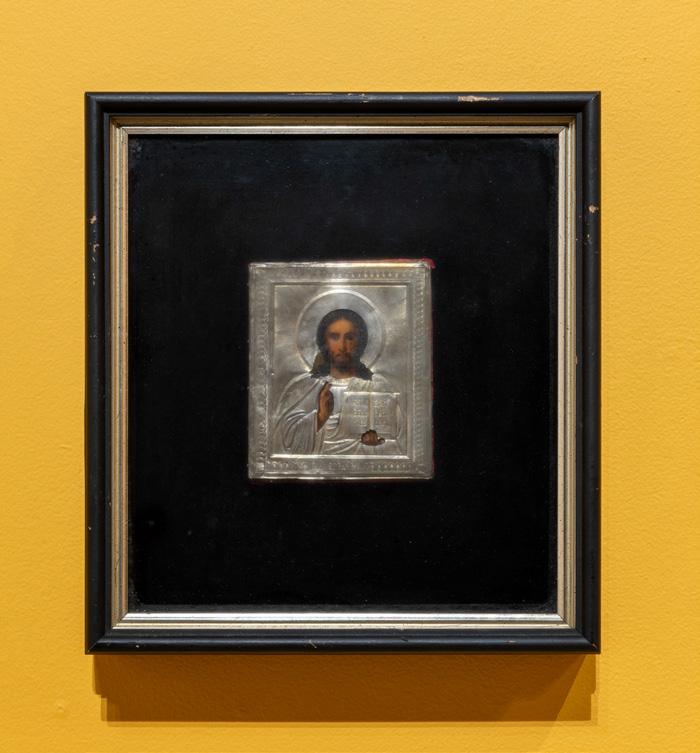
The image of Christ Pantocrator was among the earliest depictions of Christ in the Early Christian Church and remains a central icon of the Eastern Orthodox Church. In the half-length image, Christ holds the
New Testament in his left hand and gestures with his right hand, either teaching or blessing.
From the Greek word for "image," icons were understood to be windows into the meaning of the subject depicted, not realistic representations. Russian icons are a form of religious art that developed in Eastern Orthodox Christianity after the adoption of the faith from the Eastern Roman (Byzantine) Empire in AD 988. Initially following Byzantine artistic standards, these icons were integral to religious practices and cultural traditions in Russia. Over time, Russian iconography evolved, incorporating local styles and elements that expanded its visual and symbolic vocabulary. Russian icons are typically paintings on wood or board, often small, though some in churches and monasteries may be much larger. An icon represents more than just a simple image. It is a potent symbolic representation, imbued with cultural and spiritual significance, and often venerated as a tangible link to the divine or to the revered figure it represents.
There is a rich history and elaborate religious symbolism associated with icons. In Russian churches, the nave is typically separated from the sanctuary by an iconostasis, a wall of icons sacred to the religious community. The arrangement of the icons is determined by strict rules that order their placement in five tiers from bottom to top.
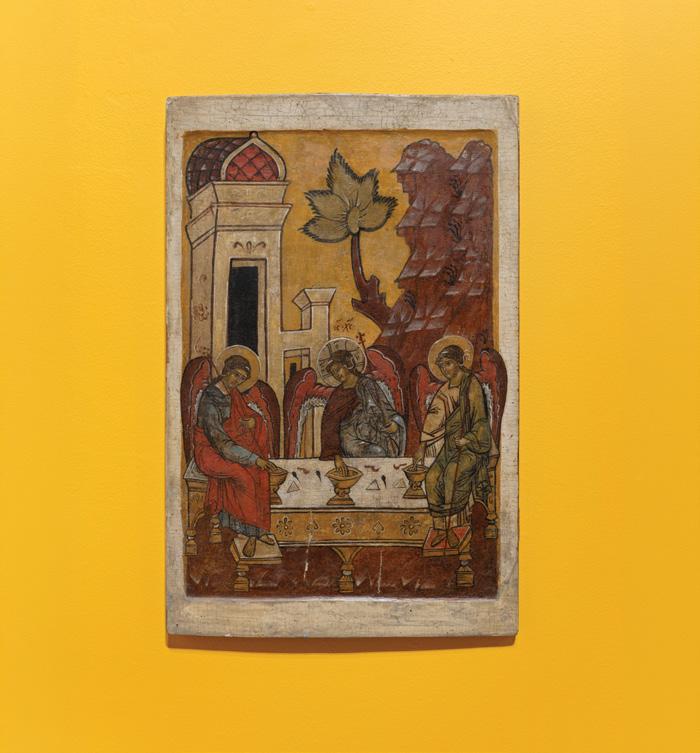
The Trinity is a Christian doctrine that holds that God – the one, unique, and invisible – exists as three identities: God the Father, God the Son, and God the Holy Spirit. This work is inspired by the Russian master Andres Rublev's depiction of the three angels who visited Abraham at the Oak of Mamre (Genesis 18:1–8). The painting is full
of symbolism and is interpreted as an icon of the Holy Trinity. At the time of Rublev, the Holy Trinity was the embodiment of spiritual unity, peace, harmony, mutual love, and humility. That meaning has endured through the centuries.
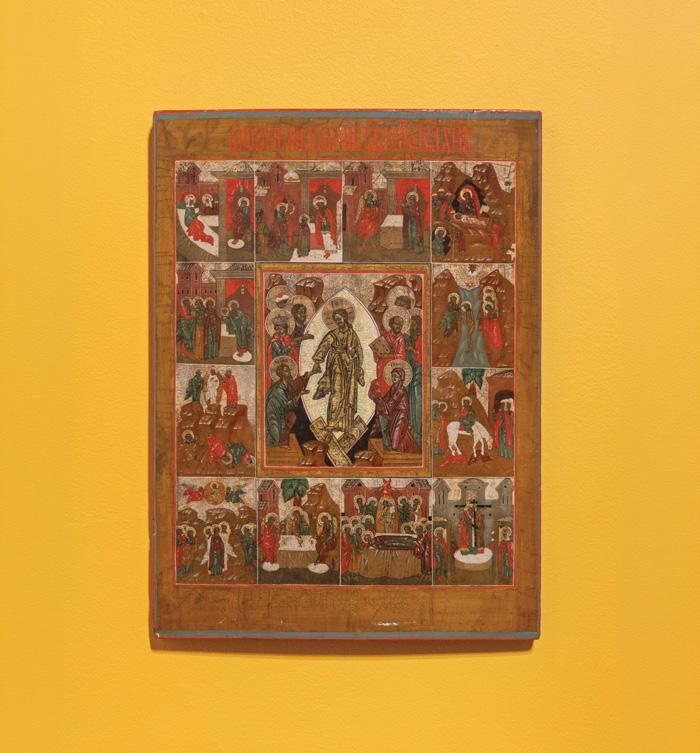
This icon depicts events in the Life of Christ, with the Resurrection at the center. Fundamental to Christian doctrine, it is described that Jesus rose from the dead on the third day. In this image, he rises within a glowing mandorla - the luminous halo formed by overlapping circles -, surrounded by saints and with careful attention paid to the wounds.
Small images from the Life of Jesus, beginning with the Annunciation and ending with the Crucifixion, are arranged around the central mandorla. The saints and events probably relate to significant occurrences at the location where the icon was made.
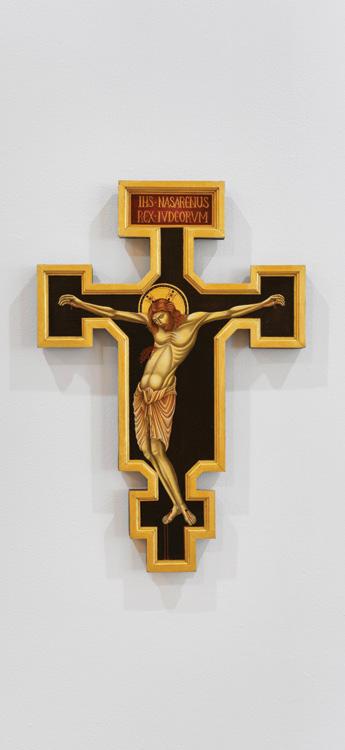
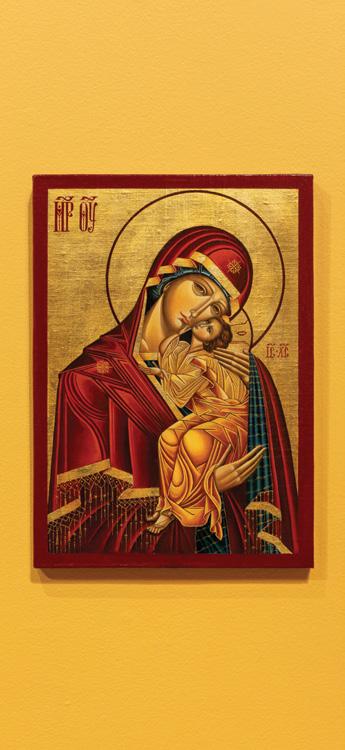
This Crucifix is handcrafted in the Russian Orthodox style, with three horizontal crossbeams, a variant of the Christian cross. Today, it is a symbol of the Russian Orthodox Church. It is created in accordance with an ancient process of creating icons: the wood is prepared, then linen fabric is applied in several layers with glue, sand, and gesso before the image is completed with 23 karat gold leaf.
The Panagia or Theotokos is the most frequently painted figure in Orthodox Icons. The Greek word Theotokos (Θεοτόκος) means “Godbearer” or “She who gives birth to God.” Theotokos does not simply refer to Mary as the mother of Christ in a biological sense but affirms a theological truth: that the one she bore is fully divine. She is Mary, the mother of God’, whom the Orthodox believe prays for us constantly in the presence of Christ, and she is revered for her care for us as a mother.
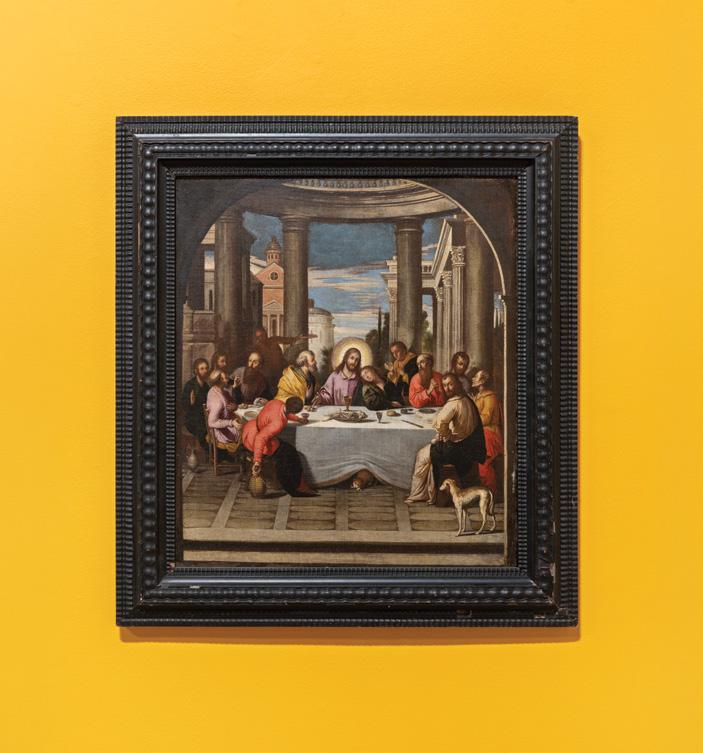
Bonifazio Veronese, born Bonifazio de' Pitati[a] (1487 – 19 October 1553), was a Venetian Renaissance painter active in the Venetian Republic. This small sketch was probably meant as a study for a larger painting of the Last Supper, a scriptural event that marks the final
recorded meal shared by Jesus and his chosen twelve apostles. At this meal, Jesus announced that one of those present would betray him and result in his death. It describes the sacred ritual that established the sacrament of the Eucharist.
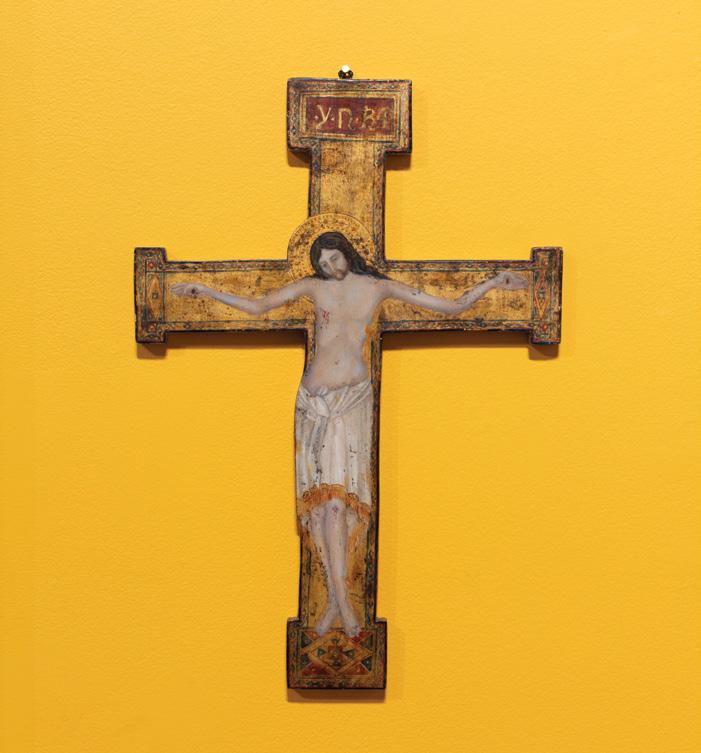
Durrieu works with traditional materials such as gold leaf, gesso, glue, and natural pigments to return to art's origins and honor ancient techniques. These materials hold memory and time, allowing the past to remain present through the act of creating. They are integral to the physical gesture of creation and are part of a lineage that feels both
intimate and timeless. In contrast, Christ appears human, luminous, and compassionate. His inward gaze invites contemplation rather than drama. The body is not martyred; the blood is minimal; the arms rest without tension.
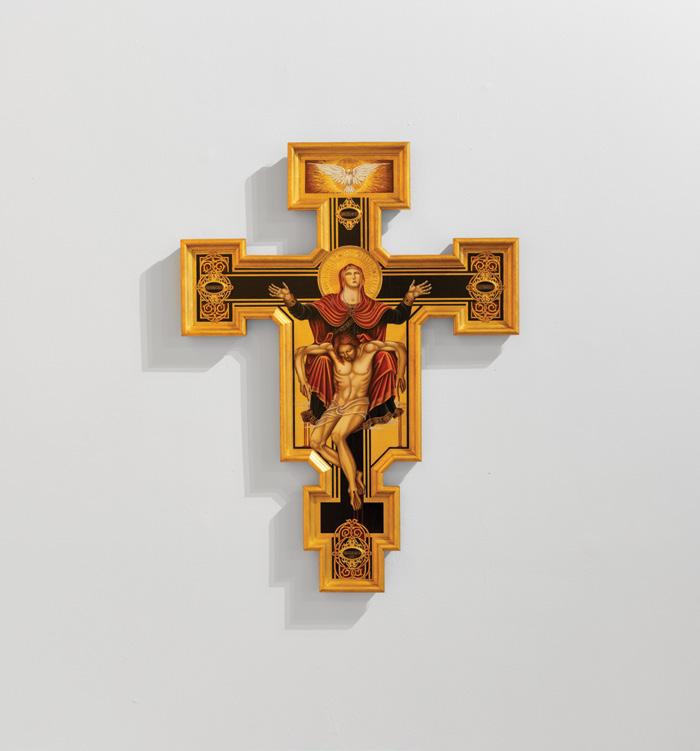
This Crucifix is handcrafted in accordance with an ancient tradition of creating icons by preparing the wood, then applying linen fabric in several layers with glue, sand, and gesso before completing the image with 23 karat gold leaf. The Cross of Mary, Co-Redemptrix, Mediatrix, and Advocate shows Mary in prayer as Jesus is taken from the Cross and placed in her arms.
with
and Full
,
object and mixed media, 11 x 8.5 x 6 in (27.94 x 21.59 x 15.24cm). Courtesy of the artist
This sculpture combines magical surrealism and the Catholic faith with Dada assemblage. Inspired by the exhibition title, The Light of the World, the artist transforms a found object into something sacred, ready for worship. The discarded gas can holds the bust of a common
Pop effigy of Jesus Christ, who suddenly becomes the” light of the world” with a plastic wall lamp of the moon as his halo. The sacred image and ordinary rusty gas can combine to create a unique work of art.
in
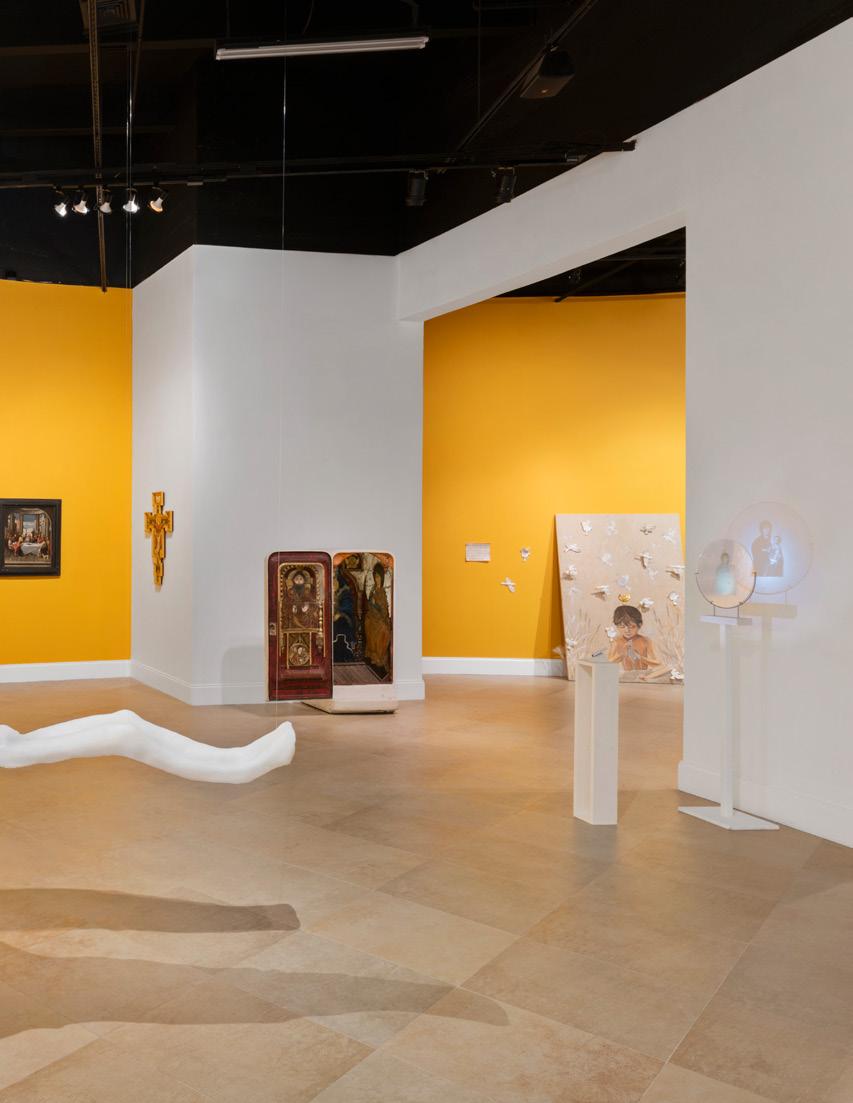
In Pablo Cano's first transformed found-object, a discarded refrigerator becomes an altar dedicated to Jesus Christ. Converted into a “junk basilica” replete with found-object embellishments and painted in a faux-Byzantine style, the familiar old appliance takes on a new life in
another nod to a ridiculous Dada assemblage that combines the surreal and the Catholic faith, suggesting the possibility of creating a sacred space in any ordinary object.
The Cuzco School (escuela cuzqueña) emerged in Cuzco, Peru (the former capital of the Inca Empire) during the 16th, 17th, and 18th centuries. Cuzqueña paintings are characterized by their use of exclusively religious subjects, their lack of perspective, and the predominance of red, yellow, and earth colors. They are also remarkable for their lavish use of gold leaf in elaborate stenciled decorations and the inclusion of flowers, birds, and other motifs derived from indigenous traditions. This charming painting of Joseph with the Christ Child is unusual for the remarkable resemblance of Joseph to traditional representations of a youthful Jesus rather than to an old man. It would make sense to the new converts to Christianity who were unfamiliar with Joseph as an old carpenter to regard father and son as looking alike.
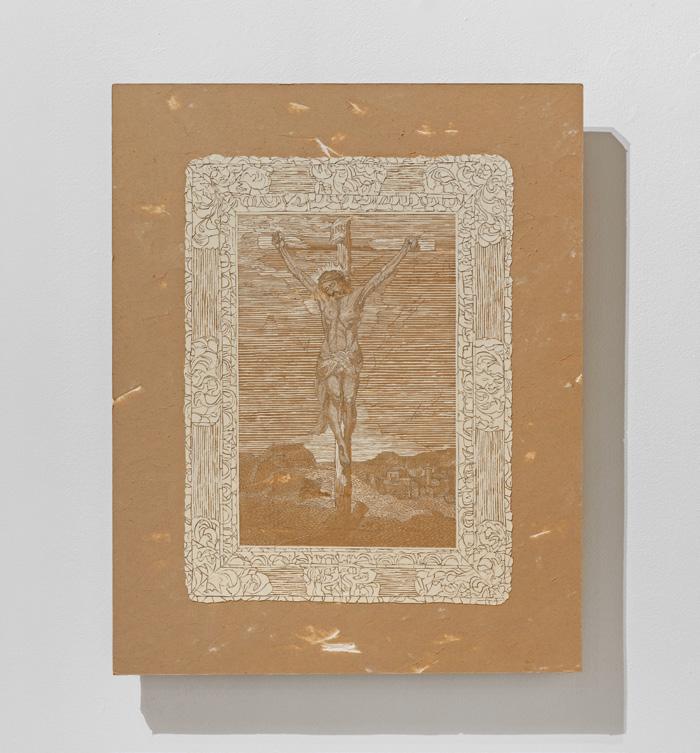
With little access to unaffordable art materials, Acosta stole dry paint chips from the crumbling city walls and the objects around me to make collages of recycled paint on paper and canvas. Called “Stolen Paintings,” they are the very core of his work and his way of surviving as
an artist in the same way people do in Cuba – stealing and smuggling to explore the boundaries between destroying something or committing a crime, and creating, as well as the concepts of ethics and morality within that society.
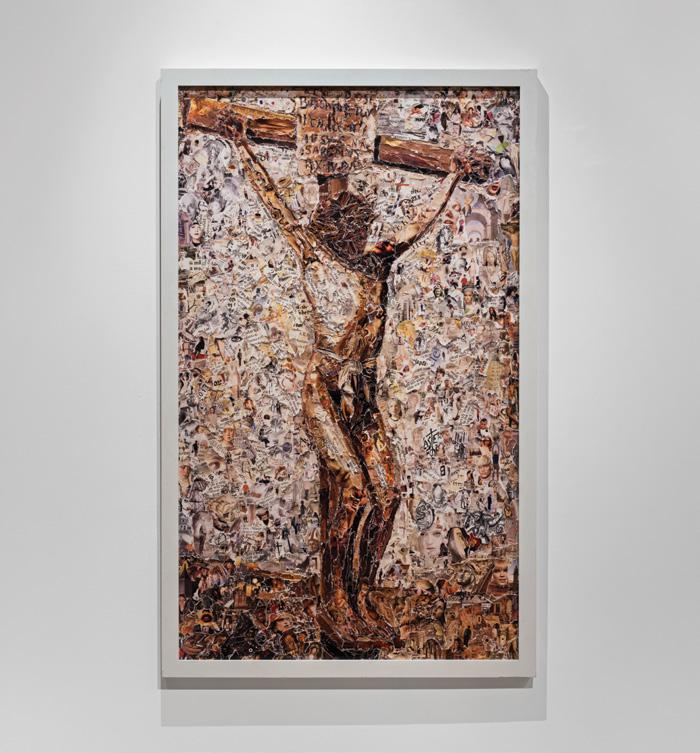
Redefining the relationship between painting and photography through images constructed from unconventional materials, Muniz challenges perception by transforming humble or ephemeral substances into complex visual representations that reference art history, mass culture,
and social realities. Based on the intensely realistic painting The Crucifixion (1880) by American master Thomas Eakins, this image is a print composed of tiny fragments of torn, glossy magazines, recognizable only when viewed closely.
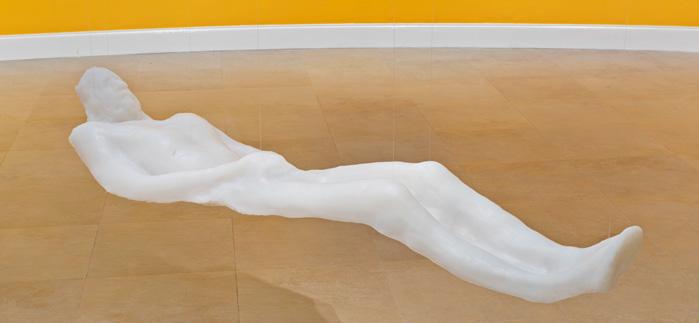
This work is inspired by The Shroud of Turin and the moment in which flesh becomes pure spirit. The transformation is revealed through resin and silicone, creating a rough mold with minimal details that provides enough of an impression to visually render a male human form. Although the Shroud of Turin is a universally recognized artifact, it is also what is left behind to represent a divine intervention, a moment on earth that, for believers, proves that Christ existed, suffered, and endured pain for our salvation. The resin gives the form strength, while its clarity symbolizes truth and purity as the latex holds the light. The multi-layering represents the time it took for the flesh to transform into pure spirit. In that brief moment, the flesh dissipates, leaving an impression on the fabric, with traces of light.
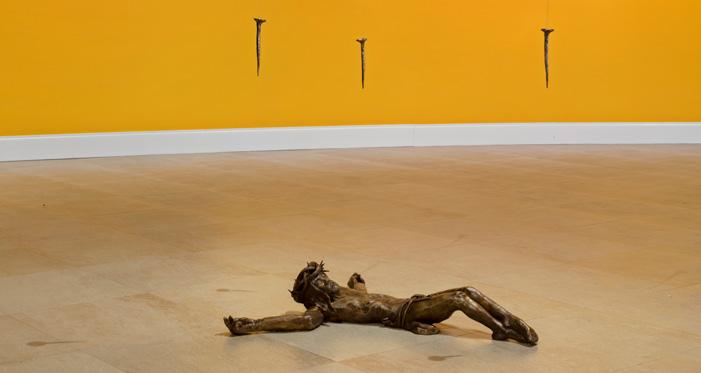
This bronze sculpture of Christ crucified is created to bring about a moment of deep contemplative prayer, with particular emphasis on complete surrender to the will of God. The work invites the viewer into stillness - into a space where suffering is not observed from a distance but prayerfully encountered. Above the sculpture, nails made of highly
polished bronze hover one inch above the image. Bronze itself carries symbolic weight. The sculpture evokes Christ’s physical agony and human struggle and suggests that only through suffering with Christ, through contemplative prayer, can we experience the triumph of divine love.
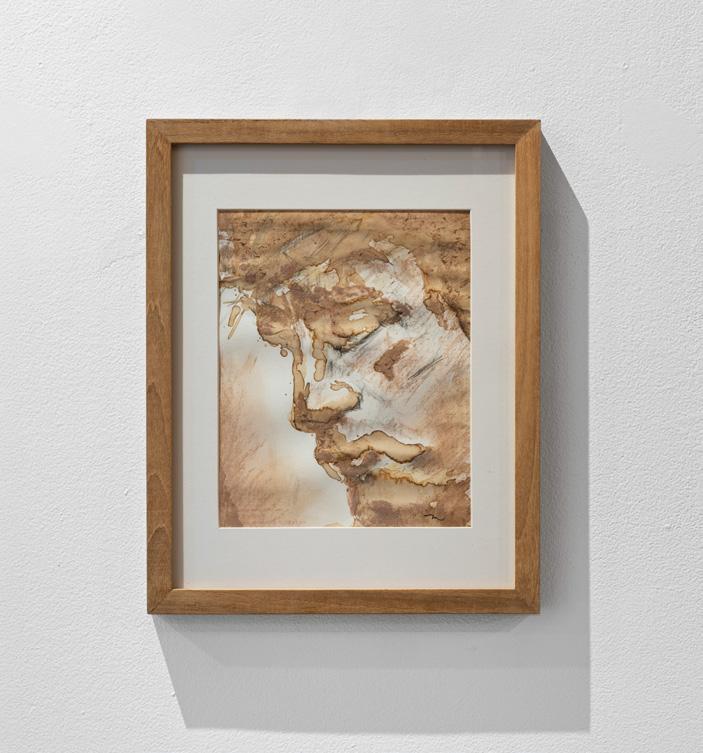
This painting was created as a devotional offering to Father Jets, the pastor of Saint Peter the Fisherman in Big Pine, Florida. It is both a gesture of thanks and an act of prayer. Executed in clay, rust, coffee, and Conté crayon, the materials themselves carry meaning. Earth pigments, stains, and abrasive marks evoke the physical reality of Christ’s
suffering. The surface holds the smell, stain, and grit of the Passion— the sweat-soaked dust, the chalky dryness of the air, and the weight of exhaustion borne step by step. These materials do not merely depict suffering; they participate in it, embedding the work with a sense of bodily presence and endurance.
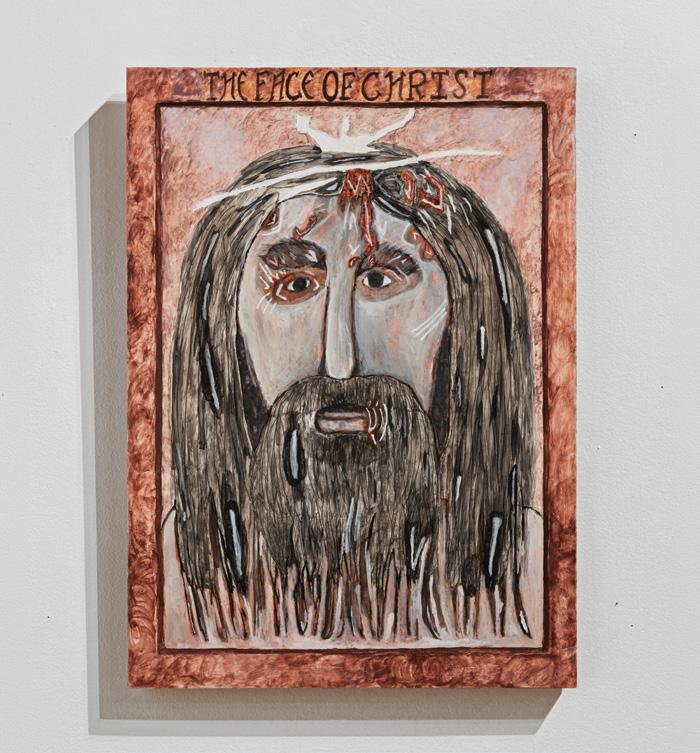
Icons are a form of scripture, theological images meant to convey divine truth. Created from a thousand-year-old Russian technique of making images on gesso on wooden panels, handmade by a Byzantine priest, the image is drawn directly onto the surface, and then carved
into the wood. Russian mineral pigments mixed with egg tempera are applied to complete the process. This work is inspired by the Shroud of Turin.
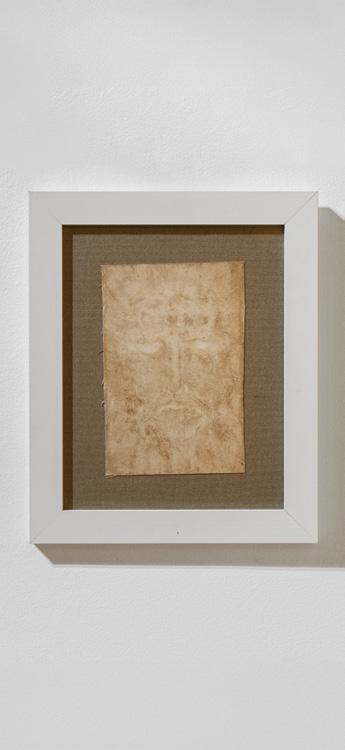
Working with limited resources on unframed pieces of canvas using acrylic paint in two tones, black and brown, and the white of the canvas, and lacking brushes, these works were created directly with the artist’s fingertips. Ironically dubbed "digital painting" at the time, the works aim to produce the possible presence of "non-material
entities" through a novel material technique. In their subtlety, they seem to emanate from within the canvas itself, rather than being imposed upon it. In these two pieces from a series, the lightness of the intervention is perhaps the source of their power.
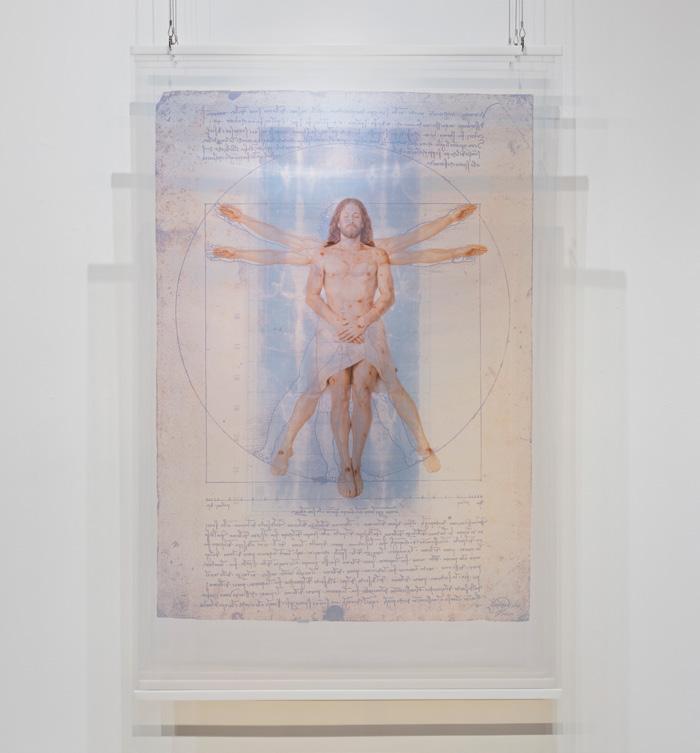
Leonardo da Vinci, drawing upon the work of first-century Roman architect Vitruvius and his observations on the ideal proportions of the human body within geometric forms, set forth a foundational paradigm for the Renaissance. This approach reflected a renewed engagement with classical knowledge and underscored the principle of humanity serving as the standard for all things. The Christ of the Vitruvius suggests a re-centering that evokes the image of the buried "Son of
Man," echoing what photography would later reveal in the Shroud of Turin: a burial imprint that matches the martyrdom described in the Gospels. The image still presents a mystery, appearing not merely as traces of blood and bodily fluids but as a negative imprint—possibly produced by an inexplicable radiation—that mystics associate with the Resurrection's emanation.
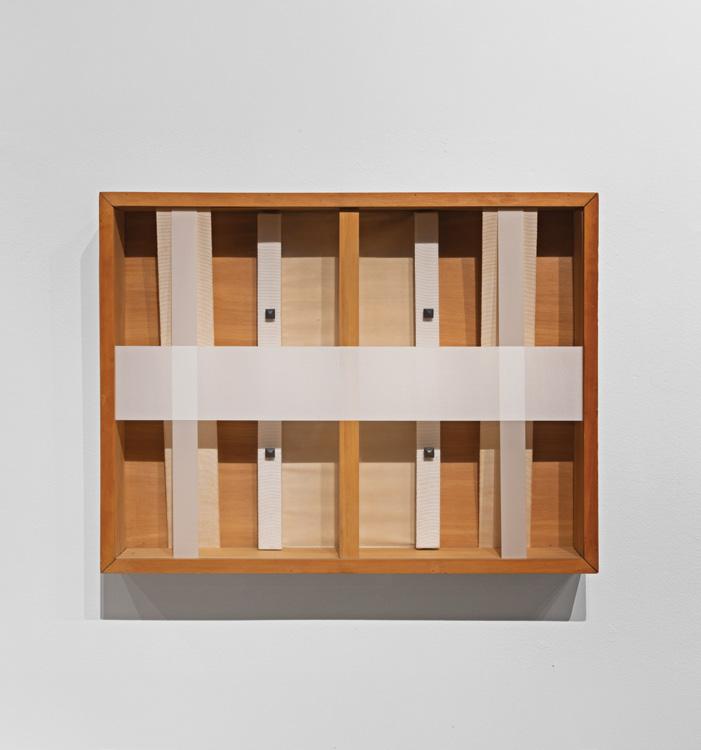
This three-dimensional work represents the shroud donated by Joseph of Arimathea to wrap the body of the dead Christ. While its sobriety and repetition of elements recall minimalist aesthetics, the work departs from that tradition by embracing the ritual dimension. The wooden structure evokes the sepulcher and abstractly recalls the
Shroud of Turin, while the white vertical bands allude to Catholic iconography of victory over death. The wide, translucent horizontal band that cuts across the structure suggests the transfiguration of Christ’s body and its radiant light.
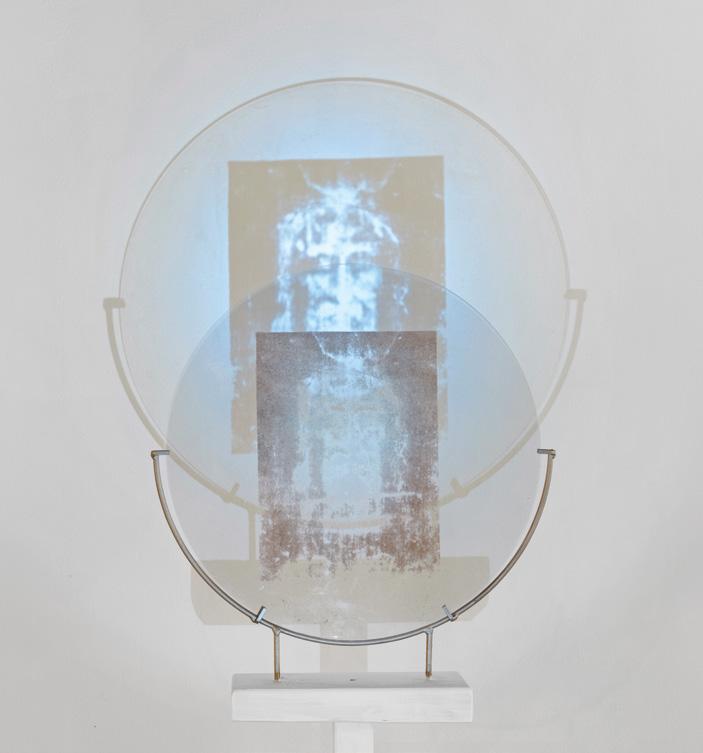
Based on the image of the Shroud of Turin, a linen cloth believed by many Christians to be the burial shroud of Jesus Christ and kept for centuries in the Cathedral of Saint John the Baptist in Turin, Italy, this
work was created using myrrh, a substance traditionally used in burial practices. For Catholics, myrrh symbolizes Christ’s suffering and death, foreshadowing His sacrificial Passion and burial.
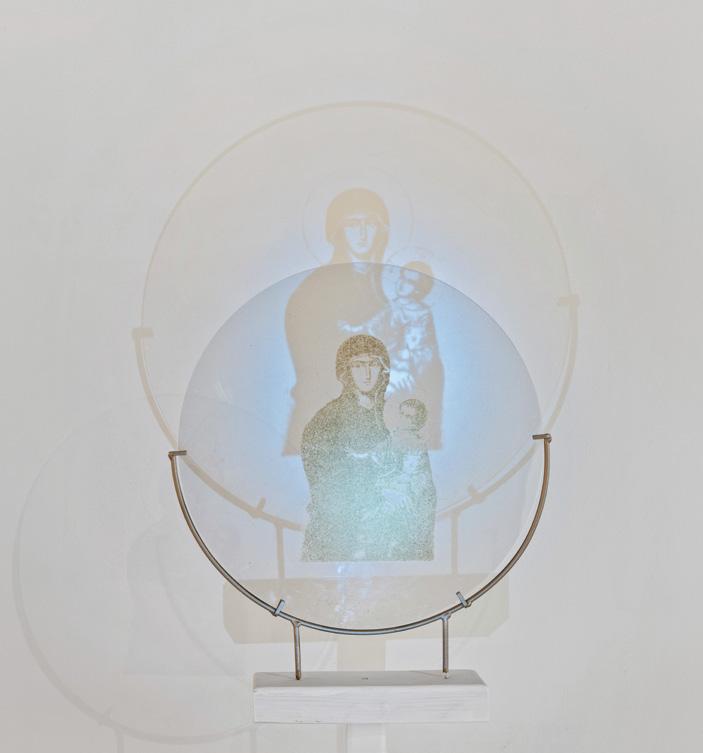
This contemporary icon, made of yerba mate tea, was inspired by one of the most venerated images of Rome: the icon Salus Populi Romani. Tradition holds that it was made by St. Luke the Evangelist and brought to Rome by St. Helena in the 4th century. Housed in the Basilica of Santa Maria Maggiore in Rome, it is profoundly associated with Jesuit spirituality. St. Ignatius of Loyola celebrated his first Mass there, and this image was carried by the Jesuits on their evangelizing missions. This work was created with Yerba Mate, since Jesuits played an important role in its cultivation in South America during colonial times.
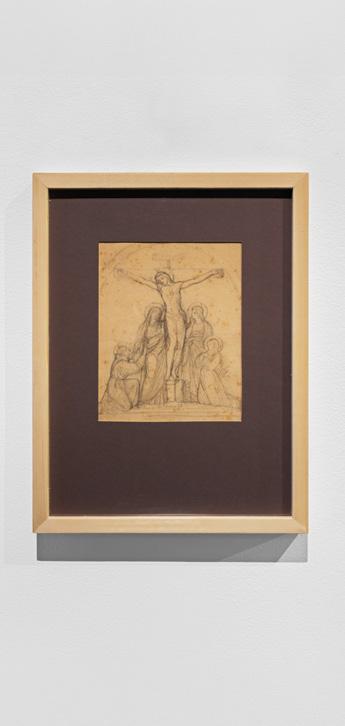
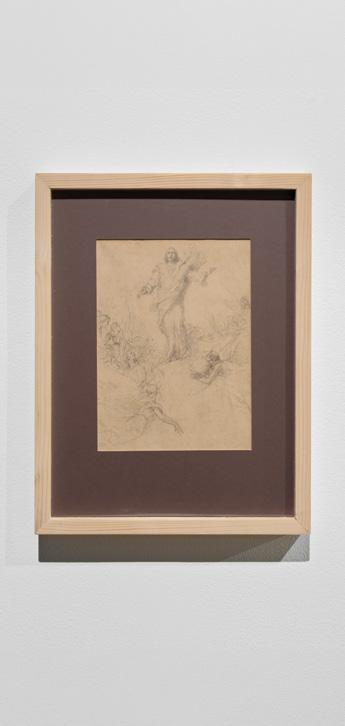
This small drawing by a Jesuit priest in the 19th century, who was one of the great teachers of the human figure in the School of Artes in Bogota, was for an image for the Company of Jesus devoted to the veneration of the Sacred Heart of Jesus. In this early representation of this devotion, He appears crucified and associated with the adoration of the cross. The drawing was produced shortly after the consecration of humanity to the Sacred Heart on June 11, 1899, by Pope Leo XIII. The devotion had gained widespread popularity following the apparitions to Saint Margaret Mary Alacoque between 1673 and 1675. The drawing depicts Saint Francis, Margaret Mary Alacoque—who at that time had already been beatified—Blessed Mary of the Divine Heart, who was instrumental in prompting Leo XIII’s consecration, and another holy woman. Acevedo-Bernal was one of Colombia’s most influential artists of the
late 19th – early 20th centuries. On June 22, 1902, during the civil conflict known as the Thousand Days’ War, the Archbishop of Bogotá consecrated the country to the Sacred Heart of Jesus as a plea for peace. Six months later, the Treaty of Wisconsin ended the bloody war and initiated a period of internal harmony. Ricardo Acevedo Bernal, then, perhaps the country’s most prominent painter, received several commissions on this theme. He was the architect commissioned to remodel and restore the Metropolitan Basilica Cathedral of Tunja, designing a republican neoclassical dome, and, as a painter, he was commissioned to decorate it with medallions of the Evangelists and a mural, the Triumph of the Sacred Heart of Jesus. This drawing was an initial study for the Tunja Chapel devoted to this veneration.
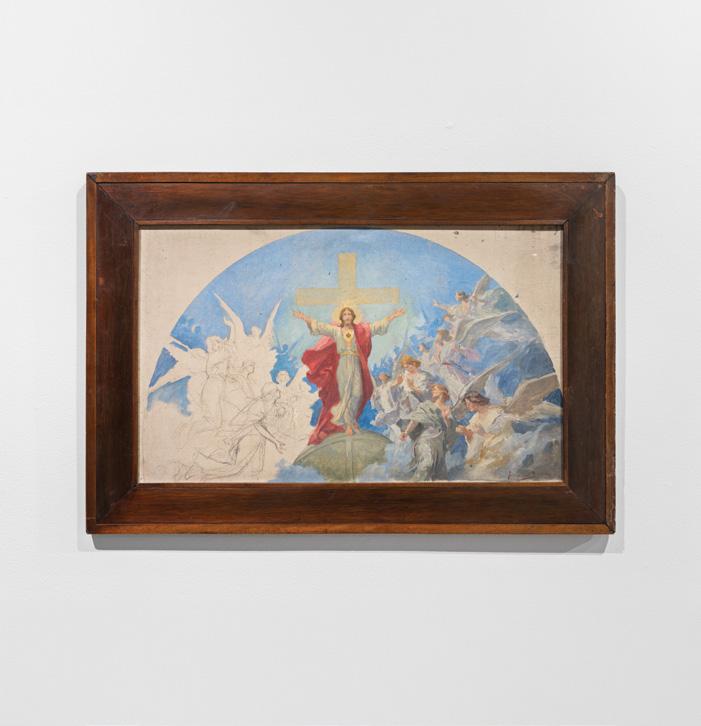
Continuing Acevedo-Bernal’s interest in the image of the Resurrection, as seen in the drawing in this exhibition, this unfinished work demonstrates his mastery of background illumination and his sensitive handling of the natural light that radiates around Christ. This technical expertise owed much to his years in New York (1890–1898), where he studied with the impressionist William Merritt Chase. For this major commission for the Cathedral—encompassing both easel and mural painting—he produced several preparatory studies. This oil was the final study for the ceiling mural of the Metropolitan Basilica Cathedral of Tunja. The Resurrected Christ floats above the clouds, as he displays his bleeding or flaming heart.
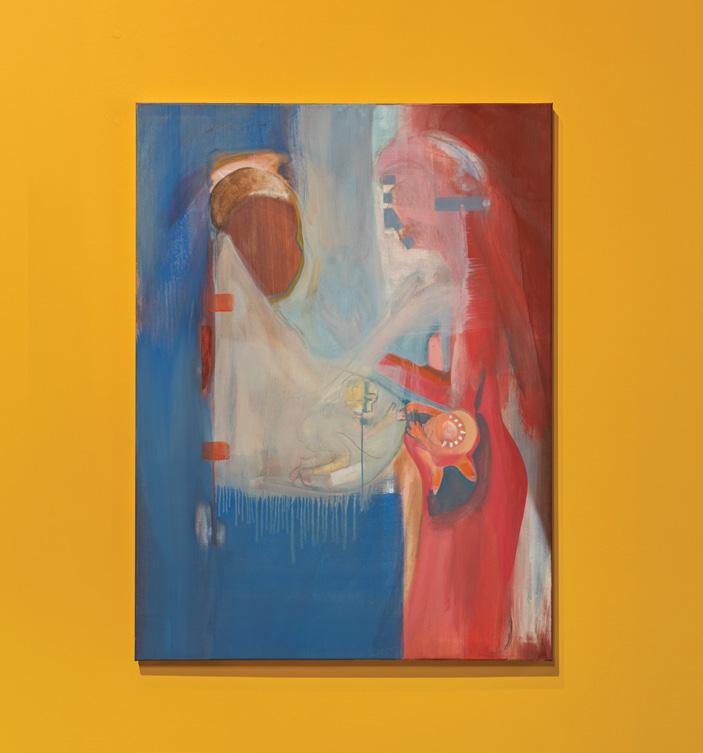
The Visitation of Mary is the biblical account (Luke 1:39–56) of Mary, newly pregnant with Jesus, visiting her pregnant cousin Elizabeth, which caused the unborn John the Baptist to leap for joy in the womb.
In this work, the event has been abstracted into panels of color without losing the sense of mystery and joy.
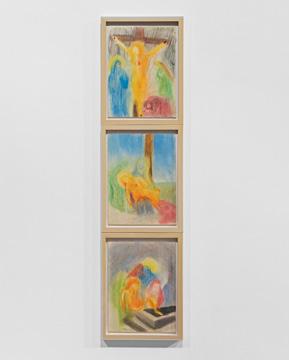
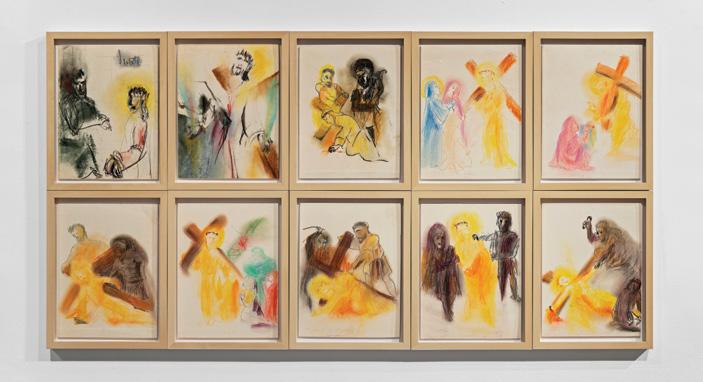
Inspired by the Path to Santiago, the artist envisioned recreating the Via Crucis (Way of the Cross) and made the Stations of the Cross I, II and III. Ten years later, on a Good Friday, divine inspiration came to her, and she created the IV through the XIV stations of the Passion of
Christ. These small drawings are dedicated to sacred religious art; their existence stands as a testimony of gratitude for overcoming life’s challenges, for spiritual growth, and for the desire to bear fruit for humanity through art.
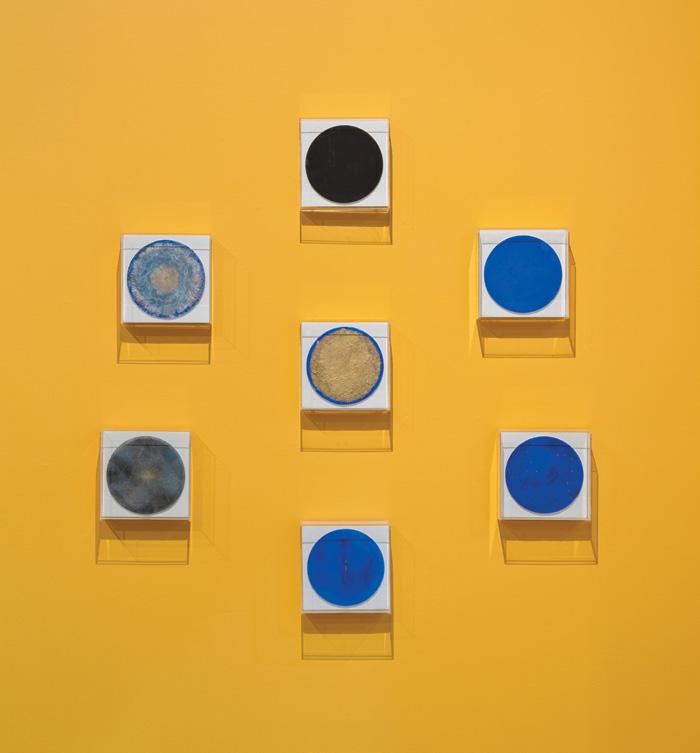
Creation is part of a Series dedicated to meditating on the thought of the beginning of the Universe, that before time, already existed in the Love of God. The seven days of the Creation are represented in seven circles in an abstract vision of the source of life and the beginning of
time born from the highest source of energy: the Holy Trinity, which includes the Father, the Holy Spirit, and the Son, Jesus. In Colossians 1:16 is written: "For by him all things were created". This verse refers to Jesus Christ as the agent through whom all things were created.
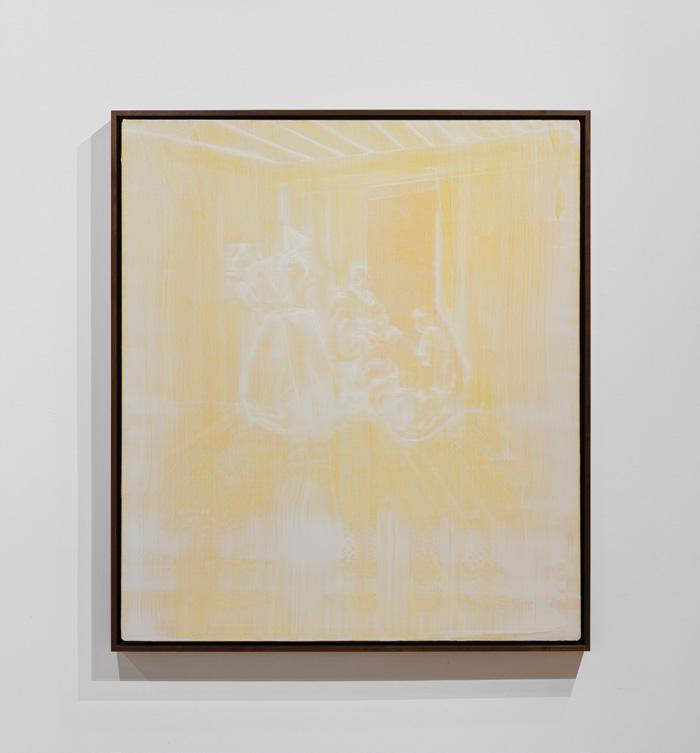
Martha complained that she had worked while her sister listened to Jesus’s spiritual instruction. The work is meant to express the distinction between painting as painting and wall painting. The color yellow evokes the story and conveys a sense of spiritual meditation. In 1973, the artist positioned himself as one of the foremost pioneers of Venezuelan conceptual art when he filled a museum with wall paint: the tone Sun Yellow K7YV68. This gesture, clearly connected to the idea of dismantling categories such as the distinction between painting-as-painting and
wall painting, as well as to the use of emptiness, constituted a meditation on the nature of art. One of a series evoking the history of religious art and referencing key biblical passages, this work in yellows comments on the relationship between action and contemplation as set forth in the story of Martha and Mary of Bethany, who entertained Jesus in their home. The artist employs a play on language to suggest a convergence between these two vital postures, inseparable from his art.
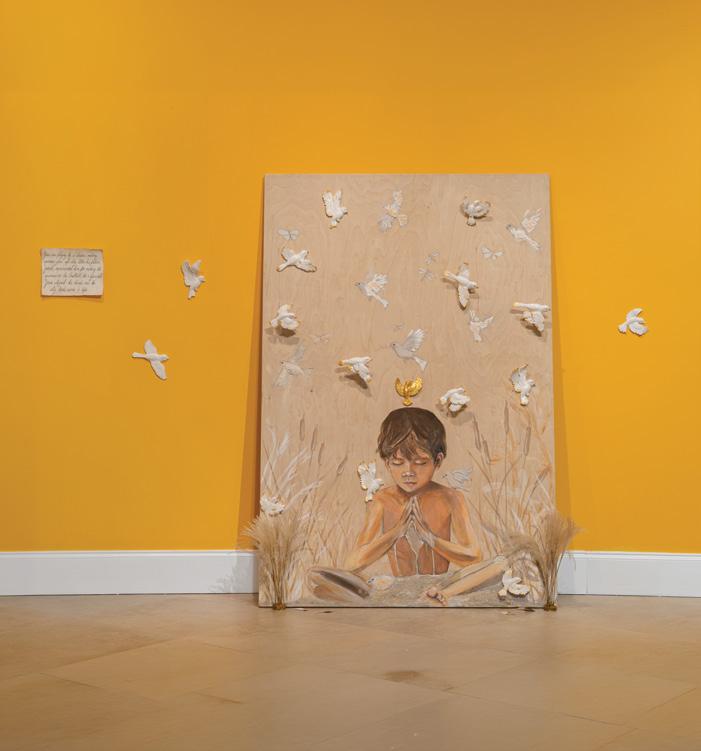
The Vivifications of the Sparrows draws on an apocryphal Gospel recounting what is considered the first miracle of the child Jesus: the formation of birds from clay and their bringing to life. Twelve white sparrows evoke the twelve apostles— human, earthly, and marked by fragility—while subtle touches of gold suggest the divine spark within them. A single fully gilded bird represents the Holy Spirit: pure presence, breath, and illumination. Clay speaks of the human
condition, gold of transcendence. The childhood of Jesus is not mere innocence but creative power—the moment when life is brought from within. While the artist was making this piece, researchers studying papyrus fragments in the Hamburg Library (Germany) identified a small 13-line fragment belonging to the Infancy Gospel of Thomas in which this episode was recounted.
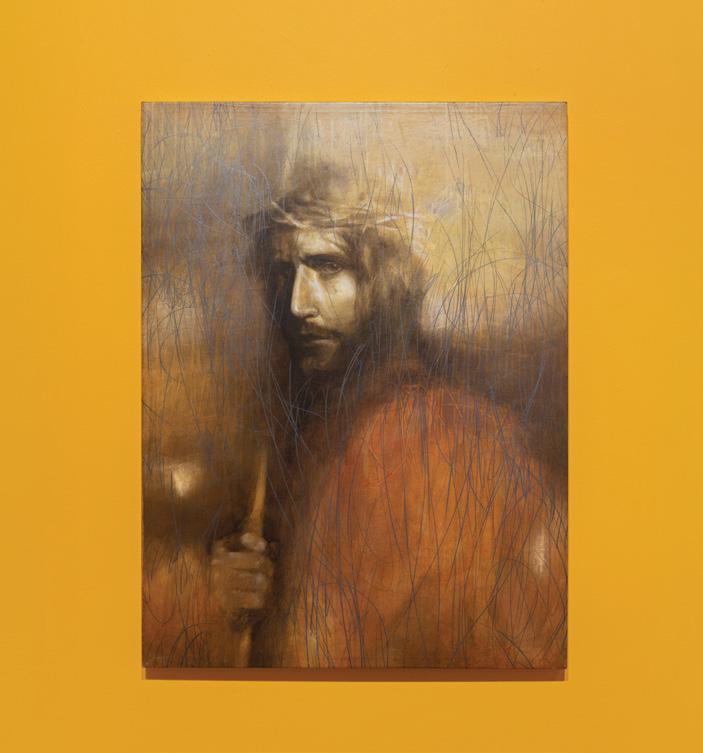
The image of Jesus Christ is inspired by a long tradition of portraiture in Western Christian art. It is an attempt to analyze the figure of
Christ from an archetypal and iconographic perspective, employing a modern painterly technique.
A distinguished member of the avant-garde generation of modern Cuban painters, Antonio Gattorno has painted his highly personal interpretation of the Last Supper in broad, painterly strokes of color, bringing the traditional representation into the modern world.
At the center, Christ sits with his head raised and chest not only exposed but emanating the strength of his determination as he offers the chalice, alluding to the blood he will give for humanity. The anatomy of the body—the ultimate offering—is emphasized with warm reddish tones, giving it a sense of strain and spiritual intensity. While the blue mantle he wears may contain a celestial allusion, the green table symbolizes the earth, and a knife foreshadows the Passion. Behind him, a bowed figure expresses sorrow and, in contrast to Christ’s determination, seems to grasp the magnitude of his sacrifice.
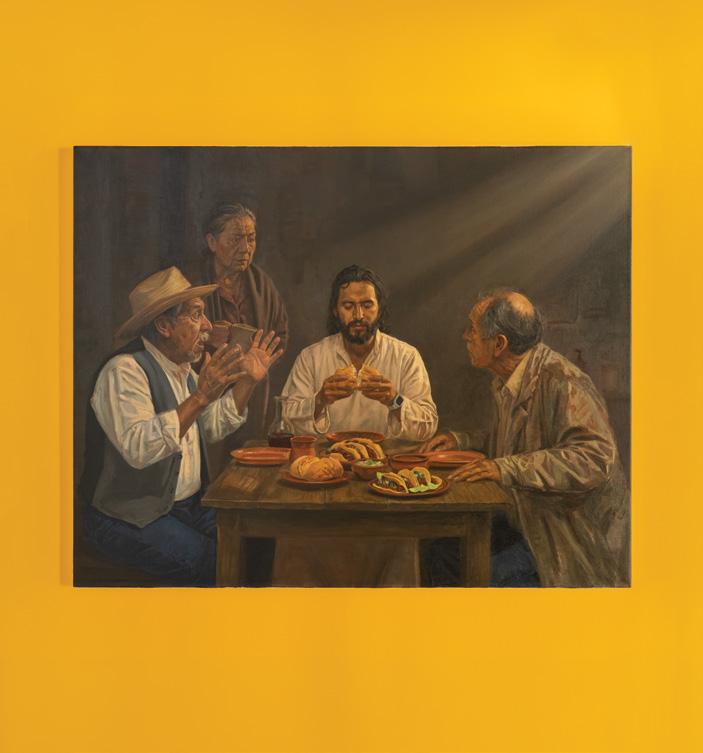
The Supper at Emmaus is an episode from the Gospel of Saint Luke, patron of the artists, in which Jesus appears—unrecognized—to two disciples who are walking toward the village of Emmaus, mourning the loss of their crucified teacher. Meeting two women from the village, he is invited to stay the night, as it is growing late. During the meal, when he breaks and blesses the bread, the disciples suddenly recognize that they have been speaking with the risen Jesus, who then disappears immediately. This version is set in a contemporary rural Mexican setting, with a table laden with Mexican food, as if the events had just taken place. The scene at Emmaus can be repeated in any home, where the presence of the Master remains alive whenever bread is broken.
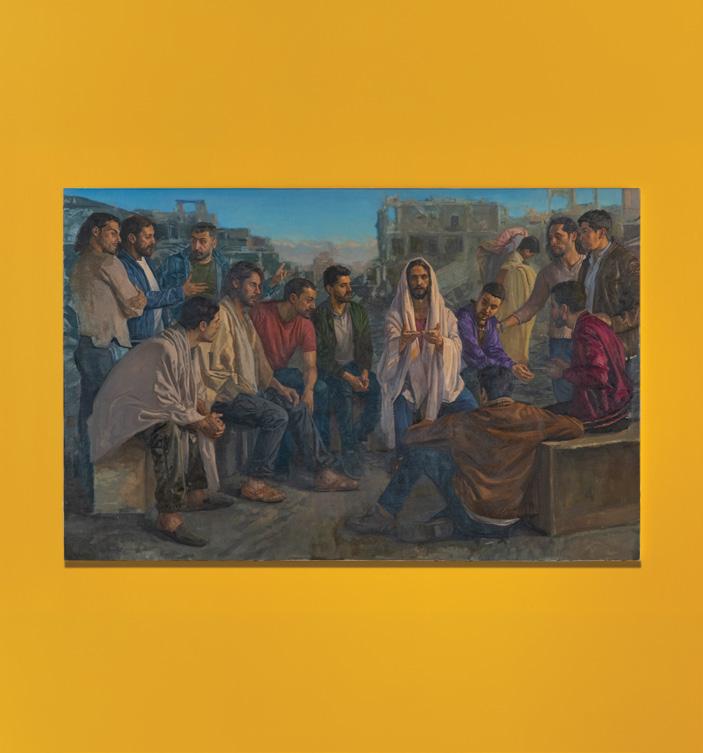
For Christianity, the Last Supper represents not only the Passover but also the final meal that Jesus shared with his disciples before his Crucifixion. Marking the beginning of the institution of the Eucharist and the new covenant through the offering of his body and blood, it is an act of service, love, and sacrifice that prefigures the redemption of humanity and symbolizes communion. This painting, The Last Supper, seeks to modify traditional religious iconography through a
contemporary vision. The apostles inhabit a world devastated by war, where refugees of multiple origins wander. In Jewish tradition, Jesus shares the bread of Elijah at the beginning of Passover, conveying the message that the boundless peace of the Messiah prophesied by Isaiah can arise only through communion (from the Latin communio: sharing in common) among all human beings.
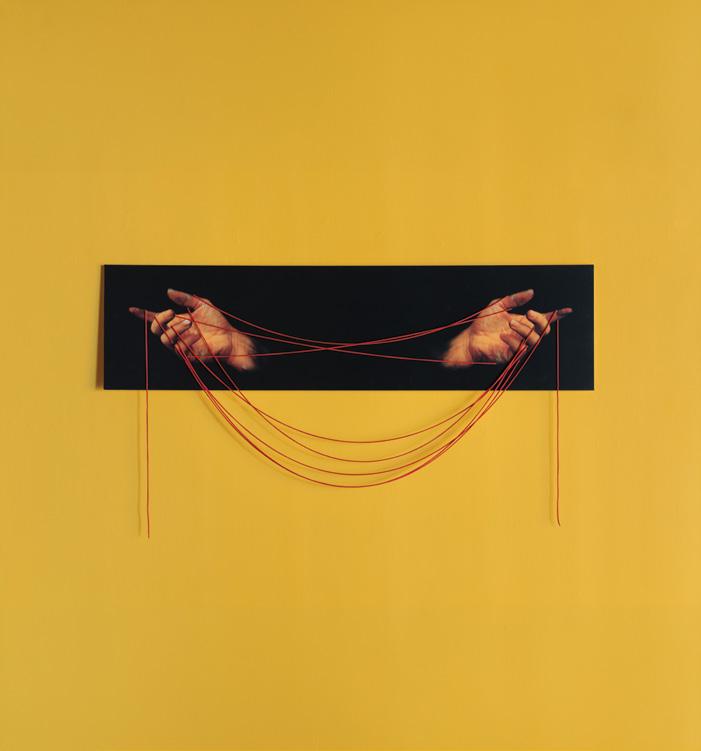
The artist reinterprets Christ's bound hands, a common motif in art history, as a depiction of the “Ecce Homo,” Latin for “Behold the Man.” It was the proclamation of Pontius Pilate when he handed the flagellated and weakened Jesus over for the Crucifixion. Christ’s hands hold a red thread, hanging without tension between his fingers. By untying Christ’s hands, the thread falls gently, held like an invisible guide, evoking the human being at his most vulnerable moment. This “Ecce Homo” is not a triumphant presentation, but the exposure of a radical solitude. The work evokes the hands of Jesus in his most human aspect, on the verge of condemnation, and becomes a metaphor for the dream of redemption—as a shared, collective, and profoundly human destiny, yet one touched by the divine.
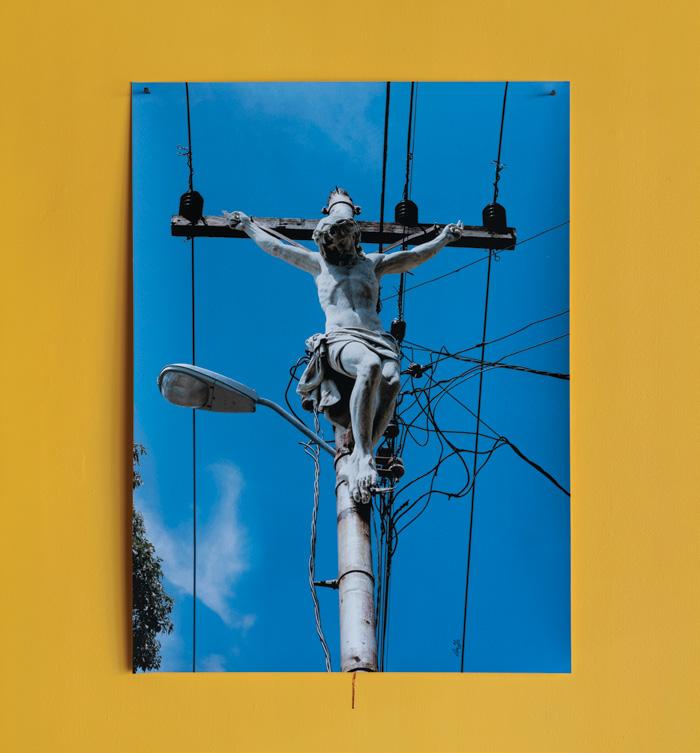
The statue of Christ on the Cross was made by a cemetery monument worker for the artist who clandestinely placed it on an electric pole in Havana during one of the city’s many blackouts. It is a comment on
both the crisis of a world without light, and a prayer to Christ as the light of the world.
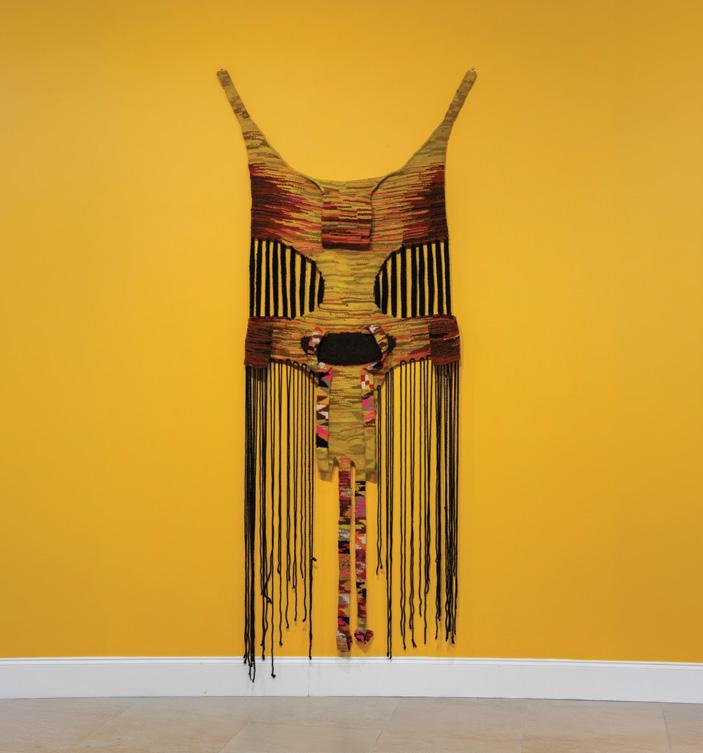
Bernal de Parra is one of the great pioneers of Latin American textile art. Her remarkable artistic production—key to the construction of modernity in her country—has only recently begun to be rediscovered. Her unusual, abstract portrait, Mi Cristiano, is an exceptional example of three-dimensional textile art. It is a unique fusion of religious tradition, the appropriation of woven garments worn by Colombian peasant women, and the imaginative use of fibers. She conceived this piece in a workshop with local craftswomen, when one of them noticed there was no image of Christ in the room. Bernal then resolved to construct one on a monumental scale to celebrate popular aesthetics and a mystical vision of Christ.
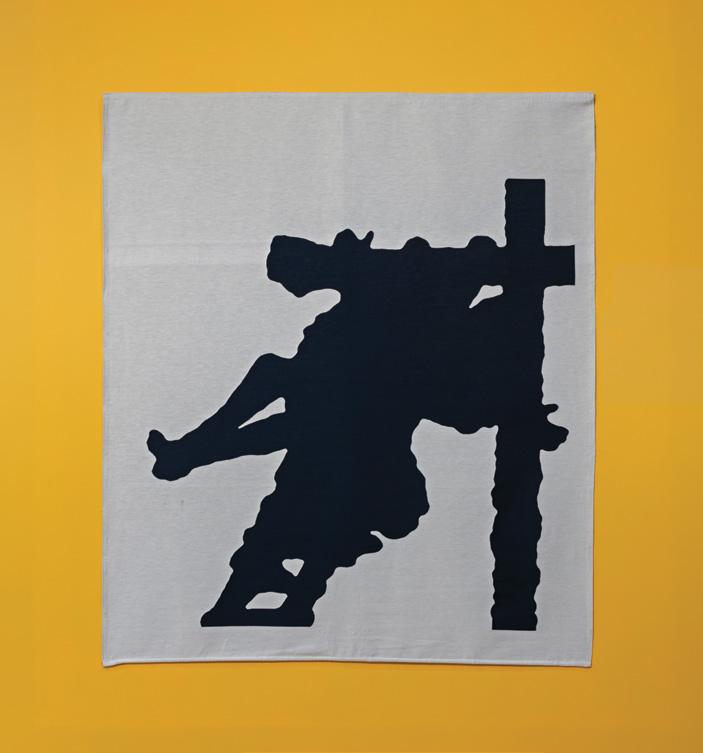
This tapestry contrasts black and white to create a simple, dramatic silhouette of a sacred event, Christ’s Descent from the Cross. Christ is the light of the world emerging from the darkness of tragedy.
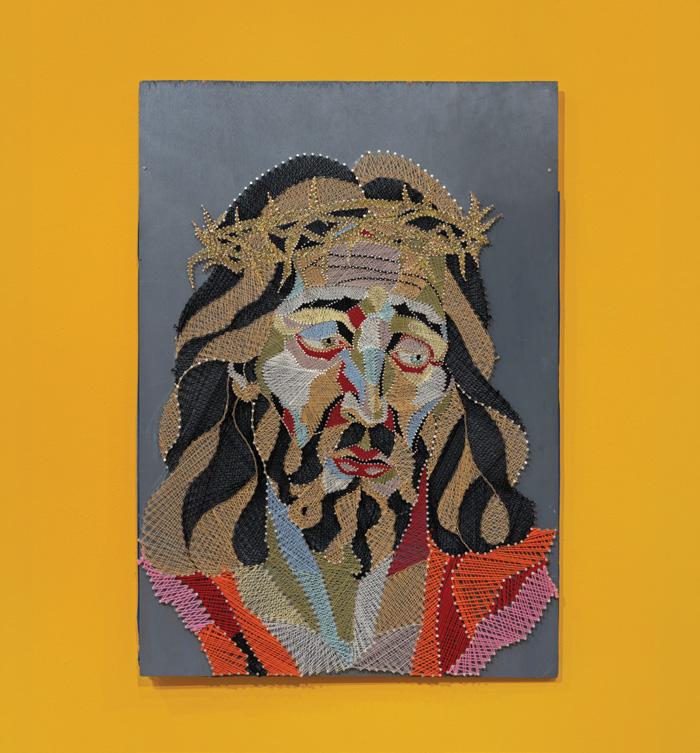
Inspired by the spirituality, history, and values of the artist’s Maya cultural heritage, in which materials hold significance beyond the physical and engage with traditional symbolism, this work evokes the
interconnection of the universe. Colors reflect energies, sacred directions, and spiritual states.
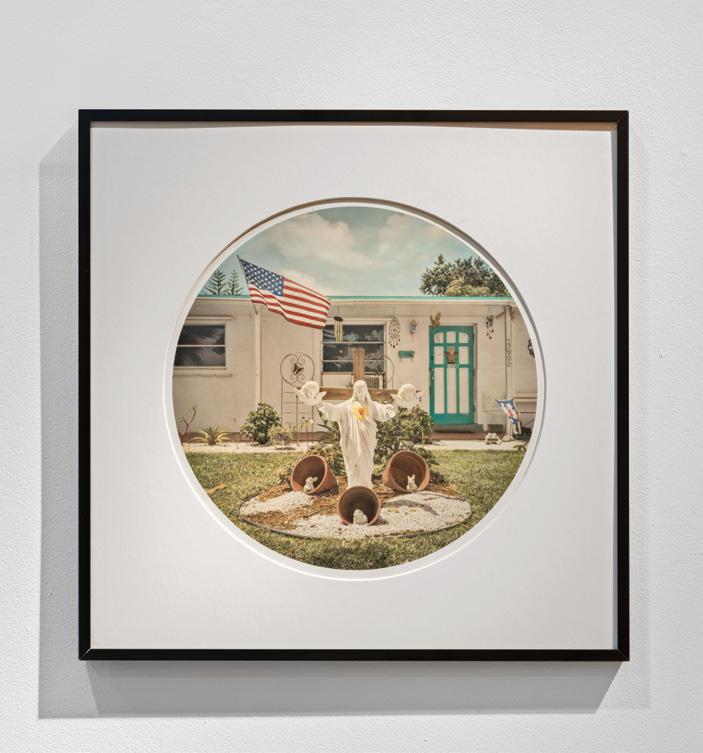
Inspired by a trip to Italy, and its distinctive fountains and statues, these photographs capture the decorations that adorn the front yards of suburban homes in South Florida. Though the subjects may seem familiar, in this new context, they take on a different character. Their
scale, placement, and unexpected juxtapositions create a unique flavor and visual language in our area. Each black-and-white photograph is hand-colored with photographic oils, toothpicks, and cotton. The added color makes every print unique and introduces a subtle layer of fiction.
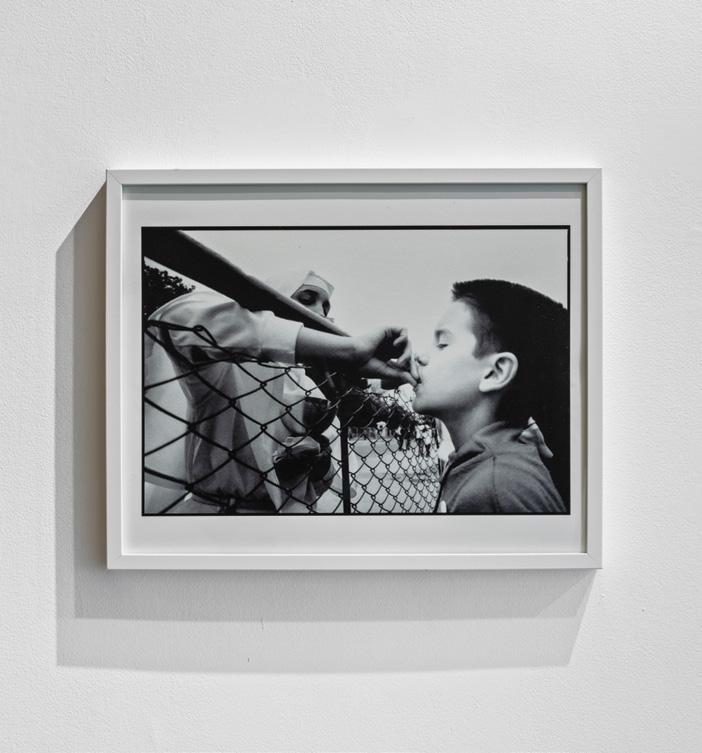
This poignant photograph of a child receiving communion through a chain-link fence during a religious celebration outside the Church of La
in Havana embodies the lesson of the “decisive moment” in
photography: the image is more powerful than any words that might attempt to explain it.
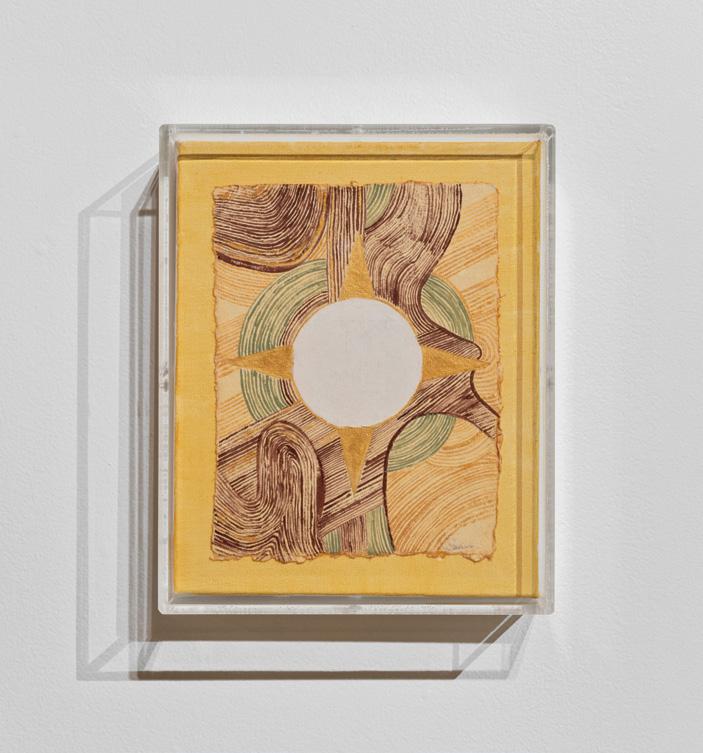
This work is born of a profound personal experience: the Vision of the Eucharist as revealed to the artist. The central form of the composition reproduces that vision, understood not as a symbolic representation, but as the record of a concrete spiritual experience. The visual structure, rhythms, and palette do not seek a literal depiction.
Instead, they emerge from the study of Eucharistic miracles researched by Carlo Acutis, which he made known to the world as a lasting testimony to the real mystery of the Eucharist. This work's reference is one of those miracles and is part of an ongoing series that will comprise more than one hundred pieces.