WELCOME TO THE BEES FOR DEVELOPMENT JOURNAL
The Journal was first published in 1981 as a short newsletter and has gone through several reimaginations over the years.
With the newest design, we will be focusing on one of our six pillars, listed on the back cover, for each issue. This Journal focuses on Beekeeping Training.
In this issue, you will learn about Apis dorsata, A. ceranae, and A. laboriosa, understand the importance for free living A. mellifera populations in South Africa, and gain training tips from projects in Vietnam and Zimbabwe. We also share a recent review of the primary and secondary literature on honey bee varroa resistance in sub-Saharan Africa, and what this means for beekeeping training across the continent.
COUNTRY HIGHLIGHTS
03
Honey Hunting
Meet the Nepali Gurung community
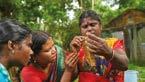
Women for Bees A beekeeping training initiative
BEEKEEPING TRAINING
10
Beekeeping training Lessons from indigenous practices
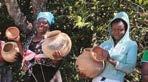
Beekeeping in Vietnam Transforming beekeeping in Vietnam
BECOME A CONTRIBUTOR
If you would like to submit a feature of your work or a summary of your recent research, please contact us at info@beesfordevelopment.org
This Journal is about engaging with beekeepers globally and sharing knowledge. We know there are many beekeepers and organisations with great work and knowledge to share.
Best wishes, From the Bees for Development Project Team
FEATURE
Beelining in the bush Wild honey bee ecology in South Africa
HONEY HUNTING WITH THE GURUNG COMMUNITY IN NEPAL
By Rashmi Kandel Medicinal Mad Honey
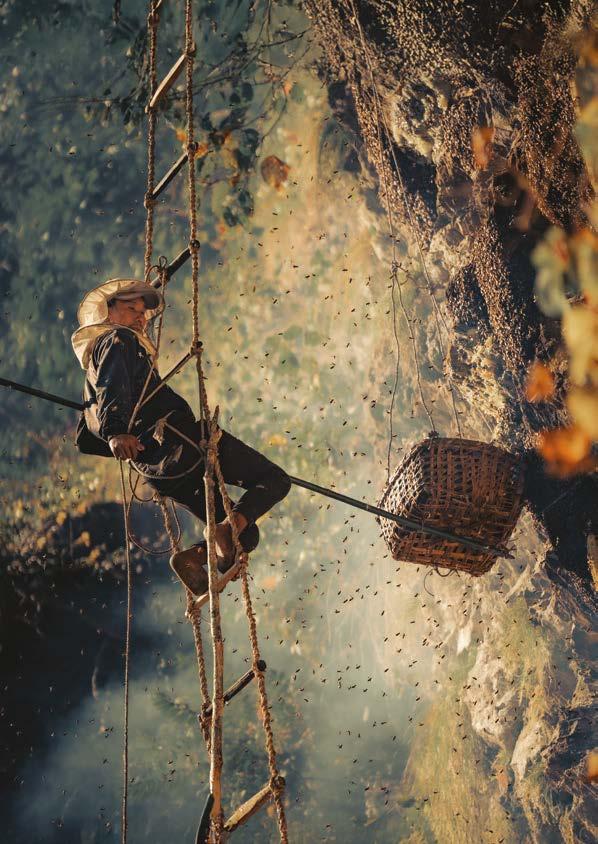
Honey hunting is a tradition that the Gurung community has continued in the Himalayan foothills of Nepal for generations. They are the climbers, foragers, and guardians of the wild honey bees. For them, collecting mad honey from the cliffs is not just a question of a livelihood, but it is a ritual, and a way to pay homage to their ancestors.
MEET THE GURUNG COMMUNITY AND THEIR TRADITION
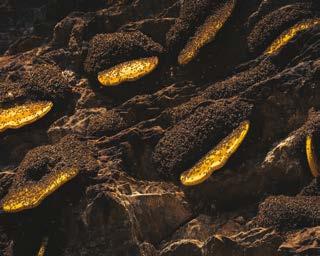
For thousands of years, the Gurungs have journeyed to the cliffs of remote villages of Nepal to collect mad honey. The mad honey is produced by the world's largest honey bee, Apis laboriosa. (Mad honey is produced when bees collect nectar from rhododendron flowers. This honey contains grayanotoxins which can cause intoxication).
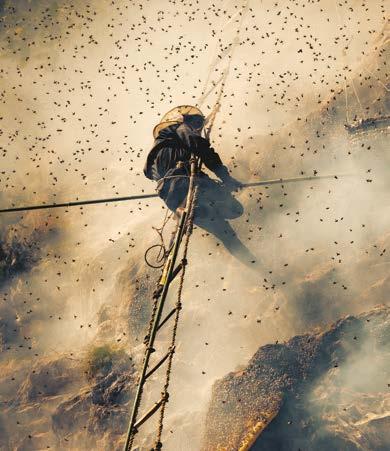
These bees build enormous nests on the overhangs of high, sunlit rock faces, far beyond the reach of most. But for the honey hunters, these cliffs are familiar, they know the depth of these cliffs. They have long engraved the knowledge of the terrain, bees, and the favourable timing of the harvest onto them.
This tradition of honey hunting is more than survival; it is a ceremony. The elders of the community teach the younger generation not only how to climb, but when to harvest, how much to take, and how to leave enough behind so the colony can survive.
They are meticulous, they observe the flowering patterns, note the winds, and listen for changes in the hum of the bees.
Honey hunting is a group task; each honey hunter is allotted a responsibility. The roles are practical and aid a smooth honey hunting process.
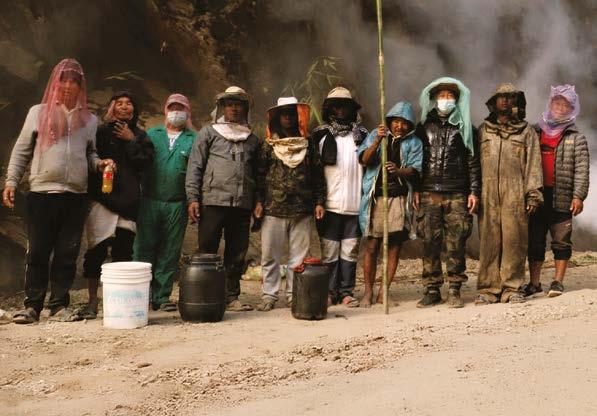
Honey hunters preparing to collect honey from cliff dwelling Apis laboriosa colonies.
HONEY AS A LIFELINE
The roads are few, and work is in short supply in the remote Himalayan hills. Naturally, mad honey is a major livelihood for them. The income from just one or two successful harvests can make a difference in their monthly income.
This rare honey has a high value in the markets of Kathmandu because of its medicinal and psychoactive properties. Now, the market for mad honey has grown, even internationally the potent honey is sought after.
In recent years, its popularity has spread rapidly, people all around the world want to try the mad honey. They make a trip to the honey hunting areas to witness the magic for themselves.
This growing curiosity from the outside world has sparked a quiet but meaningful shift in the Gurung economy.
Collected only once or twice a year, it is sold at a premium price. The money earned often goes toward essentials like school fees, medical bills, and household supplies. In places where agriculture is limited by steep terrain and harsh weather, honey becomes one of the few viable sources of cash income.
“We don’t have many options here,” says Dipesh, a honey hunter from Lamjung district. “But with honey, I can buy books for my children and medicine for my mother.”
LIVING WITH THE BEES, NOT JUST LIVING FROM THEM
Honey hunters don’t see themselves as owners of the cliffs or the bees. They are guests when they visit the beehives. Carrying this mindset, they have sustainability as their second nature.
Honey harvesting happens just twice a year, when nectar is plentiful. Hunters approach the cliffs with care, taking only the mature honeycombs and leaving enough behind for the bees to recover and rebuild. Some nests are left untouched altogether.
“It’s the way our fathers and grandfathers did it,” says Sonam, a younger member of a hunting team. “If we take too much now, there won’t be any next year.”
Beekeepers harvesting honey from cliff side colonies
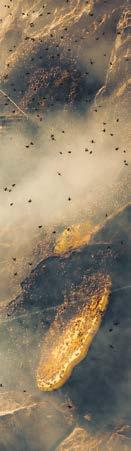
Apis laboriosa colonies on a cliff side
Images © Medicinal Mad Honey
THE CHANGING CLIMATE: A NEW KIND OF RISK
But even the most respectful practices are being tested. Honey hunters have started noticing troubling changes.
“The flowers come late now. Sometimes, there are fewer bees, and the honey is less. The honey hunters wait, but the season is not the same as before.”
Climate change in the Himalayas is shifting the balance. Warmer winters, unpredictable rains, and shrinking forests are now the cause of climate change. When nectars bloom inconsistently, bees struggle to collect the mad honey.
As a result, the colonies weaken, and the cliffs, once dripping with honey, only offer a little.
A PATH FORWARD
The honey hunters believe in the power of their ancient art. With continued support in training, community leadership, and easy access to markets, mad honey can lure tremendous buyers.
Interest from around the world is growing. Tourists trekking through the Annapurna region or exploring central Nepal are already discovering this rare treasure. Soon, limited-edition, responsibly harvested honey, branded with care and community spirit, could help tell a larger story of sustainability and respect.
Companies like Medicinal Mad Honey are helping turn this vision into action. As part of their initiative, a percentage of profits are shared with the communities who do the harvesting, directly supporting local livelihoods and encouraging sustainable practices.
By choosing to work with honey hunters rather than around them, they always opt for sustainable practices, in a way that both honey hunters and bees are protected.
BEEKEEPING IN NEPAL
Bee species
Apis ceranae, A. laboriosa, A. dorsata, A. florea, A. mellifera (introduced)
Beekeepers
Mostly smallholder farmers keep A. cerana. Honey hunting practiced with A. laboriosa and A. dorsata
Markets
Nepal imports most of its honey. It does export honey from species such as A. dorsata and A. laboriosa to speciality honey markets.
Climatic conditions
Range from the mountainous Himalayan region in the north to subtropical Terai region in the south.
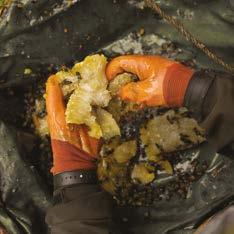
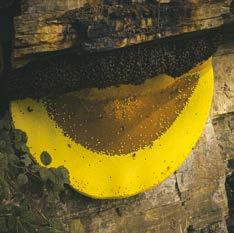
Apis laboriosa honey
An Apis laboriosa comb
Reference: Devkota, K., Egan, P.A., dos Santos, F., and Blochtein, B. (2022). Livelihood Development in Nepal:
WOMEN FOR BEES
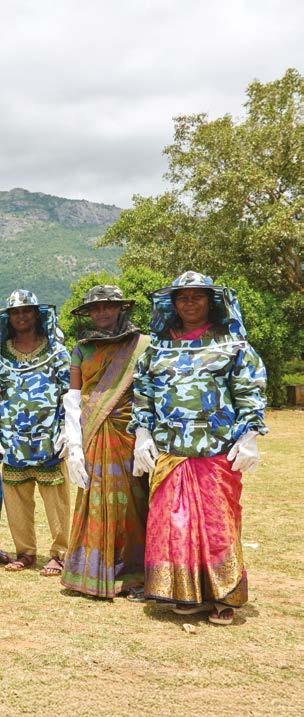
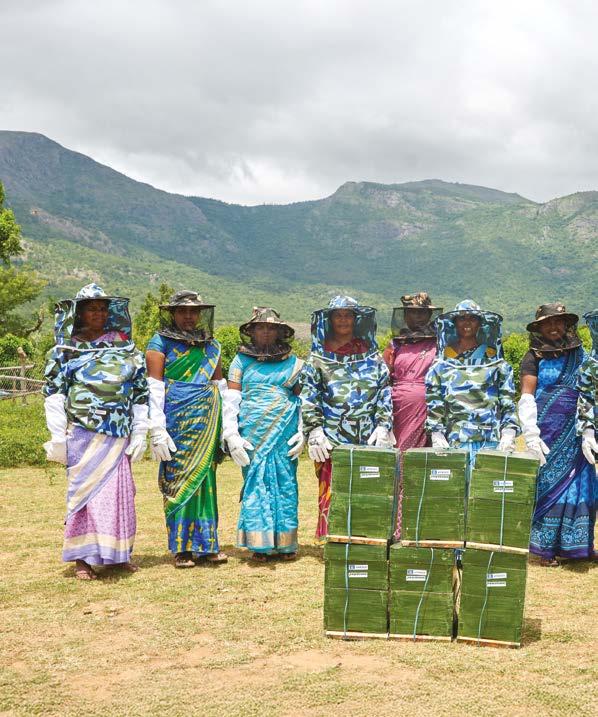
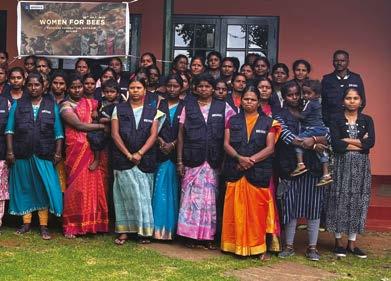
The UNESCO: Women for Bees cohort from Sigur, Tamil Nadu with some of the beekeeping equipment that was distributed to them.
A beekeeping training initiative in the Nilgiri Biosphere Reserve
By Shawn J Stephen and Justin Raj Keystone Foundation
Between May and September 2025, Keystone Foundation conducted a series of beekeeping trainings for 50 women from across the Nilgiri Biosphere Reserve (NBR). This project, funded by UNESCO and Guerlain, is part of their “Women for Bees” initiative, a female beekeeping entrepreneurship programme that is implemented in UNESCO-designated biosphere reserves and serves to promote “women’s empowerment together with biodiversity conservation and sustainable use”.
Of the 50 women who were chosen for this initiative, a majority are indigenous and part of communities like Irula, Paniya, Kattunayaka and Kurichiya. They had little to no experience in beekeeping and no pre-existing knowledge of honey bee ecology and honey harvesting stems from generations of wild honey harvesting practices and engaging with the eco-cultural landscape of the NBR.
Our objectives with this training programme were as follows:
To enhance women's knowledge and practical skills in sustainable beekeeping
To raise awareness on the importance of native honey bees and pollinator services
To make beekeeping a consistent, long term and sustainable source of income
To foster community collaboration and support networks in order to strengthen women beekeepers.
It was clear from the start that we could not simply stop at conducting basic beekeeping training. For any beekeeper in the early stages of their beekeeping practice, what becomes crucial is to continue to have access to support especially after the initial training sessions. With the help of the Women for Bees programme, we were able to facilitate exactly this.
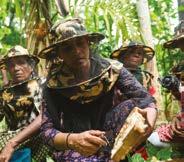
For every trainee from across the five chosen areas, we provided the primary basic training, beekeeping equipment (bee boxes with a colony, bee knives, beekeeping veils and suits, beekeeping gloves, bee smoker and one honey extractor per region) and conduct a series of follow up training session, at least once a month, for the rest of the project’s duration. In addition to this, we designed, published and distributed the Beekeeper’s Guide to Apis cerana Rearing, Honey Processing and Marketing manual in three languages (English, Tamil and Malayalam). We also installed two 25 kg capacity honey processing units (HPU) in Wayanad and Nilambur respectively. Honey Processing Units are machines that are used to filter and reduce moisture in large quantities of honey. The HPUs provided for the trainees have a capacity to process up to 25 kg of honey at any given time.
Providing support across all fronts, in terms of trainings, consistent follow ups, equipment and additional resources, is the kind of support that we believe will give new beekeepers the foundation they need to sustain their beekeeping practice in the long term.
Besides this, any beekeeper should also understand the following:
The crucial role that bees have in disseminating pollination services across the NBR
How to market honey and beeswaxbased products.
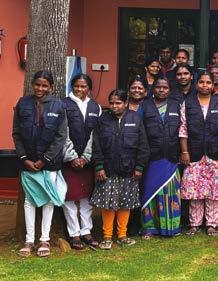
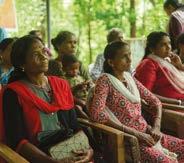
The entire UNESCO: Women for Bees trainee cohort after a combined training session on Marketing at the Keystone campus in Kotagiri, Tamil Nadu.
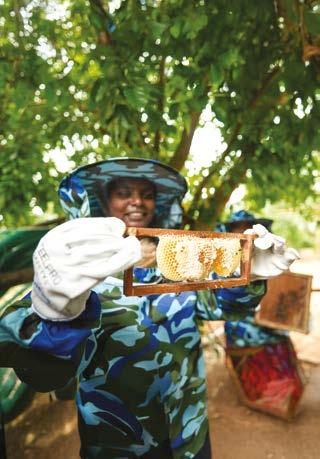
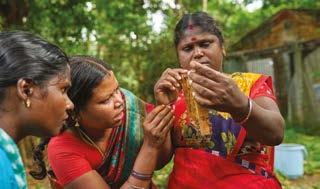
"Women for Bees” trainees preparing a honeycomb for harvest in Nilambur, Kerala.
The UNESCO: Women for Bees cohort undergoing beekeeping training in Nilambur, Kerala.
A UNESCO: Women for Bees beekeeping trainee inspects a honeycomb.
As part of the series of follow-up training, we organised sessions led by expert resource persons to help trainees develop more understanding of pollination as well as gain a better understanding of value addition and marketing of honey and beeswax-based products. These sessions also proved to be wonderful opportunities to bring all the trainees together in one place to interact and engage with each other.
Across all regions, participants demonstrated increasing collective engagement, with experienced beekeepers supporting newcomers and communities committing to ongoing mutual assistance. This social capital
development may prove as valuable as the technical skills we have sought to instil, providing the foundation for long-term sustainability and success. The programme's initiative to combine ecological conservation, livelihood development, and community empowerment positions these 50 women as ambassadors for sustainable beekeeping practices within the Nilgiri Biosphere Reserve. Their ongoing journey from training participants to skilled practitioners will not only be individual achievements but could also prove to be a model for community-based conservation and enterprise development.
BEEKEEPING IN INDIA
Bee species
Apis mellifera (Introduced), A. ceranae, A. dorsata, A. laboriosa, A. florea, A. andreniformis
Beekeepers have kept A. ceranae traditionally. A. mellifera was introduced in 1964 and has become the dominant species kept by beekeepers. The remaining four species are wild, with honey harvested from wild colonies.
Beekeepers
Most beekeepers are smallholder farmers with less than 100 colonies.
Markets
India is the second largest honey exporter globally (86,000 tonnes), minimal beeswax exports
Climatic conditions
Conditions vary significantly considering the country’s size. Conditions range from tropical to temperate and mountainous to agricultural plains. Regions favour different species and subspecies. For example, A. laboriosa are found in mountainous areas of northern India.
Reference: Ghosh, S., Pal Abrol, D., and Jung, C. (2025). The State of Beekeeping in India: Insights, Gaps, and Emerging Opportunities. Entomological Research, 2025; 55:e70069 https://doi. org/10.1111/1748-5967.70069
Trainees from Pillur, Tamil Nadu assessing the presence of eggs and larvae in a brood frame
TRADITIONAL KNOWLEDGE IN BEEKEEPING
Lessons from indigenous practices
By Dr. Robert Mutisi Working for Bees, Zimbabwe
The accumulated indigenous knowledge over many centuries plays a significant role in sustaining bee colonies and the production of hive products globally. There is little documentation on traditional knowledge in beekeeping and yet many communities still practice this for their livelihoods. A lot of lessons learnt from traditional practices remain undocumented and unknown to many communities; yet through these lessons, communities can be assisted to change their lives. The study was undertaken to identify and document lessons from indigenous beekeeping practices that can be used to motivate people to engage in beekeeping. By studying and learning from traditional beekeeping practices, we can gain valuable insights into sustainable living, community building and the importance of respecting the natural world.
METHODOLOGY
The study followed Mixed Method Research. Two districts of Makoni and Mutasa were selected. Thirty participants were selected to participate in the study. Fifteen participants were selected from each district from which two key informants were picked per district. The selection was based on existing potential for beekeeping and the existence of experienced beekeepers who were accessible. Semi structured interviews, key informants and field observations were used to generate data. Data was presented in a tabular form with figures and words. The analysis of data was done through a thematic approach.
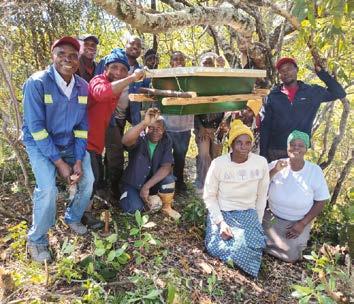
A group of participants in an apiary
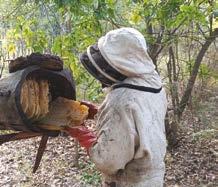
A beekeeper harvesting from a local fixed comb bee hive.
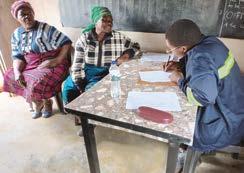
Research assistant, Success, conducting interviews
RESULTS/FINDINGS
The following findings were observed during the study.
The percentage of participants who mentioned specific responses
No. % Responses and observations
1 80 Learned beekeeping from their forefathers
2 20 Respondents were women
3
80 Use traditional ways of predicting seasons such as watching where bees are foraging. When bees fly in the direction of open grass lands this tells people that rain is still a long way off, when the bees move towards forested areas the rain will likely come early. When bees move to lower areas in search of nectar there will likely be poor harvests of honey in the year.
4
5
6
7
60 Found a tree flowering calendar important in beekeeping
80 Use traditional ways of assessing the honey flow period. This is done through smelling the strong honey smell as you approach the hive. If lots of bees are found just crowded at the hive entrance as they will also be extra defensive. The other way of checking if honey is available in the hive is to use a sharp stick to pierce through the combs from the opposite side of the entrance, when honey is available the stick comes out very sticky and when there is no honey it will be drier.
50 Registered their ability to carry out research and experiment with local material
70 Embraced locally developed solutions
8 90 Respected their culture, values, beliefs, practices when doing development work. When honey is harvested friends, relatives and neighbours will be called to eat the honey and have a celebration. Forest beekeepers are expected to take some of their honey and leave it on a broad leaf in the forest and give thanks, in full voice, to the ancestors whilst seated on the ground with full respect.
9
70 Confirmed that Indigenous Knowledge Practices were a national resource that facilitated effective communication.
Confirmed the importance of documenting beekeeping practices
Confirmed the medicinal value of honey and related products
80 Confirmed the use of local material for hive making, project scalability and sustainability 13 70 Confirmed the different roles of men and women in beekeeping
14
15
16
17
60 Confirmed use of honey to enhance different social values i.e.: Used as medicine, bringing people together for the first harvest to celebrate and also used at marriages where honey is exchanged between the bride and groom’s families.
60 Retained bee colonies through spraying water when bees show signs of absconding
40 Leave a few grams of honey in the forest soon after harvesting as a sign of thanking the ancestors
60 Confirmed that bee colonies settle calmly when they naturally colonise the hives
18 80 Bees love the hives that are close to nature and can easily colonise them
19
20
21
22
23
70 Confirmed being able to identify in the forest where hives are located by watching the bee flights to and from the hive
60 Believed in sharing honey from the first harvest with neighbours in the community.
80 Confirmed that honey has been a product that has a history of not being stolen in communities
50 Confirmed that honey wine was produced from the hives soon after honey harvesting
80 The closing of gaps on locally made hives was done using clay, cow dung, ash mixed with cow dung and resin from acacia trees
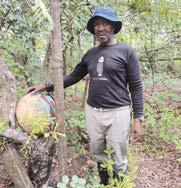
One of the research participants with his clay hive
By
learning from traditional beekeeping practices the two districts can harness the full potential of beekeeping for sustainable development, economic empowerment and food security.
CONCLUSIONS
The history of beekeeping in the study districts shows that the knowledge of keeping bees diffused from generation to generation over several decades. The indigenous value of honey reflects the role of beekeeping and its significance in livelihood of Makoni and Mutasa people. To increase recognition of indigenous beekeeping practices knowledge is a valuable cultural heritage. Preserving and promoting this knowledge is essential for maintaining biodiversity and fostering sustainable development. By learning from traditional beekeeping practices and addressing the challenges they face, the two districts can harness the full potential of beekeeping for sustainable development, economic empowerment and food security.
BEEKEEPING DEVELOPMENT IN VIETNAM
By Hang Thi Nguyen, Tam Quyet Dinh, Huyen Thi Pham, Leo Smits, and Gard W. Otis Vietnam Bee Research and Development Centre, Vietnam and University of Guelph, Canada
Native cavity-nesting honey bees— Apis cerana and its close relatives— inhabit most of Asia. They provide an opportunity for low-cost beekeeping because the bees, being endemic to the region, are unaffected by parasitic mites and are readily available in the local environment. They are kept in many regions, but their keepers frequently lack an understanding of their biology and management. As a consequence, beekeeping with A. cerana is usually a minor activity that has low impact on rural livelihoods.
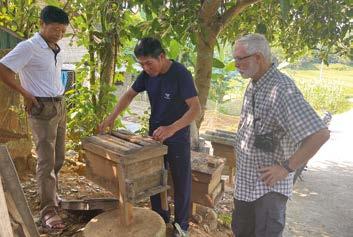
We sought to transform beekeeping in Vietnam. In 2006, the Canadian International Development Agency provided funding to upgrade the training skills of staff of the Vietnam Bee Research and Development Center, who then conducted training of farmers in rural communes of Ha Tinh Province. Our training relied extensively on hands-on activities with active bee hives. Residents of each commune self-selected 30 individuals (36% women) to participate in two training courses (basic, five days; advanced, three days) a year apart and selected times that
would be least disruptive to their other farming activities. The trainers also visited each participant several times to inspect their colonies and help them troubleshoot problems. At the conclusion of our project in 2012, we had well exceeded our goals: 95% of trainees continued to keep bees 2+ years after our training activities, two thirds had increased their income by more than US $200 per year, and social capital had increased due to honey-gifting. When we revisited the region in October 2023, we were astounded by the long-term success of our project. Approximately 70% of our project trainees were still involved in beekeeping. Annual honey yields, 1-3 kg per hive before training, had increased ten-fold. Additionally, many of them gift or sell bee colonies and provide basic training to others. The number of beekeepers in our project region has grown from approximately 200 to more than 2,000, with many more in the surrounding districts.
Here are a few examples of the numerous success stories.
HIEN THI NGO
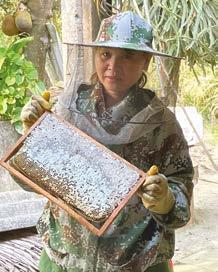
Hien Thi Ngo inherited the 12 hives of her father-in-law Hanh Van Duong, one of our project trainees, following his death. She overcame her fear of stings and assumed the management of his hives at her home. In 2023 she collected 230 kg of honey valued at US $1,050. She likes beekeeping because it takes little time to inspect and manage her hives and provides a welcome supplement to her income.
DAI QUANG NGUYEN
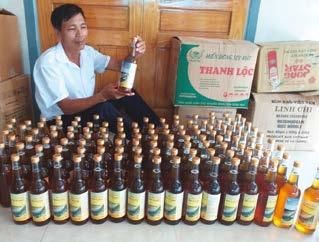
Dai Quang Nguyen did not keep bees prior to receiving our training in 2008/ 2009. In 2023, he managed 100 colonies, produced 1,500 kg of honey (valued at US $8,850), and sold 20 colonies. With income from beekeeping, he has purchased two high-end motorbikes and installed an irrigation system for his orange orchard which now yields a bumper crop. His children’s education and house construction were financed with income from his beekeeping activities. He estimates that 70% of his annual income is derived from beekeeping.
Mr. Dai with a portion of his honey crop, in new bottles with custom labels.
Mrs. Hien Thi Ngo holds a full frame of honey

THANH VAN TRAN
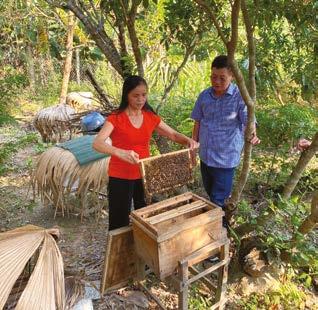
Thanh Van Tran had eight colonies prior to our project, but they absconded at the end of each year and yielded little honey. Now he has 33 hives and understands how to prevent absconding. Two years ago, he produced 210 kg of honey, but he prefers to sell colonies of bees, queen cells, and mated queens. Over the years he has assisted more than 100 people from several nearby communities to become successful beekeepers.
Small scale beekeeping with A. cerana has always been practiced in rural Vietnam, but it was rarely important to livelihoods because of poor colony management. As attested by the personal stories above, our project changed that, with most of our trainees obtaining excellent yields of 10-20+ kg of honey per hive with low input costs for beeswax foundation and sugar for feeding during dearth seasons. The success of our project owes much to our knowledgeable and skilled trainers, the focus on hands-on training activities, the long duration of training (seven visits over 1.5 years), abundant local honey bees, good nectar and
Thuong Thi Phan inspects a hive while BRDC trainer Thang Van Dang provides guidance. Palm leaves are used to provide shade for the hives.
THUONG THI PHAN
Thuong Thi Phan found beekeeping difficult at first. Thanks to the many training visits, over time she came to understand bee biology and management. She now manages 34 hives that in 2023 produced 500 kg of honey. She also regularly sells hives and provides training to her customers through videos delivered by cell phone. During her husband’s recent illness, her bees sustained them by providing 85% of their total income.
pollen sources, and strong relationships and trust between project managers, trainers, and trainees. In recent years, social media has enabled ongoing communication between trainers (most of whom have now retired) and beekeepers.
Our beekeeping training efforts, initiated 18 years ago, have strongly enhanced the reputation of beekeeping and honey in Vietnam. Ha Tinh Province, where our training occurred, is now widely recognized for its high-quality honey from local A. cerana colonies, with much of it produced by small-scale beekeepers. Many consumers drive eight hours from Hanoi to purchase
honey directly from beekeepers they trust. Moreover, in part due to our project, beekeeping in Vietnam has gradually transformed from a relatively unknown agricultural activity to one now recognized in most provinces throughout the country in the new One Commune, One Product (OCOP) Program of the Vietnamese government. OCOP designation boosts the production of agricultural specialities such as honey and in turn contributes to the development of the rural economy. OCOP certification guarantees the quality of the designated products, which helps farmers to sell their honey at a premium price.
Thanh Van Tran inspects his standard Apis cerana hive while Vy Dinh Nguyen, the leader of the local bee club, and Gard Otis observe his technique.
VARROA RESISTANCE IN SUB-SAHARAN AFRICA
A learning opportunity
By William Van Blyderveen Bees for Development, UK
INTRODUCTION AND RATIONALE
The same pests and diseases, such as Varroa destructor, Nosema, and American Foulbrood, devastating colonies in Europe and North America are present across Africa.1 Despite no to minimal treatment, research and informal discussions with beekeepers have not suggested high colony losses. Either beekeepers and research are not capturing or reporting their impact, or honey bee colonies across Africa have natural resistance and these pest and diseases have little impact.
The latter has been frequently suggested based on the large wild population across Africa, with an estimated 90% of colonies being wild.2 Of the 10% kept by beekeepers, few are managed or treated for pests/disease similar to North American or European methods. Management is often limited
to monitoring colonies and preventing external pests, with no disease treatment.
Despite low colony losses many development programmes, especially government and tertiary education level, focus on European and North American disease management techniques and the need for African beekeepers to adopt so called modern practices.
In extension, promoting beekeeping best practices is important. We need to understand the constraints facing smallholder farmers using beekeeping to earn a valuable additional income. Questions need to be raised about whether North American and European beekeeping techniques should be promoted or whether we should build on and promote an African based beekeeping system.
Dietemann, V., Allsopp, M.H., Costa, C., Crewe, R.M., Dall’olio, R., De La Rúa, P., El-Niweiri, M.A.A., Fries, I., Kezic, N., Meusel, M.S., Paxton, R.J., Shaibi, T., Stolle, E. And Moritz, R.F.A. (2010). Estimating the Density of Honey bee Colonies across Their Natural Range to Fill the Gap in Pollinator Decline Censuses. Conservation Biology, 24, 583-593. https://doi.org/10.1111/j.1523-1739.2009.01331.x
METHODS
Using a scoping methodology, this review answers three broad questions, with a specific focus on varroa as a proxy for disease resistance across sub-Saharan Africa.
1. What is the recorded impact of Varroa destructor across Africa?
2. Is there a consensus on African honey bee varroa resistance and its relation to beekeeping practices?
3. Finally, what beekeeping best practices for extension and development can be drawn from the current African varroa situation?
Scoping reviews map the field’s existing evidence. Using the keywords to search Google Scholar, ResearchGate, and Google Search, 32 peer reviewed articles (17 reviews, 15 primary) were identified, summarised, and used to answer the three questions.
Article criteria included: based in Africa or a review of African honey bee research and within the last 30 years to predate the arrival of varroa in Africa. Data was extracted into excel and used to summarise the research papers. Specific data extraction was done for questions 1–3.
Please contact Bees for Development for the full reference list: info@beesfordevelopment.org
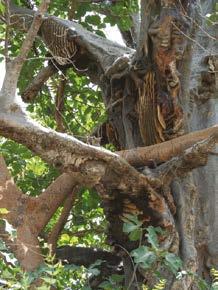
Wild colonies are common across Africa.
Beekeepers can use low-cost fixed comb hives successfully.
1. Boncristiani, H., Ellis, J.D., Bustamante, T., Graham, J., Jack, C., Kimmel, C.B., Mortensen, A., and Schmehl, D.R. (2020). World Honey Bee Health: The Global distribution of Western Honey Bee (Apis mellifera L.) Pests and Pathogens. Bee World
2. Jaffé, R.,
Fig. 1
In a review of 11 primary articles, only 1 directly suggested an impact, and one an initial impact (high colony loss). 82% suggested no significant impact.
Fig. 2
Of 32 articles reviewed, 26 (87%) suggested African honey bees have some form of resistance.
Fig. 3
Thematic analysis of 26 articles showing the percentage of articles mentioning words/phrases related to either no impact and/ or resistance/ tolerance.

Fig. 4
Number of articles referencing terms related to beekeeping techniques.
3. Rasolofoariva, H., Cle´mencet, J., Ravaomanarivo, L.H.R., Razafindrazaka, D., Reynaud, B., and Delatte, H. (2013). Spread and strain determination of Varroa destructor (Acari: Varroidae) in Madagascar since its first report in 2010. Exp Appl Acarol, 59(1-2). DOI 10.1007/s10493-013-9658-x
4. Allsoop, M. (2006). Analysis of varroa destructor infestation
RESULTS AND DISCUSSION
Impact of varroa on honey bee health
Nine out of 11 primary papers suggested no impact on colony health. Only two primary papers recorded a direct impact on colony health — with colonies lost because of varroa (Fig 1).
One paper from Madagascar, stated: Despite its low rate of dispersal compared to other studies, the local monitoring of infested colonies over one year showed a mortality rate of 60%.3
Another paper from South Africa suggested an initial impact, but not in the long term.4 Subsequent papers have suggested no lasting impact.5,6
“Varroa has not left a trail of destruction in South Africa as had been expected and no largescale collapse of the honey bee population occurred.”7
Colonies of both apiaries did not show any signs of disease or collapse and were developing normally in the presence of Varroa mites, suggesting a low cost of the tolerated parasite population on colony development within the period investigated.8
Consensus on bee disease resistance and beekeeping practices
Most papers (87%) suggested African honey bees have resistance or tolerance to varroa (Fig 2). Only five articles did not comment, and one article directly suggested a link between varroa and colony losses.
Note: Resistance means colonies actively decrease varroa reproduction. Tolerance means colonies can withstand high levels of varroa without negative effects.
Research suggests honey bees have resistance rather than tolerance, with colonies keeping varroa populations low without treatment.9
When reviewing references to varroa terminology in the article’s discussion sections, resistance, tolerance, and no negative effects were most referenced (Fig 3).
Finally, thematic content analysis paper discussions suggested no treatment/natural selection and the genetic variability of bees as the most likely reasons for resistance or tolerance (Fig 4).
CONCLUSIONS
The results suggest African honey bees have varroa resistance in sub-Saharan Africa. The suggestions of genetic variability and no treatment allowing natural selection are important for beekeeping practices.
This means beekeepers can: Do less management (a positive when working with defensive bees)
Rely on local bees
Capture wild swarms
As less management is required, beekeepers can use low-cost fixed comb hives, provided they allow quality honey harvests.
Beekeeping trainers should: Avoid
Promoting Europe or North America beekeeping practices as the ideal
Overemphasising internal colony pest and disease prevention/ treatment
Promote Nature-Based Beekeeping
Local bees
Local methods
Local resources
Target beekeeper challenges
Forage availability
Impacts of pesticide
Market access
of southern African honey bee populations. University of Pretoria, MSc
5. Pirk, C.W.W., Human, H., Crewe, R.M., and vanEngelsdorp, D. (2014). A survey of managed honey bee colony losses in the Republic of South Africa - 2009 to 2011. Journal of Apiculture Research, 53(1), 35-42
6. Strauss, U., Pirk, C.W.W., Dietemann, V., Crewe, R.M., and Human, H. (2014). Infestation rates of Varroa destructor and Braula coeca in the savannah honey bee (Apis mellifera scutellata). Journal of Apicultural Research 53(4), 475-477
7. Allsoop, M. (2006). Analysis of varroa destructor infestation of southern African honey bee populations. University of Pretoria, MSc
8. Strauss, U., Pirk, C.W.W., Dietemann, V., Crewe, R.M., and Human, H. (2014). Infestation rates of Varroa destructor and Braula coeca in the savannah honey bee (Apis mellifera scutellata). Journal of Apicultural Research 53(4),
9. Strauss, U., Pirk, C.W.W., Crewe, R.M., Human, H., Dietemann, V. (2014). Impact of Varroa destructor on honey bee (Apis mellifera scutellata) colony development in South Africa. Exp Appl Acarol. DOI 10.1007/s10493-014-9842-7
BEELINING IN THE BUSH
Studying wild honey bee ecology in South Africa
By Kaylin Kleckner PhD candidate, University of Florida
Without a doubt, honey bees are at the heart of African landscapes. Honey bees, among other pollinators, provide essential ecosystem services through plant pollination, as well as economic opportunity through the sale of honey and other hive products. Beekeepers across the continent rely on robust wild (native and unmanaged) populations of honey bees to populate their hives, yet the size and health of wild honey bee populations remains largely unknown. Wild honey bees nest in cavities in trees, rock faces, and manmade structures and face diverse challenges, such as variable nutrition, access to nesting cavities, predation, and changing climates. Research on the local survival strategies of wild honey bees across diverse African environments can help characterize population status and inform future conservation efforts. As a PhD student, I am working towards the long-term goal of informing land management decisions to conserve wild honey bee populations. I am studying the ecology of wild honey bees in the Eastern Cape Province, South Africa under the supervision of Dr. Jamie Ellis at the University of Florida and with essential collaborators at Rhodes University.
Images ©Lori Kleckner.
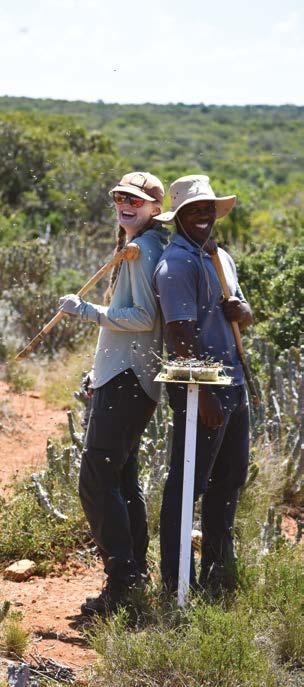
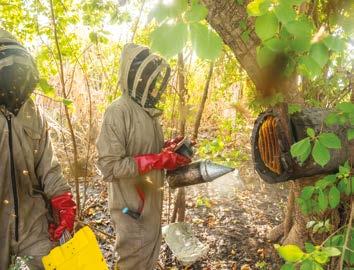
The bee team: Kaylin Kleckner (left) and Wandisile Mdiza (right) pose with an active stand used for beelining.
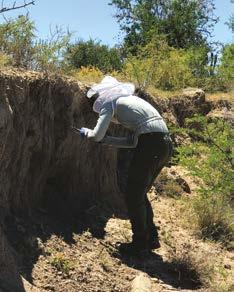
Monitoring the occupancy of a wild honey bee nest in the ground, likely in an old kingfisher nest.

FIELD WORK IN SOUTH AFRICA
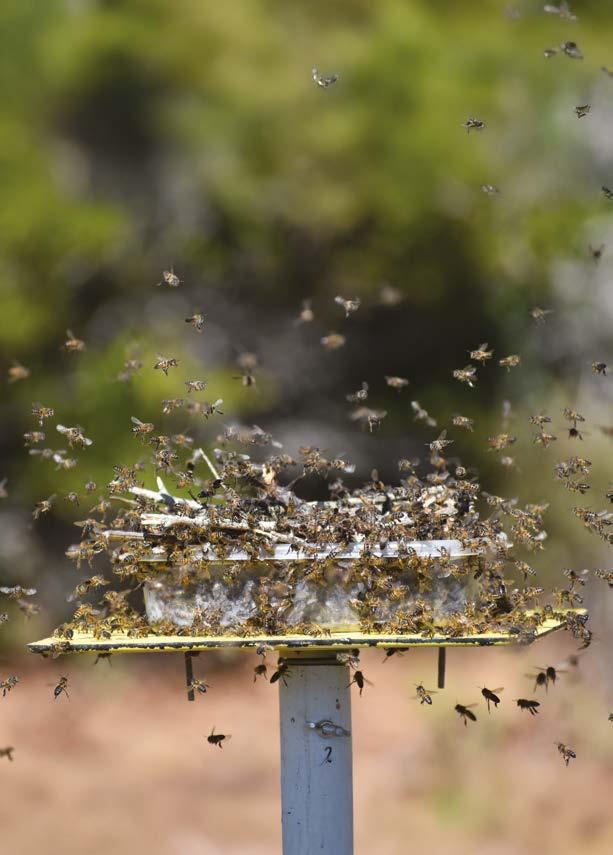
To study wild honey bee colonies, I first had to find them. I established five field sites with local land owners on a mixture of farms and game reserves, or sections of natural land stocked with megafauna for tourism. I carefully selected my field sites to ensure there were not managed or relocated honey bee colonies nearby. I divided the property of my field sites into square kilometre grid cells in which I could select one grid cell at a time to survey for honey bee nests. To survey, I set up four one-meter-tall stands with a dish of sugar water. I set out my stands with sugar water the day before surveying to provide time for foragers to find the stand and recruit their sisters. Alongside a small team of people, I located wild colonies using beelining techniques by following foragers from the stand back to their nest. In brief, we watched bees leaving a stand to determine the general direction of a nest. We walked a few paces along the beeline before stopping to watch and listen for bees flying towards their nest. We followed beelines through open grasslands, dense thicket, prickly desert, and alongside diverse fauna – giraffes, cheetahs, elephants, zebras, baboons, and a suite of antelope. Not only was this work rewarding in the field with each nest discovery, but surveying for wild honey bee colonies by land area is an important conservation tool to monitor population densities over time.
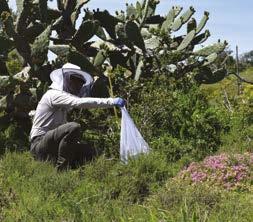
After locating a nest, I recorded the location of the nest site for future visits and analyses. I recorded various natural history data, including a cavity description, nest height, and the orientation of all nest entrances. Additionally, I non-invasively collected samples of adult bees for future molecular analyses. Often only equipped with a veil and net, I caught bees exiting the nest entrance and transferred them into a vial to be later counted, labelled, and transported back to Florida. I spent five months surveying 16 square kilometres and collected over 34,000 bees from 130 wild colonies. This work would not have been possible without Wandisile Mdiza, a Rhodes field technician with superhuman vision and a lifetime’s experience of following bees for honey hunting.
The western honey bee is often described as tree-dwelling, yet I found the majority of colonies in my study area nesting in the ground, often in old burrows dug by small mammals, like aardvarks. Aardvarks are known ecosystem engineers, and their burrows have been documented to provide nests for an array of small mammals, birds, reptiles — and now bees. The natural history of the wild honey bee nests was fascinating, but a single timepoint did
not reveal the suitability of a given nest in the environment. To assess seasonal changes in nest occupancy, I revisited all nest sites at three timepoints over the course of the year following nest discovery. I looked for forager activity and used an endoscope camera to look inside the nest for signs of vacancy, such as remnants of comb. After one year of monitoring, over half of all nests were vacated. Ground nests were vacated more frequently than nests in trees, suggesting ground cavities may be less protective from weather and predation compared to tree cavities. Honey bees use opportunistic nesting strategies and the cavities available in the nearby environment.
WHAT’S NEXT?
A lot of work is still to come to process the data and samples of bees collected during field work. As I finish my PhD, I will identify environmental features associated with wild colony density, characterize the population structure and relatedness amongst colonies, and screen samples for common honey bee pathogens. Together, these results will provide a window into wild honey bee ecology in the Eastern Cape, South Africa.
One of my greatest hopes is that my research will stimulate future investigation into wild honey bee populations, particularly across Africa. The status of wild honey bee populations is not formally known due to a lack of long-term monitoring data, and many nations lack conservation initiatives to protect important pollinators like the western honey bee. More work is needed to understand local dynamics of wild honey bees and inform effective land management decisions, education initiatives, and preservation of a critical species for ecology, economy, and culture.
Collecting adult bees exiting the entrance of a ground nest for future genetic research
LOOKING BACK
With nearly 150 editions of the Bees for Development Journal having been published over the last 45 years we thought it was about time to look back at some of the more unique, useful and interesting articles we have published and bring them back into the discussion.
The following is a rather unique management technique for a rather specific bee.
TINGKU
A traditional management technique for Apis dorsata binghami in Indonesia
By Soesilawati Hadisoesilo Forest and Nature Conservation Research and Development; Indonesia
First published in BfDJ 64, September 2002 https://issuu.com/beesfd/docs/64_bfdj_ sep2002
The giant honey bee Apis dorsata is one of Indonesia's indigenous honey bee species. It is distributed widely over the Indonesian archipelagos excluding the Mollucas and West Papua.
Attempts to manage Apis dorsata in ways used for the cavity-nesting honey bees always fail.1 However, in some parts of Indonesia local techniques are used to manage Apis dorsata colonies so that honey harvest is easier. This technique is similar to 'rafter beekeeping' in Vietnam. In the Poso District of Sulawesi this technique is called tingku, in the islands of Bangka and Belitung it is called sunggau, and at Sentarum Lake this technique is called tikung.
APIS DORSATA
There are two subspecies of Apis dorsata in Indonesia: Apis dorsata dorsata found all over Indonesia except Sulawesi, and Apis dorsata binghami, endemic to Sulawesi and its surrounding islands.2 Apis dorsata dorsata often nest with many colonies together in the same tree, but these nesting aggregations are not observed for Apis dorsata binghami; usually only one or two nests can be found in one tree. The newly emerged workers of Apis dorsata dorsata have pale yellow abdomens that change as the bees get older — the first two abdominal segments become rusty orange and the rest of the abdomen turns black with cream-coloured bands. In contrast, newly emerged Apis dorsata binghami workers are all black with three white abdominal bands.
TRADITIONAL HONEY COLLECTION FROM APIS DORSATA BINGHAMI
North Pamona sub-district is one of the largest honey producing areas in Sulawesi. Collection from Apis dorsata binghami is from nests hanging under branches of big trees, which are mostly located in primary forest away from villages. The height of the nest is 10-20m above the ground. Although nobody owns the tree where the bees nest and therefore anyone could harvest any nest, a mark is sometimes made on a tree to signify ownership. Harvesting takes place in the day and involves one to four people, without ceremony. One person climbs the tree and drives the bees off the nest using a traditional smoker. Once the bees have left the nest, the entire comb is cut and squeezed to extract the honey. This collection method is dangerous and the long distance from the villages means the honey collectors have to stay out overnight.
WHAT IS A TINGKU?
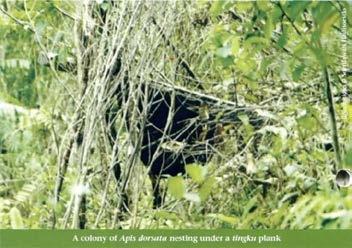
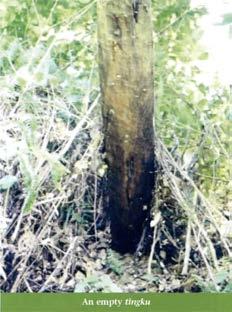
In Poso I saw 66 tingku in five villages. My observations were at the start of the flowering season when only six tingku were occupied, 33 had been occupied previously, and 27 tingku were empty. I interviewed 17 honey collectors. A tingku can be defined as a man-made micro-habitat or nest support for Apis dorsata binghami, designed to make honey harvest easier for the honey hunter. It is the only traditional management tool for Apis dorsata that is erected without any support from poles on the ground or branches of trees, as with rafter, sunggau, or tikung techniques. The technology originated at the village of Kelei in the 1930s and has since spread to five neighbouring villages.
A colony of Apis dorsata nesting under a tingku plank
HOW TO MAKE A TINGKU
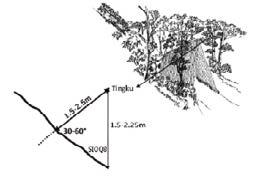
A tingku is made of a roughly planed wood plank, or a tree trunk. The lengths of the planks vary between 2.0 and 3.5m, with widths of 10-25 cm, or 10-20 cm diameter for tree trunks. According to the honey collectors, wood 3-10 cm thick is strong enough to support the honey bees' nest.
Apis dorsata binghami does not appear to be selective concerning the type of wood for its nesting site, however, because a tingku is permanently built, honey collectors prefer to make a tingku from strong wood such as kayu kondongio (Dysoxylum densiflorum), kayu kolahi (Fagraea fragrans) or kayu ampuni (Cycas spp.) which last for 10-20 years. Some honey collectors use the branch of Ptemcarpus indicus for making a tingku because this branch will sprout, grow and become a living tingku.
HOW TO ERECT A TINGKU
A tingku is usually erected in secondary forest or in a plantation or garden, where there is plenty of bee forage. The area is hilly and the tingku is inserted into a steep slope 0.5-1.0m deep, so that the length of the tingku above the ground is 1.5-2.5m. Both sides of the tingku are covered with leaves and small twigs to avoid disturbance from animals, but the front (in front of the upper end) must be wide open. If the tingku is 1.0-2.0m above the ground this is high enough for the bees to build a nest that does not touch the ground or slope. The preferred slope of a tingku to the horizontal for Apis dorsata binghami ranges between 0-30°. To attract bees to build a nest, some honey collectors smear beeswax or honey underneath the tingku plank, where a nest will be built. To test the strength of a tingku, a honey collector will hang on it with his full body weight.
HOW TO MONITOR A TINGKU
Because a tingku is permanent, it can be erected at any time of year, but it must be monitored afterwards, particularly when the flowering season starts. When a tingku is monitored, the areas under and in front of the tingku are cleaned. If a tingku is occupied, further monitoring is carried out four weeks later at which time, if the comb near the upper end of the tingku is swollen, it means that the honey is ready to be harvested.
HOW TO HARVEST HONEY
There are two honey seasons a year: September to December and February to April. Honey is harvested during the day. Because it is very easy to harvest honey from a tingku, a honey collector usually harvests honey by himself and on a fine day can harvest up to ten colonies. Using a smoker made of dried bamboo, which has been split, and pounded and wrapped with coconut or other palm leaves, the bees are driven off the nest. Smoking is done from behind the tingku. After the bees have left, all the comb is cut and the honey sections are squeezed to extract the honey, which is then strained. One nest can yield 2-20 kg honey, depending on the availability of bee forage.
DISCUSSION
An open space in front of tingku, sunggau, tikung and rafter appears very important in managing Apis dorsata — the bees need a free pathway to leave and enter the nest. An open space is necessary for a nesting site of Apis dorsata 4 The occupation rate for rafters is higher in a very large open space than in smaller spaces. With tingku, the open space in front of a tingku is usually very large because it is erected on a slope, but open space might not be the only factor that affects the occupation rate for tingku. The Pamona study determined the occupation rate for tingku to be only 50%. The finished nest in tingku lies close to the ground, because tingku are inserted in sloping land. Therefore, the effect of strong winds that might influence the direction of the nest in nature does not apply to tingku.5 more specific about the direction of tingku. Several other factors
to build nests,
ACKNOWLEDGEMENTS
I thank The Nature Conservancy for supporting this survey and allowing me to use the data for this article, and Duncan Neville for assistance with editing the language.
1. Mishra, R.C., Dogra, G.S., and Gupta. P.R. (1977). An attempt to domesticate rock bee Apis dorsata F. Indian Bee Journal 36(1-4), 21
2. Sakagami, S.F., Matsumura, T., and Ito, K. (1980). Apis laboriosa in Himalaya, the little-known world's largest honey bee (Hymenoptera, Apidae). Insect Matsumunara 19, 47-77.
3. Otis, G W, and Hadisoesilo, S. (1990). Honey bee survey of South Sulawesi. Journal Penelitian Kehutanan 4(1), 1-3.
4. Crane, E. (1990). Bees and beekeeping: science, practice and world resources. Comstock Publishing Associates, Cornell University Press; Ithaca, USA; p. 274.
5. Tan, N.Q., Chinh, P.H., Thai. P.H., and Mulder, V. (1997). Rafter beekeeping with Apis dorsata: some factors affecting the occupation of rafters by bees. Journal of Apicultural Research 36(1), 49-54.
An empty tingku
Beekeeping
Marginalised
Education
Biodiversity
Capacity