Editor in Chief & Creative Director Jennifer Leigh
Art Director & Designer Lo Galloway
Executive Producer Jessica Klassen
FW/26’ EDITOR’S NOTE
Where She Gets to
BE IT All.
T
On Rebecca Minkoff, the season of gathering, and the year we became who we said we were.
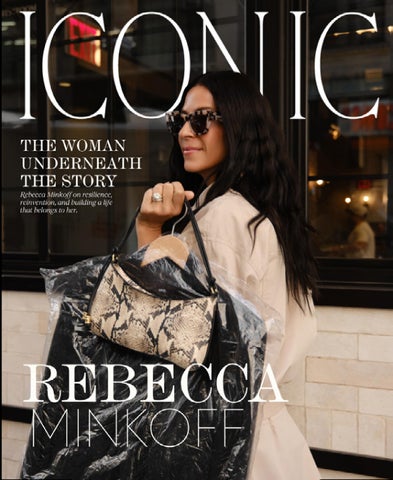
he world gives every woman one thing to be. A mother. A founder. A wife. A face. A brand. It hands her the single word it is most comfortable identifying her as. It expects her to answer to it for the rest of her life. This issue is the room where she gets to be it all. There was no woman I wanted on this cover more than Rebecca Minkoff. She moved to New York at eighteen to become a designer. Days after the towers fell, a distressed I Love New York shirt she made found its way onto national television. A twenty-one-year-old with a five-piece collection got her first taste of what was possible. We were in New York exactly twenty-five years later shooting the cover of this very issue. It was absolutely meant to be! There is one part of her story I have not stopped thinking about. Early on, someone told her the customer did not want to hear about her children. So she went quiet about her own life. She followed the advice. She watched the very thing that made her her begin to slip away. It took years to understand what had happened. She had stopped sounding like herself. Her people could no longer find her. So she came back to her own voice. She let her life into her work again. The honesty, the motherhood, the woman underneath the label, and her people came home. Rebecca did not build a handbag empire and stop. She built a podcast, a newsletter, a platform. She founded the Female Founder Collective to put real financial power into women’s hands, because she understood that a woman being it all should never have to do it alone. She is exactly who belongs here. Fall is the turn inward. The
holidays are the turn toward each other. It is the time of year we set the table, pour the wine, pull the people we love in close. We take stock of what we built while we were busy living. It is a season that asks a quiet question of every woman moving through it. Did I get to be all of it this year, or only the part they were comfortable with? I personally asked myself this very question. This has been the biggest year in the history of this magazine. I do not say it as a number. I do not say it to point at growth. I say it as gratitude. Iconic Magazine® crossed into a media empire this year. Sought after. Celebrated. Four covers. A body of women whose stories now live inside these pages permanently. A readership that did not just find us. It stayed. Every woman who opened an issue, shared a story, sat for an interview, carried a cover down a street, or simply saw herself in a page she did not expect to. You built this alongside us. I did not do it alone and I would never pretend otherwise. So as the year closes, I am not thinking about what is next. Not yet. I am relishing in what we lived. A room where the mother is also the visionary. Where the founder is also allowed to be tired and question. Where the woman is never asked to hand over a single part of herself at the door. Where she walks in whole. She leaves more whole than she arrived. That is what this issue is. That is what this year was. Turn the page and meet women who refused to be only one thing. Then go be all of yours. Be Iconic! Jennifer Leigh, Editor-in-Chief
ICONIC - 3
“SOMETIMES MYSUCCESS IS SIMPLY BECAUSE I GOT BACK UP.” — REBECCA MINKOFF, FULL ARTICLE PAGES 10-21
Photography, Alexandra Star
ICONIC - 5
Table of Contents
COVER FEATURE Rebecca Minkoff The brand is only part of the story. Rebecca Minkoff reflects on the moments, choices, and reinventions that shaped the woman behind it.
03
EDITOR’S NOTE Jennifer Leigh reflects on Rebecca Minkoff, the season of gathering, and a year that changed what Iconic became. A meditation on refusing to be only one thing.
10
COVER STORY: REBECCA MINKOFF Rebecca Minkoff opens up about resilience, reinvention, motherhood, money, and the moments that shaped the woman behind the brand.
24
THE SWEATER EDIT The six timeless knits every wardrobe needs, from the classic crewneck to the statement sweater. How to build a collection that feels effortless, elevated, and made to last.
40
FASHION TREND REPORT The season’s standout trends, from elevated tailoring and rich textures to sophisticated sparkle. How to make a statement without buying an entirely new wardrobe.
62
SET THE TABLE Five designers share their secrets for creating tablescapes that feel collected, personal, and unforgettable. From festive layers to modern drama, set the mood before the first course is served.
86
ENTER THE HOUSE There comes a point when building the business is no longer the whole story. An invitation to refine your taste, elevate how you live, and become more recognizable to yourself.
108
ICONIC THOUGHT Being watched is not the same as being trusted. Jennifer Leigh examines what it takes to build influence, depth, and a brand that outlasts the algorithm.
114
THE ICONIC SHOW Beyond the highlight reel. Jennifer Leigh sits down with extraordinary women for candid conversations about the decisions, challenges, and defining moments behind the life and business they built.
FW/26’ INVOCATION
However you arrived here, you are welcome. Tired. Stretched thin. Carrying more than you have said out loud. Set none of it down at the door. Bring all of it in. May you feel, for once, that nothing is being asked of you. May you stop performing long enough to remember who you were before you learned how. May the ambition and the exhaustion be welcome in the same body. May the softness and the armor sit side by side. May the woman they know and the woman they have never met both be held here. This is the season of gathering. May you pull in close. May you let yourself notice. May you be filled by the very thing you have spent all year pouring out into others. You made it here. Come in. Be all of it.
ICONIC - 9
REBECCA
MINKOFF
n industry leader in accessible luxury handbags, accessories, and apparel, Rebecca Minkoff's playful and subtly edgy designs integrate the elements of bohemian femininity with a little bit of rock n' roll. Rich leathers and suedes, bohemian-inspired prints, effortless silhouettes, and signature hardware details embody a woman who is both carefree and edgy. Effortlessness is perfectly blended with sophistication for an aesthetic that combines West Coast mentality with a Downtown sensibility. After developing an affinity for design while in the costume department in high school, Rebecca Minkoff moved to New York City at only 18 years old to pursue her dream of becoming a fashion designer. In 2001, Rebecca designed a version of the "I Love New York" t-shirt as part of a five-piece capsule collection. In 2005, Rebecca designed her first handbag, which she soon dubbed the "Morning After Bag", a.k.a. the M.A.B. This iconic bag ignited Rebecca's career as a handbag designer and inspired her edgy, feminine creations in the years to come. After four years of designing statement-making handbags and accessories with her trademark leathers, studs and hardware, Rebecca introduced her first ready-to-wear collection in 2009. Today, Rebecca Minkoff is a global brand with a wide range of apparel, handbags, footwear, jewelry and accessories. In September of 2018, she established the Female Founder Collective, a network of businesses led by women that invests in women's financial power across the socio-economic spectrum by enabling and empowering female-owned businesses.
Magalie Leather Bomber, Danier Silk Pants, By The Namesake Liberty Hoop Earrings, BIKO
Photographer, Jac’s Studio Stylist, Lauren Walker Lee
Photography, Alexandra Star
Photography, Alexandra Star
The Woman Underneath the Story
An intimate conversation with Rebecca Minkoff, in which we set the familiar story aside and go looking for the woman who has been there all along. Written by: Jennifer Leigh, Editor in Chief
i
already knew Rebecca Minkoff ’s story before I met her, or at least I knew the version the world has been handed, the one I wanted to set down for an afternoon so I could reach the woman living underneath it. There is a Rebecca the press reaches for. It is rarely the whole of her. She gets flattened into a headline, cut down to the parts that make a good tagline and grab a little attention. The designer. The founder who sold. The clause that went viral. Each of those is real. Not one of them is her, and I have watched, for years, how easily the coverage settles for the caricature over the person. That is exactly why I did not want to reach for any of it. I did not come with the questions she has answered a thousand times. I came to meet the woman underneath them. It meant beginning somewhere no profile ever bothers to begin, long before the runway and the empire and the years of being written about, back in the house where a girl was first told the word that would end up shaping her whole life. She was eight years old. What she wanted that year, more than anything else in the world, was one particular dress. Her mother told her no, she would not be buying the dress. Then, in the same breath, she offered her something that turned out to matter far more than the dress ever could. She would teach her to make it herself. They pulled her grandmother’s sewing machine down from wherever it lived, a machine from the 1800s. Her mother sat beside her and showed her how to lay a pattern, how to coax a garment into being out of nothing at all. The eight-year-old, of course, was frustrated. She had wanted the thing, not the lesson. Then, somewhere in the middle of that first small act of making, something in her turned over and never quite turned back.
That is the sentence I came looking for, the one underneath all the others. Making things out of nothing. It is the whole of her in a single line, spoken by a girl of eight who had no idea she was describing the engine of her entire life. She was born in San Diego, raised in Florida from the age of nine, a girl who found herself in a high school costume department, sewing the clothes for other people’s stories long before she trusted herself to build her own. None of this is the part the profiles pause on. It is the part that made her. I sat across from her in the middle of Fashion Week, during what she happily called the craziest week of her life, where it became clear almost at once that the dress had never really been the story at all. The lesson underneath it was. Rebecca was raised by parents who believed a girl should earn the things she wanted. The answer that met her wishes was often the same one. How are you going to make that happen for yourself? She heard it when she asked them to help her move to New York. She heard it again when she asked her father for money as she was building the company and drowning in it. What most people would remember as a series of closed doors, Rebecca remembers as her whole education. She learned to take a no and turn it, patiently, into the next thing she made. “There was a lot of no in my life. It teaches you resilience, rejection, and how to figure something out.” This is the woman I wanted you to meet, the one who lives nowhere on the sale announcement. The one who learned so early to build her own yes that she never really stopped. I did not choose her for this cover only because I love fashion, though I do. I chose her because I have watched the moments in her road where most women would have walked away. She never once did. That kind of resilience does not inspire me from across a room. It sharpens me. What follows is not a highlight reel of a fashion career. It is the record of a woman who kept getting back up, told at last the way she has rarely been given the room to tell it.
ICONIC - 13
September 10, 2001 Her first fashion show was a group show on September 10, 2001. Her parents sat in the audience. Other people’s parents sat beside them. She felt, for one night, that she had made it. She was showing during New York Fashion Week. Part of the collection was a ripped-up I Love New York shirt. She woke up the next morning, and the world changed. She was at a cotton seminar, learning the benefits of cotton, when a woman ran in and said the towers had been hit. Her parents were on their way to the airport. She did not know if they were in the air. In that moment, she was not thinking about fashion at all. Her priorities had rearranged themselves in an instant, the way they do. She had almost forgotten that days earlier she had sent that I Love New York shirt to an actress, Jenna Elfman. Then the text came. Jenna had worn the shirt on Jay Leno. He had asked about it on air. He had said Rebecca’s name. She is careful to explain, for anyone too young to remember, what television could do then.“Back then, TV had the power that a huge celebrity has now. When he said my name on TV, everyone wanted that shirt.” People wanted to support New York City. They liked that the shirt was not cookiecutter. So she started making the shirts herself, not in a factory but by her own hand, cutting them up one at a time until each one turned into something with a little rock and roll in it. It was not profitable. She says so plainly. She laughs at herself for it. She could charge forty dollars instead of twenty for a shirt she had made cooler. She never counted her labor, her rent, or the roommate who wanted her half. None of that was the point yet. “I was just excited that I had an opportunity. No one would hang up the phone on me if I called.” That is the piece most people miss when they call it an overnight success. The shirt did not make her rich. What it made her was callable. She could walk into a store to say her name and open a book of press without anyone hanging up on her. That alone was enough to get her started, enough to put her name out into the world. Stepping Out on the Skinny Branch A publicist friend had an idea. Every time an editor sent a request, he would pass it to Rebecca. She would make the thing, then sell it on a friend’s website. Teen Vogue wants a terry cloth jumpsuit. Lucky wants a belt with suede and fringe. She was not a jumpsuit maker or a belt maker. She was something more useful than that. She was a woman who could look at a request and find her own answer inside it. “What do they want, what’s my version of that, and then how do we sell it?” I asked her how a founder learns to do that, because I think we miss opportunities constantly in business. We lock onto the one thing that got us here and forget to look just outside it. How did she trust herself enough to say yes to a belt she had never made? Her answer was almost blunt in its simplicity. She could sew. She could drape. She knew pattern making. If someone handed her something she could cut out, she could make it. The yes was not a gamble because the skill underneath it was real. This is her second lesson, offered as a warning against false modesty. Say yes to the room before you feel ready. Do it only when you have quietly done the work that makes the yes true. Confidence is not pretending. It is knowing what you can actually do, then betting on it out loud. “Too many people wait and hope that something is going to happen to them. There’s no waiting and hoping. It just won’t ever happen.” The Bag That Was Rejected Four years passed. She had a clothing line in select boutiques. She and one other person made everything by hand. She was sixty thousand dollars in debt, with no idea how she would pay it back. Then Jenna came back. She was doing a film. The bag would be in every scene. Did Rebecca make bags? Could she make one in two weeks? Rebecca said yes, of course, the way she always says yes. She had never constructed anything larger than a small pouch, so she found a maker, brought them a vintage travel bag she loved, then asked them to shrink it and change the proportions. She would go to Home Depot herself for the hooks. The bag was brown canvas, faux croc trim in bronze, a turquoise zipper. FedEx delivered it to set two hours late. By the time it arrived, they had already started shooting with another bag. They were not switching. It was devastating. She had one sample left, the one she had saved for press. “I guess I’ll just wear this bag. It’s my most expensive purchase yet.” So she wore the rejected bag herself, down the street and through her days. Women kept stopping her to ask about it. A buyer friend told her to make it for real, to let Daily Candy write the story. The first order was twelve units. It sold out at once. The bag a film set had waved away had just become the bag women were chasing down the sidewalk, and Rebecca understood, in that reversal, something she has never once let go of. The thing that gets rejected and the thing that gets adored are very often the same thing, waiting on the right person to see it.“I had been waiting for some wind to come, and that was the wind.” She named it the Morning After Bag, the M.A.B., and the press will tell you it made her, which is true. What the press rarely pauses to say is what the bag was actually for. She built it to strip the shame away from a woman’s morning after, roomy enough to carry her home from wherever her own life had taken her the night before, roomy enough to do it without a trace of apology. Even at the very beginning, long before she had the language for any of it, she was already designing for a woman’s freedom. That is the detail I did not want to lose inside the tidy founding myth. The bag that built the empire was, underneath everything, a small and deliberate act of permission.
“BACK THEN, TV HAD THE POWER THAT A HUGE CELEBRITY HAS NOW. WHEN HE SAID MY NAME ON TV, EVERYONE WANTED THAT SHIRT.”
Photography, Alexandra Star ICONIC - 15
Photography, Alexandra Star
“TAKE ANY RISK YOU CAN STOMACH NOT WORKING OUT.” The Other Side of the Moment I could not skip past the sixty thousand dollars of debt, or the fact that with no idea where the next money was coming from, she took another risk anyway. So many of us fold in exactly that moment. We hear the culture telling us to burn it all down. Yet the breakthrough is so often just on the other side of the thing we are about to quit. Rebecca has lived on both sides of that line. She is honest that she does not always know, in the moment, which side she is standing on. The whole of building something, she told me, is trying to answer one impossible question in real time. “How long do I give it before I give in, or I give up” There are seasons, she admits, when she may have thrown in the towel too early. She will never know the answer to those. Then there are the other times, the ones that made her. “Sometimes my success is simply because I got back up. We had so many moments where the logical thing to do would have been to walk away.” I asked her what she would say to the woman listening who is there right now. The vision is real. The path feels right. It simply is not working yet. The debt is sitting on her chest. Rebecca did not offer a slogan. She offered a test. “Take any risk you can stomach not working out. If you can live with the worst case, go for it.” Before she walks away from anything, she asks herself one question. Did I give this everything I had? If the honest answer is yes, then walking away is not failure. It is peace. She gave it all she had. I told her I wished more women trusted themselves the way she does, because the missing trust is the through line in so many stories I see. Women on the very edge of a breakthrough who step back, not because the vision was wrong. They simply could not believe in themselves through the next move. She named the quieter version of it too. Sometimes it is not a lack of trust. It is simply not knowing what to do next. For her, the heat around the bag was the thing that told her to keep going, the small proof that she would figure the rest out. That is the lesson she wants a woman to take from the hardest middle of building anything. You do not need the whole plan. You need one
piece of evidence that you are onto something. Then you need the nerve to keep moving toward it. The Name Without the Ownership She did not build it alone. She is the first to say so. When she went to her father for money, she was met with another no. What came with it was an instruction she still repeats.” My name is on the credit card that you still don’t know how you’re going to pay back.” Call your brother. So she called her brother. He financed the early orders, eventually put his own house behind her name, then built the company alongside her through good years and genuinely hard ones, until they sold it in 2022. He chose to move on to other things. Rebecca chose to stay. The first lesson she hands you about building something big is the one most founders learn too late. You cannot do it alone. The people who bet on you early are the ones you owe the most. “Where else am I going to go?” It is a striking place for any woman to stand. Her name is on everything the company makes. She is its creative director. She does not own it. When I asked whether she wants to own it again, she did not hesitate. She would love to. This time, she said, she would let herself be the CEO. She would not outsource that seat. I asked what it actually feels like to have your name across a company whose business decisions you no longer fully control. She was precise about the line she has drawn. “I don’t have control over every business decision. That can be frustrating. But the creative side, we run it and own it.” You cannot scale a company and be in every decision, she said. So she chose her battle. She would fight, above all, to keep her creative vision intact. Everything you see is theirs. That was the ground she refused to give. What holds it together is the thing she has never outsourced. The customer. She talks about the woman she designs for as someone real, not a psychographic she invented in a boardroom. She met thousands of her, in the years before children, doing trunk shows across the country. “I didn’t have anything better to do at home waiting for me. So I got to know her very well. That’s who I’m talking to.”
The Misconception About the Money We hear these sales announced as fortunes. We assume the founder walks away with all of it. Rebecca wants women to understand how rarely that is true. “Whatever someone wants to read online about what I sold for, I didn’t get that.” She is careful about the details she is allowed to share, generous with the lesson underneath them. When other people own pieces of your business, they are paid first. Private equity took the first money out, plus an agreed amount on top. By the time the slices are handed around, there is a hard arithmetic she puts plainly. “When you give away too many slices, the pie stretches too far to reach the woman who baked it.” She is not woe-is-me about it. Certain decisions at certain times helped the company grow and left little at the end for the founders. She names it not as a wound but as an education, the kind she wants other women to have before they ever need it. The Day She Walked Home I wanted to know the emotion of the day itself. Selling is written about as triumph. It rarely feels that clean. It was a rollercoaster. They kept nearly all of their employees, which mattered to her enormously. Yet the thing she had built and carried alive through the pandemic now had to change hands. She knew that day, too, that her brother would not be continuing. They had shared an office. She was about to walk into a new company and not know whether the man across from her was now her boss. They stayed in their own office for a year, which let the transition breathe. The day they finally moved into the new offices, she had a panic attack. “It was noon, and I said, I’m going to walk home, which is three miles away.” She walked the full three miles, because in that particular moment control had left her hands entirely. Walking was the one thing left that she could still choose for herself. I asked how she coaches herself through a moment like that. Her answer is the clearest window into how her mind actually works. “I have a mental image of a Rolodex in my brain, and I roll through it. What is a solution? What can I do?” When a later deal collapsed at the last minute, she simply started spinning that Rolodex again, telling herself she needed to call thirty people about the next evolution of the brand, moving down the list until she found the yes. That is not the absence of fear. It is what she has learned to do with it. I asked her how she tells the difference between a wall she should push through and a sign she should stop. She did not pretend it is easy. She reduced it to one honest question. “How bad do you want it?” She could walk away, she said. What keeps her in the fight is not stubbornness, but ownership, said in her own plain words. “It’s my brand, it’s my name, it’s my legacy. It’s what I’ve worked for twenty-one years for.” She owes it to herself, she said, along with everyone who helped her build it. She quoted her brother back to me, from the worst days of the pandemic, when quietly going out of business would have been the logical, even the well-timed thing to do. “We owe it to ourselves and our team to go down in flames, if
that’s what’s going to happen.” The Napkin The woman behind the brand has a family. She is married. She has four children. There are a few things I wanted to ask her about, all of them, quietly, about a woman who refuses to disappear inside her own life. Before there was any money at all, before any success, Rebecca wrote a prenup on a napkin. I wanted to know how she knew to do that. She laughs that she cannot even find the napkin now. What she was originally protecting, in part, was her grandmother’s money. But she always knew she was going to be radically successful. “I had nothing, and he had nothing. But I knew I was going to be something, and I knew he could be something.” Think about the confidence buried in that sentence. She was not protecting what she had, because she had almost nothing. She was protecting what she had not yet built, guarding it precisely because she already believed, with total certainty, that it was coming. The napkin itself said the simplest possible thing. “What’s mine is mine, what’s yours is yours.” It was never that her husband was taking anything, or that she doubted the good man she was marrying. It was something older in her, the same instinct that has run through her whole life. “This is mine. I earn what I keep.” I told her the conversation set me on fire, because I wish more women had it before they ever needed it. If you cannot talk about the hard things before you marry someone, that silence is itself information. She agreed. It is a red flag, she said, the same way a man announcing he will not change diapers is a red flag. The Floozy Clause Then there is the clause that went viral, then got twisted in the telling. Rebecca sets the record straight with more tenderness than the headlines ever gave it.When she and her husband did their will and trust, her mother told her she had built a provision of her own, so that what she had established would pass to her children. Rebecca built the same protection and gave it a name that traveled further than she ever expected. If she dies, or if the marriage ends and her husband one day moves on, her assets go straight into a trust for the children. The point people missed in the noise is that her husband is not cut out of anything. He can manage it. He simply cannot spend what she built on someone new.” It’s just everything goes to the kids, and he can manage it, but he can’t go buy her stuff with that money.” The reasoning underneath it was never distrust. It was foresight, the same clear-eyed foresight that wrote a prenup on a napkin before there was anything to protect. The internet made it sound, in her husband’s words, like she had him in a vice. That was never the intention. She was sorry for how the coverage painted him. The clause was only ever about protecting the children. Underneath that, it was about a woman who understands exactly how her own wealth moves and refuses to look away from it. The lesson sits right on the surface. Know where your money goes. Decide it on purpose. Never outsource the one thing that is most truly yours.
“WE OWE IT TO OURSELVES AND OUR TEAM TO GO DOWN IN FLAMES, IF THAT’S WHAT’S GOING TO HAPPEN.”
Photography, Alexandra Star ICONIC - 19
Photography, Alexandra Star
i
“IF I’M GOING TO WORK THIS HARD, IT’S GOING TO BE FOR MYSELF.”
If I’m Going to Work This Hard This is the part she most wants women to hear. It is the reason the money conversation is not a side note in her story. It is the spine of it. She and her husband keep a joint account for the family, proportionate to who earns what, because not every couple earns the same. Everything each of them makes on the side is theirs. Hers is fully hers. “I do whatever I want with that account. I can lose it, I can invest it, I can buy myself a diamond.” There is a whole philosophy compressed into how lightly she says that. She is not asking permission. She built a company. She carried it through tariffs and a pandemic and a supply chain that nearly ended it. She has decided that the fruit of that labor is hers to steward. That decision is older than the company itself, reaching all the way back to a nineteen-year-old girl making four dollars and seventy-five cents an hour, working for a designer who told her what to do with every hour of her day. She has said, in all the years since, that this was the moment the whole of it first crystallized in her. “If I’m going to work this hard, it’s going to be for myself. I want to call my own shots.” I don’t want to be told what to do. That is where it truly started, not with wealth of any kind. It started with a girl who had almost nothing to her name deciding that whatever she managed to build would answer to her and to no one else. This is not selfishness. It is the exact opposite, and Rebecca has spent years proving it. In 2018, she co-founded the Female Founder Collective, built to invest in women’s financial power across the whole socioeconomic spectrum, from founders to single heads of household. Women reinvest what they earn into their families and communities at far higher rates than men. When a woman keeps her money, a community keeps it. She says it more plainly than that, too. It is the line I want every woman reading this to carry. “No change has ever happened by waiting for someone, usually a man, to give it to us.” You have to take control. So the napkin, the clause, the separate account, the Collective, they are not four different stories. They are one story. It is the story of a woman who decided, long before anyone gave her permission, that her vision was
worth protecting and her name was worth betting on. She built the wealth so she could hold the power. She holds the power so she can hand it forward, to her daughter, to her community, to every woman still waiting to believe she is allowed to want more. “We’re generating too much money and wealth to just pretend and close our ears.” This is the invitation underneath all of it. Stop waiting for the room to make space for you and take up the space. Look directly at your own worth, your own money, your own vision. Call it yours without flinching. That is what Rebecca has done in public for twenty-one years. It is the truest thing she has to teach. The Woman Behind the Brand There is a beautiful brand here. There are beautiful products, and I buy all of them. That was never why she is our cover. I went looking, that afternoon, for the woman underneath the story. I found her, this woman so much larger than the version that fits inside a caption. The one the world keeps describing is a founder who sold a company and named a clause. The one I met is harder to reduce. She is far more worth the knowing. She is our cover because of who she is underneath all of it. The eight-year-old who wanted a dress and was handed a needle. The girl in a costume department, sewing other people’s stories before she trusted herself to build her own. The twenty-oneyear-old who wore her rejected bag down the street until the world caught up. The founder who let her brother mortgage his house on her name, then paid him back. The woman who walked three miles home because it was the one thing she could still control, then sat down and spun the Rolodex again. She was raised on no and built on the simple refusal to stay down. She is still standing now, twenty-one years in, with her name above the door and her creative vision fully intact, working quietly toward the day she gets to own the whole of it again. In her book, she wrote a dedication I keep thinking about. To all the girls with nothing but a dream. It’s yours. That is who she has always been talking to. It was never the press. It was the girl with nothing but a dream, the one she used to be, the one who is still, somehow, listening. She did not wait and hope. She never once did. Neither should you.
ICONIC - 21
Photography, Alexandra Star
ICONIC - 23
the
These six timeless sweaters deserve a permanent place in every wardrobe.
dit
A well-built capsule wardrobe starts with the basics, but no category works harder than sweaters. They bridge the gap between seasons, layer effortlessly under coats and blazers, and can be dressed up or down with little more than a swap of accessories. Rather than filling your closet with trendy knits that only last a season, focus on versatile silhouettes you'll reach for year after year. Written by Hana Hong
ICONIC - 25
UNIQLO Lambswool Crew Neck $59.50
Classic
CREWNECK If you’re only investing in one sweater, make it a crewneck. Clean, timeless, and endlessly versatile, it works just as well tucked into tailored trousers as it does layered over a crisp button-down or paired with relaxed denim. Choose a neutral shade like ivory, camel, gray, or black to maximize versatility. Look for quality fibers such as merino wool, cashmere, or a premium cotton blend that will hold its shape through years of wear.
RAILS Torino Bucket Bag $400
STYLE IT WITH: STRAIGHT-LEG JEANS, LOAFERS, AND A TRENCH COAT FOR AN OUTFIT THAT NEVER GOES OUT OF STYLE.
ARITZIA Isabelle Sweater $168
GAP Vegan Leather Ruched Loafers $89.95
DENIM FORUM 90’S Snatched Straight Jean $128
THE FRANKIE SHOP Esben Cotton Trench $800
BA &SH Beltane Loose Fit Knit $515
JCREW 2025 Rollneck Sweater $145
COZY
Turtleneck
Equal parts polished and practical, the turtleneck is a cold-weather workhorse. It instantly creates a sophisticated silhouette while providing extra warmth, making it ideal for everything from office days to weekend brunch. Slim versions layer seamlessly beneath blazers and wool coats, while chunky knits pair beautifully with leather skirts, wideleg trousers, or relaxed denim. STYLE IT WITH: TAILORED TROUSERS, KNEE-HIGH BOOTS, AND STATEMENT EARRINGS FOR AN ELEVATED WINTER LOOK.
VERONICA BEARD Journey Wool Cashmere $598
DIISH Eliza Cinched Cardigan $310
the
RELAXED cardigan
The cardigan has evolved far beyond its preppy reputation. Today’s oversized silhouettes feel effortlessly chic, whether worn open over a tank or buttoned up as a top. Opt for slightly oversized proportions that feel relaxed without overwhelming your frame. Soft neutrals offer the most styling flexibility, though rich burgundy or chocolate brown can add depth without feeling trendy. STYLE IT WITH: A SILK SLIP DRESS AND ANKLE BOOTS OR YOUR FAVORITE WHITE T-SHIRT AND VINTAGE DENIM.
BA&SH Maja Knit $555
Statement
KNITWEAR
Every capsule wardrobe needs one sweater that makes getting dressed feel exciting. Whether it’s an unexpected color, bold texture, cable-knit pattern or subtle embellishment, this is the piece that brings personality to an otherwise classic wardrobe. The key is choosing something that still feels wearable. Think textured stitches, oversized sleeves, or a vibrant jewel tone rather than novelty graphics you’ll tire of after one season. STYLE IT WITH: BLACK TROUSERS OR DARK DENIM TO LET THE SWEATER REMAIN THE FOCAL POINT.
AETHER Solace Cashmere Sweater $595
UNIQLO Cashmere Crew Neck $129.50
Luxe
CASHMERE
Few pieces feel as luxurious—or as timeless—as a beautifully made cashmere sweater. Lightweight yet incredibly warm, it’s the definition of effortless elegance. Because cashmere transitions seamlessly between casual and dressier occasions, it quickly earns its cost-per-wear. With proper care, a high-quality knit can remain a wardrobe staple for years . STYLE IT WITH: SATIN SKIRTS, TAILORED PANTS, OR LAYERED OVER YOUR SHOULDERS WITH A CLASSIC WHITE BUTTON-DOWN.
MICHEAL KORS Jayla Leather Boot $398 ARITZIA Depth Cashmere Sweater $168
ARITZIA Slip Satin Maxi Skirt $98
JCREW Cashmere Shrunken Cable Knit $259
THE
Chunky Cable
No sweater collection feels complete without a cozy cable knit. Thick textures add dimension to winter outfits while bringing a relaxed, lived-in feel that never goes out of style. Cream remains the quintessential choice, but soft gray, oatmeal, and olive offer equally timeless alternatives. Balance the sweater’s volume with slimmer bottoms or front-tuck it into wide-leg trousers to define the waist. STYLE IT WITH: LEGGINGS AND RIDING BOOTS FOR WEEKENDS OR TAILORED TROUSERS AND LOAFERS FOR AN ELEVATED TAKE ON COZY DRESSING.
THE STRONGEST SWEATER COLLECTIONS AREN'T THE BIGGEST, THEY'RE THE MOST VERSATILE. Prioritize quality fabrics, timeless silhouettes, and a cohesive color palette that allows every piece to mix and match effortlessly. By investing in a handful of thoughtfully chosen knits rather than chasing every seasonal trend, you'll create a wardrobe that's equal parts practical, polished, and wearable.
ICONIC - 33
io-Alice is a London-based personal stylist, founder, and creator. Alongside her styling career, she is the co-founder of BEXX The Brand - a luxury womenswear label she built with her mother. She has styled for ARTEGO Magazine, Clash Magazine, Bree Runway, and offers
personal styling services helping real people transform their wardrobes from the inside out. Online, she’s one of fashion’s fastest-growing voices, building a community that keeps coming back for her honest, unfiltered, and genuinely refreshing take on style, beauty, and life.
Photography, Rio Alice ICONIC - 35
Photography, RioWanger Alice Photographer, Max
DRESS THE WAY YOU WANT TO BE ADDRESSED For Rio, getting dressed has always been about far more than clothes. Fashion has never simply been about what looks good, it has been about how she feels, how she carries herself, and, perhaps most importantly, how she allows herself to be seen. Written By: Rio Alice
R
io, better known online as RiriAlice, a personal stylist and fashion brand owner from London, UK lives by the quote “Dress the way you want to be addressed.” It is something she says often, but the older she gets, the more deeply she understands what it means. Getting dressed can be an act of communication. Before someone has introduced themselves, explained what they do, or said a single word, the way they present themselves has already said something. And she doesn’t mean dressing for other people’s approval. Quite the opposite; “I mean dress in a way that reminds you who you are.” Her relationship with clothes has evolved enormously over the years. What began as an interest in fashion became a form of self-expression, then a source of confidence and, eventually, a career. Looking back, she doesn’t think she fully understood how transformative that journey would become. “There were moments when I didn’t necessarily feel as confident on the inside as I looked on the outside”, but getting dressed gave her somewhere to start. “Sometimes confidence doesn’t arrive before you put the outfit on. Sometimes you put the outfit on and confidence follows.” It is a feeling Rio believes so many women understand, “the powerful feeling you get when you finally put on The Dress that has been sitting in the wardrobe waiting for the right occasion, adding the earrings that almost felt like too much, slipping into the coat that makes you feel like that girl, and walking out of the house differently because of it”. “Nothing external has technically changed. But you have”, she says. For her, fashion became a way of discovering herself. Rio learnt that she didn’t have to dress according to what was considered “appro-
priate” or simply follow what everyone else was wearing. She didn’t have to shrink herself to make other people comfortable. “I could be feminine and glamorous. I could be bold. I could be overdressed. I could wear the big coat, the jewellery, the heels, the statement pieces. I could take up space!” Perhaps that was one of the biggest lessons clothes taught her: that she was allowed to take up space. Before fashion became her career, it was simply something that made her feel good. Over time, however, she began to realise that the feeling she experienced through clothes was something she wanted other women to experience too. That became a defining part of her journey. Through styling and building her social platform, she began to see that women weren’t necessarily coming to her because they wanted someone to tell them what was fashionable. They wanted to feel something. They wanted to feel beautiful. They wanted to feel confident. They wanted permission to wear the thing they had been waiting for an occasion to wear. They wanted to see someone else being unapologetically herself and think “maybe I can do that too”. The part of fashion that fascinates her most is the way that clothes can change the way women see themselves, but they can also change the way they move through the world. “Think about the difference between putting on an outfit you feel amazing in and putting on something that makes you feel invisible. Your posture changes. Your energy changes. You walk differently. You speak differently. You might even make decisions differently.” “That isn’t superficial to me. That is psychology.” It is why she doesn’t believe that caring about fashion means someone is vain or materialistic. There is a huge difference between dressing purely to impress other people and dressing as an expression of who you are.
ICONIC - 37
“For me, it is about intention. I want women to understand that fashion can be a tool. You can use it to express yourself, to experiment with different versions of yourself and, sometimes, to become the version of yourself you are working towards.” That belief eventually led her to create her own womenswear brand, BEXX The Brand. Starting BEXX The Brand was about much more than creating clothes she personally liked. She wanted to create statement pieces that made women feel seen; the kind of pieces that make you stop when you see them; the kind of coat that changes your entire mood when you put it on; the kind of piece that makes you look in the mirror and think, “Oh, I look good”. But even more than that, she wanted BEXX The Brand to create a feeling. “I wanted women to wear my piece and feel special. I wanted them to feel like they had arrived. I wanted the clothes to give them that little extra push to show up, whether that meant walking into a room, going to dinner, starting a new chapter, or simply deciding that today they were going to make an effort for themselves.” And she wants the inspiration to extend beyond the woman wearing the clothes. “I want women to see another woman wearing something incredible and think, I want to get dressed too.” That is what she hopes BEXX The Brand can become: not simply a brand that dresses women, but a brand that inspires women to show up for themselves. Because she knows what it feels like to be inspired by another woman’s style. She knows what it feels like to see someone wearing something incredible and suddenly want to experiment with her own wardrobe. She knows how one outfit can spark an idea, change a mood, or remind someone of the woman they want to be. So, when she designs, she thinks about that woman. “I think about how she is going to feel when she opens the package. How she is going to feel when she puts the piece on. How she is going to walk into the room. And how another woman might feel when she sees her”. That, for her, is the ripple effect of fashion. “It isn’t just one woman getting dressed. It can inspire another woman to get dressed.” There have been many stages of her own life where her clothes reflected where she was going before she had completely arrived there. She would dress with a certain confidence, before she necessarily felt it internally, “eventually I realised that I wasn’t pretending. It was practising”. Sometimes the phrase “fake it until you make it” can sound as though it means being inauthentic. But Rio sees it differently. Sometimes, she believes, you must give yourself visual permission to step into the person you are becoming. “If you want to become more confident, start asking yourself: What would the confident version of me wear? How would she carry herself? What would she stop apologising for? Then start there.” That philosophy has followed her throughout her career. As her personal style developed, so did her work. She became a stylist, built a community around fashion and confidence and eventually created BEXX The Brand. Each chapter has taught her something different, but the common thread has remained the same: clothes have
the ability to make you feel like yourself. It has also taught her another important lesson: stop waiting for the occasion. “Wear the jewellery. Wear the dress. Be seen trying. Be seen becoming. Because life is the occasion.” She believes women have spent far too long being told to wait. The phrase “Dress the way you want to be addressed” has therefore become more than a style tip for her. It is almost a philosophy. It doesn’t mean dressing a certain way to earn respect. It means being intentional about the message being sent, especially to yourself, “because the first person your clothes communicate with is you. When I get dressed, and I look in the mirror and think, Yes. This feels like me, there is an immediate shift”. And that, she believes, is why so many women have connected with the idea. It isn’t really about fashion. It is about identity. She has watched women change in front of her simply because they finally found clothes that reflected how they wanted to feel. “Sometimes the transformation is subtle. Sometimes it is dramatic. But there is often that moment when a woman looks in the mirror and sees herself differently”. Getting dressed has become a powerful part of her own story. It gave her a language before she always had the words, and every day she sees women using fashion to reclaim parts of themselves. Her journey has taken her from simply loving clothes to understanding their power, working with women through styling and content, building a community, and creating her own brand. Yet even now, after everything she has achieved, she still gets that feeling when she puts on an outfit that feels completely her. That little spark. That Oh, she has arrived feeling. And she hopes she never loses it. Because she doesn’t want fashion to become something restrictive or intimidating. She wants it to remain playful. She wants women to experiment, to try things they never thought they would wear, to stop asking whether something is “too much” and start asking whether it makes them feel alive. “The confidence was always there. Sometimes it just needed somewhere to come out.” So, when she tells women to dress the way they want to be addressed, she doesn’t mean dressing for the approval of the world. She means dressing in a way that tells yourself: I am here. I am worth showing up for. I am allowed to be seen. I am allowed to take up space. I am allowed to be glamorous. I am allowed to change. And most importantly, I am allowed to become whoever I want to be. Because a wardrobe isn’t just a collection of clothes. It can be a collection of possibilities. Every outfit is an opportunity to tell a different story, explore a different side of yourself, and step a little closer to the woman you are becoming. So yes, dress the way you want to be addressed, but more importantly, dress the way you want to feel, because when you feel good in what you’re wearing, you don’t just look different - you show up differently. And sometimes, changing the way you show up is the beginning of changing your whole life.
"SHE WANTS WOMEN TO EXPERIMENT, TO TRY THINGS THEY NEVER THOUGHT THEY WOULD WEAR, TO STOP ASKING WHETHER SOMETHING IS "TOO MUCH" AND START ASKING WHETHER IT MAKE THEM FEEL ALIVE."
Photography, Rio Alice
he holiday party circuit always inspires a little extra glamour, but this year's biggest fashion trends prove that dressing up doesn't have to mean buying an entirely new wardrobe. Instead, it's about investing in versatile statement pieces think velvet blazers, sequined skirts, dramatic accessories, and rich textures that feel just as at home at a cocktail party as they do styled more casually after the holidays. From elevated tailoring to luxe fabrics and festive finishes, these are the trends fashion experts predict will define holiday dressing this season. Written by Hana Hong
S
equins and metallics never truly disappear during the holidays, but this year they’re taking on a more sophisticated role. Rather than saving sparkle for New Year’s Eve, stylists are embracing shimmer in ways that feel wearable enough for office parties, dinners and everything in between. “Metallics and shimmer are always a gorgeous way to add festive sparkle to the season,” says Sarah Jones Thomas, founder and designer of Sarah Jones. Instead of investing in a one-time party dress, she recommends choosing embellished separates—like a beaded blazer or sequined two-piece—that can later be broken apart and paired with wardrobe basics. A metallic jacket instantly elevates denim, while a sequined skirt works just as well with a chunky knit as it does with heels. Fashion stylist Kendra Sharpe expects silver accessories and shimmer details to appear everywhere this season, while fashion creator Stefania Leao predicts “bold, unapologetic sparkle” will replace years of understated minimalism. Together, they point to a simple styling formula: let one sparkling piece do the talking while the rest of your outfit remains clean and classic.
KARINA GRIMALDI Ximena Velvet Pants $425
KARINA GRIMALDI Veronia Velvet Bodysuit $318
ZARA Feather Skirt Limited Edition $220
If sparkle isn’t your thing, texture offers another way to make an impact. Velvet, faux fur, feathers, satin, and lace are emerging as the season’s standout fabrics, adding richness and dimension without relying on loud colors or embellishments. Los Angeles wardrobe stylist Chellie Carlson predicts statement textures with movement—like fringe, faux feathers, and sequins—will dominate because they instantly make an outfit feel more dynamic. Leao calls velvet the season’s hero fabric, particularly in jewel tones like emerald, sapphire, and burgundy, while Victoria Monroe, founder and editor of PurelyComfy, expects faux fur, velvet, and shearling-trimmed outerwear to become wardrobe staples throughout the season. The beauty of these fabrics is that they naturally feel festive, meaning even a simple silhouette suddenly looks occasion-worthy.
ICONIC - 43
Holiday dressing is becoming noticeably more polished, with structured silhouettes replacing overly fussy party looks. Matching sets continue to gain momentum, according to Carlson, who loves tailored blazer-and-trouser combinations styled with softer elements like silk camisoles or lace turtlenecks. The mix of masculine tailoring and feminine details creates a look that’s equal parts confident and elegant. Jordan Figueroa, creative director and stylist at Other People’s Clothes, predicts dramatic tailoring will continue to evolve with exaggerated shoulders, cinched waists, and statement belts inspired by runway collections. The result is a fresh take on power dressing that feels especially fitting for holiday celebrations. Color follows a similarly elevated direction. Rather than relying solely on traditional reds and greens, experts expect deep burgundy, chocolate brown, emerald, navy, and sophisticated jewel tones to dominate the season. Metallic silver and gold continue to serve as finishing touches instead of overwhelming the entire look.
REFORMATION Valentina Mini Beaded Bag $388
MAISON MARGIELA Antiqued Wax Floral Brooch $1125
ZARA Metal Jewel Belt $56
CULT GAIA Caldera clutch $900
Accessories are taking center stage this holiday season, often transforming basics into festive ensembles with very little effort. Oversized bows continue their reign, though Carlson says they’re appearing in more architectural, refined ways than previous seasons. Sharpe predicts bold vintage-inspired brooches will enjoy a major resurgence, while Figueroa expects statement belts, layered waist styling, and oversized jewelry to become defining accessories for evening dressing. Instead of purchasing an entirely new outfit, consider adding embellished heels, a metallic clutch, sculptural earrings, or a jeweled brooch to pieces already hanging in your closet. Sometimes the finishing touches have the biggest impact.
MAISON MARGIELA 90mm Feather Satin Sandals $1600
i
The Biggest Trend? Shopping Your Closet
f there was one piece of advice every stylist agreed on, it was this: resist the urge to start from scratch. Thomas recommends pairing festive separates with everyday essentials to create multiple looks throughout the season, while Monroe suggests adding a single "hero" piece, whether that's a velvet blazer, faux fur jacket, or sequined skirt, to basics you already own. Sharpe echoes the sentiment, encouraging women to focus on styling rather than shopping by incorporating one festive element, such as a metallic shoe, statement brooch, or textured layer. Leao's philosophy is perhaps the simplest: choose one standout piece and let everything else stay quiet. It's a reminder that the most memorable holiday outfits aren't necessarily the busiest, they're the ones worn with confidence.
MAKE IT MERRY, MAKE IT CHZ.
From thoughtful host gifts to show-stopping tables, CHZ PLZ makes every gathering feel worth celebrating. The holiday season has a way of filling the calendar quickly. One invitation becomes three, the family dinner gets a little bigger, and suddenly the same question keeps coming up: What should I bring—or serve—that feels special without adding more stress? At CHZ PLZ, the answer is simple: cheese, please! From gift-ready CHZ Boxes to party platters, catering, and custom graze tables, there’s something for every holiday plan—whether you are arriving as a guest or welcoming everyone into your own space. Show Up With a Gift They’ll Love Stumped on what to bring this holiday season? Skip the panic. A CHZ Box arrives ready to open and enjoy, with artisan cheeses, cured meats, fresh fruit, and sweet and savoury accompaniments thoughtfully arranged inside. Whether you are heading to an intimate dinner or thanking a neighbour, teacher, friend, or family member, there is a box to suit the occasion. Choose an Individual Box for one, a Classic Box for sharing, a Host Box for entertaining, or a Celebration Box for a larger group. It can go straight onto the table, while you get full credit for showing up with something delicious. Add a ribbon or handwritten tag, and it will look as though you planned it weeks ago. We won’t tell. Build a Spread for the Season
For those hosting a crowd, CHZ PLZ platters and catering can help turn a few appetizers into a complete holiday spread. A charcuterie platter creates an inviting centrepiece, while artisanal focaccia sandwiches, colourful crudité, whipped feta, CHZ Cones, and other shareable bites can round out the menu. Hosts can mix and match different options based on the size and style of their event rather than spending the day preparing everything themselves. Seasonal flavours are infused throughout the offerings, too. From November through January, that could include combinations of fig and brie, pear and blue cheese, dried cranberries, toasted nuts, winter citrus, rosemary, honey, and warming spices. These additions bring a festive touch to each box, platter, and display. Because no two guest lists are exactly alike, offerings can also be customized to suit the event. CHZ PLZ is happy to accommodate dietary needs when planning the menu, so more guests have something delicious to enjoy.
Photography, Giant Shoe Creative
Photography, Giant Shoe Creative
F
or larger celebrations, a custom graze table turns the food into a visual focal point. The CHZ PLZ team builds each one on-site, creating a layered display of artisan cheeses, premium cured meats, house-made dips, fresh bread, and seasonal produce. Graze tables work especially well for parties where guests are moving and mingling rather than sitting down for a formal meal. Everyone can explore the display, try different pairings, and return throughout the event to revisit their favourites. From holiday parties and family celebrations to community events and year-end get-togethers, a graze table brings the menu and presentation together in one memorable experience. A Few Tips to Complete the Celebration If you’re hosting, a few thoughtful touches can complement your CHZ PLZ spread, make sharing easy, and bring the rest of the celebration together. 01. Set the table for sharing: Have a few different cheese knives, small spoons for dips, preserves, and honey, cocktail picks, napkins, and plenty of small plates within easy reach. 02. Add the perfect pairing: An unoaked Chardonnay is a bright, fresh choice that pairs especially well with goat cheese and honey. Keep glasses close at hand and make sure there is enough wine for the size of the guest list. 03. Keep the spread going: Store additional crackers, sliced bread, crostini, honey, and preserves just off the main table so favourites can be refreshed throughout the event. A Little Less Planning. A Lot More CHZ. However your holiday plans take shape, great hosting does not have to mean doing everything yourself. Let CHZ PLZ handle the menu so you can pour a glass, turn up the holiday playlist, and enjoy the occasion—and every delicious bite. Here’s to full plates, happy guests, and holidays made merrier with CHZ.
dele Tevlin is an Identity Alchemist devoted to transforming subconscious limitations into embodied power. She guides entrepreneurs, leaders, and visionaries through deep identity shifts that create tangible, lasting results. Drawing from CBT, NLP, Deep
Brain Reorienting (DBR), and inner child integration, her work goes beyond mindset to recalibrate the nervous system and core self-concept driving behavior and success. Her approach blends clinically informed tools with intuitive depth to create sustainable transformation from the inside out.
Photography, Jac’s Studio Stylist, Lauren Walker Lee
Dress, Massimo Dutti
Photography, Jac’s Photographed byStudio Brandon Vellekoop Stylist, Lauren Walker Lee
Vest, Givenchy from Rewind Couture Pants, Jacquemus from Rewind Couture Earrings, Zara
THE MOST SUCCESSFUL WOMEN I KNOW ARE BUILDING FROM THE WRONG PLACE Written by By Adele Tevlin
Adele Tevlin is a transformational teacher, international speaker, and Master Identity Alchemist. She is the creator of the Identity Ascension Method™ — a coaching container and framework built at the intersection of the subconscious mind, nervous system science, and spiritual law, used by thousands of entrepreneurs, leaders, and healers worldwide.
I‘ve sat across from a lot of impressive women. Women running eight-figure companies. Women who’ve been on stages, in boardrooms, on the covers of things. Women who, if you looked at their LinkedIn, you would feel legitimately intimidated. And in private, it was the same thing, over and over. I don’t know why I can’t get past this point. I’m doing everything right. And they are. That’s the truth. They actually are. I recognize it because I was one of them! And the version of me that walked to my office every morning on Bay Street looked nothing like what was happening inside. I had a full practice. A team. A waitlist. By every external measure, I had built something real and successful. And I STILL walked to work crying. I wasn’t unhappy because I hadn’t built enough. I was unhappy because I was building from fear. The quiet, constant fear that if I stopped managing everything, it would fall apart. And the thing about running a business from fear is that it keeps you going. You can build a lot that way. You just
can’t feel any of it. You’re too busy holding the whole thing together with your bare hands to notice that you’ve created a life you can’t actually live in. Then one month I couldn’t make payroll. I had a team depending on me, but the money wasn’t there. My then boyfriend, now husband, had to lend me the money to pay my team. So I got creative and figured it out that month, by asking for help, and just kept walking to work. Kept showing up. Kept holding it all. Around the same time, I was a single mother, in the midst of a custody battle for my young son, and my furnace broke down. When I got the bill, it was $5,000, and I fell to my knees. I didn’t have thousands of dollars to pay for the repair on top of everything else. When I say I dropped to my knees, I literally did. I just couldn’t hold myself up anymore. All of it: the practice, the payroll, the custody battle, the broken furnace, the performance of being fine, it all landed on me at once. I often call it my “come to Jesus moment.”
ICONIC - 55
I remember sitting on the floor thinking, I have spent my entire life believing that if I worked hard enough and held everything together, eventually I would feel safe. Instead, I had built a life that looked successful from the outside while exhausting me from the inside. It wasn’t just about the furnace. It was about realizing I couldn’t keep surviving my own life. Every strategy I’d relied on: working harder, controlling more, proving myself again, had finally stopped working. And strangely, that was the greatest gift I could have received. In that moment something became very clear that I had been circling for years without being willing to say it directly. No one was coming to save me. Not to rescue me, not to fix it, not to tell me which move to make. The version of me who had been white-knuckling everything, the woman holding the practice and the team and the legal fight and the appearances, was not going to survive this. I didn’t know what came next. I just knew that what I had been doing was over. Right then and there. What I did next may seem counterintuitive, but it was the best decision I ever made. I closed my Bay Street office. People thought I was crazy. On paper, it looked like I was walking away from the very thing I’d spent years building. But I knew something they couldn’t see: I wasn’t closing my business. I was closing an identity. The office had become a symbol of who I thought I had to be rather than who I actually was. Sometimes the bravest business decision isn’t adding another strategy. Sometimes it’s having the courage to let an old version of yourself die so something greater has room to emerge. I went back home, I sat down and wrote down everything I knew. A framework, an offer, a body of work I had been sitting on inside a model that was too small to hold it. I had been helping people transform for years while quietly surviving myself. Something had to change. Not the offer, not the strategy. Me. Eight months after I made that decision, my first offer, The CEO Blueprint, had generated over a million dollars! I tell people this, and they want to talk about the business model. And I understand why, it’s a remarkable number, and it happened fast. But that’s not actually the part that matters. What
matters is that the woman who created the offer wasn’t desperate anymore. She wasn’t managing a collapse. She was operating from a completely different internal place. One where she believed, not as a concept but in her nervous system, that she was built for this. That her work had real value not because she had to prove it every day, but because it simply did. The custody battle was resolved, and I won. My business is flourishing. I speak on stages around the world, and I’ve been on magazine covers. I’ve built a 12 million dollar brand in a few short years. I share those numbers not to impress you but because I need you to understand something: I am not teaching something I read about. I am not a coach who learned a framework and went out to sell it. I lived this. I fell apart inside it. I rebuilt through it. And now I’m on the other side of it in a way that I couldn’t have engineered if I’d tried. The work works because I am the proof of it. Every framework I teach was first something I had to live. Every nervous system pattern I help clients recognize is one I’ve had to unravel in myself. That’s why I have such unwavering confidence in this work. What changed between the floor of that condo and where I am now wasn’t strategy. It was my identity. Here’s what I’ve learned spending 25 years at the intersection of the subconscious mind, the nervous system, and human behavior: your results match your identity. Not your funnel. Not your team. Not your offer. The patterns laid down in you before you were seven — before you had language for any of it, before you could consent to them — those are the patterns running your business, your relationships, and your nervous system right now. At the base of almost every high-achieving woman’s ceiling is one of two things. The belief that she’s unworthy. Or the belief that she’s unlovable. Usually some combination of both. And those beliefs are not sitting in the thinking mind where you can reason your way out of them. They’re in the body. They’re in the nervous system. They’re in the part of you that built a full waitlist and still walked to work crying, because the external evidence was never going to touch the internal wound.
"EVERY STRATEGY I’D RELIED ON: WORKING HARDER, CONTROLLING MORE, PROVING MYSELF AGAIN, HAD FINALLY STOPPED WORKING. AND STRANGELY, THAT WAS THE GREATEST GIFT I COULD HAVE RECEIVED.”
Pants, Jacquemus from Rewind Couture Shoes, Model’s Own
Photography, Jac’s Studio Stylist, Lauren Walker Lee
Photography, Jac’s Photographed byStudio Brandon Vellekoop Stylist, Lauren Walker Lee
Trench, Vintage Shoes, Model’s Own
Y
ou can know this. Really know it and feel it, and still not have moved through it. Because intellectual understanding and genuine transformation are not the same thing. Not even close. The women who do this work with me, and I’ve worked with thousands of them now, don’t just understand something new afterward. Something in them relocates. A door opens. The next version of themselves becomes visible in a way that isn’t abstract anymore. People call it getting Adele’d. I don’t entirely hate the term. What’s really happening is that, I can see your specific code. It’s my gift. I can see the exact architecture of how you’re wired, what’s been keeping you at this level, and what becomes possible on the other side of it. I’ve been built for this kind of seeing. I do it with unwavering confidence not because I’m arrogant but because I’ve sat with enough women to recognize what I’m looking at, and because I’ve lived enough of it myself that I know what the other side looks like. We are all God’s highest form of creation; every single one of us. Which means the thing you’re chasing: the freedom, the impact, the version of yourself you can feel waiting, it isn’t somewhere out in front of you. It’s already IN you. It’s always been there. What’s standing between you and that thing you’re chasing is the story that got written over it before you were old enough to write your own. Once you see that clearly, not as a nice idea but as a lived reality, you cannot unsee it. That’s when transformation stops being something you’re working toward and starts being something that’s already happening. As this year closes, most people I know are doing some version of a reckoning. Revenue against targets. Team against vision. What worked,
what didn’t. Do that audit. It matters. But before you build next year’s plan, before you set the number and map the quarter, sit with one question.
Who do I need to become to hold what I say I want? Not what do I need to do. Who do I need to be? The night I dropped to my knees on the floor of my condo — single mom, broken furnace, empty account, custody battle still raging — I wasn’t asking what my next move was. I was asking who I was going to decide to be. That decision, made in the worst moment I can remember, is what everything since has been built on. Not the strategy. Not my scribbles creating the CEO Blueprint on paper, though those came after. The decision about identity. You were not put here to grind at a ceiling. The ceiling you’re hitting right now isn’t a strategy problem. It’s a signal. It’s the thing inside you that’s asking to be looked at, not managed around, not strategized over. Looked at. That’s where the real work is. And when you’re ready for it, you’ll know. When the student is ready, the teacher appears, as I always say. I’ve sat across from thousands of women over the past twenty years. Different industries. Different backgrounds. Different stories. But beneath all the accomplishments and all the success, the question is almost always the same: Is this really who I am? My work has never been helping women become someone new. It’s helping them remember who they were before the world convinced them they had to be someone else.
ICONIC - 59
Pool, Lykke
“YOU WERE PUT HERE WITH A VERY SPECIFIC SET OF GIFTS, A SPECIFIC CODE, A SPECIFIC THING THAT ONLY YOU CAN BRING.”
Photography, Jac’s Studio Stylist, Lauren Walker Lee
Trench: Vintage Necklace: Zara
tablescapes
Photography, Tina Michelle
SEASONAL TABLESCAPES TO CREATE A
scrumptious
EXPERIENCE THAT GOES BEYOND FOOD The holidays are upon us. Soon, we'll be surrounded by the warmth of family and friends, and we'll want to set a scene that fosters memories for years to come. Although holiday meals are unforgettable in their own right, there's something about the decor and visuals that truly makes it all come together, encouraging moments that go beyond a menu. A tablescape can punctuate the ambiance, like these crafted by interior designers. Written by Shelby Deering
ICONIC - 63
Photography, Sarah Linden
festive
“I’ve always believed
that more is more when it comes to a holiday table. Layers make it feel collected, personal, and full of life.”
At his home in Dallas, Javier Burkle, Founder and Principal Designer of Burkle Creative, created a winter wonderland, even though the weather was anything but wintry. An outdoor scene complete with tartan plaid, with mixed glassware, greenery, candlelight, rich red accents, and “pieces I’ve collected over the years,” as Burkle says, aiming for a slightly “imperfect look,” one that’s not overly coordinated. He thinks that a tablescape should feel “festive, collected, and effortless.” “I love that a table can tell a story before anyone even sits down,” he goes on to say. “It makes people feel welcomed and immediately sets the tone for the evening. And I’ve always believed that more is more when it comes to a holiday table. Layers make it feel collected, personal, and full of life.” Music The Christmas Song (Merry Christmas to You) by Nat King Cole Christmas (Baby Please Come Home) by Darlene Love Como La Flor by Selena (for after-dinner dancing!)
ICONIC - 65
sweet
“A thoughtful tablescape immediately changes the energy of a meal by making guests feel celebrated and cared for.”
“For this table, I wanted to capture the feeling of fall without leaning into the expected oranges, pumpkins, or rustic themes,” shares Mimi Meacham, Principal Designer of Marian Louise Design. “Instead, I focused on natural textures and organic elements. Magnolia branches became the focal point because they’re timeless, beautifully Southern, and easily accessible in my backyard. I layered in woven accents, wood details, soft candlelight, and earthy neutrals to create warmth, while crisp, white dishes kept everything feeling fresh and refined. My inspiration was less about decorating for a season and more about recreating the feeling of a cool autumn evening gathered around the table.” She believes that the best gatherings are remembered for how they made people feel, not just what was on the menu. “A thoughtful tablescape immediately changes the energy of a meal by making guests feel celebrated and cared for,” she says. “The candlelight, layered textures, personalized place settings, and natural greenery invite people to linger, slow down, and enjoy each other’s company. It turns dinner into an experience instead of simply something to check off during the day.” Music Harvest Moon by Neil Young Come Away With Me by Norah Jones Bloom by The Paper Kites Home by Edward Sharpe & The Magnetic Zeros Tennessee Whiskey by Chris Stapleton The Luckiest by Ben Folds
Photography, Javier Burkle
ICONIC Photography,Ellen Renee- 67
Photography, Brian Bieder
vintage
“ This tablescape creates an ambiance that invites one to linger around the table.”
With gleaming glassware, tapered candles, and vintage Vietri linens, Maggie Griffin, Founder and Lead Designer of Maggie Griffin Design, created a bygone feel with her tablescape, with the finishing touch of her in-law’s wedding china. A personal feel was further added with placemats that she and her husband received as wedding gifts. And she opted for unexpected hues. “With this holiday tablescape, I leaned into an unconventional color palette for Christmas. I was inspired by the mural, which it complements. I took the soft peach, amber, and aqua from the pattern on the walls, and layered in a bit of greenery with plenty of cozy candlelight.” She adds, “This tablescape creates ambiance that invites one to linger around the table, inspiring conversation. I love sharing little nuggets of information with my guests about the story behind it all.” Music Anything on the Pandora “Christmas Jazz” station
ICONIC - 69
modern
Shades of black for Christmas? Yes, absolutely. It’s a modern, surprising direction to go in when styling a holiday table. It’s something that Michelle Murphy, Principal Designer of Demi Ryan, embraced when she set this table. “This one started from the top down,” Murphy says. “My black beaded fringe chandelier set the tone for everything underneath it. It’s moody and fun, just like me, and the type of entertaining I want to do. I set my tables to reflect the kinds of parties I want to host!” She says that from there, she built the base layer with a red woven tablecloth featuring fringe detailing for warmth and texture, then let magnolia leaves trail down the runner as the organic backbone of the whole design. “It was all about scale and contrast—emerald ginger jars and whimsical feather trees in varying heights to create movement, white carved wood reindeer for a touch of whimsy, and tapered candles to bring everything up to eye level”. Music Merry Christmas Baby by Otis Redding Christmas Time Is Here by Vince Guaraldi Trio
“It was all about scale and contrast —emerald ginger jars and whimsical feather trees in varying heights to create movement, white carved wood reindeer for a touch of whimsy, and tapered candles to bring everything up to eye level.”
Photography, Abigail Jackson Photography, Javier Burkle
ICONIC - 71
Photography, Tina Michelle
minimalist
“ It becomes less about simply sharing a meal and more about creating a moment everyone will remember.”
For more of an austere, neutral, yet totally chic look, lean into the tablescape that Alexis Vitale, Principal Designer of Vitale Design Group, put together. And it was all inspired by the room surrounding it. “The gorgeous floral wallpaper and the organic chandeliers became the foundation for this tablescape,” she says. “The room naturally inspired an organic, seductive, and dramatic feeling. From the leather chairs to the natural oak table, we wanted the tablescape to speak the same language as the room. We layered in leather napkin rings, sculptural wood candleholders mixed with warm neutral terracotta pieces, a textured papier-mâché vase, and elegant fluted wine glasses. It was important that every detail felt connected to the room.” She remarks that a tablescape can set the tone long before the food is even served. “It becomes less about simply sharing a meal and more about creating a moment everyone will remember ” she says. “The tablescape becomes the foundation for the night, drawing everyone in and allowing people to settle in and truly enjoy the evening. Every layer in the room and around the table is thoughtfully chosen to create the perfect mood and spark meaningful conversation.” Music At Last by Etta James
ICONIC - 73
Photography, Victoria Mae
SAVE YOUR SEAT THE THE NEXT ICONIC TABLE ICONIC - 75
Photography, Jac’s Studio Stylist, Lauren Walker Lee
Blazer, MEG Pants: MEG Shoes: Balenciaga Necklace: BIKO
athleen Cameron is a globally recognized manifestation mentor, eight-figure entrepreneur, twotime bestselling author, and Founder and CEO of Diamond Academy. A former registered nurse and healthcare leader, she now teaches identity, self-image, spiritual law, and conscious creation through Diamond Academy, House of Manifestation, her bestselling books, programs, and live experi-
ences. Known for blending expansive spiritual principles with candid conversations about self-worth, wealth, health, identity, leadership, motherhood, and personal evolution, Kathleen teaches manifestation not simply as a way to attain more, but as a way of living. Her work invites people to release inherited limitations, reconnect with their wholeness, and create from the identity of the person they know themselves capable of being.
MANIFESTATION DIDN’T GIVE ME A PERFECT LIFE. IT BROUGHT ME HOME. And that’s why I created House of Manifestation. Written by Kathleen Cameron
F
or a long time, I thought life was something that happened to you. You made responsible choices. You worked hard. You followed the path in front of you. You collected evidence that you were doing life correctly—a degree, a career, a family, a home, accomplishments, recognition—and you hoped that somewhere inside all of it, you would eventually arrive at the feeling you had been searching for. I did many of those things. I studied sociology and psychology, became a registered nurse, continued my education, earned my master’s degree, and spent years advancing into healthcare leadership. I became a mother to two beautiful daughters. I created a life that, from the outside, had so many of the ingredients we are taught should make us fulfilled. And I was grateful for it. But there was also this feeling inside me that I couldn’t quite name. More. Not more because what I had wasn’t enough. More because I was beginning to wonder whether I was more. Whether there were parts of me I hadn’t met yet. Whether the life I could see was the only life available to me. At the time, I was incredibly practical. My worldview was built around what I could see, measure, prove, explain, and understand. My training reinforced that. I trusted evidence. So when I began learning about manifestation and universal law, it challenged almost everything I believed. In 2019, my introduction to Bob Proctor’s work opened a door I didn’t know existed. I began studying the mind, self-image, consciousness, beliefs, and the possibility that our internal world influences far more of our experience than we realize. At first, manifestation sounded like it was about creating things. Money. Success. Opportunities. The dream home. The relationship. The business. The life. But the deeper I went into the work, the more uncomfortable the questions became. Because manifestation eventually stopped asking me, What do you want? It started asking me:
Who are you?
Photography, Jac’s Studio Stylist, Lauren Walker Lee
Top, Hilary MacMillan Skirt, Hilary MacMillan ICONIC - 79Mui Shoes, Mui
Shoes, Mui Mui
I had spent years becoming accomplished without realizing how much of my identity had been built around proving my worth. When I began examining my self-image honestly, I saw beliefs that had lived within me since childhood. My body had been one of the greatest sources of that belief. From a young age, I absorbed messages that told me my size said something about my value. Somewhere along the way, those messages became my own internal voice. You’re not beautiful enough. You’re not desirable enough. You should change. You’ll feel better when you look different. You’ll be more confident when… You’ll finally love yourself when… Many of us live our entire lives inside sentences like these without ever realizing they are sentences—not truths. I had created achievements while carrying an identity that still believed worthiness existed somewhere in the future. And then I began doing something that seemed almost ridiculously simple. I started deciding differently. I decided that I could be beautiful now. I decided that I could be confident now. I decided that I could be successful in the body I was already in. Not after changing it. Not when somebody else validated it. Now. Those decisions became far more significant than affirmations repeated in front of a mirror. They became invitations to notice all the ways I contradicted them in my everyday life. How does a woman who believes she is worthy speak to herself? What does she tolerate? How does she walk into a room? How does she receive love? How does she make decisions? What opportunities does she say yes to? Which ones does she no longer need? This is where manifestation became a lived experience for me. I stopped seeing it as asking the universe to deliver a different life and began seeing it as a relationship with the person I was being in the life I already had. In many ways, manifestation was beginning to bring me home. Not to a physical place. To myself. When I entered entrepreneurship, this understanding became one of my greatest experiments. I began practicing identity before evidence. Instead of waiting for business success to make me feel successful, I began asking how the version of me who had already created what I desired would think, choose, lead, speak, and respond today. When I founded Diamond Academy in 2020, I called our team chat “Team Milly”—short for millionaire. There was something playful about it, but there was also intention behind it. I was allow-
ing myself to occupy an identity before the external evidence gave me permission. Seven months later, the business had generated more than $1 million. In our first year, it generated $3.3 million, and by 2021, more than $12 million in revenue. Those numbers became part of my story. But they are not the most important part. Because I could tell you that story as though manifestation is a formula: Change your thoughts. Believe you are a millionaire. Make millions. And I would be leaving out almost everything manifestation has actually taught me. Money gave me evidence that I was capable of creating beyond what I had previously imagined. But life gave me something much more valuable. It gave me opportunities to discover whether I still believed in myself when the evidence wasn’t beautiful. What meaning would I give it? What would I allow it to reveal? Who was I becoming through it? Alongside the medical care I received, I began examining my relationship with my body differently. Until then, so much of my transformation had been about deciding to love myself exactly as I was. But lying there, vulnerable in my own body, I encountered another question: What would it mean not only to love myself, but to deeply honor my life? Health became something different. Movement stopped being punishment. Food stopped being a morality test. My body stopped being an object I had to perfect. She was my home. And I wanted to treat her that way. As my life changed, my definition of success changed with it. There was a time when manifestation felt loud to me. Big goals. Big revenue. Big vision. Big declarations. Today, I still love expansion. I still have enormous dreams. I believe desire can be sacred. I believe we are capable of creating lives beyond what our current circumstances might suggest. But I also believe some of the most powerful manifestations are almost invisible. Peace when your circumstances are uncertain. The courage to leave something that no longer reflects you. Being fully present with your children. Allowing yourself to be loved. Saying no without guilt. Trusting yourself enough to stop asking everyone else what you should do. Receiving without immediately needing to earn. Resting without believing you are falling behind. Looking in the mirror and no longer searching for the thing that is wrong with you. And for me, those things all have something in common. They feel like coming home. That is manifestation too.
“I COULD SAY, CHANGE YOUR THOUGHTS. BELIEVE YOU ARE A MILLIONAIRE. MAKE MILLIONS. AND I WOULD BE LEAVING OUT EVERYTHING MANIFESTATION HAS ACTUALLY TAUGHT ME.”
ICONIC - 81
O
ne of the ideas I feel most strongly about today is that transformation does not have to begin with rejection. So much of personal development quietly tells us otherwise. Improve yourself. Fix yourself. Heal yourself. Become more disciplined. Become more productive. Become wealthier. Become more confident. Become the best version of yourself. But beneath all of those beautiful goals can hide one dangerous belief: Who I am right now is not enough. What happens when you build a dream life from that belief? You may create extraordinary things and still arrive there searching for proof that you matter. I know now that the work is not becoming worthy. You begin worthy. You begin whole. You begin enough. Manifestation is not about convincing the universe to finally give you what would make you valuable. It is remembering your value and creating from there. This changed everything about the way I teach. It changed how I thought about money. It changed how I thought about relationships. It changed how I led a business. It changed how I saw health. It changed how I mothered. It changed what spirituality meant to me. And eventually, I realized I wanted to create a place where manifestation could be lived this way. Not as one more thing to master. Not as a formula for getting. Not as a space where people came because they believed something about them needed fixing. A place where they could come home to themselves. That became House of Manifestation. The name feels even more meaningful to me now than it d1id when we created it. A house holds many rooms. And so do we. There is the relationship we have with ourselves. There is money and wealth. There is our health. There is love. There is embodiment—the way we actually live, move, choose, and show up. And there is spirituality—the relationship we have with something greater than ourselves and with the deepest truth within us. These areas are not separate. We bring the same self into every room. We can create success in business while struggling to receive love. We can understand spiritual concepts while feeling disconnected from our bodies. We can make more money and still carry the identity of
someone who fears losing it. We can know all the right things intellectually without actually living them. I wanted House of Manifestation to be about the whole person. Because manifestation, for me, became about the whole person. It became less about asking, How do I get the thing? And more about asking, Who am I being in every area of my life? What does abundance look like when it is embodied? What does love look like when I am no longer abandoning myself? What does health look like when it comes from reverence rather than rejection? What does wealth look like when receiving feels safe? What does spirituality look like when it is lived instead of simply understood? What happens when all of these parts of us are allowed to belong in the same house? That is the manifestation work I am interested in now. The work of coming home. Living this way has not made me desireless. Quite the opposite. I dream bigger than ever. But there is a difference between desire born from possibility and desire born from deficiency.
One says: I need that so I can finally feel enough. The other says: I already know I am enough. Imagine what else is possible from here. That second energy feels different in a body. There is less gripping. Less proving. Less forcing. Less obsession with when and how. There is movement, but there is also trust. There is ambition without abandoning yourself. There is action without believing everything depends upon your effort. There is desire without using the desire to complete you. That, for me, is where manifestation has become effortless. Not because I never work. Not because challenges disappear. Not because everything I desire magically appears the moment I think about it. Effortlessness is not inactivity. It is the absence of internal war. It is what happens when the person pursuing the vision is no longer fighting herself along the way.
Photography, Jac’s Studio Stylist, Lauren Walker Lee
Trench, Hilary MacMilllan Shoes, Balenciaga
ICONIC - 83
Photography, Jac’s Studio Stylist, Lauren Walker Lee
Shirt, Gap Pants,Vintage Blazer, MEG Earring, BIKO
“MY GREATEST MANIFESTATION IS THE RELATIONSHIP I NOW HAVE WITH MYSELF.” People sometimes expect me to say that money was my greatest manifestation. It changed my life, certainly. Building Diamond Academy changed my life. Writing my books changed my life. Creating House of Manifestation changed my life. Watching people transform through this work continues to move me in ways that are difficult to describe. I am deeply proud of all of it. But I don’t think any of those things are my greatest manifestation. My greatest manifestation is the relationship I now have with myself. Because everything else can change. Money moves. Businesses evolve. Relationships change form. Bodies change. Titles change. The world changes. But everywhere I go, I am there. And learning to become a safe, loving, honest home for myself has changed the experience of everything else I have created. I no longer think manifestation means commanding life to give me exactly what I planned. Sometimes life has brought me something completely different. Sometimes the thing I thought would break me became an invitation into a deeper version of myself. Sometimes losing what I was certain I needed created space for something I could not yet imagine. Sometimes the manifestation wasn’t the outcome. It was who I became while walking through it. Maybe that question has been framed incorrectly. Instead of asking only: What do I want? How much money do I want? What house do I want? Who do I want beside me? What level of success do I want? Try asking: Who am I willing to be? Who are you when you are no longer trying to prove your worth? Who are you without the old story? Who are you when you trust yourself? Who are you
when receiving no longer scares you? Who are you when you let yourself desire without apologizing? Who are you when you stop delaying your life until some future version of you arrives? Because perhaps the future version of you isn’t somewhere ahead. Perhaps she is here now. Underneath the conditioning. Underneath the fear. Underneath the identities you inherited. Underneath every reason you have collected for why you cannot. Manifestation, for me, has been the process of meeting her. Again and again. The successful woman. The afraid woman. The mother. The leader. The woman lying in a hospital bed. The woman rebuilding. The woman dreaming. The woman surrendering. The woman who still has days when she has to remember everything she teaches. All of her. I no longer need manifestation to give me a perfect life. I want the whole thing. The expansion and the surrender. The certainty and the mystery. The visible manifestations and the transformations no one else will ever see. Because the greatest gift this work has given me is not the ability to control every chapter. It is knowing that whatever chapter comes next, I get to meet it as myself. That is what living a manifested life means to me. Not creating a life so perfect that you never have to struggle again. But becoming so deeply anchored in who you are that you no longer need life to be perfect in order to know that you are whole. Manifestation didn’t simply help me create a different life. It brought me home. And House of Manifestation was created so others could experience what it feels like to come home to themselves, too.
ICONIC - 85
A private world for women building meaningful brands, elevated lives, and a standard all their own.
Business meets lifestyle. Leadership meets taste. Your life gets to be part of the brand, too.
HOUSE of HER
L
auren L’Heureux is a luxury brand architect, storytelling expert, keynote speaker, podcast host and strategic advisor— Lauren L’Heureux (La-Rue) is the Founder & Chief Creative Officer of La.Rue Creative Studio, where she is known for building storied brands that embody quiet power and lasting legacy. A pioneer in intentional brand building, Lauren has crafted a distinctive methodology that merges strategic clarity with refined creative direction. Her work empowers visionary women to elevate their presence through brands that are not only visually exquisite, but emotionally resonant—crafted with depth, narrative intelligence, and precision. At the core of Lauren’s philosophy is the belief that a brand is far more than aesthetics—it is a reflection of how we see the world and what we believe it’s missing. She approaches business as a mirror: a medium through which female founders can bridge gaps, challenge norms, and make their vision visible. Lauren builds brands that are not only beautiful, but deeply felt. A super-connector at heart, she brings together powerful women and big ideas—shaping a new standard not built on noise or volume, but on resonance, relevance, and legacy.
Photography,Jac’s Studio
EVERY BUSINESS BEGINS WITH A PURPOSE. After surviving the life she never could have imagined, Lauren L’Heureux built a business from the other side of it. Now, she’s asking a quieter question: what happens when the woman behind the success wants to be heard again?
Written by By Lauren L’Heureux
S
ometimes that purpose follows the logic of the market. There is a gap; someone sets out to fill it. What follows is a study in determination, a drive to build, grow, and scale. And though ambition runs beneath it, the pulse stays clinical. Measured. A problem, and the solving of it. Other times, a business is born somewhere far less orderly. It rises from a more personal, passion-fueled reservoir, the part of us that needs, first, to solve something for ourselves before we could ever hope to solve it for anyone else. At some point we hit a wall, where the desire to change one thing about ourselves quietly deepens into something greater than we ever intended. And suddenly, we’re building something larger than just me or I. Suddenly, it’s about us. This is how it began for Lauren L’Heureux (la-rue). Not in the chase for a gap in a market, not in any hunger for visibility, but in a place deep within her that had been crying out, for a long time, for peace. For healing. In 2016, she was a freshman in college studying English Literature and Creative Writing, living in New York City. She was young and certain, in the way you can only be at that age, that this was where her real life would begin. On a cold night in March, she came home from work, finished her assignments over a
late dinner, and went to bed. She would think about that night more times than she could count in the years that followed. How ordinary it was. She did not know that she was living the last hours of the person she had been, or that by morning the life she had imagined for herself would quietly begin to come apart. And after it, everything else. That night, the call came at two in the morning. She woke in the dark to her parents’ voices on the other end of the line, and to the sentence that would split her life cleanly into before and after. Her brother. Her only sibling. Josh had died. There is no language large enough for what that does to a person. She would spend years searching for it anyway. Eight months later, while that grief still had its hands around her, Lauren was sexually assaulted in her apartment in New York. What came after was a trial, a process that required her to relive it again and again in order to convict the man who haunted her. Six months after that, her father, undone by the loss of his son, attempted to take his own life. Fourteen months. That was all it took. Fourteen months to dismantle the essence of who she was, to reach in and rearrange every belief, every goal, every aspiration she had once held as certain. The girl who had been a bright light became a shadow of herself, lost inside a grief she could not find the edges of, drowning in guilt and shame and a slow, rising anger at a story unfolding entirely beyond her control.
ICONIC - 91
"We are not for everyone. Who we are for is a fragment, a minutia of the market that is looking to extend beyond aesthetic."
By 2019 she had graduated, and nothing had changed. She was living the same story against a new backdrop, wearing a version of herself that looked convincing from the outside. A mask. A performance she had gotten good at. Underneath it was a shell of a person, and no sign yet of the woman she would one day become. Four years after Josh died, a pandemic jolted the world, and everything came to a pause. Lauren had moved home to Florida for knee surgery, the cost of a childhood spent competitive dancing. She was stuck, back in a place she had never belonged, inside a life she had come to hate. One ordinary day, another job rejection landed on top of all the others, and she hit the wall she had been walking toward for years. She was done. She couldn’t keep living this life of pain and sorrow and denial, and beneath all of it, anger. What came next was not born from a single moment of inspiration. It arrived slowly, an evolution shaped by loss, by healing, and by an unrelenting search for purpose, stitched together from everything those fourteen months had taken and everything they had left behind. Because being done, she would discover, was its own strange kind of beginning. Somewhere inside the exhaustion of it, she made a decision, quiet and deliberate and entirely her own. She chose to fight. More than that, she chose to live. What followed was less a transformation than an excavation. The slow, unglamorous work of coming back to herself, of sitting inside the grief instead of outrunning it, of learning who she was beneath everything that had happened to her. No one was watching. There was nothing left to perform. For the first time in her life, she was building a relationship with herself. And it was there, in that quiet expansion, that the Maison La.Rue ecosystem was born. It began as a blog, a place to chronicle her healing, and slowly it became something more. She wrote so fervently that this diary evolved into an auditory vessel: the Do the Damn Thing podcast. The student of literature who had gone to New York to study story was, at last, learning to tell her own, and without quite realizing it, ushering in the earliest days of her entre-
preneurial life. After two and a half years in Florida, years spent reclaiming who she fundamentally was, Lauren returned to New York. It was a homecoming in more than one sense, a return not only to a place but to a version of herself finally ready to create from clarity instead of survival. In March of 2022, she launched La.Rue Creative Studio. What began as a boutique branding and website design studio soon revealed itself to be something far larger: a home for the creative, strategic, and narrative work she had always been called toward. Over the next four years, that small studio would evolve, slowly and quietly, into what it is today: a bespoke, full-service creative and events agency serving clients in the luxury sector around the world. La.Rue Creative Studio operates as a fractional creative team for the brands and businesses it partners with, building them through story, strategy, experience, and events. On one point Lauren is unwavering. “We are not for everyone. Who we are for is a fragment, a minutia of the market that is looking to extend beyond aesthetic. A client looking to be positioned within a luxury market from all angles of business.” The work reaches far beyond a logo or a beautiful website. The strategy is elegant yet tactile, expressive yet purposeful, drawing on the intelligence of psychology to craft richly layered brand narratives that transcend trend, architecting a powerful and deliberate footprint across every visual and storied touchpoint a client has. The agency has grown along the very path Lauren’s own life has traveled. What begins as a new rendering of the outside will always, eventually, become a meticulous attention to the inside. So when she began to sense that her purpose was larger than designing beautiful brands, she recognized the feeling, and she welcomed it, asking herself the same questions she had asked years earlier, at the very start of everything. What does this evolution look like? What scares me about it? And even as the agency expanded, in clientele and reach, she kept returning to those same questions. Somewhere along the way, a quiet duality had taken hold, a tension between two versions of the same woman: Lauren the founder, and Lauren the person underneath her.
A
s the business grew and life moved forward in its steady, linear way, she found herself leaning further into the entrepreneur and further from the woman who was still tending to her own becoming. The practices that had carried her through her healing began, slowly, to lose their momentum. A few held on out of habit. Most quietly fell away. Without quite noticing, she had let one self swallow the other. The founder had taken up all the room, and the woman who once lived by intention had gone quiet. Then, in the same year La.Rue reached its highest growth and revenue yet, at a 100% referral rate, that quieter self began to speak up again. Success, it turned out, had not silenced the longing. It had sharpened it. And it came from two directions at once. From the inside, the old and familiar pull toward home, toward a safety within where thought and expression and honesty felt welcome rather than daunting. From the outside, the invitations to stand on stages and speak, and the faces of the people who heard her and saw something of their own story looking back. Between the inward calling and the outward affirmation, one desire came into focus: she wanted a place to give these thoughts a voice again, and to share the whole of it, not just where the journey had led but everything it had asked of her to get there. The stage had shown her something about herself: she thrived in the live, conversational space, thinking out loud, in real time, with a room in front of her. But a keynote ends when the applause does, and she wanted something that could continue, somewhere a conversation could live and breathe and
deepen over time. And so, the idea for The Quiet Edit podcast took shape: a salon of sorts. A place to talk about building a business and building a self on the same terms, growing slowly and deliberately, with a subtle, unannounced power that requires no introduction. The Quiet Edit is a conversation about building quiet success, quiet wealth, and a quiet legacy. It is an invitation to step away from the noise and into the nuance, through intimate conversations with women who have known both the greatest heights and the deepest depths life has to offer. These are women growing empires and self behind the scenes; women who built storied lives without chasing influence or visibility. These are not the polished success stories told from a stage. They are the conversations that happen afterward, once the room has emptied, about what it actually costs to build something real, and about the relationship with yourself that either holds or breaks beneath the weight of it. It is emotional intelligence treated as a form of wealth. It is quiet luxury understood not as an aesthetic, but as a way of living. Beneath every individual story runs the larger conversation, the one Lauren most wants to have. It is about legacy, the kind that outlives the person who made it. About the difference between being seen and being substantial, between a following and a foundation. About the deliberate choice to build a life shaped by individual affluence rather than global influence. It is, in the end, the same truth her life has been teaching her since a cold night in March of 2016: that the loudest life is rarely the fullest one, and that the work of becoming someone happens quietly, mostly out of view, and is no less powerful for it. The Quiet Edit is simply Lauren saying it aloud, and inviting the rest of us to do the same. Where the only applause you need is your own.
ICONIC - 95
renda Johnston is a Subconscious Strategist and the host of The Limitless Life Podcast, where she helps high-functioning women recognize the hidden patterns running their businesses, leadership, and relationships. After more than two decades in advertising and corporate marketing studying human behaviour, she’s spent the last twelve years turning that same curiosity toward subconscious work, energetics, and Human Design, used not as a label but as a strategic tool. Her work is built around one idea: the visible problem is rarely the real problem.
Photography,Jac’s Studio
Photographed by Isabel Dinardo
Beyond Masculine &Feminine: The Real Conversation About Energy Written by: Brenda Johnston
O
ne of the phrases I’ve heard repeatedly over the last several years is, “You need to be more in your feminine.” Usually, it’s offered to women who are exhausted, burned out, or wondering why their hard-won success doesn’t feel very good. The diagnosis is almost always the same: You’re too much in your masculine. You need to soften, flow, receive, and trust. This conversation has become popular for a reason. After decades of celebrating hustle, productivity, pushing through, and proving ourselves in environments that weren’t exactly designed for women, it makes sense the pendulum would swing the other way. I just don’t think that’s the real conversation. After more than thirty years of studying human behaviour, I’ve learned that the visible problem is rarely the real problem. Burnout, visibility, and relationship struggles are rarely as simple as they appear, and the tension many women experience today isn’t really a contest between masculine and feminine
energy. The meaningful work starts underneath. Ironically, I’ve been studying that invisible layer for most of my life, although I didn’t always know that’s what I was doing. When I was a kid, I used to make energy balls in my hands. I’d cup my palms together, feel something building between them, then slowly expand and compress it, occasionally throwing it at people just to see what would happen. To me, it was completely normal. I was fascinated by ghosts, intuition, consciousness, energy, and anything that hinted there might be more happening than what we could physically see. My mom would take me to the larger library across town because it had an entire “occult” section devoted to subjects most people didn’t discuss. This was long before “energy” became a marketing category. None of it felt strange, it all felt familiar. Then I got older and realized the other kids weren’t making energy balls or talking to dead people. Somewhere along the way, I decided it would be easier to fit in than explain myself. Like so many women, I learned how to become impressive.
T
hat path eventually led me into advertising and corporate marketing, where I spent more than twenty years creating campaigns for brands and businesses. That taught me how to communicate visually, capture attention, and create work that moved people to act. When a campaign fell flat, we’d pull it apart. Was it the messaging, positioning, imagery, or audience? Why did one campaign connect while another barely registered? Looking back, I don’t think I ever stopped studying energy. I just happened to call it marketing. Advertising taught me that people almost never make decisions for the reasons they think they do. We like to believe we’re rational and bought because of the features, credentials, or price. But there is always something happening beneath the logical explanation. There is invisible communication before words are consciously processed: the nervous system, the subconscious, the feeling someone leaves you with before you’ve had time to evaluate what they said. Energy speaks before your mouth even opens. Back then, I called it executive presence. Authenticity. Brand trust. Connection. Influence. Today, I call it energy, not the performative version where everyone tries to be “high vibe” all the time, but the invisible operating systems influencing every conversation, decision, relationship, and business we build. That understanding eventually led me to study the subconscious, somatic work, and later, Human Design. If I’m honest, Human Design didn’t impress me at first. In fact, I thought it was kind of ridiculous. “Great,” I remember thinking. “I’m a 3/5 Manifesting Generator with a sacral yes. Now what?”I didn’t need another personality assessment telling me interesting things about m yself. I wanted to know how any of it helped me build a business, lead people, make decisions, navigate relationships, or understand why two women could follow the same strategy and have completely different experiences. What changed wasn’t the system. What changed was how I approached it. Instead of treating Human Design as another way to label people, I became curious about it as a map of energy. Most people learn their type and assume they understand the system. That’s like reading the table of contents of a neuroscience textbook and believing you understand the brain. The real value wasn’t in the labels.
It was in the layers. Human Design gave me language for patterns I had intuitively seen in people for years but couldn’t easily explain. More importantly, it gave my clients something tangible. Instead of saying, “I can see something happening in your energy,” I could show them. We had a common language for exploring why they repeated familiar patterns or felt exhausted by strategies that worked for everyone else. The subconscious work I was already doing became more precise because Human Design wasn’t replacing intuition; it was giving structure to it. That distinction matters because somewhere along the way, Human Design became another identity system. People began introducing themselves by type as though it explained every behaviour, limitation, and reason they couldn’t move forward. It started to sound less like a tool for awareness and more like another personality test. That has never been my experience. The greatest gift Human Design has given me isn’t permission to stay the same. It’s awareness. When you become aware of a pattern, you have a choice. When you identify with a label, you have a cage. Human Design isn’t valuable because it tells you who you are. It offers a glimpse of who you can be when you operate from a higher state. It helps you understand how your energy naturally works so you can consciously collaborate with it. That realization changed how I viewed the growing conversation about masculine and feminine energy. We were making the same mistake all over again: turning an energy system into an identity. You’re never “in” your feminine energy any more than you’re “in” your nervous system. You’re never in your masculine energy either. They aren’t places you visit, identities you perform, or outfits you change according to what social media celebrates this month. Like your subconscious, intuition, intellect, emotions, and nervous system, both energies are always present. The question isn’t whether you have access to them. The question is whether you’re working with them consciously or being run by them unconsciously. That is a very different conversation. I understand why so many women have embraced reconnecting with their feminine energy. For decades, we were rewarded for proving we could keep up, for producing, fixing, leading, and carrying loads never meant to be carried alone. Many of us confused productivity with self-worth because the world rewarded it.
"Subconscious work uncovers the programming. Human Design helps us understand the unique energy system in which that programming operates."
Then the pendulum swung. Suddenly, the answer became slowing down, receiving, flowing, surrende ring, resting, and softening. None of those things are inherently wrong; many are deeply healing. The problem comes when they become another performance. I’ve watched women who once felt like failures because they weren’t driven enough begin to feel like failures because they couldn’t “do feminine energy” correctly. We seem to have exchanged one impossible standard for another. I’ve experienced both extremes myself. For years, I lived almost entirely through relentless doing. Every problem had a solution if I worked harder, stayed later, planned better, or anticipated one more thing before anyone else did. From the outside, it looked like ambition. Inside, it was often fear. If I could stay ahead of everything, maybe nothing would fall apart. When burnout inevitably arrived, I swung the other way. I told myself I needed to trust more, wait more, and surrender more. But there were moments when what I called surrender was actually avoidance. What I called trusting the Universe was sometimes fear of making the wrong decision. My behaviour had changed. The unconscious pattern hadn’t. I see this with clients all the time. A woman convinced she has a visibility problem and needs confidence or a better marketing strategy. Often, visibility is actually where decades of conditioning become impossible to ignore.
Another believes she has a messaging problem because she can’t explain what she does clearly enough for people to bought. Underneath that frustration, we discover she has spent her life believing she must be the smartest person in the room before she is allowed to speak with authority. Someone else thinks she has a money problem because she isn’t earning what she knows she’s capable of. What she actually has is a nervous system that has never felt safe receiving, holding, or asking for more. This is why I find labels so limiting. The moment we decide, “I’m just this way,” we stop asking better questions. Human beings are beautifully complex. We are influenced by subconscious beliefs, conditioning, life experiences, physiology, environment, and, yes, energy. Trying to explain all of that through a single label isn’t just incomplete; it’s unfair to ourselves. This is where Human Design became strategic for me. It stopped being about identity and became about precision. I wanted to understand why someone sabotaged the visibility she wanted, or why one woman thrived inside structure while another came alive with flexibility. Human Design gave me part of that language—not all of it, but part of it. Subconscious work uncovers the programming. Human Design helps us understand the unique energy system in which that programming operates. Together, they create a different coaching conversation.
ICONIC - 103
"Awareness is one of the greatest forms of freedom available to us." I
don’t use Human Design to tell someone who she is. I use it to help her remember who she was before she learned she had to become someone else. There is a world of difference between those approaches. We are entering a new era—not only in business, but in how we understand ourselves. For a long time, success was built around information: learn more, do more, achieve more, become more, and trust the guru. The era we’re entering asks something different of us. Not more information. More awareness. This is the era of individuality, where understanding who you are becomes more powerful than following who you were taught to be. The leaders who have the greatest impact won’t necessarily have the loudest voices or biggest platforms. They’ll understand themselves deeply enough to lead from conscious choice rather than unconscious conditioning, whether leading a company, raising children, or creating a life that feels like their own. This is why conversations about energy matter, but only when we move beyond aesthetics and labels. Energy isn’t defined by white linen or black leather, by whether you identify as masculine or feminine, or by how convincingly you perform spirituality. It’s about becoming energy literate: understanding how your unique system operates so that when fear, conditioning, or old subconscious programming takes over, you recognize it before it starts making decisions for you. In practice, becoming energy literate means recognizing how your body
responds to pressure, where conditioning influences your decisions, and which patterns reflect your natural way of operating rather than the version of you that learned how to survive. That is what consciousness offers us: choice. The choice to pause before reacting. To question inherited beliefs. To stop confusing survival strategies with personality. To recognize that because something has always been your pattern doesn’t mean it must become your identity. The more I study human behaviour, the more convinced I become that awareness is one of the greatest forms of freedom available to us, not awareness that creates more labels, but awareness that creates more choice. That is the real conversation about energy. Energy isn’t your personality; it’s your operating system. Subconscious work helps change the programming. Human Design is one of the most practical and strategic tools I’ve found for understanding the unique wiring of that system. Consciousness allows us to choose how we work with it. Whether we’re talking about burnout, business, relationships, visibility, or the endless debate around masculine and feminine energy, what we can see is usually only the beginning. Transformation starts when we become curious about what is driving it. Energy speaks before your mouth even opens. The question is whether it’s speaking from years of unconscious conditioning, or from the woman who has finally become aware enough to choose.
Orris Labs transforms fragrance into something deeply personal. Blending traditional perfumery with modern innovation, each custom scent is thoughtfully crafted to capture your memories, mood and individuality. An intimate expression of identity, bottled exclusively for the person who wears it.
ICONIC - 107
ATTENTION is a RENTAL The difference between being watched and being trusted. Why the quietest brands are the ones still standing. Written by: Jennifer Leigh, Editor in Chief
We are all feeling it, whether or not we can put our finger on it. A fatigue has crept into the way we consume the internet. Something wears on us now that didn’t in the past. It is not the volume or saturation. It was always a lot. The volume was never the problem. It is the noise. Open any app and you are met with a wall of women proving themselves. The success on a loop. The subtle, relentless, twenty-four-seven performance of look how well I am doing, look at my life, look at me. It does not offend on the first scroll. It wears. Slowly, over months, the way a sound you stopped noticing still raises your heart rate. You close the app a little heavier than you opened it and you cannot always say why. I know why. Somewhere underneath the fatigue is a question none of it is answering. What does any of this do to serve me? Not the woman on my screen validating herself. Me. The one watching. I did not come to hear how successful and wonderful you are. I came, whether I knew it or not, to be helped. Show me something I can use. Solve a problem I actually have. Show me a transformation that could be mine.
Teach me something. Make me a little better than I was before I picked up my phone. Give me anything to carry out of this besides the feeling that everyone is thriving except me. Content that only performs takes from the person consuming it. Content that serves gives something back. Most of us are quietly starving for the second kind and drowning in the first. The starvation is the fatigue we cannot name. So let us name it. Somewhere right now, a woman is refreshing her analytics. She posted something this morning that performed. The numbers are climbing. The comments are flattering. By every metric she has been taught to trust, she is winning. Yet she feels strangely hollow watching it happen. She cannot name why. She has done everything the current playbook told her to do. She made herself the product. She turned the camera on her own life. She became the brand, in the most literal sense, her face on every frame and her success the only story. She is doing it right by the rules of the moment. That is exactly the problem.
Photography,Jac’s Studio
“Attention is a rental. Influence is an asset. Do not confuse the two.”
S
he is not the villain of this story. She is its clearest victim. She was handed a playbook that promised visibility would equal influence. She followed it faithfully. It is quietly costing her the very thing she is working so hard to build. Almost no one with a platform is willing to say that out loud. So let us say it, without judgment and without venom. This is not the room that tears other women down. The fact is self-centered content gets boring fast. It is fading. It is not building what the women performing it believe it is building. The question worth sitting with this season is an old one. What does real influence actually require? What happens when a woman builds a brand around something larger than herself? I have been thinking about this for a long time because I have watched it for twenty years. I started as a stay-at-home mother with no audience, no strategy, no idea that any of what came next was possible. I have watched this industry from the inside for two decades since. I have seen the trends arrive with certainty and leave without a trace. I have watched women become enormous in a single season and disappear by the next. I have also watched the quiet ones, the women who kept building something underneath the noise, and I have witnessed which of the two is still standing now. The answer has never once surprised me. Attention Is Not Influence The line most people are not drawing is the one that matters most. Attention is easy. Attraction earns it. The illusion of success earns it. A beautiful aesthetic earns it. Being everywhere, all the time, talking about yourself, earns it. Influence is a different thing entirely. Influence is the moment a woman changes her thinking, her behavior, her identity, or where she spends her money because of you. Attention is a click. Influence is legacy. The self-focused brand wins attention because it triggers something old in us, the pull toward celebrity and comparison. People consume the woman. That kind of watching does not compound into trust. Think of the format that owned everyone two years ago. The one every account adopted at once, the sound everyone used, the style of post you could not scroll past without seeing ten times. The women who built their whole identity on it were unmissable for a season. Ask yourself where most of them are now. The trend moved. It took their relevance with it because the trend was the thing people came
for, not the woman. She rented an audience from an algorithm. The algorithm took it back. This happens on a cycle so reliable you could set a calendar to it. A new format arrives. A wave of women build on it. The wave crests. The format cools. The women who were only ever the format cool down with it. Meanwhile, a different kind of woman was building something the algorithm could not repossess. What Real Influence Requires None of this is new. Real influence is the oldest formula there is. It has been quietly building empires while flashier models come and go. It requires service, not spectacle. Every piece of content asks the audience one question. What did I take from that? If the answer is that she got to watch you, it is spectacle. If the answer is that she got something to carry into her own life, it is service. It requires consistency over performance. The women who last are the ones who kept showing up in the same voice, saying the same true things, whether or not the moment was big. They kept teaching when no one was watching. I know the unglamorous truth of this one intimately. There were years I published to a handful of people. Years the numbers did not move. Years it would have been easier to chase whatever was working for everyone else that month. The voice stayed the same the whole way through. That sameness is the only reason anyone can recognize it now. Recognition is built in the seasons where no one is clapping. It requires a body of work, not a body of posts. Influence lives in what a woman builds and stands for. A magazine. A methodology. A membership. A book. A post disappears within the hour. A body of work is still there in ten years, still doing its job, still introducing you to women who were in grade school when you made it. The content is the invitation. The work is the depth. Without the depth, all that remains is content. Content is disposable. It requires named proof, not implied proof. Real influence points to results outside of the woman herself. Her clients. Her impact. The work she helped others create. Self-focused content always points back to her. One builds trust. The other builds a fandom. It requires a brand bigger than the woman at the center of it. When the whole brand is her, the ceiling is her. When the brand is a room others get to enter, it can compound for decades. It requires warmth that is real, not warmth performed as a tactic. People feel the difference. In the long run, only the true thing lasts.
ICONIC - 111
“You do not have to be the whole show. You have to build something worth stepping into.” What We Are Choosing to Build Instead A critique is hollow without an alternative beside it, so here is mine. Everything I have built is designed, on purpose, not to be about the woman who built it. The magazine puts other women on the cover. The show sits with other women’s stories. House of Her serves her. The mentorship builds the brand for her. I am present in all of it. I am the editor, the steward. I am not the whole of any of it. This was a decision, not an accident. It would have been easier, faster, far more aligned with the current moment to put myself at the center of everything and let my own face and success carry it. The advice to do exactly that has come at me from every direction for years. I chose the harder architecture on purpose because I could see where the other one ended. A brand built entirely on one woman has a ceiling. The ceiling is her. Her energy. Her willingness to be visible every single day. Her longevity. The day she tires, the whole thing tires with her. A brand built as a room does not depend on her standing in the doorway forever. It can hold others. It can outlast the season. It can compound. That is a choice made by a woman building for twenty years and not twenty months. What compounds across twenty years is never how visible you were. It is what you made and the results you offered. If you are building your own brand and you keep hearing that you must be louder, more personal, more everywhere, pause. Ask the real question. Am I building attention or influence? A personality or a body of work. A season or a legacy. Promoting yourself was never the problem. Promoting only yourself is the problem. Promote your work. Promote your clients. Promote the women around you. Let the influence arrive
as the natural byproduct of building something worth talking about. You do not have to be the whole show. You have to build something worth stepping into. The Room This Season Attention is not influence. Do not build for the metric that rents you a moment when you could build for the one that lasts. Real influence asks for service, consistency, depth, results, warmth, a brand larger than you. It is slower. It is quieter along the way. It is still standing when the trend cycles have moved on. I do not name this out of bitterness toward how any other woman builds. Every woman gets to choose. I name it because I have watched this industry for two decades and I have watched what lasts and what does not. What lasts, every single time, is the woman who built something bigger than her own image. Return, for a moment, to the woman refreshing her analytics. The one winning by every metric and feeling hollow anyway. The hollowness is not a flaw in her. It is information. It is the quiet knowing that watching is not the same as mattering, that a number climbing is not the same as a life being changed, that she was made for something deeper than being consumed. She does not have to compete in the economy of the moment. She can step out of it and build the other thing entirely, the slower thing, the thing with her name on it that will still be standing when the format that owns today is a memory nobody can quite place. She may grow slower. She may be quieter in the moment. She is still here when the noise has gone. That is the kind of brand worth building. That is already the kind of woman you are.
Go beyond the highlight reel with The ICONIC Show. Essential interview series for women building extraordinary businesses and lives. Hosted by Jennifer Leigh, each episode brings you candid conversations with founders and industry leaders about the decisions, challenges, lessons, and defining moments that shaped their success.
Binge The Seasons On Youtube
Photography,Jac’s ICONIC - Studio 115
Disclaimer The information provided by Iconic Magazine Inc. (“Iconic”, “we”, “us”, or “our”) is for general purposes only. All information found in this issue is provided in good faith; however, we make no representation or warranty of any kind, express or implied, regarding the accuracy, adequacy, validity, reliability, availability, or completeness of any information found in this issue. Under no circumstances shall we have any liability to you for any loss or damages incurred as a result of the use of the information contained in this issue. Your use and reliance on said information are solely at your own risk. Paid advertisements appear in this issue of Iconic Magazine. Iconic does not endorse or evaluate the advertised products, services, or companies, nor any of the claims made by the advertisers. Be aware that the opinions expressed by the people featured in this issue are theirs alone and do not reflect the opinions of Iconic Magazine. Iconic Magazine is not responsible for the accuracy of any information provided by the people featured. Iconic Magazine does not guarantee any benefits, profits, performance benefits, or any other results that could be claimed or found in its issue.
Photography, Alexandra Star