LAND PLANNING
Athletic fields are an essential component of both recreational and professional sports. As the sports landscape continues to evolve, so do the demands placed on athletic fields. With a growing emphasis on versatility, sustainability, and longevity, modern athletic fields are being designed to cater to a wide range of needs. Key trends in athletic field development include multi-use fields, eco-friendly materials, and innovations that enhance field durability.
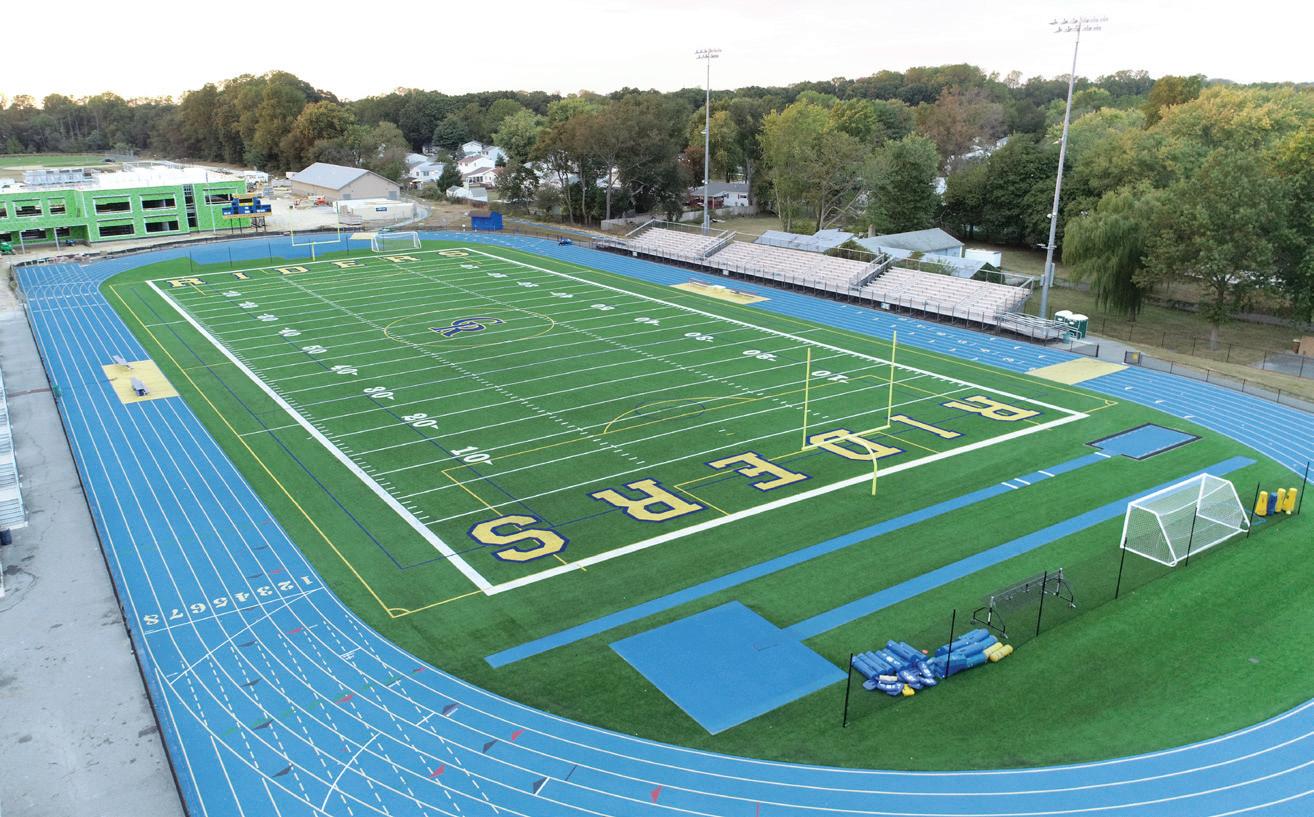
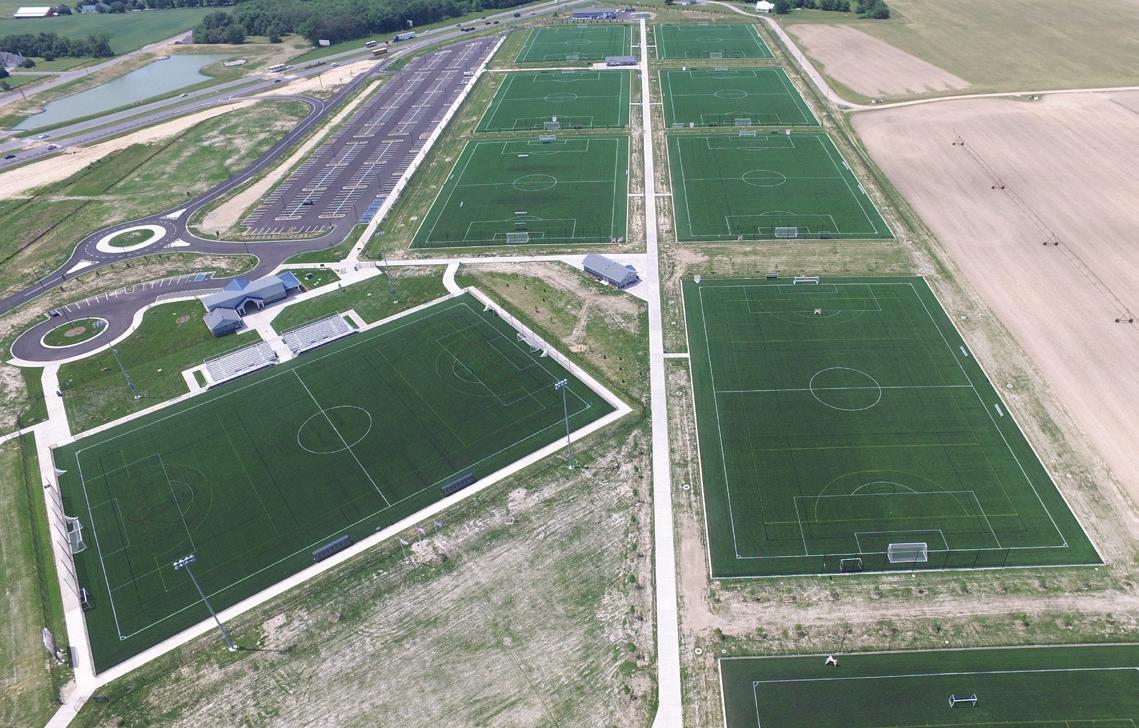
One of the most significant trends in athletic field development is the demand for multi-use fields. These fields are designed to support various sports, such as soccer, football, and lacrosse. Multi-use fields offer flexibility, allowing communities to host multiple sporting events throughout the year, maximizing the field’s use and making them costeffective. A prime example of this trend is Becker Morgan Group’s work at Caesar Rodney High School’s Rider Stadium. Our firm provided civil engineering and construction administration services to convert the main stadium from natural grass to artificial turf, making it suitable for JV and varsity football, lacrosse, and soccer. Additionally, the Legacy Field was developed specifically to serve soccer, field hockey, and lacrosse, emphasizing the value of multi-use athletic spaces. Another notable project that showcases the importance of multi-use facilities is the DE Turf Regional Sports Complex, which Becker Morgan Group designed in association with the Delaware Economic Development Office, Kent County, and The Greater Kent Committee. This 85acre facility features twelve artificial turf fields, five of which are lighted, including a championship stadium with seating for 750 spectators. The complex was designed not only to meet local sports needs but also to host regional and national youth
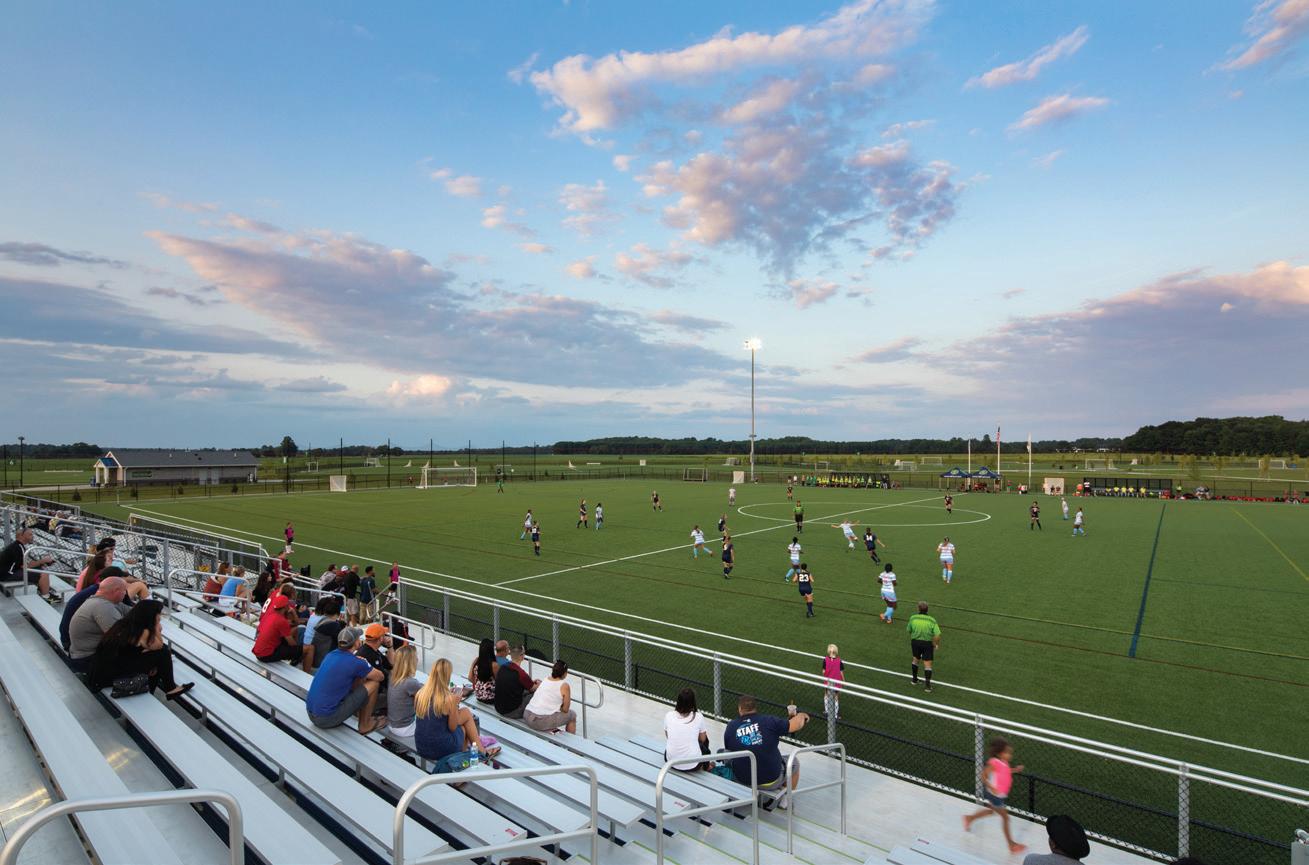
tournaments for soccer, lacrosse, field hockey, and rugby. With additional amenities such as restroom and concession buildings, a main stadium building, and a full-service kitchen, this project underscores the growing demand for multi-use, tournament-ready sports complexes.
An important component of synthetic turf systems is the infill. This is the material placed between the turf fibers that helps keep the blades upright, provides cushioning, and improves traction for athletes. Traditional infill is often made from rubber, typically from recycled tires. While effective and widely used, rubber can absorb and retain heat, causing field surface temperatures to rise significantly higher than natural grass, especially during warmer months. This heat retention can impact player comfort and safety, sometimes requiring fields to be watered or usage to be limited during peak temperatures.
In response, the industry is shifting toward alternative infill materials that offer improved environmental and performance benefits. Organic infills such as cork, coconut husk, and walnut shells are gaining popularity due to their renewable nature and ability to remain cooler under direct sunlight. Other options, such as coated sand and thermoplastic elastomer (TPE), provide durability while reducing some of the environmental concerns associated with traditional materials. These newer systems not only help regulate surface temperatures but also align with broader sustainability goals by minimizing reliance on recycled tire products and improving overall field performance.
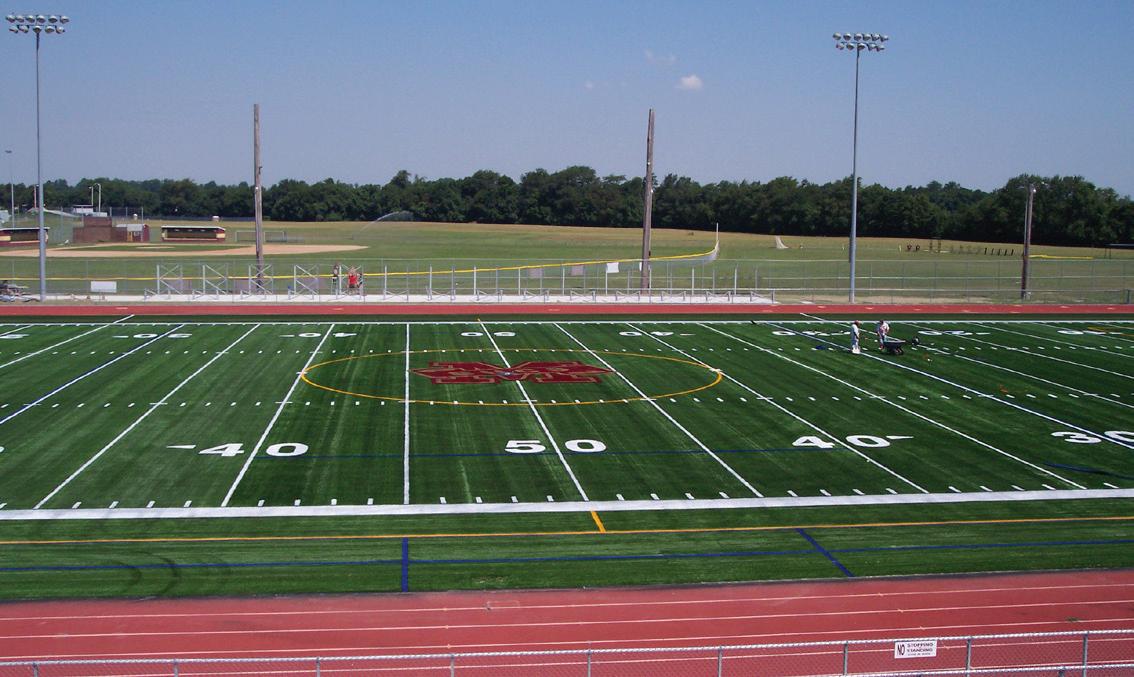
Advancements in turf technology have significantly extended the lifespan of athletic fields, particularly synthetic turf. These fields last around 10 years before needing replacement and have much lower maintenance costs, roughly $10,000 annually compared to $45,000–$60,000 for natural turf. Over 20 years, this has led to significant savings, despite the higher upfront costs. Becker Morgan Group’s projects, such as the football turf field at Caesar Rodney High School, showcase these trends by offering long-lasting, low-maintenance playing surfaces that maximize usability.
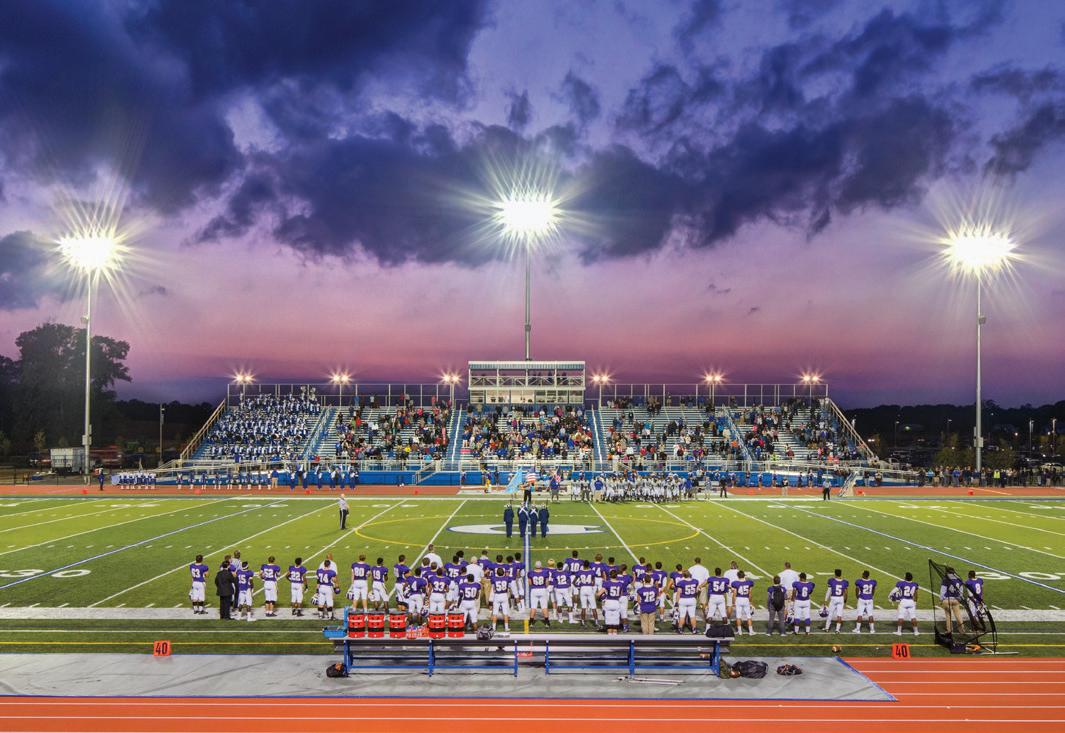
Natural grass fields, while less expensive to install, demand more upkeep, including mowing and aeration, and require downtime for reseeding. Synthetic fields, by contrast, can be used year-round with minimal interruptions. Proper maintenance strategies, such as grooming synthetic turf or aerating natural grass, are essential for preserving field quality.
Athletic fields will continue to be a crucial component of sports infrastructure as long as these trends persist, offering communities long-lasting, adaptable, and environmentally friendly areas for competition and leisure.