
Open Mic Communications
Guiding Principles For Breaking Out: Learning for Growth

Foreword
Greetings and warm regards,
Waymon Daniels, a multi-faceted professional with a passion for leadership development, is the visionary creator of an innovative 4-Step Leadership Development Program. His mission is to inspire leaders both within organizations and their communities to achieve excellence in their professional and personal lives With appearances on local radio and television media outlets, Waymon has become a sought-after expert on effective leadership practices and has organized numerous impactful leadership workshops. In addition to his communications and leadership work, Waymon holds an Associate's Degree from a Bible College in San Diego, CA, as well as certificates of appreciation that attest to his profound commitment to serving others
A combat veteran of the Persian Gulf War, Waymon served as a Radioman in the United States Navy from 1988-1991, during which he obtained a Top Secret clearance. Following an Honorable discharge, he embarked on a civilian career that has included roles as a chemical dependency counselor, case manager, community leader, and as the head of a youth program for at-risk individuals within the prison system
With his wealth of experience and unwavering dedication to effective leadership, Waymon has shared his insights in interviews with media outlets such as WXXI Television and radio, as well as through various social media platforms. He has also delivered engaging and informative talks and speeches at schools, community organizations, churches, and within the New York State prison and court systems
Warm regards,
Waymon Daniels Headmaster
WAYMON DANIELS STORY
Greetings and warm regards,
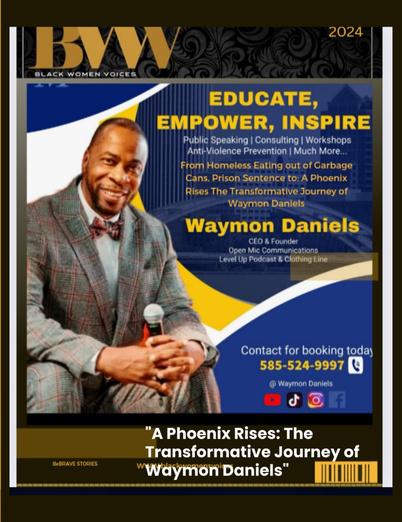
"A Phoenix Rises: The Transformative Journey of Waymon Daniels"
This is the compelling story of Waymon Daniels, a man who rose from the ashes of a tumultuous childhood, addiction, eating out of trash cans, and seven years incarceration to become a beacon of hope and inspiration for others. Waymon's journey is a testament to the power of resilience, self-discovery, and the undeniable potential for change.
A Painful Beginning Waymon's story begins in the shadows of an absent father
Growing up without a paternal figure left him feeling abandoned and alone, emotions that would shape his early life Struggling to cope, Waymon found solace in acting out, a behavior that ultimately led to him being expelled from every school system in the state of New York
Diagnosed as "dumb" by his family and internalizing their words, Waymon's self-esteem plummeted. To dull the pain, he turned to drugs and alcohol, descending into a world of addiction and criminal activity This downward spiral eventually landed him in prison, where he spent seven long years behind bars.
Warm regards,
Waymon Daniels
WAYMON DANIELS STORY
Greetings and warm regards,
A Turning Point
Prison was a wake-up call for Waymon, as he witnessed the devastating effects of incarceration on his fellow inmates. The screams of men being raped and the anguish of those who felt they couldn't survive being away from their families haunted him But the defining moment came when his 12-year-old daughter said she wanted a man just like him, and his 7-year-old questioned his love for her and her mother.
These heartfelt words hit Waymon like a ton of bricks. He knew he had to change, not just for his own sake, but for the sake of his children and family. It was at this low point that the phoenix within him began to stir.
The Rise of a New Man Waymon's transformation was nothing short of remarkable.
He committed himself to self-improvement and refused to let his past define him. Through determination and hard work, Waymon turned his life around and emerged as a successful entrepreneur, speaker, and community leader.
Warm regards,
Waymon Daniels
WAYMON DANIELS STORY
Greetings and warm regards,
Today, Waymon is the proud owner of two businesses, hosts a podcast, and works tirelessly with initiatives such as the Gun Involved Violence Elimination (GIVE) program at Pathstone. He is living proof that even the darkest past can give way to a brighter future. Waymon Daniels is not just a success story; he is a living testament to the transformative power of self-belief and perseverance His story has touched countless lives and continues to inspire people across the globe. Waymon's journey reminds us that no matter how difficult our circumstances may be, we always have the power to rise from the ashes and create a better tomorrow.
Warm regards, Waymon Daniels
Vision and Mission
Vision:
Open Mic Communications envisions a world where every young person has the opportunity to unlock their full potential and lead a fulfilling life by embracing socialemotional growth, personal development, and making positive choices.
Mission:
Open Mic Communications is dedicated to empowering youth referred by Probation to transform their lives through a comprehensive program emphasizing skillbuilding, educational support, and therapeutic interventions. By fostering social-emotional development, personal growth, and a commitment to positive life choices, we aim to break the cycle of recidivism and create a brighter future for our youth and their communities.
Introduction

I Open Mic Communications Breaking Out: Learning for Growth is a comprehensive program designed to support youth by promoting social-emotional development, personal growth, and positive life choices. The program will serve youth referred by Probation through a variety of activities and services, focusing on skill development, educational support, and therapeutic interventions. Open Mic Communications Breaking Out: Learning for Growth is made possible by collaboration on the part of local government, community partners, service providers, and youth leaders
Executive Summary

Executive Summary
Vision
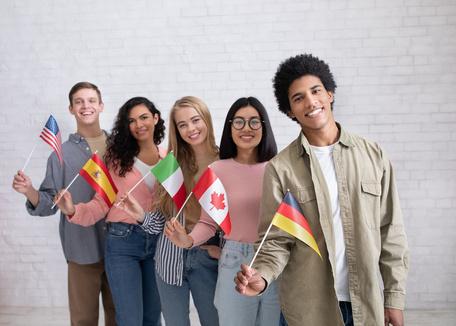
We support students' understanding of cultural diversity, global thinking, and cross-cultural experiences. We promote global partnerships and cultural exchanges to broaden students' worldviews.
Open
Mic Communications
Breaking Out:
Learning for Growth is a comprehensive program designed to unlock individuals' potential through targeted education and self-development strategies. This innovative initiative combines proven learning techniques, coaching, and mentorship to create a transformative experience that empowers participants to achieve personal and professional growth.
Student Life

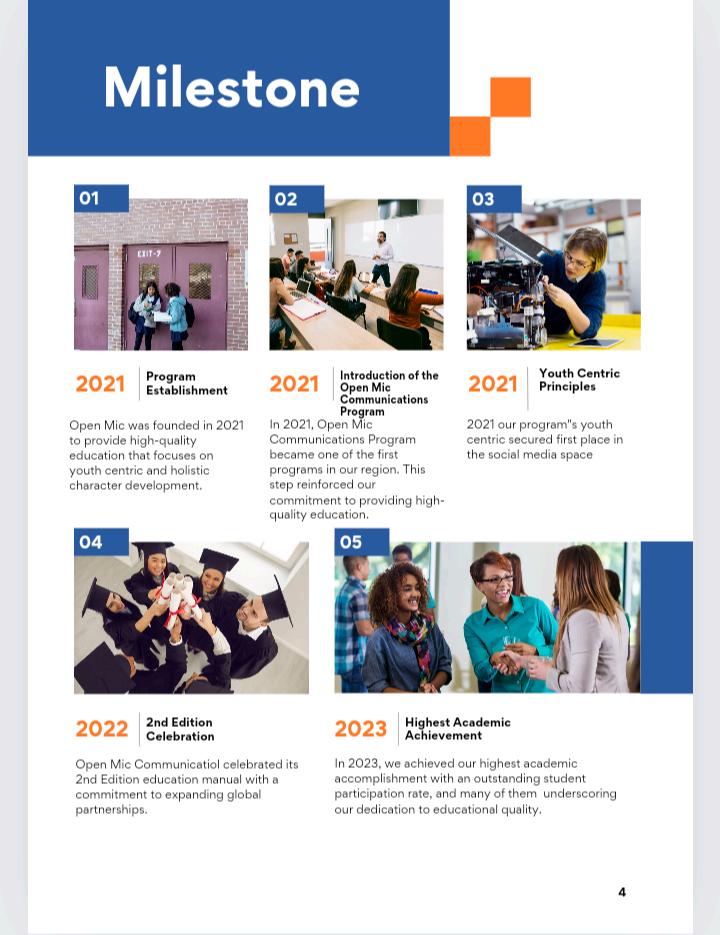
Diverse Students
Our school prides itself on its diverse student population, with students from over 40 nationalities, creating a vibrant and multicultural community. This diversity enriches the learning experience and encourages cross-cultural friendships.

Our students actively engage in various extracurricular activities, including sports, arts clubs, Model United Nations, and robotics teams. These activities foster teamwork, leadership skills, and personal growth. 03 01 04 02 05
Community Service
Our students are committed to giving back to the community. They actively participate in various community service projects, volunteering their time and skills to make a positive impact locally and globally.

Extracurricular Activities
Global Perspective
We encourage students to embrace a global perspective through cultural exchange programs, international partnerships, and educational trips These experiences broaden their horizons and prepare them for an interconnected world.

Academic Excellence
Warner & Spencer International High School places a strong emphasis on academic excellence. Our students are dedicated to their studies, and many of them achieve high honors and go on to attend prestigious universities worldwide.
Sample Questions For Youth Centric Assessment


Here are some sample questions for a youth-centric assessment tool based on the historical barriers mentioned above:
1. **Lack of funding**: - How has the availability of financial resources impacted the implementation and sustainability of your youth-centric programs? - Have you faced any challenges in securing funding for your programs? If so, how have you addressed these challenges?
2. **Limited community involvement**: organizations, agencies?
- To what extent does your program collaborate with local government community members, and
- How have you engaged the community in the development and implementation of your youth-centric programs?
3. **Inadequate understanding of youth needs**:
- How does your program ensure that the needs and perspectives of youth are incorporated into program design and implementation?
- Have you faced any challenges in accurately assessing and addressing the specific needs of the youth in your program?
4. **Stigmatization**:
- How does your program address and overcome stigma and discrimination faced by youth who have been involved in the criminal justice system or exhibited negative behaviors? - Have you observed any improvements in youth self-esteem and social integration as a result of your program ' s efforts to combat stigma?
5. **Ineffective policies and legislation**: - How do current laws and policies impact your ability to prioritize provide youth-centric programs that rehabilitation and prevention?
- Have you advocated for policy changes that better support the development and implementation of youthcentric programs?
6. **Poor data collection and analysis**:
- How does your program measure and track the outcomes of youth participants?
- Have you encountered any challenges in collecting accurate data on youth experiences and program effectiveness?
7. **Inadequate training and resources for staff**:
- How do you ensure that staff members receive adequate training and resources to effectively support youth in your program?
- Have you observed any improvements in program quality as a result of staff training and professional development initiatives?
8. **Lack of cultural competency**:
- How does your program address the cultural, racial, and ethnic diversity of youth participants? competency volunteers?
- What steps have you taken to promote cultural program among staff members
9. **Inconsistent program implementation**:
- How does your program maintain consistency in the availability and quality of youth-centric services?
- Have you implemented any strategies to address inconsistencies in program implementation? These questions can be used as a starting point for assessing for improvement. By evaluating these key areas, organizations can better understand the challenges they face and develop more effective strategies to support the needs of youth in their programs youth-centric programs and identifying areas
Findings
Findings Over the years, several historical barriers have impeded the development and implementation of effective youth-centric programs aimed at reducing negative youth choices and decreasing crime recidivism. Some of these barriers include:
1. **Lack of funding**: Insufficient financial resources have often hindered the creation and sustainability of youth-centric programs, making it difficult to provide the necessary support and resources for youth in need.
2. **Limited community involvement**: In some cases, a lack of engagement and collaboration between community members, organizations, and local government has led to an absence of holistic support systems for young individuals.
3. **Inadequate understanding of youth needs**: Programs that fail to take into account the unique experiences, perspectives, and challenges faced by youth may struggle to effectively address their needs and concerns.
4. **Stigmatization**: Youth who have been involved in the criminal justice system or exhibited negative behaviors may face stigma and discrimination, making it harder for them to access support and reintegrate into society
5. **Ineffective policies and legislation**: Laws and policies that prioritize punishment over rehabilitation and prevention can limit the resources available for youth-centric programs and exacerbate recidivism.
6. **Poor data collection and analysis**: A lack of accurate and comprehensive data on youth experiences, risk factors, and program outcomes has often hampered efforts to design and implement effective, evidence-based interventions.
7. **Inadequate training and resources for staff**: Insufficient training and resources for the professionals working with youth can result in a lower quality of care and reduced program effectiveness.
8. **Lack of cultural competency**: Programs that fail to account for the cultural, racial, and ethnic diversity of youth populations may struggle to engage and support young individuals effectively.
9. **Inconsistent program implementation**: Inconsistent implementation of youth-centric programs, both in terms of their availability and quality, can hinder their overall impact and effectiveness. Addressing these historical barriers is crucial for the development and success of youth-centric programs. By working to overcome these challenges, we can create more effective support systems that empower young people to make positive choices and reduce the likelihood of criminal behavior and recidivism
Theory of Change (3 Key Outputs):
youth-centric statement, a set of principles, and a brief outline for an assessment tool:
Youth Centric

**Youth-Centric Principles**:
1. **Inclusivity**: Ensuring a diverse and welcoming environment that respects and values the unique identities of all young people.
2. **Empowerment**: Providing youth with the tools, resources, and knowledge to engage in self-advocacy and leadership
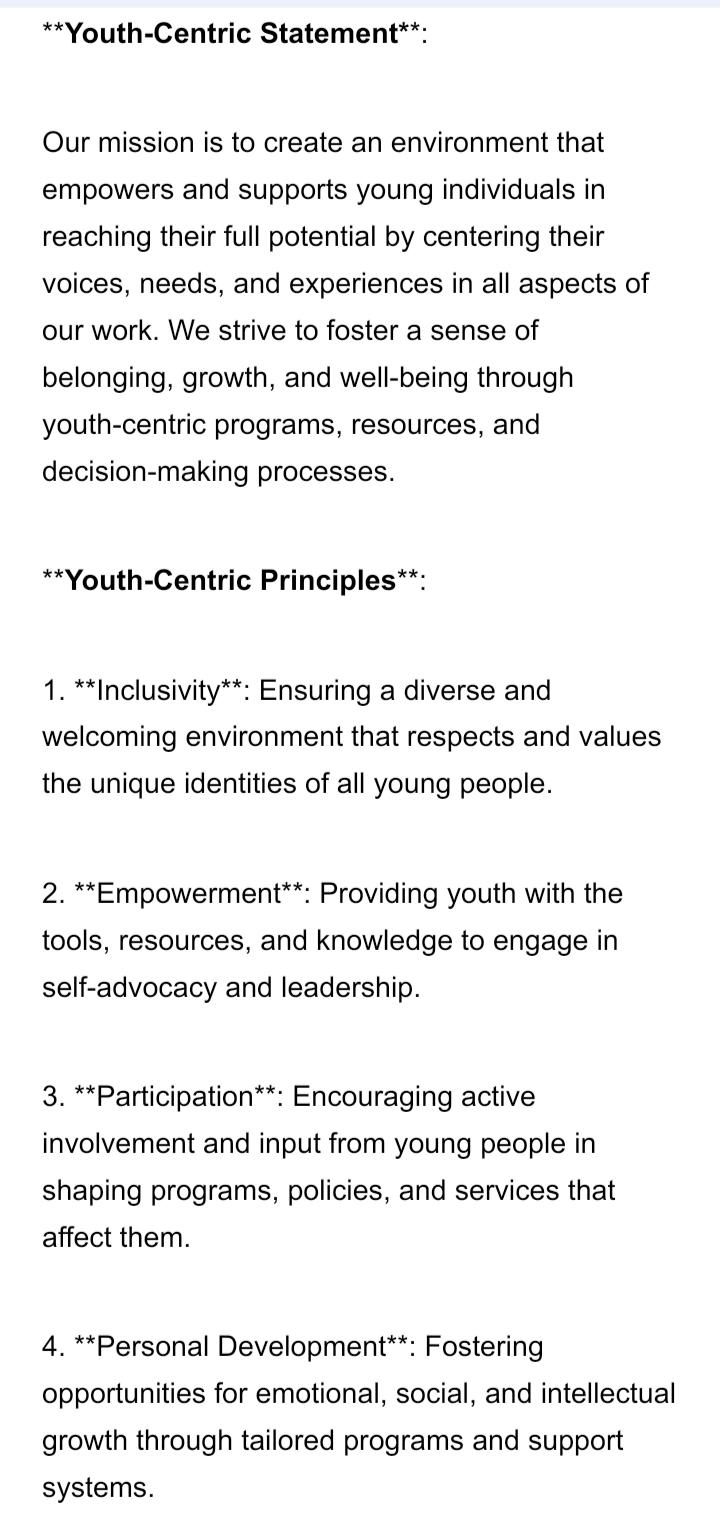
3. **Participation**: Encouraging active involvement and input from young people in shaping programs, policies, and services that affect them.
4. **Personal Development**: Fostering opportunities for emotional, social, and intellectual growth through tailored programs and support systems.
5. **Safety**: Ensuring a secure and nurturing space for youth to explore their interests, express themselves, and build positive relationships.
6. **Mentorship**: Cultivating connections between youth and caring adults who can provide guidance, support, and encouragement.
7. **Adaptability**: Continuously learning and evolving to meet the changing needs and aspirations of young people
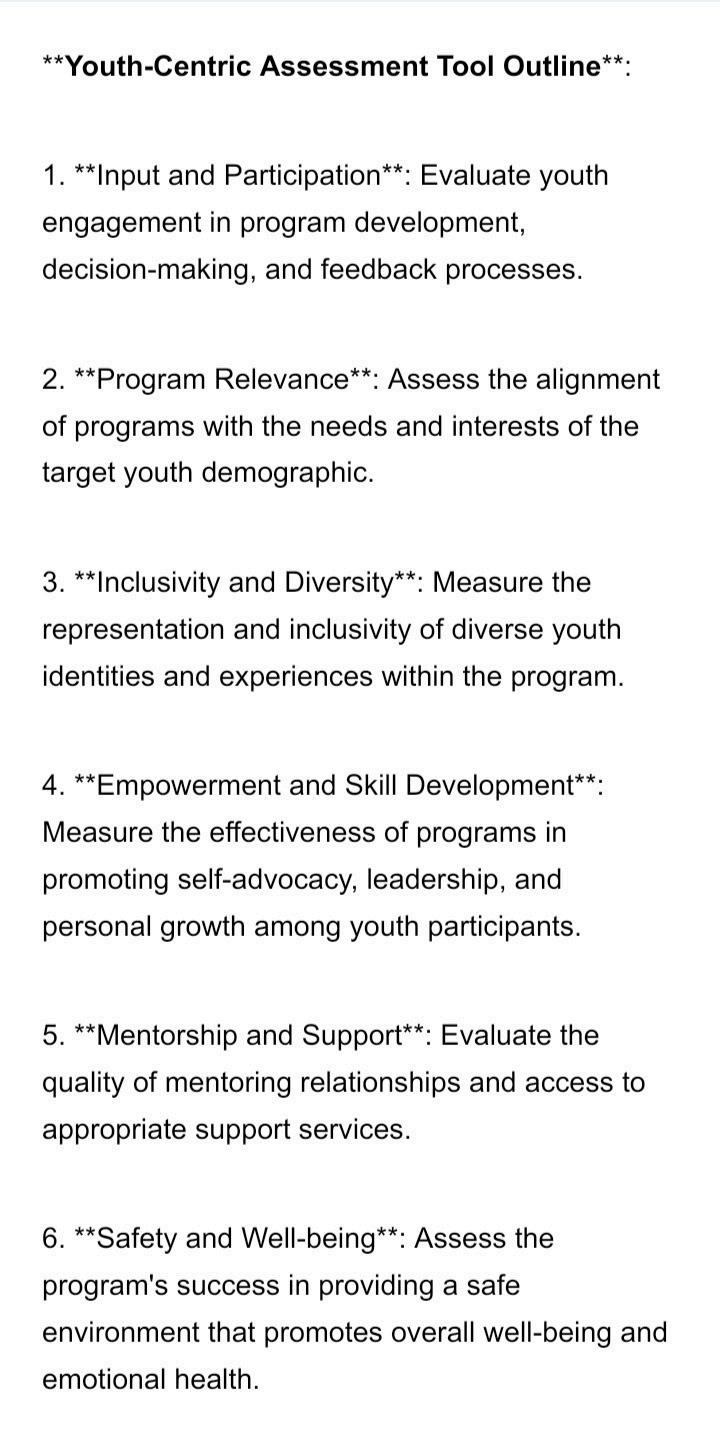
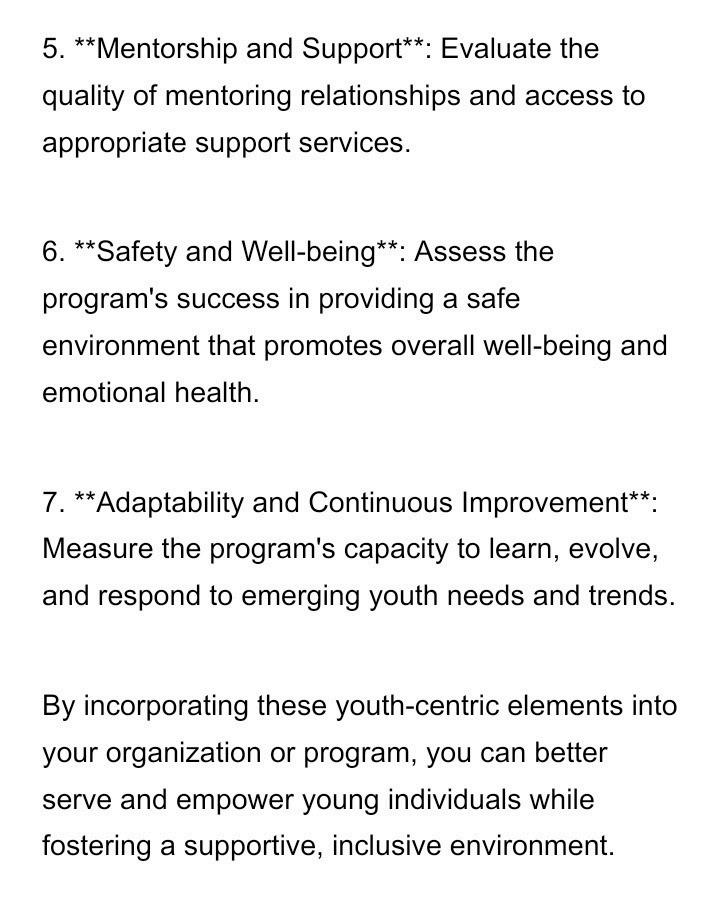
Youth Centric Programs

Open Mic Communications Recognition Program
Open Mic Communications Program is designed to challenge students to think critically about their decisions while encouraging personal and social growth Its rigorous curriculum emphasizes critical thinking, creativity, and practical skills Open Mic Communications are well-prepared for higher education and known for their wellrounded education and international perspective.
Tier 1 Build Your City
Offers a comprehensive exploration of the fundamental aspects of community development and urban growth. Throughout this course, participants will develop a deep understanding of their city's unique dynamics and gain the skills necessary to create lasting, positive change.
Tier 2 I Believe
Dives into the heart of personal growth, focusing on self-reflection, goal-setting, and overcoming personal limitations. Throughout this transformative journey, participants will develop a strong sense of self, uncover their unique values, and cultivate a resilient mindset to achieve their aspirations.

Tier 3 Change Is Hiring
Participants will explore the dynamic landscape of the modern job market and develop essential skills to navigate it successfully. Through a focus on professional development, networking, and personal branding, students will discover how to turn their passions into fulfilling careers and make a positive impact in their chosen fields.
Tier 4 Change Is Hiring
course focuses on building inclusive, diverse, and supportive communities that embrace people from all walks of life. Throughout this course, participants will develop cross-cultural communication skills, learn strategies for welcoming new community members, and explore ways to foster collaboration and understanding between diverse groups
04 06 03
Class Overview Open Mic Communication Strengthening
Our Youth Thereby Strengthening Neighborhoods: Community Building for Inclusive Growth. A prevailing sentiment shared by individuals impacted by crime is their wish to remain within their communities, provided that these neighborhoods can effectively meet their essential needs. These needs encompass quality affordable housing, access to nutritious foods, enhanced safety measures, superior education, youth development initiatives, crisis service alternatives to arrest, integrated community health campuses, support for local businesses and job opportunities, improved transportation infrastructure, and neighborhood community centers offering vital connections to education, training, and additional support services.
Key Components Of The Program
waymon Daniels
Key components of the program include:
1. Personalized learning paths tailored to individual needs and goals.
2. Expert-led workshops and seminars covering essential skills for success.
3. One-on-one coaching and mentorship from experienced professionals.
4. A supportive community that fosters collaboration and peer learning.
By participating in Open Mic Communications Breaking
Out:
Learning for Growth, individuals will gain the knowledge, confidence, and practical tools needed to excel in their careers and personal lives. The program ' s participants' abilities but also fosters a mindset of continuous growth and adaptability, ensuring long-term success in a rapidly changing world.
Tier 1 Build your City Tier Two: I Believe
Tier Three:Change is Hiring
Tier Four: Welcome

Course Description: Tier One - Build Your City**
The Tier One course in our "Build Your City" series offers a comprehensive exploration of the fundamental aspects of community development and urban growth. Throughout this course, participants will develop a deep understanding of their city's unique dynamics and gain the skills necessary to create lasting, positive change.
Participants will explore key topics including: 1. **Community Dynamics:** Delve into the social, economic, and political factors that shape your city and discover opportunities for transformation.
2. **Identifying Local Resources and Assets:** Learn how to uncover hidden resources within your community and leverage them for growth and developmen t. 3. **Grassroots Organizing and Leadership Development:** Build capacity for change by honing your skills in mobilizing community members and nurturing leadership potential.
4. **Local Economic Development and Entrepreneurship:** Uncover strategies to promote local economic growth, supporting small businesses and fostering a diverse economic landscape.
5. **Building Strong Neighborhood Networks:** Develop the tools to your create and maintain collaborative relationships within neighborhood, resulting in sustainable improvements for your city. By the end of this course, participants will possess a robust foundation in the core principles and practices of building thriving cities, empowering them to drive meaningful change and foster sustainable urban growth
Tier Two: "I Believe**
**Course Description: Tier Two - I Believe** The Tier Two course, "I Believe," dives into the heart of personal and overcoming personal limitations. Throughout this transformative journey, participants will develop a strong sense of self, uncover their unique values, and cultivate a resilient mindset to achieve their aspirations.
Key components of this course include: 1. **Developing Personal Vision and Values:** Reflect on your passions, strengths, and purpose to create a clear personal vision and define the values that will guide your decision- making.
2. **Overcoming Limiting Beliefs:** Identify self-limiting beliefs that may be holding you back and develop strategies to challenge and overcome them, unlocking your full potential.
3. **Setting Goals and Building an Action Plan:** Master effective goal-setting techniques and create a personalized action plan to help you turn your aspirations into reality.
4. **Fostering Resilience and Self-Care:** Build emotional resilience and explore practical self-care strategies to manage stress and maintain overall well-being, ensuring sustainable personal growth.
In the "Change is Hiring" course, participants will explore the dynamic landscape of the modern job market and develop essential skills to navigate it successfully. Through a focus on professional development, networking, and personal branding, students will discover how to turn their passions into fulfilling careers and make a positive impact in their chosen fields. Key components of this course include: 1. **Job Market Trends and Opportunities:** Examine current job market trends, identify emerging industries, and learn how to position yourself for success in a rapidly evolving economy. 2. **Enhancing Professional Skills and Competencies:** Develop crucial skills such as communication, problemsolving, and critical thinking to thrive in today's competitive workplace. 3. **Effective Networking and Personal Branding:** Build and maintain a robust professional network, and create a unique personal brand that sets you apart from the crowd in the job market. 4. **Navigating Job Search and Interviews:** Gain practical tips and strategies for finding job opportunities, crafting compelling applications, and excelling in job interviews. 5. **Turning Your Passion into a Career:** Explore ways to align your personal interests and values with your professional life, carving out a rewarding career path that reflects your unique talents and aspirations. By the end of this course, participants will have a comprehensive understanding of the modern job market and the tools they need to pursue fulfilling careers that drive positive change in their industries and communities.
The "Welcome" course focuses on building inclusive, diverse, and supportive communities that embrace people from all walks of life. Throughout this course, participants will develop cross-cultural communication skills, learn strategies for welcoming new community members, and explore ways to foster collaboration and understanding between diverse groups. Key components of this course include: 1. **Cross-Cultural Communication and Understanding:** Develop cultural competence by exploring different cultural norms, values, and communication styles, and learn how to build strong relationships across diverse communities. 2. **Welcoming and Supporting New Community Members:** Discover strategies for creating an inclusive and supportive environment for newcomers, ensuring that all members feel a sense of belonging and connection within the community. 3. **Building Inclusive and Diverse Communities:** Learn how to promote diversity and inclusion, address barriers to participation, and create opportunities for meaningful engagement in your community. 4. **Creating Safe and Supportive Environments:** Explore ways to ensure your community is a safe and supportive space for all members, including vulnerable populations, and develop strategies to address potential issues and challenges. 5. **Building Bridges and Connecting Communities:** Develop the skills and knowledge needed to foster connections between diverse communities, encouraging collaboration, understanding, and mutual support. By the end of this course, participants will be equipped with the skills and knowledge to build welcoming and inclusive communities that celebrate diversity, promote understanding, and support the wellbeing of all members
Open Mic Communications
Guiding Principles For Breaking Out: Learning for Growth