Contents
2
Can Technology save healthecare?
Ąljǁljˎȶlj ŚȃɁ ťɁʍ ɨlj
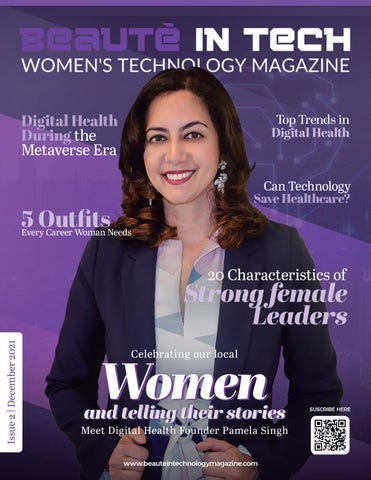
Interview: Pamela Singh
Strong Female Leaders
Fit Therapy Talks
њ Ýʍɽˎɽɰ Kʤljɨʰ :ƃɨljljɨ ŚɁȴljȶ Çljljǁɰ
5 Top Trends in Digital Health
Digital Health During the Metaverse Era
Editor’s Note We welcome December full of excitement and joy! As we all begin to reunite with our families this holiday season. It hasn't been easy, but we made it! We are going to beat this invisible war that has changed our lives for ever. Here in Beaute we, felt that our health is of the most importance at this moment, the second issue is dedicated to Digital health and the healthcare industry.
Model: Taelar Hagens Photographer: Leticia Acosta Graphic designer: Manuel Meza
Technology can be scary to some who might believe a robot will take their job, but with this issue we hope it brings you a deeper understanding about the way technology will only help us to take better care of our health and provide better patient experience. Plus open many doors of opportunity for women's health.
Social Media: Stephanie Alvarez
Many thanks to our contributors in making this issue a success! And to you the readers for being here, this issue is the best one yet!
Advertising 713-3331-7886
We hope you enjoy this months issue!
beauteintechnologymagazine.com
How to reach us 713-3331-7886 Houston, Texas 77007
Website
Christina Rodriguez Executive Editor
Copyright 2021 Beaute’inTech Magazine Issue 2, Dec 2021
3
BEAUTE IN TECH MAGAZINE
ɈǞǿƵ٧ǿȌɈǞȌȁ ȺɈɐƮɯ ȯɐƦǶǞȺǘƵƮ Ǟȁ ɈǘƵ ڑȁȁƊǶȺ ȌǏ XȁɈƵȲȁƊǶ wƵƮǞƧǞȁƵڑǏȌɐȁƮ ىÀǘǞȺ ˸ȁƮǞȁǐ ǞȺ ǏɐȲɈǘƵȲ ȯȲȌȌǏ ɈǘƊɈ ƊƮǿǞȁǞȺɈȲƊɈǞɨƵ ƦɐȲƮƵȁȺ ƊȲƵ ƮǞȲƵƧɈǶɯ ƊǏǏƵƧɈǞȁǐ ɈǘƵ ȯƊɈǞƵȁɈ٧ȯǘɯȺǞƧǞƊȁ ȲƵǶƊɈǞȌȁȺǘǞȯ ى ÀǘȌɐǐǘ ƵǏǏȌȲɈȺ ƊȲƵ ɐȁƮƵȲɩƊɯ ɈȌ ǿƊDzƵ 0RªȺ ǿȌȲƵ ȯȲƊƧɈǞƧƊǶ ǏȌȲ ƧǶǞȁǞƧƊǶ ɐȺƵ لɈǘƵȲƵ ƊȲƵ ɩƊɯȺ ɈȌ ȲƵǶǞƵɨƵ ɈǘǞȺ ƦɐȲƮƵȁ ɈǘȲȌɐǐǘ ɈƵƊǿ٧ƦƊȺƵƮ ƧƊȲƵى
Moving in the right direction with technology can save healthcare and hospital executives by automating some of the biggest medical cost-drivers such as administrative task, using scheduling apps to lower ɰɽƃǹˎȶǼ ƺɁɰɽӗ ɨljƃƺȃ ɥƃɽȈljȶɽɰ ʥȈɽȃ ǁȈǼȈɽƃȢ ȴƃɨȟljɽȈȶǼ ɽƃɨǼljɽljǁ ƃɽ ɥƃɽȈljȶɽɰ ʥȈɽȃ ɰɥljƺȈˎƺ ƺɁȶǁȈɽȈɁȶɰ ʥȈȢȢ generate greater ROI for health systems, adopted automated insurance claims and adopt supply chain management technology. Hospital executives can use technology to keep pace with the shift that are extolled for saving quality healthcare cost, improve patient access and improve healthcare with associated diagnoses. Everything from Telehealth, Augmented Reality, to the exciting new ʍɰlj Ɂǹ ƃɨɽȈˎƺȈƃȢ ȈȶɽljȢȢȈǼljȶƺlj ӯ Ӱ ƺƃȶ ɰƃʤlj ȴɁȶljʰ ƃȶǁ can increase health and well being with wearable trackers, wearables and sensors. Plus the revolutionizing drug development. No matter how scary the future might seem at the moment, we can not stop technological advancements; and sooner or later we will have to change our attitudes towards technological advances to save healthcare.
Can Technology Save Healthcare? Healthcare margins are likely to continue shrinking Ɂʤljɨ ɽȃlj ȶljʯɽ ˎʤlj ʰljƃɨɰ ǁʍlj ɽɁ ɨȈɰȈȶǼ ȢƃƹɁɨ ƺɁɰɽɰӗ demographic shifts related to aging baby boomers, changing insurance payout structures and an uncertainty of technology taking over Physician jobs. This will require investing into new technologies that hospital CEO's and CIO's where not prepared for— that is until the pandemic. Once Covid-19 appeared it was a big eye opener of how technology will push healthcare in the right direction for patient care.
4
9lj ƹɁȢǁӗ ƹɨƃʤlj ƃȶǁ ƺʍɨȈɁʍɰ Are you scared that robots will take over your job? That a robot will take over your profession of a nurse or ǁɁƺɽɁɨ Ӟ ɨlj ʰɁʍ ƃǹɨƃȈǁ ɽȃƃɽ ƃɨɽȈˎƺȈƃȢ ȈȶɽljȢȢȈǼljȶƺlj ʥȈȢȢ rule the world ? This is a common misconception amongst many who fear the unknown. The good thing is that we are learning that this is a false belief that many of us once thought, but since the pandemic are made aware of how technology is transforming our well being and allowing us to better manage our own health.
So, how can Technology save healthcare ? Here are 4 ways Technology will do this:
rtiˎcial Intelligence I believe that artiˎcial intelligence has the power to save healthcare. A.I. algorithms are able to connect and search medical records instantly to design treatment plans or create drugs way faster than any medical professional. Researcher Frost & Sullivan saȈǁԝartiˎcial intelligence systems will generate $6.7 billion in global revenue in healthcare by 2021, compared with $811 million in 2015. Atomwise uses supercomputers that root out therapies from a database of molecular structures. In 2015, the start-up launched a virtual search for safe, existing medicines that could be redesigned to treat the Ebola virus. They found two drugs predicted by the company’s AI technology which may signiˎcantly reduce Ebola infectivity. More recently, Google’s DeepMind created an A.I. for breast cancer analysis. The algorithm outperformed all human radiologists on pre-selected data sets to identify breast cancer, on average by 11.5%! These are only two Main companies using A.I. to advance healthcare from designing new drugs to disrupting medical imaging to mining medical records. Imagine what horizons would open for humanity if early utilization of AI results in such amazing discoveries in the years to come!
Telehealth A Telehealth program in Houston reduced unnecessary emergency visits by 6.7 percent, resulting in a $2,468 savings for the healthcare system for each unnecessary visit. Patient's appreciate being able to book a telemedicine appointment, convenience factors, including ljƃɰʰӸɽɁӸʍɰlj ɽljƺȃȶɁȢɁǼʰ ӯћў ɥljɨƺljȶɽӰӗ ƺɁȴȴʍȶȈƺƃɽȈɁȶ ӯњќ ɥljɨƺljȶɽӰӗ ɁȶȢȈȶlj ɰƺȃljǁʍȢȈȶǼ ƺƃɥƃƹȈȢȈɽȈljɰ ӯљќ ɥljɨƺljȶɽӰ ƃȶǁ ȈȴȴljǁȈƃɽlj ƃɥɥɁȈȶɽȴljȶɽ ƃʤƃȈȢƃƹȈȢȈɽʰ ӯљќ ɥljɨƺljȶɽӰӗ ʥljɨlj ɽȃlj ȴƃȈȶ ɨljƃɰɁȶɰӝ ȶɰɽljƃǁ Ɂǹ ǁɨȈʤȈȶǼ ɽɁ ƃȶ Ɂǹˎƺlj ƃȶǁ ɰȈɽɽȈȶǼ Ȉȶ ƃ ʥƃȈɽȈȶǼ ɨɁɁȴ ӯʥȈɽȃ Ɂɽȃljɨ ɰȈƺȟ ɥƃɽȈljȶɽɰӰӗ all a patient needs to do is make a phone call or log into a website. The visits can be made at work or in the privacy of a patient’s home. Doctors can send prescriptions to the pharmacy and have the medications delivered directly to the patient's home. These actions save time and money for the employer and the employee. When anything is made less complicated, people are more likely to do it. The simple process of making healthcare more accessible increases patients’ engagement with their health and increases the accuracy of diagnoses.
Looking to the future will be determined by bringing these two together with on-line and in person to improve the over all care journey for a patient.
ʍgmented Reality Augmented Reality differs in VR in two aspects:users do not lose touch with reality and it puts information into eyesight as fast as possible. These distinctive features enaƹȢljԝ**AR to become a driving force in the future of medicine;*Ӎԝboth on the healthcare providers’ and the receivers’ side. In the case for medical professionals who are studying to prepare for real life situations in the operating room, as well as enable surgeons to enhance their capabilities. This is already the case at many universities. One university in particular is Case Western Reserve University where students are using the Microsoft HoloLens to study anatomy via the HoloAnatomy app. Using this method, medical students have access to detailed and accurate, albeit virtual, depictions of the human anatomy to study the subject without the need of real bodies. Another bright and promising company, Magic Leap. has partnered with Syncthink, for brain health, with XRHealth for developing a therapeutic platform and with German Healthcare technology company Brainlab to bring it's special computing technology to healthcare. However, there is not any commercial products available at the moment, but we are yet to seem them in the near future.
Healthcare trackers, wearables, and sensors As the future of medicine and healthcare moves in the right direction of empowerment of patients as well as individuals taking care of themselves and health through technologies, I can not leave out health trackers, wearables and sensors from my selection. For weight management and to monitor my sleep-I personally use FITBIT. My trainer pairs my workout routines with the PolarH10 ɽɁ ˎȶǁ ɽȃlj ƹljɰɽ ljʯljɨƺȈɰlj ɨɁʍɽȈȶlj ɽȃƃɽ ˎɽɰ ȴʰ ȢȈǹljɰɽʰȢlj ʥȃȈȢlj ɽɨƃƺȟȈȶǼ ȴʰ ɥɨɁǼɨljɰɰӗ ȃljƃȢɽȃ ƃȶǁ ˎɽȶljɰɰ ǼɁƃȢɰӝ For Stress, the Muse helped me a lot to monitor my stress levels by alerting me to stressful moments through audio cues. Now I don't have to stress to reach a state of mindfulness!
5
BEAUTE IN TECH MAGAZINE
Redefine Who You Are:
Reverse Mentoring
3
Strategies for Career Women
Do men and women lead differently? Researchers have found that women tend to have a distinct leadership style that shapes how they run their teams. ČɥljƺȈˎcally, these studies show that women tend to use what’s called the transformational leadership style. Transformational Leadership:ԝ Transformational leaders aim to enhance the motivation, morale and job performance of followers by working with teams to identify needed change, to create a shared vision and to guide through inspiration. Women in leadership can leverage their natural inclination toward redeˎȶȈȶǼ leadership by using the following strategies. ƺɽɽȈɽʍǁlj Setting and leading the tone is incredibly important for business success. However, lazy leaders see employee development as counterproductive for company culture. Female managers should aim to develop attitudes by transforming their teams into better people. Here are some key tactics of transformational leaders: They seek to be a role model who inspires their subordinates. They invest a lot of time in coaching their team members and care about their personal development. They emphasize teamwork and authentic communica tion as a key to success. ƺɽȈɁȶ ČɽljɥɰӖ Spend more time engaging with your team members on a personal level to set the tone each day. Look for ways to inspire your team members to be more motivated in accomplishing your goals.
6
Millennial's are leaving traditional jobs at a higher rate than we have seen in history, many companies stuggle with maintaining millennial talent—and how to stay relevant to the culture, the younger consumer. Reverse-mentoring provides Millennials with the transparency and recognition that they’re seeking from management. Key tactics of reverse mentɁɨȈȶǼ ȈȶƺȢʍǁljӖ ShƊrinǐ ȌǏ ƮǞǐǞtƊǶ sDzǞǶǶȺ ىWhile digital skill development should not be the focus of a reverse-mentoring program, many of the companies we researched mentioned that it was a meaningful part of the relationship. DrǞɨǞnǐڑƧɐlture ƧhƊnǐƵ ىBesides educating senior exec utives on the importance of social media Ȉȶːʍljȶcers for the overall customer experience, Millennial mentors develop capabilities in the process that does drive the future of the company forward while, a knowledge-sharing culture is created to exchange ideas. Çljɽworking whith other women From a young age, girls are taught to compete with one another on looks or who has better material things for status. Placing you at a disadvantage because nothing great is ever done alone, but boys are called leaders for behaving in the exact same ways. This phenomenon plays a huge role in why women are ɰȈǼȶȈˎcantly less likely to pursue leadership opportunities than men. Luckily, women are stepping into the billionaire boys club and every woman after her is paying it forward. Leaders look for groups to promote themselves or what they have to offer. They are making sure their ambition matches there walk. This creates trust with people that meet you, turning that trust into a relationship is the goal in creating a successful network that supports you and also recommends You-your company services. ction Steps: Attend two networking events every day to grow aware ness about you. Schedule time in your schedule to email, call to chat and setup a meeting for coffee. Spread the knowledge — share this article with your team. As women, we have a tremendous opportunity to be incredible bosses and managers. All we have to do is leverage our natural female strengths and put them into action.
You should never allow for someone else to dim your light. You should be an advocate to empower yourself and your life.
87
BEAUTE IN TECH MAGAZINE
5 Top Trends in Digital Health 8
Read on to explore the top health tech trends we will see in the months to come and explain why they matter tɁ ȃljƃȢɽȃ ljɧʍȈɽʰ ƃȶǁ ɽȃlj fʍɽʍɨlj of healthcare.
The pandemic has moved us forward in ways that we will never forget including our healthcare and visit's ɽɁ ɽȃlj ǁɁƺɽɁɨӡɰ Ɂǹˎƺljӝ Ślj ƃɨlj ȶɁʥ ȢȈʤȈȶǼ Ȉȶ ɽȃlj ƺʍȢɽʍɨƃȢ transformation of how disruptive technologies that provide digital and objective data accessible to both caregivers and patients leads to an equal level doctor-patient relationship with shared decision making and the democratization of care. Digital health trends like Telemedicine, IoT devices and virtual reality surgical training continue to attract massive investment, helping the industry improve health equity world wide. ěȃlj ŚɁɨȢǁ ljƃȢɽȃ ÝɨǼƃȶȈ˃ƃɽȈɁȶ ǁljˎȶljɰ ȃljƃȢɽȃ ljɧʍȈɽʰ as ..."the absence of unfair and avoidable or remediable differences in health among population groups ǁljˎȶljǁ ɰɁƺȈƃȢȢʰӗ ljƺɁȶɁȴȈƺƃȢȢʰӗ ǁljȴɁǼɨƃɥȃȈƺƃȢȢʰ Ɂɨ geographically." Traditionally, medical knowledge and access to clinical and access to clinical-grade tools were accessible only through the tightly controlled ivory-tower of medicine. Patients were excluded from having a say in discussions and possessions. Health equity is all about making healthcare more accessible and affordable for everyone—and digital trends are the driving force behind health equity. Some of the following digital health trends gained momentum during the pandemic and are predicted to change the future of medicine:
9
BEAUTE IN TECH MAGAZINE
TREND #1:
Telehealth
Telehealth is the use of digital communication technologies such as computers, mobile phones, and tablets, to facilitate the delivery of healthcare services. Covid-19 opened the door of endless possibilities for patients to use Telehealth methods decreasing contact from patient to health care workers and other patients during the patient care experience. In April 2021, 43% of Medicare primary visits used Telehealth services. More importantly, Telehealth's growth is increasing more and will not be disappearing anytime after the pandemic is over. The boom in Telehealth is expected to reach 185.6 billion by 2026.
Śhy it Matters Telehealth offers multiple beneˎts including: - Expanded healthcare access: More people can access health-related services, including medically vulnerable people and people without transportation or a provider in their local area. - Reduced contact: There is less contact between healthcare workers and patients, and also less chance of illness spreading, with fewer patients in medical buildings. - Care for urgent non-COVID-19 conditions: Patients with chronic conditions who need frequent checkups may be able to schedule remote appointments, if no in-person tests are required. 10
- Continuity of care: With consistent communication, providers can nurture their relationships with patients and potentially avoid any negative consequences caused by delayed or missed in-person appointments.
Śȃƃɽ to expect People want a seamless digital experience to schedule appointments, get medication, and receive essential communication and advice on their health. Telehealth — instead of being a passing trend — is expected to become an important component of a comprehensive health care plan that improves the patient experience. An estimated 40% of primary care appointments could be conducted remotely, and providers that Ɂǹǹljɨ ɽljȢljȃljƃȢɽȃ ɁɥɽȈɁȶɰ ƃɨlj ȢȈȟljȢʰ ɽɁ ƹljȶljˎɽ ǹɨɁȴ greater patient volume. ěȃlj ȴljɨȈƺƃȶ ɁɰɥȈɽƃȢ ɰɰɁƺȈƃɽȈɁȶ ɨljɥɁɨɽljǁ ɽȃƃɽ ȃɁɰɥȈɽƃȢɰ ȢɁɰɽ Ԥіћіӝљ ȴȈȢȢȈɁȶ ǹɨɁȴ Ãƃɨƺȃ ɽɁ °ʍȶlj їѕїѕӝ ěljȢljȃljƃȢɽȃ ƺɁʍȢǁ ȃljȢɥ ȃɁɰɥȈɽƃȢɰ ɨljƺɁʍɥ ɰɁȴlj of those losses. Mckinsey estimates that $250 billion of the total U.S. healthcare spend may go virtual in the years after the pandemic. Rather than looking to digital health trends as an experimental option, the industry must fully embrace innovation to improve the agility and ljǹˎƺȈljȶƺʰ Ɂǹ ɥɨɁʤȈǁljɨɰ Ȉȶ ɽȃlj ǹʍɽʍɨljӝ
TREND #2:
Iot And Medicine Various devices and mobile apps have come to play a critical role in tracking and preventing chronic illnesses for many patients and their doctors. By combining IOT development with Telemedicine and telehealth technologies, a new Internet of Medical TȃȈȶǼɰ ӯ ɁÃěӰ has emerged. This approach includes the use of a number of wearables, including ECG and EKG monitors. Many other common medical measurements can also be taken, such as skin temperature, glucose level, and blood pressure readings. Health and Medical IOT is rapidly growing, the IOT industry will be worth $6.2 trillion by 2025. The healthcare industry is so reliant on this technology that in 2021 about 30% of the market will come directly from the healthcare industry. With AI and machine learning technology, medical IoT can offer enhanced versions of traditional medical devices, like the smart inhaler— a device that syncs patient usage with a mobile app.
Śhy it matters Medical IoT offers multiple beneˎɽɰӗ ȈȶƺȢʍǁȈȶǼӖ - Remote monitoring: Patients can use wearable devices and go about their lives. Meanwhile, healthcare professionals can remotely monitor patients' conditions with real-time data insights, reducing the
frequency of in-person appointments. -Improved convenience: With the rise of 5G and smart technology in healthcare, patients have more ability to manage their conditions and health needs. For example, smart insulin pens, and glucose monitoring devices help people keep tabs on their health needs with minimal disruption to their lives. -Lower costs for patients: As the technology improves, many IoT devices will become more affordable, edging us closer to health equity. That’s good news for patients. -Lower costs for hospitals: Hospitals rely on their complex medical equipment, such as X-ray machines, CAT scanners, and magnetic resonanclj ȈȴƃǼljɨɰ ӯÃĄ Ӱӝ The cost of replacing one of those machines is exorbitant, and any amount of machine downtime is costly. With IoT devices that monitor these machines and alert technicians about problems, hospitals can perform better predictive maintenance and avoid costly downtime. - Furthermore, hospitals can use sensors to track supply inventory, optimizing their usage and spending on gases, chemicals, and disposable items like masks, gloves, and syringes.
Śȃƃɽ to expect IoT is one of the fastest-growing digital health trends of 2021 —DataProt ĄljɥɁɨɽɰ ƃ ƺɁȴɥɁʍȶǁ ƃȶȶʍƃȢ ǼɨɁʥɽȃ ɨƃɽlj ӯ: {ĄӰ Ɂǹ 28.6% this year. This growth is supported by the global adoption of cloud computing and mobile apps. When it comes to healthcare, data storage and security are paramount. Patients must be able to trust healthcare providers with sensitive personal information. In addition to protecting personal information, IoT devices must be reliable in terms of their connections, performance, and real-time data delivery. If there are any lags or downtime, healthcare professionals could miss critical information about a patient's health. The cloud age is ripe with opportunities for healthcare, but trust in data security and IoT functionality is still evolving. With that in mind, we can expect greater investment and funding to improve upon IoT technology in the years ahead.
11
BEAUTE IN TECH MAGAZINE
TREND #3:
AR/VR/MR in HealthCare
Virtual and augmented reality are both important technologies with great potential to enhance the quality of telehealth during the COVID-19 pandemic. From enhancing patient and provider visits to helping educate medical students in procedure simulations, this technology is turning scienclj ˎƺɽȈɁȶ Ȉȶto reality. AR and VR technology shows promise for helping stroke victims overcome motor deˎƺȈljȶƺȈljɰӝ These patients must be put in a robust environment to help regain motor control. However, simulated environments provide more ːexibility that physical therapy may not be able to offer. These controlled simulations can be used to gather data to help therapists tailor care plans for their patients. Markets and Markets conducted a study on the expected growth of AR and VR in healthcare, projecting a 30.7% annual growth between 2017 and 2025.
12
Śhy it matters Health professionals already use virtual reality to treat a variety of conditions, including mental illness such as anxiety, phobias, and post-traumatic stress disorder. Providers can use VR and AR technology to create simulations of real-life scenarios where people feel psychologically challenged — for example, dealing with eating disorders, a fear of heights, or social anxiety. Although people understand when they put on a VR headset or use an augmented reality application that the environment is ƃɨɽȈˎƺȈƃȢӗ the simulation gives them an opportunity to face challenges and overcome their fear with practice. Oxford VR reports that this style of immersive therapy can reduce fears and phobias byԝ68% after an average treatment time of only two hours.
Śȃƃɽ to expect The healthcare VR market was just $2 billion in 2019, but a recent reportԝ from VljɨȈˎljǁ Market Research predicts massive growth, to the tune of $34 billion by 2027. In the next year ӯand beyɁȶǁӰӗ we’ll witness many new VR and AR applications in healthcare. These technologies transcend the short shelf life of many digital health trends, as they present tangible long-term beneˎɽɰ for medical professionals and patients, which can save time and money, and improve overall patient care. Companies like Oxford VR andԝ Karuna Labs are leading a mission to help people who have chronic pain and mental illness — both of which were health problems long before the pandemic lockdown. VR is still a developing technology. As it continues to advance, its capabilities herald exciting developments for areas like preventive healthcare, rehabilitation, and cancer therapy.
13 13 17
BEAUTE IN TECH MAGAZINE
TREND #4:
Blockchain
Blockchain is a trend that stands to vastly improve the healthcare industry in 2020 and coming years. Digital ledgers can enable healthcare providers to distribute transaction records to patients securely and will greatlyԝ improve data security, Blockchain’s peer-to-peer system allows large numbers of users to securely have access to a common ledger. Thanks to blockchain, there is no need for a basis of trust between two parties. As healthcare technology continues to improve, portability, security, and accessibility are all desired objectives that blockchain can help complete alongside other trends like IoMT and cloud computing. One of the greatest beneˎɽɰ of blockchain in healthcare technology is interoperability. Through public-private key methods there is greater integrity in the use of healthcare information. An example of this would be that a specialist providing a consultation can be granted access to information quickly through a secure system that all parties are using. The ːexibility of anonymity can be controlled so that patients can opt into providing data for research purposes. Ultimately, this would comply with HIPAA and GDPR regulations.
14
18
Śhy it matters Integrity, security, accessibility, and portability of data are all features in high-demand during the COVID-19 public health crisis in 2020. Blockchain is a critical technology that can help provide these features to help healthcare providers commuȶȈƺƃɽlj ʥȈɽȃ :Ýř AӸіў ɥƃɽȈljȶɽɰ ljǹˎƺȈljȶɽȢʰ and remotely. Blockchain improves transparency and integrity through full visibility through the digital ledger. If there are concerns about counterfeiting or the supply chain, all transactions are logged through the blockchain system. Since this is so easily consolidated, this also saves costs that would have gone into tracking these transactions manually.
Śȃƃɽ ɽɁ ljʯɥljƺɽ It remains to be seen how blockchain will be implemented industry wide. In 2017, IBM began a research initiative with the FDA to use Watson Health to test how a blockchain system could help handle clinical study information, patient records, and patient wearable data. On October 13th, 2020, IBM Watson Health introǁʍƺljǁԝAȈǼȈɽƃȢ ljƃȢɽȃ Āƃɰɰӗ ƃ ƹȢɁƺȟƺȃƃȈȶ ƺljɨɽȈˎƺƃɽȈɁȶ ɰɁȢʍɽȈɁȶӝ This will allow companies to privately check the health status of their employees.
15
BEAUTE IN TECH MAGAZINE
TREND #5:
Artificial Intelligence (AI) in healthcare
This trend has great potential for improving healthcare technology in 2020 and 2021. ɨɽȈˎƺȈƃȢ intelligence with information processing and decision-making similar to humans open up many possibilities. This technology can improve precision, speed, and efˎƺȈljȶƺʰ of diagnoses. Early treatment can be achieved through AI-driven analytics that can help healthcare providers ˎȶǁ the right approach for a given patient. Through machine learning algorithms, drug development can be improved by advancing the search for chemical and biological interactions. This will help bring new pharmaceuticals to market quicker. Śhy it Matters MIT and Harvard University researchers have utilized machine learning toԝ track trends in mental health in correlation to the COVID-19 pandemic. Their AI model analyzed thousands of online Reddit messages to ˎȶǁ that topics of suicidality and loneliness had nearly doubled. Machine learning’s use in predicting mental health trends can be useful in understanding the big picture of mental wellbeing. Project InnerEye at Microsoft is aԝ radiotherapy AI tools. This allows for 3D contouring of a patient to be produced in a matter of minutes instead of hours. Microsoft recently published this software as open source on GitHub. Project Hanover is another Microsoft AI system meant to catalog biomedical research papers from PubMed. This would help produce cancer diagnoses and decide on which drugs should be used for each patient.
16
Śȃƃɽ to expect
Another application of machine learning is chatb assistance to patients in self-diagnosis and for as bots are not yet ready to provide diagnosis, but th
A project at UCLA has combined chatbot tech Interventional Radiologist ӯř ĄӰӝ It makes evidenc to physicians by implementing IBM Watson cogn cessingԝmethods. This allows the questions to be making the whole process simpler, faster and mo
AI’s potential to synergize with other healthcare t ties. Smartphones, wearables, and growing IoMT data sets for ML software to analyze.
bot technology. These would be used to give ssisting doctors in diagnosing patients. Chathey can be used to assist in this process.
hnologies with AI systems to create a Virtual ce-based responses to FAQs quickly available nitive technologies andԝNatural Language Proe read and answered in an intuitive manner, ore useful for doctors.
technologies presents a great deal of possibiliinfrastructures promise increases in available
Machine learning programs will not outperform their training sets. Excellent training sets are essential for the success of ML software.ԝ [Data science teamӨӯȃɽɽɥɰӖӣӣȴɁbidevӝƹȈ˃ӣɰljrvicljɰӣǁƃɽƃӸɰƺȈljȶcljӰԝ must be actively involved in the ML training process to maintain quality control. Deep learning can net great returns so long as this process is maintained.
Final TȃɁʍǼȃɽɰ The technology behind telemedicine, IoT devices, and healthcare apps didn’t appear in 2020 — we’ve had it for years. But it took the COVID-19 pandemic to push healthcare forward, and for health institutions, providers, and patients to embrace digital health trends and new technology. With remote services, IoT devices, and accelerated research and development practices now in full swing, providers and patients now understand the value of digital health services. Funding and investment activity shows that others see the value in digital health trends, too. Total funding for digital health initiatives hit an all-time high of 26.5 billion in 2020, with the COVID-19 pandemic catalyzing investment growth. Funding for telemedicine alone hit $4.3 billion And In 2020, six digital health companies raised over $6 billion on their IPOs. ӯ ȶ 2021, we can expect more companies to go public as digital health trends present new technologies for investɁɨɰӰӝ There is still massive scope for improvement. But the healthcare industry is taking innovation seriously, focusing on creating a better future and greater health equity for everyone.
17
BEAUTE IN TECH MAGAZINE
Interview Questions with
Pamela Singh іӝ Śȃƃɽӡɰ ťɁʍɨ ƹƃƺkǼɨɁʍȶǁ Ӟ I completed my undergrad in Systems Engineering and Operations Research at George Mason University in Fairfax, VA, and studied Systems Engineering and Technical Management at Johns Hopkins. I have experience in IT process, Hospital IT project management and complex enterprise systems. 2. How did CaseCTRL come to be ? • CaseCTRL started from an organic need. My husband, Dr. Ashvin Dewan, is an orthopedic surgeon. One day, he had a patient come in crying because she had ˎnally worked up the courage to get surgery, got her son to ːy in and take a week off of work to take care of her, and arrived at the hospital early just to be told that due to an administrative oversight, the patient was missing her cardiac clearance so her surgery was canceled. Not only was this lost surgical revenue, but Dr. Dewan felt this was terrible patient care. • We discussed his frustration regarding his paper-based surgery scheduling processes, recurring cancellations, and how he felt for his anxious patients. We didn’t want to see another of his patients in tears due to frustration with last-minute surgery cancellations due to a missed administrative detail. • With my background in process improvement and operational efˎciency and Dr. Dewan’s coding experience, we designed and created an initial app to streamline his own patients' surgical journeys and surgery planning process. • Aside from the beneˎts to his practice, there were many personal beneˎts as well such as less physician administrative burden, saving him approximately 30 minutes per day so he could come home earlier! In the surgical practice, the 20% decrease in surgery cancellations led to more than just happier patients - $300k more in collections later, his hospital administrators came to us inquiring about the app! That is when the commercialization light bulb went off. • Starting out, we each wore many hats. It wasn’t until we joined the gBETA Houston Startup Program that our roles became more clearly deˎned and I took the CEO role. We recruited a childhood friend of 30+ years, Computer Scientist Saachi Roye, as CTO to build CaseCTRL. - Now we have a strong executive team with over 5 decades of experience in healthcare and tech, and are growing!
18
јӝ Śȃƃɽӡɰ ɽȃlj ȴȈɰɰȈɁȶ of CaseCTRL? - CaseCTRL - Better Surgeries & Happier Patients. The purpose of CaseCTRL is to increase the quality and quantity of surgeries for surgical practices, and to improve the patient’s surgical journey experience. - We're in the business of providing high-standard digital surgical scheduling and coordination to surgeons and teams in surgical practices. CaseCTRL uses Ai to automate surgical planning wɁɨȟːows, reduce operational costs, maximize revenue & provide better patient care! 4. How can phyɰȈƺȈƃȶɰ ʍɰlj Ȉɽ to better serve their clients? - Surgeries are the highest revenue-generating event for any surgical practice and hospital. Essentially, the surgical patients are the custɁȴljɨɰӣƺȢȈljȶɽɰӝ - Surgeons can improve patient care by using CaseCTRL to communicate with patients to guide patients through their surgical journey. CaseCTRL’s patient pathways provide text, email, and chat messages that educate patients on how to prepare for surgery and provide more information about the surgical process. - The result is less patient anxiety and higher patient satisfaction. 5. How cƃȶ ƹʍɰȈȶljɰɰ owȶljɨɰ ʍɰlj ɽȃȈɰ tool to improve ɽȃlj ƹʍɰȈȶljɰɰӞ Businesses use CaseCTRL’s Ai to automate surgical planning wɁɨȟːows, reduce operational costs, maximize revenue & provide better patient cƃɨljәԝ Resulting in: - Less physician & stafǹ ƹʍɨȶɁʍɽ ӯɰave 250+ ɰʍɨǼljɁȶ ȃɨɰӣyɨӗ ќњՐ Ȣljɰɰ ƃǁȴȈȶ ƹʍɨǁljȶӰ - Improved patient cƃɨlj ծ ȃƃɥɥȈȶljɰɰ ӯǁʍlj to fewer surgery complications, code errors & ƃȶʯȈɁʍɰ ɥƃɽȈljȶɽɰӰ Increased surgical annual recurring revljȶʍlj ӯ ǁʍlj to 10-20% increased case volume, $230K more per surgeon or $12-15M per ȃɁɰɥȈɽƃȢӰ ћӝ Śȃƃɽ ƃɨlj ɽȃlj ƹljɰɽ ways to optimizlj ʍɰȈȶǼ ƃ tool like this? Can yɁʍ give real life examples? - The software provides the most value once there is enough data in the systljȴ ӯʍɰʍƃȢȢʰ ƃfter
90 dayɰӰӝ fter 90 days of use, there is usually enough data in the system to provide users with actionable insights and process improvement suggestions. - For example, since CaseCTRL keeps track of case cancellation reasons, we were able to identify for one clinic that surgeries were being cancelled due to patients recljȈʤȈȶǼ ɽȃljȈɨ ˎȶƃȶƺȈƃȢ ɰɽƃtements too late prior to surgery. The patients could not come up with payment in such short notice and had to reschedule or cancel. CaseCTRL suggested proʤȈǁȈȶǼ ɽȃlj ˎȶƃȶƺȈƃȢ obligation information to patients earlier in the process, and these reschedules and cancellations stopped! Their process was improved.
Entrepreneurship has been the most rewarding experience because it has helped me grow not just professionally but also personally.
”
7ӝ Śȃƃɽ ƃɨlj ɰɁȴlj of yɁʍɨ favorite moments in creating this tljƺȃȶɁȢɁǼʰ ƃȶǁ ɨʍȶȶȈȶǼ ɽȃlj company so far? - That I get to work with mʰ ȃʍɰƹƃȶǁ ӣ favorite people! - Meeting and learning from other women entrepreneurs about how they handle bias, life balance, funding challenges, and gain cɁȶˎǁljȶce. - Entrepreneurship has been the most rewarding experience because it has helped me grow not just professionally but also personally. - The greatest feeling is seeing the excitement and relief on a surgeon’s or scheduler’s face after they realize that their life is going to be much easier due to CaseCTRL. Physician and staff burnout is real, and wljԇɨlj ˎǼȃɽȈȶǼ Ȉɽӝ ČʍɨǼljɁȶɰ can go home to their fƃȴȈȢȈljɰ ƃȶǁӣɁɨ ȃɁƹƹȈljɰ јѕ ȴȈȶʍtes earlier every day. Schedulers can actually have a proper lunch break or go on vacation without dreading the pile of work waiting for them when they come back. 8. Hoʥ ǁɁ ɥljɁɥȢlj ʍɰlj ɽȃȈɰ tool to save time in thier practice? Both surgeons and schedulers save time due to a 75% decrease in administrative burden. CaseCTRL digitizes and automates many repetitive taskɰ ɰʍƺȃ ƃɰ ˎȢȢȈȶǼ Ɂʍɽ surgery posting sheets, faxing to various different surgery locations, and emailing implant vendors. What used to take schedulers 4 hours of work, now takes them less than 1 hour by using CaseCTRL.t
19
BEAUTE IN TECH MAGAZINE
Closing the gap for women with digital health 20
ȶɽɨɁǁʍƺɽȈɁȶ The differences in how women fare during a pandemic compared to men are largely due to long-existing inequalities and social disparities, which are exacerbated by the pandemic, rather than biology. Inequalities created and compounded by outbreaks leave women in a more vulnerable position. To put it into perspective, globally, women form 70% of the healthcare and social services workforce. This automatically puts them at the frontline during a pandemic response, and thus, they face a high risk of infection. Data compiled by the Ś Ý ǹɨɁȴ Ɂʤljɨ іѕљ ƺɁʍȶɽɨȈljɰ ӯїѕѕѕӵїѕіѝӰ ɰȃɁʥljǁ that women constituted as the majority of the ȶʍɨɰȈȶǼ ɥljɨɰɁȶȶljȢ Ȉȶ ɽȃlj ǹɨȈƺƃȶ ɨljǼȈɁȶ ӯћњՐӰӗ ɨljǼȈɁȶ Ɂǹ ɽȃlj ȴljɨȈƺƃɰ ӯѝћՐӰӗ Kƃɰɽljɨȶ ÃljǁȈɽljɨɨƃȶljƃȶ ɨljǼȈɁȶ ӯќѕՐӰӗ KʍɨɁɥljƃȶ ɨljǼȈɁȶ ӯѝљՐӰӗ ČɁʍɽȃӸKƃɰɽ ɰȈƃ ɨljǼȈɁȶӗ ӯќўՐӰӗ ƃȶǁ Śljɰɽljɨȶ ĀƃƺȈˎƺ ɨljǼȈɁȶ ӯѝіՐӰӝ The female physician population varied in these ɨljǼȈɁȶɰ ɨƃȶǼȈȶǼ ǹɨɁȴ їѝՐ ӯ ǹɨȈƺƃ ĄljǼȈɁȶӰ ɽɁ њјՐ ӯKʍɨɁɥljƃȶ ɨljǼȈɁȶӰӝ ȶ ɽȃlj ʍƹljȈ ɥɨɁʤȈȶƺlj Ɂǹ :ȃȈȶƃӗ more than 90% of the health workforce was reported to be women. In a study investigating mental health outcomes of frontline healthcare workers in China, women and nurses were at a higher risk of developing unfavorable mental health outcomes including depression, anxiety, insomnia, and distress. FurtherȴɁɨljӗ ɥljɨɰɁȶƃȢ ɥɨɁɽljƺɽȈʤlj ljɧʍȈɥȴljȶɽ ӯĀĀKӰ ɰȃɁɨɽƃǼlj for healthcare workers, together with the gendered nature of the healthcare care workforce, puts the women at even higher risk of infection. PPE shortage has been reported in several countries since the COVID-19 outbreak. It is important to emphasize that PPE shortages endanger the health of all healthcare workers.
ŚɁȴljȶӡɰ ȃljƃȢɽȃ ƺɨȈɰȈɰ Ȉȶƺɨljƃɰljǁ ǁʍɨȈȶǼ ɥƃȶǁljȴȈƺ Surviving a pandemic for women means more than just surviving the disease, as there are threats beyond the risk of infection. It is true that during crises, epidemics and pandemics, women tend to take up more caregiver responsibilities than usual, often at the expense of their health. Particularly in the COVID-19 crisis, wherein some instances families have to stay at home while self-isolating or during movement restrictions, women can be overworked and overstretched as they take on more domestic care. This increasing burden of care can also take time away from paid work. It is therefore clear that to recognize the different patterns of exposure between men and women, understanding societal norms is imperative. The responsibility of taking care of the sick also often falls more on the women at home. In some cases, the women at the frontline of pandemic responses have a double-barrel role of being the
caregivers both at work and at home, putting women at a higher risk of infection. A gender analysis of ɨljɥɁɨɽȈȶǼ ȴljǁȈƃ ǹɨɁȴ ǹɁʍɨ ƺɁʍȶɽɨȈljɰ ӯČɨȈ ¸ƃȶȟƃӗ ÃƃȢƃʰɰȈƃӗ řȈljɽȶƃȴӗ ƃȶǁ ʍɰɽɨƃȢȈƃӰ ǁʍɨȈȶǼ ɽȃlj :ÝřID-19 pandemic reported intersections between Covid-19 and gendered burdens, particularly in frontline work, unpaid care work, and community ƃƺɽȈʤȈɽȈljɰ ӯʤȈɰȈɽȈȶǼ ɽȃlj ɰȈƺȟӗ ƺɁɁȟȈȶǼӗ ƃȶǁ ƺȢljƃȶȈȶǼӰӝ Ýɥljȶ Čɥƃƺlj ǹɁɨ ŚɁȴljȶ Ը AȈǼȈɽƃȢ ljƃȢɽȃ ȶȶɁʤƃɽȈɁȶ During pandemics, women are at a greater risk of more violence and abuse. The lockdown and isolation policies implemented in many countries put women at a higher risk of domestic and sexual abuse as they are likely to spend more time with their abusers. The need for protection of women against abuse is therefore heightened during the COVID-19 pandemic. Studies looking into the surveillance and evaluation of effective interventions for those at risk of domestic violence during the pandemic are still lacking in literature. An increase in teenage pregnancies may also be experienced, due to several factors including sexual violence and negative coping ɰɽɨƃɽljǼȈljɰӝ ěȃlj ȶljljǁ ǹɁɨ ˎȶƃȶƺȈƃȢ ɰʍɥɥɁɨɽ ƺƃȶ ƃȢɰɁ increase exploitative relationships resulting in more teenage pregnancies. :ɁȶƺȢʍɰȈɁȶ There’s still work to be done to help women access the full promise of digital health, and we’re seeing investors lean into this moment. From January through August 2021, US-based digital health startups developing products and services for women+ raised $1.3B, and average deal size for these companies jumped from $35.2M in 2020 to $49.4M. Since 2011, seventy-four US-based women+ digital ǘƵƊǶɈǘ ƧȌǿȯƊȁǞƵȺׄٶǘƊɨƵ ȲƊǞȺƵƮ خ׃ٽƊƧȲȌȺȺ ׁׁׄ deals. On average, these companies are six years old and have raised $51M. Median funds raised is $9M, with high outlier rounds pulling the average ȺǞǐȁǞ˛ƧƊȁɈǶɯ ɐȯخ If you’re building a women+ digital health company and looking for early-stage funding, our ɨƵȁɈɐȲƵ ɈƵƊǿ ɩȌɐǶƮ ǶȌɨƵ ɈȌ ƧǘƊɈٶث²ƵȁƮ ɐȺ ɯȌɐȲ pitch deck to share how you’re working to improve the health of women+ individuals.
21
BEAUTE IN TECH MAGAZINE
2 0 CH A R ACT E R ISTI C S
Strong Female Leaders Did you know if you google Powerful woman it will show you strong women instead. This is due to the bias in algorithms created by men. When men think of a powerful woman is it that ɰɽɨɁȶǼ ƺɁȴljɰ ɽɁ ȴȈȶǁӝ ȶɰɽljƃǁӗ Ȉɽ ƺɁʍȢǁ ɨljːljƺɽ these 20 characteristics for powerful women.
Independent ČɽɨɁȶǼ ʥɁȴƃȶ Ȉɰ ȶɁɽ ɰɁȴljɁȶlj ʥȃɁ Ȉɰ ljƃɰȢʰ Ȉȶːʍljȶƺljǁӝ She is confortable taking action when others coward. Strong female leaders are sure of themselves and aren’t overly concerned about the perception of others. As a result, they’re able to focus on their goals and the job at hand
Self- ware Women in leadership positionɰԝaren’t afraid to see a situation from a variety of angles. They tend to attempt to understand a situation as organically as possible by asking the right questions at the right time, rather than bend a situation to their own will.
Intelligent One of the most invaluable traits that female leaders bring to the table is their sense of awareness. They typically try to look at the bigger picture ˎrst, but then break a situation down into the ˎner details to see what is really going on underneath. In today's constantly connected culture, the importance of this cannot be overstated enough. Strong female leaders often meditate or practice the art of mindfulness on a regular basis to generate much needed moments of introspection.
Passionate Whether something is going perfectly or disaster strikes, strong female leaders accept the consequences of their actions. They don't play the victim or try to pass the buck onto someone else. 22
CɁȶˎǁljȶɽ
Strong female leaderɰԝare more apt to take chances that make them uneasy, or that aren't the "safe" decision to make. They understand that by stepping outside of their comfort zones, they create new and better opportunities for self-improvement.
ŚɁȴƃȶ Ɂǹ ȶɽljǼɨȈɽʰ This segues directly into the next point: strong female leaders tend to conquer their fears on a regular basis. They wouldn't have gotten this far if they were unwilling to do so. They don't run away from their fears - instead, they run towards them.
Strive to be better & Improve Strong female leaders understand that equality doesn't happen without action, so they themselves often step up and act as the guiding light that shines the way.
Honest Women in leadership positions tend to practice the Golden Rule with great efˎciency. They treat others the way they themselves want to be treated and enjoy the many beneˎts that come about as a result.
Emotionally Intelligent Strong female leaders, more than anyone else, have a tendency to understand that sometimes the most important voice is their own. They trust their instincts in an uncompromising way and we're all the better because of it.
CɁȶˎǁljȶɽ Conˎǁence has to begin the moment she wakes up and starts her day to the time she arrives at the ofˎce and even under stressfull situations not allowing for anything that doesn't go the right way to shake her up or allow her to be bothered by little things instead is conˎǁent that it will always work out to her advantage.
Self-Respecting At all times she doesn't allow what others have done before her to be at where they are to determine her actions and what she will become becasuse she is conˎǁent in her capabilities to keep her where she is wanting to go and knows that her skillset will get her a place at the table not just her pretty face. The skills and conˎǁence in her ability even if she is not that experienced that does not matter to her because experience is easly proven once the job is complete and will be proof to herself and others how experience is earned not given.
Inspirational Understand that standing up for others and blazing a trail will inspire others to look within themselves to stand up for what they believe in. She stands up for what she believes in even if she stands alone. Her inspiration comes from God not man and that is her own source of inspiration. Finding a higher power than herself that inspires her be something more than herself.
Optimist The way she looks at things will come from a point of view of how can I make this better, what can I do to turn this around because it can not stay this way. She is aware of how to improve any bad situation with an optimistic approach.
Displays Perseverance Life is a marathon and not a race, she takes strides in each situations, knows when to speed up and when to slow down and allows herself time to rest but not quit.
CɁʍrƃǼljɁʍɰ She is strong in her mind to know that she can face anything life or career puts in her path and come out stronger, wiser and triumph over the obstacles she has to face despite the fear she doesn't allow the fear from getting in her way and does it anyway.
Responsible To whom much is given much is required ӯ¸uke 12:48Ӱ. If you have heard that line of wisdom, you know it means we are held responsible for what we have. If we have been blessed with talents, wealth, knowledge, time, and the like, it is expected that we beneˎt others.
ȴƹȈɽȈɁʍɰ She sets goals that align with her business ambitions and personal growth needs. She wants to become successful, but she wants to do it the RIGHT way. To enjoy the journey while cherishing the moments with people and things that matter. She loves every single part of the ride, instead of miserably working her ass off everyday for the
sake of hitting a numerical value. She wants to have it all.
Imaginative She is driven in turning an idea into reality. Believing that anything is possible and can be done with the right attitude and belief in herself that it can be achieved with optimism and a positive outlook.
Bold She knows that fear can only be overcome by being bold and brave in who she is and what she brings to the table and not afraid to speak her mind even if it is not popular opinion.
daptable Adapting to any situation she ˎnds ˎts the objective of what is needed to obtain her goal or the desired result for her company or business. Knowing that pivoting must happen in order to grow and continue moving forward.
23
BEAUTE IN TECH MAGAZINE
Digital Health During the Metaverse Era The pandemic has pushed us forward in way that we will never forget. It has also moved us to integrate technology to receive patient care including virtual doctor ofˎce visits. We are now living in the cultural transformation of how disruptive tech nologies that provide digital and objective data accessible to both caregivers and patients leads to an equal level doctor-patient relationship with shared decision making and the democratization of care. Traditionally, medical knowledge and access to clinical and access to clinical-grade tools were accessible only through the tightly controlled ivory-tower of medicine. Patients were excluded from having a say in discussions and possessions of medical history. Facebook founder Mark Zuckerberg announced on Thursday, October 28 that it will rebrand the company starting with the name to be called Meta Platforms Inc. It’s also getting quite relevant in healthcare, the social media giant provided it’s users with a preventative health tool called “Preve native Health” where you are able to keep track of your checkups and doctor visits to check them off as done. The company wrote in a statement that Personal information about your activity in Preven tive Health is not shared with third parties, such as health organizations or insurance companies, so it can’t be used for purposes like insurance eligibility.” So what exactly does digital health in the Metaverse mean and why does it matter? Intimate Health Date is Shared with Facebook
24
This Means: Women who use a fertility tracker, Flo Health can also be sharing intimate data with Facebook with out even know. Facebook then takes the data and connects it to real life proˎȢljɰӝ This is done for mar keting purposes to target women who are nursing, pregnant and new parents. Another app like this is the company Breethe, a meditation tool who was found targeting new clients and bombarding them with products through Facebook. What the most troubling thing is that none of the apps, at least the 11 out of the 70 that The Wall Street Jour nal examined, bothered to notify users about the data-sharing tool through privacy policies or terms of service. Neither did Facebook. Śhy it Matters: Under any circumstance there is not a more vulnerable opportunity to abuse how data is being used to sell you more things you don’t need, but especially in the case of intimate health information it’s not cool and shouldn’t be accessible for purposes to use as a tool for marketing, users should always have the right to know who collects their data and for what purposes, companies should support them accordingly.
Cracking Down on Fake Health News and Spreading False Vaxx News This Means: In the Metaverse anything goes and this also meant for healthcare, it wasn’t until the pandemic that we actually saw just how much misinformation can be spread on the social media site. The reasearchers for Health Feedback found that out of the 10 most popular shared articles, seven contained misleading information. This was the case before the pandemic-and you can only imagine how wilder this got. In August 2020, the company said it removed over 20 million post with Covid misinformation from Facebook and Instagram. The issue was so high that even President Joe Biden made a statement about it.
2325
BEAUTE IN TECH MAGAZINE
Śhy does this matter: There is no way for the Metaverse to be free of misinformation just as much as when you tell a story about someone who then passes it down to another person who then turns the story into something else and that is what happens in the metaverse, it’s no way of knowing how many people saw misinformation ˎɨɰɽӴ or if it persuaded in having you believe it was a reliable source. The Metaverse is a place for information to be distributed and will continue to be this, even though Meta is working on cleaning the platform up it’s still in your best interest to do your due diligence. VR -Facebook spent billions of dollars to buy Oculus Rift in 2014. The VR device ӯʥȈɽȃ the catch that it can only be used with a Facebook accɁʍȶɽӰ is heading towards mixed reality with itsԝ Oculus Quest 2Not directly a health tool, but it’s used best in ˎɽȶljɰɰ games. Another step into this world will beԝ Meta's Smart glasses some cooperation with Ray-Ban. Medical imaging - The company’s A.I. branch, ɽȃljԝ Facebook ɨɽȈˎƺȈƃȢ Intelligence Research ӯF ĄӰ group has a number of projects from computer vision to COVID forecasting.ԝFAIR has been working with the NYU School of Medicine’s radiology department to ɰȈǼȶȈˎcantly reduce magnetic resonance imaging ӯÃĄ Ӱ scan time with ƃɨɽȈˎƺȈƃȢ intelligence. ĀɁɥӸʍɥ vaccine clinics - Now why would an online tech company have vaccination clinics if it has no further plans in healthcare? It might be towards a greater goal in building health-related trust, but Facebook is doing good: the company’s pop-up vaccination clinicsԝhelp bring COVID-19 vaccines to underserved communities in the US. Smart Śatches - Facebook has already been rumored to build its own wearable, and it seems the company is reaching the end of that develop ment. This summerԝ news brokeԝ that Facebook is building an Android smartwatch with health and wellness features. The main draw would be Facebook’s services for messaging and other social features, but with the company’s reputation with data handling, its success is at least questionable.
26
Social Media - Indeed, social media’s core role has returned! During the pandemic, Facebook and the other channels provided a much-needed link between people, from support groups to health tips. Facebook’s WhatsApp played important role in governmental communication as well, ʥȃljɨljԝ 20% of the people have signed up for their local governments’ real-time WhatsApp messages. Tȃljԝ social network also takes partԝ in the ‘Alliance for Advancing Health Online’, in order to improve messaging about health and addressing vaccine hesitancy, and ensuring vaccine equity among underserved communities.
Final TȃɁʍǼȃɽɰ Meta doesn't understand what data privacy is to users, since users agree to make a proˎȢlj fully aware it's entering an agreement to have your data taken from how you use the application. When it comes to our Health it’s not something that should be accessible that easily or shared to retarget people, even though this is the reason Meta is providing a free platform to use. Meta is not free and during an era like the Metaverse we will begin to realize how much patient privacy will be used to sell us what can help our health or help us become healthier and live a health conscious life.
27
ADVERTISEMENT
Personal Financial Tools for a Digital Age
$ ZLGH UDQJH RI GLJLWDO SHUVRQDO ¿QDQFH WRROV have made it easier than ever to manage your PRQH\ 7KHVH WRROV FDQ KHOS EHWWHU FRQQHFW \RX ZLWK \RXU ¿QDQFHV VR \RX FDQ SODQ ZLWK PRUH FRQ¿GHQFH DQG KDYH JUHDWHU SHDFH RI mind when managing your money.
Online Banking and Online Bill Pay 0RVW ¿QDQFLDO LQVWLWXWLRQV KDYH VRPH YHUVLRQ RI WKHVH WRROV EXW HDVH RI XVH DQG WKH WRROV FRQWDLQHG ZLWKLQ YDU\ 7KH ¿UVW WKLQJ \RX VKRXOG H[SHFW LV TXLFN HDV\ VHFXUH DFFHVV WR DOO \RXU DFFRXQWV ZLWK WKH LQVWLWXWLRQ ,W VKRXOG EH HDV\ IRU \RX WR YLHZ SDVW WUDQVDFWLRQV DQG VWDWHPHQWV IRU \RXU GLIIHUHQW DFFRXQWV DQG WR WUDQVIHU PRQH\ EHWZHHQ WKHP $Q RQOLQH ELOO SD\ VHUYLFH LQWHJUDWHG LQWR RQOLQH EDQNLQJ LV IDVWHU HDVLHU DQG OHVV H[SHQVLYH WKDQ ZULWLQJ DQG PDLOLQJ FKHFNV DQG PRUH FRQYHQLHQW WKDQ XVLQJ HDFK RI \RXU ELOOHUV¶ ZHEVLWHV WR SD\ ELOOV RQOLQH <RX VKRXOG DOVR EH DEOH WR VHW XS ELOO SD\PHQW UHPLQGHUV DQG UHFXUULQJ SD\PHQWV KHOSLQJ \RX DYRLG ODWH SD\PHQW IHHV DQG DGGLWLRQDO LQWHUHVW $QRWKHU SRZHUIXO WRRO LV RQH ZKLFK HQDEOHV \RX WR WUDQVIHU PRQH\ EHWZHHQ \RXU ¿QDQFLDO LQVWLWXWLRQ¶V DFFRXQWV DQG ¿QDQFLDO DFFRXQWV ZLWK RXWVLGH LQVWLWXWLRQV )RU H[DPSOH \RX FDQ WUDQVIHU PRQH\ LQWR D MRLQW DFFRXQW IRU
D FKLOG LQ FROOHJH RU WUDQVIHU PRQH\ IURP FKHFNLQJ RU VDYLQJV WR DQ RXWVLGH LQYHVWPHQW DFFRXQW &DGHQFH %DQN¶V 0RYH 0RQH\ IHDWXUH LQWHJUDWHG LQWR &DGHQFH %DQN RQOLQH EDQNLQJ LV RQH H[DPSOH
Mobile Banking Apps 0DQ\ SHRSOH SUHIHU WR GR WKHLU EDQNLQJ XVLQJ D VPDUWSKRQH RU WDEOHW <RXU ¿QDQFLDO LQVWLWXWLRQ OLNHO\ KDV D PRELOH EDQNLQJ DSS \RX FDQ GRZQORDG WR \RXU GHYLFH 7KHUH DUH VHYHUDO WKLQJV \RX VKRXOG ORRN IRU LQ D PRELOH EDQNLQJ DSS LQ DGGLWLRQ WR EDVLF DFFRXQW DFFHVV DQG LQIRUPDWLRQ 0DQ\ DSSV RIIHU WH[W DQG HPDLO DOHUWV IRU DFFRXQW EDODQFHV DQG UHFHQW WUDQVDFWLRQV ZKLFK FDQ KHOS \RX DYRLG RYHUGUDIW IHHV RU IUDXGXOHQW SXUFKDVHV $QRWKHU SRSXODU IHDWXUH LV PRELOH FKHFN GHSRVLW ZKLFK HQDEOHV \RX WR GHSRVLW FKHFNV IURP DQ\ZKHUH XVLQJ \RXU PRELOH GHYLFH HOLPLQDWLQJ WKH QHHG WR GULYH WR WKH EDQN
ADVERTISEMENT <RX VKRXOG QRWH DQ\ OLPLWDWLRQV \RXU LQVWLWXWLRQ¶V DSS SODFHV RQ WKHVH IHDWXUHV )RU LQVWDQFH &DGHQFH %DQN¶V PRELOH DSS DOORZV \RX WR PDNH PXOWLSOH FKHFN GHSRVLWV LQ D VLQJOH PRELOH EDQNLQJ VHVVLRQ DQG RIIHUV VDPH GD\ DFFHVV WR IXQGV IRU GHSRVLWV VXEPLWWHG EHIRUH S P RQ EXVLQHVV GD\V ZLWK QR DGGLWLRQDO FRVW WKRXJK PRELOH VHUYLFH SURYLGHUV PD\ FKDUJH \RX IRU GDWD XVHG WKURXJK WKH VHUYLFH
DSS LQFOXGHV D EXGJHWLQJ WRRO FDOOHG %XEEOH %XGJHWV ZKLFK FDWHJRUL]HV DOO RI \RXU H[SHQVHV VXFK DV JURFHULHV PRUWJDJH UHQW HDWLQJ RXW DQG PRUH 8VLQJ WKLV LQIRUPDWLRQ \RX FDQ FUHDWH D UHDOLVWLF EXGJHW EDVHG RQ \RXU LQFRPH GHEWV DQG DFWXDO VSHQGLQJ KLVWRU\
Other Tools ,GHQWLW\ WKHIW SURWHFWLRQ DQG FUHGLW PRQLWRULQJ DUH IHDWXUHV LQFOXGHG ZLWK DFFRXQWV DW FHUWDLQ ¿QDQFLDO LQVWLWXWLRQV 6RPH EDQNV DOVR RIIHU WKHLU RZQ VHFXUH DOWHUQDWLYHV WR FDVK WUDQVIHU DSSV OLNH 9HQPR &DGHQFH %DQN PRELOH DSS FXVWRPHUV IRU LQVWDQFH FDQ VHQG RU UHFHLYH PRQH\ WR RU IURP RWKHU SHRSOH IURP ZLWKLQ WKH DSS ZLWK MXVW D PRELOH QXPEHU RU HPDLO DGGUHVV
Personal Financial Management (PFM) 7KHVH WRROV JDWKHU DQG RUJDQL]H \RXU ¿QDQFLDO DFFRXQWV DQG WUDQVDFWLRQV IURP GLIIHUHQW LQVWLWXWLRQV DOO LQ RQH SODFH LQFOXGLQJ GHSRVLW DFFRXQWV FUHGLW FDUGV ORDQV DQG LQYHVWPHQW DFFRXQWV 6RPH EDQNV RIIHU WKHLU RZQ 3)0 DSSV ZLWK FXVWRP IHDWXUHV &DGHQFH %DQN¶V 7RWDO0RQH\
Cadence Bank Quick Decision Loans for Small Businesses Sometimes a growing small business needs a quick infusion of working capital to purchase inventory, add equipment or support cash flow. • • • • •
Up to 36-month unsecured loans from $5,000 to $25,000 Most loan decisions within 24 hours Low documentation required For businesses with revenues less than $1,000,000 FICO credit score as low as 650 www.cadencebank.com
7HUPV DQG FRQGLWLRQV VXEMHFW WR FKDQJH $OO ORDQV VXEMHFW WR FUHGLW DSSURYDO
BEAUTE IN TECH MAGAZINE
30
Fit Therapy Talks
I want every little girl who has ever been called bossy to be told again she has leadership skills. — Sheryl Sandburg
One of the most powerful ways to build leadership qualities in women is to put women in leadership roles. Leadership is an important skill that anyone looking to enter the modern-day work force needs. When a woman shows this capability it should not ǁljːljƺɽ ǹɨɁȴ ȴƃȟȈȶǼ ƃȶɁɽȃljɨ ʥɁȴƃȶ ǹljljȢ Ȣljɰɰ adequate instead it should encourage the next ʥɁȴƃȶ ɽɁ ʥƃȶɽ ɽɁ ɨljːljƺɽ ɽȃlj ɰƃȴlj ɰȟȈȢȢӗ ɰɁ ɽȃƃɽ ɽȃlj word bossy is no longer associated with women in a negative way. Dismantling this bias will be the effort's from many women who are in leadership. Lucky for us, there is already a movement that has been started by powerful women like Beyonce and Sheryl Sandburg. Women have come a long way in business and leadership that taking the power back from bossy would be revolutionary. Yet being a woman is itself a revolution. Then we must continue to move forward to create a world where our daughters and daughters, daughters will no longer be labeled as bossy.
31
BEAUTE IN TECH MAGAZINE
5 Outfits
Oversized Double Breasted Blazer $87.96
Every Career Women Needs Fall and winter is my most favorite time of the year, whether or not I actually live in a state that experiences all four seasons for longer than a week at best. However, there is no debate that cold days in December reign supreme with so much opportunity to wear a blazer with jeans, a suite for a meeting or adding a glitter top afterwards to meet for happy hour with your girlfriends. ěȃlj ȟljʰ Ȉɰ ɽɁ ˎȶǁ ƃ ƹȢƃ˃ljɨ ɽȃƃɽ ƺƃȶ ǼɁ ʥȈɽȃ ljʤljɨʰɽȃȈȶǼ ǹɨɁȴ Țljƃȶɰӗ ƃ ɰȟȈɨɽ Ɂɨ dress pants. ÝȶȢȈȶlj ƹɁʍɽȈɧʍlj ȶƃӸȟǁӝƺɁȴ Ȉɰ ɰʍɨlj ɽɁ ȃƃʤlj ƃ ɥljɨǹljƺɽ ƹȢƃ˃ljɨ ɽȃƃɽ ʥȈȢȢ ˎɽ ʰɁʍɨ ɰɽʰȢljӝ ČȃɁɥ ƃǹǹɁɨǁƃƹȢlj Ɂʍɽˎɽɰ ǹɨɁȴ ɽȃlj ƺɁȴǹɁɨɽ Ɂǹ ʰɁʍɨ ƺɁʍƺȃ ƃȶǁ ɰȢƃʰ ʰɁʍɨ days like the boss you are. From the oversized blazer to the devine back showing and cut out shoulder blazer, here are my top picks every career woman needs in her closet.
Wide Belt Blazer ׅخׇٽ
32
28
Cut Out Marked Shoulder Blazer $99
Wasted Detailed Blazer $87.95
Short Sleeve Blazer $62.95
33
Issue 2 | December 2021