Jonny Whitlam
Jonny Whitlam
BeBra Verlag
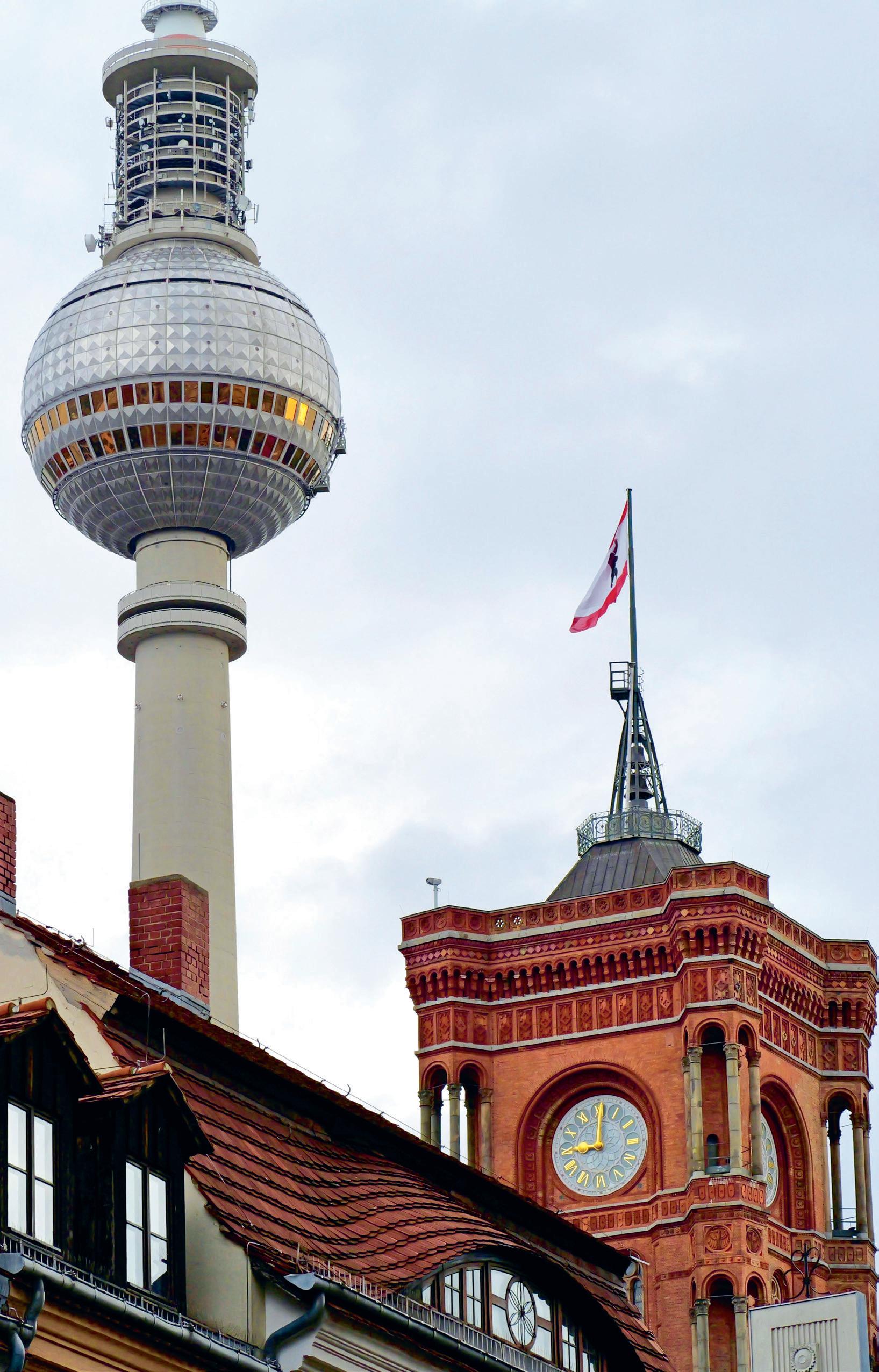
I moved to Berlin at twenty-one, shortly after finishing a politics degree, and guiding became my first job after university. I’ve been doing it ever since. More than fifteen years on, I am still exploring new corners of a city that has altered the course of world history more than once. A walk through Berlin is never simply a walk. It is a movement through layers of time, shaped by upheaval, ambition, ideology and war, each still visible if you just know what to look for.
This is what distinguishes Berlin from so many other cities visited for their postcard views. Berlin does not present itself immediately. It is not conventionally or effortlessly beautiful. It asks you to look closer, to scratch beneath the surface, and rewards you when you do. The more closely you study it, the more you find: traces of vanished regimes, experiments in architecture and urban planning, unanswered questions about memory, and moments of ordinary life lived through extraordinary times.
This book offers five walks designed to guide readers through those layers. They cover subjects that people most often ask about, but also places that help make sense of the city as a whole. They are written for both visitors and Berliners alike – anyone who wants to understand it beyond the obvious landmarks. Walking is still the best way to do that. It allows the city’s history to unfold at a natural pace.
The first route in this book is similar to the first tour I ever led, albeit in more refined form than the version I attempted in 2010. It’s intended for newcomers and first-timers, giving a clear starting point and an overview of the main threads that run through Berlin’s story. From there, the book turns to the most notorious chapter in that story: the years of the Nazi dictatorship. The walk through the former government quarter examines some of the key sites of the regime and focuses deliberately on the institutions and the perpetrators who operated them. Understanding the machinery of the state that produced the crimes is part of confronting the past honestly.
The third walk moves forward to the era that followed. With the city divided after 1945, East Berlin became the capital of the German
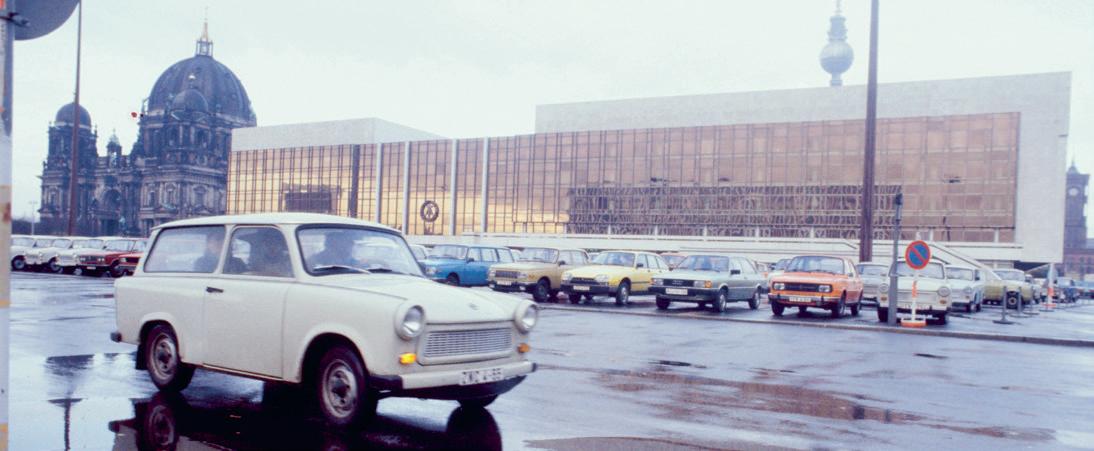
Democratic Republic and the seat of a second dictatorship. Much of what the Socialist Unity Party built still stands today, from monumental architecture to vast housing estates. The tour looks at these structures and the systems behind them, as well as the lives shaped within and around them.
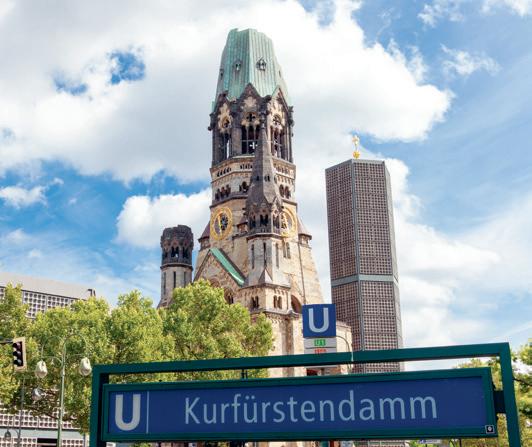
West Berlin, by contrast, is often overlooked as guided walks focus on the eastern landmarks: the Brandenburg Gate, Unter den Linden, the remnants of the Wall. The fourth tour explores the Kurfürstendamm and its surroundings, a district full of intricate, hidden stories that show the people who shaped, and were shaped by, Berlin.
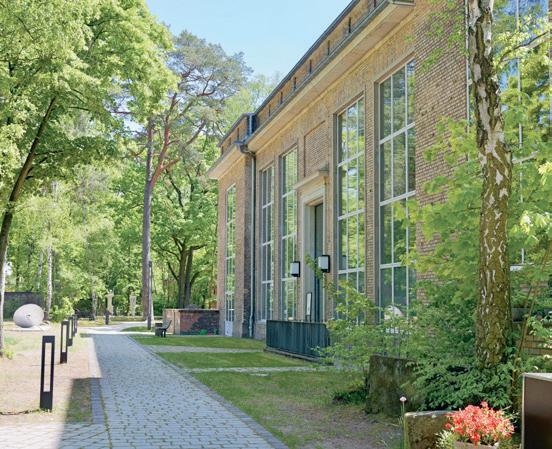
The final walk steps out of the city centre altogether and into the Grunewald, a forest that reminds you how large and varied Berlin really is. It is a long route at twenty kilometres, and most people will sensibly choose to cycle it or break it at the midpoint near Grunewald station. The walk follows the landscape rather than a single theme, linking hidden stories with wide views and quiet paths. It ends as any good day in Berlin should: at a beer garden with a view across the water.
Thank you for choosing to explore Berlin with this book. I hope these walks help you understand the big things, find the small things, and get more from the city with each step.

Tieckstr.
Humboldt-Universität Campus Nord
Kapelle-Ufer
FRIEDRICH-WILHELMSTADT
Reinhardtstr.
Marienstr.
Platz der Republik
Scheidemannstr
Bremer
Auguststr.
Johannisstr
Oranienburger Straße
Ziegelstr.
Am Weidendamm
Schi f f b auerdamm Joachimst r .
Berlin Friedrichstraße
Dorotheenstr.
Brandenburger Tor
LENNÉ-DREIECK
BEISHEIM CENTER
Voßstr.
Berlin Potsdamer Platz
Potsdamer Platz
Reichpietschufer
Flottwellstr.
SchönebergerUfer
Niederkirchnerstr
Dessauer Str.
SchönebergerStr.
Elise-Tilse-Park
g pl . Virchowweg
SPANDAUER VORSTADT
Krausnickstr.
Monbijoupark
Spreeprom .
Museumsinsel
S Friedrichstraße
DOROTHEENSTADT
Mittelstr.
Jägerstr Mauerst r .
Taubenstr.
Gendarmenmarkt
FRIEDRICHSTADT
S Anhalter Bahnhof
Hedemannstr.
Hallesche Str.
Besselstr.
ZEITUNGSVIERTEL
Franz-Künstler-Str . Niederwallstr . Gipsstr . Borsigstr . NeuenburgerStr .
Franz-Klühs-Str
Auswärtiges Amt Spree
Krausenstr
FRIEDRICHSWERDER
Kurstr .
Seydelstr .
SPRING-SIEDLUNG
exploring Berlin for the first time? this route is the perfect way to get your bearings. you’ll see many of the city’s most iconic landmarks. From Prussian palaces and grand museums to Checkpoint Charlie and the world’s most infamous car park. Berlin shaped the 20th century like no other city. But its history doesn’t begin or end with the nazis and the wall. this walk will take you from royal ambition and cultural reinvention to dictatorship, division, remembrance, all in the heart of the buzzing, modern German capital.
Am Lustgarten
Our walk starts with a big one, the Berlin cathedral. This one building can tell you so much about Berlin; from its days as a rising power and into a literally crumbling one, up to today. At the beginning of the 20th century, the Berliner Dom was the big, new thing. It replaced a beautiful, if plain, Protestant cathedral designed by none other than Karl Friedrich Schinkel, star architect, and favourite of Prussian royalty in the first half of the 19th century.
The Berliner Dom then, was a statement. Built under Prussia’s last monarch, and the last Kaiser of Germany, Wilhelm II, the Berliner Dom was the epitome of the Wilhelmine style, rich in decoration and grandeur. Wilhelm II is said to have likened the Berliner Dom to St. Peter’s in Rome and St. Paul’s in London, and it was his ambition for Berlin to become the next world city. When construction started on the cathedral in the 1890s Berlin was indeed well on its way to becoming one of the largest cities in the world. Germans were racing to the new capital, leaving their simple lives in the countryside behind and moving to the big city to get jobs in many burgeoning factories.
From the inception of the German Empire in 1871 up to the turn of the century in 1900, Berlin’s population had increased in size many times over—from 400,000 to 2,000,000—a world city that would need a world class place of worship. For Wilhelm II, the Berliner Dom was a
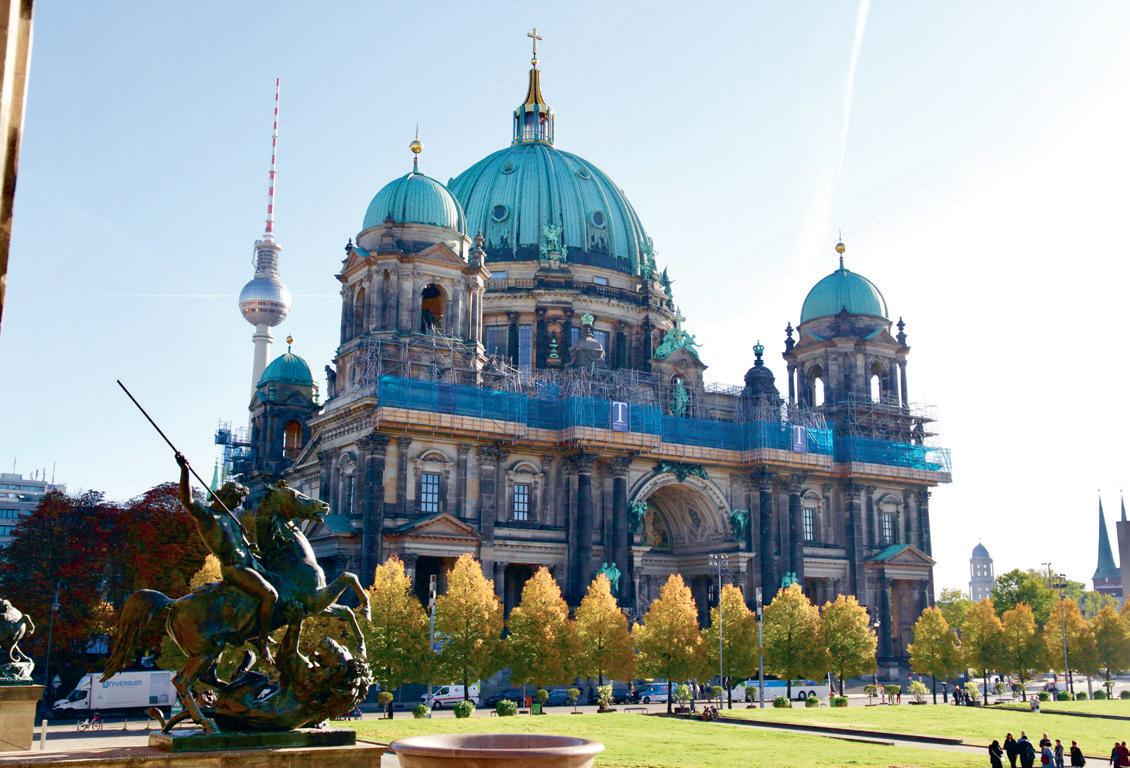
prestige project, a partner to the Kaiser Wilhelm Memorial Church at the head of the Kurfürstendamm. Getting it right was more important than getting it done quickly. Construction ended up both late and over budget, but the Berliner Dom was finally consecrated in 1905.
Proudly standing next to the Stadtschloß (City Palace), Wilhelm II could rightly say that the Hohenzollern family lived in Berlin and when they died, they were buried in Berlin in the Berliner Dom’s crypt. Fortunately for the royal remains, they weren’t present when the building suffered heavy damage in World War II.
From the dome of the cathedral, you have a fantastic panoramic view of the city. Opening hours and prices: www.berlinerdom.de.
Restoration work in communist, atheist East Berlin would take a very long time, with the building’s curse being a blessing for Soviet film director Yuri Ozerov. He made use of the building’s grand Wilhelmine style and pock-marked façade as a stand-in for the Reichstag in the 1970s Soviet war movies ‘The Battle for Berlin’ and ‘The Last Assault’. The actual Reichstag, where the Red Army made their final push to take Berlin in 1945, was inconveniently located just down the road on the other side of the Berlin Wall.
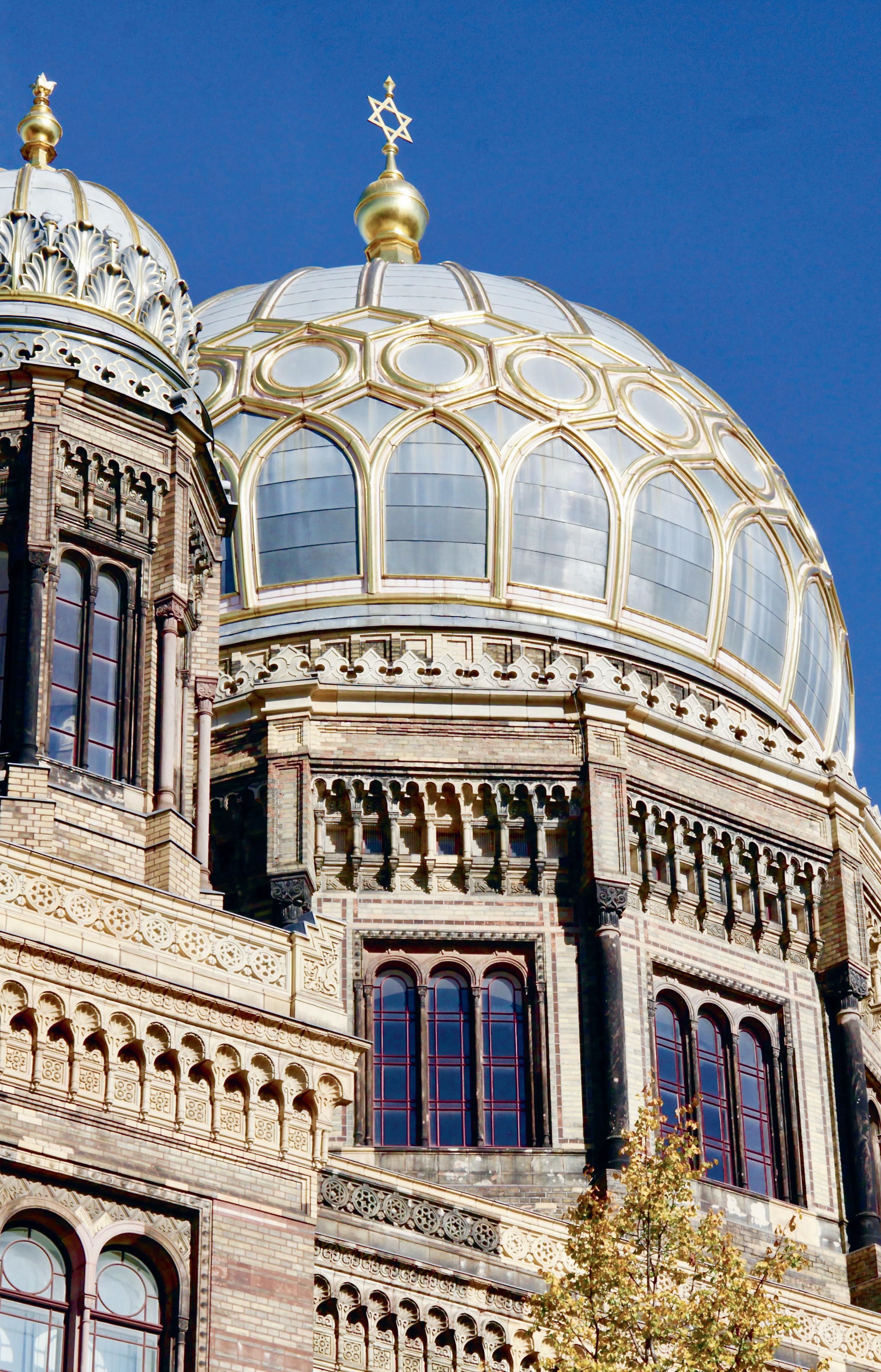
The Berliner Dom would be lovingly restored in 1980s East Berlin and in the 1990s, following reunification. The final piece of the cathedral to be replaced was the gleaming golden cross, placed atop the Dome in 2008 – more than 60 years after World War II ended.
Humboldt Forum, Schloßplatz
A copy of a palace that replaced another palace, the Humboldt Forum, was a controversial project among Berliners, replacing as it did the much-loved Palast der Republik (Palace of the Republic) in East Germany.
The site was originally the home of the Hohenzollern dynasty in Berlin for 500 years, from their arrival in the 15 th Century up to the November Revolution of 1918, right at the end of World War I. The Stadtschloß (City Palace) took many forms over the years, with the mid-19th century version by architect August Stüler serving as the final complete revision, though the dome was added in the 1890s under Germany’s final Kaiser, Wilhelm II.
The Kaiser’s belongings were removed from the palace by his staff in the days and weeks after the 1918 revolution. In the years of the Weimar Republic (1919-1933) and the Nazi dictatorship (1933-1945) the building was used for events and as a museum.
It could have arguably been repaired following World War II, as were many other older buildings in this area, but it was destroyed
Schloßplatz with Berlin Cathedral (left) and Palace of the republic (right), 2003
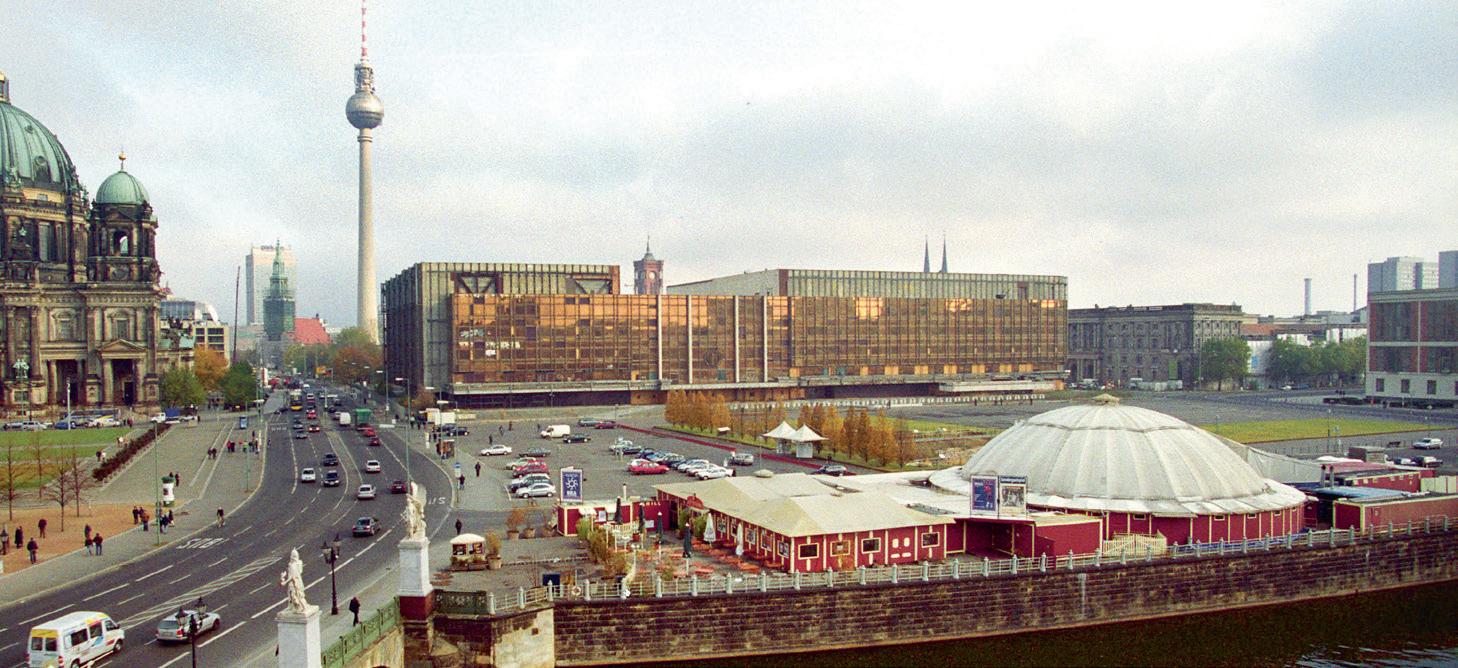
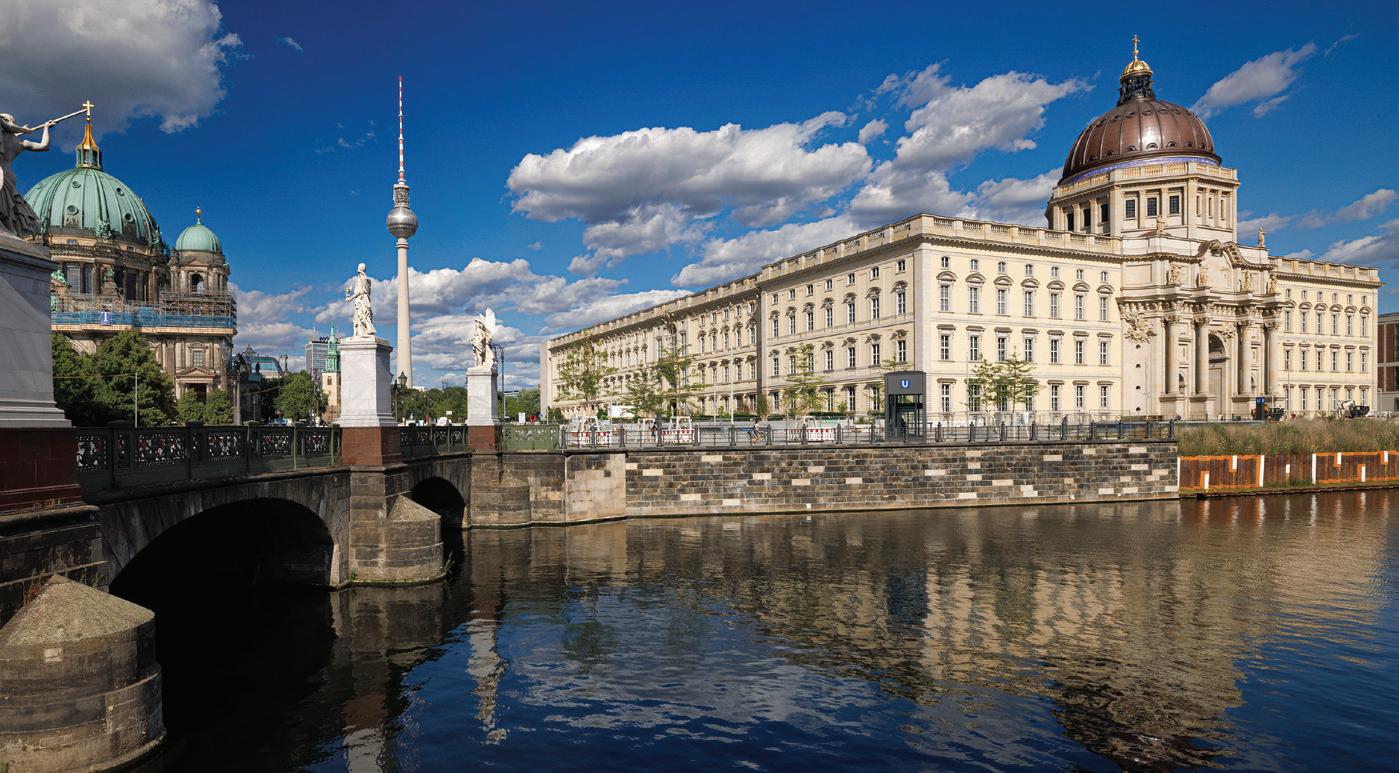
by the newly founded East German state in 1950. The site was paved over and remained empty until the 1970s, when the East German prestige project, the Palace of the Republic, was completed in 1976. A humungous and futuristic building, the Palace of the Republic featured thousands of stylish light fixtures in its foyer, earning it the nickname Erich’s Lampenladen (Eric’s Light Shop), after the East German leader Erich Honecker, whose representative office was next door.
The building housed East Germany’s parliament, or Volkskammer, which generally received little love from the public, but most of the building was a modern, futuristic, entertainment centre, featuring a huge hall with adaptable seating and stage configurations. Lucky visitors often reminisce about the ice cream that you just couldn’t find anywhere else.
Beloved though the building was by many, others despised it. They found the orange-brown glass exterior ugly, and the large East German emblems, a hammer and compass, on the outside to be tasteless, if not offensive. A popular campaign following the fall of the Berlin Wall saw the building torn down, having been deemed unsafe due to large amounts of asbestos. A plan went into action to build a copy of the original royal palace from the outside, housing modern museums on the inside. Named The Humboldtforum, it was completed in 2022.
You can visit the rooftop of the Humboldt Forum for free by reserving a table in the cafe
Over an entire century, from 1830 to 1930, five grand museums were opened on Berlin’s Spreeinsel, an island in the river Spree, creating the now-UNESCO World Heritage Site, Museumsinsel (Museum Island). The first of these museums, fittingly called the Altes Museum (Old Museum), is a Schinkel-designed Neo-Classical temple, housing a world-class Antiquities collection. Once opened to the public, the idea proved incredibly popular with the locals and another museum was built directly behind it, which is of course called the Neues Museum (New Museum). Visitors to the newly opened museum could marvel at the Egyptian collection, though its most-famous artefact, the bust of Nefertiti, wouldn’t be put on display until the mid-1920s. She’s still there today, after a brief West Berlin holiday during the Cold War. Visitors to the modern New Museum can view her inside a stunning, colourful building still pockmarked with World War II bullet
Altes Museum: Schinkel's architecture shapes central Berlin
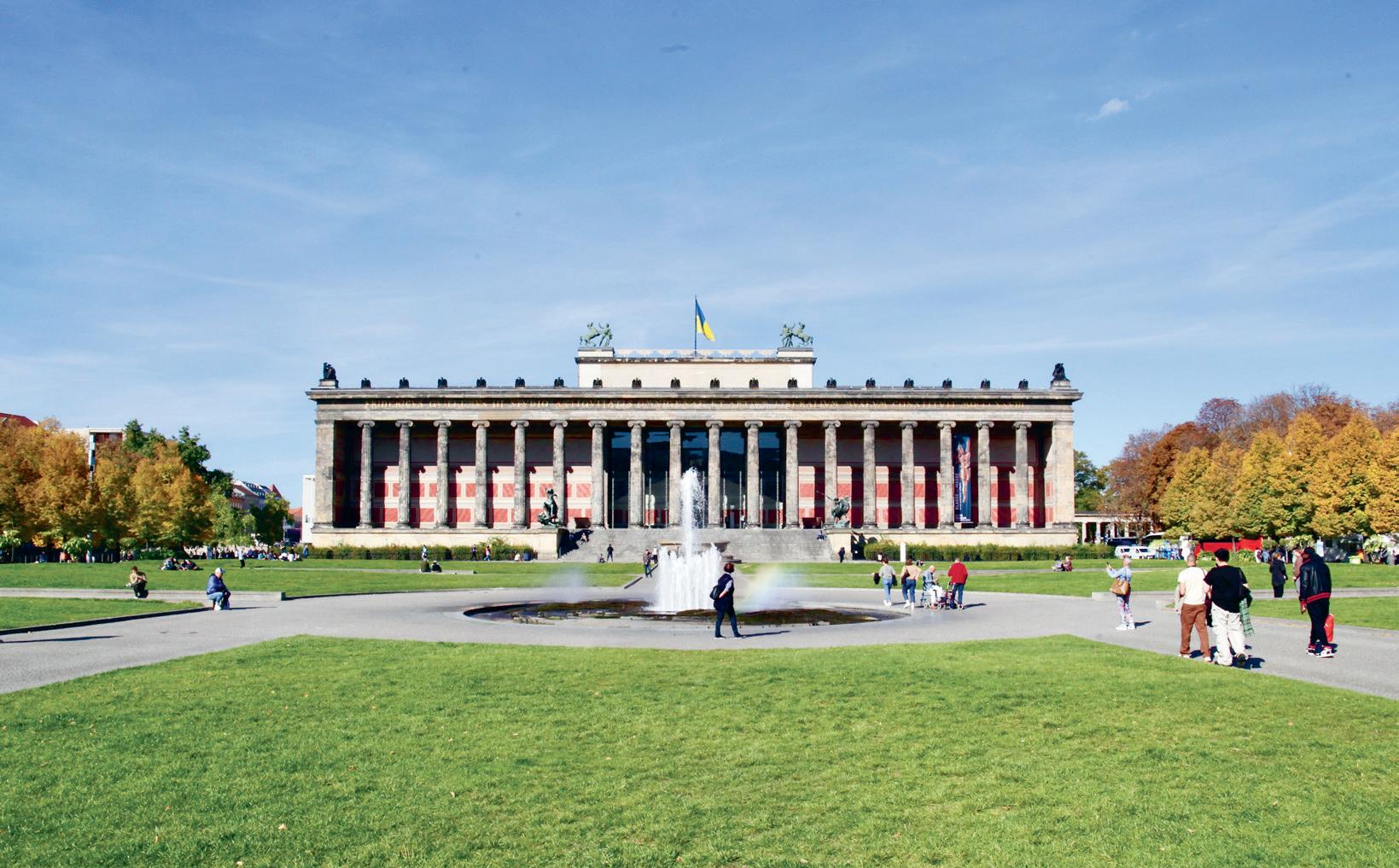
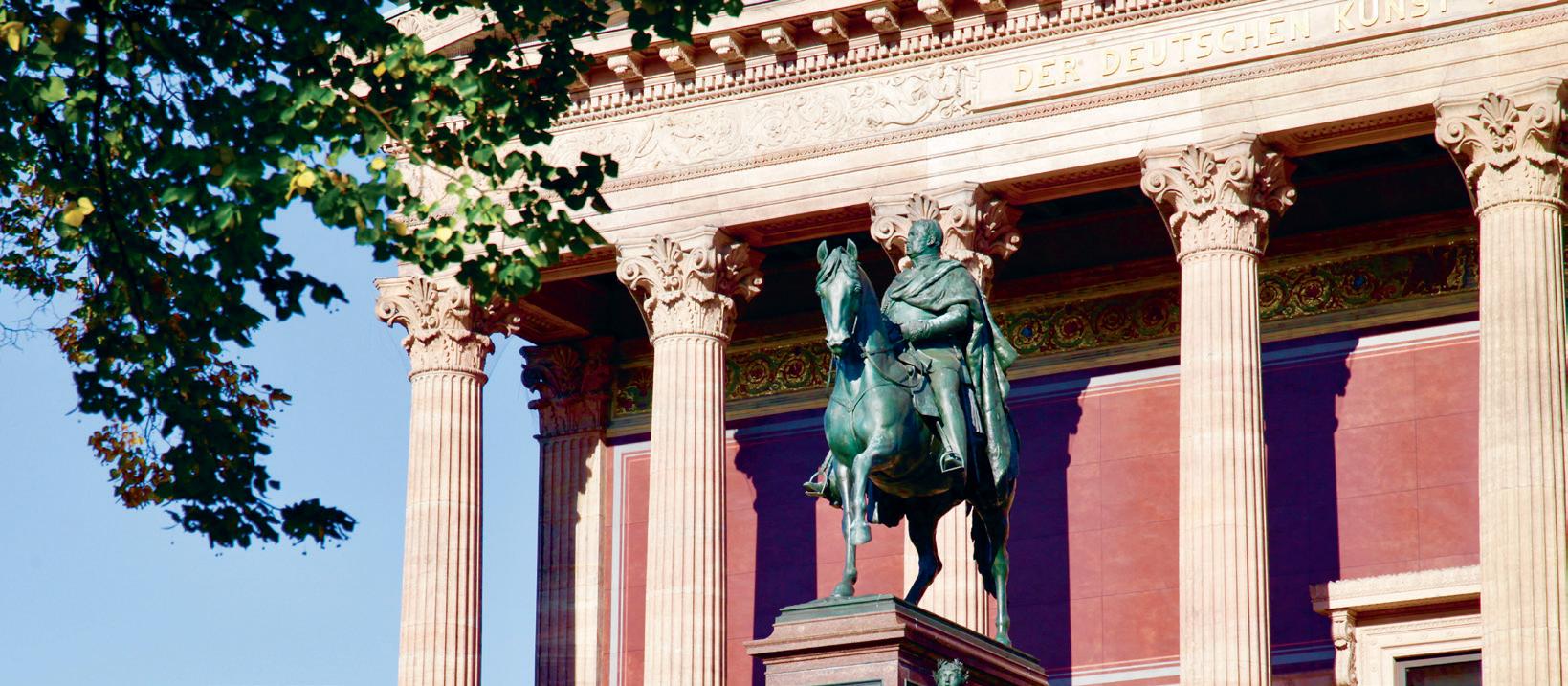
holes left in architect David Chipperfield’s 2008 restoration of the building. The New Museum was the last one on the island to reopen after the war.
Just next door to the New Museum, and sharing a charming courtyard with it, is the Alte Nationalgalerie (Old National Gallery). An equestrian statue of King Friedrich Wilhelm IV, who in 1841 decreed that this part of Berlin would be dedicated to art and science, stands outside it. A lover of the then-contemporary German Romantics, he fully supported the idea of creating a National Gallery where modern German painters’ works would adorn the walls, rather than just the Old Masters. Friedrich Wilhelm IV wouldn’t live to see its doors open in 1876 though; he suffered a debilitating stroke in 1858 and passed away in 1861.
The museum cafés are accessible without an admission ticket. In the Bode Museum, you can sit on a gallery in the middle of the magnificent neobaroque domed hall.
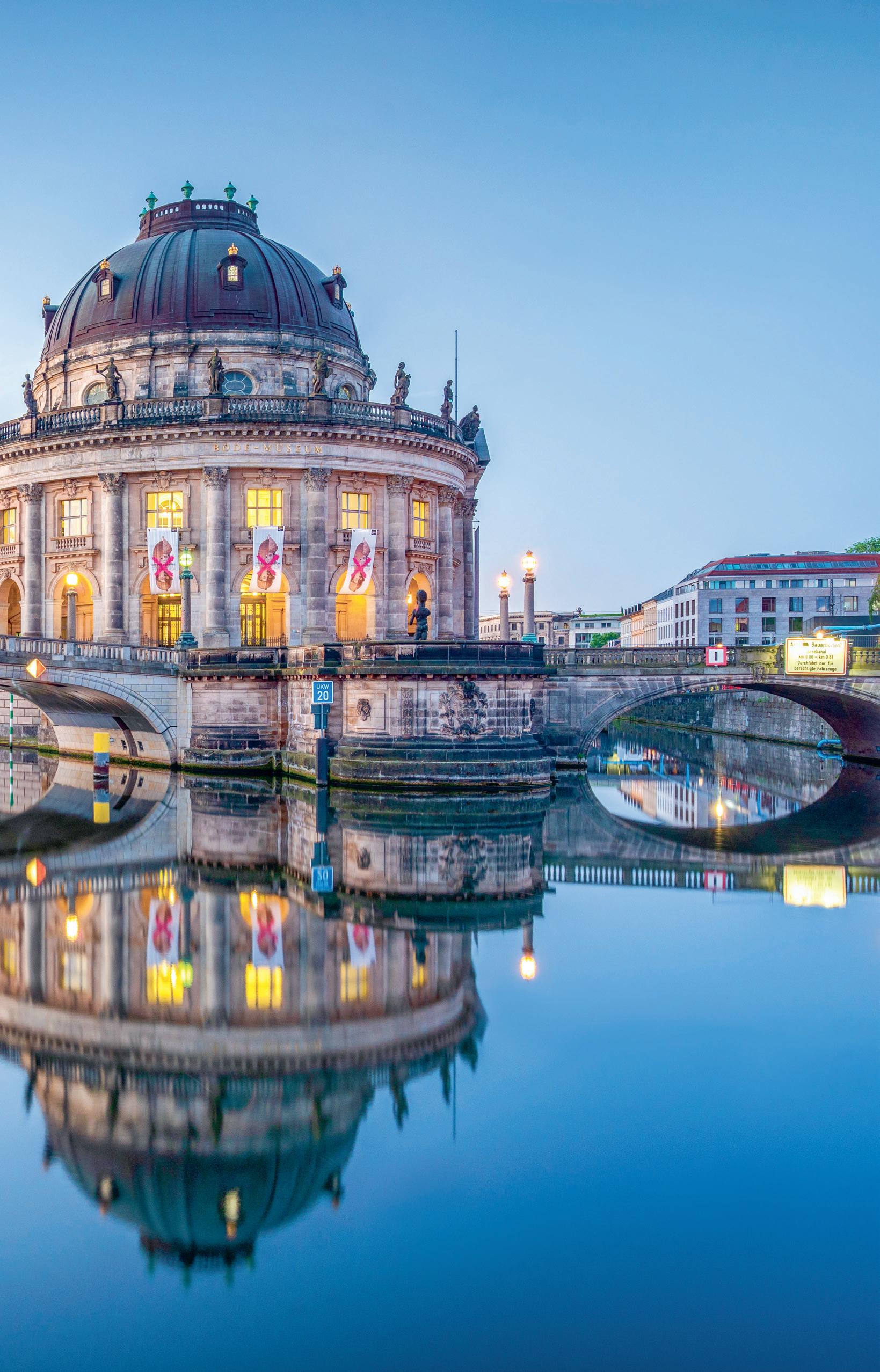
The other two museums making up the five on the island are The Pergamon Museum and the Bode Museum. The Pergamon Museum is famed for its monumental reconstructions of ancient architecture, including the breathtaking Pergamon Altar and the Ishtar Gate of Babylon. The Bode Museum, named after its original curator, Wilhelm von Bode, features stunning architecture, an exceptional collection of sculpture and one of the world’s finest assemblies of coins and medals. Standing proudly at the end of Museum Island facing the River Spree, it resembles the prow of a ship.
Unter den Linden 4
Our walk now follows Unter den Linden, the great royal boulevard linking the old Prussian palace with the Brandenburg Gate. Once lined with grand royal buildings, many have since been rebuilt or restored. Perhaps the smallest and most restrained among them is the Neue Wache, once again designed by Karl Friedrich Schinkel.
Completed in 1818, it served as a royal guardhouse under King Friedrich Wilhelm III. Schinkel’s ordered and classical design reflected a Prussia newly confident after the defeat of Napoleon. For a century, from 1818 to 1918, guards were stationed here, performing the changing of the guard before crowds of Berliners. Kaiser Wilhelm I watched from the Crown Prince’s Palace opposite the Neue Wache. After Prussia’s victory over France, captured French cannon were displayed outside as trophies.
The monarchy’s fall in 1918 left the building without purpose. In 1931 Heinrich Tessenow transformed it into a memorial for the dead
each Berlin regime reshaped the neue wache
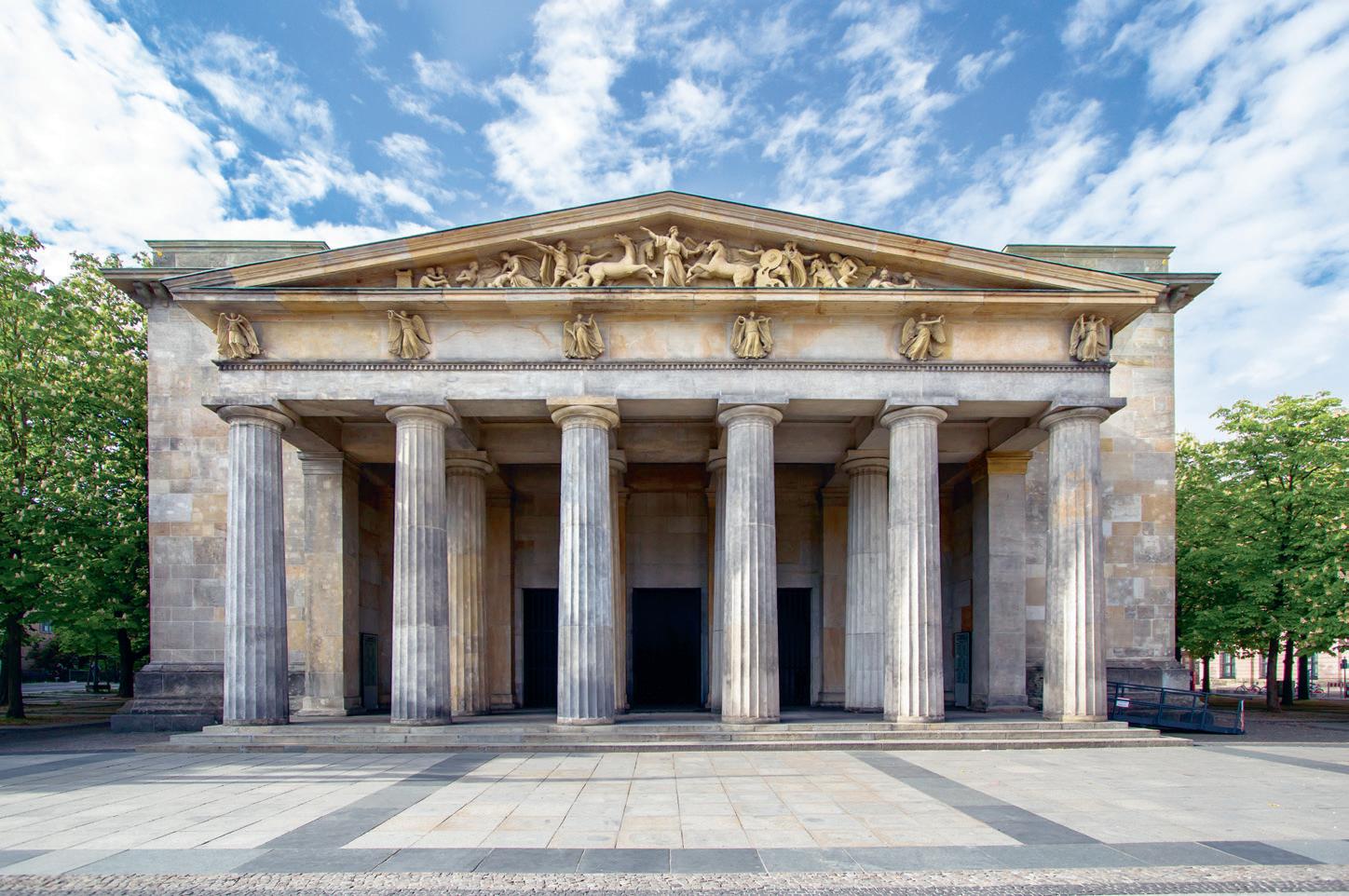
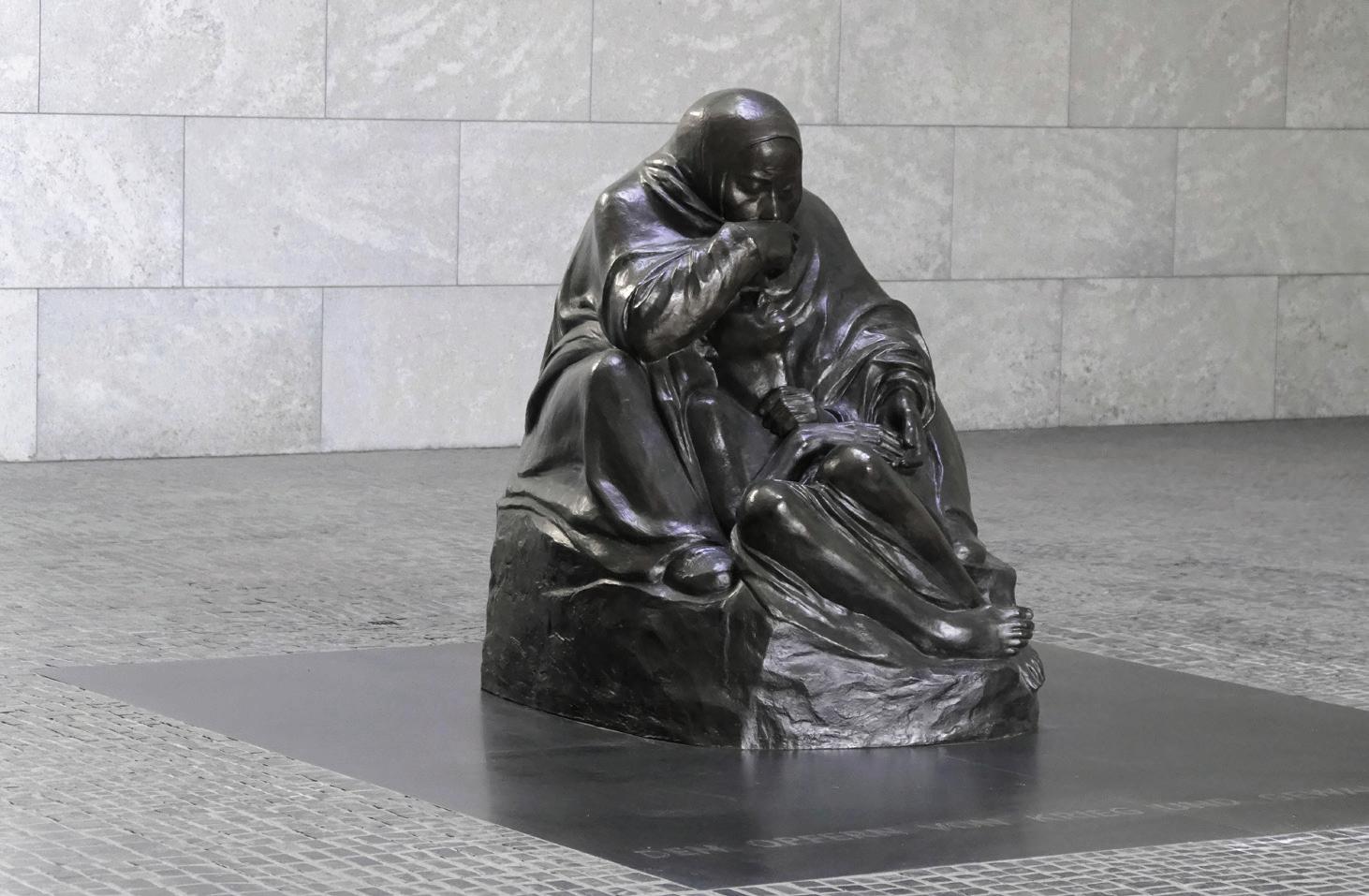
of World War 1. He cleared the interior, leaving a single open hall with a granite block at its centre, crowned with a gold-and-silver wreath.
Under the Nazis it was renamed the Heldengedenkstätte (Heroes’ Memorial) and became a site of parades and propaganda. Hitler and his ministers laid wreaths here in honour of ‘sacrifice for the Fatherland’.
After 1945 the ruined building stood in East Berlin. Reconstructed and renamed the ‘Memorial to the Victims of Fascism and Militarism’, it became one of the GDR’s central monuments. An eternal flame burned at its centre, guarded by ceremonial sentries whose precise drills and goose-step became a familiar image of the communist capital. In 1969 the remains of an unknown German soldier and a concentration camp victim were added.
Since 1993 the Neue Wache has been the ‘Memorial to the Victims of War and Tyranny’. In the centre stands Käthe Kollwitz’s sculpture Mother with Her Dead Son . Kollwitz’s own son was killed at the beginning of World War I. He was just a teenager.
Crossing Unter den Linden and stepping into Bebelplatz, there’s a lot to discover. This square sits at the centre of the area once planned as the Forum Fridericianum, an ambitious urban ensemble conceived by Frederick II, better known as Frederick the Great. His statue now stands just beyond the square on Unter den Linden, the boulevard running through Berlin’s historic centre.
Between 1740 and 1786, this area was transformed under his rule. The pink Staatsoper, or State Opera House, was designed by his architect Knobelsdorff and opened in his lifetime. The building has had a rough history. It burned down in 1843, was bombed in 1941, reopened in late 1942 for its 200th anniversary and was bombed again in 1945. Its most recent renovation was completed in 2017.
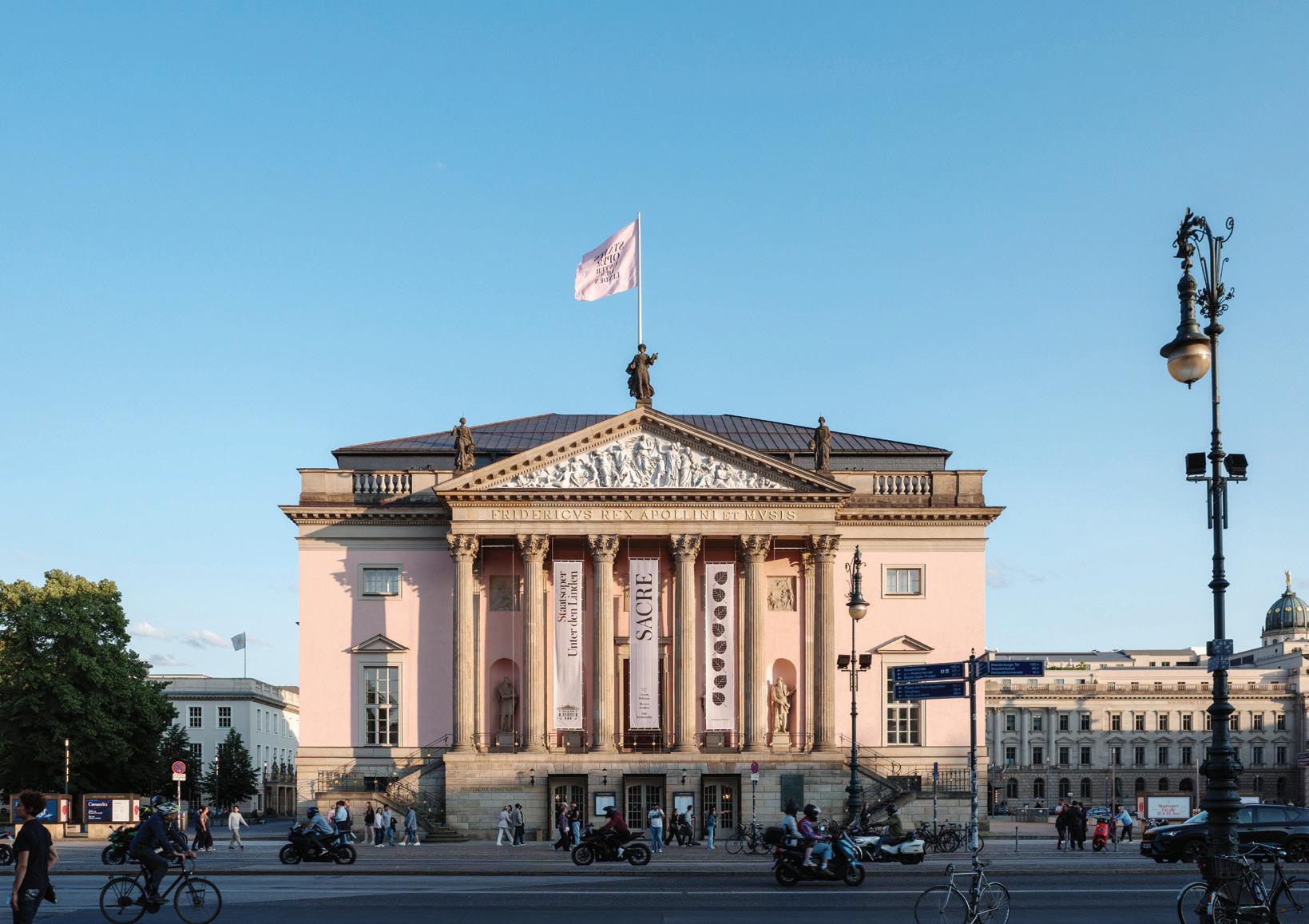
Behind the Staatsoper is St. Hedwig’s Cathedral, a domed Catholic church inspired by the Pantheon in Rome. It stands out in what was once firmly Protestant Prussia. When Frederick seized Silesia from Austria, he gained a large Catholic population and rather than force them to convert, he welcomed them. This cathedral was a symbol of that policy, placed right in the centre of his capital.
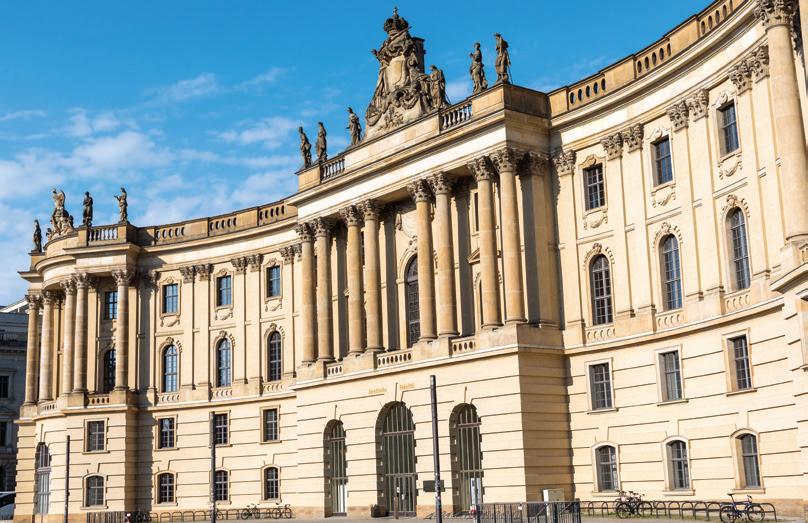
But the building Frederick loved most stands opposite the Staatsoper. This is the former Königliche Bibliothek or Old Library, nicknamed the Kommode (chest of drawers). It represented his passion for reading and the Enlightenment ideals he wanted to promote.
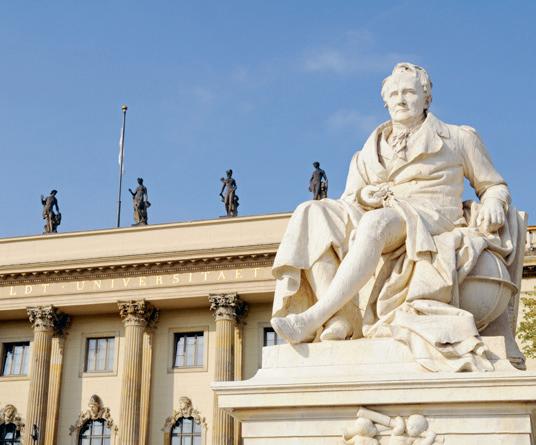
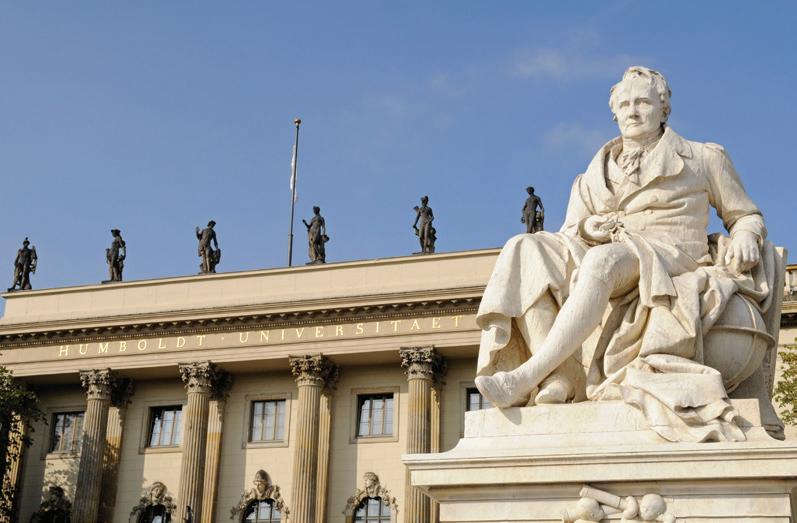
Completing the square is the modern-day Humboldt-Universität. Originally a palace shaped like an H, it was a gift from Frederick to his brother Heinrich. After Heinrich died in 1802, the palace became the University of Berlin in 1810. It was renamed Humboldt-Universität in 1949.
The list of luminaries linked to the university is long. Alexander and Wilhelm von Humboldt, the Grimm brothers, Karl Marx,
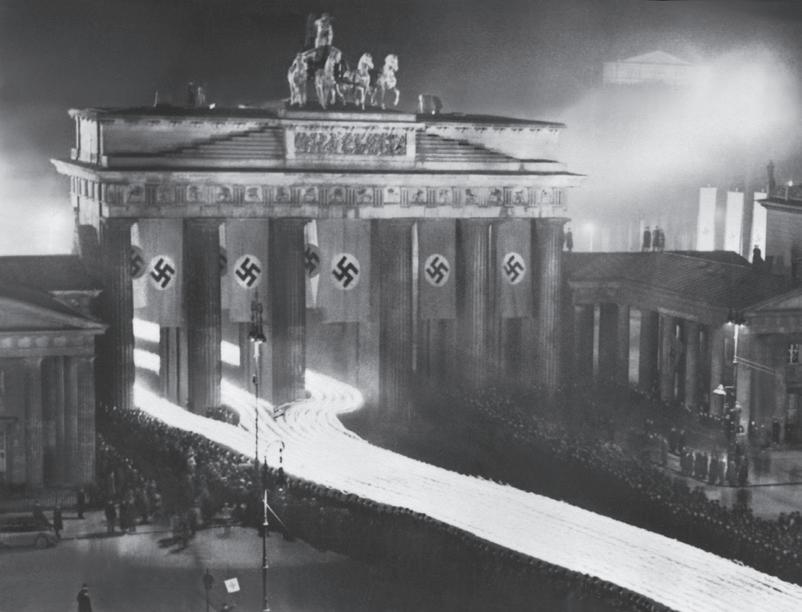
Max Planck and Lise Meitner to name a few. Albert Einstein taught here too. Einstein was lucky not to be in Berlin in 1933. He had travelled to the United States in late 1932. With the Nazi party gaining ground in the elections, he decided not to return. Hitler came to power in January 1933. Just a few months later, this square became the stage for one of the regime’s most symbolic acts.
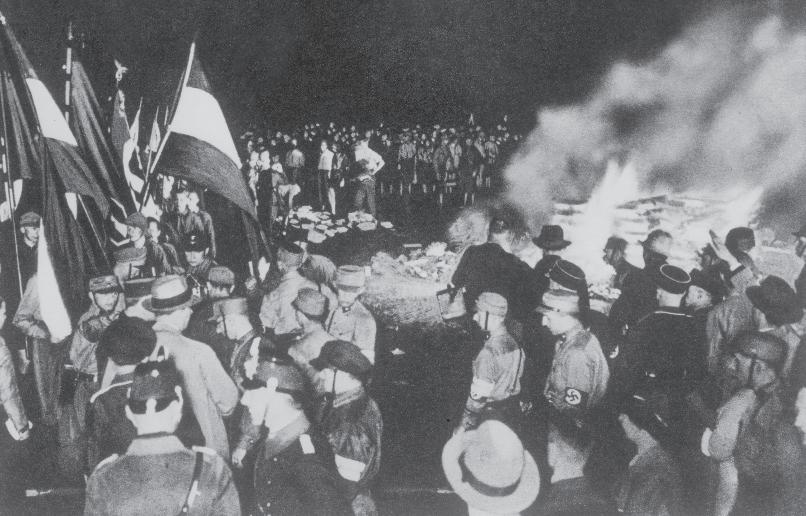
The Nazis had tried to launch a boycott of Jewish businesses on 1 April 1933. It was a failure. But radical right-wing students at the university proposed something more theatrical: a public book burning. Goebbels approved of the idea immediately. In the days before the fire, Nazi paramilitaries raided libraries and archives across the city, including Magnus Hirschfeld’s Institut für Sexualwissenschaft (Institute for Sexual Science). The books were brought to the square and stacked in the former State Library.
On 10 May 1933, some 20,000 books were dragged into the middle of the square, then called Opernplatz, and set on fire. The works of Jewish writers, pacifists, homosexuals, communists, and other so-called undesirables were destroyed. It was a clear message: their ideas and their presence in German society would be eliminated.
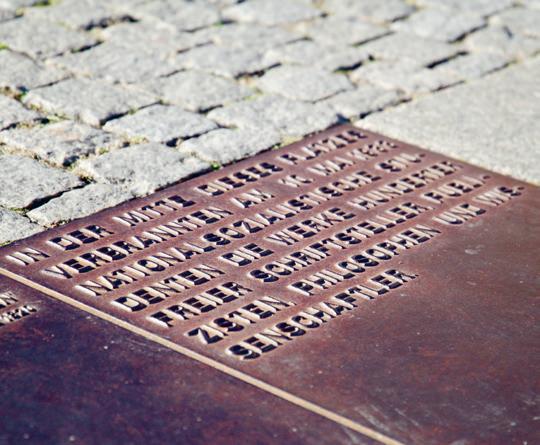
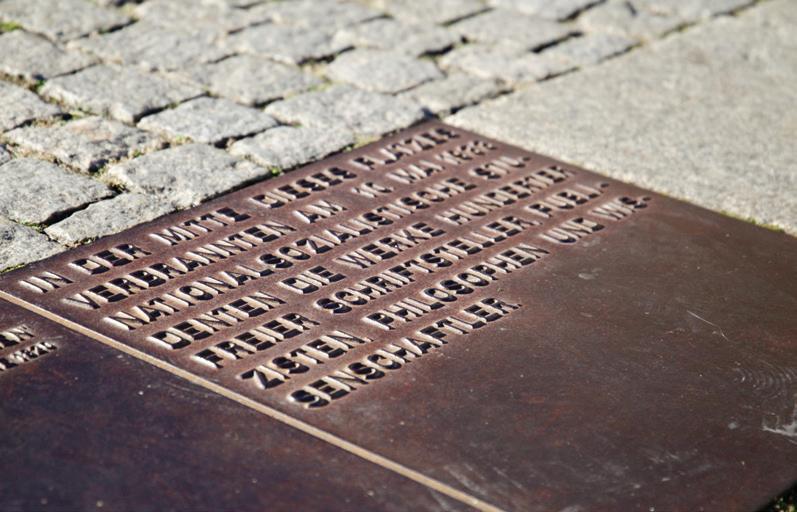
Book burnings took place across Germany that night and continued in the following weeks. Twelve years later, this square would lie in ruins, and millions would be dead. A memorial for the book burnings can be found in the centre of the square: a window into an empty underground library, built by Israeli architect Micha Ullman in the mid-90s. Next to the memorial are plaques bearing an 1820 quote from German-Jewish writer Heinrich Heine: “Dort, wo man Bücher verbrennt, verbrennt man am Ende auch Menschen.” (“Where they burn books, they will, in the end, burn people too.”)
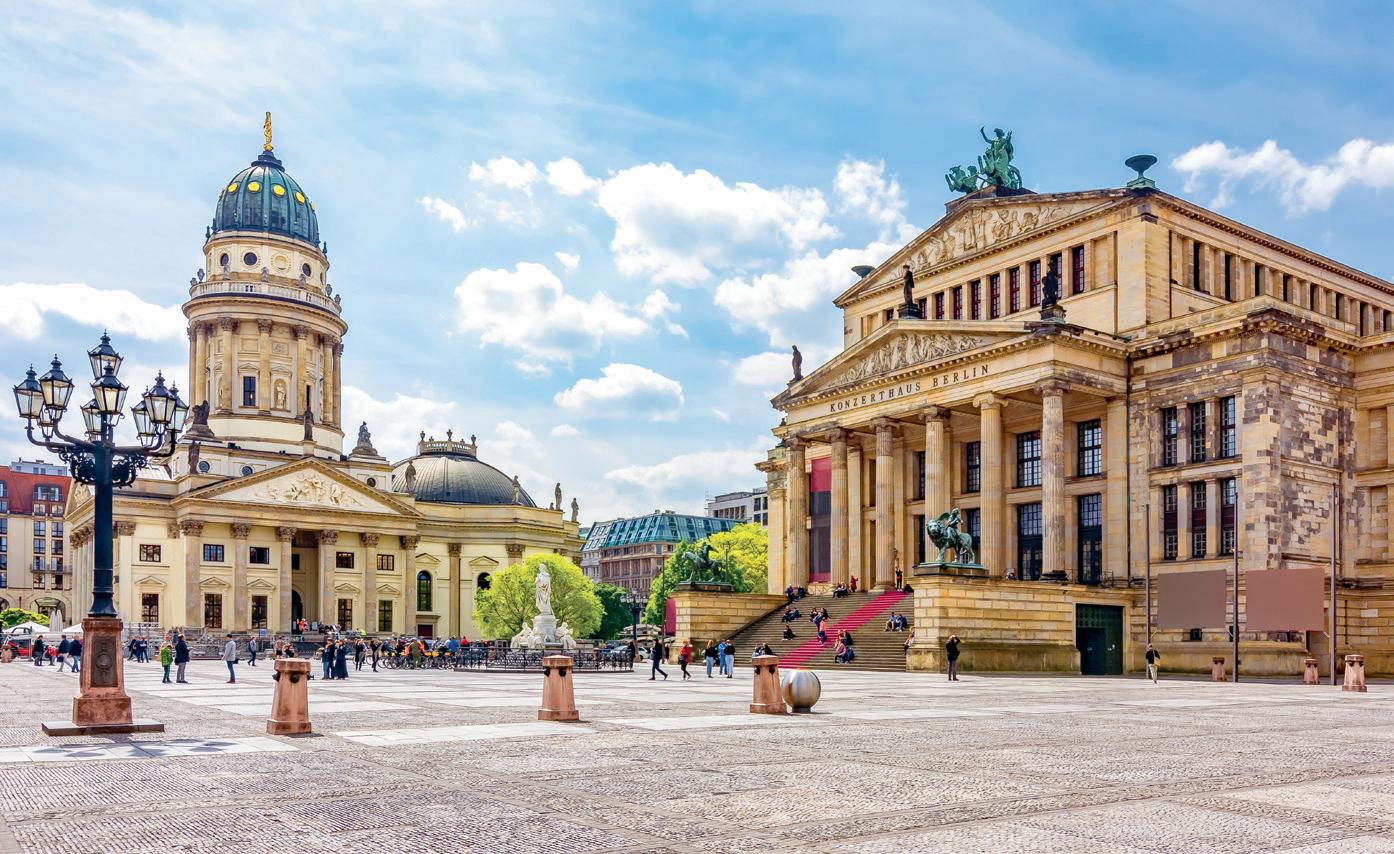
Walking along a short section of Markgrafenstraβe, just off Bebelplatz, you will arrive at one of Berlin’s most beautiful and impressive squares: Gendarmenmarkt. The name hints at its French connections. Dominating the square is the Konzerthaus, designed by Schinkel and opened in the early 1820s. It was originally built as a theatre but now serves as the home of the Berlin Symphony Orchestra. Flanking it are two striking churches: the Deutscher Dom (German Cathedral) on the left and the Französischer Dom (French Cathedral) on the right. Their towers were added in the 1780s for visual symmetry and a touch of grandeur. The oldest parts of the churches date back to the early 1700s, though most of what we see today was rebuilt in the 1970s and early 1980s following wartime destruction.
So why is there a French cathedral in the middle of Berlin? It goes back to the Thirty Years’ War, which raged from 1618 to 1648. Berlin was devastated during the conflict, suffering Swedish occupation and multiple outbreaks of plague. By the end of the war, only a few thousand Berliners remained. In the decades that followed, the city’s
French and Prussian history meet on Gendarmenmarkt: Deutscher Dom (left) and Konzerthaus (right)
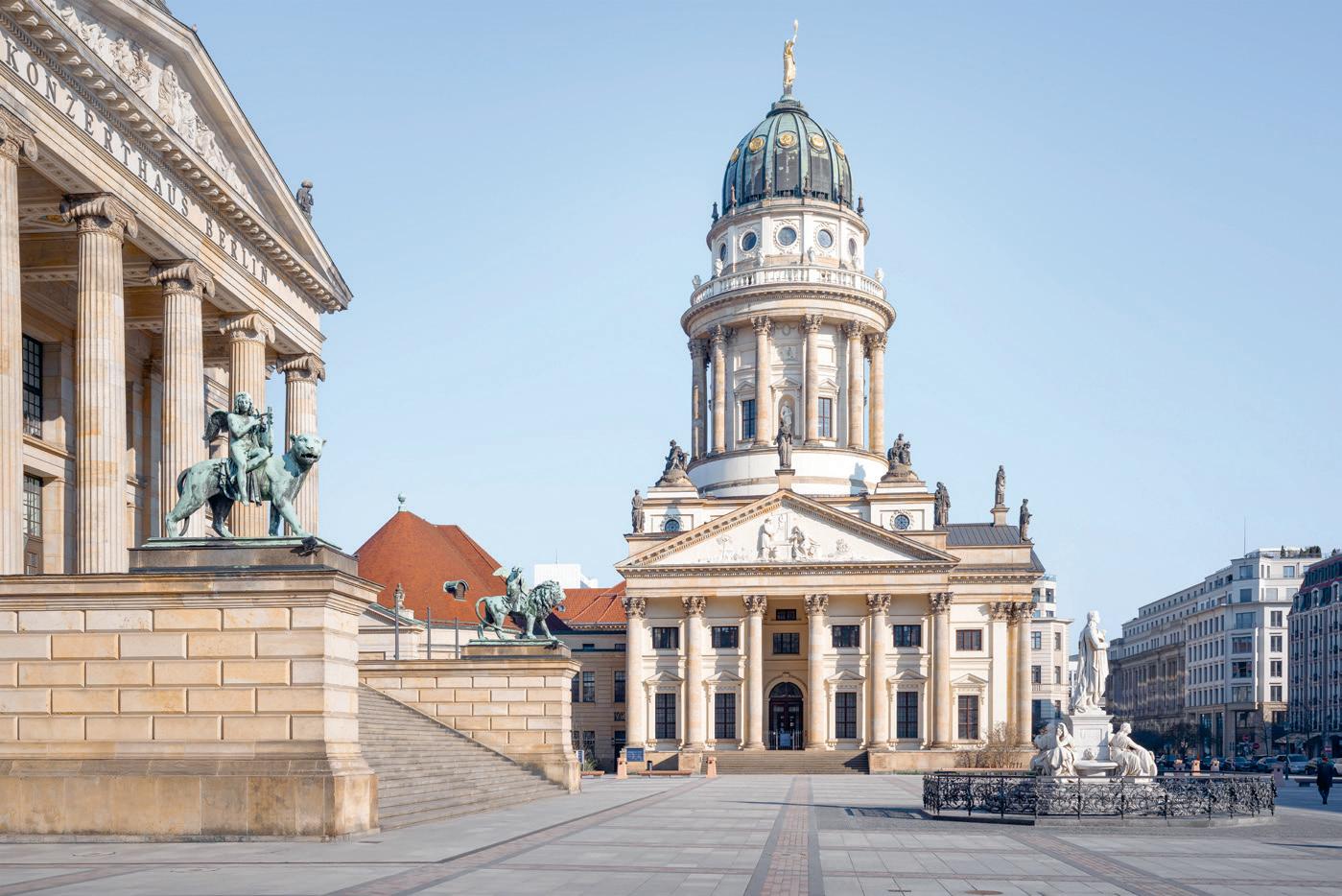
the oldest parts of the Französischer dom date back to 1705
rulers sought to rebuild the population as quickly as possible. At the same time, French Protestants, the Huguenots, were being forced into exile. As staunch Calvinists, they found common ground with the ruling Hohenzollern dynasty and were welcomed to the city on the Spree.
What had been a dirty, dismal square used for meat sales, offal disposal and even executions became the centre of Berlin’s Frenchspeaking community. By the time the Hohenzollerns became royalty in 1701, it’s estimated that as many as one in four Berliners spoke only French.
The Französische Friedrichstadtkirche, as it was then called, was opened in 1705 — that’s the red-roofed section of the Französischer Dom, next to the tower. This building now houses the Huguenot Museum. Today, the café inside is called ‘Refugium’, a tribute to the Huguenots who once found refuge in Berlin.
where Hugenots made their home in Berlin
Next up, a short stroll down Friedrichstraße. All the Hohenzollern kings and kaisers were named Friedrich, Wilhelm, or Friedrich-Wilhelm, so working out what’s named after whom can be rather difficult. In this case, Friedrichstraße, one of Berlin’s most storied streets, is named after Elector Friedrich III. In 1701, with the permission of Kaiser Leopold I, he elevated the Duchy of Prussia to a kingdom and became Friedrich I, King in Prussia. In the years that followed, all Hohenzollern lands gradually came to be known simply as Prussia. Friedrichstraße would go through many changes over the years. In the late 19th century, Werner von Siemens, inventor of the electric train, sought permission from Kaiser Wilhelm I to build an elevated railway above the pavements. Fortunately, the decision was made to build the line beneath the street instead. Construction was severely delayed by World War I, with the line finally opening in 1923. By then Friedrichstraße was fast becoming a tourist hotspot. Weimar-era Berlin was seen as an adult playground, a hedonist’s paradise and lucky travellers to Berlin would hope to explore the so-called ‘sinful’ Berlin. With its eponymous train station at the northern end of Friedrichstraße, revellers could disembark and immediately start exploring innumerable clubs, theatres, cinemas, and bars – guided, or perhaps distracted, by a dazzling array of neon lights.
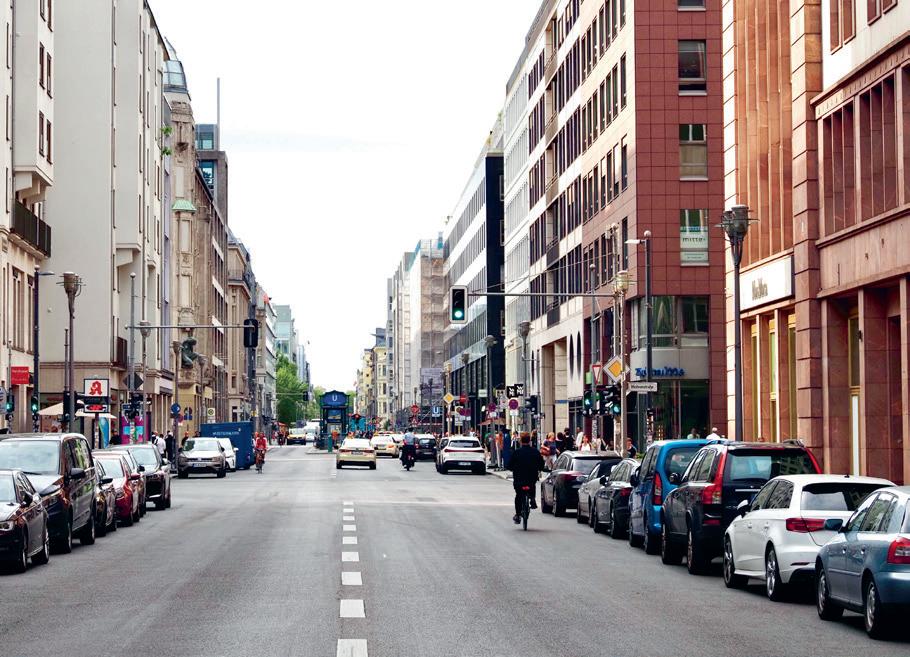
in the 2020s Friedrichstrasse has struggled to modernise. View towards Mohrenstraße and Stadtmitte underground station
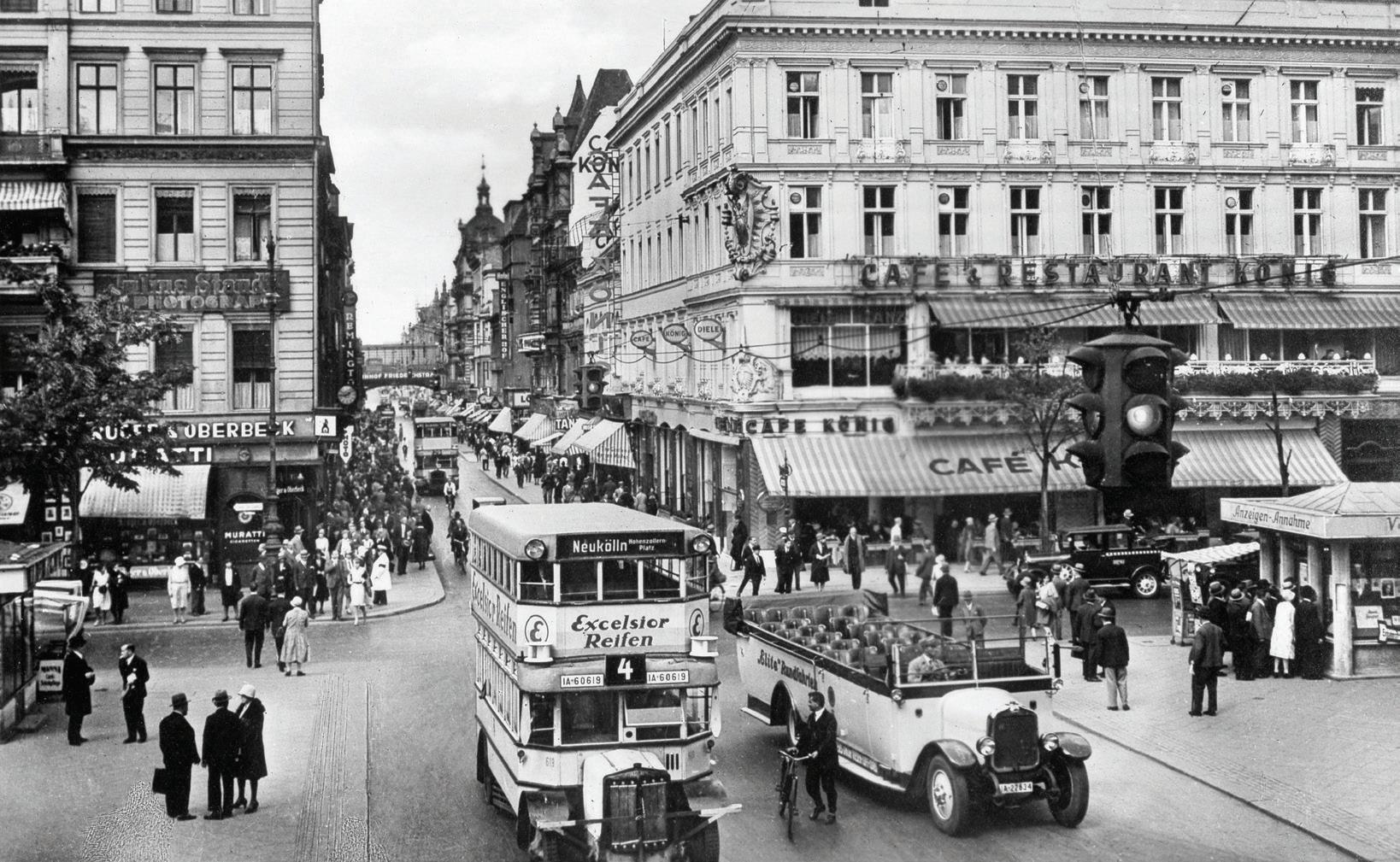
Wild parties, provocative art, drink, drugs and shows featuring nude women were all too much for the Nazis, who saw Berlin’s permissive and progressive culture as evidence of the moral decline of German society. One by one, during their time in power, Friedrichstraße’s famous establishments would be shut down.
There was no rush in prudish 1950s East Germany to restore Friedrichstraße to its former glory. In fact, the East Germans, and their Soviet occupiers, would have something much bigger to worry about: the Americans. The southern end of the street tips over from Berlin’s central historic district of Mitte into Kreuzberg. From 1961 until 1989, the street would be cut off by perhaps the most famous section of the Berlin Wall: Checkpoint Charlie.
the ‘Nord-Süd Bahn’ opened in 1923
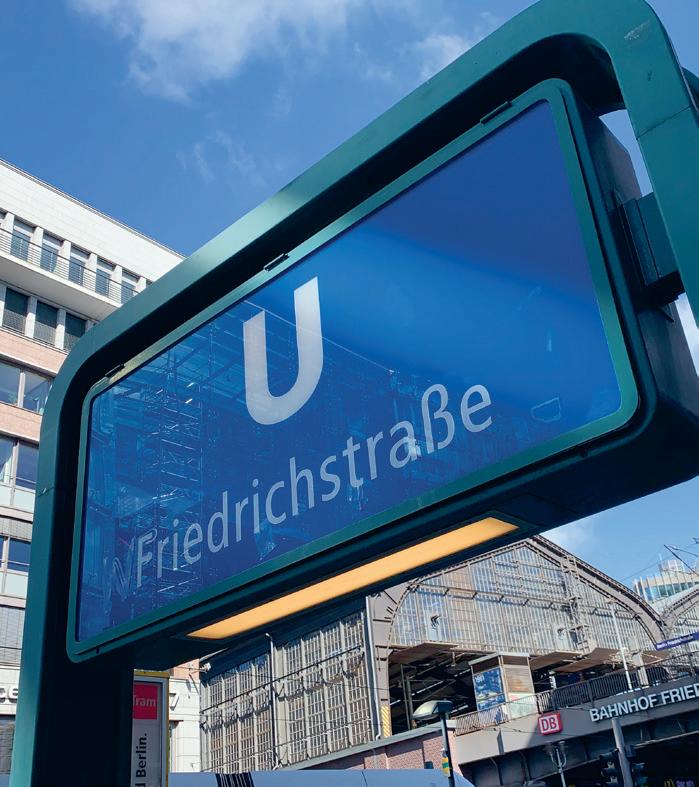
Friedrichstraße 43-45
The four Allied powers occupying Berlin — Britain, France, the USA and USSR — had never intended to divide Germany, let alone Berlin, into two. Nevertheless, the defeat of the Nazis would lead into the Cold War, with capitalism on one side of the Iron Curtain and communism on the other. West Germany was founded in the Spring of 1949, East Germany in the Autumn. Berlin was a special case. The city lay entirely in East Germany, but a little over half of it, in terms of both population and landmass, was occupied by the three Western powers. Neither West nor East Germany recognised one another’s sovereignty until deep into the Cold War – the 1970s in fact. From its founding, West Germany considered itself the one true Germany and, as a result, all Germans its citizens. In practice, this meant that any East Germans that could make it to the West could become citizens. This became somewhat difficult after the Iron Curtain divided Europe in 1952, but West Berlin, smack bang in the middle of East Germany, was the loophole. Throughout the first 12 years of divided Germany at least 2.6 million East Germans – and likely many more – fled the fledgling socialist state. That’s around one in six people, around half of whom were under 25. East Germany was haemorrhaging people and soon it would no longer exist, unless of course they took drastic action.
It was in the middle of the night, the early hours of 13 August 1961, that an estimated 38,000 soldiers, police, and volunteers were ordered on a ‘training exercise’. They began rolling barbed wire 160 km (100 miles) around the perimeter of West Berlin. As each of the teams met up, the border was sealed. It would remain that way for 28 years. This would cause immediate problems for the Western Allies, who at the end of World War II had agreed with the Soviets that each of the four occupying powers
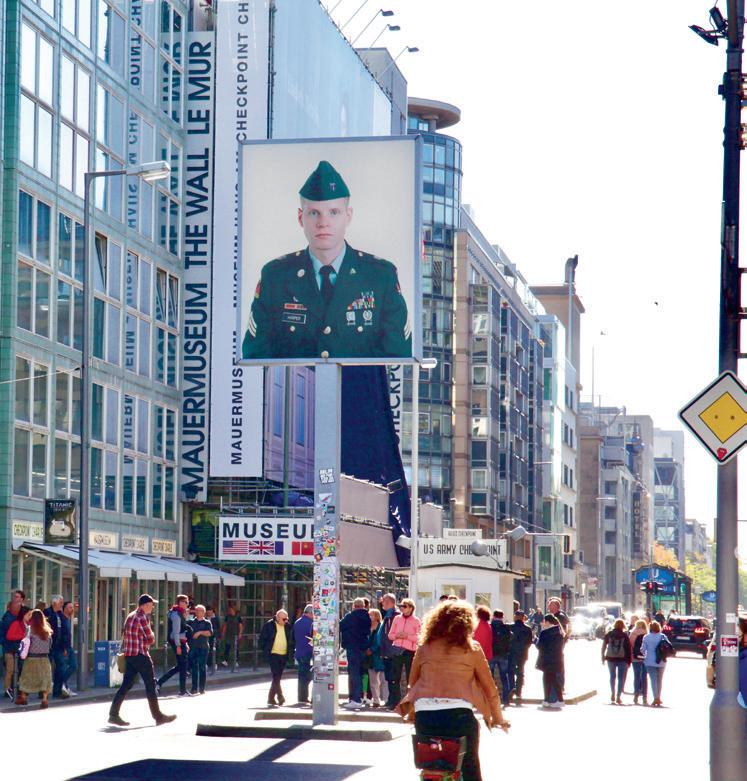
the border of Mitte and Kreuzberg
the border between two worlds
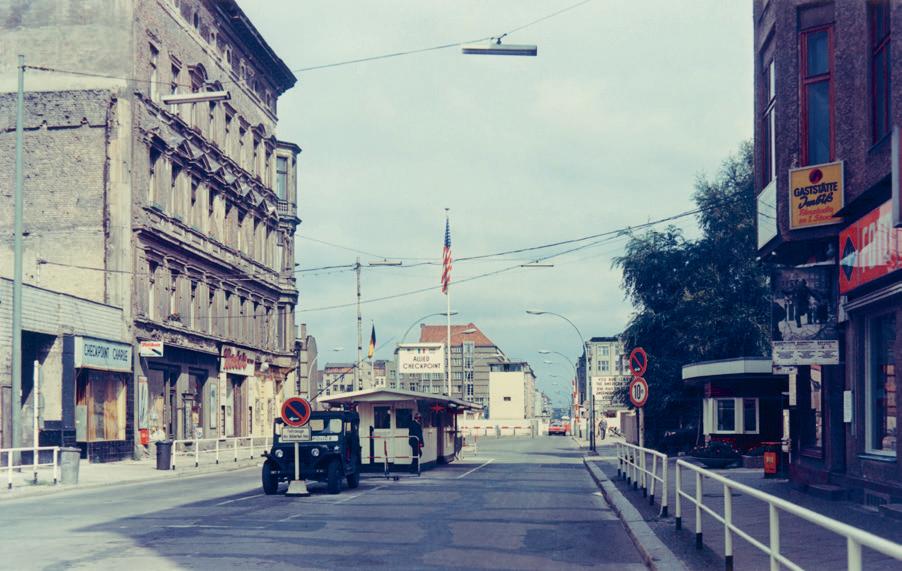
(USA, Soviet Union, Great Britain and France) would have access to the entire city. For example, a French soldier could visit the British, Soviets, and Americans without having to show papers. Suddenly, the Wall made that impossible. The Western Allies complained to the Soviets, who in turn said they should talk to the East Germans. The message was: take them seriously.
In the wake of the Wall going up, a hasty deal was made. The southern end of Friedrichstraße was turned into Checkpoint C, better known as Checkpoint Charlie. Alpha was between the two Germanies, in Helmstedt and Bravo in the southwest corner of Berlin. In the centre of Berlin, Niederkirchnerstraße suddenly became a bridge between two worlds. That bridge was all too tantalising for Western tourists, who would line up on foot, in cars, and in buses, all eager to see what life was like on the ‘other side’. After rolling over the border, now marked with a line of bricks in the road, travellers to the East would have the underside of their cars checked with mirrors on sticks, suffer brusque questioning, have books removed from their bags for fear they criticised the East German way of life, and had to fork over a decent chunk of cash at a terrible exchange rate, only to find that there was little hope of spending all of their new found riches in their 24 hours in East Berlin.
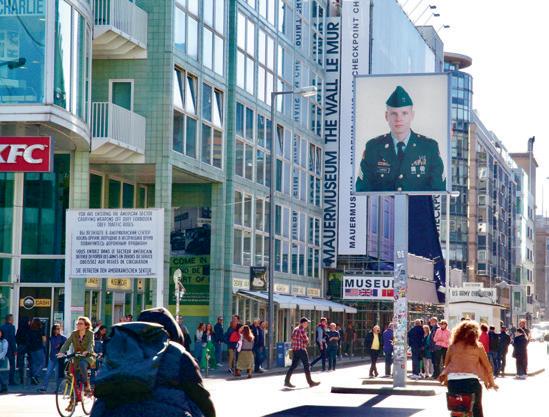
Today, the checkpoint is gone, but the circus certainly isn’t. Every day, tourists flock to this famous location. Who knows what they hope to see, because there’s nothing of the original checkpoint left. Perhaps the only thing vaguely accurate is the sign warning drivers: “YOU ARE NOW ENTERING THE AMERICAN SECTOR”. Though it isn’t original, it does share space with a KFC sign and McDonald’s can be seen beneath its arch.
Wilhelmstraße 97
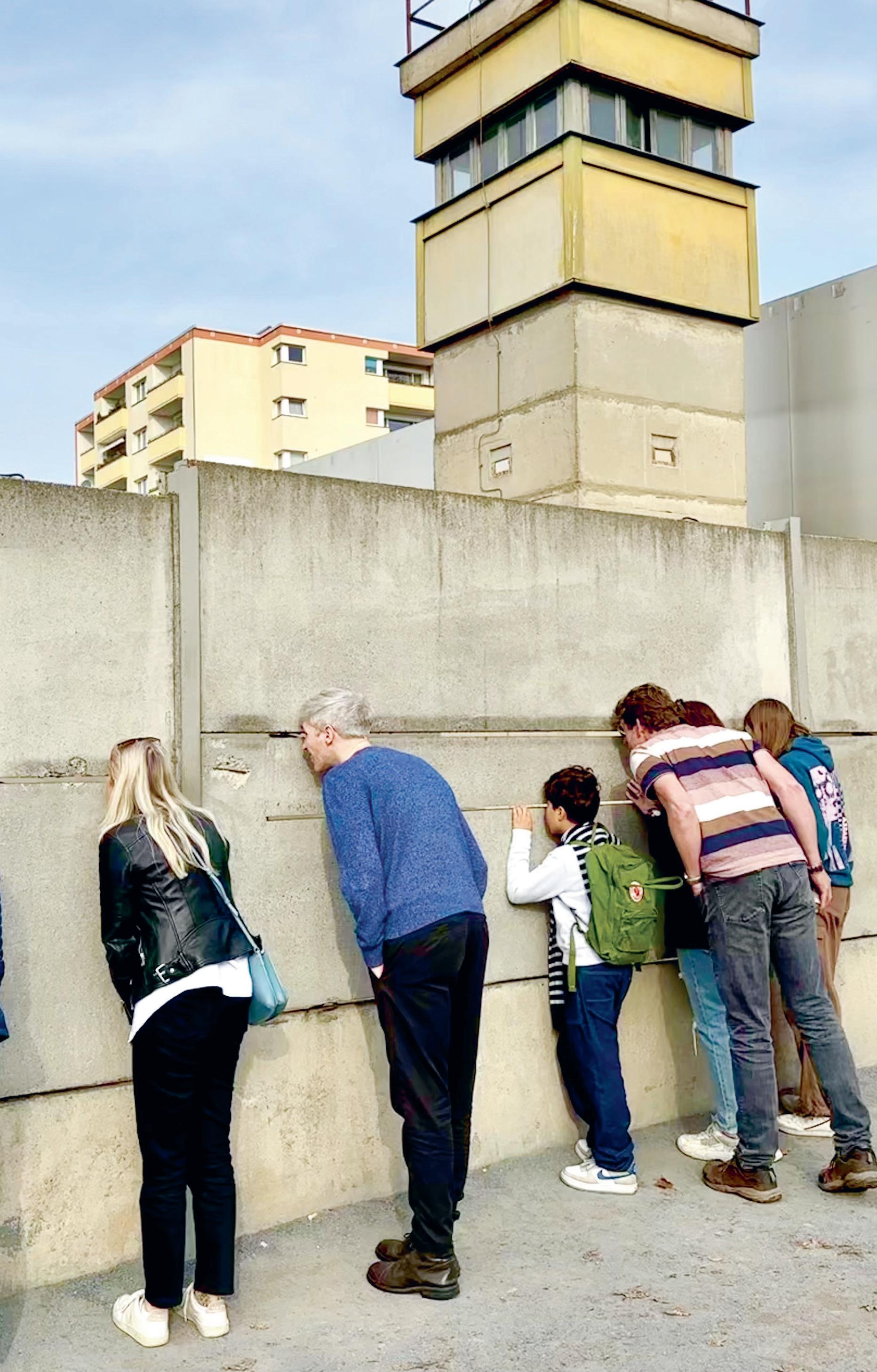
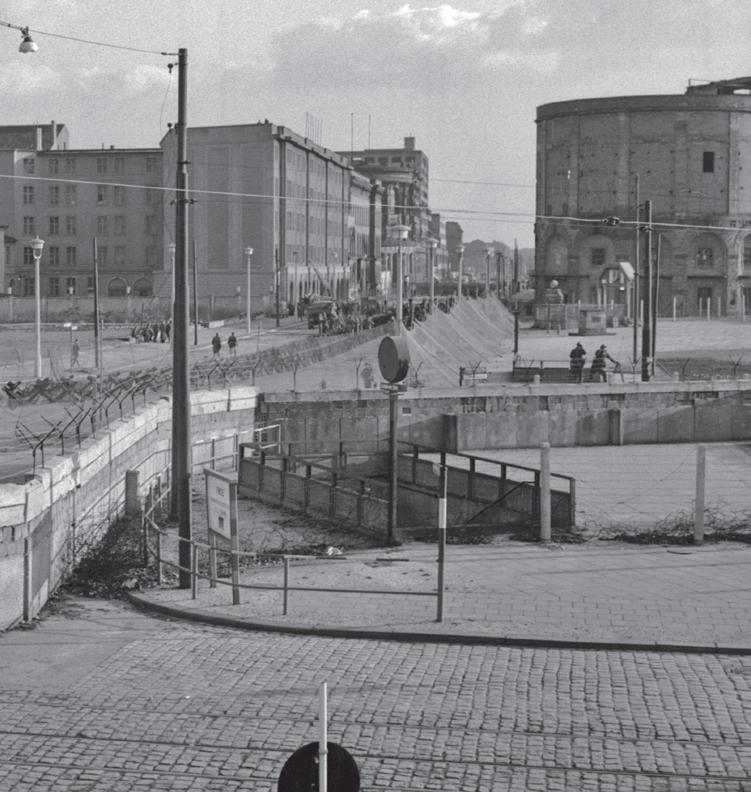
Perhaps the world’s most famous lump of concrete, the Berlin Wall was in fact a series of walls, fences, guard towers, checkpoints and more. Stretching in a 160 km (100 mile) circle all the way around West Berlin, the Berlin Wall was the defining symbol of East Germany. Today, most of it is gone, but if you know where to look you can find more than 20 pieces of the Wall in – or close to – their original location. What can be tough to imagine though, is that the piece of Wall you’re looking at here was actually the last thing would-be escapees had to contend with. This was the Wall as the Westerners saw it. Beyond it lay the ‘Death Strip’, as Berliners called it. This consisted of a wall followed by an electrified fence followed by an expanse of sand filled with hidden spikes (‘Stalin’s lawn’), tank traps, guard dogs, lights, and of course, manned by thousands of border guards 24 hours a day. This entire system wasn’t built overnight. It took years to fortify the Wall to its full strength, and it was in the early years when a family escaped over the Wall just here. On the East Berlin side of the Wall is a huge, grey office building. Opened in the Summer of 1936, this was once the headquarters of Hermann Göring’s much-feared Luftwaffe, which became the East German ‘House of Ministries’ after World War II. Economist Heinz Holzapfel was sent up here for work from Leipzig, attaining three passes to enter the building. After carefully planning his family’s escape, working in secret with friends and family in the West, Heinz, his wife Jutta, and their son Günter, who was only 9 years old, entered the north side of the building in the morning of 28 July 1965.
The House of Ministries had plenty of ways for the family to keep themselves busy; a clothing
typical structure of the Berlin wall in the 1960s, here at Potsdamer Platz