projeto parede
06 set 23 – 28 jan 24 wall project Sept 06, 2023 – Jan. 28, 2024

projeto parede
06 set 23 – 28 jan 24 wall project Sept 06, 2023 – Jan. 28, 2024
A trajetória de Claudia Andujar (Suíça, 1931), que fugiu da perseguição nazista durante a Segunda Guerra Mundial, revela o modo como conflitos políticos interferem na vida de diversos povos. A artista chegou ao Brasil em 1955, país em que vive até hoje e onde se naturalizou em 1976. Sua vida é marcada pela luta por demarcação de terras Yanomami e por uma série de ensaios fotográficos dedicados aos povos indígenas no Brasil. Claudia Andujar se identifica com a vulnerabilidade do povo Yanomami e nos ensina que o outro é aquele que nos ajuda a entender quem somos.
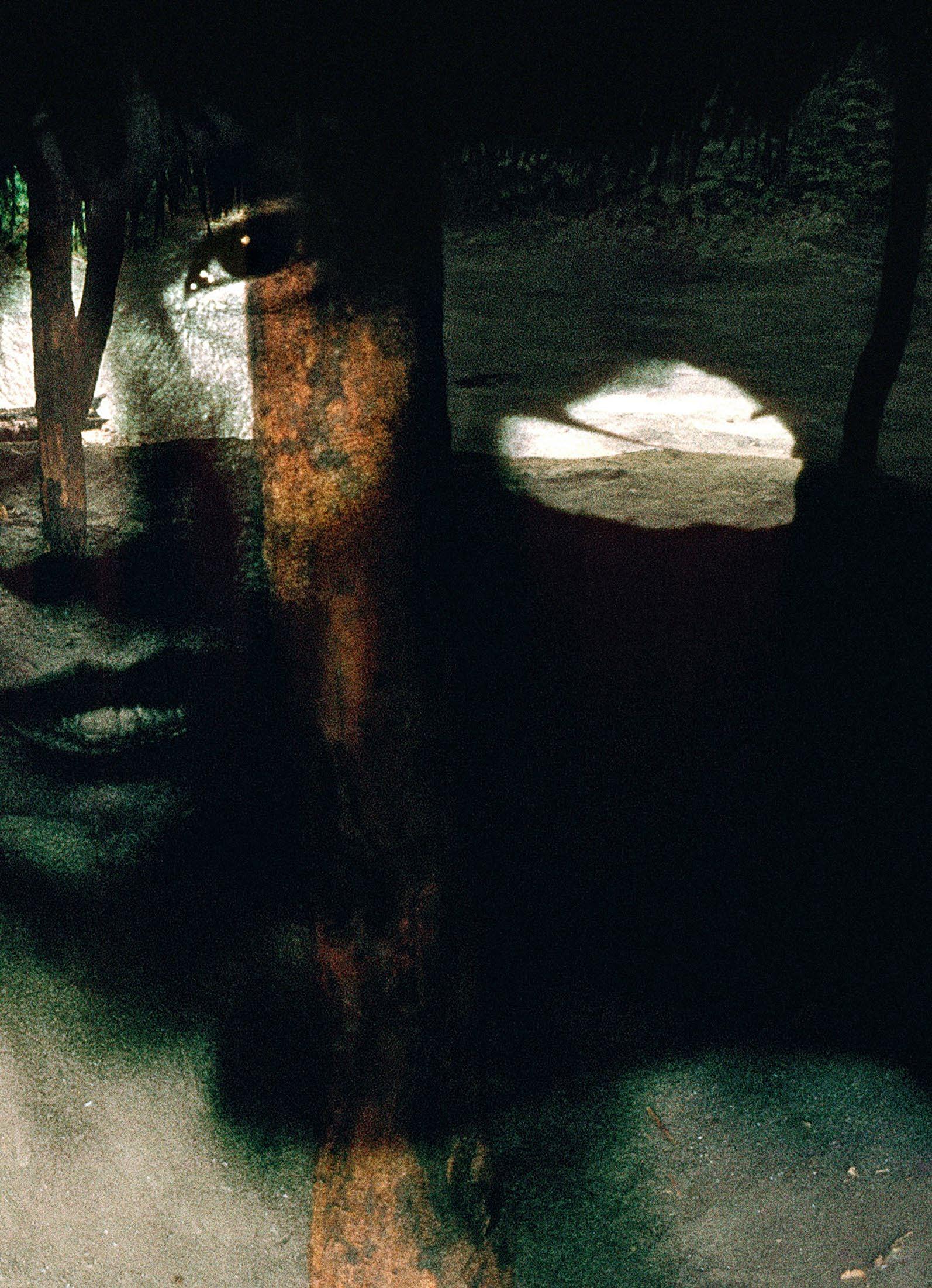
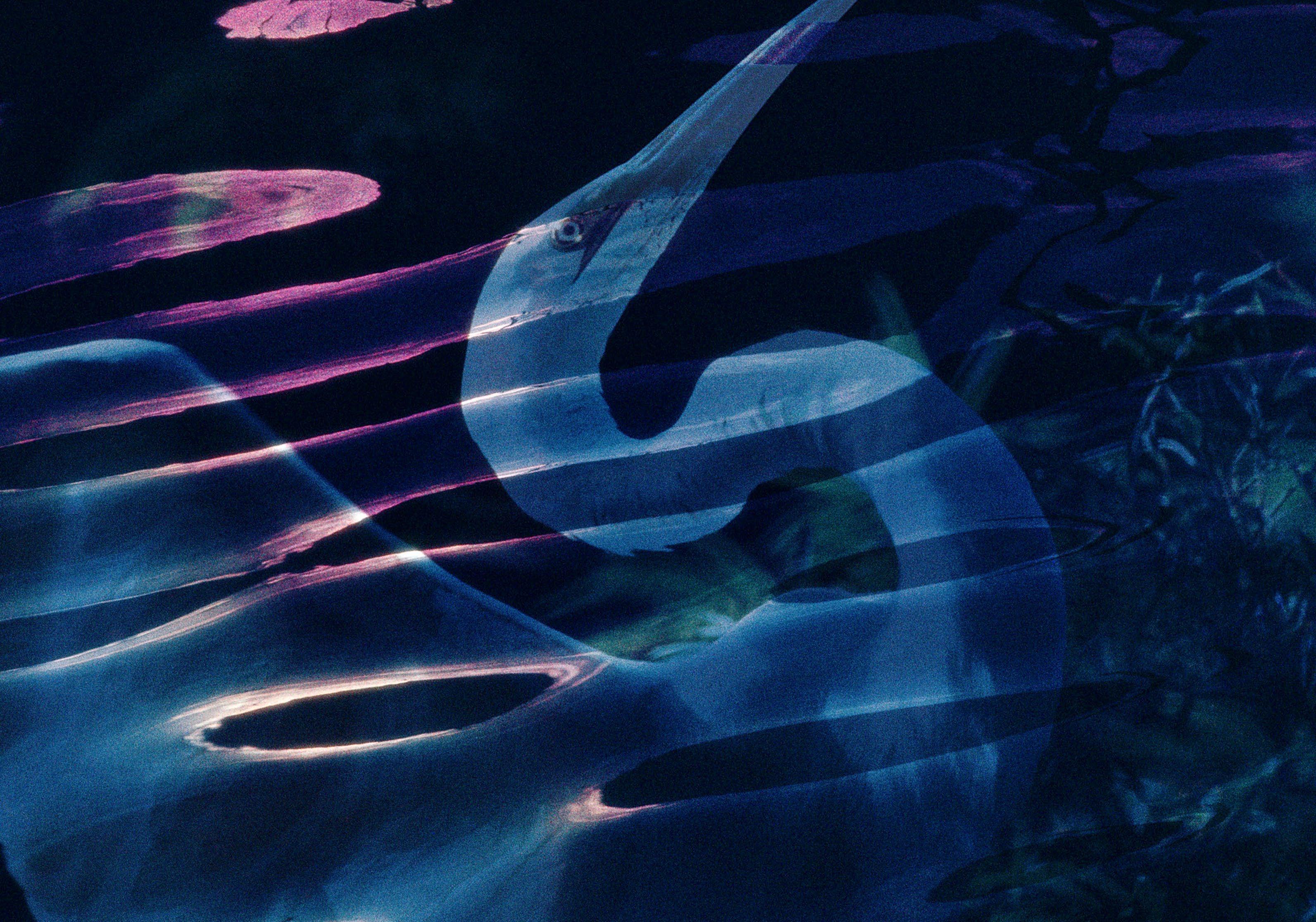
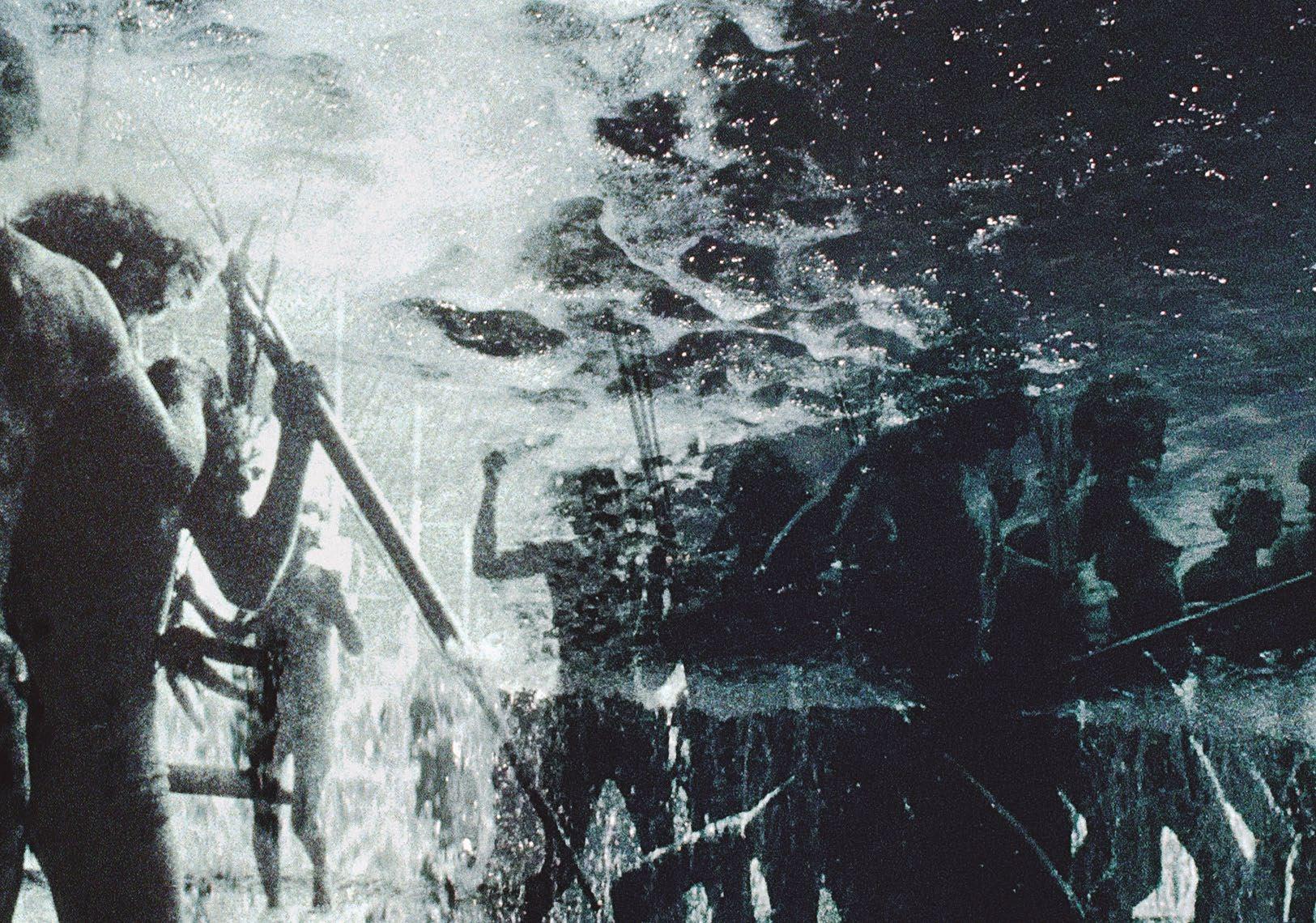
A série Sonhos Yanomami, de 2002, foi elaborada a partir de seu acervo de imagens, da sobreposição de cromos e negativos realizados desde 1971, ocasião de sua primeira viagem para a bacia do rio Catrimani, em Roraima, território Yanomami homologado pelo governo brasileiro apenas em 1992. Trata-se de uma obra do período maduro da artista, que já possuía grande intimidade com a cultura do povo que a acolheu.
As imagens revelam algo dos rituais dos líderes espirituais Yanomami e a importância do sonho em sua cosmologia. Os xamãs, diferente dos demais, se deslocam durante o sonho na companhia dos espíritos, dos xapiri , que podem trazer conhecimento, cura e proteção para a comunidade. O sonho, longe de ser um fato banal que é esquecido depois de despertarem, é uma conexão profunda com os espíritos, que viajam para além do céu, da terra e do mundo subterrâneo, e voltam com ensinamentos sobre o que viram.
O trabalho de Claudia Andujar se comunica com a cosmologia Yanomami e sua sabedoria ancestral por meio de imagens. Corujas, garças, macacos e retratos de indígenas se mesclam com luzes, texturas de pedras e árvores, resultando em fotografias fantasmagóricas dos sonhos de um povo com uma cultura sofisticada.
No período em que foi revelado ao mundo mais um genocídio contra os Yanomami, cometido entre 2019 e 2022, devido ao incentivo ao garimpo ilegal e ao uso de armas, a mostra adquire um caráter simbólico para dar visibilidade aos valores indígenas. Essa também é uma história de aproximadamente 50 anos: os Yanomami vêm sendo dizimados ao menos desde 1973 com a construção da Rodovia Perimetral Norte (BR210) e da abertura de dezenas de pistas de pouso de aeronaves.
A sobrevivência dos Yanomami, além de uma questão humanitária, assegura a proteção da floresta, a sustentabilidade ambiental e a vida no planeta. Os xamãs, os únicos que conseguem sonhar mais longe e ouvir as vozes dos espíritos da floresta, impedem a queda do céu, sustentado pelos xapiri, que mantêm o equilíbrio e a ordem do universo. O fim do mundo, o desabamento do céu, ocorrerá quando a floresta for exterminada e o último xamã morrer. O tempo para reverter a grande catástrofe está se esgotando.
Cauê Alves, curador-chefe do MAM São Paulo
The path of Claudia Andujar (Switzerland, 1931), who fled Nazi persecution during the Second World War, reveals the way in which political conflicts interfere in the life of different peoples. The artist arrived in Brazil in 1955, the country she lives in until today and where she became a naturalized citizen in 1976. Her life is marked by the fight for Yanomami land demarcation and by a series of photographic essays dedicated to indigenous peoples in Brazil. Claudia Andujar identifies with the vulnerability of the Yanomami people and teaches us that others help us understand who we are.
The series Sonhos Yanomami [Yanomami Dreams], from 2002, was made from her collection of images, the overlapping of chrome and negatives made since 1971, the date of her first trip to the Catrimani river basin, in Roraima, Yanomami land that was granted by the Brazilian government only in 1992. It is a work from the artist’s mature period, when she already had great intimacy with the culture of the people who embraced her.
The images reveal something from the rituals performed by Yanomami spiritual leaders and the importance of dreams in their cosmology. Shamans, unlike the others, move while asleep in the company of spirits, the xapiri, who can bring knowledge, healing and protection to the community. The dream, far from being a common fact that is forgotten after waking up, is a profound connection to spirits, who travel beyond the sky, the earth, and the underground world, and come back with teachings from what they saw.
Claudia Andujar’s work communicates with the Yanomami cosmology and their ancestral knowledge through images. Owls, herons, monkeys, and portraits of indigenous individuals merge with the lights, the texture of stones and trees, resulting in ghostly photographs of the dreams of a people with a sophisticated culture.
In the period when another great genocide against the Yanomami people was revealed to the world—between 2019 and 2022—due to the incentive for illegal mining and weapon usage, the exhibit acquires a symbolic nature in order to give visibility to indigenous values. This is also a 50-year-old story, approximately: the Yanomami people have been decimated at least since 1973 with the construction of the North Perimetral Highway (BR-210) and the opening of dozens of aircraft landing strips.
The survival of the Yanomami, aside from being a humanitarian matter, ensures the protection of the forest, environmental sustainability, and life on the planet. Shamans, the only ones who can dream further and hear the forest spirits, prevent the sky from falling; it is sustained by the xapiri, who keep the balance and order of the universe. The end of the world, the collapse of the sky, will happen when the forest is exterminated and the last shaman dies. Time to reverse the great catastrophe is running out.
Cauê Alves, chief curator at MAM São Paulo
Considero a série Sonhos Yanomami um turning point em minha experiência com os Yanomami. As imagens que compõem a série revelam os rituais xamanísticos dos Yanomami, sua reunião com os espíritos. A partir de sua criação, eu comecei a conceber uma interpretação imagética acerca dos rituais, fato que me deu acesso à genealogia do povo, aglutinando aspectos da cultura e dissolvendo as fronteiras entre os seres humanos, seus deuses e a natureza, integrando todos em um fluxo contínuo.
A fotografia é minha forma de comunicação com o mundo. Um processo de mão dupla em que você recebe tanto quanto dá. Se o registro fotográfico de culturas pode ser considerado uma forma de compreensão do outro, eu acredito que com a série Sonhos eu consegui entender a essência do povo Yanomami.
Extrato da entrevista publicada na ocasião da exposição Identidade, Fondation Cartier, Paris (2005).
I consider the series Sonhos Yanomami to be a turning point in my experience with the Yanomami. The images that make up the series reveal the shamanistic rituals of the Yanomami, their encounter with the spirits. From its creation, I started to conceive an imagetic interpretation of the rituals, a fact that gave me access to the genealogy of the people, joining aspects of culture and dissolving the boundaries between human beings, their gods and nature, integrating everyone into one continuous flow.
Photography is my way of communicating with the world. A two-way process in which you get as much as you give. If the photographic register of cultures can be considered a way of understanding the other, I believe that with the series Sonhos Yanomami I was able to understand the essence of the Yanomami people.
Extract from the interview published on the occasion of the exhibition Identity, Fondation Cartier, Paris (2005).
Claudia Andujar
Opiq+theri, Perimetral norte, 2002/2023
2
Sem título [Untitled], da série [from the series] Sonhos Yanomami, 2002/2023
3
Desabamento do céu / O fim do mundo, da série [from the series] Sonhos Yanomami, 2002/2023
Claudia Andujar (Neuchâtel, Suíça [Switzerland], 1931)
Série [Series] Sonhos Yanomami, 2002/2023, sobreposição de cromo digitalizada, impressão com tinta mineral pigmentada sobre papel Hahnemühle Photo Rag Baryta [digitized chrome overlay, printed with pigmented mineral ink on Hahnemühle Photo Rag Baryta paper], 315 gr., 66 x 100 cm. Coleção [Collection] MAM São Paulo. Doação [Donated by] Alfredo e [and] Daniela Villela, 2023. Foto: Cortesia [Photo: Courtesy] Galeria Vermelho
Claudia Andujar nasceu em Neuchatel (Suíça), em 1931. Após a Segunda Guerra Mundial, imigrou para os EUA e, em 1955, imigrou para o Brasil. Desde então, a artista vive e trabalha em São Paulo. Durante a década de 1970, Andujar recebeu bolsas da John Simon Guggenheim Foundation e da Fundação de Apoio à Pesquisa (FAPESP) para fotografar e estudar a cultura Yanomami. De 1978 a 2000, Andujar trabalhou para a Comissão de Pró-Yanomami e coordenou a campanha para a demarcação do território Yanomami na Amazônia, criado em 1993. Em 2000, ela recebeu o Prêmio Anual de Liberdade Cultural [Fotografia] como defensora dos Direitos Humanos da Lannan Foundation, no Novo México (EUA). Em 2003, recebeu o Prêmio Severo Gomes da Comissão Teotônio Vilela de Direitos Humanos, São Paulo (Brasil), e em 2005, o Prêmio de Fotografia da APCA [Associação Paulista dos Críticos de Arte], pela exposição Vulnerabilidade do Ser, realizada na Pinacoteca do Estado de São Paulo. Em 2008, foi homenageada pelo Ministério da Cultura com a Ordem do Mérito Cultural 2008. Em 2010, recebeu o Prêmio Kassel Photobook Award pelo livro Marcados (CosacNaify), em Kassel, e em 2018 a Goethe-Medaille 2018, em Weimar, ambos na Alemanha.
Claudia Andujar was born in Neuchatel (Switzerland), in 1931. After World War II, she immigrated to the USA, and in 1955, immigrated to Brazil. Since then, the artist lives and works in São Paulo. During the 1970s, Andujar received scholarships from John Simon Guggenheim Foundation and Fundação de Apoio a Pesquisa (FAPESP) to photograph and study the Yanomami culture. From 1978 to 2000, Andujar worked for CPY [Pro-Yanomami Commission], and coordinated the campaign for the demarcation of Yanomami territory in the Amazon, that was established in 1993. In 2000, she received the Annual Cultural Freedom Award [Photography] as Human Rights Defender from Lannan Foundation, New Mexico (USA). In 2003, she received the Severo Gomes Award from the Teotônio Vilela Commission on Human Rights, São Paulo (Brazil), and in 2005, the Award for Best Photography Exhibition from APCA [Paulista Association of Art Critics], for her solo show “A Vulnerabilidade do Ser” [The Vulnerability of Being], held at Pinacoteca do Estado de São Paulo [Brazil). In 2008, she was honored by the Brazilian Ministry of Culture with Order of Cultural Merit 2008. In 2010, she received the Kassel Photobook Award for her book Marcados [Marked] by CosacNaify Publisher, in Kassel [Germany], and in 2018 the Goethe-Medaille 2018, in Weimar [Germany].
Museu de Arte Moderna de São Paulo
ter a dom 10h às 18h (entrada até 17h30)
segunda fechado
Tue. to Sun. 10am - 6pm (entry until 5:30pm) closed on Monday
Parque Ibirapuera
Av. Pedro Álvares Cabral, portões 2 e 3
São Paulo/SP - Brasil Ibirapuera Park Pedro Álvares Cabral Ave., gates 2 and 3
São Paulo/SP - Brazil
mam.org.br @mamsaopaulo