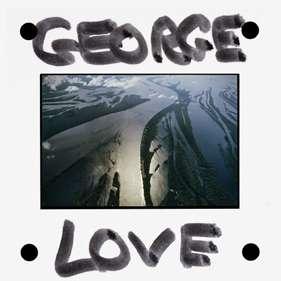
Ministério da Cultura, Bradesco e Museu de Arte Moderna de São Paulo apresentam

Ministério da Cultura, Bradesco e Museu de Arte Moderna de São Paulo apresentam
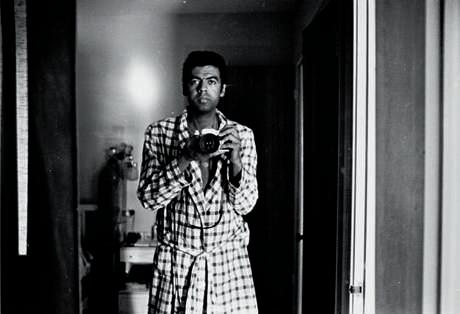
OBRAS SELECIONADAS DA EXPOSIÇÃO
248 AMAZÔNIA
Elizabeth Machado
Presidente da Diretoria do Museu de Arte Moderna de São Paulo
Cauê Alves
Curador-Chefe do Museu de Arte Moderna de São Paulo
George Love: além do tempo inicia a grade de exposições de 2024 do MAM São Paulo. Trata-se de uma mostra retrospectiva de um dos protagonistas da história da fotografia no século XX. A exposição reúne um conjunto significativo de obras do artista, que teve papel relevante no grupo nova-iorquino Association of Heliographers.
A associação foi decisiva para a fotografia colorida experimental e de vanguarda no início dos anos 1960.
George Love, juntamente com os Heliographers, contribuiu para a consolidação da fotografia autoral e para a sua libertação como representação fiel e literal da realidade.
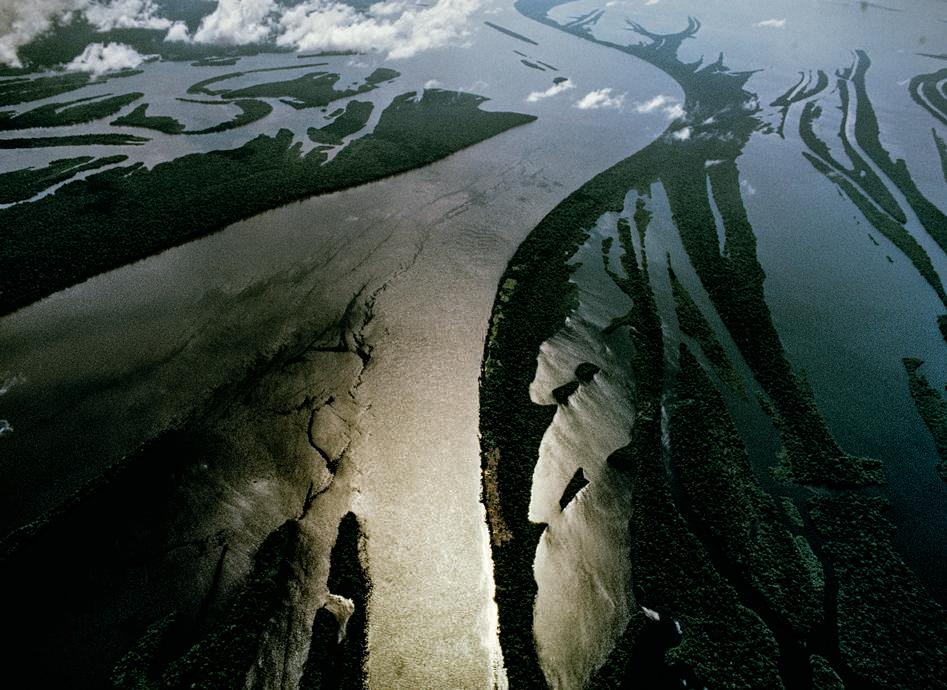
Afro-americano nascido em Charlotte, Carolina do Norte, Estados Unidos, em 1937, George Love chegou ao Brasil em 1966. Ao lado de sua então companheira, Claudia Andujar, fez viagens pela Amazônia. Ambos realizaram ensaios para a revista Realidade em 1971 e lançaram o livro Amazônia, em 1978. Enquanto Claudia Andujar ficou conhecida pelo trabalho com os Yanomami, George Love se destacou pelas fotografias aéreas num período em que isso não era tão comum.
Com curadoria do pesquisador e também fotógrafo
Zé De Boni, a exposição apresenta uma seleção ampla da trajetória do artista, abrangendo não apenas imagens
da Amazônia, mas também ensaios fotográficos feitos em São Paulo e no Rio de Janeiro, iniciativas editoriais experimentais e trabalhos comerciais, como a série sobre a construção da Usina de Itaipu. George Love: além do tempo é a primeira grande exposição sobre o artista e lança luz em um trabalho ainda pouco visto, mas cultuado pelos amantes da fotografia. O presente catálogo traz, além de textos do curador, passagens dos diários, cartas e depoimentos do artista, ampliando a compreensão de sua obra e de seu pensamento sobre fotografia.
O MAM São Paulo, que possui um dos acervos de fotografia mais relevantes do país, contribui assim para a difusão da fotografia, em especial de um recorte pouco estudado: a atuação marcante de George Love desde a fase experimental até seu período mais maduro, próximo ao seu falecimento precoce, em São Paulo, em 1995. Em uma época em que a crise climática está cada vez mais evidente, a mostra George Love: além do tempo chama atenção para o olhar visionário e ainda atual do artista, assim como para a diversidade e para questões ambientais urgentes.
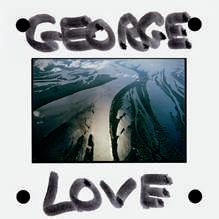
Zé De Boni Curador
No despertar da cultura fotográfica brasileira na segunda metade do século XX, um nome figura entre as maiores referências: George Love. Artista carismático, ele sempre foi cercado por uma aura de mistério, que beirava a lenda, de tão conhecido quanto enigmático que era, pelo tanto que ele foi exposto e como ficou escondido. Atuando em uma era de efervescência intelectual, de questionamento comportamental e de transição de costumes, George exibia um intenso brilho em suas realizações, na interação profissional e no convívio particular.
A luz que trazia ao ambiente extravasava paredes e repercutia na atmosfera e nas pessoas, que vislumbravam as infinitas possibilidades de um marcante meio de expressão.
Suas ações no meio cultural, editorial e corporativo expandiam os horizontes da fotografia, abrindo caminhos adiante do seu tempo. Conscientemente ou não, gerações de fotógrafos brasileiros seguem sua inspiração e seu modelo, que se realça entre as raízes de nossa contemporaneidade. Chamá-lo de gênio também não é hipérbole. George Leary Love nasceu em 24 de maio de 1937, em Charlotte, Carolina do Norte, Estados Unidos. Negro, filho único em uma família simples e culta, concluiu seus primeiros estudos
superiores antes dos 20 anos. Adotou a câmera fotográfica também cedo, vislumbrando a possibilidade profissional no segmento de fotografia de viagem, representado por arquivos de imagens, um mercado importante na época, com o qual se manteria ligado por toda sua vida profissional. Fixando-se em Nova York para mais estudos, logo passou a se dedicar à fotografia como criação autoral, tendo suas primeiras mostras em galerias de Manhattan, dando cursos e palestras. Assim, foi aceito como um dos mais jovens participantes da Association of Heliographers, um grupo restrito de expoentes da fotografia americana que promovia a arte, propunha sua expansão e inovava no uso de impressões coloridas no meio expositivo. George Love se identificava com a proposta, de forma que o ideário dessa associação é chave importante para compreender a obra que desenvolveu por toda a sua vida. Em pouco tempo, o jovem fotógrafo se tornou vice-presidente e coordenador da galeria da associação. Foram dois anos intensos, entre 1963 e o fim de 1965, até o encerramento da entidade, por carência de recursos.
A perspectiva de um novo rumo lhe foi oferecida por uma rara heliógrafa estrangeira, que o estimulou a se aventurar pelo continente sul-americano. Em janeiro de 1966, George juntava-se a Claudia Andujar em Belém para uma inusitada expedição no interior da Amazônia, verdadeira epopeia até a terra dos Xikrin. Voltaram para Belém, subiram pelo rio até Iquitos, depois Lima e Bolívia, e entraram de volta no Brasil pelo famoso “trem da morte”. Fixaram-se em São Paulo, no apartamento da Avenida Paulista, casaram-se... e, então, o resto é história.
•
O primeiro grande impacto da presença de George Love no Brasil foi a sensação que ele causou no início de 1967, quando suas fotografias começaram a aparecer em reportagens e ensaios nas publicações da Editora Abril. Entrou no jornalismo com carta branca de Roberto Civita e apoio de editores como Mino Carta para tratar, de forma criativa, assuntos corriqueiros. Eclético e altamente adaptável, inteligente e perspicaz para incorporar a modernidade na ilustração visual, retratou moda e costumes, automobilismo e viagem para publicações como Claudia e 4 Rodas. George e Claudia eram destaque na revista Realidade , aclamada como um capítulo marcante do jornalismo brasileiro. O sucesso crescente explodiu com o número especial sobre a Amazônia, em outubro de 1971. Amplificados pela transcendência das imagens de uma região ainda mal conhecida, os mitos se consolidaram. O termo então se aplicava aos três: à própria revista Realidade, a Claudia Andujar com os Yanomami e a George Love com a deslumbrante visão aérea da paisagem amazônica.
Essa trajetória em ascensão impulsionou George para outras órbitas. Desligou-se da Editora Abril na sequência, mas ainda persistiu no jornalismo pela também incomum revista Bondinho, do Grupo Pão de Açúcar, com trabalhos memoráveis. Porém, sua passagem foi rápida, como em Novidades Fotoptica. Naquela publicação de Thomaz Farkas, ele se dedicou a promover a arte fotográfica e o ensino da técnica, em continuidade ao que introduzira em Realidade. Profissionalmente, mudou para o mercado corporativo, que lhe propiciou melhor rendimento econômico, e empregou toda a sua experiência em fotografia aérea e audiovisual
para empresas de energia elétrica e tecnologia. Com a receptividade de clientes que reconheceram suas virtudes criativas, como Mário Chamie pela Olivetti, abriu caminho para uma produção visual fora das convenções publicitárias, incorporando a proposta exercida entre seus antigos colegas de Nova York. Entre os 42 fotógrafos que passaram pela 865 Lexington Ave., nenhum levou o conceito tão intensamente no campo comercial quanto George Love, que, por essa fase, pode ser definido como Heliógrafo Corporativo. Os recursos que colhia da área comercial reinvestia em sua pesquisa e seus projetos fotográficos pessoais, fundamentalmente na continuidade do trabalho na região amazônica, para onde retornaria diversas vezes, sempre explorando uma visão espacial. Sua dedicação à promoção da cultura visual e ao ensino de fotografia encontrou amparo na figura de Pietro Maria Bardi, que abriu o Museu de Arte de São Paulo para o casal. No MASP, que teve atenção à fotografia desde seu início, mas não tinha um departamento de fotografia, Claudia Andujar e George Love instalaram o Laboratório de Fotografia, onde o termo laboratório se referia não à sala de revelação, mas ao trabalho de formação de talentos e de incentivo ao uso do meio. Marcaram época. O museu se tornou um endereço relevante no emergente cenário da fotografia paulistana. Exposições individuais, coletivas, internacionais, cursos e eventos de vanguarda foram conduzidos pelos dois, que também usaram a oportunidade para exibir as próprias obras em várias mostras e projeções. Foi assim, em dupla, por toda a década de 1970, mas na metade dela o casal já havia se separado.
O respeito mútuo se manteve, como também o grande projeto em comum, gestado por vários anos. A partir de milhares de imagens da paisagem aérea feitas por George e do extenso período vivido por Claudia entre os Yanomami, em 1978 eles publicaram o livro de fotografias Amazônia. Nele, como um coletivo, os autores não sentiram necessidade de identificação individual, talvez até porque esperassem que isso fosse automático, bastando apenas conhecer um mínimo dos dois. Com apoio de seu cliente comercial, o grupo Sharp de Matias Machline, projeto de Wesley Duke Lee, impressão sofisticada da gráfica do célebre Regastein Rocha e acabamento luxuoso para a época, a seleção de imagens, a paginação e o tratamento gráfico tinham forte conotação pessoal, com as marcantes pontas de filme instigando a interpretação do leitor. Apenas mais tarde, em entrevistas particulares, George revelou a mensagem que esse recurso continha. Censurado, com circulação proibida (apenas uma fração do previsto foi distribuída informalmente e sem publicidade), o livro tornou-se raridade instantânea. Mas, diferentemente do que acontece com a maioria das criações humanas, a repercussão da obra só aumentou desde então, como mais um autêntico mito. Amazônia é aclamado como um dos mais marcantes livros autorais de fotografia de todos os tempos. Em 1980, George Love se afastou do tema amazônico. Havia um nítido trauma devido ao episódio do livro e um notável distanciamento de Claudia. Seu foco mudou para a compilação de um inventário visual de São Paulo, coletado desde sua instalação na cidade. Apresentou-o na exposição individual Diários e na edição São Paulo – Anotações. O livro
pessoal fazia par com São Paulo – Registros, uma coletânea de fotos antigas da cidade, organizada pelo próprio George. Ambos foram lançados pela recém-criada Eletropaulo, sob o comando de Lucas Garcez, que também confiou a George a documentação dos últimos dias de Sete Quedas e a construção da Usina de Itaipu.
Sua vida particular após o divórcio foi marcada por envolvimentos fugazes, com atitudes de autoproteção, refratária ao apego mais profundo. Seria fútil entrar no campo da vida sentimental do fotógrafo se ele não tivesse deixado uma evidente mostra de paixão e êxtase registrada em imagens de seu idílio no refúgio em Sarapuí com Rosilis. Mais do que momentos íntimos, o legado dá outra pista para entender a natureza de seu trabalho, egocêntrica – como ele próprio afirmava, pois como se explicaria usar imagens tomadas a tanta distância para figurarem em destaque no trabalho sobre São Paulo? Ao incluir fotografias de assuntos díspares, até mesmo a construção de hidrelétricas, a interpretação que ele próprio fornecia era entender o autor como elo, condutor da obra, assumindo toda a circunstância de sua experiência pessoal.
Como contraste, o conflito pessoal com a cidade opressora mereceu de George uma instalação com projeção no MASP intitulada Ilustrações para os Diários de Kafka , com tônica evidentemente depressiva. Sua inquietação e saúde instável o levaram, na sequência, à opção de mudança para o Rio de Janeiro, onde ficou por um ano e meio. Fotografava a cidade usando a receita do que fizera em Sampa, os mesmos recursos em um universo distinto. Percebe-se nitidamente que era seu plano dar ao trabalho uma relevância equivalente ao que conseguiu com
Anotações. Com pouco tempo para maturar, essas impressões permaneceram inéditas.
Retornou para São Paulo sem resolver seu estado de saúde. Retomou o tema que o projetou, produzindo um livro de tiragem limitada para a Pancrom, que representava sua própria identidade visual: Service Order 8696 – The Amazon Basin from the Air. A obra trazia 26 imagens e tinha um sentido místico, resultando em mais um enigma cuja interpretação é guiada pela noção do autorretrato.
George Love ainda teve condição de expor mais uma vez, em 1985, suas Vistas do Alto antes de se retirar para o exílio em seu país natal. Na verdade, ele voltou para Nova York deprimido, desestruturado profissionalmente. Continuou o declínio de sua saúde, que ele se recusou a encarar. Mesmo assim, permaneceu explorando fotograficamente seu mundo com o mesmo brilho de seus melhores momentos. Teve o acolhimento de Barbara, mas vivia um ostracismo angustiante. Faltavam-lhe os interlocutores, que propiciavam espaço para ele desempenhar seu dom sedutor de mestre e mago da imagem. Ele ainda reagiu, retornando ao cenário paulista, onde tentou reativar contatos e reverter a década perdida, mas se viu soterrado pelas ideias e navegando em um deserto de possibilidades. Inevitavelmente, sua saúde chegou a um ponto crítico.
Lutou pela realização de um novo livro, mais um testamento amazônico, que dessa vez seria seu ato final. Ainda contou com o belo gesto de Cida Fontana, apoiadora de seus grandes momentos. Mas, aos 58 anos, não resistiu para cuidar desse trabalho e vê-lo impresso. Restou sua Alma e Luz e toda sua obra além do tempo.
Natural de um estado sulista dos Estados Unidos, George Leary Love passou sua juventude bem próximo dos epicentros segregacionistas. Muito cedo, foi estudar na Atlanta University e já chegou ciente da luta pela integração, pelas histórias narradas por sua mãe sobre a participação heroica de um ancestral distante. Afastou-se desse contexto entre 1958 e 1960 e seguiu com a família para a Indonésia, onde seu pai servia na embaixada. Começou a fotografar nesse ambiente de viagens. Na volta, fixou-se em Nova York para mais estudos e participou do Student Non Violent Coordinating Committee (SNCC), importante movimento pelos direitos civis. Curiosamente, seu arquivo não traz exemplos dessa militância. E, em toda a sua trajetória, ele quase não tocou no tema; é raro encontrar material relevante em sua obra.
O sul dos EUA, anos 1960
O calor, o ar denso, estático – a violência.
A loucura da violência, embutida nas almas imóveis, nos gestos tensos, pronta para explodir em instantes de desespero. A agressão é real.
O ato de morte paira permanentemente no ar.
Não existe o orgulho pela raça. Foi aniquilado pelo ódio entre raças. Não há amor pela vida, apenas a
preocupação com a morte. A estagnação da vontade, o marasmo, a monotonia. A espera da explosão do sexo, do êxtase religioso, da violência, sempre.
O sul dos EUA, anos 1970
A lembrança do perfil sofrido, a purificação do ódio nas muitas mortes. Existe algo que se espera, indefinido e imensurável.
De mim e minha mãe com muito amor para o meu pai.1
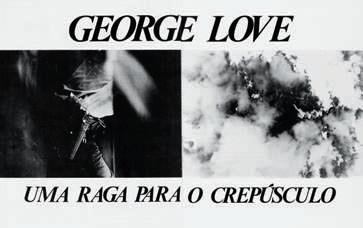
Esse texto de George Love mostra um lado escondido, como tantos outros, de sua personalidade. O ensaio fotográfico Uma Raga para o Crepúsculo, revista Iris, novembro de 1979, foi uma rara oportunidade em que George Love se referiu diretamente à questão racial e ao seu ambiente natal. As palavras eram mais fortes do que as próprias imagens, coisa inusitada em toda a sua obra, pois a parte visual guardava um tímido distanciamento dos dramas sociais traumáticos. Boa parte das fotografias era de uma viagem ao estado do Mississippi em 1965, que ele rotulava de Deep South, cujos contatos mostram fórmulas comuns e
1 LOVE , George. Uma Raga para o Crepúsculo, revista Iris, novembro de 1979, p. 14 a 29.
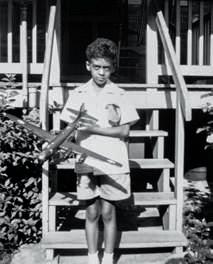
George Love aos 8 anos, 1945.
um George dispersivo. A seleção servia-se também de outras fontes, como o céu de um lugar, uma arma de outro, a própria mãe em turismo e o túmulo de seu pai, que não viveu uma fração do problema que muitos outros sabidamente sofreram.
Apesar de todo seu talento, esse bloqueio aconteceu ao fotografar o Harlem para documentação jornalística em plena época da luta pelos direitos civis. Sob o escudo de suas lentes longas, ele mal se aproximava das pessoas e pouco interagia, contrastando com o exemplo de mestres com quem conviveu.
Em um fotógrafo que demonstrava tanta segurança e altivez, essa limitação parece paradoxal. Mas é coerente com suas palavras, pois ele se definia como um autor focado fundamentalmente em si. Pode-se interpretar que, em seu lamento no entardecer, George Love valia-se de uma questão social para remeter a uma cicatriz interior.
[George Love, 8 years old, 1945.]
Abertura do ensaio da revista Iris, novembro de 1979.
[Opening of photo essay in Iris magazine, November 1979.]
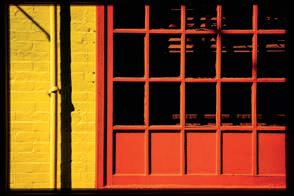
Nova York, início dos anos 1960. Uma parede amarela e um portão vermelho. Foi o chamado que conduziu George Love à adoção definitiva da fotografia. Logo ele estava expondo trabalhos em cores, novidade no circuito, e dando palestras no coração de Manhattan. Em meados de 1963, juntou-se a destacados nomes da fotografia americana na recém-criada Association of Heliographers. Tornou-se vice-presidente e coordenador da galeria no mesmo ano. Conviveu com Scott Hyde e Syl Labrot, suas referências nas propostas visuais, e adotou definitivamente o ideário do grupo, que pregava a fotografia como uma nova realidade além da representação formal do objeto. Com a dissolução da associação, ao final de 1965, George partiu para novos voos, incentivado por uma colega heliógrafa, Claudia Andujar.
George Love chegou à Indonésia aos 20 anos, já formado na universidade. Era a época em que ele começava a usar a fotografia para colecionar memórias das viagens que fazia pelo país, pelos vizinhos e pela Europa. Ele contava sobre o momento da sua primeira fotografia, de tapumes em Roma, como uma autêntica conversão ao uso da expressão visual. E citava em seu currículo
a importância de ter fotografado o templo de Borobudur, no coração de Java, um feito mais significativo na sua memória do que os slides conservados transmitem.
Quando ele chegou de volta aos Estados Unidos, fixou-se em Nova York a fim de estudar filosofa da arte na The New School for Social Research. Dessa fase, guardou duas cartas de seu pai, em fim de vida, preocupado com as escolhas do filho e com a administração de seus recursos limitados.1
Ali, George Love teve sua segunda epifania, a das cores da Kodak, momento em que tomou a fotografia seriamente como instrumento pessoal. A importância desse evento é notada pelo carinho com que conservou aquelas imagens e seus primeiros estudos de percepção abstrata, que ele revia até seus últimos dias.
Seu caminho profissional iniciou-se com as mesmas fotos de viagem, que eram uma categoria importante nos bancos de imagem. Muitos cromos de suas experiências anteriores trazem na moldura os carimbos de Rapho
1 Cartas de George Bishop Love, sem data (ca. 1960), e de 16 de junho de 1961 (dias antes de morrer). Coleção George Love.
Imagem citada por George Love como símbolo da sua conversão à fotografia, ca. 1962.
[Image mentioned by George Love as a symbol of his conversion to photography, ca. 1962.]
Foto da série exposta na coletiva da Association of Heliographers, Nova York, 1964.
[Photo from the series exhibited at the group show of Association of Heliographers, New York, 1964.]
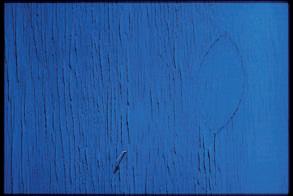
Guillumette e Photo Researches Inc. Abasteceu esses distribuidores por um bom tempo, concentrando seus arquivos depois no Kay Reese & Associates. Empreendeu mais viagens e, curiosamente, veio ao Brasil em 1962, parando em Belém, Brasília e Rio de Janeiro, depois de passar pelo Suriname, captando imagens do exotismo para os olhos dos grandes centros. Outros trabalhos em preto e branco daquele período sugerem um contexto comercial, mas não há referência à motivação do conjunto mais significativo, o belo ensaio documental sobre a Vermont Railway.
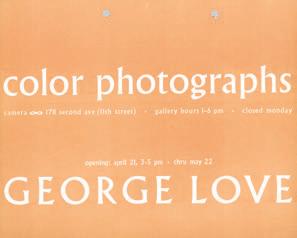
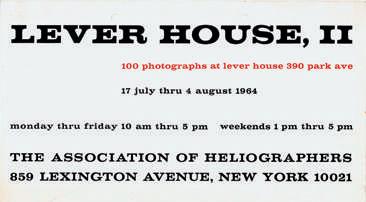
Em 1962, o nome George Love figurava em convites de exposições coletivas e individuais. Notas de imprensa mostram que ele estava ativo no circuito nova-iorquino quando, no segundo semestre de 1963, se tornou membro da Association of Heliographers. Muito pouco foi publicado sobre essa associação e a importância que teve na consolidação de grandes nomes da fotografia americana. George a mencionava sempre com muito orgulho pela posição que ocupou e principalmente por ter convivido com personalidades como Harry Calahan, W. Eugene Smith e Walter Chappell, que foi o criador do grupo. Era uma cooperativa que tinha sede em local nobre do Upper East Side, onde mantinha um arquivo de imagens e apresentava exposições de seus membros em sua galeria pioneira. Anualmente, realizava grandes coletivas no distinto ambiente da Lever House e figurava com grande frequência na página do crítico de fotografia do New York Times, que destacava sua vanguarda na introdução de fotografias coloridas no mercado de arte.
A associação começou com sete fotógrafos, e, em sua apresentação, Chappell formulava a diretriz que o grupo seguia, ao propor uma fotografia liberta da missão de representação fiel do objeto fotografado.
Uma HELIOGRAFIA não é apenas o produto do sol externo, visível, mas também do sol interno do fotógrafo, manifestado através da interação entre a máquina e a visão humana. A partir das suas experiências e ideias, os heliógrafos buscam criar propostas que transcendem o mero registro literal de uma cena ou um evento.2
Era uma justificativa ou ode à abstração, derivada de sua concepção muito particular, expressa previamente no livro Under the Sun, que dividiu com dois futuros heliógrafos.
… as abstrações capturadas pela câmera fotográfica representam a fusão de dois mundos: o invisível e o visível. Elas são o produto do encontro entre a mente humana e as imagens correlatas da natureza.3
2 The Association of Heliographers, catálogo Heliography, Nova York, 1963.
3 CHAPPELL , Walter. “The arising, manifestation, and eventual eclipse of the Association of Heliographers 1960-65”. Revista History of Photography, Nova York, 2000. 24:2. P. 180-182.
LABROT, Syl; CHAPPELL , Walter; LYONS , Nathan; BRAZILLER , George. Under the Sun – The Abstract Art of Camera Vision, Inc., Nova York, 1960.
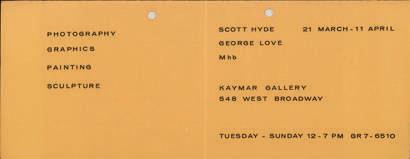
Esse contraponto à fotografia documental é evidente no trabalho de muitos dos associados, e pode-se notar sua marca indelével em toda a obra subsequente de George Love. O princípio se dissipou na associação conforme a rotatividade dos membros, como Chappell se lamentou no artigo de anos depois. Ele relacionou 42 integrantes em sua memória ao longo dos dois anos e meio, mas em nenhum momento o grupo ultrapassou 20 participantes. O próprio mentor mudou-se da cidade nos primeiros meses e deixou a administração do sofisticado espaço, que tinha conseguido por favor de um amigo, nas mãos de membros que não tinham participado da gestação e gestão originais. George Love logo se tornou vice-presidente e administrador da
galeria. Juntamente com Scott Hyde, presidente, mantiveram uma atividade pujante, como aparece no arquivo do jornal.4
As exposições coletivas na Lever House foram mantidas anualmente, e é sobre uma delas que aparece uma menção elogiosa do crítico a George, Hyde e Syl Labrot,5 justamente os dois colegas que mais o influenciaram6 e com quem compartilhou ideias e afinidades visuais por muito tempo depois de se separarem.
O dinamismo da Association of Heliographers durou até o fim de 1965. George guardou poucos documentos daquela época, que estão hoje na biblioteca da University of North Carolina at Charlotte (UNCC). Em um papel improvisado está a distribuição de vendas de fotografias no ano de 1964. Outras cartas se referem a cobranças de dívidas da entidade, enquanto um comunicado do presidente traçava planos para 1966. Mas, naquele janeiro, a associação se extinguiu, George sumiu de Nova York e se embrenhou pelos interiores da América do Sul.
4 Entre 1963 e 1965, os Heliographers ou George Love individualmente aparecem em mais de 40 artigos do crítico Jacob Deschin no The New Yotk Times.
5 Jacob Deschin comentou assim: “George Love tem amostras de suas impressões coloridas em uma variedade de assuntos e tratamentos; o monocromo azul é uma ousadia, e suas imagens de janelas à noite sugerem um novo rumo para ele”. The New York Times. “Camera Notes: Heliographers in top photography display”, 26 de julho de 1964 [p. 15].
6 “Love, a fotografia com amor”, Folha de S.Paulo, 1º caderno, 31 de janeiro de 1971.
Em janeiro de 1966, George Love chegou ao encontro de Claudia Andujar em Belém. Rumaram ao coração do Pará para documentar indígenas isolados. Encontraram a comunidade Xikrin em transformação, conduzida à atividade mercantil por um missionário que abria uma pista de pouso. George fez poucos retratos e cenas, concentrando-se em colher sons para oferecer a instituições. Sua revelação maior ficou guardada em um diário, no qual registrou, com percepção de forasteiro, a epopeia para vencer as corredeiras do Rio Itacaiúnas, a vida na aldeia e o preparo da sua carga de objetos indígenas que exportaria desde o Peru. Ali ele acompanhou os trabalhos arqueológicos nas ruínas de Pajatén, que o marcaram para sempre. Passaram pela Bolívia e, após cerca de seis meses, começaram a dividir projetos e residência em São Paulo.
Uma carta de Claudia Andujar de 1965 sugere que sua adesão à Association of Heliographers foi tardia e que foi lá que conheceu George Love.1 Desconhece-se a origem de seus planos em comum, como também quando Claudia
1 Carta de Claudia Andujar a Scott Hyde, 23 de setembro de 1965. UNCC – J. Murrey Atkins Library Special Collections and University Archives at University of North Carolina at Charlotte, Charlotte, Carolina do Norte, EUA.
conheceu Rose, mãe de George, mas é a ela que se dirigiu no Natal daquele ano. Seu breve cartão mostra que já havia um envolvimento sentimental e que a viagem dele ao Deep South era recente. Apesar da sugestão de que os dois trocavam cartas, um recado que pedia para ser transmitido a George mostra que ela buscava estimulá-lo em uma fase de indecisão: “Diga a ele que acho que ainda tem muito a oferecer e a fazer que lhe trará felicidade e recompensa”.2
Mais experiente, Claudia chamara George para um projeto de viagem pela América do Sul. George deu alguns detalhes dessa viagem em entrevista:
Eu cheguei ao Brasil... no dia 16 de janeiro de 1966. Então eu estive com a Claudia, e nós fomos viajando pela Amazônia de janeiro até maio. Em maio a gente entrou no Peru, Bolívia, e acabamos voltando ao Brasil através de Corumbá.
Eu cheguei sem nada!... na noite anterior à minha saída, o apartamento foi limpo. Me restaram... 4 ou 40, não sei quantos dólares, uma velha
2 Carta de Claudia Andujar a Rose Leary Love, 22 de dezembro de 1965, e carta de Claudia Andujar a George Love, 23 de janeiro de 1965. Coleção George Love.
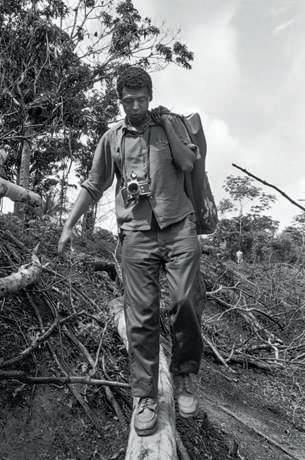
George Love seguia a pé por trilha enquanto o barco vencia mais uma corredeira, 1966.
[George Love continued on foot along the trail while the boat overcame yet another rapid, 1966.]
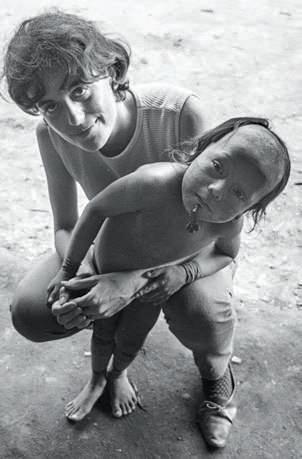
Claudia Andujar com criança Xikrin, 1966.
[Claudia Andujar with Xikrin child, 1966.]
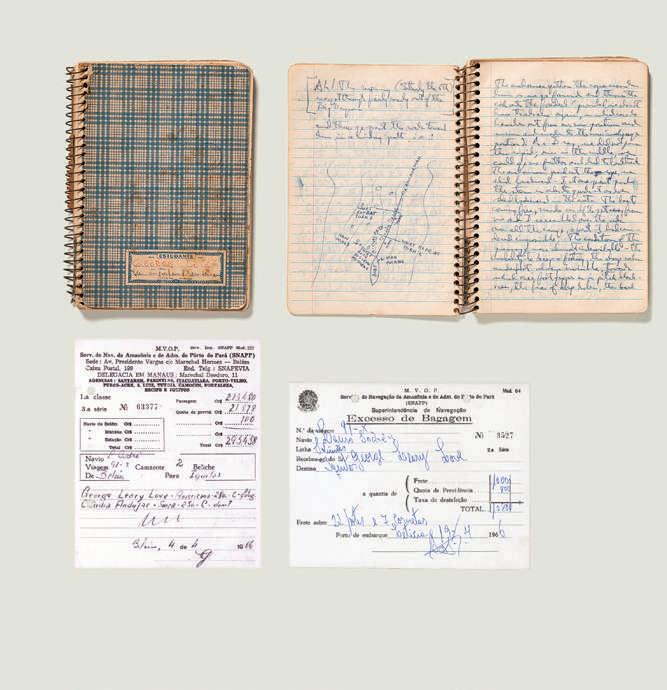
Caderno de anotações da viagem ao território Xikrin: George Love, an important American, 1966.
[Notebook from the trip to Xikrin territory: George Love: an important American, 1966.]
Passagem de navio de Belém a Iquitos, 4 de abril de 1966, e bilhete de excesso de bagagem no trajeto de Letícia a Iquitos, 19 de abril de 1966.
[Boarding ticket for the ship from Belém to Iquitos, April 4, 1966, and excess luggage ticket for the trip from Letícia to Iquitos, April 19, 1966.]
máquina Exakta, uma lente de 40 mm Mikro Kilar, praticamente nenhum filme, uma máquina de gravação Uher 4000 Reporter, que era o velho cavalo de guerra dos repórteres.
Às vezes usava a máquina da Claudia... Basicamente, eu gravei som. Gravei muito som dos índios Xikrin, que a gente visitou, e aquelas gravações estão comigo até hoje ainda.3
O objetivo principal eram comunidades nativas em locais remotos, que poderiam ser de interesse de publicações, especialmente do exterior. Claudia combinou o encontro em Belém e lá o esperou com apreensão por dez dias, já com todos os planos meticulosamente agendados. O primeiro destino era o território dos Xikrin, no interior do Pará, seguindo a orientação de um pesquisador suíço que estaria na aldeia por período limitado. Para chegar lá, teriam que sair de Marabá em um pequeno barco particular, com data já marcada. Com todos os tropeços pelo atraso do visto consular, George chegou no finzinho de janeiro, a tempo até de ter a experiência de um baile de Carnaval no Círculo Militar de Marabá. Partiram de lá no dia 3 de fevereiro.
Os documentos que ele guardou dão mais precisão e detalhes a essa história. Em seu precioso diário de viagem, ele narrou a dramática epopeia de dez dias para subir um rio
com muitas corredeiras em fase de cheia. Na capa do caderno, lê-se George Love – An Important American, o que pode receber várias interpretações. Suas descrições dos lugares e eventos, com comentários e críticas, revelam sua personalidade, deslocado, estranhando tudo e todos. Mas o relato puro e quase ingênuo dos habitantes locais, das questões sociais e das atividades entre os indígenas traz detalhes dessa aproximação dita humanística, com todas as imperfeições e os vícios.
3 Entrevista de George Love a Zé De Boni, ca. 1993.
O povo em estado original, que se buscava e se anunciava como tal ao público distante, já estava transformado pelo contato, especialmente com aqueles que diziam estudá-lo e protegê-lo. O missionário que seguiu no mesmo barco para se fixar entre a comunidade revelava planos para abrir uma pista de pouso no local. George não só relatou isso no diário como fotografou a operação de limpeza do terreno, que padre Carón orientava com a participação do dito etnólogo René Fuerst. O suíço, que não tinha formação acadêmica, era na verdade um prospector que coletava objetos e arte de povos originais para alimentar as coleções de museus europeus. Os fotógrafos precisavam de suas informações para também produzir um conteúdo exótico para os mercados consumidores. Formaram-se laços que se mantiveram por anos. A oportunidade foi aproveitada por Claudia e George, que retornaram com o conteúdo almejado em seus filmes e fitas de som. Ele fez alguns retratos formais marcantes e alguma documentação dos Xikrin, respeitando a prioridade dela. Em algumas cenas, percebe-se a atividade coordenada pelos forasteiros, como o resultado da coleta de castanhas
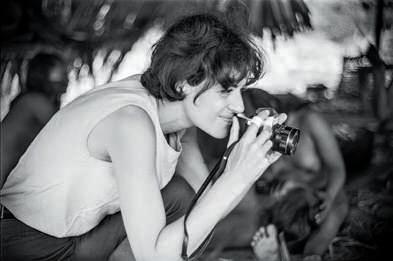
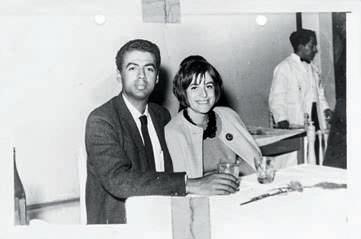
Claudia Andujar fotografando as atividades dos Xikrin, 1966.
[Claudia Andujar taking photos of the Xikrin people’s activities, 1966.]
George Love e Claudia Andujar no Peru, 28 de maio de 1966.
[George Love and Claudia Andujar in Peru, May 28, 1966.]
destinadas à comercialização ou a produção de peças artesanais, certamente necessárias aos colecionadores.4
O próprio George, inexperiente na abordagem dos habitantes locais, tanto mais em etnologia, seguiu o exemplo e organizou uma coleção de arte Xikrin, com 73 peças que hoje se encontram no Museum of the American Indian (Smithsonian).5 Ele tinha uma justificativa nobre, como todos nesse ramo, narrada inclusive em seus currículos. Mas os documentos que ele guardou revelam o mesmo objetivo financeiro do seu orientador. Hoje, suas fotografias nos fazem refletir e questionar o que foi dado em troca por aqueles objetos de confecção sofisticada portados com orgulho pelas crianças indígenas.
O retorno do território Xikrin se tornou outra novela, transportando a carga até o Peru, porque de Belém seria complicado despachar para os EUA. No Peru, George tinha uma tarefa encomendada pela revista Horizon: acompanhar os trabalhos arqueológicos nas ruínas de Pajatén no alto de uma montanha remota.6 As imagens foram publicadas, e a experiência permaneceu para sempre em destaque na memória de George. Continuando rumo ao sul, cumprindo outras tarefas programadas por Claudia, o casal chegou a São Paulo já no segundo semestre daquele ano. As cartas guardadas
4 FRANÇOZO, Mariana. “O colecionismo etnográfico no Brasil (1955-1975): entrevista com René Fuerst”. Boletim do Museu Paraense Emílio Goeldi Ciências Humanas, v. 12, n. 3, p. 789-800, set.-dez. 2017. FUERST, René. Xikrin. Hommes Oiseaux d’Amazonie – 5 Continents. Milão, 2006.
5 Disponível em: https://americanindian.si.edu/ collections-search/search?edan_q=xikrin.
6 “The lost city of Pajaten”, revista Horizon, outono de 1967.
por George mostram que persistiu por um bom tempo a questão dos objetos Xikrin e das suas fitas gravadas. Por meio delas, apreendemos que a gravação de sons não era uma pesquisa casual, mas já tinha sido previamente tratada com a Universidade Yale. Entretanto, no seu retorno, a instituição não cumpriu o acordo, e então George passou a tentar vendê-las a outras entidades, sem sucesso, como se depreende de sua entrevista.
Já os objetos Xikrin viraram um imbróglio, conforme conta a correspondência trocada com Boris Malkin, outro comerciante de arte nativa e amigo do casal.7 As cartas do polonês são divertidamente escandalosas e revelam a competição ferrenha com o rival suíço no mercado que abastecia entidades colecionadoras. Ele advertia George sobre a forma de negociação, depois dava conselhos sobre preços e possíveis clientes, praguejava contra tudo e todos, cobrava de Claudia a entrega da coleção peruana pela qual ele a contratara e dizia para ela não tentar vender as fotos dos Xikrin na Europa, que era domínio de René Fuerst –o mesmo Fuerst que, depois de impedido de explorar esse território, gritou ao mundo contra o genocídio no Brasil. É fascinante que George tenha guardado esses documentos, que hoje podem ser lidos sob novas perspectivas.
7 Correspondência de George Love e Borys Malkin, pesquisadores e instituições, entre as datas de 19 de março de 1966 e 15 de agosto de 1969. Coleção George Love.
George Love não imaginava que iria trabalhar com fotografia no Brasil. Um encontro casual o levou a ser contratado pela Editora Abril. A proposta era atraente: usar seu dom criativo em temas com os quais ele não tinha intimidade. Fez moda, costumes, automóveis, chegando à grande vitrine da revista Realidade. Marcou época com ensaios fotográficos em que explorava mais as possibilidades plásticas e conceituais dos temas do que a documentação dita isenta. Trazia conteúdo significativo muitas vezes não aproveitado nas páginas da revista. Mas não se achava fotojornalista, pois via naquele espaço a possibilidade de promover a fotografia no momento em que sua popularização aumentava. Com Claudia Andujar, fortalecia a parceria intelectual e os laços familiares, como ao receber a visita de sua mãe, no Natal de 1967.
Eu vim para o Brasil realmente sem saber o que eu podia fazer aqui. E eu não tinha, para ser exato, a mínima ideia de que eu ia fazer um trabalho fotográfico. Eu fiz parte de um grupo de fotógrafos americanos, nós tivemos uma galeria de fotografia em Nova York, na Lexington Avenue com a Rua 65, e a gente se dedicou àquilo como artista plástico. Então, fotógrafo como artista plástico não é assim,
ou pelo menos naquela época não era, grande coisa, de ganha-pão... Eu pensei noutras coisas e acabei entrando na fotografia porque, uma noite, num coquetel, me encontrei com Roberto Civita.
Roberto me abordou... e falou assim: “Você é fotógrafo? Você já viu jogo de futebol?”...
Falei: “Não, nunca na minha vida...”. “Então ótimo! Você está empregado!... Porque por aqui a gente fotografa muito jogo de futebol. Eu acho que os fotógrafos do Brasil têm feito todas as tomadas possíveis e imagináveis, e até inimagináveis, impossíveis, de jogo de futebol. Para uma tomada nova, só alguém que jamais viu o jogo, nem ouviu falar do próprio jogo.”
Aí, ele então me empregou, e eu comecei a trabalhar para a Realidade, e, durante os primeiros quatro, cinco, seis meses no mínimo, eu era um fotógrafo de esporte para a Editora Abril.1
1 Entrevista de George Love a Zé De Boni, ca. 1993.
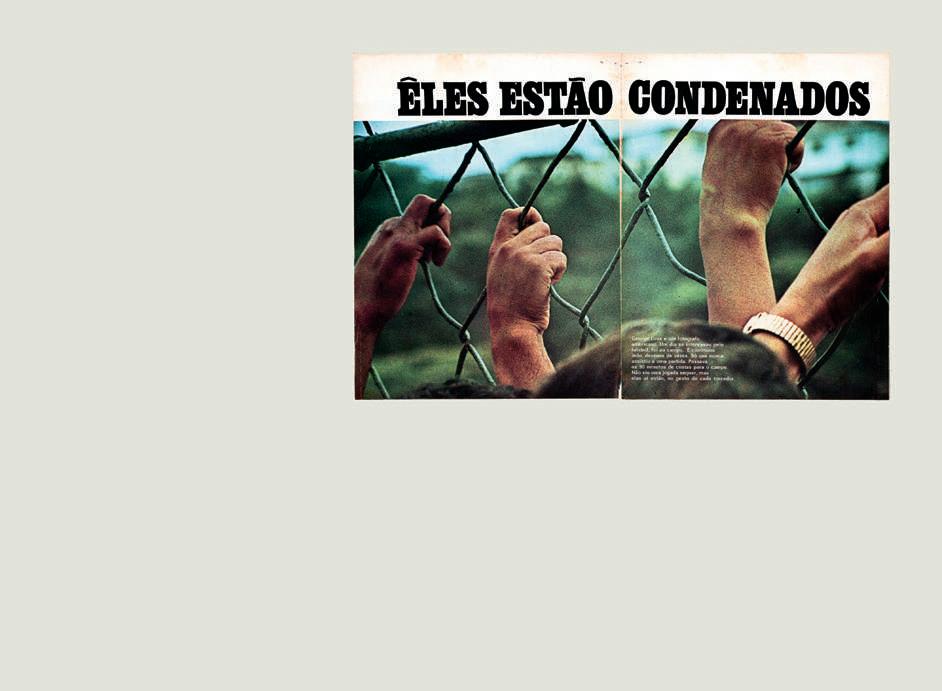
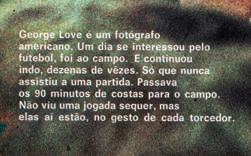
Revista Realidade, fevereiro de 1968 (p. 28-29).
[Realidade magazine, February 1968 (p. 28-29).]
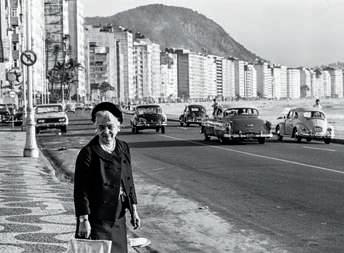
Rose Leary Love, mãe de George Love, em Copacabana, janeiro de 1968.
[Rose Leary Love, George Love’s mother, in Copacabana, January 1968.]
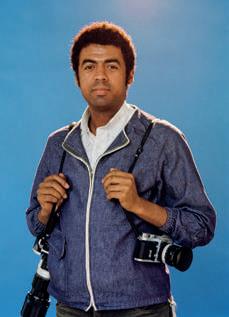
George Love fotografado no estúdio Abril, 1968.
[George Love photographed in the Abril studio, 1968.]
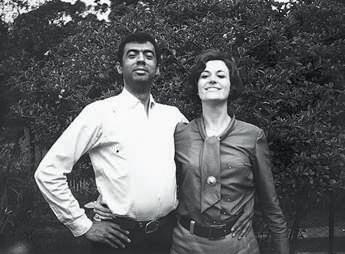
George Love e Claudia Andujar, novembro de 1967.
[George Love and Claudia Andujar, November 1967.]
George Love percorreu algumas das publicações mais populares da editora: 4 Rodas, Claudia e, eventualmente, Manequim. A história da contratação como fotógrafo de esporte serve de parábola para o que fez com moda. Criava imagens que não podiam ser rotuladas de ilustração, nem tampouco de registros, enfatizando o mood e a expressão, em sintonia com as fronteiras que os especialistas do gênero estavam expandindo. De fato, ainda desconhecido do público, ele estreou na revista Realidade em janeiro de 1967 em um portfólio com imagens de alguns fotógrafos, que celebrava a maternidade. George e Claudia Andujar dividiam uma página, ela com a foto de uma prostituta, e ele com a de uma jovem mãe Xikrin, com legendas que ilustravam o preconceito ainda reinante, mesmo em uma publicação considerada de vanguarda. Sua visão excêntrica sobre o futebol apareceu no mês seguinte e novamente um ano depois, a segunda mais marcante, pelo foco dirigido aos torcedores/sofredores, indiferente ao que acontecia no gramado. Sempre aclamada, Realidade recebia de George a mesma avaliação:
Na Realidade, nos primeiros quatro ou cinco anos, nós vivemos um dos momentos únicos, não só no jornalismo do Brasil, mas no jornalismo do mundo inteiro.
Ali, ele desfrutou sua liberdade criativa para apresentar soluções expressivas que fugiam da rotina visual. Mas ele também recorria ao modelo jornalístico convencional quando o tema pedia. Enviado aos EUA em 1968, ele reencontrou-se com a questão dos direitos civis, dessa vez com a devida sensibilidade, na matéria “Poder para o povo preto”.
No material que ele conservou dessa fase, percebe-se que ele oferecia muito mais opções do que caberiam nas revistas. Mas isso não o incomodava, já que a profusão de sobras seria o combustível de seu trabalho pessoal em constantes recompilações.
No plano pessoal, George Love adaptou-se muito facilmente ao estilo de vida brasileiro. Sua correspondência mostra a surpresa de seus amigos americanos por seu sumiço e onde fora se estabelecer. A distância, sua mãe se encantava com o sucesso profissional do único filho, valorizava sua parceria com Claudia e se preocupava em mantê-lo em contato com a família. Mesmo em fase de declínio físico, de impulso, Rose usou suas poucas economias para visitá-los, no final de 1967. Celebraram o Natal na casa da mãe de Claudia e passearam pelo Rio. De volta aos EUA, Rose descreveu o voo em uma carta:
Oh! Eu consegui ver Brasília. O avião fez uma escala nessa cidade, e pude ter uma vista aérea do planejamento urbano e de alguns de seus edifícios. Parecia uma maravilha! Fizemos uma escala em Manaus e, depois, sobrevoamos Mato Grosso e a vastidão da floresta. Reuni coragem suficiente para olhar o Rio Amazonas e a floresta lá embaixo. Aquela visão foi incrível.2
2 Carta de Rose Leary Love, 11 de janeiro de 1968. Coleção George Love.
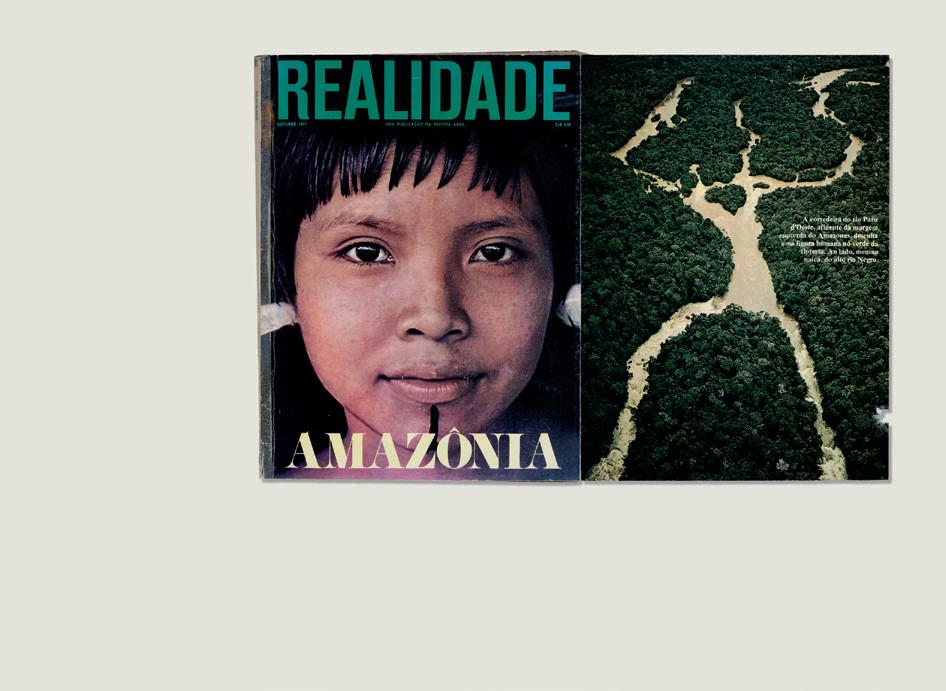
Para resgatar a atenção do público, a revista Realidade criou edições especiais temáticas, e a abertura da Amazônia foi o primeiro projeto. Uma grande equipe cobriu a região no primeiro semestre de 1971. George tinha a missão de mostrar a paisagem e sugeriu que isso só seria possível com fotografias aéreas, tais a extensão e a diversidade do ambiente. Certamente recordava-se das palavras de sua falecida mãe sobre a sensação de sobrevoar o Rio Amazonas. Com peripécias que ele depois contava, captou uma quantidade de fotos muito além do que caberia na revista. Formou, assim, um rico inventário visual, bem adequado aos bancos de imagens que o representavam e para seus trabalhos pessoais. O número de outubro de 1971 foi um estrondoso sucesso, mas também sua despedida da Realidade e da Abril.
Rose faleceu em junho de 1969; no início de 1971, George realimentava sua memória, voando sobre o Amazonas a serviço da Realidade. Pode-se imaginar que as palavras daquela carta ficaram gravadas no seu subconsciente, se não na sua lembrança viva.
A revista havia passado por mais ou menos um ano de perder tiragem. E surgiu uma polêmica, tipo “como salvar a Realidade?”... Isso foi muito discutido. Aí, um jornalista, amigo meu, de nome Raimundo Pereira, tinha uma ideia bastante simples, bastante clara. Ele achava que a revista precisava ir mais a fundo em determinados assuntos. Então ele propôs a formação de uma revista produzida por duas equipes. Supõe que a revista sai 12 vezes por ano, e que oito revistas são chamadas revistas normais, ou rotineiras, e que quatro fossem edições especiais. Então a turma das edições especiais ia trabalhar em separado, porque teria mais tempo para ir minando a fundo o assunto de cada revista especial. Enquanto a turma das revistas mensais, rotineiras... seria também uma turma que trabalhava por menos tempo para ir pouco menos a fundo. Raimundo idealizou o primeiro assunto a ser abordado por uma revista especial como sendo a abertura da Amazônia. Ele, por isso, montou um esquema envolvendo uma equipe de no mínimo 50 pessoas. Eu acredito que fomos além disto,
Revista Realidade, edição especial “Amazônia”, fotos de Claudia Andujar (à esq.) e George Love (à dir.), outubro de 1971.
[Realidade magazine, “Amazônia” special edition, photographs by Claudia Andujar (left) and George Love (right), October 1971.]
que a memória me sirva, 70 pessoas... O trabalho foi combinado na segunda metade ou talvez nos últimos três meses de 69 [1970] e ocupava a equipe desde janeiro até maio ou junho de 70 [1971]. A gente teve, por exemplo, Luigi Mamprim, que era muito veterano de contato com índios, novas caminhadas na mata etc., ficou de fazer este tipo de coisa; o Jean Solari ficou de fotografar a matança de uma onça; Claudia foi atrás de índios, assim mais na intimidade, et cetera, et cetera. A mim caiu a parte de paisagem e o Raimundo me perguntava se eu achava possível ou como que eu podia fotografar a paisagem da Amazônia. Eu disse que, para mim, isto apenas podia ser feito do ar, por causa da imensidão do assunto, da necessidade de deslocamentos dentro de uma área muito grande em um espaço de tempo relativamente curto, a necessidade de colecionar uma certa variedade de imagens deste assunto e a necessidade de poder ver este assunto. É um pouco como perguntando assim: como que você ia fotografar o planeta Terra? Bom! Sabendo o que sabemos hoje, seria do espaço o único meio de fotografar o planeta Terra, com certeza. Aí eu fui lá, era no começo de abril, acredito, de 1970 [1971], e fiquei até junho.
Fiquei voando e fazendo isso, em toda parte, e tinha dinheiro da revista. Mas o dinheiro da revista se esgotou, eu pedi mais. Aí se esgotou, pedi mais. Vieram telex, porque naquela época não existia fax, tinha um velho telex em Belém do Pará. E eu fiquei de
operador de telex. Então subiu um telex de São Paulo: “Porra, não dá mais! Vocês já gastaram, não sei, 14 bilhões de cruzeiros só de táxi-aéreo! Impossível! Parem imediatamente com isso! Cadê o George?”. E eu no telex falando assim, por exemplo: “Sei lá onde anda o George Love! A última vez que eu o vi faz umas duas semanas e ele estava indo para... Sei lá, acho ele estava bem a oeste de Manaus, mas só Deus sabe onde”. Ou por exemplo: “Ouvi que a Claudia Andujar vai atrás de mais uma tribo de índios. Fala para ela voltar, porque o custo disto, o custo disto, o custo disso...”. “Ahhh! Lamento que ela saiu ontem. Agora... Não há como localizar uma pessoa já em viagem pela Amazônia! Lamento muito, mas fazer o quê?” E daí para a frente.1
George guardou amostras de telex, pautas, anotações e roteiro de voos.
Quando a gente voltou com isso tudo da Amazônia, nós fizemos reunião após reunião. Nosso intuito era que tudo devia ficar enxuto e fiel àquilo que a gente havia visto. Para minha parte caiu o fato ingrato que eu não tinha feito uma só fotografia da estrada Transamazônica rasgando a selva, que a Manchete já havia ficado famosa por publicar isso de todos os jeitos imagináveis. E eu nunca havia fotografado.
1 Entrevista de George Love a Zé De Boni, ca. 1993.
Conversa por telex entre George Love, em Belém, e Raimundo Pereira, na Editora Abril, São Paulo, 1971.
[Telex exchange between George Love, in Belém, and Raimundo Pereira, at Editora Abril, in São Paulo, 1971.]
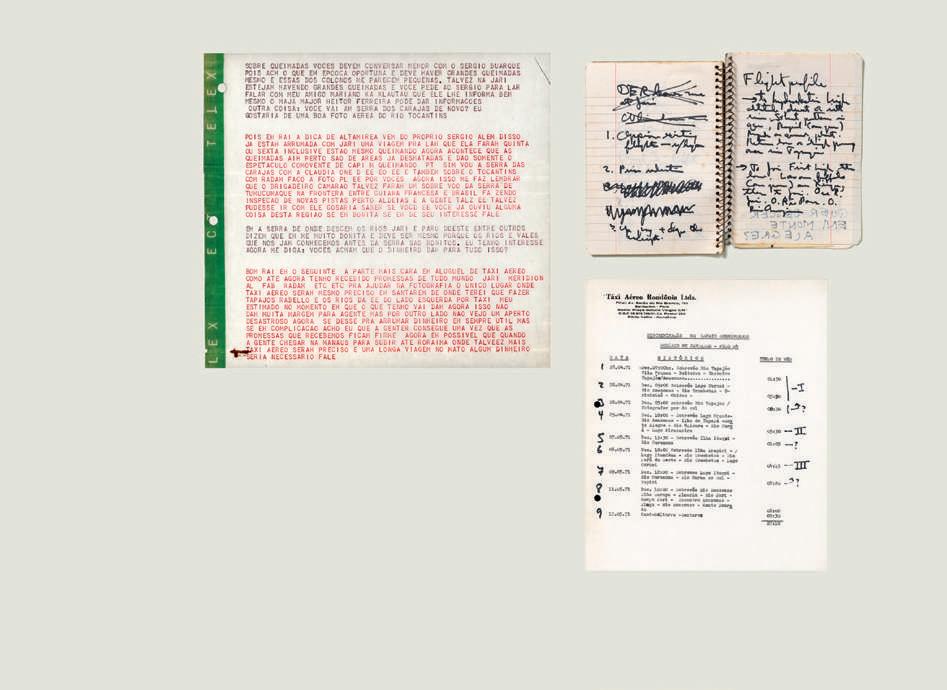
Caderno de notas de George Love durante o trabalho para revista Realidade na Amazônia, 1971.
[George Love’s notebook during the work for Realidade magazine in the Amazon, 1971.]
Lista de voos de táxi aéreo de Santarém, 1971.
[Air taxi flight list from Santarém, 1971.]
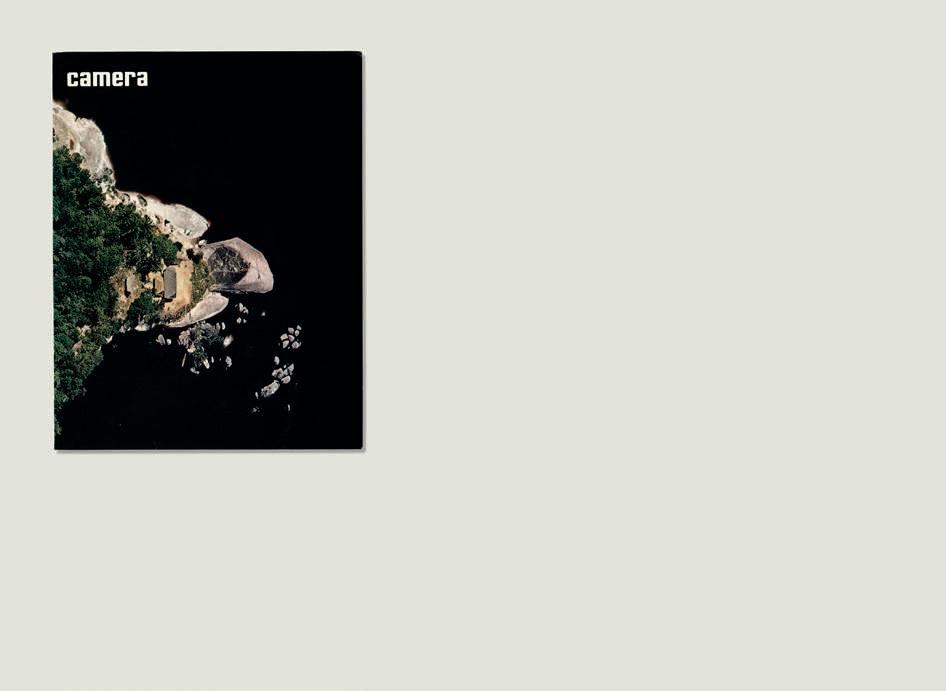
Capa da revista Camera, janeiro de 1973.
[Camera magazine cover, January 1973.]
Que é mentira! Eu fotografei, mas eu disse que havia perdido isso na névoa ou qualquer coisa assim.
Até quando as fotografias foram analisadas, eu recebi um telefonema: “Porra! Como? Não tem nada da estrada Transamazônica?”. “Não! Ahh, sei lá, sumiu... Não sei onde, nem vou procurar.”
O tempo passou. A revista saiu. Com muita trepidação, a editora resolveu publicar 300 mil exemplares de uma revista que [no passado] havia vendido 500 mil exemplares, batata! Essa revista tinha, se não me engano, 304 páginas. Sumiu das bancas no fim do segundo dia. Estava no mercado negro sendo vendida por três vezes o preço da capa no terceiro dia. No quarto dia, a editora já entrou em conferência para determinar se seria preciso reimprimir a revista.
Agora, isto é mais um exemplo daquilo que eu falei: quando isso que podia ser chamado de impulso criador, impulso jornalista, age à altura, com seriedade, vira, entre outras coisas, comercialmente viável. Mas, na minha experiência, a maioria dos empresários não gosta deste fato. Eles gostariam, e isso devia ser entendido como uma necessidade humana, de imaginar que a revista sai, é comprada, que as matérias são acreditadas, por causa do trabalho deles.2
2 Entrevista de George Love a Zé De Boni, ca. 1993.
Existe a história, repetida por muitos, de que, após essa edição, toda a equipe foi demitida por razões políticas, censura, ditadura... O romântico relato que George Love fez ingenuamente permite imaginar mais motivos, ao menos para seu desligamento. Quando consultamos seu conjunto de fotografias da Amazônia, vemos, pelos carimbos das molduras dos Kodachrome com a data “MAI 1971” e pelas indicações dos voos marcadas a caneta nas molduras brancas correspondendo às anotações em seu caderno, que ele produziu uma quantidade imensamente maior que o necessário para a editora. São dessa empreitada a maioria das imagens da Amazônia que usou em trabalhos pessoais. Percebe-se ainda que a revista não tinha aquelas fotografias icônicas que o celebrizaram, mas não se pode garantir que isso foi por decisão dos editores ou porque eles não teriam visto aquela parte da produção. Claro é, até pela escolha diferenciada dos filmes, que George usou o próprio material e cuidou pessoalmente do processamento, como era comum ele fazer.
Passou pouco mais de um ano, e ele era destaque na conceituada revista Camera, onde contava ter feito mais uma viagem por conta própria e o plano para um livro com Claudia Andujar. Relata o fotógrafo:
Escolhi focar principalmente vistas aéreas. Considerando que esse tipo de fotografia na Amazônia exige extensos períodos de voo e, consequentemente, um alto custo, o projeto só foi possível graças ao apoio da Força Aérea Brasileira, que forneceu aviões e pilotos, praticamente sob pedido.3
Sua extraordinária produção de plásticas imagens e registros ambientais alimentou o acervo de seus representantes em Nova York e consagrou George Love como sinônimo de fotografia aérea da Amazônia.
3 Revista Camera, janeiro de 1973, p. 14 a 22.
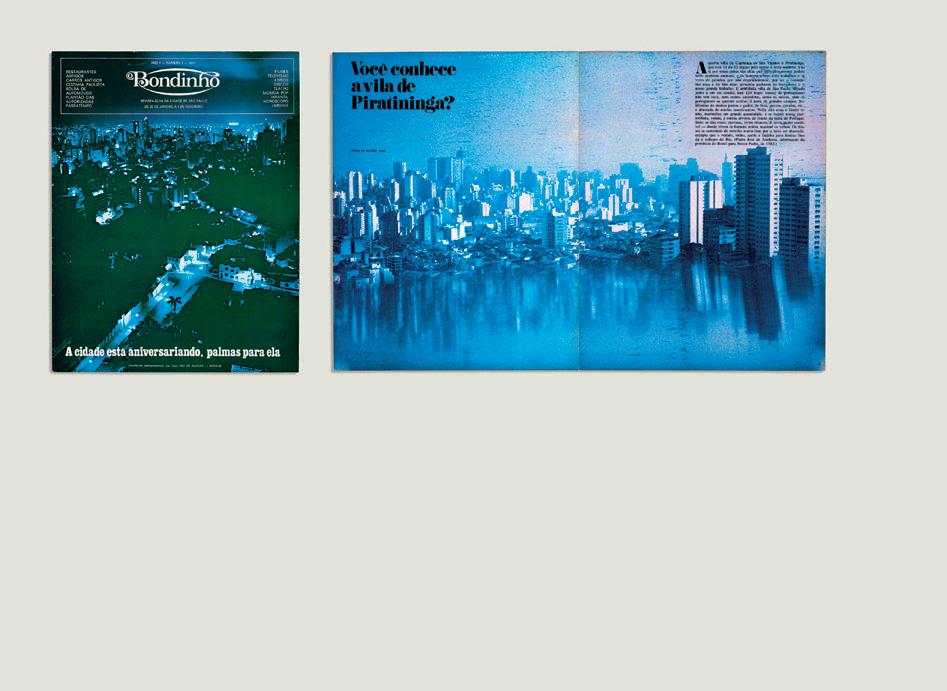
Além da Editora Abril, George Love participou de algumas iniciativas editoriais que surgiam ainda no início dos anos 1970. Eram vitrines que davam visibilidade a seu trabalho e onde ele incentivava o uso da fotografia. Foi editor de fotografia e fotógrafo da revista Bondinho, publicação de um grupo de supermercados, um espaço limitado, mas com grande penetração. A experiência foi marcante, porém curta, como foi na direção de duas revistas especializadas, Fotografia e Novidades Fotoptica. Como referência para a crescente comunidade de amadores e profissionais, George pôde explicitamente tratar da técnica e da linguagem que dominava e exibir-se naqueles espaços com a excentricidade da vanguarda da época.
O boom da fotografia no início dos anos 1970 refletia a evolução industrial de equipamentos e processos, bem como as transformações socioculturais desde a década anterior. Nesse contexto, praticar fotografia era um ato de liberação, e ostentar o equipamento representava glamour e jovialidade. As normas austeras dos fotoclubes eram superadas, e via-se a proliferação dos cursos informais. Os iniciantes inspiravam-se nas publicações inovadoras.
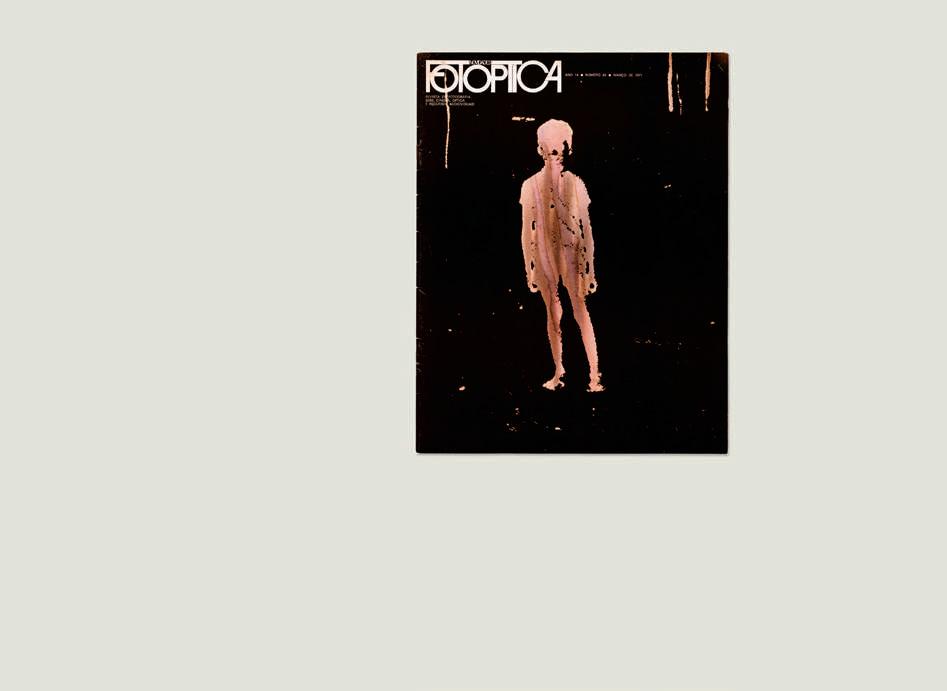
Capa da revista
Novidades
Fotoptica, março de 1971. [Novidades
Fotoptica magazine cover, March 1971.]
Página da revista Novidades Fotoptica, março de 1971, com trabalho desenvolvido na própria gráfica no momento da impressão.
[Page from the Novidades Fotoptica magazine, March 1971, with work carried out in the printing house at the time of printing.]
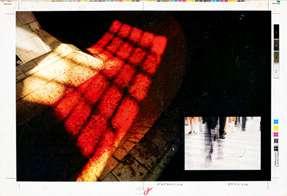
“Ensaio St. Paul”, revista Novidades Fotoptica, 1979, prova de prelo.
[“St. Paul Essay”, Novidades Fotoptica magazine, 1979, print proof.]
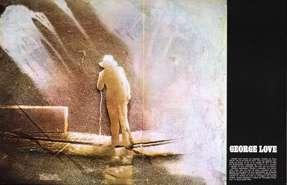
Além de George Love ser um dos destaques de Realidade, suas surpreendentes soluções visuais podiam ser seguidas na revista quinzenal Bondinho, que surgiu no final de 1970 no cenário paulistano. Ali ele era o próprio editor de fotografia e gozava de liberdade para exercitar sua pesquisa formal, adicionando importantes tijolos na construção de sua visão pessoal da cidade. Sua função como influenciador nas duas revistas era complementada por iniciativas que estimulavam o uso da fotografia, orientando os primeiros passos, como no curso que preparou para Realidade, publicado enquanto ele voava pela Amazônia.
Assim era sua apresentação:
A fotografia deixou de ser uma técnica complicada e está ficando cada dia mais fácil entendê-la. Hoje, na maioria das vezes, não é preciso mais profundos conhecimentos técnicos para fotografar: é preciso saber apenas certas regras básicas – isso é bom, pois qualquer coisa que deixe a pessoa mais livre para criar é automaticamente a mais certa. Para começar, é importante você saber que uma boa foto pode ser feita com uma máquina comum e barata. Se eu falo: “É bom ter uma máquina de lentes intercambiáveis”, evidentemente é porque acredito nisso. Mas você pode, sem nenhuma lente intercambiável, conseguir uma expressão fotográfica lindíssima, bem melhor do que a minha. Digo expressão fotográfica porque a ideia de fotografia muda de dia para dia, permitindo formas de expressão e ver as coisas das maneiras mais variadas e imagináveis. Tudo depende de sua
criação – a máquina pode substituir o homem somente até um certo ponto. Espero que, lendo este roteiro, você comece a se interessar pela fotografia, mesmo que nunca tenha tirado uma.1
Curiosamente, a revista Bondinho abordou o assunto quase simultaneamente. Já na curta vida da Revista de Fotografia e na sua breve passagem por Novidades Fotoptica, foi explícita essa veia didática de George, sempre abordando as fronteiras técnicas e a multiplicidade de soluções expressivas. Atuou como editor, antenado com o que acontecia internacionalmente e valendo-se do espaço para mostrar o próprio trabalho.
Em Novidades Fotoptica de março de 1971, ele se aproveitou do acesso privilegiado à gráfica para criar o produto final na imagem impressa – isto é, as páginas traziam não meras reproduções, mas aquilo que ele considerava a própria obra. Seguia a tendência de usar a impressão offset como suporte, aproximando-se do que faziam seus colegas Scott Hyde e Syl Labrot. Mas, em alternativa a um trabalho metodicamente controlado, dava chance ao acaso participar do processo. Assim ele era apresentado por Roberto Freire:
Para George Love, seja qual for o assunto fotografado, é o seu mundo pessoal, sua própria pessoa o que procura descobrir e compreender... acredita que o mundo e as pessoas estão em
permanente evolução, que nós criamos e concebemos a realidade, e assim esta será captada e mostrada nas fotografias com o registro de coisas mais interiores do que exteriores. Daí pode-se dizer, talvez, que este ensaio é um autorretrato do artista envolvendo as pessoas mais intimamente ligadas a ele no plano afetivo e emocional.2
Ali ele mostrava seu completo amadurecimento, no momento em que se desdobrava entre múltiplas atividades e projetos, gozando da plenitude de sua competência.
Há uma notável coerência com o que ele contaria mais de 20 anos depois em entrevista. George construía conscientemente seu universo de imagens sob uma óptica eminentemente narcisista, segundo as próprias palavras, sendo mais uma chave para nos aprofundarmos no entendimento de sua obra e sua trajetória.
Essa passagem pela direção de veículos especializados foi marcante, ainda que tenha durado tão pouco. Já fora do expediente, em 1979 ele apareceu novamente em Novidades Fotoptica com o trabalho St. Paul, baseado em contraposições gráficas de natureza introspectiva. Era o piloto de um projeto pessoal de livros de artista, e aquela apresentação mostrava imagens que ele já ordenava em sequência para a projeção sobre o mesmo tema: “O esforço que teve que fazer para se localizar numa cidade como São Paulo”.3
2 Revista Novidades Fotoptica, ano 14, n. 48, março de 1971.
1 Revista Realidade, “Aprenda a fotografar. É simples”, março de 1971, p. 105.
3 Revista Novidades Fotoptica, “Ensaio St. Paul”, 1979.
Vanguarda e excentricidade são termos que melhor se aplicam à atuação de George Love no MASP, sempre em parceria com Claudia Andujar. Caindo nas graças de Bardi, eles coordenaram o Laboratório de Fotografia do museu, uma oficina para o ensino de técnica e expressão muito concorrida. Por pouco mais de uma década, organizaram exposições individuais e grandes mostras coletivas. Destaca-se a Semana de Fotografia, em 1974, evento pioneiro e fruto do esforço pessoal de George na época da separação do casal. Ainda mais marcantes foram suas próprias mostras individuais, em que empregava projeções com trilhas sonoras e desenho do espaço surpreendentes, criados pelo próprio George. Um show musical com projeções no vão livre e uma jam session visual tornaram-se lendas que um público limitado presenciou.
Em 1969, George Love realizou seu primeiro “show” no MASP. Dois anos depois, ele fez um evento experimental, como ele definia, usando um potente projetor e prismas que espalhavam suas imagens por tecidos pendurados em torno da grande sala do mezanino. O calor da fonte de luz queimava e furava os slides, e as pessoas interagiam com
as projeções, de forma que nada se repetia.1 E em 1973, ele dirigiu uma projeção equivalente com fotografias de Claudia Andujar. George elaborava também as trilhas sonoras e cuidava de toda a produção dos acessórios necessários às suas criações, conforme relata Dan Fialdini, responsável pela montagem de exposições no museu na época. Para a mostra A Família Brasileira (1971), que reunia retratos de antepassados e contemporâneos coletados entre a comunidade, George montou uma projeção ambientada com som, a que o visitante podia assistir acomodado em bancos de igreja. Dan conta que foi uma das coisas mais comoventes que viu no museu: as pessoas saírem daquela projeção às lágrimas.
O Museu de Arte de São Paulo deu atenção à fotografia desde seus primórdios, mas não tinha um departamento especializado nem um curador até que a figura centralizadora de Pietro Maria Bardi abrisse o espaço para Claudia Andujar e George Love. Ainda como gestão informal, eles coordenaram grandes eventos, em dupla ou individualmente, sempre oportunos e pioneiros.
1 MARQUES, Hernani. “A magia da foto chinesa”, Folha de S.Paulo, 24 de junho de 1971.
Projeto da instalação feito pelo fotógrafo no verso de uma caixinha de filme, 1971.
[Project for the installation written by the photographer on the back of a film packaging box, 1971.]
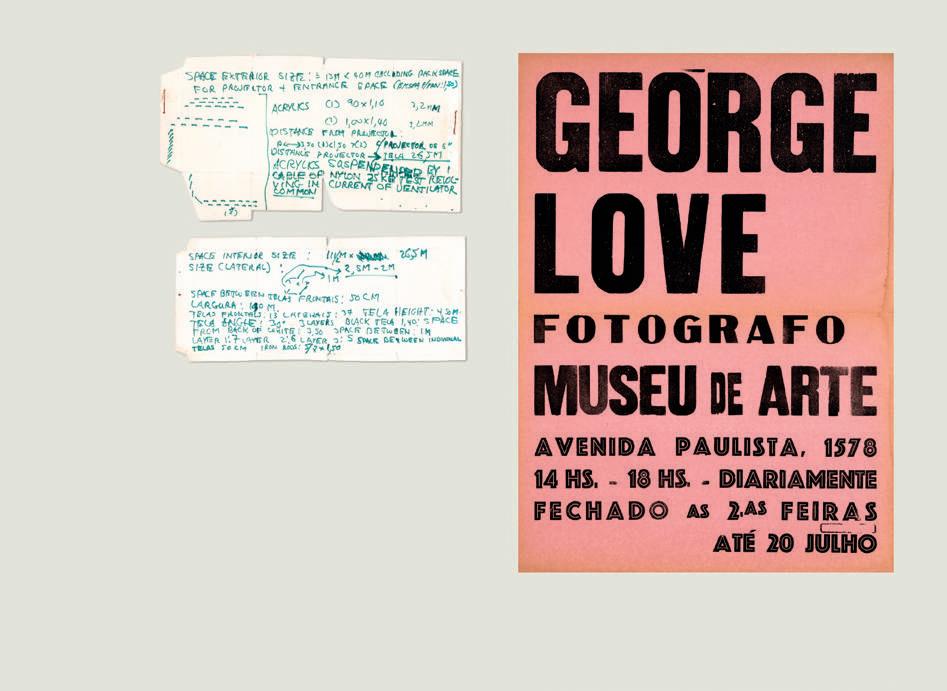
Cartaz de exposição no MASP, ca. 1969.
[MASP exhibition poster, ca. 1969.]
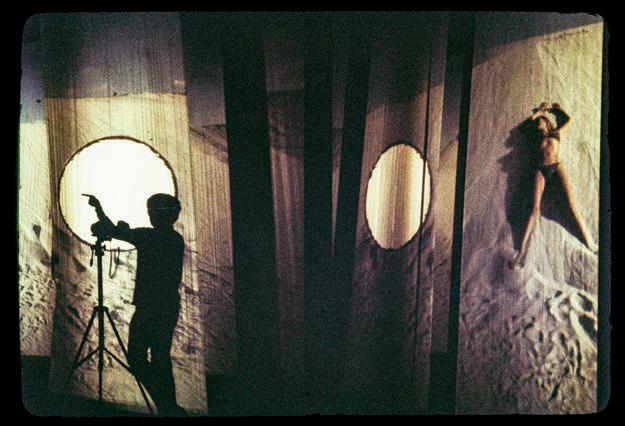
Documentação da instalação de 1971 feita pelo próprio George Love; sua sombra ilustra a interação que o público poderia ter com a obra.
[Recording of the 1971 installation made by George Love himself; his shadow illustrates the interaction the public could have with the work.]
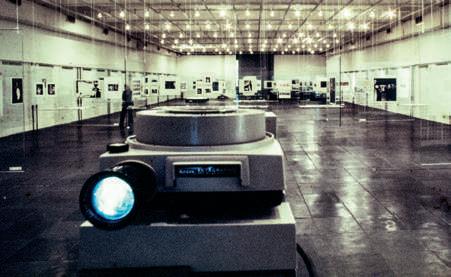
Projetor na sala da exposição da Semana de Fotografia do MASP, 1974.
[Projector in the MASP Photography Week exhibition room, 1974.]
Slide furado pelo calor do projetor da instalação no MASP em 1971.
[Slide with heat damage from the projector in the 1971 MASP installation.]
Documentação da exposição
Eletropaulo Ano I, MASP, 1982.
[Recording of the Eletropaulo Ano I exhibition, MASP, 1982.]
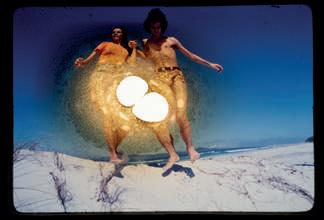
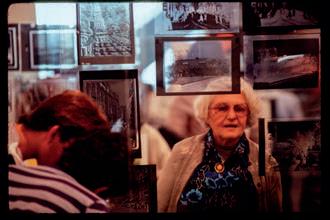
Um fotógrafo de importância na época, o Ray Metzker, que surgiu nos Estados Unidos depois de eu já viajado, eu o vi pela primeira vez no MASP.
O mesmo pode-se dizer do trabalho do Lee Friedlander. Durante anos e anos o MASP teve uma frequência de exposições fotográficas assustadoras. Quando foi 74, produzimos lá a Semana de Fotografia. Bardi, eu, Luís Osaka, basicamente nós três e mais algumas pessoas também, tivemos a ideia de uma exposição assim um pouco reminiscente da Semana de 22, com fotografias de todo o mundo dentro do museu, que era uma ambição abertamente impossível de ser realizada. Na época, o Brasil era muito fechado, problema de importação, exportação de obras de arte... Fomos empurrando aqui, puxando ali, no fim éramos 65 fotógrafos, todo o leste da Europa foi representado, algo da União Soviética... Japão... Itália foi representada pelo próprio Bardi. E era uma semana! Conseguimos... trazer dois fotógrafos americanos importantes, o Syl Labrot e a mulher dele, Barbara Labrot, para dar palestras, mostrar também. Houve uma série de palestras ao longo da semana sobre assuntos os mais variados... E a semana de 1974 foi uma coisa que pode ser lembrada até hoje.2
O evento, realizado em novembro, começou a ser produzido cedo naquele ano, quando Claudia estava em Roraima com o compromisso da bolsa que recebera. Por cartas, George tratava do apoio ao trabalho dela e acompanhava os problemas que ela ia encontrando. Ainda em agosto, ela comunicou sua opção pela separação. E não voltaria até o final do ano, mas ainda assim teve ao menos uma foto sua na mostra: George Love em pose sensual na casa que os dois dividiam em Sarapuí.
Claudia coordenou Grande São Paulo 76, onde George era apenas mais um entre dezenas de fotógrafos. Em 1977, foi dele a direção do ciclo de exposições A Paisagem Brasileira. O último grande evento que realizou foi Eletropaulo Ano I, em 1982, com o acervo de imagens históricas da antiga Light.
Enquanto as realizações de George Love no museu eram plenas de criatividade, vanguarda e competência, seus documentos revelam uma carência no rito protocolar que a atividade pede. As fotografias que fazia das exposições montadas eram mais ensaios plásticos do que relatórios documentais. As falhas na devolução de trabalhos usados ou a documentação técnica precária não foram obstáculo para ocupar aquele espaço. Talvez tenha sido uma grande virtude do MASP estar indiferente a isso e propiciar terreno para George exercer livremente sua marcante influência tanto nos visitantes casuais como naqueles que frequentaram suas oficinas.
2 Entrevista de George Love a Zé De Boni, ca. 1993.
A experiência do workshop, o Laboratório de Fotografia do MASP, foi de importância extrema. Foi ali nesse workshop ou oficina que foi conhecido por mim, acho também pela Claudia, todo mundo, a sensação de aprendizagem como participação. Não levou muito tempo a partir da hora quando isso começou, quando eu comecei a falar para as pessoas: “Bom, a oficina do MASP é de altíssimo valor a mim porque é lá que eu aprendo”. Eu achava que aprendia sempre muito mais do que qualquer pessoa que integrava a turma. Quando eu entrava lá, seja que eu falasse, seja que uma outra pessoa falasse, representando um ponto de vista, inclusive, até antagônico ou coisa assim aos meus pontos de vista, mesmo assim eu estava aprendendo barbaramente.
...Os conceitos de fotografia que foram formados nos recintos da Oficina do MASP eram tão importantes quanto a confecção do livro Amazônia e a própria experiência de ter passado na Amazônia. Aqui eu devo dizer uma coisa que vai ficar óbvia, que naquela época o Museu de Arte de São Paulo era dirigido por Bardi. O Bardi deu um impulso genial a este negócio daqui. O Bardi jamais era uma pessoa fácil e jamais deixou de ser um gênio.
E acredito que esta oficina e as coisas que a oficina conseguiu realizar foram uma coisa que não teria sido possível sem a ajuda inicial; semente!
...A gente teve uma atitude para com a fotografia... essa atitude teve mais tarde uma influência sobre as pessoas, no sentido de abrir as pessoas para novas opções... Eu particularmente diria que isto aí é a frase: descobrir a fotografia como forma de expressão, descobrir, ainda mais, a fotografia como forma da sua expressão... Ser ajudado nisso, numa certa abertura de cabeça. Agora, o que eu chamo, porém, uma abertura de cabeça é uma coisa que surgiu no mundo mais ou menos assim de forma simultânea...
Eu sempre tive respeito pelo olho e pela ideia do brasileiro na fotografia.3
3 Entrevista de George Love a Zé De Boni, ca. 1993.
Das atividades culturais de George e Claudia, apenas os esporádicos cursos rendiam alguma receita. Mas seu sucesso abria as portas para o trabalho comercial no segmento de imagem corporativa. Calendários, relatórios anuais, folhetos e livros veiculavam trabalhos que mantinham sua assinatura. George assumia tarefas mais convencionais, como documentação de fábricas e obras, nas quais se empenhava até seu limite físico. Mesmo nessa área rígida, fazia valer a criatividade de um autêntico heliógrafo. De sua autoria saíram um projeto de estande e projeção para a Olivetti, o relatório anual da Eucatex de 1981, o audiovisual Les Barrages, sobre o sistema elétrico brasileiro, e uma exposição da Eletropaulo. A construção de Itaipu e o adeus a Sete Quedas correspondem ao declínio de sua atuação comercial.
Paralelamente ao seu envolvimento na promoção cultural da fotografia, George Love fazia trabalhos comerciais, o que era mais que um meio de sustento próprio e de seus projetos. Em boa parte, era uma atividade criativa sobre temas corporativos. Sua empresa, Lovisual, em parceria com Claudia, foi criada em 1970 e tinha como
alvo peças institucionais de grandes empresas. Muitas vezes
o material empregado era derivado do trabalho pessoal dos dois. Progressivamente, George foi se destacando na criação visual sofisticada, em um nicho de mercado refinado.
Em analogia ao que recebeu nas editoras e no museu, seu trabalho corporativo tinha o suporte de certos visionários, que confiavam na sua capacidade de surpreender o público-alvo, a ponto de deixar em suas mãos toda a concepção, que ia além do visual. Foi assim no audiovisual
Les Barrages, quando Lucas Nogueira Garcez era diretor da Companhia Energética de São Paulo (Cesp); no pavilhão da Olivetti, com Mario Chamie; nos perfis do Grupo Sharp, de Mathias Machline; no relatório anual de 1981 da Eucatex, onde estava Guido Santi. George lidava diretamente com os altos escalões, conforme suas anotações revelam.
Autossuficiente, ele trabalhava praticamente só, coisa incomum e problemática nesse mercado. Nunca mencionou assistente. Isso fica claro nas fitas1 que gravou como relato da viagem ao Sudão, em 1975, fotografando para
1 Material arquivado na biblioteca da UNCC.
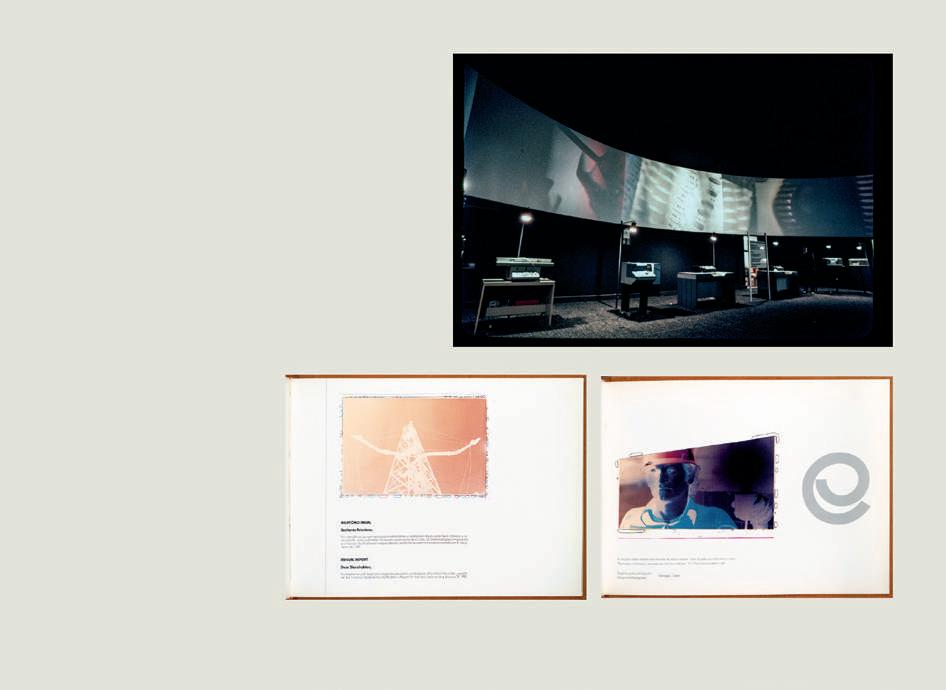
Pavilhão da Olivetti com projeção desenhada por George Love, 1970.
[Olivetti pavillion with projection designed by George Love, 1970.]
Relatório anual da Eucatex, projeto de George Love, 1981, UNC Charlotte J. Murrey Atkins Library.
[Eucatex annual report, project by George Love, 1981. UNC Charlotte J. Murrey Atkins Library. ]
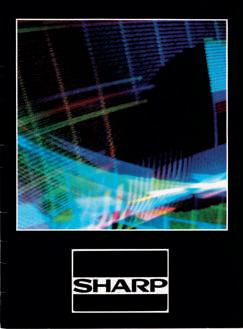
Brochura de perfil institucional do grupo Sharp, ca. 1978.
[Institutional brochure for the Sharp Group, ca. 1978.]
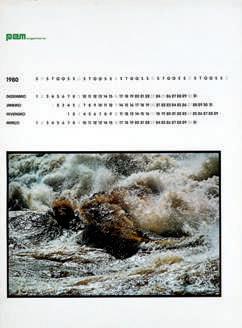
Calendário PEM Engenharia, com imagens da Amazônia, 1980.
[PEM Engenharia company calendar, with images of the Amazon, 1980.]
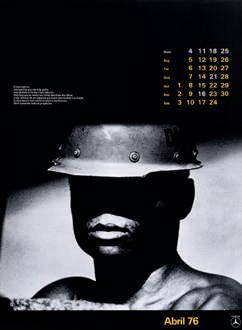
Calendário Mercedes-Benz, em parceria com Claudia Andujar, texto de Mário Chamie, 1976.
[Mercedes-Benz company calendar, in collaboration with Claudia Andujar, text by Mário Chamie, 1976.]
Autorretrato de uma das “quase mortes” de George Love, data indeterminada.
[Self-portrait from one of George Love's “near-deaths”, unspecified date.]
a Mercedes-Benz. Naquele trabalho, George teve uma série de problemas e não tinha o suporte de alguém de sua confiança. Talvez, se tivesse, não passaria pela experiência em outra ocasião, que contou de forma divertida em entrevista:
Certa vez, eu tentei fazer um trabalho industrial aqui no Brasil. Foi para uma agência, um cliente que tinha oito fábricas grandes no sul do Brasil para serem fotografadas em sete dias. E eu disse: “Ah! Vou fazer!”.
Então eu realmente fotografava oito fábricas em sete dias impulsionado basicamente por cerveja e vinho de Rio Grande. No sétimo dia, eu desmaiei. Pronto!... fui levado para não sei onde e acordei num quarto de hotel, e as pessoas ao redor da cama! Eu estava pensando: “Puxa vida! Eu acho que eu me ferrei, eu acho que vou morrer!”. Loucura, né? Babaquice pura e simples! Mas foi o que passou pela cabeça naquele instante. E as pessoas saíram do quarto para me deixar dormir. E eu, o que fiz? Eu vi que, ao lado, na mesinha de cabeceira da cama, era a minha máquina! Eu pegava a minha máquina, levantava sobre a minha cabeça e fiquei fotografando o meu rosto. Imagina! Eu estava morrendo! O doido imaginava registrar as últimas gotas de suor para quê? Mas, também, fazer o quê? Um esforço de autoconhecimento.2
2 Entrevista de George Love a Zé De Boni, ca. 1993. A mesma história foi relatada no artigo “A magia da foto chinesa”, de Hernani Marques, na Folha de S.Paulo, de 24 de junho de 1971.
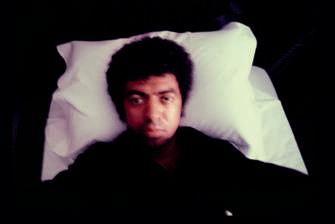
Essa é apenas uma de suas várias narrativas do recurso do autorretrato para se reposicionar, atribuindo ao processo o poder de resgatá-lo das grandes pressões ou “quase mortes”. Foi Lucas Garcez quem o levou à Eletropaulo, onde ele produziu dois livros e uma exposição no MASP em 1982. Depois, Nelson Garcez propiciou a ele acompanhar a construção de Itaipu e o adeus a Sete Quedas. Pelo seu arquivo de imagens, nota-se um George Love menos eficiente, disperso e redundante. Seu ciclo nas empresas de energia logo se encerrou, outras portas foram se fechando, e George Love sentia mais forte a pressão interna pela mudança.
Logo após a edição especial de Realidade, George revelava a intenção de editar um livro com as fotografias da Amazônia juntamente com Claudia. O projeto arrastou-se, mas foi mantido mesmo com a separação do casal. Finalmente, em 1978, reunindo as condições ideais do projeto de Wesley Duke Lee, da gráfica de Regastein Rocha e de um texto especial do poeta Thiago de Mello, o livro Amazônia foi impresso. Um grande revés os abalou: a censura do texto, excluído da encadernação, e a edição reduzida a uma fração do previsto. A relíquia que poucos conservaram traz a paisagem de George Love na primeira parte, seguida do mundo indígena de Claudia Andujar, com ar de mistério que suscita várias interpretações. Na explicação do autor, é revelado com clareza e simplicidade esse sopro de genialidade.
A ideia de publicar um livro com imagens da Amazônia com Claudia Andujar apareceu em uma carta de George Love a sua tia Fannie, ainda em novembro de 1971, em que ele relembrava sua mãe.
A viagem à Amazônia faz parte de um grande projeto de livro sobre a preservação da natureza e as culturas de povos originários. Nós dois investimos praticamente tudo o que tínhamos na expedição, que se revelou extremamente custosa (você tem que alugar
uma aeronave e tal, e viajar na floresta é difícil e caro do ponto de vista do equipamento), mas estamos confiantes de que o resultado será uma rica colheita e um bom livro. Já acertamos a publicação no Brasil e, em seguida, esperamos lançá-lo nos Estados Unidos. Durante o trabalho, me recordo de alguns temas que discutimos em nossas conversas relacionadas aos desejos de Rose. Uma parte do dinheiro que ela me deixou vai ser usada nisso, e acredito que ela ficaria satisfeita em saber disso.1
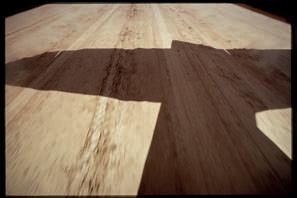
Dois meses depois, ele escreveu sobre o resultado da viagem, otimista de que o livro seria publicado muito em breve. A carta relatava o primeiro contato com a aldeia Yanomami e a missão Catrimani, onde Claudia mais tarde realizaria o trabalho fotográfico que a consagrou e se dedicaria à causa daquele povo. Trazia também uma curiosa descrição do hidroavião Catalina e seu delírio de fotografar do posto de atirador de traseira. É possível ver a silhueta daquela janela no quadro em algumas fotos importantes que ele usou.
1 Carta de George Love para sua tia Fannie, 4 de novembro de 1971. Coleção George Love.
Vista de pista de terra através da porta de atirador de traseira do hidroavião Catalina, 1971. [View of landing strip from the tail gunner’s position inside the Catalina flying boat, 1971.]
Acho que a viagem foi um enorme sucesso; fotografamos mais do que prevíamos; pensando bem, o livro já está bem encaminhado. Vai levar de duas a três semanas para completar a revelação dos filmes. Nós fomos daqui até a foz do Amazonas, onde cobri enormes bandos de aves e reservas naturais ao norte, enquanto Claudia fotografava cachoeiras no Jari, um importante afluente do Amazonas, a noroeste do delta. Então, cobrimos a construção de rodovias e cidades ao sul dessa região, e depois eu fui até um ponto cerca de 600 milhas rio acima e fiquei por algum tempo voando sobre vários afluentes no Amazonas central fotografando do ar, enquanto a Claudia ia atrás da fauna selvagem a oeste de Manaus, mais ou menos a 1.000 ou 1.200 milhas rio acima. Então, um grande hidroavião da Força
Aérea Brasileira me buscou e me levou até Manaus e depois subindo o Rio Negro, que é o maior afluente do Amazonas e muito bonito (a água é vermelho-escura e transparente ao mesmo tempo). O avião dispunha de um tipo de túnel na cauda e com o piso removido (não é realmente um piso, mas um tipo de porta grande triangular). Eu deitava no chão dessa área e tinha um perfeito ponto de vista de tudo para fotografia aérea. Percorremos mais ou menos 5.000 milhas ida e volta a Manaus, o que levou uns três dias (hidroaviões são lentos e precisam aterrissar várias vezes). Durante esse tempo, Claudia estava em Manaus, ainda fotografando vida silvestre, e eu a reencontrei na volta e seguimos juntos para Roraima,
onde ela planejava entrar no interior para estudar algumas tribos indígenas. Sobrevoamos uma bela cadeia de montanhas entre o Brasil e a antiga Guiana Britânica (esses voos são feitos em pequenos aviões monomotores com as portas retiradas para permitir a fotografia, e são frequentemente frios e ventosos) e tiramos o que eu penso serem as primeiras imagens de certas regiões – uma cachoeira muito espetacular e mais ainda. Depois, fomos até o sudoeste na mesma área, que já é floresta, e fotografamos os índios –ali era mais Claudia que eu em relação à fotografia, e eu consegui gravar algumas das músicas desse povo. Combinei com um padre/cientista que está com essa tribo para enviar microfones e uma grande quantidade de fitas magnéticas para ajudar no
Livro Amazônia, de Claudia Andujar e George Love, Editora Praxis, São Paulo, 1978. [Amazônia book, by Claudia Andujar and George Love, published by Editora Praxis, São Paulo, 1978.]
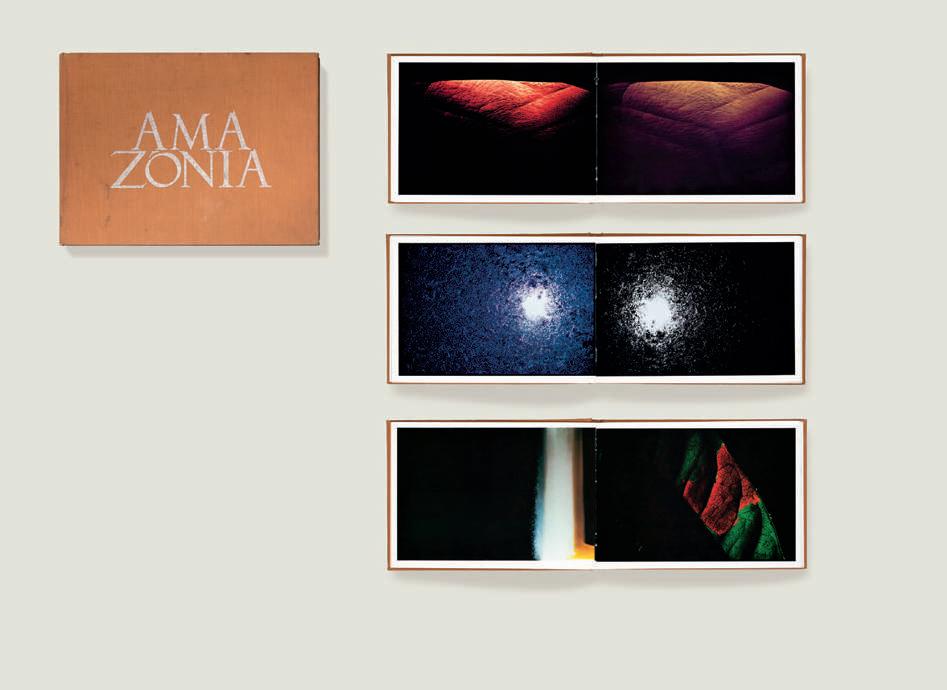
p. 38-39
p. 10-11
p. 70-71
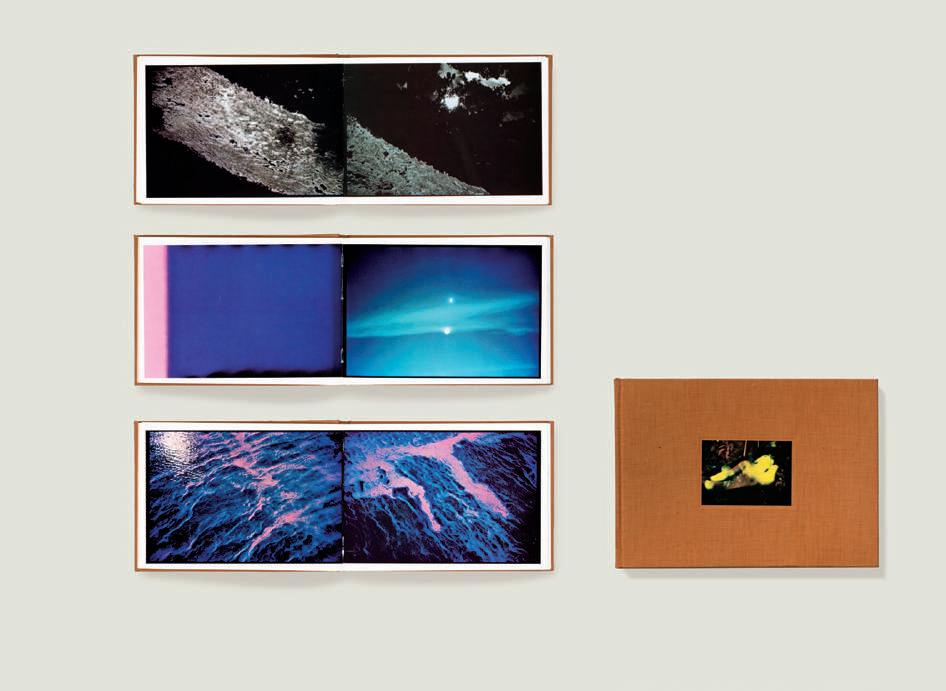
p. 48-49
p. 6-7
p. 8-9
trabalho de gravação das músicas. Então de volta a Manaus e para casa; levou cerca de dois meses, muito mais do que esperávamos.2
Apesar do ímpeto inicial, o livro ficou gestando por muito mais tempo. O casal fez a última viagem junto em maio de 1974 e separou-se quando Claudia passou a se dedicar integralmente ao seu trabalho com os Yanomami. Somente no final de 1978, com o empenho especial de George e o patrocínio de seu cliente de Manaus, a Sharp, Amazônia finalmente teve sua produção concluída. Mas não foi sem mais tropeços, que contribuíram para alimentar seu mistério.
Este livro surgiu de convicções que eram tanto da Claudia quanto minhas sobre a natureza da própria fotografia, sobre a experiência na Amazônia. E era um esforço de reconciliar ideias que nós tivemos com respeito à fotografia com ideias que nós tivemos com respeito à Amazônia. Não era exatamente o que você chamaria de uma abordagem muito tradicional, onde, por exemplo, eu vou querer montar um livro dos meus retratos de pintores... Mas, aí, o que acontece?
Se fosse uma coisa assim, a importância do assunto seriam os pintores. E o desejo na época foi que a importância do assunto fosse Amazônia: um.
Dois: era preciso, isso andava muito na cabeça de todo mundo, quebrar de uma vez por todas
2 Carta de George Love para sua tia Fannie, 30 de dezembro de 1971. Coleção George Love.
com essa ideia de que uma fotografia é uma chamada fiel representação do assunto...
Eu, particularmente, ensinando fotografia, cheguei a afirmar, coisa que eu afirmo até hoje, que... toda fotografia assim chamada boa conseguiu ser um autorretrato, puro e simples. E era através desse egoísmo, a ideia do autorretrato, que o fotógrafo tentava chegar a um termo de entendimento com o mundo. Como embora tem aqui um espelho, vou me retratar no espelho, curiosamente, para poder ver melhor aquilo que está atrás, que está sendo um pouco longe da minha vista. Eu quero me envolver com o mundo, então eu vou fotografar este mundo.
Esse ato não é de retratar o mundo, mas eu mesmo. E nesse espelho de eu mesmo talvez eu vou poder ver aquilo que eu chamo meu mundo, ou “o mundo”. Maior que eu.
Se você for passear neste livro, tem essa dupla. Ocorre o seguinte: isto aqui é a fotografia... [p. 39].
Aqui [p. 38] eu mandei mudar o carregamento de cor nas chapas e até a sequência de rotação dos fotolitos para que isso virasse uma outra coisa de forma artificial. O olho devia então olhar e perguntar: “Mas qual é a verdade?”.
Tem outras coisas. Aqui, isso é a foto [p. 10]... e aqui foi somente impressa a chapa preta [p. 11]. Isto é a foto [p. 7], e isto faz parte do líder do mesmo filme [p. 6].
Ou seja, aqui você vê, como esperávamos, com muita clareza, trata-se aqui de filme! Não se trata do céu, trata-se do céu gravado em filme. Portanto, este livro não é um livro da Amazônia. A Amazônia vive aqui
[aponta para a cabeça] e ali [aponta para a frente]. Isto é um livro de filmes. Como é um livro de filmes, entre outras coisas, vamos reproduzir filmes... E vamos abrir o livro, a primeira chapa... É um filme [p. 1]. Isso não existe na Amazônia... Então, do início até o fim é assim.
E o livro obedece a um cronograma. A entrada é para ser misteriosa, vai ficando aos poucos mais claro. Quando está ficando claro no plano de paisagem, se entra, através desse mesmo dispositivo [p. 70], na floresta, simbolizada por uma semi-indecifrável folha [p. 71]. Depois, de novo, entrando no mundo indígena, este mundo indígena sumindo, mexendo, desaparecendo, virando abstrato. Finalmente, a última fotografia, o próprio ser humano se dissolve nas estrelas [p. 145]. Gravados... sobre... filme! [p. 144] Só o filme. E depois disto... mas o que é isso? [p. 146] Preto [p. 147] e... isso é o início impresso de cabeça para baixo [p. 148]. Fecha o ciclo.
[Isso] nunca foi entendido por causa da maneira com que o livro foi tratado. Sabe-se que este livro jamais saiu para o público. Uma das coisas que foram retiradas dele foi todo o texto explicativo. Isso matou a charada: sem o texto explicativo... Tchau! E, ainda por cima, ele simplesmente nunca saiu. Você tem isto hoje porque, na época da censura, não tem outra palavra, por diversos motivos era resolvido encadernar um certo número de livros apenas com as folhas das imagens. Na pressa, eu já vi isso aqui no seu livro, folhas de mala... o papel que a gráfica gasta à toa, que joga fora.
Está vendo isso aqui? Isso é mala! Isso é coisa que jamais teria sido encadernada normalmente...
E se você olhar aqui [a encadernação], está vendo como joga? Porque o texto especial tinha esta espessura. Que estava justamente aqui.
...O texto foi escrito por Thiago de Mello. E, quando eu falo em texto explicativo, isso em si merece uma explicação. Porque não é nada de texto explicativo das imagens. É um texto poético que visa à recriação da experiência da Amazônia. Isso nós achávamos o suficiente, e acredito inclusive que teria sido o suficiente, para que o leitor, uma vez tendo lido este texto poético, de poesia e recriação de atmosfera, onde atmosfera e não o assunto era o problema, então teria sido adequadamente preparado para se lançar nessas imagens onde atmosfera e não fidelidade a um assunto imaginário, qualquer que fosse, teria sido o problema. Então, quando eu falo texto explicativo, isso não quer dizer uma série de legendas. Mas o texto dele foi tirado, a tiragem do livro, também cortada. Um certo número de livros foi encadernado. A massa de folhas, etc. e tal, foi jogada fora. Os fotolitos, também, sumiram, o texto sumiu, os livros que foram encadernados foram poucos, e foi feita na época uma proibição de circulação deste livro dentro do território nacional. Este livro, por assim dizer, é proibido... Uma relíquia.3
3 Entrevista de George Love a Zé De Boni, ca. 1993.
Artista que usava a fotografia, segundo sua própria definição, George Love buscava uma interpretação pessoal de seu mundo. Tinha na base a formação convencional de fotógrafo. Com o domínio dos equipamentos, técnicas elementares rendiam resultados incomuns em suas mãos. O que chamava de fotografia experimental era mais baseado na experiência do que em experimentos, de forma que tudo podia ser resolvido apenas em um clique. Ou fascinava-se pelos “desacertos do acaso” que ele colecionava. É o caso das malas, folhas gráficas impressas aleatoriamente que ele encadernava em tiragens exclusivas. Tudo era aproveitado como obra: provas e chapas de impressão, filmes gráficos ou as tão faladas pontas de filme. Criava projeções, projetava espaços, usava som, fazia eventos, desenhava impressos. Era livre.
George Love era autodidata em fotografia. Seu processo de trabalho partia dos modelos da época, baseado no controle de equipamentos ágeis e na escolha de materiais sensíveis diversos. A seleção na mesa de luz era tão importante quanto a percepção da oportunidade visual na sua captura. Assim ele descreveu em seu livro:
De hábito, uso máquinas motorizadas ajustadas ao ritmo máximo de fotogramas por segundo –há muita pré-visualização, frequentemente em termos de sequências e não de fotos únicas, e às vezes não olho através do visor se tenho a certeza de captar o que quero.1
Não era uma questão de tentativa e erro, já que ele comandava atleticamente sua reação, baseado na experiência com um processo que dependia de horas, dias ou semanas para conferir o resultado. Servia-se das sequências nas projeções, as quais concebia como instigantes instalações — um pioneiro artista multimídia. Usava as falhas e os acidentes quando esteticamente atraentes ou pertinentes, fazendo uma grande coleção de pontas de filmes e entradas descontroladas de luz. Tudo era aproveitado para potencializar beleza ou estranheza.
1 LOVE , George; TOLEDO, Benedito Lima de.
São Paulo Anotações. São Paulo: Eletropaulo — Eletricidade de São Paulo S.A., 1982.
Raras impressões em silkscreen feitas por ocasião da Semana de Fotografia do MASP, 1974.
[Rare silkscreen prints made on the occasion of MASP Photography Week, 1974.]
Prova de prelo assinada, data indeterminada. (abaixo, esq.)
[Signed print proof, unspecified date. (below, left)]
Pôster em offset assinado, 1980. (abaixo, dir.)
[Signed offset poster, 1980. (below, right)]
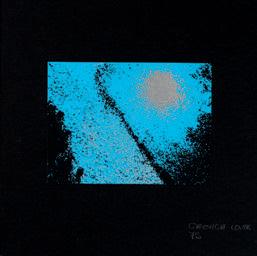
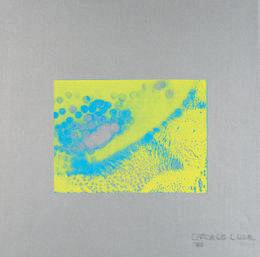
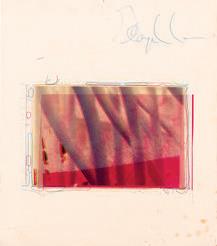
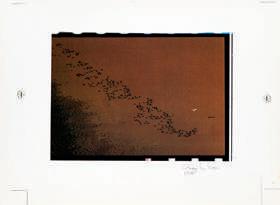
Com liberdade de criação, recorria ao que ele chamava de fotografia experimental, mas que seria mais bem rotulada de não convencional. Eram o uso de filmes incomuns, como o Ektachrome Infrared, ou alterações no processamento, ou ainda reproduções das próprias fotografias para acrescentar efeitos. Explorava com maestria processos elementares descritos em livros básicos da Kodak, que podiam ser obtidos em laboratórios terceirizados.
George não era um printer e não fazia do laboratório sua estação de trabalho, ao contrário da tradição americana mantida por seus colegas heliógrafos. Tinha muita afinidade com a produção de Scott Hyde e Syl Labrot, cultuando as múltiplas realidades estampadas em uma obra.
E conseguia esse efeito com um único clique por meio de reflexos e sobreposições, sem precisar do extenso trabalho técnico. Uma exceção raríssima dessa regra são as gravuras em silkscreen que ele fez durante o workshop de Syl no MASP, quando este veio para a Semana de Fotografia.
Seus dois colegas seguiam uma tendência da época de produzir obras impressas em offset como produto final. George achou um modo de aderir à ideia de maneira direta pelo seu acesso às gráficas, desde sua época editorial. O livro Amazônia teve essa preocupação, de forma que os exemplares produzidos são as peças de tiragem limitada e não funcionam como simples reprodução. Associando esse princípio à sua fascinação pelo resultado acidental, ele colecionava, emoldurava e vendia filmes de fotolitos, folhas de prova, chapas de impressão, como ele contou a uma revista em 1979:
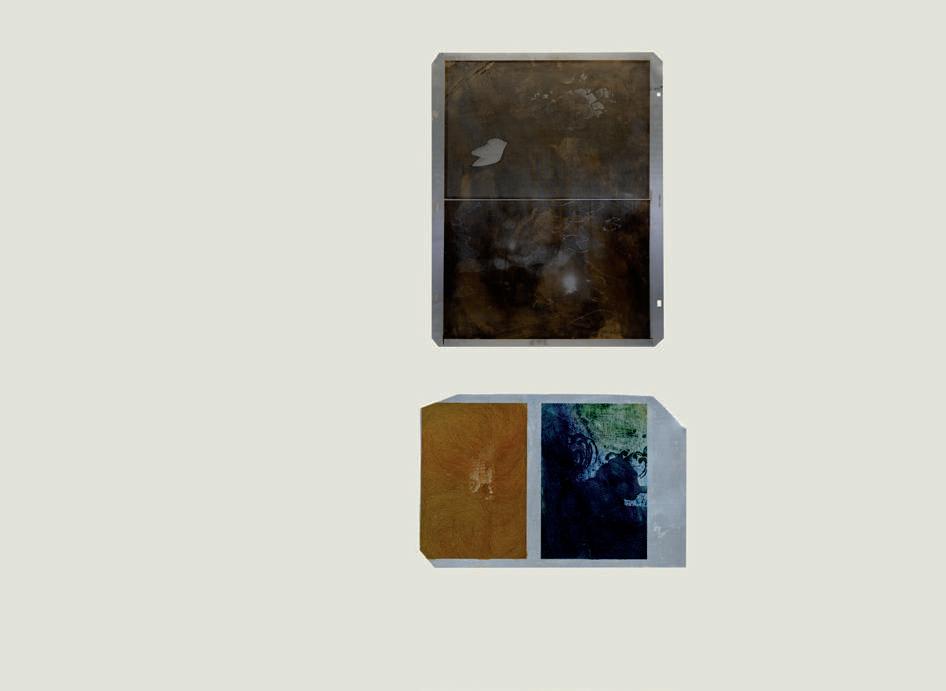
Chapa de impressão, provavelmente provas, de imagens de Amazônia, que foi exposta na Semana de Fotografia do MASP em 1974.
[Printing plate, likely proofs, of the Amazônia images, that was shown at the 1974 MASP exhibition Photography Week.]
Chapa de impressão com imagens de gatos, data indeterminada.
[Printing plate with images of cats, unspecified date.]
George Love divide a percepção das imagens em várias gerações e consegue identificar cada uma delas: a imagem vista pelos olhos, a imagem vista através da máquina, a imagem impressa no filme, a imagem impressa no papel, no fotolito, na chapa de impressão, no papel onde ela é impressa, as transformações através da própria impressão, e assim vai. Então ele se aproveita de todas essas fases, ou gerações, como ele gosta de chamar, e utiliza isso no seu trabalho. Segundo ele, todas essas fases são bastante aproveitáveis, tanto que deverá lançar quatro livros até o fim do ano, utilizando-se apenas de folhas impressas de outros trabalhos seus, mas que serviram para acerto da máquina de impressão. São tiragens limitadíssimas e executadas quase que como um artesanato.2
Essa brilhante ideia poderia ser um capítulo à parte. A verdade é que George conseguiu fazer alguns volumes, que vendeu a clientes particulares. Como muitas coisas que ele deixou, esses livros de autor ficaram sem registro: não se sabe quantos foram feitos, quem os comprou nem se estão conservados. Mas sua fascinação pelo processo ficou gravada em entrevista.
2 RODRIGUES, Zeca. “Clic!”, revista não identificada. Arquivo UNCC.
Eu estava hoje falando com uma pessoa aqui em São Paulo, e essa pessoa estava fazendo observações sobre uma série de fotografias que eu realizei em 1983. Eu estava falando: “É! Inclusive eu gostava daquilo, era muito bom. Mas o melhor mesmo de ter feito aquilo e de ter inclusive publicado aquilo era a mala da máquina”. Mala é quando, na gráfica, o fulano está acertando a máquina, cor, registro e tal, ele faz passar muitas folhas de papel que têm desacertos de registro, de cor etc. e que são jogadas fora. Quando ele acerta, finalmente, então ele roda as folhas. Eu ficava lá colecionando a mala, que eu achei mais bonita. Então eu havia feito aquele trabalho, aquele trabalho foi impresso... Eu ia lá na gráfica, não para controlar a fidelidade da reprodução da fotografia, mas para colecionar a mala, que não tinha picas que ver com a fotografia. Eu colecionava e depois montava livros, encadernava à mão. E vendi para clientes meus. Vendi que nem eu falei em vender installations de retratos. Então, por que não vender um livro encadernado à mão de mala? Então eu falei: “Olha! Dá na mesma! A gente podia até rodar aqui, só que o que vai prestar depois é a mala. Então vamos fazer uma agenda, calendário, livro ou sei o que diabo, inteiramente de mala. Desacertos do acaso!”.3
3 OLIVEIRA, Moracy R. de. “Novas pesquisas e projetos. Na volta de George Love”, Jornal da Tarde, 26 de julho de 1979, p. 17.
George Love abdicou de Amazônia em 1980 para mostrar o produto de sua interação com a cidade de São Paulo.
A mostra Diários, na galeria Album, resumia em 25 ampliações em Cibachrome o ensaio que ele publicaria dois anos depois.
O livro São Paulo – Anotações funcionava como par contemporâneo de São Paulo – Registros, que tinha fotos do antigo arquivo da Light selecionadas e trabalhadas pelo fotógrafo. Mas, em contraste com as imagens documentais do passado, Anotações trazia uma visão particular, com contexto fortemente pessoal, alimentado por emoções e memórias. Reunia fotografias de suas fases editorial e corporativa, de eventos familiares e íntimos. E a geolocalização não correspondia necessariamente à metrópole, mas ao coração de George Love.
A mudança de foco no fim da década não era o encerramento de um ciclo, mas o retorno à sua forma tradicional de criar manifestações a partir da seleção de fotografias feitas nos mais diversos contextos, desde observações casuais até trabalhos técnicos. A metodologia não se alterava, pois foi dessa maneira que produziu sua primeira mostra no MASP. O elo era sempre sua presença e sua percepção interior. O trabalho na mesa de luz, ressaltado por ele em palestras da época, era uma quase terapia de resgate das impressões pessoais e de eleição dos tijolos importantes na construção
de uma mensagem que brotava de seu íntimo. O assunto poderia ser um gato, um cachorro ou qualquer outro animal, mas o gato teria prioridade pela afinidade de George com essas criaturas. O momento, também, dizia respeito a um fato intimamente importante. Do cenário, chão ou poste,
só o autor sabia o significado explícito, mas seus sentidos refletiam no observador que convivia com os mesmos ícones. O que prendia a atenção não era o tema em si, que poderia ser trivial, mas a sua transposição em fotografias carregadas de mistérios, que seriam interpretadas conforme a experiência particular de cada observador. George Love era explícito, não era documentação, mas expressão pessoal.
Pouco depois da exposição Diários, ele foi trabalhar com o acervo documental da companhia de energia elétrica.
As chapas de vidro e os velhos filmes receberam um tratamento moderno, que não poderia ser chamado de restauração, como ele dizia por conveniência. Ele não tinha formação e retaguarda para tal, mas suas recriações em laboratório e na gráfica eram únicas e exclusivas e resultaram no precioso livro São Paulo – Registros. 1
1 LOVE, George; TOLEDO, Benedito L.; PONTES, J.A.O. Vidigal. São Paulo – Registros. São Paulo: Eletropaulo – Eletricidade de São Paulo S.A., 1982.
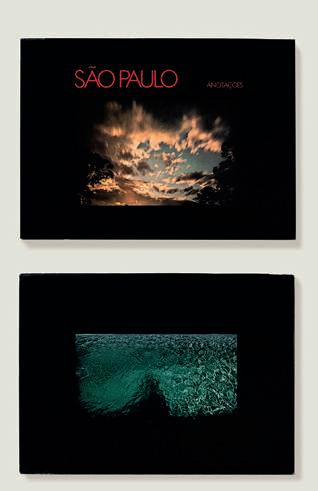
Livro São Paulo – Anotações, capa e contracapa, 1982.
[São Paulo – Notes book, cover and back cover, 1982.]
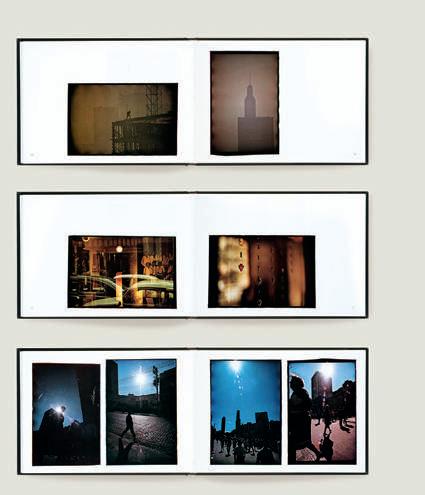
p. 82-83
p. 70-71
p.100-101
Como complemento contemporâneo harmonicamente elaborado, um segundo volume reuniu uma seleção mais extensa dos Diários de George Love, sob o título São Paulo – Anotações. 2 Eram dois livros além do seu tempo, que extrapolavam o rígido plano documental. Essa percepção é notória ao se comparar a parte visual com o texto de abertura do livro pessoal. O belo ensaio de Benedito Lima de Toledo descreve São Paulo da época e dá uma pincelada em sua curiosa origem, mas sua forma convencional contrasta com a seleção de fotografias, que não seriam meras ilustrações.
Sua inclusão seria mais um exemplo do recurso a um ensaio literário para dar suporte a um trabalho fotográfico, o que era certamente dispensável. Mais sintonizado com a parte visual está o texto do próprio George, que aponta para a sua experiência particular como orientador da edição. É esse o melhor caminho para interpretá-lo.
Este livro representa uma seleção de fotografias tiradas entre setembro de 1966 e os primeiros dias de fevereiro de 1982; atravessando o tempo desde o momento em que, pela primeira vez, tentei um contato com esta cidade – para mim estranha e intimidadora ainda hoje – até quando ela e eu fizemos as nossas pazes, embora não sem alguma estranheza mútua. Usando uma velha expressão americana, diria que concordamos em discordar.
2 LOVE, George; TOLEDO, Benedito L. São Paulo – Anotações. São Paulo: Eletropaulo –Eletricidade de São Paulo S.A., 1982.
As fotos cruzam o espaço de quatro fases; não em ordem cronológica, às vezes em paralelo, mas nem por isso deixando de definir quatro facetas da vida que tive aqui.
A primeira é de formalismo, abstrações planas e exposições múltiplas, nas quais percebe-se a preocupação com o sentido da passagem do tempo.
Tal é a primeira, onde a cidade nasce debaixo de uma pintura de si mesma.
A segunda é jornalística: enfrento desconhecidos, quase brutalmente. Típica é a sequência de pessoas andando perto da Praça do Patriarca, ou as famílias no Brás.
A terceira é de introspecção, talvez não muito acessível ao observador, pois, na hora, o observador mais interessado fui eu, e não tinha interesse em traduções.
Uma foto de águas claras, com uma sombra mal definida, retrata minha própria sombra, e naquela hora pensei que estava fotografando pela última vez na minha vida. É melodramático, mas verdade.
No fim, algo mais simples, casual: um desejo de falar com outros e de escutar. Na noite de Ano-Novo de 1982 fotografei um presépio numa sala escura tendo ao lado uma televisão com o rosto de um menino.
Juntos, a tradição e o transitório: a passagem do tempo. Depois, os meus gatos brincam e brincando assinam para mim o meu trabalho. Gatos brincando
Palestra durante sua exposição na galeria Album, de Zé De Boni, abril de 1980.
[Lecture during his exhibition at Zé De Boni's Album gallery, April 1980.]
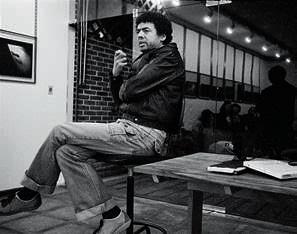
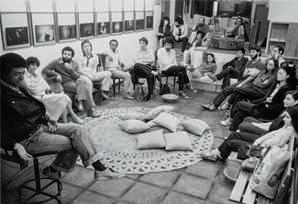
falam muito da minha filosofia do momento. Mais uma página, o dia termina, e com ele o livro. Fecha.3
A intimidade com a obra de George Love permite-nos identificar imagens de trabalhos da sua fase editorial, da corporativa e mesmo de vários momentos particulares.
São muitas referências pessoais, de importância exclusiva, que remetem às experiências de mais um cidadão entre milhões, incógnito e camuflado na metrópole, esta também com identificação sutil.
Sua força principal está na forma usada para compor seus diários e anotações. Poderia ser de qualquer lugar e teria sentido equivalente, porque empresta este termo da tradição que remonta a Stieglitz.4 Mas é São Paulo, a São Paulo de George Love, alimentadora de seus conflitos internos e provocadora de seus reflexos fotográficos. Por ser a sua cidade, seus eventos privados são importantes. E, como ele é a referência, desfruta a liberdade de incluir imagens de locais distantes da própria cidade. A namorada em seu refúgio aparece no portfólio da exposição. Seus gatos estão também ali e no livro. E as fotografias que assinam o trabalho nas capas de São Paulo – Anotações são da piscina e da vista do entardecer de sua casa em Sarapuí.
3 Ibid.
4 Alfred Stieglitz (1864 –1946), fotógrafo americano que influenciou gerações de artistas e cunhou o termo “equivalent” para identificar fotografias ou outras obras que remetem mais à percepção interior do autor.
“Life w Rosi + Gatão – Puí”: duas caixinhas de slides assim marcadas contam muito do lado emocional de George Love. Puí é Sarapuí, cidadezinha a duas horas da capital onde ele e Claudia construíram uma casa. Na separação, George ficou com o refúgio, onde imaginava seus “estudos do céu”, sua “floresta” particular, e desfrutava um cantinho de natureza com horizonte livre. Gatão é referência a um dos tutores filosóficos do fotógrafo, todos com nomes próprios, mas sempre chamados por esse apelido. Rosi é Rosilis, a jovem namorada, profissional de laboratório fotográfico que cuidou de todos os seus Cibachromes. As imagens, somadas a outras espalhadas em seu arquivo, revelam momentos de êxtase e a forte fonte de inspiração. Gatão, Rosilis e Sarapuí, todos aparecem em Diários e Anotações.
Sarapuí era uma vila com 1.200 habitantes em seu núcleo urbano quando foi descoberta por diversos artistas e profissionais criativos, incluindo George Love e Claudia Andujar. O casal construiu uma casa para desfrutar seu retiro da tensão metropolitana. Na separação, o espaço ficou para ele, que continuou usando-o como fonte de inspiração
e recarga de energia. Uma série de fotografias experimentais, que ele chamava de “Sarapuí – A Floresta”, trazia variações sobre o tema da vegetação de um bosque local, que usou esporadicamente em apresentações. Ele também mencionava seu desejo de explorar mais seus “estudos do céu”, e era lá o local onde ele podia passar o tempo contemplando as nuvens.
Mais do que o espaço, a intimidade era o suporte motivacional para quem nunca absorveu direito suas perdas, de sua mãe e da sua grande parceira intelectual.
Uma nova namorada trouxe de volta esse alento e a liberdade de traduzir em imagens toda a sensualidade de sua convivência. Essa fase com Rosilis acontecia no auge da carreira de George Love, entre a produção dos livros Amazônia e Anotações. E foi tão importante para ele que teve menção especial no segundo.
Após as edições para a Eletropaulo, ele exacerbava em confundir a importância de seu mundo particular com o coletivo, chegando a propor um trabalho que seria desenvolvido ali mesmo em Sarapuí, como notável centro de atenção. Em carta a Cornell Capa, do International Center of Photography (ICP), ele mencionava:
No ano passado, foram apresentadas duas propostas independentes. Uma delas propunha residir em uma pequena cidade, situada a uma distância moderada de São Paulo, por um período determinado, a fim de examinar as mudanças ocasionadas pela proximidade com a metrópole. Esse estudo envolveria a utilização tanto de fotografias antigas da área quanto de abordagens pessoais...1
O encanto com Sarapuí e Rosilis terminou com sua mudança para o Rio, mas não por esse motivo. Mais tarde, ele sugeriria em suas anotações que todo o seu declínio seria decorrente da “perda de Puí”2. É comovente encontrar as tiras de um filme com imagens tão sem graça, guardadas em um envelope de laboratório assim rotulado: “The last pictures of Sarapuí” [As últimas imagens de Sarapuí].
Fotografia da série
Life with Rosi + Gatão – Puí. ca. 1981.
[Photo from the series Life with Rosi + Gatão – Puí. ca. 1981.]
Fotografia da série
[Photograph from the series] Sarapuí – A Floresta.
1 Carta para Cornell Capa, 18 de junho de 1983 (aprox.). Coleção George Love.
2 Anotações gravadas em computador, tópico número 115, 29 de maio de 1994. Coleção George Love.
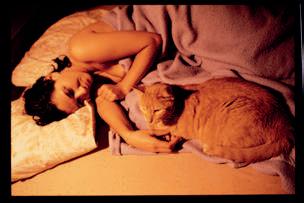
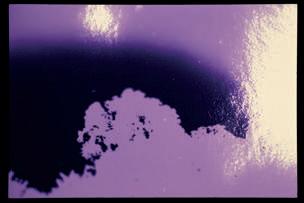
George Love era asmático e dizia que a poluição de São Paulo o sufocava. Vivia ameaçando mudar-se. Certa vez, pediu a uma amiga para usar um apartamento vago no Rio de Janeiro, porque ia fazer um trabalho lá por um mês. Ficou um ano e meio. Ao lado de fotos aéreas comuns em formato 6x6, pode-se perceber que ele buscava uma aproximação visual com a Cidade Maravilhosa ao estilo de Anotações, com a vida anônima deslocada das ruas para as praias. Ficaram apenas suas impressões superficiais. Certamente, ele carecia de interlocutores e faltavam-lhe as pautas que garantiriam penetrar nas diversas esferas do ambiente urbano. Embora mantendo o domínio da percepção e reação aguçadas, o trabalho inacabado não ultrapassou o patamar de plágio de si próprio. Suas imagens transmitem solidão.
Nos relatos sobre sua chegada a Belém e depois a São Paulo, George Love empregava a palavra “horror”. Para uma pessoa com muita experiência internacional, talvez houvesse uma explicação escondida. Hoje, com a leitura de suas anotações particulares, podemos interpretar melhor certa tendência depressiva, surpreendente em um personagem tão carismático.
Outro lado pouco conhecido era sua permanente insatisfação com o lugar em que estava. Rosilis, em entrevista particular, lembrou uma frase do fotógrafo
David Zingg: “O melhor lugar do mundo para o George é o lugar onde ele não está!”1 .
Seria inquietação, insatisfação ou dificuldade de adaptação?
Ele sofria de asma, e a poluição urbana não lhe fazia bem.
Mas isso não o barrou de viver longo tempo em São Paulo, amparado por corticoides e a providencial bombinha.
A doença respiratória era um problema real não ocultado, mas beiram a ficção as histórias que construíram, dizendo que ele fotografava do ar devido a essa limitação. Essa lenda ignora que, para cada hora de voo, ele passava dias no solo, fosse em Belém, Santarém ou em uma aldeia, desconsidera o patente deslumbramento estampado em suas imagens e não tem correspondência em suas anotações.
No início dos anos 1980, ele já apresentava sintomas da síndrome de Cushing, mas não conseguia desmamar
1 Entrevista gravada em vídeo no estúdio de Zé De Boni em 11 de abril de 2022. Arquivo Zé De Boni.
Fotografias do Rio de Janeiro, data indeterminada.
[Photographs of Rio de Janeiro, unspecified date.]
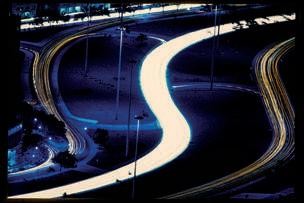
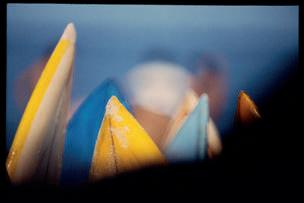
a cortisona. A alternativa de mudança de ares era cada vez mais vista por ele como solução. Em carta para seu agente em Nova York2, ele sugeria que poderia ser correspondente em outras cidades sul-americanas, como Lima ou Buenos Aires. Então, ele aproveitou a oportunidade oferecida por sua amiga e apoiadora Anna Carboncini3 para montar sua base no Rio de Janeiro. Seu arquivo daquela cidade tem muitas vistas aéreas em formato médio, outras panorâmicas, que sugerem trabalhos comerciais. Ele já tinha participado de um livro turístico4 sobre o Rio na década anterior, mas essa fase, segundo ele, foi mais contemplativa e menos fotográfica. Seus cromos 35 do Rio mostram uma tentativa de se entender com a cidade, na terapia cotidiana bem ao estilo do que desenvolvera em São Paulo. Ficou o embrião de um trabalho nunca usado em suas edições. Desconhecem-se suas agendas da época, mas certamente não tinha lá a rede de contatos, amigos, clientes e apoiadores. O Rio foi um isolamento, uma fuga que durou até que ele sentisse falta do chão que o sustentava. Em São Paulo a realidade já se alterava desde antes de sua partida. As fontes de trabalho e, especialmente, os grandes patronos de sua produção vinham progressivamente se dissipando.
2 Carta para Kay Reese, 28 de junho (1981, provavelmente). Coleção George Love.
3 História contada pela própria Anna em conversa informal com Zé De Boni em 2022.
4 Segundo anotações de George Love, foi um livro da editora Kosmos (Rio de Janeiro, 1976), informação pendente de confirmação.
A última exposição de George Love no MASP, em 1984, foi um delírio. Era uma linha de argumento pichada nas paredes, acompanhada de exemplos. A grande elocubração era propor o uso de câmeras de formato muito pequeno, filme 110, para criar trabalhos fotográficos de forma acessível, com um quarto do valor do salário mínimo. A tese revelava sintonia com a proposta do colega Scott Hyde de criar fine art a preços módicos e uma busca pelo acesso popular ao uso da fotografia como expressão, muito antes dos celulares com câmera. Incluía explicações sobre a quantidade de informação capturada em um fotograma minúsculo, pouco sustentáveis ainda na época. Mas, em sua defesa, encontramos imagens interessantes de filme 110 em seu arquivo, que não foram usadas naquela exposição.
A genialidade de George Love era sempre enaltecida por Bardi em suas cartas de apresentação. E, quando algum de seus projetos agradava ao mentor, ele tinha praticamente carta branca para a realização no espaço do MASP. Os temas que lhe vinham à mente apontavam para todas as direções, a exemplo da mostra sobre antigas farmácias e medicina popular, que está relacionada em seu currículo.1 Outras propostas nunca saíram do papel, como uma exposição sobre as antenas da cidade, lembrada por Dan Fialdini,2
com nítida implicação filosófica do florescer da era da comunicação. Outro evento que não vingou seria uma projeção e ambientação propostas para 1984, cuja descrição trazia este trecho:
A exposição se desenvolve contra um pano de fundo de imagens que não as são; luz pura, projetada e às vezes intercalada “a esmo” com determinadas imagens de hoje; com uma trilha sonora tirada do Pink Floyd; e com paredes ou divisórias, sobre as quais são intercalados “quotes” do Platão e do OrwelI (nem sempre do livro 1984, pois ele escreveu bastante, embora em geral deste). Tais “quotes” são pintados à mão em cores.
Cria-se, portanto, o clima de uma conversa inédita: uma conversa a três, entre Platão, Pink Floyd e George Orwell, sobre a possibilidade de o homem conhecer o futuro do seu mundo, e onde conceitos
1 Currículo escrito em 1o de setembro de 1986, documentado em seu acervo de imagens.
Coleção George Love.
2 Conversa informal com Zé De Boni, maio de 2023.
como a linha entre essa realidade e a ilusão, a possibilidade de realmente perceber a realidade e até mesmo a utilidade dessa tentativa entram e são, de forma alegórica, examinados.3
Entretanto, ainda em 1984, ele fez o que seria sua última exposição no MASP. Em Metade da Metade, ele propunha meios de explorar as virtudes da fotografia de forma acessível. Assim descrevia o press release:
Dois aspectos justificam este evento e seu respectivo nome. O primeiro deles é o fato que se tenta mostrar a possibilidade extremamente à mão de se fazer fotografia (atividade de custo extremamente alto) gastando algo bem abaixo do imaginável. Uma justificativa pragmática, portanto. Outro aspecto é o comportamental, na medida em que a necessidade de expressão é flagrantemente intensificada em épocas de circunstâncias tão adversas como a presente. Da realização dessa necessidade de expressão depende a própria sobrevivência do indivíduo enquanto ser humano, e Metade da Metade, aplicável a qualquer outra arte, mostra como isso se liga unicamente à criatividade.
O que George Love pretende neste evento é proporcionar um entrosamento educacional que, ao resgatar os princípios (até mesmo físicos) fundamentais da fotografia, possibilite a criação de novas alternativas de produção a custos muito reduzidos e de realização literalmente doméstica... Por outro lado, existe a preocupação de participar sua pesquisa com fotografia de baixo custo, desmistificando a aura que emana por trás de todo trabalho ou exposição apresentado de forma acabada e, portanto, fechada.4
Era uma apresentação absolutamente insólita no museu, com uma análise informal escrita nas paredes, acompanhada de exemplos de simples retratos e imagens de seu portfólio ali pregados, sem cerimônia, com alfinetes. O argumento tinha pontos frágeis e circunstanciais, mas a intenção era autêntica, refletindo a crise econômica e o próprio declínio. Vale reproduzir sua tempestade cerebral:
É a Ângela. Ela é importante.
Comecei assim 13x18 cm; 10x12 cm. Pesada. Mudei para 6x6; também.
Mudei para 35 mm. Ainda pesou; demais, às vezes, pensei de 110 (12,5x17 mm).
Logo disseram: Louco! 110 é pequeno demais!
3
4 Press release da exposição Metade da Metade. Coleção George Love.
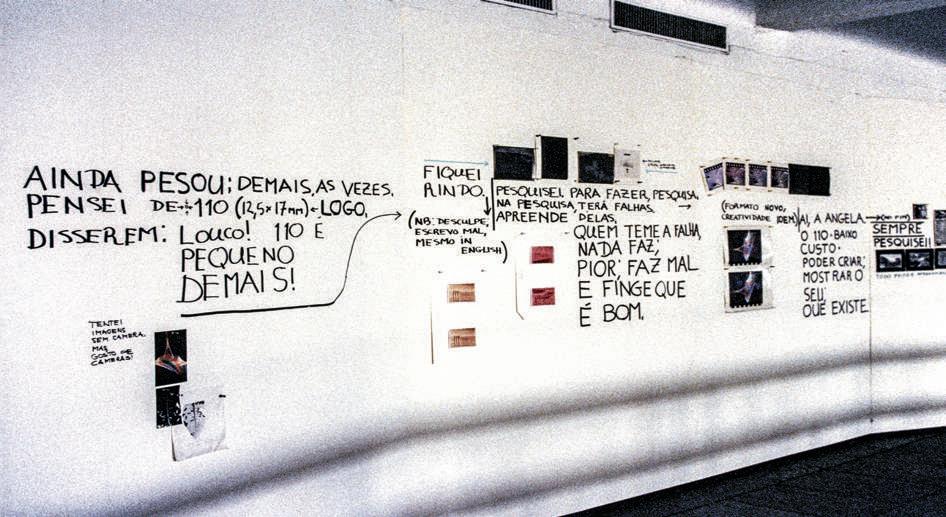
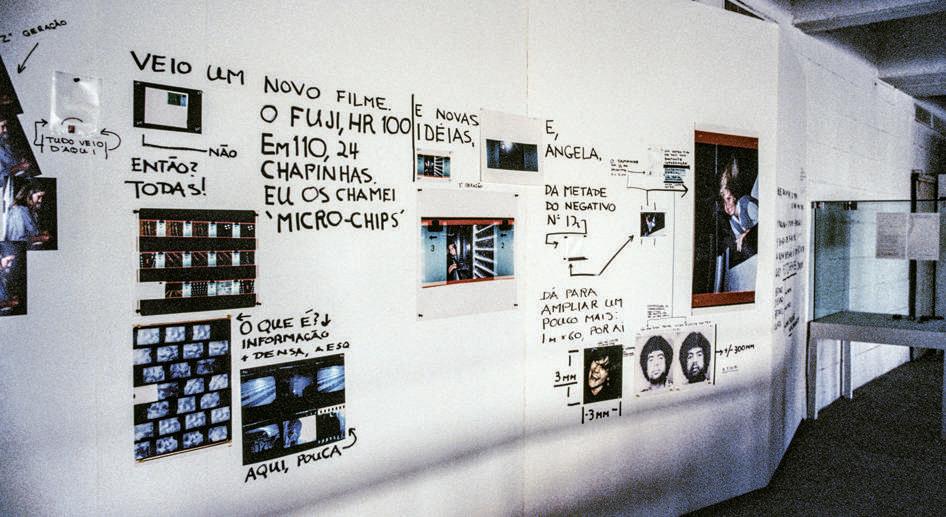
Fiquei rindo... Pesquisei. Fazer pesquisa, na pesquisa, terá falhas. Aprende delas, quem teme a falha nada faz; pior, faz mal e finge que é bom (formato novo, criatividade idem).
O 110 baixo custo, poder criar; mostrar o seu que existe.
Aí a Ângela. (no fim) sempre pesquisei.
Todo feito é aprendizagem.
Este estranho jogo tem nome: packing density...
Como por + sinais de informação. ...Informática (non digital, pois dígito tem limites, e a gente joga aqui sem limites) em menos espaço. Que começou isso e isso, que não deram certo! Aprende, repensa. Dá um tempo.
Agora, menos filme, menos dinheiro. Comecei uma pesquisa (a mais!), de alegre, com o MASP + o laboratório Procolor para: com Cr$ 25.000 –1 máquina, 1 filme, revelar, e fazer 1 ampliação 30x40 cm.
Um pouco duro, né? No começo era... Falhou... Idem... De novo.
Invert signal increase size of negative.
Da Cris... Michelle 3x5,5 mm... Zizi.
Aqui 1a geração... 2a geração... Tudo veio daqui.
Veio um novo filme. O Fuji HR100 em 110, 24 chapinhas. Eu os chamei "micro-chips”. E novas ideias. 3a geração...
E Ângela... Da metade do negativo no 12.
Dá para ampliar um pouco mais: 1m x 60, por aí. Não há limite inerente... 3 mm.
O tamanho dá 1/2 do mínimo. 4 a 12 mm...
Um outro tipo de chip com bastante informação.
Informática especial... Não precisa computador: anda junto com ele.
Interesse para pesquisar. Computadores às vezes eram; sou – digo, não bonito, mas sei lá, feio assim (?)... Não era “erro”. Tentou jogar s/ limite, mas tem. +/- 300 mm... É 8 ou 80.
Hoje, dia 10-9-84; 10 meses 10 dias mais tarde
1 máquina + 1 filme + revelação e 1 30x40 = 35 a 40 mil (posso mostrar). A nossa inflação é m/m 5,5% por mês. Ok?
Fotografe: conforme reduz o espaço, reduz o custo.
Cinema, vídeo... Mas buscar sua linguagem!
Age. Faz o seu mundo!
George Leary Love.5
5 Documentação feita por George Love da exposição Metade da Metade, 1984.
[p. 68—69]
George reforçava ali, nas paredes e em palestras, o mote de sua dedicação aos cursos que conduziu por anos no próprio MASP e em outros locais. Fascinado pelo poder da imagem, ele vislumbrava um mundo não de consumidores passivos, mas onde cada cidadão pudesse ativamente fazer uso dessa ferramenta para sua expressão. Isso muda radicalmente a carga do termo egocêntrico, empregado na definição de seu próprio trabalho. Com toda a fragilidade de sua análise tecnológica, que à luz dos anos seria contradita, Metade da Metade era uma celebração e uma antevisão do uso disseminado da fotografia, muito antes dos celulares, do Instagram e de outras redes de distribuição de imagens pessoais, para transmitir impressões particulares e, consequentemente, as mais variadas expressões.
Documentação feita por George Love da exposição Metade da Metade (MASP, 1984).
[Recording of the exhibition Half of Half (MASP, 1984) made by George Love.]
“É a Ângela.
Ela é importante.”
Fotografia que abria a exposição
Metade da Metade (MASP, 1984).
Ampliação original em transparência.
[“It is Ângela. She is important.”
Opening photo of the exhibition
Half of Half (MASP, 1984).
Original transparent enlargement.]
Claudia Andujar fotografando jovem Yanomami, ca. 1974. Imagem em filme 110 da Coleção George Love.
[Claudia Andujar photographing a young Yanomami, ca.1974. Image on 110 film from the George Love Collection.]
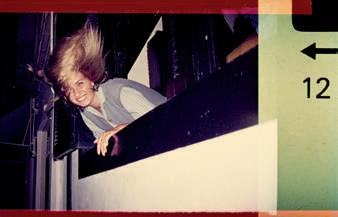
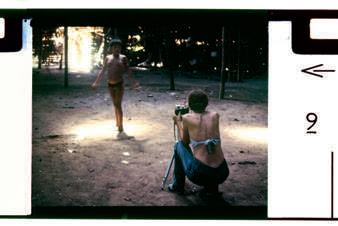
Ensinando fotografia, cheguei a afirmar que toda fotografia assim chamada boa conseguiu ser um autorretrato puro e simples. E que era através desse egoísmo, ideia do autorretrato, que o fotógrafo tentava chegar a um termo de entendimento com o mundo.
Essa explicação de George Love é fundamental para compreender sua obra, especialmente o livro de 1985. Em Service Order 8696 – The Amazon Basin from the Air, ele retoma a Amazônia, reconhecendo-a como imagem de si próprio, elevando a importância dessa edição limitada. A impressão digital mimetizada pelas águas de um rio entre as primeiras fotos dá combustível a essa interpretação, enquanto a citação bíblica demonstra que ele se dirigia à posteridade. Já o título é mais um enigma sobre o qual só nos restou especular.
Contrapondo seu questionamento feito no ano anterior sobre trabalhos acabados, George Love voltou ao tema amazônico em 1985, selecionando uma sequência de imagens para uma publicação exclusiva de tiragem limitada da gráfica Pancrom. Era um resumo da sua obra maior, de que emanava uma aura de mistério, como seu primeiro livro, acrescentando um enigma embutido no título: Service Order 8696. 1
Os poucos textos que trazia potencializavam essa impressão. Eram alguns versículos de São Lucas (11/33-35 e 12/2-3), uma parábola escorada na luz e no olho. Uma frase de seu amigo Charles Capelle interpretava a realidade como projeção do imaginário:
Você vê o que você pensa que vê.
E o que você pensa que vê é real.
E, nas palavras do próprio autor, seu trabalho transcendera do plano real para o onírico.
Tal infinitude não pode ser fotografada. Logicamente, é permitido ter sonhos. Eu não fotografei. Eu devo ter cochilado e sonhado.
A nostalgia das palavras é sentida na edição. Não são apenas favoritas, cada foto escolhida era simbólica de seu envolvimento em todos os planos, do profissional ao sentimental. Em apenas 26 fotografias suas grandes fascinações estavam presentes: as dunas submersas do Rio Negro,
1 LOVE, George. Service Order 8696 –
The Amazon Basin from the Air. São Paulo: Pancrom, 1985.
as praias e os bancos de areia do Tapajós, a incrível maré verde, a visão sobre as Anavilhanas, um rio tortuoso e as corredeiras, sua favorita, chamada Chuvisco. Ainda incluiu referência à publicação na revista Camera e à memória da janela do Catalina. Seu domínio daquele território era representado pela escolha de uma cruz virtual formada pelos pontos-limite, simetricamente posicionados na sequência, do Marajó até a fronteira com a Colômbia, e do norte de Roraima, que abria a série, até o sul do Pará, no encerramento. Ele chegava do céu e finalizava em busca da luz.
O epílogo são duas fotografias sobre o Rio Xingu tomadas desde muito alto em avião de carreira, uma típica visão de despedida de um local intimamente explorado. O autor contempla uma vista equivalente à narrada por sua mãe, mas o que ele vê é o filme de uma vida intensa naquele mundo lá embaixo em busca da imagem primordial.
A Amazônia vista do alto é a sua assinatura, sua identidade, seu autorretrato irretocável.
Para completar esse sentido místico, a abertura da sequência inclui a figura de uma impressão digital magicamente esculpida pela luz nas águas escuras de um rio. Se isso parece uma interpretação forçada, George usaria a mesma imagem como assinatura no início e fechamento de um PhotoCD que fez anos depois, com sua última escolha da Amazônia.
Service Order teve tiragem pequena e distribuição limitada. O número 8696 aparece em algumas pastas de fotografias que George Love deixou, sugerindo que ele imaginava repetir a ideia. Também em suas anotações o número estava eventualmente listado entre seus projetos possíveis, como uma reedição ou mesmo sob um novo tema. Faltaria apenas decifrar seu significado para completar a interpretação e um caminho estava em uma gaveta sob o computador que ele usava em Mamaroneck.2 Uma pequena carteira com suas fotos de identidade feitas no Brasil tinha o tradicional aviso no final, algo como: “Se precisar de mais fotografias deste trabalho, peça pelo número – OS: XXXX”. OS é Ordem de Serviço. Seria a última peça do quebra-cabeças, que se encaixaria perfeitamente no conceito do autorretrato de George Love. Entretanto, o número não foi anotado, todo o material que estava lá foi entregue à Universidade da Carolina do Norte em Charlotte, mas em sua coleção não consta a carteirinha de PVC, apenas seus retratos de diversas fases museologicamente acondicionados. A falta de confirmação não anula a interpretação proposta, porém permanece indecifrada a origem daquele número mágico. Mas por que explicar tudo de um autor que primava pelos mistérios e era eminentemente enigmático?
2 Zé De Boni hospedou-se no mesmo quarto na casa de Barbara Livesey em 1997, quando seu objetivo não era tanto pesquisa, mas relatar à ex-companheira de George os episódios de seu último ano no Brasil, de que ela pouco tinha conhecimento.
Livro Service Order 8696. O estojo trazia um caderno com 26 imagens e uma fita cassete com sons captados por George Love na Amazônia.
UNC Charlotte J. Murrey Atkins Library. 74
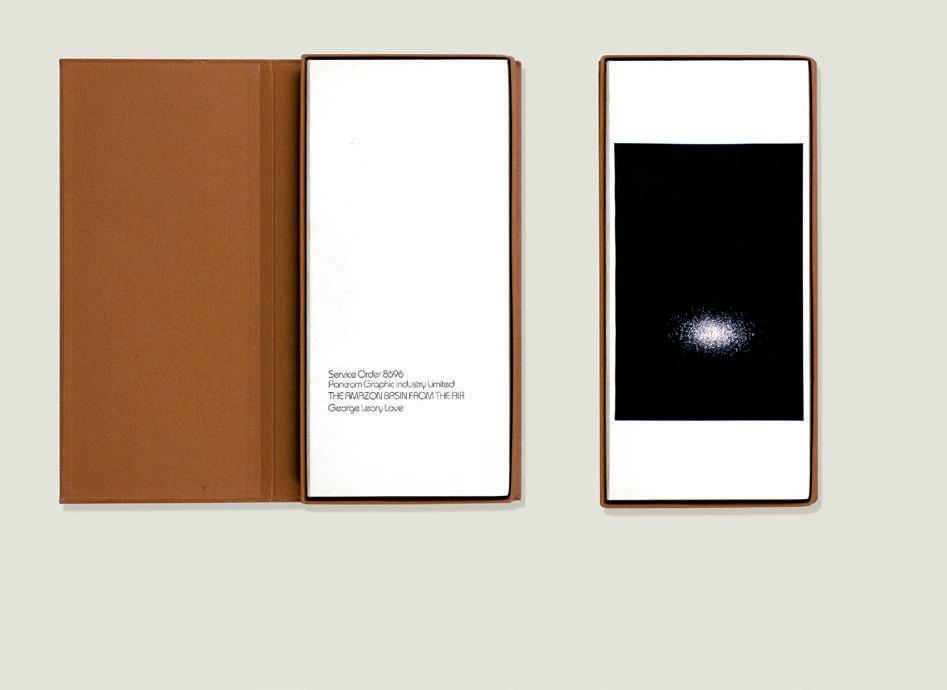
[Service Order 8696 book. The case contained 26 images bound in a book and a cassette tape of sounds George Love recorded in the Amazon.
UNC Charlotte J. Murrey Atkins Library.]
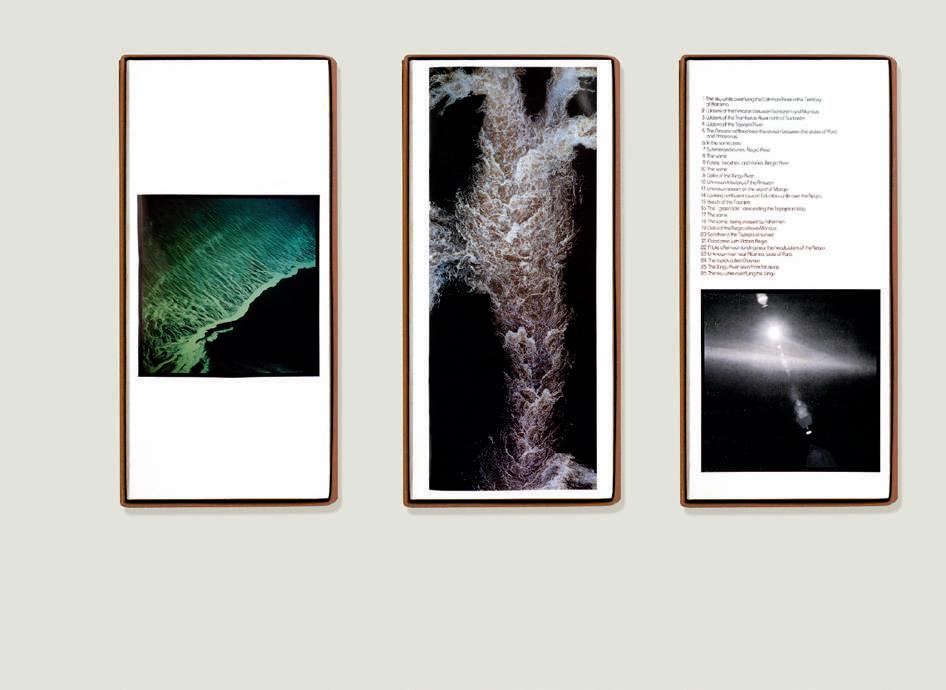
A exposição Vistas do Alto foi um complemento ao livro Service Order. Funcionava como a afirmação derradeira de quem estava prestes a seguir novos caminhos. Logicamente, podemos chegar a essa conclusão depois que os fatos a tornaram evidente, pois em pouco tempo George Love se retiraria de volta para os Estados Unidos. Reprocessando a sequência de imagens, com reminiscências do trabalho em Pajatén e na revista Realidade, foram feitos internegativos para produzir as ampliações em papel fotográfico colorido. As novas cópias feitas para esta retrospectiva usam o mesmo processo da época, a partir dos internegativos originais.
Era despedida de fato, explícita, que dava mais sentido ao livro que estava sendo produzido quase simultaneamente. Pela primeira vez, George Love incluía abertamente imagens de destruição, ainda que exploradas esteticamente. Talvez mais correto seria interpretar como uma rendição da sua insistência pela pureza, considerando seu argumento na apresentação de sua exposição Vistas do Alto:
Para mim este século é o último onde ainda há uma interrelação entre o homem e a natureza na Terra. Essa interrelação traz grande benefício aos homens mas, aqui, parece
que os beneficiados não ligam muito para isso. Já que a gente não pode fazer quase nada contra a destruição, foi para registrar, para ter uma memória desse momento e dessa interrelação que eu fotografei a Amazônia.1
As palavras contrastavam com todo seu discurso anterior, como um remorso de abdicar do seu egocentrismo e pensar no valor documental do trabalho. E a escolha das imagens parece também diferir da sua linha tradicional. Sua tese se decompunha e, a partir daí, sua busca era por se mostrar útil, realizar coisas reconhecidamente importantes, qualquer que fosse a direção. Mas a fotografia se apresentava como decepção, como ele revelava na mesma exposição:
Esgotei tudo sobre fotografia. Já explorei tudo que ela tinha para me oferecer. Agora tenho que expandir. E para expandir, no nível da fotografia, me restou a comunicação.2
Vistas do Alto foi realizada em local conveniente, mas deslocada do grande circuito. A exposição no Salão Fuji lhe garantia o apoio da produção das ampliações, em uma fase que ele gradativamente se sentia desarticulado. Com grandes pretensões para seu arquivo de imagens não só da Amazônia, ele ainda tinha que provar para o público o mérito que, em um ambiente culturalmente maduro, dispensaria apresentações.
1 OLIVEIRA, Moracy R. de. “A Amazônia bela e irreal, pelo alto”, Jornal da Tarde, 14 de maio de 1985.
2 LOVE, George. George Love: Imagens entre a Realidade e a Ilusão, Momento Fuji, maio de 1985.
É dessa exposição a descrição romântica que ele faz da experiência de fotografar a imensidão desde pequenos aviões, a qual nunca nos cansamos de relembrar:
As portas são retiradas do avião. O vento entra direto. Não tem jeito de conversar... Você conversa com o piloto, que está lá na frente, por sinais. Você sobe. Meus ouvidos começam a doer por causa da altura. Doem tanto, por tanto tempo, que eu esqueço que estão doendo. Você entra e sai de nuvens.
A chuva bate nos apoios das asas do avião e faz um som estranho. Você escuta este som e de repente não sabe mais onde está, porque tudo é branco ao redor. Você está numa nuvem. Daí você sai da nuvem, olha para baixo e vê só árvores. De repente está numa outra nuvem. Você sai dela e vê mais árvores. De repente, chuva. A chuva, naquela velocidade, dói quando bate no rosto. Você protege a máquina, mas a si mesmo não pode. De repente você lembra que os seus ouvidos estão doendo. Aí, você está dentro de uma outra nuvem, e a noção de tempo já não existe mais. Agora você está verdadeiramente na sua. Não existe mais tempo nem espaço. Não se sabe bem se está voando alto ou baixo. Naquele instante, você começa a fotografar aquilo que é somente e particularmente seu. O piloto sente o mesmo. Ambos agem como um time. São dois corpos com uma cabeça. Um bom piloto lhe coloca no ângulo certo, e aí você vai disparando... clack... clack...3 3 Ibid.
Cartaz da exposição Vistas do Alto, Salão Fuji, São Paulo, maio de 1985.
[Views from Above exhibition poster, Fuji Hall, São Paulo, May 1985.]
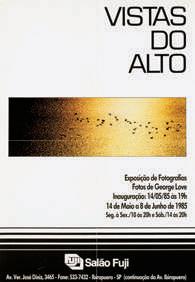
Se parece penoso e arriscado, mais crítico era investir tudo o que ganhava naquele empreendimento. Mas, por isso mesmo, na Amazônia ele foi livre, sem o compromisso de satisfazer quem quer que o bancasse. Sua desistência acontecia quando novas oportunidades surgiam com a criação de leis de incentivo à cultura. Mas, da mesma forma, o mercado estava mais povoado por uma geração nova, pela qual ele tanto batalhou, que impunha uma concorrência mais adaptada ante o seu romantismo centralizador. Sem muita formalidade, pouco depois do livro e da exposição de 1985, George Love saiu da cena paulista e brasileira, retornando à sua velha Nova York.
Em 1986, George Love voltou para Nova York e dependeu de amigos para se acomodar com a mudança trazida do Brasil. Reescreveu seu currículo, mas estava desarticulado do mercado local. Apresentado a Barbara Livesey, instalou-se em um dos quartos que ela alugava em sua grande casa em Mamaroneck, cidade da periferia. Envolveu-se com essa professora de história do tecido e recebeu o apoio de que tanto necessitava. Ali ele tinha uma vida doméstica, dividindo computador e telefone, e continuou fotografando bastante. Entretanto, não demonstrava atividade profissional, passando longo tempo em seu quarto. Produziu um documentário para a TV comunitária com comparações entre fotos do Amazonas e de um rio da região, que citava no currículo como grande realização. E fotografava sua intimidade, evidenciando o contraste com seu passado em São Paulo e Sarapuí.
Havia algo muito estranho quando George Love falou que estava parando de explorar a fotografia.
Seus admiradores, colegas e amigos não compreenderiam, assim, no condicional, porque a declaração passou batida. Autossuficiente e altivo, ele não tinha o hábito de
repartir decisões ou receber conselhos. Desfez-se de equipamentos, deixou alguns pertences com amigos, em geral parte de seu acervo, reuniu o máximo que podia e mudou-se para os Estados Unidos.
Barbara contou que ele estava muito mal instalado quando ela o conheceu. Logo ele se alojou em um pequeno quarto da casa dela na Beach Ave.1 O galante fotógrafo era atração entre os inquilinos da mesma casa, especialmente do sexo oposto. Mas foi com Barbara que criou laços, e a partir daí ele desfrutou tranquilidade e acolhimento. Seu quarto era lotado com as coleções, livros, fotos, equipamentos. Passava longo tempo lá trancado e usava o Macintosh disponível na sala principal. Seu arquivo mostra que ele continuava fotografando e ainda tinha interesse por pesquisar processos fora do eixo. Explorou as características do Polachrome, seguindo seu princípio de extrair de cada material suas possibilidades em vez de tentar imitar tecnologias antecessoras. Assim ele via a fotografia eletrônica, incipiente quando ele a testou:
1 Entrevista de Barbara Livesey a Zé De Boni em maio de 2013.
Momentos da vida doméstica com Barbara Livesey, ca. 1988.
[Moments of the domestic life with Barbara Livesey, ca. 1988.]
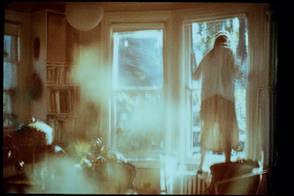
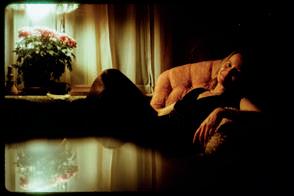
Eu fiquei um consultor para a Sony um tempo lá, fazendo o trabalho da fotografia eletrônica. Vou te falar uma coisa, que pelo menos até agora eu acho que daqui a pouco este panorama vai mudar, mas até agora a fotografia eletrônica fede! Porém, dá para fazer coisa boa. Porque coisa boa sai quando ela é usada para ela e não em um esforço para imitar os resultados do filme.2
Como bom ilusionista, ele lançava mão de uma sabedoria para mascarar a precisão da informação, em exemplo claro das armadilhas em que historiadores podem cair quando seguem literalmente afirmações categóricas de promoção pessoal. O uso da palavra consultor é um exagero para quem fez apenas um teste de um equipamento específico, e todo profissional de fotografia sabe como essa relação funciona. Uma publicação de marketing da empresa trouxe uma entrevista sobre o teste com a opinião de dois fotógrafos e, na apresentação, George dizia que ele estudou para ser físico nuclear, uma “novidade” então.3
Em seus últimos currículos, George incluía essa consultoria e dava destaque à produção de um documentário para uma TV comunitária local.4 Mas aquele vídeo não gerava
2 Entrevista de George Love a Zé De Boni, ca. 1993.
3 Recorder, volume 1, number 3, verão de 1988, publicação da Still Image Systems, Sony Information System Company.
4 LMTC, Larchmont, Mamaroneck Community Television. Boletim e programação de junho de 1993.
um espectro da repercussão que ele tivera nos bons tempos; era uma obra particular para audiência limitada, e a própria emissora não conservou a peça. Restou apenas a memória oral da descrição de sua criação, em que comparava a foz do Amazonas com um pequeno rio local: The Mouth of the Amazon Is in Rye.
O contraste entre a significância desses tópicos de currículo com as grandes realizações que o projetaram revela o estado de desalento que abatia alguém que sempre teve necessidade de ser importante. De fato, com a saúde comprometida, vivendo de uma pequena pensão e sem perspectiva, ele tinha consciência de estar iludindo a si próprio. Retomou contatos no Brasil em busca do tempo perdido e apareceu por aqui em 1992, aproveitando a cortesia que ainda tinha para passagens aéreas. Vem, vai, vem, vai e, de surpresa, especialmente para Barbara, no início de 1994 juntou todas as coisas que conseguiria despachar e voltou definitivamente para São Paulo.
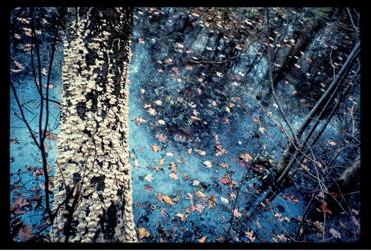
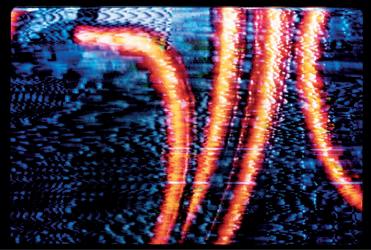
Pesquisa visual em Nova York, entre 1986 e 1994.
[Visual research in New York, between 1986 and 1994.]
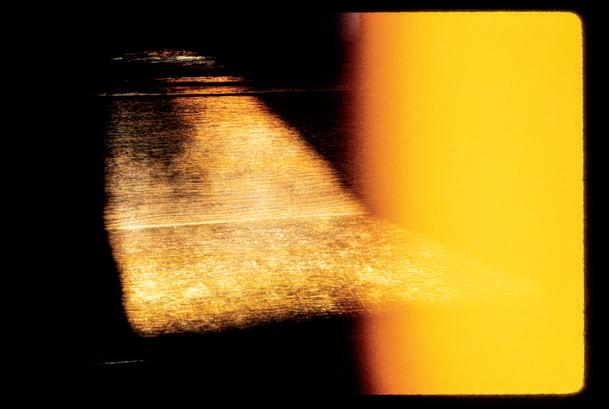
Na mesma época em que mostrava seus Diários e Anotações sobre São Paulo, George Love realizou no MASP uma instalação chamada Ilustrações para os Diários de Kafka. Citações ao escritor circundavam um projetor que exibia imagens angustiantes, representando seus conflitos na mesma metrópole. Os slides foram preservados, mas sem a marcação de sequência e o som. Sua exibição é, portanto, uma recriação não fiel ao projeto original. Analisando seu acervo e seus documentos, ficam evidentes outros dramas fotográficos que George deve ter sentido, e assim foram elaboradas três projeções complementares. Os textos na parede são extraídos dos diários e das anotações do próprio fotógrafo e revelam questões existenciais que sua altivez escondia. A entrevista gravada em 1993, época de suas maiores crises, mostra a personalidade eloquente e radiante de George Love.
Projeções:
Ilustrações 1 é a série original dedicada a Kafka.
Ilustrações 2 é sobre a degradação da Amazônia, que George raramente mostrou. Era sem dúvida doído, mesmo para quem um campo queimado podia ser igualmente fotogênico.
Ilustrações 3 é o conflito da destruição de Sete Quedas para a construção de Itaipu, ainda que George se anestesiasse com explicações lógicas.
Ilustrações 4 é o seu drama na volta para os Estados Unidos, onde presenciava uma natureza muito mais pobre que seu alter ego amazônico.
Os diários e anotações de George Love, escritos à mão ou datilografados, são muitas vezes difíceis de decifrar.
Apontamentos de conversas telefônicas, rascunhos de cartas, agenda de encontros, receitas médicas, listas de compras, trabalhos e projetos, tudo se mesclava. Elencados em tópicos geralmente numerados, chegavam a dezenas de coisas para lidar concomitantemente, às vezes inseridas em uma mesma data. Propunha trabalhos sobre coisas de seu interesse, que ele imaginava poder ter receptividade entre clientes determinados em um leque de assuntos que ia além do campo da fotografia, como sugestões para o desenvolvimento de um carro para a Volkswagen.1
Em um momento, sua lista de projetos editoriais tinha 38 itens, dos quais somente um vingou, The Amazon Basin from the Air. Vivia esse turbilhão nos anos antes de sua partida para os Estados Unidos. Quando retornou a São Paulo, retomou de onde parou e intensificou mais ainda sua busca quase desesperada por sustentar-se com trabalhos de grande relevância. Suas listas, ainda em cadernos ou já no computador, só aumentavam, incluindo fotografar o eclipse solar em Itaipu e uma viagem pelo
Trópico de Capricórnio ou pela América Latina para promover o carro a álcool. Falava de levar à ONU essa solução energética, item anotado em seu currículo, bem como uma tal “vermiculita”!
Incorporando novidades tecnológicas como a fotografia digital, teve o sucesso ocasional de realizar para uma revista
de erotismo o primeiro ensaio distribuído em disquetes de computador no Brasil.2 Motivado por esse evento isolado, tomou a iniciativa de propor a transformação das revistas da editora em produtos de mídia eletrônica a serem distribuídos em CDs ou pela rede (network). Antevia o tipo de equipamento necessário para a produção e para o consumidor, como também os assuntos de matérias e novas publicações, sempre relacionando temas que lhe eram familiares e de seu interesse pessoal. Essas propostas eram dirigidas a executivos da editora, a quem George garantia que ele próprio poderia dar conta de cuidar da programação editorial: “... dado o equipamento necessário... eu podia montar uma publicação sozinho”.3
A convicção em sua competência o faria criar a empresa Tiragem Limitada4, projetando abordar aqueles mesmos assuntos em listas de desejos ou sonhos, que mais parecem delírios. Mas, aos interlocutores, isso talvez não transparecesse, pois exteriormente ele mantinha a postura altiva e o discurso empolgante, que pode ser testemunhado na entrevista gravada em vídeo nesse mesmo período. Ele disfarçava também o declínio físico acentuado, sofrendo silenciosamente, com a cumplicidade de sua nova companheira.
Seus diários revelam esse drama e ainda expõem a tendência depressiva de que mesmo as pessoas mais próximas não suspeitavam:
2 Revista Playboy, outubro de 1994.
1 Série de cartas dirigidas a Mattias, na Volkswagen do Brasil, 1984. Coleção George Love.
3 Série de cartas a Thomas Souto Correa, 1994. Coleção George Love.
4 Minutas de contrato, janeiro e março de 1995. Coleção George Love.
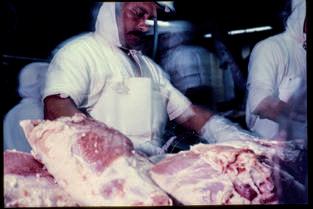
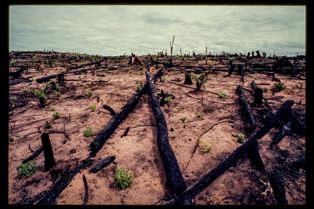
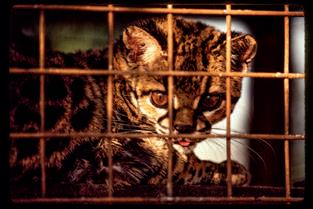
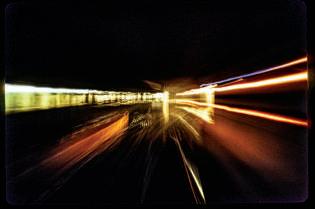
Imagens das quatro sequências audiovisuais (Ilustrações para os diários de George Leary Love) preparadas para exposição no MAM em 2024. Os temas são: São Paulo, Amazônia, Itaipu e Nova York. [Images of the four audiovisual sequences (Illustrations for The Diaries of George Leary Love) prepared for exhibition at MAM in 2024. The themes are: São Paulo, the Amazon, Itaipu and New York.]
Estou me sentindo muito mal. Estou extremamente desidratado e não consigo me recuperar da gripe. Minhas glândulas estão muito inchadas, e estou enfrentando depressão intermitente, acompanhada de oscilações de humor… Alguém que sofre muito de alergias e vive em um ambiente repleto de poluição e estresse não pode esperar coisa melhor, nem afastar a crise. A única solução é partir. Minha convicção: a maioria dos meus problemas é alimentada pela neurose; a conexão neurótica não pode ser rompida na solidão. Como argumento em O Eco Humano, a solidão leva à perda de si mesmo, a um eu perdido. O ponto de partida é, evidentemente, a sensação esmagadora da incapacidade de fazer qualquer coisa. Existem infinitas coisas a fazer, mas a única coisa que me ocorre é passar mais tempo deitado no quarto de despejo de Marcos.5
A afinidade com a literatura kafkiana fazia muito sentido e já era descrita no caderno da sua primeira viagem com Claudia Andujar ao Brasil. A própria mensagem de estímulo
que ela enviou em dezembro de 1965 ganha outro sentido e combina com os episódios registrados por George em seu caderno. A manifestação parecia totalmente contida em seus dias de glória, mas, mesmo nessa fase, a separação de Claudia foi um trauma que o abalou a ponto de citar essa decepção até bem tarde na sua vida. No seu declínio econômico e físico, as inserções depressivas cresceram em número e drama nas suas notas, juntamente com a carência de percepção da dimensão do mundo exterior. Ao organizarmos sequências de imagens conflitantes em temas que eram tão importante para ele, é pertinente usar seus próprios textos como acompanhamento, conforme a fórmula que ele empregou na exposição dedicada a Kafka.6 Ilustrações para os Diários de George Leary Love é uma homenagem ao gênio criativo e visionário que nos encantou quando a vida o traía.
5 Anotação de George Love, escrita originalmente em inglês, datada de 9 de abril de 1994, quando ele havia se reinstalado recentemente em São Paulo. Coleção George Love.
6 LOVE , George. Ilustrações para os Diários de Kafka, MASP – Museu de Arte de São Paulo, São Paulo.
Após cerca de oito anos escondido, George Love retornou ao cenário paulista, tentando reativar contatos. Tinha muitas ideias profissionais que mais faziam sentido em sua cabeça do que aos seus interlocutores. Retomando a série amazônica, sua seleção definitiva foi digitalizada e transposta em um PhotoCD, assinado no início e no fim com a mesma impressão digital usada em Service Order 8696. Teve o apoio para viabilizar mais um livro, de inspiração mística, com imagens da mesma edição. Porém, sua saúde severamente comprometida não lhe permitiu cuidar de mais esse projeto, como sempre fizera, e tampouco ver o exemplar impresso. Pela forma como foi concebido e pelas circunstâncias da publicação, Alma e Luz – Sobre a Bacia Amazônica é o testamento final de George Leary Love.
Em meio às diversas tentativas visando a sua recuperação profissional e econômica, um caminho se abria em 1992. Ainda fazendo a ponte aérea entre os dois hemisférios, George Love tratava da produção de uma nova edição do trabalho pessoal da Amazônia. A proposta do livro era oferecida a possíveis clientes, e ele já imaginava várias opções de veiculação por mídias eletrônicas, traçando antecipadamente as possíveis sequências com a diversidade de assuntos de seu interesse.
Fica claro, lendo suas anotações, que, se ele tivesse campo livre para produzir obras em assuntos tão diversos, dificilmente teria sacramentado o forte vínculo de sua personalidade com a Amazônia. A história de George Love é um grande exemplo da consolidação de uma imagem construída pela percepção e receptividade de interlocutores, apoiadores e do público. Enquanto tentava abraçar o mundo com temas tão espalhados, ele era conduzido de volta ao seu assunto mais relevante, pelas circunstâncias oferecidas por sua rede de contatos. Se ele sofreu por não tirar proveito financeiro das mirabolantes ideias – que, afinal, não emplacaram na sua última década de vida –, seu sucesso ocorreu justamente com aquele tema que tocava de fato seu âmago, sua filosofia e o percurso de sua existência. Não era a Amazônia que seria mostrada no novo projeto, mas as reflexões místicas de George Love.
O trabalho tomava forma nas suas anotações, esboçando o estilo épico que artistas comumente adotam. Ensaiava inicialmente o título: “Every soul hungers after the light/All souls hunger for the light/Toda alma anseia para a luz... pela luz”.1
Passou a se referir a ele como Toda Alma, ou mesmo TA.
1 Anotações e correspondência do artista. Coleção George Love.
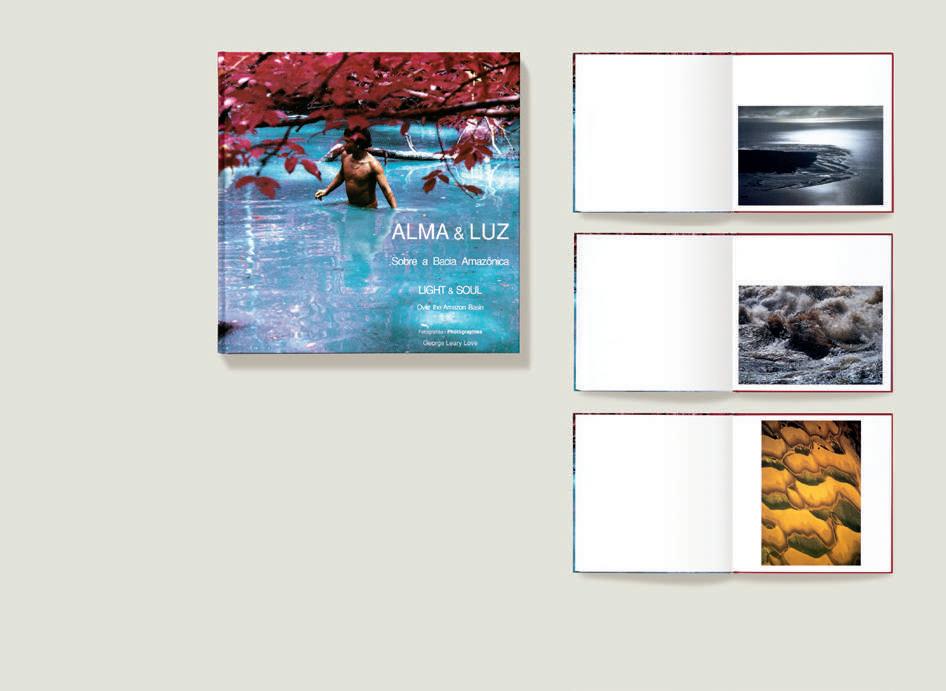
[Light and Soul –Over the Amazon Basin book, 1995.]
Chegou a sugerir A Bacia Amazônica e a Mente Humana, ensaiando o discurso: “Este livro, bem como o texto nele contido, não é uma documentação da Bacia Amazônica. É uma obra de alcance universal.”2 Esses conceitos amadureciam em 1994:
Toda Alma
O peso do texto é uma jornada pelo pensamento, da rejeição à integração + o meio ambiente, à aceitação. A Bacia Amazônica é escolhida somente – “somente” – como o veículo para essa viagem. Assim, o texto é trabalhado mais cuidadosamente do que inicialmente pensado... sendo em parte poético... da vida como um todo, sem falsa dualidade.
Parece correto que as referências derivem da “ciência nobre”. A ciência tem sido parte do problema da dualidade. Ao estabelecer uma aparente oposição entre o objetivo e o subjetivo, ela cria confrontos como ciência versus arte, versus religião ou fé, assim como uma desvalorização do desconhecido. Isso a opõe à aceitação do místico e cria o conflito entre mente e cérebro, entre outros.3
Ali George Love mostrava sua contrição pelo que declarara em seu caderno na sua primeira viagem
2 Ibid.
3 Ibid. Original em inglês.
amazônica. Entre muitas passagens que citam depressão e sentimento de solidão, ele escrevera logo no começo uma pesada observação sobre as pessoas que se embrenhavam pelo sertão ao encontro de habitantes remotos: “As motivações dessas pessoas... continuam a ser um mistério... Sou uma criatura da cidade...”.4 Entretanto, após tanto tempo amargurando a solidão em núcleos com milhões de habitantes, apesar de todo o seu sucesso e círculos de relacionamentos, ele elegia o ambiente amazônico como sagração de sua filosofia, sua fé e sua persona. Em um de seus últimos cadernos, ele ensaiou o argumento de seu novo produto:
Viajei durante 20 anos, mais longe do que qualquer distância, para ver um felino dourado revelar as lições gravadas aqui, uma por uma, e para perceber que absolutamente tudo é a única mesma coisa. O que denominamos meio ambiente é o Cosmos, e o Cosmos é Deus.
[...] Todo rio desemboca no mar, e o mar não enche; nem os rios param. Todo estudo, todo grito, toda prece leva ao Deus, e o Deus é infinito.5
O projeto de publicação foi acolhido pela editora de Isabel Duarte, que passou a lutar por sua viabilização. George enviou a ela um rascunho do argumento:
4 Caderno Diário da Viagem ao Território Xikrin, fevereiro de 1966. Coleção George Love.
5 Ibid. (1).
[A Amazônia] é o cenário de diálogos onde a escuridão de águas repentinamente lembra o vazio, o caos, o princípio de tudo da Bíblia ou o buraco negro da física. Tais associações vêm da experiência de alguém que aborda a magia e força de Deus na criação, registrando com sua lente os movimentos, as cores e texturas da natureza e relacionando-os com o anseio da alma humana em sua trajetória em busca da luz.
(Estudo da física = leva a Deus Bel acho que pirei!!!!)
(Qualquer real estudo, levado às últimas consequências, nos deixa perante o mistério do divino. Não pirei; nem sô Rasputin [sic]).6
Na prospecção por financiadores do livro, assim a obra era apresentada pela editora:
(O autor) conta como aprendeu, através de uma aproximação contínua, a respeitar e admirar esta natureza, chegando em certos momentos a reverenciá-la. Assim sendo, a aversão provocada pelo seu
primeiro contato com a floresta foi sendo modificada e lapidada ao ponto de se tornar adoração, contribuindo para sua própria renovação e transformação pessoal... a preocupação foi manter a unidade cromática e a fidelidade ao conceito – “a busca incessante do homem para a luz”.7 Infelizmente, embora ele tenha proposto essa concepção filosófica, George Love não se dedicou a escrever especificamente o texto para o livro como desejava. Com sua saúde se deteriorando rapidamente, ele não conseguiu seguir o cronograma proposto. O livro foi finalmente adotado pela Sadia por meio de sua grande apoiadora Cida Fontana, mas George não chegou a ver a sua concretização. Outro texto crítico foi providenciado, e o compromisso, cumprido, pela publicação post mortem de seu autorretrato definitivo: Alma e Luz. 8
6 Ibid. (1).
7 Ibid. (1).
8 LOVE , George; KLINTOWITZ, Jacob. Alma e Luz – Sobre a Bacia Amazônica. São Paulo: MD Comunicação e Editora, 1995.
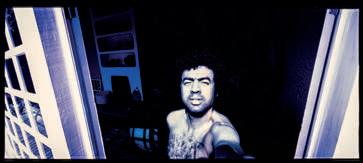
Currículo 1
1o de setembro de 1986
Introdução
Eu me formei tanto nas artes quanto nas ciências, na medida do possível, simultaneamente. Na época, não foi completamente intencional, mas acabou sendo benéfico.
Desde então, meu trabalho tem focado na união de objetivos técnicos e culturais.
1 Original escrito em inglês por George Love.
Escolhi a fotografia como minha ferramenta, evoluindo, posteriormente, para a comunicação, principalmente visual, o que exigiu o estudo tanto de disciplinas técnicas quanto de abordagens artísticas.
Por sua vez, isso despertou meu interesse pelo mundo ao redor, motivando-me, constantemente, a observar e registrar, novamente dentro das minhas possibilidades, o ambiente em que vivo.
É essencial comunicar essas observações a outros. A comunicação que carece de fundamentos estéticos ou culturais se torna estéril e, muitas vezes, é ignorada. Como a pura estética também é frequentemente desconsiderada se não estiver associada a um conteúdo com relevância ambiental, a integração desses dois
interesses foi fundamental no meu trabalho. Esse esforço, somado ao meu desejo de me comunicar, evolui para um interesse em informar e não apenas transmitir mensagens. Passei a maior parte da minha vida fora dos Estados Unidos, meu país de origem, em locais onde os recursos eram frequentemente limitados. Isso obriga a pessoa a aprender a fazer mais com menos e, geralmente, a compartilhar esses conhecimentos com os demais. Para evitar a reinvenção da roda, é necessário também estudar um pouco da história. Considerando que, em muitas áreas, ainda estamos coletando dados, busco usar minha visão para reunir essas informações e preservá-las. Esses dados relacionam-se ao ser humano e ao seu ambiente. Essa abordagem é a única maneira de explicar meu interesse em temas aparentemente tão distintos como a cidade de São Paulo e a Bacia Amazônica.
Esta jornada pode levar muito além, se permitir; atualmente, por exemplo, estou interessado nos custos sociais da poluição, mas esse é apenas um interesse incipiente compartilhado por muitos pensadores mais avançados.
De qualquer modo, tomando emprestada uma frase, se todo gasto é gasto de
energia, e se gasto de energia é gasto humano, o que já observei me leva a crer que todo gasto humano é, em última análise, um gasto de tempo.
George Leary Love
Nascimento
Estados Unidos da América, 24 de maio de 1937. Nacionalidade: americana
Estudos
- Universidade de Atlanta (Programa de Iniciação Precoce da Fundação Ford) [entre 1953 e 1956]
- The New School for Social Research [Nova Escola de Pesquisa Social], Nova York [entre 1960 e 1962]
Formação
Matemática, filosofia, filosofia da arte, economia, informática
Entre 1957 e 1959, trabalhei como auxiliar no Programa dos Estados Unidos de assistência a universidades na Indonésia, com sede em Jacarta e atuando em todo o país. Em 1960, viajei para a Índia, Tailândia e Malásia.
Durante esse período, desenvolvi um fascínio pela fotografia, tendo registrado
especialmente o monumento Borobudur, no centro-sul de Java. Após deixar o serviço governamental dos Estados Unidos, viajei pela Europa e, finalmente, me estabeleci em Nova York.
Nessa época, comecei a estudar fotografia e me tornei membro, chegando a ser presidente [vice-presidente] da Association of Heliographers [Associação dos Heliógrafos], um grupo americano que estabeleceu uma galeria de fotografia – eu diria uma das primeiras – durante o renascimento do interesse pela fotografia como forma de arte nos anos 1960.
Durante o mesmo período, organizei uma pequena equipe de campo de fotógrafos para o SNCC [Comitê de Coordenação dos Estudantes Não Violentos], um grupo americano de direitos civis, com o objetivo de documentar as mudanças sociais nos Estados Unidos, operando a partir de Atlanta, Geórgia.
Entre 1961 e 1965, dividi meu tempo entre Nova York e Atlanta, organizando e montando exposições para a Associação de Heliógrafos (o grupo incluía nomes como Paul Caponigro, Minor White, Wynn Bullock, Walter Chappell, Larry Clark, Syl Labrot, entre outros) e apoiando o SNCC
na produção de filmes educacionais sobre direitos eleitorais, no desenvolvimento de um arquivo de fotografias e entrevistas gravadas, entre outras atividades. Esse trabalho de campo envolveu muito treinamento pontual e apoio logístico com laboratórios de campo. Um dos frutos desse esforço foi a organização da exposição Now, na Escola de Estudos Visuais em Nova York, da qual também participei.
Em 1962, viajei para o Brasil a fim de observar a construção de Brasília e, a partir dessa experiência, desenvolvi um interesse crescente pela América Latina.
Em 1966, mudei-me para São Paulo, Brasil, e continuei trabalhando tanto na América Latina quanto em outras regiões. Meu trabalho se dividiu entre projetos editoriais e corporativos para publicidade. Pessoalmente, comecei a me concentrar no centro da cidade de São Paulo e na Bacia Amazônica. Durante quase dez anos, dediquei-me a documentar a bacia através de fotografia aérea de baixa altitude e também registrei o crescimento urbano de São Paulo.
Frequentemente, faço muita experimentação com imagens fotográficas em
espaços construídos, explorando transparência, movimento, óptica e fotoquímica, com especial interesse na durabilidade do processo colorido.
Como era meu costume supervisionar qualquer trabalho de impressão pessoalmente na gráfica e, às vezes, me envolver no design da diagramação, na encadernação, entre outras atividades, passei a considerar a durabilidade tanto do material impresso quanto da impressão fotográfica.
Por volta de 1981/1982, consegui colaborar com o Studio 5, em São Paulo, na produção de imagens impressas de alta durabilidade. Embora seja difícil estimar com precisão, uma durabilidade de mais de 200 anos parecia ser alcançável.
Em 1981, iniciei meu trabalho para a companhia de energia elétrica de São Paulo, que, na época, possuía um extenso arquivo fotográfico, iniciado nos anos 1890 e que continuou até cerca de 1950. A partir desse ponto houve um hiato na documentação, que estava ficando cada vez mais longo com o passar do tempo. Fui convidado para “preencher” essa lacuna com trabalhos meus produzidos entre 1966 e 1982 e para treinar um grupo documental na empresa, que se
encarregaria de registrar o desenvolvimento da cidade até o ano 2000. Esse objetivo foi alcançado com a publicação de dois livros: um com meus trabalhos e outro no qual fui responsável pelos métodos de restauração utilizados. Para minha grande satisfação, o grupo documental continua a trabalhar até hoje, recebendo apoio crescente, mesmo após minha saída da empresa, no início de 1983.
O presidente da companhia acreditava que esse arquivo contínuo e bem documentado seria extremamente útil para o estudo da energia e da sua interação com o meio ambiente e com o desenvolvimento, especialmente porque o arquivo cobria todos os aspectos do crescimento urbano. Essa visão foi, em parte, intuitiva e instintiva, não solicitada; mas parece bastante plausível.
Desde 1983 até o presente, trabalhei em diversas áreas, focando principalmente em aumentar a versatilidade e reduzir os custos da fotografia e da comunicação visual em geral. Além disso, desenvolvi um interesse incipiente nas interações entre texto e imagem e também nas ciências físicas. Exemplos do meu trabalho nessa área incluem uma exposição
que ilustrava trechos dos Diários de Franz Kafka e pesquisas extensivas no uso de filmes de pequeno formato e baixo custo, como o 110.
Projetos especiais
1. Três calendários institucionais para a Mercedes-Benz no Brasil, focando na Bacia Amazônica, na arqueologia brasileira e no povo brasileiro, para os anos de 1973, 1974 e 1975. Os projetos sobre a Bacia Amazônica e a arqueologia brasileira foram particularmente interessantes. No caso do segundo, desenvolvi técnicas ópticas inovadoras para aprimorar as imagens de arte rupestre em cavernas que foram posteriormente dinamitadas.
2. Editor de fotografia para a revista O Bondinho (São Paulo) e como editor da revista Fotografia (São Paulo). Experiência considerável em gestão editorial entre 1969 e 1973.
3. Fotografias no Chile, Colômbia e Argentina para filmes de TV animados para a Braniff World Airlines.
4. Fui responsável pelo design do pavilhão da Olivetti do Brasil em 1970 e 1972. Esse trabalho envolveu um
conceito total, abrangendo arquitetura, expografia, supervisão da construção e acompanhamento durante feiras industriais. Em ambos os projetos, usei imagens projetadas e, no primeiro, elas se moviam em ambas as direções sobre um telão de 360 graus que cercava o pavilhão.
5. Realizei o treinamento do grupo documental do SNCC (de direitos civis) para registrar a mudança social nos Estados Unidos com o progresso do movimento de direitos civis. Forneci laboratórios de campo, frequentemente improvisados, realizei uma organização rudimentar de arquivos e gravei uma grande quantidade de fitas de áudio.
6. Trabalhar na organização do grupo, em conjunto com profissionais altamente qualificados, foi o aspecto mais enriquecedor dos anos que passei na Heliography Gallery [Galeria Heliografia]. Em 1977, organizei e montei uma exposição póstuma dedicada a Syl Labrot, um dos destaques do grupo, no Museu de Arte de São Paulo.
7. Portfólio Hileia Amazônica para a coleção FormaEspaço, em São Paulo. Essa obra, realizada diretamente sobre as separações coloridas pelos diretores
de arte, foi um processo especialmente fascinante: cromos impressos foram modificados, duplicados e reintegrados de maneira que o impacto visual ficasse inalterado. Embora hoje isso possa parecer trivial, naquela época representou um aprendizado prático significativo no tratamento de imagens.
8. O audiovisual Les Barrages, para a exposição Imagens do Brasil, de 1973, em Bruxelas. Esse trabalho consistiu em um ensaio fotográfico sobre quatro represas ou usinas hidrelétricas, acompanhado de música clássica japonesa. O objetivo não era tanto mostrar o caráter industrial das represas, mas, sim, destacar a sua potência plástica.
9. Organizei a Semana de Fotografia, com a participação de, aproximadamente, 65 fotógrafos de vários países. Embora a Ásia tivesse uma representação limitada devido a questões logísticas, a maioria dos outros países, incluindo os da Europa Oriental, esteve presente. O Serviço de Informações dos Estados Unidos (que ainda existia na época) trouxe pessoal e facilitou a entrada de fotografias no Brasil. A mostra foi acompanhada por uma série de palestras ministradas por convidados, que foram transmitidas pela televisão.
10. Gravei cerca de 50 horas de fita magnética, documentando cerimônias e músicas de índios brasileiros no sul do Pará e na parte oeste de Roraima, entre 1966 e 1974. Além disso, enviei uma coleção da cultura material do povo Xikrin para o Museu do Índio Americano [Smithsonian].
11. Entre 1966 e 1984, colaborei intensamente com o Museu de Arte de São Paulo Assis Chateaubriand na realização de seu programa de exposições fotográficas. Essa parceria sempre foi um dos meus principais interesses no Brasil.
12. Participei de uma ampla gama de programas de televisão e rádio sobre a fotografia brasileira, conteúdo que variava desde o fotojornalismo policial até debates sobre as diferenças entre imagens televisivas e fotográficas. Achei lógico utilizar uma linguagem visual para discutir outra, e, graças à generosidade de alguns produtores, foi possível superar as limitações habituais da televisão na maioria das vezes.
13. Em uma linha de ação um pouco diferente, acompanhei uma expedição arqueológica no sítio peruano Pajaten, descoberto pelo americano Gene ou
Eugene Savoy, em 1966. Esse local foi considerado pelos arqueólogos profissionais presentes o único do seu tipo em toda a história peruana. As fotografias da expedição foram publicadas numa edição de 1966 [1967] da revista Horizon. Destaco essa experiência porque a cidade foi “redescoberta” – por inteira coincidência – por uma expedição americana em 1985, que a classificou como um dos mais significativos achados na história da arqueologia latino-americana. Informei a equipe sobre a descoberta anterior de Savoy, por uma questão de cortesia. Pessoalmente, tenho o desejo de revisitar o sítio, construído por uma civilização que quase não utilizava linhas retas, com cada linha imaginável na construção sendo curva.
14. Em 1974, organizei um concerto experimental que combinou imagens projetadas com uma orquestra de câmara, em homenagem ao músico americano Henry Schumann.
15. Durante 1976, fui editor de fotografia do jornal semanal Aqui São Paulo, dedicado a uma análise aprofundada da cidade. Apesar de enriquecedor, o trabalho foi cansativo, pois, além de editar a produção dos outros fotógrafos, eu tinha
que realizar a maior parte do trabalho de laboratório e algumas coberturas pessoalmente.
16. Em 1977, criei fotomurais em impressão Ciba para o Museu do Telefone, no edifício-sede da Telesp, em São Paulo. Essa foi minha primeira experiência com murais de tamanho considerável – aproximadamente 3 x 4 metros –, ampliados a partir de cromos de 35 mm. A realização desse projeto foi possível graças à imensa paciência dos técnicos de laboratório, que, em alguns casos, foram desafiados a fazer o que parecia impossível.
17. Iniciei o processo de organização dos meus trabalhos sobre a Bacia Amazônica para serem preservados por uma entidade mais capacitada para catalogar e conservar os cromos do que eu. Meu objetivo é criar uma memória viva, com atualizações regulares de bancos de memória, microfilmes etc. As gravações de som também fazem parte desse projeto.
18. Em 1981, numa iniciativa pessoal –e, portanto, em menor escala –, comecei a enviar alguns artefatos de índios brasileiros para o exterior com o objetivo de preservá-los. Isso se deve ao fato de que a expansão na Amazônia frequentemente
envolve conflitos que podem ameaçar a sobrevivência desses materiais.
19. O projeto “Metade da Metade” surgiu da ideia de comprar uma câmera fotográfica, um rolo de filme, tirar fotos, revelá-las e realizar uma impressão colorida de 30 x 40 cm (12 x 16 polegadas), gastando apenas um quarto do salário mínimo da época. Esse objetivo foi alcançado após cerca de 60 dias de experimentação com câmeras compactas de formato 110 e novas emulsões de alta resolução. As experimentações subsequentes revelaram uma série de possibilidades criativas com o formato 110, facilitando a fotografia sequencial e possibilitando a produção de impressões maiores do que se consideravam possíveis anteriormente. Realizei palestras e apresentei uma ampliação do negativo nº 112, com tamanho aproximado de 50 x 80 cm (20 x 32 polegadas). Essa experiência e as exposições que se seguiram foram projetadas para ajudar a superar o receio dos custos elevados normalmente associados a uma iniciação na fotografia no Brasil e atraíram atenção considerável. Além disso, demonstrou-se que a capacidade de armazenamento de informações em filmes era maior do que se pensava
anteriormente. Um retrato em vídeo digitalizado mostrou-se notadamente inferior, resultado que era esperado, mas sem certeza até então.
20. A exposição Eletropaulo Ano I começou como uma simples mostra para o lançamento dos livros do arquivo da companhia elétrica. No entanto, à medida que se desenvolvia, transformou-se em um espaço para exibir uma pequena parte desse acervo e para incentivar o novo grupo documental com uma exposição coletiva informal do trabalho deles. O crescente interesse público fez com que a exposição fosse ampliada, levando as divisões operacionais a contribuir com equipamentos pesados para improvisar um parque público de diversões no pátio embaixo e atrás do museu. O interesse gerado ajudou a envolver o grupo documental em projetos de filmagem para televisão e outros meios. É bem provável que essa mostra, apesar de seus modestos objetivos iniciais, tenha contribuído significativamente para a consolidação do conceito de documentação, atraindo a atenção pública para o fato de que uma companhia elétrica pode ser responsável por preservar uma parte da memória da própria cidade.
21. Para as Nações Unidas, tentei disponibilizar dados sobre o programa brasileiro de combustíveis alternativos, incluindo informações relacionadas a engenharia, amostras de combustíveis e relatórios sobre testes de veículos realizados com a colaboração da Volkswagen do Brasil. Um tópico particularmente relevante é o controle das emissões para carros movidos a etanol, que será uma questão central nos próximos dois anos, visto que tais controles agora são obrigatórios. É importante, porém, notar que os poluentes encontrados no álcool têm uma composição diferente daqueles da gasolina. Ademais, há uma discussão em andamento sobre a possibilidade de ir além do etanol e explorar o uso de óleos vegetais em pequenos motores a diesel. Estão planejados esforços para testar essa hipótese. Além disso, a instalação de usinas hidrelétricas na Bacia Amazônica já está em andamento, e um novo sistema, composto de duas represas, está sendo construído. Esse sistema promete ser quase 20% maior do que a Usina Hidrelétrica de Itaipu.
Publicações tardias
LOVE, George Leary – The Mouth of the Amazon River Is in Rye [A Foz do Rio Amazonas Fica no Rye], documentário para TV comunitária | 1993 | LMC-TV | Mamaroneck, NY.
LOVE, George Leary – Alma e Luz –Sobre a Bacia Amazônica, livro | 1996 | MD Editora | São Paulo.
DE BONI, Zé – Verde Lente – Fotógrafos Brasileiros e a Natureza, livro e exposição | 1995 | Empresa das Artes | São Paulo.
Verde Lente – Fotógrafos Brasileiros e a Natureza, exposição coletiva | 1997 | MAM São Paulo.
Amazônicas, exposição coletiva | 1998 | Itaú Cultural | São Paulo.

SECTIONS
176 PHOTOGRAPHER I NFLUENCER MAGAZINES 180 THE CORPORATE HELIOGRAPHER 190 SÃO PAULO ANOTAÇÕES
238 AMAZÔNIA FAREWELL
248 AMAZÔNIA LIGHT AND SOUL
Elizabeth Machado President of the Board of Directors of the Museum of Modern Art of São Paulo
Cauê Alves Chief Curator of the Museum of Modern Art of São Paulo
George Love: Beyond Time is MAM
São Paulo’s first exhibition in 2024. It is a retrospective show of the work of one of the most important figures in the history of 20th century photography. The exhibition features a large number of important works by an artist who played a major role in the New York Association of Heliographers—a group of photographers instrumental in the promotion of avantgarde and experimental color photography in the early 1960s. As one of the Heliographers, George Love helped to consolidate authorial photography as an art form and to free photography from the idea of faithful and literal representation of reality.
George Love was an African American man, born in Charlotte, North Carolina, in 1937. He arrived in Brazil in 1966, and, along with his then partner, Claudia Andujar, traveled extensively in the Amazon Basin. Both artists produced photographic essays for Realidade magazine in 1971; and, in 1978, launched a book titled Amazônia. While Claudia Andujar was known for her work with the Yanomami tribes, George Love stood out because of his aerial photography, at a time when it was still not widely practiced.
Curated by Zé De Boni, researcher and photographer, the exhibition presents a broad selection of the artist’s work, including not only images of the Amazon, but also photographic essays produced in São Paulo and Rio de Janeiro; experimental editorial pieces; and commercial projects, such as his series on the construction of the Itaipu hydroelectric dam. George Love: Beyond Time is the first major exhibition of this artist’s oeuvre, and it sheds light on a body of work that, though still
not widely known, has always been held in great esteem by photographers and photography enthusiasts. This catalogue includes texts written by the curator and passages from George Love’s diaries, letters, and public statements, in an attempt to provide greater understanding of his work and ideas about photography. With this exhibition, MAM São Paulo— home to one of the most important photography collections in Brazil—advances in the dissemination of photography and specially of the little known but groundbreaking work of George Love, from the experimental phase of his youth to the more mature work produced shortly before his premature death, in São Paulo, in 1995. At a time of growing evidence of a climate crisis, George Love: Beyond Time calls attention to the visionary and still highly contemporary perspective of this artist, as well as to pressing matters of diversity and environmental issues.
Zé De Boni Curator
In the early days of Brazilian photography, in the latter half of the 20th century, one name in particular stands out: that of George Love. A charismatic figure, Love has always been shrouded in an aura of mystery that has become legendary. Despite his renown, he succeeded in remaining an enigma, concealing as much as he revealed. In an era of intellectual ferment, questioning of traditional behaviors and evolving customs, George Love’s brilliance was evident in everything he turned his hand to—in his professional dealings, as well as in his personal relationships. His illuminating presence extended far beyond the confines of any room, transforming the atmosphere and inspiring those around him with a glimpse of the boundless possibilities this stunning medium of expression
had to offer. His contributions to the arts, publishing, and business broadened the scope of photography, forging new paths with an avant-garde work that was years ahead of its time. Consciously or not, generations of Brazilian photographers have found inspiration in his work, which has provided one of the principal wellsprings for the culture of our contemporary age.
To call him a genius is no exaggeration. George Leary Love was born on May 24, 1937, in Charlotte, North Carolina, in the United States. He was the only child of a humble but well-educated African American family, and concluded higher education when he was still in his teenage years. Love took up photography at an early age, quickly recognizing the career opportunities offered by travel photography, and the burgeoning niche market for collections of such images, to which he maintained a lifelong connection throughout his professional career.
Establishing a base for further studies in New York, Love swiftly shifted his focus to authorial photography. This transition was marked by early exhibitions of his work in Manhattan galleries, along with various courses and lectures he delivered at the time. Love thus gained admission as one of the youngest members to the Association of Heliographers, an élite
circle of US photographers dedicated to promoting photography as an art form. This group was committed to expanding the boundaries of the medium and was known for its innovative use of color prints in exhibition spaces. George Love felt a profound identification with the philosophy of the Association of Heliographers, and that is crucial for understanding his life’s work. Before long, the young photographer was appointed vice-president and coordinator of the Association’s gallery, and the years from 1963 onwards were ones of intense activity, until late in 1965, when resources dried up and the organization was forced to close its doors.
Love now embarked on a sharp change of direction, when one of the few heliographers working outside of the United States encouraged him to venture southwards to Latin America. In January 1966, George Love and Claudia Andujar thus set from Belém on an extraordinary expedition deep into the Amazon—a truly epic journey to the land of the Xikrins. After this, the pair returned to Belém, traveled upriver to Iquitos, Lima, and Bolivia, and finally re-entered Brazil on the famous “Death Train”. The couple were then married and settled down in São Paulo, in an apartment on Paulista Avenue. The rest, as they say, is history.
•
George Love first made a significant impact in Brazil in early 1967, when his photographs began to feature prominently in reports and essays published by Editora Abril, creating a sensation. Early on in his career as a photojournalist, Love was given full creative freedom by Roberto Civita and received support from editors such as Mino Carta. This enabled him to develop a uniquely creative perspective on everyday life in the city. Eclectic and highly adaptable, Love combined intelligence and insight in infusing modernity into the art of the illustrator. He captured images of fashion, motor cars, and travel for publications such as Claudia and 4 Rodas. George and Claudia became the main luminaries of Realidade magazine, a publication acclaimed for ushering in a whole new chapter in Brazilian journalism. The magazine’s ascent to prominence was catalyzed by a special edition on the Amazon, in October 1971. Enhanced by their transcendent images of a still little-known region, a series of myths began to accrue to Realidade magazine, Claudia Andujar and the Yanomamis, and George Love with his stunning aerial portraits of the Amazonian landscape.
This took George Love’s career to new heights. Shortly thereafter, however, he severed connections with Editora Abril,
but continued to pursue a career in photojournalism, producing memorable work for the equally groundbreaking Bondinho magazine, published by the Pão de Açúcar Group. He did not stay long, however, neither at Bondinho nor at Novidades Fotoptica, a publication spearheaded by Thomaz Farkas, where Love dedicated himself to promoting fine-art photography and teaching photographic techniques, continuing the work he had done at Realidade. Professionally, he moved into the corporate sector, in which he met with much greater financial success and was able to fully exploit his expertise in the fields of aerial and audiovisual photography in producing work for electricity and tech companies. His creative prowess was well-received by clients such as Mário Chamie at Olivetti, leading him to develop a visual style very different from that usually associated with advertising, incorporating much that he had learnt from his former colleagues in New York. None, however, of the 42 photographers who passed through 865 Lexington Ave., embraced the concept so wholeheartedly into the commercial sector as George Love. During that phase of his career, Love could aptly be described as the Corporate Heliographer.
The lessons learned in the commercial
sector were subsequently re-applied to his own personal photographic projects. These involved principally his ongoing work in the Amazon region, to which he returned on various occasions, with a consistent emphasis on the depiction of space. Love’s dedication to the promotion of visual culture and the teaching of photography received backing from Pietro Maria Bardi, who found a place for the couple at the Museu de Arte de São Paulo [Museum of Art of São Paulo]. At MASP, which had been interested in photography since its inception but had never established its own photography department, Claudia Andujar and George Love set up a Photography Laboratory. The term laboratory referred not to a darkroom, but to a space dedicated to nurturing new talents and promoting the use of the medium. Their epoch-making work helped the museum become an important venue in the emerging São Paulo photography scene. Solo shows, group shows, international exhibitions, courses and avant-garde events were all staged by the couple, who also took the opportunity to exhibit their own work in various shows and screenings. They continued to work together throughout the 1970s, although they had already separated by the middle of that decade.
The couple’s respect for one another, however, remained undiminished, as did their shared passion for the ambitious project on which they had now been working for many years. In 1978, the couple used thousands of George’s aerial photographs of the Amazonian landscape and Claudia’s extensive experience of living among the Yanomamis to put together a book of photographs titled Amazônia. In this joint endeavor, the authors eschewed individual identification, perhaps anticipating that this would come automatically from anyone who was even slightly familiar with their work. Supported by Matias Machline’s Sharp Group, featuring a project by Wesley Duke Lee and a notorious printing by the renowned Regastein Rocha, the book boasted a luxurious presentation for the time. The selection of images, pagination, and graphic treatment revealed a very personal touch. Most notably, creative use of the ends of rolls of film invited each reader to come up with his or her own interpretation. It was only later, in private conversations, that George divulged the hidden meaning behind those choices. Censured, with restricted circulation and only a fraction of the intended content released informally without publicity, the book quickly became a sought-after rarity.
Differently, however, from the fate of most human creations, the impact of Amazônia has grown and grown over time, elevating it to mythical status. Today, it is regarded as one of the most important authorial books of photography of all time.
In 1980, George Love lost interest in the Amazon. He had clearly been traumatized by the incidents surrounding the book publication, and Claudia was becoming ever more distant. His focus now shifted to compiling a visual inventory of São Paulo, a project he had been working on ever since he first set foot in the city. This work was eventually presented in the form of a solo show called Diários [Diaries] and a publication titled São Paulo –Anotações [São Paulo – Notes]. This highly personal book formed a companion piece to São Paulo – Registros [São Paulo –Records]—a collection of old photos of the city, put together by Love himself. The two books were published by the newly established Eletropaulo, led by Lucas Garcez, who assigned George Love the task of documenting the Guaíra Falls in their final days before being submerged under water by the construction of the Itaipu hydroelectric dam.
Following the divorce, Love’s private life was marked by self-defensively brief romances, and he steered clear of any
deeper emotional attachments. Seeking insights into the photographer’s emotional life would be pointless, had he not left a vivid pictorial record of the passion and ecstasy that he enjoyed at his idyllic retreat in Sarapuí with Rosilis. Those images offer more than just glimpses of the intimate life of the artist; they also provide another clue to understanding the nature of his work. Love himself acknowledged the egocentric aspect of his work, which is evident in his choice of images captured at such distant locations to feature so prominently in a work on the city of São Paulo. Love’s own interpretation is that, in incorporating such a diverse array of subject matter, including the construction of a hydroelectric dam, it is the author himself and his wealth of personal experience that provide the unifying factor, the guiding thread in his work.
By contrast, Love’s personal conflict with the oppressive cityscape led to the creation of a projection installation at MASP titled Ilustrações para os Diários de Kafka [Illustrations for the Diaries of Franz Kafka], characterized by a distinctly somber tone. His restlessness and faltering health prompted a move to Rio de Janeiro, where he resided for eighteen months. In Rio, he applied the same photographic techniques he had used in São Paulo, utilizing
familiar methods in a different setting. He clearly aimed to imbue this work with the same significance he had achieved in São Paulo – Notes. However, lacking time to come to full maturity, those impressions remained unpublished.
Health issues unresolved, Love made his way back to São Paulo. There he revisited the theme of his original project, culminating in the production of a limited-edition book for Pancrom. This book epitomized Love’s own visual identity.
Service Order 8696 – The Amazon Basin from the Air contains 26 images, and has a mystical feel. The collection presents yet another enigma, the interpretation of which is guided by the concept of the self-portrait.
George Love was able once more, in 1985, to exhibit his Vistas do Alto [Views from on High] before going back to his homeland. He returned to New York in a state of depression, his career in tatters. Though his health continued to deteriorate as he remained in denial about his condition, Love never stopped exploring the world around him in photography with the same brilliance of old. Barbara made him welcome, but he was met with a distressing ostracism that added to the challenges of his final years. Despite the lack of companionship, of individuals
who could provide him with the space to nurture the captivating talent of a master and magus of imagery, Love continued to put up a fight. Returning to the São Paulo photography scene, he attempted to reconnect with old contacts and reverse the setbacks of a lost decade. He found himself, however, overwhelmed by a myriad of ideas, adrift in a vast sea of possibilities. His health inevitably took a turn for the worse. He struggled to compile a new book, another homage to the Amazon, which would ultimately be his final project. In these endeavors, he could still rely on the goodwill of Cida Fontana, who had supported him in his peak years. At the age of 58, however, Love passed away, leaving his task unfinished and the book unpublished. We are left with Alma e Luz [Soul and Light], and all the rest of his enduring and timeless body of work.
Born in the Southern United States, George Leary Love spent his youth in a place where racial segregation was strictly enforced. When he attended Atlanta University, he was already well-informed about the struggle for integration, thanks to his mother’s stories about the heroism of a distant ancestor. Between 1958 and 1960, George left that environment, moving with his family to Indonesia, where his father had been posted as a diplomat. It was during this period that he began to take photographs. On his return to the United States, he relocated to New York to continue his studies, and joined the Student Non-Violent Coordinating Committee (SNCC), a major civil rights organization. Notably, however, his archive contains little evidence of political activism, and he rarely discussed the issue throughout his career. Likewise, he tended to avoid this issue in his work.
The Southern United States, the 1960s
The oppressive heat, the stifling humidity, the pervasive static electricity, the constant undertow of violence. It is a crazed violence rooted deeply in the
rigid souls and tense bodies that is forever on the brink of erupting in moments of desperation. The air is thick with aggression and the ever-present threat of murder.
There is no sense of racial pride here; it has been worn away by inter-racial animosity. Love for life has been overshadowed by a fixation on death. There is a stagnation of the will, a monotonous swamp of existence. There’s a constant anticipation of an outburst—be it sexual, violent, or a surge of religious ecstasy.
The Southern United States, the 1970s The memory of suffering lingers. Hate distillation through so many deaths. Something indescribable and impossible to gauge always seems to be on the point of breaking out.
To my father, from my mother and I, with all our love.1
This text reveals a side of George Love that he, like so many other facets of his personality, rarely disclosed.
1 Love, George. Uma Raga para o Crepúsculo [A Light Classical Raga for the Late Afternoon], Iris magazine, November 1979, p. 14–29.
His photographic essay Uma Raga para o Crepúsculo [A Light Classical Raga for the Late Afternoon], published in Iris magazine, in November 1979, provided George with a unique platform to address the issue of race directly in his native land. The words here are more powerful than the images, which usually dominate his work. He might be recoiling from the trauma of social drama. Most of the photographs were taken during a 1965 trip to Mississippi, and form part of a series he titled Deep South. In such work, George appears unfocused, resorting to formulaic approaches. The series incorporates a diversity of elements, the sky from one location, a firearm from another, his own mother portrayed as a tourist, and the final resting place of his father, who had experienced only a fraction of the suffering endured by so many of his fellow African Americans.
Despite his enormous talent, George Love encountered this block again when photographing Harlem for a newspaper during the peak of the Civil Rights Movement. Shielded by his long-focus lenses, he maintained a distance from his subjects, eschewing interaction. This method contrasts starkly with the approach adopted by the masters from whom he learnt so much.
For such a self-confident photographer, this limitation seems especially paradoxical. And yet it is consistent with George’s own description of himself as an auteur focused primarily on introspection. One could argue George Love, in this lament at twilight, uses a social issue to explore a deeply personal wound.
In early 1960s New York, a yellow wall and a red gate captured George Love’s imagination, leading him to adopt photography as his profession. He was soon exhibiting color photographs—a novelty at the time—and giving lectures in the heart of Manhattan. In mid-1963, he joined the prestigious Association of Heliographers, a recently-created group of distinguished US photographers. That same year, he rose to become vice-president of this association, and coordinator of its gallery. Collaborating with Scott Hyde and Syl Labrot, and influenced by their visual style, George fully embraced the group’s philosophy, which argued that photography is a new reality, transcending mere formal representation of external objects. Following the dissolution of the association, in late 1965, George embarked on new adventures, spurred on by his colleague and fellow heliographer, Claudia Andujar.
George arrived in Indonesia as a 20-year-old university graduate. During that period, he began using photography to document his travels across Indonesia
and its neighboring countries, and in Europe. He often reminisced about his first photograph—of construction site hoardings in Rome—describing this as a pivotal moment in his conversion to a visual mode of expression. In his résumé, he highlighted the importance of having photographed the Borobudur Temple, in the heart of Java. This achievement was perhaps more striking in his memory than the surviving slides are able to convey.
On returning to the United States, George Love moved to New York to study the philosophy of art at The New School for Social Research. From that period he kept two letters from his father, written towards the end of his life, expressing concern about George’s life choices and the management of his limited resources.1 It was during that time that George experienced his second major epiphany, that on Kodak colors. This made a mark on the beginning of his serious engagement with photography as a personal medium. The significance of such turning point is evident from the meticulous way in which George preserved those early images and his first studies in abstract perception, to
which he would continually return throughout his life.
1 Letters from George Bishop Love, undated (circa 1960), and dated June 16, 1961 (days before he died). George Love Collection.
George’s professional career began to take off with those same travel photos, which were a much sought-after category in image banks. His early color transparencies from those trips bear the stamps of Rapho Guillumette and Photo Researches Inc. Initially supplying these distributors, he later concentrated his archives on Kay Reese & Associates. In 1962, his traveling took him to Brazil, where he stopped off in Belém, Brasília, and Rio de Janeiro, after a journey to Suriname, where he captured images that seemed exotic to people living in main markets. His other black-and-white works from that period hint at a commercial purpose, but the motivations underlying his most important series from that time—a beautiful documentary essay on the Vermont Railway—remain unknown. In 1962, George Love’s name appeared on invitations to both solo and group exhibitions. Press releases indicate he was active on the New York art scene, at the time when, in the second half of 1963, he became a member of the Association of Heliographers. Very little has been published about this group and the crucial role it played in cementing the reputation of many great US photographers. George always regarded this organization with the
greatest of respect, not only because of the prestige it enjoyed, but, principally, on account of its association with esteemed figures such as Harry Calahan, W. Eugene Smith, and, its founder, Walter Chappell. The association operated as a cooperative and was based in an upmarket district of the Upper East Side. It had an image archive and its own unique gallery, at which members frequently exhibited their work. It also organized collective shows at the iconic Lever House venue and was frequently displayed on the photography pages of The New York Times. The association was particularly noted for its pioneering role in introducing colored photographs into the art market.
The association started out with just seven photographers, and, in his introductory remarks, Chappell set forth the group’s guiding principle: a vision of photography liberated from the task of faithfully representing the photographed object.
A HELIOGRAPH is the product of not only the outer, visible sun, but the photographer’s inner sun, made manifest through camera work combined with human vision. The heliographers are attempting to make statements of experiences or
ideas which go beyond the literal recordings of a scene or event.2
Such a stance served as a justification for, or ode to, abstraction, stemming from the unique conception previously articulated in the book Under the Sun, which Chappell co-authored with two future members of the group of heliographers.
…the abstractions of camera vision result as a formulation on the meeting of two worlds: the invisible and the visible, man’s mind and the relevant imagery of nature. 3
The work of many associates within the Association of Heliographers clearly countered traditional documentary photography, and this would leave an indelible mark on all of George Love’s subsequent work. Over time, the association’s guiding principle became less distinct, as members came and went,
a fact Chappell would go on to lament in an article he wrote some years later.
He recalled 42 members coming and going over the span of two and a half years, although membership never exceeded 20 members at any one time. The group mentor departed from the city within the first few months, leaving the administration of the sophisticated venue—acquired as a favor from a friend—in the hands of members who had not numbered among the original founders and organizers.
Shortly thereafter, George Love became vice-president and gallery administrator. Alongside the president, Scott Hyde, he engaged in an impressive array of activities, as chronicled in newspaper archives.4 The group continued to stage annual shows at Lever House, with one critic lavishing special praise on the work of George Love, Scott Hyde, and Syl Labrot.5
2 The Association of Heliographers, Heliography catalog, New York, 1963.
3 Chappell, Walter. The arising, manifestation, and eventual eclipse of the Association of Heliographers 1960-65. History of Photography magazine, New York, 2000, 24:2, p. 180-182. Labrot, Syl; Chappel, Walter; Lyons, Nathan; Braziller, George. Under the Sun – The Abstract Art of Camera Vision, Inc., New York, 1960.
4 Between 1963 and 1965, the Heliographers or George Love individually appeared in more than 40 articles by critic Jacob Deschin in The New York Times.
5 Jacob Deschin also comments: “George Love has a sampling of his color prints in a range of subject and treatment; the blue monochrome print is a bold venture, and his windows pictures at night suggest a new departure for him.” The New York Times. Camera Notes: Heliographers in top photography display, July 26, 1964. [page 15]
Those two colleagues greatly influenced6 George and continued to share ideas with him long after the group parted ways.7
The dynamism of the Association of Heliographers persisted until late 1965. George kept only a few documents from that period, and they are now housed at the University of North Carolina at Charlotte (UNCC). They include an improvised note detailing sales of photographs for the year 1964. There are also letters addressing the recovery of the organization’s debts and a communication from the president outlining plans for 1966. However, in January in that year, the association disbanded, and George left New York for a new life in South America.
6 Love, a fotografia com amor [Love, photography with love], Folha de S.Paulo, 1º caderno, January 31, 1971.
7 George Love and Scott Hyde exhibition invitation, March 21, 1965. [page 17]
In January, 1966, George Love met with Claudia Andujar in Belém, and together they set off for the heart of Pará to document the lives of isolated indigenous communities. They found a Xikrin community that was already undergoing great transformations, having been introduced to trade and commerce by a missionary who created a landing strip. George captured a few portraits and scenes, and focused mainly on collecting sounds for academic institutions. His most profound insights were noted in a diary in which he detailed, from an outsider’s perspective, their epic journey along the rapids of the Itacaiúnas River, life in the village, and the process of preparing indigenous artifacts to be exported from Peru. The time he spent photographing the archeological works in the ruins of Pajatén left a deep and lasting impression upon him. After traveling through Bolivia, the couples pent about six months together, started to collaborate on projects, and eventually settled down in São Paulo.
A letter from Claudia Andujar dated 1965 suggests she joined the Association of Heliographers later and met George Love there.1 While the specifics of how they began to work together or when Claudia first met George’s mother, Rose, are unclear, it was to Rose that Claudia wrote at Christmas that year. Her brief communication revealed she was already romantically involved with George and mentioned George’s recent trip to the Deep South. Despite the suggestion that the two exchanged letters, a message she asked to be passed on to George shows that Claudia was attempting to encourage him at a time when he was undecided about his future: “Tell him that I think he has a lot to offer yet, a lot to do that will bring him happiness and reward.”2
A more experienced Claudia had invited George to accompany her on a trip to South America. George provided some details of the journey in an interview:
1 Letter from Claudia Andujar to Scott Hyde, September 23, 1965. UNCC – J. Murrey Atkins Library Special Collections and University Archives at University of North Carolina at Charlotte, Charlotte, North Carolina, USA.
2 Letter from Claudia Andujar to Rose Leary Love, December 22, 1965, and letter from Claudia Andujar to George Love, January 23, 1965. George Love Collection.
I arrived in Brazil… on January 16, 1966. I met Claudia, and we traveled through Amazônia from January to May. In May we crossed the border into Peru and Bolivia, and then we returned to Brazil through Corumbá.
I arrived with nothing!… the night before I left, the apartment was cleaned out. I was left with… 4 or 40 dollars or so, an old Exakta camera, 40 mm Mikro Kilar lens, practically no film, and an Uher 4000 Reporter tape recorder, which was the good old workhorse for reporters at that time.
Sometimes I used Claudia’s camera… But I mainly recorded sounds. I recorded a lot of the sounds of the Xikrin people that we visited, and I have kept those recordings with me to this day.3
The primary objective was to visit remote communities of interest to publications, particularly international ones. Claudia arranged the meeting in Belém, and anxiously awaited George’s arrival there for ten days, having meticulously organized all the plans. Their fir st stop was the territory of the Xikrin people, deep in
the heart of Pará, following directions provided by a Swiss researcher who would stay at the village for a short period. To reach their destination, they had to depart from Marabá in a small private boat at a prearranged date. Despite being held up by red tape relating to his visa application, George managed to arrive at the very end of January, just in time to attend a Marabá Military Club Carnival Ball. They embarked on their journey on February 3rd .
The documents George kept provide more precise details of this story. In his precious travel diary, he describes the epic ten-day journey up a river that has many rapids when at its peak. The cover reads George Love – An Important American, a phrase open to various interpretations. His descriptions of locations and events, along with his comments and criticisms, reveal a personality that felt out-of-place, perceiving everything and everyone as foreign. However, his innocent, almost naïve depiction of the local inhabitants and their activities and the social issues involved provides insights into this ostensibly humane encounter, despite its many flaws and shortcomings.
people who claimed to be studying or protecting them. The missionary who shared their boat was planning to settle in the community and create a landing strip. George recorded it in his diary, and also photographed the land clearing operation overseen by Father Carón with assistance from the self-styled ethnologist René Fuerst. The Swiss researcher, who had no academic training, was in fact prospecting for First Nation artifacts for European museum collections. The photographers relied on his information to produce suitably exotic-looking images they could sell. They developed a lasting acquaintance. Claudia and George made the most of the opportunity, and returned with the kind of content they wanted on film and magnetic tape. He created striking formal portraits and some documentary photographs of the Xikrin people, always duly respecting the community’s own priorities. In some photos, external influence is evident, with the local people being directed to gather nuts for sale or craft items likely to attract collectors.4
3 George Love interviewed by Zé De Boni, ca. 1993.
The people in their original state, who are sought out and presented as such for distant audiences, were already being transformed by contact, particularly with
4 Françozo, Mariana. O colecionismo etnográfico no Brasil (1955-1975): entrevista com René Fuerst [Ethnographic collecting in Brazil (1955-1975): interview with René Fuerst]. Boletim do Museu Paraense Emílio Goeldi. Ciências Humanas, v. 12, n. 3, p. 789-800, Sept.- Dec. 2017.
George, who had limited experience of dealing with the local inhabitants and even less in the field of ethnology, followed the lead of others and assembled a collection of Xikrin artworks. The collection, totaling 73 pieces, is now housed at the Smithsonian Institute’s Museum of the American Indian.5 Like many who work in this field, George claimed noble motives. However, the documents George kept reveal he was no less financially motivated than his guide. Those photographs now prompt reflection and raise questions regarding what was offered in exchange for the expertly crafted objects sported proudly by the indigenous children. The journey back from the Xikrin territory turned into another lengthy saga. They were obliged to transport their cargo to Peru, since dispatching it directly to the United States from Belém would have posed challenges. George had been commissioned by Horizon magazine to document the archeological excavation of the ruins of Pajatén atop a remote Peruvian mountain.6 The images captured Fuerst, René. Xikrin. Hommes oiseaux d’Amazonie – 5 Continents . Milan, 2006.
5 Available at: https://americanindian.si.edu/ collections-search/search?edan_q=xikrin.
6 The lost city of Pajaten, Horizon magazine, autumn 1967.
during this assignment were subsequently published, and the experience left an indelible impression on George.
Continuing southwards to fulfill other commitments planned by Claudia, the couple arrived in São Paulo in the latter part of the year. George’s letters reveal the matter of the Xikrin artifacts, and his recordings dragged on for a long time. His correspondence indicates the sound recordings were not a mere casual interest, but part of a pre-arranged agreement with Yale University. However, upon his return, the institution failed to keep its side of the bargain, prompting George to attempt (unsuccessfully) to sell the recordings to other institutions, as he notes in the interview.
The saga of the Xikrin artifacts became protracted and complex, as evidenced by letters exchanged with Boris Malkin, another dealer in indigenous art and friends with the couple.7 The letters from the Polish dealer are rakishly entertaining, and reveal fierce competition with his Swiss rival for supplying artifacts to
collectors. Malkin offered George advice on negotiation skills, including price recommendations and potential clients; but also railed against all and sundry, insisting that Claudia would hand over the Peruvian collection he had hired her to assemble and explicitly instructing her not to sell the photos of the Xikrin in Europe, which was René Fuerst’s territory. This was the same Fuerst who, having been barred from exploring that region, would later be so vocal internationally about the genocide going on in Brazil. It is fascinating that George would preserve those documents, which can now be read in a new light.
7 Mail from George Love and Borys Malkin, researchers and institutions, between the dates of March 19, 1966 and August 15, 1969. George Love Collection.
George Love had never imagined he would work with photography in Brazil until a fortuitous encounter led to his recruitment by Editora Abril. Concerning the appealing proposal, he should apply his creative talents to subjects unfamiliar to him. He took photos of fashion, local customs, and motor cars, and his work was showcased in Realidade magazine. His groundbreaking photo essays explored the plastic and conceptual possibilities of the themes, moving beyond the realm of supposedly impartial documentary photography. While he submitted a large amount of content, much of it remained unpublished in the magazine pages. George did not see himself as a photojournalist but viewed this activity as an opportunity to promote photography at a time it was enjoying growing popularity. He also strengthened his intellectual partnership and family ties with Claudia Andujar, hosting his mother for Christmas in 1967.
I arrived in Brazil without any clear idea of what I could do here. To be honest, the idea of working with photography had never crossed my mind. I was a member of a group of US photographers that had a gallery in New York, on the corner of Lexington Avenue and 65th Street. We regarded ourselves as fine artists. But, at that time, being a fine-art photographer, wasn’t particularly lucrative… So, I had been considering other options, when, one evening, at a cocktail party, I met Roberto Civita.
Roberto approached me and asked, ‘Are you a photographer? Have you ever seen a soccer game?’… To which I replied, ‘No, never…’ He said, ‘Great! You’re hired!… Because, here in Brazil, soccer is photographed extensively. I believe Brazilian photographers have explored every coneivable angle, and even some that seem impossible. We need a fresh perspective from someone who has never seen a game, who has never even heard of soccer.’
So, he hired me, and I started working for Realidade, and, for the first four to six months, at least, I was a sports photographer for Editora Abril.1
1 George Love interviewed by Zé De Boni, ca. 1993.
George contributed to several of the company’s publications: 4 Rodas, Claudia, and, occasionally, Manequim. The story of his recruitment as a sports photographer also sheds light on his approach to fashion photography. He crafted images that defied easy categorization as either illustrations or documentary photography, instead emphasizing the mood and expressiveness of the scene. Such an approach resonated with the way photographers of that time were pushing the boundaries of the genre.
In January 1967, George made his first appearance in Realidade magazine in a portfolio by some photographers celebrating motherhood. On the same page, Claudia Andujar presented a photograph of a sex worker, while George showcased a portrait of a young Xikrin mother.
The accompanying captions reflected the prejudices that still prevailed at the time, even in a supposedly progressive publication such as Realidade. George’s unique take on soccer appeared the following month, and again one year later.
The second one was particularly striking, the focus being on the (long-suffering) fans, the photographer himself being uninterested in what was happening on the field. George held the acclaimed Realidade magazine in high regard, and he reflected that:
the first four or five years of Realidade were a unique experience, not just for journalists in Brazil, but worldwide.
He enjoyed creative freedom to produce expressive works that challenged conventional visual norms. Yet, he could also employ traditional photojournalistic techniques when the subject demanded it. In 1968, he was sent to the United States and revisited the issue of civil rights with heightened sensibility in the piece “Power to Black People.” The material he kept from that period showed he produced far more content than it could be published in magazines. This surplus did not concern him, however, since he saw it as an opportunity to use those leftovers later, in a series of personal compilations.
On a personal level, George Love adapted quite seamlessly to the Brazilian lifestyle. His correspondence reveals that his friends in the US were both surprised and curious about his sudden relocation and new life. From afar, his mother, Rose, took great joy in her only son’s professional success, was happy about his relationship with Claudia, and was eager to keep him connected with the family. Despite her declining health, Rose impulsively used her limited savings to visit her
son in late 1967. They spent Christmas together at Claudia’s mother’s home and explored the sights of Rio. On her returning to the USA, Rose described the flight in a letter:
Oh, I got to see Brasilia. The plane made a stop there, and I had the opportunity of seeing the lay out of the city and some of the buildings from the air. Looked wonderful. Also stopped at Manaus, then over the Mato Grosso and the jungle land. I mustered up some courage and looked down at the Amazon River and at the jungle. It was awesome to look at it.2
2
To recapture public interest, Realidade magazine launched special editions on specific subjects. The theme of the inaugural project was the development of the Amazon region. In the first half of 1971, a large team set about exploring the territory. George was tasked with photographing the landscape, and he recommended aerial photography, on account of the vastness and diversity of the region. He likely recalled his late mother’s words regarding the sensation of flying over the Amazon River. Despite the various challenges he would later describe, George managed to take far more photos than it could be featured in a single magazine, amassing a rich visual inventory which was more than adequate for the image banks that included his work, and for his own artistic endeavors. The October 1971 issue was a tremendous success, but it also signaled George’s departure from Realidade and the Abril publishing group.
Rose passed away in June 1969. In early 1971, as George flew over the Amazon for his assignment with Realidade,
he must have remembered her. It is conceivable that the words from his mother’s letter lingered in his subconscious, along with many other memories of her.
Circulation of Realidade magazine had been waning for around a year, sparking debates as to how to revitalize it. Then, my journalist friend, Raimundo Pereira, proposed a straightforward solution: exploring specific topics in greater depth. His idea was for the magazine to be produced by two separate teams—for eight regular editions and four special editions annually. The Special Editions team would have more time to thoroughly explore each topic, while the regular team would cover other topics in less depth. Raimundo suggested the first special edition should focus on the development of the Amazon region. For this ambitious project, he envisioned a large team. Initially one of around 50 members, but eventually growing into around 70, if I remember correctly… The work was agreed in the second half, or perhaps the last quarter of 1969 [1970] and kept the team busy between January and May or June 1970 [1971]. The team included experienced figures such as Luigi Mamprim, who was a long-standing veteran of contact with
indigenous peoples and forest exploration, and Jean Solari, who was assigned the task of photographing a jaguar hunt. Claudia tried to achieve closer engagement with indigenous communities, and my role was to photograph the Amazonian landscape. Raimundo asked me if I thought it could be done and, if so, how I would go about it. I said I believed aerial photography was the only feasible approach, given the vastness of the region, the variety of images needed, and the short time frame. It was a bit like being asked how to photograph planet Earth, which, knowing what we know today, would be best done from space. I believe I arrived in the Amazon in early April 1970 [1971], and I stayed there until June.
So, I was flying around doing this, and the magazine was paying me. When the money ran out, I asked for more. I used that up and asked for even more. Communication was by telex, because at the time there were no faxes. I used an old telex in Belém do Pará and I was effectively the telex operator. A message came through from São Paulo: "Damn it! That’s it! You’ve already spent, what, 14 billion cruzeiros just on air taxis! This can’t go on! Stop immediately!
Where is George?" And I was on the telex saying stuff like, ‘No idea where George Love has got to! Last time I saw him was around two weeks ago and he was going to… I don’t know, I think he’s heading out west of Manaus, to God knows where.’ Or in response to messages about Claudia Andujar: "I heard she’s off looking for another indigenous tribe. Tell her to come back, it’s too expensive…" "Ah! Sorry. She left yesterday. There’s no way to locate someone who’s gone off on a trip in the Amazon! I’m very sorry, but what can I do?" And so it went on.1
George kept some of those telexes, along with agendas, notes, and flight itineraries.
When we returned from the Amazon with all that, we had meeting after meeting. Our aim was to have everything cleaned up and a faithful reflection of what we had seen. I was hauled over the coals for not taking a single photograph of the Trans-Amazonian Highway ripping through the forest, which Manchete had become famous for publishing over
1
and over from every conceivable angle. And I hadn’t even photographed it. Which was a lie! I did photograph it, but I said I had lost it in the fog or something like that. So, when the photographs were analyzed, I got a telephone call: ‘What the heck! What went wrong? How come you don’t have the Trans-Amazonian Highway?’ ‘I dunno. Must have disappeared… Don’t know where, and I’m not going looking for it.’
Time passed, and the magazine was due to come out. The publisher was nervous, and decided to print 300,000 copies of a magazine whose circulation had [in the past] been 500,000! This issue, if my memory serves me right, had 304 pages. It flew off the shelves and was sold out within two days. By the third day, it was being sold on the black market for three times the cover price. On the fourth day, the publisher convened a meeting to consider a reprint.
This is yet another example of what I was saying. When something that we might call creative or journalistic impulse is at its peak, when it’s pursued with the utmost seriousness, it also becomes commercially viable. However, in my experience, most
business executives are wary of this. They would like to believe—perhaps this is a natural human need—that the magazine will sell and be credible, just because of the work they do.2
There is a widely spread story that, after the publication of that edition, the entire team was dismissed for political reasons, as a consequence of censorship under the dictatorship… However, the romanticized account George Love naïvely produced suggests other motives, at least for his own dismissal. Looking back at all his photographs of the Amazon, it is clear from the May 1971 date stamp on the Kodachrome frames and from the flight numbers written in pen on the white frames, which correspond to notes in his notebook, that he produced far more photographs than what the editor required. Most of the images of the Amazon used in his personal work were produced during that trip. Interestingly, the magazine didn’t feature those iconic photographs that later brought him fame, leaving us uncertain as to whether it was the result of an editorial decision or if the editors were not aware those images
existed. Clear is that, even from his unusual choice of film, George used his own material and personally oversaw the processing, as he was in the habit of doing. A little over one year later, George was making a name for himself at the prestigious Camera magazine. He told the magazine about another self-funded trip, and also about his plans for a book project in collaboration with Claudia Andujar. Writes the photographer:
By inclination I decided to concentrate mainly on aerial views. As this kind of photography in the Amazon involves a lot of flight time and therefore a lot of money, I could not have done the job without the aid of the Brazilian Air Force which loaned planes and pilots virtually on request.3
George Love’s extraordinary production of fine-art and environmental records significantly enhanced the portfolios of his New York representatives. Those images established his reputation as a figure synonymous with aerial photography of the Amazon region.
2 George Love interviewed by Zé De Boni, ca. 1993.
3 Camera magazine, January 1973, p. 14 to 22.
In addition to his work for Editora Abril, George Love was involved with various emerging publications in the early 1970s. They provided forums for showcasing his work and promoting photography as a medium. At Bondinho magazine, a publication produced by a supermarket group, he occupied the dual roles of photographer and photography editor. Despite the limited available space, this magazine boasted a vast circulation. His tenure there was brief, but it made a lasting impression. Similarly, his time as director of two specialized magazines, Fotografia and Novidades Fotoptica, which catered for the burgeoning community of amateur and professional photographers, enabled George to write explicitly about his style and technique, to demonstrate his mastery of these, and to fully embrace the eccentricity of the avant-garde of that era.
The photography boom in the early 1970s reflected the evolution of industrial equipment and processes, as well as sociocultural changes that had been underway since the preceding decade. In that context, taking photos could be seen as an act of liberation, while showing off equipment was a display of glamour and joie de vivre.
The rigid protocols of the traditional photo clubs were swept away by a proliferation of informal courses. Beginners drew inspiration from a wave of innovative publications.
George Love was a prominent figure at Realidade magazine, but his distinctive visual style was also featured in the fortnightly publication Bondinho, which first appeared in São Paulo in the end of 1970. As the photography editor for this publication, he enjoyed full creative freedom, which allowed him to infuse fresh perspectives into his own personal portrayal of the city. His role as an influencer at both magazines was complemented by his efforts to promote the use of photography, guiding novices in their initial endeavors. This was exemplified by the photography course he developed for Realidade, which was published during his journey to the Amazon. He introduced the course with the following statement:
Photography is no longer a complex technique: it has become increasingly accessible and easy to understand. Nowadays, in-depth technical knowledge is no longer a prerequisite for taking good photographs; all you need is to follow a few basic rules. This is a positive development, because, in the creative arts, greater freedom is invariably beneficial. It is important to realize that a high-quality photo can be captured with a simple inexpensive camera. While I do recommend cameras with interchangeable lenses, it is still possible to produce stunningly expressive photographic work without such equipment, work that may even surpass mine. I use the term ‘expressive photographic work’ because the concept of photography is evolving day by day, giving rise to a great diversity of forms of expression and ways of seeing. Ultimately it is each photographer’s own creativity that matters—a machine can replace human capabilities only up to a certain point. My hope is that this guide will spark an interest in photography, even if you have never taken a photograph before.1
1 Realidade magazine, “Aprenda a fotografar. É simples” [Learn to Photograph. It’s Simple], March 1971, p. 105.
Interestingly, Bondinho magazine addressed the subject of photography at almost exactly the same time. Even during the brief existence of Revista de Fotografia and George’s short stint at Novidades Fotoptica, his distinctive teaching style was clear. He consistently focused on cutting-edge techniques and a diverse range of expressive solutions. As an editor, George stayed attuned to international trends, and seized every opportunity to showcase his own work.
In the March 1971 issue of Novidades Fotoptica, George used his privileged access to the printshop to directly influence the final appearance of the printed images. Such approach transformed the pages of the magazine from simple reproductions into something he could rightly consider his own creative work. Emulating his colleagues, Scott Hyde and Syl Labrot, he often used offset printing as a support. However, rather than methodically controlling the work, he allowed chance to play a role in the creation of the end-product. Roberto Freire introduced him in the following manner:
For George, the subject matter of his photography is always secondary to capturing the essence of his own self and his personal world. A seeker of
discovery and understanding, he views the world and the people in it as perpetually evolving entities. He believes we are the architects of our own realities, and this is what is ultimately captured and revealed in photographs, which record internal rather than external realities. It could therefore be said that this essay is a self-portrait of the artist, encompassing those who are emotionally closest to him.2
George Love came to full maturity in that period, a time when he was deeply involved in multiple activities and projects and gave free rein to develop his talents. There is a notable consistency between that phase of his career and reflections he shared in an interview two decades later. George was consciously crafting his world of images from a predominantly self-centered perspective, as he himself confesses. This provides yet another key to deeper understanding of his work.
Although brief, George’s tenure as the director of specialized publications was memorable. No longer on the payroll,
in 1979 he appeared once more in Novidades Fotoptica with a feature titled "St. Paul," showcasing contrasting printed images of an introspective nature. That piece served as a pilot for a personal project involving artist’s books. It presented images he had been arranging in sequence for a projector show on the same theme: “The effort to find his bearings in a city like São Paulo.” 3
2 Novidades Fotoptica magazine, year 14, n. 48, March 1971.
3 Novidades Fotoptica magazine, “Ensaio St. Paul” [St. Paul Essay], 1979.
The terms “avant-garde” and “eccentric” apply well to George Love’s work at MASP, which he always conducted in partnership with Claudia Andujar. Having gained Bardi’s favor, the couple were allowed to run the museum’s Photography Laboratory, a highly popular workshop devoted to the craft and expressive virtues of the medium. For a little over a decade, they conducted solo exhibitions and large collective shows, with the 1974 Semana de Fotografia [Photography Week] being a standout event. This pioneering initiative was the fruit of George’s personal efforts at a time when the couple were going through a separation. Even more striking were his own solo shows featuring slide projections with surprising soundtracks and exhibition space design created by himself. One particular music show involving projections at the building’s open span and a visual “jam session” in the auditorium became legendary events, which only a few were fortunate enough to witness.
In 1969, George Love put together his first “show” for MASP. Two years later he created an experimental endeavor, as he himself described it, using a powerful projector and prisms to disperse his images across fabric suspended throughout the spacious mezzanine. The intense heat from the light source ended up burning holes in the slides, and visitors interacted with the projections in such a way as to continually alter their appearance.1 And in 1973, George produced a similar projection show featuring Claudia Andujar’s photographs. George provided soundtracks and the necessary accessories for all events he directed, as recounted by Dan Fialdini, who was responsible for mounting the exhibitions at the museum at that time. For the 1971 exhibition
A Família Brasileira [The Brazilian Family], which featured portraits of ancestors and contemporaries collected from the community, George mounted a striking audio-visual show. Visitors watched it sitting on church pews. Dan recalls it was one of the most poignant experiences he had ever witnessed in the museum: moving visitors to the point of tears.
The Museu de Arte de São Paulo [Museum of Art of São Paulo] had, since its inception, shown an interest in photography, but lacked a specific department or curator dedicated to that art form. This situation was changed when Pietro Maria Bardi established a space for Claudia Andujar and George Love, who, serving as informal managers, individually or in collaboration, organized large-scale events that were always innovative and topical.
1 Marques, Hernani. “A magia da foto chinesa” [The Magic of Chinese Photography], Folha de S.Paulo, June 24, 1971.
Ray Metzker had emerged as a major photographer in the time since I left the United States. I saw his work for the first time at MASP, as it was the case with Lee Friedlander. For many years, MASP hosted photography exhibitions on a remarkably regular basis. In 1974, we organized Photography Week. Bardi, Luís Osaka, I, and a few others had the idea of mounting an exhibition echoing the modernist Art Week of 1922. We aimed to exhibit photographs from across the globe within the museum place. This was clearly impossible to achieve, because, at the time, Brazil was a very closed country. Importing and exporting art was fraught with difficulties… However, despite the bureaucratic hurdles, we eventually managed to feature 65 photographers, including representation from every country in
Eastern Europe, the Soviet Union, Japan, and Italy, the latter being represented by Bardi himself. All that for a single week! We also managed to bring in two prominent US photographers, Syl Labrot and his wife, Barbara Labrot, to deliver lectures and exhibit their work. The week featured numerous talks covering wide range of topics… To this day, the 1974 Photography Week is remembered as a landmark event.2
Preparation for the event, scheduled for November, started early in that year, while Claudia was in Roraima fulfilling the requirements of her grant. During that time, George provided support by way of letters and kept abreast of the challenges she encountered. In August, Claudia expressed her desire to leave him, and she did not return until the end of that year. Nonetheless, at least one of her photographs was included in the show: a sensual portrayal of George on the house they shared in Sarapuí.
Claudia served as coordinator of the Grande São Paulo 76 [Greater São Paulo ‘76] exhibition, in which George was featured among dozens of other photographers. In 1977, he put together the A Paisagem Brasileira [The Brazilian Landscape]
exhibition cycle. The final large-scale event he organized was Eletropaulo Ano I [Eletropaulo Year 1], in 1982, which featured historical images from the collection of the Light utility company.
George Love’s work at the museum was always remarkably talented, creative, and innovative. He was, however, prone to disregard established protocols. The photographs he took to document the exhibitions were more akin to photographic essays than straightforward documentary images. His lapses with regard to returning works and less than thorough technical documentation posed no obstacle to his use of the museum’s facilities. In fact, MASP’s decision to overlook those issues and grant George free rein to exercise his influence may have been immensely beneficial, for casual museum visitors and workshop participants alike.
even if they were opposed to mine, I was learning like crazy.
…The concepts of photography developed in the MASP workshop were as pivotal as the production of the Amazônia book and the experience garnered in the Amazon region itself. At that time, Bardi was the director of the Museu de Arte de São Paulo. He provided the spark of genius. While Bardi was often challenging to work with, his genius was undeniable. I firmly believe the workshop’s achievements and its very existence would not have been possible without his initial support; Bardi planted the seed!
2 George Love interviewed by Zé De Boni, ca. 1993.
The MASP Photography Laboratory experience made a deep impact. It was at this workshop that Claudia, I, and everyone involved truly grasped the essence of learning through participation. Before long, I was starting to say to people, ‘I find the MASP workshop enormously valuable. That’s where I learn.’ I always felt that I learned much more than any other participant. Whatever views were expressed at the workshop,
…We approached photography with a distinct attitude, and this attitude later influenced others by broadening their perspectives to include new possibilities… Personally, I see it is a matter of discovering photography as a form expression, or, more accurately, selfexpression… This process involves opening one’s mind, and this ‘opening of the mind’ is a phenomenon that occurred more or less simultaneously across the world. I have always held enormous respect for the Brazilian perspective and Brazilian ideas about photography.3
3 George Love interviewed by Zé De Boni, ca. 1993.
The only cultural activities that provided George and Claudia with a source of income were the occasional courses they offered. Their success, however, eventually led them to work in the commercial sector, where the couple produced corporate images. George’s work featured in numerous calendars, annual reports, brochures, and books. He also undertook more traditional assignments such as documenting factories and construction sites, which he found physically demanding. Despite the constraints of this type of work, George managed to apply his creativity as a true heliographer. Notable projects from that period included the pavilion design and slide show for Olivetti, the Eucatex 1981 annual report, the audiovisual piece titled Les Barrages, focusing on Brazil’s electricity grid, and an exhibition for Eletropaulo. A later work on the construction of the Itaipu dam and the destruction of the Guaíra Falls occurred as George’s involvement in the corporate sector was beginning to wane.
Alongside promoting photography as an art form, George earned a living by producing commercial work. It also financed his personal projects. His corporate work was, however, largely creative in nature. In 1970, George and Claudia set up their own company, Lovisual, the aim being to produce content for major companies. Much of the material they used came from their personal collections. Over time, George established a reputation as the creator of visually sophisticated photographs, carving out a space for himself in a refined niche market.
Similar to his dealings with publishers and the museum, in his corporate work George enjoyed the support of certain visionary individuals who had faith in his ability to captivate audiences. They therefore granted him substantial creative freedom, not only regarding the visual appearance, but also other aspects of the work. For example, the production of the audiovisual piece Les Barrages, during Lucas Nogueira Garcez’s tenure as director of the São Paulo Energy Company (Cesp). Likewise, his contributions to the Olivetti Pavilion, with Mario Chamie, his work with the Sharp Group, Mathias Machline’s enterprise, and the 1981
annual report for Eucatex, under the guidance of Guido Santi. George’s notes indicate he worked closely with top-level executives throughout his projects.
George was notably self-reliant and preferred to work alone—a trait that was unusual and occasionally problematic in his profession. He never mentions employing an assistant, as it becomes evident from the tape recordings1 he made while documenting his 1975 trip to Sudan for a Mercedes-Benz photography project. On that occasion, George came up against a whole series of challenges, and had no one he could turn to for help. In an interview, George tells the amusing story of another incident that could have been avoided, had he been working with an assistant:
Once, I tried to do an industrial job here in Brazil. It was for an agency, a client who had eight large factories in the south of Brazil that they wanted photographed in seven days. I said, ‘OK! I’ll do it!’ So, I worked flat out to photograph eight factories in seven days, fueled mostly by beer and wine from
1 Audiotapes archived at the UNCC library.
that region. On the seventh day, I passed out. That’s it!… I was taken some place, and I woke up in a hotel room with people standing round the bed! I was thinking, ‘What the heck! I’m done for. I am going to die!’ Crazy, eh? Pure stupidity! But that’s what was going through my head at that moment. Then the people left the room to let me sleep. So, what did I do? I saw my camera lying on my bedside table! So, I picked it up, held it up over me, and started taking photographs of my face. Just imagine! I was dying! For what earthly reason did I believe that I was documenting my last drops of sweat? But then, what choice did I have? It was an attempt to gain self-knowledge.2
This story is one of many which involve George using self-portraiture as a means of repositioning and rejuvenating himself, especially during periods of intense pressure or “near-death experiences.”
It was Lucas Garcez who invited George to Eletropaulo, where he produced two books and a MASP exhibition in 1982. Following that, Nelson Garcez arranged for him to document the construction of the Itaipu dam and the submersion of the Guaíra Falls. However, George’s image archive from that period reveals declining efficiency and increasing loss of concentration. His stints working for energy companies soon drew to a close. As opportunities began to dwindle, George felt an acute need to pursue a different course.
2 Story reported in the article A magia da foto chinesa [The Magic of Chinese Photo], by Hernani Marques, in Folha de S. Paulo, June 24, 1971.
Shortly after the publication of the special edition of Realidade, George expressed his desire to work with Claudia on putting together a book of photographs about the Amazon. The project stretched over many years, and it went on even after the couple’s separation. Finally, in 1978, the Amazônia book finally came to fruition, featuring Wesley Duke Lee’s project direction, Regastein Rocha’s printshop, and a special text by poet Thiago de Mello. However, the project ran up against a considerable setback: the text was censored, its block removed from the binding, and the print run was drastically reduced to a fraction of its original scope. The rare copies that still exist contain George Love’s landscapes in the first part, followed by Claudia Andujar’s portrayal of the indigenous world, imbued with an air of mystery open to various interpretations. As described by the author, the book reveals a breath of genius with great clarity and simplicity.
The idea of publishing a book of images of the Amazon with Claudia Andujar appeared in a letter from George Love to his aunt Fannie, in November 1971, in which he recalled his mother.
The trip to the Amazon is for a very big book, about the preservation of nature and the cultures of primitive [sic] man. Both of us have invested practically all we have in the trip, which is terribly expensive (you have to rent aircraft and that sort of thing, and travel in the jungle is difficult and costly from the point of view of equipment), but we are sure that it will yield a rich harvest and a good book. It is to be published (the deal is closed) in Brazil, and afterwards we hope in the US. As I do it I remember some things you and I talked about with respect to the kinds of things Rose wanted done; some of the money she left me is going into this, and I believe that she would be satisfied to know it.1
Two months later, George wrote an optimistic letter about the potential publication of the book, in which he recounted his first visit to the Yanomami village and
the Catrimani mission. It was where Claudia later took the photographs that cemented her reputation and engendered her deep commitment to the cause of the Yanomami people. Intriguingly, George also describes the Catalina flying boat, mentioning his outlandish idea of taking photographs from the tail gunner’s position. This unique perspective is evident from the silhouette of the window which features in some of his most impressive shots.
1 Letter from George Love to his aunt Fannie, November 4, 1971. George Love Collection.
I feel the trip was a big success; we photographed more than anticipated; I think well, and the book should be well on the way. It will take about two or three weeks to complete the development of the film. We went from here to the mouth of the Amazon, and then I covered large bird flocks and preserves to the north of there while Claudia shot waterfalls on the Jari, a large tributary of the Amazon to the northwest of the delta. Then we covered the construction of roads and cities to the south of there, and afterward I went to a spot about 600 miles upriver and stayed for some time flying over various tributaries in the central Amazon photographing from the air while Claudia was after wildlife west of Manaus, which is more or less 1,000 or 1,200 miles upriver. Then a large
aircraft (a flying boat) from the Brazilian Air Force picked me up and took me up to Manaus and then up the Black River, which is the largest tributary of the Amazon and very beautiful (the water is deep red and transparent at the same time). This plane had outfitted a kind of tunnel in the tail and with the floor removed (it’s not really the floor but a kind of large triangular door). I lay down on the floor of this area and had a perfect viewpoint over everything for aerial photography. We went more or less 5,000 miles up and back to Manaus, which took three days (flying boats are not fast and land frequently). During this time Claudia was in Manaus still photographing wildlife, and I met her there at the return leg and we went together to Roraima, where she planned to enter the interior to study some tribes of Indians [sic]. We flew together over a quite nice mountain range between Brazil and the old British Guiana (these flights are made in a small single engine plane with the doors taken off to permit photography, and are often windy and cold) and took what I think may have been the first pictures of some regions there—a very spectacular waterfall and so on. Then to the southwest in the same area, which is already jungle, and shot
the Indians—that was more Claudia than I on the photography end, and I managed to record some of their music. I made an arrangement with a priest/ scientist who is with this tribe to send him microphones and plenty of tape to help him in the work of music recording. Then back to Manaus and home; took about two months, much more than we’d expected.2
Despite the initial momentum, completion of the book took even longer than expected. The couple’s last trip together was in 1974, after which they separated, with Claudia starting to devote herself full-time to her work with the Yanomamis. It wasn’t until late 1978, through George’s dedicated efforts and with sponsorship from his client in Manaus, the Sharp Group, that Amazônia was finally completed. The process was not without additional setbacks, which served only to heighten the air of mystery surrounding the project.
This book emerged out of convictions that Claudia and I shared about the very essence of photography, and the
2 Letter from George Love to his aunt Fannie, December 30, 1971. George Love Collection.
experience of the Amazon. It was an attempt to reconcile our ideas about photography with our views in relation to the Amazon. It was not exactly what you might call a conventional approach, such as, for example, putting together a book of my portraits of painters… In such a case, the emphasis would be on the painters themselves. The primary focus, in our project, however, was the significance of the Amazon region. That was the foremost consideration. Secondly, we were, as always, constantly mindful of the need to break once and for all with the notion that a photograph should be a faithful representation of its subject matter…
I myself had arrived through teaching photography at the conclusion—a belief I still hold today—that any photograph worthy of the name is, in essence, a successful self-portrait. It’s that, straightforward. And it is through this egocentric lens, of a self-portrait, that a photographer strives to understand the world. It is as though I were holding a mirror, and proceeded to capture my reflection, as a peculiar way of gaining a better view of the things behind me, just out of sight. My goal is to immerse myself in the world, and then
photograph this world. This is not a portrait of the world, but of myself. And in this mirror of myself, I may be able to discern what I refer to as my world, or ‘the world,’ which extends beyond my individual experience.
If you leaf through this book, you’ll notice this double page. This is the photograph itself… [p. 39]. Here [p. 38], I adjusted the color saturation on the covers, and even the printing plate sequence to make it look more artificial. The intention is for the viewer to look at it and ask: ‘But, what is really the truth?
And there are other things. This is the photograph [p. 10]… and here, only the black plate was printed [p. 11]. This is the photo [p. 7], and this is part of the leader from the same film roll [p. 6]. In other words, you can clearly see, as was our intention, that this is captured on film! It is not the sky itself, but the sky as recorded on film. Therefore, this book isn’t a book about the Amazon per se. The Amazon is here [points to his head] and there [gestures in front of him]. This is a book of photographs. And, since it is a book of photos, among other things, we reproduce the film… When you open the book, the first image… is the
film [p. 1]. This doesn’t exist in the Amazon… So, from start to finish, the book is like this.
The book follows a timeline. The first part is supposed to be mysterious, and it gradually becomes more transparent. As the landscape becomes clearer, we move into the forest [p. 70], symbolized by a leaf that is only partially decipherable [p. 71]. Then we move into the world of the indigenous world, a world that is disappearing, transitioning, becoming abstract. In the final photograph, the human being merges into the stars [p. 145]. Captured on film! [p. 144] Just film. And after this… What is left? [p. 146] Darkness [p. 147] and… here is the same thing that was printed at the beginning, inverted [p. 148]. The cycle is completed.
[This] was never understood because of the what happened to the book. The intended version was never released. The explanatory text was removed. As a result, there remained an enigma but its key was lost. What’s more, it remained unpublished. You have this book today because, during a time of censorship—there is no other word for it—for various reasons, a certain
number of copies containing only the image pages were bound and finished. In the rushing hours—I’ve just seen this in your book—some initial batch pages were used. In Brazil it is called ‘mala’, the starting sheets that the printshop throws out. You see this? That’s mala, something that would never otherwise be bound… And look here [at the binding]. Can you see there is a gap? This is where the special text was meant to be.
…The explanatory text, written by Thiago de Mello, itself requires an explanation. Because it does not provide a conventional explanation of the images. It is a poetic piece that aims to recreate the experience of the Amazon. We thought this was enough, and I believe that it would have been enough, for the reader, to read this text, whose poetry recreates the atmosphere, emphasizing feeling over the specifics of the subject matter. This would have prepared the reader to engage with images where the ambience rather than supposed verisimilitude was the most important thing. When I say, ‘explanatory text’, I do not mean just captions or legends.
Unfortunately, however, the text was removed, and the print run was reduced. A great part of the printed pages and else were thrown away. The litho films vanished away, so it happened to the text pages. Only a few copies were bound, and circulation within Brazil was prohibited.
This is, so to speak, a forbidden book… A relic.3
3 George Love interviewed by Zé De Boni, ca. 1993.
George Love described himself as a creative artist who used the medium of photography, always searching for a personal interpretation of his world. A photographer with a rather conventional background, he achieved extraordinary results through the masterful use of equipment and common techniques. His approach to what he called experimental photography was based more on experience than on experiments, and everything could often be solved with a simple click. He was also fascinated by “chance mishaps,” such as the randomly printed sheets of wastepaper produced by the printshop, which he bound into exclusive editions. Any step in the process could be considered a valid output: proofs, printing plates, litho film, and even the intriguing leader of film rolls. Whether assembling slide projections, projecting exhibition spaces, or managing sound; as an event producer or print designer; George Love knew no bounds.
George Love was self-taught in photography. His work process was based
on models of the time, which emphasized proficient use of equipment and the selection of a variety of sensitive materials. Selecting images on the light table was as important as spotting a potential image and capturing it. As he wrote in his book:
I normally use motorized cameras set to the highest number of frames per second. My approach involves a lot of pre-visualization, often thinking in terms of sequences rather than individual shots. Sometimes I don’t even look through the viewfinder, if I am confident that I’ll capture the image I want.1
It was not a question of trial and error. For George, it was about athletically harnessing his reactions, drawing upon his extensive experience in a process that could take hours, days, or even weeks to yield results. He used sequences in his projections, conceptualizing them as intriguing installations. Regarding that, he was a pioneer in the use of multimedia. He made use of failed takes and mishaps when they proved to be aesthetically pleasing or relevant, amassing a vast
collection of film-roll ends and accidentally exposed film. Every possible resource was used to maximize the strangeness and beauty of his work.
George’s creative freedom steered him towards experimental photography, more aptly termed non-conventional. He used unusual types of film, such as Ektachrome Infrared, and employed innovative processing and photo reproductions to achieve additional effects. He made skillful use of the basic procedures, such as outlined in the Kodak basic manuals, which could easily be obtained at commercial laboratories. George was not a printmaker, and his main workplace was not the darkroom, as opposed to the American tradition kept by his fellow heliographers. His style shared many similarities with Scott Hyde’s and Syl Labrot’s, incorporating multiple realities into a single print. George, however, managed to achieve this effect with a single click, making subtle use of reflections and superimposed images, with no need for extensive technical manipulation. One very rare exception to this rule can be found in the silkscreen prints he produced on Syl’s workshop at MASP, during Photography Week.
1 Love, George; Toledo, Benedito Lima de. São Paulo
–
George’s two colleagues, following the trend of the time, often used offset prints as their final product. George adopted the same approach in a more direct manner,
taking full advantage of the privileged access to printshops he had gained during his time as an editorial photographer. He employed this method meticulously in his Amazônia book project, the copies produced being unique pieces taken from a single print run, which could not be regarded as mere reproductions. Combining this approach with his fascination for accidental outcomes, George gathered, framed, and sold films of transparencies, proofs, and printing plates, as he explained in a magazine interview in 1979:
George Love divides his perception of images into several stages and methodically describes each one: the image as perceived by the eye, the image seen through the camera lens, the image printed onto film, the image printed onto paper, in transparencies, on the printing plate, and, finally, the image as it appears on the paper it is printed on, the transformations effected by the printing process, and so on. Love actively incorporates all of these phases, or ‘generations’, as he prefers to call them, in his work. He believes that all these phases constitute a viable medium for artistic expression and is currently planning to release four books before the end of the year.
They will exclusively feature prints of other works he initially produced as test runs for the printing press. He intends those to be highly exclusive, handcrafted limited editions.2
An entire chapter could easily be devoted to this ingenious concept. The truth is George had already successfully created numerous volumes and sold them to private clients. As with much of George’s legacy, those authorial books contain no identifying information: the number of issued editions remains unknown, as does the identity of the buyers. It is not even clear whether they have been preserved. George Love’s own fascination with the process has, however, been documented in an interview.
I was talking today with someone here in São Paulo, and this person was making some observations about a series of photographs I produced in 1983. I was saying, ‘Yes! I liked that. It was really good. But the most fascinating thing about that project was the wastepaper.’ This waste is generated by the printshop when they are adjusting the printing machine, color, saturation, and such like,
2 Rodrigues, Zeca. “Clic!”, unidentified magazine. UNCC Archive.
resulting in numerous misprints that are discarded. Once the machine has finally been correctly adjusted, they print off the main copies. I was there, collecting the rejects, which, to my eye, looked more aesthetically pleasing. So, the work was done and had been printed… And my visits to the printshop weren’t to ensure that the prints faithfully reproduced the photograph, but to collect those misprints, which held no resemblance to the original photos. I compiled them into hand-bound books and sold them to clients, just as I would sell portrait installations. So, why not sell a handbound book of printshop offcuts? So, I said, ‘Look! It’s essentially the same thing! We could even print it right here, but the valuable part will be the waste material. So, let’s produce an agenda, a calendar, a book, or whatever, solely using those rejects. Random misprints!’ 3
3 Oliveira, Moracy R. de. “Novas pesquisas e projetos. Na volta de George Love” [New research and projects. On the return of George Love], Jornal da Tarde, July 26, 1979, p. 17.
George Love left Amazônia aside in 1980 to exhibit the results of his interaction with the city of São Paulo. The show Diários [Diaries], at Album gallery, basically consisted of 25 Cibachrome enlargements of the visual essay he would publish two years later. The book São Paulo – Anotações [São Paulo – Notes] functioned as a contemporary companion piece to São Paulo – Registros [São Paulo – Records], which consisted of photographs from the archive of Light energy company, selected and worked on by George. However, in contrast to the images documenting the past, Notes provided a very personal vision, in a very personal context of feelings and memories. He brought together photographs from his editorial and corporate phases, and from private events involving family and friends. The geolocation was not necessarily within the metropolis, but in George Love’s heart.
The shift of focus at the end of the decade was not the end of a cycle, but a return to his traditional way of producing work by selecting photographs captured in many different contexts, ranging from casual
observations to technical work. His methods had not changed, given that this was how he had produced his first show for MASP. The common thread was always his presence and his internal perception. The work on the light table, on which he lays emphasis in lectures from that period, was almost always a form of therapy involving the recovery of personal impressions and the selection of important bricks in the construction of a message that sprung from his innermost soul. The subject matter could be a cat, a dog, or any other animal, but cats would feature prominently because George had an affinity with those creatures. The moment also related to an intimately significant fact. And while only the author could be fully aware of the setting, the lie of the land, their meaning nevertheless resonated with those viewing such iconic images. The attention was drawn not to the subject matter itself, which could be banal, but to its transfiguration into photographs replete with mystery, which could be interpreted according to the personal experience of each viewer. George Love made it clear that his work was not documentation but self-expression.
Shortly after the Diaries exhibition, George worked on the document archive of an electrical energy company. The glass plates and old film were given a modern
treatment, which could not rightly be called restoration, as he conveniently put it. He had no training nor past experience in this, but his re-creations in the laboratory and in the printshop were unique and exclusive, and resulted in a precious book called São Paulo – Records. 1
As a harmoniously put-together contemporary companion piece, a second volume brought together a more extensive selection from George’s Diaries, titled São Paulo – Notes. 2 These two timeless books transcended the rigid conventions of documentary photography. That becomes clear when we compare the visual part with the introductory text of this highly personal book. Benedito Lima de Toledo elegantly describes the São Paulo of that time, and provides a glimpse of its unusual origins, but his conventional format contrasts with the fact that the photographs chosen to be included are not mere illustrations. They are yet another example of a literary text being used to add value to a photography work, in a manner that certainly was not
1 Love, George; Toledo, Benedito L.; Pontes, J.A.O. Vidigal. São Paulo – Registros [São Paulo – Records]. São Paulo: Eletropaulo – Eletricidade de São Paulo S.A., 1982.
2 Love, George; Toledo, Benedito L.. São Paulo –Anotações [São Paulo – Notes]. São Paulo: Eletropaulo – Eletricidade de São Paulo S.A., 1982.
necessary. George’s own text is more in keeping with the visual content, recounting his personal experience as the editor of the volume. This provides the best guide to interpretation.
This book is a selection of pictures made by myself between September 1966 and the first days of February 1982; crossing the space between the moment when for the first time I tried to speak with this city [...], to me strange and disturbing still today, until it and I made our uneasy, fitful peace. To use an old expression we agreed to disagree.
There are four phases. Not in chronological order, more often than not in parallel, serving to show the four sides of the life I live here.
The first is formal, and abstract, and half-hidden [...]. You see what you think you see, and what you think you see is real.
There is a preoccupation with times passing, shown early on in a plate where the city grows up from beneath a painting of itself. [...]
The second is journalism. I face those unknown to me, thoughtlessly. Typical are the pictures of people walking in the city center, and the interiors in old Bras. [...]
The third is introspection. It may not be too accessible; at such times the most interested spectator was myself, and I had no special interest in furnishing translations. There is an Oriental mystery, half-glimpsed through a window in the Japanese district; and clear waters with a half-seen shadow (my own. I had gone back to the place we had built, to photograph my own and mocking shadow, that told me I was taking my last photograph. Quite melodramatic, and quite true) [...].
The last is simple, more casual, filled with the wish to talk to others and to listen. [...] On New Years night in 1982 I shot a mantel with the Three Wise Men upon it, in a darkened room with a boy’s face on TV right beside. A tradition and the transitory; the passage of time. After, my cats play, and playing sign off for us. Cats at play are my philosophy of the moment.
Turn the page, the sky runs out at you, the book has ended... As I have finished writing, if you wish we may begin our conversation.3
Familiarity with the work of George Love allows us to identify images from his
3 Ibid.
editorial phase, from the corporate phase, and even from various periods of his private life. There are many personal references, of unique significance, that concern the experiences of one among millions of anonymous individuals blending into the metropolis, this too with subtle identification.
The main strength of this work lies in the way he composes his notes and diaries. It could be any place, and it would have an equivalent meaning, because he borrows this term from a tradition that goes back to Stieglitz4. But it is São Paulo, the São Paulo of George Love, fueling his internal conflicts and provoking his photographic reflex. Because it is his city, his private experiences are important. And, as he himself is the point of reference, he is at liberty to include images of places far from his own city. His girlfriend in his retreat is shown in the exhibition portfolio. His cats are also in the exhibition and in the book. And the photographs that adorn the covers of São Paulo – Notes are of the swimming pool and a view of the dusk at his home in Sarapuí.
4 Alfred Stieglitz (1864 - 1946), American photographer who influenced generations of artists and coined the term “equivalent” to identify photographs or other works referring more to the author’s inner perception.
“Life w Rosi + Gatão – Puí”. Two boxes of slides labeled this way speak volumes about George Love’s emotional world. Puí is short for Sarapuí, a small town two hours from São Paulo capital. Here is where he and Claudia built their home. Following their separation, this retreat remained with George, and it was here that he imagined his “studies of the sky,” tended his private “forest,” and enjoyed the broad horizons of this little piece of nature. Gatão [Big Cat] refers to one of the photographer’s philosophical tutors, all with proper names, but always known by that nickname. Rosi is short for Rosilis, his young girlfriend, a photography lab technician who carefully handled all his Cibachrome prints. These images, along with others dispersed throughout his collection, paint a picture of a blissful existence and potent source of inspiration. Gatão, Rosilis, and Sarapuí, they all figure in Diaries and Notes.
Sarapuí, a town with an urban population of around 1,200, became a hub for artists and other creatives, including George Love and Claudia Andujar.
The couple built a house there, seeking sanctuary from the hustle and bustle of the big city. When they separated, the property remained with George, and it continued to serve him as a source of inspiration and reinvigoration. George produced a series of experimental photographs titled “Sarapuí – The Forest,” on the theme of the local woodland vegetation, which featured occasionally in his presentations. He also expressed a desire to continue working on his “studies of the sky,” in a location where he could indulge unhindered in the contemplation of clouds.
Beyond the tranquility of the space, it was the intimacy that provided the greatest motivational support for George, who had never fully recovered from the loss of his mother and also of his great intellectual soulmate. Rosilis breathed new life into George and, along with it, the freedom to express this new-found sensuality in images. The new relationship unfolded at a time when George was at the peak of his career, in between Amazônia and São Paulo – Notes. Life in that environment was so important for George that it earned a special acknowledgement in the latter book.
Following his work on the publications for Eletropaulo, George increasingly came to blur the lines between his own private world and that of other people. He even
went so far as to proposing Sarapuí as a good site for a project. In a letter to Cornell Capa, of the International Center of Photography (ICP), he writes:
Two proposals were made last year which stand alone. One was to live in a very small town not too far (and not too close) to São Paulo for some time and investigate the changes provoked in it by its proximity to the city, using both old pictures from the area and your own approaches…1
His enchantment with Sarapuí and Rosilis came to an end when George relocated to Rio, although the move was not the true reason for so. Later, he would hint in his notes that much of his subsequent decline could be attributed to what he called the “loss of Puí.”2 This is poignantly underlined by the touching discovery of strips of film containing rather mundane images, tucked away in a laboratory envelope labeled: “The last pictures of Sarapuí.”
1 Letter to Cornell Capa, June 18, 1983 (approx.). George Love Collection.
2 Computer recorded notes, topic number 115, May 29, 1994. George Love Collection.
George Love, who was asthmatic, often complained he felt suffocated by São Paulo’s polluted air and always threatened to move. On one occasion, he asked a friend if he could temporarily use her vacant apartment in Rio de Janeiro during a month-long work trip. The brief visit extended to one and a half year. Beside some banal 6x6-format aerial photos, we notice a clear attempt to create a visual record of the “Wonderful City” akin to his São Paulo – Notes, his take on the anonymous life in the beaches, rather than the streets. Those remained, however, only superficial impressions. Lacking the dynamic interactions he was used to and a work agenda that might have helped him get deeper into this new environment, George’s unfinished work from that period, although still produced by a photographer with a sharp eye, fails to move beyond self-plagiarism. His images reflect a sense of loneliness.
In his accounts of arriving in Belém and later in São Paulo, George Love frequently used the word “horror.”
For someone with his wealth of international experience, this choice of word suggests some hidden explanation.
Now, with access to his private notes and papers, we gain a clearer understanding of his tendency towards depression—a surprising trait in an individual well known for his charisma.
Another lesser-known facet of George’s personality was his perpetual dissatisfaction with his current location. Rosilis, in a private interview, recalled a remark made by fellow photographer David Zingg:
“The best place in the world for George is the place he isn’t in right now!”1
Was this caused by restlessness, dissatisfaction, or the challenge of adapting?
George’s asthma, aggravated by urban pollution, was a genuine health concern, yet he managed to live for long periods in São Paulo, with the aid of corticoids and a handy inhaler. While his respiratory condition was a real problem he made no attempt to conceal, the narratives that were spun around it sometimes verged on fiction. The claim, for instance, that he preferred to photograph from the air because of his asthma is nothing more
than a legend that overlooking the fact that, for every hour he spent airborne, there were many days spent on the ground in places like Belém, Santarém, or some remote village. The legend also disregards the evident enchantment stamped on his images and the fact that the claim is never mentioned in his notes.
In the early 1980s, George was already showing signs of Cushing syndrome, but was unable to wean himself off cortisone. He increasingly viewed a change of climate as the best potential remedy. In a letter to his agent in New York2, he explored the possibility of working as a correspondent in another South American city such as Lima or Buenos Aires. Seizing the opportunity offered by his friend and supporter, Anna Carboncini, he now established a base in Rio de Janeiro. His collection of works produced in this city contains numerous medium-format aerial shots and some panoramas, indicative of commercial assignments. Although he had previously contributed to a tourist book3 about Rio in the preceding decade, he described that period less in terms of photography, and
2 Letter to Kay Reese, June 28 (1981, probably). George Love Collection.
1 Interview recorded on video in Zé De Boni’s studio on April 11, 2022. Zé De Boni Archive.
3 According to George Love’s notes, it was a book by Editora Kosmos (Rio de Janeiro, 1976), information pending confirmation.
more as a time of contemplation. His 35 color photographs of Rio represent an attempt to understand himself through the city, by way of the kind of everyday therapy he had cultivated in São Paulo.
The period in Rio represented the beginnings of work that ultimately never appeared in his publications. The specifics of his agenda during that time are not documented, and it is not clear if George maintained a network of contacts in Rio, including friends, clients, and supporters. For him, Rio served as a kind of quarantine, a fallback he used until he missed the foundational support he relied on. In São Paulo, things were significantly changing for George even before his departure. Sources of work, and, in particular, the support of his major patrons, had begun to wane.
George Love’s final exhibition at MASP in 1984 was pure delirium. It presented explanatory notes sprawling across the walls, accompanied by practical examples. Central to the show was the use of compact 110-format cameras, the aim being to create affordable photographic art, priced at one quarter of the monthly minimum wage. This concept was in line with the philosophy of George’s colleague, Scott Hyde, who aimed to create fine art at modest prices, thereby facilitating broader public access to photography as a medium of expression, long before cell phone cameras became a ubiquitous presence. The exhibition also included insights regarding the quantity of information that could be crammed into the tiny frame of a 110-format image, a concept hard to sustain at the time. In defense of George’s approach, however, his archive contains some interesting 110 film images that were not used for the exhibition.
George Love’s genius was forever being extolled by Bardi in his letters of introduction. And, whenever one of George’s projects pleased his mentor,
he was granted almost complete freedom to bring it to fruition at MASP. The range of themes George explored was remarkably diverse. One exhibition is listed in his resume1 focused on ancient medicines and folk remedies. Other ideas, however, failed to materialize. One such unrealized project, recalled by Dan Fialdini2, was an exhibition of antennas in the city. The concept carried clear philosophical undertones relating to the burgeoning communications era. Another ambitious plan that never got off the ground was a projection and exhibition design slated for 1984, described as follows:
The exhibition is set against a backdrop of images that are not traditional images but rather projections of pure light, interspersed ‘randomly’ with selected contemporary images. The visual experience is accompanied by a soundtrack featuring Pink Floyd, and the exhibition space is divided by walls or partitions adorned with ‘quotes’ from Plato and George Orwell (mostly but not always from 1984, since he wrote many other books). These ‘quotes’ are handpainted in vibrant colors.
1 Curriculum written on September 1, 1986, documented in his image collection. George Love Collection.
2 Informal conversation with Zé De Boni, May 2023.
The idea is to create a unique dialogue involving Plato, Pink Floyd, and George Orwell. The exhibition aims to explore the philosophical question of whether human beings can know about the future of their world. It allegorically explores themes such as the fine line between illusion and reality, the potential for truly perceiving reality, and the utility of such endeavors.3
In the actual year 1984, George Love mounted his final show at MASP, titled Half of Half. He intended to examine ways in which the virtues of photography can be explored in an accessible manner. The press release for the event described it as follows:
Two key factors explain this event and its title. First, the exhibition seeks to demonstrate that creating highly accessible photography, typically a costly endeavor, can be achieved with a far smaller outlay than one might imagine. This is a pragmatic justification, therefore. The other concerns human behavior, insofar the need for self-expression is drastically
3 General plan of the Orwell exhibition, April 4, 1984. George Love Collection.
intensified by adverse circumstances such as those of the present age. The very survival of the individual as a human being is contingent on acknowledging this need for self-expression. Half of Half illustrates—like any other form of art—that creativity plays a unique role in this process. George Love’s intention with this event is to provide an educational introduction that returns to the basic (physical) principles of photography. He seeks thereby to demonstrate that it is possible to come up with new low-cost alternatives that are literally homemade. There is also, however, a focus on making photography accessible to a broader audience, by stripping away the aura that surrounds works of art and exhibitions when they are presented as finished and hence closed products.4
It was a presentation like none the museum had ever seen, featuring informal commentary written directly on the walls. Accompanying these writings, were simple portraits and images from George’s portfolio, unceremoniously tacked onto the wall. While the argument presented was somewhat weak and incoherent,
the underlying intentions were sound, reflecting both the economic crisis and the artist’s own personal decline. It is worth reproducing here some of the mental turmoil expressed in the show:
It is Ângela. She is important.
I began like this 13x18 cm; 10x12 cm. Heavy. I changed to 6x6; likewise. I changed to 35 mm. Still heavy; too much, sometimes, I considered 110 (12.5x17 mm).
Crazy!, they piped up. 110 is too small!
I laughed… I did some research. Doing research, in research, there will be failures. Learn from them, they who fear failure achieve nothing; worse still, they produce something bad and pretend it is good (new format, creativity ditto). The low-cost 110, to be able to create; to show one’s own thing that exists. There is Ângela. (at the end) I always did research. Doing is learning.
This strange game has a name: packing density… How to put + signs of information. …Information science (non-digital, because digital has limits, and we are playing here without limits) in less space. Which began this, and this, which didn’t work! Learn, think again. Take your time.
4
Now, less film, less money. I began some research (again!), happy, with MASP + the Procolor laboratory in order to:
with Cr$ 25,000 – 1 camera, 1 roll of film, developing, and making one 30x40 cm enlargement.
A little harsh, isn’t it? At the beginning, it was… It didn’t work… Ditto… Again. Invert signal increase size of negative. From Cris… Michelle 3x5.5 mm… Zizi. Here 1st generation… 2nd generation… It all came from here.
A new film came. Fuji HR100 in 110 format, 24 exposures. I called them "micro-chips." And new ideas. 3rd generation…
And Ângela… From half of negative no 12.
Could be enlarged a little more: 1m x 60, round about. There is no inherent limit… 3 mm.
The size gives 1/2 of the minimum. 4 to 12 mm… Another kind of chip with lots of information. Special information… No need for a computer: work with them.Interest in research. Computers sometimes are wrong; I am–I mean, not handsome, but I don’t know, ugly like this (?)… It wasn’t an ‘error.’ Tried to play without limit, but there is one. +/- 300 mm… It’s all or nothing.
Today’s date, 10-9-84; 10 months and 10 days later 1 camera + 1 film + developing and one 30x40 = 35,000 to 40,000 (I can show). Inflation here is +/- 5.5% per month. OK? Take photographs: reduce the space,
reduce the cost. Cinema, video… But find your medium! Act. Make your world!
George Leary Love.5
In the words he wrote on the walls of the exhibition, George reiterated the feelings that had driven his commitment to the courses he conducted for years at MASP and other venues. Fascinated by the power of the image, he envisioned a world not populated by passive consumers, but one in which each individual could actively make use of this tool for selfexpression. This radically alters our understanding of the term “self-centered,” which George used when referring to his own work. Although the views expressed regarding new technology were misguided and had not stood the test of time, Half of Half was a celebration and anticipation of the widespread use of photography, well before the advent of cell phones, Instagram, and other imagesharing networks that enable individuals to communicate private impressions and, hence, produce an explosion of diversity of forms of self-expression.
Teaching photography led me to the conclusion that all photography deemed ‘good’ is essentially a pure and simple self-portrait. And it is through this selfcenteredness, this idea of a self-portrait, that the photographer strives to gain some kind of agreement with the world.
The insight provided here by George Love is fundamental for understanding his work, in particular the book he published in 1985, Service Order 8696 – The Amazon Basin from the Air. In that work, he revisits the Amazon, seeing it now as a reflection of himself, thereby adding further depth to the significance of this limited edition. The fingerprint mimicked by the waters of a river at the beginning further supports this interpretation, while the inclusion of a Biblical quotation shows he was also thinking of posterity. The title poses yet another enigma, about which we can only speculate.
5 Documentation made by George Love of the Metade da Metade [Half of Half] exhibition.
In a shift from his previous year questioning of the concept of finished works, George Love returned to the Amazon theme in 1985, selecting a sequence of
images for an exclusive, limited edition printed by Pancrom. It was a summary of his magnum opus, and, like his first book, was shrouded in mystery, the title— Service Order 86961 serving only to heighten the enigma.
The few texts included in the work would heighten such impression. There are some verses from the Gospel of Luke in the New Testament (11.33-35 and 12.2-3), a parable involving light and the eye. A quote from George’s friend Charles Capelle summed up his interpretation of reality as a projection of the imagination:
You see what you think you see. And what you think you see is real.
In George Love’s own words, his work had evolved beyond the realm of the tangible, and ventured into a world of dreams.
Such an infinity cannot be photographed. Of course, you are allowed to have dreams. I did not photograph. I must have napped, and dreamt.
This publication is imbued with a sense of nostalgia for words. The selected photographs are not just his favorites;
1 Love, George. Service Order 8696 –The Amazon Basin from the Air, Pancrom, 1985.
each one symbolizes his engagement on all levels, from personal to professional. His main fascinations are present in just 26 images: the submerged dunes of the Rio Negro, the beaches and sandbanks of the Tapajós, the incredible green tide, the view over the Anavilhanas, a winding river with rapids, Chuvisco being his favorite. He also references the photos published in Camera magazine and recalls the window of the Catalina. The extent of the knowledge he mastered over the region is suggested by his selection of a virtual cross formed of the extreme points, arranged symmetrically in the selection, from Marajó to the Colombian border, and from northern Roraima, which opened the series, to southern Pará in the closing pages. He arrived from the sky and concluded his journey towards the light. The epilogue features two aerial photographs of the Xingu River taken from high up in an airliner, providing a typical farewell view of a place intimately explored. George gazes out over a scene reminiscent of the one his mother wrote about. However, what he perceives is the reflection of an intensely lived life in the world below, in pursuit of the fundamental image. The Amazon as seen from the air has become his signature, his identity, his unchanging self-portrait.
To fulfill this mystical sense, the opening sequence features a fingerprint, magically sculpted by the light in the dark waters of a river. Although this interpretation may seem forced, George would later use the same image as a signature at the beginning and the end of a PhotoCD. This CD, produced years later, represented his final selection of photos of the Amazon. Service Order was a limited edition with restricted distribution. The number 8696 recurs in some of George Love’s photograph files, indicating he may have considered replicating the concept. This number also appears sporadically in his notes on potential projects, such as a re-edition or an entirely new theme. Any definitive interpretation would require this number to be deciphered, and a clue remained in a drawer under the computer he used in Mamaroneck2. A small wallet containing passport photos taken in Brazil had the standard wording on the back. Something along the lines of: “If you need more photos, refer to this number– OS: XXXX.” OS stands for Service Order. It would be
2 Zé De Boni stayed in the same room at Barbara Livesey's house in 1997, when his objective was not so much research, but to report to George›s expartner the episodes of his last year in Brazil, of which she had little knowledge.
the last piece of the puzzle, which would fit perfectly into George Love’s concept of self-portrait. However, the specific number was not registered, all the material from the drawer was transferred to the University of North Carolina in Charlotte, but the PVC casing was not kept, having remained only some portraits from various phases, suitably filed for conservation. The absence of confirmation does not rule out the interpretation proposed above, still the origin of that magic number remains unsolved. After all, how could we expect to fully unravel the full picture of an artist who excelled in posing enigmas and was himself a deeply mysterious character?
The Vistas do Alto [Views from on High] exhibition complemented the book Service Order, functioning as the final declaration of someone poised to embark on a new journey. This would seem to be the logical conclusion, especially in the light of facts brought out in the intervening period, as George Love would, indeed, before long, return to the United States. The reprocessing of the sequence of images, evoking memories of his work in Pajatén and Realidade magazine, involved the use of internegatives to create enlargements on colored photographic paper. The new prints made for the present show employed the same contemporary process, using the original internegatives.
The show represented a clear farewell, adding further depth of meaning to the book being produced around the same period. For the first time, George Love explicitly included images of destruction, albeit aesthetically conceived. It might, however, be more accurate to interpret it as a concession from his pursuit of purity,
in line with the rationale presented in the introduction to the Views from on High exhibition:
To my mind, this century marks the last era in which there is an interrelation between human beings and the natural world. This relationship brings immense benefits for humanity, but it would seem that the beneficiaries do not greatly value them. Since we can do pretty much nothing to stop the destruction, I decided to photograph the Amazon—to document it, to make a memory of this moment and of this relationship.1
Those words mark a striking departure from his previous discourse, revealing a sense of remorse at having relinquished his self-centered approach in favor of the documentary value of his work. The way he selected images also seems to diverge from his usual approach. Such shift suggests a challenge to his raison d’être. From that time on, he would attempt to make himself useful, to undertake work that was recognized as being important, for whatever
1 Oliveira, Moracy R. de. “A Amazônia bela e irreal, pelo alto” [The beautiful and unreal Amazon, from above], Jornal da Tarde, May 14, 1985.
reason. However, photography ultimately proved to be a disappointment, a sentiment he himself expressed in the same show:
I have exhausted photography. I have explored all it has to offer me. Now I have to branch out. And, in photography, to branch out means I have to communicate.2
The Views from on High was staged at a convenient location, however off the main circuit. The exhibition at Salão Fuji, the company’s gallery, ensured the making of enlargements and production, during a phase when George was feeling increasingly insecure. Despite having grand plans for his image archive, extending beyond the photographs of the Amazon, he still needed to demonstrate to the public the inherent value which would require no introductions in a culturally mature setting.
This is the exhibition in which he provides a romantic description of his experience of photographing the vast forest from small planes, an account that never ceases to enthrall:
2 Love, George. George Love: Imagens entre a realidade e a ilusão [George Love: Images between reality and illusion], Momento Fuji, May 1985.
The doors of the plane are removed, and the wind rushes in. You can’t talk… Communication with the pilot is by way of sign language. The plane ascends. My ears start to hurt because of the altitude. The pain is so intense, and lasts for so long, I forget they are hurting. The plane goes in and out of clouds. The rain beats against the wing struts, making a strange sound. You hear this sound, and suddenly you don’t know where you are any more, because everything is white. You are in a cloud. Then, when you emerge from the cloud and look down, all you can see are trees. And then, all of a sudden, you are in another cloud. You come out of that one, and there are more trees. Then, suddenly, rain again. At such speed, the rain is very painful when it strikes your face. You shield the camera, but you can’t protect yourself. Suddenly, you remember your ears are hurting. Then, you are inside another cloud, and there is no longer a sense of time. Now, you are truly alone in a place devoid of time or space. You no longer know whether you are flying at high or low altitude. At that point you start to photograph anything that is uniquely yours. The pilot feels the same. The two of you work in sync.
Two bodies united in a single purpose. A good pilot will put you at the right angle to get the photo you want snap… click… click…3
If this seems daunting and uncomfortable, then imagine investing every penny you earned in such an undertaking. Yet, it was precisely for this very reason that George experienced a sense of freedom in the Amazon, when he was unfettered by the demands of third party funding. He gave that up when new legislation incentivizing the arts created fresh opportunities. This coincided with the emergence of a new generation of artists, a development he had fought so hard for, but which now posed as a more adapted competition than his self-centered romanticism.
With no more ado, shortly after the 1985 exhibition and the publication of the book, George Love left São Paulo, and Brazil, to return to his good old New York.
3 Ibid.
In 1986, George Love returned to New York, where he depended on friends to help him to lodge all the stuff he brought from Brazil. He updated his résumé but was out of touch with the local market. After being introduced to Barbara Livesey, he rented a room in her big house in Mamaroneck, in the New York suburbs. He soon got involved romantically with this teacher of fabric and textile history, and received from her the support he so badly needed. He now had a home life; he shared her computer and telephone, and continued to take quite a lot of photographs. However, he did not show any signs of professional activity, spending long hours in his room. He produced a documentary for community TV comparing photos of the Amazon with those of a nearby river. In his résumé, he mentioned it as being one of his greatest achievements. He also photographed scenes from his private life, emphasizing the contrast with his former life in São Paulo and Sarapuí.
It was clear something strange was going on when George announced he
would be giving up photography. His friends, admirers, and colleagues, would not understand it, so said in a conditional way, since the announcement passed them by unnoticed. Self-reliant and aloof, George was not in the habit of sharing decisions nor taking advice. He disposed of his equipment and distributed some of his belongings among friends, including portions of his archive. After gathering together as much as he could, George made his move back to the United States.
Barbara recounts he was poorly housed when she met him. Soon, however, he was renting a small room in her house on Beach Ave.1 The charming photographer attracted the interest of fellow tenants, especially those of the opposite sex. But it was with Barbara whom he struck up a relationship, and thereafter he began to feel at home and enjoy a certain degree of tranquility. His room was full with his collections, photographs, books, and equipment. George spent long periods there, and was able to use the Macintosh computer in the main room.
His archive shows he continued to take photographs and was still interested in conducting research into unusual
procedures. He explored the characteristics of Polachrome, following his own principle of extracting from each material its full range of possibilities rather than trying to imitate preceding technologies. He tried out electronic photography, then at its very early stages, and so he described:
I became a consultant for Sony, working with electronic photography. For now, at least electronic photography stinks, I can tell you. Although I think that may change shortly. It can, however, be used to good effect. Because good things can be produced when you use it for what it has to offer in and of itself, and not in an attempt to imitate the results produced by conventional film.2
Like a good illusionist, he resorted to his own good sense as a way to blur the precise information. That is a good example of the trap historians can fall into when they take statements intended as personal promotion at face value. The use of the word “consultant” is an exaggeration when the concerned individual makes only a limited test of one specific piece of equipment, and every professional photographer knows how that relationship works.
2 George Love interviewed by Zé De Boni, ca. 1993.
A company marketing material published an interview on the test containing the opinion of two photographers, and, in the presentation, George said he had studied to be a nuclear physicist, which was a “novelty” at the time.3
George included this consultancy work in the final versions of his résumé, and laid special emphasis on a documentary he had produced for local community TV.4 However, the video did not generate the range of reactions he might have garnered in his better days. It was a private piece intended for a very specific audience, and the TV station did not even keep it in its archives. There remains only an oral record of George’s description of his creation, in which he compares the mouth of the Amazon with a small local river: The Mouth of the Amazon Is in Rye.
The contrast between the true importance of those achievements and the way they are talked up in his résumé reveals the state of despondency of someone who had always sought to be important.
In fact, with his health in decline, living on a small pension, with no prospects, he was aware he was deceiving himself.
He resumed contact with people in Brazil in search of lost time, and reappeared in Brazil in 1992, taking advantage of the courtesy air tickets he was still entitled to.
He flew back and forth between the two countries, until, in early 1994, much to the surprise of everybody, especially Barbara, he packed up as much as he could, and returned for good to São Paulo.
During the same period when he was exhibiting his Diaries and Notes on São Paulo, at MASP, George Love mounted an installation called Ilustrações para os Diários de Kafka [Illustrations for the Diaries of Franz Kafka]. Quotations from Kafka surrounded a projector showing distressing images, representing George’s conflictual relationship with the metropolis. The slides have been preserved, but out of sequence and with no sound. Any new exhibition of the installation is therefore a recreation that may not fully reflect the original project.
3 Recorder, Volume 1 Number 3, Summer 1988, published by Still Image Systems, Sony Information System Company.
4 LMTC, Larchmont, Mamaroneck Community Television. June 1993 bulletin and schedule.
George’s archives and documents clearly show evidence of other photographic challenges he likely experienced. Three complementary projections were thus produced. The wall texts are extracts from the photographer’s own notes and diaries, and reveal the existential anguish he tended to conceal behind a façade of bravado. The interview recorded in 1993— the date of his most severe crises—clearly reveals George Love’s eloquence and radiant personality.
Projections:
Illustrations 1 is the original Kafka series.
Illustrations 2 concerns the degradation of the Amazon Basin, which George rarely showed. It must have been painful to look at, even for someone who could find beauty in a burnt field.
Illustrations 3 concerns the conflict surrounding the submersion of Guaíra Falls to constructing the Itaipu dam, although George finds succor in rational explanations.
Illustrations 4 concerns the drama of his return to the United States, where he found a natural environment much more depleted than that of the Amazon Basin.
George Love’s hand-written or typed diaries and notes are often hard to decipher. Notes on telephone conversations, drafts of letters, his appointments, medical prescriptions, shopping lists, and lists of works and projects, are all jumbled together. Organized using numbered lists and bullet points, dozens of different items appear alongside one another, often on the same date. George proposed works about things that interested him, and that he imagined might be well-received by certain clients. They covered a wide range of topics which extended far
beyond photography, including suggestions for a car design for Volkswagen.1
At one point, his list of editorial projects stretched to 38 items, only one of which, The Amazon Basin from the Air, in fact ever came to fruition. His life was a turmoil in the years leading up to his departure for the United States. On returning to São Paulo, George tried to pick up where he had left off, and further intensified his almost desperate search for a way of supporting himself that involved the production of highly relevant work. His lists, some of which were still in notebooks, others already on a computer, became even longer, including a plan to photograph the solar eclipse in Itaipu and a trip along the Tropic of Capricorn or across Latin America to promote ethanol as a fuel for cars. He spoke of taking this alternative energy to the United Nations, as noted in his résumé, and the same about "milorganite".
Taking on board photographic novelties such as digital photography, George was occasionally successful in producing, for an erotic magazine, the first photographic essay to be distributed on computer disks in Brazil.2 Motivated by this isolated event
and by his own initiative, he envisioned a plan to transform the publishing company’s magazines into electronic products to be distributed on CDs or over the net. He accurately predicted the kind of equipment that would be needed to produce them and for the consumer to access it, and also came up with ideas for content and new publications. Those ideas were, as always, related to issues familiar to him or in which he had a personal interest. The proposals were communicated to company executives, and George promised to take personal responsibility for the editorial program: “…given the right equipment… I could put together a publication on my own.”3
Such confidence in his own abilities would lead him to set up a company called Tiragem Limitada4, the aim being to address the same topics that were included on his personal wish-list, delusional as it may seem. However, the delusion may not have been apparent to the people he talked to, since, outwardly, he exuded great selfconfidence, and could, as testified by the interview recorded on video during that period, present a highly convincing argument. He also concealed the marked
1 Series of letters addressed to Mattias, at Volkswagen do Brasil, 1984. George Love Collection.
2 Playboy magazine, October 1994.
3 Series of letters to Thomas Souto Correa, 1994. George Love Collection.
4 Contract drafts, January and March, 1995. George Love Collection.
decline he was undergoing in his physical health, suffering in silence with the complicity of his new partner. His diaries reveal this drama and a tendency towards depression that went unnoticed even by those closest to him:
Feel quite bad. Am heavily dehydrated… cannot shake the gripe, have very swollen glands, intermittent depression and mood swings… A highly allergic person like myself in an ambient of extreme pollution and stress can expect nothing better, and cannot expect to shake any crisis. The only solution is to leave… My conviction: most of what I suffer is neurosis-driven; the neurotic link cannot be broken in solitude; for the reasons given in the Human Eco, in solitude is self-loss, the self-lost. The principle, of course, is the overwhelming feeling of incapacity to do anything… There are an infinite number of things to do, and the only thing I can think of is to spend more time lying in Marcos “quarto de despejo” [storage room]5.
George’s affinity with the works of Franz Kafka made a lot of sense, and had already been described in the notebook he
used during his first trip to Brazil with Claudia Andujar. The message of encouragement he sent in December 1965 takes on new meaning and chimes with episodes recorded in George’s notebook. His problems seemed to be contained during George’s heydays, but, even during that period, his separation from Claudia was a trauma that affected him deeply, and he would continue to refer to this regret until much later in his life. During that period of financial and physical decline, his notes record more frequent and more severe depressive episodes, as he became increasingly detached from the reality of the outside world. As we showcase sequences of conflicting images on issues of great importance to him, it is fitting to accompany them with his own texts, as he did in his own Kafka-themed exhibition.6 Illustrations for the Diaries of George Leary Love pays homage to the creative and visionary genius who enchanted us, despite the disappointments he faced in life.
After around eight years out of the limelight, George Love returned to the São Paulo scene and tried to look up old contacts. He had many ideas for work projects that made more sense in his own head than out-loud. The Amazon series was revisited with the digital version of his definitive selection transposed to a PhotoCD, which featured, at the beginning and at the end, the same signature fingerprint used in Service Order 8696. He finally found support for the production of another mystically inspired book, drawing from the same batch of photographs. George’s very frail state of health did not allow him to oversee this project, as he had always done, and he did not live to see it printed. From its conception and the circumstances of its publication, Alma e Luz – Sobre a Bacia Amazônica [Light and Soul – Over the Amazon Basin] stands as the last testament by George Leary Love.
5 George Love’s note, originally written in English, dated 9 April 1994, as he had recently been reinstalled in São Paulo. George Love Collection.
6 Love, Georrge. Ilustrações para os Diários de Kafka [Illustrations for the Diaries of Franz Kafka], MASP – Museu de Arte de São Paulo, São Paulo.
In 1992, amidst various attempts to put himself back together, professionally and financially, George was presented with a new opportunity. While frequently shuttling back and forth by air between the two hemispheres, he sought for a new
edition of his personal work on the Amazon. The book proposal was presented to potential clients, and he already envisioned many options for releasing it through electronic media, establishing in advance possible sequences for the wide range of subjects that interested him.
It becomes clear from his notes, that, had he been given free rein to produce works on various subjects, it is hardly likely he would have established such strong personal ties to the Amazon Basin. George Love’s life story is a great example of a consolidated image being built up by the perception and receptivity of the people he worked with, his supporters, and the general public. While he tried to embrace the world through a very broad range of themes, he was always drawn back to the issue most important to him, by the circumstances occasioned by his network of contacts. While he suffered for not having been able to benefit financially from his bewildering ideas—which, in the end, he was not able to bring to fruition in the final decade of his life—his success was precisely with the theme that truly moved him to the core, his philosophy, and his raison d’être. It was not the Amazon that would be the subject of the new project, but the mystical reflections by George Love himself.
The work took shape in his notebooks, which sketched it out in the epic style artists tend to adopt. First, he tried out many titles: “Every soul hungers after the light/All souls hunger for the light/Toda alma anseia para a luz… pela luz.”1 He started to refer to it as Toda Alma [Every Soul], or just TA. He also suggested it to be titled The Amazon Basin and the Human Mind, by writing: “This book (and its text) is not a document of the Amazon Basin. It is a universal book.”2 Those ideas would come to maturity in 1994:
The weight of the text is a journey of thought, from rejection of a oneness + with environment, to acceptance. The Amazon Basin is only—‘only’—the vehicle chosen for the journey. The text is therefore longer and more carefully worked than previously thought… It would be in part poetical… of life as integral, without false duality.
That the citations would be from ‘high science’ seems correct. Science has been part of the problem of duality;
1 Artist’s notes and correspondence. George Love Collection.
2 Ibid.
by seeming to establish the opposition of the objective to the subjective, it has created a series of confrontations such as science vs. art, vs. religion or faith, such as the devaluing of the unknown; it has opposed itself to the acceptance of the mystical; has created the mind vs. brain conflict; et al., et al.3
Here he shows some regrets regarding the statements he had made on his notebook during his first trip to the Amazon. Among many excerpts describing depression and feelings of loneliness, right at the beginning, he makes a powerful observation about people who go deep into the wilderness to meet remote peoples: “The motives of these people… remains a mistery [sic]… I am a creature of the city…”4 However, having, despite all his success and large circle of friends, spent so many years of bitter solitude in urban centers with millions of inhabitants, George always went back to the Amazon as the sacred source of his philosophy, his faith, and his very identity. On one of his last notebooks, he sketches out some of the ideas underlying his new project:
3 Ibid.
4 Diary of the trip to Xikrin territory notebook, February 1966. George Love Collection.
I journeyed 20 years, farther than any distance, to watch a golden cat set out the lessons printed here, one by one, and to see that every single thing is one and the same. The thing we call environment is cosmos, cosmos is God.
[…] Every river flows into the sea, but the sea never gets full, and the rivers never stop flowing. Every piece of research, every cry, every prayer, leads to God, and God is infinite.5
The project was taken up by publisher Isabel Duarte, who started fighting to bring it to fruition. George sent her a draft of the main idea:
(The Amazon) is a place of dialogue, where the darkness of the waters on a sudden reminds you of the void, of chaos, of the beginning of the Bible, or the black hole in physics. These associations come from the experience of someone who has seen the magical power of God in creation, registering through the lens the movements,
5 Ibid. (1).
colors, and textures of nature and relating them to the anguish of the human soul in its quest for light. (The study of physics = leads to God. I think I have lost my mind, Bel!!!!)
(Any true study, taken to the ultimate conclusion, brings us up against the mystery of the divine. I have not lost my mind; neither am I Rasputin [sic]).6
The publisher presented the book as follows in her pitch for funding:
(The author) explains how much he has learnt from continually co-existing with, respecting, and admiring nature, and coming at certain points to hold it in great reverence. The aversion he felt when he first experienced the forest has been cut and polished to the point where it has become adoration, contributing to his renewal and personal transformation… the concern was to maintain the chromatic unity and remain true to the central concept—‘human beings’ unending quest for light.”7
6 Ibid. (1).
7 Ibid. (1).
Unfortunately, although he had proposed such philosophical concept, George Love did not dedicate himself to writing the specific text for the book he desired. With his health in rapid decline, he was unable to follow the timetable proposed. The book was finally adopted by Sadia with the help of his great supporter, Cida Fontana, but George did not live to see it come to fruition. Another critical text was commissioned and included in the posthumous publication of his definitive self-portrait: Light and Soul. 8
8 Love, George; Klintowitz, Jacob. Alma e Luz
– Sobre a Bacia Amazônica [Light and Soul – Over the Amazon Basin]. São Paulo: MD Comunicação e Editora, 1995.
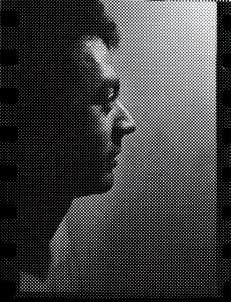
1 September 1986
Introduction
I was trained in both arts and sciences, insofar as possible, at the same time. At that moment this was not entirely deliberate, but it has proven useful.
My work since then has been directed towards the union of technical and cultural aims. The tool chosen was photography, later evolving into communication in general weighted towards the visual side. This combines a need to study technical disciplines with a need to study artistic approaches.
In turn this led to interest in the world around me, a constant motivation to observe and record, again insofar as possible, my environment.
Such observations are to be communicated to others. Communication with no
1 Original text written in English by George Love, with minimal corrections to avoid ambiguities.
aesthetic or cultural base becomes barren, and often is ignored; as pure esthetics for their own sake are also often ignored—without material to communicate having an environmental reference the union of two interests was satisfied for my own work.
Allied to a wish to communicate, this will become an interest in informing and not simply communicating.
Most of my life has been spent outside the United States, where I was born, and often where resources were few. This forces anybody to find out how to make do with little, and usually you end passing this information on to those around you. To avoid reinventing the wheel, one studies some history.
As in many areas one is still gathering data, I try to use my vision to gather data, and attempt to preserve it, data referring to man and his environment. This is the only explanation for an interest in seemingly disparate things such as the city of São Paulo and the Amazon Basin.
This will lead you further on if you let it; truthfully, at the moment I am interested in the social costs of pollution, but this is a beginning interest only and shared by many more advanced in their thinking.
In any case, to borrow the phrase, if all waste is energy waste, and energy waste is human waste, what I have seen makes me feel that all human waste is a waste of time.
After having left the service of the US Government traveled in Europe and settled in New York.
In 1962 went to Brazil to see the construction of Brasília, and become interested in Latin America.
George Leary Love
Born United States of America, May 24, 1937. American Citizen
Studies
- Atlanta University (Ford Foundation Early Entrance Program) [between 1953 and 1956]
- The New School for Social Research, New York, New York [between 1960 and 1962]
Formation
Mathematics, Philosophy, Philosophy of Art, Economics, Computer Programming
From 1957 to 1959 worked as Program Assistant with the US program for assisting universities in Indonesia. Based in Djakarta, worked in country in general. Traveled to India, Thailand, and Malaya during 1960.
Fascinated by photography at the time, and recorded especially the monument of Borobudur in South Central Java.
I began to study and simultaneously became a member and later president [vice-president] of the Association of Heliographers, an American group that opened one of the photography galleries—I would say one of the first—in the sixties’ revival of interest in photography in the fine arts.
At the same time, organized a small field unit of photographers for SNCC, an American civil rights group, to document social change in the United States. This was based in Atlanta, Georgia.
From 1961 to 1965, moved between New York and Atlanta, organizing and mounting exhibitions for the Heliographers (our members included Paul Caponigro, Minor White, Wynn Bullock, Walter Chappell, Larry Clark, Syl Labrot, and others) and aiding SNCC with educational filmstrips on voting rights, an archive of photographs, of taped interviews, and so on. This was field work with a great deal of on the spot training and the logistic support of field labs. One result of this work was an exhibit Now at the School of Visual Studies in New York, which I organized and participated in.
In 1966 moved to São Paulo, Brazil, and continued to work in and out of Latin America. My work became either editorial or corporate advertising, my personal interest began to center on the city of São Paulo and on the Amazon Basin. For about ten years I documented the Basin through low level aerial photography and photographed the growth of the city.
I tend to experiment a good deal with photographic images in constructed spaces, transparent or moving images, optics and photochemistry. This is especially true as it involves photochemistry of great color durability.
As I usually accompany any printed work into the plant, and sometimes design layouts, binding, and so on, this caused me to think of durability in printed material as well as in the photographic print.
About 1981/2 succeeded in work together with Studio 5 in São Paulo in making printed images of extreme durability; it is difficult to estimate any such process in time, but more than two hundred years seem possible.
In 1981 I began to work for the light & power company of São Paulo, then at odds with an immense archive of photographs begun in the 1890s and which continued until about 1950. There was a widening gap at this point. I was asked to “fill” this gap with work of my own from 1966 till 1982 and to train a documentary group at the company to continue working on the city’s development through 2000. This was done, with the edition of two books—one my own and one in which I chose the restoration methods and to my great satisfaction the documentary group continues to work, with apparently increasing support, until today, although I left the firm in early 1983.
The company’s president felt this continuous and documented archive would be of great usefulness in the study of energy and its interaction with environment and development, especially insofar as it is not a narrow archive but covers all aspects of city growth. The belief was in part intuitive and felt, not demanded; but it seems quite possible.
From 1983 until today I have worked in a variety of areas, mainly seeking how to increase the versatility and reduce costs in photography and visual communications in general, and following a beginning interest in the links between texts
and images, and in the physical sciences. An exhibit illustrating extracts from the diaries of Kafka and considerable researching into very small film formats of low cost (110) are typical.
1. Three institutional calendars for Mercedes-Benz of Brazil, on the Amazon Basin, Brazilian archaeology, and the Brazilian people. The first and second were especially interesting; in the second case optical means were developed to enhance images of rock paintings in caves that were subsequently dynamited. Calendars of 1973/74/75.
2. Editor of photography in the magazine “O Bondinho” (São Paulo) and Editor of the magazine “Photography” (São Paulo). Considerable experience in the organization of editorial staff work. Period 1969/70/71/72/73.
3. Photography of Chile, Colombia, and Argentina for animated still TV films for Braniff World Airlines.
4. Pavilion design for Olivetti of Brazil in 1970 and 1972. This was whole-concept work; architecture, space design, supervision of construction, and follow through during industrial fairs. In both cases projected images were used; in the first
case a 360º screen that enclosed the pavilion and over which images moved in both directions simultaneously.
5. Training, documentary group, SNCC (civil rights group), to record social change in the United States with the progress of the civil rights movement. Field supply of labs, often improvised, the rudiments of archive organization, and a large amount of field tape recording.
6. Group organization as well as contact with extremely advanced workers was the major tonic of the years at the Heliography Gallery, mentioned above. In 1977 organized and mounted a posthumous tribute to Syl Labrot, one of the gallery’s driving forces, at the Museum of Art in São Paulo.
7. Portfolio “Hiléia Amazônica” of the FormaEspaço collection in São Paulo. Unusual work executed directly over the color separations by the art directors made this fascinating; printed chromes were altered, repeated, rejoined, etc., with no sign that their visual impact had been lost. This is prosaic today; at the time it was an object lesson in image treatment.
8. An audiovisual, “Les Barrages” for the 1973 show “Images of Brazil” at Brussels. Photographic coverage of 4 dams, or hydroelectric power plants, played off against Japanese classical music. The
intent was not so much to show the dam’s industrial nature but their plastic strength.
9. “ Semana de Fotografia”—literally, Photography Week—organized with about 65 photographers from differing countries. Asia was little represented due to logistic considerations, but most other nations including Eastern Europe were present. The then-existent United States Information Service brought personnel and aided the entry of photographs into Brazil. A series of lectures by the guests accompanied the show, which was televised.
10. About 50 hours of tape recordings of the ceremonies and music of Brazilian Indian, in south Pará and the western part of the Territory of Roraima, as well as a collection of the material culture of the Xikrin Indians now at the Museum of the American Indian were made between the years 1966 and 1974.
11. From 1966 until 1984 I collaborated closely with the Museum of Art of São Paulo Assis Chateaubriand in the realization of its program of photography exhibits. This was always one of my principal interests in Brazil.
12. I involved myself in a large number of TV and radio programs about photography in Brazil, spanning an area from police reporting to debates of the differ-
ences between the television and photographic image. It occurred to me as logical to use one visual medium to discuss another, given that it was possible to escape from the usual limitations of TV, which thanks to the generosity and interest of a number of producers proved possible in the majority of cases.
13. In a somewhat different line I accompanied an archaeological expedition to the Peruvian site of Pajaten, discovered by the American Gene or Eugene Savoy, in 1966, which proved—according to the professional archaeologists present—entirely unique in Peruvian history. The photographs were published in a 1966 [1967] issue of the magazine “Horizon”. I mention that here as the city was “rediscovered”— entirely through coincidence by an American expedition in 1985 which felt it to be one of the most important findings in Latin American archaeology. I notified the staff in question of Mr. Savoy’s precedence, as a matter of simple courtesy. Personally, I would like to return to the site, constructed by a civilization which used few straight lines; every imaginable line of the construction is curved.
14. An experimental concert for projected images and chamber orchestra in homage to the American musician Henry Schumann, organized in 1974.
15. Editor of Photography, weekly newspaper “Aqui São Paulo”, dedicated to depth examination of the city, during 1976. Rewarding but exhausting, as I had to do most of the lab work and some coverages as well as edit that of others.
16. Photo-murals in Ciba print for the Museum of the Telephone, Headquarters Building, Telesp – São Paulo, in 1977. This was my first experience in murals of reasonable size—about 3 x 4 meters— blown up from 35mm slides. That it was possible at all is due to the patience of lab technicians called upon, in certain cases, to do the impossible.
17. Have begun to assemble the coverage of the Amazon Basin for keeping by an entity better able to catalog and preserve the chromes than I; my desire is for a living memory, with regular memory bank exchanges, microfilm exchanges, etc. The tape recordings form a part of this.
18. In 1981, on a personal and therefore small basis, began to send some Brazilian Indian artifacts out of the country for safekeeping, as expansion into the Amazon is generally accompanied by conflicts of one sort or another, which endanger the survival of this material.
19. “Half of the Half” is a reference to a decision to purchase a camera, one roll
of film, shoot and develop, and make—after contacting—a color 30 x 40 cm (12 x 16”) print while spending, at that time, one fourth of the minimum wage. This objective was attained after about 60 days of experimentation, using pocket 110 cameras and new emulsions of the high-resolution type. Afterwards, further experimentation revealed a series of creative possibilities in 110 easing sequence photography and making possible larger prints than had been thought possible. Lectures were given and one given negative from a 110 cartridge – Nº 112 – enlarged to roughly 50 x 80 cm (20 x 32”). This experiment and the shows which resulted were designed to help overcome fear of the very high cost associated with beginning in photography in Brazil, and attracted a considerable amount of attention. In addition, the storage capacity of film was shown to be much higher than had been thought in terms of information. A computer-enhanced video portrait was shown to be markedly inferior, a result which had been imagined possible but not thought certain.
20. Electropaulo Year I was simply a show to launch the books from the power company’s archive. As matters developed, it became an ideal place to show a small part of that archive and to bolster morale of the firm’s new documentary group with
an informal collective of their work. Public interest caused extension of the show and operating divisions entered with heavy equipment to improvise a public playground in the plaza below and behind the Museum. The resulting attention given was used to draw in the documentary group with television coverage, etc. Very likely this show, originally with smaller aims, aided in firming the documentation concept by drawing public attention to the fact that the power company had taken the responsibility for a part of the city’s memory of itself.
21. For the United Nations I have tried to make available data on Brazil’s alternative fuel program, including engineering data, fuel samples, car test reports (aided by Volkswagen of Brazil) and so forth. The question of emission controls for alcohol burning cars will be on the agenda during the next 2 years or so as this has been made mandatory; but alcohol pollutants are of a different composition from those of gasoline. To further a certain confusion, there is discussion of stepping past alcohol (ethanol) to vegetable oils in small diesels. An attempt will be made to follow this. In addition, the country’s hydroelectric plants are beginning to be installed in the Amazon Basin, and a new two-dam system about 20% larger than Itaipu Dam is under construction.
Love, George Leary – The Mouth of the Amazon River Is in Rye, documentary for community TV | 1993 | LMC-TV | Mamaroneck, NY
Love, George Leary – Alma e Luz –Sobre a Bacia Amazônica, book | 1996 | MD Editora | São Paulo
De Boni, Zé – Green Lens – Brazilian Photographers and Nature, book | 1995 | Empresa das Artes | São Paulo.
Green Lens – Brazilian Photographers and Nature, collective show | 1997 | MAM São Paulo.
Amazônicas, collective show | 1998 | Itaú Cultural | São Paulo.
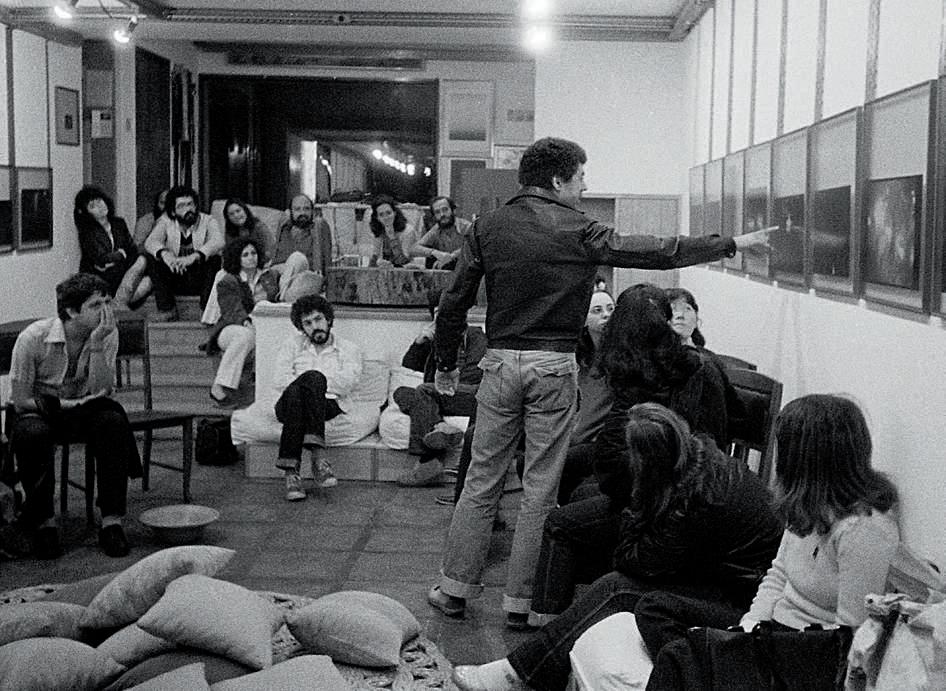
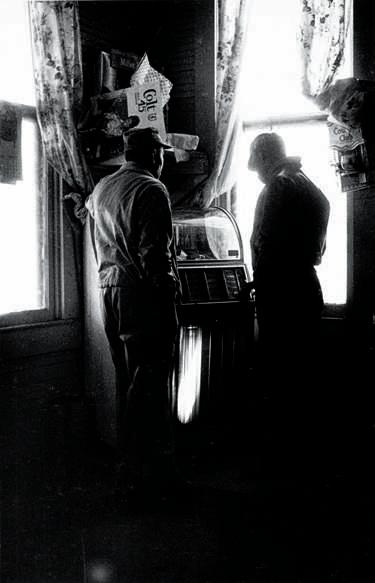
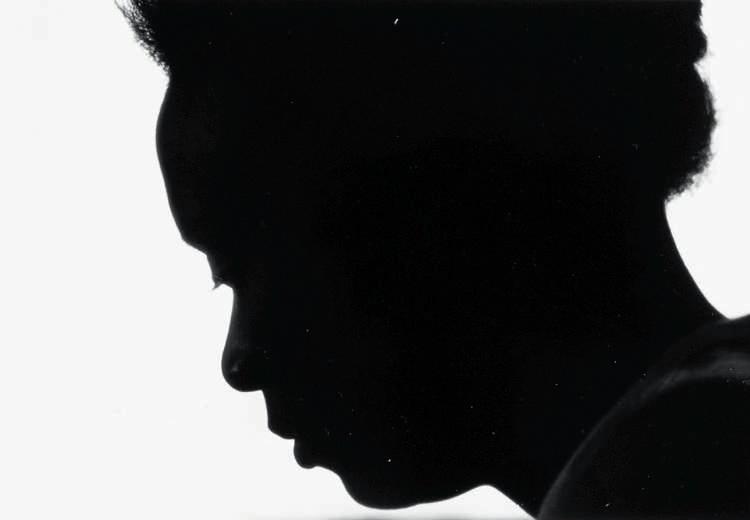
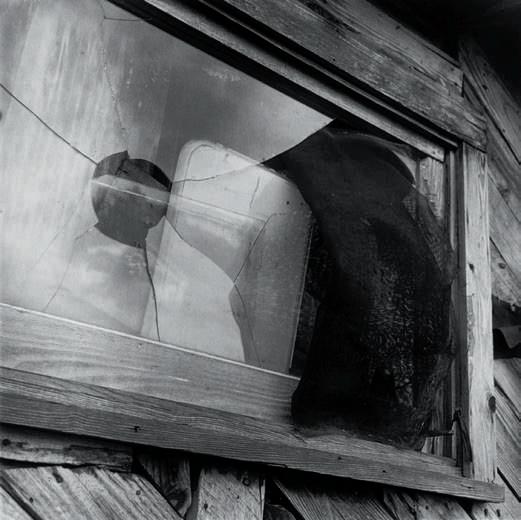
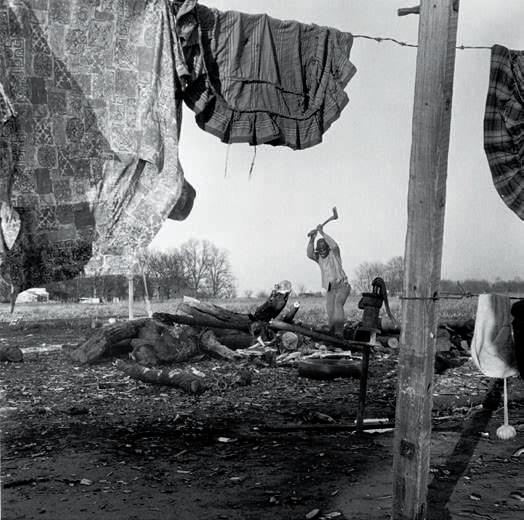
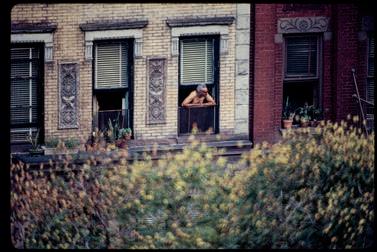
[p. 152—155]
Vermont Railway, ca. 1963.
[p. 156—157]
Fotografia de viagem [Travel photography], 1959-62.
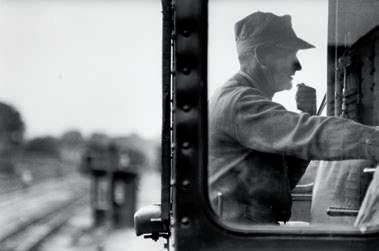
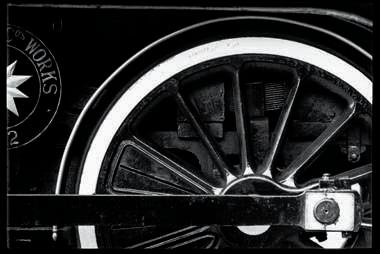
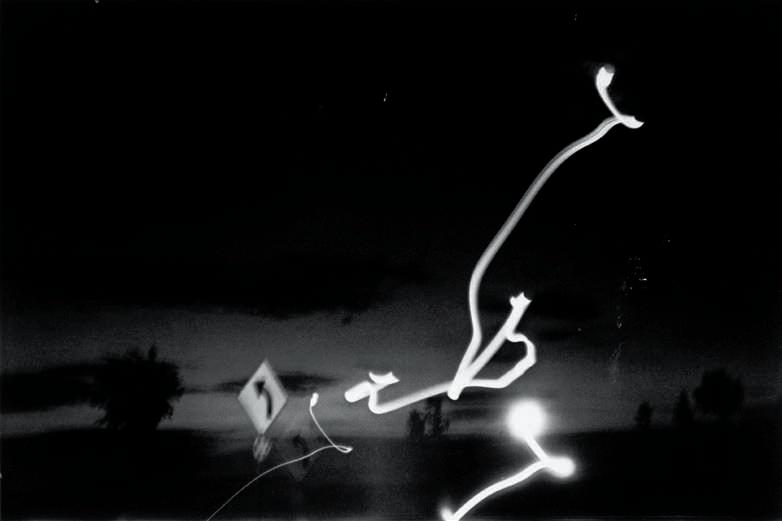

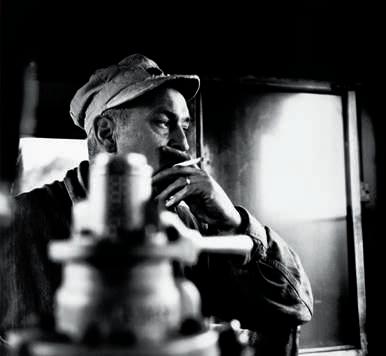
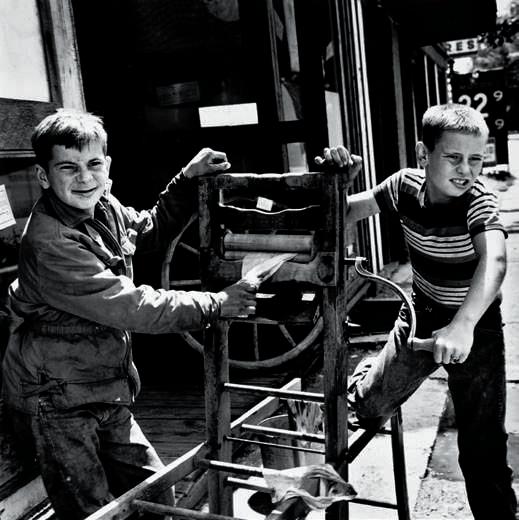
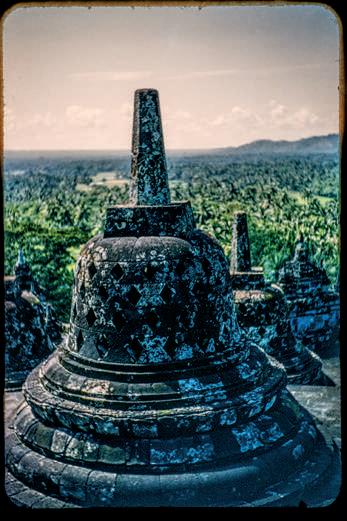
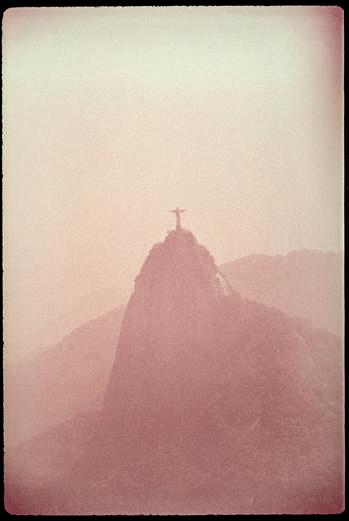
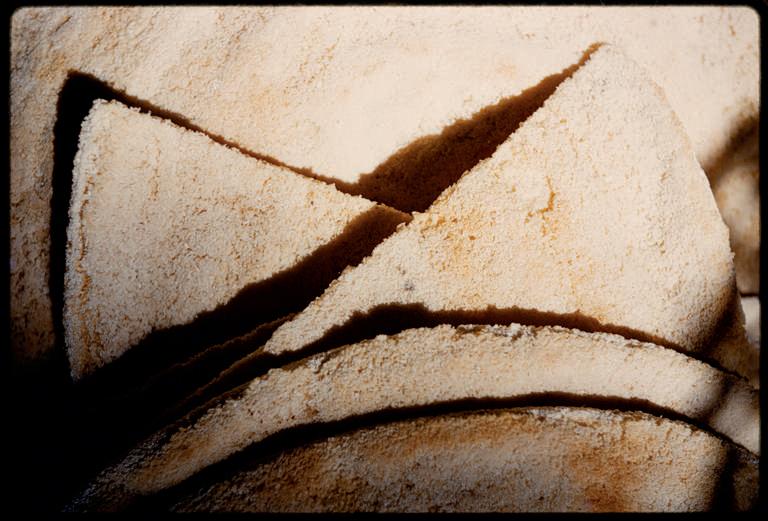
[ AMAZÔNIA
CONTACT ]
[p. 158—162]
Comunidade Xikrin [Xikrin people], 1966.
[p. 163] Pajatén, Peru, 1966.
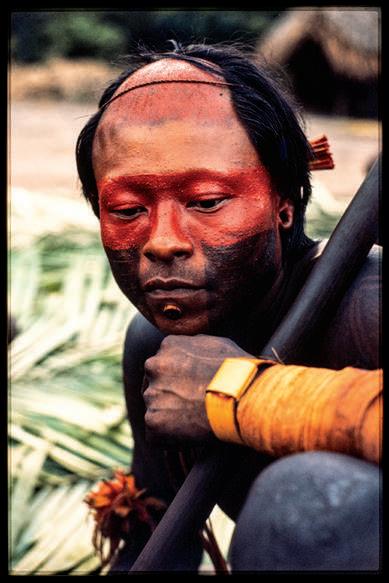
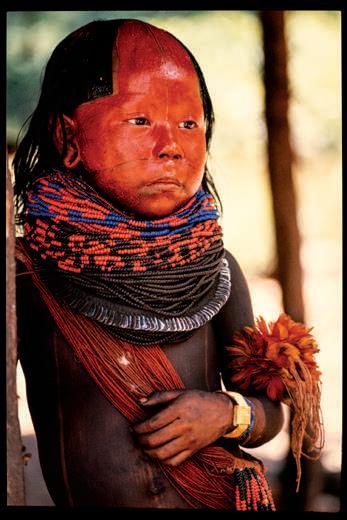
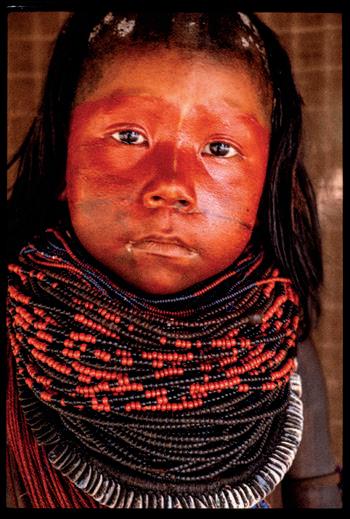
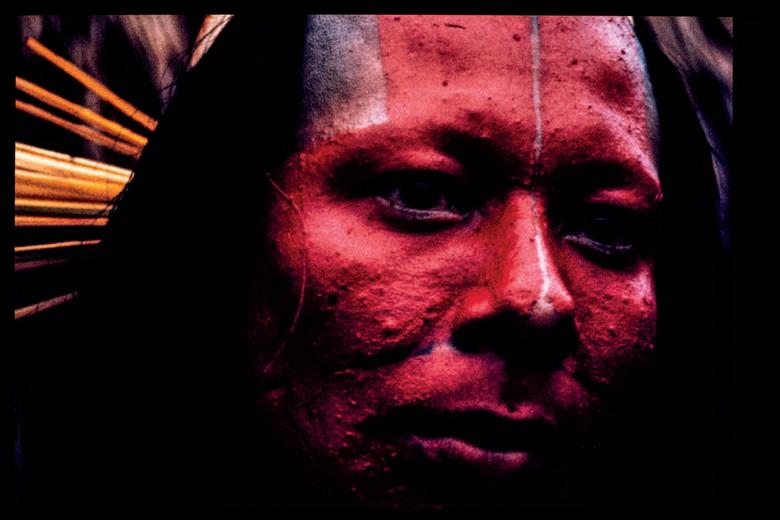
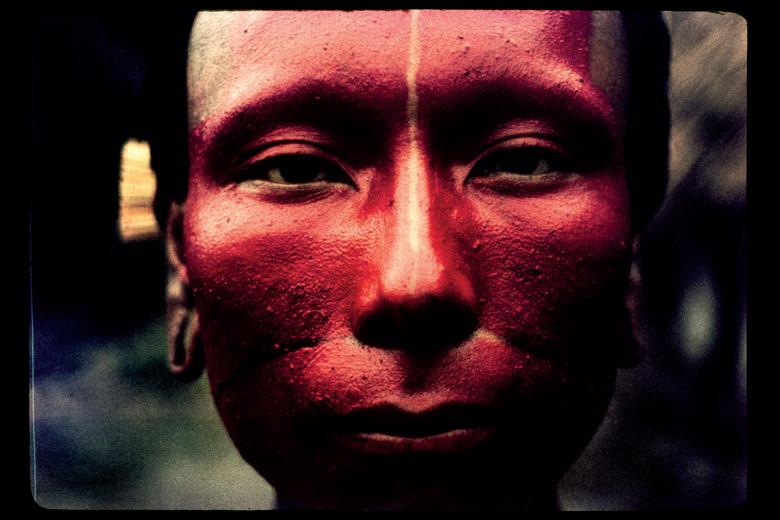
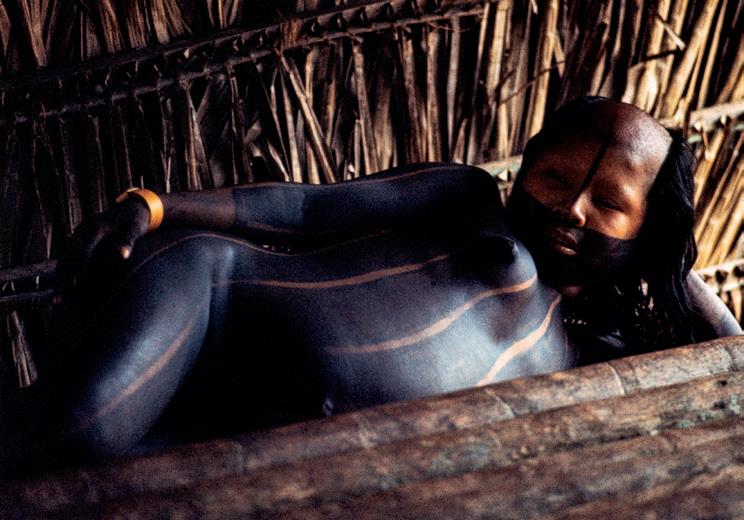
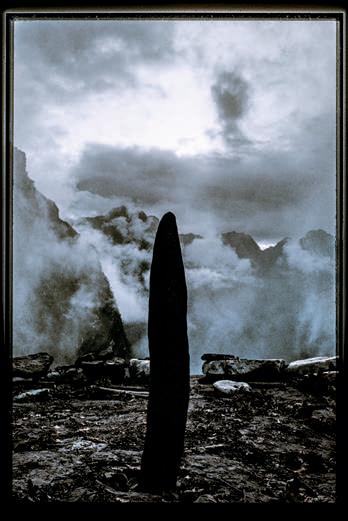
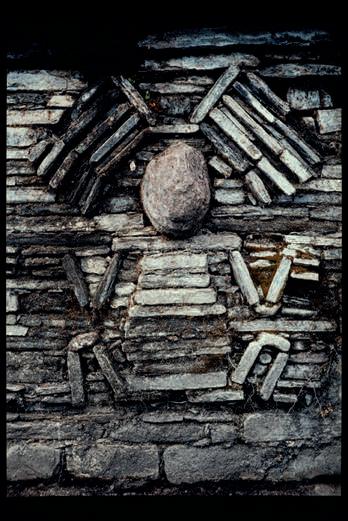
[ EDITORIAL PHOTOGRAPHER ]
[p. 164—165]
Futebol, revista Realidade [Soccer, Realidade magazine], 1967-68.
[p. 166]
Moda, revista Claudia [Fashion, Claudia magazine], 1967.
[p. 167]
Revista 4 Rodas [4 Rodas magazine], 1970.
[p. 168]
“Viva as cores”, revista Realidade [“Live the Colors”, Realidade magazine], 1970.
[p. 169]
“É explosivo”, revista Realidade [“It’s Explosive”, Realidade magazine], 1968.
[p. 170—171]
“Poder para o povo preto”, revista Realidade [“Power to the Black People”, Realidade magazine], 1968.
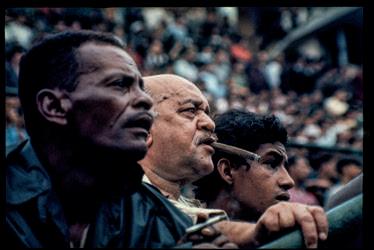
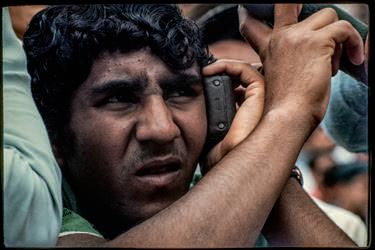
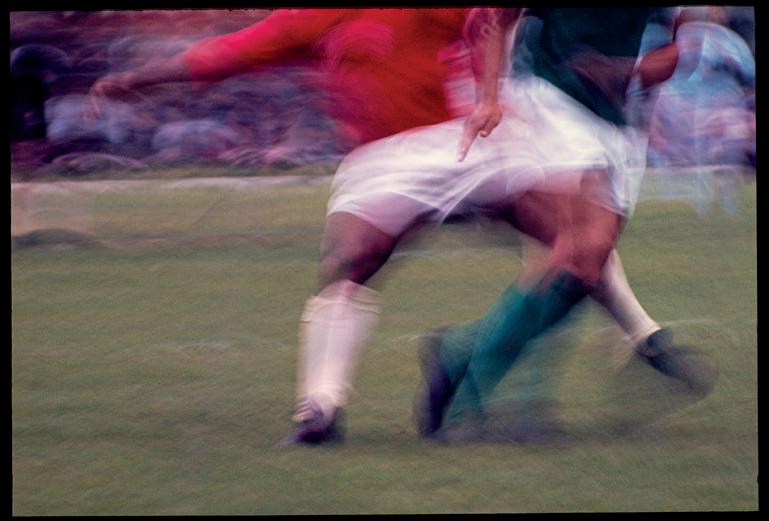
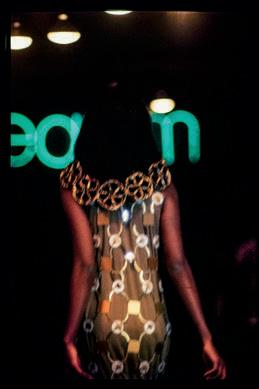
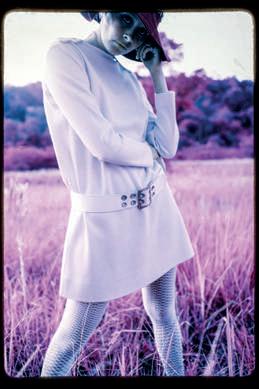
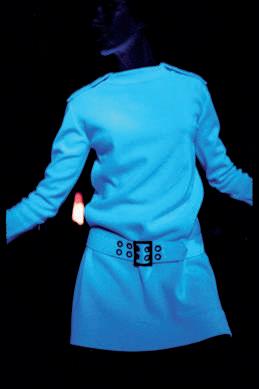
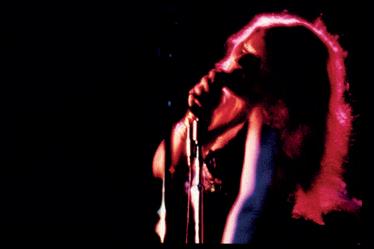
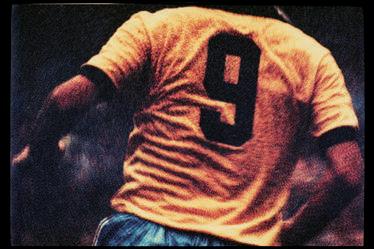
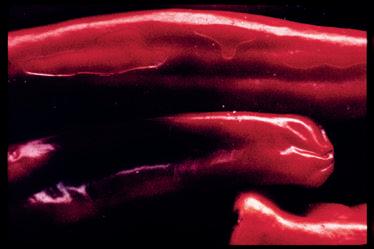
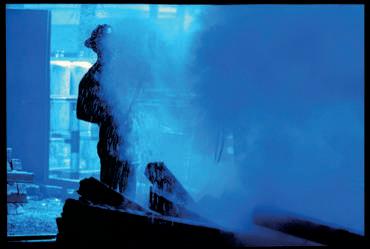
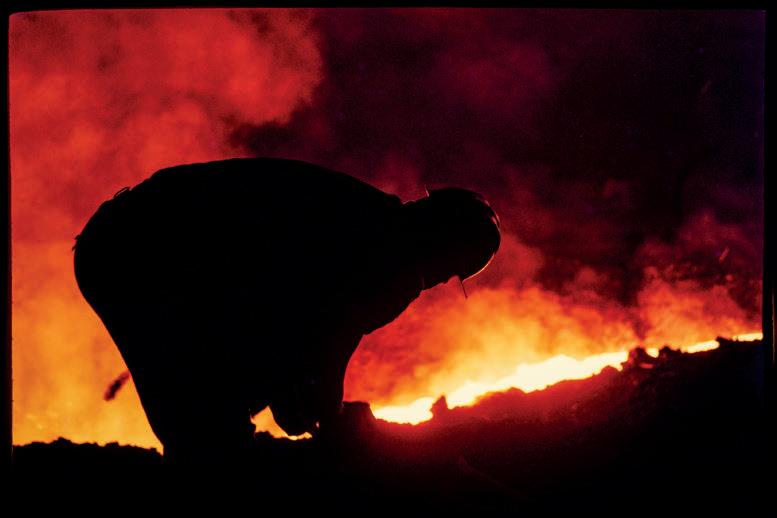
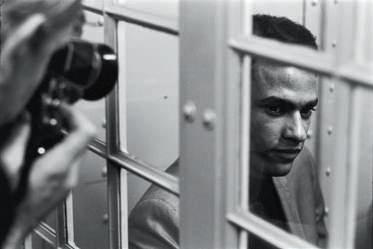
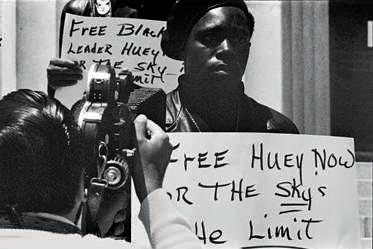
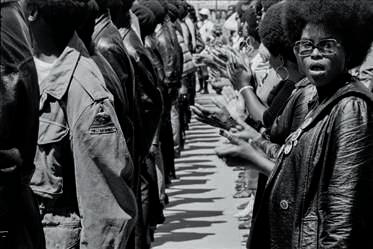
[ AMAZÔNIA
REALIDADE]
[p. 172—174]
Imagens para edição especial da revista Realidade [Images for a special edition of Realidade magazine], 1971.
[p. 175]
Capa da revista Camera [Camera magazine cover], 1973.
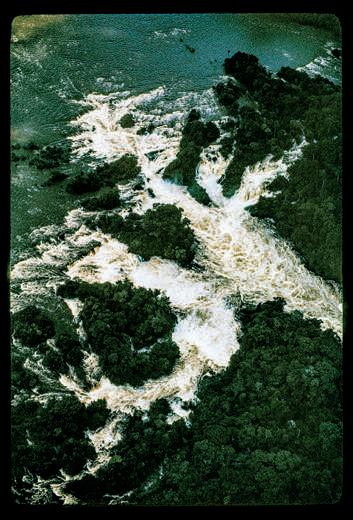
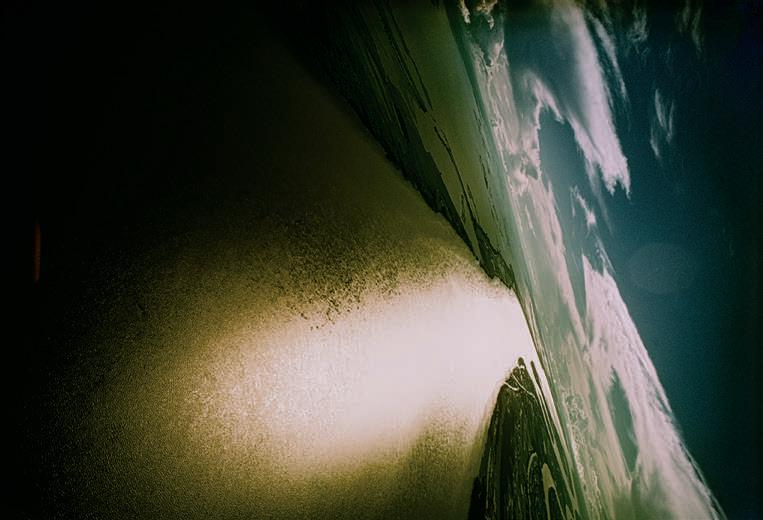
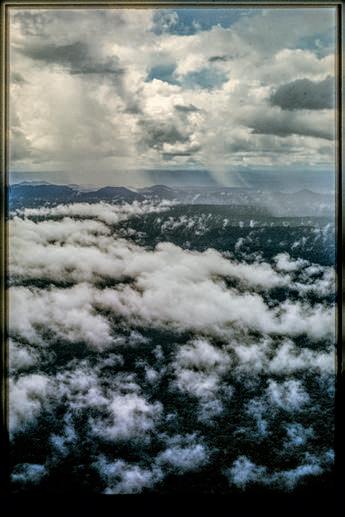
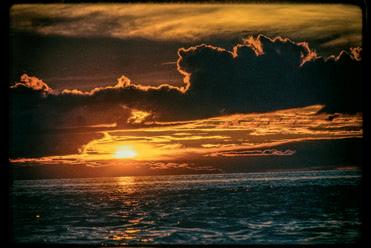
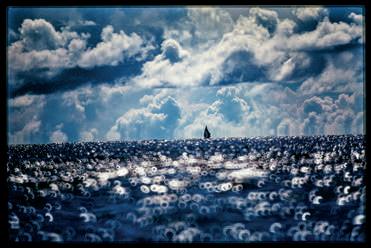
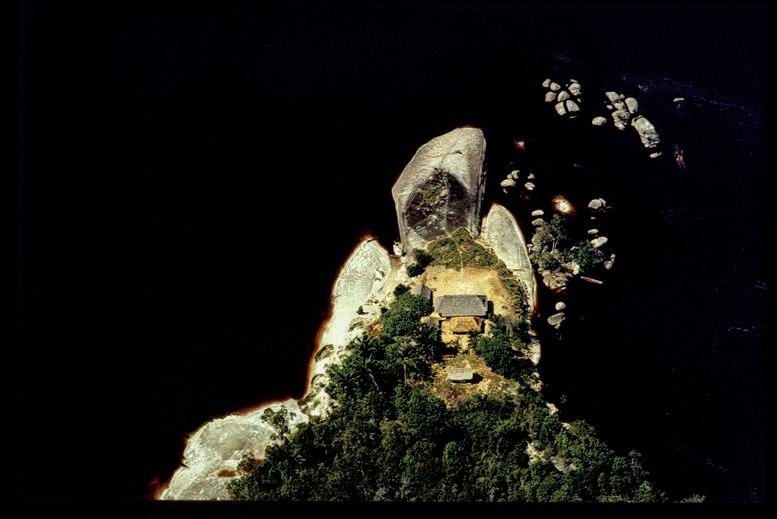
INFLUENCIADOR REVISTAS
[ PHOTOGRAPHER INFLUENCER MAGAZINES ]
[p. 176—177]
Ensaios em revistas de fotografia [Essays in photography magazines], 1971-79.
[p. 178—179]
Revista Bondinho [Bondinho magazine], 1971.
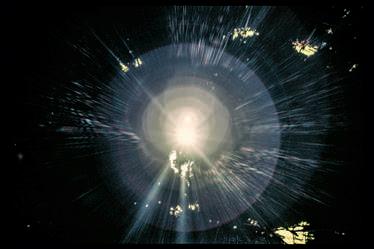
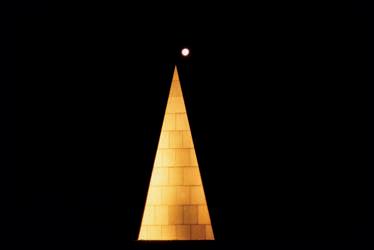
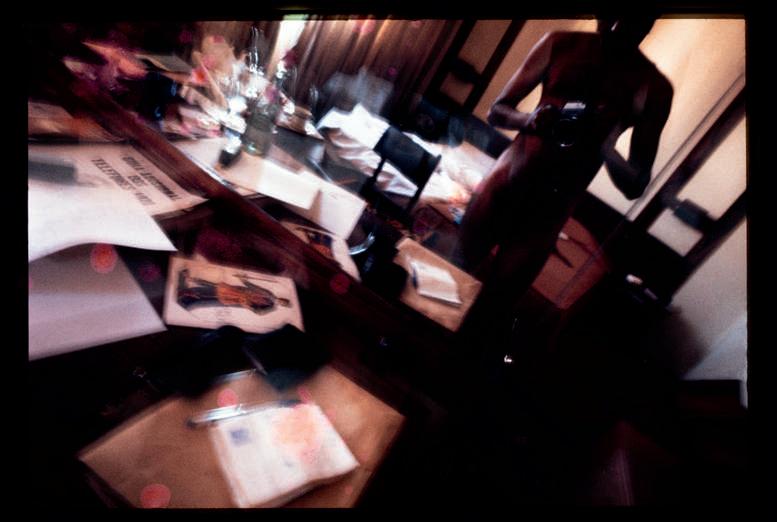
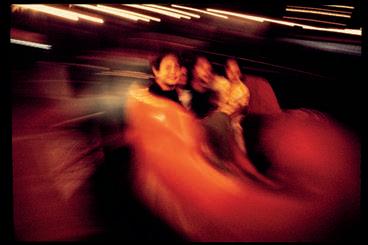
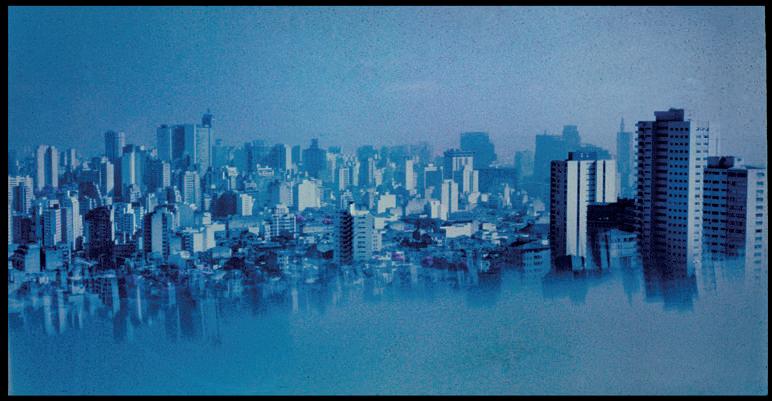
[ THE CORPORATE HELIOGRAPHER ]
[p. 180]
Imagem de geração eletrônica para Sharp [Image of electricity generation for Sharp], ca. 1977.
[p. 181—183]
Imagens do audiovisual Les Barrages [Images from the Les Barrages audiovisual], 1973.
[p. 184—185]
Imagens de Sete Quedas e construção de Itaipu [Images of Guaira Falls and construction of Itaipu], 1978-84.
[p. 186—189]
Trabalhos corporativos em formato médio, déc. 1970. [Corporate prodyction in 2¼ square format, 1970s.]
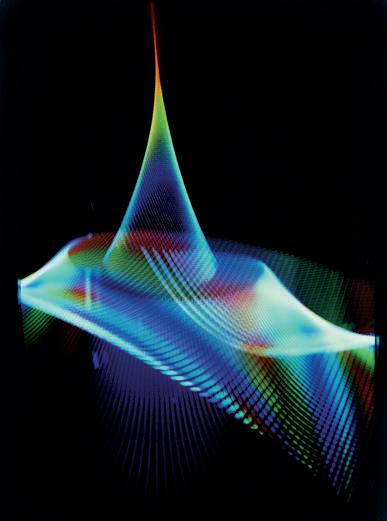
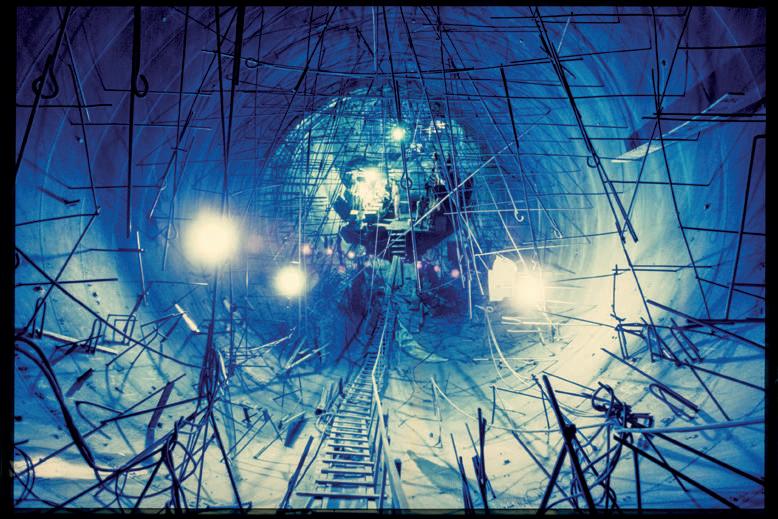
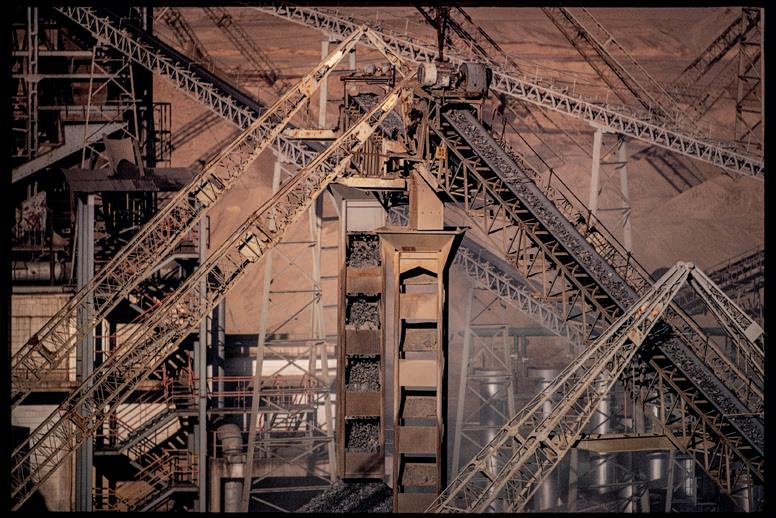
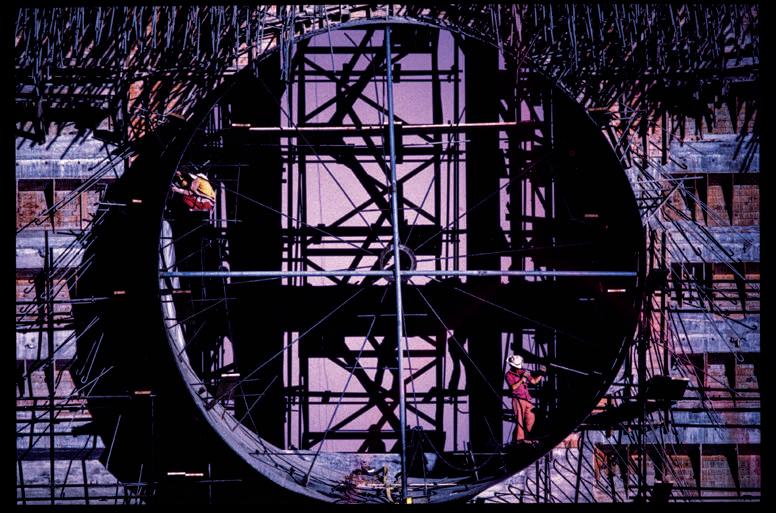
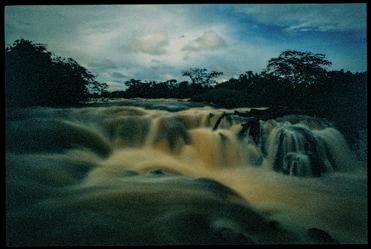
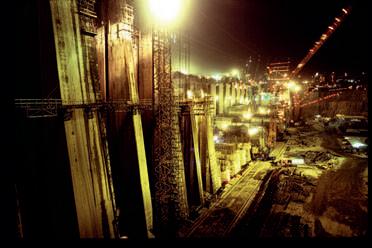
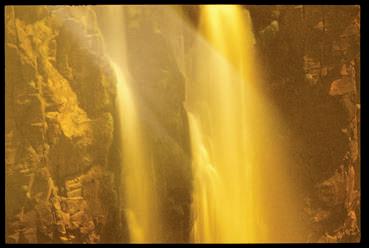
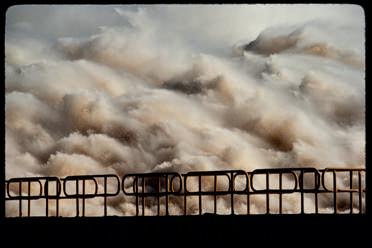
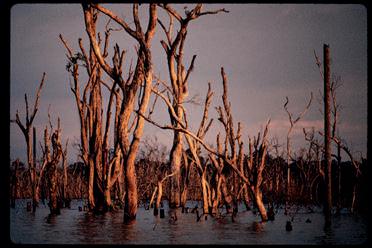
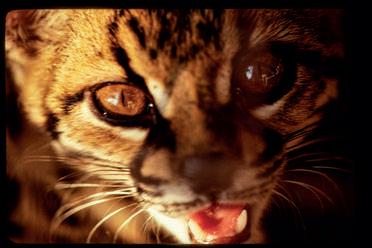
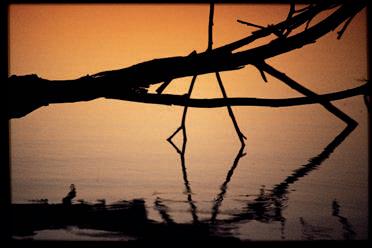
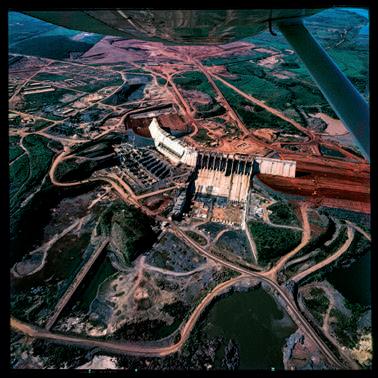
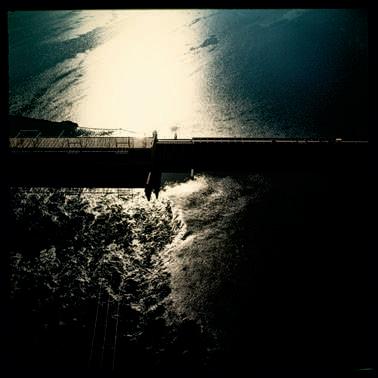
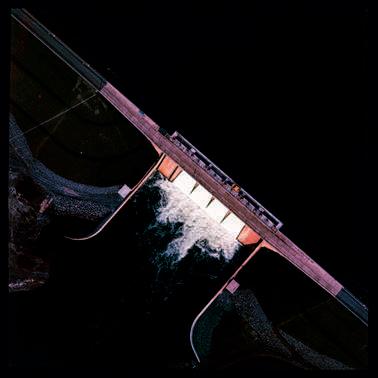
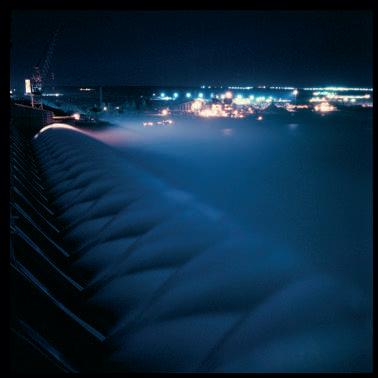
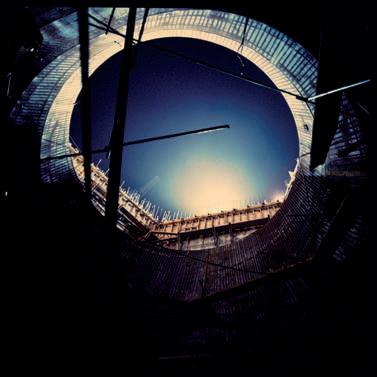
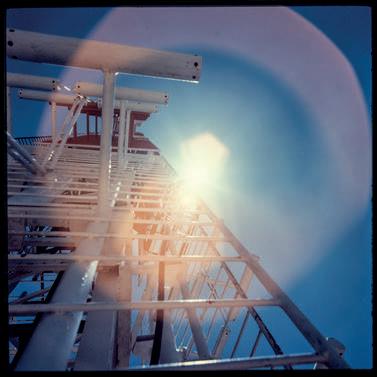
NOTES ]
Imagens do livro publicado em 1982. [Images from the book published in 1982.]
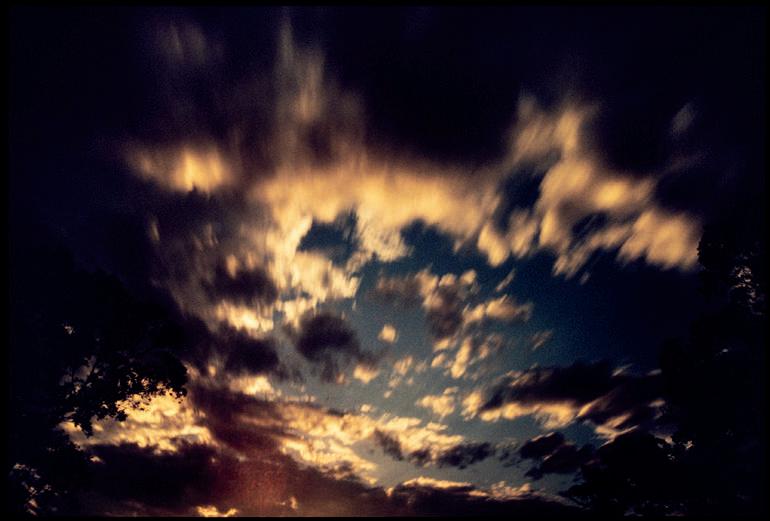
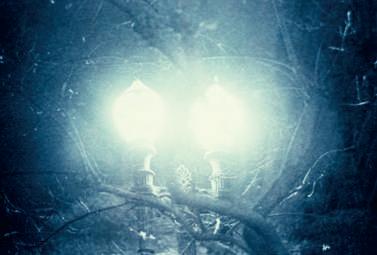
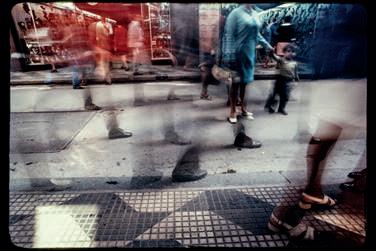
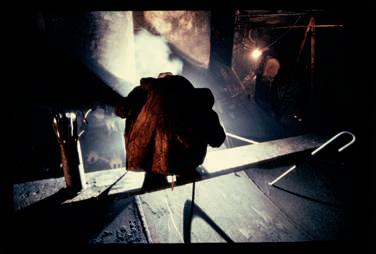
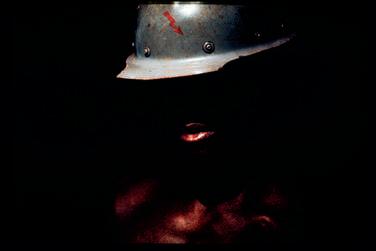
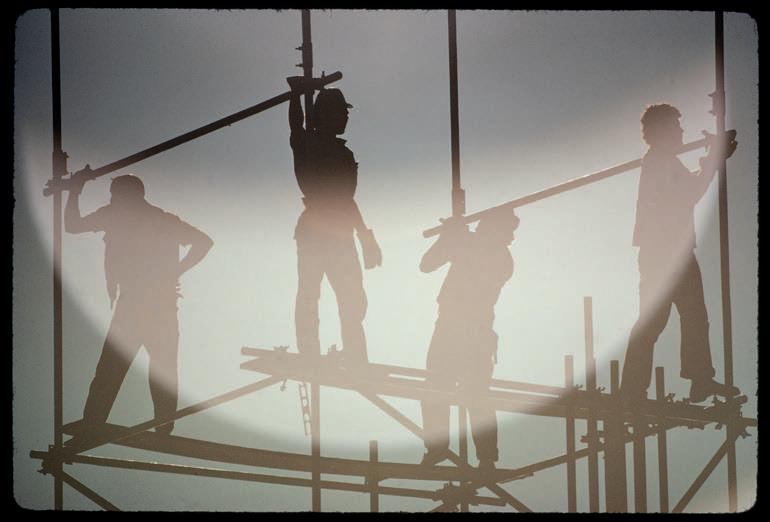
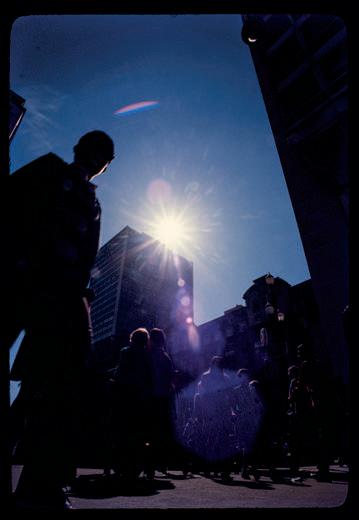
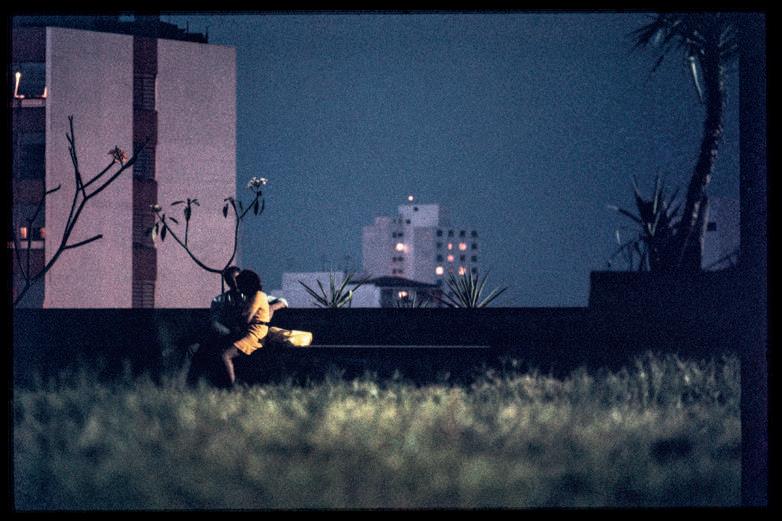
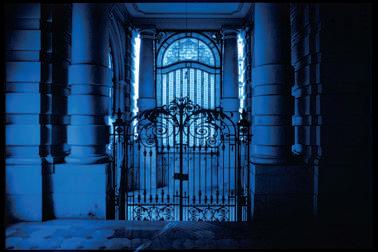
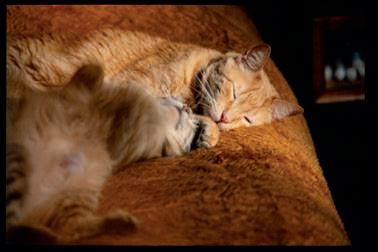
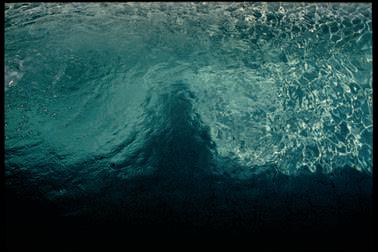
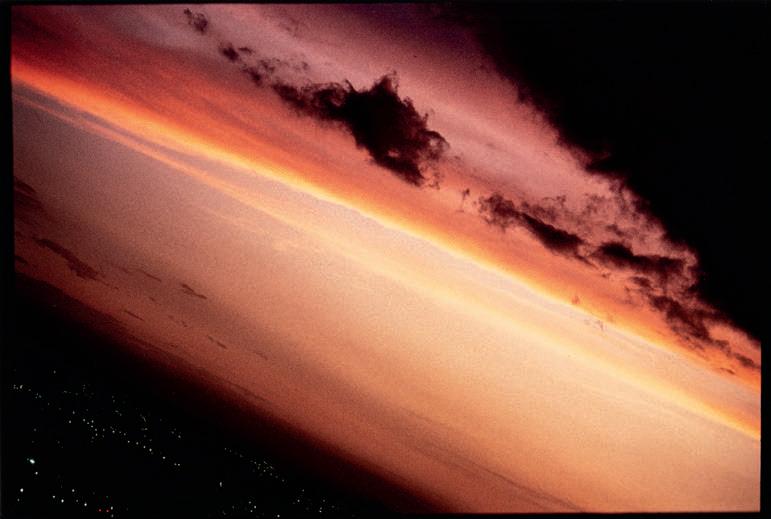
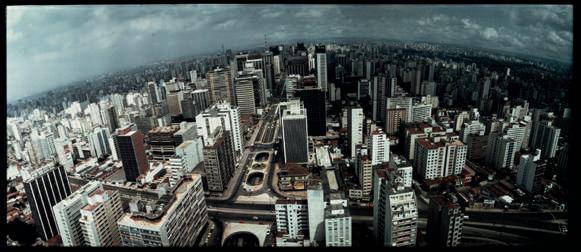
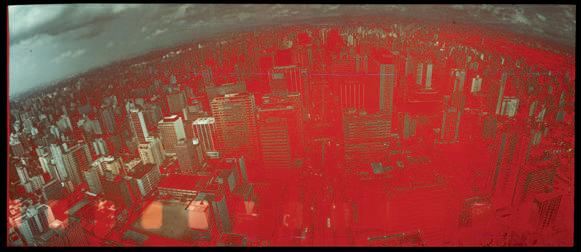
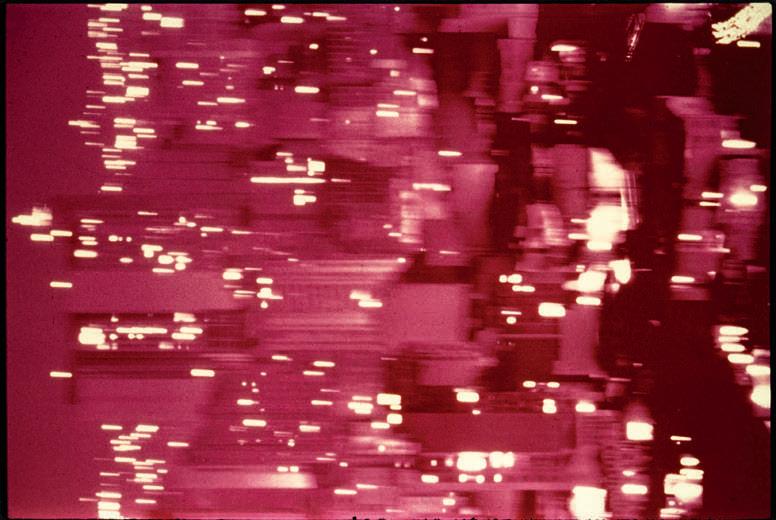
Imagens do livro Amazônia, publicado em parceria com Claudia Andujar em 1978. [Images from Amazônia book, published in partnership with Claudia Andujar in 1978.]
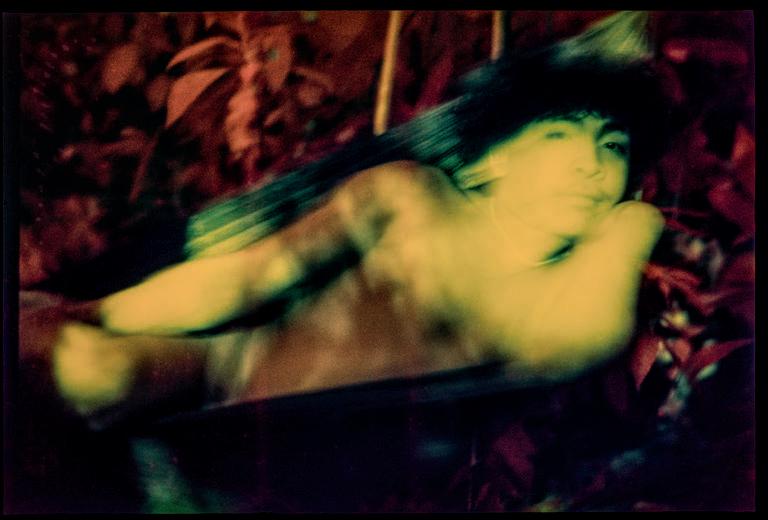
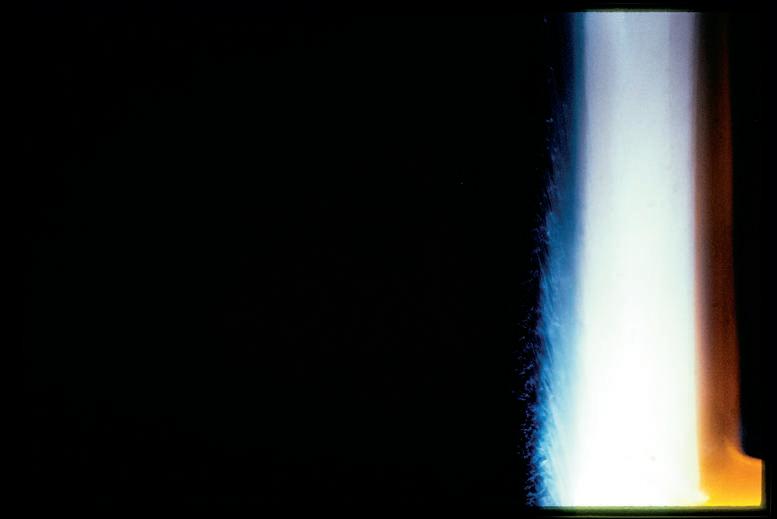
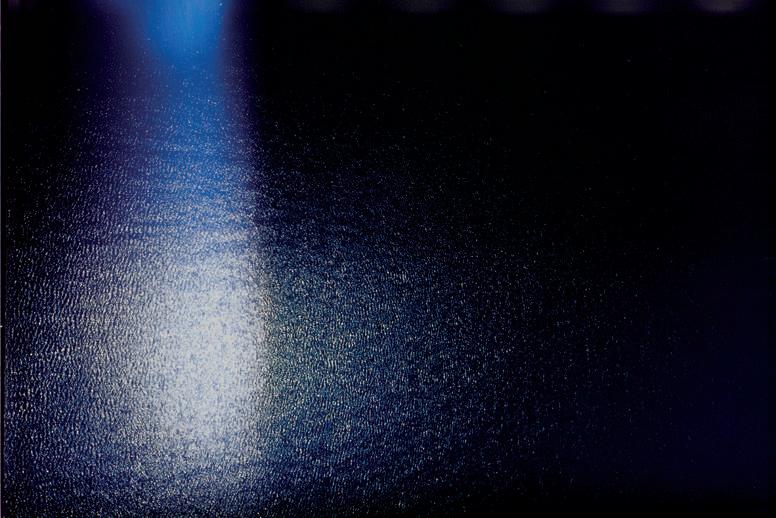
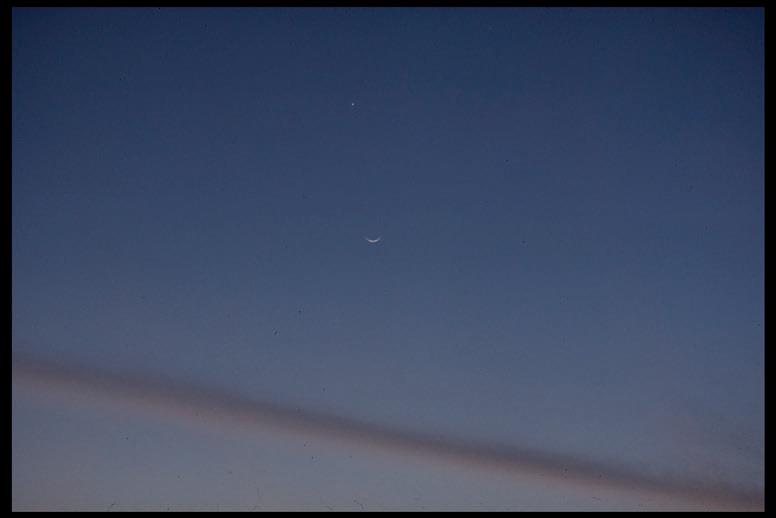
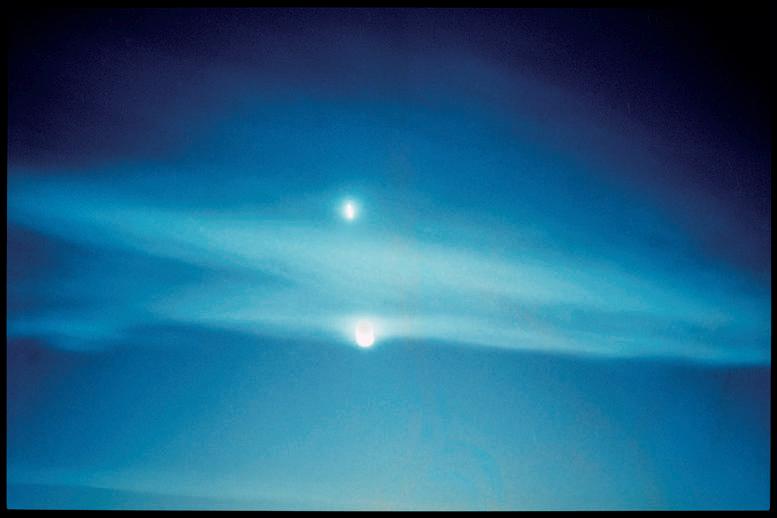
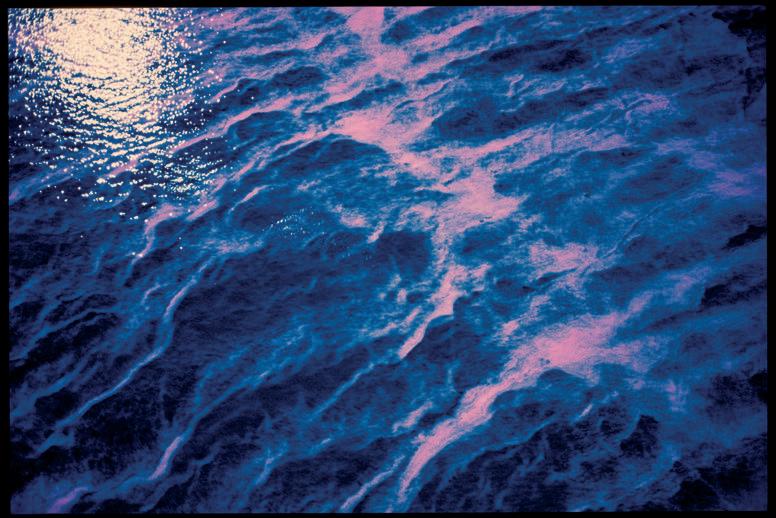
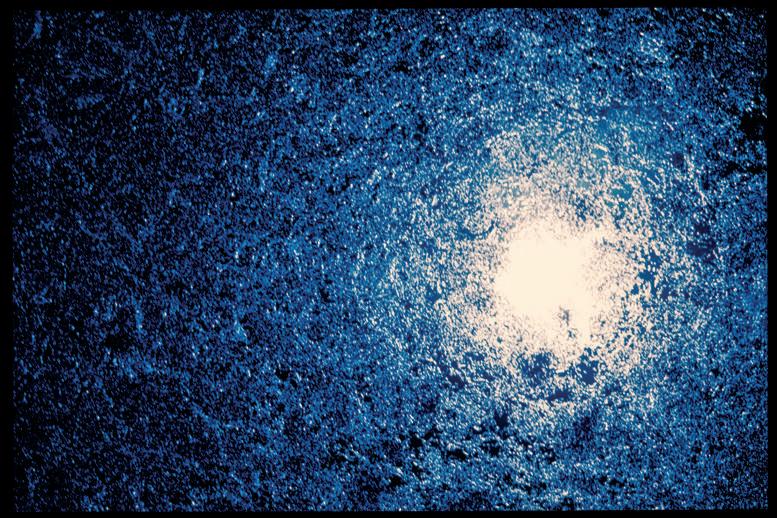
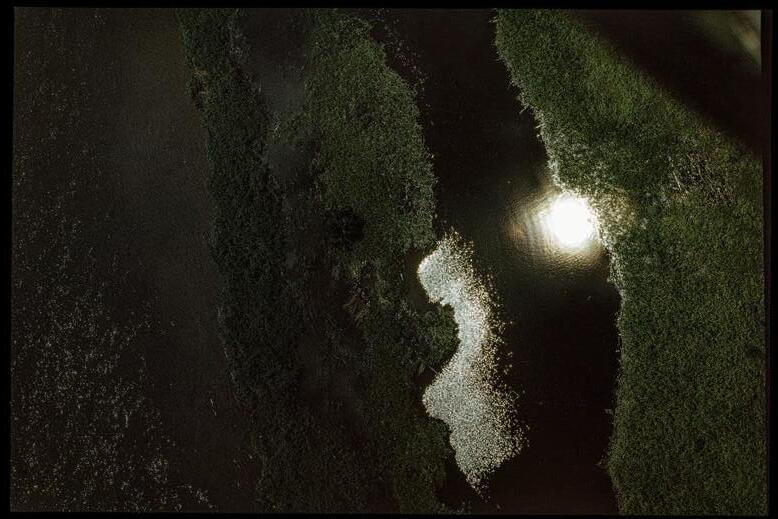
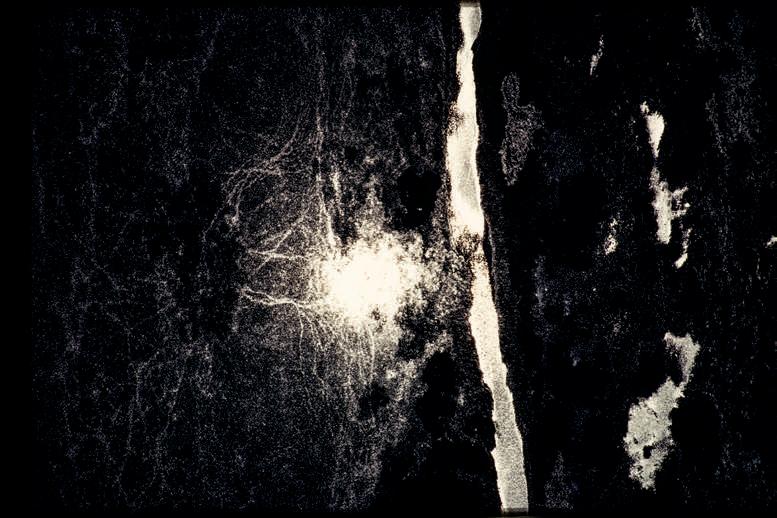
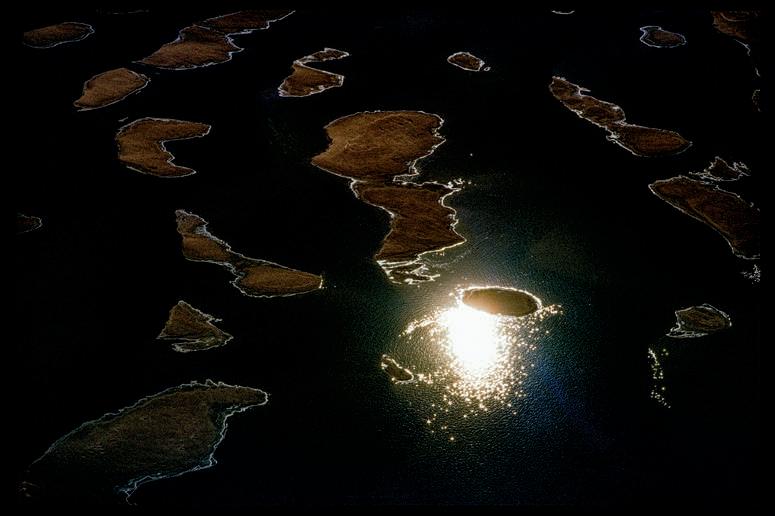
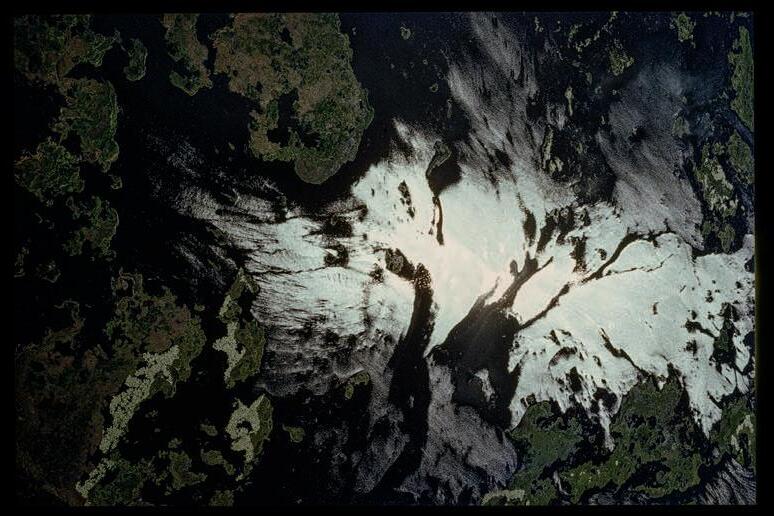
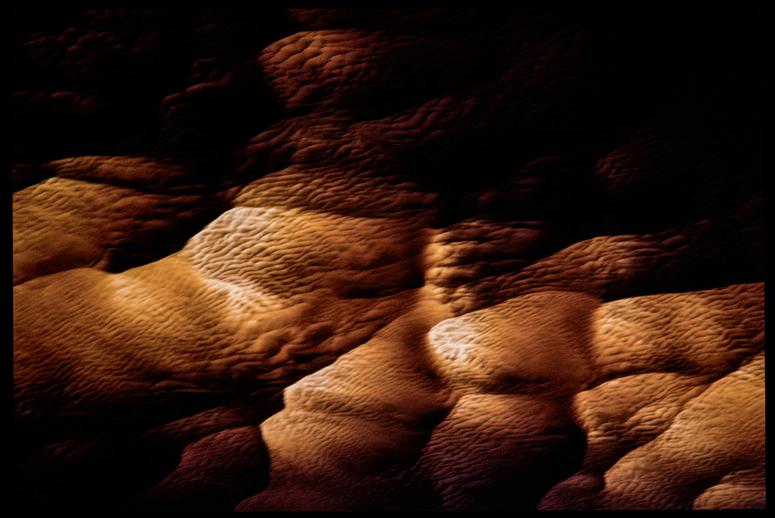
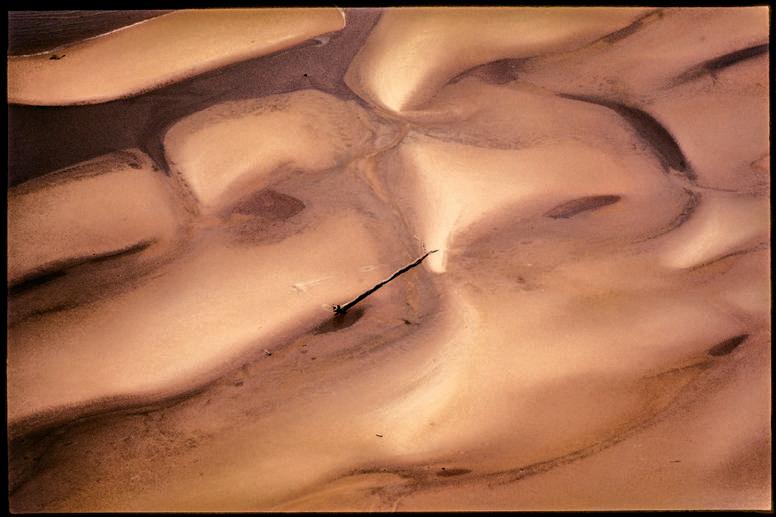
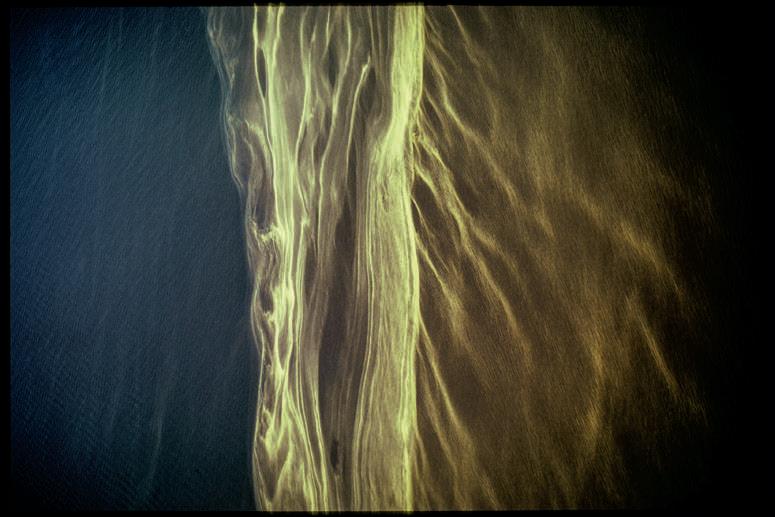
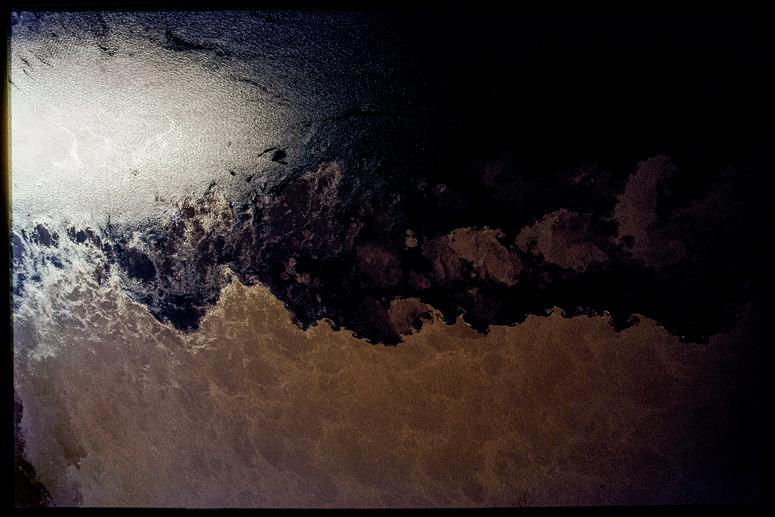
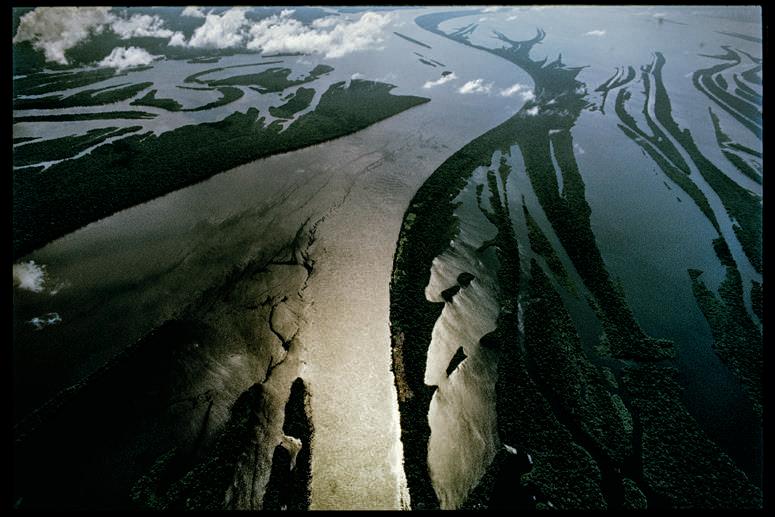
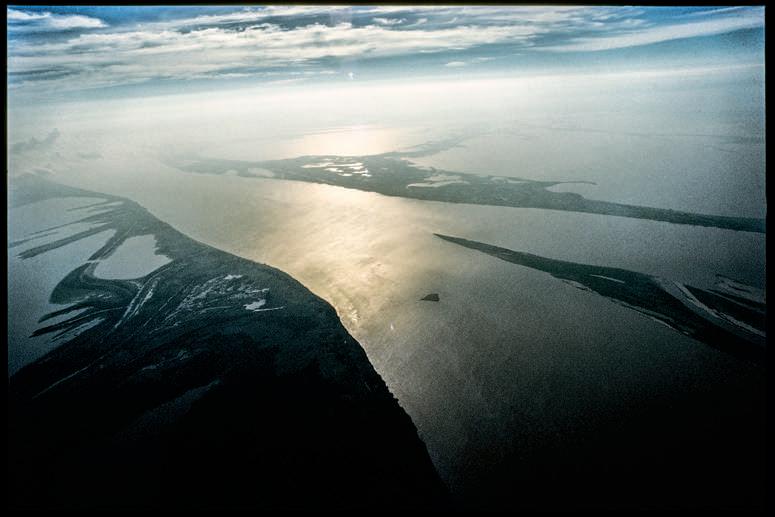
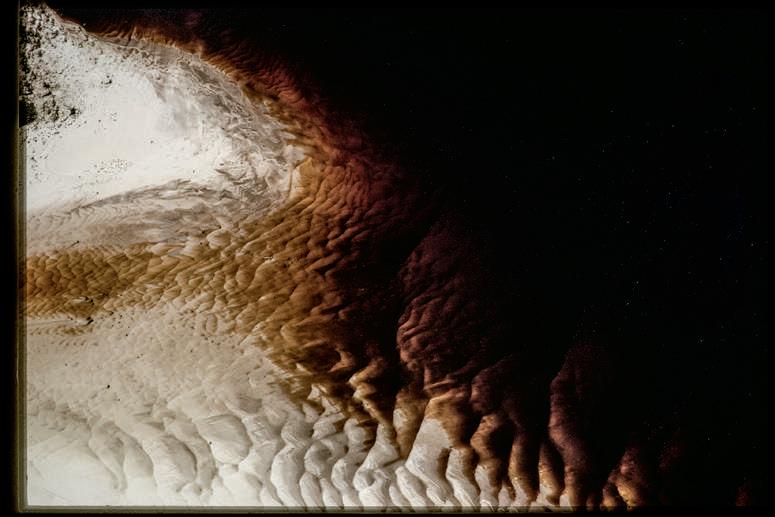
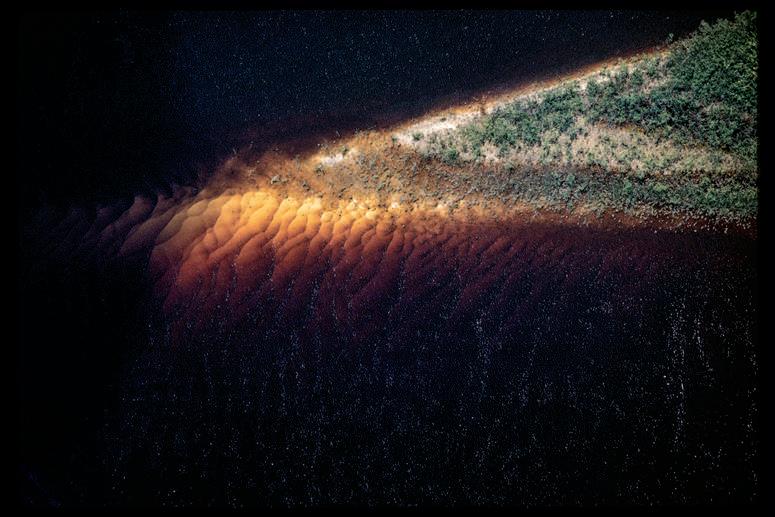
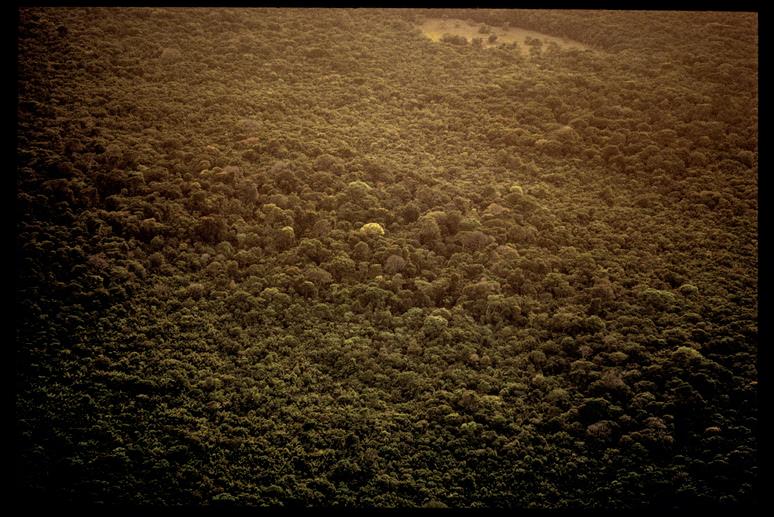
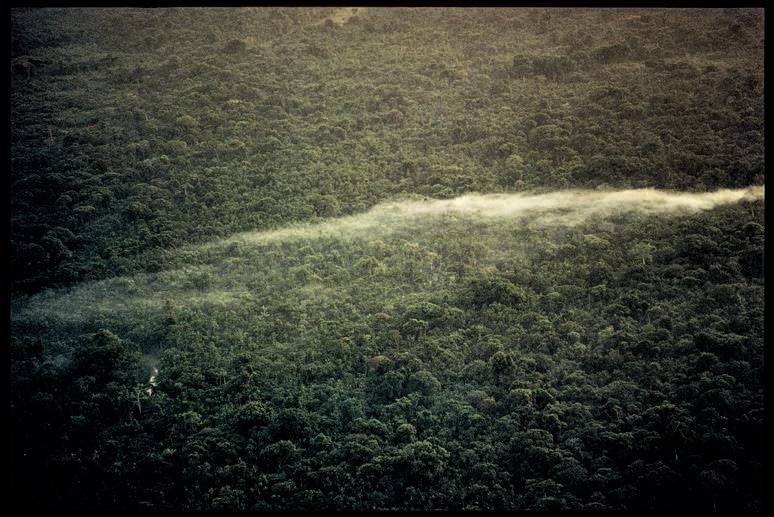
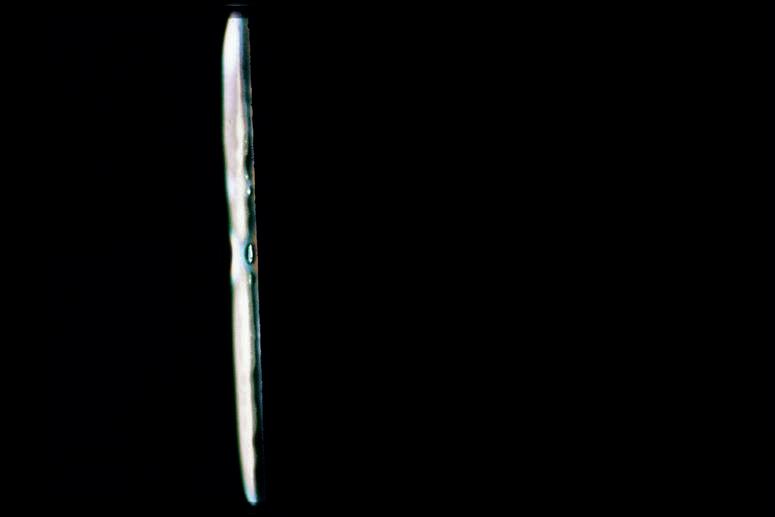
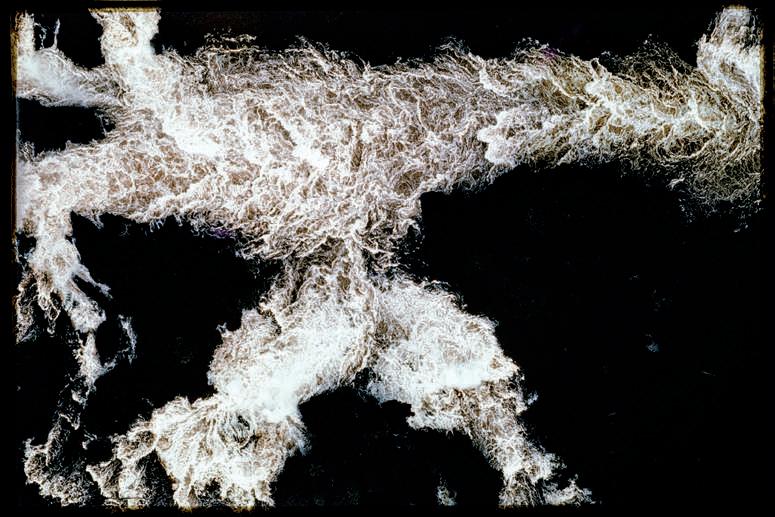
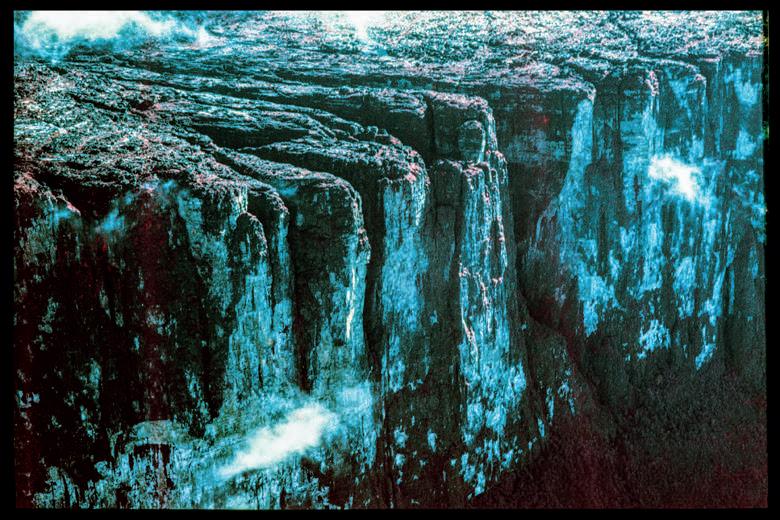
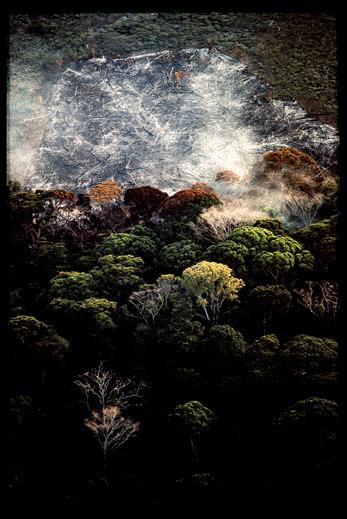
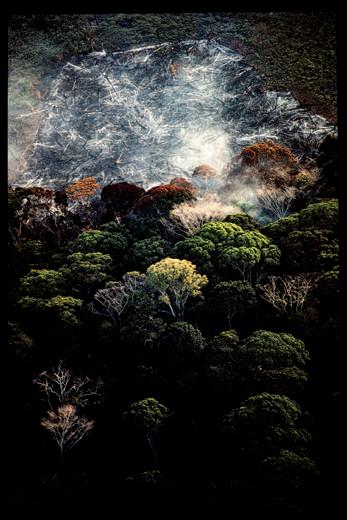
[ AMAZÔNIA
IDENTITY ]
Imagens do livro Service Order 8696 –The Amazon Basin From the Air, publicado em 1985. [Images from Service Order 8696 –The Amazon Basin From the Air book, published in 1985.]
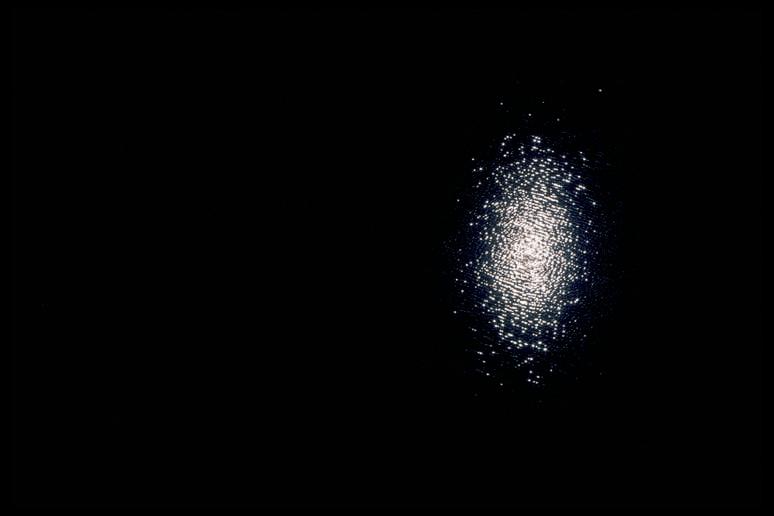
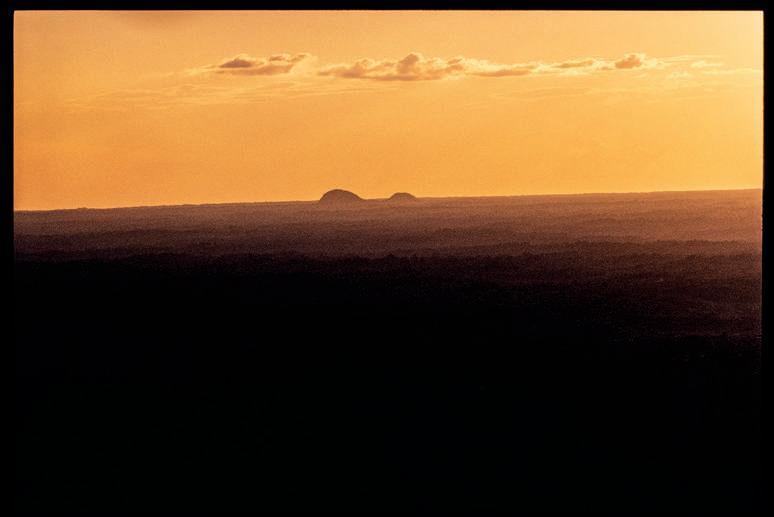
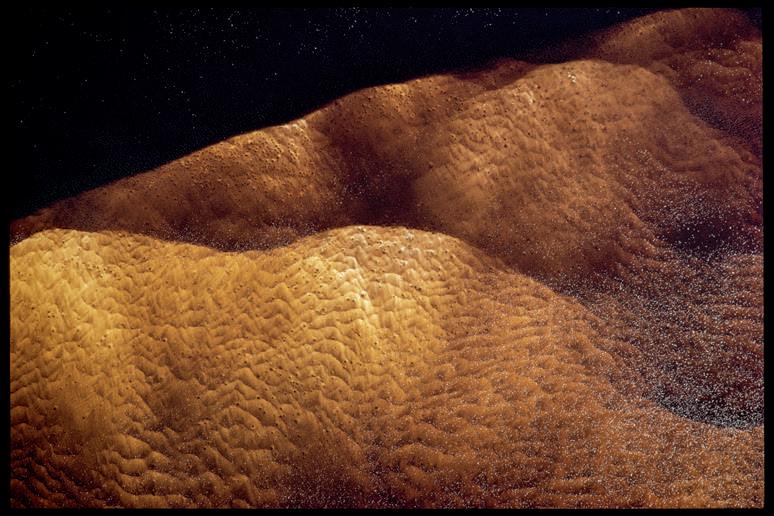
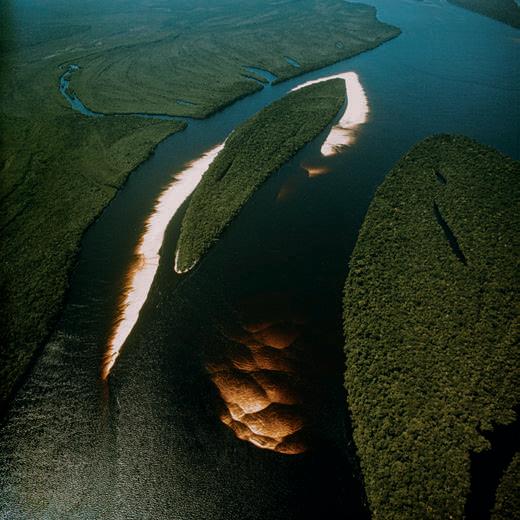
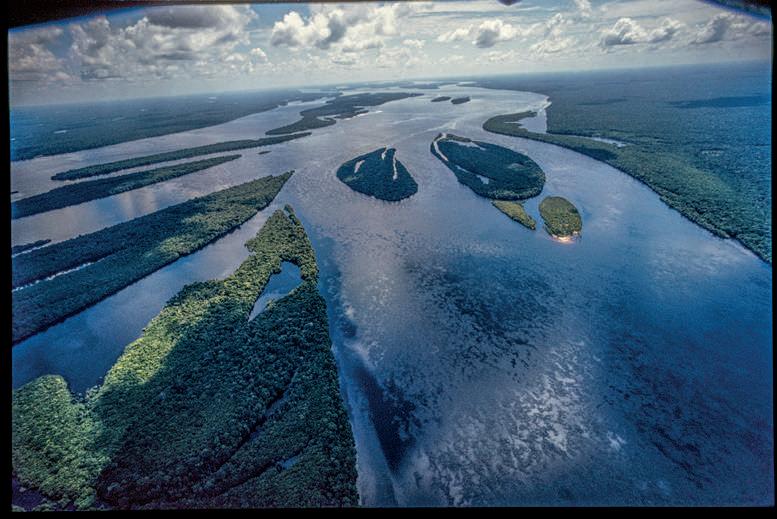
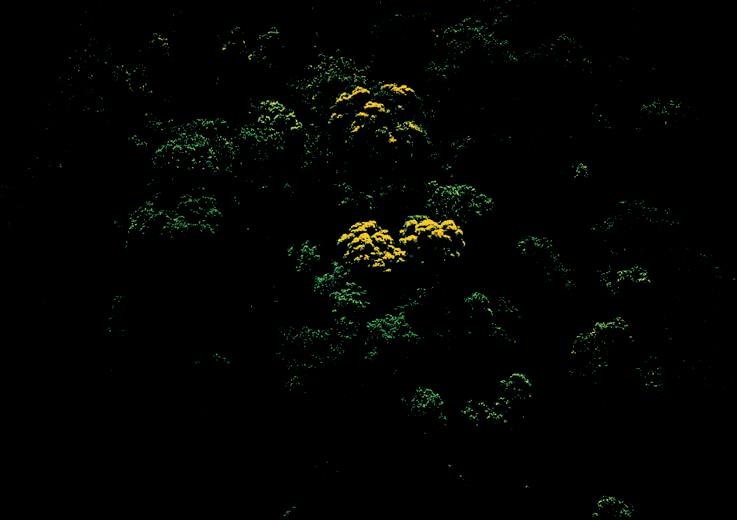
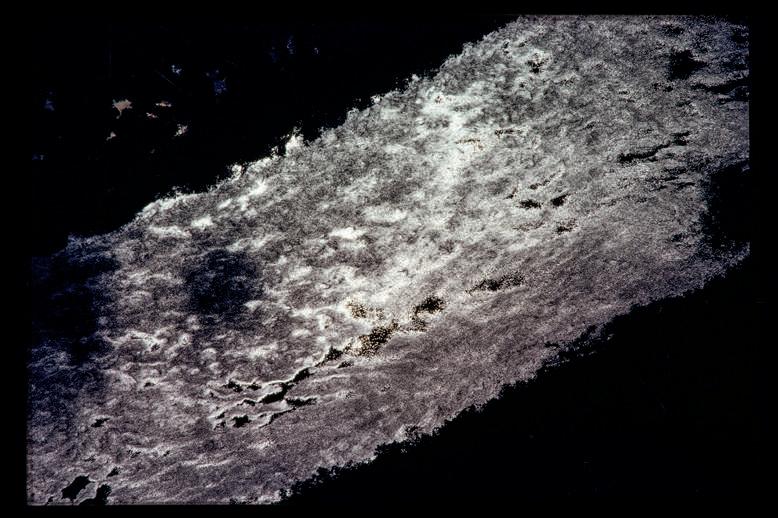
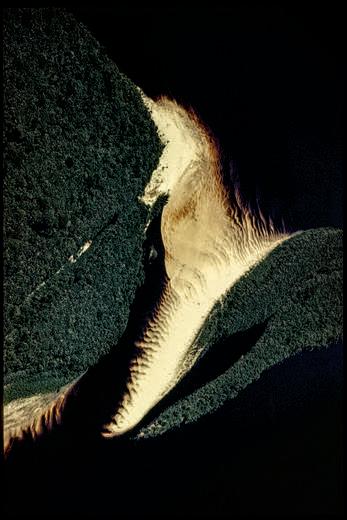
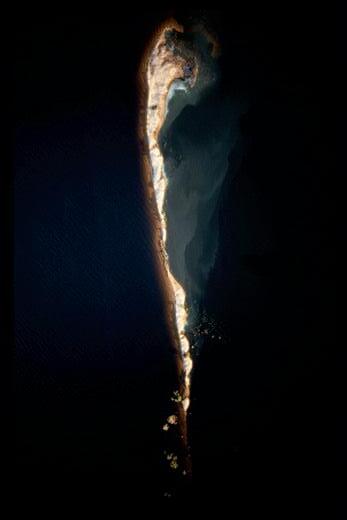
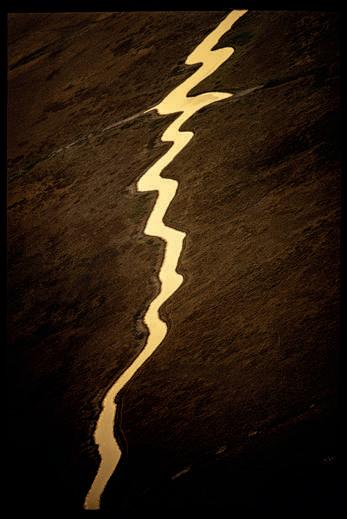
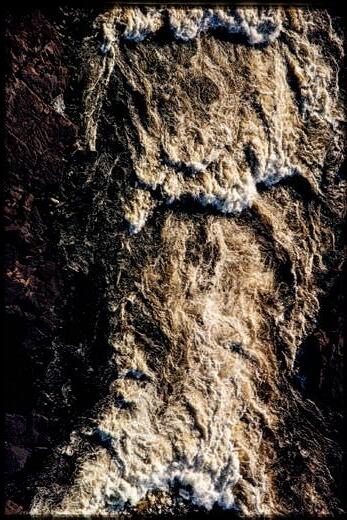
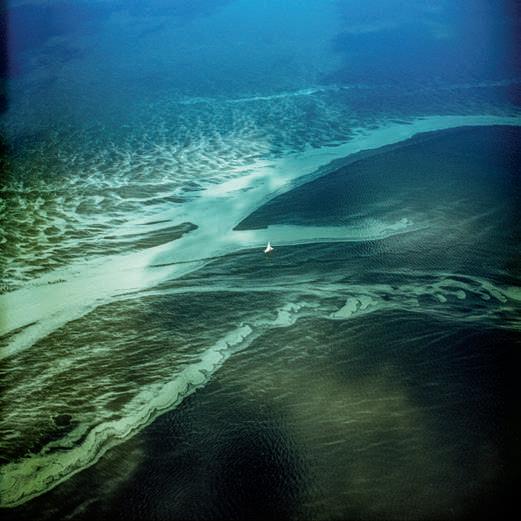
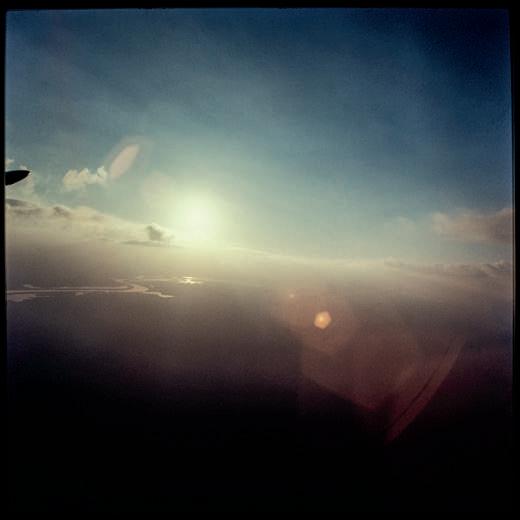
Imagens da exposição Vistas do Alto.
[Images from Views from Above exhibition], São Paulo, 1985.
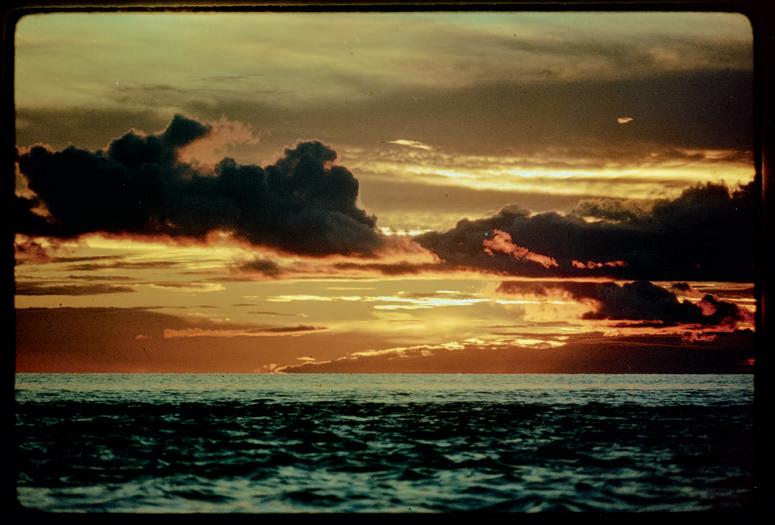
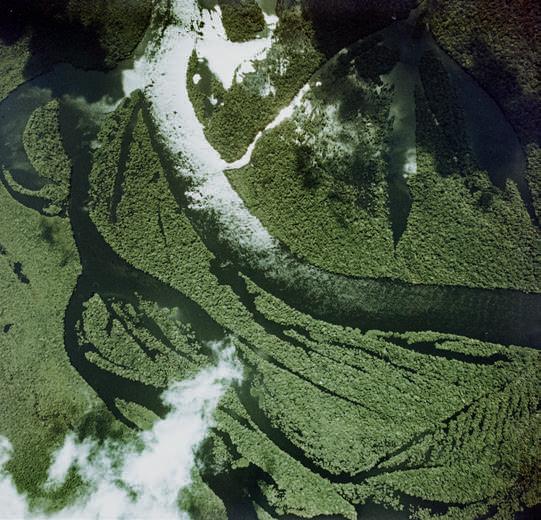
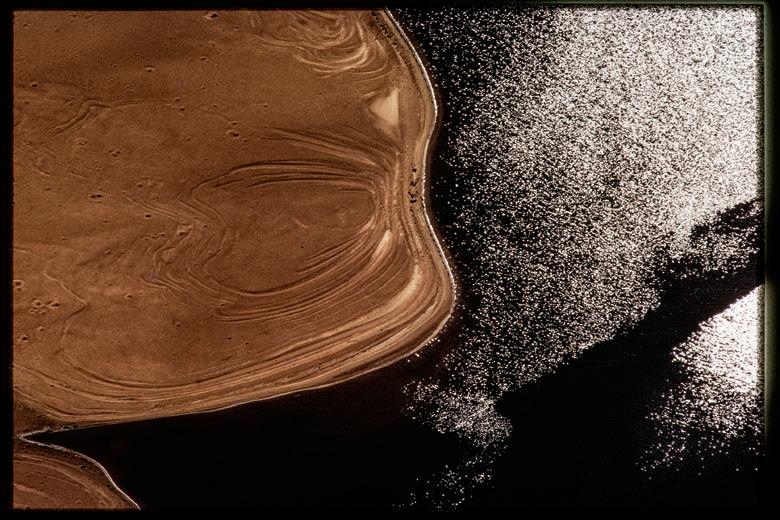
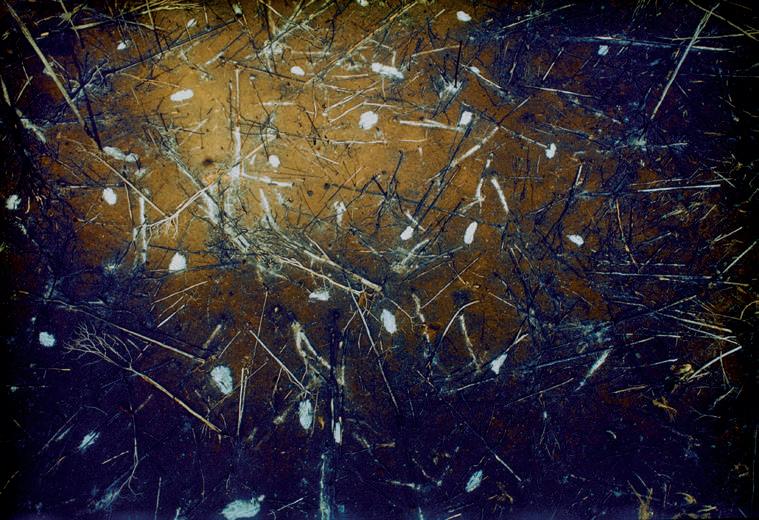
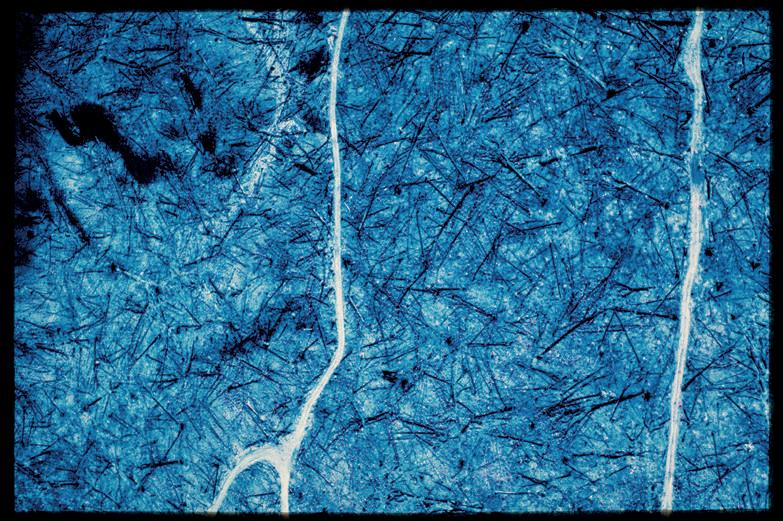
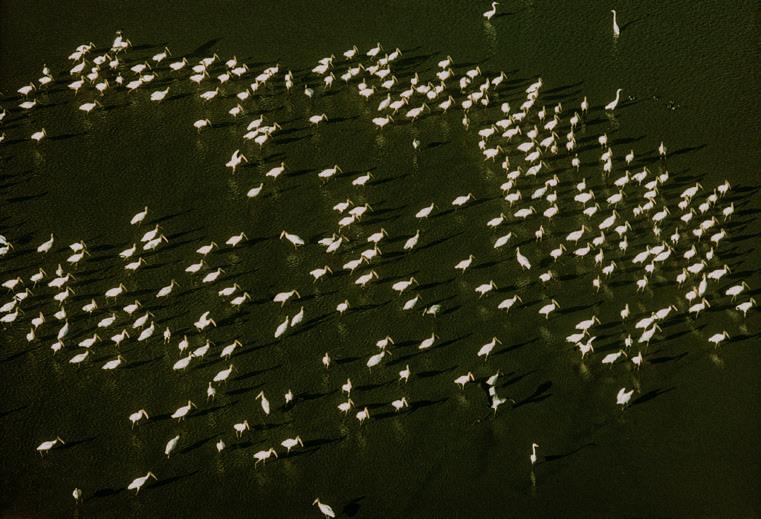
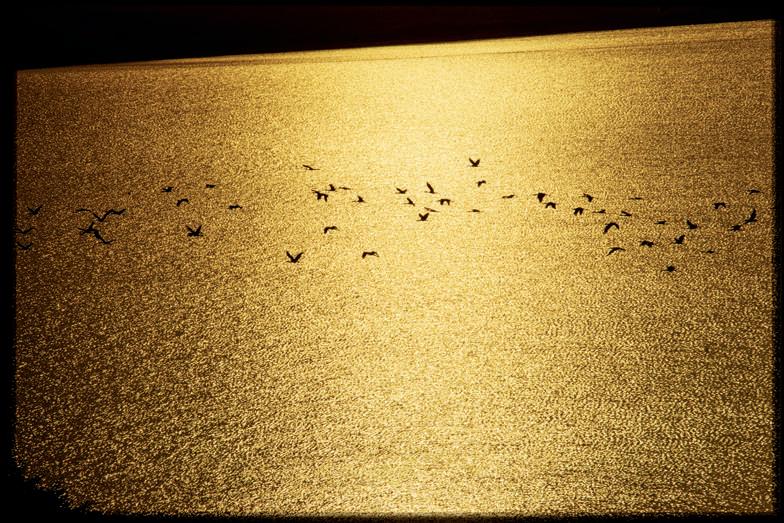
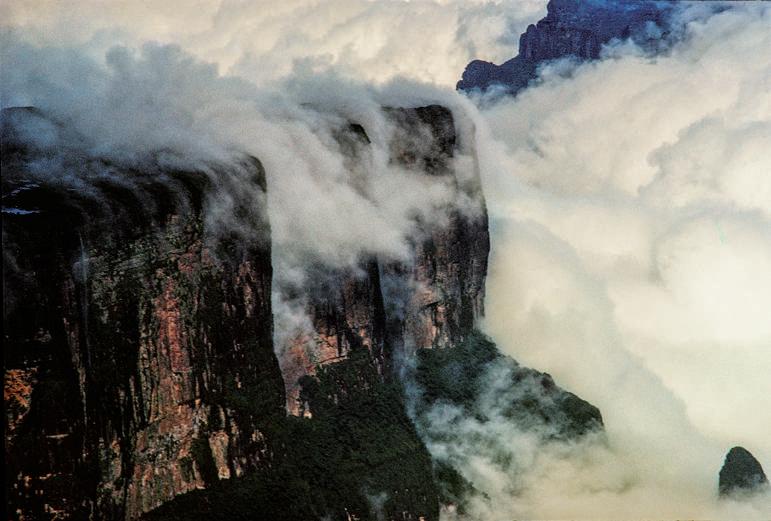
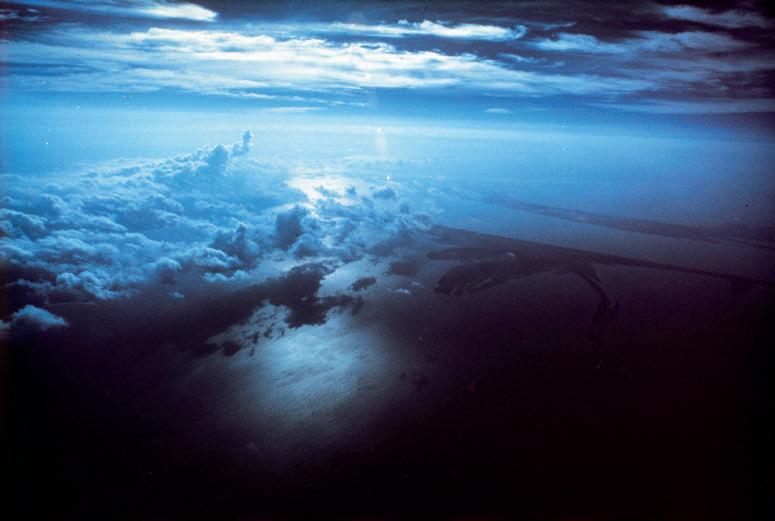
[p. 249, 252—264]
Imagens do livro póstumo Alma e Luz – Sobre a Bacia Amazônica, publicado em 1995.
[Images from Light and Soul –Over the Amazon Basin posthumous book, published in 1995.]
[p. 250—251]
Imagens da Amazônia que fazem parte da seleção definitiva do fotógrafo, déc. 1970.
[Images of the Amazon that are part of the photographer's final selection, 1970s.]
[p. 265]
Retrato de George Leary Love, autor desconhecido, déc. 1970 .
[Portrait of George Leary Love, unknown author, 1970s.]
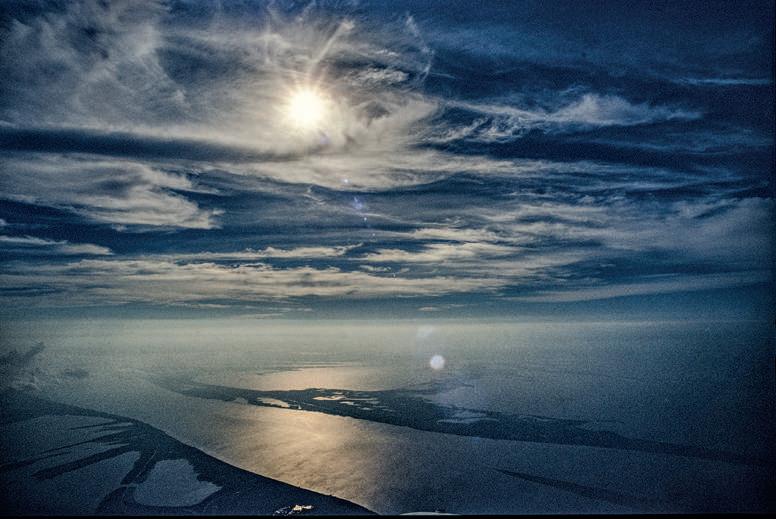
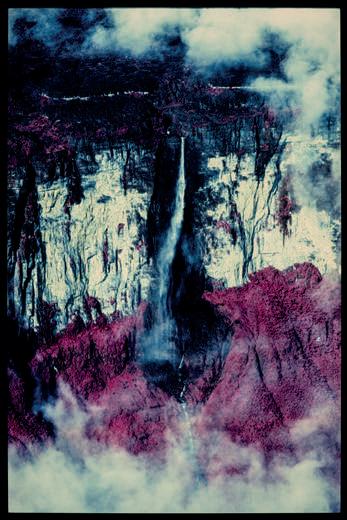
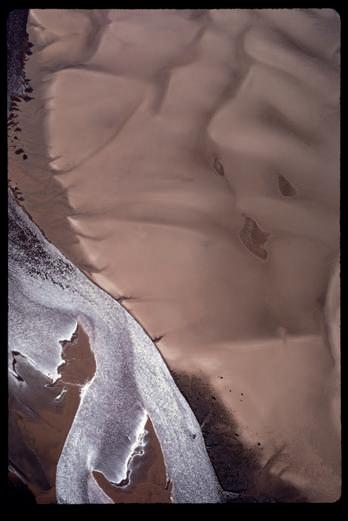
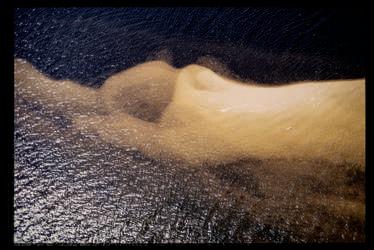
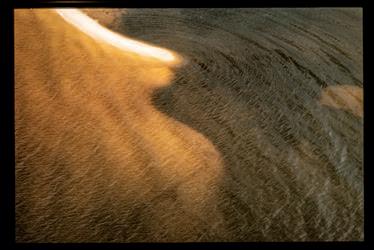
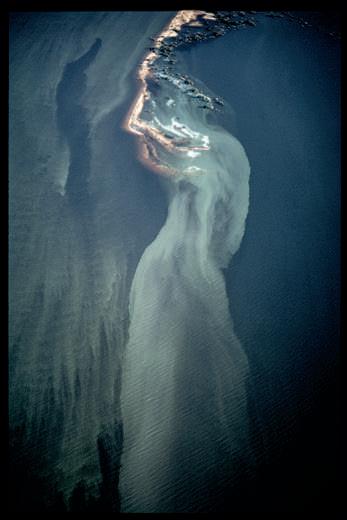
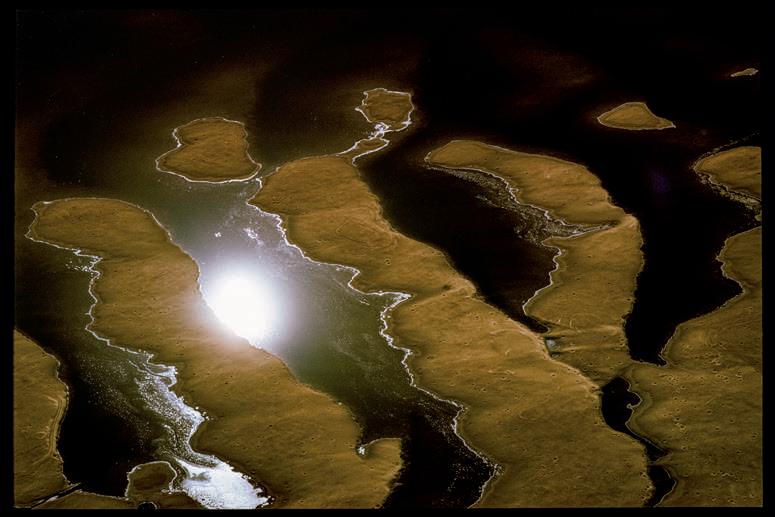
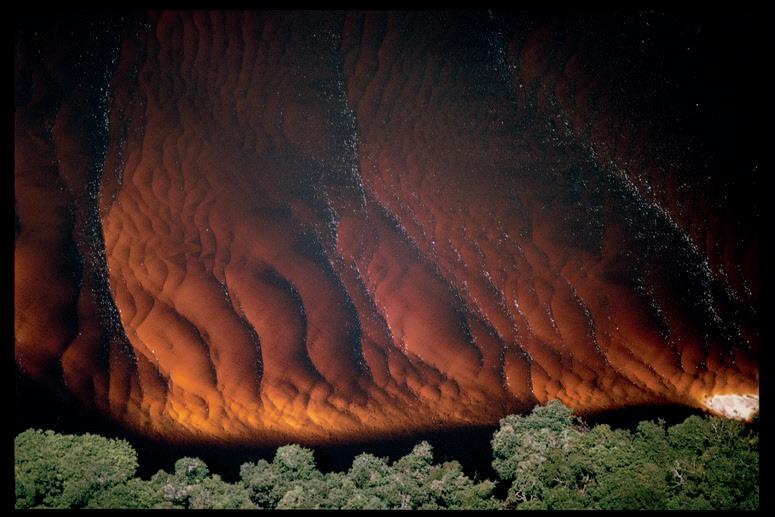
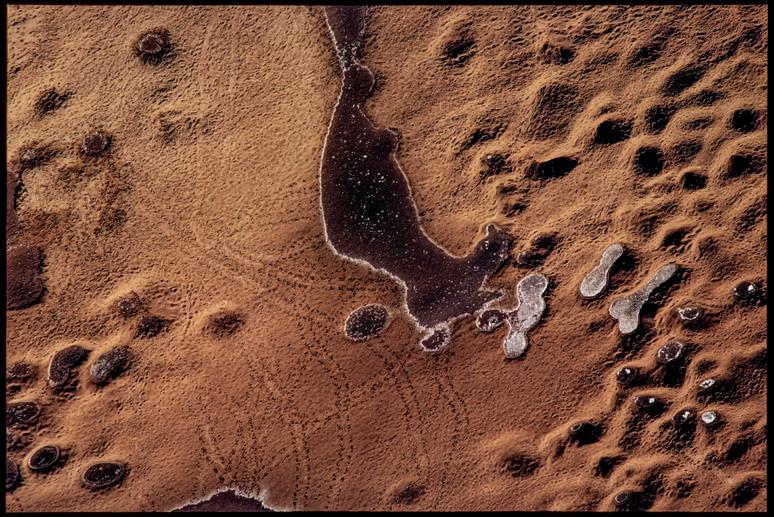
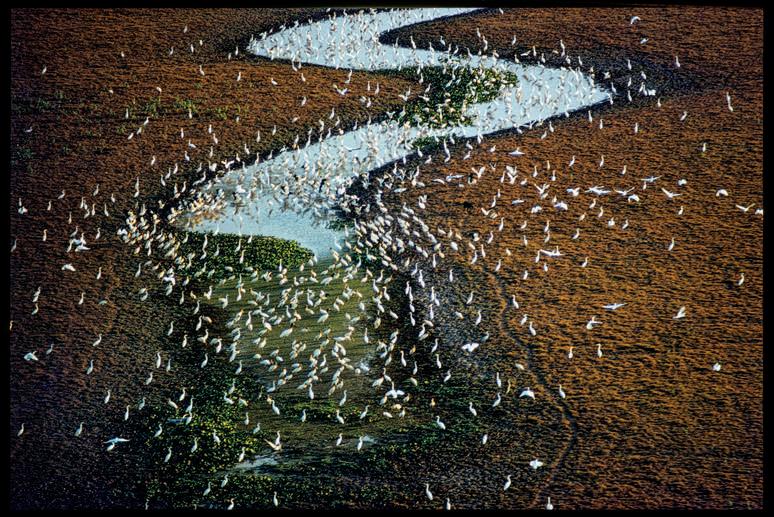
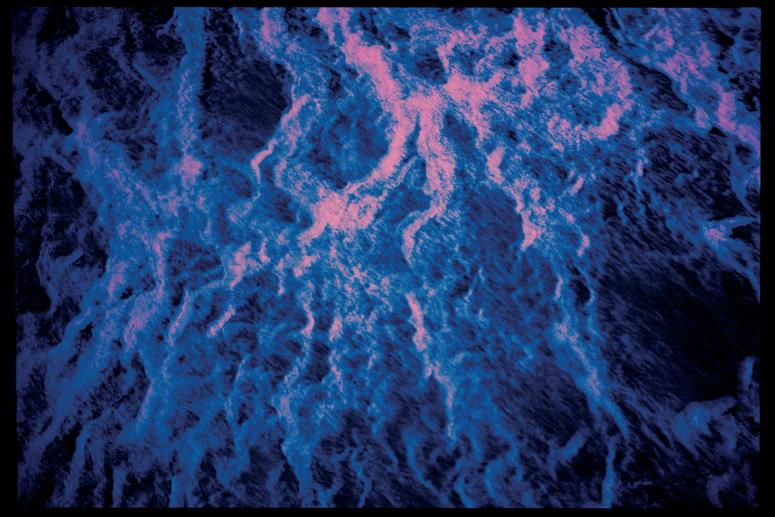
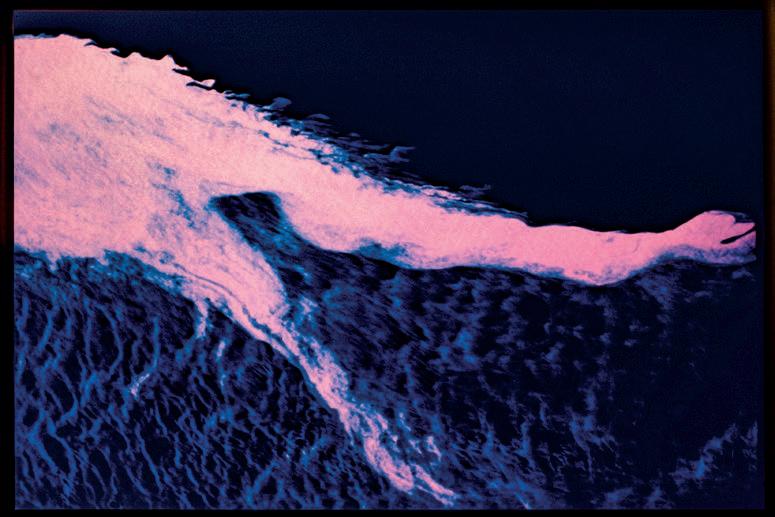
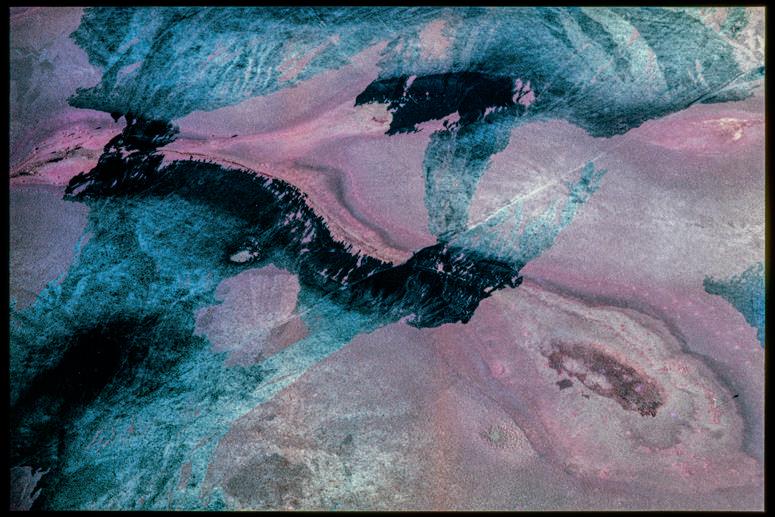
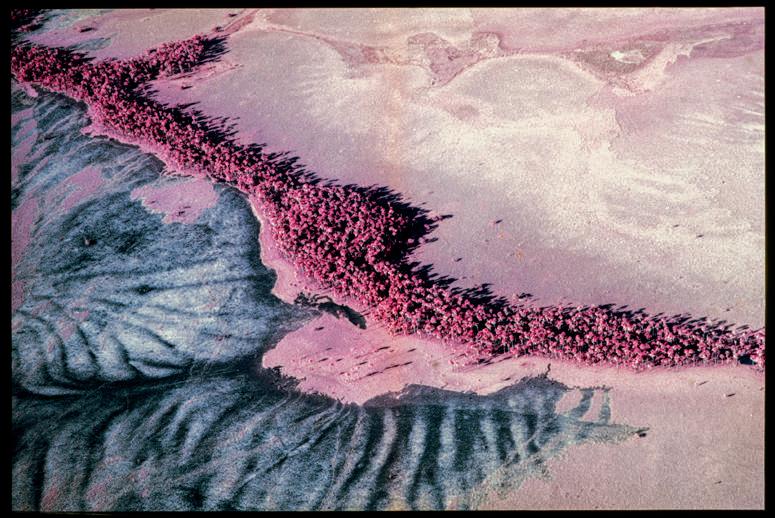
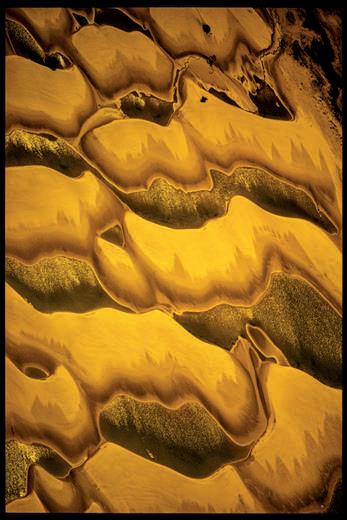
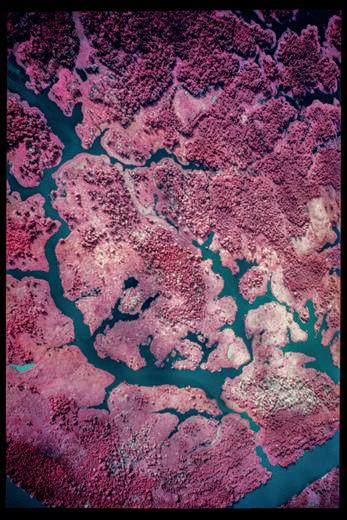
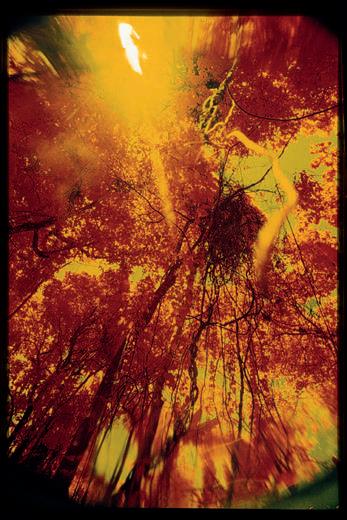
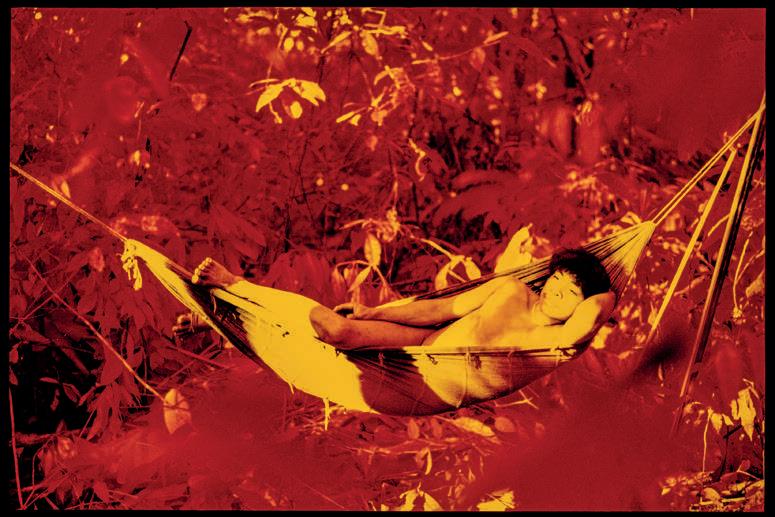
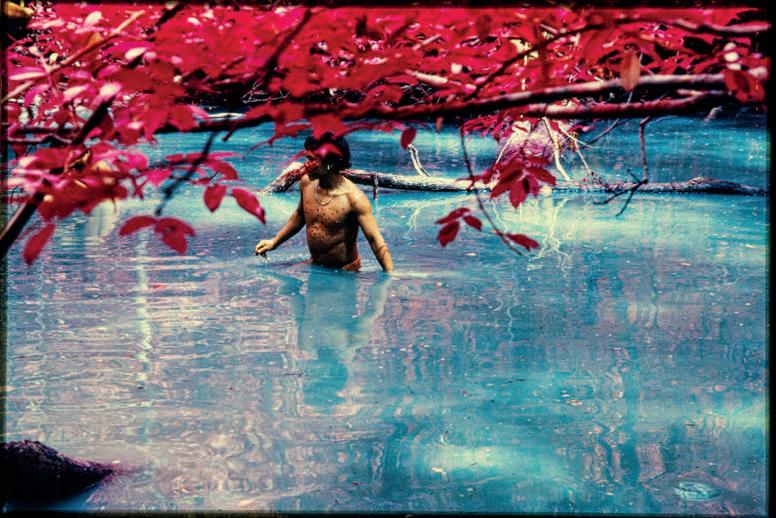
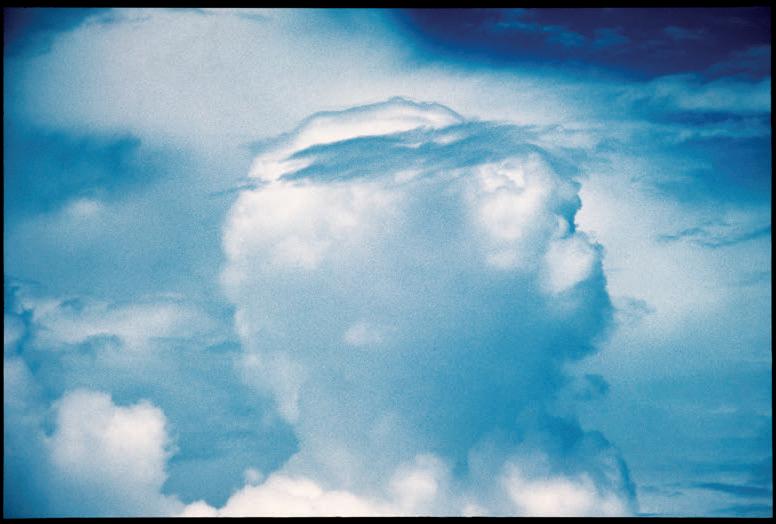
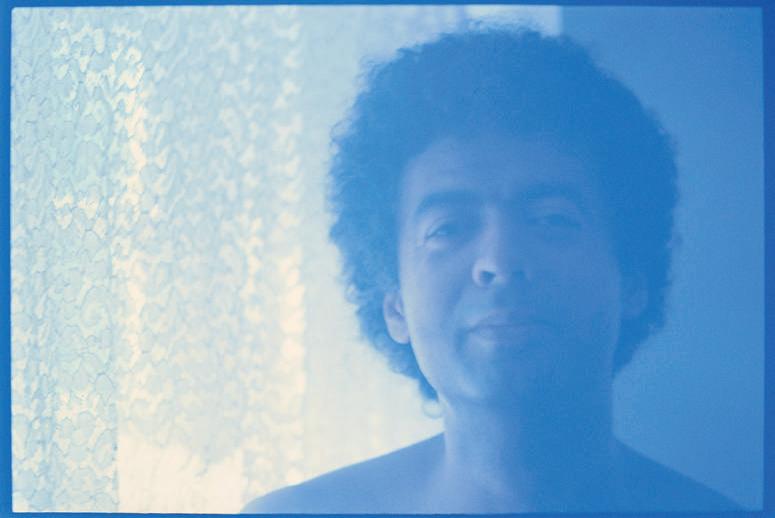
Veja fotos da exposição realizada no MAM (Sala Milú Villela)
[See photos of the exhibition held at MAM (Milú Villela Room)]
realização [production]
Museu de Arte Moderna de São Paulo
curadoria [curatorship]
Zé De Boni
colaboradores [collaborators]
Amanda De Boni
Fábio Jara
João Salgado
Rodrigo Lins
produção executiva [executive production]
Elenice dos Santos Lourenço
Ana Paula Pedroso Santana
projeto expográfico [exhibition design]
Pedro Mendes da Rocha
Bianca Yokoyama
projeto gráfico [graphic design]
Paulo Otavio –POG arte design
coordenação editorial [editorial coordination]
Renato Schreiner Salem
fotos [photos]
George Love
Coleção George Love
ampliações fotográficas p&b [b&w photo enlargement]
João Salgado
ampliações fotográficas coloridas [full-color photo enlargement]
Gibolab
digitalização das matrizes originais, restauração digital, impressões em jato de tinta [scanning of original matrices, digital restoration, inkjet prints]
Zé De Boni
retoques digitais, reprodução de documentos e obras de época. [digital retouching, reproduction of documents and vintage material.]
Zé De Boni
João Salgado
audiovisual
Estúdio Preto e Branco
adesivação fotográfica [photo plotting]
Giclê
molduras [frames]
Capricho Molduras
execução do projeto expográfico [execution of exhibition design]
Secall Cenografia
conservação [conservation]
Fabiana Oda
Kika Landi
Tamine Gesualdi
Thalita Noce
montagem [installation]
Ck Black Art Handler
KBedim Montagem e Produção Cultural Luiz83
MReneé Arte Produção
e Montagem Phina
transporte [shipping]
ATM Janus
tradução para o inglês [English translation]
Paul Webb
revisão de texto [proofreading]
Marca-Texto
assessoria de imprensa [press office]
a4&holofote comunicação
realização [production]
Museu de Arte Moderna de São Paulo
curadoria [curatorship]
Zé De Boni
produção executiva [executive production]
Elenice dos Santos Lourenço
Ana Paula Pedroso Santana
textos [texts]
Cauê Alves e [and]
Elizabeth Machado
George Love
Zé De Boni
projeto gráfico [graphic design]
Paulo Otavio –POG arte design
coordenação editorial [editorial coordination]
Renato Schreiner Salem
assistência editorial [editorial assistance]
Gabriela Gotoda
tradução para o inglês [English translation]
Paul Webb
revisão de texto [proofreading]
Marca-Texto
fotos [photos]
George Love
Coleção George Love
impressão [printing]
Ipsis
AGRADECIMENTOS
[ACKNOWLEDGEMENTS]
Anita Malzoni
Anna Carboncini (in memorian)
Barbara Livesey
Dan Fialdini
Dina
Fabio Calvoso
Fausto Chermont
Isabela Muci Barradas
Molducenter
Rosilis Staub
presidente de honra [honorary president]
Milú Villela
diretoria [management board] presidente [president]
Elizabeth Machado
vice-presidente [vice president]
Daniela Montingelli Villela
diretora jurídica [legal director]
Tatiana Amorim de Brito Machado
diretor financeiro [financial director]
José Luiz Sá de Castro Lima diretores [directors]
Camila Granado Pedroso Horta
Marina Terepins
Raphael Vandystadt
conselho deliberativo [advisory board] presidente [president]
Geraldo José Carbone
vice-presidente [vice president]
Henrique Luz
conselheiros [board members]
Adolpho Leirner
Alfredo Egydio Setubal
Andrea da Motta Chamma
Andrea Paula Barros Carvalho Israel da Veiga Pereira
Antonio Hermann Dias de Azevedo
Caio Luiz de Cibella de Carvalho
Eduardo Brandão
Eduardo Saron Nunes
Fábio de Albuquerque
Fábio Luiz Pereira de Magalhães
Fernando Moreira Salles
Francisco Pedroso Horta
Gabriela Baumgart
Georgiana Rothier Pessoa
Cavalcanti Faria
Helio Seibel
Israel Vainboim
Jean-Marc Etlin
Jorge Frederico M. Landmann
Karla Meneghel
Luís Terepins
Maria Regina Pinho de Almeida
Mariana Guarini Berenguer
Mário Henrique Costa Mazzilli
Martin Grossmann
Neide Helena de Moraes
Paulo Setubal Neto
Peter Cohn
Roberto B. Pereira de Almeida
Rodolfo Henrique Fischer
Rolf Gustavo R. Baumgart
Salo Davi Seibel
Sérgio Ribeiro da Costa Werlang
Sergio Silva Gordilho
Simone Schapira Wajman
Susana Leirner Steinbruch
comitê cultural e de comunicação [cultural and communications committee]
coordenação [coordination]
Fábio Luiz Pereira de Magalhães membros [members]
Andrea Paula Barros Carvalho Israel
da Veiga Pereira
Camila Granado Pedroso Horta
Eduardo Saron Nunes
Elizabeth Machado
Fábio de Albuquerque
Jorge Frederico M. Landmann
Maria Regina Pinho de Almeida
Martin Grossmann
Neide Helena de Moraes
Raphael Vandystadt
comitê de governança [governance committee] coordenação [coordination]
Mário Henrique Costa Mazzilli
membros [members]
Daniela Montingelli Villela
Elizabeth Machado de Oliveira
Gabriela Baumgart
Geraldo José Carbone
Henrique Luz
Mariana Guarini Berenguer
Sérgio Ribeiro da Costa Werlang
Tatiana Amorim de Brito Machado
comitê financeiro e de captação [financial and fundraising committee] coordenação [coordination]
Francisco Pedroso Horta membros [members]
Daniela Montingelli Villela
Elizabeth Machado
Jean-Marc Etlin
José Luiz Sá de Castro Lima
Luís Terepins
comitê de nomeação [nomination committee]
Alfredo Egydio Setubal
Elizabeth Machado
Geraldo José Carbone
Henrique Luz
conselho fiscal [fiscal board]
titulares [standing members]
Demétrio de Souza
Reginaldo Ferreira Alexandre
Susana Hanna Stiphan Jabra (presidente [president]) suplentes [alternates]
Magali Rogéria de Moura Leite
Rogério Costa Rokembach
Walter Luís Bernardes Albertoni
comissão de arte [art commission]
Alexia Tala
Claudinei Roberto da Silva
Cristiana Tejo
Daniela Labra
Rosana Paulino
comissão de ética e conduta [ethics commission]
Daniela Montingelli Villela
Elizabeth Machado
Henrique Luz
Mário Henrique Costa Mazzilli
Sérgio Miyazaki
Tatiana Amorim de Brito Machado
associados patronos [associate patrons]
Adolpho Leirner
Alfredo Egydio Setubal
Antonio Hermann Dias de Azevedo
Daniela Montingelli Villela
Eduardo Brandão
Eduardo Saron Nunes
Fernando Moreira Salles
Francisco Pedroso Horta
Georgiana Rothier Pessoa
Cavalcanti Faria
Geraldo José Carbone
Helio Seibel
Henrique Luz
Israel Vainboim
Jean-Marc Etlin
Mariana Guarini Berenguer
Mário Henrique Costa Mazzilli
Neide Helena de Moraes
Paulo Setubal Neto
Peter Cohn
Roberto B. Pereira de Almeida
Rodolfo Henrique Fischer
Rolf Gustavo R. Baumgart
Salo Davi Seibel
Sérgio Ribeiro da Costa Werlang
Simone Schapira Wajman
incentivadores da arte [art supporters] embaixadora [ambassador]
Georgiana Rothier Pessoa Cavalcanti
Faria
membros [members]
Daniel Augusto Motta
David Ades e [and] Andrea Ades
Ian Duarte e [and] Allan Seabra
Karla Meneghel
Lucila Hoberman
Marília Chede Razuk
Renata Queiroz de Moraes
Teodoro Bava e [and]
Eduardo Baptistella Jr.
William Maluf
núcleo contemporâneo [contemporary art hub] coordenação [coordination]
Camila Granado Pedroso Horta
membros [members]
Ana Carmen Longobardi
Ana Eliza Setubal
Ana Lopes
Ana Lucia Siciliano
Ana Paula Cestari
Ana Paula Vilela Vianna
Ana Serra
Ana Teresa Sampaio
Andrea Gonzaga
Anna Carolina Sucar
Antonio de Figueiredo Murta Filho
Antonio Marcos Moraes Barros
Beatriz Yunes Guarita
Bianca Cutait
Camila Barroso de Siqueira
Camila Tassinari
Carolina Alessandra Guerra Filgueiras
Carolina Costa e Silva Martins
Cintia Rocha
Claudia Maria de Oliveira Sarpi
Cleusa de Campos Garfinkel
Cristiana Rebelo Wiener
Cristiane Quercia Tinoco Cabral
Cristina Baumgart
Cristina Canepa
Cristina Tolovi
Daniela Bartoli Tonetti
Daniela M. Villela
Daniela Steinberg Berger
Eduardo Mazilli de Vassimon
Esther Cuten Schattan
Felipe Akagawa e [and] Angela Akagawa
Fernanda Mil-Homens Costa
Fernando Augusto Paixão Machado
Flávia Regina de Souza Oliveira
Florence Curimbaba
Franco Pinto Bueno Leme
Gustavo Clauss
Hena Lee
Ida Regina Guimarães Ambroso Marques
Isabel Pereira de Queiroz
Isabel Ralston Fonseca de Faria
Janice Mascarenhas Marques
José Eduardo Nascimento
Judith Kovesi
Juliana de Souza Peixoto Modé
Juliana Neufeld Lowenthal
Karla Meneghel
Luciana Lehfeld Daher
Luisa Malzoni Strina
Márcio Alaor Barros
Maria Cláudia Curimbaba
Maria das Graças Santana Bueno
Maria do Socorro Farias de Andrade Lima
Maria Julia Freitas Forbes
Maria Júlia Pardo Almendra
Maria Teresa Igel
Mariana de Souza Sales
Marina Lisbona
Mônica Mangini
Monica Vassimon
Murillo Cerello Schattan
Nadja Cecilia Silva Mello Isnard
Natalia Jereissati
Nicolas Wiener
Patricia Magano
Paula Almeida Schmeil Jabra
Paula Regina Depieri
Paulo Setubal Neto
Raquel Steinberg
Regina de Magalhaes Bariani
Renata Castro e Silva
Renata Nogueira Studart do Vale
Renata Paes Mendonça
Rosa Amélia de Oliveira Penna
Marques Moreira
Rosana Aparecida Soares de Queiróz Visconde
Rosana Wagner Carneiro Mokdissi
Sabina Lowenthal
Sérgio Ribeiro da Costa Werlang
Silvio Steinberg
Sonia Regina Grosso
Sonia Regina Opice
Tais Dias Cabral
Titiza Nogueira
Vitoria Coutinho
Wilson Pinheiro Jabur
Yara Rossi
colaboradores [staff]
curador-chefe [chief curator]
Cauê Alves
superintendente executivo [chief operating officer]
Sérgio Miyazaki
acervo [collection] coordenação [coordination]
Patricia Pinto Lima
analista [analyst]
Marina do Amaral Mesquita assistentes [assistants]
Bárbara Blanco Bernardes de Alencar
Camila Gordillo de Souza
técnico em manuseio [art handler]
Igor Ferreira Pires
assistência à presidência, curadoria e superintendência [assistant to management board, curatorship, and superintendence]
Daniela Reis
biblioteca [library] supervisor em museologia [museology supervisor]
Pedro Nery
bibliotecária documentalista [documentation librarian]
Ágatha Contursi Cesar Spiegel da Silva assistente [assistant] Felipe de Brito Silva
comunicação [communications] coordenação [coordination]
Ane Tavares analistas [analysts]
Jamyle Hassan Rkain
Rachel de Brito Barbosa
designers
Paulo Vinícius Gonçalves Macedo (PJ)
Rafael Soares Kamada produção e edição de vídeo [videomaker]
Marina Paixão (PJ) fotógrafo [photographer]
Bruno Leão/EstúdioemObra (PJ)
curadoria [curatorship] especialista em acessibilidade e ações afirmativas [specialist in accessibility and affirmative action]
Gregório Ferreira Contreras Sanches analista de curadoria [curatorial analyst]
Gabriela Gotoda
educativo [education] coordenação [coordination]
Mirela Agostinho Estelles analista [analyst]
Maria Iracy Ferreira Costa educadores [educators]
Amanda Harumi Falcão
Amanda Silva dos Santos
Caroline Machado
Leonardo Sassaki Pires
Luna Souto Ferreira
Maria da Conceição Ferreira da Silva Meskelis
Sansorai de Oliveira
Rodrigues Coutinho estagiários [interns]
Amanda Alves Vilas Boas Oliveira
Ana Flávia dos Reis
Daniel Oliveira Ribeiro Mascarenhas da Cruz Pereira
Gabe Nascimento
Pedro Henrique Queiroz Silva
administrativo financeiro [financial administration] coordenação [coordination]
Gustavo da Silva Emilio comprador [buyer]
Fernando Ribeiro Morosini analistas [analysts]
Anderson Ferraz Viana
Janaina Chaves da Silva Ferreira
Renata Noé Peçanha da Silva assistente [assistant]
Roberto Honda Takao Stancati auxiliar [auxiliary assistant]
Lucas Corcini e Silva estagiários [interns]
Elissandra de Castro Lima da Silva
jurídico [legal] advogada [lawyer]
Renata Cristiane Rodrigues Ferreira (BS&A Borges Sales & Alem Advogados) estagiária [intern]
Vitória Martins Venancio Paes de Carvalho (BS&A Borges Sales & Alem Advogados)
relacionamentos e negócios [institutional relations and business] coordenação [coordination]
Larissa Piccolotto Ferreira analista [analyst]
Marcio da Silva Lourenço
relacionamentos [institutional relations] analistas [analysts]
Lara Mazeto Guarreschi (Clube de Colecionadores [Collectors’ Club])
Mariana Saraceni Brazolin (Programas Institucionais [Institutional Programs])
negócios [business] supervisor de negócios [business supervisor]
Fernando Araujo Pinto dos Santos analistas [analysts]
Giselle Moreira Porto (Cursos [Courses])
Juliene Campos Braga Botelho
Lanfranchi (Eventos [Events])
Tainã Aparecida Costa Borges (Loja [Shop])
assistentes [assistants]
Camila Barbosa Bandeira Oliveira (Loja [Shop])
Guilherme Passos (Loja [Shop])
parcerias e projetos incentivados [partnerships and cultural incentive law projects] coordenação [coordination]
Kenia Maciel Tomac
parcerias [partnerships] analistas [analysts]
Beatriz Buendia Gomes
Isabela Marinara Dias
projetos incentivados [cultural incentive law projects] analistas [analysts]
Deborah Balthazar Leite
Valbia Juliane dos Santos Lima
Marisa Tinelli, Simone Meirelles e [and]
Sirlene Ciampi (Odara Assessoria
Empresarial em Projetos Culturais LTDA) estagiária [intern]
Isadora Martins da Silva
patrimônio [premises and maintenance] coordenação [coordination]
Estevan Garcia Neto
assistentes [assistants]
Alekiçom Lacerda estagiário [intern]
Vitor Gomes Carolino
manutenção predial [building maintenance]
Jairo de Freitas de Lima (Avtron Engenharia)
Venicio Souza (Formata Engenharia)
bombeiros civis [fire brigade]
Ajuilton Gonçalo Soares (Tejofran)
André Luiz (Tejofran)
limpeza [cleaning]
Tejofran
segurança patrimonial [property insurance]
Power Segurança
bilheteria [ticket office]
Paola da Silveira Araújo (Power System)
monitoramento e orientadores de público [monitoring and audience guidance]
Power System
produção de exposições [exhibition production] coordenação [coordination]
Luciana Nemes produtoras [producers]
Ana Paula Pedroso Santana
Elenice dos Santos Lourenço
Erika Hoffgen (PJ)
Marcela Tokiwa Obata dos Santos
recursos humanos [human resources] coordenação [coordination]
Karine Lucien Decloedt analista [analyst]
Débora Cristina da Silva Bastos
tecnologia da informação [information technology] coordenação [coordination]
Nilvan Garcia de Almeida
suporte técnico [technical support]
Felipe Ferezin (INIT NET)
Gabriella Shibata (INIT NET)
patrocínio [sponsorship]
mantenedores [sponsors]
platina [platinum]
3M do Brasil
Dasa
EMS
ouro [gold]
Agibank
BMA
Cimed
CSN
Grupo Ultra
Lefosse
Pinheiro Neto
Singulare
TBE Alupar
Tivit
TozziniFreire Advogados
Vivo
prata [silver]
Bloomberg
Leo Madeiras
PWC
Verde Asset
parcerias institucionais [institutional partnerships]
Africa
Aliança Francesa
Anauene Art Law
BMA
BMI
Canson
Centro Universitário Belas Artes
Cinema Belas Artes
DoubleTree by Hilton
Editora Cobogó
Editora Ubu
FIAP
Freixenet
Givoa Art Consulting
Gusmão & Labrunie Propriedade
Intelectual
Hand Talk
Havanna
ICIB – Instituto Cultural Ítalo-Brasileiro
Interlight Iluminação
James Lisboa Leiloeiro Oficial
Lefosse Advogados
Neovia
Picolin
Saint Paul Escola de Negócios
Senac
Vixsystem
Wiabiliza
parcerias de mídia [media partnerships]
Arte que Acontece
BeFree Mag
Buzzmonitor
Canal Arte 1
Eletromidia – Elemídia
Estadão
JCDecaux
MECA
Piauí
Quatro Cinco Um
player oficial [official player]
Spotify
programas educativos [educational programs]
contatos com a arte [contacts with art]
Grupo Ultra
domingo mam [mam sunday]
TozziniFreire Advogados
igual diferente [different equal]
3M do Brasil
programa de visitação [visitation program]
Pinheiro Neto Advogados
arte e ecologia [art and ecology]
Unipar
família mam [mam family]
MAM São Paulo
Dados Internacionais de Catalogação na Publicação (CIP) (Câmara Brasileira do Livro, SP, Brasil)
George Love : além do tempo / realização [production] Museu de Arte Moderna de São Paulo ; curadoria [curatorship] Zé De Boni ; tradução para o inglês [english translation] Paul Webb ; projeto expográfico [exhibition design] Pedro Mendes da Rocha. -- São Paulo : Museu de Arte Moderna de São Paulo, 2024.
Exposição de 29 de fevereiro a 12 de maio de 2024. Ed. bilíngue: português/inglês. ISBN 978-65-84721-14-2
1. Fotografia contemporânea 2. Love, George, 1937-1995 3. Livros de artistas I. Museu de Arte Moderna de São Paulo. II. Boni, Zé De. III. Rocha, Pedro Mendes da.
24-189631
Índices para catálogo sistemático:
1. Fotografia : Artes 770
CDD-770
Eliane de Freitas Leite - Bibliotecária - CRB 8/8415
O Museu de Arte Moderna de São Paulo está à disposição das pessoas que eventualmente queiram se manifestar a respeito de licença de uso de imagens e/ou de textos reproduzidos neste material, tendo em vista que determinados autores e/ou representantes legais não responderam às solicitações ou não foram identificados ou localizados.
[The Museu de Arte Moderna de São Paulo is available to people who might come forward regarding the license for use of images and/or texts reproduced in this material, given that some authors and/or legal representatives did not respond to requests or were not identified or found.]
Este livro foi composto nas fontes PT Sans e PT Serif, impresso em papéis Master Blank 270 g/m2 (capa), Alta Alvura 120 g/m2 e Eurobulk 130 g/m2 (miolo), em fevereiro de 2024, pela gráfica Ipsis.
Nota da Curadoria MAM São Paulo [Note from the MAM São Paulo Curatorial Department]:
O MAM tem conhecimento da complexidade e sensibilidade em exibir imagens de pessoas indígenas não identificadas, sobretudo quando tais registros foram realizados por pessoas não pertencentes à etnia ou cultura. O museu emprega esforços para identificar as pessoas indígenas retratadas por meio de pesquisas e o setor de Curadoria MAM São Paulo está à total disposição de quem eventualmente queira se manifestar a respeito da identificação e/ou direitos de uso de imagem dessas pessoas.
[The MAM is aware of the complexity and sensitivity involved in displaying images of unidentified indigenous people, especially when such records have been made by people who do not belong to the ethnic group or culture. The museum makes every effort to identify the indigenous people portrayed through research and the MAM São Paulo Curatorial Department is fully available to anyone who might come forward regarding the identification and/or the image rights of these people.]