As a member of the Class of 2030, you are invited to enroll in Boston College’s innovative Complex Problem & Enduring Question courses–known on campus by their acronym, CP & EQ. These courses are collaboratively taught by faculty members from different academic fields and are designed to engage students in interdisciplinary explorations of topics of critical importance.
Created for first-year students, CP & EQ courses satisfy University Core Curriculum requirements and exemplify BC’s distinctive approach to Core education. They establish a foundation for intellectual development that prepares you to become an engaged, effective world citizen.
Learn more about BC’s CP & EQ courses in this brochure by browsing the options available to you this fall.
Complex Problem & Enduring Question Courses
What makes these courses distinctive?
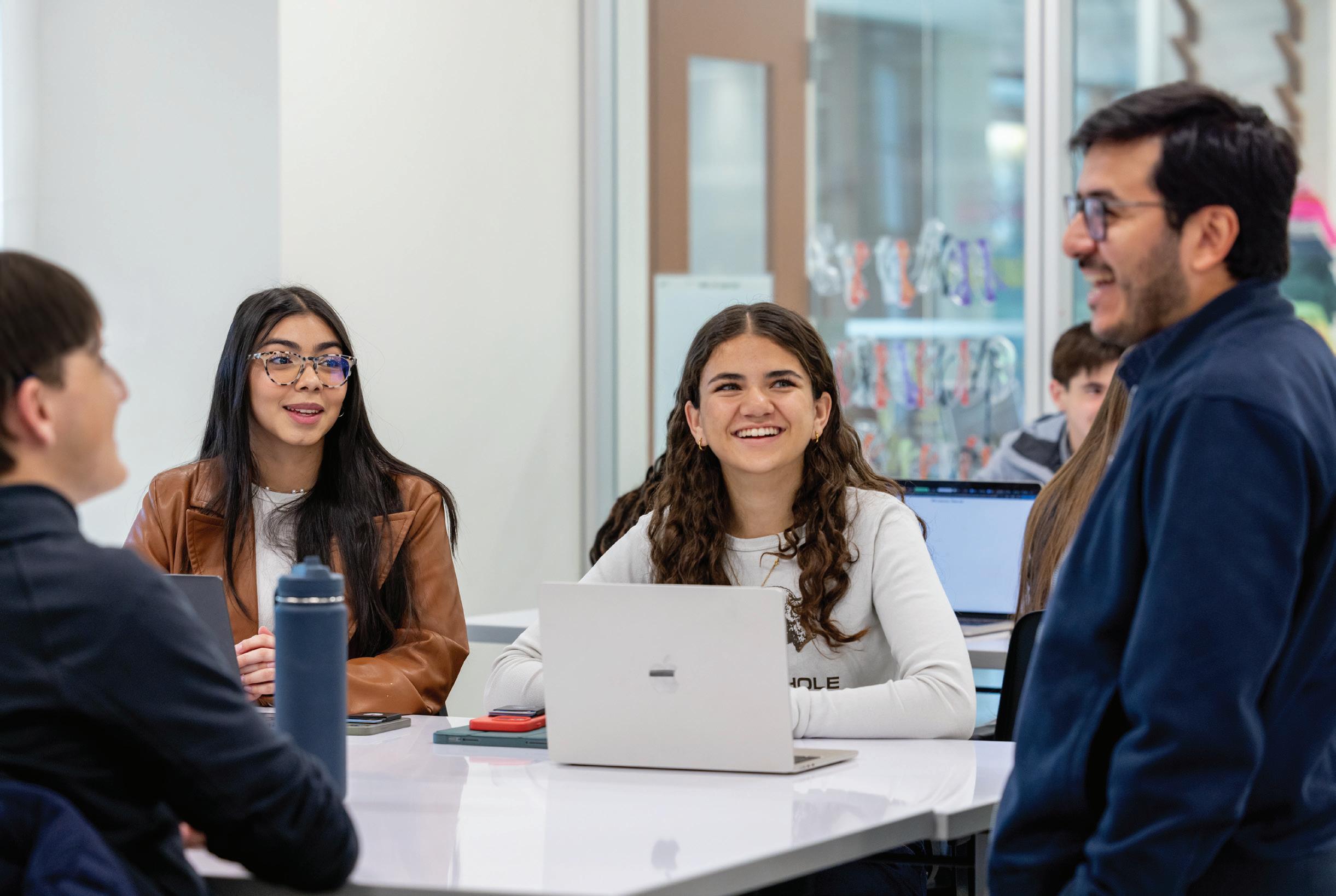
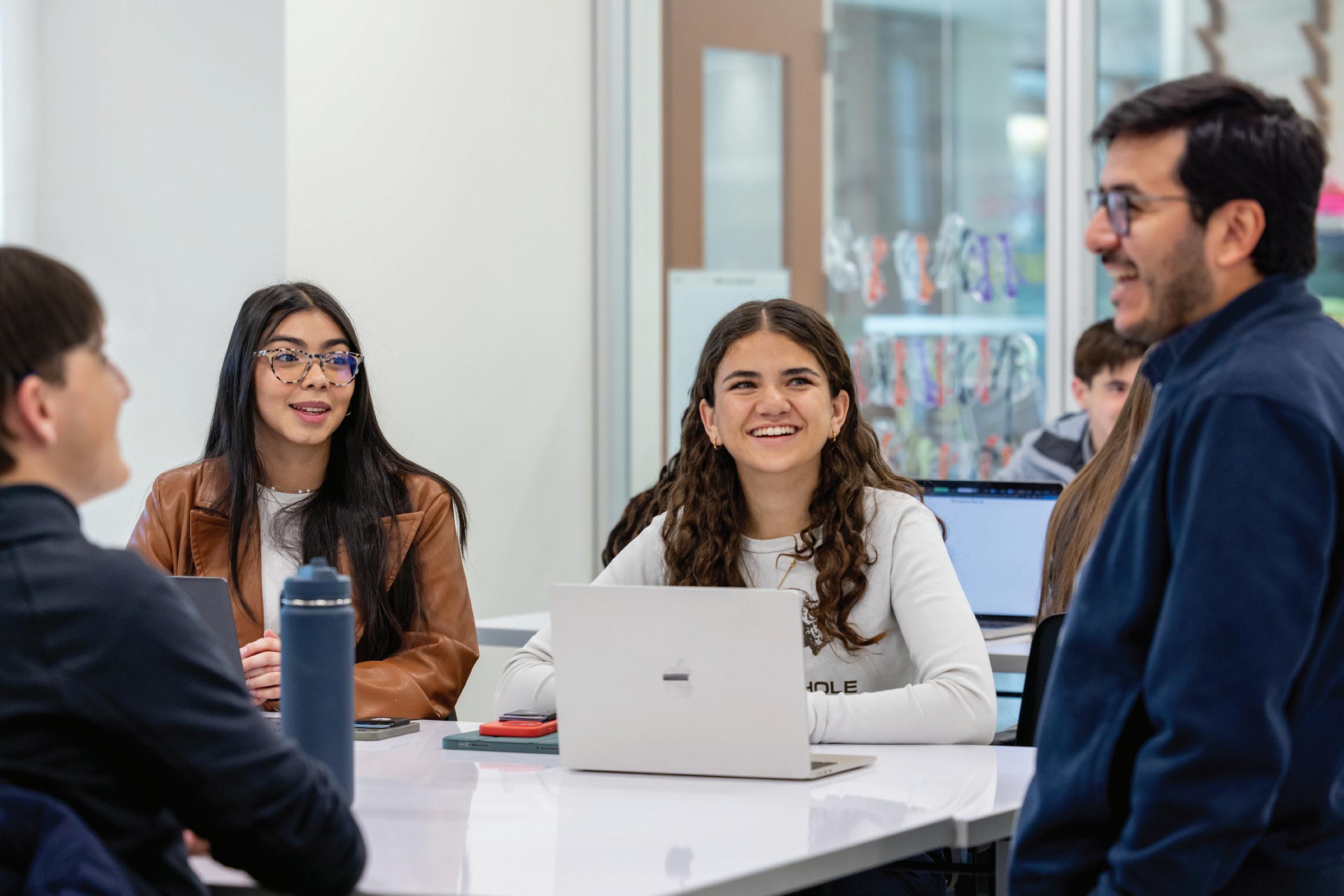
1. Small class sizes with professors and classmates who know you. CP & EQ courses facilitate a close, collaborative learning experience for students.
2. Learning happens inside and outside the classroom. CP & EQ courses extend inquiry beyond the classroom to labs, Reflection sessions, conversations with outside speakers, and off-campus field trips, creating an intensive shared learning experience for both teachers and students.
3. Courses center on interdisciplinary topics that are both urgent and timeless. Examples of these subjects include migration, social inequalities, technological change, compassion and belonging, and justice and the common good, to name a few. Each semester’s offerings have been different since 2015, when these courses were first introduced.
Key Features of Each Course Type
Complex Problem Courses
▶ 6 credits
▶ Team-taught by professors from different academic fields
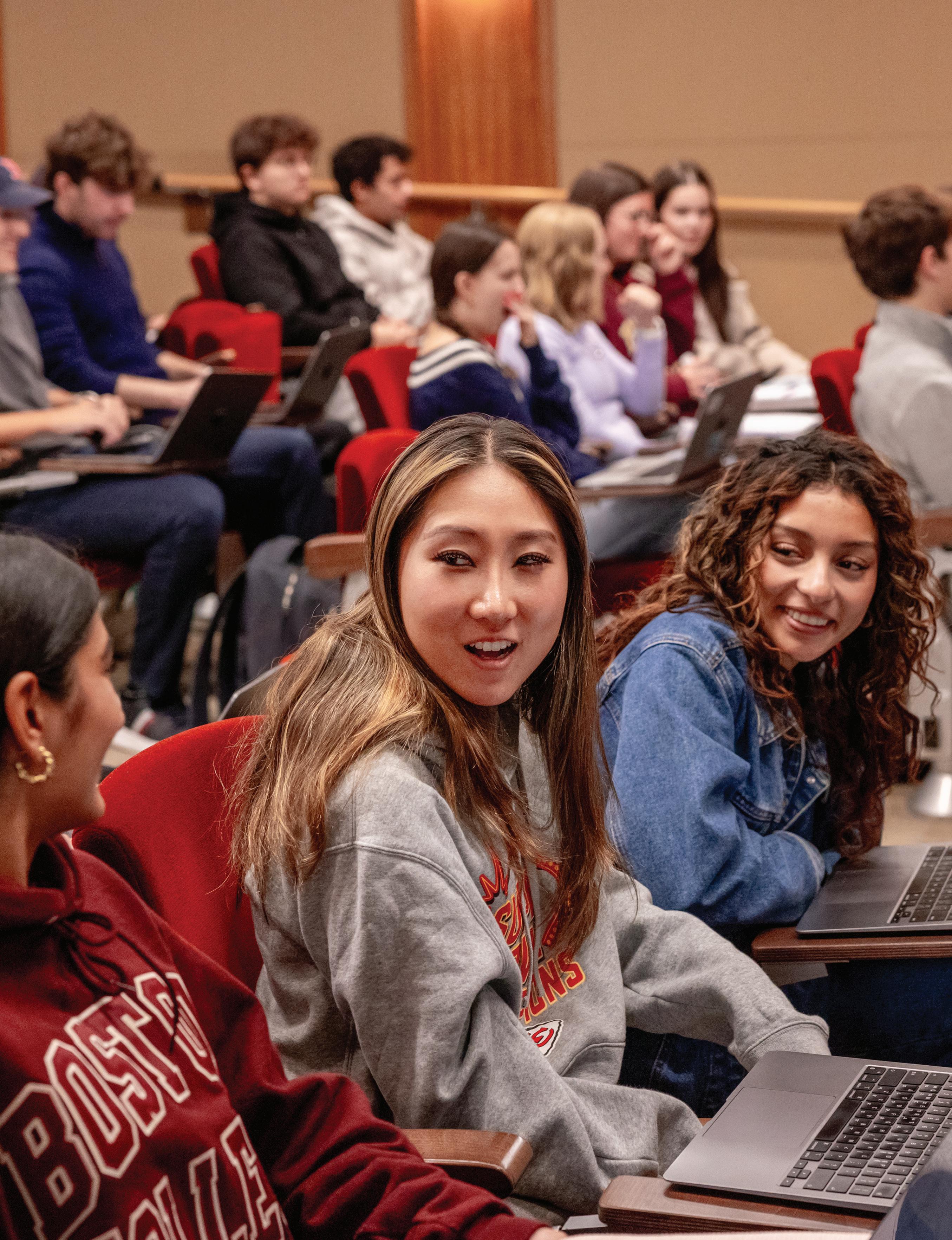
▶ 76 students
▶ Fulfill up to 3 University Core requirements
▶ Lectures multiple days per week
▶ Lab once per week
▶ Reflection once per week, where students and faculty gather to connect the course content to their lived experiences
Enduring Question Courses
▶ Two linked 3-credit courses
▶ Taught by two professors from different academic fields
▶ 19 students
▶ Fulfill up to 3 University Core requirements
▶ Lectures multiple days per week
▶ Reflection four times per semester, where students and faculty gather to connect the course content to their lived experiences
Watch a Video about CP & EQ Courses
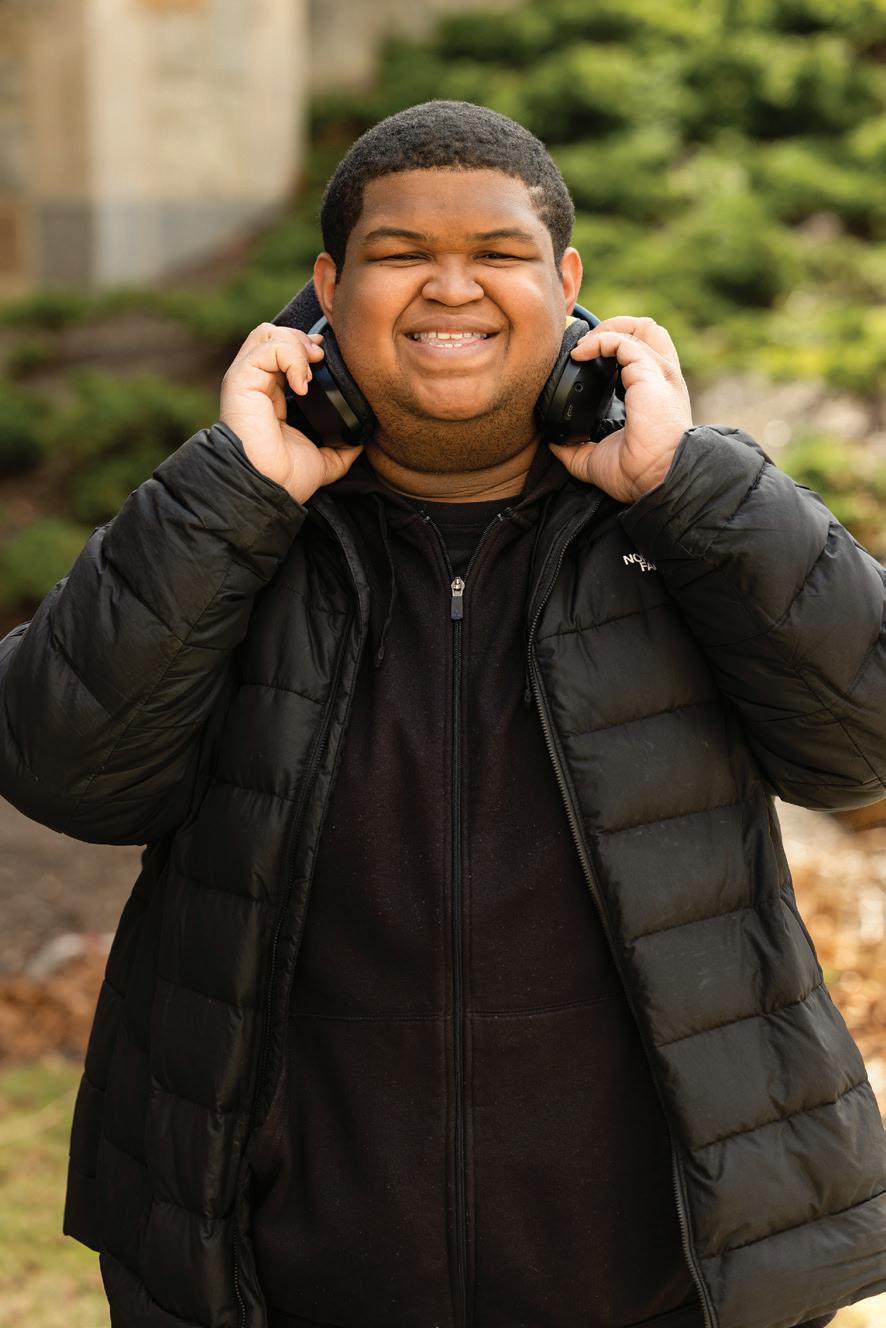
My EQ course brought theology and history into conversation in ways I never expected. It pushed me to think across disciplines and reflect on my own formation—and it sparked the research interest I’m still pursuing today.
Lucian Mahoney ’26
Major: History/Economicsw
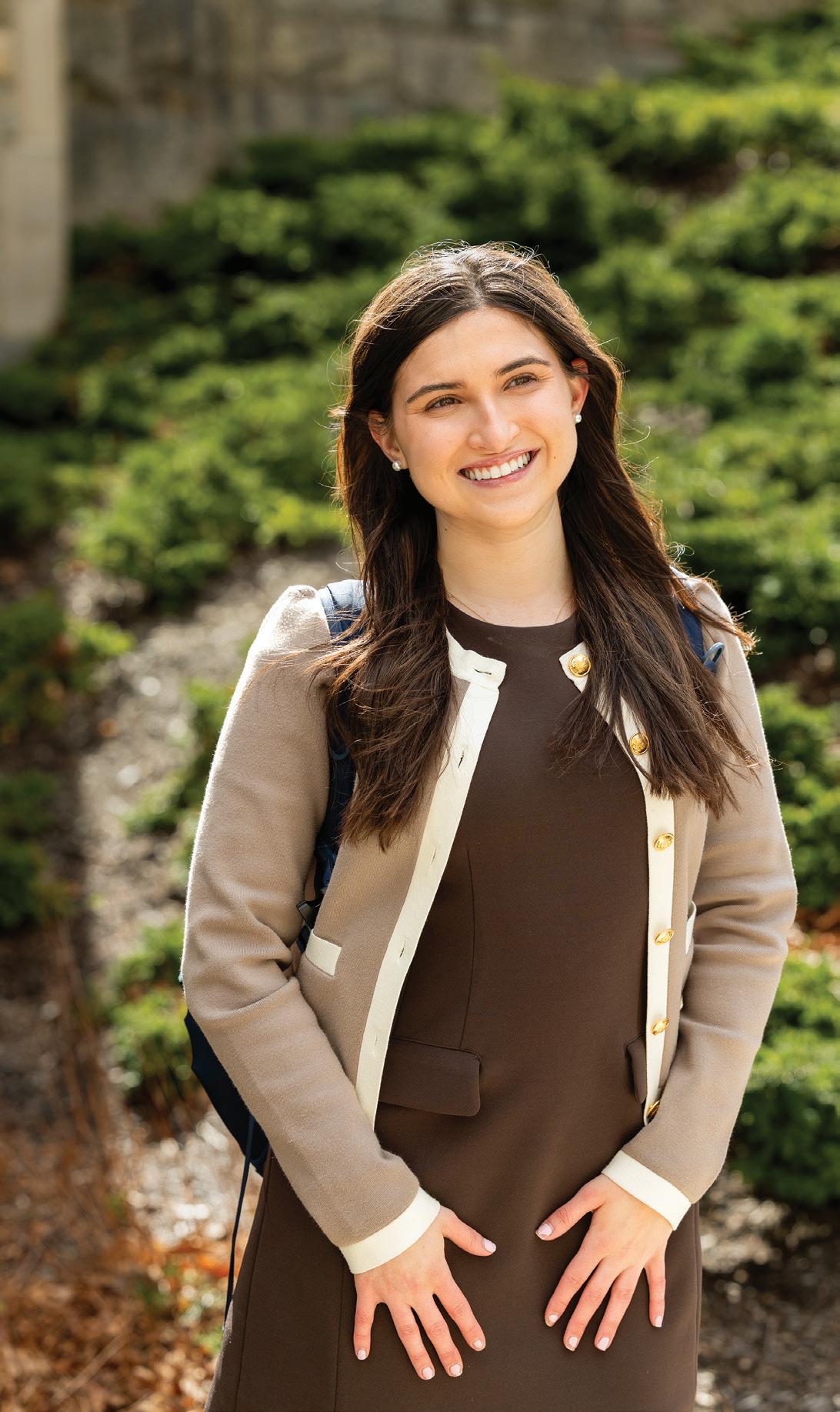
The Rule of Law and the Meaning of Justice EQ course set the foundation for my development at Boston College. My English and Law School professors cared about my growth not only academically, but also as an individual.
My Core course allowed me to step outside myself and examine topics from my peers’ viewpoints. The course as a whole made me a more compassionate and understanding person, which I will value for the rest of my life.
Major: Biology/Classical Studies
Minor: Education
These courses provide a unique opportunity to build a tight-knit community in the classroom and lasting relationships with professors and peers in a way that I never could have imagined. I wish I could’ve taken every single one.
Atticus Crothers ’26
Major: Political Science
Minor: Environmental Studies
As a nursing student, I was excited to have the opportunity to also explore other interests. Luckily, my EQ course gave me the opportunity to learn about history and theology in a new and innovative way that has shifted my perspective forever.
Legacy Durham ’28
One of my favorite courses at BC was my EQ in Spring 2024. The small class size allowed me to form lasting friendships and meaningful memories while learning from professors who cared about our success.
Luis Suriel ’27
Major: History
Minor: Finance
My CP course provided a unique interdisciplinary approach that exposed me to the interconnected nature of academia. Ultimately, my semester project for my Colonizing History course set the trajectory for my academic career here at BC, as I declared a history major.
supportive environment with
University Core Curriculum
The centerpiece of a Jesuit education has always been a common curriculum that emphasizes the study of defining works in the humanities, the natural sciences, the social sciences, and the arts. BC’s University Core Curriculum is designed to provide a broad understanding of the forces that have shaped the world by challenging you to think across disciplines in order to make good decisions and to communicate effectively in an increasingly complex world.
All the courses included in this brochure satisfy University Core requirements.
To fulfill the University Core, you must complete:
1 course in the Arts
1 course in Cultural Diversity
1 course in History I
1 course in History II
1 course in Literature
1 course in Mathematics
2 courses in Natural Science
2 courses in Philosophy
2 courses in Social Science
1 course in Christian Theology
1 course in Sacred Texts and Traditions
1 course in Writing
To view all courses
Course Catalog
Complex Problem Courses
Consumer Culture:
Past, Present, and Sustainable Futures
HIST1717 + SOCY1714
Fulfills
History II + 1 Social Science
Professors
Robin Fleming, History
Juliet Schor, Sociology
Ethan Tupelo, Core Fellow
Although we are increasingly aware that our habits of consumption affect the environment, it is hard to imagine that consuming patterns can be changed. In this course, students will learn that practices of consumption are both socially and historically constructed, that they change dramatically over time, and that there are (and always have been) urgent moral issues connected to these ways of life. We will explore the global, social, and environmental dimensions of consumption, studying things like the 1897 Sears catalog, 1950s television shows, Canada Goose jackets, DIY manuals and makerspaces, and hippy cookbooks of the 1960s.
Course Times
lecture
MWF 11:00 AM – 11:50 AM
lab (choose 1)
T 3:00 PM – 4:15 PM
T 4:30 PM – 5:45 PM
Th 3:00 PM – 4:15 PM
Th 4:30 PM – 5:45 PM
reflection
W 6:00 PM – 7:15 PM
Real Estate and Urban Action:
Transforming Communities and Increasing Access to Opportunity
ECON2217 + UNAS1743
Fulfills
2 Social Science + Cultural Diversity
Professors
Geoffrey Sanzenbacher, Economics
Neil McCullagh, Carroll School of Management
Andrei Guadarrama, Core Fellow
This course explores concepts of social, economic, and racial inequality with a focus on the interaction between housing, labor markets, and the ultimate accumulation of wealth. Housing will be examined through a study of the history of affordable housing, an exploration of the transformation of Columbia Point Public Housing Development to Harbor Point, and an applied simulation. Labor markets will be explored at the theoretical level (e.g., labor supply/demand, human capital, discrimination) before delving into data and literature on how changes over the last 40 years have expanded inequality. The course will conclude with how the lack of both affordable housing and quality labor market opportunities can interact to restrict intergenerational wealth accumulation and opportunity. Through field projects, simulations, and a practical final project, the course will challenge students to explore and test solutions for transforming distressed communities into safe, desirable neighborhoods that produce better outcomes for all residents.
Course Times
lecture
TTh 12:00 PM – 1:15 PM
lab (choose 1)
M 11:00 AM – 12:15 PM
M 1:00 PM – 2:15 PM
F 11:00 AM – 12:15 PM
F 1:00 PM – 2:15 PM
reflection
W 6:00 PM – 7:15 PM
Making the Modern World: Design, Ethics, and Engineering
ENGR1801 + HIST1627
Fulfills
1 Natural Science + History II + Cultural Diversity
Professors
Kristen Conroy, Engineering
Jenna Tonn, Engineering and History
Siddhant Joshi, Core Fellow
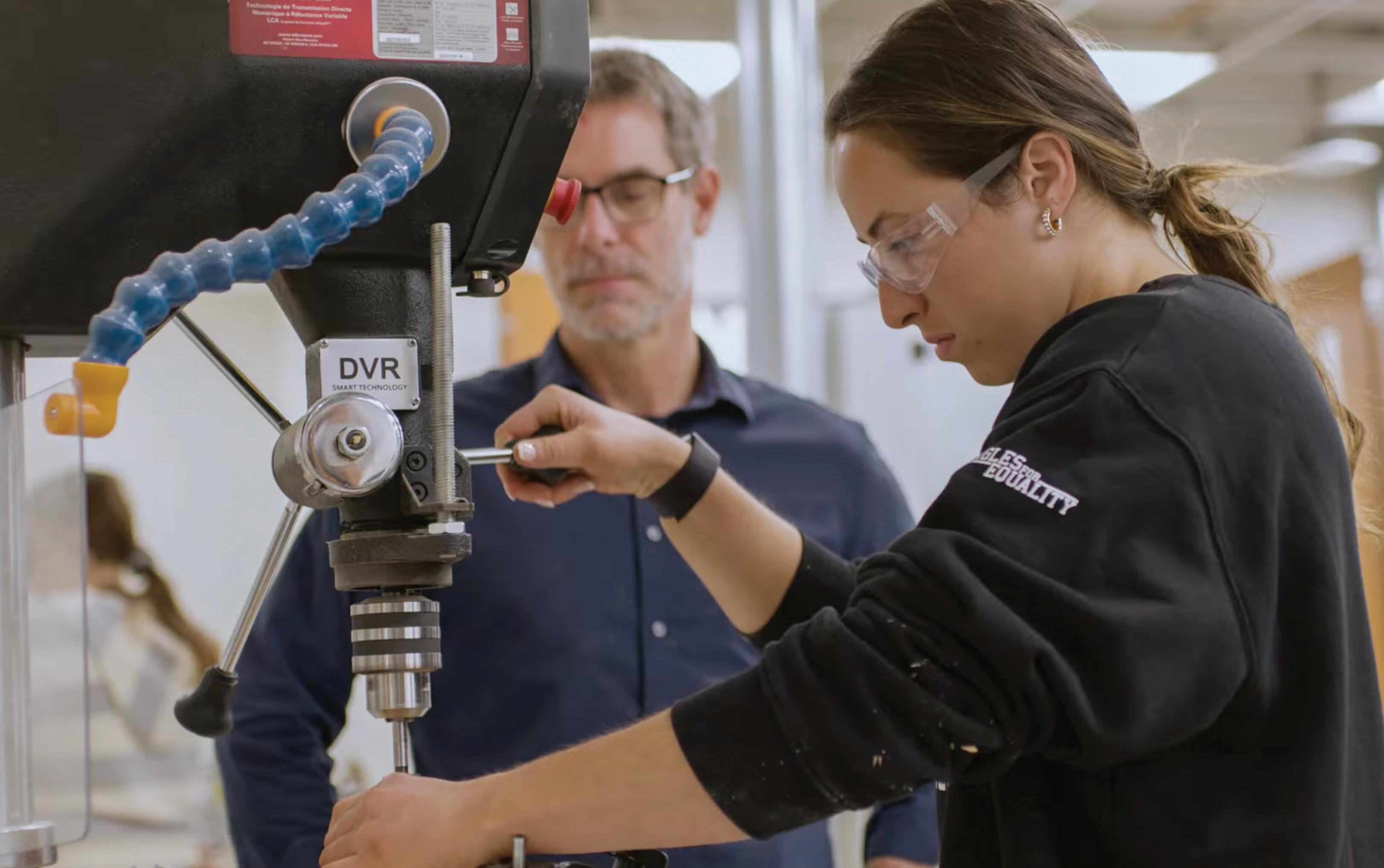
Together we will consider how engineers and other stakeholders navigate risks related to industrial and environmental disasters, balance financial, technological, and regulatory pressures associated with complex socio-technical problems, and negotiate technical and political liabilities surrounding artificial intelligence, surveillance, and climate adaptation. Engineering systems present pressing technical, ethical, and moral problems that we must grapple with as engaged global citizens. Students will explore the social, cultural, and institutional history of engineering, learn foundational skills in quantitative analysis of real-world engineering designs, and understand the political, environmental, economic, and ethical tradeoffs associated with building the modern world. Students will also collaborate on group design projects based on human-centered engineering.
Course Times
lecture
TTh 10:30 AM – 11:45 AM
lab (choose 1)
M 10:00 AM – 11:50 AM
M 2:00 PM – 3:50 PM
T 12:00 PM – 1:50 PM
T 3:00 PM – 4:50 PM
reflection
Th 6:00 PM – 7:15 PM
Climate Change and the Corporation: Risks, Rewards, and Responsibilities
EESC1704 + UNAS1733
Fulfills
1 Natural Science + 1 Social Science
Professors
Tara Pisani Gareau, Earth and Environmental Sciences
Mary Ellen Carter, Carroll School of Management
Gayathri Goel, Core Fellow
Climate change is a complex, existential threat to humanity, manifesting in heat waves, droughts, wildfires, and flooding. Corporate America is a contributor to climate change through greenhouse gas emissions. In addition, corporations are impacted by climate change as it threatens their physical assets and their ability to supply goods and services. Through an integrated approach that blends scientific analysis of climate change with case studies of corporations, students will learn the science behind climate risk and study how businesses are managing and communicating to stakeholders both the impacts of climate change on the firm as well as the firm’s impact on the environment.
Course Times
lecture
TTh 1:30 PM – 2:45 PM
lab (choose 1)
M 10:00 AM – 11:15 AM
M 12:00 PM – 1:15 PM
W 10:00 AM – 11:15 AM
W 12:00 PM – 1:15 PM
reflection
T 6:00 PM – 7:15 PM
Complex Problem Courses Enduring Question Courses
Exchange and Values: Stories and Measures of Inequality
ECON2215 + ENGL1752
Fulfills
1 Social Science + Literature + Cultural Diversity
Professors
Can Erbil, Economics
Kalpana Seshadri, English
Peter Giraudo, Core Fellow
This course explores inequality through a blend of economics and literature, providing a rich, interdisciplinary perspective. By examining real world cases, economic data, and literary narratives, students will understand different forms of inequality in society. The course is organized around five key themes–food, housing, health, education, and jobs–and includes interactive lectures and labs for in-depth analysis. It is designed to foster critical thinking about social justice, encouraging students to reflect on their values and aspirations in relation to societal inequities. This engaging course aims to deepen students’ awareness and understanding of the economic and social aspects of inequality.
Course Times
lecture
TTh 3:00 PM – 4:15 PM
lab (choose 1)
M 10:30 AM – 11:45 AM
M 12:00 PM – 1:15 PM
W 9:00 AM – 10:15 AM
F 2:00 PM – 3:15 PM
reflection
Th 6:00 PM – 7:15 PM
The Meaning of Boston:
Literature
and Culture
ENGL1735
The Meaning of Boston: History and Memory HIST1630
Fulfills
Literature + History II
Professors
Carlo Rotella, English
David Quigley, History, Provost and Dean of Faculties
How does a city–this city in which we find ourselves–create meaning?
Meaning flows through a city just as populations, capital, power, resources, and ideas do, and each of these flows conditions the others. In this course, we will consider what Boston has meant in different moments and to different people as we think about the forms of literary texts, how they express meaning, and their relationships to the historical moments in which they took shape and/or seek to capture. We will also consider the local in relation to national and international events and artistic movements. Throughout the semester, our discussions will move beyond the received meanings and standard tropes of Boston–the accent, the city on a hill, the regular-guy mythos retailed by Hollywood–to explore questions that Boston has consistently raised about human beings and nature, race and class difference, the form and function of the good life, the double-edged quality of moral causes, and the contest between the persistence of old ways and the succession of new ones.
Course Times
lecture
TTh 12:00 PM – 1:15 PM
TTh 1:30 PM – 2:45 PM
reflection (4 times per semester)
T 6:00 PM – 7:50 PM
Creative Women: The Art World During the Renaissance ARTH1715
Creative Women: Society and Culture
During the Renaissance HIST1731
Fulfills
Fulfills Arts + History I
Professors
Stephanie Leone, Art History
Sarah Ross, History
How do women shape culture and society?
In 1971, Linda Nochlin posed the trailblazing question, “Why are there no great women artists?” A few years later, in 1976, medievalist Joan Kelly similarly inquired, “Did women have a Renaissance?” Prior to that time, women scarcely appeared in the pages of history and art history books. Since then, scholars have unearthed abundant evidence of women’s productivity beyond the domestic sphere. These paired courses examine how women made significant contributions in political, intellectual, creative, and artisanal work during the long Renaissance (1400-1650), as well as explore connections with creative women in our own time.
Course Times
lecture
TTh 1:30 PM – 2:45 PM
TTh 3:00 PM – 4:15 PM
reflection (4 times per semester)
Th 6:00 PM – 7:50 PM
The Self and Its Limits: Classical and Contemporary Perspectives PHIL1727
The Self and Its Limits: Greco-Roman Slavery CLAS1706
Fulfills
Fulfills 1 Philosophy + Literature + Cultural Diversity
Professors
Dermot Moran, Philosophy
Thomas Sapsford, Classical Studies
What is the relationship between the individual self and its social roles?
These paired courses examine what factors make us free individuals and how that freedom has historically been removed from certain people. One course will explore the nature of the self in historical and contemporary perspectives from East and West to look at the nature of selfconsciousness and personhood. The other will investigate how ancient Greeks and Romans justified the enslavement of individuals for material gain and how ancient slavery influenced American society both in terms of its use of slavelabor and in the arguments made for abolition.
Course Times
lecture
TTh 9:00 AM – 10:15 AM
TTh 10:30 AM – 11:45 AM
reflection (4 times per semester)
T 6:00 PM – 7:50 PM
Enduring Question Courses
Breaking Bread:
Food, Fiction, and Identity ENGL1743
Breaking Bread:
Food, Fellowship, and Faith THEO1730
Fulfills
Literature + 1 Theology (Christian Theology)
Professors
Deanna Danforth, English
Liam Bergin, Theology
What is the role of food in shaping identity and building community?
More than daily acts that provide physical nourishment, eating and drinking are primordial human experiences that inform our relationships with others. The food we choose to eat and the gatherings at which we partake in these meals have social, cultural, environmental, religious, political, and ethical dimensions. These paired courses examine the deeper meanings of food encountered in literary forms and in the Judeo-Christian tradition. Discussions will be enriched by opportunities to cook and eat together.
Course Times
lecture
TTh 10:30 AM – 11:45 AM
TTh 12:00 PM – 1:15 PM
reflection (4 times per semester)
Th 6:00 PM – 7:50 PM
Exploring the Mystery of God: A Philosophical Perspective PHIL1726
Exploring the Mystery of God: A Theological Perspective THEO1726
Fulfills
1 Philosophy + 1 Theology (Christian Theology)
Professors
Timothy Muldoon, Philosophy
L. Matthew Petillo, Theology
What is the relationship between human beings and God?
These paired courses explore conceptions of the divine that have been a fundamental part of Western civilization as well as the relationships that human beings have with the divine. The Philosophy course will examine how the Greeks viewed their gods in their literature and philosophy. The Theology course will explore various perspectives on God in ancient, medieval, and contemporary theological writings. There will be many intersections and divergences on the divine between the two courses.
Course Times
lecture:
MWF 9:00 AM – 9:50 AM
MWF 10:00 AM – 10:50 AM
reflection (4 times per semester)
M 6:00 PM – 7:50 PM
Artistic License: Cultural Property and the Restitution of Nazi-Looted Art GERM1702
Artistic License: Intellectual Property in the American Music Industry MUSA1702
Fulfills
1 Social Science + Arts + Cultural Diversity
Professors Nicholas Block, German Studies
Sarah Lindmark, Music
What does it mean to own art ethically?
These paired courses challenge students to question the nature of authenticity as it is legally constructed and performed in the media they engage with on a daily basis. Through the two distinct yet intertwined topics of stolen art and copied music, these courses attend to core concerns of ethical ownership. By the end of the semester, students will be able to form and articulate sophisticated ideas about how authenticity is produced, performed, and sold among art collectors and in the music industry, gaining an informed perspective on the ways in which the law assesses truth in art and music.
Course Times
lecture
MWF 12:00 PM – 12:50 PM
MWF 1:00 PM – 1:50 PM
reflection (4 times per semester)
Th 6:00 PM – 7:50 PM
Roots and Routes: Reading Identity, Migration, and Culture ENGL1712
Roots and Routes: Writing Identity, Migration, and Culture ENGL1713
Fulfills
Literature + Writing + Cultural Diversity
Professors Elizabeth Graver, English Lynne Anderson, English
How does migration in today’s world shape questions of identity, borders, and belonging and lead to a reimagining of home?
In these paired courses, students will read a range of fiction, nonfiction, and poetry by authors whose migration stories offer different ways to think about what it means to be an outsider and build a new life and home. They will explore how their own roots and routes shape their identities. We will consider the gifts and challenges of making a home across cultures and discuss themes of power, voice, silence, memory and multilingualism, along with the experience of migrating in a globalized, wired, yet often divided world. Activities may include an author talk, a museum visit, an excursion to an immigrant neighborhood, creative writing, and several shared meals.
Course Times
lecture
TTh 10:30 AM – 11:45 AM
TTh 12:00 PM – 1:15 PM
reflection (4 times per semester)
W 6:00 PM – 7:50 PM
Enduring Question Courses
From Hiroshima to K-Pop: Historical Perspectives UNAS1716
From Hiroshima to K-Pop: Filmmakers’ Perspectives UNAS1717
Fulfills
History II + Arts + Cultural Diversity
Professors
Ingu Hwang, International Studies
Christina Klein, English
What is the relationship between politics and popular culture?
How did East Asia emerge from the wreckage of the Second World War to become the dominant political, economic, and cultural force it is in the world today? What is the relationship between politics and popular culture? Since 1945, East Asia has experienced the Cold War, civil war, communist revolution, modernization, capitalism, democratization, and economic booms and busts. It has also become a powerhouse producer of popular and art cinema. In these paired courses, students will explore the relationship between politics and culture as they learn how historians and filmmakers have grappled with the tumultuous events of the past 75 years.
Course Times
lecture
TTh 12:00 PM – 1:15 PM
TTh 1:30 PM – 2:45 PM
film screenings
M 7:00 PM – 8:50 PM
Metamorphosis and Transformation: Biology and Evolution BIOL1712
Metamorphosis and Transformation: Literature and Myth ENGL1751
Fulfills
1 Natural Science + Literature
Professors
Sarah McMenamin, Biology
Robert Stanton, English
What does it mean to experience metamorphosis or transformation?
Metamorphosis is a rich concept in both the sciences and the humanities. These paired courses will explore the transition of metamorphosis from the perspective of the natural world and from the perspective of literature, considering how bodies, minds, and characters undergo discrete transformations through time. We will explore what stimulates “metamorphosis” in biological organisms and fictional characters and what comes next after a major transformation. We will also ask where the raw materials of the metamorphic transformation come from and examine the risks, challenges, and rewards of emerging in the world with a new, mature form. In addition, we will investigate how metamorphic transformations are coordinated with growth—biological, physiological, psychological, or spiritual. The two courses will evaluate and test one another’s definitions of metamorphosis in order to understand this fundamental concept from two different disciplinary perspectives.
Course Times
lecture
TTh 3:00 PM – 4:15 PM TTh 4:30 PM – 5:45 PM
reflection (4 times per semester)
T 6:00 PM – 7:50 PM
Where We Are: Reading in Place
ENGL1745
Where We Are: Writing in Place
ENGL1746
Fulfills
Literature + Writing + Cultural Diversity
Professors
Christy Pottroff, English
Rebekah Mitsein, English
What is the relationship between where we are and who we are?
Where we are shapes our being, enables our thinking, inspires creativity, and facilitates connection. In these paired courses, students will think about where we are at a range of scales, from the local (What does it mean to be at BC?) to the historical (How are we part of the story of Boston?) to the global (What does the far-away have to do with us?). Students will cultivate a mindful and ethical relationship to place by bridging the imaginative possibilities that literary analysis facilitates with the sense of empowerment and personal agency that writing affords.
Course Times
lecture
MWF 1:00 PM – 1:50 PM
MWF 2:00 PM – 2:50 PM
reflection (4 times per semester)
T 6:00 PM – 7:50 PM
Data, Power, and the Making of Modern Science: Sociological Perspectives SOCY1333
Data, Power, and the Making of Modern Science: Historical Perspectives HIST1739
Fulfills
1 Social Science + History II + Cultural Diversity
Professors
Taylor Beauvais, Core Fellow
Kathryn Bruce, Core Fellow
What does it mean to create scientific knowledge?
These paired courses examine the social construction of knowledge through the lenses of social science and history. We will investigate how the creation, framing, accessibility, and purpose of knowledge are intertwined with broader cultural, political, and economic forces. We also examine the ways individuals and institutions claim expertise and authority. Students will examine the history of science through in-depth case studies addressing pivotal themes, including gender, class, sites of research, scientific communication, controversy and debate in the scientific community, and the influence of domestic and international politics. Students will also learn how social theory and scientific methodology embed social forces into knowledge production by dissecting case studies ranging from college ranking fraud, social media algorithms, micro-loans in Bangladesh, and why billionaires want to colonize space.
Course Times
lecture
Section 01
MWF 10:00 AM - 10:50 AM
MWF 11:00 AM - 11:50 AM OR
Section 02
MWF 11:00 AM - 11:50 AM
MWF 12:00 PM - 12:50 PM
reflection (4 times per semester)
Th 6:00 PM – 7:50 PM
AdditionalOpportunities forFirst-Year Students
In addition to CP & EQ courses, Boston College offers a number of other distinctive offerings for first-year students where you have the opportunity to engage with fundamental questions of human life from a variety of perspectives, linking classroom work to the world, exploring personal connections, and reflecting on ethics.
Highlights include:
Perspectives on Western Culture
Perspectives on Western Culture enables students to develop nuanced answers to life’s enduring questions. Students begin by encountering the rise of Greek philosophy and the Judeo-Christian experience of God’s revelation in history. Modern thinkers are then put in conversation with the thinkers of the ancient and medieval world. The resulting clarification by contrast allows students to appropriate, in a critical and dialectical manner, the contributions of feminist, post-colonial, post-modern and other approaches to the history of Western thought, all the while considering for themselves what it means to live a good life.
Fulfills
2 Philosophy Cores + 2 Theology Cores
(1 Christian Theology + 1 Sacred Texts and Traditions)
6 credits per semester
Year-long
PULSE Program for Service Learning
Open to freshmen, sophomores, and juniors, PULSE educates students about social injustice by putting them into direct contact with marginalized populations and social change organizations and by encouraging discussion about classic and contemporary works of philosophy and theology. The year-long course titled “Person and Social Responsibility” is combined with community service field placements in areas such as after-school programs, corrections facilities, homeless shelters, adult literacy programs, public health clinics, community centers, addiction and recovery programs, and HIV/AIDS services.
Fulfills
2 Philosophy Cores + 2 Theology Cores
(1 Christian Theology + 1 Sacred Texts and Traditions)
6 credits per semester
Year-long
The Courage to Know
This introduction to student formation in the Ignatian tradition offers students the opportunity to ask deeply personal and profound questions: “Who am I? What am I good at? Who am I called to become?” This course is open to all first-year students. For those students in the Morrissey College of Arts and Sciences taking this course in the fall semester, the instructor will serve as academic advisor until the student is assigned a major advisor sometime in the sophomore year.
Fulfills
1 Elective
3 credits Fall or Spring
Perspectives LLC
The Perspectives Living Learning Community is an academic initiative for first-year students that possesses a distinct bond between an academic course and a residential living community. Students who live in this community are afforded the opportunity to participate in specialized programming which creates links with the Perspectives curriculum, creates deeper relationships between students, faculty, and administrators, and develops a strong peer cohort.
Justice & the Common Good LLC
The Justice & the Common Good Living Learning Community (JCG LLC) is a residential community for first-year MCAS students who would like to deepen their interests in social justice, cultural diversity, and the common good. Students in the JCG LLC gain new tools for reflecting on and leading social transformation in pursuit of justice, equity, and universal flourishing.