18 GRADUATED FROM WPVGA Member Development Program
PC-12 ENGINE OILS: Navigating Change with Confidence
ROOT VEGETABLES ADD Versatility to Produce Aisle WHAT EMPLOYERS SHOULD Focus on Regarding an ICE Visit
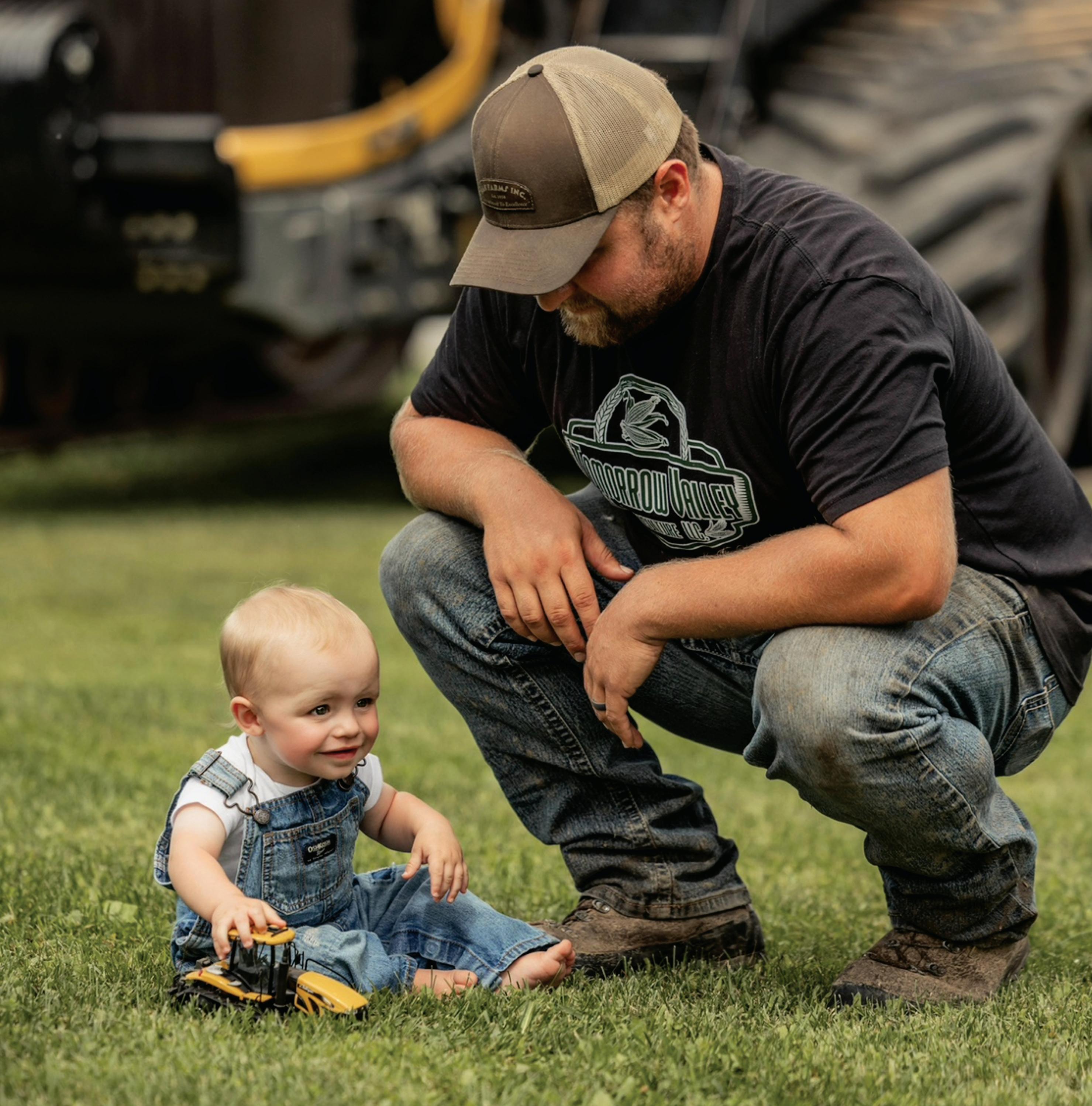
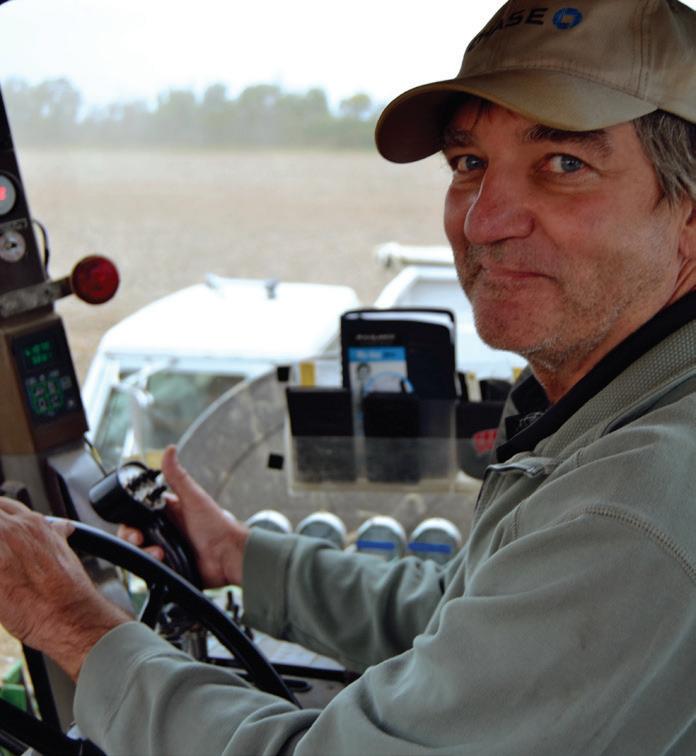
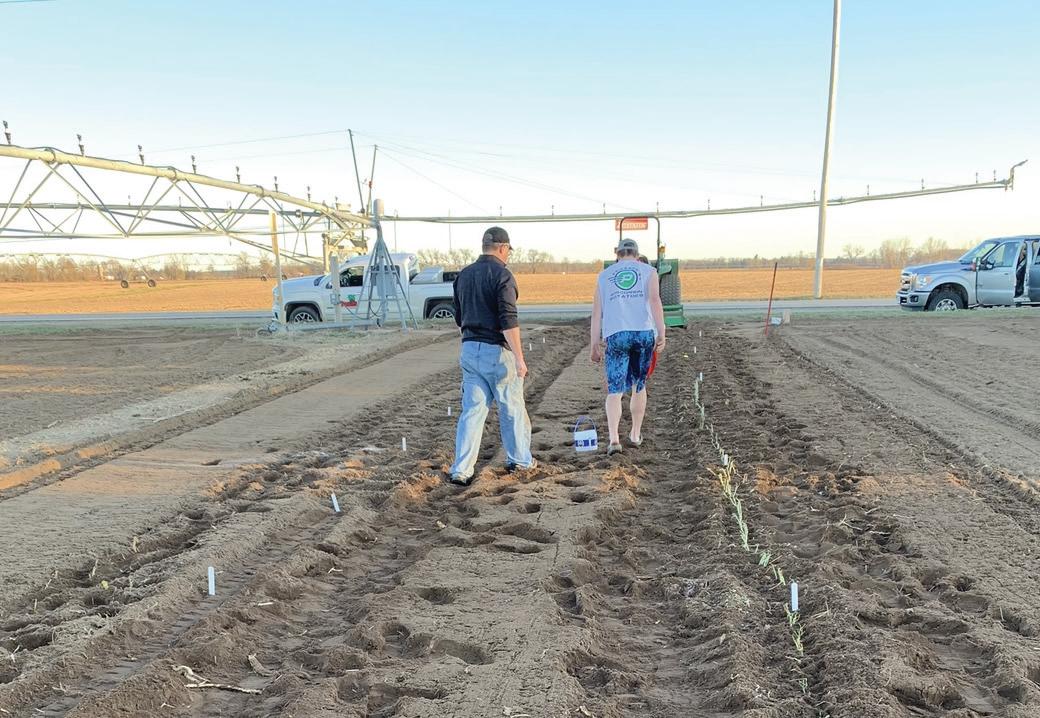
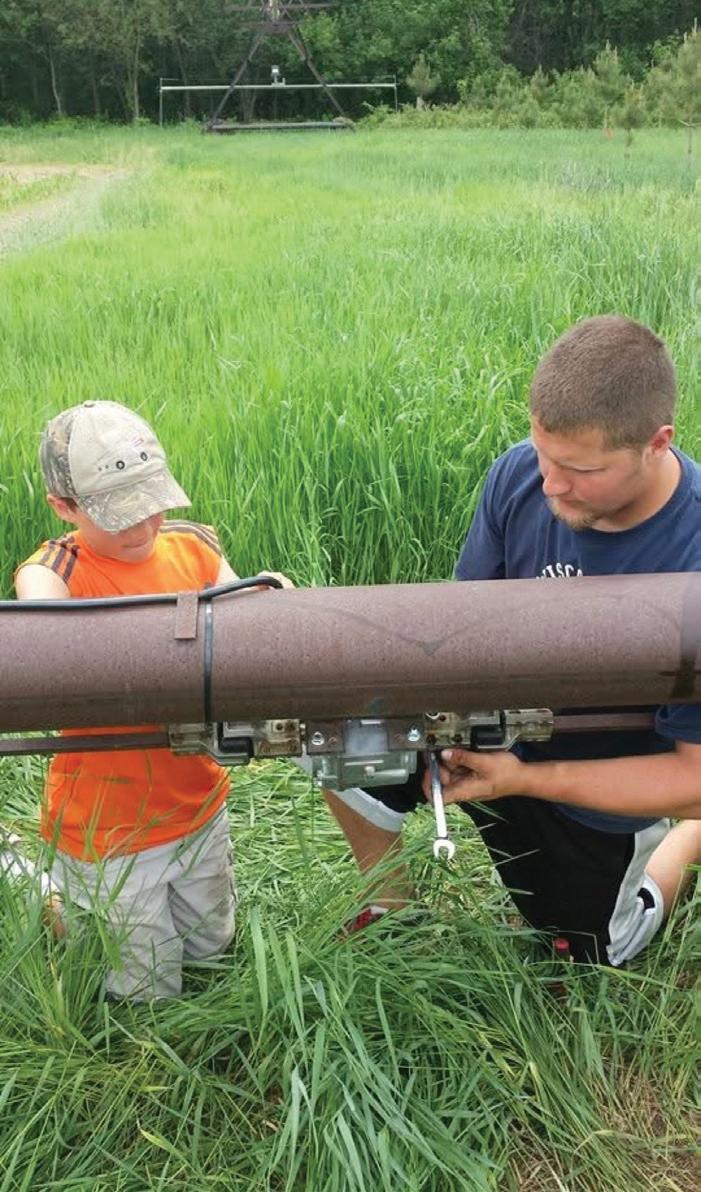
Chase Knutson of K&K Farms Inc., Almond, Wisconsin, shown here with his son, Beau, proudly carries on the legacy of his family’s generational vegetable farm alongside his brother, Dawson.
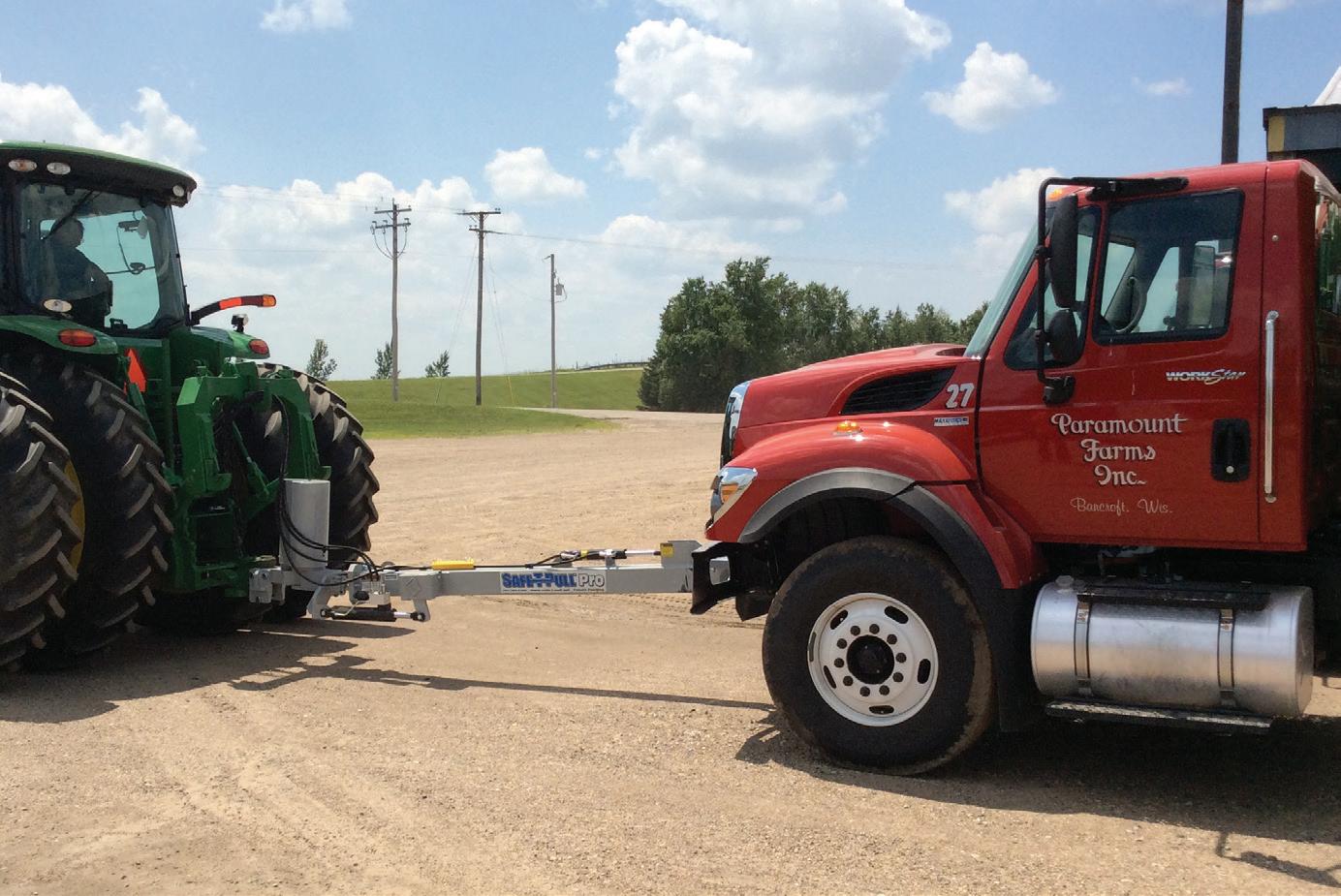
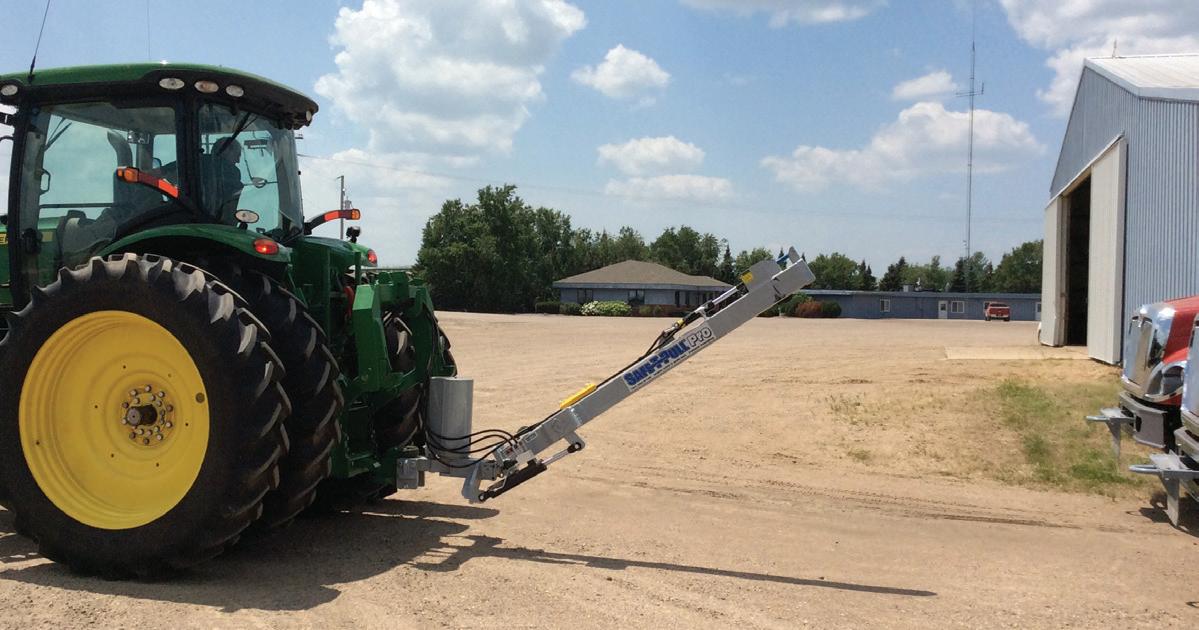
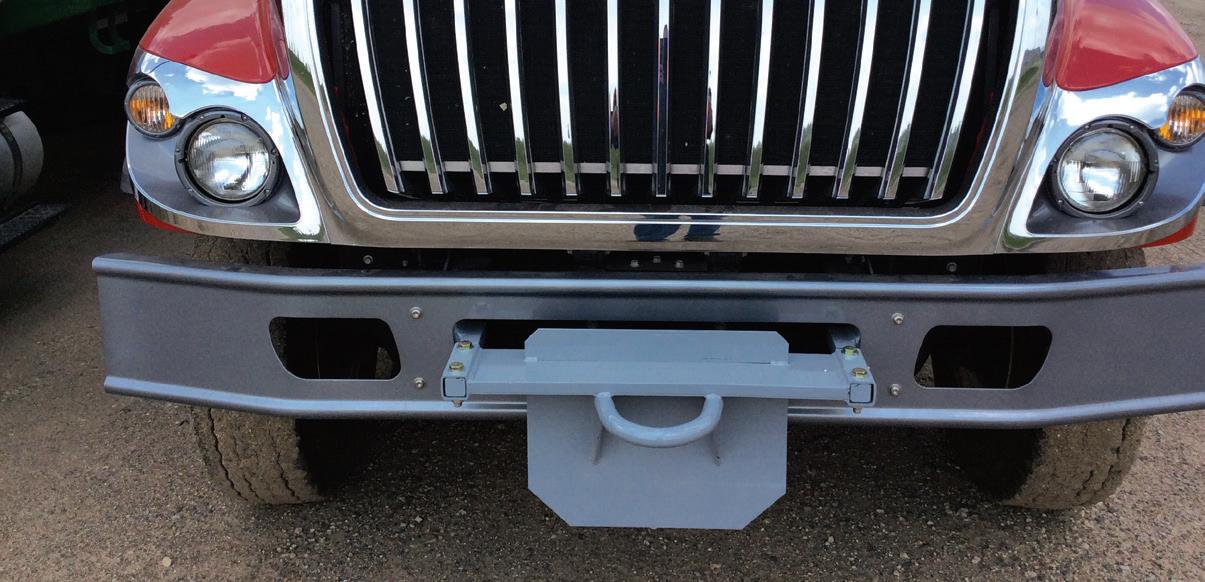
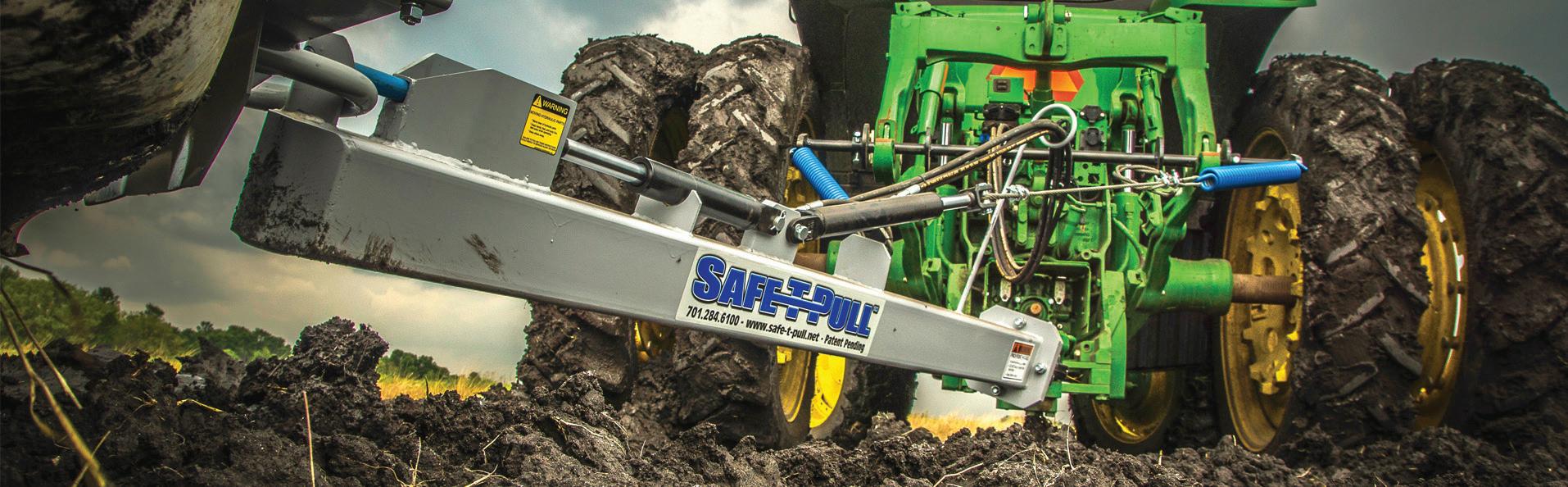
TRUCK HITCHES & PULLERS
• Safest, most economical way to pull trucks through fields in tough harvesttime conditions.
• Safe-T-Pull hitches and towing systems are safe and efficient.
• Hitches attach and detach from trucks, tractors and implement frames with no chains or cables to break.
WPVGA Associate Division
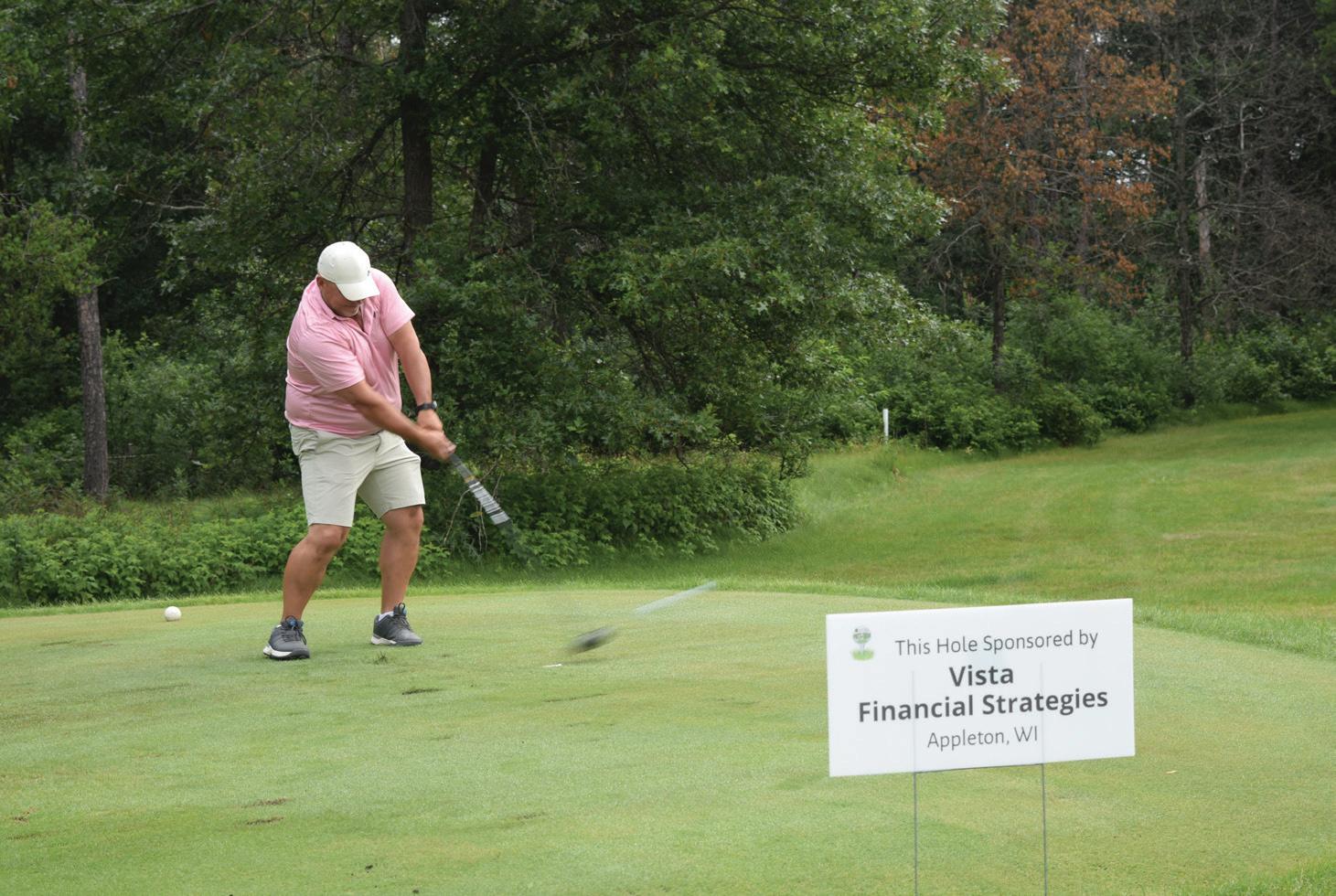
26th Annual Golf Outing & Barbeque
Lake Arrowhead Golf Course
Nekoosa, Wednesday, July 8, 2026
We will golf rain or shine!
REGISTRATION DEADLINE: June 27, 2026
The WPVGA Associate Division will host the 26th Annual Golf Outing at Lake Arrowhead Golf Course in Nekoosa. The golf outing is followed by a splendid dinner barbeque and raffle prize drawings.
The golf format is a four-person scramble with a shotgun start limited to the first 42 foursomes and sign up is on a first-come, first-served basis, so sign up soon! Don’t miss out! Registration will start at 9:00 a.m. and the scramble will begin with a shotgun start at 10:00 a.m. Cost is $100/person which includes 18 holes of golf with cart. Proper golf etiquette is expected.
Lunch is available for all golfers that day courtesy of an associate sponsor. The dinner barbeque is held immediately following golf and is open to everyone in the industry whether you choose to golf or not.
Tickets are required. ‘Barbeque only’ ticket price is $30/person. Make checks payable to WPVGA. Please contact Julie Braun, 715-623-7683, if you have any questions.
o Yes! I will golf. I am registering ______ golfers. (Fee for golf only is $100 per person. This does not include barbeque.)
o I wish to order _______ Barbeque Tickets at $30.00 per ticket.
o I would like to sponsor a hole at the golf outing. My donation of $_________ is enclosed.
REGISTRATION DEADLINE: June 27, 2026
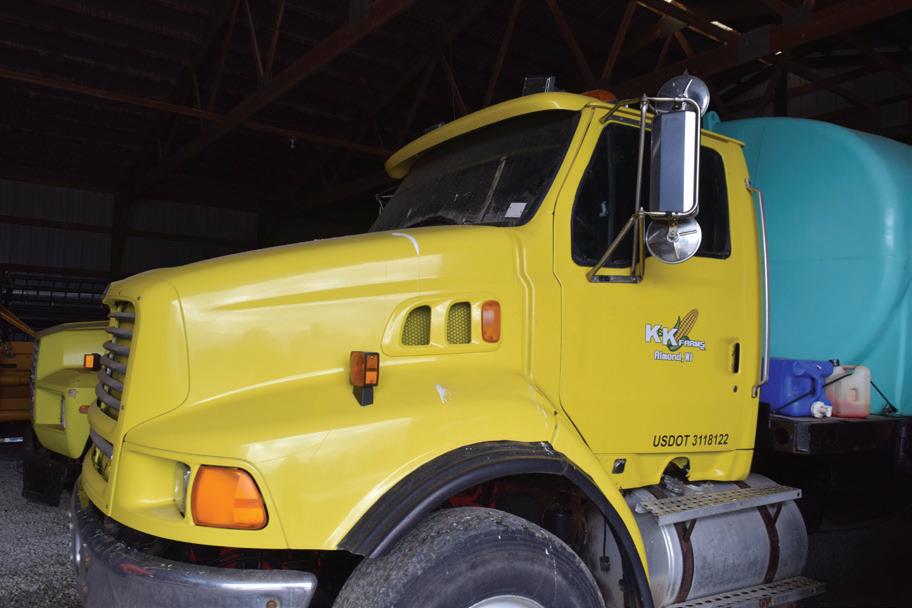
On the Cover: A father and his boy—Chase Knutson and his son, Beau—grace the cover of the May 2026 Vegetables & Farm Safety/Insurance issue of the Badger Common’Tater. Chase and his brother, Dawson, are third-generation vegetable farmers at K&K Farms Inc., in Almond, Wisconsin. Chase and his wife, Hattie, also have a six-month-old daughter, Amara.
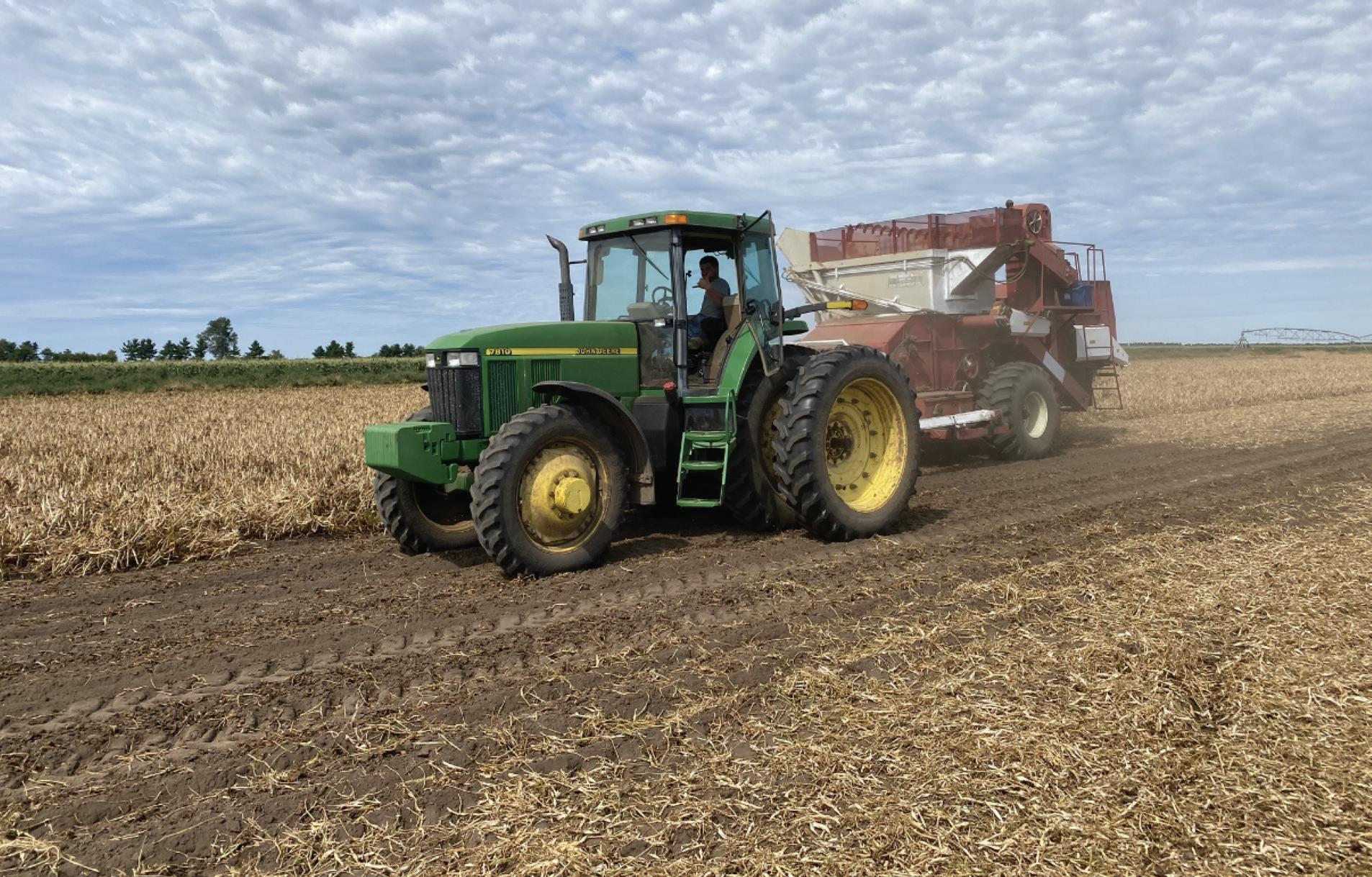
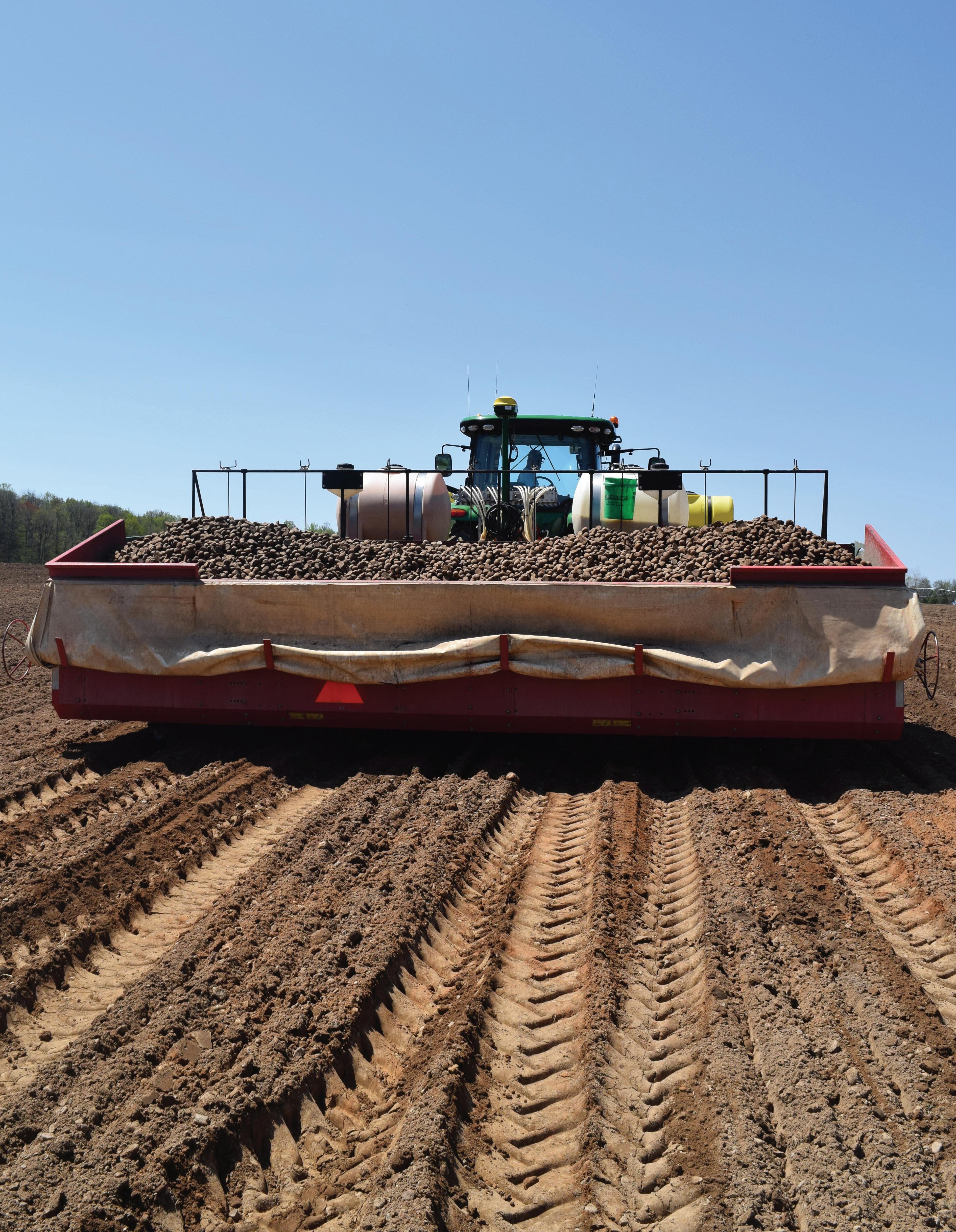
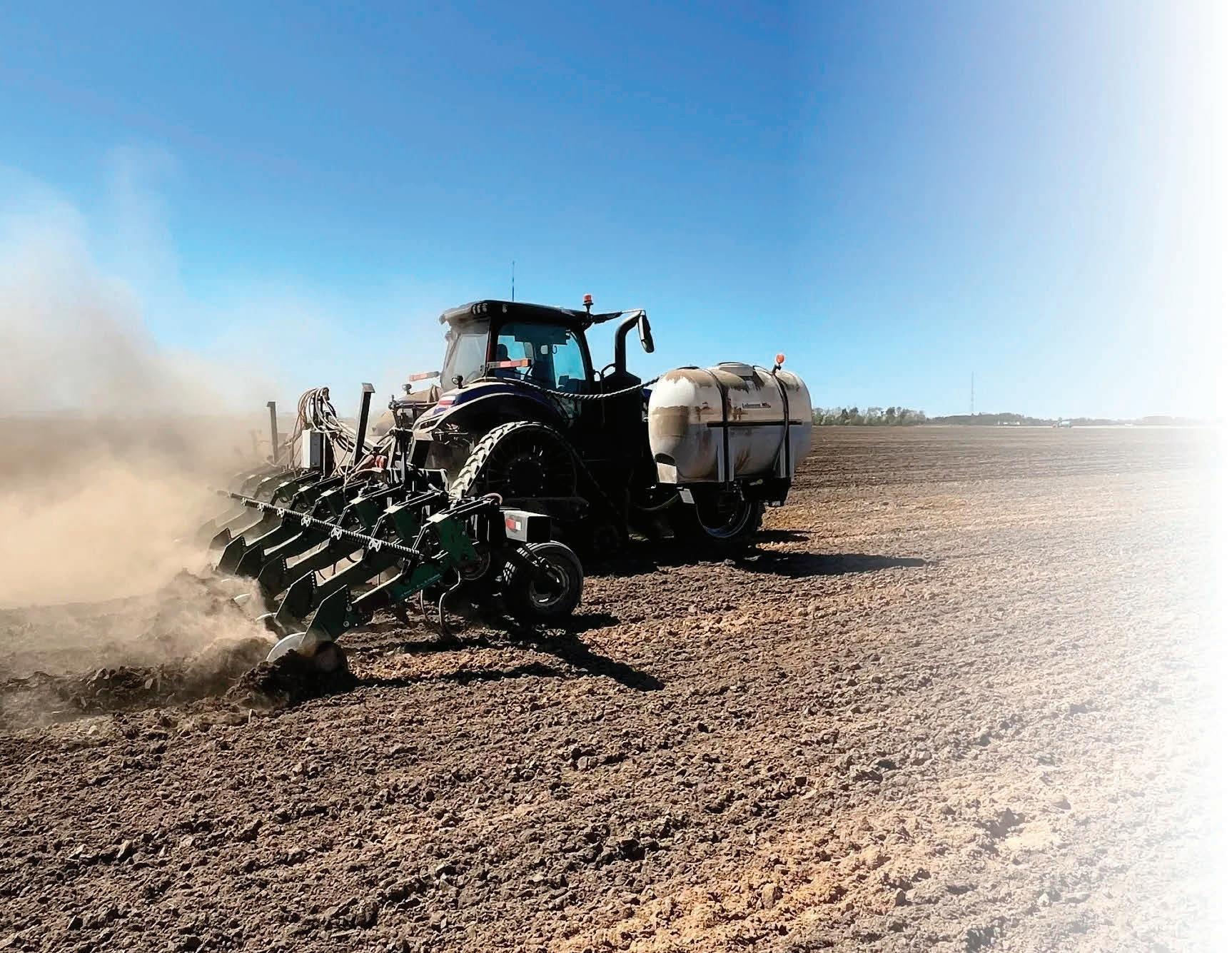
A kidney bean combine is hitched to a John Deere 7810 tractor on K&K Farms Inc., in Almond, Wisconsin. Owner and Operations Manager Chase Knutson runs the vegetable farm with his brother, Dawson, and before that with their father, Jerry, who sadly passed away in December 2019. The boys are proud to carry on a farming legacy started by their grandfather, Ralph, in 1958. In addition to running the farm, Jerry was also the owner of Oasis Irrigation.
WPVGA Board of Directors:
PresideNt: WeNdy Dykstra
Vice PresideNt: Josh KNights
Secretary: Bria N Lee
Treasurer: JohN HopfeNsperger
Directors: Ra Ndy Fleishauer, Charlie HusNick, ANdy Schroeder, Jeff SuchoN & Lucas Wysocki
Wisconsin Potato Industry Board:
PresideNt: Heidi Alsum-Ra Ndall
Vice PresideNt: ANdy Diercks
Secretary: Nicola Carey
Treasurer: Keith Wolter
Directors: Rod Gumz, Jim Okray, Eric Schroeder, Joe Seis & Tom Wild
WPVGA Associate Division Board of Directors:
PresideNt: Matt SeleNske
Vice PresideNt: Etha N OlsoN
Secretary: Melissa Heise
Treasurer: Paul Salm
Directors: Matthew Hartma N, Brady Patoka, Scott Scheer, Morga N Smolarek & Bra NdoN Taylor
Wisconsin Seed Potato Improvement
Association Board of Directors:
PresideNt: ANdy Schroeder
Vice PresideNt: CloVer Spacek
Secretary/Treasurer: Rya N FassbeNder
Directors: Mitch Mattek & Markus Shafel
Wisconsin Potato Growers
Auxiliary Board of Directors:
PresideNt: Heidi Schleicher
Vice PresideNt: Dakotah Smiley
Secretary/Treasurer: Sama Ntha Cypher
Directors: Jody BagiNski, Misti KiNNisoN, JeNN a SuchoN & EriN Meister
Mission Statement of the WPVGA: To advance the interests of WPVGA members through education, information, environmentally sound research, promotion, governmental action and involvement.
Mission Statement of the WPVGA Associate Division: To work in partnership with the WPVGA as product and service providers to promote mutual industry viability by providing technology and information resources.
Badger Common’Tater is published monthly at 700 Fifth Avenue, Antigo, Wisconsin 54409
WPVGA Staff:
ExecutiVe Director: Tamas Houliha N Ma N agiNg Editor: Joe Kertzma N
ADVERTISING: To advertise your service or product in this magazine, call (715) 630-6213, or email: Joe Kertzman: jkertzman@wisconsinpotatoes.com. The editor welcomes manuscripts and pictures but accepts no responsibility for such material while in our hands.
MARK YOUR Calendar
Planting Ideas
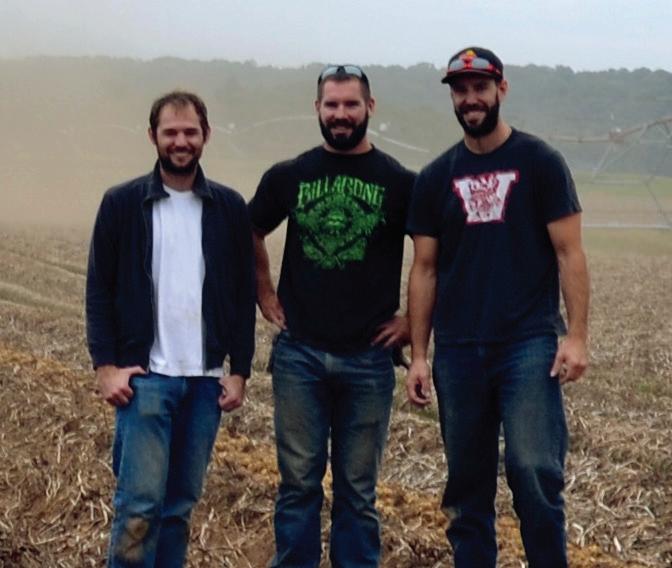
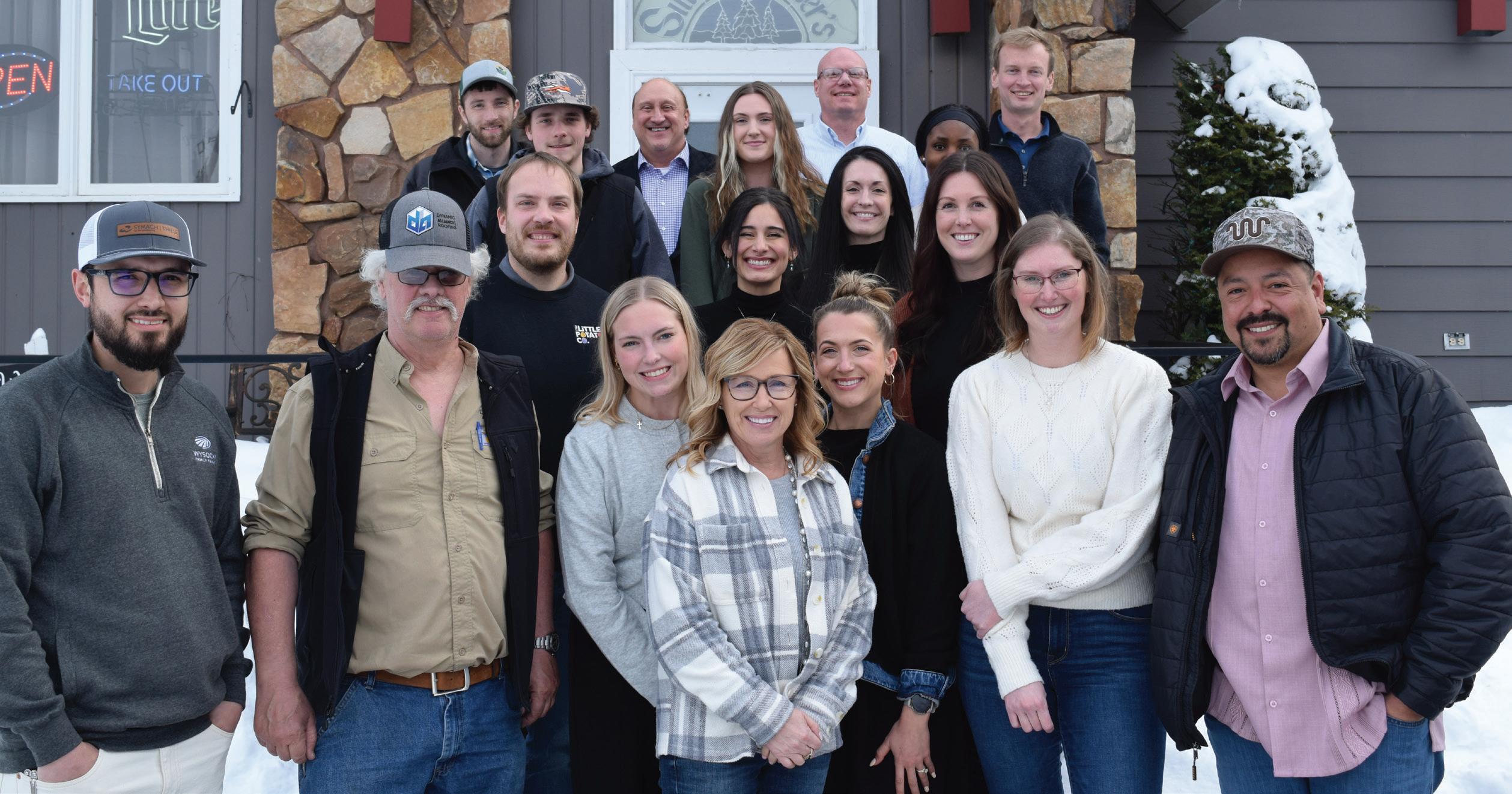
Often, I feel lucky just to be a part of the Wisconsin potato and vegetable growing industry. That feeling came back to me on March 18 during the final session of the biennial Member Development Program put on by the Wisconsin Potato & Vegetable Growers Association (WPVGA) for its members. Above are 8 of the 18 participants who graduated from the Member Development Program, including, clockwise from left, Jessica Jedlowski, Kelsi Mueller, Seth Olson, Kelly Verhaalen, Olufunke Ogundiya, Derrick Smit, Jeremy Wakerhauser, and Riley Guenthner.
Talk about a neat group and a great program, the WPVGA ensures its strong membership base and the industry’s future success by preparing members to be effective leaders. Open to Associate Division, Auxiliary and Grower members, the WPVGA plans and runs the Member Development Program to give future leaders the tools they need to succeed. Enjoy the related feature article and photos in this issue.
WPVGA Executive Director Tamas Houlihan was the master of ceremonies at another fantastic event, the Portage County Business Council “American Agriculture Appreciation Banquet,” held March 9 at the Food + Farm Exploration Center, in Plover. The American Ag Appreciation Banquet celebrates individuals for their personal and professional contributions to agriculture in Portage County, including 4-H leaders and youth, and FFA high school seniors. Agribusiness scholarships are also awarded to deserving students.
During the banquet, the “Outstanding Contribution to Agriculture Award” was presented to Ken Schroeder, who retired, in August 2025, from the University of Wisconsin-Division of Extension after serving as the agriculture agent for Portage County since 2006. Another familiar name, Les Dobbe was the keynote speaker at the American Agriculture Appreciation Banquet. Current President of the Board for the Food + Farm Exploration Center, Dobbe’s professional journey began with Bushmans’ Inc., in Rosholt, where he played a key role in the company’s growth within the fresh potato industry. See “Now News” herein for complete coverage of the banquet and proceedings.
Also, read how “Root Veggies Add Versality to the Produce Aisle,” in this Vegetables & Farm Safety/Insurance issue of the Badger Common’Tater.
Please email me with your thoughts and questions. If you wish to be notified when our free online magazine is available monthly, here is the subscriber link: http://wisconsinpotatoes.com/blog-news/ subscribe.
Joe Kertzman Managing Editor
N1435 Cty Rd D Antigo, WI (715) 623-2689 farm@sbfi.biz johnt@sbfi.biz
NAME: Chase Knutson
TITLE: Owner/operations manager
COMPANY: K&K Farms Inc.
LOCATION: Almond, WI
HOMETOWN: Almond
YEARS IN PRESENT POSITION: Seven
PREVIOUS EMPLOYMENT: n/a
SCHOOLING: Tri-County High School and University of Wisconsin (UW)-River Falls
ACTIVITIES/ORGANIZATIONS: Alpha Gamma Rho Fraternity, UW-River Falls Football, and a member of the Wisconsin Potato & Vegetable Growers Association
FAMILY: Wife, Hattie, and kids, Beau (1.5 years) and Amara (6 months)
HOBBIES: Snowmobiling, skiing, fishing, hunting, and being a husband and dad
Interview CHASE KNUTSON,
Owner/Operations Manager, K&K Farms Inc.
By Joe Kertzman, managing editor, Badger Common’Tater
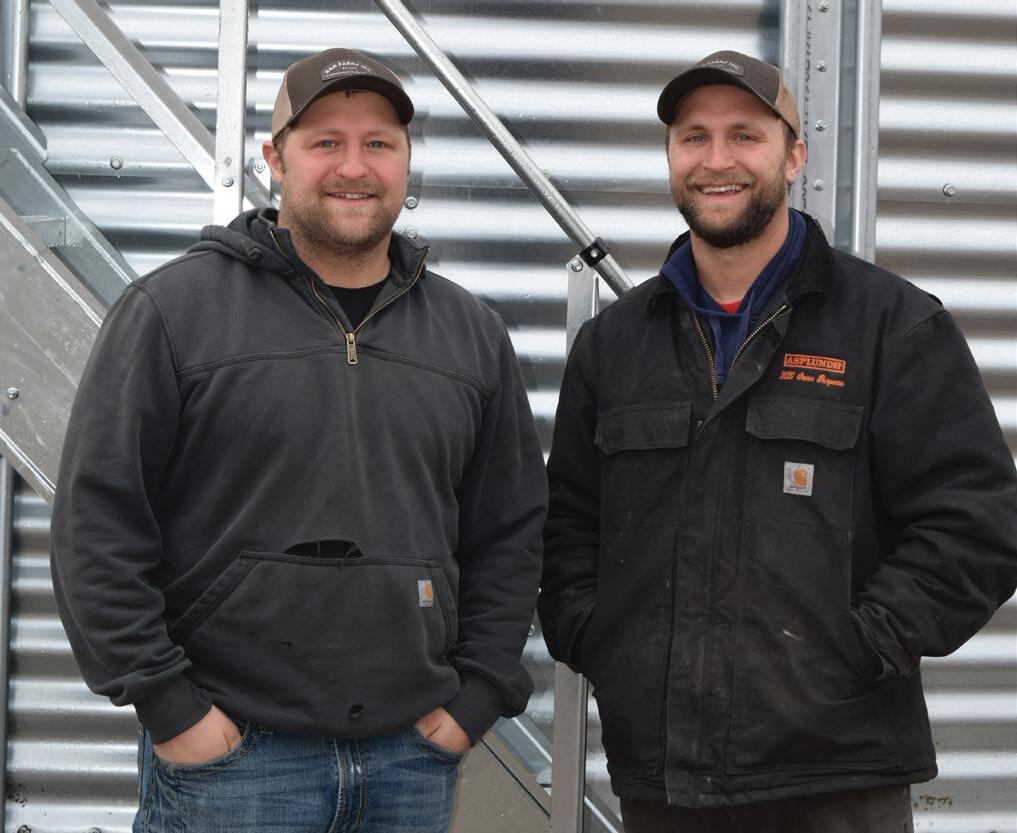
There’s a sense of pride, and a bit of hijinks, when Chase Knutson and his younger brother, Dawson, relay the story about accidentally “ripping up” a field when they were young.
“I was around 10 years old and Chase was 14,” Dawson relates. “Chase was cultivating a field and I was riding along. He got tired and decided to take a nap on the box behind the seat. He told me to drive and cultivate the rest of the field. When he woke up from his nap, I had ripped up the field badly.”
At the time, Chase and Dawson’s father, Jerry Knutson, owned and operated Oasis Irrigation in Plainfield, Wisconsin, and K&K Farms Inc., in Almond, where he raised grains, potatoes, and vegetables for canning. Jerry sadly passed away in December 2019 after a tragic snowmobile accident in Michigan.
Suddenly, Chase, Dawson and their mother, Kathy Jo, found themselves running the irrigation business (Kathy Jo) and the farm (Chase and Dawson.)
Before he passed, Jerry had taught the boys valuable lessons about not only raising crops, driving tractors, caring for the land, and hooking up and maintaining implements, but also about respecting neighbors
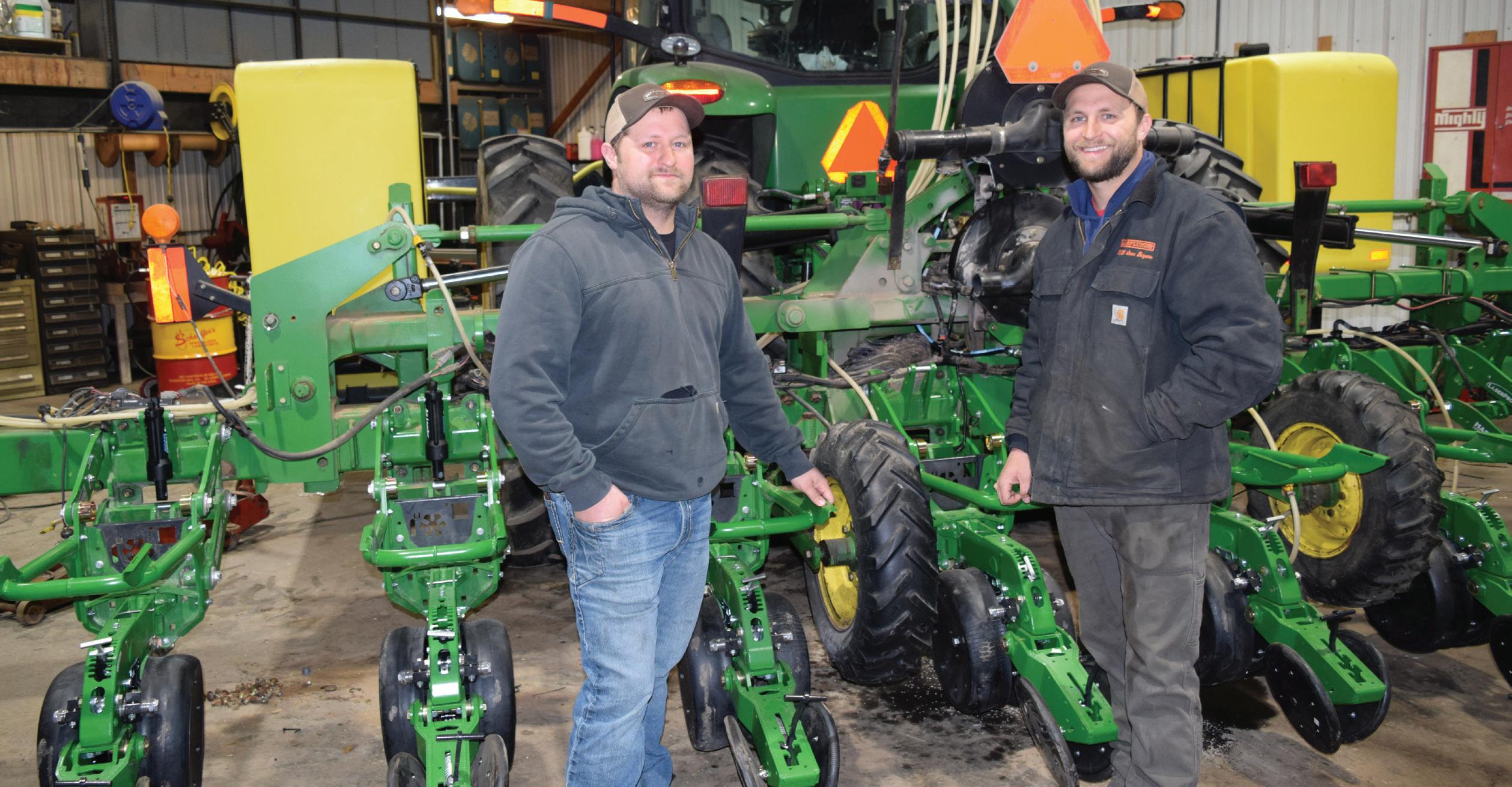
Above: Chase Knutson (left) operates K&K Farms Inc., a third-generation vegetable, potato and grain farm in Almond, Wisconsin, with his brother, Dawson (right). The brothers are standing in front of their John Deere 1720 planter hooked onto an 8235 tractor.
and being forthright and honest.
“He introduced us to neighboring farmers,” Chase relates, “and taught us how to be respectful. Dad was loyal to his family, his career and his community. He gave it to you straight. We didn’t know it at the time, but those same neighbors would be there for us after Dad died.”
“They would just stop out and help when we needed it. They’d tell us to ask if there was ever anything we needed, they were an open book when we had questions, and we asked a lot of questions. Just like Dad, they always gave it to us straight,” Chase says.
Dawson says the apple didn’t fall far from the tree. “You’re looking at the most honest, straightforward, and genuinely caring guy in the county,” he says about his brother, Chase, “and he conducts business with integrity.”
Chase, I see that K&K Farms Inc. was established by your grandfather, Ralph, in 1958. Can you give me a brief history of the operation in your own words? Ralph and Jeanne (Grandpa and Grandma Knutson) started the farm in 1958. They moved up from Illinois when a family friend of theirs had moved here, found a farm in the area, and told Grandpa Ralph about it.
It’s crazy to think that Grandpa bought the first 240 acres, a house, buildings, and equipment, for less than a new pickup costs today. My grandparents then started other businesses, including Traveling Guns, Lilliston Cultivators, Deutz engines, and selling center pivots.
While running the equipment companies, they were also involved with hand-picked strawberries and cucumbers, raising hogs, growing veggies (peas, snap beans, and sweet corn), and later even getting into potatoes.
Grandpa was also president of the Wisconsin vegetable grower association at one time before it became a committee of the WPVGA.
When my dad eventually took over the farming operation, he continued the irrigation
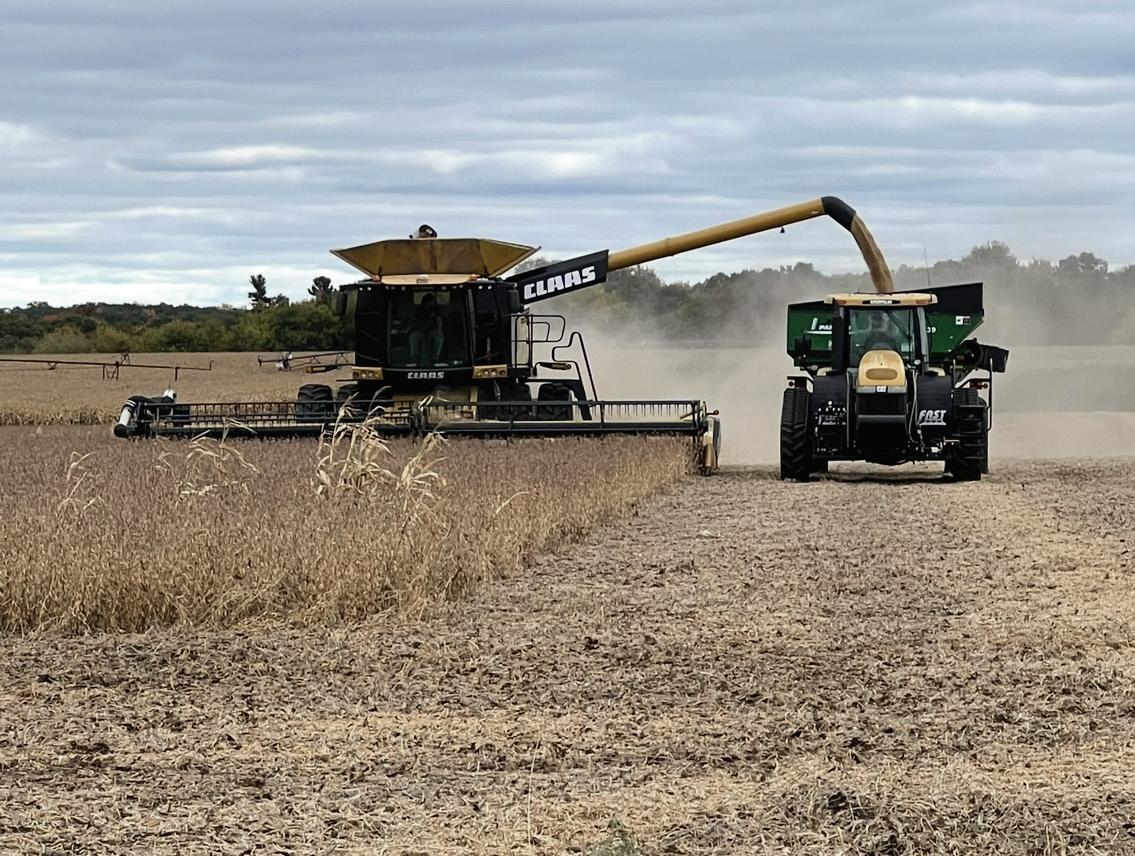
Left: The Claas combine is put to work during soybean harvest on K&K Farms Inc. in Almond, Wisconsin.
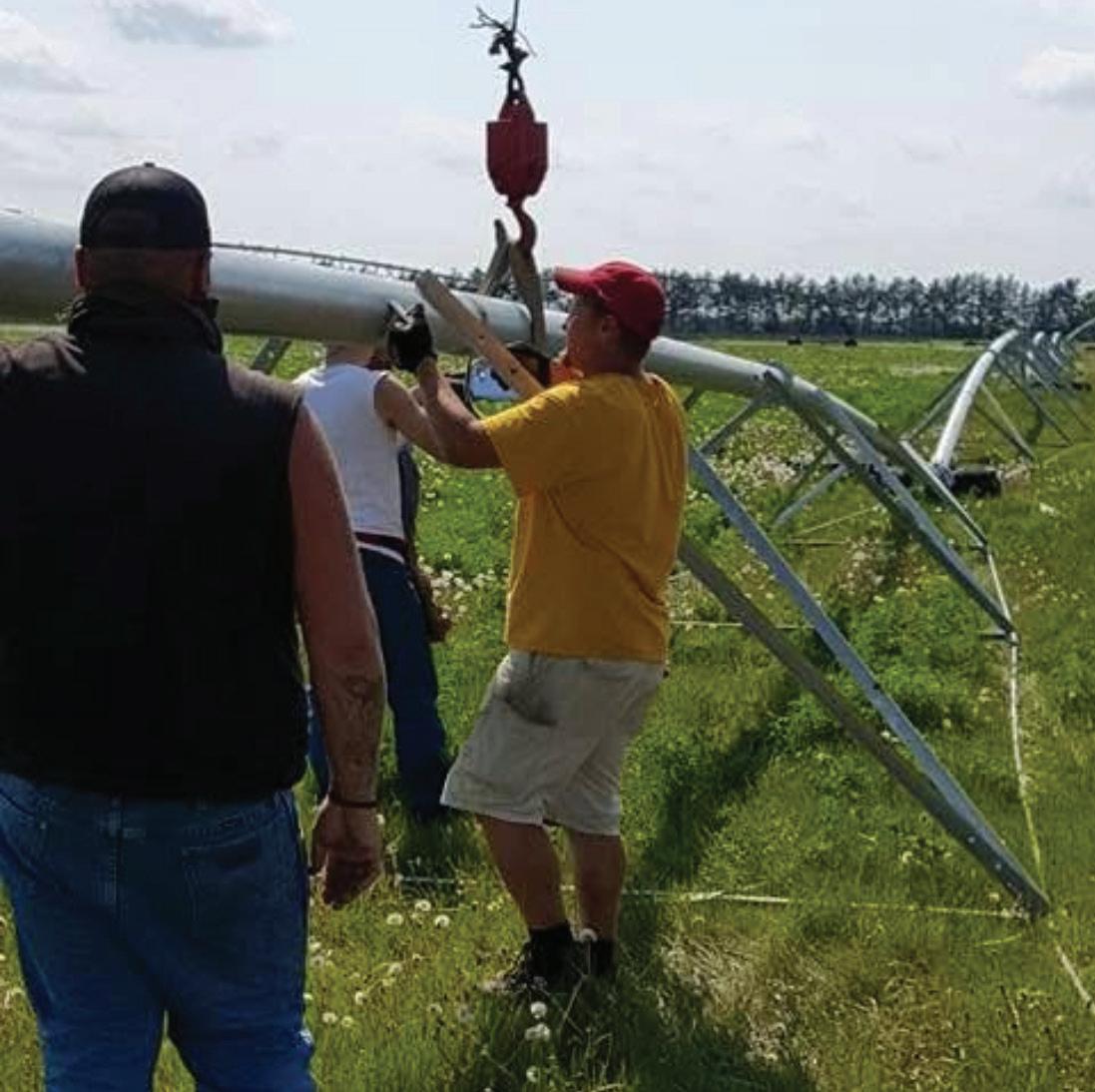
Right: Chase Knutson (right) builds irrigation with the crew at K&K Farms.
business (Oasis Irrigation) and the farm, raising potatoes, vegetables, and grains.
Are you farming with both of your brothers, Dawson and Preston, and what does the “K&K” stand for? My younger brother, Dawson, is currently on the farm working alongside me. He has learned a lot in the last three years of working here.
My brothers and I asked dad that question many times—what the K&K stands for—but he never had an answer for it. (Editor’s note: perhaps Jerry subconsciously knew that someday two Knutson’s would be running the operation.)
Are other family members working for K&K Farms Inc., and if so, in what capacity? We are a farm that would not operate without family and friends helping us out year-round. My wife is constantly picking Dawson and I up from the fields and carting us around.
My uncle, Dan Kemnetz, has been here for us helping with all the irrigation service and tractor driving in the fall, and Grandpa Wilson has driven a semi for us throughout the years.
With many other friends and brothers-in-law who drop everything to come out and help us when needed, I’m truly blessed to have a core community around me to help make the operation go.
I believe you grow corn and beans, but can you give me a rundown of all the vegetables? Over the past few years, we have been concentrating primarily on grain. We have grown sweet corn and kidney beans but are
currently raising peas and snap beans to help with the potato rotation.
Our potato acreage, however, is land we rent to other growers. We are always looking for ways to diversify and change with the agriculture world as fast as we can.
Do you hope to expand more into potatoes? The potato industry is something I’ve always wanted to be a part of someday. With it being such a competitive market, it hasn’t been easy to find that avenue. We have worked with other farmers for as long as I have been on the farm, and that has put potatoes in our rotation, but it would be a dream to have some potatoes of my own.
How have you been able to keep the operation going since your dad’s passing? My dad always commented, “You need to know this [farm operation] because one day I will be gone.”
He pushed me while at the same time allowing me to make mistakes and learn from them, which I think ultimately helped me make the farm successful. I’m thankful my dad taught me enough before he passed, and along the way, he sure made it easy for my brother and I to just
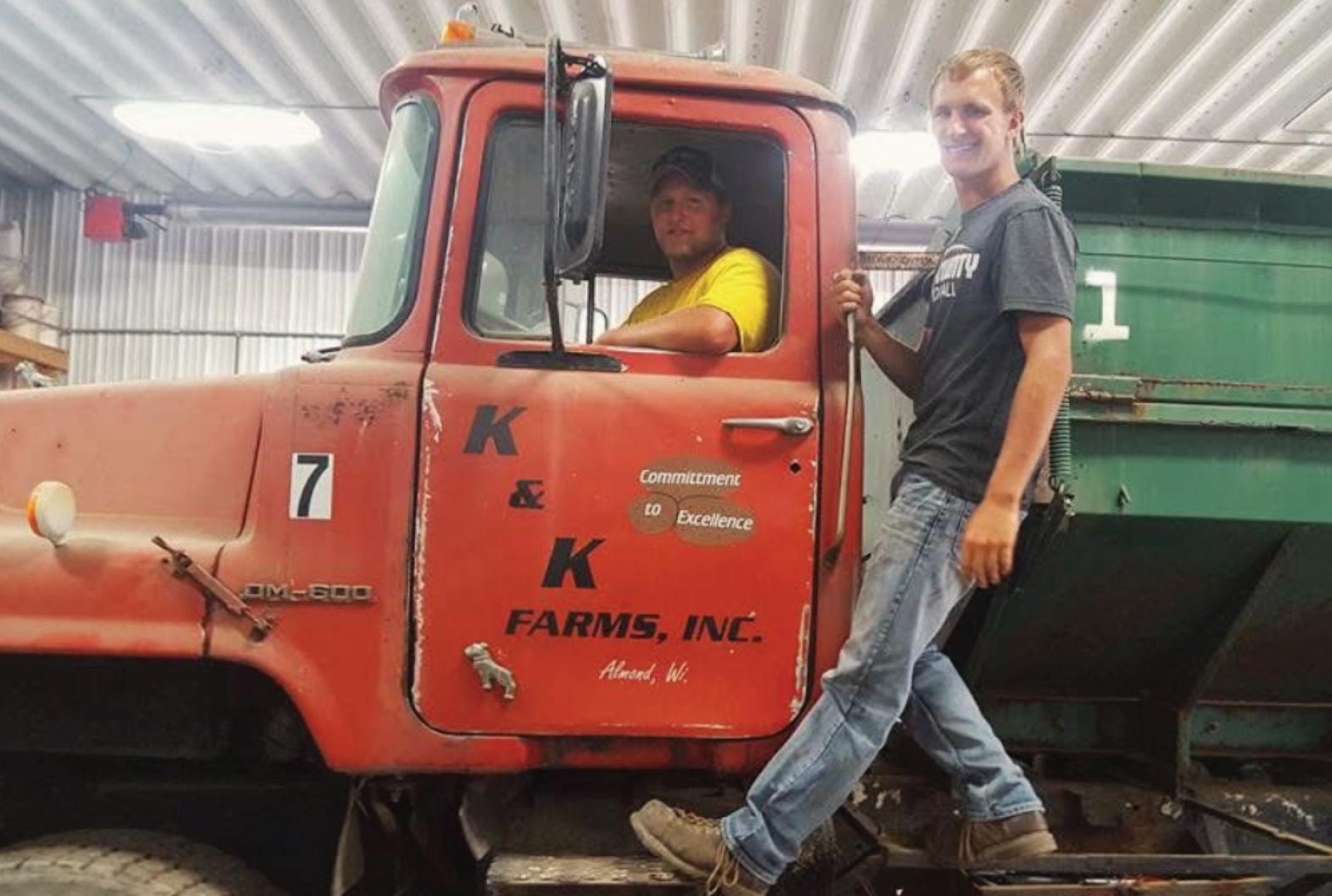
Chase (driver’s seat) and Dawson Knutson pose on their dad Jerry’s old potato truck.
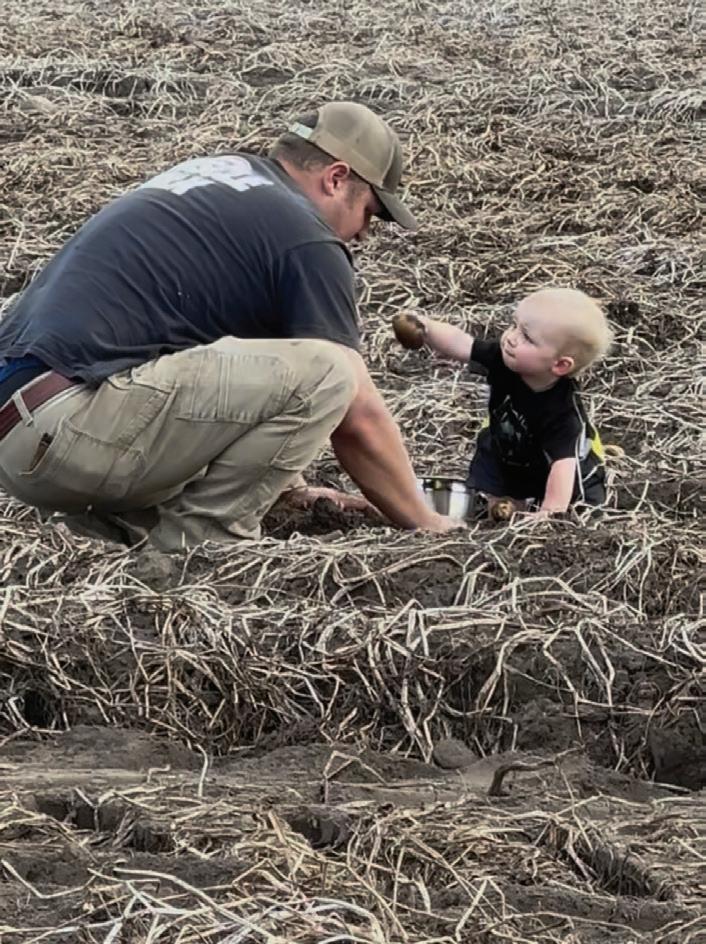
Chase Knutson digs potatoes with his son, Beau.
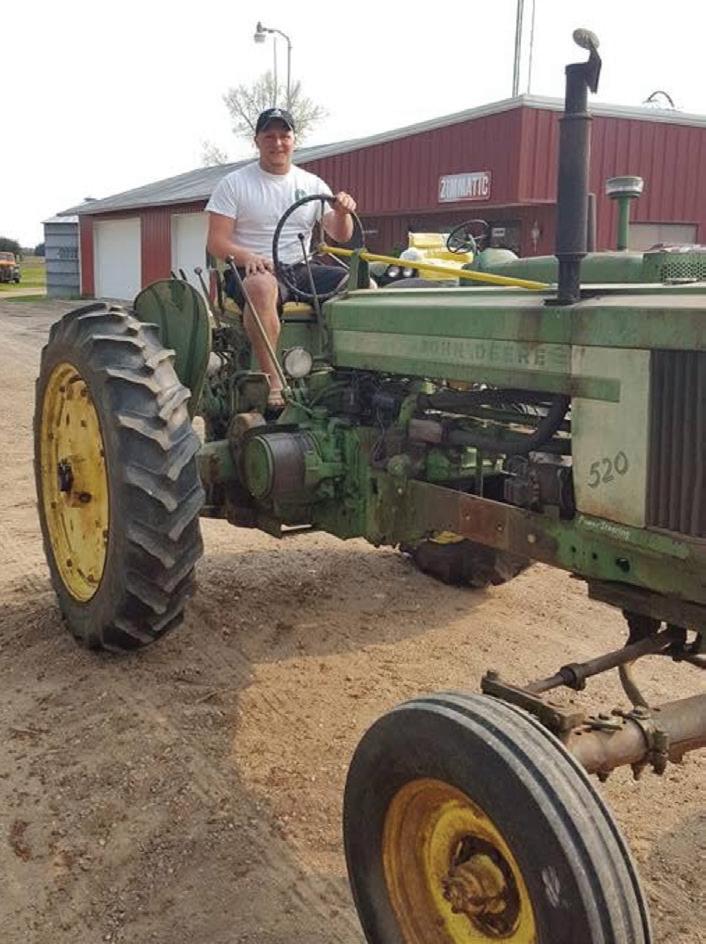
Chase Knutson drives his grandpa Ralph’s 520 John Deere tractor.
follow an example of how he did it.
One gift my dad left me was a farming community that has always been above and beyond helpful to me and my family.
Many of these guys in the area are role models to me. I never had famous actors or pro athletes I looked up to, but instead, I looked up to some of the best farmers in the world here in the Central Sands.
How old were you when you first started working on the farm, and do you have any memories you’d like to share from back then? I don’t know how old I was, but I know I was young just like any kid who’s raised on a farm. I have many memories of farming and being in the ag business world from my exposure through Oasis Irrigation. We had one truck on the farm, and our kids’ job was to pick rocks.
Memories include learning to work on equipment, sitting by Dad while he talked farming with many farmers and vendors, or even just working alongside Dad.
The one memory that sticks with me is an “argument” that started and continued for years in our farming journey, of why we didn’t own a large tractor to do our tillage.
With Dad running the irrigation business, we weren’t farming many of our own acres. Then, Dad’s grand idea was to put me in a neighbor’s tractor with a 30-foot implement and no GPS. We all know how those tillage lines looked, but looking back, I realize Dad wanted to see if I would not just like it but love it.
What does working a generational farm and keeping it in the family mean to you? Working on the family farm is bittersweet. I’m part of the third generation of farmers in my family, and as the saying goes, the third generation loses the farm. So, there’s no pressure to put this puzzle together for the next generation!
continued on pg. 12
“I
My dad wasn’t around to finish his plans or this puzzle, but I’m beyond grateful that Mom has allowed me to go after my life dreams and goals with our family farm. I will do anything to transition it to the next generation intact and productive. Has technology, and which technologies, changed the way you operate? We aren’t a big farm. We work 1,200 acres with just two guys.
So, we don’t have much downtime or time to do things twice.
Telemetry on our pivots has improved our operation, so it is important that all the machines are constantly connected. One pivot will run 700900 hours a year on our farm. With multiple machines, we’re pushed for time to get everything done and done right. Telemetry alone saves us a guy or two just on the irrigation end.
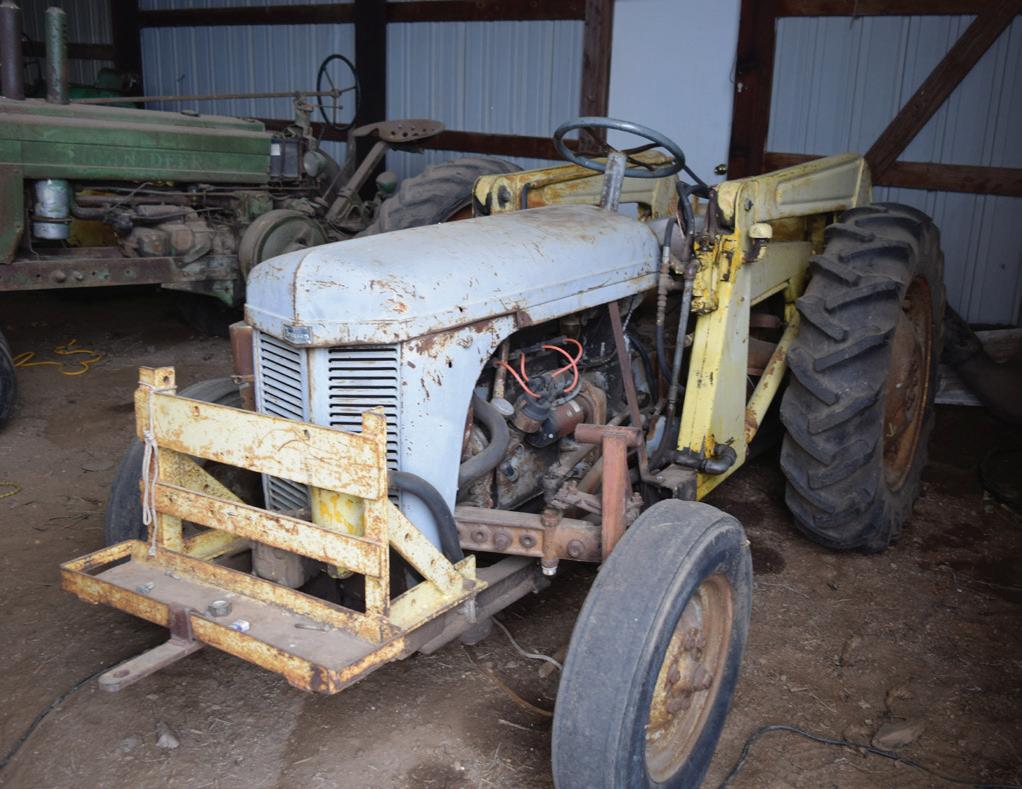
Left: Of all their old family tractors, Chase and Dawson Knutson say the original tractor on the farm—a 1940’s Ferguson— was the easiest to gas, tune and fire up after years of being idle.
Right: Chase Knutson says he was gardening with his dad, Jerry (left), when this photo was taken.
Equipment size and having the right tools on the planter and harvest equipment have been important
Above: The trucks are ready to roll when planting begins at K&K Farms Inc.
Physical Damage
Claims paid based on how/when loss occurs
to us. The correct size of equipment means we don’t need too many employees, and having GPS allows us to monitor all the other machinery that we’re running.
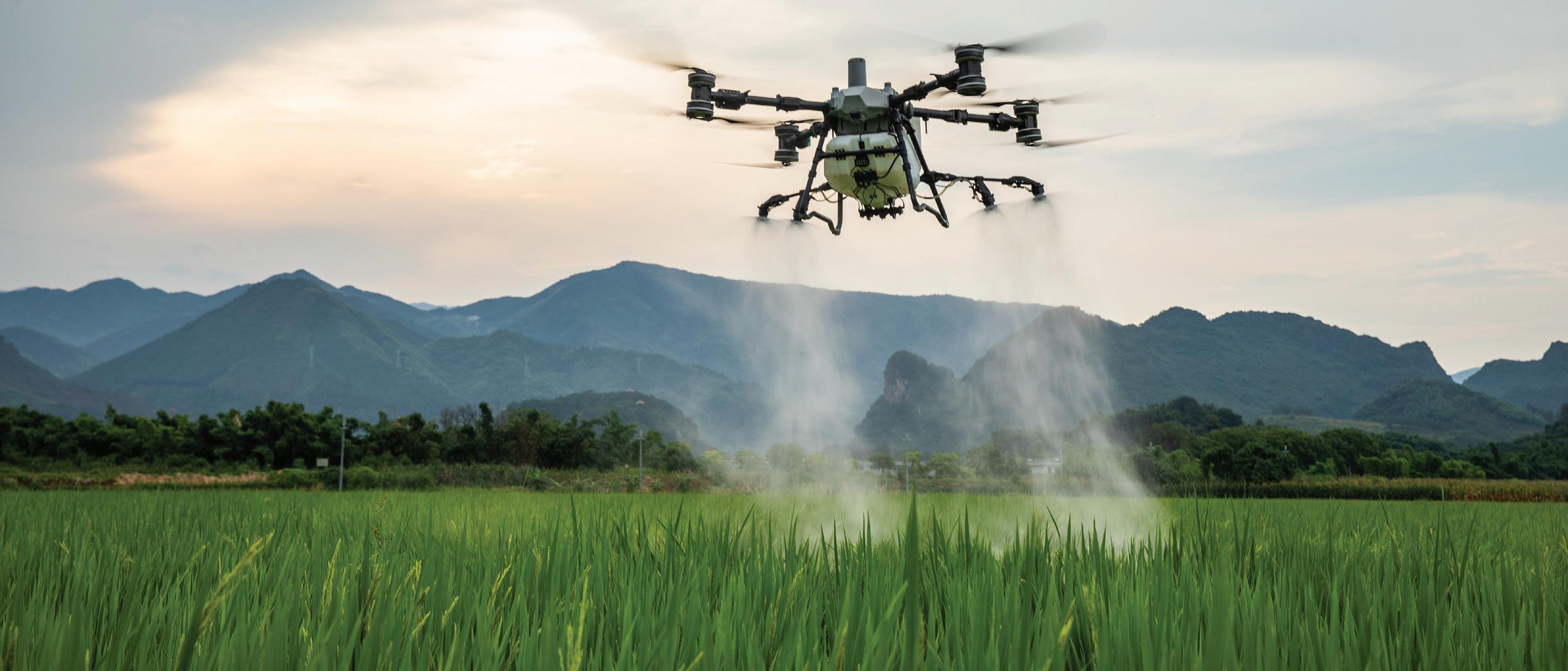
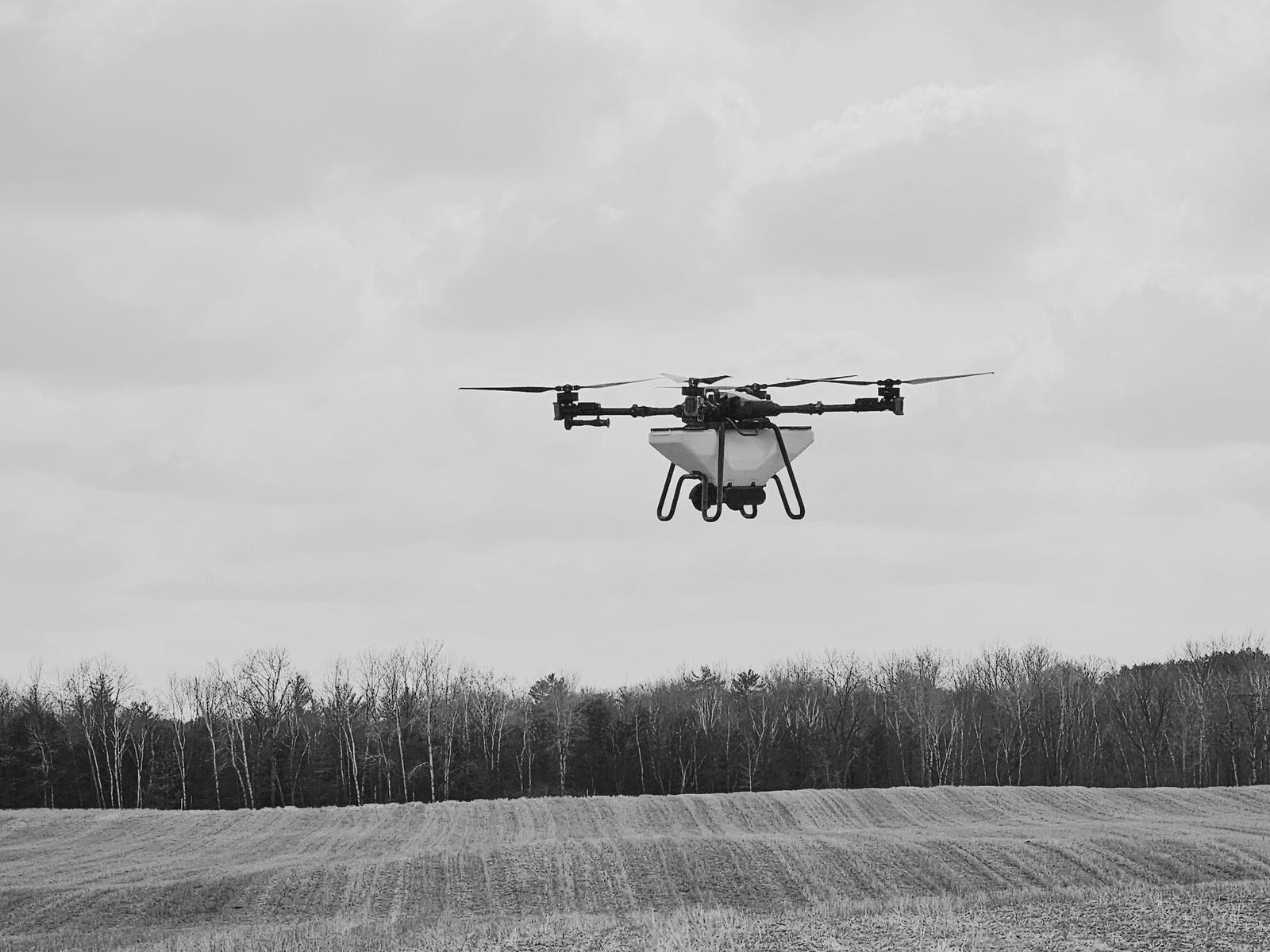
While drone is in motion
Liability
seed placement and make sure we are harvesting high-quality crops.
While drone is stationary Ingestion of foreign object into rotors
Cyber Coverage
Claims paid for losses caused by the drone “At Fault” Coverage Excludes Chemical Spray
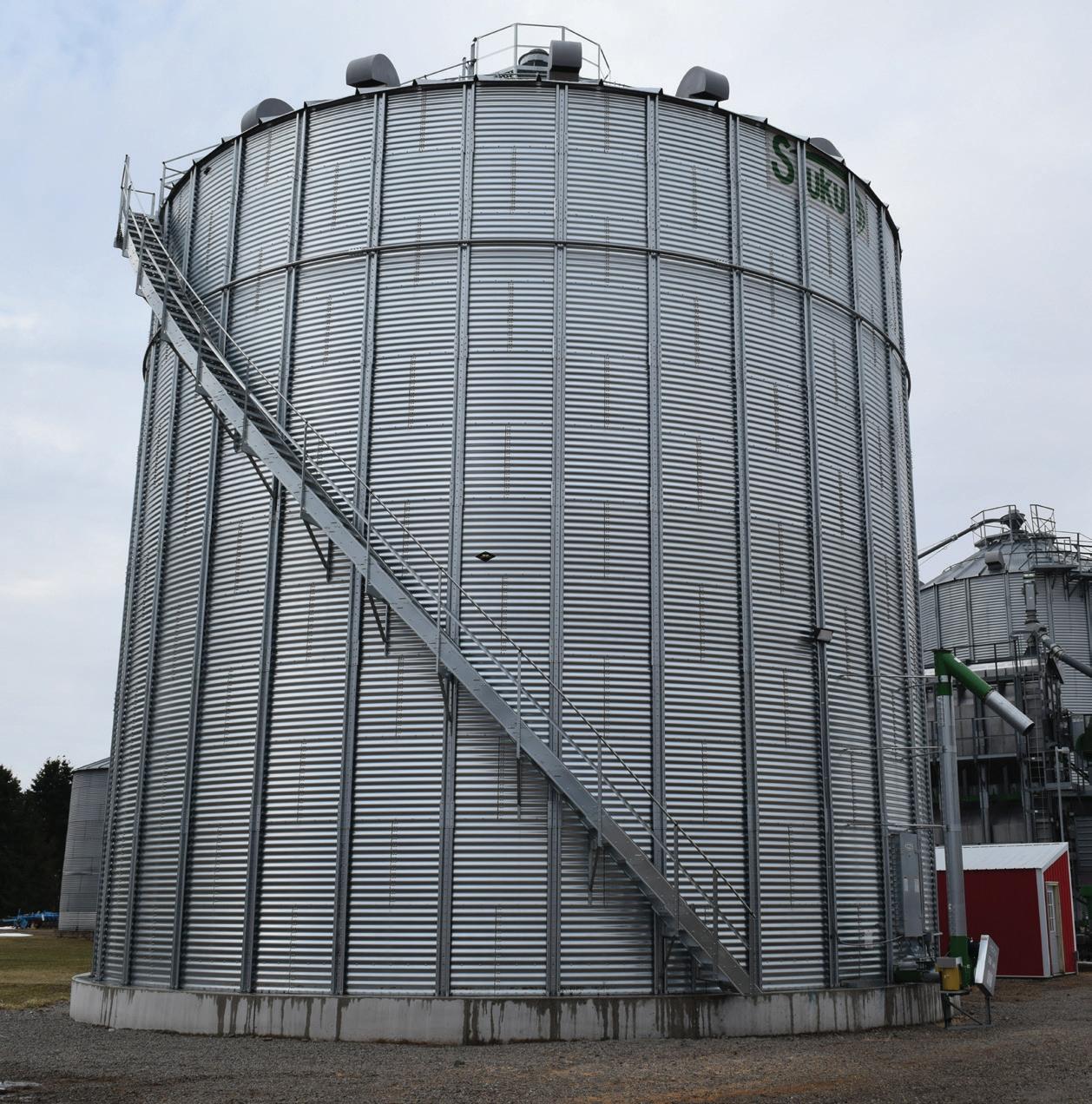
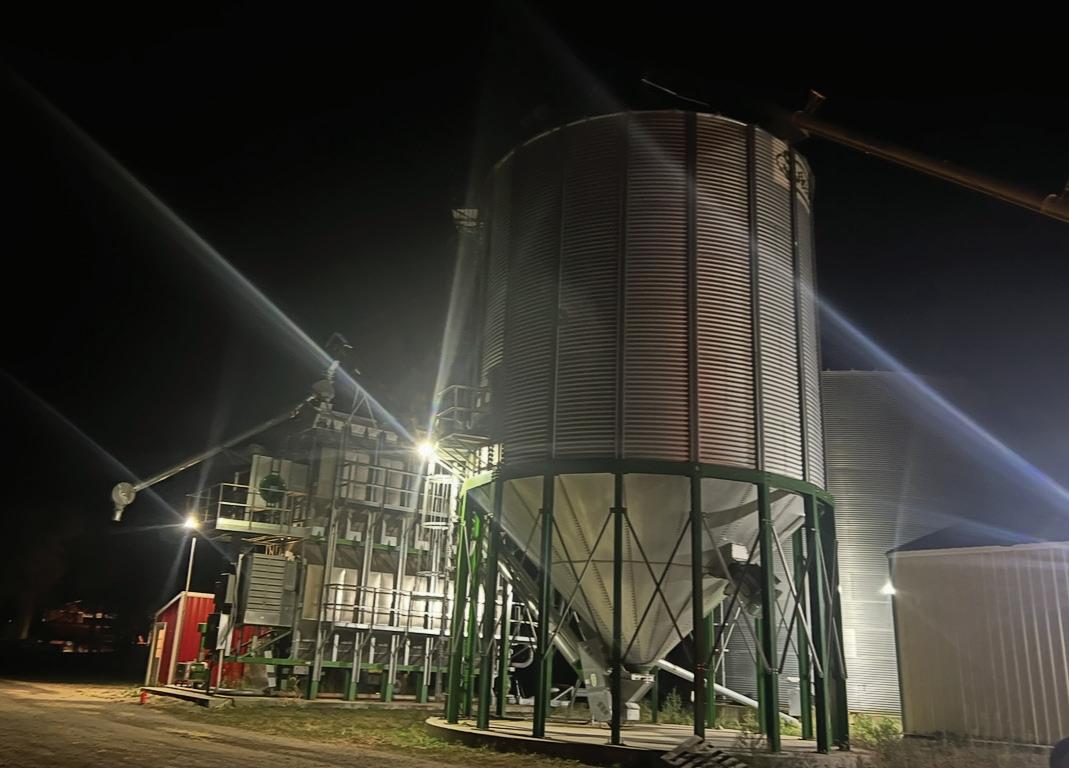
Above: The grain bin site is pictured both day (opposite page) and night at K&K Farms as well as with Chase (left) and Dawson Knutson standing in front of their new bin.
I try to tell my brother that we have GPS not to have sub-inch straight-line driving, but to achieve sub-millimeter
Coverage provided for cyber-related risks such as:
GPS signal “spoofing”
We try new technology all the time on the farm, but that’s not an easy thing to do with the changing tech world and how quickly innovations become outdated. It’s important that technology we invest in gives us a return on our investment.
Results in drone applying product to unintended areas
Chemical Liability Endorsement
Sometimes elbow grease is the best technology you can have on the farm.
Data being compromised “Bricking” Renders drone inoperable
Coverage provided for overspray or chemical drift to non-intended areas
Smaller limits than General Liability
Typically $300,000 maximum Coverage varies based on what is being dispensed from drone
Be Aware of Regulations
In order for an
FAA Part 107
FAA Part 137
FAA Third Class Medical Certificat
Who are your customers for the vegetables you grow? We mainly just work with canning companies here in the Central Sands. Being a thirdgeneration grower, these are all the people that we worked with closely for many years.
It’s fun working with and knowing most of the people in the canning world, some of whom I went to high school or UW-River Falls with, and enjoying the connections made by my dad.
You mentioned working with neighboring farms. How? I do work with neighbors in this area quite often. I have done many custom acres for neighbors in times of need to make sure we all hit the right windows to be successful.
It’s a privilege to receive a call to go do work for farmers in the Sands. This past fall, we had a combine catch fire, and it didn’t take long for my phone to start blowing up with guys unhooking to come help us finish harvest for the year. I greatly appreciate that.
How is the vegetable market, and what changes would you like to see?
The vegetable market hasn’t changed much for me as a canning crop
producer. Some of the companies are slowly working to produce more frozen produce to get the customer a fresher vegetable to eat.
I wish we could find a way to get a better, fresher crop to the customer that has a good shelf life before being consumed and that isn’t too costly for the producers. We produce high-end crops here; we just need to figure out what the consumers need faster.
When does your growing season start and end, and how much of what you do depends on the weather? Our growing season starts the last week of April with pea planting and goes until the second week of November with corn harvest.
I’d say everything we do has to do with weather. Planting is the most important thing we do and if it's too cold or wet, we don't go into the fields.
Having to watch the weather for fertilizer passes we make is also very important. Just as important is the timing of chemical inputs to ensure applications fit into certain weather windows, so that’s another weatherdependent factor.
Left: Chase Knutson rides the tractor with his dad, Jerry.
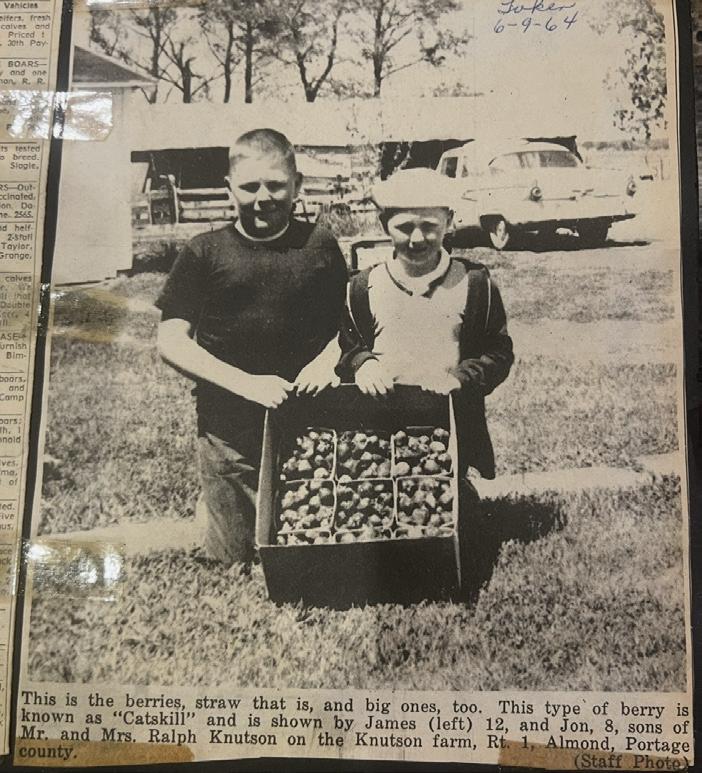
Above: Chase and Dawson Knutson’s uncles Jim and Jon are shown in this historic photo with the family’s hand-picked strawberries.
Left: Chase Knutson (right) works on a pivot center drive with his brother, Preston (left), and with his dad, Jerry, not too far away when this photo was taken years ago.
Finally, for harvest, we rely on certain heat units to finish the crop up. We are not the biggest farm, so we try to micro-manage everything we do so we can have the best outcome we need, and weather is one tool we work around to be excellent.
What is your biggest challenge each year? Being excellent. I only get to plant and farm the land 30-40 more times in my life, hopefully for years past that. I am seven years into this and want to do it perfectly or better than last year every time.
Some of our crops only grow for 60 days. In that window, there are only 15-20 days when we are applying chemicals and fertilizer. So, hoping for good weather and paying attention to the crop is critical or we’d spend the other 340-some days of the year wondering how to avoid the mistakes we made.
What accomplishments are you proud of? Being a husband and dad and raising a family in agriculture. Don’t get me wrong, growing 300 bushels/acre of corn is a cool achievement, but having a wife that is a diehard of agriculture and works harder than me, while also having two kids that will not let Dad go outside without them or let me miss
a tractor or pivot running out in a field, that’s priceless.
Raising my family in the agriculture community here is an accomplishment to me, and I cannot wait for my kids to build their own relationships and stories here.
What do you hope for the future of K&K Farms Inc.? Continued business is the goal. The farm has been growing since 1958. It is the goal to take it further than what Grandpa or Dad could have ever dreamt of.
I hope my kids and nieces and nephews all get the same chances as I did of farming their greatgrandfather’s farm.
Is there anything I’ve missed that you’d like to add, Chase? I just want to thank my wife for allowing me time to pursue this crazy passion of mine. Thank you to my mom who believed in me after Dad passed to take the reins of the farm and run it. Finally, to the community here, thank you for always looking after me and allowing me to look up to and learn from you guys.
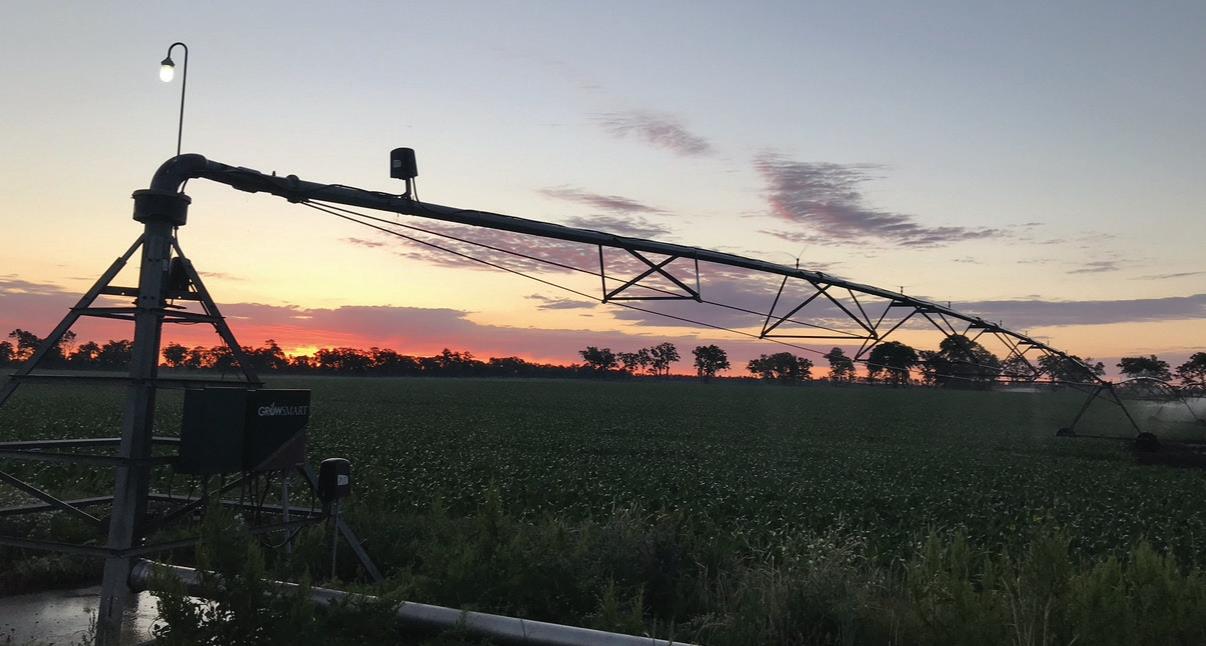
Parting shot: A Zimmatic pivot sold back in the day by Oasis Irrigation and currently by Badger State Irrigation is pictured during sunrise on K&K Farms.
Member Development Program Produces 18 Future Leaders
Wisconsin Potato & Vegetable Growers Association provides members with tools for success
By Joe Kertzman, managing editor, Badger Common’Tater
With a strong membership base, the Wisconsin Potato & Vegetable Growers Association (WPVGA) ensures the industry’s future success by preparing members to be effective leaders.
Open to Associate Division, Auxiliary and Grower members, the WPVGA plans and runs a Member Development Program every two years to give future leaders the tools they need to succeed.
On March 18, 2026, 18 graduates of the Member Development Program attended their last session and enjoyed a nice celebratory social hour and dinner with a short graduation ceremony.
The purpose of this program is to provide members of the WPVGA, WPVGA Associate Division and Wisconsin Potato Growers Auxiliary with the opportunity to learn about and actively participate in the various facets of the Wisconsin potato and
Above: Posing with WPVGA Executive Director Tamas Houlihan, graduates of the Member Development Program are, in the back row, from left to right, Cody Bandoch, Riley Guenthner, Houlihan, Jessica Jedlowski, Derrick Smit, Olufunke Ogundiya, and Seth Olson; in the middle row, from left to right, Jeremy Wakerhauser, Leah Brown, Samantha Cypher, and Kelsi Mueller; and in the front row, from left to right, Rudy Lopez, Thad Brown, Grace Mortenson, Diane Kollock, Lauren Brussow, Kelly Verhaalen, and Javier Cipriano. Graduating but not shown is Zach Allen.
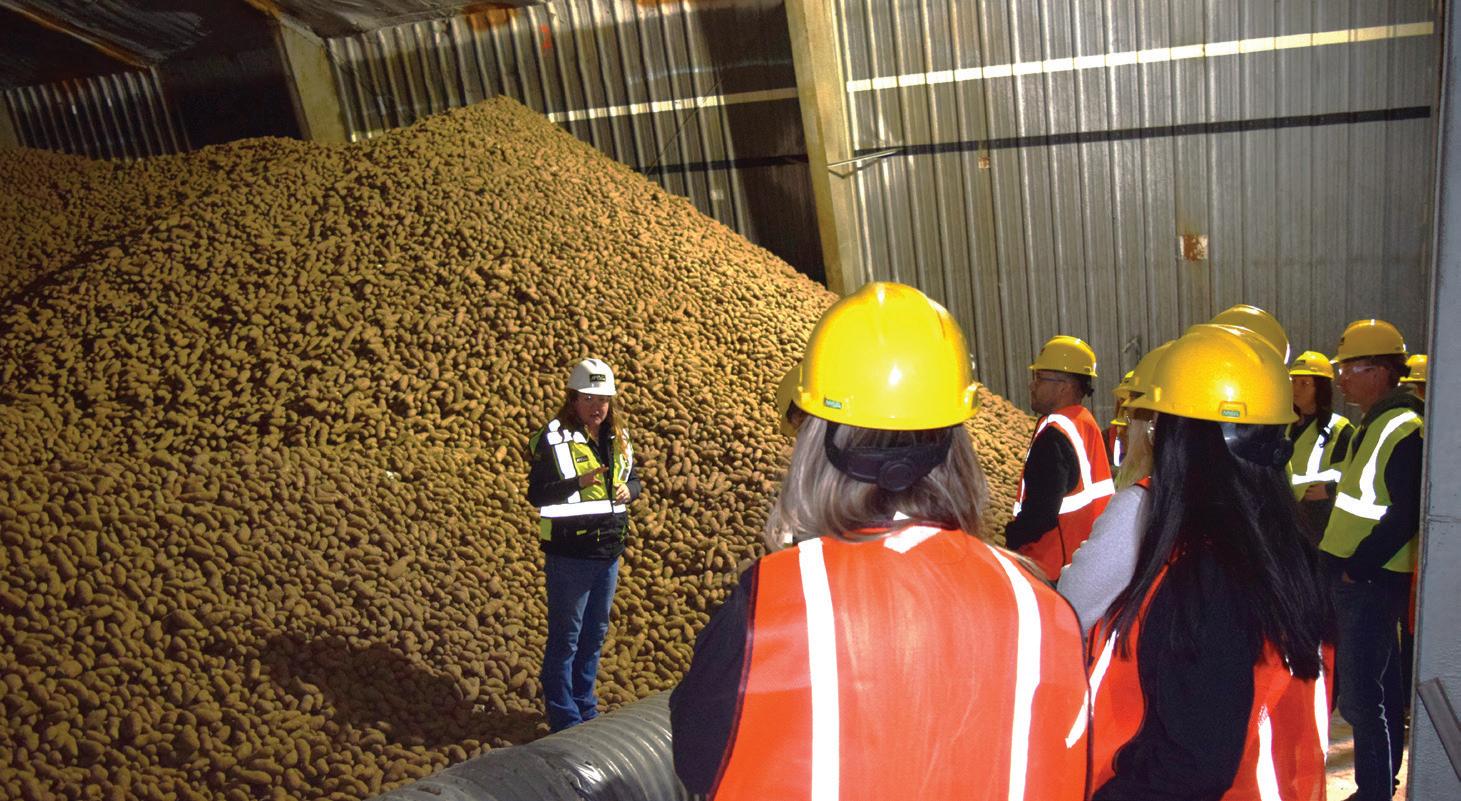
Left: McCain Foods Field Manager Morgan Smolarek (left) leads a tour of a potato storage facility at the Wisconsin Rapids plant for Member Development Program participants.
vegetable industry.
The Member Development Program exposes participants to relevant information, resources, activities, and networking opportunities. Designed as a five-month program, one session is held each month between November and March.
Participants are expected to attend all five sessions, with each being approximately five to seven hours in length and focusing on a particular topic, skill, or issue relevant to the potato and vegetable growing industry.
Preparatory material is provided prior to each session to enhance the value of the meeting and/or associated relevant experience.
KICK-OFF SESSION
Session 1 of the Member Development Program kicked off, November 12, at the Food + Farm Exploration Center in Plover Wisconsin, and included a WPVGA
overview, as well as a tour of a McCain Foods potato storage facility and a “sensory room,” the latter where French fries, hash browns, tater tots and onion tots are evaluated for flavor, color, odor, batter coverage, and taste.
Member Development Program participants returned to the Food + Farm Exploration Center for lunch and a presentation titled
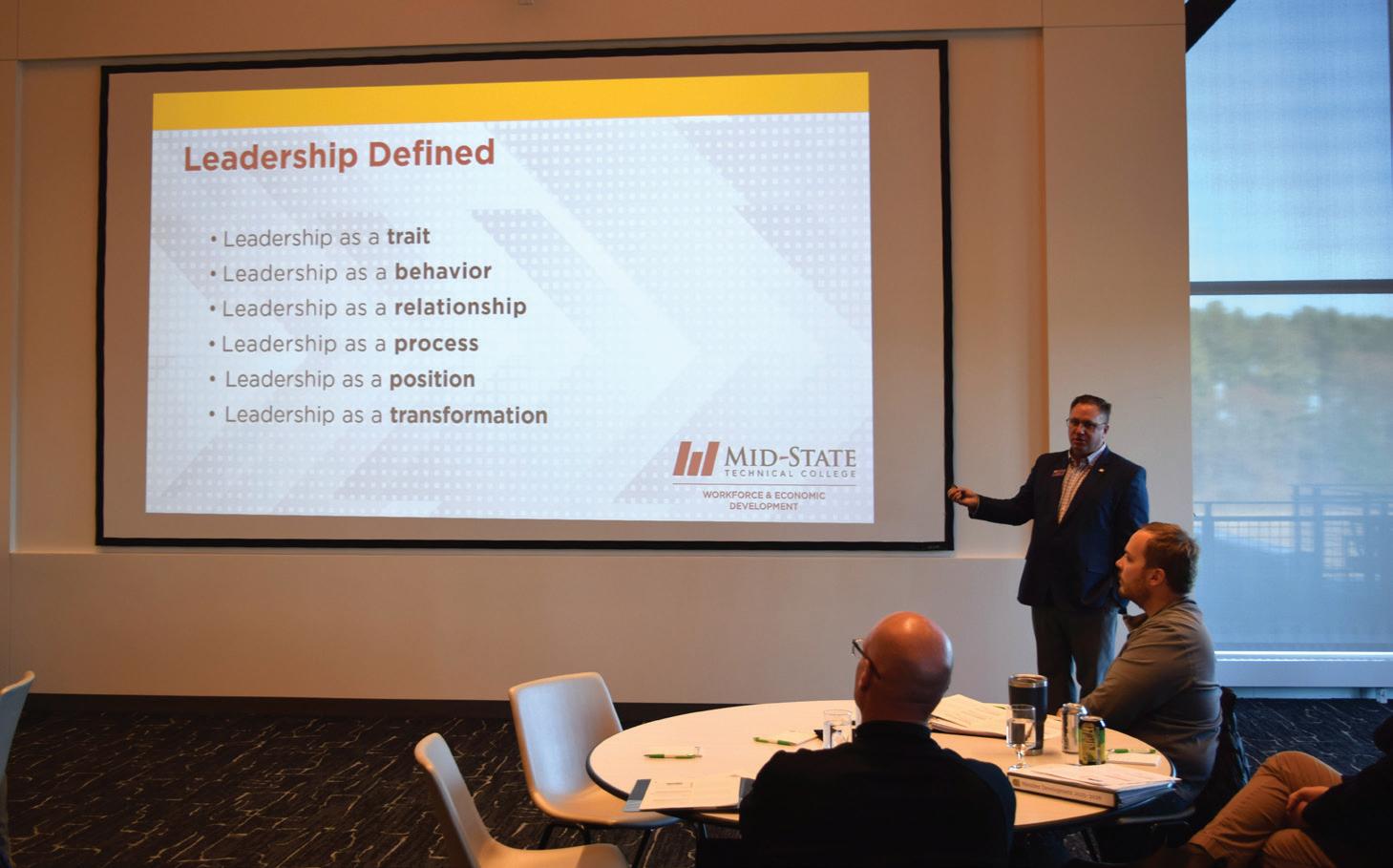
Above: Ted Melby (standing), a workforce and professional development corporate trainer from Mid-State Technical College, presents “Principles of Leadership” as part of the Member Development Program.
“Principles of Leadership” by Ted Melby, a workforce and professional development corporate trainer from Mid-State Technical College.
continued on pg. 18
• ATLANTIC • LAMOKA
• PETOSKEY • BLISS
Contact: Jim or John
SNOWDEN
MANISTEE • LADY LIBERTY
MACKINAW
Session 2 focused on governmental affairs and took place December 2, 2025, at The Madison Club and the State Capitol in Madison.
With the help of WPVGA attorney and contract lobbyist Jordan Lamb, the group met to understand the legislative process, become familiar with key legislators, learn the issues that are critical to the success of the potato and vegetable industry, and become effective at communicating industry viewpoints.
All members had meetings with their respective state representatives and state senators.
The “Research” session was held January 22, 2026, in the Wisconsin Potato & Vegetable Storage Research
Facility at the Hancock Agricultural Research Station (HARS). There, participants had the chance to gain a better understanding of the issues and problems facing production agriculture.
They learned how the industry is working to improve all aspects of potato and vegetable production through research, while emphasizing environmental stewardship.
The Research session included a
tour of the Storage Research Facility conducted by HARS Superintendent Troy Fishler and Storage Facility Manager Amber Walker, a potato chip tasting panel, and a research roundtable discussion with the University of Wisconsin (UW) potato team composed of WPVGA basefunded researchers.
HEALTHY GROWN
Deana Knuteson, Wisconsin Healthy Grown potatoes program
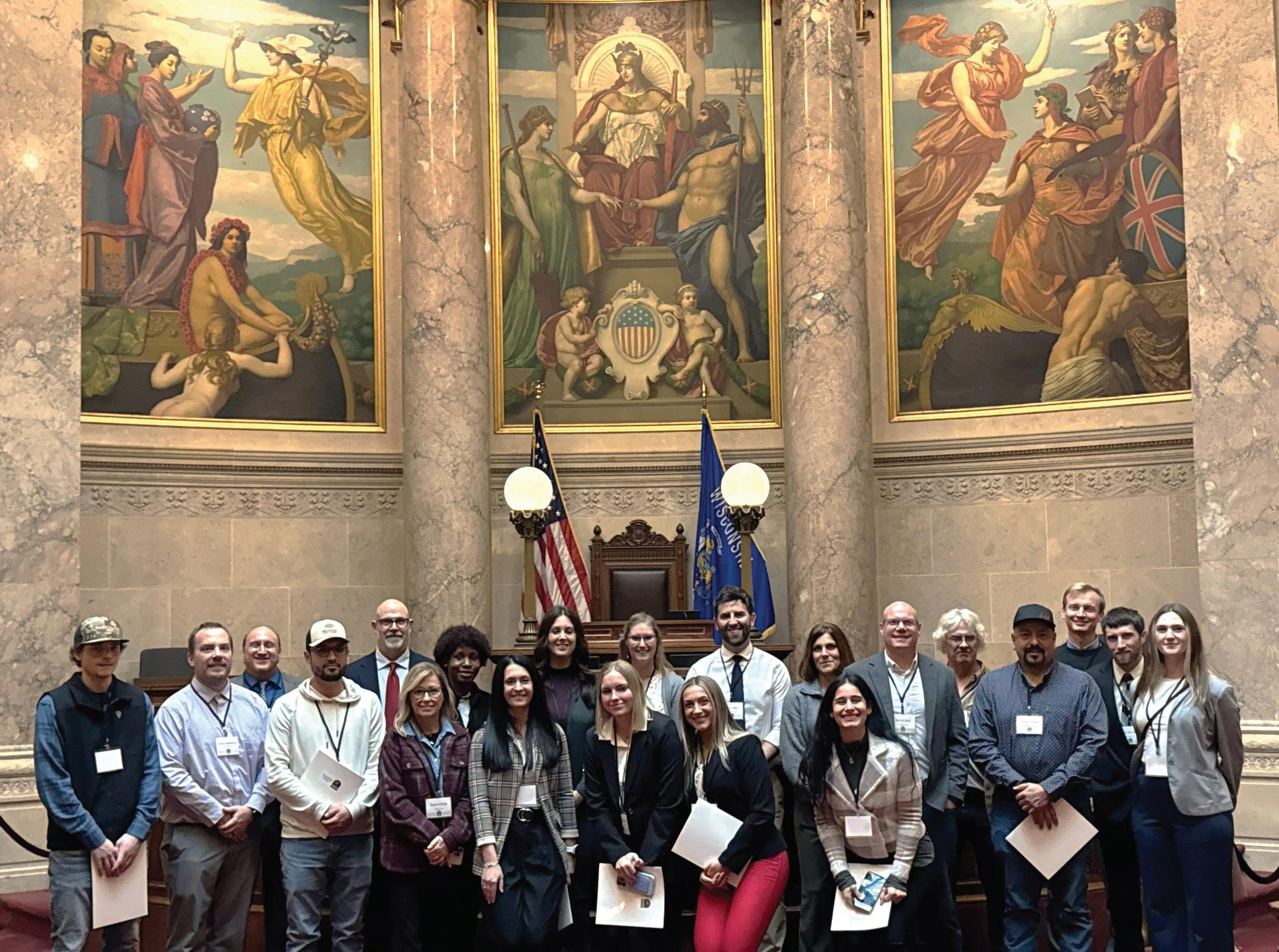
Above: On December 2, 2025, participants of the Member Development Program attended a “Governmental Affairs” session at the State Capitol in Madison. All members had meetings with their respective state representatives and senators. Pictured at the Capitol in the Senate Chamber are, from left to right, Riley Guenthner, Jeremy Wakerhauser, WPVGA Executive Director Tamas Houlihan, Rudy Lopez, WPVGA Governmental Affairs Committee Chairman Mike Carter, Diane Kollock, Olufunke Ogundiya, Samantha Cypher, Kelsi Mueller, Grace Mortenson, Kelly Verhaalen, Lauren Brussow, Zach Allen, Alexis Hoffman, Leah Brown,
Derrick Smit, Thad Brown, Javier Cipriano, Seth Olson, Cody Bandoch, and Jessica Jedlowski.
coordinator, also lead a discussion on farmer conservation and sustainability efforts in coordination with UW researchers, ecologists and conservationists.
The “Promotions and Marketing” session took place at the Food + Farm Exploration Center and allowed participants to become familiar with current WPVGA promotions and
consumer education programming, and how the industry is connecting with younger generations while raising brand awareness.
Member Development Program participants also learned about trends, Wisconsin’s strengths in the potato industry, and how the WPVGA capitalizes on those strengths
continued on pg. 20
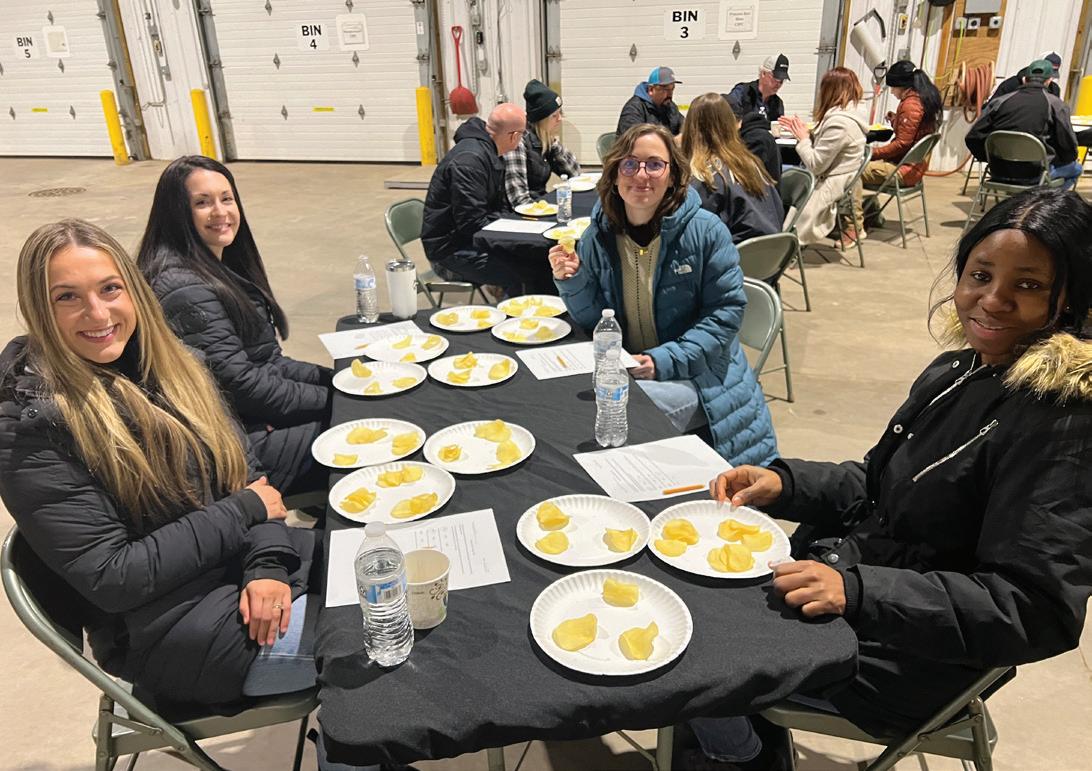
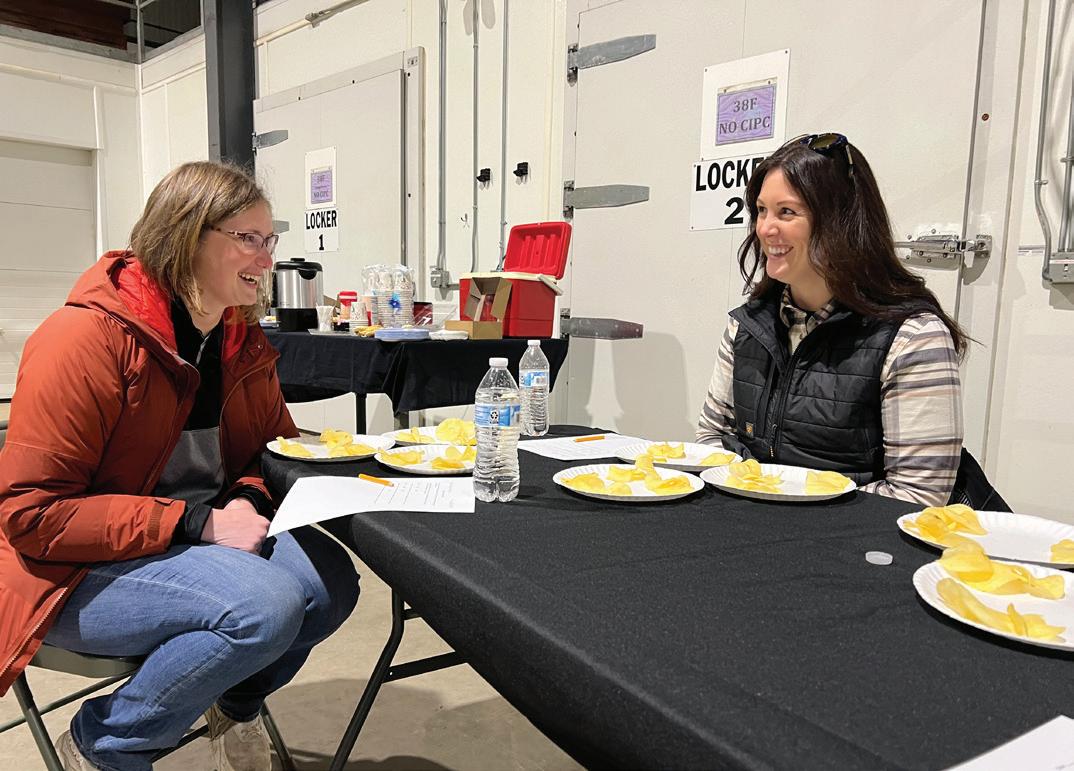
Above: As part of the Member Development Program “Research Session,” attendees took part in a potato chip tasting exercise held in the Wisconsin Potato & Vegetable Storage Research Facility at the Hancock Agricultural Research Station (HARS). Pictured from left to right in the first image are Lauren Brussow, Samantha Cypher, Emily ReischEarll (office manager at HARS) and Olufunke Ogundiya. In the second image, left to right, are Kelly Verhaalen and Kelsi Mueller.
A Better Broad Spectrum Is Here.
Curezin ® is proven to be as effective as chlorothalonil and mancozeb in a program.
With a 3-8% yield increase observed across multiple 2025 trials.
STRENGTHEN YOUR PROGRAM WITH CUREZIN
Matt Karls (608) 214-1129
Trials conducted in North Dakota (early blight) and Michigan (pink rot, late blight).
Member Development Program Produces 18 Future Leaders. . . continued from pg. 19
through promotional and marketing campaigns.
Activities included a Wisconsin potatoes cooking challenge, Food + Farm Exploration Center greenhouse tour, a scavenger hunt, and open forum discussion and question-andanswer session.
The objectives of the final “Effective Communication and Media Training” session, March 18, were for participants to learn how to communicate effectively, handle feedback and hard conversations, and gain media readiness and practical experience.
As part of the session, participants committed to moving forward as effective leaders for their businesses and the industry.
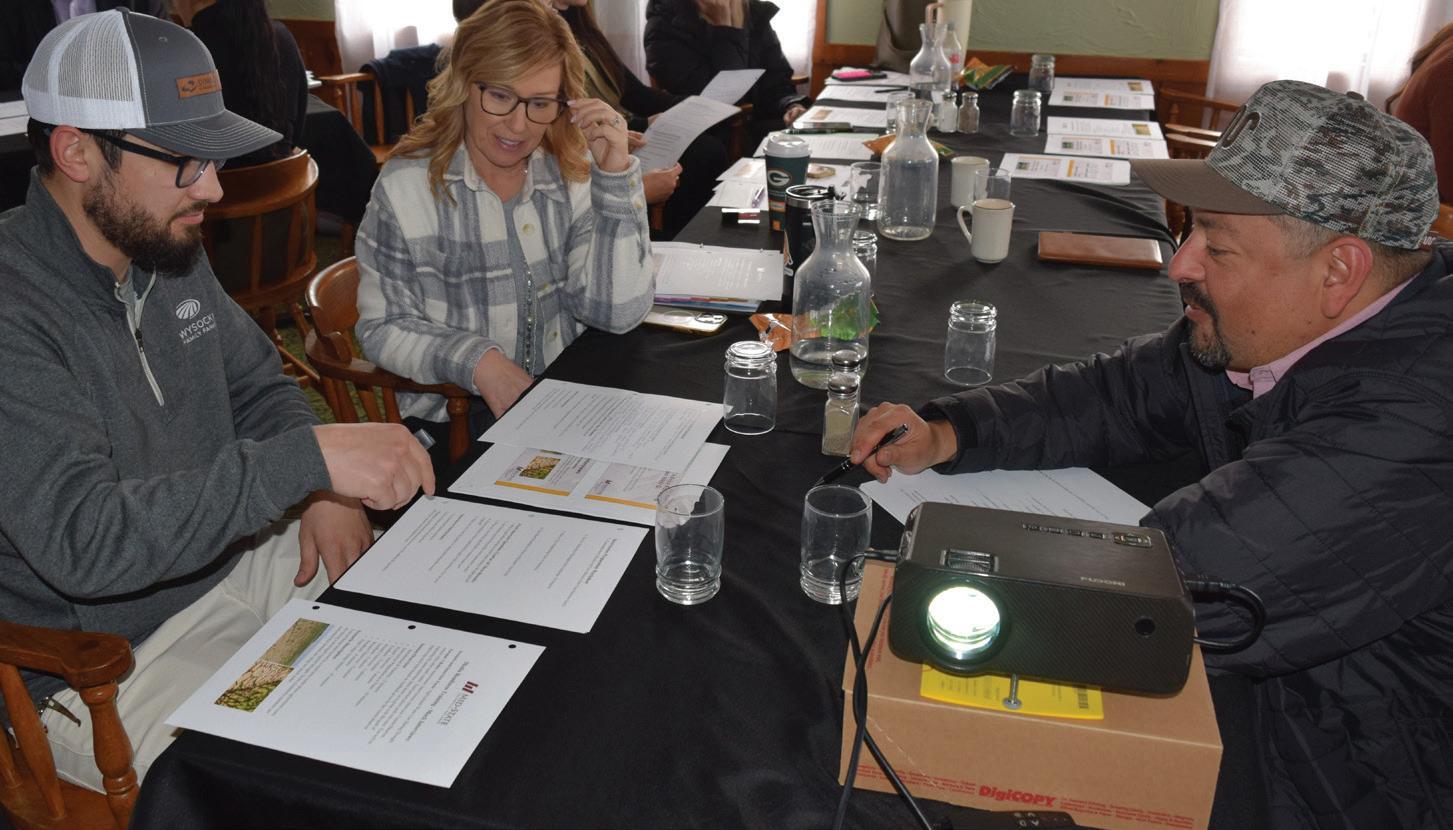
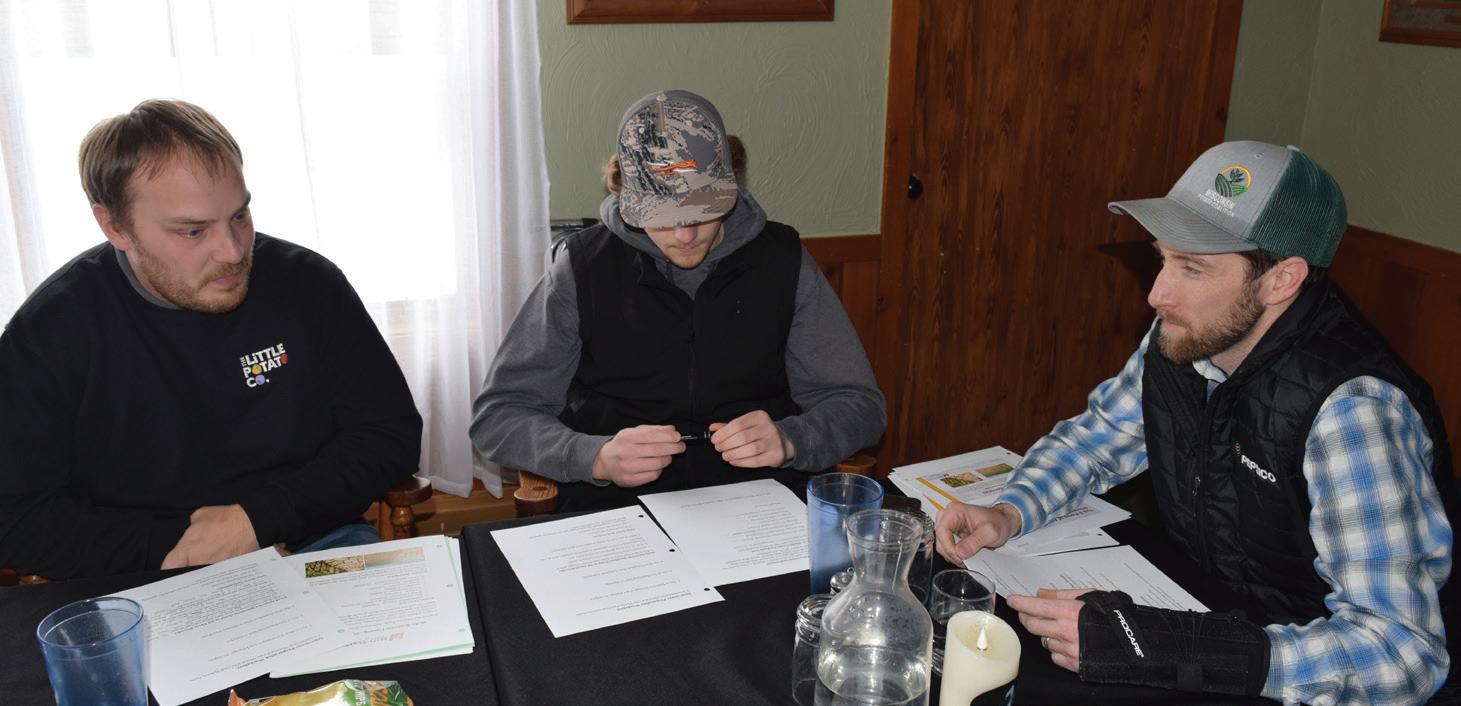
As the session facilitator, Melby had participants split into groups of three, with each group including an interviewer, interviewee, and coach observer, for mock interviews.
MOCK INTERVIEWS
Each interviewer asked the interviewee in the group questions about agricultural water use during a drought, with the coach observer providing feedback and constructive criticism on the interview process. Members were given tools to become comfortable and effective communicators on behalf of the industry and move forward as effective leaders for their businesses and the ag community.
Dinner and a reception followed, with awards and graduation certificates given to the 18 WPVGA Member Development Program graduates.
Member Development Program participants are selected by the WPVGA from submitted applications on their potential as active members and future leaders in the potato and vegetable growing industry.
Above and Below: During the “Effective Communication and Media Training” session of the WPVGA Member Development Program, participants split into groups of three, with each group including an interviewer, interviewee, and coach observer, for mock interviews. The interviewer asked the interviewee questions about agricultural water use during a drought, with the coach observer providing feedback and constructive criticism. From left to right in the first image are Rudy Lopez, Diane Kollock, and Javier Cipriano. Group participants in the second image are, from left to right, Jeremy Wakerhauser, Riley Guenthner, and Cody Bandoch.
Candidates represent one or more of the following segments of the industry: chip grower, seed grower, process grower, fresh grower/ marketer, vegetable division grower, farm office worker, or any facet of the WPVGA Associate Division categories or the Auxiliary.
Chosen candidates exhibit a willingness to commit time and effort to prepare for sessions and actively participate in all aspects of the program.
Program participants pay a nominal fee and are expected to make their own personal arrangements to attend sessions and related activities (including transportation, meals outside of the sessions, and lodging if necessary).
Costs associated with conducting the program are borne by the WPVGA with funds provided by the Associate Division in keeping with its mission to support the growth and development of the Wisconsin potato and vegetable industry
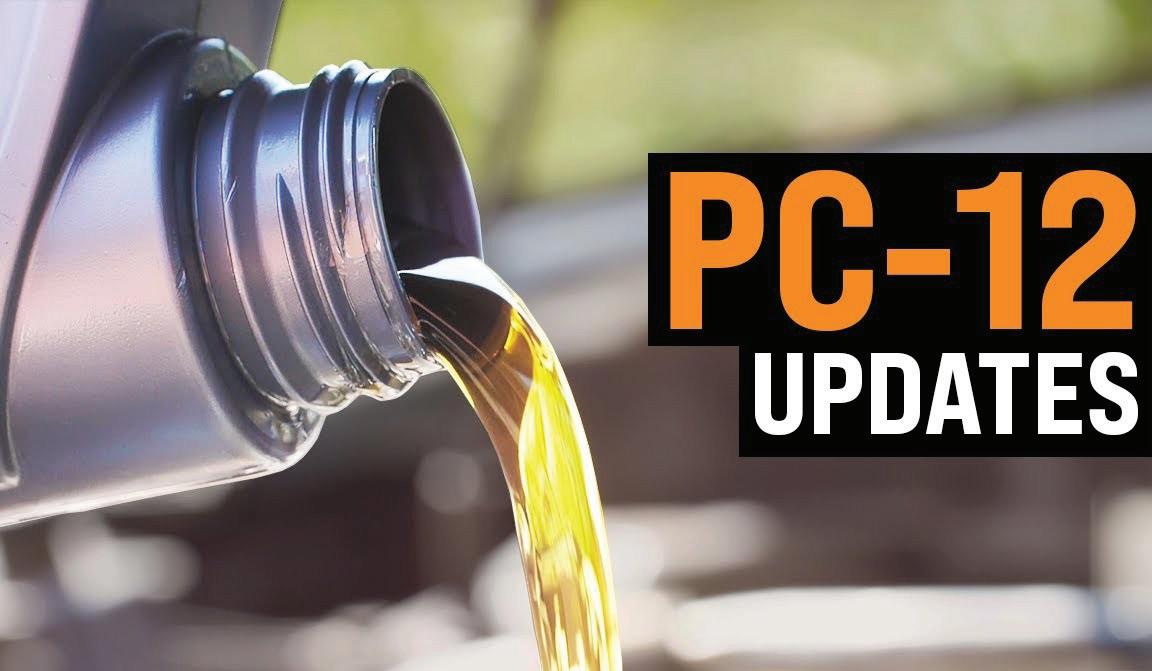
PC-12 Engine Oils: Navigating Change with Confidence
Transportation and logistics industries face increasing pressure to decarbonize
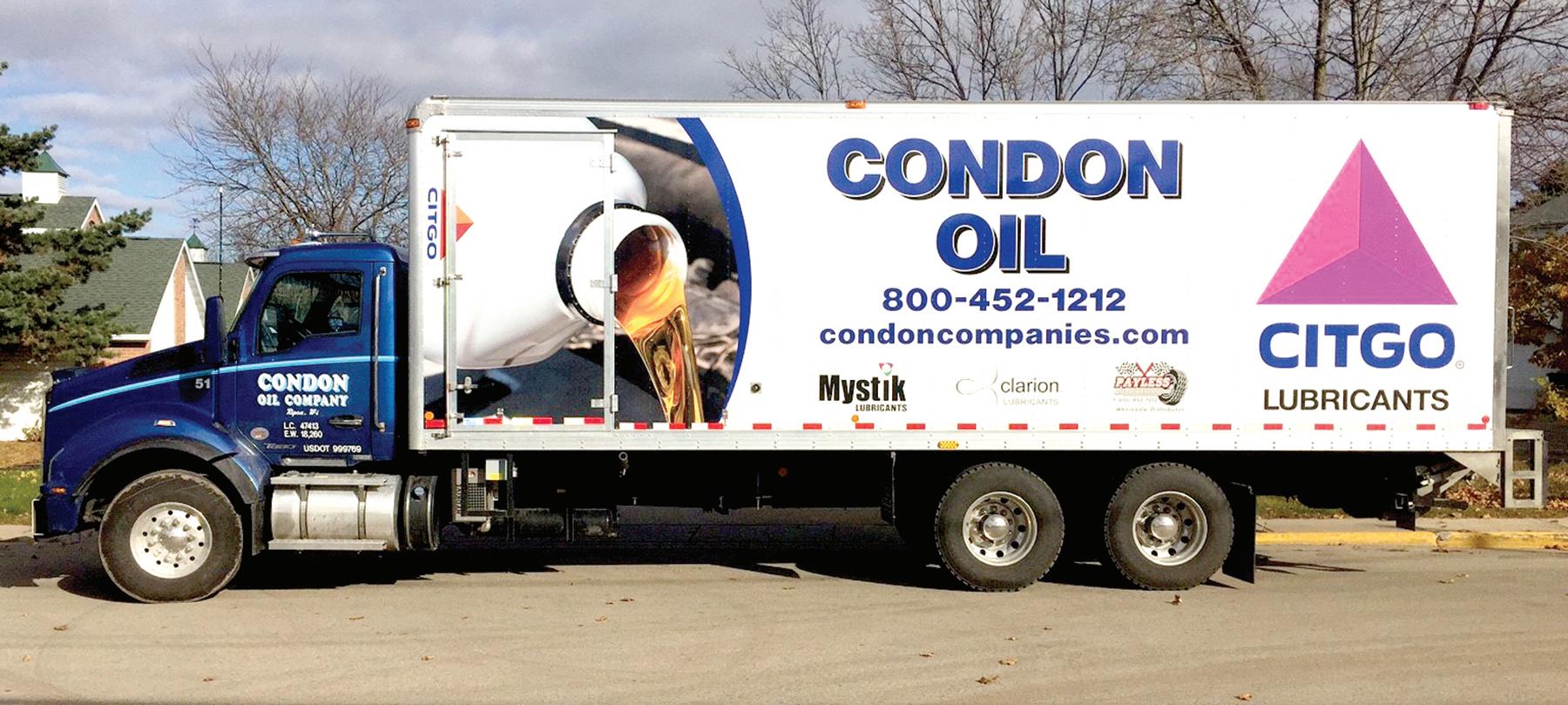
Submitted by Mark Belau, Condon Oil Company, as published on https://www.citgolubes.com
The introduction of PC-12 heavy-duty engine oil standards represents one of the most significant shifts in the industry to date.
Driven by stricter U.S. Environmental Protection Agency (EPA) and CARB regulations, these changes aim to improve fuel efficiency, enhance engine protection and reduce greenhouse gas emissions. This will mark a pivotal evolution in how heavy-duty engine oils are formulated and used, reflecting growing demands for both environmental responsibility and performance improvement.
PC-12 standards come at a time when the transportation and logistics industries face increasing pressure to decarbonize. For fleet operators and OEMs (Original Equipment Manufacturers), this shift means adapting to new formulations that balance enhanced engine protection with sustainability goals.
It’s not just about meeting regulatory requirements, but also about leveraging these changes to gain a competitive edge and improve long-term operational outcomes.
WHAT IS PC-12?
PC-12, or Proposed Category 12, represents the next generation of heavy-duty engine oil standards developed by the American Petroleum Institute (API).
These standards are being introduced to meet evolving industry demands for improved engine performance, fuel efficiency and reduced environmental impact.
Set to launch in 2027, PC-12 builds on the advancements of previous categories like PC-11, focusing on supporting newer engine technologies and stricter emissions regulations.
Key Innovations
PC-12 oils emphasize advanced formulations to meet the needs of modern engines:
1. Lower Viscosity Grades: Lower viscosity oils reduce friction and improve fuel economy while maintaining engine protection, especially under high pressure and extreme temperatures.
2. Enhanced Oxidation Resistance: New formulations provide better resistance to thermal breakdown, supporting longer drain intervals and reducing maintenance frequency.
By extending oil drain intervals, fleets can minimize downtime and lower overall maintenance
PC-12 Engine Oils: Navigating Change with Confidence. . . continued from pg. 21
costs, contributing to improved operational efficiency.
3. Improved Wear Protection: Additives are optimized to prevent wear under higher loads, helping extend engine life.
Categories
PC-12 standards are designed with the diverse needs of on-highway and off-highway fleets in mind. To ensure seamless adoption and maximum utility, PC-12 will be divided into two distinct categories:
1. PC-12A: Backward-compatible with legacy equipment, offering fleets continuity and ease of transition.
This category ensures older, high-mileage engines continue to perform reliably while meeting modern regulatory standards.
For fleets with mixed equipment
profiles, PC-12A provides a seamless solution that protects existing investments while aligning with future-focused operational goals.
“We’re very eager and excited about the future of this farm.
We know Ruder Ware will help position us for success.”
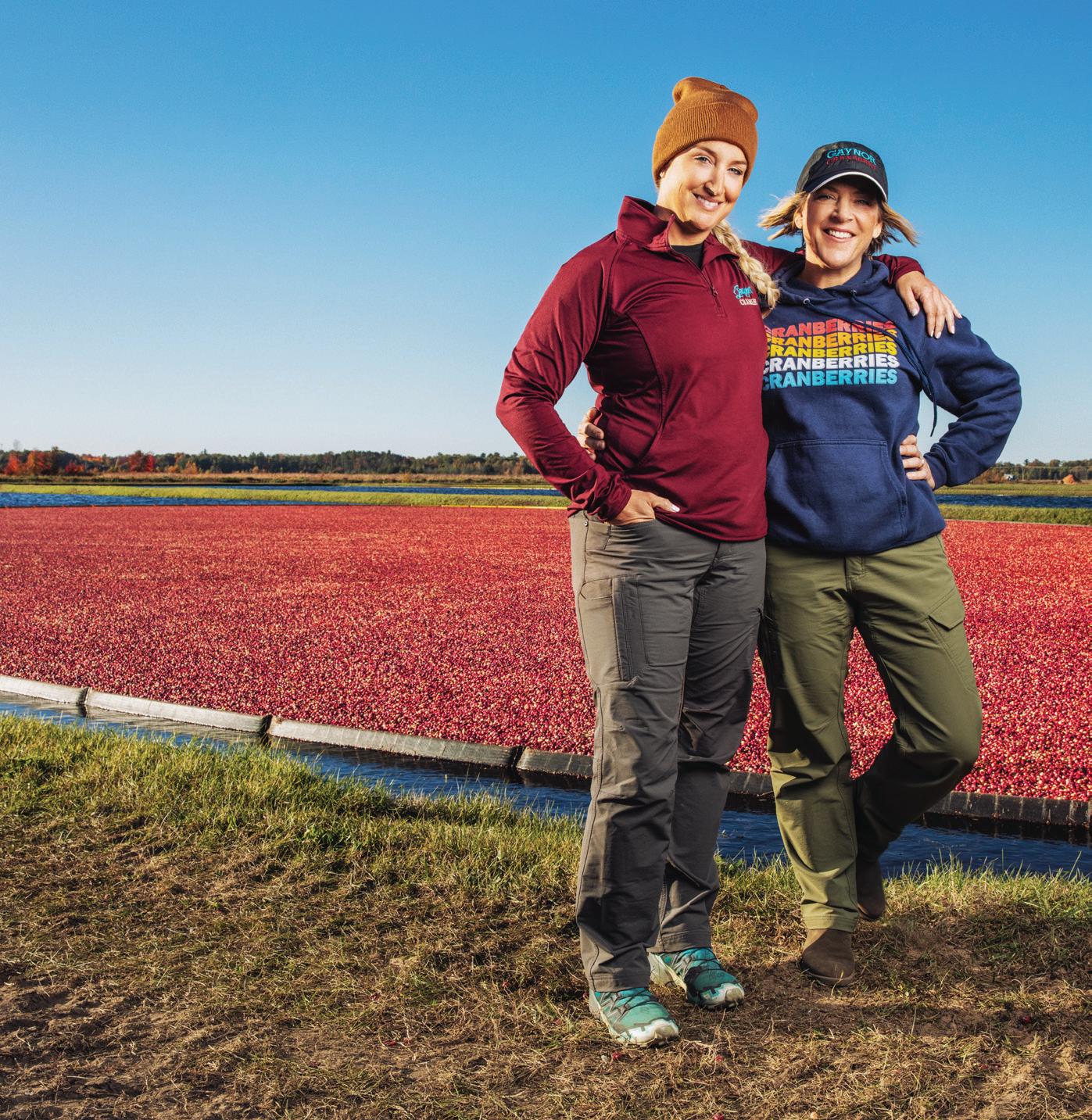
Jenna Dempze Ag Operations Manager, Gaynor Cranberry
2. PC-12B: Specifically developed for advanced engines with stricter requirements, ensuring top-tier performance for next-generation equipment.
Cranberry farming is often a generational endeavor, and the team at Ruder Ware understands the delicate nature of family businesses. Clients like Jenna and Heidi at Gaynor Cranberry Company trust Ruder Ware to guide them through challenging discussions about succession, the future of the farm, and strategies for better positioning their business.
This category is ideal for fleets looking to future-proof their operations. The newly allowable XW-20 viscosity grades will help over-the-road fleets optimize fuel economy.
Understanding the differences between PC-12A and PC-12B will empower fleets to make informed decisions that align with their specific equipment profiles and operational goals.
Testing & Validation
PC-12 oils will undergo rigorous testing, including engine-specific evaluations such as:
1.Detroit DD13 Scuffing Test: This test evaluates an oil’s ability to protect against scuffing and wear under high-friction conditions.
With modern engines operating at higher loads and pressures, the scuffing test can tell you if PC-12 oils provide sufficient lubrication to prevent metal-to-metal contact, which can lead to damage and reduced engine lifespan.
2. Cummins ISB Viscosity Test: This test validates that oils maintain optimal viscosity across a range of operating conditions. Modern engines demand consistent lubrication performance and pumpability at both high and low temperatures.
Rigorous testing will ensure PC-12 oils meet the demands of modern engines, which operate under higher thermal and mechanical stress due to stricter emissions standards and advanced hardware.
Most importantly, they will also protect sensitive after-treatment systems, such as diesel particulate filters (DPFs) and selective catalytic reduction (SCR) systems, by minimizing ash formation and preventing deposit buildup, ensuring compliance with emissions regulations.
“PC-12 marks a pivotal step forward for the heavy-duty engine oil industry, driven by regulatory advancements and the pursuit of efficiency and sustainability.”
Wicket Poly Baler Bags
As labor costs continue to rise, productivity on the line is of utmost importance.
Size: Manufactured to meet your required size specifications.
Equipment: JMC, Volmpack and Yakima Balers.
Color Film: Clear, tan, yellow green, red, black plus many additional colors available.
Print: Wide range of colors available.
W6788 5th Ave. Road Bryant, WI 54418 www.thorpack.co m
Additionally, PC-12 oils are being Toll Free: 866-934-7333
tested to support longer drain intervals, resisting oxidation, thermal breakdown and viscosity loss over time. This will reduce maintenance costs and downtime while maintaining engine protection.
By simulating real-world operating conditions, these tests confirm the oils’ reliability across diverse environments and applications, giving fleet operators confidence in their performance and durability.
PC-12 oils will introduce innovations that prioritize both efficiency and sustainability. Lower viscosity grades, such as SAE XW-20, will be key drivers of improved fuel economy and reduced greenhouse gas emissions.
FUEL SAVINGS
These formulations not only meet stringent regulatory standards but also align with fleet goals to lower the total cost of ownership by delivering measurable fuel savings across diverse fleet sizes.
By enhancing engine durability while delivering measurable fuel savings, these oils provide a solution that benefits both the environment and the bottom line.
The move toward lower viscosity grades signifies a shift in how engine oils are developed to support advanced engine technologies, improve lubrication under demanding conditions and meet the stringent requirements of new emissions systems.
CITGO® Lubricants serves as a trusted partner for fleets and OEMs by providing tailored solutions that simplify compliance with evolving emissions regulations.
CITGO Lubricants is working to develop innovative next generations of CITGO CITGARD® & Mystik®
JT-8® Heavy Duy Engine Oils that will support customers in meeting stringent standards such as those set by PC-12 and GHG Phase regulations.
CITGO is offering advanced formulations that improve fuel efficiency, reduce emissions, and protect engines.
PC-12 Specific Milestones (2025 - 2027)
1. 2025 - PC-12 Tech Demo & Limit Setting
The industry must prepare for PC-12’s stringent oil performance standards, ensuring they are ready for the first allowable use in 2027.
CITGO Lubricants has participated in early PC-12 testing and product development, ensuring that our engine oils will meet and exceed the upcoming standards, providing better protection for heavy-duty engines.
2. 2026 - Mandatory Waiting Period
This period allows customers to evaluate their fleet’s readiness for PC-12 standards and make necessary adjustments to meet compliance.
CITGO Lubricants will offer educational materials and technical support during this period, helping customers make informed decisions about transitioning to PC-12-compliant oils.
3. January 1, 2027 - PC-12 First Allowable Use
From this date, fleets can use PC-12-compliant oils to maintain compliance with emissions and performance standards.
CITGO CITGARD and Mystik JT-8 Heavy Duty Engine Oils will be fully PC-12-compliant, offering customers peace of mind with premium products that protect their engines and maximize efficiency under the new regulations.
PC-12 marks a pivotal step forward for the heavy-duty engine oil industry, driven by regulatory advancements and the pursuit of efficiency and sustainability.
For fleet operators, this change means an opportunity to adopt advanced formulations that provide better engine protection, lower costs and align with broader environmental goals.
Upcoming PC-12 solutions from CITGO Lubricants will provide fleets with the tools they need to navigate these changes confidently, ensuring compliance and operational success.
Stay up to date on PC-12 engine oils from CITGO Lubricants by visiting https://www.citgolubes.com/ EngineOilsPage.do.
Now News
Ken Schroeder Honored at Ag Appreciation Banquet
Tamas Houlihan acts as master of ceremonies and Les Dobbe is keynote speaker
On March 9, Ken Schroeder received the Outstanding Contribution to Agriculture Award from the Portage County Business Council during its annual American Agriculture Appreciation Banquet.
The Outstanding Contribution to Agriculture Award is presented to deserving individuals for their exceptional dedication to the advancement and success of the ag industry, as well as meaningful contributions to the agribusiness community.
Held this year at the Food + Farm Exploration Center, in Plover, Wisconsin, the American Ag Appreciation Banquet celebrates individuals for their personal and professional contributions to agriculture in Portage County, including 4-H leaders and youth, and FFA high school seniors. Agribusiness scholarships are also awarded to deserving students.
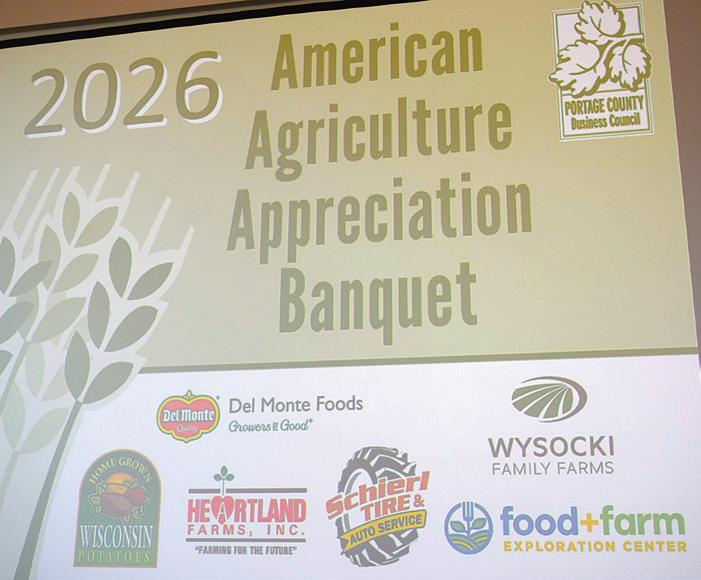
This year’s banquet was sponsored by Del Monte Foods, the Food + Farm Exploration Center, Heartland Farms, Inc., Schierl Tire & Auto Service, the Wisconsin Potato & Vegetable Growers Association (WPVGA), and Wysocky Family Farms.
Following a social hour, Portage
County Business Council President and Chief Executive Officer (CEO) Michael Witte welcomed guests to the banquet and gave an invocation before dinner.
The master of ceremonies, WPVGA Executive Director Tamas Houlihan, introduced this year’s keynote speaker, Les Dobbe, President of the Board for the Food + Farm Exploration Center.
A proud Central Wisconsin native and a graduate of the University of Wisconsin (UW)-Stevens Point
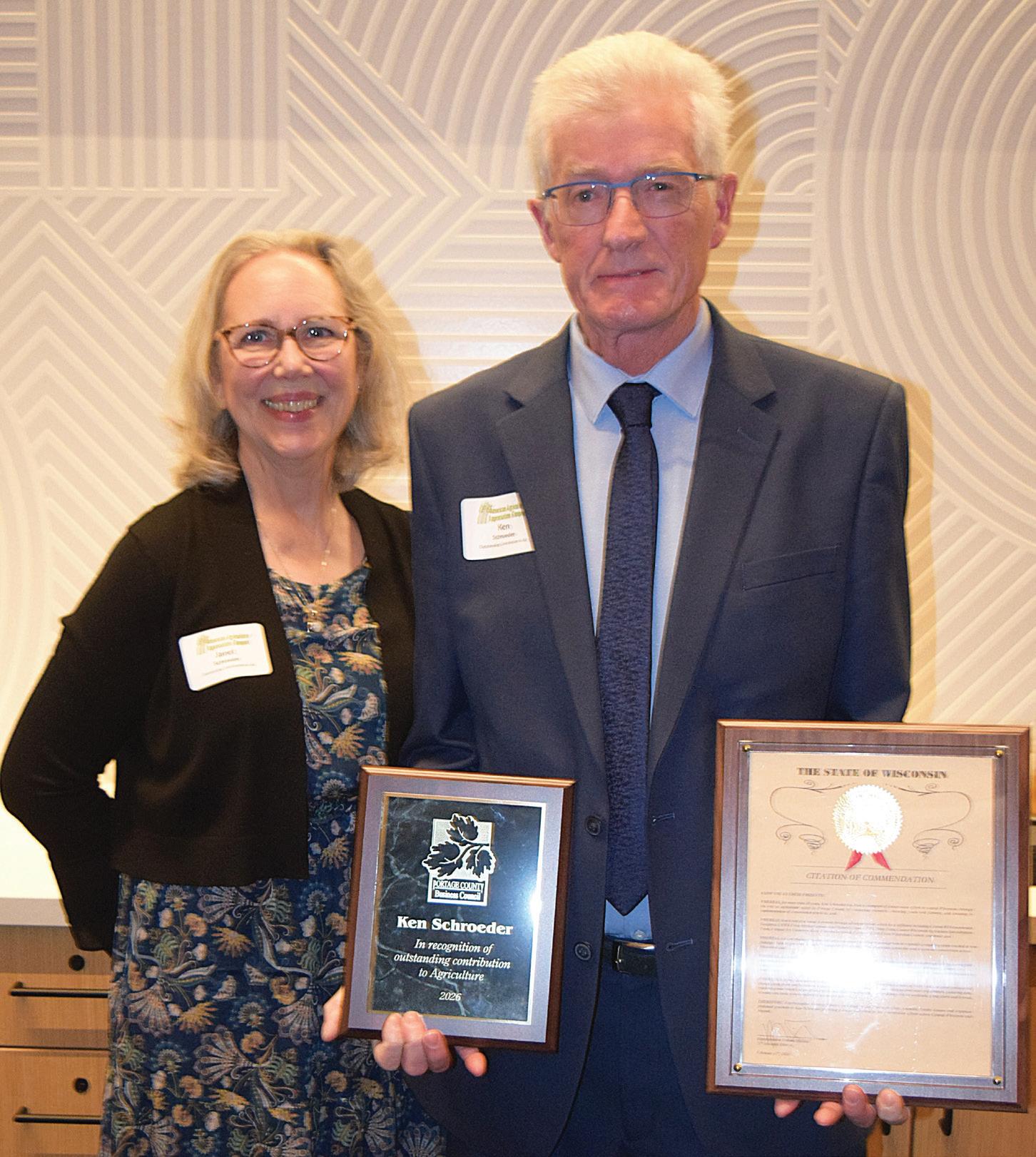
Above: For his exceptional dedication to the advancement and success of the agribusiness industry, as well as meaningful contributions to the agribusiness community, Ken Schroeder, posing with his wife, Janet, was honored with the “Outstanding Contribution to Agriculture Award” from the Portage County Business Council, on March 9, 2026.
with a degree in economics, Dobbe has built a distinguished career rooted in agriculture, logistics, business development, and financial management.
His professional journey began with Bushmans’ Inc., in Rosholt, where he played a key role in the company’s growth within the fresh potato industry. He later moved into the frozen food sector with Service Cold Storage in Stevens Point, contributing to its expansion into one of North America’s largest cold storage operations.
LEADERSHIP ROLES
“Les has also been deeply involved with the Farming for the Future Foundation and the Food + Farm Exploration Center since its early stages,” Houlihan detailed, “serving in multiple leadership roles, including treasurer, vice president, and cochair of the ‘Cultivating Connections’ capital campaign.”
“Today, as Board President, Les is committed to advancing the Center’s mission of increasing agricultural literacy and connecting people of all ages to the journey of food from field to fork,” Houlihan said.
Dobbe’s presentation, “The Future of Agriculture: Challenges, Opportunities, and Hope,” was particularly poignant considering the 4-H and FFA students being honored, as well as the technological advancements and sustainable farming methods practiced by today’s farmers.
“Agriculture is more than an industry,
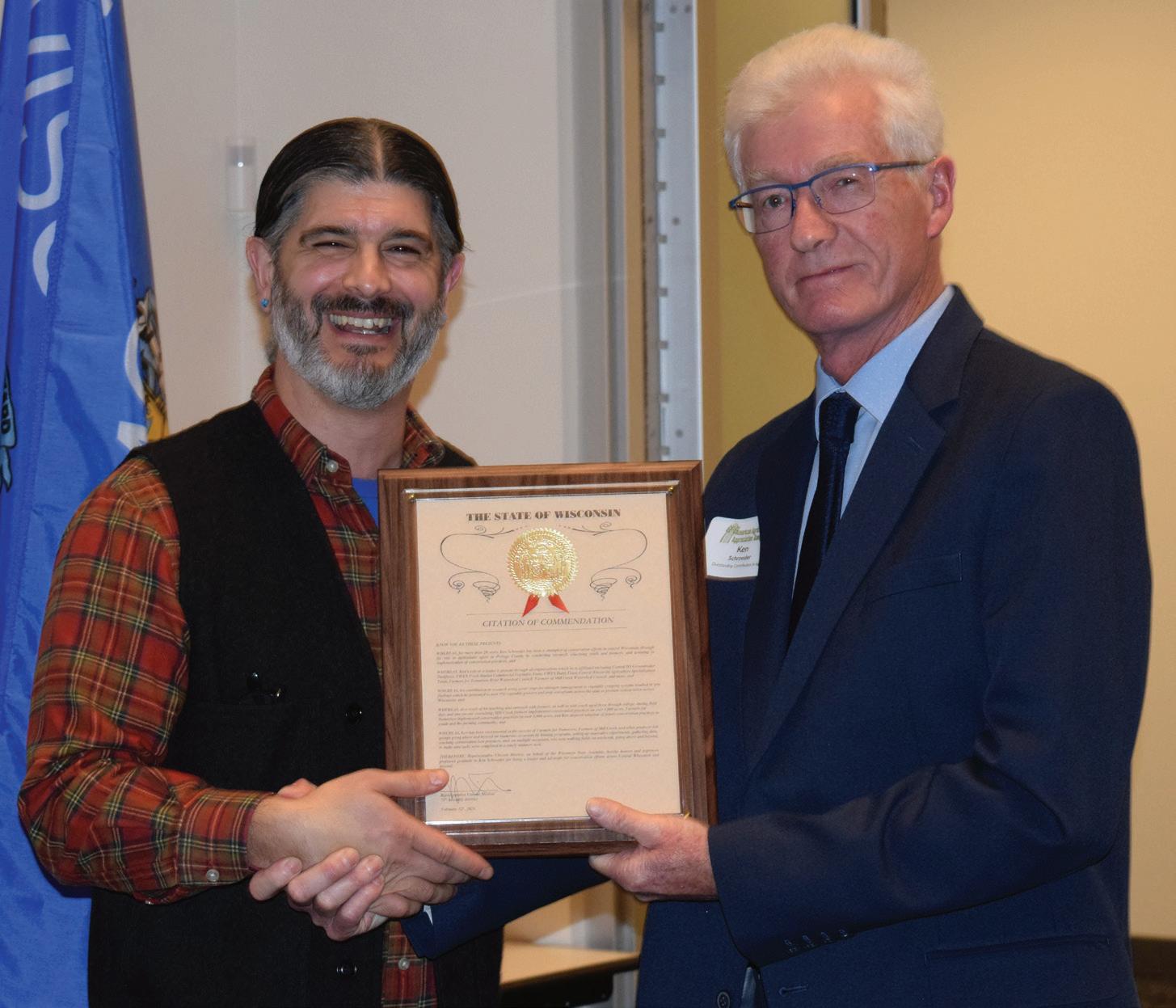
In addition to the Outstanding Contribution to Agriculture Award, Wisconsin Rep. Vinnie Miresse (left) also presented Ken Schroeder with a Citation of Commendation for his contributions to agriculture.
it’s a community and a way of life passed down from generation to generation,” Dobbe remarked. “It takes hard work, planning and a lot of prayers. The weather, markets, labor costs, water stewardship—all these things have grown increasingly important in agriculture and take strategic planning.”
Dobbe touched on sustainability, data and ecosystems, artificial intelligence, farming efficiency, inputs, potato varieties, innovation, the future of people’s food, and farmers feeding their families and the world.
Agri-Business Scholarships were awarded to Jacob Grezinski, Kessa Plaski, Otto Schultz and Faith Sopa. Outstanding FFA Senior Awards
went to Valerie Banda from AlmondBancroft High School, Faith Sopa from Amherst High School, Jacob Grezenski from Rosholt High School, and Katelyn Kubisiak of Stevens Point Area Senior High School.
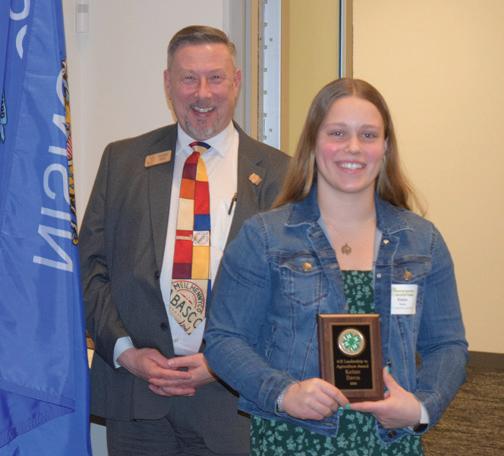
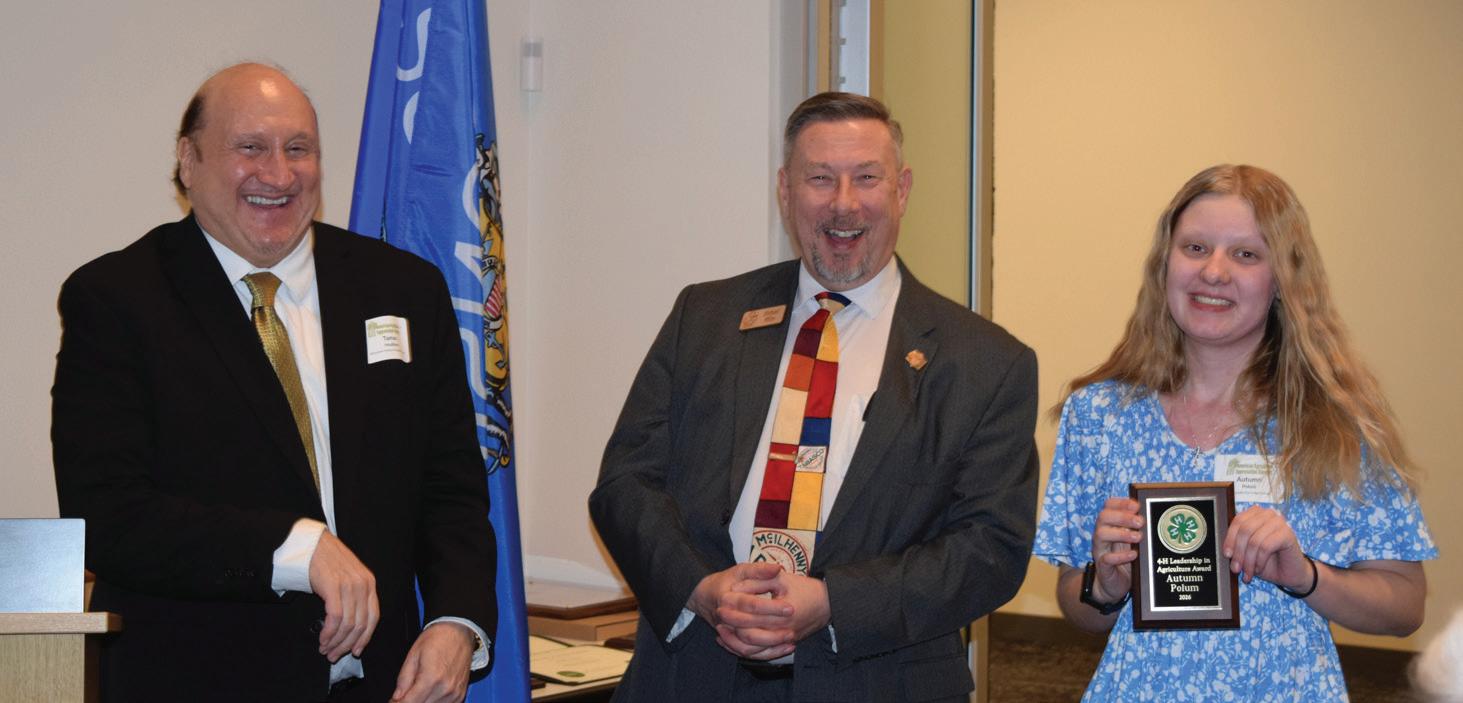
The 4-H Youth Leadership in Agriculture Awards were presented to Kelsie Davis and Autumn Polum.
LASTING IMPRINT
In Houlihan’s award presentation to Schroeder, he said, “Tonight, it is my distinct honor to present the Outstanding Contribution to Agriculture Award to a man whose career has left a lasting imprint on our farms, our families and our future.”
Left: This year’s keynote speaker, Les Dobbe, President of the Board for the Food + Farm Exploration Center, is a proud Central Wisconsin native and a graduate of the University of Wisconsin-Stevens Point with a degree in economics. Dobbe has built a distinguished career rooted in agriculture, logistics, business development, and financial management. His professional journey began with Bushmans’ Inc., in Rosholt, where he played a key role in the company’s growth within the fresh potato industry. He later moved into the frozen food sector with Service Cold Storage in Stevens Point, contributing to its expansion into one of North America’s largest cold storage operations.
Schroeder retired, in August 2025, from the UW-Madison Division of Extension after serving as the agricultural agent for Portage County since 2006. Over those 19 years, and throughout his entire career, he embodied his personal motto: “Facilitating Educational Opportunities: Taking a ScienceBased, Locally Adapted Approach.”
“Ken’s roots in agriculture run deep,” Houlihan noted. “Raised on a family dairy farm in Sheboygan County, he went on to own and operate his own dairy farm, pursued advanced degrees in horticulture, plant breeding, and plant genetics from UW-Madison, and even taught at Kansas State University before returning home to Wisconsin.”
“When he came back to serve Portage County,” Houlihan added, “Schroeder brought not only knowledge, but passion.”
His on-farm applied research program
focused on soil and water quality improvement, providing farmers with credible, locally relevant data on crops, including corn, soybeans, alfalfa, sweet corn, hops, and cover crops. He helped secure more than $600,000 in conservation and educational grants, dollars that went directly back to local producers.
Schroeder was instrumental in forming farmer-led watershed groups, strengthening conservation
efforts, and expanding education to youth, even hosting hands-on conservation learning for children as young as three years old. His impact
Our
dividend grows your future
Wisconsin’s strength starts with farmers. That’s why we’re
$4.4 million to farm policyholders this year — and $31.9 million over the past decade through our Farm Dividend Program. When our farms succeed, Wisconsin stays
continued
Left: From left to right, Wisconsin Potato & Vegetable Growers Association Executive Director Tamas Houlihan joined Portage County Business Council President and Chief Executive Officer Michael Witte in presenting Autumn Polum with the 4-H Leadership in Agriculture Award.
spans generations.
Beyond his Extension role, Ken has been a dedicated partner to the Portage County Business Council. He has served faithfully on the Agri-Business Committee, helped plan many American Agriculture Appreciation Banquets, and organized ag tour events that showcase the strength and innovation of the community.
He also served the state in leadership roles with the Wisconsin Association
American Agriculture Awards
4-H Leadership in Agriculture
– Kelsie Davis and Autumn Polum
Outstanding FFA Senior Awards
– Valerie Banda, Almond/Bancroft; Faith Sopa, Amherst; Jacob Grezenski, Rosholt; and Katelyn Kubisiak, Stevens Point Area Senior High
Agri-Business Scholarship Recipients
– Jacob Grezenski, Kessa Plaski, Otto Schultz, and Faith Sopa
2026 Outstanding Contribution to Agriculture Award – Ken Schroeder
of County Agricultural Agents and worked closely with the WPVGA, among many other contributions.
FARM TECH DAYS
“And who could forget his role as Executive Secretary in bringing Farm Technology Days back to Portage County after 32 years, a tremendous achievement for our community?” Houlihan asked.
Ken has worn many hats: educator, researcher, mentor, conservation advocate, leader, collaborator, and friend. But through it all, his steady commitment to science-based agriculture and to the farmers of Portage County has never wavered.
“And now, Ken is embracing a wellearned retirement,” Houlihan related. “He and his wife of forty-two-anda-half years, Janet, are enjoying a slower pace, relaxing, traveling, and spending time in the beautiful outdoors they both appreciate so much.”
“Most importantly, they are cherishing time with their two daughters, Kate and Sarah, and family, creating new memories in this next season of life,” he concluded. “Ken, your dedication has strengthened Portage County
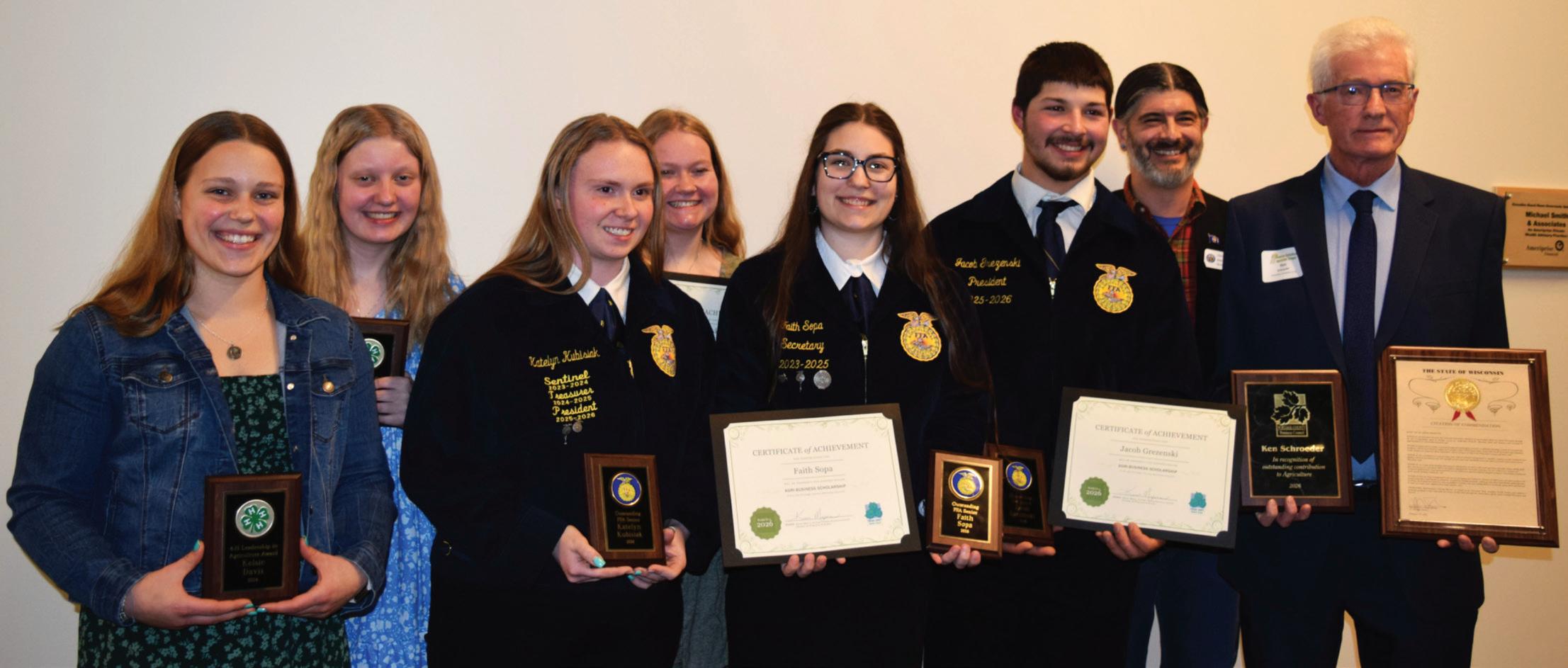
Above: The American Agriculture Appreciation Banquet is the premier Portage County event honoring not only agriculture, agri-businesses and industry leaders, but also 4-H leaders and youth, and FFA high school seniors. Agribusiness scholarships are also awarded to deserving students. Posing with Wisconsin Rep. Vinnie Miresse (second from right), the 2026 award and scholarship recipients are, from left to right, Kelsie Davis, Autumn Polum, Katelyn Kubisiak, Kessa Plaski, Faith Sopa, Jacob Grezenski, and Ken Schroeder.
agriculture in ways that will continue to benefit us for years to come.”
In addition to the Outstanding Contribution to Agriculture Award, Wisconsin Rep. Vinnie Miresse also presented Schroeder with a Citation of Commendation for his contributions to agriculture.
As Schroeder said, “Agriculture is and has been my life. It’s important to me at every level. It’s important to have relevant on-farm research and applied research, and I’m honored to be recognized for my contributions.”
Recognizing people for their contributions to agriculture is the goal and intention of the Portage County Business Council’s American Agriculture Appreciation Banquet.
The Little Potato Co. Marks 30 Years of Innovation
Company remains focused on innovation while staying true to its family values
The Little Potato Company, the number one little potato brand in North America, is kicking off a yearlong 30th anniversary celebration with the unveiling of a new anniversary logo. The visual reflects the company’s growth over three decades and its ongoing mission to “Feed the World, Better.”
Since 1996, The Little Potato Company has purposefully grown little potatoes with big flavor and made them easier to prepare and enjoy, so families can spend less time in the kitchen and more time around the table creating little moments of happiness together.
What started as a father-anddaughter operation on a one-acre plot of land in Edmonton, Alberta, Canada, has grown into a trusted North American brand, known for innovation, quality, longstanding relationships with family farmers, and a commitment to sustainability.
“When I started The Little Potato
Company nearly 30 years ago, I had more curiosity than certainty,” says Angela Santiago, CEO and co-founder of The Little Potato Company. “As the company grew, I grew alongside it, learning what it means to lead with patience, resilience, and respect for the people and the land behind our food.”
“Reaching this milestone is incredibly humbling,” Santiago continues, “and I’m grateful to the growers, partners, and team members who helped build what we have today. As we look ahead, our roots are deep, our vision is clear, and the journey continues.”
Throughout 2026, the new 30th anniversary logo will appear across company materials, marketing, and select touchpoints as a visual marker of the milestone year. Additional activities are planned for later in the year, including social and email campaigns, employee events, and celebrations with partners.
Over the past three decades, The Little Potato Company has continued to grow the category through industry-leading processes, innovative new varietals, value-added options, and flavor-forward offerings. Today, the company remains focused on thoughtful growth and innovation while staying true to its family values, agricultural roots and commitment to Feed the World, Better.
To learn more about The Little Potato Company, please visit https://www. littlepotatoes.com/our-story/ourjourney/ or follow @LittlePotatoCo on social media for updates.
Potato Storage - Bryan Bula Farms
Wisconsin Leopold Conservation Award Seeks Applicants
Honorees conserve soil health, water quality, and wildlife habitat on working lands
Applications are now being accepted for the 2026 Wisconsin Leopold Conservation Award®. The award honors farmers and forestland owners who go above and beyond in their management of soil health, water quality, and wildlife habitat on working land.
The Sand County Foundation and its national sponsor American Farmland Trust present Leopold Conservation Awards to private landowners in 28 states. In Wisconsin, the $10,000 award is presented in partnership
with Wisconsin Farm Bureau Federation and Dairy Farmers of Wisconsin.
Given in honor of renowned conservationist Aldo Leopold, the award recognizes landowners who inspire others to consider conservation opportunities on their land. In his influential 1949 book, “A Sand County Almanac,” Leopold advocated for “a land ethic,” an ethical relationship between people and the land they own and manage.
Applications may be submitted on behalf of a landowner, or landowners may nominate themselves. The application form can be found at www.sandcountyfoundation.org/ ApplyLCA.
The application deadline is August 1, 2026. Applications must be emailed to WisconsinLCA@ sandcountyfoundation.org.
Applications are reviewed by an independent panel of Wisconsin agricultural and conservation leaders. Last year’s recipient was Michael E. Berg of Blanchardville. To view
profiles of all past recipients, visit https://sandcountyfoundation.org/ our-work/leopold-conservationaward/state/wisconsin.
“Wisconsin’s dairy farmers know that conservation is essential to the future of their farms and their communities,” says Dairy Farmers of Wisconsin CEO Chad Vincent.
“As a proud sponsor of the Leopold Conservation Award,” Vincent continues, “it is an honor to support family-owned farms that use conservation practices to keep Wisconsin’s land, water, and dairy industry strong for generations to come.”
“At Wisconsin Farm Bureau, we believe in practical and profitable solutions that support agriculture, protect our environment and serve communities for future generations. We are proud to recognize those efforts as a supporter of the
WISCONSIN CERTIFIED SEED POTATOES
WISCONSIN CERTIFIED SEED POTATOES
WISCONSIN CERTIFIED SEED POTATOES
Wisconsin Leopold Conservation Award,” says Brad Olson, Wisconsin Farm Bureau president.
“I encourage farmers to apply or nominate someone who deserves this special recognition for their continued conservation efforts,” Olson stresses.
“Leopold Conservation Award recipients are examples of how Aldo Leopold’s land ethic is alive and well today,” says Kevin McAleese, Sand County Foundation president and CEO. “Their dedication to conservation is both an inspiration to their peers as well as a reminder to all how important thoughtful agriculture is to clean water, healthy soil, and wildlife habitat.”
“As the national sponsor for Sand County Foundation’s Leopold Conservation Award, American Farmland Trust [AFT] celebrates the hard work and dedication of the
award recipients,” said John Piotti, AFT president and CEO.
“At AFT, we believe that exemplary conservation involves the land itself, the practices employed on the land, and the people who steward it,” Piotti adds. “This award recognizes the integral role of all three.”
The Wisconsin Leopold Conservation Award is made possible thanks to the generous support of American Farmland Trust, Dairy Farmers of Wisconsin, Wisconsin Farm Bureau Federation, Sand County Foundation, Culver’s, Mid-West Farm Report, Compeer Financial, USDA Natural Resources Conservation Service, Wisconsin Corn Growers Association, Wisconsin Corn Promotion Board, Wisconsin Land and Water Conservation Association, and the Wisconsin Potato & Vegetable Growers Association.
continued on pg. 32
UPGCW Focuses on Leadership Transitions
United Potato Growers Cooperative of Wisconsin holds annual meeting
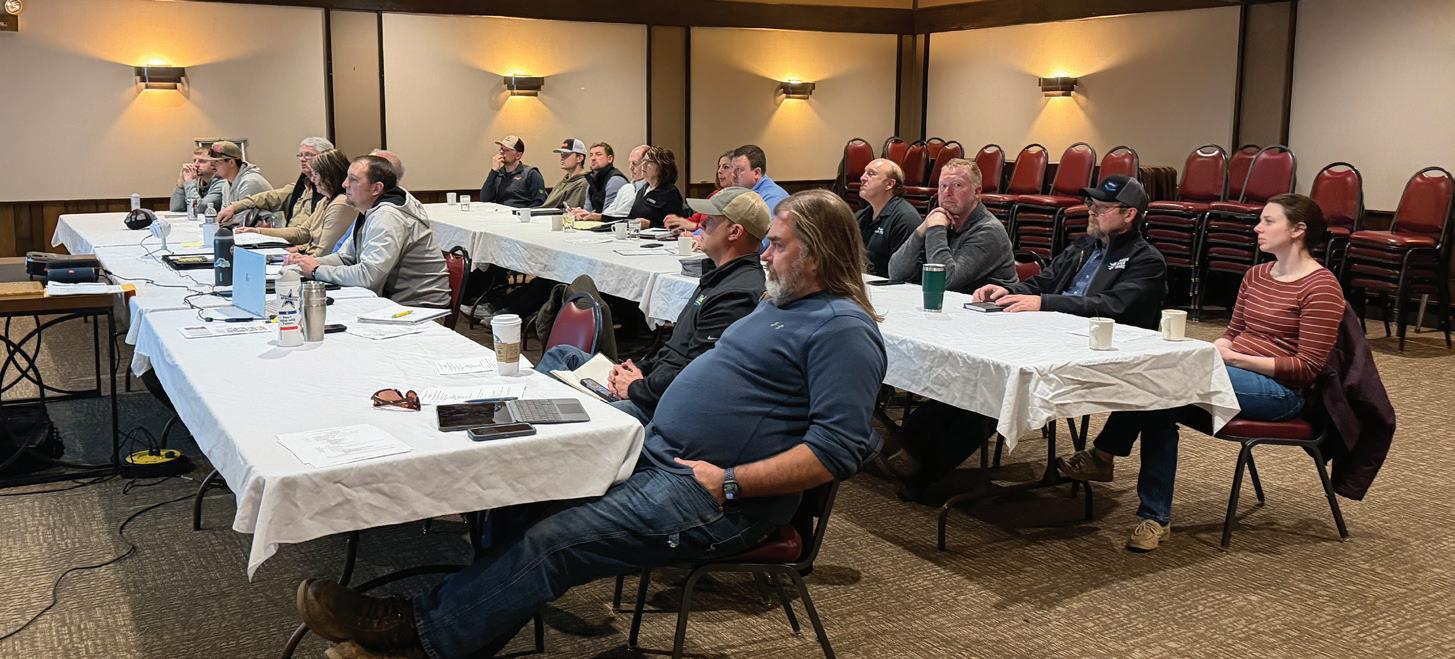
The United Potato Growers Cooperative of Wisconsin (UPGCW) held its 2026 Annual Meeting on March 5, with a strong focus on leadership transitions and the continued evolution of the cooperative’s board.
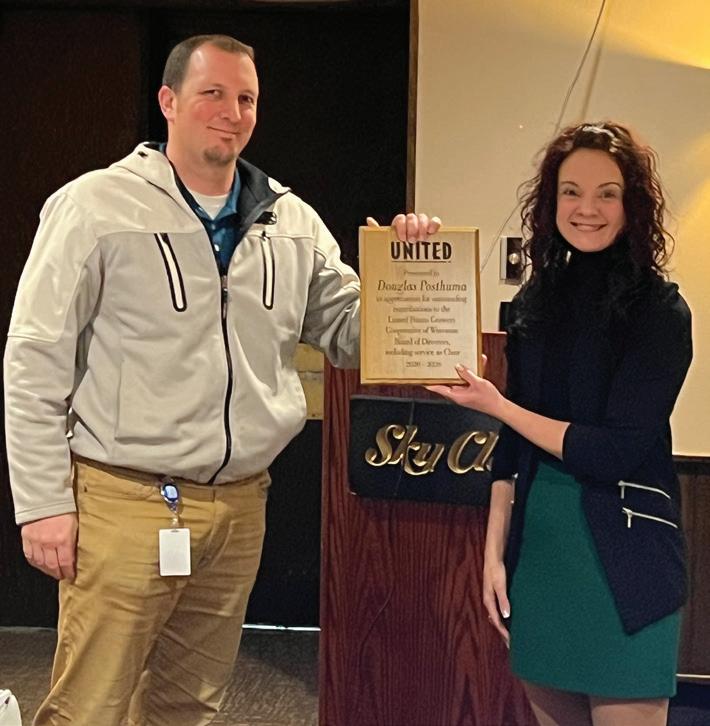
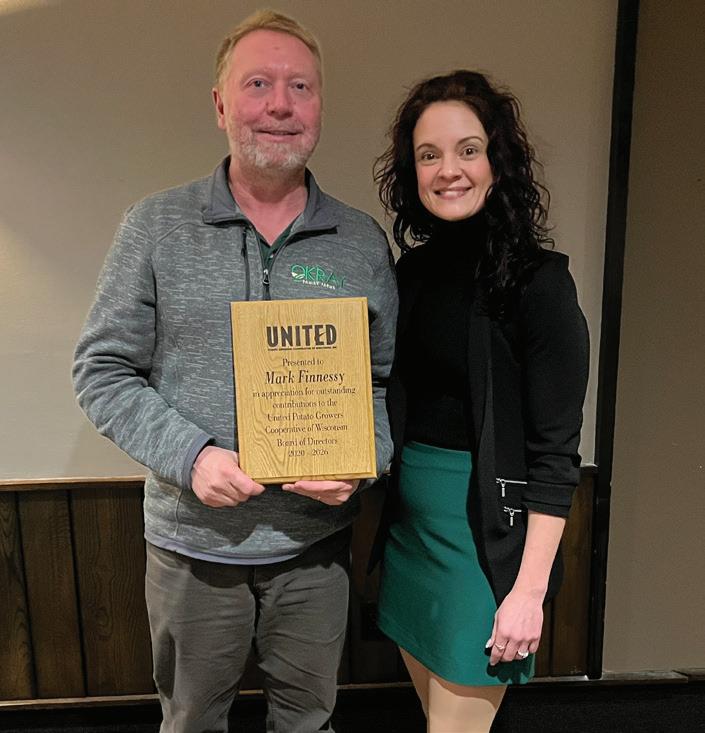
A central moment of the meeting was the recognition of outgoing Chairman Doug Posthuma and Vice Chairman Mark Finnessy, both of whom concluded their second consecutive three-year terms on the Board of Directors.
Their leadership and long-standing commitment to the cooperative were acknowledged as instrumental in guiding UPGCW through a dynamic period for the potato industry. Under their tenure, the organization strengthened its partnerships, expanded member engagement, and maintained a steady voice within the national United Potato Growers of America (UPGA) network.
As Posthuma and Finnessy step down from their leadership roles, the cooperative welcomed two new
board members: Heidi Randall of Alsum Farms & Produce and Alex Okray of Okray Family Farms. Both were unanimously elected to serve their first three-year terms, signaling a new chapter of leadership for the organization.
Following the election, the Board reorganized its officer positions. Charlie Husnick was named chairman, Nicola Carey will serve as vice chair, and Heidi Randall steps into the role of secretary. Randy Fleishauer will maintain the treasurer position, with Tom Bulgrin and Alex Okray serving
as board members and alternates.
Beyond the leadership transitions, the meeting also included updates on industry conditions, acreage data, and cooperative business. UPGA President and CEO Mark Klompien provided a national perspective on economic trends and market conditions in both fresh and processed potato sectors.
While the meeting addressed a range of national and local operational updates, the transition in board leadership stood out as a defining theme. The cooperative expressed appreciation for the service of Posthuma and Finnessy, while welcoming Randall and Okray as part of the next generation of leadership dedicated to supporting Wisconsin potato growers.
The 2026 Annual Meeting ultimately reflected both continuity and change, as UPGCW builds on a strong foundation while positioning itself for the future.
Above: Growers and industry members gather at the Sky Club, in Plover, on Thursday, March 5, for the United Potato Growers Cooperative of Wisconsin (UPGCW) Annual Meeting.
UPGCW Administrator Dana Rady (right in both images) presents plaques in recognition of outgoing Chairman Doug Posthuma (at left in first image) and Vice Chairman Mark Finnessy (left in second image), both of whom concluded their second consecutive three-year terms on the Board of Directors.
People Potato Sustainability Alliance Announces New Board
The Potato Sustainability Alliance (PSA) announces updates to its Board of Directors and Executive Committee, including the election of new leadership and the retirement of several long-serving directors.
Several new board members have been elected to lead the Alliance heading into 2026.
Jane Canales (Basic American Foods), Kartika Charan (Sysco), J.P. Claassen (Canadian grower, Claassen Farms), Tony Macklin (U.S. grower, Walther Farms), Lincoln Neufeld (Canadian grower, W.J. Siemens Farming Co.), and Ariel Wiegard (Pheasants Forever & Quail Forever) will join the PSA Board of Directors.
Retiring board members recognized for dedicated service and advancing the PSA 05-26 Badger Common'Tater (7.25x2.25).v2.pdf 1 2026-04-23 1:01 pm
The new board members bring a
diverse range of perspectives and experience from across the potato value chain. Their leadership will support PSA’s continued focus on collaboration, data-driven decisionmaking, and continuous improvement in sustainable potato production.
The Alliance also announces the election of its 2026 Executive Committee, which will help guide PSA’s strategic direction and governance in the coming year. The 2026 Executive Committee is:
• Tracy Shinners-Carnelley, PSA Chair (Vice President of Research, Quality and Sustainability, Peak of the Market)
• Ryan Vroegindewey (Senior Manager of Sustainable Agriculture, Campbell Soup Company)
• Mike Wenkel (Chief Operating Officer, National Potato Council)
“These leaders bring a strong, diverse mix of industry experience, commitment to collaboration, and passion for sustainability,” says reelected PSA Chair Tracy ShinnersCarnelley.
“Their guidance will be instrumental as PSA continues to support growers, supply chain partners, and stakeholders in defining and demonstrating sustainable potato production,” she adds.
Tracy Shinners-Carnelley Erika Wagner
Ryan Vroegindewey
Mike Wenkel
The PSA board appointed Dan Duguay (Canadian Produce Marketing Association) to serve in an additional at-large board seat.
Duguay’s appointment reflects the Alliance’s commitment to maintaining balanced representation and ensuring the Board has the expertise needed to guide PSA’s strategic priorities as its programs, partnerships, and impact continue to grow.
RETIRING BOARD MEMBERS
PSA also extends its sincere appreciation to retiring board members Chad Berry (Canadian
grower, Under the Hill Farms), Andy Diercks (U.S. grower, Coloma Farms), Greg Nakamura (Canadian grower, Nakamura Farms), and Shane Sampels (Sysco) for their dedicated years of service to sustainability.
Each has played an important role in strengthening the Alliance, advancing program development, and supporting PSA’s mission during their tenure.
“On behalf of the Alliance, we thank our retiring directors for their leadership, insight, and commitment to the potato industry,” says PSA
dedicated years of service to sustainability.
RIght: Retiring board member Greg Nakamura of Nakamura Farms in Canada is recognized for his dedicated years of service to sustainability and role in strengthening the Alliance, advancing program development, and supporting PSA’s mission during his tenure.
Chief Executive Officer John Mesko.
(715) 335-6660 FAX: (715) 335-6661
“PSA’s strength rests on the shoulders of all our member organizations,” Mesko adds, “but our board members, Executive Committee members, and the companies they represent add special value. We make progress when everyone values what we can accomplish together.”
The Potato Sustainability Alliance is a multi-stakeholder organization that brings together growers, processors, allied partners, researchers, and industry leaders to define, measure, and advance sustainability in potato production across North America.
For board member bios and a complete listing of PSA’s Board of Directors, visit the PSA website: https://potatosustainability.org/ about-the-alliance/board-ofdirectors/.
Left: PSA Chief Executive Officer John Mesko (right) recognizes retiring board members, from left to right, Andy Diercks of Coloma Farms, Chad Berry from Under the Hill Farms, and Shane Sampels of Sysco, for their
New Products EarthScout Launches Soil Cub +
Readings of soil moisture, temperature, and humidity help growers turn data into action
On January 20, 2026, EarthScout, a leader in field sensing and data solutions for growers, announced the launch of Soil Cub +, a nextgeneration on-demand soil data device that empowers growers through a smart, data driven tool that simplifies decision making and improves sustainability.
The Soil Cub + will provide readings of soil moisture, temperature, bulk EC (electrical conductivity), pore water EC, air temp and humidity.
Building on EarthScout’s proven in-field sensing technology, Soil Cub + combines soil sensors with
environmental measurements to give growers a real-time picture of what’s happening below the soil surface.
With Soil Cub +, growers can connect to their mobile devices via Bluetooth and use the Soil Cub app to record, display, and analyze data, as well as assign readings to zones or GPS (global positioning system) locations for better tracking over time.
“Soil Cub + was built for growers who want to go beyond guesswork,” says Anna Barr, director of agronomy and commercial operations at EarthScout.
“By putting accurate, easy-to-use soil
and environmental data in growers’ hands, we are helping them fine-tune irrigation, protect soil structure, and support long-term productivity,” Barr adds, “whether they’re managing
Trusted for generations, the Valley® name signifies durability, reliability and strength. If we put our name on it, you can trust it’s the best quality and value for our growers. Backed by our industryleading warranty, Valley Genuine Parts are built to last.
As we count our many blessings, we are thankful for all you do. You make us who we are. We wish you and your family a holiday filled with happiness, gratitude and laughter.
Happy Thanksgiving!
From gaskets to gearboxes, and booster pumps to smart panels, you can rely on the best from Valley. Contact us today!
a few acres or a complex operation.”
Advancing Data-Driven, Soil-First Growing
By combining portable soil sensing with environmental context, Soil Cub + helps growers:
• Improve irrigation time and efficiency
• Reduce input waste and risk from over- or under-watering
• Compare locations, practices, and seasons with consistent, standardized data
Soil Cub + is now available through the EarthScout website (https:// www.earthscout.com), Amazon and select channel partners. New and
existing EarthScout customers can download the Soil Cub app, available on the Apple App Store and Google Play store, to begin using Soil Cub + immediately.
For more information about Soil Cub + or to request a demo, visit https:// www.earthscout.com or email John Smith at john.smith@earthscout.com.
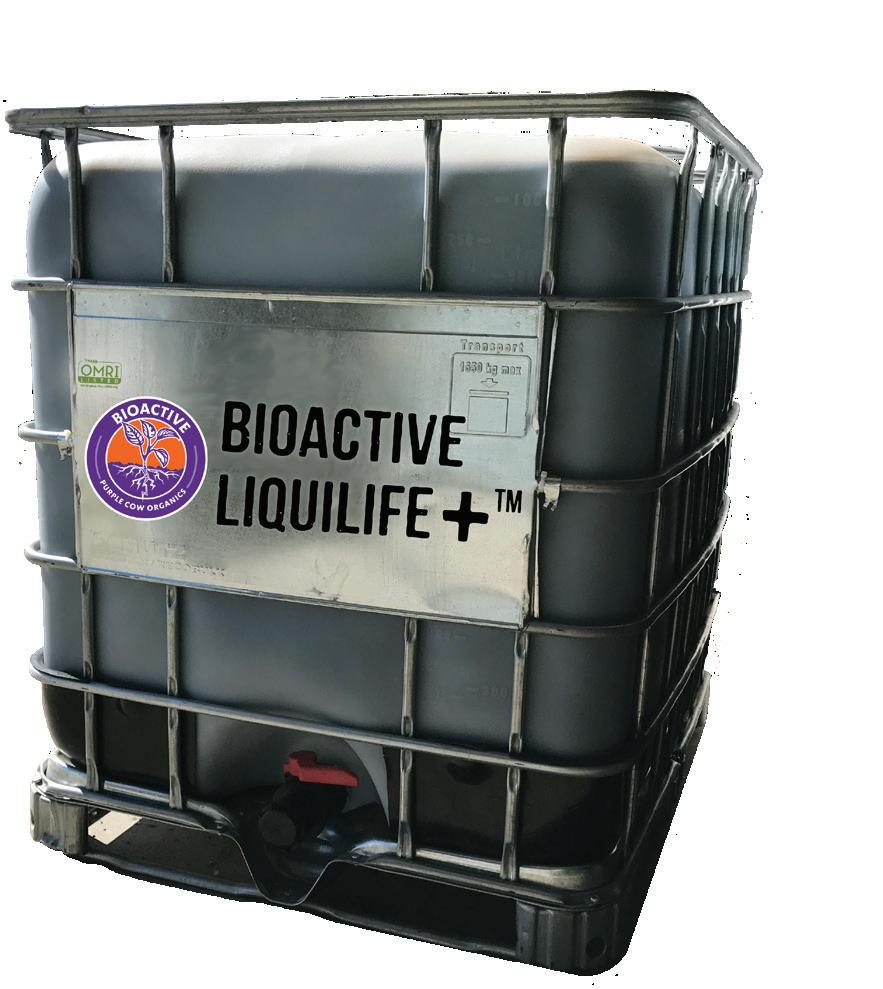
Bioactive LiquiLife+ Improves Potato Production
Broad-spectrum liquid biological enhances nutrient efficiency and supports soil biology
Bioactive’s LiquiLife+, a broadspectrum liquid biological, continues to prove its value in high-input potato production systems by improving
nutrient efficiency, supporting soil biology, and delivering measurable economic returns.
An independent 2025 potato
When you need goods or services, please consider asking our Associate Division Members for quotes or explore what they have to offer. Together, we make a strong organization and appreciate how wonderful we are as a group.
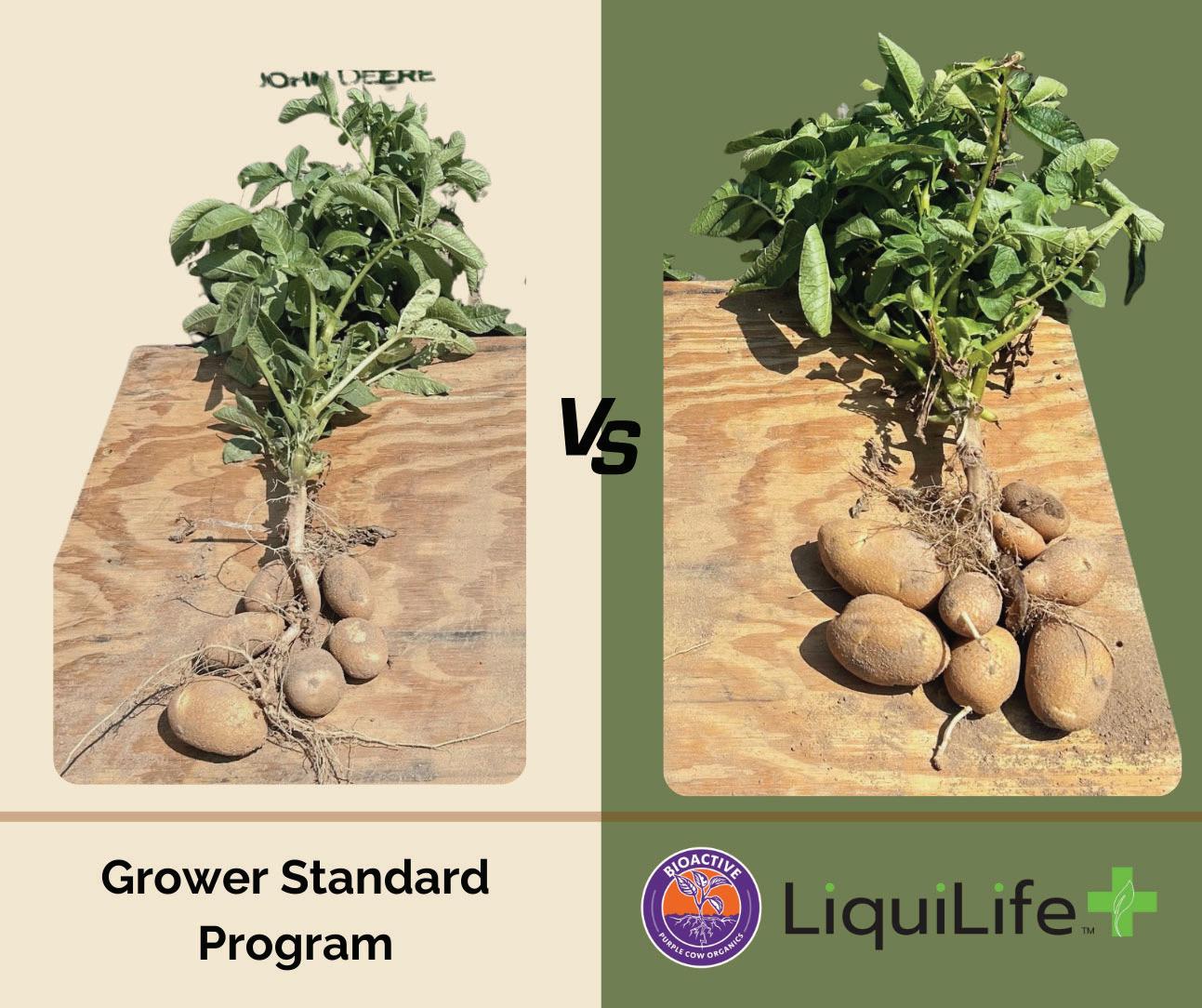
Above: The trial compared a Grower Standard Program (GSP) to reduced-input programs that incorporated LiquiLife+ while cutting granular fertilizer rates by 10%.
trial conducted by the Agri-Tech Consulting research team in Whitewater, Wisconsin, evaluated LiquiLife+ in a commercial-style fertility program on Kidder sandy loam soil with 1.8% organic matter.
The trial compared a Grower Standard Program (GSP) to reducedinput programs that incorporated LiquiLife+ while cutting granular fertilizer rates by 10%.
LiquiLife+ was applied at 1.5 gallons
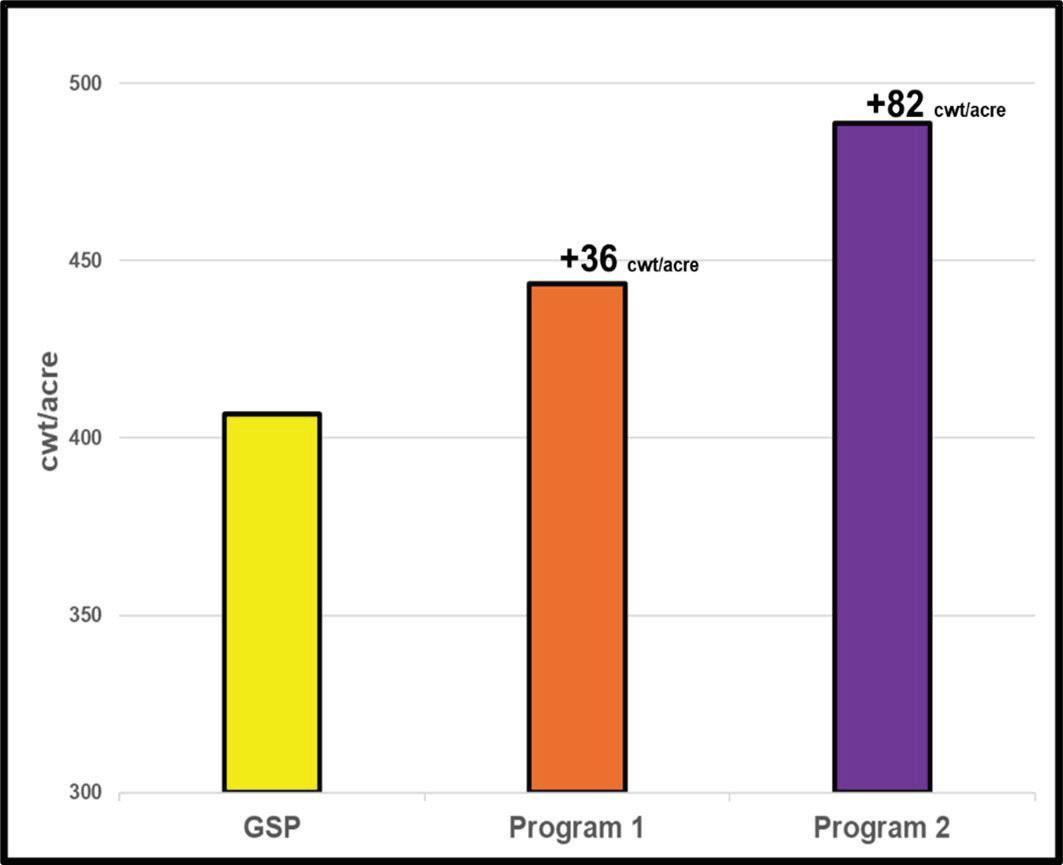
per acre alongside standard fertility timing, including pre-plant, atplanting, and first and second sidedress applications. The Grower Standard Program averaged 407 cwt. (hundredweight)/acre, while the program that used 90% of standard fertilizer plus LiquiLife+ increased yields to 443 cwt./acre.
When LiquiLife+ was paired with a liquid carbon source to further support microbial activity, yields climbed to 489 cwt./acre, resulting in a total yield advantage of 82 cwt./ acre over the standard program.
From an economic standpoint, the
LiquiLife+ program delivered a net gain of $903 per acre and a 193% return on investment, demonstrating that biologicals can play a meaningful role in maintaining yield while reducing fertilizer inputs.
For potato growers facing rising input costs and tighter margins, LiquiLife+ offers a proven, easy-to-integrate biological solution that enhances nutrient uptake, supports soil health, and turns biological performance into real-world profitability.
Learn more by visiting https://www. purplecoworganics.com/pages/ agriculture.
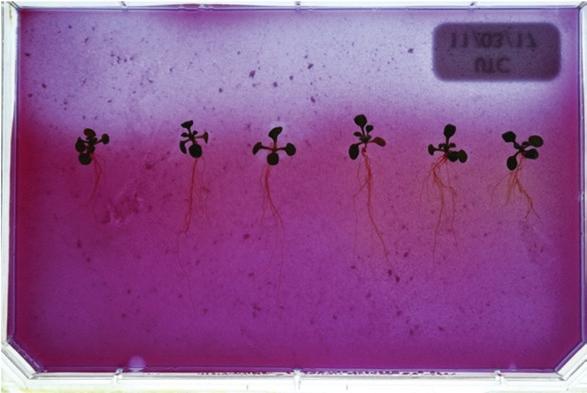
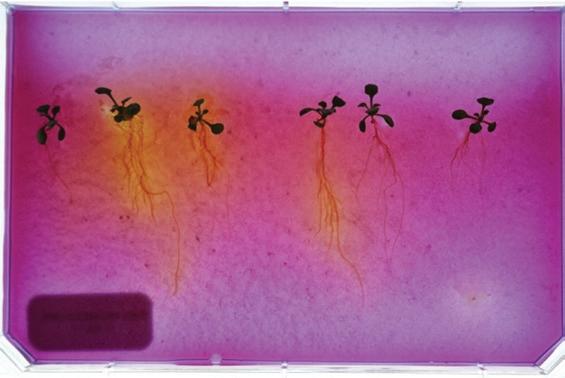
Nutrient Solubilizing Technology Allows Plants to Utilize Unavailable Phosphorus
Lead into P1
Enhanced Phosphate Nutrition
Nutrient Solubilizing Technology Allows Plants to Utilize Unavailable Phosphorus
Nutrient Solubilizing Technology Allows Plants to Utilize Unavailable Phosphorus
Nutrient Solubilizing Technology Allows Plants to Utilize Unavailable Phosphorus
• Insoluble P source (hydroxyapatite) was solubilized only by roots of plants treated with Nutrient Solubilizing Technology (yellow color)
• Insoluble P source (hydroxyapatite) was solubilized only by roots of plants treated with Nutrient Solubilizing Technology (yellow color)
• Insoluble P source (hydroxyapatite) was solubilized only by roots of plants treated with Nutrient Solubilizing Technology (yellow color)
• Insoluble P source (hydroxyapatite) was solubilized only by roots of plants treated with Nutrient Solubilizing Technology (yellow color)
check plus insoluble rock phosphate
check plus insoluble rock phosphate
plus
Enhanced Phosphate
Nutrition
Enhanced Phosphate Nutrition
Enhanced Phosphate Nutrition
PROLOGUE combines a highly available, chelated zinc source with unique Nutrient Solubilizing Technology to increase a crop’s access to phosphate for a higher-performing and more sustainable approach to phosphate nutrition.
PROLOGUE combines a highly available, chelated zinc source with unique Nutrient Solubilizing Technology to increase a crop’s access to phosphate for a higher-performing and more sustainable approach to phosphate nutrition.
PROLOGUE combines a highly available, chelated zinc source with unique Nutrient Solubilizing Technology to increase a crop’s access to phosphate for a higher-performing and more sustainable approach to phosphate nutrition.
PROLOGUE combines a highly available, chelated zinc source with unique Nutrient Solubilizing Technology to increase a crop’s access to phosphate for a higher-performing and more sustainable approach to phosphate nutrition.
Highly Available Chelated Zinc EDTA
Highly Available Chelated Zinc EDTA
Highly Available Chelated Zinc EDTA
Highly Available Chelated Zinc EDTA
Supports the utilization of phosphorus in the plant and aids in the production of early season growth hormones and key proteins that help support quality and yield goals. Chelated Zinc EDTA is the most efficient and easily absorbed form by developing plants.
Supports the utilization of phosphorus in the plant and aids in the production of early season growth hormones and key proteins that help support quality and yield goals. Chelated Zinc EDTA is the most efficient and easily absorbed form by developing plants.
Supports the utilization of phosphorus in the plant and aids in the production of early season growth hormones and key proteins that help support quality and yield goals. Chelated Zinc EDTA is the most efficient and easily absorbed form by developing plants.
Nutrient Solubilizing Technology
Supports the utilization of phosphorus in the plant and aids in the production of early season growth hormones and key proteins that help support quality and yield goals. Chelated Zinc EDTA is the most efficient and easily absorbed form by developing plants.
Nutrient Solubilizing Technology
Nutrient Solubilizing Technology
Nutrient Solubilizing Technology
Combines specific root-colonizing bacteria and microbial metabolites that work together to provide greater availability of applied and soil bank phosphate early in the season so they are available to the developing crop.
Combines specific root-colonizing bacteria and microbial metabolites that work together to provide greater availability of applied and soil bank phosphate early in the season so they are available to the developing crop.
Combines specific root-colonizing bacteria and microbial metabolites that work together to provide greater availability of applied and soil bank phosphate early in the season so they are available to the developing crop.
Combines specific root-colonizing bacteria and microbial metabolites that work together to provide greater availability of applied and soil bank phosphate early in the season so they are available to the developing crop.
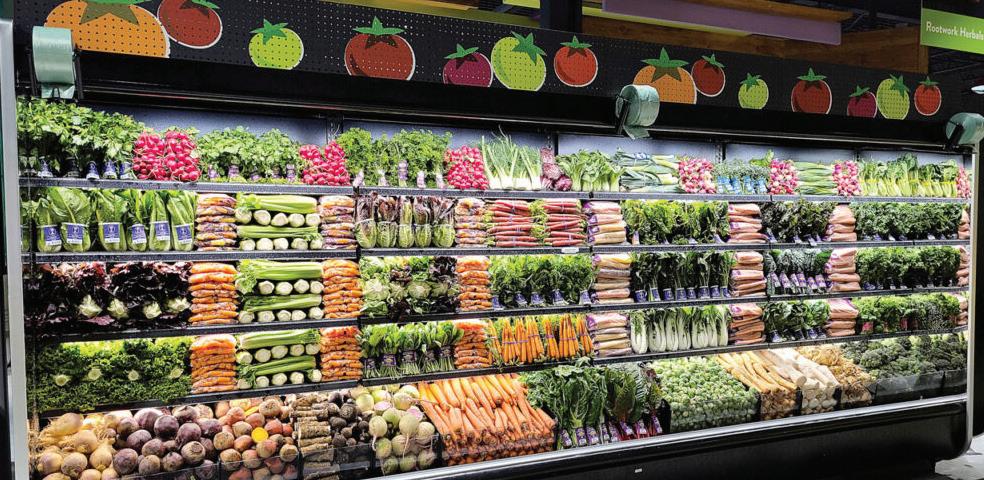
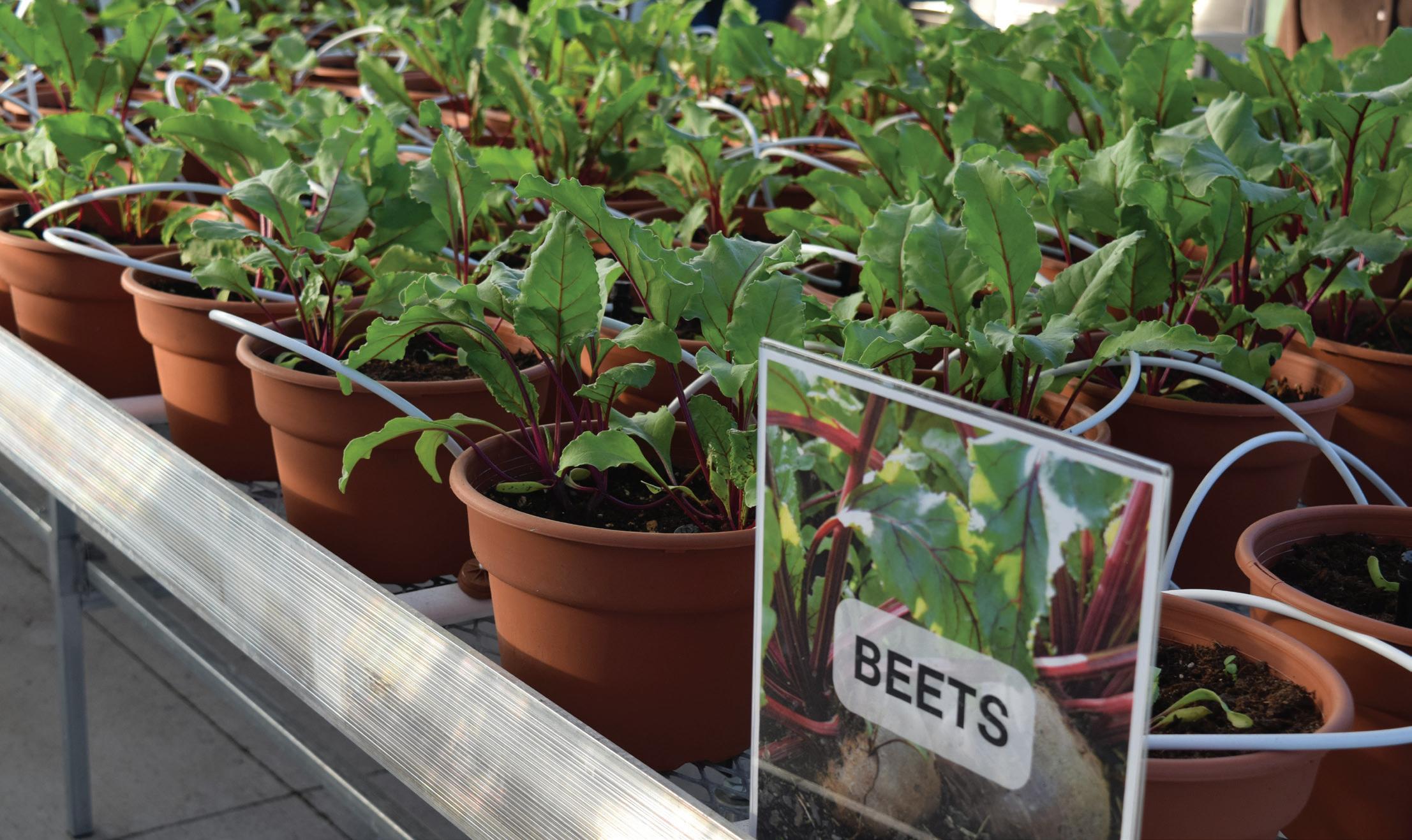
Root vegetables, so named because they grow underground with leafy greens above ground, absorb great amounts of nutrients from the soil, making them some of the healthiest vegetables in the produce section.
Consumers tend to think of potatoes, onions and sweet potatoes as root vegetables, but this produce category also includes carrots, beets, radishes, turnips, parsnips, ginger, garlic, yams, cassava, celery root, rutabaga, jicama and horseradish, all giving shoppers a large variety of healthy choices and flavors.
“The root vegetable market is one of the most unique groups of produce out there. You have unique spice with horseradish and parsnips; great color and flavor with carrots, beets, turnips and radishes; and you have great versatility with potatoes and sweet potatoes,” says Matt McMillin, leader of marketing and business development at J.R. Kelly Company
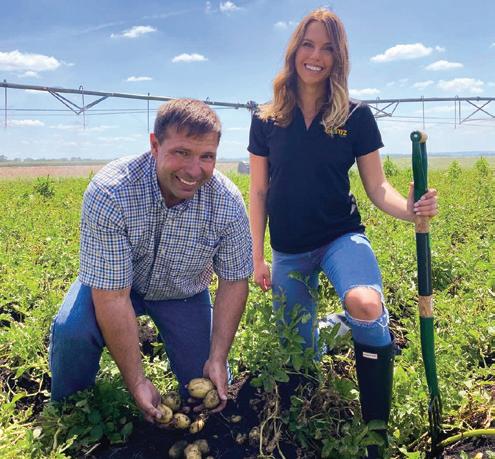
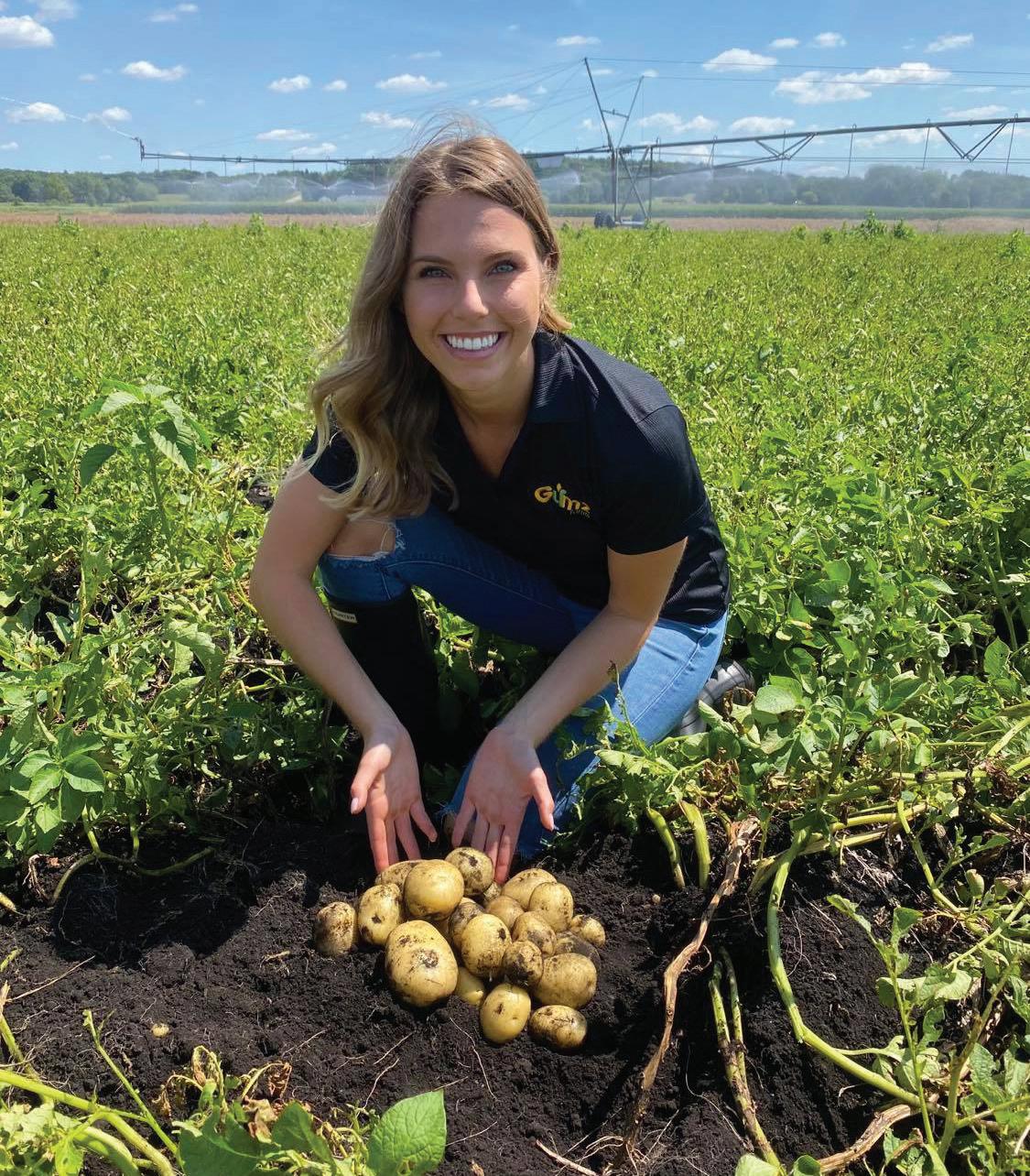
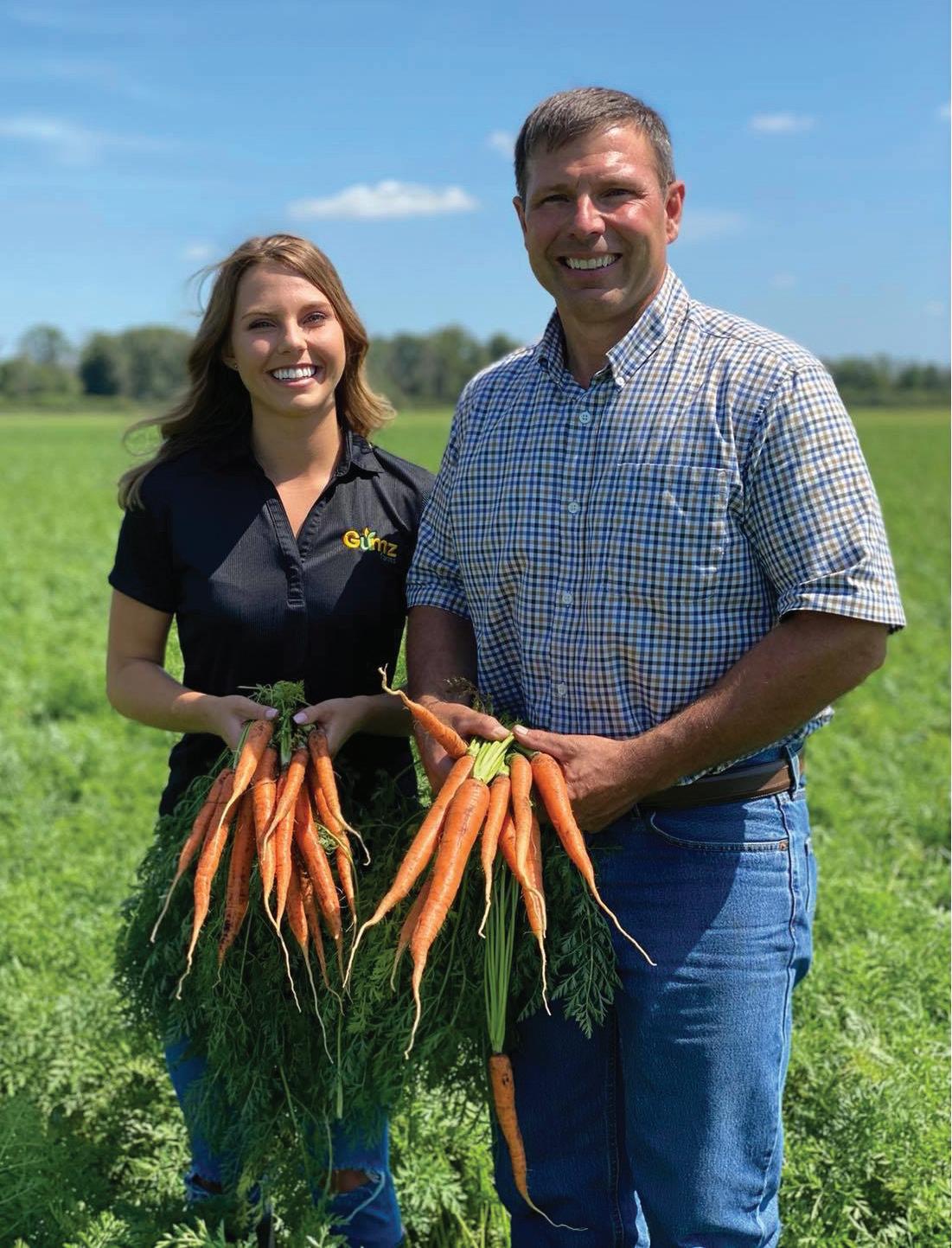
“At Gumz Farms, we see great value in connecting the customer to the farm, highlighting where and how the produce is grown.”
– Alexandra Gumz head of marketing, Gumz Farms LLC, Endeavor, Wisconsin
in Collinsville, Illinois.
J.R. Kelly Company is the largest supplier of horseradish roots in the United States. The fertile soil in Collinsville, 15 miles from downtown St. Louis, creates the ideal environment for production of horseradish, and thus McMillin proclaims it to be the “Horseradish
Capital
of the World.”
Regional preferences can indeed play a role in demand for specific root vegetables.
“In the Midwest, we see strong interest in hearty staples, like russet and red potatoes, as well as yellow
Top: Root vegetables absorb great amounts of nutrients from the soil, making them some of the healthiest vegetables in the produce section.
onions,” says Alexandra Gumz, head of marketing, Gumz Farms LLC, Endeavor, Wisconsin.
CULINARY TRADITIONS
“In southern regions, sweet potatoes tend to lead,” Gumz explains, “while coastal areas often see a demand for specialty and organic varieties. Tailoring assortment and messaging to align with local culinary traditions and demographics can help retailers better serve their customer base.”
Nichole Towell, senior director of marketing, Duda Farm Fresh Foods in Oviedo, Florida, agrees.
“When it comes to radishes, the West Coast typically sees higher demand for fresh bunches of radishes, as those consumers prefer to touch and see the produce,” Towell says. “But the East Coast prefers the Cello and Ready Radishes that are precut.”
“We even see regional differences with the demand for horseradish,” McMillin interjects.
continued on pg. 40
Above: Alexandra Gumz, head of marketing, Gumz Farms LLC, in Endeavor, Wisconsin, says the Midwest operation sees strong interest in hearty root vegetable staples like russet, yellow and red potatoes, and yellow onions, as opposed to southern regions where sweet potatoes tend to be most popular.
Retailers should also be aware of cultural differences and preferences, since these can affect root vegetable sales.
For example, during Passover, the demand for horseradish often increases, while during holidays, such as Thanksgiving and Christmas, and during the winter, there is a high demand for potatoes, onions, carrots and sweet potatoes.
Highlighting the source of root vegetables is also important. Warmer growing regions and higher temperatures tend to produce radishes with a bolder, spicier taste, while cooler climates yield milder varieties.
FLAVOR TRENDS
“This means that flavor trends are closely tied to seasonal and regional conditions, and that’s a story worth telling,” Towell says. “By highlighting these natural differences, retailers can market root vegetables in a way that connects consumers to the growing region and the unique flavor profiles that come with it.”
Year-round marketing campaigns are a great way to push root vegetables, especially the least familiar of the produce category. Retailers can use comfort foods that are popular in fall and winter, such as stews and soups, to display root vegetables, along with roasts, broths and spices.
In summer, displaying root vegetables along with marinades, charcoal and grill tools can tap into warm-weather grilling. “Onions, in particular, pair naturally with a wide range of cooking ingredients, from fresh herbs and peppers to pasta sauces and proteins,” Gumz says.
Signage that advertises the healthy nutrients found in root vegetables can help customers incorporate them into their meals all year. Displays that
emphasize the many ways to use root vegetables can also push retail sales.
“I would love to see the health benefits mentioned a little bit more with this group of vegetables and have retailers positioning items that can be used together on shelves,” McMillin states.
Towell suggests emphasizing the versatility of root vegetables in ways that consumers may not have thought about.
“We suggest including radishes next
to salad kits and offering recipe ideas, such as promoting radishes as a salad topper or as a low-carb dipper when placed next to dips and hummus,” she explains.
Jeffrey Cady, vice president of produce and floral, Northeast Shared Services, Buffalo, New York, says as the weather turns cooler in upstate New York, they ask
Above: Alexandra and Rod Gumz of Gumz Farms LLC pose in the field with freshly dug carrots.
produce departments to display root vegetables.
MEAL IDEAS
“We also take root vegetables out of the produce department and tie them in with the meat department to give shoppers meal ideas,” Cady notes.
Gumz says root vegetables are versatile, affordable and nutritious staples that fit into a wide range of diets and cooking styles.
“Emphasizing local sourcing and the simplicity of preparation also helps consumers feel more confident incorporating them into meals,” she explains.
During pickling season, McMillin recommends retailers place horseradish near cucumbers so that shoppers don’t have to search multiple sections to find different pickling ingredients.
Another area where horseradish can be used more often is in charcuterie.
“Freshly shaved horseradish often has a bite to it that isn’t overpowering, and it has a great, natural flavor that goes well with cheese, meats and crackers,” McMillin says.
“Horseradish is also included in fire cider tonics, along with ginger, so placing these two items together is another idea for cross promotion,” he relates.
Gumz says displays should be clean and well-stocked and incorporate recipes, QR codes with cooking ideas, or signage showcasing the local farm source. “This adds authenticity and helps to build trust,” she stresses.
While most root vegetables appear hardy and durable, careful handling is important to maintain freshness and appearance.
TEMPERATURE IS KEY
“Temperature is key,” McMillin states.
“Keeping the cold chain intact is important when handling cold root vegetables. For instance, horseradish likes it very cold.”
“We keep our roots stored in the 28-30-degree Fahrenheit range, which is much colder than most retailers or wholesalers can, because of the combination of produce,” he imparts. “It goes a long way in preserving shelf life and freshness.”
Gumz agrees, saying, “Proper storage and handling are essential in preserving freshness and quality. Root vegetables, particularly potatoes and onions, should be stored in a cool, dry, well-ventilated area to avoid sprouting or spoilage.”
Cady stresses, while they have a great shelf life, root vegetables still need tender loving care.
“Handle them with gentle movements and care to avoid bruising, cuts or abrasions,” he advises. “Damage can lead to rot, decreased visual appeal to consumers, and loss of nutrients.”
Retailers should also maintain clean, damage-free displays and rotate inventory regularly to minimize shrink and make sure produce employees understand the importance of handling root vegetables with care.
“Education on best practices at the store level helps ensure that product quality is maintained from farm to consumer,” Gumz says.
TRENDS & OUTLOOKS
Most root vegetables are affordable, which gives them the unique advantage of being a healthy choice for cost-conscious consumers, particularly during uncertain economic times.
Their versatility goes beyond stews, soups and sides, which is why displaying recipe cards or QR codes linked to recipes is a great way
to boost sales.
Gumz stresses, “We strive to maintain pricing that is fair and competitive. At Gumz Farms, we’ve taken a long-term, sustainable approach to crop planning, which helps ensure reliable supply, even amid market fluctuations.”
“We also work closely with our retail partners to plan ahead and support consistent availability throughout the year,” she adds, “while focusing on quality, consistency and sustainability.”
But pricing depends on the balance of supply and demand, as well as increasing costs of labor. There are also regional differences in demand for different commodities within the category.
“We have been working hand-in-hand with growers to try to keep prices down with a focus on efficiency from the farm into packing through shipping,” McMillin says.
As consumers increasingly seek transparency, sustainability and locally grown produce, demand for packaging that highlights food origin and eco-friendly farming practices resonates among shoppers.
CUSTOMER CONNECTION
“At Gumz Farms, we see great value
in connecting the customer to the farm, highlighting where and how the produce is grown,” Gumz says.
Packaging innovations that keep root vegetables fresh and easy to store, while increasing shelf life, are gaining in popularity.
“We offer the widest range of packaging options out there,” McMillin says, “with 5-, 10-, and 50-pound bags, as well as individually shrink-wrapped roots. Shrink wrap is our newest option, with the ability to extend shelf life, as well as promote different brands through private labeling.”
“We also private label or promote through individual hang tags without the shrink-wrapper,” he adds.
Resealable packaging appeals to consumers seeking the convenience of already cut, diced and seasoned options.
“Duda Farm Fresh Foods is the only fresh produce brand that offers
Above: Consumers tend to think of potatoes, onions and sweet potatoes as root vegetables, but the produce category also includes carrots, beets, radishes, turnips, parsnips, ginger, garlic, yams, cassava, celery root, rutabaga, jicama and horseradish.
stand-up pouch bags that give consumers three options that are resealable,” Towell says. “This allows merchandising at the retail level more opportunities to market the product with brand and product visibility due to the standup packaging.”
Other trends in root vegetables include a growing demand for specialty roots, such as celeriac and Jerusalem artichokes, as well as less common, nutritious vegetables, like turnips and rutabagas, and a growing popularity of using the entire root vegetable.
Displays that show how to incorporate the entire root vegetable into a recipe or meal could be beneficial for shoppers.
Auxiliary News
By Dakotah Smiley, Vice President, WPGA
Baked Potato & French Fries Booth a Hit at WPS Farm Show
Wisconsin Potato Growers Auxiliary raises funds that go toward programming and scholarships
Hello all. A spring tradition continued with the 64th Annual WPS Farm Show, March 24–26, at the Experimental Aircraft Association (EAA) grounds in Oshkosh, Wisconsin. This three day event brought farmers, families, and industry professionals together to explore the latest equipment, technology, and ideas shaping Wisconsin agriculture.
The 2026 show welcomed an estimated 20,000 attendees and approximately 400 exhibitors representing companies from 26 states and Canada. Exhibitors filled four hangars and two large tent areas, providing a comprehensive look at machinery, services, and
agribusiness solutions for producers of all sizes.
The Wisconsin Potato Growers Auxiliary (WPGA) was joined by growers and volunteers in setting up and running a baked potato and French fries booth to serve thousands of attendees healthy, homegrown Wisconsin potatoes.
Visitors enjoyed freshly made French fries and baked potatoes with all the toppings—butter, chili, cheese, sour cream and salsa.
Bushman Associates of Wittenberg/ Galloway donated the spuds, and McCain Foods contributed cases of French fries for the fundraising event. Thanks to the generosity of these sponsors and hard work of volunteers, the Auxiliary was able to raise funds that go back to WPGA programming, student scholarships, marketing, and educational initiatives.
AG INNOVATIONS
Show attendees were treated
to a wide range of innovations: precision mapping tools, drone technology, livestock feed mixers, crop health solutions, and other products designed to improve farm efficiency and sustainability. New exhibitors, 33 of whom made their debut this year, added fresh perspectives and offerings to the show floor.
Representatives from Wisconsin Public Service highlighted energy efficient systems and strategies, reinforcing the show’s focus on helping operations manage costs and improve productivity.
Alongside the exhibits and yummy
Association (WPVGA).
Above Right: Karen Rasmussen (right) of the WPVGA serves a customer French fries at the WPS Farm Show, in Oshkosh. In the background, from left to right, are WPVGA Executive Assistant Julie Braun, Josie Spurgeon, administrative specialist for the Wisconsin Seed Potato Certification Program, and Alyssa Gagas of Gagas Farms Inc.
potatoes, the show offered several attractions that foster community spirit and support Wisconsin youth and organizations:
Above Left: Volunteers at the WPS Farm Show baked potato and French fries booth include, from left to right, Cliff, Alyssa and Carole Gagas of Gagas Farms Inc., Janelle West from Insight FS, and Karen Rasmussen, financial officer for the Wisconsin Potato & Vegetable Growers
• A silent auction benefiting the Wisconsin FFA Foundation ran each day.
• Free health screenings were provided by the University of Wisconsin Oshkosh nursing students in Hangar C.
• The kids’ tractor pull, sponsored by local industry partners, drew young fans and families.
Producers attending the show said that one of their favorite parts was simply seeing the breadth of technology available and being able to share the experience with family members.
Amid the show’s energy and excitement, producers and vendors also discussed the economic outlook
for 2026, with many noting tighter margins and cost pressures for inputs like fuel and fertilizer. Still, exhibitors and attendees expressed cautious optimism about investment in productive equipment and future markets.
As the 64th WPS Farm Show concluded, it left participants with new connections, tools, and insights to carry into the 2026 growing season. Farm exhibitors and agricultural supporters look forward to continuing this tradition of education, innovation, and community engagement in the years to come.
Until next time,
Dakotah Smiley
Alyssa Gagas fills a French fry boat at the WPS Farm Show in Oshkosh.
Rear Wheel
Eyes on Associates
By WPVGA Associate Div. President Matt Selenske, Allied Coop’s Pest Pros Division
Hello, everyone. May is here, and I hope there have been few planting issues for everyone this spring. Nothing sets the tone of a bountiful season better than a great start!
At our last WPVGA Associate Division Board Meeting, we started planning the 2026 Putt-Tato Open, our annual golf outing and fundraiser to be held at Lake Arrowhead Golf Course, July 8, 2026. This is by far our most popular event. Sign up now, because team slots fill up quickly every year, and there is always a waiting list.
At the meeting, we discussed PuttTato Open meals, start times, raffle and door prizes, and sponsorship opportunities. Associate Division member companies have many opportunities to help sponsor the event, from being an occupied hole sponsor all the way up to taking advantage of a Premier Event sponsorship.
It’s a great way to advertise and show your support for the industry. For more information about signing up a team, or if you’re interested
Chris Lockery of Bushmans’ Inc., Rosholt, Wisconsin, tees off from the Vista Financial Strategies occupied hole during the 2025 Putt-Tato Open golf outing at Lake Arrowhead Golf Course, in Nekoosa. There are many sponsorship opportunities available for the 2026 Putt-Tato Open to be held at Lake Arrowhead on July 8. For more information about signing up a team, or if you’re interested in sponsorship opportunities, see the ad in this issue of the Badger Common’Tater, or check the weekly Tater Talk e-newsletter.
in a sponsorship, see the ad in this issue, or check the weekly Tater Talk e-newsletter.
During the Associate Division Boad Meeting, we also put the finishing
touches on the “Student Spring Planting Day,” held Thursday, April 30. This was a continuation of the Student Education and Career Development Program, and our third annual Spring Planting Day.
This year, students from local universities, technical colleges, and high schools visited potato and vegetable planting operations, and after lunch at the Food + Farm Exploration Center, participated in a roundtable discussion with industry professionals about career opportunities.
This is something we have built upon since the onset of the Student Education and Career Development Program, and we think it adds great value in spotlighting our industry and exposing students to rewarding career paths.
Speaking of career paths, it is time to get to work! I hope everyone continues to have a safe and productive planting season.
Participants of the Student Education and Career Development Program enjoyed a “Spring Planting Day,” April 25, 2025, in a Seneca pea field at James Burns & Sons, in Almond, Wisconsin. Seneca Field Supervisor Dylan Moore showed them a 72-row planter. As this issue was going to press, the WPVGA Associate Division Board was putting the final touches on the third annual Spring Planting Day, Thursday, April 30, when students from local universities, technical colleges, and high schools visited potato and vegetable planting
NPC News
Potato LEAF Accepting Scholarship Applications
Graduate students looking to further the U.S. potato industry prioritized
The Potato Leadership, Education and Advancement Foundation (Potato LEAF) is now accepting applications for its annual graduatelevel academic scholarship.
Potato LEAF will award one $10,000 scholarship to honor a graduate student (master’s degree or higher) working to conduct research and provide information that will improve the future of the U.S. potato industry.
Focus may include basic or applied research that improves potato production efficiency, addresses pest management and disease issues, increases consumer benefits from potato consumption, and/ or produces knowledge related to advancing the competitiveness of the U.S. potato industry.
The application deadline is June 12, 2026. The scholarship will be awarded in August 2026 for the 2026-’27 academic year.
The scholarship application and information on past recipients can be found by visiting https://pleaf. org/scholarship-application-1. Please email info@pleaf.org with any questions.
RIght: Hannah Johnson, a Ph.D. student at Washington State University, was the recipient of the 2025-’26 Potato Leadership, Education, and Advancement Foundation (Potato LEAF) academic scholarship awarded annually to a graduate student whose research significantly furthers the U.S. potato industry. Potato LEAF is accepting applications for its 2026-’27 graduate-level academic scholarship from now until the application deadline of June 12, 2026.
Potato Growers Applaud Congressional Action
President Trump urged to open Japanese market to U.S. fresh potatoes
The National Potato Council (NPC) welcomes a bipartisan, bicameral letter sent to President Donald J. Trump by 68 members of Congress, urging the Administration to prioritize opening Japan’s market to U.S. fresh table stock potatoes during Japanese Prime Minister Takaichi Sanae’s visit to the United States.
The letter, led by U.S. Senate Finance Committee Chairman Mike Crapo (R-Idaho) and Ranking Member Ron Wyden (D-Ore.), notes that gaining fresh potato access to Japan would result in an estimated $150 million in new annual U.S. exports.
This move would establish Japan as the largest export market for U.S. fresh potatoes outside of North America, providing a significant boost to U.S. farming communities.
Despite the U.S. first requesting access more than 30 years ago, Japan continues to delay substantive technical discussions.
“U.S. potato growers produce the best potatoes in the world,” wrote the group. “Japan represents a massive market with significant export opportunities for American potato growers. Securing this long-delayed market access and unlocking the critical Japanese export market would make a
meaningful difference for potato growers in our states and across the country.”
According to a 2024 study released by NPC, approximately 20% of U.S.-grown potatoes are exported, contributing $4.8 billion to the American economy and supporting 34,000 domestic jobs.
“U.S. family farmers are facing an economic crisis fueled by low
market prices and high input costs,” says Brett Jensen, NPC vice president of trade affairs and a potato grower from Idaho Falls, Idaho. “I want to thank Senator Crapo for his leadership in urging the Trump Administration to apply political pressure to Japan to finally end more than 30 years of delays.”
BOOST TO FAMILY FARMS
“Opening this market would provide an immediate boost to the family farms in the Pacific Northwest and across the nation,” says Greg Harris, NPC vice president of finance and a potato grower from Boardman, Oregon. “We appreciate Senator Wyden’s dedication to breaking down these long-standing trade barriers.”
“This bipartisan effort sends a clear message that the U.S. expects Japan to honor its trade commitments and provide a level playing field for our producers,” Harris adds.
The NPC Board of Directors recently passed a resolution during its 2026 Washington Summit, urging the Trump Administration to address the topic.
The Board stated, “The National Potato Council encourages the Trump Administration to move forward aggressively in securing
Japanese market access for U.S. fresh table stock potatoes in 2026, including President Trump speaking directly about the issue with his Japanese counterpart, Prime Minister Takaichi during any upcoming meetings and showcasing high-quality U.S. fresh potatoes on the menu for any formal meals between the two leaders.
Joining Senators Crapo and Wyden on the letter were Senators Jim Risch (R-Idaho), Angus King (I-Maine), Steve Daines (R-Mont.), John Hoeven (R-N.D.), Susan Collins (R-Maine), Michael Bennet (D-Colo.), Kevin Cramer (R-N.D.), Tammy Baldwin (D-Wis.), Maria Cantwell (D-Wash.), Patty Murray (D-Wash.), Tim Sheehy (R-Mont.), John Hickenlooper (D-Colo.), Elissa Slotkin (D-Mich.), Pete Ricketts (R-Neb.), Gary Peters (D-Mich.), Amy Klobuchar (D-Minn.), Jeff Merkley (D-Ore.), Ron Johnson (R-Wis.), Thom Tillis (R-N.C.), Tina Smith (D-Minn.), and Ted Budd (R-N.C.).
The effort was also supported by Reps. Mike Simpson (R-Idaho), Jeff Hurd (R-Colo.), Kristen McDonald Rivet (D-Mich.), Suzan DelBene (D-Wash.), Bryan Steil (R-Wis.), Andrea Salinas (D-Ore.), Julie Fedorchak (R-N.D.), Dan Newhouse (R-Wash.), Jack Bergman (R-Mich.), Shri Thanedar (D-Mich.), Tony Wied (R-Wis.), Russ Fulcher (R-Idaho), Jeff Crank (R-Colo.), Glenn Grothman (R-Wis.), Marilyn Strickland (D-Wash.), Cliff Bentz (R-Ore.), Gabe Evans (R-Colo.), Dan Meuser (R-Pa.), Michael Baumgartner (R-Wash.), Tom Tiffany (R-Wis.), Adrian Smith (R-Neb.), Val Hoyle (D-Ore.), Brittany Pettersen (D-Colo.), Robert Bresnahan (R-Pa.), Kim Schrier (D-Wash.), Derrick Van Orden (R-Wis.), Rick Larsen (D-Wash.), Chellie Pingree (D-Maine), Ryan Mackenzie (RPa.), Marie Gluesenkamp Perez (D-Wash.), Scott Fitzgerald (R-Wis.), Michelle Fischbach (D-Minn.), Joe Neguse (D-Colo.), John Moolenaar (R-Mich.), Jason Crow (D-Colo.), Suzanne Bonamici (D-Ore.), Lauren Boebert (R-Colo.), Adam Smith (D-Wash.), Jared Golden (D-Maine), Hillary Scholten (D-Mich.), John James (R-Mich.), Brad Finstad (D-Minn.), Janelle Bynum (D-Ore.), Bill Huizenga (R-Mich.), and Diana DeGette (D-Colo.).
WPIB Focus
The full letter is available by visiting https://www.finance.senate.gov/ imo/media/doc/crapo-wyden_ japan_potato_market_access_ letter_ to_potus.pdf.
Preparing for ICE
What employers should really be focused on
By Attorney Sam Moheban, Ruder Ware
At Ruder Ware, this article’s author, Attorney Sam Moheban, focuses his practice on litigation while also expanding the firm’s business immigration offerings,
assisting employers with employee immigration matters.
His interest in immigration took root during his tenure as a paralegal in
a boutique Minneapolis law firm. In that role, he assisted immigrants in their quest for enhanced opportunities in the United States, a journey mirroring that of his own grandfather, who immigrated from Iran.
Over the past year, many agricultural employers have asked how to prepare for the possibility of an ICE (U.S. Immigration and Customs Enforcement) raid. My response always begins with the following question: “What steps have you already taken to protect your facility and information?”
The truth is that ICE is only one of many potential disruptors to your business. A disgruntled former employee, an angry customer, a competitor, local law enforcement, or even a trespasser is far more likely to show up to your facility unannounced than a federal immigration task force.
Employers should already have general security policies in place that would also mitigate the impact of an unexpected ICE visit.
CONTROL ACCESS
Every business has areas where the public should not be wandering freely. It is the employer’s responsibility to control access to these spaces. Effective measures include physical barriers, staffed entry points, visitor check in and badging procedures, and clear signage.
No one should be able to enter a private area without bypassing a barrier, ignoring posted signage, or being noticed by an employee. If anyone can walk directly onto your property without challenge, the problem is bigger than ICE.
Employers should also establish a designated area where visitors are greeted. Staff assigned to this role must be trained to identify visitors, understand when access should be restricted, and know when to escalate a situation.
Encounters with law enforcement, whether local, state, tribal, or federal, should always be referred immediately to senior management or legal counsel.
The on-site business decision maker should be someone familiar with the different types of legal authority that law enforcement may claim to be acting under and be prepared to evaluate whether their requests have force of law.
Employers should maintain contact information for multiple attorneys knowledgeable about Fourth Amendment protections so that one can hopefully be reached in an emergency.
INFORMATION PROTECTION
Controlling access to information is just as important as controlling access to your facility. Businesses maintain sensitive records: pricing, production methods, customer lists, internal communications, and payroll
“Controlling access to information is just as important as controlling access to your facility"
– Attorney Sam Moheban, Ruder Ware
and personnel files.
Employers should treat this information as confidential and take steps to ensure it is not accessible to the public or to employees who do not require it to perform their duties.
Employers should have policies on how confidential information is marked, stored, and transmitted. Employees should understand what information is confidential and the consequences of mishandling it.
Employers should also make clear that only designated individuals are authorized to speak on behalf of the company, especially when dealing with the media or law enforcement.
A well intentioned but untrained employee can create serious problems by speaking frankly about something beyond their pay grade.
I-9 AUDITS
Despite the headlines, an ICE raid is not the most common form of immigration enforcement. More commonly, employers are the subject of government I 9 audits, which have increased dramatically in recent years.
These audits require minimal government resources, in comparison to a raid, and can lead to substantial fines. Current penalties for I 9 violations range from $288 to $2,861 per employee.
Employers who are unsure about the extent of their I-9 compliance should consider a proactive self audit of the
I-9 files conducted by knowledgeable counsel.
A skilled attorney can identify errors, advise as to which errors can be corrected, update policies, train staff, and effectively reduce an employer’s potential liability for prior noncompliance.
The best preparation for any immigration enforcement action is to secure your facility, protect your information, and ensure that your I 9 records are in order.
These steps make your operations more resilient, reduce risk, and put you in the best position to respond confidently to whatever comes your way.
The best preparation for any immigration enforcement action is to secure your facility, protect your information, and ensure that your I 9 records are in order.
Marketplace
by Dana Rady, WPVGA Director of Promotions & Consumer Education
Patrick Popejoy Takes the Wheel
WPVGA welcomes new Spudmobile education and outreach administrator
The Wisconsin Potato & Vegetable Growers Association (WPVGA) is hitting the road with fresh energy and enthusiasm as Patrick Popejoy steps into the role of Spudmobile education and outreach administrator.
Known for its eye-catching design and mission to promote Wisconsin’s rich agricultural heritage, the Spudmobile is more than just a vehicle—it’s a traveling ambassador for one of the state’s most important industries. And now, with Popejoy behind the wheel, that mission is set to gain new momentum.
Popejoy brings a blend of passion, communication skills, and a deep appreciation for agriculture to the position. While the Spudmobile has long been a familiar sight at fairs, schools, and community events across the Midwest, its success depends heavily on the person driving it, not just literally, but figuratively as well.
The driver serves as an educator, storyteller, and advocate, connecting people of all ages to the journey of food from field to table.
Popejoy says he is excited to be part of something that makes such a tangible impact. He recognizes that the Spudmobile is about more than potatoes; it’s about helping people understand where their food comes from and why agriculture matters.
The Spudmobile program has become a cornerstone of WPVGA’s outreach efforts. Each year, it travels hundreds of miles to engage with students, families, and consumers through interactive exhibits and hands-on learning experiences.
From explaining how potatoes are grown and harvested to highlighting the innovation behind modern farming, the program aims to bridge the gap between producers and the public.
MAKING AG ACCESSIBLE
Popejoy’s role will involve not only navigating a packed schedule of appearances but also adapting presentations to diverse audiences. Whether speaking to elementary school students or chatting with curious visitors at a county fair, he’ll be tasked with making agriculture accessible, engaging, and memorable.
WPVGA is optimistic about what Popejoy will bring to the program. His enthusiasm and approachable style are expected to resonate strongly with audiences, helping strengthen the connection between Wisconsin growers and the communities they serve.
As he begins his journey, Popejoy is focused on one key goal: leaving every audience with a better understanding of agriculture and a greater appreciation for the farmers
As the new Spudmobile education and outreach administrator, Patrick Popejoy brings a blend of passion, communication skills, and a deep appreciation for agriculture to the position.
behind it. With the Spudmobile as his platform, he’s poised to deliver that message far and wide.
Brian Bushman and Trisha Grezenski will also help take the wheel as backup drivers when Popejoy is unavailable.
As longtime members of the Wisconsin potato and vegetable industry, Bushman and Grezenski bring a wealth of knowledge and
experience to the table about farming, potatoes and mechanics, making this team of Spudmobile drivers one of the strongest the industry has seen.
For WPVGA, this new chapter represents both continuity and growth—continuing a proud tradition of agricultural education while embracing the fresh perspective of a new driver. And for Popejoy, it’s an opportunity to turn the ignition on a role that’s equal parts road trip and mission-driven work.
Wherever the Spudmobile rolls next, one thing is certain: Patrick Popejoy is ready to join Bushman and Grezenski and drive the story of Wisconsin agriculture forward.
Trisha Grezenski and Brian Bushman will also help take the wheel as backup drivers when Popejoy is unavailable. As longtime members of the Wisconsin potato and vegetable industry, Bushman and Grezenski bring a wealth of knowledge and experience to the table about farming, potatoes and mechanics.
Badger Beat
The Value in Starting Clean
Why the Wisconsin Seed Potato Certification Program matters more than ever
By Amanda Gevens, chair, professor and extension plant pathologist, and administrative director of the Wisconsin Seed Potato Certification Program (WSPCP), University of Wisconsin (UW)-Madison Department of Plant Pathology, and Brooke Babler, WSPCP associate program director, UW-Madison Department of Plant Pathology
Since 1913, the Wisconsin Seed Potato Certification Program (WSPCP) at the University of Wisconsin-Madison has helped define what clean seed means for the U.S. potato industry.
More than a regulatory requirement, certification is the foundation of profitable potato production, protecting yield, preserving quality, and safeguarding industry sustainability.
Today, as pathogen and pest pressures evolve and production systems intensify, the value of starting with clean, certified seed potatoes has never been more critical.
In Wisconsin alone, where potatoes contribute over $300 million annually across 65,000 acres, reductions in seed quality can translate into significant loss. Diseases such as Potato virus Y (PVY), ring rot, and other regulated seedborne pathogens can compromise storability, marketability, and ultimately the reliability of supply chains.
The WSPCP addresses these risks through an inclusive, comprehensive program that supports tissue culture propagation and nuclear seed production, coupled with a rigorous system of field inspections, an innovative post-harvest testing program, and extensive diagnostic services.
Together, these efforts ensure that seed lots meet strict health and purity standards.
A Model Public–Private Partnership What makes the Wisconsin program unique is its deeply integrated structure.
The WSPCP is not just a certification body, it is a collaboration among
Above and Left: Mini tubers grow in a modified hydroponic or nutrient film technique approach in the greenhouses at the UW Lelah Starks Elite Foundation Seed Potato Farm in Rhinelander, Wisconsin.
Wisconsin seed potato growers (Wisconsin Seed Potato Improvement Association, Wisconsin Potato & Vegetable Growers Association, and the Wisconsin Potato Industry Board), UW–Madison researchers at the College of Agricultural and Life Sciences (CALS), U.S. Department of Agriculture-Agricultural Research Service (USDA-ARS) scientists, and federal and state regulatory partners, including USDA APHIS PPQ and the Wisconsin Department of Agriculture, Trade, and Consumer Protection.
This coordinated approach ensures that certification is not static. Rather, it evolves with emerging diseases, new technologies, and industry needs.
The program continues to emphasize translational science, combining cutting-edge research with practical on-farm application to maintain
“Clean seed is not an added cost but a risk management strategy with measurable return on investment.”
–
Brooke Babler
the integrity of seed potatoes and support to the potato industry at large.
From Lab to Field: The Engine Behind Clean Seed. At the heart of the program is the Tissue Culture & Diagnostics Laboratory (TCDL). This program is a critical but often underappreciated component of seed potato
certification. This arm of the program maintains roughly 350 disease-free potato lines and produces more than 80,000 tissue culture plantlets annually to meet early generation production needs.
It also acquires and certifies new potato lines requested by Wisconsin seed growers while supporting
continued on pg. 56
Badger Beat. . . continued from pg. 55
potato research efforts nationwide. The clean tissue culture work is conducted in a separate location at the UW-CALS Wisconsin Crop Innovation Center, located in Middleton.
One of the most important roles of the tissue culture program is supplying clean planting material for the greenhouse hydroponic and potted production systems located in Rhinelander.
At the Lelah Starks Elite Foundation Seed Potato Farm, approximately 40,000 square feet of greenhouse space is dedicated to year-round nuclear seed production under the management of WSPCP staff.
Much of the harvested nuclear seed is grown for the Wisconsin Potato Coalition (WPC), a group of seed growers who oversee early-generation seed production at the farm, with additional material distributed to other early-generation seed operations and research programs.
Another essential component is the Diagnostic Laboratory, which provides rapid, confidential testing
services for growers. Beyond routine diagnostics, the lab plays a leading role in advancing detection strategies that support clean seed production and certification efforts in Wisconsin and across the country.
Diagnostic activities occur yearround, ranging from supporting summer field inspections to expanding post-harvest testing capacity and meeting phytosanitary requirements for seed movement.
This diagnostic work takes place in multiple locations, including the UWMadison Plant Pathology Department in Russell Laboratories and the WSPCP headquarters in Antigo.
Operating in multiple Wisconsin locations is challenging but critical in ensuring the cleanliness and integrity of plant material within our tissue culture and early generation seed potato production systems.
Fueling Research and Innovation
Beyond certification, the WSPCP serves as a platform for high-impact research.
The program routinely supports collaborations across UW–Madison
Above: Potato tissue culture plantlets are cultured and maintained at the Crop Innovation Center in Middleton, Wisconsin. Plantlets are ultimately transported to Rhinelander for growth of mini tubers in either hydroponic or potted-media production at the UW Lelah Starks Elite Foundation Seed Potato Farm greenhouse.
and national partners, enabling the development of improved diagnostic tools for viruses and bacterial pathogens, evaluation of disease-resistant cultivars, study of microbiomes and soil health in seed systems, investigation of pest and pathogen ecology and epidemiology, and rapid response to emerging disease threats.
Over the past 10 years, the program has been engaged with both state and federally funded projects, including USDA-NIFA (National Institute of Food and Agriculture) Specialty Crop Research Initiative efforts, highlighting how certification programs can drive innovation while maintaining regulatory integrity.
Further, the program trains the next generation of industry professionals and scientists, offering handson experience in tissue culture, pathogen detection, applied plant pathology, and regulatory aspects of plant health management.
Why It Matters to the Industry
The benefits of certified seed include
higher yield potential through reduced disease pressure, improved tuber quality by minimizing defects that impact fresh and processing markets, fewer storage losses from post-harvest diseases, and market confidence, ensuring consistency for buyers and processors.
In short, clean seed is not an added cost but a risk management strategy with measurable return on investment.
Looking Ahead: Investment and Opportunity
The challenges facing potato production, including emerging pathogens, changing climates, uncertain availability and cost of inputs, ongoing market volatility, and evolving regulations, make for increasingly tight margins and less predictable profitability.
These pressures underscore the need for continued investment in the core components of the WSPCP to ensure
its long-term sustainability, continued advancement, and the availability of these critical resources into the future.
Reductions in capacity across areas such as tissue culture production, diagnostic services, and earlygeneration seed systems would not only limit the program’s effectiveness but also weaken the broader seed supply chain upon which growers depend.
Above: Plastic clamshell containers store mini tubers of multiple potato cultivars at the UW Lelah Starks Elite Foundation Seed Potato Farm greenhouse in Rhinelander.
Wisconsin’s model demonstrates how strategic alignment of research, certification, and industry support can deliver both immediate and longterm benefits. With strong backing from growers, competitive grants, the UW, and philanthropic investment, the program is well-positioned to continue to lead.
Maintaining this leadership will require sustained commitment to support the essential infrastructure for diagnostics and clean seed production, research on emerging diseases and detection technologies, and training and workforce development in applied plant pathology.
Continued support is not only an investment in the program itself, but in the resilience, productivity, and future of the potato industry as a whole.
Direct Tuber Testing
Within the Wisconsin Seed Potato Certification Program, timely direct tuber testing serves as a vital postharvest tool to verify the health status of seed lots, particularly for
pathogens that are not reliably detected through visual field inspections alone.
Led through collaborative efforts involving UW-Madison scientists, this approach strengthens the integrity of certified seed and supports grower confidence across Wisconsin and beyond.
While field inspections remain the backbone of certification, they have limitations, especially when disease symptoms are latent or not expressed in the field, environmental conditions suppress symptom development, and when emerging or recombinant pathogen strains behave unpredictably.
This is especially true for PVY, wherein newer strains often produce mild or no foliar symptoms yet still impact seed quality and downstream production.
Direct tuber testing provides a more complete and reliable assessment of disease incidence, ensuring that infected lots are identified before entering the seed supply chain.
In addition, direct tuber testing is an effective tool for detecting other key diseases such as ring rot, potato leafroll virus (PLRV), blackleg, and potato mop-top virus (PMTV), and is often utilized to meet phytosanitary requirements when moving seed lots.
After harvest, a representative sample of tubers from each seed lot is collected and indexed through the certification system, sprouted and grown out (or tested directly depending on protocol), assayed using laboratory diagnostics, including ELISA or molecular methods, and evaluated for pathogen incidence, particularly PVY in the post-harvest test.
Results are then used to resolve the certification status in concert with the field inspection information and provide feedback to growers for future management.
INCREASINGLY IMPORTANT
Direct tuber testing has become increasingly important due to changing vector dynamics, shifts in PVY strain composition, and increased reliance on post-harvest diagnostics to validate field observations.
In Wisconsin, this approach complements the broader certification system, which includes multiple field inspections during the growing season, winter growout tests, and advanced diagnostics through the Tissue Culture & Diagnostics Laboratory (TCDL).
For seed potato producers and commercial growers alike, direct tuber testing delivers greater confidence in seed health, reduced risk of hidden pathogen carryover, protection against economic losses tied to seedborne disease, and assurance for domestic and export markets.
Direct tuber testing is a critical safeguard in modern seed certification. By detecting what cannot be seen in the field, it ensures that Wisconsin certified seed continues to meet the highest standards of health, performance, and reliability.
In potato production, success is built from the ground up. Starting with clean, certified tissue culture plantlets grown in a test tube and progressing through certified fieldgrown seed is the most effective production system for ensuring
high-quality seed and successful crop performance.
For over a century, the WSPCP has ensured that this foundation remains strong. As the industry moves forward, its role will only become more essential. Clean seed isn’t just a best practice; it is the foundational framework of the potato industry and the key difference between risk and resilience.
If you would like to learn more about how the WSPCP supports the potato industry, please visit
https://seedpotato.russell.wisc.edu/ to explore Wisconsin seed potato growers, the varieties they produce, and options for ordering WSPCPproduced tissue culture plantlets or nuclear seed.
The website also provides additional information on diagnostic services, pathogen eradication and maintenance programs, how to request assistance in acquiring a potato variety of interest, and ways to support the program and its ongoing efforts.
Potatoes USA News
Sports Dietician Champions Potatoes
Kelly Jones appears on TV and radio stations across country for nutrition month
Kelly Jones, a board-certified specialist in sports dietetics, recently shared a message with TV and radio audiences across the country for National Nutrition Month in March: Swap-in potatoes to get more vegetables.
“I tend to find that people take things out of their diet when they’re trying to eat well, and then it becomes really boring, and they’re back to square one,” she said. “So, I encourage everyone to do the opposite: We want to add things in that we love.”
Jones, a regular on broadcast news, participated in 26 TV and radio interviews on behalf of Potatoes USA in cities spanning the country.
• Cities in Texas, Georgia, Massachusetts, Washington, Florida, Ohio, Missouri, Louisiana, Arkansas, Indiana, and California broadcast
segments with Kelly.
• Kelly was also featured on the nationally syndicated radio show “What’s Cookin’ Today,” which aired on hundreds of radio stations across the country.
Visit https://www.ozarksfirst.com/ unscripted/celebrate-nationalnutrition-month-with-potatoes/ to view one of our favorite appearances, which aired on the CBS affiliate in Springfield, Missouri.
Her message is that potatoes are a nutrient-dense vegetable that provides nearly one-third of our daily value of vitamin C, 15% of our daily potassium, 3 grams of protein, and 2 grams of fiber.*
Kelly also highlighted the resistant starch in potatoes, which forms when they’re cooked and cooled and can
act as fiber, a timely reminder, as gut health is a trending nutrition topic.
Among the ways Kelly suggested people can swap-in potatoes to add more vegetables to their meals:
• Crispy Roasted Potato Croutons – an easy way to boost a salad’s veggie count
• Hashbrown Toast – using frozen patties for a vegetable-forward alternative to bread that can be topped with avocado or eggs
• Hashbrown Crusted Quiche – using hashbrown shreds instead of pastry crust to add protein and reduce fat
With airings throughout March, Kelly’s swap-in message reached millions of viewers and reinforced potatoes’ place as a nutrition powerhouse.
*Based on a 5.3-oz skin-on potato
DISHING IT UP WITH DANA
Scrumptious Cheesecake Has Tater Tot Crust
This twist on a sweet, timeless, classic dessert showcases America’s favorite vegetable Column and photos by Dana Rady, Wisconsin Potato & Vegetable Growers Association
Summer is fast approaching, and everyone is looking forward to being done with school and hosting outside gatherings under the sun. Well, maybe it’s just the kids who are looking forward to being done with school!
With those picnics come all the delicious summer foods such as fresh berries and melons, meat on the grill, crisp salads, and of course, desserts like scrumptious cheesecake.
Speaking of cheesecake, I have a great twist for you on a timeless classic that also showcases America’s favorite vegetable. It uses good, old-fashioned tater tots as the crust instead of graham crackers!
The “tot crust” portion of “Strawberry Cheesecake with Tot Crust” is unique, delicious, simple, and can be used for other desserts as well. Additionally, the process of making this crust is nearly identical to using graham crackers.
After baking the tots, you simply cut them up, add butter and sugar, and press the mixture into the bottom of a springform cheesecake pan. Then you pour over the cheesecake mixture, bake it, and voila!
Several dollops of whipped cream later, and some fresh strawberries, and I promise that you won’t have any cheesecake left over.
continued on pg. 62
STRAWBERRY CHEESECAKE WITH TOT CRUST
INGREDIENTS:
3 cups frozen tater tots
3 Tbsp unsalted butter
1/2 cup granulated sugar
4 pkg 8-ounce cream cheese, softened
1 cup additional cup of granulated sugar
4 large eggs
1/2 Tbsp vanilla
1 cup fresh strawberries, sliced
optional strawberry glaze, as needed
optional whipped cream, as needed
DIRECTIONS:
Preheat the oven to 400° Fahrenheit. Arrange the tater tots on a baking sheet and bake them until crispy, about 12-15 minutes.
While the tater tots are baking, make the cheesecake filling. Place the four packages of cream cheese and 1 cup of sugar in a bowl. Using a hand mixer or a stand mixer, beat the cream cheese and the sugar until smooth.
With the mixer running at low speed, add the eggs one at a time until the batter is smooth. Add the vanilla. Set the cheesecake filling aside.
Remove the tater tots from the oven and lower the oven temperature to 325°.
Chop the tater tots into small pieces. Place them into a bowl and combine with the melted butter and 1/2 cup of sugar. Place the chopped tater tots into the bottom of a springform
cheesecake pan and press them down slightly to compact the crust. Pour the cheesecake batter on top of the crust, place the cheesecake into the oven at 325° and bake for 45 minutes.
Remove the cheesecake from the oven and allow it to cool under refrigeration for at least four hours. Top the cheesecake with fresh strawberries, whipped cream and strawberry glaze if desired.
This recipe can be modified for a much shorter prep time by using a purchased “No-Bake Cheesecake Filling.” Simply follow the steps for the crust, then pour the filling on top. Allow it to sit for 15 minutes in the refrigerator before slicing and serving.