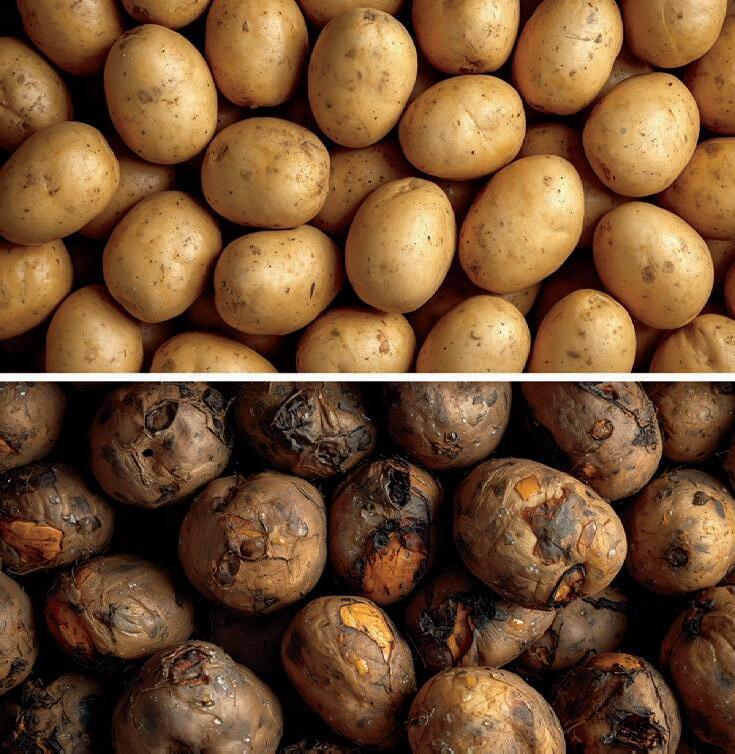
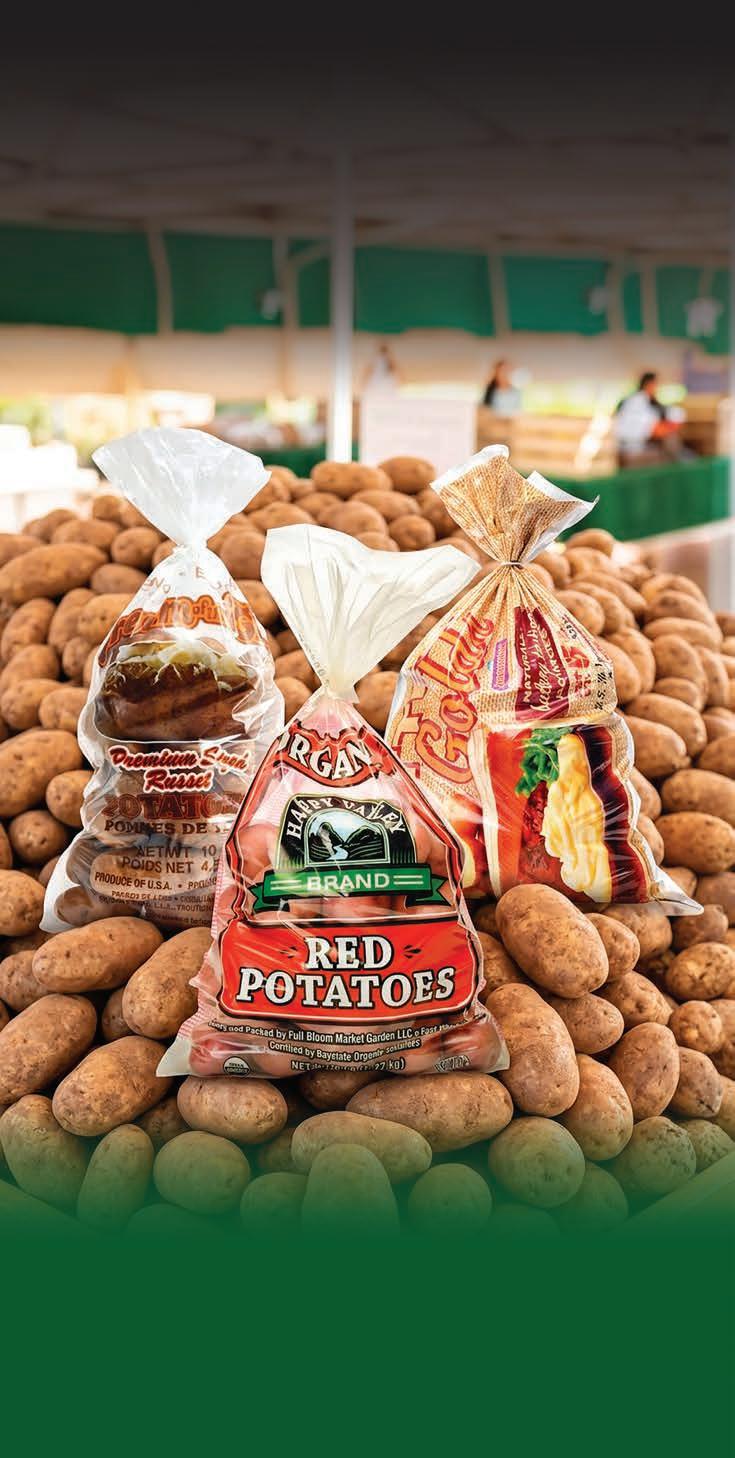
NEW HEALTH GUIDANCE FOCUSES ON Fruits and vegetables rich in potassium
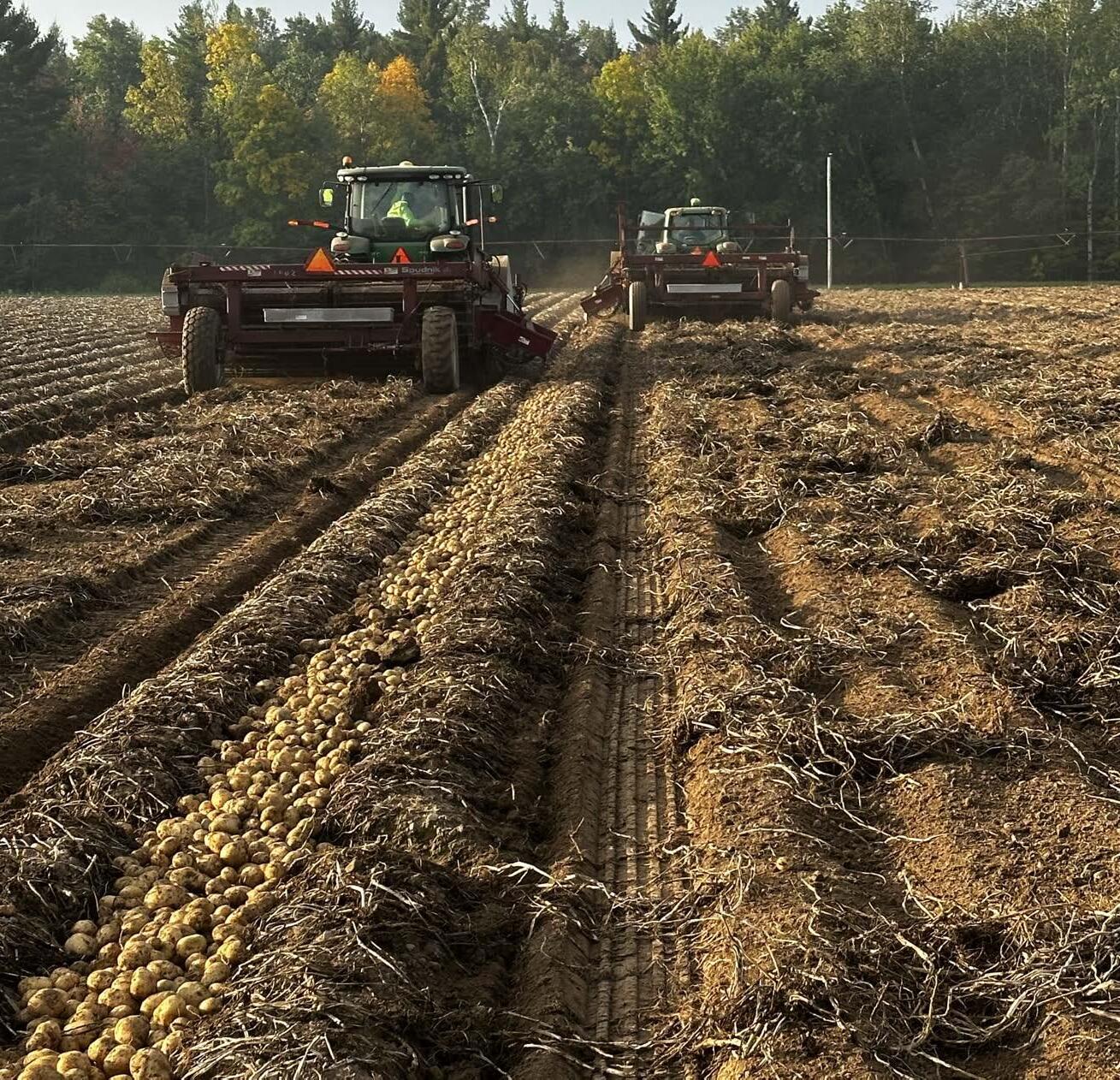
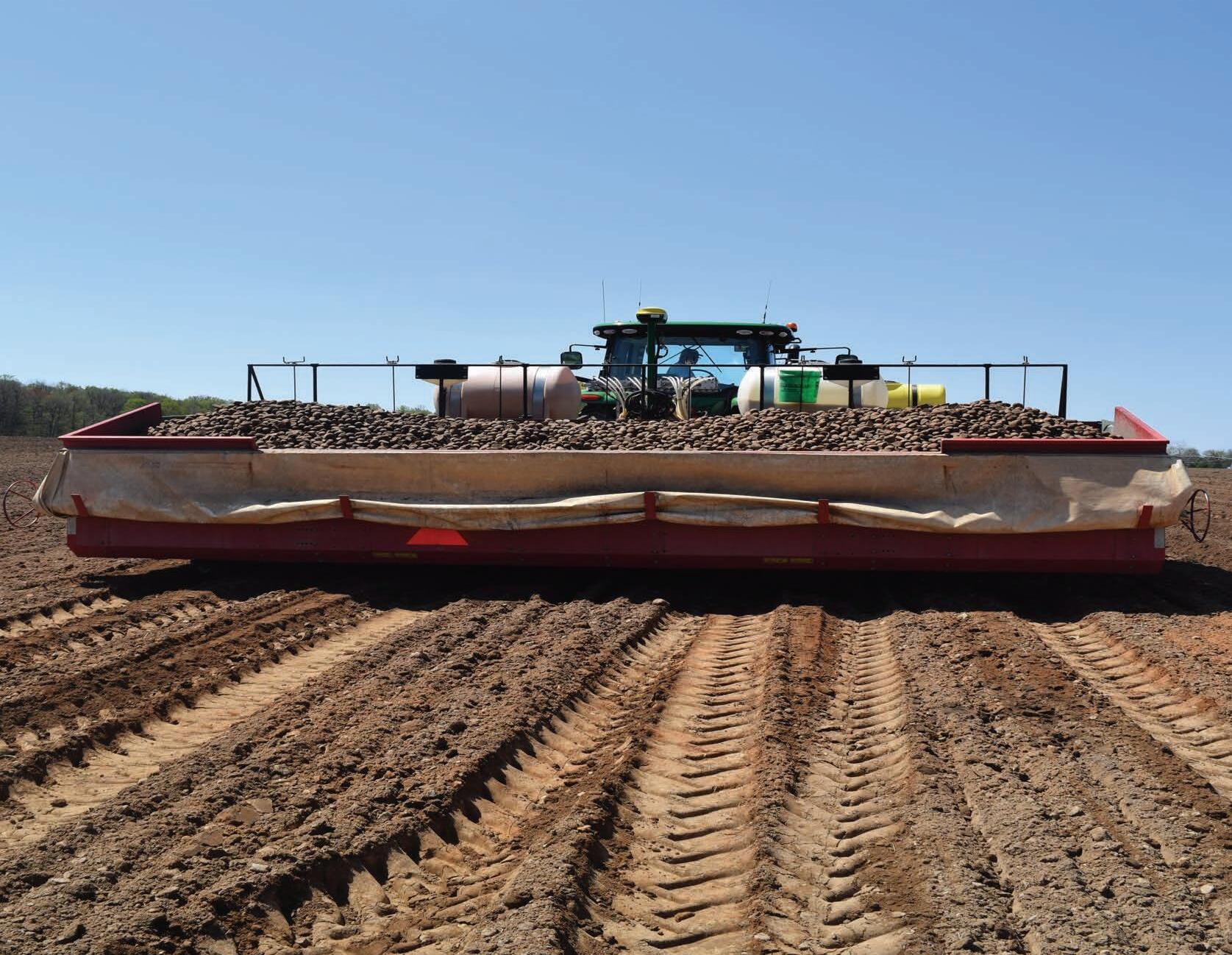
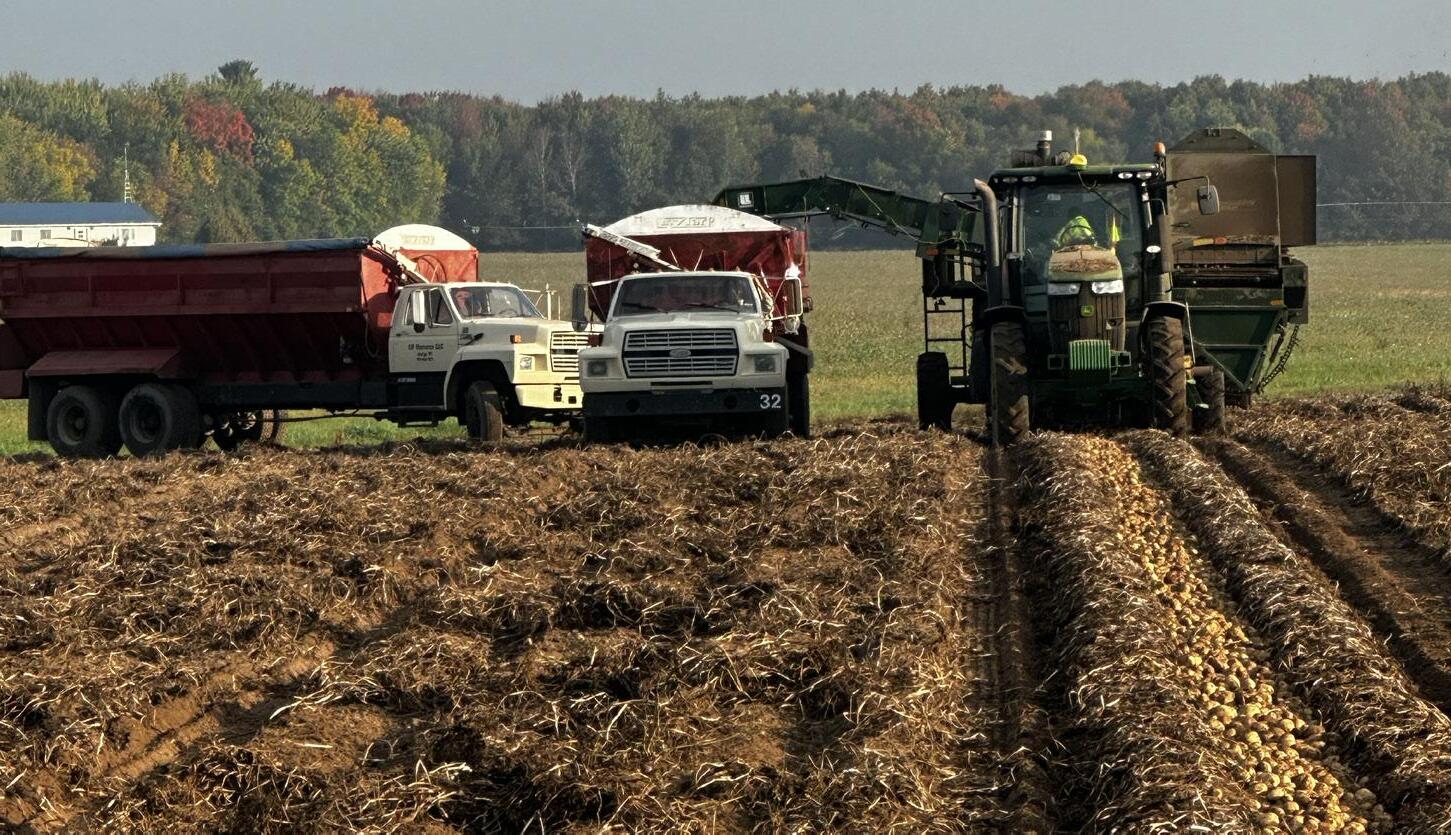
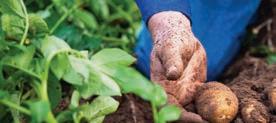
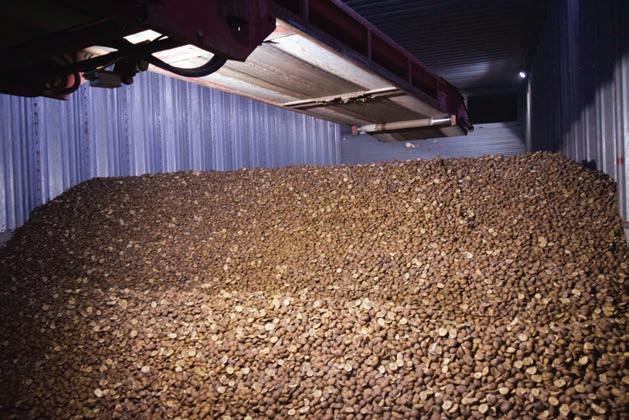
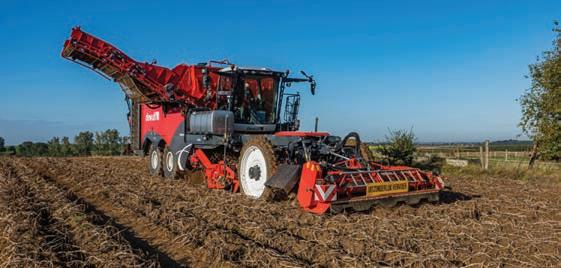
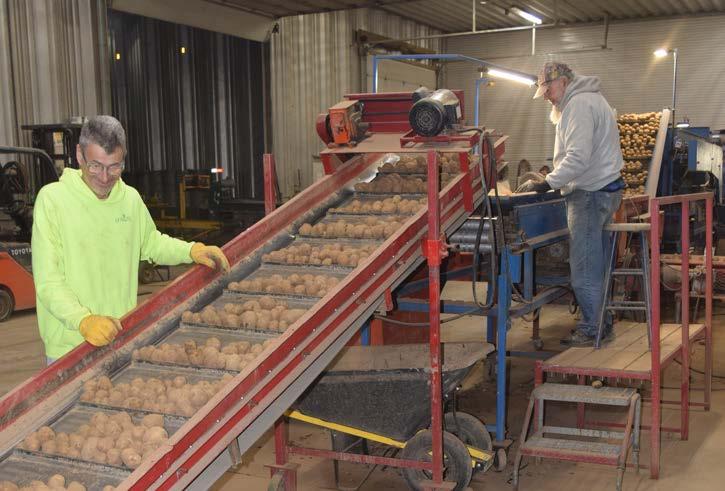
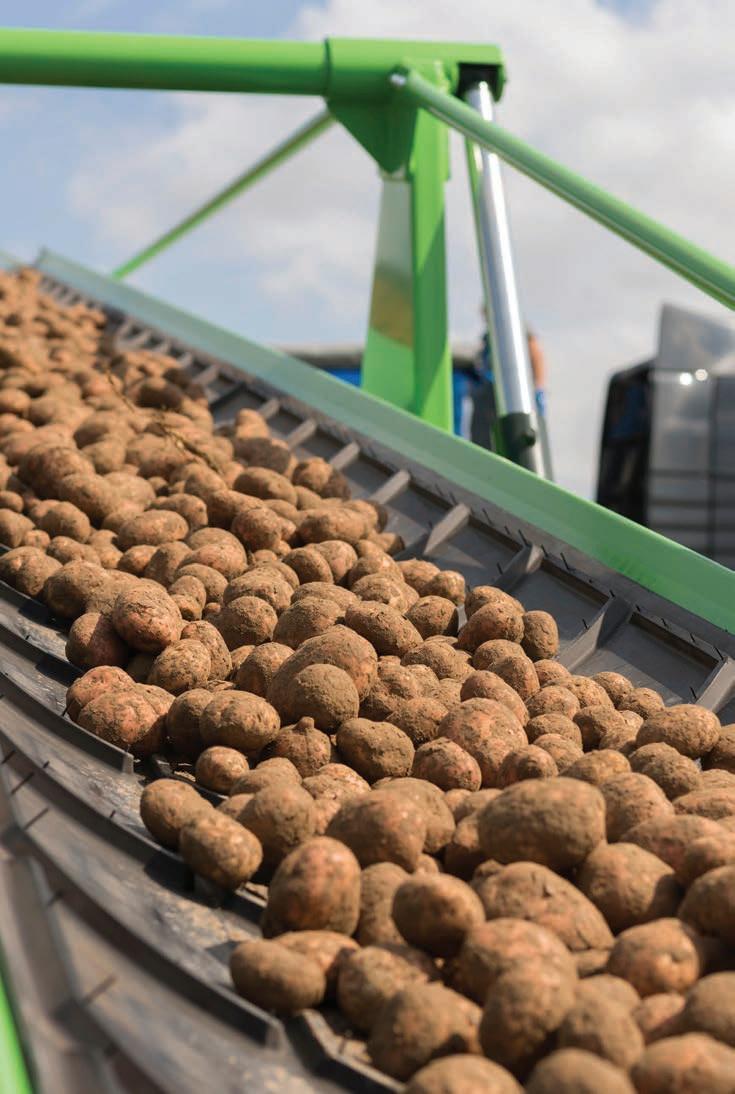
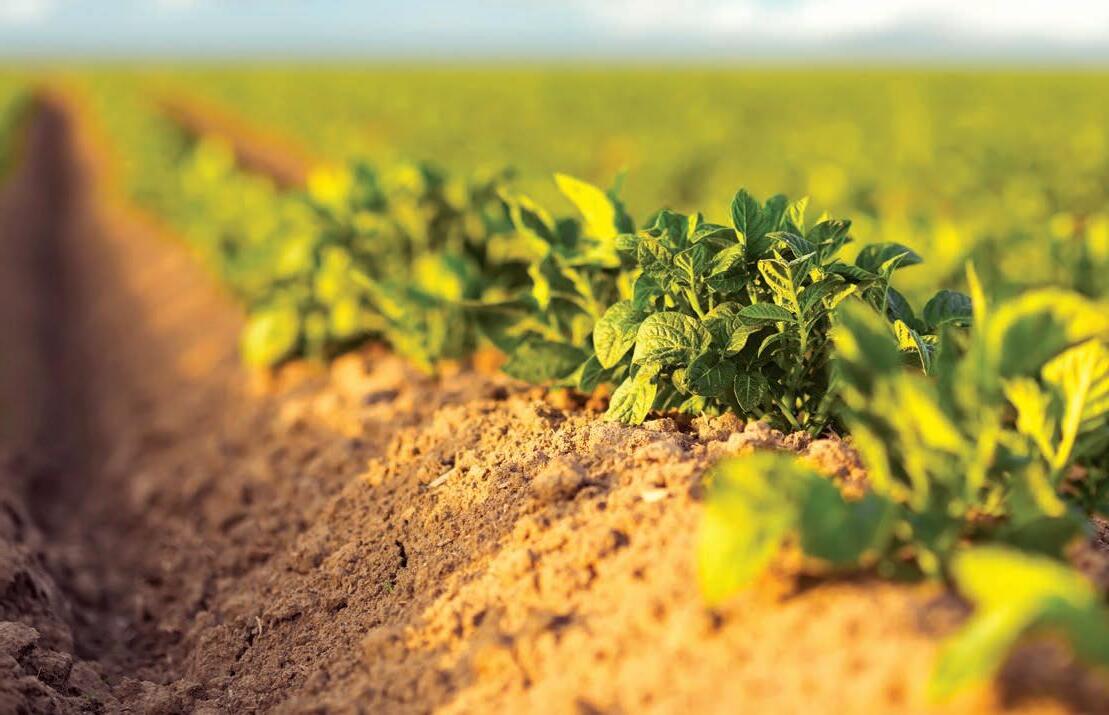
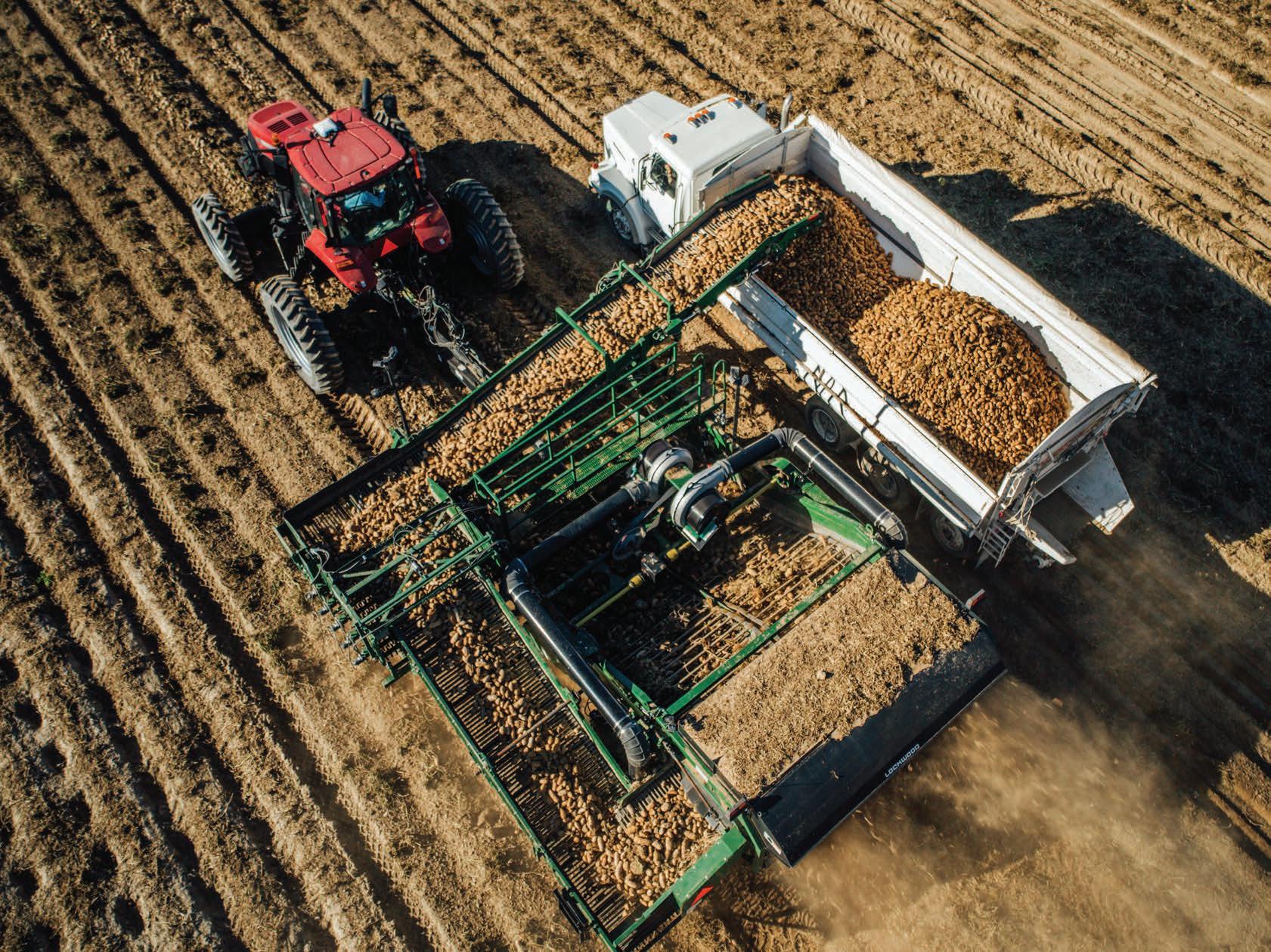
Certified seed potatoes are harvested at Guenthner Potato Company, Inc., which hit the century mark this year, in Antigo, Wisconsin, on a beautiful day in September 2023.
On the Cover: It’s always a good day when certified seed potatoes are being harvested at Guenthner Potato Company Inc., which is proud to have become a multi-generational “Century Farm” in 2026. Currently operating as GP Ventures, LLC, the family business has a rich history in Antigo, Wisconsin, that includes a dairy and the Chicago & North Western Railway line.
8 BADGER COMMON’TATER INTERVIEW:
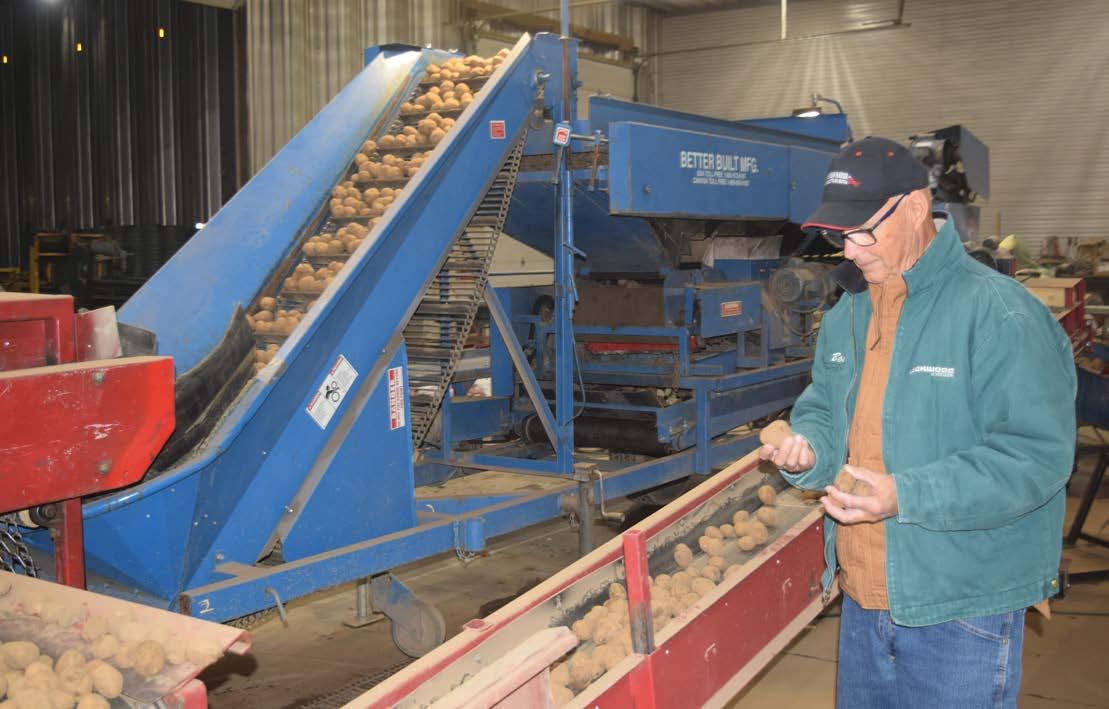
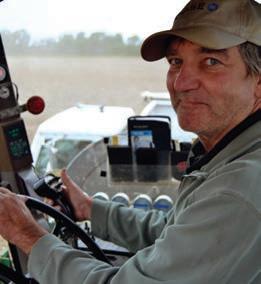
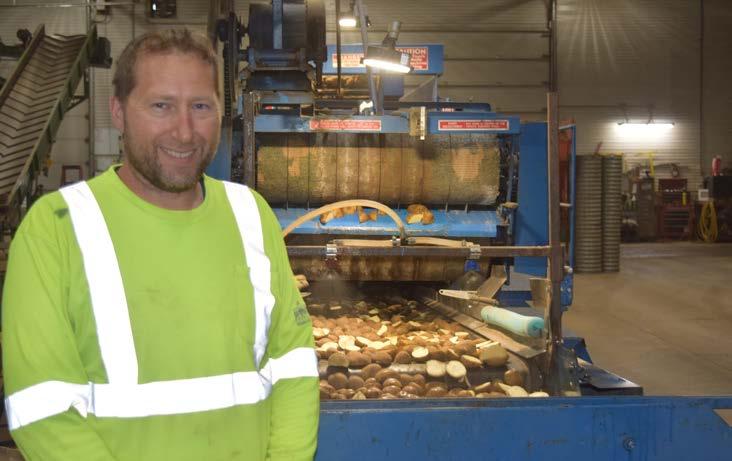
Bob Guenthner of Guenthner Potato Company Inc./GP Ventures, LLC does a final inspection on a proprietary variety of certified seed potatoes grown for Frito-Lay. Brothers Bob and Joe Guenthner sat down for an interview on the 100th anniversary of Guenthner Potato Company, Inc., reminiscing about growing up on the farm, marveling at the innovations, and sharing what makes them most proud of the family certified seed potato operation.
WPVGA Board of Directors:
PresideNt: WeNdy Dykstra
Vice PresideNt: Josh KNights
Secretary: Bria N Lee
Treasurer: JohN HopfeNsperger
Directors: Ra Ndy Fleishauer, Charlie HusNick, ANdy Schroeder, Jeff SuchoN & Lucas Wysocki
Wisconsin Potato Industry Board:
PresideNt: Heidi Alsum-Ra Ndall
Vice PresideNt: ANdy Diercks
Secretary: Nicola Carey
Treasurer: Keith Wolter
Directors: Rod Gumz, Jim Okray, Eric Schroeder, Joe Seis & Tom Wild
WPVGA Associate Division Board of Directors:
PresideNt: Matt SeleNske
Vice PresideNt: Etha N OlsoN
Secretary: Melissa Heise
Treasurer: Paul Salm
Directors: Matthew Hartma N, Brady Patoka, Scott Scheer, Morga N Smolarek & Bra NdoN Taylor
Wisconsin Seed Potato Improvement
Association Board of Directors:
PresideNt: ANdy Schroeder
Vice PresideNt: CloVer Spacek
Secretary/Treasurer: Rya N FassbeNder
Directors: Mitch Mattek & Markus Shafel
Wisconsin Potato Growers
Auxiliary Board of Directors:
PresideNt: Heidi Schleicher
Vice PresideNt: Dakotah Smiley
Secretary/Treasurer: Sama Nt ha Cypher
Directors: Jody BagiNski, Misti KiNNisoN, JeNN a SuchoN & EriN Meister
WPVGA Staff:
ExecutiVe Director: Tamas Houliha N Ma N agiNg Editor: Joe Kertzma N
Director of PromotioNs & CoNsumer
EducatioN: Da N a R ady
FiN a Ncial Officer: KareN RasmusseN E xecutiVe Assista Nt: Julie BrauN
SPORTING CLAYS SHOOT Wausau Skeet and Trap Club Wausau/Brokaw, WI
Gaylord Rockies Resort & Convention Center Denver, CO
9-11
Holiday Inn & Convention Center Stevens Point, WI
30-4/1
Experimental Aircraft Association grounds Oshkosh, WI
“How lucky am I?,” I thought, to be spending my day with high school and technical college students at Worzella & Sons Inc., Plover, Wisconsin, where they experienced seed potato cutting and planting operations, as well as venturing to the Food + Farm Exploration Center for lunch and a roundtable discussion with industry professionals discussing agricultural career opportunities in Central Wisconsin. That was my thought process when I attended the 3rd Annual Student Career Development Spring Planting Day, April 30, sponsored by the WPVGA Associate Division. The Associate Division sponsors the Student Career Development Program to spotlight careers in the industry and create some excitement among the next generation of agricultural professionals.
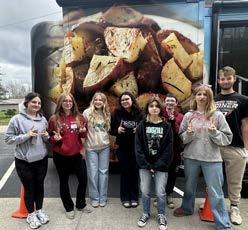
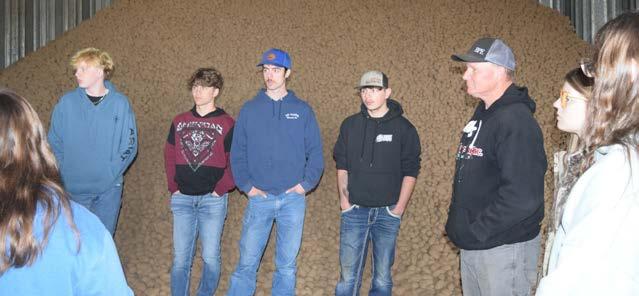
Thank you to Steve Worzella (third from right in the image above) who gave students who make up the potential future industry workforce a chance to see the potato seed cutting operation and ride along in state-of-the-art tractors during planting. Worzella & Sons is a multi-generational 6,500-acre potato and vegetable operation that can plant up to 150 acres of potatoes a day. See “Eyes on Associates” for coverage of the event.
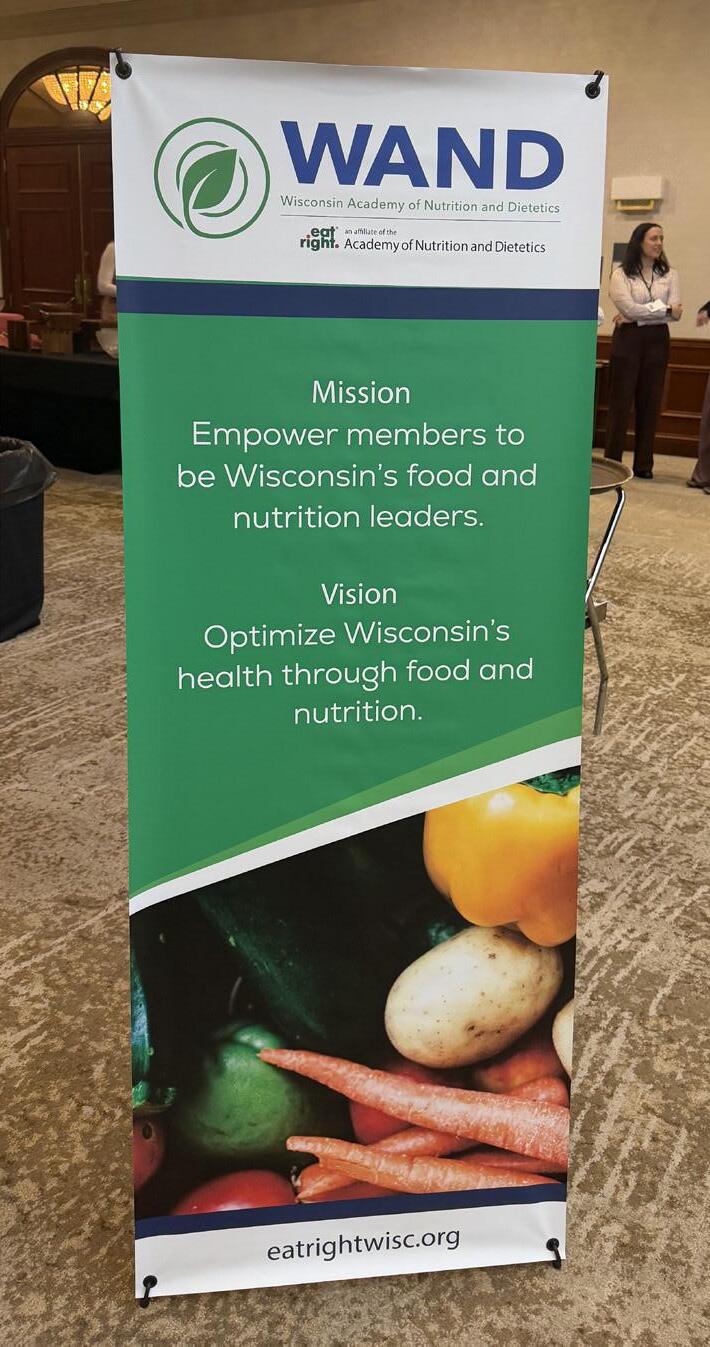
I wasn’t the only one out and about having fun this spring. WPVGA Director of Promotions & Consumer Education Dana Rady represented the Wisconsin potato industry at the Wisconsin Academy of Nutrition and Dietetics (WAND) Annual Conference, April 16-17, in Pewaukee. As she notes, Wisconsin Potatoes’ presence on the conference floor offered more than a visual display. Designed to engage registered dietitians, students, and healthcare professionals, the booth highlighted the nutritional value of potatoes through an evidence-based lens. Enjoy Dana’s “Marketplace” column herein with coverage of the WAND Conference.
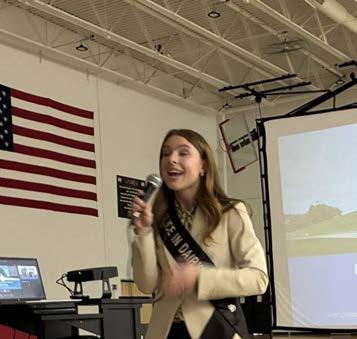
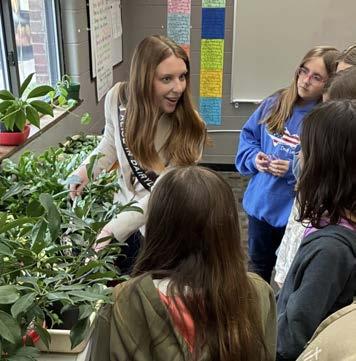
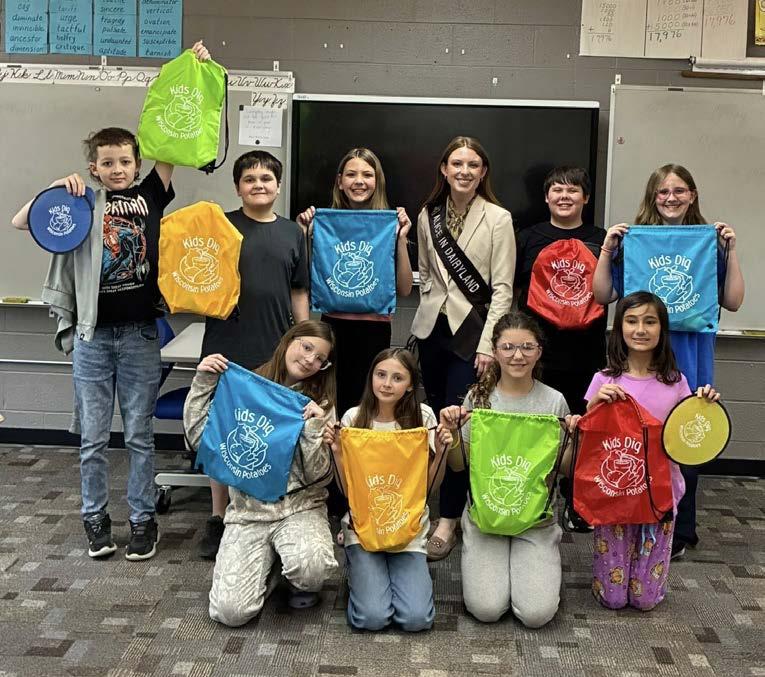
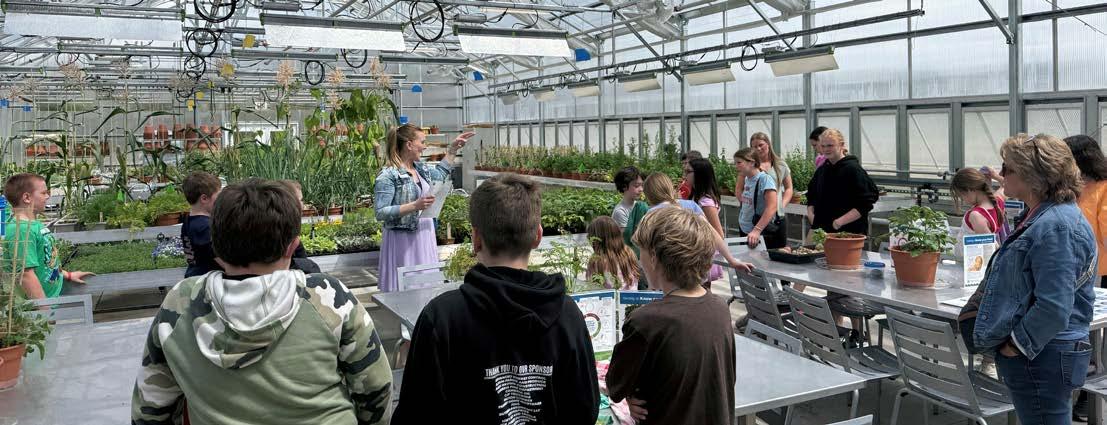
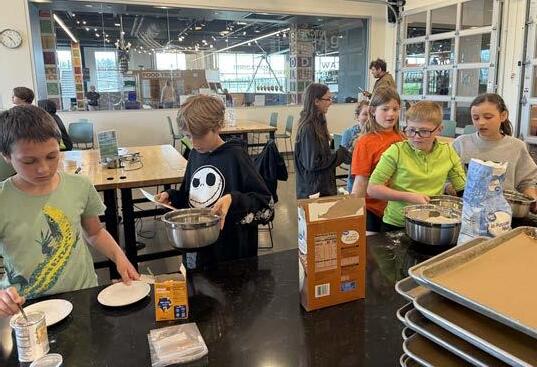
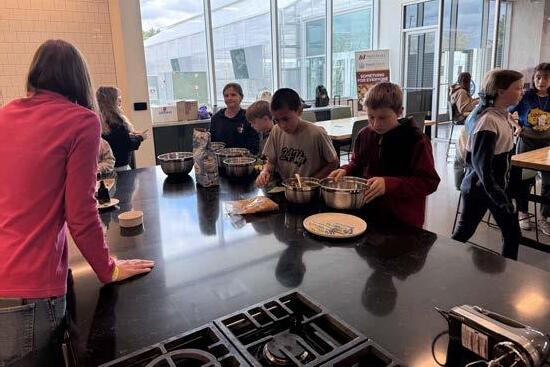
The Wisconsin Potato Growers Auxiliary also had a busy spring sharing the story of Wisconsin potatoes while giving students a hands-on look at the importance of agriculture in our state. Through the Auxiliary’s Potatoes in the Classroom and Kids Dig Wisconsin Potatoes programs, members shared the story of potatoes while visiting elementary schools and high schools throughout the state. The Auxiliary was joined at some of the stops by 78th Alice in Dairyland, Sarah Hagenow, and WPVGA’s mobile education unit, the Spudmobile. Read all about the school visits in “Auxiliary News.”
Please email me with your thoughts and questions. If you wish to be notified when our free online magazine is available monthly, here is the subscriber link: http://wisconsinpotatoes.com/blog-news/ subscribe.
Joe Kertzman Managing Editor
N1435 Cty Rd D Antigo, WI (715) 623-2689 farm@sbfi.biz johnt@sbfi.biz
NAME: Bob Guenthner
TITLE: President of the Board of Directors
COMPANY: Guenthner Potato Company Inc. (GP Ventures, LLC)
LOCATION: Antigo, WI
HOMETOWN: Antigo, currently living in Wausau
YEARS IN PRESENT POSITION: Fifty-three, and has worked since he was 13 years old
PREVIOUS EMPLOYMENT: Part-time jobs
SCHOOLING: Antigo High School, and University of Wisconsin-Oshkosh, major in math and minor in physics, crediting the two subjects for having helped him tremendously in life and work. “Physics is all about determining cause and effect, about exploring assignable causes,” Bob says. “Math is a universal language. One plus one equals two everywhere in the universe, no matter what word symbol is used to express the numbers.”
ACTIVITIES/ORGANIZATIONS: FFA; Coast Guard Auxiliary member since 2010 working hand-in-hand with the active-duty Coast Guard in Florida. “I especially enjoy working for the Lee County Sheriff’s Office Civilian Support Unit,” Bob notes. “I have trained over 400 hours to become a marine training officer.”; Wisconsin Potato & Vegetable Growers Association (WPVGA) Hall of Fame member and past president of the Board; member of the Freemasons and Shriners International; and chairman of the Agronomy Committee for the Food + Farm Exploration Center
Interview
ROBERT
J. “BOB” GUENTHNER, President of the Board of Directors, Guenthner Potato Company Inc., and his brother, DR. JOSEPH “JOE” GUENTHNER , Professor Emeritus of Agricultural Economics, University of Idaho
By Joe Kertzman, managing editor, Badger Common’Tater
“This isn’t about me. It’s about the hundred-year-old farm that’s still going,” Bob Guenthner says regarding his family’s multi-generational certified seed potato operation, Guenthner Potato Company Inc., of Antigo, Wisconsin, which became a “Century Farm” in 2026.
Guenthner Potato Company Inc. (GPCI) has not always been a certified seed potato farm. In 1926, the core business was dairy, and Bob’s grandfather, Joseph Sebastian Guenthner, owned a milk bottling plant and delivered his bottled milk.
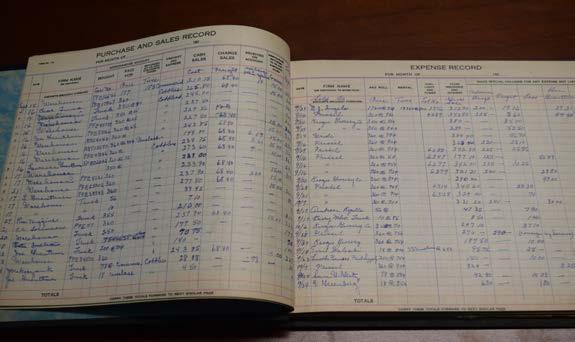
“We still have ledgers listing customers and delivery addresses,” Bob says. “From time to time,
AWARDS/HONORS: WPVGA Hall of Fame member
FAMILY: Wife, Cheri; daughters, Jackie and Bobbi, and sons-in-law Mike and Bill; and grandchildren, Sam, Mallory, K.K., Chase, Max, Sawyer, Camden, and Kallie
HOBBIES: Golf, but doesn’t have time, flying the ag drone, and working out
someone will still bring us a ‘Guenthner Dairy’ bottle. Grandpa also grew potatoes.”
A major turning point came when the family built a potato grading shed.
“Grandpa could sell more potatoes than he could grow, so he began buying from other growers,” Bob explains. “According to his ledger books, it appears he purchased potatoes from nearly every grower in Langlade County.”
“He also had two warehouses in
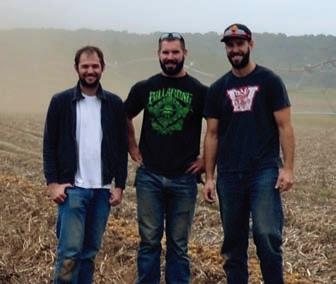
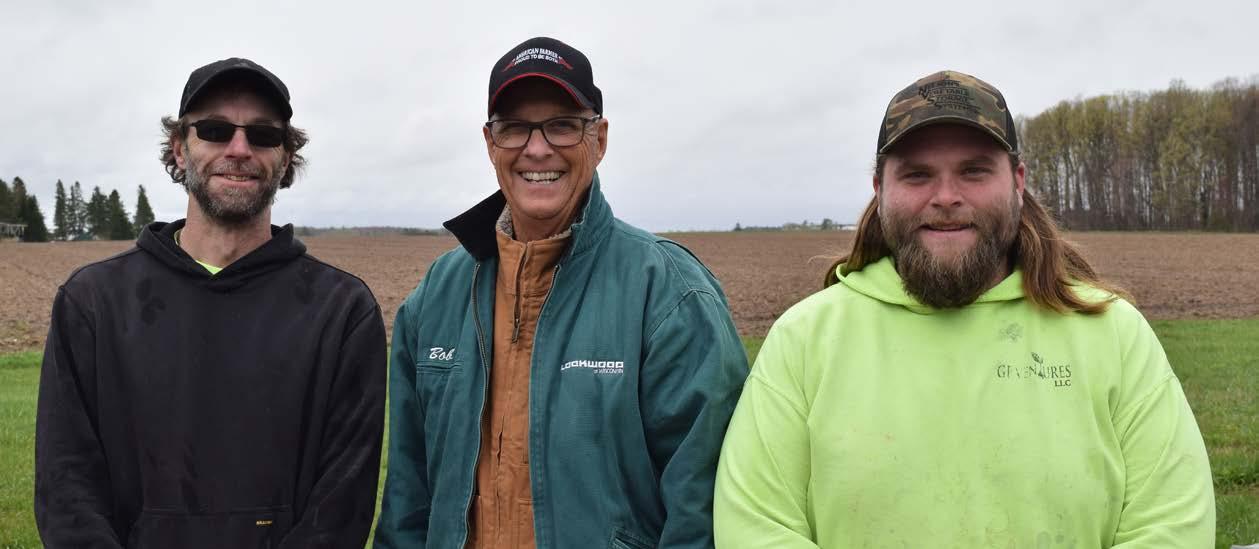
Above: One of this issue’s co-interviewees, WPVGA Hall of Fame member Robert J. “Bob” Guenthner (center), poses with his farm manager, Jim Kennedy (left), and production manager and primary drone operator, Joe Holbrook (right).
Antigo, both located on the Chicago & North Western (CNW) Railway line,” he adds. “We were still loading potatoes on railcars in the 1960s. We had one Baker machine, and it could take four hours to bag a railcar load of 10-pound bags.”
ROWS OF SPUDS
“I can still picture laying the bags end-to-end just to figure out how many rows would fit into a 40-foot semi-trailer,” Bob recalls.
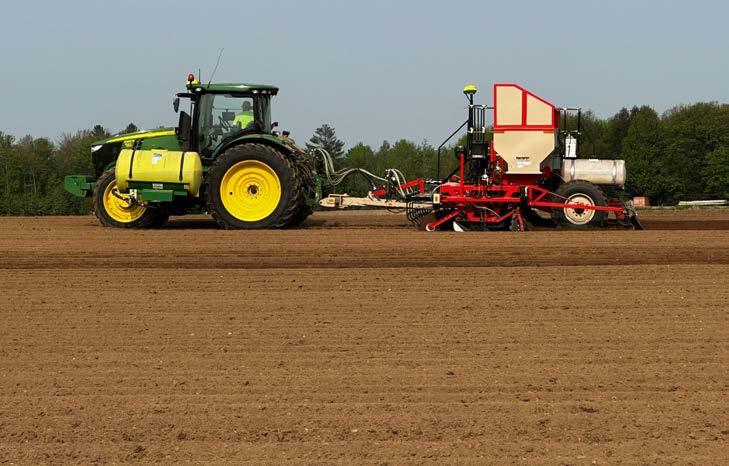
Above: Certified seed potatoes are planted at Guenthner Potato Company Inc. (GP Ventures, LLC) in Antigo, Wisconsin.
an engine on the CNW line ignited a grassfire, and the family lost the warehouse and packing shed. A nearby building, used to make crates for milk bottles, was also destroyed. “We rebuilt the warehouse but not the packaging shed in time for the fall harvest,” Bob remembers. “After that, we moved to growing certified seed potatoes.”
NAME: Joe Guenthner
TITLE: Professor Emeritus of Agricultural Economics
UNIVERSITY: University of Idaho
RESIDENCE: Coeur d’Alene, Idaho, area
HOMETOWN: Antigo
YEARS IN PRESENT POSITION: Forty-six
PREVIOUS EMPLOYMENT: Guenthner Potato Company
WHAT HAPPENS IN STORAGE MATTERS
SCHOOLING: Bachelor of Science from the University of Wisconsin-Madison, a Master of Science from Montana State University, and a Ph.D. from Washington State University
ACTIVITIES/ORGANIZATIONS:
Agribusiness consultant, expert witness for agricultural damages litigation, and volunteer for International Farmer-toFarmer Program
AWARDS/HONORS: Visiting scholar, Cambridge University, and affiliate professor, Michigan State University WorldTAP (World Knowledge and Technology Access Program)
FAMILY: Wife, Terri, who is the daughter of Antigo potato farmers Ted and Sue Baginsksi, and three daughters, three sons-in-law, and eight grandchildren
HOBBIES: Fishing, triathlons, weightlifting, horticulture, and genealogy
“Dad had me added as an employee to the company that built the warehouse,” he remembers. “I had a lot to learn. I worked on the bottom of the trusses; they never asked me to go to the top. They must have been good judges of ability. It was good experience.”
Joseph Sebastion Guenthner passed away in 1964, and Bob remembers writing on the bottom of his dresser drawer, “This is the saddest day of my life.”
Grandpa Joe and his wife, Lily, had four children. Julius was an attorney and served as the Langlade County District Attorney; son Harvey and his wife, Jeanette, farmed on their own next to Grandpa Joe’s land; and daughter Margaret and her husband, Oscar Wendt, farmed on their own.
“Joseph F. Guenthner, my father, farmed with Grandpa Joe,” Bob explains. “Grandpa Joe’s estate was split so that Joseph F. received Grandpa’s share of their business. The others received land.”
Today, Guenthner Potato Company owns much of the land and operates as GP Ventures LLC.
“We’re fortunate to partner with Heartland Farms, which is fully integrated into both ownership and operations,” Bob explains. “Their
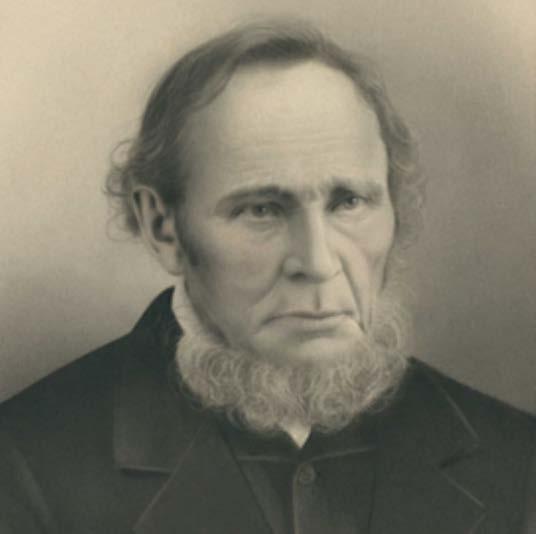
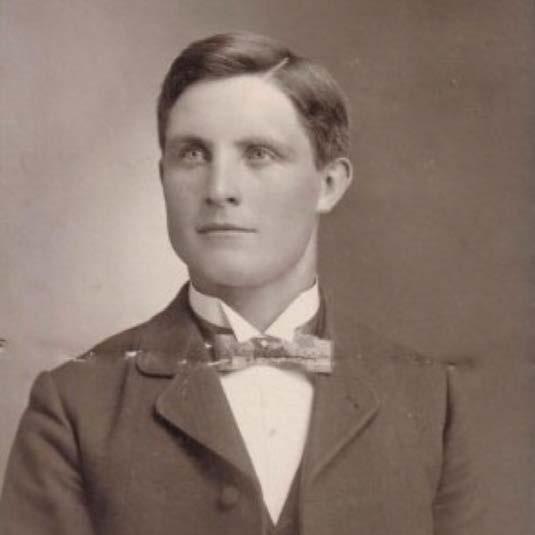
Above: A “Century Farm” as of 2026, the history of Guenthner Potato Company Inc. begins with Joseph Guenthner (left), born in 1836, and his son, Joseph Sebastian Guenthner (right), born in 1877.
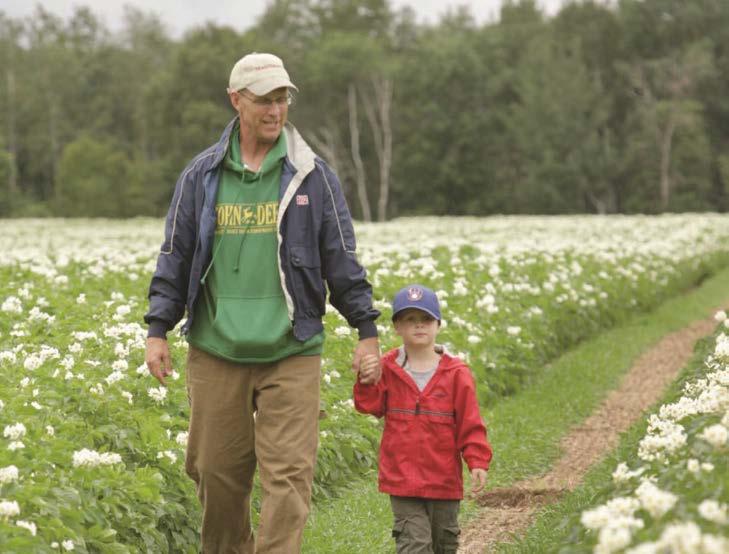
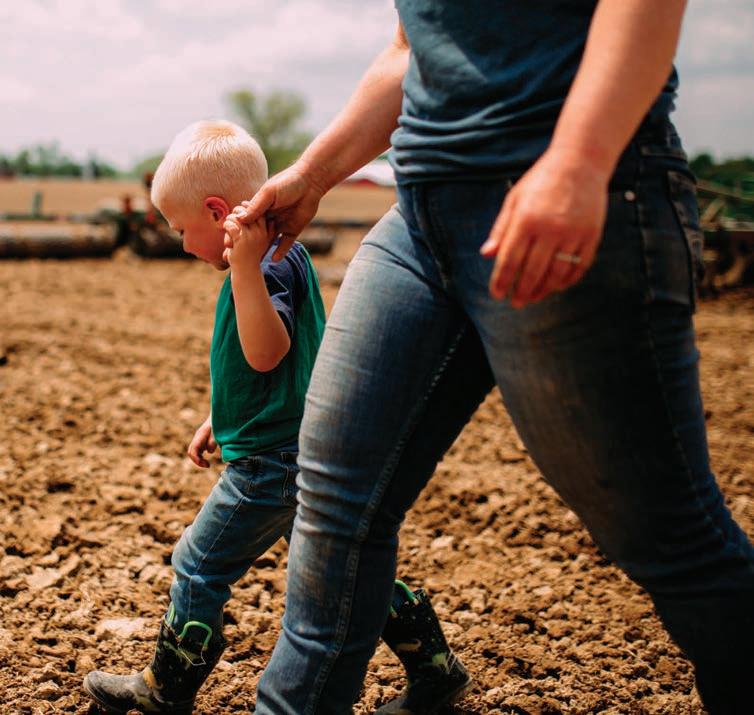
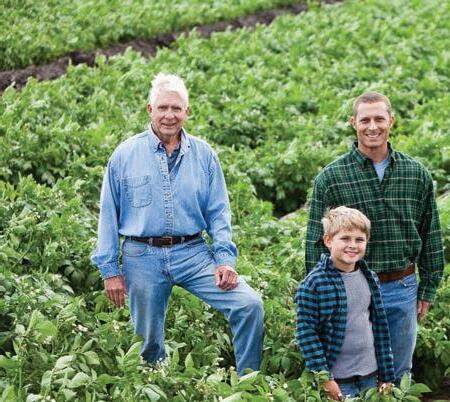
Used as an advertisement for the Wisconsin Seed Potato Improvement Association, Bob Guenthner says this photo of he and his grandson, Sam McGivern, walking through a potato field has become popular. “I’ve received quite a few positive comments about it,” Bob notes, “but more about Sam than me.”
technology has expanded our capabilities in ways we didn’t know were possible.”
Are you still discovering the extent of some of the operations your family farm was involved in? Bob: Yes, we sold Champion potato harvesters, chemicals for Rhome and Hass, and were a dealer for Noffsinger chain. We grew potatoes in a lot of places in Wisconsin: Hatley, Mole Lake, Eagle River, Nekoosa, Grand Marsh, Deerbrook, Bryant, and Argonne.
GPCI also grew potatoes in Sand Mountain, Alabama, and was involved in growing potatoes in Mexico with Richard Pavelski and Bob Walther.
What do you most take pride in, Bob and Joe, regarding the family operation reaching the status of being a “Century Farm?” Bob: It would be that GPCI is still in business providing good jobs for hard working people. We are also very proud that GPCI has made donations to the Food + Farm Exploration Center. Cheri and I have donated funds and a lot of fun time to this most worthy cause.
We are deeply proud to support the Food + Farm Exploration Center. Through our contributions of both time and treasure, Cheri and I are committed to its powerful mission— reconnecting people with the true origin of their food and honoring the farmers who make it all possible.
Joe: I am proud our ancestors were among the first to grow potatoes in the Antigo area. I found a Homestead Act document, signed by President Grover Cleveland in 1885, that granted 160 acres of Langlade County farmland to Joseph Guenthner. His son, Joseph S. Guenthner, founded Guenthner Potato Company 41 years later.
Guenthner farmers rode the “technology treadmill” with success. After adjusting for inflation, potato prices trend downward. Farmers
“Grandpa
– Bob Guenthner
survive by adopting new technologies that increase yields and reduce costs.
A century ago, horses were a new technology. They replaced the “one man, one ox, one acre, one day” benchmark. Guenthners’ switch from oxen to horses enabled them to plow more ground in less time and with less feed.
Later, a much different type of horsepower arrived with tractors. Now, the treadmill includes tractors that drive themselves and plant protection delivered by drones.
Have you always worked on the farm, and what are some of your earliest or most poignant memories?
Bob: Yes, since I was 12 years old. An early memory is that I would volunteer to change irrigation guns all night. Of course I needed a pickup truck.
I wasn’t old enough to have a driver’s license, so I kept to the fields, kind of, mostly.
Joe: What I remember the most are
the people who worked on the family farm. Dad told me to drive one of his employees, Hermilio “Pancho” Gonzalez, to another part of the farm one hot summer day in the 1960s.
We jumped into Dad’s convertible that had four-on-the-floor. Enjoying the cool rush of air, I put the pedal to the metal and entered a curve with too much speed. I downshifted, accelerated and did a power-slide on the gravel road. I was scared but
managed to keep us between the ditches without a rollover.
I’ll never forget Pancho saying, “Joe, the next time I ride with you I will go to church first.” As far as I know my friend Pancho never told Dad about my reckless driving.
Another poignant memory I have
Above: Certified seed potatoes are harvested at Guenthner Potato Company Inc. on September 21, 2023.
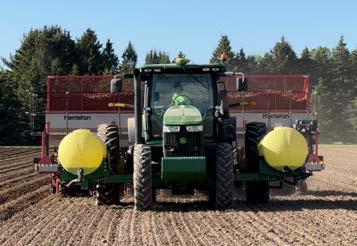
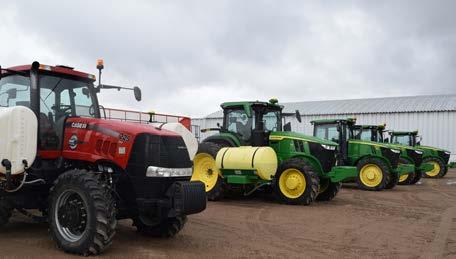
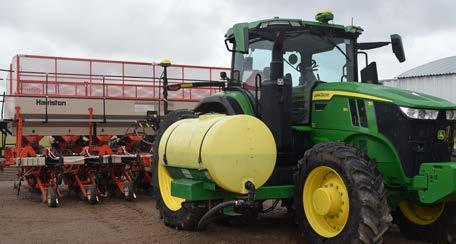
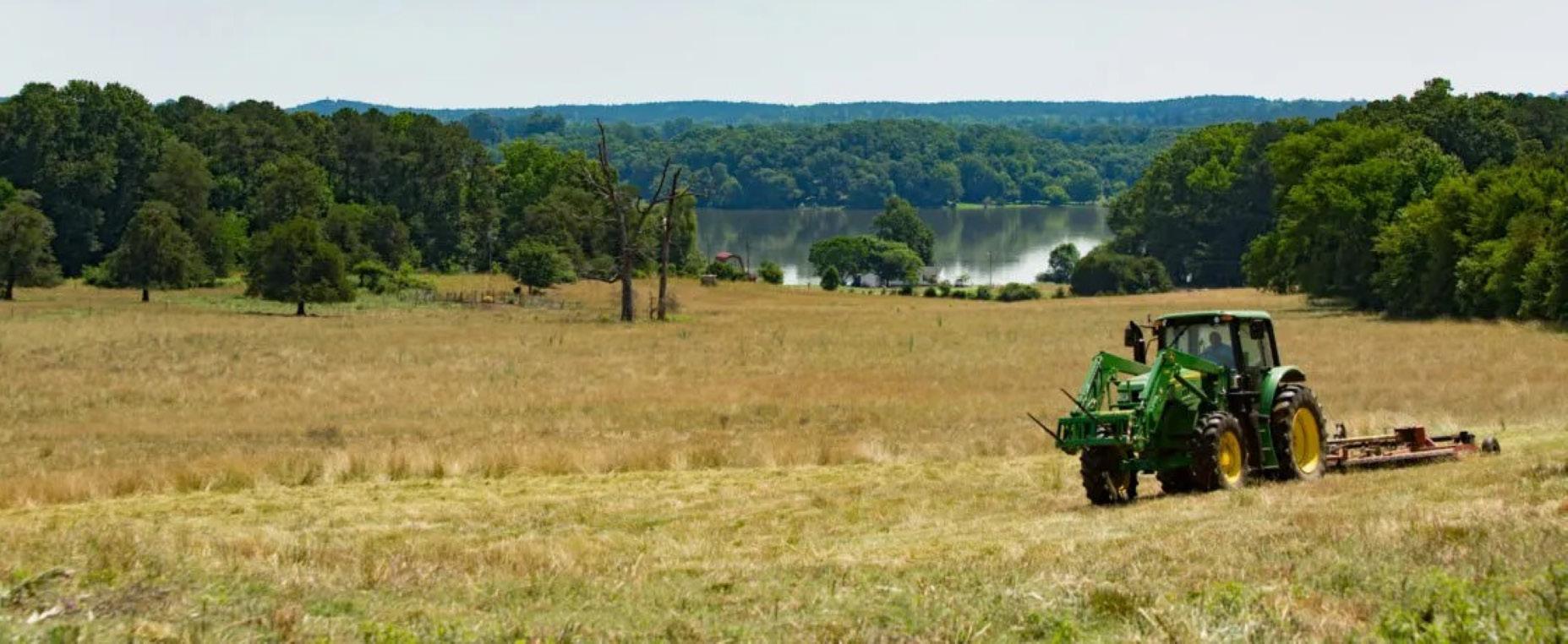
Above & Below: Though Guenthner Potato Company is largely a John Deere operation, the first tractor in the lineup is a Case IH Magnum 225 CVT set up for tillage, while second in line stands a John Deere 7R 310 hooked up to a Harriston cup planter.
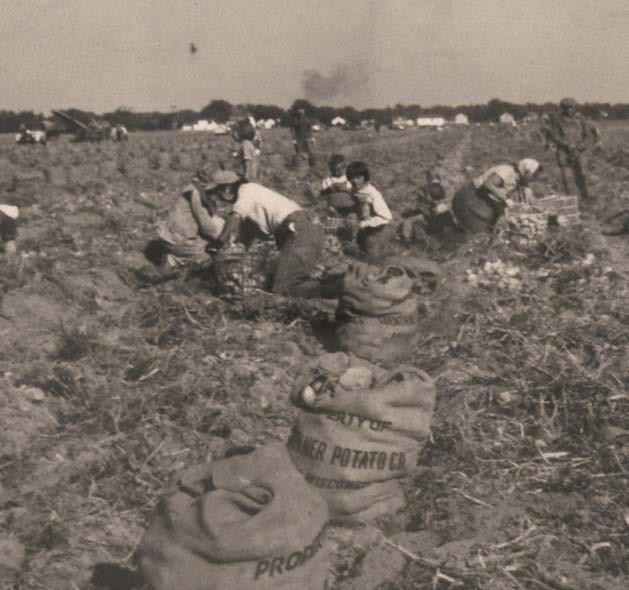
Potato harvest was a little different nearly a century ago at Guenthner Potato Company Inc., in Antigo.
is when another farm worker, who came to Wisconsin from Appalachia and whose nickname was Uncle Remus, said, “I have something in my eye.”
I was just a kid when I had handed Uncle Remus a piece of paper with a joke written on it. I didn’t realize until later why he said what he did. I was watching Mom do the weekly payroll when I saw a timecard marked with an “X” on the signature line. She
explained to me that Uncle Remus signed with an “X” because he was unable to read and write.
I thought those two guys were wonderful. It didn’t matter that they came to Wisconsin from somewhere else. So did my ancestors.
Joe, you had quite a career on the academic side as a professor and as a published author in the potato industry. Reflecting on your career, what are you most thankful for? I am
most thankful that the University of Idaho hired me as a member of their faculty. I was in my 20s, but now, nearly a half-century later, I am still with UI as an emeritus professor. I can’t imagine a better university
for someone from a potato farm.
I am also thankful for what I call my Four Lions—professors who were role models and mentors— John Schoenemann, University of Wisconsin, Duane Preston, North Dakota State University, Bob Thornton, Washington State University, and Creighton Miller, Texas A&M University.
They were all Potato Association of America presidents and honorary life members.
Joe, what are key takeaways from what you learned over the years regarding the potato industry in Wisconsin, Idaho and beyond?
A common thread is pride. From Wisconsin to Idaho, Europe, China, Australia, South America, Africa, and wherever else I go, there is pride in being a potato grower.
The farmers grow other rotational crops, but when I ask them what they do for a living, the answer is, “I am a potato grower.” Maybe growing potatoes is the most challenging and rewarding thing they do.
Joe, how did your career in
Idaho correspond to or reflect your experience growing up at Guenthner Potato Company Inc.? Communication is the key. My potato farm background gave me an advantage because I understood the ag industry culture and enjoyed communicating with its people.
My friend Duane “Sarge” Preston at North Dakota State University taught me that the Good Lord gave us two ears and one mouth, so that we would listen twice as much as we talk.
Joe, how could you, then, contribute to the farm from afar? I tend to stay in my own lane. We talk about biotech, electronic tech, market forces and such, but Bob is the farmer. Although I am the professor, I think I learn more from Bob than he learns from me
Bob, what are some of the new innovations or technologies that you want to show and tell in this article?
We currently use a DJI drone for spraying and seeding oats. When we send a grain drill across the field to seed oats, the ground is intentionally loose, but no matter what you do—
use wide tires, inflate them correctly, drive between rows—the tire tracks stunt the growth of the oats.
Using the DJI drone, we seed the oats and broadcast fertilizer over the top of that, and there are no wheel ruts and, thus, no stunted plant growth.
We don’t scout with the spray drone as we have another that is better suited for that. I will be teaching my grandkids to run the drone.
Bob, I hear you moved to a new office in January. Is that part of a bigger expansion or upgrade? Our old office was on Edison Street in Antigo. We purchased land with a newer building and Jackie turned it into an office. The new one is located on the farm.
Bob, you told me the timing was perfect for this article, almost a providence rather than a coincidence. Why is the timing perfect? Because Jackie set aside boxes of old records, and I have been going through them. The records have always been around, but it has been good timing for me to go through them. So, when you asked
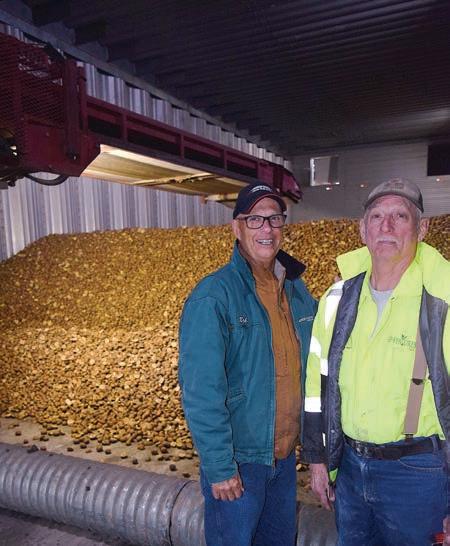
Left and Right: Bob Guenthner (left) poses with David Matszewski (right), who has been with the operation for a quarter century and who Bob says can do “just about anything,” running the harvester, modifying equipment, and overseeing storage. After the seed potatoes are cut, they’re left in storage for 7-14 days to suberize.
me for an interview, I was eager to say “yes.”
When I started going through the documents, I did not know that, later, you were going to request an article about our family farming for a century. When you asked, I had much better information.
Bob, what varieties of certified seed potatoes are you raising, on what rotation and with what other crops? We grow both public and private varieties of seed potatoes, and practice three- and four-year rotations depending on individual fields. Our crop plan for 2026 is 377 acres of seed potatoes, 400 acres of oats, 300 acres of soybeans, and 200 acres of second-year clover.
Bob, what are your biggest challenges in keeping the Century Farm legacy alive and well? GPCI’s challenges are the same as other farms. We must continue to keep our excellent customers. We also must attract and retain great employees.
My brother, Joe, and I created a list of past and current employees. It amazes me how many employees’ first jobs were their only jobs in their lifetimes.
BOOTH #670
Joe deserves a lot of credit for the success of the farm. With his experience, having been raised on our farm in Antigo that grew potatoes
PROUD 2026 ELITE SUSTAINING SPONSOR
Visit us at BOOTH #670 to meet local agents, win prizes, and explore coverage designed specifically for farm and rural needs. And don’t miss the Rural Mutual Event Center — your hub for entertainment and connection throughout the show!
CONNECT WITH YOUR LOCAL AGENT
Mike Leahy runs the seed cutting operation at Guenthner Potato Company Inc. Mike is part of the partnership with Heartland Farms, and Bob says Mike is the best he’s seen at this highly complicated and very important operation.
for the fresh, processed and seed potato markets, and as a professor of agricultural economics at the University of Idaho for 46 years, he has been involved in the potato industry all his life.
Joe owns land that GPCI rents from him, and with contacts throughout the potato growing, processing, science and academia circles of the
Potatoes
Sprout
industry, he’s referred customers to us through the years and shared valuable insight and information. He has a great reputation.
He has always been there for us. I am extremely grateful and proud that “Little Joe” is my brother. OK, that is what we called him before he became a 6-foot, 4-inch, 240-pound tremendous athlete.
He has been published extensively in academic and trade journals and was elected President of the Potato Association of America for 20012002.
Bob, do you continue to work full time on the farm, and what other family members are involved? No, I am not full-time on the farm. I am still responsible for some things, but that list gets shorter every year. My entire life, I said I loved my job so much that I would do it for nothing, and I’ve made good on my word!
Our daughter, Jackie, is our administrator, and she has more responsibilities than I ever had. One of our grandsons will be a firstyear employee in 2026. He is 14. We have a great organization with Jackie in administration, Jim Kennedy as operations manager and Joe Holbrook as production manager.
Jim is central to our operation and an excellent fit. He brings valuable experience from Heartland Farms and Frito-Lay. I can’t imagine the company running without him.
We have a very young crew. Three are in their thirties and forties. We also have two other full-time employees in their twenties and are blessed to have other full-timers older than them.
Dave Matuszewski has been with us long enough to get a watch, Lol! He is full time aside from an occasional Friday afternoon off. We have four more previously full-time employees that help on short notice. First among
offering any help they needed.
has kept that letter for over 50 years.
them is Gary Preboski. He was our manager for 25 years.
Bob, why do you enjoy being a certified/foundation seed potato grower in the Antigo, Wisconsin, area? The Wisconsin Seed Potato Certification Program is the best in the country. Leadership has been what sets us apart, from Henry Darling, Steve Slack and Bob Slattery to Tom German and Bob Coltman to Renee Rioux, Amy Charkowski, Amanda Gevens and Brooke Babler. I know I missed a few names.
I have attended Certification Section meetings where all the states were represented, and it was apparent who the leaders in the room were.
Bob, what do you feel has been your biggest success in the operation? Keeping our customers and retaining long-term employees. But success is never about just one person. It takes all of us for the business to be successful.
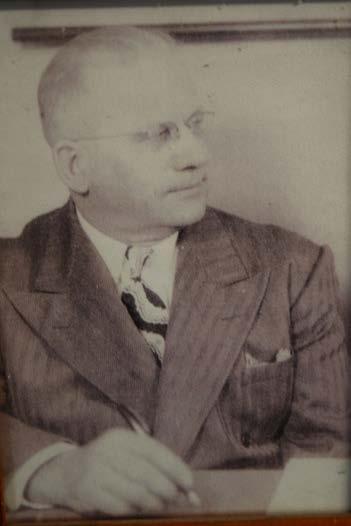
Bob Guenthner’s mentor was Felix Zeloski (shown), who, after Bob’s father died, in June 1973, wrote a letter to the family
Bob
Bob, do you feel new technologies have helped you reach the farm’s goals, and if so, what technologies? Yes, adapting to new technologies is essential. The most recent one was using a spray drone.
Bob, have you made good friends and neighbors in this industry? Oh, my goodness. I am glad you asked. The friends I made are at the top of the list of why I enjoy this industry.
After our father died, in June 1973, many of his friends contacted our family to offer help. We had a crop in the ground and the boss was gone. Felix Zeloski wrote a letter that I have kept for over 50 years. The man took the time to write a letter to our family. I took him up on his offer to help and learned many things from him.
If I was present at a meeting that Felix couldn’t attend, the next Monday morning he would call me and ask a simple question, “Well, what did you learn?” To this day,
I have the habit of actively listening to gain information at every meeting and preparing a takeaway that I will remember.
It was my honor to speak at Felix’s funeral. Dennis also asked me to be a pallbearer.
I hesitate to list names for fear of omitting others, and if I mentioned them all, you would run out of space. Good friends, indeed, include Robert H. Diercks, Richard Pavelski, Bob Slattery, Steve Slack,
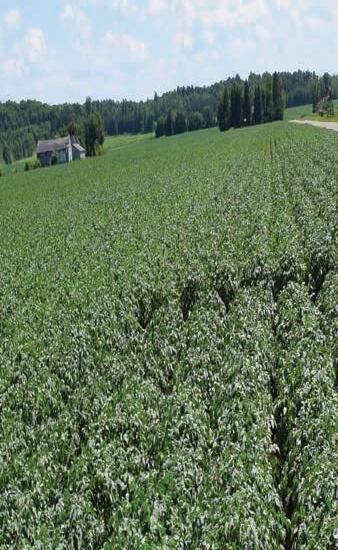
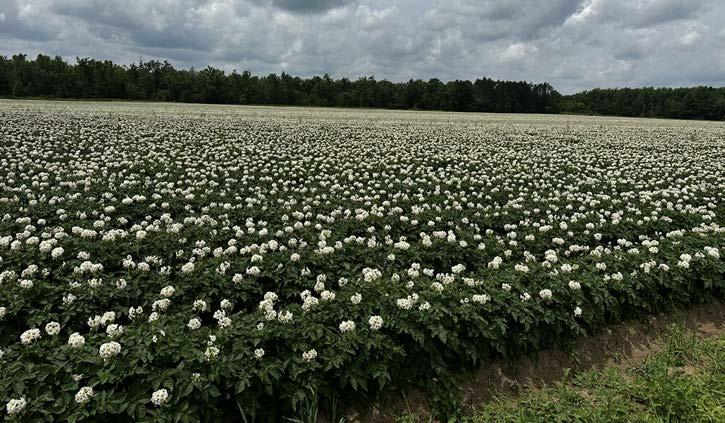
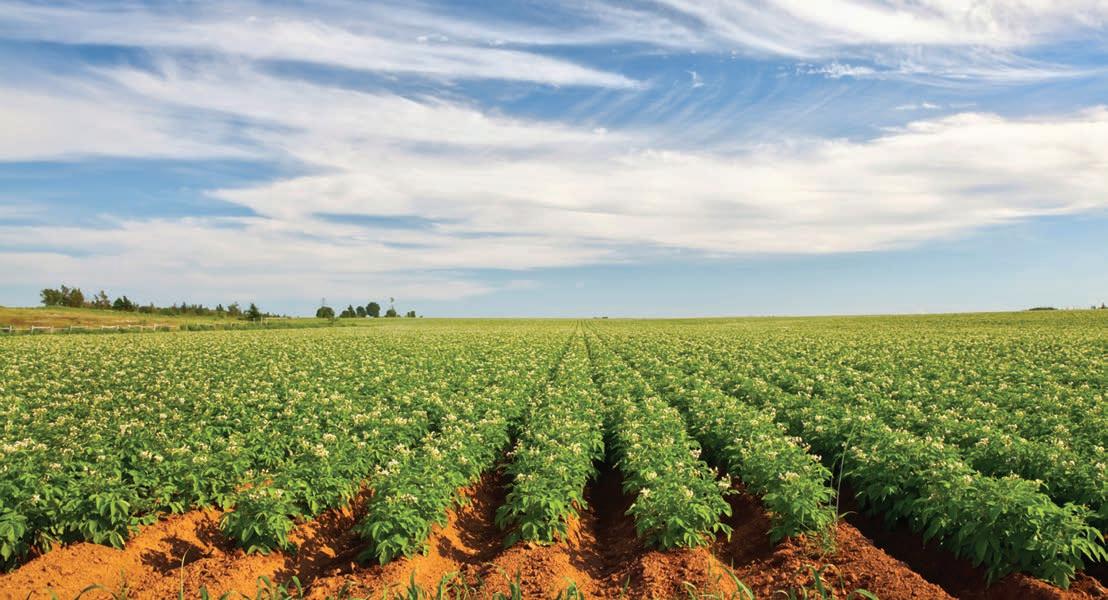
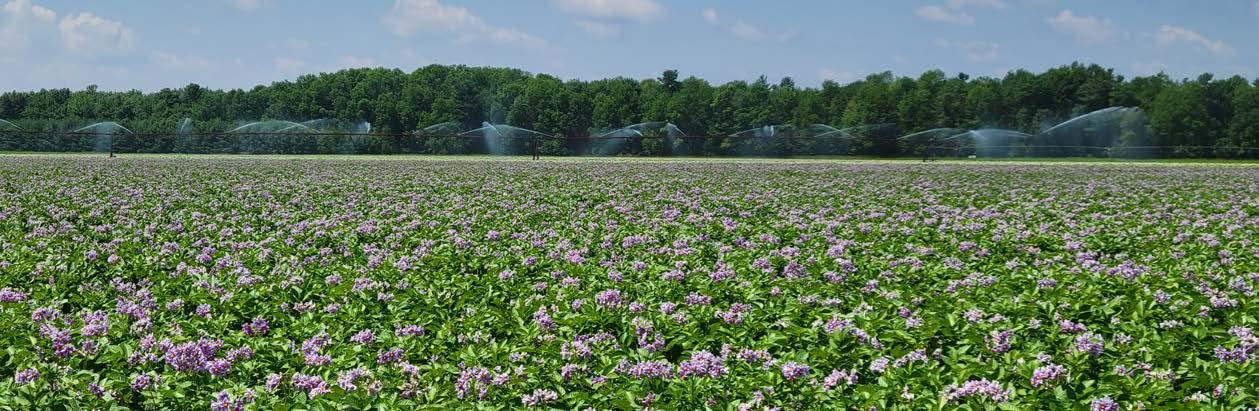
This beautiful photo of a flowering potato field was taken at Guenthner Potato Company Inc. on July 10, 2025.
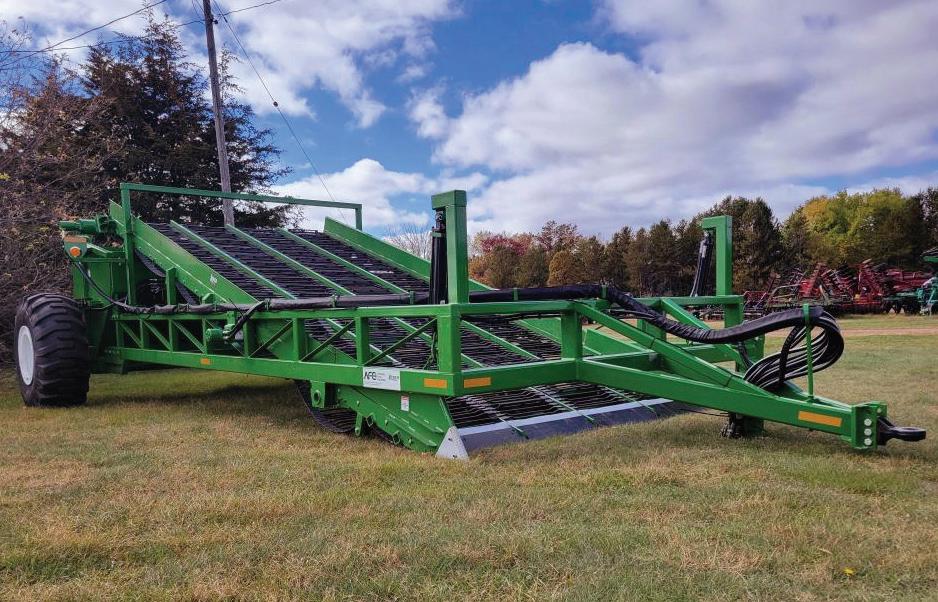
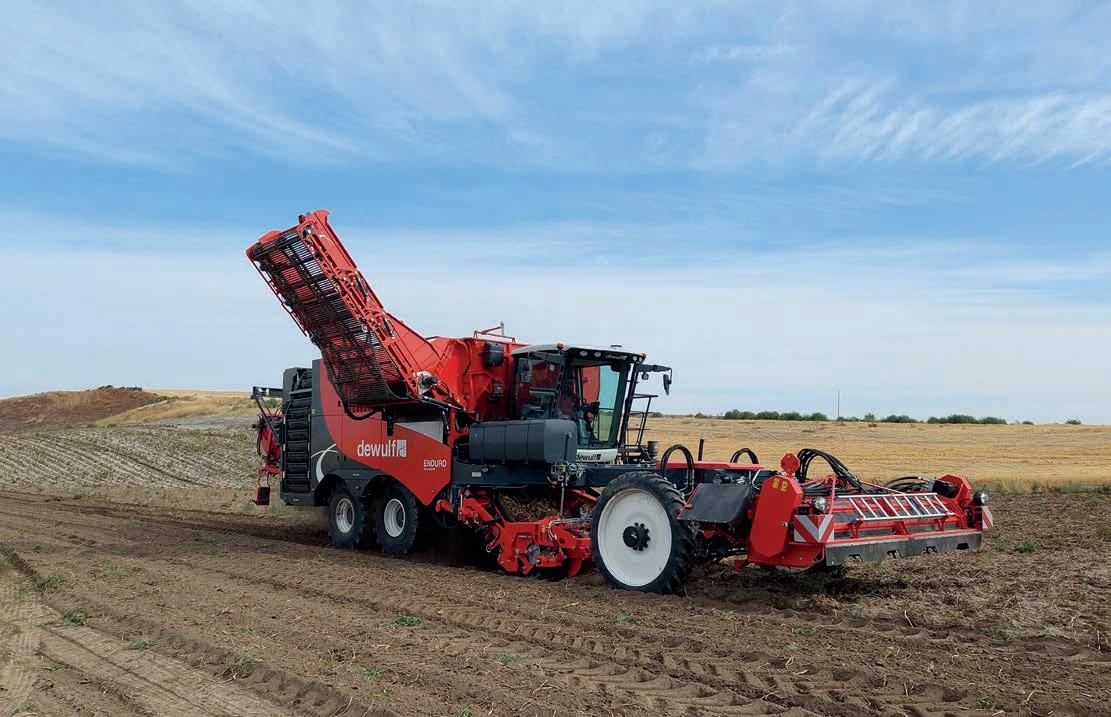
Enduro Harvester
Kevin Bula, John Schroeder, T.J. Kennedy, Neil Gudmestad, Corrie Enander, David Parish, and the list goes on.
I vividly remember Bucky Steinfest. He was our foreman, and I spent the summers in his shadow. Every fall when it was time to go to school, I would say I didn’t want to go to school.
Bucky would ask what I wanted to do, and I’d reply, “stay here with you.” Bucky was a tough guy but very kind to me. He would simply say, “You need to go to school.”
I remember riding with Bucky when I was 14 years old after school to pick up a load of 100-pound bags of potatoes from another farmer. The packing shed would grade them the next morning.
We loaded our semi-trailer by hand in the dark, and I remember Bucky turning on the radio to listen to Cassius Clay defeat Sonny Liston for the World Heavyweight Boxing Championship. Bucky never said, but I got the feeling he had been in a few fights himself.
When Bucky lived with my Grandma Lily and Grandpa Joe for room and board, he held Grandma in his massive arms while she peacefully passed away. And, my wife, Cheri, and I were at his bedside when he passed away. He was an important part of our family.
Joe: Bucky was tough. While in a storage, he fell 20 feet onto a concrete floor, got up, and walked away. Another time, his clothing got caught in a tractor’s power take-off shaft. The only things left on Bucky’s body were his belt, his work boots, and bruises. Oh, he was also hit by lightning while moving irrigation pipe, twice!
Bob: My best friend is Richard Pavelski of Heartland Farms. We talk just about every day and find humor in most every topic. In the 1980s, GPCI sold seed to his father, Albert. Richard and I first met when we were on the WPVGA Board of Directors. He was the president and assigned a task to me. I don’t remember what the task was, but I do remember him telling me that he “fully expected good results.”
Bob, what is your goal or long-term vision for the farm? My goal is to keep our same customers, provide good jobs for our faithful employees, and create opportunities. We have a young man in high school who is ready to take his FAA (Federal Aviation Administration) Part 107 remote pilot exam.
Bob, do you think Joseph Sebastion Guenthner would be proud of the operation today? Without a doubt, Grandpa would be proud. He knew how difficult it is to run a successful business. One of the old records I found was a letter dated September 2, 1930. The Great Depression started in 1929 and lasted 10 years.
The letter reads, “Mr. Jos. S. Guenthner, with reference to your note of $2,000 dated today, due on June 15, 1931, if you find you cannot pay this note when due, then I hereby extend the time of payment to September 1, 1931.”
The business he started survived The Great Depression. He would be overjoyed to see that it is still operating. Father Joseph F. Guenthner Sr. would be just as proud, even today, more than 50 years after his death.
Bob, are there fourth and fifth generations ready to take the reins of the operation? Jackie represents the fourth generation, and her 14-year-old son is fifth generation. I have no expectations for them. Jackie found her way to GPCI after teaching for 15 years.
My dad gave me good advice before I went to college. He said I should study something other than farming. He said, at times, he felt like there was nothing else he could be successful at.
Our other daughter, Bobbi, is a geneticist. She spent a lot of her career in oncology, trained at M.D. Anderson Cancer Center in Houston, and she and her husband, Mike, have three children.
Kevin Klages (left) and Sam Zaverousky do a final grading and inspection of certified seed potatoes before cutting and planting at Guenthner Potato Company.
Joe, is there anything I’ve missed that you’d like to add? I have a soft spot in my heart for potato producers and consumers in poor countries. There, the concern is “not enough calories” rather than “too many calories,” as in the U.S.
For more than a quarter century, I have worked on potato projects in Africa, including Egypt, Ethiopia, Kenya, Malawi, and South Africa. Those growers use a fascinating combination of old technology, new technology, and in some places, religion.
I have watched Ethiopian growers use oxen to plow and plant potatoes like my ancestors did long ago in Wisconsin.
How about you, Bob, is there anything I’ve missed that you’d like to add? Yes, there certainly is. I want to recognize the members of my immediate family: Joe, Margaret, Jack, Carolyn, my mother, Carol, and my dad, Joe, all worked on our family farm. They all contributed.
My sister, Margaret, passed away a couple of years ago. I still can picture her cutting seed tubers into “tuber units.” She would do that all day with her great sense of humor on display. Margy acquired her sense of humor from our mother, Carol. I asked Carol once how she wanted to be remembered. She replied, “I liked to make people laugh.”
If she was being bombarded with questions, she’d ask, “Are you writing a book? Leave that chapter out.” And others of her favorite sayings were, “He took the serious side where there was no serious side,” and “He would argue with a stop sign.”
Carol worked in our office until she was 65 years old. On her last day at work, she said, “Thank you, I wish I could say I enjoyed every minute. Try to get along without me. I won’t be coming back.”
My wife, Cheri, has always been there for GPCI. One time when
our harvester broke down, I sent everyone home, worked on it and fixed it around 10 p.m.
I went home and asked Cheri if she could go back to the field with me to drive truck alongside the harvester and pick up the potatoes lying out in a wind row. Her telling of this story would be much more colorful than mine.
She always ran for parts for us. Our
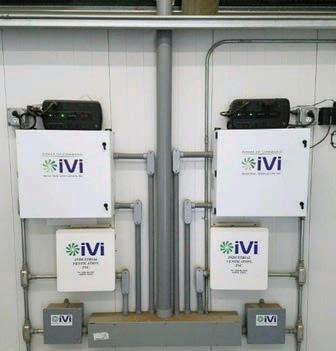
first ventilation systems did not have remote monitoring, and I would ask her if she would drive past the warehouses around 2 a.m. to make sure the lights were all green. She’s always been available on a moment’s notice when we needed her.
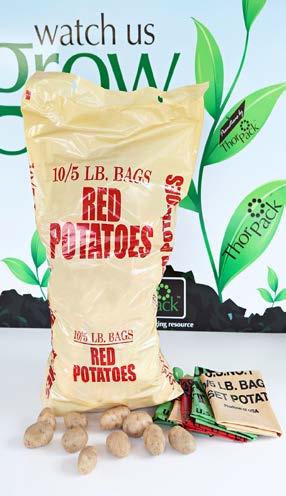
Wicket Poly Baler Bags
Thank you for acknowledging our company has been in business for 100 years. It is my privilege for my brother, Joe, and I to tell the story of GPCI. Toll Free: 866-934-7333 W6788 5th Ave. Road Bryant, WI 54418 www.thorpack.co m
Size: Manufactured to meet your required size specifications.
Equipment: JMC, Volmpack and Yakima Balers.
Color Film: Clear, tan, yellow green, red, black plus many additional colors available.
Print: Wide range of colors available. As labor costs continue to rise, productivity on the line is
Agriculture Drives One-Fifth of the U.S. Economy
$10.4 trillion U.S. food and agriculture industry is a primary engine
By Jennifer Shike, Farm Journal’s PORK
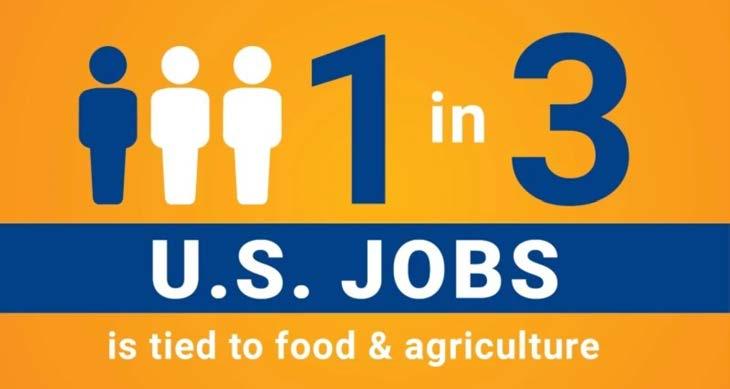
Did you know that close to one in every three jobs nationwide is tied to food and agriculture?
The latest Feeding the Economy Report says food and agriculture support about 49 million jobs, which is about 30% of total U.S. employment. (https:// feedingtheeconomy.com/wpcontent/uploads/2026/03/Feedingthe-Economy-Report-2026.pdf)
for national commerce and trade
Although less than 2% are on the farm, when you add food manufacturing, wholesale and retail, that equates to another 24 million jobs, or about 15% of the workforce.
Each year, the Feeding the Economy Report measures the downstream, off-the-farm economic impact of U.S. agriculture. Danny Munch, an economist with the American Farm Bureau Federation, says the report
Above: Agriculture supports about $10.4 trillion in economic output, or about one-fifth of the entire U.S. economy.
tracks three layers of impact.
“When you combine those layers, ag supports about $10.4 trillion in economic output, or about one-fifth of the entire U.S. economy,” Munch declares on his Newsline podcast. To hear the podcast, visit https:// www.fb.org/newsline/feeding-theeconomy-report-shows-agriculturessignificant-economic-impact.
The U.S. agricultural industry grew by nearly $900 billion over the past year, according to a study that is led each year by the Corn Refiners Association and sponsored by three dozen agriculture and food organizations, including the National Pork Producers Council (NPPC).
FOOD PRODUCTION
The first layer is direct activity, which includes the base level of food and ag production that is traditionally measured. The second layer measures supply industries like transportation, finance, equipment manufacturing, and inputs.
L ess than 2% of U.S. jobs are on farms, but when you include food manufacturing, wholesale, and retail, agriculture supports 24 million jobs, or 15% of the workforce beyond the farm. (Farm Journal’s Pork)
The third layer includes the ripple effects of the first two stages on how wages are earned and spent throughout the rest of the system.
So, all the benefits we were talking about—jobs, wages, tax revenue— they’re tied to where that production happens,” Munch says. “If production shifts overseas due to cost pressures, regulatory burdens or competitive challenges, that economic activity moves with it.”
“So, it’s not just about the food supply, it’s about all these other jobs, tax revenue and economic commerce that support industries across every corner of every state,” he stresses.
The report includes a state-by-state breakdown of agriculture’s economic impact, showing total jobs, wages, output, taxes and exports.
Key findings include:
• Food and agriculture generated more than $3 trillion in wages for U.S. workers, with wages rising 4% year-over-year and 13% over the past decade.
• Food manufacturing remains the largest manufacturing sector in the U.S., employing almost 2.3 million workers.
“So, all the benefits we’re talking about —jobs, wages, tax revenue—they’re tied to where ag production happens.”
– Danny Munch, economist with the American Farm Bureau Federation
• U.S. food and agriculture exports were more than $177 billion, though exports declined by $5.4 billion year-over-year, underscoring the need for maintaining strong trade agreements and expanding market access for American products.
• The food and agriculture sector produced $1.35 trillion in tax revenue for federal, state and local governments, a 7% increase yearover-year.
“The report confirms the incredible, positive impacts of agriculture on our country,” says NPPC Chief Executive Officer Bryan Humphreys.
“America’s 60,000-plus pork producers are proud to help drive
this force that provides our food and other agriculture products,” Humphreys states, “and the opportunity to be part of something bigger than themselves by carrying on a tradition of taking care of their families, neighbors, animals, and land.
“At heart,” he stresses, “it is a way of living that has often been passed down for generations.”
U.S. pork producers annually generate more than $37 billion in personal income, contribute more than $62 billion in Gross Domestic Product, and support more than 573,000 jobs in the U.S. economy, NPPC adds.
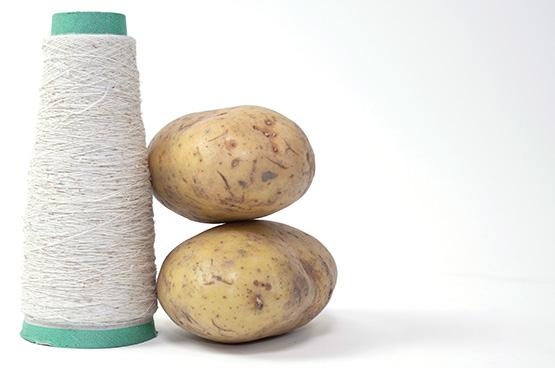
Emerging technology from the United Kingdom gives value to every part of the potato plant, turning stems and leaves into a new kind of sustainable textile fabric.
Fibe has already caught the attention of fashion brands in Europe and North America and is supported by Tin Shed Ventures, Patagonia’s venture capital fund.
Its implications, however, reach well beyond the runway.
From Field to Fiber to Fashion
Company transforms potato waste into textiles
By Melanie Epp, contributing writer, Spudman
For the food and processing industries, Fibe’s approach represents an opportunity to capture value from material that has long gone to waste.
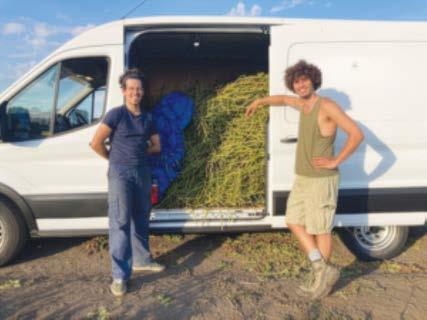
Each year, millions of tonnes (one tonne equals a metric ton, or 2,205 pounds) of potato plant matter, mainly stems and leaves, are left to decompose in the field after harvest. These residues have little economic value to the farmer and are often plowed under.
Now, that waste may have additional value. Using a patent-pending process, Fibe, founded in 2022 by four design engineers from Imperial College London, extracts and transforms plant material into a natural fiber suitable for spinning and weaving.
99.7% LESS WATER
Internal numbers show the process is more sustainable than conventional cotton production as it uses 99.7% less water and generates 82% less CO₂ (carbon dioxide) emissions.
The result is a biodegradable, compostable, and recyclable textile that can be blended with other natural fibers without compromising strength or quality.
While the result is positive news for the textile industry, waste-to-fiber processes still face challenges. Fibe Chief Executive Officer (CEO) Idan Gal-Shohet highlights subpar quality, complex processing and material sourcing as issues the company has overcome.
Fibers from waste streams tend to be short and weak, a challenge overcome through novel bioprocessing and proprietary
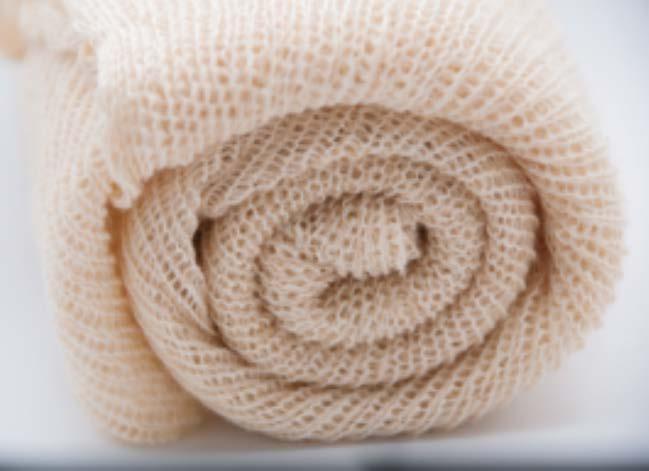
Fibe’s technology gives value to every part of the potato plant, turning stems and leaves into a new kind of sustainable textile fabric. Photo courtesy of Fibe
machinery that is more delicate than existing processes but still able to produce soft, high-quality fibers, Gal-Shohet says.
Conventional fibers like hemp and linen can take weeks to go from plant to fiber and require know-how and craftsmanship to understand when the stems are ready to be processed. Fibe automates that process, speeding the plant-to-fiber transition to less than a day with fewer steps, Gal-Shohet explains.
The last key challenge Fibe is working to overcome is collecting material at scale.
“Our ability to work with potatoes as well as other crops means we can quickly pivot to the most available materials in a region,” Gal-Shohet says.
In the context of a global shift toward sustainability and circular production, Fibe’s innovation fits within the goals of both the agricultural and fashion
“Our ability to work with potatoes as well as other crops means we can quickly pivot to the most available materials in a region.”
– Idan Gal-Shohet, Fibe CEO
sectors. What sets it apart, though, is its potential to create crossindustry partnerships, particularly between the fashion industry and food processors.
GROWER REVENUE
Potato processors and packers routinely handle large volumes of raw material, generating residues and by-products that might otherwise be discarded. If those residues could become a feedstock
for textile production, they could offer processors and growers a new revenue stream while reducing overall waste.
“As we scale, we continue to explore both off-the-shelf and proprietary machinery that allows us to collect the stems from the farmer in an automated way,” Gal-Shohet states. “Importantly, we seek not to add any
Contact: Jim or John
SNOWDEN • ATLANTIC • LAMOKA
MANISTEE • LADY LIBERTY
MACKINAW • PETOSKEY • BLISS
steps to the harvesting process and slot it directly into farming practices.”
Currently, Fibe sources potato residue from its United Kingdom network. The bulk of 2025’s material was gathered through the company’s collaboration with harvesting technology company GRIMME to develop a new potato harvester.
“Due to the larger scale of farming practices in North America, we will focus on leveraging relationships with the biggest potato growers and processors in the region,” says Jacob Smith, Fibe’s head of agriculture.
“This would provide us direct integration into the strong growers’ network within a high-production area such as Idaho and Washington in the Northwest of the USA, and into Canada,” Smith adds
While Fibe’s early partnerships focused on fashion textiles,
the company is now exploring opportunities beyond clothing. Potential applications include home furnishings, upholstery and automotive interiors.
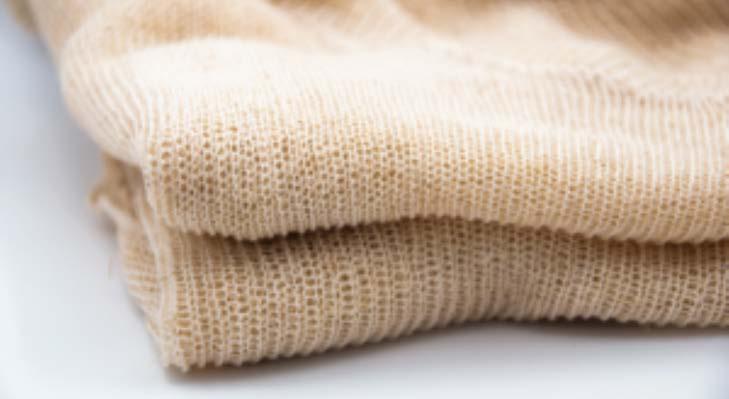
Currently, the company’s fibers are much like cotton or linen, which allows them to go into knits, canvas, denim, and woven fabrics.
NOVEL TEXTILES
“The most promising sector remains the textile industry as there is the largest amount of funding and experience in bringing novel textiles to the market,” Gal-Shohet says, adding that agriculture and textile industries often operate in the same regions.
“We are still [in] early stages, and we have yet to explore many use cases,” he remarks.
Scaling production, however, will depend on logistics, consistent
was founded by four design engineers from Imperial College London, in 2022, including Chief Technology Officer David Prior Hope (left) and Chief Executive Officer Idan Gal-Shohet.
Right: Conventional fibers like hemp and linen can take weeks to go from plant to fiber and require know-how and craftsmanship. Fibe automates that process, speeding the plant-to-fiber transition to less than a day through fewer steps. Photo courtesy of Fibe
supply, and clear value-sharing along the chain. These factors could determine whether agricultural byproducts such as potato leaves and stems become a new commodity rather than a waste burden.
As the company strengthens its partnerships with brands and explores international sourcing, its technology could also open a new market channel for America’s potato industry.
“The demand for high-quality fibers is increasing as brands struggle to meet growing global demand,” Gal-Shohet says. “This makes an additional sustainable fiber market highly valuable.”
“This value can be spread down the supply chain,” he concludes, “to growers, who would be able to sell their by-products and generate a supplementary revenue stream.”
Left: Fibe
Marketplace
by Dana Rady, WPVGA Director of Promotions & Consumer Education
Potatoes Rooted in Appeal at WAND Conference
Attendees visited booth to learn how spuds align with current dietary guidance
At the Wisconsin Academy of Nutrition and Dietetics (WAND) Annual Conference, April 16-17, 2026, at The Ingleside Hotel in Pewaukee, nutrition professionals from across the state gathered to explore emerging research, share best practices, and connect with partners shaping the future of food and health.
Amid the educational sessions and networking opportunities, one booth drew steady attention for its blend of science, simplicity, and local pride: Wisconsin Potatoes.
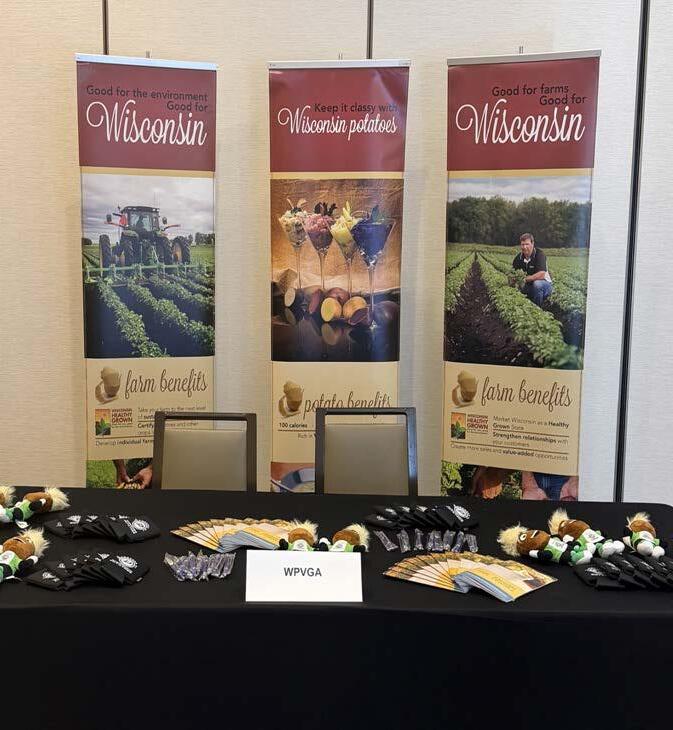
Wisconsin Potatoes’ presence on the conference floor offered more than a visual display. Designed to engage registered dietitians, students, and healthcare professionals, the booth highlighted the nutritional value of potatoes through an evidence-based lens.
As a new member of WAND (Wisconsin Academy of Nutrition and Dietetics) and first-time sponsor of the WAND Annual Conference, WPVGA Director of Promotions Dana Rady introduces attendees to the Wisconsin potato and vegetable industry, on April 16, at The Ingleside Hotel in Pewaukee.
06-26 Badger Common'Tater (7.25x2.25).v2.pdf 1 2026-05-04 9:47 am
Attendees stopped by to learn how potatoes align with current dietary guidance, particularly in
conversations around carbohydrates, satiety, and nutrient density.
Clear, accessible messaging anchored the booth’s materials. Infographics emphasized potassium content, vitamin C levels, and the role potatoes can play in balanced eating patterns.
Staff and representatives engaged visitors in conversations that moved beyond outdated misconceptions, reframing potatoes as a versatile, affordable, and nutrient-rich option for diverse populations.
A key theme of Wisconsin Potatoes’ participation was connection— linking agricultural production with clinical and community nutrition practice. Conversations at the booth frequently touched on how locally grown foods can support both health outcomes and regional economies.
continued on pg. 26
POTATOES A TOP COMMODITY
For many conference attendees, the opportunity to speak directly with commodity representatives added a practical dimension to their work. Whether discussing menu planning in schools, counseling patients with chronic conditions, or addressing food insecurity, dietitians explored how potatoes can fit into real-world applications.
Beyond printed resources, the booth leaned into experiential learning. Recipe cards and preparation ideas demonstrated the adaptability of potatoes across cuisines and dietary needs, from heart-healthy approaches to performance nutrition.
Of particular interest were the giveaways provided at the booth. Besides recipes and nutrition information, attendees appreciated taking pens, can koozies, and a plush “Spudly toys” to carry the
message of how “Wisconsin potatoes power performance” beyond the conference.
Wisconsin Potatoes’ involvement also complemented broader conference programming. The Wisconsin Academy of Nutrition and Dietetics has increasingly emphasized practical, food-based strategies in its events, and commodity groups like Wisconsin Potatoes help bridge research with application.
In a professional landscape where misinformation about carbohydrates persists, the booth served as a reliable touchpoint. By grounding its messaging in science and engaging directly with practitioners, Wisconsin Potatoes contributed to a more nuanced understanding of how staple foods fit into modern nutrition guidance.
As the conference concluded, the
steady traffic at the Wisconsin Potatoes booth reflected both curiosity, relevance, and appreciation for America’s favorite vegetable. In a setting focused on advancing nutrition practice, their presence underscored a simple but powerful idea: sometimes, the most impactful foods are the ones already on our plates.
Through education, engagement, and a commitment to clarity, Wisconsin Potatoes left attendees with practical insights, and perhaps a renewed appreciation for one of the state’s most iconic crops.
Left and Right: The WPVGA had a table at the WAND Annual Conference, April 16-17, at The Ingleside in Pewaukee. Conference attendees were able to take recipe brochures, pens, can koozies, and Spudly plush toys.
From Soil to Snack
“Wisconsin Foodie” explores the potato chip pipeline
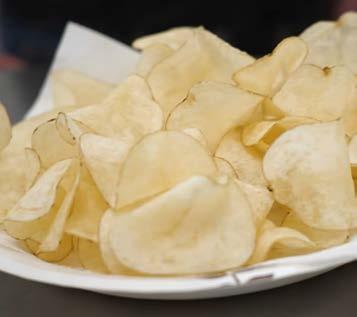
In the Wisconsin potatoes episode of “Wisconsin Foodie,” the journey of the Wisconsin potato unfolds as a full-circle story, one that begins in the field, crisps up in a kettle, and ultimately invites the public to reconnect with agriculture in a hands-on way.
Centered on Heartland Farms’ potato chip production, and a visit to the Food + Farm Exploration Center, the episode paints a vivid portrait of how a single crop can shape an entire community.
The first stop is Heartland Farms, one of the largest chipping potato producers in the Midwest. Here, scale meets stewardship. Vast fields stretch across Central Wisconsin, where sandy soil and careful irrigation provide ideal growing conditions. But what stands out isn’t just the size,
it’s the technology and precision. Every step, from planting to harvest, is guided by data, experience, and a deep respect for the land. Farmers discuss crop rotation, water conservation, and the constant
continued on pg. 28
N7158 6TH DRIVE P.O. BOX 215 PLAINFIELD, WI 54966
OFFICE: (715) 335-6660 FAX: (715) 335-6661
KEEP ON TRACK WITH OUR
SPROUT INHIBITORS AND DISINFECTANTS
STORAGE VENTILATION
• COMPUTERIZED CONTROL PANELS • HUMIDIFICATION • REFRIGERATION
SPROUT INHIBITING
• FRUIT GUARD APPLICATIONS
• SMART BLOCK APPLICATIONS
• CIPC, CLOVE OIL APPLICATIONS
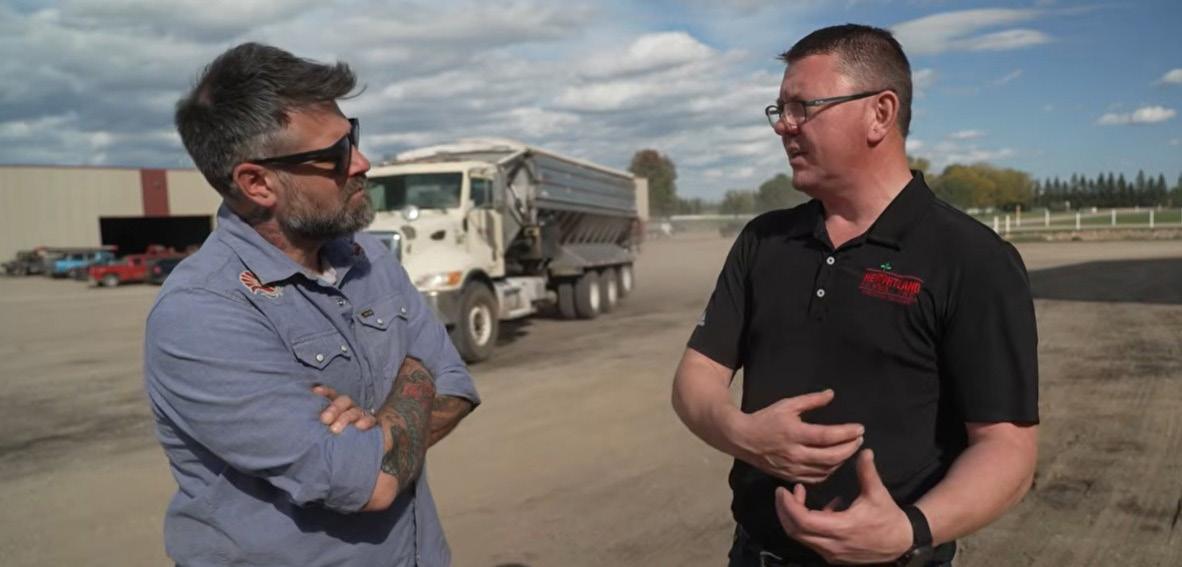
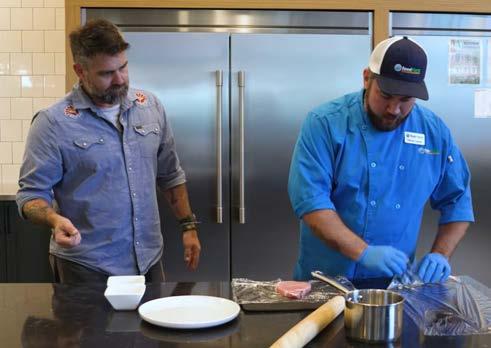
Above: Chef Luke Zahm (left) meets with Jeremie Pavelski of Heartland Farms, in Hancock, for the filming of the Wisconsin potatoes-themed episode of “Wisconsin Foodie” focused on potato chip production.
balancing act between productivity and sustainability.
It’s clear that growing potatoes at this level requires more than machinery; it requires intention.
From there, the episode transitions into discussions about potato chip production. Potatoes from Heartland Farms are taken to the Frito-Lay processing plant in Beloit. Once there, they can become chips that same day.
DEEPER STORY
But beyond the mechanics, there’s a deeper story about consistency and quality. Producers talk about
selecting the right potato varieties specifically for chips, ones with the ideal sugar content and structure to deliver that perfect bite. It’s a reminder that even the most familiar snack is the result of careful decisionmaking long before it reaches a bag.
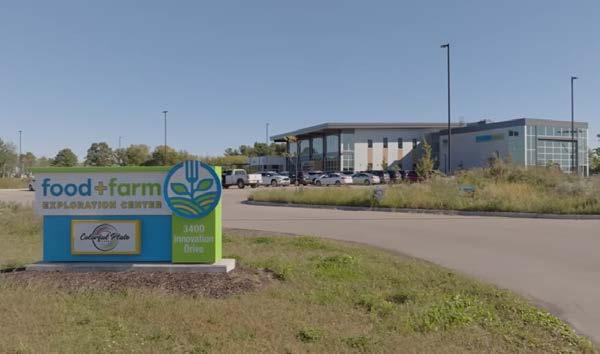
The final segment shifts from production to education with a visit to the Food + Farm Exploration Center. Here, the focus turns outward toward consumers, families, and anyone curious about where their food comes from. Interactive exhibits invite visitors to explore modern agriculture, from planting simulations to behind-the-scenes looks
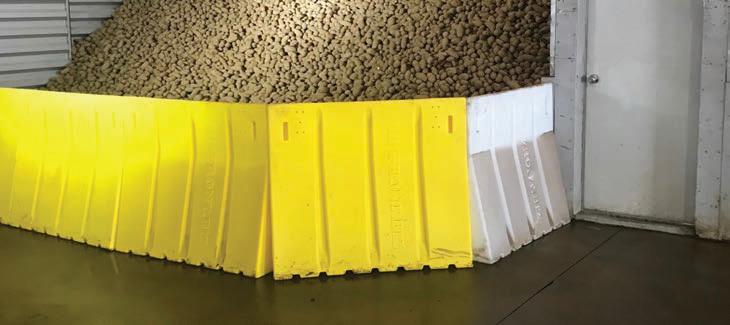
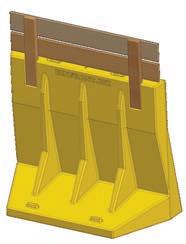
BINFRONT BARRIERS
•
•
“Wisconsin
as one of the components of the Wisconsin potatoes-focused episode. Chef Luke
and Chef Davey Lynch of the Food + Farm Exploration Center finish the episode by preparing a delicious snack in the kitchen using Wisconsin potato chips.
at food processing.
The Center bridges a growing gap between farm and table, offering a space where people can ask questions, challenge assumptions, and gain a clearer understanding of the agricultural systems that sustain them.
What ties the episode together is its emphasis on connection.
At Heartland Farms, it’s the connection between farmers and the land. And at the Food + Farm Exploration Center, it’s the connection between producers and the public. Each segment proves that food is never just one thing, but instead a chain of people, processes, and places working in harmony.
By the end of the episode, the potato emerges as more than a crop or a snack. It becomes a symbol of Wisconsin’s agricultural identity rooted in tradition, driven by innovation, and shared through experiences both simple and profound.
It’s a story that crunches, quite literally, with meaning.
Above:
Foodie” visited the Food + Farm Exploration Center, in Plover,
Zahm (left)
New Products
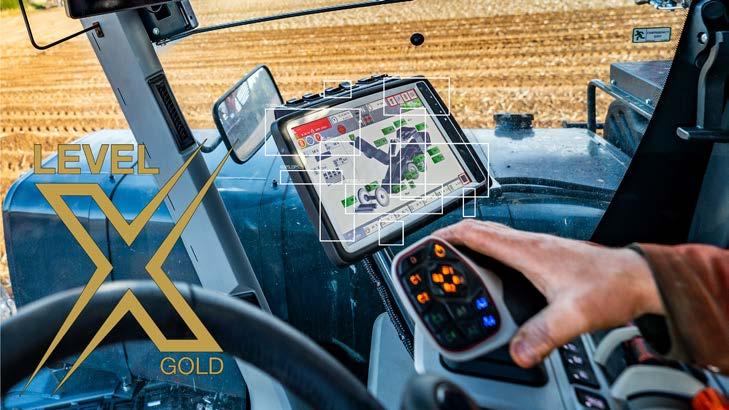
Dewulf Debuts Level X IoT Platform
Years of intensive research and testing led to integrating the new technology into harvesters
In the ever-evolving world of potato and root crop cultivation, Dewulf Group continues to lead the way in innovation.
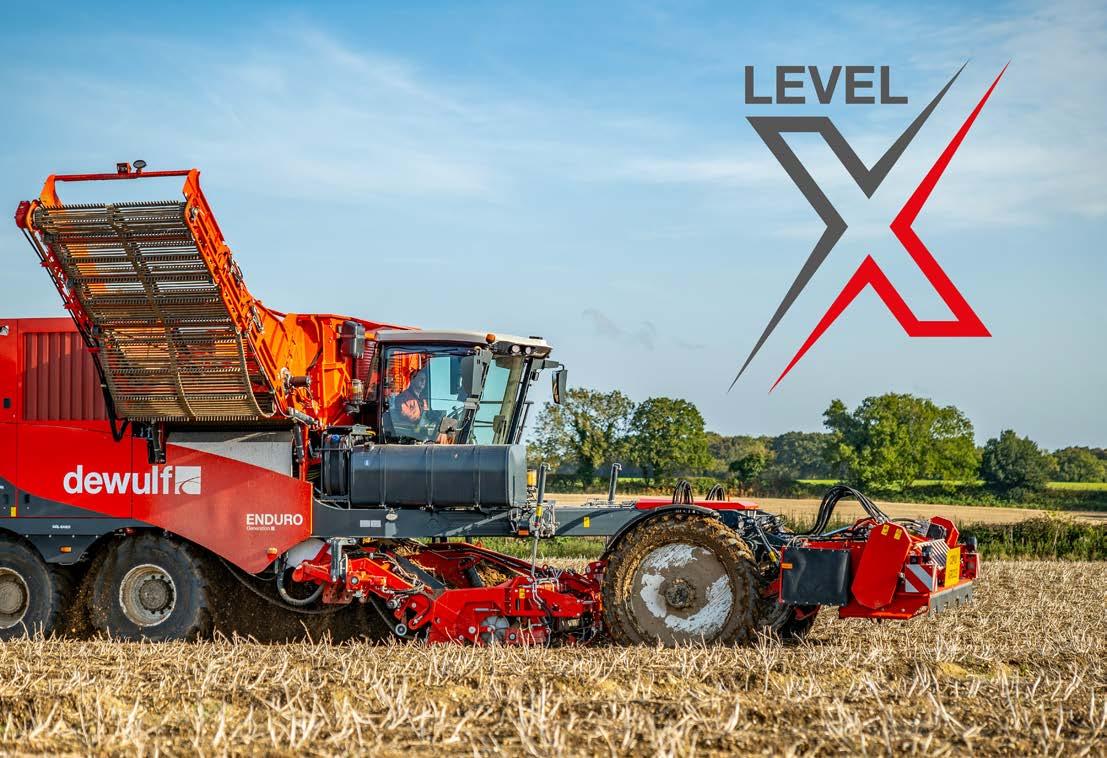
After years of in-depth research, development and field testing, the full-line manufacturer is now lifting the veil on its high-tech breakthrough: Level X. With this launch, Dewulf becomes the first manufacturer in the potato sector to offer a complete concept that enables users to grow at the neXt level.
Thanks to intelligent applications, both operator and machine can now take that extra step to attain unparalleled levels of quality, efficiency and user comfort.
Harvesting is precision work. The success of these often-complex operations depends not only on the machine, but equally on the operator. It is precisely at this point of synergy—where human and machine meet—that Dewulf, as a leading manufacturer, aims to redefine the playing field.
With Level X, the company introduces concrete, innovative applications that guide the operator in an intuitive and supportive way. In doing so, Dewulf and its users are taking the next step in crop cultivation together, with the goal of promoting growth for every stakeholder.
The Level X innovation will be launched in three distinct configurations, each with its own specific focus and clear added value:
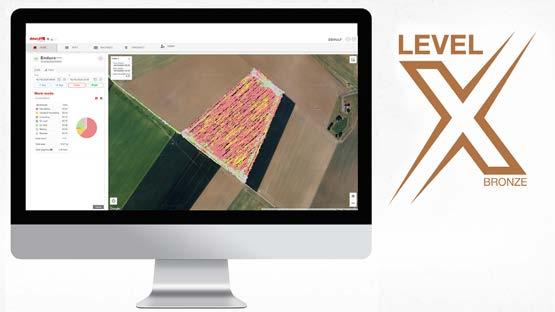
The Bronze version of Level X— standard on Dewulf’s self-propelled potato harvesters—provides growers with valuable insights via the integrated IoT (Internet of Things) platform.
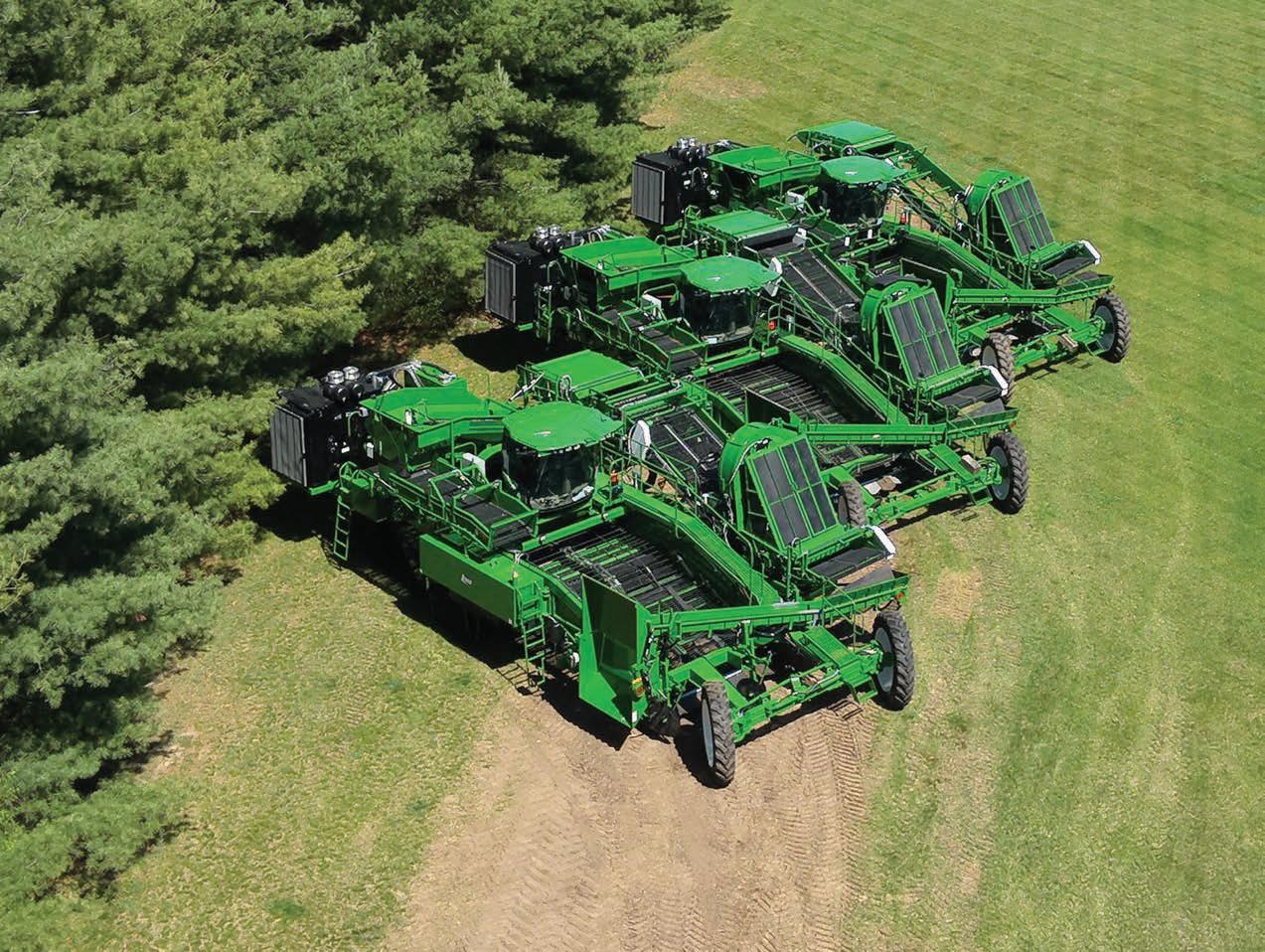
Dewulf’s Level X platform was first tested and implemented on the company’s flagship Enduro potato harvester.
This system monitors, among other things:
• GPS location
• Fuel and AdBlue consumption
• Machine speed and modes (harvesting, transport, turning)
• Field-specific data: harvested area and productivity
These data points provide a clear overview of performance and support accurate monitoring and optimization of the harvesting process. The Bronze Level X package forms the foundation for further automation, offering both end users and dealers new insights to maximize efficiency and uptime.
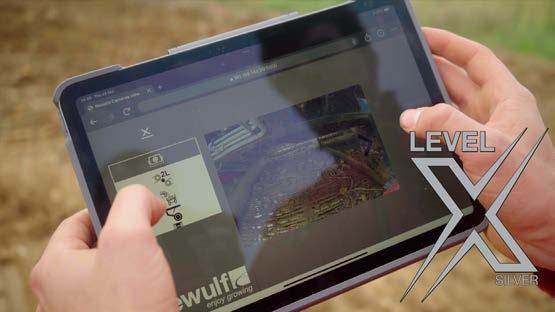
With the Silver Level X package, which also includes a brand-new camera system with state-of-the-art functionalities, Dewulf takes things a
step further. The Silver Level X version gives users greater control over the quality of the harvesting process.
Additional features:
• Save and reuse settings: Personalize operation to suit individual preferences
• Remote view: Monitor the process live from another device and make any necessary adjustments
• Slow motion: Optimize based on detailed visual feedback
• Casting integration: For seamless communication with your smartphone and in-cab navigation
The combination of visual data, a user-friendly interface and memory functions enables operators to continuously optimize based on realtime information for more control,
better quality and higher yield.
This is the flagship package, a toptier, all-inclusive version. With the Gold Level X variant, Dewulf pushes the boundaries of automation. The machine actively makes decisions based on sensors, data and AI (Artificial Intelligence)-driven analysis.
This makes it possible to:
• Guarantee consistent quality, regardless of who is behind the wheel
• Harvest with maximum flexibility by adjusting parameters through optimal machine settings without compromising quality
• Boost daily output without extra effort or resources
While the operator previously had to make continuous manual adjustments, the machine now takes over. The optimal settings are applied automatically and adapted to the crop, soil and prevailing conditions.
Under ideal circumstances, this highperformance machine can harvest up to 2 kilometers/hour faster using calibrated settings, or slightly slower when unloading on the move. It turns every operator into a high performer.
The true strength of this Level X package lies in the balance between full control and full support. The machine’s capacity is used to its fullest, ensuring highly consistent
performance with a very low risk of mistakes.
Dewulf will roll out the various Level X configurations gradually, guided at every step by customer needs and expectations.
Level X is more than just a vision for the future. The packages are already available from the Roeselare, Belgium-based machine builder today. Years of intensive research and testing have led to the next major step in integrating this technology into Dewulf’s high-performance harvesters.
The development was first tested and implemented on the flagship Enduro harvester and is now also available on the facelifted R3060, soon to be followed by the Kwatro.
When you invest in a Dewulf harvester, you get a top-tier machine equipped with countless setting options. The harvester’s intuitive, automated adjustment suggestions ensure that its settings are used to their fullest potential.
The new control technology is synonymous with enhanced cropfriendliness, streamlined machine
configuration, and an unparalleled level of user-friendliness and operator experience.
SMART FEATURES
These smart features empower the user to make continuous, proportional and highly precise adjustments at exactly the right moment based on local conditions in the field.
The essence of Level X is raising harvesting standards, efficiency and yield through Dewulf’s cutting-edge technology.
The machine automatically adjusts itself to match prevailing conditions, guaranteeing a perfect balance between capacity and quality. At the same time, overall driving comfort for the Dewulf operator remains crucial.
The impact of these innovations is that they simplify the day-to-day workload, reducing stress, boosting confidence and delivering harvesting results that are consistently reliable, day after day.
Moreover, with the expansion of the machines’ connectivity capabilities, it will be possible for the service technician, farm owner and trailer
driver to closely monitor the harvesting process, and therefore the yield, at any time. This gives everyone involved in the harvesting operation greater control over what truly matters.
Think of it as similar to the adaptive cruise control in your car, which protects you from potential mishaps when your attention slips. In the same way, Dewulf’s intelligent control technology offers harvester operators an effective safeguard against unnecessary crop damage, avoidable quality loss and suboptimal yield.
The result is a top-quality Dewulf harvester that always delivers peak performance while offering an exceptionally user-friendly working environment. This makes the potential for growing, cultivating and harvesting virtually limitless. Enjoy growing neXt level, from 1 to X.
For more information, contact Dewulf, attention Florin Decoster, florin.decoster@dewulfgroup.com, +32 51 20 58 71, or contact Dewulf’s North American dealership, T.I.P., Inc., attention Kenton Mehlberg, kenton@ tipinc.net, 715-592-4650.
Potato Storage - Bryan Bula Farms
Eyes on Associates
By WPVGA Associate Div. President Matt Selenske, Allied Coop’s Pest Pros Division
Hello, everyone. May came and went, the crops are planted, and now it is time to nurture them by providing everything the plants need to meet our yield goals. I personally think this is a great time of year, monitoring crop health and pests, reacting to weather events, and mitigating crop stress.
Speaking of nurturing, on Thursday, April 30, the WPVGA Associate Division Board invited high school and technical college students to the 3rd Annual Student Career Development Spring Planting Day. Our goal through the Student Career Development Program is to spotlight careers in the industry and create some excitement among the next generation
of agricultural professionals.
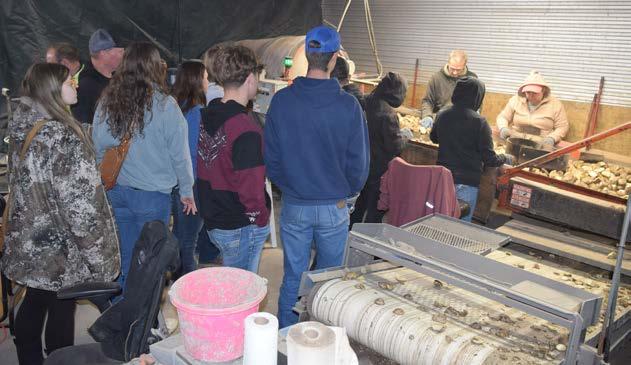
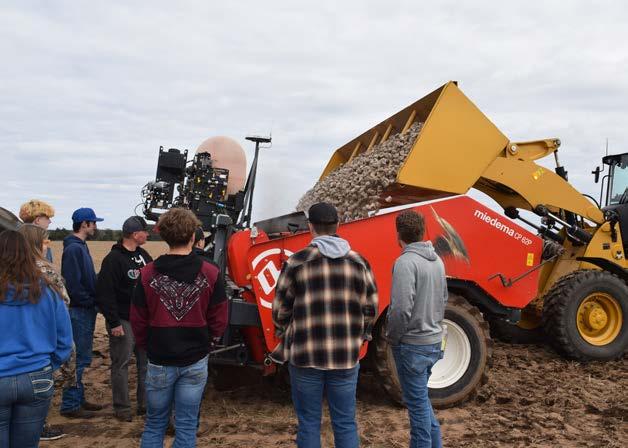
Central Wisconsin high school and technical college students met WPVGA staff members and industry reps at the Food + Farm Exploration Center, in Plover, before loading into a bus headed for Worzella & Sons Inc. where they experienced seed potato cutting and planting operations.
Many thanks to Steve Worzella and his crew for taking the time to visit with the dozen students who participated.
Afterwards, the students met back at the Food + Farm Exploration Center for lunch and a roundtable discussion with industry professionals from Swiderski Equipment, Jay-Mar
Inc., Heartland Farms, and Allied Cooperative.
Roundtable panel members shared stories about how they ended up in their agribusiness positions and what they love about having careers in the potato and vegetable industry.
ENDOWED SCHOLARSHIP FUND
Speaking of investing in the future, the Associate Division Board is very excited to announce our Endowed Scholarship Fund. For every $28,000 we invest in the fund, we will be able to award a $1,000 scholarship yearly for as long as the Associate Division exists.
Currently, we are looking for donations to the fund, and the
Left and Right: Central Wisconsin high school and technical college students experienced a seed potato cutting operation at Worzella & Sons Inc., in Plover.
Associate Division Board will match up to $14,000. We already have two pledges and are looking for more to meet our goal. Anyone interested in contributing, please contact Julie Braun at jbraun@wisconsinpotatoes. com.
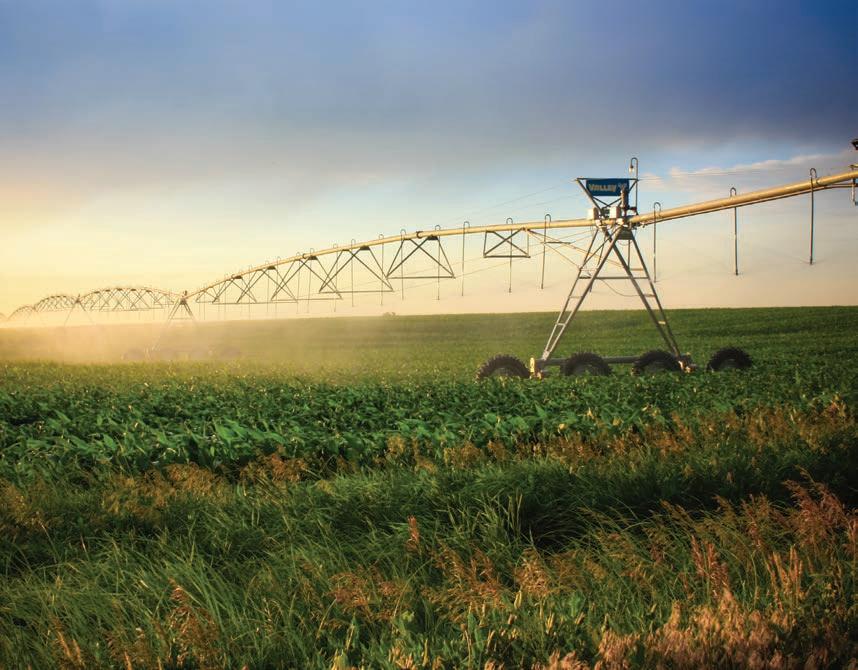
Pretty simple. Farmers depend on what’s dependable. That’s Valley®, the #1 brand in pivot irrigation. Our machines are engineered to be the strongest and last the longest. As ever-increasing demands are put on growers' shoulders, let Valley lighten the load—and increase yields—with rock-solid reliability.
Experience our dependability. Contact us today!
Last but certainly not least, the Associate Division Board received grant proposals from the Hancock, Rhinelander, and Langlade Co. Agricultural Research Stations, the Wisconsin Seed Potato Improvement Association Board, the Wisconsin Seed Potato Certification Program,
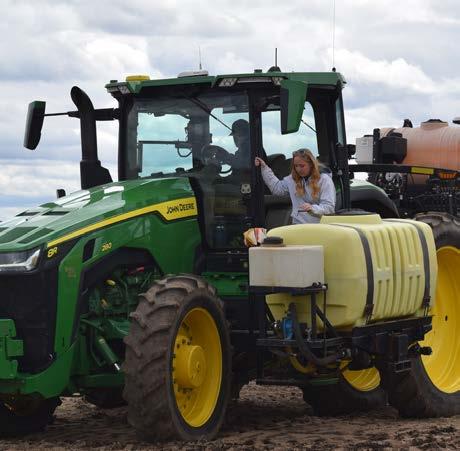
Left and Right: Steve Worzella (center, black sweatshirt and cap) of Worzella & Sons Inc., Plover, gave participants of the Student Career Development Spring Planting Day a close-up view of potato planting on the 6,500-acre operation. Students even got a chance to ride along in state-of-the-art John Deere tractors during planting.
continued on pg. 34
valleynci.com
and the Lelah Starks Elite Foundation Seed Potato Farm.
The Board voted to fund $20,000 for various projects and equipment that will help day-to-day operations. We understand the value of the research and promotions that these
organizations provide to the industry and Wisconsin potatoes.
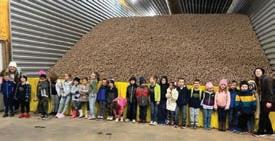
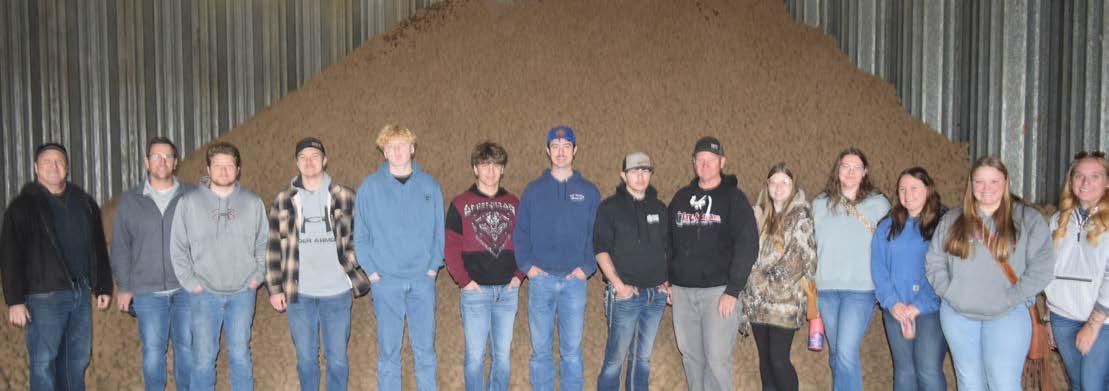
Above: Students pose with Steve Worzella (sixth from right) in a Worzella & Sons Inc. potato storage facility. Facilitators of the Student Career Development Spring Planting Day include WPVGA Executive Director Tamas Houlihan (left) and Northcentral Technical College Agronomy and AgriBusiness Instructor Trevor Frank (second from left).
Potatoes & Chronic Kidney Disease
New guidance focuses on fruits and vegetables rich in potassium
By Jenny Heap, MS, RDN-Registered Dietitian Nutritionist
For many years, it was thought that, due to high potassium and phosphorus content, whole foods like avocados, bananas, potatoes, and tomatoes needed to be restricted across the board for individuals with chronic kidney disease. Because kidneys filter excess potassium from the blood, reduced kidney function can result in hyperkalemia—dangerously high levels of potassium in the blood.
However, recent research questions the effectiveness of restricting these foods, and in many cases, the wisdom of doing so.i ii iii iv
In fact, it is now understood that diets rich in fruits and vegetables, including potatoes, not only protect cardiometabolic health but can also help slow the progression of kidney disease.v
According to the American Heart Association, one in three adults in the
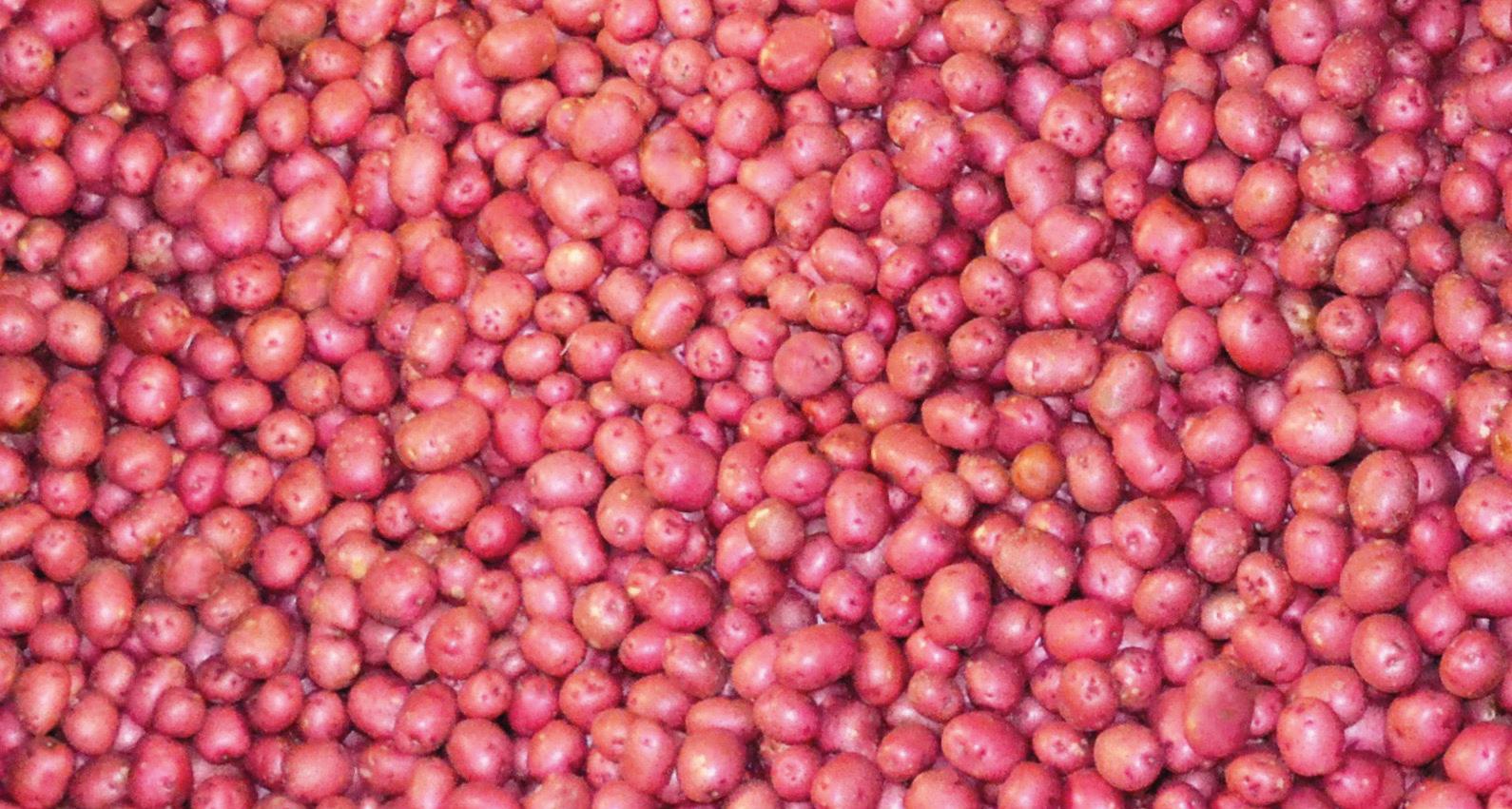
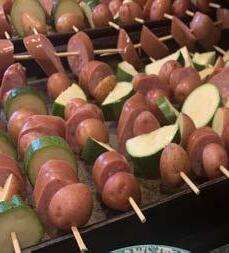
Above: Diets rich in fruits and vegetables, including potatoes, not only protect cardiometabolic health but can also help slow the progression of kidney disease.
United States has three or more risk factors that lead to cardiovascular disease, metabolic disorders, and kidney disease: elevated weight, blood pressure, cholesterol, blood glucose, and triglycerides.
The trifecta is so interrelated that it’s now referred to as cardiovascularkidney-metabolic (CKM) syndrome.
Plant-based diets, such as Mediterranean, vegetarian, and vegan approaches, in addition
Potatoes & Chronic Kidney Disease. . .
continued from pg. 35
to DASH (Dietary Approaches to Stop Hypertension), are widely recommended to support cardiometabolic health.
Therefore, it is thought that personalizing and liberalizing diets for those with reduced kidney function could be especially beneficial for cardiometabolic health.
VITAMIN C LEVELS
It’s thought that vitamin C might help prevent atherosclerosis, hypertension, and strokevi and may be particularly related to blood pressure. A 2020 meta-analysis showed serum vitamin C levels to be significantly lower in study participants with hypertension vs. those with normal blood pressure.vii
Vitamin C is also a topic of rising interest for those researching diabetes. Studies show that diabetes increases vitamin C requirements and that higher intakes might help improve both blood pressure and glycemic control.viii
Vitamin B6 is known to play an
GAP Water Testing
Helping growers meet produce safety standards
important role in carbohydrate metabolism, but it doesn’t stop there. There is ample evidence to suggest that serum levels of vitamin B6 are inversely related to type 2 diabetes (T2D) and its progression.ix
Potatoes are a significant source of magnesium in Americans’ diets, with an estimated 5% coming from potatoes.x Magnesium helps
AgSource makes it easy to test agricultural water used in irrigation and postharvest processes. With free sample pickup routes, you can skip the hassle of mailing samples and ensure your water is free of bacteria.
GAP Water Test – E. coli and coliforms
• Free sample pickup through August at:
o UW Agricultural Research Station –Hancock, Wisconsin
o WPVGA Office – Antigo, Wisconsin
• Quick turnaround + competitive pricing
Visit agsource.com or call 715.898.1402
regulate blood pressure and blood glucose levels.
Magnesium insufficiency is common in T2D and is thought to worsen insulin sensitivity.xi A new retrospective analysis of NHANES data (1999-2018) found that higher intakes of dietary fiber and magnesium were associated with reduced long-term risk of cardiovascular death and death from all causes in people with T2D.xii
The fiber in potatoes helps slow digestion and absorption of carbohydrates, helping to blunt the glucose response. Fiber also enhances satiety, contributes to bowel regularity, and may have beneficial effects on the gut microbiome.
Systematic reviews suggest that total dietary fiber intake is associated with a reduced risk of both diabetesxiii and cardiovascular disease.xiv
LEAVE THE PEEL ON
Fiber is the only nutrient significantly reduced when a potato is peeled. Nearly 50% of the fiber is found in
the skin, so leave the peel on to optimize cardiometabolic benefits.
A 2021 systematic review looking at the association of dietary patterns and the development and progression of chronic kidney disease (CKD) concluded that dietary patterns emphasizing intake of fruits, vegetables, and dietary fiber are protective of kidney health and associated with lower incidence and progression of CKD.
Reduction of salt, sweets, fats, and protein also appeared protective of kidney health.xv
For healthy people and those with early-stage kidney disease, diets high in foods naturally rich in potassium such as fruits and vegetables are encouraged to help prevent disease progression and protect cardiometabolic health.xvi
The 2024 update to the KDIGO guidelines for dietary management of hyperkalemia emphasizes the importance of registered dietitian nutritionists (RDNs) in providing personalized dietary counsel based on disease state and individual nutrition needs.
Working alongside the medical team, RDNs can provide guidance on preventing and managing hyperkalemia via diet.xvii
While it is critically important for those with chronic kidney disease to watch and closely manage potassium levels, the relative impact of limiting healthy, whole foods is now better understood and research suggests that the benefits of including these foods outweigh perceived risks.
The following strategies are thought to be most practical and impactful for preventing and managing hyperkalemia:xviii
“Nearly 50% of the fiber is found in the potato skin, so leave the peel on to optimize cardiometabolic benefits.”
Get the customized financing, insurance, and business services from a team focused on agriculture. Our tailored solutions will meet the unique financial needs of any size farm, ranch, or agribusiness.
AgCountry.com
AgCountry
Potatoes & Chronic Kidney Disease. . .
continued from pg. 37
1. Avoiding highly bioavailable potassium from processed foods and potassium additives
Potassium from foods like fruits and vegetables is part of the food matrix and is less readily available during digestion. In contrast, potassium from food additives like potassium chloride (often added to low-sodium foods) can more quickly raise blood potassium levels due to high levels and easy absorption.
According to the KDIGO clinical practice guidelines updated in 2024, reduction of processed foods rich in highly bioavailable potassium, such as salt substitutes, processed meats, powdered drink mixes, electrolyte beverages, and processed lowsodium foods, should be encouraged versus limiting fresh, potassiumrich whole foods for hyperkalemia management.xix
While nearly all the potassium in food additives is absorbed by the body, less than 60% is absorbed from potassium-rich whole foods.xx
The following additives should be viewed with caution: potassium chloride, potassium lactate, potassium citrate, potassium phosphate.
2. Reviewing medications: Many medications can impact potassium levels and potentially cause or worsen hyperkalemia, so it is important to review medications with a physician and work closely with the medical team.
3. Managing blood sugar levels: Because elevated blood sugar levels can also contribute to hyperkalemia, managing blood sugar is critical to managing potassium levels.
4. Managing blood acidity: The acidity of the blood can also
impact potassium levels, with higher acid contributing to elevated potassium. Eating fruits and vegetables can help manage blood pH and support kidney function by neutralizing acid in your blood.
5. Managing intestinal transit time: Potassium is absorbed in the large intestine, and the longer food waste is present in the large intestine, the more potassium is absorbed. Fiber from diets high in fruits and vegetables helps manage constipation and regulate potassium absorption.
For cases in which the medical team agrees that further potassium reduction is necessary via limiting whole food sources, potassium in potatoes can be significantly reduced (by up to 70-90% in some cases) via double cooking (discarding water between boils)xxi or using the following methodsxxii:
Fresh Potatoes
• Peel potato and cut into thin strips
• Boil in water for 8 minutes
• Drain and replace with fresh water
• Soak for 12 hours
• Drain and prepare as desired
Canned Potatoes
• Drain potatoes
• Soak in fresh water for 12 hours
• Drain and prepare as desired
Frozen French Fries
• Rinse and drain
• Soak in water for 12 hours
• Drain and prepare as desired (Frying will reduce moisture, and therefore increase the potassium per gram, but soaking the fries first will greatly reduce the potassium content.)
In conclusion, managing blood potassium levels is essential to prevent hyperkalemia in those with impaired kidney function.
Current recommendations emphasize the importance of avoiding highly bioavailable potassium from processed foods and additives, close medication management, managing blood sugar levels, managing blood acidity, and regulating intestinal transit time.
Using these strategies to prevent and manage hyperkalemia while encouraging healthy dietary patterns rich in whole foods like potatoes is indicated to support kidney longevity and cardiometabolic health.
Information shared in this article is for general educational purposes. Diets for those with CKD should be individualized with the help of a registered dietitian nutritionist who can make recommendations based on an individual’s disease state, responsiveness to diet therapy, and other nutritional needs.
Explore more at https:// eatwisconsinpotatoes.com.
Content produced in partnership with the Wisconsin Potato & Vegetable Growers Association (WPVGA). The WPVGA represents growers committed to good agriculture, food safety, nutrition, traceability and providing America with fresh, highquality produce.
Wisconsin-grown potatoes offer more than just great taste. Local and sustainably sourced, they’re packed with nutrition no matter the variety.
Every one of our Wisconsin Healthy Grown® farms is certified by an independent oversight organization. They ensure our growers pass annual Wisconsin Healthy Grown® Potatoes and Vegetables whole-farm audits, and that all our packers and shippers maintain the highest sustainability standards.
Look for the Wisconsin Healthy Grown® certification.
i Bernier-Jean A,Wong G, Saglimbene V, et al. Dietary potassium intake and all-cause mortality in adults treated with hemodialysis. Clin J Am Soc Nephrol. 2021;16:1851-1861.
ii Ramos CI, Gonzalez-Ortiz A, Espinosa-Cuevas A, Avesani CM, Carrero JJ, Cuppari L. Does dietary potassium intake associate with hyperkalemia in patients with chronic kidney disease? Nephrol Dial Transpl. 2021;36:20492057.
iii St-Jules DE, Goldfarb DS, Sevick MA. Nutrient non-equivalence: does restricting high-potassium plant foods Help to prevent hyperkalemia in hemodialysis patients? J Ren Nutr. 2016;26:282-287.
iv Babich JS, Kalantar-Zadeh K, Joshi S. Taking the Kale out of hyperkalemia: plant foods and serum potassium in patients with kidney disease. J Ren Nutr. 2022;32:641-649.
v Quintela BCSF, Carioca AAF, de Oliveira JGR, Fraser SDS, da Silva Junior GB. Dietary patterns and chronic kidney disease outcomes: A systematic review. Nephrology (Carlton). 2021;26(7):603-612. doi:10.1111/ nep.13883
vi Morelli MB, Gambardella J, Castellanos V, Trimarco V, Santulli G. Vitamin C and Cardiovascular Disease: An Update. Antioxidants (Basel). 2020;9(12):1227. Published 2020 Dec 3. doi:10.3390/ antiox9121227
vii Ran L, Zhao W, Tan X, et al. Association between Serum Vitamin C and the Blood Pressure: A Systematic Review and Meta-Analysis of Observational Studies. Cardiovasc. Ther. 2020, 2020, 4940673
viii Mason SA, Parker L, van der Pligt P, Wadley GD. Vitamin C supplementation for continued on pg. 40
Potatoes & Chronic Kidney Disease. . . continued from pg. 39
ix Mascolo E, Vernì F. Vitamin B6 and Diabetes: Relationship and Molecular Mechanisms. Int J Mol Sci. 2020 May 23;21(10):3669. doi: 10.3390/ijms21103669. PMID: 32456137; PMCID: PMC7279184.
x Beals, K.A. Potatoes, Nutrition and Health. Am J Potato Res. 2019;96:102–110. https:// doi.org/10.1007/s12230-018-09705-4
xi Barbagallo M, Dominguez LJ. Magnesium and type 2 diabetes. World J Diabetes. 2015 Aug 25;6(10):1152-7. doi: 10.4239/ wjd.v6.i10.1152. PMID: 26322160; PMCID: PMC4549665.
xii Wang F, Mao Y, Sun J, Yang J, Xiao L, Huang Q, Wei C, Gou Z, Zhang K. Models based on dietary nutrients predicting all-cause and cardiovascular mortality in people with diabetes. Sci Rep. 2025 Feb 7;15(1):4600. doi: 10.1038/s41598-025-88480-9. PMID: 39920222; PMCID: PMC11805981.
xiii InterAct C. Dietary fibre and incidence of type 2 diabetes in eight European countries: the EPIC-InterAct study and a meta-analysis
of prospective studies. Diabetologia. 2015;58:1394–408.
xiv Threapleton DE, Greenwood DC, Evans CE, Cleghorn CL, Nykjaer C, Woodhead C, Cade JE, Gale CP, Burley VJ. Dietary fibre intake and risk of cardiovascular disease: systematic review and meta-analysis. BMJ. 2013;347:f6879.
xv Quintela BCSF, Carioca AAF, de Oliveira JGR, Fraser SDS, da Silva Junior GB. Dietary patterns and chronic kidney disease outcomes: A systematic review. Nephrology (Carlton). 2021;26(7):603-612. doi:10.1111/ nep.13883
xvi Kidney Disease: Improving Global Outcomes (KDIGO) CKD Work Group. KDIGO 2024 Clinical Practice Guideline for the Evaluation and Management of Chronic Kidney Disease. Kidney Int. 2024;105(4S):S117-S314. doi:10.1016/j. kint.2023.10.018
xvii Sumida K, Biruete A, Kistler BM, et al. New Insights Into Dietary Approaches to Potassium Management in Chronic Kidney Disease. J Ren Nutr. 2023;33(6S):S6-S12. doi:10.1053/j.jrn.2022.12.003
xix Kidney Disease: Improving Global Outcomes (KDIGO) CKD Work Group. KDIGO 2024 Clinical Practice Guideline for the Evaluation and Management of Chronic Kidney Disease. Kidney Int. 2024;105(4S):S117-S314. doi:10.1016/j. kint.2023.10.018
xx Kidney Disease: Improving Global Outcomes (KDIGO) CKD Work Group. KDIGO 2024 Clinical Practice Guideline for the Evaluation and Management of Chronic Kidney Disease. Kidney Int. 2024;105(4S):S117-S314. doi:10.1016/j.kint.2023.10.018
xxi Burrowes JD, Ramer NJ. Changes in potassium content of different potato varieties after cooking. J Ren Nutr. 2008;18(6):530-534. doi:10.1053/j. jrn.2008.08.005
xviii Sumida K, Biruete A, Kistler BM, et al. New Insights Into Dietary Approaches to
xxii Martínez-Pineda M, Yagüe-Ruiz C, VercetTormo A. Is It Possible to Include Potato in the Diet of Chronic Kidney Disease Patients? New Culinary Alternatives for Limiting Potassium Content. J Ren Nutr. 2020;30(3):251-260. doi:10.1053/j. jrn.2019.07.001
BATTLE TESTED CHEMISTRIES
Potatoes USA News
Jacalynn Gumz Joins Potatoes USA Board
USDA appoints 24 new members and welcomes back seven for another term
The U.S. Department of Agriculture (USDA) announced the appointment of 24 members to Potatoes USA’s Board of Directors, effective immediately. Twenty members will serve three-year terms ending February 28, 2029, and four members will serve two-year terms ending February 28, 2028. The nomination process for board members is conducted annually. Candidates are proposed by the industry and are appointed by the Secretary of Agriculture after a thorough review. The Board of Directors has 90 member positions, including 79 producers, two importers, and one public member.
The Potatoes USA Board of Directors guides the organization’s efforts to promote and support the potato industry. The Board sets strategic objectives for the organization and allocates resources to various marketing, research, and education initiatives.
It also monitors the programs’ performance and makes adjustments as necessary to ensure the work is effective and impactful for the potato industry, including growers, processors, and other stakeholders.
New Board Members
• M. Keith Barrett, Muleshoe, Texas
• Richard Bernstein, Freeland, Md.
• Chelsea Blachford, Baker City, Ore.
• Tara Cunningham, Mount Vernon, Wash. (two-year term)
• Jacalynn Gumz, Endeavor, Wis.
• Leah Halverson, Grand Forks, N.D. (two-year term)
• Andrew Hyer, Moses Lake, Wash.
• Kenneth V Irving, Caribou, Maine
• Justin Kyllo, Larimore, N.D.
• Brian Meisner, Holyoke, Colo.
• Austin Moss, Rupert, Idaho
• Mike Phillips, Three Rivers, Mich.
• Mia Reed, Pasco, Wash.
• Jay Savage, Walpole, N.H. (two-year term)
• Ryan Tucker, Shelbyville, Mich.
• Laurie Widdowson, Kearney, Neb. (two-year term)
• Mike Wollman, Warden, Wash.
Returning Board Members
• Trever Belnap, Lewisville, Idaho
• James Corneillie, Williams, Minn.
• Sander Dagen, Karlstad, Minn.
• Rhonda Kleyn, Quincy, Wash.
• David Masser, Sacramento, Pa.
• David Mundt, Firth, Idaho
• Levi Clayton Underwood, Pasco, Wash.
More information about the Potatoes USA Board can be found at https:// potatoesusa.com/ or by visiting the USDA Agricultural Marketing Service (AMS) National Potato Promotion Board website at https://www.ams. usda.gov/rules-regulations/researchpromotion/potato/.
About Potatoes USA
As representatives of U.S. potato growers and importers, Potatoes USA’s
mission is to strengthen the demand for potatoes through marketing and research.
By launching impactful marketing campaigns; coordinating regional, national, and international market and production research; and establishing new trade markets, Potatoes USA promotes the benefits of potatoes to audiences across the globe, including consumers, foodservice operators, retailers, and health professionals.
For more information on America’s Favorite Vegetable, please visit https:// potatogoodness.com/ and https:// potatoesusa.com/.
When you need goods or services, please consider asking our Associate Division Members for quotes or explore what they have to offer. Together, we make a strong organization and appreciate how wonderful we are as a group.
Now News
Potato Sustainability Alliance to Host Summer Symposium
Industry leaders to convene at the Food + Farm Exploration Center in Plover, Wisconsin
The Potato Sustainability Alliance (PSA) will host its fifth annual Summer Symposium on July 15-16, 2026, at the Food + Farm Exploration Center in Plover, Wisconsin.
The annual event brings together potato growers, processors, allied industry partners, researchers, sustainability leaders, and students from across North America to explore the latest data, insights, and innovations that shape the future of potato sustainability.
The PSA Summer Symposium serves as the cornerstone sustainability event for the potato industry, offering attendees a dive into the results of the PSA On-Farm Assessment, third-party verification updates, emerging sustainability trends, and collaborative strategies that strengthen the potato value chain.
Interactive sessions, panel discussions, and networking opportunities create space for practical conversations grounded in real-world experiences. The 2026 Symposium will highlight
“The Symposium is where data meets dialogue,” Mesko says. “By sharing aggregated assessment results and verification insights, we help build trust across the supply chain while equipping growers and partners with practical tools to know more.”
insights from the 2025 assessment cycle and explore multiyear trends across soil health, water stewardship, biodiversity, greenhouse gas emissions, and community impact.
Attendees will also hear updates on technology innovations, local grower learnings, and ongoing efforts to advance credible, data-driven sustainability reporting.
SUSTAINABILITY PROGRESS
“We believe sustainability progress happens when the entire value chain is at the table,” says Tracy ShinnersCarnelley, board chair of PSA and vice president of research, quality and sustainability, Peak of the Market.
“The Summer Symposium creates a unique environment where growers, buyers, processors, and partners can share perspectives, learn from one another, and collectively define what meaningful potato sustainability looks like today and into the future,” Shinners-Carnelley shares.
PSA Chief Executive Officer John Mesko emphasizes the importance of transparency and collaboration.
“Our goal,” Mesko adds, “is to ensure that potato sustainability is measurable, credible, and recognized across markets.”
The Food + Farm Exploration Center provides a dynamic backdrop for the event. Located in the heart of Wisconsin’s potato country, the Center is an interactive, educational facility dedicated to connecting consumers and the agricultural community through hands-on exhibits, culinary experiences, and immersive learning about modern food and farming systems.
Its mission aligns closely with PSA’s commitment to transparency, education, and public engagement in sustainable agriculture.
Organizations interested in supporting this year’s event are encouraged to learn more about available opportunities. Registration details, agenda updates, and sponsorship opportunities are available by visiting https://potatosustainability.org/ symposium/.
Nichino America Celebrates 25 Years of Innovation
For a quarter-century, the company has navigated a shifting agricultural landscape
Nichino America, Inc. is proud to announce its 25th anniversary, marking a quarter-century of defining what it means to be a partner in the field. Since 2001, Nichino has evolved from a targeted subsidiary into a powerhouse of technical ingenuity, driven by a relentless scientific spirit and commitment to the growers who feed the world.
For 25 years, Nichino America has not just navigated the shifting agricultural landscape, but is also committed to helping shape it. By delivering highperformance insecticides, fungicides, and herbicides, the company provides the precision tools growers need to protect their livelihoods and ensure global food security.
America continues to expand its research and development capabilities with proprietary and licensed active ingredients, ensuring its portfolio addresses the specific, evolving pressures of the diverse crops the company serves.
Throughout 2026, Nichino America will celebrate its shared success and look toward the next frontier. Central to these celebrations is a renewed commitment to the company’s core mission: “Serving Agriculture, Protecting Crops, Improving Lives.”
community," says Jeffrey Johnson, chairman of Nichino America.
“We have remained steadfast in our mission through decades of change,” Johnson says, “understanding that our success is inextricably linked to the success of the farmer. As we look ahead, we carry that experience with us and remain dedicated to the thoughtful advancement of the science that sustains our world.”
For more information about Nichino America’s products and
Fairchild Equipment Donates Walk-In Freezer
Donation helps strengthen rural food access throughout rural North Dakota
A $75,000 in-kind donation from Fairchild Equipment, a leading provider of material handling equipment and engineered storage solutions in the Upper Midwest, is helping strengthen food access across
rural North Dakota.
Through the Great Plains Food Bank, a commercial walk-in freezer from Fairchild Equipment’s new Moorhead facility has been repurposed, leveraging Fairchild Equipment’s
material handling equipment and expertise to safely disassemble, move, and repurpose the asset.
The walk-in freezer supports a regional grocery and local food hub initiative led by the North Dakota Rural Electric Cooperatives Foundation. The donation includes the value of the freezer unit, which is approximately 1,500 square feet, as well as disassembly, shipping, and transportation of the freezer.
“When we realized the walk-in freezer from our new Moorhead facility could serve a greater purpose, donating it to Great Plains Food Bank was an easy decision,” says Jeremy Guthmiller, branch manager at Fairchild Equipment. “We believe supporting one another and working together is how we truly lift our communities.”
“Being active in the communities we serve isn’t just a corporate initiative; it’s a core value that has shaped Fairchild Equipment’s culture for more than 40 years,” Guthmiller remarks.
“As a material handling partner to food, agriculture, and distribution operations across the region,” he adds, “we understand how important safe, reliable handling of cold storage assets is to support food systems and
the communities that rely on them.”
LOCAL FOOD HUB
The freezer will serve as a critical component of a planned regional grocery and local food hub in northcentral North Dakota. The hub is designed to help small town grocery stores stay open, expand access to fresh and affordable foods, and create new market opportunities for local producers.
“The donated walk-in freezer is a critical building block for a regional grocery and local food hub that will strengthen access to fresh, affordable food in rural communities,” says Ellen Huber on behalf of the North Dakota Rural Electric Cooperatives Foundation.
“Contributions like this,” Huber continues, “allow us to focus more resources on building a system that helps small town grocery stores stay open and local producers reach new markets.”
Through this collaboration, Great Plains Food Bank helped bridge a need within the hunger relief network. The contribution highlights the important role infrastructure and material handling solutions play in strengthening food access, particularly in rural communities where efficient storage and safe material handling are necessary.
“We’re grateful to Fairchild Equipment for their generosity and vision,” shares Kate Molbert, chief operating officer at the Great Plains Food Bank.
“This is a powerful example of how businesses and nonprofits can work together to improve food access,” Molbert states. “There is always a need within the hunger relief network, and Great Plains Food Bank is proud to help steward and connect resources where they can do the most good.”
The freezer will be put into service once the regional food hub facility becomes operational.
Redline Solutions Launches FSMA 204 QuickStart
Program to help produce industry operationalize traceability requirements
As the U.S. Food and Drug Administration’s FSMA 204 traceability rule moves closer to enforcement, RedLine Solutions is launching a FSMA 204 QuickStart Program to help produce packers/ shippers and distributors translate regulatory requirements into operational execution.
FSMA 204 introduces standardized requirements for capturing Critical Tracking Events (CTEs) and Key Data Elements (KDEs) across the supply chain. While the rule is consistent, its application varies widely depending on how each operation handles product.
“This is not a plug-and-play compliance exercise,” says Todd Baggett, chief executive officer of RedLine Solutions. “FSMA 204 requires produce companies to rethink how product and data move through their operations, and that looks different for every business.”
“We’re very eager and excited about the future of this farm.
We know Ruder Ware will help position us for success.”
Jenna Dempze
Ag Operations Manager, Gaynor Cranberry
For most produce companies, full implementation is an 18–24-month process, requiring coordination across procurement, packing, shipping, and customer reporting.
RedLine’s QuickStart Program begins with an on-site FSMA 204 gap analysis, mapping how product
Cranberry farming is often a generational endeavor, and the team at Ruder Ware understands the delicate nature of family businesses. Clients like Jenna and Heidi at Gaynor Cranberry Company trust Ruder Ware to guide them through challenging discussions about succession, the future of the farm, and strategies for better positioning their business.
and data move through the operation. The Redline team then presents a customized implementation roadmap aligned to each company’s workflows, lot structure, and supply chain relationships.
Afterwards, ongoing training and consulting support help teams execute their plan, including supplier alignment, KDE validation, and process refinement.
ON-SITE VISIT
The reason an on-site visit is so important is that no one solution will work for every company. A leafy greens processor managing a comingled bulk product faces different traceability challenges than a multi-commodity distributor handling inbound finished goods and outbound redistribution.
Although both operate under the same FSMA 204 guidelines, their execution paths are fundamentally different. Both require coordination beyond internal processes, and the usage of electronic data collection, but the specifics will vary.
While FSMA 204 is a regulatory requirement, it also highlights opportunities to improve how data flows through produce operations. Many companies still rely on manual or delayed data entry, which can slow down processes and introduce inconsistencies.
By capturing traceability data electronically at the point where product is handled, companies can reduce redundancy and improve accuracy and visibility across the operation. When designed correctly, traceability becomes part of the workflow, not an added burden.
“Companies that approach this as an 18-24-month operational improvement initiative, not a last-
minute compliance task, see the greatest long-term benefit,” says Erik Larsen, a seasoned produce IT (information technology) expert.
Starting now puts companies at the head of a line that will get increasingly long as 2028 approaches. These companies will have more time
to align their processes and suppliers, test workflows, and build the systems that will support both compliance and operational efficiency.
For more information, visit https:// redlineforproduce.com/fsma-204quickstart-program/.
People GLC Minerals Appoints Doug Webel as CEO
Biosciences leader brings advanced science-based solutions for producers
GLC Minerals has appointed Doug Webel, Ph.D., as chief executive officer (CEO), following a leadership transition period during which Owner and Chairman Wesley (Wes) Garner served as interim CEO.
Webel brings more than 25 years of leadership experience in animal nutrition, with a career focused on improving livestock performance through applied science, operational excellence, and customer-driven innovation, experience that closely aligns with the evolving needs of today’s dairy producers and nutrition partners.
Raised on a production swine farm and trained at the University of Illinois at Urbana-Champaign, Webel has spent his career bridging onfarm realities with research-backed nutrition strategies.
As former president and CEO of United Animal Health, he led growth
initiatives, expanded global capabilities, and strengthened the connection between technical expertise and customer profitability.
“Our dairy customers value consistency, performance, and trusted partnership,” Garner says. “Doug understands production agriculture and brings the leadership and technical depth needed to help customers navigate today’s challenges. I have complete confidence in his ability to lead GLC forward.”
As CEO, Webel will focus on supporting dairy nutrition programs, strengthening mineral and ingredient performance, and enhancing service and reliability across GLC’s supply network.
“Dairy producers face increasing pressure to optimize efficiency and animal performance,” Webel says. “GLC has a strong reputation for dependable products and partnerships, and I look forward to working with customers and nutritionists to build solutions that deliver real-world results.”
About GLC Minerals
GLC Minerals is a mineral manufacturer and distributor based in Green Bay, Wisconsin. The company produces agricultural, animal nutrition, and industrial minerals for a diverse range of industries across the Midwest and beyond. With more than 150 years of operating history, GLC Minerals remains committed to quality, service, and long-term partnership. For more information, visit www.glcminerals.com
David G. Gallenberg Passes Away
Farmer worked all his life on the family dairy and certified seed potato farm
David G. Gallenberg, of Bryant, Wisconsin, died on April 23, 2026, at Aspirus Langlade Hospital. He was 74 years old. He was born on July 31, 1951, in Antigo, son of James and Elizabeth (Drexler) Gallenberg.
David graduated from Antigo High School in 1969 and went on to earn a bachelor’s degree in Agricultural Engineering from the University of Wisconsin-Madison.
He worked all his life on the family dairy and certified seed potato farm.
David was a member of St. John Catholic Church, the Wisconsin Seed Potato Improvement Association and the Wisconsin Potato & Vegetable Growers Association.
He enjoyed hunting and fishing, and his favorite days were spent on the
water with a fishing pole in hand. He especially enjoyed sharing his catch with others.
Survivors include three sisters, Janet (Leonard) Fleischman of Antigo, and Mary and Jeanne Gallenberg, both of Rochester, MN; four brothers, Donald (Sue) Gallenberg of Wausau, DeWayne (Pat) Gallenberg of Rochester, Dale (Pam) Gallenberg of Staples, MN, and Dennis (Kim) Gallenberg of Elk River, MN; and many nieces and nephews.
In addition to his parents, he was preceded in death by a brother, Darwin Gallenberg.
A funeral Mass was held, April 28, at St. John Catholic Church with Reverends Joel Sember and Charles Hoffmann concelebrating. Burial took place in Queen of Peace Cemetery.
Visitation was held on April 28 at the church in Hoffmann Hall.
David G. Gallenberg July 31, 1951 – April 23, 2026
Auxiliary News
By Dakotah Smiley, Vice President, WPGA
Planting Seeds of Knowledge One Classroom at a Time
Wisconsin Potato Growers Auxiliary had a busy spring connecting with students across the state
Hello all. The Wisconsin Potato Growers Auxiliary (WPGA) has had a busy and exciting spring connecting with students across the state through our education and outreach efforts.
Through our Potatoes in the Classroom and Kids Dig Wisconsin Potatoes programs, we’ve been able to share the story of Wisconsin
potatoes while giving students a hands-on look at the importance of agriculture in our state.
This year, we were thrilled to have 78th Alice in Dairyland, Sarah Hagenow, join us during several of our visits. Together, we reached two elementary schools and four high schools throughout Wisconsin. The Spudmobile also joined us during the
elementary school events, bringing an extra layer of fun and excitement that students always enjoy.
In March and April, our team funded and brought four high school groups of Family and Consumer Education students to the Food + Farm Exploration Center, in Plover, where they learned more about agriculture’s role in Wisconsin and the journey
Left and Above: Seventy-eighth Alice in Dairyland, Sarah Hagenow, joined the Wisconsin Potato Growers Auxiliary on school visits as part of the Kids Dig Wisconsin Potatoes and Potatoes in the Classroom programs.
food takes from the farm to the table. School visits included those in various parts of the state, including communities such as Oshkosh, Milwaukee, La Crosse, White Lake, and more. We continued the momentum into May with three additional elementary school stops, continuing our mission of educating
younger students about potatoes, farming, and the many careers and opportunities that exist in agriculture. These programs are a valuable way to promote the potato industry while building stronger connections between Wisconsin growers and the next generation.
Above: The Wisconsin Potato Growers Auxiliary hosted four high school groups of Family and Consumer Education students at the Food + Farm Exploration Center where they learned more about agriculture’s role in Wisconsin and the journey food takes from the farm to the table. This group of Cambria-Friesland high school students, as well as 4th and 8th graders, experienced the greenhouse at the Food + Farm Exploration Center. continued on pg. 52
The Auxiliary is proud of the impact these programs have, and we appreciate everyone who helps make them possible. Outreach efforts like Potatoes in the Classroom and Kids Dig Wisconsin Potatoes take time, planning, and volunteers willing to represent our industry in schools across the state.
As we celebrate another successful season, we also want to share an important need moving forward.
State Fair Committee Leadership Support Needed
The WPVGA Auxiliary has been involved with the Wisconsin State Fair for more than 50 years, helping promote our industry and educate
fairgoers from all over the Midwest. To continue this longstanding tradition and keep our presence strong, we need additional leadership support for the State Fair Committee.
If you have ever considered getting more involved, this is a great opportunity to help carry on a program that has represented Wisconsin potatoes for decades. Many hands make the work lighter, and new leadership and support will ensure we can continue doing what we’ve done successfully for generations.
If you are interested in helping with the State Fair Committee, please reach out. We would love to have
Left and Right: On May 6th, the Auxiliary hosted 4th and 5th graders from Perry Tipler Middle School of Oshkosh at the Food + Farm Exploration Center to share the story of where their food comes from, including, of course, Wisconsin potatoes!
you involved!
Thank you to all our volunteers, supporters, and members who continue to make these outreach programs possible. Together, we are building awareness, promoting Wisconsin agriculture, and planting seeds of knowledge one classroom at a time.
Consider potential yield when choosing the right configuration for your packing line
Choosing between a single wicketed bagger (SWB) and a dual wicketed bagger (DWB) is one of the most important decisions a produce packer can make. Get it right and your line runs efficiently for years. Get it wrong and you’re either leaving throughput on the table or over-investing in capacity you don’t need.
We sat down with Noah Fox, project manager at Fox Solutions, to get a straight answer on how to think through this decision.
It starts with speed. The most fundamental question is bags per minute, and according to Fox, the threshold is relatively clear.
“A dual wicketed bagger becomes the better option when the person
packing bags is trying to do above 25 bags per minute,” he explains.
“Of course, that answer changes depending on the bag size. For a larger weight bag, that threshold would be lower.”
“For example,” Fox continues, “with a five-pound bag, that threshold would be if you want to be above 18-20 bags per minute.”
For operations that don’t need to push those numbers, the single bagger often makes more sense, and not just because of cost.
“A single wicketed bagger makes more sense when speed, or bags per minute, is not a top priority,” Fox remarks. “If consistency is more important, then the SWB is a better
Above: According to Noah Fox, project manager at Fox Solutions, a single wicketed bagger (right) makes more sense when speed, or bags per minute, is not a top priority, while a dual wicketed bagger (left) becomes the better option when the person packing bags is trying to do above 25 per minute.
option because operators have only one bag head to manage.”
MAINTAIN CONSISTENCY
“This means that they are more focused on what is happening to that machine,” he notes, “and can catch issues before they slow down production.”
When operations do make the move from single to dual wicketed baggers, it is rarely just because of one factor.
Fox says throughput and labor savings dominate the conversation, and the math behind a DWB tends to be compelling.
“Throughput increases exponentially from hand packing and basically doubles over a single wicketed bagger,” Fox says about a dual wicked bagger. “Because of the increased throughput, the return on investment with a DWB is typically better. And since the throughput is roughly double with a DWB, the labor cost reduction per unit is also double.”
Price, he notes, usually comes third. Producers chasing those higher
When
you’re a member, YOU’RE
throughput numbers tend not to be price shy. But for earlier-stage operations, the SWB offers a different kind of value.
“Customers who are in an earlier growth stage find the SWB to be the best option,” Fox mentions, “Not only because of the cost savings, but the SWB is also a great entry-level bagger. It is simple enough in design and operation that you do not need much
AN OWNER
experience with automated baggers.”
“Additionally, the SWB is versatile enough that once it becomes time to expand, it can be paired with another single to create a DWB,” he details.
Fox Solutions worked with Tanimura & Antle in Hollister, California, integrating Fox wicketed baggers with a Newtec 4014 weigher and QC90 checkweigher. The results were impressive.
HIGH THROUGHPUT
The system averaged around 60 bags per minute on 5- to 10-pound bags, and the operation shifted from a sixday workweek down to four days, achieving a 33 percent reduction in labor hours without sacrificing throughput.
Automated weighing also addressed a persistent problem on the floor. As one team member put it, workers used to individually weigh bags by hand, time-consuming work that led to product overfill.
Left and RIght: When technicians and programmers can remotely connect into machines, they can diagnose problems and often even solve issues without having to be on site.
With the checkweigher integrated into the line, product giveaway dropped, reducing waste and improving profitability in one move.
When Tanimura & Antle added their first pair of dual wicketed baggers, the impact was immediate.
“They eliminated the need for an entire shift and six-day work weeks,” Fox says. “They followed up with another matching set-up that increased their throughput to somewhere between 120–140 bags per minute.”
Not every application is about maximizing throughput. Fox Solutions also worked with the Tarrant Area Food Bank, where the challenge wasn’t speed, it was finding consistent labor to hand pack at all.
“For them, speed was not a huge concern,” he explains. “They needed a solution to combat the difficulties they were encountering finding volunteers to hand pack. Moreover, they decided to go with a V-belt style because they are packing a variety of products.”
EQUIPMENT DECISIONS
It’s a good reminder that the best equipment decision is always the one that matches the actual problem being solved.
Beyond single vs. dual, the belt configuration is its own decision, and it’s almost entirely driven by what you’re packing. Fox breaks it down plainly.
“Smaller round commodities that won’t bunch up are great for the flat belt,” he says. “Meanwhile, larger irregularly shaped products will work much better on the V-belt style system.”
“When product sizes get larger and bag weights get heavier,” Fox adds, “singulation is important. If you try to pile everything down the chute and into the bag, you will cause bridging and stop the production line.”
“A dual wicketed bagger becomes the better option when the person packing bags is trying to do above 25 bags per minute.”
– Noah Fox, project manager, Fox Solutions
The Next Frontier in Nitrogen Management
Go
Beyond
Nitrogen with N-FINITYTM
Managing the land with an eye toward the future has long been a priority for farming families and today’s farm operations alike. Loveland Products is recognized as an industry leader in delivering state-of-the-art technologies to enhance the availability and uptake of plant nutrients, driving nutrient use e ciency in a range of crops. N-FINITY represents our latest contribution to the emerging landscape of nitrogen products. Designed to enhance your soil’s ability to fix, recruit, and liberate nitrogen in the root zone, N-FINITY will enable every unit of nitrogen to go farther. N-FINITY is exclusively available from Loveland Products through your local Nutrien Ag Solutions retail
Proprietary N-fixer isolates colonize the plant, becoming endophytic (living with the plant cells) and fixing N in inoculated plants.
Signal-response compounds recruit plant-associated N-fixers and enrich occurrence of our proprietary N-fixing isolates.
Proprietary technology and increases organic N pools in the soil → greater N mineralization and uptake.
Single vs. Dual Wicketed Baggers. . . continued from pg. 55
For products like russet potatoes, the V-belt does more than prevent jams, it orients the product. Fox notes that it helps turn oblong items so that either the stem or bud end leads the way into the bag, which contributes to a cleaner, more consistent fill. When asked what decision factors customers most often miss, Fox’s answer was direct.
“Oftentimes, the potential yield is overlooked for the average yield. In produce, nothing is guaranteed, so we usually work on averages,” he states. “For the most part, this works out and there are no issues.”
BUMPER CROP
“However, if you purchase equipment based on the average yield and then end up with a bumper crop, the equipment will not operate to the rate that is required,” Fox cautions. “This is why if a customer is on the
fence, we always recommend going up to the DWB.”
Beyond yield planning, there are also physical considerations that get missed during the planning phase. Roof clearance is one of the most common.
“By the time you raise the weigher up over the bagger, you are already around 12 feet high. This is often an afterthought,” Fox says. “Additionally, drop locations for power and air are often forgotten, especially if they are not preexisting.”
One operational advantage that applies equally to both configurations is remote diagnostics. Fox Solutions connects baggers to a network, enabling technicians to troubleshoot and correct issues without being onsite.
“When our technicians and programmers have the ability to
remotely connect into machines, we can diagnose problems and course correct without having to be on site,” Fox says. “This means the customer does not have to pay for a service call, and at most, they will have to purchase parts.”
“This also has a positive effect on maintenance crews,” he concludes, “as they have to be more hands-on as opposed to someone else doing it.”
The right bagger isn’t always the fastest one or the most expensive one. It’s the one that matches your volume, your product, your crew, and your growth plan.
If weighing the decision, Fox Solutions is available for consultation. Contact Noah Fox, project manager, noah@ foxbag.com, office: (956) 252-2462, cell: (956) 358-0854.
Badger Beat
Are AI-Driven Precision Sprayers Ready for Your Farm?
Advances in high-resolution scanning and tracking enable the use of AI to separate weeds from crops
By Jed Colquhoun, Professor and Extension Specialist, University of Wisconsin (UW)-Madison Department of Horticulture
Artificial intelligence (AI) appears to be everywhere in our lives now, including in our pesticide application equipment. Recent advances in high-resolution scanning and tracking enable the use of artificial intelligence to separate weeds from crops and micro-spray weeds in ways that reduce herbicide usage by 95% or more.
These capabilities are potential gamechangers for integrated pest management. Additionally, several precision sprayers can be used to target the crop only (not weeds) with expensive inputs like fertilizer, insecticide and fungicide, gaining savings while not fertilizing the weeds.
Much investment, development and commercialization have accompanied such advances, and the precision sprayer marketplace is now crowded. According to The Mixing Bowl (https://www.mixingbowlhub.com), there were about 50 companies operating in the smart sprayer space in 2025, not including those offering mechanical weeders or drone application equipment.
Like any new technology in the early adoption phase, some of these tools will work well and succeed, and others will fall by the wayside. How do farmers decide if a precision sprayer is a good investment for their production system, and if so, which to choose?
Here are a few questions to consider before making the big leap into AIdriven spray equipment: Do broadcast herbicides injure the crop enough that yield or quality is reduced, particularly where multiple
applications per season are needed to gain adequate weed control? If so, precision spraying where weeds are contacted but not the crop can reduce cumulative crop injury and create the potential for yield gain over standard broadcast applications, assuming all else goes well over the season.
Do the post-emergent herbicides labeled on the target crop cause injury when applied at the highest labeled rates? Reduced herbicide
&
rates can be good for the pocketbook, but sublethal rates can allow weeds to recover and compete with the crop. Additionally, regrowth from sublethal applications also poses the risk of selection for herbicide resistant weeds when they produce seed.
Precision spraying with a higher (but still labeled) rate, but without crop contact, can improve the weed control outcome. Keep in mind, though, herbicide labels still need to be followed. Precision spraying doesn’t mean an herbicide can be used that isn’t labeled for that crop use, or at rates higher than listed on the label.
• Large Retailers expect traceability on all commodities
Easily Share Traceability Data
• Real-Time Mobile Data Collection
• Scalable, Cloud-Based Software
• Drive productivity from Operational Efficiency
In the future, precision spraying may be a way to get more herbicides labeled as directed sprays, but this will require establishing food tolerances just like any other herbicide registration.
Are the herbicide costs high enough that reducing their use will help pay for the precision application equipment? And if so, how long will it take for growers to realize a return on investment (ROI)? Montana State University assistant professors Ricardo Pinto and Kelsey Larson recently released an easy-to-use online tool to calculate that annual ROI: https://ricardopinto01.github.io/ Smart_Spray_AnnualROI_Calculator/.
This calculator considers factors like herbicide and equipment operator cost, but not potential yield gain from avoiding herbicide injury. In our experience, crop yield gain can significantly shorten the ROI. Be sure to consider any maintenance or technology subscription services in the cost analysis.
Are there effective post-emergent herbicides labeled for the crop? Keep in mind that precision spraying isn’t useful for putting down a broadcast residual herbicide layer; it’s designed to clean up escapes and later emerging weeds. If there isn’t a good post-emergent herbicide labeled for the crop, precision application wouldn’t offer an advantage. Does the precision sprayer match the crop’s needs? There are a few factors to consider here. First, at what crop growth stage can the
sprayer separate weeds from crops? It’s common knowledge that smaller weeds are easier to control, and if weeds exceed the maximum growth stage for reliable control while waiting for the crop to grow to a detectable size, the advantage of being precise is lost to poor weed control.
Second, how close to the crop can the spray be applied without crop contact? This aspect is determined by the ability to track weeds as they move under the sprayer as well as the precision of the spray nozzle itself. If the detection/application grid is too large, weeds that are close to the crop, where competition is greatest and hand weeding the most challenging, won’t be sprayed.
Is the crop value great enough to achieve a reasonable ROI relative to the anticipated equipment lifespan? Keep in mind that most precision micro-spray equipment is narrower, operates at a lower speed, and has a higher upfront cost than a conventional sprayer. The smaller and slower equipment means greater operator costs.
Is the precision spraying equipment compatible with the rest of your crop production systems? Like other equipment purchases, it’s important to consider factors like row spacing relative to planting configuration or bed widths, tractor requirements, tracks versus wheels for ground travel, etc.
Does the target crop currently require hand weeding? As specialty
Above and Left: There are several precision sprayers now available commercially.
crop farmers well know, labor continues to become more expensive and less available. Precision spraying can greatly reduce hand weeding costs if the post-emergent herbicides are effective and placed close enough to the crop to reduce in-row weed competition and still maintain crop safety.
Are you ready to take on a different management decision-making scheme? While it may seem counterintuitive, artificial intelligence takes a lot of thought!
These machines do an amazing job separating weeds from crops once in the field but still require a human decision-maker to prioritize field operations based on weed and crop growth stage, weed spectrum relative to post-emergent herbicide options, and where the crop has the most yield potential, among other factors.
There’s also the learning process involved in optimizing a new piece of equipment. For example, precision sprayers only save on herbicide use and cost if there isn’t a significant amount left in the tank after the application is complete.
Operators will learn over time how much reduction could be anticipated and mix less, without risking too many time-consuming trips back to the shop for refills, as well as to have a plan for another field for any “leftovers” to be used in a timely manner.
NPC News
Potato LEAF Names Leadership in the Field Participants
Hallowed Gettysburg National Military Park is immersive program setting
The Potato Leadership, Education, and Advancement Foundation (Potato LEAF) is excited to announce 14 participants of the 2026 class of the Leadership in the Field program. The program, in cooperation with the Gettysburg Foundation’s Higher Ground Leadership, will gather participants July 13-16 at the hallowed Gettysburg National Military Park for an immersive lesson in leadership centered around the ordinary people who were asked to do extraordinary things during the Battle of Gettysburg.
Character, communication, team building, humility, flexibility, resilience, strategic or visionary
During the Leadership in the Field program, retired Marine Corps Col. Rob Abbott (third from right, arms spread), a licensed battlefield guide and leadership expert, shares how the triumphs and failures of Civil War commanders offer vital lessons for modern potato operations.
thinking, problem-solving under pressure, and accountability are
WISCONSIN CERTIFIED SEED POTATOES
WISCONSIN CERTIFIED SEED POTATOES
WISCONSIN CERTIFIED SEED POTATOES
just a few of the many lessons to be learned at Gettysburg.
“We had a great set of candidates to consider for the program that reflects the diversity of the U.S. potato industry,” states Wendy Dykstra, a Potato LEAF board member who served on the selection committee.
“The Board looks forward to hearing about their experience and seeing the participants put their new skills to work to further advance the U.S. potato industry,” Dykstra adds.
A 2025 participant commented on their Gettysburg experience: “This experience really encapsulates
continued on pg. 60
everything that being a leader should be, the staff, the program, the conversations propelled me into a new way of thinking about not only my leadership style and skills, but that of others who surround me. It got me to a place of not just understanding, but also application. It’s by far the best leadership retreat I have ever been on in my 25-plus-year career.”
The 2026 participants include:
• Sergio Duran, Allied Potato, CA
• Eric Ortega, Farm Fresh Direct, CO
• Katrina Ivanovic, Potatoes USA, CO
• Adam Lytch, L&M Farms, FL
• Travis Horkey, Horkey Brothers, MI
• Connor McGovern, RD Offutt Farms, ND
• Chris Hansen, CSS Farms, NY
• Ryan Matter, Sterman-Masser, PA
• Mikayla Davidson, Frito-Lay, TX
• Brittany Bula, Bula Land Company, WI
House Passes Farm Bill
Specialty Crop Farm Bill Alliance applauds House approval
The U.S. House of Representatives approved H.R. 7567, the Farm, Food, and National Security Act of 2026, on April 30, in a 224-200 vote. The Bill received support from 14 Democrats and one Independent, while three Republicans voted against it. The final roll call results are available by visiting https://clerk.house.gov/ evs/2026/roll154.xml.
“This is the best Farm Bill for specialty crops that we have ever seen. Thank you to Chairman Glenn Thompson for his tireless support of the potato industry’s priorities that are reflected throughout this legislation,” says Ben Sklarczyk, 2026 National Potato Council president.
Notably, this bill and the One Big Beautiful Bill combined provide both program enhancements and increases in funding for specialty crop research, export promotion programs, specialty crop block grants, and a key provision directing the U.S. Department of Agriculture on how to provide economic relief efficiently to the specialty crop industry.
All eyes now turn to the U.S. Senate, where the desire of the agriculture industry is to maintain the momentum for the Farm Bill. Initial reports are that a markup in the Senate Agriculture, Nutrition and Forestry Committee were to take
• Jeffery Suchon, Bushman Riverside Ranch, WI
• Douglas Posthuma, Alsum Farms & Produce, WI
• Jason Karpinski, Wysocki Family Farms, WI
• Keith Glodowski, Wysocki Family Farms, WI
For more information about the program, visit https://pleaf.org/ leadership-in-the-field.
place in May.
The Specialty Crop Farm Bill Alliance (SCFBA) issued the following statement:
PIVOTAL STEP FORWARD
“The Specialty Crop Farm Bill Alliance commends House Agriculture Committee Chairman Thompson for his leadership and perseverance, and we thank the House for advancing H.R. 7567, marking a pivotal step forward for American agriculture. This bill includes key bipartisan provisions that would strengthen the competitiveness of family farms producing specialty crops across the nation.”
“As specialty crop producers face urgent and unprecedented economic
pressures, enacting a comprehensive five-year farm bill is vital to their sustainability and to the communities they serve.”
“We strongly urge the Senate to act swiftly so that a bipartisan farm bill can get through conference and to the President’s desk this year. American specialty crop growers cannot afford further delay.”
The SCFBA is co-chaired by Cathy Burns, chief executive officer (CEO) of the International Fresh Produce Association; Mike Joyner, president of the Florida Fruit & Vegetable Association; Dave Puglia, president and CEO of Western Growers; and Kam Quarles, CEO of the National Potato Council.
DISHING IT UP WITH DANA
Grilled Red Potato Skewers Are Full of Flavor
Satiating dinner is easy to transport, leaves little mess or cleanup, and is fun to eat!
Column
and photos by Dana Rady, Wisconsin Potato & Vegetable Growers Association
It happens a lot. In fact, it seems to happen even more as the summer months progress. “Dinner-on-the-go” is a common theme for our family between school and weeknight sports practices, not to mention tournaments on the weekends.
That’s why I gravitate toward easy and healthy recipes that I can make
ahead of time and heat up or even eat cold.
One such recipe involves vegetables and meat brushed with Italian dressing. “Grilled Red Potato Skewers” are so simple, you may be wondering what the catch is! Or, you may be thinking that, with a recipe so
continued on pg. 62
GRILLED RED POTATO SKEWERS INGREDIENTS:
2 medium russet or Wisconsin Yukon Gold potatoes, or 6 Wisconsin red potatoes
2 medium-sized zucchinis
1/2 smoked sausage rope
4 12-inch skewers
1/2 cup Italian dressing
simple, it must sacrifice on flavor. No catch here, and the flavor is simply delicious! What I love the most is that with a few skewers, some potatoes, zucchini, a sausage rope, a little Italian dressing, and a grill, I can have a satiating dinner for my family that is easy to transport, leaves little mess to clean up, and is fun to eat! When it comes to dinners on the go, keeping it simple and healthy makes all the difference!
DIRECTIONS:
Preheat grill. Cut potatoes in half.
Cut zucchini and sausage the same width as the potatoes. Place skewer through potato, zucchini and sausage. Repeat for each skewer.
Place skewer in dish and pour Italian dressing over skewers. Marinate in dressing for 5 minutes.
Place skewers on the grill and cook for 5 minutes on each side, or until the potatoes are done.
In the heart of potato country. Serving all of Agriculture.
The Versatile legacy of production of articulated four-wheel drive tractors is extensive. When conception of a track unit began there was no doubt that a four-track system was the best solution for Versatile and for the dealers and customers. In partnership with industry-leading suppliers, Versatile has developed a new class leader in the agricultural market.
• Programmed to display your hydraulic settings for quick reference
• Support up to four external cameras
All Versatile tractors are designed with easy serviceability in mind. Routine service can extend the life of your tractor, minimize downtime and lower your operating costs.