








Fall 2022 | Volume 31 Number 2 32 years Published 3 Times a Year by the BC Notaries Association
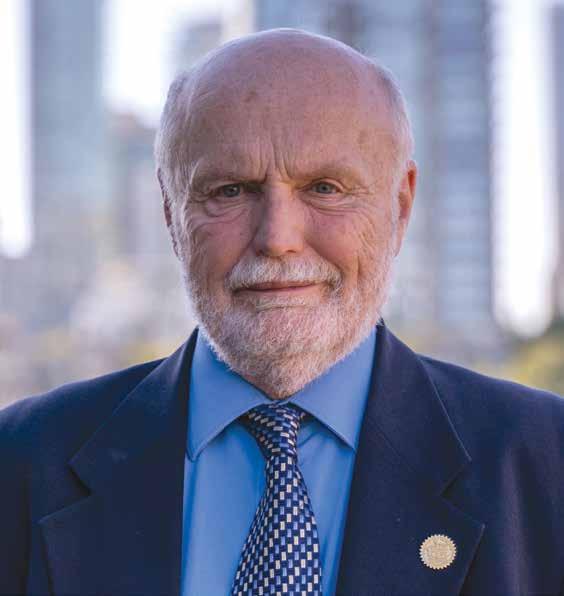
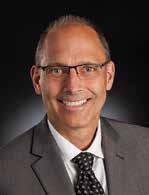
Ron Usher: General
Counsel
for the SNPBC,
Commissioned Notary Public Publications Mail Agreement: 40010827 BC Notaries MONEY LAUNDERING/FRAUD THEME Photo credit Daniel Usher Photography, Vancouver


I give to my community and with Vancouver Foundation, my giving lasts forever. 79 years ago, a single gift started Vancouver Foundation and that gif t is still making a difference in the community today. We can help you create a fund that gives forever. Get started at vancouverfoundation.ca/create or call Calvin at 604.629.5357 vis it communityfoundat io ns.ca 79
WE VALUE BC For more property information and assessment highlights, visit bcassessment.ca If you have questions or want more information, contact us at 1-866-valueBC or online at bcassessment.ca The deadline to file an appeal for your assessment is January 31, 2022. If you’re among BC’s approximately 2 million property owners, you should receive your 2022 property assessment in the mail early in January. If you haven’t, call us toll-free at 1-866-valueBC. Access and compare property assessment information using our free assessment search service at bcassessment.ca. The 2022 assessments are based on market value as of July 1, 2021. Insurance by FCT Insurance Company Ltd. Services by First Canadian Title Company Limited. The services company does not provide insurance products. This material is intended to provide general information only. For specific coverage and exclusions, refer to the applicable policy. Copies are available upon request. Some products/services may vary by province. Prices and products/services offered are subject to change without notice. ®Registered Trademark of First American Financial Corporation. Your clients rely on you for your expertise. You can rely on us. With experienced residential and commercial underwriting teams and Certified Fraud Examiners on staff, we’ve got you covered. Choose the partner that can do more for you today. FCT.ca More than a policy. More protection. More solutions. More experience.



PUBLISHED BY THE BC NOTARIES ASSOCIATION click on an article or page number. When Reading the PDF Online 4 Download the magazine to your device for offline reading. https://www.bcnotaryassociation.ca/resources/ scrivener/ Read The Scrivener online. Photo credit Daniel Usher Photography, Vancouver The Cullen Commission 12 John Mayr, Marny Morin The Many Aspects of Fraud 14 Nigel Atkin What Makes Real Estate Appealing to Money Launderers? 16 Chris Walker The Smell of Money 21 Filip de Sagher Cybercrime Begone! 24 Kim Krushell Real Estate Title Fraud... HOW IT HAPPENS. HOW TO DETECT IT. HOW TO PREVENT IT. 26 Amanda Magee Working Together to Prevent Fraud 29 Connie Bird, Christina Cheung Fraud Flag Alert on Your Real Estate Transactions 30 Marie Taylor Profiling Fraud and Money Laundering 32 Ian Callaway BC Student Scammed 39 Daphne Bibbings SENIORS Don’t Be So Polite! 40 Lori McLeod Pirates and Their Safe Havens: PRECURSORS OF MONEY LAUNDERING 42 Peter Zablud, AM, RFD Pet-Purchase Frauds 46 Ian Callaway BC NOTARIES This Year Make-A-Will Week was October 2 to 8. 47 Morrie Baillie A Bit about the Life of Fariborz Khasha, 48 BCNA: 2022 and 2023 Installation of the BC Notaries Class of 2022 52 THEME BC NOTARIES MONEY LAUNDERING/FRAUD CEO, BCNA Autumn Update 6 Chad Rintoul PRESIDENT Money Laundering and Fraud 7 Daniel Boisvert KEYNOTE Please Take Care 8 Val Wilson COVER STORY Inside The Cullen Commission 10 Ron Usher BC Notaries Association Volume 31, Number 2, Fall 2022TABLE OF CONTENTS
The
The Scrivener: What’s in a Name?

“A professional penman, a copyist, a scribe . . . a Notary.” Thus the Oxford English Dictionary describes a scrivener, the craftsman charged with ensuring that the written affairs of others flow smoothly, seamlessly, and accurately. Where a scrivener must record the files accurately, it’s the Notary whose Seal is bond.
chose The Scrivener as the name of our
the Notary’s role in drafting, communicating, authenticating, and getting the facts straight.
strive to publish articles about points of law and the Notary
for the education and enjoyment of our members, our allied
in business, and the
in
The Scrivener
email: scrivener@bcnotaryassociation.ca
www.bcnotaryassociation.ca
Send
scrivener@bcnotaryassociation.ca.
All rights reserved. Contents may not be reprinted or reproduced without written permission from the publisher.
This journal is a forum for discussion, not a medium of official pronouncement. The BC Notaries


does not, in any sense,
or accept
for opinions expressed by contributors.
CANADA POST: PUBLICATIONS MAIL AGREEMENT No. 40010827

Postage Paid at Vancouver, BC
RETURN UNDELIVERABLE
ADDRESSES
CIRCULATION DEPT.
BC NOTARIES ASSOCIATION
201, 2453 BEACON AVENUE
BRITISH COLUMBIA V8L 1X7
WWW.BCNOTARYASSOCIATION.CA
CANADIAN
TO
SUITE
SIDNEY,
photographs to
Association
endorse
responsibility
Published by the BC Notaries Association Editor-in-Chief Val Wilson BCNA CEO Chad Rintoul Administrative Coordinator Olivia Kuyvenhoven Courier Lightspeed Courier & Logistics Production fractal design inc. (fractal.ca) THE MiX
website:
We
magazine to celebrate
We
profession
professionals
public
British Columbia. 5 THE MIX Original Recipe 54 Decision-Making by Strata Corporations in British Columbia 55 Elaine T. McCormack, Emily Sheard
Doctrine of Illegality In Estates 62 Trevor Todd STROKE 101 64 Mark Charland The Story of The Stolen Church and Stolen Bell 66 Ron Hyde Legacy for Tomorrow, A Tax Break Today 68 Natasha van Bentum AGEISM and Creating Age-Friendly Services 70 Sara Pon Mental Health Awareness in the Workplace 72 Esha Shoker 2022 REFBC Land Awards 74 Stephen Hui Auto and Technology 76 Akash Sablok PEOPLE: Honours and Events 78 5Volume 31, Number 2, Fall 2022 The Scrivener | www.bcnotaryassociation.ca TABLE OF CONTENTS
Autumn Update

The British Columbia Notaries Association has recently completed our membership renewal for the current member year. I am delighted to report that 96 per cent of practising BC Notaries are members of their professional association!
I find that incredible level of support particularly important as the province moves forward with plans to unify legislation and regulation of the legal professions.
On September 14, 2022, the Ministry of the Attorney General publicly circulated the Legal Professions Regulatory Modernization Intentions Paper. In that document, Government noted its intention that BC Notaries should have a core scope of practice set out in the new statute, and that mechanisms should be established to allow that scope of practice to be expanded without the need for legislative change.
As such, that authority would rest with the new regulatory body who may also have the latitude to introduce a flexible licensing framework for Notaries, meaning the regulator could “customize an individual licence based on their specific training and expertise.”
The ability of the new regulator to control extended scope of practice for Notaries, as well as potentially introduce limited licensing for Notaries, illustrates the importance of the new governance structure.
How will the Board of Directors of the new regulator be comprised? Government is suggesting the Board should be made up of Directors who are elected by licencees (lawyers, Notaries, and paralegals); some may be appointed by members of the Board and others (a minority) appointed by Government.
On first review, a preferred method of comprising the elected portion of the Board would be to ensure there is a provision to include an equal number of lawyers, Notaries, and paralegals on the Board, so as not to see one group of licencees dominating the Board structure.
The future of the Notary Foundation is also contemplated in the intentions paper, noting the amalgamation of the Notary Foundation and the Law Foundation may be an outcome of that process.

The Notary Foundation has been a significant financial supporter of continuing education initiatives designed uniquely for BC Notaries and the BCNA will closely follow the dialogue on the future of the Notary Foundation.
At the recent British Columbia Notaries Association Annual General Meeting, Ministry of the Attorney General Deputy Minister Shannon Salter spoke to members about that initiative and noted that the Intentions Paper is open for public consultation until November 18, 2022.
The BCNA has been engaged with its Legislative Review Task Force to provide draft comments and, in consultation with members, will put forward consolidated feedback to the province on behalf of the profession.
Scrivener readers, as allies of the profession, are also encouraged to provide comment. For those reading the online edition of The Scrivener, here is the link. https://engage.gov.bc.ca/govtogetherbc/consultation/ legal-professions-reform/
The BCNA AGM also provided a good opportunity to review the Continuing Education initiatives of the past year and look ahead to upcoming events such as the New Notaries Career Fair coming this February; it provides a virtual opportunity for students in the Simon Fraser University Master of Arts degree in Applied Legal Studies Program to meet potential future employers or business partners.
The BCNA Annual Conference, scheduled for April 21 to 23, 2023, in Kelowna was also highlighted as a chance to reconnect with colleagues and sponsors. Please save the dates. We are overdue to get together! s
Respectfully, Chad Rintoul
CEO, BC NOTARIES ASSOCIATION
Chad Rintoul
Tracey Scott Photography
6 BC Notaries Association Volume 31, Number 2, Fall 2022TABLE OF CONTENTS
Money Laundering and Fraud


Itrust that all our readers had a wonderful Summer and were able to travel and enjoy life this year . . . more than the previous 2 years permitted. I wish everyone a safe—and hopefully a COVID-free Winter.
The theme of this edition of The Scrivener is Money Laundering and Fraud—and what a hot topic it is lately! Not a week goes by without a breaking news story.
The Cullen Commission Report, released in June 2022, focused on the challenges of identifying and tracking money laundering in British Columbia. To acquaint yourself with the robust investigation process, I encourage you to read the Report’s Executive Summary. https:// cullencommission.ca/com-rep/
In the Summary, the Report made it clear that trust accounts are sometimes used by criminals for money laundering purposes. Chapter 29 of the Cullen Commission Report specifically discussed BC Notaries and made some recommendations to offset the possible risks around Notaries’ trust accounts being used for money laundering purposes.
Our Regulator—The Society of Notaries Public of British Columbia—is adept at maintaining, enhancing, and enforcing the Rules around the use of our trust accounts. For as long as BC Notaries have been handling clients’ money via trust accounts, The Society’s Rules have guided the types of funds permitted and the conditions under which trust funds
must be held. Those Rules have been the cornerstone for fending off individuals who might wish to profit from money laundering through Notaries’ trust accounts. I wish to personally thank our Regulator for the time and the detailed information provided to the Cullen Commission.
Lawyers remain exempt from the legislation of the Proceeds of Crime (Money Laundering) and Terrorist Financing Act, SC 2000, c 17 (PCMLTFA), and the subsequent reporting requirements to FINTRAC (Financial Transactions and Reports Analysis Centre of Canada). The FINTRAC requirements and reporting procedures that apply to BC Notaries serve to create an additional layer of protection for Notaries’ trust accounts by deterring fraudsters.
I encourage every member of our BC Notary Association to continue to be diligent and make an appropriate report to FINTRAC, the moment any signs of money laundering or fraud are spotted.
BC Notaries are highly responsible legal professionals. I am confident that we will continue to do our part in the fight against this insidious form of criminal activity.
ANNUAL GENERAL MEETING 2022
Our AGM was September 24. I was thrilled to welcome Deputy Attorney General Shannon Salter to open our meeting and give us a much-needed update on the unified legislation that will see one Regulator for all legal services in our province. She discussed how the legislation will benefit both the
Daniel Boisvert
public and the professions and briefly described how the legislation would contain mechanisms to expand BC Notaries’ scope of practice.

Finally, and I think most important, Deputy AG Salter assured us that our unique identity as Notaries Public would be preserved in the legislation. I wish to thank her for her time and for being open and candid with her comments.
We also did some housekeeping at the AGM with our Notary Bylaws, taking the final step of removing our ties with our Regulator; The Society of Notaries Public is no longer a member of the BCNA. That ensures both entities are fully independent of each other.
The BCNA has come a long way in a short time. I am very proud of my Board’s commitment to moving the Association forward. Thank you to our CEO Chad Rintoul and his team.
I look forward to seeing all our members in Kelowna in April 2023, our first in-person Continuing Education Conference in quite some time.

PRESIDENT, BC NOTARIES ASSOCIATION
Shannon Salter
7Volume 31, Number 2, Fall 2022 The Scrivener | www.bcnotaryassociation.ca TABLE OF CONTENTS
Val Wilson Editor-in-Chief

Crime, fraud, and corruption have been endemic in all societies since the dawn of history. These days, all the world’s developed and developing countries, regardless of their political and economic systems, must face up to and deal with those problems.
Here’s the link to the Canadian Anti Fraud Centre (CAFC). You’ll find many resources and articles. https://www.antifraudcentre-centreantifraude.ca/ index-eng.htm
More Helpful Links
• BC RCMP: http://bc.rcmp-grc.gc.ca/
• Service Canada: https://www.canada.ca/en/ employment-social-development/corporate/ transparency/access-information/fraud-awareness. html
• BC Securities Commission: Investment Caution List | BCSC https://www.bcsc.bc.ca
• Canadian Securities Administrators’ National Registration Search: https://info.securitiesadministrators.ca/nrsmobile/nrssearch.aspx
ALERT
Don’t
even
A thief will find it handy, too. A man I know
it’s
important items on top of the frig—keys, wallet, driver’s licence, vehicle ownership, and passport. While
family slept upstairs, an intruder entered their home, discovered the frig trove, put their treasures into the family’s car, then stole it to get away. s
leave valuables in plain sight in your home,
if
handy for you.
kept
the
Enjoy this issue! Please Take Care
www.wildmanphotography.com KEYNOTE Greg Litwin, Notary Public • Over 35 Years’ Experience • Wonderful Reputation • “Excellent Service at a Fair Price” Voted by his Community “Best Notary in the South Okanagan for the past 3 consecutive years” Semi-retired, Greg practises as a Roving Notary around the Province. • In Strong Demand • Currently taking bookings for 2023 “I treat Each Business with Care, as if it were My Own Practice.” HAVE SEAL . . . WILL TRAVEL! Phone 250-770-0723 greg@greglitwin.com 8 BC Notaries Association Volume 31, Number 2, Fall 2022TABLE OF CONTENTS





Inside The Cullen Commission
The Society of Notaries Public of BC (The “Society”) was one of 16 organizations granted “standing” to become formal participants in the Commission of Inquiry Into Money Laundering in British Columbia (the “Commission”).
I was honoured to be counsel for The Society throughout the Inquiry. We presented at the initial public meeting in Vancouver before making formal opening and closing presentations to the hearings.
Before the start of the hearings, we provided Commission staff with information on the details of real estate transactions in BC and the involvement of BC Notaries Public in real estate transactions. During the hearings, we had the right to cross-examine witnesses and review all presented evidence.
Our involvement was critical as the role of Notaries as legal service providers is unique to this province. Consequently, we could not assume that the many national and international experts and authorities consulted by the Commission would be familiar with our BC real estate system and the practices of BC Notaries and lawyers as they carry out transactions here.
As a result, the Commission needed to consider the specifics of how transactions are completed in BC and how funds flow among buyers, sellers, real estate firms, lenders, Notaries, and lawyers. John Mayr (Society CEO) and Marny Morin (statutory Secretary of The Society) appeared as witnesses and provided valuable evidence on those points.

The Commission’s mandate was to enquire, which inevitably meant matters would become apparent that pushed the boundaries of the initial “terms of reference.”
The hearings took place over 130 days involving 199 witnesses and 1060 exhibits. The transcripts and exhibit materials are still available on the Commission website (cullencommission.ca) and total over 450 Gigabytes of text as well as video recordings of all the hearings. The final commission report is an 832,071word, 1800-page tome. I recommend reading at least the Executive Summary and the consolidated list of recommendations.
It is common in BC for Notaries and lawyers to be involved in a transaction, acting for the different parties. That includes representing sellers, buyers, and mortgage lenders. Though the Courts have found that the standard of professional care is the same for BC Notaries and lawyers, there are significant differences that go to the central concerns of the Commission. Most important, BC Notaries are the only legal service providers in Canada subject to the requirements of the Financial Transactions and Reports Analysis Centre of Canada (“FINTRAC”).
The Commission’s mandate was to enquire, which inevitably meant matters would become apparent that pushed the boundaries of the initial “terms of
COVER STORY
Ron Usher
COVER STORY
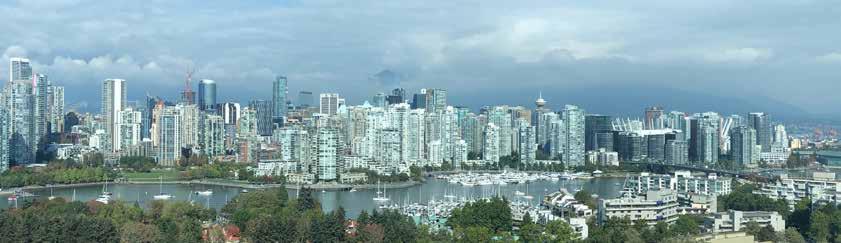
photo: Ron Usher
North side of False Creek, Vancouver, B.C.
10 BC Notaries Association Volume 31, Number 2, Fall 2022TABLE OF CONTENTS
reference.” Commissioner Cullen had to come to grips with many difficult-to-reconcile issues throughout the hearings.
The complexities faced by the Commission included the following.
• A local (BC) mandate looking at global issues in an increasingly borderless world
• The limits of Provincial authority and the many national and federally regulated agencies
• Considering our Provincial systems, for example, our BC Land and Corporate Registries, in light of evidence regarding quite different governmental and business practices in other jurisdictions
• Some pressure to come up with a simple, satisfactory explanation to opaque and complex issues
• The frequently made suggestion that “the answer” lies in the improved capture and analysis of enormous amounts of transparently available information vs. the cost, complexity, and privacy implications of such an effort
• The enormous difficulty our justice system has had prosecuting and punishing money launderers given the legal, structural, and financial barriers faced by many dedicated system participants dealing with criminals without those constraints
participant along with 36 other agencies in the Counter Illicit Finance Alliance of British Columbia ( “CIFA”), an “RCMP-led, financial information sharing partnership, to bring together public and private organizations to combat money laundering and other financial crime.” In addition, The Society is a regular participant in the meetings of the BC Interagency Fraud Group.
The Society has continued to work even more closely with FINTRAC. It has formalized that relationship in a “Memorandum of Understanding” to facilitate and coordinate our mutual responsibility for the monitoring and reporting required of BC Notaries Public.
It is clear from the Cullen hearings and reports that new legal frameworks are needed to appropriately balance privacy and human rights concerns with investigative and prosecutorial effectiveness based on enhanced and effective coordination and sharing of information. The Society will be actively involved as those discussions proceed over the next few years.
The final Cullen Report topped 1804 pages.

The report makes 101 recommendations that now need to be considered by the provincial government. That will take some time as the recommendations have considerable legislative, regulatory, and budget implications.
On September 28, 2022, David Eby KC, the former Attorney General and now a candidate for the leadership of the NDP, released his housing platform that gives a view into his priorities for implementing the Cullen recommendations.
Regardless of the timetable for that work, there have already been significant and useful outcomes from the work of the Commission. The level of coordination and cooperation among agencies has improved significantly. The Society has been pleased to be an active
During the hearings, the new Land Owner Transparency Act came into force and all BC Notaries became familiar with the necessary filings into the Land Owner Transparency Registry (“LOTR”). Though the primary intent of the LOTR is to enhance AML capabilities, it has had the very beneficial unintended effect of requiring property owners to more fully consider how they wish to hold title and interests in land. The discussions will undoubtedly avoid future legal disputes, reduce friction between and among family members, and provide clarity regarding tax obligations. Not surprisingly, LOTR and other new real estate transaction filing requirements have added complexity and cost to all real estate transactions.
Commissioner Cullen notes at page 2 of his Report that “Money laundering is also an affront to law-abiding citizens who earn their money honestly and pay their fair share of the costs of living in a community. These costs are being borne by all system participants.” That is undoubtedly the case. The challenge will be ensuring that efforts to increase anti-money laundering effectiveness do not unduly burden the everyday transactions of those concerned citizens. s Ron Usher is the General Counsel for The Society of Notaries Public of British Columbia and a Commissioned Notary Public.
11Volume 31, Number 2, Fall 2022 The Scrivener | www.bcnotaryassociation.ca TABLE OF CONTENTS
The Cullen Commission and The Society of Notaries Public of BC
 John Mayr
Marny Morin
John Mayr
Marny Morin
The Society of Notaries Public (SNPBC) was granted standing at the Commission into Money Laundering in British Columbia and participated fully in the hearings.
The Society made written submissions and both Ms. Morin as Secretary, and Mr. Mayr as Executive Director, gave evidence to the Commission. Ron Usher acted as counsel for The Society and attended all the hearings.
The Cullen Commission released its final Report on Wednesday June 15, 2022. The Report includes 101 recommendations. Of those, 3 are directed to BC Notaries Public. The Report dedicates 17 pages to the evidence, testimony, and findings of the Commission and includes a brief history, lists the scope of practice, and speaks to the regulation of members by The Society.
The recommendations made by the Commission and The Society’s responses are as follows.
Recommendation 66
I recommend that the Province, in consultation with The Society of Notaries Public of British Columbia, raise the maximum fine that can
be imposed when a member of The Society is guilty of misconduct as set out in the Notaries Act.
Given the Ministry of the Attorney General’s (MAG) announcement to create a single regulatory body for legal professionals in BC, it is somewhat unlikely that the MAG would engage in the legislative process to amend the Notaries Act. It is anticipated that the new legislation will address this recommendation.
Recommendation 67
I recommend that The Society of Notaries Public of British Columbia require its members to obtain, record, and keep records of the source of funds from their clients when those members engage in or give instructions with respect to financial transactions.
The recommendation that The Society requires members to make and maintain records related to source of funds would require an amendment to the Rules of The Society.
The Rules do not require approval by the Attorney General and changes may be implemented by the Directors. This recommendation is consistent with current Law Society of BC Rules for source-of-funds determination. The Commission makes the following recommendation to the
Law Society with respect to source of funds declarations.
Recommendation 56
I recommend that the Law Society of British Columbia amend its client identification and verification rules to explain what is required when inquiring into a client’s source of money. The rules should make clear, at a minimum
• that the client identification and verification rules require the lawyer to record the information specified in the Fall 2019 Benchers’ Bulletin;
• the meaning of the term “source of money”; and
• that lawyers must consider whether the source of money is reasonable and proportionate to the client’s profile.
Amending the Rules of the SNPBC to meet the purpose and intent of the Recommendation will be considered by the Board of Directors of The Society. Source of funds declarations are a recognized tool to combat money laundering.
Recommendation 68
I recommend that The Society of Notaries Public of British Columbia educate its members on the money laundering risks relating to private lending, through educational materials or other means.
MONEY LAUNDERING/FRAUD
12 BC Notaries Association Volume 31, Number 2, Fall 2022TABLE OF CONTENTS
Recommendation 68 seeks to enhance the education of members with respect to money laundering and private lending.
Private lending is the subject of Recommendations 31 and 32. The Commission found evidence of money laundering through private lending and identified that Notaries Public may be engaged in real property conveyances that may involve private lenders. Given the evidence and findings of the Commission, and the increasing incidence of private lending, there is merit in adopting this recommendation and ensuring that the Notary education program includes components to educate members of the risks of money laundering related to private lending.
of BC’s efforts related to AML (Anti Money Laundering). Contrary to the often-expressed opinion that lawyers are not subject to antimoney laundering Rules, the report acknowledges the good work of the Federation and LSBC in addressing concerns that lawyers were, wittingly or unwittingly, engaged in activities that facilitated money laundering in Canada and British Columbia.
Services a BC Notary Can Provide
A. PROPERTY MATTERS
and
Refinancing
Transfers
Covenants, and Rights of
Statutory
...the report acknowledges the good work of the Federation and LSBC in addressing concerns that lawyers were, wittingly or unwittingly, engaged in activities that facilitated money laundering in Canada and British Columbia.
Notaries should consider each of the recommendations made by the Commission to the legal profession and legal regulator to investigate the applicability and relevance of each of the recommendations to notarial practice.
C.
The Commission Report deals extensively with lawyers, the Law Society, and related organizations. Recommendation 53 through 65 all relate to the regulation of lawyers and legal practice. The text of the Commission’s Report detailing issues related to independence are illustrative of the challenges that the Government will have to consider in the construction of the statute for the proposed single legal regulator. Starting at page 1108 and continuing for approximately 100 pages, the Commission provides a significant overview of national and provincial regulatory challenges and initiatives.
That section includes positive comments about the Federation of Law Societies and the Law Society
The report of the Commission is a valuable tool in strengthening the regulation of Notaries Public, legal services providers, and the systems related to real property in the province of BC. The Society of Notaries Public and the profession, having established systems and processes designed to protect the public and comply with federal and provincial legislation, fared well in the context of the Commission’s Report.
As a regulatory body, we must continue to deepen our commitment to AML measures while protecting the independence of The Society and the profession in the delivery of services to the public. s
Submitted by SNPBC Secretary Marny Morin, and Executive Director John Mayr.
1. Residential
Commercial Real Estate Transfers 2. Mortgage
Documentation 3. Manufactured Home
4. Easements,
Way 5. Builder’s Liens 6. Subdivisions and
Building Schemes 7. Zoning Applications B. PERSONAL PLANNING 1. Wills Preparation 2. Powers of Attorney 3. Representation Agreements 4. Advance Directives 5. Wills Notice Searches 6. Estate Planning
NOTARIZATION/DOCUMENTS 1. Affidavits for All Documents required at a Public Registry within BC 2. Certified True Copies of Documents 3. Execution/Authentications of International Documents 4. Notarizations/Attestations of Signatures 5. Insurance Loss Declarations 6. Personal Property Security Agreements 7. Statutory Declarations 8. Authorization of Minor-Child Travel 9. Letters of Invitation for Foreign Travel 10. Passport Application Documentation D. BUSINESS 1. Business Purchase/Sale 2. Commercial Leases and Assignment of Leases 3. Contracts and Agreements E. SOME BC NOTARIES PROVIDE THESE SERVICES. 1. Marine Bills of Sale and Mortgages 2. Marine Protests 3. Marriage Licences 4. Mediation 5. Real Estate Disclosure Statements There are Notaries to serve you throughout British Columbia For the BC Notary office nearest you, please call 1-604-676-8570 or visit www.bcnotaryassociation.ca. Note: Not all Notaries provide all services listed. Please check with your Notary before making an appointment for services.
13Volume 31, Number 2, Fall 2022 The Scrivener | www.bcnotaryassociation.ca TABLE OF CONTENTS
The Many Aspects of Fraud
When fraud is mentioned, most of us think of the financial or fiduciary aspects.
We also want to know there are laws and regulations to protect our interests, personally and in the wider interests of governed society. We need to be assured that the confidential services that we use have well-trained professionals whose duties are driven by shared values of undivided loyalty, due diligence, reasonable care, and the full disclosure of any conflicts of interest.
We want to feel confident that those who commit fraud at any level in society—those who ripped us off or who broke the law according to the current legislation and regulations—will face the consequence of their actions, that no one is above the law, and that we live in a system that does in fact deliver justice.
We also want to be assured that the penalties for committing various frauds are strong enough to efficiently thwart those who knowingly break said laws and effectively serve to educate or otherwise deter potential wrong-doers.
But few of us go into the aspects of knowing and dealing with deliberate or otherwise perpetrated
fraud in other areas—those of our evolving culture and our wider societies’ beliefs or values.
Many frauds in history were committed by individuals and their institutions for conquest, power, and financial gain.
Examples include all areas of society from academic credentialism, to misleading consumers of product reliability, to exploiting the downtrodden and the inexperienced and ignorant. The concept of “never give a sucker an even break” is tried and true and criminally overused in many societies.
Fraud is actively disseminated by climate-change deniers, politicians, and others—mobsters and oligarchs alike—who have weaponized many forms of propaganda to dupe and mislead people through lies and disinformation to secure power and further service greed.
Nigel Atkin

Fraud in the Individual
Another aspect of fraud resides in the individual, in all of us, you and me, as part of culture, outdated teachings, effective propaganda, or subtle all-consuming indoctrination. Living a fraud can affect who and why we are.
Admittedly, when the rate of change is too fast, most people resort to fundamental beliefs. The way it used to be seems more comfortable than boldly stepping wisely into the future.
Is it our individual and collective duty to adopt best practices—to speak up, to leave in the past old ways that now rob us of efficiency and pollute the air?
Fraudulent ideas within us often stay benign, dormant, even unrecognized until they are self-examined—by you and me, politicians, those in business, and academics alike.
Personal reflection can be caused by dramatic events in our lives—sickness, inevitable old age, surviving some grand accident or force of nature, pandemic lockdowns and other isolation, more violent weather incidents, war or insurrections—even in our own country, while we embrace truth and reconciliation.
Knowing our options better can be generated by a potential
MONEY LAUNDERING/FRAUD
Is it our individual and collective duty to adopt best practices—to speak up, to leave in the past old ways that now rob us of efficiency and pollute the air?
14 BC Notaries Association Volume 31, Number 2, Fall 2022TABLE OF CONTENTS
a new relationship, retirement, higher education, and life’s experience. Sometimes a good book is all our growing awareness really needs; even a vacation to a more efficient country can help.

many good lives, well reflected, the highest of ethical journeys—to know oneself—is an ongoing, neverending pursuit to adapt to the forever transformation both within ourselves and all around us.
we grow, learn, and actively witness our widest environments, we adapt and change with new information. That constant demands psychological and often physical mobility. Most of us can handle the challenges.

our lives today, the great wheel of time is turning and our dogmatic intransigence to passé attitudes, beliefs, and behaviours requires an evolution of thinking. As one of my old friends said, “In times of great change, the most important thing to change is your mind.”
In times of widespread corruption, be it in money laundering and other high crimes, widespread disinformation, or the fraudulent inconsequence of climate change, individuals and institutions need to go to their intelligent, critical-thinking core values—the way many of us were raised and educated.
Society needs to embrace the finest of many good options available in democratic decision-making. As well we need leaders to choose the least-worst possible options to serve ourselves, society, and wider institutions as best we can. s Nigel Atkin teaches the Evolution of Public Relations course online at UVic. He offers onsite workshops to leverage human capital and exploit the multiplier effect of becoming better communicators.
want to believe
will remain
sometimes
into old age
just doesn’t
dementia
need
– Janet Lancey
ECF • Age is Just a Number Scrivener Magazine 1/4 page ad - 4.9”w x 4.75”h We all
that we
healthy
but
that
happen. Whether you are 52 with
or
care at 105, aging can take away so much. Your donation to the Eldercare Foundation funds community programs and education that help people stay in their own homes longer; funds therapy programs, equipment and home-like enhancements for extended care residents; and gives back dignity and happiness. Leave a legacy of care, comfort and quality of life. Please consider a planned gift to the Eldercare Foundation today. 1450 Hillside Ave.,Victoria, BC V8T 2B7 250 370-5664 • www.gvef.org Registered Charity #898816095RR0001 career change,
In
As
In
Your legacy could be her childhood variety.bc.ca Helping BC’s kids with special needs one child at a time “Taking care of my loved ones in my Will has always been important but I also knew I needed to include the incredibly brave children helped by Variety. It makes me happy knowing that in my small way, I’m leaving the world a better place.”
Violet, 4 Contact Jennifer Shang at 604-268-4038 or email jennifer.shang@variety.bc.ca or visit variety.bc.ca/donate-now/planned-giving/ Learn how to leave a legacy gift to Variety including how to create your will for free 15Volume 31, Number 2, Fall 2022 The Scrivener | www.bcnotaryassociation.ca TABLE OF CONTENTS
What Makes Real Estate Appealing to Money Launderers?
BOTH GLOBALLY AND LOCALLY
What is Money Laundering?
Defining money laundering is a fairly simple concept—taking funds generated by criminal, corrupt, or terroristfocused activity and entering those illegal funds into the legitimate economy—whether that means putting the proceeds into a financial institution, investing them into the stock market, or purchasing low and high-end goods.
In each circumstance, the hope by the criminal is to turn the proceeds of crime into a legitimate holding and to do that in a manner that can avoid suspicion about what they are doing and why they are doing it.
In this article, I want to take a brief look at how money launderers and property ownership, both globally and locally, make for perfect bedfellows, and why regulatory bodies at all levels recognize the need to implement compliance practices to control such practices and engage those professionals involved in the conveyancing process to proactively assist in the application of those practices.

There are common vulnerabilities across countries, where the purchase and sale of real estate attracts criminals and criminal groups...
• Seventy-eight per cent of those evaluated countries’ real estate sectors were found to have a poor level of understanding of the relevant real estate ML/TF risks.
The FATF stressed that identifying ML/TF risks in the real estate sector and clearly communicating those findings are important elements of any overall strategy by countries and their regulated sectors to manage AML/CFT control effectiveness.
The Global Perspective
Real estate, residential or commercial, is an attractive opportunity, according to the Financial Action Task Force (FATF), for dirty money to be cleaned. In its most recent report on the topic, “Guidance for a Risk-Based Approach to the Real Estate Sector” (July 2022), the FATF noted the following.
• Sixty-nine per cent of the countries assessed during the FATF 4th round of mutual evaluations identified the real estate sector as having a medium to high Money Laundering/ Terrorist Financing (ML/TF) risk.
It is well known that Money Laundering/Terrorist Financing risk can be inherently unique to each country and can vary with regards to the different types of property involved, e.g., commercial, residential or other. There are common vulnerabilities across countries, where the purchase and sale of real estate attracts criminals and criminal groups, given the advantages of investing in property and the value of such an asset. Specifically, that asset in today’s economy can increase in price and make money, besides serving as the perfect way to transfer the proceeds of crime into a nonsuspicious, widely accepted, and legitimate holding—a home, a cottage, a commercial building.
Chris Walker
MONEY LAUNDERING/FRAUD 16 BC Notaries Association Volume 31, Number 2, Fall 2022TABLE OF CONTENTS
So, what are some of the ML/TF advantages and risks when it comes to money launderers participating in the real estate sector today as discussed by the FATF in its 2022 global review?
• Real estate transactions in the majority of cases are singular activities, rarely repeated with any degree of frequency. Consequently, players in the real estate conveyancing-world do not have any purchaser/ seller track record to turn to as part of any client due diligence (CDD) process. The lack of transaction histories can serve as a veil of secrecy for the criminal, enabling the transaction to proceed with few red flags being raised.
• The lack of transparency into beneficial ownership information allows criminals to abuse nominees as well as legal persons and arrangements— such as shell companies and trusts—successfully hiding their involvement in ML/TF activities. The obfuscation of true ownership is also a well- known practice for individuals who simply have legitimate reasons for wanting to ensure their privacy or possibly for legitimate tax planning purposes.
• Current and past practices in many countries have shown that purchasing real estate also offers secondary benefits for criminals and corrupt Politically Exposed Persons (PEPs), such as helping with attempts to secure residency and/or citizenship, conveying social respectability and providing an immediately available asset with the strong potential, in today’s market, to appreciate in value.
• Real estate is a stable investment and an appreciating asset that can generate returns. Both
commercial and residential property offer an attractive tool for criminals. Canadian law enforcement has reported that criminal networks and drug traffickers have purchased real estate for their use as supply houses or as a location to grow, manufacture, or distribute illicit narcotics.
• The FATF reported that some PEPs have sought to launder illgotten funds into the real estate sector in both the residential and commercial sectors. PEPs that misuse their positions for personal enrichment present a high ML risk to the real estate sector and the larger financial sector more broadly, given the PEP connections to governmental entities and possible access to government funds.
• Criminals are known to falsify information—such as asset holdings, falsified or stolen identities, and income information —to obtain a loan from a bank or other lender. In those instances, criminals may have no intention of using the funds to acquire a property and may only seek to use the real estate loan to disguise the origin of funds for another use. Or illicit proceeds may be used to pay off those loans, allowing criminals to place their ill-gotten gains into the financial system through a common, acceptable means.
The FATF Guidance included numerous casestudies of money laundering in the Real Estate Sector to highlight the application of the various red flags discussed.
• In some instances, a criminal can rely on complicit bankers and lending professionals to help obtain a mortgage and ultimately help them avoid detection. They may also seek out straw buyers or nominees to make the application for the mortgage—further distancing the criminal from the transaction and possible exposure through background checks and transaction due diligence.
• Commercial real estate may be especially vulnerable to money laundering due to the increased prevalence of legal entities and vehicles used by corporate buyers and sellers that seek out these properties for investment and revenue. Additionally, the high value of those properties may also require multiple types of financing that may complicate efforts to identify the source of funds used to purchase the property.
• Criminals may seek to launder funds by paying for property at a higher or lower value than the true property value. That red flag suggests the property may not be intended for a legitimate reason and that the transaction is designed to hide illicit activity or gains. As an unplanned sideeffect, the inflated value has also been shown to contribute significantly to the increase in housing costs currently running rampant in various parts of the world, including Canada.
The FATF Guidance included numerous case-studies of money laundering in the Real Estate Sector to highlight the application of the various red flags discussed. Here is a brief summary of one from the USA.
17Volume 31, Number 2, Fall 2022 The Scrivener | www.bcnotaryassociation.ca TABLE OF CONTENTS
Services a
Notary Can Provide
In February 2021, a real estate attorney in Kentucky pleaded guilty to money laundering charges for purchasing real estate with the intention of using the purchases to disguise the proceeds of illegal sports betting. The attorney conspired with another individual engaged in illegal betting to disguise the illicit proceeds through investments in commercial real estate. As part of the scheme, the attorney used funds that he knew were derived from illegal betting to purchase companies that held real estate properties. When purchasing those properties, the attorney deliberately concealed the involvement and ownership of the individual involved in illegal gambling.
Dr. German’s findings with respect to real estate and money laundering were expanded by a further study on the sector prepared by a panel of experts chaired by Maureen Maloney, Professor of Public Policy at Simon Fraser University.
Justice Cullen kicks off his discussion on money laundering and its connection to the BC real estate industry with a rather poignant statement about the relationship between both. Specifically, Cullen writes.
The Local Perspective
In Canada, the Cullen Commission recently released its final Report (June 3, 2022) setting out the findings and Recommendations arising from the 37-month public inquiry into Money Laundering in British Columbia.
The initial impetus for the Commission arose from two earlier Reports by Dr. Peter German into possible money laundering in BC’s gaming industry, which quickly factored in the province’s real estate sector as a key element in what was dubbed the “Vancouver Model”’ of money laundering.
In the public discourse around money laundering in this province, skepticism has been expressed about the prevalence or even existence of money laundering in real estate. … In order to dispel any lingering doubts about the existence of money laundering in the real estate sector, I have set out in this chapter a review of the intergovernmental, governmental, and academic consensus on the prevalence of money laundering in real estate. This chapter also canvasses the commonly understood typologies involving the use of real estate to launder the proceeds of crime. One of my purposes in doing so is to illustrate that, in the real estate sector, money laundering transactions are usually one or more steps removed from the physical cash that some members of the public may associate with the words “money laundering.” While money laundering typologies involving real estate do not conjure up dramatic images of hockey bags or suitcases of cash
emptied onto the desks of Realtors, that does not mean that money laundering is not happening in this sector. A focus on physical cash when considering
being
Justice Cullen then went on to discuss the benefits/advantages to money launderers when they invest in the BC real estate market,... A. PROPERTY MATTERS 1. Residential and Commercial Real Estate Transfers 2. Mortgage Refinancing Documentation 3. Manufactured Home Transfers 4. Easements, Covenants, and Rights of Way 5. Builder’s Liens 6. Subdivisions and Statutory Building Schemes 7. Zoning Applications B. PERSONAL PLANNING 1. Wills Preparation 2. Powers of Attorney 3. Representation Agreements 4. Advance Directives 5. Wills Notice Searches 6. Estate Planning C. NOTARIZATION/DOCUMENTS 1. Affidavits for All Documents required at a Public Registry within BC 2. Certified True Copies of Documents 3. Execution/Authentications of International Documents 4. Notarizations/Attestations of Signatures 5. Insurance Loss Declarations 6. Personal Property Security Agreements 7. Statutory Declarations 8. Authorization of Minor-Child Travel 9. Letters of Invitation for Foreign Travel 10. Passport Application Documentation D. BUSINESS 1. Business Purchase/Sale 2. Commercial Leases and Assignment of Leases 3. Contracts and Agreements E. SOME BC NOTARIES PROVIDE THESE SERVICES. 1. Marine Bills of Sale and Mortgages 2. Marine Protests 3. Marriage Licences 4. Mediation 5. Real Estate Disclosure Statements There are Notaries to serve you throughout British Columbia For the BC Notary office nearest you, please call 1-604-676-8570 or visit www.bcnotaryassociation.ca. Note: Not all Notaries provide all services listed. Please check with your Notary before making an appointment for services.
BC
18 BC Notaries Association Volume 31, Number 2, Fall 2022TABLE OF CONTENTS
the risks of money laundering reflects a misunderstanding of how various money laundering typologies work. In the real estate sector, that sort of focus on cold cash can lead to a failure to appreciate the magnitude of the risk and to recognize indicators of money laundering. (Chapter 15, page 772)
• The potential for income generation via rental income or the appreciation of property
• The opportunity for further money laundering via real estate, such as by construction on the property
• The fact that taking out a mortgage to pay for real estate provides an opportunity to use illicit funds to service that debt and legitimize the money that is moving into financial institutions
The regulatory pressure on financial institutions to avoid doing business with potential money launderers that has led to reforms that have encouraged launderers to seek alternate means of laundering—buying and selling real estate
• The ability to develop influence and power at a local level, such as in cases where a large real estate portfolio is owned in a small town or neighbourhood
Apart from those practical benefits, Justice Cullen noted structural and regulatory factors are also serving as incentives to money launderers for using real estate to launder funds, for example.
Justice Cullen then went on to discuss the benefits/advantages to money launderers when they invest in the BC real estate market, including the following.
• The enjoyment of the property, both in terms of residing/ conducting business on the property, and as a display of one’s success
• The benefit of having a location at which to conduct criminal activity
• The fact that a large amount of money can be laundered with a single transaction, due to the high value of real estate relative to other goods
• The relatively low transaction costs, as compared to other methods of money laundering

• The perception of real estate as a safe investment
• The regulatory pressure on financial institutions to avoid doing business with potential money launderers that has led to reforms that have encouraged launderers to seek alternate means of laundering—buying and selling real estate
• The ability to manipulate the price of real estate
• The current ease of maintaining privacy, because of the lack of transparency in public corporate and land registries
• Conflict for real estate professionals who are expected to balance expectations of performing due diligence as to the source of funds, but also attract clients and earn a living through their commissions
• Minimal reporting of suspicious transactions, whether on the part of the opposite party in the sale or on the part of real estate professionals
19Volume 31, Number 2, Fall 2022 The Scrivener | www.bcnotaryassociation.ca TABLE OF CONTENTS
enforcement and insufficient sanctions for facilitating money laundering in real estate
The common features of the benefits identified globally and those noted in the Cullen Commission reinforce the belief that real estate is a perfect market to clean dirty money regardless of where one lives in this world. It also suggests that the benefits can outweigh the risks money launderers face by dabbling in the market.
Finally, as an example of money launderers at work in Canada, here is a summary of a further case study submitted by Canada’s ML/TF regulator, the Financial Transactions and Reports Analysis Centre (FINTRAC) and reported in the 2022 FATF Guidance.
Jane Doe contacted real estate broker Mary Smith to enquire about two properties she was considering for a purchase.
Jane stated that she worked as a server in a restaurant. Mary conducted research into the two properties and emailed Jane with pros and cons for each. They made appointments for viewings. On the day in question, Jane advised Mary by email that she was unable to attend due to illness, and that in any case she had already decided to purchase the $800,000 home. Jane explained she was in the middle of a custody battle and was in a rush to buy a house in order to demonstrate she was capable of providing for her two children. Mary was taken slightly aback by her choice of the more expensive home and her willingness to buy without first viewing the house or having anyone else inspect it. Concerned about the choice, Mary pointed out that the
selling price was overvalued by $50,000 and that she was in a good position to benefit by making a first offer under the asking price, but that in any case it would be important for Jane to visit the house to ensure it met her needs. Jane emailed Mary to let her know that given her pressing need to find a home for her children, she had already made up her mind and directed Mary to offer the asking price.
checked personally. She offered to drive over to pick-up the deposit cheque and validate her brother’s identification at the same time. Mary also requested bank and lawyer information as part of the standard financing and legal steps. Jane explained that they preferred to mail out the deposit cheque because her working hours at the restaurant were unpredictable. Jane sent the deposit cheque signed by her brother, faxed a copy of her brother’s driver’s licence, and provided only the mortgage pre-approval with none of the required details.
Mary explained that to writeup an offer, Jane would have to provide a deposit and identification. At that point, Jane emailed Mary and unexpectedly advised her that her brother would actually be mortgaging the house because he would be living with them. Mary offered to make the 45-minute drive to meet them and write the offer, however Jane requested that she be emailed the form with the purchaser’s name blank in order to enter her brother’s name. Her brother was arriving from overseas on May 1 and would fill in the details when he got here. They would then scan the offer and email it back to Mary. Mary explained that the brother’s ID would need to be
Mary called Jane and started to explain once again that the brother’s identification document would have to be validated in person in order to proceed. At that point, Jane became very defensive and threatened to find another real estate agent. Mary explained that without proper ID validation, it would not be possible to go through with the deal. Jane informed Mary that her brother had decided to cancel the deal and requested that her brother’s deposit be put into his bank account.
A suspicious-transaction report was subsequently submitted to FINTRAC, outlining the details of the process from start to finish. It is clear from this case study that numerous money laundering red flags surfaced throughout the process, which eventually culminated in the Broker, Mary, submitting her suspicions through an STR (Suspicious Transaction Report) to FINTRAC. s
Prepared By Christopher R. Walker
M. Criminology, CAMLI-PA President, About Business Crime Solutions, Inc.
• Lax
The common features of the benefits identified globally and those noted in the Cullen Commission reinforce the belief that real estate is a perfect market to clean dirty money...
20 BC Notaries Association Volume 31, Number 2, Fall 2022TABLE OF CONTENTS
Graffiti on a wall excavated from ancient Rome asserts that “baths, wine, and sex corrupt our bodies, but baths, wine, and sex make life worth living.”
A bit of escapism, a bit of hedonism; the pleasures sought throughout history on every continent can help make life on earth tolerable. Why wait for Paradise Promised?
That was never more the case than in the early 20th century after those two ferocious killingmachines had visited earth: The Great War and the Spanish Flu. In a knee-jerk reaction to the past doom and gloom, the Roaring Twenties made its entry. The economy boomed and modern technology found its way in daily life. Moving pictures! Automobiles! The radio!
Josephine Baker danced the Charleston and Charles Lindbergh flew his Spirit of St. Louis across the Atlantic. It was the Age of the Lost Generation in literature—F. Scott Fitzgerald wrote The Great Gatsby and Art Deco in architecture; construction started on New York City’s iconic Chrysler building.
Women got the vote and Coco Chanel led the way to their freedom. One of the main ingredients that
The Smell of Money
fueled that energy and creativity and all that Jazz? Prohibition. Alcohol was banned via an amendment to the US Constitution no less, and enforcement started in 1920.
That religious crusade in the name of public morality, however, failed miserably. The Anti-Saloon League was defeated by Harlem’s Cotton Club: Illegal bars—the Speakeasies—thrived and corruption was rampant. The government had underestimated their subjects’ desire for the forbidden fruit.
Prohibition might have been well intended but its multiple negative consequences led to its repeal less than 15 years later. Two major results of this experiment are still with us: Organized crime established deep roots and the
Filip de Sagher

government shifted its focus from pursuing crimes to tracking the financial proceeds of those crimes.
Thus it was that the gangster Al Capone was finally put behind bars, not for theft or murder or for illegally producing/transporting/ selling alcohol, but for tax avoidance. He made so much money from booze, he set up laundromats across Chicago and mixed the two revenue-streams to disguise one source from the other.
The term money-laundering was born.
For the authorities, it was a fundamental change in their methods of catching the bad guys. “Follow the money” was their new motto. Illegal sources there were aplenty: Alcohol, drugs, gambling, cigarettes, prostitution . . . and they killed 2 birds with 1 stone, too: The resulting catch conveniently filled their treasure chest at the same time.
One can say that after about 1900 years, money acquired a smell. It was indeed that many years ago the Roman Emperor Vespasianus (aka Vespasian) famously tabled the saying that money did not smell— pecunia non olet.
At the time, the produce of Rome’s public urinals was collected because it was used as a cleaning element in the laundering of the

One can say that after about 1900 years, money acquired a smell. It was indeed that many years ago the Roman Emperor Vespasianus (aka Vespasian) famously tabled the saying that money did not smell— pecunia non olet.
MONEY LAUNDERING/FRAUD 21Volume 31, Number 2, Fall 2022 The Scrivener | www.bcnotaryassociation.ca TABLE OF CONTENTS
Charitable Number: 11881 9036

Clayton Norbury cnorbury@spca.bc.ca 1.855.622.7722 ext. 6059 foreverguardian.ca
togas of the Romans. His son Titus found this disgusting until Vespasianus held a coin under his nose and asked him whether it smelled.
The Emperor taught his son that the value of money remained the same, whatever the origin. No longer. The experience gained during those interwar years told the government differently. Money gained from illegal activities did have another value. It did smell and stood out from good money, in that it led back to unlawful transactions.
Actor Leonardo DiCaprio, I presume unwittingly, connected those dots in the same year when impersonating The Great Gatsby of the ‘20s in the eponymous movie and Jordan Belfort of the ‘90s in the movie The Wolf of Wall Street—an imperial lifestyle smells and since those years, increasingly so.
With the dawn of the new Millennium, the chase was on to bring dirty money and its handlers to the cleaners. From Alcohol [sic] Capone and his laundromats, to fiscal paradises built on drugs, money laundering became THE crime to prosecute. s

My Muses
Watching: The Untouchables (1987) and Boardwalk Empire (HBO series)
Reading: Last Call: The Rise and Fall of Prohibition by Daniel Okrent and The Sun Also Rises by Ernest Hemingway
Tasting: Gin, vermouth, and Campari in equal parts. Pour over rocks. Stir. Add orange wedge. The “Negroni Cocktail” was named after Count Camillo Negroni in 1919. s Notary Public Filip de Sagher is the Manager of Complaints at The Society of Notaries Public of British Columbia.
The BC Notaries Association Employee Benefits Association Plan For a no-obligation free quote, contact Charles Choi Charles.choi@mercer.com A business of Marsh McLennan welcome to brighter You and your clients can help protect wild animals and provide aid when they are in need. Contact us today to learn more about how they can leave a gift in their Will.
RR0001
This year, help them plan to share their everlasting love. 22 BC Notaries Association Volume 31, Number 2, Fall 2022TABLE OF CONTENTS
Do you know who you are doing business with?


Fraudsters
step
As
Treefort’s
of
Analyses
who
say
with peace of mind, taking
regulator’s

Online solution that exceeds the requirements
your
client identification and verification guidelines
100+ data points to confirm identity AND provides key fraud indicators Conforms with the industry’s security and data privacy standards Results are presented to you in an easy to read report Canada wide live Customer Support, 5 days a week, 8am to 8pm
Find us on LinkedIn Treefort Technologies www.treeforttech.com
continue to demonstrate their ability to stay one
ahead of traditional identity validation methods, which has led to a significant rise in fraud victims and dollars lost in Canada
a professional responsible for the successful closing of a real estate transaction, you carry the burden of confirming that the parties involved are
they
they are.
digital identity validation solution provides you
identity validation to the next level:
Cybercrime Begone!
Today, undertaking the standard due diligence for Know Your Client (KYC) obligations does not guarantee new clients are who they say they are.

The reality is, any new potential clients could be fraudsters, representing themselves using sophisticated fake ID and banking, credit, and other falsified documents. Often fraudsters use Government-issued ID that can only be identified as fake using digital identity technology.
Cybercriminals today are far more sophisticated, organized, and global than their “oldtime criminal” counterparts. Further, one of their new prime targets is residential real estate, with a recent wave of mortgage-related cyber-fraud perpetrated in Ontario and Quebec earlier this year
The Cullen Commission Report, released by the BC Provincial Government in June 2022, has specific warnings about identity theft. “Identity crime—such as identity theft and identity fraud—is prevalent in Canada; it is of particular concern because stolen identities are often used to support the conduct of other criminal activities. Stolen identities can also assist money laundering operations by giving offenders fake credentials to subvert customers’ due diligence safeguards.” (page 45)
Cybercrime includes different types of digital crimes such as ransomware, digital identity theft, and money laundering.
How Much Damage is Cybercrime Costing Us?
• According to Cybersecurity Ventures, the world’s leading researcher for the global cyber economy, cybercrime-related activities cost the world USD$6 trillion in 2021.
• Cybercrime is one of the fastest-growing crimes worldwide. It is estimated global cybercrime damages will increase to USD$10.5 trillion by 2025, according to a 2020 article published by Cybercrime Magazine.
Cybercrime is one of the fastest-growing crimes worldwide. It is estimated global cybercrime damages will increase to USD$10.5 trillion by 2025, according to a 2020 article...

• A study performed in 2018 by Bromium Inc., a subsidiary of Hewlett Packard, revealed criminality platforms and a booming cybercrime economy have resulted in USD$1.5 trillion in illicit profits acquired, laundered, spent, and reinvested by cybercriminals and that the cybercrime profits were 3X larger than profits generated through the illegal drug trade.
• Looking specifically at money laundering:
0 Worldwide between $800 billion and $2 trillion is laundered annually.
0 The authors of “Combatting Money Laundering in B.C. Real Estate,” commissioned by the Government of BC, estimated that approximately $46.7 billion was
MONEY LAUNDERING/FRAUD
Kim Krushell
24 BC Notaries Association Volume 31, Number 2, Fall 2022TABLE OF CONTENTS
laundered through the Canadian economy in 2018, with BC accounting for around $7.4 billion.
Those statistics highlight why we can no longer ignore what is happening with cybercrime—we must start protecting ourselves!
Quick Tips to Consider
1.
Implement more stringent Know Your Client (KYC) and Identity Validation (IDV) procedures with all new clients. A digital IDV service that meets or exceeds the regulator’s standards for identifying an individual can help in that regard.
2. Educate employees about cybercrime. If possible, hire an expert to provide training on cybersecurity. Implementing phishing awareness or other programs can help to ensure staff remain diligent and aware of their virtual surroundings and attempts by outside forces to harm or access your systems.
3. If outsourcing IT management, ensure cybersecurity policies and practices are in place and have suitable insurance coverage.
4. Explore obtaining cybersecurity insurance. While costly, it can provide you and your business with peace of mind.
5. Create security policies and practices.
6. Secure all your networks and databases to protect against ransomware. Have data backed up in the cloud.
7. Always use two-factor authentication for any software products.
8. For accounts you sign into, use lengthy pass phrases rather than the standard 6-to-8-character password.
9. If there is a data breach, inform clients immediately; that is required for all businesses across Canada as per the Federal Personal Information Protection and Electronic Documents Act (PIPEDA) and in Provincial Privacy Legislation.
10. Check out the Canadian Centre for Cyber Security. The federal government developed the Centre to assist businesses, organization, and individuals to determine your cybersecurity risk. https://www.cyber.gc.ca
Cybercrime is an escalating risk in both our personal and professional lives. We need to be particularly diligent to avoid being impacted by today’s sophisticated cybercriminals. s
Kim Krushell is Co-Founder of Treefort Technologies, a Canadian tech company at the forefront of digital ID verification.
https://treeforttech.com
Brighter futures. One home at a �me.

At EFry, we know a safe home is the founda�on of stable life. Need is growing.
Five �mes more homeless children require our help than just 3 years ago. We’re responding with more shelters, ultra-affordable housing and child-focused programming.
You can help. Visit: efry.com/donate-now
visit efry.com/donate
25Volume 31, Number 2, Fall 2022 The Scrivener | www.bcnotaryassociation.ca TABLE OF CONTENTS
Naturally, her first reaction was shock—her second, confusion. How could she owe $700,000? She had never even heard of that lender.
Agitated, Joanne contacted the lender, apprehensive about what it meant for her and how it could be resolved. Her call made the lender’s representative worry, too.
Fortunately for Joanne, when she purchased her property, she obtained an owner policy of title insurance. After filing a claim with her insurer, the claim was investigated and determined the ID and documents provided for the new mortgage were fake.

There was no doubt Joanne was impersonated and her property title encumbered with a mortgage in which she had no involvement. Luckily, Joanne was able to rely on her title insurance policy to remedy the situation.
Unfortunately, title fraud is becoming more and more common and often perpetrated through a process resembling something similar to the following.
• A fraudster steals the identity of the legitimate owner of the property.
• Using the stolen identity, the fraudster obtains mortgage
Real Estate Title Fraud...
HOW TO PREVENT IT.
financing through a bank, financial institution, or private lender.
• In many cases, the mortgage is short-term with no payments required until maturity (interest is deducted up front). The delay helps fraudsters launder stolen funds so they are virtually untraceable. The unsuspecting true property owner does not know about the mortgage until maturity, when he/she receives notices from the lender demanding payment.
• The property owner is faced with the stressful and costly burden of proving he/she is the victim of title fraud and should not be required to repay the forged mortgage.
• Similarly, the lender is confronted with the reality that the fraudster may not be found and will be unable to enforce its interest or recover its losses. Upon discovering the possibility a mortgage was obtained on the property through identify theft, lenders with title insurance should file a claim.
With fraudsters and technology becoming more sophisticated and deals flowing in greater volumes and faster than ever before, it is becoming increasingly difficult for even the most experienced real estate professionals to detect something is amiss.
Title insurance can protect property owners and lenders against losses resulting from many forms of real estate title fraud.
Education is also key. The more informed we become about preventing title fraud, the better title insurance companies and industry professionals can
• protect property owners and lenders against losses;
• preserve the reputation of the professionals involved in a transaction; and
• maintain the integrity of the real estate system as a whole so it does not become an easy target for fraudsters and money laundering schemes.
We all need to be wary. Diligent BC legal professionals, in particular, are an irreplaceable part of the transaction and the first line of defence against title fraud.
Red Flags
• The deal doesn’t make sense. For example, an elderly person who has owned a property mortgagefree for a long time needs a large high-interest-rate mortgage.
• The property is mortgage-free; the owner has a good credit rating.
• The legal professional is being asked to direct the majority of the closing funds to parties other than the registered titleholders or prior
One morning in April, “Joanne” opened her mail to find a demand letter from a lender, notifying that her mortgage had gone into default and the lender was commencing enforcement proceedings.
MONEY LAUNDERING/FRAUD
Amanda Magee
HOW IT HAPPENS. HOW TO DETECT IT.
26 BC Notaries Association Volume 31, Number 2, Fall 2022TABLE OF CONTENTS
registered encumbrancers or funds are being wired overseas.
• A title search reveals unusual title activity, including frequent mortgaging.
• Aspects of the ID documents appear suspicious. Signatures are inconsistent; the borrower’s stated age and appearance don’t match the photo; misspellings of the borrower’s name; fonts and spacing of the ID don’t match the borrower’s ID the legal professional knows is legitimate.
• Pressure to close quickly.
• The client appears anxious for funds or is willing to accept a high-interest-rate mortgage, particularly if the property is mortgage-free or the client is using the proceeds for “investments.”
• There is a request for a shortterm mortgage—1 year or less— no regular payments required.
• There is a lack of Canadian or provincial government-issued photo ID.
• The client is new and will not connect consistently and/ or doesn’t want to participate in a video call or face-to-face meeting.
• The property is vacant or tenanted.
• The purchase and sale contract is private, has unusual deposits, and a quick closing
• Family members or friends are pressuring the titleholder to obtain a mortgage.
• Power of Attorney is being used.
Transactions involving private lenders are inherently at greater risk; should be given extra attention.

Additional Scenarios Warranting Closer Examination
• When acting for the lender, the legal professional is asked to
register mortgages without ever receiving funds to disburse.
• The legal professional is provided repeat referrals involving mortgages with unusual elements.
• The property has an existing institutional mortgage on title; balance owing is much lower than the registered amount, yet borrower is seeking private funding instead of going back to institutional lender.
• Multiple short-term private mortgages are on title; legal professional is being asked to pay out another recently registered private mortgage.
Title fraud is a serious matter. It’s up to all of us in the industry to work together to prevent it. s
Amanda Magee is Vice President of Business Development for Stewart Title’s Western Canada Operations.
Working Together to Prevent Real Estate Title Fraud
With real estate title fraud a growing concern, Stewart Title is proud to work in partnership with BC Legal Professionals to detect and prevent fraudulent transactions from closing. Our in-house title fraud prevention processes have been developed over years of exposure to a wide variety of title fraud schemes and can help reduce the likelihood of title fraud—protecting property owners, lenders, and the professionals acting on their behalf.
As an industry, we can now use technology to our best advantage. Stewart Title acquired a majority stake in Treefort Technologies. Treefort’s ID verification tool helps legal professionals and lenders verify ID more quickly than traditional means, which can be difficult and time consuming.
To learn more, visit stewart.ca or contact your local Business Development Manager.
27Volume 31, Number 2, Fall 2022 The Scrivener | www.bcnotaryassociation.ca TABLE OF CONTENTS
• Convenient online course format • Broad range of valuation and real estate business topics • Guaranteed Appraisal Institute of Canada’s Continuing Professional Development credits Business Development Series: Eight courses designed to provide practitioners with the entrepreneurial and practical skills to establish and successfully operate a real estate business. Entrepreneurship and Small Business Development Business Strategy: Managing a Profitable Real Estate Business Succession Planning for Real Estate Professionals Organizing and Financing a Real Estate Business Accounting and Taxation Considerations for a Real Estate Business Marketing and Technology Considerations for a Real Estate Business Human Resources Management Considerations in Real Estate Law and Ethical Considerations in Real Estate Business To find out more, visit: realestate.ubc.ca/CPD tel: 604.822.2227 / 1.877.775.7733 email: cpd@realestate.sauder.ubc.ca Creative Adaptable Analytical
Working Together to Prevent Fraud
Brian and Helen purchased their home
in 2013 for $665,000. In 2021, Brian accepted a job transfer out of the country, leaving their home empty.
In 2022, their home was listed on the MLS by fraudsters, posing to be the real owners. Three weeks later, it sold and closed for $1,700,000. On closing, a $300,000 balance on a secured line of credit was paid off and fraudsters absconded with $1,400,000 and left Brian and Helen without their home.
For years, fraudsters have been committing fraud against innocent lenders and homeowners. Being embroiled in a fraud causes undue stress for all involved and is a reason insurance premiums continue to rise.

Beautiful British Columbia is a prime international target for fraudsters because of our wellknown expensive real estate. With more real estate transactions, the greater the likelihood the borrowers or vendors will not be who they say they are.
In 2022, vendor-impersonation frauds have risen to the top as the costliest claims in Canada. How confident are you that the people you are dealing with in your real estate transactions really are who they say they are? Fake governmentissued ID is very difficult to spot and very easy to get.
A strawman is a person a criminal mastermind hires to make an appearance for the signing of documents.
A strawman is a person a criminal mastermind hires to make an appearance for the signing of documents. That individual gives the money received from the sale or refinancing of the property to the mastermind. Recently, a strawman was arrested with 12 identities in his possession and a ticket out of the country, dated 2 weeks from his arrival here.
The next time you close a real estate transaction, consider these points.
1. Mortgage lenders require title insurance but many BC homeowners are left uninsured and exposed to loss. Always buy an owner policy.
2. Homes that are mortgagefree, owned by an investor or nonresident, and those that are vacant are the prime targets for fraudsters. It is essential that the vendor’s identities are validated to protect the purchaser from falling victim to vendorimpersonation fraud.
Crimes surround us. We need to work diligently together to prevent them.
Attention Legal Professionals
• When you have not acted previously for the purchaser, vendor, or borrower, make sure to conduct a third-party identity authentication.
• When paying out a large amount of money to one person, issue one cheque payable to the registered owner. A cheque gives you recourse should the party be a strawman. With wire transfers, the money disappears quickly and you’ll have no recourse.
• Stay up-to-date and educated on current fraud trends. s
Connie Bird is AVP, Sales, with Chicago Title, and contributing author to the book, The Canadian Guide to protecting yourself from Identity Theft and Other Fraud.

Christina Cheung is the BC Regional Manager with Chicago Title.

MONEY LAUNDERING/FRAUD
Christina Cheung
Connie Bird
29Volume 31, Number 2, Fall 2022 The Scrivener | www.bcnotaryassociation.ca TABLE OF CONTENTS
Fraud is on the rise in BC’s real estate industry. Last year, the Land Title and Survey Authority (LTSA) disclosed a spate of title fraud attempts; just this Summer, the BC Securities Commission began hearings on a massive alleged real estate flipping scam.

BC Notaries are on the front lines of the fight against real estate fraud. Fraudsters need to go through a Notary or other legal professional to lend legitimacy to their scams.
But how can a legal professional tell the difference between an honest client and someone just claiming to be?
Red Flags for Fraud on Real Estate Deals
Dozens of factors can indicate a higher likelihood of fraud. While the presence of a single red flag doesn’t necessarily mean the deal is bad, several flags together may signal a fraudulent transaction.
Fraud Flag Alert on Your Real Estate Transactions
High-ratio mortgages where the client is putting less than 20 per cent down, may be cause for concern.

That is often an easier option for fraudsters as it lets them commit fewer funds to their scheme.
Private agreements of purchase and sale where there’s no Realtor on record are a warning sign.
Fraudsters try to remove as many participants from their transactions as they can. Realtors have guidelines and best practices to prevent fraud, so they pose a potential risk to criminals.
A Power of Attorney can be open to a variety of abuses.
Always be wary when you’re presented with a document you didn’t prepare. Any document that hasn’t been executed or witnessed properly is suspect, but doubly so if a Power of Attorney is being used. Are the decisions in the transaction made solely for the donor’s benefit or for the benefit of someone else?
Recent activity on the property’s title is important.
That transaction may be an owner flipping a property honestly or having to change course shortly after buying. But recent activity on the property’s title, especially repeated activity, could be evidence
of a shadow flipping scheme or other fraud.
Client ID that shows their current address as the property they’re purchasing is a significant red flag. It could be because rental tenants are buying their residence or it could be evidence that the tenant is committing fraud. In any case, further investigation is necessary.
Private Lender Deals
Rush transactions where you don’t know the client(s) could be fraudulent.
Fraudsters often create a sense of urgency to push deals through as quickly as possible. They’re hoping you won’t have time to spot inconsistencies in ID or other documents.
Remote deals come with some risk. Fraudsters are taking full advantage of purchasers being able to close their transactions remotely. Clients should raise your suspicion if they
• are unwilling to meet in person;
• are unable to provide government-issued photo identification;
• send only unclear scans or photocopies of identification;
• will communicate only via text or email.
MONEY LAUNDERING/FRAUD
Marie Taylor
30 BC Notaries Association Volume 31, Number 2, Fall 2022TABLE OF CONTENTS
A high-interest-rate private mortgage on a mortgage-free property can be a red flag.
If the deal is legitimate, why is the homeowner taking on a substantial high-interest debt after paying off the mortgage? It could simply be that the homeowner doesn’t qualify for an institutional mortgage, but that is often seen in fraudulent transactions.
Significant variations in handwriting could indicate fraud. It may seem like too obvious a thing to check, but handwriting forgeries can start standing out more than you’d expect once you’re looking for them. Many things could affect a person’s handwriting, but obvious variations should prompt a second look for other fraud flags.


A request to direct funds to a third party is by far the biggest flag in any mortgage transaction.
If a client asks you to direct the proceeds to a third party that does not appear to be associated with the transaction, be wary—that is the most common sign of fraud.
One useful technique is to ask followup questions about details a client provides. When done in a conversational way, that helps legitimate clients feel at ease, while creating more chances for inconsistencies to pop up if the client isn’t who they say they are.
Legal professionals depend on us to spot fraud before it happens.
Fraudsters are always evolving, so we need to evolve, as well. By educating ourselves and each other, we can stay ahead of the scammers and keep our industry safe. s
Title fraud and other types of real estate fraud come in many different forms, but BC Notaries are up to the challenge.
Marie Taylor has been a valued member of FCT’s legal team for over 20 years. She is a Certified Fraud Examiner and an active member of the Association of Certified Fraud Examiners.

Fraudsters are always evolving, so we need to evolve, as well.
MONEY LAUNDERING/FRAUD Helping affluent families protect and grow their financial wealth. DI X ONM I T CHELL.CO M 31Volume 31, Number 2, Fall 2022 The Scrivener | www.bcnotaryassociation.ca TABLE OF CONTENTS
Profiling Fraud and Money Laundering
On May 15, 2019, BC’s Lieutenant Governor issued Order in Council No. 2019-238 to establish a Commission of Inquiry into Money Laundering in BC.
According to its sole commissioner, The Honourable Austin Cullen, the Commission was established in the wake of significant public concern over the nature and prevalence of money laundering in BC and the institutional effectiveness of those charged with both detecting and combatting it. (Cullen, 2022)
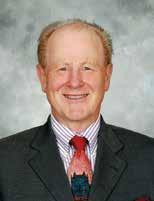
While money laundering can involve “bags of cash,” the Cullen Commission noted that a cashoriented perception continues to be a barrier to effective antimoney laundering compliance and reporting. Cullen’s assessment was that money laundering’s dollar value is “massive” and that fraud, having been referenced over 400 times, is a “rich source” of illicit funds that can generate millions in profits that must be laundered.
One financial crime investigator independently reported fraud is significantly harmful to BC’s capital markets as it harms creditors, employees, lenders, and suppliers having to eat the losses. (Duhaime, 2021)

...the Criminal Intelligence Service of Canada (CISC) wrote “Canada is one of the least-corrupt countries.” (CISC, 2022)
The Cullen Commission’s Final Report of June 3, 2022, into “Money laundering in British Columbia” produced some 1235 pages examining eight targeted risk entities or sectors exposed to fraud and/or money laundering.
• 43.5% Gaming Sector [Part III]
• 16.0% Real Estate Sector [Part IV]
• 10.1% Lawyers and Notaries [Part VII]
• 7.5% Luxury Goods + Virtual Assets [Part IX]
• 7.0% Financial Institutions [Part V]
• 6.8% Accountants [Part VIII]
• 5.1% Underground Economy [Part X]
• 3.9% Corporate Sector [Part VI]
International Crime Perspectives on Canada
In its 2021 Public Report on Organized Crime (PROC), the Criminal Intelligence Service of Canada (CISC) wrote “Canada is one of the least-corrupt countries.” (CISC, 2022)
Drawing on over 350 worldwide experts and businesspeople evaluating 193 United Nations (UN) countries, the Global Organized Crime Index(GOCI) is a datadriven analytical tool based on a 1-to-10, lowest to highest, rating of 3 metrics—Criminal Markets, Criminal Actors, and Resilience [measuring the ability to withstand and disrupt organized criminal activities as a whole].
On GOCI’s Criminality score, Canada ranked favourably at 160 out of 193 nations with a Criminal Markets Score of 3.45.
Although Canada had a favourable Criminal Actors’ score of 3.88, 3 of the 4 Organized Crime Groups (OCG) were above that score.
• 5.0 Mafia-style Groups
• 4.5 Foreign Actors
• 4.0 Criminal Networks
Globally, Canada’s Resilience Score was 7.25, which placed Canada a favourable 22 out of 193 counties, behind other countries—Finland (1), New Zealand (3), United Kingdom (8), Germany (13), Japan (16), Ireland (21), and ahead of France (26), the United States (28), and Italy (33).
With a blending of Criminal Actor and Criminal Markets indexes, the GOCI’s favourable Criminality ranked Canada at 161 with its
MONEY LAUNDERING/FRAUD
Ian Callaway
32 BC Notaries Association Volume 31, Number 2, Fall 2022TABLE OF CONTENTS
Resilience at 22 out of 193 nations. That placed Canada in a group of 50 countries considered “Low Criminality/High Resilience.” (GOCI, 2021)
Canadian Crime Resilience
Contributing to Canada’s favourable Criminality/Resilience rankings are 14 different Parts of Canada’s Criminal Code (CCoC), within which at least 17 sections may have applicability to fraud and/or money laundering in a strata environment.
Although lessor known, Canada’s Standing Up For Victims of White Collar Crime Act was introduced in 2011 to enable the Courts to impose harsher penalties on convictions involving criminal fraud and embezzlement.
In addition to 17 federal CCoC sections, Canada has the Proceeds of Crime (Money Laundering) and Terrorist Financing Act (PCMLTFA) having its objective to detect, deter, and prosecute both money laundering and terrorist financing offences. An interesting note is that the original Proceeds of Crime (Money Laundering) Act was expanded in December 2001 to become the Proceeds of Crime (Money Laundering) and Terrorist Financing Act.
In addition to the CCoC, Victims of White Collar Crime Act, and the PCMLTFA, a fourth contributor to Canada’s Resilience is Canada’s Income Tax Act covering both “relevant criminal offences” and punishments to be applied for those involved with fraud and money laundering.
On the provincial level as possible money laundering deterrents, BC’s two pieces of legislation, Land Owner Transparency Act (LOTA) and the Civil Forfeiture Act (CFA), also contribute to money laundering Resilience.
Domestic Crime Assessments
Working collaboratively with federal, provincial, and municipal law enforcement agencies, as part of Canada’s National Police Services stewarded by the RCMP, CISC’s mandate is to deliver criminal intelligence products and services such that it is involved in conducting national security investigations and security intelligence collections.
Operating under the CISC Act and utilizing both classified and open-source information, the Integrated Threat Assessment (ITA) working group operates domestically and internationally to monitor and counter threats to Canadian security.
CISC’s 2021 PROC reported.
• Over 2600 OCGs operate in Canada, of which 469 are assessed an ITA Threat Rating.
• 14 High-level threats
0 7 in Ontario
0 3 in Quebec
0 3 in BC
0 1 in Alberta
• BC dominates Canada with 130+ communities of criminal entrepreneurs assessed by social analysis methodologies.
• Majority of money launderers are based in BC, Ontario, and Quebec
• Super-labs are prevalent in BC and Ontario as well as Alberta.
• 30% of assessed OCGs involve money laundering in their proceeds of crime.
• 27% have unknown private sector involvement thus representing a “significant intelligence gap.”
• 14% of the Canadian criminal landscapes are linked to 18 OCGs with Mafia-style organizations.
• 11% OCGs reported or attempted to infiltrate the public sector.
Triad of Criminal Actors
Based on common definitions and rules, until 2021 ITA used only eight Threat Measurement Criteria to assess threats to Canada posed by OCGs. (CISC, 2022)
In 2022, Money Laundering was added as ITA’s 9th Threat Measurement Criteria “in response to the identified need for more intelligence relating to groups’ involvement in money laundering.” (CISC, 2022)
As part of available data, analysis, and prioritization, CISC identified eight Canadian “Key Threat Priorities” OCG targets.
While we “don’t know what we don’t know,” when attempting to assess or understand any strata corporation’s risk exposure to fraud and/or money laundering by any member of the criminal triad, one word is common—disguised.
Criminal Actor Triad Environment©
...the ITA working group operates domestically and internationally to monitor and counter threats to Canadian security.
Terrorist Organizations Unaffiliated Individuals Organized Crime Groups FIGURE 1 CRIMINALMARKET OPPORTUNITIES TEKRAMLANIMIRCSEITINUTROPPO 33Volume 31, Number 2, Fall 2022 The Scrivener | www.bcnotaryassociation.ca TABLE OF CONTENTS
Law enforcement analysis, intelligence, investigations, charges, and convictions support that OCGs and Terrorists are the primary known Criminal Actors. In an iceberg metaphor, OCGs and Terrorists are those criminals visible above the waterline, called the hummock in an iceberg.
As crime is an endeavour of planned opportunity, even though OCGs and Terrorist groups are more often associated by the public with physical acts, both are also actively involved in white collar crime.
The third group within the criminal triad may be the most pervasive and costly, but the least identified, researched, or apprehended are the unaffiliated individual(s). Furthering the iceberg metaphor, white collar crimes may well be the iceberg’s submerged 90 per cent (the bummock) of monies gained by nonviolent financial crimes.
White Collar Crime
For many years, a lack of physicality made it more challenging to consider white collar crimes such as fraud as real crimes. (De Hass, 2021)
For much of society, and to some extent law enforcement, white collar crimes were a mindset of denial by omission. For the perpetrators, those mindsets became part of their opportunistic rationalization.
The Association of Certified Fraud Examiners (ACFE) conducted a 133-country survey, of which 60 per cent were completed by fraud examiners/investigators and internal auditors targeting 22 industry categories over a 21-month period starting January 2020. Of the 2110 cases, 36 per cent were from the USA and Canada.
Based on that 2022 ACFE survey, it was estimated that each year organizations lose 5 per cent of their revenue to fraud.
Many white collar crimes were committed by individuals.
• Between 2012 and 2022, the percentage of fraudsters collaborating with 2 or more perpetrators increased from 42% to 58%.
It was also found that an organization’s longer-tenured fraudsters were more likely to collude, generating disproportionately larger losses, but it also took longer to catch them. (ACFE, 2022)
Operations Group testified at the Cullen Commission (November 23, 2020) that some assume they have encountered a technological issue rather than fraud. As reported on August 31, 2022, actor Matt Damon discovered some 7 months after the fact that he had mistakenly transferred $10.5 million instead of a $100 refund. (Hearing, 2022)
Second, since it was a nonviolent crime, no one was “physically” hurt.
While the ACFE (2022) found that 1 per cent of the perpetrators simply disappeared either before or after their frauds were detected, only 58 per cent resulted in criminal referrals, of which 66 per cent had a success rate whereby the perpetrators plead guilty or were convicted.
Fourth, many victims are embarrassed to acknowledge they have succumbed to someone’s deceit. On an organizational level, such a lack of disclosure may be practised to maintain the confidence of its otherwise unaware stakeholders. The ACFE (2022) reported that 30 per cent of organizations did not report detected frauds to law enforcement for fear of bad publicity.
Fifth, law enforcement may lack the investigative resources that is something Cullen (2022) noted from a number of witnesses.
Challenges Detecting White Collar Crime
There are at least five reasons why determining the financial magnitude of white collar crime is problematic.
First is the very nature of its subterfuge and many simply do not know they have been “had.” Related to cryptocurrency crimes, a member of the RCMP’s Cybercrime
An irony is that many white collar perpetrators perceive those same five reasons as creating a very crime-friendly and opportunistic environment.
Fraud and Money Laundering Continuum
Although fraud and money laundering are often considered together, each should be positioned
The third group within the criminal triad may be the most pervasive and costly, but the least identified, researched, or apprehended—the unaffiliated individual(s). Furthering the iceberg metaphor, white collar crimes may well be the iceberg’s submerged 90 per cent (the bummock) of monies gained by nonviolent financial crimes.
34 BC Notaries Association Volume 31, Number 2, Fall 2022TABLE OF CONTENTS
as part of a criminal continuum. As a product of intended deception, those monies derived through fraud are on the acquisition end of the continuum. For those monies acquired by fraud, along with other monies derived from a host of criminal activities, they are the distribution end of the continuum.
The money laundering cycle involves five integrated phases.
1. Acquisition
As a result of the Criminal Actors’ activities such as fraud, this phase is the acquisition of assets, cash, or funds now accessible to, or in the hands of, the Criminal Actors, but as dirty money being the proceeds of crime.
2. Placement
This second phase, and the one most susceptible to exposure, is initiating dirty money into the legitimate financial system.
3. Layering
To add distance or obfuscate the trail within the financial system, criminal actors, or their “brokers”/ intermediaries, carry out several transactions akin to the 3-shellsand-a-pea game.
4. Integration
After having cleansed the assets, cash, or funds into some other form of redeemable commodity, the Criminal Actor parks such commodities for a short or lengthy period until having a need to re-allocate it.
5. Re-allocation
In this phase the Criminal Actor has either the choice of re-investing cleansed commodities into some form of legitimate endeavour or re-energizing the commodity into new criminal acquisition ventures.
Or as one New Zealand researcher wrote, “While the documents prove the actus reus, that a fraud had been committed, for it to be a crime, there must also be a mens rea element. In other words, we still need to prove ‘who’ pressed the fraud button and, just as important, ‘why!’ ” (Vaughan, 2017)
Elements of A Fraud
Under section 380 of CCoC, fraud occurs when persons use deceit, falsehood, false pretense, or the like to enrich themselves by acquiring money, property, services, and/or security, whether ascertained or not.
To prove an action was a fraudulent crime, two key Latin phrased elements must occur.
• Actus reus is the physical aspect of committing a guilty act without the colour of right [the guilty act of taking something that is not yours].
• Mens rea is the guilty mind’s premeditated intent, knowledge, negligence, recklessness, or willful blindness to deprive someone else of that which is legally in their possession.
Even though different crimes may require varying degrees of intent, for a determination of fraud both actus reus and mens rea must be present, other than in strict liability offences. As the USA’s Treadway Commission wrote in its efforts to combat corporate fraud, the fundamental difference between internal control weaknesses resulting in errors, and weaknesses resulting in fraud, is intent. (COSO, 2016)
Established under Canada’s PCMLTFA, the Financial Transactions and Reports Analysis Centre of Canada (FINTRAC) reported (2022) the following related to financial intelligence disclosures.
• 35% Fraud
• 34% Drugs
• 9% Tax Evasion
The Scale of Fraud
Whether it be an OCG, a terrorist group, or individuals at large, the clandestine nature of their everevolving and discreet fraudulent activities often remains below the level of detection, and as such quantification of loss is more a projection rather than a defined amount.
The ACFE (2022) categorized organizational fraud into three loss types.
• Asset Misappropriation: Schemes in which a person steals or misuses the organization’s resources involving 8 scams that might be applicable to stratas such as Billings, Cash Larceny, Cash-on-hand, Cheque Tampering, Expense Reimbursements, Noncash, Payroll, and Skimming.
• Corruption: Schemes such as bribery or conflicts of interest in which individuals misuse their influence in a business transaction in a way that violates their duty to the organization to gain a direct or indirect personal benefit.
• Financial Statement Fraud: Schemes in which an organization’s member
PlacementLayering Re-Allocation Criminal AcquisitionIntegration Legal Acquisition FIGURE 2 Cycle of Money Laundering ©2022 Ian Callaway 35Volume 31, Number 2, Fall 2022 The Scrivener | www.bcnotaryassociation.ca TABLE OF CONTENTS
intentionally causes a material misstatement or omission in the organization’s financial reports.
Although Asset Misappropriation schemes were reported in 86 per cent of all cases, each took much longer to adversely impact the organization. The collective loss impact of these schemes, however, was only 6 per cent lower than financial statement frauds and 2½ times more organizationally detrimental than corruption frauds. As the dollar value of each of the asset misappropriation schemes was relatively small, individually each is akin to a dripping faucet that is much harder to notice—yet collectively asset misappropriation frauds are the 2nd largest financial fraud flood.
While asset misappropriation schemes were the most common, but least costly, financial statement fraud schemes were the least common but the most costly.
According to CISC, organized financial crimes, including credit and debit card fraud, cost the average Canadian family of four $600 per year. (McSheffrey, 2017)
When comparing the estimated per-incident cost of 10 different crimes in Canada, Fraud was in a virtual tie with Arson for 4th, behind Homicide, Sexual Assault, and Aggravated Assault, but more costly than Robbery, Assault, Motor Vehicle Theft, Residential Burglary, and Theft. (Gabor, 2016)
As reported in the Alberta Law Review, experts estimate that white collar crimes produce between 17 to 31 times more economic loss than common crimes. (De Hass, 2021)
According to the Canadian Securities Administrators (CSA), nearly 5 per cent of adult Canadians have lost money due to one kind of investment fraud or another. (Canadian Business Journal, 2021)
The CSA’s 5 per cent figure also corresponds with the ACFE (2022) estimate that each year organizations lose up to 5 per cent of their revenue due to fraud.
Aside from any direct economic losses, PricewaterhouseCoopers’ (PWC) Guideline Anti-Corruption survey (2017) produced for the Volkswagen Group found the following higher management costs after corruption was discovered.
• 54% increase in management time
• 31% higher time and legal expenditures
• 23% more public relations time and expenditures
• 23% increased supervisory monitoring
domestically and/or internationally, to make such funds appearing to have been derived from legitimate profitable activities.
Money laundering can also involve any other form of funds from virtual assets that can be digitally traded, transferred, or used for payments as part of anonymous or pseudo-anonymous obfuscating transactions such as Bitcoins, Blockchains, Cold Wallets, Cryptocurrency, Cryptocurrency Cards, Cryptography, Hot Wallets, Mining, Mixers, Peel Chains, or Tumblers as well as even online gaming websites.
In 2015, Canada’s Finance Minister released his 119-page “Assessment of Inherent Risks of Money Laundering and Terrorist Financing in Canada” with input from 11 federal agencies ranging from the CRA to the RCMP. Based on the 4 criteria of capability, proceeds, scope, and sophistication, the 2015 assessment report identified 22 profit-oriented crimes that were organized into a 4 “Threat Rating” Canadian hierarchy of money laundering predicates (underlying offences), in which “fraud” was cited 7 times in the 3 higher threat ratings. (Oliver, 2015)
Money Laundering In BC
Money Laundering
Section 462.31(1) of CCoC defines the “Laundering proceeds of crime” in 113 words.
In fewer words, money laundering is any processes to conceal or to disguise the source(s) of any assets, funds, or money derived from criminal or illegal activities, whether derived
As Cullen commented concerning money laundering, “…there is no consensus on which method, if any, can reliably estimate the extent of money laundering” as “The fact that it is hard to measure money laundering is not surprising, given the activity at issue.”
With respect to the nature and extent of money laundering in BC, Cullen stated, “I have been unable to fix on a reliable estimate of the volume of money laundering activity
...Cullen stated, “I have been unable to fix on a reliable estimate of the volume of money laundering activity in this province. But what the varied attempts at quantification have in common is one conclusion: the amount of money laundering taking place in British Columbia is enormous.” (Cullen, 2022)
36 BC Notaries Association Volume 31, Number 2, Fall 2022TABLE OF CONTENTS
in this province. But what the varied attempts at quantification have in common is one conclusion: the amount of money laundering taking place in British Columbia is enormous.” (Cullen, 2022)

An RCMP 2017 study using Real Estate Board of Greater Vancouver data had initial findings that 10 per cent of property purchases over $3 million “were linked to some form of criminality. (Cullen, 2022)
BC’s 184−page report, “Combatting Money Laundering in BC Real Estate,” conservatively estimated that Canada’s 2018 annual money laundering activity was some $46.7 billion. For BC, their estimate was $7.4 billion. (Maloney et al., 2019)

In the 2nd of his combined 617-page Reports to BC’s Attorney General, Peter German, QC, PhD (Law), wrote that while his team was not asked to quantify the amounts of money laundered, as lead author he wrote, “the best we could say is that the sum of money laundered within Lower Mainland casinos exceeded $100 million.” (German, 2019)
With a flavour of humour, in a footnote Cullen (2022) commented on the International Monetary Fund’s “‘finger in the wind’ estimate of 2 to 5 per cent GDP.” s Analyst Ian Callaway, MA, MEd, RHU, BCFE, TRiP, CEA, applies a strategic management approach to the Strata Property Act and Bylaws. A qualified strata manager, previous council president, and privacy officer, active in Canadian and USA Forensic Associations, he has won the International Disability Insurance’s Research Council’s Achievement of Excellence for Claims.
To read the detailed bibliography for this article, please go to www.iancallaway.ca. “Under CONDO”

Hot
Resultantly






Hong Kong
a







become inextricably

Despairing Mounties
foiled

into a realistic
www.launderingthedragon.com






“A NOVEL FOR OUR TIMES...
romance in
induces
naive Canadian developer into laundering money from Communist China.
wealthy they
involved with organized crime, gambling, drug dealing and worse.
are
by shady professionals and lawyers, secretive banks and their own governments‘ indifference. The entertaining tale puts Cullen
historical context. follows the trail of dirty money around the world in a compelling story with both cutthroat and farcical situations.” — Joy Metcalfe, The West End Journal “The story weaves together the complexities of money laundering through real estate with the gritty reality of organized crime. A great and engrossing read.” — Review by a celebrity BC Mountie Buy now on PLANNED GIVING INCLUDE A GIFT IN YOUR WILL 604 588 3371 SurreyHospitalsFoundation.com/legacy 37Volume 31, Number 2, Fall 2022 The Scrivener | www.bcnotaryassociation.ca TABLE OF CONTENTS






The Notary Foundation of British Columbia works with interest generated by BC Notaries’ Trust Accounts and received from our financial industry and other partners, to promote education for BC Notaries and the public, foster legal research, support law libraries, and help fund legal aid in BC. Talk to us if you’re interested in having an impact on those important facets of BC’s communities. Funding and strategic decisions and oversight are provided by a Board of Governors made up of 8 Directors of The Society of Notaries Public, 1 appointee from the Office of the Attorney General of BC, and 2 Governors at Large appointed by the BC Government. Applications for funding of law-related education programs, research, and projects may be made and will be considered throughout the year. For more information, visit our website at www.notaryfoundation.ca. BUSINESS TO BUSINESS The Tropics Are Calling And You Must Go! Irina Bartnik Notary Public Vacation Relief Services of per file on-line Client Signing notaryinbc@gmail.com 778-838-7494 Alex Ning Notary Public, Mediator, Immigration & Refugee Counsel Alexander Ning Notary Corporation Suite 230, 8911 Beckwith Road Richmond, BC Canada V6X 1V4 Email: alex@annc.ca Fax: 604 270-4751 Direct: 604 270-8155 Telephone: 604 270-8384 Margot R. Rutherford* Notary Public A Member of The Society of Notaries Public of British Columbia *Denotes Professional Notarial Corporation 981 Fitzgerald Avenue Tel: 250 338-6251 Courtenay, BC V9N 2R6 Fax: 250 338-5337 email: rutherfordmargot@shaw.ca Gordon G. Hepner MA(ALS), Notary Public gordon@CammackHepner.ca “Knowledgeable and Capable” 604-538-3388 CammackHepner.ca #106 – 1656 Martin Drive Surrey, BC V4A 6E7 38 BC Notaries Association Volume 31, Number 2, Fall 2022TABLE OF CONTENTS
BC Student Scammed
Facebook had the perfect apartment with a relatively new Murphy bed and a window overlooking Broadway. I messaged the “Realtor” immediately and got a reply within 30 seconds. That should have been my first red flag.
“When do you expect to arrive?” “In 2 weeks!” And so began my plan to move to NYC. Their website had a user-friendly interface and promising mission statement. They sent an impressive package of documents the next day. Possible red flag 2?—The papers contained spelling and punctuation errors. My excitement decided it was just human error. Red flag 3? I was asked to send the deposit at once. The teller in my Vancouver bank looked puzzled by my request to withdraw $4000 cash. Mother offered, “It’s the deposit for a suite in NYC! Daphne’s going to acting school!”
Only after I arrived in New York did I discover the building existed, but the suite did not.
Mother and I stayed in a hotel for a week while we scrambled to find an apartment and try to recoup the deposit. We were able to recover $2000 total from the City of New York and the bank.
At the end of August, I flew home and returned to university to finish my degree. I had learned a hard lesson—one I will never forget. As for the scammers, I hope they have the life they deserve! s Daphne Bibbings is Head Lifeguard at North Vancouver’s Karen Magnussen Rec Centre.


We sell/service copiers, shredders with a warranty and other business equipment. Today, we have 28 sit/stand desks available for $150 each. We specialize in helping companies of all sizes merge, downsize, and close premises. We are proud of our work— recycling/repurposing up to 98% of all office items, furniture/equipment/stationery. . . even whole floors of office buildings. When we are done, the office keys can be handed back to the landlord. We have diverted well over 10,000,000 lbs. from going to the landfill. SALES Those are all items that don’t belong in a landfill! Our 4000-ft. showroom has just about everything you need for the office—in good condition, at a fraction of the original cost. SALE OFFICEWISE SUMMER Principle Leasing and Officewise are having a store-wide Summer Sale of New and Used Office Furniture. Each item offered is unique and is available on a first-come, firstserved basis. Delivery cost is based on our quoted rates and factors such as the number of items and the delivery location. Unless otherwise stated, furniture and equipment WE RECYCLE/REPURPOSE Can We Help You be Greener? 604-343-5602 | sales@officewise.ca #3-2909 Bainbridge Avenue, Burnaby, BC V5A 2S9 Officewise: Over 40 Years! We constantly improve our business model to recycle or repurpose as much as possible. Member of the Recycling Council of BC Rick Fisher, Owner MONEY LAUNDERING/FRAUD
The stage has always lured me. All my extracurricular activities revolved around performance theatre club, young Shakespearean’s camp, playing cello, small parts in Hallmark Christmas movies. You can imagine my joy when I was accepted into the Atlantic Acting School in New York City. The Summer program was starting soon, so I had to find accommodation fast.
Daphne Bibbings
39Volume 31, Number 2, Fall 2022 The Scrivener | www.bcnotaryassociation.ca TABLE OF CONTENTS
SENIORS
Don’t Be So Polite!
During a recent visit with my 94-yearold mother (we all call her Granny), my daughter answered the phone as Granny was busy making tea.

Saige quickly slammed down the receiver and declared, “Another scammer!” Granny was a little taken aback by her granddaughter’s rude, abrupt action. “Don’t be so polite, Granny. Scammers are counting on that to get your information.”
Today, there are so many more ways to be scammed than ever before and seniors are a favourite target. Since COVID, our use of online devices to access information, shopping, meal delivery, banking, social connections, and more has increased exponentially. Fraudsters are using that as an opportunity to get us to hand over information and money—and it’s working.
Phone calls and door-to-door canvassing used to be the most prevalent ways for scammers and fraudsters to find victims. Now, you also have to watch out for scams and fraud through text messages, phishing emails, websites, social media, fake charities, and online shopping, too!
According to the Canadian Anti-Fraud Centre, the impact of fraud so far this year, as of July 31, 2022, includes 52,735 reports of fraud, 33,302 victims of fraud, and $284.7 million lost to fraud.
Those figures are likely really much higher because not all fraud was reported or is even discovered yet.
The best way to avoid falling victim to scammers and fraudsters is to learn about their tactics before they find you.
• Do your research.
Know your scams and never let your guard down.
• Get ready to be rude.
Refuse to engage and don’t let yourself get dragged into the conversation or tricked to click.
• Don’t get pressured.
Never give out information, not even your name, and don’t click on that link to find out more. As Granny always says, “Curiosity killed the cat.”
• Don’t fall for their tricks.
Unless you initiate the interaction, banks, government, and public health agencies will never ask for personal information.
• Beware of upfront fees and time-sensitive offers.

If it sounds too good to be true, it probably is. It’s illegal for a company to ask you to pay a fee upfront before they’ll give you a loan and there are no “prize fees or taxes” in Canada so if you won it, it’s free.
• Secure your online presence.
If you need help, get it from a reputable source or expert . . . or maybe you have a tech-savvy grandchild like Granny does.
MONEY LAUNDERING AND FRAUD
Lori McLeod
Saige and Granny
40 BC Notaries Association Volume 31, Number 2, Fall 2022TABLE OF CONTENTS
Here are some useful resources to help you avoid scams and fraud, and help you restore your security if you suspect you’ve been the victim of a cyber security data breach, scam, or fraud.
Canadian Anti-Fraud Centre .............1-888-495-8501 https://antifraudcentre-centreantifraude.ca/
• Find info on recent scams and fraud and how to protect yourself.
• Report fraud, scams, and cybercrime.
• Find info on what to do if you’re a victim, Seniors First BC

1-866-437-1940 https://seniorsfirstbc.ca/
• Resources and information including BC Seniors’ Guide, RCMP Seniors’ Guidebook to Safety and Security, Benefits for Older Adults, Planning for your Future, Recognizing Elder Abuse, and much more
• SAIL (Seniors Abuse and Information Line). Just call if you feel an older adult is in an abusive situation of any kind.
Consumer Protection BC ..................1-888-564-9963 https://www.consumerprotectionbc.ca/ Information, resources, and consumer tips (what do
• Look up a business (check the licence, view any recent enforcement actions, look through closed cases).
• Report suspicious salespeople.
GLUU Society
https://gluusociety.org/
• A nonprofit organization helping older adults learn to use technology and stay safe in the digital world
• Membership is free and gives you free access to courses and online learning resources.
• Step-by-step tutorials, courses, and guidebooks for specific techy devices, and essential information for older adults of all skill levels
Thanks to my daughter and other techie family members, Granny is now pretty savvy online and isn’t afraid to be impolite to telephone solicitors.
She loves to research deals for her weekly grocery shops and even monitors her bank account for suspicious activity online.
As Benjamin Franklin said, “An investment in knowledge pays the best interest.” s
...............................
Support the Victoria Foundation in your Will YOU'VE ALWAYS FOUND WAYS TO SUPPORT YOUR COMMUNITY WWW.WILLPOWER.CA/CHARITIES/THE-VICTORIA-FOUNDATION/ 41Volume 31, Number 2, Fall 2022 The Scrivener | www.bcnotaryassociation.ca TABLE OF CONTENTS
Pirates and Their Safe Havens: PRECURSORS OF MONEY LAUNDERING
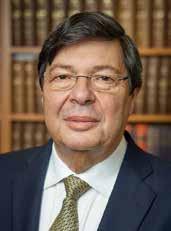
Although romanticized by Robert Louis Stevenson in Treasure Island and by Errol Flynn and Johnny Depp in swashbuckling films such as Captain Blood and Pirates of the Caribbean, pirates were among the most feared criminals of their day.

It is said that piracy is the world’s second-oldest profession. It is undoubtedly true that so long as cargo has been transported by sea, marine robbers have been on the scene.
No matter by what name, pirates, buccaneers, and privateers were of the same ilk—terrorists and sea bandits of their respective times, all requiring safe havens to provide essential services and homes for ill-gotten gains.
The Scope of this Account
Given the extent and complexity of the subject of piracy historically and internationally, this short account of pirates and their safe havens is necessarily limited in its scope and will mostly look at aspects of the life and times of the sea rovers, or as Shakespeare described them in The Merchant of Venice (Act I Scene 3), “water rats” and “water thieves,” in the early modern era of Europe and the Americas around the time of Columbus.

Privateers
From about the 13th century, England and the principal littoral European trading nations (including Spain) commissioned privateers primarily to augment their naval forces, but also as an [unofficial] expedient to assist in filling the national coffers. Privateers were “private” individuals authorized by or on behalf of their sovereigns to fit out and utilize their own ships at their discretion in accordance with the terms of their respective licences.
The vessels commissioned were also generically known as “privateers.” As King Henry III of England put it in 1243 in the first privateering licences he issued, a privateer’s duty is “to annoy our enemies by sea or land” and to share “any gains” with the Crown.
In England privateering was seen as a commercial opportunity and frequently was organized and financed by local merchants. It is thought that throughout the 17th and 18th centuries, some 80 per cent of the merchants of Bristol were regular investors in privateering expeditions. Liverpool’s merchants were also avid investors. Liverpudlian merchants were involved in taking out 306 privateering licences during the Seven Years’ War against France (1756–1763) and 1384 licenses during the American War of Independence (1776–1783), representing 18.8 per cent of all British privateering licences issued during that war.
The French and Dutch traders followed suit and were keen supporters and backers of their
Peter Zablud, AM, RFD
MONEY LAUNDERING/FRAUD 42 BC Notaries Association Volume 31, Number 2, Fall 2022TABLE OF CONTENTS
national privateers, apparently from time to time during periods of nonbelligerency with England, also investing in prize-seeking voyages of English privateers along the Spanish Main.
Letters of Marque
Privateering licences steadily evolved into formulaic legal instruments known as “Letters of Marque and Reprisal” or merely “Letters of Marque” issued by national government authorities or high level officials. From the late 17th century, Letters of Marque in Britain were issued by the High Court of Admiralty. During the 125 years between 1690 and 1815, the Admiralty Court issued about 25,000 Letters of Marque—approximately 3 or 4 per week.
Vice-Admiralty Courts sat in all British colonies. They were empowered to issue Letters of Marque in support of their own political and commercial purposes. In the American and Caribbean colonies, the local Governors comprised or controlled the ViceAdmiralty Courts. For example from 1694, the Governor of the Colony of Rhode Island regularly issued Letters of Marque to cronies and merchant groups for purely commercial reasons.
During the Revolutionary War, the Thirteen Colonies relied heavily on armed privateers. America’s state and federal authorities issued Letters of Marque to over 2000 privateers who among them captured 3087 British ships and seized about 10 million pounds (about CAD350 million today) in British property.
The Spanish Main
Following the success of Christopher Columbus’s 1492 voyage of discovery to the New World, in 1493 at the behest of the Spanish monarchs Ferdinand and Isabella, the Spanish-born Pope Alexander VI issued three papal bulls (“decrees”), notionally dividing the non-Christian New World between Spain and Portugal and delineating their respective maritime and colonial domains. A year later, the Treaty of Tordesillas concluded between the two Iberian maritime powers altered the Pope’s demarcation Line and brought [modern day] Brazil into Portugal’s sphere of influence.
The Borgia Pope’s bulls forbade anyone from undertaking mining or any other commercial activity Z in what became known as the “Spanish Main” without the express permission of the Spanish Crown. The nonIberian trading nations, including [Catholic] France did not recognize either the Pope’s temporal authority or the accord between Spain and Portugal. They regarded the Pope’s Line as a nullity.
From 1494 until the early 1800s, Spain plundered her new colonies in the Americas. Fabulous wealth in gold, silver, gems, and commodities was regularly stored in and shipped from the Spanish Main back to Spain, attracting pirates and privateers in droves.

In 1586, in the first year of the Anglo-Spanish war (1585–1604), Spain’s favourite bogeyman Francis Drake captured and looted the wealthy Spanish colonial city Cartagena de Indias, located in present day Columbia.
Buccaneers
Originally a motley group of about 500 mostly French Caribbean colonists who had been hunters of feral pigs and cattle in Hispaniola, on turning to piracy as a living in the early 1600s became known as “buccaneers” after the “boucan,” the rack upon which they dried and cured meat from slaughtered livestock.
At first, based in the stronghold they built on the island of Tortuga located on the north-west of Hispaniola, the buccaneers ventured out largely to attack Spanish settlements and shipping in the Caribbean. To assist in their own campaigns against Spain, the English readily granted Letters of Marque to many buccaneers.
While on Tortuga, the buccaneers organized themselves into a loose coalition known as the “Brethren of the Coast.” They established rates of remuneration for crew members, levels of compensation for the injured and maimed, as well as Articles of Service that were strictly observed and enforced across the entire brotherhood.
With several notable exceptions, such as Henry Morgan, William Dampier, and Bartholomew Sharp, as a class buccaneers were just run-of-the-mill pirates. They gained considerable fame and notoriety from the publication in 1678 of a book by young French buccaneer Alexandre Exquemelin, Bucaniers of America, that became a best-seller throughout Europe.
43Volume 31, Number 2, Fall 2022 The Scrivener | www.bcnotaryassociation.ca TABLE OF CONTENTS
Three Famous Pirates
The names of most pirates of the Spanish Main and the Caribbean have long since been forgotten, but three of the pirate captains whose names feature prominently in the annals of piracy are “Blackbeard,” “Calico Jack,” and “Captain Kidd.”
Blackbeard
Perhaps the most dreaded pirate of his day was Englishman Edward Teach whose sobriquet was “Blackbeard.” The name derived from his long, thick black beard, parts of which he sometimes braided and festooned with coloured ribbons. He is said to have enhanced his fearsome image by tying hemp cord slow matches with glowing tips under his hat.
Originally a British privateer during the War of Spanish Succession (1701–1714), Blackbeard turned to piracy in about 1716 and operated from the safe haven of New Providence in the Bahamas. Despite his well-deserved fearsome reputation, Teach was not the most financially successful of pirates. He was killed in a battle with British naval ships on November 22, 1718, on Ocracoke Island off the North Carolina coast.
Calico Jack
John Rackham, known far and wide as “Calico Jack” due to his penchant for multicoloured calico trousers, was an English pirate captain who sailed the Caribbean between 1718 and 1720. The emblem on his flag was a skull and crossed cutlasses. After receiving a Royal pardon in 1719, Rackham temporarily retired to live a quiet life in Nassau.
He returned to work in early 1720 but was soon captured and tried in Jamaica for his crimes. After his execution on November 18, 1720, following English practice at Execution Dock in London, Calico Jack’s body was publicly displayed in an iron gibbet cage hung from a pole on a small island off the harbour of Port Royal. The island is known today as “Rackham Cay.”
Captain Kidd
In complete contrast to Blackbeard and Calico Jack, the suave, sophisticated Scotsman William Kidd was a literate gentleman. As a young man, he had settled in New York. In his prime, Kidd was a man of some means,
having married a rich New York widow. The Kidd family lived at 119 Pearl Street, Manhattan, in the heart of today’s financial district.
Initially, Captain Kidd was a privateer roving the Atlantic sea lanes. He later turned to piracy. His privateering expeditions were funded by British and Colonial worthies, including the Governor of New York. William Kidd was tried and convicted for piracy and murder and hanged at Execution Dock in London on May 23. 1701. At his hanging, the rope broke and he had to be strung up a second time.
Captain Kidd has always been reputed to have stashed away a fortune in gold, silver, precious stones, and jewellery. There is no evidence that he ever did. Even if the stories are true, none of his treasure chests or hiding places has ever been found.
Female Pirates
In no small way due to the ancient superstition among seafarers that women on board ships were “jonahs” who jinxed the vessels and their crews, female pirates were few and far between. Even so, in medieval Europe and later during the golden age of piracy of the 17th and 18th centuries, a number of female pirates plied their trade as brutally and callously as did their male counterparts.
Calico Jack’s wife Anne Bonny is probably the most infamous female pirate of the Caribbean. Known for her foul temper and ferocious behaviour, she had previously been married to another pirate—James Bonny. After joining Calico Jack’s crew, she married him and then took up with Mary Read who had passed herself off as a male pirate named Mark Read.
As it happened, in a unique blend of the two oldest professions, a 19th century female Chinese pirate eclipsed them all—male and female. Madame Ching Shi was a Cantonese prostitute who married Chinese privateer Zheng Yi. After his death in 1807, Ching Shi took control of her husband’s ships and continued his nefarious pursuits. At her peak, 3 years later, Ching Shi commanded the entire Chinese pirate confederation fleet of 1500 ships and 80,000 crew and terrorized shipping, traders, and foreign navies throughout the South China Sea. Ultimately granted amnesty by the
44 BC Notaries Association Volume 31, Number 2, Fall 2022TABLE OF CONTENTS
Qing Emperor, Madame Ching Shi retired to run a gambling and opium den in Canton.
The Jolly Roger
Nothing in the public mind symbolizes pirates more than the Jolly Roger, the black flag emblazoned with a white skull and crossbones, flying atop the mast of a pirate ship.
From about the 14th century, while raised the French Monarch’s red battle standard signalled “War to the Death” and that “No Prisoners” would be taken. Emulating ominous Royal warnings, many French pirates took to flying red flags, sometimes, for good measure, adding features such as a skull and crossbones.
Black flags, with or without added features, steadily became popular among pirates of all nationalities. By the 17th century they were virtually de rigueur. In England, the pirate flag came to be known as the “Jolly Roger,” most likely as a pun on the colour of the old French red flag, “Joli Rouge.” The name stuck.
One side-effect of merchant ships, heaving to and surrendering on seeing the Jolly Roger, was to decrease the number of battles at sea between pirates and their prey. When it all boiled down, piracy was also a business enterprize, albeit on the wrong side of the law. Conflict at sea was expensive. Men were killed, wounded, and maimed. Pirate ships and their prizes were damaged, often severely and sometimes irreparably. The costs of repairs, replacement, and compensation were substantial.
The End of Privateering
Privateering as a state instrument and a lucrative living for many seafarers came to an abrupt end immediately after the Crimean War (1853–1856) on the adoption of the Declaration of Paris Respecting Maritime Law of April 16, 1856. Based on an accord reached by France and the United Kingdom, the Declaration introduced four “fixed principles” into international law, the first of which was “Privateering is and remains abolished.”
In all, 58 parties, including the major trading nations, ratified or acceded to the Declaration—the last being Spain that did not accede until January 18, 1908. Due to its reliance upon privateers as its de facto navy, the then-fledgling United States of America was not a signatory to the Declaration, nor has the
USA subsequently acceded to it. In fact, by virtue of Article 1, Section 8, of the United States’ Constitution, the US Congress [still] has the power “to grant Letters of Marque and Reprisal.”
Safe Havens
Whenever and wherever pirates of any kind existed, safe havens were essential to provide secure anchorages from which to set out to sea and service and support their expeditions. In turn, safe havens welcomed pirates for the money they spent on repairing, maintaining, and provisioning their ships and on what euphemistically is described as “rest and recreation.” Often enough, safe havens were or became prosperous commercial centres that competed with each other to attract pirates and their booty to take up permanent residence.
Port Royal, Tortuga, and Nassau are among the best known of the Caribbean havens. In the USA, Boston, New York, Rhode Island, and Charles Town had long histories as safe havens for privateers and slavers. Less well known today are Clew Bay in Ireland and St Mary’s Island near Madagascar. In France, Dunkirk, Nantes, and Saint Malo supported the French privateers; in England, the ports of Bristol, Liverpool, and London gave safe haven to many English privateers.
Little Has Changed
Modern criminals in their pinstriped suits prey on the public and launder their booty from gambling, drugs, and cybercrime in the same safe havens throughout the world where the pirates and terrorists of old plied their trade. s
Professor Peter Zablud, AM, RFD, is an Australian Lawyer and Notary and the Director of Notarial Studies, Victoria University, Melbourne, Australia.
Principal Sources
Alfred Bradford
Flying the Black Flag (2007) Praeger Publishers
David Cordingly
Under the Black Flag (1996) Random House
Philip Gosse
The History of Piracy Dover Edition (2007)
Peter Leeson
The Invisible Hook (2009) Princeton University Press
Henry Ormerod
Piracy in the Ancient World
Johns Hopkins Paperback edition 1997
Cindy Vallar
Pirates and Privateers
<cindyvallar.com>
Wikipedia Online encyclopedia Colin Woodard
The Republic of Pirates (2007) Mariner Books
45Volume 31, Number 2, Fall 2022 The Scrivener | www.bcnotaryassociation.ca TABLE OF CONTENTS
Pet-Purchase Frauds
Ian Callaway
Canadians love their pets. The Canadian Animal Health Institute’s 2020 Pet Population Survey found 58 per cent of Canadians own at least one cat [8.1 million cats] or one dog [7.7 million].
Another survey found Millennials are driving ownership numbers even higher—over half chose their pet after seeing online pictures or videos.

Pet popularity doesn’t escape criminals’ conniving eyes. The fraudsters launch the bait on social media. Perhaps they offer a rare breed at a discount—an animal being sold only because of a family death, natural disaster, or relocating overseas. In some “desperate” cases, the pet is “free” . . . just pay the shipping. Heartwrenching photos or videos accompany the pitch.
After a few online interactions, the “close” is near— just e- transfer/wire a deposit to hold the pet because “others are interested.”
With the hook set and the delivery airport agreed, fraudsters can photoshop “your” pet in front of the airport entrance to increase your trust. Oh, the airline requires a veterinarian’s pre-departure pet-check and the deposit for the special shipping cage will be refunded. Payment of the oustanding balance finalizes the sale—never by cheque.
With the date and flight booked, you arrive to find no pet was shipped. The vendor’s phone and email address remain silent. Complaining to your bank or police may get you a sympathetic ear, but no refund or investigation.
The above is a true BC story from 2022; note the pet’s fraudster- supplied photo. The parents-to-be were emotionally devastated. Fortunately, they hadn’t told their kids about the new family member.
The global phenomenon of pet-selling scams is estimated to have cost Canadians $3 million in 2020 with an average loss of $1045—some as high as $20,000.
Buyer beware; e-anonimity can drain your pocketbook. s

MONEY LAUNDERING/FRAUD WELCOME ABOARD! MEMBERSHIP HAS BENEFITS: • JOIN A GROUP OF LIKE-MINDED PROFESSIONALS • COURSES & WEBINARS TO CONTINUE YOUR EDUCATION IN THE INDUSTRY • NETWORK WITH LEADING INDUSTRY EXPERTS BECOME A MEMBER TODAY! LEARN MORE AT: www.cmbabc.ca | 604.408.9989
46 BC Notaries Association Volume 31, Number 2, Fall 2022TABLE OF CONTENTS
This Year Make-A-Will Week was October 2 to
Morrie Baillie
Each year in the Fall, the BC government shines a special light on the importance of making a Will.
Make-A-Will Week reminds those who don’t have a Will to get moving—and reminds those who do have a Will to review their current Will and make any changes that are needed.

A Will is an important document. In simple terms, a Will allows you to appoint an executor/ trustee to manage your estate on behalf of the beneficiaries.
The Will document can legally establish who will be the guardian of your minor children and also appoint an alternate guardian in case your primary guardians are unable or unwilling to continue to be ready to carry out that role.
A Will is a fluid document—a reflection of time—where you are in the moment. It’s a document that will help your loved ones and save money in the long run.
As BC Notaries, we guide the process from start to finish. We provide our clients with advice and options to meet the Willmaker’s goals. We ensure the Will
is executed correctly—a crucial step to ensure the Will is a valid document—less likely to be challenged and create confusion!
Note: The Winter issue of The Scrivener magazine will have a dual theme
• Personal and Estate Planning, and

• MAiD . . . Medical Assistance in Dying
In it, we will provide a great deal of detailed information on the four major Personal Planning socuments: Wills, Powers of Attorney, Representation Agreements, and Advance Health Directives.
The Winter issue will be out at the beginning of January, 2023 . . . in hard copy format and online. s Notary Public Morrie Baillie, practising for almost 10 years, exclusively focuses on Personal Planning. One of the statutory examiners for new BC Notaries (Personal Planning), she is a committee member for the British Columbia Law Institute (Undue Influence Committee) and Vice President of the BC Notary Association. Morrie has recently joined the dynamic team at Salvador Davis, serving Sidneyby-The-Sea and surrounding areas.
8.
WILLS 47Volume 31, Number 2, Fall 2022 The Scrivener | www.bcnotaryassociation.ca TABLE OF CONTENTS
A Bit about the Life of Fariborz Khasha, BC Notary, Retired
In early June I received a pleasant email from my friend Val Wilson, Scrivener Editor-in Chief, asking how I was doing and if I would like to be the featured retired BC Notary in the WHERE ARE THEY NOW? segment of the Fall issue of the magazine.
MY RETIREMENT BEGINS
After 15 years of Notary practice in the District of West Vancouver, focusing on real estate conveyancing, preparation of Wills and Representation Agreements, and other general Notarial services, particularly to the Persian-speaking community, in November 2018 I submitted my retirement notice to our Society.
AN UNEXPECTED TURN OF EVENTS
As it has turned out, the 4 years since my retirement from the Notary profession have not been without unexpected and unpleasant challenges of adverse health issues—a diagnosis of stage 4 bladder cancer early into my retirement days, followed by several unsuccessful surgeries, long periods of hospitalization, and chemotherapy and the like.
Val encouraged me, “Talk about your life and your battle!”
Despite the fact that I’ve been given a limited prognosis, my wife Shahrzad, adult children Siavash and Setareh, son-in-law Sebastian, and close friends have been a source of much-needed inspiration. We are fighting back together as a strong family.

Fariborz with his wife Shahrzad celebrating their 38th anniversary in July 2021
COMING TO CANADA
Immigrating to Canada from Iran at the age of 47 with my family in July 1997 took a great deal of courage. Fortunately for me, the use of the English language, an essential component of success for any new immigrant, was not a problem. My previous career as a selfemployed government-accredited Official Translator and running a successful business in Tehran provided me with virtually instantaneous networking and potential career opportunities.
My wife Shahrzad, with an MA degree in French Literature from the Tehran University, spoke no English but was fluent in French. Within a year, she was offered a position in an accounting software firm with French Canadians!
Siavash and Setareh, 12 and 9 when our family landed in Vancouver, assimilated quickly into their new environment and, over the next years of dedicated study, earned university degrees and secured successful careers. Siavash is now a well-known Creative Director living and working in New York City; Setareh is a lawyer living in Vancouver and working at the Law Society of BC.
As is the case with many other senior professionals, my plans for the retirement years consisted of well-
WHERE ARE THEY NOW? 48 BC Notaries Association Volume 31, Number 2, Fall 2022TABLE OF CONTENTS
deserved tranquility, travels with my wife to desired destinations, and foremost putting pen to paper and writing a memoir of a very rich and gratified life.
After 3 years of putting up a relentless fight against metastatic cancer, with the most up-to-date treatment options, I have been given a medical prognosis of 3-to 6-months of life expectancy.
So this writing may also be regarded as a farewell of sorts to my friends and former colleagues—with the caveat that the positivity and optimism that my family and I have maintained throughout this period remains intact.



What in ordinary circumstances may be ignored as simple, unimportant objects now appear as sources of vast pleasure to my eyes—freshly cut flowers in a vase; a gentle summer breeze trembling the leaves of the hedges outside my livingroom window; hearing “clear!” yelled by local bikeriders crossing the nearby intersection; family dinners and listening to my favourite music; and watching TV shows in a cuddly group.
in every single moment of being with my loved ones. And no matter what, life must and will go on!
Fariborz (right) sharing quality time with his daughter Setareh next to him, friends Jenny Sheppard and Lynn Zanatta, and his son Siavash.
Fariborz Khasha, my beloved husband and retired Notary, passed away on the early morning of August 28.Fariborz remained his positive and funny self until the very end.
49Volume 31, Number 2, Fall 2022 The Scrivener | www.bcnotaryassociation.ca TABLE OF CONTENTS











TO OUR 2022 SPONSORS THANK YOU G O L D S I L V E R B R O N Z E The Dye & Durham Platform connects a global network of professionals with public records to support business transactions and regulatory compliance. 50 BC Notaries Association Volume 31, Number 2, Fall 2022TABLE OF CONTENTS


The British Columbia Notaries Association looks forward to holding our Annual Continuing Education Conference at the Delta Grand Okanagan in Kelowna! We recognize that professional continuing education and advancement are fundamental to your success as Notaries, and an important piece in ensuring the continued high standards of service that the public has come to expect from Notaries as providers of non contentious legal services. Our thanks to members of the BCNA Continuing Education Liaison Committee who are helping to develop the seminar content for the program. It is more important than ever that we stay connected and continue to learn and work with our key industry partners and stakeholders in order to move the profession forward, and protect the public interest. If you have any questions in relation to the 2023 BCNA Continuing Education Conference, please contact Trista Zamany for further information at tzamany@bcnotaryassociation.ca Alternatively, if you are a potential conference exhibitor, please contact Nicola Fossett for further information at nfossett@bcnotaryassociation.ca APRIL CONTINUING EDUCATION 2PROGRAM 023 MORE INFORMATION COMING SOON SAVE THE DATE BCNA ANNUAL CONTINUING EDUCATION CONFERENCE 2 1 - 2 3 A P R I L 2 0 2 3 S A V E T H E D A T E D E L T A G R A N D O K A N A G A N R E S O R T 51Volume 31, Number 2, Fall 2022 The Scrivener | www.bcnotaryassociation.ca TABLE OF CONTENTS
INSTALLATION OF THE BC NOTARIES CLASS OF 2022
In the Supreme Court of British Columbia
BEFORE THE HONOURABLE CHIEF JUSTICE HINKSON
 COUNSEL Q DUONG:

I’m appearing on behalf of this year’s class of notarial candidates. Thank you, Chief Justice, for presiding over the installation ceremony. It’s my pleasure to present to you the notarial candidates. Also attending with us today are two executives from The Society of Notaries Public of British Columbia: Executive Director Mr. John Mayr and Secretary Ms. Marny Morin.
With us also are family and friends of the candidates. The candidates, Chief Justice, have all successfully completed a 2-year Master’s program in Applied Legal Studies, delivered by the School of Criminology at Simon Fraser University. They have also been through a rigorous selection process, passed the prescribed statutory examinations, and paid prescribed fees. They have done all that is required of them in their preparation to become Notaries in this province.
Chief Justice, at this time I would like to deliver the pledge of The Society of Notaries Public to the candidates. Candidates, please rise and step forward. I will now recite the pledge.
I pledge myself to the advancement of the notarial profession in British Columbia by all proper means available to me.
I pledge myself to seek and maintain an equitable, honourable, and cooperative association with fellow
members, other practitioners, and with all others who may become a part of my business and professional life.
I pledge myself to place honesty and integrity above all else, and to pursue my practice with diligent study and dedication in order that my service to my clients shall always be maintained at the highest possible level.
I pledge myself to comply with the principles and objectives of The Society as set forth in its Bylaws, Rules, and Code of Ethics and professional conduct.
I will now read each of your names and ask you to indicate your agreement with the pledge by stating, “I so pledge.”
THE COURT:
“This is the ninth year I have had the opportunity to share this kind of ceremony with new Notaries Public; it’s a ceremony I look forward to each year. I’m invariably impressed by the calibre of the candidates that come before me to be enrolled in The Society of Notaries Public in the Province of British Columbia.
“I’ve read all your bios. There’s not as much reference to community involvement in the material and I’m sure it’s not because you’re not doing enough community service. I think it’s because of the COVID pandemic that has troubled all of us for far too long.
“I want to congratulate each of you on the completion of your studies and training to become members of The Society. It is no small accomplishment and one of which you should each be very proud. You didn’t get to this stage in your careers on your own, as is evident from your letters of reference and support that
Quang Duong
THE COURT: Good morning, Mr. Duong.
The Honourable Chief Justice Hinkson
Photo credit: Dave Roels
52 BC Notaries Association Volume 31, Number 2, Fall 2022TABLE OF CONTENTS
I’ve had a chance to review before today. Your friends and family have sacrificed and supported your efforts and should not be forgotten or overlooked, especially today. It is important that your ancient and honourable Society is renewed each year with individuals such as yourselves from a wide variety of homes, ethnic backgrounds, and life experiences that weave together the fabric of our society and are so important to shaping our country.
“When we look around the world and see the difficulties in other countries, we can be proud and encouraged that we live in a country that adheres to the rule of law and democratic principles.
“Your references have rightly emphasized your reputations for honesty and integrity—so important in your new careers. I hope you will always be able to represent what you represent today and what you have
pledged today—honesty, integrity, and cooperative association with fellow members, other practitioners, and all others who may become part of your lives.
“Your pledge is more than ceremonial. It must guide you throughout your careers. A reputation is something that, as you know, is hard won, but it is also something that can be easily lost if you fail to follow your moral compasses.
“The members of the public, whom we all serve, are entitled to our best efforts and our dedication to their interests; we must never lose sight of the great trust that has been placed in each of us. I wish you all the very best for your professional and personal lives. Please enjoy today and then move ahead in your work tomorrow. You are now to be enrolled by the Registrar as members of The Society of Notaries Public of British Columbia and to be entitled to practise as a Notary Public.” s
In The Matter Of The Notaries Act, R.S.B.C. 1996, Chapter 334
Application for Enrollment
Colby Marie Althouse
Danielle Kathleen
Shivani Sharma
Ameera Ayyaz Shums
Yehua Sun
Sylvia Sojin Choi
Navreet Kaur Dhillon
Liezl-Marise Dreijer
Balkaran Singh Gill
Navdeep Kaur Gill
Po Lan Mabel Ho Ryan Kasiri
Kam Kaur Lealh-Thind
Hong Fei Lu
Adrian Luk
Gabriel Izaak Jacobus Theron
Steven Anthony Michael Wiens
Ariana Sara Yonusi
Sen Yu
Jeremy Erik Andersen
Victoria Jane Burtt
Ramanjot Kaur Chahal
Alana Elizabeth Halaliku Victoria Michelle Helmink
Ajitpal Kaur Sangha
53Volume 31, Number 2, Fall 2022 The Scrivener | www.bcnotaryassociation.ca TABLE OF CONTENTS
Sauté the beef in 2 tbsp. oil until the pink is gone. Remove beef from pan.
Add the rest of the sesame oil to the pan; sauté the onion until translucent and soft.
Add the garlic, stirring until lightly brown (about a minute). Return beef to the pan—add hoisin sauce, soya sauce, fish sauce, and chili sauce. Stir for a few minutes to blend the flavours.
Wash, dry, and arrange lettuce on a large platter. Place carrots, radish, and peanuts in small bowls in the middle of the platter.

Serve the rice on the side. Everyone creates a wrap. I like to put a little
on the lettuce first, then add the meat,

nuts
For a little zing, I add “Thai sesame salad dressing” on top.
rice
veggies, and
Enjoy! s Years ago, late one night on the town with friends, we were looking for a snack and found a Korean restaurant open. We shared a huge plate of Korean lettuce wraps delish! I have since created my own version. The wraps make a nice light meal. 1 lb. lean ground beef 1 small onion, diced 2 cloves fresh garlic, diced 3 T. sesame oil 1/4 cup hoisin sauce 3 T. soy sauce 1 tsp. fish sauce 1 tsp. hot chili sauce . . . or more to taste (I use the brand with the rooster.) 1 head of butter or iceberg lettuce 1 cup cooked rice 1/2 carrot, julienned 6 small radishes, finely sliced - diced peanuts - Thai sesame salad dressing (optional) DIRECTIONSINGREDIENTS
Arlene Mason
ASIAN LETTUCE WRAPS Serves 4 ORIGINAL RECIPE THE MiX 54 BC Notaries Association Volume 31, Number 2, Fall 2022TABLE OF CONTENTS
Decision-Making by Strata Corporations in British Columbia
Elaine T. McCormack, Emily Sheard

Group decision-making can be difficult. Strata lot owners and strata councils who make decisions for strata corporations are not immune to that difficulty.
This article provides a holistic overview of decision-making by strata corporations located in British Columbia. In this article, we consider
• the decision-making framework for strata corporations;
• who the decision-makers are;
• what decisions each decisionmaker can make;
• when a council member may be in a conflict of interest;
• who can assist decisionmakers; and
• what happens when decisionmakers disagree.
We also summarize some options available if a strata corporation cannot make a critical decision. Depending on the circumstances, the options may include a Court application, the appointment of an administrator, working with a mediator, or requesting arbitration under the Strata Property Act (SPA).
While making decisions can be difficult, understanding the decision-making framework for strata corporations can assist strata owners and councils to arrive at reasoned conclusions.
Like other business corporations, strata corporations are subject to a legislative framework that governs decision-making.
Decision-Making Framework for Strata Corporations
Strata corporations are unique legal entities. Governance of strata corporations shares aspects of governance with business corporations, except those aspects are applied to community settings involving residential homes, commercial units, or mixed use. The decision-making framework for strata corporations includes both legislative and bylaw frameworks.
Like other business corporations, strata corporations are subject to a legislative framework that governs decisionmaking. The primary statute governing strata corporations is the SPA, which is accompanied by various regulations. There are
other statutes that can also apply to decisions made by strata corporations, including but not limited to the Human Rights Code, the Guide Dog and Service Dog Act, and the Personal Information Protection Act.
Strata corporations are also governed by bylaws. Under the SPA, bylaws “may provide for the control, management, maintenance, use, and enjoyment of the strata lots, common property, and common assets of the strata corporation and for the administration of the strata corporation.” (Section 119)
The Schedule of Standard Bylaws to the SPA applies by default as the bylaws for each strata corporation. A strata corporation can pass bylaws that amend the Schedule of Standard Bylaws that come into force by filing the passed bylaws with the Land Title Office (section 120, SPA). Those amendments can effectively add to the Schedule of Standard Bylaws, amend certain provisions, or replace it entirely.
While mindfully following the decision-making framework for strata corporations takes time and effort, doing so can prevent disputes, decrease the risk of fraud occurring, and result in better decisions.
STRATAS
55Volume 31, Number 2, Fall 2022 The Scrivener | www.bcnotaryassociation.ca TABLE OF CONTENTS
Who Are the Decision-Makers in a Strata Corporation?
From the time a strata corporation is incorporated to when it is wound up, a number of different individuals or entities will likely make decisions for the strata corporation. Those individuals and entities may include, but are not limited to the following.
• An owner developer
• An owner
• A tenant who has been assigned a landlord’s right to vote
• A mortgagee of a strata lot
• The council
• A Court-appointed administrator
• A liquidator
For the purposes of this article, we focus on two core groups of decision-makers,
• the owners of the strata lots located on a strata plan, and
• the council for the strata corporation.
In the following sections, we consider each core group of decision-makers and what decisions they can make.
The Owners
Section 2(b) of the SPA provides that “the owners of the strata lots in the strata plan are members of the strata corporation under the name ‘The Owners, Strata Plan [the registration number of the strata plan].’ ”
As members of the strata corporation, the owners are responsible to make many decisions. Those decisions are generally made at an annual or special general meeting. To pass, each decision requires a vote of the owners beyond a certain threshold. Careful attention should be paid to whether the voting threshold is of all the owners or those present in person or by proxy at a general meeting.
Some examples of the many decisions owners can make include, but are not limited to
• approving council member remuneration (section 34, SPA, ¾ vote);
• changing the formulas for calculating strata fees (section 100, SPA, unanimous vote);
• approving the budget for the fiscal year (section 103, SPA, majority vote);
• amending the schedule of unit entitlement (section 261, SPA, unanimous vote);
• voluntary winding up of the strata plan without a liquidator (section 272, SPA, 80% vote).
that each owner will be a council member. Section 9(2) of the Schedule of Standard Bylaws to the SPA requires all owners of the strata lots to be on council if a strata plan has fewer than 4 strata lots or the strata corporation has less than 4 owners.
Council is entrusted with day-today decision-making. The SPA does not detail all the decisions councils can make, as the list would be endless. Instead, section 26 of the SPA provides that unless otherwise specified, council has the powers and duties of the strata corporation.
Subject to this Act, the regulations and the bylaws, the council must exercise the powers and perform the duties of the strata corporation, including the enforcement of bylaws and rules.
Some examples of decisions generally made by owners include, but are not limited to
• election of council (section 25, SPA, majority vote);
• expenditures from the contingency reserve fund (section 96, SPA, ¾ vote);
• approving special levies (section 108, SPA, ¾ vote).
The exceptions to when the abovenoted decisions are not made by the owners are beyond the scope of this article.
The Council
Strata corporations are often governed by a smaller group of individuals referred to as the “council.” We say “often” because when there are few strata lots on a strata plan, then it is possible
As a result, there are certain powers and duties that must be exercised by the owners, but the rest of the powers and duties are exercised by council. Some examples of the decisions made by councils regarding the strata corporation’s financial duties include, but are not limited to
• preparing the budget and financial statements;
• establishing and maintaining the operating and contingency reserve funds;
• collecting strata fees;
• paying strata bills;
• hiring and supervising strata employees;
• obtaining and maintaining liability and property insurance; and
• maintaining financial records and making them available for inspection.
Council may delegate some of its powers and duties to others. For example, the strata corporation may
As members of the strata corporation, the owners are responsible to make many decisions.
56 BC Notaries Association Volume 31, Number 2, Fall 2022TABLE OF CONTENTS
hire a strata manager to provide a number of strata management services, including paying the strata corporation’s bills from the operating account.
It is important that council does not allow one of its members to make all council decisions. For instance, more than one council member should understand the strata corporation’s finances. Strata corporations may be vulnerable to fraud as they often have a large amount of funds held in their operating account, and an even larger amount in their contingency reserve fund. If only one council member understands the finances, it will be easier for fraud to occur as other council members may not notice if strata corporation’s funds are misappropriated.
In addition, the SPA requires council members to disclose conflicts of interest and to avoid participating in council decisions when there is or may be a conflict of interest between the person’s interests and their duties or interest as a council member (section 32). That applies if a council member has a direct or indirect interest. In that case, the council member must do the following pursuant to section 32 of the SPA;
• disclose fully and promptly to the council the nature and extent of the interest;
• abstain from voting on the contract, transaction or matter; and
• leave the council meeting - while the contract, transaction or matter is discussed, unless asked by council to be present to provide information, and
- while the council votes on the contract, transaction, or matter.
It is important to note that councils are often comprised of unpaid volunteers who graciously offer their time to govern the strata corporation. As a result, council members have various levels of knowledge about strata corporations and experience as a council member.
It is possible for the owners to approve remuneration for one or more council members pursuant to section 34 of the SPA. The remuneration must be approved in advance of payment by 1 of 3 methods,
• as an item in the budget;
• by bylaw; or
• by a ¾ vote resolution that is passed at an annual or special general meeting.
Remunerating one or more council members may be appropriate when a council member is taking on a large task for a strata corporation, such as liaising with experts for a building envelope replacement.
Who Can Help with Decision-Making?
Council may also seek assistance outside the strata corporation. Strata corporations often hire a strata management company to assist them in managing the strata corporation. In certain situations, council may also consult experts for advice, such as engineers or lawyers.
What Happens when Decision-Makers Disagree?
Sometimes, decision-making can break down among owners, among council members, or between owners and council members. In the next section, we consider when this may occur and provide insight on how the decisionmakers can work through their disagreements.
Prefer
www.bcnotaryassociation.ca Editor’s To Send Photographs to the Magazine . . . scrivener@bcnotaryassociation.ca. Please send photos at the original size. Do not reduce or retouch.
Paperless? The BCNA has editions of The Scrivener available on our website and on ISSUU at issuu.com/bcnotaryassociation. To update your subscription preference, please email bcna@bcnotaryassociation.ca. Article Deadline November 15, 2022 Advertising Deadline November 15, 2022 Winter 2022 · Personal & Estate Planning · MAiD Watch for the Winter issue in early January! NEXT ISSUE 57Volume 31, Number 2, Fall 2022 The Scrivener | www.bcnotaryassociation.ca TABLE OF CONTENTS
When Council Members Disagree with Each Other
Council makes decisions by way of a majority vote at a council meeting. Making strata decisions can have an emotional component. Regardless of the circumstances, council decision-making is prone to break down when emotions are involved. A structured decision review process can assist councils to work through decision-making objectively.
There are often friendships among council members and owners, tenants, and occupants, as well as strata managers and employees of the strata corporation. Those interpersonal dynamics can affect decision-making.


In some cases, council’s decision-making process breaks down. Some common reasons for when that may occur include when one or more council members
• experience social pressure;
• have differing levels of knowledge about a particular subject;
• have different information;
• feel that all decisions must be unanimous; and
• are self-interested. The social context of the decisionmaking process is an important consideration. Council members are often neighbours and may also be friends. Making a decision that does not support a fellow council member’s view is awkward for some and can create hard feelings. Sometimes it can be easier to go along with a decision, just to keep the peace. Worse yet is when council members leave the decision-making up to one person because that person may become angry unless the person wins.
Sometimes one council member has more knowledge than the others about a particular subject and is deemed the “expert” on that subject.
Especially for important decisions, all council members should make an effort to obtain a working knowledge of the subject. That knowledge often comes from consulting outside experts who can conduct an investigation and provide their findings and recommendations to council. For example, council may hire an engineer to prepare a report in a way that is designed for nonengineers to understand.
One example of an important yet difficult decision is how to deal with multiple incidents of water ingress. While that may seem like a straightforward problem, many conflicting questions and views may come up, such as the following.
• Should the council address the problem on a case-bycase basis with a contractor and/or tradespeople?

• Would it be more appropriate to obtain a building envelope condition assessment from an engineer?
• Should the decision about whether to obtain a building envelope condition assessment be made solely by the engineer who serves on council?

Depending on the cost of the building envelope condition assessment (BECA), should the decisions be made by the owners at a general meeting? A structured decision-making process can help council navigate those types of questions.
second example of an important yet difficult decision is whether to continue a contract with a live-in caretaker or
A
1600 – 1095 West Pender Street Vancouver, BC V6E 2M6 Phone: (604) 689-3281 Fax: (604) 685-6494 www.macfuj.com
QUANG
T.
DUONG GORDON J. KEHLER
IAN M. KNAPP MACKENZIE FUJISAWA LLP BARRISTERS & SOLICITORS Proud to be serving BC Notaries and their clients with Wills & Estates Litigation Real Estate Property Disputes • • 58 BC Notaries Association Volume 31, Number 2, Fall 2022TABLE OF CONTENTS
terminate the contract and retain outside services, such as building maintenance, landscaping, and cleaning services.
One council member may be upset by even considering the option of terminating the caretaker’s contract, because the council member feels the caretaker has been a member of the community for years and is well liked by residents.
Another council member may have compared the costs of the two options and feel strongly that outside services are more costeffective. The two council members may refuse to listen to each other’s viewpoints.
Also, depending on the situation, the owners may need to be involved in the decision-making. For example, the cost to remunerate the caretaker may be listed as a line item on the budget for the fiscal year that was approved by the owners, so the council may not be able to use the funds for that line item for other purposes.
Council members must remain objective, as they are making business decisions for the best interests of the strata corporation. For each decision, council members should consider both the advantages and disadvantages to the community.
One way to help maintain objectivity is to create and maintain a decision review process rather than pre-emptively taking positions. Council should, to the best of its ability, organize all relevant documents and information required to make a decision, and review and discuss the documents and the information at a council meeting prior to making an important decision.
Let’s revisit our example of the live-in caretaker. Council can approach making a decision
to terminate the caretaker’s contract objectively by following a review process. Council could begin by reviewing the strata corporation’s contract with the caretaker.
Are there any provisions regarding termination of the contract? If so, what do those provisions require the strata corporation and/or the caretaker to do? If the caretaker lives in the complex, then the termination of his or her contract will likely involve the Residential Tenancy Act. Council may wish to consult a lawyer for assistance with terminating a contract and the residential tenancy.
(section 174, SPA). The Court will consider whether it is in the best interests of the strata corporation to appoint an administrator.
If an administrator is appointed, the person may be given a general appointment to exercise all the powers and duties of council, or a specific appointment whereby the person can only exercise certain of the powers and duties of council. The administrator can then make some or all decisions in lieu of council so the strata corporation can operate, but the administrator will generally be charging an hourly fee to do so.
When Owners Disagree with Each Other
Council members must remain objective, as they are making business decisions for the best interests of the strata corporation.
Council should also consider the alternative costs that may be incurred by the strata corporation as a result of the termination of the caretaker’s contract, for example, cleaning services, landscaping, maintenance, and more. Council could obtain quotes for those services. That way, the situation will be addressed as a business decision with a cost-benefit analysis involved.
In extreme cases, a council may become so dysfunctional it can no longer effectively govern the strata corporation. In those cases, the strata corporation, or an owner, tenant, and other classes of individuals, may apply to the Supreme Court of British Columbia (SCBC) for an order appointing a person called an “administrator”
Unlike council, owners are not required to make decisions in the best interests of the strata corporation. Owners are within their rights to vote how they please on resolutions put before them.
The SPA sets out several remedies that an owner may pursue in certain circumstances to challenge a decision made by other owners. Section 51 of the SPA details a process whereby a ¾ vote may be reconsidered in specific circumstances when 25 per cent or more of the owners provide a written demand to council.
The SPA also provides a remedy if a ¾ vote resolution for a special levy fails, when the special levy is to raise money “for the maintenance or repair of common property or common assets that is necessary to ensure safety or prevent significant loss or damage, whether physical or otherwise.” (Section 173)
If more than 50 per cent of the voters voted in favour of the resolution, but could not meet the ¾ vote threshold, then the strata corporation may apply to the SCBC for an order approving the resolution for the special levy. (Section 173, SPA)
59Volume 31, Number 2, Fall 2022 The Scrivener | www.bcnotaryassociation.ca TABLE OF CONTENTS
Sometimes one strata lot or a small percentage of owners make it impossible for a unanimous vote to pass. Section 52 of the SPA details a process whereby the strata corporation may apply to the SCBC (if approved by ¾ vote of the owners) for “an order providing that the vote proceed as if the dissenting voter or voters had no vote.”
The Court must be satisfied, however, that the “passage of the resolution is in the best interests of the strata corporation and would not unfairly prejudice the dissenting voter or voters.” (Section 52, SPA) The strata corporation may retain a lawyer to obtain an opinion on the likelihood of whether the Court would be satisfied in the particular circumstances of that matter.
In some strata corporations, there may be a power imbalance created by one person or entity who holds 50 per cent or more of the votes of the strata corporation, for example, if one person owned 6 of 10 strata lots in a residential strata.
Section 164 of the SPA allows owners and tenants to seek relief from the SCBC to prevent or remedy significantly unfair exercises of voting rights in the above situation. Pursuant to section 164, the SCBC has the authority to
• direct or prohibit an action;
• vary a transaction or resolution; and
• regulate the conduct of the strata corporation’s future affairs.
Relatedly, an owner or tenant may also seek the above-noted relief from the SCBC pursuant to section 164 of the SPA to prevent or remedy significantly unfair actions, threatened actions, or decisions made against them by strata corporations.
Section 165 of the SPA allows an owner, tenant, and other classes of individuals to seek relief from the SCBC to require a strata corporation to perform a duty required by SPA or its bylaws or rules, or to stop the strata corporation from contravening SPA, the regulations, or its bylaws or rules. Section 165 of the SPA does not address exercises of voting rights and significantly unfair actions as does section 164; rather, it addresses the general actions or inactions of the strata corporation.
The strata corporation may not direct or restrict the council under subsection (1) if the direction or restriction
(a) is contrary to this Act, the regulations or the bylaws; or
(b) interferes with the council’s discretion to determine, based on the facts of a particular case;
(i) whether a person has contravened a bylaw or rule,
(ii) whether a person should be fined, and the amount of the fine,
In fact, decisions such as bylaw enforcement cannot be delegated to any individual or group of people such as strata manager or a committee. That includes a committee comprised of some of the council members.
(iii) whether a person should be denied access to a recreational facility,
(iv) whether a person should be required under section 133(2) to pay the reasonable costs of remedying a contravention of the bylaws or rules, or
(v) whether an owner should be exempted under section 144 from a bylaw that prohibits or limits rentals.
When Owners Disagree with Council
We have considered when council members disagree with each other, and when owners disagree with each other, but what happens when the owners disagree with council? Section 27 of the SPA provides that the owners, by majority vote at a general meeting, can direct or restrict council from making decisions. There are some decisions, however, that the owners cannot restrict the council from making. Those decisions are listed at subsection (2) of section 27 of the SPA and are reproduced below.
The above-noted decisions must be made by council. In fact, decisions such as bylaw enforcement cannot be delegated to any individual or group of people such as strata manager or a committee. That includes a committee comprised of some of the council members.
Alternative Dispute Resolution for Strata Corporations
As an alternative to bringing a matter to the Civil Resolution Tribunal, the Human Rights Tribunal, the Provincial Court of British Columbia, or the SCBC, as the case may be, an owner or group of owners, and council may wish to participate in a mediation.
60 BC Notaries Association Volume 31, Number 2, Fall 2022TABLE OF CONTENTS
Mediation is a dispute resolution process whereby an impartial third party is retained to facilitate a conversation between two or more parties regarding issues among them. A mediator does not make a decision but rather helps the parties work through the issues and hopefully come to an agreement on one or more issues.
Using mediation, the parties are able to look at all options available to them to achieve a result that moves the matter toward resolution. Those options may include creative solutions that a Court may not necessarily grant as relief to a party. If all parties are willing to participate, mediation is an excellent alternative dispute resolution option to address disputes in strata corporations.
Mediations are less adversarial than going to Court or the Civil Resolution Tribunal and work well when relationships and the need to deal with the other party or parties are ongoing.
Mediation also tends to be a less expensive process than Court or arbitration. The mediation process can include any parties that agree to participate. Mediation can also be mandatory if there is a Court proceeding and one party requests a mediation.
Another alternative dispute resolution process available to strata corporations is arbitration. Unlike mediations, however, arbitrations for strata corporations are initiated pursuant to the SPA. In that sense, arbitrations are less flexible than mediations. Division 4 of the SPA (sections 175 through 189) govern arbitrations.
That Division sets out a process for how arbitrations are commenced and addresses topics including what types of disputes can be arbitrated, arbitration procedures, examination and evidence, costs, appeals to the Court, and enforcement of arbitrator’s
decision. Additionally, an arbitrator makes a decision that is binding on the parties that may require a party to do something, order a party to refrain from doing something, or order a party to pay money as damages. (Section 185, SPA)
Residents in a complex must keep in mind that often the parties involved in a dispute will often continue to live in the same complex or work together. Participating in an alternative dispute resolution process such as mediation or arbitration, rather than participating in adversarial proceedings at a Court or Tribunal, will likely be less time-consuming and more conducive to sustaining functioning relationships.
Conclusion
In this article, we have considered
• the decision-making framework for strata corporations in British Columbia;
• who the decision-makers in a strata corporation are;


• what decisions each decisionmaker can make;
• who can assist decisionmakers;
• what happens when decisionmakers disagree; and
• how they work can work through their disagreements. Decision-making can be difficult, but with the right tools and knowledge, decision-makers in strata corporations can be more equipped to work through those decisions to make reasoned conclusions.
This article is for educational purposes only and does not constitute legal advice. s Elaine McCormack is a lawyer, mediator, and arbitrator with Wilson McCormack Law Group.
Emily Sheard is an associate lawyer with Wilson McCormack Law Group.
Seeking a Career as a British Columbia Notary Public?

There are business opportunities for Notaries in various communities throughout British Columbia. Some of the Requisites for Becoming a BC Notary

• Undergrad degree with a CGPA not less than 3.0
• Interest in the practice of law
• Strong entrepreneurial spirit
• Strong communication and people skills
• Dedication to community and serving the public
• High degree of honesty and integrity
For more information, please contact The Society of Notaries Public of BC 1-800-663-0343 or visit our website, www.snpbc.ca.
BC NOTARIES ARE RESPECTED IN THEIR COMMUNITIES.
61Volume 31, Number 2, Fall 2022 The Scrivener | www.bcnotaryassociation.ca TABLE OF CONTENTS
The Doctrine of Illegality In Estates
The doctrine of illegality was expressed in the Latin phrase ex turpi causa non oritur actio that was founded on public policy that a person should not profit from an illegal act, contract, or tort.
“No Court will lend its seed to a man who found his action upon in a moral or an illegal act,” stated the Court in Holman v. Johnson (1775) 98 E.R. 1120.
The modern approach to illegality, however, recognizes the unfairness that could result from strict adherence to the classical model, and has developed means of providing relief in appropriate situations.
The modern approach is that contractual or statutory illegality does not create an absolute bar to a claimant’s equitable relief. There is often a close legal relationship between the doctrines of illegality and public policy.
This approach was paraphrased in Berne Development LTD. v. Haviland (1983), 40 O.R. 238, as one that “balanced the need to preserve public policy by not enforcing illegal agreements against the need to prevent unjust enrichment by denying recovery.”
MURDER
While not the only act of illegality in estate law, the best known and obvious is that if one person murders another, then the murderer should not be able to profit from his/ her crime, including an inheritance from the person that was killed. Other criminal acts such as fraud or theft would also be relatively common examples of illegality in estates.
1. Re. Fenotti Estate 2014 BCSC 1533 reviewed the law and held that a son who murdered his mother may not inherit from her as a result of public policy that prevents a wrongdoer from benefitting from his or her own crime and firmly stated no he could not.

The Court cited and Garbe v. Alberta (Public Trustee), [1999] 5 W.W.R. 696, 64 Alta. L.R. (3d) 103 (Surr. Ct.), held
The rule of public policy which excludes the criminal has also been applied to exclude all claiming under the criminal, unless they have alternative or independent rights. In order to take under these independent or alternative rights, the person exercising the right must have clean hands.
2. The rule was discussed at length in the Supreme Court of Canada decision Oldfield v. Transamerica Life Insurance
Co. of Canada, 2002 SCC 22 at paragraphs 14 and 15.
The Supreme Court of Canada stated that the rule of public policy which precludes a person from benefitting from his or her own crime is an integral part of our system of law.
3. The Supreme Court of Canada in Baumann v. Nordstrom 1962 SCR 147 restored the decision of the trial judge where a woman had set fire to the house and killed her husband but was allowed to inherit as she was insane at the time.
The Court stated that if her crime, whether murder or arson, killed her husband she cannot inherit and the rule is the same on an intestacy as it would be if the property had been willed to her.
See in Re. Sigsworth; Bedford v. Bedford [1935] 1 Ch 89, 104 LJ Ch 46.
If at the time she set the fire she was insane within the meaning of the M’Naghten rules (to determine insanity or not in criminal law), there was no crime and she may inherit.
The Court held that the defendant wife, when she set the fire, “did not then appreciate the nature and quality of her act or know that it was wrong.” Accordingly, she was entitled to inherit.
4. Re. Unger 2022 BCSC 189 involved an application by the executors of the estate
WILLS & ESTATES
Photo credit: Matthew Chen
Trevor Todd
62 BC Notaries Association Volume 31, Number 2, Fall 2022TABLE OF CONTENTS
for advice and direction as authorized by section 86 of the Trustee Act regarding the disposition of the deceased’s estate, given that her own son had murdered her, the issue became who was entitled to his share of the estate.
The deceased was survived by two sons, Clayton and Logan, who were each 50 per cent beneficiaries of her Will.
As Clayton murdered his mother, all parties agreed there is a rule of public policy that excludes the person responsible for another person’s death from taking any benefit because of their criminal act.
Prior to his mother’s death, Clayton was found to have conceived a child (Adeline) who was born approximately 11 days after his mother’s death. His mother knew of the child.
The Court found that the child was “en ventre sa mere” and could inherit.
Under the rule of public policy, Clayton was not entitled to what would have been his portion of Ms. Unger’s estate, Ms. Unger having died as a result of Clayton’s actions.
The clear intent in the Will, however, was that should either of Ms. Unger’s children predecease her, under para. 7(b)(ii) of the Will, any children of her children who are alive at her death or are en ventre sa mere should receive the deceased child’s share.
The infant was an “alternate beneficiary” of the gift to Clayton as contemplated by section 46(1)(a) of the WESA, and is therefore the first priority for distribution of Clayton’s share.
Other Acts of Illegality
1. Fraudulent Commercial Transaction
In Youyi Group Holdings Ltd. v. Brentwood Lanes Canada Ltd.
2020 BCCA 130, the Appeal Court confirmed that the documents evidencing the commercial transaction had been prepared to facilitate the commission of a fraud, the illegality of such was neither trivial nor unintentional. The Courts refused to enforce the agreements due to their illegality.
could not be waived or altered by the Courts stating that the Realtor was not entitled to remuneration if he was not licensed to practise real estate.
The Court found that the Realtor services were illegal and followed the precedent King v. Rosenberry 1972 BCJ 357 that held that services performed under an illegal contract cannot form the basis of the claim for quantum meruit (a reasonable fee for services rendered).
Conclusion
Kim v. Choi 2019 BCSC 437 is an example of the more “relaxed” approach taken by the Courts on occasion in response to an illegal act or contract than they did historically.
Realtor Commission
In Lindsay v. Ambrosi 2019 BCCA 442, a Realtor’s claim for quantum meruit was dismissed on the basis that since he was not licensed under the Real Estate Services Act (RESA), he was statute-barred from any remuneration in relation to real estate services.
The Realtor unsuccessfully argued that he was entitled to compensation based on quantum meruit for the real estate services he provided at the request of the appellants, and that the appellants benefitted from. He contended that, in spite of the statutory prohibition in section 3 of the RESA, it remained open to the Court to determine the consequences of his statutory breach based on equitable principles in order to avoid the appellants being unjustly enriched by his services.
The Appeal Court held that the trial judge erred in following the Realtor’s argument, and that there was a statutory prohibition that
Kim v. Choi involved a plaintiff seeking the equitable remedy of restitution against unscrupulous immigration consultants and discussed the necessity of coming to Court with clean hands based on the legal doctrine of “ex turpi causa.”
Despite her involvement in an illegal contract, the Court awarded her $300,000 in restitution.
Traditionally, ex turpi causa had been applied rigidly. That approach has been relaxed, however, and the public policy analysis now requires a balancing test. That is not to say the Court will lightly provide relief for an aggrieved party to an illegal agreement.
In J.T.L. v. R.G.L., 2010 BCSC 1233 at paras. 113 to 16, the Court posed the practical question as to “whether it be manifestly unacceptable to fair-minded or right-thinking people that a Court should lend assistance to the plaintiff who has defied the law.” s Trevor Todd restricts his practice to estate litigation. He has practised law in Vancouver for 48 years.
Under the rule of public policy, Clayton was not entitled to what would have been his portion of Ms. Unger’s estate, Ms. Unger having died as a result of Clayton’s actions.
63Volume 31, Number 2, Fall 2022 The Scrivener | www.bcnotaryassociation.ca TABLE OF CONTENTS
t’s a long and winding road Acceptance
begins with





Everyone’s poststroke journey is different. Here’s how it went down for me.

“Excuse me. Excuse me, sir, may we talk to you for a few minutes?”
The voice—soft, pleasant, and female—compelled me to open my eyes.

She continued, “Sir, if it’s OK with you, may I ask you a few questions about why you’re here and also get a few other details? I’m Kelly from the physio dept.”
She went on to introduce the two intern students at her side.
I had been lying in a bed on the 7th floor of North Vancouver’s Lions Gate Hospital for 3 days and thought a bit of company would be nice.
“Sure.” I mustered a smile, “what would you like to know?”
After fielding a few preliminary questions from Kelly, the next ones made me a bit edgy.
What kind of stroke had I had? How had it affected my body?



101

Until that moment I had never asked myself. I was afraid to ask. And then it struck me that I was in some sort of denial, akin to the














































Elizabeth Kubler-Ross in her book
for a stroke?
The Beatles’ song Yesterday flashed through my mind. This one line stood out.
“Suddenly I’m not half the man I used to be.”
Not half the man. How appropriate. How chillingly accurate. But I wasn’t completely shocked. I was already in my senior years and, as I aged, had felt the vigour of the younger me slowly slip away.
So how did I feel about the stroke? I couldn’t articulate how I felt. I didn’t WANT to think—I didn’t want to KNOW or FEEL.
Instead of receiving a verbal response, the physios saw a 70-year-old man simply hang down his head and cry.
as time ticks I weep please please brain stop these tears old dude becoming unglued
STROKE
HEALTH
Mark Charland
success what people think it looks like success what it actually looks like Stroke–a long and winding road Used with permission www.squarewheels.com 64 BC Notaries Association Volume 31, Number 2, Fall 2022TABLE OF CONTENTS
Recovery
The day after Kelly’s visit, I was relocated to the 5th floor—and my physio began.
The first week was a real eyeopener. The motor skills of my right hand were tragic . . . the entire arm completely weak. The muscles of my right leg were inactive or, when called upon, displayed spastic uncontrollable responses. Thankfully I was in the hands of three wonderful therapists . . . Lubna, Laura, Katryna . . . that I will love forever.
Initially I watched myself fail test-after-test. After 24 days and proving I could basically look after myself, I was released. I have to admit I wasn’t 100 per cent happy to leave . . . I still felt physically and emotionally fragile.
Staying in a hospital day-afterday is tedious so it was actually a relief to be leaving . . . even though the nursing staff members were unbelievably kind, cheerful, efficient, and patient and the foodservices people and janitorial staff worked hard to make our lives more comfortable.
Post-Hospital Recovery
“I’ll be riding my bicycle again,” I stated.
Eight months later, I’m still no closer to getting on my bike.
Stroke follows its own timeline. You think you’re making headway one day, only to see it reversed the next. Up and down like a yoyo.
5 steps forward 3 back 3 steps forward 5 back repeat travelling at speed of stroke
But don’t worry. We are a resilient race. Our society has built safety nets to catch us. The human spirit will prevail. It’s in our DNA.
The first week was a real eye-opener. The motor skills of my right hand were tragic . . . the entire arm completely weak. The muscles of my right leg were inactive or, when called upon, displayed spastic uncontrollable responses.
Footnote
Getting back to work? Becoming a contributor to society again? Hopefully, but that will take some time.
I fill some hours of the day reading, writing, catching the odd TV movie; taking short walks, visiting with friends and family—and more physio, including water therapy at a local pool.
Regarding writing, let me leave you with one last haiku-ish type poem.
To facilitate my transition to living at home again, my physio team did all the paperwork and made arrangements for HandyDART custom transit, and Red Cross wheelchair, walker, and bathroomassist equipment. It was seamless.
A therapist from my care team asked what I thought I would be doing in 3 months.
stroked at stroke of midnight dumb and numb to my brain’s hum a long and winding road
Last, my heartfelt thanks to all our wonderful health-care workers and institutions. s
Mark Charland is a former ESL teacher and computer systems engineer.
Sakura’s Hope Matching Campaign
Sakura’s Hope Foundation is matching donations for our Senior Barn & Infirmary Expansion Project!
Your donation will double in size!!!
We are very lucky Sakura’s Hope Foundation has generously offered to help us make it to the finish line for this project. Tax Receipt Provided.
We are so grateful for everyone’s support!
Turtle Valley Donkey Refuge Society 7877 Skimikin Road, Chase, BC V0E 1M1 250-679-2778 e-transfer: donkeyrefuge@gmail.com www.turtlevalleydonkeyrefuge.com

Please say your donation is for the Senior Barn & Infirmary
OUR MISSION STATEMENT
To Provide a Safe, Secure, and Permanent Home for abused, neglected, and unwanted Donkeys.
 MOCHA
MOCHA
& ABBEY 65Volume 31, Number 2, Fall 2022 The Scrivener | www.bcnotaryassociation.ca TABLE OF CONTENTS
The Story of The Stolen Church and Stolen Bell
Ron Hyde
In 1897 the Canadian Pacific Railway relocated their service yards from Donald, BC, to Revelstoke and offered to move any buildings from Donald to anywhere along its railway line.
A long-time and leading citizen and resident of Donald, Rufus Kimpton relocated his family to Windemere but his wife Celina missed her church in Donald so much that Rufus returned to Donald and arranged to have the dismantled church stolen from the rail yard and moved it by wagon and barge to Windemere.

There was no response from Windemere and they also had problems with the theft from the church on its relocation to Windemere as someone from Golden stole the bell out of it.
Windemere had no better luck at getting the bell back than Revelstoke had at getting the church back.
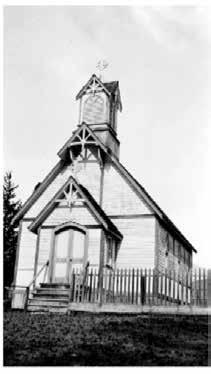

St. Peter’s Church, better known as the Stolen Church, is a lovely church in Windemere that has a long history of romance, crime, and intrigue in the early days of the Columbia Valley.
But the church had been promised to the Town of Revelstoke and when the group arrived in Donald to move the church, it had disappeared. The group then found out that the church had been moved to Windemere; they demanded its return.
St. Paul’s Church in Golden became home to the Church of the Stolen Bell while St. Peter’s was the Stolen Church at Golden. Resentment simmered between Golden and Windemere for over half a century about the stealing of the church bell. On a dark night in 1957,
HISTORY
Windemere, British Columbia
66 BC Notaries Association Volume 31, Number 2, Fall 2022TABLE OF CONTENTS
a group from Windemere snuck into Golden and stole back the bell and celebrated their action by holding a parade. Windemere church officials didn’t agree that two wrongs make a right and the bell was returned to Golden.
Today the attractive red-roofed Stolen Church is looked after and operated by the Windemere Valley Shared Ministry and the Diocese of Kootenay. Windemere residents plant flowers in its window boxes, look after the lawns, and maintain the upkeep of the building. During the summer, church services are held monthly and on Christmas Eve. The church is popular for weddings qs it can accommodate 90 to 100 guests.
In Golden, St. Paul’s Church continues to operate complete with the stolen bronze bell that hangs in a small open bell tower above the entrance. It is nice that after over 50 years of animosity that the two communities have come to terms with skullduggery of the 1930s and are friendly neighbours. Possibly influence from above helped bring the two communities together again. s
SOURCES: Columbia Valley. com Producer.com

Windemere Valley Shared Ministry Waymarking.com

A writer most of his life for many local publications, Ron served as Editor for the BC Historical Federation for 10 years; wrote Windows to Our Past, a pictorial history celebrating BC’s 150th birthday; and published The Sockeye Special, the history of the Steveston Tram and early Lulu Island. He is currently working on his second book, a firsttime collection of historical stories and pictures of BC.
Trevor Todd is an old hat (and trusted expert) at estate litigation who believes the new law is a game-changer for his business and for your inheritance.

Call Trevor to get a jumpstart on the changes. He knows them inside and out. Plus he loves to listen and to talk a lot.

WESA has m
ade sweeping changes.
Uniquely West Coast™ George E.H. Cadman, Q.C.* 604 647 4123 | gehcqc@boughtonlaw.com With over 30 years’ experience, George makes the complex simple to resolve your real estate or corporate disputes.
*Member of the Notaries Public Board of Examiners
67Volume 31, Number 2, Fall 2022 The Scrivener | www.bcnotaryassociation.ca TABLE OF CONTENTS
Legacy for Tomorrow, A Tax Break Today
GIFTS OF ECOLOGICALLY SENSITIVE LAND

Habitat loss and degradation are the greatest threats to biodiversity today. Many key habitats in British Columbia, from marshes to grasslands, are found on private property. Landowners play a vital role in their conservation.
As a young boy, Jim Little spent many hours observing wildlife near his grandparents’ land in the Peace River area of northern British Columbia. He especially enjoyed hiking to a nearby lake to see waterfowl such as the Western Grebe and other local wildlife such as beavers and loons.

Rare plant species like the Calypso Orchid, mauve daisies, paintbrush, highbush cranberries, and wild raspberries filled out the forest.

Many years later, Jim and his wife Margaret purchased 52 hectares (128 acres) of his boyhood haunt—lake, wetlands, muskeg, and mixed forest habitat.

Protecting the Land for Future Generations
The Littles became deeply attached to that land and were concerned about protecting it for future generations.
Jim and Margaret decided to donate their property to The Nature Trust of British Columbia, a leading land conservation organization in the province for over 50 years. The motivation for many individual donors is the comfort of knowing their cherished piece of nature will be cared for and protected into the future. The area has been named “Little Levin Lake” after Jim’s grandparents and parents.
Their gift was made through the federal government’s Ecological Gifts Program (EGP), administered by Environment and Climate Change Canada. The Program was introduced in 1995 to encourage conservation of habitat and biodiversity on private lands across Canada. Since then, more than 1700 ecological gifts have been made, covering more than 217,000 hectares and valued at over $1 billion. There are over 200 of those properties in British Columbia.
Private and corporate landowners who donate property through the Ecological Gifts Program receive special income tax benefits. Made possible by provisions of the Income Tax Act of Canada, the Program
ECOLOGY & TAXES
Natasha van Bentum
Comstock-Slough
Calypso Orchid, Photo: Keith Dixon
Great Grey Owl Photo courtesy Northwest Wildlife Preservation Society
68 BC Notaries Association Volume 31, Number 2, Fall 2022TABLE OF CONTENTS
offers significant tax benefits to landowners who donate land or an eligible interest or right in land to a qualified recipient.
Even though saving on income tax was not a priority for Jim and Margaret, it was a major bonus. Donors receive a tax receipt for the value of their ecological gift that can be applied against 100 per cent of their net annual income. There is no limit on the total value eligible for deduction/credit in any 1 year.
Corporate donors deduct the amount directly, while individuals use it to calculate a nonrefundable tax credit. Any unclaimed portion of the receipt may be carried forward for up to 10 years. There is no taxable capital gain on the value of the property donated.
Qualified recipients of ecological gifts include land trusts and other charitable conservation organizations; municipalities, federal, provincial, territorial, and Indigenous governments; and public bodies that perform a function of government within Canada.
Recipients can often assist a donor with the process by evaluating the ecological sensitivity of the potential gift or arranging for an appraisal of the fair market value of the property.
Each ecological gift requires a team of advisors that includes biologists, surveyors, land assessors, financial advisors, accountants, BC Notaries, and lawyers. The professionals ensure ecological gift transactions are carefully and credibly undertaken for the benefit of both donors and recipient organizations.
Ecological gifts and the motivations behind them are as varied as the Canadian landscape, ranging from corporations donating covenants over woodlands, to local citizens conserving treasured coastal habitat.
To qualify as an ecological gift, the property must be certified by the federal Minister of the Environment as ecologically sensitive. The Minister will also approve the recipient organization and determine the fair market value of the donation. More details about the program can be found on the Program’s website.
In some instances, it is possible for a donor to receive cash for up to 80 per cent of the value of his or her gift. The eligible amount for the tax receipt is the difference between the fair market value of the donated land and the amount of the cash advantage received by the donor.
Many British Columbians and fellow Canadians across the country own eligible ecologically sensitive land and care about its future conservation. For Jim and Margaret Little, whose property is a true jewel of the north, the EGP was the right solution. s
For more about how landowners can leave a legacy for tomorrow and receive a tax break today, see https://www.canada.ca/ecologicalgifts.
Based on Vancouver Island, Natasha van Bentum is a long-time gift planner and legacy advisor for the environmental nonprofit sector, She is Outreach Advisor for the Ecological Gifts Program, Canadian Wildlife Service, Environment and Climate Change Canada.
Who Will See Your Ad in The Scrivener? BC Notaries Lawyers Land Surveyors of BC Real Estate Professionals Real Estate Boards and Associations Age-Friendly Designates MLAs and MPs in BC Life Insurance Brokers and Agents Accountants Managers of Financial Institutions Investment Management Agencies Provincial and Federal Court Judges Registrars Mayors Government Ministries of Libraries: Public and Private, including Law Society, Legal Services, Education Facilities Chambers of Commerce BC Housing BC Assessment Ministry of Citizens’ Services: Real Property Division Winter Advertising Space Deadline November 15, 2022 scrivener@bcnotaryassociation.ca www.bcnotaryassociation.ca 69Volume 31, Number 2, Fall 2022 The Scrivener | www.bcnotaryassociation.ca TABLE OF CONTENTS
Sara Pon and Creating Age-Friendly Services AGEISM

INTRODUCTION
In February 2022, the Federal/Provincial/ Territorial Ministers Responsible for Seniors released two reports addressing ageism.

This article will summarize the main findings in the reports and provide tips for creating age-friendly services.
Ageism occurs when an older adult is discriminated against or subjected to stereotypes because of their age. The BC Human Rights Code and the Canadian Charter of Rights and Freedoms protect individuals from discrimination on the basis of age—in addition to other characteristics such as sex, race, and disability.
Impacts of Ageism
The report, “An Examination of the Social and Economic Impacts of Ageism” (February 2022), examines academic literature, government documents, policy papers, and reports on the impacts of ageism on physical health, mental health, employment, and the economy.
The report notes that ageism is unique compared to other forms of discrimination for two reasons.
1. Ageism is largely tolerated by society, unlike other forms of discrimination.
2. Ageism involves fearing a state the person is likely to experience themselves— becoming older. Research has shown that older adults often internalize ageism and may begin to exhibit the stereotypes they have internalized, leading to a self-fulfilling prophecy.
The report pays special attention to the intersectional impact of discrimination when a person is older and a woman or a person of colour. Discrimination is compounded if a person is an older woman or an older person of colour. Ageism occurs within the health care system. The report notes that when treating older adults, health care providers
• use patronizing language and speech patterns, including speaking too slowly or loudly;
• are less likely to act on the health issues older adults present;
• are less patient;
• are more likely to underdiagnose or overdiagnose; and
• overuse medication-based interventions instead of other interventions such as surgery or counselling.
Ageism can impact an older adult’s physical and mental health, including
• feeling hopeless or isolated;
• increasing mental health challenges;
• increasing stress, which in turn impacts cardiovascular health and chronic health conditions; and
• increasing biomarkers for Alzheimer’s Disease.
Ageism impacts how older adults are viewed in the workforce.
Compared to younger employees, older employees are perceived as less able to use new technology, adapt to change, be productive, or competent.
Ageism also has an impact on the hiring and ongoing training of new workers.
• Older adults are less likely to get an interview.
• Older adults are given less training.
• Older women are impacted by ageism within employment to a greater degree than men and at a younger age than men.
• Older workers of colour face greater ageism, including in the hiring process.
The report notes there is much evidence that ageism negatively impacts physical health, mental
SENIORS
70 BC Notaries Association Volume 31, Number 2, Fall 2022TABLE OF CONTENTS
health, and employment, and has a strong intersectional component.
Ageism does have an economic cost to the economy and the health care system but to date there have been few studies calculating the direct costs of ageism.
Ageism during the Pandemic
The report, “A Case Study on Ageism during the COVID-19 Pandemic” (February 2022), examines media; academic research; older-adult organizations; and federal, provincial, and territorial government communication to assess the role ageism played during the pandemic.
The pandemic report found that ageism was prevalent throughout the pandemic. Older adults were often framed as victims who are vulnerable, frail, experiencing loss, lacking capacity, and needing protection. The discourse primarily focused on health care issues, including the issues in long-term care and the negative impact of visitor restrictions on mental health.
Researchers and older-adult organizations tended to be critical of the ageist discourse. The pandemic report notes, however, that older-adult associations tried to frame their ageism critique around how older adults living independently in the community are healthy and contributing to society, trying to differentiate themselves from older adults living in longterm care.
The direct voices of older adults and their experiences during the pandemic were largely left out of the conversation.
The pandemic report makes several suggestions for reducing ageism in the context of those communications.
• First, the report suggests making sure communication documents use inclusive
language and avoid ageism, providing a balanced look at the diverse capabilities of older adults.
• Second, the report suggests making sure the voices of older adults are included.
• Third, the report suggests increasing the amount of data collection and informationsharing about Indigenous Elders.
• Allow the client to invite a supporter (an ally) to the meeting to help absorb the information and communicate the client’s wishes.
• Make sure the client has any needed assistive devices such as mobility aids, hearing aids, or memory-assisting technology.
• Sit close to the client; avoid sitting across a table.
• Provide the client with information written in plain language that summarizes what you have discussed in the meeting.
• Allow the client time to ask followup questions.
Client Relationships
• Avoid being patronizing or protectionist.
• Recognize the older adult’s right to decide.
Creating Age-Friendly Services
Here are some tips for creating a business that is age- and disabilityfriendly.
Communication
• Use informal speech.
• Use plain language and avoid jargon.
• Avoid using ageist language.
• Use person-first language, such as “person living with a disability.”
• Pay attention to nonverbal cues—people use gestures, body language, and action to express themselves.
• Break information into small, meaningful chunks.
In-Person Meetings
• Schedule a meeting at a time of day that works best for the person.
• Recognize that older adults have a wide range of experiences, values, abilities, and interests.
• Be flexible and patient.
References
• Public Health Agency of Canada, “Age-Friendly Communication – Facts, Tips and Ideas,” Catalogue No. HP 25-11/2010E-PDF (Ottawa: Public Health Agency of Canada, 2010)
• Alzheimer Society of Canada, “Meaningful Engagement of People with Dementia: A Resource Guide,” (2015)
• Kevin Smith, “Elder Law Toolkit” (Paper delivered at the Canadian Elder law Conference, Vancouver, BC, November 15, 2019) unpublished s Sara Pon is Legal Research Assistant at the Canadian Centre for Elder Law.
The pandemic report found that ageism was prevalent throughout the pandemic. Older adults were often framed as victims who are vulnerable, frail, experiencing loss, lacking capacity, and needing protection.
71Volume 31, Number 2, Fall 2022 The Scrivener | www.bcnotaryassociation.ca TABLE OF CONTENTS
Mental Health Awareness in the Workplace
Shoker
Asa society we have an individual responsibility to talk about mental health the same way we discuss other ailments. An early diagnosis yields the best results. “A problem shared is a problem halved.”
Although more is being done today to raise mental health awareness, we still have a long way to go. Recently I have noticed mental health developments take place in education, medical facilities, and workplaces. Schools across BC have made mental health education mandatory, starting in Kindergarten. Children are taught mindful meditation or ways to calm down if they are feeling heightened and teachers place emphasis on talking about feelings.
As a therapist I work mostly with adults; many of my clients have shared their feelings about mental health in the workplace. Unfortunately, the workplace can be a stress/anxiety inducer or accelerator. Although many workplaces have implemented increased breaks and mental health days, we can be doing more to help make the workplace a more inclusive place.
What can we do to improve our working environments so they are more mental health inclusive?
Good health cannot simply be measured by what we eat or how much we exercise. Good health must also be measured by what we are thinking or feeling. Therefore, it is imperative to create safe spaces to have open conversations about how we are feeling and what we are thinking; that is just as important as having discussions about our physical health.
The pandemic impacted billions of people worldwide in various ways. Now with COVID slowly ending, many workplaces are expecting employees to return to the office. For many, the transitions have been challenging and affected their mental health.
If we can openly discuss what we are doing to help our physical health, we should be doing the same when it comes to our mental health. For example, “I recently joined a new gym, I feel healthier after exercising,” should be considered the same as, “I recently started therapy and it is helping me sort through my thoughts and feelings.”
Open discussions about how we are feeling and what we are thinking should be had more often in the workplace.
The pandemic impacted billions of people worldwide in various ways. Now with COVID slowly ending, many workplaces are expecting employees to return to the office. For many, the transitions have been challenging and affected their mental health.

During the pandemic I noticed many new clients reached out for therapeutic help. Pre-COVID mental health awareness was on the rise but once the pandemic started, we did not have time to brace ourselves; many of us had to jump feet-first with our eyes closed.
Employers need to talk about mental health in the workplace. It is really that simple.
When you are in a position of power, others listen; believe it or not your employees will reciprocate and mirror the energy and attitudes you set in the workplace.
The mental health conversations cascade down an organization in the most positive way. If you feel you are going to make people uncomfortable by speaking about mental health, you are wrong. By starting the dialogue, you give your employees the
Esha
HEALTH
72 BC Notaries Association Volume 31, Number 2, Fall 2022TABLE OF CONTENTS
opportunity to be open about their mental health. Additionally, if they are unwell they are more likely to approach you about their situation versus calling in sick. By tackling the issue, you as the employer can take the right steps for your employees as well as your business.
When that happens, everyone works collaboratively to complete tasks; the moments become synergistic and we begin to witness a beautiful culture of trust forming in a workplace. Implementing a progressive and positive culture in a workplace safely can be challenging. For that reason, I highly recommend working with a therapist.
Therapists who have experience and training in implementing mental health awareness in corporate/ business structures can be hired to come in for a day and do a crashcourse on mental health awareness and inclusion in the workplace. It is a small investment that generates a large return.
With all of life’s challenges, you may be having trouble balancing your long list of responsibilities. You might be stressed and have difficulty managing and processing all your feelings. It may be possible you’re not dealing with them in the most effective ways. A counsellor can help you navigate your feelings and provide you with tools to manage them.
You may have thought about seeing a counsellor at one point. Perhaps you talked yourself out of it or convinced yourself that if you just waited a little longer, the problem might go away.
Maybe you’re still questioning if you should talk to someone but aren’t sure if it’s a priority for you right now. Knowing when to see a counsellor can be challenging; the key is to listen to your inner wisdom. What is your intrinsic self telling you?
Counselling is a continuous process of unlearning, learning, and relearning that is aided by a professional. Although talking and sharing your experiences is a big part of counselling, that’s not all there is to it. A counsellor is there to give you a new perspective and to guide your journey.
It is important to note that a trained professional is better equipped to provide the tools necessary to get you to a place of healing and relief. Venting to a friend may make you feel better but speaking with a counsellor will help you make long-term and real changes to keep you on a path of healing. s
Esha Shoker, MA, RCC, is a Registered Clinical Counsellor. https://www. wellnesstalkscounselling.com
Services a BC Notary Can Provide
A. PROPERTY MATTERS
and
You might be stressed and have difficulty managing and processing all your feelings. It may be possible you’re not dealing with them in the most effective ways. A counsellor can help you navigate your feelings and provide you with tools to manage them.
HEALTH
1. Residential
Commercial Real Estate Transfers 2. Mortgage Refinancing Documentation 3. Manufactured Home Transfers 4. Easements, Covenants, and Rights of Way 5. Builder’s Liens 6. Subdivisions and Statutory Building Schemes 7. Zoning Applications B. PERSONAL PLANNING 1. Wills Preparation 2. Powers of Attorney 3. Representation Agreements 4. Advance Directives 5. Wills Notice Searches 6. Estate Planning C. NOTARIZATION/DOCUMENTS 1. Affidavits for All Documents required at a Public Registry within BC 2. Certified True Copies of Documents 3. Execution/Authentications of International Documents 4. Notarizations/Attestations of Signatures 5. Insurance Loss Declarations 6. Personal Property Security Agreements 7. Statutory Declarations 8. Authorization of Minor-Child Travel 9. Letters of Invitation for Foreign Travel 10. Passport Application Documentation D. BUSINESS 1. Business Purchase/Sale 2. Commercial Leases and Assignment of Leases 3. Contracts and Agreements E. SOME BC NOTARIES PROVIDE THESE SERVICES. 1. Marine Bills of Sale and Mortgages 2. Marine Protests 3. Marriage Licences 4. Mediation 5. Real Estate Disclosure Statements There are Notaries to serve you throughout British Columbia For the BC Notary office nearest you, please call 1-604-676-8570 or visit www.bcnotaryassociation.ca. Note: Not all Notaries provide all services listed. Please check with your Notary before making an appointment for services.
73Volume 31, Number 2, Fall 2022 The Scrivener | www.bcnotaryassociation.ca TABLE OF CONTENTS
Land Awards
LAND AWARDS
Celebrate Sustainability Leaders
The Land Awards celebrate big ideas and bold leadership in advancing sustainable, equitable, and socially just land use and real estate practices across BC.
“We’re honoured to celebrate outstanding leaders and projects that are demonstrating how we can protect the lands and waters we love and create resilient and inclusive communities,” said Mark Gifford, CEO of REFBC. “By sharing successes from across BC, we hope to build bridges and inspire lasting change.”
Stephen Hui

They honour people and projects that raise the bar for innovation, forge new partnerships, and advance our thinking about our relationships with the lands, waters, and built environments to which we are all connected.
On June 9 the Real Estate Foundation of BC welcomed almost 250 guests to the 2022 Land Awards Gala at the Anvil Centre in New Westminster. REFBC presented five Land Awards (for projects) as well as the Land Champion Award and Emerging Leader Award (for individuals).
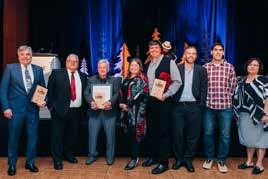


LAND CHAMPION AWARD
WINNER Wayne McCrory
Valhalla Wilderness Society and Valhalla Foundation for Ecology

Legendary conservationist and professional biologist Wayne McCrory has dedicated his life to protecting large and small tracts of ecologically important land across BC. McCrory is a founder of the Valhalla Wilderness Society and the Valhalla Foundation for Ecology. He is also the foremost expert on human-bear conflict and conservation in Western Canada. Over 5 decades, McCrory, his VWS colleagues, First Nations, and many others protected the Khutzeymateen/K’tzim-a-deen Grizzly Sanctuary, Kitasoo Spirit Bear Conservancy, Valhalla Provincial Park, and Goat Range Provincial Park.
His research led to the creation, by the Xeni Gwet’in, of the first wild horse preserve in Western Canada. McCrory worked with the Foundation to protect the Snk’mip Marsh Sanctuary and Ja Chinook Salmon Nature Sanctuary. For 30 years, he worked with many others to end BC’s Grizzly Bear trophy hunt. McCrory’s leadership has created a rich legacy for BC and the world and has inspired countless people to stand up for bears, wildlands, and endangered species.
Fred Lee, Metro Vancouver’s “Man About Town,” emceed the event. Stacey Ferguson of the Qayqayt First Nation provided the formal welcome. Special guests included Elliott Slinn, poet laureate of New Westminster; Shawna Davis, author of Majagalee: The Language of Seasons; Tzo’kam, a family of Lílĺwat singers; and Brejera, a Brazilian music ensemble. Winners each took home a trophy crafted by Eclipse Awards, fabricated from old-growth wood, salvaged by Unbuilders from the deconstruction of 100 Braid Street, a historic BC Distillery building in New Westminster. Congratulations to all the winners and finalists! s
EMERGING LEADER AWARD
WINNER Taylor Wale
Gitksan Watershed Authorities
Taylor Wale is Lax Gibuu from Wilps xGwoimtxw and works as a fisheries biologist with the Gitksan Watershed Authorities, where she plays a key role in watershed stewardship and fisheries management in Gitksan territory. Wale has a BSc in natural resources conservation and an MSc in forestry from UBC, where she was recognized with the Peter H. Pearse Forestry Award and Skills Award for Aboriginal Youth.
She honours the Elders and role models who have guided her and serves as a mentor to youth in her community. Wale volunteers as a girls’ basketball coach and plays for the Gitxsan Mystics. Through her professional and volunteer work, she sets an incredible example for youth and anyone working to protect and restore land and water and uphold Indigenous rights and title.

2022 REFBC LAND AWARDS
Event photos by: Pardeep Sing
74 BC Notaries Association Volume 31, Number 2, Fall 2022TABLE OF CONTENTS
LAND USE AND CONSERVATION
WINNER Tsilhqot’in Wildfire Management Project
Gathering Voices Society
In partnership with Yunesit’in and Xeni Gwet’in First Nations, this project involves the revitalization of fire knowledge and practice, to protect and restore ecosystem function, mitigate wildfires, and enhance biodiversity. The project aims to expand Indigenous fire practices across BC, empower communities to implement their stewardship approaches, and reduce wildfire risk.
FINALISTS
• Green Shores (Stewardship Centre for British Columbia)
• Tenquille Lake Visitor Use Management Project (Province of BC, Lílĺwat Nation, and N’Quatqua First Nation)
• Wildlife Habitat Stewards (Okanagan Similkameen Stewardship Society)
FOOD LANDS
WINNER
Tea Creek Farm
Tea Creek
Tea Creek is an Indigenous-led, culturally safe, land-based Indigenous food sovereignty initiative in Gitxsan territory. Tea Creek Farm is helping to restore the ability of Indigenous nations to grow fresh, healthy food and medicine in an interdependent economy.
FINALISTS
• Farmland Advantage (B.C. Investment Agriculture Foundation)
• KPU Farm Schools Program (Institute for Sustainable Food Systems at Kwantlen Polytechnic University)
• Qwal ímak Nlep cálten/Mosquito Garden (Líl wat Nation)
FRESH WATER
WINNER Water for Fish
First Nations Fisheries Council of British Columbia
The Water for Fish project is a unique initiative that brings together dozens of First Nations, fills collective capacity gaps, and enables Indigenous leaders to improve watershed health and governance. It plays a critical role in connecting diverse First Nations and non-Indigenous partners that are interested in improving water management and governance in BC.
FINALISTS
• Columbia River Field School (Wildsight)
• Developing Water Responsibilities Plans Using the Syilx Methodology (Okanagan Nation Alliance)
• Knowledge Mobilization Across the Skeena Watershed (Skeena Knowledge Trust)
• Xwaaqw’um Village Watershed Restoration (Stqeeye’ Learning Society)
BUILT ENVIRONMENT
WINNER
First Nations Home EnergySave Fraser Basin Council
First Nations Home EnergySave empowers First Nations communities in BC to transition toward energy-efficient housing. The project has helped build a network of leaders and practitioners in First Nations communities and inspired new programs and policies.
FINALISTS
• Greater Victoria District 2030 (BOMA BC)
• Temporary Community Gardens (Community Garden Builders)
• Tsawwassen First Nation Comprehensive Housing Strategy (Tsawwassen First Nation)
REAL ESTATE
WINNER
Radon in Real Estate: Transforming BC’s Indoor Environments
British Columbia Lung Foundation
Radon is a naturally occurring radioactive gas and carcinogen that occurs widely in soils, and that can, over time, reach high concentrations in buildings. This project researched policy solutions for radon in the real estate sector and advocated for change.
FINALISTS
• Building Climate Resilience in the Okanagan: A Homeowner’s Resource Guide (Association of Interior Realtors)
• Housing for Women by Women (Soroptimist International of Vancouver and Purpose Driven Development)
• Real Estate Energy Efficiency Program (Vancouver Island Real Estate Board) s
Visit the Land Awards website: landawards.com
Stephen Hui is the communications manager at the Real Estate Foundation of BC, a philanthropic organization working to advance sustainable, equitable, and socially just land use across BC. Learn more at refbc.com
2022 REFBC LAND AWARDS
75Volume 31, Number 2, Fall 2022 The Scrivener | www.bcnotaryassociation.ca TABLE OF CONTENTS
Auto and Technology
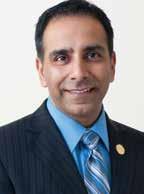
2022 Cadillac Escalade
4WD Premium Luxury Platinum
For a family road trip, I was able to test-drive three vehicles—a luxury vehicle; a people, pet, and cargo hauler; and a sports car. All three are the same vehicle. The 2022 Cadillac Escalade 4WD Premium is truly an efficient package.

I loaded my wife, two kids, and our furry little guy into the car, with all our stuff plus two full-size golf bags. We even had an empty seat for another passenger.
The car welcomes you by gently lowering steps. The vehicle is tall, but automatic steps make entry easy. Once you close the doors, the steps tuck themselves in nicely.
The Escalade interior is firstclass . . . a luxury benchmark other vehicles in the category need to study. You are treated to leather and wood-covered surfaces. With the doors, windows, and huge moonroof closed, the cabin is very quiet.


Large multiple screens provide information and menus to control almost every feature of the SUV. Most screens are customizable. The heads-up display can feature speed, radio, cruise control, and more, or less.
The cruise-control option, GM’s Super Cruise, truly works as advertised. GM has mapped out thousands of roads all over North America; when you are on one of those roads, a steering-wheel icon appears on your dash. Hit the steering-wheel-mounted button, let go of the steering wheel, and your vehicle takes over cruise control, keeping the distance with the vehicle in front of you, and even
changing lanes for you, with turn signal and all, a process that’s freaky at first but becomes so cool. The system watches your face to make sure you are looking at the road. While most cars beep or vibrate the steering wheel when you drift from the lane or an object is in your path, the Escalade vibrates your seat and beeps. You won’t miss that notification.
Additional standard safety features include automated emergency braking with front and rear pedestrian detection, and lane-departure warning with lanekeeping assist.
On our trip, we had to crank the air-conditioning. The fans were on high and a bit noisy. Smart software turned down the fan speed when a cell call came in—thank you, Cadillac engineers!
The vehicle comes with HD surround vision, 16.9” diagonal navigation and entertainment screen, a 14.2” diagonal screen and cluster display, and a 7.2” information screen and an AKG sound system with 19 speakers, selectable interior lighting, and illuminated door handles. It enjoys Apple CarPlay and Android Auto, wireless charging, a 110-volt outlet, Bluetooth connectivity, and Sirius XM Radio.
Akash Sablok
TECHNOLOGY
76 BC Notaries Association Volume 31, Number 2, Fall 2022TABLE OF CONTENTS
Powering the 2022 Escalade is a 6.2 L V8 engine with a 10-speed automatic transmission. Output is 420 hp @5600 rpm, and 460 lb-ft. of torque @4100 rpm. Optional is a diesel version. There was never hesitation or lack of power with our fully loaded ‘Slade. A run to 100 km/h took about 6 seconds . . . the look on my passengers’ faces during those sprints was priceless.
The Escalade styling is muscular without looking intimidating. The massive 22” alloy dark Android Gloss polish wheels and Crystal White Tricoat paint completed the whole handsome/ pretty package.
MSP: $120,498
As Tested: $132,633 (incl. destination charge and options, excluding taxes)
www.cadillac.ca
Apple Watch Ultra
I love watches . . . timepieces that are designed well and have neat nuances.
endurance, exploration, and adventure. The always-on display feature provides up to 36 hours of battery life.
While the Apple Watch 8 and lesser models are housed in an aluminum case, the Ultra’s titanium case is lighter and the flat sapphire front crystal house has the brightest Retina display yet—up to 2000 nits, 2x more than any previous Apple Watch.
Many Apple Watch wearers use the watch as a phone. With easy pairing with an iPhone, you can send/receive calls and messages on the Watch directly. The Ultra has three built-in microphones to significantly improve sound quality for voice calls during any conditions. An adaptive beamforming algorithm uses microphones to capture voice while reducing ambient background sounds, resulting in remarkable clarity. In challenging windy environments, Apple Watch Ultra uses advanced wind noisereduction algorithms, including machine learning, to deliver clear and intelligible audio for calls.
Also designed for water sports, including extreme activities like kitesurfing, wakeboarding, and recreational scuba diving to 40 metres, the new Oceanic+ app helps keep track of your H2O activities. The Watch Ultra is certified to WR100 and EN 13319, an internationally recognized standard for dive accessories, including depth gauges relied upon by recreational divers around the world. Utilizing a new depth gauge, Ultra features a Depth app designed with an intuitive user interface. At a glance, the Depth app displays time, current depth, water temperature, duration underwater, and max depth reached. Users can program the Action button to instantly launch the Depth app.
The Watch Ultra comes with the Trail Loop band in all its orangeness—the thinnest Apple Watch band to date. The lightweight woven textile is soft and flexible, allowing it to cinch to the optimal fit; the convenient tab is designed for quick and easy adjustment. A band designed for underwater use is available.

With the Ultra, Apple creates an amazing experience: A definitive timepiece/digital companion for many an athlete, professionals, and health-conscious buyer.
The new Apple Watch Ultra is larger, 49 mm compared to the 40 mm and 44 mm currently available, has bold design, and is built for

As a cyclist, I find the Watch is my go-to for tracking speed, distance, heart rate, GPS location, and ECG and Blood Oxygen monitoring. Even on Gran Fondos, the Watch Ultra can easily handle the 100+ km rides.
The Action button can instantly begin workouts and move users to the next interval of a Custom Workout or next leg of a Multisport Workout. It can also be used to mark segments, perfect for pacing yourself.
Even while driving, the Ultra assists. Using two new motion sensors and an advanced sensorfusion algorithm, Apple Watch can detect a severe car crash with Crash Detection. When the watch detects a severe car crash, the device will check in with the user and dial emergency services if the user is unresponsive after a 10-second countdown. Emergency responders will receive device location that is shared with the user’s emergency contacts.
The Ultra’a long battery life, large display, and high durability make it a great watch for the trails, the ocean, and the desk. s
MSRP: $1099
www.apple.ca
Akash Sablok is a BC Notary with the AJAC designation from the Automobile Journalists Association of Canada.
77Volume 31, Number 2, Fall 2022 The Scrivener | www.bcnotaryassociation.ca TABLE OF CONTENTS
The BC Notaries Tour de Cure 2022 Team raised $24,334! The Team thanks you for your support.



Come cheer us on or join our Team in 2023.
Team Members: Akash Sablok, Quang Duong, Lorenzo Panhlua, Darnelle Moore, and Norman LiAkash Sablok and Quang Duong

In the Gourmand World Cookbook Awards 2022 in Sweden, among many hundreds of wonderful entries, BC Notary Laurie Salvador’s 300+ page Olive Me! won Italian Cuisine: 2nd Place; First Cookbook: 3rd Place, Congratulations, Laurie!


Lawyer Trevor Todd Segwaying in St. Lucia. The Island has changed hands 14 times in history between the British and the French and was an important US military base in WWII as it has small mountains.
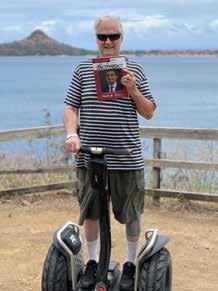
Kae Todd
November 12, 1940, to May 1, 2022


Kae passed in North Vancouver at age 81. She happily attended many BC Notary Conferences with her husband Bill Todd, now retired from Stewart Title. Kae was a very lovely lady.


PEOPLE: HONOURS AND EVENTS
Notary Grant Sauer recently travelled to Nepal and trekked to Mount Everest Base Camp.
Bill and Kae Todd
78 BC Notaries Association Volume 31, Number 2, Fall 2022TABLE OF CONTENTS


Scan for more information Legacy giving helps ensure our kids have a healthy future. One clause in a Will is all it takes. Will you? Learn more at bcchf.ca/legacy Your values. Your impact. Your legacy.
Your Trusted Partner for Title Insurance

At Stewart Title, we take pride in working with Notaries.
our inception into the Canadian marketplace, we have partnered with Notaries to offer peace of mind to your clients and our policyholders. Our comprehensive title insurance coverage for buyers, owners and lenders


competitively priced and backed by solid underwriting



and claims paying ability.
We support your role in real estate transactions.
understand the complexities of each transaction and are in the best position to advise clients and represent their interests. We understand the best ways to mitigate risk. Our team leverages a broad pool of knowledge to guide you through your transactions and keep them moving smoothly.
One of the keystones to this partnership is our local Business Development Team.
team is available to answer questions about our products and coverage and to provide unique solutions for your more complex transactions. They support your practice by training new staff on procedures, best practices, the ordering process or setting up and demonstrating our time-saving applications. They’ll also keep you up-to-date on new developments and provide materials to help educate your clients.
a member of our Team to learn more.
Nicole McLellan Vancouver Island 250.588.8996 nicole.mclellan@stewart.com John Gellard Vancouver 604.376.4709 john.gellard@stewart.com Michelle Wells Tri-Cities, Fraser Valley 604.657.6730 michelle.wells@stewart.com Stewart Title’s Business Development Team in BC Amanda Magee Director, Business Development 604.839.4471 amanda.magee@stewart.com Jessica Orlowski Okanagan 250.718.7611 jorlowski@stewart.com Brett Horton Counsel & Director, Commercial Business Development - BC 604.349.0845 brett.horton@stewart.com
Since
is
expertise
You
Our
Contact
©2020 Stewart. All rights reserved. 11/20 888.667.5151 | stewart.ca