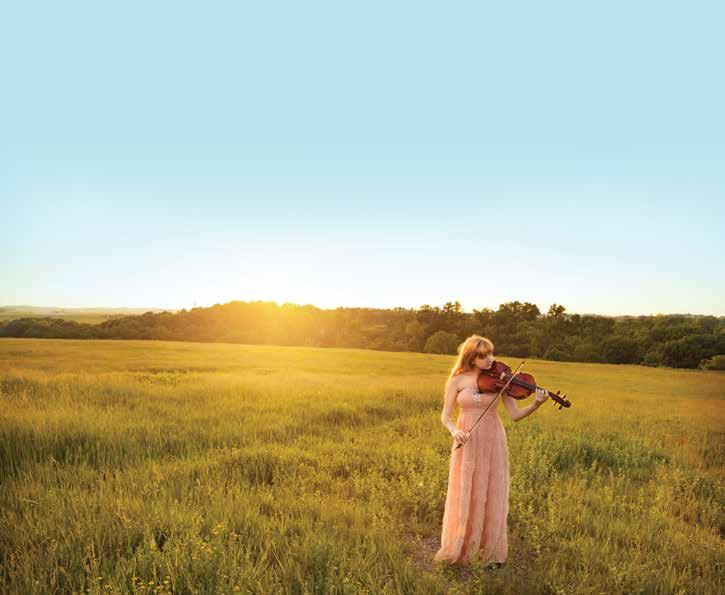
Life is made richer through the arts, culture, and humanities. Our programs support efforts to bring the arts out into the community in a variety of ways.
From murals to musical performances, school assemblies to pop-up poetry, our grants support programs that surprise and delight members of our community. Help us support the arts and the environment! Berks County is a Beautiful Place Our goal is to keep it that way by supporting projects and programs that accelerate community resilience against climate change, support renewable energy sources and energy efficiency, and build collaborative partnerships to reduce the environmental footprint in Berks County.
Gifts to funds supporting these efforts allow us to continue to expand our grantmaking. If you would like to help, please contact Molly McCullough Robbins at mollyr@bccf.org or visit our website by scanning the QR codes.
EDITOR-IN-CHIEF:
Jennifer Heydt
WRITERS:
Jennifer Heydt
Communication Manager
Molly McCullough Robbins
Vice President for Philanthropic Services
PHOTOGRAPHY:
Jennifer Foster
JFoster Photography
DESIGN:
Deb Soule
The Drawing Board
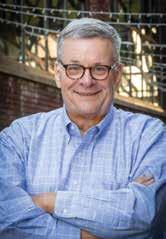
President’s Letter
Over the past 32 years, I’ve had the privilege of meeting and connecting with many of you— community partners, nonprofit leaders, and generous donors who care deeply about Berks County.
One of the great joys of this work is hearing the many different stories of how your relationship with Berks County Community Foundation began.
For some, that journey started early, as members of our Youth Advisory Board, planting seeds of philanthropy that grew as your careers advanced and your capacity to give expanded.
Many of you first became engaged as committed volunteers— serving on committees, reviewing scholarship or grant applications, and sharing your time and expertise in service to our community.
Others were introduced to the Community Foundation through trusted advisors—financial planners, accountants, or estate planning attorneys—who encouraged you to establish a fund as a meaningful way to carry out your family’s philanthropic goals.
While these paths are diverse, they share a common thread: whether you are an emerging or a seasoned philanthropist, there are opportunities to engage with the Community Foundation at every stage of life.
In this issue of 237 Court, our annual magazine, we introduce you to two of our funds and the generous donors behind them, offer guidance on creating your own fund, and share stories that reflect the impact of our grantmaking. We also take time to celebrate the place we call home, highlighting the rich history of Berks County in honor of its 275th anniversary.
Though the Community Foundation was established just 32 years ago—young in comparison to Berks County’s long history—we, too, are built to endure. We intend to be here forever, faithfully honoring the charitable wishes of the donors who have entrusted us to carry their legacies forward for generations to come.
No matter how your connection to the Community Foundation began, we are deeply grateful for the many ways you continue to partner with us to promote philanthropy and improve the lives of Berks County residents.
Note from the Editor
With each annual report and magazine publication, the communication team at Berks County Community Foundation evaluates the important work performed by our team of experts and the community; that is the work which inspires the theme of every publication and every story. This year, we’ve observed the persistent and resilient nature of Berks County nonprofits through some of the toughest funding cuts in recent history. “A Year of Strengthening Our Roots” is about more than fostering community connections—it is also about digging deep. The stories of impact and captivating images found in this issue of 237 Court magazine are a small sample of the tenacious community leaders, donors, and grantees in Berks. The Community Foundation is excited to share their stories with you and to continue to support the vitality of Berks County. Jennifer Heydt Communication Manager Berks County
Community Foundation
275 Years of Berks County
By Jennifer Heydt, Communication Manager
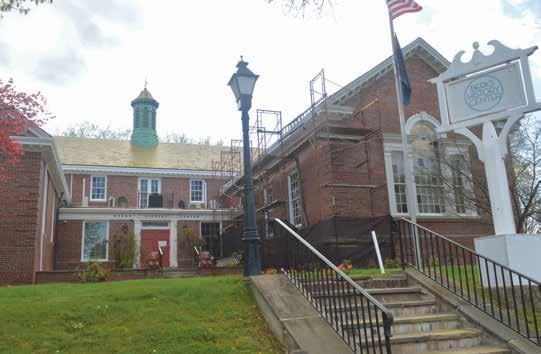
When you visit Berks History Center, located on Centre Avenue in Reading, Pennsylvania, visions of the past can be found everywhere. Centre Avenue was constructed in 1809, and its Victorian-era Second Empire mansions were erected soon after. Construction scaffolding, which adorns Berks History Center like climbing Wisteria, brings one back to the modern world.
Berks History Center is, after all, experiencing a transformation: inside its doors,
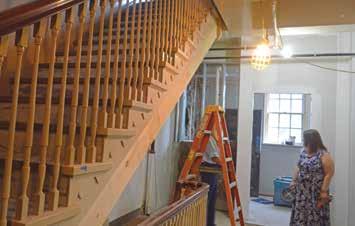
Romanesque statues hug walls covered by poly sheeting and blue painter’s tape to keep out dust. Collections and artifacts have been temporarily relocated to accommodate new floor plans, which include new bathrooms, interactive exhibits, and easier-to-navigate corridors.
New leadership has also broken ground at the Center. Amanda Lynn McCoy, Executive Director, is excited to transform the space. Her goal is to expand and diversify
the exhibits, in celebration of the many generations of Berks Countians who have shaped the region—a goal McCoy identified in late 2025, during one of Berks County Community Foundation’s community forum programs which focused on Berks History Center’s reconstruction.
McCoy’s intentions to extend the Center’s offerings could not come at a better time. This summer, the country will celebrate its 250th anniversary, and Berks County will celebrate
its 275th anniversary. While such events encourage jubilation, it is equally important to reflect upon our history and set intentions for the generations to come. What did our ancestors accomplish that we wish to emulate? What can we do better? Berks History Center is a crucial resource in answering these questions. With the Center’s plans to exhibit artifacts on the Lenape people, the first settlers, hegemonic industrialists, immigrants, and the diverse Berks County
The goal is to expand and diversify the exhibits, in celebration of the many generations of Berks Countians who have shaped the region.
residents of today, visitors will be able to see a more complete picture of who we are, where we came from, and where we are headed.
Berks History Center’s resources also extend beyond their exhibitions. A spacious auditorium hosts groups and parties for a fee and is free to rent for local nonprofits
organizations. The Henry Janssen Library, which abuts the Center, has begun the tedious task of digitizing thousands of records, meaning Berks Countians will be able to remotely access the library’s assets. Those assets include centuries-old documents, photographs, genealogical records, and more.
During its initial round of reconstruction, which is expected to conclude in the summer of 2026, Berks History Center is waiving admission fees for all exhibits. While the Center may not be able to safely host events for America’s 250th anniversary and Berks County’s 275th anniversary, they will be present for anniversary-related celebrations and events.
The term “reconstruction” can mean many things to many people. In a historical context, the Reconstruction Era followed the end of the Civil War. Reconstruction could also refer to the act of updating a building’s construction, such as knocking over a wall within a history exhibit to make space for something new.
In a moral sense, reconstruction can also be the act of analyzing past deeds and setting intentions for improvement. Our nation is, after all, the Great Experiment: it is a dynamic and complex ideal toward which we endeavor, rather than simply being a fixed place on a map. The pursuit of a more perfect union starts with us, with our ability to create a more perfect community. On Berks County’s 275th anniversary and the nation’s 250th anniversary, we are reminded to try, learn, and then try again.
Scan the QR code to learn more about Berks History Center and the Henry Janssen Library.
June 17th-19th, 2026
Ringing
Liberty Bell. Commissioner Leinbach and New Ringgold Band are honored guests
Berks History Center
Junior Historian Camp
July 8th, 2026 | 12pm
Berks History Center
of Berks History Center’s
Construction is underway at Berks History Center.
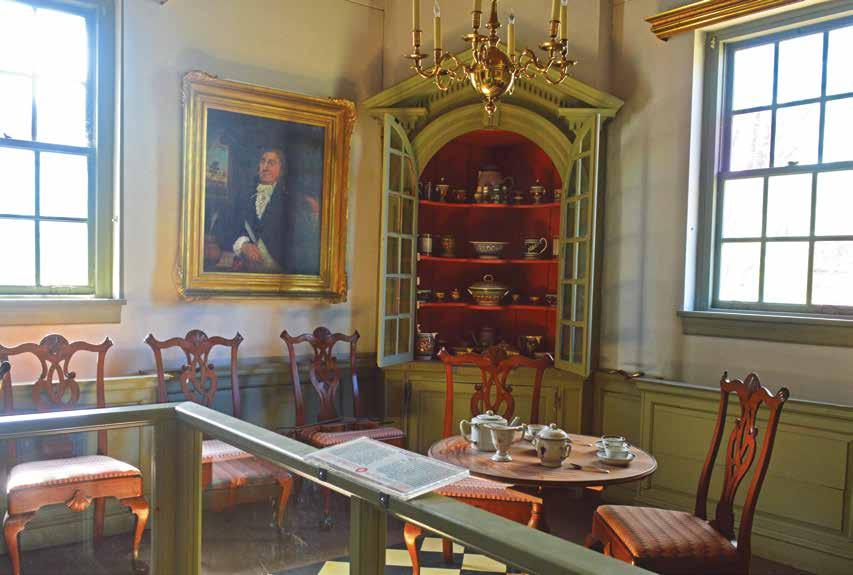
The Hiester Room is an immersive space with furnishings from the 18th century. John Hiester was a Berks County resident, Revolutionary War veteran and a politician.
The Foundation in the Community: Site Visits
By Jennifer Heydt, Communication Manager
Berks County is a beautiful, diverse place to live. Consider the rowhomes that define the architectural vernacular of the region, the rolling hills and bountiful farmlands that have kept Pennsylvanians fed and clothed for generations. The winding Schuylkill River connects us to the greater Philadelphia area, while our famous railroad lies in wait, reflecting a time of economic prosperity and instilling a sense of hope for a locomotive renaissance.
The geographic makeup of our county has always influenced the goods and services we’ve manufactured and provided. Our homes reflect the resilient nature of the people who live here; our legacy is written in steel, maple wood, and limestone.
But our legacy is also written by our actions and the institutions we’ve erected to support our neighbors. These institutions, from churches to heritage centers and universities, contribute to the continued vitality of our county—and the people who maintain those institutions are just as crucial.
Berks County Community Foundation is dedicated to serving Berks County forever. We manage nearly 400 charitable funds, many of which were established by generous donors who intended their fund to support the community in perpetuity. The goal is to contribute to the community in a manner that outlives the original donor.
But to serve Berks County effectively, the Community Foundation must understand the challenges our county faces. The foundation also is responsible for evaluating our assets, making new connections, and tending to the seeds we plant so that they continue to grow. It is for this reason that the foundation’s program team conducts “Berks County Tours” each quarter, dedicating several working days to site visits.
Meet the Program Team
Who is the foundation’s program team and what do they do? Learn about our areas of focus and the grantmaking, initiatives, and programs our program team manages on page 19.
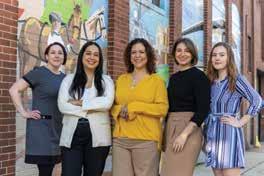
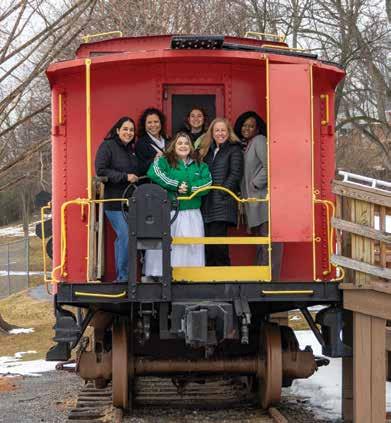
From left to right: Kim Sheffer, Lifelong Learning Program Officer; Monica Reyes, Vice President for Programs and Initiatives; Cindy Milian, Health and Human Services Program Officer; Emily Smedley, Environment and Energy Program Officer; Emma Wright, Grants and Scholarships Administrator.
Most recently, the program team visited the Wilson School District area of Berks County (previous Berks County Tours include the Kutztown and Bethel areas). While in the Wilson area, the program team and communication team visited
Helping Harvest’s Distribution Center, Penn State Berks, Yocum Institute for Arts, St. John’s (Hain’s) Church, Red Caboose Park and Holy Spirit Farm and Horse Sanctuary, accompanied by a professional photographer who captured images of these important landmarks and institutions.
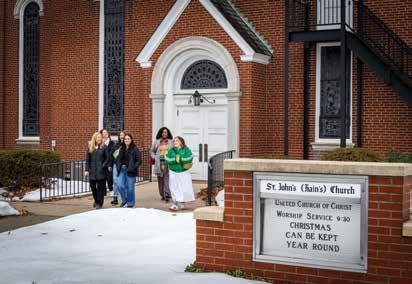
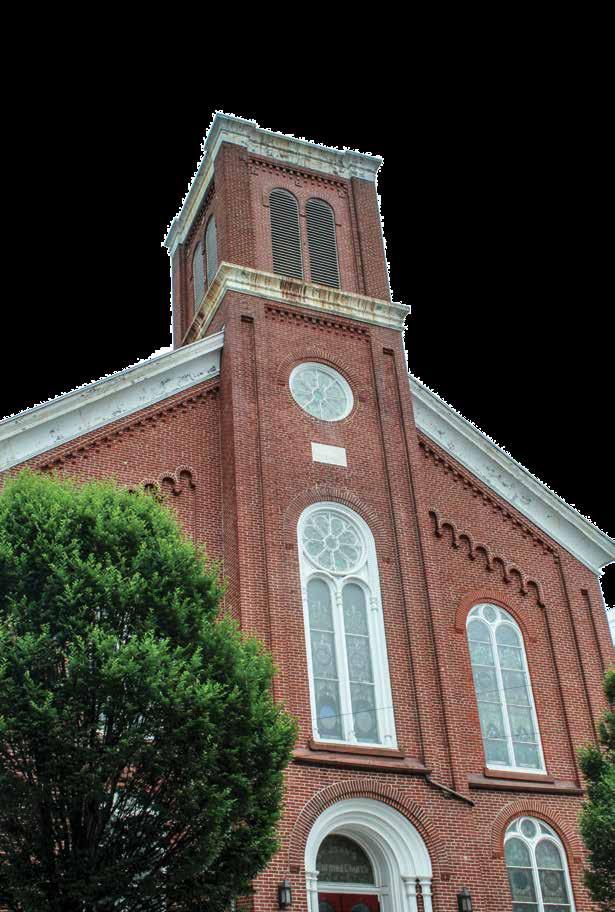
The tour started at St. John’s (Hain’s) United Church of Christ, where the history of Berks County’s settlement comes to life. Founded in 1735, German immigrants gathered in a small log church and established a German Reformed congregation. By 1766, the congregation erected a second church to accommodate for the growing Christian, Germanspeaking population in Western Berks. The new church was made of limestone and featured a plaque which, read in German, says, “Heidelberg Township, Berks County, this is a High German Reformed Church, which was built in A.D. 1766. All who go in and out of here shall be loyal to God and the King.” By 1771, however, the congregant’s
commitment to an English King had ended. Reverend John Boos led the church through the years of the Revolutionary War, supplying George Washington’s army with horses, wagons, flour, and ammunition. It is in this time frame that “and the King” was etched out of the church’s plaque, the evidence of which is still visible today. Many congregation members volunteered to serve in the Continental Army, contributing to the liberation of the United States from British rule. Today, visitors can view the graves of fifty-two Revolutionary War Veterans who lay in eternal rest on St. John’s (Hain’s) United Church of Christ.
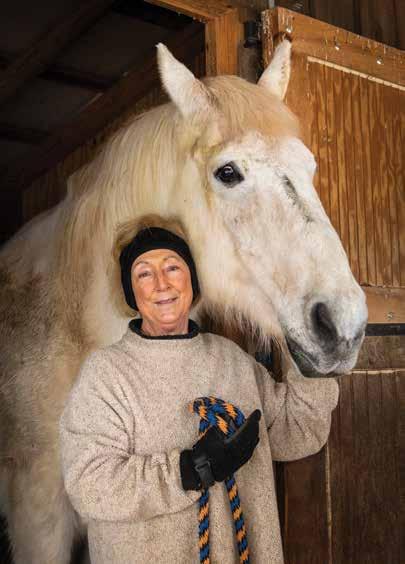
The tour continued at Holy Spirit Farm and Horse Sanctuary. Holy Spirit received two grants in 2021 and 2024 totaling $15,250 from the Pamela A. and Gregory W. Heid’s Fund for the Animals. The grant was used to supply food for the horses and other animals on the farm. During the site visit, the team learned about different horse breeds, the events the farm hosts, and the sanctuary’s mission to save, rehabilitate, and rehome all equines and animals. You can learn more about Holy Spirit by visiting their website at www. holyspiritfarmhorsesanctuary. com/.
The tour started at St. John’s (Hain’s) United Church of Christ, where the history of Berks County’s settlement comes to life.
Holy Spirit Horse Farm
St. John’s (Hain’s) United Church of Christ
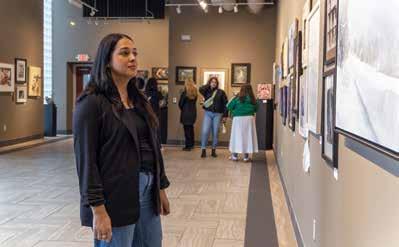
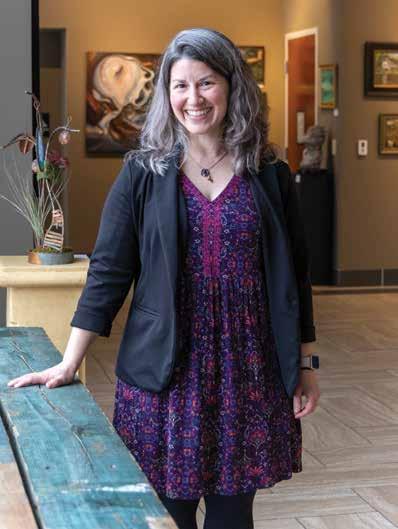
From there, the team traveled to Yocum Institute for Arts Education. The institute received a $1,000 grant from Reading Pride Celebration Gives Back Fund in 2022. Executive Director, Vicki Haller Graff, greeted the team and gave a tour of the gallery space, art studios, dance studios and black box theatre. Having moved to the Wilson School District from their original location in the Wyomissing Area School District in 2018, Yocum is eager to become the ultimate destination for Berks County artists seeking to explore, refine, and master their chosen art forms. Berks residents of all ages are encouraged to attend classes, join competitive dance leagues, and enjoy the live performances and exhibitions that are held at Yocum throughout the year.
Learn about all Yocum Institute for Arts Education has to offer by visiting their website at https://www.yocuminstitute. org/.
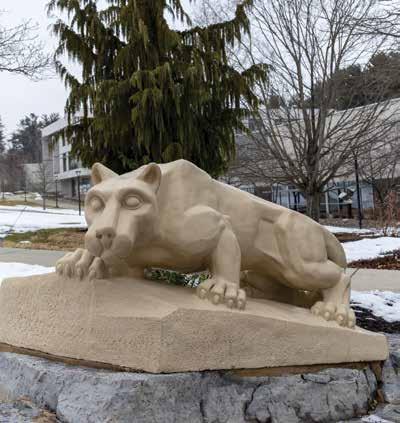
After lunch, the tour resumed at Penn State Berks campus. There, Todd Migliaccio, Vice Chancellor and Chief Academic Officer, greeted the foundation team and provided a tour of the Gaige Technology and Business Innovation Building. After a quick meeting with Migliaccio about the university’s local outreach and professional development endeavors for students, a student Lion Ambassador led the group on a tour of the campus. Chancellor
and Dean Radha Pyati greeted the team at the charming Janssen Office Building, dating back to 1802. The building was donated to the university by the Henry Janssen Foundation and in 1980 was converted into office space. There, the foundation team also met the Director of Development and Alumni Relations, Director of Strategic Communications and Director of Continuing Education.
A quick detour took the team to Red Caboose Park, a popular public space for casual events and everyday play. The park is located near the West Lawn Owls Baseball field on Girard Avenue.
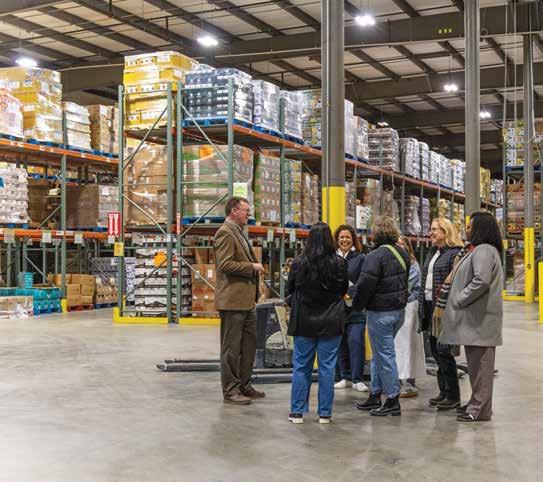
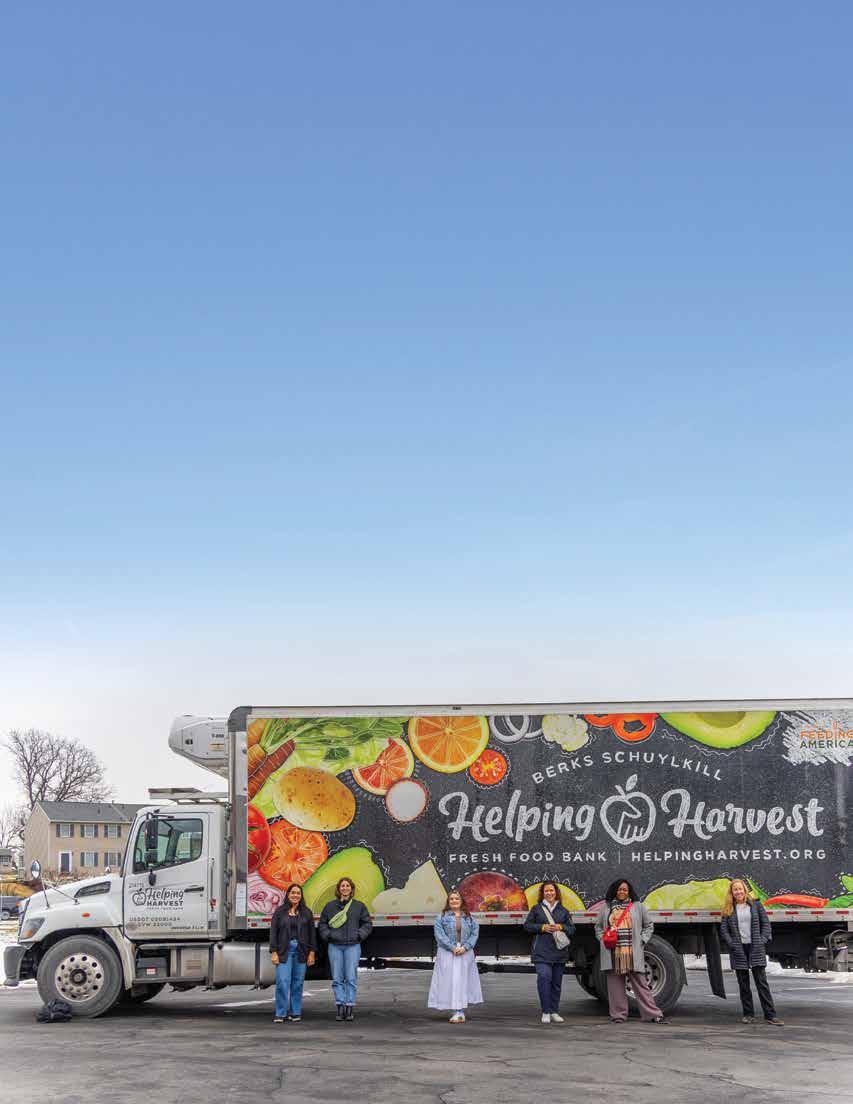
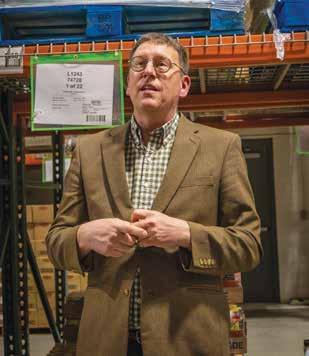
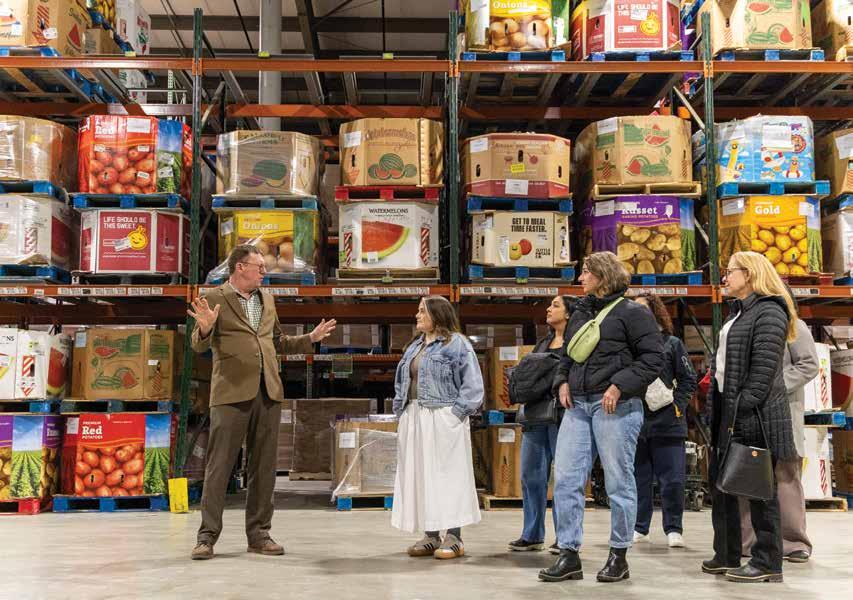
The tour concluded at Helping Harvest’s Distribution Center. President Jay Worrall led the team through various warehouse spaces, including temperature-controlled rooms for frozen and cold items. In the 2025 fiscal year, Berks County Community Foundation awarded $71,951 to Helping Harvest from nine different funds. Berks
County Community Foundation understands that food insecurity is a leading issue for individuals and families in Berks County. Since our inception, the foundation has awarded Helping Harvest $866,367.22. The work to feed Berks, however, has only begun. To learn more about Helping Harvest’s plan to meet the food needs of our community, read their story, starting on page 12.
Nine funds supported grants to Helping Harvest in fiscal year 2025 for the organization’s operations, programs, projects and more!
• Boyertown Area Community Fund
• Bruce and Renee Dietrich Family Fund
• Elisa and Tom Dooley Charitable Fund
• Helen M. and Harry O. Hahn Fund
• Jay and Elaine Rosenson Fund
• John and Lisa Gallen Fund
• Power of the Purse in Berks County Fund
• Rosalye Levine and Richard J. Yashek Family Fund
• Russell L. Hiller Charitable Trust Scholarship
Vicki Haller Graff, Executive Director of Yocum Institute for Arts Education
Penn State Berks Campus Red Caboose Park
Monica Reyes, Vice President for Programs and Initiatives, views artwork presented in Yocum’s gallery space.
Social Services in Rural Libraries
By Jennifer Heydt, Communication Manager
Imagine a moment at your local library: a patron approaches the help desk with an empty gallon jug and asks for the library bathroom—they’re looking for fresh water. The librarian walks them to the bathroom and lets the patron fill up their jug. When the patron leaves the bathroom, the librarian asks why they need water and if they need anything else. The patron shakes their head, explaining that their house has been without running water for weeks. The two walk to the foyer of the library, where they browse canned goods, blankets, and other essential items that are available through the library’s pantry of donated goods. The patron leaves with a pack of diapers, several canned foods, and their filled jug of water. When the librarian returns to the help desk, a young girl asks the librarian where she can find the science fiction section of the library.
Of course, this story isn’t just a story—it’s a reality, and it’s happening in Berks County.
There are several issues at play in the story above and in the countless stories Berks County Community Foundation has heard from Berks librarians.
The first, most obvious issue is that there are many individuals seeking human service assistance from librarians who are not trained nor have the capacity to intervene in a manner that provides long-term support. Librarians are crucial resources in our community, but they are not social workers.
the factors that contribute to individuals seeking social services in our libraries,” says Milian. “United Way’s 2023 ALICE report, which stands for ‘Access Limited, IncomeConstrained, Employed”, pointed me in the right direction.”
“The rural areas of our county are not only home to some of the highest ALICE rates, but they are also isolated from necessary services, like public transportation and healthcare. If they don’t have a car, they’re not making it to their doctor’s appointments in West Reading, for example. For many rural Berks residents, their local library is the only public space they can get to when they need help.”
“I’d love to capture people the moment they are brave enough to say, ‘I need something.’ That is a very brave moment for a human being.”
–Jim Reece, Executive Director of Friend, Inc.
rural libraries are providing healthcare opportunities, something no librarian anticipated while pursuing their degrees.
of Friend, Inc. in Kutztown, has a similar dream for the initiative.
49% of households in some rural areas in Berks County are qualified as ALICE. (Access Limited, Income-Constrained, Employed)
The second issue is the inaccessibility to health care or basic human needs. This question brought Cindy Milian, Health and Human Services Program Officer for the foundation, to engage with United Way of Berks County for answers.
“My background as a case worker made me question
The ALICE Report breaks down the number of households in Berks County which qualify as ALICE, which means that while they are employed, members of those households are one paycheck away from financial catastrophe. More than 40% of Berks County households meet the parameters defined by the ALICE report. 49% of households in some rural areas in Berks are qualified as ALICE.
“While the number of ALICE households in the City of Reading is also higher than the county average, we have to consider the level of access to care and prioritize regions that require a higher level of intervention,” says Cindy Milian.
Nonprofit leaders and librarians in rural Berks feel the strain every day. In a recent conversation on Sparking Change: The Official Podcast of Berks County Community Foundation, Kaitlin Lehman, Director of Bethel-Tulpehocken Public Library, voiced her concern as the only full-time employee at her library.
“In our rural libraries, we don’t have the resources or the funding that our volume of service requires and deserves. The staff we have right now are just keeping the doors open and doing the best we can,” says Lehman.
As trusted institutions and familiar faces to residents, Berks rural libraries and their librarians are intercepting people who slip through the cracks of the service sector.
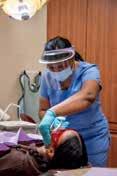
From hosting Tower Health’s Mobile Mammography Coach in their parking lot to dental screenings in their event spaces,
These conversations have culminated in the foundation’s latest Health and Human Services initiative, ‘Social Services in Rural Libraries’. As a community foundation, our team understands that philanthropy can never fill the gap federal and state funding leaves behind. The ability to build a stronger community by sharing resources, giving charitably, and building relationships, however, cannot be overstated.
“My dream for the ‘Social Services in Rural Libraries’ initiative is to have one social worker or community health worker in four identified rural Berks libraries,” says Cindy Milian. “It would be great to have students from our local colleges and universities who are pursuing a degree in social work to get involved. Ultimately, we want a full-time social worker staffed at every library in Berks County, but we want to start small with this pilot program.”
Jim Reece, Executive Director
“I’d love to capture people the moment they are brave enough to say, ‘I need something,’” says Reece. “That is a very brave moment for a human being.”
The choice to seek assistance is indeed a critical and courageous juncture in a person’s life. Providing assistance for someone at the moment they need is crucial for the success of the intervention. Having a trained social worker or community health worker available in the place residents routinely go for assistance maintains a sense of normalcy, safety, and dignity for the person seeking help.
Ultimately, all Berks County residents deserve to live a healthy and dignified life. ‘Social Services in Rural Libraries’ is a project borne of this belief, and the foundation is proud to fund such an essential initiative in our community.
Want to hear more from the people keeping our community informed, healthy, and safe?
Listen to our podcast episode on ‘Social Services in Rural Libraries’ by scanning the QR code.
McCrae Clothing Fund
By Molly McCullough Robbins, Vice President for Philanthropic Services
The fund provides reimbursement for purchases to support students’ needs, such as clothing, eyeglasses, hygiene supplies, backpacks, haircuts and more.
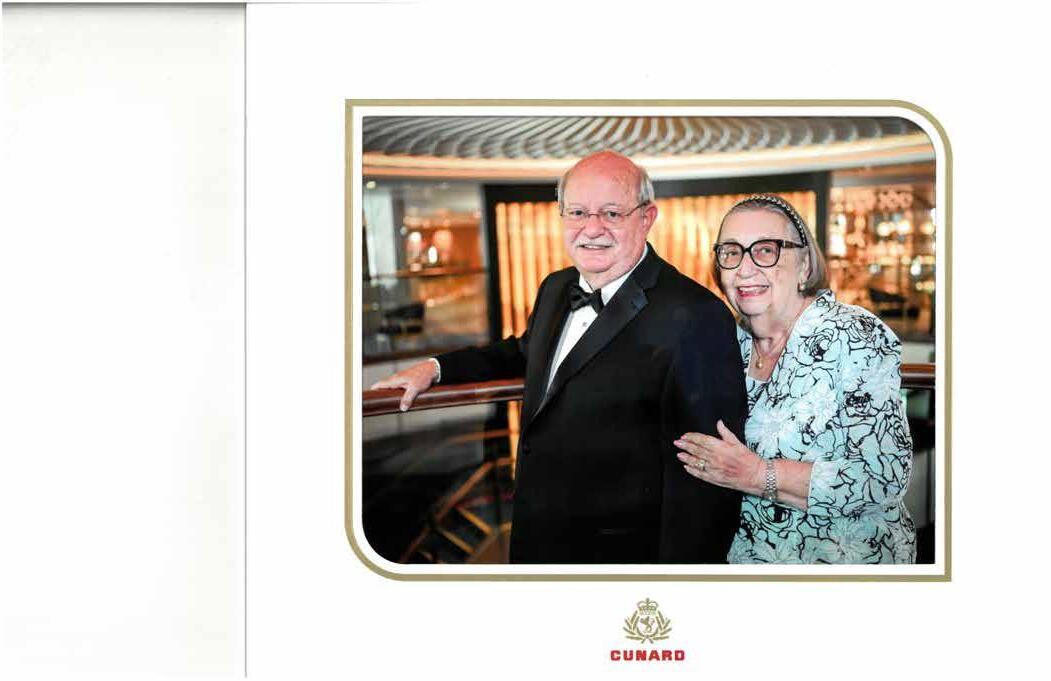
Richard and Linda McCrae met when they were both teaching at Muhlenberg High School in 1968. Linda McCrae, who was then Linda Reed, began her career there in 1967, teaching German. Richard joined the faculty in 1968, and within a few months, faculty members and students were encouraging Richard and Linda to date. The couple got to know each other during a faculty play production of “Pure as the Driven Snow”, and the rest, they say, is history. Richard and Linda married in 1970 and welcomed their two sons, Sean and Patrick, in 1974 and 1978, respectively. Part of Richard’s goal for his family’s long-term financial planning included ensuring their children were at least four years apart, so they would attend college at different times. The family would learn that Richard’s prudent financial planning paid off later in life in other ways as well.
Once their sons were born, Richard and Linda decided to move to Wyomissing so that their sons didn’t have to go through school as the “teachers’ kids”. They were happy continuing to teach in the Muhlenberg School District while sending their sons to Wyomissing, where they thrived. The boys grew up on Delaware Avenue, just blocks from the Junior-Senior High School. Both played soccer and
had great groups of friends.
Throughout her teaching career at Muhlenberg, Linda taught Latin, English, and German to students in grades 5-12. Richard taught business courses to students in grades 7-12 including accounting, economics, business law, keyboarding, and eventually an introduction to computers course. They both found that, in the latter half of their careers, they enjoyed teaching junior high students.
Over the years, Linda and Richard witnessed numerous instances of students’ basic needs not being met. In one case, Linda overheard a teacher telling a student that she would provide a new pair of shoes if the student achieved a specific goal. Furthermore, Linda and Richard noticed that students who came to school in dirty clothes or without the sneakers they needed were stigmatized by other students and often sought help from the nurse’s office.
Seeing the need growing over the years, Richard and Linda began to bring their own sons’ outgrown clothing to the nurse’s office to meet immediate needs.
Both Richard and Linda retired from Muhlenberg in 2002: he after 34 years of teaching, she after 35 years. Richard and Linda have been enjoying their retirement and are grateful that Richard’s early
financial planning allowed them to travel and enjoy this stage of their lives. They embarked on an around-the-world cruise last year in celebration of their 55th anniversary and traveled with their sons and their families as well.
Richard and Linda also wanted to support students once they retired, and they initially considered establishing a scholarship fund. After conversations with guidance counselors, nurses, the principal and the superintendent, they decided to contact Berks County Community Foundation to establish a fund that would directly support the needs of students in 6th, 7th and 8th grades. They wanted their fund to be easy for school staff to access to support students, with little “red tape”, and little writing required, knowing how busy teachers and school staff are year-round. Thus began the Richard D. and Linda Reed McCrae Clothing Fund, which was established in 2002. Since inception, the fund has provided grants totaling nearly $17,000.
A school employee must simply contact a designated Community Foundation team member to request reimbursement for purchases to support students’ needs, such as clothing, eyeglasses, hygiene supplies, backpacks, haircuts, and more. Once the principal
approves the expense, the Community Foundation sends payment to the school. There is no grant application, nor an evaluation form required, so it is a quick and simple way to secure funding to help Muhlenberg students.
Richard and Linda McCrae are passionate about the Richard D. and Linda Reed McCrae Clothing Fund and the impact these small purchases can have on individual students. While
they need no recognition, they love when they hear from students or staff who were impacted by their fund. You can tell your funding story by scanning the QR code.
Richard and Linda McCrae
Government Cuts, Local Impact Update: Helping Harvest
By Jennifer Heydt, Communication Manager
How 2025 turned out to be one of Helping Harvest’s best service years to date.
In 2020, the phrase “facing unprecedented times” rang true for organizations, businesses, and individuals nationwide: short term goals and “keeping the lights on” superseded the importance of sustainable planning. With everyone in survival mode, the promise of a return to normalcy motivated a lot of us to simply endure until things got better.
Now, in 2026, the phrase “unprecedented times” has lost its luster. Six years later, the term, at best, feels like a placative buzzword; at worst, the phrase denies the lived reality for many people. A new precedent has been set, and the survival of our local service providers, businesses, and nonprofits depends upon our ability to adapt to it.
The foundation’s series of articles titled “Government Cuts, Local Impact” from late 2025 highlighted one simple fact: philanthropy does not and cannot replace the stability of state and federal investments.
In October of last year, Berks County felt the hurt of federal funding cuts, a federal government shut down, and the Pennsylvania state budget impasse all in one swift blow.
The goal of “Government Cuts, Local Impact” was to improve life in Berks County by connecting its residents with accurate information. We engaged a local, independent journalist to connect with Berks nonprofits, agencies, businesses and individuals about the realworld effects of those budget changes. The feedback we received was shocking.
The first article featured Helping Harvest, a local nonprofit which collects, purchases, stores, and distributes over nine million pounds of food annually to the more than 350 programs which feed the hungry in Berks and Schuylkill counties.
Helping Harvest made headlines when Jay Worrall, President, stated that federal cuts resulted in a loss of $3 million to the organization, equivalent to about 15% of the food it distributes annually. Simultaneously, Supplemental Nutrition Assistance Program (SNAP) benefits were projected to be reduced by as much as $11 million in Schuylkill County and up to $26.8 million in Berks, affecting thousands of individuals, including working families and children. These issues, compounded by the state budget impasse, threatened Helping Harvest’s ability to provide food to local pantries, operate its Weekend Program which provides elementaryaged children with meals during the weekend, and secure ingredients for their new Community Kitchen which prepares thousands of individual meals every day. Simply put, if there ever was a time for Helping Harvest to worry, the last few months of 2025 were it.
So, how did 2025 turn out to be one of their best service years to date?
A brief call with Nikki Gum, Marketing and Communications Coordinator for Helping Harvest, revealed that the organization created a dynamic and adaptable crisis management plan. Four notable aspects of operations helped
leadership navigate government cuts:
1. Helping Harvest’s different programs requires different means of serving food, including bulk items, frozen items, and more.
2. Helping Harvest adjusted their leadership roles to adapt to the pressing needs of the community.
3. Helping Harvest has prioritized collaboration with other Berks County organizations whose missions align with improving health outcomes for residents.
4. Berks County residents are passionate about food security and are willing to share their dollars and time.
When Berks County Community Foundation makes a grant to a nonprofit organization, our team will often ask for plans of sustainability; in other words, if your organization were to not receive the grant, can you still operate? One way the foundation encourages our nonprofit partners to become more sustainable is to consider their programs. When asked about Helping Harvest’s diverse portfolio of programming, Worrall stated, “we continue to investigate innovative methods of serving our community, which will enable us to meet the needs of neighbors no matter what challenges come our way.”
Helping Harvest made headlines when Jay Worrall, President, stated that federal cuts resulted in a loss equivalent to about 15% of the food it distributes annually.
EXAMPLES OF INNOVATIVE PROGRAMMING AT HELPING HARVEST
Soup Kitchens and Shelters
Bulk food items provided by federal agencies assist Helping Harvest in providing weekly meals at New Journey and Safe Berks.
Pantries and Mobile Markets
Helping Harvest assembles and delivers food provided by federal agencies, retailers, and farmers to local pantries, including Helping Harvest’s pantry at Oakbrook Homes.
Community Kitchen
Helping Harvest breaks down and prepares bulk food items provided by federal agencies for individual meals. RACC and Helping Harvest have partnered to offer hands-on culinary training courses for enrolled students.
Weekender Program
Helping Harvest purchases the food for this program, which provides 4,500 bags of weekend meals for pre-Kindergarten and elementary-age students across Berks and Schuylkill counties. 13
“2025 was particularly challenging for many area families. Towards the end of the year, we saw a sharp increase in demand from neighbors in need of food assistance.”
–Jay Worrall, President of Helping Harvest
Having strong, diverse programming also means investing in your leadership team and adapting to the changing needs of your community. In 2025, Helping Harvest anticipated a potential crisis and chose to jump into action. Helping Harvest created the following roles which have been essential to their success:
• One dedicated team member for sourcing food from retailers, farmers, and local grocers. Helping Harvest is partnered with Mrs. T’s Pierogies, Wegmans, Dollar General, Weaver’s Orchard, Koch Foods and many more.
• One SNAP Outreach Coordinator helping individuals complete SNAP applications. As a supplemental government program, many SNAP beneficiaries are busy, working families who may need an expert’s help accessing specialty food items for allergy, cultural, religious or other reasons.
• Three professional, full-time chefs who create delicious, nutritionally balanced meals for the Community Kitchen. These chefs adopt new recipes based on food shipments Helping Harvest receives. Volunteers then assemble the meals for packaging.
Perhaps just as important as a flexible, dynamic team are the relationships made with collaborators and other organizations. Berks County Community Foundation is constantly learning about new nonprofits, cohorts, and businesses who are improving our community—and working together makes us all stronger. Consider Koh Foods, who, this past Thanksgiving, supported Helping Harvest in delivering 15,000 frozen Thanksgiving meals to Berks families. Or think about Reading Housing Authority establishing the first Helping Harvest pantry so customers can have a dignified shopping experience and choose the foods they take home. By working together, we can provide a better service for our neighbors.
For many nonprofits, that service is made possible by the generosity of donors and volunteers. When Helping Harvest opened their Community Kitchen in April of 2025, the goal was to provide 2,500 meals a week by the one-year anniversary of their opening. At the time this article was written, April of 2026 had arrived—and Helping Harvest has continuously hit their weekly goal of meals served in just one volunteer shift, which is two and a half hours.
The need for food assistance is on the rise in Berks County, but so is our community’s determination to keep each other healthy and safe. Helping Harvest continues to serve our neighbors without interruption; 2025 was their biggest year yet, having distributed 11.1 million pounds of food. As of April 2026, Helping Harvest is on a path to out-pace 2025’s distribution numbers.
“2025 was particularly challenging for many area families. Towards the end of
the year, especially, we saw a sharp increase in demand from neighbors in need of food assistance,” says Worrall.
“I’m pleased to say that with our renewed focus on food sourcing, our enhanced capabilities with the new Community Kitchen facility, and remaining focused on the needs of our community, we were able to continuously support the neighbors we serve, even when demand increased.”
A strong organization is
rooted in their mission and uses it to guide their work; an organization stays strong by adapting to the changing needs of the individuals they serve. Berks County Community Foundation is proud to support the work of organizations like Helping Harvest, who remain strong—unprecedented times or not.
St. John’s UCC is Continuing the Good Work
By Molly McCullough Robbins, Vice President for Philanthropic Services
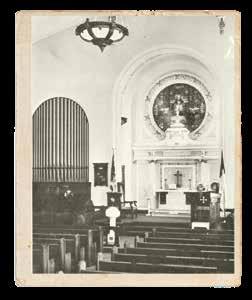
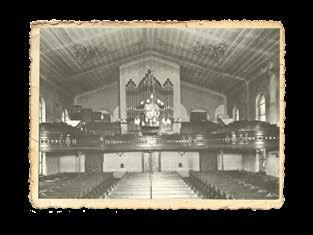
St. John’s UCC Church of Reading, located on 9th and Chestnut in Reading, PA, was established in 1871 and had, at its peak, a congregation of approximately 450 members.
By the early 2000’s, the writing started to appear on the wall. The number of regular congregants attending worship services had dwindled to 30 or 40. The beautiful sanctuary, which could seat 350, felt cavernous, so dedicated church members began worshipping in the smaller chapel downstairs which had the benefit of air conditioning. They preferred sitting together in that smaller space where they were closer to each other.
Dee Johnson’s connection to St. John’s UCC stretches back to 1969, when she and her husband, Joel (“Joey”), were married in the sanctuary. For Joey, the church had been a constant since childhood, and he later served faithfully as its financial secretary. Across generations, St. John’s became a touchstone for their family. Dee, too, devoted herself deeply to the congregation, serving as president of the consistory—a role that meant fielding both the hopes and concerns of fellow members as she helped guide the church through the years.
As the congregation grew smaller, members began facing hard conversations about the future of their cherished church.
A survey of where congregants lived revealed a striking fact: only one person still lived within walking distance of the building. Many others no longer felt comfortable driving into the City of Reading for worship or church activities. In 2010, their beloved pastor, Darryl Cruz,
departed for a new calling, and the transition that followed was shepherded by interim pastor Tom Adil, who guided St. John’s through its final chapter.
Despite their shrinking numbers, the members of St. John’s UCC remained committed to serving their neighborhood with compassion and consistency. They hosted free monthly dinners for anyone in need and offered hygiene kits along with access to the church restroom. Several times a year, the congregation organized clothing drives where community members could choose items that suited them. They also ran a welcoming food pantry that allowed neighbors to select the groceries they needed—and the foods they preferred—preserving both dignity and choice.
Finances were not the problem – the church had a significant endowment that had grown over the years through
memorial gifts and other donations. The church operated partly by utilizing the interest earned from the endowment each year. They also managed a sizable memorial fund but rarely needed to access that fund for church operations.
Dee reflects on those conversations: “The church had plenty of money, and we could have stayed there for a long time. We didn’t think that would be a good use of our money.” While the congregation considered simply spending down their reserves, they kept returning to a central question— how else might these funds serve a greater purpose? Their shared desire was clear: they wanted the church’s remaining resources to do good.
Barry and Debbie Weinhold, long-time members, suggested Berks County Community Foundation as a resource.
The Weinholds established a scholarship fund at the Community Foundation in 2016. Franki Aitken, CFO and COO, met with church leaders
While the congregation considered simply spending down their reserves, they kept returning to a central question— how else might these funds serve a greater purpose?
to discuss the possibility of establishing a field of interest fund to support programming that would meet the mission of the church if the church closed.
Dee announced a meeting for all of the church’s members, and approximately 50 people attended. The membership unanimously agreed to close the church. In doing so, they donated the building to a new Mennonite congregation that had previously been worshipping in private homes in the Ephrata area. The new congregation was also given $100,000 from St. John’s UCC of Reading to maintain the building.
The remaining funds established the St. John’s UCC Reading Fund of Berks County Community Foundation. This field of interest fund was established in 2020 to support organizations and causes in Southeast Reading or Berks County that reduce hunger, offer shelter or improve housing, meet a pressing need for youth, or create or maintain open space. Preference is given to organizations or causes based in one mile around 149 S. 9th St., Reading, PA, where St. John’s UCC was located. When the fund agreement was signed, five church members agreed to serve on a committee to review grant applications. Once the first year of grantmaking concluded, the committee decided to disband and entrust grant decisions to the Community Foundation team. Since it was established, 13 organizations have received grants totaling $147,700. When asked how she and the original committee members feel about this new chapter for St. John’s UCC of Reading, Dee Johnson acknowledged that, while the decision was difficult to close their cherished place of worship, they feel good knowing that they money from the church is continuing to do good work in the community and will do so forever.
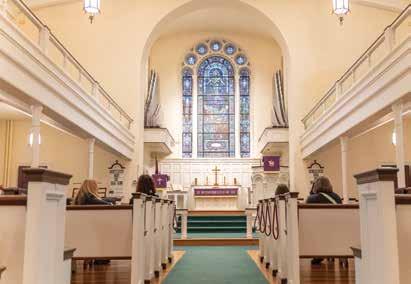
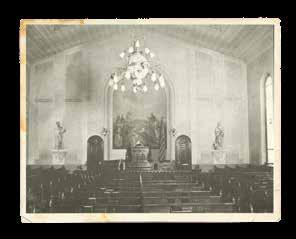
Interior photos of the sanctuary when it was re-consecrated in 1877
St John’s UCC building at 9th and Chestnut Streets now houses a Mennonite congregation.
Spark Notes:
Charitable Giving and
How the Community Foundation Can Help
By Molly McCullough Robbins, Vice President for Philanthropic Services
Many people want to be thoughtful in their charitable giving, but that doesn’t always make the process easy. In fact, one of the most common challenges donors face is simply feeling confident in their decisions. With so many worthy organizations, urgent needs, and compelling opportunities, it can be difficult to know where to start—or how to know if you’re making the biggest possible impact.
If you’ve ever found yourself wondering whether you’re giving to the “right” organizations, you are not alone.
This is where the Community Foundation can help.
One of the most valuable roles the Community Foundation plays is serving as a trusted, knowledgeable partner in your philanthropy. Our team works closely with nonprofit organizations across the county and maintains a deep understanding of the issues shaping our community. This allows us to provide more than just options—we can offer
context. For example, if you’re interested in supporting a particular cause, we can share insight into how that issue is affecting our community right now, which organizations are actively addressing it, and where additional support could make a meaningful difference.
In addition to offering perspective, the Community Foundation can also assist with due diligence. While many organizations are doing excellent work, it’s natural to want reassurance that your gifts are being used effectively and in alignment with your intentions.
Our program team can help review organizations’ missions, programs, and governance practices, and provide guidance based on our experience working with nonprofits of all sizes and focus areas. This can be especially helpful if you are considering supporting an organization that is new to you
or responding to a timely or urgent need.
For many donors, this combination of insight and due diligence leads to greater confidence—not just in individual gifts, but in their overall approach to philanthropy.
Just as importantly, working with the Community Foundation can help you step back and think more strategically about your giving. Rather than approaching each donation as a separate decision, you may find it helpful to consider how your gifts fit together over time. Are there certain causes you’d like to prioritize? Would you like to balance immediate needs with long-term impact? Are there opportunities to involve your family in the process?
These are the types of conversations we are here to
support. Whether you prefer to remain hands-on in selecting organizations or would like help narrowing your focus, our team can tailor our approach to fit your preferences and goals.
The result is not a rigid plan, but a more confident and informed path forward.
Philanthropy is personal, and there is no single “right” way to give. But having a trusted partner can make the process feel more manageable— and more meaningful. The Community Foundation is honored to work alongside you, helping ensure that your generosity is guided by both your values and a clear understanding of how to make the greatest impact. Please email mollyr@bccf.org to discuss your charitable goals.
How to Give
Meet with us, discuss what causes you love, talk about creating a fund.
Identify the Causes You Love
Is there a cause or organization you’ve always supported? Would you love for your life to be remembered or to honor a loved one? Take our fund quiz (on page 21) to help you put your passion into words.
Determine Your Giving Goals
Whether you want to guide your giving today or leave a legacy after you’re gone, we’re here to help you make your charitable goals a reality. Email Molly McCullough Robbins, Vice President for Philanthropic Services, at mollyr@bccf.org or call the foundation at 610-685-2223.
Sign a Fund Agreement
After you know what you’d like to support (or even if you’re still figuring that out), we’d love to meet with you and create a fund agreement, which we both sign to ensure your charitable intent is honored for the life of your fund.
Make an Initial Donation
You can start your fund by making an initial donation now or wait and start it through your will or estate. Endowed grant funds may be created with a gift of $50,000 or more. Endowed scholarship funds may be created with a gift of $100,000 or more.
Change starts with a spark. Your spark.
Meet the Team
Whether you’re visiting or calling the foundation as a grantee, donor, or nonprofit partner, you’ll meet members of our team who are happy and eager to share their expertise.
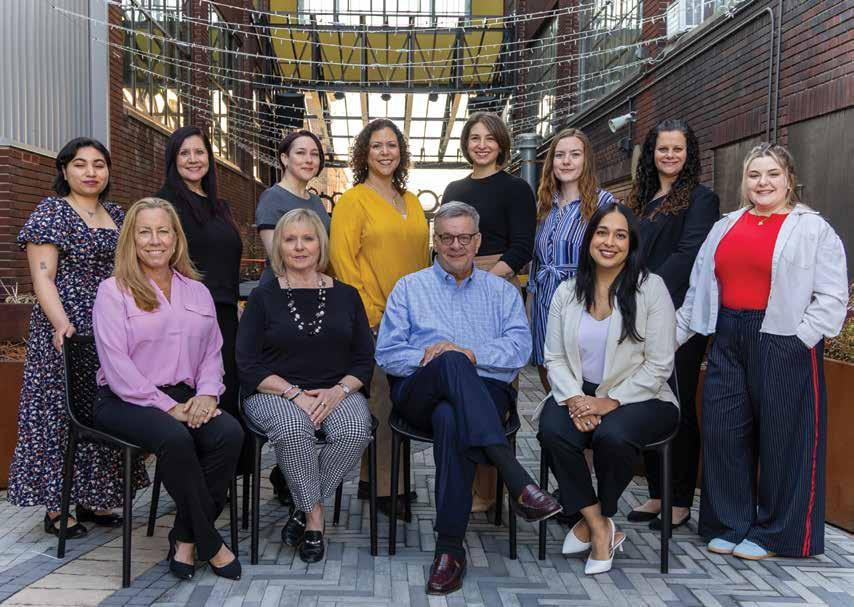
Back row, from left to right: Adriana Alarcon, Front Desk Receptionist; Vivi Anthony, Executive Assistant; Kim Sheffer, Lifelong Learning Program Officer; Cindy Milian, Health and Human Services Program Officer: Emily Smedley, Environment and Energy Program Officer; Emma Wright, Grants and Scholarships Administrator; Sally Cox, Finance and Operations Administrator; Jen Heydt, Communication Manager.
Front row, from left to right: Molly McCullough Robbins, Vice President for Philanthropic Services; Franki Aitken, COO and CFO; Kevin K. Murphy, President and CEO; Monica Reyes, Vice President for Programs and Initiatives.
Begin your journey of generosity by completing this sentence: “My charitable goal is.. ”
This quiz is a starting point Scan the QR code to share your results and have a conversation wi th Molly McCulloug h Robbins, Vice President for Philanthropic Services. You can also call us at 610-685-2223.