DAVID GARRICK


Canadian superstar Alphonso Davies playing for Bayern Munich, 2019.
Murray Mollard mounts a passionate call to action for Canada to rise as a great soccer nation in his sometimes heartbroken history, memoir and manifesto.
Murray Mollard mounts a passionate call to action for Canada to rise as a great soccer nation in his sometimes heartbroken history, memoir and manifesto.
See page 7
See page 7

R
1 8:00 pm |
Mary
Comedy icon Mary Walsh launches this year’s Festival with wry

2 10:00 Am | Friday, August 14
Betty
3 11:30 Am | Friday, August 14
Janie Chang and Genevieve Graham with Kathryn Gretsinger
Meticulous research, propulsive prose, intricately layered narratives and long-buried secrets that imperil their resilient female protagonists unite Janie Chang’s The Fourth Princess and Genevieve Graham’s The Chambermaid’s Key. Infused with extortion, murder and mysteries that echo across generations, these novels from two exceptional storytellers deliver gripping, unforgettable reads.


Introducing the Al and Eurithe Purdy BC Award for Excellence
The Sunshine Coast Festival of the Written Arts is pleased to announce the Al and Eurithe purdy BC Award for Excellence, an annual prize recognizing an outstanding book of fiction or non-fiction that is both authored and published in British Columbia.
The prize is made possible through the generous support of Eurithe purdy—in memory of her late husband, the great Canadian writer Al purdy—and was created to honour his literary legacy and his ties to British Columbia.
The $5,000 prize will be awarded to an author whose work shows literary merit, craft, originality, creativity and is rooted in BC’s cultural, historical or literary landscape. Starting in 2026, the award will be presented each year at the Festival of the Written Arts.
4 2:00 pm | Friday, August 14 BC Books Showcase
The Al and Eurithe Purdy BC Award for Excellence moderated by Kathryn Gretsinger
Please join us to celebrate the inaugural shortlist for the Al and Eurithe Purdy BC Award for Excellence. Three outstanding authors from British Columbia will be on hand to speak about and read from their shortlisted works, discuss the joys and challenges of publishing in BC, and share insights about the writing life and their literary craft.
5
3:30 pm | Friday, August 14 Billy-Ray Belcourt
Celebrated Cree author and Griffin Prize winner Billy-Ray Belcourt expands his bold, intimate body of work with Coexistence, stories of Indigenous love and loneliness, and The Idea of an Entire Life, poetry that explores queerness, grief, and the futures we dare imagine.
6 6:30 pm | Friday, August 14 Donna Morrissey
In Tell It to the Water, Donna Morrissey crafts a voice-driven family memoir capturing the grief that engulfs her family after her mother’s death. Blending love, loss, and the fierce complexities of kinship, her Newfoundland storytelling is rich in character, humour and emotional truth.
7 8:00 pm | Friday, August 14 Terry Fallis
Two-time Stephen Leacock Medal winner Terry Fallis returns with The Marionette, a comic thriller in which spy novelist James Norval is unexpectedly recruited by CSIS for a mission to Mali. Danger, high-stakes consequences and Fallis’s signature satirical wit follow.


Visit writersfestival.ca for updates, tickets and information about special events during the festival.
8 10:00 Am | Saturday, August 15
Robert Moor

Over a decade-long, globe-spanning quest, Robert Moor sought the hidden wisdom of trees and discovered “tree-thinking,” a way of seeing shaped by patience and interconnection. With In Trees, he shows us how trees can guide us toward resilience, rootedness, and the art of living meaningfully.
9 11:30 Am | Saturday, August 15
Two poets attuned to nature and language examine the forest, its role in our lives and our impact on it. In sometimes, forest, Elee Kraljii Gardiner explores the woods as mirror, companion and adversary, while in hiking beyond, bronwyn preece charts a personal and courageous journey through external and internal landscapes shaped by movement and attention.

14 10:00 Am | Sunday, August 16
Georgia Toews’s novel Nobody Asked for This follows 23-year-old comedian Virginia as she navigates grief, a collapsing friendship, and a date gone wrong. A rich, darkly comic, raw portrait of early adulthood, trauma and the limits of humour as a coping mechanism.


Elee Kraljii Gardiner and bronwyn preece with Megan Cole photo Sophia Hsin


13 8:00 pm | Saturday, August 15 Rockwood Lecture Dr. Alika Lafontaine
of
on

The Outrage Cure offers a groundbreaking exploration of how anger and betrayal deepen into outrage when we lose hope that change is possible, along with a compassionate guide to finding our way back, individually and together.

h T
The Sunshine Coast Festival of the Written Arts gratefully acknowledges that the Festival takes place in ch’atlich, on shíshálh swiya, the unceded traditional homelands of the shíshálh Nation. As we strive to be good allies through word and action, we remember that the shíshálh People have been sharing stories on this land for millennia. K d a m




15 11:30 Am | Sunday, August 16 New Voices Wiley Wei-Chiun Ho and Iryn Tushabe with Megan Cole
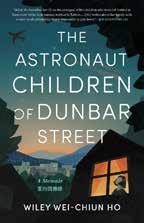
Our New Voices authors offer powerful portraits of youth navigating upheaval and longing. Wiley Wei-Chiun Ho’s memoir The Astronaut Children of Dunbar Street traces a Taiwanese-Canadian family fractured across continents, while Iryn Tushabe’s novel Everything Is Fine Here follows a Ugandan teen confronting her sister’s forbidden love— each illuminating profound resilience and hope.
16 1:30 pm | Sunday, August 16 Charles Demers
Beloved comedian and author Charles Demers brings us The Eh Team: A Celebration of Canadianisms from Elbows Up to Poutine, a laugh out loud guide to the quirks and charm of our uniquely Canadian foods, expressions and turns of phrase that define who we are.
17 3:00 pm | Sunday, August 16 Antonio Michael Downing


In his coming-of-age debut novel Black Cherokee The Next Chapter host Antonio Michael Downing introduces Ophelia Blue Rivers—“half Black, half Cherokee, and all mixed up”—a young woman searching for belonging in a landscape fractured by generations of social and racial divides.
18 4:30 pm | Sunday, August 16 Monique Gray Smith
Bestselling Cree-Scottish author Monique Gray Smith returns with Sharing the Light, a quietly profound collection of stories, vignettes and reflections that invites readers to cultivate gratitude, love, joy and hope while moving through a world that is both changing and challenging.

Individually, BTU—Barney Bentall, Tom Taylor, and Shari Ulrich—are accomplished, acclaimed award-winning musicians. Together, they become a powerhouse trio of talent whose music melds folk, roots and acoustic singer-songwriter traditions into something warm, intimate and deeply human. Their blend of acoustic guitars, mandolin, fiddle and swoon-worthy three-part harmonies— along with a palpable love of playing together—offers an inspiring close to this year’s Festival. 19 8:00 pm | Sunday, August 16 Bentall Taylor Ulrich

Anna Byrne
The Last Caravan:
The Power of Community at the End of Life (Caitlin $26)
Marion McKinnon Crook
Bloomsbury to Barkerville: The Life of Florence Wilson (Heritage House $26.95)
Joe Barrett
A Fight for Justice: The Compelling Story of Temporary Foreign Workers & Human Rights (Ronsdale Press $26.95)
Wiley Wei-Chiun Ho
The Astronaut Children of Dunbar Street: A Memoir (D&M $24.95)
tLynn McCarron
British Columbia Lullaby (Sandhill Book Marketing $14.95)
Monique Gray Smith Kohkom’s First Drum (Orca $21.95)
Aaron Chapman & Simon Kendall
Real Enough:
The Unlikely Story of Doug & the Slugs (Anvil $25)
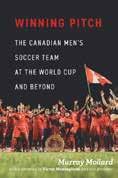
Murray Mollard Winning Pitch: The Canadian Men’s Soccer Team at the World Cup and Beyond (Harbour $26.95)
Elee Kraljii Gardiner sometimes, forest (Talonbooks $19.95)
George Bowering
Barefoot Gringo (UBC Press / On Point Press $26.95)
Will Dobud & Nevin Harper
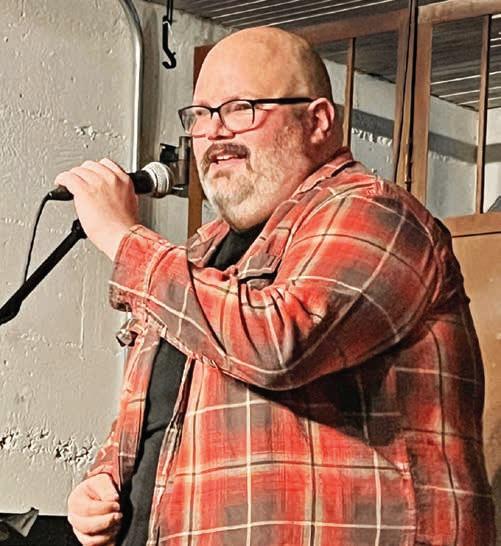
tKids These Days: Understanding and Supporting Youth Mental Health (New Society $29.99) del
Sam Wiebe, launching his book at Irish Heather Shebeen, Vancouver.
Sam Wiebe, launching his book at Irish Heather Shebeen, Vancouver.
All you need is LOVE
Comedian, author and playwright Charles Demers got together with poet George Bowering to exchange monthly letters on their impressions as expectant, first-time fathers in 2015 and 1971 (two very different eras when their daughters were born). The letters were published in The Dad Dialogues: A Correspondence on Fatherhood (and the Universe) (Arsenal Pulp, 2016) that showed how parenthood, whatever age or era, widened each man’s scope of compassion.
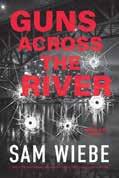
t’s been ten years since Sam Wiebe began writing the Wakeland Series set in Vancouver about the private investigator Dave Wakeland, whom Wiebe describes as a “brilliant, flawed, reckless, but ultimately moral detective.”
In Wiebe’s sixth instalment, Guns Across the River (Harbour $24.95), Wakeland continues to evolve: he’s older, less naïve and has a more lucrative corporate income as a “security consultant.”
A young Nicola Havoc enters the picture shortly after Wakeland, his PI partner, Jeff Chen and other buddies have finished a night of poker in Wakeland’s new float home by Granville Island. Havoc jumping off the Granville Street Bridge gets their attention. Wakeland and Chen jump into the murky waters to save her. Suffice to say, they get her to Vancouver General Hospital emergency and she survives. But the search for the fifteen-year-old’s father leads Wakeland into a violent circle of illegal gun buyers, treachery, bloodletting and revenge. The action also ventures further afield to the Fraser Valley, Harrison Hot Springs and Revelstoke. Wiebe’s locale descriptions remain cinematic. One example is the Hastings Racetrack which provides “the best free view of the city,” writes Wiebe. “On the other side of the backstretch, the Second Narrows Bridge slashes across Burrard Inlet, framed by blue-white mountains, trees and silver sky. The tranquility of the view takes some of the sting out of longshots that didn’t pay off.”
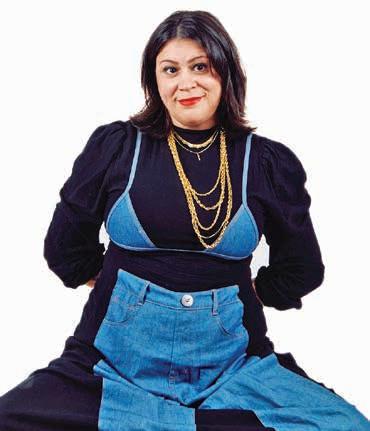
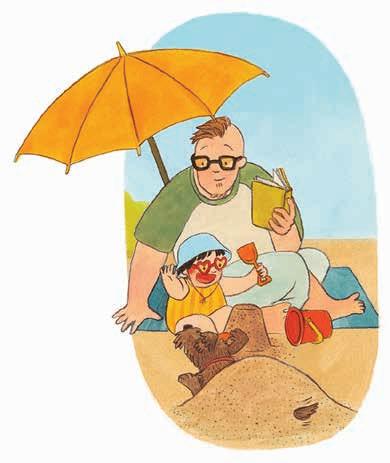
Demers, now the father of two children, has written I Sure Do (Tradewind $24.95), a children’s picture book, illustrated by Dorothy Leung, about the unconditional love a parent has for their child. Demers employs warm, playful and, at times, silly wording to depict the father’s steadfast affection. “I sure do love you,” Demers writes. “Yes, I adore you / And I a window / And I a floor you / I never less / And always more you … That won’t change / For any reason / I fall for you / In every season.” A celebration of language, love and giggles for bedtime reads.
9781998526550
ith five collections of poetry and a story collection under her belt, Dina Del Bucchia is set to release her second book of short stories, Tougher than the Rest (Arsenal $22.95). Nine tales take place in Vancouver’s near future when wealth disparity has grown worse, there is only one housing co-op left, the last Salvation Army charity store is set to be demolished for new luxury condos and robots have taken over most low-paid jobs such as Walmart greeters and receptionists. The focus is on women in different stages of life, both underpaid (a gig worker who moderates comments on YouTube videos) and those living upper middle-class lives (a trophy wife dealing with rage against controlling men, including her late husband). Throughout, Del Bucchia’s social commentary illuminates the effect of prosperity (or lack thereof) on women. 9781834050461


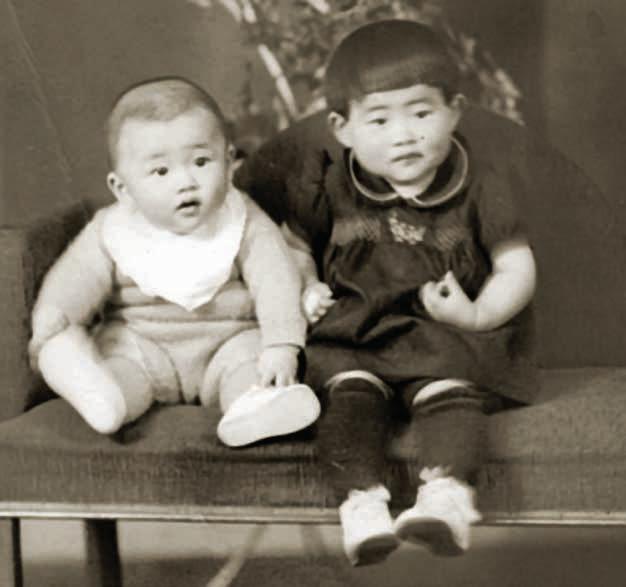
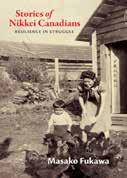
t was during her third year at UBC that educator and historian, Masako Fukawa learned of the internment of people of Japanese ancestry during World War Two. “After the initial shock of reading about this catastrophic event and confronting my parents about keeping it a secret, this knowledge was again swept into the background,” she says in Stories of Nikkei Canadians: Resilience in Struggle (Harbour $24.95). Years later, in her quest for truth, Fukawa says that what she had been led to believe—that Canada protected the rights of all its citizens regardless of race, ethnicity, language or religion—“was a myth.” After years of documenting the Nikkei community (the first Japanese Canadian generation born in Canada), Fukawa has written the story of her Japanese family’s history in Canada. She and her brother, Osamu, were babies when Fukawa’s family was initially separated in 1942 (her father sent to a road camp, the rest of the family to Greenwood, BC). The acknowledgment of Japanese Canadian history is key, says Fukawa, to “mark turning points in the development of a democratic and multicultural Canada.”
9781998526482
At the age of 8, Veronica Woodruff was schooled by her adoptive father, a corporate real estate lawyer, in proper cocktail preparation. Both her parents were alcoholics and it steered Woodruff’s early adult life into working environments where alcohol was central to social and professional life. It was not until Woodruff was in her forties that she quit drinking. Woodruff traces how drinking becomes normalized—from Prohibition era attitudes to today’s sober curious movement in Blind Drunk:
A Sober Look at Our Boozy Culture (Tidewater $24.95), a memoirdriven examination of North America’s drinking culture through both lived experience and research. Based in Pemberton on Lil wat Nation territory, Woodruff’s work in environmental science and leadership provides background knowledge on behaviour, systems and social change, grounding Blind Drunk in personal insight and cultural analysis.

Between May 2022 and November 2024, Darrell McKay of Campbell River made five separate trips to Ukraine to bring humanitarian aid to its people after Russia had invaded the country. No stranger to hardship—McKay had been volunteering in countries that needed assistance since his early retirement at the age of 54—news stories of the early days of Russia’s aggression made him determined to help. “As the war progressed, I came to realize that I would not rest in my mind unless I stood beside Ukraine, not behind,” McKay says.
Within days, McKay was on his way to Ukraine via Poland. He recounts his experiences in My Time with Heroes: One Canadian’s Story of Supplying Humanitarian Aid to Ukraine (Sandhill $20), a memoir drawn from journal entries of firsthand observation, personal thoughts and photographs. McKay documents transporting humanitarian supplies across the country and reflects on the soldiers, volunteers and displaced families he encountered along the way. He is currently working on a second book about his fifth and last trip to Ukraine that will include interviews with “civilians and soldiers that went through hell,” he says.
9781738369003

Ever wonder what the difference is between magma and lava? If you’re a science lover, you probably already know that both are molten rock; the difference is that when the molten rock is underground, it’s called magma and when it erupts at the surface, it’s called lava. Volcanoes come in many sizes and shapes as meteorologist and science host for CBC, Johanna Wagstaffe describes in her picture book for children, Little Volcano: The Science of Earth’s Eruptions (Orca $21.95), illustrated by Julie McLaughlin
Wagstaffe tells the story through an imaginary underwater volcano named Stevie, who can hardly wait to grow up and find out what kind of volcano she will be. Throughout Stevie’s story, Wagstaffe adds scientific volcano facts and provides examples of historic volcanoes.
In addition to being an expert communicator about weather and scientific phenomena, Wagstaff has a background in seismology, geophysics and earth science.
“I have always been fascinated by the power of planet Earth,” she writes. “From tornadoes to earthquakes, tsunamis to hurricanes—I love learning about how our planet can create violent events in an instant, while other processes, like mountain building, take thousands of years.” A book aimed at children it may be, but adults can learn a lot from it too. 9781459844216
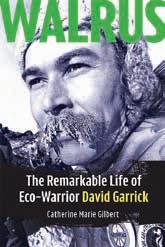
The Remarkable Life of Eco-Warrior
David Garrick
Catherine Marie Gilbert
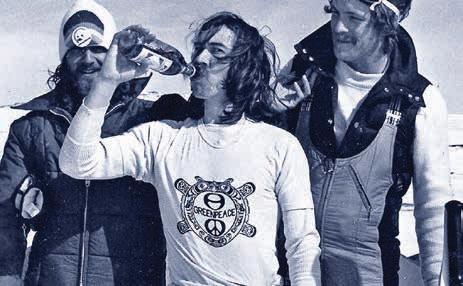
Many people don’t know that Greenpeace was founded in Vancouver and Garrick was there!
With his friend Paul Watson, he shared life-altering adventures including Greenpeace’s inaugural whale and harp seal campaigns.
“An excellent chronicling of his extraordinary and exemplary life.”
—Captain Paul Watson
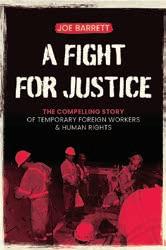
The Compelling Story of Temporary Foreign Workers & Human Rights
Joe Barrett
In April 2006, 42 Latin Americans arrived to excavate tunnels for the SkyTrain. They had been promised wages far above what they would earn at home. But the reality was miserable wages, unpaid overtime and poor living conditions. And so began their fight for justice.
“Essential reading for union organizers, human-rights advocates, and allies of migrant workers, offering both inspiration and lessons for advancing all workers’ rights.”
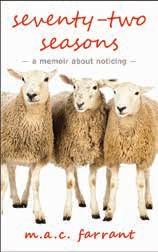
Inspired by the Japanese practice of celebrating one feature in nature every five days, creating seventy-two seasons instead of four, Farrant, with her signature humour, embarks on a mission to focus on small, spellbinding changes.
“I can now say with confidence that Farrant is my favourite Canadian writer. Her work is hilarious, strange, sensitive, joyous, acerbic, incisive, and, most significantly and perhaps inarticulately — wonderful.”
—Karl Flecker former National Director of Human Rights/Anti-Racism, Canadian Labour Congress 978-1-55380-741-4


At a soccer match between Canada and Costa Rica, whose exuberant fans made their allegiance known through songs, chants and music, Murray Mollard quietly brought a flag to cheer on the Canadians.
Looking around the football stadium in San Diego on that day 26 years ago, Mollard struggled to spot fellow Canadians. Most of those sitting around him were supporters of Mexico, whose national team was to play in the second match of the day.
Canada was trailing 2 to 1 when Carlo Corazzin tied the score on a stunning bicycle kick — a spectacular, acrobatic play when a player leaps horizontally with his back to the ground and boots the ball overhead.
Mollard celebrated in his seat. A nearby Mexican fan scolded him: “C’mon, man, get up, show your flag!”
Chastened, Mollard half-heartedly ran around the concourse with his flag, feeling self-conscious with every step.
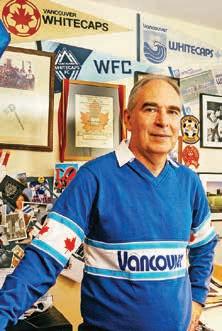
Building unabashed pride in Canada’s national men’s soccer team is one of the remedies Mollard offers in Winning Pitch:The Canadian Men’s Soccer Team at the World Cup and Beyond, a call to action to turn Canada into a worthy contender on the world stage alongside the ranks of true soccer nations.
Winning Pitch arrives simultaneously with the biggest sporting event of the year, the 2026 FIFA World Cup. The tournament, which boasts a massive global audience, is being cohosted this year by Mexico, the United States and Canada. Seven matches are scheduled for BC Place Stadium in Vancouver, where Canada will play Qatar and Switzerland after opening against Bosnia and Herzegovina in Toronto.
The European soccer media has Canada ranked in the low 30s in this expanded 48-team tournament. This year’s Canadian team is expected to advance out of the four-team group stage with such rising talents as midfielder Tajon Buchanan, forward Jonathan David and defender Alphonso Davies, though the latter as of this writing was recovering from a strained right hamstring suffered during a match for his club side, Bayern Munich. Four years ago in Qatar, Davies scored Canada’s first ever goal in a World Cup.
In a challenge to the dominance of hockey, Murray Mollard mounts a passionate defence and a call to action for Canada to rise as a great soccer nation, in his sometimes heartbroken history, memoir and manifesto.
portunity, bureaucratic incompetence and a perennial lack of funding.
It is a history that has “mostly been shrouded in failure,” the author writes.
Winning Pitch is a passionate fan’s heartfelt—and sometimes heartbroken—history, memoir and manifesto for building a soccer culture across an icy land long beholden to hockey as a rescue from long winters.
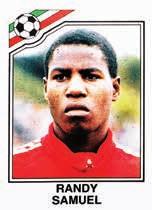
Mollard has been obsessed with the sport since he was a boy in Calgary. By age 17, he had played the sport in five countries, including Brazil, and he was a teammate of future national team defender Randy Samuel, who was born in Trinidad and Tobago before growing up in suburban Richmond. Mollard won two national championships playing for the University of British Columbia’s varsity side on his

way to earning a commerce degree. He has also been a youth coach and a director of the sport’s provincial governing body, during which he actively sought to create more space for girls and women as players, coaches and administrators.
Mollard convincingly blazes a pathway for Canada to rightfully take its place among soccer nations: better funding; top coaching with international recruitment until peers are developed nationally; clear development pathways for athletes; suitable soccer stadiums with professional teams from coast to coast; and building an ardent fan base. While the men’s team is cheered on by a traveling group of fans known as the Voyageurs, their size and passion are drowned out by the maniacal, musical, chanting, fireworksthrowing armies of other nations. And much of that would happen if only the national men’s team could build on success on the pitch.
“We must break the cycle of our perennial existential crisis of recycling failure after every success,” the author writes.
A highlight of Winning Pitch is a retelling of the improbable story of Canada’s first appearance at the World Cup in 1986. The team qualified for the tournament by defeating Honduras 2-1 on a blustery, bone-chilling day on the pitch of King George V Park in St. John’s, Newfoundland. Earlier, they had won 1-0 in Honduras before a stadium of 50,000 crazed fans. (Honduras, remember, once engaged in a socalled Soccer War with neighbouring El Salvador following riots during a World Cup qualifying match.)
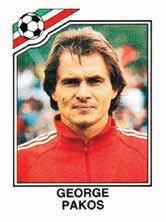
Two of Canada’s three goals were scored by George Pakos of Victoria, an amateur player in his 30s who, when not making Canadian soccer history, worked as a water meter reader. Such weekend warriors are not expected to share a pitch with the likes of France’s Michel Platini
While Canada’s national women’s team has long been a force in international play, thanks in part to the gritty genius of Burnaby’s Christine Sinclair, the story on the men’s side is more about indifference, missed op-


As for that game in 2000, where Mollard was embarrassed to show his passion to a crowd of strangers? The underdog Canadians went on to advance to the knockout round (after winning a coin toss — of all things — to break a tie in the standings of the group round) before embarking on an unlikely winning streak to emerge as Gold Cup champions of Concacaf, which is FIFA’s governing body for North America, Central America and the Caribbean. That win 26 years ago is the most recent tournament victory for the men’s team. Here’s hoping Mollard and other Voyageurs do not have to wait so long for the next one.
9781998526598
Tom Hawthorn’s most recent book, Play Ball!, is an anecdotal history of baseball in
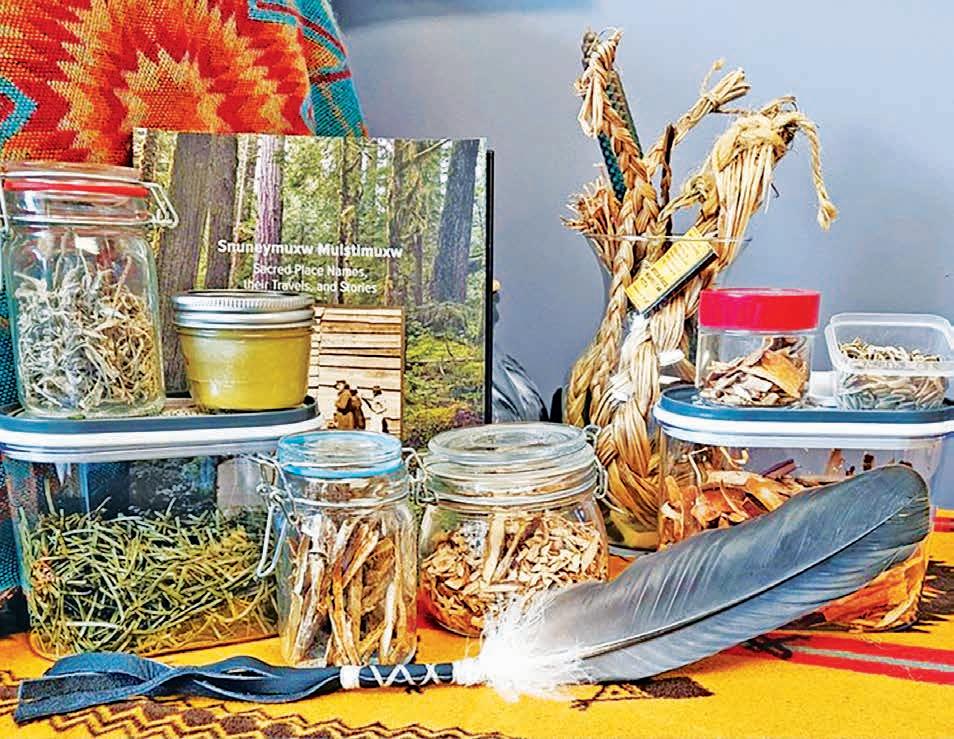
tPlant Teachings from My Auntie: Gathering Coast Salish Plants for Medicine, Textiles, Nourishment, and Ceremony by C’tasi:a, Geraldine Manson and Nancy Turner (New Society $24.99)
BY ODETTE AUGER
In Plant Teachings from My Auntie, Geraldine Manson (Snuneymuxw First Nation) and ethnobotanist Nancy J. Turner offer readers something deeper than a field guide. The book reads as a map of relationships—between people and plants, between teachings and land, and between generations of knowledge holders.
At the heart of the book are the teachings shared by Kwulasulwut, Dr. Ellen White, affectionately known as Auntie Ellen, whose mentorship shaped Geraldine Manson’s understanding of Coast Salish plant knowledge. Manson describes the early years of learning alongside her: “Hours of sitting and walking alongside my dear Auntie Ellen began in the early 1990s, with her showing me the trees and oth-
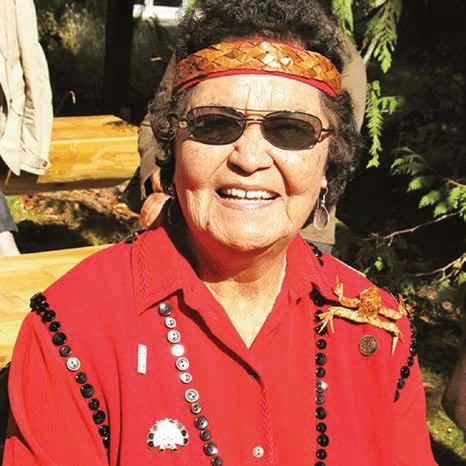
Under the guidance of Indigenous elder, Dr. Ellen White, Geraldine Manson discovered the sacredness of sustainably harvesting wild plants.
er plants, sharing the vital importance of the plant world within the mountains and forests, along the riverbanks, and in the ocean.”
That slow apprenticeship of walking, observing and listening sets the tone for the entire book. Rather than presenting plants only through their uses, the authors ground each teaching within cultural protocols and lived experience. Knowledge is not extracted; it is shared carefully, with context.
Auntie Ellen’s influence is woven throughout the work. Her teachings are described not as information, but as responsibilities. Manson writes that Auntie Ellen was “very strict and repetitive in teaching me about the sacredness of harvesting plants.”
That repetition becomes a form of protection for both the plants and the knowledge itself. Readers are reminded that plant teachings are not simply technical skills but part of a cultural
system shaped by Elders, language and land.
One of the most important threads running through the book is the emphasis on sustainable harvesting. Early in the text, the authors caution newcomers that gathering wild plants requires preparation and humility. Harvesters must learn to identify species properly, understand where plants grow safely and be mindful of ecological impact. “Wild plants are not the same as garden plants,” Manson writes, urging readers to research carefully and understand endangered species before harvesting.
The guiding principle is simple and profound: never take more than what is needed. In the chapter on harvesting protocols, the reminder appears again: “Good harvesting is only taking what you need, leaving the grounds clean, and filling any holes you created.”
This ethic of care reflects a broader worldview. The teachings position people not as owners of the land, but as stewards responsible for protecting plant communities so they remain healthy for future generations.
Several chapters explore the spiritual uses of plants, illustrating how Coast Salish traditions recognize plants as helpers in both ceremonial and healing practices. Snowberry, for example, is prepared into a cleansing
spray used to remove negative energy before ceremonies. Devil’s club carries protective properties, with stems sometimes placed above doorways “to ward off either evil spirits or visitors who try to harm or upset the homeowner.”
These descriptions move beyond simple medicinal applications. Plants are portrayed as active participants in community wellbeing, bridging the physical and spiritual worlds.
The chapter, “Stories, Connection, and Spirituality of Plants” uses storytelling to teach. One account reveals how yarrow was used to heal a severe injury when a young man accidentally sliced off the tip of his thumb. His mother quickly gathered yarrow leaves, chewing them together with tobacco and binding the mixture over the wound. Days later, the thumb had healed.
These stories emphasize how plant knowledge lives within community memory. They are not abstract lessons but lived experiences passed from Elder to youth.
The story of “Cedar Woman,” illustrates how plant teachings can arrive through spiritual commitment and perseverance. After months of prayer and solitude in the mountains, a young widow receives guidance from the trees themselves, learning to harvest cedar bark and roots and how to transform them into tools and woven items for her community. The lesson is not simply about craftsmanship—it is about listening, sacrifice and finding one’s place within a living ecosystem.
tadvises that preparation begins “the night before, preparing body, spirit and mind as one,” with prayer and offerings acknowledging the plant communities being visited. These protocols reflect an understanding that plants are not resources to be taken, but relatives deserving respect.
is not only about plants. It is about relationships—with Elders, with the land and with the responsibilities that come with knowledge.
The late Kwulasulwut, Dr. Ellen White (c. 1922–2018) (Snuneymuxw First Nation) was widely respected as a cultural knowledge keeper, educator and advocate for Coast Salish teachings.
Born around 1922, she was raised with traditional teachings passed down by her grandmother Mary Rice. She was educated in snawaylth—sacred Coast Salish teachings that included language, healing practices and cultural law.
Over her lifetime, White became a powerful bridge between Indigenous and non-Indigenous communities. She helped develop Indigenous education programs, served as Elder-in-Residence at Vancouver Island University and contributed to language revitalization, including early Hul’q’umi’num language resources.
Throughout Plant Teachings from My Auntie, Manson returns to the idea that learning from plants begins with preparing oneself. Harvesting starts long before entering the forest. One teaching
For readers unfamiliar with Coast Salish plant traditions, the book offers a gentle entry point. For Indigenous readers and knowledge keepers, it stands as an affirmation of teachings that have been carried forward despite generations of disruption.
bc bookworld may 26.qxp_Layout 1 2026-05-07 1:57 PM Page 1
Plant Teachings from My Auntie ultimately reminds us that ethnobotany
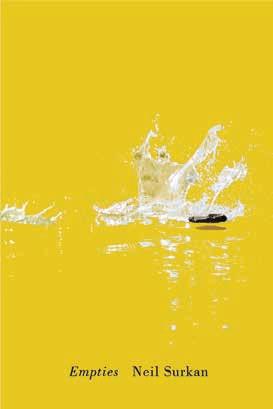

Empties
Neil Surkan
“To read Surkan’s meticulously crafted new collection is to feel yourself drawn through his language like seawater drawn gleaming through stones, exposing a world of hidden treasures, surprising connections, and deep channels of loss – and what music it makes!”
–Patrick James Errington, author of the swailing
Like the stories shared by Auntie Ellen, the book leaves readers with something to carry forward: an understanding that learning from plants begins with respect, patience and the willingness to listen. 9781774060322
Odette Auger, award-winning journalist and storyteller, is Sagamok Anishnawbek through her mother and lives as a guest in toq qaymɩxʷ (Klahoose), ɬəʔamɛn qaymɩxʷ (Tla’amin), ʔop qaymɩxʷ (Homalco) territories.
As documented in Plant Teachings from My Auntie, her influence continues through the teachings she shared with author Geraldine Manson—guidance rooted in respect for the land, careful harvesting protocols and the understanding that plant knowledge carries both responsibility and spirit.
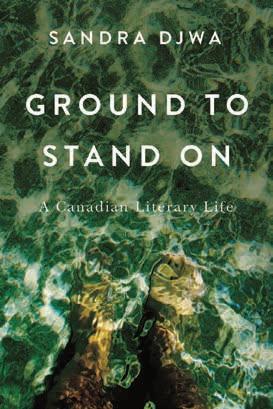

Ground to Stand On A Canadian Literary Life
Sandra Djwa
“One of Canada’s pre-eminent biographers and literary historians, Sandra Djwa turns the lens on her own groundbreaking life with this immensely readable coast-to-coast memoir. It’s a testament to the energy and initiative of her generation of gutsy academic women.” –Heather Murray, University of Toronto
BY MARK FORSYTHE
“No Greater Misfortune Could Have Befallen The Department”
John Stuart, HBC Superintendent for New Caledonia
In the 1820s, what is now British Columbia was a very different place: home to an estimated 300,000 to 500,000 First Nations peoples (some estimates reach one million), and a tiny band of newcomers who were chasing after furs. Following the 1821 merger of the North West Company and Hudson’s Bay Company, fur traders did business west of the Rockies at posts in a region they christened “New Caledonia.”
The two companies were vicious competitors before the merger with deadly consequences during the 12-year-long Pemmican Wars. Distrust, rivalry and disobedience lingered within the new Hudson’s Bay Company; men who had previously tried to kill each other were working for the same company. Nor’Westers had been independent small businessmen who shared profits; within HBC they became servants to the company.
The fur trade existed as a fragile relationship between the HBC and local Indigenous peoples. Men from the forts often forged “country marriages” or “mariage à la façon du pays” with local Indigenous women. Officially frowned upon, this occurred at almost all posts, which strengthened economic and cultural ties as both sides needed each other. But this could also result in deadly complications.
This is the backdrop to Geoff Mynett’s book, The Fort George Murders of 1823: Crisis and Coexistence in New Caledonia, which attempts to unravel a grisly double murder that
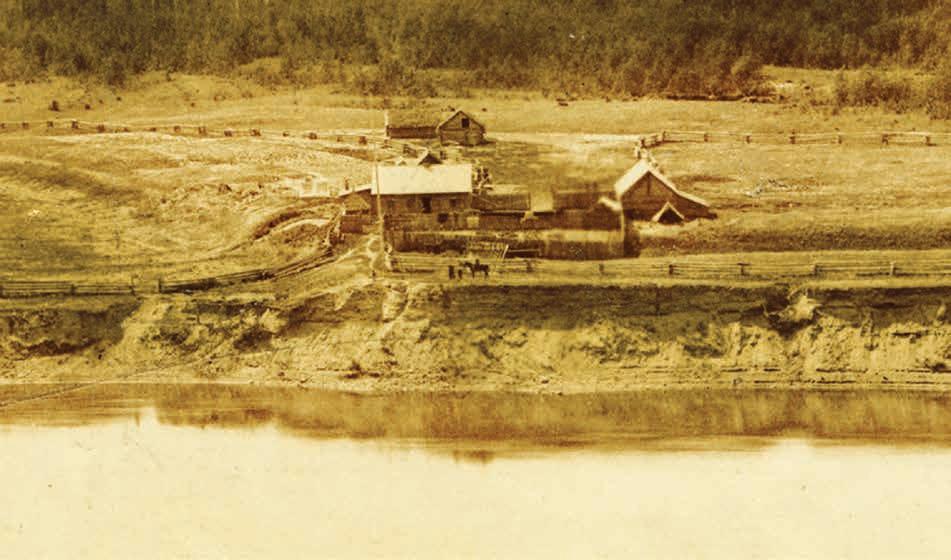
Historical sleuth Geoff Mynett unravels an 1823 double murder that threatened the relationship between the Hudson’s Bay Company and the Dakehl peoples.
shook the foundation of a trading relationship between the HBC and the local Dakehl peoples.
Two HBC employees (engagés from Lower Canada) were murdered in their beds by two Dakehl men who also worked for the fort. One of the killers had had a previous relationship with a Dakehl woman who was living with James Murray Yale, the HBC trader in charge of the post (Yale, BC and Yaletown bear his name). When Yale returned to Fort George from his travels in 1823, he came upon a horrific scene. Mynett writes: “a drama played out with the blood seeping into the soil and dogs chewing on human flesh.” Two employees were dead, the killers were hiding in the woods and Yale’s unnamed female companion was gone.
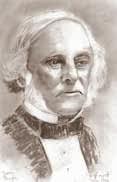
bluff and that a failure to uphold its position would be seen as weakness. And if that meant it had to use violence to redress a wrong, so be it.”
Stakes associated with the HBC’s response were high and had to match the Dakehl people’s expectations concerning punishment. Unnecessary violence (like wiping out the village where the murderers lived) would likely trigger a full assault from Indigenous warriors, a battle that the HBC was sure to lose as they were vastly outnumbered. No response from HBC would also show weakness. The future of trade in New Caledonia also hung in the balance.
chief near Fort St. James and a cousin to one of the killers—which presented another complicating factor: Chief Qua was required to display strength and courage to his own people.
A young James Douglas , future Chief Factor of the HBC and colonial Governor, enters this story. Five years after the killings, he led a party that killed the lone surviving murderer, Zill-na-houlay. There have been numerous stories of how Douglas’s life was threatened by Chief Qua and then saved by his Métis wife, Amelia Connelly. Mynett figures much has been mythologized through many re-tellings, but suffice to say, Douglas was persona non grata in New Caledonia. He was quickly shipped to the southern Columbia Department for his own good and that of the HBC’s trading relationship.
At the time, Fort George (today’s Prince George) was one post in a web that included Fraser Lake, Stuart Lake, Babine Lake, McLeod Lake and Fort Alexandria. HBC traders were eager to trade for beaver furs and salmon—furs for gentlemen’s hats in Europe and salmon for their own survival where temperatures could dive below minus fifty degrees Fahrenheit. Indigenous peoples valued the HBC’s metal tools, guns, blankets, clothing—and sometimes liquor—traded in return. Mynett notes that the, “HBC understood that its presence in New Caledonia was largely based on
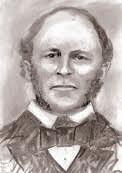
Ogeoff mynett digs for the truth of how and why these murders happened by searching HBC archives for journals, diaries and correspondence. A lawyer by profession, he weighs apparent facts while also recognizing their limitation: company records were inherently biased and prejudiced. He also draws upon Dakehl oral history, and a book written by the great-granddaughter of Chief Qua . He was a key trading figure, a principal
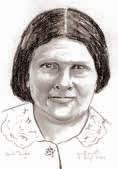
Thirty characters appear in this story; an appendix naming each is valuable, beside short profiles of the main players.
Mynett’s account goes a long way toward revealing the precarious nature of the fur trading enterprise 200 years ago and how HBC and the Dakehl negotiated this dilemma. It laid the foundation for trade to flourish, a new colony and province to evolve, and ultimately the alienation of many Indigenous peoples from their land and cultures. Much has changed in this sliver of time; much remains to be reconciled.
9781773861791
Mark Forsythe worked at CBC Radio for 30 years, 18 as host of BC Almanac. He co-authored four books about BC with Greg Dickson, lives in Fort Langley and is president of the Langley Heritage Society.
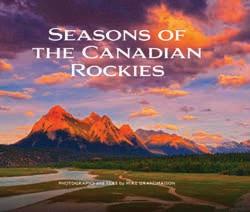
SEASONS of the CANADIAN ROCKIES
Photos and text by
Mike Grandmaison
9781774610756 $34.95 hc Vidacom Publishing
Explore the the Rockies through the seasons and lens of one of Canada's leading nature photographers.
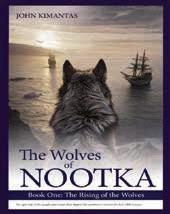
The Rising of the Wolves
John Kimantas
9781989401569
$26.95 pb
Wild Coast Publishing
In the late 18th century, four formidable figures—George Vancouver, James Colnett, Juan Francisco de la Bodega y Quadra, and Chief Maquinna— collided at Nootka Sound, forever altering the destiny of the Pacific Northwest.These men are the Wolves of Nootka: bold, brilliant, and fiercely unpredictable. The complete three‑book saga is now available.
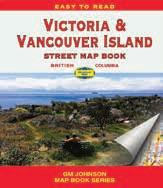
Exploring the Islands? Don't leave home without this detailed map book from Canada's leading map publisher.

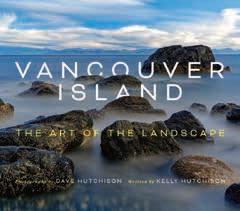
The Art of the Landscape
9781738378609 $49.95 hc
Photos and text by
Dave Hutchison & Kelly Hutchison
Award winning photographs and text
showcase BC's beautiful island and its inhabitants BC Bestseller!
Two Trees Publishing
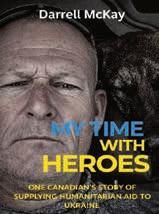
One Canadian's Story of Supplying Humanitarian Aid to Ukraine
Darrell McKay
9781738369003 $22.95 pb
This candid and often raw story offers one person's first hand accounts of what is happening on the ground in Ukraine. The book is a tribute to the resilience of the Ukranian people, and to those who volunteer. McKay shows how ordinary people can make a difference in times of crisis.
Victoria & Vancouver Island Street Map Book
GM Johnson Maps
9781774495599 $29.95 pb coil
Also available: BRITISH COLUMBIA MAP BOOK
GM Johnson Maps
9781774492895 $21.95 pb
GREATER VANCOUVER & FRASER VALLEY MAP BOOK
GM Johnson Maps
9781774494929 $29.95 PB
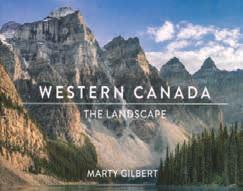
The Landscape
Marty Gilbert
9781999143633 $32.95 hc
Marty Gilbert Fine Art
With images from the untamed shoreline of BC's west coast to iconic landmarks, this showcases the diverse landscapes of our two most western provinces.
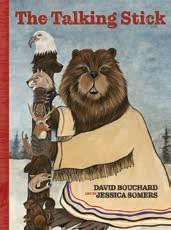
David Bouchard
9781774610725 $24.95 pb
Vidacom Publishing
Celebrated author David Bouchard tells a lovely story that will appeal to readers young and old. Beaver goes to a meeting in the forest. She must help the animals, birds, crawlers and swimmers agree on how to share their ideas and make decisions together. Learn how the Talking Stick came to be and even how to create and use your own. Beautifully illustrated by Jessica Somers. Ages 5+
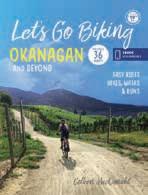

LET'S GO BIKING in the Okanagan, on Vancouver Island or Vancouver areaAvailable at your local bookstore or bike shop!
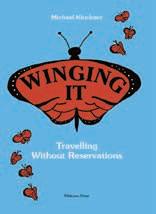
Travelling without Reservations
Michael Kluckner
9781988242644 $19.95 pb
Midtown Press
Can you still travel on a whim in a world of hyper‑planned vacations? Michael Kluckner’s stories from his five decades of world wandering prove you can explore just by "winging it" as you go. Kluckner's book celebrates the many adventures to be had from travelling without the perfect itinerary.

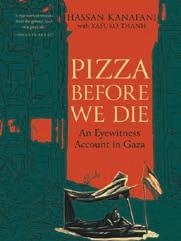
An Eyewitness Account in Gaza
HASSAN KANAFANI with YASUKO THANH
A heart-wrenching personal account of the ongoing devastation in Gaza by an ordinary citizen who bears witness to the undoing of his community and homeland. “A raw work of witness from the ground level of a genocide.”
—Omar El Akkad
978-1-83405-032-4 | $19.95
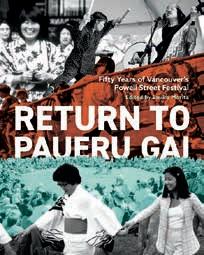
Fifty Years of Vancouver’s Powell Street Festival
Edited
by
EMIKO MORITA
e remarkable history of Vancouver’s annual Powell Street Festival and the proud Japanese Canadian community behind it. Full-colour throughout. “ is book blazes a trail toward the future.” —Hiromi Goto
978-1-83405-024-9 | $32.95
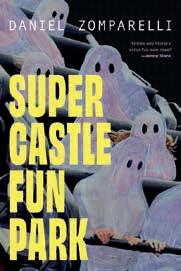
DANIEL ZOMPARELLI
A wild, beguiling novel about isolation, technology, and raising the dead. “I love this book. With writing that feels halfway to mysticism, like a blurting, owing down from a mystic who also happens to be incredibly funny.”
—Jenny Slate
978-1-83405-026-3 | $24.95
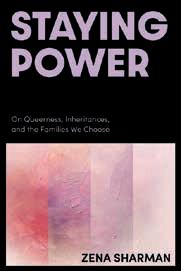
On Queerness, Inheritances, and the Families We Choose ZENA SHARMAN
A remarkably frank memoir about interdependence, grieving, and parenting as a queer femme. “ is book is a portal; prepare to be transformed.” —Hannah McGregor
978-1-83405-016-4 | $24.95
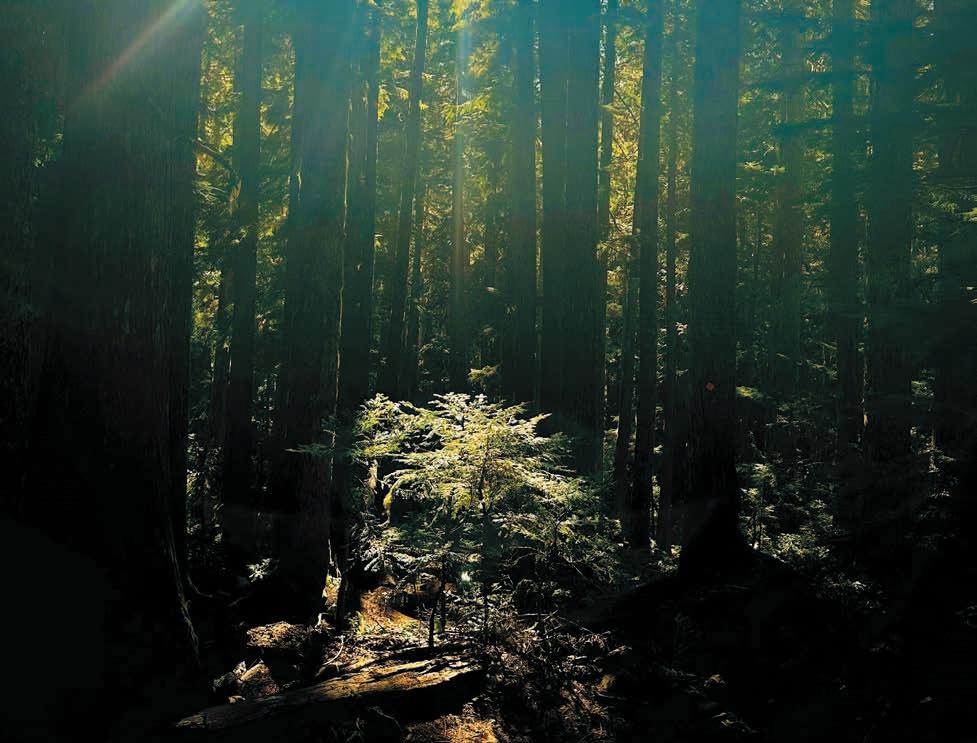
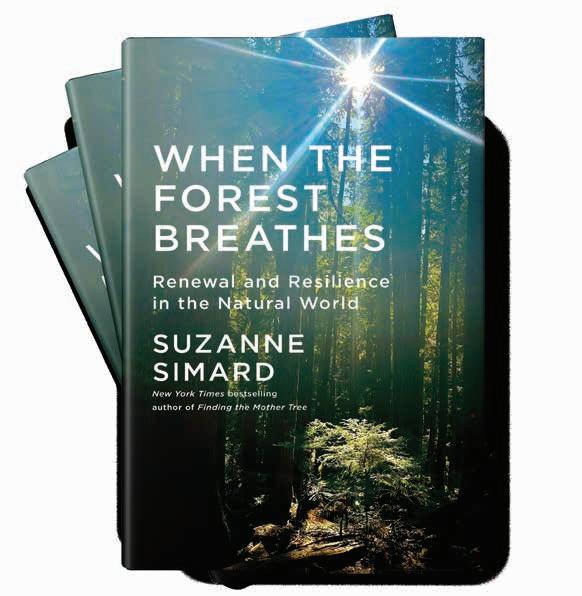
From the bestselling author of Finding the Mother Tree
“THIS IS SCIENCE AS AN ACT OF LOVE FOR THE WORLD.”
—Zoë Schlanger, author of The Light Eaters
An emboldening declaration that when we take responsible steps, reversing the effects of climate change is within reach.
AVAILABLE AT YOUR LOCAL BOOKSTORE
BY JOHN MOORE
Edgy is a word that’s been blunted by overuse to describe art, music or writing that’s gratuitously bizarre; superficial stunts merely meant to startle or shock. In these “tales of life at the edge of nature,” Susan Cormier invokes the original, deeper meaning. Edges are the borders, disputed “no-man’s-lands” where continents and cultures, economic and ecological zones, ideologies and philosophies rub against each other, exposing their fault lines and danger zones.
Dead Bees Still Sting isn’t a polemic or an academic lecture. We get enough of both on social media and all they produce is comfortably-numb moral paralytics staring at digital wallpaper. Instead, Cormier does what the best writers always do: she uses all the powers of language to trip the circuit breakers and light up the dusty synapses we used for critical and creative thinking before corporate “antisocial media” switched them off. From page one, it’s clear this isn’t garden variety nature writing either.
Cormier stretches language and imagination to their edges as she chronicles all aspects of life at a small homestead in Langley on the front line between expansionist urban concrete and the rural world. Apis mellifera, the Western honey bee, gets the title role because she’s the MVP (Most Valuable Pollinator) and an ecological bellwether. Like a canary in a coal mine, the humble hardworking honey bee is a harbinger of environmental stress. Cormier meticulously notes changes to the colour and flavour of her honey when a nearby woodland is bulldozed for a housing project.
Beekeepers like Cormier are the early-warning system, but even suburban gardeners get the “DEFCON 4” signal (a military term for a warning) when early-blooming heather is too quiet. A few years ago, beekeepers in Squamish, another rural community besieged by condo developers, experienced a bee colony collapse event. My neighbour and I discovered we each had a half-interest in a single honey bee. We spent that summer following her, arms outstretched to defend her from birds, knocking away spider webs as she struggled to service both gardens. Despite her valiant efforts and our vigilance it was a dismal year for fruit and vegetables. We felt the sting of all those dead bees.
Cormier’s method is the literary equivalent of the Slow Food movement. Like the deliberately calm slow motions of beekeeping, Dead Bees Still Sting is meant to be read one episode at a time; enjoyed and fully digested before progressing to the next. It’s divided into seasonally themed sections and each presents a deftly balanced mix of memoir, anecdote, personal essay and
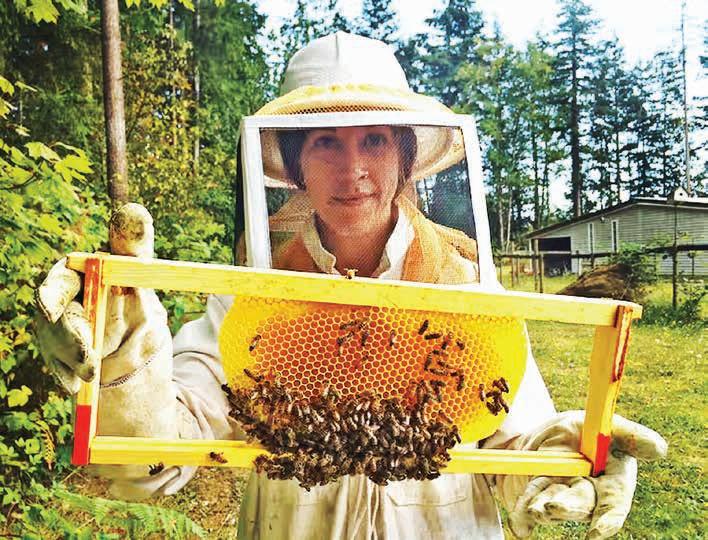
Beekeeper Susan Cormier
tells tales
of
life on the edge of nature and the precarious world of the honey bee as urban life encroaches upon her Langley farm.
poetry that echoes Rainer Maria Rilke, Paul Verlaine and Arthur Rimbaud
For example, Part 1: Spring, leads with “Advice to a New Beekeeper,” which won a CBC Literary Award for Nonfiction. Barely disguised as an essay, it addresses the reader directly in calculated, cadenced sentences whose hypnotic effect is oratorical rather than literal. Switch off your usual
“silent reading” mode and read aloud to yourself (or a willing partner) to get the full effect. That’s why, despite being a first book, Dead Bees Still Sting isn’t really a startling outlier from an untried author.
susan cormier honed her skills as a spoken word artist. She continues to produce Vancouver Story Slam, Can-
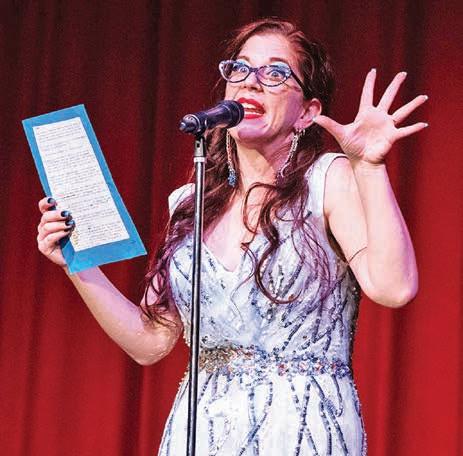
ada’s longest-running live independent storytelling competition. Spoken word artists are more than writers. They’re a hybrid of writer and actor descended from Celtic bards and the wandering poets of preclassical Greece. Anyone who has paid to watch authors like Margaret Atwood or David Adams Richards read from their works knows that, in person, the Reclusive Author can be as disappointing as first-date sex with someone you met on the Internet. In contrast, the first time I saw Ivan Coyote tell stories I’d read, rather than read from a book or notes, I nearly spilled my beer with admiration.
Dead Bees Still Sting is a finely crafted and deeply reflective work by a writer who has thoroughly road tested her stories by speaking them aloud to people, not just writing them down. This is a book you can take a year to read—not just a rainy afternoon—and find more in it as you re-read it again and again.
May the force Bee with you.
9781778402012
John Moore writes reviews from Garibaldi Highlands. He owns a T-shirt illustrated by his daughter when she was ten that says, “This Dad Loves Bees.”
This is a book you can take a year to read— not just a rainy afternoon—and find more
in it as you re-read it again and again.
Unceded:
Understanding British Columbia’s Colonial Past and Why It Matters Now by George M. Abbott (Purich/UBC Press $29.95)
BY ROD MICKLEBURGH
This illuminating account by George Abbott of the long, troubled history of British Columbia’s treatment of its original inhabitants could not be more pertinent, given two recent court decisions that have upset the apple cart on what had been a slow but steady path towards reconciliation.
Rulings that the Cowichan Nation’s Aboriginal title includes some fee simple property on the south arm of the Fraser River and that BC’s longtime Mineral Tenure Act is inconsistent with the province’s Declaration on the Rights of Indigenous People Act (DRIPA) set off a wave of angst.
Premier David Eby has vowed to appeal both decisions and make changes to DRIPA. BC Conservatives want the act repealed, while municipal politicians and residents have unleashed a torrent of alarmist rhetoric. An Angus Reid poll found, for the first time, a majority of British Columbians believe
The Supreme Court has ruled consistently that Aboriginal title is a reality. It can’t be wished away. George Abbott chronicles how and why we got to where we are.
DRIPA “goes too far in limiting provincial authority.”
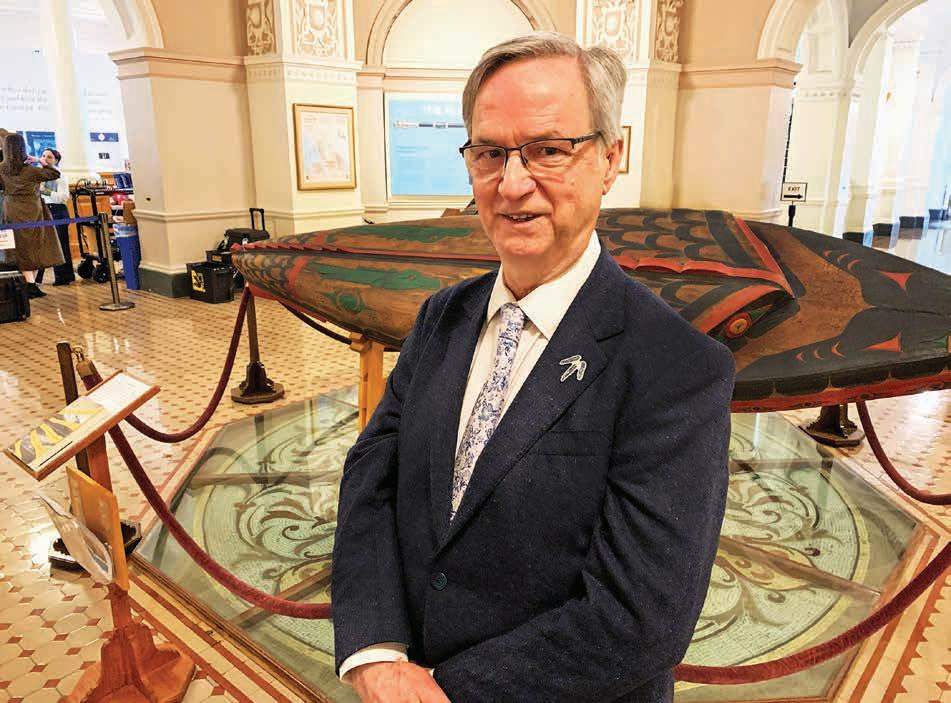
George Abbott, twice a provincial Liberal Minister of Aboriginal Affairs and now chief commissioner of the BC Treaty Commission, brings knowledge and empathy to the subject, and it’s heartening that Unceded: Understanding British Columbia’s Colonial Past and Why It Matters has been a
surprise bestseller. Unceded is essentially two books in one. The latter half covers modern developments, including the historic Nisga’a Treaty, milestone rulings by Canada’s top court and the varying approaches of different governments to reconciliation. Abbott doesn’t miss the chance to lob a few potshots at his former leaders Gordon Campbell and


Christy Clark , as well as issue his own mea culpa for voting against the Nisga’a Treaty.
Oit’s the first half of unceded that really hits home. In meticulous detail, Abbott documents the relentless injustices visited on BC’s Indigenous people in the 19th and early 20th century. Their rights were eroded, their land occupied, their ability to earn a living stymied.
Complaints about DRIPA overriding the right to stake claims on Indigenous land seem hollow when First Nations themselves were denied mineral rights to land on their own reserves.
As for current cries over the sanctity of private property, Abbott notes that land First Nations had occupied for centuries was regularly sold off without consent. “Although our houses are on… old village sites,” protested Chief Owahagaleese of the Kwawkewlth, “the BC government seems to have been able to sell it from under us and we have to pay rent on the houses we are living in and the land we are living on, because it has been sold to white people.”
These are just some examples among a litany of wrongs that add real substance to Abbott’s book. It’s one thing to accept that First Nations were treated badly during BC’s colonial past, which few dispute. It’s yet another to view it up close in horrific detail. It makes for hard reading.




Most British Columbians know BC is the only Canadian province that did not bother to sign treaties, because its leaders believed there was no Aboriginal title to be extinguished. But how many know that, in addition, First Nations were shunted onto reserves that were then drastically cut back, until they were by far the smallest in Canada?
The initial wave of reductions was spearheaded by the notorious Joseph Trutch , BC’s first commissioner of lands, who considered Indigenous people “utter savages.” Confronted with the relatively generous, informal allotments advocated by BC’s farsighted first Governor, James Douglas, Trutch had them slashed by 92 percent at a time when the Indigenous population outnumbered white settlers by four to one.
Even that proved too bountiful. As immigration boomed and First Nations continued to demand title to their unceded land, BC and Ottawa established the McKenna-McBride Royal Commission in 1912 to settle “the Indian land question” once and for all. They settled it with a second wave of reserve reductions.
Referencing the Commission’s extensive archives, Abbott is able to catalog the reductions, while highlighting often contemptible exchanges between commissioners and Indigenous witnesses pleading for retention of their surviving land and a return of their lost territory.
When Sam Pierre of the Splatsin Band near Enderby declined to provide information about his reserve without being told how it would be used, Commission Chair Edward Wetmore retorted: “We are not here to be examined by the Indians. We are here to examine the Indians…. Do you know that we could place you in prison for not answering
“We’re now having to deal in 2026 with issues that might have been remedied effectively 170 years ago, but were not.”
george abbott
our questions?” The Commission subsequently slashed 1,600 acres from the Splatsin’s 5,625-acre reserve.
Virtually all decent agricultural land was stripped from existing reserves, because Commissioners believed only whites knew how to farm it. Overall, the Commission removed nearly 50,000 more acres from BC’s already strippedback reserves. Observes Abbott: “Commission decisions were invariably guided by the presumption that five white men briefly visiting a region knew what was best for Indigenous peoples
who had occupied those lands for so many hundreds of years.”
Othrough all the setbacks, first nations leaders kept pressing their land claims, arguing with eloquence and dignity that their territory had never been relinquished, hence the book’s pointed title, Unceded. They got nowhere. The long-ago assertion by Joseph Trutch that “Indians really have no right to the land they claim” was echoed by BC governments for the next 120 years. Premier Bill Bennett might have been
tTrutch, himself, when he proclaimed that “if any aboriginal title or interest may once have existed, that title was extinguished prior to the union of British Columbia with Canada in 1871.”
That was then. This is now. The Supreme Court has ruled consistently that Aboriginal title is a reality. It can’t be wished away. Those griping about Indigenous demands would be advised to read Abbott’s valuable book that spells out in clinical detail how and why we got to where we are today. It is not due to accidents of history, but rather deliberate government decisions to ignore First Nations and relegate them to a marginal existence. “We’re now having to deal in 2026 with issues that might have been remedied effectively 170 years ago, but were not,” Abbott has said.
The array of complex issues ahead is vast, but luckily for those of us who are non-Indigenous, BC’s First Nations appear more conciliatory than our ancestors. Amid all the hullabaloo stirred up by the Cowichan decision, they have professed no interest in claiming private property in their traditional territories. Said a Xeni Gwet’in elder: “We do not want to do to them, what was done to us.” 9780774881159
Mickleburgh co-authored John Horgan: In His Own Words with John Horgan (Harbour, 2025), and co-authored with Geoff Meggs, The Art of the Impossible: Dave Barrett & the NDP in Power, 1972-1975 (Harbour, 2012) that won the
Evans
Using a personal mode of memoir writing on illness, caregiving and grief, Joanne Leow asks readers to think on a grand scale of how we are all connected via the long histories of empire and extraction.
Born and raised in Singapore, one of the richest states in the world in per capita income, Joanne Leow worked as a journalist for statecontrolled media before moving to Canada to pursue a PhD. Now an associate professor at SFU, Leow also writes poetry and creative nonfiction. Her genrebending title, Exhumations, which blends memoir, poetry and academic scholarship, is a deep dive into the “slow violence” that colonial systems of resource extraction wreak on our bodies. (Both Canada and Singapore are petrostates with histories linked to the British Empire.) Interwoven in Leow’s critique is a memoir of grief and illness involving Leow’s own health issues and caring for a parent with a neurological disease. BC BookWorld caught up with Leow for the following interview.
Exhumations:
Inside the Body of a Petrostate by Joanne Leow (Alchemy/Knopf $35)
BY BEVERLY CRAMP
come to an accounting of how we are all harmed in fundamental ways by the colonial capitalist systems. And I don’t think this is unique to Singapore and Canada —every country is completely embedded within international supply chains, so everything that is extracted, exported and imported is a part of this dense global web. I think what we are seeing in the current moment is a great acceleration and revelation of every country’s dependence on terrible industries of energy extraction, weapons manufacturing and so on. These global systems link multiple countries, from Singapore to Vietnam, Cambodia, Palestine, Israel, Canada and so on.
people and the environment.
JL: Where Canada had the Hudson Bay Company, Singapore had the East India Company. So, from the very beginnings of colonial rule we get the sense of the corporate nature of imperialism and its devotion to extraction and profit at all costs. This was not just a material reality but an ideology that continues to influence how we treat people and the environment. So, while the early terraforming of both countries— the destruction of forests and grasslands in Canada and the creation of plantations and land reclamation in Singapore—have ecological impacts that endure to this day, it is also the attack on Indigenous life ways that have profoundly damaged our relationships to our surroundings. This means a lot of how we operate and live on these lands and waters reproduces the longstanding colonial violences.
BCBW: Do you see environmental degradation getting better or worse?
JL: This is such a huge question! I mean, at this juncture, in this geopolitical moment, it seems pretty bleak. We’ve blown past all the agreed upon caps on emissions and continue to fund wars that leave just unthinkable amounts of suffering and toxic substances in their wakes. I want to be hopeful that, at some point, people will just say enough is enough but I’m not sure what that will take.
BCBW: Anything else you would like to add?
BC BookWorld: Describe what it was like growing up in Singapore.
Joanne Leow: I don’t think that I was particularly rebellious and critical. Growing up in Singapore in the 1980s and 1990s meant a great deal of stability and order. As a child, all I ever knew was one-party rule and it was simply a fact of life. For me, coming from a middle-class Anglophone family in the ethnic Chinese majority meant that I enjoyed a great deal of privilege. One thing that really shaped all of us was the extremely competitive education system which really stratified us according to “ability.” But even then, doing well in school meant that I had a clear trajectory ahead of me that really conditioned me to conform to what was expected.
BCBW: When did you start to see through the “glittering” façade of Singapore’s reputation as the jewel of Southeast Asia?
JL: I wouldn’t describe it as something I “saw through.” I think it was more of a process of understanding the significance of what I was seeing every day. It really wasn’t specific events that brought this to the fore in the moment, but only on reliving these experiences in my writing. One of the episodes that I write about in my book involves meeting Singapore’s founding Prime Minster Lee Kuan Yew for the first time as a young journalist. But it was only much later that I was able to understand the power dynamics in that meeting and its implications for how the larger political system functioned in the country. I would say for me it took moving away to see my country from a different perspective and to be able to express these ideas.
BCBW: How do you believe the contaminated and compromised systems (social and physical) of both Singapore and Canada have harmed your body and health?
JL: I think I’m not the only one who wonders what visible and invisible chemicals and pollutants surround us. One of the ideas that I am mulling over in my book is how no one is immune or apart from the environments we live in. I don’t think we can ever
How does this harm our bodies and health? Even just taking the most pervasive experience of air pollution, which ignores borders and is something that we are all subject to (thinking of the fire season in North America and the haze in Asia), we know that it leads to all kinds of poorer health outcomes. What is socially damaging, I think, is that we don’t appear to care enough to do something about this.
BCBW: Do you think you will ever return to Singapore? Or move from Canada?
JL: I don’t think so. My children are essentially Canadian now. I think what is important is that, as immigrants, we don’t just think about the rights that we receive when we become citizens of this country, but the responsibilities we have and the terrible settler colonial histories that we inherit. I think my work here as a writer and scholar is to be in solidarity with folks doing anti-racist work and making efforts towards truth and reconciliation. I have received so many opportunities here and I have an obligation to do this work.
BCBW: Please comment on the enduring impact of early colonial rule in Singapore and Canada as the foundation for the “slow violence” that continues to harm
JL: I hope that readers will see that my book is not just about the specifics of Singapore but how it is really asking us to think on a larger scale: how we are all connected through these longer histories of empire and extraction. At the same time, I turn to a very personal mode of memoir writing, about illness, caregiving and grief, which I hope will resonate with folks who are going through these same parts of life.
9781039057272

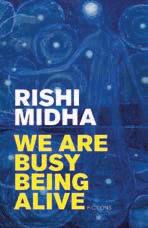
RISHI MIDHA
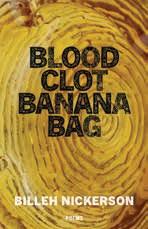
Blood Clot Banana Bag By BILLEH
NICKERSON
On Remembrance Day, 2022, the author ended up in the ER with what was eventually diagnosed as blood clots. This diagnosis resulted in a two-week hospital stay that overlooked Vancouver’s Davie Street Village and the nightlife landscapes of his youth. Blood Clot Banana Bag delves into perceptions of luck and fortune, but also grief and survivor’s guilt, and the privilege of universal health care, all through the lens of the author’s trademark humour and exacting details.
978-1-77214-262-4 | S EPTEMBER | P OETR y
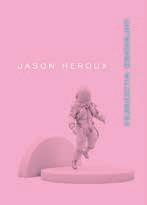
UnfiniSHed WilderneSS By JASON
HEROUx
Jason Heroux’s Unfinished Wilderness continues his ever-morphing journey into the far reaches of a gentle surrealism and the deeply human. At times melancholy and darkly slapstick, these poems explore the growing struggle to feel at home in a world where global concepts of shelter and belonging remain scarce.
978-1-77214-263-1 | O CTOBER | P OETR y
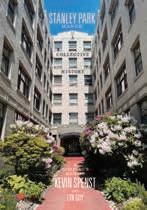
Stanley Park Manor: a ColleCtive HiStory By KEVIN
SPENST
(with Lyn Guy)
Stanley Park Manor: a Collective History brings together dozens of voices and hundreds of lives lived in one of the West End’s most iconic buildings. With previous tenants such as Pierre Berton, Simma Holt, Trish Klein (of the Be Good Tanyas), and congregations of others up to the present, this almost 100-year-old Vancouver building is steeped in stories.
978-1-77214-261-7 | S EPTEMBER | N ON -F ICTION /M EMOIR
Having never sought
the limelight while he was alive, David Garrick, aka Walrus, finally gets his due as an environmental hero.
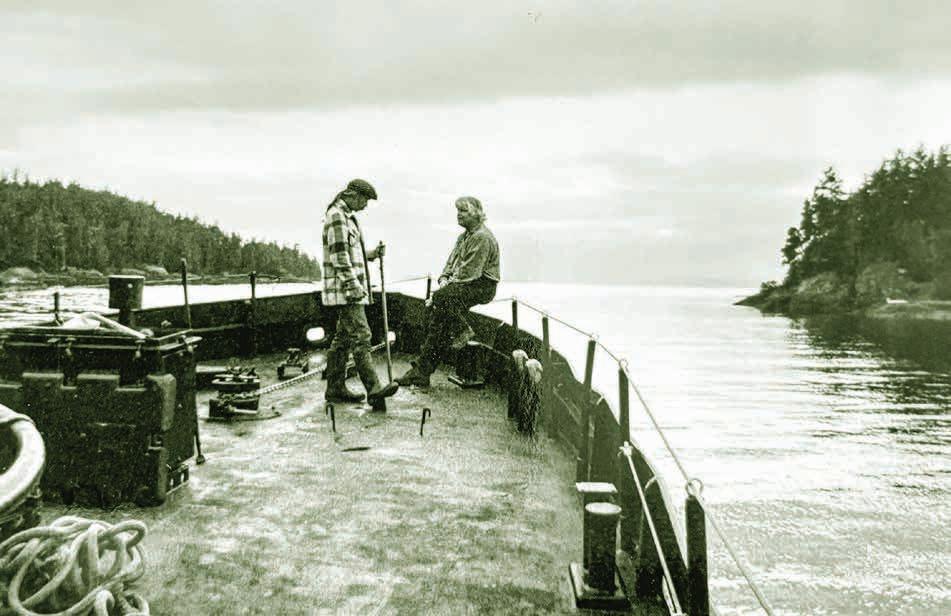
The final meeting between David Garrick and Paul Watson, on board Paul’s ship anchored by Hanson Island, 1995.
When he died in 2023, BC environmentalist David Garrick, known to friends and colleagues as “Walrus,” left more than 100 journals packed with field notes as well as reports, articles, pamphlets, letters and his admired book on culturally-modified trees. That material proved a research bonanza for Alert Bay author Catherine Marie Gilbert in writing this compelling biography.
Canada’s West Coast has produced a constellation of environmental heroes: Bob Hunter, Alexandra Morton, David Suzuki, Wade Davis, Tzeporah Berman , Rex Weyler and others. Yet serving alongside many, as Rod Marining, a battle-scarred Greenpeace veteran states here, have also been the shadow warriors like Walrus—the organizers and communicators indispensable to any successful campaign. Quiet, dedicated, with a purist’s soul underscored by honour and modesty, as Gilbert’s book intimates, while never becoming a media darling, Walrus was a vital cog in West Coast environmental and social justice action.
Gilbert’s work unfolds as a synchronoptic wall chart of BC’s environmental movement history. Born in 1946, Garrick was raised in rural Shanty Bay,
BY TREVOR CAROLAN
Ontario, and experienced one-room country-school life. When his father, a health officer, moved the family to Panama for a post with the World Health Organization, the teenager witnessed “hopeless poverty” contrasted with “the artificial luxury” of the Canal Zone’s expatriates.
At Peterborough’s Trent University during a lengthy student canoe voyage to Montreal’s Expo 67, the group collected samples of toxic effluent and sewage that had been dumped into local rivers. Their “Peterborough Pol-
lution Probe” sparked lawsuits and remedial action—his first serious ecoprotest.
With his new wife, Marjory, Garrick moved to Vancouver, “a place of experimentation and progressive thinking,” writes Gilbert. Living in a Kitsilano commune, they encountered the city’s hippie-era alternative scene. From street-selling The Georgia Straight, Garrick began writing for the weekly on “cooperative housing, organic gardening, herbal medicine and community events.” His life path was defining itself. He got psychedelicized, then politicized in the All-Seasons Park protests de-
fending Stanley Park from major hotel encroachment. Garrick helped cook in the camp that sprang up and organized public gatherings and music events. He adopted a nom de plume, Walrus Oakenbough, after the totemic animal and in honour of “druidic” tree wisdom. Soon, he’d meet future Greenpeace stalwarts Paul Watson and Rod Marining.
While meeting Navajo elders struggling against coal strip mining of their sacred Black Mesa territory in Arizona, Garrick experienced “Sun Man” visions reminiscent of ancient petroglyphs he’d seen on his Peterborough expeditions and began to understand “interconnectedness.” He vowed to keep writing on Indigenous matters and never let up on this.
When Watson asked Garrick about joining the Wounded Knee protest in South Dakota, they set off with friends and a small amount of financial aid from Bob Hunter and Greenpeace. Gilbert offers a summary of the grievous Indigenous history of Wounded Knee, explaining its epic stature. Garrick and Watson made it past armed FBI and US Indian Agency roadblocks into the resistance site led by AIM, the American Indian Movement. Those familiar with Leonard Peltier ’s tragic saga there know it became a bloody confrontation. The Canadian pair survived the shootout, escaping through a hidden ravine. Garrick’s wife took her life soon after. Devastated, Garrick retreated to heal. Then Watson called again. Would Garrick “help save the whales?”
“Quiet, dedicated, with a purist’s soul underscored by honour and modesty, as Gilbert’s book intimates.”
The heart of Gilbert’s book covers Garrick’s participation in historic Greenpeace campaigns to save the world’s great whales from commercial slaughter and its work to end the annual baby harp seal hunt in Atlantic Canada. From ship’s cook to helping locate Soviet whalers, acting as communications roustabout and recruiting volunteers for hazardous missions, Garrick toiled at the sharp end of eco-activism. Much has been written elsewhere about this period and, relying on Garrick’s journals, Gilbert also portrays these undertakings poignantly. In the antiwhaling episodes, it’s as if everyone—Russia’s whale-killing fleet, their Canadian eco-pursuers and even the dying whales—knows exactly what’s going on. It’s like reading Captain Cook ’s Tahiti journals that herald a critical moment as the world’s fundamental idea of itself changes irrevocably.
BC. Their dedication convinced Premier Bill Bennett to shelve that idea. Significantly, he also began studying “CMTs,” or culturally modified trees, on Hanson Island near Alert Bay. His understanding of where cedar bark had been peeled by Indigenous peoples for cloth weaving, medicine, rope making or to make planks would make waves—first in resistance against old growth logging; then, critically, in First Nations’ land claims where these “memory trees” evidenced prior use of land in establishing legal tenure precedents. Walrus established his Earth Embassy camp off-grid on Hanson. That became his home for 25 years and it was often visited as a learning centre by Indigenous and non-Indigenous students. Here, he wrote his expert book on CMTs, published by Western Canada Wilderness Society.
During this period, Walrus fell in love with Taeko Miwa , a Japanese translator. They had two children. However, his journals show that by 1976 Walrus was feeling disillusioned with Greenpeace over its funding priorities, shifting leadership and what he saw as a lack of empathy for Indigenous sensitivities.
Walrus became a researcher for SPEC, an eco-group working to oppose uranium mining and nuclear power in
Did Walrus feel resentment when more charismatic, or later more oppor tunistic figures received acclaim? Possi bly. He saw what was happening in the eco-movement, but stayed with what was closest to his heart. Personally, he lived marginally. This exceptional book is worth reading to remind us of the enduring merit of grassroots shadow heroes like Walrus. As Gilbert argues, he led a remarkable life.
9781553807414
Trevor Carolan writes from North Vancouver
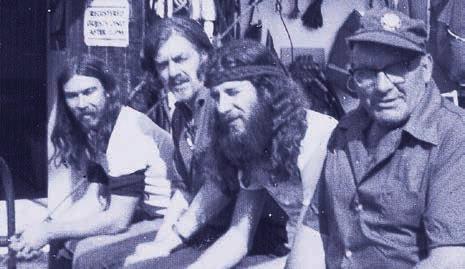






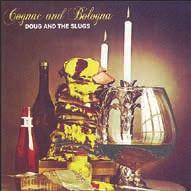
In the age of punk rock and heavy metal hair bands, Doug and the Slugs were a surprise hit in Canada with their enigmatic and heartfelt songs.
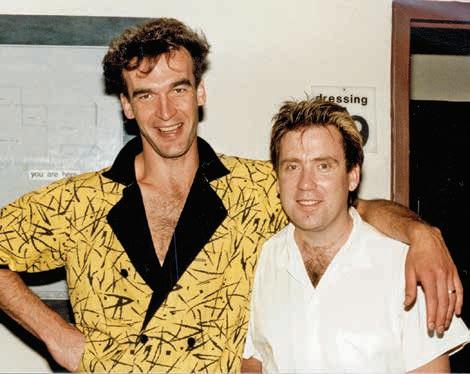
Btear with me for a moment while I shake my fist at this cloud. There are, no doubt, many things that Vancouver has gained in its post-Expo 86 transformation into an international corporate megalopolis, but I’m not about to list them here. Instead, thanks to the trip down memory lane that is Real Enough: The Unlikely Story of Doug and the Slugs, I’m thinking about what has been lost. Imagine being able to stroll down to the port, unimpeded by chain-link fences or security, and feast on a spectacularly fresh shrimp sandwich in a longshoremen’s café while gazing down on the very wharf where said shrimp had been landed just hours before. Imagine smugly quaffing a “dark coffee” in the Classical Joint, watching the passing action on Carrall Street while hearing Al Neil demolish a piano or Dick Smith’s saxophone soar through some up-tempo bebop. Or imagine climbing up and up and up a steep and narrow staircase, paying a nominal entrance fee and venturing into the City Space loft, packed with a few hundred stoned and sweaty people gyrating to the sounds of the world’s second-best party band.
Doug and the Slugs were never The Meters, but on a good night they came close.
To be honest, nobody quite knew what to make of Doug and the Slugs. This was 1977, or maybe early 1978, and if it was the era of punk, snotty kids with big attitude but little musical ability, it was also the era of hair metal, snotty kids with blazing chops and enough hairspray
to puncture the ozone layer. Yeah, the punks had the lapel badges but everyone else had their genre signifiers too, except for these locals. Perhaps Mötley Crüe took the band name that should have been theirs. Slug’s drummer, John “Wally” Watson looked like a Hell’s Angel who’d discovered the joys of moustache wax. Bassist Steve Bosley was the sharpest dresser, in a very New Wave kind of way. Six-foot-five keyboardist Simon Kendall could have wandered on off the basketball court. Guitarists John Burton and Richard Baker played the game of opposites: Burton a total rockstar in teased red hair and (if I remember correctly) red leather pants, Baker a sound scientist armed with the guitar-world equivalent of a slide rule (a very unfashionable Gibson Les Paul Recording model, which came with its own operator’s manual). And the guy in front, Doug Bennett, was an undeniably pudgy fellow with slicked-back Humphrey Bogart hair and a fine line in five-dollar thrift-store suits.
The kind of people that listen with their eyes were going to be very, very confused—and for the most part they were, even as the band won some measure of fame. The ears, though, told a different story. These guys could play and their unlikely leader had a cutting line in onstage banter, but softened by strong melodies and lyrics that sounded both enigmatic and heartfelt. The Slugs were anything but shallow trend followers—and maybe that’s why, 22 years after Bennett drank himself to death, we now have a second book about the act, as well as a well-received documentary film, Doug and the

tDoug Bennett, Doug and the Slugs Ontario Place, circa 1987.


Doug and the Slugs, promo shot for their third album,
tReal Enough, which follows Burton’s 2023 memoir Doug and The Slugs: 50,000 Slug Fans Can’t be Wrong, is a collaboration between keyboardist Kendall, the band’s music director for most of its existence, and local event promoter and civic historian Aaron Chapman. It thus benefits from both firsthand experience and a bit of distance: Kendall, a rock musician of unusually sober habits, has most of his memory very much intact, while Chapman fills in the cultural context. Real Enough also draws on Bennett’s unpublished journals, which give some insight into an artist who, despite his ebullient stage persona, could be well-armoured and aloof.
“To some extent, Doug kept us all at arm’s length,” Kendall writes. “It was his survival instinct—he never wanted to appear vulnerable or dependent.” Yet beneath his adoption of a hardboiled film noir dress code, Bennett was secretly wracked with insecurity. “The only chance of redemption I see is one of my own songs becoming a hit, which is the longshot and we all know about longshots,” Bennett confided to himself in an October 1982 journal entry, perhaps in the midst of recording the band’s third album with Joan Jett’s producer, Ritchie Cordell. “All in all, this week marks the loss of innocence for Doug Bennett and the first steps towards selling out. ‘Don’t worry’ say the managers and producers. ‘You’ll always be accused of that.’ Being accused is one thing, feeling it in your very bones is another. And lord knows, right now I feel it awfully bad.”
Bennett’s instincts were right. Brought in specifically to make hits, Cordell botched the job.
Kendall says the ensuing record, Music for the Hard of Thinking, was “the crappiest-sounding record we ever made” and the Slugs were released from their RCA recording contract, but with a massive debt outstanding. Their Canadian fans — and the band’s own road-warrior inclina-
tions—kept the ship afloat, but the Slugs never won the international fame their management, at least, had hoped for. After such a promising start, it was a matter of diminishing expectations, with core band members slowly dropping out and being replaced by a rotating cast of Slug subs until the original six reconvened for a triumphal reunion at Vancouver’s Commodore Ballroom, scene of some of their most acclaimed early shows, in 2003. But by then it was too late for anything other than the nostalgia circuit, and too late for Bennett himself.
That sounds as if Real Enough is a sad tale, and in many ways it is. But there’s wit here in the road anecdotes and remembered teenage antics; all of the Slugs save Bosley and Bennett grew up in the same Vancouver neighbourhood, and injokes abound. Kendall, who really is one of the nicest people in the music industry, is a droll and self-effacing narrator. One might wish for more insight into what made Bennett tick, however. A skilled graphic artist and video director as well as songwriter, he clearly harboured an artist’s nature but also some kind of wound that led him to self-medicate, resist intimacy and occasionally act out. The true nature of that injury went to the grave with him, but perhaps the songs are legacy enough. Real they most certainly are.
9781772142211
Alexander Varty’s 1970s art-punk band, AKA, once opened for Doug and the Slugs on a threeshow mini-tour of the Fraser Valley and Vancouver Island, which Varty says was “a weird and adventurous choice for the Slugs.” AKA encountered some hostility from the Slugs’ audience, but enjoyed interactions with the Slugs’ band and crew. Varty still plays “a nerdy Gibson Les Paul Recording guitar” of his own, he says, after being wowed by Richard Baker’s subtle and understated virtuosity.



by
From the team that brought you Mushrooms of British Columbia
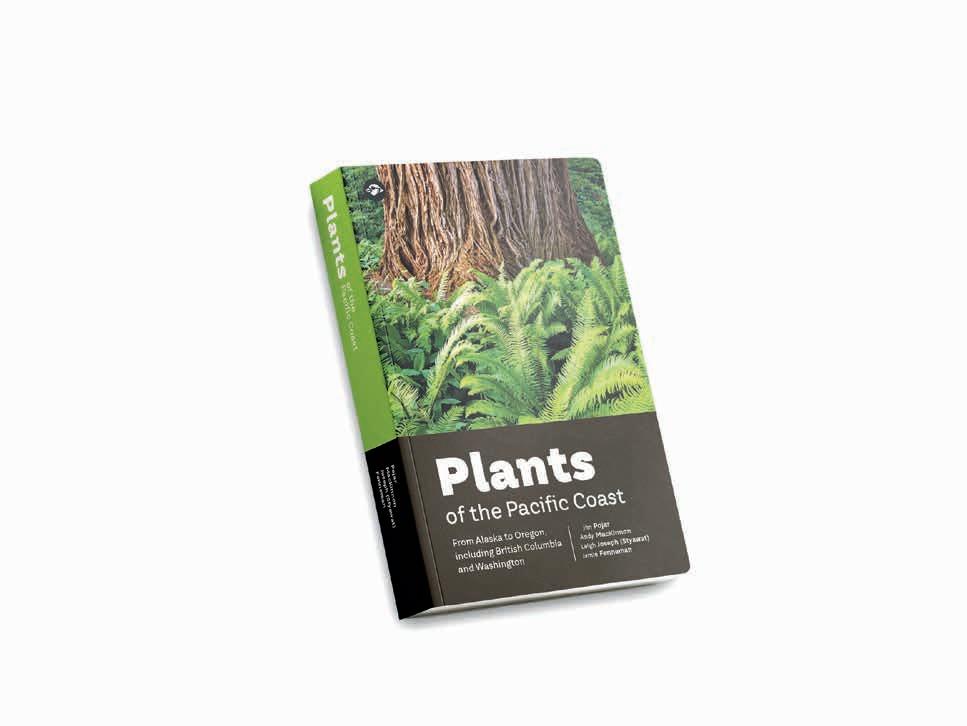
Authors Jim Pojar and Andy MacKinnon, field botanists and forest ecologists with a combined years of experience in the region, are joined by ethnobotanist Leigh Joseph (Styawat) of the Skwxwúmesh (Squamish) Nation and plant taxonomist Jamie Fenneman for this brand-new, fully up-to-date field guide.
Learn more at cansciencebooks.ca

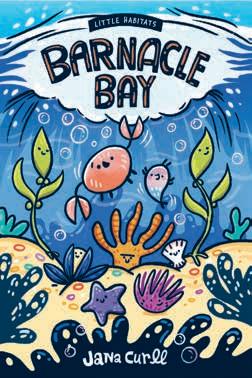
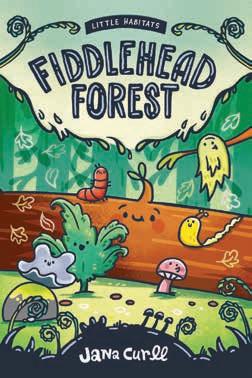
The second graphic novel in the Little Habitats series, following the beloved Barnacle Bay
This hilarious graphic novel explores the beautifully diverse ecosystem created by nurse logs.
When the World was Twice as Big
BY SUSAN SANFORD BLADES
ometime during the 6th century BC, Greek philosopher Heraclitus pronounced “No man ever steps in the same river twice.” This sentiment has been adapted into presentday mental health mantras such as “The only constant is change.” Coquitlam-based Aaron Cully Drake embraces both consistency and change in his second novel, When the World Was Twice as Big. With this book, he steps into the same river, so to speak, that he swam in with his first novel, Do You Think This is Strange? (Brindle & Glass, 2015) by revisiting his debut’s main character, Freddy, his father, Bill, and his best friend, Saskia. The book flows over the same territory as the author’s debut, but eddies around different questions of obsession, growth, love and letting go.
SDo You Think This is Strange? was an award-winning coming-of-age story that focussed on Freddy’s autism, his mother’s disappearance and his friendship with Saskia. When the World Was Twice as Big is also a Bildungsroman that centres on the same things though, while Cully Drake’s debut took place during Freddy’s final year of high school, this latest novel begins in high school but expands into Freddy’s adult life. The book follows Freddy through finishing high school, tree planting in the remote Vancouver Island village of Port Alice and working as a cook at a diner in the Downtown Eastside of Vancouver. Throughout, Freddy attempts to connect with his first love and childhood friend, Saskia, ignores his father’s efforts to connect with him, all while he fixates on the murky circumstances surrounding his mother’s disappearance when he was a child.
ONavigating life as an autistic person, Freddy fixates on the mysterious disappearance of his mother when he was a child. Aaron Cully Drake’s concise and humorous writing explores love and the many shapes it takes.
for us in slow, meandering circles. This could be a function of this second novel being a sequel of sorts to the first.
After Freddy’s high school graduation, however, the book continues on a chronological timeline with a clear narrative arc and becomes much more readable. Cully Drake’s writing is concise and humorous, and Freddy’s voice
is spot-on—slightly self-deprecating and in equal parts awe and confusion as he interacts with a world whose social codes he, as an autistic person, doesn’t fully comprehend. “I’m an acquired taste, like fine wine, or olives, even,” Freddy says. And, “[a]nyone awkward in conversation is family.”
This book doesn’t dwell on his autism,
however; it circles around questions of love—how to accept it, nurture it, how it endures, the many shapes it takes and how letting go might be more important than hanging on.
As in Cully Drake’s first novel, Freddy is consumed with his mother’s disappearance and with any new information that surfaces about this mystery. It seems a reasonable thing to obsess over, so Saskia and Bill’s indifference to Freddy’s persistent questions about his mother seemed baffling at best, insensitive at worst. “Is it really this painful for you?” Bill asks. And Saskia tells Freddy, “It shouldn’t bother you.”
Throughout, Freddy’s social awkwardness is well portrayed with empathy and humour. The only small talk he can come up with is to ask after someone’s health, and there are several hilarious sections where Freddy does so in the most inappropriate moments, for instance, during a fight with Saskia while texting. “Make small talk. Ok. On it,” he thinks to himself, then texts: “How is your health?” Saskia’s response: “Are you seven years old?” I also appreciated Freddy’s ongoing list of Favourite Things. “My sixth Favourite Thing. The kiss that night.” The dialogue, both spoken and in text messages that Freddy and Saskia send to one another, does what dialogue should do—it’s short and snappy, with the perfect amounts of misunderstandings and tension. And the descriptions are both beautifully written and serve to give the reader insight into mood and character such as when Freddy feels alienated at his high school graduation party: “This party is like it was a galaxy, each of us clustered together and darkness everywhere else,” Freddy thinks to himself. Or, in the bush on Vancouver Island, where the truck-driving residents “ha[ve] a dent in the panel of their soul[s].”
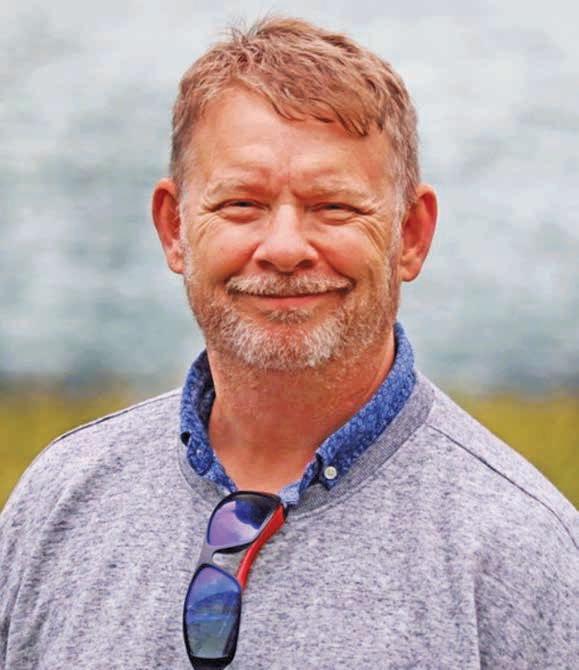
do you think this is strange? begins a bit disjointedly, being told in vignettes. We seem to be at a certain moment, after Freddy’s high school graduation party, looking back but the writing switches between past and present tenses and at first it was hard to parse a fictive present in which to ground myself as a reader. The first chapters seemed like a clouded window Freddy was cleaning
Freddy’s voice is spot-on—slightly selfdeprecating and in equal parts awe and confusion as he interacts with a world whose social codes he, as an autistic person, doesn’t fully comprehend.
Freddy is an endearing and vulnerable character that any reader would want to follow through a number of lives. Through his “outsider’s” observations of the world around him, we gain great insight into what to let go and what is truly important to hang on to.
780889715042
Susan Sanford Blades’ debut novel, Fake It So Real, won the 2021 ReLit Award and was a finalist for the 2021 Ethel Wilson Fiction Prize. Her second novel, Girl on Paper , will be published by Nightwood Editions in Spring, 2027.
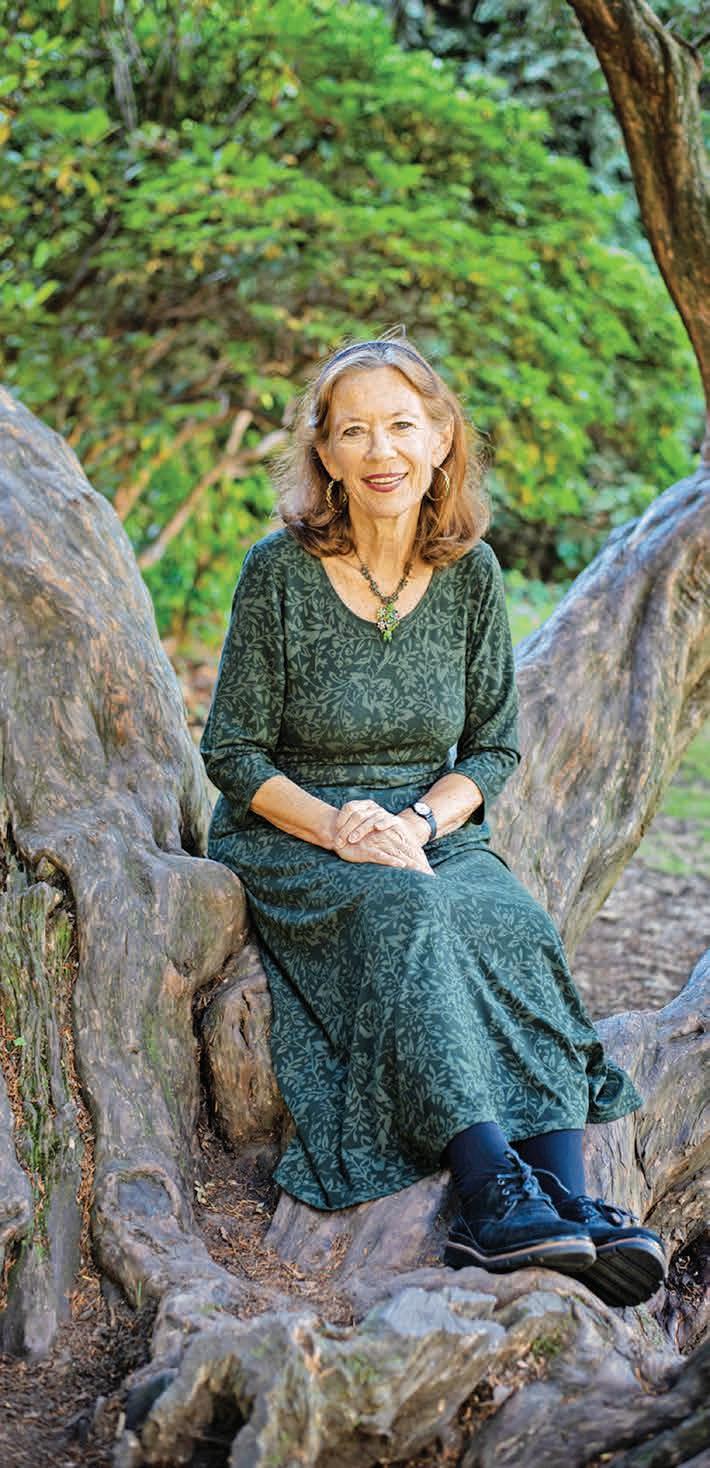
Marlene Schiwy
Marlene Schiwy demonstrates how to create workshop spaces that allow women to enter the realm of the imagination.
The Art of Creating Workshops for Women: A Guide to Facilitating Soulful Spaces, Events, and Retreats by Marlene Schiwy (New Society $34.99)
BY SONJA PINTO
If you sign up for one of Marlene Schiwy’s workshops, you’re in for a mind and body experience. You’ll likely be greeted with soft music, flowers, candles, freshly baked pastries, coffee and tea and an ambiance that is warm and inviting—and that’s all before the workshop even begins.
The Art of Creating Workshops for Women invites curious or prospective workshop facilitators to consider sensory indulgences, rituals and interactive activities as pathways to the creative self. Still, you might be wondering what flowers and candles have to do with workshops for women. Well, for Schiwy, the scaffolding of a creative workshop is just as important as the content of the workshop itself. Her workshop philosophy extends well beyond worksheets and writing exercises.
Drawing on decades of workshop facilitation experience, Schiwy distills sage advice to any who hope to pursue the vocation of leading workshops. To Schiwy, the goal of a successful workshop is to create a space where women can “step away from the obligations of daily life and enter the realm of imagination.”
Her advice ranges from staunchly practical (do not quit your day job, she stresses) to more abstract perspectives on teaching (“to be a workshop leader is to put ourselves in service of the soul”).
According to Schiwy, the foundation of a workshop is temenos, an ancient Greek word meaning a sacred space for reflection. Schiwy fosters temenos in each workshop, which is how people become comfortable, over time, to share their writing with each other; it requires trust and safety to share one’s writing and art.
In her early facilitation days, she hosted workshops DIY-style in her living room while she taught part-time at a university. One of her very first workshops came about informally after a course she was scheduled to run was cancelled due to low enrollment. By request of her prospective students, she facilitated a small group of student writers out of her own student lodgings, baking muffins and serving coffee out of her personal coffee maker. Despite the humble circumstances, Schiwy found that the group felt intimate and close—this affirming experience sparked her passion for workshop facilitation.
As she facilitated more of these workshops, Schiwy noticed a sense of purpose: “It became increasingly clear that my calling was not to attempt great things but to ‘do small things with great love.’”
Each workshop is infused with great care and attention at all levels, from carefully selected flowers to mood lighting. This deliberate cultivation of space combined with practices like movement and meditation create an embedded sense of ritual, forming the basis for flowing connection with words for participants. These choices foster an environment where women can let their guard down and surrender to the experience: “The kind of workshop I’m writing about invites participants to embark on a journey without knowing in advance where it may lead.”
gests areas where facilitators might encounter challenges, such as setting boundaries with potential participants that might not be ready for the time and emotional commitments of the workshop or dealing with well-meaning participants whose ambitious ideas veer scheduled workshop activities off course.
Of course, Schiwy also covers potential workshop content. She shares different techniques that she’s used over the years to help people write, including plentiful examples of writing prompts and exercises.
Some ideas include process journals, dream writing, poetic forms, guided visualizations and using mythology and fairy tales for prompts. For Schiwy, much of the workshop process is being comfortable sitting in uncertainty and allowing yourself time to explore your psyche: “You never know what strange and beautiful creature your imagination is gestating, so give it your attention and care.”
“An animated body will have a different relationship with words than one that is sitting the entire day.”
The inspiration for these workshops partially came from what Schiwy wished she could have had herself: “As a lifelong journal writer, I had always longed for a small circle of women with whom to explore this curious habit of committing our deepest thoughts and feelings to paper.”
Indeed, Schiwy believes that workshop facilitation must come from a place of passion and genuine curiosity rather than financial incentive. “This book is not about creating and developing your brand,” she cautions—those interested in creating a highly polished and marketable workshop series designed to rake in the dough need not read on.
If you decide to stick around, Schiwy’s reflections on workshop facilitation are worth your time. She covers single-day workshops running just a few hours to multi-day international retreats where sessions span several days.
Her book offers a comprehensive overview of the practicalities of hosting workshops, such as locating and vetting venue spaces and how to go about attracting workshop participants. It also covers the nitty-gritty of payment: how much should you charge? When will you allow a refund as opposed to a non-refundable deposit? Will you ever offer your services for free?
But this book goes beyond just practical considerations. Schiwy sug-
Because Schiwy views ritual as a sacred part of the creative process, many of her workshops include components with dance or movement to stimulate the mind-body connection: “An animated body will have a different relationship with words than one that is sitting the entire day.”
In terms of promotion, Schiwy has a modest style. Eschewing social media, she instead relies on word-of-mouth, handcrafted flyers and email lists. This minimal approach to marketing has worked for her. Schiwy recalls that “many participants come back again and again.”
The reward for leading workshops for women was never boundless growth: “I never aspired to be bigger or more visible in my work, which made me unfashionable (to say the least) in a world that regards fame, fortune, and public acclaim as measures of success.”
The Art of Creating Workshops for Women reads as part instruction manual and part manifesto. It contains personal anecdotes along with templates and checklists for optimal workshop planning. Though Schiwy provides ample tips and templates, she emphasizes following your own creative instinct: “We teach through who we are.”
At the heart of Schiwy’s ethos is her care for each woman as an individual being. Each workshop is scrupulously planned and thoughtfully executed, tailored to that specific group of individuals. This book is essential reading for anyone interested in workshop facilitation, but even if you have no desire to lead workshops, Schiwy’s insight and thoughtfulness are a treat for any reader.
9781774060254
Sonja Pinto is a writer, photographer, printmaker. They reside on the unceded territories of the lək̓ʷəŋən peoples (Victoria, BC).
FESTIVAL DATES: SEPT 10 -26TH 2026
MAIN FESTIVAL DAY: UBC ROBSON SQUARE SEPT 19TH 2026 11AM-5PM



LOST IN THE TWENTY-FIRST CENTURY – An Essay
By Michael Clague and Contributors Logan Brown and Lauryn Clague
“An intergenerational reflection from the Twentieth and Twenty-First Centuries in prose, art and poetry”
Just released – May 2026
ISBN: 978-1-9991665-5-7
Available: $10.00 Interact: mclague@telus.net
Ground to Stand On: A Canadian Literary Life by Sandra Djwa (McGill-Queen’s University Press $34.95)
As a young English professor in the 1960s, Sandra Djwa was drawn to Canadian writers. But Djwa learned she was going to have to fight to get Canadian literature recognized as a respected field of study, as she tells in her memoir, Ground to Stand On: A Canadian Literary Life . The book’s cast of characters includes Margaret Atwood, Leonard Cohen, Michael Crummey, Northrop Frye and Pierre Trudeau
Here, we excerpt passages highlighting the prejudices Djwa encountered both as a woman and a “Canadianist.”
OStudying literature in the early 60s and taking a “new course” on Canadian literature
By 1964 i had acquired a general sense of English, American, and Canadian literature, but was most interested in Canadian …. My last years as an undergrad were enriched by the visiting Canadian poets who came to speak. [Professor Roy] Daniells had deputized Professor Moses Steinberg, assisted by two lecturers — the novelist Jane Rule (author of the early lesbian novel Desert of the Heart, 1964) and her partner Helen Sonthoff — to take charge of a visiting poets committee. I suspect that it was Daniells who suggested that poets like Leonard Cohen, Dorothy Livesay, James Reaney, and Michael Ondaatje come to read in the English department. When possible Daniells hired fellow poets like [Margaret] Atwood, [Dorothy] Livesay, and Phyllis Webb to teach, and he also offered department support to graduate students like George Bowering and Frank Davey, young poets who had started a poetry little mag, Tish
“Many of my colleagues were convinced that literature could be English or American — but not Canadian.” — SANDRA DJWA
… I had no idea that [Canadian literature] was a new subject in the curriculum. Four years earlier, in 1958, Daniells had started the first UBC course in Canadian literature in an honours seminar. In the same year Professor Reginald Watters had also taught an undergraduate Canadian literature course. Still earlier in 1955, Watters, together with Professor Carl F. Klinck of Western University, had developed Canadian Anthology, now our class text.
… Occasionally visiting authors came to our class to read from their works. I was soon writing a term essay on W.O. Mitchell’s Who Has Seen the Wind (1947) and another on [Sinclair]

Ross’s As for Me and My House. I read all of Margaret Laurence’s prairie novels as they appeared. For the first time I was reading fiction about women by women, in which the characters, language, and situations were unmistakably Canadian. For example, there was Laurence’s Hagar Shipley in The Stone Angel (1964) and Rachel Cameron in A Jest of God (1966). Shortly after I left UBC, Alice Munro published Dance of the Happy Shades (1968), Margaret Atwood, The Edible Woman (1969), and Munro (again) Lives of Girls and Women (1971). I think we were the first generation of students whose university studies equipped us to become scholars of Canadian literature.
for
Confronting bias against Canadian literature
In 1968 I became a teacher of Canadian literature in the English department of the newly founded Simon Fraser University, where radical politics coexisted with patriarchal practices. Also, many of my colleagues were convinced that literature could be English or American — but not Canadian. Dismayed, I became a crusader for my discipline, co-founding with Robin Mathews L’Association des littératures canadienne et québécoise / The Association for Canadian and Québec Literatures.
For the next thirty years I taught and wrote about Canadian subjects including Atwood, [Earle] Birney, Cohen, Munro, and [E.J.] Pratt. Later I wrote the biographies of lawyer F.R. Scott, English professor Roy Daniells, and poet and artist P.K. Page. As a woman, a Canadian, and a Canadianist, my ground to stand on became the literature of Canada.
On sexism
Women faculty in the forties and fifties, like Professors Mawdsley, Ruth Humphrey, Marion Smith, and Mabel Mackenzie — most with PhDs — regularly complained they did not get the classes or the salaries they deserved. Another of this group, Professor Edna Baxter, took me aside in 1965 and said, “Get your PhD and get the hell out of here!”
… Jane Rule, also a faculty member and a novelist, thought highly of Daniells and the UBC department. Nonetheless, she told me in an interview years later, she “didn’t know of any man in that period who wasn’t sexist.”
… As a young woman professor, I also experienced a degree of sexist microaggression from both students and faculty. When a male student attempted to play footsie under the table while attending one of my seminars, I learned to stand when giving lectures. And when a male colleague told me that my necklines were “too low” and my skirts were “too short,” I developed a university uniform consisting of white buttoned-up shirts and black skirts that reached well below the knee — all in the interest of self-preservation.
9780228027706
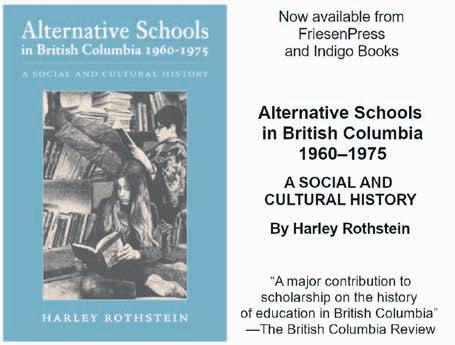
By Harley Rothstein
BY CAROLINE WOODWARD
The lives of certain people and their participation in and documentation of major historical incidents can forever haunt the lives of other people. This is even more the case for fellow revolutionaries and artists of another time and place who wish to do justice to their sacrifices. So it is for Chilean-Canadian playwright, author and actor Carmen Aguirre and her nearly lifelong subject of admiration and inspiration, Italian-American revolutionary and photographer, Tina Modotti (1896-1942).
For over fifteen years, Aguirre wrote and workshopped and produced three versions of the Tina Modotti “project” as she called it, never satisfied with the way the play worked onstage. She put it away and, always a busy actor and writer, occupied herself with other work. During COVID, she picked up the Modotti script again and started yet another round of rewrites and workshopping. This is the “haunting” part of the process which takes over an artist’s imagination and simply will not let go until it’s banished by a successful interpretation and subsequent production/ exhibit/publication.
Aguirre explains what drove her back to work, time after time, in the “Playwright’s Preface”: “…I probe the following questions: What is the purpose of art in the face of fascism? Can art serve the poor, and if so, how?
What is the personal cost of militancy?”
In Fire Never Dies, Carmen Aguirre, portrays her childhood heroine— the artist and revolutionary, Tina Modotti
She further explains in a Note On Style that as a Chilean-Canadian, she was raised in the theatrical tradition of zarzuela, a blend of Spanish, Indigenous South American and African forms where dialogue is interspersed with popular music as well as dance. It is, given the history of Chile, “often darkly comic in tone … yet embracing tragedy … and often magic realist and nonlinear in structure.”
In Fire Never Dies , there is the added visual component of large photographs (powerful black and white photography, simply stunning) by Modotti, several paintings by Mexican political activist and muralist Diego Rivera, paintings by Frida Kahlo, photographs by Edward Weston and other works by other artists projected onto the backdrop of the stage. The actors, especially in Scene One when they are introduced to the audience, each come out and interact with the projected photographs (often of themselves so they imitate their pose in the photograph) to lively music, everything from excerpts of songs by David Bowie to South American pop hits and Italian and Spanish revolutionary tunes.
Marianna Zouzoulas as Tina Modotti in the Electric Company Theatre production of Fire Never Dies at The Cultch in Vancouver, 2025. Directed by Carmen Aguirre.
Otina modotti was working at a silk factory sewing machine in Italy by the age of six. She eventually escaped the life sentence of the working poor by immigrating to San Francisco with her father and sister at the age of eighteen. In America, she became a model, actor and photographer, a protégé of Edward Weston. When she travelled to Mexico, she became a political activist, following her parents’ path. She, like many others from countries who sympathized with the revolutionary forces rejecting General Franco’s fascist troops, volunteered in Spain and changed her identity, becoming Comrade Nurse Maria. After that bloody and unsuccessful debacle, World War Two began. Italy was run by Mussolini so Modotti returned to Mexico. There she died in what some say are suspicious circumstances of a heart attack in a taxi, alone, at age 45. This moment is where the play begins.
carmen aguirre was born in chile but left at the age of six with her parents for Canada. At the age of eleven, she returned to Chile with her mother and step-father and became involved with underground revolutionaries against the brutal Pinochet dictatorship. (Read Something Fierce: Memoirs of a Revolutionary Daughter—(D&M, 2011)—if you haven’t already). When she returned to Canada at the age of eighteen, she was accepted to the National Theatre School in Montreal where she had to cope with recurring bouts of PTSD from her dangerous life in Chile as well as studying and living, using English and French.
And so it is, in this hugely imaginative play script and a mythologizing of Tina Modotti’s life, we have her heart as a separate character, a heart only Modotti can see. (Spoiler alert for actors: Sagradx Corazón (Sacred Heart) has many of the best lines in this play as she interrogates her impulsive and sexually adventurous human framework, i.e., Modotti). She is surrounded by the kindred spirits of her brief but action-packed life: her mother and father, her lover and mentor Edward Weston, her dear friend Frida Kahlo, lover and artistic inspiration, Diego Rivera, in Mexico, and in Spain, Ernest Hemingway and the revered Canadian doctor, Comrade Norman Bethune
In Spain, where Dr. Bethune has revolutionized medicine by successfully devising a method for blood transfusions in the battlefield trenches, Modotti has changed her name (after narrowly escaping threats of assassination in Mexico) to Comrade Nurse Maria. She has decided that she wants to be of service to the revolution, to be practical and useful, a notuncommon urge, especially for artists of workingclass origins.
In some great lines for the actor playing Hemingway, who is urging Modotti to resume her photography, he says: “We’re in a revolution. My words won’t be enough to chronicle it. It’s our duty to do so. We are stewards of the present moment.”
Modotti exclaims in exasperation: “Was I supposed to grab a camera and run the hospital?”
Intertwined in this script, are two remarkable women, writer and subject, whose fierce intelligence, artistic brilliance, great beauty and sheer hard work combined to make their contributions to humanity and to their chosen art forms an everlasting one.
Let’s hope Carmen Aguirre will carry on writing and performing for many more decades. 9781772017175
Caroline Woodward writes, come rain, sun or snow, in New Denver, BC.
George Bowering is easily one of BC’s most prolific writers and now, in his 91st year, he says he is publishing his last two books: a travelogue and a collection of new poems and essays.
BY HEIDI GRECO
According to a recipe from the renowned food writer
M.F.K. Fisher , it takes seven years for a pearl to form inside an oyster. In the case of George Bowering’s Pearl, it took a lifetime of writing for this particular gem to come into existence.
In his preface, Bowering likens the process of a pearl’s creation to that of writing a poem, explaining it like this: “… something starts to irritate me in some way, some words, some passage in my life or some strange thought, or maybe a beautiful image of something I saw recently, such as a grackle or a curling stone.” That the objects of beauty Bowering names are as disparate as a bird and a curling stone should come as no surprise to those at all familiar with his unique point of view, as he often writes about things that are small or overlooked.
Bowering describes Pearl as “a poetry book … a book that perhaps is interested in the making of poems, their fortune, what people are going to do with them, where they came from, and so forth.” A tall-sounding order perhaps, but a promise that is fulfilled, as the book contains not only poems but short essays and even a section containing nothing but interesting sentences—thoughts he may well have once used to start a poem.
At the heart of the book is the section called “Pearl,” a baker’s dozen of poems about his mother, named Pearl, a remarkable-sounding woman who was an athlete, a pie maker, a spike-driving champion and more— who managed to live to the age of 100. Among the fond character sketches he’s written, her idiosyncrasies shine through: “…whatever / she was doing at the kitchen sink / window, she tried to / retain her cigarette ash / in one cigarette length.”
But Pearl is not the only character we meet here. Many of Bowering’s friends and relatives show up, sometimes in unexpected places, as in the short essay about the Ontario poet Stuart Ross , who appears almost magically in a kayak on a BC lake. Or David Robinson who founded Talonbooks, the Vancouver press which started out as a magazine called Talon Other friends, Jamie and Carol Reid, are among those we encounter, though sadly, those two are among the friends who are now gone.
Bowering also calls this book his “farewell book of poems” which is likely
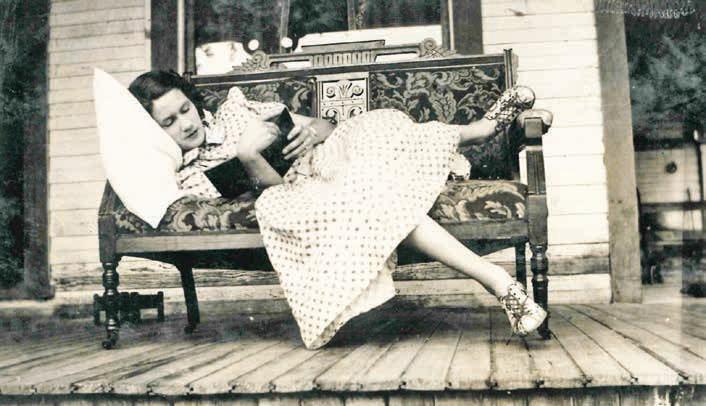
Few authors have published over 100 books—George Bowering accomplished the feat by writing across genres and through diligent work. He is a poet (Canada’s first Poet Laureate — from 2002 to 2004), novelist, nonfiction writer, memoirist, historian and editor. Almost unheard of, Bowering has won the Governor General’s Award for both poetry and fiction. As a passionate baseball fan, he has penned poetry books and memoirs about the sport. Like most writers, Bowering is an avid book reader and as of June 4, a new teaching space and reading room showcasing his personal library collection will be open to the public at UBC Library’s Rare Books and Special Collections. Here, we feature reviews of Bowering’s last published books.
the truth, as he’s now 90, blind and only able to complete this work with the assistance of his wife, Jean Baird. In a poem called “Jean Drove,” he recalls lying on the sidewalk after having a heart attack while out walking his dog: “… a man sitting on me / banging at my chest / his fist pounding me / trying to get at my heart.” And later, among those stand-alone “Life Sentences” this zinger: “Late in life he had foreign objects in his hip and femur, his jaws, his eyes and his heart.”
It’s clear that Bowering has heard the angels (or whoever it might be who gathers us at the end) as some of the poems deal directly with the approach of death, none more beautifully than one that ends with this stanza: “He doesn’t yet hear the gentle / footsteps the other side / of his very last door.”
He applies lessons his father taught him about dribbling a basketball or
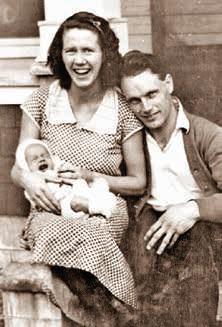
throwing and catching a baseball to the art of composing poetry. “In baseball, as in poetry, you learn by reading and figuring out what previous players have done. Then you practise and practise. I would see how … Jackie Robinson started a double play and try doing it a hundred times.” And yes, baseball has always been Bowering’s game. He played shortstop in the 1970s for the Zephyrs in Vancouver’s Kosmic League and, as noted in He Speaks Volumes, Rebecca Wigod’s biography of him, was known for making loud remarks during play.
Over the course of the book, Bowering offers insights into his own writing and influences, expressing clear admiration for William Carlos Williams
An example of how that poet’s work has inspired him is especially evident in a piece called “A Little White Bowl” which, with its clear simplicity almost conjures the cold plums Williams is so well known for.
I’d be remiss if I failed to point out the humour at play in these pages, especially when it comes to his puns and silly “takes” on Robert Frost, one of which begins with these almost-toofamiliar lines: “Whose words are these? I think I’m lost / I’d better go and read some Frost.”
Or, better yet, go and read some Bowering. 9781772017137
Heidi Greco lives on Territory of the Semiahmoo Nation in a house where one of the closets holds a box containing a baseball glove that belonged to George Bowering.
“He doesn’t yet hear the gentle footsteps the other side of his very last door.”
george bowering
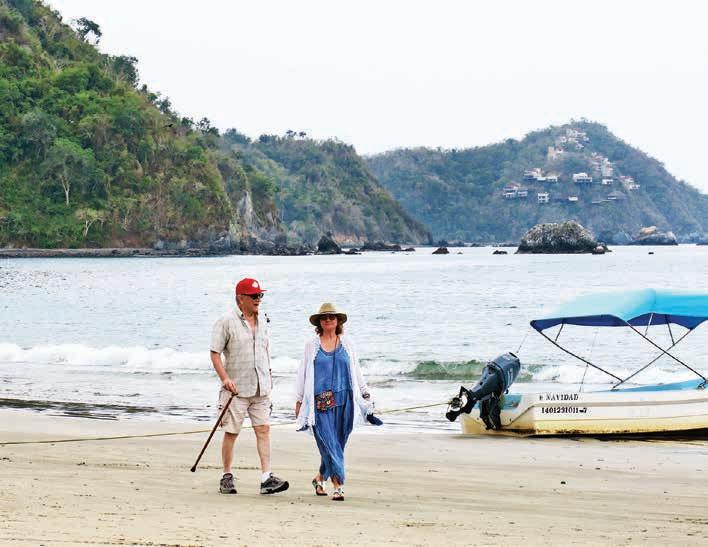
tGeorge
in Baseball Love (Talonbooks, 2006) recounts their road trip travels to various North American ballparks.
Bowering loves his pals, too. One of his more eloquent sentences describes their “comical talk, friendly mockery, complex falsehoods, and so on in our games, the usual camaraderie of folk who realize that they should feel a little … not guilty but at least thankful for being on a warm seaside with cold drinks while most people they knew were frowning in the rain up north, or even the piled-up snow back east.”
BY GENE HOMEL
Increasingly, Canadians escaping cold winters are heading down to Mexico as an alternative to the United States and, now, Cuba. George Bowering recounts his Mexican travels in his book, Barefoot Gringo
In this case, the gang of barefoot gringos consists of Bowering, his wife Jean Baird and a circle of elderly, good friends who take to the mid-Pacific coast of Mexico in the winter months.
Barefoot Gringo is both a travelogue and daily diary based on seven stays during the 2010s in La Manzanilla, a small fishing village on Tenacatita Bay, hours south of Puerto Vallarta and not far from Melaque, another village popular with, as Bowering says, “a lot of pretty ugly-looking gringos” from Canada’s west coast. No wonder National Hockey League jerseys are found in the local village markets and in Puerto Vallarta, which hosts “one or two zillion US tourists.”
Although Bowering also recounts his stays in Mexico City, Puebla and Mayan country, the heart of this book is La Manzanilla, which means “chamomile” and is not to be confused with the large city of Manzanillo to the south. “His” town boasts a mangrove swamp inhabited by crocodiles and local characters such as Pedro, whose red ball cap reads “Make America Mexican Again!” Bowering and his pals are Mexican food enthusiasts and frequently have a cerveza Pacifico or margarita in their hands, especially when they’re playing cribbage, one of their favourite pastimes.
If you know Bowering’s writings, you know he’s an enthusiastic observer of the small things in the world around him—he’s an acute observer of bird life, for example, and of the tradition of having a horse with braided mane and flowers attached to its tail at Mexican
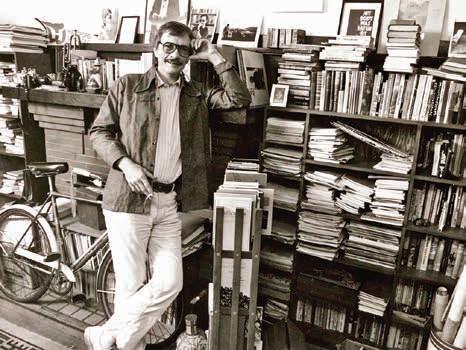
weddings.
As with 18th century poet and mystic, William Blake, Bowering sees a world in a grain of sand. When he gets to the beach at Okanagan Lake in Penticton, where he was born in 1935, “I do the same thing,” he says, “scoop up a handful and look at it carefully. If you have two thousand grains of sand in your hand, they will be a hundred colors at least. Makes you think of the universe.”
Bowering’s narrative perambulates as easily and lightly as a sunny walk on the beach. He has long been associated with a wry, sometimes self-deprecating sense of humour. Of the familiar “art walks” often found in Mexican tourist areas, Bowering sees paintings and mobiles “produced by gringos who spend more than two weeks a year in our little fish town.” Why travel to a Mexican village to buy art from someone from Wisconsin, he wonders?
Writer Barbara Kingsolver, he tells us, won Britain’s Orange Prize for Fiction, a prize exclusively for the best women writers. Bowering wonders “whether there were a Lemon Prize for the worst book written by a woman.” It’s fun, he adds, to read fiction set in a
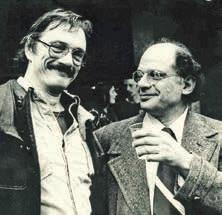
foreign country one is visiting. “Maybe someday a traveller will experience that while reading The Martian Chronicles.”
If you are looking for comments on Mexican society or politics, search elsewhere, though Bowering does swear that “Mexicans are the nicest people you will find in the New World.”
Instead, Barefoot Gringo is a love note, not just for Mexico but also for his wife and helpmate, Jean Baird, “my sweetheart and the heroine of my mature books.”
“[L]ove is greatest when you are old,” he says. We’ve already met Jean in a previous book. Bowering’s lifelong, international love affair with baseball
The latter chapters of Barefoot Gringo are pervaded with a sense of aging and mortality. These trips take place while Bowering is in his late seventies and eighties and, combined with concurrent health crises, he mentions his inhalers, his cane, wheelchairs, failing eyesight, broken bones and hospital visits. He wonders “whether old guys like me should just stay home.” Though he says he is “an old gimpy half-blind heart-and-lung patient,” the allure of Mexican travel triumphs once again. His writing formula now is this: “the older you get, the less time you have left, so the faster and longer you should be writing.”
Sitting on his balcony in La Manzanilla, he relates, “I decided to tell God what I want to do in Heaven: I want to watch puppies playing on a beach, if they have beaches up there.”
9780774890786
Gene Homel has been a faculty member at universities, colleges and institutes since 1974 teaching history and politics.
In 2022, the UBC Library was gifted George Bowering ’s personal library collection, reflecting the influences of mid-century Canadian and international literature. The more than 5,000 items previously in Bowering’s home office include the many books written by authors that inspired him and defined his writing life. But there’s more—the artwork, memorabilia and other objects that Bowering collected are also part of what is now called the George Bowering Collection and Reading Room.
After several years of fundraising, UBC Library’s Rare Books and Special Collections will be opening this new reading room and teaching space that partly recreates Bowering’s home office. Highlights include portraits and depictions of Bowering and signed and early editions by authors such as Margaret Atwood, Fred Wah, Daphne Marlatt and Allen Ginsberg
Bowering said at the time that “it is very important to me that these books are all together rather than being scattered among libraries.”
BY ROBIN LAURENCE
Most days, it is just too challenging to discuss Bill Pechet ’s interdisciplinary career without compiling list after list after longand varied list. The most bare bones description of his Vancouver-based practice would include art, architecture and design. Now cue a list—the first of many—per the inside front cover of updn: 88 Spins with Bill Pechet, a multilayered survey of his multivalent work by architectural scholar Leslie Van Duzer . Here, Pechet’s professional accomplishments are given as “illustrated children’s books, street furniture, urban lighting systems, set and costume designs for dance and theatre, cemetery designs, residences and many public art pieces both monumental and intimate.” To this, add a raft of creations both practical and unlikely—everything from retail and office interiors, reconfigured parks and plazas, a sensitive memorial garden and a private residence built into a challenging natural environment to a space-defining grid of 388 security mirrors, immense cast concrete chairs situated on a suburban beach, functioning waterworks shaped like an enormous watering can, a mist- and light-emitting public art piece in the form of a gigantic beaker, vent stacks evoking an upraised hand with artificial fingernails and circles of soft white light hovering like smoke rings above a downtown street. Oh, and don’t forget a bong-inspired bridge for children, a drinking fountain in the form of a giant spoon, light fixtures resembling upside-down garbage cans, an art installation comprising two large glass vessels and a “bajillion” miniature marshmallows, another installation featuring concrete sponges, cast-resin honey bears and a hairy floor lamp with skinny bird feet—and, with his then architectural partner Stephanie Robb, a Brobdingnagian orange fleece sweater that entirely filled the Canadian pavilion at the 2006 Venice Biennale of Architecture.
“In Bill’s wonderland, delight comes from having your expectations upended, from finding your sense of agency compromised, from being ensnared in thick webs of references and puns,” Van Duzer tells us. The upending of expectations is first signalled by the book’s title. On architectural plans, “updn” indicates stairs; it can also be, as seen on the cleverly designed cover, an ambigram, a visual palindrome that invites you to totally reorient yourself. And while an architectural definition of “spin” might indicate rotational movement or spinning elements, here it suggests a light hearted ride or romp around an undertaking or a playful interpretation of a subject.
A long-time friend and colleague of Pechet’s, Van Duzer studied architecture at the University of California Berkeley, taught widely and moved to Vancouver in 2010 to take up the
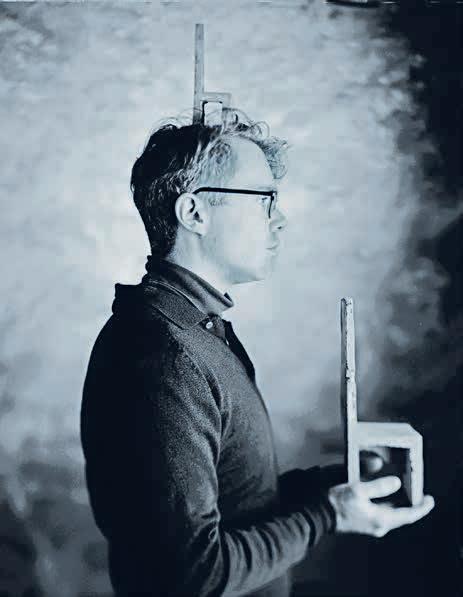
tbelief systems…” Meaning, he continues, “arises from a continuous loop of references, relationships, reflections.”
For the past 40 years, Vancouver-based Bill Pechet’s art, architectural and design works have been driven by his wit and whimsy.
directorship of the School of Architecture and Landscape Architecture at the University of British Columbia.
Now a professor who divides her time between Vancouver and the Sunshine Coast, she is the prize-winning author, co-author or co-editor of a number of architectural books and also initiated the series of monographs, West Coast Modern Houses. In updn, she writes in terms that are responsive to architectural and design concepts while also being highly accessible to the layperson.
Van Duzer explains why the 88 spins are arranged alphabetically and
discusses each one individually while also giving us an overview of Pechet’s approaches to his varied and various projects and commissions. She illuminates the “multiple overlapping threads” in his practice and his work’s openness to different interpretations.
“No matter what the scale of a project, a thick network of relationships…provides alternate pathways into the work without creating closed narratives,” she writes. Pechet responds, “Because I see myself between disciplines, most projects are in dialogue with multiple audiences; each of whom have different worldviews, aspirations, histories and

Throughout the book, Van Duzer expresses a fond appreciation of the wit, whimsy and sense of wonder that Pechet brings to so many of his projects. She also gives us another list, this one of Pechet’s forms and motifs and materials: “mustard bottles, picnic tables, honey bears, salmon, high school chemistry beakers, marshmallows, folded paper dolls, music boxes, suitcases, watering cans, keyholes, bongs, cigar rings, spoons, barns, bunnies, a hand with painted nails.” One of Pechet’s enduringly effective strategies is the immense and surreal enlargement of often banal objects.
Yet another list that could attach itself to Pechet’s practice would be that of the many places in which his architectural, landscaping, public art and public amenities projects are situated. Based in Vancouver for decades, working with Robb and then out of his own studio, he has won commissions all over Metro Vancouver as well as on southern Vancouver Island and the Sunshine Coast—and in Ontario, Manitoba, Alberta, California and Nevada. His graduate thesis project was staged in Japan, a country in which he has lived and worked for extended periods, drawn to both its culture and urbanism. (He credits his time in Japan with the discovery of his creative voice. Part of his soul, he says, “lives there.”) Updn includes not only Van Duzer’s essay and commentaries along with extensive photographs, drawings and sketches, but also Pechet’s interviews with Lőrinc Vass and Thena Jean-hee Tak. The former explores the personal and professional significance of time Pechet spent living and working in Asia and the latter gives us an appreciation of his enlightened and often humorous approach to teaching and pedagogy. Important contributions also include a photographic essay by Greg Girard and a biography by Bill Richardson, delivered with his characteristic warmth, gently nudging humour and sensitivity to the myriad ways in which individual lives unspool themselves across place and time.
And now for a personal note: updn has reawakened my appreciation of Pechet’s public art and public amenities in my own neighbourhood. I am looking again at GRANtable, his enormously enlarged and throne-like chairs and 66-foot-long table situated in a small park near me. I’m also looking at the vertical light bars and modular seating on Granville Street in Vancouver’s designated “entertainment district.” Most of all, I’m enjoying the strings of coloured lights on Davie Street, their sequential on-and-off-ness running along overhead wires like shivers of delight.
Another personal note and full and final disclosure: my Georgia Straight review of Pechet’s 2007 exhibition, “finding sudoku,” is reproduced alongside one of his 88 spins. And I can’t lie: I’m immensely proud to have been given a wee place in this wonderfully engaging book. 9781961856530
Robin Laurence is an award-winning
Two grade eight girls—one a rich bully, the other a new immigrant— mysteriously switch bodies à la Freaky Friday.
Not Myself Today by Mahtab Narsimhan (Orca Currents $10.95) For ages 9 to 12 BY
HEIDI GRECO
The easiest and clearest way to describe this book is as a contemporary version of “Freaky Friday,” the 2003 movie about a rock band, guitar-playing teen and her professional mother switching bodies. But instead of the swap being between a mother and daughter, here it’s between two grade eight girls, one of whom is, frankly, a spoiled brat.
Riya Khatau lives in West Vancouver but has been kicked out of her private school, so is now getting chauffeured to a public school in Burnaby where her mother hopes she might “…learn about respect and the value of money.” Yet it doesn’t seem she’s learning much, especially about respect, as she’s already become best friends with two girls who could only be called “mean.” This group of three seems to revel in tossing insults at nearly everyone they encounter, and their bullying insults have quite the effect: ‘Out of my way!’ Charlotte — Char to her friends — calls out as we march down the corridor,” says Riya. “A terrified boy flattens himself against the wall. Most others move aside.”
But even with the security of her new friends, referred to as “the coven,” Riya can’t help but be curious about Saanvi, a girl she considers “ordinary” yet who somehow, despite her unfashionable clothes, intrigues her. Riya is also secretly hurt when her friends refer to Saanvi as “fresh off the boat” as she knows her own parents only came
to Canada as teens.
When the class makes a field trip to the Museum of Anthropology at UBC, a room holding special artifacts radiates a mysterious force that causes Riya and Saanvi to switch into the other’s body. And there begins the important lessons Riya must learn.
Saanvi’s home (where Riya, in this
“new” body must go) is modest; her parents run a corner store and the family lives above it. Saanvi’s bed is a simple cot, but there is so much in the home that makes up for what Riya, at first, deems to be lacking. The food that Saanvi’s grandmother Nani makes is amazing—no more of the boring “health food” her family’s housekeeper pro-
Mahtab Narsimhan, author of over 20 books, won the Silver Birch Fiction award for her debut YA novel The Third Eye.
vides—and actually has flavour. Some of the dishes remind Riya of her own grandmother (“Dadi”) and the delicious foods she prepared during her last visit to Canada.
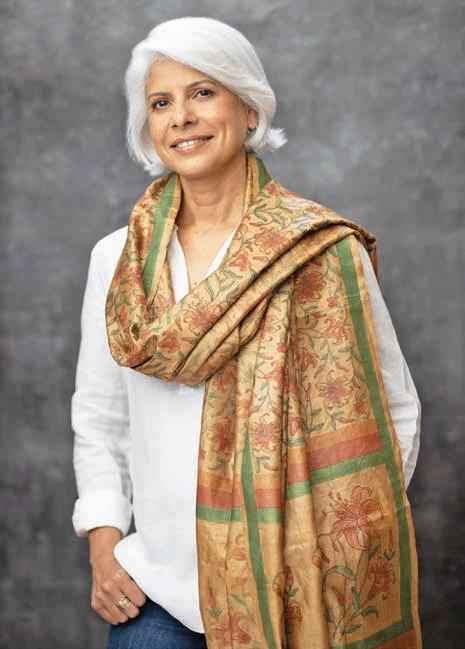
tBut it’s not just the food that’s different (and better!) at Saanvi’s home. Everyone in the family works hard to keep the store going, despite the fact that there’s always much to do and that shoplifters frequent the place. What Riya sees is a family where everyone works together and gets along despite the day-to-day challenges—a far cry from her own. Her parents favour her brother and barely seem to have time for her. Unlike Saanvi’s family, who take joy in spending a precious evening watching a classic Bollywood film together, Riya contemplates the fact that her family never does much of anything together. It doesn’t take too long for Riya to conclude that love matters more than money. But, the dilemma that remains is a big one: How can she get back into her own physical body? She knows it likely means getting back to the museum at UBC, but without her usual ride from the family chauffeur, even this presents difficulties. Fortunately, Riya is smart enough that when Nani reveals she knows something is up and offers advice, she pays attention and listens. Because the real Saanvi is also unhappy in her “new family” (even though she’d previously envied the material wealth she’d seen), the two girls make a plan to visit the museum together with high hopes that they might switch back to their real selves.
The lessons each of them gains are important ones—about sharing and caring and letting go of things that don’t matter. This book also offers a number of cultural insights and does so with respect. The story is peppered with South Asian terms when mentioning food or clothing. And while Orca deserves recognition for all they’ve done by providing books that meet the needs of all young readers and honouring diversity, this book would have served both ends better had a glossary and a pronunciation guide been included. Still, Orca’s exemplary leadership is one we can only hope more publishers will lean into. 9781459842335
Like the two girls in this story, Heidi Greco is someone who appreciates the flavours of home cooking. Heidi used to keep a blog called “What’s fer supper?”
Influenced by anthropologist Wade Davis who wrote that every language is “an old-growth forest of the mind,” E.G. Alaraj wrote her second picture book, My Language Is a Garden (Orca $21.95), for children ages 3 to 5, to help her husband teach their Englishspeaking children Arabic. Now living in Vancouver, Alaraj says “Our children learned easily…and just as easily forgot.” Written as a poem, Alaraj’s story moves through many landscapes— deserts, souks, night skies, roads and galaxies—telling of the origins of Arabic. Her aim is to motivate parents to use positivity and patience. “We cannot force roses to bloom,” says Alaraj. “We simply nurture their growth and wait.” The book is illustrated by Rachel Wada 9781459840652
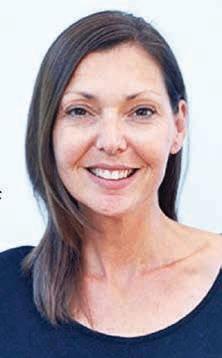
In The Last Caravan (Caitlin $26), Anna Byrne chronicles how she and two friends accompanied a friend through a home death with Medical Assistance in Dying, transforming loss into a communal act of care, ritual and beauty. Drawing on her background in gerontology, psychology, theology, hospice work and her own cancer diagnosis at 32, Byrne argues for a return to community-led deathcare. She is also the author of Seven Year Summer (self-published, 2019), a Whistler Independent Book Awards finalist used in hospice training. Byrne lives in qathet, BC, where she coordinates hospice services. Byrne also co-founded Community-Supported Dying qathet. 9781773861821
Raised in a Vancouver multicultural neighbourhood, journalist Christopher Cheung has spent over a decade investigating his home city. In Very Vancouver: Uncovering the Soul of a West Coast City (ECW $26.95), Cheung tells 15 stories ranging from how migration has shaped East Vancouver cuisine to the inequalities of BIPOC communities, the working class and the unhoused. His debut title, Under the White Gaze: Solving the Problem of Race and Representation in Canadian Journalism (UBC Press, 2024) was shortlisted for a BC & Yukon Book Prize and the Vancouver Book Award. Cheung has worked as a reporter at The Tyee, Metro and the Vancouver Courier and has received two Webster Awards. 9781770418387
Vietnamese creation myths echo through David Ly ’s debut fantasy novel Not All Dragons (Poplar $24), a tale of memory, destiny and becoming. When Rhys washes ashore in the fictional land of Lanilia with mystery wounds and no past, his search for identity unfolds through prophecy, dragons and an uneasy alliance with Delia, a mermaid who knows Rhys does

not belong. Blending epic fantasy with questions of selfhood and transformation, Not All Dragons extends Ly’s literary interests into speculative terrain. 9781998408429


Elementary school teacher and librarian Elaine Su spends her days surrounded by books and rooms full of curious young readers. Her debut picture book, Love, Panda (Scholastic $27.99), for ages 6 to 8, tells the story of a snarky, letter-writing panda stuffy who feels abandoned after the arrival of a new baby. As Panda pleads to be rescued by her original owner, the story explores sibling relationships, change and unexpected affection. Illustrated by Charlene Chua 9781546179580
Darlene Foster ’s award-winning Amanda Travels series features a spunky young girl who loves hitting the road. The latest in the series, Amanda in Ireland: The Body in the Bog (selfpublished $10.99), takes 12-year-old Amanda Jane Ross to the emerald isle for a cousin’s wedding. When Amanda joins the search for a missing horse and stumbles upon a world of screaming banshees and peat bogs, she wonders if she will become “another body in the bog.” Foster divides her time between the west coast of BC and Orihuela Costa, Spain. She is a retired employment counsellor and ESL teacher. 9781069552600
Renowned founder of Bard on the Beach, Western Canada’s largest professional Shakespeare festival, Christopher Gaze reflects on his five decades of theatre in The Road to Bard: A Legacy of Shakespeare on Canada’s West Coast (Harbour $40). Gaze traces his journey from England’s Bristol Old Vic Theatre School to Canada in 1975 to the founding of Vancouver’s Shakespeare festival in 1990 and its growth into a major cultural institution welcoming approximately 88,000 visitors annually. Along the way, he recounts unexpected detours—waiting tables, driving cattle in Montana, fundraising and steering the company through the COVID-19 shutdown—while offering a personal history of Canadian theatre over the past half-century. 9781998526284
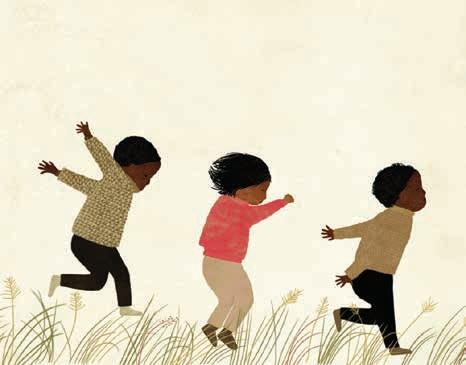
Combining her fine art photography with new poems for Hawking the Surf (Silver Bow $23.95), Diana Hayes reflects on the power of memory and myth in the seaside landscapes of the West Coast. She also references the American poet and environmentalist, Robinson Jeffers (1887–1962) who built the historical Tor House and Hawk Tower in Carmel-by-the-Sea, California. Hayes studied at UBC and UVic, receiving a BA and MFA in Creative Writing. While at UBC, she was poetry editor of Prism International She has lived on Salt Spring Island since 1981. 9781774033890
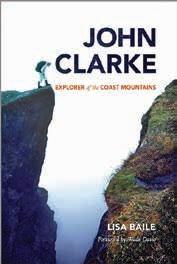
Wilderness Mother: A Memoir of 13 Years Off the Grid by Deanna Barnhardt Kawatski (Ronsdale $24.95)
Sockeye Silver, Saltchuck Blue by Roy Henry Vickers & Robert Budd (Harbour $9.95)
This wilderness classic of raising a young family in the remote wilds of northern BC has been updated and re-edited for a much lesscensored cautionary tale than the original book. The author tells of the grueling but rewarding work it took to raise most of their own food, build and maintain a log house and why she had to leave.
From Where I Stand by Jody Wilson-Raybould (UBC Press $24.95)
Having shaken up federal politics when she went from being a senior cabinet minister in Justin Trudeau’s Liberal government to becoming an independent Member of Parliament, Indigenous leader Jody Wilson-Raybould has published a collection of her speeches and lectures from the past ten years. She is forthright in her analysis of Canada’s colonial past and her desire for a new era of recognition and reconciliation.
The late mountain climber John Clarke was revered for exploring more virgin territory and making more first ascents than any other climber in BC. Yet he was a humble man and never sought fame. He dedicated his life to exploring the unnamed peaks of the Coast Mountains and later in life to conservation education. At last, here is his inspiring story.
Rae Knightly writes science fiction and fantasy for teens and the young-atheart. Her latest release, NOVASTAR (Poco $14.99), brings her Lost Space Treasure series to its final chapter. The novel follows Trin Moonrise as longrunning mysteries begin to unravel, guiding readers through a universe of alien civilizations, hidden truths and high-stakes exploration. Raised across multiple countries and fluent in four languages, Knightly draws on a global perspective to build worlds shaped by curiosity, adventure and discovery. Now based in BC, she balances life between exploring local landscapes and crafting interstellar journeys for her readers. 9781997538271
A routine drug bust ends in tragedy when a young constable is killed in The False Creek Murder (NeWest $23.95), the fifth instalment of Roy Innes’ Inspector Coswell Mystery series. Sergeant Janet Bostock unexpectedly becomes head of the narcotics squad and reunites with RCMP homicide division head, Inspector Mark Coswell. Only it’s not one homicide but three seemingly unrelated murders they must unravel. Innes once again explores the human dimensions of crime through characters praised by crime fiction author Louise Penny as “alive, likable and flawed.” Innes is based on Gabriola Island. 9781774391389
Following on from her first book in the We Do Too! Series, We All Play (Kids Greystone, 2021), which landed on Best Children’s Book of the Year lists in The New York Times, The Washington Post and The Globe & Mail, Cree-Métis author and illustrator, Julie Flett has released Book 2 in the series, We All Love, kisâkihitonaw (Kids Greystone $23.95), for children up to age 7. In this poetic story with Cree words, Flett celebrates the ways people and other creatures show love. There are little ducklings, foxes, otters, bears, turtles and more, reflecting the interconnectedness of the natural world. Flett has also received two Governor General’s Awards and a BC and Yukon Book Prizes award. 9781778403279
In Literary Life After Death (Concordia U. Press $34.95), SFU professor emerita, Carole Gerson considers the ways in which Canadian writers have been commemorated. She looks at the serious and official as well as at the commercial and tourist kitsch and also at the literary forms of commemoration—where writers commemorate past writers. Coins, stamps, trinkets and the public art of statues or named streets, parks and writers’ houses/ history museums are all discussed. Includes E. Pauline Johnson’s grave marker in Stanley Park, Historic Joy Kogawa House, the house museum and statues of Emily Carr, and awards like the George Woodcock Lifetime Achievement Award that is administered by BC BookWorld and the Vancouver Public Library. 9781988111667
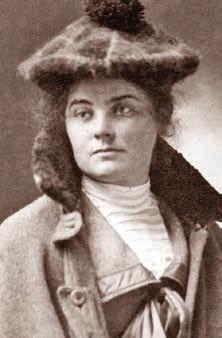
Every Little Scrap and Wonder: A Small-Town Childhood by Carla Funk (Greystone $29.95)
With catchy rhymes married to Roy Henry Vickers signature artwork, this children’s board book is the third instalment in a series that started with Humpback! One Eagle Soaring
The concepts of colours are linked to the changing seasons on the West Coast: red tones of huck leberries in summer, silver and red flashes of spawning salmon in fall, grey rain in winter, and the sprouting of green in spring.
Cheapskate in Lotusland: The Philosophy and Practice of Living Well on a Small Budget by Steve Burgess (D&M $26.95)
Yes, Vancouver is one of the most expensive cities in Canada but you can have a good life without earning a lot says humour writer Steve Burgess. Along with his entertaining confessions about living frugally, he interviews experts and other people on money-saving ways for this book that everyone could benefit from reading.
The Survival Guide to British Columbia by Ian Ferguson (Heritage House $19.95)
Author and advocate, Joline Martin, shares the untold stories of 12 American men and women who refused to participate in the Vietnam War draft and found their way to Vancouver Island. Their stories tell of the courage it took to leave behind all they knew, resettle in a new country, build homes here and contribute to their new communities.
Poet Carla Funk grew up in a Mennonite community in Vanderhoof. After publishing five books of poetry, this is her first memoir, a paean to childhood and rural life in British Columbia. Paying tributes to both her church-going mother and her truck-driving father, she uses rich language to create the world that shaped her as a person and writer.
Having moved to B.C., humorist Ian Ferguson finds the place pretty – but also pretty scary. Here’s his guide on surviving everything from the province’s politics, the locals and the weather, to our food and fashion sense. Some ‘Fergusonian’ wisdom: B.C. is located – “to the left of Alberta”; speaking to B.C.’ers, means “not saying anything beyond, ‘I love trees’ and ‘forgive me’; and, you can “tell an outsider (filled with enthusi asm and interest) from a local (full of resentment and ennui).”

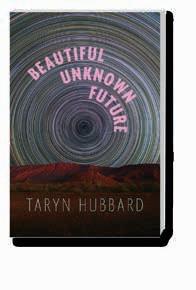
Taryn Hubbard
Written while Hubbard’s children were young, these poems hold space for messy feelings about motherhood and care, the climate crisis, family ghosts, and office dynamics.
Now Available
George Bowering
George Bowering’s final book of poetry centres around his mother, Pearl Bowering – a hillbilly, athlete, and champion bridge player. Touching, ribald, and cheeky, Pearl reflects on a life welllived and well-written.
Now Available

Jónína Kirton
Weaving intergenerational trauma and its impact on health through the author’s experience of living with chronic pain and illness, these poems explore where healing might lie and how a peace might be found whether we heal or not.
Now Available
Nicole Raziya Fong
SUBTEXT inquires into the language of identity formation, collaging the echoes of diasporic and colonial histories through poetry, drama, autobiography, and archival uncovering.
Now Available
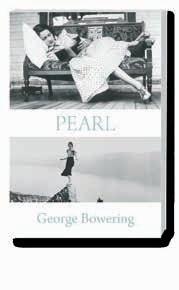
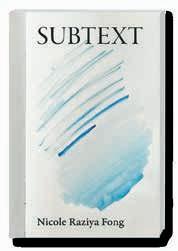
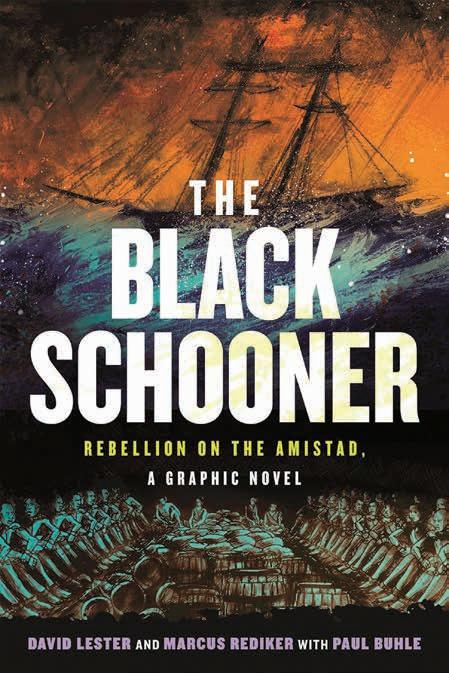
“While most histories focus on the work of white abolitionists in the US in defending the Africans during their subsequent trial in Connecticut, The Black Schooner shows the Africans themselves as the central figures. David Lester’s powerful blackand-white art depicts their story, from the uprising on the ship to their subsequent imprisonment in the US and concluding with their return to Africa.”
— Gord Hill , author-artist of The 500 Years of Indigenous Resistance Comic Book and The Antifa Comic Book
•
This is the 4th book created with the team of artist/ writer David Lester and historians Marcus Rediker and Paul Buhle. Editions of their previous three books have been published in seven languages.
“An evocative, incisive, and powerful piece of graphic history.”
Kirkus Reviews
“A necessary and unique, expectation-shattering chronicle.” Library Journal (starred review)
Beacon Press (distro by Penguin Random House) ISBN: 978-080701690-9 • 6 x 9“ • $24.95 • www.beacon.org
At age 43, Darrien McWatters, known to friends as Dee, was living what seemed to be a conventional life in a small BC town: father, husband, businessperson and local hockey referee and coach. But beneath the surface was a lifetime of inner turmoil that was finally diagnosed as gender dysphoria. Sorry I Was Such a D!ck, When I Had One! (self-published $24.99) is McWatters’ unfiltered memoir of becoming her authentic self — a transgender woman. She documents the painful conversations with her children, the complex dynamics with friends and family and the incredible euphoria of finally living her authentic self.
9781069729712

“The biggest change in my life came in June of 1988 when a dive into a swimming pool crushed my spinal chord and paralyzed me in all four limbs,” writes Phil Nealy in I Won’t Stand for This! Embracing my Disability to Empower Others (Granville Island Publishing $34.95). Previously, Nealy led a fast life, “working hard, partying hard and making some bad decisions.” But the accident didn’t defeat Nealy, rather it made him “a better man,” he says. Nealy has gone on to have an active, independent lifestyle (including snorkelling in the Caribbean) and productive employment as a career counsellor.
9781989467855
The Pacific Coast from Alaska through BC and Washington to Oregon is home to a variety of orchids along with more than 700 other plants outlined in Plants of the Pacific Coast (Canadian Science Books $34.95). Jim Pojar and Andy MacKinnon, field botanists and forest ecologists with 50 years of experience in the region, are joined for this updated field guide by two younger colleagues: ethnobotanist Styawat/ Leigh Joseph, of the Skwxwú7mesh (Squamish) Nation and plant taxonomist Jamie Fenneman. In addition to detailed species descriptions, range
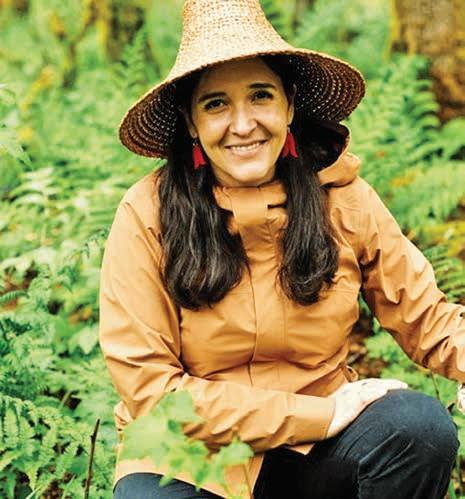
maps and colour photographs, entries highlight traditional plant uses and stewardship practices. A useful field guide and resource for those engaging with BC’s, and its neighbours’, landscapes. 9781069158215
Writing about her time spent at a remote Antarctic research camp shared with one other scientist and thousands of penguins, it’s not hard to imagine that what anchors Louise K. Blight’s Where the Earth Meets the Sky: A Story of Penguins, People, and Place in Antarctica (Bond Street/ Penguin $38) is, well, penguins. Blight reflects on seabird research, climate change and the emotional impact of isolation in one of the world’s most extreme environments. She is an adjunct professor at U of Vic and co-chair of the bird specialist group for the Committee on the Status of Endangered Wildlife in Canada. 9780385702102
Delta-based Dora Dueck has released her sixth title, Like a River Divides the Earth (Freehand $22.95), a collection of five stories about people on a quest for tenderness and connection. A teen sees her soldier father’s face for the first time; decades after leaving Russia, a Mennonite woman deals with a deep resentment from her past; a young man faces a shattering loss; a close-knit group of women are confronted with an event that makes them question who they are; and a tale about a mother and son complicates things for the one who hears it. Dueck probes what divides people and what keeps them together. 9781997534204

Harley Rothstein has studied alternative education for half a century. His book, Alternative Schools in British Columbia 19601975: A Social and Cultural History (FriesenPress $30.99) tells of BC’s burgeoning alternative school movement by profiling ten schools—from downtown Vancouver to remote communities. Challenging then-dominant educational approaches, these schools went about it in different ways. A few flourished while others struggled, but collectively they helped reshape mainstream education. Rothstein examines the emergence of alternative schools with insights from more than 350 interviews he conducted with students, parents and teachers
9781039135574
Gathering selected works from Susan Musgrave’s last four books, Hunger: The Poetry of Susan Musgrave (Wilfrid Laurier Univ. Press $23.99) features poems written since the death of her husband, the memoirist Stephen Reid It includes an after-essay by Musgrave about the breadth of her literary career. With all her bare-bones honesty and wit, Musgrave reflects on love, rebellion and aging. Author of more than 35 books, in 2023, she received the George Woodcock Lifetime Achievement Award for an outstanding literary career in BC. Her publisher says this “volume is a tribute to Musgrave’s long career and literary wisdom.”
9781771126953
Tofino (Lucky Dollar $22.99) is Tom Stewart’s fourth novel. Following his award-winning Immortal North (Lucky Dollar, 2024), Stewart returns with a story of heartbreak and healing set in his home of Tofino. Edited by Fran Lebowitz, who has worked with multiple New York Times bestsellers, the novel weaves three days of modern romance with threads of Tofino’s storied past. Stewart has collaborated with Pacific Northwest historians to ground his fiction in a sense of place. 9781777221195
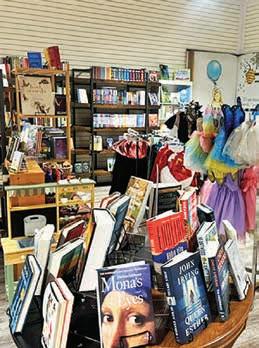



Richmond-based artist, Udayana Lugo is self-taught. She worked as a designer (jewelry, auto parts, furniture and interiors) and then discovered children’s books, which became her passion. Previous books Lugo has illustrated with Orca Book Publishers include Jungle Cat (2023), Pink is for Everybody (2023), When You Meet a Dragon (2024) and No Huddles for Heloise (2025). Lugo has now created Gotcha Day (Orca, 2026) for ages 3 to 5 by Deborah Kerbel, the story of a stray dog on its path to being adopted into its “fur-ever home.” Not knowing its birthday, the family celebrates “Gotcha Day,” which is when a pet is adopted. 9781459839663

V é ronique Darwin makes her debut with Mom Camp (Assembly Press $23.95), a collection of interconnected fiction that explores modern female archetypes and divided selves. Framed through parallel narratives and a novella, Mom Camp follows women of different ages negotiating the roles they inhabit—sister, friend, server, lover — and the tension between who they have been and who they are becoming. A runner-up for the 2024 Austin Clarke Prize in Literary Excellence, Darwin lives in Rossland where she writes, teaches and makes theatre.
9781998336319



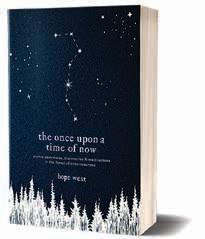
Architecture critic Robin Ward has been author and illustrator for numerous books about Vancouver including Exploring Vancouver (Harbour, 2023) with Harold Kalman. Now Ward has published Exploring Montréal: 151 Best Buildings (D&M $29.95) for arguably Canada’s most cosmopolitan city. The array of historical styles covered includes those from the missionary and fur-trade periods of New France to contemporary 21st century designs. There entries about buildings and points of interest are illustrated with colour photos. Ward arranges them into self-guided routes through Montréal’s neighbourhoods. For visitors as well as long-time residents. 9781771624619
History shows that democracy and the right to vote have not been easily achieved, as Janet Nicol portrays in A Cause to Fight For (Heritage House $16.95) about young girls in 1916 fighting for women to get the vote in British Columbia. The book is written for middle school readers and is based on historic events. The main protagonist is 15-year-old Jess Goldie who joins her older sister knocking on doors in Vancouver’s Mount Pleasant neighbourhood, urging male voters to support a referendum for the women’s franchise in the upcoming provincial election. A retired history teacher, Vancouver-based Nicol has a special interest in social justice.
9781772035995
The challenging job of introducing younger kids to Red Dress Day and remembering the Missing and Murdered Indigenous Women, Girls and 2 Spirit People is behind Tess’s Red Dress: Honouring love and family (Medicine Wheel $22.99) for ages 6 to 9, by Carolyn Roberts (St’at’imc and Sto:lo) with illustrations by Kelsey Mata Foote (Tlingit and Filipina). When 6-year-old Tess welcomes her new baby sibling, she quizzes her mom about growing up with a sibling. Tess’s mom shares loving stories. Tess knows of loss, too, as her Auntie is one of the missing. Her family shows Tess how to honour her Auntie by wearing a red dress and learning family stories. Includes resources to support parents and educators. 9781778540905
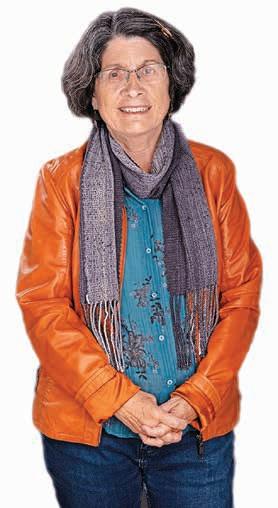
Poet Zoe Dickinson lives in Victoria where she manages Russell Books and is the Artistic Director emerita of the Planet Earth Poetry Reading Series. This lived experience is reflected in her debut full-length poetry book, Staff Picks for Invertebrates (Guernica $22.95). Dickinson’s nature imagery and bookstore tales create a world where the divisions between bookstores, books, staff and sentient beings fall away to create, as her publisher blurbs, “the same family” that dwells “in the same fragile, radiant world.”
9781778490286
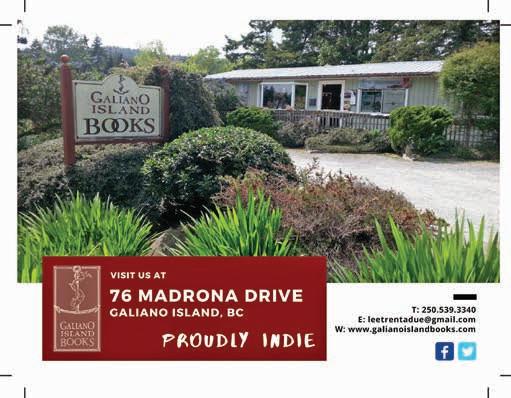

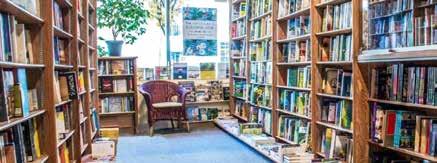
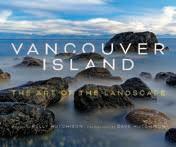

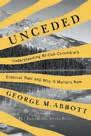

I love your magazine. I so appreciated reading about Canadian authors while taking the ferry to Vancouver. What a fantastic idea to have BC BookWorld on BC Ferries.
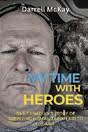
Bridget McFarthing, Victoria
I love reading BC BookWorld from cover to cover and look forward to having a copy arrive at my door. Thank you!
Margaret Endersby, Surrey
Great magazine for us book nuts. Thank you for everything.
Genevieve Singleton, Cowichan Bay
I have known Judy Darcy since the early 1970s; she is a great storyteller and fighter. She puts her heart into everything and has a passion for always helping the underdog. Judy’s laughter tells it all. It reflects a wonderful and intelligent woman who wanted to make a difference. Her memoir is a great read [reviewed in BC BookWorld, Winter 2025–26].
Gregory Corcoran, Vancouver
Shreve (1950 – 2026)
The co-founder of Poetry in Transit in Vancouver, Sandy Shreve, died on February 8, 2026 at a friend’s house in Saanich after a long illness. Shreve was part of the Vancouver Industrial Writers Union (VIWU) that included writers such as Tom Wayman, Kate Braid and Calvin Wharton. Born in Quebec in 1950, Shreve moved to BC in 1971. In the 1980s, she edited Working for A Living, stories by women about their work. In 1990,
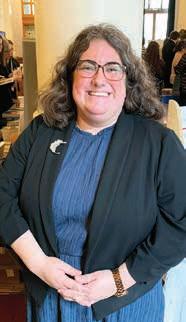
Welcome to the new executive director of Books BC. With over 15 years of experience in public libraries, Sarah Felkar brings passion, skills and knowledge to her role as the chief advocate for BC book publishers.
Shreve published her first collection of poetry, The Speed of the Wheel Is Up to the Potter (Quarry Press) and went on to release four more poetry books and two chapbooks. With Kate Braid, Shreve co-edited In Fine Form: The Canadian Book of Form Poetry, a groundbreaking collection of distinct poetic forms that was initially published by Polestar (2005) and rereleased by Caitlin (2016).
Vancouver experimental feminist poet and college professor of English, Gladys Maria Hindmarch died at home on March 18, 2026. She was known as a core member of the TISH poetry community in its first phase (1961-63) and an editor in its second phase. Born in Ladysmith on January 1, 1940, Hindmarch attended UBC where she earned a BA and an MA in English. She attended the influential 1963 Vancouver Poetry Conference during this period that helped her establish productive connections with
Black Mountain poets among many others. She taught at Vancouver City College in 1965 (later to become Langara College) and Capilano College from 1974 to 2002. Hindmarch published four books, the last being Wanting Everything: The Collected Works (Talonbooks, 2020), edited by Deanna Fong and Karis Shearer. Her literary archives are housed at Simon Fraser University Special Collections.
Considered the foremost protector of orangutans on the planet, Biruté Mary Galdikas was associated with SFU’s archaeology department and wrote three books. Galdikas died in Los Angeles on March 24, 2026 after a long illness. She was frequently described as the third woman sent by Dr. Louis B. Leakey to study primates in their natural habitat, after Dian Fossey and Jane Goodall Galdikas was born in West Germany in 1946 and came to Canada at age two, settling in Toronto then moving to Vancouver in 1962. In 1971, Galdikas arrived in Jakarta to study orangutans. “At first I thought we would be just holding down the fort until reinforcements came,” she recalled. “I never envisioned that we were the cavalry.” Her published titles are: Reflections of Eden: My Years with the Orangutans of Borneo (Little, Brown 1995), Orangutan Odyssey (Harry N. Abrams, 1999) and Great Ape Odyssey (Harry N. Abrams, 2005).
(1940 – 2026)
Born on November 5, 1940 in England, Margaret Thompson immigrated to Canada with her family in 1967. She taught English in Merritt, Sechelt and Fort St. James, where she lived for 20 years prior to settling in Victoria. She re-created the rough and perilous life of BC in the 1820s for her first book, Squaring the Round: The Early Days of Fort St. James (1982), a combination of prose and poetry. A member of the Federation of BC Writers for more than 10 years, she became its president in 2003. Thompson published seven books, the last being The Cuckoo’s Child (Brindle & Glass, 2014) about middle-aged Livvy Alvarsson who has lost a son and then travels to the UK to uncover her heritage. Thompson died on May 7th, 2026 in Victoria.