
When the annual Spanish V Honors plays were performed for the first time in March 2013, only a few seats in the Lindberg-Serries Theater were filled, Upper School (US) Spanish Teacher Rosario Sánchez Gómez said. This year, the seniors in Spanish V Honors classes performed their plays to a packed audience, with some students and teachers even standing because there weren’t enough seats left.
Seniors in Spanish V Honors classes were tasked with writing, directing and performing original plays entirely in Spanish. Dr. Sánchez Gómez designed the plays to solve a problem she sees every winter.
“The seniors, after they come back from winter vacation, and especially if they’ve already been admitted into a college, start lacking motivation,”
Dr. Sánchez Gómez said. “It’s hard to make them excited about anything.”
She said the Spanish plays help
ensure students remain engaged in class.
“I was thinking of something for them that they had to be involved in from the beginning until the end,” Dr. Sánchez Gómez said. “Knowing that there are going to be people watching from outside of the classroom, the objective is not to fail in front of them. If they have to write the play and then act in front of an audience, there’s no way to hide.”
CONTINUED ON PAGE 9
human and AI writing, she said.
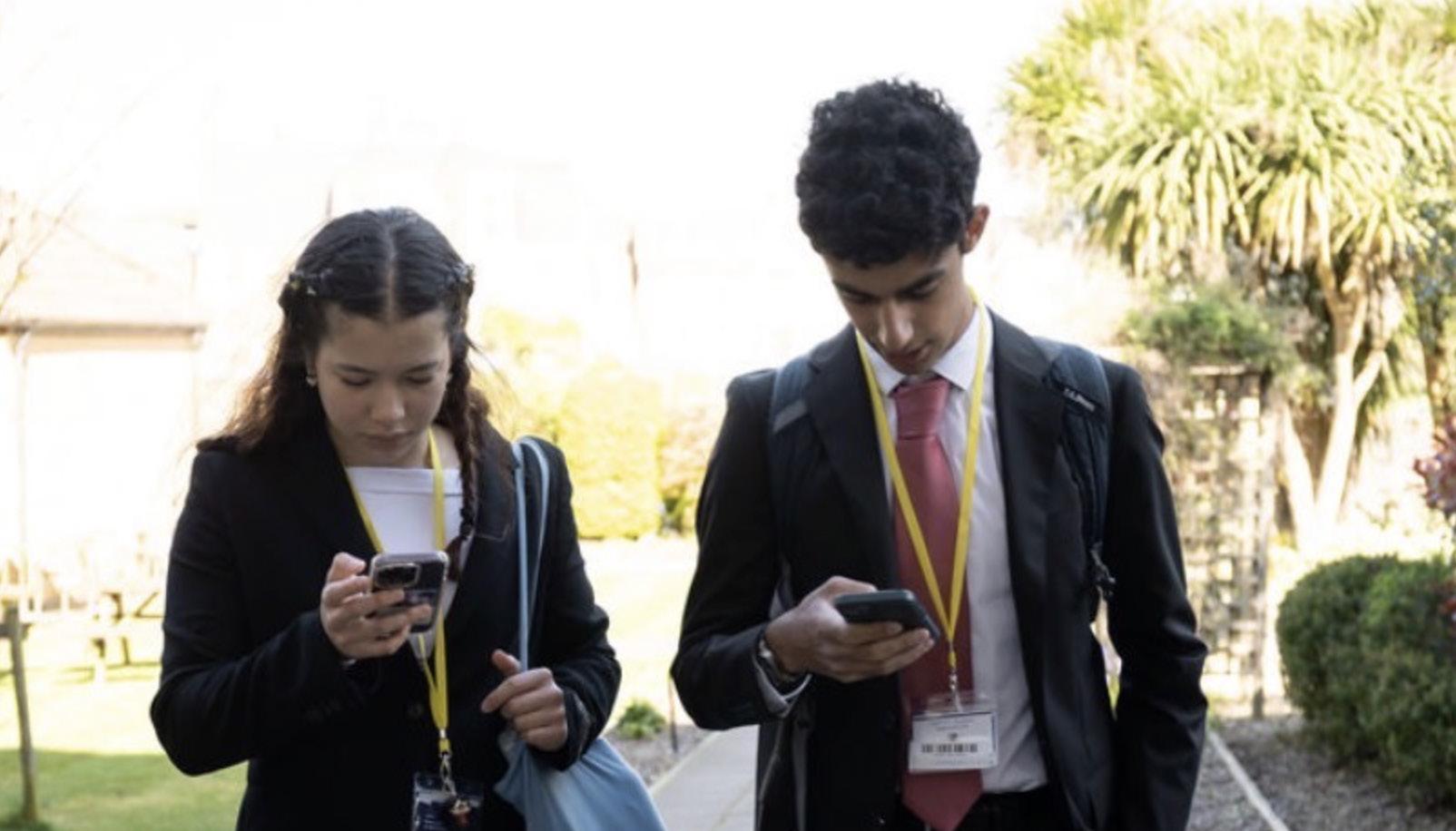
“I was crying during the meeting because it was so unexpected. I thought it was the last thing I’d ever have a discussion on,” a student who was granted anonymity due to potential academic and social repercussions said. After spending weeks researching and writing her history research paper, she was asked to wait behind after class and shown the results of an artificial intelligence (AI) detector on her teacher’s computer.
“It was some AI-detection, like GPTZero,” she said. “On it, you’re either red, which is like super-duper AI, or yellow, or green.”
According to GPTZero, her work was yellow, indicating a mix of
As AI writing tools become more powerful and accessible, both Upper School (US) teachers and students must adapt to new challenges surrounding academic integrity. The US history teachers follow a rigorous AI-detection process to ensure that students’ research papers are truly their own work. Each research paper is run through multiple AI detectors, including AIDetector. com and GPTZero. However, these tools can yield inaccurate results, suggesting that academically honest writing is instead generated by AI.
The conversation between the student and her teacher helped prove that she had not used AI assistance on her research paper.
“My teacher was like, ‘I’m not
saying that I don’t believe you. I just want to hear what happened, your side and your process,’” the student said. “She’s one of those teachers who actually cares about her students and wants them to succeed, and she was able to understand what actually happened.”
The student did not face consequences, and her teacher attributed the AI detector’s results to a false positive.
“My history research paper was mostly based on statistics and numbers because my topic was a medical topic, so my teacher deduced that it was something to do with the quotations,” she said. “She said that those papers did tend to have triggers to the AI detector.”
CONTINUED ON PAGE 5
Submerged in sewage Cambridge votes to continue dumping waste into the Charles River
Last October, the Massachusetts Water Resources Authority (MWRA) introduced a proposal to reclassify the Charles River as a “ClassB (CSO)” water body. This change would have allowed Combined Sewer Overflows (CSOs) to continue discharging into the river indefinitely and removed Cambridge’s legal obligation to eliminate sewage pollution.
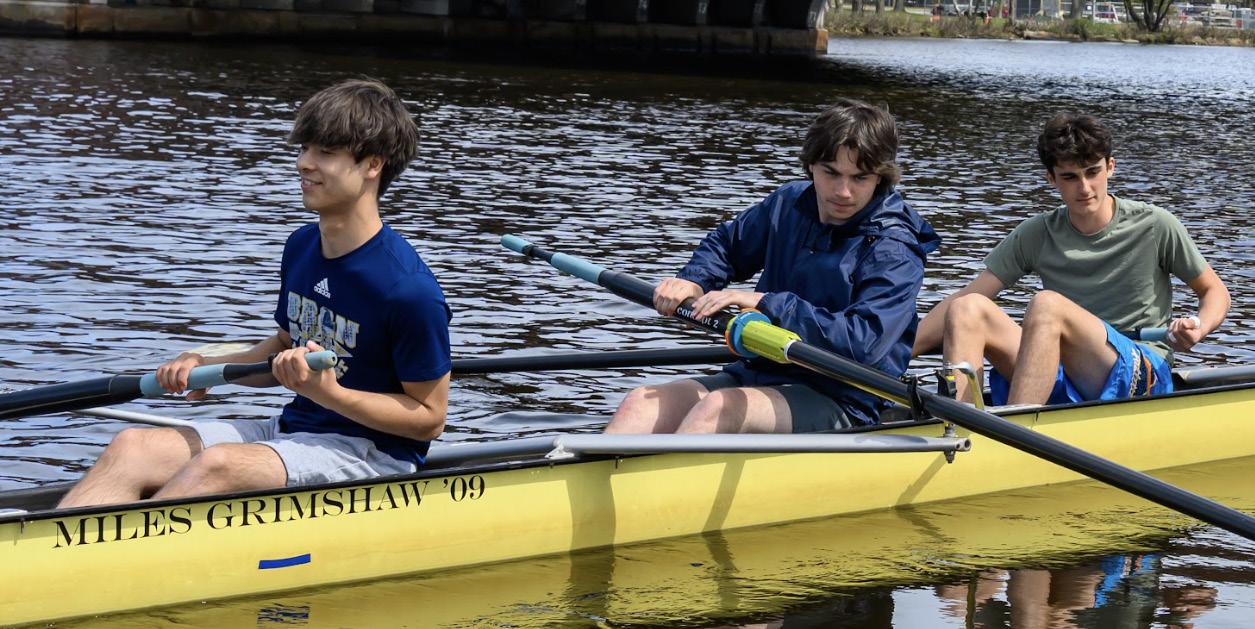
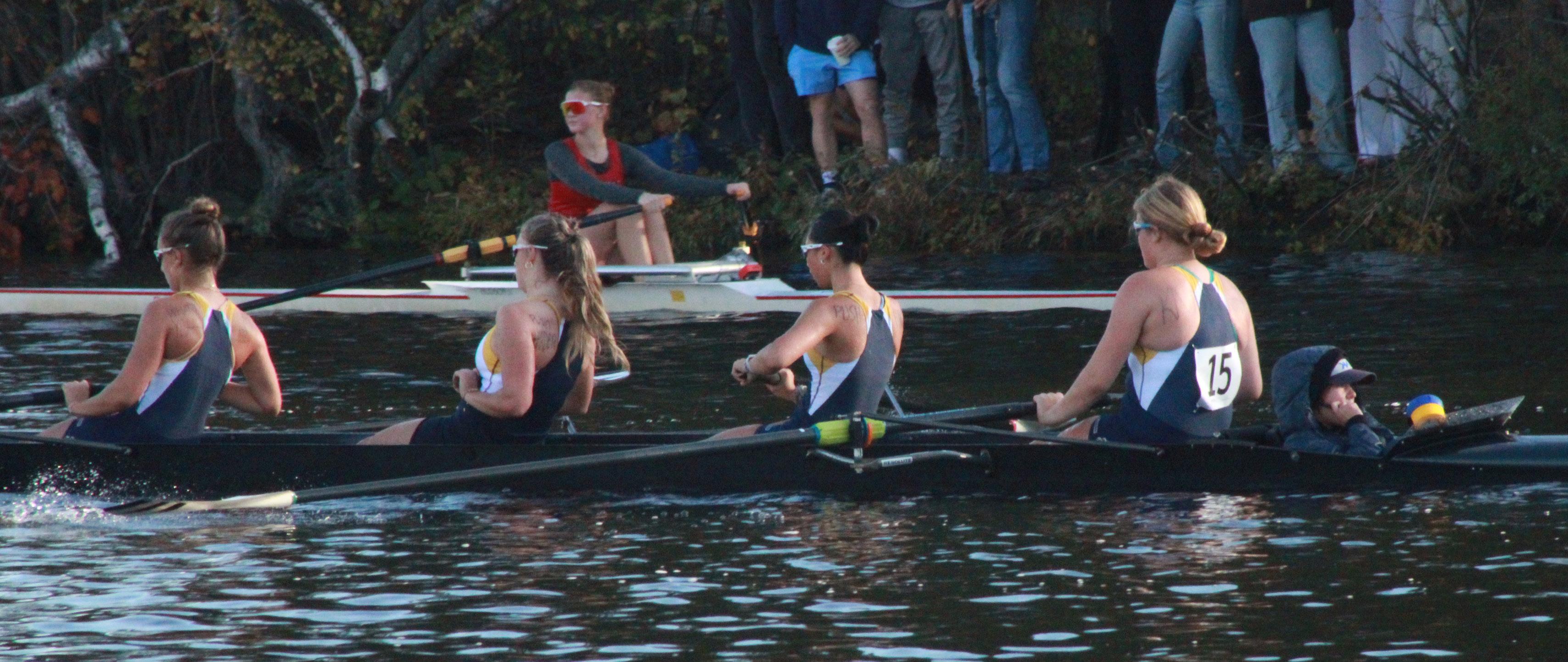
Following public outcry, an alternative plan was introduced on February 4 and approved by the MWRA board on February 25. While the revised plan avoids reclassification, it still permits ongoing sewage discharges into the river. The plan is expected to be released to the public by the end of April and will take effect in January 2027 if approved by the Massachusetts Department of Environmental Protection (MassDEP). Students who use the river for athletics say these conditions are already affecting them. Sarah Baker ’28 is among the rowers impacted by water quality issues.
CONTINUED ON PAGE 7

Often, people try to turn back time by replacing the present with pieces of older decades. We hear our parents say “back in the 80’s…” which, in our minds, brings up images of “The Breakfast Club,” puffy hair and neon fashion. Today, we are seeing a similar phenomenon: a 2016 rewind!
Famous figures and artists from a decade ago are reclaiming pop culture. After Justin Bieber’s performance at Coachella, when his voice shifted halfway through, it felt like audiences were transported right back to the 2016 era of music. In the weeks that followed, he surged back into popularity after years in the dark.
Kylie Jenner has had a similar grasp on her fans. She recently rebranded her makeup line to reflect her 2016 King Kylie era, leaning into bold, dramatic looks and moving away from the minimalism that defined her 2020 style.
Even students in school have brought back the 2016 fidget craze. Almost every student at the school has a NeeDoh or squishy to help them focus in class — so much so that people have made promproposals with “We NeeDoh go to prom together.” Even stores cannot keep up with the de-

mand: Within five minutes of restocking NeeDohs at Learning Express in Newton, the shelves are already empty again.
Due to this pop-culture swing, parties have started to lean into 2016 throwbacks, complete with chokers and mesh tops. Even beyond fashion and entertainment, the trend feels broader
Buckingham Browne & Nichols School
80 Gerry’s Landing Road Cambridge, MA 02138 vanguard@bbns.org, vanguard.bbns.org (617) 547-6100
Volume 55, Issue 1
Editor-in-Chief Lucia Longstreet-Lipson
Projects Editor Christine Tao
Opinions Editor Ethan Moran
Editorials Editor Scarlett Hawkins
On Campus Editor Christian Chow
Off Campus Editor
Pilar Bowen-Arce
Features Editor
Rima Demir
Sports Editor Kate Tregay
Managing Editor Mimi Shaywitz
Arts Editor Henry Carroll
Faculty Advisor Kim Whitney
Production Manager Harper Dubovik
Production Manager Sydney Ruiz
Digital Media Editor Adi Bhatia
Asst. Production Manager Lauren Li
Asst. Production Manager Noura Farahat
Photo Editor Katy Varadi
Asst. Photo Editor Tristan Ko
The Vanguard’s mission is to examine and engage the school community by providing news and information about events affecting it and by featuring the diverse range of people and perspectives that comprise it. We strive for fairness and accuracy in our content, and we strive to present that content with integrity and respect.
The Vanguard is the official student newspaper of the Buckingham Browne & Nichols Upper School, which has 534 students, 84 faculty members, and 79 staff members. Affiliated with the Columbia Scholastic Press Association, the paper is a forum for differing views and welcomes comments from its readers in the form of Letters to the Editor. No anonymous letters will be printed. The Vanguard reserves the right to edit all letters for length. The Vanguard publishes eight issues per annual volume and prints between 500 and 800 copies of each issue. About 200 of those are mailed out; the rest are distributed around campus.
Copyright © 2026 The Vanguard
Staff Writers: Olivia Bell, Jack Reinfeld, Sydney Xu, Leah Cooper, Maggie Whitney, David Zhou, Robbie Lally, Julia Agudelo, Alice Chung, Santi Cavallo, Viola Shepard, Vivian Cain-Weingram, Cata Longstreet-Lipson, Bradley Shen, Siran Arakelian, James Tao
Staff Photographers: Azariah Zewde
Staff Artists: Lauren Li, Sydney Ruiz, Sydney Xu, Rachel Goldberg, Christine Tao, Marin MacDonald, James Tao
in scope. Look at our political system, Donald Trump is back in office.
2016 seems to be all around us. But why do we feel the need to recycle the past? Is it nostalgia? Or is it because we are endlessly looking for something beyond the present?
The problem is that we tend to romanticize these past eras, remembering only the highlights while ignoring the flaws. While joining a themed party or buying a NeeDoh is harmless, it’s worth asking how much time we want to spend looking backward. Instead, let’s focus on shaping 2026 into something to remember.
As we get wrapped up in the final trimester of our school year, often denoted as the scariest trimester, culminating with the notorious AP Exams, the freshman history paper, the sophomore debates and the junior profile, let’s not lose ourselves in “the grind.” When we become too focused on academic pressure, we forget the amazing benefits the Upper School offers. So let’s all take a moment to refocus and discover the hidden gems of the school that we may be overlooking.
Had a long day of tests? Need a pick-me-up? Make your way to Ms. Farlow’s office and get yourself a piece of chocolate or candy in exchange for a simple joke. Make someone smile for the sugar you so desperately need. But if you’re feeling too grouchy to interact with anyone, you can head down the stairs to the college counseling office to grab a free piece of candy. Just remember to say thank you!

Now let’s talk about the academic sanctuary you can give yourself in this time of stress. The four rooms you often see filled with groups of friends in the study area are actually meant for productivity! You can book them yourself for a guaranteed quiet space, as we know the quiet room doesn’t always live up to its name, or for a meeting room.
Simply search the Almy Library, choose the room you would like, select a time or scan the QR code outside. While you’re at it, you might as well take advantage of free subscriptions to The Boston Globe and The New York Times!
Lastly, the cage, located in the NAC, is a lifesaver for any athletic mishaps or missing gear. You can find just about anything, from forgotten or misplaced items in the locker room, extra clothing like shorts, sports bras and socks, or even equipment like mouthguards and shin guards.
We know this time is stressful, but remember the best aspects of our school, and go take advantage of everything it offers!












Rima Demir Features Editor
Once a week, after her school day is over, Yoyo Zou ’27 calls an outside-of-school math and chemistry tutor. They help her keep up with her heavy workload and intense coursework, she said.
“In class, because there are multiple people, it’s hard to get all your personal questions answered. Having a set time with someone outside of school, who is just focusing on me, is really helpful,” she said.
Yoyo said it is difficult to find time to review material with her Upper School teachers.
“The classes I’m taking are already challenging, and when I don’t understand something, I need to go back and learn it myself,” Yoyo said. “I don’t always have time to meet with my teachers, and they don’t always have time either, so every week I end up relearning the material I don’t fully understand.”
She isn’t alone — in an informal Vanguard survey, 55% of students reported using some form of tutoring outside of school. Among them is Valor McGrath ’28, who said she reviews difficult class material with her tutor to get a deeper understanding of the topic.
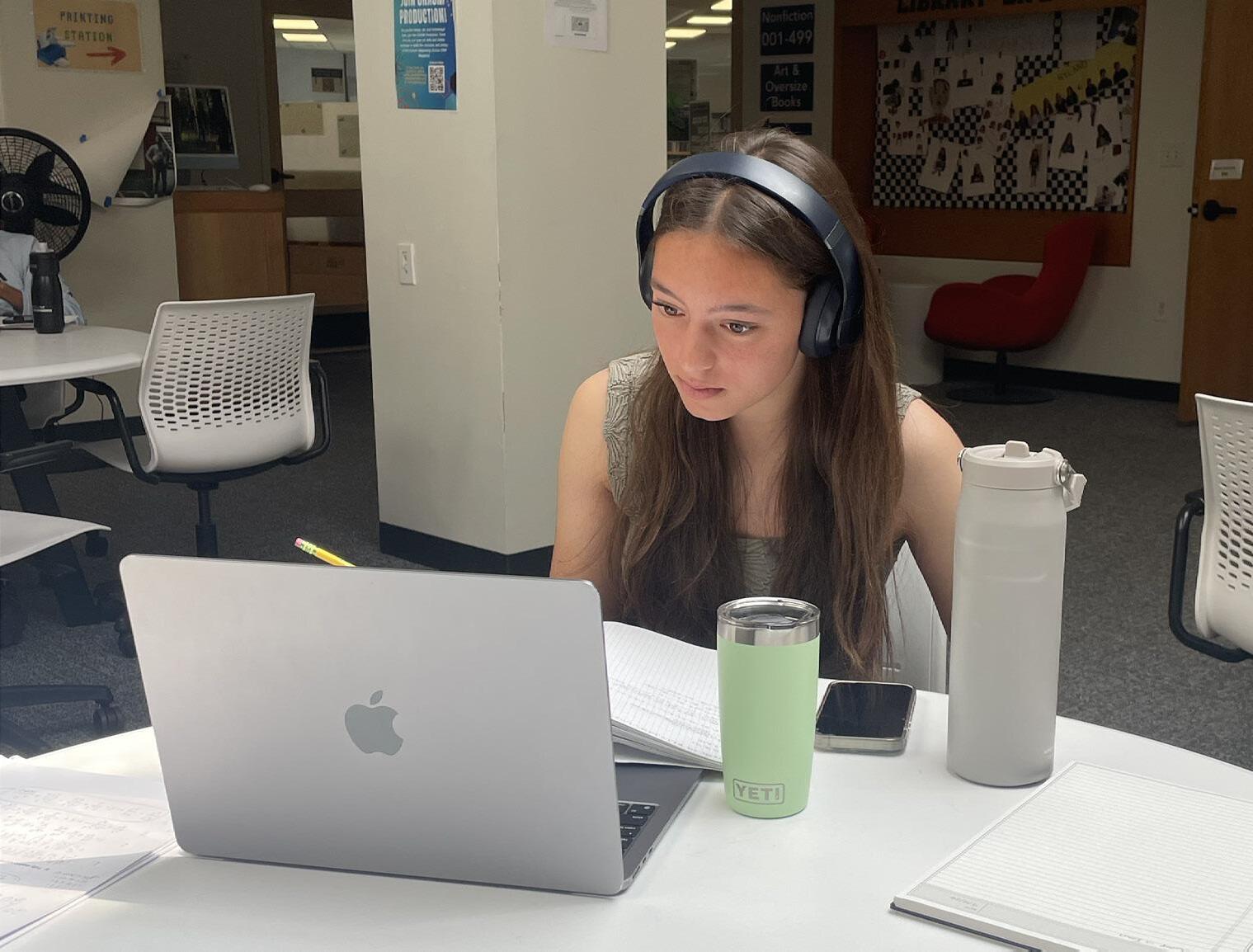
“The reason my tutor helps me isn’t a factor of whether I’m smart or not. She synthesizes the information to make it easier for me, with more time than I have in class,” she said.
Valor said her tutor explains material from a different perspective.
“Math is not my strongest subject, so getting the extra explanation and different reasoning from her is
mainly why an outside tutor is very helpful to me,” she said. “Overall, it’s made me feel a lot more secure and confident in my knowledge. It’s not replacing the math I learn at school but adding on to it.”
Though her tutoring builds her confidence, Valor said it can also present challenges.
“The hardest thing about work-
ing with my tutor is that she doesn’t go to this school and doesn’t know the curriculum,” Valor said. “She has the math knowledge to help me, but she doesn’t know the teachers or how the school works.”
The school has its own Academic Center offering study spaces, study groups and peer tutoring, as well as direct instruction from faculty learning specialists.
“Students engage in tutoring for a wide range of reasons. In the Academic Center, we can help students determine the right type of support to fit their needs,” The Academic Center said in a statement to The Vanguard . They emphasize their coordination with faculty when supporting students.
“We work closely with teachers to understand what each student would benefit from before we recommend any outside tutoring services or supports.”
Georgia West ’29 uses the peer tutor program offered by the Academic Center.
“My peer tutor knows how strict a grader my teacher is, and she has an understanding of the kinds of questions that will be asked and the kinds of answers you need to give.”
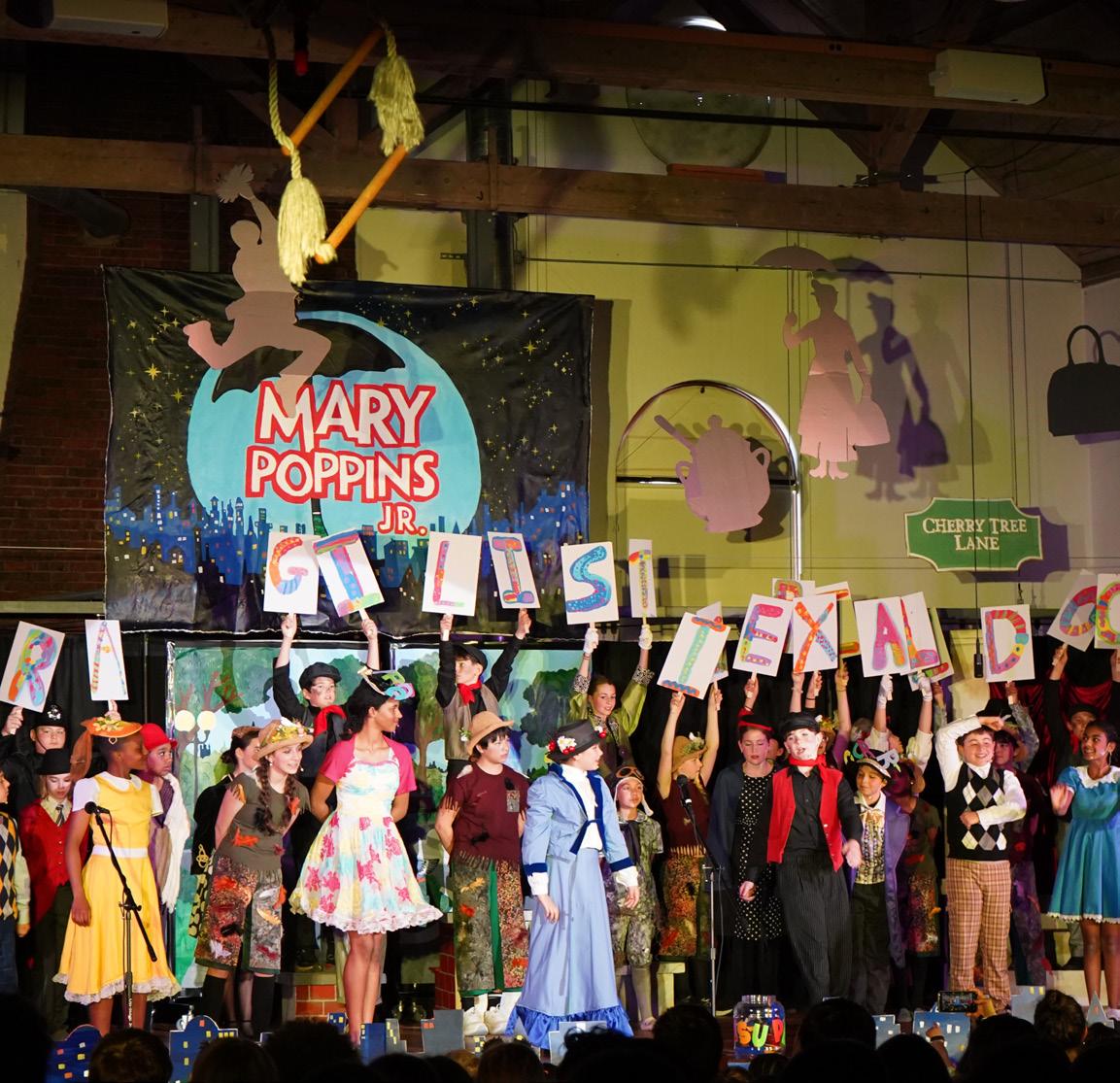
On April 30, the sixth grade class performed a rendition of “Mary Poppins Jr.” for the annual sixth grade musical – a Lower School (LS) tradition that has been taking place for 17 years. Sixth graders performed for the LS community during the school day and for families and friends in the evening. Rehearsal for the musical started in January, but Drama Teacher Jenny Lifson started the planning work in November. Sixth graders also help make the sets for the musical.
—Mimi Shaywitz
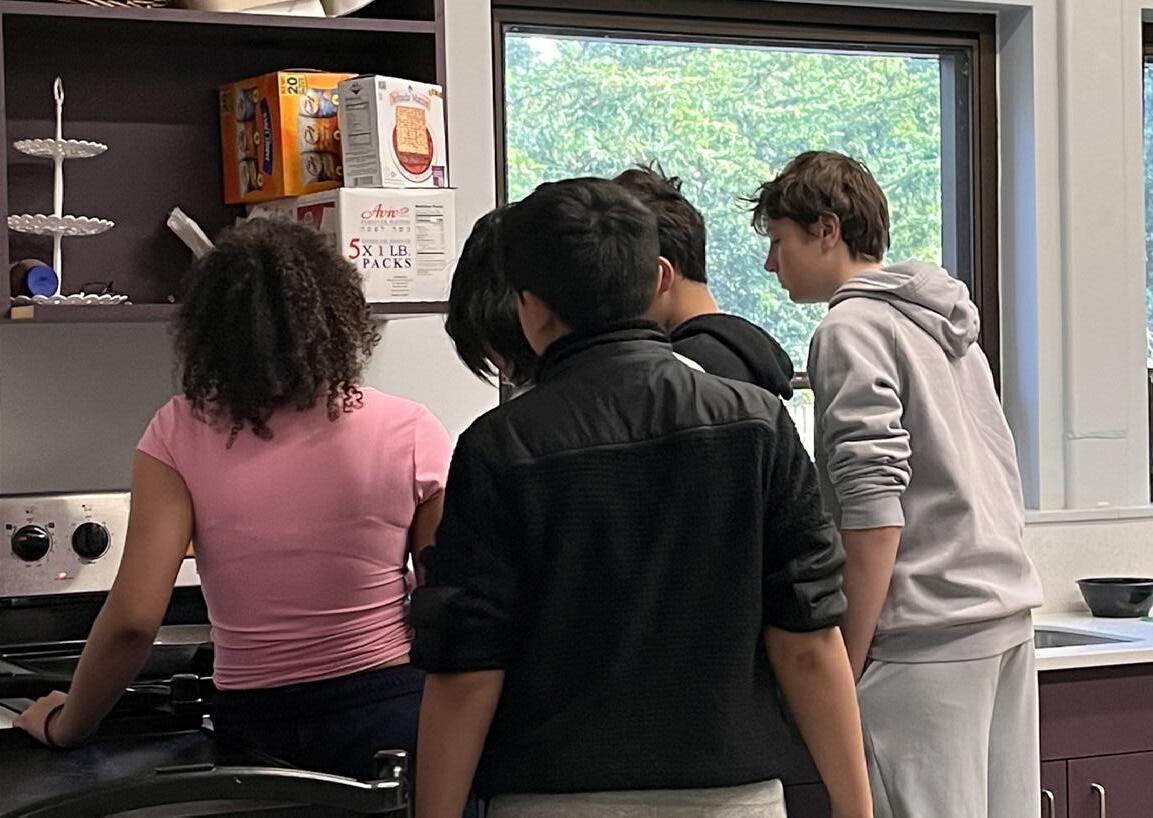
For the second year, the eighth graders at the Middle School (MS) are working on their Spring Projects. Led by the eighth grade advising team, the five-week-long project aims to facilitate leadership and community engagement through workshops. Every Thursday morning during homeroom, eighth graders spend 50 minutes participating in their chosen workshop. At the end of the project, students will present what they learned to their grade.
Over half of the workshops are student-led, such as the Sports Club workshop led by Alaia Hassan and Ela Gonzolez (both ’30). Members of this workshop will travel to the Lower School during the last three weeks of the project to teach younger students how to play sports.
—Mimi Shaywitz
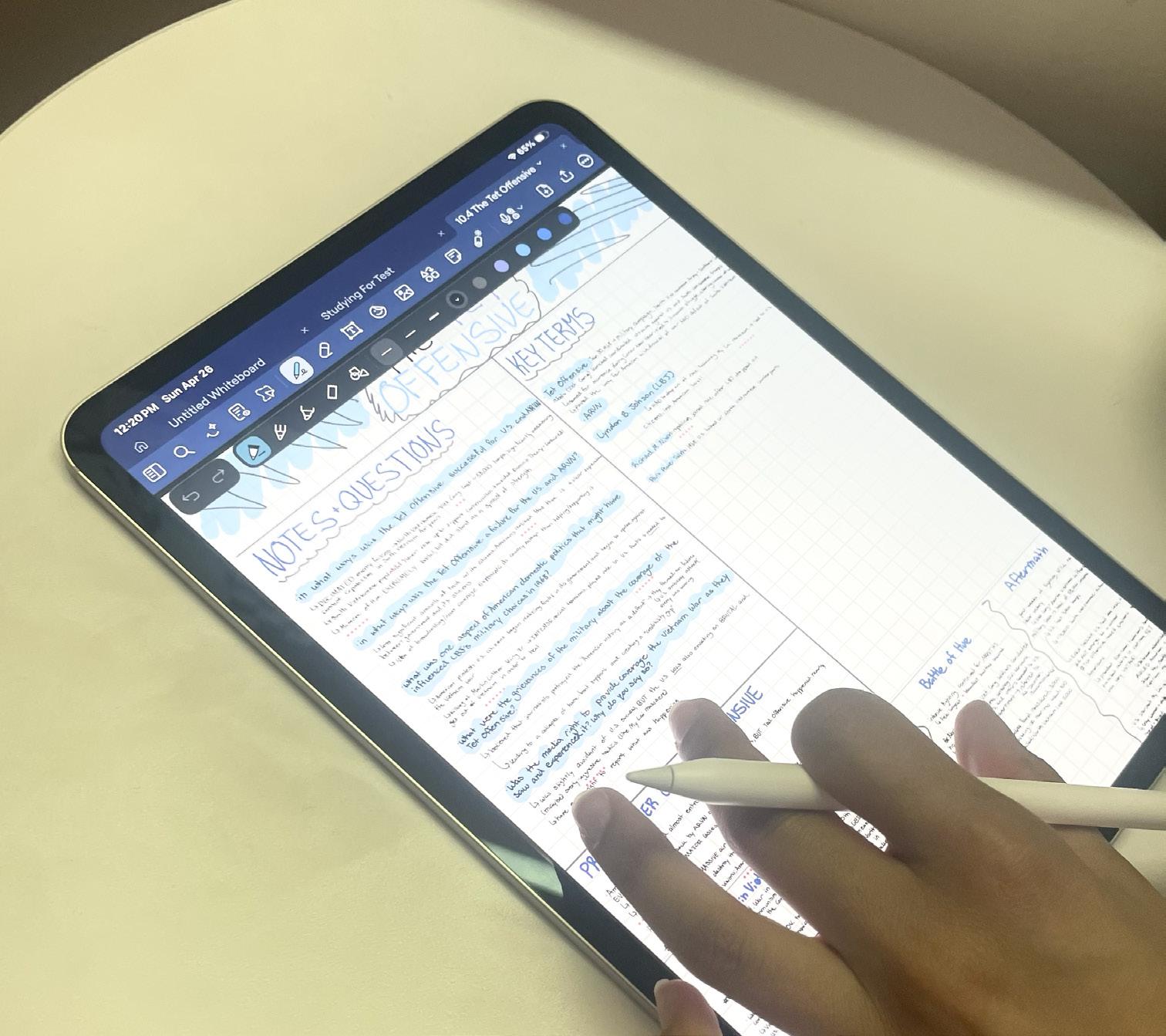
Conrad Straight Nissen ’28 hasn’t come to school with a single notebook in his bag since freshman year, he said. As iPads and other forms of digital note-taking devices become more common in Upper School (US) classrooms, students and teachers discuss whether they should replace hand-written notes.
“My backpack is so light,” Conrad said. “I don’t have a single notebook in it, and it saves so much space only having to carry my iPad.”
Conrad said he has never been tempted to open another app during class.
“When I’m in class, I’m very locked in. I don’t really go to other apps. The teacher can see if I do.”
However, some US teachers do not allow students to take notes digitally. English Teacher Beth McNamara restricts the use of screens in her classes, except for students with official accommodations.
“In the back row, I can’t see what’s on their screens. It could be the greatest set of notes ever. It could be shoe shopping. There’s no reason to risk that.”
Having students handwrite notes ensures they focus on the class material, she said.
“The temptation with digital note-taking is to try to get every word down as quickly as you can, so you stop thinking about what you’re writing,” Ms. McNamara said. “If
you’re actually handwriting on paper, you know you can’t keep up with the pace because it takes longer to write. You have to slow down and do the writing in a way that makes sense to you.”
Although the iPad’s smoother surface lets her write more detailed notes, JJ Lally ’28 said the speed can affect her memory retention.
“I do forget what I write a lot, which is why I make a lot of flashcards physically on paper,” JJ said.
“My iPad definitely feels different from paper, which is why I practice test questions on paper, because I’m
taking the tests on paper.”
For JJ, her iPad has opened up new options that she can’t get with paper.
“I can change all the colors of my notes and move things around without having to rewrite them,” JJ said. “Especially when I’m doing geometry, I can make shapes a lot easier, which helps with copying diagrams and saving time.”
Ayaan Nallicheri ’27 said Notability, an organizational app for the iPad, has improved his comprehension.
“I think the features help me,” Ayaan said. “I can differentiate con-
CONTINUED FROM PAGE 1
According to History Department Head Dr. Stacey Spring, students have become increasingly likely to use AI tools to complete steps of the research paper process. As in this case, if a teacher suspects a student of using AI, they will meet with the student to discuss it.
“First, the teacher speaks to the student, goes through what’s there, and why they think it is a problem,” Dr. Spring said. “If there’s vocabulary that the student can’t identify or if they can’t explain their own argument or explain what was in a paragraph, then that is when we get into a situation where students could potentially be asked to redo work and the stated penalties could go into effect.”
While this process may help teachers catch instances of AI use, it can also lead to false accusations. Another student, who also wished to remain anonymous, similarly had her research paper flagged by an AI detection tool.
“I was sitting in the library, and my teacher came up to me and was like, ‘Hey, can we talk?’” she said.
“He was like, ‘I don’t mean to accuse you, but this AI detector said that 70% of your paper was AI,’ and I was just in shock.”
The student said the discussion with her teacher felt disappointing and uncomfortable, especially since her Google Doc showed the many hours she had spent writing.
“I started crying because I was so overwhelmed,” she said. “I was a little frustrated because I spent all this time, and he saw that I had spent all that time, and then to be accused of using AI felt very invalidating.”
After examining the revision history, her teacher decided the writing was hers, and she did not face any consequences. However, she said the experience has impacted her relationship with her teacher.
“I think he lost a little bit of trust in me as a student, which feels very
cepts so much easier. I’m writing things down in different colors, different bullet points and different page types. If I tried to do this stuff on paper, it would take too much time.”
Unlike Ayaan, US Math Teacher Mara Vatz said she prefers the organization of paper notes.
“Digitally, notes get compressed into tiny files, so they’re harder to distinguish from each other,” Ms. Vatz said. “On paper, you can see them all the time. You can put two full sheets of paper side by side and constantly flip back to the information. There’s nothing that replaces just having physical copies of something.”
Lucas Ho ’28 takes notes digitally on a reMarkable tablet, a device designed solely for note-taking. The reMarkable does not have web browsing. He said the organizational benefits mirror those of an iPad. He can export documents, share notes with classmates and view them across devices.
“With paper, you have to physically place everything in front of you,” Lucas said. “But with the reMarkable, you can upload documents to your computer, phone and any other device, all simultaneously. If you have multiple devices, you can view six different pages at once, all within a common online ecosystem.”
As of now, there is no schoolwide policy addressing the use of digital note-taking systems.
unfair to me, because if I didn’t do anything, then why should this affect our relationship?” she said. “I remember before that I could go and ask him about anything, and I wasn’t worried that he would be mad. But after that, I was very hesitant to talk to him.”
US History teacher Jessica Stokes recognizes that AI detection tools are imperfect and is hesitant to punish students when potential AI use is ambiguous.
“It’s sort of like how in The United States’ legal system, the accused are innocent until proven guilty,” she said. “If I can’t be sure, I would rather let somebody who’s guilty go free than injure a relationship with a student by making an incorrect accusation.”
Instead of relying on AI detection tools to combat AI-generated writing, Ms. Stokes focuses on modifying the research paper process.
“This year, I did oral defenses, where students would come in at
wherever they were in the process and tell me what they’ve learned since we last met, how that relates to their research question, and then what next steps they need to take,” she said. “I think students became more invested in their topics and in what they wanted it to say.”
This summer, a committee of history teachers will discuss how the research paper process can be developed to address concerns around AI.
“We recognize that AI detectors are a reactive response and have a host of shortcomings,” Ms. Stokes said. “More to the point, though, we believe our job is to develop students’ critical thinking, synthesis and communication skills and to be able to fairly measure the degrees to which students have developed those skills. AI detection may be a component of that, but it is not the primary focus. The puzzle is much bigger than just that.”
The annual Marina Keegan ’08 Fellowship is an opportunity for Upper School students to pursue projects that combine creativity with community impact. Funded by the Marina Keegan Memorial Fund, the fellowship provides students with resources to develop projects connected to art and activism while honoring Marina’s legacy. This year’s recipients are Erin Yu ’27 and Mirabel Ge ’27.
Erin Yu ’27 will pursue a poetry anthology project based on the stories and experiences of Chinese immigrants in her community.
“I’m going to be writing poetry based on the interviews in both Mandarin and English,” she said. “My goal is to use poetry to capture the nuances of language and the impact of translation.”
She was inspired by her role as the Upper School (US) poet laureate.
“It’s a way to write about my own identity and share a piece of myself,” she said. “I think continuing to do poetry for this fellowship is going to help me strengthen my skills and also share other people’s experiences with a theme of culture and identity.”
The goal of her project is to demonstrate the importance of language in a multilingual society by sharing her anthology with her local and school communities. She plans to create a chapter book and distribute it through public libraries, as well as the US’s Almy Library.
“I want my project to highlight what language can do for you in the United States and show that there are others here that don’t speak English or are treated differently because of the language that they speak,” she said.
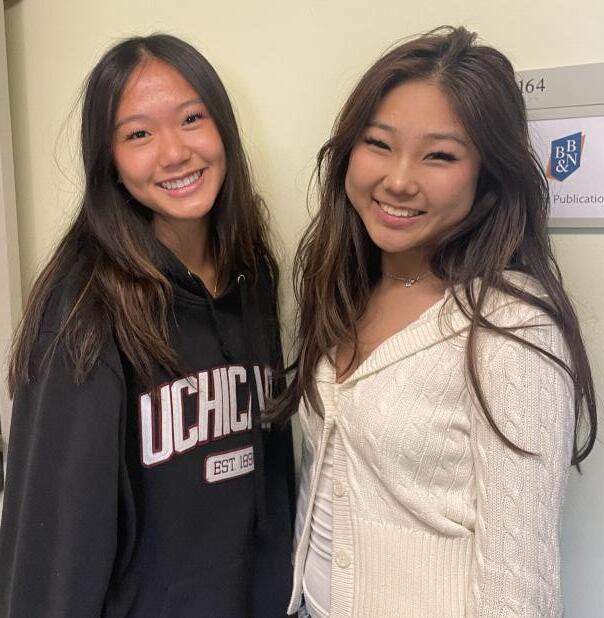
Inspired by her grandmother’s experience with late-stage Alzheimer’s disease, Mirabel Ge ’27 will lead culinary therapy workshops for elderly residents in memory care homes.
“In all my childhood memories of her, I’ve always associated food with my grandparents every time I went to their house,” she said. “My family loves to eat and cook together and it’s also a passion of mine.”
Mirabel will direct hands-on cooking activities.
“I’m going to host cooking workshops, like baking, and hopefully it’s a mentally stimulating activity to connect with the community,” she said. Mirabel hopes these workshops will evoke a sense of comfort for the residents.
“When you get put into these memory care homes, you’re not with your family and it’s a new environment,” she said. “I hope that through food, they’re able to be reminded of cooking in a community or family.”
She plans to host continuous workshops throughout the summer in different memory care homes.
Bradley Shen Contributing writer
One-hundred and sixty-five of the most skilled debaters and public speakers from 17 different countries gathered at The World’s Individual Debating & Public Speaking Championship in Bristol, England. They competed in four events: prepared speech, interpretive reading, impromptu speaking and debate. Among them were Co-presidents of Speech and Debate Club Ahna Jung ’27 and Salar Sekhavat ’26, representing both the Upper School community and the United States. Ahna was a debate semifinalist, while Salar earned the title of After Dinner Speech champion. Debate Club Advisor and English Teacher Talayah Hudson attended with the school’s team as well.
Salar felt confident going into the tournament.
“Most of my preparations happened in the week leading up to the competition, partly due to my late qualification,” he said. “So I did prepare less than last year. Despite this, I actually felt very solid in the end. I had a speech and interpretive reading that I loved.”
Speech and debate has helped Salar develop skills he can use outside of competitions.
“Speech and debate has helped me with analytical thinking and the ability to break things down intellectually, especially with other people,” he said. “I learned a lot of facts from debate, but it’s also a toolset I can apply to the rest of my life to break problems down and figure out what’s going on around me.”
Ahna was excited to partake in the tournament and felt grateful for
the opportunity.
“BB&N has so many strong debaters and strong speakers,” she said. “I felt very proud of being able to represent BB&N at the world level and of all of my debate teammates back at BB&N, as well.”
Although time-consuming, Ahna similarly finds speech and debate rewarding.
“I try to prepare my speeches a good bit ahead of time so I can have time to do both, but it’s definitely hard,” she said. “Speaking is such an important skill in all facets of life. Debate has helped me hone that skill and
CONTINUED FROM PAGE 1
“About four days before Head of the Charles, I was selected to row the U17 boat, and then suddenly, after practice one day, I got really sick,” she said. “I was throwing up, and I couldn’t come to school for several days. I couldn’t row, and I was afraid I was going to lose my seat in the boat. It was after we rowed down to the Harvard Bridge, which is where the cyanobacteria blooms were the most serious, and my symptoms were on par with that, so that’s what I figured it was.”
Cyanobacteria blooms in the Charles River are associated with excess nutrients in sewage released during overflow events and can pose health risks.
Arrianna Prioa, Senior Community Organizer at the Charles River Watershed Association (CRWA), said the issue extends beyond a single river.
“This is not just unique to the Charles River. This is, unfortunately, an issue that affects rivers across the state. There are real environmental impacts and public health concerns. CSOs can carry bacteria, viruses, pharmaceuticals and trash, making contact with the water unsafe for 48 hours after a discharge and rendering the river very inaccessible,” she said.
Boston’s combined sewer system is outdated, making it unable to handle the stormwater produced by large storms, Arrianna said. When these
helped me be a little bit more confident in my public speaking.”
Advisor Talayah Hudson said these skills can be applied in the classroom.
“Argumentation, logic and rhetoric are skills that translate very obviously into writing and into discussions, as well as your ability to critically think,” she said. “Debate also allows students to put what they have learned in their humanities or even science-based classes into a realworld context.”
Ms. Hudson is proud of Ahna and Salar for their consistent hard work and commitment.
“I’ve been able to see Ahna and Salar grow into confident public speakers, effective leaders and orators,” she said. “Salar and Ahna are truly dedicated to the game of Speech and Debate.”
Their success has also impacted younger Speech and Debate Club members. Rishaan Chowdhury ’29 said seeing Salar and Ahna compete is motivating.
“Having teammates who compete at such a high level is really cool,” he said. “It’s rare to have such talented teammates, and they really improve the overall skill level of the team.”
storms occur, untreated or partially treated sewage from wastewater pipes combines with runoff from storm drains and floods into the same pipes that lead to the Charles River.
“Climate change is causing more intense storms, so we’re just seeing more and more sewage discharges.”
EcoReps member Tess Lessig ’28 said the proposal could negatively affect those who use the river.
“As a sustainability advocate, looking at the welfare of the people around it, I would say the plan most negatively impacts inhabit-
ants around the river,” she said. “I definitely don’t think it should be passed.”
The CRWA estimates it could cost taxpayers about $46 per household annually to better control CSOs. The MWRA has cited cost as a major factor in its decision.
Cambridge resident and Head of the Charles alternate Julia Agudelo ’28 said it is worth the price.
Girls’ Varsity Crew member Caroline Killory ’27 said she was surprised by the lack of awareness surrounding the issue.
“As someone who spends a lot of time on the river, that’s really disgusting,” she said. “There’s not as much publicity as there should be to warn people. People don’t really know about the sewage.”
“The affordability comes at a cost of the environment being less protected as well as the rowers that are out on the river every day,” she said. “We’re so fortunate to live in a city that has so much tax money coming into it and funding it and fixing the parks, and this is a relatively wealthy city, it’s crazy.”
My priority is to elevate student voices and partner respectfully with our administration and faculty to promote and ensure consistent learning experience and consistent standards, including consistent grading, across different sections of the same classes.
I’d like to implement a multi-grade Upper School treasury to help fund dances or other events. Maybe having a joint freshman and sophomore event and a joint junior and senior event.
Ninth grade biology. I liked that class. Something with AI. It would be cool to teach kids how to use it because I think that’ll be our future.

Drawing by Christine Tao
It’s

It’s
It’s



It’s

Lucie Becker Contributing Writer
A low hum of chatter fills the halls of the Institute of Contemporary Art (ICA) as Upper School (US) students move through galleries of colorful portraits, textiles and images reflecting diverse cultures.
On Friday, April 10, US Visual Arts Teacher Laura Tangusso and six students visited the ICA as part of the Petropoulos Art Scholars Program. The exhibitions highlighted Indigenous, South African and African American artists.
James Tao ’29 said he had wanted to visit the ICA for a long time.
“The exhibit exposed me to many unique and underrepresented pieces that I’d never seen before,” James said. “There were large statues of contemporary-looking figures, and another piece consisted of rows of long black hanging strings that formed an orange triangle shape in the center … The entire exhibit was very interesting and different than just paintings and more

traditional pieces.”
He said the experience expanded his understanding of art.
“The event definitely widened my perspective on what art can be,” James said. “There were a lot of very creative paintings and objects that I saw, and that I hadn’t seen before.”
This event marked the first time students could visit the ICA as part of a Petropoulos event. Ms. Tangusso said it was a great experience and the exhibits were diverse.
“One was a retrospective of African American art by a program in Boston that was started years ago to support and promote African American art and the other was to show more groups that tend to be underrepresented, including indigenous people and women,” she said.
She said museum visits help students engage with a range of artistic styles.
“The intention of the program is to provide opportunities for students to get out into the greater Boston area and see art in all its various forms,” Ms. Tangusso said.

“My goal for this year was to honor that and to give people the opportunity to see things they might not have otherwise.”
The program’s events are open to all students, with additional recognition for those who attend regularly.
“The way the Petropoulos works,
anybody can come to the events, and students who come to a majority are designated a “Petropoulos Scholar” on their transcript for the school year,” Ms. Tangusso said. “I hope that more people will take advantage of the program in the future, because it’s really a great program.”

CONTINUED FROM PAGE 1
Dr. Sánchez Gómez said those who do not understand Spanish can still follow along.
“Because it’s theater, and there’s so much acting, the audience can follow what is happening,” Dr. Sánchez Gómez said. “The plays are pretty intuitive and self-explanatory.”
Abby Brown ’26 played the lead in her group’s production: A fiancée at her bachelorette party in Las Vegas who fell in love with the chief of a cowboy gang. Performing took Abby out of her comfort zone, she said.
“Performing was just a big moment of pride. For me, it was a big thing to tell myself I can do these things that I’m nervous about,” Abby said. “What else can I do when I push myself?”
Ashleen Pierre ’26 played a detective tracking down the cowboy gang. She said the group considered audience members who could not understand Spanish when scripting the play.
“It’s in the props, the costumes and things that they’ve seen, so they can pick up on context clues,” Ashleen said. “We try to make sure the acting is good enough where you don’t really need to understand the words to know what’s going on.”

Ashleen said the work put into the production stayed with her the most.
“It brought us together because we worked so hard producing the show. We had a lot of fun together, making the play and performing to people who watched it,” she said.
Sylvia Kunst ’27, who takes both
Spanish and French, watched her classmates in a new setting.
“I really liked seeing everyone’s personality come out during the plays and seeing that the people were enjoying themselves,” Sylvia said. “Everyone seemed pretty comfortable on stage, and everyone had their lines well-memorized.”
Sylvia said the language gap was not an issue.
“I got most of it by the end,” she said. “The plot is always unique and unexpected. I feel like not entirely knowing what’s going on makes the plays funnier, too.”




“I think it’s significant in a big way, but very different way. The Apollo Missions were about seeing what was actually pos sible. It was such a big technological breakthrough every single time they made a new level of the mission.”
“The Artemis II missions feel like a triumphant return. It feels like it’s showing us what’s still possible. Artemis II flew the furthest away from the Earth that anyone’s ever been, and that’s a pretty amazing thing

Have you noticed a cant is the Artemis II mission compared


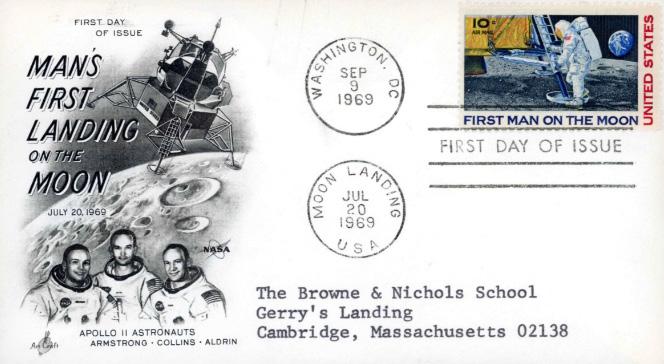

tablishing a lunar base. Looking at the lunar base, can humans actually survive in space as long as they need to? Maybe we’ll find out that humans simply can not exist off the Earth for as long as they need in order to make it to Mars given the extraordinary amount of distance and time that involves.”




What excites you personally about the Artemis II mission?

“It’s the first crewed mission to go around the moon in over 50 years, which feels like we’re actually witnessing proper history in real life. It’s interesting that we’re also testing technology and systems that could potentially take humans to Mars at some point in the near future. It’s a nice bridge between past achievements like the Apollo Missions, the future of space exploration and the idea of potentially inhabiting another planet.”
How do you respond to people who think the mission isn’t important?
Space exploration drives innovation in many ways people don’t al ways notice because we are advancing in engineering, material science and medical technology which comes from research that’s tied to space missions. Beyond that, missions like Artemis are inspiring our generation, which are fu ture scientists, engineers and thinkers.”
Do your friends know or care about Artemis II?


“My friends know about Artemis II, and a lot of them care a lot. For some of them, it’s because they are personally interested in aerospace, but for a lot of them, it’s something to be celebrated in general. This is a flagship mission that’s super visible and it’s pushing technology forward. Everyone on Earth loves the crew, the people are incredible.”
Do you think students today pay enough attention to scientific or historic events?
“I would say no, but it’s definitely not their fault. The focus is on the current political climate, the actual climate because it’s a lot more distressing and more pressing than scientific or historical events. Science and history will continue on.”


Do your parents have a large age gap?

Are your parents divorced?

Are you the youngest, oldest or middle child?









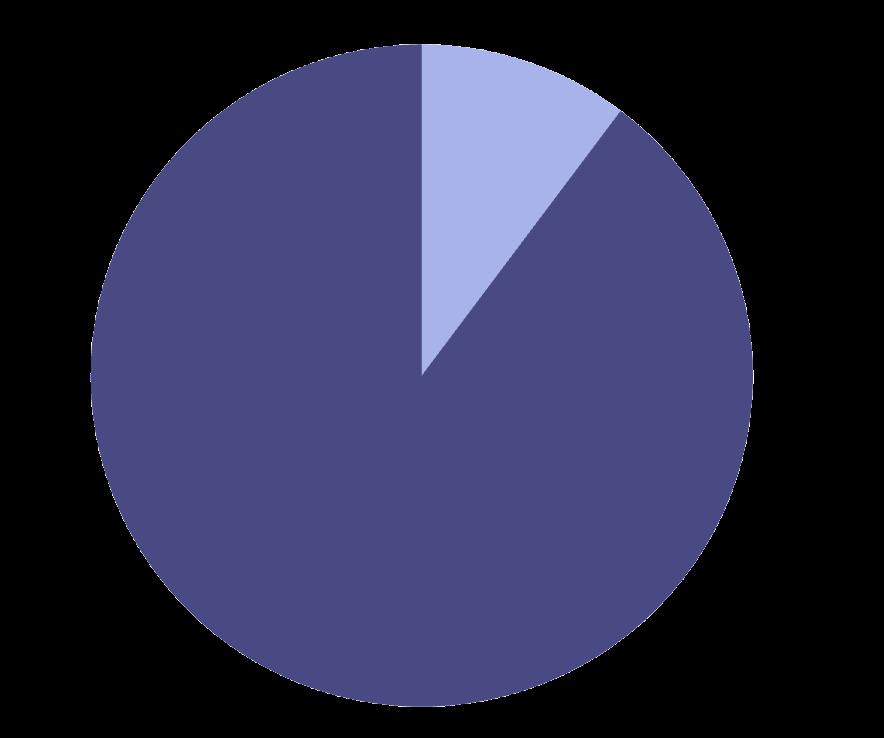
Out of the 10.3% of students who said yes, eight were split in the Euro-Asian group, five in the Multi-racial group, four in the Latino with other heritage groups, one in the Multi-European group and one in the Inter-Asian group. Among them, a few examples of Euro-Asian interracial marriages included Belarussian and Chinese, Korean and European and White and Indian. Among the Multi-racial group, a few examples included African American and German, African American and Austrian and European and Ivorian. Finally, examples from the Latino with other heritage groups included Latino and West Indian as well as White and Mexican.


Filled up your tank recently? If you happen to drive—or sit in the passenger seat—you’ve probably noticed something: gas prices are kind of out of control.
In Massachusetts right now, the average price for a gallon of gas is hovering around $3.90, and in Boston it’s been even higher, getting to around $4.30 per gallon this spring. That might not sound shocking for the non-drivers out there, but let’s put it into perspective. Just a year ago, gas in Massachusetts was closer to $3.07 per gallon. That’s roughly a 25-30% increase in a year for the exact same thing. And we’re kind of lucky, being on the East Coast, because in California, these prices have shot up to as high as $6 per gallon.

But what’s going on? Why have gas prices skyrocketed? They aren’t just about your local Mobil—they’re about the entire world and the state it’s in.
Gasoline prices are driven mainly by the price of oil, and oil is a global commodity. In fact, according to the American Petroleum Institute, about half the price you pay at a pump comes directly from crude oil costs. That means events happening thousands of miles away such as wars, political tensions and production cuts can directly affect the price to fill up your tank in Cambridge.
Right now, one of the biggest reasons for rising prices is the ongoing tensions involving Iran, which have disrupted global oil supply, pushing prices upward. Economists warn that these effects could linger. As Moody’s economist Mark Zandi put it, “the damage has already been done… there’s no going back on oil prices.”
And it’s not just conflict. Gas prices are affected by a combination of factors: supply, demand, refining costs, transportation and taxes.
But what does that actually mean for us students?
If you drive, the answer is clear. Gas gets expensive fast, and now, a typical tank might cost $50-$70. Multiply that number by the weekly driving to school, practice or Arsenal, and suddenly gas becomes one of your biggest living expenses. Because of it, people carpool more, skip the unnecessary trips and get stingier about rides. Studies even show that as gas prices rise, people drive less and rely more on public transit or walking.
“Well, I’m a sophomore or a junior without my license. Why should I care?” Here’s why: Gas prices affect everything.
Think about how literally anything gets to you. Food? Delivered by a truck? Clothes? Shipped across oceans. Amazon packages? Same story. Fuel is one of the biggest costs in transportation, so when gas prices rise, shopping costs rise with it. And when shipping costs rise, companies raise their prices to match.
That’s why economists often say that gas prices are one of the most “visible” parts of inflation. People notice them immediately, and they affect how we feel about the economy overall.
And it goes even deeper. When people spend more on gas, they have less money for everything else. Economists call this a “shock” to consumer spending, but you don’t need to take AP Macro to understand it. If gas is eating up more of your budget, something else has to give.
“Well, I’m a sophomore or a junior without my license. Why should I care?” Here’s why: Gas prices affect everything.
This ripple effect that follows can hit businesses too. According to Howard Schneider, a three-time Pulitzer Prize judge, higher gas costs can pull money away from other spending, which can eventually slow hiring and even investment. So, even if you’ve never driven a car in your life, gas prices are still majorly affecting your daily life in what you pay, what Butterbird charges for a chicken sandwich, and how the economy feels overall.
To be honest, there is no easy fix to it. Gas prices are inherently volatile because oil markets are very much global and unpredictable. A single conflict, natural disaster, or policy change can send prices swinging side to side overnight.
So what can a high school student at this school do? Realistically, almost nothing. You can carpool and avoid unnecessary joyrides. But beyond that, gas prices are mostly out of any individual’s control, besides maybe President Donald Trump.
So the next time gas jumps another 15 cents per gallon overnight, don’t get too angry. Recognize that it’s reflecting a complex global system. And unfortunately, it’s not going anywhere anytime soon.
Anything that my brother ate, I didn’t. Anything he touched, I sanitized. If he sat in the left-back seat of Dad’s Ford Explorer, you would find me in the right-hand seat. I followed it to a T, because this was the fourth command in an unlabeled list. Scrawled in the back of an old notebook, my list was a “How to live the perfect life” (i.e., clean and content). Although my handwriting had tried for perfection, the dots were far too big for their i’s, and the periods that ended sentences seemed to shout, “STOP, OR ELSE.” I had written it as a third grader, perched on a love seat that overlooked a backyard. The cushion was balanced between the window and the linoleum floor that glistened five feet below. My locked knees, hunched shoulders and list kept me safe from falling.
Like any A+ chemistry procedure, the list began with a verb. Not the colorful or active verbs used in English papers, just one word: don’t. Don’t touch the bathroom doorknob. (My sister had picked her nose and then touched it). Don’t use the fork with the scratch on the right side (it had been used to dig holes in the backyard once). Occasionally, the commands were not germophobic but were proactive instead. For example, number six: Always say goodnight to Mom and Dad twice. Once when they are in the room, and once when they walk down the stairs. This one was asterisked: *Walls are thick. Yell down. The “or else” section of each command was implied, of course. If you sat in that left seat, you would get (insert cough or disease). If mom didn’t reply to your second “GOOD NIGHT,” either you or she was as good as dead. If you gave the satisfaction of reacting to anyone, or God forbid, crying, you had lost.
“Confirmation bias pioneered my childhood, shepherding me through flus, freak accidents and uncontrollable frizz. But that’s it; my list was the only hand I held.”
The worst part of this guide: it worked. Confirmation bias pioneered my childhood, shepherding me through flus, freak accidents and uncontrollable frizz. But that’s it; my list was the only hand I held. So of course, when Elliott stuck his five nailbitten fingers at the Easter blessing in 2018, you best believe I didn’t hold them. Holding that hand meant that I’d let someone close, which then meant they could hurt me, which would 100% end in tears. I would not have that. Looking back, my perception releases its focus on the hand. It adjusts to the boy who had reached out in hopes of grabbing onto a sister that was drifting away; his blond wisps curl around his ears as his body melts into a chair far too big. And it wasn’t the only time or the only hand I turned away. My younger sister hated me more than she wanted to be me, and Mom and Dad were disappointed that I couldn’t be patient with any of them (BECAUSE, BY THE WAY, BEING PATIENT WASN’T ON THE LIST).


Although that boy hasn’t forgiven me, the man my brother is becoming seems to be getting there. With each Chipotle burrito I buy and war movie I let him pick, hopefully, I’m working my way back. The list I wrote 10 years ago did what it was supposed to do; it protected me from germs and danger. But I also ended up building a wall that kept me safe from rejection, yet it was the loneliest place I could think of. I’m still in there, but my “How to” (not die, not get sick, not cry, etc.) list has been tossed.
Loving your siblings is like brushing your teeth or doing the dishes: you do it because you have to, not necessarily because you want to. What I’ve learned is that with every interaction you have with them, you are choosing between loving them or being indifferent. At the end of the day, hopefully you’ve chosen to show up (because you kind of have to), and you’ll realize that you need them a lot more than you think you did.
Dearest Gentle Reader,
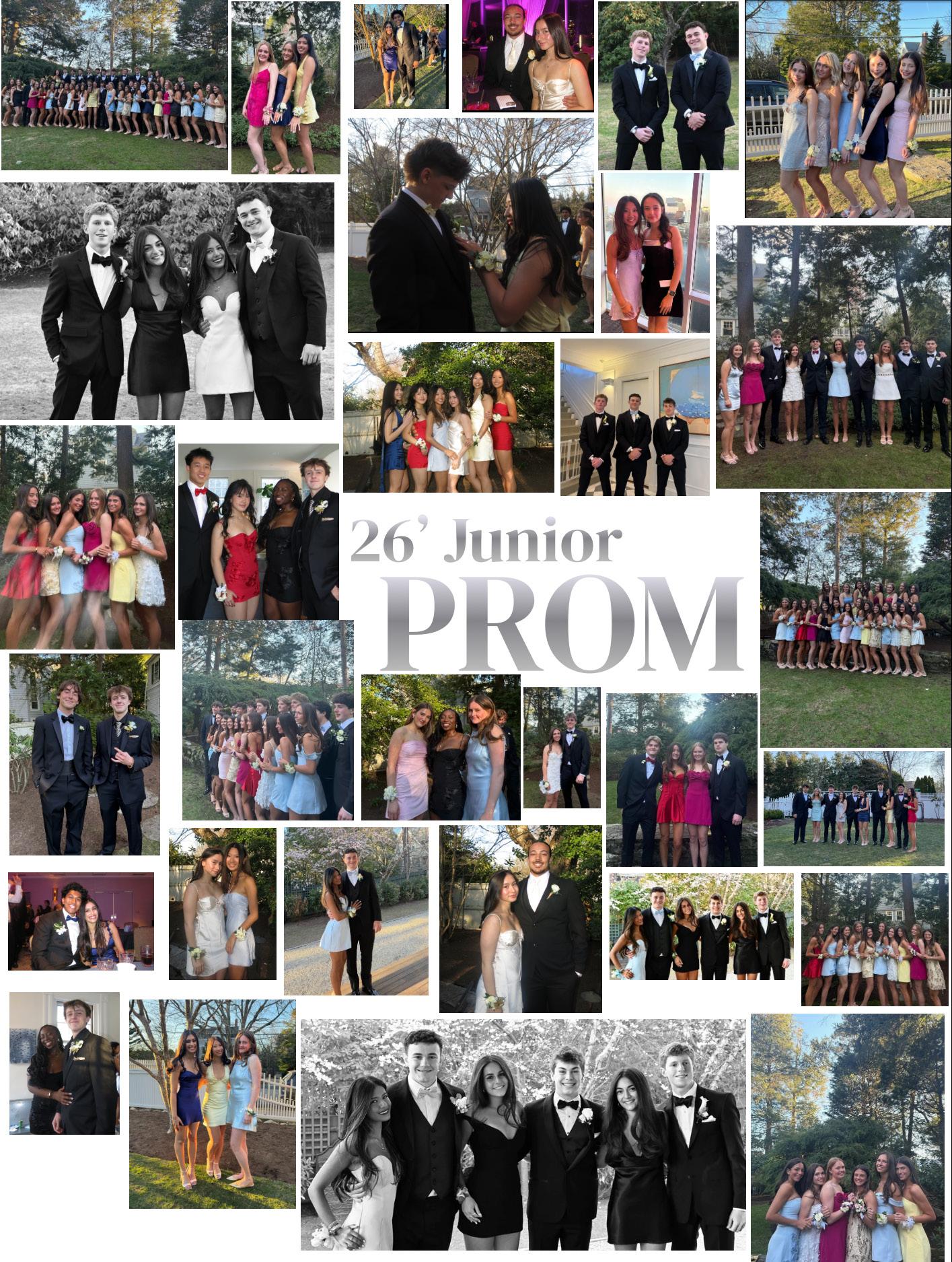
It has come to this author’s utmost attention that a certain event of great speculation is approaching: the senior promenade—or “prom,” as it so may be called. Regarding this, I feel it is most appropriate to share my reflections of the junior promenade with you, my dear reader, so that you may be so informed for the upcoming diversion.
During the weeks prior to the junior promenade, I observed some rather peculiar behaviors. Whilst the venue and culinary offerings were of importance to a considerable number of attendees, the dilemma of securing an eligible partner seemed to be the paramount concern for the aforementioned demographic.
I have caught word of numerous “promposals” from the junior class. Some gentlemen attracted their partners with a plethora of flowers and sweets, while others approached their interests with a handcrafted sign in the library. One man simply posed the question with a sign that read “PROM?” My dear readers, now where is the fun in that?! It’s a rather good thing that this young man complemented such a mundane proposal with a bouquet of pastel florals, for if he did not, I dare say this author would have downright rejected the boy for a lack of demonstrated interest!

A few suitors went above and beyond, including one who took his prospective partner all the way to a baseball stadium, where he facilitated a prompt emblazoned upon the grand screen. Another young man performed a rather cheeky play on words with the assistance of a “UHaul” truck. Clever, indeed!
But I do say, I was rather surprised by the amount of gentlemen that sought after ladies of the slightly older “senior” ranking. Could it be, dear reader, that the newest prized jewel is to captivate the attentions of a senior girl? It seems there is nothing more socially preeminent than to waltz through the grand entrance on the day of the promenade beside a gentlelady who is mere weeks away from graduating from this very institution.
Or, perhaps, it is an even greater vaunt to bring a guest from outside the establishment entirely. This author finds it most necessary to note the few young ladies realized that there simply are not a plethora of viable options within this institution. It could be wiser, then, to retire from the chase of finding a match within the walls of this academy and instead to venture outward to tread in new waters.
Besides, nothing truly captures the attentions of one’s peers like the sight of a mystery partner. Good heavens! May I assure my senior audience, one might be the talk of the town should they arrive beside a tall, handsome young man whom not a soul can put a name to!
Might I suggest, dear seniors, if there is a particular person or group of whom you wish to make jealous, that you may bring a guest that is not a romantic partner at all? Why, if they are unknown to the population within our own establishment, who is to know the difference between a love match and a cousin? It seems plausible, if not ingenious, to bring a mere family acquaintance, or even a relative, in hopes of attracting the utmost attention of one’s gossip-hungry peers. Dearest reader, if you do take such a scheming route, be sure to present yourself with them as nothing but completely smitten. Do not dare to glance at the one whom you had hoped to go with, for I can assure you they are already unable to keep their own eyes off you! After all, dear reader, it is said that the greatest revenge is indifference.
But keep your eyes peeled, for it is when such promenades rapidly approach that individuals begin to make questionable matches. Why is it that some people are so desperate to boast that they have a date that they are willing to go with just about anyone? I do say, I would rather venture alone than be forced to spend the night beside someone I hardly know or like. Is it truly worth the sacrifice of having a decent time just so one may post a photo on Instagram?
This author finds it rather silly to scramble for a date solely for the title. Pray tell, is it so villainous to go solitary? What has become of independence, dignity and confidence? One should not need to be searching for a partner. They should either couple up naturally or not at all. After all, while it may feel like everyone is going with a date besides you, the reality is on the contrary. It is vitally important to keep in mind that a multitude of the attendees are single.
“I do say, I would rather venture alone than be forced to spend the night beside someone I hardly know or like.”
So, as the awaited night for the seniors is nigh, I challenge you, my dear reader, to truly consider your next actions and move forward with deliberation and caution. If it is your duty to prompose, go on then, and do it properly! Even if your date insists they wish for no grand gesture, I assure you that you cannot go wrong with a lovely sign. And if there is not yet someone to whom you are promised, be wary as to whether going with someone at all will truly add to your happiness. Or, if you are feeling dubious, you can always ask a gentlelady in another class!
Well then! This author can but hardly conceal her excitement. I hope to see you at the senior promenade!
Sincerely, Lady Knightingale
Schools like Davidson, Butler, Loyola Chicago and St. Peter’s are forever remembered for their unlikely, yet heroic, runs in the NCAA’s March Madness Tournament. These mid-major schools toppled some of college basketball’s giants, including programs like Michigan State, Kentucky and Purdue. These small programs always had a disadvantage, having to roster teams with smaller and less touted recruits, yet they were able to compete and win. This was possible because of restrictions regarding recruiting and transferring schools. Because of these restrictions, coaches at smaller schools were able to seek out talented, under-recruited players and develop them over time.
Players who transferred had to sit out one full academic year, which discouraged constant movement and forced players to commit to their programs. These rules created stability and allowed coaches to build systems and train players without the constant fear of losing them. Instead of constantly rebuilding, mid-major programs could grow together, improve and compete with schools that had far more resources.
There is no better example of this than Brad Stevens and Gordon Hayward at Butler University. Butler has an enrollment of just under 6,000 students, but Stevens was able to build a competitive program from 2007 to 2013. He reached the NCAA Championship game twice, in both 2010 and 2011, an almost unthinkable accomplishment for a school of its size.
He did so behind players like Hayward, who was under-recruited out of high school but developed into a star. During his freshman season, Hayward averaged 13 points per game, immediately showing his potential. By his sophomore year, he had taken another leap, becoming the focal point of Butler’s offense and one of the most impactful players in the tournament.
That year, Hayward helped lead Butler to the National Championship game against the Duke Blue Devils men’s basketball team. In the final moments, his potential game-winning half-court shot hit the backboard and rim before bouncing out, and Butler fell just two points short, 61–59. It was one of the most memorable moments in tournament history—not just because of the shot, but because of what Butler represented.
“What
was once a system built on development and continuity is now driven by mobility, opportunity and money.”
Following the season, Hayward declared for the NBA draft and was selected ninth overall by the Utah Jazz. Butler returned to the championship game the following year but again fell short. While they never finished the job, they were the epitome of a Cinderella story. Each year, there were teams like Butler, because coaches could create systems, develop players and trust that their rosters would stay intact long enough to grow into something special.
Now, that system is gone. The recruiting and transfer restrictions disappeared with the introduction of NIL, which allows players to earn money from their name, image and likeness. At the same time, the transfer portal allows players to move freely from school to school without penalty. Together, these changes have fundamentally reshaped college basketball. What was once a system built on development and continuity is now driven by mobility, opportunity, and money.
For mid-major programs, this is a major problem. These schools already struggled to recruit top players out of high school. Now, even when they identify and develop talent, they of ten cannot keep it. A breakout player at a smaller school is no longer the foundation of a multi-year run—he is a target for a larger program offering more exposure, better resources and often significant financial incentives.

The results are already visible. This year’s Final Four featured Michigan, Arizona, UConn and Illinois— programs from major conferences, with two No. 1 seeds, a No. 2 seed and a No. 3 seed. There is virtually no variety, whereas in previous years there was far more unpredictability. In Butler’s second run to the championship in 2011, the Final Four consisted of UConn, Butler, Kentucky, and Virginia Commonwealth University—seeds three, four, eight and 11, including two mid-major schools. That kind of representation is becoming increasingly rare.
The difference is even clearer when looking at player movement. Out of the 2011 Final Four teams, only a small number of starters were transfers, showing that players typically began and finished their careers at the same school. Compare that to this year’s Final Four, where 12 of the 20 starters began their careers somewhere else. The sport has shifted from long-term development to constant roster turnover, where teams are rebuilt year by year rather than grown over time.
Coaches of mid-major schools cannot compete with major programs because their success often leads to their best players leaving for bigger opportunities. March Madness has been, and still is, considered the greatest tournament in sports. It is the greatest largely because of the unpredictability and excitement each game entails. For years, it has been the kind of tournament where on any given day any team can win. That excitement is in jeopardy with the abolishment of the recruiting and transfer restrictions, and that is why the Cinderella story is dead in March Madness.
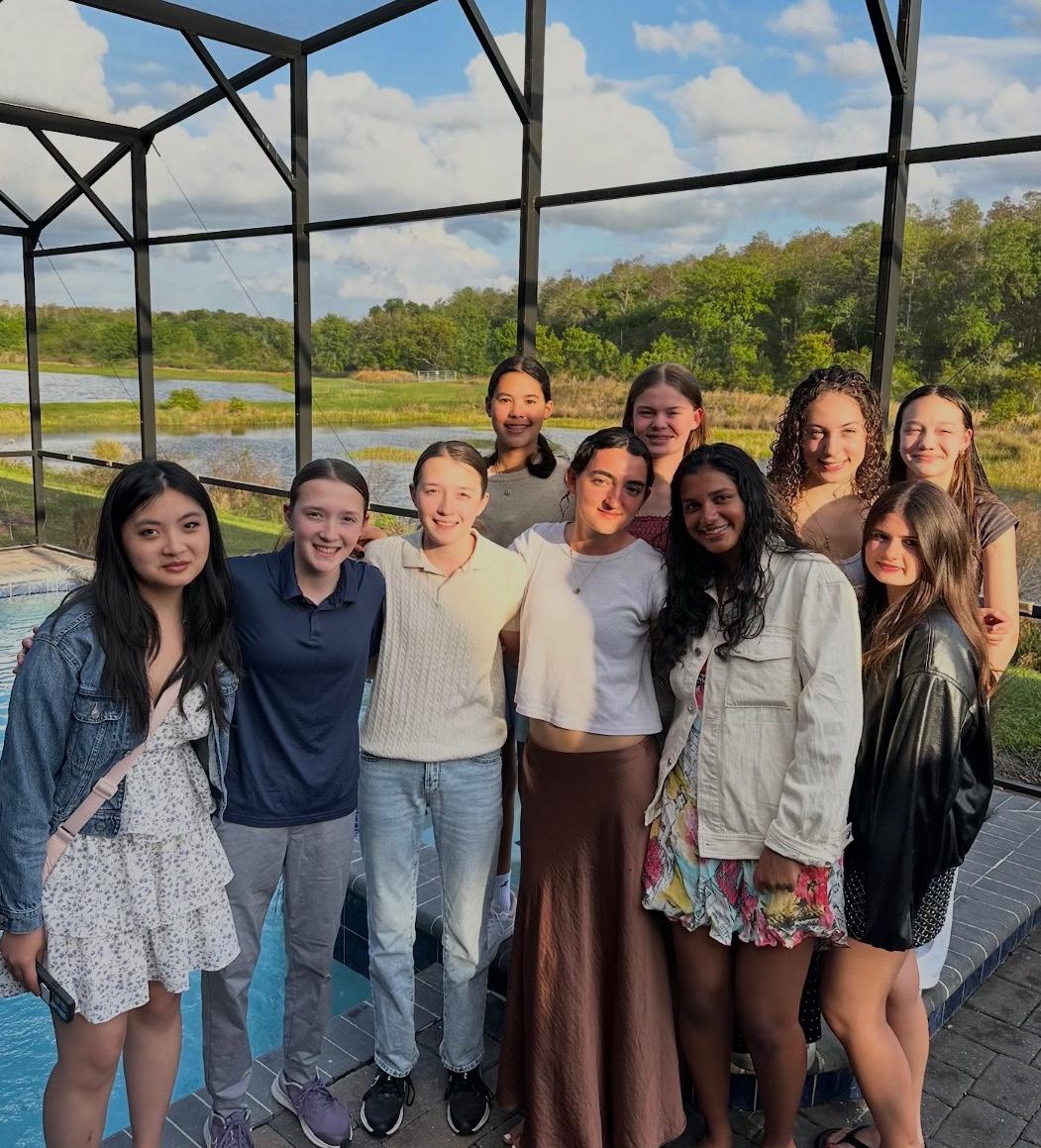
“It was nice to feel included. Now, in the tennis season, this experience makes the team feel like a team,” Girls’ Varsity Tennis (GVT) player Caroline Chung ’29 said, reflecting on her first Upper School sports trip.
From March 23-27, the GVT team traveled to Orlando, Florida for their annual preseason trip, where they trained for 10 hours across three days.
Caroline said a highlight of the trip was playing at the United States Tennis Association’s facilities, where she got advice from elite coaches.
“We had structured practices with professionals who train athletes that go pro in tennis,” she said. “It was really nice to hear what they had to say and their instructions.”
Outside of practice, the team spent time together cooking meals, visiting a water park and completing escape rooms. GVT player Sophie Reynolds ’28 said these activities helped them grow as a group before returning for the start of the season.
“You get to spend time together the whole day, instead of just an hour or two of practice. You really learn a lot about each other.”
—Siran Arakelian ’29
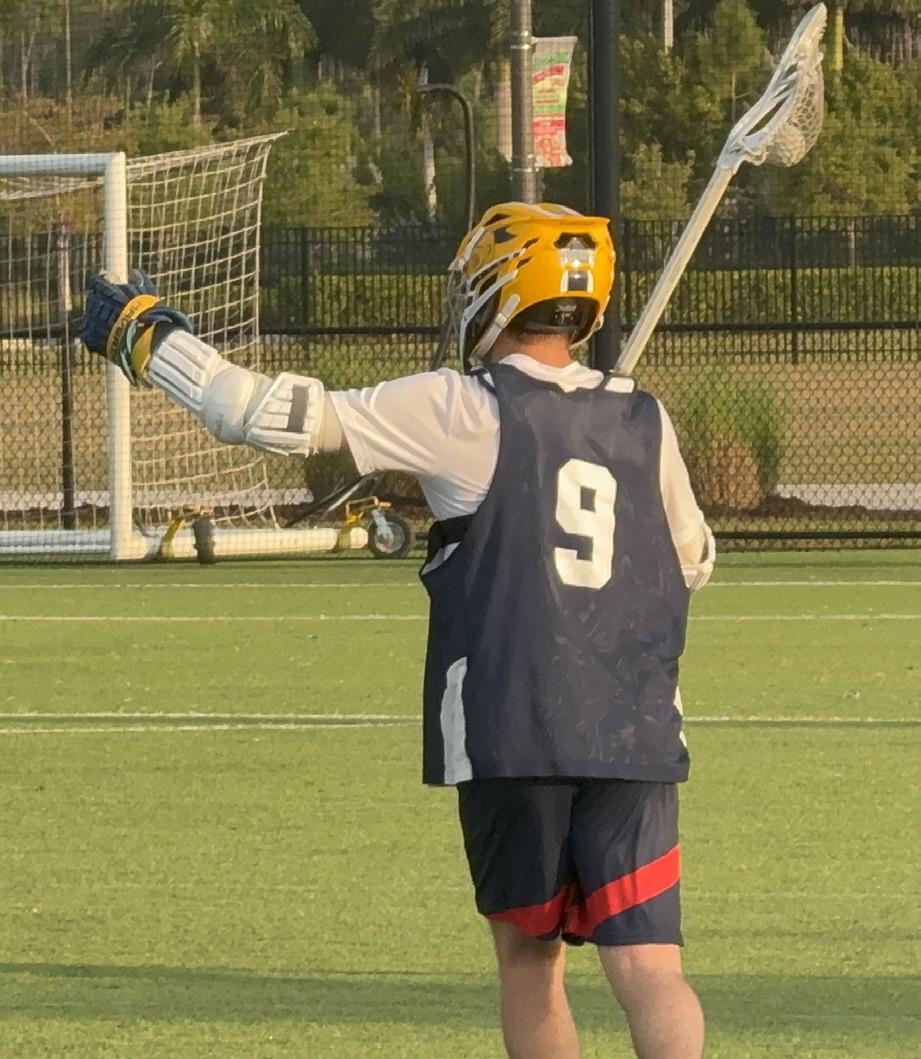
The Boys’ Varsity Lacrosse team (BVL) went undefeated in their three preseason scrimmages against schools from New York, Pennsylvania and Colorado.
Under the guidance of first-year coach Scott Giusti, the team travelled to Naples, Florida during the second week of spring break. BVL captain and attackman Jake Kavet ’27 said the scrimmages and time together helped integrate the new players.
“It was good for confidence and getting some of the younger guys acclimated to higher-level lacrosse.”
For Jake, the trip was a good opportunity to get familiar with the new leadership. “Coach Giusti laid his ground rules with the team and told us his expectations effort-wise, energy-wise and execution-wise,” he said.
BVL attackman Jack Egan ’28 explained that the focus of the trip was to mesh as a team and create the foundation for a strong season.
“The lacrosse piece is a big part of it, obviously, but the main idea of the trip was the camaraderie,” Jack said. “Getting to know everyone off the field ultimately made a great impact on the field.”
—Siran Arakelian ’29
Sophia Kluzak Contributing Writer
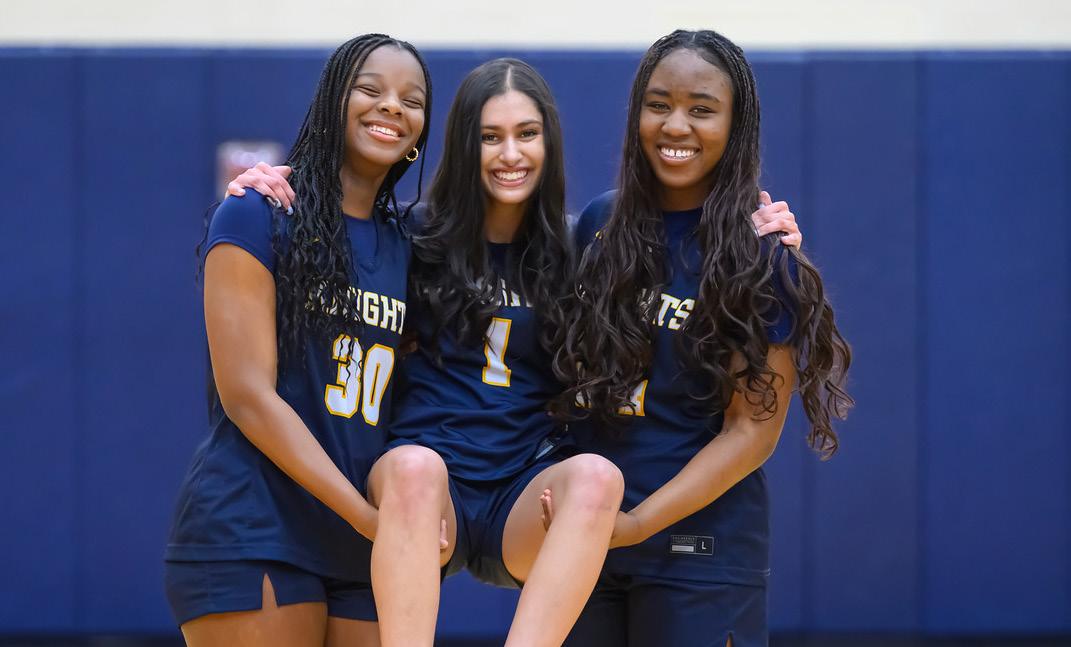
On a bus ride to an away game teammates watched as Girls Varsity Basketball (GVB) player Lucy Song ’26 opened a college decision letter.
“My favorite memory was this last Deerfield trip, seeing Lucy open her Harvard acceptance letter. The whole team went wild. Moments like those bring us closer together as a team,” GVB player Diya Gandhi ’27 said.
For Diya, teams create opportunities for friendships across grade levels that don’t often form during the school day. With students often separated by grade in classes, common spaces and schedules, athletic teams bring all ages together in a shared environment.
“As the only junior on the basketball team, I spent a lot of time with upperclassmen and lowerclassmen who are now some of my closest friends,” Diya said.
Director of Athletics Jaye Locke said teams play a key role in connecting students across grades.
“The friendships you can make on a team across grades are very special,” she said. “In some ways you wish reunions would include other years because you’d love to see your teammate who’s in another grade.”
Head Girls’ Varsity Lacrosse
Coach Taylor Clancy said she intentionally mixes players across grades
during practices and team activities to encourage those relationships.
“When I make groups, I make sure people are comfortable with someone in their group but are also exposed to people in different grades that they aren’t as close with,” she said.
Coach Clancy also pairs players for the season in a system called
“Battle Buddies,” designed to build consistent connections between teammates.
“Everyone is paired up with a person for the entire season who they can rely on if they have any issues or to pump them up before games,” Coach Clancy said. “I hope they gain lifelong friendships.”
For younger players, those relationships often become a central part of their team experience. Girls’ Varsity Soccer and Girls’ Varsity Lacrosse player Grace Venuti ’29 said upperclassmen have been a source of support.
“Any time I need positive reinforcement, I go to the upperclassmen,” she said. “Especially my Battle Buddy. I feel like they’re always there to support me.”
Boys’ Varsity Soccer player Kai Veson ’27 said joining a team introduced him to a wide range of students early on.
“The biggest change for me was my freshman year when I joined a team with 22 people and only one of my teammates was a freshman,” he said. “I instantly made 22 new friends that I hung out with every day after school.”
Kate Tregay Sports Editor
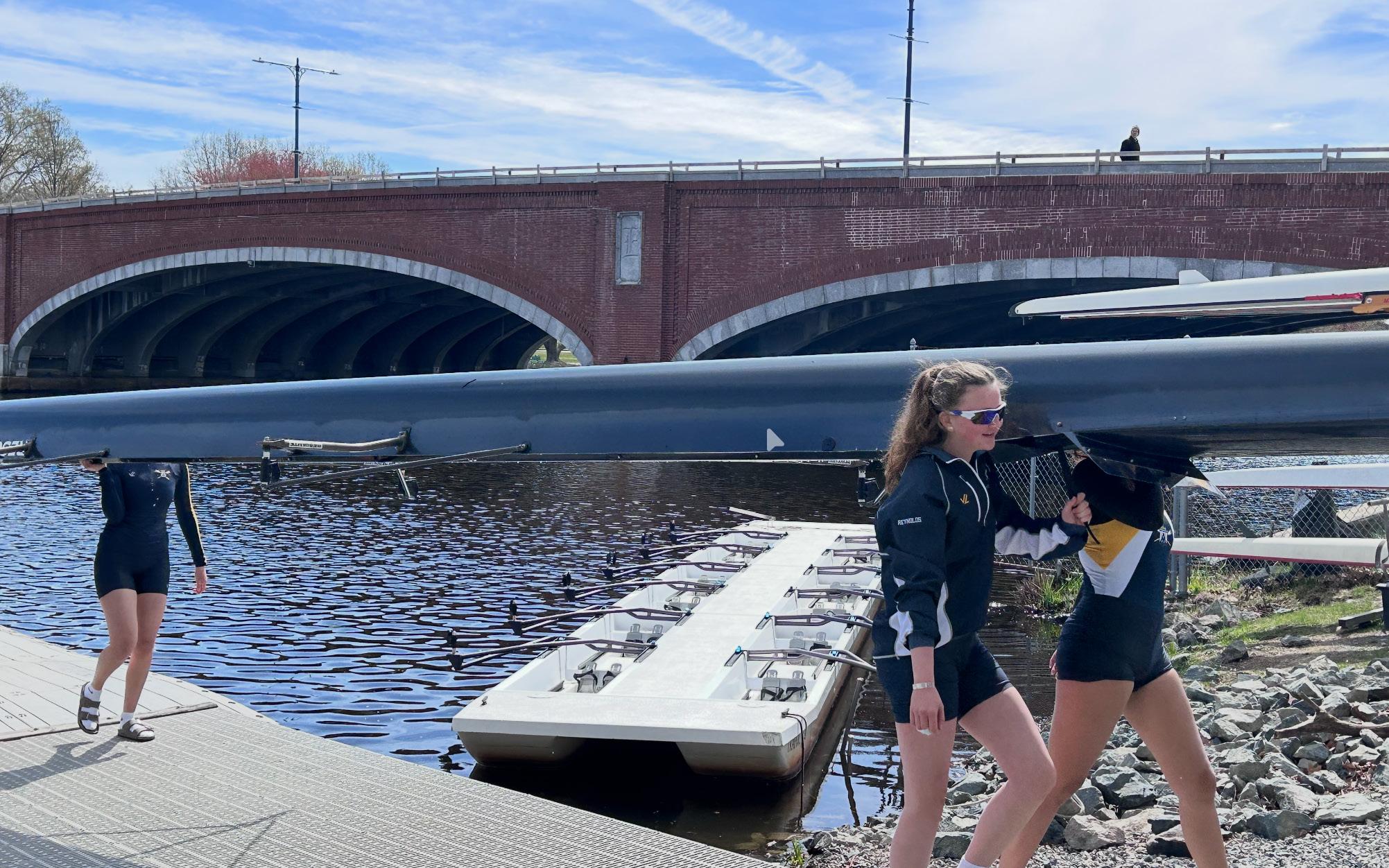
While many Upper School (US) varsity teams traveled across the country during spring break, Boys’ Varsity Crew (BVC) and Girls’ Varsity Crew (GVC) gathered on the Charles River for training.
From March 23-27, rowers spent four hours a day in boats or on ergs. BVC Coxswain Will Sammons ’27 said preseason is an opportunity to learn new faces.
“A big part of being a cox is knowing your rowers,” Will said. “When you have four different guys in your boat every other day at the start of the season, it is hard, but being able to bond over the preseason helps a lot with everyone coming together regardless of the boat assignments.”
Although preseason can be inconvenient at times, it is essential, Will said.
“My coach always tells us one week of spring break practice is like three weeks of the regular season because we’re able to get so much work in,” he said. “I think the coaches expect that everybody goes. Crew is one of the only sports where if you don’t have everybody there, you can’t really function.”
The policy toward preseason attendance is more lenient for the GVC team.
“The girls’ preseason is totally optional, but it’s brownie points with the coaches if you show up,” GVC rower Myriam Lai ’27 said. “How you do during preseason doesn’t affect how you are going to be perceived during the season skill-wise.”
Preseason practices create a more relaxed team environment.
“Coaches are so focused on making lineups for the race that week, and rowers are trying to get on the
More than MVPs
fastest boat, whereas preseason is where you get to be in boats with your friends or people you wouldn’t row with during the season,” Myriam said.
GVC rower Verity Guo ’28 said student-athletes learn the most during preseason.
“Preseason allows us to focus on things that we don’t have time to do in the regular season,” Verity said. “We usually have a very tight schedule, so the break time lets us work on specific skills.”
Even without group travel, crew
members have found meaningful ways to stay connected.
“Crew does a good job of doing team dinners every Friday before our Saturday races,” Verity said. “It adds a lot of team building that we would have gotten on a trip. We are there for a solid three hours, watching a movie, eating and hanging out together, and it helps with our chemistry.”
Some athletes choose not to attend preseason. Junior Varsity rower Charlotte Rubins ’26 did not go this year or her sophomore year, and noticed some differences in the start of the season.
“Sometimes the team would talk about stuff they did over preseason. There isn’t a direct punishment, but the people who went to preseason had more experience.”
For athletes who skip preseason, the start of the season can feel more abrupt.
“Not attending preseason makes the transition into the actual rowing aspect a little harder because you’re just thrown into it instead of working up to it during the break,” Charlotte said.
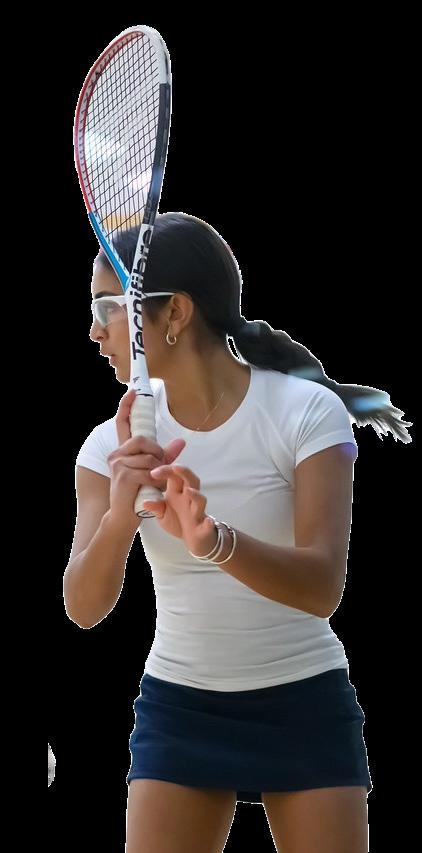
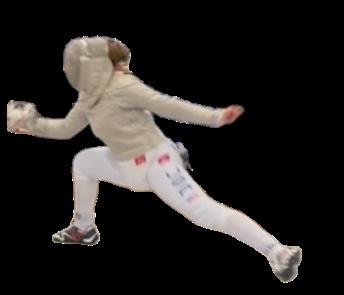
Varsity coaches honor the athletes who lead with as much heart as talent through the Coaches Cup.






If you’ve been following food online, you know chicken Caesar wraps have been one of the most discussed items. The crispiness of the chicken, the dryness—or not—of the dressing, the crunchiness of the lettuce, the light wrap on the outside—it all needs to be perfect. But what if I told you that we could make one of these chicken Caesar wraps at our own cafeteria for lunch?
Sadly, this dish can only be made about once a month on the day chicken sandwiches are served as the hot meal.
Steps to making a chicken Caesar salad wrap:

1 . Skip the line for the chicken patties and go straight to the bread tower. Grab a plate and carefully select your wrap (the tortillas are next to the pita).
2 . Head over to the salad bar, where you will place lettuce (preferably romaine) onto the middle of the tortilla. Line croutons along the middle as well.
3. You will now have to get back into line, and if your day is going well, it will have died down by now. If you need something to do, ask the juniors to share some of their prom pictures! When you make it up to the front, ask the servers to give you just the patty and watch as they put it on top of the lettuce and croutons.
4. Now, if you’re feeling fancy, go to the side of the lunch room and cut the chicken into strips to make it easier to eat. If you just want to wing it, skip this step.
5. Go back to the salad bar and drizzle some Caesar dressing over the whole salad and chicken combo.
6. Final step—do this back at your table: Roll up the tortilla using the outside edges that do not have any fixings on them.
“But
what if I told you we could make one of these chicken Caesar wraps at our own cafeteria for lunch?”
I hope by now you have a crunchy, tasty and filling lunch in front of you and you are excited to eat.
If this lunch leaves you wanting an even better chicken Caesar salad wrap, I would recommend stopping by Shy Bird (Kendall Square, 13-minute drive, 33-minute train ride) or Blackbird Donuts (Harvard Square, 9-minute drive, 20-minute walk) after school. Both places are known for their phenomenal chicken Caesar salad wraps. Shy Bird is a bistro specializing in chicken, while Blackbird Donuts now has a sandwich/wrap line named Sally’s.
So, the next time there are chicken sandwiches on the menu, make sure you try this chicken Caesar wrap. That’s it for Bite-sized brilliance!