

ROOTS WITHOUT BORDERS
Culture, Capital, and Connections Across Continents



Lanson
Lanson

Culture, Capital, and Connections Across Continents
(The Beautiful Way of Life)

In the quiet coastal town of Sipalay, where forested hills descend into turquoise waters, Manami Resort offers a more thoughtful expression of luxury, one rooted in place, purpose, and the art of slowing down.
Its guiding philosophy, Manami nga Pangabuhi—the beautiful life—shapes every aspect of the experience.
At Manami, luxury is not defined by excess, but by the rare opportunity to reconnect with nature, with local culture, and with a gentler rhythm of living.
What makes Manami particularly compelling is that it is a destination born of Negros itself. The resort is the vision of a Negrense couple whose deep affection for their homeland inspired a sanctuary that feels both refined and deeply personal. Brought to life by local artists and artisans, the property reflects a strong sense of identity, from architecture that follows the natural contours of the hillside to handcrafted interiors that celebrate the craftsmanship of the region.
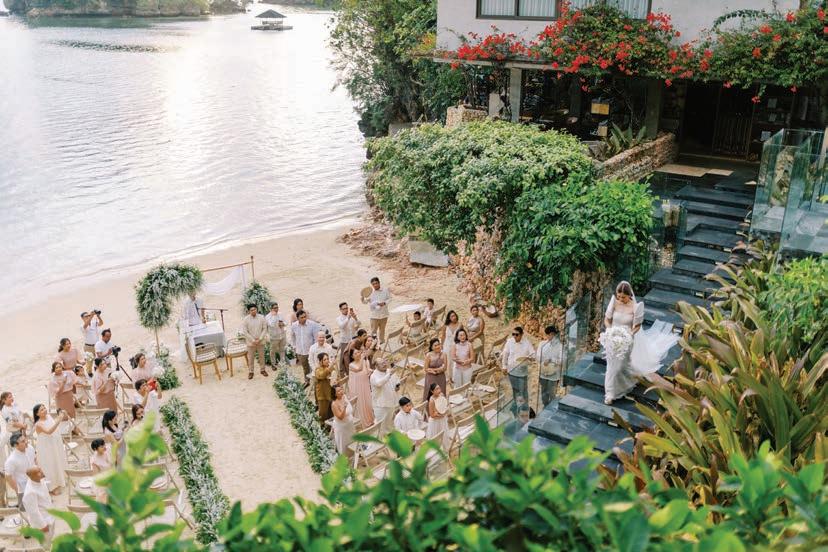
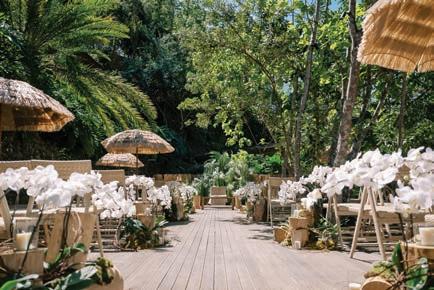
With sweeping sea views, secluded villas, and an atmosphere of understated elegance, Manami has become one of the Philippines’ most captivating luxury wedding destinations.
Ceremonies unfold against dramatic sunsets and pristine coastlines, while intimate celebrations are elevated by personalized service and a profound sense of privacy. Whether it is an elopement for two or a destination wedding shared with loved ones, each occasion feels deeply personal and effortlessly romantic.
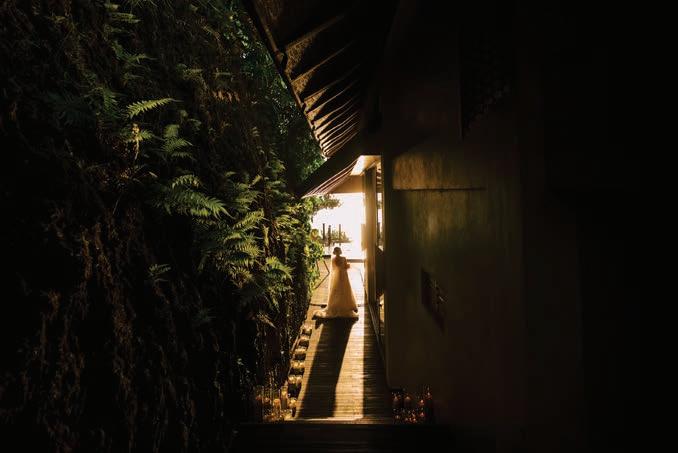
At Manami, weddings are more than events, they are meaningful celebrations set in harmony with nature.


For divers, Sipalay remains one of the Philippines’ best-kept secrets, a coastal destination blessed with vibrant coral gardens, dramatic drop-offs, and thriving marine life. Its waters offer a quieter, more intimate alternative to the country’s more commercial dive destinations, rewarding explorers with pristine reefs and an extraordinary diversity of marine life, from macro treasures such as nudibranchs to larger species including hawksbill turtles and rays.
At Manami Resort, diving becomes more than an activity; it is an immersive extension of the Manami experience. Guided by expert dive professionals and shaped by the resort’s conservation-first philosophy, each descent is designed to deepen one’s appreciation for the seas.
Guests are invited to explore Sipalay’s remarkable dive sites with a greater sense of awareness, encountering not only the beauty of the reef, but also the delicate ecosystems that sustain it. Paired with Manami’s signature warmth, comfort, and thoughtful service, every dive feels both exhilarating and meaningful.
At Manami, diving is not simply about what lies beneath the surface. It is about discovering Sipalay in its most extraordinary form.

For more information, contact us at
Sipalay City, Philippines manamiresort.com | Manami Resort | @manamilife


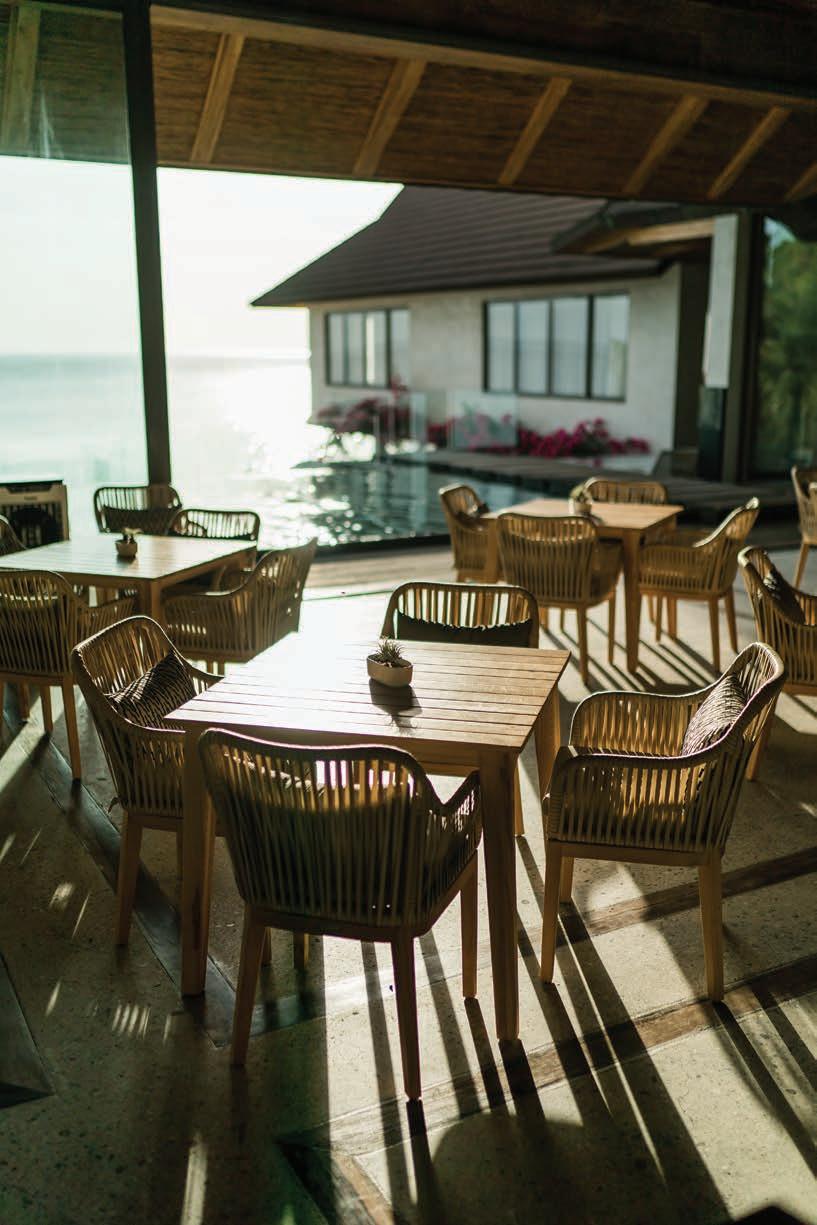
Manami Resort is known for its thoughtful approach to luxury, one that celebrates nature, culture, and a deep connection to the island. At the heart of the resort’s culinary experience is Lingaw Restaurant, a destination where Negrense heritage cuisine is reimagined with contemporary finesse. Named after the Hiligaynon word for “to entertain,” Lingaw invites guests to discover the rich flavors of Negros Occidental through dishes that honor

Where Negrense Heritage Finds a Contemporary Voice
Negros, where the fish is cured in local coconut vinegar and enriched with a touch of coconut milk. Tossed with onions, cucumber, tomatoes, and salted egg, the dish offers a bright and distinctly Negrense interpretation of the Filipino classic. Light, clean, and vibrant, it captures the essence of Sipalay’s coastal abundance in every bite.
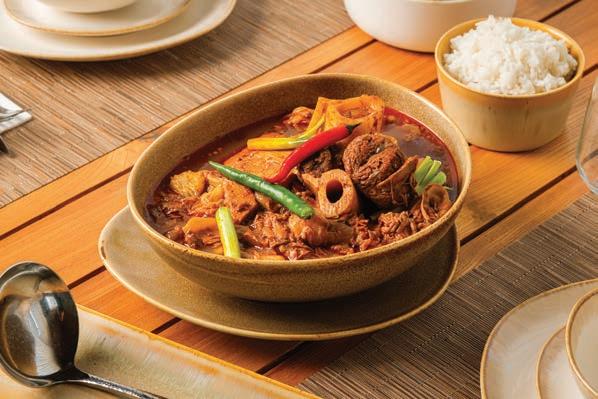
Slow-simmered beef shanks and bone marrow form the heart of Lingaw’s Kansi, a soulful Negrense soup enriched with green jackfruit, chili peppers, and batwan, the indigenous fruit that gives the broth its signature tartness. Deeply comforting yet bright in flavor, the dish balances the richness of bulalo with the tangy character of sinigang. Warm, hearty, and deeply rooted in local tradition, it reflects the comforting spirit of Negrense home cooking in every bowl.
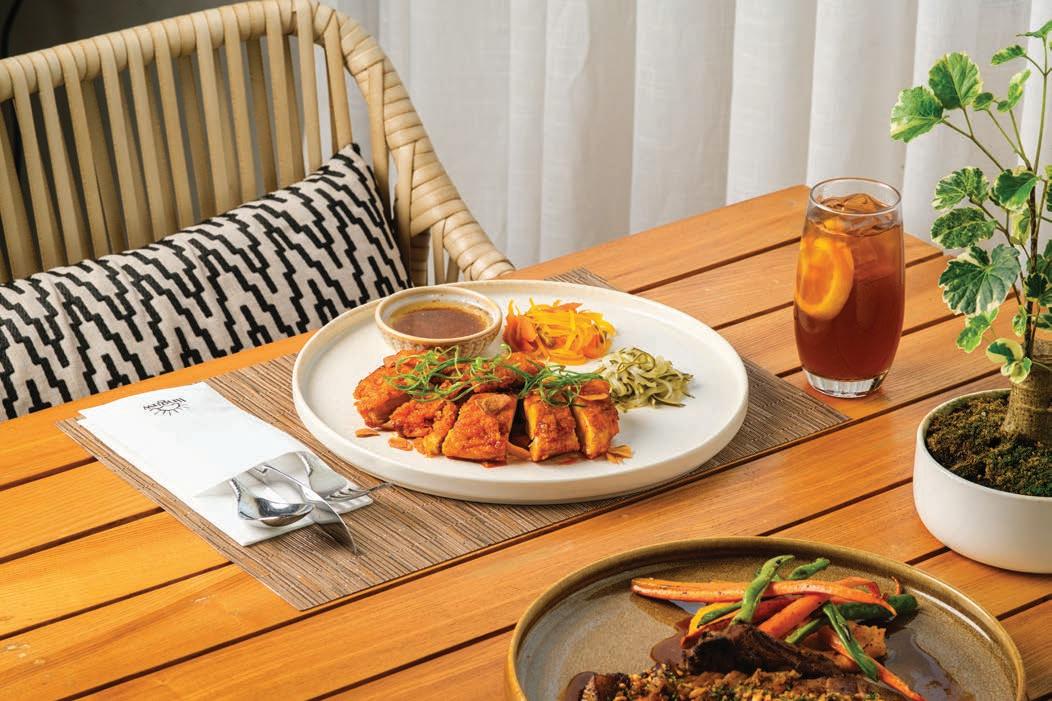
vinegar, and atsuete, Lingaw’s Fried Chicken Inasal offers a crisp reinterpretation of Bacolod’s beloved classic. Fried until golden and crunchy while remaining tender and juicy inside, the dish is served with pickled cucumber and a bright ginger sauce that complements its smoky, tangy flavors. Familiar yet unexpected, it presents a fresh Negrense perspective on one of the Philippines’ most iconic comfort dishes.
Together, these dishes form a portrait of Negros Occidental’s culinary identity, where sea, land, and tradition converge. Through its curated dining experiences, Manami Resort highlights not only the flavors of the region but also the stories behind them, inviting guests to experience Negrense cuisine as part of a broader cultural landscape. As interest in regional Philippine gastronomy continues to grow, Negros Occidental stands out as a destination where food remains deeply connected to place, memory, and craft, offering travelers an authentic taste of the island’s enduring heritage.
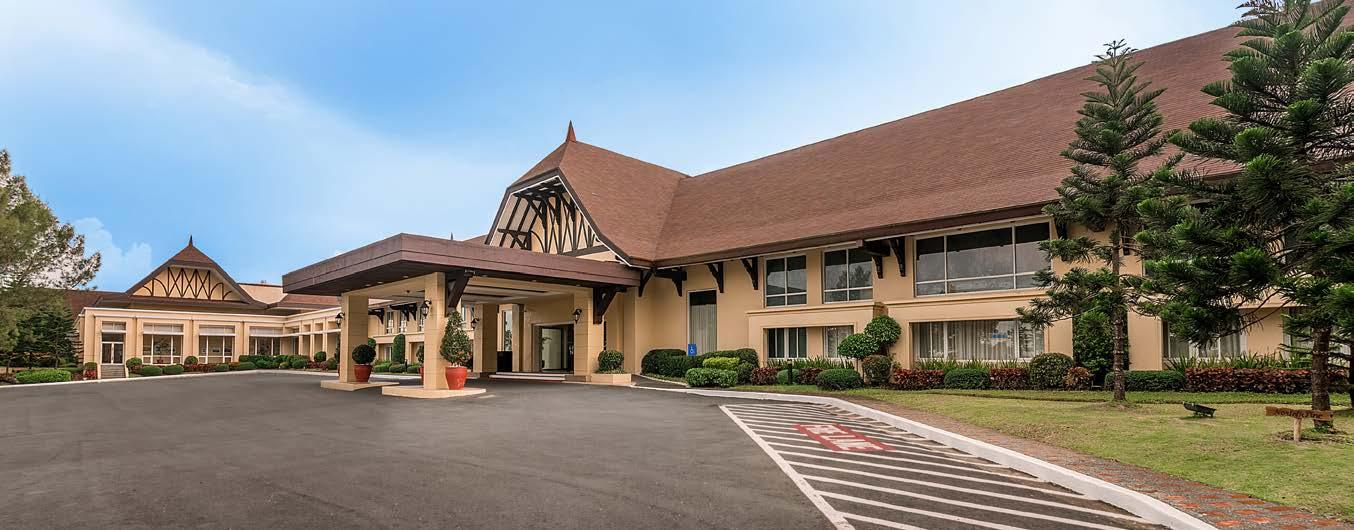

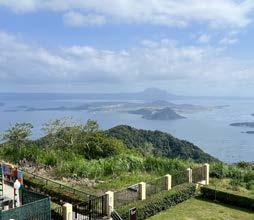
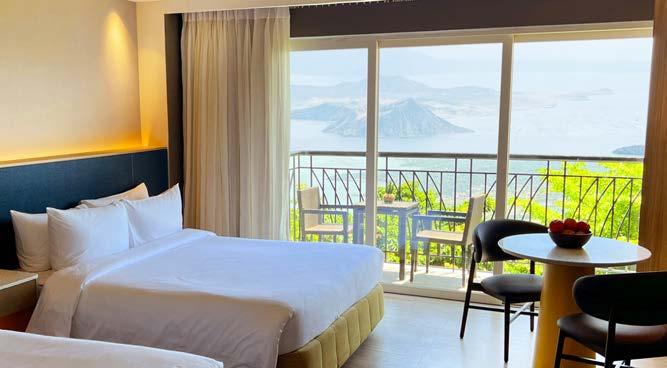
Taal Vista Hotel continues to evolve for today’s travelers, blending modern design, luxury, and lifestyle experiences. The newly renovated Lake Wing, featuring 132 refreshed rooms, and the revitalized Rain Spa underscores the hotel’s commitment to staying ahead of trends while offering guests an unforgettable Tagaytay escape.
Deluxe Rooms offer cozy comfort with stylish finishes and views of SkyRanch, Aguinaldo Highway, or the hotel courtyard. Premier Rooms now feature two queen beds and private balconies overlooking Taal Volcano and the lake, ideal for families or friends. Two-Bedroom Deluxe Suites provide privacy and space for groups, while the Batangas Suite elevates luxury with a bathtub, separate living room, guest bathroom, and sweeping volcano and lake views—perfect for celebrations or indulgent escapes.
Lake Wing guests enjoy the convenience of being just steps from the exclusive SkyRanch Tagaytay gate, making it effortless to combine relaxation with fun. Upgraded amenities—including 55” smart TVs, minibars, enhanced
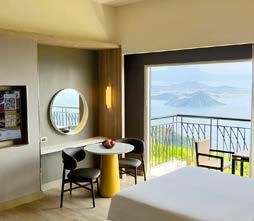
bathrooms, and smart in-room technology—ensure every stay is comfortable, stylish, and memorable.
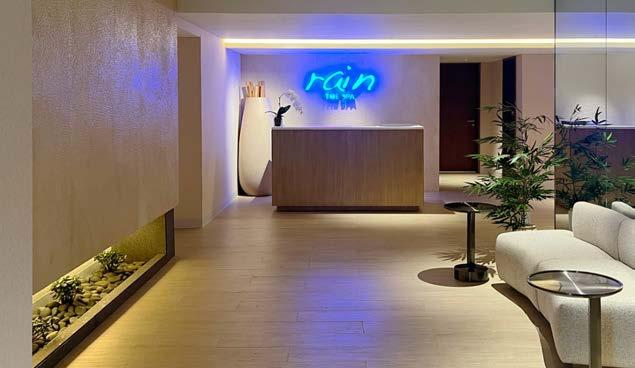
The newly refreshed Rain Spa features six private bedrooms and 14 beds, ideal for group massages, spa parties, or couples’ treatments. Guests can indulge in signature Awaken the Senses massages, facial gua sha, traditional hilot and herbal poultice treatments, foot massages, and other rejuvenating therapies. Now located closer to Taza Fresh Table and the View Deck, guests can enjoy a relaxing stroll or dine after their spa experience. With modern design and serene ambiance, Rain Spa is the ultimate destination for wellness and indulgence.
“Taal Vista Hotel continues to evolve with the times, offering modern spaces, enhanced experiences, and lifestyle-focused amenities,” said Mr. Ramon Makilan, General Manager. “From our newly renovated rooms to the refreshed Rain Spa, every detail is designed to meet the expectations of today’s travelers while celebrating the beauty and energy of Tagaytay.”


PUBLISHER & CEO
Roger Lagmay Oriel
PRESIDENT & CO-PUBLISHER
Cora M. Oriel
EDITOR-IN-CHIEF
Billy De La Cruz
MANAGING EDITOR
Catherine C. Oriel
EXECUTIVE CONSULTANT
Paul Ligones
CHIEF FINANCIAL OFFICER
Geralou Fabro-Sagun
MARKETING DEVELOPMENT DIRECTOR
Jesus Noel Godinez
VICE PRESIDENT FOR SALES & MARKETING
Kimberly Delos Santos
VICE PRESIDENT OF PROMOTIONS & SPECIAL EVENTS
Rocelle Añabeza
VICE PRESIDENT FOR ADVERTISING
Sharon Ann Bathan-San Pedro
BUSINESS DEVELOPMENT EXECUTIVE
Antonio Garcia
BUSINESS DEVELOPMENT DIRECTOR
Greg Trinidad
SENIOR IT CONSULTANT
Renee Lynn Dytuco
CREATIVE DIRECTOR
Lee Dean Dytuco
GRAPHIC DESIGNERS
Dennis Añabeza
Joyce Dianne Balansag
Maria Alyssa Ventura
CONTRIBUTING WRITERS
Rogelio Constantino Medina
Dana Sioson
Jessamine Elise Sagcal
Prosy Dela Cruz
Minerva Bc Newman
Concon Sinel
Liana Marie Sagun
CIRCULATION MANAGER
Lutter Patiño Remolagio

Have any questions, feature ideas, comments, ideas or complaints?
Or simply wish to join our team of global correspondents and photographers?
Contact us on our Facebook page @BalikbayanMagazineph

ASIAN JOURNAL PUBLICATIONS, INC.
PHILIPPINES HEADQUARTERS
Level 10-01, Fort Legend Tower, 3rd Avenue corner 31st Street
Barangay Fort Bonifacio, Taguig City 1635
TELEPHONE: +632 3224 2000 | +632 3224 2001 EMAIL: info@asianjournalinc.com
ONLINE PRESENCE
asianjournalmediagroup.com asianjournal.com classifieds.asianjournal.com directory.asianjournal.com events.asianjournal.com balikbayanmagazine.com balikbayandeals.com facebook.com/balikbayanmagazineph instagram.com/balikbayanmagazine
For subscriptions, back issues, and other circulation concerns please contact us at info@asianjournalinc.com
USA HEADQUARTERS
SOUTHERN CALIFORNIA
611 North Brand Blvd. Suite 1300, Glendale, CA 91203
TELEPHONE: (818) 937-9981 | (818) 937-9982



Rediscover Manila through comfort, connection, and contemporary hospitality.
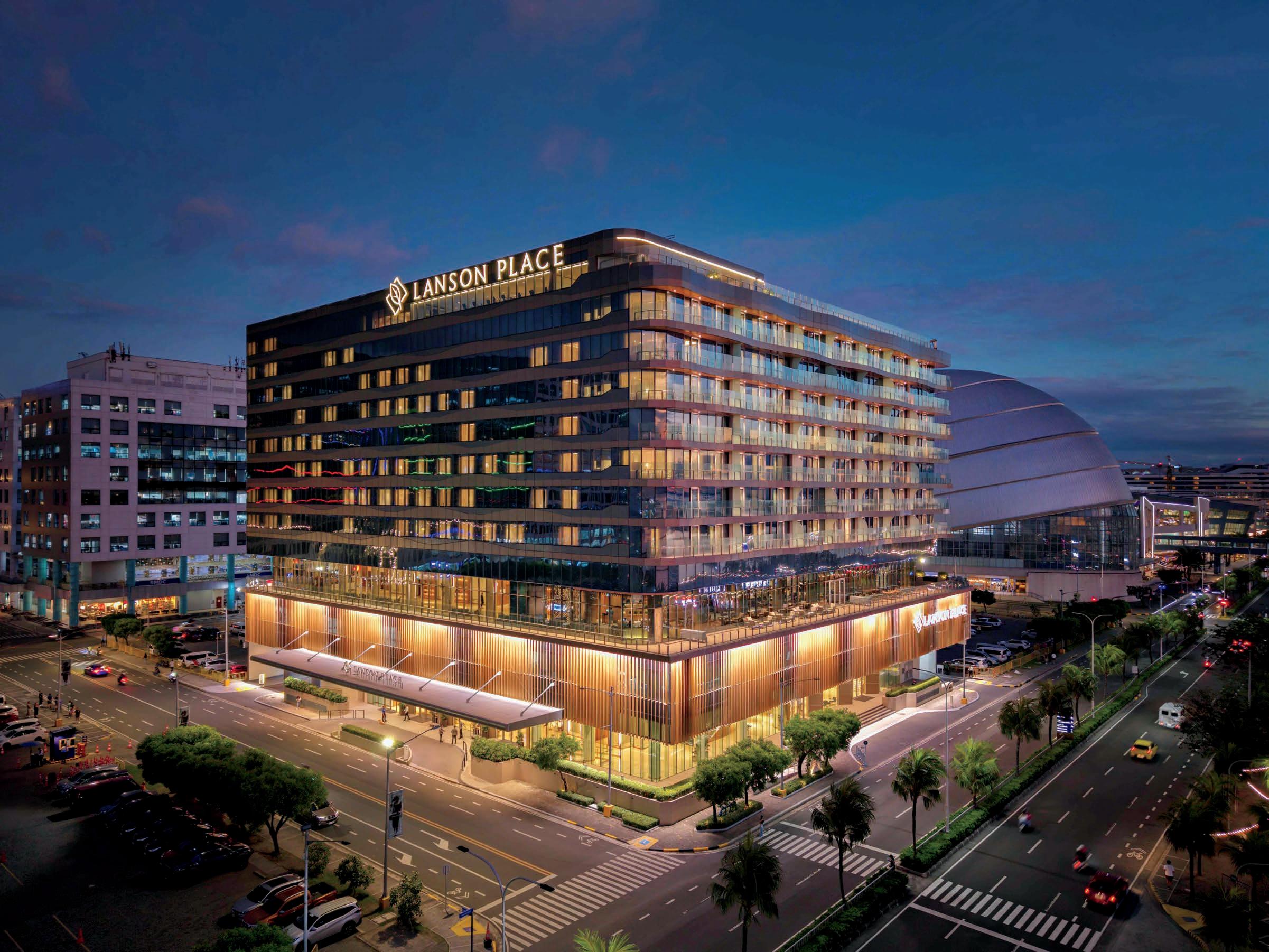
In a city defined by movement, energy, and connection, finding a place that feels both sophisticated and familiar is rare. Lanson Place Mall of Asia, Manila brings together contemporary luxury, thoughtful service, and the warmth of home — creating a stay experience designed for modern travellers seeking comfort, connection, and effortless living.
Strategically located within the vibrant Mall of Asia district, the property places guests moments away from Manila’s leading business, entertainment, retail, and lifestyle destinations. With its convenient proximity to Ninoy Aquino International Airport, the hotel offers ease of access for international visitors, balikbayans, business travellers, and local guests alike. Whether arriving for a quick city stay, a corporate engagement, or an extended residence, guests enjoy the advantage of seamless connectivity paired with a calm and welcoming urban retreat.

Thoughtfully designed guestrooms and serviced residences reflect a contemporary residential sensibility, combining elegant interiors with intuitive comforts for both short and long stays. Well-appointed rooms feature generous layouts, modern amenities, and carefully considered details that encourage both relaxation and productivity. From restorative nights of rest to moments of quiet reflection above the city, every stay is shaped around comfort, functionality, and a genuine sense of belonging.
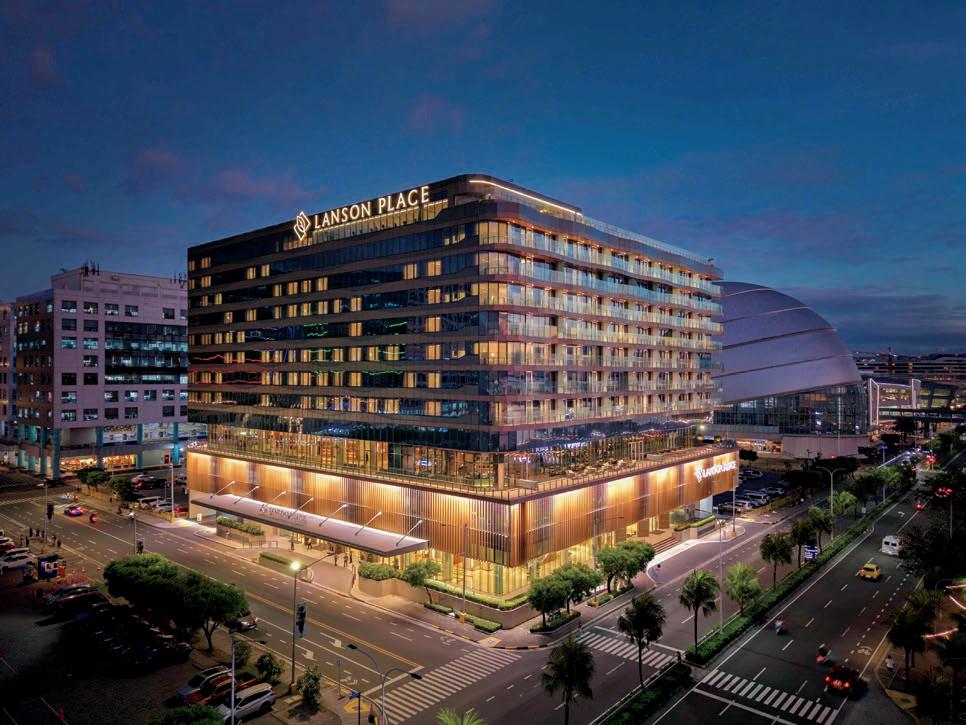
Beyond accommodation and dining, Lanson Place Mall of Asia, Manila offers versatile spaces for gatherings, celebrations, and corporate occasions. Its sophisticated ballroom and meeting facilities provide an elegant setting for weddings, social events, conferences, and milestone moments, supported by attentive service and thoughtful event execution. Whether hosting intimate gatherings or larger-scale functions, the property delivers experiences defined by professionalism, warmth, and refined hospitality.
More than a hotel, Lanson Place Mall of Asia, Manila is an integrated lifestyle destination where contemporary living, culinary experiences, business convenience, and devoted hospitality come together effortlessly. Here, meaningful stays, memorable celebrations, and lasting connections unfold naturally — creating a place guests are proud to return to, time and time again.
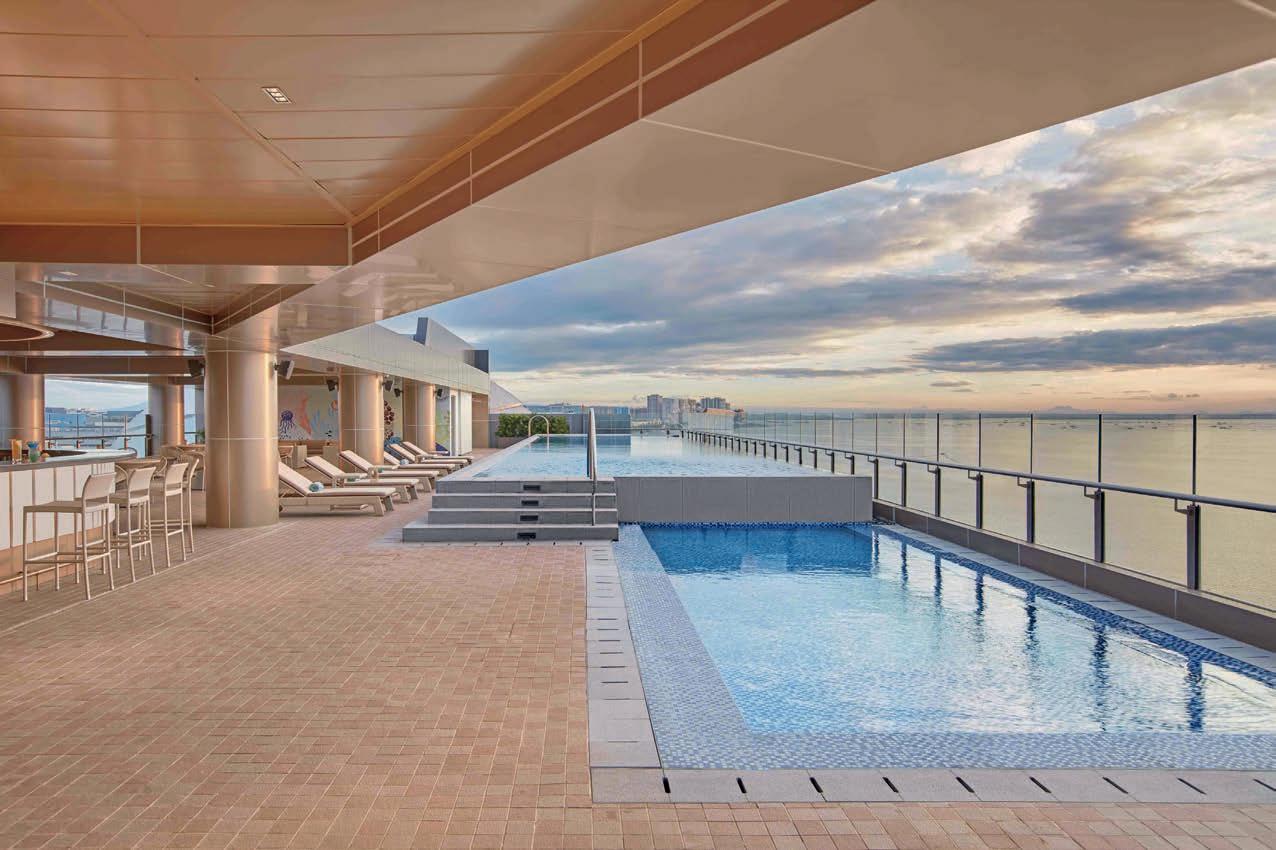
Wellness and leisure experiences further elevate every stay at Lanson Place Mall of Asia, Manila. Guests can recharge with thoughtfully designed recreational facilities, from invigorating workouts to moments of relaxation overlooking the dynamic cityscape and Manila Bay surroundings. Whether beginning the day with purposeful energy, unwinding after meetings, or enjoying a slower pace during a weekend escape, the hotel’s lifestyle amenities are curated to support balance, wellbeing, and modern living. Combined with attentive, personalised service that anticipates guests’ needs, every interaction reflects Lanson Place’s commitment to devoted hospitality.
More than a hotel, Lanson Place Mall of Asia, Manila is an integrated lifestyle destination where refined hospitality meets modern living. Here, meaningful stays, memorable moments, and a genuine sense of belonging come naturally — creating a place guests will want to return to, time and time again.
Discover contemporary hospitality with the warmth of home.
Lanson Place Mall of Asia, Manila Reservations: +63 2 7777 0000 | lansonplace.com/mallofasia
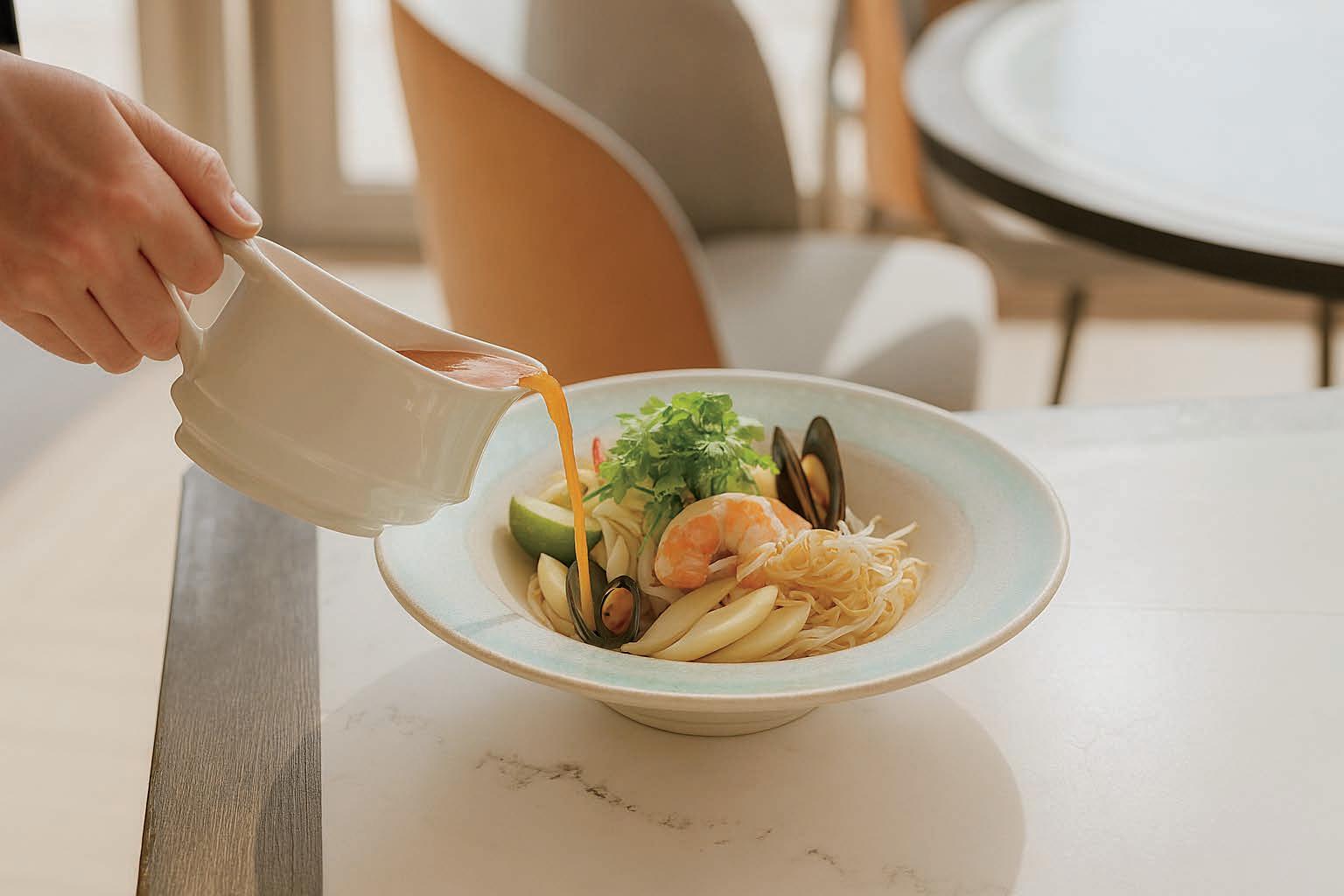

Sentro 1771 proudly celebrates the flavors of home through Filipino dishes that are rich, comforting, and unforgettable. For every balikbayan, it's more than a mealit's the taste of being Filipino, served with warmth, pride, and heart.









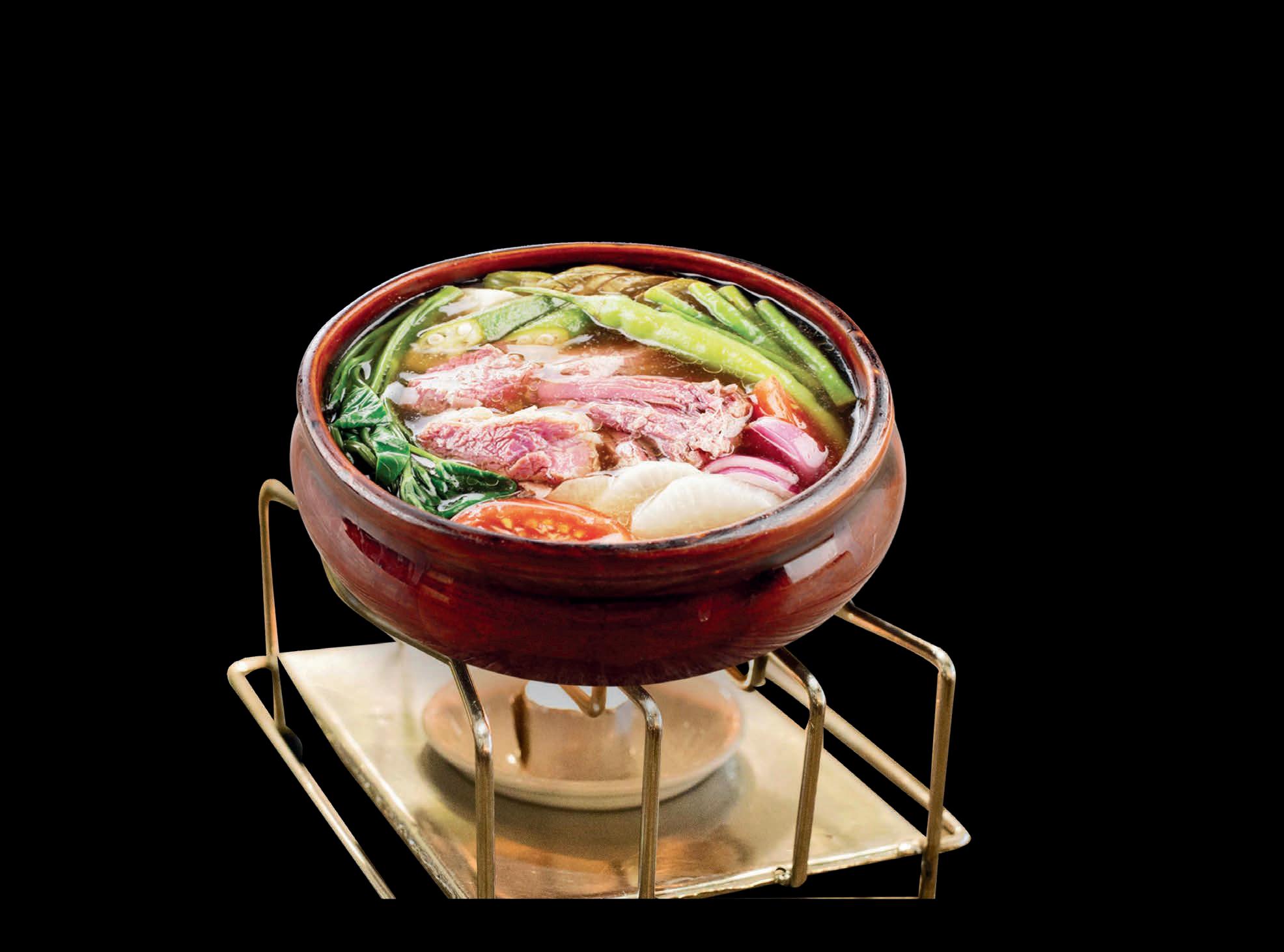

No meal at Sentro 1771 is complete without the Corned Beef Sinigang, a twist on a Filipino sinigang classic. It's best enjoyed with Rated GG, galunggong fish fried in olive oil and topped with crispy garlic; Bagoong Rice for an extra layer of flavor and texture; and Fried Kesong Puti with garlic and guava dips, which nicely balances the flavors.
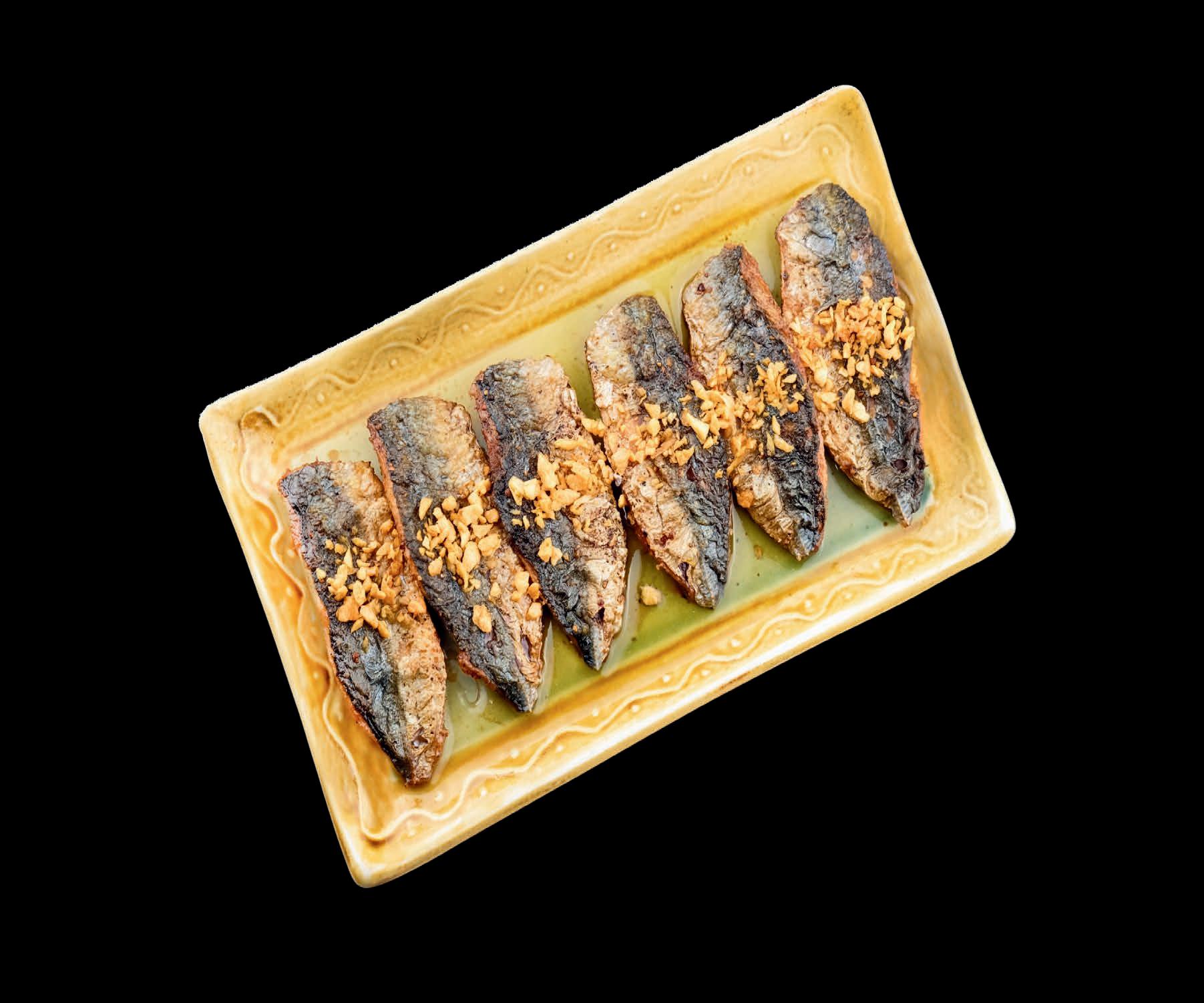




Fresh Smoked Fish Spring Rolls
What Makes Sentro 1771 Taste Special? It is fresh, carefully made, flavorful and unmistakably Filipino.


GREENBELT 5, MAKATI
Across the Greenbelt Chapel Ayala Center, Makati City
BOOK A TABLE - 0917-853-7460
CAPITOL COMMONS, PASIG
(Dining & Events)
Across Estancia Mall Bgy. Kapitolyo, Pasig City
BOOK A TABLE - 0917-854-4540
HIGH STREET MALL, BGC
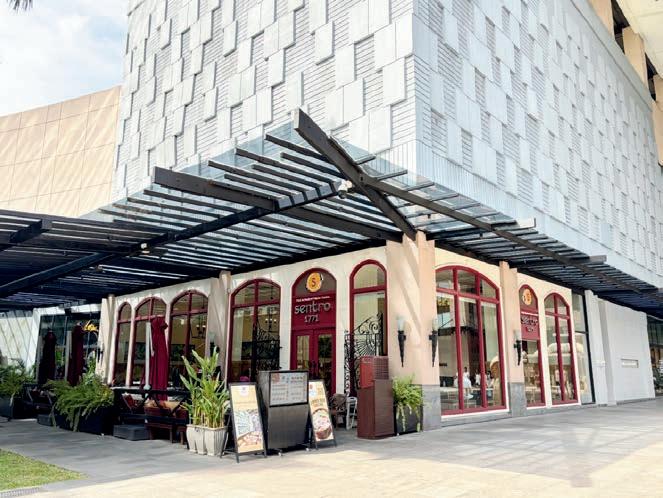
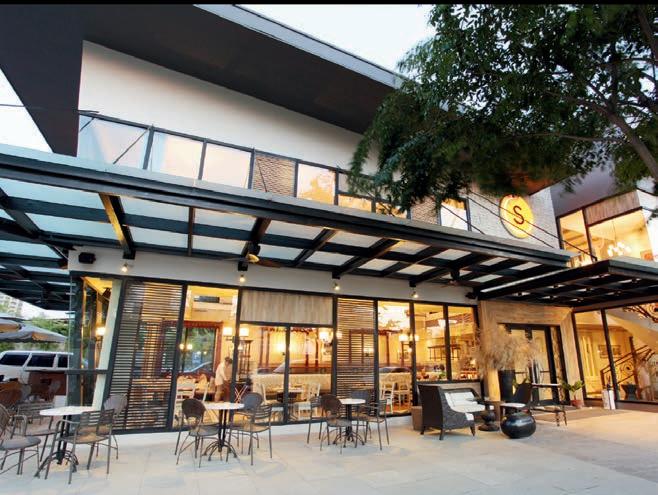
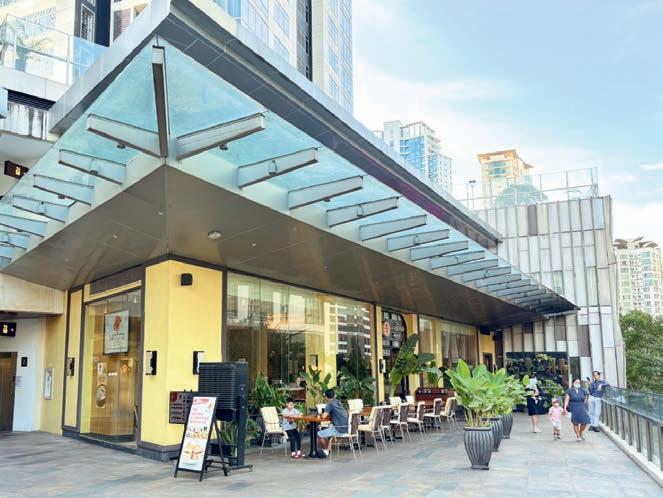
2nd floor beside the Philippine Stock Exchange on 5th Ave. BGC, Taguig City
BOOK A TABLE - 0917-814-7794




Between Metro Manila’s business districts, discover spaces designed for better meetings and longer stays

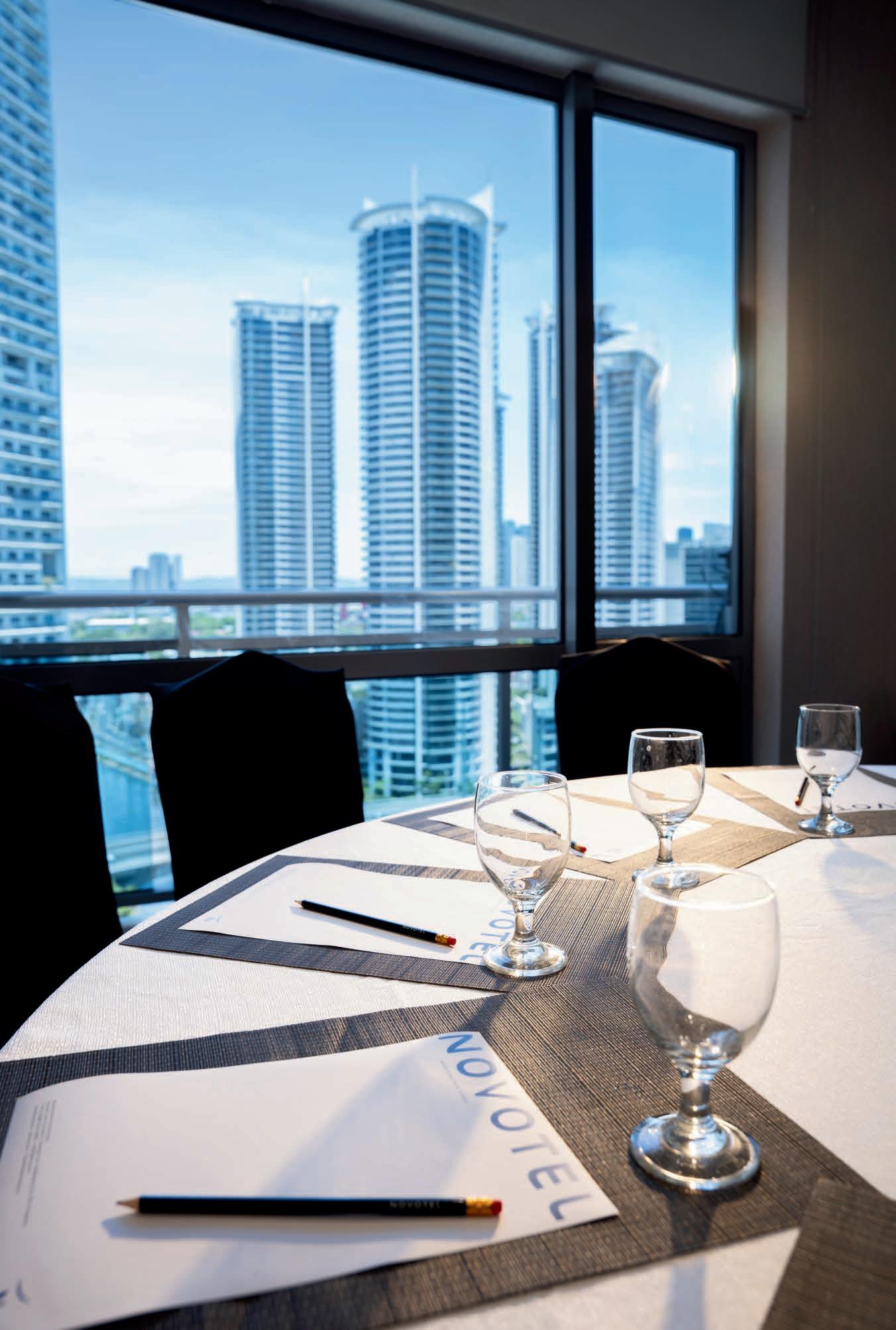




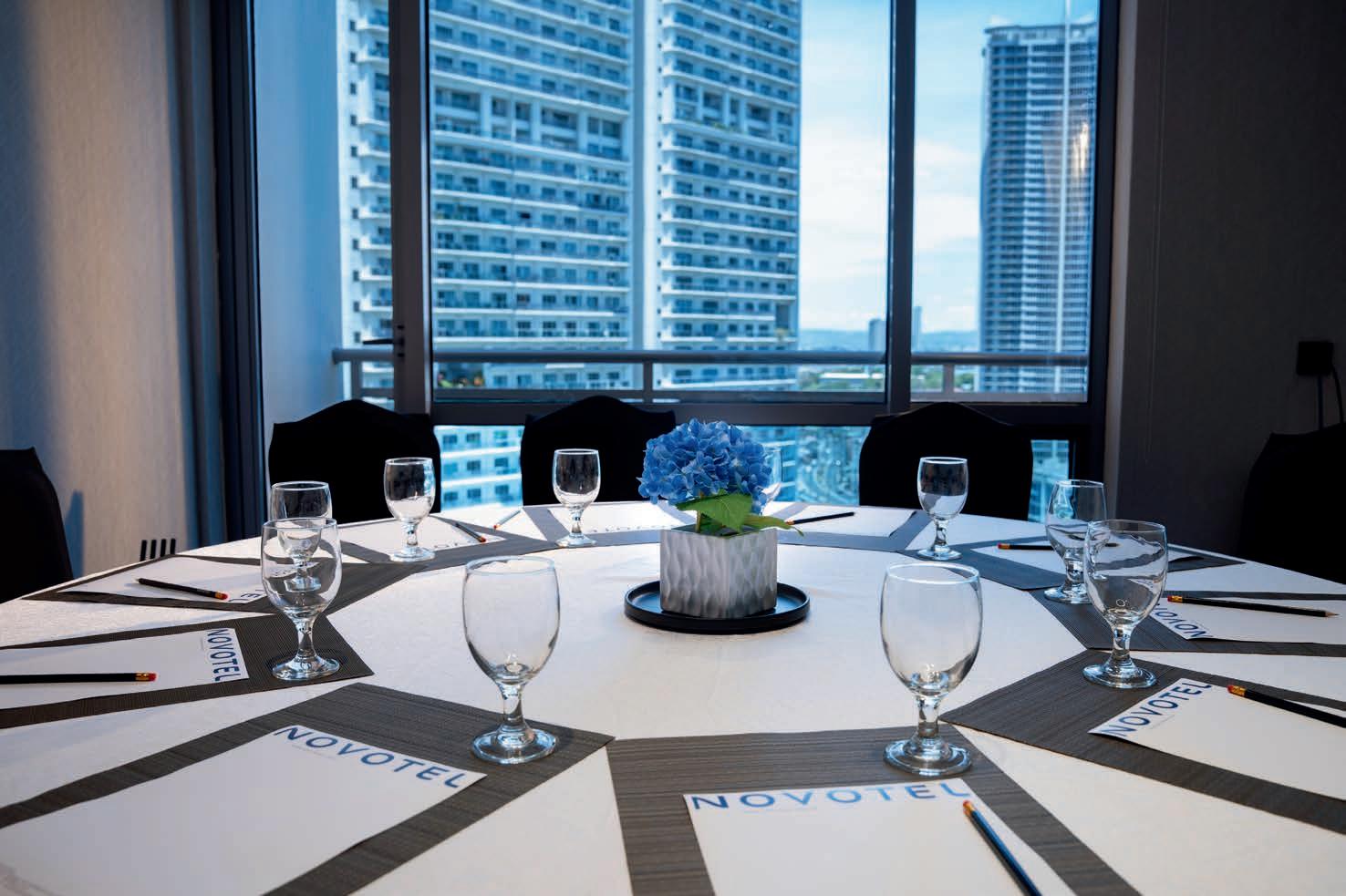

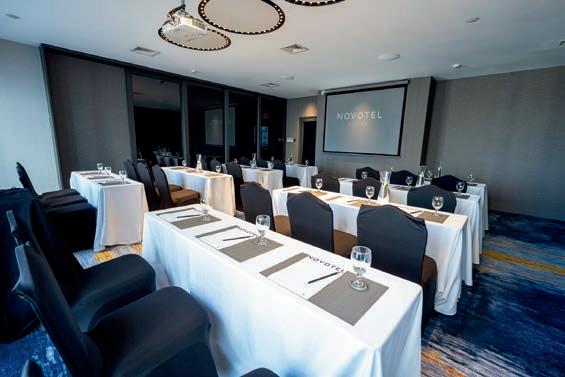

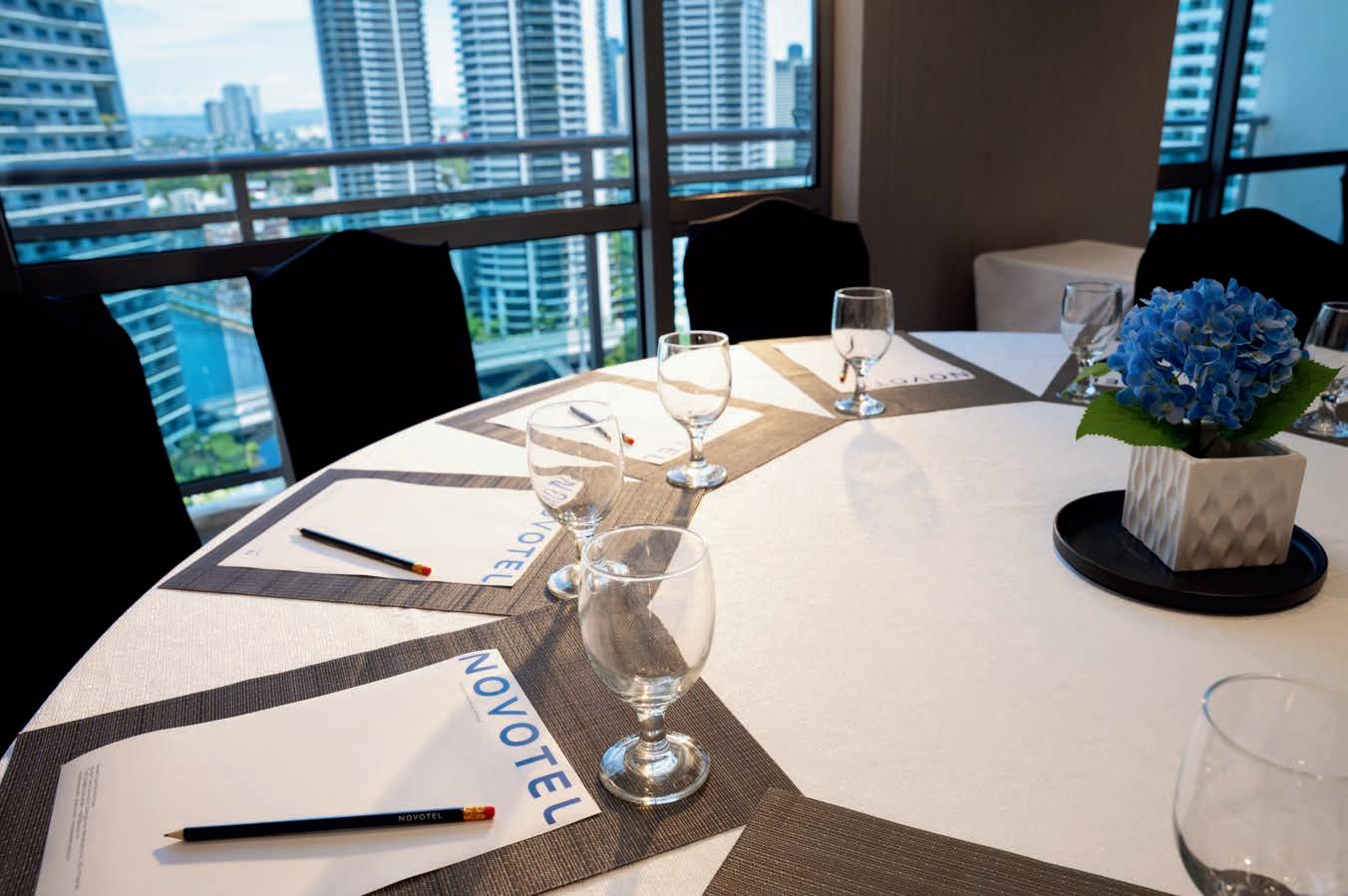
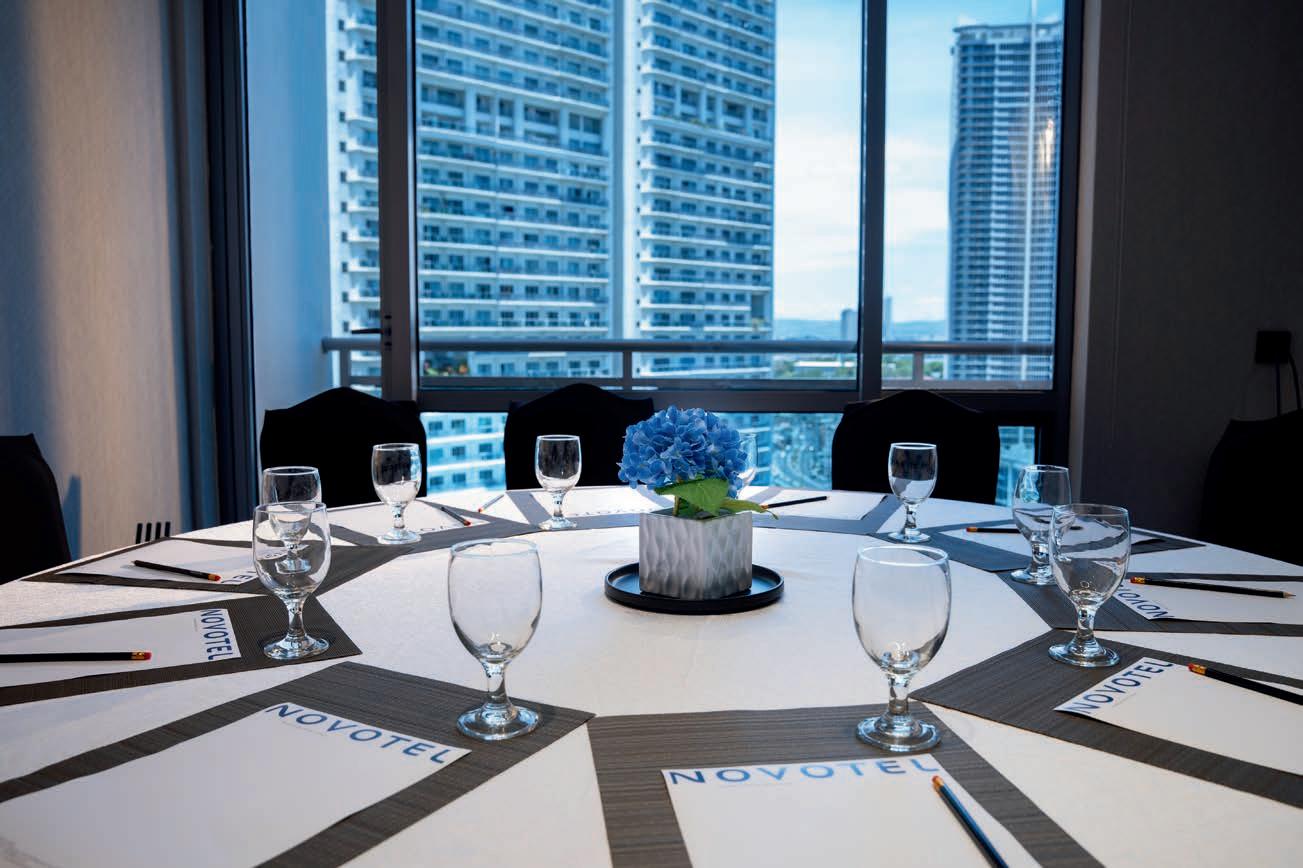
Metro Manila’s professionals know the routine all too well: packed schedules, nonstop presentations, and long hours navigating city traffic. For balikbayans returning home for a quick visit, the balancing act often includes reconnecting with family while squeezing in work calls and business meetings. In the middle of the fastpaced rhythm, finding a hotel that offers both productivity and comfort is less of indulgence and more of a necessity.
Tucked along the border of Makati and Mandaluyong, Novotel Suites Manila at Acqua presents a refreshing alternative to the traditional business hotel experience— one designed for modern travelers who value both efficiency and breathing room. Unlike the conventional city stays, the property embraces spacious suite-style living. Each accommodation is thoughtfully designed with kitchenettes, dining areas, generous spaces, and floor-to-ceiling views of the Metro Manila skyline. For professionals staying longer in Manila—or balikbayans craving comfort after long-haul flights—the experience feels closer to a contemporary private residence than a standard hotel stay.
Beyond the residential appeal, the hotel also positions itself as a practical and polished venue for business gatherings.
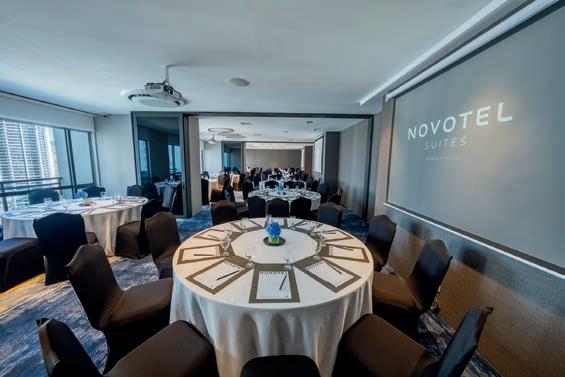
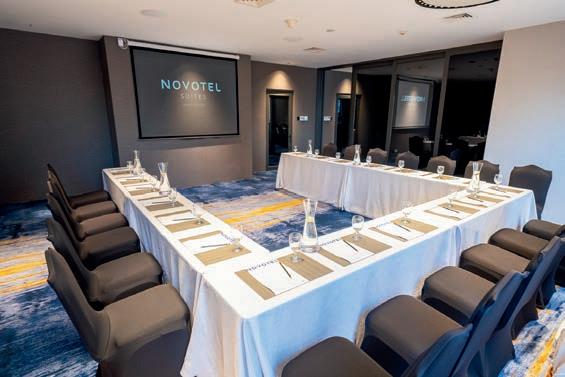
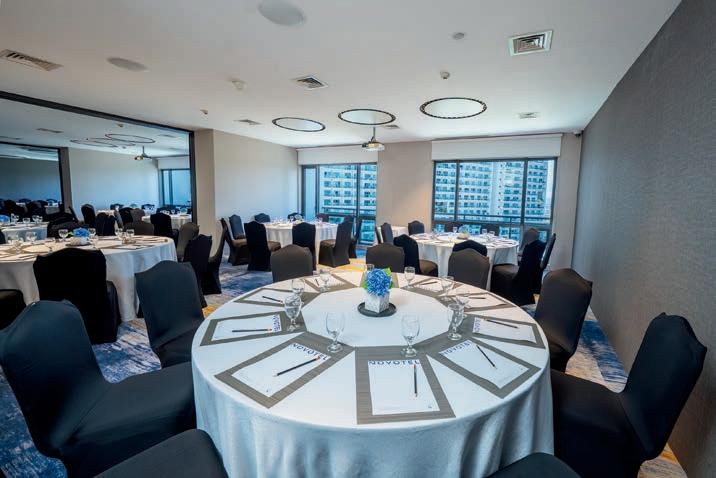
Its expanded portfolio of meeting spaces now includes the newly built Pantaleon Meeting Room and the expansive Maysilo, a 110-seater venue that may also be divided into three functional spaces: Hulo, Coronado, and Pantaleon.
These venues offer flexible configurations ideal for corporate meetings, training, presentations, and intimate business events. The atmosphere feels professional yet far less rigid than the typical boardroom setup, allowing meetings to flow more naturally and comfortably.
The hotel’s amenities also further reflect the evolving needs of today’s travelers. Guests can recharge with a swim in the outdoor pool, maintain wellness routines at the fully equipped In Balance Fitness Centre, or unwind over casual conversations at the Gourmet Bar and lounge spaces. For remote workers and entrepreneurs, the common areas also provide a relaxed environment that makes staying productive feel effortless.
Location remains another key advantage. Situated within easy reach of Makati, Bonifacio Global City, and Rockwell, the hotel offers convenient access to Metro Manila’s major business districts while maintaining a quieter, more relaxed atmosphere away from the usual congestion. It’s an ideal setup for executives flying in for meetings, entrepreneurs hosting clients, or overseas Filipinos looking to maximize a short but meaningful stay in the city.
What makes Novotel Suites Manila at Acqua stand out is its understanding of what modern travelers truly value today: space, convenience, calm, and flexibility. More than simply offering an escape from the city’s fast pace, the property creates an environment where guests can remain productive, focused, and fully connected while enjoying a more balanced lifestyle in the heart of Metro Manila.
For business travelers and balikbayans alike, that balance may well be the new way to travel well.

Developed by Century Properties Group and managed by Accor, Novotel Suites Manila at Acqua is located along Coronado Street in Mandaluyong City.




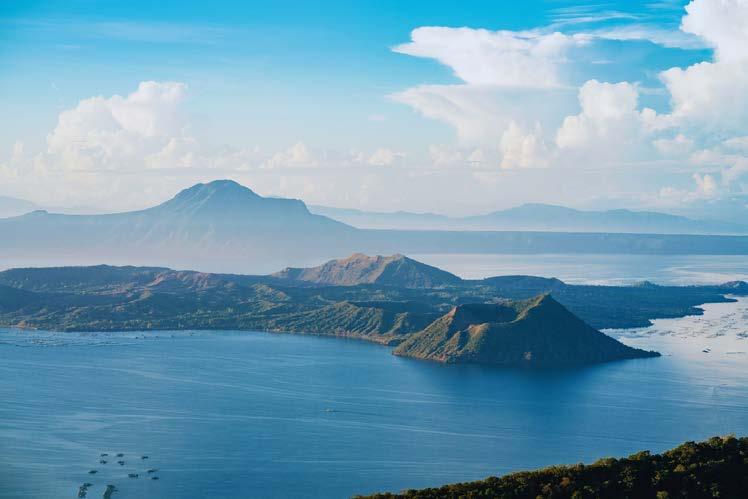
SATALA (Sagip Taal Lake) is a non-governmental organization founded in Talisay, Batangas with the mission to conserve Taal Lake through education, awareness, community empowerment, and volunteerism.
Nestled within a massive volcanic caldera in Batangas, Taal Lake is a vital ecosystem teeming with unique biodiversity, including the endemic Sardinella tawilis and Hydrophis semperi. Designated as part of the protected watershed landscape , this




In August 2020, severe heavy rains exposed the lake’s vulnerability to plastic pollution. Refusing to stand by, Nelson Terrible—a passionate Talisay local, President and CEO of Club Balai Isabel, and civic leader—issued a grassroots call to action. Alongside fellow community leaders, he founded Sagip Taal Lake (SATALA), a volunteer movement dedicated to restoring the lake's health and securing its sustainability.


Facebook: Sagip Taal Lake
Instagram: @sagiptaallake
Email: sagiptaallake.ph@gmail.com
Mobile: +63 977 812 2012
Main Office: Club Balai Isabel, Banga, Talisay, Batangas
Operating from its headquarters in Talisay, SATALA drives targeted interventions in close coordination with local government units (LGUs) and private stakeholders:
Ampon Baybay Lawa at Ilog: Mobilizes community volunteers to clear garbage dumping along roadsides, shorelines, and the 37 critical tributaries draining into the lake.
Watershed Reforestation: Spearheads tree-planting drives along local waterways to retain groundwater and naturally filter out toxic agricultural run-offs.
Waste Management Enforcement: Partners with local authorities to strictly enforce municipal ordinances, mandating household waste segregation through "No Segregation, No Collection" policies.
Surveillance Logistical Support: Deploys wireless CCTVs, high-powered solar lamps, and dedicated public sorting bins at ecological hotspots to systematically monitor and curb unlawful dumping.
To reduce economic dependence on lake extraction, SATALA initiates alternative green livelihoods like SAPALT Inc., a women's empowerment program crafting eco-friendly bath bars from locally grown moringa, turmeric, and calamansi. Public stewardship is actively reinforced through educational community events, including the annual Recycled Parol-Making Contest, the eco-advocacy Ginang SATALA pageant, and the Sagwan Dragon Boat Festival hosted at Club Balai Isabel. SATALA’s ultimate vision is to unite all 11 lakeshore municipalities and 2 cities surrounding Taal Lake in a permanent vow of environmental protection.

SATALA (Sagip Taal Lake) is a non-governmental organization founded in Talisay, Batangas with the mission to conserve Taal Lake through education, awareness, community empowerment, and volunteerism.
Nestled within a massive volcanic caldera in Batangas, Taal Lake is a vital ecosystem teeming with unique biodiversity, including the endemic Sardinella tawilis and Hydrophis semperi. Designated as part of the protected watershed landscape , this
In August 2020, severe heavy rains exposed the lake’s vulnerability to plastic pollution. Refusing to stand by, Nelson Terrible—a passionate Talisay local, President and CEO of Club Balai Isabel, and civic leader—issued a grassroots call to action. Alongside fellow community leaders, he founded Sagip Taal Lake (SATALA), a volunteer movement dedicated to restoring the lake's health and securing its sustainability.
Facebook: Sagip Taal Lake
Instagram: @sagiptaallake
Email: sagiptaallake.ph@gmail.com
Mobile: +63 977 812 2012
Main Office: Club Balai Isabel, Banga, Talisay, Batangas
Operating from its headquarters in Talisay, SATALA drives targeted interventions in close coordination with local government units (LGUs) and private stakeholders:
Ampon Baybay Lawa at Ilog: Mobilizes community volunteers to clear garbage dumping along roadsides, shorelines, and the 37 critical tributaries draining into the lake.
Watershed Reforestation: Spearheads tree-planting drives along local waterways to retain groundwater and naturally filter out toxic agricultural run-offs.
Waste Management Enforcement: Partners with local authorities to strictly enforce municipal ordinances, mandating household waste segregation through "No Segregation, No Collection" policies.
Surveillance Logistical Support: Deploys wireless CCTVs, high-powered solar lamps, and dedicated public sorting bins at ecological hotspots to systematically monitor and curb unlawful dumping.
To reduce economic dependence on lake extraction, SATALA initiates alternative green livelihoods like SAPALT Inc., a women's empowerment program crafting eco-friendly bath bars from locally grown moringa, turmeric, and calamansi. Public stewardship is actively reinforced through educational community events, including the annual Recycled Parol-Making Contest, the eco-advocacy Ginang SATALA pageant, and the Sagwan Dragon Boat Festival hosted at Club Balai Isabel. SATALA’s ultimate vision is to unite all 11 lakeshore municipalities and 2 cities surrounding Taal Lake in a permanent vow of environmental protection.



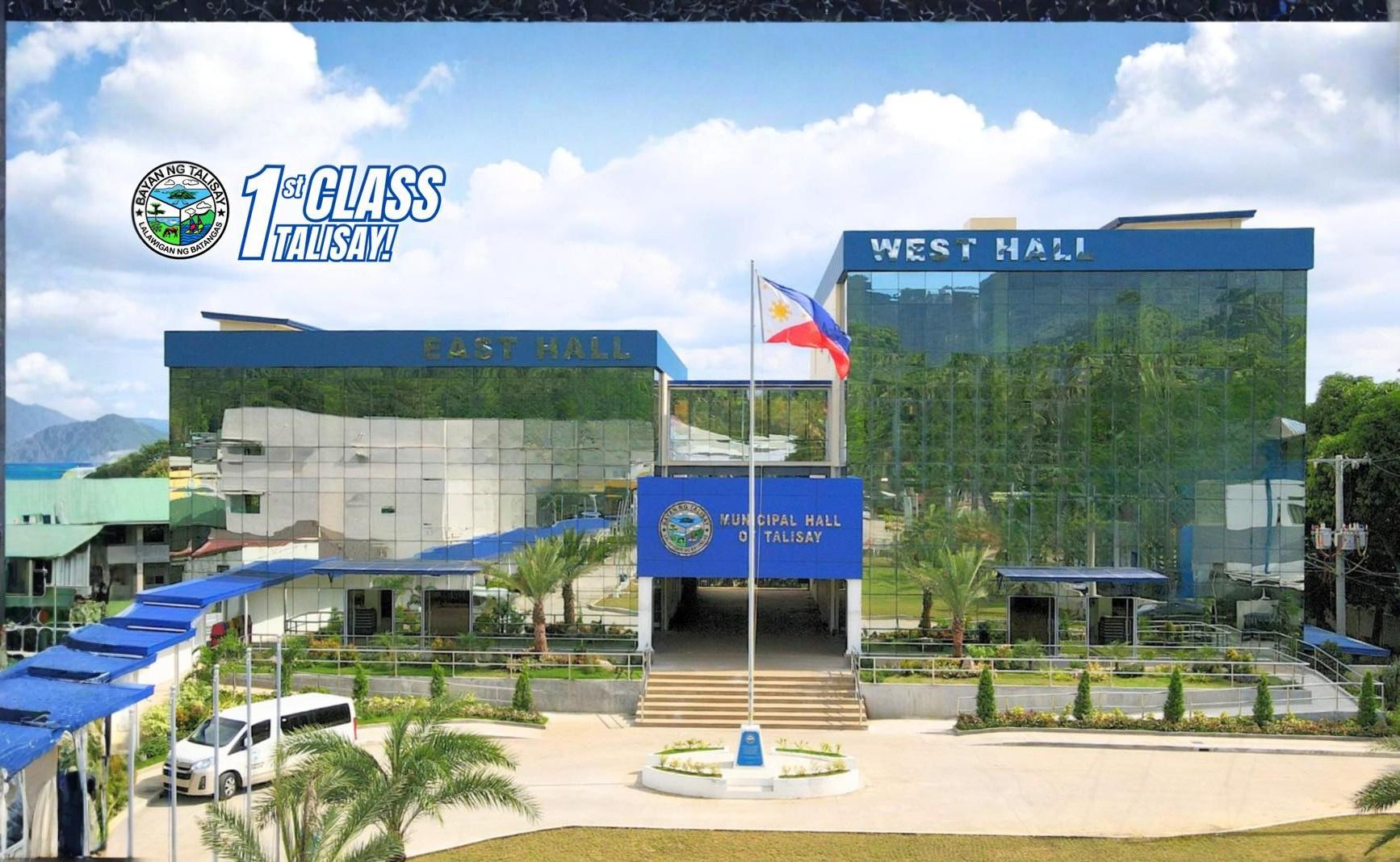
TALISAY, BATANGAS—It is one thing for a town to grow, but it is another thing entirely to transform. Since July 2022, Talisay has done exactly that. What was once a 3rd Class Municipality has officially risen to a 1st Class Municipality in just a few short years.
This isn't just a change in paperwork; it’s a result of a shift in how the town is run under the leadership of Mayor Nestor D. Natanauan (NDN). The transformation is grounded in fiscal discipline, accountability, and the belief that local government can actually work for its people.
The jump to 1st Class status didn't happen by accident. It started with changing how public funds are handled.
By implementing open and competitive bidding for all local government projects, the administration ensured that every peso was treated as a public investment rather than political capital. This move removed the "SOP" culture and questionable negotiations from the process. The result was immediate: betterquality infrastructure, faster project completion, and significant government savings that were reinvested back into the community.
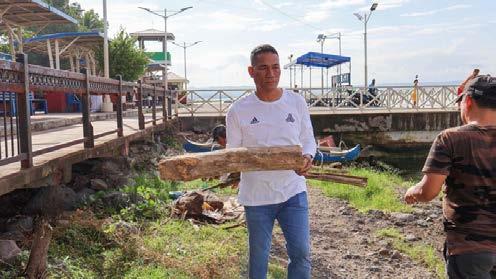
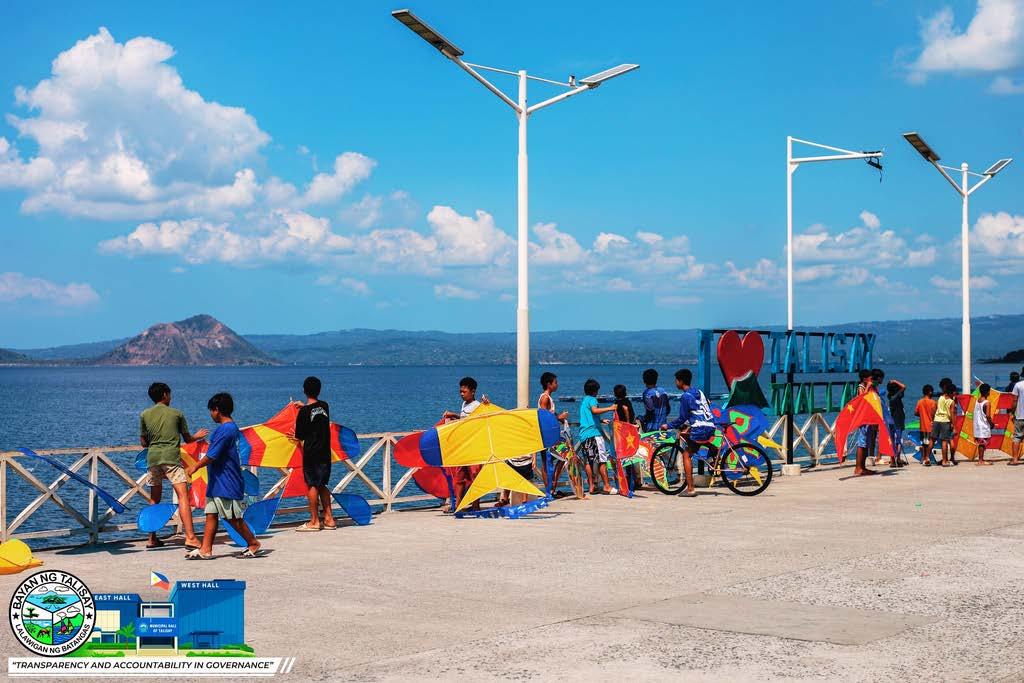
One of the most visible examples of this new leadership style is how the town handled its infrastructure. Instead of building something from scratch, the administration repurposed the former municipal hall into a campus for the Polytechnic University of the Philippines (PUP).
This move brought accessible higher education directly to the youth of Talisay without the massive overhead of a new construction project. It was a practical solution that prioritized people over prestige.
Leadership often means making decisions that are necessary but not always popular. A clear example was the firm policy against unsupervised gambling during wakes—a long-standing practice that the administration chose to reform to maintain community order.
At the same time, the town has focused on reviving the spirit of “Gulpihan,” a local expression of bayanihan. By promoting shared responsibility, the administration has balanced modern reform with a deep respect for Talisay’s roots. This balance is also seen in the preservation of local landmarks like the Hagdan-Hagdang Bato and the Gabaldon Building, ensuring that as the town moves forward, it doesn't lose its identity.
Environmental care has become a daily operational priority rather than just a slogan. Well before national mandates were issued, Talisay began regular clean-up drives and marine conservation efforts in Taal Lake. These efforts mobilized everyone—from municipal employees to civic volunteers—to protect the town’s most valuable natural resource.


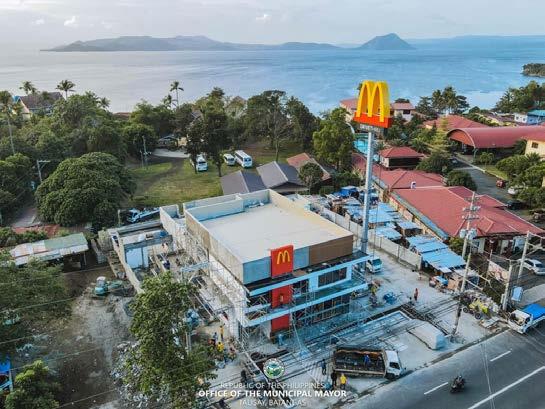
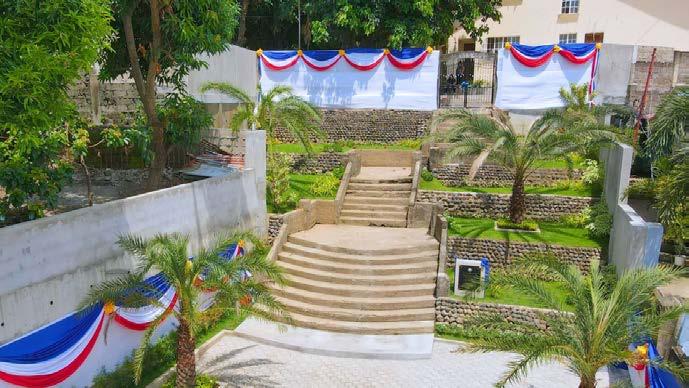
The most important outcome of these changes isn't found in a ledger; it’s found in the community’s confidence.
Investors are arriving: The shift to a 1st Class Municipality has signaled to businesses that Talisay is a stable, transparent place to grow. Local businesses are expanding: Existing establishments are seeing the benefits of a government that prioritizes infrastructure and order.
A blueprint for others: Talisay is proving that when a government is honest and disciplined, the economy follows.
If this kind of rapid, principled growth can happen in Talisay, there is no reason it can’t happen elsewhere. The future of the country might not be decided in big cities, but in towns like this that choose to do the work.
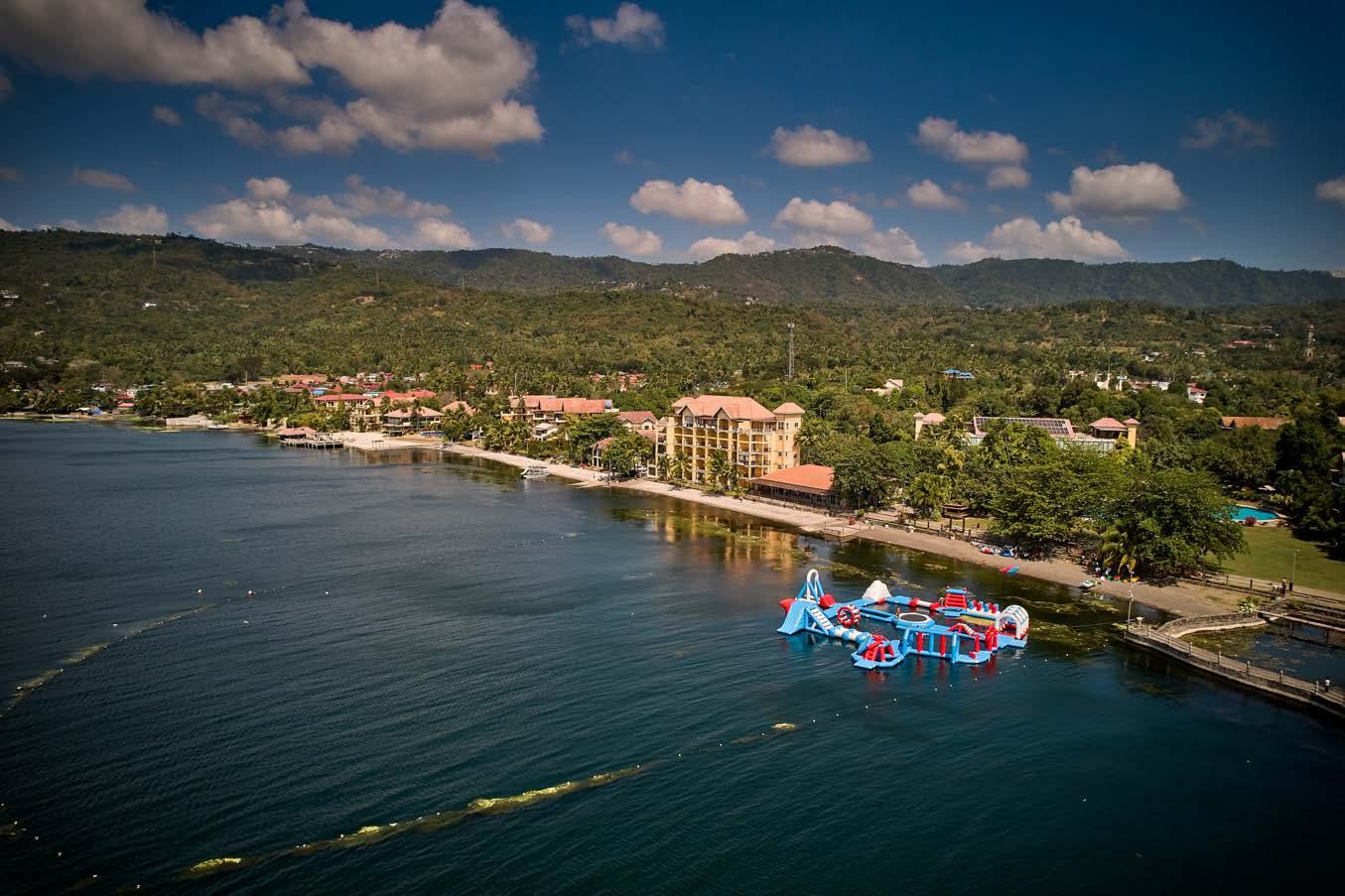



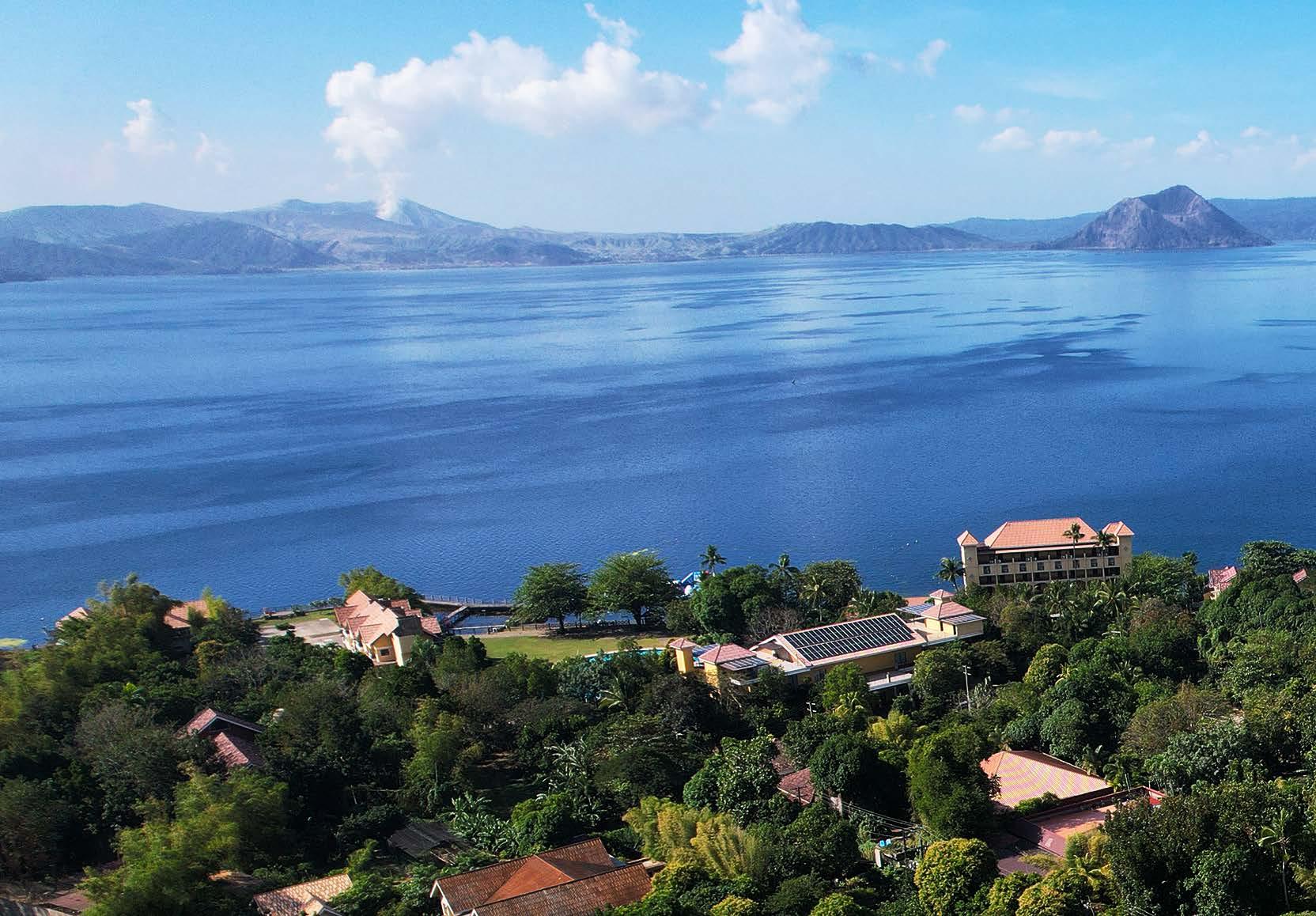
On the scenic shore of Taal Lake in Talisay, Batangas, Club Bal view of the volcano, perfectly positioned to access the beauty


Adventure Awaits
Explore and Connect with Nature
Enjoy the beauty of the bounty of the lake: dive into the inflatable Aqua Park playground, kayak and explore the serene waters, or experience the thrill of jet skis and banana boats, or learn to sail at the Taal Lake Yacht Club.







Club Balai Isabel is more than a leisure destination, it actively participates in environmental conservation through initiatives such as using salt filters in pools, its "Balai Organiks" farm supplying fresh produce to its restaurants, and supporting the NGO "Sagip Taal Lake" (SATALA). This commitment extends to its employees from nearby lakeshore towns, creating a friendly community atmosphere.
More than a getaway, it is a community steward committed to preserving Taal Lake’s beauty, offering unforgettable experiences and warm hospitality.
It is your home away from home, and a reminder of the positive impact the businesses can have on both the community and the environment.

for more about SATALA, visit facebook.com/sagiptaallake




Diverse Activities Await
Whether you're looking for a family getaway, a solo retreat, or the perfect venue for a corporate event, Club Balai Isabel is a great choice.
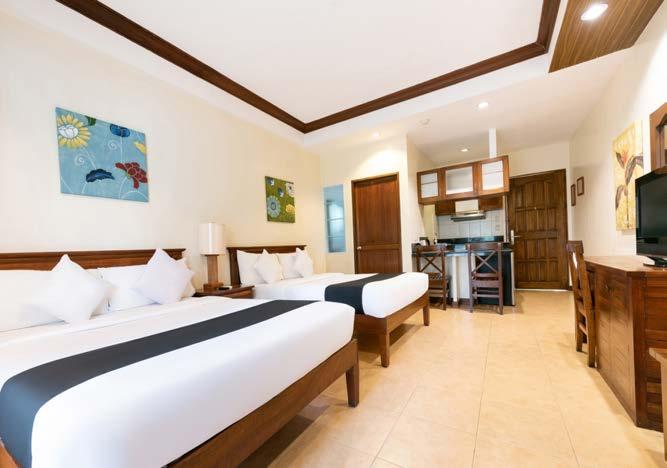
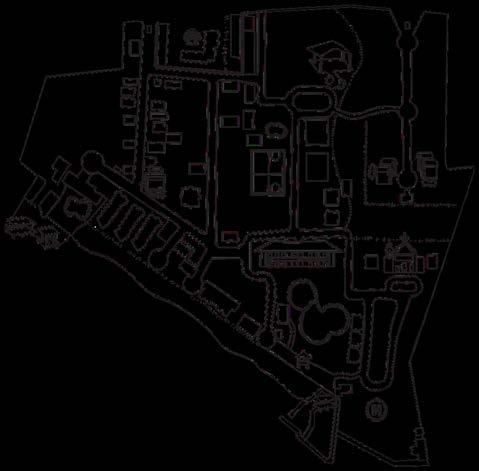
With 228 rooms ranging from hotel rooms to villas, function spaces that can hold 20 to 700 guests, and open grounds that can fit up to 2,500 people, Club Balai Isabel can easily adapt to your group size and occasion.




Embark on a culinary journey with four unique dining spots offering a variety of flavors. Experience Batangueño delicacies at Terraza Cafe, great coffee, all-day breakfast, and board games at Red Egg Deli, and delicious Italian fusion cuisine at Kumintang Republik.




















































TALISAY, BATANGAS—At Club Balai Isabel, we often talk about the history of the land and the beauty of the lake. But there is another side to the resort that guests rarely hear about—at least, not until they stay in Sampaguita Villa








For years, guests staying in that specific elevated villa reported hearing soft giggles and strange noises. When paranormal researchers looked into it, they found an unexpected "permanent resident": an ancient elemental named According to the lore, Lolo lives in a hidden coconut tree stump beneath the villa. He isn't a ghost to be feared; he is a protector who once shared lunches of rmer named Mang Tato.


This quirky, real-life encounter with the "unseen" world of Taal is what inspired The Guardians of Taal Volcano: A Legend


The novel takes this local lore and turns it into an epic. It follows the Makas—fire elementals living inside the volcano—who decide to leave their home to seek adventure in the world beyond.
It’s a theme that resonates with millions of Filipinos living abroad. Just as our modern-day diaspora braves foreign shores to build better lives, these guardians ventured into the unknown. But when their home, Kumintang, is threatened, they realize that distance doesn't sever their connection to the land. They return to protect what is theirs.













Beyond the mythology, the book serves as a grounded look at pre-colonial Philippines. Through the eyes of the hero, Magilas, the story explores the arrival of Spanish colonizers. It challenges the idea that the Philippines needed to be "civilized." Instead, it highlights the organized, diplomatic society that already existed under leaders like Datu Polintang, Datu Dumangsil, and Datu Balensusa. It portrays a civilization that didn't just "own" nature, but partnered with it.

The message of the book is straightforward: we protect what we love. Whether you are a local living in Talisay or a Filipino living in New York, the responsibility to guard our heritage and our environment belongs to all of us.
The Guardians of Taal Volcano: A Legend is more than a bedtime story; it’s a reminder of where we came from and what we are capable of protecting.




Cecille Arenas Terrible brings a unique perspective to this legend. A Psychology graduate from the University of Santo Tomas (Class of '76), she spent 30 years as a Human Resources executive before becoming the COO of Club Balai Isabel. Her career has always been about understanding people and building communities—skills that she drew upon to build the world of the Makas and the guardians of Taal.







Grab a copynow! available available














Every departure begins with a promise: distance today, return someday.
There is no single story of the Filipino abroad.
There is the nurse from Iloilo who left on a scholarship and never came back, not because she stopped loving home, but because London needed her, and over time, she needed London too.
There is the engineer in Vancouver who met a partner in graduate school and built a life there not through a single decision, but through a series of quiet accumulations that eventually became permanence.
There is the designer in Milan, the banker in Hong Kong, the professor in Sydney, the entrepreneur in Dubai who arrived on a contract and stayed because opportunity slowly turned into belonging.
They are not one thing. They did not leave for one reason. And yet something connects them that is not geography, nor profession, nor even intention. It is what they carried after leaving.
A country that continued to live inside them. And a distance that never fully became separation.
Today, more than 10 million Filipinos live outside the archipelago. They are spread across countries whose economies depend, in ways both visible and invisible, on people who are skilled, adaptable, and willing to do more than what is asked of them.
They are in hospitals and universities, in design studios and financial institutions, in restaurant kitchens
By Billy De La Cruz
Across six continents and every industry imaginable, Filipinos are not just succeeding. They are reshaping economies, cultures, and the very meaning of national identity.
and corporate boardrooms. Some left by choice. Some left by necessity. Many stayed longer than planned.
But all of them, in different ways, are part of something larger now.
A version of the Philippines that exists beyond its shores, and quietly reshapes the one within them.
Before anything else, there is the money. Not because money is the most important part, but because the scale of it demands acknowledgment before anything else can be understood clearly.
The Bangko Sentral ng Pilipinas reported personal remittances of $37.2 billion in 2023, the highest figure on record. That number has grown almost every year for two decades, surviving financial crises, a global pandemic, and sustained economic uncertainty that has made life abroad more complicated and more expensive than it has ever been. It represents 8 to 9 percent of the country’s GDP, a proportion that the World Bank, in its research on remittance-dependent economies, identifies as one of the highest sustained levels of diaspora financial contribution anywhere in the world.
What the World Bank and the Asian Development Bank have also consistently noted is the countercyclical nature of Philippine remittances: when the domestic economy contracts, overseas Filipinos tend to send more. The money moves against the tide. This is not a feature of investment behavior. It is a feature of family behavior, of people who monitor conditions at home and respond to need, sometimes before the need is even articulated. No portfolio manager operates this way. Only people who love a place do.
But the fuller picture of what diaspora income does to the Philippine economy extends beyond the
aggregate figure. It is visible in the provincial towns where household consumption levels are measurably higher in communities with high diaspora populations. It is visible in the private school enrollment rates that the Commission on Higher Education has tracked in those same communities, consistently above what local wage levels alone would predict. It is visible in the small businesses capitalized by savings accumulated abroad, in the agricultural land purchased by families who now have the liquidity to hold it rather than sell under pressure.
The $37.2 billion is the headline. What it funds is the country.
THE HOUSE THAT WAITED
Drive through any provincial town in the Philippines and you will eventually find it: the house that doesn’t quite fit. Bigger than its neighbors. More finished, or mid-construction but clearly intended to be grander once the next remittance cycle comes through. A gate slightly too substantial for the street it stands on. Windows that face a mountain or a rice field or simply the horizon. This is a home built on foreign earnings, and it is one of the most legible symbols of what diaspora investment actually looks like at the household level.
The Philippines’ real estate sector has been shaped, in ways still being fully mapped by industry analysts, by the purchasing psychology of Filipinos abroad. Property developers recognized this early. Ayala Land, SM Prime, Vista Land, and a wide range of regional developers have built product lines and entire sales operations oriented around the diaspora market, with offices and roadshows in the Gulf, in North America, in Europe and Australia. The pitch is never simply about location or return on investment. It is about home as a destination, about having a place that is yours and waiting, about the idea of return made concrete.
The Subdivision and Housing Developers Association has noted that OFW-driven demand has been a consistent stabilizing force in the residential property market, particularly in provincial areas where local purchasing power alone could not sustain the construction activity the country has seen. In Calabarzon, Central Luzon, and across the Visayas, residential developments exist at a scale and quality that the local wage economy does not fully explain. The explanation is found in the money sent from elsewhere, guided by an intention formed years before the foundation was poured.
For many Filipino families abroad, property is not a financial instrument. It is the physical form of a promise: that the sacrifice meant something, that there is something solid to come back to, that the distance
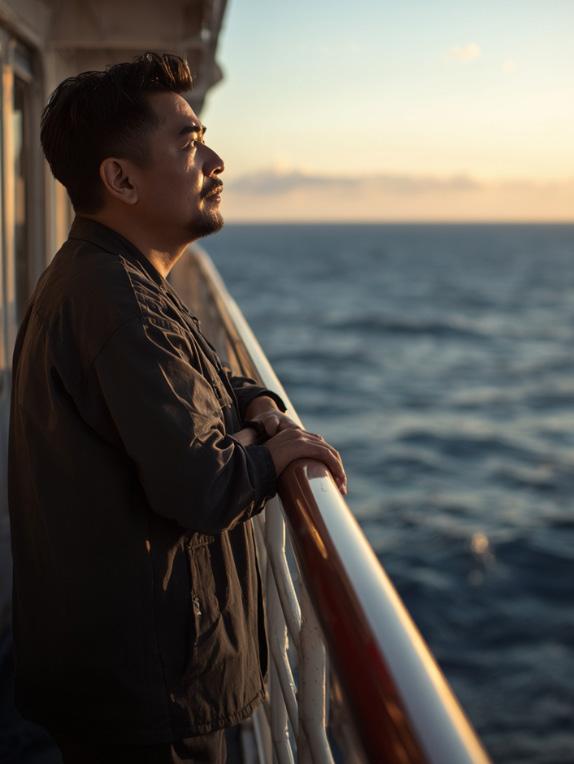
was always temporary even when it turned out not to be.
Survey after survey of Filipinos living and working abroad, including longitudinal research from the Philippine Overseas Employment Administration and academic work from the University of the Philippines School of Labor and Industrial Relations, returns to the same finding: children’s education is the primary stated motivation for sustaining life abroad. Not property. Not retirement savings. The diploma.
This is not a small cultural preference. It is the engine of intergenerational mobility for millions of Filipino families, and it has quietly built a private education sector that operates well above what the country’s average income level would typically support. The proliferation of private schools, colleges, and universities across the Philippines, many of them in cities and towns that would not otherwise sustain them, is inseparable from the fact that diaspora parents are paying tuition in foreign currency, year after year, for children they often see only during the holidays.
The Commission on Higher Education has tracked a consistent pattern: provinces with high diaspora populations show stronger tertiary enrollment rates,

even when local economic conditions would otherwise predict the opposite. The money flows through the family and into the institution, and the institution produces graduates who carry the ambition their parents invested in them.
The ADB and World Bank research on brain circulation in developing economies has moved away from the earlier, grimmer framing of brain drain to describe something more dynamic: a pattern in which education, exposure, and professional experience move outward through migration and return, transformed, through the people who absorbed them. The Filipino who studied on a scholarship in Australia, or who worked in a Singapore firm for a decade before coming home, does not return empty-handed. They return with standards, with networks, with a bilingual and bicultural fluency that is increasingly, in a globalized economy, the most valuable thing a person can carry.
What is changing fastest in the diaspora story, and what this issue of Balikbayan Magazine is most interested in documenting, is the nature and direction of Filipino investment abroad shifting from consumption back toward origin.
The Commission on Filipinos Overseas has documented growing patterns of what researchers are beginning to call diaspora direct investment: capital from Filipinos abroad going not into property or household consumption but into businesses, agricultural ventures, social enterprises, and technology startups in the Philippines. The profile of this investor is distinct from the traditional migration narrative. They are often younger, often holding professional or academic credentials from abroad, and often motivated by something that is not purely financial return.
Research from the Migration Policy Institute on diaspora investment globally identifies a consistent psychological driver in this category: the desire to participate in a place that shaped you, or that shaped the people who shaped you. For Filipino-Americans, Filipino-Australians, and the children of migrants who grew up watching parents sacrifice for a country they simultaneously loved and left, investment can function as a form of inherited loyalty made actionable. It is the financial expression of a debt that was never financial to begin with.
The food and beverage industry has absorbed much of this energy, partly because food is the most immediate and personal expression of cultural identity, and partly because it is an accessible entry point for investors who are not yet ready for larger capital commitments. But the pattern is extending into agriculture, creative industries, digital infrastructure, and professional services. Filipino designers abroad are sourcing from local weavers and positioning Philippine textiles in international markets. Filipino academics are consulting for domestic institutions. Filipino technologists are building products for the Philippine market from offices in San Francisco and Berlin.
The ADB has used the term brain circulation to describe this dynamic, and it is the more accurate frame. The knowledge, capital, and cultural confidence that left the Philippines through its people is beginning to complete a circuit, and what returns is more compounded than what departed.
The most significant shift in the diaspora story right now is not economic. It is directional.
For the first time in the modern history of Philippine migration, the flow is beginning, in modest but

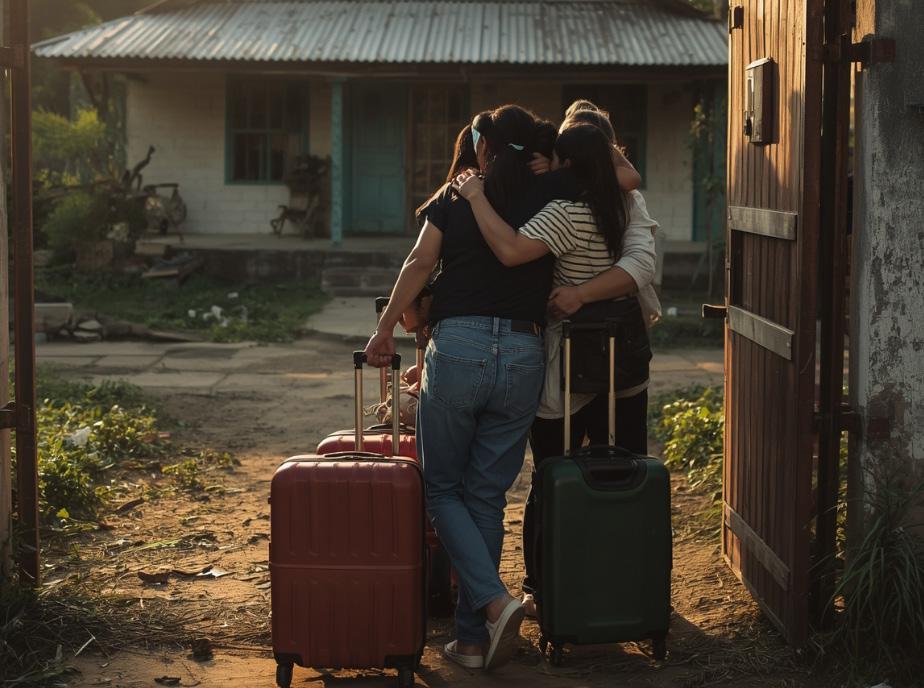
Home is not just built. It is returned to, again and again.
meaningful ways, to turn. The Commission on Filipinos Overseas has noted increasing repatriation activity among Filipinos abroad, particularly among those in professional and skilled categories who see genuine opportunity in the Philippines’ growing digital economy, its expanding consumer class, and its still-competitive cost of doing business relative to the cities many of them left.
They return with what they absorbed. With expectations around systems and process shaped by having worked in places where systems worked. With professional networks that stretch across industries and borders. With a dual fluency, cultural and linguistic and professional, that is increasingly difficult to replicate through any domestic education or training alone. And with something less tangible but equally real: the desire to build something in the place that made them, or that made the people who made them.
The philosopher and cultural theorist E. San Juan Jr., whose decades of writing on the Filipino diaspora remains among the most rigorous engagement with these questions in the academic literature, has argued that the experience of Filipino migration cannot be separated from structural conditions: the decisions, made over generations, that shaped who left and
why. That context does not diminish what individual Filipinos built from abroad. It makes what they built more remarkable, and the question of what they might build upon returning more urgent.
The Philippines has spent decades learning how to receive what its diaspora sends. The more interesting challenge, and the one this generation of returning Filipinos is actively posing, is whether the country is ready for what they are bringing back.
There are Filipinos thriving on every continent right now. Teaching, designing, cooking, coding, healing, building, raising children who will grow up with two languages and three loyalties and no clean answer to the question of where they are from.
They are not a diaspora in the elegiac sense, scattered and longing. They are a network, alive and self-reinforcing, connected by something that has proven more durable than distance. The Philippines, at its best, knows this about itself. At its best, it claims all of them, not just the ones who came back, but the ones still out there, still building, still Filipino on their own terms.
That is the story this issue is trying to tell. Not the story of departure. The story of everything that came after.

In a country made up of more than 7,000 islands, travel has always been part of everyday life. While flying is often the fastest way to get from one place to another, there is something uniquely meaningful about traveling by sea. It is not just about reaching your destination. It is about experiencing the journey itself.
For many Filipinos, sea travel brings a sense of nostalgia. It recalls family trips during school breaks, long holidays, or even the quiet excitement of watching the shoreline slowly fade as the ship pulls away from port. Today, it remains a practical and often overlooked way to explore the country, offering a different kind of adventure that goes beyond convenience.
Unlike air travel, which is often rushed and structured, sea travel allows you to slow down. There is time to settle in, walk around, and take in your surroundings. You can stand on deck and watch the waves stretch endlessly, catch a sunrise over open water, or see islands appear on the horizon.
This slower pace creates space to unwind. Instead of the stress of tight boarding times and limited movement, you have the freedom to relax, read, or simply enjoy the view. For many travelers, this makes the journey feel like part of the vacation, not just a step to get through.
traditions. Heading south to Mindanao gives travelers a chance to experience a different side of the Philippines, from bustling cities to serene coastal communities.
Because ships carry both passengers and cargo, they also play a vital role in connecting families and supporting local economies across islands.
One of the biggest advantages of sea travel is flexibility. Travelers are typically allowed to bring more luggage compared to flights, making it ideal for long stays, balikbayan boxes, or group trips. Families traveling together often find it easier to manage their belongings without worrying about strict baggage limits or additional fees.
Accommodations on board also vary. From budgetfriendly shared spaces to private cabins, there are options to suit different needs and comfort levels.
While sea travel is often more affordable than flying, its value goes beyond price. It offers time, space, and perspective. It allows travelers to move at a different rhythm, one that feels more connected to the places they are visiting.
In a fast-paced world where travel is often about efficiency, choosing to go by sea can be a refreshing alternative. It reminds us that sometimes, the best journeys are not the quickest ones, but the ones we truly experience along the way.
For those looking to rediscover the Philippines from a new point of view, the sea offers a path that is both familiar and full of possibility.

Sea routes connect many major islands across the Philippines, making it possible to travel between key destinations without stepping on a plane. Popular routes link Metro Manila to provinces such as Cebu, Iloilo, Bacolod, Cagayan de Oro, and Davao. These journeys open up opportunities to explore regions rich in culture, food, and natural beauty.
For example, a sea trip to Cebu offers access to historic landmarks and world-class diving spots. Traveling onward to Iloilo or Bacolod introduces you to heritage towns and some of the country’s best culinary




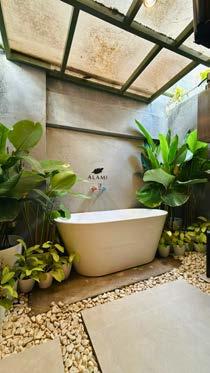


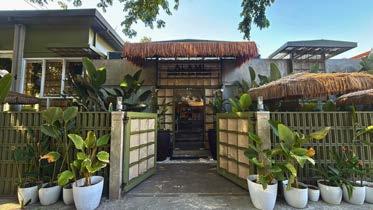
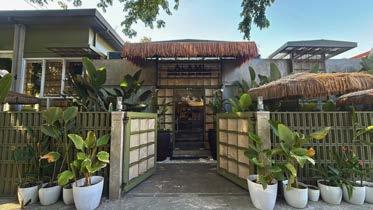






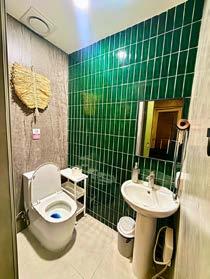






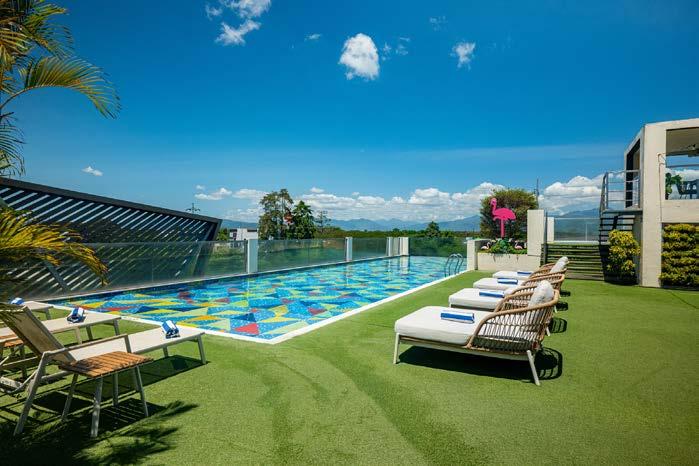
At the rooftop, guests can unwind at the swimming pool and The Flamingo Social, the hotel’s lively hub for cocktails, music, dining, and panoramic city views.
On the ground floor, Bright Buds Play Club offers a fun and creative space for kids, alongside LA-UD Restaurant, where Filipino favorites are reimagined using fresh local Palawan ingredients. The 4th floor features the hotel’s Fitness Center for guests looking to stay active during their stay.


Just five minutes from the airport, Hue Puerto Princesa is where urban efficiency meets the spirit of Palawan. It is a space designed for the modern traveler where business meets leisure.


Designed for every kind of traveler. Hue Puerto Princesa features 122 rooms, including:
Deluxe Room
Suite Room
Family Room







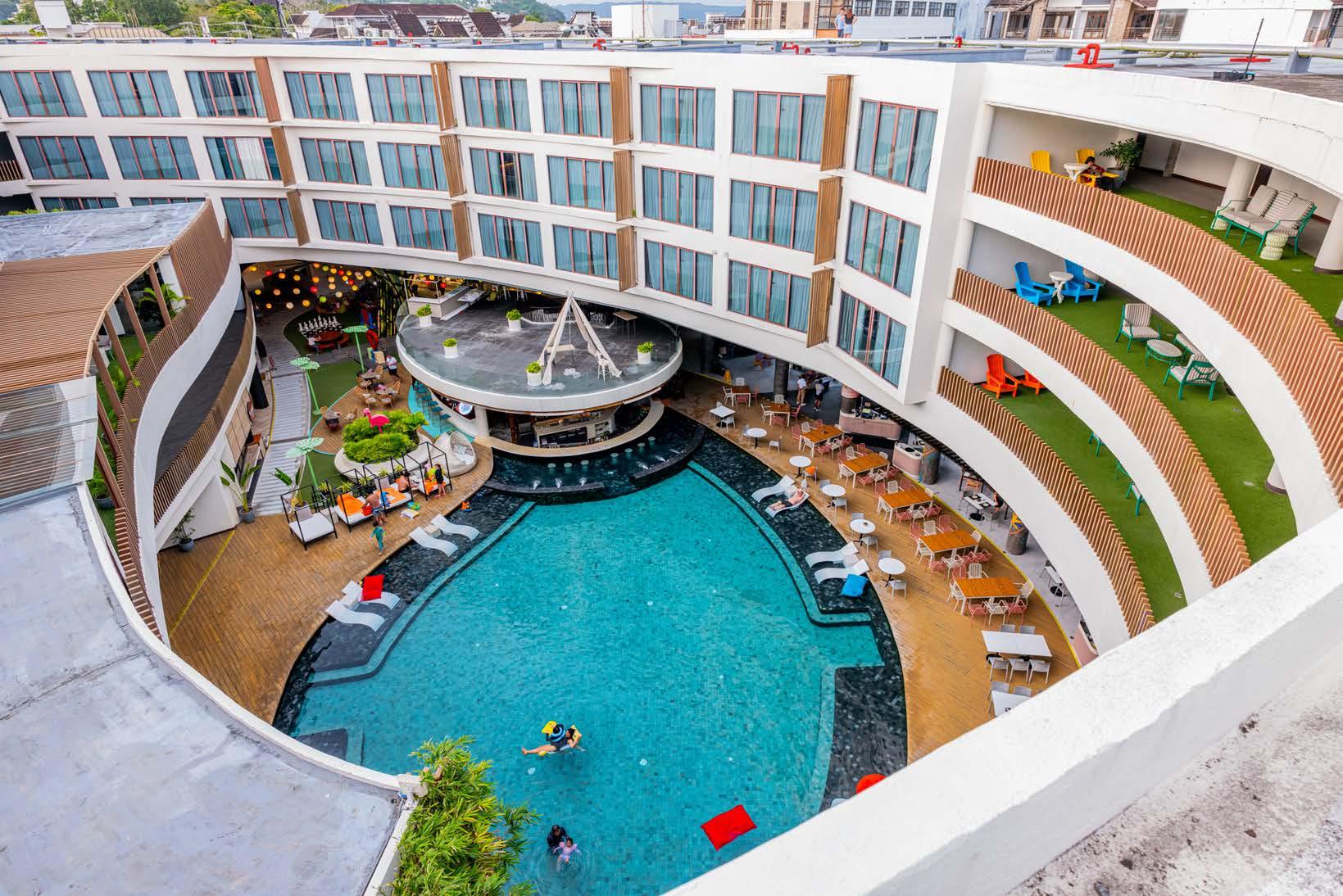
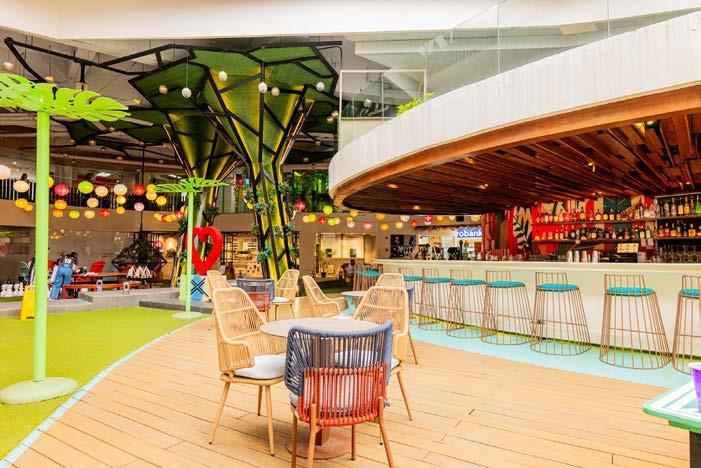
Station X is Hue Boracay’s vibrant lifestyle hub, home to local restaurants, bars, shops, and the laid-back Turf Lounge with arcade games and karaoke rooms. At the pool, The Flamingo Social serves cocktails and tropical vibes from sun-up to sundown.
Guests can also enjoy LA-UD Restaurant for more modern flavors, stay active at the fitness center, or let the kids play at Bright Buds Play Club with slides, trampolines, and climbing walls.
Located along the Station 2 Main Road, Hue Boracay is positioned where the island energy is most concentrated. This is the social capital of Boracay, a place designed for those who want to be exactly where the action is.

Hue Boracay features 127 rooms, including:
Deluxe Room
Deluxe Pool View
Suite
Family Room
Spectrum Suite








Beyond the casitas, the experience flows naturally. Bright Buds Play Club welcomes younger guests, while the Fitness Center, with sauna and ice bath, offers a full reset. At Dayána, coastal flavors are served in a relaxed setting made for slow, lingering moments.
At the heart of the property, the pool sets the tone, vibrant by day, serene by sunset.
Hue Siargao is now open. Book your stay and experience a new rhythm of island living.
SIARGAO DOESN’T DO ORDINARY AND NEITHER DOES HUE.
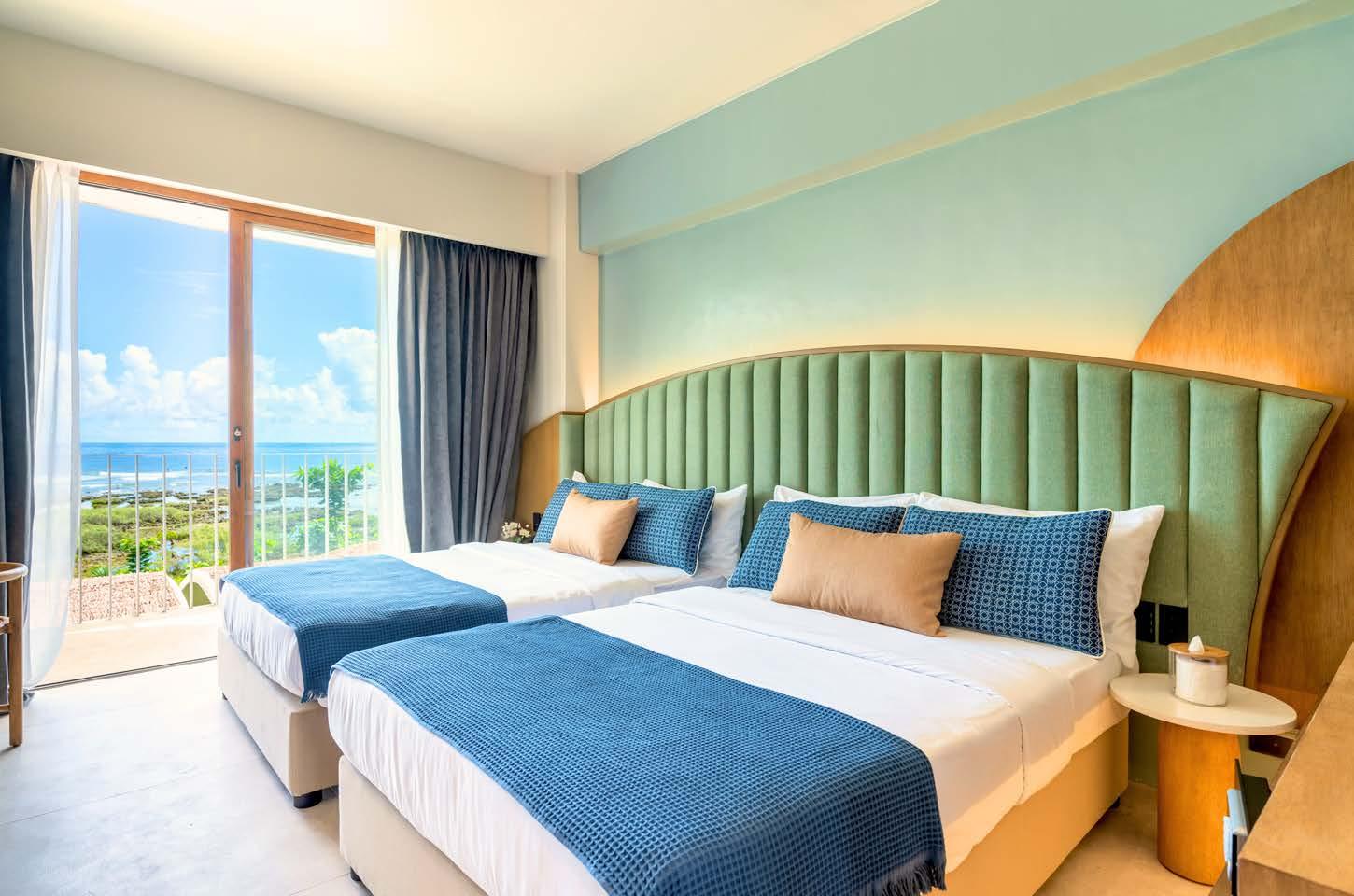
Now open along Tourism Road in General Luna, Hue Siargao introduces a fresh, design-forward stay on the island with only 33 casitas, offering an intimate way to experience Siargao.
Choose your stay: Deluxe Garden, Deluxe Seaview, Garden Casita with Pool, Seaview Casita, or Seaview Casita with Pool. Selected casita categories feature private pools, creating a more secluded escape designed for uninterrupted relaxation.





By Billy De La Cruz
There was a time when Filipinos would contort their tongues into shapes they had no business making. They would flatten their vowels, drawl their syllables, and swallow the ends of words in a desperate performance of borrowed identity. American. British. Neutral. Anything but Filipino. In school hallways, in call center cubicles, in the lobbies of multinational companies, the unspoken rule was clear: sound like someone else. Someone more credible. Someone from somewhere that was not here.
That time, thankfully, is loosening its grip.
When travel platform EnjoyTravel.com ranked the Filipino accent as the sexiest in Asia and among the most attractive in the world, social media did what it does best: erupted. “Finally, our accent is being appreciated,” read one comment that gathered thousands of likes. “Now I won’t be shy speaking English in public,” wrote another. The reactions were not just celebratory. They were relieved. There was something almost tender about watching an entire nation collectively exhale.
The ranking cited the Filipino accent’s soft tone, fluid rhythm, and friendly cadence as key factors. To outsiders who encounter it for the first time, it registers as melodic, warm, and unusually clear. It does not carry the hard edges of some European accents or the tonal complexity of East Asian ones. It sits somewhere inviting, like a voice that already knows you.
To understand where the Filipino accent comes from, you have to go back much further than a travel website’s rankings. Tagalog, the language at the core of Filipino, is built on one of the simplest phonetic systems in the world. It works with five vowel sounds and sixteen consonants, favoring open syllables that end cleanly and rhythmically. The word laro flows CVCV, easy and open. The language does not naturally accommodate the clustering of consonants the way English does, which is why a Filipino speaker will often give each syllable its full due rather than let unstressed ones collapse into the schwa sound that American English depends on so heavily. Then came the colonizers, and with them, entire

phonetic worlds grafted onto that clean foundation. Spanish rule left behind not just vocabulary but sound: the rolled r in pera and pero, the softened consonants of mesa and familia. When America arrived, it brought aspirated consonants and an educational system conducted entirely in English, introducing stress patterns that did not exist in native Tagalog. The result was a hybrid speaker: someone who learned English formally, applied it through a Tagalog phonetic lens, and produced something that was neither purely American nor purely Filipino. Something entirely its own.
The Philippines is not one accent. It is more than 170 languages spread across more than 7,000 islands, and every region carries its sound into the national language like a signature. Batangas Tagalog is forceful and marked by a sharp glottal stop, unmistakable to anyone who has heard ala eh said with full conviction. Ilonggo speakers bring a drawn-out lilt to their words, a melodic pull that softens even declarative sentences. Ilocanos carry a pronounced vowel into words where Manila Tagalog would round them off differently. Cebuano speakers sometimes bring their native tendency to shift certain consonants into their Tagalog. And Kapampangan speakers have been known to drop an initial h entirely, so that halika becomes something closer to ‘alika, softer and somehow more intimate.
The Manila accent, the one broadcast on national television and taught as standard in schools, is itself a blend of all these influences plus the additional layering of English code-switching so pervasive it has its own name: Taglish. But even that “standard” is a construction, a center of gravity that the provinces have never fully orbited.
The colonial legacy of language in the Philippines


runs deep and, in many cases, still runs raw. For decades, accent-shaming was not a fringe experience but a systemic one. Children were corrected in classrooms. Employees were sent to accent neutralization training before they were allowed to take calls from American clients. The message embedded in all of it was consistent and corrosive: the way you naturally speak is a liability.
The BPO industry, which employs millions of Filipinos, was for years the most visible arena of this erasure. Workers were trained to flatten their natural cadence, to adopt American idioms, to perform a version of themselves that would not register as foreign on the other end of the line. Some were exceptionally good at it. Others found the performance exhausting in ways that went beyond the vocal.
The shift did not happen overnight and it did not happen because of one ranking. It happened because Filipino voices started appearing in spaces that could not ignore them. Bretman Rock built a global beauty empire speaking exactly the way he speaks. Bella Poarch became one of the mostfollowed people on TikTok without softening a single vowel. Filipino nurses, doctors, caregivers, and teachers filled critical roles across North America, the Middle East, and Europe and were recognized not despite how they sounded but alongside it. Over ten million Filipinos living abroad carried their accent into hospitals, classrooms, cruise ships, and embassies, and the world did not recoil. It listened.
The global market, slowly and then all at once, began to prefer authenticity over mimicry. Clients who once demanded neutralized accents started expressing preference for clear, relatable speech
over a performance nobody fully believed anyway. What had been treated as a flaw turned out to be a feature.
The sexiest accent in Asia is not an accident of geography. It is the product of centuries of linguistic layering, of a people who absorbed Spanish cadence and American rhythm and regional melody and made something that belongs entirely to them. It is soft because Filipino culture values softness. It is warm because the people who speak it are. It is clear because clarity is something Filipinos have always worked hard for, in every sense of the word.
The generation now growing up does not carry the same weight of accent shame that their parents and grandparents did. They post videos in their natural voices. They represent the country in international competitions without apologizing for how they sound. They are the ones who will decide what the Filipino accent means going forward, and everything suggests they will decide it means something worth keeping.
So, the next time someone asks you to neutralize your accent, you have a ranking to cite. More importantly, you have a history that tells you there was nothing to neutralize in the first place.











By Rocelle Añabeza
Some Filipino words are impossible to translate properly, not because English lacks vocabulary, but because Filipino culture packs entire emotions, habits, and life experiences into a single word.
You can explain them, sure. You can even come close. But something always gets lost in translation.
From romance to family drama to emotional damage disguised as humor, here are ten Filipino words that English simply cannot handle properly.
1. Kilig
The undisputed champion of untranslatable Filipino feelings.
“Kilig” is that rush of excitement you feel when your crush notices you, when two people finally hold hands in a movie, or when someone remembers the smallest detail about you. It is butterflies, nervous laughter, and smiling at your phone like a fool all at once.
English has “giddy” or “thrilled,” but neither feels dramatic enough.
2. Gigil
You know that overwhelming urge to squeeze something because it is too cute? That is gigil.
Strangely, Filipinos also use the same word when they are intensely annoyed. So yes, gigil can either end in hugs or violence depending on the situation.
3. Tampo
“Tampo” is not exactly anger. It is softer, quieter, and somehow more emotionally effective.
It is the act of withdrawing affection after getting hurt, hoping the other person notices and fixes the situation without you directly saying what is wrong. A classic Filipino communication style, honestly.
4. Diskarte
A person with “diskarte” knows how to survive anything. It means being resourceful, strategic, street-smart, and creative under pressure. Filipinos admire people who know how to make things work even with limited resources.
Sometimes it is hustle. Sometimes it is pure improvisation.
5. Umay
The feeling of having too much of something.

Too much food. Too much noise. Too much repetition. Too much social interaction.
After your third plate of lechon at a fiesta or hearing the same karaoke song for the seventh time, congratulations. You are officially umay.
6. Pasalubong
A pasalubong is technically a gift, but emotionally, it means, “I thought about you while I was away.”
It can be expensive or incredibly small. The point is that someone remembered to bring you something home.
And yes, Filipinos absolutely keep track of who forgot.
7. Lihi
One of the most uniquely Filipino concepts surrounding pregnancy.
“Lihi” refers to a pregnant woman’s cravings and fixations, sometimes believed to influence the baby’s appearance or personality. If a mother constantly stared at celebrities during pregnancy, someone will eventually joke that the baby inherited their face.
Scientific evidence may be questionable. Filipino belief in it is not.
8. Basta
Few Filipino words carry more authority than “basta.”
It loosely translates to “just because” or “end of discussion,” but tone changes everything. Parents use it to shut down arguments instantly. Friends use it when they are too tired to explain themselves.
Either way, once someone says basta, the conversation is probably over.
9. Bangungot
English translates this as “nightmare,” but that barely scratches the surface.
In Filipino folklore, bangungot refers to dying in your sleep, often connected to terrifying dreams or supernatural causes. Many Filipinos grew up hearing warnings not to sleep immediately after eating because of it.
Nothing says childhood like being mildly traumatized before bedtime.
10. Lambing
“Lambing” is affection performed with sweetness, softness, and a little bit of strategy.
It is the extra gentle voice someone uses when asking for a favor. The clinginess of a child wanting attention. The playful sweetness between couples after an argument.
English words like “affection” or “sweetness” come close, but they miss the charm and emotional performance behind lambing.
Filipinos do not just show affection. We dramatize it beautifully.
These words reveal something deeper than language. They reflect how Filipinos love, tease, survive, celebrate, and emotionally negotiate with one another every single day.
Some feelings are simply too Filipino to translate cleanly. And honestly, maybe they are better that way.


(And so is the best shopping!)


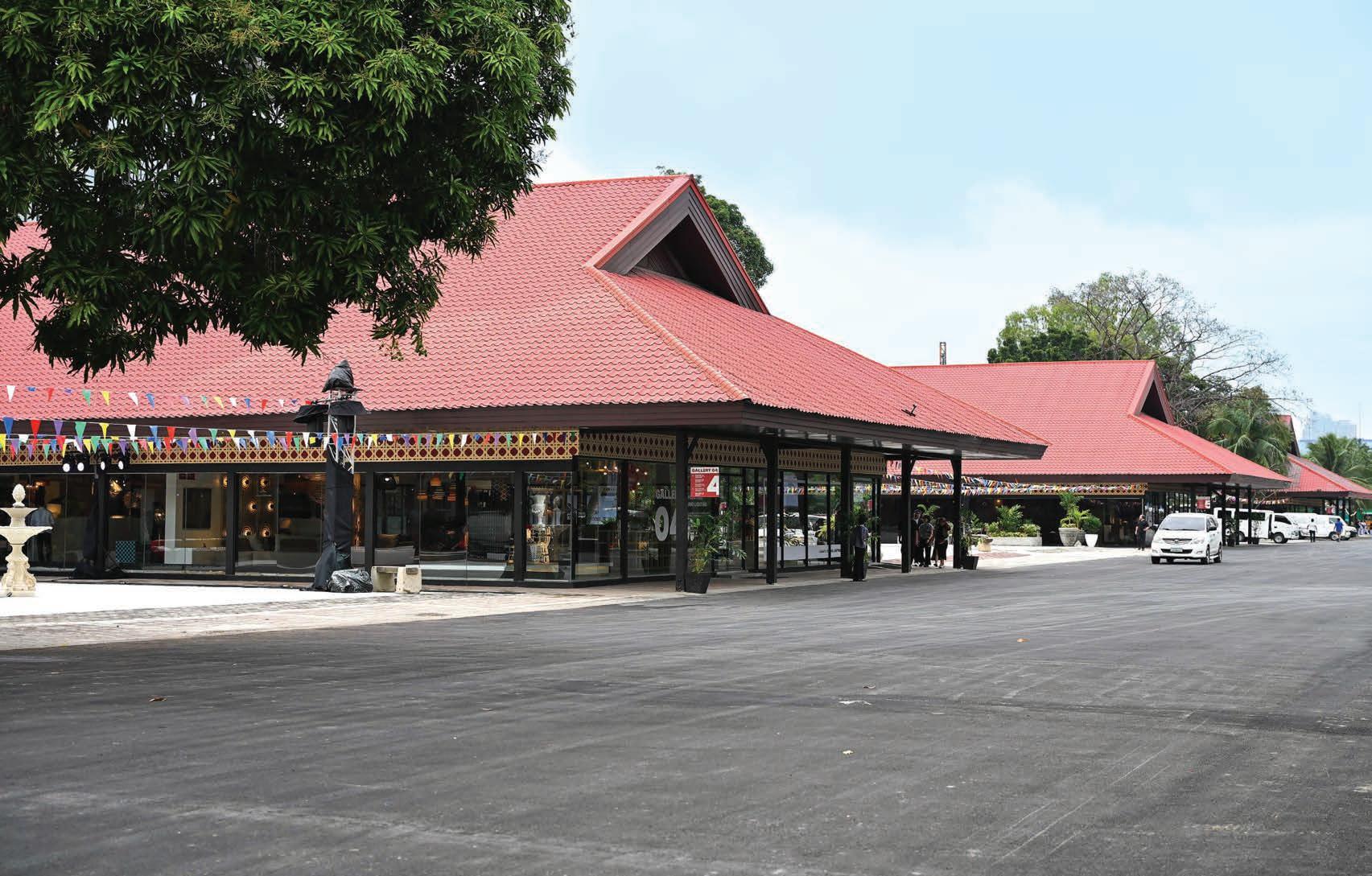
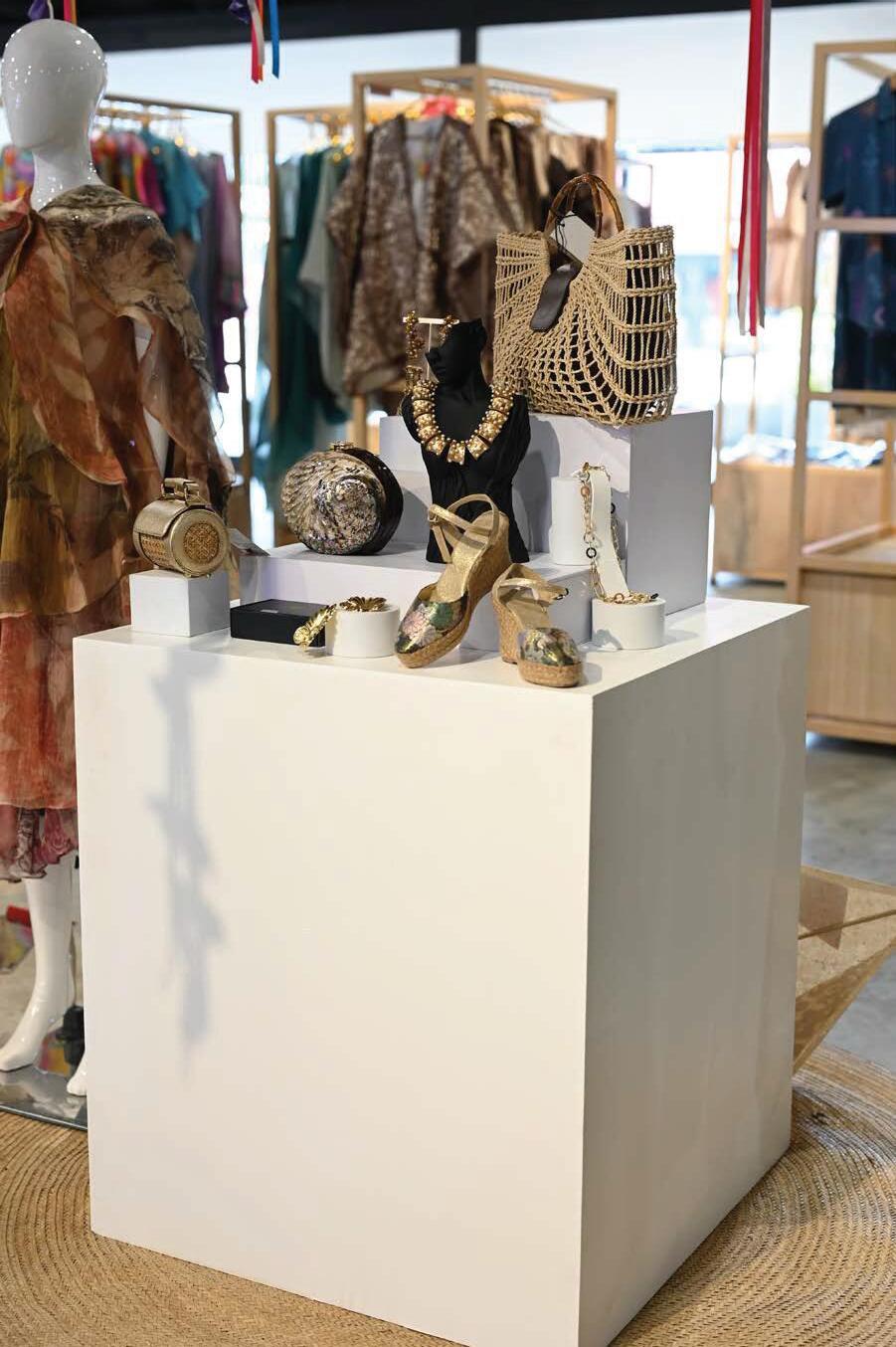
Likhang Filipino is the definitive lifestyle destination for the global Pinoy, presenting a sophisticated portfolio of export-quality artisanal designs, sustainable furnishings, and premium heritage flavors.
N ee d directions?
We’ve g ot you covered
Make room in your suitcase for the extraordinary. Visit Likhang Filipino.
B US IN ESS SCHEDULE
Tuesday to S und ay (except ho l id ays) 10 : 00 AM - 7 : 00 PM
Free E ntr an ce



By Hanadi Ahmad
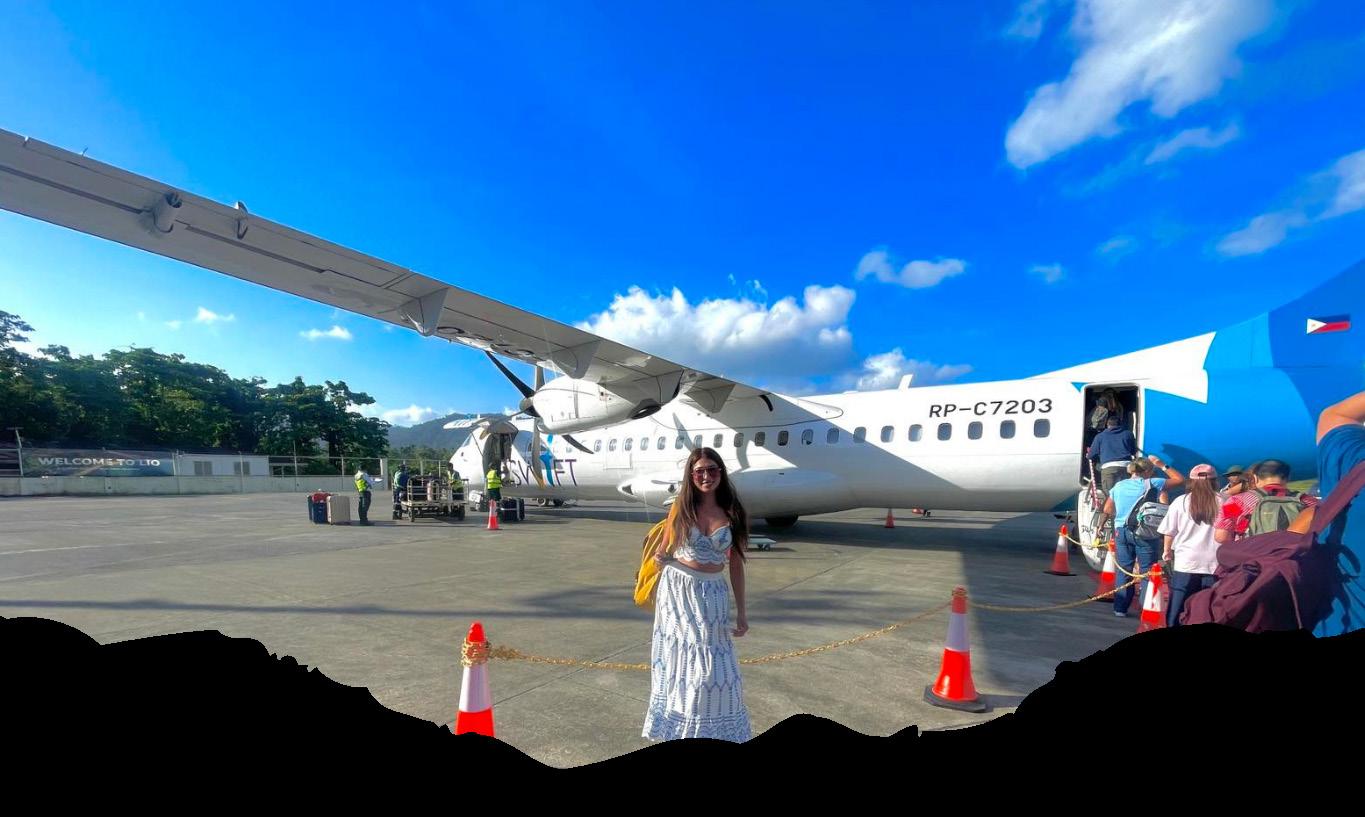
For many Filipinos, travel is more than just leisure. It is about visiting family, working abroad, going on long-awaited vacations, or fulfilling lifelong dreams. Whether you are flying out for the first time or planning a quick domestic trip, one important thing often gets overlooked: understanding travel advisories.
In the Philippines, travel advisories are often issued by government agencies such as the Department of Foreign Affairs (DFA), Department of Tourism (DOT), and local government units. These updates may include information about weather conditions, health concerns, safety risks, or entry requirements. For international travel, advisories from your destination country also matter, especially when it comes to visas, vaccinations, or arrival protocols.
For example, during typhoon season, local advisories can help you decide whether to push through with a trip or reschedule. In areas prone to heavy rains or flooding, these updates are especially useful for planning safe routes and accommodations. For international travelers, advisories may include reminders about passport validity, customs regulations, or health requirements.
One important tip is to always check official sources before your trip. Social media can be helpful, but it is not always accurate. Relying on verified announcements from government websites or official pages ensures you are getting the most reliable information. It is also helpful to understand that not all advisories mean you should cancel your plans. Some are simply reminders to exercise caution. For instance, an advisory about increased pickpocketing in a tourist area does not mean you should avoid the place
entirely. It just means you need to be more mindful of your belongings.
For Filipinos traveling abroad, it is a good habit to register with the DFA’s e-Registration system. This allows Philippine embassies to contact you in case of emergencies such as natural disasters or political unrest. It is a simple step that can provide peace of mind, especially for first-time international travelers.
Another practical step is to prepare copies of important documents such as your passport, tickets, and identification. Keeping both digital and printed copies can save you from unnecessary stress if something gets lost along the way.
Travel insurance is also worth considering. While it may seem like an added expense, it can be a big help in situations like flight cancellations, medical emergencies, or lost baggage. Many seasoned Filipino travelers see it as part of responsible travel planning.
At the heart of it, understanding travel advisories is about being prepared, not scared. Filipinos are known for being resilient and adaptable, and these qualities are especially valuable when traveling. A well-informed traveler is more confident, flexible, and ready to handle unexpected situations.
Travel will always come with a bit of uncertainty, but that is part of the adventure. By staying informed and taking simple precautions, you can focus more on enjoying the journey, whether it is a weekend getaway, a balikbayan trip, or your first time exploring a new country.
With the right mindset and preparation, every trip can be a safe and memorable experience.

By Kathryna Zamosa
When people hear the term virtual assistant, they tend to picture someone scheduling meetings and answering emails. Organized, efficient, pleasant. Useful in the background. What they do not picture is a forensic accountant reconciling books for a firm in Melbourne, a video editor cutting content for a YouTube channel with two million subscribers in Texas, a social media strategist running paid campaigns for a luxury brand in London, or a licensed nurse doing medical transcription for a clinic in Ontario. All of these are Filipino VAs. The title has simply never been big enough to hold what the work actually is.
The Philippines has become one of the most significant players in the global remote workforce, and the story is far more interesting than the abbreviation suggests.
A WORKFORCE THAT GREW QUIETLY, THEN ALL AT ONCE
The rise of the Filipino virtual professional did not happen because of one policy or one moment. It happened because of a particular combination of circumstances that no other country has been able to fully replicate. English fluency at a cultural level, not just transactional competency. A decadeslong familiarity with Western media, systems, and professional expectations. A workforce conditioned by the OFW tradition to perform across distance, to adapt to foreign environments, and to deliver without
the luxury of being physically present to manage impressions.
Then the pandemic arrived and rewired the global economy overnight. Companies that had never considered remote hiring suddenly had no other option. They found the Philippines waiting, experienced and ready, with an entire infrastructure of agencies, talent pipelines, and remote work culture already in place.
As Hire Talent PH puts it, “No other market combines English proficiency, talent depth, remote work culture, and cost efficiency at scale.” That combination did not appear by accident. It was built over generations.
NOT ONE ROLE. AN ENTIRE ECONOMY.
The term virtual assistant has become an umbrella so wide it barely functions as a descriptor anymore. Under it you will find bookkeepers and brand strategists, web developers and wellness coaches, paralegals and podcast producers, executive assistants who effectively run the daily operations of small businesses and data analysts who inform the quarterly decisions of large ones.
Filipino remote professionals work across healthcare, law, real estate, e-commerce, finance, media, education, and technology. They manage customer service pipelines, build and maintain websites, run email marketing campaigns, handle HR functions, write long-form content, edit video and audio, manage project timelines, and operate as the operational backbone of companies whose founders often say they could not function without them.
Virtually Incredible describes their talent pool simply: “They’re adaptable, resourceful, and solution-oriented.” That three-word profile quietly explains why the demand has not plateaued. Adaptability is the most valuable professional currency in a global economy that keeps changing the rules.
WHAT THE AGENCIES ARE SAYING


The outsourcing industry has been paying attention to Filipino remote workers long enough to speak about them with specificity rather than generality. Simon Davies, Founder and CEO of Remote Staff, puts the dynamic plainly: “Remote work will require you to step back a little, and Filipino employees are great at effectively doing their jobs with minimal supervision.” He goes further on the question of retention, noting that Filipinos “value good working relationships, so it is pretty common for them to stay with the same company for decades.”
That last point matters more than most hiring conversations acknowledge. Turnover is one of the most expensive problems in any business. The loyalty that characterizes Filipino professional culture is not a soft benefit. It is a structural advantage.
Remote Staff adds that Filipino employees “do not easily give up and skip work,” and that after years of navigating economic uncertainty, shifting industries, and the particular pressures of remote arrangements, “you can say that nothing fazes Filipino employees anymore.” Outsource Workers echoes this directly: “Filipinos are highly adaptable” and “naturally service-oriented,” qualities that are not trained into people easily and cannot be reliably manufactured by a recruitment process.
Kinetic Staff points to something increasingly critical in a tech-driven work environment: “Their adaptability to new technologies ensures that they can seamlessly integrate into any remote work setup.” For companies building distributed teams across multiple platforms and tools, this is not a minor consideration.
THE CULTURE BEHIND THE CAPABILITY
None of this exists in a vacuum. Filipino remote professionals bring with them a cultural orientation toward work that the agencies describe but that predates the industry by generations. The bayanihan instinct, the value placed on doing one’s part for the collective good, translates in a professional context into a genuine investment in the success of whoever they work with.
VA Platinum captures something of this when they describe the Filipino culture as one where “the positivity and liveliness are evident in everything they do.” It sounds like an observation about personality, and it is, but it is also an observation about output. People who bring energy to their work produce differently than people who are simply clocking hours.
Virtually Incredible frames it more formally: “Filipino VAs come from a culture that
values service and excellence.” Unique Genius adds that they are “familiar with Western culture,” which reduces the friction of onboarding, communication, and expectation-setting in ways that are difficult to quantify but immediately felt.
What the numbers and the agency quotes collectively point toward is something the term virtual assistant was never designed to carry: a professional class that is redefining what distributed work looks like, and doing it with a warmth and commitment that has made the Philippines irreplaceable in the global remote economy.
Simon Davies, who has spent years watching the relationship between foreign employers and Filipino remote workers, says it best: “You take care of your Filipino remote workers, and they will take care of you ten times more.”
That is not a recruitment line. It is an observation that has held up long enough to become a reputation. And in a world where talent is the competitive advantage, reputation is everything.
The Filipino remote worker did not wait for the world to come looking. They built the skills, showed up across time zones, delivered without excuses, and let the work speak loudly enough that the world had no choice but to take notice.
They were never just assistants. They were accountants and architects of content, strategists and storytellers, the invisible infrastructure behind businesses that would not survive a week without them. They did all of it from a desk at home, often while raising children in the next room, often while being the financial center of an entire family, often while the rest of the household slept.
The least the world can do is get the title right.


ADVERTORIAL · THE ZEN INSTITUTE
THE ZEN FACE LIFT BY KINTARO — A LIFT WITHOUT THE SURGERY VIBES.
There is a version of you that exists just beneath everything you carry — the late nights, the sun, the years that quietly reshape a face without asking permission. The Zen Institute believes you deserve to meet her again. Not through dramatic change. Through something far more intelligent.
The Zen Face Lift by Kintaro is a non-surgical facial rejuvenation treatment built on the principles of regenerative aesthetics. It doesn't fight your face — it works with it. Circulation is boosted. Facial muscles are toned. Tension held in the fascia and lymphatic pathways is gently released, smoothing puffiness and restoring natural contour without a single incision.
“People won't know what you had done. They'll only know something has shifted.”
At its core is exosome-based technology — one of the most advanced frontiers in aesthetic medicine. These cellsignaling molecules prompt your skin to repair and renew from within, delivering visible improvements in texture, elasticity, and luminosity that no topical can replicate. Combined with energy-based modalities designed to stimulate collagen and tighten skin architecture, the result is a face that looks lifted, refreshed, and unmistakably like you.
WHAT YOU CAN EXPECT
Lifted contour - Natural definition, enhanced without altering your features.
Skin luminosity - A glow that comes from cellular renewal, not product.
Tension release - Puffiness and facial tightness visibly resolved.
Deep regeneration - Skin quality that continues improving over time.

Led by Dr. Mary Jane Torres, The Zen Institute was built on one conviction: that real beauty is restored, not constructed. Every treatment here — including the Zen Face Lift by Kintaro — is designed to bring you back to yourself. Not a younger stranger. You, at your best. ■
You may book your consultation with Dr. MJ Torres. Just send us a message on any of our social media platforms.


CITY BRANCH Tomas Morato - Main Branch 69 Scout Rallos St. Quezon City 09175328994 | +632 70002428
BRANCH
Medical Makati 8th floor, Kalayaan Ave, Makati City 09175328992 | +632 53047929
BRANCH
by The Zen Institute Sequoia Hotel Manila Bay 09171865312 | +632 82878342

By Billy De La Cruz
At some point, without quite noticing when it happened, you stopped feeling things fully. Not in a dramatic way. Not in a way anyone around you would clock. You still showed up. You still replied to messages and met deadlines and said you were fine when people asked. But somewhere between the alarm going off and the last scroll before sleep, something quieted inside you that used to be loud.
Maybe it was a breakup that did not announce itself properly, just slowly withdrew until one morning the absence was all you could feel. Maybe it was the kind of exhaustion that sleep cannot fix, the kind that builds in the chest from years of being useful and capable and present for everyone except yourself. Maybe you cannot even name it. You just know that you need to go somewhere. Not to escape, exactly. More like to remember.
The Philippines has always known how to hold people who arrive carrying things. The country is built for it, not by design but by nature, by the particular mercy of landscapes so alive and unhurried that your nervous system has no choice but to stop bracing. The sea does not care about your inbox. The mountains have been here longer than whatever is breaking your heart. There is something quietly instructive about standing inside that kind of scale. These are not itineraries. They are invitations.

Siargao works slowly. That is the whole point. The island moves at the pace of tides and coconut trees, and it takes about two days before you stop checking the time. Surfers come for the waves but stay for something harder to name, a particular quality of afternoon light, the way strangers become
familiar over shared meals, the sensation of being fully inside your body again after months of living only in your head. The road between Cloud 9 and the lagoons is one of the most disarming stretches of Philippine landscape you will ever sit quietly in. Go when you are burned out. Stay until you feel bored in the best possible way.

There is nowhere in the Philippines that asks more of you emotionally than Batanes. The rolling hills above Batan Island, the stone houses that have survived centuries of typhoons, the way the wind comes in from the Pacific without apology, it all adds up to something that feels less like a vacation and more like a reckoning. People who go to Batanes tend to cry at some point and cannot fully explain why. The landscape simply has that effect. It puts things in proportion. Whatever you were carrying when you landed feels different by the time you leave, not lighter necessarily, but more honestly held.
Palawan is not one place. It is a corridor of water and limestone and silence that stretches from Puerto Princesa to El Nido to the remote northern edges few visitors reach. Its extraordinary biodiversity creates environments of such natural intensity that the nervous system simply cannot maintain its ordinary pace. El Nido in particular has a way of making productivity feel absurd. You are surrounded by cliffs that have been here for millions of years. The lagoons are the color of something you would not believe in a photograph. It is very difficult to feel like your problems are the most important thing in


Cold air. Pine trees. The sound of bells from the small church in the town center carrying across the valley in the early morning. Sagada has been receiving people who need to disappear for decades, and it receives them without ceremony. The hanging coffins, the underground rivers, the trek to Bomod-ok Falls through rice terraces older than the Philippine nation itself, all of it conspires to make you feel both very small and somehow less alone. This is a place for grief and transition, for sitting with things you have not had the quiet to sit with. Bring a journal. Leave your schedule.

Antique is the Philippines that the algorithm has not fully reached yet, and that is exactly why it belongs on this list. The kawa bath ritual here, soaking in a large iron cauldron of warm herb-infused water under open sky, is the kind of experience that sounds strange until you are in it, and then it feels like the most natural thing you have ever done. The rivers and waterfalls of Tibiao ask nothing of you except presence. The people are unhurried. The province has the particular quality of places that have not yet decided to perform themselves for visitors, and that honesty is its own kind of medicine.
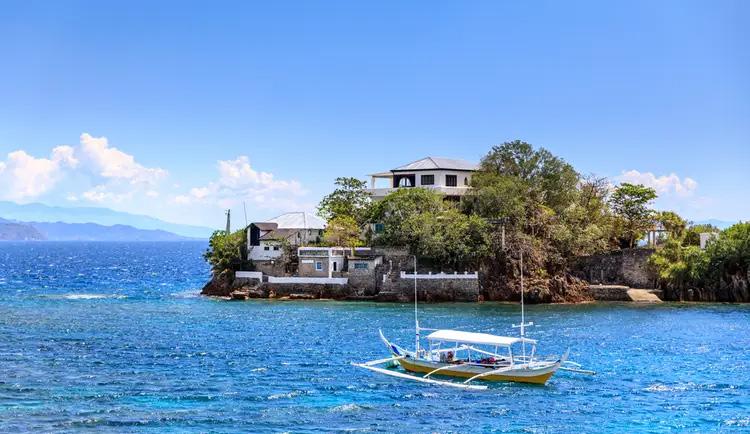

For those who cannot go far, who have a weekend and a full heart and nowhere near enough of either, the coves and shores of Batangas are close enough to reach by Saturday morning and far enough to matter. Anilao for the divers, Laiya for those who simply need to sit in front of the water without an agenda. The sea here is warm and accessible and has been helping Manilenos exhale since before there were expressways to reach it. Sometimes healing does not require a long journey. Sometimes it requires two days, a hammock, and the permission to stop being someone who has everything figured out.
There is a reason Filipinos, no matter where in the world they end up, still talk about home the way they do. Not just with nostalgia but with something almost physical, a pull in the chest, a specific kind of longing for the quality of light on certain water, the sound of rain on a corrugated roof, the smell of earth after a storm. The Philippines is not a perfect country. But it is a country that knows how to make you feel alive again, which is sometimes the only thing that matters.
You do not have to be okay before you go. You just have to go.
By Lance Gregory
Walk into almost any hospital in the United States and pay attention. Not just to the doctors striding in with clipboards, but to the ones who actually hold the room together, who remember your name and your allergy to penicillin and also your birthday because they wrote it on the whiteboard themselves. Chances are at least one of them is Filipino. Chances are they have a group chat. Chances are they have been feeding each other since the morning shift started. It took American television decades to notice. But notice it finally did.
THE MAFIA HAS ARRIVED
It started with a joke that landed like a truth bomb. In Season 1 of NBC’s mockumentary comedy “St. Denis Medical,” nurse Val pulls aside head nurse Alex and delivers one of the most accurate pieces of hospital orientation anyone has put on network television.
Pointing toward a group of nurses moving through the ward with the synchronized confidence of people who have absolutely done this before, she explains: “That’s the Filipino mafia. Hospitals can feel like high school, there’s cliques, there’s hierarchy, and
Mean Girls. And I’d say Rene is definitely the Regina George. But the mafia’s really good, so just don’t mess with them.”
The episode, titled “Salamat You Too” (salamat means thank you in Tagalog), was pitched by an Asian American writer on the team. The creators dedicated it to Filipino nurses after realizing how pervasive yet invisible their presence had been in the genre. Asian Americans make up 8.9 percent of registered nurses in the United States, and roughly half of those are of Filipino descent. The number had always been there. Television had just been looking the other way.
Rene, the de facto leader of the Filipino mafia, is played by Nico Santos, best known as Mateo from “Superstore” and the delightfully cutting Oliver T’sien from “Crazy Rich Asians.” He brings the same sarcasm-as-armor energy to Rene: a nurse who is unapologetically competent, politically savvy within the hospital ecosystem, and completely unbothered by administrators who underestimate him.
Santos modeled Rene’s friction with Alex after a real-life coworker from his restaurant days. “She was lovely, but really bad at her job, and it made my job a
lot more difficult,” he said. “I think that’s what Rene’s all about: ‘Do not get in the way of me being able to provide care to my patients.’”
Filipino nurses across the real world lost their minds. Jennifer Beganovic, a registered nurse in Yellowknife, said she “felt so proud” watching the episode. “We are seen, they can see us now, they recognize us. It’s a long time coming.”
If “St. Denis Medical” gave the Filipino mafia a comedic crown, “The Pitt” handed them a full dramatic arc and an Emmy. The HBO Max medical series, which won Outstanding Drama at the 2025 Emmys, opens its very first episode with Dr. Michael Robinavitch flanked by two Filipino nurses midconversation in Tagalog. It is a choice, and it is deliberate, and Filipino nurses everywhere felt it.
Nurse Princess Dela Cruz is played by Kristin Villanueva, a classically trained theater actress whose stage background gives Princess a warm, grounded empathy that carries even the show’s most chaotic ER scenes. Nurse Perlah Alawi is played by Amielynn Abellera, a seasoned stage and screen veteran with credits ranging from “The Cleaning Lady” to “Shrinking” and “NCIS.”
Abellera brings a quiet resilience to Perlah, a steadfast professional balancing high-pressure hospital demands with a rich personal inner life. Together, Princess and Perlah are the nurses you would want in your corner when things go wrong, and the ones you suspect have the best pasalubong in the break room.
Then there is Dr. Trinity Santos.
SANTOS DOESN’T CARE IF YOU LIKE HER
Isa Briones plays Dr. Trinity Santos in “The Pitt,” and she told Refinery29 she finds it “so strange that

“We just have to get this right,” Nico Santos said of Filipino representation on “St. Denis Medical.” Photo courtesy of NBC

up until now there has not really been a lot of Filipino representation in medical shows.” She added: “It’s insane because Filipinos make up one of the biggest populations of medical professionals in this country.”
Santos is not a warm character, at least not on the surface. She is a second-year resident who gives everyone unflattering nicknames, defies orders, and operates like she is the only person in the room who knows what she is doing. Half the audience loves to hate her. The other half has just figured out they were wrong about her.
Her original surname was intended to be Shah. After being cast, Briones requested it be changed to reflect her Filipino heritage. She gave the writers a list of Filipino surnames, and they chose Santos. That detail alone says everything about what Briones brought to this role beyond the script.
Born in London to Filipino theater actor Jon Jon Briones and raised in Los Angeles, Isa is herself a theater kid who went from “Hamilton’s” first national tour to a Broadway debut in “Hadestown” to “Star Trek: Picard,” where she played multiple android roles. Santos is her most human role yet. She told WWD that Santos “is not going to be your canvas for your emotions. She’s going to say exactly how she feels. And I think that’s freeing for me as an actor, and also as a person, to be a complicated female character.”
One of the season’s best scenes is purely Filipino: nurses Princess and Perlah had been gossiping in Tagalog the whole shift. Santos later reveals she understood them the entire time. The ad-lib ending, where Princess says “She looks so white though,” was not in the script. The whole Filipino internet cheered.
Briones told Filipino reporters in a virtual roundtable: “All three of us, we get to show the spectrum of what it is to be Asian, what it is to be

Filipino. There is no one way that it looks or sounds or feels or lives. It is everything.”
None of this is fiction, of course.
Filipino nurses, medical technologists, respiratory therapists, physical therapists, caregivers, nursing assistants, pharmacists, and healthcare professionals have been the quiet architecture of hospitals across the United States, Canada, the United Kingdom, the Middle East, and beyond for generations. They trained in the Philippines, sometimes as doctors before requalifying as nurses abroad. They worked night shifts nobody wanted. They covered holidays so someone else could go home to their family. They learned new systems, new accents, new countries, and somehow still found time to organize potlucks in the break room and check if everyone had eaten.
During the pandemic, the world briefly saw what healthcare workers had always known. Filipino healthcare professionals were everywhere. In overwhelmed ICUs. In understaffed elder-care facilities. In emergency rooms running past capacity. Many became the emotional center of institutions under extraordinary pressure, holding together not just patients, but coworkers and entire hospital systems strained to the edge.
And the cost was real.
Filipino nurses in the United States suffered disproportionately high COVID-19 fatalities during the height of the pandemic, a devastating reflection
of both how present they were in frontline care and how essential they had become to global healthcare systems. Behind every statistic was someone who had crossed oceans to build a better life, often for people back home they barely got to see enough.
That history matters when audiences laugh at the Filipino mafia jokes in “St. Denis Medical,” or cheer when Princess, Perlah, and Santos slip into Tagalog mid-shift on “The Pitt.” The representation lands because the reality was already there. Television did not invent these people. It finally caught up to them.
And for many Filipinos abroad, seeing themselves reflected this way carries a different kind of emotional weight. It is recognition not just of work, but of sacrifice. Of competence that often went unnoticed because it became expected. Of generations who held hospital wards together quietly enough that the world forgot to ask who was doing the holding.
They deserve Princess and Perlah and Dr. Santos and the Filipino mafia and every healthcare worker who will come after them on screen. They deserved it long before Hollywood got around to noticing.
So this one is for the nurses. The medical techs. The caregivers. The respiratory therapists and physical therapists. The healthcare workers who built lives in fluorescent lighting and twelve-hour shifts. The ones who remembered the patient’s name before the attending did. The ones who carried entire hospital floors with skill, humor, and impossible endurance.
Salamat.
You more than earned the close-up.
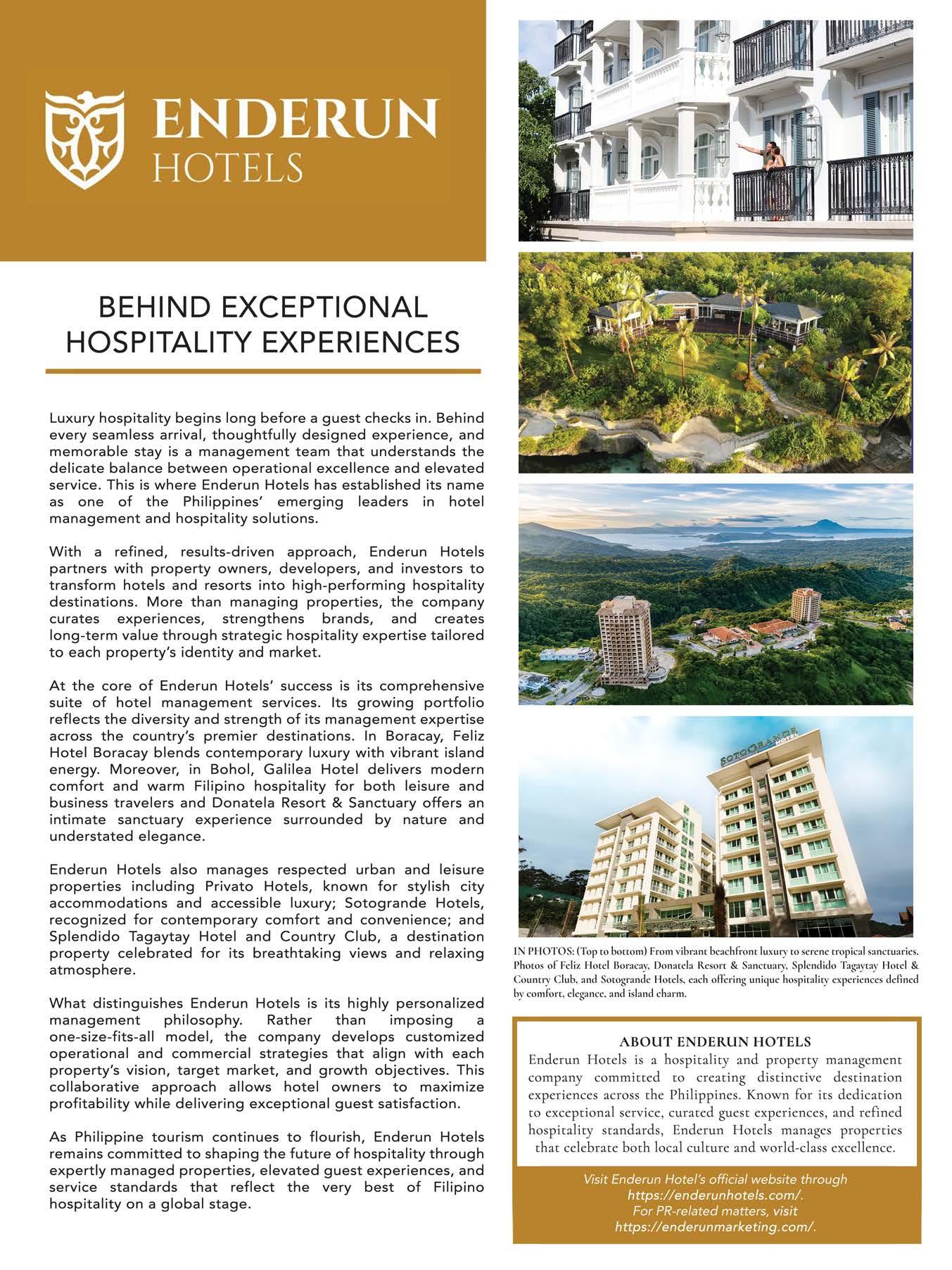
By Kathryna Zamosa
There was a ritual to it. You did not just call. You prepared.
Someone would go to the palengke a little earlier that week, making sure there was something worth reporting. The house would be tidied, not for guests but for the conversation, as if the person on the other end could somehow sense the clutter through the line. And then at the appointed hour, the whole family would gather around the telephone in the sala, the one with the long cord that never quite reached the kitchen, and wait for it to ring.
When it did, everyone talked at once.
Long distance calls in the eighties and nineties were not casual. They were events. They cost more per minute than most families spent on a meal, which meant every second carried the particular weight of something precious being used up. You did not ramble. You did not pause too long. You said what mattered, laughed when you could, and swallowed the things that would take too long to explain because the timer, invisible but very real, was always running. Lola would take the phone last, usually, and say almost nothing, just listen to the voice on the other end with her eyes closed, holding the receiver with both hands like it might slip away.
When the call ended, the silence in the room had a different texture than it did before.
For the OFW generation that built this country on remittances and sacrifice, communication was not a convenience. It was the lifeline that kept
across impossible distances. Cassette tapes went back and forth in balikbayan boxes, voices recorded in the kitchen after dinner, carrying the sounds of children who were growing up faster than anyone had planned for. Letters arrived weeks late, the handwriting familiar enough to ache. A photograph tucked into an envelope was a whole season compressed into a single image.
The effort was the love. The waiting was the love. The crackle on the line and the operator cutting in and the desperate last words before the call dropped, all of it was love in a form so concentrated it could sustain a family for months.
Then the world changed. Slowly at first, then all at once.
Now a grandmother in Pangasinan can watch her apo in Toronto take her first steps in real time. A father working a night shift in Riyadh can eat dinner on video call with his children in Batangas, present at the table in the only way geography permits. Group chats hum continuously across time zones. Voice notes go out at two in the morning and arrive before the other person wakes up. The distance is the same. The silence is not.
There is no longer any practical reason to lose touch. The technology exists, it is affordable, and it fits in your pocket. The call costs nothing. The video is clear. The only thing standing between you and the people you love is the decision to reach out.
And yet.
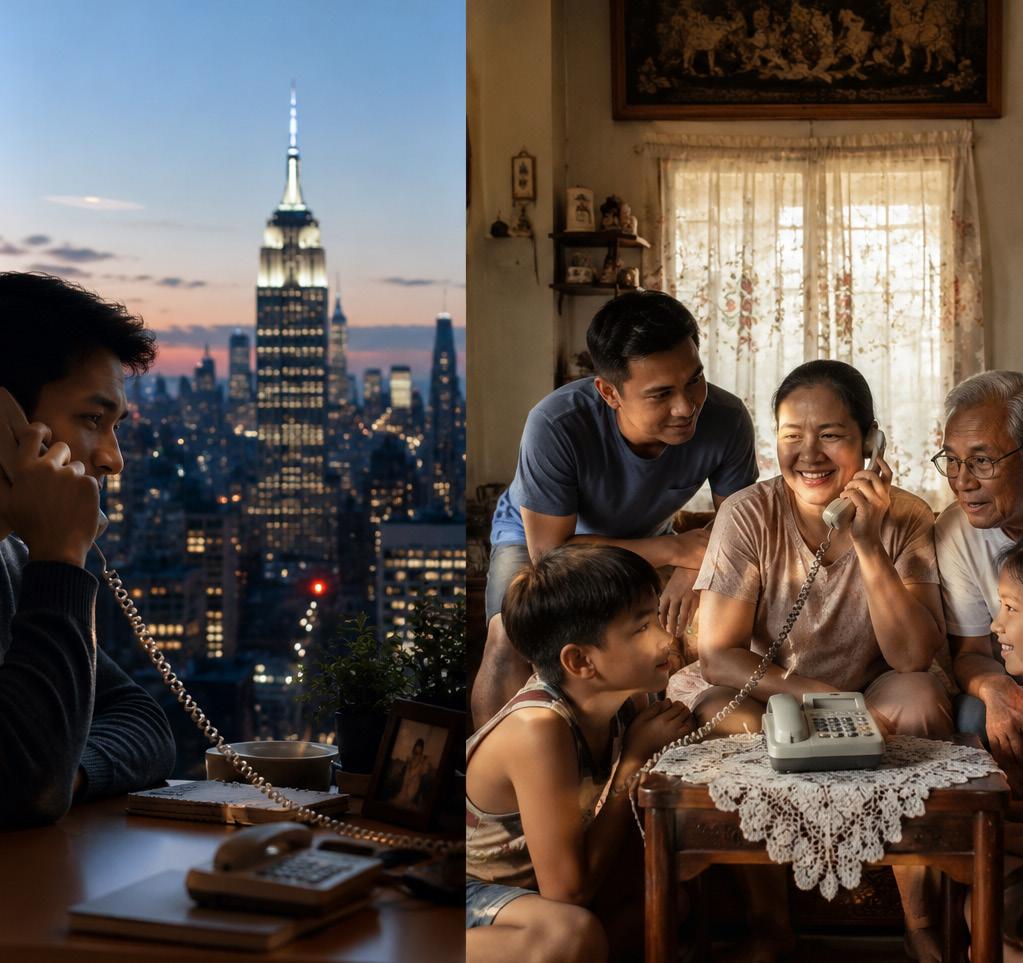
People still drift. Months pass between calls. The chat goes quiet. Someone waits for a birthday to have an excuse, and then forgets, and then it has been a year and the gap feels too wide to cross casually so they wait longer still.
Do not wait.
Call your nanay while she still picks up on the first ring. Video your lolo before he forgets which grandchild you are and somehow loves you just as completely anyway. Message your friend from home, the one you keep meaning to catch up with, the one who knew you before you became whoever you are now.
The families who pressed their ears to a crackling telephone in the sala and paid by the minute to hear each other breathe knew something worth keeping. Connection is not a given. It is a choice, made again and again, across every kind of distance.
You have every tool they never had. Use them.

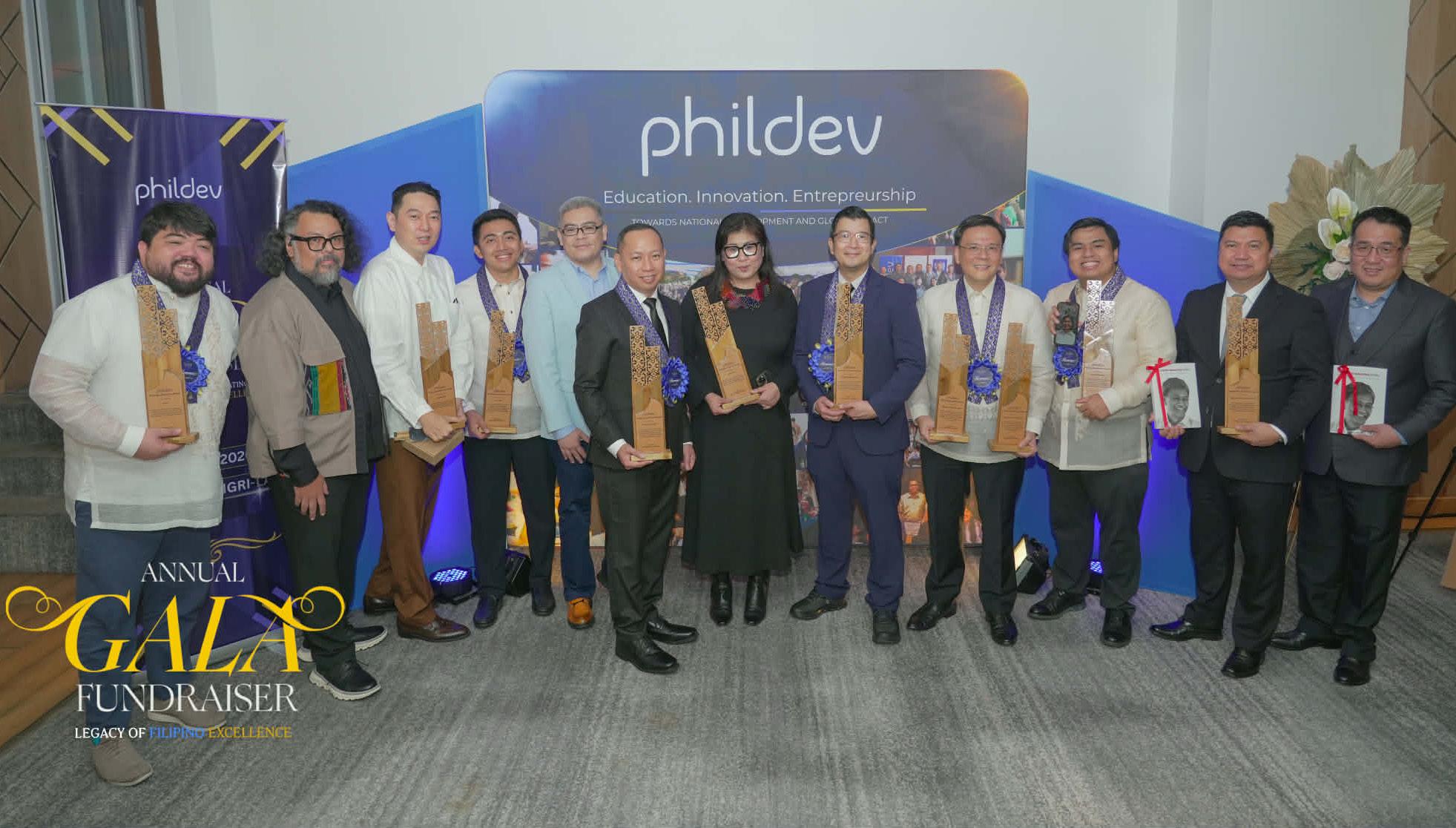
By Rogelio Constantino Medina
It was nice to see recently Maria C. Banatao, Filipino-American philanthropist , community leader, and co-founder of the Philippine S&T Development Foundation, Inc. (PhilDev), a nonprofit organization dedicated to advancing the Philippines through education, innovation and entrepreneurship, during the PhilDev Annual Fundraiser held on May 23, 2026 at EDSA Shangri-La hotel, with the theme “Celebrating the Legacy of Filipino Excellence” coinciding with the commemoration of the late PhilDev founder Dado Banatao’s birth as well as a book launch in his honor.
Alongside her late husband, Silicon Valley tech visionary Diosdado “Dado” Banatao from Cagayan, Maria has dedicated decades of advancing education, technology, and entrepreneurship for Filipinos both in the Philippines and across the diaspora. She graduated from St. Paul College Manila in 1968 before moving to the US. She later earned a Master’s degree in Educational Psychology and Counseling from the University of Washington.
She met Dado Banatao in Seattle in 1968. Together, they raised three children -- Rey, Desi and Tala -- while navigating the fast-paced growth of Silicon Valley.
Wrote Dado Banatao’s widow in a foreword of the book “The Dado Banatao Story: A Tale of Two Valleys” by Jamil Maidan Flores: “To our children:

Dado Banatao
the legacy you inherit is not a monument fixed in time. It is a living current, one you are already carrying into your own communities, classrooms, and boardrooms. Cherish it -- but above all, make it your own. Add to it your own discoveries, your own acts of generosity, your own leaps of faith.”
That evening at EDSA Shangri-La truly celebrated Dado’s life and his enduring contribution to Filipino innovation with a vision of a prosperous Philippines and enhancement of Filipino talent through supportive, innovation-driven enterprises and collaboratively inclusive and sustainable efforts. The said gala brought together around 200
scholars, beneficiaries, partner institutions, and supporters united by a shared vision of leveraging science, technology, and innovation for nationbuilding and global impact.
A highlight that night was the recognition of distinguished individuals and organizations whose contributions continue to advance science, technology, innovation and inclusive development in the Philippines.
2026 PhilDev S&T honorees included, as follows: Jaime Augusto Zobel de Ayala and Fernando Zobel de Ayala as both recipients of
Lifetime Achievement Award; Shell Pilipinas Corporation, Globe Telecom, Inc. and PLDT, Inc. as Companies of the Year Award; Maya Bank, Mylo Speech Buddy and Packworks as Startups of the Year Award; and Jana Quismundo, Leo Villalba, Ivan Nara, Dr. Victor Erwin Jocson and Dr. Noel Peter Tan as Young Innovators of the Year Award.

The Lifetime Achievement Award honors visionary leaders whose enduring contributions have shaped industries, advanced innovation and created lasting impact across generations. The Companies of the Year Award recognizes organizations that have demonstrated a sustained commitment to innovation, business excellence


and national development.
Moreover, the Startups of the Year Award celebrates emerging ventures that are harnessing science and technology to address real-world challenges and create meaningful impact. While the Young Innovators of the Year Award recognizes individuals whose work in science, technology and innovation is creating meaningful impact in communities, industries and society. Through groundbreaking research, transformative ideas and innovative solutions, these honorees represent the promise of a new generation of Filipino leaders driving progress and shaping the future.
For more than 15 years, PhilDev has remained a trusted partner in advancing inclusive development in the Philippines. By the numbers, PhilDev has supported 346 scholars across Luzon, Visayas and Mindanao, trained over 3,897 students in technopreneurship, and supported 98 startups.
Certainly, PhilDev aims to expand meaningful impact by providing more targeted support to equip the Filipino talent to meet the challenges and seize opportunities that come with AI and the shifting environment.
“And to all those whose lives Dado touched -the engineers he mentored, the colleagues who built with him, the educators and scholars who shared his quest for knowledge, the friends and mentees who found encouragement in his words -- this invitation is yours as well. Carry forward not only his vision of innovation, but also his belief that leadership means lifting others up. Let the work you do, the communities you strengthen and serve, and the imaginations you set free become part of the same living current,” continued Maria C. Banatao in a foreword of the book on Dado.
She concluded: “For legacy is not only what we leave behind. It is what continues to grow in the lives we have touched -- and in dreams that will carry Dado’s spirit for generations to come.”


By Dateline Ibalon
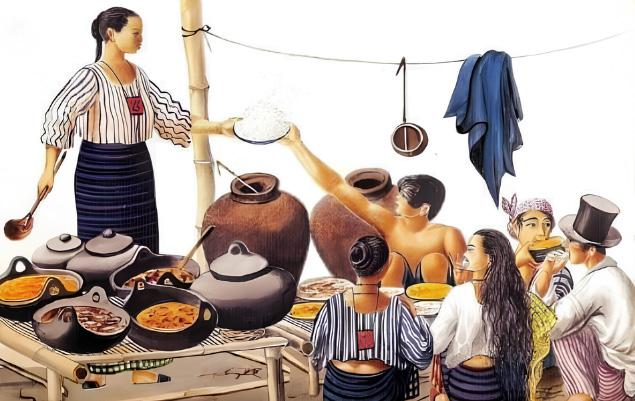
Carinderias—those unassuming roadside eateries with steaming kalderos, tin pitchers, bottles of sawsawan (Filipino dipping sauces) and the unmistakable aroma of home—are among the most democratic spaces in Philippine food culture. They feed workers, students, travelers, and entire communities, offering sustenance that is both affordable and deeply rooted in history. Their story, however, is far older and more global than many realize.
FROM CROSSROADS TO COMMUNITY TABLE
The earliest carinderias emerged in the early 1800s as native food shops serving travelers along busy crossroads. Before 1764, there was no Filipino term for a commercial cooked-food establishment, but by the 19th century, these eateries had become essential stops for locals and wayfarers alike.
Their evolution into the “turo-turo” format—where diners point to their chosen dishes—reflected a uniquely Filipino adaptation: fast, communal, and rooted in everyday life.
THE SEPOY LEGACY: CAINTA, TAYTAY, AND THE TASTE OF CURRY
A pivotal chapter in the carinderia story begins

during the British occupation of Manila (1762–1764). Indian infantry soldiers known as Sepoys, many of whom deserted the British fleet, settled in Cainta and Taytay after marrying Filipina women. These towns lay along the Marian pilgrimage route to Antipolo during the month of May, making them natural hubs for food stalls catering to travelers.
These Sepoys introduced curry-based dishes, influencing both the menu and the very name of the carinderia. Spanish scholar Wenceslao Retana traced the word carinderia to kari—Tagalog for curry—which also forms the root of kare-kare.
Thus, what we now consider a quintessentially Filipino eatery has origins intertwined with South Asian flavors and the multicultural currents of colonial history
The May pilgrimage to Antipolo—one of the oldest Marian devotions in the country—helped transform carinderias into thriving culinary stops. Pilgrims traveling by banca, hammock, horse, or later by train (after the railway’s inauguration in 1892) relied on these eateries for nourishment. Cainta and Taytay, positioned at key transfer points, saw a boom in bamboo stalls offering mixed menus that included
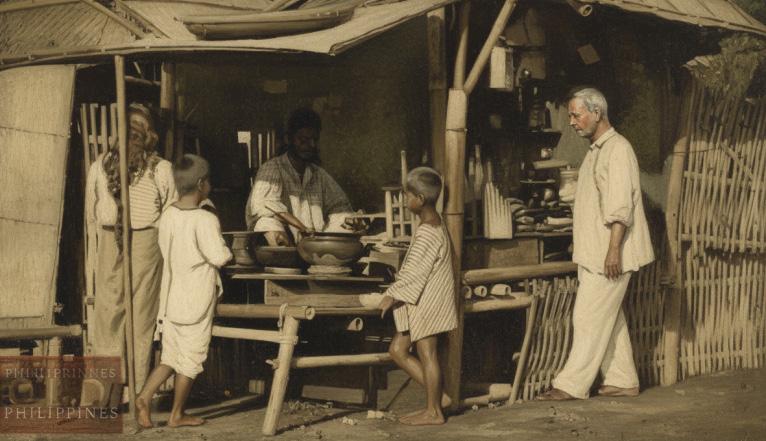
curry and local stews. This early form of food tourism helped cement the carinderia as a fixture of Filipino travel culture.

No discussion of Filipino foodways is complete without Doreen Gamboa Fernandez, whose writings in the late 20th century documented the everyday cuisine of the archipelago. Her body of work— particularly Tikim and her columns in the Philippine Daily Inquirer—played a crucial role in elevating humble dishes and local eateries into subjects worthy of scholarship and national pride. Her approach validated the carinderia as a cultural archive: a place where regional flavors, migrant histories, and community memory converge in a single plate of adobo, laing, or kare-kare. Culinary afficionados choose winners of the Doreen Fernandez Food Writing Award every year. The first food writing award of its kind in the Philippines, popular food writers participate as organizers and judges.
In recent years, the global culinary world has begun to recognize the value of Filipino everyday cooking. Michelin’s Bib Gourmand category encompasses carinderias and other eateries that operate in the spirit of the carinderia—affordable, home-style, and deeply local—have been acknowledged in contemporary food guides.
Michelin Bib Gourmand awardees in the Philippines, though not traditional carinderias, reflect the same ethos of accessibility and flavor. One example is Morning Sun Eatery in Quezon City, a modest roadside eatery which serves authentic Ilocano comfort food, turo-turo style, offering home-
style classics such as kilawin, sweet pork skewers, pinakbet and the standout laing: taro leaves simmered in coconut milk.
Local food guides and media features, including popular vlogs on YouTube that increasingly spotlight turo-turo style eateries, such as Aling Sosing’s featured in our header, for their authenticity and cultural significance.
Carinderias remain as economic lifelines for small entrepreneurs, culinary classrooms where generations learn to cook, cultural touchstones that preserve regional identity, spaces of belonging for workers, students, and travelers. Their menus— shaped by indigenous traditions, colonial encounters, migration, and devotion—tell the story of the Filipino people.
Carinderias in Bicol are more than eateries— they are community anchors, culinary archives, and everyday sanctuaries where the region’s flavors, histories, and identities converge. While many remain humble and undocumented, several have become beloved institutions known for consistency, generosity, and the unmistakable Bicolano balance of foundational ingredients: gata (coconut milk) for creaminess and siling labuyo (local chili peppers) for fiery heat.
The carinderia is more than a food stall. It is a living chronicle of movement and memory— from Sepoys in Cainta to pilgrims in Antipolo, from Doreen Fernandez’s essays to today’s Michelinacknowledged dining scene.
Where flavors are bold and histories are layered, the carinderia continues to thrive as a place where stories simmer alongside sinigang, and where every meal is a reminder of the journeys—geographical, historical, and personal—that shape the Filipino table.