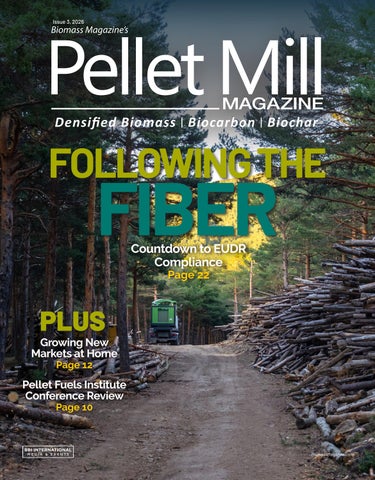
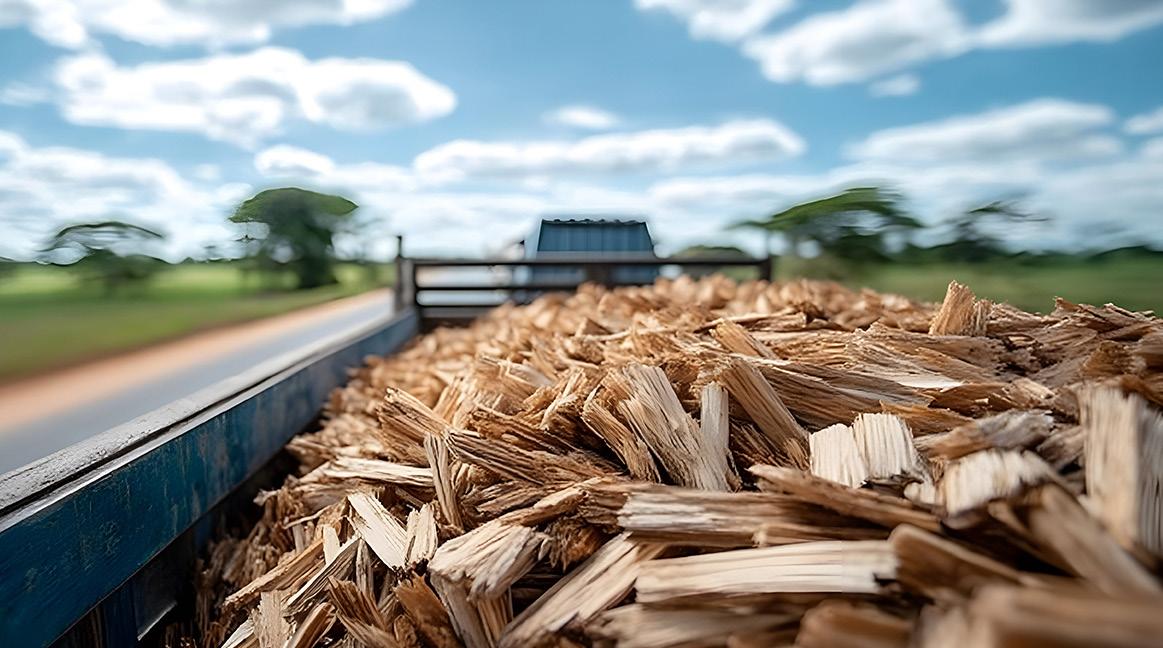
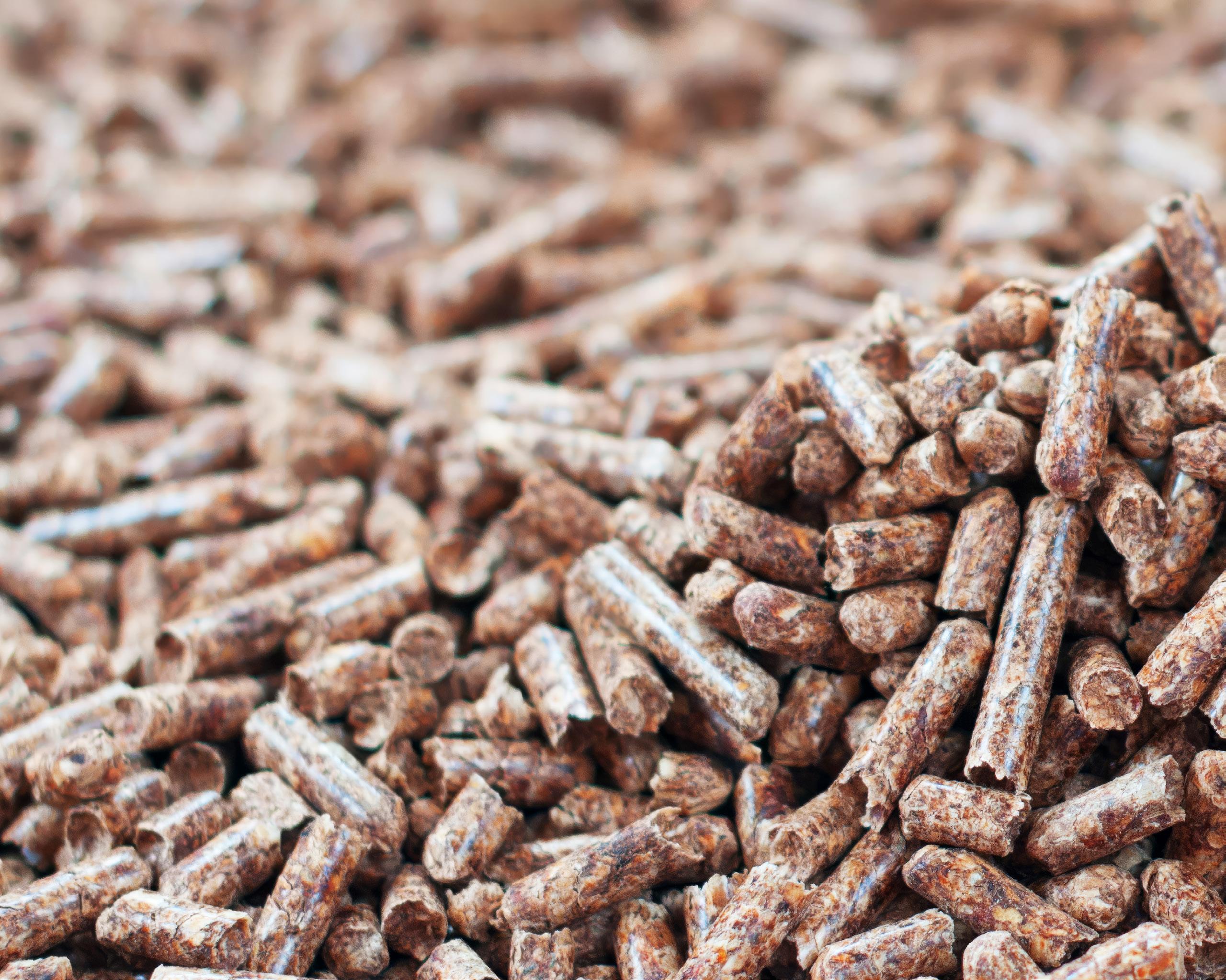
More producers are eyeing domestic opportunities as global pellet markets shift, but there are still challenges holding back widespread consumption of industrial pellets, biocarbon and other densified biomass.
By Katie Schroeder
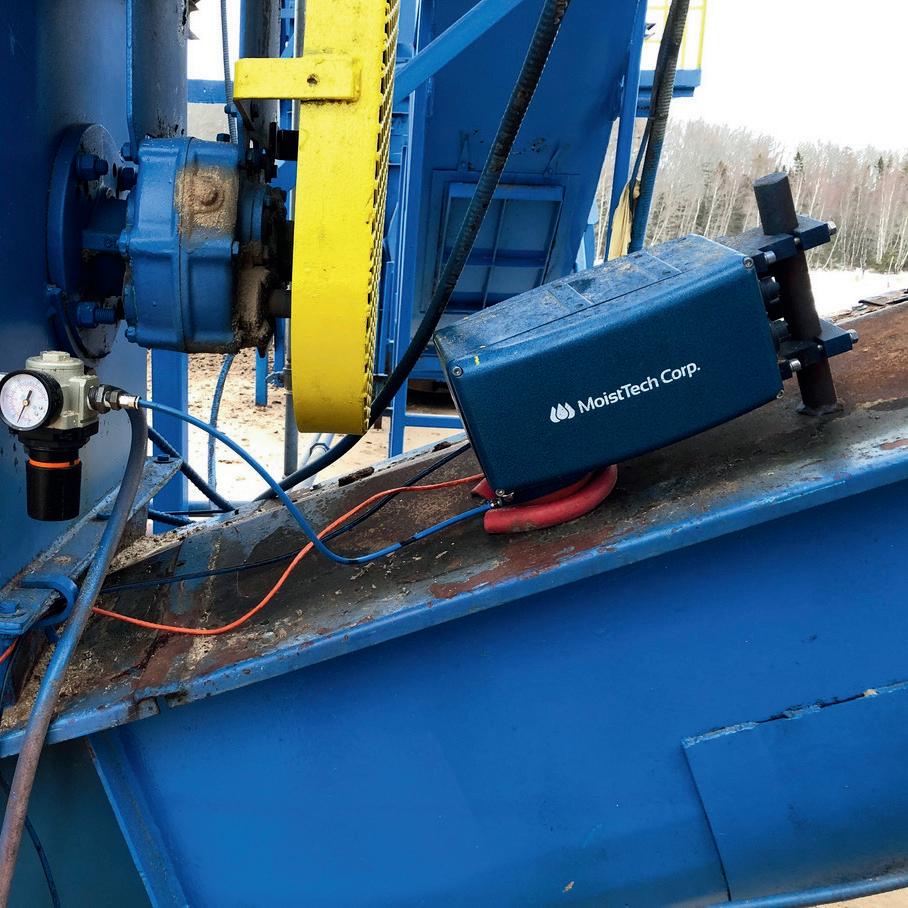
Artificial intelligence has a growing role in improving pellet plant performance, efficiency and reliability.
By George Hale
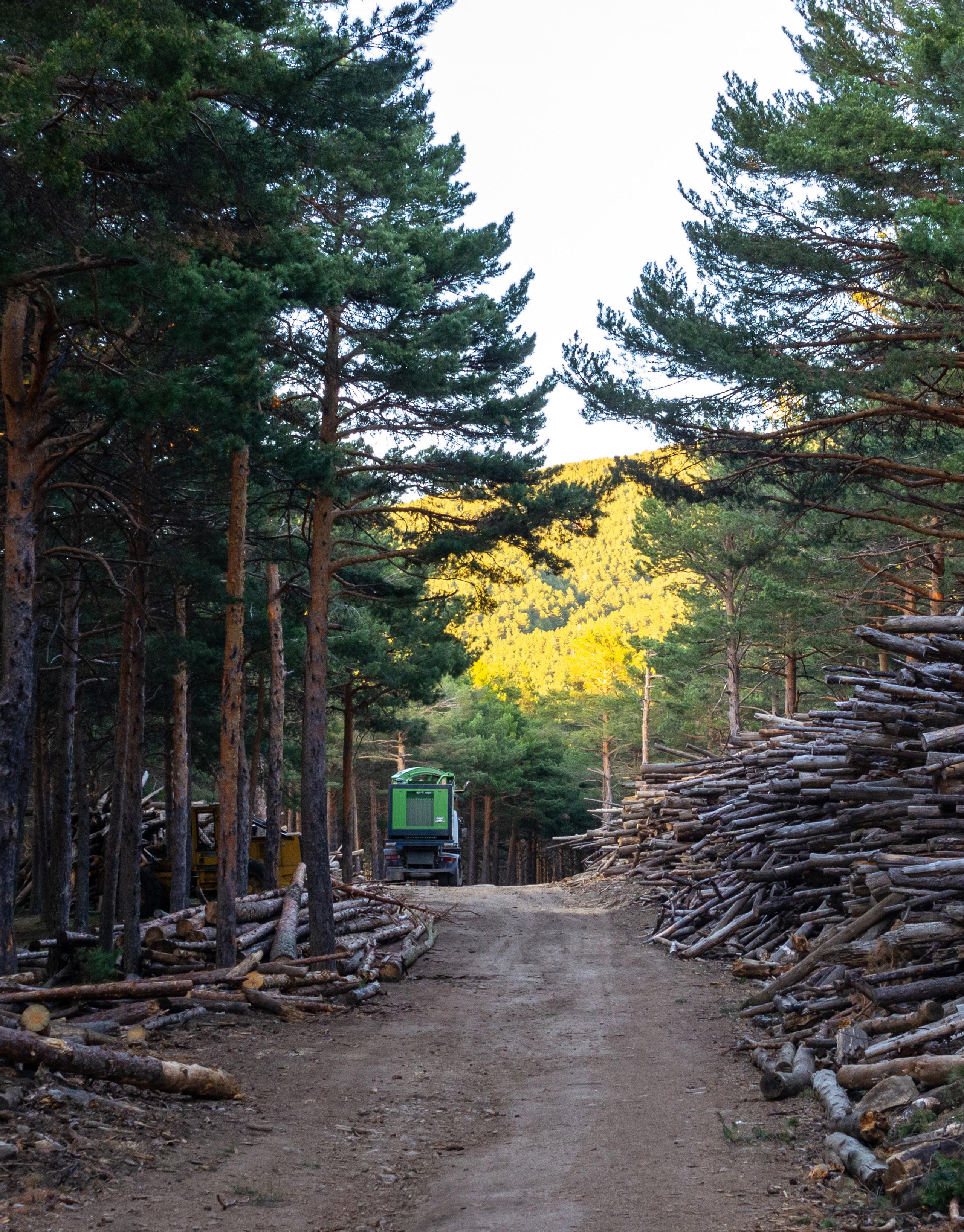
Implementation of the European Deforestation Regulation is approaching, compliance of which requires supply chain visibility, geolocation data and supplier accountability.
By Keith Loria
Anna Simet DIRECTOR OF CONTENT & SENIOR EDITOR asimet@bbiinternational.com
A Broader Vision
Readers who have followed Pellet Mill Magazine for the past several issues may have noticed a broader mix of editorial coverage alongside white pellets, the cornerstone of this publication. But the biomass industry has evolved since we launched this magazine 15 years ago, and as such, so has our focus. Moving forward, we will be giving increasing attention to emerging markets such as biocarbon, biochar and biocoal, complimenting our longstanding coverage of wood pellets and densified biomass. Beginning with this issue, that evolution is reflected beneath the magazine’ s masthead, formally recognizing the expanding industries we serve. These markets share many of the same feedstocks, technologies, equipment, supply chains and end-use sectors, making them a natural fit under this publication. For readers and advertisers, this broader scope means greater insight into these adjacent markets, the innovations shaping the future of biomass energy, and perhaps some new business opportunities. So, while the coverage is expanding, our mission to deliver the most relevant, interesting and valuable information through our news stories, feature stories and contribution articles remains the same.
In the spirit of reflecting back, one of the main topics we covered in the inaugural issue of Pellet Mill Magazine included the explosive growth of the industrial pellet export market; the U.S. Industrial Wood Pellet Association had just taken shape. Conversely, in this issue, you’ll find a story on finding new markets at home—for both traditional white pellets and advanced pellets—and perspective from export market stakeholders (including then-USIPA but now Advanced Woody Biomass Association), exploring what needs to happen in order to make use of these products in the U.S. and Canada. “Home Market Alternatives” (page 12) by associate editor Katie Schroeder suggests that international markets aren’t disappearing—in fact, they remain vital—but in today’ s era of decarbonization, the rise of AI and accompanying energy demands, domestic market opportunities are not only growing, they are becoming increasingly essential.
Now in its 20th year, the International Biomass Conference & Expo is expected to bring together more than 1000 attendees, 180 exhibitors and 100 speakers from more than 25 countries. It is the largest gathering of biomass professionals and academics in the world. The conference provides relevant content and unparalleled networking opportunities in a dynamic business-to-business environment. In addition to abundant networking opportunities, the largest biomass conference in the world is renowned for its outstanding programming— powered by Biomass Magazine—that maintains a strong focus on commercialscale biomass production, new technology, and near-term research and development. Join us at the International Biomass Conference & Expo as we enter this new and exciting era in biomass energy.
(866)746-8385 | www.biomassconference.com
2027 North American Biocarbon Conference
MARCH 2- 4, 2027
Cobb Convention Center | Atlanta, Georgia
The North American Biocarbon Conference, co-located with the International Biomass Conference & Expo, brings together the full value chain of carbonnegative and carbon-smart technologies in one powerful, integrated event. By aligning biocarbon producers, biomass power generators, biochar innovators, carbon-removal buyers, project developers, and equipment providers with the broader biomass, biogas, CHP, pellet, and renewable-power industries, this colocated experience creates unmatched cross-sector engagement. Attendees gain access to expanded networking opportunities, dual-track educational programming, a unified expo hall, and a broader pool of commercial partners—all designed to accelerate the deployment of biocarbon solutions, scale climatepositive markets, and strengthen the emerging carbon-removal economy across North America.
(866)-746-8385 | www.biocarbonconference.com
2027 International Fuel Ethanol Workshop & Expo
JUNE 14 - 16, 2027
CHI Health Center | Omaha, Nebraska
Now in its 43rd year, the FEW provides the ethanol industry with cutting-edge content and unparalleled networking opportunities in a dynamic business-tobusiness environment. As the largest, longest running ethanol conference in the world, the FEW is renowned for its superb programming—powered by Ethanol Producer Magazine—that maintains a strong focus on commercial-scale ethanol production, new technology, and near-term research and development. The event draws more than 2,300 people from over 31 countries and from nearly every ethanol plant in the United States and Canada.
(866)746-8385 | www.fuelethanolworkshop.com
Working Forests Need Working Markets
BY PETE MADDEN
America’s working forests are among our nation’s great assets. They provide wood and paper products, clean water, wildlife habitat, recreation and livelihoods for families and rural communities across the country. Their ability to keep delivering those benefits depends on something practical, which is healthy markets.
That reality should guide the current conversation about woody biomass and bioenergy. Much of the debate has focused on fiber supply for existing pulp and paper mills—a legitimate concern. Mills anchor local economies and create products Americans use every day.
But the conversation must also account for the landowners and communities already living with the consequences of lost markets. Since 2015, more than 40 U.S. pulp and paper mills have closed, removing tens of millions of green tons of annual wood demand where those mills are located. And more than a dozen additional wood-consuming pulp and paper mills are at risk of closing in the future.
When a mill closes or reduces fiber demand, family forest owners lose buyers. Loggers and haulers lose work. Sawmills lose outlets for residuals. Main streets lose economic activity.
Forests feel the consequences, too. When low-value material has no market, landowners lose financial incentives to manage their forests. Thinnings may be delayed and forest health treatments may become harder to justify. Declining forest health increases susceptibility to wildfire, disease and pest outbreaks. Unhealthy forests are less able to provide benefits such as clean water and wildlife habitat, and they can become a safety liability for local communities. Over time, lost markets can weaken the foundation that keeps forests as forests.
This is also a moment when the urgency of markets becomes literal. The severe wildfires in Georgia and the approaching wildfire season move the conversation about markets for low-value wood—small-diameter trees, slash, dead and down material—from policy abstraction to operational reality. Fiber markets are what make hazardous fuel reduction feasible at scale. They provide a financial pathway for treatments that would otherwise be too costly to execute. When those markets exist, material that would fuel a wildfire becomes a useful product or a source of energy instead. When they don’t, it stays on the forest floor and waits. Congress heard testimony on exactly this point from USDA Forest Service Chief Tom Schultz. The connection between markets and forest health is not theoretical; it is the difference between forests that get treated to improve their health and resilience, and forests that burn out of control.
That is why this debate about markets for low-value wood deserves more nuance.
Federal policy should avoid unintended consequences that undermine existing manufacturers. A healthy forest economy needs strong mills. But mills alone are not enough. It also needs multiple end markets. A forest economy with too much low-value fiber and too few customers is not stable.
Responsible bioenergy markets can help address that gap. They should focus on sawmill residuals that often have limited or no reliable outlet. In the right policy framework, these markets can complement forest products manufacturing and improve the economics of forest management.
Regional differences matter. A sawlog should go to a sawmill, and fiber suited for pulp and paper should move to its highest practical use where those markets exist. But not every chip or byproduct has a reliable home in every region. Transportation distances, mill infrastructure, forest conditions and local market capacity all shape what is practical.
Several principles can help inform policy development. First, recognize the full value chain. Forest owners, sawmills, pulp and paper mills, biomass users and rural communities are all connected. Ignoring one part of the system weakens the whole.
Second, prioritize the right material for the right use. Higher-value products should remain the priority where markets are present and functioning, while low-value and underused material should have pathways into markets that support management, income and local jobs.
Third, ground policy in real-world forestry. The best solutions will reflect local conditions rather than assume one national market behaves the same everywhere.
Bioenergy alone will not solve every challenge facing the forest sector. But when developed responsibly, it can help use material that would otherwise lack a reliable outlet, support forest health treatments, give landowners more options, and help communities adapt as traditional markets change.
Any policy discussion about woody biomass should pass a simple test and answer the following question: Does it help keep working forests working, support the people who manage them and strengthen the rural communities that depend on them? If the answer is no, the conversation is too narrow.
America’s working forests need strong mills. They also need diverse, responsible markets for low-value fiber. Most of all, they need a forest economy that recognizes the people and communities behind every acre.
Author: Pete Madden President and CEO, U.S. Endowment for Forestry and Communities
Rolling Innovation Forward
2026 brings a milestone event to Amandus Kahl: 150 years of operations. The Reinbek, Germany-headquartered company has remained family-owned since its inception, with the reins handed off through three generations. Now employing 900 people worldwide, Kahl has embraced a befitting motto: “150 Years of Innovation –Tradition with a Future.”
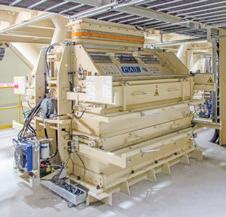
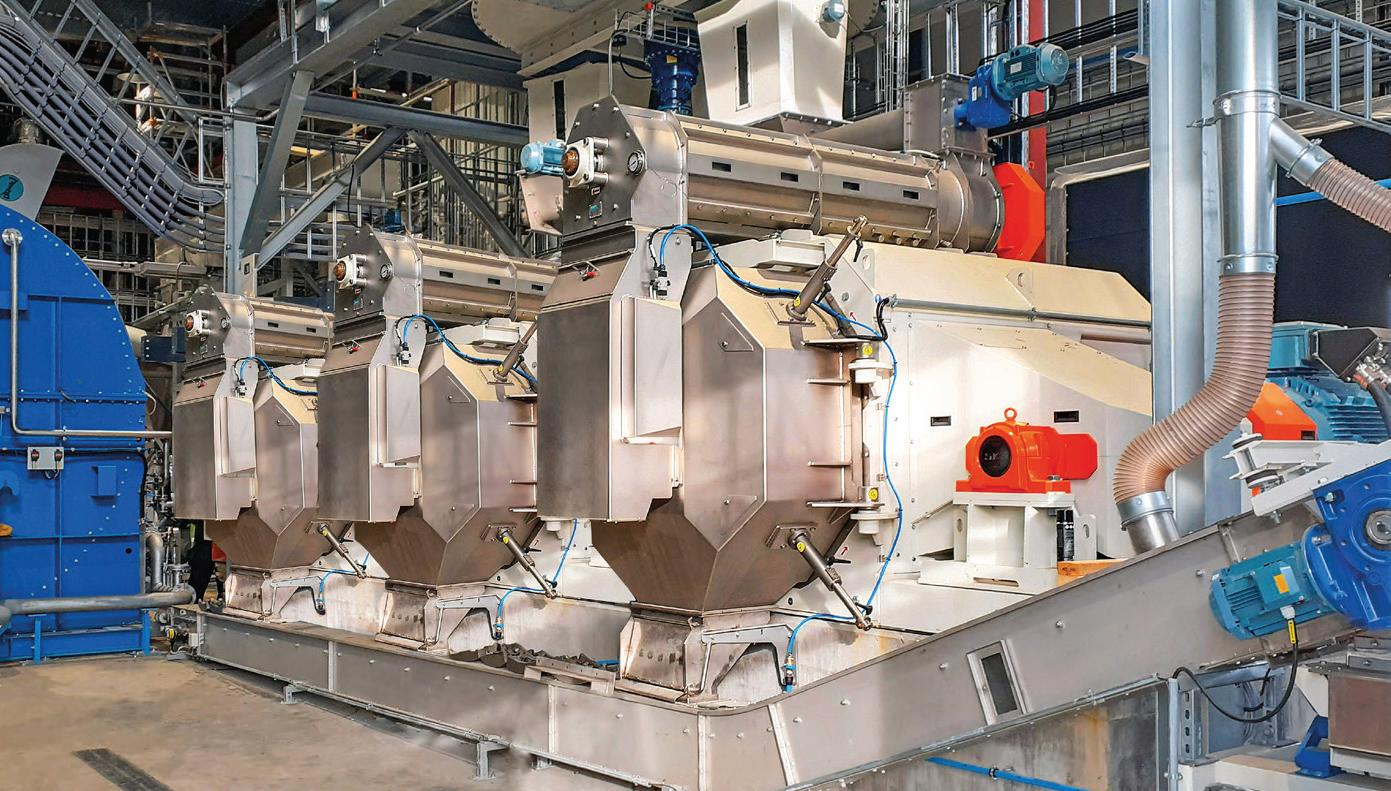
Amandus Kahl is best known for its flat-die pellet mill, a technology the company introduced in the mid-1920s. Nearly a century later, it remains the cornerstone of Kahl’s product lineup, but the company continues to innovate. Its most recent breakthrough, the patent-pending Eco Roll, is designed to better position pellet producers to strengthen margins—increasing production while simultaneously reducing energy consumption.
Less Resistance, More Throughput
Introduced in 2025, the Eco Roll’s performance has been thoroughly validated. “The Eco Roll was just unveiled last year, but this technology spent years in development and testing before it reached the market,” says Jace Locke, business development manager at Kahl.
Contrary to traditional pellet production, the EcoRoll deploys a two-stage compression process instead of a traditional singlestage approach; an initial, gentle compression stage allows mate-
rial to more easily move through the next stage of being pressed through the die. “With the Eco Roll, operators aren’t compacting all of the material in a single stage,” Locke says. “Through our trials and real-world testing, we found that the pre-compaction stage is where we achieve our efficiency and lower energy costs.”
Less resistance and less friction means less required horsepower—approximately 40-45 kilowatt-hours per ton for softwood pellets. “In a wood pellet plant, the pellet mills’ No. 1 cost is electricity,” Locke says. “If we can help our customers lower that electrical demand, that’s a huge benefit.”
Another significant benefit is that the Eco Roll allows for the use of standard-width dies to compact more material with the twostage approach, and thus increases throughput. “Customers are seeing up to a 25% increase in production capacity,” Locke says.
Finally, the process is easier on rollers and dies, resulting in less wear and tear and extended component life.
Looking ahead, Locke notes that he believes the biggest opportunities for pellet production optimization over the next decade are in AI, efficiency and increased uptime. And as Kahl marks 150 years in business, the company’s philosophy remains unchanged: keep improving. “We’re 150 years old, and we're still learning,” Locke adds. “That's the beauty of it.”
Pellet News Roundup
Rainbow Pellet Starts Up Steam-Ex Pellet Plant
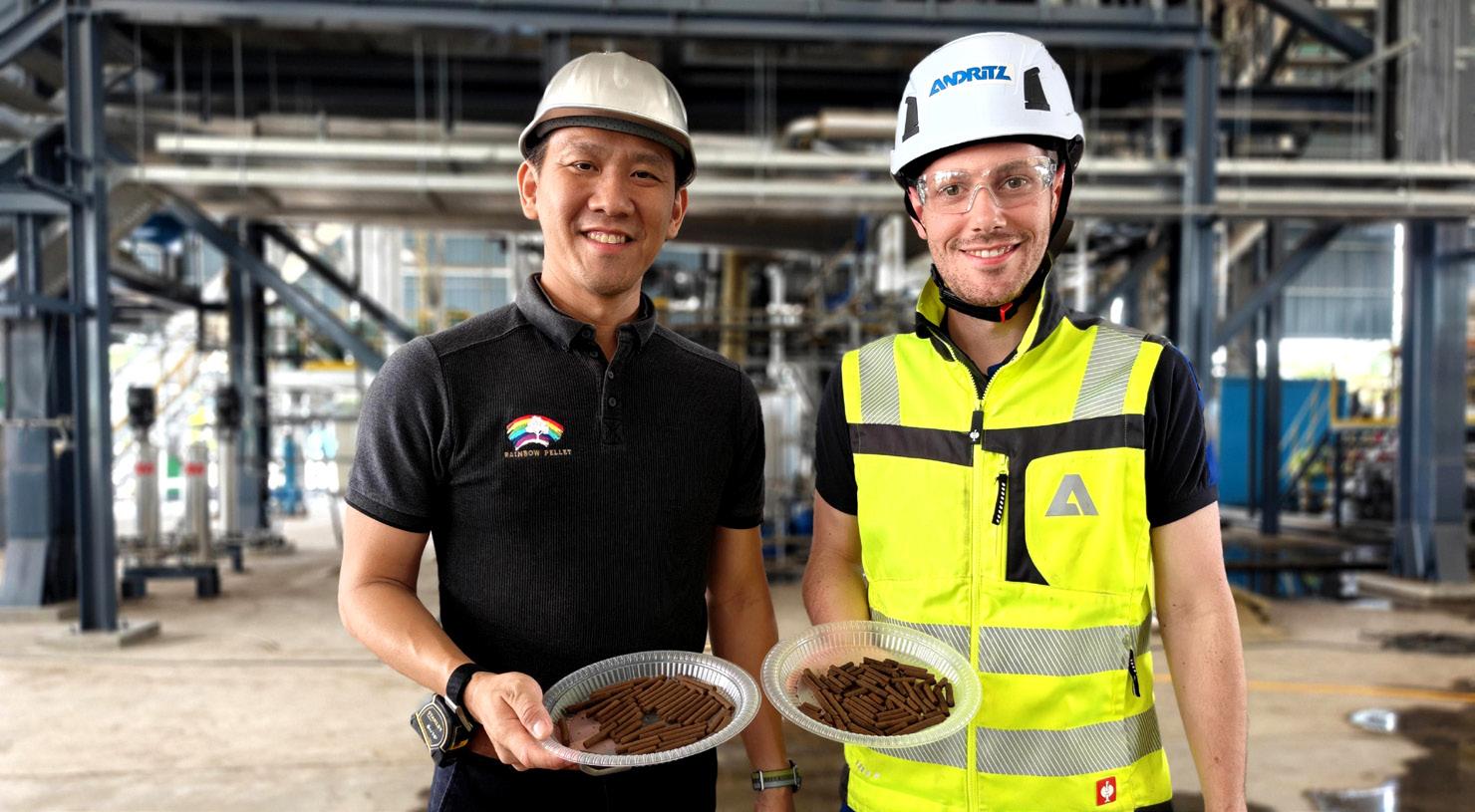
Rainbow Pellet Sdn Bhd has successfully started up a commercial-scale SteamEx pellet plant for empty fruit bunches— the fibrous residue left over after oil palm fruit is processed—at its site in Kuala Lipis, Malaysia, using Andritz technology.
The Steam-Ex line features Andritz pretreatment equipment utilizing steam explosion technology. The company also supplied automation and provided integration and start-up services to support reliable and efficient operation. The technology is designed to process challenging biomass feedstocks and support the production of high-quality pellets for industrial energy applications.
Canada Announces Funding for Pellet, Bioenergy and Biocarbon Projects
Natural Resources Canada on June 3 awarded nearly $130 million to 56 projects that aim help advance transformation of the country’s forest sector. Projects focused on wood pellets, bioenergy and biocarbon are among those to receive funding.
The funding is related to the Canadian Forest Sector Transformation Task Force, which was launched in January 2026 with a mandate to promptly identify practical
measures to transform and retool Canada’s forest sector. The companies and bioenergy projects selected to receive funding include:
The Wood Pellet Association of Canada, which received $473,871 to assess export readiness for thermally treated pellets. The project will evaluate demand, sustainability requirements and technical compatibility in key markets, including the European Union and Japan, while promoting sustainable Canadian biomass.
The Forest Enhancement Society of BC, which received $37 million to increase the use of low-value and residual forest fiber by supporting its collection, processing and transport. The initiative aims to divert fiber from open burning to higher-value uses such as pellet production, bioenergy, pulp and other forest products.
The Quebec Wood Export Bureau, which received $5.81 million to diversify export markets for forest products, including biomass energy. The project will also work to reduce trade, regulatory and environmental barriers in markets across Europe, Asia, the Middle East and the Caribbean.
Innofibre, which received $266,900 to advance the use of wood-based biocarbon in metallurgical applications. The project will evaluate available technologies, compare performance with conventional mate-
rials and help position forest biomass as a low-carbon alternative.
Xylo-carbone, which received $4.5 million to adapt pyrolysis technology to produce a biocarbon composite that can replace fossil coal in high-temperature industrial processes. The project could displace up to 50,000 metric tons of fossil coal annually while creating new markets for underutilized forest biomass.
Carbon Alpha, which received $2.5 million to advance engineering and planning for carbon capture integration at the MLTC Bioenergy Centre in partnership with the Meadow Lake Tribal Council. The project will lay the groundwork for a future BECCS system capable of producing low- and negative-emissions energy.
Lake Nipigon Forest Management, which received $225,000 to complete a business study for a proposed wood fiber biohub in Hurkett, Ontario. The Indigenousowned company is partnering with Char Technologies to advance plans for a facility that would produce renewable natural gas and biocarbon.
Apitipi Anicinapek Nation, which received $267,500 to support planning and feasibility work for an Indigenous-led biochar and biocarbon facility using forest biomass residuals. The effort has since evolved into the ACT Biochar initiative, focused on sustainable forestry utilization and carbon reduction.
Bagasse Pellet Mill Assets Up for Auction
The assets of Louisiana-based Delta Biofuel are being offered for sale via auction. The company’s purpose-built biomass pellet plant located in Jeanerette, Louisiana, is designed to convert sugarcane bagasse into fuel pellets.
The Louisiana governor’s office in mid2021 announced plans for the pellet project. Nearly two years later, in May 2023, Louisiana Economic Development confirmed Delta Biofuel would move forward with the development of the 340,000-metric-ton-
Rainbow Pellet successfully started up a commercial-scale Steam-Ex pellet plant featuring key Andritz equipment.
RAINBOW PELLET
per-year project, with construction scheduled to begin the following month. The facility was completed in late 2024.
Ascension Bulk Terminals in February 2026 filed a lawsuit against Delta Biofuel alleging breach of contract regarding a 15year pellet handling and storage agreement between the two companies. According to court filings, Delta Biofuel did produce a small amount of bagasse pellets in mid2025, but the product did not meet required specifications.
The assets of Delta Biofuel are now being sold through a secured-party public auction sale pursuant to Article 9 of the Uniform Commercial Code, as enacted in Louisiana. The sale is being conducted by CSC Delaware Trust Company, formerly known as Delaware Trust Company, in its capacity as administrative agent and collateral agent, on behalf of the senior secured lender, Bulldog Bioenergy LLC. Hilco is serving as broker for the sale process.
Delta Biofuel’s facility is located on a leased site adjacent to the M.A. Patout sugar mill and incorporates integrated receiving, washing, dewatering, drying, milling, pelletizing, storage and loadout systems. The facility has been described as permitted for
up to 340,000 tons per year of pellet production. The underlying real property is not included in the asset package.
The collateral package includes all of Delta Biofuel’s right, title and interest in its personal property, equipment, fixtures, intellectual property, accounts receivable, inventory, permits, books and records, and other tangible and intangible collateral described in the applicable loan and security documents.
Bids were due on Aug. 4, with the public auction scheduled for Aug. 6.
US Endowment Funds Bioenergy Assessments at Closed Wood Facilities
The U.S. Endowment for Forestry and Communities on June 15 issued a request for proposals to assess the feasibility of repurposing closed wood products manufacturing facilities, including pulp and paper mills, for bioenergy production. The initiative will provide up to $500,000 in predevelopment funding to support feasibility assessments at one or two U.S. facilities.
According to the Endowment, more than 40 U.S. pulp and paper mills have closed since 2015, eliminating approximately 60 million green tons of annual wood de-
mand. The organization said many of those sites retain industrial infrastructure, utility connections and an experienced workforce that could support future bioenergy projects.
Through the initiative, the Endowment aims to evaluate whether the facilities could be redeveloped for biopower generation or biofuel production, creating new markets for low-value wood fiber while utilizing existing industrial assets.
Eligible applicants include U.S.-based private companies or other organizations with proven experience in energy project development, wood products manufacturing, data center development, or closely related infrastructure projects. Applicants must demonstrate site control or authorization to evaluate the facility and should be able to show that the project can realistically advance to implementation.
Proposals were due by Aug. 6, with contracting and project initiation to occur in September.
Wood Pellet Sector Convenes in Alabama
Tropical Storm Arthur and the domestic wood pellet sector collided in Point Clear, Alabama, in June at the PFI Annual Conference.
BY TIM PORTZ
Last month, the Pellet Fuels Institute held its annual conference in Point Clear, Alabama, amid a tropical storm that turned a historic resort on Mobile Bay into a showcase of Mother Nature's power. Tropical Storm Arthur spun out of Mexico, crossed the Gulf and inundated the conference locale with multiple rounds of heavy rain.
In an opening presentation titled “A Tale of Two Halves,” PFI Executive Director Tim Portz noted that the 2025-26 heating season, while lackluster overall, marked a significant rebound from the prior year for producers in the East. With August-through-March sales of 824,079 tons, in-season sales ranked third highest in the past decade for the nation’s largest wood pellet market. Conversely, sales in the West were the lowest in a decade. With little snowpack and heating degree days lagging long-term averages by as much as 20% in some locations, sales bogged and producer inventories bulged.
The conference followed a heating season that saw strong sales return to the East while historically low volumes challenged producers in the West. Brett Jordan, CEO of Lignetics, joined Eddy Chumley of Tractor Supply Co. and Chris Vogtman of Hearth & Home Technologies for a panel representing fuel manufacturers, appliance manufacturers and retailers. Jordan noted that Lignetics made the unusual move of repositioning western-produced pellets to eastern markets, where demand remained strong and consumers willingly paid a premium for Douglas fir pellets typically available only in the Pacific Northwest.
Policy and regulatory issues were covered in a panel featuring Pat Rita, PFI's federal advocacy provider, and Jason Tolleson, senior director of government affairs for the Hearth, Patio & Barbecue Association. Much of the discussion centered on New Source Performance Standards for residential wood heaters and what appliance and pellet manufacturers might expect from the EPA, which is scheduled to release a rule by Dec. 15, 2026.
Portz also welcomed Darrell Smith, president of the Advanced Woody Biomass Alliance, and Harold Arnold, CEO of Fram Renewables, for a discussion on the industrial wood pellet sector. Arnold said that although the primary policy driver for pellet consumption in the United Kingdom will change after next year, rising
Cameron Merrick, Somerset Pellet Fuel; Wedig Graf Grote, Stela Drying; and Jason Kessler, KESCO, catch up while waiting out a golf rain delay.
Matt O’Malley, O'Malley Wood Pellets; Bill Hoskins, Kamps/Easy Heat; Eric Wood, Musser Biomass; and Scott Cummings, Barefoot Pellets, talk shop at the PFI Annual Conference opening reception.
power demand and continued operation of Drax Power Station will remain important. Smith noted the AWBA recently changed its name to better reflect its expanding constituency and is now fully engaged in federal advocacy to help policymakers understand woody biomass' contributions to power, chemical and fuel markets.
The rapidly developing biochar market was explored during the panel “Threats and Opportunities: Eyeing the Future of Wood Fiber Utilization.” Panelists included Jason Kessler, president of KESCO; Chris Wiberg, vice president of Biomass Energy Lab; and Kirk Oden of TKO Project Solutions. Wiberg said the biochar sector is at an inflection point, with a growing number of participants testing technologies and products for a range of market applications.
Dallin Brooks delivered a post-lunch presentation that felt more like a keynote, issuing a passionate call to action for the hardwood sector as foreign production, product substitution and a sluggish housing market continue to pressure the industry.
The conference concluded with a producer panel featuring Mark Vick of Outdoor Brands, Stephen Faehner of American Wood Fibers and Scott Cummings of Barefoot Pellets. Discussion focused on the prior heating season and producers’ ability to replenish depleted inventories before early-season buying begins in August. Panelists also discussed rising energy costs. Faehner noted that producers are feeling diesel price increases on both inbound fiber and outbound shipments, while the electricity demands of pellet mills and growing power needs from data centers raise concerns about future electricity prices.
The conference closed with the PFI membership meeting, where the 2026-27 executive committee was announced: Chairman Matt O’Malley (O’Malley Wood Pellets), Vice Chairman Stan Elliot (Pacific Coast Pellets), Secretary/Treasurer Alison Snider (Lignetics) and Past Chairman Scott Cummings (Barefoot Pellets).
Author:
Tim Portz Executive Director, Pellet Fuels Institute tim@pelletheat.org
Brett Jordan, Lignetics; Mike McCoy, Marsh McLennan; and Stephen Faehner, American Wood Fibers, hustle to finish their round of golf as Tropical Storm Arthur unleashes a deluge.
Brett Jordan, Lignetics; Tim Portz, PFI; Alison Snider, Lignetics; and Kenny Lisle, Lignetics, discuss the 2025-26 heating season at the opening reception.
EVALUATING EMERGING MARKETS
Pellet Mill Magazine examines the challenges holding back North America's industrial pellet industry—and the catalysts that could finally ignite a strong domestic market.
BY KATIE SCHROEDER
As global biomass markets continue to shift, attention is increasingly turning to opportunities closer to home. Pellet Mill Magazine spoke with industry leaders about the prospects for developing domestic markets for industrial wood pellets, biocarbon and black pellets, where, despite the volumes being produced, demand remains modest compared with well-established export markets. In 2025, U.S. producers manufactured approximately 9.5 million tons of utility wood pellets; 9.4 million tons were exported, according to the U.S. Energy Information Administration.
Darrell Smith, president of the Advanced Woody Biomass Alliance, explains that the forest industry in the southern U.S. needs a market for their trees in order to
maintain the region’s forested acreage. Approximately 85% to 86% of agricultural land is privately held. Without healthy forest products markets, landowners may be forced to find a different use for their land, which could include selling it for commercial property development. And, wildfire risks could increase if low-grade material is not removed. “As demand for low-grade material declines and it winds up laying on the forest floor—or if forests aren’t thinned out or utilized as quickly as they used to be—there can be a lot of extra fuel for forest fires,” Smith says.
Finding additional markets is critical, agrees Thomas Reilley, chair of AWBA and chairman at Highland Pellets. “Markets will solve the long-term decline of our working forests, our rural communities—a way
of life—and will help preserve them from what will otherwise be inevitable land use change, and the loss of both billions of tons of carbon and tremendous economic value,” he adds.
Economic Drivers and Decarbonization
Subsidies have driven wood pellet use internationally, explains Smith. Though the U.S.’ well-established biomass supply chain has historically served international markets, aiding decarbonization efforts around the world, Smith says the industry’s next chapter will leverage the same infrastructure to help American industries decarbonize. “We’re international companies and we’ll go where the market demands, whether that’s new domestic plays or international mar-
kets that have shaped our industry and been buoyed by subsidies for years,” Smith says. “I think the common theme is that these markets value biomass not simply as a fuel anymore, but as a solution to decarbonization. And that’s the direction we’re moving in.”
He views the pursuit of domestic outlets as finding additional markets, rather than replacing exports. The three major domestic opportunities for the pellet industry include direct use, feedstock application and carbon capture, he says. The white pellet markets in Europe and Asia remain valuable to the industry and it does not plan to pivot away from exports, but conversations are being had about opportunities closer to home, according to Smith.
Direct use applications include many of the same uses that U.S. pellets find abroad, such as energy generation or industrial power production. Data centers may be a big contender for the next large-scale pellet consumer. At these power-hungry facilities, energy use is projected to jump from 4.1% of the U.S. peak summer power demand in 2025 to 8.5% in 2027, according to Goldman Sachs. Increased energy demand constitutes a great opportunity for every player in the energy world, explains Smith. Due to the optics, data center hyper-scalers are “very interested” in finding renewable energy sources.
“We’re going to need everybody to play a role in what’s coming with our energy needs,” Smith says. “And I think for woody biomass, not only can we play a role in sup-
plying power, but we can supply power in a renewable, sustainable way that helps with decarbonization efforts.”
Harold Arnold, president of pellet producer Fram Renewable Fuels and AWBA board member, explains that the economics for converting coal-powered energy facilities to biomass don’t work without some type of subsidy because biomass is not cost-competitive with coal. “Policies that require biomass to be used as a fuel or coal replacement are needed to give the market the push it needs,” he says. “The infrastructure is in place, at least for the start, as some white pellet plants could be converted while greenfield sites are being built.”
Woody biomass could also serve as a feedstock for renewable fuels like sustainable aviation fuel, methanol and marine
fuel, and play a critical role in steel production. Public policy, logistics and economics must work in concert for these projects to reach fruition, Smith adds.
Arnold believes the market for biocarbon in the U.S. will develop, though he estimates it will be five years before a meaningful market for it will come to fruition. He highlights Aymium’s biocarbon joint venture with Steel Dynamics and notes that some parties may be observing the project, waiting to see if it succeeds. The joint venture, SDI Biocarbon Solutions, located in Columbus, Mississippi, is built to produce 228,000 metric tons of biocarbon to supply Steel Dynamics’ nearby steel mill.
The third opportunity, carbon capture’s integration with bioenergy—also known as bioenergy with carbon capture and storage (BECCS)—has attracted interest from some companies. “We need other [domestic] industries to understand the value that we have and how that we can help them in
lion metric tons per year, most of which is exported. Therefore, industrial pellet use remains low. Although some projects are underway and interest in using both black and white pellets is present, market demand and development remains slow. Part of the reason for low industrial-scale utilization is the country’s use of hydroelectric power as its main energy source. Gordon Murray, executive director of the Wood Pellet Association of Canada, explains that industrial demand often is driven by countries searching for a more sustainable option for their power grid, and swapping to wood pellets from coal makes sense. However, Canada’s abundance of cheap, sustainable power eliminates this demand driver.
Murray notes that the Atikoken Generating Station, located in northwestern Ontario, uses between 90,000 and 100,000 metric tons of wood pellets each year, but it runs as a peaking facility—operating only when the grid’s energy demand increases—
of pellets each year—comes with risk and financing has been difficult for producers to find, explains Murray.
“All the potential suppliers that would be converting their plants right now are still in the throes of trying to secure capital,” he says. “The financial markets are still a little bit nervous about it.”
Government support could help bring the project to completion, but support at the provincial level has been lacking. Murray hopes the government’s mandate to end coal-fired power production by 2030 will spur further interest.
Competing with cheap natural gas is a challenge for pellet-fired power production across much of North America, he explains. However, Canada’s eastern provinces, which rely on heating oil to meet their needs, may become much more interested in wood pellets if the Belledune project succeeds.
Export market demand has remained
Mid-scale pellet use, such as burning pellets in boilers for heating in hospitals, schools and residential buildings, is WPAC’s current focus, he explains. Pellet use is gaining traction in northern provinces, such as the Northwest Territories, where wood pellets have reached 35% market penetration in commercial and institutional heating, according to Murray.
Industrial Interest
In April this year, Norwegian metallurgical company Elkem sold its biocharrelated assets in Saguenay, Quebec, to CHAR Technologies Ltd. and agreed to purchase 62,500 metric tons of biocarbon pellets from the company over five years when production begins. Inge GrubbenStrømnes, senior vice president for foundry alloys at Elkem, outlines how biocarbon fits into Elkem’s sustainability goals. Elkem’s Saguenay, Quebec, facility, Elkem Silicon Products Chicoutimi, makes ferrosilicon and ferrosilicon-based alloys. GrubbenStrømnes explains that the process reduces quartz to disconnect the oxygen atoms from the silicon atoms using carbon. The carbon source can be fossil-based, such as coke or coal, or renewable, like wood chips, charcoal or other forms of biocarbon. The smelter operates at more than 2,000 de-
Biocarbon pellets must have substantial density to handle the high temperatures of the kiln, which climb above 2,000 degrees Celsius. The above photo depicts biocarbon from one of Elkem’s suppliers.
IMAGE: ELKEM
grees Celsius, which requires a significant amount of electricity.
Elkem aims to meet sustainability goals by only using renewable energy and implementing biocarbon in the smelting process whenever possible. Other strategies such as carbon capture and storage and the “revolutionary production processes of carbon looping” could also play a role in the future, according to Grubben-Strømnes. Elkem’s use of hydropower enables the company to emit two-thirds less carbon than the global average. Ultimately, the company plans to increase biocarbon utilization and further reduce its carbon footprint, targeting 50% biocarbon use in its facilities by 2030.
Although wood chips and charcoal have been utilized at Elkem’s facilities in Norway and Paraguay, biocarbon has higher density than wood chips or charcoal, which makes it a better replacement for coal and lowers the logistical costs for handling.
‘All the potential suppliers that would be converting their plants right now are still in the throes of trying to secure capital. The financial markets are still a little bit nervous about it.’
—Gordon Murray, executive director, Wood Pellet Association of Canada
Grubben-Strømnes explains Elkem decided to sell its pilot facility and equipment therein, including a pyrolysis kiln, binder technology and other assets needed for pilot-scale production. The company selected CHAR Tech because the acquisition price and terms of the supply contract were acceptable, he says. Also, Elkem perceived CHAR Tech as a company with a good likelihood of industrialization suc-
cess. “We want to sell to someone we think is capable of industrializing this technology, and then at the end of the day, supply us biocarbon,” he says.
Progress toward a domestic U.S. industrial pellet market is evident in growing interest among industrial companies in converting from coal to biomass, explains Reilley. “There is a growing understanding of the application domestically in the U.S.
AIR EMISSION CONTROL & CONSERVATION SYSTEMS
given the constraints of the grid, the rise of AI and the need for baseload power,” he says.
In the past, carbon capture technology needed to advance further in order to increase large-scale demand domestically, which is no longer the case.
Communicating Value
Smith explains that industries across the U.S. need to hear and understand the opportunity that biomass offers and become educated on its story. Mitigating the initial reactions people might have to the concept of turning wood into energy requires explanation, education and time. “When I'm talking about other businesses, they don’t really know we are an option,” he says.
Biomass has been overlooked in several public policy documents, and AWBA is pursuing the inclusion of woody biomass in policy definitions. A clearer recognition of
forest residues, thinnings, low-value material and mill residuals as eligible feedstocks under the Renewable Fuels Standard is one example.
Reilley and Smith identify several key changes that would support market growth in the U.S. Getting woody biomass included in the emissions rate tables and models for tax credit access would keep each facility from being treated as a new project, Smith explains. Under 45Y, 48E and 45V, a provisional emissions rate (PER) is needed for each project, since biomass is not modeled or included in the table. The 45Z emissionsrate table does not include most woody biomass-to-fuel pathways and, when the PER process is finalized, ABWA is advocating to favor pathway-level inclusion of woody biomass, rather than individual project review. Alignment between U.S. EPA, the Department of Energy and the U.S. Department of Agriculture to create standards
would help solve this problem, according to Reilley. Extending tax credit programs such as 45V and 45Z would also help the industry grow.
Domestic industries need to understand the value and impact that woody biomass could bring to a variety of industries. “We are a reliable feedstock,” Smith says. “We obtain these materials in a sustainable way that has been certified and audited for years and years. We can sign multiyear contracts. We’re dependable. We can help you with your decarbonization efforts.”
Author: Katie Schroeder
Associate Editor, Pellet Mill Magazine
BEYOND THE DASHBOARD
Artificial intelligence has a growing role in improving pellet plant performance, efficiency and reliability.
BY GEORGE HALE
Artificial intelligence is evolving from a monitoring tool into a practical way for pellet plants to improve efficiency, reduce downtime and help operators make better decisions.
Modern pellet plants generate enormous volumes of data every day, from fiber moisture content and dryer performance to pellet quality, energy consumption and equipment health. Collecting that information is no longer the challenge. The opportunity is turning it into timely decisions that improve production. AI is increasingly being used to identify patterns, anticipate problems and help operators optimize plant
performance before issues affect throughput, quality or uptime. Rather than replacing experienced personnel, the technology is emerging as another tool to support better operational decisions.
Collecting Data Isn't Enough
As in many other fields, operators in pellet plants often find themselves managing a virtual firehose of data for their entire shifts. Plant systems collect information on everything from feedstock quality and moisture to energy use and pellet quality. Data collection and management systems were intended to improve operations, and they have made possible tremendous improve-
ments in quality and efficiency. But more data and dashboards will not necessarily translate into better plant operations. “The next generation of pellet plants will not be defined by how much data it collects,” says Ranjit Maharajan, head of automation solutions at Andritz. “It will be defined by how effectively it converts that data into action.”
AI’s value lies not simply in processing large amounts of information, but in helping operators act on it before small issues become larger ones. But to be truly effective, a system must do more than aggregate data and present it on yet another dashboard. Plant operators already deal with multiple dashboards that present informa-
tion about things like drifts in pellet moisture or increases in production variability. Conventional systems and dashboards can show an operator a problem, but they can't automatically prevent the next deviation. AI systems go a step further by analyzing these changes to predict what is likely to happen next, either taking actions or giving operators recommendations. “A dashboard tells you what happened,” Maharajan says. “Predictive control helps determine what should happen next.”
To make this happen, an AI system uses a digital twin, which is a mathematical model of the plant. The digital twin operates identically to the physical plant and has
been trained on massive amounts of historical operating data. The system can use this model to quickly test many different scenarios and how different control actions will affect different outcomes.
Looking Ahead Instead of Behind
Being able to quickly respond to deviations is valuable, but the goal of a smart pellet plant is not to simply provide better reporting. The objective is to identify even subtle deviations like increases in energy use or drifts in moisture, and predict how those deviations would affect production before a human operator might even notice the deviations. The system can then either directly
make changes in the production process or provide operator recommendations.
Predictive maintenance is another application with significant potential. Rather than relying solely on maintenance done on set time or run-hour intervals, an AI system can detect potential problems before they cause downtime. Many times, an experienced operator will catch a maintenance issue because something looks or sounds wrong. In addition to monitoring input and output, the system keeps tabs on things like vibration, machinery temperature and current, and equipment sounds to spot maintenance issues early. In this way, AI systems can provide hard evidence to back up an op-
erator’s gut feeling that something isn’t right with the machinery. And moreover, spotting deviations in production or maintenance issues that could lead to costly downtime can financially benefit pellet plants in a big way. “The most useful AI applications in pellet plants focus on real operating losses like energy waste, quality drift and unplanned downtime,” Maharajan says.
What Success Means for Pellet Plants
Predicting plant deviations and maintenance issues is certainly impressive, but the true measure of an AI system is its impact on the plant’s bottom line. Algorithms and numbers of model parameters matter, but the biggest focuses are going to be on quality, maintenance costs and energy use.
To that end, any plant implementing an AI system will need to have a deep understanding of their current and historical performance. For example, they’d need to have detailed metrics on unplanned maintenance events, downtime hours, energy consumption, moisture variations and pellet quality. The idea is to then track these same metrics after deploying an AI system to quantify improvements. “Start with the operating loss everyone in the mill already recognizes, prove one improvement, and then scale from there,” Maharajan says.
While pellet plants deal with many of the same issues, each plant has a unique set of operations. As such, the improvements that an AI system can bring will vary from plant to plant. Technology providers like Andritz take care to present the potential
improvements that their AI systems can bring as a range of possibilities, rather than a guaranteed outcome.
Maharajan says that some plants have reported reductions in process variability of more than 50% using model-based control systems. Plants have also reported increases in output of between 7% and 16%, and up to a 17% decrease in dryer energy consumption. But real outcomes depend on factors like equipment in use and sensor coverage. Different plants will see different results and success will depend on local conditions and the metrics a plant deems most valuable. “The business case for AI becomes clear when it is measured in operating terms,” Maharajan says.
Putting AI Into Practice
As the benefits of AI and automation become more apparent, pellet plants will keep adopting these tools. But in the vast majority of these cases, producers will not be starting with a blank slate. No matter how advanced AI models become, they will always need a proper foundation of training data and reliable inputs to make decisions. Any system that a plant installs should work seamlessly with existing control systems. The most common approach, Maharajan says, is to integrate the new components with existing infrastructure rather than replacing everything. Cybersecurity also becomes increasingly important as plants adopt connected sensors and remote access. Every sensor and controller is a potential weakness from a cybersecurity perspective. And with control systems allowing for remote access, the importance of data security becomes paramount. Systems will need to use secure communication and access control and have security built in to the entire product.
Even the most advanced AI platform ultimately depends on knowledge-
able people who understand how to use it effectively. The human element is just as much of a challenge in deploying advanced systems as the hardware and software. Operators must understand not only what a system is doing, but why it is making those choices. Transparency in how models work is vital in building trust and getting operator buy-in. Maharajan says that involving operators as early as possible when deploying AI systems is crucial for fine-tuning operations and for building trust in the system. “The hardest part is building a trustworthy system around the model and its algorithms,” Maharajan says.
Additionally, having people who are closest to the plant’s operations and not just automation specialists and plant leadership is crucial to success. Operators, maintenance teams and process engineers see different parts of the plant’s operations. Getting these perspectives early on makes it more likely that a solution will not only work as planned technologically but operationally.
While careful planning, training and getting stakeholder input is crucial, producers may not be well served by trying to solve everything at once. One approach that Maharajan recommends is to perform a thorough evaluation of a plant’s operations before making any decisions. Determining where the most prominent issues are is a good way to decide where to focus efforts first. For instance, a plant that has excessive unplanned downtime and one with high energy usage might use different models and would have different definitions of success. This one-thing-at-a-time approach would be especially beneficial for smaller operators that may not have the resources to retrofit an entire facility at once.
The Next Generation of Pellet Plants
The deployment of tools that can continuously monitor operations around the clock, detect minute changes, predict opti-
mal solutions, and even take steps to correct deficiencies can bring to mind visions of pellet plants with empty control rooms. But even as models improve and sensors become more reliable, a more realistic future is where AI systems serve as a sort of virtual old hand who can advise human operators. In other words, supervised autonomy.
Systems make decisions within clearly defined limits while human operators retain oversight and are responsible for using their judgment, knowledge and experience to make the final call. Under a setup like this, human operators would spend less time responding to alarms and micromanaging operations and more time improving processes.
AI and automation hold the promise of greater stability and efficiency for pellet
plants. But rather than adding complexity or replacing human input, these systems can bring about a new operational paradigm. With the right design practices, these systems can promote a type of machine-human partnership that makes operators and their insights more valuable and relevant. “The future is not an unmanned pellet plant,” Maharajan says. “The future is a highly capable machine partnership where the system handles high-frequency optimization and people focus on judgment, oversight and continuous improvement.”
Author: George Hale Contributing Writer
The Traceability Test
As the European Deforestation Regulation implementation approaches, traceability will determine continued access to the European market.
BY KEITH LORIA
The European Union Deforestation Regulation has been postponed, amended and simplified since it came about in 2023, yet the central compliance challenge confronting wood pellet producers has barely changed.
Producers shipping into the European Union will need to demonstrate that their fiber is legal and deforestation-free, identify the plots where the wood was harvested and preserve the connection between those
plots and the finished product. That requirement reaches beyond conventional sustainability certification and deep into supplier networks that were not designed to provide plot-level information.
The latest delay moved the primary application date to Dec. 30, 2026, while providing additional time for certain small and microenterprises. The United States has also been classified as a low-risk country, reducing some risk assessment and mitigation obligations for U.S. suppliers.
Neither development eliminates the need to collect geolocation data, document legality and maintain traceability. Instead, the added time has revealed a widening divide between companies that continued preparing and those that treated postponement as permission to wait.
“The delays gave producers muchneeded time to figure out how to collect geolocation data and work with suppliers to prepare for compliance,” says Barry Parrish, director of sustainability at Resource-
Wise. “The low-risk designation also eased some of the burden by removing the need for formal risk assessment and risk mitigation, allowing producers to focus more directly on data collection and traceability.”
That focus is moving EUDR from the policy office to the procurement desk. Compliance will ultimately depend less on what pellet producers already know about their overall supply bases than on whether they can connect individual consignments to sufficiently detailed, verifiable records
from forests, landowners, loggers, sawmills and other upstream suppliers.
Beyond Certification
Sustainability certification gives many pellet producers a substantial head start. Programs such as the Sustainable Biomass Program, Forest Stewardship Council and Programme for the Endorsement of Forest Certification already require participating companies to evaluate legality, sustainability and chain of custody.
EUDR adds a different level of specificity. Assurance that a supply base is sustainably managed does not automatically identify every plot contributing wood to a shipment or complete the EU’s required due diligence statement. “The most fundamental shift is that due diligence moves from a scheme-level commitment to a legal obligation backed by enforcement, and from supply-base-level assurance to plot-level evidence,” says Lauri Kärmas, data manager and analyst at the Sustainable Biomass Program. “EUDR builds on this foundation.”
Pellet producers will need information that includes product descriptions and applicable customs codes, countries and possibly regions of production, quantities, supplier details, wood species, evidence of legal production and geolocation coordinates for all relevant plots. The records must support a documented due diligence process and remain linked to products moving through the supply chain.
Three gaps separate certification from EUDR compliance, according to Kärmas. Plot-level geolocation is the largest, followed by evidence addressing the regulation’s specific legality requirements and the mechanics of preparing and submitting due diligence statements through the EU Information System. “The Commission has acknowledged that certification can be a useful input to a risk assessment,” Kärmas says. “But certification does not, on its own, equal EUDR compliance; rather, it supports compliance.”
Certification providers are adapting accordingly. SBP has developed a voluntary EUDR module for its Data Transfer System, while PEFC has introduced an EUDR Due Diligence System that can be added to chain-of-custody certification.
Preferred by Nature announced in March 2025 that it had been approved to conduct PEFC EUDR DDS verification
audits globally. Its announcement described a process encompassing supply chain data collection, deforestation risk assessment, mitigation measures and ongoing monitoring. The system can also integrate Earth observation and traceability technologies to provide data-based insights into sourcing risks.
The emergence of those services reflects a broader transition. Certification remains the foundation, but compliance increasingly requires a digital data layer capable of following material from its geographic origin through processing and delivery.
The Secondary Fiber Problem
Primary fiber presents a significant data requirement, but it is not necessarily the most difficult part of the pellet supply chain. Producers and suppliers may already possess harvest records and geographic information associated with roundwood and other directly procured material.
Secondary fiber is another matter. Sawmill chips, sawdust and other processing residues can pass through multiple companies, and the underlying wood may have originated on numerous harvest sites. Remanufacturing adds further layers when lumber becomes pallets, trusses, furniture or other products before the remaining material reaches a pellet producer.
“One significant challenge to EUDR compliance is not simply collecting geolocation data, but getting reliable information from suppliers and keeping that information connected through the supply chain,” Parrish says. “In those cases, producers need visibility beyond their direct supplier and must be able to trace material back to its upstream source.”
That problem is structural rather than merely technical. A pellet plant may receive residuals from a sawmill that processes wood from many tracts. Fiber is aggregated, transported, stored and blended before pelletization, removing any physical means of separating one origin from another.
The regulation therefore requires data continuity where material continuity no lon-
ger exists. Records must preserve the sourcing connection that manufacturing inevitably obscures.
A 2026 peer-reviewed study published through the USDA Forest Service identified blending as a distinctive challenge for pellet supply chains because fiber origins cannot be distinguished once the material has been combined. The researchers modeled EUDR’s potential effects across 14 global production and trading regions and found that compliance costs could redirect trade even if worldwide pellet demand changes relatively little.
Supplier participation will determine whether the necessary records can be assembled. Procurement teams must explain why geolocation is being requested, define acceptable data formats and establish how records will move alongside commercial information.
“Early on, some secondary suppliers were hesitant to provide geolocation or sourcing data,” Parrish says. “Over time, however, many have realized that multiple customers will need the same information to maintain access to EU markets.”
Sawmills have a commercial incentive to cooperate. Failure to provide the required information could reduce the number of customers able to purchase chips, sawdust and other byproducts for EU-bound production. Parrish says ResourceWise has found the sawmill sector increasingly cooperative as awareness has spread.
Small landowners and less-digitized suppliers may face a steeper adjustment. Some possess harvest and property information but have never been asked to provide it in a standardized digital form. Others may be reluctant to share sensitive property or commercial data without knowing who will see it or how it will be used. “Landowners often hold the original land-use and harvest information but have had little reason to share it in a structured, verifiable form,” Kärmas says. “A significant part of the effort is engagement and capacity-building upstream, not just technology downstream.”
Turning Data into Traceability
Spreadsheets, email attachments and isolated databases may support early data gathering, but they become difficult to manage across thousands of plots and multiple consignments. Pellet producers need systems capable of collecting coordinates, checking completeness, associating origins with batches and transferring the required information downstream.
Kärmas characterizes digital platforms in the compliance process as playing a central role. “The volume, granularity and freshness of data that EUDR requires—geolocation across many plots, linked to consignments, refreshed continuously and submittable to the EU Information System—is simply not manageable on spreadsheets and email at any meaningful scale.”
SBP’s Data Transfer System already conveys chain-of-custody information between certified participants. Its voluntary EUDR module, developed with Global Traceability Solutions, adds information gathering, risk assessment and mitigation, geolocation tools and integration with the EU Information System.
The intended model captures information once and allows it to flow through the chain while participants retain control of their data. That approach could reduce repeated requests to landowners and suppliers while limiting manual transcription and the errors it can introduce.
ResourceWise developed its Forest Trackt platform after clients sought a woodspecific EUDR solution. The platform centralizes supplier, sourcing and geolocation information and maintains links between fiber origins and shipments. Parrish noted the system has been tested through the EU’s TRACES environment and audited by clients and their customers. Experience with testing is becoming an important dividing line because data collection alone does not prove that a company can successfully assemble and submit a due diligence statement.
The best-prepared producers have already begun testing their processes, supplier
responses and system integrations. They also continued that work as implementation dates shifted.
“The leaders started early and kept going through the postponements,” Kärmas says. “They treated each delay as more time to do the work properly, not a reason to pause.”
A detailed understanding of the supply base is the second common characteristic. Producers need to know the number of companies separating the pellet mill from the forest, how much feedstock is primary versus secondary and where missing information is likely to occur.
Companies discovering those gaps late may have limited choices. They can invest in supplier support, find alternative sources with accessible records, redirect noncompliant material to other markets or reconsider EU participation.
Compliance Becomes a Market Variable
Administrative costs may be only one part of EUDR’s economic effect. The regulation can change which fiber sources are commercially practical, which suppliers retain EU-connected customers and where pellets are ultimately sold.
The USDA Forest Service study projected that U.S. pellet exports to the EU could decline between 22% and 36% under the scenarios examined. Production in the U.S. Southeast fell as much as 7.2% by 2030 in a scenario combining EU and U.K. requirements with increasing compliance costs. EU and U.K. production rose between 1.6% and 7.1% through import substitution. Global production declined only 1.7% under the strictest scenario, while trade contracted 7.5%. Those results suggest EUDR could reorganize pellet flows more than it reduces overall production, with compliant material moving toward Europe and other supplies shifting into lessregulated markets.
The findings also place a measurable value on traceability. Producers with established systems and cooperative suppliers may preserve EU access, while companies
unable to document complex supply chains could encounter discounted prices or fewer destinations.
ResourceWise does not expect EUDR costs alone to accelerate consolidation beyond existing market forces and economies of scale. Parrish sees technology as a way to reduce the administrative burden and help smaller participants compete.
SBP anticipates a more pronounced change in sourcing relationships. Difficultto-document fiber could become less attractive even when it is responsibly produced, Kärmas says, potentially disadvantaging smallholders and suppliers with complex residue streams.
“On sourcing, expect consolidation toward supply bases where plot-level data is obtainable and reliable,” Kärmas says. “Sources that are difficult to geolocate or document—highly fragmented holdings, complex residue chains with poor records—will face higher compliance costs and may be sourced less, not because the material is unsustainable, but because it is harder to evidence.”
Supplier relationships may also become deeper and less transactional. Onboarding a new source will carry greater costs when it includes geolocation, legality documentation, data verification and system integration. Longer-term partnerships can spread that investment across more volume and provide producers with greater confidence in continuing data access.
The Deadline Behind the Deadline
The official compliance date does not represent the pellet producer’s true deadline. Material arriving in Europe after Dec. 30, 2026, must be compliant regardless of when it was manufactured, according to Parrish. Shipping times, inventory positions and contract terms will push practical deadlines earlier.
Producers must work backward from European arrival dates to determine when compliant production, fiber intake and supplier documentation need to begin. Contracts may also need revisions addressing
data ownership, reporting responsibilities, audit access and remedies when required information is missing. “The most damaging misconception is that the postponement means the obligations have been weakened,” Kärmas says. “They have not.”
Recent amendments have streamlined requirements for some downstream businesses and small or micro primary operators. A July 2026 Preferred by Nature update also outlined changes and clarifications to the products included in the regulation. The core responsibility to demonstrate legal, deforestation-free sourcing remains intact for covered wood products entering the EU.
Preparation now means mapping every relevant product and supply base, identifying missing geolocation and legality information, engaging suppliers, choosing traceability tools and conducting test submissions. It also means converting compliance from a special project into a repeatable operating process.
EUDR’s long-term impact may ultimately reach beyond Europe. Once pellet producers and their suppliers build plotlevel traceability systems, then the buyers, financiers and other regulators may begin expecting the same visibility. Data collected to retain one market could become a broader commercial credential.
The delay has given the industry a longer runway, but the remaining work lies at the hardest end of the supply chain: beyond the pellet plant, beyond direct suppliers and back to the land itself. Producers that can make that connection auditable will enter the next phase with more than a completed due diligence statement; they will possess a clearer view of the fiber networks on which their businesses depend.
Author: Keith Loria Contributing Writer, Biomass Magazine
Your Brand
y Pellet Plant
Book Your Ad Limited Ad Spots
Ad Deadline: Oct. 21, 2026
Mailed with the 2027 Issue 1 of Pellet Mill Magazine
Reach 8,000 Professionals
All Biomass Magazine subscribers
All Pellet Mill Magazine subscribers
Pellet mill owners, operators & management
All major related conferences
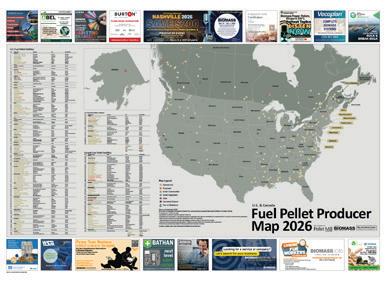
Fuel Pellet Plant Map
Purchase a Spot on the U.S. & Canada Fuel Pellet Plant Map
Receive 12 Months FREE Online Advertising!
Advertise now on Pellet Mill Magazine’s U.S. & Canada Fuel Pellet Plant Map. It is the easiest and most cost-effective way to get your name, product and/or service in front of Pellet Producers, as well as other industry professionals for 12 months at a time
Need more info on advertising opportunities? service@bbiinternational.com - 866-746-8385 - BiomassMagazine.com