
THE NEXT WAVE








FEATURES
Pellet Mill Magazine examines the potential of several countries' growing wood pellet markets. By
Katie Schroeder
Policy and regulatory shifts, volatile winters and other market forces are impacting the wood pellet market as producers defend global markets and push for growth at home.
Emma Auch

Anna Simet DIRECTOR OF CONTENT & SENIOR EDITOR
Evaluating Markets Amid Shifting Ground
The wood pellet industry has found itself at an inflection point of sorts.
That’s backed by the stories and voices in these pages, where a common thread emerges: Growth is no longer characterized by any single market, policy or end use. Rather, it is increasingly shaped by a complex mix of shifting global demand, evolving regulations and new opportunities that extend beyond the industry’s traditional foundation. From emerging and waning export markets to expanding industrial applications here and abroad, the path forward won’t be linear.
As Katie Schroeder explores in this issue’s feature on global markets, producers are increasingly evaluating where pellets fit next—whether that’s supplying growing demand in countries like Poland and Chile or navigating competing markets where domestic production is rising. At the same time, new regulations such as the European Union Deforestation Regulation are shaping up to redirect trade flows and create new competitive dynamics. In “Evaluating Growing Markets” on page 14, Schroeder takes a look at some growing markets (Chile, Poland and Thailand) and whether they might be potential consumers for U.S.-derived wood pellets—or competitors for supply.
Closer to home, the industry is also being challenged—and perhaps, energized—by policy uncertainty, weather variability and rising electricity demand. In our coverage of the International Biomass Conference & Expo in “At a Crossroads” on page 20, industry leaders made it clear: Defending established markets is critical, but so is building new ones, particularly in industrial sectors like cement and steel, where pellets and biocarbon can play a role in decarbonization.
At the heart of all this is woody biomass, and that is reflected in the recent launch of the Advanced Woody Biomass Alliance, perhaps signaling a shift in how the industry is positioning itself. As President Darrell Smith writes, the conversation is expanding beyond energy to include carbon markets, industrial processes and the long-term role of working forests—an evolution that is already attracting new participants and new interest, based on new membership alone.
The pellet industry is no longer just reacting to change; it is actively redefining its place within the global energy and carbon landscape. The question isn’t whether new markets will emerge. It’s if and where the industry can move to meet them, and what it’ll take to get there.
EDITORIAL
DIRECTOR OF CONTENT & SENIOR EDITOR
Anna Simet | asimet@bbiinternational.com
SENIOR NEWS EDITOR
Erin Krueger | ekrueger@bbiinternational.com
ASSOCIATE EDITOR
Katie Schroeder | katie.schroeder@bbiinternational.com
MAP DATA & CONTENT COORDINATOR
Emma Auch | data@bbiinternational.com
DESIGN
VICE PRESIDENT, PRODUCTION & DESIGN
Jaci Satterlund | jsatterlund@bbiinternational.com
SENIOR GRAPHIC DESIGNER
Raquel Boushee | rboushee@bbiinternational.com
PUBLISHING & SALES
CEO
Joe Bryan | jbryan@bbiinternational.com
PRESIDENT
Tom Bryan | tbryan@bbiinternational.com
CHIEF OPERATING OFFICER
John Nelson | jnelson@bbiinternational.com
SENIOR ACCOUNT MANAGER
Chip Shereck | cshereck@bbiinternational.com
SENIOR ACCOUNT MANAGER
Bob Brown | bbrown@bbiinternational.com
SENIOR MARKETING & ADVERTISING MANAGER
Marla DeFoe | mdefoe@bbiinternational.com
CUSTOMER SERVICE COORDINATOR
Brandon McGarry | brandon.mcgarry@bbiinternational.com
2026 International Fuel Ethanol Workshop & Expo
JUNE 2-4, 2026
America's Center | St. Louis, MO
Now in its 42nd year, the FEW provides the ethanol industry with cutting-edge content and unparalleled networking opportunities in a dynamic business-tobusiness environment. As the largest, longest running ethanol conference in the world, the FEW is renowned for its superb programming—powered by Ethanol Producer Magazine—that maintains a strong focus on commercial-scale ethanol production, new technology, and near-term research and development. The event draws more than 2,300 people from over 31 countries and from nearly every ethanol plant in the United States and Canada (866) 746-8385 | www.fuelethanolworkshop.com
2026 North American SAF Conference & Expo
AUGUST 25-27, 2026
Greater Tacoma Convention Center | Tacoma, Washington
Taking place August 25-27, 2026 in Tacoma, Washington, the North American SAF Conference & Expo, produced by SAF Magazine, in collaboration with the Commercial Aviation Alternative Fuels Initiative (CAAFI) will showcase the latest strategies for aviation fuel decarbonization, solutions for key industry challenges, and highlight the current opportunities for airlines, corporations and fuel producers. The North American SAF Conference & Expo is designed to promote the development and adoption of practical solutions to produce SAF and decarbonize the aviation sector. Exhibitors will connect with attendees and showcase the latest technologies and services currently offered within the industry. During two days of live sessions, attendees will learn from industry experts and gain knowledge to become better informed to guide business decisions as the SAF industry continues to expand.
(866)746-8385 | www.safconference.com
2027 International Biomass Conference & Expo
MARCH 2- 4, 2027
Cobb Convention Center | Atlanta, Georgia
Now in its 20th year, the International Biomass Conference & Expo is expected to bring together more than 1000 attendees, 180 exhibitors and 100 speakers from more than 25 countries. It is the largest gathering of biomass professionals and academics in the world. The conference provides relevant content and unparalleled networking opportunities in a dynamic business-to-business environment. In addition to abundant networking opportunities, the largest biomass conference in the world is renowned for its outstanding programming— powered by Biomass Magazine—that maintains a strong focus on commercialscale biomass production, new technology, and near-term research and development. Join us at the International Biomass Conference & Expo as we enter this new and exciting era in biomass energy.
(866)746-8385 | www.biomassconference.com

A New Brand for a Broader Future: Reflections from the Advanced Woody Biomass Alliance
BY DARRELL SMITH
When we launched the Advanced Woody Biomass Alliance earlier this year, it was with the aim of reflecting the full scope of what our industry represents today and where it will contribute in the years ahead. A few months in, the most meaningful takeaway is how that shift is beginning to translate into real traction.
Interest in woody biomass has been building across new applications for some time. The rebrand did not create that interest, but it is helping us accelerate and engage with it more directly and with greater clarity. That is most evident in the work now underway with industries outside of traditional power and heat markets. Sectors focused on fuels, industrial processes and carbon removals are all working through the same challenge: how to secure scalable, bankable, reliable carbon inputs. In many cases, the woody biomass supply chain and its complexities are not yet well understood, but once our sectors track record and expertise are established, it moves quickly from a theoretical option to something more tangible.
One of the most important shifts in those discussions has little to do with energy and much more to do with land use. There is often limited awareness of the pressures facing working forests, particularly in the U.S. Southeast, where private ownership, development and changing fiber demand are all shaping long-term outcomes.
Viewed through that lens, biomass takes on a different role. It is not simply an end use. It is an essential part of the economic system that keeps forests as forests. By creating demand for lower-grade wood, it supports landowners’ ability to actively manage their land at a time when traditional markets, particularly pulp and paper, are in structural decline. That connection is not always obvious at the outset, but once understood, it tends to reframe the conversation.
Helping make those connections clear has been a central focus since the rebrand. For many new entrants,
the fundamentals of how the industry operates are not well understood. Grounding engagement in what is already working, at scale and in practice, has been essential to moving beyond initial interest and into more practical evaluation.
At the same time, the rebrand has helped better convey the full scope of the industry and how its different parts connect. It reflects an integrated system, from certified sustainable sourcing and forest management through processing and global deployment. That more complete picture has been important as engagement expands beyond traditional markets. It is beginning to show up in how the industry is being evaluated. Interest is translating into more focused consideration, with a clearer understanding of where and how woody biomass could fit within existing systems. The pace varies, but the direction is increasingly aligned.
What makes this broader opportunity possible is the foundation that the pellet sector has already established: reliable supply, certified sustainable souring to global standards and the ability to deliver at scale. Core markets like power and heat are not going anywhere. They will continue to anchor the industry, providing stability as new applications emerge and take time to develop.
It is still early, but the first few months following the launch of AWBA have confirmed the value of aligning how we represent the industry with how it is being evaluated. The rebrand has strengthened that alignment and positioned the sector to engage more effectively in the next phase of its growth.
Author: Darrell Smith President, Advanced Woody Biomass Alliance www.woodybiomass.org

Defining Renewable Biomass
BY TIM PORTZ
In April, I found myself riding shotgun with a producer-member as we inspected the Douglas fir stands immediately behind his integrated sawmill and pellet manufacturing plant. I had toured the impeccably clean manufacturing floor on a prior visit, and on this trip I was primarily interested in seeing parcels of Douglas fir in varying age classes. Douglas fir trees grow in the pocket of forested land between the Cascade mountain range to the east and the Pacific Ocean to the west, the predominant species in this massive swath of forest. Favored for their size and lack of knots and defects, the Douglas fir has sustained forest products manufacturing in the Pacific Northwest for more than a century, and our member has his family for nearly as long.
In August 2020, lightning, high winds and dry conditions came together in a devastating forest fire that eventually burned over 400,000 acres, destroyed 1,500 structures and claimed the lives of five people. Estimates put the timber loss at $7.5 billion. While our member’s sawmill and pellet plant were spared by the fire, thousands of acres of timber owned by the family were not. In followup conversations after the fire, I learned my member had planted between 3 million and 4 million Douglas fir seedlings in the fire-impacted areas and would have planted more had the country’s supply of Douglas fir seedlings not been exhausted by the sudden demand generated by landowners in the fire-impacted areas, all looking to replant simultaneously.
During our drive, I saw trees planted after the fire grown now to 8 feet and well on their way. Our member noted that these trees wouldn’t be harvested for another 80 years, milled by a generation of his family not yet born.
With this experience fresh in my mind, I watched as the House of Representatives, in a close vote, rejected an amendment to the Farm Bill that would have added sawmill residuals to the list of materials considered “renewable biomass” by the Clean Air Act and referenced by the Renewable Fuel Standard. Without mill residuals being included on this list, fuels manufactured from them cannot qualify for the economic benefits awarded via renewable identification numbers (RINs) by the program. Proponents of the bill point to declining markets for pulpwood and residuals in the Southeast, arguing that fiber streams in the region need a new market and the production of sustainable aviation fuel from the area’s
mill residuals would shore up a forest products segment in steep decline. Opponents of the amendment argue that including mill residuals in the mix of allowable feedstocks for the RFS would distort the market for fiber, injuring pulp and paper producers in the region.
What is most unfortunate in the debate swirling around this amendment is that because of the perceived impact of defining mill residuals as “renewable biomass,” a majority of the House of Representatives voted against calling it that. Growth-to-drain ratios for nearly all species are positive across the country, and in certain regions in the South (including Arkansas), the ratio is 1.63, indicating an oversupply. In the simplest of terms, our nation’s forests, particularly the privately owned, working forests, are growing faster than we are harvesting them. Interestingly, the only significant stands of forest in this country that don’t have positive growth-to-drain ratios are federally owned forests experiencing fire and pest devastation.
The contentious nature of this amendment had nothing to do with facts. Instead, the argument revolves around the implications of defining mill residuals as “renewable” and the perceived winners and losers of such a definition, and that is the real tragedy of this failed vote. The broader forest products community has its detractors, and for decades, the industry has had to work tirelessly to counter the narrative that making products from wood is an extractive business that will eventually exhaust and deplete our nation’s forests. This vote and this debate only serve to cloud an issue which should be a rallying point for the entire sector: our story of sustainable use.
After viewing the Douglas fir behind our member’s plant, we drove past a large bin suspended over a waiting truck. “That truck has one function—taking dust from the sawmill over to the pellet plant,” my member said. This practice happens in sawmills all across the country. In 2025, wood pellet manufacturers purchased over 8 million tons of wood residues from upstream sawmills, adding nearly $300 million to the balance sheets of these operations. The wood flowing into these operations is renewable, as is the sawdust flowing out—despite Congress’ most recent vote.
Author: Tim Portz Executive Director, Pellet Fuels Institute
Optimize Your Pellet Mill Operation With Smarter Grease Selection
Pellet mills operate in one of the toughest lubrication environments you’ll find in an industrial setting. Between the heat generated at the die, the heavy loads on the rollers and constant exposure to dust and moisture, it doesn’t take long for a marginal grease to fall short. When that happens, the results are familiar—accelerated wear, higher energy draw and downtime that’s rarely convenient.
In many cases, the issue isn’t lubrication in general—it’s grease selection specifically.
Grease in a pellet mill must do more than reduce friction. It must stay in place, maintain film strength under load and hold up under heat without breaking down. That’s where conventional products often struggle. As temperatures rise and mechanical stress increases, components begin to experience softening and oxidation, ultimately leading to a loss of protection.
Contamination makes things worse. Fine fiber, dust and moisture are part of daily operation in most mills, and once they work their way into the grease, performance drops off quickly. It’s not unusual to see relubrication intervals shorten simply because the grease can’t maintain its structure in that environment.
That’s why many operators have shifted toward calcium sulfonate-based greases. From a practical standpoint, they tend to hold up better. They carry load well, resist water washout and provide a level of corrosion protection that’s difficult to match with more traditional thickener systems. Just as important, they maintain their consistency under shear, which helps keep lubrication predictable over time.
Selecting the right grease can significantly affect how often maintenance is needed and how long equipment lasts. Improvements don’t always come from big changes; sometimes they result from fewer interventions, steadier performance and less variation between shifts. AMSOIL Industrial has embraced this mindset by developing grease technologies—including calcium sulfonate formulas—tailored for high-load, high-temperature settings. These greases prioritize protection where it's most crucial and aim to minimize lubrication-related failures.
For pellet mill operators looking to improve reliability, grease isn’t just a consumable—it’s one of the simplest places to make a meaningful improvement.


Pellet News Roundup

Highland Pellets Seeks Permit for Biomass Power, CCS Project
The Little Rock District of the U.S. Army Corps of Engineers on March 23 announced it has received a permit application from Highland Pellets related to the development of an adjacent biomass power plant with an integrated carbon capture and sequestration (CCS) project.
Highland Pellets currently operates a 702,200-ton-per-year pellet plant located in Pine Bluff, Arkansas. The application filed with the Corps is for a Department of the Army permit pursuant to Section 404 of the Clean Water Act.
The proposed project, referred to as Project Oscar, aims to supply renewable energy for the Highlands Pellets facility and adjacent industries. According to information released by the Corps, the proposed biomass power plant would supply electricity to the pellet facility as well as provide for most if not all of the electrical needs of existing onsite facilities. Heat generated as a byproduct of Project Oscar will be transferred via insulated pipeline to a nearby poultry processing facility to provide a renewable manner of heating for the facility's hot water needs, which are currently met with fossil fuels.
The existing Highlands Pellets facility produces carbon dioxide as a byproduct of its existing emission control process. The project proposes to capture, compress, liquefy and store the CO2 in a Class VI well through the use of existing industrial infrastructure and new equipment.
According to information released by the Corps, components of Project Oscar include construction of a biomass boiler, steam turbine generator and associated cooling equipment to supply renewable, behind-the-meter electrical power. Project Oscar will also reroute the continuous stream of carbon dioxide containing fluegas, generated by the two existing regenerative thermal oxidizers, to the proposed carbon dioxide capture system to be compressed and liquefied.
A public comment period on the permit application is open through April 17.
CHAR Tech Acquires Elkem Biocarbon Assets, Secures Long-Term Offtake
CHAR Technologies Ltd. has completed its previously announced acquisition of biocarbon assets from Elkem ASA, marking a step toward scaling pelletized biocarbon production for industrial applications.
The transaction includes a pilot and demonstration facility in Saguenay, Québec, along with proprietary intellectual property and related liabilities. As part of the deal, the companies also finalized a five-year offtake agreement covering 62,500 metric tons of biocarbon supply, or 12,500 tons annually.
Originally constructed in 2022, the Saguenay facility has been used to develop and validate a pelletized biocarbon product tailored for ferrosilicon production in electric arc furnaces. The site recently supported industrial-scale testing, with material successfully utilized at a nearby Elkem facility. Plans now call for commercial upgrades that would increase production capacity to approximately 15,000 tons per year.
Following upgrades, the facility will process raw biochar into densified biocarbon pellets designed for heavy industry decarbonization—particularly in metallurgical applications where consistent physical properties and energy density are critical.
The offtake agreement provides CHAR Tech with revenue visibility while ensuring Elkem a stable supply of biocarbon for its Canadian and European operations. Company officials said the partnership aligns with rising demand for low-carbon alternatives in energy-intensive industries.
“Elkem identified CHAR Tech as the right partner to transition its biocarbon R&D into scalable commercial operations,” said Andrew White, CEO of CHAR Tech, noting the company’s experience commissioning and operating facilities, including its commercial plant in Thorold, Ontario.
Elkem emphasized the role of biocarbon in its broader decarbonization strategy. “This partnership strengthens our commitment to producing silicon-based materials with a lower carbon footprint,” said Charles Tremblay, plant manager at Elkem’s Chicoutimi operation.
Financial backing for the acquisition and planned upgrades is being provided by Bioveld Canada, a subsidiary of The BMI
SOURCE: LITTLE ROCK DISTRICT OF THE U.S. ARMY CORPS OF ENGINEERS
Group, through a term loan. BMI officials said the investment supports the development of a North American biocarbon supply chain with export potential to European markets.
The Saguenay facility is expected to play a central role in CHAR Tech’s expansion strategy, complementing feedstock and production from projects in Saint-Félicien, Lake Nipigon and future developments.
Researchers Model EUDR Impact on Pellet Production, Trade
Researchers at the U.S. Forest Service’s Southern Research Station and Louisiana State University have published a paper that investigates how the European Union Deforestation Regulations could alter global wood pellet trade patterns.
The paper, titled “Wood Pellet Market Restructuring Under the European Union Deforestation Regulation: A Dynamic Spatial Equilibrium Analysis,” was published online on April 16 and is slated for inclusion in the October issue of the Biomass and Bioenergy research journal.
The EUDR aims to ensure products consumed in the EU do not drive global deforestation. To achieve this, the regulation requires strict traceability via geolocation coordinates to ensure products were produced on land that was not subject to deforestation after Dec. 31, 2020.
The EUDR officially entered into force in mid-2023, but implementation was de layed due to technical issues and the need to allow impacted parties more time to comply. The regulations are now expected to enter into force at the end of 2026 for large op erators and in mid-2027 for micro and small enterprises.
The newly published report investigates how the EUDR could impact the U.S. wood pellet industry and global pellet trade.
“Our results suggest the EUDR real locates global trade rather than reducing global production,” the researchers stated in the report. While the regulation succeeds in
reducing the European Union's reliance on imports and increases its share of consumption of deforestation-free products, it does not materially lower the total amount of wood pellets produced and burned worldwide. Instead, it splits the global market into two distinct segments: a high-compliance market centered in Europe and a standard market operating in the rest of the world. The main economic result is a shift in trade flows, where pellets that are blocked from the European market are redirected to Asian buyers rather than disappearing from the supply chain. A key finding is that the economic burden of the regulation falls unevenly across regions based on their exposure to EU markets. The large production losses projected for the U.S. Southeast, com-
pared to the much smaller losses for Canada, reflect the fact that a larger share of U.S. Southeast production depends on EU buyers. Regions with high EU market exposure face greater losses when compliance costs make exporting to the EU less profitable.
“The environmental effectiveness of the policy is also limited by trade diversion,” they continued. “Our results show that as North American suppliers lose access to Europe, exporters like Vietnam—whose EU sales were minimal to begin with—expand their sales to markets in Japan and South Korea that do not have similar restrictions. This shift in trade routes implies that the regulation will increase the transparency of European supply chains but may leave global deforestation pressure largely unchanged. If Continued on page 11

Pellet News Roundup
the demand for wood pellets remains strong globally, unilateral regulations from one region tend to move environmental impacts to other markets rather than eliminating them.”
Specifically, the report shows that the U.S. Southeast could experience the largest production decline, at an estimated 7.2% by 2030. European pellet producers, however, could experience a 1.6% to 7.1% increase in pellet production output. Corresponding to that change, the researchers estimate producer prices could fall by 7.9% in the U.S. Southeast, but increase between 2.6% and 4.6% within the EU and U.K.
In terms of export volumes, the researchers expect U.S. exports to the EU to fall by 22% to 36%, while Vietnamese exports to non-EU Asian markets expand by 24% to 28%.
According to the researchers, global pellet production would decline only 1.7% under the strictest scenario considered. Pellet trade, however, would contract by 7.5%.
Additional information is available on the U.S. Forest Service website.
Ultra Yorkshire Completes First Transatlantic Pellet Shipment on B100 Under Long-Term Ultrabulk Contract
Drax Group announced that the M.V. Ultra Yorkshire has completed its first transatlantic voyage, delivering more than 29,000 metric tons of biomass pellets from the Port of Greater Baton Rouge to the Port of Liverpool for rail transport to Drax Power Station in North Yorkshire. The Handymax carrier, operated by Ultrabulk, recently docked in the United Kingdom for the first time.
The company said the vessel ran on B100 biofuel from Baton Rouge to Liverpool, reducing voyage carbon dioxide emissions by about 90% compared with conventional marine fuels such as very low-sulfur fuel oil and ultra-low-sulfur gas oil.
Drax also said it recently signed a new contract with Ultrabulk through March

2031. According to the company, the agreement includes a mechanism to reduce carbon emissions year over year from sea freight movements, which Drax described as possibly among the first arrangements of its kind.
The shipment supports fuel supply to Drax Power Station in Selby, which the company said generated about 5% of the U.K.’s electricity in 2025. Drax framed the Ultra Yorkshire voyage as part of a broader push to lower supply chain emissions, noting that in 2024 and 2025 it also signed agreements for GB Railfreight and DB Cargo trains serving the plant to run on hydrotreated vegetable oil, with estimated rail emissions reductions of 90%.
Bill Aims to Boost Louisiana Wood Pellet Industry
A bill pending in the Louisiana state legislature aims to benefit the state’s wood pellet manufacturing industry by streamlining permitting, developing a skilled workforce and facilitating the efficient transportation and export of wood pellets.
The bill, HB 670, was introduced in late February by state Rep. Charles Owen and referred to the Committee on Commerce. An amended version of the bill was unanimously approved by the Commerce Committee on March 17 and at press time, was being considered by the Committee on Appropriations.
The bill, as amended, allows Louisiana Economic Development, a cabinet-level agency focused on business growth, “to support the recruitment, retention and expansion of wood pellet manufacturing facilities in this state within existing statutory authority and subject to the availability of funds.”
In accordance with state law, the agency may also “develop policies, guidance or program criteria consistent with existing economic development programs” that prioritize and enhance job creation incentives for wood pellet manufacturing facilities and establish workforce development and training initiatives for wood pellet manufacturing facilities. The agency may also coordinate with ports regarding infrastructure
Powered by B100, the M.V. Ultra Yorkshire delivered more than 29,000 metric tons of biomass pellets from Louisiana to the U.K., marking its first transatlantic voyage. IMAGE: DRAX
needs associated with wood pellet manufacturing cargo; establish site readiness criteria for wood pellet manufacturing; and provide clear regulatory pathways for the development of wood pellet manufacturing facilities throughout the state.
SBP
Publishes Updated Certification Standards
The Sustainable Biomass Program has released version 2.1 of its certification standards, strengthening sustainability safeguards and aligning more closely with the EU’s Renewable Energy Directive III while maintaining its risk-based framework.
The updated standards incorporate lessons from audits, stakeholder input and regulatory developments since version 2.0, with improvements aimed at clarity, audit consistency and practical implementation. The revised package includes Standards 1 through 6, along with updated guidance documents, interpretations and a detailed overview of changes.
Version 2.1 introduces clearer requirements for feedstock sourcing, risk assessments and data integrity across certified supply chains. While the updates are substantive, the overall structure and riskbased approach remain unchanged.
The standards take effect July 29, with a transition period through Oct. 28, 2027, allowing certificate holders to align with the new requirements during routine audit cycles.
US Pellet Production Hits
1 Million Tons in October
U.S. manufacturers produced approximately 1 million tons of densified biomass fuel in October, according to the U.S. Energy Information Administration’s Monthly Densified Biomass Fuels Report. October 2025 marks the seventh-highest production month in the report’s history.
For October, the EIA collected data from 74 operating manufacturers, who had
a total combined production capacity of 13.03 million tons per year and collectively had the equivalent of 2,439 full-time employees.
Respondents purchased 2 million tons of raw biomass feedstock in October, produced 1 million tons of densified biomass fuel and sold 970,000 tons of densified biomass fuel. Production included 155,744 tons of heating pellets and 560,423 tons of utility pellets.
Domestic sales of densified biomass fuel in October reached 198,893 tons at an average price of $245.57 per ton. Exports in October reached 773,661 tons at an average price of $203.18 per ton.
Inventories of utility pellets expanded to 662,174 tons in October, up from 561,001 tons in September. Inventories of premium/standard wood pellets fell to 178,207 tons in October, down from 235,394 tons in September.
Data gathered by the EIA shows that total U.S. densified biomass fuel capacity reached 13.43 million tons in October, with all of that capacity listed as currently operating or temporarily not in operation. Capacity included 1.97 million tons in the East, 10.67 million tons in the South, and 797,700 tons in the West.




EVALUATING GROWING MARKETS
Pellet Mill Magazine examines the potential of several growing markets.
BY KATIE SCHROEDER
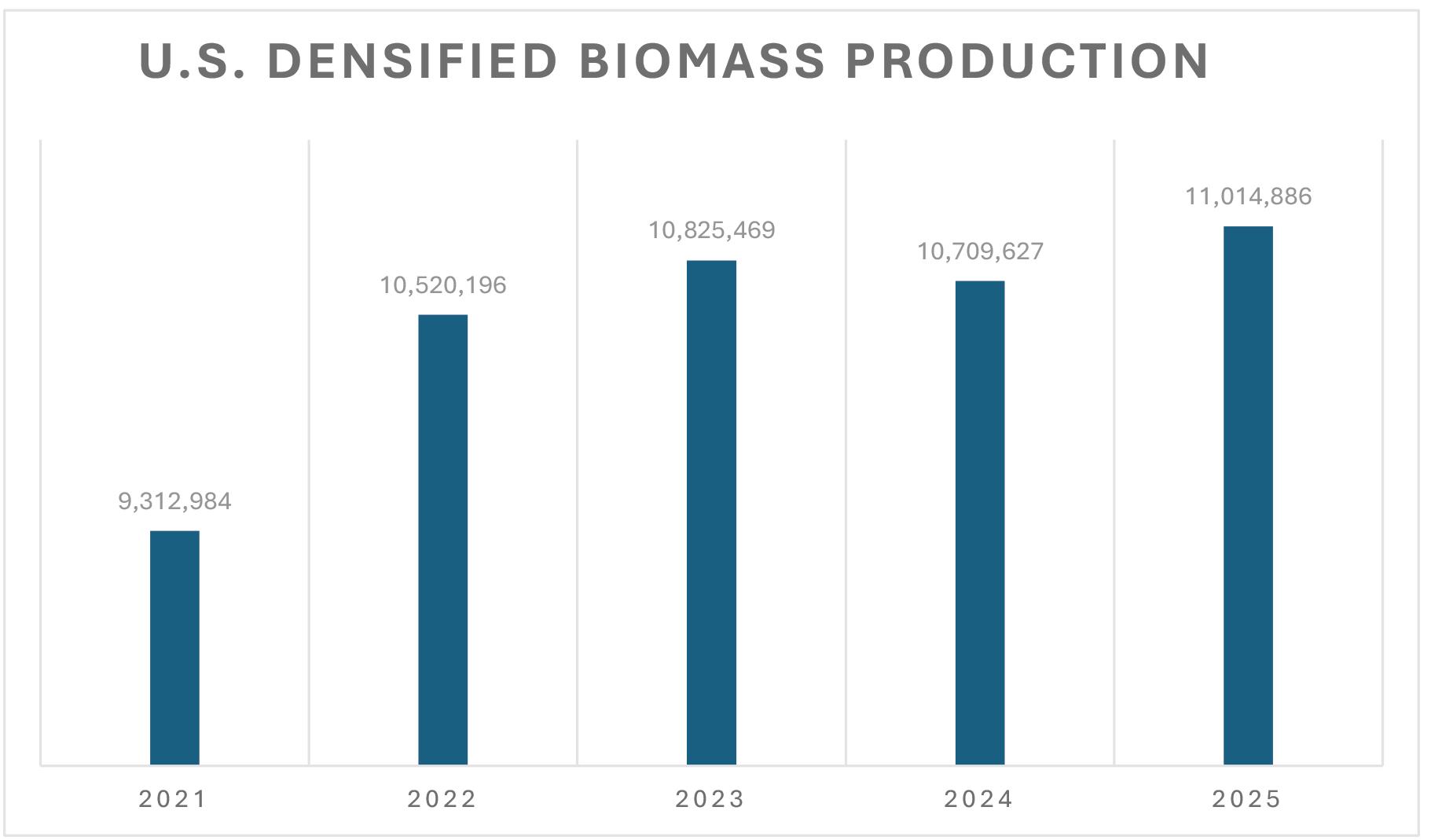
Many U.S. pellet exporters are evaluating new potential markets abroad to diversify their portfolios and adjust to evolving policy landscapes. At the same time, other countries around the world are increasing production and use of wood pellets as a coal replacement for power generation, as well as renewable heating option for residential heating systems and industrial utilization. From Vietnam—the world’s second-largest producer after the U.S.—to smaller markets with growing demand such as Poland, global wood pellet production continues to grow. Data from the U.S. Energy Information Administration indicates that U.S. manufactur-
ers produced over 11 million tons of wood pellets in 2025, including premium and utility pellets. A majority of that volume was exported—an estimated total of 9.37 million tons last year.
Globally, pellet producers are experiencing a tug of war between increased biomass use due to decarbonization efforts and increased scrutiny from programs such as the European Union Deforestation Regulation and other countries’ evolving policy mechanisms. William Strauss, president and founder of FutureMetrics, emphasizes the importance of maintaining a sustainable approach to biomass utilization. “Always, there’s a boundary to how far … biomass can go [in]

supporting any changes; it’s the sustainability boundary,” he says. “You can’t start using more biomass than grows every year.”
U.S. producers maintain their top spot as the most prolific producers, but other countries have increased production in recent years. Some have become competition for U.S. pellets, and others cannot keep up with domestic demand, offering a potential export market.
Chile
Chile is a growing wood pellet market in South America. Historically, Chile has long depended on firewood as a vital energy source. Domestic heating needs are driving

market growth for wood pellets, which supply improved air quality and a modernized energy source, particularly for cities in the southern and central regions, according to Daniela Espinoza with the Chilean Biomass Association (AChBIOM). Currently, 90% of pellets consumed in the country are used in domestic heating. Chile’s government has implemented restrictions on firewood use in urban areas, driving residents to find cleaner sources of heat. Government efforts also promote initiatives to implement pellet heating. “The pellet sector in Chile is relatively young, but it is developing rapidly, with increasing production capacity and improving quality standards,” Espinoza states.
At least for now, the country’s growing demand will likely be met by domestic producers. According to Espinoza, about 40 producers operate in the country, which is 12 times smaller than the U.S. with a population similar to Florida. Out of those producers, 12 of them are ENplus certified. Chilean pellet exports increased in 2025, specifically to Europe. “This shows that Chilean producers are also becoming increasingly competitive internationally,” she adds. “Overall, while exports are growing, domestic demand will continue to be the main priority for the industry.”
Residential heating will likely remain the primary end use, both for single family
residences and apartment buildings. Pollution restrictions in the southern and central regions of Chile will continue to drive demand, Espinoza believes. One potential challenge for the pellet industry could be the sawmill industry’s stability. She explains that strengthening small- to medium-sawmills is important in order to ensure pellet producers have a sustainable and consistent feedstock flow.
“Looking ahead over the next five to 10 years, the pellet market in Chile could grow significantly, particularly in the residential heating sector,” she says. “Given the large number of households that still rely on firewood, there is strong potential for
fuel switching to pellets. In addition, gradual growth is expected in institutional and industrial applications, driven by decarbonization efforts and the fact that pellets are a costeffective alternative.”
Poland
With a thriving forest products market, Poland’s wood pellet industry has historically produced enough pellets to supply its domestic market and export pellets to its neighbors. However, demand has increased due to sustainability requirements for power generation, making Poland a net importer, according to Strauss. “Large-scale use of wood pellets in Poland is taking place in the power generation space, a couple of large utilities are already cofiring significant quantities of pellet fuel with coal, and that’s expected to increase dramatically over the next few years,” he says.
Poland, as a member of the European Union, implemented emissions limits for power providers seeking to access its ca-
pacity market. Power plants must emit less than 550 grams of CO2 per kilowatt-hour to qualify for state aid.
The capacity market pays power plants to be available during periods of high demand, even if they are not called on to generate electricity. This includes baseload plants that run continuously, as well as backup facilities that come online when supply is tight.
Coal-fired plants typically emit 900 to 1,100 grams of CO2 per kilowatt-hour, exceeding the threshold. While the rule was applied to existing plants beginning in 2025, Poland has implemented transitional arrangements allowing some high-emission units to continue participating in the capacity market into the late 2020s. “The Polish grid needs this capacity ready to go, and it’s even more difficult because of retirement of some coal stations in Poland that are going out of business or shutting down,” Strauss says. “They’re old, low efficiency and increasing demand for electricity. So, the capacity market is extremely important, and it’s actu-
ally this last auction was quite successful with some fairly high prices offered for capacity charges.”
Cofiring wood pellets with coal reduces greenhouse gas emissions; a blend of 60% coal and 40% wood pellets brings emissions down to the appropriate level. Strauss sees Poland’s potential demand reaching 3 million to 5 million metric tons in the future, mainly due to this new policy. However, though wood pellet heating markets already exist in Poland, their slow growth limits the impact heating has on increased demand. That said, Strauss notes that high fossil fuel prices caused by geopolitical tensions may accelerate demand for wood pellets in home heating.
In 2026, Poland is expected to use 900,000 to 1 million metric tons of wood pellets, a significant jump from the 500,000 metric tons used in 2025. Import opportunity abounds, and Strauss sees few obstacles on the infrastructure front that would impede more industrial pellets from entering

SOURCE: US EIA
the country. Electricity demand could rise due to factors such as electric vehicle adoption, while widespread use of heat pumps may reduce residential heating demand but increase electricity use and industrial pellet demand.
“I think we’re going to see more and more momentum toward decarbonization in general, both in power generation, transportation, the electrification of the transportation sector, and certainly on the heating sector as well going forward,” Strauss says. “And I think biomass plays a big role in that.”
Thailand
Thailand’s Alternative Energy Development Plan aims to increase renewable energy sources in the country, meeting 30% of the country’s electricity demand with renewable sources by 2037, according to a report from Climate Change Laws of the World. Biomass is among the sources listed, planned to produce 5,790 MW of the nearly 30,000


Domestic pellet production increased more than 300,000 tons last year, according to U.S. Energy Information Administration data.
MW needed to make up that renewable percentage. Nearly 32% of Thailand is forested, according to the Asian Forest Cooperation Organization. Japan’s strong environmental goals and relatively close location makes it a good market for Thai pellets.
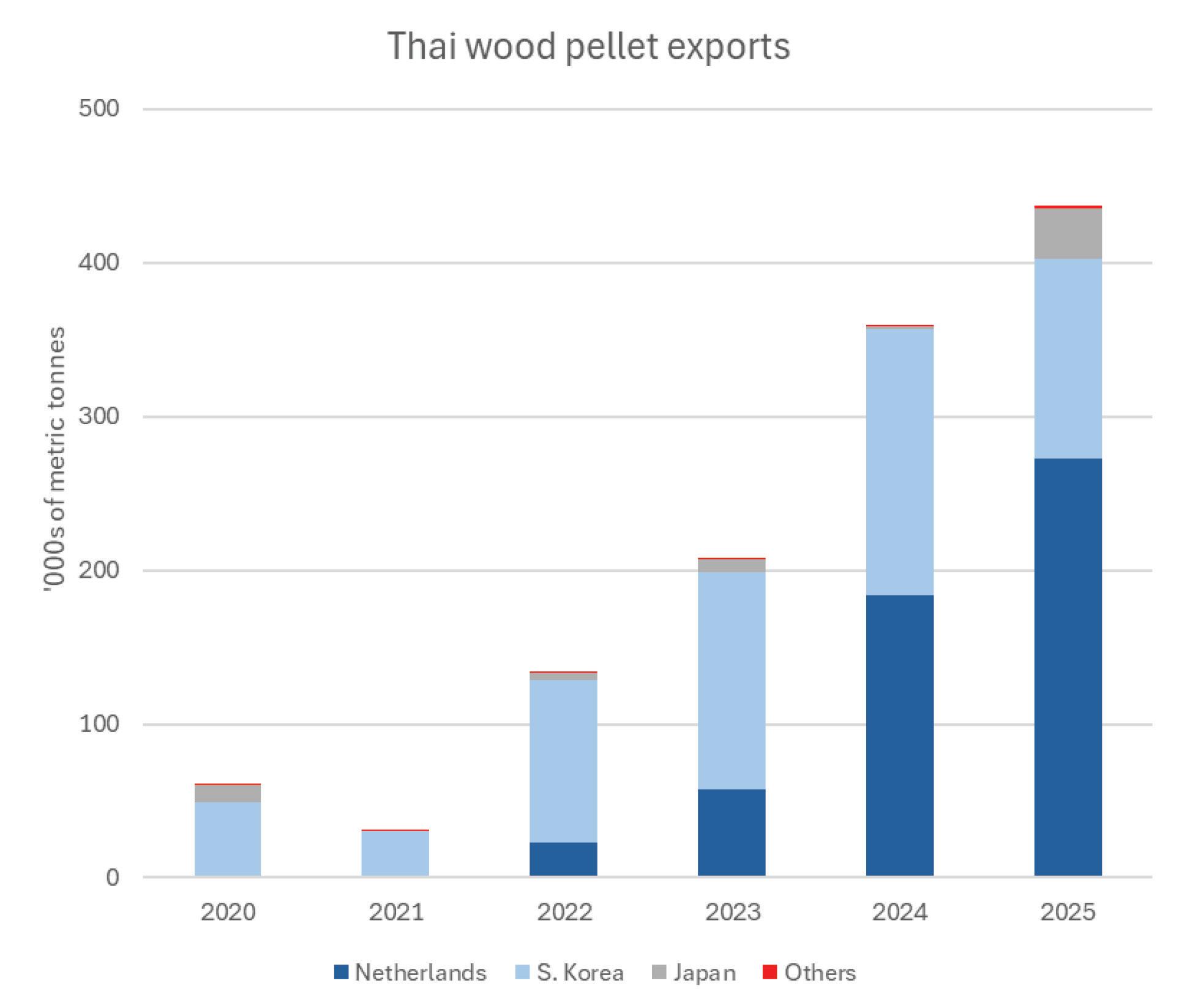
Thai wood pellets costing less than their European counterparts provides a strong selling point in the international market, according to Jeff Kuntz, Argus Media head of biomass pricing. “Industrial wood pellet production in Thailand is growing, and trade data shows that that European buyers, particularly in the Netherlands, are increasingly interested in that supply,” he said. “Thai pellet exports more than tripled from roughly to 437,000 metric tons in 2025 from 133,000 metric tons in 2022, a rise which would require quite a massive buildout in new production capacity,” Kuntz adds.
In Feb. 2026, Thailand exported around 100,000 metric tons of pellets, 79,000 of which headed to the Netherlands. In 2025, 62% of the exports went to the Netherlands. This volume demonstrates a shift away from supplying to Thailand’s closer neighbors, Japan and South Korea, which historically received far more of its export volumes.
In 2024, Argus reported the beginning of a cofiring effort executed by a Thai staterun utility Egat, which tested 2% wood pel-

Thai Wood Pellet Expor ts
Thailand's wood pellet exports have steadily increased over the past several years, with export volumes tripling since 2022. SOURCE:
lets at its 2.46 GW lignite power plant in Lampang province. Authored by Saurabh Chaturvedi, deputy editor of the solid fuels team with Argus Media, the article also noted increased domestic production may drive up import volumes in coming years.
Covering domestic production data and determining the volume of pellets produced can be challenging in Thailand. “Getting a granular view of how much spare production capacity exists in the country right now is a challenge," he says. “But what's clear is that the pace at which exports have grown in recent years has required equal growth in upstream feedstock supply, plant capacity to process that material and infrastructure and trade agreements to move pellets to consumers,” he says.
‘I think we’re going to see more and more momentum toward decarbonization in general, in power generation, transportation, the electrification of the transportation sector, and certainly on the heating sector going forward. And I think biomass plays a big role in that.’
—William Strauss, FutureMetrics
meets strict rules, adding extra cost, paperwork and supply chain tracking before pellets can be sold in the EU.
and they’re not that far from Indonesia, Malaysia and Vietnam, which are huge producers,” he says.
Finding new substantial markets abroad for U.S. pellets may prove to be a challenge. Pellet use is growing, but, in countries like Chile, domestic production is growing alongside it. Whether demand comes from a pivot away from firewood heating or cofiring to reduce emissions in electricity production, pellets have a role to play in a greener future; the remaining challenge is to find where they fit, with economics front and center.
The EUDR has impacts on producers worldwide and may be a challenge for some in Southeast Asia. Kuntz explains that the EUDR, which will begin enforcement in
A 2020 report from MDPI, “Feedstock Security Analysis for Wood Pellet Production in Thailand,” states that Thailand’s feedstock supply stands at 5.32 million metric tons per
A market for U.S. pellets may need to be found closer to home, according to Strauss. With data centers on the rise, clean electrons are critical to a low-carbon future, and wood pellets could serve as a low-carbon, alternative power source for U.S. coal-fired power plants—similar to Poland’s application. “I think that’s an emerging market that makes a lot of sense,” he adds.




AT A CROSSROADS
Policy shifts, volatile winters and other market forces are impacting the wood pellet market as producers defend global markets and push for growth at home.
BY EMMA AUCH

The wood pellet industry is navigating an unparalleled phase shaped by multiple competing forces: an unusually warm winter for the western United States, shifting state and federal regulations, and evolving global policy and subsidy structures. At this year’s International Biomass Conference & Expo, held March 31 to April 2 in Nashville, Tennessee, Tim Portz, executive director at Pellet Fuels Institute, and Darrell Smith, president of the Advanced Woody
Biomass Alliance, offered insights on where the industry stands in domestic and industrial manufacturing, and what it’s going to take to keep it moving forward.
A Tale of Two Winters
Portz opened with his observations of the 2024-25 winter season. The eastern U.S. ran colder than average, which is good news for an industry whose sales track tightly to accumulated cooler temperatures. The top two states for domestic pellet use—Penn-
sylvania and New York—had strong winter seasons. However, the western half of the U.S. did not. Sales in the west fell roughly 10% through November and continued to drop, with the conditions that drive pellet demand failing to materialize. Portz noted that to reach the 2 million-ton annual threshold the industry hit in 2019, 2020 and 2021, both coasts must be cold during the winter season or manufacturing numbers will likely be lackluster. So, production came in a little off and inventory landed sharply

below the five-year average level, he said. This forced producers to work harder during the spring and summer months to close that gap, anticipating strong consumer demand during next season.
Wood pellets have held a competitive edge in the Northeast as the more stable and predictable heating option that Portz illustrated with price-per-BTU data showing pellets holding steady through both the Iranian conflict and the 2022 Ukrainian invasion, each of which sent heating
oil prices sharply higher. But unfortunately, that value proposition isn’t without flaws.
“Higher fossil fuel prices help us at retail, but electricity and natural gas are both inputs on the production side,” Portz said. It’s a Goldilocks problem: The conditions that make pellets look good to consumers can quietly divert producers.
This dynamic is being further complicated by surging electricity demand from data centers and AI infrastructure. Portz pointed to New York’s All-Electric Build-
ings Act, which prohibits natural gas in new residential buildings starting in 2026. The law was passed with electrification as its primary motive, but the current governor is now looking for ways to ease back out of it as power prices climb. Portz explained that this is the kind of policy reversal that could potentially open conversations for fuel-choice advocacy.
Navigating Federal Policies
The Pellet Fuels Institute’s federal

‘Higher fossil fuel prices help us at retail, but electricity and natural gas are both inputs on the production side.’
— Tim Portz, Pellet Fuels Institute

agendas are running on two tracks simultaneously. On one end, the U.S. EPA’s review of New Source Performance Standards has raised concerns about a potential shift in how appliance emissions are tested. Any move toward intermittent duty cycle testing would be unfavorable for pellet appliances, and the Pellet Fuels Institute is watching it closely alongside partners in the patio and barbecue industry, Portz said.
On the other end, the Energy Choice Act, out of the House Energy Committee—now sponsored in the Senate by Jim Justice, R-W.V., would prohibit states from banning fuel types solely based on what they are: a direct counter to the All-Electric Buildings Act. Portz argued the original statute was written broadly enough to cover renewable heating fuels, and the industry is actively working to make that case, even as the EPA’s recent cancellation of the e-RINs program signaled that the regulatory environment isn’t moving in a straight line. “Policymakers don’t want to hear from me,” Portz said. “They want to hear from the people generating economic activity in their districts. That’s all of you.”
Tim Portz Pellet Fuels Institute
Darrell Smith Advanced Woody Biomass Alliance
He closed his presentation with a familiar but pointed reminder: Wood pellets heat about 1% of American households, but the industry consumes roughly 60% of wood residuals produced nationally. Its activity in the forest products economy is far larger than its retail market share suggests.
New Name, More Inclusive Affiliation
Darrell Smith brought news of a significant organizational shift. The U.S. Industrial Pellet Association is now renamed as the Advanced Woody Biomass Alliance. The rebrand took most of the year, generating over 500 name suggestions and ultimately required flying about 30 members to Atlanta to break the deadlock, Smith said. AWBA displayed ChatGPT during the session, using it to generate the word “Alliance” to convey unity and reinforce a carbon-forward framing. “Woody Biomass” came from members who wanted the forestry roots to stay visible in the name. The rename was not for aesthetics; Smith describes it as a deliberate effort to broaden the membership tent by bringing in the full carbon ecosystem from sequestration companies and direct air capture operators to carbon credit buyers like Microsoft, none of which had an obvious path into the organization when it was called the U.S. Industrial Pellet Association. Since the rebrand, membership has already doubled to more than 50 members, Smith said. The Advanced Woody Biomass Alliance’s first annual conference under the new name will be held in Houston in October, chosen specifically for its concentration of carbon and energy companies.
On the industrial market side, Smith described a dual-track concept: defend Europe, build domestically. Five lobbying firms are working in Europe on issues including RED III and the EUDR, protecting markets where U.K. and EU biomass subsidies are beginning to shift. Simultaneously, Smith has been doing outreach to cement, lime and steel industries, the sectors where industrial pellets could displace coal. He
informed attendees that he is readying his third presentation to the cement industry’s full membership.
The White House has been receptive, too; Smith said he’s made trips there twice in his first year, and that the administration asked the Advanced Woody Biomass Alliance for language in a pending trade bill. “When somebody asks you for language,” he said, “you know they’re taking you seriously.”

The Crucial Carbon Question
The Q&A brought to light the industry’s most persistent communications challenge—explaining why burning wood isn’t worse for the climate than burning coal. A forester from the Federation of Southern Cooperatives put it plainly—his organization has been defunded by groups over its support of biomass, and he fields carbon intensity question constantly. The most useful answer came from the floor: Coal releases






































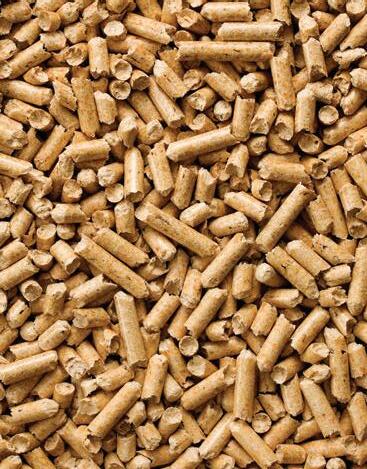







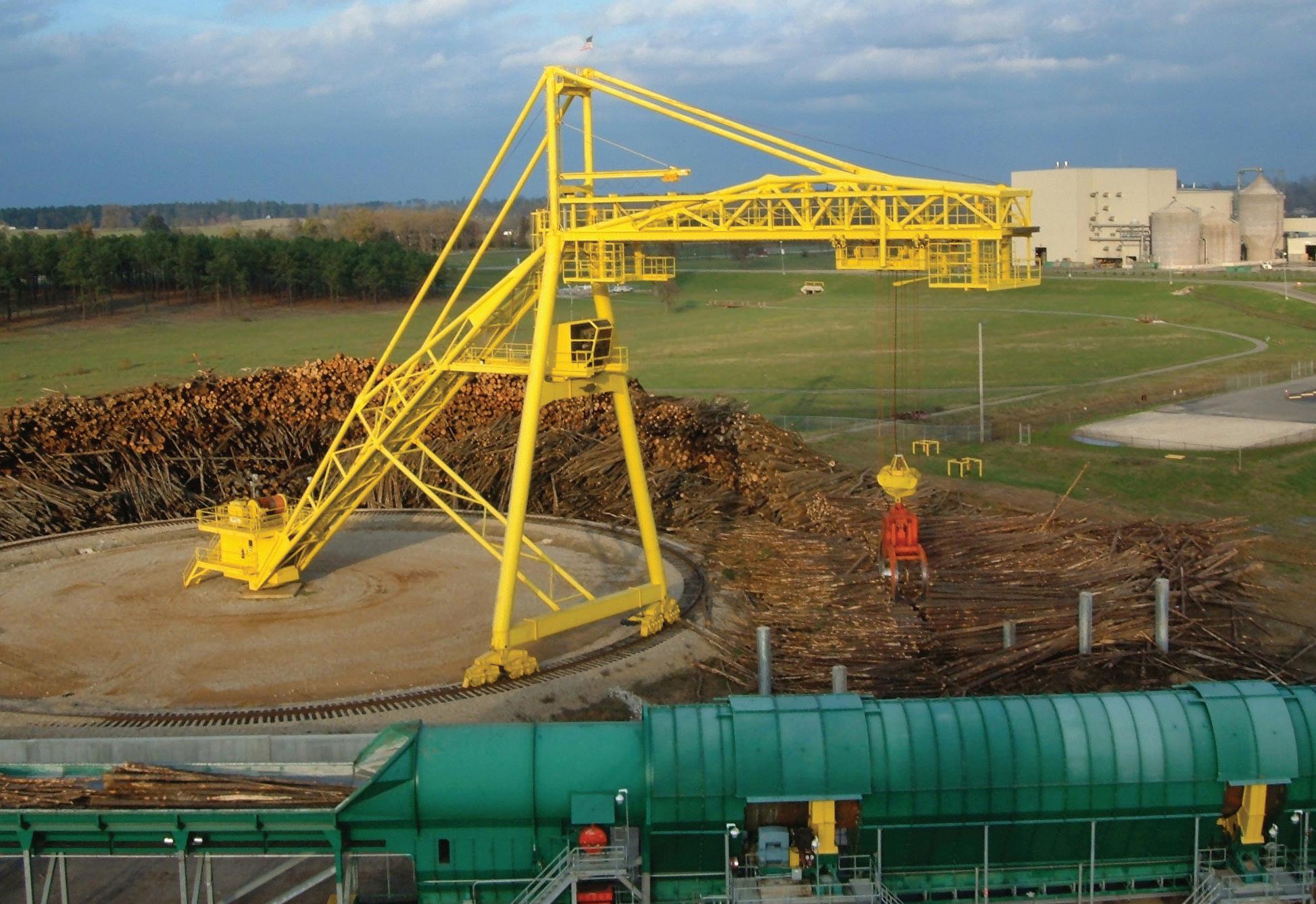
CO2 that was locked away millions of years ago, and trees are sequestering carbon right now. So, as long as the forest is managed sustainably, the net atmospheric impact is zero or negative. The combustion isn’t the whole story; the sequestration happening simultaneously is what makes the math work. Portz added a layer to the challenge: Photographs of whole logs at pellet facilities have a way of collapsing a complex system into a single, misleading image. What those photos don’t show is that forests are planted at around 450 stems per acre with a target harvest of 100 to 125 trees. The other 300 were always going to be removed. They used to
go to pulp and paper mills, but those mills are closing. The pellet industry is absorbing what’s left. “As soon as someone sees a whole tree, they think they understand the entire story,” Portz said. “The reality is much bigger than that.”
Looking Ahead
Both speakers closed on cautious optimism. The eastern U.S. is heading into a strong rebuild season. New domestic markets are starting to open. The Advanced Woody Biomass Alliance and Pellet Fuel Institute’s first joint Capitol Hill fly-in was set for May 13, which will be the first time
both organizations will go to the Hill together under a single message about what woody biomass contributes to the American economy. All in all, the industry has a strong story, but there is a shortage of people willing to tell it.
“I’ve been in a lot of industries,” Smith added in closing. “The number of issues you have to deal with, compared to the size of your industry, is just out of control. We need all the help we can get.”
Author:

Biochar & Biocarbon: Market Momentum Builds
The general session roundtable at the International Biomass Conference & Expo brought together leaders from across the biochar and biocarbon value chain to examine where the market is headed—and what’s still holding it back.
Moderated by Myles Gray, executive director of the American Biochar Institute, the discussion included perspectives from project developers, technology providers, carbon market experts and investors. Panelists explored the growing role of biochar and biocarbon in carbon removal strategies, as well as their expanding applications in industries such as agriculture, construction and heavy manufacturing.
Participants emphasized both the opportunity and the challenge: While interest from corporate buyers and carbon mar-
kets is accelerating, the sector still faces hurdles around standardization, project financing and scaling production. The conversation also highlighted the importance of clear definitions and credible verification frameworks as the industry works to build trust with end users and policymakers.
Panelists included (from left in photo) Gray; Karl Strahl, COO at Oregon Biochar Solutions; Julie Mansfield, head of business development Americas at Carbonfuture; John Teal, vice president of commercial at TSI and board chairman of the International Biomass Torrefaction and Carbonization Council; John-Paul Taylor, founding partner at KindlePoint Partners; Andrew White, CEO of CHAR Technologies; and Marc Ricker, president of special projects at Stircor Services Inc.
Emma Auch Map Data & Content Coordinator, BBI International

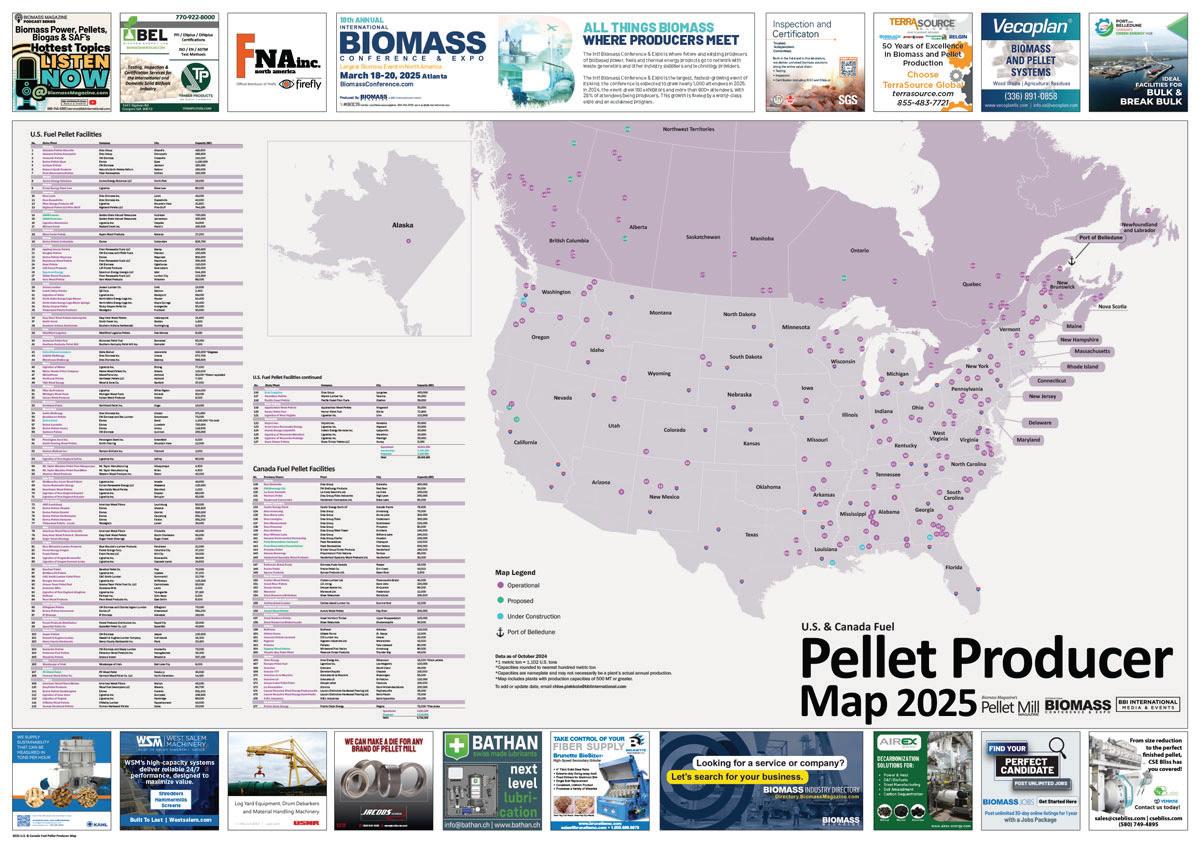
Producer s
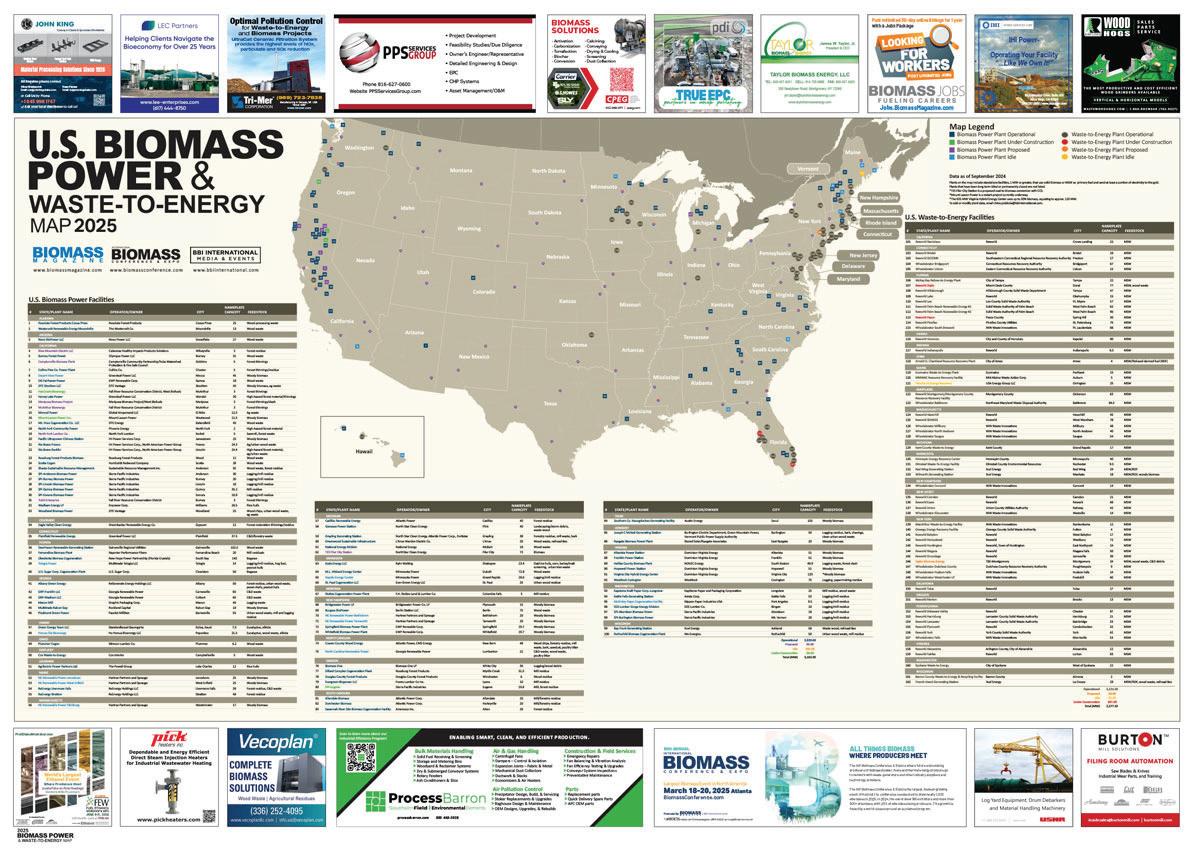
& Canada Pellet Mill Map
EACH 8,000 PROFESSIONALS
Mailed to all Biomass Magazine subscribers
Mailed to all Pellet Mill Magazine subscribers
Pellet mill owners, operators & management
Int’l Biomass Conference & Expo (in attendee bags)
All major related conferences
Book Your Ad AD SPOTS LIMITED
Ad Deadline: Oct. 14, 2026
Mailed with the 2027 Quarter 1 issue
A SPOT ON THE A MAP
12 Months
Online Adver tising! Advertise now on any map. It is the easiest and most cost-effective way to get your name, product and/or service in front of biomass professionals for 12 months at a time.
Need more info on advertising opportunities? service@bbiinternational.com - 866-746-8385 - BiomassMagazine.com
Biomass Power & Waste-To-Energy Map
EACH 8,000 PROFESSIONALS
Mailed to all Biomass Magazine
Mailed to all biomass power and WTE plants
Int’l Biomass Conference & Expo (in attendee bags)
Other major biomass-related industry events
Book Your Ad AD SPOTS LIMITED
Ad Deadline: Sept. 9, 2026
Mailed with the 2027 Quarter 1 issue of Biomass Magazine
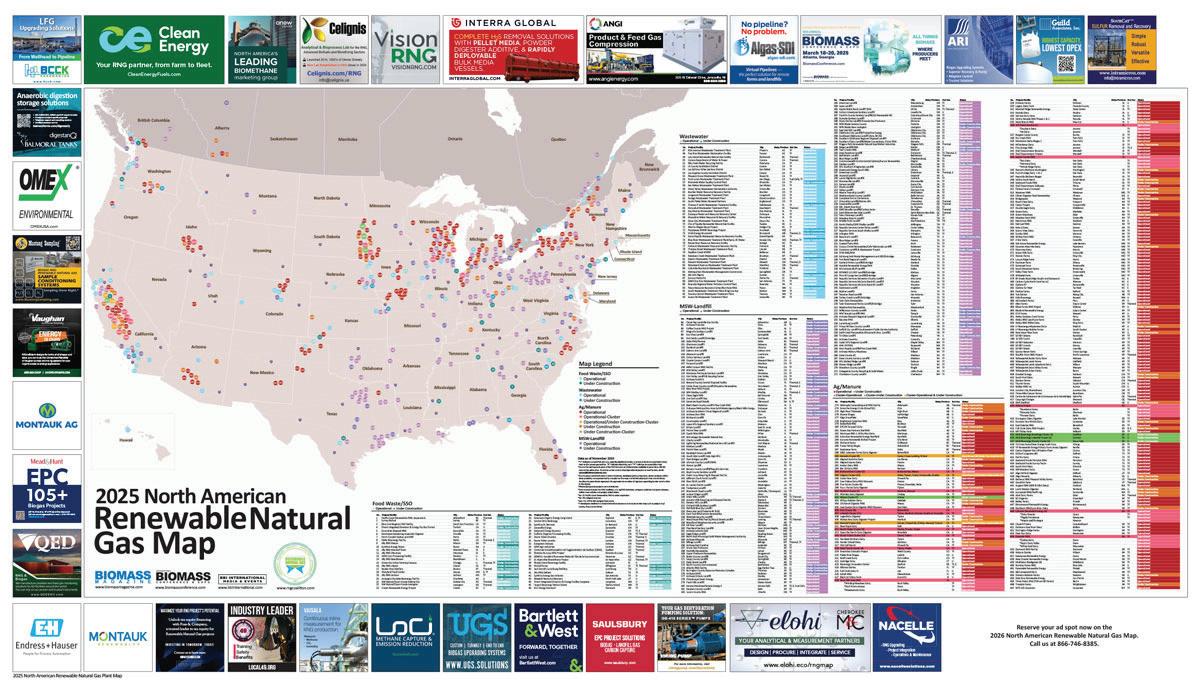
North American Renewable Natural Gas Map
EACH 7,000 PROFESSIONALS
All Biomass Magazine subscribers
All RNG Coalition Members
Mailed to Renewable Natural Gas Production Facilities in North America
Int’l Biomass Conference & Expo (in attendee bags)
All major related conferences
Book Your Ad AD SPOTS LIMITED
Ad Deadline: Oct. 28, 2026
Mailed with the 2027 Quarter 1 issue of Biomass Magazine

Change Service Requested
for the Wo od P roducts & Bi omass I ndust ries



AIR EMISSION CONTROL & CONSERVATION SYSTEMS
C OMPREHENSIVE SERVICES FOR EFFICIENT V OC, HAPS & PM C ONTROL SYS TEMS:
RTO, RCO & Wet ESP Systems
Process Evaluations, Engineering Energy Audits
Unique Turn-K ey Project Solutions
State -Of-The-Art Design, Engineering & Fabrication
System Inspections & Maintenance Programs













System Rebuilds, Upgrades & Rep air s Previously Owned & Refurbished Syst
Lar ge Sp are Parts Inventor y
St rate gically Lo c ated Field Ser vice Pe r sonnel, 24/7 Response