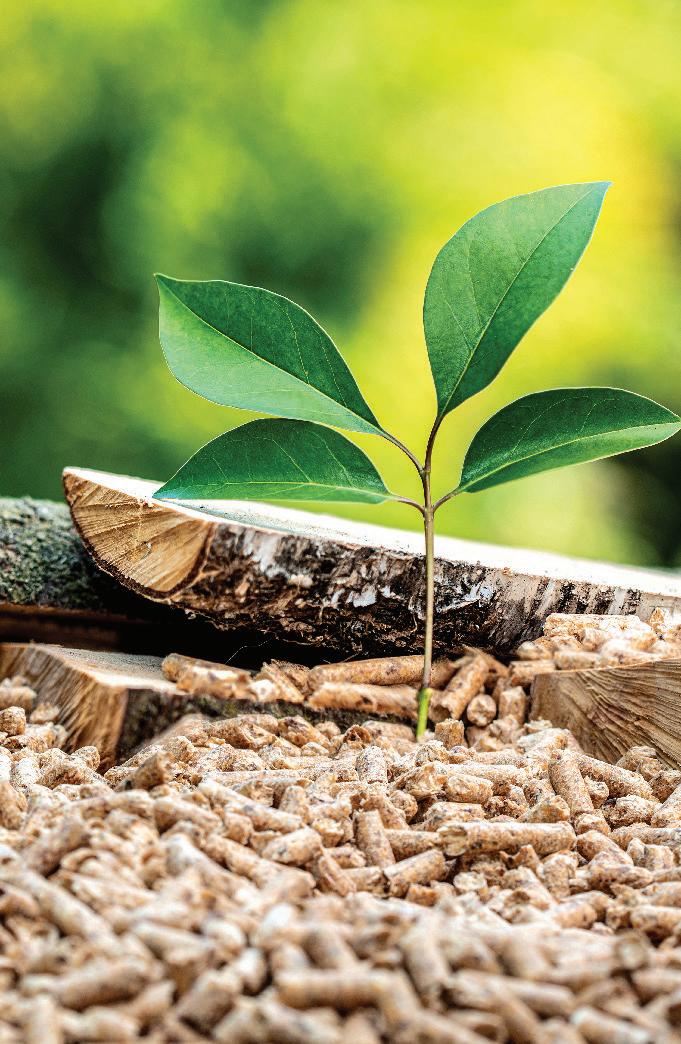
Biochar and biocarbon markets are expanding rapidly, but future growth will depend on identifying the right feedstocks for the right applications while balancing cost, performance, availability and carbon intensity.
By George Hale
16 BIOCHAR
A Big Steppe
Cold Steppe is transforming locally sourced rice hulls into biochar through an energy-efficient process designed for quality, scalability and long-term growth.
By Katie Schroeder
22 RNG
From Air Permits to Interconnects
Successfully developing an RNG project involves navigating a complex web of permits, approvals, environmental reviews and utility requirements.
By Keith Loria
CONTRIBUTIONS
30 FIRE/EXPLOSION
From Reactive to Proactive: Dust Hazard Analyses Strengthen Safety in Pellet Mills
By Alysha Yinger
EMISSIONS/SAFETY
Particulate Emissions Control for Thermally Processed Biomass and Biosolids
By Don Shinn
Powering Nigeria from the Ground Up
By Adedolapo Akinde
North American SAF Conference & Expo AUGUST 25-27, 2026
Greater Tacoma Convention Center, Tacoma, WA
Taking place in August, the North American SAF Conference & Expo, produced by SAF Magazine, in collaboration with the Commercial Aviation Alternative Fuels Initiative (CAAFI) and Canadian Council for Sustainable Aviation Fuels (C-SAF) will showcase the latest strategies for aviation fuel decarbonization, solutions for key industry challenges, and highlight the current opportunities for airlines, corporations and fuel producers.
(866) 746-8385 | SAFConference.com
2027 Int’l Biomass Conference & Expo MARCH 2-4, 2027
Cobb Convention Center, Atlanta, Georgia
Now celebrating its 20th year, the International Biomass Conference & Expo has served as the premier meeting place for the global biomass industry. The 20th annual event is expected to welcome more than 1,000 attendees, 175 exhibitors and 75 speakers from more than 25 countries, offering unmatched opportunities to learn from industry experts, discover emerging technologies and connect with decision-makers from across the biomass sector. Produced by Biomass Magazine, the conference delivers comprehensive programming focused on commercial-scale biomass and bioenergy, including pellets and densified biomass, biocarbon, biogas, liquid biofuels, heat and power. Whether you’re developing projects, supplying technology, producing biomass or exploring new markets, the event provides the knowledge and connections needed to move your business forward. (866) 746-8385 | BiomassConference.com
2027 International Fuel Ethanol Workshop & Expo JUNE 14-16, 2027
CHI Health Center, Omaha, Nebraska
Now in its 43rd year, the International Fuel Ethanol Workshop & Expo remains the premier event for the global ethanol industry. The conference is expected to welcome more than 2,300 attendees from over 31 countries, including representatives from nearly every ethanol production facility in the United States and Canada. Produced by Ethanol Producer Magazine, the FEW delivers practical, operations-focused programming spanning production, policy, markets, technology, coproducts and emerging opportunities. Attendees gain firsthand insight from industry leaders, discover the latest innovations on the trade show floor and build valuable connections with the people shaping the future of ethanol (866) 746-8385 | FuelEthanolWorkshop.com
INDUSTRY EVENTS
EDITORIAL
DIRECTOR OF CONTENT & SENIOR EDITOR Anna Simet asimet@bbiinternational.com
Please check our website for upcoming webinars biomassmagazine.com/events/webinars
topic delivered to a highly targeted audience. We are committed to editorial excellence and high-quality print production. To find out more about Biomass Magazine advertising opportunities, please contact us at 701-746-8385 or service@bbiinternational.com. Letters to the Editor We welcome letters to the
ANNA SIMET DIRECTOR OF CONTENT & SENIOR EDITOR
Summertime Reflections
Summer is here, meaning the longest day of the year has already come and gone. Now is the time when industry activity is a little quieter and a little slower, providing an opportunity to recharge, reflect and focus on new ideas and initiatives. Maybe you’re reading this on a beach somewhere.
As for us, we’ve been hard at work to deliver this content-packed issue of Biomass Magazine. Our feature and contribution lineups include a variety of carefully chosen stories. From biochar entrepreneurship and feedstock selection to RNG project permitting and plant safety, the issue touches on several of the topics currently shaping conversations across the biomass sector. Whether you’re focused on project development, operations, technology or market opportunities, we hope you’ll find something of value in the pages ahead.
Our lead-off feature, “A Big Steppe,” may jog your memory if you attended the International Biomass Conference & Expo in Nashville this spring. The story takes a deeper look into the story of Cold Steppe, the recipient of our coveted Groundbreaker of the Year Award, recognized during the event general session. So, what led two longtime friends with backgrounds in the Navy to pursue a livelihood in the biochar business? Well, it really wasn’t financial gain fueling their intentions—I’ll offer that. For the rest of the details, flip to our cover story on page 12.
We continue on the thread of pyrogenic biomass for our second feature story, but pivot to feedstock characteristics. With so many options, how does one know what would be a good fit for their process? Well, it depends on many things—including the final product’s intended use—and our subject matter experts had much to say about it. Read more in “The Feedstock Question” on page 16, by contributing writer George Hale.
In our final feature article, “From Air Permits to Interconnects,” on page 22, we shift gears and dive into the intricate maze of renewable natural gas project development. Many critical aspects of the process—timeline, cost and overall viability—largely hinge on permitting. As stated by contributing writer Keith Loria, even if a project may have had smooth sailing while securing financing, signing feedstock contracts and selecting technology, it very well may find itself delayed by months—or even years—due to permitting requirements that were not fully understood during development. Engaging a local with the right expertise and a solid track record early on may be the best way for some developers to navigate through these regulatory hurdles.
As a final note, one of the themes of this quarter’s issue is safety, and we’ve included two expert-authored contribution articles to align with this objective—one focused on dust hazard analyses for our wood fiber-using operations, and another on dust and particulate control at biocarbon operations. As I’ve said before, while this topic can sometimes seem tired—stories, webinars, event presentations on repeat—as long as the risks remain, so will our coverage. We’d much rather report on prevention than the alternative.
The Next Evolution of Lagoon Anaerobic Digestion: Hybrid by Design
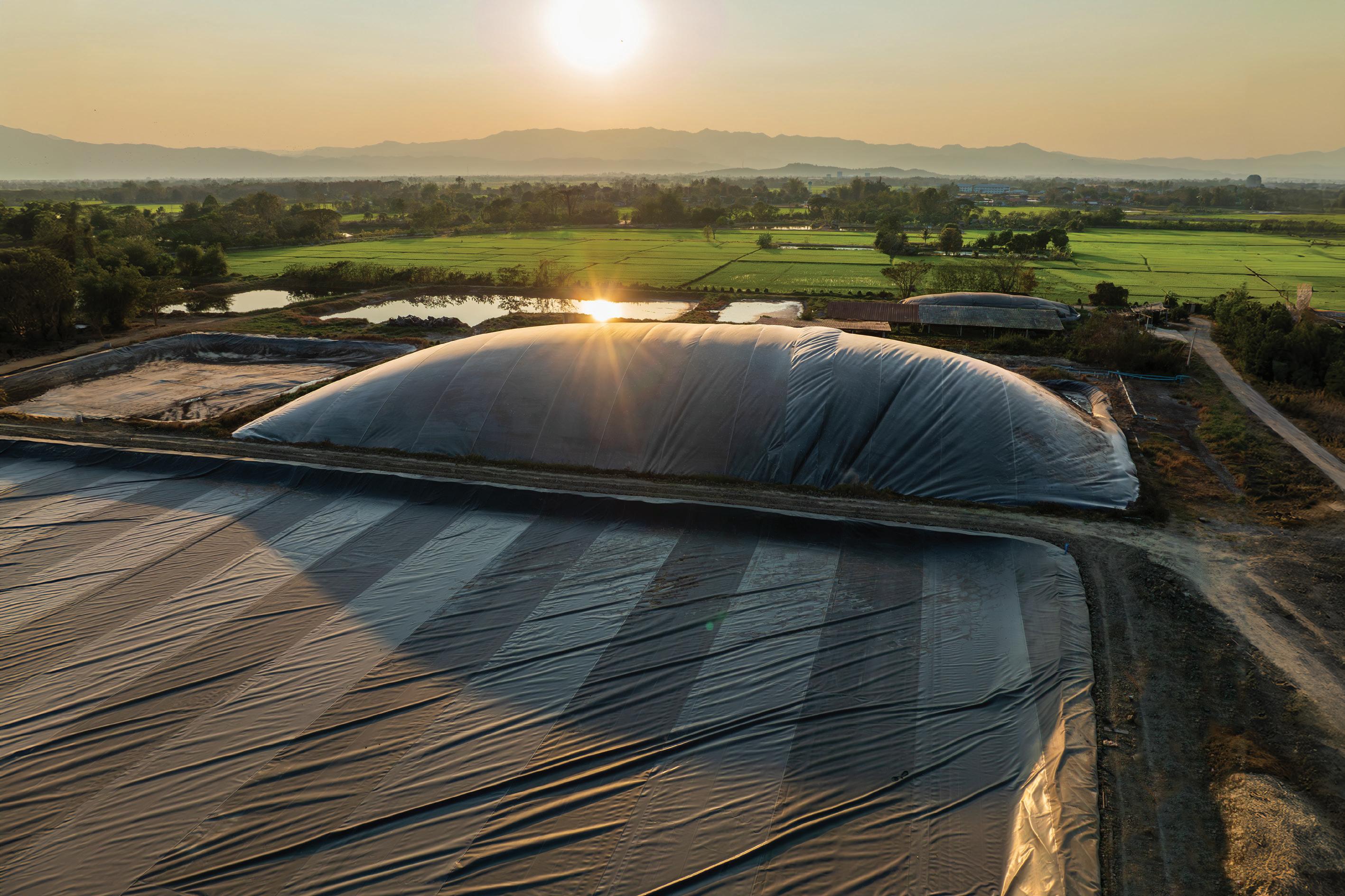
The future of sustainable agriculture is taking shape on 400 dairy, poultry, hog and beef farms across the United States. Farmers from California to Massachusetts are integrating anaerobic digestion into their waste management practices to slash emissions and generate biogas for on-farm energy savings and revenue streams. Their impact is nothing to cluck at. Collectively, these farms reduced greenhouse gas emissions by 14.8 million metric tons of CO2 equivalent, and generated the equivalent of 3.29 million megawatt-hours of electricity. “On-farm anaerobic digestion is becoming a more common component of the U.S. livestock model,” says Dr. Erik Anderson, senior project manager and national expert on anaerobic digestion at SCS Engineers. “Farmers use covered lagoons to sustainably manage waste, optimize their operations and monetize waste streams.”
In the U.S., 43% of livestock farms with anaerobic digestion use covered lagoons as their digesters because lagoons are common and already facilitate biological decomposition. While a passive lagoon digester is a good low-cost option, its performance can be as fickle as the weather. “Most passive lagoons only achieve about 60% of a material’s potential—sometimes lower,” Anderson says.
Focusing on five elements, SCS’s hybrid approach, led by Anderson, controls system conditions to boost biogas production and system efficiency. “A well-designed hybrid system closes the performance gap without overbuilding.”
Feedback and Control Loops
Digesters give “warning signs” that microbial conditions are imbalanced, such as changes in alkalinity, pH, volatile fatty acids, chemical oxygen demand and overall methane production and concentrations in the biogas. Automated feedback systems read these warning signs and monitor essential parameters. “Real-time data enables active management to resolve problems quickly,” Anderson says. “It is the rooster that wakes us up.”
Insulation and Heating
Many passive lagoons suffer from seasonality. When digester temperatures dip below 68°F, microbial activity slows significantly. Anderson’s cure for these winter blues includes an insulated floating cover and an insulated lagoon bottom (typically made of reinforced or high-density polyethylene or clay-lined) that protects against the season’s colder temperatures. “Insulation is only useful if there is heat to retain,” Anderson says. “If cost-effective, preheating lagoon waste would be the first design consideration … and it is often the most impactful.”
Energy recovery systems that preheat the incoming lagoon feed are smart additions to new builds and retrofits. These systems either recover waste heat produced onsite through daily operations or economize the heat in the final effluent stream to cool and heat the two streams simultaneously.
Mixing
Passive lagoons do not typically incorporate mixing, often resulting in the accumulation of solids at the bottom and “fat” caps that form along the lagoon surface. SCS’s hybrid design incorporates mixing (and heating) and zone recirculation in either the staging tank or in the first lagoon of a two-lagoon system to create a homogenous flow and avoid microbial dead zones. This design also tolerates more total solids, generating more biogas. “Mixing helps break down materials faster and transfers heat evenly throughout the system,” Anderson says. “Properly designed mixing helps create a stable environment, which reduces the impacts of environmental changes, so microbes can thrive, improving digestion rates.”
Organic Loading Rates
Determining volatile solids volumes for feeding into the digester is like Goldilocks trying porridge: it’s best when it’s just right. “Many slurry streams are too dilute, and given the sheer size of the digester, it could handle more material than it’s being fed,” Anderson says. “I see that as leaving money on the table.”
While commercial digesters can run the design gamut from covered lagoons to high-solids and “dry” digesters, the nature of the project will determine the best option. It may be possible to take on higher concentrations of organic waste after evaluating project goals, mixing, material staging, feed control and other parameters.
A hybrid design optimizes the build to the system’s upper limit, the sweet spot of maximum biogas production for the smallest footprint and the lowest price tag. Testing the effluent would reveal how much organic loading the system can accept, and thus, how much biogas it can optimally produce. “If a system has capacity, it can take on more waste products to make more biogas and increase revenue,” Anderson says.
Sustainable Energy Use
With minor adjustments, such as removing particulate and contaminants like H2S, biogas can be burned in onsite boilers to heat buildings, equipment or the incoming digester slurry. Depending on the farm’s size and design, biogas can be converted into electricity for onsite or grid use via a combined heat and power plant, or purified to become renewable natural gas. Anderson’s hybrid design is flexible to accommodate all energy generation pathways and goals.
“Mainly, the hybrid design encourages sustainable energy use,” Anderson adds. “Why not leverage our waste material and use the lagoon digester and onsite waste heat to its full potential? We have the opportunity to reduce farm costs and increase sustainability for the greater good.”
BIOMASS NEWS |
Braya Renewable Fuels Completes First Domestic Renewable Diesel Sale
Braya Renewable Fuels has completed its first sale of renewable diesel to a Canadian customer, the company announced June 15, marking a commercial expansion for the Come By Chance, Newfoundland and Labrador, refinery into its home market.
The transaction involved 100,000 barrels of renewable diesel, with the potential for additional deliveries. The sale broadens Braya’s customer base beyond its existing international markets. The government of Newfoundland and Labrador provided assistance in closing the deal, consistent with the province’s stated focus on supporting key industries tied to its economy.
Canada Announces Funding for Pellet, Bioenergy and Biocarbon Projects
Natural Resources Canada on June 3 awarded nearly C$130 million ($95 million) to 56 projects aimed at advancing transformation of the country’s forest sector. Several wood pellet, bioenergy and biocarbon projects were among those selected for funding.
Among the recipients, the Forest Enhancement Society of British Columbia was awarded C$37 million to support projects focused on increasing the use of low-value
and residual forest fiber, including material used for wood pellets and other bioenergy applications. Additional funding was awarded to projects focused on pellet production, biomass utilization, biocarbon development and forest-sector decarbonization.
The funding was announced alongside the release of a final report from Canada’s Forest Sector Transformation Task Force, which outlines a long-term strategy to strengthen the competitiveness and resilience of the country’s forest products industry. The federal government also announced several broader financing initiatives intended to support forest-sector businesses, market diversification and community development.
Colorado Governor Signs Bill Creating New SAF Tax Credit
Colorado Gov. Jared Polis on June 3 signed HB 26-1289, a legislative tax package that creates a new tax credit to encourage the purchase of sustainable aviation fuel (SAF). The bill also repeals an existing tax credit that supports construction of SAF facilities, effective Jan. 1, 2027.
The existing SAF tax credit was established in 2023 and provides a tax credit for up to 30% of the cost paid to construct, reconstruct or erect a SAF production facility. The credit was originally intended to be available in tax years 2024 through 2032,
and was to be capped at $3 million in 2027 through 2032. According to a fiscal note attached to HB 26-1289, no taxpayers have claimed the existing SAF tax credit to date.
The newly signed law creates a SAF purchase income tax credit that will be in place for tax years 2027 through 2032. The value of the credit is no less than $1.50 per gallon of SAF purchased in the state, increased by 1 cent for each percentage of carbon intensity reduction above 50%. The maximum amount of total credits issued is capped at $3 per year.
According to information published by the Colorado legislature, the state currently expects $1.5 million of the new SAF credits to be claimed for fiscal year (FY) 2026-27, expanding to $3 million for FY 2027-28 and FY 2028-29.
A statement released by the Colorado Energy Office indicates that conversion of the SAF credit from a construction-based credit to a per-gallon purchase credit aims to encourage near-term SAF use within the state.
DOE Releases Updated 45ZCF-GREET Model
The U.S. Department of Energy on June 12 released an updated version of its 45ZCF-GREET model, a key tool used to calculate lifecycle greenhouse gas emissions and determine eligibility for the 45Z clean
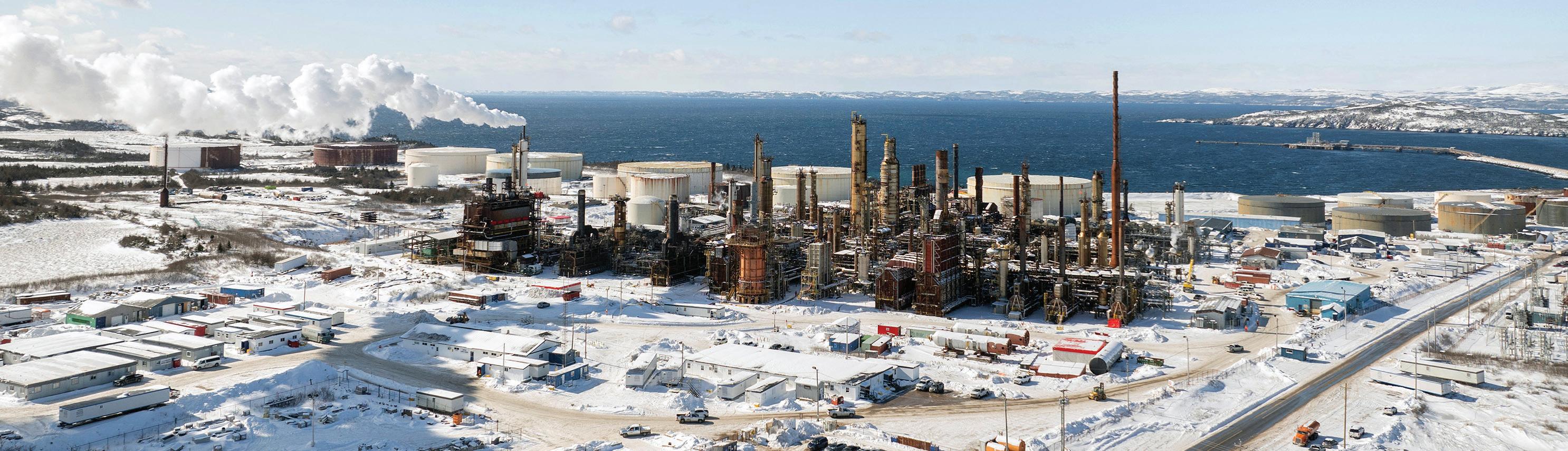
The Braya Renewable Fuels refinery in Come By Chance, Newfoundland and Labrador, was formerly a petroleum refinery that has been converted into a renewable fuels production facility. Commercial operations began in February 2024.
fuel production tax credit. The update incorporates changes made to the credit by the One Big Beautiful Bill Act, which was signed into law in July 2025.
Among the changes, the updated model removes indirect land-use change (ILUC) emissions from carbon intensity calculations and limits qualifying feedstocks to those sourced from the U.S., Canada and Mexico. The model also includes updated data and assumptions, provides calculations for fuels produced in both 2025 and 2026, and makes several pathway-specific revisions affecting renewable natural gas, ethanol, renewable diesel and sustainable aviation fuel production.
Release of the updated 45ZCFGREET model is one of three major components of 45Z guidance the biofuels industry has been awaiting. The remaining pieces include USDA feedstock guidance, which is currently under review at the White House Office of Management and Budget, and final 45Z regulations from the U.S. Department of Treasury and Internal Revenue Service.
OMB Nominee Confirms Progress on USDA’s 45Z Feedstock Rule
Sen. Chuck Grassley, R-Iowa, on June 12 pressed Hal Duncan, President Donald Trump’s nominee for deputy director of the White House Office of Management and Budget (OMB), on the status of the USDA’s 45Z feedstock rule, which has been under OMB review since early April.
USDA submitted the final rule to OMB on April 2. The rule is expected to establish technical guidelines for the production of regenerative agricultural biofuel feedstocks and provide guidance on how on-farm practices can reduce the carbon intensity of biofuel feedstocks for purposes of the 45Z clean fuel production credit.
The rule is expected to update provi sions included in an interim final rule is sued by the Biden administration in January 2025. That rule established requirements
for quantifying, reporting and verifying low-carbon domestic agricultural feedstocks and addressed climate-smart agriculture practices for corn, sorghum and soy feedstocks. Eligible practices include reduced till and no-till, cover cropping and certain nutrient management strategies.
According to OMB, the agency has held 15 stakeholder meetings on the rule since April. Participants have included representatives of biofuel, agriculture and environmental organizations, as well as companies involved in low-carbon feedstock development.
During a June 16 Senate Budget Committee hearing on Duncan’s nomination, Grassley asked about the rule’s status. Duncan said OMB is “closely tracking” the rule, adding that the agency is making progress and “will hopefully have an update on that
for you soon.” He also confirmed the rule is undergoing review by OMB’s Office of Information and Regulatory Affairs under Executive Order 12866.
U.S. Agriculture Secretary Brooke Rollins has also indicated the final rule’s release is imminent, making similar comments during congressional hearings earlier this month.
The USDA feedstock rule is one of three major components needed to provide clarity on implementation of the 45Z credit. The others are an updated 45ZCF-GREET model from the U.S. Department of Energy and final 45Z regulations from the U.S. Department of Treasury and Internal Revenue Service. DOE released its updated 45ZCFGREET model on June 12, while Treasury and IRS have yet to submit final 45Z regulations to OMB for interagency review.
THE FEEDSTOCK QUESTION
OBiochar and biocarbon markets are expanding rapidly, but future growth will depend on identifying the right feedstocks for the right applications while balancing cost, performance, availability and carbon intensity.
BY GEORGE HALE
ver the years, interest in biochar and biocarbon has been growing in multiple fields. These products, derived from wood, agricultural waste and other carbon-rich feedstocks, are being seen as solutions to a variety of problems. The methods for producing biochar and biocarbon are well established; however, it is unclear whether currently available feedstocks will be sufficient to meet future demands. At the same time, there are questions about what makes a good feedstock and how factors like process efficiency, sustainability and regional availability might affect the industry’s ability to meet rising demands.
What’s in a Name
One topic that has captured wide attention in the industry lately is standardizing terminology. Both biochar and biocarbon are, at a basic level, thermally treated biomass. Some experts have pro-
posed the term pyrogenic biocarbon to put a name on these materials and improve clarity. “The overarching scenario is that these terms are still being defined,” says Chris Wiberg, vice president of the Biomass Energy Lab. “There’s a lot of confusion about them and they’re used almost interchangeably.”
The industry is working to formalize terminology and testing standards based on how these materials are produced and their intended applications. As a rule of thumb, biocarbon refers to thermally treated biomass intended for industrial, energy or other carbon-based applications, including steelmaking, cement manufacturing and fuel production. In contrast, biochar is used for applications like sequestering carbon in soils where the material’s performance is vital. “Through the ISO TC238 working group, we are actively working to formally define all of these terms,” Wiberg says.
Making Biochar or Biocarbon
The processes for making biocarbon and biochar are well understood. The methods all work by removing moisture and volatile compounds from biomass using high temperatures in the absence of oxygen. This leaves behind concentrated carbon, though the end product’s properties vary depending on the process used.
Torrefaction uses a milder temperature, often around 200 to 300 degrees Celsius at atmospheric pressure. Steam explosion uses somewhat hotter temperatures and higher pressures. Biomass treated using torrefaction or steam explosion is typically meant for energy use, for example as a coal replacement.. This results in a breakdown in the feedstock’s lignocellulosic structure, making it somewhat water resistant while only slightly changing its energy density.
Another widely used method for biocarbon production is pyrolysis. Like torrefaction and steam explosion, this process applies heat to biomass in the absence of oxygen. However, pyrolysis uses higher temperatures, ranging from around 400 degrees for slow pyrolysis to as high as 1,000 degrees for fast pyrolysis. These temperatures drive away more volatile compounds, leaving behind a more concentrated carbon product. “The more you roast, the more volatiles are released and you concentrate the fixed carbon,” Wiberg says.
Intended Use Paves the Road
The method used to make pyrogenic biocarbon depends heavily on the intended use of the end product. For example, biocarbon for steel production and biochar as a coal replacement for sequestering carbon have different requirements. Some applications need
more concentrated carbon while others might be more sensitive to ash content. In this context, ash is any noncarbon substance left over after torrefaction or pyrolysis.
“The challenge is to really understand the downstream process and the sensitivities,” says John Teal, chairman of the board at the International Biomass Torrefaction & Carbonization Council.
‘If you can figure out how to turn something that’s a waste product into biochar, then your feedstock is free again.’
—Chris Wiberg, Biomass Energy Lab
Biocarbon can be used as a replacement for metallurgical coal in steel manufacturing, serving as a reducing agent that strips oxygen from iron ore to produce pure iron. Biocarbon for this application must have extremely low amounts of sulfur and other ash compounds to avoid contaminating steel. To meet these requirements, producers will often turn to feedstocks like southern pine, which is low on ash. “You might pyrolyze your cleanest wood residues to make biocarbon that is suitable for steel manufacturing,” Wiberg says. “On the flip side, for an agricultural amendment, it doesn’t matter if I have even 60% or 70% ash.”
While the ash component of biocarbon is detrimental to steel manufacturing, it’s at least neutral for amending poor soils. Biocarbon can improve soil’s water holding capacity and loosen up compacted soils. Additionally, in some cases, minerals present in a feedstock, such as phosphorous, can improve the nutrient profile of soils. However, best practices call for analyzing both the feedstock used to make biochar and the soil to be amended. For example, if a soil is overly acidic, producers will want a feedstock with a higher pH like western cedar.
Consistency Matter Matters
While biocarbon consumers often have specific needs for fixed carbon and ash composition, they’re also often looking for a consistent product. Biocarbon producers can tune processes to some degree, but having to change conditions continually is inefficient and can raise costs. This means producers want a consistent feedstock. “That’s where wood is great,” Teal says. “You harvest it all year round and can get a fairly consistent product.”
However, there are limits to how much wood is available for producing biocarbon at any given time. Additionally, since some intended uses are more sensitive to ash content than others, the cleanest feedstocks should be reserved those applications. With demand for biochar and biocarbon increasing, producers have been adding agricultural waste and even sludges to their list of feedstocks.
Being able to use waste products to make biocarbon and biochar would dramatically increase the amount of product that producers can make, helping meet consumer demand. It also can
decrease costs, improve bottom lines and make use of a waste product that would otherwise need to be disposed of.
Valorizing waste products is something pursued in many industries. For example, in the early days of wood pellet production, sawdust was seen as a valueless waste product. Over time, though, someone figured out how to turn sawdust into a wood pellet. Soon after that, sawdust became a valuable commodity that is bought and sold. “If you can figure out how to turn something that’s a waste product into biochar, then feedstock is free again,” Wiberg says.
Spinning Trash into Gold
Currently, there is growing interest in using agricultural waste as a feedstock. Agricultural residues are there for the taking and need to be disposed of. However, while these materials seem promising to use, there are tradeoffs. “Residues are great because they’re free, and it’s a good side use of this stuff,” Teal says. “But it’s really challenging to use.”
Unlike wood, which can be harvested year-round, agricultural residues are seasonal. Trimmings and other waste products accumulate and end up sitting in piles until they are processed. Over time, the residues will start to decompose, introducing physical and chemical changes. Additionally, agricultural residues frequently end up getting dragged along the ground and pick up materials that can increase ash content. At the same time, the composition of agricultural residues varies from crop to crop. Some materials have high ash content and contain high amounts of sodium, potassium and chlorine, which can end up degrading heat exchanger materials when converting them into biocarbon. “If you can find out how to remove these harmful materials, you can start processing these crops that are almost zero cost,” Teal says.
Another advantage of using agricultural residues is that biochar can be made using local materials. This can benefit small-scale farmers interested in amending their own soils. “If you’re a pecan farmer, maybe your prime material is pecan shells,” Wiberg says. “If you grow grapes, there’s always the trimmings of the grape vines at the end of the year.”
Using more local materials can help reduce the risks posed by supply chain disruptions, and can also lower the carbon intensity of the end product. Biochar is used to sequester carbon dioxide, but this can be offset by emissions emitted earlier in the supply chain.
Although each ton of biochar removes the equivalent of 2.68 tons of carbon dioxide from the atmosphere for more than 100 years, in carbon intensity calculations, this is offset by emissions from making and transporting biochar. Wood in the southeastern
United States might get transported by truck to a sawmill that uses electricity produced with coal or natural gas, then processed and packed onto a ship that runs on marine diesel and transported overseas to be pyrolyzed into biochar. Each of these steps adds emissions that must be accounted for in the biochar’s final carbon intensity score. Reducing transportation-driven emissions by using local materials can dramatically reduce carbon intensity scores.
Many in the industry are also interested in using materials like construction waste and municipal solid waste to make biocarbon and biochar. Being able to do so would have the twin benefits of a cheap or free feedstock and reducing waste streams. “Everyone wants to turn trash into a product,” Teal says.
However, these materials share challenges with agricultural residues. There is always the possibility that waste products contain potentially harmful substances. For example, processing construction waste that includes pressure-treated wood would result in biochar with high levels of copper, chrome or arsenic, making it unsuitable for agricultural use.
Cost is a Driving Factor
While consistency, feedstock availability and carbon intensity are important, financial forces are a major force in biocarbon production. Reducing costs by valorizing waste products is a step toward improving costs, but if an operation is not cost effective, there must be some form of incentive at work.
Outside of policy incentives, one possibility is the carbon market. Carbon credits from sequestering greenhouse gases with bio-
char can be another revenue stream. Additionally, producers can look toward other sources of revenue from their operations. “What makes it valuable is finding multiple value streams in the process,” Wiberg says.
While feedstocks like wood and agricultural residues are valued for their carbon and sometimes ash content, that’s not all they bring to the table. Depending on the feedstock and process being used, producers can use offgassing volatiles to power their processes, reducing energy costs and carbon intensity scores, or even sell leftover volatile matter.
“If you have more volatiles than you need, you can condense them into Fischer–Tropsch liquids to become biomethanol or sustainable aviation fuel or other value-added products,” Wiberg says.
A Bright Future
Pyrogenic biomass—biocarbon and biochar—have great potential, though as demand increases, feedstock selection will become more important. Being able to optimize end products and produce biocarbon safely and sustainably is something the industry will continue to pursue, but for now, producers can focus on materials and processes that are proven to be feasible. “There are lots of potentials, but I think we need to work with the ones that are straightforward before we jump to the real exciting stuff,” Teal adds.
Author: George Hale Contributing Writer, Biomass Magazine
A BIG STEPPE
Bringing biochar to rural Arkansas, Cold Steppe pioneers in industrial-scale production and operates an energy efficient process.
BY KATIE SCHROEDER
Leveraging their expertise as submariners with the United States Navy, Cold Steppe founders Kevin Crow and Matt Freniere developed an industrial-scale biochar project in rural Arkansas. According to Freniere, the vision for Cold Steppe was incited by a desire to build something that would positively impact the environment and benefit the next generation. “This startup is about being able to work together on something that we’re both passionate about,” Freniere says. “And part of that passion is also about our kids, and
trying to make an impact with what we’re doing.”
Biochar stood out as a way to enable better stewardship of the environment by turning a waste stream into a beneficial product, adds Kevin Crow, cofounder and CEO of Cold Steppe.
After many years of friendship forged during college, time spent in the Navy serving together on a nuclear submarine and decades of keeping in touch as they each followed different career paths, Crow and Freniere found a common interest in bio-
char. Crow joined a company in Tennessee that used biochar for its water filtration qualities, and Freniere worked for a data center company that was spinning out a biochar business for renewable energy production at the time. “He and I were talking about biochar quite a bit on just our normal every-other-week catch ups,” Freniere says. “And it was clear to both of us that there was significant opportunity in the space.”
Cold Steppe was incorporated in September of 2024. Financing for the $15 million needed to build the Stuttgart facil-
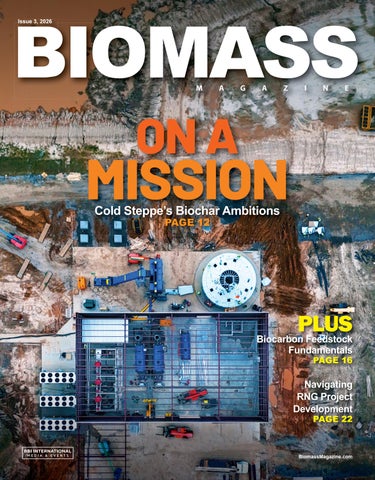
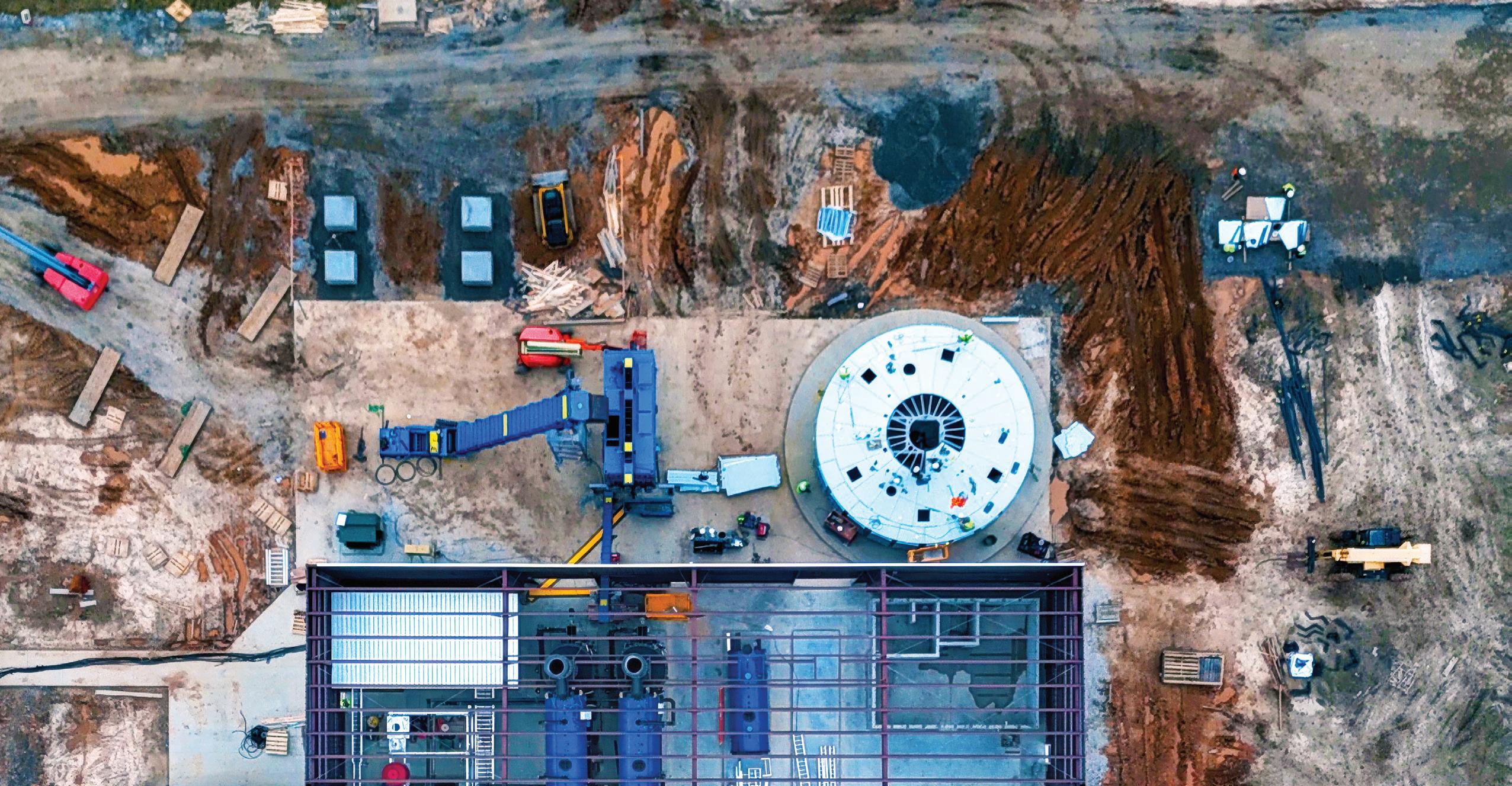
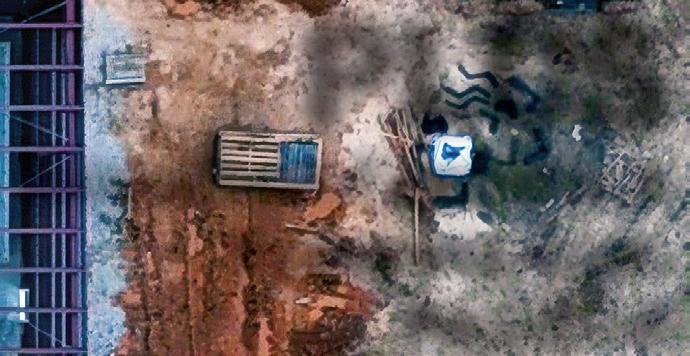
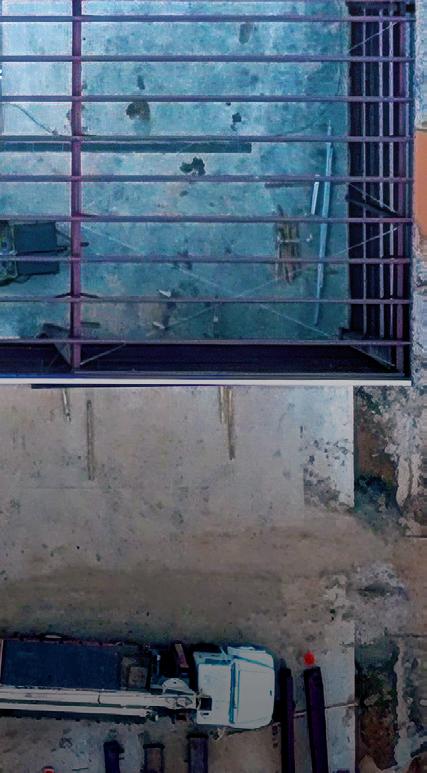
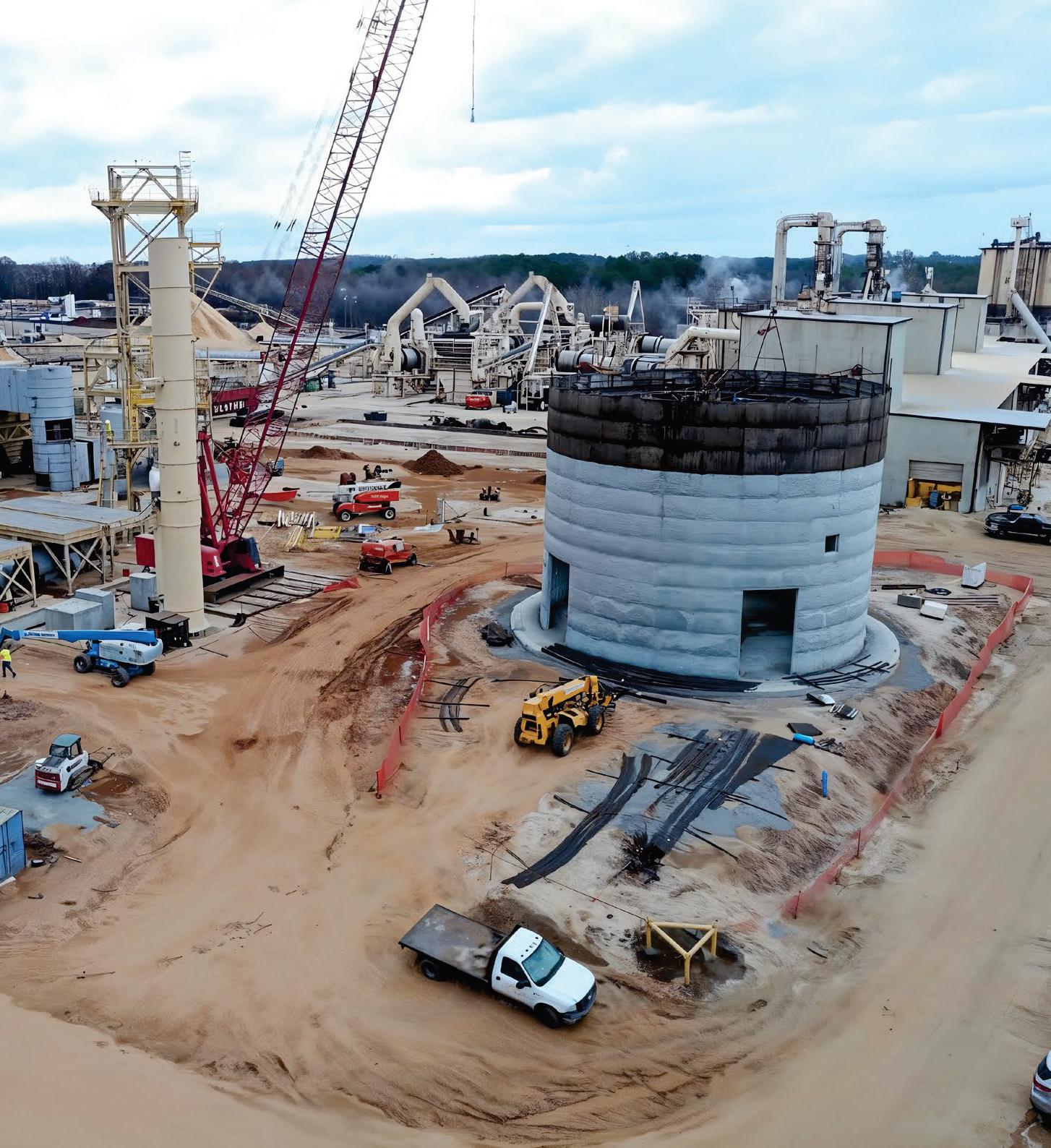
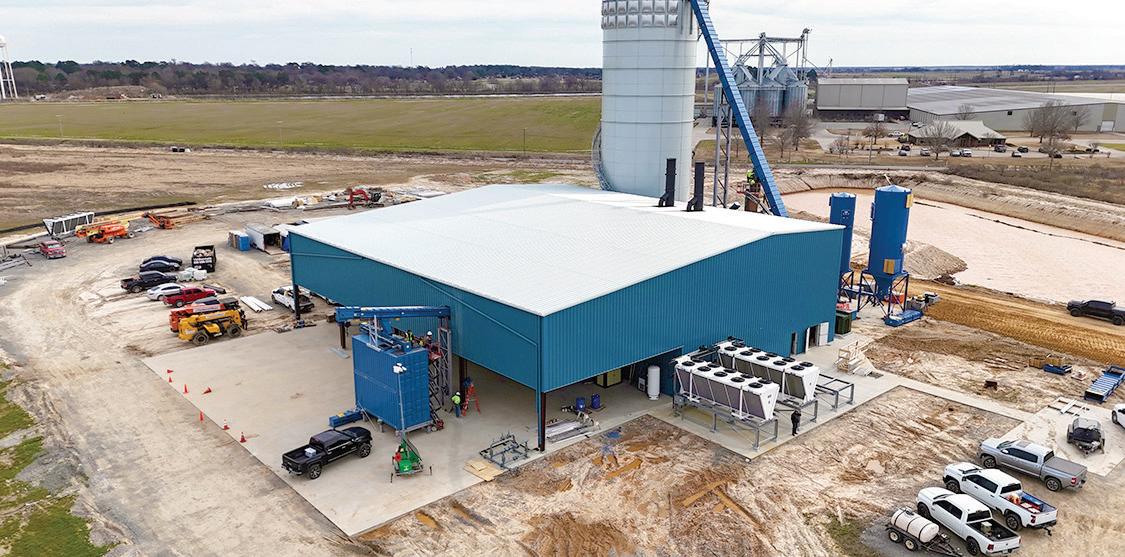
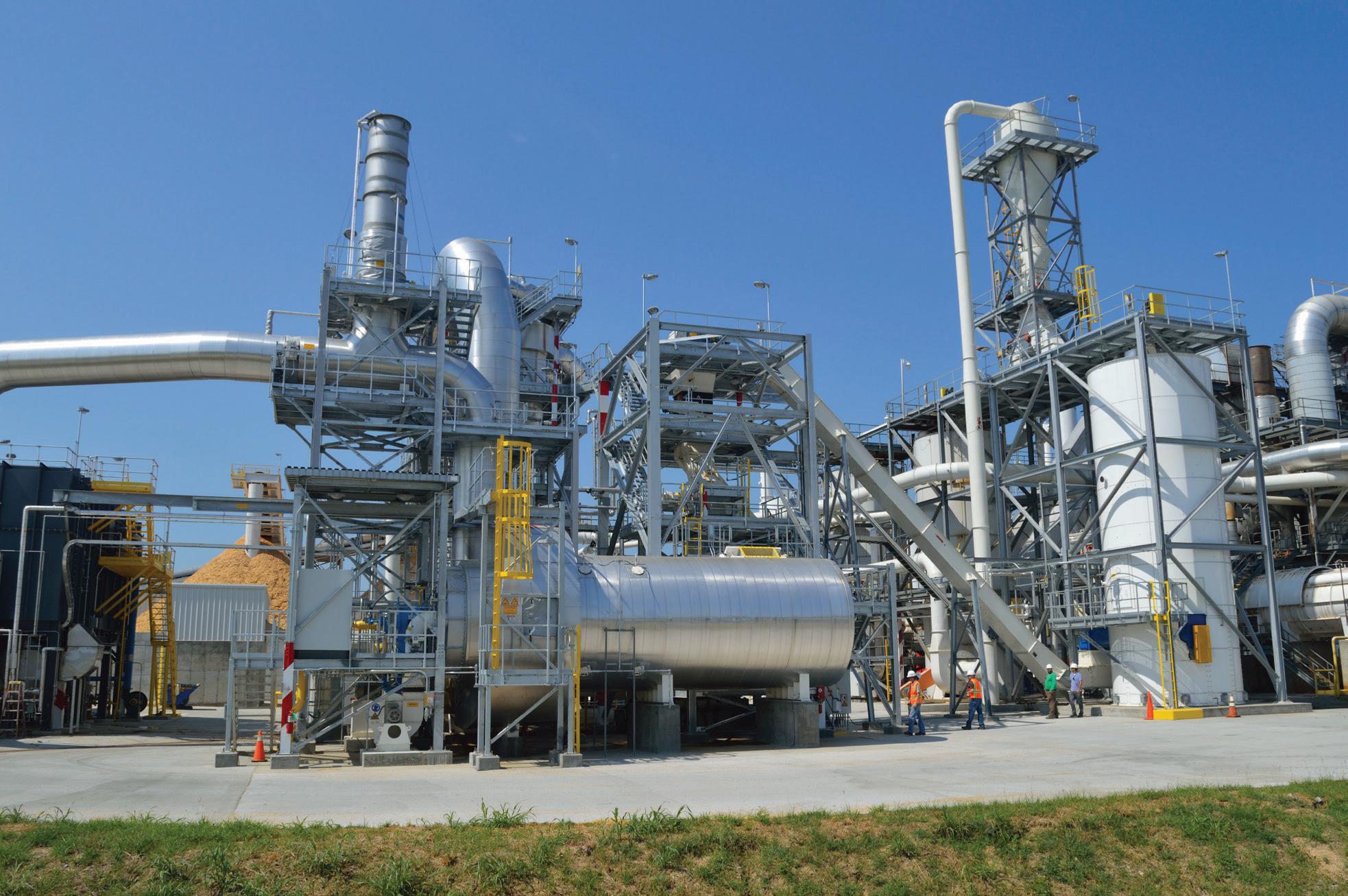
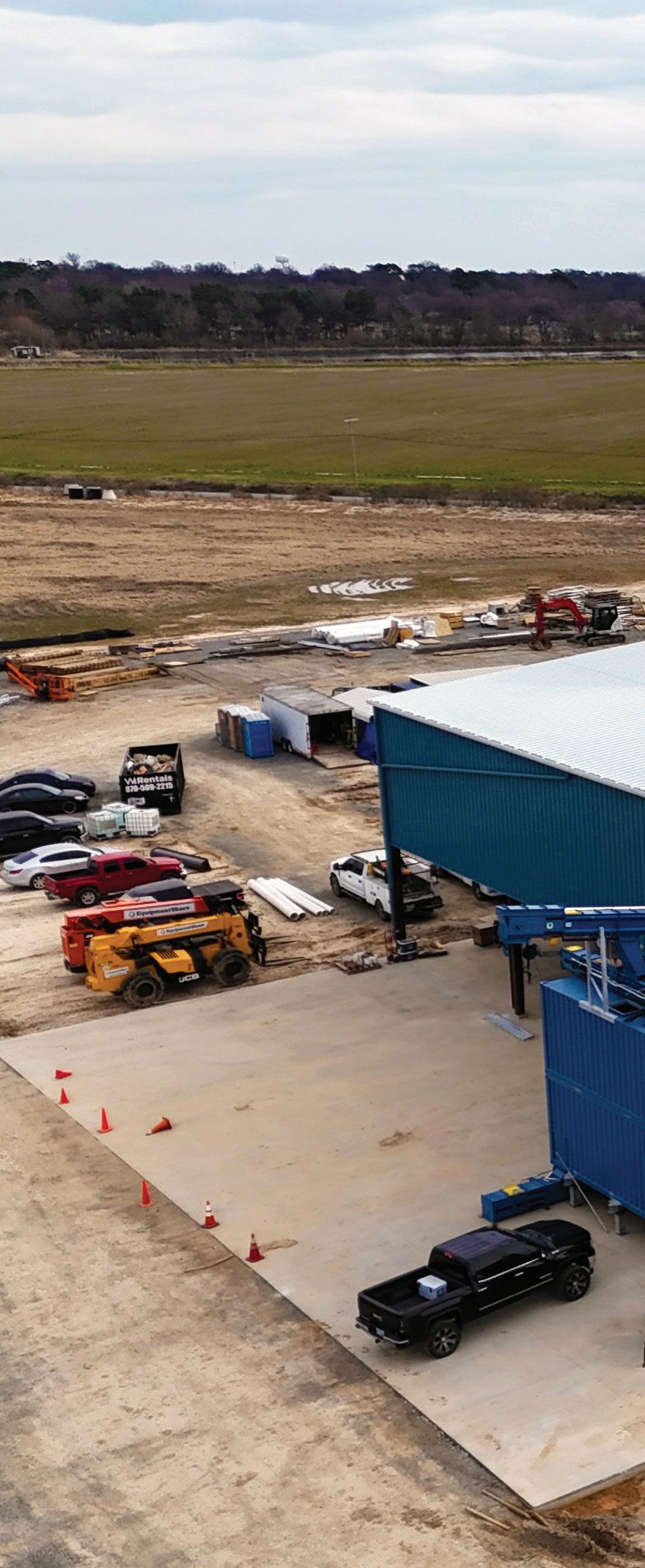
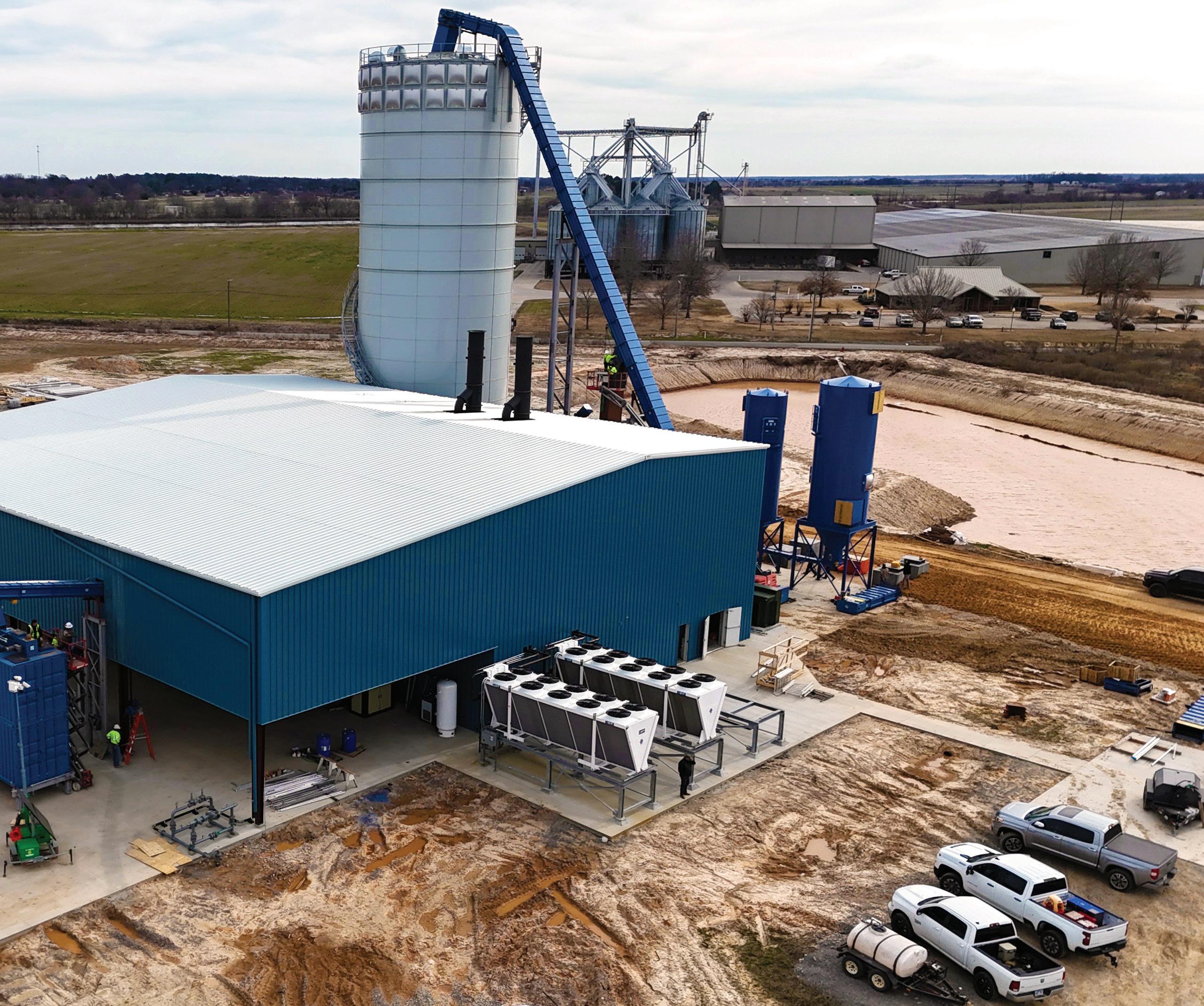
An overhead image shows the layout of Cold Steppe’s Stuttgart, Arkansas, biochar facility. Construction was completed last December.
ity was completed in June 2025, followed by groundbreaking in July. Construction and commissioning wrapped in December 2025. Freniere explains that two of the four kilns are currently online with the third and fourth to be implemented by the end of 2026. “We thought, coming in and applying our nuclear power-style engineering, that we’d be able to focus on quality and consistent product every single time, so that customers and end use markets would know exactly what they’re getting [and] know exactly how it’s going to perform in their system,” Freniere says.
Biochar brings local farmers a vital source of organic carbon, which improves the soil’s ability to retain moisture and fertilizer. Freniere also leads the company in his roles as chief operations officer and chief financial officer. The facility currently utilizes 20,000 tons of feedstock to make 10,000 tons of biochar. By the end of 2026, Cold Steppe aims to produce 20,000 tons of biochar, utilizing 40,000 tons of rice hulls from nearby farms.
Ideal Location
Arkansas produces more rice than any
other state in the U.S., holding its position as the nation’s leading rice producer for 50 years, according to the Arkansas Farm Bureau. Cold Steppe’s feedstock for its biochar is a common byproduct of rice milling: rice hulls. A byproduct of rice processing, rice hulls are difficult to process because of their high silica content, which wears on material handling equipment, particularly machinery with a tight tolerance, Freniere explains. However, he believes the silica in the biochar provides a “superior value to farmers and agriculture.”
Cold Steppe managed the abrasiveness of the silica by using custom parts and machinery designed for rice hull handling. Rice hulls have a different angle of repose compared to a grain of sand, Freniere adds, so they bind together rather than pile up. In the initial engineering phase, Cold Steppe collaborated with equipment manufacturers, providing samples of the feedstock to make sure that the purchased machinery could handle the material without an issue.
Support for the project has been incredible, according to Crow and Freniere.
“From the Stuttgart Industrial Development Corporation, the Chamber of Commerce, the local contractors, the businesses, the political leaders, it was a very welcoming state to come in and try to build something,” Crow says.
Crow and Freniere did the engineering, procurement and construction management portion of the process themselves; consulting experts and hiring construction contractors when needed. AP Fabrication,
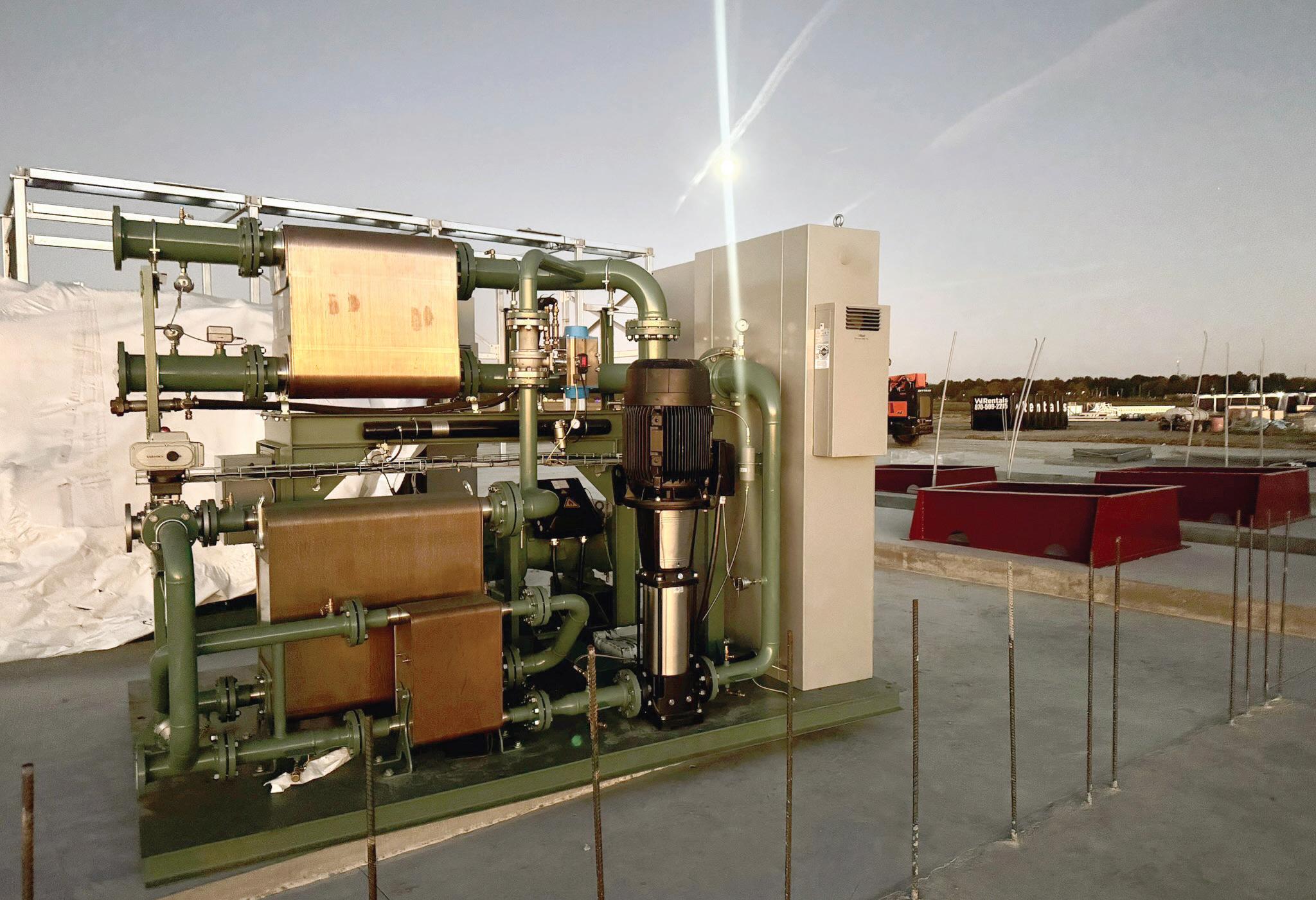
ElectraTherm’s compact organic Rankine cycle generator is installed on Cold Steppe’s site, recovering waste energy and turning it into electricity.
IMAGE: COLD STEPPE
a local company near Stuttgart, brought material handling expertise in rice hulls to the project. Process Design and Services, a Virginia-based engineering firm, developed the process design, which took about a year to complete.
Agricultural Market
For a large-scale biochar project to work, the end use of the product must be clear, Crow explains. The specs of biochar made for use as a soil amendment may not be entirely compatible with biochar made for a voluntary carbon market or the cement industry. Cold Steppe chose the end use for its biochar, then designed the process around it. “We’re certainly focused on agricultural market due to that high silica content in the biochar,” Freniere says. “So, some biochar companies have had trouble selling into farms, ag, because I don’t think they’ve taken the time to learn what their product does and how it works, but we found a very warm reception.”
Over decades of farming, the organic material in the soil becomes depleted and eventually hits a point of “diminishing returns.” Although farmers are diligent to manage their soil well, rebuilding that organic carbon is slow and difficult. Biochar supplies a straightforward solution to this problem, and the closed-loop cycle of applying agricultural residue to the soil it was grown on makes sense to farmers, Freniere explains.
When applied to the soil, biochar adds carbon back into it and improves its cation exchange capacity (CEC), improving fertilizer retention. Fertilizer is—at the molecular level—an ionic impurity, and substances like biochar with good CEC hold on to positively charged ionic impurities. Freniere explains that biochar’s anionic exchange capacity enhances the soil’s ability to retain negatively charged fertilizers and water. “All of those things go back to improving a photosynthetic rate, which improves plant productivity and overall yield for the
farmers,” he adds. “So, especially across our southeastern agricultural soils that tend to have very low organic material … this is an attribute that they can’t build up in their soil based on temperature and the soil biology.”
A Biological Reactor
Having worked on a nuclear submarine, both founders gained firsthand experience on self-sustaining energy reactions and the flow of energy throughout a system. The kiln used to make the biochar shares commonalities with a nuclear reactor, Freniere explains. Sometimes also referred to as a reactor, the kiln works as a type of chemical reactor, pyrolyzing the biomass and turning it into biochar.
A kiln and a nuclear reactor both use a self-sustaining chain reaction, meaning that once the process starts, it will keep going as long as the energy balance is maintained. The mental framework developed by working with nuclear reactors informed the duo’s approach to system design, select-
ing process elements that would be easy to repair and designing a straightforward process that would be easy for new employees to learn.
Equipment suppliers played a vital role in bringing all the pieces together and ensuring every element—from heat exchangers to conveyors to energy production—worked in concert with the others. “Getting all that support was instrumental for us being able to accomplish what we did at the speed we did,” Crow adds.
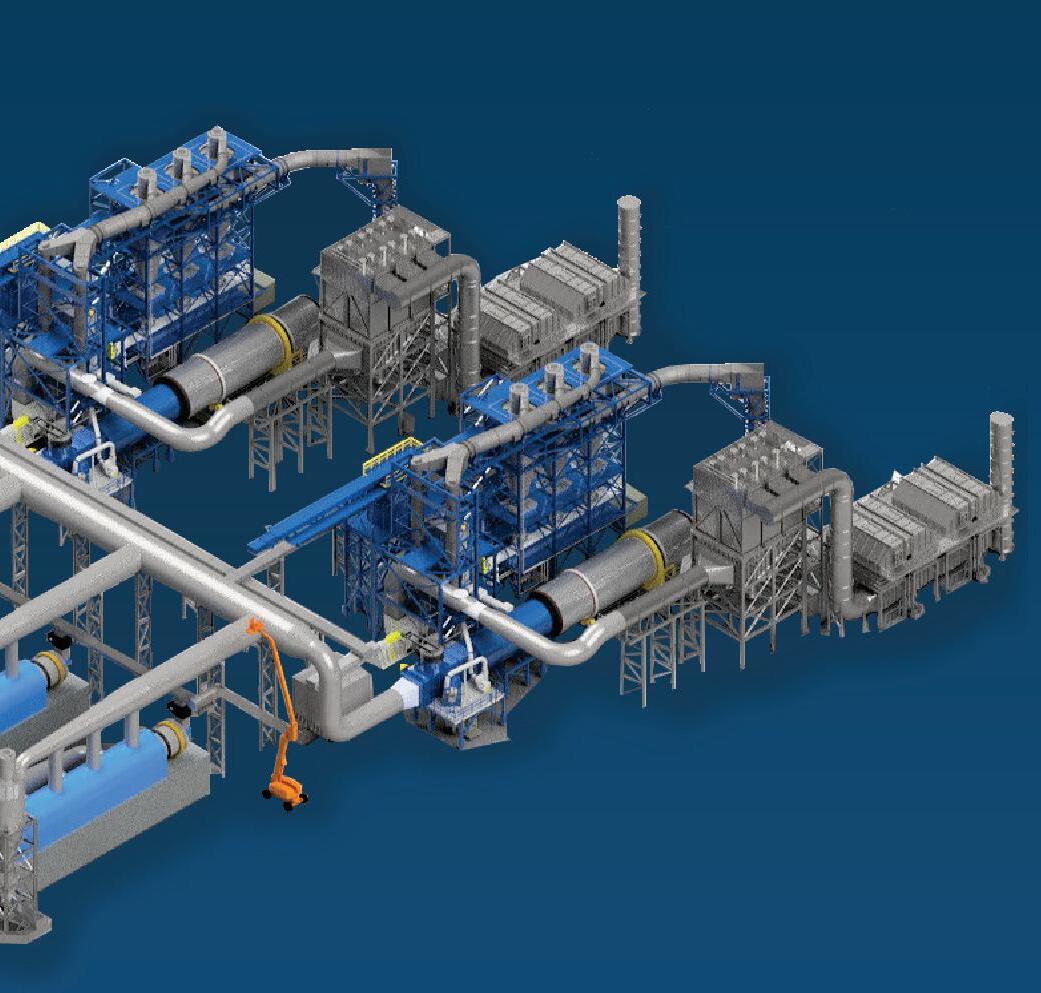
Cold Steppe chose BioMass Energy Techniques’ Pyrolysis Rotary Drum technology for their process, specifically the PRD3000 model, which processes 3,000 pounds per hour of feedstock. Combining a rotary kiln technology with BET’s proprietary biomass energy systems, the PRD stands out by offering continuous, automated biomass processing rather than batch processing, explains Derrick Giesbrecht, chief operations officer and manager at BET. Other unique qualities of BET’s technology include industrial scalability and feedstock flexibility.
The PRD meets the processing needs for a variety of industries and markets
beyond biochar production, including waste diversion, renewable energy and carbon-negative solutions, he explains. The technology’s variability and value is evidenced by 20 installations across the U.S. and Canada, including the Cold Steppe project. Cold Steppe will use four PRD3000s when it reaches full capacity.
Giesbrecht outlines the PRD’s process steps. After biomass enters the system, it is conveyed into the rotating pyrolysis drum, which moves the material through carefully controlled temperature zones. Then, high-temperature retention chambers complete the pyrolysis process. Biochar exits the system at a continuous rate. “The operator can adjust retention time and processing conditions based on feedstock characteristics and desired product specifications,” he adds.
The biochar market is entering a growth phase, gaining interest from the industrial materials and carbon management sectors. “Instead of paying to dispose of biomass or waste materials, operators can convert those materials into biochar, recover usable energy, generate carbon credits and potentially produce electricity,”
Construction of Cold Steppe’s biochar project took only 169 days, from groundbreaking to commissioning. Currently producing 10,000 tons per year, the company plans to double output by the end of 2026.
Giesbrecht says. “That combination creates a compelling economic and environmental case.”
Efficient Energy
Aiming for maximum energy efficiency, Cold Steppe decided to install organic Rankine cycle (ORC) generators from ElectraTherm, a member of the BITZER group. ORC generators are small machines that turn heat into electricity, explains Tom Brokaw, general manager of ElectraTherm. The generators serve as a “plug in” option for industrial operations that are searching for a way to capture waste heat without designing a large combined-heat-and-power system.
Natalie Van Dyke, director of sales at ElectraTherm, met Freniere and Crow when they reached out for information on carbon credits for waste heat recovery. However, the two founders were intrigued by the opportunity to increase energy efficiency, and ElectraTherm’s experts became intrigued with how their technology could apply to biochar. “We all kind of came into this gold rush of biochar pyrolysis at the same time,” Van Dyke says. “And Cold Steppe, that group is interesting to us because … we feel like we evolved with them. We all learned together.”
The ORC generator was initially implemented alongside biogas-to-energy projects in Germany, where it used the residual heat emitted by the internal combustion engine onsite to produce electricity. Many of those facilities used leftover heat for warming buildings or digesters, but ElectraTherm saw opportunity in the energy leftover after other applications.
Designed for flexibility, the ORC generator fits well in a biochar production system, Brokaw explains. “Since you’re dealing with a biomass fuel, the exact BTU content batch to batch could change, the moisture content could change the feed rate could change a little bit, so how much heat is left over at the end of that process can be variable.”
Impact and Expansion
For every impact he hopes the project will make, Crow explains that Cold Steppe plans to prove out those results with data. Once this project is operating at full capacity, Crow and Freniere plan to build another facility and keep expanding biochar production.
Ultimately, Cold Steppe is dedicated to creating value for the end user by converting a waste stream from the agriculture or for-
estry industries into a stable carbon matrix at such a scale that the product is economically beneficial to the buyer. “The hope is that you can produce biochar at a price point where it’s a consumable on the market that they require, and that the math just works,” Crow says.
FROM AIR PERMITS TO INTERCONNECTS INSIDE THE RNG REGULATORY MAZE
BY KEITH LORIA
Over the past decade, there’s been a greater emphasis on renewable natural gas (RNG) development, fueled by demand for low-carbon fuels, favorable policy incentives and growing interest from utilities, municipalities and agricultural producers.
Today, new projects continue to emerge at landfills, dairy farms and wastewater treatment facilities across North America, promising to transform methane emissions into a valuable energy resource. However, for many developers, building an RNG project can be difficult, though it has little to do with feedstock, financing or technology. Instead, the challenge often lies in navigating a complex web of permits, approvals, environmental reviews and utility requirements that can significantly affect project schedules, costs and viability.
For instance, a project may have secured financing, signed feedstock agreements and selected technology vendors, but find itself delayed for months—or in some cases, years—due to permitting requirements that were not fully understood during development. “Developers most often underestimate the complexity of air permitting and the cumulative effect of parallel approvals,” says Pat Sullivan, senior vice president and Southwest region business unit director at SCS Engineers. “Not just the air permit itself, but also related or codependent permits.”
Therefore, as RNG deployment continues to expand, industry experts note understanding the permitting landscape early is becoming just as important as securing project economics.
Multiple Layers of Approval
One of the biggest misconceptions surrounding RNG project development is the assumption that permitting is a single regulatory hurdle, when in reality, projects often require approvals from multiple agencies operating on different schedules and under different regulatory frameworks. Air permits typically represent the most visible requirement, but they are only one piece of the puzzle. Developers may also need environmental reviews, local land-use approvals, building permits, utility agreements and pipeline interconnection approvals.
According to Sullivan, non-air approvals frequently become the true schedule drivers. “Environmental review, local land use approvals or utility-driven conditions often end up driving the schedule more than the air permit itself,” he says. “In some jurisdictions, these permits are codependent, as you cannot get one without the other.”
That can create cascading effects throughout a project. Delays in one approval can force changes to engineering plans, equipment locations, mitigation measures or construction schedules. The result is often increased capital costs and delayed revenue generation.
Scott Martin, who leads RNG efforts for Burns & McDonnell, says developers sometimes fail to recognize how interconnected these requirements have become.
“Not engaging permitting authorities and utilities early enough to identify fatal flaws or schedule constraints remains one of the most common challenges,” he says. “Resource constraints within agencies and utilities can further extend approval timelines.”
The complexity also varies considerably based on project type. Landfill-based RNG facilities, dairy digesters and wastewater treatment projects each face different permitting pathways and regulatory concerns. That variability makes it difficult to apply a one-size-fits-all approach to project development.
Air Permits: The First Major Hurdle
Among all regulatory requirements, air permitting is often the first major challenge developers encounter. The complexity of that process depends heavily on project size, location and emissions profile. A key distinction is whether a facility is classified as a minor source or a major source under federal and state air regulations. “Major source permitting is always more complex, time-consuming and costly than minor source permitting,” Sullivan says.
The consequences can be significant. For example, major-source projects may trigger extensive requirements including Best Available Control Technology evaluations, air-dispersion modeling, public notice periods and emissions offsets. In some cases, even relatively small design changes can determine whether a project crosses a regulatory threshold. “In practice, this means early emissions estimates, applicability reviews and honest conversations about worst-case operating scenarios are critical,” Sullivan says.
Matt Hazelton, senior air quality permitting engineer with TRC Companies, notes that project location can dramatically influence permitting requirements. “If the facility is located in a nonattainment area as designated by the U.S. EPA, certain emissions will have lower potential-to-emit thresholds,” he says. “This can drop the major source thresh-
olds from 100 tons per year typically, to 50 or even 25 tons per year.”
Hazelton adds that sulfur-related emissions often become a determining factor.
“Excess sulfur dioxide and hydrogen sulfide are common pollutants that can trigger major source permitting requirements,” he says.
Landfill RNG projects present their own unique challenges because they are often added to existing facilities that already operate under complex regulatory programs. Martin notes that many landfill projects are associated with federally enforceable Title V permits and may already be subject to Prevention of Significant Deterioration requirements. “When you go through a new air permit modification and you’re subject to PSD, then you have to do what’s called the Best Available Control Technology evaluation,” he says. “Those reviews can become costly.”
For instance, Martin recalls one project where additional pollution control requirements dramatically altered project economics. “The state basically said they needed to add back-end pollution control equipment to reduce NOx and carbon monoxide emissions,” he says. “The additional cost for that pretreat-
ment was another $6 million on top of what the plant was already going to cost.”
Ultimately, the project was abandoned.
For developers, it demonstrates the importance of understanding emissions profiles and permitting triggers before detailed engineering begins. Sullivan says source aggregation is another area frequently overlooked, explaining that projects are often planned as standalone RNG facilities owned by third-party operators. However, regulators may determine that emissions must be aggregated with an existing landfill or industrial facility. That decision can unexpectedly push a project into a much more stringent permitting category.
Additional requirements may include air modeling, public notice, emissions offsets and advanced control technologies. “The cost of some of the additional regulatory requirements triggered could be significant,” Sullivan says. Because of these risks, early due diligence for any project is vital.
Hazelton recommends evaluating feedstock characteristics, researching local attainment status and engaging regulators before design decisions become locked in.
“Understanding local civic context and
proactively engaging stakeholders early can also provide insight,” he says.
Why Interconnection Becomes a Bottleneck
Even after developers successfully navigate environmental reviews and air permits, another challenge they must deal with is pipeline interconnection. In fact, many industry participants identify interconnection as one of the most underestimated aspects of RNG development.
At first glance, connecting to a nearby natural gas pipeline may appear straightforward. In practice, however, utilities and pipeline operators impose a wide range of technical, operational and regulatory requirements. “Pipeline interconnection is rarely delayed for a single reason,” Sullivan says. “Projects get stuck at the intersection of gas quality specifications, utility requirements, easements and utility review queues.”
Those factors often operate independently of the developer’s schedule. Hazelton says routing requirements alone can create significant permitting complexity. “Routing can be
TOTAL SYSTEMS INTEGRATION
highly variable depending on location, distance and required permitting,” he says. “Larger pipelines with higher pressure or in areas that may pass near or through sensitive locations can quickly increase permitting complexity, cost and time.”
Gas quality requirements represent another major hurdle. Pipeline operators establish detailed specifications governing oxygen content, heating value, sulfur concentrations and other parameters. Meeting those requirements frequently requires additional equipment and operational controls.
Martin says developers sometimes assume a nearby pipeline automatically represents a viable interconnection opportunity.
That assumption can prove costly.
One municipal project that his firm evaluated had identified a nearby pipeline as a potential connection point. After discussions with the utility, developers learned the local system lacked sufficient capacity to accept the gas. “The response was [they] would have to redo their entire distribution system in that part of the city to be able to accept the gas,” Martin says.
For developers, lessons like these underscore the need to treat interconnection planning as a parallel workstream rather than a final project step. “Developers can reduce risk by engaging the utility early with real gas data, not conceptual assumptions,” Sullivan says.
Project Type Matters
One thing is clear: While all RNG projects share common regulatory themes, permitting requirements can vary dramatically depending on the feedstock source. Landfill gas projects, dairy digesters and wastewater-based systems each present unique challenges for regulators and developers alike.
Landfill projects are often constructed within facilities that already possess extensive operating histories and established permits. That familiarity can provide advantages, but it also introduces additional complexity. “Landfills sometimes are dealt with as an adjustment to an existing air permit for the landfill, while digesters are often greenfield projects that require a new application,” says Jeffrey Grill, vice president and business unit director of SCS Engineers’ energy division.
Because landfill facilities already operate under existing air permits and environmental programs, developers must frequently address questions related to emissions aggregation, permit modifications and regulatory applicability.
Hazelton says landfill projects often must navigate interactions with existing air permits in ways that agricultural projects do not. “Landfill RNG projects tend to be larger in capacity and throughput and often have to navigate more complex interactions with existing air permits for the landfill,” he says.
Digesters present a different set of challenges. Many agricultural RNG projects are viewed favorably because they capture methane emissions that would otherwise be released into the atmosphere. Even so, they often face scrutiny related to odors, ammonia emissions, traffic and community impacts. “Dairy digester RNG projects are often greenfield from a permitting perspective,” Sullivan says. “They face heightened scrutiny around odor, ammonia, volatile organic compounds and community impacts, even when emissions are comparatively small.”
ENGINEERING POSSIBILITIES.
Despite those concerns, digesters can sometimes enjoy a more streamlined permitting path. “Oftentimes, digester projects are seen as an emissions-reduction project holistically, so the air permitting process takes less time than the landfill one,” Grill says.
Still, regulatory familiarity plays an important role. While states such as California, Wisconsin and Michigan have extensive experience permitting dairy digesters, requirements and interpretations can vary considerably among agencies and reviewers.
Permitting consistency remains a challenge throughout the industry, Martin notes. “The rules are the rules, but they’re always subject to the interpretation of the reviewer,” he says. “Sometimes the reviewers like to take liberties with what we send them and request lots and lots more information that’s not necessarily required to get a permit.”
That uncertainty can create additional rounds of review and extend project schedules. The differences between project types reinforce a common theme repeated throughout the industry: permitting success often depends on understanding local conditions and agency expectations rather than relying solely on generalized assumptions.
Geography Matters, Too
Permitting complexity doesn’t just vary by project type. It also varies dramatically by location. After all, federal regulations provide a common framework, but state and local implementation ultimately determine how projects move through the approval process. “Federal and state policy may encourage RNG, but state and local implementation and permitting ultimately control schedule risk,” Sullivan says.
California remains one of the most active RNG markets in North America, but it is
also widely viewed as one of the most challenging permitting environments. According to SCS Engineers, developers must navigate multiple independent air districts, environmental-review requirements, land-use approvals and utility processes. “California has the most complex and longest timelines due to independent air districts with their own regulations, environmental review requirements, land use permitting, slow-to-act utilities and public participation,” Sullivan says.
Other states can present challenges of their own. For instance, Martin points to Washington, Wisconsin and Michigan as other locations where developers frequently encounter permitting or utility-related hurdles. Even within a single state, requirements can vary significantly between jurisdictions. “It is highly variable across the country, among states and even within local jurisdictions within the same state,” Sullivan says.
That variability makes local expertise increasingly valuable. “The key is to hire experts who know the state and local agencies and requirements and make sure you have an expert for each key permit program,” he says.
Grill notes that understanding permit dependencies early is critical. “In some states, counties or cities, there are predecessor tasks that are required to be achieved before moving forward with permitting,” he says.
For example, developers may need an interconnection agreement before certain permits can proceed. “A simple matrix with all the permits and their dependencies is cheap insurance compared against a major delay if the process is not followed,” Grill says.
Common Missteps
Although permitting requirements can be complex, many project delays originate from a relatively small number of recurring mistakes. Site selection remains one of the most important. Hazelton notes that developers sometimes focus heavily on technical and economic considerations without fully evaluating local permitting constraints.
“Spending the time and effort to better understand the local permitting regulations and their nuances, community and stakeholder involvement, and, importantly, as much spec-
ificity on location, layout, size and capacity as possible is important,” he says.
That’s why community considerations can prove especially important. Grill notes that issues such as noise, traffic, flare visibility and proximity to residential areas can become significant concerns, even when emissions are relatively minor. “Even if the local jurisdiction does not require it explicitly, sometimes the site does not want to see a flame from a flare,” he says.
Martin recalls situations where project locations themselves created avoidable conflicts.
“I’ve worked on projects where it was clearly a mistake, like siting a food waste digestion project right next to a pristine lake that has $500,000 lake homes on it,” he says.
Another common issue involves advancing engineering before critical permitting assumptions have been validated. Burns & McDonnell has seen cases where developers move too far into design before confirming emissions assumptions, permit feasibility or site constraints. That approach can create expensive redesigns later in the process.
SCS has seen similar challenges with emissions modeling. In some cases, preliminary permitting analyses underestimate emissions, only for later engineering work to reveal higher values. When that occurs, agencies may require additional reviews, effectively restarting portions of the permitting process.
“It is very common to adjust the project or accept emission limits to avoid major source status,” Sullivan says.
Building Permitting Into Project Development
As RNG markets continue to mature, developers are increasingly treating permitting as a core component of project development rather than a regulatory afterthought. Pre-application meetings with regulators can help establish expectations, identify concerns and clarify approval pathways before formal submissions begin.
Additionally, early emissions analyses allow developers to understand potential regulatory triggers and modify designs before major investments have been made. Just as important, developers should pursue permitting,
environmental review and interconnection efforts simultaneously whenever possible. “Conducting air permitting, environmental review and interconnection as parallel tracks is one of the most effective approaches,” Sullivan says.
Maintaining design flexibility also remains critical. Equipment specifications, facility layouts and operating assumptions may need adjustment as agencies and utilities provide feedback.
More Than a Regulatory Checkbox
As RNG development expands across landfills, farms and wastewater facilities, permitting is becoming one of the industry’s most important differentiators. Projects that successfully navigate the regulatory process are rarely the ones with the fewest permits. More often, they are the ones that recognize permitting as
a fundamental development activity from the beginning. Air permits, environmental reviews, utility agreements and interconnection approvals all influence project economics, schedules and technical design. Delays in any one area can ripple through the entire project.
For developers, the lesson is increasingly clear: permitting is not simply a compliance requirement to be addressed after engineering begins. “The fastest projects aren’t the ones with fewer permits,” Sullivan adds. “They’re the ones that acknowledge permitting as a core development activity—not an afterthought.”
Author:
Keith Loria Contributing Writer, Biomass Magazine
From Reactive to Proactive: Dust Hazard Analyses Strengthen Safety in Pellet Mills
BY ALYSHA YINGER
Pellet mills operate in conditions that can create a combustible dust perfect storm. Extreme drying, high mechanical energy, friction, airflow and continuous material handling combine to produce ideal conditions for ignition and explosion.
A dust hazard analysis (DHA) helps pellet mills move from reactive safety to proactive risk management. Required under NFPA 660, which consolidated earlier combustible dust standards (including NFPA
652 and 664), a DHA is a structured engineering evaluation that identifies where dust fire and explosion hazards exist and how they should be controlled before an incident occurs.
The “Gasoline” Effect of Fine Wood Dust
Fine wood particles required for pellet production behave much like gasoline in dust form. They are highly ignitable, easily dispersed and capable of reaching ex-
plosive concentrations when suspended in air. (Note that even green wood dust, with moisture levels of below 40%, can dry to combustible levels over a few days when allowed to accumulate.)
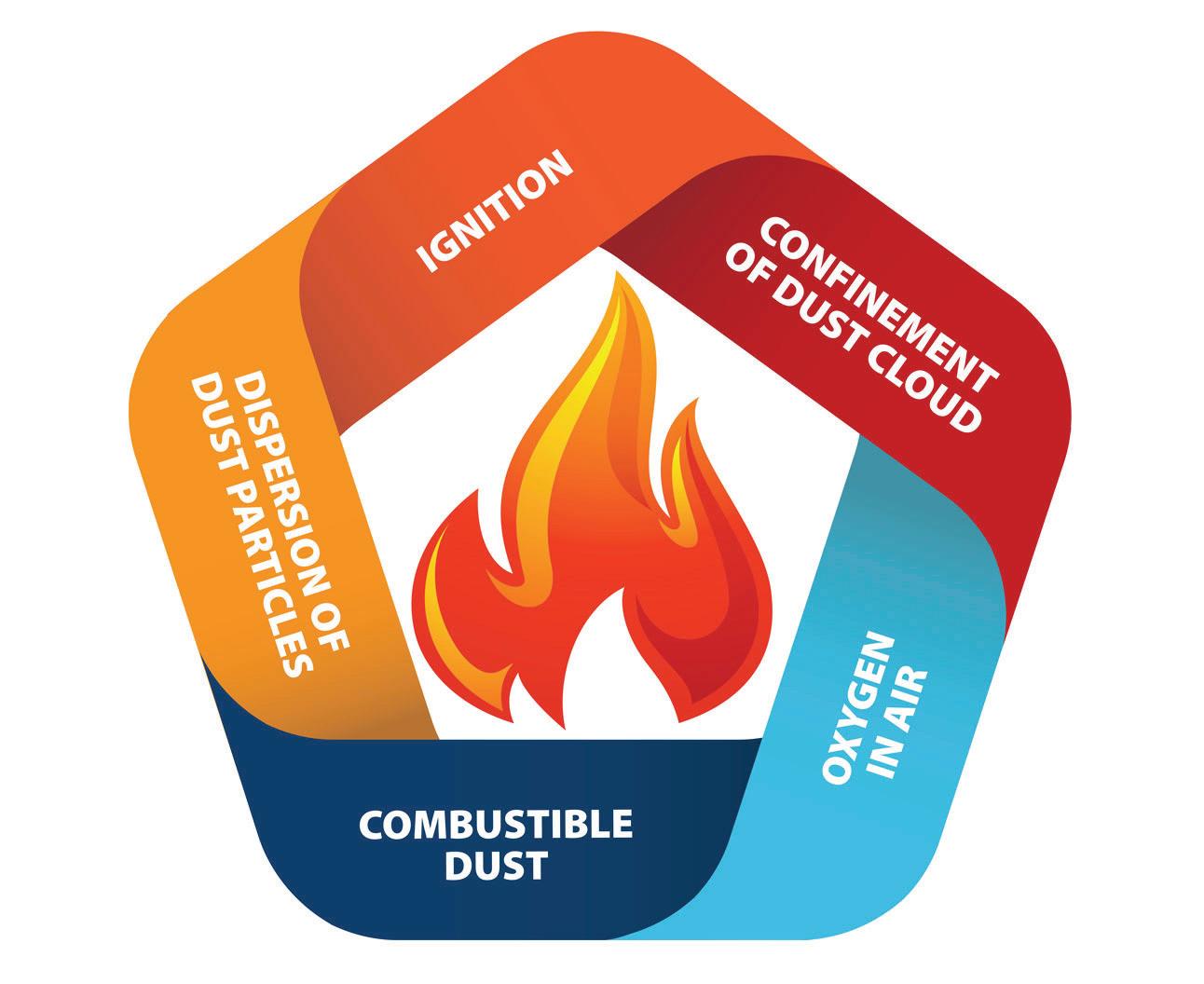
The explosion pentagon (fuel, oxygen, dispersion, containment and ignition) identifies the elements that must be present to create an explosion: fuel (fine dry wood dust and pellet fines); oxygen (ambient air); dispersion (conveying systems, pneumatic transport, process airflow or accumulat-
CONTRIBUTION: The claims and statements made in this article belong exclusively to the author(s) and do not necessarily reflect the views of Biomass Magazine or its advertisers. All questions pertaining to this article should be directed to the author(s).
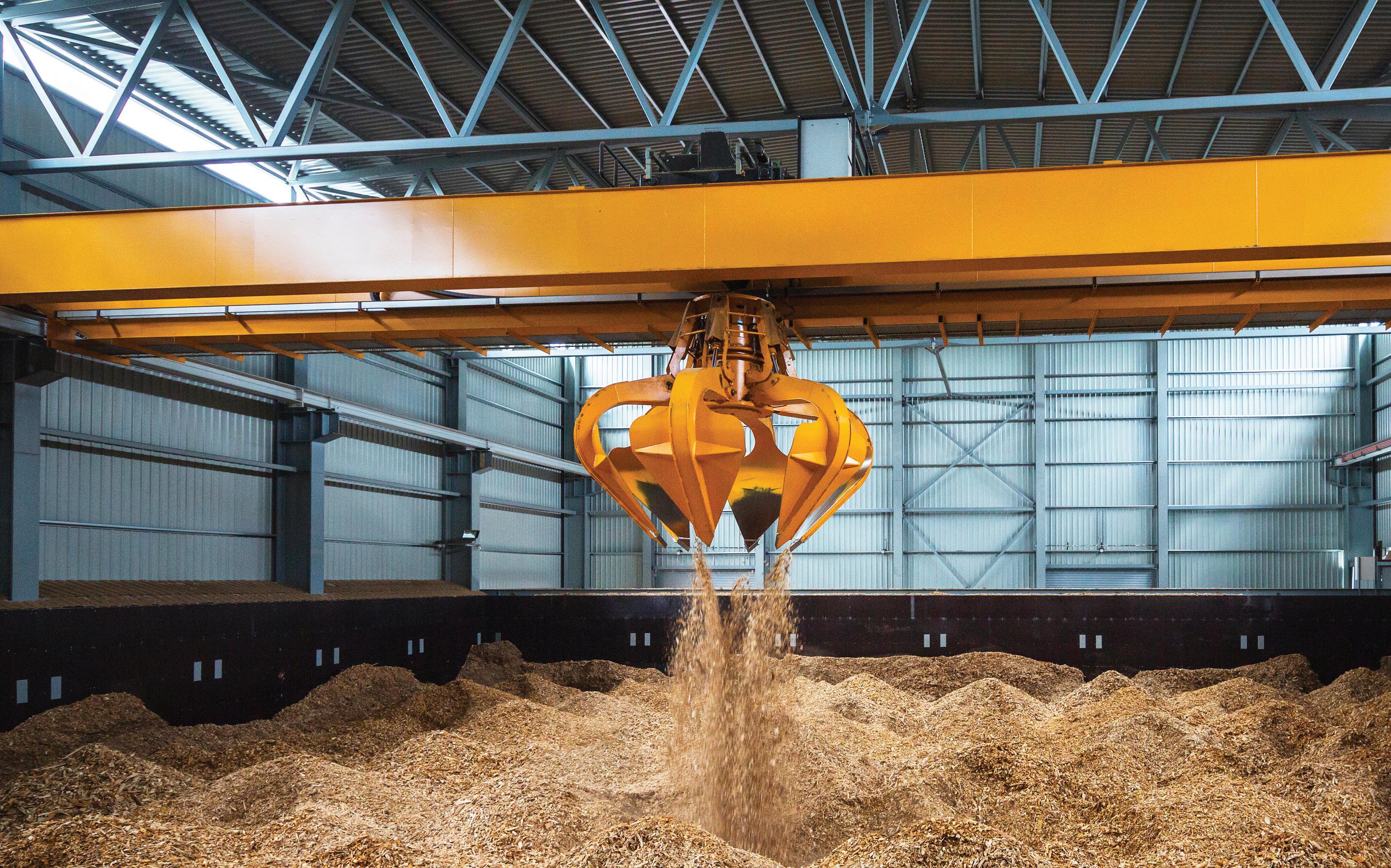
An overhead grapple crane moves wood chips through a pellet plant’s raw material storage facility—the kind of dusty, high-throughput environment where a thorough dust hazard analysis is essential to worker safety and regulatory compliance.
ed dust falling off surfaces); containment (ductwork, dust collectors, bucket elevators and silos); and ignition (heat from pellet presses, overheated bearings, metal-to-metal contact and sparks).
Conditions in a pellet mill for biomass introduce all five elements. The drying process lowers ignition energy requirements; mechanical systems introduce heat and friction; airflow suspends dust; and enclosed equipment provides containment. All that is required is a single ignition source to trigger a deflagration. Even without confinement, wood dust accumulation in a facility can pose a flash-fire risk if ignited.
A DHA forces facilities to examine how frequently these five factors align, and where controls may be insufficient.
What a DHA Actually Does
A DHA provides a structure for systematic risk analysis and response to enable proactive mitigation of avoidable combustion risks. It looks at where and how potential dust clouds can form, and what potential ignition sources may be present within a facility and its operations.
Though required, the real value of a DHA goes far beyond satisfying an inspector or insurer and includes four foundational elements.
Material Testing
The first step in a DHA is understanding your dust characteristics and explosive potential. Using verified data, whether published or lab-tested, ensures explosion protection systems are neither undersized nor unnecessarily overbuilt. The explosive potential of dust is evaluated through standardized laboratory tests that determine key explosion indices such as:
• Kst (deflagration index)
• Pmax (maximum explosion pressure)
• MIE (minimum ignition energy)
• MIT (minimum ignition temperature)
Dust is classified into four ST classes (ST0–ST3) depending on its Kst value, which measures how rapidly pressure rises
when a dust cloud ignites in a closed chamber.
Most wood dust used in pellet production falls within well-documented explosibility ranges. Fine, dry wood dust is typically classified as ST1 under NFPA standards, meaning it has a Kst value between 1 and 200 bar·m/s. In some cases, particularly with very fine particle sizes and low moisture content, values may approach the lower end of ST2. However, ST class is not directly correlated with damage potential; even an ST1 dust can generate severe overpressure when dispersed and confined, creating the potential for a large and possibly lethal explosion.
Because wood dust characteristics are well studied, facilities may sometimes reference published industry values when their material is similar in species, particle size distribution and moisture content. However, dust explosibility is still sample-specific. Laboratory testing becomes especially important in instances such as when moisture content drops significantly below typical ranges, particle size distribution shifts due to process changes, new raw material sourc-
es or species are introduced, and production rates increase dust loading.
Process Characterization
A DHA maps every “node” in the facility where dust, air and ignition sources could coincide. In pellet mills, this often includes hammer mills, dryers, pellet presses, coolers, bucket elevators, conveyors, dust collectors and silos.
Each location, piece of equipment and dust generation point is evaluated for fuel loading, dispersion potential, containment and credible ignition sources. The goal is to identify not just where dust exists, but where the explosion pentagon can be completed.
Many parts of the pellet milling process generate significant heat during operation. If lubrication fails, bearings overheat or mechanical components malfunction, hot surfaces or sparks can ignite dust within extraction systems or downstream cooling equipment. Where steam is utilized to form the pellets, a malfunction in the steam line or conditioner can overheat the material.
Material handling systems are also critical nodes. Bucket elevators and convey-
The explosion pentagon—expanding on the classic fire triangle by adding dispersion and confinement— illustrates the five elements that must be present simultaneously for a dust explosion to occur.
ors, which continuously move dry material through enclosed spaces, are frequently identified as high-risk locations.
When starch is added to the process, special considerations need to be taken into account, as starch can disperse in the air and move like a liquid, and can be especially combustible. As starch is an agricultural dust, any specific considerations for that material would be found in the Agricultural and Food Dust Chapter of NFPA 660 - Chapter 21 (formerly NFPA 61).
Many combustible dust incidents become catastrophic through secondary explosions. A primary deflagration can dislodge accumulated fugitive dust from overhead beams, rafters and structural steel. Once suspended in air, this dust forms a large combustible cloud that can ignite and propagate throughout the facility. For this reason, DHAs also evaluate dust accumulation and housekeeping practices. Even small layers of dust on structural members, equipment or cable trays can provide the fuel for a secondary explosion if they become dispersed by an initial blast.
Silos and storage bins present additional hazards. Pellets can self-heat during storage and, under certain conditions, spontaneous combustion may occur. Smoldering material entering downstream conveying or
dust collection systems can introduce an ignition source into areas where fine dust is already suspended.
By examining each process node in this way, a DHA identifies where ignition is most likely to occur and where a localized event could propagate into a facility-wide explosion. The analysis also evaluates credible escalation scenarios, including how fire or deflagration could propagate through conveying systems, dust collectors or storage equipment.
Hazard Prioritization
Not all risks are equal. A DHA ranks hazards based on severity and likelihood, allowing leadership to allocate safety budgets strategically. For example, a dust collector connected to multiple high-volume sources may represent a higher deflagration propagation risk than a single enclosed transfer point. A frequently overheating bearing may present a higher ignition probability than a rarely accessed storage bin. This prioritization prevents facilities from investing in cosmetic improvements while leaving critical vulnerabilities unaddressed.
Safeguard Verification
After hazards are identified and prioritized, the DHA evaluates the safeguards
already in place to determine whether they adequately control the identified risks. This step examines both engineering controls and operational practices to confirm they are appropriate for the facility’s current processes and dust characteristics.
Many pellet mills already have spark detection systems, explosion vents, suppression systems or isolation devices installed. A DHA verifies whether those safeguards remain appropriate for the current dust characteristics and operating conditions. Chapter 24 of NFPA 660 was written by experts within the biomass industry and contains specific requirements and exemptions based on how wood dust is handled and biomass industry best management practices.
Pellet mill operations naturally evolve over time. Under NFPA 660, a DHA must be reviewed and updated at least every five years, or whenever significant changes occur in processes, materials, equipment or facility layout. A safeguard that was sufficient five years ago may no longer be adequate today. Key questions include:
• Have production rates increased?
• Has moisture content changed?
• Has ductwork been modified?
• Has a collector been relocated indoors?
• Have new raw materials or equipment been introduced?
• Have monitors or sensors been added or removed?
• Have equipment setpoints changed?
The purpose of safeguard verification is not simply to confirm that equipment exists, but to evaluate whether it remains properly sized, correctly located and functionally effective under current operating conditions. A DHA assesses real-world performance, not just equipment presence on a checklist.
Dust Collection for Combustible Dusts
Dust collection is essential for preventing airborne dust from accumulating on floors, equipment and overhead structures where it can create primary and secondary explosion hazards. However, because collectors concentrate fine, dry dust under airflow and containment—key elements of the explosion pentagon—they can become high-risk equipment if not properly engineered and protected. For this reason, dust collection systems for pellet mills must be designed in accordance with NFPA standards for dust collectors, including NFPA 68 (explosion venting) and NFPA 69 (explosion prevention systems).
Effective dust collection systems for pellet mills typically include:
• Direct suction at the source, using high-velocity capture at pellet discharge points and transfer stations to prevent dust from becoming airborne.
• Explosion venting, where rupture panels relieve pressure and flame to a safe outdoor area if a collector deflagrates.
• Flameless venting, for indoor equipment, using flame arrestor mesh to contain the fireball while allowing pressure to escape.
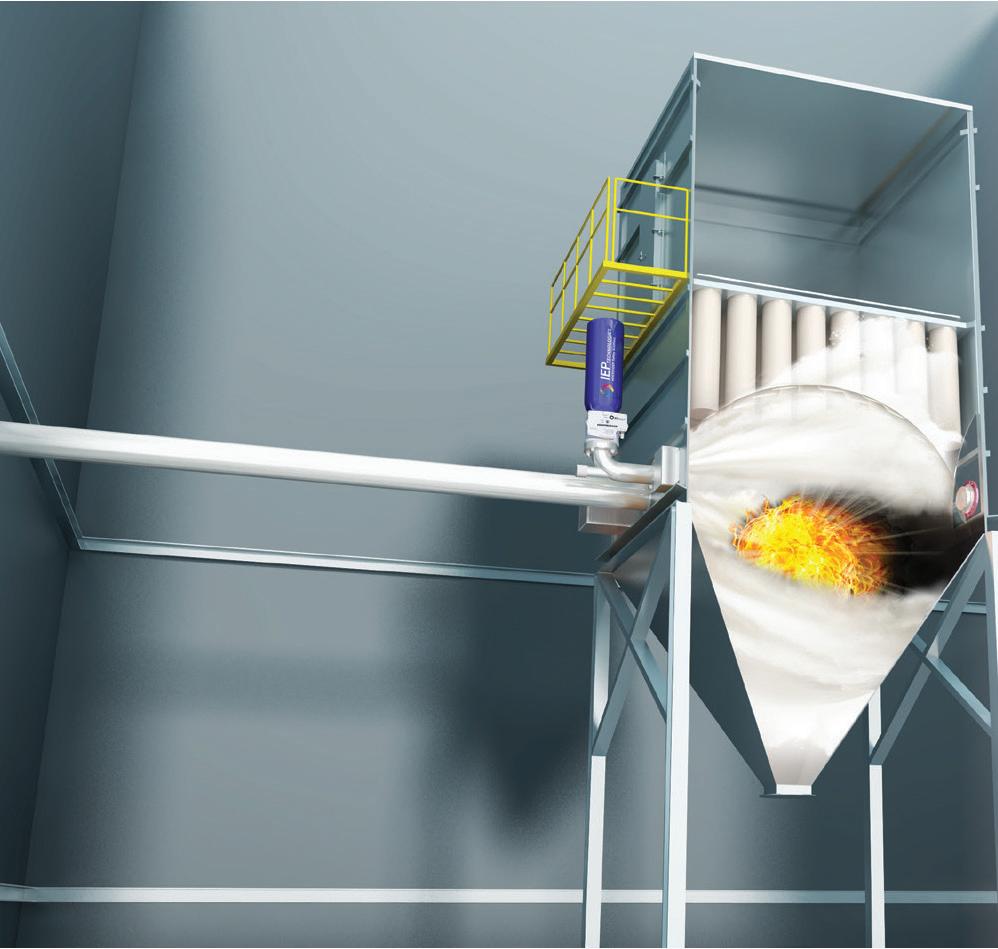
• Active isolation devices, such as fast-acting valves or chemical isolation systems, which prevent explosions from propagating through ductwork to other areas of the plant.
• Abort gates, to divert fire or smoke.
• Active spark detection and suppression, particularly upstream of collectors to intercept ignition sources before they reach concentrated dust (particuarly when pulling from dryer systems and hammer mills).
• Bonding and grounding, to prevent static buildup in ducting and equipment.
Working With a Qualified Engineering Partner
Rather than waiting for an incident to expose vulnerabilities, pellet mills can
manage risk through a properly conducted DHA, which identifies hazards early, prioritizes mitigation and strengthens safeguards before the elements of the explosion pentagon align. DHAs can be done during the design phase of a facility or system, which allows for the safe design of the systems and can minimize the potential need to retrofit existing equipment.
Under NFPA 660, a DHA must be performed or led by a qualified person, defined as someone who, by recognized degree, professional standing, training and experience, has demonstrated the ability to address combustible dust hazards. While some organizations may have internal safety professionals capable of leading the effort, many facilities choose to work with third-party engineers or combustible dust specialists to ensure the analysis is thorough, objective and aligned with current standards.
A well-executed DHA is not simply a compliance document. It is a practical engineering tool that helps pellet mills understand their specific risk profile and implement safeguards that are appropriately sized, properly located and fully integrated into plant operations.
Author: Alysha Yinger Director of Engineering, Robovent
Particulate Emissions Control for Thermally Processed Biomass
BY DON SHINN
As industries accelerate the transition toward circular economy models, biomass, its derivatives and biosolids have emerged as valuable feedstocks for renewable energy, metallurgical coal substitutes and soil amendments. Yet, alongside these opportunities comes a persistent operational challenge: controlling emissions.
With biocarbon production scaling across steel, energy and soil amendment markets, volatile emissions mitigation, dust collection and safety systems designed for nonthermally treated biomass processing must be adapted.
Emissions control plays a crucial role in ensuring that biomass processing facilities remain efficient, compliant and safe.
Biomass processing encompasses a wide spectrum of materials: wood chips, agricultural residues, pelletized fuels and treated municipal biosolids. Biosolids in particular introduce added complexity. After drying and processing, they can generate fine, sticky particulates prone to agglomeration and filter blinding. Biosolids processing frequently involves odor-causing compounds such as ammonia and sulfur derivatives. These feedstocks produce dust with widely varying characteristics
that must be considered in holistic emissions control. While baghouses primarily remove particulates, they may need to be integrated with dry sorbent injection, such as activated carbon or hydrated lime, and with biofilters or scrubbers downstream.
Changing Hazards for Consideration
Facilities producing biocoal, biochar and metallurgical biocarbon through pyrolysis are producing volatile and dust hazards that are categorically different from the ones encountered at conventional white wood pellet plants or during wastewater biosolids processing. The difference is not incremental; it is chemical, physical and must meet expanded regulatory requirements.
Dust created during white wood pellet production, while combustible, retains a meaningful volatiles content. It is hygroscopic and responds predictably to standard combustible dust measures. Pyrolysis removes the volatile fraction from biomass through controlled thermal decomposition in an oxygen-limited environment. The result is a high fixed-carbon solid, typically exceeding 75% to 85% fixed carbon for metallurgical-grade biocarbon. When this material is processed, pelletized, screened or conveyed, it generates dust with fundamentally different combustion characteristics. Three factors drive the elevated hazard:
• Higher fixed carbon content means a greater proportion of each dust particle is reactive fuel, lowering the energy required to initiate combustion and raising the severity of any deflagration event.
• Finer particle size from pyrolysis and downstream handling increases reactive surface area per unit mass, accelerating both ignition and flame propagation.
• Low hygroscopic tendency means biocarbon dust does not benefit from ambient moisture dampening. It stays dry and reactive under normal processing conditions.
The same wood feedstock processed to different fixed carbon targets produces dust with measurably different hazard characteristics. A dust test performed on white wood pellet fines does not apply to biocarbon from the same wood species. Facilities that have not characterized their specific dust are operating
CONTRIBUTION: The claims and statements made in this article belong exclusively to the author(s) and do not necessarily reflect the views of Biomass Magazine or its advertisers. All questions pertaining to this article should be directed to the author(s).
without a compliant engineering basis for their systems, regardless of what those systems cost.
Particulate Collection Technology Considerations
Baghouse dust collectors are indispensable in biomass and biosolids processing, offering unmatched efficiency in particulate control. However, their successful application depends on thoughtful design—balancing airflow, moisture and humidity considerations, dust and filtration media material properties, and most importantly, safety concerns.
A baghouse (fabric filter) dust collector removes particulates from air streams by passing them through rows of fabric filter bags. Dust accumulates on the surface of the bags, forming a “dust cake” that enhances filtration efficiency. Periodic cleaning dislodges this cake for disposal or recovery.
Most biomass dusts are classified as combustible, requiring compliance with standards such as NFPA 660. A dust test performed on white wood pellet fines does not apply to biocarbon from the same wood species. Testing of the dust is typically required to establish the explosivity of the dust and how the dust collector must be designed, reinforced and protected. Key parameters to be tested for include Kst and Pmax, minimum ignition energy, minimum explosive concentration, minimum ignition temperature, and particle size distribution under actual processing conditions.
This is consequential: the same wood feedstock processed to different fixed carbon targets produces dusts with measurably different hazard characteristics. Facilities that have not characterized their specific dust are operating without a compliant engineering basis for their systems, regardless of what those systems cost. Typical safety measures include sprinkler systems, explosion vent panels, flameless venting systems, spark detection and suppression systems upstream of the baghouse, and proper grounding and bonding of bags and equipment.
Selecting the appropriate filter media is also critical. Biomass-derived dusts can be abrasive, hygroscopic or resinous. Polyester or polypropylene fabrics are common for dry biomass with PTFE membrane-coated bags to improve fine particles capture and resist clogging, especially with sticky or fibrous dust. Antistatic materials are essential when handling combus-
tible dust and PTFE, or fiberglass bags will be required for thermal processing as in biomass boiler applications. For very high temperatures, ceramic candle filters may be applicable.
Moisture is one of the most significant design challenges in biomass filtration. High humidity, particularly in drying applications such as white wood or biocarbon pellet drying and cooling, can cause condensation issues leading to mudding or bag failure, or to hopper wall buildup and discharge valve plugging. To mitigate these issues, gas temperatures must be maintained above the dew point. Insulation of the baghouse and ducting is typically necessary, and preheating the ducts and baghouse should be considered.
The air-to-cloth ratio must be carefully tuned. For biomass systems, moderate-to-low ratios are often preferred due to the inconsistent and lightweight nature of the dusts. Biocarbon dust is fine and re-entrains easily if cleaning cycles are too aggressive. Pulse-jet cleaning systems should be configured conservatively to avoid driving fines through the media.
Transfer points, elevators, silos and loadout stations can account for a significant share of biocarbon dust incidents. Point-of-generation capture at these locations requires the same engineered approach as primary process dust collection. Attempting to control fugitive dust after it has dispersed is both less effective and more costly than capturing it at the source.
One property warrants particular attention from facility designers: spontaneous oxidation or combustion. High fixed-carbon dust can self-heat in silo storage where air infiltration occurs. This risk is largely absent in white pellet operations and requires explicit mitigation in biocarbon facility design, including inert gas blanketing in storage and temperature monitoring of silo gradients. Conventional silo bin venting may have to be modified.
Emerging innovations are already enhancing the performance of baghouse systems in demanding applications, such as smart monitoring systems with real-time diagnostics, advanced filter media such as ceramic candle filters, energy-efficient pulse cleaning systems, inerting and safety systems, and integrated emission tracking for regulatory reporting. As biomass and its derivatives and biosolids gain traction in renewable energy and waste-to-value ecosystems, the role of advanced air filtration will only grow in importance.
Sustainability and Material Recovery
In many biomass operations, collected dust is not waste; it’s a resource. Examples include reintroduction of wood or biocoal dust back into pellet production processes, and recovery of nutrient-rich biosolid or biochar particles for fertilizer applications and use as soil amendments.
In a sector where sustainability goals meet operational reality, well-engineered baghouse systems are not just compliance tools; they are enablers of cleaner, safer and more efficient resource recovery. Efficient particulate collection systems therefore support both environmental compliance and material circularity.
IAC Experience
Expanding interest in torrefying and pyrolyzing biomass creates both gas-phase and solid-phase particulate control challenges, from cleaning producer and syngas streams to managing combustible dust generated during downstream pelletizing, handling and loadout operations. IAC has provided baghouse systems for several thermally treated biomass applications. Two high-efficiency nuisance dust collection systems were designed and supplied to capture biocarbon dust generated during the pelletizing process at a major steel producer, where wood chips are converted through pyrolysis into a highly pure carbon product used as injection and charge carbon in electric arc furnace operations.
A Rhode Island developer pyrolyzing biomass waste clippings to produce biochar-augmented soil products required a dust collection system designed to capture fly ash generated during the combustion of pyrolysis gas and biomass used to dry the feedstock and generate electricity.
IAC has supported several cement facilities with emissions control systems for biomass alternative fuel handling and heat-dried biosolids applications. Cement producers are increasingly incorporating biomass-derived alternative fuels into their kiln fuel mix, and this transition brings new air pollution control requirements as fuel characteristics change.
Author: Don Shinn P.E., IAC
Powering Nigeria from the Ground Up
GIS-based suitability analysis reveals how maize crop residues across Nigerian states can fuel a new generation of biomass baseload power plants—and why location is everything.
BY ADEDOLAPO AKINDE
Nigeria is one of Africa’s largest economies and the continent’s most populous nation, yet it operates with an electricity supply system in near collapse.
Despite abundant energy resources including vast natural gas reserves, hydropower, solar radiation ranging from 4 kilowatt-hour per square meter (kWh/m²) in the south to nearly 7 kWh/m² in the north, and wind speeds reaching 7.96 meters per second in northern regions, fewer than 55% of Nigerians have access to reliable grid electricity. Between 2009 and 2012 alone, the national grid suffered approximately 124 system collapses.
The result is a nation paying a staggering energy penalty. Industrial operators rely on diesel backup generators at an estimated cost of US $1.075 per kWh—roughly eight times the national grid tariff of 13 cents per kWh—while productive capacity across agriculture, manufacturing and services is severely constrained. Power outages have been identified as the central systemic failure behind every previous industrialization effort in Nigeria, as documented in the Nigerian Industrial Revolution Plan, the country’s flagship roadmap for industrial development.
Reform efforts have not delivered results. The privatization of Nigeria’s electricity generation and distribution infrastructure— one of the most ambitious such exercises globally at a transaction cost exceeding $3 billion—has produced no measurable improvement in electricity delivery. Against this backdrop, a largely overlooked resource sits ready: biomass.
Annual estimates place Nigeria’s dry biomass potential from shrubs and forage grasses at approximately 200 million tons, with an energy equivalent of about 2.28 × 10⁶ megajoules. Of that, over one million tons could be harnessed for electricity generation, equivalent to 4,720 gigawatt-hours annually—yet virtually none of this potential is currently being utilized. Biomass, unlike solar and wind, can serve as a firm, dispatchable baseload resource: it generates continuously and predictably, making it uniquely suited to plug the chronic gap in Nigeria’s electricity supply.
Why Maize Residues and Location Matter
Among Nigeria’s biomass feedstock options, maize crop residues stand out for practical and policy reasons. Maize is cultivated across all six of Nigeria’s agroecological zones and was identified as a priority crop in the Agricultural Transformation Agenda and
its successor, the Agriculture Promotion Policy. Of the three major cereals targeted for productivity improvements—rice, wheat and maize—maize has the smallest supply-demand gap, with a 2016 deficit of only half a million tons compared to 4 million tons for rice. This means that using maize residues as biomass feedstock creates no competition with food production.
Corn stalks, cobs, and husks are agricultural byproducts with limited alternative commercial value in most rural communities. Channeling them into biomass power generation adds economic value to the agricultural chain while simultaneously addressing energy poverty. The Nigerian Electricity Regulatory Commission has approved feed-in tariffs (FIT) that support this pathway: the biomass FIT stands at $112 per MWh for capital cost and $42.71 per MWh for operations and maintenance—making well-sited projects commercially viable.
The critical word, however, is well-sited. Not all maize-producing states are equal in their feedstock economics. The first law of location science holds that some locations are simply better than others for a given purpose. For biomass power development, the relevant metrics are cost of production per unit land area and harvest yield per unit land area. States with low production cost and high yield offer the most reliable, cost-effective feedstock supply chains—and should be prioritized for plant siting.
GIS Suitability Analysis
To translate this principle into actionable site recommendations, the research applies geographic information system (GIS)based suitability analysis across all 36 Nigerian states and the Federal Capital Territory. Two primary factor maps were constructed using data from the National Agricultural Extension and Research Liaison Services 2017 Wet Season Agricultural Performance Survey—a nationally coordinated dataset collected by 57 scientists across 37 state agricultural development programs.
The analysis identified clear regional differences in production costs and harvest yields, highlighting areas with the strongest potential for biomass feedstock production. Significant geographic variation exists in both maize production costs and harvest yields across Nigeria. Sokoto state, in the North-West Agro-Ecological Zone, emerges as the most cost-efficient production environment, with mean production costs in the lowest range of 45–60 Naira/
CONTRIBUTION: The claims and statements made in this article belong exclusively to the author(s) and do not necessarily reflect the views of Biomass Magazine or its advertisers. All questions pertaining to this article should be directed to the author(s).
ha-yr. Neighboring Zamfara and Kebbi states also perform favorably, suggesting a competitive feedstock cost cluster in northwest Nigeria.
By contrast, southeastern states including Bayelsa, Rivers and Akwa Ibom exhibit the highest production costs, ranging from 448–652 Naira/ha-yr, reflecting higher input costs and land productivity challenges. When production costs and harvest yields are evaluated together in a composite suitability index, Anambra state ranks highest overall, while Ondo state records the strongest harvest volume performance.
Summary statistics further illustrate the variability across Nigeria’s maize-producing regions. Across 37 state-level observations, mean land area under maize cultivation is 154,922 hectares, average harvest reaches 3,102.8 thousand tons, and mean production cost is 184 Naira/ha-yr. The standard deviation in production costs (116.4 Naira/ha-yr) highlights substantial differences among states, underscoring the value of spatial analysis when identifying optimal locations for biomass feedstock production.
Nigeria’s Generation Gap in Numbers
Siting biomass plants for maximum impact requires understanding not just where feedstock is cheapest, but where generation is most needed. Nigerian Electricity System Operator data from 2018 provides a candid picture of the severity of Nigeria’s supply shortfall.
The NESO data tracks both peak and lowest daily generation output across Nigeria’s entire grid from September 2018 through October 2018. Peak generation fluctuates between approximately 3,000 MW and a high of 5,052 MW—a figure that falls dramatically short of a country of over 200 million people. The data also records a catastrophic generation collapse in late September 2018, where output plunged to just 108 MW—effectively a nationwide blackout. Minimum daily generation regularly dips to 2,500–2,900 MW range, underscoring the structural inadequacy of baseload supply.
Nigeria’s aspirational target of 40,000 MW by 2020 under Vision 20:2020 was never approached. Closing even a fraction of this gap through distributed biomass baseload plants—sized in the 1–10 MW range as supported under the NERC FIT framework— would deliver meaningful relief to communities currently off the grid entirely. Distributed generation has an additional advantage: it reduces transmission losses that plague Nigeria’s aging long-distance grid infrastructure.
Implications for Energy Infrastructure Planning
The suitability mapping approach presented here offers a replicable framework for evidence-based biomass energy infrastructure planning. By combining GIS-derived productivity indices with feedstock cost data and grid demand analysis, project developers, policymakers and investors can identify the states that offer the most favorable economics for biomass baseload development.
For northwest Nigeria—particularly Sokoto, Kebbi and Zamfara states—the cost efficiency of maize production creates a
compelling case for early-stage project development. These states also have relatively lower population densities and significant land availability for energy cropping. For southeast Nigeria, particularly Anambra, the productivity advantage warrants exploration despite higher production costs, given the region’s energy intensity and economic activity.
Nigeria’s feed-in tariff for biomass stands at $112/MWh, compared to backup diesel generation costs of $1.075/kWh—a gap that makes biomass power economically competitive without subsidy in most Nigerian states. For a 5- to 25-MW power-only biomass steam plant, capital costs generally range from $3,000 to $5,000 per kW. At these investment levels, well-sited facilities in productive feedstock zones can achieve levelized costs of energy that are competitive with international benchmarks of $0.08–$0.15 per kWh.
The broader policy case is equally compelling. Biomass baseload power directly supports Nigeria’s Agriculture Promotion Policy goal of reducing post-harvest losses by enabling the cold chain infrastructure that depends on reliable electricity. It contributes to the Sustainable Development Goals on clean energy access and climate action. And it creates rural enterprise opportunities across the biomass feedstock supply chain—from collection and processing to transportation and plant operation.
Conclusion
Nigeria’s electricity crisis is not a resource problem—it is a planning and optimization problem. The country possesses abundant biomass feedstock, a supportive regulatory framework, and acute demand for reliable baseload power. What has been missing is the spatial intelligence to match feedstock availability and cost efficiency to generation needs.
GIS-based suitability analysis provides exactly that intelligence. Maize production cost and yield across Nigeria’s 36 states produce a clear hierarchy of preferred locations for biomass power plant development. Sokoto leads on cost efficiency, Anambra on composite productivity, and Ondo on harvest yield. These findings are not theoretical—they derive from nationally collected field data, validated through multidisciplinary survey teams spanning every agro-ecological zone in the country.
As Nigeria continues to reform its power sector, the integration of spatial analytics into energy planning is no longer optional. Location is the foundational decision in biomass energy development—determining feedstock economics, transmission requirements, and community impact. Get the location right, and Nigeria’s biomass potential can begin to deliver on the promise of reliable, affordable, renewable baseload power.
Author: Adedolapo Akinde PhD, Infrastructure and Energy Systems Researcher Graphics/illustrations available upon request.
Biomass Magazine Marketplace
Heat Transfer Solutions
Since 1972
Xchanger
952-933-2559
xchanger.com
David Wangensteen
david.wangensteen@xchanger.com
Xchanger is a leading manufacturer of custom heat exchangers and blower aftercoolers, with over 25,000 units installed worldwide. We can optimize any of our 10 standard product models to control temperature and humidity in almost any application. By making simple changes to our standard models, our Mechanical Engineers are able to provide custom designs at a fraction of the cost.
Biomass Magazine’s podcast series offers insightful discussions on the latest advancements and trends in the biomass industry. Each episode features industry experts sharing updates on renewable natural gas, biomass power, pellets, biogas, sustainable aviation fuels, and innovative biomass technologies. The podcast series provides valuable information for professionals and enthusiasts alike.
Stay informed with Biomass Week, the leading e-newsletter for biomass professionals. Get the latest news, project updates, technology developments, and policy changes delivered straight to your inbox. Whether you’re in bioenergy, waste-to-energy, wood pellets, or biogas, Biomass Week keeps you connected to what matters most in the biomass industry.
Biomass Industry Directory
Biomass Magazine’s Biomass Industry Directory is the most comprehensive list of industry suppliers, producers, researchers and government agencies available in the world. The directory is an invaluable resource to help find the contact information you are looking for, and help others find you.