

A Lenten Pilgrimage Towards Easter

1. Selected reflections have been drawn from Bishop Anthony’s Pastoral Letter, The Mystery of Faith: Encountering Jesus Christ in the Eucharist. <<< Scan the QR code to read online.
2. All Scripture quotations are taken from the NRSV Bible.
My dear brothers and sisters in Christ,
As we approach the sacred season of Lent in 2026, I warmly commend to you our diocesan Lenten resource, Walking in the Wilderness: A Lenten Pilgrimage Towards Easter. Offered as a companion for our Lenten journey, this resource invites us to enter more deeply into the sacred mystery of our faith and to renew our encounter with Jesus Christ, truly present in the Eucharist, as we embrace this time of grace, repentance and renewal.
Walking in the Wilderness calls us to a deeper experience of communion, participation and mission. It encourages us to pray and to participate faithfully in the Eucharist within our parish communities, and to reflect anew on how we live our vocations and exercise our ministries as missionary disciples. In doing so, we grow in our reverence for the sacred mystery of our faith and for the Eucharist, the greatest gift entrusted to the Church.
To walk with the Lord in the wilderness is to be truly present with Him so that we may share more wholly in the joy of His Resurrection.
This Lenten season has special significance as we celebrate the 40th anniversary of the Diocese of Broken Bay. For forty years, the People of God in this Diocese have walked together in communion and faithful participation, proclaiming the Good News of the Gospel with joy and serving one another as disciples of Jesus. Let this milestone be an invitation to us to give heartfelt gratitude to God for the many graces we have received. Together may we renew our commitment to the sacred mission entrusted to us as a Eucharistic people in Broken Bay.
INTRODUCTION
Bishop Anthony
My dear brothers and sisters in Christ,
As we now gather our hearts to embark on a journey together through Season of Advent; a time of great preparation, anticipation, and impending birth of the child Jesus, we are profoundly reminded of joy that awaits us.
In these coming weeks, may we lift our hearts in praise and thanksgiving the Father, who loved His people so much that He sent His only Son so that we may come to know and follow Him.
Bishop Anthony
My dear brothers and sisters in Christ,
As we now gather our hearts to embark on a journey together through this holy Season of Advent; a time of great preparation, anticipation, and hope in the impending birth of the child Jesus, we are profoundly reminded of the immense joy that awaits us.
Lent invites us to pause and ponder our earthly and spiritual lives before God. Through prayer, fasting and almsgiving, we prepare our hearts to enter more fully into the Paschal Mystery. Through the celebration of Holy Mass, Jesus’ saving sacrifice is made present, drawing us deeply into His Passion and uniting us in His love.
In these coming weeks, may we lift our hearts in praise and thanksgiving to God the Father, who loved His people so much that He sent His only Son into the world so that we may come to know and follow Him.
I encourage individuals, families, parish groups and ministries across the Diocese to make use of this Lenten resource throughout the season. May it accompany you on your journey, strengthen your faith, and draw you into a deeper relationship with the Lord who willingly and lovingly walks with us through the wilderness of our own lives.
This First Sunday of Advent marks the beginning of a new liturgical year. great significance and joy, with the commencement of the Jubilee 2025, of Hope. In proclaiming this year, the Holy Father, Pope Francis is that we are all pilgrims on this earth, caretakers of God’s creation, our Mission to share the Good News of Jesus Christ.
As a people of Hope, may we welcome God into our everyday lives as to commemorate His sacred birth. May we listen to God’s Word to hearts and lives as living disciples of Jesus Christ. May we all embark to holiness through our expressions of prayer, reflection, and a renewed be in the presence of the Lord.
This First Sunday of Advent marks the beginning of a new liturgical year. A year of great significance and joy, with the commencement of the Jubilee 2025, Pilgrims of Hope. In proclaiming this year, the Holy Father, Pope Francis is reminding us that we are all pilgrims on this earth, caretakers of God’s creation, and united in our Mission to share the Good News of Jesus Christ.
I commend this 2024 Advent Program to you as a rich resource for revitalisation in your preparations. As Pilgrims of Hope, may your accompaniment of our Blessed Mother and Saint Joseph on their journey to Bethlehem abundant grace and peace in the Lord.
As a people of Hope, may we welcome God into our everyday lives as we prepare to commemorate His sacred birth. May we listen to God’s Word to transform our hearts and lives as living disciples of Jesus Christ. May we all embark on the road to holiness through our expressions of prayer, reflection, and a renewed desire to be in the presence of the Lord.
With every blessing for a fruitful and grace-filled Lent,
Please be assured of my prayers for each of you throughout this Season
I commend this 2024 Advent Program to you as a rich resource for renewal and revitalisation in your preparations. As Pilgrims of Hope, may your accompaniment of our Blessed Mother and Saint Joseph on their journey to Bethlehem bring you abundant grace and peace in the Lord.
Please be assured of my prayers for each of you throughout this Season of Advent.
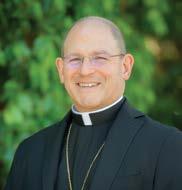
Most Rev Anthony Randazzo DD JCL Bishop of Broken Bay
This booklet invites you to reflect prayerfully on the Sunday Gospel Readings in Lent, and our call to Communion, Participation and Mission through the Eucharist. It can be used individually or as part of a group. The notes below are provided for use in a small group context.
For each of the six weeks of Lent, this resource encourages a reading of the Gospel, reflection on Scripture and the Eucharist, and discussion. This Lent we have offered a methodology to enable the practice of Conversation in the Spirit.
It is suggested that you allocate 1 ½ hours to complete each session, and the following process is recommended:

1. Opening Prayer (5 min)
An Opening Prayer is offered, which may be read together by participants. Song suggestions are given for each week which you may wish to consider using as part of the gathering prayer time for the group.
2. Gospel Reading (10 min)
Listen to the Gospel by inviting a participant from the group to proclaim The Word. Pause for silent reflection for a few moments. Invite people to share an insight they are hearing through the Gospel. This is not a time for discussion, rather an invitation to offer a short comment. The group listens attentively to each person without responding.
3. Gospel Reflection (15 min)
A reflection is offered, which might be read quietly by participants, whilst underlining phrases that stand out for them. This time of silence and reflection can also be a prayerful invitation for the
Holy Spirit to speak into the hearts of each participant. This will aid the richness of the Conversation in the Spirit which will follow.
4. Conversation in the Spirit: A Lenten Guide (30 mins, 10 mins per round)
Round One: What is the Spirit saying to me? — a personal call to communion.
Each participant shares individually on what they have heard from the Scripture passage, and the Gospel Reflection. Participants are invited to share how the Holy Spirit has spoken to them. There are no responses made in this round, simply reflective silence on what is shared from each participant.
“Speak, Lord, for your servant is listening.” — 1 Samuel 3:10
Round Two:
What am I hearing the Spirit say to you. — a posture of listening and participation.
Each participant now shares one at a time, what they have heard from others. What has resonated most deeply?
What new insights may have come to light? Where have they sensed the Holy Spirit moving? Once again, there are no responses made in this round, simply reflective silence on what is shared from each participant.
“Where two or three are gathered in my name, there am I among them.” — Matthew 18:20
Round Three:
Together we hear the Spirit Saying
Collaboratively the group discerns what is emerging collectively. What themes or invitations are arising? Where is there harmony, insight, or shared longing? What might the Holy Spirit be saying to us as a group? During this round, participants are invited to participate in discussion, continuing to listen to others and encouraging all to speak.
“Synodality is to help the Church fulfil its primary role in the world, which is to be missionary, to announce the Gospel” — Pope Leo XIV
5. Encountering Jesus (25 min)
A reflection is offered drawing out the themes of the Gospel, along with a part of the Mass. Invite participants to take turns in reading the reflection aloud. As the group listens, individuals may wish to underline phrases that resonate with them personally. The group is then encouraged to discuss the reflection, using the guided
questions offered at the end of the reflection, to inspire conversation as to what each are hearing
6. Closing Prayer (5 min)
To conclude, pray the final prayer together.
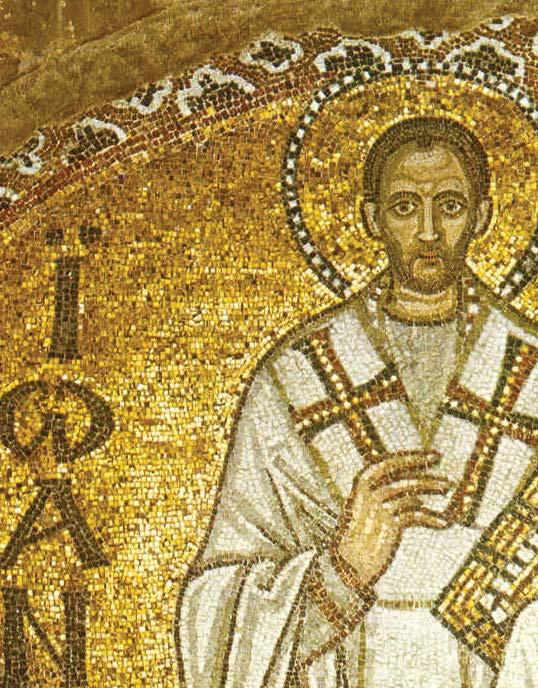
Prayer of Saint John
Chrysostom before reading the Scripture
O Lord Jesus Christ, open the eyes of my heart, that I may hear Your Word and understand and do Your will, for I am a sojourner upon the earth. Hide not Your commandments from me, but open my eyes, that I may perceive the wonders of Your law. Speak unto me the hidden and secret things of Your wisdom.
On You I set my hope, O my God, that you will enlighten my mind and understanding with the light of Your knowledge, not only to cherish those things which are written, but to do them; that in reading the lives and sayings of the saints I may not sin, but that such may serve for my restoration, enlightenment and sanctification, for the salvation of my soul, and the inheritance of life everlasting. For You are the enlightenment of those who lie in darkness, and from You comes every good deed and every gift.
☩ Amen


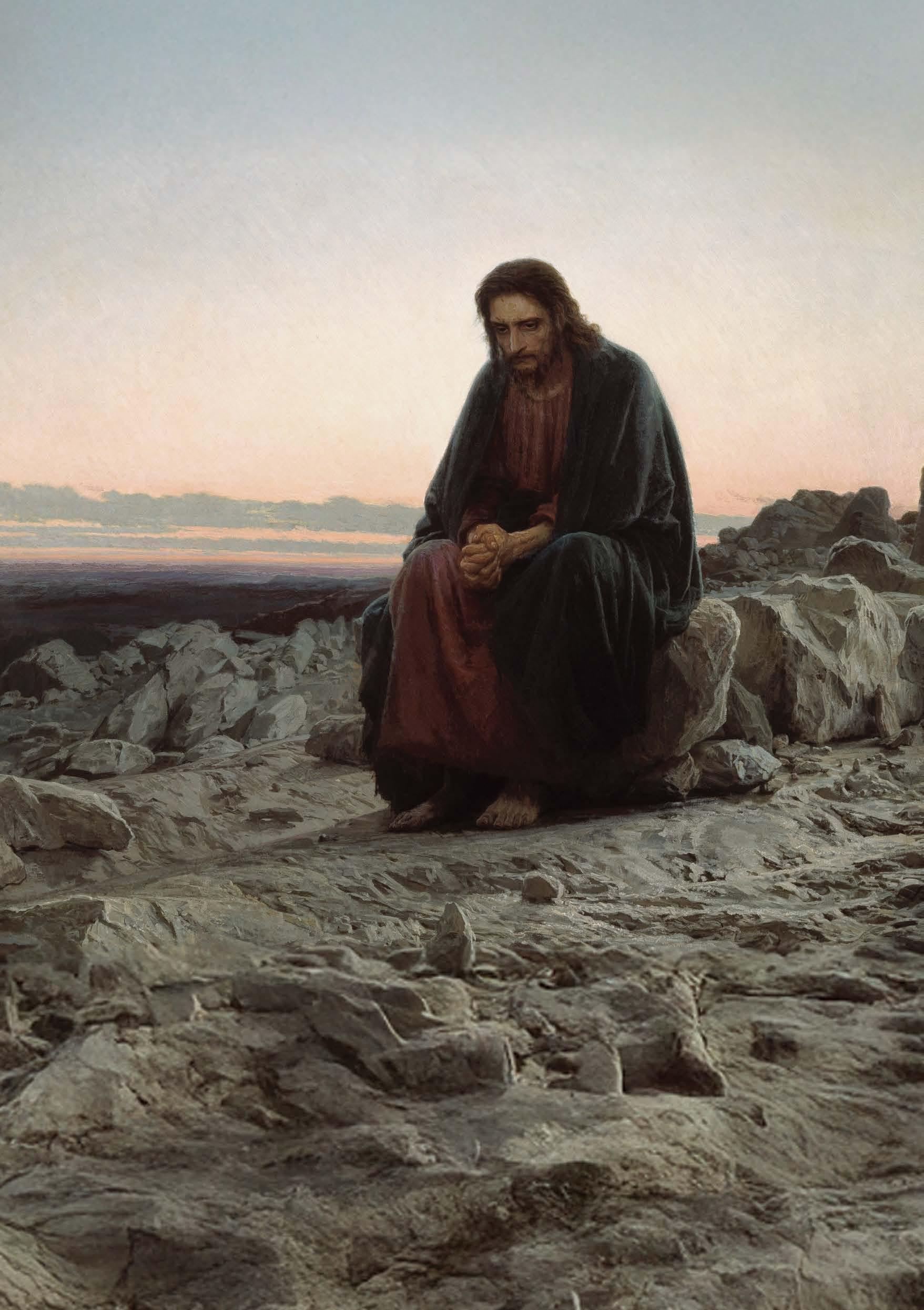

Heavenly Father,
as we begin this Lenten journey, we come before You just as we are.
You led your beloved Son Jesus into the wilderness — not away from You, but deeper into trust and truth. In the silence and the testing, Your Word was His strength and Your presence His refuge.
As we begin our Lenten journey, grant us the grace to walk honestly into the wilderness of our own hearts. Help us to notice the places of longing and temptation, the distractions that pull us away, and the fears we would rather avoid.
Teach us to listen more deeply to Your Word. To trust that we do not live by bread alone, but by every word that comes from You. Draw us away from false promises and lead us to worship You alone with undivided hearts.
Pour out Your Spirit upon us as we gather — to guide, steady us and remind us that we do never walk alone. May this time lead us toward deeper faith, deeper encounter, and deeper love.
We make this prayer through Jesus our Lord, ☩ Amen.
Then Jesus was led up by the Spirit into the wilderness to be tempted by the devil. He fasted forty days and forty nights, and afterwards he was famished. The tempter came and said to him, “If you are the Son of God, command these stones to become loaves of bread.” But he answered, “It is written, “One does not live by bread alone, but by every word that comes from the mouth of God.”
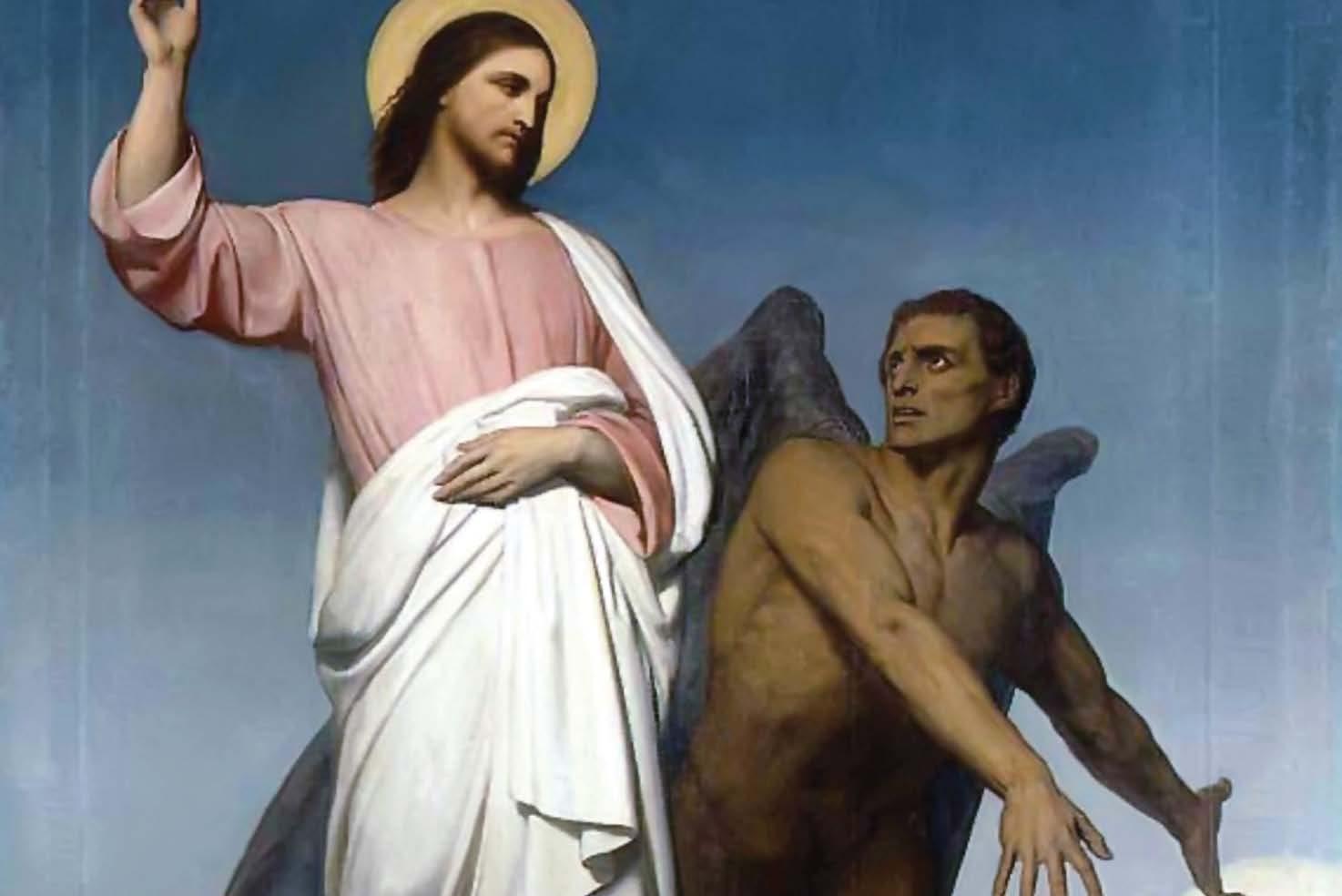
Then the devil took him to the holy city and placed him on the pinnacle of the temple, saying to him, “If you are the Son of God, throw yourself down; for it is written, “He will command his angels concerning you,” and “On their hands they will bear you up, so that you will not dash your foot against a stone.”
Jesus said to him, “Again it is written, “Do not put the Lord your God to the test.”
Again, the devil took him to a very high mountain and showed him all the kingdoms of the world and their splendor; and he said to him, “All these I will give you, if you will fall down and worship me.” Jesus said to him, “Away with you, Satan! for it is written,“Worship the Lord your God, and serve only him.”
Then the devil left him, and suddenly angels came and waited on him.
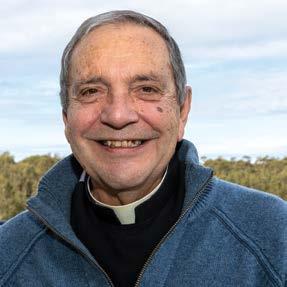
Fr Robert Borg; Parish Priest The Lakes Parish
There have been and will be times in life when temptation is put in our way.
How do we judge the degree of temptation?
The Ten Commandments are a good guide to assist in seeing what the right path is to take. These Ten Commandments are not an obstacle that we need to jump over, like a boulder in our path. They are like railroad tracks that keep us on track. They are our guidelines in the Christian Life.
During the Season of Lent, we are asked to undertake works of mercy and charity while seeking reconciliation and forgiveness. The Lenten Season heightens what we do all year round. As a baptised person each of us lives the promises of baptism daily. Each year at the Easter Vigil, The Elect make their promises and join the family of the church as full members, confirmed and sharing in the Eucharist for the first time.
Yet throughout the Lenten Season they have been scrutinised and prayed over to release them from false worship of other gods and to have a heart open to the one true God through deeper reflection on Sacred Scripture.
Our Lord was tempted by Satan three times and resisted. The Gospel that is proclaimed on this First Sunday of Lent is the same each year. It gives The Elect and those already baptised the confidence to set out on our path to profess or renew our baptismal promises at Easter.
There is a need to recognise that temptations come in different shapes and sizes. To be aware of our surroundings, to be active in our prayer life, to see with the eyes of faith, and to be ready to reject what is contrary to the Gospel of Jesus Christ. All these will benefit our spiritual life. Our attention, like Jesus is to worship God alone and to be a faith filled Christian.
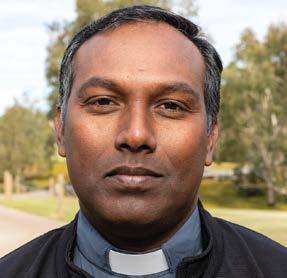
Fr Alex Peter Selvaraj MSFS; Administrator, Wyoming Parish
Walking in the Wilderness – Communion Begins with Conversion
Mass Focus: Penitential Act
– Entering the Desert with Christ
In today’s Gospel, Christ faces temptation not from a place of weakness, but from a place of deep communion with the Father. The desert becomes a sacred space where distractions fall away and the truth of His mission is revealed. Lent invites us into that same wilderness not to break us, but to free us and to draw us into deeper communion with God.
At every Holy Mass, and indeed at every liturgy of the Church, we begin by stepping into a kind of spiritual desert through the Penitential Act. Before we can walk with Christ, we first have to admit what slows us down: the sins we prefer not to mention, the wounds we neatly tuck away, the habits that trip us up again and again, and the voices we sometimes follow even though we know better. The wilderness, you see, is a very honest place. There is no hiding there. And the Penitential Act is our moment of honesty before God. It’s not a public shaming, but a quiet truthtelling: “Lord, this is me. I’m not perfect, but I’m here.”
The second reason we confess our sins at the very beginning of Mass is because
of what comes next: the Word of God. We arrive from all sorts of places, work and home, hospital wards and busy kitchens, noisy mornings and restless nights. We come carrying joy and grief, irritation and hope… and if we’re honest, quite often we come rather full of ourselves. Our minds are busy, our hearts cluttered, our thoughts already racing ahead to what comes next.
The Penitential Act gently clears the space. It opens our ears and softens our hearts so that we can truly hear the Word of God, not merely endure it until the Gospel acclamation. It reminds us that listening requires room. Only an empty glass can receive water; a full one simply spills it everywhere. So too with our hearts. When we arrive emptied, even a little, of our pride, distraction, and self-importance, God’s Word has somewhere to land.
But this honesty is not humiliation. It is communion. When we say, “I have greatly sinned,” we are not speaking in despair but in hope. We stand shoulder to shoulder as one body, children loved, forgiven, and invited into grace. In the Mass, communion begins with repentance. Participation begins with humility. Mission begins with truth. The Eucharist is not a reward for the righteous it is food for those walking through the desert. And so, the Mass
begins by teaching us the first lesson of discipleship: we cannot walk with Christ unless we bring Him our truth.
When Jesus enters the wilderness, He rejects the illusions offered by the evil one: power without sacrifice, glory without obedience, bread without trust. Every temptation promises shortcuts. Every temptation suggests we can journey without God. But Jesus answers with the Word and stands firm in communion with the Father.
This is the model for our Lenten journey. We walk in the wilderness not alone but with Christ, supported by the whole Church, strengthened by the Eucharist.
Our fasting and penance are not about suffering for suffering’s sake. They are about returning to communion, relearning dependence, and clearing the way for God to work in us. The Church gives us the desert so we can rediscover our hunger for God.
In the Penitential Act we whisper, “Lord, have mercy,” but spiritually we are saying: Lord, I want to walk with You again. Lord, heal what is wounded and Lord, teach me to depend on You.
This Lent, let us not fear the desert. Let us embrace it as the place where God shapes His saints. Mass without repentance becomes a ritual, but a Mass with a contrite heart becomes an encounter.
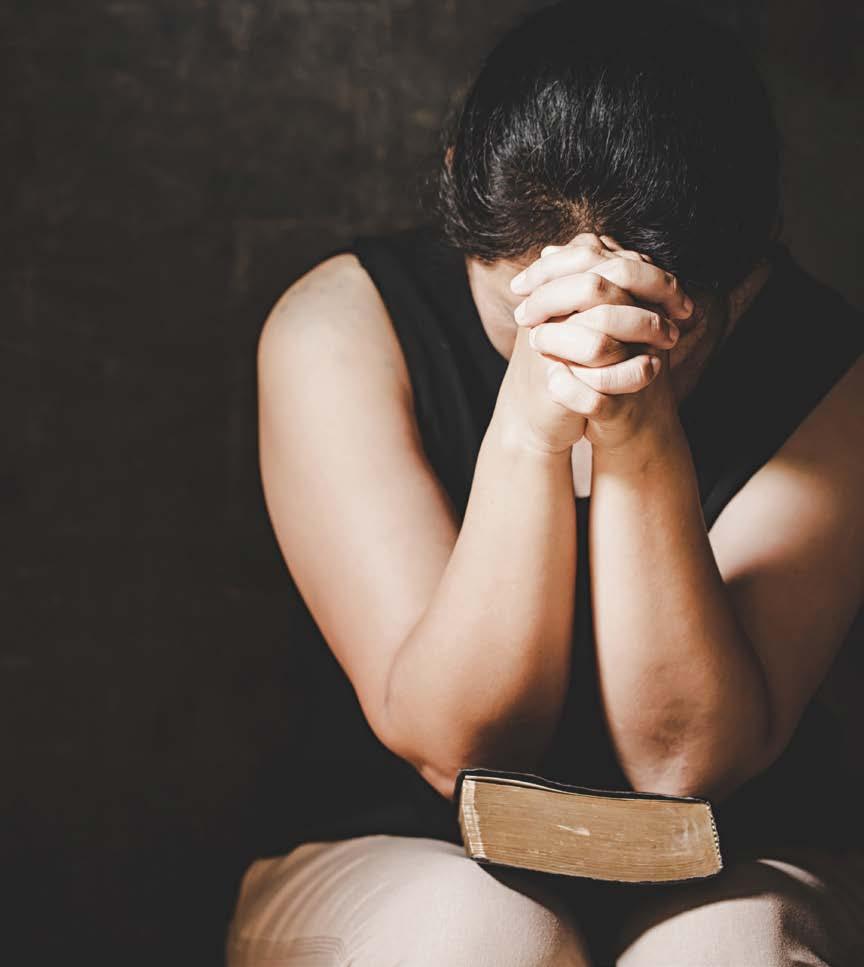
When I take part in the Penitential Act, do I really stand honestly before God, or do I mumble my way through it while already checking the hymns, the children, or the clock?
As I pray “Lord, have mercy” this Lent, what attitudes, habits, or well-practised excuses is the Lord quietly asking me to place before Him, and finally let go of?
If I entered the Penitential Act more consciously and prayerfully, how might it change the way I listen to the Word, approach the altar, and receive the Eucharist, not out of routine, but with a heart a little lighter and more open?

Heavenly Father, we give You thanks for this time together, for the gift of your Word, and for the ways we have encountered your Son in the wilderness of our hearts.
Thank You for the moments of silence, reflection, and prayer that have helped us to listen more deeply, to trust in Your care, and to recognise Your presence among us. Thank you for the guidance of your Spirit, and for the example of Jesus, who faced temptation with faithfulness, courage, and obedience.
Strengthen us to live what we have received. Help us to walk in communion with one another, participating fully in the life of the Church, and sharing your love in word, action, and service. Guide us in mission, that our lives may reflect Your mercy and truth, and that we may witness to Your love in the world.
May Your Spirit continue to lead and sustain us, may Christ be our strength and companion in the wilderness, and may we give thanks in all things, now and always.
We make this prayer through Christ our Lord.
☩ Amen.
Heavenly Father,
as we continue this Lenten journey, we come before You just as we are.
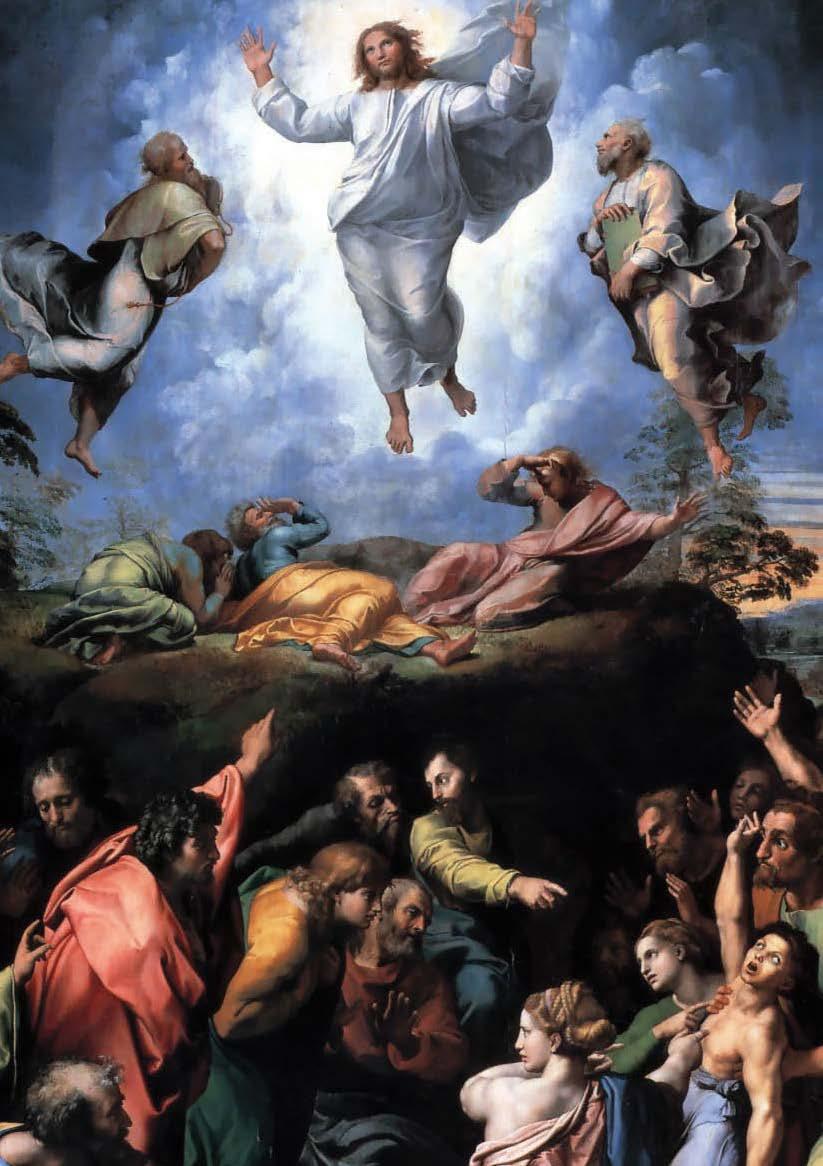
On the mountain, You led Peter, James, and John away from the noise and distractions of daily life, to reveal Your beloved Son in glory. “ThisismySon,theBeloved;with himIamwellpleased;listentohim.”
Lord, teach us to listen as Your disciples. Help us to quieten the distractions of our hearts, to notice where fear, doubt, or busyness keep us from hearing You, and to receive Your Word with openness and trust.
Lead us into the wilderness of our own hearts, where silence can become sacred, and where listening with open hearts can draw us closer to Your presence.
As we gather in this sacred time, may Your Spirit open our ears, our minds, and our hearts. May we learn to listen deeply — to You, to one another, and to those in need — so that we may be transformed by Your love, to walk faithfully in communion with one another, and to go forth in Your mission of mercy, justice, and service.
We ask this through Christ our Lord.
☩ Amen.
Matthew 17:1-9 (NRSVCE)
The Transfiguration
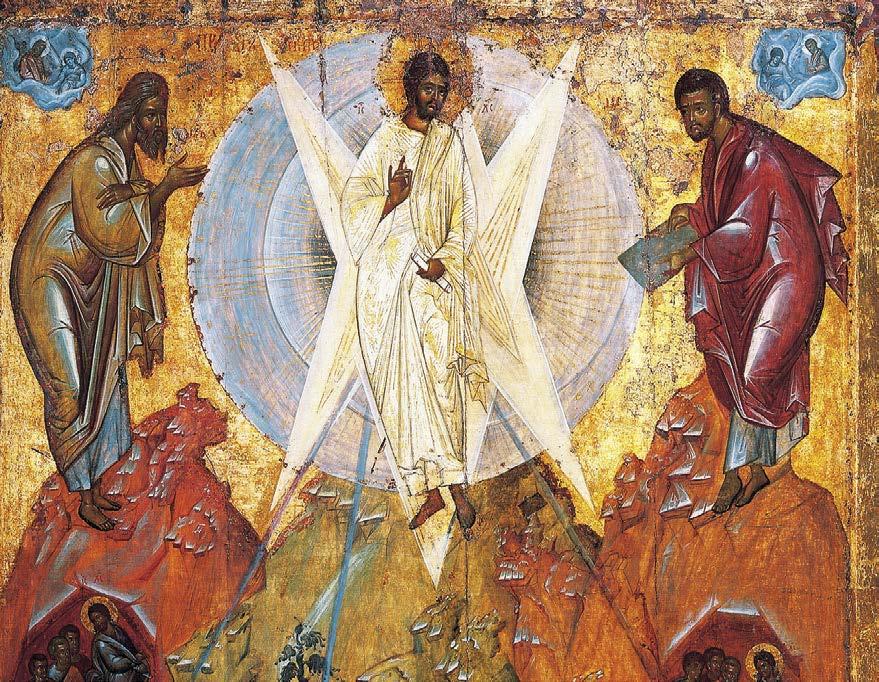
Six days later, Jesus took with him Peter and James and his brother John and led them up a high mountain, by themselves. And he was transfigured before them, and his face shone like the sun, and his clothes became dazzling white. Suddenly there appeared to them Moses and Elijah, talking with him. Then Peter said to Jesus, “Lord, it is good for us to be here; if you wish, I will make three dwellings here, one for you, one for Moses, and one for Elijah.” While he was still speaking, suddenly a bright cloud overshadowed them, and from the cloud a voice said, “This is my Son, the Beloved; with him I am well pleased; listen to him!” When the disciples heard this, they fell to the ground and were overcome by fear. But Jesus came and touched them, saying, “Get up and do not be afraid.” And when they looked up, they saw no one except Jesus himself alone.
As they were coming down the mountain, Jesus ordered them, “Tell no one about the vision until after the Son of Man has been raised from the dead.”


Libby McManus; Executive Assistant, Mission Broken Bay
The Gospel of the Transfiguration is filled with light, awe, and holy encounter. Jesus leads His three friends up the mountain, away from noise and distraction and the business of everyday life. It is in the quiet of the mountain that Jesus is revealed in His true glory. His face shines like the sun; His clothes become dazzling white. With the appearance of Moses and Elijah, I can only imagine the overwhelm, joy, confusion, and wonder that must have flooded the disciples’ hearts.
Peter does what many of us do in the face of mystery: he speaks. He fills the silence with words. He offers to build dwellings — to organise the moment, to preserve it, to hold tightly to an experience that feels too sacred to lose.
It is while he is still speaking that the voice of God interrupts him: “This is my Son, the Beloved; with him I am well pleased; listen to him.”
There is something exquisitely beautiful about this moment. Peter is not asked to do anything. He is not instructed to act or respond. He is simply invited — commanded, even — to listen.
Peter’s instinct to do feels deeply human to me. I recognise it immediately. I can recall many moments in my own life when I have felt that same urge to act, to fix, to
respond quickly — even in moments that are sacred or fragile. It is, perhaps, my default go-to.
I notice this most evidently with my own three beautiful children. When they might share an experience of pain, fear, or the confusion of uncertainty, my mothering instinct is to offer advice or reassurance straight away. I want to be helpful. I want to say the right words. I want to make things better. Yet, more often than not, what is really needed from me is something far simpler: to open the ears of my heart. To listen to them with focus, intention, and presence. To receive into my heart what they are sharing. To lean into their words with love, without interruption.
It is when I stop speaking — when I listen deeply and allow silence to remain as a sacred space of pause and pondering — that something more powerful emerges. Something deeper is heard.
Listening, I have learned, requires courage. It is a practiced art. It asks us to relinquish control. At times, it exposes us to what we might prefer not to hear — in others, in ourselves, and even in God. Perhaps this is why, when the disciples hear the voice from the cloud, they fall to the ground in fear. Listening is not passive. It is an act of vulnerability.
And yet, it is precisely there — in their fear and silence — that Jesus moves closer. He touches them gently and says, “Get up and do not be afraid.” The reassurance comes not before listening, but after it. When they look up, the vision has passed. Moses and Elijah are gone. The apparition has faded. There is only Jesus left.
This, perhaps, is the heart of the Transfiguration. When the noise quietens, when the extraordinary recedes, what remains is Christ — and the enduring invitation to listen to Him, not only on the mountaintop, but on the descent back into ordinary life. The disciples are told not to speak of the vision yet. There is a time for words, but first there is a time for listening — for allowing what has been heard to take root.
I find myself often pondering where, in my own life, God is asking me to listen more attentively. Whose voice am I too quick to answer, rather than truly receive into my heart? What might I hear if I allowed myself to remain silent just a little longer — in prayer, in conversation, in moments of uncertainty?
The Transfiguration reminds me that listening is not a preliminary step to discipleship; it is discipleship. To listen to Jesus is to trust that His voice is enough — that I do not need to fill every silence, explain every mystery, or preserve every moment. Sometimes, faith asks us simply to stay, to listen, and to allow ourselves to be changed.
And then, quietly, we walk back down the mountain — carrying what we have heard in our hearts.
Fr Alex Peter Selvaraj MSFS; Administrator, Wyoming Parish
Walking in the Wilderness – Listening to the Beloved Son
Mass Focus: Liturgy of the Word –Participation Through Listening
Last week we entered the wilderness with Jesus through repentance. Today, the Church leads us deeper into the journey not to walk by sight, but by listening. On Mount Tabor, as Jesus is transfigured in radiant glory, the Father speaks a simple yet decisive command: “This is my Son, the Beloved… listen to Him”.
The wilderness can be confusing. There are many voices: fear, discouragement, temptation, pressure, and noise. Yet in the Eucharist, God offers us a gift that cuts through all confusion the Liturgy of the Word, where Christ Himself speaks. The Mass teaches us that communion is not only receiving His Body; communion begins in receiving His voice. This is why the Mass is both Word and Sacrament.
We begin by listening attentively to the Word of God, which prepares our hearts and minds. This is not just a reading of sacred texts but a proclamation of God’s living voice.
We do not listen to the Scriptures for information; we listen for transformation.
As Saint Jerome says, “Ignorance of Scripture is ignorance of Christ.” If we do not listen to Him, we cannot walk with Him. If we do not know His voice, we cannot discern His will in the wilderness.
In the Mass, the readings are not storytelling or history lessons. They are living speech addressed personally to us. As the Letter to the Hebrews tells us: Indeed, the Word of God is living and active, sharper than any two-edged sword, piercing until it divides soul from spirit, joints from marrow; it is able to judge the thoughts and intentions of the heart (Heb 4:12).
This is why participation in the Mass begins with listening. When the Word is proclaimed, Christ is not simply informing us, He is forming us. He shapes our minds, purifies our desires, and guides our steps. The desert becomes controllable only when we listen to the One who leads.
The Word of God is not primarily a book to be studied but a mirror to stand before. Sometimes it comforts us; sometimes it unsettles us. Either way, it shows us who we are, and who we are called to become. The Liturgy of the Word is like a torch given to us for the week ahead. It doesn’t illuminate the whole journey at once, just enough for the next step.
On Mount Tabor, the disciples fall in fear, overwhelmed by glory. But Jesus came and touched them, saying, ‘Get up and do not be afraid. (Mt 17:7) This is the effect of the Word: it lifts, strengthens, and reorients. In the wilderness, the Word becomes our compass.
Saint John Paul II once said, “The Gospel is not merely to be read, it is to be lived.”
The Liturgy of the Word is not complete until it shapes the way we speak, act, forgive, love, and serve. The more we listen, the more our lives become Eucharistic, carrying Christ’s light into our families, workplaces, and parish.
As we journey this Lent, let us ask: Do I truly listen during the Readings? Do I prepare my heart before Mass? Do I allow Scripture to challenge, correct, and transform me?
Tabor teaches us that discipleship requires listening before acting, silence before mission, and surrender before glory. The Father does not say, “Look at Him.” He says, “Listen to Him.” Listening is the doorway into communion; it is the foundation of participation; it is the spark of mission.

When the Readings are proclaimed at Mass, am I actually listening or am I mentally planning lunch, next week, or solving problems the Word never asked me to solve?
Among all the voices in my personal wilderness, worry, pressure, fear, notifications, and well-meaning opinions, which voice do I listen to most readily?
If today’s Readings were to follow me home like an unexpected guest, which line would I least mind staying for the week, and would I actually make room for it, or hope it leaves quietly by Monday morning?
When God’s Word starts meddling with my comfort zone, do I listen and adjust my life, or do I politely thank the Lord for His opinion and press the spiritual “mute,” “snooze,” or “remind me later” button?

Heavenly Father, we give You thanks for this time together, for the gift of your Word, and for the ways we have encountered Your Son in the wilderness of our hearts.
Thank You for these precious moments of listening, reflection, and prayer. We are grateful for Your Holy Spirit, who has guided us, strengthened us, and opened our hearts to Your Word.
Help us to carry what we have received into our daily lives, to walk in communion with one another, to participate fully in the life of Your Church, and to go forth in mission, sharing Your love, mercy, and truth with all we meet.
May we always welcome Jesus as our companion, to guide our steps, and walk with us down the mountains of our lives, so that our lives may witness to Your presence in the world.
We make this prayer through Christ our Lord.
☩ Amen.
Heavenly Father,
as we continue this Lenten journey, we come before You just as we are.
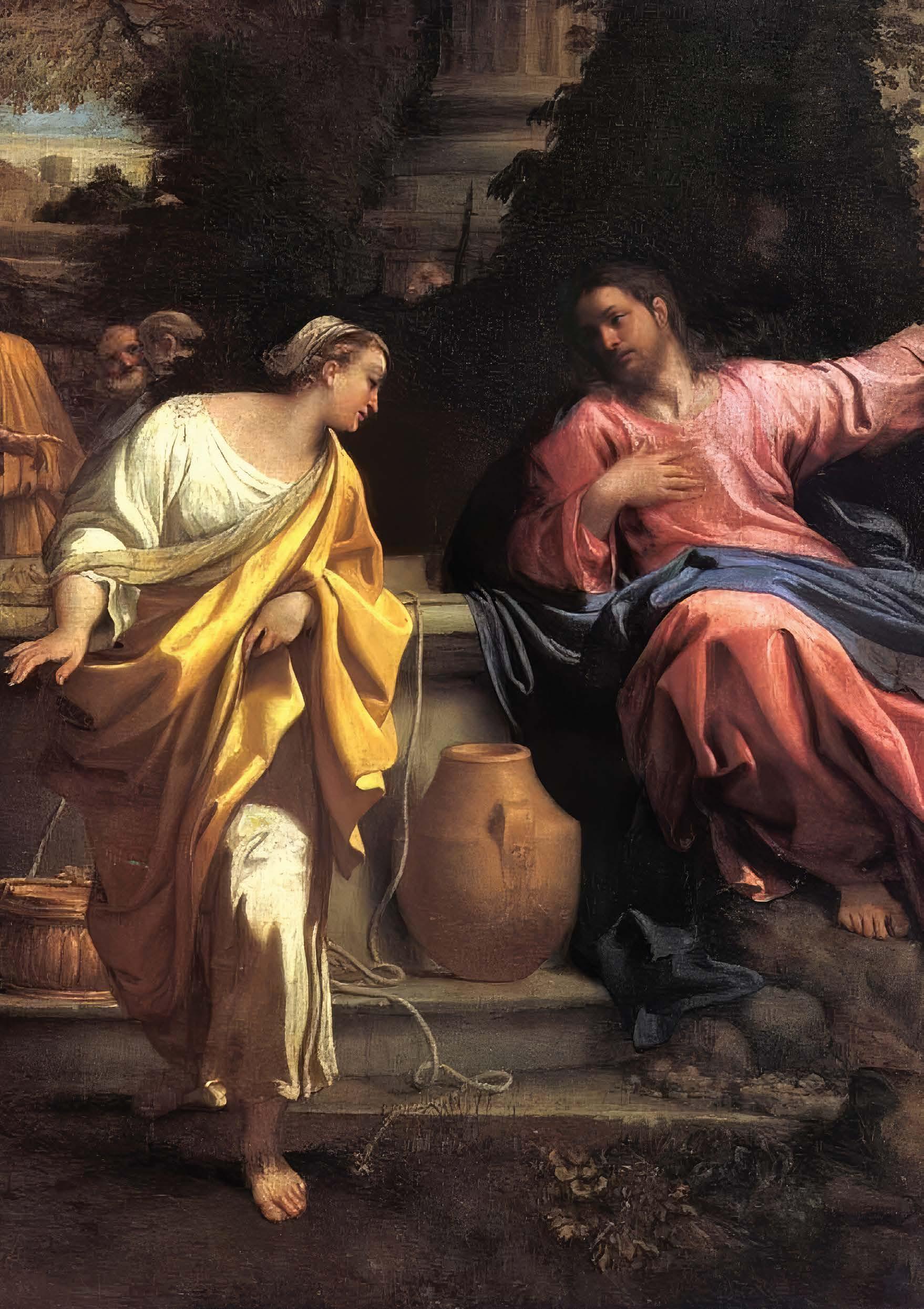
At the well in Sychar, Jesus, tired from his journey, reached out to the Samaritan woman. He listened to her story, met her in her thirst and longing, and offered the promise of living water that never runs dry.
Through this encounter, hearts were opened, lives were transformed, and Your Word became a source of life and hope.
Lord, teach us to walk in the wilderness of our own hearts. Help us to notice where we are thirsty — for love, for forgiveness, for peace — and to open our ears and hearts to Your voice. May we learn, like the woman at the well, to listen deeply, to receive Your truth with honesty, and to be renewed by Your presence.
As we gather in this sacred time, may Your Spirit guide us in listening and reflection, so that we may recognise Your work among us, may we place all our trust in your Word, and be strengthened to walk in communion with one another so that we may participate fully in Your mission of love, mercy, and service.
We ask this through Christ our Lord.
☩ Amen.

John 4:5-42 (NRSVCE)
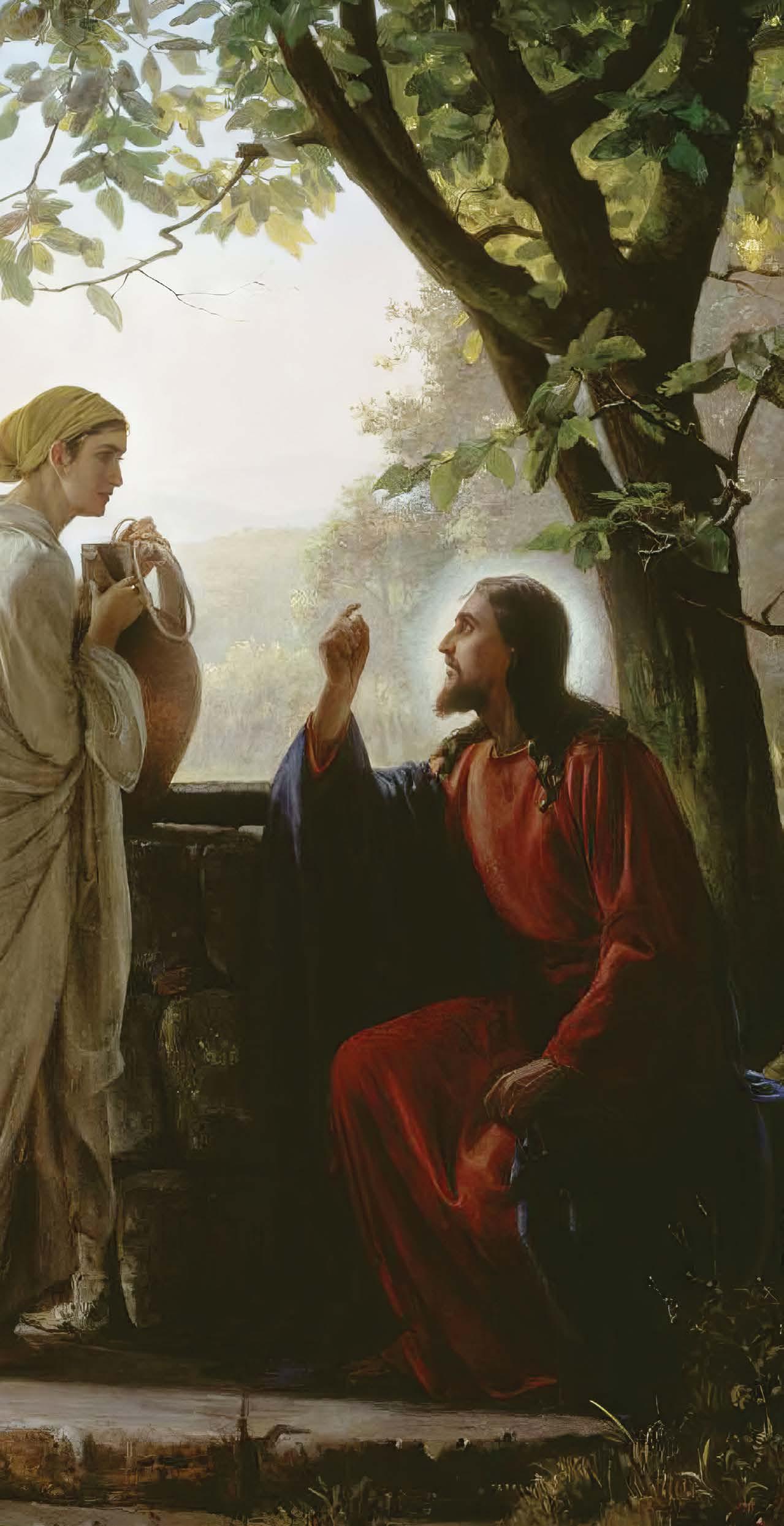
The water that I shall give will turn into a spring of eternal life.
So He came to a Samaritan city called Sychar, near the plot of ground that Jacob had given to his son Joseph. Jacob’s well was there, and Jesus, tired out by his journey, was sitting by the well. It was about noon.
A Samaritan woman came to draw water, and Jesus said to her, “Give me a drink.” (His disciples had gone to the city to buy food.) The Samaritan woman said to him, “How is it that you, a Jew, ask a drink of me, a woman of Samaria?” (Jews do not share things in common with Samaritans.) Jesus answered her, “If you knew the gift of God, and who it is that is saying to you, ‘Give me a drink,’ you would have asked him, and he would have given you living water.” The woman said to him, “Sir, you have no bucket, and the well is deep. Where do you get that living water? Are you greater than our ancestor Jacob, who

gave us the well, and with his sons and his flocks drank from it?”
Jesus said to her, “Everyone who drinks of this water will be thirsty again, but those who drink of the water that I will give them will never be thirsty. The water that I will give will become in them a spring of water gushing up to eternal life.” The woman said to him, “Sir, give me this water, so that I may never be thirsty or have to keep coming here to draw water.”
Jesus said to her, “Go, call your husband, and come back.” The woman answered him, “I have no husband.” Jesus said to her, “You are right in saying, ‘I have no husband’; for you have had five husbands, and the one you have now is not your husband. What you have said is true!” The woman said to him, “Sir, I see that you are a prophet. Our ancestors worshiped on this mountain, but you say that the place where people must worship is in Jerusalem.”
Jesus said to her, “Woman, believe me, the hour is coming when you will worship the Father neither on this mountain nor in Jerusalem. You worship what you do not know; we worship what we know, for salvation is from the Jews. But the hour is coming, and is now here, when the true worshippers will worship the Father in spirit and truth, for the Father seeks such as these to worship him. God is spirit, and those who worship him must worship in spirit and truth.” The woman said to him, “I know that Messiah is coming” (who is called Christ). “When he comes, he will proclaim all things to us.” Jesus said to her, “I am he, the one who is speaking
to you.” Just then his disciples came. They were astonished that he was speaking with a woman, but no one said, “What do you want?” or, “Why are you speaking with her?” Then the woman left her water jar and went back to the city. She said to the people, “Come and see a man who told me everything I have ever done! He cannot be the Messiah, can he?” They left the city and were on their way to him.
Meanwhile the disciples were urging him, “Rabbi, eat something.” But he said to them, “I have food to eat that you do not know about.” So the disciples said to one another, “Surely no one has brought him something to eat?” Jesus said to them, “My food is to do the will of him who sent me and to complete his work. Do you not say, ‘Four months more, then comes the harvest’? But I tell you, look around you, and see how the fields are ripe for harvesting. The reaper is already receiving wages and is gathering fruit for eternal life, so that sower and reaper may rejoice together. For here the saying holds true, ‘One sows and another reaps.’ I sent you to reap that for which you did not labour. Others have laboured, and you have entered into their labour.”
Many Samaritans from that city believed in him because of the woman’s testimony, “He told me everything I have ever done.” So when the Samaritans came to him, they asked him to stay with them; and he stayed there two days. And many more believed because of his word. They said to the woman, “It is no longer because of what you said that we believe, for we have heard for ourselves, and we know that this is truly the Savior of the world.”
It is impossible to overestimate or fully comprehend people’s desire for Baptism. When our second son, Michael, was born prematurely, our first realisation of the true seriousness of the situation came when a nurse asked if we wanted to call a priest. We agreed without hesitating. No longer a remote family occasion to welcome our little one into the community, Baptism, the source of eternal life, was an absolute necessity.
I remember very clearly a young woman coming up to me one Sunday, almost running, and asking me, “What do I have to do to be baptised and receive Holy Communion?” Lydia’s family were non-Christian but they had placed her in Catholic SRE classes during primary school. Later in high school, a friend took her to Sunday Mass from time to time, and her longing to become Catholic grew.
How does someone unbaptised, who knows little about the Scriptures or Christianity, come to have such a love and desire for Jesus? The first seeds are sown by God’s grace, but we don’t know how or
why they take root, who waters them or by whom they are cultivated. Our work is to listen, to enter into the labour, to rejoice with the sower, to complete the work God has begun.
When the Samaritan woman asks for living water, hardly knowing what she is asking, Jesus draws her to face more fully the reality of who she is and where her journey is taking her. Recognition dawning, she stays with Him, listening to Him, until she realises who He truly is. Then she runs to tell everyone she knows.
Lydia has met Jesus, she walks with Him daily. She understands that coming to the waters of baptism takes time, God’s time. She is content to wait, to walk in the wilderness at God’s pace. She “knows the gift of God” and seeks the gift of living water, both to sustain her as she travels and as the goal and fulfilment of her journey.

A friend who is a priest tells a story about visiting an elderly parishioner, dying in hospital. When he arrived, it was to find
the Anglican chaplain just leaving Dolores’s room. The priest went in and said, “Dolores, aren’t you a Catholic? I’ve seen you at Mass every Sunday for years!”
She answered, “I’m sorry, Father, I was baptised Anglican.”
He asked her gently, “Dolores, would you like to become a Catholic?”
She smiled, and answered, “I’ve been waiting for twelve years for someone to ask me that. Yes, I would.” The priest received her into the Church, heard her confession, gave her first Eucharist and anointed her within the hour. The first sowing of Baptism, so many years ago, had borne fruit in a long and faithful Christian life, and given her a consuming hunger for the Eucharist and closeness to God.

However, or whenever we arrive at the well, it is by encountering Christ in person that we discover how deeply we need him.
Fr Alex Peter Selvaraj MSFS; Administrator, Wyoming Parish
Walking in the Wilderness – Offering Our Thirst to the Lord
Mass Focus: Offertory, Participation Through Self-Gift
Dear brothers and sisters, after repentance in Week 1, and listening in Week 2, today we step into the deep truth of discipleship: in the wilderness, God asks not only for our ears but for our hearts.
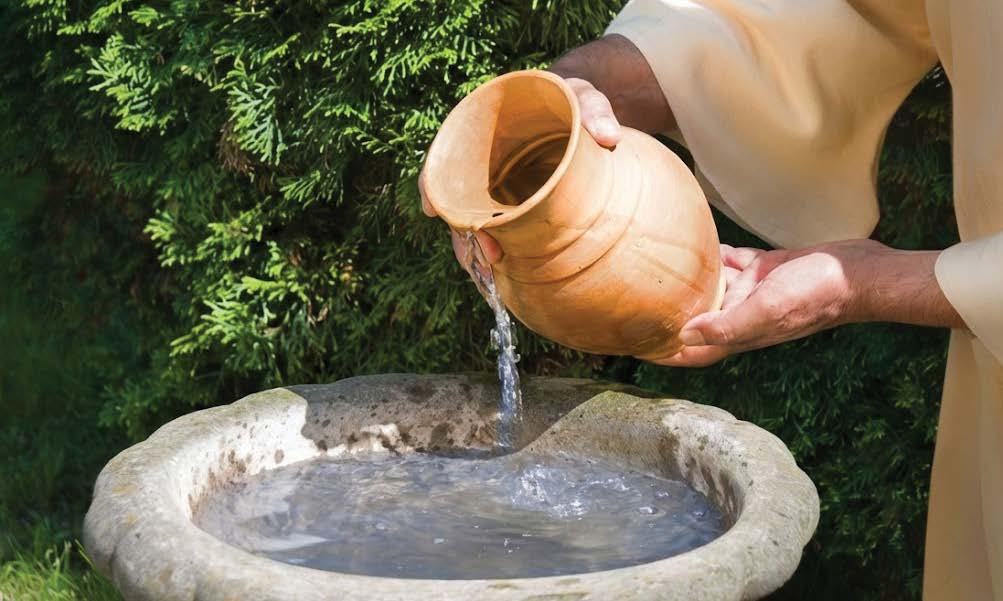
The Gospel brings us to a surprising place, not a mountain, not a temple, but a well. Jesus sits at Jacob’s well and waits. There He meets the Samaritan woman, who comes at noon, under a burning sun, at the wrong hour, when no one else is there, because pain often chooses solitude. She comes to draw water, carrying not only her jar but the heavy weight of her past, thirsty in ways she herself cannot fully name. It is one of the most moving stories in the Gospel: The Lord is already waiting for her, not to accuse, not to expose, but to ask for a drink, as if He needs what she believes she has so little of. He lowers Himself to her level, enters her story with tenderness, and gently leads her to discover her deeper thirst, for truth, for mercy, for belonging, for a name restored. Jesus does not meet her after her life is sorted out; He meets her in the mess,
names her wounds without condemning her, and in that moment of truth wrapped in mercy, gives her back her dignity. The God she tried to avoid comes searching for her, sits beside her exhaustion, and loves her not later, not elsewhere, but there, exactly where she is.
Every time we gather for Holy Mass, the Lord meets us at a well. The Offertory is that sacred moment. Bread and wine are brought forward, but spiritually, the Church invites us to bring our own “water jars” our needs, fears, wounds, hopes, relationships, sins, and desires.
God does not ask us to be perfect. He asks us to be honest. At the Offertory, we are not spectators watching a procession. We are participants offering our lives. This is where the wilderness becomes fruitful because what we place on the altar, God transforms.
The Samaritan woman tries to avoid her past. Yet Jesus does not shame her; He frees her. The Lord does the same in every Mass. He receives what is ordinary and returns what is divine. Bread becomes His Body. Wine becomes His Blood. And our brokenness becomes grace. Our struggles become strength. Our tears become prayer.
The Offertory teaches us something radical: Christian life is not only about receiving from God; it is also about offering to God. Reminding us that we are standing at the foot of the cross and at the door of the empty tomb, both made present in this one sacrifice. The same Jesus who healed the blind, calmed the storm and raised the dead, chooses to be as close to us as the food we eat.
As Saint Teresa of Calcutta said, “Give whatever He takes, and take whatever He gives with a big smile.” The Offertory is where we give Him everything, so we can receive everything.
But there is another truth in today’s Gospel. When the Samaritan woman leaves the well, she leaves her jar behind (Jn 4:28). The very thing she came to fill no longer matters because she has been filled by Christ. She becomes a missionary, running into the village announcing, “Come and see a man…”
Her encounter becomes witness. Her offering becomes mission, and her thirst becomes testimony. So, this Lent, let us lay our water jars on the altar. In fasting, prayer, and giving, offer your thirst and your story. Christ fills us with living water, transforms our sacrifice into grace, and sends us forth renewed, ready to say: Come and see.
What exactly is in my “water jar” today, worry, hope, sin, gratitude… or a confusing mixture of everything sloshing about together? And am I brave enough to place it on the altar this Lent, or do I prefer to keep the lid firmly on and carry it myself?
At the Offertory, am I truly offering myself, my wounds, weariness, and hopes, or am I quietly watching the bread and wine go past, hoping God won’t notice the mess I brought with me?
Which “water jar” might Jesus be quietly asking me to leave behind this Lent, the one I keep refilling with anxiety, old grudges, or self-criticism, so that, like the Samaritan woman, I can finally stop trudging and start running with joy to share His love?

Heavenly Father,
we give You thanks for this time together, for the sacred gift of your Word, and for the countless ways we have encountered Your Son in the wilderness of our hearts.
We thank You for the example of the Samaritan woman at the well, who came seeking water but found life in Your presence. Through her encounter with Jesus, she listened, believed, and became a witness to others.
Thank You for the moments in this time together where we, too, have experienced Your living water — refreshing our hearts, opening our ears to Your voice, and renewing our spirits.
Lord Jesus, may the encounters we have had here take root in our lives. Give us courage to walk forward as witnesses of Your love, to share the living water we have received, and to bring hope to those who thirst.
Send us forth in communion with one another, to participate fully in the life of Your Church, and to engage in Your mission in the world.
May our words and actions bear witness to Your mercy, Your truth, and Your saving presence, so that others may come to know You as the Savior of the world.
☩ Amen.

Heavenly Father,
as we continue this Lenten journey, we come before You just as we are.
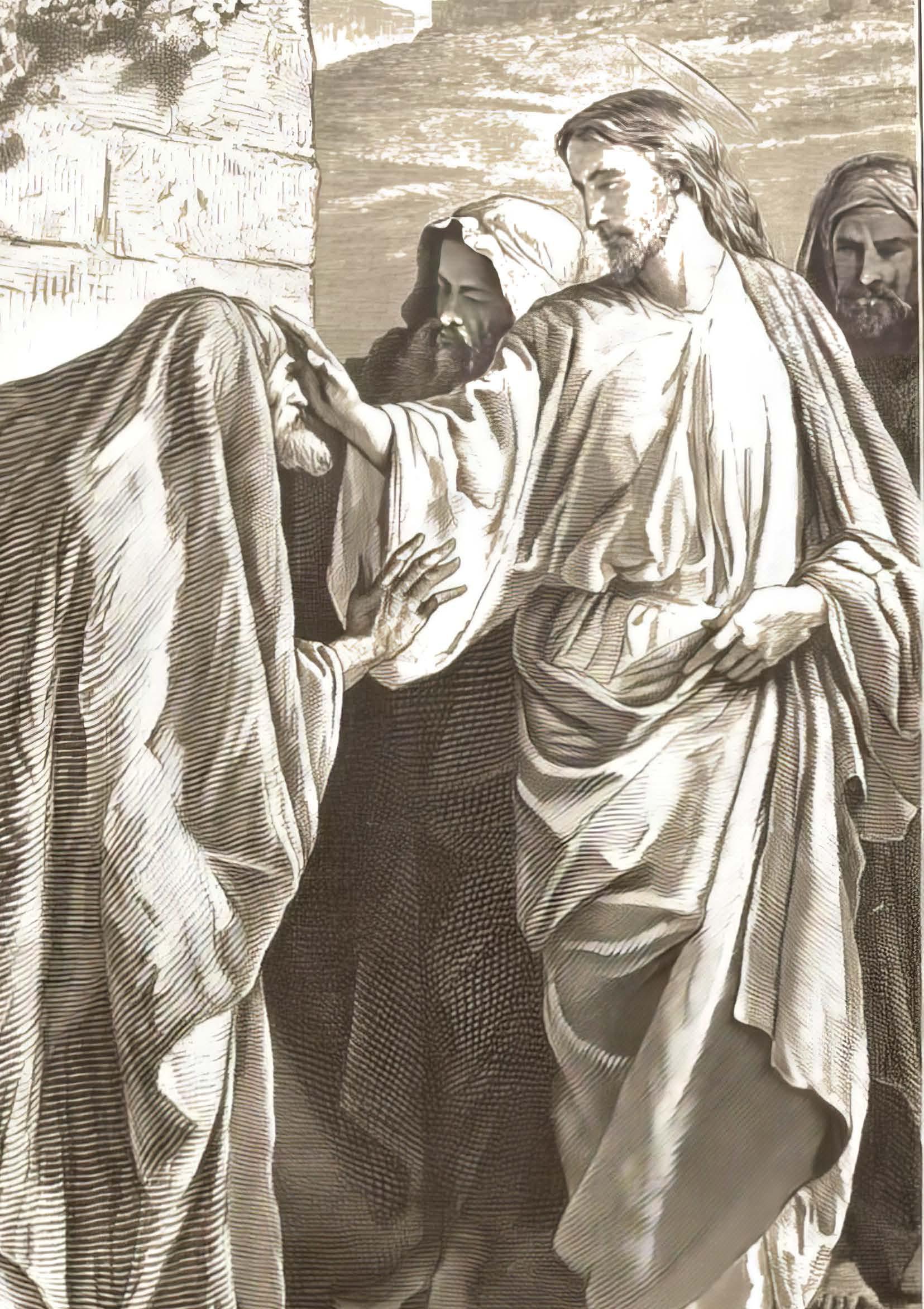
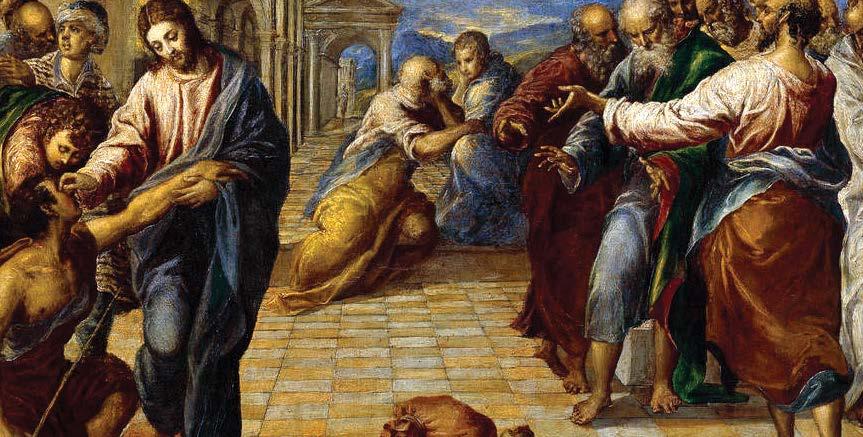
In the story of the man born blind, Jesus reveals the light of Your love. He meets the man where he is, touches his eyes and calls him to wash and see. Through this encounter, sight is restored, life is transformed, and Your works are made known.
Lord, teach us to walk in the wilderness of our own hearts, where we may feel lost, uncertain, or unable to see Your path. Help us to open our eyes to Your presence, to recognise Your light even in the shadows, and to listen with attentiveness to Your voice.
As we gather in this time of reflection, may Your Spirit guide us, may Your Word awaken our hearts, and may we be strengthened to walk faithfully in communion with one another, participating fully in the life of the Church, and sharing Your love and light in mission to the world.
We ask this through Christ our Lord.
☩ Amen.
John 9:1-41(NRSVCE)
As he walked along, he saw a man blind from birth. His disciples asked him, “Rabbi, who sinned, this man or his parents, that he was born blind?” Jesus answered, “Neither this man nor his parents sinned; he was born blind so that God’s works might be revealed in him. We must work the works of him who sent me while it is day; night is coming when no one can work. As long as I am in the world, I am the light of the world.” When he had said this, he spat on the ground and made mud with the saliva and spread the mud on the man’s eyes, saying to him, “Go, wash in the pool of Siloam” (which means Sent). Then he went and washed and came back able to see. The neighbours and those who had seen him before as a beggar began to ask, “Is this not the man who used to sit and beg?” Some were saying, “It is he.” Others were saying, “No, but it is someone like him.” He kept saying, “I am the man.” But they kept asking him, “Then how were your eyes opened?” He answered, “The man called Jesus made mud, spread it on my eyes, and said to me, ‘Go to Siloam and wash.’ Then I went and washed and received my sight.” They said to him, “Where is he?” He said, “I do not know.”
sabbath day when Jesus made the mud and opened his eyes. Then the Pharisees also began to ask him how he had received his sight. He said to them, “He put mud on my eyes. Then I washed, and now I see.” Some of the Pharisees said, “This man is not from God, for he does not observe the sabbath.” But others said, “How can a man who is a sinner perform such signs?” And they were divided. So they said again to the blind man, “What do you say about him? It was your eyes he opened.” He said, “He is a prophet.”
The Jews did not believe that he had been blind and had received his sight until they called the parents of the man who had received his sight and asked them, “Is this your son, who you say was born blind? How then does he now see?” His parents answered, “We know that this is our son, and that he was born blind; but we do not know how it is that now he sees, nor do we know who opened his eyes. Ask him; he is of age. He will speak for himself.” His parents said this because they were afraid of the Jews; for the Jews had already agreed that anyone who confessed Jesus [ to be the Messiah would be put out of the synagogue. Therefore his parents said, “He is of age; ask him.”
They brought to the Pharisees the man who had formerly been blind. Now it was a
So for the second time they called the man who had been blind, and they said to him, “Give glory to God! We know that this man is a sinner.” He answered, “I do not know whether he is a sinner. One thing I do know, that though I was blind, now I see.” They said to him, “What did he do to you? How did he open your eyes?” He answered them, “I have told you already, and you would not listen. Why do you want to hear it again? Do you also want to

become his disciples?”
Then they reviled him, saying, “You are his disciple, but we are disciples of Moses. We know that God has spoken to Moses, but as for this man, we do not know where he comes from.” The man answered, “Here is an astonishing thing! You do not know where he comes from, and yet he opened my eyes. We know that God does not listen to sinners, but he does listen to one who worships him and obeys his will. Never since the world began has it been heard that anyone opened the eyes of a person born blind. If this man were not from God, he could do nothing.” They answered him, “You were born entirely in sins, and are you trying to teach us?” And they drove him out.
Jesus heard that they had driven him out, and when he found him, he said, “Do you believe in the Son of Man?” He answered, “And who is he, sir? Tell me, so that I may believe in him.” Jesus said to him, “You have seen him, and the one speaking with you is he.” He said, “Lord, I believe.” And he worshiped him. Jesus said, “I came into this world for judgment so that those who do not see may see, and those who do see may become blind.” Some of the Pharisees near him heard this and said to him, “Surely we are not blind, are we?”
Jesus said to them, “If you were blind, you would not have sin. But now that you say, ‘We see,’ your sin remains.
Janette Merrotsy; Parish Pastoral Associate, Terrigal Parish
On reading this passage from Saint John, I recall two stories from my life. Two people I have loved, who became blind.
My grandfather Francis, a devout Lebanese Catholic, suddenly became blind in 1932. Like in the Gospel, people were saying: Why did he become blind? Was it the stress of his infant son Paul dying? He is a good man, so why did God allow this to happen to him? The medical specialist at the time could give no reason and no solution. The blindness looked irreversible. My Grandad was a loyal disciple to his loving God. He never blamed God for the death of his son, nor his sudden blindness, but instead turned to prayer. He prayed through the intercession of Saint Therese of Lisieux. One morning, after dreaming of Saint Therese placing her hands on his eyes, he woke up and with tears, announced to my grandmother, “Martha I can see!”
God’s works were revealed through my grandfather’s faith. He could not see the physical world but could see the Light of Jesus. This faith, this Light gave him hope in his darkness, the loss of sight and the grief of the death of his son. Just like today’s Gospel, the Light of the World, Jesus, healed Francis by having his sight restored. The next
year he received the gift of a new child, a daughter, who was named Marie Therese, my mother.
The other story is a fond memory of my father-in-law Jack. We didn’t always connect but on this one day we saw each other in a different light. Jack had recently become blind with glaucoma. On one visit he asked me if I could cut his fingernails. I was delighted I could do something for him and that he reached out to me. I spent over an hour cutting and filing his nails. We spoke to each other softly and with a gentle rhythm. I remember crying and saying to my husband as we drove away “it’s like the Gospel story – he was blind but now he sees. Jack was blind but today he really saw me”. I questioned myself, how many times have I been blind to the goodness of another? Lent gives us this time to check out our 20/20 spiritual vision.
Fr Alex Peter Selvaraj MSFS; Administrator, Wyoming Parish
Walking in the Wilderness – Seeing Through the Eyes of Christ
Mass Focus: The Consecration – Real Presence
As our Lenten journey continues, we have walked through repentance, listening, and self-offering. Today, on this Sunday, the Church invites us to rejoice not because the desert has ended, but because Christ
walks with us shining His light into our shadows. Our theme: Walking in the Wilderness: A Lenten Pilgrimage Towards Easter come to its deepest expression in the Consecration, where Christ becomes truly, substantially present among us.
Today’s Gospel Jn 9:1–41 tells the story of the man born blind. Jesus does not merely restore sight; He gives him an entirely new way of seeing. The Pharisees see only rules, sin, and suspicion. But the healed man sees Christ, the Light of the World. Jesus says, “As long as I am in the world, I am the light of the world.” (Jn 9:5) In the Mass, the Consecration is the moment when this Light enters our darkness not symbolically, but sacramentally.
The Catechism teaches us that Eucharistic presence begins at the moment of the Consecration and here is the wonder it endures. Jesus does not disappear when the Mass ends. His presence remains as long as the Eucharistic species, the Consecrated Host and the Precious Blood subsist. This means that when we come before the tabernacle or kneel in adoration before the Blessed Sacrament, we are truly in the presence of the same Jesus who was born in Bethlehem, who calmed the seas, who suffered and died on the cross, and who rose again in glory. He is not far off. He is here.
When the priest lifts the Host and speaks the words of Christ, Heaven bends low, the wilderness is illuminated, and the Lord stands among His people. This is communion
at its most profound: God with us in His Real Presence. Saint Cyril of Jerusalem teaches, “Do not look upon the bread and wine as ordinary. They are truly the Body and Blood of Christ.” Just as the blind man was transformed by encountering Jesus, we too are changed when we behold Him on the altar.
But this encounter requires faith, a new vision. The Pharisees had sight but lacked insight. The healed man had once been blind but now recognised Christ. The wilderness of life often blinds us with fear, disappointment, or pain. During the Consecration, the Lord invites us to receive His light to see ourselves, others, and our mission through His eyes.
The enduring presence of Jesus is not loud or dramatic; it is faithful and quiet, like a lamp left burning through the night. He remains when emotions fade, when prayers feel dry, and when the Church seems empty. His presence is like a steady heartbeat beneath the noise of our lives, unnoticed most of the time, yet without it, nothing lives. In the Eucharist, Jesus does not come and go according to our feelings; He stays. Long after the singing ends, and the doors are closed, He remains.
On the fourth Sunday of Lent, we rejoice not because the journey is over, but because Christ, the Light of the World, walks with us. In the Consecration, He opens our eyes, heals our blindness, and illuminates our wilderness. Strengthened by His Real Presence, Lent forms us for communion, participation, and joyful mission.
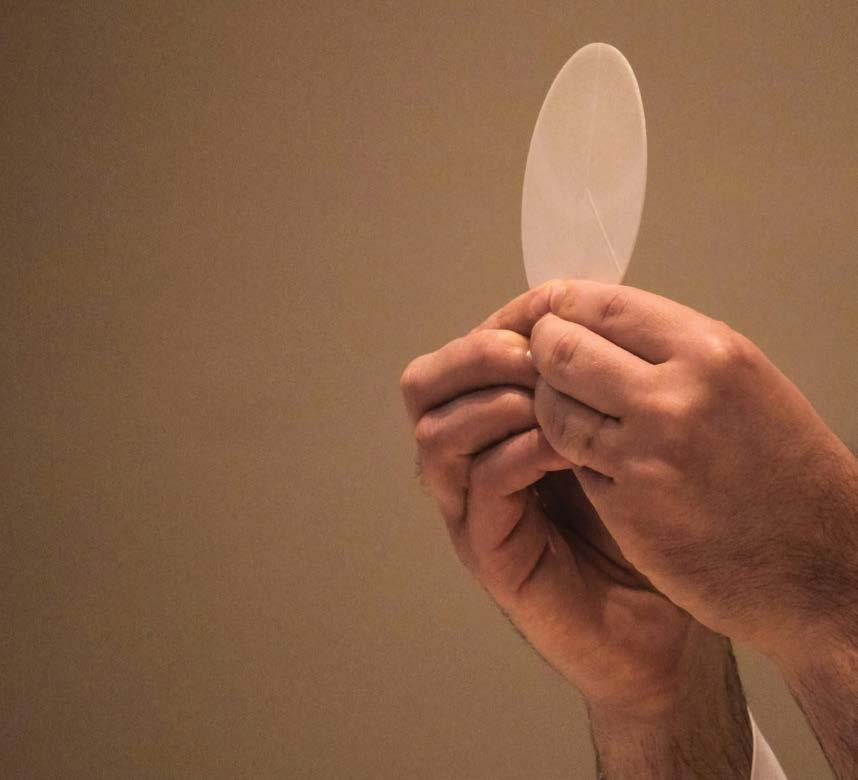
When I look at the Host during the Consecration, do I really believe that Christ, the Light of the World, is looking back at me, or do I glance up briefly and then return to my familiar darkness because it feels safer there?
Like the man born blind, what kind of “blindness” has quietly settled into my life, fear, disappointment, routine, or cynicism, and am I willing to let Jesus heal it, even if seeing clearly means changing the way I live?
If Christ’s Real Presence truly illuminates my wilderness, what would joy look like this week, and who might notice that I am walking a little lighter, a little more hopeful, and perhaps even a smile I didn’t have before?

Heavenly Father,
we give You thanks for this time together, for the gift of Your Word, and for the ways we have encountered Your Son in the wilderness of our hearts.
We thank You for moments of insight, reflection, and listening, for the ways Your Spirit has opened our eyes to Your presence, and for the light of Jesus that transforms our fear, our doubt, and our blindness into understanding and hope.
Lord Jesus, as You restored sight to the man born blind, so You open our hearts to see Your works and Your love at work in our lives. May the encounters we have experienced here bear fruit in our daily lives. Help us to walk forward with courage and faith, to share the light we have received, and to bring healing, hope, and love to all we meet. Send us forth in communion with one another, to participate fully in the life of Your Church, and to engage in Your mission in the world.
May our lives bear witness to Your mercy, Your truth, and Your presence, so that others may come to know You as the Light of the World.
We make this prayer through Christ our Lord.
☩ Amen.
Heavenly Father,
as we continue this Lenten journey, we come before You just as we are.
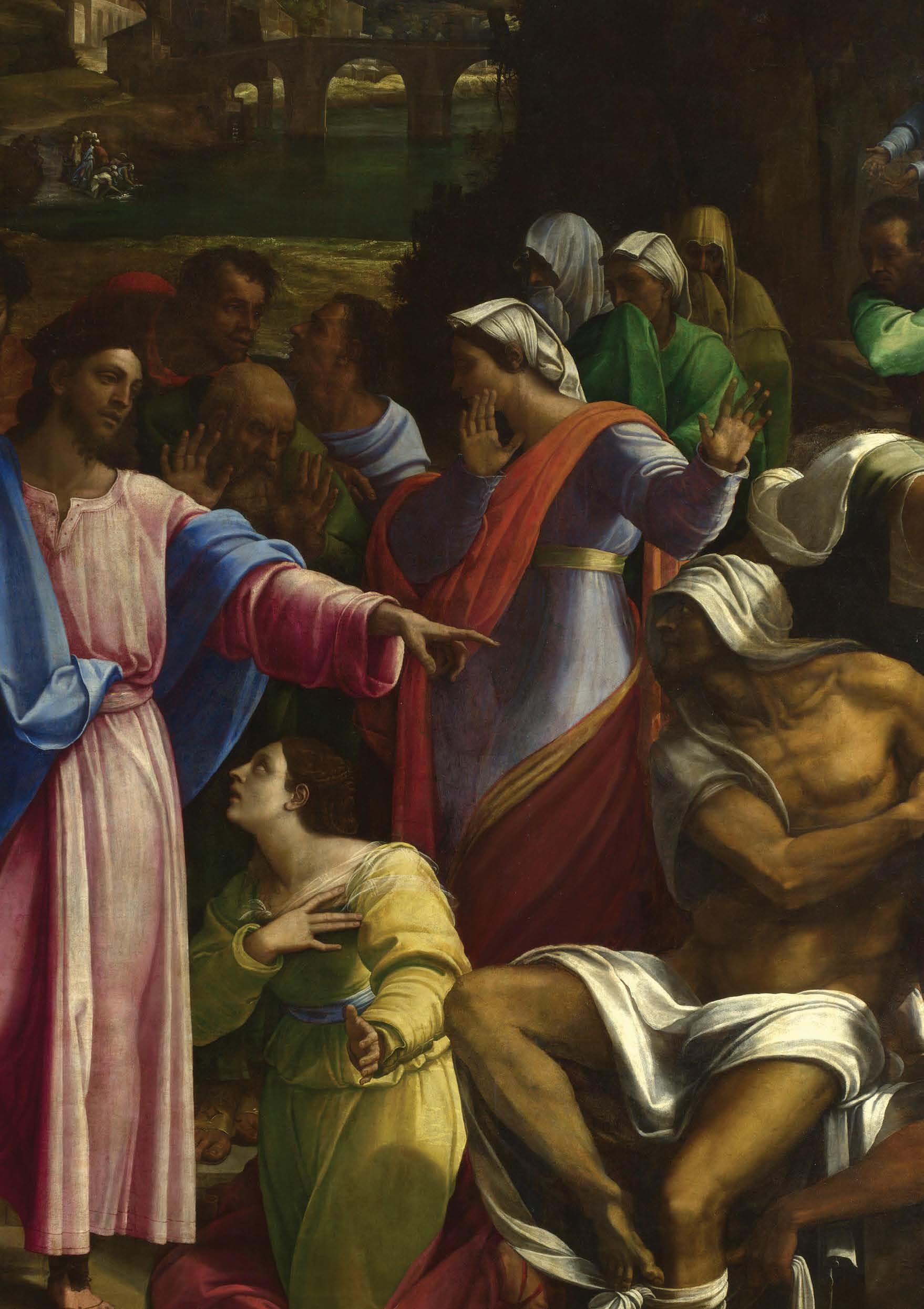
In Bethany, Jesus when told that the one He loved was ill, listened, waited, and trusted in Your timing. In the face of uncertainty, fear, and loss, Jesus continued to walk in the light of Your will, so that Your glory might be revealed. Lord, teach us to walk in the wilderness of our own hearts, especially in those places marked by waiting, confusion, or sorrow. Help us to trust when answers do not come quickly, to listen for Your voice when the path is unclear, and to believe that You are still at work, even when we cannot yet see how.
As we gather in this sacred time, open our hearts to Your Word and Your presence. May your Spirit guide us through the shadows into light, strengthen us to walk together in communion with one another, and prepare us to participate more fully in Your mission of hope, healing, and new life.
We ask this through Christ our Lord.
☩ Amen.
John 11:1-45 (NRSVCE)
Now a certain man was ill, Lazarus of Bethany, the village of Mary and her sister Martha. Mary was the one who anointed the Lord with perfume and wiped his feet with her hair; her brother Lazarus was ill.
So the sisters sent a message to Jesus, “Lord, he whom you love is ill.” But when Jesus heard it, he said, “This illness does not lead to death; rather it is for God’s glory, so that the Son of God may be glorified through it.” Accordingly, though Jesus loved Martha and her sister and Lazarus, after having heard that Lazarus was ill, he stayed two days longer in the place where he was.
Then after this he said to the disciples, “Let us go to Judea again.” The disciples said to him, “Rabbi, the Jews were just now trying to stone you, and are you going there again?” Jesus answered, “Are there not twelve hours of daylight? Those who walk during the day do not stumble, because they see the light of this world. But those who walk at night stumble, because the light is not in them.”
After saying this, he told them, “Our friend Lazarus has fallen asleep, but I am going
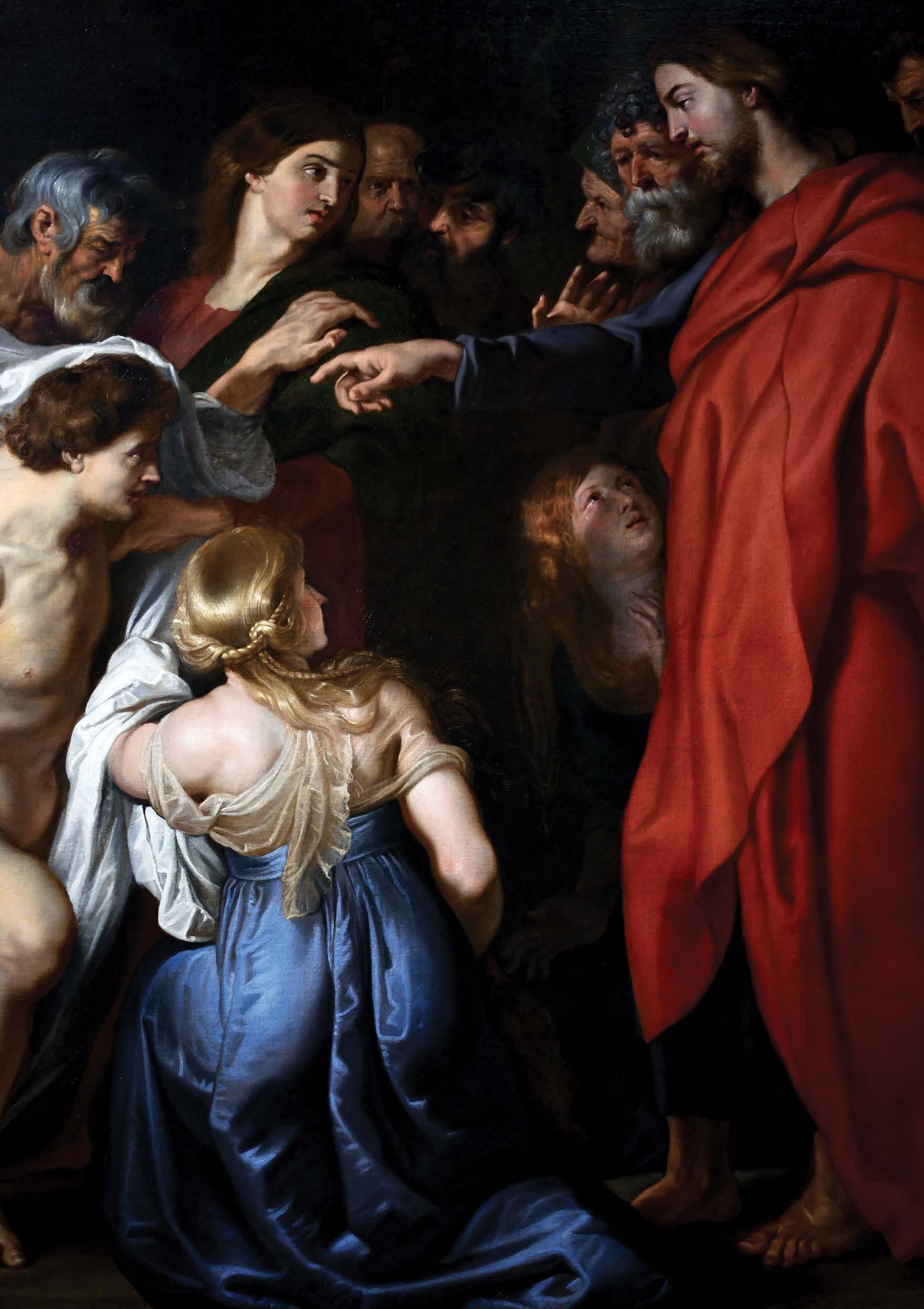
there to awaken him.” The disciples said to him, “Lord, if he has fallen asleep, he will be all right.” Jesus, however, had been speaking about his death, but they thought that he was referring merely to sleep. Then Jesus told them plainly, “Lazarus is dead. For your sake I am glad I was not there, so that you may believe. But let us go to him.” Thomas, who was called the Twin, said to his fellow disciples, “Let us also go, that we may die with him.”
When Jesus arrived, he found that Lazarus had already been in the tomb four days. Now Bethany was near Jerusalem, some two miles away, and many of the Jews had come to Martha and Mary to console them about their brother. When Martha heard that Jesus was coming, she went and met him, while Mary stayed at home. Martha said to Jesus, “Lord, if you had been here, my brother would not have died. But even now I know that God will give you whatever you ask of him.” Jesus said to her, “Your brother will rise again.” Martha said to him, “I know that he will rise again in the resurrection on the last day.” Jesus said to her, “I am the resurrection and the life. Those who believe in me, even though they die, will live, and everyone who lives and believes in me will never die. Do you believe this?” She said to him, “Yes, Lord, I believe that you are the Messiah the Son of God, the one coming into the world.”
When she had said this, she went back and called her sister Mary, and told her privately, “The Teacher is here and is calling for you.” And when she heard it, she got up quickly and went to him. Now Jesus had not yet come to the village, but was still at the place where Martha had
met him. The Jews who were with her in the house, consoling her, saw Mary get up quickly and go out. They followed her because they thought that she was going to the tomb to weep there. When Mary came where Jesus was and saw him, she knelt at his feet and said to him, “Lord, if you had been here, my brother would not have died.” When Jesus saw her weeping, and the Jews who came with her also weeping, he was greatly disturbed in spirit and deeply moved. He said, “Where have you laid him?” They said to him, “Lord, come and see.” Jesus began to weep. So the Jews said, “See how he loved him!”
But some of them said, “Could not he who opened the eyes of the blind man have kept this man from dying?”
Then Jesus, again greatly disturbed, came to the tomb. It was a cave, and a stone was lying against it. Jesus said, “Take away the stone.” Martha, the sister of the dead man, said to him, “Lord, already there is a stench because he has been dead four days.” Jesus said to her, “Did I not tell you that if you believed, you would see the glory of God?” So they took away the stone. And Jesus looked upward and said, “Father, I thank you for having heard me. I knew that you always hear me, but I have said this for the sake of the crowd standing here, so that they may believe that you sent me.” When he had said this, he cried with a loud voice, “Lazarus, come out!” The dead man came out, his hands and feet bound with strips of cloth, and his face wrapped in a cloth. Jesus said to them, “Unbind him, and let him go.”
Many of the Jews therefore, who had come with Mary and had seen what Jesus did, believed in him.
Anne Duncan; Parishioner, Pittwater Parish

In my late twenties, I had the privilege of visiting the Holy Land for the first time. I was travelling alone and one of the first places I stayed was the Youth Hostel at Tiberias, on the Sea of Galilee.
The Catholic Church, St Peter’s, was right next door to the hostel so the next morning I went to Mass. The Parish Priest welcomed me and noticed my Australian accent. Fr Patrick was also Australian, a Franciscan priest serving in the Holy Land.
Fr Patrick, realising that I was staying next door, found his way over after dinner that night to have a cup of tea and to interrogate my itinerary. ‘Are you a pilgrim or a tourist?’ was one of his first questions. ‘A pilgrim … I think …’ was my tentative reply. Sensing my hesitation, Fr Patrick took it upon himself to check on me daily to help me plan my pilgrimage of the Holy Land.
When I told him I wanted to go to Bethany to visit the tomb of Lazarus, he had clear instructions for me. He produced this piece of Scripture from John (11:1-45) and
told me when I arrived at the tomb, I was to walk down the stairs as far as I could go into the darkness and find a place to sit.
I was to meditate on this Scriptureespecially the section when Jesus calls Lazarus out of the tomb telling them to “Unbind him, and let him go.” Fr Patrick suggested that I ponder what was keeping me ‘bound’ and what I needed to let go of and become free from. He told me to sit with the Scripture until I heard God calling me out of the tomb. And, he added “Reconciliation is on at 4pm this afternoon at St Peter’s” and then left with a smile.
The experience in Lazarus’ tomb changed me. Under Fr Patrick’s watchful eye, I gradually became a pilgrim. Attentive and present to the sacredness of the places I visited. Armed with patience and the Word of God. Seeking the Eucharist more often. Seeing our universal Catholic Church and rich history with new eyes. Learning to pray simply, quietly and reflectively.

As we continue our Lenten journey this year, may we make the time to stop and listen. In the busyness of our lives, surrounded by the noise of the world, may we stop and listen for the voice of God calling us into a new life. May we become daily pilgrims in our own lives, not just tourists.
And may we, like Fr Patrick, gently lead others to know Jesus. It may well change their lives.
Fr Alex Peter Selvaraj MSFS; Administrator, Wyoming Parish
Walking in the Wilderness – The Eucharist as the Pledge of Resurrection
Mass Focus: Holy Communion
As we enter the Fifth Sunday of Lent, the Church draws us into the deepest mystery of our faith: life victorious over death. The raising of Lazarus is not merely a miracle of the past; it is a revelation of who Jesus is and a promise of what He continues to do among us. Standing before the sealed tomb, Jesus declares, “I am the resurrection and the life” (Jn 11:25). This is not only about the last day it is a living truth made present every time we approach the altar and receive Him in Holy Communion.

In the Eucharist, we do not receive a symbol or a distant memory. We receive the One who steps into graves and calls forth life. The same Lord who stood before Lazarus’ tomb comes to us under the humble signs of bread and wine. As Saint Cyril of Jerusalem teaches, “In the Eucharist we receive the Body that conquers death.” To receive Holy Communion is to encounter the living Christ, whose presence carries resurrection power into our wounded and fragile humanity.
All of us carry tombs within us, habits we cannot seem to overcome, relationships that feel beyond healing, hopes we have quietly buried, and fears that keep us wrapped in silence. When Jesus cried out, “Lazarus, come out”, He was not only addressing one man long ago. He was speaking to every human heart held captive by despair, fear, guilt and grief. In the Eucharist, that same voice reaches us, calling us out of whatever binds us and inviting us into freedom.
Saint Irenaeus reminds us, “Our bodies, nourished by the Eucharist, are prepared for resurrection.” Holy Communion is a sacred pledge. It unites us to Christ now and promises us glory beyond death. Our mortality is touched by immortality; our weakness is met by divine life.
Like Martha and Mary, we stand before Jesus with our questions, our sorrow, and our fragile faith. Jesus turns to each of us and asks the same question He asked Martha: “Do you believe this?” Every time we come forward to receive Holy Communion, we answer not only with words, but with our lives “Yes, Lord, I believe.” Even when our faith feels small or uncertain, the act of receiving Christ becomes a bold declaration of trust in His promise.
And this encounter never ends at the Altar. The miracle of Lazarus led many to believe, and so too our lives are meant to become quiet testimonies of resurrection. Nourished by the Eucharist, we are sent back into the world carrying a life that cannot be explained by human strength alone.
When we receive Holy Communion with reverence and gratitude, our very lives proclaim a powerful truth: suffering is real, death is real but neither has the final word.
Saint Augustine once said, when preaching to the newly Baptised in his Easter Sermon 227, “If we receive the Eucharist worthily, we become what we receive.” With these words, he draws us into the understanding of being in communion, with the community of believers along with Jesus as the Head of the Body. The One who stood before the tomb of Lazarus and called forth life now comes to dwell within us, entering our frailty with His resurrection power.
As we receive the Body of Christ, our own lives are quietly reshaped, fear gives way to hope, what feels buried begins to breathe again, and our wounded humanity is touched by divine life. We return from the Altar not merely comforted, but transformed, carrying within us the Risen Lord, sent back into the world as living witnesses that death, despair, and darkness never have the final word.
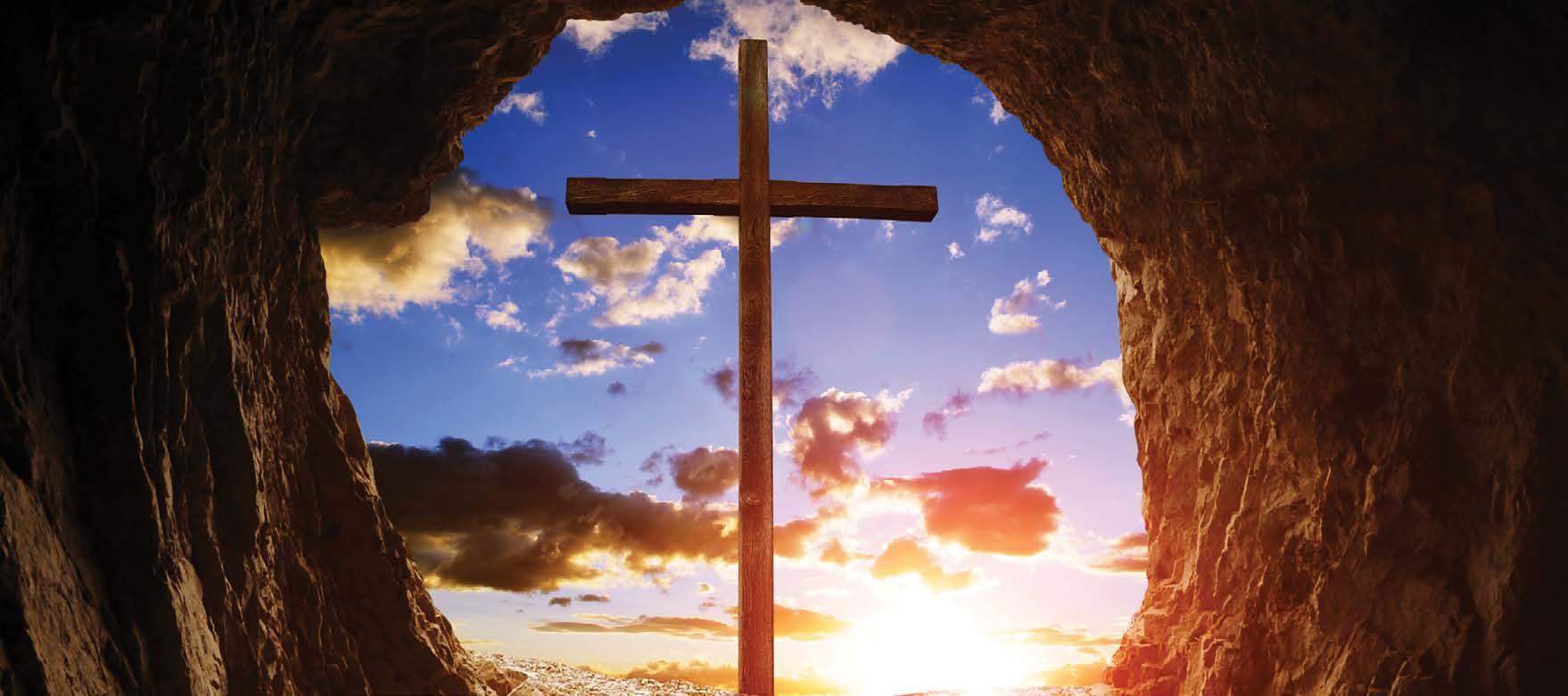
What “tomb” am I carrying to this Mass today, a habit, a hurt, a fear, or a hope I’ve quietly given up on, and do I dare to believe that Jesus might actually be serious when He says, “Come out”?
When I walk forward to receive Holy Communion, do I expect resurrection, or do I politely hope for a bit of comfort while keeping my grave clothes neatly in place?
If Christ truly lives within me after Holy Communion, what might look different this week, and would anyone at home, at work, or even in traffic suspect that they’ve just encountered someone who’s had a small encounter with the Resurrection?

Heavenly Father,
we give You thanks for this time together, for the gift of Your Word, and for the ways we have encountered Your beloved Son in the wilderness of our hearts.
We thank You for the graced moments of listening, reflection, and hope, for the times Your Spirit has guided us through uncertainty, fear, or sorrow. Thank You for the reminder that even in the waiting, Your light is ever present, leading us to new life and deeper trust in You.
Lord Jesus, just as You called Lazarus forth from the tomb, call us to awaken to Your presence in our lives.
May all we have received in this time — Your Word, Your love, Your grace — take root in our hearts and bear fruit in our actions.
Send us forth in communion with one another, to participate fully in the life of Your Church, and to engage in Your mission of hope, healing, and love in the world.
May our lives be witness to Your glory, so that others may encounter You and know Your saving presence.
We make this prayer through Christ our Lord.
☩ Amen.
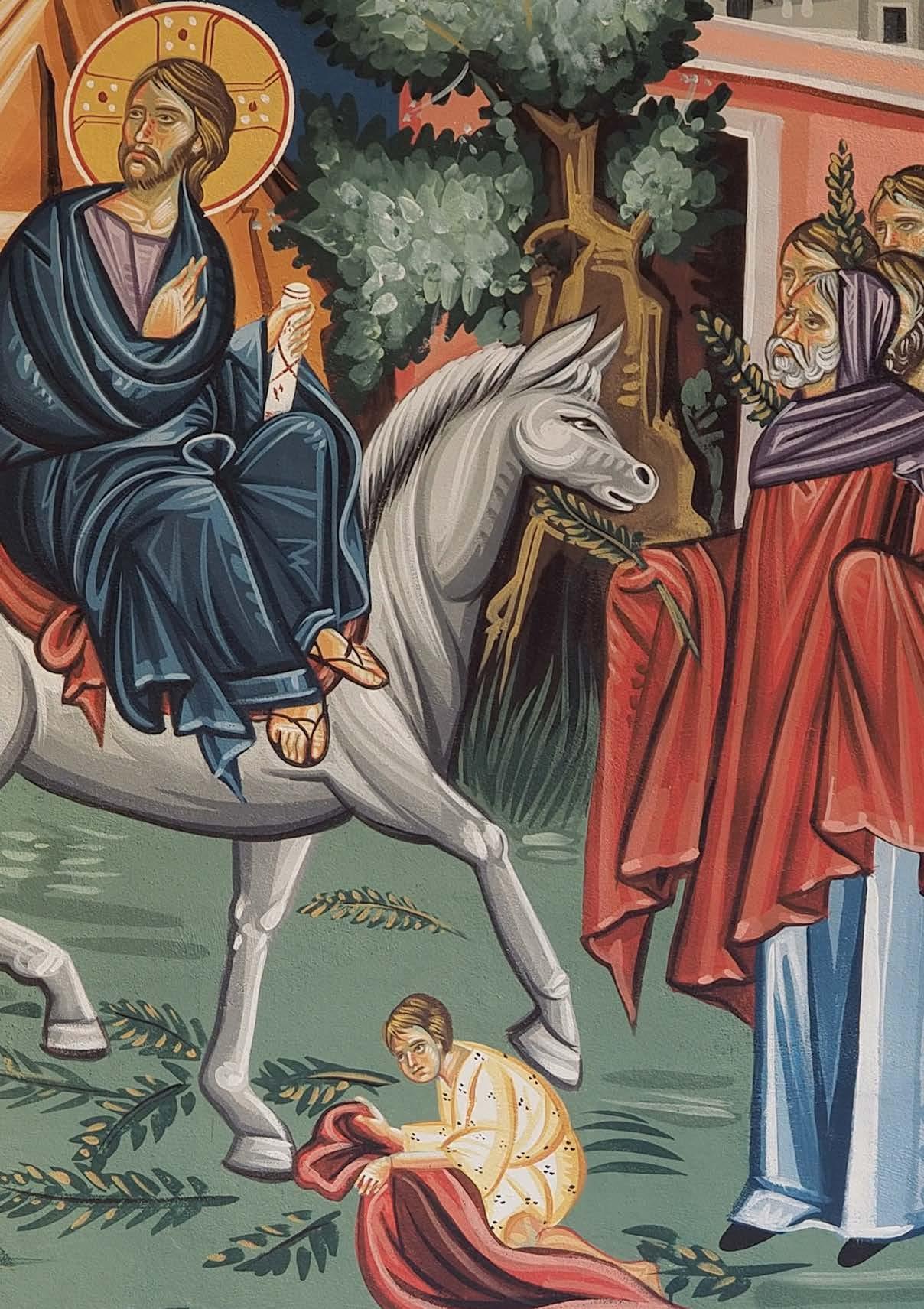
Heavenly Father,
as we near the end of this Lenten journey, we come before You just as we are.
In the Passion of Your Son, Jesus Christ, we see the depth of Your love. He endured suffering, betrayal, and death, and yet, in the wilderness of fear and abandonment, Jesus remained faithful to Your will.
Even in the shadows of the cross, Jesus invites us to walk with Him, to listen to His voice, and to trust in the life He gives. Lord, teach us to walk in the wilderness of our own hearts, where pain, loss, and uncertainty can cloud our vision. Help us to notice the ways You are present in our struggles, to open our ears to Your Word, and to allow your Spirit to guide us toward hope, courage, and transformation.
As we gather in this sacred time, may we encounter Jesus in our listening, reflection, and prayer. May this time strengthen us to walk faithfully in communion with one another, to participate fully in the life of Your Church, and to go forth in mission, carrying Your love and mercy into the world.
We ask this through Christ our Lord.
☩ Amen.

Matthew 26:14 – 27:66 (NRSVCE)
Judas Agrees to Betray Jesus
Then one of the twelve, who was called Judas Iscariot, went to the chief priests and said, “What will you give me if I betray him to you?” They paid him thirty pieces of silver. And from that moment he began to look for an opportunity to betray him.
On the first day of Unleavened Bread the disciples came to Jesus, saying, “Where do you want us to make the preparations for you to eat the Passover?” He said, “Go into the city to a certain man, and say to him, ‘The Teacher says, My time is near; I will keep the Passover at your house with my disciples.’” So the disciples did as Jesus had directed them, and they prepared the Passover meal.
When it was evening, he took his place with the twelve; and while they were eating, he said, “Truly I tell you, one of you will betray me.” And they became greatly distressed and began to say to him one
after another, “Surely not I, Lord?” He answered, “The one who has dipped his hand into the bowl with me will betray me. The Son of Man goes as it is written of him, but woe to that one by whom the Son of Man is betrayed! It would have been better for that one not to have been born.”
Judas, who betrayed him, said, “Surely not I, Rabbi?” He replied, “You have said so.”
While they were eating, Jesus took a loaf of bread, and after blessing it he broke it, gave it to the disciples, and said, “Take, eat; this is my body.” Then he took a cup, and after giving thanks he gave it to them, saying, “Drink from it, all of you; for this is my blood of the covenant, which is poured out for many for the forgiveness of sins. I tell you, I will never again drink of this fruit of the vine until that day when I drink it new with you in my Father’s kingdom.”
When they had sung the hymn, they went out to the Mount of Olives.
Peter’s Denial Foretold
Then Jesus said to them, “You will all become deserters because of me this night; for it is written,
‘I will strike the shepherd, and the sheep of the flock will be scattered.’
But after I am raised up, I will go ahead of you to Galilee.” Peter said to him, “Though all become deserters because of you, I will never desert you.” Jesus said to him, “Truly I tell you, this very night, before the cock crows, you will deny me three times.”
Peter said to him, “Even though I must die with you, I will not deny you.” And so said all the disciples.
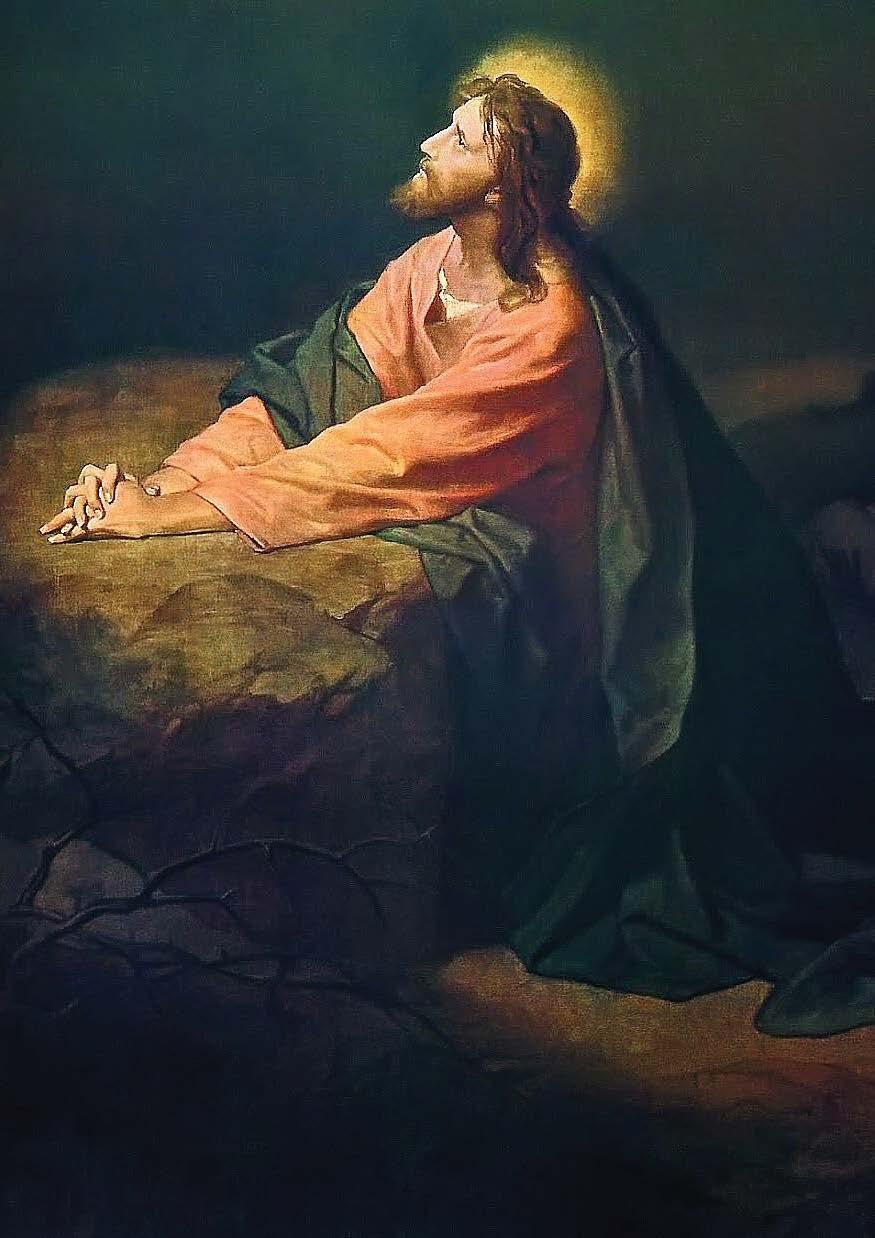
Then Jesus went with them to a place called Gethsemane; and he said to his disciples, “Sit here while I go over there and pray.” 37 He took with him Peter and the two sons of Zebedee, and began to be grieved and agitated. Then he said to them, “I am deeply grieved, even to death; remain here, and stay awake with me.”
And going a little farther, he threw himself on the ground and prayed, “My Father, if it is possible, let this cup pass from me; yet not what I want but what you want.”
Then he came to the disciples and found them sleeping; and he said to Peter, “So, could you not stay awake with me one hour? Stay awake and pray that you may not come into the time of trial;[c] the spirit indeed is willing, but the flesh is weak.”
Again he went away for the second time and prayed, “My Father, if this cannot pass unless I drink it, your will be done.” Again he came and found them sleeping, for their eyes were heavy. So leaving them again, he went away and prayed for the third time, saying the same words. Then he came to the disciples and said to them, “Are you still sleeping and taking your rest? See, the hour is at hand, and the Son of Man is betrayed into the hands of sinners. 46 Get up, let us be going. See, my betrayer is at hand.”
While he was still speaking, Judas, one of the twelve, arrived; with him was a large crowd with swords and clubs, from the chief priests and the elders of the people. Now the betrayer had given them a sign, saying, “The one I will kiss is the man; arrest him.” At once he came up to Jesus and said, “Greetings, Rabbi!” and kissed
him. Jesus said to him, “Friend, do what you are here to do.” Then they came and laid hands on Jesus and arrested him. Suddenly, one of those with Jesus put his hand on his sword, drew it, and struck the slave of the high priest, cutting off his ear. Then Jesus said to him, “Put your sword back into its place; for all who take the sword will perish by the sword. Do you think that I cannot appeal to my Father, and he will at once send me more than twelve legions of angels? But how then would the scriptures be fulfilled, which say it must happen in this way?” At that hour Jesus said to the crowds, “Have you come out with swords and clubs to arrest me as though I were a bandit? Day after day I sat in the temple teaching, and you did not arrest me. But all this has taken place, so that the scriptures of the prophets may be fulfilled.” Then all the disciples deserted him and fled.
Those who had arrested Jesus took him to Caiaphas the high priest, in whose house the scribes and the elders had gathered. But Peter was following him at a distance, as far as the courtyard of the high priest; and going inside, he sat with the guards in order to see how this would end. Now the chief priests and the whole council were looking for false testimony against Jesus so that they might put him to death, but they found none, though many false witnesses came forward. At last two came forward and said, “This fellow said, ‘I am able to destroy the temple of God and to build it in three days.’” The high priest stood up and said, “Have you no answer? What is it that they testify against you?” But Jesus was silent. Then the high priest said to him, “I put you under oath
before the living God, tell us if you are the Messiah, the Son of God.” Jesus said to him, “You have said so. But I tell you,
From now on you will see the Son of Man seated at the right hand of Power and coming on the clouds of heaven.”
Then the high priest tore his clothes and said, “He has blasphemed! Why do we still need witnesses? You have now heard his blasphemy. 66 What is your verdict?” They answered, “He deserves death.” Then they spat in his face and struck him; and some slapped him, saying, “Prophesy to us, you Messiah! Who is it that struck you?”
Peter’s Denial of Jesus
Now Peter was sitting outside in the courtyard. A servant-girl came to him and said, “You also were with Jesus the Galilean.” But he denied it before all of them, saying, “I do not know what you are talking about.” When he went out to the porch, another servant-girl saw him, and she said to the bystanders, “This man was with Jesus of Nazareth.” Again he denied it with an oath, “I do not know the man.” After a little while the bystanders came up and said to Peter, “Certainly you are also one of them, for your accent betrays you.”
Then he began to curse, and he swore an oath, “I do not know the man!” At that moment the cock crowed. Then Peter remembered what Jesus had said: “Before the cock crows, you will deny me three times.” And he went out and wept bitterly.
When morning came, all the chief priests and the elders of the people conferred together against Jesus in order to bring
about his death. They bound him, led him away, and handed him over to Pilate the governor.
When Judas, his betrayer, saw that Jesus was condemned, he repented and brought back the thirty pieces of silver to the chief priests and the elders. He said, “I have sinned by betraying innocent blood.” But they said, “What is that to us? See to it yourself.” Throwing down the pieces of silver in the temple, he departed; and he went and hanged himself. But the chief priests, taking the pieces of silver, said, “It is not lawful to put them into the treasury, since they are blood money.” After conferring together, they used them to buy the potter’s field as a place to bury foreigners. For this reason that field has been called the Field of Blood to this day. Then was fulfilled what had been spoken through the prophet Jeremiah, “And they took the thirty pieces of silver, the price of the one on whom a price had been set, on whom some of the people of Israel had set a price, and they gave them for the potter’s field, as the Lord commanded me.”
Now Jesus stood before the governor; and the governor asked him, “Are you the King of the Jews?” Jesus said, “You say so.” But when he was accused by the chief priests and elders, he did not answer. Then Pilate said to him, “Do you not hear how many accusations they make against you?” But he gave him no answer, not even to a single charge, so that the governor was greatly amazed.
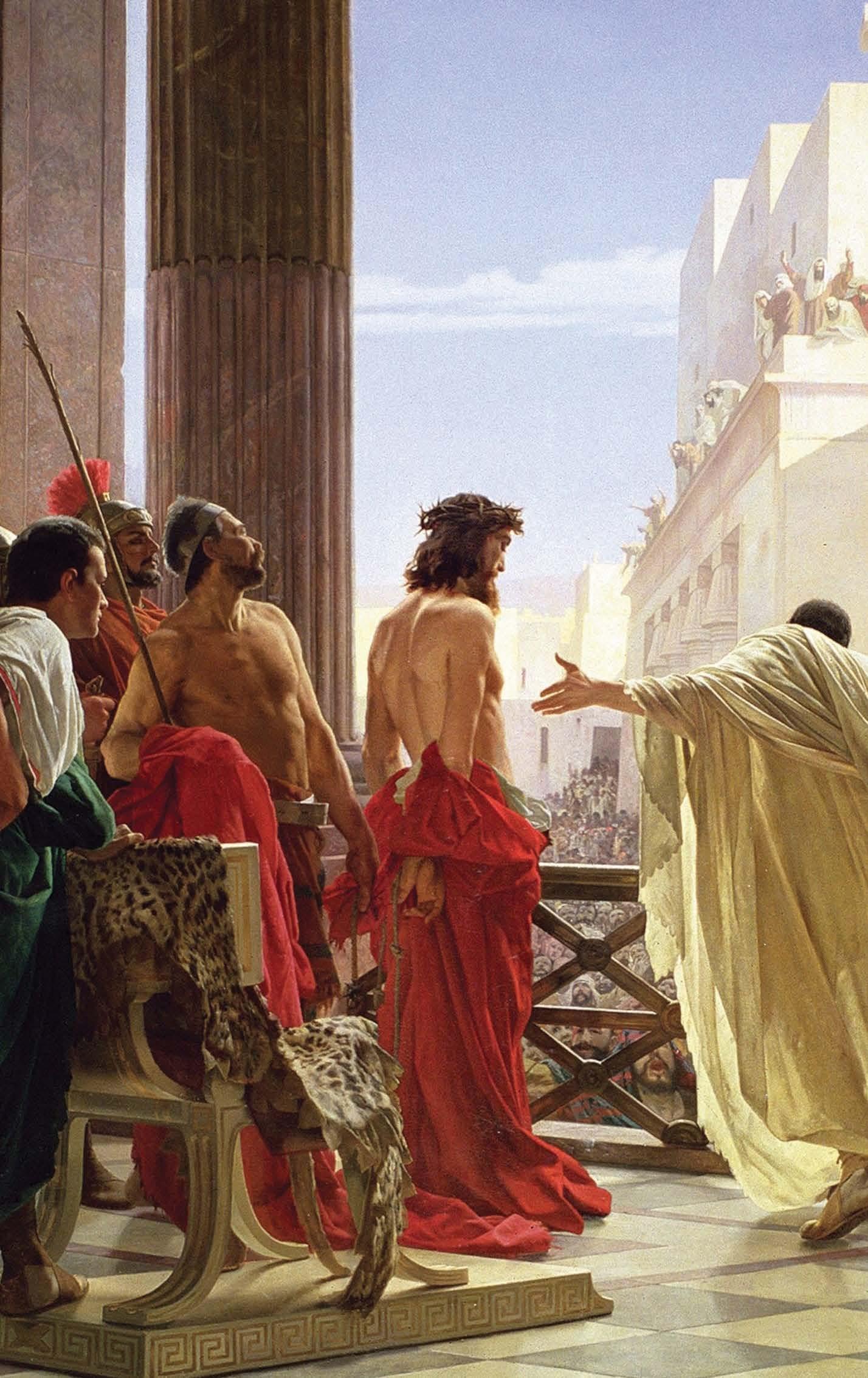
Barabbas or Jesus?
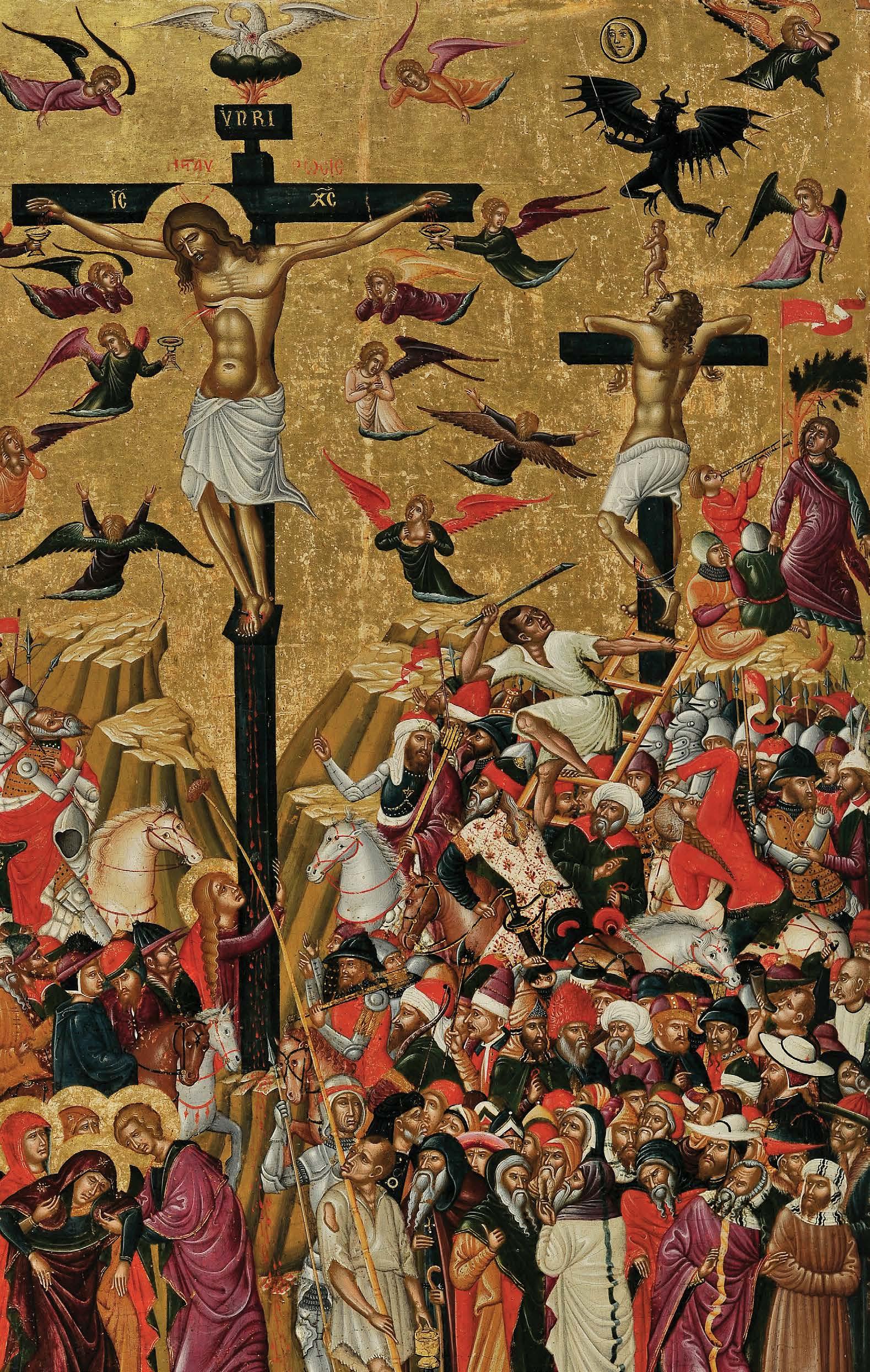
Now at the festival the governor was accustomed to release a prisoner for the crowd, anyone whom they wanted. At that time they had a notorious prisoner, called Jesus Barabbas. So after they had gathered, Pilate said to them, “Whom do you want me to release for you, Jesus Barabbas or Jesus who is called the Messiah?” For he realized that it was out of jealousy that they had handed him over. While he was sitting on the judgment seat, his wife sent word to him, “Have nothing to do with that innocent man, for today I have suffered a great deal because of a dream about him.” Now the chief priests and the elders persuaded the crowds to ask for Barabbas and to have Jesus killed. The governor again said to them, “Which of the two do you want me to release for you?” And they said, “Barabbas.” Pilate said to them, “Then what should I do with Jesus who is called the Messiah?” All of them said, “Let him be crucified!” Then he asked, “Why, what evil has he done?” But they shouted all the more, “Let him be crucified!”
So when Pilate saw that he could do nothing, but rather that a riot was beginning, he took some water and washed his hands before the crowd, saying, “I am innocent of this man’s blood; see to it yourselves.” Then the people as a whole answered, “His blood be on us and on our children!” So he released Barabbas for them; and after flogging Jesus, he handed him over to be crucified.
Then the soldiers of the governor took Jesus into the governor’s headquarters, and they gathered the whole cohort around him. They stripped him and put a scarlet robe on him, and after twisting some thorns into a crown, they put it on his head. They put a reed in his right hand and knelt before him and mocked him, saying, “Hail, King of the Jews!” They spat on him, and took the reed and struck him on the head. After mocking him, they stripped him of the robe and put his own clothes on him. Then they led him away to crucify him.
The Crucifixion of Jesus
As they went out, they came upon a man from Cyrene named Simon; they compelled this man to carry his cross. And when they came to a place called Golgotha (which means Place of a Skull), they offered him wine to drink, mixed with gall; but when he tasted it, he would not drink it. And when they had crucified him, they divided his clothes among themselves by casting lots; then they sat down there and kept watch over him. Over his head they put the charge against him, which read, “This is Jesus, the King of the Jews.”
Then two bandits were crucified with him, one on his right and one on his left. Those who passed by derided him, shaking their heads and saying, “You who would destroy the temple and build it in three days, save yourself! If you are the Son of God, come down from the cross.” In the same way the chief priests also, along with the scribes and elders, were mocking him, saying, “He saved others; he cannot
save himself. He is the King of Israel; let him come down from the cross now, and we will believe in him. He trusts in God; let God deliver him now, if he wants to; for he said, ‘I am God’s Son.’” The bandits who were crucified with him also taunted him in the same way.
From noon on, darkness came over the whole land until three in the afternoon. And about three o’clock Jesus cried with a loud voice, “Eli, Eli, lema sabachthani?” that is, “My God, my God, why have you forsaken me?” When some of the bystanders heard it, they said, “This man is calling for Elijah.” At once one of them ran and got a sponge, filled it with sour wine, put it on a stick, and gave it to him to drink. But the others said, “Wait, let us see whether Elijah will come to save him.” Then Jesus cried again with a loud voice and breathed his last. At that moment the curtain of the temple was torn in two, from top to bottom. The earth shook, and the rocks were split. The tombs also were opened, and many bodies of the saints who had fallen asleep were raised. After his resurrection they came out of the tombs and entered the holy city and appeared to many. Now when the centurion and those with him, who were keeping watch over Jesus, saw the earthquake and what took place, they were terrified and said, “Truly this man was God’s Son!”
Many women were also there, looking on from a distance; they had followed Jesus from Galilee and had provided for him. Among them were Mary Magdalene, and Mary the mother of James and Joseph, and the mother of the sons of Zebedee.
When it was evening, there came a rich man from Arimathea, named Joseph, who was also a disciple of Jesus. He went to Pilate and asked for the body of Jesus; then Pilate ordered it to be given to him. So Joseph took the body and wrapped it in a clean linen cloth and laid it in his own new tomb, which he had hewn in the rock. He then rolled a great stone to the door of the tomb and went away. Mary Magdalene and the other Mary were there, sitting opposite the tomb.
The next day, that is, after the day of Preparation, the chief priests and the Pharisees gathered before Pilate and said, “Sir, we remember what that impostor said while he was still alive, ‘After three days I will rise again.’ Therefore command the tomb to be made secure until the third day; otherwise his disciples may go and steal him away, and tell the people, ‘He has been raised from the dead,’ and the last deception would be worse than the first.” Pilate said to them, “You have a guard of soldiers; go, make it as secure as you can.” So they went with the guard and made the tomb secure by sealing the stone.
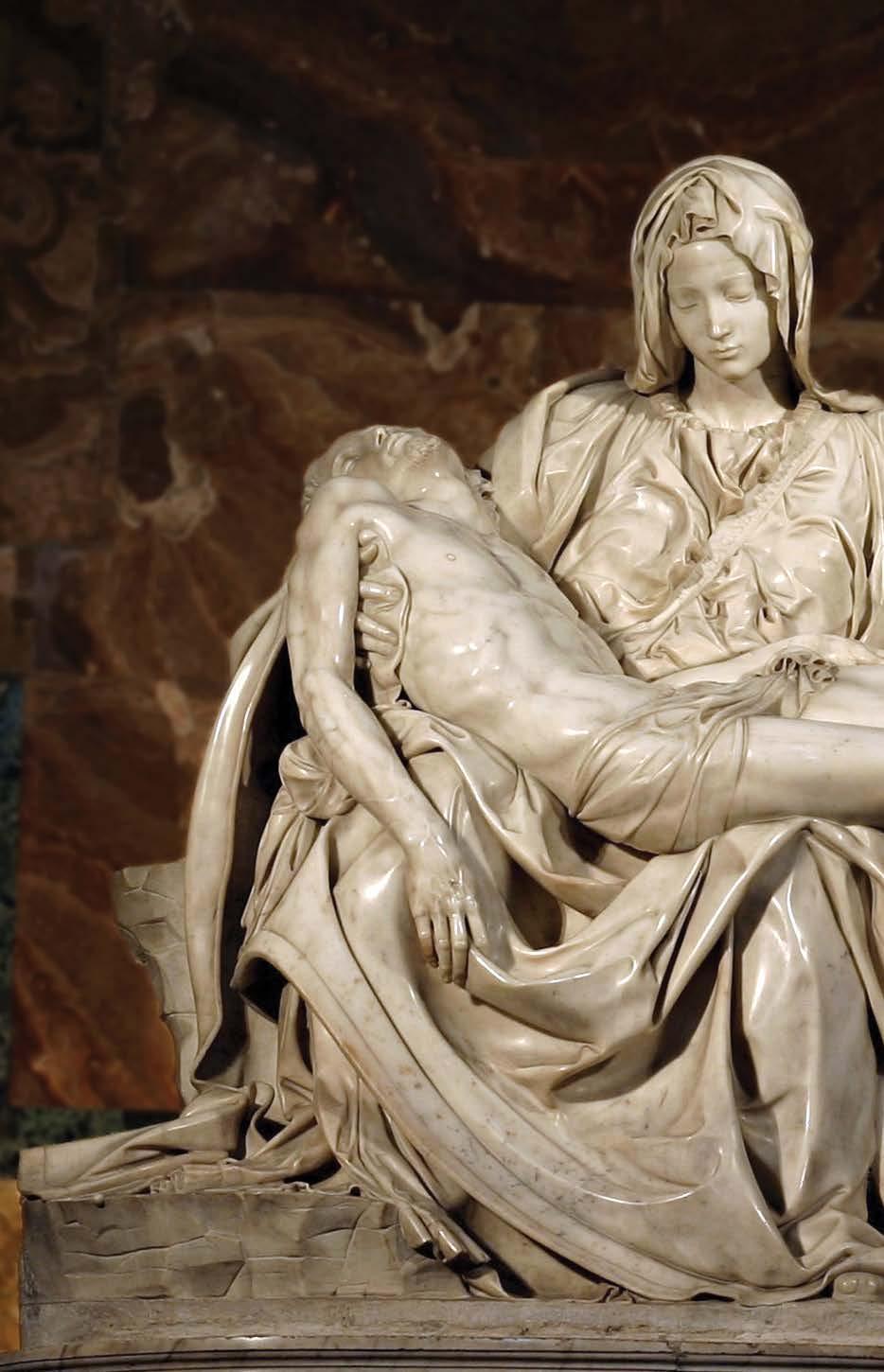
I have always wondered about Simon of Cyrene. A man pulled from the crowd to carry Jesus’ Cross – what did he feel that day? Did his heart ache for this innocent man, eagerly choosing to bear some of the burden? Or did he feel he was in the wrong place at the wrong time, filled with fear at this forced task?
Whatever the case may be, Catholic tradition tells us Simon became a disciple after this encounter, and his sons Alexander and Rufus became known members of the early Church. Something transformative happened when he touched that Cross.
Have you ever encountered Simon in your life?
All my life, I’ve preferred focusing on one thing at a time. The priesthood offers no such luxury. Ministry moves relentlessly: celebrating Mass, hearing confessions, visiting schools, finance meetings, fundraisers, spiritual direction, canonical paperwork, receiving pilgrims, hospital calls, emails, bringing Communion to the sick, everyday housework... and writing Diocesan Lenten reflections. Sometimes the weight feels overwhelming.
But recently I had an experience that transformed my perspective.
I was called to the Children’s Hospital to visit a young girl battling cancer for over
a year. Treatment had ceased; her family was gathering to support her through the pain. I arrived feeling fearful and illequipped to offer solace in the face of such suffering.
She and I walked the hallways slowly, speaking about faith and where God might be found in fear and pain. Suddenly she stopped, wincing. She made the Sign of the Cross and asked me to pray with her. We prayed the Our Father, Hail Mary, and Glory Be. Then she began a litany of her favourite saints, praying that her own pain might be an offering for all other young people suffering who do not know God.
I was floored. It took every bit of strength to fight back tears.
I left the hospital with an entirely new perspective. In that hallway, this young girl became Simon of Cyrene. Despite her own immense suffering, she chose to carry the cross for others – praying that her own pain might ease the burden of young people who suffer without knowing God. Her selfless offering, transforming her suffering into intercession for strangers, revealed the true meaning of bearing another’s cross. And in witnessing such courage, all my own small ministry concerns vanished like smoke.
This Lenten season, I pray that you too may be attentive to the Simons in your own lives – those who carry our crosses with us, often when we least expect it. And may we, like Simon of Cyrene himself, allow ourselves to be transformed by the wood of the Cross.
I will forever be grateful for the gift she gave me that day.
Fr Alex Peter Selvaraj MSFS; Administrator, Wyoming Parish
Walking in the Wilderness – The Eucharist: the food of Pilgrims
Mass Focus: Go in peace
Palm Sunday places us at the threshold of Holy Week. A sacred space where praise and suffering stand side by side. We enter the Church waving palms and singing Hosanna, yet within moments we listen to the Passion. Joy and sorrow meet. Glory and the Cross embrace. This is not a contradiction; it is the truth of Christian life. Faith without illusion and love without escape.
Jesus enters Jerusalem not as a conqueror on a warhorse, but as a humble King seated on a donkey. He reveals a different kind of power: the power of humility, obedience, and self-giving love. As Saint Bernard of Clairvaux reminds us, “Nothing can conquer the heart like humility can.” The Lord does not force our loyalty; He invites our hearts. This Holy Week, He asks us to walk with Him by laying down pride, anger, fear, judgment and criticism.
Palm Sunday inevitably leads us to the Upper Room. Before the cross, before the nails, before the darkness of Good Friday, Jesus gives His disciples a gift that will sustain them: the Eucharist. He knows they will scatter. He knows they will be afraid. And so, He places the strength of His own Heart into their hands.
In the Eucharist, Christ does not remove the cross but He gives us the strength to carry it. Here we receive courage when love becomes costly, grace when forgiveness feels impossible, hope when suffering threatens to crush our faith. Saint Thomas Aquinas called the Eucharist “the food of pilgrims”, because we are always on the road, often tired, often wounded, often unsure but never alone. We do not walk by our own strength; we walk nourished by the Bread of Life.
As we listen to the Passion, we realise that we are not merely hearing a story, we are seeing ourselves. At times we are Peter, full of good intentions yet weak in resolve. At times we are the crowd, easily swayed, praising one day and silent the next. At times we are Simon of Cyrene, unexpectedly asked to help carry another’s cross. Sometimes we are the faithful women who remain close, and sometimes, like the centurion, we only come to true faith when we stand beneath the Cross. The Passion is a mirror held before our hearts, quietly asking: Where do I stand with Christ today?
Every Eucharist ends with a sending forth: “Go in peace.” This is not a polite conclusion; it is a mission. Just as Christ entered Jerusalem to give His life, we are sent into our homes, workplaces, parishes, and communities to carry Him there. We are sent to bring peace where there is tension, compassion where there is suffering, courage where there is fear, and humility where pride has wounded relationships. As Saint Teresa of Calcutta said, “At the end of Mass, we are sent to love and serve.” Holy Week is not something we observe from a distance but it is something we live.
As we wave our palms and sing “Hosanna” today, am I joyfully signing up to follow Jesus into Holy Week, or quietly hoping He’ll skip the messy bits and jump straight to Easter morning?
Jesus rides into Jerusalem on a donkey, not a warhorse. So, what part of my life is He asking to tame, my pride, my sharp tongue, my need to win arguments, and am I prepared for the donkey to walk slower than I’d like?
When I receive the Eucharist, the food of pilgrims, what am I really asking for, strength, patience, forgiveness, and am I prepared for God to give me opportunities to practise them rather than a quick spiritual shortcut?


Heavenly Father,
we give You thanks for this time together, for the gift of Your Word, and for the ways we have encountered Your Son in the wilderness of our hearts.
We thank You for the witness of Christ in His Passion, for the courage, love, and faithfulness He showed in the midst of deep suffering and abandonment.
We are grateful for the moments in this time where we have listened, reflected, and been moved by Your presence, and for the hope and strength that flow from knowing that Your light never fails, even in the darkness.
Lord Jesus, may what we have received in this time take root in our lives. Help us to carry the lessons of Your Passion into our daily lives: to walk in faith through our own challenges, to serve one another in love, and to bear witness to Your mercy and truth.
Send us forth in communion with one another, to participate fully in the life of Your Church, and to engage in Your mission in the world.
May our words, our actions, and our presence reflect Your love, so that others may encounter You and know Your saving grace.
We make this prayer through Christ our Lord.
☩ Amen.



Nihil Obstat:
Rev Dr John Hill
Diocesan Censor
12 January 2026
Imprimatur:
Most Rev Anthony Randazzo DD, JCL
Bishop of Broken Bay
25 January 2026
Copyright © 2026 Catholic Diocese of Broken Bay