Castro Street Fair expands its footprint
 by John Ferrannini
It wouldn’t be the first Sunday in October without the Castro Street fair, and organizers are welcoming visitors to an expanded footprint in the LGBTQ neighborhood this year.
While many of the area’s merchants are getting ready for an influx of fairgoers, two LGBTQ bars in the Castro neighborhood will not be open for the fair October 1, despite initial hopes to the contrary.
In terms of the Castro Street Fair, Fred Lopez, vice president of the board of directors, told the Bay Area Reporter that the footprint is “going to be closer to what folks might remember prepandemic,” as it will include 18th Street from Diamond to Noe streets and Castro Street between 18th and 19th streets. Last year, the fairgrounds began at Market and Castro streets but ended at the intersection of Castro and 18th Street.
The 49th annual fair was started by the gay late supervisor Harvey Milk in 1974.

There will be three stages of entertainment, Lopez said. At the Castro Street intersection with Market Street will be the Castro Stage featuring DJs.
A Collingwood Stage produced by T4T, which seeks to create inclusive nightlife events for transgender and nonbinary partygoers, will be set up on 18th Street at the Collingwood intersection. The third stage, produced by the Castro Art Mart, will be on 18th Street at Noe Street.
The T4T stage will feature a drag story hour at 11:30 a.m. and Juanita MORE! at 1:15 p.m. T4T did not return requests for comment for this report as of press time.
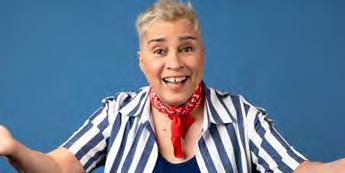
MORE! told the B.A.R. that she is “delighted to be back at the Castro Street Fair and happy I took a leap, reached out to the board of directors, and asked if I could participate in this year’s event.”

Lauro Gonzalez of the Castro Art Mart stated, “We are so excited to be included in the Castro Street Fair,” and added that the stage would feature local drag and DJ performances. “As usual we will be highlighting local LGBTQ+ artists, creatives, and makers,” he stated.
See page 14 >>
Formal wear, Folsom style, hits the fair
The 40th annual Folsom Street Fair saw two people don tuxedo vests and top hats as they wandered the leather and kink festival Sunday, September 24 in San
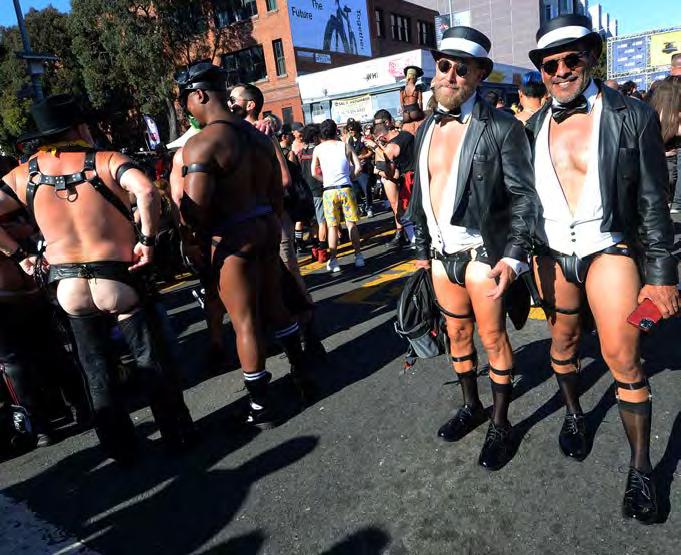
Francisco’s South of Market neighborhood. This year’s fair drew a large crowd, and attendees enjoyed kinky demonstrations, live music, and more.
Newsom signs book ban, other LGBTQ bills
by Cynthia Laird
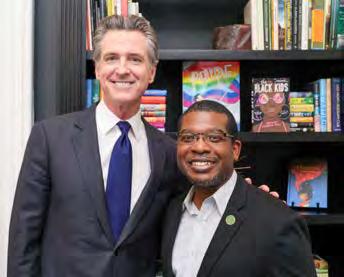
With the stroke of his pen Governor Gavin Newsom has prohibited public schools in California from banning books due to their addressing LGBTQ or race-based topics. It is one of 11 LGBTQ-related bills that he has now signed into law since lawmakers ended their legislative session in September.
See page 11 >>
SF campaign aims to harness nature for benefit of residents
by Matthew S. Bajko
At their home in the Castro husbands
Steve Kawa and Dan Henkle are growing plants native to San Francisco. By doing so, they are assisting pollinators and other insects in the city.
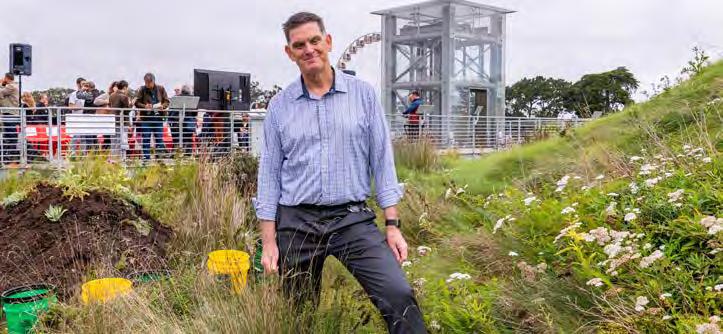
It may seem inconsequential but the couple’s action is part of a larger effort to make the Cityby-the-Bay more hospitable to nature. Doing so can also bring about benefits for San Francisco’s human residents.
“Everyone can participate in improving our city by doing small things and by doing big things,” said Kawa, a former chief adviser to several of the city’s mayors who now serves on the board of the California Academy of Sciences.
Kawa was speaking with the Bay Area Reporter on a recent cloudy, cool San Francisco morning on the living roof of the research and educational institution in Golden Gate Park. He is one of numerous leaders whose organizations are part of the alliance behind Reimagining San Francisco, which is working to improve the city’s ecological health and ensure all of its residents can benefit from the local natural environment.
They had gathered at the Cal Academy to officially announce the new initiative on September 7, which was California Biodiversity Day, and take part in a native plant planting atop the build-
ing. The institution’s executive director, Scott Sampson, Ph.D., joked it was a typical “gorgeous San Francisco summer day.”
With concerns growing that such weather may become exceedingly rare in the city due to climate change, impacting not only its native fauna and flora but also human residents, nearly threedozen local organizations and city agencies came together last year to form what Sampson described as a “vital citywide collaboration” focused on making San Francisco a healthier and greener
place to live. Cal Academy had spearheaded the creation of the collaborative effort.
“We are already engaged in wonderful work to make the city healthier for people and nonhuman inhabitants,” said Sampson at the rollout event, noting the alliance members are “taking a leap of faith to work together.”
That is because the founding organizations of the effort have not always seen eye-to-eye on
See page 15 >>

Serving the lesbian, gay, bisexual, transgender, and queer communities since 1971 www.ebar.com Vol. 53 • No. 39 • September 28-October 4, 2023 ebar.com/subscribe BREAKING NEWS • EXCLUSIVE CONTENT • ONLINE EXTRAS • SPECIAL OFFERS & DISCOUNTS • GIVEAWAYS 04
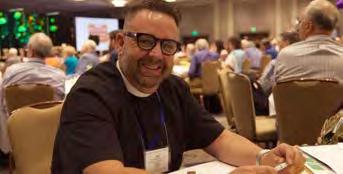
Lutherans elect gay bishop
Marga Gomez
ARTS 17 17 The
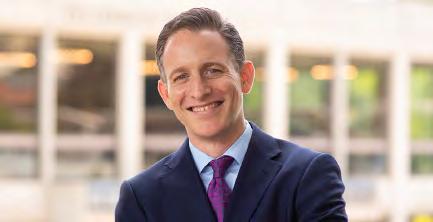
Jeremy Geffen
Scott Sampson, Ph.D., executive director of the California Academy of Sciences, is part of a collaboration to make San Francisco greener.
Jane Philomen Cleland
ARTS
Maui mops up
10
The view of last year’s Castro Street Fair, as shown from across from Harvey Milk Plaza, showed the smaller footprint on Castro Street.
John Ferrannini
Courtesy the Governor’s office
Governor Gavin Newsom, left, signed a bill by Assemblymember Corey A. Jackson, Ph.D. that prohibits book banning in California schools.
Rick Gerharter
LGBTQ advocates slam Newsom for trans veto
by Cynthia Laird

LGBTQ advocates slammed Governor Gavin Newsom for vetoing a bill that would have required state judges to take into account parental support for their transgender children during custody disputes. Meanwhile, the author of the bill intends to continue pressing the need to ensure trans youth are protected by the judicial system.
Late Friday night Newsom announced his veto of Assembly Bill 957 by Assemblymember Lori D. Wilson (D-Suisun City), the mother of an adult trans son. The legislation, dubbed the TGI (Transgender, Gender-Diverse, and Intersex) Youth Empowerment Act, would have required courts “to strongly consider” if a parent is affirming of their child’s gender identity or gender expression, and if they consent to legally changing the child’s name and gender marker to mirror their preferred gender, when considering the legal guardianship and visitation rights of the minor’s divorcing parents.
But Newsom, in his first veto of an LGBTQ-related bill sent to him this legislative session, rejected AB 957 for going too far in restricting the independence of judges who preside over custody cases. He argued in his veto message that the courts “under existing law” are already required to consider if a parent affirms their child’s gender identity, along with which parent will be best at ensuring the “health, safety, and welfare” of a child during custody or visitation proceedings.
“I appreciate the passion and values that led the author to introduce this bill. I share a deep commitment to advancing the rights of transgender Californians, an effort that has guided my decisions through many decades in public office,” wrote Newsom. “That said, I urge caution when the Executive and Legislative branches of state government attempt to dictate – in prescriptive terms that single out one characteristic – legal standards for the Judicial branch to apply. Other-minded elected officials, in California and other states, could very well use this strategy to diminish the civil rights of vulnerable communities.”
The San Francisco-based Harvey Milk LGBTQ Democratic Club strongly condemned Newsom’s veto, calling it “outrageous” in a statement it released late Sunday evening on its Facebook page.
“We cannot fathom his decision to block judges’ consideration of a child’s well-being and a parent’s affirmation of their gender identity in custody decisions,” stated the progressive political group.
Milk club President Jeffrey Kwong criticized Newsom, widely expected to run for president at some point, for “playing politics in the fight for transgender rights and protection. His deplorable veto will endanger transgender children, subjecting them to potentially harmful situations in family court.”
Jonathan Cook, the former executive director of the Solano Pride Center, also called out Newsom in a tweet he posted on X, formerly Twitter, early Saturday morning. He called attention to Newsom’s contradictory actions of vetoing Wilson’s bill after lashing out last year against Republican Texas Governor Greg Abbott for calling on people to report parents of trans children receiving gender-affirming care for abuse. Newsom had noted in a 2022 tweet that his gubernatorial counterpart’s “order is a direct assault on their wellbeing. To fearful families in Texas right now – California’s
door is always open to you.”
Cook, now executive director of the Sacramento Housing Alliance, argued that Newsom could have protected trans kids by signing AB 957 into law. Instead, “your veto is a direct assault on their wellbeing,” he wrote.
Other LGBTQ advocacy groups expressed more measured disappointment with Newsom, who has long championed LGBTQ rights since serving as a San Francisco supervisor in the late 1990s and then mayor in the 2000s. The national Human Rights Campaign on Monday tweeted, “While we appreciate Governor Newsom’s efforts to protect LGBTQ+ people, we are disappointed” by his veto of AB 957.
It did so in a repost of a post on X from Equality California on Saturday in which the statewide group stated it was “disappointed and disheartened” by Newsom’s vetoing the bill. It also expressed gratitude for Wilson’s “unwavering commitment to the needs of transgender and gender non-conforming young people – until the work is done.”
It noted with LGBTQ+ youth, specifically trans youth, “facing higher
rates of depression and suicide, reassurance and protection from our state is in dire need. Anti-LGBTQ+ extremists targeted this modest and straightforward legislation as part of their coordinated attacks on trans youth in California, and the failure to enact this bill bolsters their dangerous efforts.”
In a September 15 email the conservative California Policy Center had urged its supporters to contact Newsom’s office and demand he veto AB 957, arguing it would put children at risk during custody battles. It also argued if enacted, the law would “be used to intimidate parents into consenting to their child receiving puberty blockers or radical genderaltering surgeries as a condition of having visitation or custody rights. It will certainly encourage some parents to push their children to ‘transition’ under false pretenses to secure a favorable custody order.”
Conservative Assemblymember Bill Essayli (R-Riverside) hailed the gubernatorial veto of the bill as a “huge victory” for parental rights in a post on X Monday.
“When a child is experiencing gender dysphoria, the last thing government should do is separate that child from a loving parent,” wrote Essayli. “We’ve known the vast majority of people agree children are the domain of their parents, not the government. The Governor cannot ignore our message.”
As for Wilson, she released a statement late Friday noting that she was “extremely disappointed” by Newsom’s decision to veto her bill, as the Bay Area Reporter first reported online September 22. While the governor has championed “the LGBTQ+ community for years and even before it was popular to do so,” stated Wilson, as for how best to protect TGI children during custody proceedings, “the Governor and I disagree.”
Despite the legislative setback, Wilson stated that she will continue fighting for trans youth.

“I’ve been disheartened over the last few years as I watched the rising hate and heard the vitriol toward the trans community. My intent with this bill was to give them a voice, particularly in the family court system where a non-affirming parent could have a detrimental impact on the mental health and well-being of a child,” Wilson stated. “Whether the roadblock comes from the opposition or even a sup -
porter, it only hardens my resolve. I’m far from done, this fight is personal! Not just for my family, but to all the trans kids that deserve a brighter and safer future.”
In March, when Wilson was working to advance the bill, she pointed out that TGI youth are at risk for mental health challenges.
“As the mother of a trans child, it is jarring to know that TGI youth are at a higher risk of depression, mental health crises, self-harm, and suicide than their cisgender peers,” Wilson stated in a release posted on her Assembly website. “Family courts are required to consider a variety of factors when determining the best interest of the child for the purposes of custody and visitation, including the health, safety and welfare of the child, any history of abuse, and history of substance abuse.”
Her TGI Youth Empowerment Act, Wilson noted, would have provided “California the opportunity to take one step closer to building a safer, more dignified, and equitable world for TGI youth and their families.”
Although he vetoed Wilson’s bill, Newsom has been out front this year in pushing back against a rollback of the rights of LGBTQ youth, particularly in the state’s public schools, as the B.A.R. has reported. ) His threatening a major fine against a Riverside County school district led to its elected board’s reversing course on banning instructional materials that covered the late gay San Francisco supervisor Harvey Milk.
Late Monday, Newsom signed into law a bill that prohibits school boards from banning books from public school classrooms and libraries. (See story, page 1.) Due to the inclusion of an urgency clause by its author, gay Assemblymember Corey A. Jackson, Ph.D., (DPerris), AB 1078 immediately took effect.
As of the B.A.R.’s press deadline at noon Wednesday, Newsom had signed 11 LGBTQ-related bills that lawmakers had sent to his desk this year. He has until October 14 to sign or veto six remaining LGBTQrelated bills that the B.A.R. has been tracking this legislative session. t Matthew S. Bajko contributed reporting.
2 • Bay area reporter • September 28-October 4, 2023 t 415-626-1110 130 Russ Street, SF okellsfireplace.com info@okellsfireplace.com OKELL’S FIREPLACE
Valor LX2 3-sided gas fireplace shown here with Murano glass, and reflective glass liner
<< State News
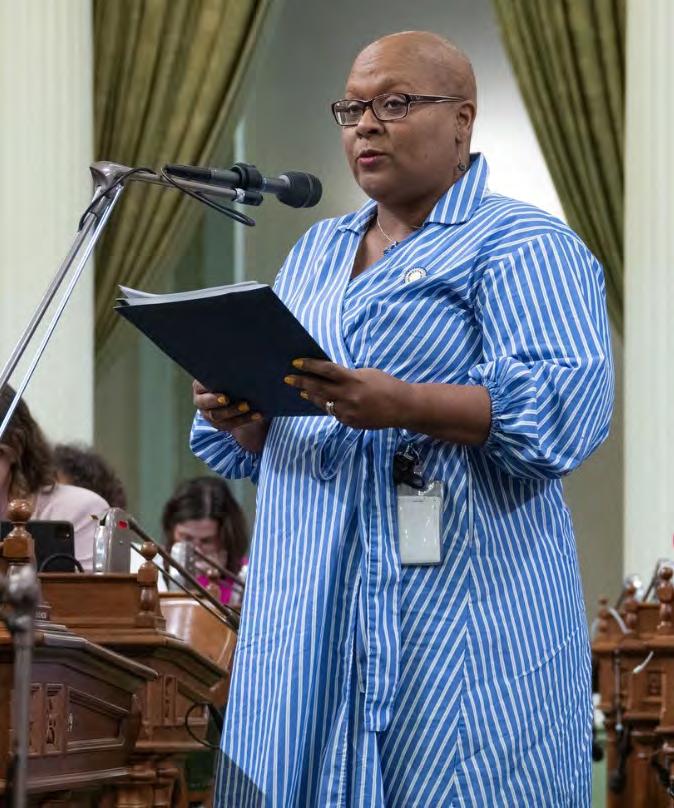
Assemblymember Lori D. Wilson (D-Suisun City) spoke on the Assembly floor September 14, the last day of the legislative session.
Courtesy Assemblymember Wilson’s Instagram page
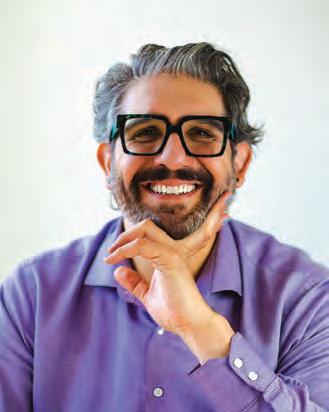
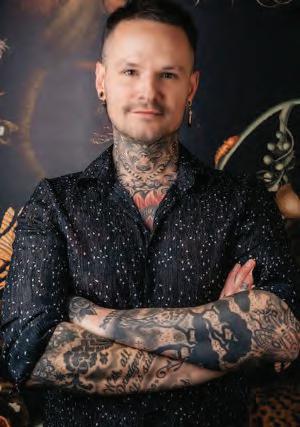
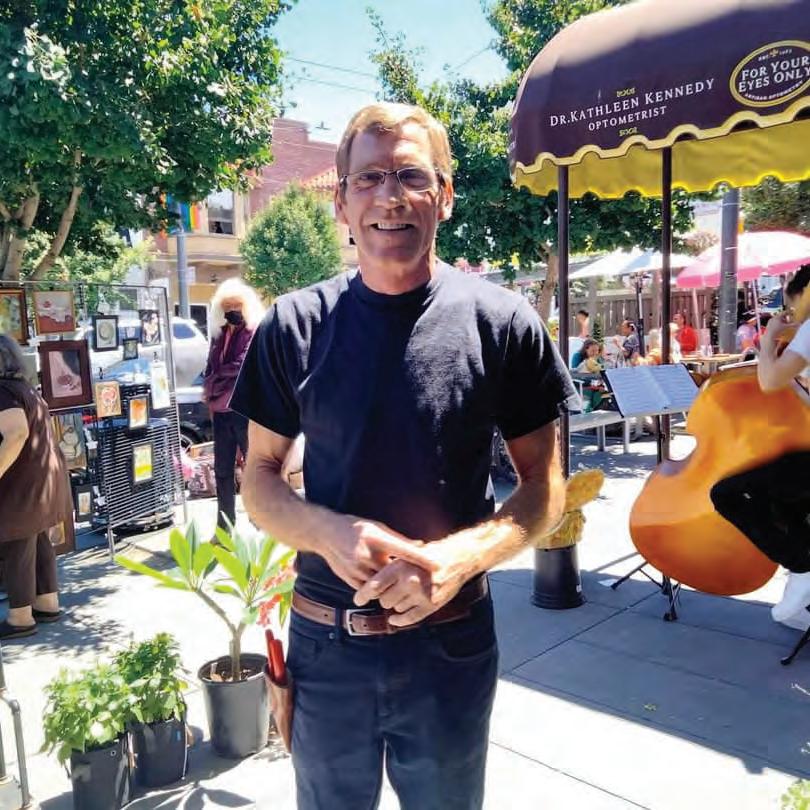
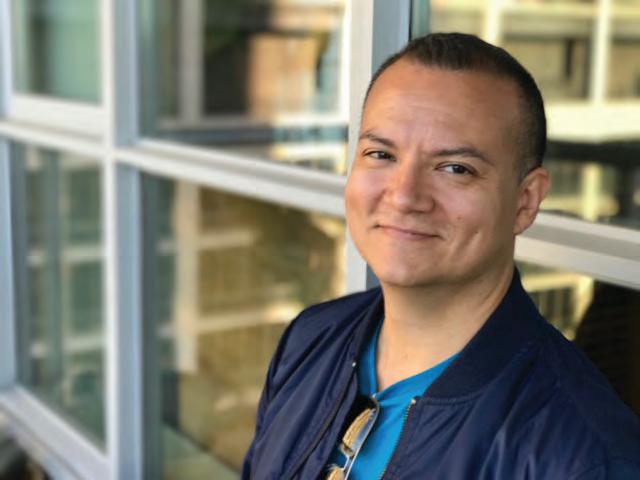
The Castro LGBTQ Cultural District has a new set of small business grants we have awarded to six local entrepreneurs. Grants of $6,000 to each small business will be used to produce activation events that build foot tra c. The deadline for these grants was July 21, 2023. With these new grants, we have supported small businesses in the Castro with more than $130,000 in funds over the last two years!

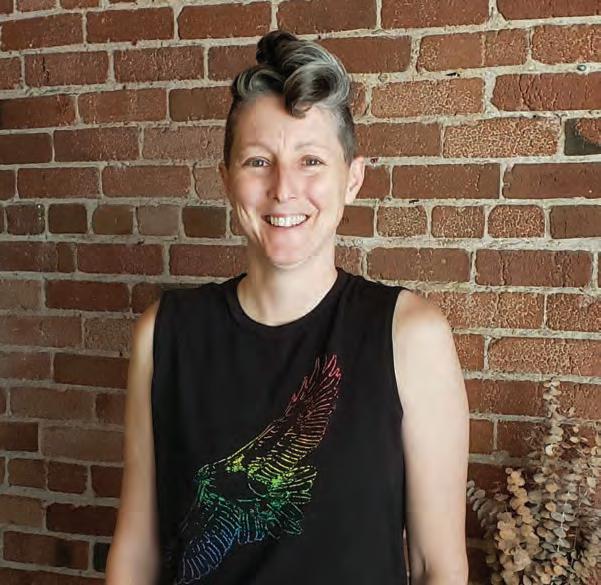






 Fabulosa Bookstore
Michael Evans Chadwick’s
Norman James Belisle How’s It Hanging
Teddy Greene Headprint Studio
David Khalili, LMFT Rouse Relational Wellness
Danae Lintz Fave Brand
Fabulosa Bookstore
Michael Evans Chadwick’s
Norman James Belisle How’s It Hanging
Teddy Greene Headprint Studio
David Khalili, LMFT Rouse Relational Wellness
Danae Lintz Fave Brand
Maui’s LGBTQ community steps up after fires
by Heather Cassell
“Shell-shocked”is how Jim Doran, president of Aloha Maui Pride, described people in Maui more than a month after three wildfires ripped through Hawaii’s most popular island, including the historic town of Lahaina.
Linda Pappolo, Maui AIDS Foundation’s new executive director, said the devastation is “hard to describe,” attempting to put words to the depth of emotion and the people of Maui’s spirit.
“There’s just a gloom that came over Maui I’ve never seen before,” said Pappolo, 68, who has lived on Maui for 40 years and has been one of the leaders of Maui’s nonprofit sector for more than 30 years.
Pappolo, who declined to state her sexual orientation, said the island’s “morale” is down. People are “easily crying” and the “feeling of [being] overwhelm[ed] for everybody has been very significant.”
Bay Area Reporter publisher Michael Yamashita, a gay native of Oahu, where the capital Honolulu is located, expressed his heartbreak for the devastation on Maui from the fires.

“The loss of life and history in Lahaina is heartbreaking,” Yamashita wrote in an email September 19.
On September 15, more than a month after the devastating August fires, Maui officials adjusted the death toll from the fires to 97 from 115 people, according to the Honolulu Star-Advertiser.
Hawaiian authorities reported that the number of missing people dropped from 388 to 31 at the end of August, reported the New York Times.
On September 25, Maui officials allowed some Lahaina residents back into their homes for the first time since the fires ravaged the historic town, reported The Associated Press.
Counting blessings
Doran, 55, is counting his blessings. He and his husband’s business in Kahului and their home in Kihei were untouched by the fires. They are now helping their family and friends who have lost their homes and their community get the help they need as Maui begins its long journey to recovery.
Aloha Maui Pride launched a Maui Pride Disaster Relief Go Fund Me, which has raised $4,807 toward its $50,000 goal to support Maui’s LGBTQ community members in need, said Doran. He has been guiding people to resources, such as psychologists and social workers who have set up shop at the Maui Nui Botanical Gardens. Aloha Maui Pride is also resuming the organization’s programming, such as brunch on the first Sunday of the month and its hiking group on the second Saturday of the month, to help people get some sense of normalcy.
Next month’s Pride festival has been postponed to June, Doran said. A date hasn’t been set yet.
Since the fires, Maui’s LGBTQ community, along with some visitors, turned out to help the island’s residents get the resources they needed.
Joe Tolbe, a gay Maui resident, has found it rewarding volunteering at Maui’s War Memorial Gymnasium shel-
ter, he wrote in a September 21 text message to the B.A.R.
Tolbe wrote that he’s listened to “lots of sad stories about what survivors have been through.”
It’s been “heartbreaking,” but “very rewarding being here helping get people settled and looking for housing, getting them food and clothing, as well as future jobs lined up,” Tolbe wrote.
The fires
On August 8 gay wedding planner
Kevin Rebelo and friends were at his house in Kihei on Maui’s southwest shore for dinner and saw an eerie glow in the direction of Lahaina in the distance.
“We could see this orange-red glow kind of [on the] Lahaina side of the island,” he said, thinking, “Wow, that’s really odd.”
Kihei is about a 25-minute drive from Lahaina. By midnight friends evacuating Lahaina and nearby towns started calling Rebelo, he said.
Kawai Sellers, 47, who also lives in Kihei, started to receive calls from multiple co-workers at one of Maui’s most popular luau’s, the Feast of Lele, that they were being evacuated around 3:30 p.m. August 8. Earlier in the day, the luau was canceled due to the high winds.
“It was winds blowing in Lahaina that had never in all of its history,” said the gay native Hawaiian Mexican whose family roots go back generations and whose career has been sharing his Hawaiian culture performing in luaus and in the theater.
His family took in his fellow performers fleeing the fires in Lahaina. They were from the U.S. mainland and had nowhere else to go, he said.
That same night, fires also broke out in Kihei and Maui’s Upcountry in Kula and Olinda.
“It was terrible. [During] the course [of] that night there were about three fires happening at the same time,” Sellers said. “While the kids were coming [here] for safety, we’re packing up and getting ready to leave.”
It took Sellers’ co-workers three hours to get to Kihei, but they were prepared to flee again along with Sellers and his family.
“We could see the fire blazing,” he said.
“When it’s time to run, we’re gonna run,” he continued, saying they stayed up all night watching the fires and waiting for the alarm to sound. “We don’t know where we’re gonna run to, but we are going to run.”
They were fortunate. The winds that marked Lahaina were not in Kihei. The fires in Kihei moved away from the town. Kihei’s fires were 100% contained August 17, according to Maui officials.
Lahaina’s fires were 100% contained by September 3, reported MauiNow .
As of September 20, the fires in Kula are 96% contained and Olinda are 90% contained, according to Maui officials.
Response
Maui residents – LGBTQ and straight – and organizations responded immediately to help the community the day the fires broke out.
“There is a gay and lesbian online group” that “immediately started orga-
nizing fundraisers, volunteering at food banks, they set up a help kitchen [and collecting clothes],” at a local college away from the fires and people began delivering food to people on the west side of Maui, Rebelo said.

Pappolo told the B.A.R. that Maui’s nonprofit organizations’ association led by Nicholas “Nick” Winfrey, president and chief program officer at Maui United Way, immediately responded August 9. Winfrey worked during Hurricane Katrina in New Orleans in 2005, Pappolo said. They set up donation drives for basic needs – clothing, food, medicine, and other necessities – kitchens to feed people and resource networks to help residents obtain their identification documents, guide them to benefits and aid, and other assistance.
The fires broke out on Pappolo’s second day on the job, but the foundation jumped into action. Staff located the agency’s estimated more than 158 clients living with HIV and 150 people whom they assisted previously with housing and other services, according to GuideStar. More than 1,000 other clients receive HIV and sexually transmitted infection testing through the foundation.
Pappolo said the foundation was able to raise $200,000 for supplies from connections on the mainland and upward of $60,000 in cash donations from locals at the beginning of the crisis. The foundation tapped into its network of Maui and mainland nonprofits directing clients to services, distributing donations, and struggling to fill up its food pantry shelves, which have been bare.
“We’ve been trying to keep it up and at the same time make sure that all our clients are accounted for and that they’re getting what they need,” said Pappolo, adding that staff have been going directly to clients to provide services.
Pappolo said some people whose homes survived the fires are now turning their eyes to repairing and rebuilding. Pappolo said the foundation’s next steps are to begin to give out gift cards from home repair stores for clients to start repairing and rebuilding their homes.
Sellers expressed pride in how Maui’s community quickly responded to help each other when the fires broke out.
“The Maui community came together and came together strong, and they came in fast,” he said.
However, much of the current aid and money raised to help Maui’s fire victims are focused on Lahaina residents. The funds don’t cover people who worked in Lahaina but live elsewhere in Maui. Some funds include people affected by Maui’s Upcountry fires. Pappolo expressed concern for Maui’s Upcountry residents affected by the fires still burning in that area. She didn’t want them to be forgotten with the focus on Lahaina.
Celebrities Oprah Winfrey and Dwayne “The Rock” Johnson launched a $10 million relief fund, the People’s Fund of Maui, to support Lahaina and
Kula families who have lost everything in the fires.
Season 15 “RuPaul’s Drag Race” winner Māhū (transgender) Maui native Sasha Colby directed people to donate to a list of organizations in an Instagram post.
Sellers and his family do not qualify for much of the available aid because they live in Kihei, despite working in Lahaina, he said. He and his husband share their fourbedroom Kihei home with their two adopted (one transgender and one nonbinary) children, the nonbinary child’s partner, his sister and his two nephews, and six dogs. During the first three weeks of the fires, his family took in 11 of his co-workers at various times.
Out of work, because he was a performer at Feast of Lele, Sellers and his family are currently receiving some benefits from the Federal Emergency Management Agency, unemployment, unused paid time off from his employer, and any portion of the money raised from the Feast of Lele employee Go Fund Me that was set up by his employer. The campaign raised $23,816 for the luau’s employees. The problem, he explained, is FEMA’s system doesn’t account for the fact that many native Hawaiians live in multi-generational homes. Only one family member per address is allowed to receive the benefit. Unemployment helps somewhat, but it is not enough and, unlike during COVID-19, there is no additional benefit.
Business owners have also stepped up to help their employees during the disaster and recovery.
Michael Moore, one of the gay partners of Na Hoaloha Ekolu LLC, and his business partners of nearly 40 years Robert Aguiar, Kevin Butler, and his partner in business and life, Tim Moore, told the B.A.R. that the company extended health care benefits to its nearly 400 employees.
The business partners owned several popular shops on Lahaina’s Front Street:
Star Noodle and luaus, Old Lahaina Luau and Feast of Lele (he and his three business partners were 50% owners), along with Leona’s Kitchen and Pie Shop, located on the outskirts of Lahaina.
To help employees, the company networked with Maui’s nonprofit organizations and government agencies for aid and services. He said nearly half of the company’s employees lost everything in the fire. Up to an estimated 60 employees’ homes survived the fire, but they cannot return to them. All their employees are without work for the foreseeable future. The company is discussing options to reopen, but it is “a sensitive subject,” Michael Moore, 69, said.
“This is going to be a long-term recovery and then sort of immediate needs,” Michael Moore said. “These are two places that people could continue to support.”
Giving locals hope in Maui, ABC News recently reported green leaves sprouted from the charred branches of the sacred historic Banyan tree on Lahaina’s Front Street. t
WHERE TO DONATE
Aloha Maui Pride’s “Maui Pride Disaster Relief” GoFundMe: https://tinyurl.com/yy5j4jm5
Maui AIDS Foundation: https://tinyurl.com/msxzbzst
Hawaii Community Foundation’s Maui Strong Fund: https://tinyurl.com/av8dvh7u
Maui Rapid Response: mauirapidresponse.org
Maui United Way: mauiunitedway.org
4 • Bay area reporter • September 28-October 4, 2023 t Jesus didn’t discriminate so neither do we. Come and see Dignity/SF, which affirms and supports LGBTQ+ folks. Catholic liturgy Sundays at 5pm, 1329 7th Avenue (Immediately off the N Judah line) dignity
san francisco Come for the service and stay for the fellowship. dignitysf@gmail.com for more details Instagram @dignitysanfrancisco † Facebook @DignitySF
|
<< National News
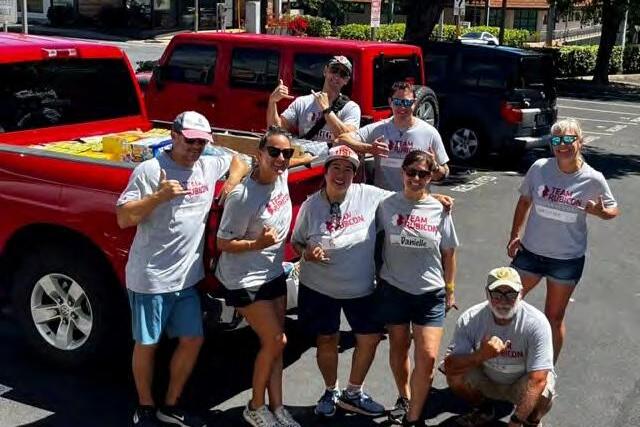
Maui AIDS Foundation’s Team Rubicon transportation heroes helped the foundation bring supplies to Hawaii state Representative Elle Cochran’s (D) new HUB at Kelawea Mauka Park in the Lahainaluna area.
Courtesy Maui AIDS Foundation
Gay Maui resident Joe Tolbe volunteered at Maui’s War Memorial Gymnasium shelter.
Courtesy Aloha Maui Pride
CA health officials respond to SOGI audit
by Matthew S. Bajko
Following a damning report issued in the spring by the state’s auditor about its lackluster LGBTQ health data collection, California’s health department has provided an update on how it plans to address the findings of the audit. It specifically responded to 10 recommendations from the auditor with timelines for when it expected to resolve the various issues.
They include updating the forms it uses to ensure they include questions about people’s sexual orientation and gender identity (SOGI), ensuring the phrasing of the queries are up to date, and making sure the data collected at the local level is sent to the state agency to review and report on. According to health officials, they already have completed several steps toward improving the department’s knowledge about the health of LGBTQ Californians, while other initiatives are expected to be done by this October and December.
For instance, health officials reported that by the end of June the department had addressed the auditor’s suggestion that it require regular reporting on SOGI data by its various branches that collect such information. Per the auditor, the reports should include the branches’ efforts to record and report SOGI data, the outcomes of their SOGI data analyses, and the steps they have taken to improve their services or program outcomes for underrepresented populations.
“Public Health is currently developing an automated system to regularly collect reports from all its programs to track progress on the objectives listed on this recommendation, including the programs’ efforts to record and report SOGI data, the outcomes of their SOGI data analyses, and the steps they have taken to improve their services or program outcomes for underrepresented populations,” according to the department’s response.
Scathing report
Courtesy CADPH
In April, California State Auditor Grant Parks released the 45-page report titled “The California Department of Public Health: It Has Not Collected and Reported Sexual Orientation and Gender Identity Data as State Law Intended.”
It stemmed from legislation signed by former governor Jerry Brown that had mandated the state’s departments of health care services, public health, social services, and aging begin gathering SOGI data in 2016.
But as was revealed by the lack of information on how the COVID pandemic was impacting LGBTQ people, it became clear that the state health department had not met its requirements for the collection of SOGI data. It prompted outcries from LGBTQ advocates and calls by LGBTQ legislators for an audit of the state agency.
As the Bay Area Reporter first reported online April 27, Parks had disclosed in his audit that 105 out of 129 forms used by the state health department are exempted from collecting SOGI data because a third party, such as a local health jurisdiction, oversees them. And only 17 of the 24 forms that are required to collect SOGI data “do so in a complete manner,” Parks noted.
As detailed in the audit, there is little
OUR COMMITMENT TO YOU
SOGI data made available to the public. It also highlighted the fact that “resource and technical limitations” make it impossible for the state’s health department to export the SOGI data it does collect for over 100 of 128 reportable disease conditions to an electronic database it oversees.
“The lack of consistent SOGI data collection procedures, and ultimately the low number of Public Health forms that currently collect SOGI data, indicate that changes to state law may be warranted to compel more consistent and useful SOGI data collection practices,” wrote Parks in an April 27 letter he submitted to state leaders.
On August 24 Parks’ office released responses by the state health agency to 10 of the audit’s recommendations. Some were duplicative answers to several of the suggested actions contained in the audit.
In response to recommendations that the public health agency develop and implement procedures to review and approve its branches’ SOGI data collection processes, including a review of branches’ reasons for not collecting SOGI data, health officials responded that they planned to reconvene the department’s SOGI Workgroup, which will be tasked with recommending standards for displaying SOGI data. It is expected to do so by this December, thus addressing another of the audit report’s suggestions that the goals issued in 2022 by the health department’s SOGI Workgroup be implemented.
“Public Health is continuing to support the 2022 SOGI Workgroup on the data collection recommendations, which provide updated guidance on SOGI question wording and response options. These recommendations are with the Director’s Office for review and approval,” stated health officials in their response.
The health officials also said they
were directing all of its centers to form data collection/form workgroups to review how each center is collecting health information. They are also instructing the centers to streamline their data collection practices, including conducting periodic reviews of whether forms are required to collect SOGI data, assessing their SOGI data collection processes, and reviewing if branches’ reasons for not collecting SOGI data comply with departmental standards.
“Of the seven forms identified as noncompliant in the audit report, further investigation has revealed that three of these forms were one-time use only and no longer relevant to the report,” health officials reported to Parks’ office.
Two forms became compliant by July 1, reported health officials, while the other form is to be compliant by September 30. As for the one remaining form, public health officials disclosed they are in conversation with the program responsible to develop a work plan to make the form compliant.
Another recommendation in the audit report was to have users of the California Reportable Disease Information Exchange, known as CalREDIE, be able to extract SOGI data for all of the reportable disease conditions currently in the database by October 2023. According to public health officials, they had done so as of July.
According to their response, the Center for Infectious Diseases (CID) was moving the CalREDIE data to a cloudbased data warehouse so it is easier to extract and analyze the available SOGI data. The CID is also working to meet another audit recommendation that by October, all local health jurisdictions not using CalREDIE, including Los Angeles, San Diego, and San Francisco, are still reporting SOGI data to the state health department.
Officials at CID have been in discussions with their local counterparts about “the technical specifications their
jurisdictions will need to implement to transmit automated data files, including collected SOGI data,” to the state agency, according to its audit response.
As for the audit report saying the state agency should provide local health jurisdictions and health care providers with a standardized definition, wording, and format of SOGI data questions and response fields – and directions for how to solicit SOGI information and education for why doing so is important – state health officials expected to complete both as of the end of August.
“Currently these recommendations are pending review from the Director’s Office (DO). Once the DO approves, the SOGI recommendations will be posted on a public website for providers and local health jurisdictions to satisfy this recommendation,” the health department stated.
In regard to the auditor’s concerns that the new surveillance system that the state’s public health agency will be utilizing, along with local health jurisdictions, is able to receive SOGI data and allow for it to be extracted and reportable, the health department said it is an ongoing concern it is working to address.
It noted in its response to the auditor that the Center for Infectious Diseases has included several “functional requirements” so that the new surveillance system can receive SOGI data collected from local health jurisdictions and can allow for the extraction and reporting of SOGI data for all reportable disease conditions. For example, the new system’s Master Person Index is required to “capture SOGI” and “must allow users to view the history of SOGI, which may change over time, for an individual.”
The auditor’s office continues to assess the health department’s responses to its report. It said it looks “forward to reviewing Public Health’s progress towards implementing” its various recommendations. t
We’re committed to giving you care that’s warm, welcoming, and knowledgeable, too.
That’s why we’re a longtime Equality Leader in HRC’s Healthcare Equality Index and why we offer a uniquely wide range of support for our LGBTQ+ patients and employees.
We look forward to warmly welcoming you and offering the great, supportive care that you and your family deserve.

ucsfhealth.org/lgbtq-care

September 28-October 4, 2023 • Bay area reporter • 5 t
UCSF is deeply committed to providing care for LGBTQ+ people and their families that isn’t just equitable as crucial as equity is.
Health News>>
The California Department of Public Health has responded to the state auditor’s April report about its lackluster LGBTQ data collection.
Foreman to take the helm at SF AIDS legal nonprofit
compiled by Cynthia Laird
The nonprofit AIDS Legal Referral Panel board has named Matt Foreman, a nationally recognized LGBTQ leader, to be its next executive director. He will succeed Bill Hirsh, a gay man and attorney who has led the agency for the last 24 years.
Foreman, also a gay man, will be formally introduced at ALRP’s 40th anniversary reception October 19, where Hirsh will be honored, a news release stated.
ALRP provides free and low-cost legal assistance to people living with HIV/AIDS in the Bay Area. The agency has attorneys and other personnel on staff and also relies on a panel of outside lawyers who provide pro bono services to clients.
ALRP officials praised both Hirsh and Foreman.
“We are profoundly grateful for Bill’s extraordinary leadership over the last quarter century and also excited to have Matt come on board to continue and build on ALRP’s unique record of serving people living with HIV/AIDS over the last four decades,” stated Jaclyn “Jackie” Gross and Scott Zimmerman, ALRP’s board co-chairs.
Gross and Zimmerman pointed out that over Hirsh’s tenure, the staff doubled, the budget increased five-fold – it is now $2.1 million, Hirsh said – and legal services were provided to 20,000 individuals.

“ALRP has been my life’s passion and I will always be profoundly grateful to everyone who has given
so much to enable ALRP to help those in need, including our board members, staff, and volunteers,” Hirsh stated.
Hirsh has had a lead ership role with the HIV/ AIDS Provider Network, a group of San Francisco
nonprofit advocates for city funding and other services for people living with HIV/AIDS.
Foreman, an attorney who graduated from New York University School of Law, has held leadership positions in the LGBTQ community for more than 30 years, the release stated. He served as executive director of the New York City Gay and Lesbian Anti-Violence Project; Empire State Pride Agenda, New York state’s LGBTQ political advocacy organization; and the National LGBTQ Task Force.
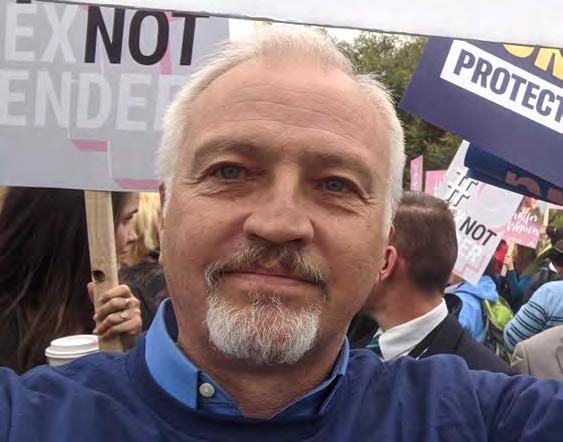
For the last 15 years, Foreman led the LGBT Equality Program at the Evelyn and Walter Haas Jr. Fund, one of the largest philanthropic funders of LGBTQ civil rights across the nation. As the Bay Area Reporter previously reported, last year the San Francisco-based Haas fund announced it was ending its 23-year program of grants to LGBTQ nonprofits in 2023.
“I am deeply honored to be joining ALRP’s extraordinary team of staff, board, and volunteers, especially at this critical time when people living with HIV/AIDS are facing ever-greater

challenges,” Foreman stated. “ALRP is known nationwide for providing excellent, robust, and successful legal representation for people living with HIV/AIDS, 95% of whom have very limited income and face a wide variety of injustices as a result of broken and hostile systems. I’m looking forward to sustaining and building on this stellar record.”
Foreman’s salary will be $175,000, according to Hirsh. While at the Haas fund Foreman had total compensation of $327,208, according to the organization’s IRS Form 990 for 2021.
Foreman is expected to begin at ALRP October 16. He and Hirsh will work together through the end of the year to ensure a smooth transition, the release stated.
Create CA’s DeCaigny to join Hewlett Foundation
Tom DeCaigny, a gay man and executive director of Create CA, will depart the organization to become the next program officer in the performing arts program at the William and Flora Hewlett Foundation.
Create CA is a Pasadena-based nonprofit that advocates for high quality arts education for all students by providing policy expertise and by mobilizing a statewide network of advocates and allied partners. It was created by a 2021 merger with the California Alliance for Arts Education, which DeCaigny led beginning in 2020.
Previously, DeCaigny led the San Francisco Arts Commission as the city’s cultural affairs director.
According to a news release from Create CA, DeCaigny served the organization well.
“Tom has been an invaluable leader during his tenure at Create CA, demonstrating unwavering commitment to advancing arts education in California,” the release stated. “His passion and vision have significantly contributed to the growth and success of our organization and the broader arts education community.”
A news release from the Hewlett Foundation also praised DeCaigny, pointing to his tenure with the San Francisco Arts Commission.
“In that role, he directed citywide cultural policy, oversaw over $15 million in grantmaking, and championed efforts to advance arts and culture,” the release stated. “He also served as executive director of longtime Hewlett Foundation grantee Performing Arts Workshop for more than a decade.”
Emiko Ono, program director for the Hewlett Foundation, stated that DeCaigny knows much about arts funding in the state.
“The foundation is thrilled that Tom is bringing to the role strong relationships with practitioners, advocates, and policymakers across California, as well as an in-depth understanding of the challenges and opportunities presented by the historic passage of Proposition 28,” Ono stated.
6 • Bay area reporter • September 28-October 4, 2023 t
This resource is supported in whole or in part by funding provided by the State of California, administered by the California State Library in partnership with the California Department of Social Services and the California Commission on Asian and Pacific Islander American Affairs as part of the Stop the Hate program. To report a hate incident or hate crime and get support, go to https://www.cavshate.org/.
<< Community News
Tom DeCaigny
Jane Philomen Cleland
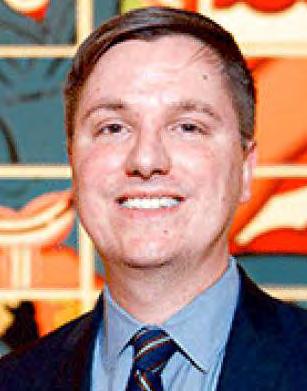
Matt Foreman has been named the new executive director of the AIDS Legal Referral Panel.
See page 11 >>
Courtesy ALRP
Both sides rest cases in SFFD civil trial
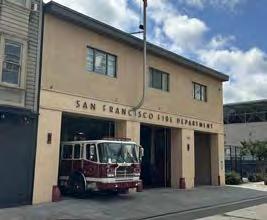 by John Ferrannini
The lesbian assistant fire chief suing the city for discrimination and retaliation testified one last time before both San Francisco’s and her lawyer’s rested their cases September 26, setting the stage for closing arguments and jury deliberations.
That testimony came on the 11th day of the civil jury trial in San Francisco Superior Court, before Judge Suzanne Ramos Bolanos.
Nicol Juratovac’s attorney, Therese Y. Cannata, of Cannata O’Toole and Olson, asked why she’d wanted to be an assistant deputy chief – a promotion denied her due to the department’s discriminatory actions, she claims.
“The opportunity is the type of opportunity I’d been pursuing for my entire career – to apply my knowledge, skills, and experience,” she said.
Juratovac also said it would’ve given her a more stable work-home balance as she and her wife were hoping to start a family. The position would have been 40 hours per week, Monday through Friday, instead of the normal 24-hour shifts firefighters often work.
“I would love to start a family and the 40-hour-a-week schedule would be so much more friendly and conducive to that,” Juratovac said. “I really would love to have that experience.”

Deputy City Attorney Adam Shapiro asked, during cross-examination, “assistant deputy chief positions serve at the pleasure of the chief of the department, is that correct?”
Juratovac agreed that is, indeed, correct. Last week, Fire Chief Jeanine Nicholson, a lesbian, testified that she did not consider Juratovac for promotion because she lacked certain “soft skills” necessary for advancement.
Damages experts testify
On September 25, a damages expert called by the plaintiff testified Juratovac could be facing lifetime financial losses of almost a million dollars based on the
department’s alleged actions.
Charles Robert Mahla runs the Sacramento office of Econ One Research Inc. and has calculated damages for over 20 years. In this case, he was called upon to look at the “economic impact and loss to Ms. Juratovac from the alleged discrimination from the San Francisco Fire Department,” he said.
To do so, he utilized pay stubs, pay schedules, and information from the city’s retirement system.
“We look at the world where the alleged discrimination doesn’t occur, we call that the world without discrimination,” Mahla testified. “The second place is the world where we find it, the actual world.”
First, he calculated that because Juratovac was not afforded the opportunity to become a strike team leader trainee for the Wildland Firefighting Strike Team from 2013 through 2020, she could have earned $142,405.
The city alleges she did not fulfill requirements to work on the strike team.
Then things get more speculative –Mahla testified that Juratovac would be owed $273,700 if she were on the strike team from 2020 through her expected retirement in 2027. Then there’s the matter of a promotion Juratovac alleges she didn’t get due to discrimination, the promotion to assistant deputy chief.
Assistant deputy chiefs can’t serve
on the strike team, and as management personnel are not entitled to overtime, though they are entitled to paid executive time off. And there’s a different pension schedule, which he calculated Juratovac, 55, will need “through December 2050,” which is her expected lifetime according to federal Centers for Disease Control and Prevention statistics, he said.
All told, Mahla claimed that the amount that Juratovac missed out on, is missing out on, and would miss out on could be as high as $949,045.
During cross-examination, Deputy City Attorney Amy Frenzen took issue with the 2021 date that Mahla used as when Juratovac should have been promoted.
Asked Frenzen: “You have not seen any documents supporting this assumption, is that correct?”
Mahla: “I have not.”
Asked Frenzen: “And you actually don’t know if it’s a civil service position or an at-will position?”
Mahla: “I don’t.”
After being asked several questions about the job positions, Mahla said, “This is an assumption I was asked to make for counsel.”
Frenzen also disagreed that Juratovac would necessarily make less money in her current position, due to the opportunity for overtime pay.
The city brought its own damages expert on September 26, Eric Barnes, who works for consulting firm JS Held. Barnes testified that there were areas where he disagreed with Mahla.
In particular, Barnes said it’s still possible that Juratovac could get promoted to assistant deputy chief, and that therefore it shouldn’t be assumed when assessing damages she has suffered due to the city’s alleged discrimination that she won’t.
Further, if she’s promoted before 2027, she suffers no pension loss, which Mahla factored during his testimony to come up with a figure of almost $1 million. One only needs to be an assistant deputy chief for a year to have a pension increase.
“I found it speculative that she would be discriminated against in perpetuity in the future,” Barnes said. “Normally, when it’s found people are discriminated against, city and government agencies try to make sure that doesn’t happen in the future.”
Barnes also repeated the city’s claim that Juratovac was not allowed to work as a strike team leader trainee because she did not complete required prerequisites.
Other witnesses
The city called Robert Postel, the fire department’s deputy chief of operations. Juratovac had accused him of mocking her on a department radio by saying “break” multiple times in a row; Postel testified that he did not intend to mock her, but that on one occasion Juratovac said “break” so many times that it “created chaos” at an incident, he claimed.
“I may have brought it up with her,” he said.
Postel did not recall using the phrase “making the department great again” in 2018.
Juratovac had ordered the removal of a “making the Department GREAT AGAIN” sign at a fire station.
Postel also did not recall repeating a conversation to subordinates in which Juratovac allegedly said he had an “invisible backpack full of white male privilege.”
He did remember, however, saying, “We were using more words than water” to fight a fire on John Muir Drive.
Depositions
Deposition transcripts were also read, with the lawyers role-playing as their current opponents and as the witnesses. One was a deposition of Rebecca Lynn Sherman, who until fall 2020 worked in the city’s Department of Human Resources, which investigated Juratovac’s claims of discrimination, retaliation and harassment.
Sherman – who testified at the time of the deposition she lived in North Carolina and had no intention of returning to the Golden State – had said she was involved in at least three investigations
into discrimination, retaliation, and harassment at the fire department, including Juratovac’s.
She left the department before that was completed, and struggled to complete the investigation due to COVID, a family death, and mixing up Juratovac’s phone digits, she said.
When asked if she started to form an opinion about Juratovac’s claims, Sherman said, “I remember it was sufficient to warrant further investigation due to the city’s EEO [equal employment opportunity] standards at the time, but I don’t recall drawing conclusions beyond that.” She did agree that seven disciplinary investigations was “unusual for a person of her [Jurtovac’s] rank in the fire department.”
In her opening statement September 7, Cannata laid out those seven disciplinary investigations that’d been undertaken against her client, which she claims were part of a pattern of retaliation and discrimination against Juratovac just for doing her job.
These were, in chronological order, 1) about an argument ostensibly about a mask at a 2014 fire; 2) her order that a firefighter who’d been arrested for driving under the influence stop driving on duty in 2015; 3 and 4) two separate incidents at San Francisco International Airport in 2016; 5) a dispute over proper reporting of secondary employment in 2019; 6) a dispute about a ladder drill in 2019; and 7) and a dispute over a lost document in 2020.
Juratovac alleges eight causes of action against the city: unlawful retaliation in violation of the labor code; unlawful retaliation in violation of the Fair Employment and Housing Act; discrimination based on sexual orientation; discrimination based on race; discrimination based on gender; unlawful harassment; failure to investigate and prevent discrimination, harassment and retaliation; and violation of the California Public Records Act.
The trial continues September 28 in Department 303 of San Francisco County Superior Court, 400 McAllister Street, at 9:30 a.m. t
September 28-October 4, 2023 • Bay area reporter • 7 t Member FDIC Locations throughout California, with 16 in the Bay Area. 311 California Street • (415) 392-0642 2197 Chestnut Street • (415) 287-8800 699 Portola Drive • (415) 661-4800 In San Francisco: Proudly serving communities throughout California. At Tri Counties Bank, our breadth of financial services, local banker expertise and personalized problem solving provides a unique brand of Service With Solutions®. It’s about a team of bankers and financial specialists working together to help improve your financial success and well-being. Switch to better banking. Switch to Tri Counties Bank. Personal Banking Small Business Banking Commercial Banking 1-800-922-8742 | TriCountiesBank.com
Community News>>
Both sides have rested their case in a lawsuit against the San Francisco Fire Department alleging discrimination and retaliation.
John Ferrannini
Volume 53, Number 39
September 28-October 4, 2023
www.ebar.com
PUBLISHER
Michael M. Yamashita
Thomas E. Horn, Publisher Emeritus (2013)
Publisher (2003 – 2013)
Bob Ross, Founder (1971 – 2003)
NEWS EDITOR
Cynthia Laird
ARTS & NIGHTLIFE EDITOR
Jim Provenzano
ASSISTANT EDITORS
Matthew S. Bajko • John Ferrannini
CONTRIBUTING WRITERS

Christopher J. Beale • Robert Brokl
Brian Bromberger • Victoria A. Brownworth
Philip Campbell • Heather Cassell
Michael Flanagan •Jim Gladstone
Liz Highleyman • Brandon Judell • Lisa Keen
Philip Mayard • Laura Moreno
David-Elijah Nahmod • Paul Parish • Tim Pfaff
Jim Piechota • Adam Sandel
Jason Serinus • Gregg Shapiro
Gwendolyn Smith • Charlie Wagner
Ed Walsh • Cornelius Washington • Sura Wood
ART DIRECTION
Max Leger
PRODUCTION/DESIGN
Ernesto Sopprani
PHOTOGRAPHERS
Jane Philomen Cleland
Rick Gerharter • Gooch
Jose A. Guzman-Colon • Rudy K. Lawidjaja
Georg Lester • Rich Stadtmiller
Christopher Robledo • Fred Rowe
Shot in the City • Steven Underhill • Bill Wilson
ILLUSTRATORS & CARTOONISTS
Christine Smith
VICE PRESIDENT OF ADVERTISING
Scott Wazlowski – 415.829.8937
NATIONAL ADVERTISING REPRESENTATIVE

Rivendell Media – 212.242.6863
LEGAL COUNSEL
Paul H. Melbostad, Esq.
Newsom exhibits hypocrisy with trans veto
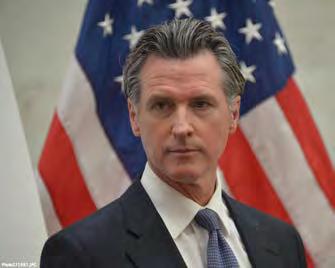
There was no reason for Governor Gavin Newsom to veto a bill that would have urged state judges to take into account parental support for their transgender kids. After all, Newsom spent some time during a recent Zoom session with supporters of his call for a constitutional convention on gun safety railing against federal judges who have overturned various gun control measures. So why is he suddenly concerned about judicial power when it comes to trans kids? That question is an easy one to answer: because he has his sights on higher office, as in the Oval Office.
Assemblymember Lori D. Wilson (D-Suisun City) had crafted a piece of legislation that would have actually benefited trans kids, particularly those of parents involved in custody battles. Assembly Bill 957, the TGI (Transgender, Gender-Diverse, and Intersex) Youth Empowerment Act, would have required courts “to strongly consider” if a parent is affirming of their child’s gender identity or gender expression, and if they consent to legally changing the child’s name and gender marker to mirror their preferred gender when considering the legal guardianship of the minor because their parents are divorcing. This would have been a gamechanger for trans and gender-diverse kids. And it’s something that Wilson, the mother of an adult trans child, knows about. Yet Newsom in his veto message stated that the legislation went too far.
“I appreciate the passion and values that led the author to introduce this bill. I share a deep commitment to advancing the rights of transgender Californians, an effort that has guided my decisions through many decades in public office,” wrote Newsom. “That said, I urge caution when the Executive and Legislative branches of state government attempt to dictate –in prescriptive terms that single out one characteristic – legal standards for the Judicial branch to apply. Other-minded elected officials, in California and other states, could very well use this strategy to diminish the civil rights of vulnerable communities.”
What? This is the same governor who two weeks ago was deeply critical of actions judges have taken when it comes to overturning gun safety laws, both in California and elsewhere – even as he acknowl-
edged that his late father, William Newsom III, was a judge himself, having served on the San Francisco Superior Court and the state Court of Appeal. He pointed to federal judges on the 9th U.S. Circuit Court of Appeals who threw out California’s first-in-the-nation law banning marketing guns to youth. He criticized Judge Ryan Nelson, also on the 9th Circuit, who wrote the 2-1 decision tossing out an age requirement that people have to be 21 years old to buy guns. And he called out U.S. District Judge Roger Benitez of San Diego who in 2021 overturned California’s 32-year-old assault weapons ban.
“Judge Nelson, a Trump appointee, said an 18-year-old can buy a weapon of war,” Newsom said.
And in recent months Newsom has publicly attacked judges for their rulings hamstringing local officials and state agencies from being able to clear out homeless encampments on city sidewalks and state property.
So to see Newsom now standing up for judges in custody cases is hypocritical to us. Family court judges often take many factors into account when deciding custody and visitation issues – and paramount in that should be the best interests of the child. Another of those considerations should be how supportive parents are of their TGI children. If a parent is hostile to their child’s gender identity, that’s going to create a much more difficult journey for the young person. And research has shown that

trans kids who have supportive parents do much better in life. As it is now, trans kids face higher rates of depression and suicide. Just last year, Newsom signed a bill making California a place of refuge for trans kids and their families escaping draconian laws in states like Florida. His veto of Wilson’s bill now makes that commitment hollow.
Newsom’s veto of Wilson’s bill also doesn’t make sense since he had signed a bill that involves foster youth. Gay state Senator Scott Wiener (D-San Francisco) authored Senate Bill 407, which directs the state’s Department of Social Services to amend the foster care vetting process to ensure LGBTQ foster youth, who account for more than 30% of all youth in the foster care system, are not placed in hostile foster homes.
Per the legislation, foster families must demonstrate “an ability and willingness to meet the needs of the child regardless of the child’s sexual orientation, gender identity, or gender expression, and that, should difficulties around these issues arise, a willingness to obtain resources offered by the county or foster family agency or other available resources to meet those needs.”
That sounds a lot like what Wilson’s bill would have done for children in custody cases. Newsom obviously has no problem directing a state agency to make sure foster youth are placed in supportive homes, yet he draws the line at judges determining parents are supportive of their children. Go figure.
Wilson has committed to continue her fight for trans youth. We hope she brings back a similar version of AB 957 next year and that Newsom has the wherewithal to sign it.
In the meantime, let’s remember that Newsom is responsible for appointing the majority of state judges; voters first elect a much smaller number, though all judges go before voters at some point. To that end, Newsom and his judicial appointments secretary, Luis Céspedes, should ensure that prospective applicants for judgeships – LGBTQ and straight alike – are supportive of trans and gender-diverse kids. It’s a topic that judicial applicants should be asked about during their vetting process. Newsom also should appoint trans people to his Judicial Selection Advisory Committees, which are grouped by region; currently there are no known trans persons on those bodies. t
From gender-affirming care to bathroom use: DeSantis impinges on LGBTQ issues
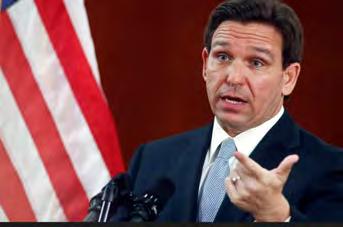 by Gabbi Tuft
WhenFlorida Governor Ron DeSantis first announced he was taking on Donald Trump in hopes of becoming the Republican nominee for president in 2024, early reports showed he held a steady lead over the former president. Now, several months into a campaign that seems to be circling the drain, those prospects appear to be fading.
Bay area reporter 44 Gough Street, Suite 302 San Francisco, CA 94103 415.861.5019 • www.ebar.com
A division of BAR Media, Inc. © 2023
President: Michael M. Yamashita
Director: Scott Wazlowski
News Editor • news@ebar.com
Arts Editor • arts@ebar.com
Out & About listings • jim@ebar.com
Advertising • scott@ebar.com
Letters • letters@ebar.com
Published weekly. Bay Area Reporter
Even though it is looking more and more likely that DeSantis will not land the support of his party, his influence is still leaving an indelible mark. Growing tensions in his home state of Florida, as well as his “Make America Florida” campaign platform, have forced LGBTQ issues front and center.
DeSantis began his assault on the LGBTQ community as part of his “Stop Woke” campaign, which sought to end anything remotely inclusive in the name of “protecting the children” and “protecting individual freedoms.” Under Stop Woke, content deemed “inappropriate” was kept out of schools and other state institutions; diversity, equity, and inclusion (DEI) training ground to a halt; and the pathway was laid for further legislation, including the Parental Rights in Education Act – better known as “Don’t Say Gay.” Most recently, bans on genderaffirming care for both adults and minors, as well as restrictions on bathroom usage for transgender individuals, were passed and upheld in the state of Florida. With his bid for the White House, DeSantis is hopeful that he can indeed “Make America Florida” and make such bans a nationwide standard.
For DeSantis, his declaration that “Florida is where ‘woke’ goes to die” is his not-so-subtle signal to all LGBTQ people that they are not wel come. It’s a mindset that has taken hold among the far right, who have chosen the LGBTQ community – and transgender people specifically – as their most recent prime target.

The main issue with DeSantis’ platform is that it is largely based on misinformation and outright lies. At the signing ceremony for the bill that blocked genderaffirming care for minors, DeSantis said, “They’re trying to do sex change operations on minors, giving them puberty blockers and doing things that are irreversible to them.”
Despite what some may believe from what they see on social media, scientists and medical professionals from Duke Health, the University of North Carolina, and East Carolina University have corrected the notion that, “...while they do accept children as patients, surgery and hormone therapy are not available to such small children.” Puberty blockers are not permanent, and other gender-affirming care – such as clothing changes and pronoun affirmations – are completely reversible.
The teen years are tough. Teenagers are already confused about who they are, and the influx of hormones can cause more confusion. It can be challenging to figure out one’s identity. If one feels they were born in the wrong body, it can be even more confusing. In most cases, a parent will know if a child is simply following a trend, if they are seeking to escape something, or if their feelings of being trans are real. By drawing such a hard line, DeSantis is stripping away the rights of mothers and fathers to effectively parent their own children. The medical community and the LGBTQ community agree that in many cases, gender-affirming care can be life-saving.
DeSantis’ bathroom bans are also not rooted in reality. Think of me – a transgender woman who has undergone multiple feminization surgeries and years of hormones – walking into a men’s bathroom. While I am a public figure, those who aren’t familiar with my story or know anything about me, more often than not, have no idea I am transgender. If someone like me waltzed into a men’s restroom it would definitely raise some eyebrows. If
I were figured out to be trans, I would be running the risk of having harm done to me.
On the other hand, when I have gone into the ladies’ room to do my business, there has never been an issue. I typically go in, use the restroom, and leave fairly expeditiously. However, oftentimes, women will strike up a conversation with me at the sink. We compliment each other’s makeup and wish each other a nice day. I am at far more risk using the bathroom that aligns with the sex I was assigned at birth. But, it is not my safety that DeSantis and his ilk are concerned with – and therein lies the problem.
Early in my transition, I was petrified to use the bathroom in public, specifically at the gym. I would hold it until I got home. I understood that women might have been uncomfortable with my presence during that stage of my transition, and I am not out to make anyone uncomfortable. It’s a weird place to be – understanding the optics of early transition, but at the same time understanding why I should be allowed to use the ladies’ room.
I don’t have easy solutions. I just know that an allout ban and discriminatory action against transgender people isn’t it.
DeSantis’ assault on the LGBTQ community is a vote grab – plain and simple. He hopes to become president by stepping on the backs of the community, and he is stepping hardest on transgender individuals by using terms like “woke” and “trans” to keep him in office. Perhaps if we were to take some of the funding DeSantis is funneling into his lackluster presidential campaign, we could use it to bring some of the best scientific minds together to figure out workable solutions for both sides.
All the funding dedicated to bringing the hammer down on anything DeSantis deems “woke” is doing what I fear is irreparable damage to the LGBTQ community — chipping away at years of progress with each cruel word and harsh legislative action. t
Gabbi Tuft (https://coachgabbi.com/) is a forerunner and pioneer in the transgender community, a professional athlete, keynote speaker, and fitness coach. Tuft has over 30 years of experience in the fitness industry and has coached mostly 1,500 cisgender women to success in the past 13 years.
8 • Bay area reporter • September 28-October 4, 2023 t
<< Open Forum
reserves
or
which the publisher believes is in poor taste or which advertises illegal items which might result in legal action against Bay Area Reporter. Ads will not be rejected solely on the basis of politics, philosophy, religion, race, age, or sexual orientation.
rates available upon request.
list of subscribers and advertisers is confidential and is not sold. The sexual orientation of advertisers, photographers, and writers published herein is neither inferred nor implied. We are not responsible for unsolicited manuscripts or artwork.
the right to edit
reject any advertisement
Advertising
Our
Governor Gavin Newsom Bill Wilson
AP file
Florida Governor and Republican presidential candidate Ron DeSantis
Amid Orange County LGBTQ backlash, House candidate Min remains an advocate
by Matthew S. Bajko
California state Senator Dave Min (D-Irvine) has faced a grueling political year throughout 2023 as he runs for a U.S. House seat in the heart of Orange County. His contest to succeed Congressmember Katie Porter (DIrvine) is expected to be one of the most competitive of the 2024 election cycle.
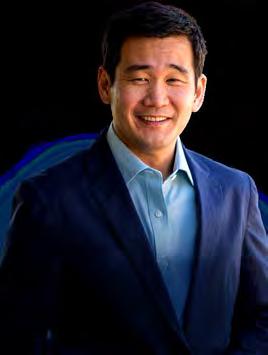
Meanwhile, the straight married father of three who has long been an advocate for LGBTQ rights has found himself representing an area of the Golden State that has been a hotbed of anti-LGBTQ activism this year. His 37th Senate District includes the city of Orange, where the school board earlier this month was one of the latest to adopt a policy that requires the forced outing of transgender students to their parents.
(Attorney General Rob Bonta sued the Chino Valley school district for enacting a similar policy, and a state judge issued a temporary restraining order against it while the lawsuit progresses.)
Min’s district also encompasses Huntington Beach, where the City Council in February banned the flying of the Pride flag at City Hall. It is also looking to restrict children’s access to books deemed to be “sexually explicit,” which prompted Min to issue a statement (https://sd37.senate.ca.gov/news/senator-dave-mins-statement-proposedbook-ban-huntington-beach-publiclibraries) in June during Pride Month critical of the Republican-controlled council for pursuing the matter.
“Public libraries have, and always will be, sacred places of intellectual freedom where our children can explore the depths of imagination, broaden their horizons, and grow into well-rounded individuals. They should never be used as tools of oppression or censorship,” stated Min.
It followed the controversy earlier in the year with the Orange school district ending student access to a digital library after several parents complained about books dealing with LGBTQ topics. The decision was later reversed after the books that had been flagged were reclassified as appropriate to be read by different grade levels.
“There is a long history of book bans based on politically objectionable content. As a parent, I am very upset by this,” said Min during a recent phone interview with the Bay Area Reporter. “My kids, luckily, go to the Irvine school district that has not seen any of this nonsense.”
The targeting of transgender children is particularly galling, said Min, who recalled the harassment and bullying he received as an Asian American growing up in the 1980s.
“To target these kids is cruel and bullying. They are going after marginalized communities,” said Min, 47, noting it is the “same playbook” used to target people of color and other minority groups in the past. “It pisses me off, frankly.”
The B.A.R. reached out to Min to discuss how he has been navigating the various controversies in his district regarding LGBTQ issues at the same time as he mounts a second bid for the House seat. During his first race in 2018, when he came in third place behind Porter in the primary, Min had been endorsed by the statewide LGBTQ advocacy organization Equality California, which called him “the best candidate to take on anti-LGBTQ extremist Mimi Walters,” the Republican candidate would lose to Porter in November of that year.
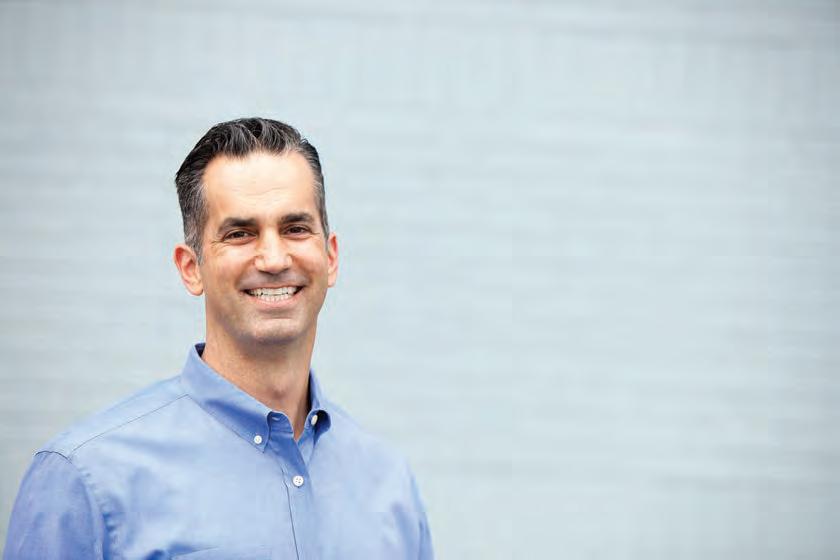
This year, he has been criticized for being the faculty adviser from 2014 to 2016 to the conservative Federalist Society chapter at UC Irvine, where he
cycling studio owner Dom Jones, who competed with her partner, Richard Kuo, on the 34th season of reality TV show “The Amazing Race.”
“Where we stand, I don’t know honestly,” said Min. “I hope voters will come out for me.”
Noting he is the only current elected official in the race, Min told the B.A.R. he is “feeling pretty good” about his chances due to his strong fundraising and list of endorsers. He also acknowledged the advantage he has in the race by being endorsed by the incumbent.
“If I did not have Katie Porter’s endorsement, I think that pathway might have been a lot harder,” he said of surviving the primary and being able to ensure the seat remains blue come the fall.
was teaching at the time, as HuffPost reported in July.
“I campaigned honestly; I was pro equality. I stood up for the LGBTQ community very loudly and proudly. I proudly carried EQCA’s endorsement,” said Min, who has received perfect scores on the group’s scorecards during his time in the Legislature. “So nobody can accuse me of being dishonest. All I will say is there is no bait and switch here. I am what I said I am going to be.”
Porter, a progressive running for outgoing Democratic U.S. Senator Dianne Feinstein’s seat next year, has endorsed Min to succeed her in the House. She has continued to back him following Min’s arrest in May in Sacramento for drunk driving. In August, he pleaded no contest to a misdemeanor charge and was sentenced to three years of unsupervised probation.
“It was a terrible mistake on my part,” said Min, adding that he has “never made a mistake like that before in my life and I will never make a mistake like that again.”
The incident has done little to dent Min’s ability to raise money, with him reporting in July that he had raised nearly $1 million for his House bid, despite the fact he is refusing to accept donations from oil interests or corporate political action committees. He also has maintained the support of many Democratic state and local leaders, as well as various unions, as he runs for Congress.
Among the LGBTQ leaders backing Min are gay Congressmember Mark Takano (D-Riverside) and gay state Insurance Commissioner Ricardo
Lara, as are lesbian Senate President Pro Tempore Toni Atkins (D-Atkins), and gay state Senators John Laird (DSanta Cruz) and Scott Wiener (D-San Francisco). Also endorsing Min are gay Democratic Assemblymembers Evan Low of Cupertino, Chris Ward of San Diego, and Rick Chavez Zbur of West Hollywood, as is bisexual Assemblymember Alex Lee (D-San Jose).
Several women’s groups and a handful of moderate Democrats in the House have thrown their support behind lawyer Joanna Weiss. Earlier this month East Bay Congressmember Eric Swalwell (D-Dublin) endorsed Weiss, who has also garnered the backing of Congressmembers Sydney Kamlager-Dove (D-Los Angeles) and Julia Brownley (D-Westlake Village).
Min and Weiss, along with former Republican Assemblymember Scott Baugh of Huntington Beach, are aiming to survive the March 5 primary, where the top two vote-getters regardless of party affiliation will advance to the fall ballot in November. The trio is considered the leading candidates in the race, which so far has drawn a total of 12 people, including queer Huntington Beach
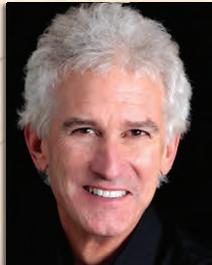
Because of his long record of public service and professional achievements, from being a business law professor at UC Irvine School of Law and an enforcement attorney at the Securities and Exchange Commission to serving as an economic and financial policy adviser to U.S. Senator Chuck Schumer (D-New York) and an economic policy director at the Center for American Progress prior to his election in 2020 to his state Senate seat, Min believes his body of work will matter more to voters than his DUI.
“I trust voters will not judge me on one terrible decision I made in my life,” he said. “We do think there is polling and other evidence to suggest voters care about a lot of things much more than a personal discretion or bad decision like this one, particularly one where no one was harmed.”
The close elections that brought to power the conservatives on the school board and city council in his district are reminders that voting matters, argued Min. Doing so will be even more important in 2024, he added, with groups like Moms for Liberty and others opposed to LGBTQ rights urging their supporters not only to head to the ballot booth next year but also run for school board seats and other locally elected positions.
“They are very much targeting trans kids,” said Min, who acknowledged as a cisgender hetero male he is “fortunate in having the gender identity and sexual preference of the majority of people.”
At the same time, he said he can relate to being targeted for one’s innate characteristics.
“I will say this, I grew up Asian in a time and place where there were not a lot of Asian kids. I was the second smallest kid in my class; I know what it is like to be on the outside looking in,” said Min, who was born in Providence, Rhode Island to Korean immigrant parents and raised in Palo Alto. “In my youth I felt there was something wrong with my core identity based on my personal, lived experiences. To now see trans kids targeted as a national campaign, it is just pathetic.”
It is part of a larger agenda, said Min, with the same groups also targeting ethnic studies and wanting to omit the stories of various marginalized groups from school classrooms and public libraries. It is correlated with the fight to defund public schools in favor of private and charter schools, argued Min.

“I don’t have detailed polling on these issues, but I believe I am doing what is right. At the end of the day I hope voters will see the light. I have an educated district,” said Min. though he also warned, “I know the right wing is attacking these things because they have polled it. They think these are winning issues.” t
Web Extra: For more queer political news, be sure to check http:// www.ebar.com Monday mornings for Political Notes, the notebook’s online companion. This week’s column reported on the resignation of an out East Bay school board member.

Planning Ahead is Simple
Planning Ahead is Simple
The benefits are immense.
Planning Ahead is Simple
The benefits are immense.
The benefits are immense.
When you plan your life celebration and lasting remembrance in advance, you can design every detail of your own unique memorial and provide your loved ones with true peace of mind. Planning ahead protects your loved ones from unnecessary stress and financial burden, allowing them to focus on what will matter most at that time—you.
When you plan your life celebration and lasting remembrance in advance, you can design every detail of your own unique memorial and provide your loved ones with true peace of mind. Planning ahead protects your loved ones from unnecessary stress and financial burden, allowing them to focus on what will matter most at that time—you.
t Politics >>
When you
you can
and
Contact us today about the beautiful ways to create a lasting legacy at the San Francisco Columbarium.
serving the LGBT Community. FD 1306 / COA 660 One Loraine Ct. | San Francisco | 415-771-0717 SanFranciscoColumbarium.com
plan your life celebration and lasting remembrance in advance,
design every detail of your own unique memorial
provide your loved ones with true peace of mind. Planning ahead protects your loved ones from unnecessary stress and financial burden, allowing them to focus on what will matter most at that time—you.
Proudly
Contact us today about the beautiful
to create a
at the San Francisco Columbarium.
ways
lasting legacy
Proudly serving the LGBT Community.
Contact us today about the beautiful ways to create a lasting legacy at the San Francisco Columbarium.
serving
FD 1306 / COA 660 One Loraine Ct. | San Francisco | 415-771-0717 SanFranciscoColumbarium.com Barry Schneider Attorney at Law •Divorce w/emphasis on Real Estate & Business Divisions •Domestic Partnerships, Support & Custody •Probate and Wills www.SchneiderLawSF.com 415-781-6500 *Certified by the California State Bar family law specialist* 315 Montgomery St , Ste. 1025, San Francisco, CA 94104 The Scott W. Wazlowski Vice President of Advertising advertising@ebar.com 44 Gough Street #302, San Francisco, CA 94103 (415) 829-8937 • www.ebar.com Advertise!
Proudly
our Community.
State Senator Dave Min is seeking an Orange County area congressional district.
Courtesy the candidate
Bay Area gay man elected Lutheran bishop
by Brian Bromberger
It was January 20, 1990 and three seminarians, Jeff Johnson, Ruth Frost, and Phyllis Zillhart, were to be ordained extra ordinem (contrary to the official church policy) in the Evangelical Lutheran Church in America. Johnson, a gay man, was going to serve as pastor of First United Lutheran in San Francisco while lesbians Frost and Zillhart would minister at St. Francis Lutheran, also in the city. They were ordained at St. Paulus Lutheran Church in San Francisco at a service attended by over 1,000 people “who gathered to both affirm their ordination and to resist the ELCA’s official policies of discrimination against LGBTQIA+ people,” as Johnson stated.
All three were in violation of the ELCA’s denominational policy of requiring lifelong celibacy of openly LGBTQ pastors. As a result of those ordinations, in 1996, both First United and St. Francis Lutheran would be disciplined and expelled from the denomination. This episode would play a pivotal role in fighting for queer equality and inclusion in the Lutheran Church.
Johnson again made ELCA history, when, on September 17, he was elected on the fifth ballot, by a vote of 226-168 (the Reverend John Keuhner, pastor of Unity Lutheran Church in South San Francisco, was the other candidate) to serve a six-year term as bishop of ELCA’s Sierra Pacific synod, which includes Northern and Central California and Northern Nevada.
Johnson is the first openly gay man to be elected bishop in the synod. After his term as pastor ended at First United Lutheran in 1999, he became pastor of University Lutheran Chapel of Berkeley.
This election was not the nail-biter that the one in 2021 was, when Johnson lost by two votes to Megan Rohrer, the first openly trans person to serve as bishop of a major U.S. Christian denomination. Rohrer, however, resigned under pressure in June 2022, after firing a Latino pastor at a Central Valley church on the Feast of the Virgin of Guadalupe, a sacred day for Latino Christians, as previously reported by the Bay Area Reporter.
The resignation came after the synod’s general assembly voted to remove Rohrer as a bishop and at the request of the church’s presiding bishop, Elizabeth Eaton.
In March, Rohrer, now using male pronouns, filed a federal lawsuit alleging he was demeaned, harassed because of his gender identity, defamed as a racist, and eventually pushed out of the Sierra Pacific Synod, causing a breach of contract since Rohrer was appointed to a six-year term. Rohrer claims he was terminated for blowing the whistle on the church’s violation of California labor laws. He also claims the firing of the Latino pastor was justified.
In his suit, Rohrer stated, “While bishop, the church resisted my efforts to make the church more inclusive to the LGBTQIA+ community and other marginalized groups and forced me out of my role. My hope is that this lawsuit accelerates the changes that LGBTQIA+ folks, and all historically underrepresented groups, need to be safe and equal in our church.”
Johnson succeeds Rohrer as bishop-elect. Johnson married his husband, J. Guadalupe Sanchez Aldaco, in 2014. They live in Oakland’s Piedmont neighborhood. Johnson, 61, spoke with the B.A.R. in an email interview.
Johnson stated that he was surprised by his election.
“Even as I had prepared for the possibility of my election, I was stunned,” he wrote. “It was a very serious process of communal discernment. There was a slate of excellent candidates, any of whom would have made a wonderful bishop for our synod. I was stunned, at the end of the day, that I was the one chosen. Stunned and energized, even as I know there is so much I need to learn about this role.
DISPLAY OBITUARIES & IN MEMORIAMS
“Our interim Bishop Claire [Burkat] likes to say that nobody knows how to be a bishop. ‘We elect a pastor and raise up a bishop,’ she says. Our synod elected a pastor. Now I’m looking forward to the congregations and people of our synod teaching me how to become the bishop,” he added.
While Johnson is the first openly gay man to be elected bishop in the Sierra Pacific synod, there are other LGBTQ bishops in the ELCA.
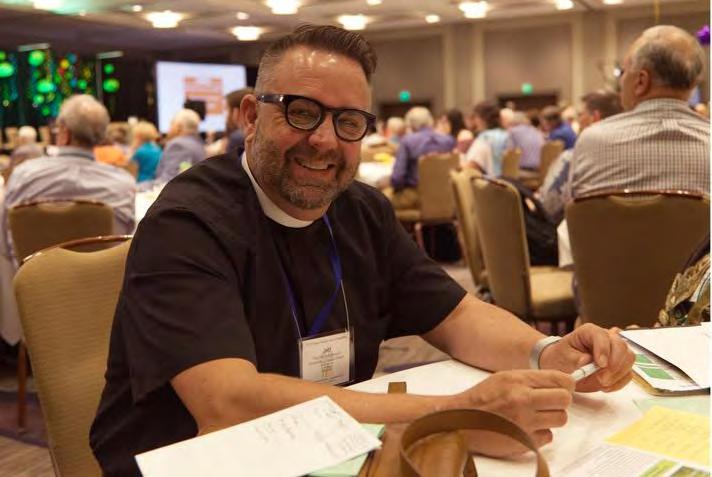
“Remember that the synod is a geographic designation,” he wrote. “There are 65 synods in the ELCA. This one covers 181 churches in Northern California and Northern Nevada. And while I may technically be the first openly gay bishop of our geographic area, this is hardly a new thing for us. We elected an openly trans bishop in the last election, and I will be the fifth openly LGBTQIA+ bishop elected throughout the ELCA. I am currently one of three, joining Bishop Brenda Bos (Southwest California Synod) and Bishop Kevin Strickland (Southeastern Synod).”
Johnson believes the ELCA has definitely turned the corner for good. “Discrimination and bias are on the losing side among us. Affirmation, diversity, resistance, welcome are all prevailing,” he stated.
In these days of polarization, Johnson was asked why would anyone want to be a bishop, especially because criticism on social media can be fearsome.
“I love being a pastor. A bishop is a synod’s pastor,” he wrote. “I’ve been in Berkeley for over 20 years. As a pastor here, I have baptized, confirmed, and married; curated liturgy, preached, and celebrated the sacraments; cultivated vocations, nurtured service, and forged solidarity. I have picketed, protested, invoked sanctuary, built resistance to supremacy, and organized in community.”
Johnson expects he will continue to do some of these same activities as bishop. “Additionally, I will ordain rostered leaders and help place them in churches, foster our diversity and unity, repair relationships, build alliances with ecumenical and interfaith partners, plan for the future, create space for emerging models of ministry, respond to crisis and emergencies, etc.”
systemic evils of racism, misogyny, nationalism, heterosexism, etc.,” he stated.
Johnson is concerned that his denomination is not as ready as it needs to be.
“For the problems ahead of us our visions and programs can be too timid, our small congregations too tenuous, and our relationships too fragile,” he stated. “Our organizing around candidacy, mobility, and interim transitions can be too slow, overly bureaucratic, and anachronistic, sacrificing vital momentum and energy. Now is the moment for initiatives that build resilience, strengthen connection and collaboration, and create a sustainable community. I hope to be part of helping to lead this moment.”
The B.A.R. asked Johnson about Rohrer, specifically, about outreach to Latino Lutherans, who have reportedly felt demoralized in the aftermath of Rohrer’s tenure.
“A couple of years ago, our assembly made the beautiful and bold decision to call as our bishop the Reverend Dr. Megan Rohrer, the first trans bishop elected to a denomination in the U.S.,” he wrote. “Dr. Rohrer’s election was a sign of how much progress the church has made in resisting heterosexism and homophobia. We all celebrated this election as a sign of the church’s welcome and affirmation.
“Dr. Rohrer’s tenure was difficult and they stepped down after a year in office. There were a lot of reasons for this. But many communities within our synod felt demoralized and discouraged. There is significant repairing of relationships and rebuilding of trust that needs to happen among us in the synod, with synods across the ELCA, and with our ecumenical and interfaith partners. I am committed to help with this process of repair, and to deepening our spiritual practice of becoming an even more anti-heterosexist, anti-sexist, and antiracist community of faith,” Johnson added.
Making history
After January 20, 1990, Johnson could never have imagined that he would one day be elected a bishop in the ELCA, and in that respect much progress has been made in the denomination.
“Prior to these ordinations, I graduated from seminary along with three other gay men, the so-called Berkeley Four,” Johnson wrote. “Because we came out as openly gay, none of us were recommended by our bishops for call to congregations. They were not allowed to hire us. We were supposed to just disappear. But because of the courage of First United and St. Francis Lutheran churches, the story continued. In spite of the church’s official policy, they hired us as their pastors and were disciplined as a result.”
to be accepting but has more to do.
“This church is on the path to becoming a more welcoming, affirming, reconciling, and trustworthy space and partner when it comes to race, gender, and orientation. But it has a long way to go in its anti-oppression work,” he stated. “I intend to continue to stand with the many in our church who are committed to this work and to the ongoing and difficult struggle of addressing the personal, structural, and systemic changes that we need to make to be beloved community, together.”
Johnson wrote that he has gained a lot both from his experiences over the years and from other queer people across religious traditions.
“I have learned so much from the struggle for life and love that LGBTQIA+ people are forging across denominations,” he noted. “So many champions of justice! So much sacrifice! So many steps forward. Especially during this era of rising hatred and violence against us.”
Johnson is astounded even in the small steps some of these people have taken under homophobia and transphobia in their churches.
“In each place and within each church context/culture, given the constraints and parameters that are unique to each denomination, there has been sustained resistance to discrimination and amazing forward movement,” Johnson wrote. “Not always in an unswerving line. But enough so that collectively we have confidence, we know that we have the wisdom, the perseverance, the courage, and ability we need to claim our right not only to exist, but to live authentically, to love fully, to partner expansively, to form resilient community together.”
Church attendance in decline
Lutherans, similar to other mainline Protestant denominations, are in decline. The Gallup organization has tracked this over the decades and in 2021 reported that U.S. church membership had fallen below a majority for the first time.
Johnson commented, “Churches across the country are having a hard time of it. But it is not the people who are the problem. Our churches are full of beautiful, faithful people. It is the structural model that we have inherited from the 1940s and 1950s when churches sprung up on every corner and citizens were pushed to join churches in large numbers as part of a national identity project during the Cold War. Remember, this was the era when “in God we trust” showed up on our currency, when “under God” was written into the Pledge of Allegiance, when the U.S. tax code was changed to the benefit of religious nonprofits, etc.”
The Bay Area Reporter can help members of the community reach more than 120,000 LGBT area residents each week with their display of Obituary* & In Memoriam messages.

RATES: $21.20 per column inch (black & white)
$29.15 per column inch (full color)
DEADLINES: Friday 12noon for space reservations
Monday 12noon for copy & images
TO PLACE: Call 415-829-8937 or email advertising@ebar.com
* Non-display Obituaries of 200-words or less are FREE to place. Please email obituary@ebar.com for more information.
Johnson discussed how he would approach his new role. “The most important thing I will do is what all pastors do, perhaps what all followers of Jesus do: bear witness in what I say and how I live my life to the unconditional loving kindness at the center of all things. It is this loving kindness that creates joy and generosity and gives us what we need to live with gratitude and courage,” he stated.
Johnson also wrote about what he hopes to accomplish. “We have urgent work ahead of us, given any number of overwhelming, era-defining problems we face as a people: the climate emergency and the collapse of planetary sustaining systems; the rise globally of antidemocratic authoritarian governments; desperation; mass migration; our enmeshment with the
Johnson continued, “The policy of discrimination was eventually overturned 19 years later in 2009 after much activism, education, and legislative battles at all levels of our church. During this period, we created an alternative program of credentialing so that LGBTQIA+ pastors had a choice of not disappearing – they could be called by other congregations throughout the U.S. who also wanted to resist the policy.”
In 2009, the denomination voted to allow the ordination of openly LGBTQ+ clergy in committed relationships. In 2010, these four were received onto the ELCA’s roster of clergy, their ordination recognized in a huge liturgical celebration. Johnson stated, “In 2010, after the ELCA changed its policy, almost 50 of these pastors were officially received back onto the church’s official roster, including myself” in a huge welcoming service.
More work to do Johnson said the ELCA continues


Having to deal with this reality, Johnson wants to create space for new structural models to emerge.
“The story of God’s unconditional loving kindness remains the same; it is even clearer now that it has been decoupled from the Cold War identity project of the 1940s and 1950s. What is still elusive, however, is what the new structures will look like and how they will be sustainable and resilient!” he wrote. “But I have no doubt that something new will emerge, (they already are in synods across this country), if we but create space for it, and are willing to change, to experiment, to dream, and to risk something new together.”
Johnson will begin his duties November 1. For the next six weeks, he will say goodbye to his beloved parish community at University Lutheran Chapel Berkeley that has been “at the center of my life for over two decades.” Johnson’s installation ceremony will occur Saturday, December 9, though the time and place are still being arranged. t
10 • Bay area reporter • September 28-October 4, 2023 t
<< Community News
Bishop-elect Jeff Johnson will officially begin his duties December 9. Courtesy Jeff Johnson
Remembering Ginger Casey, a news legend
by Hank Plante
The world lost a bright star, and I lost a lifelong friend, with the recent passing of my former TV news co-anchor Ginger Casey.
Ms. Casey, who was active in the LGBTQ community and the ultimate straight ally, died September 20 at Houston’s M.D. Anderson Cancer Center after battling lymphoma. She was 68.
Ms. Casey was an Emmy Awardwinning journalist who had the most important quality in a reporter and in a human being: she fought daily in life and on-the-air for what she thought was right.
When she anchored “This Week in Northern California” on San Francisco’s KQED-TV in the early 1990s she immediately threw herself into helping the LGBTQ community deal with the AIDS epidemic, which was at its peak. Even though I was at a competing station, KPIX-TV, I was thrilled to work with her as we emceed countless AIDS fundraisers and LGBTQ events like our televised broadcast of the 1991 San Francisco Pride parade. Her love for the community went beyond being a straight “ally.” She genuinely grieved over so many of her gay friends being struck by the AIDS pandemic. But she turned that grief into action in her volunteer work, including her being a founding
board member of the Names Project, creators of the AIDS Memorial Quilt.
Our friendship went back to the early 1980s when we both worked at KHJ-TV in Los Angeles. No coanchors ever had more “chemistry,” as the TV consultants called it, because we genuinely cared for each other. It also helped that we had the same sarcastic senses of humor.
From there we went as a team to co-anchor the news at KRIV-TV in Houston. Neither one of us had
much business being in Texas, which became evident when the station had us anchor the Houston Rodeo Parade on live TV. The Western clothes, hats, and boots that the station supplied only made us look more out of place. And when we started referring to Palominos as “those spotted horses,” I knew we were out of our depth. I like to think that we developed a cult following after that because we were so un-Texas.
Fortunately, we both wound up
in San Francisco at different TV stations. She then moved on to Providence, Rhode Island’s number one newscast at WJAR-TV, where she was named “Best Anchorwoman” by Rhode Island magazine for six years in a row. But the best thing about Providence was that she met her husband there, Don McGrath. They enjoyed a storybook love affair that blossomed over their 30 years together.
Like Ms. Casey, McGrath was a
military veteran. He had been a lieutenant colonel at West Point who had become a senior communications executive in the business world. Ms. Casey had been an intelligence specialist in the Air Force and the Air National Guard.
She brought that military discipline and so much more as she set out to cover news stories from the tough neighborhoods of Los Angeles to the Oscars. She interviewed presidents, business leaders, and ordinary people. I watched many of them relax and talk freely with her once her openness and empathy came through to them.
She also cared deeply about her chosen profession of journalism, and how much of it has gone off track over the years. In retirement she wrote and lectured extensively about how to improve the profession and to improve newsroom workplaces, especially for women on the air.
Ms. Casey is survived by her husband and many friends.
My grief over losing Ms. Casey is only tempered by the gratitude that I have for having her as long as we did.t Hank Plante, a gay man, is an Emmy- and Peabody Awardwinning TV news reporter and anchor who spent 25 years at KPIX/CBS-TV in San Francisco. He now lives in Palm Springs.
Man pleads not guilty in Tenderloin stabbing
by John Ferrannini
A stabbing inside a permanent supportive housing building in the Tenderloin that left a man seriously injured was an anti-LGBTQ hate crime, San Francisco District Attorney Brooke Jenkins stated in a news release Thursday.
Oscar Chatman, 27, of San Francisco, pleaded not guilty to all charges at his arraignment September 20, the release stated. These included willful, deliberate, and premeditated attempted murder, assault with a deadly weapon that’s not a firearm, vandalism of more than $400, second-degree burglary, and making criminal threats with special allegations that these were anti-LGBTQ hate crimes.
At a court date September 27, a preliminary hearing date was set for November 1 in Department 20 at the San Francisco Hall of Justice, 850 Bryant Street. Chatman will
News Briefs
From page 6
In addition to leading the program’s efforts to ensure that California takes full advantage of Prop 28, which provides $1 billion annually for arts education instruction in schools, DeCaigny will manage a large and diverse portfolio of grantees working across the nine San Francisco Bay Area counties, the Hewlett Foundation release stated.
remain in custody without bail until the DA’s motion to detain can be heard at that time.
“The alleged attack in a Tenderloin permanent supportive housing building left a man seriously injured and a neighborhood shocked,” Jenkins stated. “I offer my unwavering commitment to pursuing justice and ensuring that the suspect is held ac-
Prop 28 was passed by state voters in November 2022.
Born and raised in Minnesota, DeCaigny holds a bachelor’s degree in dramatic arts and directing from Macalester College, according to the Hewlett Foundation release. He currently serves on the board of the San Francisco Community Investment Fund and as an adviser to the World Cities Culture Forum. He is also a member of the Proposition 28 Implementation Advisory Council, which supports the rollout of The
countable for this senseless crime. Residents and staff at Supportive Housing sites, like all city residents, need to be safe where they live and work.”
Chatman was arrested on September 13 after fleeing the scene, according to San Francisco police.
At 11:07 a.m. that morning, officers “responded to the 200 block of Eddy Street on a report of a stabbing in progress. When officers arrived on scene, multiple witnesses told them the suspect had fled the scene and directed officers to the suspect’s location,” the release stated.

“Officers were able to quickly locate and apprehend the suspect, while seizing a knife allegedly used in the incident,” the release continued. “Meanwhile, other officers responded to the location of the incident and rendered aid to the victim, who was suffering from several apparent stab wounds. San Francisco Fire Department paramedics re-
Arts and Music in Schools Funding Guarantee and Accountability Act. DeCaigny resides with his partner in the Excelsior neighborhood of San Francisco. DeCaigny will begin his new position at the Hewlett Foundation January 9. His last day with Create CA will be November 15, and the organization stated that it has begun the search process for a new executive director.
sponded to the scene, treating the victim for non-life-threatening injuries, and transported the victim to a local hospital for further treatment.”
An initial announcement from Jenkins’ office stated that Chatman was charged with a hate crime but was not specific about which aspect of the victim’s real or perceived identity this was based on. The victim in this case was perceived to be gay, a spokesperson told the B.A.R., but the office won’t say what their sexual orientation or gender identity is.
“The case was charged with an allegation that these were hate crimes due to additional investigation that revealed evidence pointing to this being an attack based on the victim’s identity,” DA spokesperson Randy Quezada told the B.A.R.
A subsequent release from Jenkins’ office specified the incident was an alleged anti-LGBTQ hate crime.
The San Francisco Public De-
SF police oversight office to hold public forum
The San Francisco Department of Police Accountability will hold a public mediation forum Tuesday, October 3, from noon to 2 p.m. at 188 Embarcadero in San Francisco.
An announcement stated that at the forum, attendees will have an opportunity to hear from experienced mediators and investigators, ask questions, and gain insights into the inner workings of DPA.
fender’s office confirmed September 21 that it is representing Chatman.
“We believe it is premature for the District Attorney’s office to publicize assumptions about this incident,” stated Deputy Public Defender Alex Lilien, who requested that Chapman be evaluated for mental health issues. “We ask the public to reserve judgment as it is very early in the case. We will be evaluating all the information provided by the prosecution, forthcoming reports by medical professionals, and anything else we learn through our own investigation.”
Although charges have been filed, this remains an active investigation, according to the DA’s office. Anyone with information is asked to call the San Francisco Police Department Tip Line at 1-415-575-4444 or text a tip to TIP411 and begin the text message with SFPD. Tipsters may remain anonymous. t
DPA, which is led by Paul Henderson, a gay man, investigates complaints against San Francisco police officers, makes policy recommendations regarding police practices, and conducts periodic audits of the San Francisco Police Department. It is staffed by civilians who have never been police officers, according to its website.
The forum is free. To register, go to https://tinyurl.com/y6b9xuy2. t
Late Monday, Newsom signed Assembly Bill 1078 authored by gay freshman Assemblymember Corey A. Jackson, Ph.D., (D-Perris). Because it included an urgency clause, the legislation immediately took effect. In addition to covering books in public school classrooms and libraries, the bill also restricts school boards from censoring instructional materials based on their LGBTQ content or coverage of topics like race. The new law is in response to what
Jackson called the disturbing trend of book banning that is taking place not only in California but also across the nation. Jackson had worked closely with Newsom’s office on the language of AB 1078, as he amended the initial legislation he had filed earlier this year.
released by Newsom’s office. In the video posted on X (formerly Twitter), Newsom noted California was the second state to pass such a law; Illinois adopted similar legislation, he said.
decide what’s right for them.”
“It is the responsibility of every generation to continue the fight for civil and human rights against those who seek to take them away. Today, California has met this historical imperative, and we will be ready to meet the next one,” touted Jackson in a September 25 statement.
Jackson was with the governor as he signed AB 1078, according to a video
As the Bay Area Reporter has previously reported, Newsom has been out front this year in pushing back against a rollback of LGBTQ progress in the state’s public schools. His threatening a major fine against the Temecula school district in Riverside County led to its elected board’s reversing course on banning instructional materials that covered the late gay San Francisco supervisor Harvey Milk.
In a statement, Newsom said AB 1078 builds on his “family agenda” to promote educational freedom and success. It was a not-so-veiled rebuke to the “parental rights” arguments conservative parents and Republican leaders have been making to push forward their attacks on the rights of LGBTQ pupils.
“From Temecula to Tallahassee, fringe ideologues across the country are attempting to whitewash history and ban books from schools,” Newsom stated. “With this new law, we’re cementing California’s role as the true freedom state: a place where families — not political fanatics — have the freedom to
The bill strengthens current California law requiring schools to provide all students access to textbooks that teach about the Golden State’s diverse communities, noted Newsom’s office. It also empowers the state’s superintendent of public instruction to buy textbooks for students in a school district, recoup costs, and assess a financial penalty if a school board willfully chooses to not provide sufficient standards-aligned instructional materials for students.
“AB 1078 sends a strong signal to the
From page 1 See page 14 >>
September 28-October 4, 2023 • Bay area reporter • 11 t
Obituaries>>
The San Francisco District Attorney’s office has charged a man with an anti-LGBTQ hate crime after he allegedly stabbed another man in the Tenderloin.
Ginger Casey, right, and Hank Plante enjoyed a lunch together when both worked in San Francisco.
Courtesy Hank Plante
<<
<< LGBTQ bills
The fair will also feature longtime participants Sundance Saloon, Cheer SF and the San Francisco Lesbian/Gay Freedom Band, which will be “roaming the fairgrounds,” Lopez said.
San Francisco’s Official Band, which as the B.A.R. previously reported will be performing a concert September 30 at St. Mark’s Lutheran Church, 1111 O’Farrell Street, did not return a request for comment for this report as of press time.
Lopez stressed the importance of the event for the neighborhood; it was founded by Milk four years before he and then-mayor George Moscone were gunned down at City Hall. Before his ascension to the San Francisco Board of Supervisors, Milk was a camera store owner and community organizer instrumental in turning the Eureka Valley neighborhood into the re-dubbed LGBTQ mecca of Castro Village, later just the Castro. The fair was integral to that transformation.
“The Castro Street Fair has been going strong for 49 years and the fair’s mission is to continue in the tradition of its founder Harvey Milk in celebrating the wonderful, colorful and diverse neighborhood that the Castro is,” Lopez said. “We’re really excited to welcome our neighbors, friends, and family back to the streets of the Castro. For folks who have been before, it’s often one of their favorite events of the whole year, and we hope folks join us and bring their smiles and positive energy.”
<< LGBTQ bills
From page 11
people of California – but also to every American – that in the Golden State –we don’t ban books – we cherish them,” stated State Superintendent of Public Instruction Tony Thurmond, who supported Jackson’s legislation.
Thurmond, who on Tuesday made his 2026 gubernatorial candidacy official, has taken a prominent role this year in fighting for LGBTQ students in districts across the state. He was ejected from a school board meeting in Chino Hills after he spoke against the district’s forced outing policy for trans students.
(That policy, which the school board adopted, has been put on hold by a judge who earlier this month issued a temporary restraining order after Attorney General Rob Bonta filed a lawsuit. Nonetheless, a number of other school boards have enacted similar policies.)
“This law will serve as a model for the nation that California recognizes and understands the moment we are in - and while some want to roll back the clock on progress, we are doubling down on forward motion,” stated Thurmond. “Rather than limiting access to education and flat out banning books like other states, we are embracing and expanding opportunities for knowledge and education, because that’s the California way.”
Newsom’s wife, first partner Jennifer Siebel Newsom, also spoke in support of the new law. Among the issues she has championed in recent years are children’s literacy and their participation in summer reading programs hosted by local libraries throughout the state. As the B.A.R. has previously reported, her initiative has included Siebel Newsom’s reading LGBTQ children’s books.
“When we restrict access to books in school that properly reflect our nation’s history and unique voices, we eliminate the mirror in which young people see themselves reflected, and we eradicate the window in which young people can comprehend the unique experiences of others,” stated Siebel Newsom. “In short, book bans harm all children and youth, diminishing communal empathy and serving to further engender intolerance and division across society. We Californians believe all children must have the freedom to learn about the world around them and this new law is a critical step in protecting this right.”
Gay District 8 Supervisor Rafael Mandelman, who like Milk once did, represents the Castro on the Board of Supervisors, did not return a request for comment for this report as of press time.
Also hoping folks come to the fair is Terry Asten Bennett, a straight ally who is president of the Castro Merchants Association and the co-owner of Cliff’s Variety.
“The Castro Street Fair is a welcome event that brings visitors to the Castro and celebrates all that is good about our community,” Asten Bennett stated to the B.A.R. “The economic impact of the event can be hit or miss depending on your business. But it is always good to bring people into the neighborhood who might not otherwise come here.”
Tina Aguirre, a genderqueer Latinx person who is the manager of the Castro LGBTQ Cultural District, told the B.A.R. that people can vote for the district’s new advisory board at the fair.
“The Castro LGBTQ Cultural District is very proud of the legacy of community building and increasing visibility for LGBTQ people made possible through the Castro Street Fair,” Aguirre stated. “This is especially true as it resumes its larger footprint in the neighborhood – more food, art, music, and culture to enjoy! We have a booth in the fair where people can vote for candidates for advisory board member seats and we’re excited to see everybody come out and vote.
“This should be fun and a great way to celebrate all of what makes the Castro great,” Aguirre added. “See you there!”
2 LGBTQ bars remain closed
As the B.A.R. noted in an online article) September 21, LGBTQ watering holes Badlands and Q Bar will not, in fact, be open again in time for the event.
“Unfortunately, no,” stated Badlands co-manager TJ Bruce, who had told the B.A.R. on August 21 that the nightclub would likely be reopening within two months.
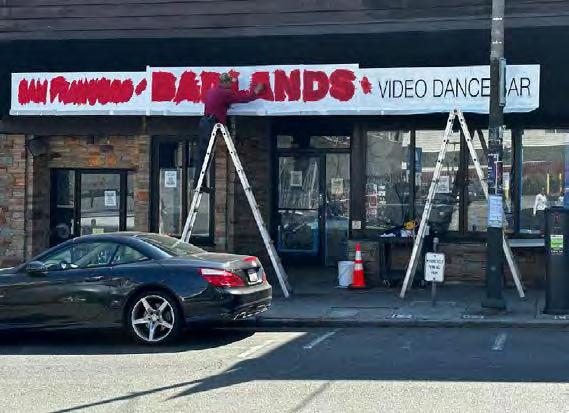
It appears that time frame still stands for the return of the venue on 18th Street near Castro Street.
“We are working very hard on the place, including getting our licenses current and staffing,” Bruce stated September 20. “Probably a few weeks more. Getting close.”
As for the nearby Q Bar on Castro Street, its co-owner Cip Cipriano had told the B.A.R. in July that it would be open in September. But Cipriano told the B.A.R. September 21 that “we won’t have the finishing touches” by the fair.
When asked if he had an updated estimated date for the opening, Cipriano only responded “soon.”
Fair to benefit groups
Proceeds from the fair will benefit 13 organizations this year, ranging from the Harvey Milk Civil Rights Academy, the public elementary school in the Castro, to the 15 Association to the AIDS Support Group at Most Holy Redeemer Catholic Church in the Castro.
schools, targeting LGBTQ+ students,” stated Thurmond. “These measures will protect all members of the LGBTQ+ community and provide the resources needed to support all California students.”
He noted that Newman’s SB 760 came in response to an issue flagged by the State Superintendent’s Safe School Bathroom Ad Hoc Committee formed in 2021. More than 30 high school and college students from across California were tapped to serve on it.
Other LGBTQ bills to become law
A day after Newsom vetoed legislation aimed at protecting transgender youth during custody proceedings authored by Assemblymember Lori Wilson (D-Suisun City), as the B.A.R. first reported online Friday night, he announced late Saturday evening that he had signed nine LGBTQ-related bills into law. Several are aimed at protecting LGBTQ young people, such as Senate Bill 407 by gay state Senator Scott Wiener (D-San Francisco).
It directs the state’s Department of Social Services to amend the foster care vetting process to ensure LGBTQ foster youth are not placed with foster families who will be hostile to them due to their sexual orientation or gender identity. As Wiener pointed out in pushing for passage of the bill, LGBTQ youth account for more than 30% of all youth in the foster care system.
Wiener praised the governor’s action in a statement.
“LGBTQ youth deserve a supportive and affirming home the same as any other child,” he stated. “I’m proud that California is taking this step to expand support for LGBTQ youth at a time when elected leaders in other states are targeting them with cruel restrictions and hate.”
Other bills signed by the governor on September 23 that address LGBTQ youth needs include AB 5 by gay Assemblymember Rick Chavez Zbur (D-Santa Monica/West Hollywood). Dubbed the Safe and Supportive Schools Act, it mandates that teachers and credentialed
staff who serve public school pupils in grades seven to 12 annually take at least one hour of online training in LGBTQ cultural competency beginning with the 2025-2026 academic year through 2031.
The California Department of Education expects to roll out the training by June 30, 2025, six years after state legislators adopted a bill calling for its creation.
In a post on X Zbur expressed his appreciation for Newsom’s signing AB 5, noting it “will ensure teachers & school staff have the tools and training they need to support LGBTQ+ & all students. This long-standing priority is a win for every student and teacher in CA.”
The governor also signed SB 857 by gay state Senator John Laird (D-Santa Cruz), which requires Thurmond to convene a task force on the needs of LGBTQ+ pupils by July 1, 2024. According to the bill, the advisory body will be tasked with assisting in the implementation of supportive policies and initiatives to address LGBTQ+ pupil education and must issue a report on its work by January 1, 2026.
Also signed by Newsom was SB 760 authored by state Senator Josh Newman (D-Fullerton). It requires all K-12 public schools in California to provide at least one easily accessible all-gender restroom for students “to use safely and comfortably during school hours.”
Having supported the trio of bills related to LGBTQ school issues, Thurmond praised Newsom for signing them into law.
“Dangerous trends have emerged recently. A small group of extremists have continued to levy attacks on California’s
Greg Carey, a gay man who is the chair of the Castro Community on Patrol, a volunteer safety organization, told the B.A.R. that his group has helped out with the fair for over a decade. CCOP is one of this year’s fair beneficiaries.
“We’ve been connecting with the fair most of the 15 years we have been around,” he said. “The Castro Street Fair is one of the best community events of the year, so we’ve always enjoyed being part of that. We’ve always been a part of making sure things are safe, the donations coming in from participants, and one of the nice things about the funding that comes in from the fair is it becomes part of our nondiscretionary funds that come in. ... That’s a big part of why we’ve stayed involved other than that it’s such a great event for the community.”
Last year the fair raised “about $45,000” for its beneficiaries, Lopez said. A $10 or $20 donation is requested at the entrance.
In addition to the aforementioned beneficiaries, Lopez said that money raised at the fair will go to: Buen Dia Family School; Everett Middle School; Freedom Place Church; Haight Ashbury Community Nursery School; the Imperial Council of San Francisco; the Si a la Vida program at Instituto Familiar de la Raza; Queer Life Space; San Francisco Spikes; and SF CASA (Court Appointed Special Advocates).
The Castro Street Fair runs from 11 a.m. to 6 p.m. For more information, go to castrostreetfair.org. t
that single-user restrooms in any business, place of public accommodation, or government agency must be identified as all-gender restrooms. It is a way to ensure such establishments are following the six-year-old law requiring them to mark single-occupancy restrooms as being gender-neutral.
“I am so grateful for the hard work of everyone who has supported this bill,” stated Jasper, whop was identified by one name and was one of the ad hoc committee members, in a statement released by Thurmond’s office September 25. “SB 760 will provide a necessary, secure space for all students who are uncomfortable using sex-segregated restrooms.”
Also set to become law due to Newsom’s signing it is AB 223 by gay Assemblymember Christopher Ward (D-San Diego). It requires any petition for a change of gender and sex identifier by a minor to be kept confidential by the court.
“At a time when many of our public documents have become digitized and easily accessible by those who would do transgender youth harm, AB 223 will allow transgender youth the ability to share their personal information with whoever they wish when they are ready to disclose it,” stated Ward, vice chair of the Legislative LGBTQ Caucus. “The Transgender Youth Privacy Act protects these youth from being bullied so they can navigate their daily lives as themselves.”
Other bills signed
Newsom did sign AB 760 authored by Wilson, the mother of an adult trans son, that requires the California State University system and the University of California system by the 2024-25 academic year to have campus systems that are “fully capable” of allowing current students, staff, or faculty to declare an affirmed name, gender, or both name and gender identification. And beginning with the 2023-24 graduating class, AB 760 makes it easier for graduating students to have their chosen name be the sole name listed on their diploma.
Assemblymember Phil Ting (D-San Francisco) had his AB 783 signed by Newsom. It requires cities and counties to notify all business license applicants
The governor also signed SB 372 by lesbian freshman state Senator Caroline Menjivar (D-San Fernando Valley/ Burbank). It will ensure that the public records kept by the state’s Department of Consumer Affairs don’t use the deadnames or disclose the home addresses of licensed mental health professionals.
Lastly, Newsom also signed Jackson’s AB 994 that requires a police department or sheriff’s office, when posting a suspect’s booking photo on social media, uses the name and pronouns given by the individual arrested. The bill authorizes a police department or sheriff’s office to use other legal names or known aliases of an individual in limited specified circumstances and requires the public safety agencies to remove any booking photo shared on social media after 14 days unless specified circumstances exist.
Most of the bills will take effect on January 1. In a news release announcing his signing the LGBTQ-related legislation, Newsom noted that the new laws “will help protect vulnerable youth, promote acceptance, and create more supportive environments in our schools and communities.”
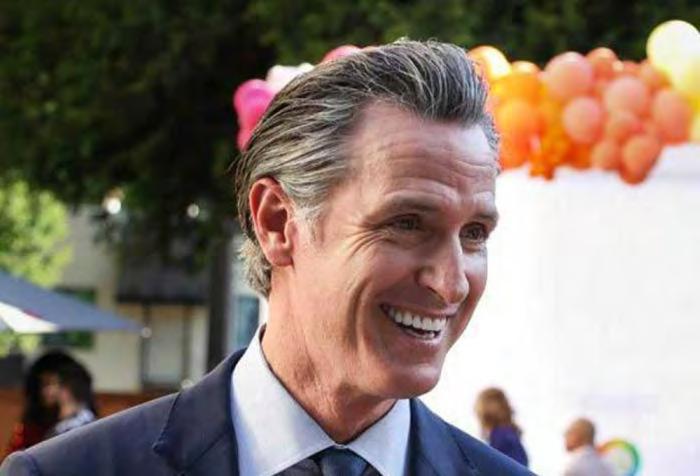
He added that “California is proud to have some of the most robust laws in the nation when it comes to protecting and supporting our LGBTQ+ community, and we’re committed to the ongoing work to create safer, more inclusive spaces for all Californians.”
Lesbian state Senator Susan Talamantes Eggman (D-Stockton), who chairs the affinity group for LGBTQ members of the Legislature, was singled out for praise by Newsom. Termed out of her Senate seat in 2024, she will be stepping down as the caucus chair at the end of next year’s legislative session.
“I thank Senator Eggman and the LGBTQ caucus for their dedicated leadership and partnership in advancing our state’s values of equality, freedom, and acceptance,” the governor stated. Eggman stated that the caucus had a busy year in seeing LGBTQ-related legislation passed out of the Legislature.
See page 15 >>
14 • Bay area reporter • September 28-October 4, 2023 t << Community News
<< Castro fair From page 1
The new Badlands signs were going up Friday, September 22, as plans for the LGBTQ nightclub’s reopening proceed.
Christoph Burghardt
Governor Gavin Newsom signed a number of LGBTQ-related bills September 23, one day after vetoing another one.
Courtesy Governor’s office
“This year the LGBTQ caucus took up the important work of protecting our communities in the face of vile antiLGBTQ+ rhetoric, discriminatory laws across the country, and hatred,” she stated.
“I appreciate the governor’s partnership in signing some of our priority and endorsed legislation today, and hope we can continue to educate about the harm LGBTQ+ people will continue to face if we fail to act.”
She was referring to the hundreds of anti-LGBTQ bills passed and adopted in other states, including those that affect trans youth, such as bans from participating on sports teams that align with their gender identity. Her statement came a day after the Legislative LGBTQ Caucus had expressed its “profound disappointment” in seeing Newsom veto Wilson’s AB 957.
Having also expressed disappointment in Newsom for his vetoing the legislation, statewide LGBTQ rights
organization Equality California offered praise to the governor for allowing the other LGBTQ-related bills to become law.
“While states across the nation are passing legislation that puts LGBTQ+ people and especially youth at risk, California is sending a clear message today – hate-filled attacks will not be tolerated and we will continue protecting and ensuring the safety of all members of the LGBTQ+ community,” stated EQCA Executive Direc-
tor Tony Hoang, a gay man. “We are thankful to our legislative partners for championing these important bills and to Governor Newsom for continuing to be such a strong ally in improving and protecting the wellbeing of the LGBTQ+ community as we face growing attacks from far-right extremists.”
As of the B.A.R.’s press deadline at noon Wednesday, Newsom had signed 11 LGBTQ-related bills into law. Two weeks ago he had signed SB
447 by lesbian state Senate President pro Tempore Toni Atkins (D-San Diego), instantly repealing California’s ban on publicly funded travel to states with anti-LGBTQ laws, as the B.A.R. previously reported.
The governor has until October 14 to sign or veto six remaining LGBTQrelated bills that the B.A.R. has been tracking this legislative session. t Matthew S. Bajko contributed reporting.
“With the extreme heat we are now experiencing, imagine how hot it can get on those schoolyards,” noted Wiedenmeier.
various issues in the past. As just one example that gay District 8 Supervisor Rafael Mandelman brought up during the news conference, Cal Academy had been at loggerheads with City Hall and the San Francisco Recreation and Parks Department over the decision to shut down car access to a main arterial through Golden Gate Park near its building for fear it would reduce visitation.
Yet the roadway closure, done to provide a safe venue in the city park for bicyclists and pedestrians, was one example of how the city is trying to address various environmental issues that Mandelman referenced. He also brought up the city’s ban on natural gas stoves and financial support for the creation of the new Tunnel Tops park site in the Presidio.
“In San Francisco we are doing a lot of amazing things. We have been an environmental leader,” said Mandelman.
Seeking positive impact
Sampson brought up the rash of negative headlines in the press about San Francisco this year, from the vacant office buildings downtown to the inability to move homeless people off city streets into housing, and pointed to the new nature initiative as a way to have a positive impact on the city, its residents, and those who come to visit.
“Yes, housing is astronomically expensive. And yes, downtown has yet to find its feet post-COVID,” he said.
“San Francisco still ranks among the world’s most beautiful cities with jawdropping views at almost every turn.”
The diversity of its population is another benefit, he added, referring not only to its human residents but its biological diversity. And just as essential as protecting that biodiversity for nature is protecting the natural environment for the health of humans, argued Sampson.
“Nonhuman nature and humans depend on each other,” he said.
How might the doom loop narrative be flipped, and local leaders build a path upward not downward, asked Sampson.
“The city needs a new north star,” he said, suggesting it be “Mother Nature.”
Nature corridors needed
While San Francisco in 2017 became the first U.S. city where all residents were within a 10-minute walk to a city park or open space, Thompson argued much more needs to be done. Nature corridors should be connecting the parks and more streets should be lined with trees.
“Buildings should be festooned with nature,” he said. “Citizens should be encouraged to plant native plants even if just in window boxes.”
A main goal of the initiative is seeing, by 2030, that 30% of San Francisco is biodiverse green space. Another key component is increasing the city’s tree canopy.
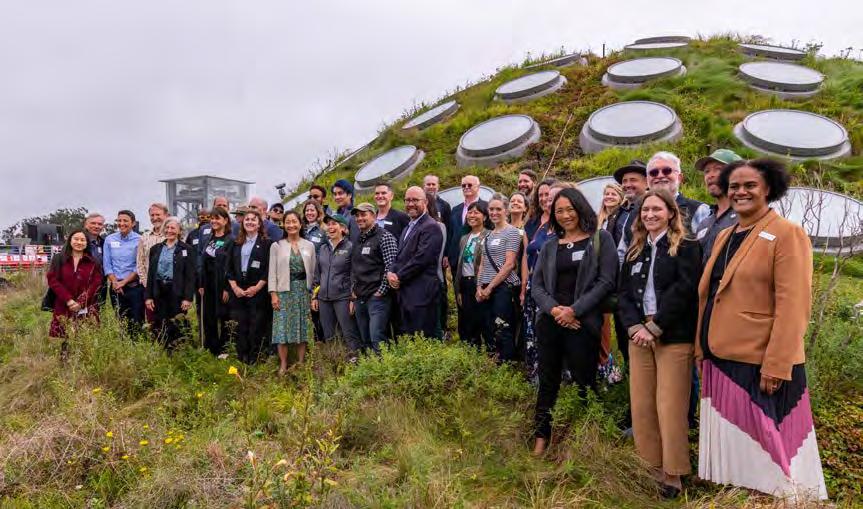
“Tree cover matters,” said Sampson, as he pointed out it can “potentially mean life and death during heatwaves.”
Last week, San Francisco Mayor London Breed announced the city would receive a $12 million federal grant for planting and maintaining street trees, as well as combating extreme heat and climate change, creating green jobs and improving access to
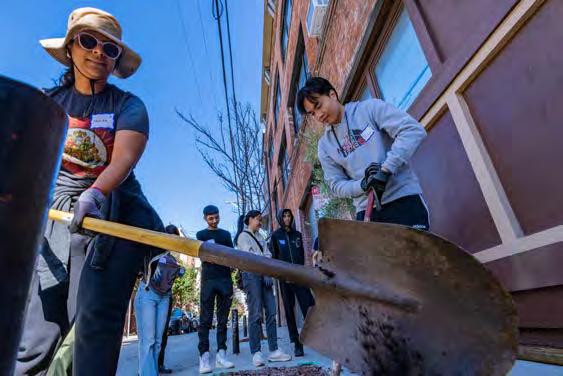
the city’s natural areas. It was the largest single award granted in California for growing an urban tree canopy under the Inflation Reduction Act signed into law by President Joe Biden.
The city’s Recreation and Parks Department is also receiving a $2 million Inflation Reduction Act grant to create a plan for managing the tree canopy in public parks located in San Francisco’s southeastern neighborhoods. Compared to other large U.S. cities San Francisco is a laggard when it comes to its tree canopy, with just 13.7% of the ground when viewed from above sheltered by the leaves and branches of trees. The national average is 27.1%.
The U.S. Department of Agriculture’s Forest Service is giving more than $1 billion in competitive grants to expand urban tree canopies across the nation. The funding is particularly meant for the planting of trees in lowincome communities that typically have the least amount of trees compared to more affluent areas of cities and disproportionately bear the brunt of pollution from industry and vehicle emissions.
Seeking equity
In San Francisco, the tree canopy is inequitably distributed among the city’s neighborhoods. Underserved census tracts have only about half the canopy at 8%, compared to the 15% canopy coverage in other census tracts.
“This funding will help us strengthen our urban canopy, particularly in neighborhoods like the BayviewHunters Point, the Tenderloin, and South of Market, which lack the benefits that street trees can bring,” stated Breed. “I want to thank President Biden and our federal partners for investing in a greener future. Soon, the Public Works Bureau of Urban Forestry will plant and work together with neighbors and nonprofit partners to advance the health of our communities for generations to come.”
The federal financial support comes as Public Works readies to open this
fall its new Street Tree Nursery in SOMA. It will be on land owned by Caltrans that straddles the off and on ramps to Interstate 80 at Fifth Street between Bryant and Harrison streets.
“We are thrilled to be selected in this highly competitive grant process,” stated Public Works interim Director Carla Short, a certified arborist. “We have the infrastructure in place and professional tree crews and nonprofit partners ready to get to work planting and caring for the new street trees in communities that need them the most.”
At the rollout for Reimagining San Francisco the director of the city’s Environment Department, Tyrone Jue, noted that when viewing the city from the air, greenspaces account for less than 5% of the city, meaning there is an opportunity to activate the other 95% through the new initiative. While pointing out that the city’s climate action plan calls for having net zero carbon emissions by 2040, more still needs to be done to address the impacts of a warming planet, said Jue.
“We need to get bigger and bolder in terms of how we are going to heal our planet,” he said. “It is not only going to be a government-led solution or just through nonprofits and institutions, it is something we all need to work on together.”
One member of the Reimagining San Francisco alliance is Friends of the Urban Forest. Brian Wiedenmeier, a gay man who is the nonprofit’s executive director, told the B.A.R. its mission dovetails with that of the collaborative effort to make the city healthier and greener.
“Reimaging San Francisco is at the heart of what we do, connecting San Francisco to nature,” said Wiedenmeier. “This is right up our alley.”
He noted that his agency has formed a collaboration with the city’s public school district to turn the asphalt outdoor yards at its school campuses into greener spaces. It hopes to begin its first project by the end of the year.
And for years the friends group has been planting trees along sidewalks across the city, especially in its LGBTQ neighborhoods from the Castro to the Tenderloin. Earlier this month it held a volunteer tree planting in the SOMA district, long a haven for the leather and kink community, and often sees LGBTQ individuals participating in such events around the city.
“I am excited to see where this goes,” Wiedenmeier said of the new citywide initiative. “I am thrilled and excited to have the Friends of the Urban Forest be involved in this.”
While LGBTQ-specific organizations in the city have yet to officially be listed as members of Reimaging San Francisco, Mandelman told the B.A.R. he hopes they consider joining the effort. The environmental issues it aims to address impact everyone in the city, he noted, no matter their sexual orientation or gender identity.
“All of San Francisco should be part of it. The bigger the coalition this builds and the more interest there is in a sustainable city the better,” said Mandelman, noting that even in the Castro there is still not enough of a tree canopy. “We need more trees all around.”
State guidance
Meanwhile, California Attorney General Rob Bonta recently released a comprehensive guide for how local governments can effectively address environmental justice issues in their land use planning as required by a state law adopted in 2016. The guidance, prepared by the California Department of Justice’s Bureau of Environmental Justice, (https:// oag.ca.gov/environment/justice) includes a chart with more than 120 real-world example policies that have been adopted by local governments all across the state to address such concerns as reducing air pollution exposure and improving access to parks and green spaces.
“Every Californian deserves to grow up, live, and work in an environment that is clean, safe and healthy,” stated Bonta. “The harsh reality is that some of our most vulnerable communities – particularly low-income communities and communities of color – continue to suffer disproportionate harm from unjust land use policies set into motion decades ago.”
San Francisco now has an opportunity to “reimagine itself,” said Sampson, via the new urban nature alliance.
“We will regenerate the plant one place at a time. It is always better to begin at home,” he said. t
To learn more about the Reimagining San Francisco initiative, visit its website at reimaginingsf.org.
ORDER TO SHOW CAUSE FOR CHANGE OF NAME IN SUPERIOR COURT OF CALIFORNIA, COUNTY OF SAN FRANCISCO FILE CNC-23558204 In the matter of the application of SEYED FARID HOSSEINI, for change of name having been filed in Superior Court, and it appears from said application that petitioner SEYED FARID HOSSEINI is requesting that the name SEYED FARID HOSSEINI be changed to FARID HOSSEINI. Now therefore, it is hereby ordered, that all persons interested in said matter do appear before this Court in Dept. 103N, Rm. 103N on the 26th of OCTOBER 2023 at 9:00am of said day to show cause why the application for change of name should not be granted. SEP 07, 14, 21, 28, 2023 ORDER TO SHOW CAUSE FOR CHANGE OF NAME IN SUPERIOR COURT OF CALIFORNIA, COUNTY OF SAN FRANCISCO FILE CNC-23558210 In the matter of the application of DARYA TCHERKASSOVA, for change of name having been filed in Superior Court, and it appears from said application that petitioner DARYA TCHERKASSOVA is requesting that the name DARYA TCHERKASSOVA be changed to DARYA SVENSSON. Now therefore, it is hereby ordered, that all persons interested in said matter do appear before this Court in Dept. 103N, Rm. 103N on the 31st of OCTOBER 2023 at 9:00am of said day to show cause why the application for change of name should not be granted. SEP 07, 14, 21, 28, 2023 ORDER TO SHOW CAUSE FOR CHANGE OF NAME IN SUPERIOR COURT OF CALIFORNIA, COUNTY OF SAN FRANCISCO FILE CNC-23558209 In the matter of the application of ATANAS ACEVSKI, for change of name having been filed in Superior Court, and it appears from said application that petitioner ATANAS ACEVSKI is requesting that the name ATANAS ACEVSKI be changed to AARON ACEV. Now therefore, it is hereby ordered, that all persons interested in said matter do appear before this Court in Dept. 103N, Rm. 103N on the 31st of OCTOBER 2023 at 9:00am of said day to show cause why the application for change of name should not be granted. SEP 07, 14, 21, 28, 2023 ORDER TO SHOW CAUSE FOR CHANGE OF NAME IN SUPERIOR COURT OF CALIFORNIA, COUNTY OF SAN FRANCISCO FILE CNC-23558184 In the matter of the application of ROGER LEE PITCHER, for change of name having been filed in Superior Court, and it appears from said application September 28-October 4, 2023 • Bay area reporter • 15
News>> Legals>>
t Community
<< SF campaign
page 1 << LGBTQ bills
page 14
From
From
Kanika Bansal, left, joined Hieu Hoang during a Friends of the Urban Forest tree-planting day September 9 in San Francisco’s South of Market neighborhood.
Jane Philomen Cleland
Members and supporters of Reimagining San Francisco gathered on the living roof at the California Academy of Sciences on September 7, California Biodiversity Day.
Jane Philomen Cleland
by David-Elijah Nahmod
Ahoy, mateys! Lesbian comic Marga Gomez brings her 14th one-person show, “Swimming With Lesbians,” to Brava Cabaret October 6-22. Presented as the memoir of Isabelle, who’s yearning for her first lesbian affair, she boards a notorious cruise ship known as “The Celesbian.” Gomez said that the show has been in development since the 1990s, when she was working as a cruise ship entertainer. The show will run on Fridays, Saturdays and Sundays.
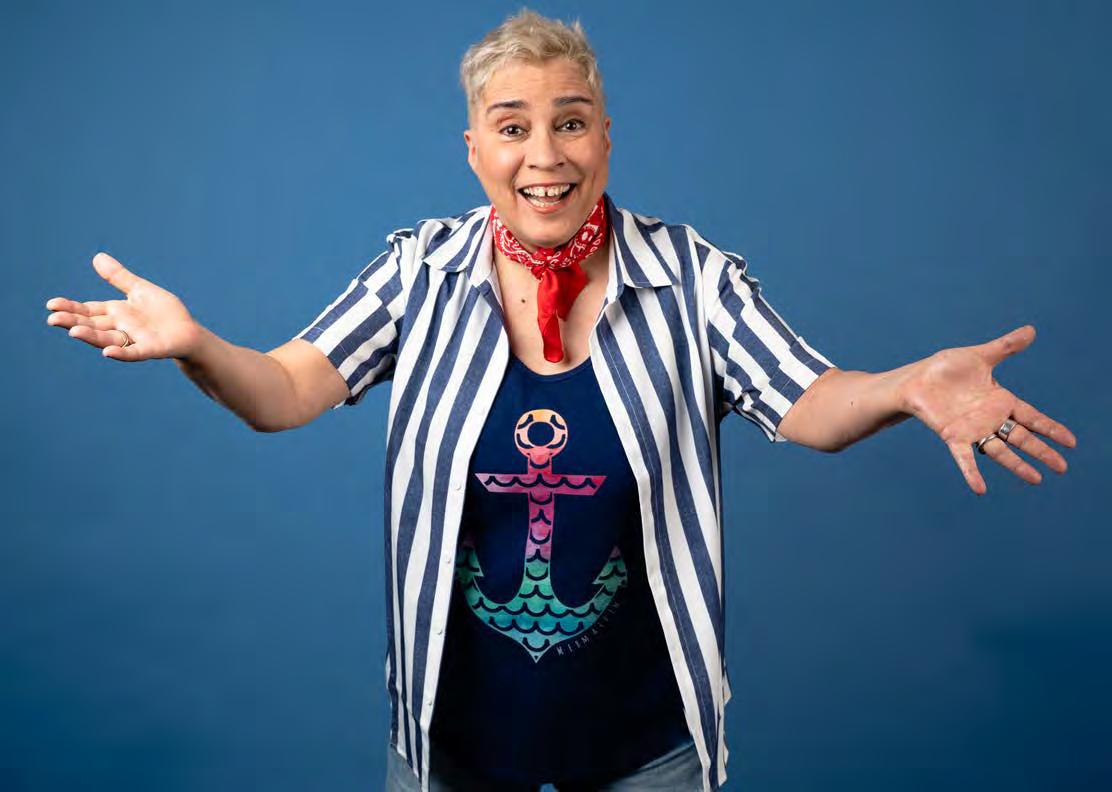
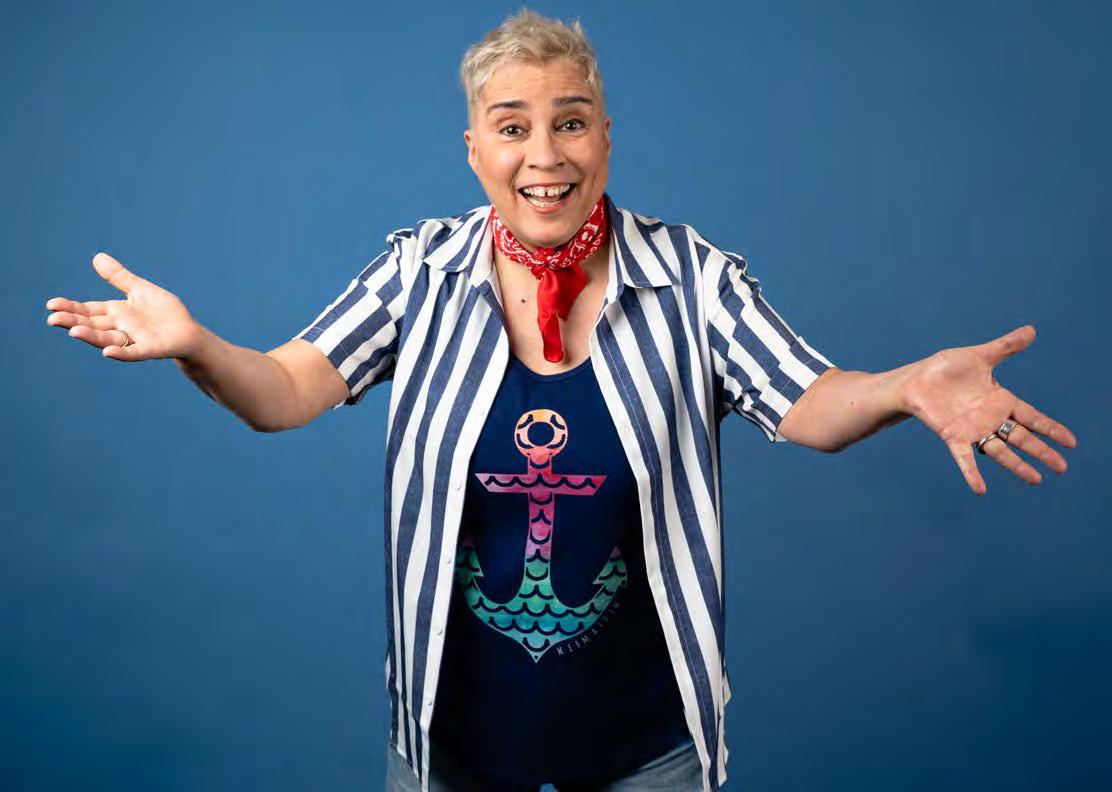
“I play about seven lesbian characters on the ship, from Captain Debbie to Aurora the Astrologer,” Gomez said in an interview with the Bay Area Reporter. “It’s like lesbian ‘Poseidon Adventure’ meets ‘Sponge Bob.’”

Gomez came up with the show’s title in January when she was invited to perform a new solo piece in a four-person bill at the now-closed Stagewerx SF. She knew she was going to write something on a lesbian cruise ship because it was on her shortlist of story ideas, but Stagewerx needed a title on the spot.
“‘Swimming With Lesbians’ was the first title that came to mind,” Gomez recalled. “I thought I’d change the title to something brainier if I wanted to keep it going but people fucking love the title. Lesbians love it because we are so ignored and kind of undermined in comedies. This is something for us.”
Gomez added that she had auditioned for the part of the lesbian in the recent gay rom-com “Bros” and found the part to be so badly written that she had to eat an entire bag of cookies when she got home.
“Where was I?” she said. “Oh yeah, people fucking love this title, the straight people, not the creepy ones, but the smart, straight people. Their ears perk up when they hear the title. If I have flyers on me,

they beg me for a flyer. Finally, the physical act of swimming factors big time in the plot.”
Isabelle, the narrator of the story, is her favorite of the seven characters she plays in the show because the character’s story arc includes trying to sleep with the captain and the ship’s DJ.
“I love her because she’s shameless,” Gomez said.
The pandemic played a role in Gomez’ creation of the show. She felt that after coming out of the pandemic, LGBT people –and everyone else– needs to laugh and to escape into a theater.
“It was the perfect time to write my cruise ship romp,” she said.

Nautical comedy

Gomez has fond memories of her time as a
cruise ship performer, though she points out that “Swimming With Lesbians” has nothing to do with Olivia Cruises, the company she worked with during the 1990s. She traveled with Olivia to such diverse locales as Alaska, Greece, and to various Caribbean spots.
“It was a lot of fun,” she recalled. “I was very charmed by all aspects of ship life. I think about trying a Princess Cruise because I studied ‘Love Boat’ reruns this year. But there seems to be a lot of cutbacks happening in the industry. I think all the cruise companies are cutting midnight buffets. I object, ha ha! I gained weight on every cruise. Maybe when ships allow cannabis, I’ll book a cruise.” Her objective in writing and performing this show is to make the audience laugh and forget their troubles.
“I want everyone to feel like they’re on a lesbian cruise and laugh the next day when they think about something raunchy or goofy that one of my characters did,” she said. “There is a playful queerness to this show that I hope others will adopt in their day-to-day.”
Gomez hasn’t been performing in anti-LGBT parts of the country but there is one thing she’d like to do in that regard.
“I have a fantasy of touring ‘Swimming With Lesbians’ all over Florida and put Mrs. DeSantis on my guest list,” she said. “Ya never know.”t
Marga Gomez in ‘Swimming With Lesbians,’ October 6-22, Fridays and Saturdays at 7:30pm and Sundays at 5pm, $25, Brava Cabaret, 2773 24th St. www.Brava.org www.margagomez.com
by Philip Mayard
As Executive and Artistic Director at Cal Performances since 2019, Jeremy Geffen brings over two decades of experience to the Bay Area’s foremost performing arts presenting organization. Prior to joining Cal Performances, Geffen, who identifies as a gay man, served as senior director and artistic adviser at Carnegie Hall for 12 years, where he planned and presented over 150 programs per season.

Born in Cape Town, South Africa and raised in Newport Beach, California, Geffen’s resume includes stints at St. Louis Symphony Orchestra,
New York Philharmonic, and the Aspen Music Festival and School. At age 26, he was the Aspen Institute’s youngest-ever seminar moderator.
Cal Performances’ expansive new season features ten company debuts, a robust recital series showcasing local debuts by rising-star performers, and six world premieres spanning dance and music. The company also continues to present and invest in long-term relationships with some of the world’s most revered dance troupes, including The Joffrey Ballet, Alvin Ailey American American Dance Theater, and Les Ballets Trockadero de Monte Carlo.

Geffen recently spoke with the Bay Area Reporter about Cal Performances’ ambitious 2023–24 season and his life’s journey.
Philip Mayard: Tell me about your life growing up in southern California. Did you come from an arts family?
Some of my family members were interested in the arts, but there were no professional artists. When my twin brother and I were eight, our parents thought we should learn piano. We had a piano in the house, but neither of us were enthused by it. I really wanted to play violin.
My parents thought if I wasn’t interested in an instrument we actually had in the house, how could I be interested in something we didn’t even have? But in junior high school I picked up viola as part of a beginners music program. I’m so grateful for public education, because it provided me with the opportunity to do something I really wanted and needed.
Was there a particular moment or experience that made you want to pursue a life in the arts?
It was sort of cumulative, but when I first made a sound on viola – and when you’re starting, those sounds are not exactly great – that instrument gave me such a powerful outlet for all the things that were going on behind my eyes.
I was growing up in Orange County and we didn’t have any gay friends. I know this is sadly a common experience for gay people, but I had that shame and the feeling that something was desperately wrong with me. The viola became a channel for self-expression for things I couldn’t
on Cal Performances’ vibrant programs Jeremy Geffen Kristen Loken WINNER! BEST BEER MENU Pilsner Inn NO COVER NYE Ring in the new year with friends old and new • Champage Toast at Midnight 225 Church Street @ Market • www.pilsnerinn.com Pilsner45.indd 1 12/20/18 2:17 PM 225 Church St, San Francisco • 415-621-7058 Outdoor patio • www.pilsnerinn.com See page 18 >> Marga Gomez
is ‘Swimming With Lesbians’
Jim McCambridge
Dario Calmese
Alvin Ailey American Dance Theater
‘Passions and Pastimes’
Lesbian/Gay Freedom Band’s new concert
by David-Elijah Nahmod
On September 30 the San Francisco Lesbian/Gay Freedom band will premiere a new concert at St. Mark’s Lutheran Church. Titled “Passions and Pastimes,” the concert will celebrate the various activities enjoyed by band members, such as bicycle-riding, baseball, magic, dancing, singing, hiking and much more.
Composers represented in the concert include Gustav Holst, Robert Russell Bennett, David Maslanka, Jack Stamp, Lee Jinjun, Erika Svanoe, John Philip Sousa and Mattea Williams, the band’s composer-in-residence. The piece written by Williams, “The Miragecaster,” is a West Coast premiere.
Pete Nowlen, the band’s artistic director, shared the story of how the band came to be. 45 years ago Jon Sims formed the band so that it could march in what was then called The
From page 17
articulate. I don’t think it’s an understatement to say that that music saved me and gave me a direction.
You were pursuing a career as a viola performer, but there was some kind of injury?
Yes, I had an overuse injury, which was misdiagnosed at the time, but is now very common and treatable. During my sophomore year at USC, I had “De Quervain’s tenosynovitis,” which these days happens to people doing too much texting. The pain was intense, but I tried to play through it. At first if I took a day off, I could play for a couple of weeks. But gradually that ratio changed; if I took two
San Francisco Gay Freedom Day Parade. The year was 1978, and this was the first time a Pride parade had a marching band. In December of that year the band performed its first concert, introducing the new Gay Men’s Chorus.
“It very quickly led to similar organizations around the country and the world,” Nowlen said in an interview with the Bay Area Reporter. “And to the formation of an association of pride bands, now called the Pride Bands Alliance.”
As the artistic director of the band, Nowlen programs and conducts four main concerts per year, plus special concerts.
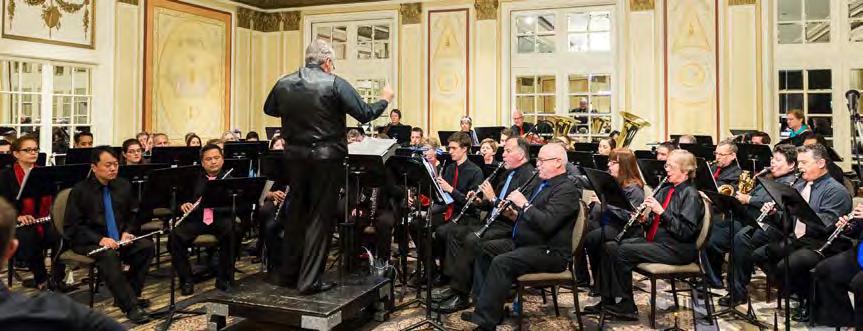
“I’m seeking to execute the band’s mission and vision through performance,” said Nowlen. “I also provide leadership in creation of special programs and commissions, such as our BiPOC Commission Program, anni-


weeks off, I could barely play for a day. So my performing days came to an abrupt end.
It was a huge identity crisis. So much of how I defined myself was wrapped up in the viola. My social life, academic life, and my professional life revolved around the instrument. To have that taken away was devastating.
Luckily, I connected with Gail Samuel, who was orchestra manager of the Los Angeles Philharmonic. She took me on as a production intern at the LA Phil, doing anything that needed done. It was a great window into what happens behind the scenes, and a whole world opened up to me. I was most drawn to programming because it was the most creative outlet and a different manner of expression.
versary celebrations, special concerts, recordings, etc.”
The band’s mission, as posted on its website, states that “The San Francisco Lesbian/Gay Freedom Band provides for the education and musical development of its members, promotes visibility of lesbian, gay, bisexual and transgender communities, and with its allies, fosters understanding among diverse communities through public performance.”
The band has around 75 members, all of whom will be playing in the concert.
“I wanted to feature Mattea Williams, our incoming composer-in-residence,” he said. “So I built a program around her piece, ‘Miragecaster.’”
Nowlen is very excited to be presenting Williams’ music to the community.
“When we did our call for our first BiPOC commission, we found two composers that we really wanted to
You must have had many incredible experiences at Carnegie Hall. Is there any particular performance or artist that stands out?
What I remember most are the incredible acts of generosity of countless performers. I got to see these artists who I grew up with, whom I felt I knew, in their most vulnerable state. More often than not, that was a beautiful experience. No one needs to be reminded backstage what’s at stake when you walk out on that stage. The amount of strength it takes to say to the world, “I have something worth your attention and your time.” An audience sees a performer for two hours, but that is the result of so many years, and decades, and decisions that have led to that one ephemeral moment.
work with,” he said. “Roger Zare composed an amazing piece for us last year. Since Mattea is local, living in Napa, and a younger composer still refining her craft and building her portfolio, we thought that a residency might be very beneficial to her. So we proposed it and she loved the idea. She writes very creative and appealing music, and I’m excited to get to perform three pieces, two of them brand new, as part of her residency over the next year.” Like many in the community, Nowlen feels that it’s important to be out and proud, given the current political climate.
“Out and proud, answering Harvey Milk’s call, is the founding principal of this band,” he said. “A few years ago visibility seemed almost passé, particularly in our NorCal bubble, but now its importance is again apparent. For some of our sister bands in the Pride Bands Alliance, it is even more appar-
As a gay man, does your orientation influence your choices as a performing arts curator?
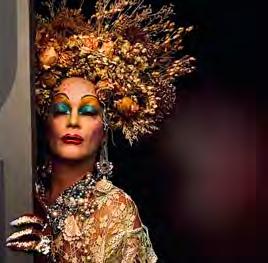
I think being gay influences my decisions in ways I’m not even conscious of. One of our major themes this season is “Individual and Community.” There is something about belonging and community that I’ve learned from my gay life. What I try to find in our programming are things that I know I need and what I hope our audiences need. Someone can tell you about themselves or they can show you.
The performing arts are one of the few opportunities we have to experience the world through someone else’s eyes. It could be a story that is so drastically different and unfamiliar from our own lived experience. But we are getting that message directly from the stage in the most direct and compelling way.


Let’s talk about Cal Performances 2023-24 Season. Do you have any recommendations for LGBTQ audiences?
There are so many, but the Taylor Mac/Matt Ray’s “Bark of Millions” project is going to be incredible. To have the Trockaderos back is always great. They’ve been an important part of our history at Cal Performances for a long time. John Cameron Mitchell and his new project, and also Kristin Chenoweth in concert; they are both
I’m excited about Urban Bush Women’s “Hair & Other Stories.” Just the idea of that project is so beautiful. When you talk about community, there’s the community that forms in a hair salon. When you have time to kill, what are you talking about? Sometimes the most mundane details of our life are the ones that bind us.
by Harrison David Rivers directed by ShawnJ West
I’m excited about [new music group] Wild Up performing [the late] Julius Eastman’s “Femenine.” The revival of Julius’ work is something we should all be proud of. His works are extraordinary and Wild Up has devoted so much time and research to create versions of these works that are compelling and musically gripping.
I also take a lot of pride in presenting artists in the early stages of their
ent as they experience major backlash and backslide in their areas.”
The band is delighted to be making a return visit to St. Mark’s Lutheran Church, pointing to the venue’s great acoustics, and its convenient location.
“We are very happy to be back there,” Nowlen said. “I really hope that the programs I assemble reflect our audience and community in all its wonderful diversity. For this program, I hope that in addition to hearing a varied program of fascinating pieces by fascinating people, that an audience member will bond especially with a couple of pieces that link to some of their favorite activities and that perhaps connect them to some wonderful memories.”t
San Francisco Lesbian/Gay Freedom Band performs ‘Passions and Pastimes,’ September 30, 3pm, St. Mark’s Lutheran Church, 1111 O’Farrell St. $15-$20. sflgfb.org
Above: Taylor Mac
Middle: Les Ballets Trockadero de Monte Carlo

Below: Urban Bush Women
career, because most of the time if they have that chance, they will knock it out of the park. These are the Yo Yo Ma’s and the Mark Morris’s of the future. It’s important to Cal Performances and it’s important to me to give these young artists the opportunity to create that bond with audiences early on, so that down the road, we can experience the totality of what makes them great.t
Cal Performances 2023-24 season runs through May 2024 at Zellerbach Hall, Hertz Hall and other UC Berkeley campus venues. www.calperformances.org
18 • Bay area reporter • September 28-October 4, 2023
t << Performance TICKETS AT NCTCSF.ORG BOX OFFICE: 415.861.8972 25 VAN NESS AT MARKET ST. APR 1-MAY 8, 2022 OCT 20-NOV 26, 2023 NEW CONSERVATORY THEATRE CENTER
IN ASSOCIATION WITH SEASON PRODUCERS Michael Golden & Michael Levy Robert Holgate Lowell Kimble Ted Tucker EXECUTIVE PRODUCERS Bill Gregory The Tiphane Fund at the East Bay Community Foundation Larry Vales PRODUCERS Cole Kinney & Dale Becherer Ken Prag & Steve Collins “A TREMENDOUS THEATRICAL EXPERIENCE” -BroadwayWorld we are continuous
<<
Cal Performances
Les Ballets Trockadero Roesing Ape
Pete Nowlen conducts the San Francisco Lesbian/Gay Freedom Band at a recent concert.
San Francisco Lesbian/Gay Freedom Band Artistic Director Pete Nowlen
Composer-in-residence Mattea Williams
Willa Folmar
Take in our vibrant California Coast exhibit and help us restore biodiversity for a thriving California—and planet. Because every visit supports our mission to regenerate the natural world.
Get tickets at calacademy.org
Steinhart
Aquarium
is Turning 100!
Celebrate a century of aquatic wonder, beloved sea-lebrities, and scientific innovation.

AQUARIUM + PLANETARIUM + RAINFOREST + LIVING MUSEUM 32253-CAS-Evergreen-TodayTomorrow-RockyReef-Bay Area Reporter-9.75x16-09.07.23-FA.indd 1 9/7/23 8:47 AM
Julie Marie Wade
by Gregg Shapiro
Award-winning lesbian writer and educator Julie Marie Wade lights up every room she enters. Her joyful spirit qualifies her as the Mary Tyler Moore of literature. She can virtually turn the world on with a smile.

The smile, however, is hard-won. Having survived being raised by unyielding, religiously conservative parents, Wade has channeled that experience into her work, creating art and catharsis, including her new collection of braided essays, “Otherwise” (Autumn House Press). Julie was gracious enough to make time for an interview in advance of the October 2023 publication of “Otherwise.”
Gregg Shapiro: Even before I started reading “Otherwise,” your new book of braided essays, before I got to the essay “Prose & Cons: Consideration from a Woman of Two Genres,” I intended to ask you if you are a poet who writes essays or an essayist who writes poetry. Now the question is, why you wrote the “Prose & Cons” essay, and why it was important to include it in “Otherwise.”
Julie Marie Wade: I didn’t actually think to include the “Prose & Cons” essay in this collection when I first began assembling it because I felt it might be too different in structure and
by Laura Moreno
Samuel Barber (1910-1981) is one of the greatest classical American composers of the 20th century. His music is greatly loved for its rich complexity, depth of feeling, and beautiful
style from the other essays I had slated for the book. Then, as I considered the evolving manuscript again, I realized that “Prose & Cons” could add some interesting texture if placed later in the book, after the reader had a chance to get to know me more fully as a queer person and a creative writer but before the reader had gotten to know me quite as well as a teacher.
In the same way that I wrote this essay to discover more about who I am as an essayist (by writing an essay!) and as a teacher (by recreating scenes from my classes in textual form), I ended up edifying my two most enduring identities as a result of writing it: my poet-self and my lesbian-self.
Turns out I am a queer poet through and through, and everything else I do or may become precedes directly from these core aspects of self.
Marriage is at the very heart of “Otherwise,” beginning with the “Meditation 32” essay and continuing in the others. It brought to mind the recent addition of “gay marry” to dictionary.com. How do you feel about that term?
I remember a meme I enjoyed about a decade ago as marriage equality was progressing toward the Supreme Court. It went something like this: “I like to talk about something that is very dear to my heart, gay marriage, or as I call it, marriage. As in I had breakfast this morning, not gay breakfast. As in, when I parked my car, I didn’t gay park it.”
And as much as I laughed and nodded my head, love being love and marriage being marriage, I also often say to Angie that something I’ve cooked is made with my favorite ingredient
(gay love!) or that I’m so glad she gay married me or that I love being her gay lady spouse.
All those things are true, but being on the other side of marriage equality now permits a levity that I don’t think I could truly appreciate before the Obergefell v. Hodges decision. When marriage was still a privilege that some people got to access simply because they were heterosexual –or living heterosexual lives– I resented the terms gay marriage and gay marry. Now that marriage is a right, equally available to any couple, I feel more comfortable and playful about embracing the ways that we are different from heterosexual couples. It’s okay to be different and to celebrate differences; what isn’t okay is for those differences to be used to limit our legal rights.

Speaking of terms, “Otherwise” is full of wonderful turns of phrase, and the unforgettable line “Lesbianism is my birth control.” What would it mean to you if any of what you wrote in the book became part of the fabric of queer culture?
I’m honored to be a part of queer culture in any way, to be woven into that enduring and capacious fabric at all, but I don’t have to be the whole coat. I’m happy to be one gay button, even the kind on the inside of the coat. Not everybody knows you’re there, not everybody sees you, but you still
Barber: His Life & Legacy’
craftsmanship.
Author Howard Pollack (who also wrote biographies of Aaron Copland and George Gershwin) has written a comprehensive biography (744 pages) rich with information about Samuel Barber’s private and professional life,
his music, and his place in the canon. In addition, Pollack takes us behind the scenes to witness the arduous and extremely expensive (and still profitable) preparations for his performances during his lifetime.
Barber may be best known for his rapturously beautiful “Agnus Dei” (Lamb of God), commonly known as “Adagio for Strings.” Composed at age 26, it’s been popularized in the films “Platoon” and “The Elephant Man.” But during his lifetime, Barber’s music was considered old-fashioned by some, even though it contains modern elements such as harmonic complexity and dissonance, making it truly Neo-Romantic music.
Aware of the criticism, Barber was known to at times count the number of white-haired old ladies who walked out during a performance, considering it evidence of his success as a modern composer. But his genius was recognized by his peers. Leonard Bernstein called his music “absolute beauty,” the title of a documentary film about Barber.
A Coming Out of Sorts
At age 8, little Samuel Barber wrote a remarkable note to his mother:
“Notice to Mother and nobody else
– Dear Mother: I have written this to tell you my worrying secret. Now don’t cry when you read it because it is neither yours or my fault. I suppose I will have to tell it now without any nonsense. To begin with, I was not meant to be an athlet [sic]. I was meant to be a composer, and will be I’m sure. I’ll ask you one more thing. Don’t ask me to try to forget this unpleasant thing and go play football. Please. Some-times [sic] I’ve been worrying about this so much that it makes me mad (not very).
Love, Sam Barber II
His mother gave him piano lessons and Barber also studied cello and singing. He got an inside look at the world of opera due to his aunt Louise Homer being the star contralto for the Metropolitan Opera. Her husband Sydney Homer, although his star has since waned, was a working composer whose operas were performed by the Met.
Just as importantly, Barber would
have a place and a job to do, and that matters the most to me.
One of the things that I love about “Otherwise” is the way you capture your wife Angie’s distinctive, dry sense of humor, especially in the “Meditation 36” essay. Does she make you laugh more or is it vice versa or equal?
[Laughs] Angie has a crisp, incisive wit that I have loved since the first day we met. Sometimes she’s funny even without saying a word, just by a certain look she gives or gesture she makes. I’m not a concise person by nature, so my humor rarely puts such a fine point on things the way Angie’s does. I think she’s loads funnier than I am, though I can make her laugh, too –and I do!– which is one of my life’s great joys.
In our more than 21 years together, a through line of our partnership has been the fact that we have laughed every single day. We find a lot of the same things funny –absurd things, ironic things, idiosyncratic things, an ever-growing repository of inside jokes– so sometimes we only have to look at each other across a crowded room or text each other a single word, and we’ll both erupt in laughter.t
Read the full interview on www.ebar.com.
www.juliemariewade.com
sit listening for hours as the family’s Irish maid sang folk songs she learned as a child, imparting a life-long love of Irish lore and music that he would later incorporate into his compositions. More than a dozen of his often performed piano pieces were written before Barber was 13 years old.
Barber & Menotti
At Curtis Institute of Music in Philadelphia, Barber and Gian Carlo Menotti, Italian-American music student studying composition, met and fell in love. Barber’s mother would attend Menotti’s recitals as well as her son’s. Later the entire Barber family would regularly visit their New York City apartment. The composers even hosted a family wedding in their home. The family, it seems, saw them as bachelors sharing an apartment and never questioned anything beyond that.
Although Barber and Menotti had very different personalities, they would remain beloved friends for the rest of their lives, even after a painful breakup. Barber was prone to melancholy and alcoholism, but the strain in their relationship did not appear until Menotti’s career began to eclipse Barber’s own. Menotti won two Pulitzer Prizes in Music, a highly unusual feat later accomplished by Barber as well.
Unfair Criticism
In 1966, Barber’s opera “Antony & Cleopatra” premiered, starring Leontyne Price and led by gay artists Alvin Ailey (choreography), Franco Zeffirelli (libretto), and Thomas Schippers (conductor), had a cast of 300 and cost $1.2 million to produce. The production employed magnificent stage effects, such as Cleopatra floating her
barge down the entire length of the enormous Met stage.
The standing ovation lasted nearly 30 minutes, and the champaign reception afterward lasted until midnight. Everyone at Lincoln Center that night, including Barber, felt the opera had been a success until the next day when the reviews were published. But at least some critics seemed to be taking subtle digs at the artists for who they were.
Price’s resonant soprano voice “went all Southern and flat,” one critic wrote, adding that he doesn’t say so “because she is Negro.”
Harold Schonberg’s scathing New York Times critique “in truth seemed coded in homophobic language and ideas,” biographer Pollack writes. Schonberg complained of “Barber’s failure to explore the text’s subject, “love between a man and a woman,” and wrote that the opera exhibited “queer ideas current these days in certain circles of the Metropolitan Opera,” even calling it a “Swinburnian melange of sad, bad, mad, glad” (Swinburne being a poet associated with sexual transgression).
Pollack writes, “Schuyler Chapin, then VP of Lincoln Center, recalled that the review caused something of a scandal, even though he himself thought [it] ‘a fag show,’ and on becoming General Manager of the Met in 1972, moved to break up what he regarded as the company’s homosexual ‘mafia.’”
Julliard later revived the “failed” opera to great fanfare. This is just one of many historical moments in Barber’s life brought to enlightening focus in this fascinating biography.t

20 • Bay area reporter • September 28-October 4, 2023
‘Otherwise’ author on writing, life and love t << Books 3991-A 17th Street, Market & Castro 415-864-9795 Proudly serving the community since 1977. Open Daily! New Adjusted Hours Monday 8am (last seating 9:45pm) Tuesday 8am (last seating 9:45pm) Wednesday 8am (last seating 9:45pm) Thursday 8am Open 24 Hours Friday Open 24 Hours Saturday Open 24 Hours Sunday 7am (last seating 9:45pm) AUTO EROTICA PURVEYOR OF VINTAGE PORN MAGAZINES • BOOKS • PHOTOGRAPHS 4077A 18th St. OPEN EVERY DAY 415•861•5787{ {
PURVEYOR OF VINTAGE PORN MAGAZINES • BOOKS • PHOTOGRAPHS 4077A 18th St. OPEN EVERY DAY 415•861•5787{ { AUTO EROTICA PURVEYOR OF VINTAGE PORN MAGAZINES • BOOKS • PHOTOGRAPHS 4077A 18th St. OPEN EVERY DAY 415•861•5787{ { WE BUY & SELL GAY STUFF! MONDAY-SATURDAY
AUTO EROTICA
‘Samuel Barber: His Life & Legacy’ by Howard Pollack, University of Illinois Press, $59.95 hardcover. www.press.uillinois.edu
‘Samuel
Howard Pollack’s bio of the gay composer
Author Howard Pollack
Author Julie Marie Wade

‘Rotting in the Sun’
by Kyle Amato
Chilean director Sebastián Silva has made a career out of the un-
predictable and the absurd with films like “The Maid,” “Crystal Fairy & the Magical Cactus,” and “Nasty Baby.” For his latest film, Silva turns the camera
Folsom Street Fair’s 40th


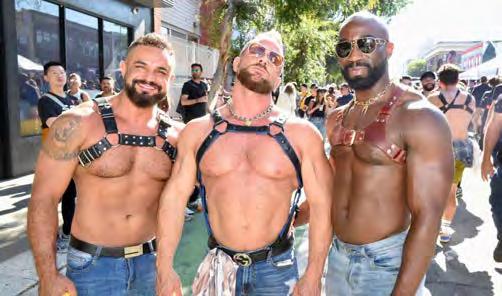
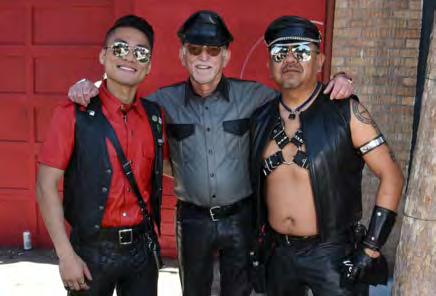
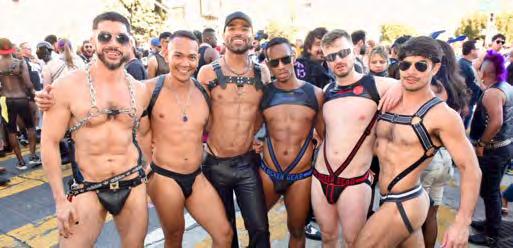

 Photos by Steven Underhill
Think kink! At the 40th annual Folsom Street Fair, thousands of attendees in leather, harnesses, pup and other kink and BDSMthemed garb enjoyed a sunny day with live band performances, demos, food, drinks and kink!
For more Steven Underhill nightlife photos, visit www.facebook. com/lgbtsf.nightlife and www.stevenunderhill.com
A hedonistic, nihilistic gay comedy
on himself, crafting a portrait of an unfulfilled artist trapped in a world of narcissism without end.
While “Rotting in the Sun” has

some fun moments, extremely homosexual situations, and a great performance from Silva’s frequent collaborator Catalina Saavedra, the film is overlong and obvious where it should be fleet and snappy. Gay hedonism and the nihilism it can cause are worth investigating, but much of the film feels like underscoring the same point over and over.
Sebastián Silva is depressed. He’s creatively unfulfilled, his apartment is a mess, he’s being forced to sell his painting to pay his debts, and he won’t stop doing ketamine and googling ways to kill himself.
In a last ditch attempt to snap out of it, Silva leaves Mexico City behind and heads to a nude gay beach. Before he can even attempt to relax, he almost drowns trying to save a man from a rip tide. The man turns out to be Instagram ‘comedian’ Jordan Firstman, who sees this shared near-death experience as a way to get Silva to collaborate on his concept for a TV show he refers to as “You Are Me.” Silva agrees, mostly to score more ketamine, and the men have a night of debauchery.
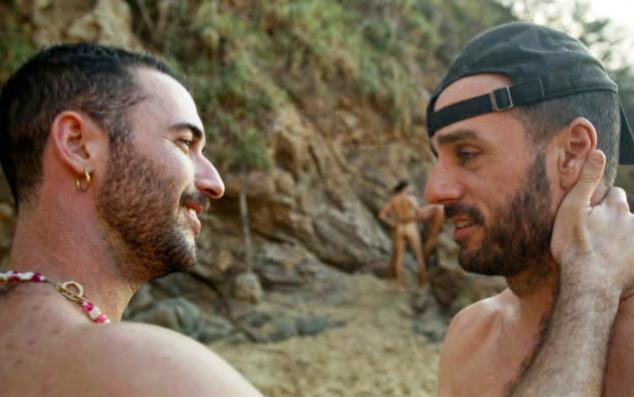
Of course, Firstman is extremely annoying, so Silva packs up and heads home. A couple days later, Firstman makes his way to Silva’s apartment but the director is nowhere to be found, though his belongings are scattered everywhere. The only person who
may know the truth is Silva’s housekeeper Vero (Catalina Saavedra), and she’s not talking.

The most frustrating part of “Rotting in the Sun” is that Silva’s intentions are coming through, but the film keeps getting bogged down in Firstman’s charisma-free lead performance. The midsection focusing on Saavedra is exciting and compelling because she is a great actress, effortlessly selling the character’s paranoia.
When Firstman re-enters the picture, he can’t keep up. He compensates by contributing to the film’s explicit nudity, but even that becomes rote after a few sex parties and beach blowjobs. The back half suffers because the audience knows what happened, but Firstman and the rest of the characters take forever to catch up. Every moment spent watching Firstman struggle with Google Translate takes away from the actual humor of the situation.
Despite my distaste for Firstman and the film’s languid pacing, I am glad something like “Rotting in the Sun” can exist. I am exhausted by the coming out narrative many gay films are forced to have, and I’ll take anything that just has gayness as its ineffable core. Gay stories exist beyond the relationship to the straight world, and Silva understands that much. “Rotting in the Sun” streams on Mubi.com.t
22 • Bay area reporter • September 28-October 4, 2023
t << Spectacle & Film
Sebastián Silva and Jordan Firstman in ‘Rotting in the Sun’
Fabulosa to host banned books reading marathon
by Jim Provenzano
Books with LGBTQ themes are under attack while anti-gay harassment is spiking nationwide. To counter the book bans, Castro district Fabulosa Books has organized Read
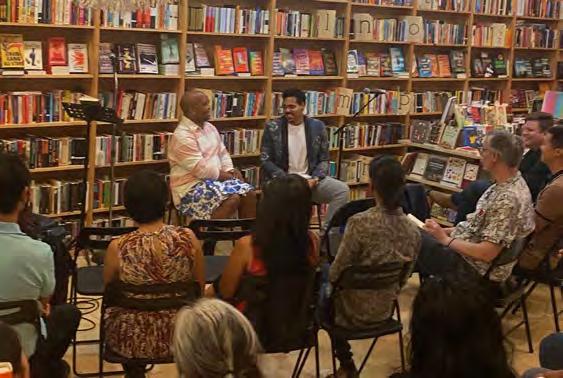
For Filth, a 24-hour celebration of queer literature, on October 7-8.
The event is a fundraiser for Books
Not Bans, the store’s program to send queer books to LGBT centers and groups in red states. It’s timed with the national Banned Books Week, Oct. 1-7, created by the American Library Association, with bookstores and libraries highlighting censored books.
So far, Fabulosa Books has shipped 15 boxes to groups in Tulsa, OK, Cheyenne, WY, Charleston, NC, Ft. Meyers, FL, Hattiesburg MS, and Montgomery, AL.
“We fill each box with 20 new and popular queer books that are a mix of current titles and classics,” said Bex
Hexagon, events manager for Fabulosa, and the creator of Books Not Bans. “It is very easy to feel powerless, but books show us a road to what is possible, and stories save lives. This event is an affirmation of hope and our resilience as a community.”
Fabulosa Books owner Alvin Orloff said, “We may be far from the worst of the book bans and anti-LGBT bigotry, but we can do our part to support our community. If I can help the kids of today weather the stupidities of Ron DeSantis and Don’t Say Gay, you bet I’m going to do it.”
Fabulosa’s round-the-clock series of events will include activities for all ages to celebrate stories with, and written by, LGBTQ authors. The various events begin on Oct. 7, 10:30am with Drag Story Hour for families, with San Francisco Library staff in attendance to register people for library cards.

“We’ll have a parklet in front of the store for the day of the event and
events in-store all night long and the next morning,” added Hexagon.
From 2:30pm to 6:00pm, an expansive lineup of authors, performers and members of community groups will read poetry and stories, and musicians and attendees will perform and read as well. The celebration of books will include a diverse lineup of community leaders, Castro merchants, and other community members.
Queer Bedtime Stories and Sister Roma will be the guest MCs.
“How dull would the world be without our voices?” said Sister Roma in a press statement. “Our stories must be told, our experiences must be shared, and our history must be written! I’m thrilled to host this event to help get important books into the hands of our community who need them the most.”
From 9:30pm to 2:30am, the bookstore will host a DJed party, with drag host Delilah Blackheart and special guest performers. A donation is re-
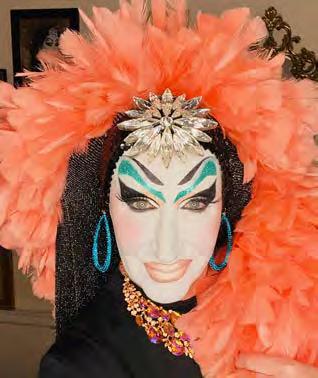
Jason Momoa @ Beaux
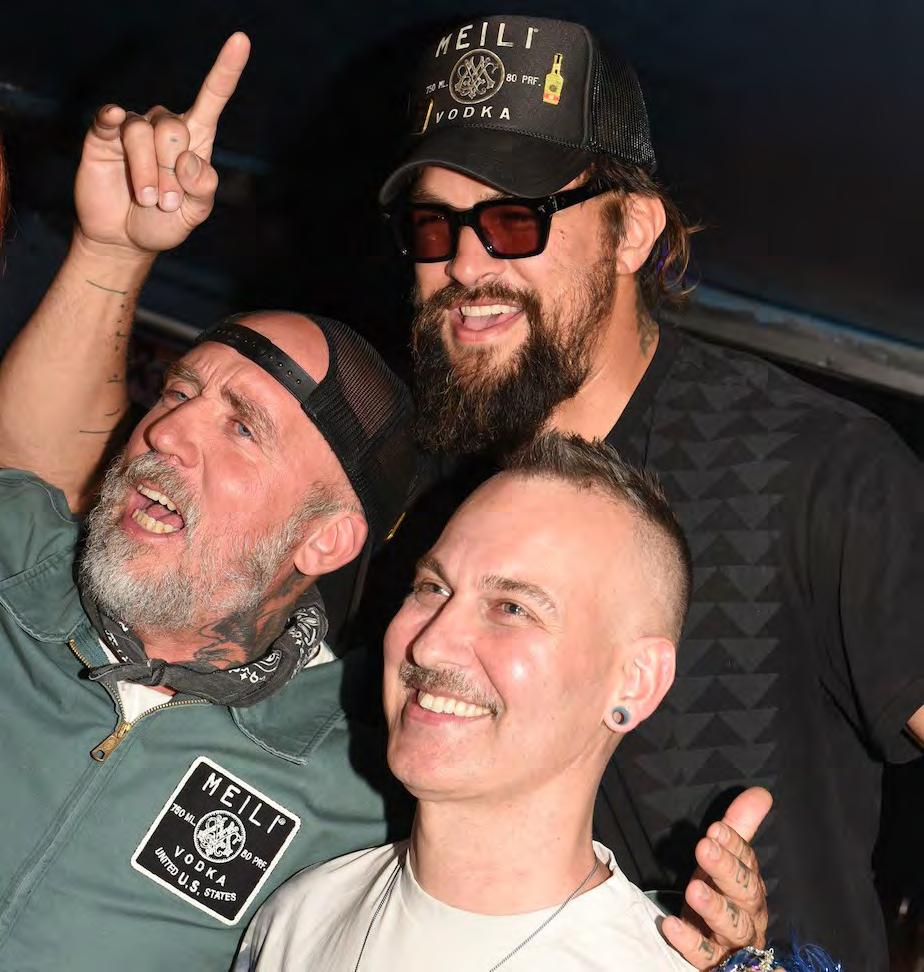

Beaux, 2344 Market St. www.beauxsf.com www.meilivodka.com
For more Steven Underhill photos, visit www.facebook.com/lgbtsf.nightlife and www.stevenunderhill.com
For upcoming fun nightlife and arts events, see Going Out, this week and every week, on www.ebar.com.
quested to attend.

The event will also include a full group reading of George M. Johnson’s
“All Boys Aren’t Blue: a Memoir Manifesto,” which is currently one of the most banned books in America.
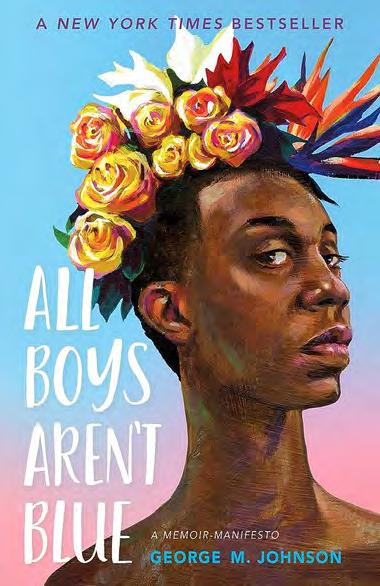
At 9:30am Oct. 8, coffee and donuts will be served in the store.
Performers, participants, sponsors, and volunteers can fill out an online form to sign up.
Members of the community should reach out to info@fabulosabooks.com
to learn how they can participate. Castro merchants and residents are especially encouraged to participate.
Fabulosa Books, the Castro’s only bookstore, specializes in published fiction, nonfiction, and poetry for, by and about the LGBTQ community. Fabulosa is LGBT-owned and staffed, and is dedicated to furthering queer culture and visibility, and is open every day at 489 Castro.t
www.fabulosabooks.com
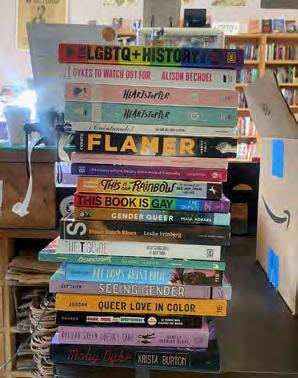
September 28-October 4, 2023 • Bay area reporter • 23
t Activism & Matinee Idols >> PRESENTS FROM ClubFugaziSF.com | 415-273-0600 CLUB FUGAZI | 678 Green Street | San Francisco “ WOW! – KCBS “ A LOVE LETTER WRITTEN FOR EVERYONE!” – KQED Arts “ HIGHEST RATING! A VALENTINE TO THE CITY.” – SF Chronicle “ MIND BLOWING. 90 MINUTES OF ACROBATIC BLISS.” – Mercury News “JAW-DROPPING. THE SHOW IS A STUNNER.” – Hoodline “A CELEBRATION. – KQED Arts “ BEST NIGHT OUT!” – SF Magazine Shows Weds–Suns | Drinks & Small Bites Available In the heart of North Beach, a historic jewel box theatre hosts high-flying acrobats creating a thrilling and moving love letter to the City by the Bay. Enjoy drinks and cicchetti (small bites). Come with a date or friends, celebrate birthdays and anniversaries, book a corporate event. The perfect place for a party!
“For fast-acting relief, try slowing down.” —Lily Tomlin
Left: Authors Rasheed Newson with Jonathan Escoffery at a recent Fabulosa Books event. Middle Left: A stack of banned books to be shipped to regional LGBTQ community centers. Middle Right: Sister Roma Right: George M. Johnson’s ‘All Boys Aren’t Blue: a Memoir Manifesto’
Fabulosa Books
Fabulosa Books Courtesy Sister Roma
Actor Jason Momoa (“See,” “Aquaman,”) stopped by Beaux nightclub on Sept. 23 as part of the promotional tour for his new vodka brand, Meili, co-created with Blaine Halverson (left); seen here with Beaux’s Joshua J. Cook (right).
Steven Underhill




JOB #: GRT-22105 SEPT_BAY AREA ALL IN PRINT US 101 TO EXIT 484. 288 GOLF COURSE DRIVE WEST, ROHNERT PARK, CA P 707.588.7100 PLAY WITHIN YOUR LIMITS. IF YOU THINK YOU HAVE A GAMBLING PROBLEM, CALL 1-800-GAMBLER FOR HELP. ROHNERT PARK, CA. © 2023 GRATON RESORT & CASINO IT’S All In ONE PLACE LUXURIOUS ROOMS WORLD-CLASS SPA & SALON RESORT-STYLE POOL AWARD-WINNING DINING LIVE ENTERTAINMENT One amazing destination, so many reasons to experience it.
