by John Ferrannini
The Folsom Street Fair is returning to San Francisco’s South of Market neighborhood Sunday, September 29. The fair, which caters to leather and kink communities the world over, is expecting 200,000 visitors, according to Folsom Street Executive Director Angel Adeyoha.
“We’re very excited to see everyone and welcome our annual pilgrimage and our stages are going to be absolute fire this year,” Adeyoha, who is queer and nonbinary, told the Bay Area Reporter.
The fair runs from 11 a.m. to 6 p.m. and is bounded by Howard Street on the north, Harrison Street on the south, Eighth Street on the east and 13th Street on the west.
The 41st annual fair started back in 1984 as Megahood. It was founded as a bulwark against gentrification in SOMA. The leather community was also particularly hard hit at that time, during the early days of the AIDS epidemic. (The Megahood moniker was revived briefly in 2021 when the fair took place in a modified, smaller form due to the COVID pandemic.)
In the 1970s, Folsom Street had been christened the “Miracle Mile” for the long strip of leather bars, SM clubs, and bathhouses that had lined it. Today, only a few vestiges of that explosion of sexual freedom remain, though Robert Goldfarb, a gay man who is the executive director of the Leather & LGBTQ Cultural District, told the B.A.R. he’d like visitors to know that the neighborhood is still a peak destination for leatherfolk and kinksters.
“I think we would like them to know how vibrant the neighborhood is and how it is really a home to the leather community, which it has been since the 1960s,” he said. “I think a lot of people don’t realize we’ve been there that long. I think there’ve been a lot of changes and, with the pandemic, a lot of closures, and I think when they come to SOMA for the fair, they will see how many businesses and how thriving the leather community is here in San Francisco.”
District 6 Supervisor Matt Dorsey, a gay man, is joining the leather district in welcoming people to SOMA, which he represents on the San Francisco Board of Supervisors.
“I’m proud to support the Folsom Street Fair, a world-renowned event in the heart of my district that draws hundreds of thousands of visitors from across the globe each year,” Dorsey stated. “This iconic celebration showcases the dynamic kink and leather communities, and encourages people to embrace new experiences and push beyond their boundaries.
“At the same time, it fosters a powerful sense of inclusivity, uniting individuals from all walks of life, regardless of race, gender, and sexual orientation,” he added. “Beyond its cultural significance, the fair is a vital economic engine for San Francisco, driving revenue for local businesses, bars, and hotels. Folsom Street Fair is truly an essential part of our city’s identity and prosperity.”
by Matthew S. Bajko
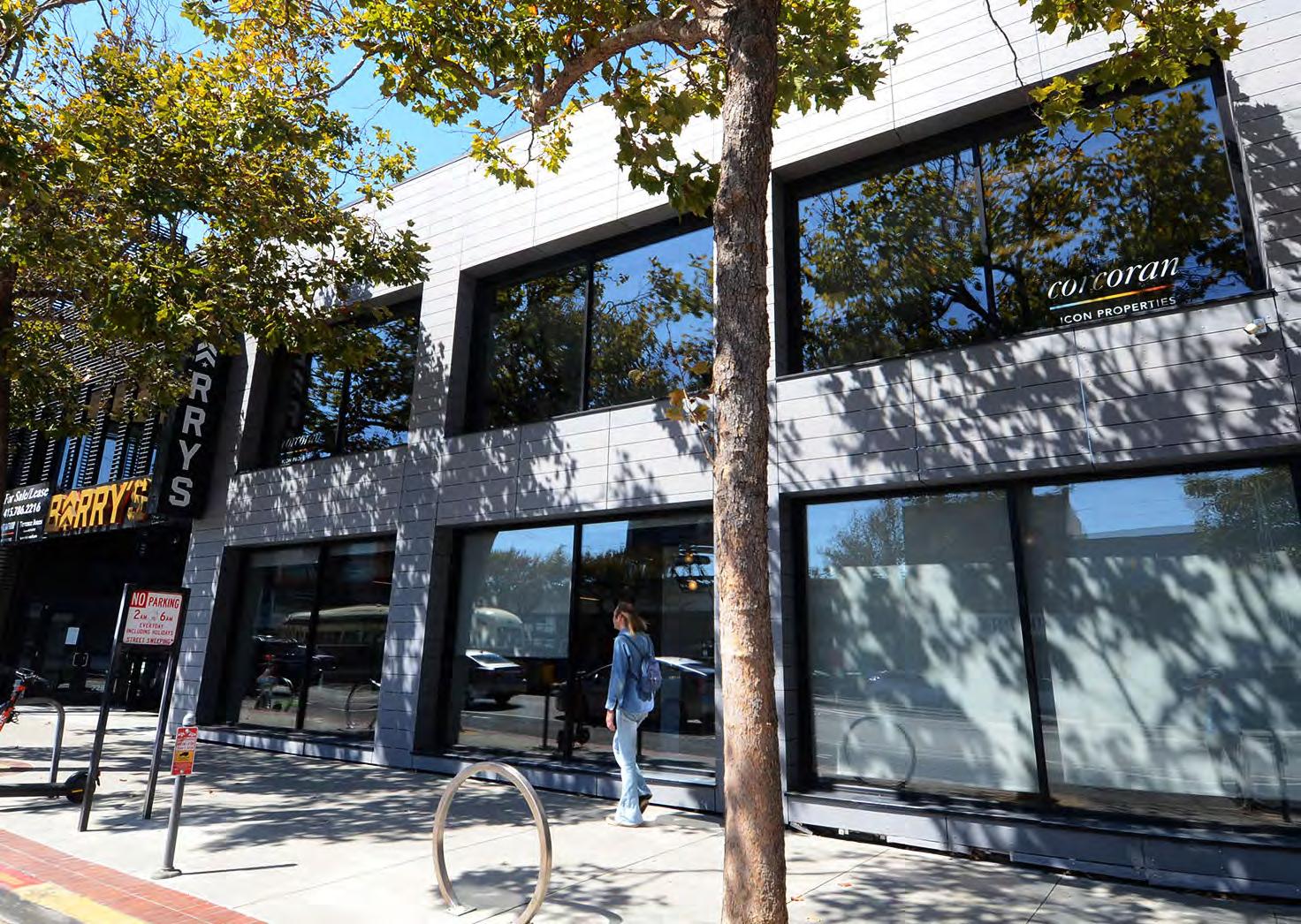
Ending a two-decades-long search for a suitable site, city officials have landed on a massive two-story shopping center in San Francisco’s Castro district as the permanent home for a LGBTQ history museum and archival center. The Board of Supervisors is expected to approve the $11.6 million purchase of the property in the coming weeks.
It will pave the way for the GLBT Historical Society to move into the vacant second floor of the Market & Noe Center at 2280 Market Street, likely sometime in 2025. The nonprofit currently rents a jewel box of a gallery space on 18th Street in the heart of the city’s LGBTQ neighborhood and leases space for its archives and offices in a downtown office building.
See page 10 >>
by John Ferrannini
San Francisco’s 2023 HIV epidemiology annual report continued a trend of declining new diagnoses, with 133 reported for the year. The report comes as sexually transmitted bacterial infections gonorrhea, chlamydia and syphilis continue to decline year-to-date in 2024 from 2023 – though this year more San Francisco City Clinic patients have tested positive for HIV than in 2023, despite fewer tests being done.
In related news, City Clinic, the longtime municipal public health center, granted the Bay Area Reporter a tour of its deteriorating space at 356 Seventh Street. The public health care facility is slated to relocate if the Proposition B infrastructure bond measure passes on the November 5 ballot.
HIV report
The HIV surveillance report released by the San Francisco Department of Public Health September 23 showed that in 2023 the city saw 133 new diagnoses of HIV – one more than preliminary 2023 numbers had shown in a semi-annual report released in August. That represents an ongoing decline, as 2022 saw 157 new cases and 2021 saw 166 new cases, according to the reports.
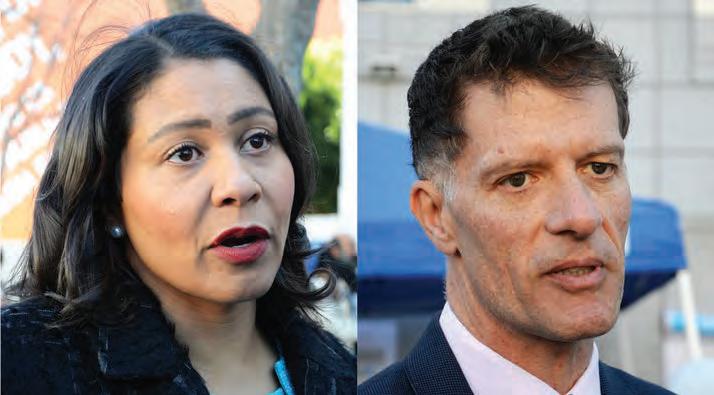
“San Francisco has long been a national leader in HIV research, epidemiology, prevention, testing, and care. We are thrilled to see that HIV diagnoses in our city continue to go down,” Mayor London Breed stated in a news release. “Today’s report underscores just how important it is to have trusted, world-class public health facilities such as SFDPH’s San Francisco City Clinic and Zuckerberg San Francisco General Hospital, as well as incredible community partners, whose ongoing work in providing critical HIV services to our community have helped make these declines possible.”
As the B.A.R. previously reported, 2023 HIV diagnoses in the Latino community had also declined to 40 – down 46% from the 2022 figure of 74 new diagnoses, a number that set off alarm bells in Latino and public health communities.
The release stated that 95% of those newly diagnosed in San Francisco in 2023 were linked to care within one month. City health officials also report-
ed that 84% of people diagnosed in the first nine months of the year were virally suppressed within six months.
“This report gives us many reasons to be encouraged and shows that our efforts are making a difference,” stated Dr. Grant Colfax, a gay man who is director of health. “Incredible advancements have been made in HIV prevention and care, and we must continue to make sure that communities across San Francisco have access to high-quality, culturally competent services so that this report is part of a sustained trend that marches us towards an HIV/AIDS free generation.”
Dr. Susan Philip, the city’s health officer, stated that people need to be aware of the resources available to them.
PrEP, or pre-exposure prophylaxis, refers to the use of antiviral drugs to prevent people exposed to HIV from becoming infected. The pill Truvada was first approved for PrEP use in 2012 by the U.S. Food and Drug Administration; since then the FDA has also approved the pill Descovy for some groups, and the drug Apretude as an injectable treatment.
PrEP is a key component of Getting to Zero San Francisco, which aims to reduce new HIV transmis-
sions and HIV deaths by 90% by 2025, in addition to reducing stigma. Similarly, Ending the HIV Epidemic in the U.S. is the federal government’s goal of reducing HIV infections by 90% by 2030.
“To ultimately succeed in our fight against HIV, it is critical for people to know and understand the many services that are available to them, which cannot be done without continued planning and coordination with community, academic, and health system partners,” Philip stated. “The tools both inside and outside of traditional medical settings are there, and the more we connect with and inform our communities, the better chance we will have in tackling the challenges in front of us.”
Rafael Mandelman, a gay man who represents District 8, including the Castro neighborhood, on the San Francisco Board of Supervisors, heralded the report as “great news, especially in the steep decline in new diagnoses among Latinx people.”
“Of course there is more work to do,” he added. “We will not be done until we truly get to zero, but this is real progress, and DPH, UCSF, and our nonprofit partners deserve real congratulations.”
This is only a brief summary of important information about BIKTARVY® and does not replace talking to your healthcare provider about your condition and your treatment.
BIKTARVY may cause serious side effects, including:
� Worsening of hepatitis B (HBV) infection. Your healthcare provider will test you for HBV. If you have both HIV-1 and HBV, your HBV may suddenly get worse if you stop taking BIKTARVY. Do not stop taking BIKTARVY without first talking to your healthcare provider, as they will need to check your health regularly for several months, and may give you HBV medicine.
ABOUT BIKTARVY
BIKTARVY is a complete, 1-pill, once-a-day prescription medicine used to treat HIV-1 in adults and children who weigh at least 55 pounds. It can either be used in people who have never taken HIV-1 medicines before, or people who are replacing their current HIV-1 medicines and whose healthcare provider determines they meet certain requirements.
BIKTARVY does not cure HIV-1 or AIDS. HIV-1 is the virus that causes AIDS.
Do NOT take BIKTARVY if you also take a medicine that contains:
� dofetilide
� rifampin
� any other medicines to treat HIV-1 BEFORE TAKING BIKTARVY
Tell your healthcare provider if you:
� Have or have had any kidney or liver problems, including hepatitis infection.
� Have any other health problems.
� Are pregnant or plan to become pregnant. Tell your healthcare provider if you become pregnant while taking BIKTARVY.
� Are breastfeeding (nursing) or plan to breastfeed. Talk to your healthcare provider about the risks of breastfeeding during treatment with BIKTARVY.
Tell your healthcare provider about all the medicines you take:
� Keep a list that includes all prescription and over-the-counter medicines, antacids, laxatives, vitamins, and herbal supplements, and show it to your healthcare provider and pharmacist.
� BIKTARVY and other medicines may affect each other. Ask your healthcare provider and pharmacist about medicines that interact with BIKTARVY, and ask if it is safe to take BIKTARVY with all your other medicines.
BIKTARVY may cause serious side effects, including:
� Those in the “Most Important Information About BIKTARVY” section.
� Changes in your immune system. Your immune system may get stronger and begin to fight infections that may have been hidden in your body. Tell your healthcare provider if you have any new symptoms after you start taking BIKTARVY.
� Kidney problems, including kidney failure. Your healthcare provider should do blood and urine tests to check your kidneys. If you develop new or worse kidney problems, they may tell you to stop taking BIKTARVY.
� Too much lactic acid in your blood (lactic acidosis), which is a serious but rare medical emergency that can lead to death. Tell your healthcare provider right away if you get these symptoms: weakness or being more tired than usual, unusual muscle pain, being short of breath or fast breathing, stomach pain with nausea and vomiting, cold or blue hands and feet, feel dizzy or lightheaded, or a fast or abnormal heartbeat.
� Severe liver problems, which in rare cases can lead to death. Tell your healthcare provider right away if you get these symptoms: skin or the white part of your eyes turns yellow, dark “tea-colored” urine, light-colored stools, loss of appetite for several days or longer, nausea, or stomach-area pain.
� The most common side effects of BIKTARVY in clinical studies were diarrhea (6%), nausea (6%), and headache (5%).
These are not all the possible side effects of BIKTARVY. Tell your healthcare provider right away if you have any new symptoms while taking BIKTARVY.
You are encouraged to report negative side effects of prescription drugs to the FDA. Visit www.FDA.gov/medwatch or call 1-800-FDA-1088. Your healthcare provider will need to do tests to monitor your health before and during treatment with BIKTARVY.
Take BIKTARVY 1 time each day with or without food.
� This is only a brief summary of important information about BIKTARVY. Talk to your healthcare provider or pharmacist to learn more.
� Go to BIKTARVY.com or call 1-800-GILEAD-5.
� If you need help paying for your medicine, visit BIKTARVY.com for program information.
Volume 54, Number 39 September 26October 2, 2024 www.ebar.com
PUBLISHER
Michael M. Yamashita
Thomas E. Horn, Publisher Emeritus (2013)
Publisher (2003 – 2013)
Bob Ross, Founder (1971 – 2003)
NEWS EDITOR
Cynthia Laird
ARTS & NIGHTLIFE EDITOR
Jim Provenzano
ASSISTANT EDITORS
Matthew S. Bajko • John Ferrannini
CONTRIBUTING WRITERS
Christopher J. Beale • Robert Brokl
Brian Bromberger • Victoria A. Brownworth
Philip Campbell • Heather Cassell
Michael Flanagan •Jim Gladstone
Liz Highleyman • Brandon Judell • Lisa Keen
Philip Mayard • Laura Moreno
David-Elijah Nahmod • J.L. Odom • Paul Parish
Tim Pfaff • Jim Piechota • Adam Sandel
Jason Serinus • Gregg Shapiro
Gwendolyn Smith • Charlie Wagner
Ed Walsh • Cornelius Washington • Sura Wood
ART DIRECTION
Max Leger
PRODUCTION/DESIGN
Ernesto Sopprani
PHOTOGRAPHERS
Jane Philomen Cleland
Rick Gerharter • Gooch
Jose A. Guzman-Colon • Rudy K. Lawidjaja
Georg Lester • Rich Stadtmiller
Christopher Robledo • Fred Rowe
Shot in the City • Steven Underhill • Bill Wilson
ILLUSTRATORS & CARTOONISTS
Christine Smith
VICE PRESIDENT OF ADVERTISING
Scott Wazlowski – 415.829.8937
NATIONAL ADVERTISING REPRESENTATIVE
Rivendell Media – 212.242.6863
LEGAL COUNSEL
Paul H. Melbostad, Esq.

Bay area reporter
44 Gough Street, Suite 302
San Francisco, CA 94103
415.861.5019 • www.ebar.com
A division of BAR Media, Inc. © 2024
President: Michael M. Yamashita
Director: Scott Wazlowski
News Editor • news@ebar.com
Arts Editor • arts@ebar.com
Out & About listings • jim@ebar.com
Advertising • scott@ebar.com
Letters • letters@ebar.com
Published weekly. Bay Area Reporter reserves the right to edit or reject any advertisement which the publisher believes is in poor taste or which advertises illegal items which might result in legal action against Bay Area Reporter. Ads will not be rejected solely on the basis of politics, philosophy, religion, race, age, or sexual orientation. Advertising rates available upon request.
Our list of subscribers and advertisers is confidential and is not sold. The sexual orientation of advertisers, photographers, and writers published herein is neither inferred nor implied. We are not responsible for unsolicited manuscripts or artwork.
San Francisco voters residing in the odd-numbered supervisorial districts will elect their legislative representatives in November. Districts 3, 9, and 11 will see new members of the board, as they are open seats due to incumbents being termed out. Districts 1, 5, and 7 see incumbent members running for reelection against challengers. Below are our recommendations.
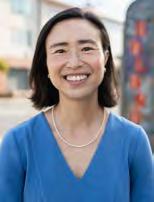
District 1: Connie Chan Supervisor Connie Chan has been an effective member over the last four years. She represents the Inner Richmond, Central Richmond, Outer Richmond, Lone Mountain, Golden Gate Park, Lincoln Park, and University of San Francisco.
On public safety, Chan stated in heår endorsement questionnaire that she has voted in support of every police budget since taking office and, as budget chair, including the memorandum of understanding for an SFPD salary increase, retention bonus, investment and recruitment consultant, and fully funded academy classes. She’s also a co-sponsor of Proposition F, which would establish a Deferred Retirement Option Program (DROP) for eligible officers. This would allow them to keep working after retiring with their pension payments deferred during this time. It’s one way the city is trying to deal with the shortage of sworn officers.
On LGBTQ issues, Chan stated that she’s worked with gay District 8 Supervisor Rafael Mandelman on a number of initiatives to preserve the queer identity of the Castro. “Supervisor Mandelman and I work together on the Budget Committee, and he is who I look to to guide us to meet the needs and demands of the LGBTQ community,” she stated. “I also support protecting the businesses that are the backbone of the Castro’s queer identity.”
In the Tenderloin, Chan stated she’s also worked with District 5 Supervisor Dean Preston, who now represents the area, and gay District 6 Supervisor Matt Dorsey, who had represented it until the last redistricting. “The Tenderloin faces a lot of challenges and needs many critical services, so I work with Supervisors Preston and Dorsey to restore them during the budget process,” Chan stated. “Time and time again I listen to my colleagues and work with them to support them to meet the needs of their district.”
During the recent city budget process during a very difficult year, we were impressed with Chan’s leadership on the Budget Committee and the end result, which did not see as deep of cuts as feared for LGBTQ nonprofits and other critical services.
Finally, Chan earns our endorsement because she is willing to change her mind. In June, Chan was part of the 7-3 vote to see lesbian Debra Walker reappointed to the police commission. Walker’s nomination by Mayor London Breed had been mired in politics and received a negative recommendation from the board’s Rules Committee. However, Walker lined up support, including from Chan, who voted against her two years ago when she was first approved for a seat. This time, Chan made the right call, in our opinion, and helped return LGBTQ representation to the commission.
We were impressed by Chan’s willingness to vote a different way than she had before. It demonstrated Chan’s growth as a supervisor and showed that she listens to our community. District 1 voters should return Chan to City Hall.
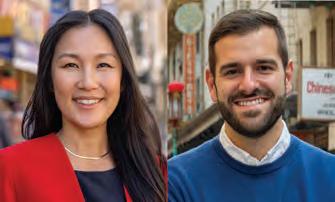
District 3: Sharon Lai, first choice
Danny Sauter, second choice
District 3, which includes North Beach, Chinatown, Fisherman’s Wharf, Polk Gulch, Union Square/Financial District and Russian, Telegraph and Nob Hills, has long been represented by Board of Supervisors President Aaron Peskin, who is serving his fifth non-consecutive term on the Board of Supervisors, after serving two terms from 20012009 (including two terms as the unanimously-
elected board president). Peskin is now termed out and running for mayor, making for a wide-open supervisor race this year.
Two candidates in the field of six stand out: Sharon Lai and Danny Sauter.
Lai stated in her endorsement questionnaire that she’s long been an ally to the LGBTQ community.
Her experience includes being a municipal urban planner for a decade, including eight years for San Francisco’s planning department, as well as projects in District 3. Subsequently she was an executive in the private sector leading mixed-use development and community outreach. During the pandemic, Lai was the founding executive director of a homeless housing nonprofit, and built the city’s first tiny homes interim homeless housing community with philanthropic funds.
On homelessness, Lai advocates for more shelter opportunities, including the aforementioned tiny homes. She stated she would “continue to invest in transitional housing that centers cultural needs including LGBTQ-specific sites. During my work in homeless housing development, I had set aside 15% of the projects for Transitional Age Youth, a significant portion of whom are queer youth.”
Lai previously served on the San Francisco Municipal Transportation Agency board, and stated that during her tenure she supported the shared spaces parklets during the COVID pandemic.
On housing, Lai touted her planning experience. “I believe that San Francisco needs to be a city where one can both work and live,” she stated. “Middle-income affordable housing is a critical need, and often overlooked for deeper levels of affordability. As the only candidate that has delivered housing in San Francisco, I will be a strong champion of leveraging public resources to deliver workforce and middle-income housing.”
that the change should be reflected in estimates about what constitutes full staffing for the department. And he’s supportive of the community ambassadors program, which he brought to District 5. We think Preston ably represents his constituents and we endorse him for reelection.
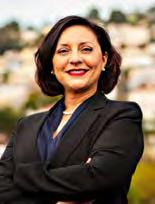
Myrna Melgar
Supervisor Myrna Melgar, a straight ally, has been effective in representing this westside district that includes West Portal, Westwood Park, Forest Hill, Parkmerced, Golden Gate Heights, Inner Sunset, St. Francis Woods, Miraloma, and Monterey Heights. For the last four years, she has served as chair of the board’s Land Use and Transportation Committee. She is also a former planning commissioner and building inspection commissioner.
On public safety, Melgar wrote in her endorsement questionnaire that the budget is adequate to support full staffing levels at the San Francisco Police Department. “It has been recruitment that has fallen short,” she stated. “Because SFPD needs to operate 24/7, we have filled the gap through overtime, which is very expensive, and also hard on the workers and their families. As we recruit more officers (and we are making progress), I expect that the amount of overtime spending will decrease as well.”

Lai supports recruiting more police officers to fill the current 500 vacant positions.
Overall, Lai has a lot of experience on housing, one of the key issues this year. And, as she stated, representation matters. “District 3 has a deep immigrant history and population,” she stated. “As someone who grew up in Hong Kong and moved to California by myself at the age of 16, I have shared and lived experience with a significant portion of the community. When elected, I will be the first native Cantonese-speaking District 3 supervisor, and would be proud to serve the district with the oldest Chinatown in the country with cultural competence.”
We were also impressed with Sauter, a straight man who is the executive director of San Francisco Neighborhood Centers Together and has served in various roles in other neighborhood groups. In terms of programs supporting neighborhood commercial corridors, such as in the Castro, Sauter supports expanding the Vacant to Vibrant program that brings pop-ups to vacant storefronts, and lowering permitting barriers. On housing, Sauter wants to pass a special use district to create more senior and family homes, he stated in his endorsement questionnaire.
On public safety, Sauter supports hiring more first responders, including police and 911 dispatchers, with a special priority on hiring more Cantonese-speaking first responders.
Lai and Sauter are both great candidates, and we endorse them in that order for District 3 supervisor.
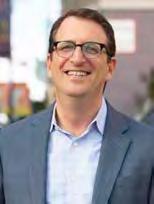
District 5: Dean Preston
We don’t always agree with Supervisor Dean Preston, a straight ally who represents the Haight, Alamo Square and, most recently, the Tenderloin, but we admire his tenacity and how he has stood up for the LGBTQ community. Case in point, after unarmed Black trans man Banko Brown was fatally shot by a Walgreens security guard at a downtown store in April 2023, Preston authored legislation to ensure that local laws do not allow private security guards to draw weapons in defense of property only.
The Board of Supervisors passed it unanimously.
Since the Tenderloin was included in District 5 following the last redistricting, Preston worked with the Transgender District to have the city landmark the Turk and Taylor intersection to commemorate the 1966 Compton’s Cafeteria riot.
On public safety, Preston stated in his endorsement questionnaire that the city needs to do more than just hire additional police officers. He pointed to certain calls being diverted from officers to nonpolice street teams, which started in 2020, and noted
Regarding the city’s unhoused residents, Melgar stated, “The city should implement the ‘Shelter for All’ legislation passed by the Board of Supervisors last year, in addition to fully expending Prop C funds for supportive housing.” She was referring to the ballot measure that voters passed in 2018 that imposes an additional gross receipts tax of 0.175% to 0.69% on combined taxable gross receipts over $50 million, with the funds going to homelessness services and housing.
On support for commercial corridors, such as the Castro, Melgar stated she’s supportive of activations, incentives, and flexible zoning. She supports the revitalization of Jane Warner and Harvey Milk plazas as well as capital improvement grants and loans, and increasing public safety ambassador hours.
Addressing the lack of middle-income housing, Melgar stated that she’s working on legislation to create a program to finance, refinance, and provide technical support for cooperatively owned housing, “which in other cities like New York and Washington, D.C. has been the premier way middle and working class people have been able to achieve housing stability but San Francisco has not produced in five decades.”
Melgar has been a consistent ally on the board and deserves to be reelected.
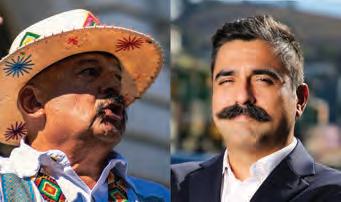
District 9:
Roberto Hernandez, first choice
Stephen Torres, second choice
District 9, which includes the Mission, Portola, and Bernal Heights, is an open seat this year because Supervisor Hillary Ronen is termed out after eight years. There are seven candidates running, and we believe two of them can best represent the area: Roberto Hernandez, a straight Latino ally, and Stephen Torres, a queer Latino man.
Hernandez is a longtime community leader who ran the Carnaval celebration for 40 years. He stated in his endorsement questionnaire that he’s also led efforts to build 1,400 units of affordable housing, as well as other programs, such as one to escort seniors. During the pandemic, he stated that he launched the Mission Food Hub, which provided essential groceries, rental assistance, employment, and health services, and support for small businesses to 9,000 families. On public safety, Hernandez supports the ambassador program and stated he’ll work on career pathways to help recruit community members to apply for vacant law enforcement positions.
by Matthew S. Bajko
In the Solano County city of Benicia, Christina Gilpin-Hayes is vying to become its first known LGBTQ city councilmember. She is one of four candidates running for two council seats on the November 5 ballot.
It would be just the latest civic role she has taken on since moving to Benicia in 2021 from Oakland with her wife, Donna. The couple, who identify as both lesbian and queer, founded the Benicia LGBTQIA Network in 2022 to foster connections and host gatherings for the local LGBTQ community.
Gilpin-Hayes, 54, co-administers the local Buy Nothing Benicia group, aimed at reducing waste and helping its more than 1,300 members share resources with a “give where you live” motto. This month, she was given a mayoral appointment to the planning commission for the city of roughly 27,000 people.
“Politics was never my goal. I always have been politically active, but I never planned on running for office. That was never my life’s goal,” said Gilpin-Hayes, a former paralegal who now works remotely as the operations manager of the Innovations Department at international law firm Wilson Sonsini.
Growing up she was a fan of the political drama “The West Wing” and, in her early 20s, was often on the local news being interviewed as the spokesperson for the Sacramento Area Coalition for Reproductive Rights. She also helped voters having issues casting ballots as part of the Legal Election Protection team for Democratic former U.S. senators John Kerry in 2004 and Barack Obama in 2008.
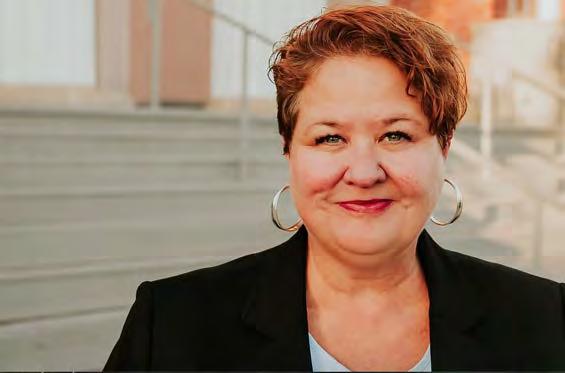
who is focused on the basics in the city,” said Cabaldon, who would be the first out legislator to represent Solano County. “We got to fix the roads and get the city’s fiscal house strong. That’s exactly what Benicia needs right now.”

“It was a fun way to volunteer,” recalled Gilpin-Hayes. “A lot of times only lawyers volunteer for those teams, but you don’t have to be a lawyer. It just helped I had some legal background.”
She decided to enter her town’s council race this year when it appeared only two people would be running for the two seats on the ballot. It didn’t feel right that there wouldn’t be a contested race, Gilpin-Hayes told the Bay Area Reporter during a phone interview about her candidacy.
“I don’t feel people should win an election because no one else is willing to challenge them,” said Gilpin-Hayes, who received encouragement from her neighbors to pull papers. “As far as I know, I am the first out candidate and definitely, if elected, will be the first out queer person on council or even in any city government position, as far as I know.”
City Councilmember Trevor Macenski is running for a second four-year term, while former councilmember Lionel Largaespada is vying for a seat after losing reelection in 2022. Also on the ballot is Franz Rosenthal, a former engineer with the Valero Energy Corporation who now works for Genentech.
Councilmember Tom Campbell is stepping down after first winning election in 1999. He has endorsed Gilpin-Hayes, as have Councilmembers Terry Scott and Kari Birdseye, and Benicia Mayor Steve Young, who is running for reelection this fall.
Gay former West Sacramento mayor Christopher Cabaldon also endorsed Gilpin-Hayes in the council race and is backing Young in the mayoral race. He is expected to be elected November 5 to represent the sprawling state Senate District 3, which includes Benicia.
“Christina is a very fresh candidate
He told the B.A.R. he first met Gilpin-Hayes over the summer at a community event and was immediately impressed by her and the impact she has been able to make in her new hometown in such a short period of time. With her candidacy having the potential to bring much needed LGBTQ elected representation to her city and to Solano County, Cabaldon said he decided to support her council bid, something he hasn’t done for every city council contest in the legislative district this year.
“Even though she is a transplant that is true for a lot of Benicians,” said Cabaldon, who described GilpinHayes as having “the utmost integrity and character.”
He added, “She also brings a sharp mind and a humility around her; she doesn’t pretend to have all the answers but she knows how to get them.”
Gilpin-Hayes was born in Baltimore, Maryland and moved at age 3 with her family to Citrus Heights, California, outside of Sacramento. She first met her wife in Pittsburgh, Pennsylvania roughly two decades ago.
She had moved there in 1998 after landing a job and two years later enrolled in Duquesne University, graduating in 2004 with a bachelor’s degree in business communication and organizational behavior. She relocated to Chicago and then to Oakland in 2007.
Seven years ago, she reconnected with Donna, an operations supervisor at FedEx, and they began a longdistance relationship. Their marriage on Leap Day in 2020 was featured in Pittsburgh Magazine. (https://www. pittsburghmagazine.com/leap-yearlove-donna-hayes-christina-gilpin/)
With their home in Oakland a bit small for two people, not to mention the rescue dogs Gilpin-Hayes fosters via West Coast Boxer Rescue, the women looked at buying a bigger place a bit farther away where they could afford to purchase a home with more square footage. By chance they happened to see a home for sale in Benicia, and although outbid for it, they fell in love with the town and its artsy downtown.
“We looked at this house and drove around downtown. Benicia is an adorable Hallmark town,” noted GilpinHayes. They ended up buying a split-level house built in the 1970s with French doors and enough yard space to add chickens to their brood.
“It is super cute, and we love it here,” said Gilpin-Hayes, who has fostered more than 100 dogs and, after having
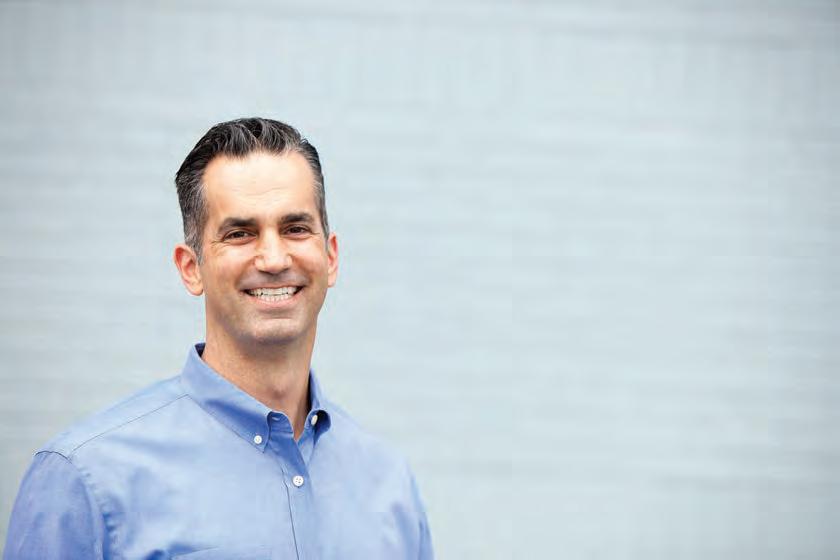
lost this summer her nearly 12-yearold Gemma, who was deaf and blind in one eye, is holding off on getting a new dog until after the election.
She began following the City Council meetings and getting to know her neighbors. She also saw how local politics were influenced by Valero, as it operates the Benicia Refinery and financially supports the campaigns of its preferred council candidates.
“My stated position is they are our neighbor and contribute a large amount to our tax base here. Could they be better neighbors? Of course. Could we do a better job communicating to them? Yes,” said GilpinHayes. “The current mayor has done a good job on that, and I want to expand on that.”
Her sense is there is a desire to elect new leadership to the council and is optimistic about winning a seat.
“I do feel there is an opportunity here for a new voice and a fresh perspective. I feel the community is open to that,” said Gilpin-Hayes. “We are having some budget issues here in Benicia, and I do feel the community is looking for something different.”
It would mean a very brief tenure for her being a Benicia planning commissioner.
“If I win the election, I will have to resign. If I don’t win then I will be on the planning commission. Either way I am going to be involved in city politics,” noted Gilpin-Hayes. “But I am hoping I win and get to resign.”
To learn more about Gilpin-Hayes’s candidacy, visit her campaign website at christinaforbenicia.com t
Last week’s column about queer Walnut Creek City Council candidate Laura Patch misidentified the gradu ate school she attended. It was George town University in Washington, D.C. She also first rented in the East Bay city before buying her condo in 2019 and, as of June, is now vice president of the Diablo Valley Democratic Club. The online version has been updated.



Web Extra: For more queer politi cal news, be sure to check http:// www.ebar.com Monday mornings for Political Notes, the notebook’s online companion. This week’s column reported on San Francisco mayoral candidates’ stances on using eminent domain to secure a site for an LGBTQ history museum. Keep abreast of the latest LGBTQ political news by following the Political Notebook on Threads @ https://www.threads.net/@matthewbajko.
Got a tip on LGBTQ politics? Call Matthew S. Bajko at (415) 8298836 or email m.bajko@ebar.com.
DEADLINES: Friday 12 noon for space reservations Monday 12 noon for copy & images
TO PLACE: Call 415 829 8937 or email us at advertising@ebar.com
$21.20 per column inch (black
*Non-display Obituaries of 200-words or less are FREE to place. Please email obituary@ebar.com for more information.

by John Ferrannini
S parks flew at a San Francisco mayoral debate featuring all five of the major candidates September 19, as incumbent London Breed defended her record in office against her challengers in the aftermath of a corruption scandal involving one of her signature initiatives.
As the Bay Area Reporter previously reported, Sheryl Davis – whom Breed has described as a friend – resigned September 13 as executive director of the city’s human rights commission after allegations of misuse of public funds. Breed stated September 17 that she knew Davis was “very close” with a man who ran a nonprofit she approved $1.5 million in contracts with, according to media reports.
Davis oversaw the Dream Keeper Initiative, a citywide effort launched in 2021 to reinvest $60 million annually into San Francisco’s diverse Black communities in the wake of the 2020 police murder of George Floyd in Minneapolis.
At the debate, held at KQED-TV and sponsored by the public television station and the San Francisco Chronicle, Breed went on the attack, saying “some of my opponents on this stage think investing in the African American community wasn’t a good idea and isn’t a good idea.”
“Tell that to the people who’ve been able to buy their first home in San Francisco,” she added. “Tell that to the people who don’t have angel investors and have a silver spoon in their mouth.”
Breed also said that she can’t be held responsible for the actions of everyone in her administration.
“San Francisco has 34,000 employees and, from time to time, we have had challenges with some of them, and I want to be very clear I have held myself accountable,” she said. “Even before this probe started, we had already paused issuing funding out of the Dream Keeper Initiative.”
Former interim mayor Mark Farrell was one of three candidates – along with Board of Supervisors President Aaron Peskin and District 11 Supervisor Ahsha Safaí – who spoke with media outlets, including the B.A.R., after the debate in an adjacent room. Farrell said at that time that he was opposed to the money for the initiative coming from the police budget.
“I’m open to all ways to invest in our communities here in San Francisco – the source of that funding is

San Francisco mayoral candidates Supervisor Ahsha Safaí, Daniel Lurie, Mayor London Breed, former mayor Mark Farrell, and Board of Supervisors President Aaron Peskin faced off in a spirited debate September 19 at KQED-TV.
to me what the problem is,” Farrell said. “Instead of being more efficient and effective with the $4 billion in third-party contracting, this mayor stripped $120 million from our police department specifically to do that. For me, that’s not a commitment to public safety.”
For his part, Farrell and KQEDTV’s Marisa Lagos, a moderator, got a chuckle from the audience after he answered – asked about allegations he had skirted financial ethics, resulting in a $191,000 fine in 2016 – that “every single thing that I have ever done with my campaigns has been approved, vetted by and signed off by my attorneys. Every single time.”
Responded Lagos, “That doesn’t mean it’s necessarily legal though.”
Farrell assured it was, saying in reference to the fine that he was “fully exonerated” after an investigation.
Peskin, the only major progressive candidate, promised to clean up what he characterized as a culture of corruption. He has called for investigations and hearings into the Davis matter.
“I am the only candidate on this stage that has consistently done the work around public corruption,” he said. “Mayor Breed knew about the alleged illegal activities of her very close friend and political mentee Sheryl Davis.”
The Kelsey Civic Center 89 Affordable Rental Units Available at 240 Van Ness Avenue, San Francisco, CA 94102.
67 studios and 29 two-bedrooms are available.
Rents range from $611 - 2532 per month.
Households must earn no more than the Maximum Annual Income below:
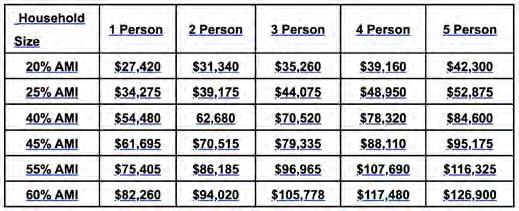
Applications and information can be found on DAHLIA - San Francisco Housing Portal at housing.sfgov.org. Applications are due by 5pm on October 16, 2024. Please call our information line at 628.300.1218 for more information.
Units available through the San Francisco Mayor’s Office of Housing and Community Development and are subject to monitoring and other restrictions. Visit sf.gov/mohcd for program information.

Safaí said that he authored legislation that led to audits of nonprofit agencies contracting with the city – in this case, providing services on homelessness and housing issues.
“Corruption has embedded this mayor’s administration since day one,” he said. “When we did our mandatory audits, spring of last year, the very first one that was done, they had to call in the FBI because the group was selling vouchers to friends and family.”
Safaí was referring to the United Council of Human Services, which was referred to an FBI probe by City Attorney David Chiu and former San Francisco controller Ben Rosenfield after “access to housing was illegally sold to some residents.” Most recently, in spring 2023, additional funding to this nonprofit was blocked, the San Francisco Standard reported.
The FBI declined to comment as the investigation is ongoing.
Recovering from the pandemic
Breed said the city is feeling better after a COVID-era malaise that saw thousands of people move away and longtime businesses shutter. She touted this week’s Dreamforce conference, new night markets, and other street events as proof.
As for this summer, Breed said, “I don’t know about you but this past summer has been one of the best summers in our city, and especially downtown.”
“To be very clear, crime is lower than it’s been in over a decade, and in fact property crime was 70% higher when Mark [Farrell] was temporary mayor, car breakins were 150% higher when he was temporary mayor, and violent crime was almost 40% higher. Tent encampments were over 60% higher,” Breed said. “So he wants to say I have overseen one of the most challenging times and not deliver the results?”
Then, the mayor repeated a campaign slogan used by her friend Vice President Kamala Harris, the Democratic presidential nominee.
“My results speak for themselves – we have record-low crime rates, we are seeing our city bounce back, and he [Farrell] is trying to take us backward,” she said. “And we are not going back.”
Breed ‘gaslighting’ on crime, Safaí says
The debate was broadcast on KQED-TV and moderated by the station’s Lagos and Scott Shafer, a
Lurie a ‘dangerous’ choice, Breed says
Breed called Daniel Lurie, the Levi Strauss heir who founded and was CEO of the nonprofit Tipping Point Community, “probably one of the most dangerous people on this stage, so we definitely should be scared.”
“He has absolutely zero experience,” she said, referring to his lack of holding elected office. “And when you think about it, this is a major city with serious problems where anything can happen at any given moment – pandemics, major fires, earthquakes; heaven forbid a terrorist attack. And what is he going to do with his one-experience job?”
Lurie said he advised Breed in the early days of the COVID pandemic – “We actually talked during COVID. I offered my support to this mayor,” he said – and gave her props for her early handling of the crisis, while saying that lockdown restrictions lasted too long, particularly policies that kept students from inperson learning.
gay man, along with the San Francisco Chronicle’s political reporter Joe Garofoli. Breed hadn’t shown up to forums in recent weeks, specifically a District 8 town hall September 5 and a televised debate on KPIX-TV September 11.
Breed said, “I actually have a job” when Farrell attacked her absence at the prior events.
Breed’s opponents pounced on her track record on public safety. Safaí went the furthest with his remarks, saying, “You know, what bothers me the most listening to the mayor is that to consistently tell people crime is down is gaslighting.
Go tell that to the small businesses in my district – for the last three weeks have literally been broken into almost every night between 1 and 5 a.m. Tell that to the worker who was trying to come home, hotel worker, 42 years worked for the Westin St. Francis and was pushed into a moving train on a BART platform. Crime is happening at a brazen level. … People don’t feel it because they’re seeing it on a daily basis.”
Trevor Belmont, 49, was charged by San Francisco District Attorney Brooke Jenkins with the homicide of Corazon Dandan on July 3 after he allegedly pushed the 74-year-old in front of a BART train, as United Press International reported.
Breed said that according to reported police metrics, crime is down. Crime is at its lowest level in a decade, she said, and her police budget is $200 million more than Farrell’s was when he was mayor.
To top it off, “the police officers association endorsed me only,” she said, referring to the powerful police union.
Farrell shot back, “If you believe those stats, I have a bridge to sell you.” He added that the department was fully staffed during his time as mayor in 2018.
Peskin, speaking to the press after the debate, agreed with the “gaslighting” remark.
“To say with a straight face this is the greatest summer we’ve ever had – I agree with Supervisor Safaí – it is gaslighting or, maybe in the spin room, it’s spin,” Peskin said.
Safaí said after the debate that to address the deficit of about 500 police officers, he supports Proposition N, which would offer student loan forgiveness to first responders, and said that Proposition F, which would offer substantial retirement benefits to older police officers who stay on, will help address the city’s shortage of police officers.
“We stayed shut down for too long, our public schools stayed shut down for far too long, and we started politicizing every single thing in this city and everything became a food fight,” Lurie said. “We have the slowest recovery of any major city in this country. We tell people we’re from San Francisco now – go to LA, go to New York, you go somewhere else – and they go ‘are you OK? Are you safe?’ She had her chance.”
Also using an oft-repeated phrase by Harris as she seeks the White House, Lurie concluded, “It is time to turn the page on this mayor and all the City Hall insiders I’m running against.”
For her part, Breed said, “Not to mention, I don’t even remember that phone call. I don’t remember.”
Responded Lurie, “OK, we’re just going to make stuff up now. OK.”
Responded Breed, “I just don’t. I just don’t remember. I’m sorry.”
Responded Lurie, “We had multiple phone calls.”
Lurie promised that if he becomes mayor there will be a San Francisco downtown development corporation “bringing the best of the business, government and civic leaders just like lower Manhattan did after 9/11. We’ll do the same thing here.”
Peskin drew a distinction between himself and his opponents on a number of issues, including downtown recovery.
“I support the economic recovery of all of our neighborhoods,” he said. “They just talk about downtown, downtown, downtown.”
Peskin also criticized the recent sweeps of homeless encampments, saying, “I have a comprehensive homeless strategy with real solutions. They just talk about sweeps, which have been proven to be ineffective.”
For her part, Breed defended the sweeps, which have been taking place since a recent U.S. Supreme Court decision in Grants Pass v. Johnson. The court held that local government ordinances with civil and criminal penalties for camping on public land do not constitute cruel and unusual punishment of homeless people.
“We are doing everything we can to make sure that people are so uncomfortable that they take us up on our offer to go indoors,” Breed said. Peskin touted his recovery from alcohol addiction after a question about his temperament due to his reported past late night inebriated phone calls to city staff.
“There are many things I have done in office I’m proud of, and some that I’m not proud of,” Peskin said. “I’m grateful to be in recovery and I’m grateful to the community that has shown me the love and support to get me there.” t
by Matthew S. Bajko
Despite calling it “a great project,” a state agency has denied a funding request that would have helped finance the construction of a new 187unit affordable housing tower aimed at LGBTQ seniors in San Francisco. The applicant, Mercy Housing California, is welcome to resubmit its request in the next round of funding via the state program.
As the Bay Area Reporter first reported in the spring, the affordable housing developer had applied in March with the Affordable Housing and Sustainable Communities Program (https:// sgc.ca.gov/grant-programs/ahsc/) overseen by the California Strategic Growth Council and the state’s Department of Housing and Community Development. The program was accepting applications for $675 million in funds to be allocated toward various projects across the state aimed at reducing greenhouse gas emissions, such as affordable housing for disadvantaged communities and low-income communities.
Mercy housing and San Francisco city officials had submitted a request of $38,919,460 for the LGBTQ-focused senior housing to be built at 1939 Market Street. If selected for the AHSC funding, Mercy planned to then apply for tax credits through the California Debt Limit Allocation Committee and the California Tax Credit Allocation Committee with an eye toward breaking ground next summer on the building along the upper Market Street corridor in the LGBTQ Castro district.
But the California Strategic Growth Council in mid-August opted not to award the funds to Mercy. In response to an inquiry this month from the B.A.R., the council’s Deputy Director of Community Investments and Planning Amar Cid noted that the 1939 Market Street project had received a score of 77 after being reviewed by the program

A rendering depicts the proposed development aimed at LGBTQ seniors located at 1939 Market Street, which will now be delayed because state funding fell through.
staff, which placed the project below the funding line for this round, the eighth for the program.
“Round 8 of the AHSC program had many transformative, impactful community projects. In fact, like every round to date, the total project requests exceeded the available funding. This year, we were oversubscribed by more than 2X the available funding,” stated Cid. “It was a highly competitive round of the program.”
A scoring matrix is used to prepare a “compliant recommendation” document for all applications that meet minimum qualifications to get to the scoring round, explained Cid, to ensure applications meet certain requirements. The statutory requirement of the program includes meeting 50% of the awarded funds “within and benefiting disadvantaged communities (DAC),” Cid noted,
as defined by the California Climate Investments/Greenhouse Gas Reduction Fund.
The council then votes on approving and awarding funds to the projects based on the recommendations list presented to it. The decision isn’t solely based on a project’s score, as 11 projects that received lower scores than Mercy’s did were selected to be funded. One issue for Mercy is its site doesn’t fall within a designated low-income or disadvantaged community in the city per a map used by the program.
“Why some projects may have been awarded with a lower score than the 1939 Project has to do with other projects perhaps meeting specific DAC and/ or program priorities,” explained Cid.
AHSC officials met with Mercy housing staff this month to discuss with them how their project’s final score was determined and ways to improve its score in future rounds of funding from the state program.
“The team met with the 1939 Market Street project team in mid-September to discuss ways to increase their score if they choose to apply in a future round,” stated Cid. “Overall, 1939 Market Street is a great project, and our team hopes they consider applying in a future round.”
Will try next year
Mercy had also sought state financing last year for the project, which has an estimated construction cost of $117,673,842, but was not selected for the highly competitive program. It told the B.A.R. this week it plans to resubmit its application for funding from the state program next year.
“While we just missed out on the AHSC funding this year, we will apply again in early 2025, and we are hopeful that we can secure a funding award next year,” responded Mercy’s real estate development team in its San Francisco office in a statement to the B.A.R. “Un-
fortunately, this does push the schedule back one year. However, we are continuing to move the project forward and are committed to getting 187 units of LGBTQ+ friendly housing built as soon as we can.”
The affordable housing developer is working with Openhouse, a nonprofit provider of LGBTQ senior services in San Francisco, on the development of their third building of below-market-rate apartments meant to house predominantly LGBTQ seniors. The agencies had earlier partnered on the 119-units of LGBTQ-welcoming affordable senior housing split between the buildings at 55 and 95 Laguna Street.
The campus also includes Openhouse’s offices at 65 Laguna and a community center it built out at 75 Laguna. It is a short walk from the location of the new 15-story residential building that will include a ground floor commercial space.
The city acquired the triangular 7,840 square foot lot bordered by Market Street and Duboce Avenue in 2020 for $12 million from the Sheet Metal Workers Local 104. The union plans to vacate the property nearer to when construction of the senior housing will commence.
San Francisco planning officials last year had approved the permits for the new tower. It will have 106 rentrestricted studios and 79 rent-restricted one-bedrooms for seniors. A one-bed unit plus a two-bedroom unit will be set aside for on-site managers.
Because Mercy has been unable to secure state funding, it already had pushed back by at least two years the expected opening of the building to sometime in 2028. But that timeframe was contingent on the state awarding funds to the project this summer.
The initial hope was to have construction begin in 2023, allowing tenants to move into their new homes in 2026, as the B.A.R. had reported three years ago.
Now, that timeline has been pushed back to 2029 at the earliest.
The Mayor’s Office of Housing and Community Development, after selecting Mercy and Openhouse to oversee the project, had awarded $4 million for predevelopment costs such as design work. The project is estimated to have a total price tag of $159,669,745 once all costs and the developer’s fee is added in. Last fall, the mayoral office allocated a per unit amount of $280,000 to Mercy in gap funding for the project’s construction costs. The $52,360,000 allocation is contingent, however, on it receiving state financing.
When the new building does open to tenants, 40 units will be set aside for formerly homeless seniors subsidized by the city’s Local Operating Subsidy Program. Another 75 units are to serve extremely low-income seniors via the city’s Senior Operating Subsidy. Nine units will be set aside for the city’s Plus Housing program for homeless seniors who make 50% of the area median income, with the remaining 70 units for seniors with incomes at 50% to 60% AMI.
As with the previous two buildings overseen by Mercy and Openhouse, a lottery will be held to select the residents who qualify for the units not specified for the city programs. Both straight and LGBTQ seniors will be able to enter it as long as they meet the income restrictions, though the aim is to see a majority of units go toward LGBTQ seniors.
Mercy will oversee construction of the housing units and provide property management for the building. Openhouse will provide services and programming to the tenants, and it could end up utilizing the space set aside for commercial purposes.
Two other affordable housing projects in the city did get awarded funding last month from the state growth council. An 85-unit development at 160 Freelon in South of Market will receive
See page 13 >>
compiled by Cynthia Laird
Design elements for a new city park named after a leatherwoman are now out for review, the San Francisco Recreation and Park Department announced. The city’s arts commission is conducting the review process, an online announcement stated.
The planned greenspace, to be located at 11th and Natoma streets, will be named Rachele Sullivan Park, as approved by the recreation and park commission this summer.
It is believed to be the first public park in the U.S. named after a leather leader.
A cis straight ally and native San Franciscan who was a traditional Filipino healer, Sullivan died in 2022 at the age of 54. She was a leader in the city’s leather community and served on the board of Folsom Street, which produces the annual leather and kink street fair that will take place Sunday, September 29. The planned park is located just outside the footprint of the Leather & LGBTQ Cultural District.
The announcement stated that the arts commission will choose a proposal for a pattern of artist-designed, laser-cut, powder-coated fence panels for the perimeter park fence along 11th Street between Minna and Natoma Streets in San Francisco. Construction of the new park is expected to begin in mid-2025, with it opening to the public in 2027.
The three finalists were chosen through a request for qualifications, or RFQ, process, and now one of those artists will be chosen to push their design forward, the announcement stated. The artists/artist teams are: Juan Manuel Carmona, a queer man who has painted murals of his friend, drag artist Juanita MORE!, among other projects; Ricardo Estella and Ethel Revita of Creativity Explored; and Jenifer Wofford.
Of the proposals, Carmona’s design includes references to the LGBTQ community. A mockup of his fence depicts

a leatherpup and members of the drag nun philanthropic group Sisters of Perpetual Indulgence.
Interested people can review the finalists and provide public comment by going to https://tinyurl.com/mr39h98p.
Public comment closes Monday, September 30.
Former Openhouse
ED lands new gig
Reaching Out MBA, an organization that works to connect LGBTQ master’s of business administration students, graduates, and companies, has announced it has hired Karyn “Ryn” Skultety, Ph.D., a bisexual married mom, as its new executive director. Skultety previously led Openhouse, the San Fran cisco nonprofit that provides programming for LGBTQ elders and helps oversee af fordable apartments that are welcoming to queer seniors. She left that job in May 2021 after more than four years at the agency.
leadership change. Skultety will succeed Aidan Currie, a gay man who has served as Reaching Out MBA’s executive director since 2018 and who will continue to lead the organization’s upcoming conferences, set for this weekend in Los Angeles.
A news release stated that prior to leading Openhouse, Skultety spent close to a decade in leadership roles at the Institute on Aging, located in San Francisco. The release added that Skultety’s experience in scaling and growth “will be invaluable in steering Reaching Out MBA’s ongoing growth and strategic expansion of support for post-MBA and other LGBTQ+ business professionals.”

The Bay Area Reporter featured Reaching Out MBA in a recent business column, prior to it announcing the
Reaching Out MBA’s fellowship program has provided over $20 million in MBA student scholarships since its inception in 2018, as well as doubled the organization’s staff and capacity, the release noted. As the B.A.R.’s Business Briefing column reported, this weekend the organization is launching a new confab for LGBTQ business professionals who are mid-career in conjunction with its annual gathering for MBA students.
For more information on Reaching Out MBA, go to reachingoutmba.org.
Late SF mayor Moscone to be honored
Former San Francisco mayor George Moscone, who was assassinated in City Hall along with gay supervisor Harvey Milk on November 27, 1978, will be honored by Italian organizations next week.
The commemorations, taking place Friday, October 4, are being organized by the San Francisco Little Italy Honor Walk in collaboration by the consulate general of Italy and the Italian Cultural Institute of San Francisco, an announcement stated.
The first will be a plaque unveiling of Moscone at 600 Union Street at 11 a.m. Mayor London Breed will dedicate the plaque.
That will be followed by a program at 6 p.m., “The Legacy of George Moscone,” by Lincoln Mitchell and James Molinari at INNOVIT, 710 Sansome Street.
For more information, go to https:// tinyurl.com/3zw7j3f6.
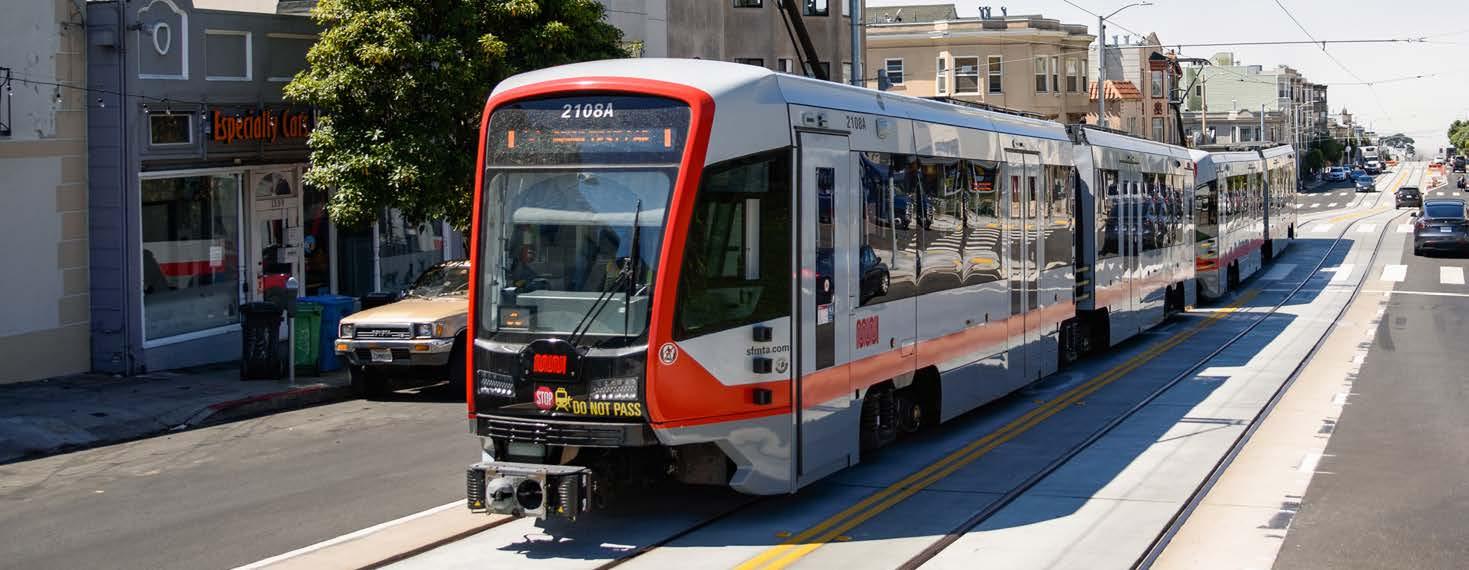
J Church Muni line safety projects move forward San Francisco Municipal Transportation Agency staff are simultaneously moving forward with plans to install a new four-way stop on Church Street in Noe Valley and, in response, relocate two stops for the J-Church Muni line. In doing so, they are bucking calls from neighborhood residents to install the stop signs but postpone tinkering with the light rail stops.
The transit agency’s citizen oversight board is expected to take up the matter next month. Its next meeting will be held October 1, and if not voted on that Tuesday, the proposal could be voted on at its October 15 meeting.
Transit agency staff want to upgrade the current two-way stop at the Church and 28th streets intersection to an all-way stop as a traffic calming measure. As doing so will impact the
travel times for J-Church trains along Church Street, the staff want to move two of the line’s existing stops.
The subway stop for passengers at Clipper Street would move to 26th Street, and the 27th Street subway stop would relocate to 28th Street. The SFMTA Streets Division held an engineering hearing September 6 to gather public feedback on the plans.
The creation of the four-way stop at Church and 28th streets received near unanimous support. Many speakers said they live nearby it and have seen vehicles speeding through the intersection, presenting a dangerous situation for pedestrians who cross there to access nearby businesses, a dance school, and a church.
Relocating the two Muni subway stops, however, elicited mixed reactions. The SFMTA said it had received written support for doing so, while those who called into the hearing all spoke in opposition. Due to the contrarian responses to the plan, the Upper Noe Neighbors association had asked that the two proposals be severed.
It has long advocated for the four-way stop and wants to see it be approved and installed as soon as possible. It is less certain about the subway stop relocations and has pressed SFMTA staff to postpone bringing it up for a vote in order to spend more time conferring with the neighborhood and gathering additional feedback.
Yet the SFMTA announced September 17 that it would move both proposals forward at the same time.
“The proposal was approved at public hearing and now will move forward to the SFMTA Board for their consideration for final approval this fall,” according to an emailed update from the agency.
To learn more about the project and sign up for emailed updates on future hearings, visit its website at https://tinyurl.com/ytv3prt5. t
Matthew S. Bajko contributed reporting.

by Matthew S. Bajko
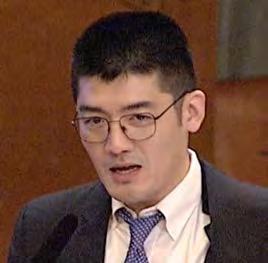
With a stamp of approval Tuesday from the Board of Supervisors, gay transit advocate Mike Chen should be sworn in as a member of the San Francisco Municipal Transportation Agency Board of Directors in time to take part in its October 1 meeting. And he will be met with his first controversial vote, as the oversight body is expected to take up next Tuesday Mayor London Breed’s proposed ban on RV overnight parking on city streets.
In May, Breed had nominated Chen to succeed Lydia So, whom she had named to fill a vacancy on the city’s planning commission. The mayor appoints the seven members of the SFMTA board, while the supervisors have confirmation power over her nominees.
The supervisors’ Rules Committee
delayed voting on his nomination in late July in order for Chen to meet with Chinatown leaders and others. Board Presi-
dent Aaron Peskin, who represents the historic neighborhood as the District 3 supervisor, had requested the postponement due to “radio silence” from Chinatown transit advocates on Chen’s appointment.
Peskin is one of the three members of the Rules Committee along with District 10 Supervisor Shamann Walton, the rules chair, and vice chair District 11 Supervisor Ahsha Safaí. (Peskin and Safaí are both running against Breed in this year’s mayoral race.)
During August Chen met with various leaders and interest groups in Chinatown. It paved the way for the Rules Committee to vote 2-0, with Walton absent, at its September 16 meeting in support of seating him on the SFMTA board. The supervisors then voted 11-0 at their September 24 meeting to confirm Chen to fill out So’s term through March 1.
“I am excited to get to work and tackle some of the big challenges for the MTA,” Chen, 33, told the Bay Area Reporter. “San Francisco transportation is great in many ways, and we also know it can be a lot better. I hope to be a part of the solution in tackling big issues like budget, outreach and making sure transportation works for everyday San Franciscans.”
Chen returns both LGBTQ and Chinese representation to the transit body. Its last out commissioner, gay Mission cafe and event space owner Manny Yekutiel, resigned last fall.
A member of the SFMTA Citizens’ Advisory Council since January 2020, Chen works as a data engineer at Coda Project Inc. He and his boyfriend live in a one-car household in Lower Pacific Heights along the Van Ness corridor.
A number of groups concerned about street safety issues supported seeing Chen be confirmed. The San Francisco Bicycle Coalition, San Francisco Transit Riders, and Walk San Francisco co-hosted a gathering in July for their members to get to know him.
“We were deeply impressed by Mike’s understanding of transportation code and planning. He is able to articulate the agency’s challenges in an accessible way paired, while bringing to bear collaborative problem-solving skills,” wrote Christopher White, the bicycle coalition’s executive director, in a letter to the Rules Committee. “We are confident that Chen will bring an equitable, solution-oriented attitude to all of these challenges, while continuing to uphold the City’s Vision Zero, Transit First, and climate policies.” t
by John Ferrannini
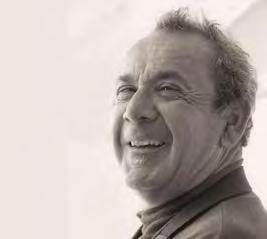
Two people were convicted of firstdegree murder last week in a retrial of the 2017 killing of a gay San Francisco photographer while he was taking pictures of the sunrise from Twin Peaks.
As the Bay Area Reporter previously reported the first trial in 2023 of Lamonte Mims, 27, of Patterson (Stanislaus County), and Fantasy Decuir, 27, of San Francisco in the murder of Ed French, 71, ended in a mistrial after a jury failed to reach a unanimous verdict. Members of French’s family told the B.A.R. they were exasperated by trial delays.
“We waited five and a half years to get the first one [trial] going,” French’s partner Brian Higginbotham said last year. “It’s mind-blowing. Use as many adjectives as you’d like. His sister is 84 and she’s hoping she can see the end of this before
she’s gone. All the emphasis is on the killers, not the victims, and his family and friends.”
On September 19 a second trial led to Decuir being found guilty of first-degree
murder with special circumstances, an allegation of personal and intentional use of a firearm, second-degree robbery, and an allegation of the personal and intentional use of a firearm causing death. Mims was found guilty of first-degree murder with special circumstances and an allegation of personal and intentional use of a firearm.
The pair will be sentenced December 6; they are currently being held in custody.
District Attorney Brooke Jenkins thanked jury members for their service.
“The jury’s verdict holds Ms. Decuir and Mr. Mims accountable for the coldblooded murder of an elder in our community doing what he loved to do the morning he was killed in 2017,” Jenkins stated. “I would like to thank the friends and family of the victim for their trust and faith in my office and the criminal justice system to deliver justice in this
case. While this family had to wait far too long, I am relieved that the system was able to deliver justice to them.”
Prosecutors said the killing started as a robbery. On July 16, 2017, French went to Twin Peaks to photograph the sunrise with a new Canon Mark III camera. At that time, video evidence shows Mims and Decuir attempted to rob him, and as Mims pulled French’s camera bag away, Decuir shot him, according to the district attorney’s office.
“The victim was ripped from the lives of his friends and family by this callous killing over a camera,” stated Assistant District Attorney Aaron Laycook, one of the two ADAs who prosecuted the case.
“We are profoundly grateful for the jury’s thoughtful and deliberate consideration of the evidence in this case, and we hope their verdict brings some sense of justice and closure to the loved ones of the victim.”
The DA’s office alleged that after fleeing the scene, the pair attempted to sell the stolen camera around Market and Seventh streets.
Decuir and Mims were arrested several weeks later after a man and woman were robbed of their camera, wallet, credit cards, and both United States and European Union currency at St. Mary’s Cathedral Square, according to the DA’s office. Decuir and Mims were found guilty on the counts relating to these allegations at the first trial, which were separate from the charges of homicide and robbery against French.
At the first trial, the defense brought in a medical expert who stated that Decuir’s sickle-cell disease led her to think that “she was dreaming and didn’t realize she killed someone,” in Higginbotham’s words.
UCSF is deeply committed to providing care for LGBTQ+ people and their families that isn’t just equitable as crucial as equity is.
We’re committed to giving you care that’s warm, welcoming, and knowledgeable, too.
That’s why we’re a longtime Equality Leader in HRC’s Healthcare Equality Index and why we offer a uniquely wide range of support for our LGBTQ+ patients and employees.
We look forward to warmly welcoming you and offering the great, supportive care that you and your family deserve.
ucsfhealth.org/lgbtq-care
“Today, San Francisco is yet again making history,” stated Roberto Ordeñana, a gay man who is executive director of the LGBTQ preservationist nonprofit.
“This investment is more than the purchase of a building; it is about creating a home to share the lessons of LGBTQ and allied history that will be housed inside, led by trailblazers before us, activists who are with us today, and the leaders of the future that will ensure our stories, our struggles, and our hopes for a better tomorrow are forever understood.”
Ever since she allocated $12.5 million in city funds toward the project in her 2021 budget proposal, Mayor London Breed has made finding a lasting home for the GLBT Historical Society’s museum a priority. Seeking reelection this November, Breed had hinted in a response on her questionnaire the Bay Area Reporter sent to the mayoral candidates that the securement of a site was imminent.
“The Castro is the heart of LGBTQ culture in this city and this country, and it is the perfect place for a museum that will preserve and celebrate LGBTQ history, culture, and arts for generations to come,” said Breed in a statement shared exclusively with the B.A.R. “Finding this site took years of work and commitment, but we did not waver in finding a home that would honor San Francisco as a place that elevates our LGBTQ community and celebrates those who paved the way for us to have the freedoms we enjoy today.”
Previous entreaties by the city to buy the vacant commercial building at 2390 Market Street at Castro Street that had housed a Pottery Barn were unsuccessful due to the asking price ranging from $15 to $18 million. It remains empty and for lease.
Negotiations ended up being fruitful with the local family that has owned the property near Market and Noe streets for nearly a century. Once home to Finnila’s Finnish Baths, the existing 30,000 square foot commercial building with rooftop parking was built in 1987.
Kent Jeffrey and his family had put up the property for sale in 2021 with an ask-
<< Editorial
From page 4
committed to taking a proactive approach to make our communities safer and ensure everyone feels protected,” he stated, adding that includes LGBTQ members, seniors, and communities of color.
Looking at mental health and homeless issues, Hernandez stated, “I support mental health beds and services to address the mental health and addiction crisis. I believe that addiction is a public health issue, and those who use drugs to self-medicate should be in housing that
ing price of $17 million and last year had lowered it to $14.5 million. With city officials able to come to an agreement to buy it for substantially less money, Breed and gay District 8 Supervisor Rafael Mandelman will introduce legislation to the Board of Supervisors October 1 to finalize the sale. The deal needs to close by November 30.
A community celebration will be held at 10 a.m. Friday at the site with local leaders to mark finding a home for the LGBTQ history museum project. It comes just days prior to the start of LGBTQ History Month on October 1.
“I think it is great,” said Mandelman, who represents the Castro at City Hall. “We looked at a number of sites. We toured a number of sites. We hoped for a number of sites. Our hopes were raised and dashed at different times along the process that led finally to this one. It works.”
For the time being, the city’s Real Estate Division will oversee the property as it works out a lease agreement with the GLBT Historical Society and the Community Arts Stabilization Trust. Known as CAST, the community-centered, arts and culture focused real estate organization works to secure and steward affordable spaces for nonprofit arts and culture organizations in San Francisco.
“We believe in the preservation of community histories and culture, and sustaining the legacies of the LGBTQ+ community through a home for the museum speaks to our mission and excitement today,” stated CAST CEO Ken Ikeda.
can address their medical needs.” He also advocates for family shelters to connect people to wraparound services, and stated domestic violence survivors should receive immediate assistance.
A lifelong District 9 resident, Hernandez knows the areas he would represent and is in the best position to create positive outcomes.
Torres, who previously served on the city’s entertainment commission and was a leader of the Castro LGBTQ Cultural District, has called District 9 home for most of the 25 years he’s lived in San Francisco.
See page 12 >>
Ground floor tenants
For years the location of a Tower Records after it opened, the shopping center today has two tenants in ground floor spaces. Barry’s Bootcamp is subleasing its storefront from CVS and can remain through 2040, while Dignity HealthGoHealth Urgent Care has a lease for its clinic through 2036.
It is expected that the LGBTQ history museum will expand into those spaces when they become available. For now, it will be taking over the vacant second floor space that is a little over 11,000 square feet. (Its current museum is just shy of 1,700 square feet.)
The public-private partnership between the city, CAST, and historical society is being formed for the purposes of managing and operating the property, the assumed leases, and the museum. It is anticipated that the lease and sublease agreements will be introduced to the Board of Supervisors for approval in mid-2025.
Initially, the city will retain 10% of the monthly $58,000 in lease payments from the commercial tenants and put the rest of the money into a separate reserve account to be used by the historical society for capital improvements and possibly programming. Once the lease agreements with CAST and the historical society are approved, then CAST will receive the 10% for taking on the property manager role. The city’s long-term goal is to eventually transfer ownership of the property to the GLBT Historical Society.
“It gives me hope that at some point the historical society will be able to exercise this option and acquire this property itself. It would be great for that organization and for the queer community,” said Mandelman. “I think it is really important for maintaining the queer identity of the Castro.”
James Thomas Connor
August 10, 1949 – August 22, 2024
James(Jim) Thomas Connor, a prominent gay physician who was well known in San Francisco’s social circles, died on August 22, 2024. He was 75. His death was caused by metastatic cancer, according to his spouse, Lewis Sykes.
Jim was born in Trenton, New Jersey, and worked as an emergency room doctor at Veterans Administration Hospitals in Florida and Colorado before moving to California and joining the staff at the Palo Alto VA Medical Center. He never had a private practice, believing strongly that medical care should be accessible to everyone. He was very proud that in his entire ca-
As for the $5.5 million in state funds for the museum project obtained by gay state Senator Scott Wiener (D-San Francisco), the city expects to grant out the funding to CAST and the historical society to help fund a remodel of the building for the museum’s needs. A former District 8 supervisor who lives nearby the museum’s new home, Wiener told the B.A.R. he is ecstatic that the city has been able to find a way to keep it in the historic LGBTQ neighborhood.
“To me, the two most important things are, number one, it is in the Castro, and number two, it is a large amount of space,” said Wiener. “This satisfies both of those requirements. I am really happy that this worked.”
As the B.A.R. reported in 2013 when CVS finalized the permitting process to move into the shopping center, the building at one point had been considered by the San Francisco AIDS Foundation to house its gay men’s health center. Known now as Strut, it ended up taking over a commercial space on the 400 block of Castro Street.
When Wiener served on the board, he had attempted to secure approval for Trader Joe’s to take over the location, since it comes with 33 parking spaces. But the grocery store walked away from it due to neighborhood objections about traffic the grocery chain would create.
“We were disappointed Trader Joe’s didn’t work out,” recalled Wiener. “It is what it is, so now we get a LGBTQ history museum there, which is great.”
Near Milk library branch
Coincidentally, the location is a block up from the Eureka Valley Harvey Milk Memorial Library on 16th Street where 20 years ago gay former District 8 supervisor Bevan Dufty had first proposed building the LGBTQ history museum on the branch library’s parking lot. Dufty is now
reer as a government physician, he had never sent a single bill to a patient.
On a foggy evening in 1997, in San Francisco attending a medical conference, Jim asked a cab driver to take him to Twin Peaks, a place he had heard of in Denver. The driver obligingly brought him to the observation lookout atop one of the two mountains below Sutro Tower.
When Jim finally found his way to his intended destination, the Twin Peaks Tavern in the Castro, he fell in love with, as he put it, “the best looking man there.”
Sykes had a different take on the story. “I was the ONLY man there,” he said. Whichever version is true, by the time Jim arrived at the Twin Peaks bar, it was closing and too late to order a drink. Sykes invited him to have that drink at his home and the chemistry was instant. Jim and Sykes were partners for 26 years, finally marrying in
board president for BART, the regional transit agency that has a station at 16th and Mission streets, six blocks from the new home for the GLBT Historical Society.
“This is an exciting start to a new chapter,” said Dufty. “It is something I wanted to see, placemaking and cultural institutions thriving in the neighborhood.”
The Market & Noe Center was where Dufty had his campaign headquarters when he ran unsuccessfully for mayor in 2011. The building also had housed the No on 8 campaign in 2008 when it came up short in trying to prevent California voters from passing that November the ban on same-sex marriage known as Proposition 8. (This November voters are being asked to excise Prop 8’s language that remains embedded in the state’s constitution even though federal courts ruled the ballot measure was unconstitutional.)
“It is a space I know very well,” noted Dufty, who is attending a wedding in South Carolina this weekend and will miss the celebration Friday.
The deal to buy the property is coming “at the right time,” he told the B.A.R. prior to leaving on his trip.
“We have to fight for the preservation of our history,” said Dufty. “We also have to fight for our visibility, for our safety and for the members of our community just to live like everyone else in this country is supposed to be able to live.”
He added that he is “appreciative” that the city has made the LGBTQ history museum possible. One of the reasons he had pressed for it during his time on the board was to have it drive tourism to the LGBTQ neighborhood.
“I think it is an exciting destination that will really add to people’s experience visiting the Castro,” said Dufty. “I always wanted it to tell our story and be meaningful to people from around the world, and the best is yet to come.”t
2023. Fittingly, the Twin Peaks Tavern remained a big part of their lives (“Our home away from home,” they said). And in their actual home, a quirky, extravagantly overstuffed circa 1911 arts and crafts style house, the parties Jim and Sykes hosted were legendary. Through Sykes’ professional life as the special events director for the San Francisco branch of Saks Fifth Avenue, they were well acquainted with many of San Francisco’s best-dressed Pacific Heights hostesses, and, clad in tuxedos, the couple often escorted the city’s most famous society swans to the symphony, opera, ballet, and charity gala events. The couple loved to travel and visited Europe many times. Despite frequent trips to Paris, Jim never learned much French. In talking to friends, though, he would often interject “Ah, oui!” explaining that he only knew two French words. “But I say those PERFECTLY,” he said.


8th!

Celebrating 100 years of local media for and by our community.
The first gay publication in America was 100 years ago this year—1924’s Friendship & Freedom, produced by Henry Gerber. It was shut down by police after just two issues. Through the years, LGBTQ+ media faced similar censorship and hardships. But 100 years later, there is a chance to revitalize this journalism and make it stronger to face the anti-LGBTQ+ backlash, providing critical coverage of this vital part of the U.S. media landscape.
This first year, with one donation, you can support six of the top LGBTQ+ outlets serving our community:
Bay Area Reporter – Dallas Voice _ Philadelphia Gay News Tagg Magazine _ Washington Blade – Windy City Times
This project is a program of News Is Out, a collaboration of six of the top local LGBTQ+ media across the country, supported by Local Media Foundation, a 501(C)(3) organization. Tax-deducible donations can be made anytime from now until Oct 8th. Scan the QR code to donate now! Learn more here: givebutter.com/LGBTQequityfund When you give to one, you give to all

District 6 Supervisor Matt Dorsey, a gay man living with HIV, represents the South of Market neighborhood where City Clinic is located. He stated that the report is “doubly good news – not solely for its overall decline in new HIV diagnoses, but for even steeper declines in BIPOC [Black, Indigenous and people of color] communities that have historically been overrepresented among new HIV cases.”
“These numbers show that our focus on equity is working, and for that I’m grateful to SFDPH and its director, Dr. Grant Colfax, and all of our communitybased partners,” he stated. “At the same time, I hope our progress reminds all of us that ‘Getting to Zero’ really is within reach, and it remains a worthy goal not just for HIV prevention and care, but for healthcare access for all.”
Gay state Senator Scott Wiener (DSan Francisco) stated that the report is a sign San Francisco continues to lead on the fight against HIV/AIDS.
“San Francisco has shown once again that the horror of the HIV epidemic is not inevitable when we let our communities lead,” Wiener stated. “Thanks to the extraordinary work of City Clinic and San Francisco General Hospital, we’ve made gains fighting this disease in the communities of color too many others had given up on. I applaud the amazing work of our medical and public health officials, and look forward to continued progress in our fight to get to zero.”
Dr. Stephanie Cohen, a straight ally who is director of DPH’s HIV and STI Prevention and Control Section of the disease prevention and control branch, told the B.A.R. that since Getting to Zero SF was started in 2014 “we set out a 10year goal of a 90% reduction in new HIV diagnoses by 2025. We have seen a substantial decrease. The number of new HIV diagnoses has declined by more than 50% since that original date.”
Indeed, in 2014 San Francisco saw 329 new cases; the 133 figure is little more than a third of that. To get to the 90% reduction from 2014, there would have to be 32 cases or fewer next year. Cohen acknowledged the 90% target was “an ambitious goal when we set it.” Still, Getting to Zero SF is “continuing to strive to get to no new HIV infections in San Francisco,” Cohen said.
Cohen stated that as the report shows, the primary transmission route since at least 2014 has been sexual intercourse between men. Among cis men, this only accounted for 84 infections in 2023.
“It’s still the largest category,” Cohen said, but it is representing a lesser portion of the total than it used to.
He took a more nuanced view of the police staffing shortage. “I believe the San Francisco Police Department serves an important role in public safety, and should be fully staffed and adequately funded,” he stated. “With funding and a competitive salary ensured, however, we need to ask ourselves as leaders, why they continue to suffer from a staffing shortfall.” And he would want to look at “what accountability and reform measures in addition to affordable and sustainable living are required to ensure that law enforcement represents the community they serve,” he added. “The LGBTQ community remembers well how quickly relationships deteriorate when law enforcement is siloed away from the community culturally.”
Torres favors a compassionate approach toward those who are unhoused. “Moving encampments around is simply that and could have potentially catastrophic humanitarian, environmental, and public safety impacts,” he stated. “I have said before that it is a disservice to ourselves as a society to treat the homelessness epidemic as anything but what it is: a humanitarian crisis.”
Looking at revitalization post-pandemic, Torres stated that neighborhoods are key. While he supports some efforts to reimagine downtown, areas like the Castro, Mission, Portola, and Bernal Heights are what makes the city special.
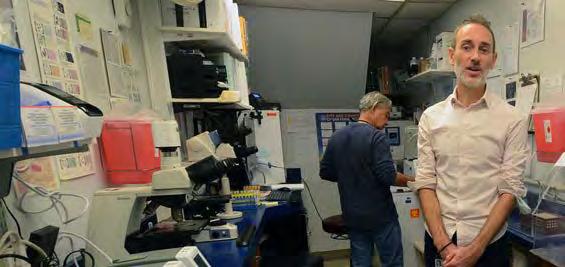
For 2023, people who inject drugs accounted for six HIV cases among cis men, while men who have sex with men and inject drugs accounted for 13 of the cases, according to the report. The previous year, those figures were eight and 17, respectively.
But contained in other city numbers, HIV diagnoses portend worrisome news: 35 people tested positive for antibodies to the virus year-to-date in 2024, compared to 27 year-to-date in 2023.
This despite the number of tests being 1,998 and 1,941, respectively, according to the San Francisco Monthly STI Report for June 2024 released by DPH.
Asked about that, Cohen said, “I think people should be mindful that it represents a small sample.”
“We do see people who are both San Francisco residents and who are not San Francisco residents at City Clinic,” she said. “We definitely diagnose a number of people at City Clinic who live outside of the city and link them to care in their own counties, so it’s kind of difficult to take these numbers and say how they apply to San Francisco specifically.”
STIs still on decline
Through the first six months of this year, the three major bacterial STIs are continuing to decline, according to the recently released San Francisco Monthly STI Report for June 2024. The B.A.R. last month had reported on a drop in the numbers for the first four months of 2024, and that trend has continued in May and June.
By the end of June there were 2,216 gonorrhea cases in 2024 compared to 2,430 year-to-date in 2023 (though rectal cases were slightly up – 800 to 791).
Similarly with chlamydia, there were 2,139 cases in 2024 compared to 2,997 year-to-date in 2023 (a decline also shown in rectal cases – which went from 868 to 438). With syphilis there was also a decline, from 629 year-to-date in 2023 to 437 in 2024.
As for what is contributing to the
“This involves not just one strategy, but a multifaceted approach that allocates resources to small businesses, cultural programs and organizations, environmental stabilization, and health and human services accessibility,” he stated. “As constituent groups will tell you, they are already doing this work. It is my job as supervisor to support that.”
Overall, Torres would bring a queer and Latino lens to the Board of Supervisors and focus on the needs of his constituents.
We endorse Hernandez and Torres in that order.
to 50% of isolates are resistant. So we didn’t necessarily expect doxy to work particularly well against gonorrhea – it was actually a surprise in the doxyPEP trial we saw significant decreases.”
Cohen stated DPH is now willing to say there is a connection between doxyPEP and this decline, saying the department tracked people receiving its services and how that has intersected with the roll out of doxyPEP.
“We are very encouraged by the citywide trends in bacterial STIs – particularly among men who have sex with men and trans women – and in particular, chlamydia and syphilis,” she said.
over 86 degrees they can’t work in there.
In the wintertime, space heaters have had to be added to the clinic, which sometimes knocks out the power, shutting off computers, Ruiz said.
Ruiz also pointed to very small consultation rooms, where people sometimes learn they have HIV or the hepatitis C virus.
“You get a sense of how two people can be in this space,” he said. “There’s a lot of aspects that are really, really challenging. We’re talking about intimate sexual health and I’m right here in your face.”
There are six exam rooms and those, too, present a challenge.
District 11:
declining STD cases, medical experts the B.A.R. has spoken with think the introduction of doxyPEP in late 2022 –a new way of treating bacterial sexually transmitted infections with the antibiotic doxycycline (a type of tetracycline) after unprotected sex – is the key to understanding what’s happening.
DoxyPEP has only been approved for men who have sex with men and for trans women, which could explain the concurrent rise in cases in cis women even as cases go down generally. A study from Kenya found the drug didn’t work with the cisgender women enrolled in it, likely due to low adherence, leading U.S. health officials to not include such women in the usage guidelines for doxyPEP they finalized in the spring, as the B.A.R. reported in June.
As for why gonorrhea isn’t budging as much, tetracyclines aren’t as effective against gonorrhea as against chlamydia and syphilis. A study of doxyPEP efficacy showed an 80% drop in syphilis and chlamydia but only a 55% drop in gonorrhea, according to findings presented by Dr. Annie Luetkemeyer of UCSF at the 2022 International AIDS Conference.
Dr. Oliver Bacon, a gay man who has been medical director at City Clinic for the past year and a half, told the B.A.R. that doxyPEP works “very well” against chlamydia and syphilis but “less well” against gonorrhea.
“One thing we’re all hypothesizing is there’s no resistance to doxycycline in chlamydia and syphilis. It’s been used for decades for those two infections. Resistance has not arisen,” he said in a September 23 phone interview. “Resistance to many antibiotics has arisen over time for gonorrhea. We know there are places in the world where the vast majority of strains of gonorrhea are resistance to doxycycline – France, the region around Paris, for example, eastern Africa. We don’t use doxycycline in the United States to treat gonorrhea because depending on the city between 10% to 15%
sior, Oceanview, and Outer Mission. There are seven candidates running and, of those, we endorse Ernest “EJ” Jones and Michael Lai.
Jones is a former aide to Safaí. He was born and raised in the city and has called District 11 home for many years.
On public safety, Jones stated in his endorsement questionnaire that law enforcement is just one part of that. “A more just and accountable plan for increasing public safety must include expanding violence prevention and intervention efforts, prioritizing the needs of victims and survivors, investing in restorative justice programs, and ensuring oversight and accountability in law enforcement,” he noted. He added that accountability is important for the police department and he’ll advocate for an independent police commission. “Community demands, such as augmented foot and bicycle patrol units, should be prioritized, and disparities in arrests and use of force against Black San Franciscans must be rectified,” he added.
An aspect of public safety relates to homelessness. Jones stated that he would invest in and increase the availability of permanent supportive housing options, integrating housing with support services to help individuals maintain stable living situations and focus on providing comprehensive mental health and substance abuse treatment programs to address the root causes of homelessness and support long-term recovery and stability.
Bacon said that City Clinic looked at rates among those in its PrEP clinic and compared the group that never took doxyPEP to the group that did during the same time period.
“We saw dramatic declines in chlamydia in folks who started doxyPEP and sizable declines in syphilis but not declines in gonorrhea,” he said.
City Clinic bond
As the B.A.R. previously reported, Prop B, which will require 66.66% affirmative votes to pass on the November 5 ballot, includes $27 million for the relocation of City Clinic.
City staff led the B.A.R. on a walkthrough of the clinic, which since 1982 has been located in a 91-year-old building in the South of Market neighborhood that was once a firehouse.
Judith Sansone, a nurse manager at City Clinic, told the B.A.R. that 75% of those served by the clinic are men who have sex with men and they rely on the sexual health services it provides. There were over 11,000 appointments made in 2023.
It has been on the frontlines of HIV, COVID, and the 2022 mpox outbreak, she said.
Thus, “we have a fairly robust research component to what we do,” Sansone added.
Research at City Clinic led to the initial demonstrations of the effectiveness of PrEP and doxyPEP, Sansome said.
Jonathan Carlson, a microbiologist, said that the tiny size of the lab has made it hard to do the research the clinic is asked to participate in.
“It’s kind of a big ask for a lab in this space to participate in national research,” he said.
Christopher Ruiz, acting biomedical prevention coordinator for City Clinic, said the age of the building has negatively impacted the patient experience.
“In the summer months, when it gets very hot, it gets very hot – in the 80s” he said.
Carlson agreed that the heat can be a problem – machines in the lab run hot, he said, and if the temperature in the lab gets
As for revitalizing the city, Jones is supportive of the mayor’s downtown plan, but that’s just the beginning. “Our plan has to focus on reviving the tourism industry and bringing the fun back to San Francisco,” he stated. “We must showcase our collection of art and culture on full display. We have to host festivals, concerts, and cultural events in lieu of the dwindled convention industry.”
On housing, Jones favors higher density along transit and commercial corridors. Other ideas include “increasing funding and tax incentives for a range of housing, from deeply affordable, middle-income, worker, and marketrate housing; advancing existing community mapping to pinpoint potential sites prime for affordable housing; and encouraging office to residential conversions through tax abatement, which reduces project startup costs,” he stated.
Regarding working with the queer community, Jones stated, “I am committed to protecting and enhancing LGBTQ cultural spaces, whether it’s creating safe community centers or ensuring there’s accessible housing for LGBTQ youth and seniors.”
Jones has the experience to be an effective supervisor.
Lai, a straight ally and member of the city’s Democratic County Central Committee, has recently moved to the district.
In terms of police staffing, Lai would look at recruiting efforts to at-
Dr. Franco Chevalier, the clinic’s deputy medical director, said that “sometimes we require certain equipment” and that equipment is unavailable because a room is being used. Further, rooms have to be kept available for those assigned female at birth to allow more privacy for pelvic examinations.
But what took the cake, Ruiz said, was that the clinic had to close for three days in July after a second-floor toilet leak led to tiles and sewage water falling from the ceiling on a first-floor hallway. He said there was a “good inch of water.”
“Everything in here had to be replaced,” he said in the (now clean) hallway. This, too, presented problems for patients because appointments had to be canceled.
Bacon said that “as much as we love our old firehouse, it’s showing its age.”
“I think people like to come to a clinic that is comfortable and they feel comfortable getting services in. It makes them feel good about the care they’re getting,” he said. “We have had numerous infrastructural failures over the years and in particular in the past year. We had a flood that closed us for two days. We had no heat in the winter. Those things made us scramble. Our building is not ADA compliant and we have staff who suffer because of that, patients who suffer because of that.”
Dorsey told the B.A.R. September 20 that he’s excited to boost Prop B.
“This is a major priority for me,” he said in a phone interview. “We will be asking to move City Clinic to somewhere else in SOMA, contingent on a $27 million investment Prop B would authorize. Right now it’s in a hundredyear-old converted firehouse. It’s overdue for an upgrade, and I think we have to make sure we have a public health infrastructure to combat STIs and get to zero as well as to address public health challenges that may emerge, such as COVID and mpox.”
The $390 million Healthy, Safe and Vibrant San Francisco bond also funds $25 million for the revitalization of Harvey Milk Plaza. t
tract top-notch candidates, he stated. On homelessness, Lai advocated a balanced approach. “We must be laser-focused on passing policies that make it easier to build affordable housing, which addresses a root cause of homelessness,” he stated. “In the interim, we must offer comprehensive and connected supports to those who are currently in encampments. This means expanding shelter options and coordinating with citywide nonprofits in these efforts.” He noted that better coordination is needed between law enforcement and mental health professionals for those who are experiencing a mental health crisis.
Lai supports the mayor’s downtown revitalization plans. “It is so important that we bring back San Francisco’s vibrancy and liveliness,” he noted. And he advocated for new events in neighborhoods, like Chow Fun, an Asian dine-around in District 11 that he helped with.
In terms of the Castro, Lai stated that he would work to support LGBTQ-owned small businesses and work with the district supervisor.
Lai has some great ideas that would serve his constituents well.
We endorse Jones and Lai in that order. t
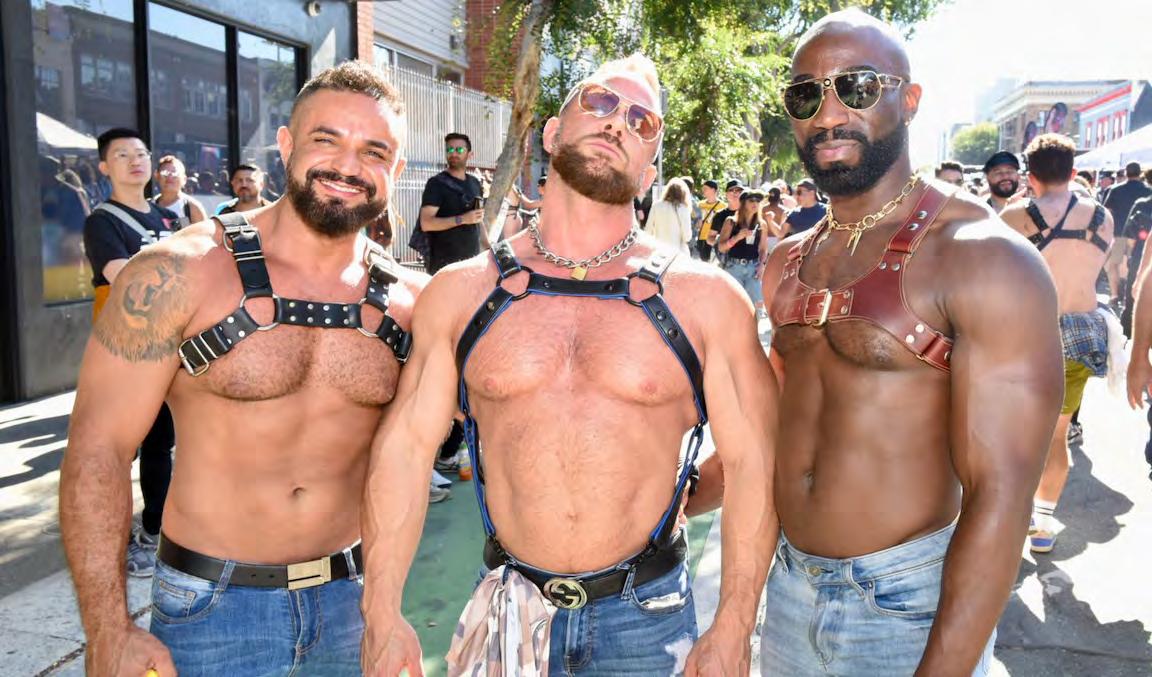
Tby Jim Provenzano
he legendary Folsom Street Fair takes place on September 29. But several Leather Week events preceded the popular street fair with smaller yet fun events in an array of outdoor and indoor parties, celebrations and live music.
Leather Pride Fest ’24 kicked off Sunday, September 22 hosted by the SF Eagle Bar at Eagle Plaza, 398 12th St.
The traditional flag raising ceremony at Eagle Plaza took place on September 22. This tradition
is more than just a ceremonial conclusion of the Leather Pride Walk. It’s a powerful symbol of the kink community’s history, resilience, unity, and continued growth.
Other events taking place through Sept. 29 include:
Leather History Tours
Immerse yourself in the rich history of the leather scene in San Francisco with guided tours around the SoMa district. Learn about the origins, the key figures, and the evolution of the leather community in the city.
by Jim Provenzano
As one of the iconic gay porn actors of the 1980s, Mickey Squires cornered the butch erotic look. From early stills to classic loops from Colt Studios, and a dozen more films, Squires continued to embody masculinity with an edge.
Now, as himself, Richard Bernstein is far from bashful about his erotic work. He’s also proud of his more than a dozen magazine covers, and in his 70s is still enjoying life, as proven by our phone conversation while he was vacationing in Amsterdam on a theater and museum-hopping journey.
Ryan A. White and Alex C, the directors of “Raw! Uncut! Video!” (2021), and “Big Sur Gay Porn,” now have Bernstein/Squires as their new subject. The first fundraising event for a new
documentary about 1980s porn star Mickey Squires will be at the Bob Mizer Foundation on Saturday, Oct 5.
White and C’s Wohler Films is currently in post-production on the film, titled “Mickey & Richard.” In order to raise completion funding, they’re collaborating with the Bob Mizer Foundation and Bijou Video to host a fundraiser.
The event includes the opportunity to meet Squires/Bernstein at a sneak-peek screening of their rough cut. Squires’ iconic scene from “J Brian’s Flashbacks” (1980, filmed in Muir Woods) will also screen, followed by a Q&A with Bernstein and the filmmakers, with T-shirts and photos for sale, too.
In our conversation, Richard Bernstein seemed delightfully spry and proud of his heritage in becoming now-vintage gay porn favorite Mickey Squires, and happy to be the subject of a new film.
Leather Art Exhibitions
Visit local galleries featuring art exhibitions that celebrate and explore themes related to leather culture. From photography to mixed media, these exhibitions offer a unique perspective on the leather community.
Literary Kink
Sexologist Dr. Carol Queen and Race Bannon, co-editors of the new anthology “Kink Is: An Anthology of Surprisingly Relatable True Stories about Sex, Power and Joy,” read excerpts from their works and signed books for sale at multiple events. Two remaining events include:
Found community
What started as a simple dare to pose nude became an introduction into the world of X-rated filmmaking. After a string of feature films and videos, Squires’ later videos continued sporadically until 2001 with Butch Bear. Bernstein later worked for years in the hotel industry, and now lives in Palm Springs. The self-titled “Sondheimaniac” (he coined the term) shared stories from his adult adventures, and his life after it.
“I’m proud that I was part of that,” said Bernstein of his sex work. “I was working for 20th Century Fox Distribution in the early ’70s. I got a job very young. They moved me to San Francisco to be the sales manager, the year before the gay sexual revolution in San Francisco.”
“I was working on my body. I knew that was really important, getting men. I saw what stopped men and what didn’t get men back. I got caught up in the gay sexual revolution and became part of it; it was my life. I was really happy to be a part of it. I mean, I know it turned out to be disastrous for many people. I’m HIV positive.”
But back then, Bernstein had found his community.
“My friends worked out together. We ate at the same restaurants, we hung out. We had sex together. We did everything together. And I was proud to be a part of a team because growing up as a kid, I was not athletic at all.”
The younger of two athletic brothers with a single mom whose husband had died when he was five, Bernstein instead became interested in the performing arts while growing up in North Long Beach.
“I would choreograph ballets and conduct orchestras and fantasize about all kinds of things when I was a kid.” he said. “That’s where my head was, not in sports.”
Hoedown
After the San Francisco clone cliques became too claustrophobic, Bernstein moved to Los Ange-
Sept. 29, 11am-6pm at Unbound Edition Press’s booth at the Folsom Street Fair. Oct. 2, 7pm to 8:30pm at Green Apple Books on the Park
David Lauterstein, founder of Nasty Pig kink gear company, and author of a memoir, “Sodomy Gods,” will also do a readings and signings. Sept. 27, 2pm to 4pm at Mr. S. Leather Sept. 27, 6pm to 7:30pm at the SF Eagle Sept. 29, 11am-5pm at Unbound Edition Press’s booth at the Folsom Street Fair.
les. He connected with the owners of The Probe, a popular disco. His first modeling job was actually not nude, just a flyer for the nightclub.
“It was a Hoedown Party, sort of a farmer’s thing,” he recalled. Soon afterward, he got his first offer to pose nude, saying, “If people wanted to take pictures of me, how flattering, and that made me feel included.”
Although those shots were rejected by Playgirl for him not being “pretty enough,” his second shoot fared slightly better.
“A friend had me over to his house in West Hollywood and he had some cowboy hats, me sitting on a wooden horse. He didn’t pay me. But he had friends who saw those pictures and they wanted to hire me as an escort. So that started my escorting career, which I was fine with. If people wanted to pay me to have sex, I was all for it.”
By day, Bernstein pumped iron with friends at Jim Morris Gym on Santa Monica Blvd., run by the gay Mr. All America bodybuilder.
“It was like the mecca for gay muscle, and I was in my element,” said Bernstein. “I loved that place. And I became friendly with Manfred Spear, who was a Colt model, a big muscled German guy. He introduced me to Jim French.”
Colt on course
Before his first film, Bernstein had been cruised at a nightclub days before his shoot.
“This very hot guy kept looking at me, and I kept looking at him, and we circled the bar all night, not knowing who each other were. We didn’t have sex because I was told not to before filming.”
That man turned to be Jack Packer, his scene partner in “The Come On.”
“That was his Colt name,” said Bernstein. “I don’t know his real name, but that was the only film that I did that loved. Every moment, we had real sex. Jim just said,
by Gregg Shapiro
Three-quarters of the all-female Utah-native band The Aces are queer. It’s not four of a kind, but it’s pretty good odds, regardless. The Aces’ 2023 album “I’ve Loved You For So Long” (Red Bull Records) features some of the catchiest and queerest songs you are likely to hear.
In other words, there’s no question that these are same-gender love (and love lost) songs, beginning with the title track, featuring the lines, “You’re taking me back babe to where it all started/Wearing your hair up in your New York apartment.”
When lead vocalist Cristal Ramirez sings “I don’t know when I fell/She doesn’t know as well,” there’s no doubt about what she’s singing about on “Girls Make Me Wanna Die.” That same openness is found on “Not the Same,” “Person,” “Suburban Blues,” and “Attention.”
Sonically, The Aces’ pop style could qualify them as a queer Haim. In 2024, The Aces are embarking on a multicity tour. Cristal Ramirez shared thoughts on her band’s experiences.
Gregg Shapiro: Cristal, for those not in the know, please say a few words about the formation of the band The Aces.
Cristal Ramirez: The Aces are a four-piece band from Orem, Utah. All women. Three of the four of us are queer. We make indie pop rock music, I would say. We started together when we were really young. I’m 28 now, we started when I was like 10 years old. We grew up and went to school together. We started playing music in our small
‘Will

suburban town because we were drawn to it individually. We’ve been playing together for almost two decades.
What are the best and worst parts about being in a band with your sister Alisa?
[Laughs] I think the best part is that we’re so close. The difference in our ages is barely even a year and a half. We’ve grown up inseparably. It feels like we’re almost twins, in a way. We understand each other better than anybody in the world. That synergy between each other aids the way we write music, the way we play, how we show up in the band.
It’s like we can read each other’s minds, which is an amazing quality to have in a creative partner. The
downside of that is that it’s your sister. We can drive each other a little crazy sometimes. But there’s comfortability, although sometimes that comfortability can be a little smothering. I think we’ve done a good job together at learning how to navigate times where maybe our relationship is a little more strained.
The Ace’s songwriting is credited to the band and Keith Varon, who also co-produced and plays on the band’s most recent album “I’ve Loved You For So Long.” How does the songwriting process work?
It changes. We’ve made three albums and each album has a different approach. “I’ve Loved You for So Long” was just the four of us and one main
collaborator. We’d go in and write songs together, and he’d mainly produce. A song like “Suburban Blues” was written in a room and played, like we did when we were kids. Then there’s other songs where maybe Keith had a guitar idea and we started writing on that. We’re very involved in our writing and we write everything that we put out.
As you mentioned, 3/4 of The Aces’ members identify as part of the LGBTQ+ community, and songs such as the title cut, “Girls Make Me Wanna Die,” “Suburban Blues,” and “Not the Same,” to mention a few directly address queerness. How important is it to you to include that content in your songs?

by Myron Caringal
“Will & Harper,” directed by Josh Greenbaum, is a compelling blend of humor and heart. This documentary road film takes viewers on a 17-day journey across the US, following longtime friends Will Ferrell and Harper Steele as they navigate new terrain –both literal and emotional. At its core, it’s a story about gender identity and friendship.
Ferrell, known for his comedic roles, offers much more than laughs here. Ferrell and Steele’s easy humor is a throughline, but it’s offset by poignant moments of vulnerability from both. The contrast between Ferrell’s affable care and curiosity and Steele’s raw, emotional reflections creates a dynamic that feels refreshingly honest.
Unlike many documentaries that feel overly produced or engineered for drama, “Will & Harper” is driven by real, often spontaneous interactions. The absence of scripted moments or forced questions gives the film an authenticity that feels rare.
Steele, who is open and candid throughout, makes it clear that she’s comfortable answering anything a friend like Ferrell wants to ask. It must be noted, however, that that is not true
for all trans people. The film carefully walks this line, never claiming to speak for the entire trans community, but instead offers a personal narrative that offers insight to the trans experience.
Visually beautiful, visibly tense
Visually, the film is stunning. Greenbaum captures sweeping American landscapes as the backdrop to Ferrell and Steele’s journey, inviting viewers to see a diverse America. In particular, Greenbaum is skilled at translating tense, raw scenes to the screen.
In Oklahoma, the duo visits a conservative, Confederate-decorated bar. Steele enters in solitude to experience being a trans woman in public without Ferrell. The air thins for the viewer as Steele holds her breath on screen, pushed up against the wooden walls of the intimate bar, hesitant to make a move.
Ferrell, meanwhile, is waiting anxiously outside, a rare moment of visible unease for someone who has spent much of his career making others laugh. It’s in these quieter, more introspective moments that “Will & Harper” really shines.
A similar, yet more sweat-breaking moment was at their stop in Amarillo,
Texas, where the duo takes on the famous 72-ounce steak challenge at The Big Texan Steak Ranch. What begins as a comedic spectacle, complete with a Victorian investigator costume and stage lights (literally), quickly becomes symbolic of Steele’s larger journey.
The next day, she confesses that it was like her “transness was on display.”
The film doesn’t shy away from showing Ferrell’s vulnerability either when he, in tears, admits to feeling like he’s failed Steele by not protecting her during the uncomfortable encounter. They later find tweets of live criticism about the documentary they’re filming from transphobic netizens.
This vulnerability is interspersed with moments of levity, like when Ferrell wears an American flag Speedo, dad-bod and all, to make Steele feel more comfortable in a hotel swimming pool. Yet these moments of hu-
mor don’t detract from the film’s emotional weight. They remind us that laughter has its place even in the most serious conversations.
In a larger context
Throughout the journey, the duo encounters a diverse array of people, from a retired therapist in Arizona who recalls her early, limited understanding of gender identity to a trans woman in Illinois, who, like Steele, transitioned later in life.
One of the final stops was a visit to Trona, California, where Steele bought a home in the Mojave Desert years earlier, hoping to live in isolation. The house, now vandalized and abandoned, becomes a metaphor for Steele’s journey –once a place to hide, it now represents a past she’s ready to leave behind.
She breaks down in tears before entering, having spent working days in
It’s kind of innate in a way. At the end of the day, it’s really who we are. It’s a part of our lives and how we identify, how we show up in the world within a romantic relationship. It’s a massive part of what we’re inspired to write about: our relationships, and love, and romance. At the same time, I think it’s super important to be out and show up as our authentic selves because I think that saves lives.
I think the more visibility you have, and the more vulnerable and brave you can be in sharing every part of yourself, that’s the part of you that society might deem less commercial, less sellable. That’s a very big aspect in the music industry. That’s the reason why we’ve been able to create such a strong fan base and a strong culture around our band. I think that that authenticity really resonates. The people that really get our band: it’s a deep connection to the music and to the artistry and to who we are as people.
Visibility is super important because visibility saved my life as a young kid in suburban Utah. Getting on YouTube and getting on the Internet and trying to find people that look like me, talk like me, and love like me. That was so crucial in life as a person and as an artist. I hope that our band can do that for other people.t
Read the full Q&A, with music videos, on www.ebar.com.
The Aces open for Goth Babe, Sept. 30, 8pm at The Fox Theater, 1807 Telegraph Ave., Oakland. $56-$168. www.theacesofficial.com thefoxoakland.com
the house wearing women’s clothes with the curtains closed because she “felt like a monster.” In that moment, Steele was grieving the person she once was.
The film concludes with a pictureperfect beach sunset, where Ferrell and Steele sit in their camping chairs, watching the horizon. It’s a fitting end to their journey, symbolizing the new chapter in their friendship and Steele’s life.
In a world where transgender stories are often reduced to headlines or statistics, “Will & Harper” offers a deeply personal narrative that feels both timely and timeless. The documentary is more than a celebrity buddy film or a documentary about a transgender woman’s journey. It’s about identity, friendship, and acceptance.t
“Will & Harper” streams Sept. 27 on Netflix. www.netflix.com
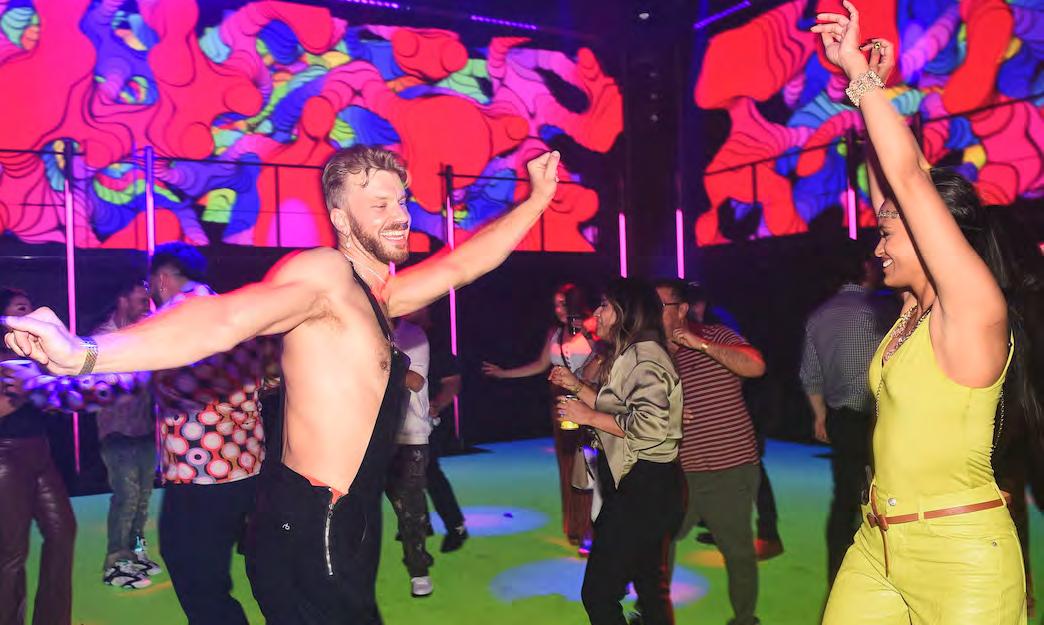
by David-Elijah Nahmod
The San Francisco Pride Band will grace the stage of the Herbst Theater on September 29 with a new concert that they promise will excite and move audiences. Titled “Portraits of the Americas,” the concert will feature music from North, Central and South America.
The San Francisco Pride Band was previously known as the San Francisco Lesbian/Gay Freedom Band, the name by which they were known since the 1990s. Previous to that, when the band was formed by Jon Sims in 1978, it was called The San Francisco Gay Freedom Day Marching Band and Twirling Corps.
According to a statement at the band’s website, the first name came about to more explicitly include lesbians in the band’s membership. Lesbians had always been a part of the band’s history, so the name change to Lesbian/Gay Freedom Band came about to acknowledge their presence, especially since their numbers in the band had grown.
The latest name change to the Pride Band is meant to make the band even more inclusive, to make sure it’s known that everyone across the spectrums sexual and gender identity are welcome.
In an interview with the Bay Area Reporter, Pride Band Artistic Director Pete Nowlen spoke of what the audience can expect when they attend “Portraits of the Americas.”
“This concert features culturally evocative pieces from South, Central and North America and is anchored by two exciting world premieres by Bay Area composers,” Nowlen said.
The first piece is called “One Magnificent Light,” and it comes from the band’s composer-in-residence Mattea Williams.
“When embarking on a new journey or just stepping into something unfa-

New name, same beautiful music
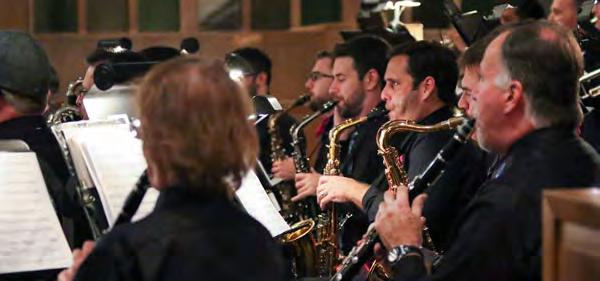
miliar for the first time, the path may seem dark and unsettling even if you have an unexplainable certainty that it is meant for you and right for you,” Williams said. “Inside all of us is one magnificent light. With courage, love and encouragement from others, the light can be ignited, joining with the magnificent light of a community that erupts into a technicolor superbloom.”
“Eyes to Look Otherwise” by Juan Sebastian Cardona Ospina will feature saxophonist Michael Hernandez,” said Nowlen. “It is inspired by three paintings of Tito Rodriquez. All three are Bay Area artists who were brought
together by a commission from the Latinx Storytellers Project. It is a fascinating concerto for soprano saxophone and orchestra, I’m incredibly excited to bring these two pieces to life.”
Hernandez spearheads the Latinx Storytellers Project which is bringing together Latinx voices from the Bay Area.
The band runs the BIPOC Compositions Program which was created in 2020.
“The first year we chose Roger Zare in a competitive call for proposals, who composed a fantastic piece, ‘Awakenings,’ which we premiered in
2023,” said Nowlen. “Through that process we got to know Mattea and were very interested in her music. Since she is local to the Bay Area, we opted for a residency, of which ‘One Magnificent Light’ is the final installment. Next Spring we will premiere another new work, now under commission from Sacramento composer Carlos McMillan Fuentes.”
Other highlights of the “Americas” concert are two pieces from Canadian Squamish First Nation Elder Bob Baker, and a piece inspired by the folk songs of the Sephardic Jews of Brazil. There will also be three pieces from
Mexico, among them Arturo Marquez’ “Paesajes Baja el Signo de Cosmos.”
“‘Paessajes’ is inspired by the paintings of 19th-century Mexican landscape artist Jose Maria Velasco Gomez and was composed for a retrospective exhibit of his works at the National Museum of Mexico,” Nowlen said. “He wonderfully captures the scope and grandeur of Velasco’s paintings.”
They will also perform two movements of Nubia Jaime Donjuan’s “Little Mexican Suite.”
“Each movement is inspired by a tree that has some special meaning to her and connects that tree to a dance form,” said Nowlen.
Nowlen feels that all the pieces in the concert express culture through music.
“The cultures represented are extremely diverse, ranging from Brazilian Sephardic Jews to Canadian First Nation people to the Bay Area queer community,” he said. “I hope the audience will feel the expression of the diverse cultures and find the commonalities in the efforts of composers to express their culture in music and the desire of people to see and hear their culture reflected in art.”t
San Francisco Pride Band presents ‘Portraits of the Americas,’ Sept. 29, 4pm, Herbst Theater, 401 Van Ness Avenue, general admission $23, Seniors and Students $18. www.sfprideband.org

by David-Elijah Nahmod
It’s hard to believe that The Monster Show has been around for 21 years, yet on September 26 the show will throw a big birthday bash for its 21st birthday. Over the years The Monster Show has been a beacon of drag experimentation and inclusivity, with drag legends Bebe Sweetbriar, Sue Casa, Landa Lakes and “RuPaul’s Drag Race” alumnus Rock M. Sakura being among the star names to have performed at the show.
The Monster Show was founded by the late and beloved drag artist Cookie Dough and her husband Michael Chu aka DJ MC2. The community was shocked by Dough’s untimely death a few years back, but her friends have kept the show alive.
The show is currently co-hosted by Elsa Touche, who has called The Monster Show her home for many years.
Touche is a beloved San Francisco drag artist who has appeared in diverse shows such as “9 to 5: Live,” and “Harriet Poofter and the Chamber of Secretions,” shows on which she also served as a co-producer. She won the Ms. California Gold Pageant in 2019 and was named Favorite Drag Queen by the readers of SF Weekly the following year.
“I think Cookie would be thrilled to know that her unique vision is being carried into a new generation of performers,” Touche said in an interview with the Bay Area Reporter.
“Cookie really created a San Francisco institution that welcomes new performers and performers of all sorts of varying drag styles, and it’s such an important, integral part of the San Francisco drag scene.”
“Cookie Dough was known for being one of the sweetest, kindest people you could ever hope to meet,” added Otter, the show’s co-producer and stage manager. “And she really was. She was kind of an auntie to a lot of drag performers in San Francisco. However,
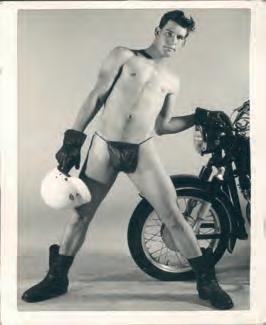
Popular drag show celebrates 21 years
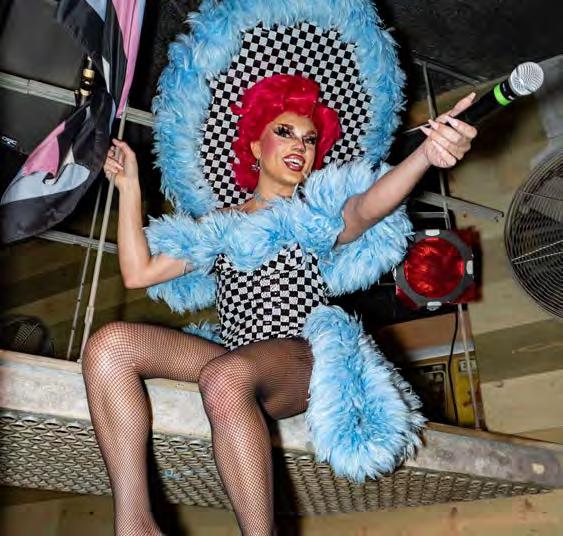
the show’s DJ and co-founder, suggested naming it after her alter ego, to give it a little edge, and that’s how ‘The
Show’ got its name.”
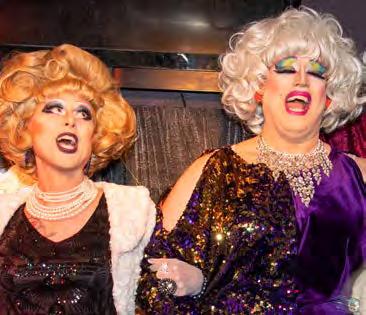

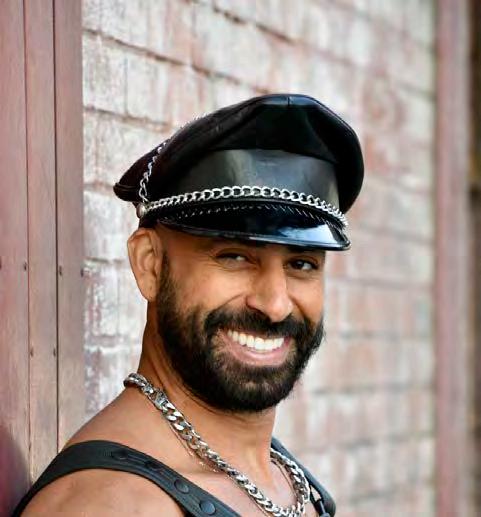


Keep it weird
Touche pointed out that The Monster Show is well known as San Francisco’s most ridiculous drag show. The show welcomes all styles and expressions of drag, which Touche noted was quite rare in the Castro.
“It’s often described as punk rock drag,” she said. “We encourage experimentation. As drag becomes increasingly commodified and uniform, we are working hard to keep drag weird.”
The Monster Show offers a different show every Thursday. Each week has a different theme. They have done shows dedicated to specific musical artists, like Lady Gaga, and versus nights, where two musical artists are featured. Each performer does two numbers. There are shows dedicated to musical genres, such as Broadway, grunge or country. Themes are frequently in the “ridiculous” vein. Recent examples include food-based numbers in a food fight, Pokemon night and “Real Housewives” night. There’s a different cast every week.
“There is no average Monster Show,” said Otter. “We encourage our performers to be who they are and to explore their performance styles and
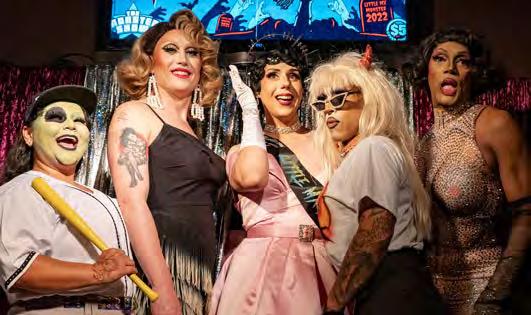
their art, so you will get shows with a mix of glamor, camp, high art, incredible dance performances, and political pieces. We vary our themes weekly, and range from serious to silly, pop culture to niche interests, so there is always something new and interesting. It’s a very San Francisco style of drag show.”
“Every year for our anniversary we invite some of our longtime regular performers and a few of our newer stars to come and give us their most monastery numbers,” said Touche. “It’s always a great show.”
Local performers include Sue Casa, Vera!, Carlota Di Carlo, Madd Dogg 20/20, Miss Shugana, Mocha Fapalatte, Coco Buttah, Lucinda Puss, Gia Metric, Linty, Lil Too Much, and Dee Dee Marie Holiday.
Added Otter, “We’re excited for the future of The Monster Show, and keeping this home for ridiculous drag going in the Castro.”t
The Monster Show, Thursdays at The Edge, 4149 18th Street, pre-show with go-go dancers and drink specials at 9pm, show at 10pm, $5 cover, no reservations. www.facebook.com/monstershowsf

‘Go at it, guys. I’m just going to walk around and film you, because you guys know what you’re doing.’ And we were really into each other.”
In another Colt short film, his partner, Clint Lockner, performed as a policeman.
“That’s why that scene was really hot, because we already really wanted to have sex with each other. Also, he was a real cop in life, which was a turn-on for me. And that was a really hot photo session.”
Bernstein continued living in LA, “going to the gym, being very gay,” and worked at The Pleasure Chest on Santa Monica Boulevard. Porn films in those days were only short film reels, so a friend of his brought a projector to the shop and showed one of his scenes on a wall.
Cover story
Bernstein continued doing still photography, making the cover of almost 20 adult magazines. This added to his popularity in escorting.
“I knew I had an iconic look,” he said. “I cherish that, but I didn’t rub it in anybody’s faces. I would meet my clients, and they were very excited. And then we ended up talking and whatever for the rest of the evening, and they’d say, ‘You’re not your image at all. You’re really nice!’”
His hustling and modeling continued to be just a side hustle.
“The most I ever got paid, I believe,
was $800 for two days work,” said Bernstein. “I was sometimes the star, so I got paid. My name was above the title. That was decent money for having sex.” Bernstein is elated that he is the subject of the upcoming documentary, and has already shot most of the footage with White and C. Bernstein is included in their previous film, “Raw! Uncut! Video!”
“I just had such a good time with them, and they were so nice and so sweet, and so accommodating and young, and so interested in who I was and what I have to say. When they said, ‘We want to do a documentary about you,’ I thought, ‘Huh, what is there?’ I have no idea what they’re doing. And I almost don’t want to know, because I want to be surprised.”t
Read the full interview on www.ebar.com.
‘Mickey & Richard’ sneak peek and fundraiser at the Bob Mizer Foundation, October 5, 5pm to 7pm, 920 Larkin St. $20 suggested donation. www.bobmizer.org www.rawuncutvideo.com
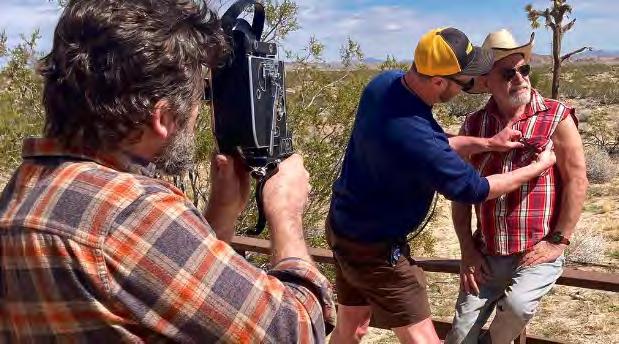
by Jim Piechota
Welcome to Folsom
Week here in beautiful, diverse, and, yes, kinky, San Francisco! Here are three books of interest that have published in the past month guaranteed to appeal to your kinkier side, your alternative sexual proclivities, and your nasty, deliciously dirty sense of carnal adventure.
“Kink Is”
curated and edited by Race Bannon, Patrick Davis, et al, $34.99
(Unbound Edition Press)
This incisive essay anthology of “surprisingly relatable true stories about sex, power, and joy,” is all about perspective. Embedded within the numerous contributors’ complex personal stories and histories are truths about identity, passion, love, respect, honor, community, allegiance, sensuality, brutality, consent, connection, and SEX, in all its glorious variations.
Curated by local San Francisco author, educator, sexuality authority Race Bannon, the 70-year-old “kinkster” (selfacknowledged since he was a teenager) sees his affinity for the “power dynamics” of kink as an identity since “even when I am not actively doing it, I’m likely thinking about it.”
The book’s contributing voices describe their personal meaning of kink in diverse ways. Individual profiles range from a relative newcomer to the scene to folks with several decades on the books in the kink community, to local San Franciscans within the BDSM universe to internationally-based men and women. The common bond all of the contributors share is the appreciation and deployment of non-traditional powerful pleasure, interaction, intersection, and individual expression, embodied from all walks of life.
Appearing throughout the essays are a married, “heteroflexible,” Black woman who burlesque dances and openly elaborates on the heated topic of fetishization of people of color in kink situations.
Leather dyke domme Queen
Cougar remarks that, at nearly 70, her energy level for kink events isn’t what it used to be and encourages others like her to “just enjoy the lust and desire to play and the fun of all of it.” And that’s just a small taste of the revealing experiences shared throughout this book; there are dozens and dozens more.
Photographs provided by the essayists reveal just a glimpse into who they
are; the real, raw, and honest details can be found in the generous and candid reflections they offer about life on the kink spectrum.
Celebrating its contents as “educational and informative but not instructional,” this outspoken kaleidoscopic collection of unvarnished sexual adventure and personalized preference transcends the stereotypical and is a fearlessly diverse addition to the genre of books celebrating the wide and wonderful world of kink.
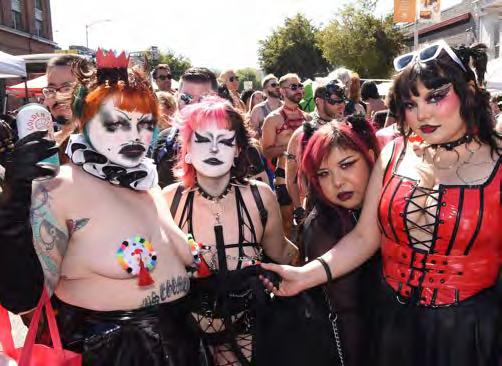
www.unboundedition.com
“Sodomy Gods” by David Lauterstein, $34.99
(Unbound Edition Press)
This dynamic, memorable, and sexually frank coming-ofage memoir depicts the author’s rise to prominence from his early beginnings as a formerly closeted ’90s New York City club kid to becoming the founder and CEO of Nasty Pig clothing brand.
With college and a poetry degree under his belt, the author came out in 1992, moved to Manhattan and began working in music merchandising. His chance meeting with Fred Kearney at a Chelsea bar would be the start of something life changing.
Experienced Fred became virginal David’s first boyfriend, and both combined their fierce love of 1990s-era nightclubbing (the atmospheric descriptions are nostalgically spot-on) and their intuitive creative energies
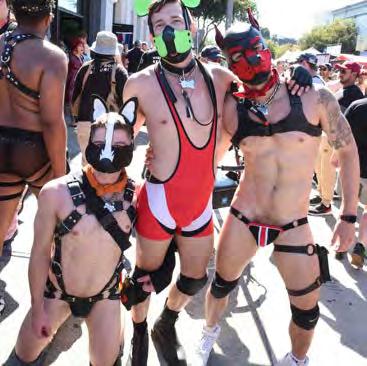
into fashioning unique wearable statement items.
The chapters on Nasty Pig’s inspiration (with a $50 investment), creation, development, and rise to prominence are perhaps the most elaborative and revealing chapters in the book. The author writes about the immense struggles the brand encountered along the way to get it to where it stands today.
Along the way, Lauterstein shares the melodramatic ups and downs of relationships, the everpresent fear of AIDS while remaining horny, cruisy, and boy-crazy, being the business owner of what would become a highly stylized (and even criticized) queer male fetish brand (“my own great American Wet Dream”), and how life ebbs and flows as time moves on.
The result is a luminous, erotic memoir shot through with brazen honesty, real emotion, and details galore on how to love, lean, create, overreact, and succeed in fashion, culture, and beyond. unboundedition.com
“The Modern Queer Tarot” by Robert Barber & John Callaghan, llustrations by Tanya Wischerath, $35 (self-published) Local husband and husband creative team Bobby Barber and John Callaghan present this informative, queer-driven, vividly illustrated take on the art of tarot which attributes a vibrant queer historical profile to each of the 78 cards in the oracle deck.
metaphysics into the creation of this “divinatory device” that begins with cards of the Major Arcana featuring notable luminaries in queer history like Jean Genet, Susan Sontag, Walt Whitman, Quentin Crisp, The Stonewall Rioters (who ushered in an era where “Gay Power was forever unleashed”), Harvey Milk, social reformer Jane Addams, James Baldwin, and many others.
This section is conjoined by a collection of historical figures representing the tarot’s Minor Arcana, such as legendary activist and drag queen Jose Sarria, trans activist Christine Jorgensen, The Cockettes, Freddy Mercury, and African American blues singer Ma Rainey.
The book also comes equipped with a complete companion deck of glossy, full-color tarot cards which
The authors note that the largesized paperback volume was designed “to find a balance between the people that best fit the interpretations of each card without sacrificing any of the inherent, long-honored divinatory meanings of the cards themselves.”
Both authors parlay their experience in Western esotericism and
create a dual experience of reading the book and having the actual cards in-hand as well. An “applications” section provides useful instruction on how to approach and use both the book and its accompanying card deck to maximum efficacy and enjoyment.
www.modernqueertarot.comt
Reads the full reviews on www.ebar.com.
For “Kink Is” and “Sodomy Gods” book events, see our Leather events roundup in this week’s issue.

www.leatherpridefest.com www.sf-eagle.com www.folsomstreet.org