Subscription: To subscribe, renew your subscription, or change your address or other information, go to: http://mysubscription.ca/heg/
Heavy Equipment Guide serves the Canadian engineered construction industry including: roadbuilding and maintenance; highways, bridges, tunnels; grading and excavating; earthmoving; crushing; trucking and hauling; underground utilities; trenching; concrete paving; asphalt paving; demolition; aggregates production; fleet maintenance; and asset security and management. The magazine is distributed to key industry personnel involved in these sectors.
Subscription Price: In Canada, CDN $91.00; Outside Canada, US$149. Heavy Equipment Guide is published eight times a year in January/ February, March, April, May/June, July/August, September, October, and November/December.
Heavy Equipment Guide accepts no responsibility or liability for reported claims made by manufacturers and/or distributors for products or services; the views and opinions expressed are those of the authors and not necessarily those of Baum Publications Ltd.
Copyright 2026, Baum Publications Ltd. No portion of this publication may be reproduced without permission of the publishers.
We acknowledge the financial support of the Government of Canada.
Printed on paper made of FSC®-certified and other controlled material. ISSN 1715-7013.
PUBLICATIONS MAIL AGREEMENT NO. 40069270
WE’D LIKE TO HEAR FROM YOU
Do you have a job site story, innovation, or industry concern that our readers should know about?
We’d like to hear from you.
Contact: Editor in Chief Kaitlyn Till at ktill@baumpub.com or 604-291-9900 ext. 330
Return undeliverable Canadian addresses to: Circulation Dept., PO Box 430 Stn Main, Alliston, ON L9R 1V6 email: heg@mysubscription.ca / 705-502-0024
FROM THE EDITOR
STREAMLINE YOUR JOB SITE AND SAVE MONEY WITH STRATEGIC EQUIPMENT CHOICES
Increasing pressure to deliver on tighter timelines with smaller budgets and less available labour makes your equipment selection strategy more important than ever. But there is good news. Machine capability continues to grow, and in 2026 there are more ways to complete work with fewer machines and reduced resources.
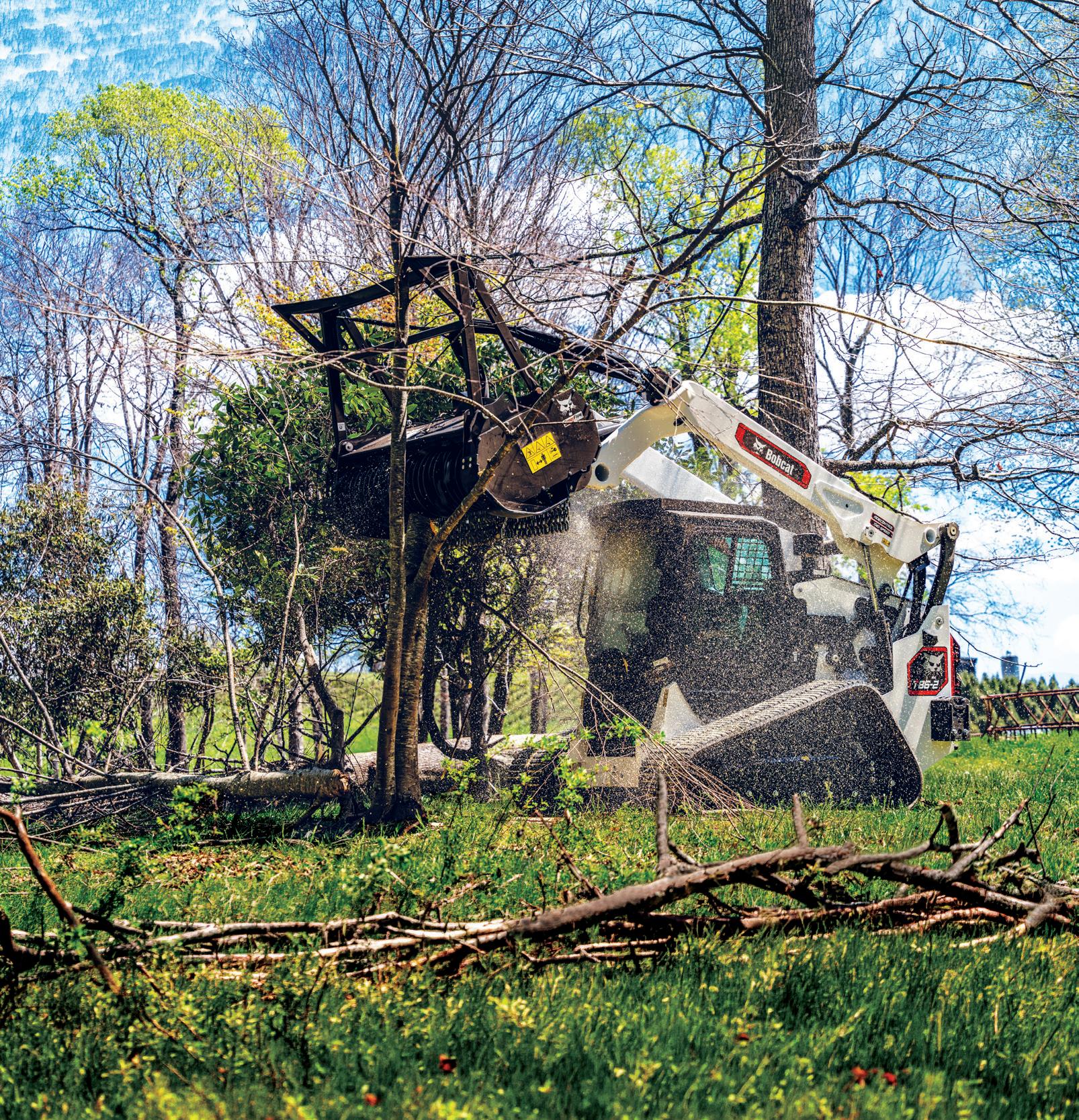
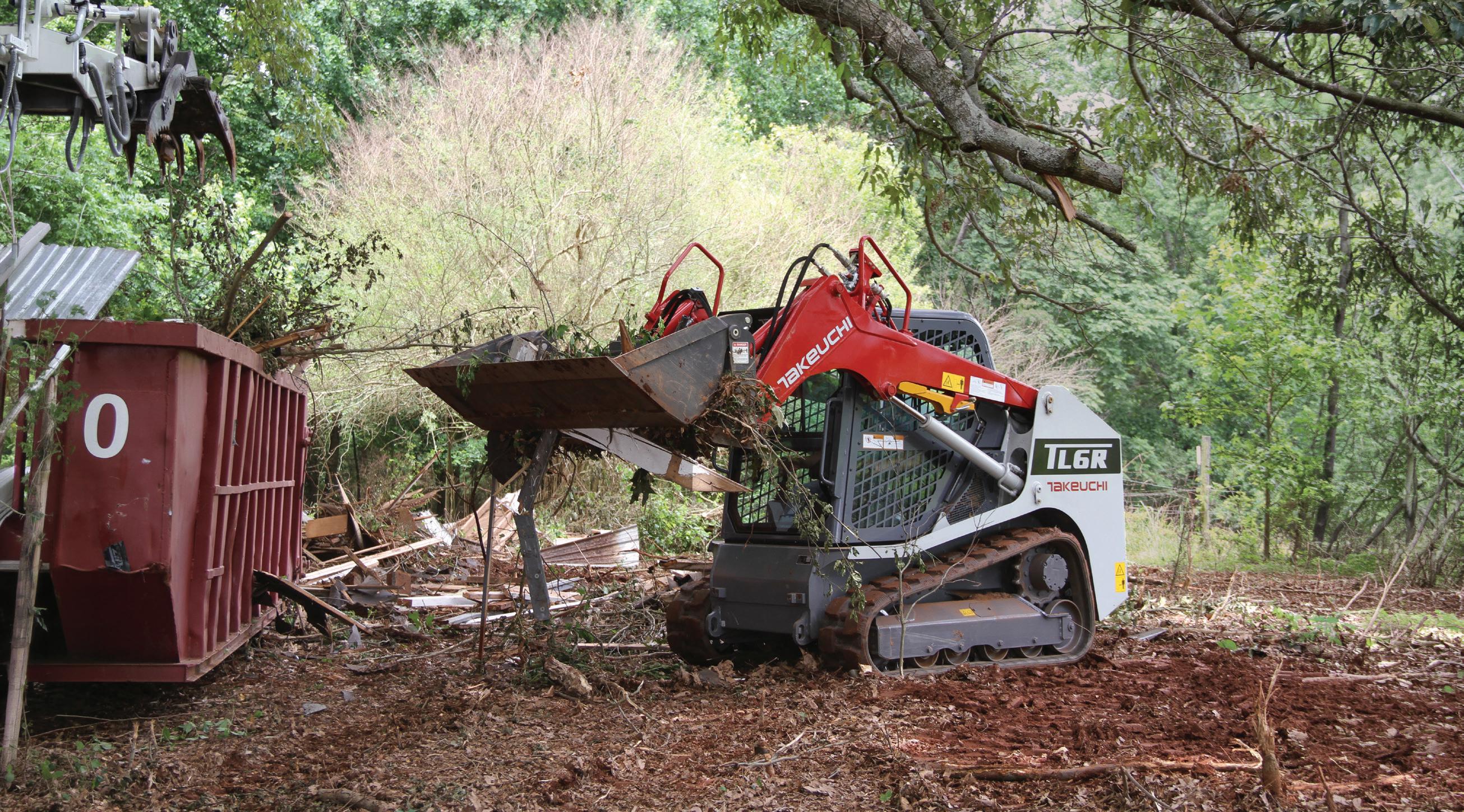
There is no better example of a machine that can pull doubleor triple-duty on the job site than the compact track loader. CTLs are massively appealing: they offer simplified transportation logistics, have a small footprint for tight and hard-to-access work sites, and their attachment versatility drives real value. The expanded scope of work open to CTLs all year round makes them a smart investment, and the latest technologies add further precision and capability.
In this issue, we go deep on CTLs in our spec guide and buying tips feature. There is a daunting number of CTLs on the market in North America. This issue is designed to help you narrow down your CTL selection and identify the machines that are best-suited to your applications and job sites.
Dive further into the concept of a “core machine” in the article “Less equipment, more flexibility,” and learn how a curated fleet strategy is an effective driver of cost savings and operational efficiency for many Canadian contractors.
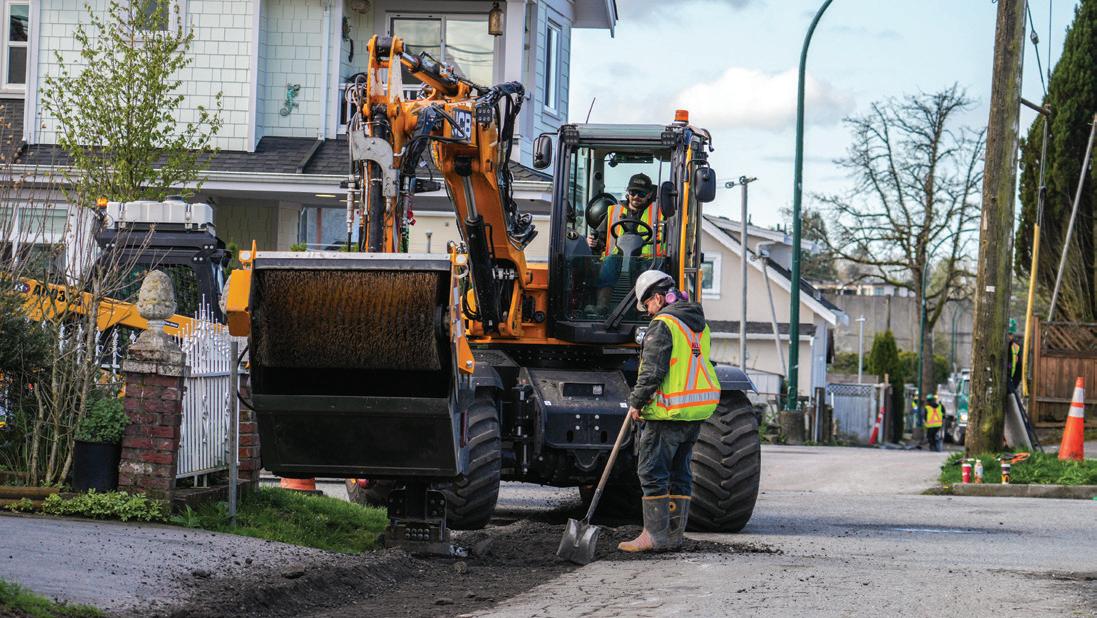
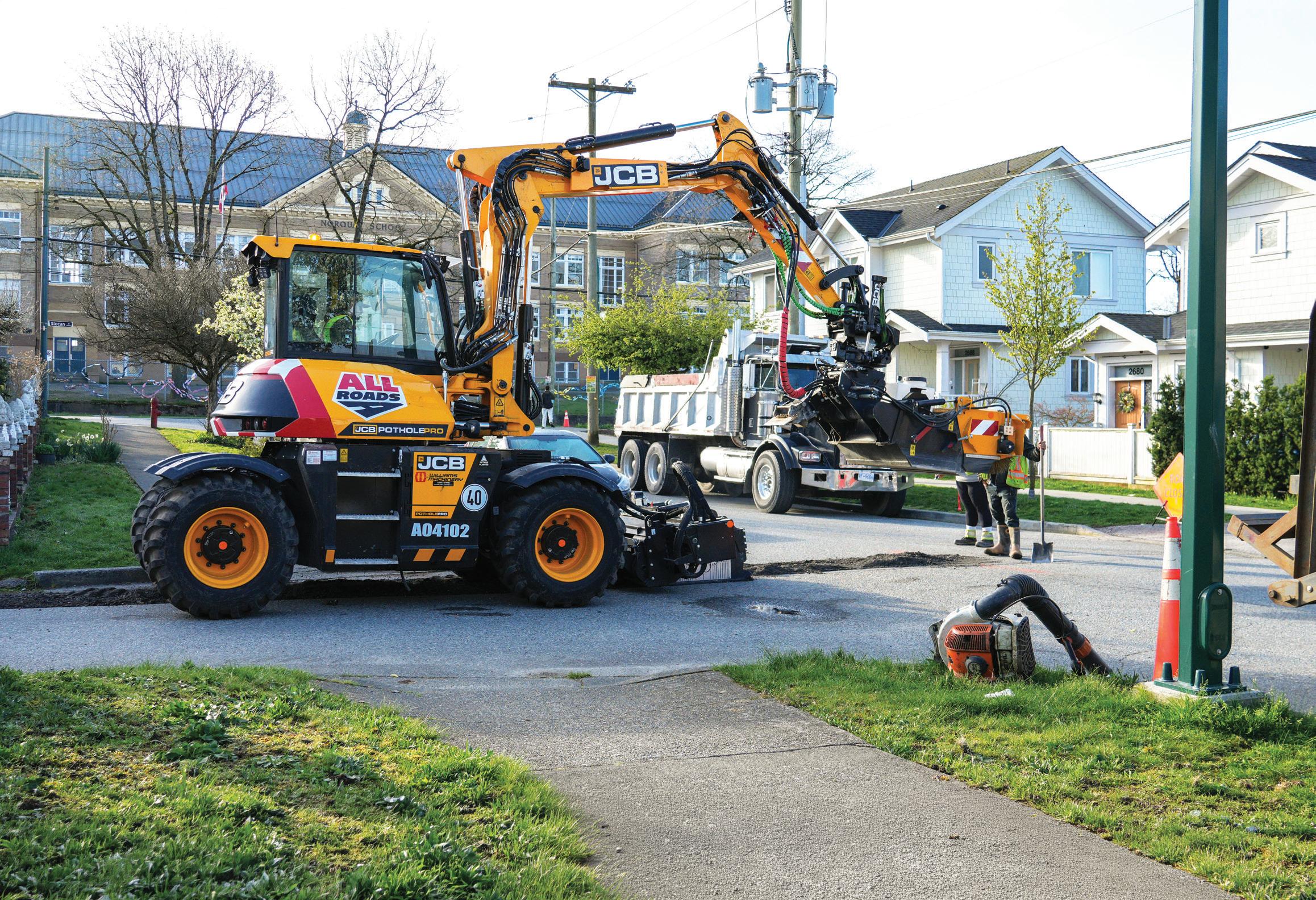
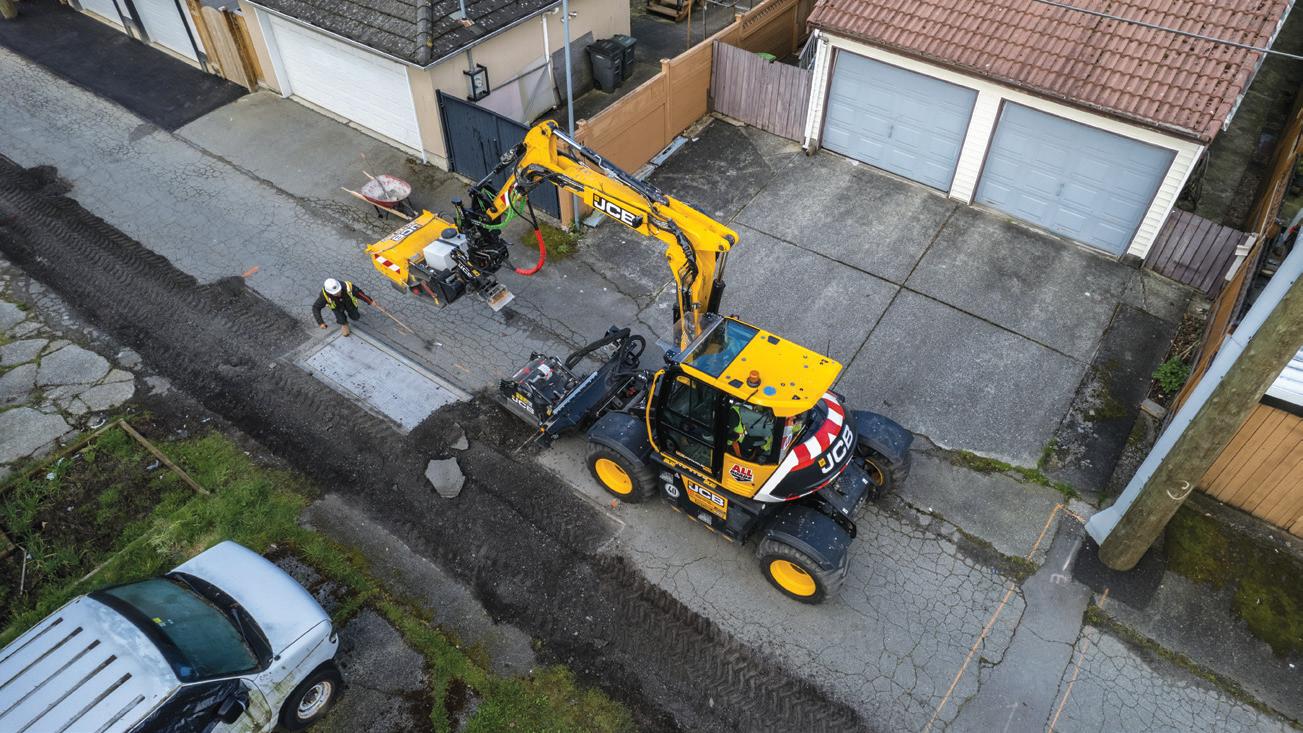
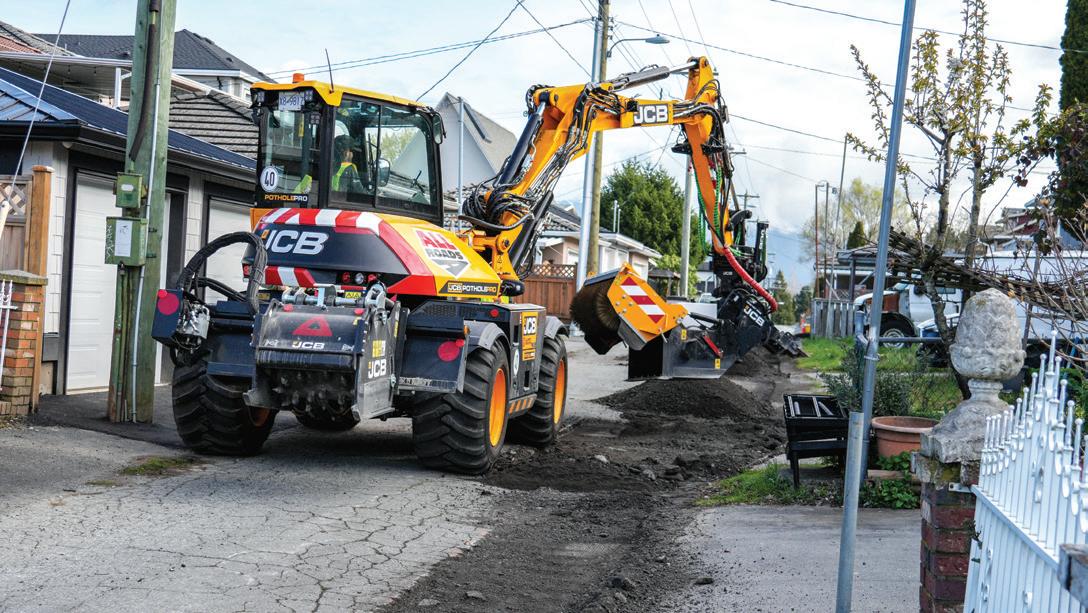
A strategic equipment choice is at the heart of another feature in this issue. All Roads Construction was contracted to fill Vancouver’s massive pothole backlog, but spread out work areas and urban congestion made it difficult to deploy a traditional pothole patching crew and equipment.
Instead, the company opted to purchase Canada’s first JCB Pothole Pro, which reduced the number of machines and crew
There is no better example of a machine that can pull double- or triple-duty on the job site than the compact track loader.
needed to do the work and significantly limited neighbourhood disruption.
There’s never a bad time to reevaluate your equipment management and selection strategy. Consider the machines you use, how you use them, and where you can consolidate roles or need to fill gaps — you might find that the best solution is a streamlined fleet.
Kaitlyn Till Editor In Chief
ktill@baumpub.com heavyequipmentguide.ca
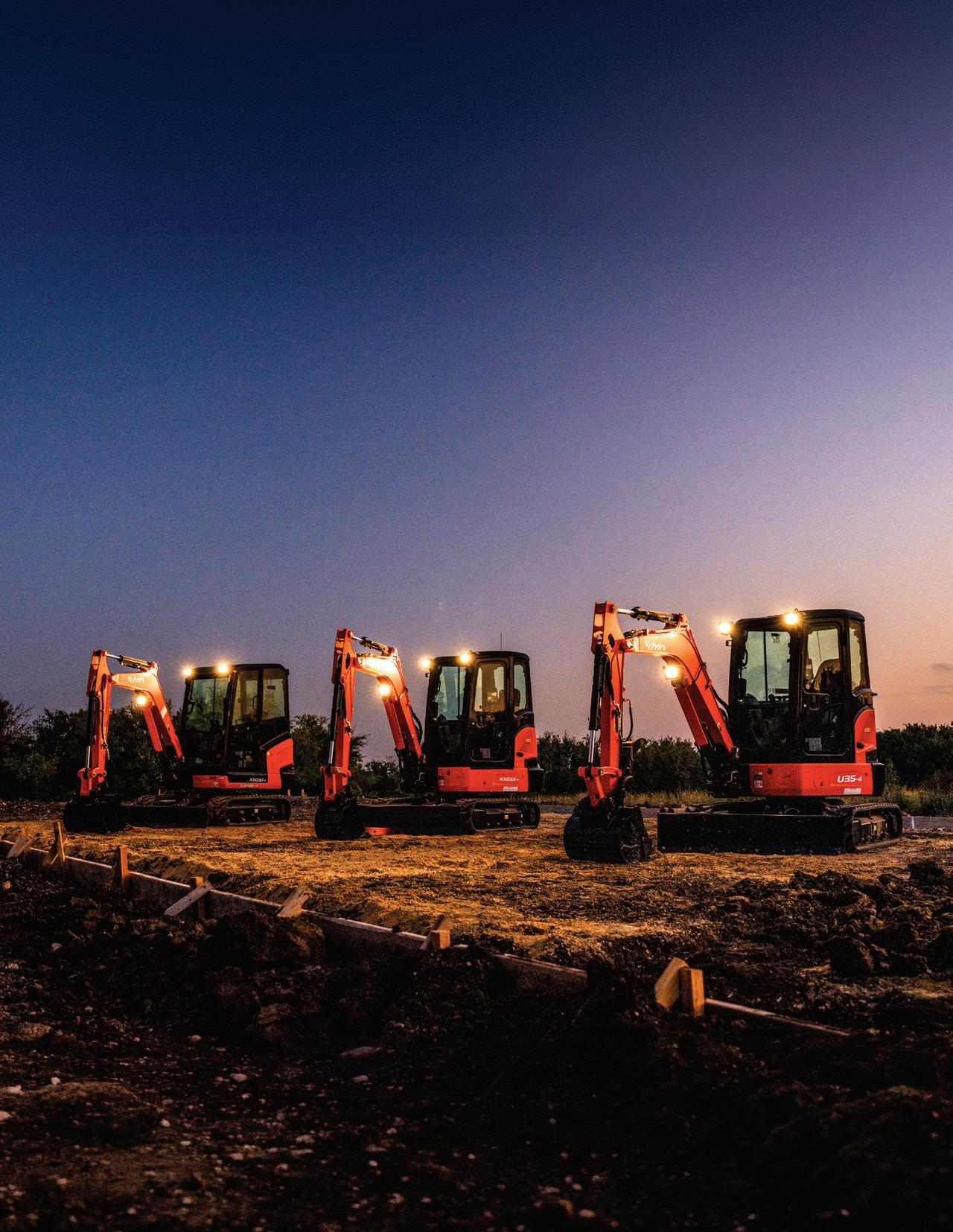
Power Through the Dirty Work.
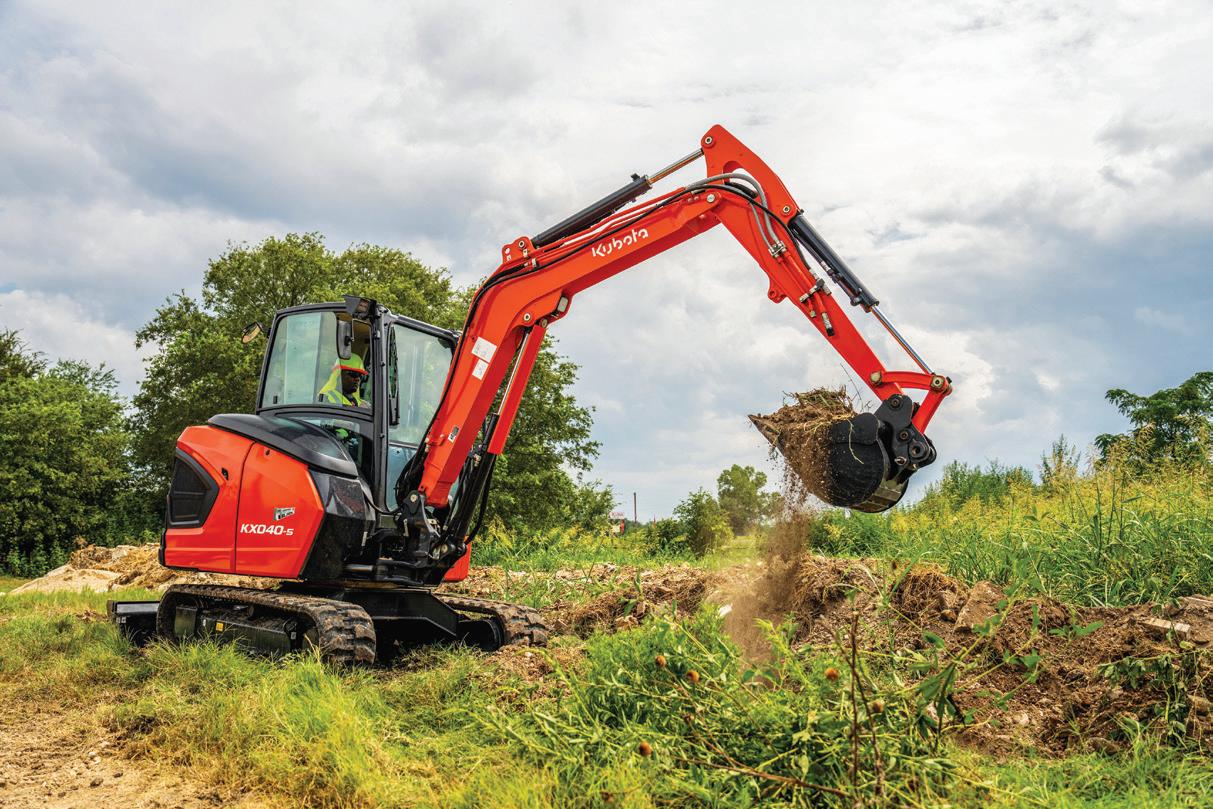
From Ultra Compact to Mid Size, Kubota’s Excavator Lineup is ready to get it done and then some on any construction job, big or small. Simple operation, outstanding durability and comfortable in-cab features will help you take your productivity to the next level.
NEWS ROOM
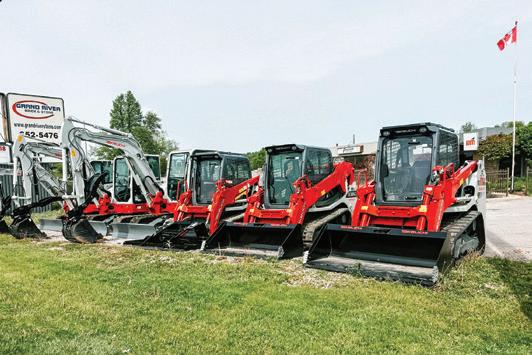
CORNERSTONE EQUIPMENT IS TAKEUCHI’S NEW DEALER SERVING SOUTHWESTERN ONTARIO
Cornerstone Equipment, located in London, Ontario, is Takeuchi’s new dealer serving contractors, rental houses, and agricultural customers throughout southwestern Ontario, including Middlesex, Oxford, Waterloo, Elgin, and surrounding counties. Partners Calvin Vandenbrink, Eric Vanderlinde, and Ryan Vanderlinde bring multiple years of experience in equipment sales to the business.
“As we launch this new venture, we’re excited to work with Takeuchi,” said Calvin Vandenbrink. “Takeuchi has a strong brand reputation built on providing high-quality construction equipment. We strongly believe that featuring Takeuchi as our flagship brand will help us attract a solid customer base within the construction, landscape, and agricultural sectors here in this region.”
The dealership features a dedicated showroom and parts and service space, and the team is focused on both in-house and on-road sales and support. The company has committed to comprehensive sales training and product support to deliver a consistent ownership experience for Takeuchi customers.
“While Cornerstone Equipment is a new dealership, its leadership team has the knowledge and skills to make it a success,” said Patrick Kirychuk, regional business manager for Takeuchi-US. “Calvin, Eric, and Ryan have a clear understanding of their market, a defined sales strategy, and a strong commitment to product support. We’re confident their approach will help expand Takeuchi’s presence in this part of Canada.”
XCMG EXPANDS CANADIAN DEALERSHIP NETWORK
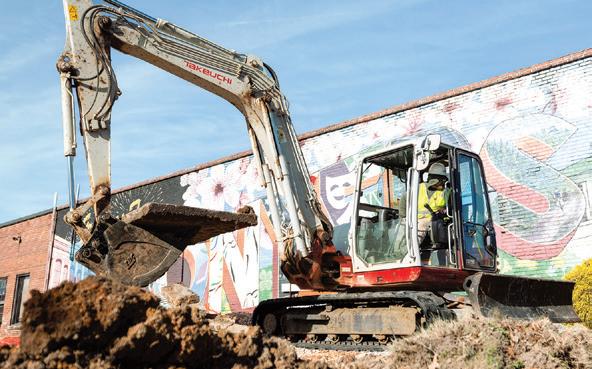
Three dealers serving Alberta and the Northwest Territories have joined XCMG’s network. KFR (Kubota Farm & Ranch) is the OEM’s new dealer serving Northern Alberta and the Northwest Territories. Foothills Group Inc. now represents XCMG in Calgary, Lethbridge, and Southern Alberta. Finally, XCMG has expanded its partnership with Motion Machinery Ltd., which now joins the XCMG network serving the Edmonton area and beyond. Having already established a strong presence as an XCMG forestry equipment dealer, Motion Machinery will now offer XCMG construction equipment.
WAJAX HOSTS ONTARIO DEMO DAY
THE DEALER WELCOMED ATTENDEES TO A HANDS-ON EVENT
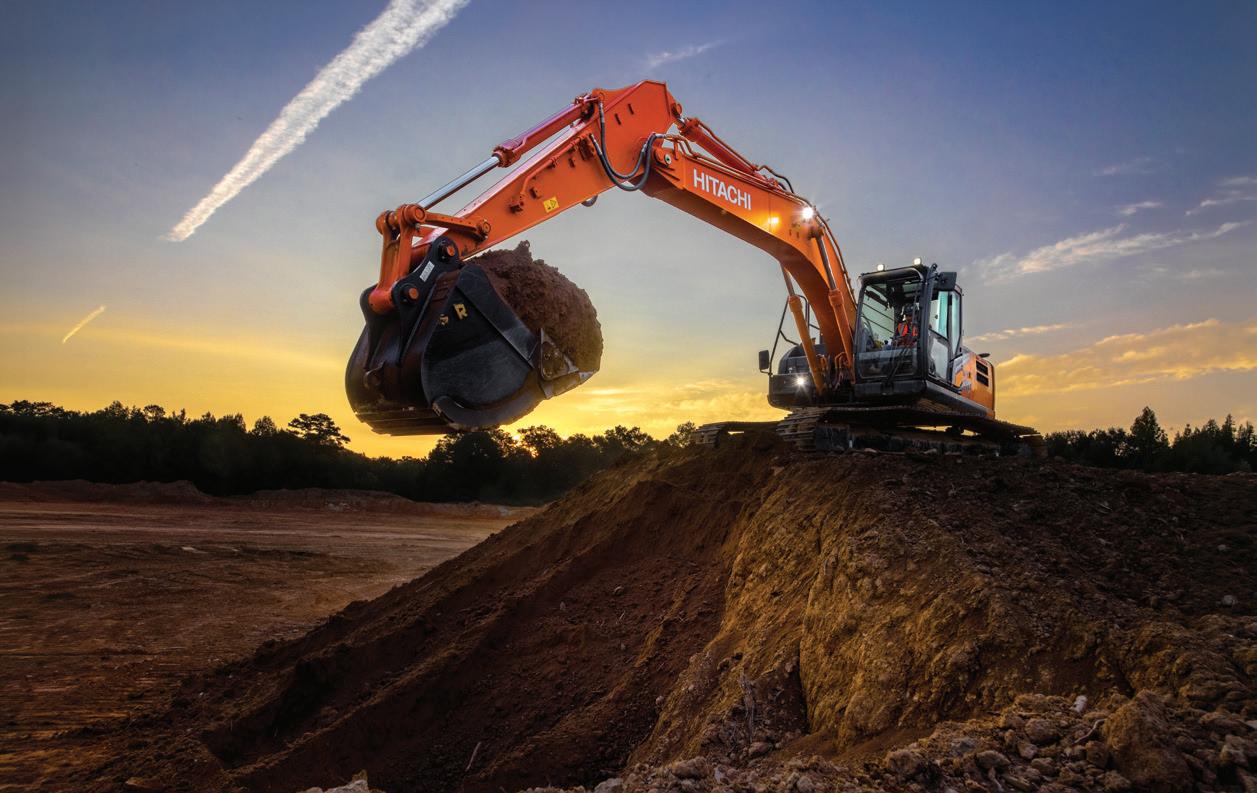
SHOWCASING HITACHI | LANDCROS CONSTRUCTION EQUIPMENT
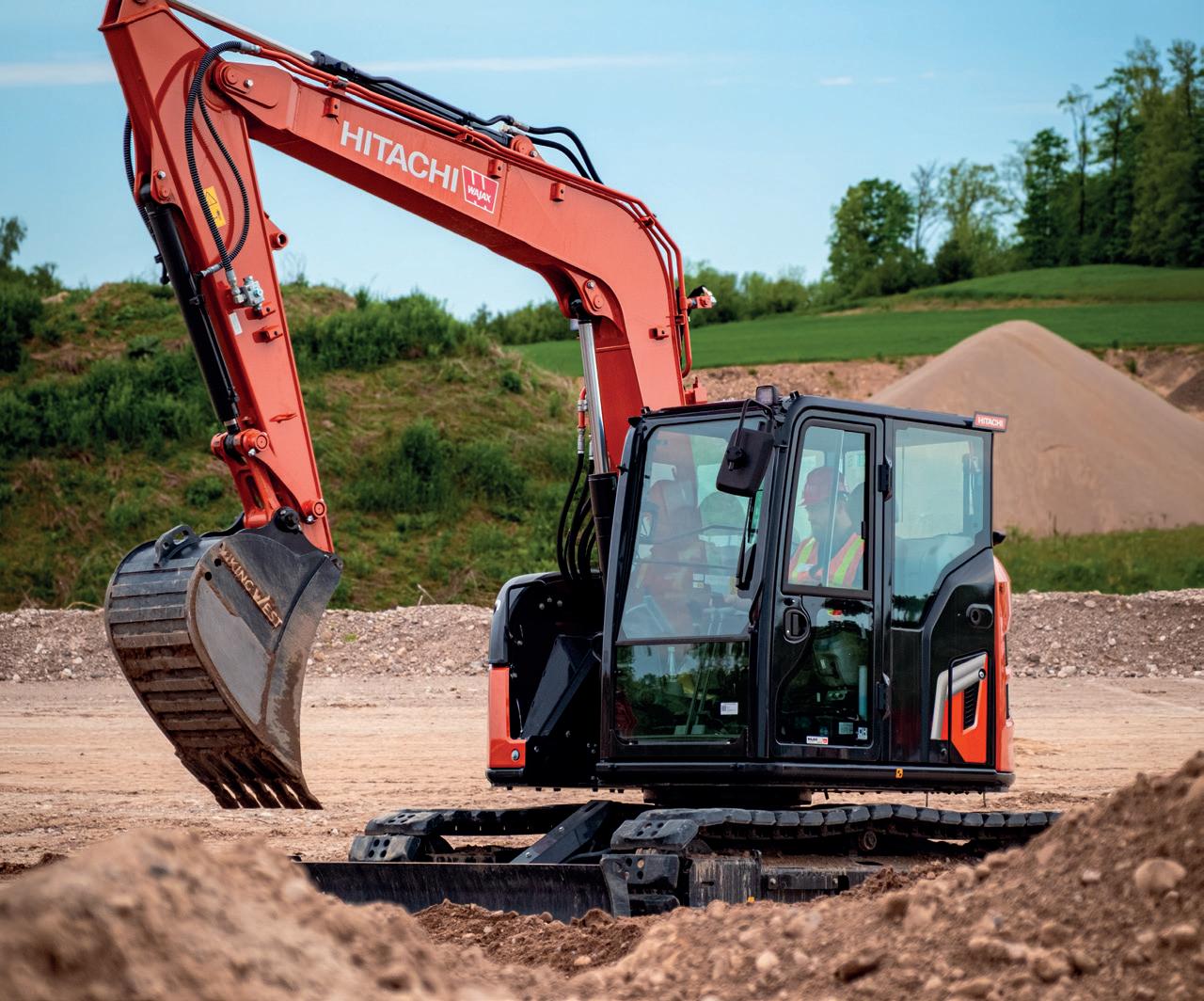
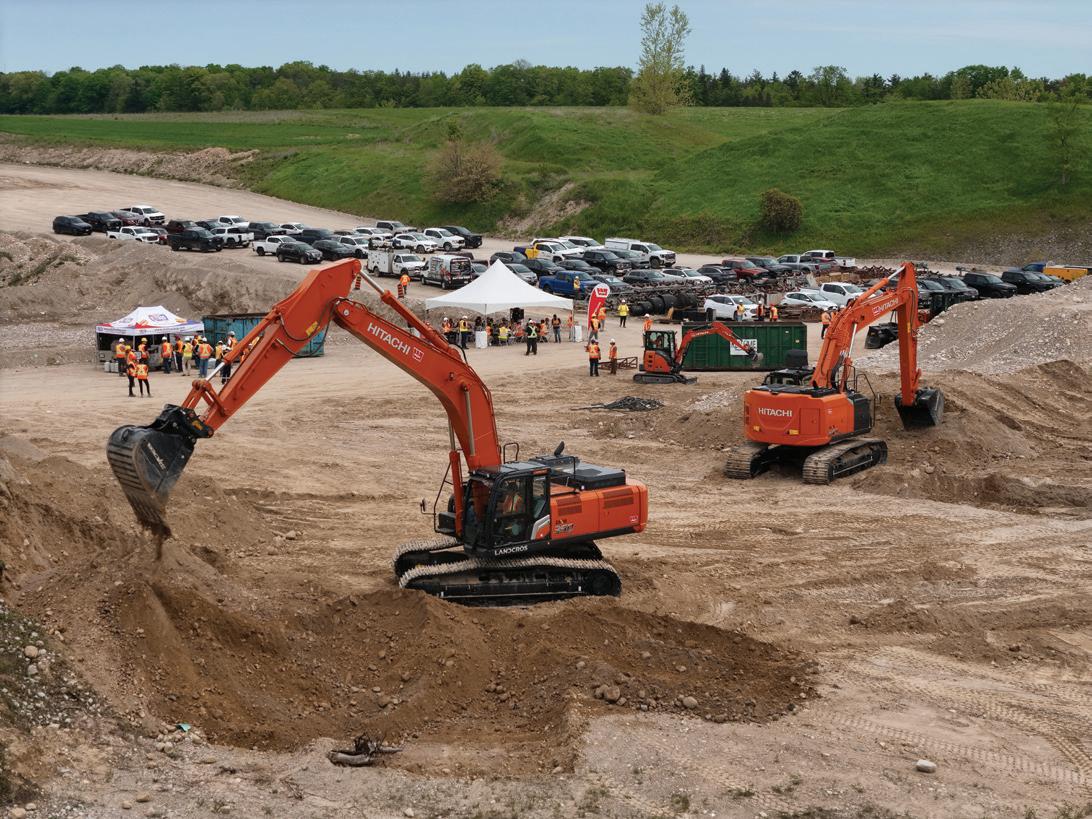
Wajax brought together contractors, operators, and industry partners for a hands-on Demo Day in Cambridge, Ontario, showcasing construction equipment from Hitachi | LANDCROS.
Attendees were welcomed to an immersive experience centred on performance, productivity, and real-world application. They had the opportunity to see and operate equipment designed to meet the evolving demands of job sites across Ontario.
At the centre of the event was the all-new Hitachi ZW140 Dash-7 wheel loader. Wajax said this machine drew strong interest from attendees eager to experience its enhanced efficiency, operator comfort, and advanced controls. Alongside the ZW140, a complete range of Hitachi excavators and wheel loaders were featured.
The dealer added that the day reflected the strength of its ongoing partnership with Hitachi, bringing together global engineering expertise and strong local support, including Wajax’s service network, technical expertise, and commitment to uptime.
“Demo Day is about more than equipment, it’s about giving our customers the opportunity to experience performance in a way that matters to their day-to-day work,” said Joe Rydel, vice president, construction & forestry at Wajax. “Pairing Hitachi | LANDCROS equipment with our technical sales reps and Hitachi’s product specialists makes for a hands-on experience that just can’t be duplicated in a typical sales setting where equipment is either not present or not available to operate. This type
of event provides our customers with a unique opportunity to learn about the Wajax and Hitachi advantage, get behind the controls of a variety of machines, and get a first-hand look at the real value these machines can deliver.”
The event was made possible with the support of Capital Paving Inc., which provided the space for the demonstration — a real-world environment where equipment could be experienced under practical working conditions.
2026 SPEC GUIDE
Compact track loaders
Turn to page 20.
VOLVO CE AND HITACHI COLLABORATION TO SUPPORT DEPLOYMENT OF ELECTRIC CONSTRUCTION EQUIPMENT
Hitachi Energy and Volvo Construction Equipment have signed a Memorandum of Understanding to collaborate on developing end-to-end approaches that support the deployment of zero-emission construction sites.
The collaboration brings together electric construction equipment with clean power supply, energy management, and system integration capabilities to help address one of the construction industry’s most pressing challenges: decarbonization.
Under the agreement, Volvo CE and Hitachi Energy will work on a non-exclusive basis to assess potential technical and commercial concepts supporting zero-emission construction and manufacturing operations, with a focus on system integration and site-level operational execution. The scope includes joint work on business models, go-to-market approaches, and aftermarket and support considerations backed by joint teams from both companies.
“Strategic partnerships such as this with Hitachi Energy are key to accelerating the transition to zero-emission construction,” said Melker Jernberg, president of Volvo CE.
“By combining complementary expertise and delivering a complete, integrated solution, we are giving customers the con-
fidence, security, and peace of mind they need to adopt emission-free operations today.”
“Electrification is a game changer in the decarbonization puzzle, particularly for hard-to-abate environments such as construction sites,” said Niklas Persson, CEO of Grid Integration at Hitachi Energy.
“As construction operations become more electric and more complex, success depends less on individual technologies and more on system-level integration, strong execution, and close collaboration with partners like Volvo CE who share our ambition to enable zero-emission construction at scale.”
EPIROC AND SANY SIGN GLOBAL PARTNERSHIP AGREEMENT
Epiroc AB has entered into a strategic partnership with SANY Group to explore opportunities for broader collaboration across selected areas in mining and infrastructure.
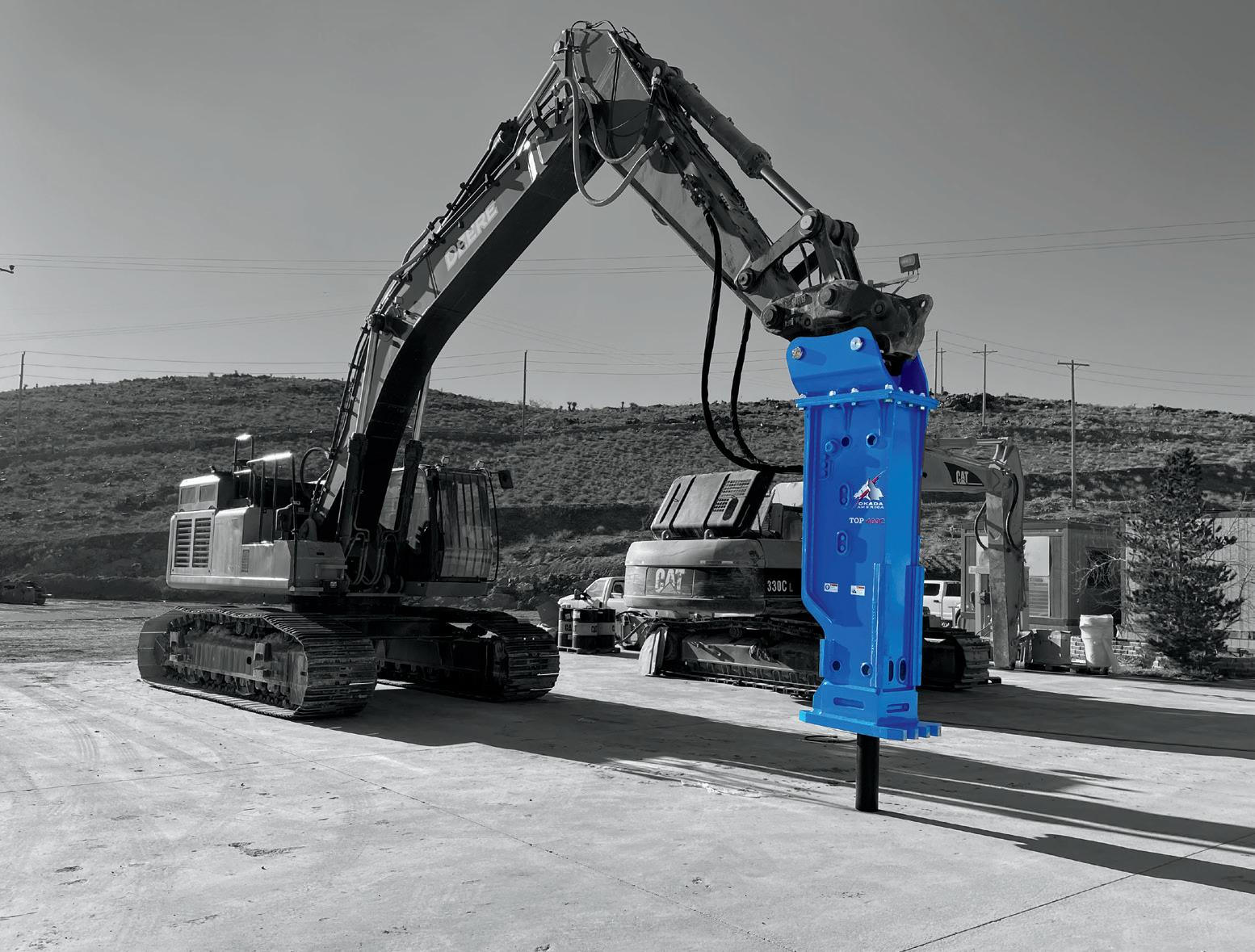
The parties aim to enhance the cross-brand product portfolio, including providing attractive combinations of Epiroc’s hydraulic breakers, other specialty attachments, and ground engaging tools (GET) with SANY’s excavator and loader portfolio.
Within mining, the parties will also collaborate to strengthen customers’ productivity by combining Epiroc electrified equipment, charging solutions, and global service capabilities with SANY’s extended expertise in electric micro grids and green energies.
OBSTRUCTIONS? NO PROBLEM
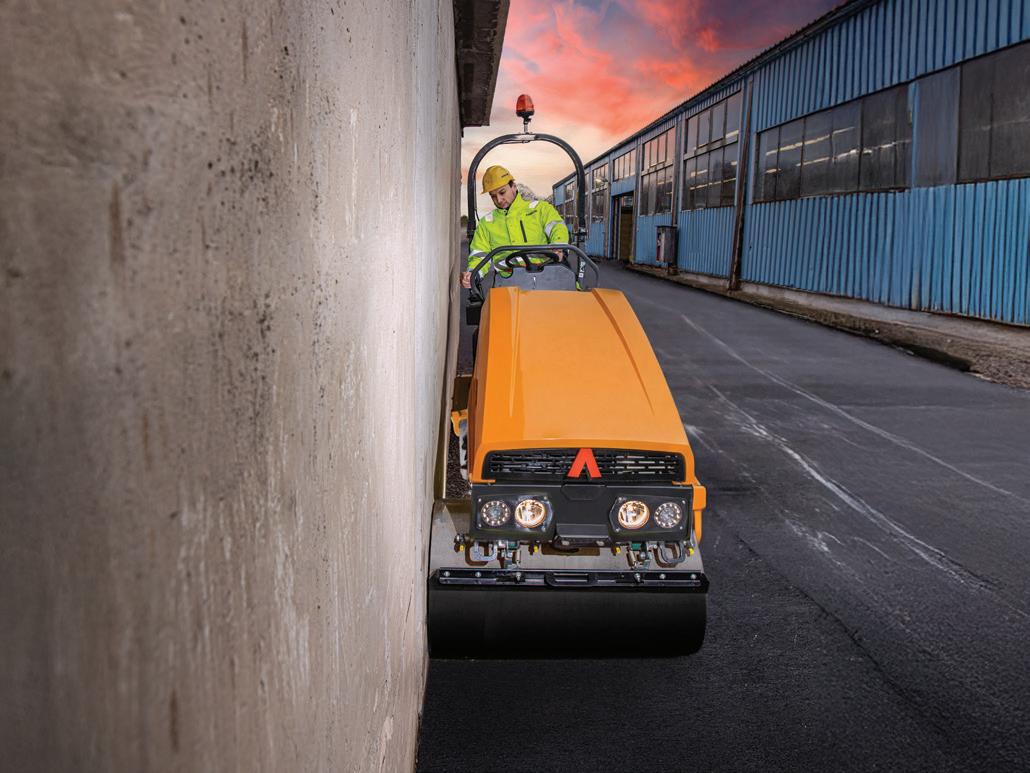
Ammann ARX Light Tandem Rollers excel in the open, where covering ground quickly is the goal. But other jobsites call for a compactor that can work tight against obstructions, such as curbs, without losing productivity.
OTHER KEY FEATURES:
• Electronic drive lever for smooth starts and stops, especially important on asphalt jobs;
• Optional ACEforce , the Intelligent Compaction tool for optimal efficiency;
• Perfect all-around machine visibility and LED lights for safety on the jobsite.
ARX Light Tandem Rollers
ARX Light Tandem Rollers
JCB PREPARES FOR HYDROGEN LAND SPEED RECORD ATTEMPT
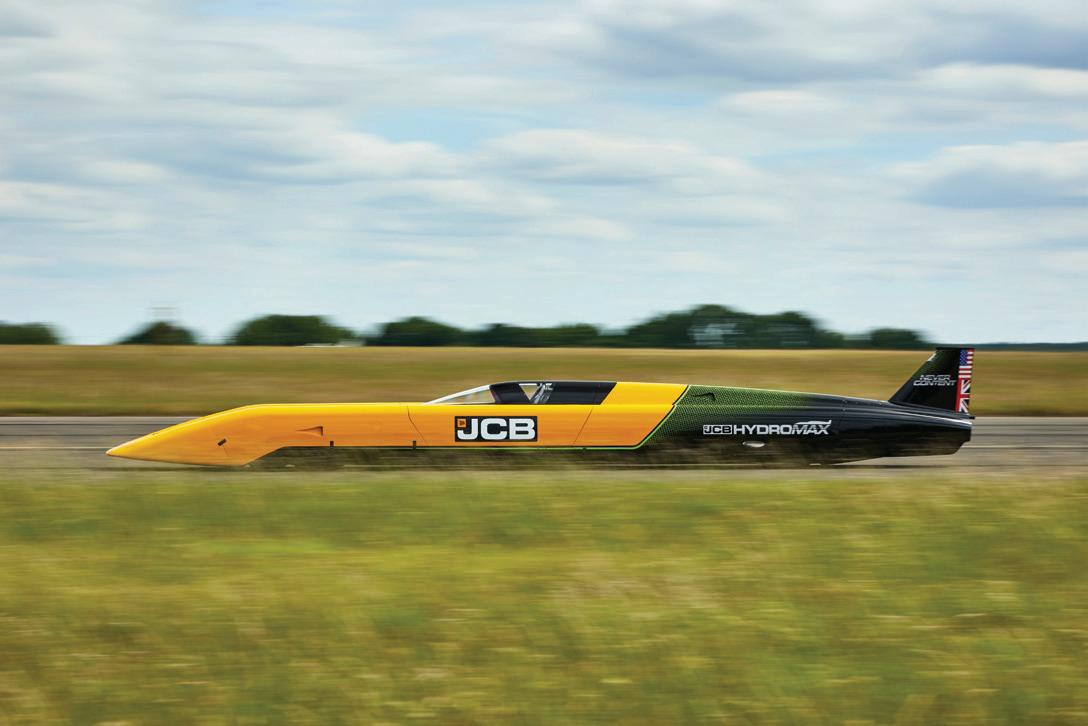
In May, JCB revealed that it will attempt to set a world hydrogen land speed record that tops its own 2006 diesel world land speed record of 350.092 mph. The JCB Hydromax car is powered by two JCB hydrogen-combustion engines, and the company has announced that testing at RAF Wittering in Cambridgeshire, England, achieved a speed of 177 mph on June 16.
In July, the car is being flown to Bonneville, Utah, in preparation for the record attempt on the Salt Flats, where it will be piloted by Wing Commander Andy Green OBE. Green is the
fastest man on Earth at 763.035 mph, and the only person to break the sound barrier on land. Green was the driver of JCB Dieselmax when it set the FIA world diesel land speed record at Bonneville in August 2006. JCB says that Hydromax is lighter and offers more power than Dieselmax.
www.heavyequipmentguide.ca
WESTERRA EQUIPMENT BUILDS IN ALBERTA
THE DEVELON DEALER IS READY TO SERVE CANADA’S LARGEST EQUIPMENT
MARKET
BY MEGHAN BARTON, SENIOR WRITER
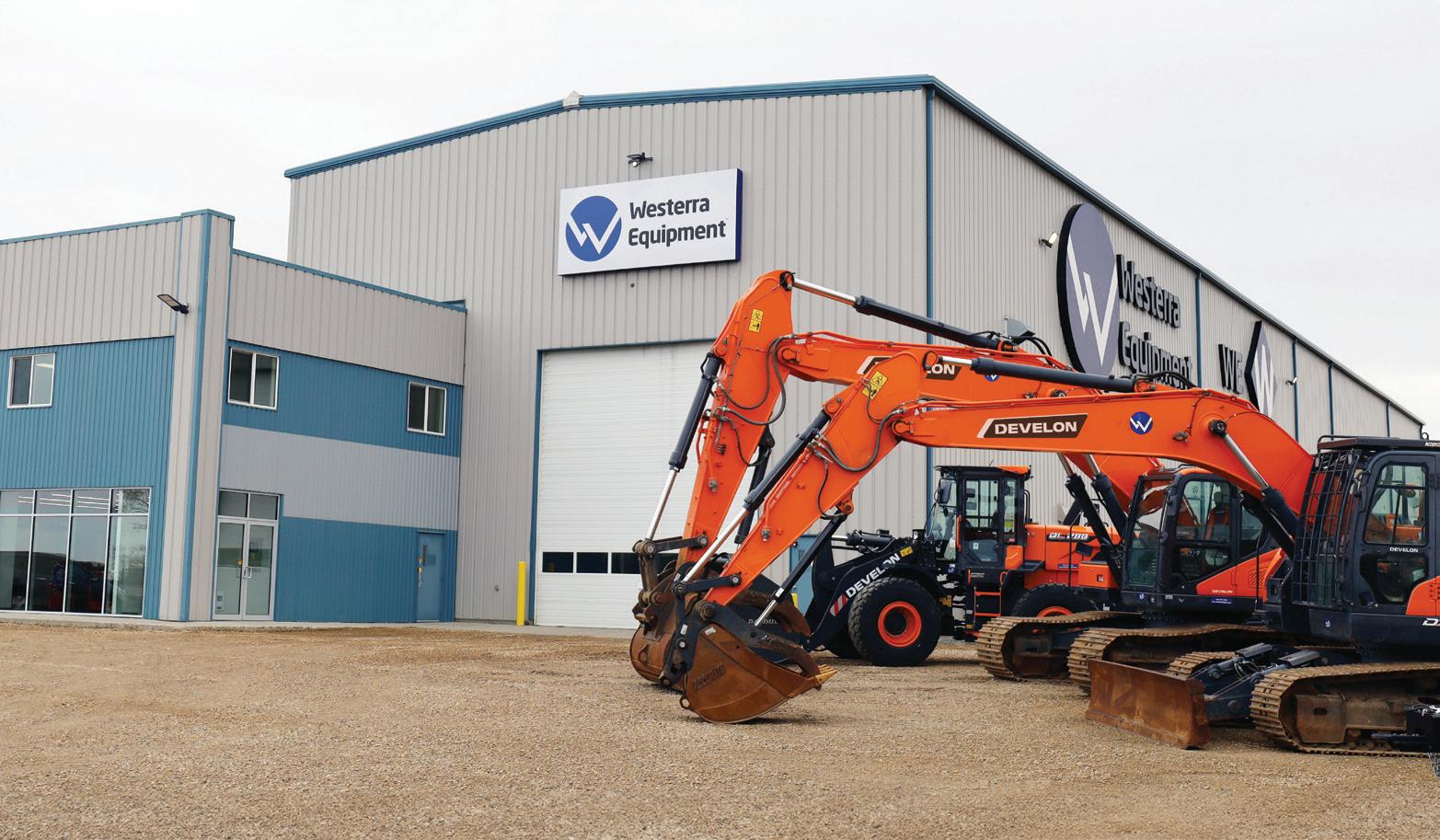
Westerra Equipment has entered the Alberta market with a greenfield launch in the greater Edmonton area, bringing DEVELON sales, service, and rental support into one of North America’s most competitive equipment markets.
Prior to this expansion, the Wesgroup Equipment family of brands maintained a broad presence across British Columbia with four Westerra Equipment locations, four Williams Machinery locations, and the company’s WE Rent division. Westerra has served as DEVELON’s sole dealer across British Columbia for roughly a decade.
Westerra’s move into Alberta is more than a geographic manoeuvre. It reflects a deliberate strategy by Wesgroup: build a dealership presence from the ground up, establish service capability first, and leverage a long-standing OEM partnership to gain traction in a market dominated by entrenched competitors.
“Alberta will be a growth market with its existing resources and upcoming projects,” says Dhar Dhaliwal, CEO of Wesgroup Equipment. “It’s the largest
equipment market in Canada and one of the largest in North America. It made sense for us to expand into this market.”
GREENFIELD OVER ACQUISITION
Nisku, just outside of Edmonton, was selected for its market size and central role in the province’s construction and energy activity. Here, Westerra operates out of a large facility that is well-suited to heavy equipment and provides room for expansion. Westerra’s decision to enter Alberta through a greenfield model rather than acquisition defines how the company is positioning itself from the outset.
“We made the decision to make a greenfield investment and scoped the real estate market for an optimal location and facility,” says Dhaliwal. The approach forgoes the immediate revenue stream that comes with acquisition, but gives Westerra full control over operations, systems, and staffing — something Dhaliwal views as critical to long-term execution.
“We wanted to use our own systems,
hire our own people for our own culture,” he says. That culture, Dhaliwal notes, is ultimately about delivering exceptional service levels as the company builds its presence in a new market.
WESTERRA BUILDS ON A DECADE OF DEVELON EXPERIENCE
Westerra’s expansion into Alberta builds on its long-standing relationship with DEVELON in B.C.
That experience positions Westerra as both a brand champion and a technical resource. Dustan Sept, director of marketing and inside sales at Wesgroup Equipment, says that experience also shapes how the company approaches new markets, particularly when building awareness for a product line.
This is particularly relevant in Alberta, where incumbent brands dominate. Although DEVELON had a previous dealer presence in Alberta, the brand remains relatively underdeveloped in the market. This presented a challenge and an opportunity for Westerra.
The company is entering a competitive market with limited brand aware-
ness and a minimal established customer base. But the absence of strong existing perceptions gives Westerra the ability to define how the DEVELON brand is experienced in the market.
“DEVELON is a high-quality product that competes with the top-tier brands but at a value price point,” says Dhaliwal. “We can effectively execute our strategy and not be competing with preconceptions in the marketplace.”
For Westerra, backing a consistent DEVELON product line across both regions simplifies sales, service, and technical support. As the company enters Alberta, that operational advantage allows Westerra to compete in a new market without relying solely on brand legacy.
TARGETING RENTAL, CONTRACTORS, AND INFRASTRUCTURE GROWTH
Westerra’s initial focus in Alberta is on construction, oil service businesses, and the rental market, with an eye on future infrastructure development.
“We believe Alberta will be a net benefactor of infrastructure investment in the coming years, and we are positioning
ourselves to participate in that growth,” Dhaliwal says.
The company is also targeting small to mid-sized contractors, a segment Dhaliwal sees as underserved by larger competitors.
“Our major competitors are focused on large customers, but we really succeed in that small to mid-sized customer base,” he says.
WE Rent plays a central role in that strategy by providing a lower-risk entry point for customers unfamiliar with the brand.
“Rentals are a way for a customer to become associated with the brand and build that level of trust to the point of purchase down the road,” says Sept.
PLANS TO SCALE ACROSS WESTERN CANADA
The Alberta expansion is part of a broader plan to increase Westerra’s presence across Western Canada.
“Our next expansion will be into Calgary,” Dhaliwal adds. The company will then evaluate further growth within Alberta and into Saskatchewan.
The goal is to build regional coverage
while maintaining a consistent operating model — extending Westerra’s service-led approach and DEVELON partnership across multiple markets.
DEFINING SUCCESS IN A NEW MARKET
For Westerra, success in Alberta is being measured in practical terms: building a team, establishing a presence, and gradually gaining share in a highly competitive market.
“In year one, it is getting the people on the ground, training them on the products, and building a market presence,” explains Dhaliwal.
Early targets reflect that measured approach. Dhaliwal says placing 20 to 25 machines into the market in the first year would mark a strong start, while longer-term success is defined by growing market share.
Those benchmarks underscore the company’s broader strategy: a disciplined, service-led expansion focused on building capability first, then scaling as the operation takes hold in a market where service performance will be a key differentiator. HEG
Westerra Equipment’s first Alberta dealership is located in Nisku, near Edmonton.
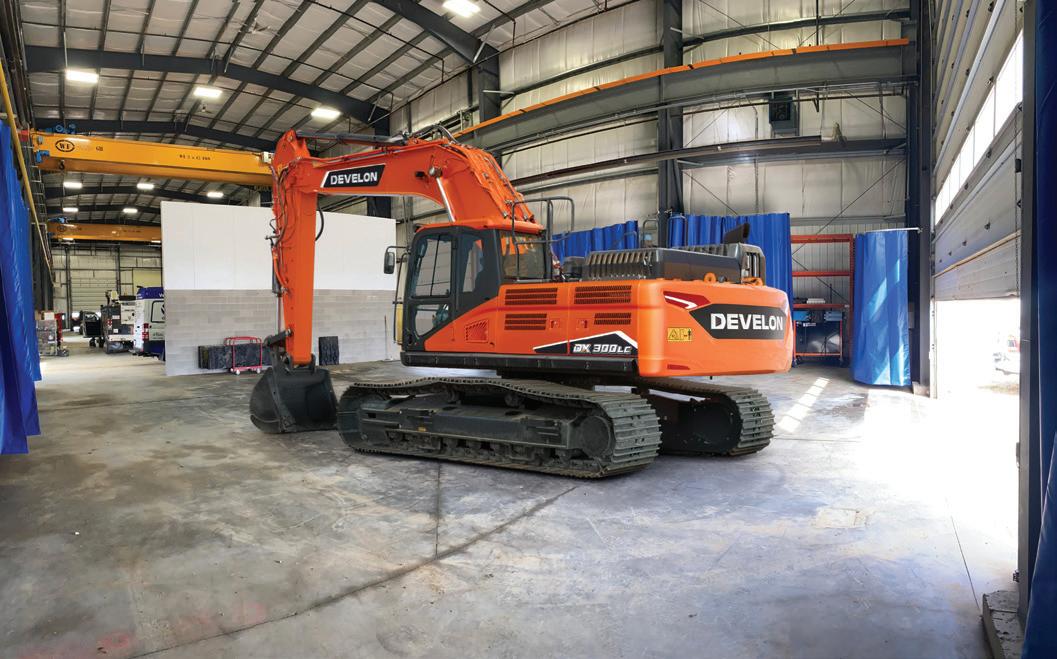
Westerra’s decade of experience with DEVELON equipment in B.C. positions the dealer to offer strong service capability in Alberta.
EMERALD EQUIPMENT IS
Breakers / Pulverizers / Shears
Crushers / Multi Processors
Compactors / Grapples
Pedestal Booms
most active construction, infrastructure, energy, and industrial markets, Emerald Equipment will further support the brand with parts, service, and technical expertise throughout the region, ensuring contractors and fleet managers have access to the resources needed to maximize machine performance and uptime.
TYPE 2 HARD HATS NOW MANDATORY ON ALL CCSC MEMBERS’ PROJECT SITES
The Canadian Construction Safety Council (CCSC) has implemented a new minimum standard for head protection on member project sites across Canada. Effective July 1, 2026, all workers, subcontractors, and visitors attending CCSC
TERAPRO IS CASE’S NEW FULLSERVICE DEALER IN ONTARIO
Terapro Construction will serve as the authorized full-service CASE dealer for the majority of the Ontario sales area previously served by Nors Construction Equipment.
With 18 locations in Canada, Terapro is an established CASE dealer with deep roots in the construction and agriculture industries. The company offers a comprehensive selection
of CASE heavy, compact, and subcompact equipment, along with value-added services including financing, maintenance, telematics, and dedicated aftermarket support.
As part of this transition, Nors will continue providing CASE parts, service, and warranty coverage through October 31, 2026. During this period, both Terapro and Nors will be available to support CASE customers.
“Terapro has a strong reputation for customer support, equipment expertise, and operational excellence,” said Terry Dolan, head of CNH Construction Brands, Commercial. “Through our partnership with them, we’re reinforcing our commitment to providing contractors and crews with the support, expertise, and resources they need to maximize productivity and uptime.”
SPOTLIGHT
INTRODUCTIONS & UPDATES
Volvo Construction Equipment LARGE WHEEL LOADER
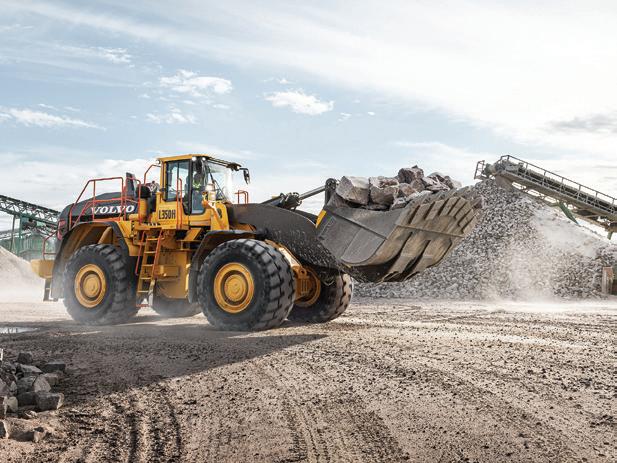
Volvo CE’s largest wheel loader, the L350H, now features a Volvo D17 engine that delivers increased power, higher low-speed torque, and up to 5 percent improved fuel efficiency. The 558-hp engine produces up to 2,183 lbf-ft (2,960 Nm) of torque and incorporates wave piston technology designed to improve fuel economy while enabling smoother operation at lower rpm and faster boom response. A new Smart Control system enhances coordination between the engine, hydraulics, and driveline to support productivity. The machine offers a breakout force of 72,960 pounds (324.5 kN) and a static tipping load at full turn of 69,400 pounds (31,470 kg), with bucket capacities ranging from 8.1 to 16.6 cubic yards (6.2 to 12.7 cubic metres). Additional updates include enhanced downhill control through Volvo Engine Brake technology and a new service platform and lighting.
Wacker Neuson
REVERSIBLE PLATE COMPACTORS
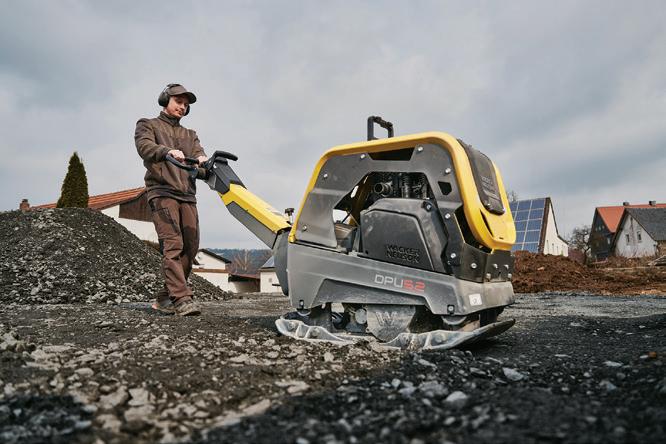
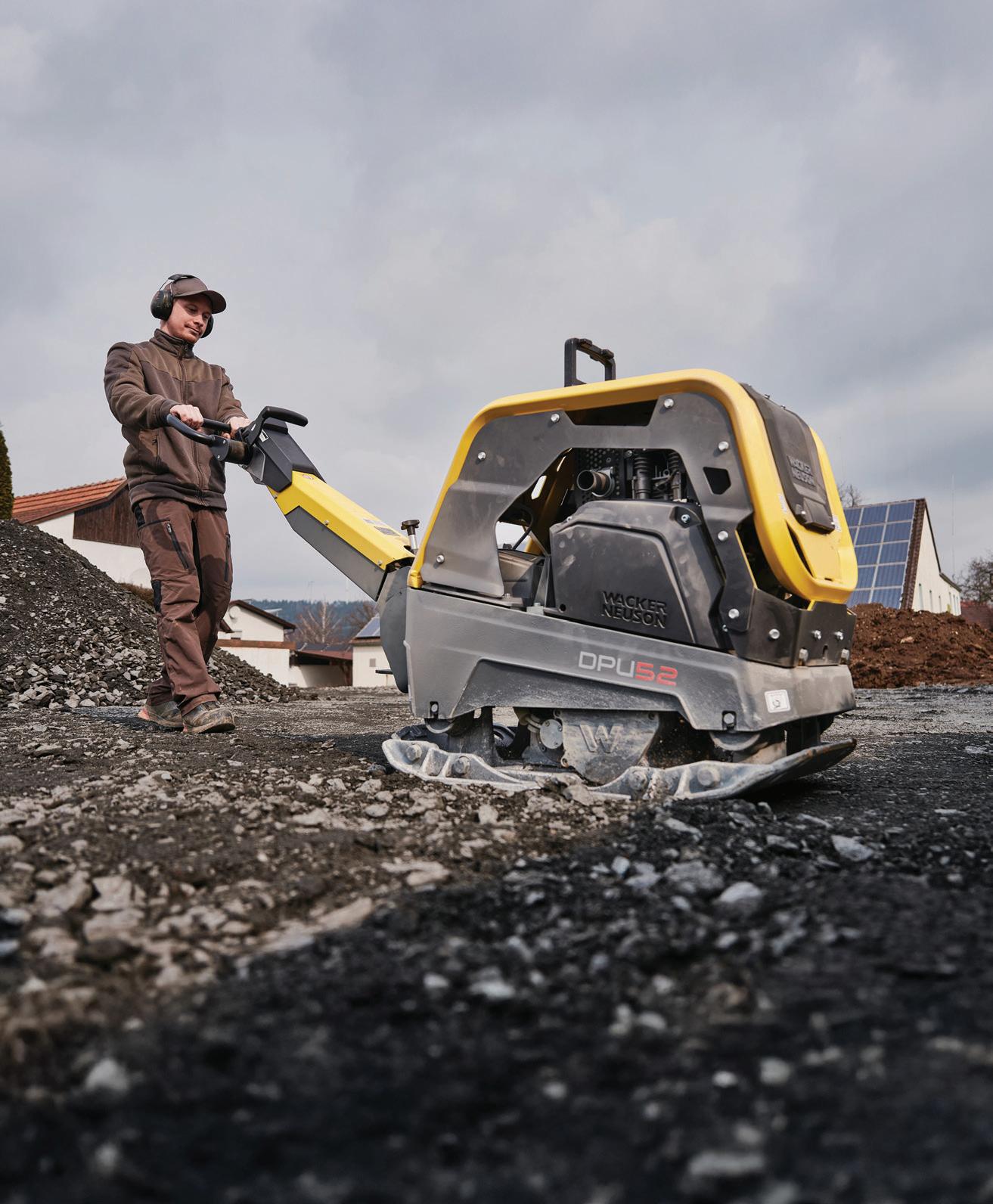
Wacker Neuson’s new medium-weight reversible plate compactors, the BPU5260 and BPU6275 gasoline models and DPU5260 and DPU6275 diesel models, deliver 30 percent greater gradeability and 20 percent faster forward travel speeds than previous models. A redesigned exciter placement contributes to the higher travel speeds and compaction performance. Available in weight classes ranging from 600 to 1,125 pounds (300 to 510 kg), the compactors also feature an open base plate design for easier cleaning. Hand-arm vibration levels are below 2.5 metres per second squared. Additional updates include a height-adjustable centre handle, maintenance-free hydraulic direction control, and infinitely variable forward and reverse travel speeds.
Caterpillar MICRO EXCAVATOR
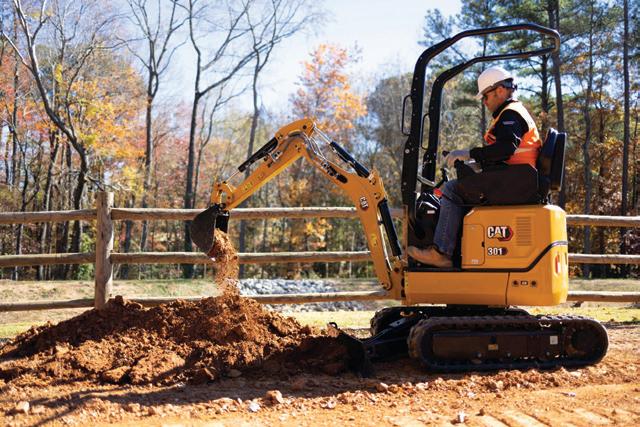
The 301 CR micro excavator replaces the 300.9D and introduces a range of updates to Caterpillar’s 1-ton excavator lineup. Featuring a compact radius and a shared engine platform with several other Cat models, the 301 CR is designed to provide familiarity and ease of service while offering a maximum digging depth of 71.7 inches (1,820 millimetres). New features include seat-mounted pilot controls, two-speed travel, a folding rollover protective structure, an updated gauge cluster, improved stability, and first and second auxiliary hydraulic options. To expand attachment versatility, Caterpillar has introduced a manual coupler and A13 auger, complementing the existing B1 hammer and range of trenching and cleanup buckets.
Manitou ELECTRIC TELEHANDLER
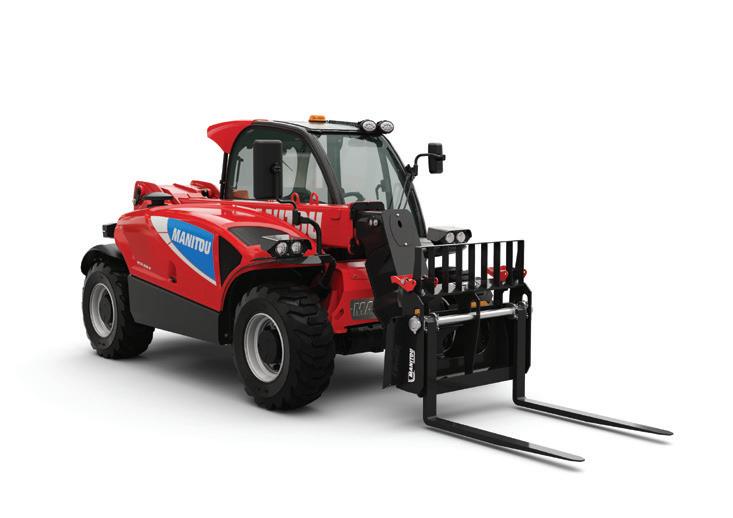
Designed specifically for North American customers, the MTA 519 e is an all-electric telehandler powered by a 33-kWh lithium-ion battery. The machine offers a maximum lifting capacity of 5,500 pounds and a lift height of 19 feet 1 inch, making it suitable for indoor applications, urban projects, and job sites with emissions or noise restrictions. Manitou says the battery-powered design can reduce maintenance costs by 56 percent, compared to comparable internal-combustion models, while providing up to five hours of continuous operation. The telehandler features a simplified dashboard, redesigned cab, dedicated joystick, and a universal skid-steer attachment mount.
Liebherr MOBILE CRANE
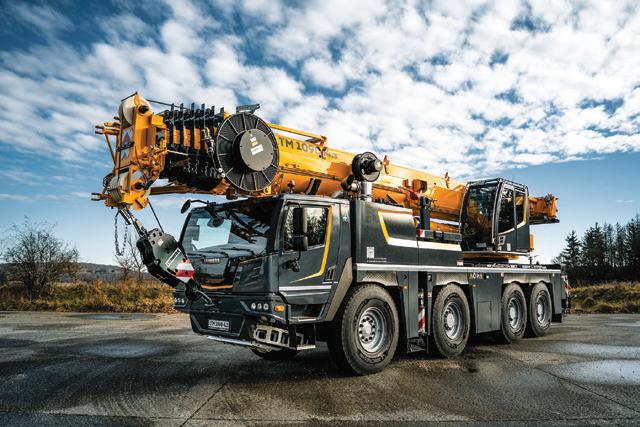
The LTM 1090-4.3 is an update to Liebherr’s 110-ton (90-tonne) four-axle platform. It features Liebherr’s LICCON3 control platform, which is faster and has more memory than previous versions, and new programming simplifies updates, future-proofing the system. Display of information via the touchscreen in the superstructure cab has been simplified. The LTM 1090-4.3 retains the 197-foot (60-metre) telescopic boom of its predecessor while increasing lifting performance, particularly at extended lengths and steep boom angles. It also maintains flexible axle-load configurations. New driver assistance systems improve road safety. RemoteDrive preparation enables remote movement of the crane on confined job sites. Standard VarioBase and VarioBallast help enhance lifting flexibility and job site performance.
2026 SPEC GUIDE compact track
Compact track loaders are some of the most versatile machines on the job site, and the range of options available — and new OEMs entering the market — reflects their popularity. CTLs are indispensable in site prep, material handling, landscaping, demolition, and general construction applications, and there are plenty of models to choose from, whether you need a basic machine or more advanced features. Explore CTLs available in North America in our comprehensive 2026 CTL spec guide. If you’re in the market for a new machine, our buying tips feature is packed with advice that can help guide your decision process.
loaders
Kubota
COMPACT TRACK LOADER BUYING TIPS
ADVICE FROM THE EXPERTS
BY KAITLYN TILL, EDITOR IN CHIEF
Compact track loaders are among the most versatile machines on the job site, and more than a dozen manufacturers offer CTLs in North America. We reached out to the experts and asked for their advice to help you dial in on the right choice for your business. Here are their tips for CTL selection.
1
START WITH FUNDAMENTALS TO MATCH A MACHINE TO YOUR JOB SITE
Application, job site space and access, seasons of use, and ground conditions will provide initial direction when choosing a CTL.
Our experts agree that the CTL’s lift path is an important early consideration. Radial lift CTLs are great for ground-level work, such as digging and grading. Vertical lift machines are more suited to loading trucks and other applications that require higher lifting.
While considering horsepower is important, and it is one of the most advertised CTL specs, Lee Tice, senior product manager at JCB, suggests looking at the torque as well. “Torque is what helps a machine push into a pile, climb grades, power through tough ground conditions, and maintain performance under load. Operators feel torque every time they accelerate, grade, or carry heavy material across uneven terrain.”
CTLs are chosen for their traction, flotation, and low ground pressure. However, not every job site places the same demands on the undercarriage. Joe Boufford, CASE Construction Equipment’s product marketing manager for construction products, notes that landscapers working on finished lawns will require lower ground pressure and a smoother ride, while contractors working in more rugged demolition or site development applications will prioritize durability, traction, and stability under load.
There are two categories of undercarriage to choose between, says Peter Ovrebo, director of product management at Yanmar Compact Equipment North America. Rigid undercarriages are generally lower cost but transmit more ground impact to the machine and operator. Suspended undercarriages provide better ride quality and traction.
Where buyers often go wrong is size. Dan Kakareka, product marketing manager at New Holland Construction says, “One of the biggest mistakes buyers make is choosing a machine that is either too large or too small for their typical work. A CTL should match material weights, attachment requirements, and job site conditions operators face most often.”
He adds, “Buying a right-sized machine improves productivity, reduces unnecessary fuel consumption, and helps avoid premature wear caused by overworking an under-sized loader.”
Seasonal applications should also be considered, says Jonathan Gardner, construction equipment product manager at Kubota Canada. “Particularly for contractors who use attachments such as snowblowers or pushers throughout the winter months. Evaluating year-round operating conditions can help ensure the machine is properly matched to the work environment.”
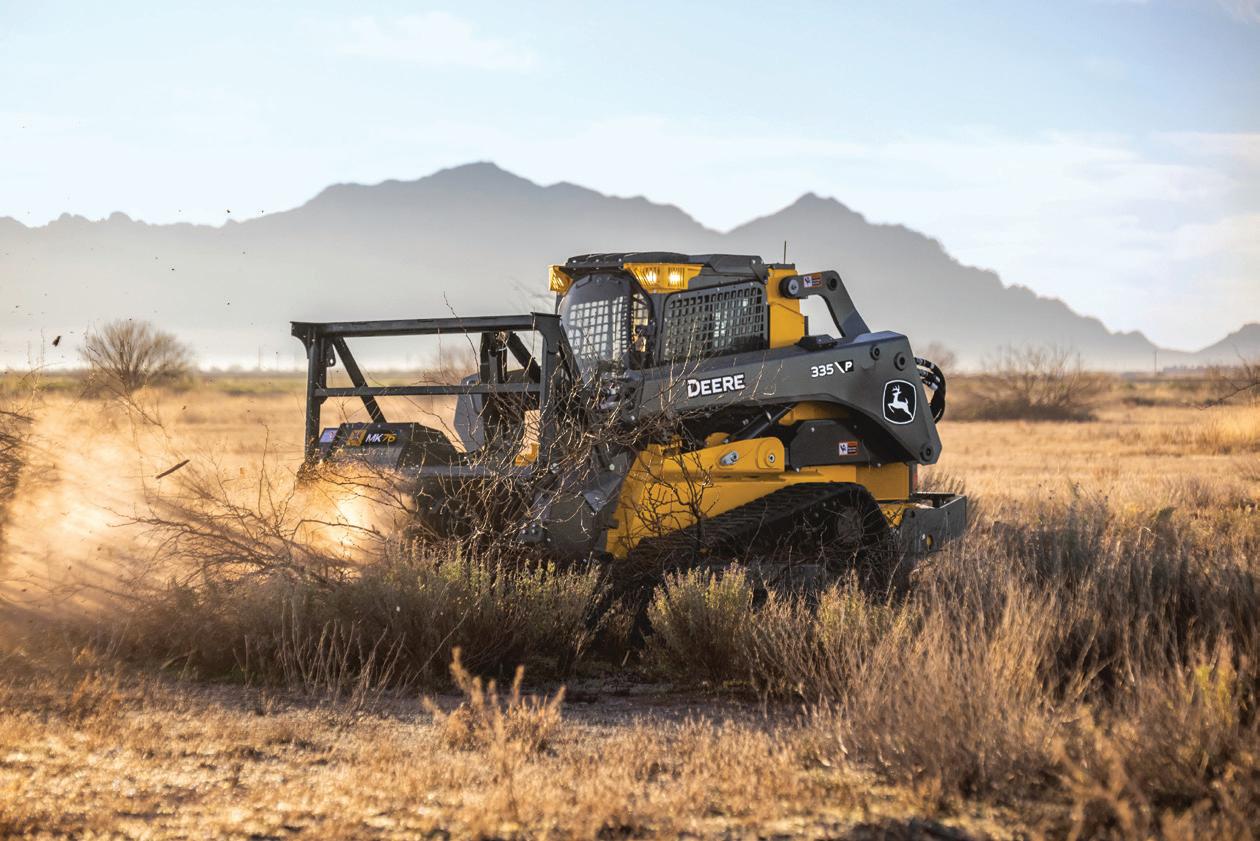
John Deere 335 P-Tier compact track loader.
2
EQUIP YOUR CTL FOR ATTACHMENTS THAT WILL DRIVE UTILIZATION
The value you get out of your CTL relies on the attachments you have for it. Attachment diversity is a good strategy for alleviating the pressures of tighter margins, labour shortages, and rising equipment costs. A wellequipped CTL can reduce the number of machines you need on the job site, and it can be used year-round.
“Many contractors focus first on engine horsepower,” says Dylan Freeman, Takeuchi-US product manager, “but auxiliary hydraulic performance can have an even greater impact on machine versatility. Buyers should evaluate hydraulic flow pressure and available high-flow options based on the attachments they plan to use. Demanding attachments, such as mulchers, cold planers, trenchers, and brush cutters, require sufficient hydraulic capability to perform efficiently.”
Attachments also come in a variety of sizes and configurations, notes Ovrebo from Yanmar. Just because the attachment can fit to your machine doesn’t mean that it’s the right size for your application — physical dimensions matter. “A bucket, for example, may sit within the width of the tracks or extend beyond them, which has real implications for how the machine performs and manoeuvres on the job site.”
Jason Taylor, compact equipment product manager from HD Construction Equipment Hyundai North America, recommends a universal hydraulic quick coupler for fast and tool-free attachment changes, especially if you will frequently switch between attachments on the job site.
And don’t forget to research attachment compatibility. Joel Hicks, product line manager at Kioti, points out that some manufacturers offer attachment options designed specifically for their machines, while others support a broader range of third-party attachments.
3
CHOOSE A CTL THAT SUITS YOUR OPERATORS
Good operators are in short supply. Selecting a machine that elevates your operators’ comfort, confidence, and efficiency will help you retain them and maximize their productivity.
Operators who spend a lot of time in a CTL need to be comfortable, both in terms of ergonomics and operation, says Nathan Ryan, product line manager for earthmoving at Manitou. Before buying, assess cab design for ease of entry and exit, ensure that the seat is comfortable, and test the controls for easy reach and adjustment. If possible, test the CTL in a job site setting.
Air-ride seats, climate-controlled cabs, intuitive joystick controls, touchscreen displays, and good visibility all reduce operator fatigue and improve their performance throughout the day, says Emily Pagura, product marketing manager at John Deere. She adds, “While comfort features can seem optional during the buying process, they often contribute to better operator retention, increased efficiency, and fewer mistakes over the life of the machine.”
Modern CTLs can be tailored to the operator’s preference, says Freeman from Takeuchi. Adjustable control patterns, creep mode, and customizable hydraulic settings will improve precision and efficiency. Freeman recommends you look for a machine with intuitive controls and straightforward display layouts that make adjustments easy to access and understand.
When crews have a wide mix of experience levels, machines that are intuitive and adaptable will help them work more efficiently with less ramp-up time, says Randi Bakalar, corporate communication manager from Bobcat. The less experienced operators will benefit from straightforward controls, good visibility, and simplified technology. Experienced operators will prioritize consistent response and familiar control patterns across machines.
And, once you have the machine, make sure your operators understand the different control settings, says Pagura from John Deere. “One of the best operation tips I can give, especially when working with a brand-new machine, is to work through those settings to get the machine set up in the most efficient way.”
4
CONSIDER TECHNOLOGY THAT IMPROVES PRODUCTIVITY, SAFETY, AND FLEET MANAGEMENT
Built-in technology features can help operators work more efficiently and confidently, and telematics systems can give owners deeper insight into their fleet.
“Features such as return-to-dig, bucket or auxiliary shake, and auto self-levelling help simplify repetitive tasks while improving precision and productivity,” says DEVELON Product Manager Andy Jeong.
Self-levelling helps maintain load position as the loader arms move. But, Ovrebo from Yanmar cautions, not all systems work the same. “Single-direction self-levelling, typically hydraulically controlled, keeps loads level as the arms raise but offers no levelling control on the way down. Dual-direction self-levelling uses electronic angle sensors to maintain level in both directions.”
Ovrebo recommends dual-direction control if the loader will regularly be used to handle material that shifts easily, such as full buckets or palletized loads.
“Look for manufacturers that include telematics as standard equipment rather than an added-cost option, as connected machine data is quickly becoming an essential part of equipment ownership,” says Kakareka from New Holland.
A telematics system can help you remotely monitor machine location, fuel usage, idle time, service intervals, and fault codes via a desktop computer or mobile app. “This visibility can help reduce downtime, improve maintenance planning, and identify opportunities to lower operating costs,” he adds.
Technology can deliver safety benefits as well. Rearview cameras, all-around-view camera systems, and ultrasonic proximity sensors can all increase safety around the machine, says Jeong from DEVELON.
FACTOR IN THE TOTAL COST OF OWNERSHIP
Evaluating maintenance access, service intervals, dealer support, and transportation logistics before purchasing can help you keep your total cost of ownership in check.
“The up-front purchase price is only part of the equation. Long-term ownership costs, including maintenance, downtime, fuel usage, and serviceability, often have a much bigger impact on overall value over the life of the machine,” says Tice from JCB.
“For example, a contractor that relies on one CTL for grading in spring, landscaping in summer, and snow removal in winter may place a higher value on fast parts support and a payment structure that aligns with seasonal revenue,” says Boufford from CASE.
According to Hicks from Kioti, maintenance requirements can vary significantly between CTLs. Some machines are designed with easier access to components, while others may require more time-consuming processes or more frequent service.
Look for swing-out cooling systems, tilting cabs, and simplified maintenance layouts, recommends Gardner from Kubota. They will improve accessibility for technicians.
DEVELON’s Jeong recommends considering the day-to-day impact of the machine’s emission system.
Machines that require diesel exhaust fluid (DEF) need extra maintenance, have additional operating costs, and necessitate different storage considerations, particularly in extreme weather. CTLs with engines under 74 hp don’t need an SCR system or DEF, simplifying maintenance.
Also consider the build of the machine. Taylor from Hyundai says that a CTL engineered for durability should be assembled with high-grade steel components sourced from reputable suppliers and should be built to withstand rugged environments and heavy-duty applications.
Be sure to evaluate the undercarriage, including track design, roller protection, track tensioning system, and overall serviceability, especially if you will be working in abrasive or muddy conditions, says Kakareka from New Holland. Ask the dealer about expected undercarriage life, its replacement cost, and maintenance intervals.
Your truck and trailer must also be able to tow the CTL safely, says Ryan from Manitou.
Buckets, forks, trenchers, augers, grapples, and other tools all add weight and take up trailer space, which can impact your hauling requirements and efficiency, adds Tice from JCB. “A compact loader that delivers strong performance while maintaining a manageable operating weight gives crews more flexibility when transporting both the machine and the attachments needed for the day’s work.”
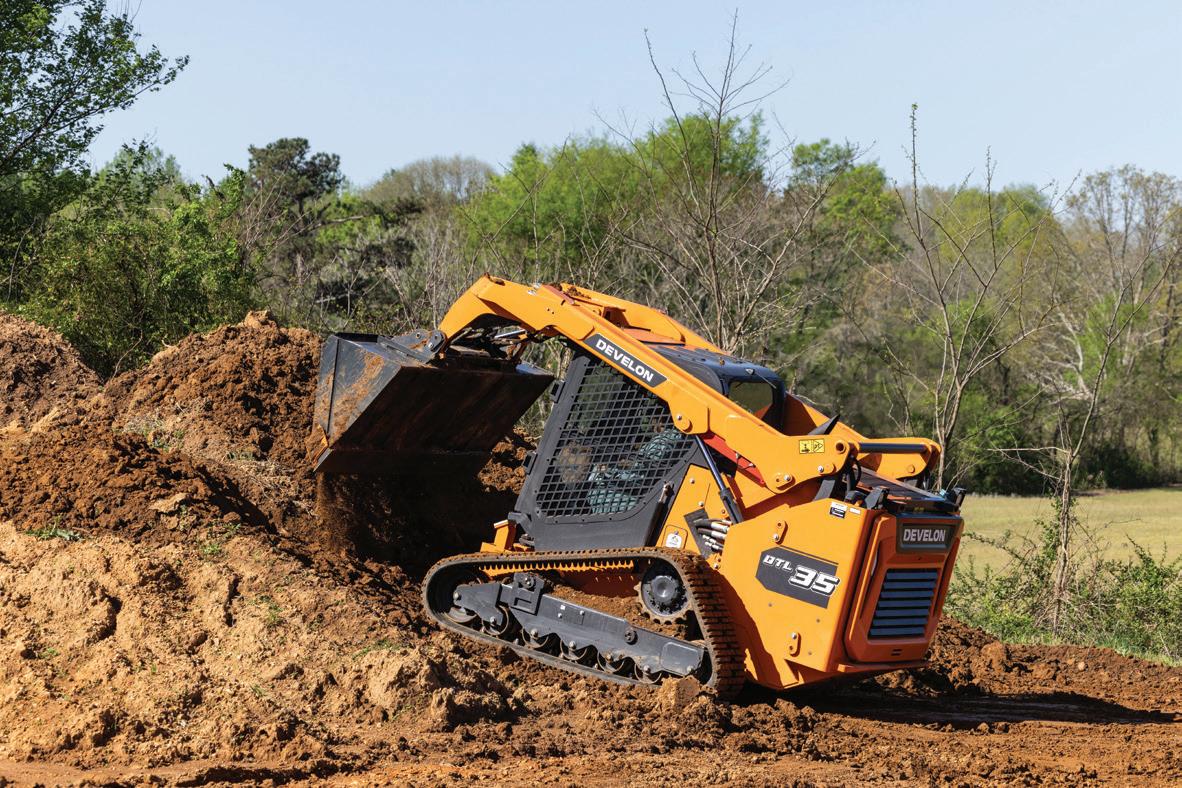
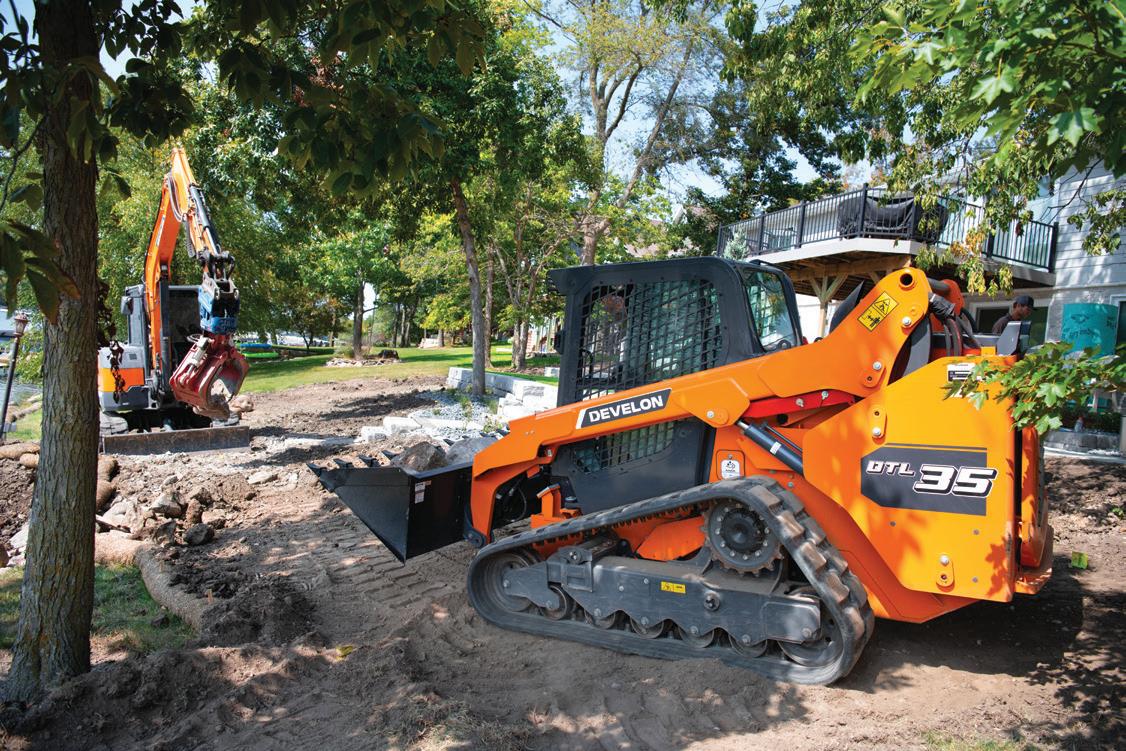
DEVELON DTL35 compact track loader.
REVERSIBLE PLATES THAT MAKE THE GRADE
Compaction challenges don’t have to be an uphill battle. Wacker Neuson’s next generation medium-weight reversible plates deliver consistent performance and improved gradeability in the 700 - 1,000 lb. operating class. What’s more, these models have the smarts to prove it. The integrated Bluetooth technology provides real-time insights into machine data, helping you optimize operation, monitor usage, and stay one step ahead on maintenance. The result? E ciency and productivity from equipment that works as hard – and as intelligently – as you do.
For more information, contact your local Wacker Neuson dealer.
www.wackerneuson.com
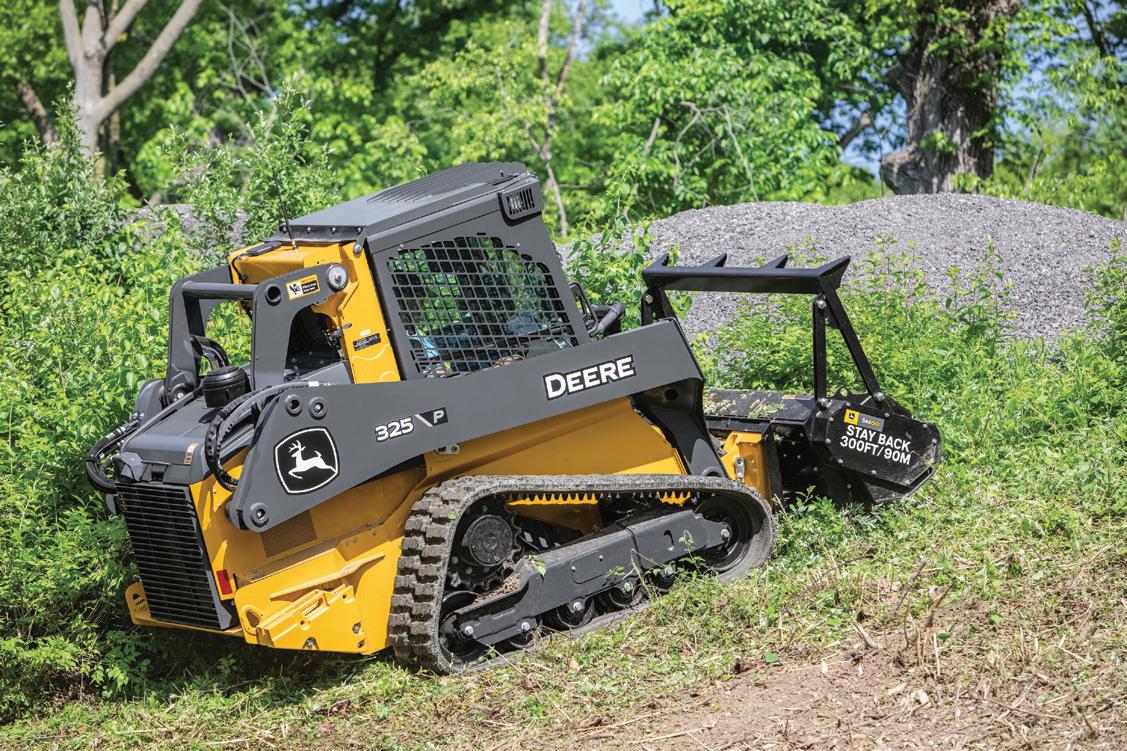
FEATURED MODEL: 325 P-TIER
The new John Deere 325 P-Tier CTL delivers the ideal balance of compact size, power, and productivity for a wide range of applications. Powered by a 74-hp engine and featuring a vertical-lift design, the 325 P-Tier provides excellent stability and lift height and delivers a rated operating capacity of nearly 2,600 pounds for confident material handling. Standard electro-hydraulic controls, a spacious operator station, and available ride control and high-flow hydraulics enhance comfort and performance. It is compatible with more than 100 John Deere attachments.
JOHN DEERE CONSTRUCTION & FORESTRY
The P-Tier compact track loader lineup includes five models that offer a scalable range of performance, comfort, and versatility to match virtually any job site need.
Starting with the 317 P-Tier, operators gain easy transportability, low ground pressure, and impressive lifting capability in a compact footprint.
The 325 P-Tier steps up productivity with increased power, higher lift height, and a rated operating capacity of nearly 2,600 pounds.
For demanding material-handling and grading applications, the large-frame 331 P-Tier offers 98 hp, a 3,150-pound rated operating capacity, and advanced grade control options. The 333 P-Tier offers 109 hp, pressure-compensated load-sensing hydraulics, and SmartGrade compatibility for precision earthmoving.
The 335 P-Tier delivers 118 hp, 44-gpm high-flow hydraulics, and integrated SmartGrade technology, providing excellent attachment performance, grading precision, and productivity for the toughest jobs.
A NOTE ON METHODOLOGY
All OEM specs have been rounded to the nearest whole number. If both cab and canopy versions of a model are available, the presented specs represent the cabbed version.
BOBCAT COMPANY
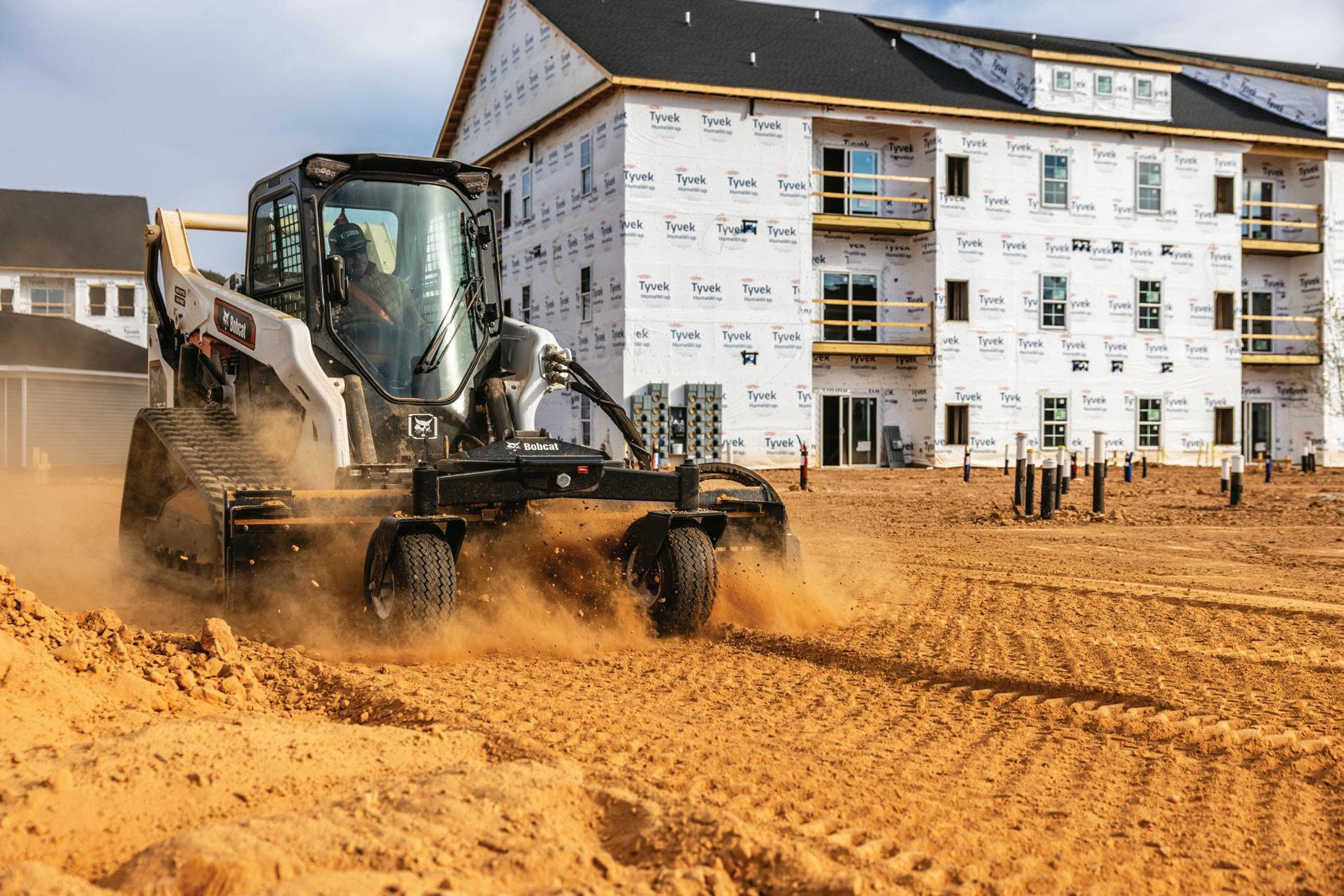
Bobcat Company has advanced its compact track loader lineup to address evolving job site demands, realigning its machines into two distinct categories: Classic and Pro. This structure is designed to simplify equipment selection, giving operators and owners a clearer way to align equipment capabilities with application requirements, experience level, and performance expectations.
Classic compact track loaders, including the T450, T595, T650, and T770, deliver proven performance, familiar controls and streamlined feature packages designed for dependable productivity. Built for ease of use and straightforward ownership, they provide predictable operation and reliable capability across landscaping, rental, and general construction applications.
Pro compact track loaders, including the T64-2, T66-2, T76-2, and T86-2, expand capability with advanced control systems, selectable drive modes, and integrated operator technologies. Designed to adapt to varying skill levels and demanding applications, they offer a more configurable approach to performance, efficiency, and control in challenging conditions.
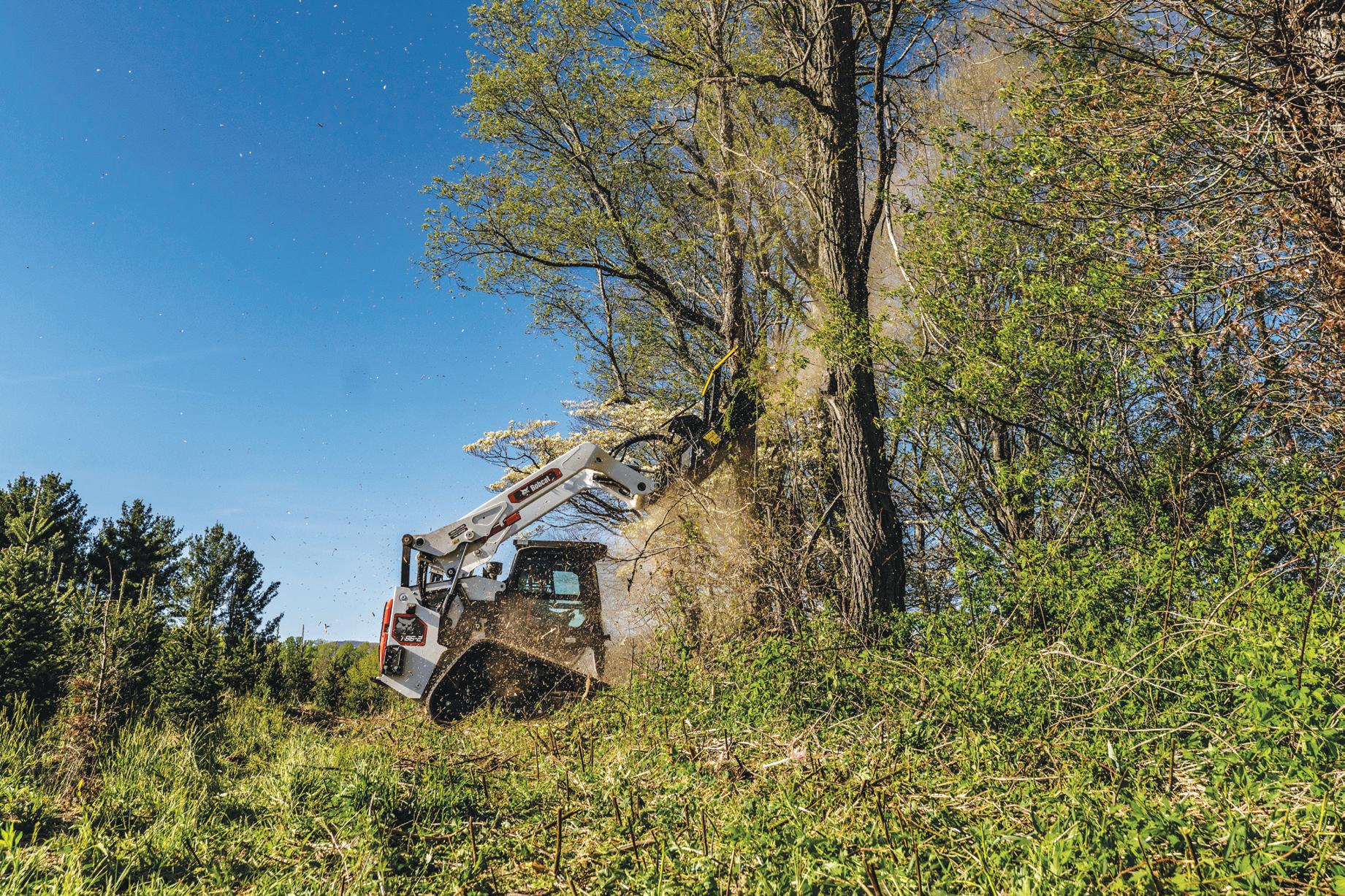
FEATURED MODEL: T86-2
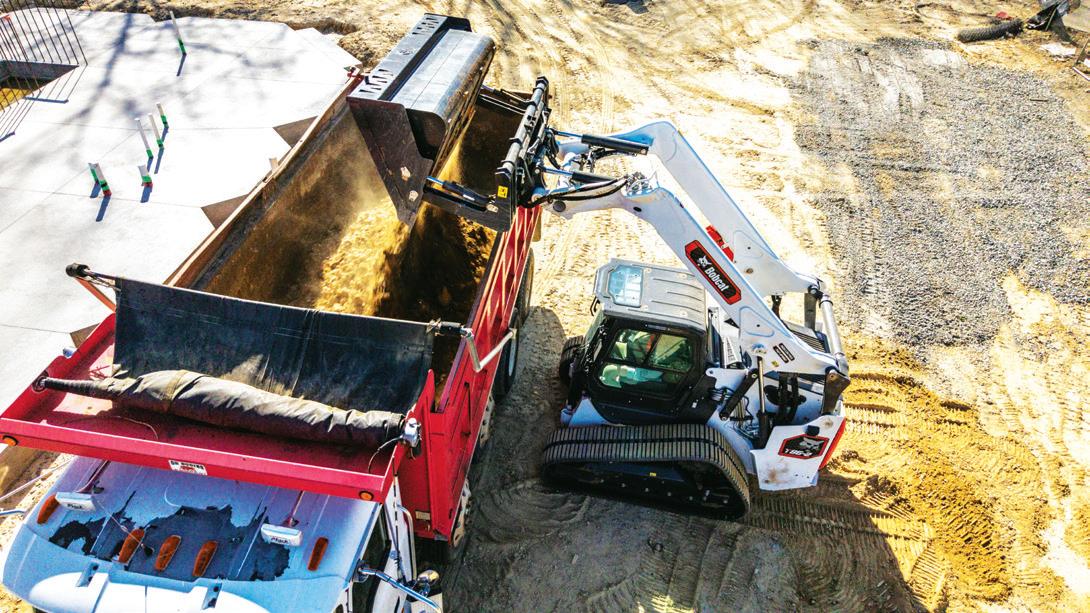
The T86-2 Pro CTL is designed for highdemand applications requiring strong hydraulic performance and lift capability. With a 115-hp engine, 12-foot lift height, and available super-flow hydraulics, it supports power-intensive attachments across land management, roadwork, and material handling applications. An integrated cooling system helps maintain consistent performance during long workdays, while selectable drive modes allow operators to tailor machine response to specific tasks and conditions. Multiple Pro package options, including a dedicated Land Management package, allow the machine to be configured to match application requirements.
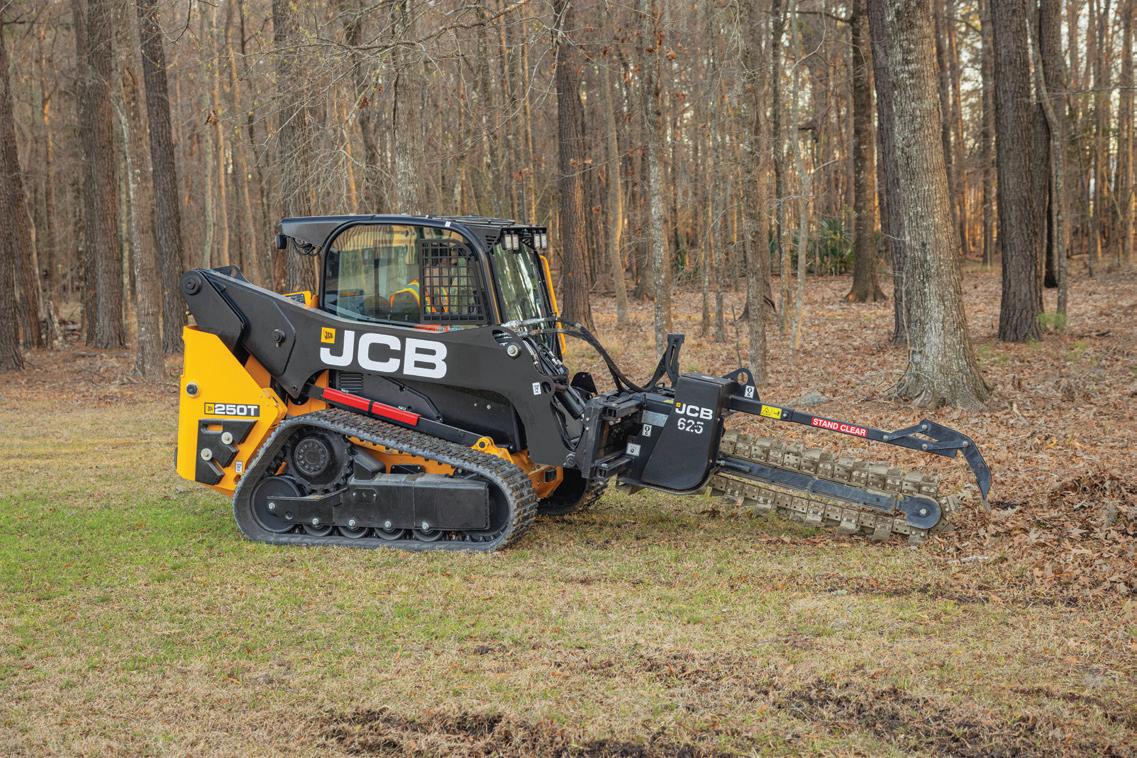
FEATURED MODEL: 250T
Powered by a 74-hp engine, the 250T delivers a rated operating capacity of 2,429 pounds for grading, loading, and material handling applications. At just 9,870 pounds, it can be transported behind a 3/4-ton pickup, making it ideal for residential construction, landscaping, and rental applications. Its compact footprint and low ground pressure support manoeuvrability and traction across job sites and finished surfaces. It also features JCB’s exclusive singlearm boom, improving operator safety and awareness while providing versatility and performance.
JCB
From the compact 215T to the high-capacity 400T, the JCB compact track loader lineup is designed with productivity, safety, and performance in mind. The company offers a compact track loader sized to match any job, including landscaping and residential work, heavy-duty construction, and site development.
Every model features JCB’s industry-exclusive side-door entry, allowing operators to enter and exit the cab safely without climbing over attachments or tracks. According to JCB, this unique design delivers up to 60 percent better visibility than traditional twin-arm machines, helping operators stay aware of surroundings and work more confidently in tight spaces.
Across the lineup, JCB CTLs offer excellent torque for their respective weight classes, providing the power needed for demanding lifting, loading, grading, and material handling tasks.
WACKER NEUSON
Wacker Neuson’s compact track loaders offer the latest in performance, comfort, visibility, and serviceability. Daily maintenance accessibility begins with a cab that tips forward, whether the loader arms are up or down, providing easy access to maintenance components. The simple design and efficient layout mean less time spent on daily service checks and more time on the job. Powerful Rehlko diesel engines carry a 4-year/4,000-hour warranty, further enhancing ROI.
Wacker Neuson CTLs also offer ergonomic controls and switches in the operator’s line of sight for easy identification and access. Pressurized cabs are quiet and provide plenty of head and leg room, as well as panoramic views of the worksite, significantly reducing operator fatigue and improving safety. Control sensitivity and speed settings are adjustable, while auto idle and available ride control systems can be set for a customized operator experience.
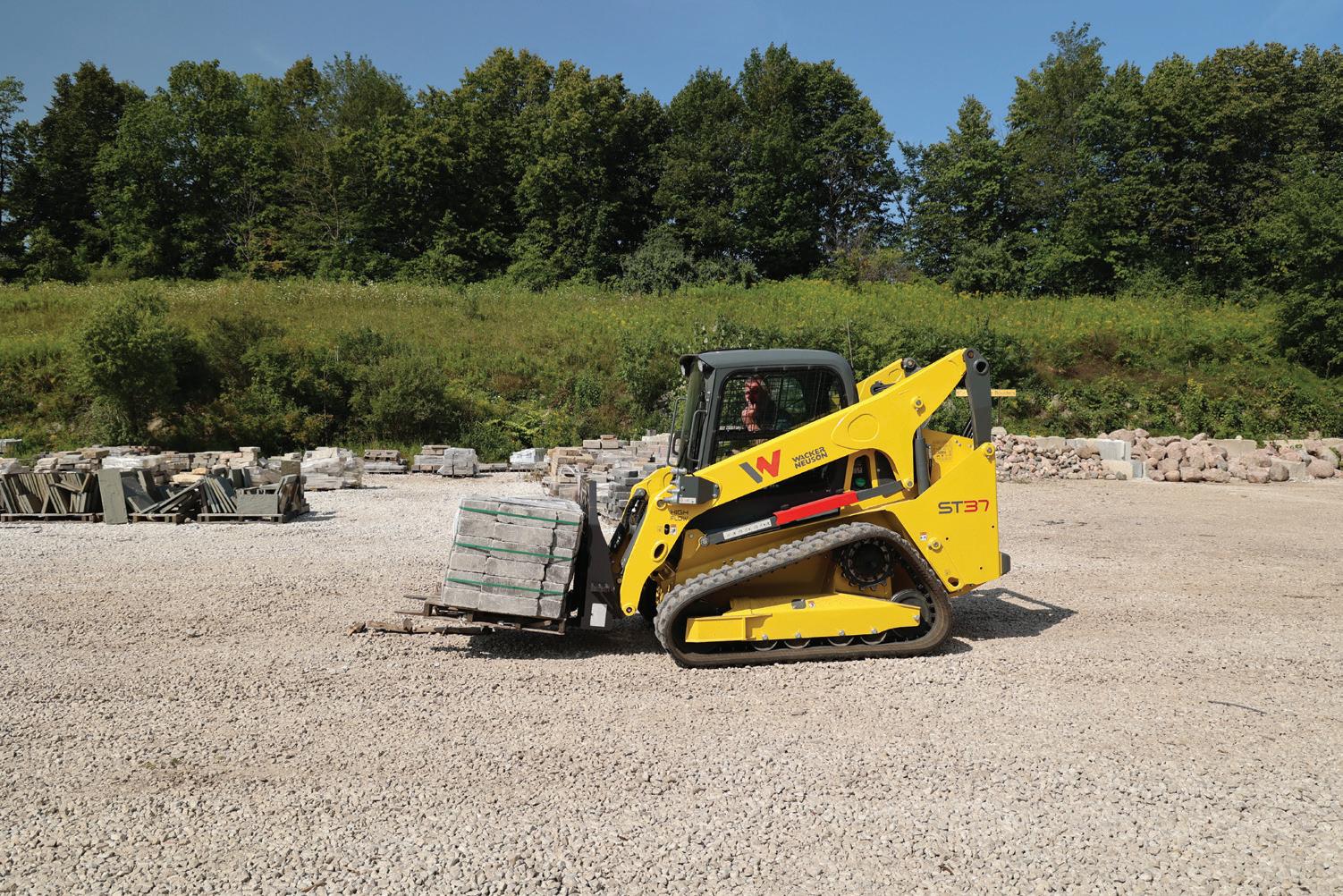
FEATURED MODEL: ST37
The largest and newest medium-frame CTL in the Wacker Neuson lineup, the ST37, offers the performance expected from a large-frame loader in a more compact, nimble package. The ROC of 3,700 pounds at 50 percent gives the operator the ease and flexibility of using a single machine with a variety of attachments to handle a multitude of tasks. Standard features include switchable EH joystick controls, 2-speed travel with auto shift, colour display, and battery disconnect, which deliver efficiency and operator comfort.
FEATURED MODEL:
DTL35
The DTL35 is designed for versatility. The model features optional 40 gpm high-flow auxiliary hydraulics to run demanding attachments like cold planers and brush cutters without bogging down. Efficiency is further enhanced by the machine’s creep speed control, which maintains full hydraulic power while moving slowly. Operators can switch attachments easily using a hydraulic quick coupler. For tough jobs, a 300-pound counterweight increases the machine’s lifting capacity, while a reversible cooling fan keeps the engine clear of debris. Choose between an enclosed cab configuration or an open cab. Standard guards shield the cabin lamps and travel motor hoses.
DEVELON
DEVELON is expanding its compact track loader lineup in 2026 with the introduction of the new DTL26 and DTL30. Powered by a 74-hp D24 diesel engine, both models optimize efficiency to eliminate the need for diesel exhaust fluid (DEF) and selective catalytic reduction (SCR) systems, thereby simplifying maintenance. The operator-centric compact track loaders feature wide cabs for operator comfort, 8-inch touchscreens, and available Smart Assist automated functions — like Return to Dig — to boost novice operator precision.
The new models join the DTL35, which boasts a 115-hp D34 engine and a vertical lift configuration for maximized reach. Built for demanding tasks, the DTL35 offers a standard torsion suspension undercarriage and up to 40 gpm of hydraulic flow for high-flow attachments. The lineup prioritizes versatility and safety with hydraulic quick couplers and an optional 270-degree around view monitor with ultrasonic sensors. The DTL26 and DTL30 are scheduled to arrive at dealerships in summer 2026.
*Data provided for cabbed models, canopy models available.
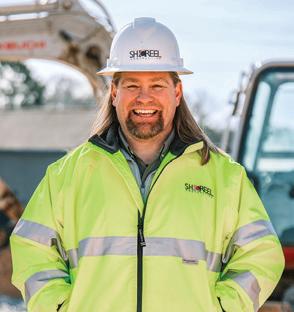
At SH Creel Contracting, the job is about more than what gets built. It’s about what it creates: opportunities for the crew and impact on the community. Takeuchi helps them deliver both with dependable, all-steel machines that keep jobs moving, hold up under pressure, and give their team the confidence to get in and get it done right. As Scott says, “It’s quality you can trust in. We can’t do our jobs without it.”
Scott Creel | SH Creel Contracting | Conyers, GA
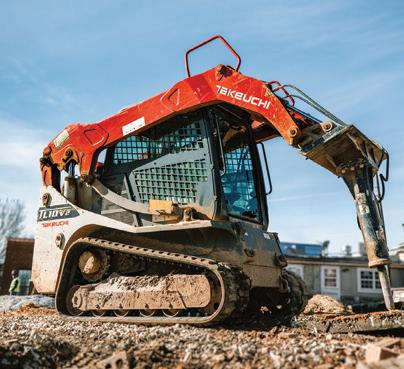
FEATURED MODEL: SVL110-3
The new Kubota SVL1103 expands the SVL Series with increased hydraulic performance and additional operatorfocused technology features for demanding applications. Designed for loading, grading, material handling, and attachment-driven work, the machine delivers auxiliary hydraulic flow up to 45 gpm. Programmable preset flow modes support a wide range of attachments. A sealed cab, 7-inch LCD monitor, simplified maintenance access, and Work Smart Telematics are designed to support operator comfort and equipment management.
The SVL110-3 also introduces creep mode, allowing for precise speed adjustment during demanding applications.
KUBOTA
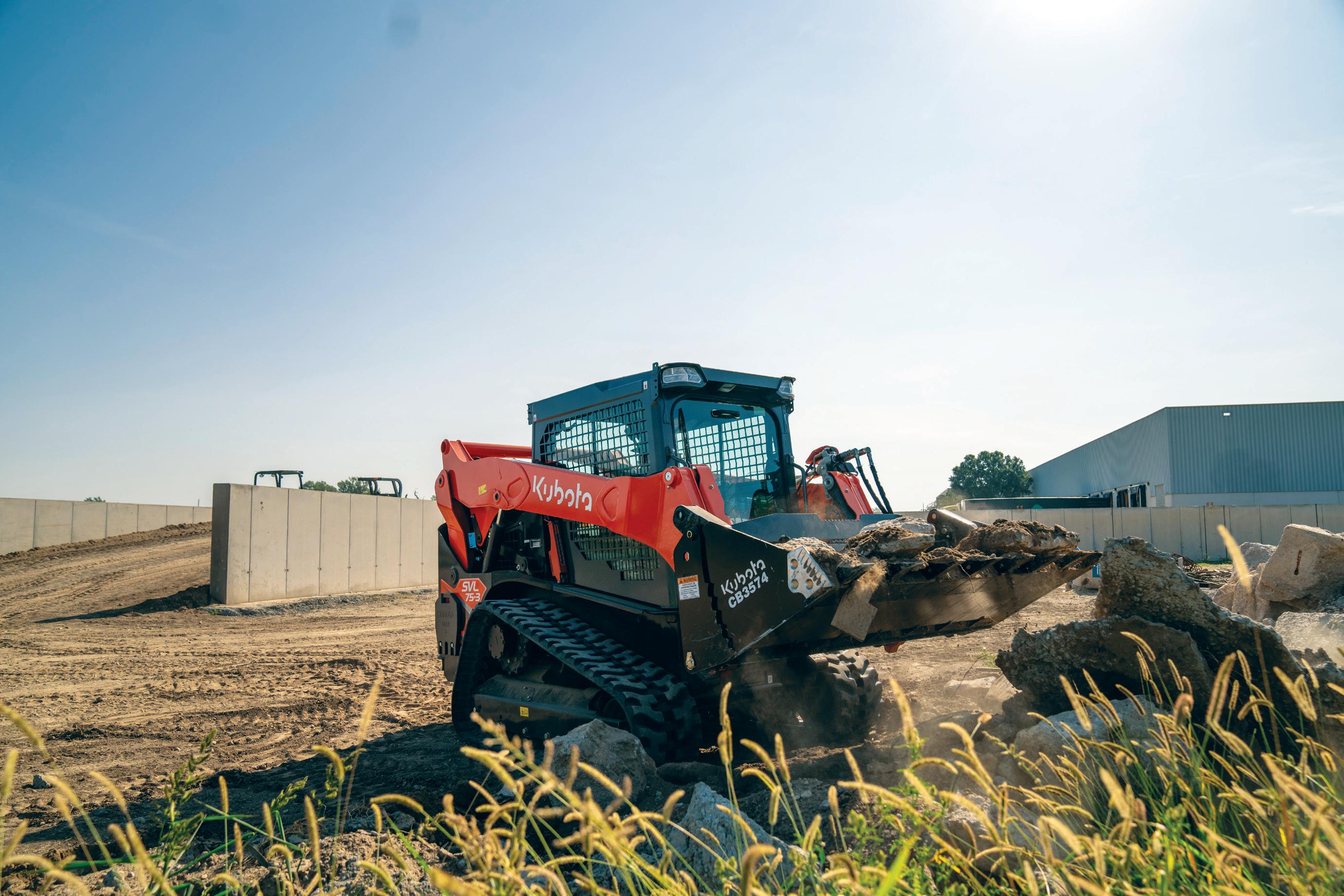
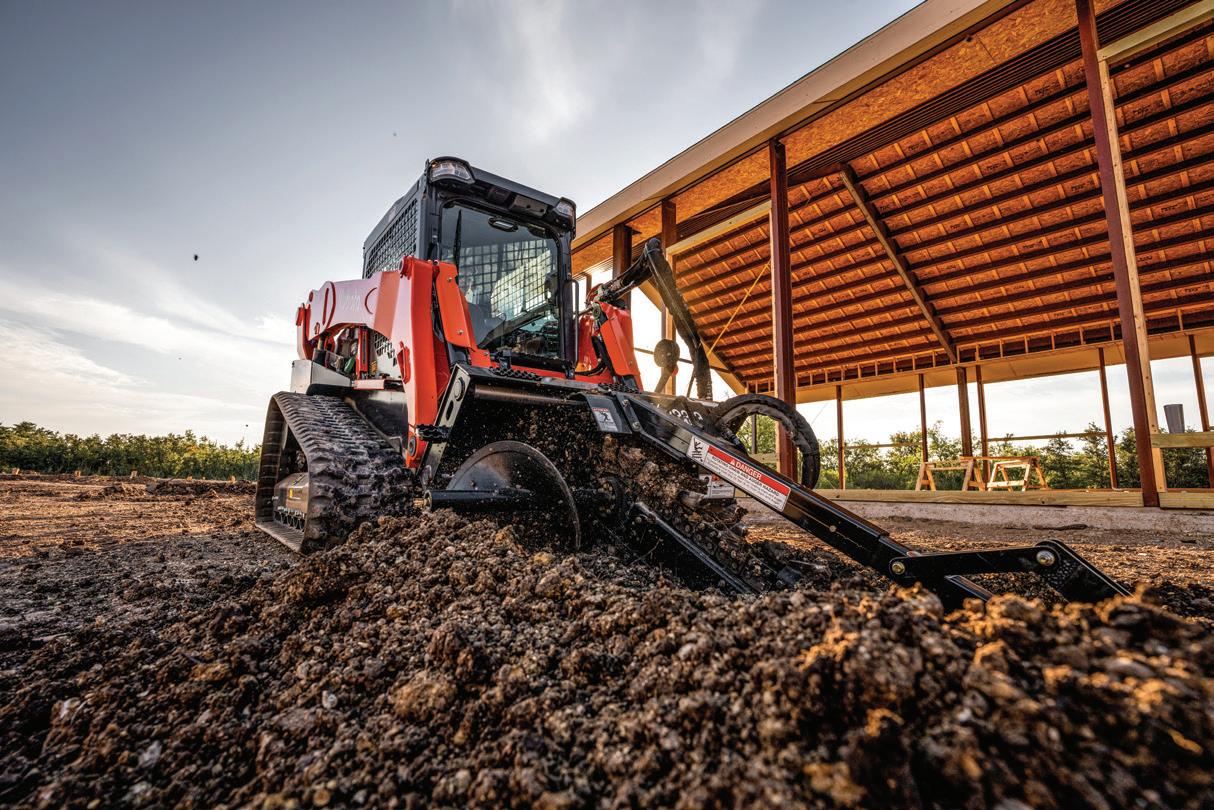
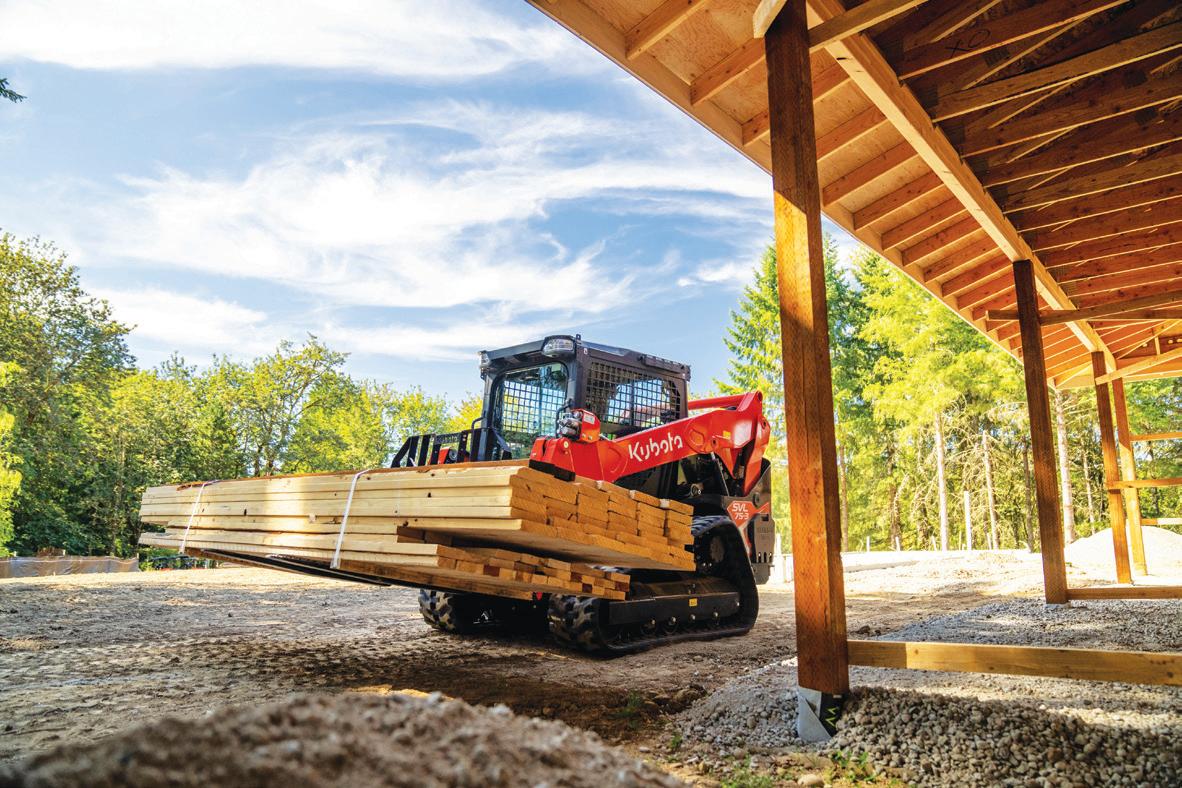
Kubota’s SVL Series compact track loaders are designed to handle demanding work, including digging, loading, hauling, and material handling across construction, landscaping, and property maintenance job sites. The lineup combines strong lifting capability, high bucket breakout force, and smooth travel performance in machines built to support a wide range of applications and ground conditions. Compatibility with a variety of attachments, including snow pushers and snowblowers, also supports year-round versatility.
Operator comfort and ease of operation remain key focuses across the series, with spacious cabs, intuitive controls, strong visibility, and maintenance access designed to support productivity throughout long workdays. The lineup ranges from the compact SVL65-2 to the new SVL110-3, which adds expanded hydraulic capability and additional operator-focused technology features to the series.
*Data provided for cabbed model, canopy model available.
MANITOU
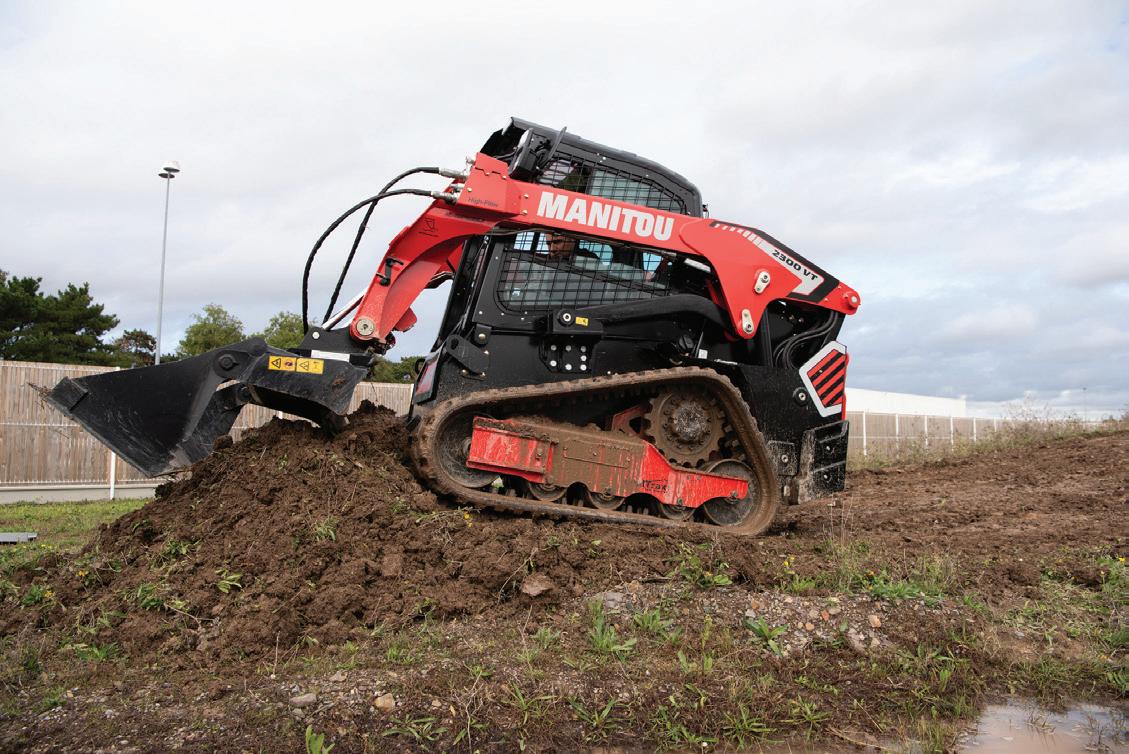
Manitou has an extensive offering of small-, medium-, and large-frame compact track loaders, each of which features the company’s IdealTrax automatic track tensioning system. This system establishes optimal track tension each time the machine is started and maintains it during operation, minimizing wear and tear and eliminating the need for time-consuming manual adjustments. The medium- and large-frame CTLs have an IdealAccess fold-up cab door that makes it easier to enter and exit the cab, and Manitou’s sloped lift arms increase visibility from the cab. Greasable pins along the sides of the lift arms simplify maintenance, and different track, operator station, and high-flow auxiliary options are available, depending on the model.
FEATURED
MODEL: 2300VT
The 2300VT CTL offers a rated operating capacity of 2,300 pounds and a fully raised overall operating height of 159 inches, making it ideal for performing in demanding landscaping, construction, and snow removal applications. It is also well-suited for rental. Its smaller size makes it easy to transport, while its large cabin design, sloping roof, and fold-up door increase operator comfort and visibility. The 2300VT features the Manitou IdealTrax system for automatic track tensioning and is available with optional high-flow auxiliary and 14-pin electrical auxiliary connections.
*Manitou provides Gross HP, not Net.
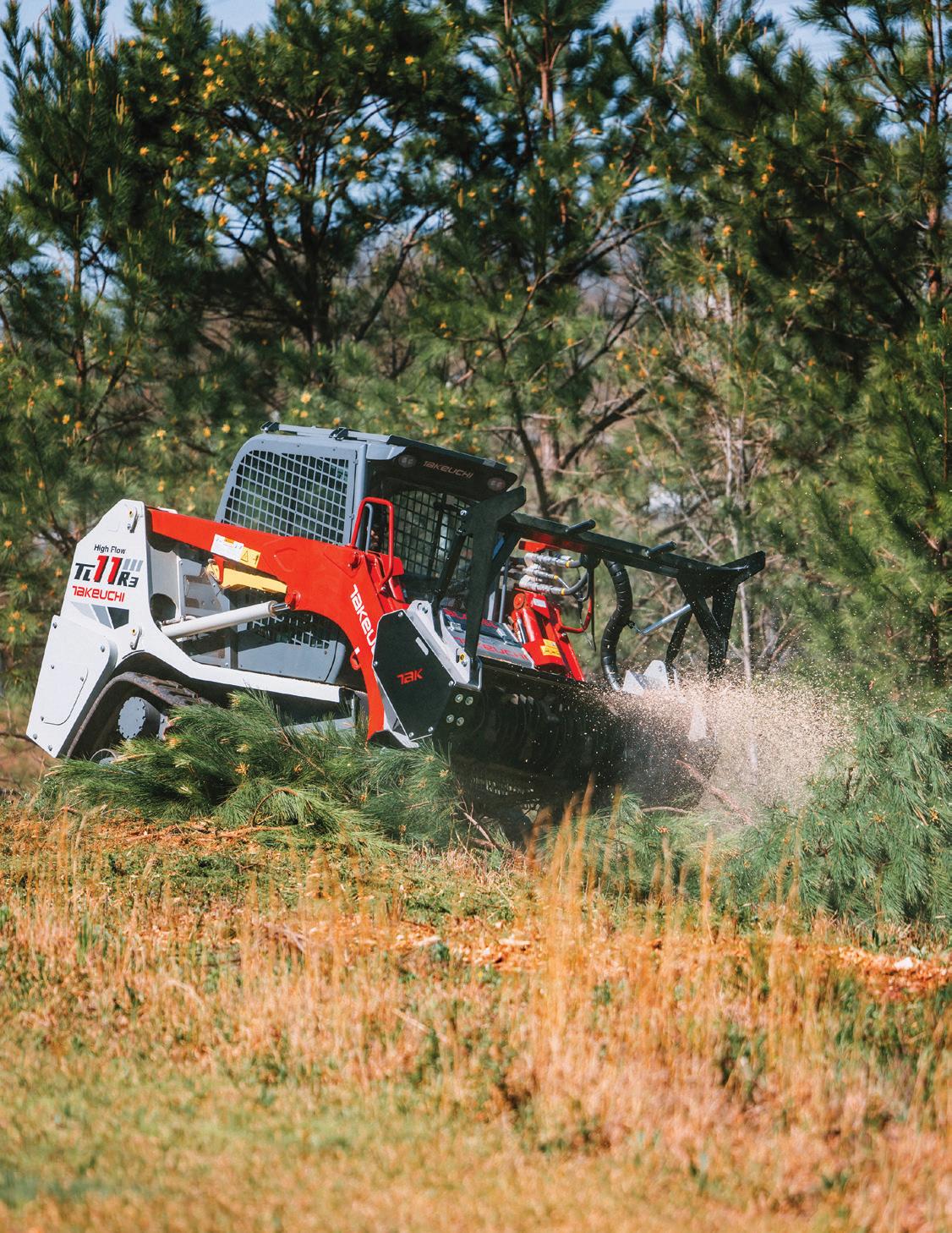
FEATURED MODEL: TL11R3
Available in standard and high-flow configurations, the TL11R3 delivers strong breakout forces with up to 40 gpm auxiliary flow for demanding attachments. Its EH controls allow operators to fine-tune sensitivity and instantly switch between ISO and H patterns. A self-levelling function, boom-height limiter, and 14-pin detent further enhance productivity and precision. Built on a fully welded steel frame with 18-inch tracks, the TL11R3 offers 12.4 inches of ground clearance and excellent tractive effort. Inside the cab, operators benefit from an adjustable suspension seat, 8-inch touchscreen display, and optional 270-degree rear-view camera.
TAKEUCHI-US
Takeuchi’s compact track loader lineup includes six radial- and vertical-lift models designed to meet the needs of contractors in construction, landscaping, earthmoving, and rental applications. Built for productivity and comfort, the lineup features spacious cabs, responsive controls, and powerful hydraulic performance to help operators tackle a wide range of demanding jobs. Takeuchi offers a standard two-year, 2,000-hour warranty on all machines, as well as an optional three-year, 3,000-hour Premier Warranty. Takeuchi Fleet Management (TFM) is also included with all models, allowing owners and operators to remotely connect and view the health and service needs of their machines.
YANMAR COMPACT EQUIPMENT NORTH AMERICA
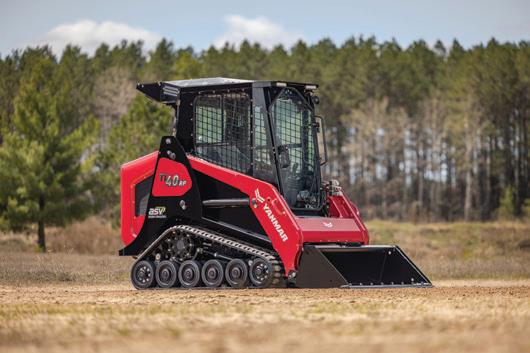
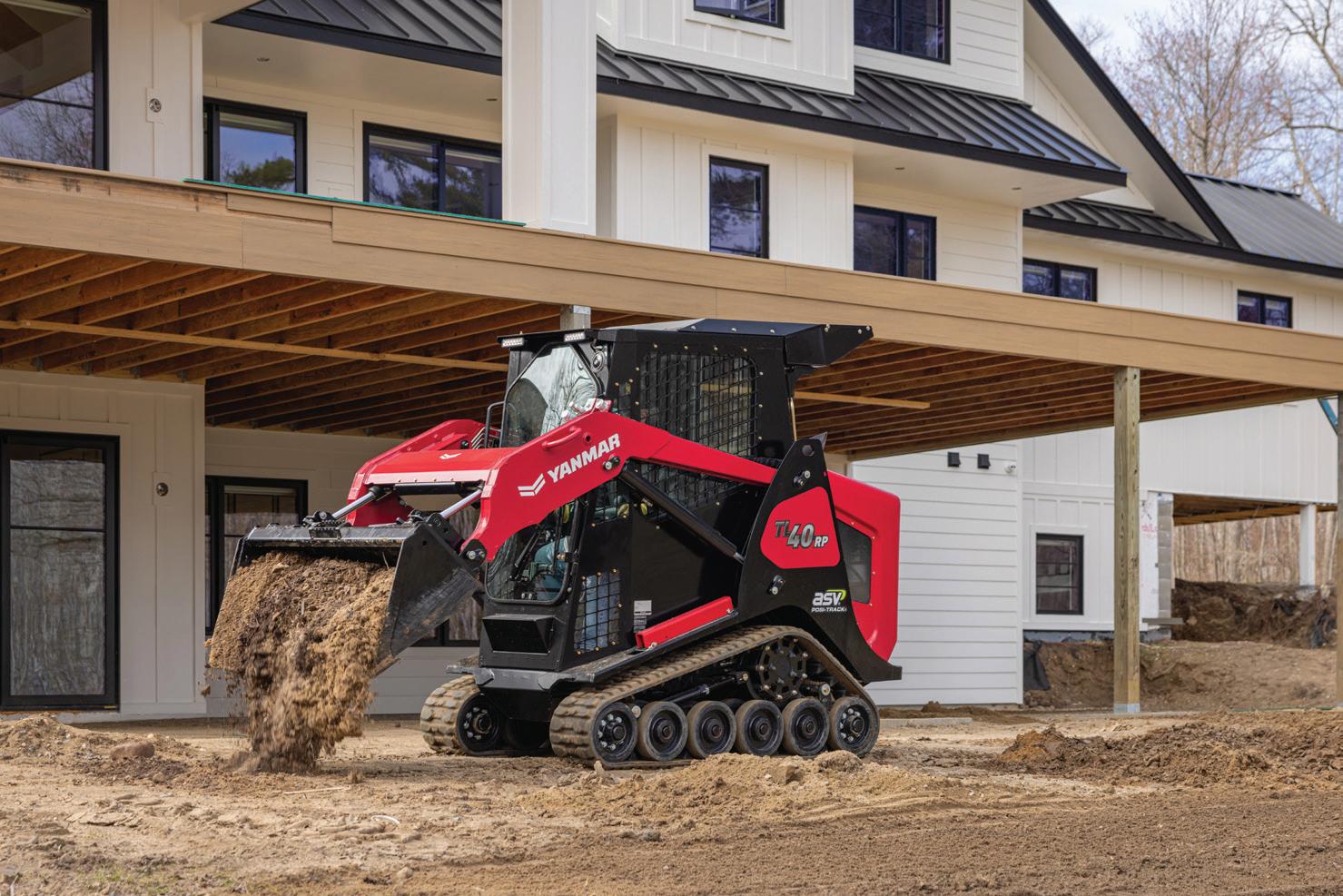
Yanmar offers two undercarriage options within its compact track loader lineup. Select models feature the ASV Posi-Track fully suspended torsion-axle undercarriage, delivering exceptional traction, flotation, and low ground pressure on soft or uneven terrain. For demanding residential, commercial, and civil construction environments, Yanmar also offers a suspended heavy-duty steel-embedded undercarriage designed for durability and stability. Yanmar CTLs feature 360-degree visibility, a standard suspension seat, and available technologies, including ride control, self-levelling, return-to-position, and auto two-speed.
FEATURED MODEL: TL40RP
The Yanmar TL40RP features a compact 48-inch platform delivering strong power, rated operating capacity, and auxiliary hydraulic performance across a wide range of applications. ASV Posi-Track technology provides a suspended undercarriage with torsion axles and mid-rollers, offering smooth ride quality, strong traction, and reliable performance across varied ground conditions. The machine is wellsuited to demanding environments where operator comfort and productivity matter. An optional all-weather cab extends year-round usability, making the TL40RP a versatile option for contractors and operators who need consistent performance regardless of conditions.
*Forestry versions available.
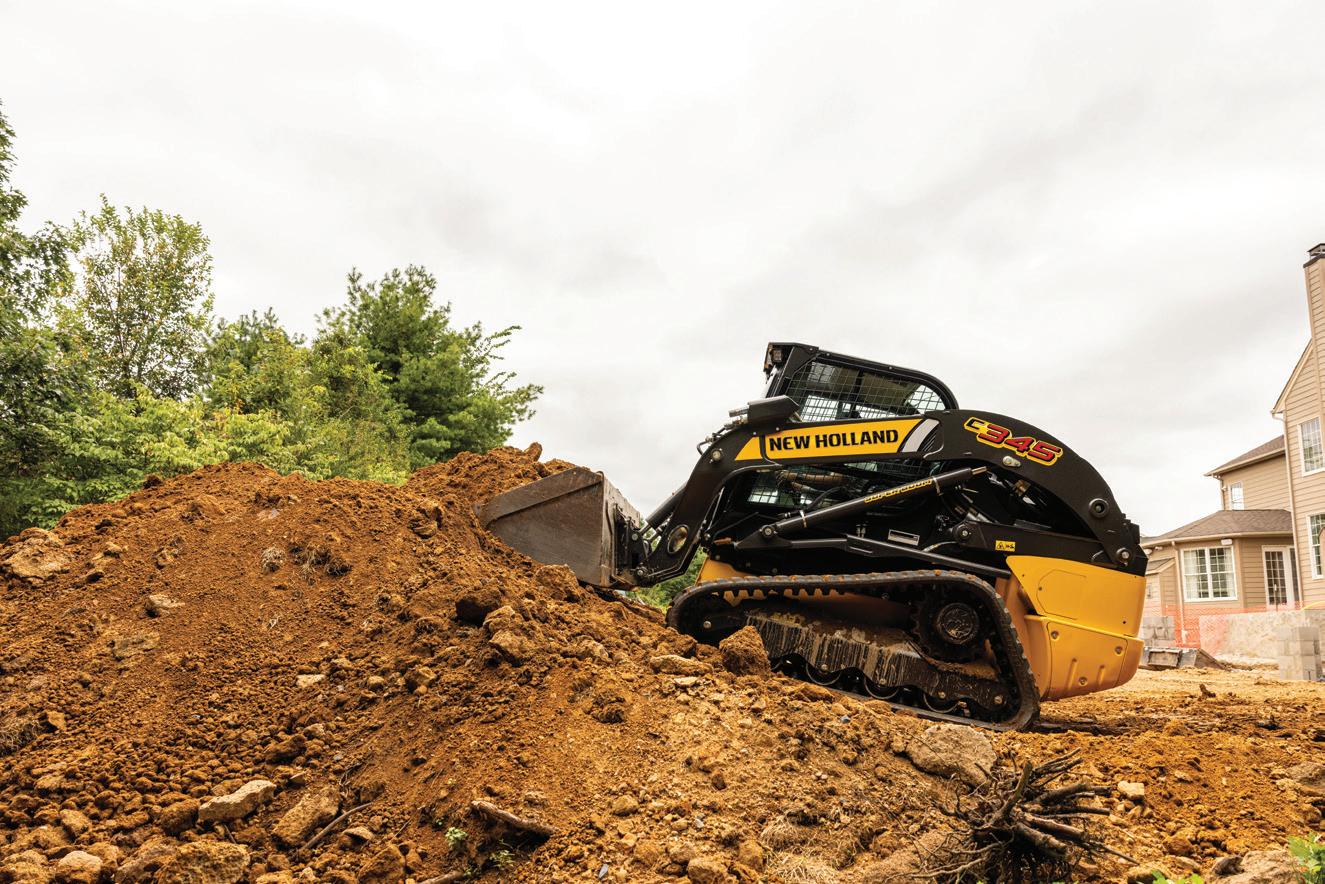
FEATURED MODEL: C345
Designed for demanding construction, landscaping, and material-handling applications, the C345 features New Holland’s Super Boom verticallift geometry, which delivers excellent lift height and forward reach for loading trucks and handling heavy materials. Powered by a 90-hp engine with a 4,500-pound ROC, the C345 combines strong lifting performance with excellent traction and stability. Available high-flow and enhanced high-flow hydraulics support a range of attachments, while the spacious cab, advanced controls, and excellent visibility help maximize operator comfort and productivity.
NEW HOLLAND CONSTRUCTION
The New Holland Construction compact track loader lineup is designed to deliver powerful performance, excellent traction, and year-round versatility across construction, landscaping, agriculture, and material-handling applications. The lineup includes models ranging from the radial-lift C327 to the high-capacity, vertical-lift Super Boom C362, giving operators options for digging, grading, lifting, loading, and attachment-driven work. Rated operating capacities span from approximately 2,700 to 6,200 pounds, helping customers match machine size and performance to the demands of the job site.
New Holland’s 300 Series compact track loaders are built around operator comfort and productivity, featuring spacious cabs, expansive visibility, advanced electro-hydraulic controls, and multiple auxiliary hydraulic packages for attachment versatility. Heavy-duty track systems provide excellent flotation and stability on soft, muddy, or uneven terrain, and durable undercarriages and simplified maintenance access help reduce downtime and operating costs.
CATERPILLAR
FEATURED
Caterpillar’s compact track loader lineup offers power, refinement, and an operator-focused design across all the models. The next-generation platform introduces stronger structures, upgraded drive systems, and advanced hydraulics that help improve pushing power, stability, and overall responsiveness. Operators can benefit from redesigned cabs with better visibility, quiet operation, and improved sealing and pressurization for all-day comfort in harsh environments.
Across the lineup, Caterpillar emphasizes smarter technology and easier operation. Enhanced displays, intuitive controls, and improved attachment performance give operators greater precision and faster cycle times. Serviceability also advances with better ground-level access and simplified maintenance points that reduce downtime.
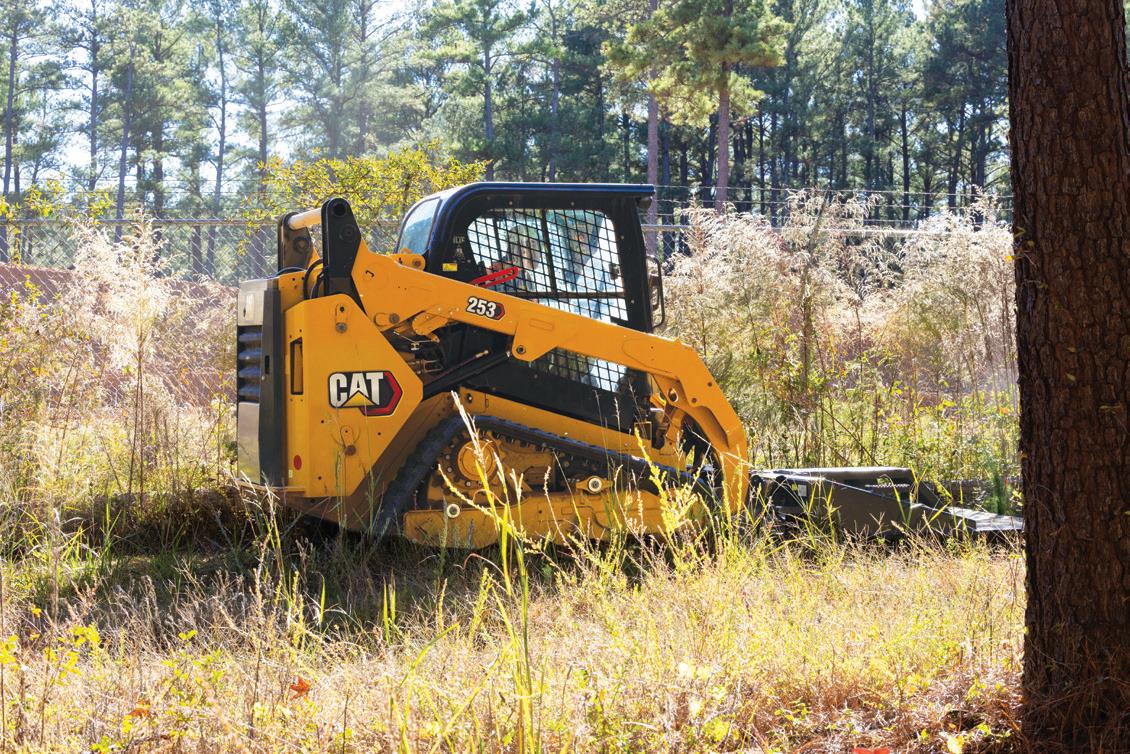
MODEL: 253
The new 253 CTL delivers a mix of power, stability, and manoeuvrability for versatile performance. Building on the 259D3 platform, it features a redesigned undercarriage with rigid, frame-mounted axles and a one-piece frame that boosts traction, stability, and grading capability. Powered by an electronically controlled Cat 3.3B turbo diesel engine, it meets Tier 4 Final standards and offers standard-flow hydraulics with optional high-flow capability. A sealed, pressurized cab with adjustable joystick pods, excellent visibility, and productivity-enhancing features like dual self-level and return-to-dig supports comfortable, efficient operation on long workdays.
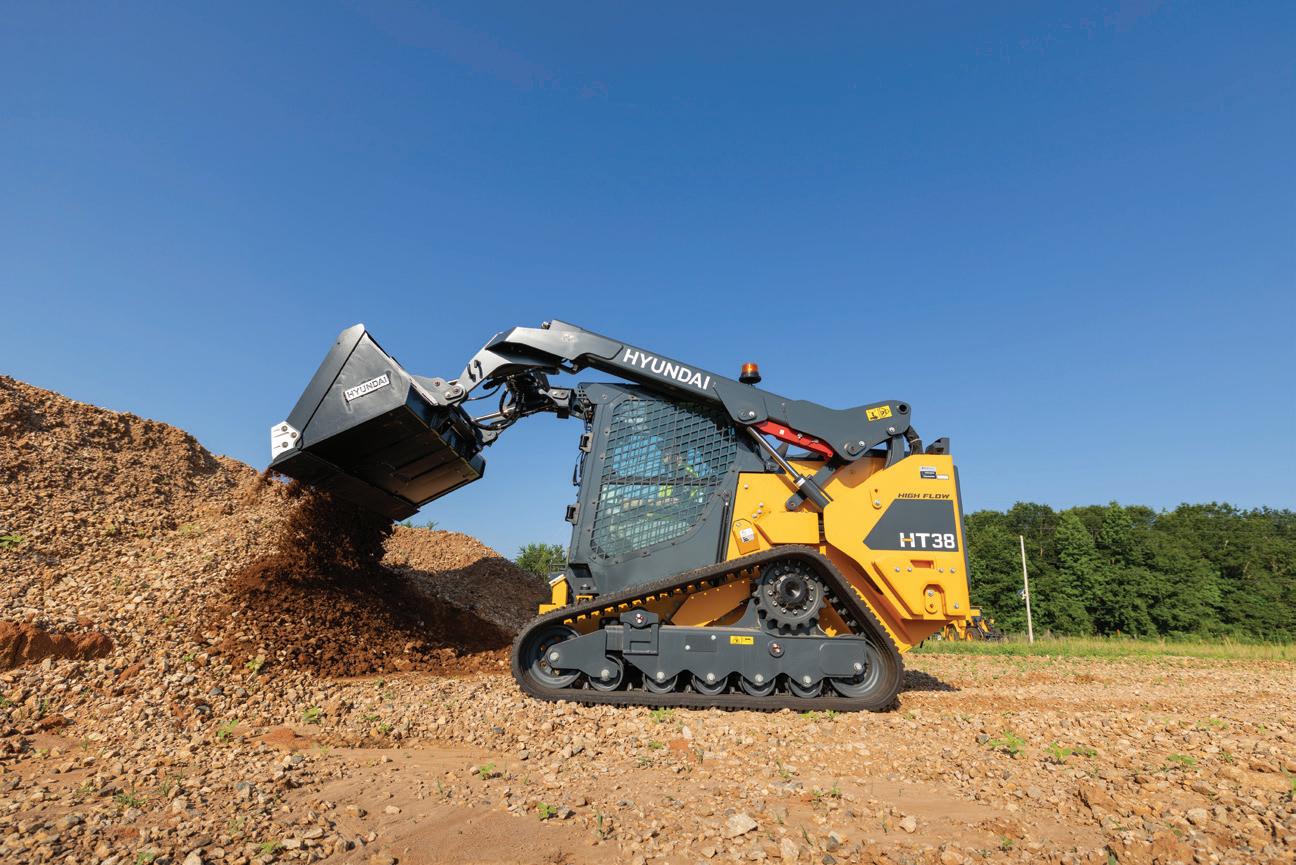
FEATURED MODEL: HT38
The new HT38 CTL combines power and affordability for heavyduty applications. The HT38 provides a 3,806-pound ROC and is built with durability, performance, comfort, and serviceability in mind, delivering reliability and versatility. Powered by a 115-hp turbocharged Tier 4 Final Hyundai engine, the HT38 features a modular cooling package with a variable speed, hydraulically driven reversible fan, ensuring longlasting performance. Hyundai includes five years of free access to its Hyundai Connect mobile app.
HD CONSTRUCTION EQUIPMENT HYUNDAI NORTH AMERICA
Hyundai offers two compact track loader models. The HT38 boasts an operating weight of 12,785 pounds and a rated operating capacity of 3,806 pounds, and the HT100V offers an operating weight of 9,755 pounds and a rated operating capacity of 2,300 pounds. Both models provide a vertical lift design with exceptional reach and digging power. Hyundai supports each CTL model with its standard three-year, 3,000-hour warranty, along with five years of free access to and use of its proprietary Hyundai Connect GPS-based remote management system, which enables users to remotely evaluate machine performance, access diagnostic and maintenance schedules and records, and verify machine locations.
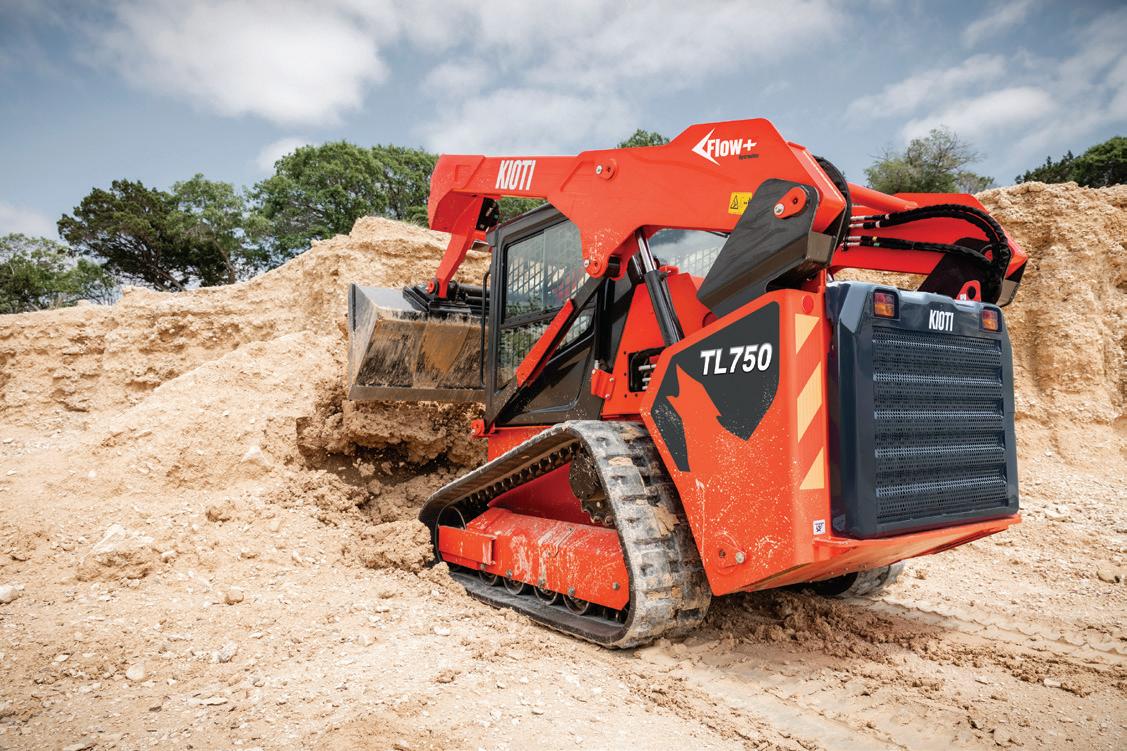
KIOTI
KIOTI’s TL750 compact track loader, available in several configurations, including with canopy, is built to deliver the reliability, performance, and operator comfort contractors expect. The TL750 features a 74-hp engine, high lift heights, hydraulic pilot joystick controls, self-levelling functionality, and a spacious climate-controlled cab with a roll-up door and standard rear-view camera. The solid-mounted undercarriage improves grading performance, while the track design helps minimize de-tracking in demanding conditions. KIOTI offers the optional Flow+ hydraulic system, which enhances attachment versatility and efficiency without requiring a full high-flow set-up. Built for light- to medium-duty hydraulic attachments, Flow+ improves hydraulic performance while reducing heat buildup, fuel consumption, and wear, helping operators tackle a wider range of applications with less downtime.
FEATURED
MODEL: TL750 FLOW+
*Canopy and Flow+ versions available.
The TL750 Flow+ CTL is designed for operators who need enhanced hydraulic performance without upgrading to a dedicated high-flow machine. Powered by a 74-hp engine, the TL750 Flow+ features a five-port coupler block, dedicated Flow+ tube lines and valve, and an added gear pump. This system ensures seamless hydraulic operation. The Flow+ system supports light- to medium-duty hydraulic attachments, such as rotary cutters and snow blowers, while improving fuel efficiency, reducing downtime, and minimizing mechanical wear. The swing-out rear radiator and easy-to-lift cab make maintenance access convenient.
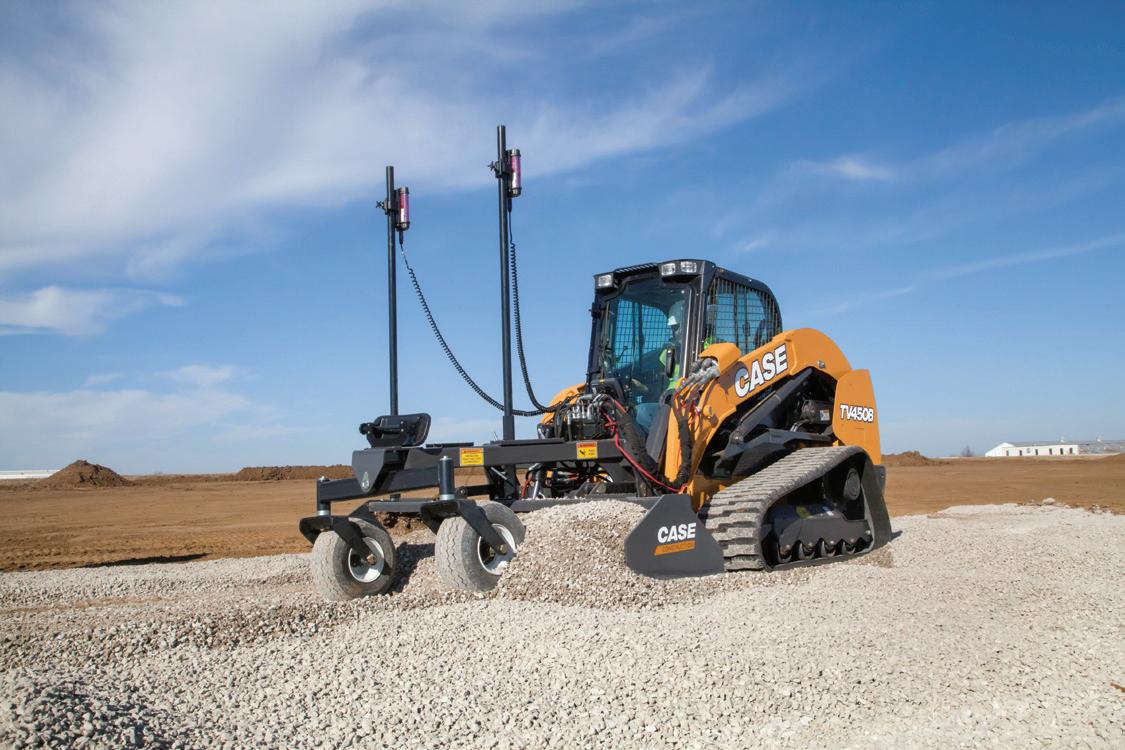
FEATURED MODEL: TV450B
The TV450B CTL combines 90-hp performance with a 4,500-pound ROC to deliver high breakout forces, low ground pressure, and exceptional attachment versatility. Designed for demanding construction, landscaping, and material-handling applications, the TV450B features a roomy cab, EH controls, an optional Enhanced High Flow hydraulic system, and CASE EZ Track technology for improved ride quality and traction. New upgrades to the B Series include rear object detection with radar and camera technology, bi-directional selflevelling for easier material handling, an in-cab attachment display catalogue, and intermittent wipers.
CASE CONSTRUCTION EQUIPMENT
Six CASE B Series compact track loaders — the radial-lift TR270B, TR310B, and TR340B and the vertical-lift TV370B, TV450B, and TV620B — give contractors solutions for applications from grading and landscaping to heavy material handling and truck loading. With rated operating capacities from 2,700 to 6,200 pounds and horsepower from 74 to 114 hp, the lineup delivers power, versatility, and performance. Standard EH controls, multiple hydraulic-flow options, and compatibility with more than 250 attachments help crews adapt to changing job sites. New B Series upgrades further enhance productivity and safety, including rear object detection with radar and camera technology, bi-directional self-levelling for more consistent material handling, and an improved multi-function loader valve that boosts efficiency and shortens cycle time during simultaneous hydraulic functions. In-cab attachment display catalogues provide quick set-up and operating guidance, while intermittent wipers improve visibility and blade wear.
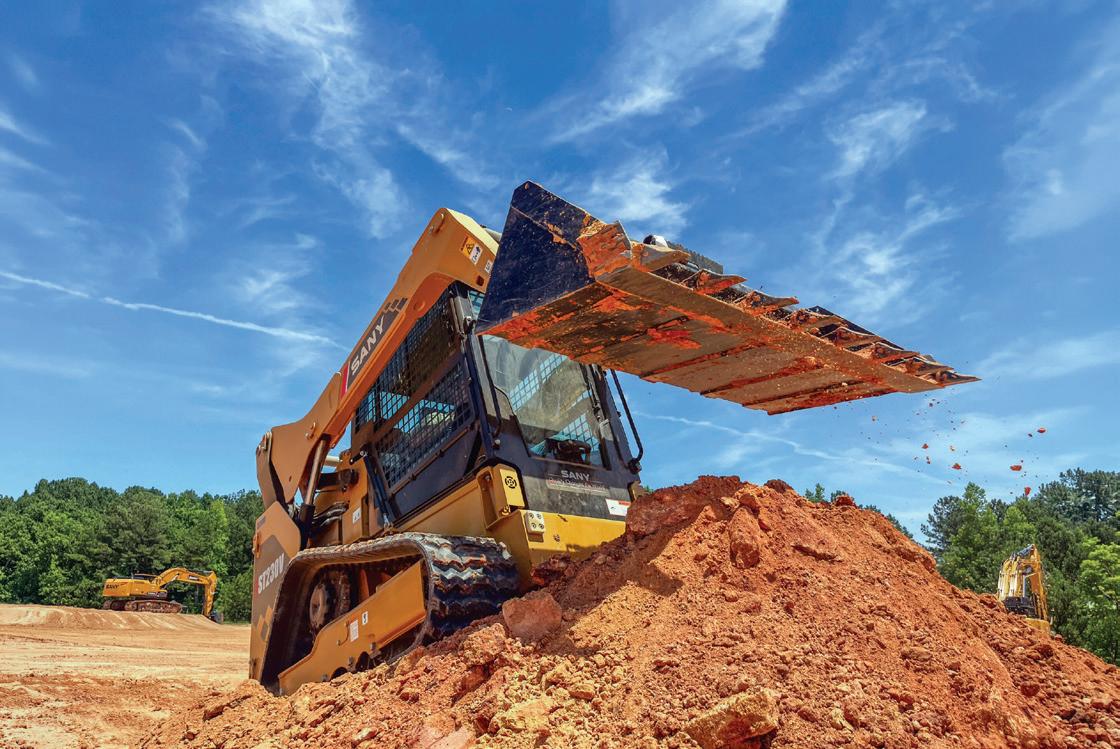
SANY
SANY offers one compact track loader in North America, the ST230V. The company has focused on providing powerful, attachment-ready capability, designing this machine for productivity, operator comfort, and attachment versatility in construction, landscaping, agriculture, snow removal, utility, and rental applications. Its vertical-lift design delivers strong reach and stable performance for truck loading and high stacking. SANY offers a sealed, lownoise cab; hydraulic pilot controls; two-speed travel; bucket self-levelling; high-flow auxiliary hydraulics; and a 7-inch LCD display as standard. The company has designed its CTL for easy service, with a large-opening rear door, up-turning radiator, and tilting cab.
FEATURED MODEL: ST230V
pressure data not provided.
The ST230V CTL is built for contractors who need lift capacity, hydraulic performance, and operator comfort in one fully equipped package. Powered by a 72-hp Yanmar engine, the ST230V delivers a 2,580-pound ROC, 7,370-pound tipping load, and 120-inch hinge pin height. Verticallift geometry provides strong reach and stability, while 32-gpm high-flow hydraulics support demanding attachments. An enclosed cab with A/C, suspension seating, rear-view camera, two-speed travel, boom suspension, and hydraulic quick coupler come together to create a productive, operatorfocused machine.
THE MACHINE CONTROL ADVANTAGE
HOW CENTIMETRE ACCURACY DRIVES VALUE IN A TIGHTMARGIN INDUSTRY
BY SABRINA CATALDO
Tight margins. Short timelines. A skilled labour shortage. The margin of error on a construction site has never been slimmer. Enter 3D machine control technology, which is redefining earthmoving and infrastructure building. By integrating Global Navigation Satellite Systems (GNSS) and 3D modelling directly into heavy equipment, machine control does more than just guide the blade or bucket; it digitizes the job site, turning heavy iron into precision instruments.
“The construction landscape has changed dramatically, and the companies that thrive will be the ones that leverage technology to work smarter,” says Dan Hendriks, vice-president of sales — positioning technology at Brandt. “Machine control isn’t just about making existing processes more accurate — it’s about fundamentally changing how projects are executed. When you can eliminate guesswork, reduce material waste, and empower your operators with real-time precision, you’re not just improving efficiency. You’re future-proofing your business.”
Two early adopters of the technology are Metric Contracting Services Corporation in the Greater Toronto Area, Ontario, and Weinrich Contracting Limited (WCL) in Edmonton, Alberta. For both, 3D machine control has evolved from a competitive edge to an operational necessity that delivers measurable improvements in accuracy, efficiency, and profitability.
EARLY ADOPTION FOR A COMPETITIVE EDGE
Metric is a family-run heavy civil contractor that has grown from a small earthmoving operation into a regional leader in excavation, site servicing, and infrastructure work. They focus on large-scale projects including, transit, roadwork, and complex earthworks. “Our philosophy has always been to evolve with the industry, especially when it comes to technology. We invest heavily in equipment, people, and innovation because efficiency and accuracy are critical in today’s construction environment,” says Richard Liorti, operations manager. The company has more than 20 machines equipped with
machine control, along with numerous handheld devices, base stations, rovers, and supporting technology. “Machine control has become a core part of how we operate on grading and earthworks projects, and it continues to expand across our fleet.”
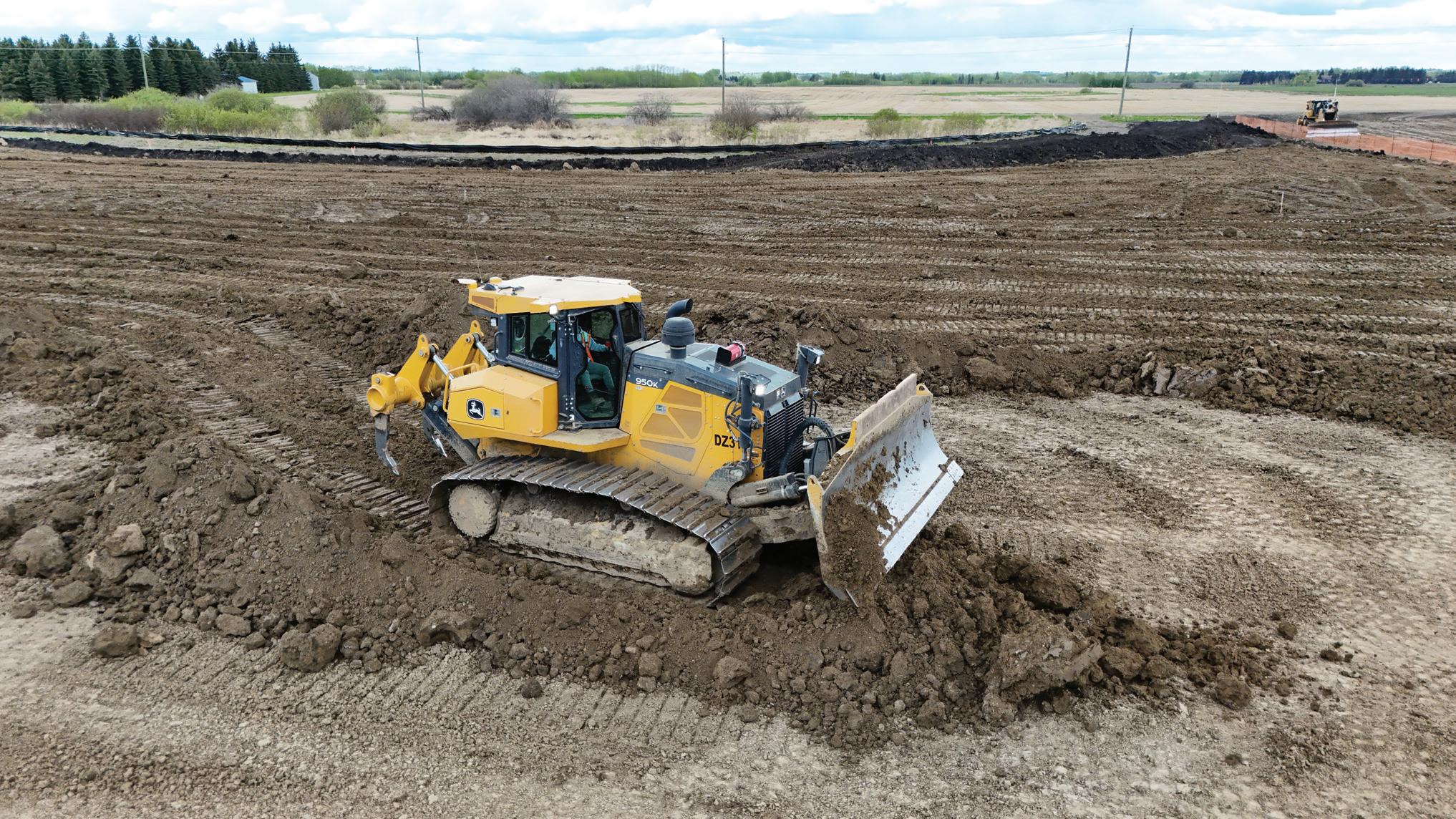
WCL started in 1978 as a small, family-owned company. Today, they have 200 pieces of heavy equipment and specialize in roadway construction, earthmoving, residential land development, and general contracting services. “We were one of the first in Edmonton to run 3D machine control on equipment in our area and are typically the first in Canada to buy new-model equipment with technology, for example, the John Deere 850 X-Tier E-Drive dozer. We try to be an early adopter of technology. Our goal is to always be ahead of the competition,” says WCL
General Manager Andrew Kent. The company uses machine control on motor graders and dozers with plans to put it on mainline excavators when they launch their new underground division. WCL also uses drones, handheld units, and positioning technology for surveying.
HOW MACHINE CONTROL TECHNOLOGY WORKS
The process begins with satellites that triangulate to create a digital map of the construction site. GNSS antennas mounted on the machine receive signals from these satellites to determine the equipment’s exact position relative to the digital map with centimetre accuracy.
Contractors need a corrected GNSS signal, which is trans-
In Alberta, skilled, experienced operators are getting harder to find. Using machine control gives us the opportunity to get a more junior operator to run the equipment.
Andrew Kent General Manager, WCL
Weinrich Contracting Limited (WCL), based in Edmonton, Alberta, was an early adopter of 3D machine control.
mitted from a base station set up on site or a virtual network, which receives the GPS signals, corrects them to achieve survey-grade accuracy, and broadcasts them to the machine.
In the office, detailed 3D models are created to show the design surface, elevations, slopes, alignments, and any other project elements. The models are uploaded to the machine’s onboard computer to provide a complete digital blueprint of what needs to be built.
The 3D system compares the machine’s current position and the location of its attachment, such as a bucket or blade, to the target design surface stored in the 3D model. The system then displays visual guidance on the cab screen showing how much to cut or fill or automatically adjusts the attachment hydraulics to match the design grade exactly. Operators see real-time information that shows whether they’re on grade or if they’re cutting too deep or not deep enough. As the machine moves across the site, the system makes micro-adjustments constantly, ensuring the finished surface matches the engineered design specifications on the first pass.
“The 3D machine control puts the machine on grade every time,” says Hendriks. “The machine does the rough digging in manual mode, and then on the last pass, the machine takes control for absolute accuracy and brings it to grade down to the centimetre.”
Another benefit to using this technology is it records as-built elevations that accurately document the as-constructed project. These are useful for proof of completion, legal protection, maintenance, and future builds.
MANAGE LABOUR SHORTAGES
It’s no secret that the construction industry is facing a significant and growing shortage of skilled operators, a challenge that is reshaping how companies approach workforce planning and technology adoption. Fortunately, machine control technology can help.
“In Alberta, skilled, experienced operators are getting harder to find. Using machine control gives us the opportunity to get a more junior operator to run the equipment,” Kent says. “It also increases our efficiency and reduces costs, time on site, fuel, and machine wear.”
Liorti appreciates that machine control empowers Metric to maximize productivity. “With labour shortages and tighter schedules becoming the norm, we need to make the most of every hour on site. Machine control allows us to do more with the same crews while improving accuracy and consistency across our projects.”
There is also less dependence on surveyors with machine control technology, which allows companies to reallocate resources. “You get more out of your active fleet of workers. For an experienced operator it makes their job easier, and for a newer operator it makes them more productive,” says Hendriks. “It’s also safer to have the machine doing the work rather than having someone in a trench directing operations.”
It benefits the operators themselves. “Early adoption of technology allows our operators to grow their skill sets and gives us an advantage when bidding complex projects that demand accuracy and speed,” says Liorti.
And it helps with recruitment. “If you’re at the cutting
Machine control saves on survey costs, rework, materials, equipment hours, wear and tear on machines, and fuel cost.
edge of technology, you’re going to attract new workers much easier,” says Hendricks.
SAVE TIME AND MONEY
Machine control saves on survey costs, rework, materials, equipment hours, wear and tear on machines, and fuel cost. “Efficiency wise, it can reduce the time spent on site fine grading by 30 percent,” says Kent. “It helps operators understand the project from the onset to reduce rework. Operators can easily adjust their grades and take off, for example, six inches and another six inches and systematically tackle the grade work with GPS. We had a couple jobs installing geocomposite liners with 25-millimetre maximum grading tolerances, and we were able to accomplish that with motor graders and dozers equipped with machine control.”
In Liorti’s experience, the technology keeps machines moving and allows operators to stay focused on production instead of stopping to verify grades constantly. Over time, that translates into better margins and more predictable project outcomes. Metric has used machine control on several large infrastructure and transit-related projects across Ontario, where accuracy and productivity are critical.
“These systems allow us to move large volumes of material efficiently while maintaining strict design tolerances,” says Liorti. Hendriks notes that the precision of the technology saves on material costs. “If you add even a quarter inch of extra material because you dug deeper than intended, that’s profit you’ve lost. If you’re always on grade, you don’t have that problem.”
The return on investment is quite quick, depending on the size of jobs. “Some customers have reported paying for it on the first, second, or third jobs, because they’re saving money on so many levels,” Hendriks says.
INTUITIVE AND USER FRIENDLY
Adrian Colan is a senior surveyor at Metric who uses the technology on a daily basis. “For me, it was very easy to learn. Its user-friendly interfaces definitely reduce the learning process and time for operators, as compared to traditional technology.”
Kent from WCL agrees. “Our experience with it has been that it’s efficient, very user friendly, and it saves time. We started using it on one machine. When we saw the results, we got more systems. It’s just gotten better year after year.”
FROM OPTIONAL UPGRADE TO COMPETITIVE NECESSITY
As construction projects grow more complex and margins tighter, 3D machine control technology has gone from an optional upgrade to a competitive necessity. Companies like Metric and WCL show that early adoption isn’t just about staying current, it’s about fundamentally reshaping how work gets done. By turning operators into precision specialists, reducing reliance on scarce skilled labour, and delivering measurable savings in time, materials, and rework, machine control addresses several industry challenges.
SABRINA CATALDO is a senior copywriter at Brandt.
The technology’s intuitive design and quick ROI make the transition accessible, while its impact on accuracy, efficiency, and profitability makes it indispensable. In an industry where every centimetre and dollar counts, machine control isn’t the future of construction — it’s the present for companies determined to lead instead of follow. The 3D machine control system records as-built
HD CONSTRUCTION EQUIPMENT HYUNDAI NORTH AMERICA
NEW ADTS FEATURE REDESIGNED OPERATOR ENVIRONMENT
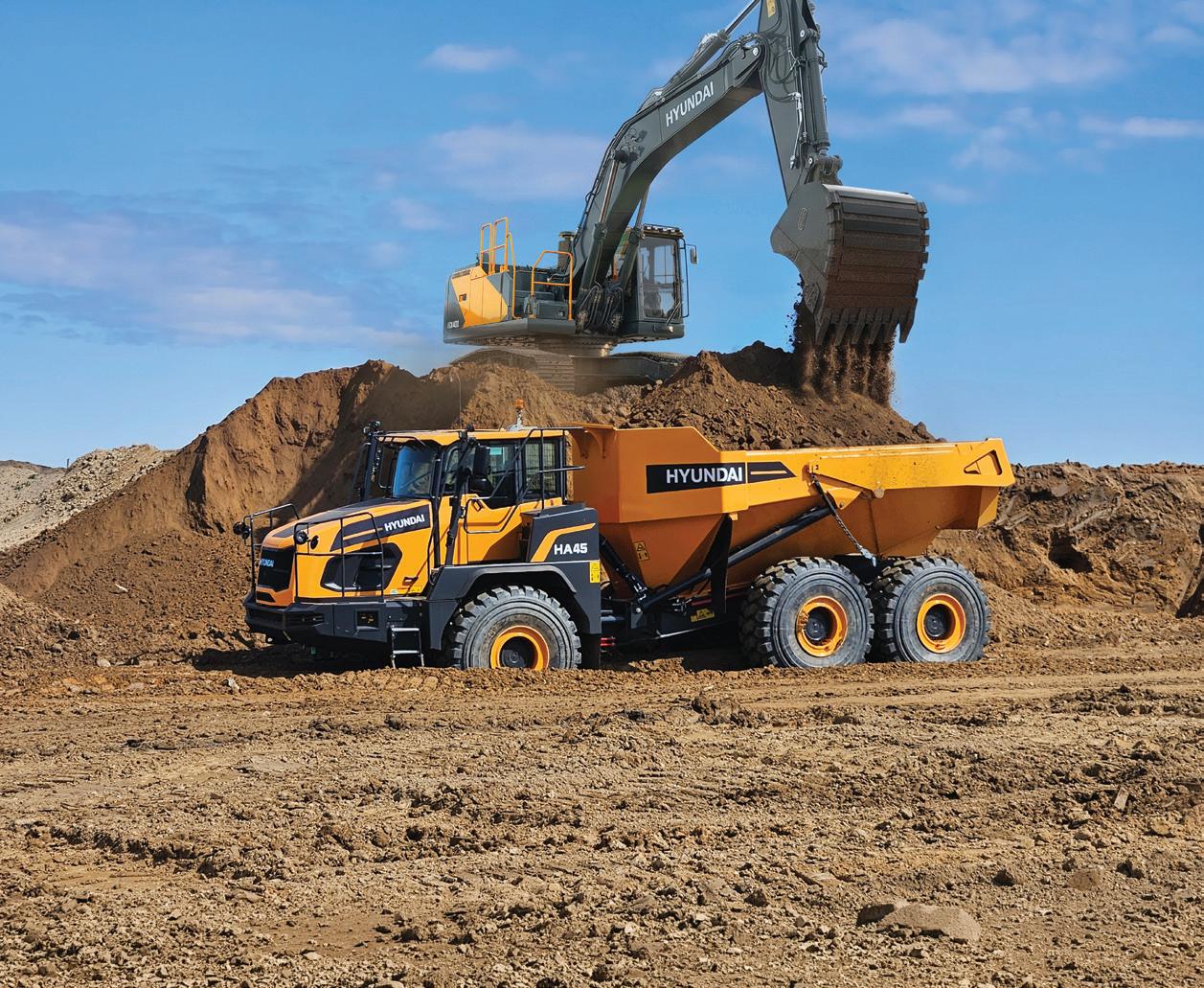
Hyundai’s updated HA30 and HA45 articulated dump trucks feature a redesigned operator environment, improved serviceability, and the same digital interface as Hyundai’s newest HX excavators. The HA45 features a 45-ton payload and a 489-net-hp Scania engine, while the HA30 offers a 30-ton payload with a 367-net-hp Scania engine. Both models incorporate ZF 8-speed automatic transmissions.
By standardizing the digital interface across equipment lines, Hyundai ensures that operators have a familiar experience when they move between machines, increasing their confidence and reducing set-up and training time.
“We’re working to make every Hyundai machine feel familiar to operate,” says Joe Hodges, product manager. “Whether an operator moves from an excavator into an articulated dump truck or vice versa, they’ll find the same interface design, reducing their learning curve while helping owners maximize productivity across their fleet.”
Hyundai plans to apply this hardware and software to other new equipment models moving forward.
Hyundai says that the redesigned cab combines productivity with comfort. Larger front and side windows improve visibility, and a heated air-suspension seat, automatic climate control, and ergonomic positioning of key interfaces and controls make long shifts more comfortable.
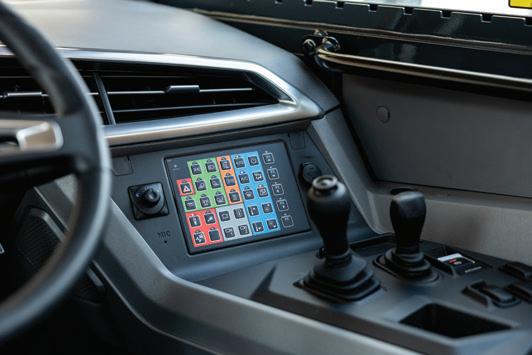
A 12.5-inch eye-level touchscreen provides quick access to payload information, performance data, diagnostics, camera views, and machine settings. A redesigned colour-coded keypad further simplifies machine operation.
The HA30 and HA45’s new “auto squat” feature lowers the
truck’s front end for easier entry and exit. The new automatic brake-hold system makes loading cycles smoother. Integrated payload weighing and gradient monitoring improve productivity and safety.
Hyundai has simplified ground-level service access, with grouped maintenance points, easier access to filters and fluid fill locations, and a tilting cab with self-positioning safety locks.
The ADTs come with five years of Hyundai Connect telematics, giving owners remote access to fleet performance, diagnostics, maintenance information, and machine location. A 3-year/3,000-hour full-machine warranty and 5-year/10,000hour structural warranty are standard. Hyundai Extend coverage is also available.
The new colour-coded keypad simplifies machine operation.
At Dimensions 2026, discover how to connect your people, data and technology into one powerful ecosystem.
Learn from industry leaders, gain expert advice and practical insights from peers and explore innovative solutions that help you deliver better outcomes, every time.
Immerse yourself in the trends, technologies and conversations shaping your industry and discover new ways to get an edge.
November 9–11, 2026
The Venetian Resort Las Vegas
Trimble.com/Dimensions
LESS EQUIPMENT, MORE FLEXIBILITY
THE LOGIC BEHIND A CURATED FLEET STRATEGY
Municipal operations, construction crews, and landscape contractors are under increasing pressure to deliver more work within tighter timelines and budgets. From spring pothole repair to fall surface maintenance, success depends not just on the amount of equipment available, but on how effectively that equipment is selected, deployed, and utilized.
A growing number of fleet managers are moving away from the traditional model of owning a wide range of specialized machines. Instead they adopt a more intentional approach: building a curated fleet centred on versatile compact equipment and strategic attachment use.
FROM VOLUME TO VERSATILITY
Today’s most effective operations focus on maximizing the value of every machine in their fleet.
tally changes how you deploy your fleet. In practical terms, one machine can replace several others. A compact unit equipped with a bucket, blade, auger, or broom can take on tasks that previously required multiple dedicated machines. This consolidation reduces both upfront costs and ongoing maintenance requirements.”
Rising equipment costs are a primary driver behind this shift. With higher capital investment required for each purchase, contractors and municipalities are becoming more selective, prioritizing machines that can support multiple applications rather than a single, specialized task.
“We’re seeing a real shift in how fleet managers think about equipment investment,” says Jonathan Gardner, construction product manager at Kubota Canada. “It’s no longer about having a machine for every job. It’s about having the right core equipment that can adapt to multiple demands throughout the year.”
Organizations are investing in core equipment designed to remain active across seasons, reducing idle time and capital tied up in underutilized machines. The result is a leaner, more efficient fleet that aligns more closely with actual workload demands.
WHAT DEFINES A CORE MACHINE?
At the centre of this strategy is the concept of a “core machine” — a piece of equipment capable of supporting a wide range of attachments and tasks.
The defining characteristic of such a machine is efficiency: the ability to switch between attachments quickly and perform each task reliably in day-to-day conditions. The more applications a machine can handle, the more value it delivers over time.
“Versatility isn’t just about convenience,” Gardner notes. “A core machine that can handle multiple attachments fundamen-
OPERATIONAL ADVANTAGES ACROSS SEASONS
One of the most immediate benefits of a curated fleet is improved equipment utilization. When a single machine handles multiple tasks, equipment remains productive throughout the season rather than sitting idle during off-peak periods.
This becomes especially important in municipal and seasonal work, as tight windows for activities such as road repair or surface maintenance leave little room for downtime. Fleets built around versatile equipment are better positioned to adapt quickly, ensuring crews can stay on schedule even as priorities shift. Expanding capability through attachments allows operations to respond to changing job requirements at a fraction of the cost of additional equipment.
OPERATOR FAMILIARITY AND PRODUCTIVITY
Beyond cost and flexibility, a curated fleet also delivers meaningful benefits at the operator level.
When crews work with fewer machine types they develop a deeper familiarity with equipment. This leads to more efficient operation, as less time is spent learning controls or adjusting to different platforms, allowing operators to focus on the task at
hand, improving both speed and accuracy.
“From what we see in the field, operator competency increases significantly when they’re working with fewer machines,” Gardner explains. “They understand maintenance requirements better, they catch issues early, and they work faster. That familiarity translates directly to reliability and reduced downtime.”
From a maintenance perspective, fewer machine types simplify inventory management. Crews can standardize parts, such as filters and fluids, making it easier to manage supplies and perform servicing efficiently.
A BALANCE OF OWNERSHIP, ATTACHMENTS, AND RENTAL
While versatility is a key advantage, building a curated fleet still requires thoughtful decision-making.
Fleet managers must determine when to rely on attachments, when to invest in additional equipment, and when renting makes the most sense. The answer depends largely on frequency of use.
“The key is being honest about how often you really need something,” Gardner advises. “If a specific capability is needed regularly and your existing equipment can’t keep pace, adding another machine is justified. But for tasks that occur only once or twice a year, renting is almost always the smarter move. Attachments, meanwhile, remain a constant investment. They’re how your core equipment stays productive across different applications.”
A SMARTER, MORE RESILIENT FLEET
Ultimately, the move toward curated fleets reflects a broader shift in how organizations think about equipment.
A core machine that can handle multiple attachments fundamentally changes how you deploy your fleet. In practical terms, one machine can replace several others.
Jonathan Gardner Construction Product Manager, Kubota Canada
Leading contractors and municipalities now measure fleet success by how well equipment aligns with real-world demands and actual workload patterns. By identifying core, year-round tasks, selecting machines that can handle multiple applications, and using attachments strategically, they are creating fleets that are both more efficient and more adaptable.
This approach supports stronger margins, simplifies operations, and helps ensure consistent service delivery, even in unpredictable conditions.
In an environment where timing, reliability, and cost control are critical, the logic is clear: less equipment, when chosen wisely, can deliver far greater flexibility.
Today’s most effective operations focus on maximizing the value of every machine in their fleet.
Organizations are investing in core equipment designed to remain active across seasons, reducing idle time and capital tied up in underutilized machines.
CLASSIC AND PRO LINES STREAMLINE CTL AND SSL SELECTION
BY KAITLYN TILL, EDITOR IN CHIEF
Bobcat’s new two-category compact loader strategy streamlines skidsteer and compact track loader selection for contractors and rental houses. The two categories, Classic and Pro, make it easier to match the machine to the work it’s needed for.
According to Brad Claus, Bobcat senior vice president of North America construction equipment, this launch was inspired by listening to customers, climbing into the cab, and operating alongside them. Those customers asked for machines that are more powerful, simpler to operate, and help them get more work done. Bobcat has responded by simplifying the loader selection process.
“We’ve done that by organizing our lineup into two clear paths,” explains Claus. “Classic delivers the dependable Bobcat performance, durability, and controllability that customers have trusted for years, now with simpler package options and practical updates that make choosing the right machine even easier.
“Everything on a Pro Loader is de-
signed around the operator and built to elevate the entire experience of being in the machine. It’s where Bobcat delivers the biggest leap forward. Our machines adapt to the operator, not the other way around,” he says.
Bobcat’s Classic loaders with dependable performance, familiar controls, and competitive pricing are ideal for landscapers, rental fleets, and general construction applications.
Classic compact track loaders include the T450, T595, T650, and T770. Classic skid-steer loaders include the S70, S450, S590, S650, and S770.
The Classic loaders can be outfitted with either selectable joystick controls or optional hand and foot controls, along with two-speed travel, automatic ride control, keyless ignition, and a deluxe display with optional integrated rear camera.
PRO LOADERS FEATURE THE LATEST BOBCAT TECHNOLOGIES
The Pro loaders are packed with Bobcat’s latest innovations, including control, performance, and technology advancements.
Pro compact track loaders include the T64-2, T66-2, T76-2, and T86-2. Pro skid-steer loaders include the S64-2, S66-2, S76-2, and S86-2. The new T86-2 and S86-2 offer 115 hp and a 12-foot lift height — meeting the demand for CTLs and SSLs that can reach over high dump bodies.
All Pro loaders feature four drive modes with enhanced control software that delivers precision and responsiveness that operators can tailor to their preference or application.
Balanced drive mode offers smooth, predictable response for precise work that requires steady control. It is ideal for grading, material placement, and confined job sites.
Agile is a versatile drive mode designed for everyday operation, providing responsive control across a wide range of tasks and mixed applications.
Dynamic drive mode offers sharper acceleration and quicker response for high-productivity work where faster cycle times and confident control are essential.
Charged drive mode gives the operator maximum responsiveness and speed for working in open areas, enabling high-productivity work with precise control.
Bobcat has reduced weight on the new Pro loaders, which, combined with structural optimization, increases agility while maintaining performance. Redesigned electrical systems also offer improved reliability in demanding work environments.
In the cab, operators will appreciate heated air-ride seats, added storage, the 8-inch touchscreen, and an integrated rear camera.
BOBCAT TAKES AN ADDITIVE APPROACH TO TECHNOLOGY
Bobcat’s new integrated technology options simplify operation, elevate job site awareness, and help operators of every skill level work more efficiently.
“One of the major drivers of our loader evolution is accelerating the pace of innovation across our lineup,” says Claus. “With our shift from series to categories, we will release innovations more frequently at the model level without waiting for an entirely new series to launch. And with new technologies in place we can deliver meaningful updates to customers more often.”
Bobcat’s newest technology innovations are the Bobcat Jobsite Companion and Jobsite Awareness Systems.
Jobsite Companion is the first AI in-cab solution in the compact equipment industry. Jobsite Companion simplifies machine operation with voice commands, automated attachment settings, and real-time job site insights, allowing operators to keep their hands on the controls while automating more than 50 machine functions. The operator can track operation cost compared to job estimates in real time via Bobcat’s built-in job cost dashboard. Jobsite Companion is an available option on Pro loaders in the U.S.
Jobsite Awareness Systems are available options for Pro loaders in the
U.S. and Canada, and Bobcat is offering both camera- and radar-based systems. The Bobcat View camera options on the Pro loaders offer either a rear view or a broad-area view that covers the rear and sides of the machine. Two Bobcat Sense Detection Systems options are also available. Rear Object Detection and Avoidance is a radar-based system that detects objects and people behind the machine and alerts the operator or automatically slows or stops the loader. Alternatively, 360 People Detection is a camera-based system that alerts operators to the presence of people around the machine without intervening in machine motion.
BOBCAT’S STRATEGY ADDRESSES A CHANGING CONSTRUCTION WORKFORCE
Bobcat says its new strategy addresses ongoing labour challenges and the impending wave of experienced operator retirements. Equipment that is intuitive and easy to operate is essential, and every operator needs a machine that makes them more productive on today’s complex job sites.
“This launch isn’t just about new machines, it’s about how people work,” adds Claus. “By giving operators more choice, more control, and smarter technology, we’re building equipment that adapts alongside the workforce and the job sites of tomorrow.” HEG
With a 12-foot lift height, Bobcat’s T86-2 CTL can reach over high dump bodies.
AN EFFICIENT NEW APPROACH TO URBAN POTHOLE REPAIR
ALL ROADS CONSTRUCTION USES CANADA’S FIRST JCB POTHOLE PRO TO TACKLE VANCOUVER’S AMBITIOUS PATCHING PROGRAM
BY ARIELLE WINDHAM
In a city struggling to keep up with infrastructure repairs, one construction company found a smarter way forward. All Roads Construction, a British Columbia–based civil contracting firm known for its progressive approach and rapid growth, has successfully delivered on year one of Vancouver’s ambitious patching program and is heading into the 2026 paving season with renewed vigour, tackling the remaining backlog with a level of precision, pace, and ingenuity that’s turning heads across the industry.
By pairing their in-house culture of innovation with a pioneering deployment of new technology, All Roads has rewritten the rules on how roadwork gets done.
DRIVEN BY INNOVATION
Founded just eight years ago, All Roads Construction has grown rapidly from a two-man venture to a $85 million operation with 150 employees. For Denis Labelle, vice president of operations, the formula is simple: empower people, pursue efficiency, and never stop evolving.
“We love being the first to try something new,” Labelle says. “Not just for the sake of it but because it gives us an edge — in quality, in productivity, in attracting top talent.”
That approach has yielded impressive results. All Roads was the first Canadian contractor to implement Topcon SmoothRide, a data-driven paving solution for highways. They were early adopters of total robotic stations and millimetre-accurate GPS systems. Today, the company routinely takes on large-scale municipal and highway projects, delivering consistent quality with fewer delays and less disruption.
This commitment to innovation and willingness to rethink conventional methods made All Roads the ideal partner for a project that demanded not just experience, but ingenuity — especially in navigating the scale and complexity of Vancouver’s patching backlog.
In Vancouver, All Roads Construction uses a JCB Pothole Pro to reduce neighbourhood disruption.
AN UNPRECEDENTED URBAN PATCH PROGRAM
The city’s utility patch backlog wasn’t just large, it was historic. Some work orders dated back to 2008, a 15-year accumulation of unaddressed road repairs following utility tie-ins from various developments. The scope and age of the backlog were so extensive that the city created a five-year patching program, with the year-one contract covering 1,800 patches. Projected annual value was $5.4 million.
All Roads Construction secured the initial 2025 contract with the understanding that they could become the long-term partner if they delivered results.
But this wasn’t typical resurfacing work. The patches were scattered across Vancouver’s most densely populated neighborhoods, with work zones squeezed between parked cars, bike lanes, and narrow rights of way. Each site required a full workup: pre-marking, no-parking signage, photographic documentation, and traffic coordination. Every patch had a unique work order number that had to be tracked and documented independently.
“The scale of the paperwork alone was intense,” Labelle says. “But the real challenge was logistics. How do you bring in a fleet of equipment when you’ve got no space to operate?”
The city’s initial expectations reflected a conventional approach. They envisioned using two paving teams, each with a half-metre milling machine that would require a full-size lowbed for transport and take up nearly a full lane width on site. In a typical set-up, the dual crews would also need a skid steer for cleanup, an excavator to remove concrete patches, and a separate sweeper to finish the job.
To accommodate all of that, All Roads estimated they would need to cordon off an entire city block, sometimes even two, just to fit equipment and staging areas. This was an unrealistic demand in a city with tight curbs and minimal off-street parking. Even then, work could be delayed by vehicles parked illegally despite posted signage.
And the patches weren’t clustered. “This isn’t linear highway work,” Labelle says. “You might do three patches on one block, then move five blocks away to do one more. Multiply that by 30 active job sites a day, and you begin to see the scale.”
The city’s towing policy added further complexity. If a vehicle remained in the zone after signage was posted, the crew had to skip the patch and return the next day. If the vehicle was still present on the second attempt, only then could a tow be requested — adding days to the process.
“If we used the city’s model, we’d be stuck waiting, moving, and coordinating more than we’d be patching,” Labelle says. “And every move costs money, especially when you’ve got to load and unload a milling machine on a lowbed just to go five blocks.”
That operational burden prompted All Roads to rethink the entire approach. Rather than scale up crews and equipment, they aimed to scale down in size, footprint, and complexity. The solution came in the form of a machine that didn’t exist in the local market yet.
ENTER THE JCB POTHOLE PRO
While discussing the purchase of an additional skid steer with All Roads’ JCB dealer, Labelle was introduced to a machine that wasn’t even available in Canada at the time: the JCB Pothole Pro.
The Pothole Pro is a fully integrated, self-contained road repair unit designed specifically for urban patching. At a glance, it resembles a compact wheeled excavator, but instead of a bucket, a 47.2-inch-wide (1.2-metre) planer is mounted on a hydraulic arm. The planer is capable of milling up to 6.7 inches (170 millimetres) deep in a single pass. Behind that sits a 23.6inch (600-millimetre) cropping tool that precisely squares patch edges — eliminating the need for separate saws or cutters.
At the rear, a rotary broom and integrated debris collection system allow operators to sweep up material immediately after milling. A 16-gallon (60-litre) collection bin holds the reclaimed asphalt, making cleanup a seamless part of the workflow. This
The JCB Pothole Pro is outfitted with a cold planer, cropping tool, rotary broom, and debris collection system.
innovative set-up allows crews to repair a pothole in under 8 minutes, according to the company.
What truly sets the Pothole Pro apart is its mobility. With a top speed of 25 mph (40 km/h), it doesn’t require a trailer for transport. It simply drives from one patch to the next, even across neighbourhoods. That feature alone saved All Roads an estimated $1,000 per day in mobilization costs.
“Everything about the machine is purpose-built to reduce disruption,” Labelle says. “It mills, it cleans, it drives. It doesn’t need a separate crew to square up edges or sweep behind. It just gets it done.”
Because of its compact size, the Pothole Pro can operate on tight residential streets without requiring full-lane closures or sprawling job zones. Crews even park the machine overnight at the next day’s starting point, which eliminates morning mobilizations and improves daily output.
A MODEL OF EFFICIENCY
In just two months, All Roads Construction transformed what could have been a logistical nightmare into a case study in urban infrastructure efficiency. By averaging 14 completed patches per day, the team has more than tripled the City of Vancouver’s own production rate. That output hasn’t come from working harder, it’s come from working smarter with streamlined logistics, minimal mobilization, and a drastically reduced job site footprint.
The results speak for themselves. All Roads completed its concrete works ahead of schedule and was able to begin portions of its 2026 concrete program in the fall of 2025. Progress across the broader program has remained strong despite weather constraints and shifting project priorities, with overall performance leaving a lasting impression. The City subsequently awarded All Roads the 2026 patching contract, valued at more than $5.4 million.
To meet growing demand, the company ramped up its paving operations, adding a second patching crew to support completion of the remaining work and the newly awarded 2026 contract. Throughout, the JCB Pothole Pro has played a vital role by
Everything about the machine is purpose-built to reduce disruption. It mills, it cleans, it drives. It doesn’t need a separate crew to square up edges or sweep behind. It just gets it done.
Denis Labelle Vice President of Operations, All Roads Construction
minimizing downtime, simplifying operations, and enabling the kind of flexibility urban jobs demand.
For Labelle, the real success story lies not in the machine but in the mindset behind its adoption.
“In this industry there are still a lot of people doing things the old way because that’s what they’re used to,” he says. “But the moment you stop being afraid of change, the possibilities open up. That’s when you start pulling ahead.”
All Roads has built a team that doesn’t just accept innovation, they expect it. From in-house surveyors to autonomous paving pilots, the company continues to invest in tools and people that multiply their productivity. And for projects like Vancouver’s, where complexity meets volume, that philosophy is essential.
“We don’t buy tools,” says Labelle. “We buy productivity. And the return we’ve seen on that approach? It’s undeniable.”
As Vancouver’s patching program moves forward, All Roads Construction isn’t just filling potholes. They’re setting a new benchmark for how municipal work can — and should — be done.
ARIELLE WINDHAM is a writer for the construction and demolition industry.
The patches were scattered across Vancouver’s most densely populated neighborhoods, with work zones squeezed between parked cars, bike lanes, and narrow rights of way.
WIRTGEN INTRODUCES PRECISION GRINDING ON MILLING MACHINE
DIAMOND GRINDING DISCS CREATE A VARIETY OF CONCRETE AND ASPHALT SURFACE
PROFILES
At CONEXPO-CON/AGG 2026, Wirtgen revealed the W 210 XF, the first milling machine available with optional Wirtgen Precision Grinding (WPG) technology.
In place of the milling drum, a WPG grinding shaft with more than 300 diamond grinding discs rapidly rotates to deliver a particularly high degree of surface evenness with a depth of 0 to 50 mm and width of 1,875 mm. Wirtgen says that WPG provides a smoother surface, lowering IRI. Operation of the W 210 XF with WPG is similar to traditional milling. The speed is slower, but the controls are the same, and slurry trucks are swapped instead of dump trucks.
WPG is suited to asphalt, cobblestone, and concrete surfaces, including bridge decks and concrete roadways. It can be used to improve surface grip and compensate for surface irregularities; it can also create grooving for drainage on pavement surfaces to prevent vehicle hydroplaning. Wirtgen’s LEVEL PRO ACTIVE grade and slope control system ensures precision, improving evenness, cross-slope, and roughness characteristics of the surface.
Different profiles are created by changing the combination of grinding and spacer discs on the shaft, and a high-performance gearbox enables a range of grinding shaft speeds to suit a variety of applications. The heavy-duty belt drive ensures reliability of the grinding shaft, even at high rotation speeds.
Optimized water injection into the grinding process lowers grinding disc wear, and sensors monitor the slurry temperature to detect if grinding discs are insufficiently cooled. Up to 37 gallons of water can be sprayed per minute (140 litres), and large tanks provide a water supply for up to 60 minutes of spraying.
Powerful suction removes all grinding slurry from the grinding aggregate and leaves a clean surface. Two powerful cyclone separators separate air and slurry in the filtering process, and pumps transport the slurry into a slurry tanker that drives ahead of the machine.
Wirtgen has incorporated sound dampening into the design to reduce the noise level of the pneumatic extraction process.
Wirtgen Precision Grinding is suited to asphalt, cobblestone, and concrete surfaces, including bridge decks and concrete roadways.
Different profiles are created by changing the combination of grinding and spacer discs on the shaft.
CATERPILLAR UPDATED PAVERS AND SCREED PLATE OPTIONS
Caterpillar introduced several updates to its asphalt paving line at CONEXPO-CON/AGG 2026. The updated Cat AP1000 wheel and AP1055 track asphalt pavers target increases in reliability and longevity as well as simplified maintenance. Two SDX Screed Plate System designs are now available, including the original textured SDX plates and new smooth SDX plates. Both options perform like conventional screed plates with the added benefits of long life and quickchange capability.
MAINTENANCE IMPROVEMENTS FOR PAVERS
Cat’s update to the AP1000 and AP1055 pavers moves the engine oil filter and drain to the left side compartment near the DEF tank to simplify service. Previous designs required accessing these items through swing-out doors located at the back of the hopper. Easier access to the filter reduces the complexities associated with hopper inserts and material buildup around the access doors. Relocating the hydraulic charge pump to the propel pump stack provides easier access and improved reliability compared to previous designs.
When fine asphalt particles accumulate in the cooling fins over time, engine temperatures can rise. To help mitigate this, Cat is offering a new optional prefiltration system for the pavers. Located in the centre housing on the top deck for easy access, the four interchangeable filters help prevent fines buildup and simplify routine maintenance. Additionally, the fan drive motors are now located beneath the fan blades for easier cleaning from above.
LONG-LIFE SDX SCREED PLATING SYSTEM
Cat’s SDX Screed Plate System provides the density and smoothness required for highway paving but can be used in a wide range of applications, from mainline to commercial. Two SDX plate designs are available. Textured SDX plates feature angular grooves that promote increased density and smoothness behind the paver to help meet the toughest density specifications. Performing like traditional screed plates, smooth SDX plates incorporate Cat’s modular, quick-change capability. Built with chromium alloy materials, the Cat SDX plates deliver significantly more abrasion resistance than Cat standard and cladded extended-life screed plates. Based on ASTM G65 Dry Sand Rubber Wheel test procedures, the chromium alloy materials in SDX plates deliver 4.2 times more abrasion resistance compared to Cat’s standard-wear screed plates and 1.2 times more resistance when compared to the cladded material used on extended-life screed plates, says the company.
The SDX screed plates feature integrated tapered blocks that fit over the front and rear of the adaptor plates. High-temperature silicone locking bands apply tension to securely hold the screed plates in place. Reducing standard hardware needed, the design shortens replacement time to as little as four hours.
Simplified access to the engine oil filter on the AP1000 and AP1055 asphalt pavers.
DYNAPAC PNEUMATIC TIRE ROLLER WITH WORKING WEIGHT UP
TO 31 TONS
Dynapac’s new flexible ballast pneumatic tire roller allows contractors to choose a working weight from 10.5 to 31 tons for a range of applications, including proof rolling soil and base, mainline asphalt compaction, and chip sealing.
The CP28’s flexible ballast system has three watertight compartments. Steel plates can easily be added or removed from ballast compartments using forklifts. For enhanced weight flexibility, the machine can be ballasted with other materials like wet sand, water, or steel.
Dynapac says its redesigned air-on-the-run (AOR) and tire suspension systems offer excellent control and uniform compaction. The AOR system allows precise tire pressure control for ideal wheel load weight for any application and can inflate all tires from low to fully inflated in only 12 minutes. The newly designed front and rear suspension systems help optimize tires to surface contact. The front suspension includes a 4.5-degree lateral oscillation and a 1.5-degree tire tilt, while the new rear suspension offers a 2-degree tire tilt to both sides. Enhanced suspension movement helps maintain tire contact with the surface. Each tire has its own water nozzle, cocoa mat, and scraper as standard. An optional independent emulsion spray system, combined with Dyn@guard emulsion solution and tire skirts, helps trap heat on the tires to limit asphalt pickup on the job site.
Standard features include a fully adjustable swivel and slide seat, 7-inch colour touchscreen, and common controls with Dynapac’s other asphalt equipment.
The CP28 can be customized with an asymmetric cab, allowing operators to retain great visibility while remaining inside the cab. The frame has been carefully designed to maximize visibility to both front and rear of the machine. The fully adjustable ECO mode maintains the lowest possible RPM while ensuring sufficient power is available for compaction. The efficient water system includes Automatic Water Control and uses water only when needed.
Cat has made maintenance more convenient on the AP1000 and AP1055 asphalt pavers.
Cat’s new smooth SDX screed plates are easy to change and deliver significant abrasion resistance.
SMALL ASPHALT PAVERS
FOR URBAN AND SPACE-RESTRICTED JOB SITES
4
DYNAPAC
D12C
1
The Dynapac D12C paves widths of 3 feet 11 inches to 7 feet 4 inches (1.19 to 2.23 metres). A unique remote control option is available. Dynapac says that the RC360 remote control gives operators unparalleled flexibility, safety, and smart control while paving. The latest features on Dynapac’s smallest paver are proportional material flow, which ensures consistent and efficient material flow; easy hydraulic adjustment of the auger height, which improves operator comfort; and redesigned engine side doors, which direct outflowing air away from the screed operator.
VÖGELE
SUPER 800-5 P-TIER
2
When fitted with the AB 200 V/TV or AB 220 V/TV extending screeds, the Vögele SUPER 800-5 P offers pave widths from 1 foot 7 inches to 11 feet 6 inches (0.5 to 3.5 metres). The paver is powered by a 74-hp engine, and machine width is 1.4 metres. Both hopper walls can be hydraulically adjusted separately or together. The paver can also be set up asymmetrically to pave along a wall with either side. The hopper walls can be folded twice, which, combined with the flat sloping engine hood, the low hopper height, and the raised operator’s platform, gives the operator an unrestricted view to the front. The ErgoBasic 5 operator’s console can be moved horizontally. Fully integrated Auto Grade Basic provides automated grade and slope control for the screed, which the operator can now control with just one console.
5
BOMAG
BF 200 C-2
3
The BOMAG BF 200 C-2 offers paving widths of 3 feet 7 inches to 11 feet 2 inches (1.1 to 3.4 metres). Its low weight and narrow transport width under 2 metres make it easy to move between job sites. Its malfunction code diagnosis system simplifies maintenance. Each function is controlled by its own switch, and each switch can be replaced separately. The engine compartment is easily accessible from every side, and all the filters can be reached comfortably and centrally from one side. It also features a fully automated central lubrication system. The BF 200 C-2 is powered by a 73-hp Kubota engine.
WEILER P75
4
Weiler’s P75 offers a standard paving range of 8 to 13 feet (2.4 to 3.35 metres). Four heating elements and optional heated end gates are powered by an hydraulically driven 12-kW generator. The gravity-fed 6-ton (5.4-tonne) hopper features a hydraulically raised floor and wings with two independently operated hydraulic cut-off doors for exceptional material management. It can be operated from either side via a sliding control panel with dual electrical joysticks or steering wheel control. A screed-mounted operator seat is optional. The paver is powered by a 60-hp Cat C2.2 Tier 4 Final engine.
LEEBOY 5300B
5
The LeeBoy 5300B paves variable widths up to 7 feet (2.1 metres). The material hopper can be used with one side up or both sides down to allow asphalt to be fed from a shuttle buggy, skid steer, or dump truck while in tight spaces. By maintaining a large-capacity material hopper and ultra-efficient material management system, LeeBoy says the paver provides the operator with precise control of the head of material at the main screed and hydraulic extensions. It is powered by a 64-hp Kubota engine, and width for transport is 4 feet 5 inches.
Mobile scalper screen plants
EQUIPMENT INSIGHT & TRENDS
Mobile scalper screen plants are highly versatile, heavy-duty screening solutions designed to handle coarse, large material. They can also convert to fill a classifying screen role within a plant train. This flexibility to work in primary and secondary screening applications in the quarrying, mining, iron ore processing, construction and demolition waste, sand, gravel, compost, topsoil, and coal industries has been further improved by the latest equipment designs focused on maximizing their operational flexibility. Flexible power systems, configurability, screen media options, data availability, and accessibility all boost productivity, uptime, and utilization of mobile scalpers. Let’s take a look at a couple of recent introductions.
TEREX FINLAY 883+ ELECTRIC
The electric power pack of Finlay’s 883+ Electric heavy-duty scalping screen is designed to give operations efficient, flexible equipment that lowers costs and emissions while maintaining operational readiness — regardless of power availability.
The scalper can be connected directly to the grid or powered by a genset, maximizing its versatility. An electrical drive system powers the feeder, screenbox, and conveyors. Electric drive offers several advantages: lower noise levels around the plant, lower emissions, reduced fuel cost, and reduced maintenance cost and downtime.
Finlay says it has committed to
providing adaptable, user-focused solutions. To that end, the 883+ Electric scalper features a feeder that was redesigned based on feedback from Finlay’s distribution network and customers.
The new feeder offers hydraulically folding and locking extensions and can now be fed from the rear by a wheel loader, which gives operations added flexibility in material handling. The hopper is also manufactured from wear-resistant steel, with the option for hopper linings, improving durability. Easy mobility is essential for operational flexibility. The 883+ Electric scalper is equipped with an on-board engine that powers the tracks, ensuring that operators can continue to move and position the equipment with mini-
Terex Finlay’s 883+ Electric mobile scalping plant.
mal effort, regardless of power source availability.
Terex recently introduced the TRAC vibration analysis system for screening equipment. The company says that TRAC provides clearer insight into the performance, condition, and long-term integrity of screening equipment. It is available across the Finlay screening lineup.
This portable, multi-sensor system takes synchronised measurements from multiple points on the screen box. TRAC then delivers fast, repeatable insight into screen motion, balance, resonance, and bearing condition, helping identify potential issues before they affect performance, uptime, or structural integrity.
Complex vibration behaviour is communicated in a clear, visual format that gives plant operators actionable insight. Terex says it supports commissioning verification, troubleshooting, and ongoing condition assessment, enabling more informed maintenance decisions throughout the life of the machine.
KLEEMANN MOBISCREEN MSS 1102 PRO
Kleemann’s MOBISCREEN MSS 1102 PRO is a high-output mobile scalper available with an optional electro-hydraulic Dual Power drive system for quieter, zero-emission operation via an external power supply. If the engine is run on diesel fuel, Kleemann says that a load-controlled cooling fan guarantees a reduction of the noise level and fuel consumption.
On the MOBISCREEN MSS 1102 PRO, infinitely variable adjustment of the speed of all conveyor belts and easy conversion from two to three final grain sizes provide flexibility. The hopper rear wall is easily foldable, and an optional apron feeder is available for especially coarse material. Additional reinforcement of the hopper walls with welded-on KRS wear plates is an available option.
Kleemann’s extensive range of screening media enables efficient utilization of the plant. The screen
decks can be fitted with a combination of screening media, which are easy to access and quickly change via extra-wide catwalks and a horizontally adjustable screen casing. A wide range of configuration options make this machine flexible for standalone work or in conjunction with other plants.
Kleemann has carefully considered accessibility to maximize scalper plant productivity and reduce downtime. Fuel-filling nozzles can be accessed from both sides of the plant, and lubricant points and maintenance-relevant components are also positioned for efficient access.
Kleemann has ensured that this plant is intuitive and easy to operate. The optional SPECTIVE radio remote control, which can control driving and all plant set-up functions, maximizes flexibility for the plant operator.
Kleemann’s available SPECTIVE CONNECT app delivers relevant data, including speed, consumption values, and fill levels, to the operator’s smartphone. A stockpile monitoring function provides current status of material stockpiles.
Kleemann’s MOBISCREEN MSS 1102 PRO mobile scalping plant.
FROM TELEMATICS TO JOB SITE INTELLIGENCE
JOHN DEERE EXPANDS ITS DIGITAL CONSTRUCTION STRATEGY WITH TECH ACQUISITIONS
BY MEGHAN BARTON, SENIOR WRITER
As contractors face tighter margins, labour shortages, and increasingly complex projects, telematics data has become the foundation for a new generation of job site intelligence tools. While machine location, engine hours, and utilization remain important, contractors now require real-time visibility into productivity, costs, workflows, and performance across the entire operation.
That shift is behind John Deere’s recent acquisitions of Virtual Superintendent and Tenna. Together, the platforms move beyond traditional fleet tracking toward operational analytics, productivity monitoring, and mixed-fleet asset management.
Jonny Spendlove, manager of precision construction product management at John Deere, says the strategy reflects a broader view of the company’s role in construction.
“Deere fundamentally is a job site company,” says Spendlove. “We’re focused on helping customers across the entire job site. And that goes way beyond machines. It goes way beyond yellow iron.”
THE TECH AT A GLANCE
Tenna is a fleet, asset, maintenance, safety, and compliance platform designed for construction and earthmoving contractors. The system tracks equipment and non-powered assets across mixed fleets, integrating data from OEM telematics systems or Tenna-installed hardware. Typical users include fleet managers, dispatchers, safety leaders, and parts managers who use the platform to monitor utilization, schedule equipment, manage maintenance workflows, track compliance documentation, and oversee inventory. By consolidating fleet and asset information into a single platform, Tenna helps contractors coordinate resources across multiple job sites and improve operational efficiency.
Virtual Superintendent is an operations management platform that uses telematics data and automated workflow tracking to measure productivity and job costs in near real-time. Operators clock into machines or job functions, while site supervisors and foremen monitor production activities as they occur. The system automatically tracks activities such as loading cycles, hauling, and completed work tasks, connecting operational performance to project costs and produc-
tivity outcomes. Real-time dashboards allow superintendents, project managers, executives, and business owners to monitor job progress, review historical performance, and identify bottlenecks before they impact profitability.
BEYOND MACHINE TELEMATICS
Telematics has become a foundational technology across much of today’s construction equipment fleet, but according to Spendlove, contractors are looking for visibility beyond individual machines and want insight into their entire operation.
That includes tracking production, understanding utilization, managing maintenance schedules, and coordinating labour, machines, and supporting assets that keep projects moving.
“When you look at our customers’ sites, far less than 50 percent of the assets that they use to complete a job are yellow iron,” he explains. “They have the on-road fleet. They have assets like attachments and generators and portable toilets and trench boxes and everything that they need to do a job.”
That broader operational view is central to the Tenna acquisition. The platform is designed to track and manage both equipment and supporting assets across mixed fleets, regardless of manufacturer.
Virtual Superintendent focuses on productivity analysis and job costing using real-time machine data. The system uses one-second telematics data to identify patterns between machines and activities on site. For example, it can recognize when a haul truck is positioned beside an excavator within a geofenced area for a specific amount of time, identifying the interaction as a loading event. The high-frequency data allows the system to identify operational interactions and productivity trends in near real-time rather than relying on delayed reporting.
Using cloud-based analytics, the platform creates a real-time picture of production and job costs without requiring extensive machine-mounted sensors.
an opportunity to help contractors move from reactive project management toward more proactive, data-driven operations supported by realtime visibility across the job site.
“The value is created in the cloud,” says Spendlove. “It’s literally a telematics box on the machine and an operator that can check into the app and assign themselves to that machine.”
ADDRESSING THE MIXED-FLEET REALITY
Most contractors operate mixed fleets, making manufacturer neutrality essential. For John Deere, that means ensuring Tenna continues to operate independently rather than becoming a Deere-branded platform.
Accommodating diverse fleets also means accommodating multiple data sources. Information can be integrated through OEM telematics APIs or through supplemental Tenna hardware installed on equipment without an existing modem or connected data service.
The goal is to provide contractors with what Spendlove describes as a “single pane of glass” for monitoring job site operations.
“We are focused on what is best for the customer,” he says. “This is not about Deere. This is about what delivers the most value to the customer.”
WHEN REAL-TIME OPERATIONAL VISIBILITY BECOMES CRITICAL
While the technology can scale across different customer sizes, Spendlove sees the strongest fit among contractors managing increasingly complex fleets, job sites, and workflows.
For many companies, traditional methods, such as spreadsheets, paper tracking, and disconnected systems, become harder to manage as operations grow. The challenge is understanding how the entire job site is performing in real time and not simply knowing where equipment is located.
Labour shortages and leaner supervisory teams are adding further pressure, making faster decision-making and operational visibility increasingly important.
Spendlove says many contractors still rely on delayed production reporting, which makes it difficult to identify problems before they affect profitability.
“Today, productivity might be an operator listing the number of hours they worked that day and the number of trucks of dirt they moved,” he says. “Then weeks later someone says, ‘Looks like we lost money on that job.’ That’s no way to run a job site.”
Instead, John Deere is focused on equipping contractors with tools that provide real-time operational visibility so they can respond to productivity issues as they happen rather than after the fact.
THE SHIFT FROM OPTIONAL TO EXPECTED
Connected fleet management and operational analytics are moving from a competitive advantage to an operational necessity for larger contractors.
Spendlove believes the industry is approaching a turning point.
While adoption barriers, including cost concerns, resistance to changing established workflows, and frustration with earlier telematics systems, still exist, he believes more contractors are recognizing the value of integrated operational data.
John Deere sees an opportunity to help contractors move from reactive project management toward more proactive, data-driven operations supported by real-time visibility across the job site.
John Deere also sees onboarding and implementation support as critical to adoption. As the company expands beyond traditional telematics into operational analytics and mixed-fleet management through platforms such as Tenna and Virtual Superintendent, support teams help contractors integrate new technologies into existing workflows and train personnel directly on site.
What began as telematics and fleet tracking is now evolving into something broader: a connected operational view of the entire job site. HEG
John Deere sees
Real-time
HITACHI IS DEDICATED TO CONSTRUCTION INDUSTRY INNOVATION
AUTOMATION, VOICE CONTROL, AN AI AGENT, AND MORE DEMONSTRATED AT CONEXPO-CON/AGG 2026
As part of its LANDCROS brand transition strategy, Hitachi is dedicated to developing industry partnerships that advance construction technology development and implementation. The OEM used CONEXPO-CON/AGG 2026 as a platform to highlight these partnerships alongside its own technologies. At the Hitachi booth, visitors were invited to try some of these technologies, including automation and voice control, and provide feedback to Hitachi and its partners.
AI AGENT PROTOTYPE
Hitachi unveiled Assist Pro, an AI agent prototype developed in collaboration with Ramblr.ai. The Assist Pro prototype app was demonstrated on iOS as an assistant for Hitachi’s ZX210LC-7H excavator.
This multi-model AI assistant can process information from equipment operating or technical manuals, promotional literature, equipment or job site images, technical walkaround and promotional videos, or other information sources to generate answers and suggested actions. Hitachi says that this expanded knowledge base allows Assist Pro to provide knowledge about the ZX210-7H that may not be included in technical documentation.
The AI agent was engineered to interpret natural language in text and through
voice commands. It then provides technical and operational guidance in a conversational format. The agent evaluates the user’s experience level based on their question complexity and provides information suited to their experience. Team members who typically work outside the cab can easily connect with Assist Pro on their phones.
While the prototype runs on iOS, support is planned for additional mobile platforms.
ADVANCED MACHINE GUIDANCE
The ZX210LC-7H Hitachi excavator was equipped with Hitachi Construction Machinery’s Solution Linkage Machine Guidance system, which is engineered to give operators more precise control of their machines.
“Machine guidance on excavators is no longer a luxury feature as it’s becoming a standard expectation on job sites today,” says Tony Carden, technology product manager with Hitachi Construction Machinery Americas. “With Solution Linkage Machine Guidance, we’re combining advanced positioning technology with an intuitive design to create a system that enhances operator performance and improves overall project visibility. This
is a step forward in our commitment to providing practical technology solutions that increase precision, productivity, and job site control.”
The system integrates advanced sensors and positioning technology to provide operators with real-time bucket position data in the cab. By displaying accurate depth, slope, and grade information, the system helps reduce over-excavation and rework.
A web application provides centralized management of equipment and job site data. The system is compatible with all major GNSS base stations and universal file formats are accepted. It also includes a material volume progress viewer.
AUGMENTED MACHINE GUIDANCE AND AUTONOMY
Hitachi demonstrated how a retrofit kit from Gravis Robotics can convert the ZX135US-7 13-ton excavator from fully manned to fully autonomous operation.
Gravis’ two-tiered approach to automation starts with the Gravis Copilot’s real-time surveying that augments an experienced operator’s abilities by giving them visualization of the work to be completed. When the operator opens the CAD file, they can see target terrain
and boundaries indicating buried utilities. There is no need to slow down for manual depth inspection or utility line exposure.
The second tier of automation is the Gravis Rack retrofit kit. The operator can import a site plan to the excavator, and the excavator can perform repetitive tasks or a predetermined site excavation path without the operator at the controls. Autonomy excels in repetitive, well-defined tasks that don’t need moment-to-moment human judgment. The Rack allows a job site to have multiple excavators trenching at the same time with one operator supervising.
EXCAVATOR VOICE CONTROL PROTOTYPE
At the Hitachi booth, DIMAAG conducted customer testing of its voice control technology for mid-size excavators. Voice command reduces distraction by allowing the operator to adjust machine functions, such as the radio or windshield wipers, while keeping their hand on the joystick. The operator can also instruct the machine’s front end to move via voice command.
“In construction machinery, voice control is not about novelty, it’s about whether we can genuinely reduce operator burden and improve safety in real job site conditions,” says Tadashi Nakano, construction products development, Hitachi Construction Machinery. “By working with partners like DIMAAG, we’re focusing on identifying where voice interaction truly adds value. This is an important step toward practical, operator-first solutions, while ensuring operation remains reliable, intuitive, and usable even in noisy, offline environments.”
MODULAR BATTERY SOLUTION
DIMAAG’s integrated electric vehicle technology stack and portable fastcharging system was featured on the 1.7-ton ZX17e electric excavator. The Electric No Compromise Off-Road Ecosystem (ENCORE) platform is engineered specifically for indoor and urban job sites. DIMAGG says this system addresses three essential requirements for electric adoption: all-day operational capacity, safety, and a competitive TCO.
The system is designed to maximize flexibility and utilization. While the ZX17e can house up to six swappable battery modules, it can operate on as few as two, allowing for a “hot-swap” workflow. When paired with DIMAAG’s portable
charger, which can recharge modules in minutes, this set-up ensures high availability and continuous operation.
ANTI-THEFT TECHNOLOGY
At the 2024 Hitachi Construction Machinery Challenge, Veristart Technologies Inc. won under the “Transform Fleet Management” theme.
Veristart’s Equipment Access Control combines a cloud application, a mobile application, and a hardware device to
give fleet managers control over which personnel can operate which machines. With equipment theft costing the industry hundreds of millions of dollars a year, the system gives equipment owners an added layer of security to protect their investment. The system helps improve site safety by removing machine access from underqualified personnel. Fleet managers can also enforce mandatory pre-start checklist completion to ensure safety procedures are always followed.
JOB STORY HDD locator performs high-wire act over the Yellowstone River
JOB STORY
Contractor uses Wirtgen AutoPilot 2.0 to complete concrete slipform paving 50 percent faster than with stringline
heavyequipmentguide.ca
A LONG WAY TOGETHER
CONTAINER KING
No matter how challenging your needs, CONTAINER KING is your best ally for reach stackers in all port handling operations This extraordinary tire is made of a highly wear-and-tear-resistant tread compound which minimizes tread cracks. CONTAINER KING ensures an extended tire life-cycle plus exceptional stability in lift mode
CONTAINER KING is BKT’s response to your needs in intermodal transport and logistics applications even under toughest operating conditions
Joe Dias
Eastern Zone Manager
Directeur Régional, Est du Canada
BKT Tires (Canada) Inc.
Cell: 514-792-9220
Web: www.bkt-tires.com
The Worldwide Leader in Concrete Paving Technology
GOMACO offers the full range of concrete slipform pavers, curb and gutter machines, trimmers, placer/spreaders, texture/cure machines and bridge/canal finishing equipment. GOMACO equipment features our exclusive and proprietary G+® control system, created in-house by our software engineers from the wants and needs of contractors paving in the field. At the heart of GOMACO equipment is our passion for concrete and our commitment to our customers. We look forward to visiting with you about your upcoming paving projects and your concrete paving equipment needs. Our worldwide distributor network and our corporate team always stand ready to serve and assist you.